The operators
The micromobility providers change often. Some companies enter, others leave, and the coverage varies by neighbourhood. Before you rely on a scooter or a bike, open the app and check whether there are vehicles where you are and whether your destination sits inside the active zone.
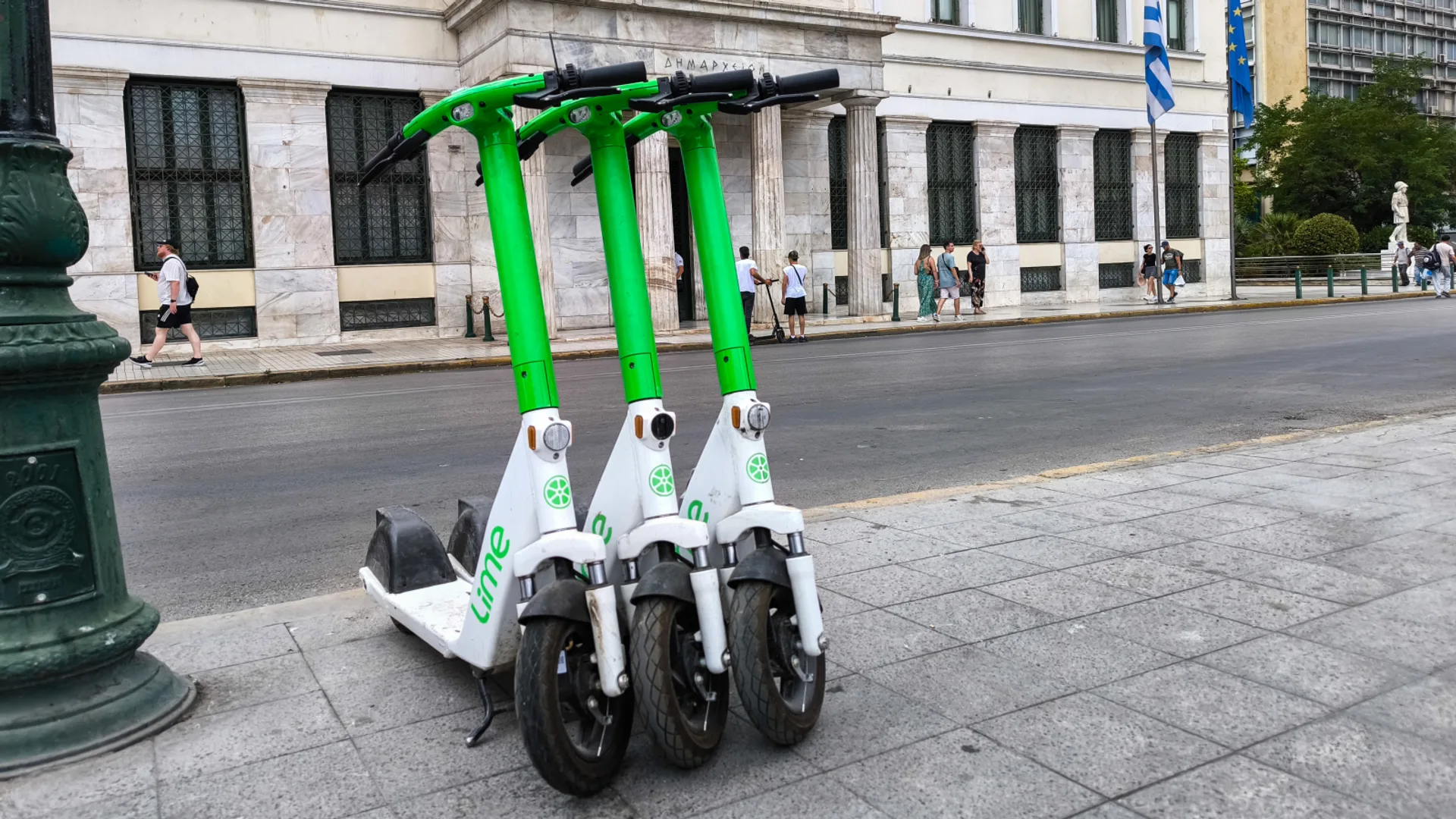
Lime
An international provider you may often see in European cities. In Athens, coverage can change by period and by neighbourhood.
Other commercial providers
You may see different names in the app or on the street. Do not assume that an operator you saw last year is still active now.
E-bikes
In some areas there are electric bikes as well. They are usually more stable than scooters, but they need more room on the road.
Municipal or pilot schemes
At times there are municipal or pilot bike systems. Check whether they are genuinely operating in the area you need.
Typical pricing
Unlock fee
Most apps charge a small amount to unlock the vehicle.
Per-minute charge
The cost keeps rising while you ride. For a longer trip, the metro, tram or a taxi may make more sense.
Bundles or passes
Some apps offer day passes or minute bundles. They only make sense if you plan several short rides.
Parking fees
Bad parking, leaving the zone or abandoning the vehicle can bring extra charges.
Where scooters work well
- Flat routes with wide roads. Prefer roads with space, good visibility and less pressure from cars.
- Coastal stretches with a cycle path. From Faliro toward the southern suburbs there are sections that are much friendlier than the historic centre. See the coastal tram guide.
- Short links from the metro to your accommodation. If the ride is only a few minutes and you know the route, it can be practical.
- Parks and calmer districts. Prefer routes with less traffic and fewer pedestrians.
Where scooters are a bad idea
Five places not to take a shared scooter
- Plaka and Anafiotika. Narrow streets, cobbles, pedestrians and traffic restrictions.
- The Acropolis approach. Hills, crowds and the archaeological zone do not suit a scooter.
- Lycabettus Hill. Either too steep to ride up or too steep to brake going down.
- Monastiraki and Psyrri at busy times. Too many pedestrians, narrow streets and frequent stops.
- Athinas Street during market hours. Pedestrians, delivery traffic and market activity make it awkward. See the Varvakeios guide.
Rules to remember
- Wear a helmet. Even if the app does not force it, it is the simplest protection.
- Use a bike lane where there is one. If there is not, move carefully and follow the local signs and the app guidance.
- One rider per scooter. Two people on one scooter is dangerous.
- Do not ride through crowded pavements. Pedestrians come first, and scooters become threatening in tight space.
- Do not ride after alcohol. If you have been drinking, take a taxi or walk.
The bicycle alternative
In some areas you will also find shared or electric bikes. For many visitors they are a steadier choice than a scooter, especially when you have a backpack or a small bag.
- Hills. Athens has hills. An e-bike with proper assist handles them better than an e-scooter.
- Cobbles. A bike absorbs cobblestone vibrations far better than a scooter's rigid frame.
- Stability with cargo. Picking up groceries, laptop bag, beach gear — bikes have baskets and racks; scooters don't.
The weak point is infrastructure. The centre does not have a continuous bike-lane network, and on many streets you will share space with heavy traffic. If you are not comfortable cycling in a city, the tram, metro or walking will usually make more sense.
Safety realities
Athens has rough road surfaces, narrow streets and drivers who do not always expect a scooter beside them. Keep the route short and simple, especially the first time you try it.
- Wear a helmet. Bring your own; few operators provide one.
- Avoid central tourist streets after dark. Pedestrians, taxis and delivery traffic make the ride less predictable.
- Do not ride after alcohol. It is the simplest way to avoid an unnecessary accident.
- Check the brakes before you start. If something feels wrong, lock it and choose another vehicle.
- Wear something visible at night. The scooter lights are not always enough on their own.
Where to park
Operators have geofenced parking zones — when you end the trip, the app shows allowed parking areas. Park in:
- Designated scooter racks (visible markings).
- Edge of pavement, not blocking pedestrians.
- Outside metro/tram stations in the marked zones.
Do not park in front of building entrances, on tactile paving or in front of ramps. Bad parking can bring extra charges from the app and, more importantly, it makes life harder for people using wheelchairs or pushchairs.
Night-time scooter rides
At night, scooters need much more caution. If you are tired, have been drinking or do not know the route well, take a taxi or walk instead. If you still use one, check the lights and brakes, go slowly and stay away from narrow streets with heavy pedestrian traffic.
How to get to Angel Athens (Ioulianou 50)
For Ioulianou 50, a scooter only makes sense for short rides from nearby neighbourhoods or from a metro stop toward Victoria. From Plaka or Syntagma, check the route in the app first and avoid narrow streets with heavy pedestrian traffic. From the airport, Piraeus or major fast roads, it is not a realistic option.
FAQ
Do I need a Greek licence to ride?
Shared scooters have age and usage rules inside the app, together with the relevant Greek regulations. Read them before your first ride, especially if you are under 18 or travelling with teenagers.
Do scooters work for two people?
No. One scooter means one rider. For two people, take two vehicles or choose another mode.
What about rain?
Avoid it. Roads and paving stones become slippery, braking distances increase and drivers see you less easily.
Insurance?
Coverage varies by operator and by travel-insurance policy. Read both before you assume you are covered.
Can I scooter to the airport?
No. For the airport use the metro, X95 bus, Suburban Rail, a taxi or a transfer.
Sources:
— Kathy