A Cycladic neighbourhood beneath the rock
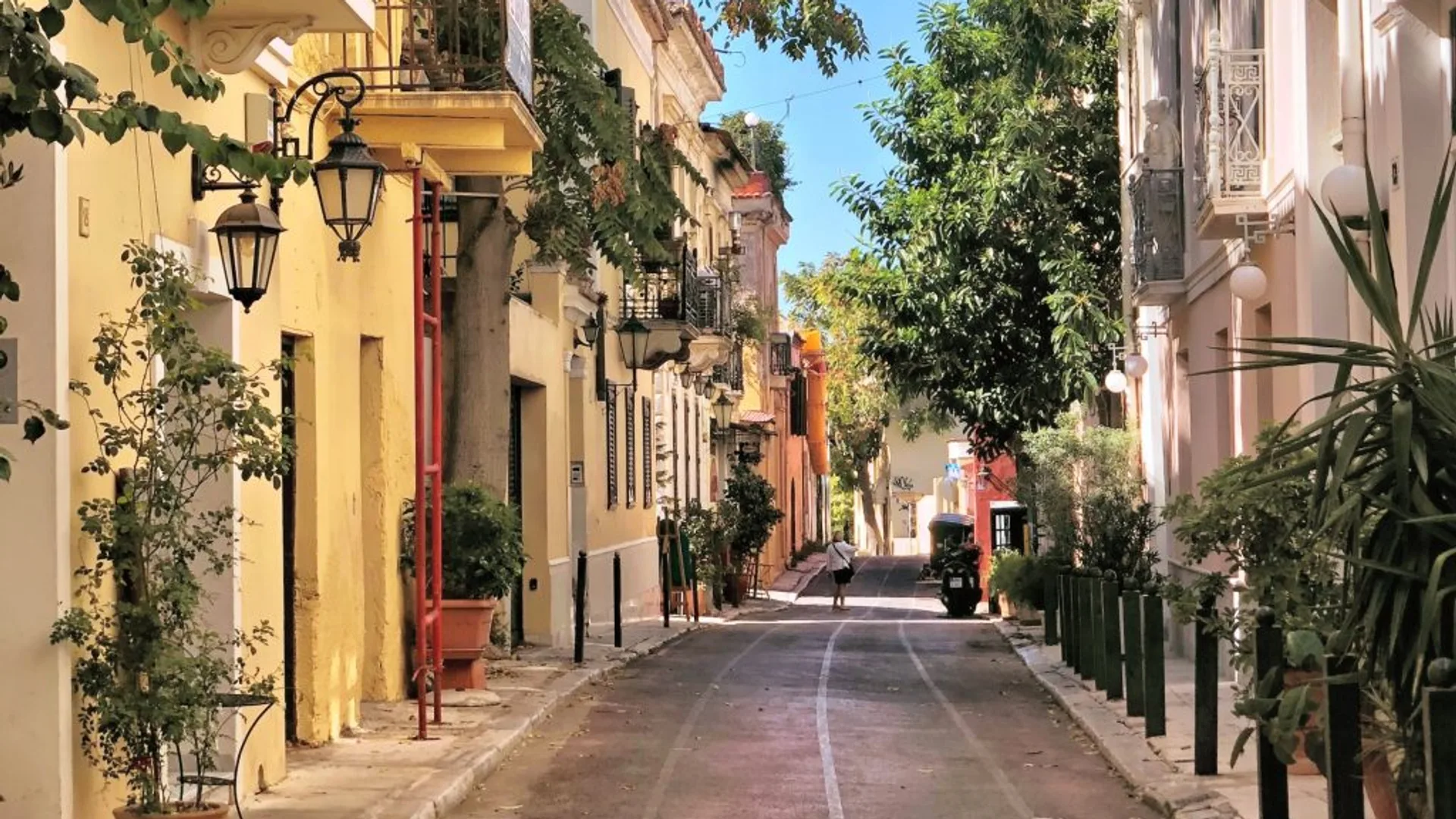
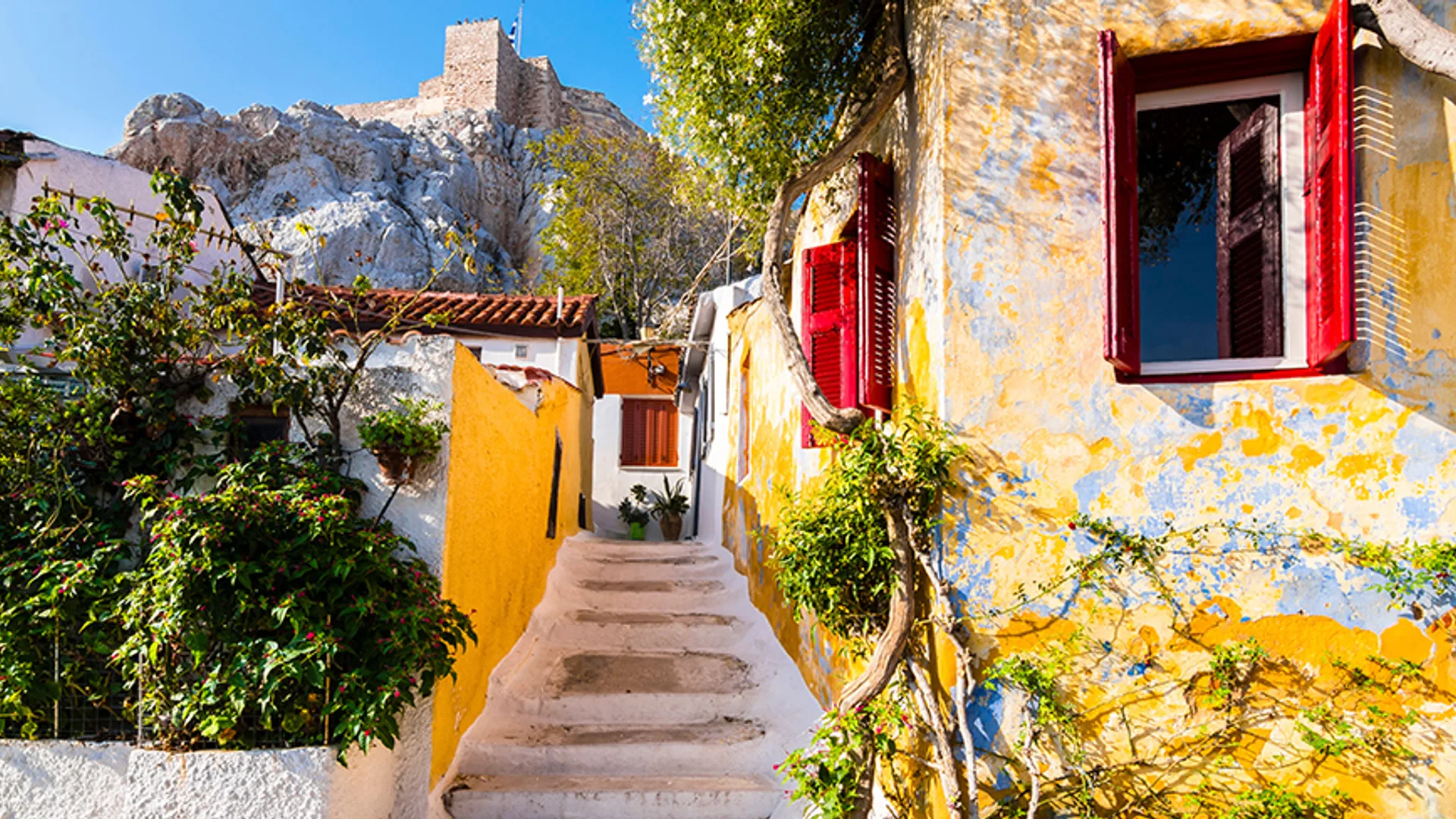
Anafiotika is a small enclave of whitewashed houses, narrow stepped lanes, low courtyards, flowerpots, bougainvillea, and views toward Plaka. Its architecture recalls the Cyclades, and especially Anafi, the small island in the southern Aegean from which many of the first residents came.
Why Cycladic houses stand beneath the Acropolis
The story is linked with Athens in the first decades after independence. When the city became the capital in 1834, a new administrative and urban Athens began to be built. Public buildings, palaces, and the works of the period needed skilled craftsmen. Among them were builders from Anafi, known for stonework and construction.
Their housing was not organised. According to local tradition, several of them built small houses on the northern slope of the Acropolis, near Agios Georgios tou Vrachou, using materials and techniques they knew from the island. The familiar story of houses "built in a single night" belongs to the neighbourhood's oral history, but it does show how informally and urgently the housing question was resolved.
Two small churches help keep the neighbourhood's character: Agios Georgios tou Vrachou and Agios Symeon. They are simple, whitewashed, and closely linked with the history of Anafiotika.
📍 From Angels Athens to Anafiotika
See at a glance how to get from the apartment at Iouliánou 50 to the heart of the neighborhood. Drag the map and zoom for detail.
📍 Where exactly is it?
Location
On the northern slope of the Acropolis, immediately above Plaka, between the rock and the streets of upper Plaka.
Access from Plaka
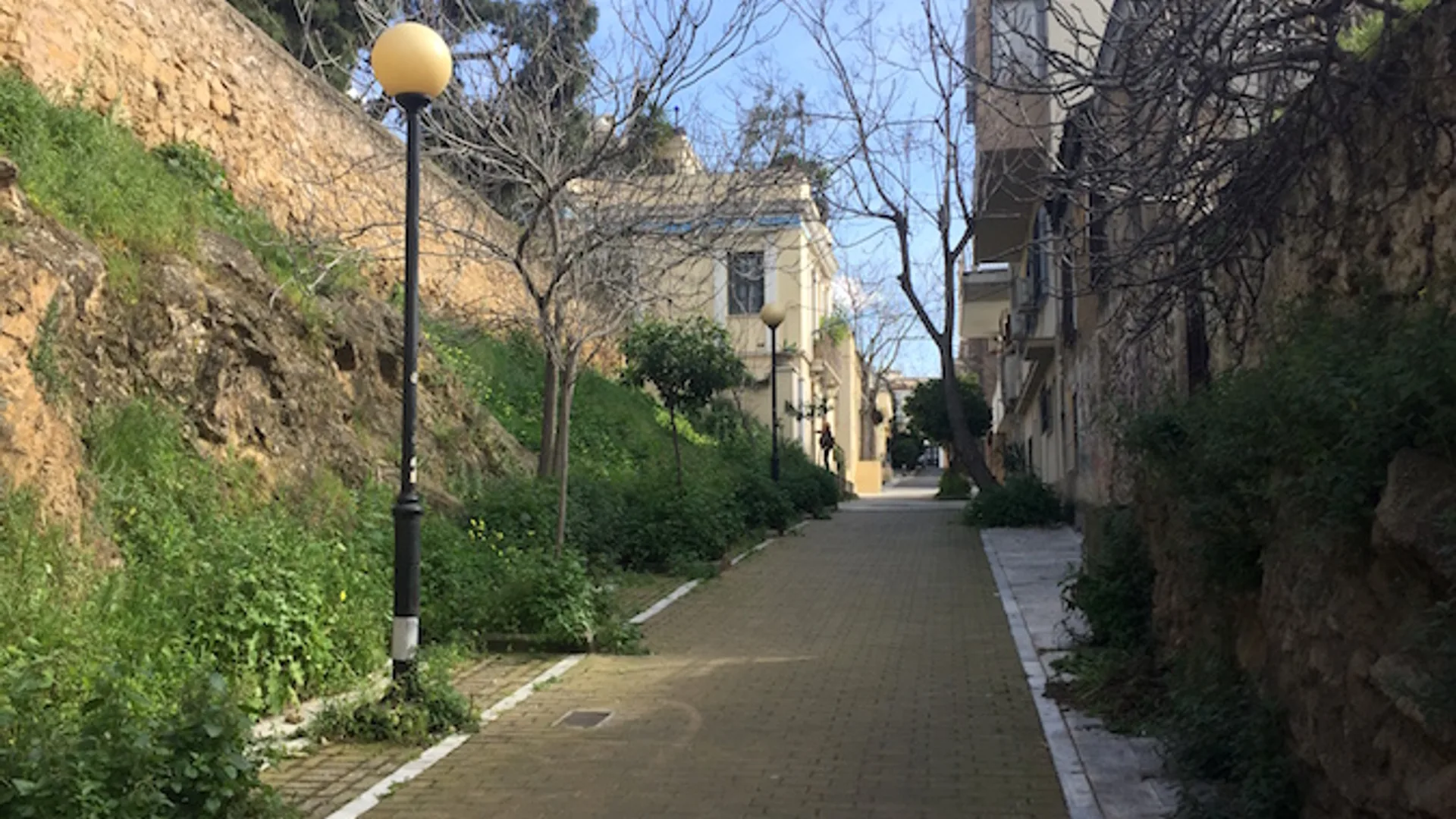
Walk uphill from Stratonos or Theorias in upper Plaka. The white houses begin to appear gradually above the stone walls.
Access from Acropolis
If you are already on the archaeological walk around the Acropolis, head toward upper Plaka and follow the narrow lanes into Anafiotika.
Size
Very small. There are only a few dozen houses and stepped lanes, which you can cross in 15-20 minutes if you do not stop.
The walk through Anafiotika
The neighbourhood has no formal entrance. You arrive from Plaka, the lanes narrow, the buildings become lower, and the scene changes without much warning. You do not need a strict route. It is enough to walk slowly and respectfully.
- Start at the church of Ágios Geórgios tou Vráchou (often closed but the courtyard accessible).
- Climb the white-painted stairs; they branch into half a dozen alleys.
- Look for the marked house numbers in blue paint on white walls — old-school Cycladic numbering.
- The lanes get progressively narrower; at some points only one person fits.
- You will see cats and plants almost everywhere; leave them as they are, because they belong to the residents' everyday life.
- End at Ágios Symeón church on the upper level, with a small terrace and partial Acropolis view.
Photo spots
- Blue doors and white steps, as long as you do not step into a private courtyard.
- Bougainvillea in spring and autumn, when the colour sits beautifully against the whitewash.
- Narrow passages along the side of the rock, where the scale of the neighbourhood becomes clear.
- The view toward Plaka and Lycabettus from higher points where there is a public passage.
- Small details: signs, chimneys, hinges, flowerpots, and steps.
When to visit
Early morning
07:30-09:30, quieter, with softer light and fewer people.
Late afternoon
17:00-19:00, beautiful light, but usually more people.
Evening / dusk
19:30-21:00, a lovely atmosphere, but keep your voice low because the neighbourhood is inhabited.
Avoid
11:00-15:00 in summer, when the heat is stronger and visitor groups are more likely.
Etiquette: this is a real residential neighbourhood
People live in Anafiotika
People still live in Anafiotika. It is not a set and it is not an open-air museum.
- Don't enter private courtyards or terraces — they look open but are private property.
- Don't peer through windows; treat doors and shutters as you would any home.
- Don't speak loudly; voices echo against the stone walls. Keep conversation low.
- No drones or professional photo equipment without permission.
- Don't move flowerpots or ornaments for photographs — residents care for those plants every day.
- No graffiti or damage. The neighbourhood is small, and any harm shows immediately.
Architectural notes
The houses are low, with whitewashed walls, small openings, exterior stairs, and simple geometry. The Cycladic image we see today, with white and blue, was reinforced during the 20th century by the tourist aesthetic of the Aegean. The real history of the Cyclades was more complex and more colourful.
The area is protected by heritage and planning rules. Some houses are still linked with old families, others have changed ownership, but the scale of the neighbourhood remains delicate.
What Anafiotika is and what it is not
- It is: a small inhabited neighbourhood with distinctive architecture, history, and atmosphere.
- It is not: a place for shopping, restaurants, or a half-day visit. The shops and cafes are down below in Plaka.
Eating before or after
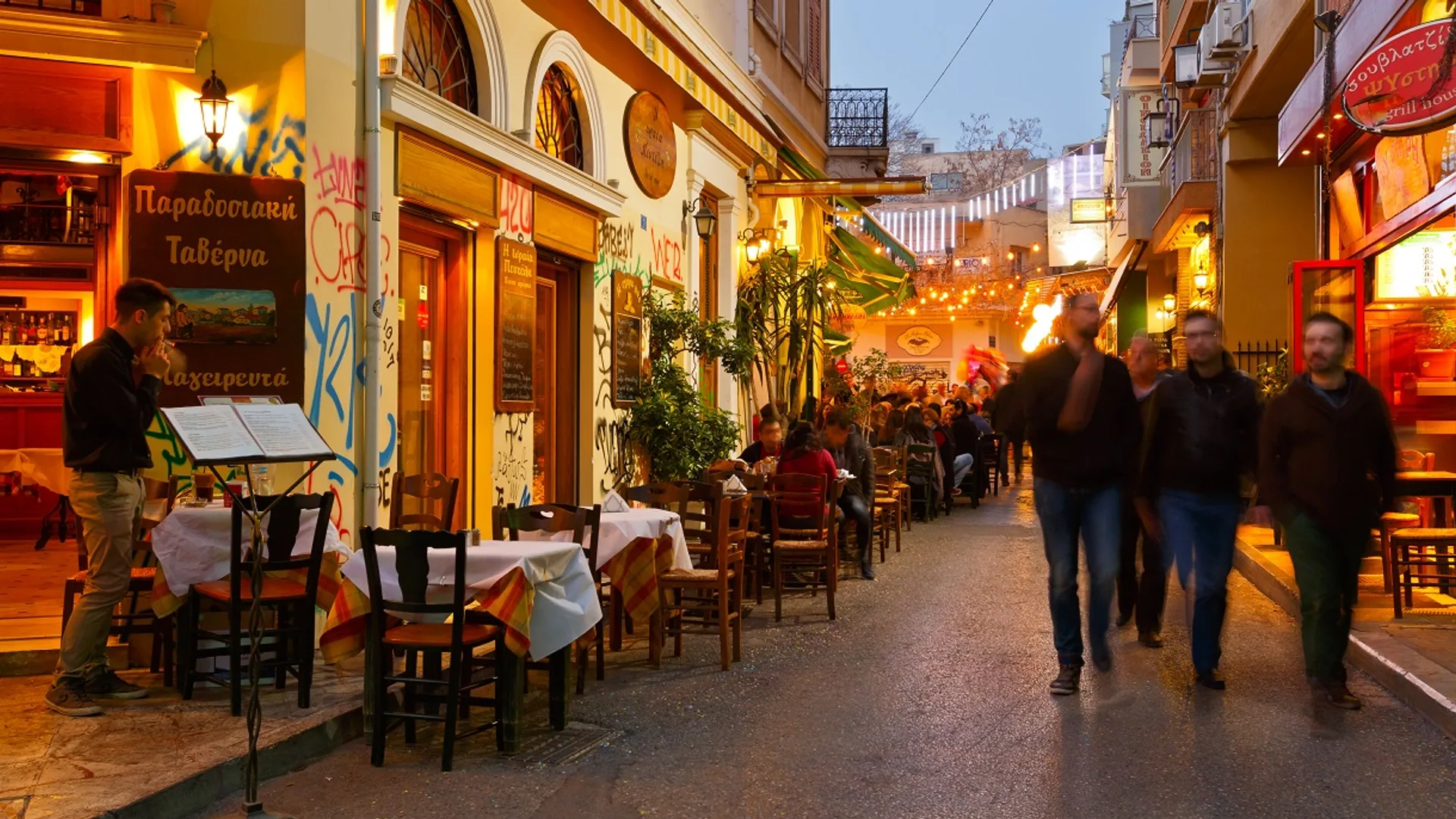
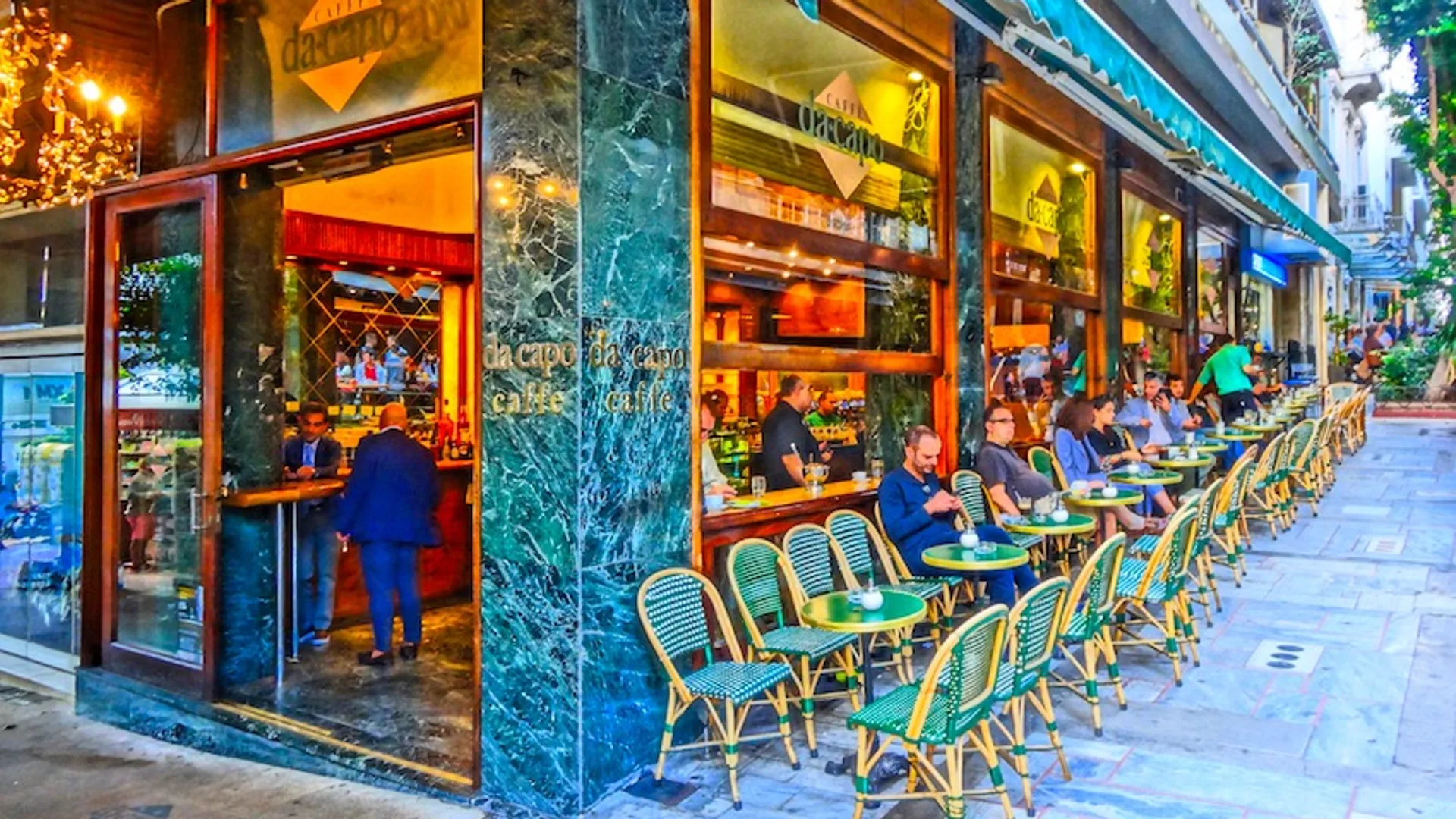
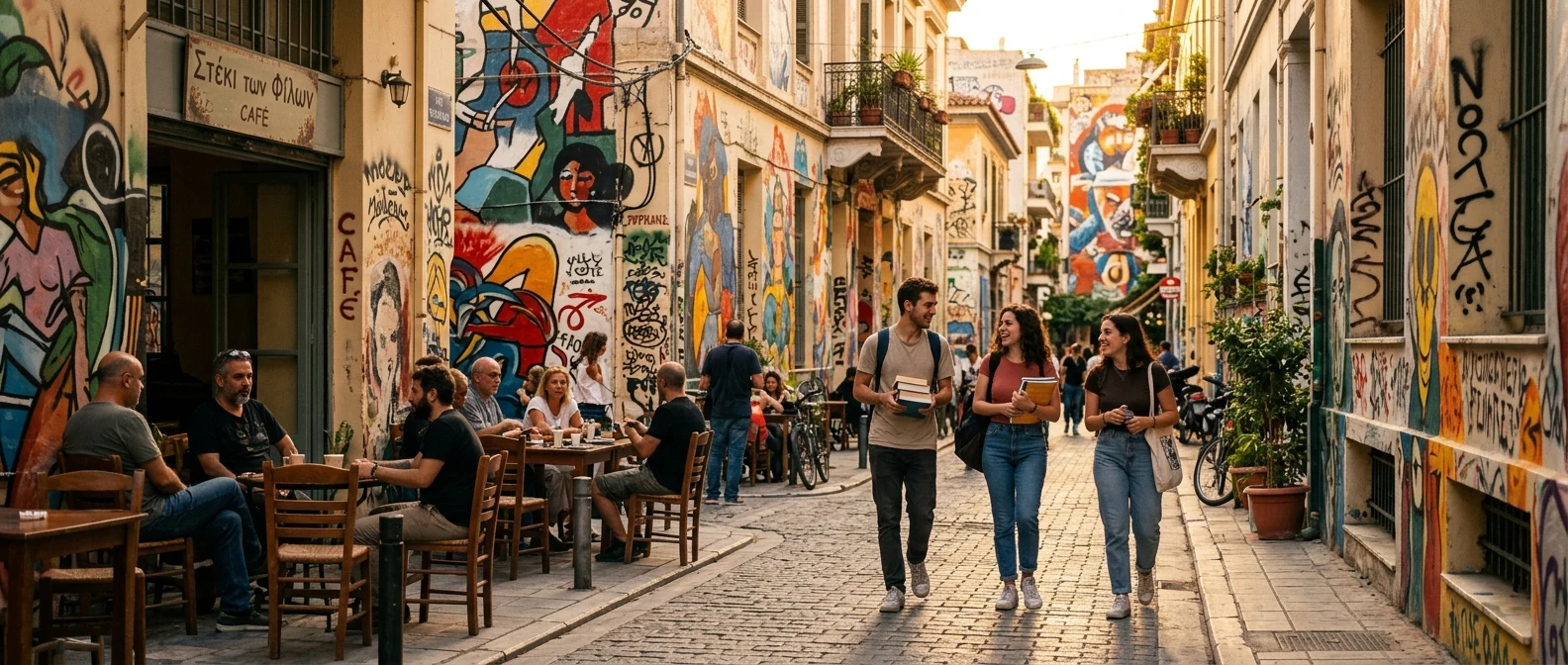
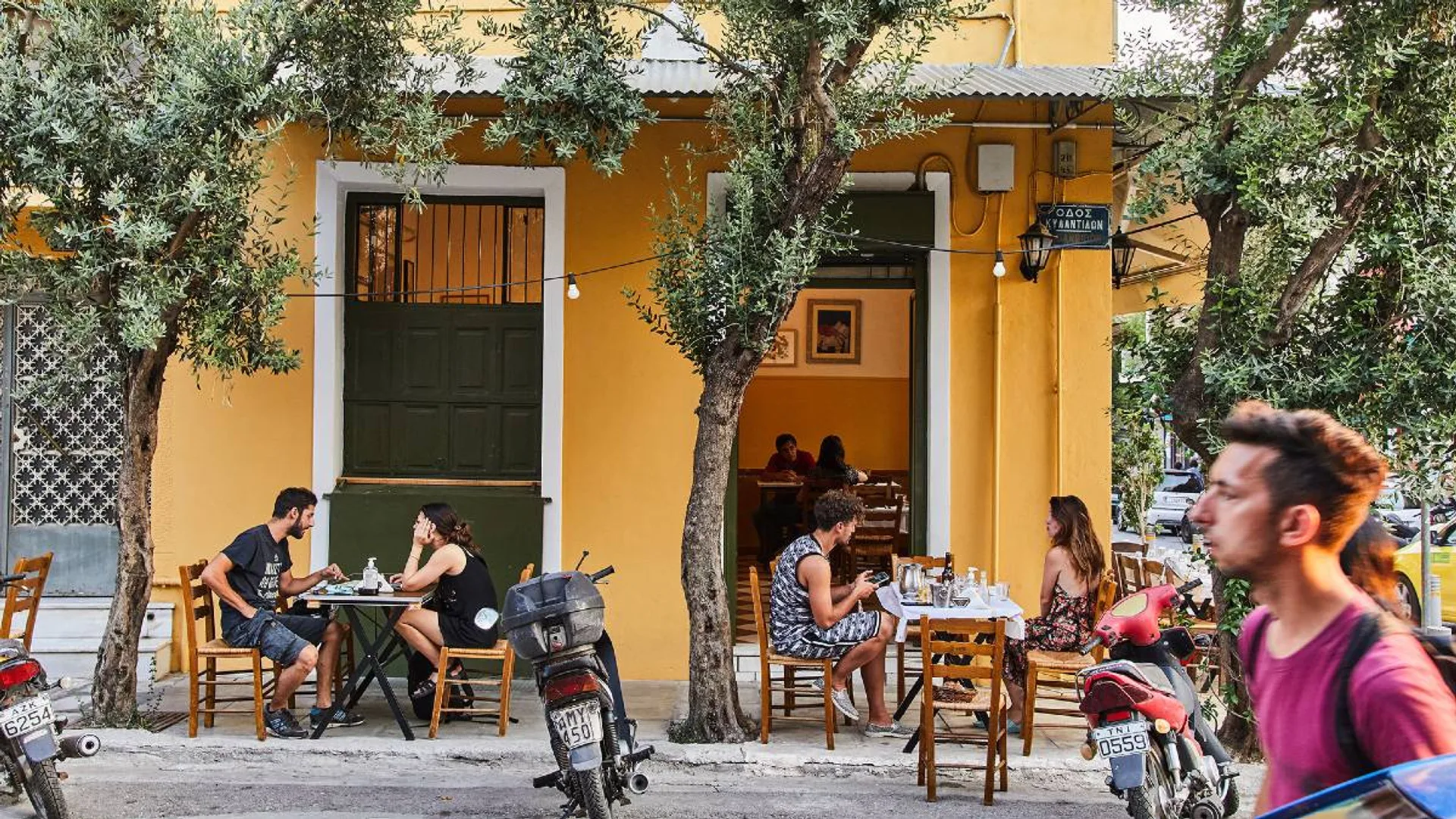
Anafiotika has no restaurants. Combine the visit with coffee, lunch, or dinner in upper Plaka or around the Acropolis. Prices there are often more tourist-oriented, so it is worth checking the menu before sitting down.
Combine Anafiotika with
Acropolis visit
The Acropolis, a walk around the rock, Anafiotika, upper Plaka, and then the Ancient Agora.
Plaka exploration
After Plaka shopping, walk uphill to Anafiótika for 20-30 min, then back down for dinner.
Photography session
Morning or late afternoon, for quieter lanes and softer light.
Anafiotika + Plaka + Monastiraki
A full walk that brings together the rock, upper Plaka, and the market.
Frequently asked questions
Are the houses for rent / available as accommodation?
A few have appeared on holiday-rental platforms, but most are private homes. Listings change; the heritage protections limit large-scale tourism conversion.
Wheelchair / accessibility?
Difficult. The neighbourhood sits on a steep slope with stone steps. Visitors with mobility difficulties can get an impression from lower points in Plaka, but the narrow lanes are not practically accessible.
Free to visit?
Yes. It is a public neighbourhood with no ticket. Daylight hours or early evening are the most respectful times to visit.
How long does a visit take?
30-45 minutes for the walking visit. Longer if you photograph or take a coffee break in adjoining Plaka.
Is it dangerous at night?
The main issue is the narrow, steep, and not always well-lit steps. It is better to go before dark.
Why not better known?
It is known to people who like architecture and photography, but it does not function like a classic sight with an entrance and opening hours. It asks for slow walking and attention to the people who live there.
Sources:
— Kathy