Mets in one paragraph
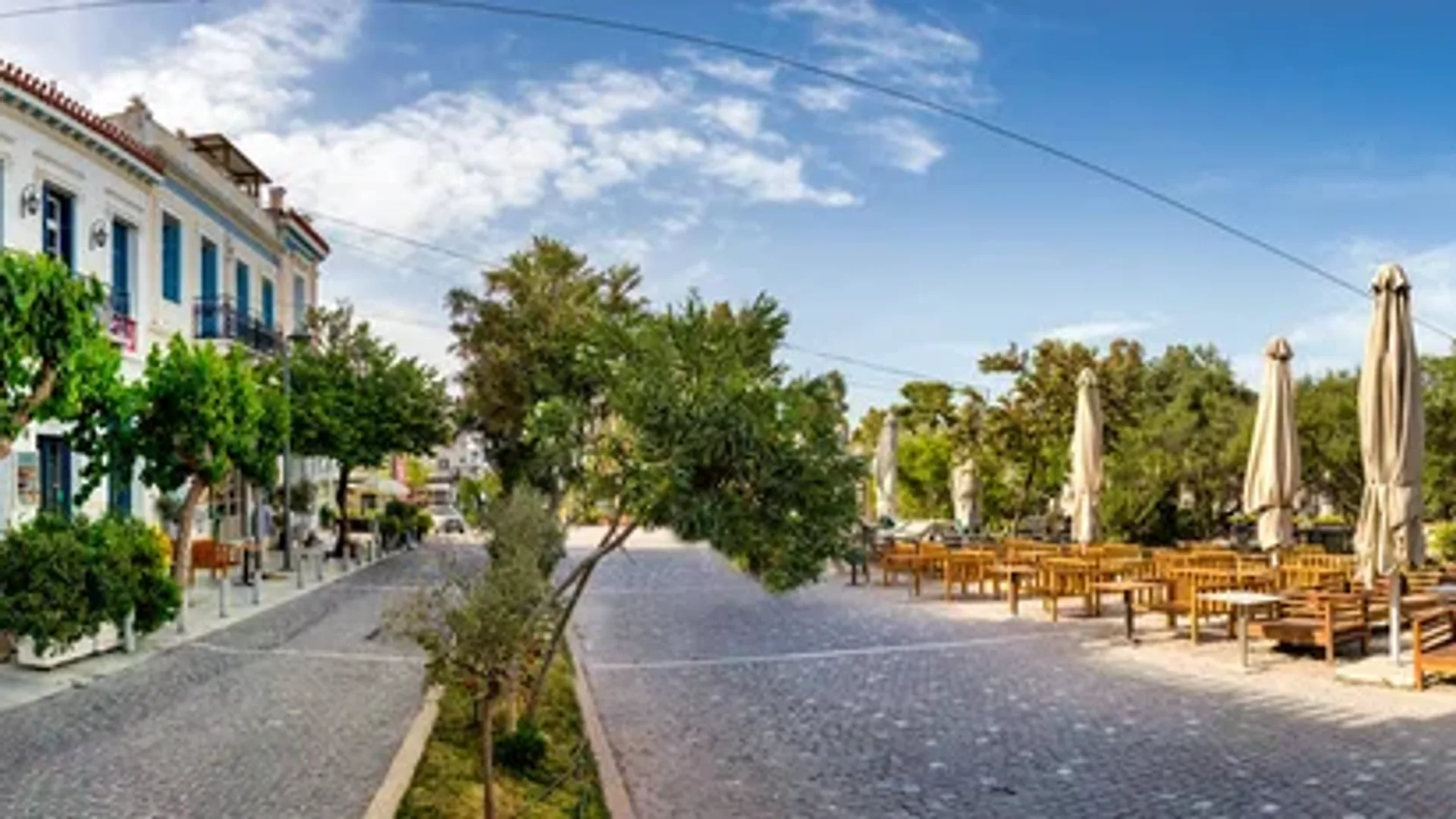
Mets is a small hillside neighbourhood east of central Athens, between the Panathenaic Stadium and the First Cemetery of Athens. It lies north of Pangrati and south of the Zappeion gardens. The name "Mets" seems to be connected with an old beer hall or entertainment venue in the area that took its name from the French city of Metz in the 19th century. The details are not always told in exactly the same way, so it is better treated as local memory rather than a completely closed historical chapter. The neighbourhood developed in the late 19th and early 20th centuries as a residential area for civil servants, artists, and middle-class Athenians. It still keeps a fair number of pre-war houses and neoclassical homes, sometimes well kept and sometimes worn by time.
What gives the walk its character
Pre-war architecture
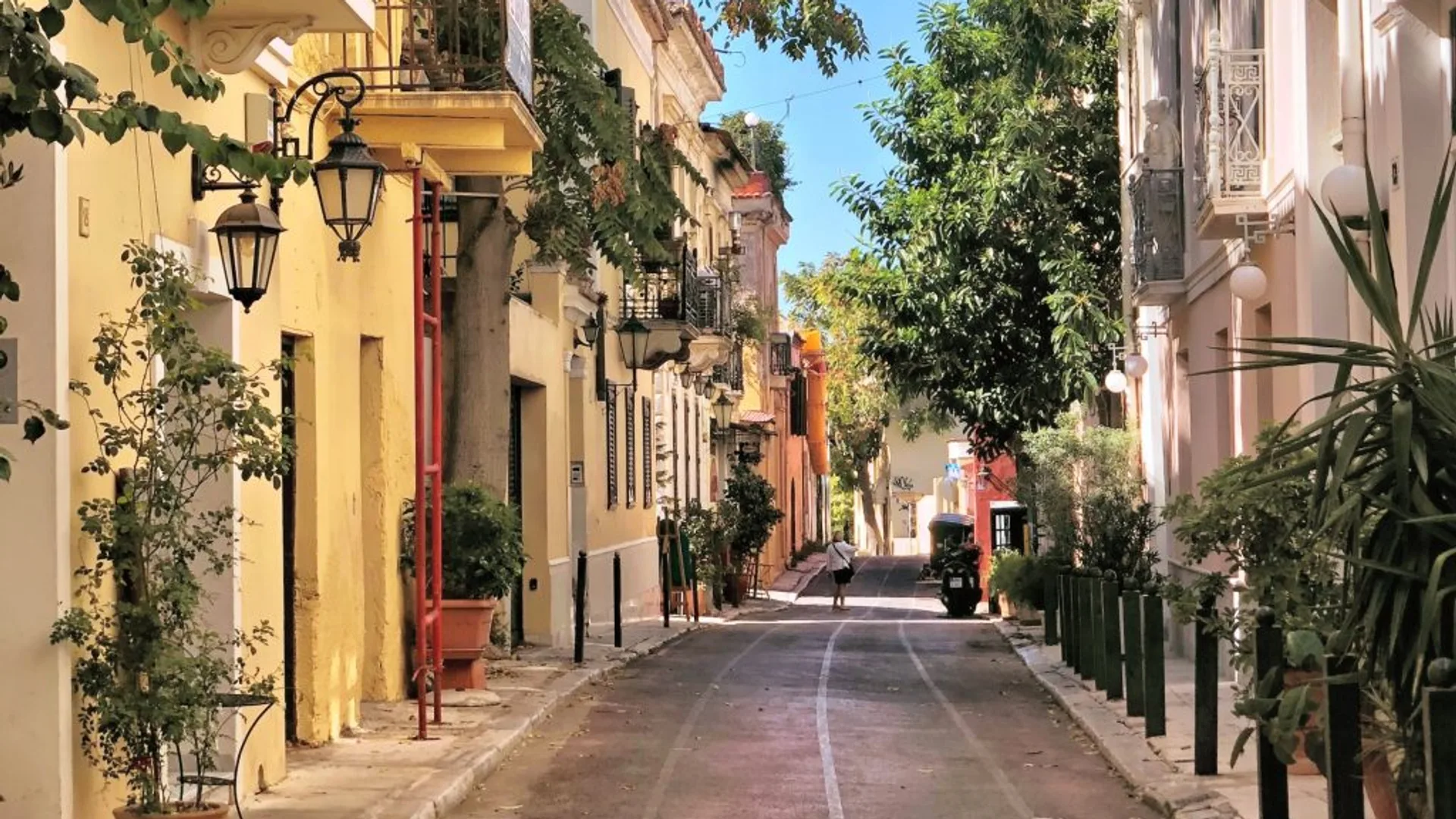
Two-storey houses with tiled roofs, gardens behind low walls, iron gates, and colours that range from ochre to faded pink. They are not all in the same condition, but the older facades give the area a clear identity.
Stepped streets
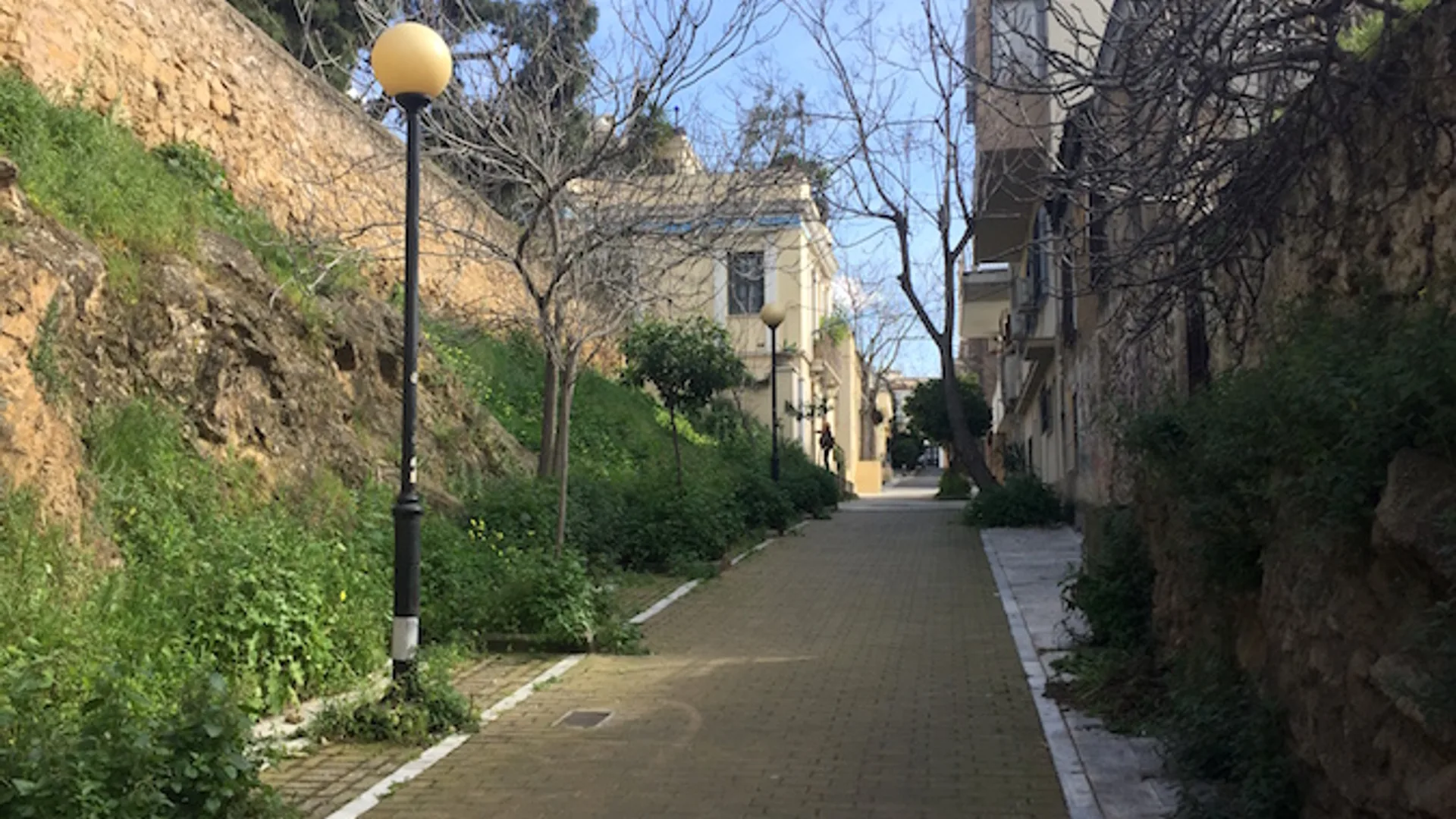
Markou Mousourou, Trivonianou, and Anapafseos rise with steps and small inclines. Car traffic quickly fades and the pace becomes slower almost by necessity.
Mature trees + private gardens
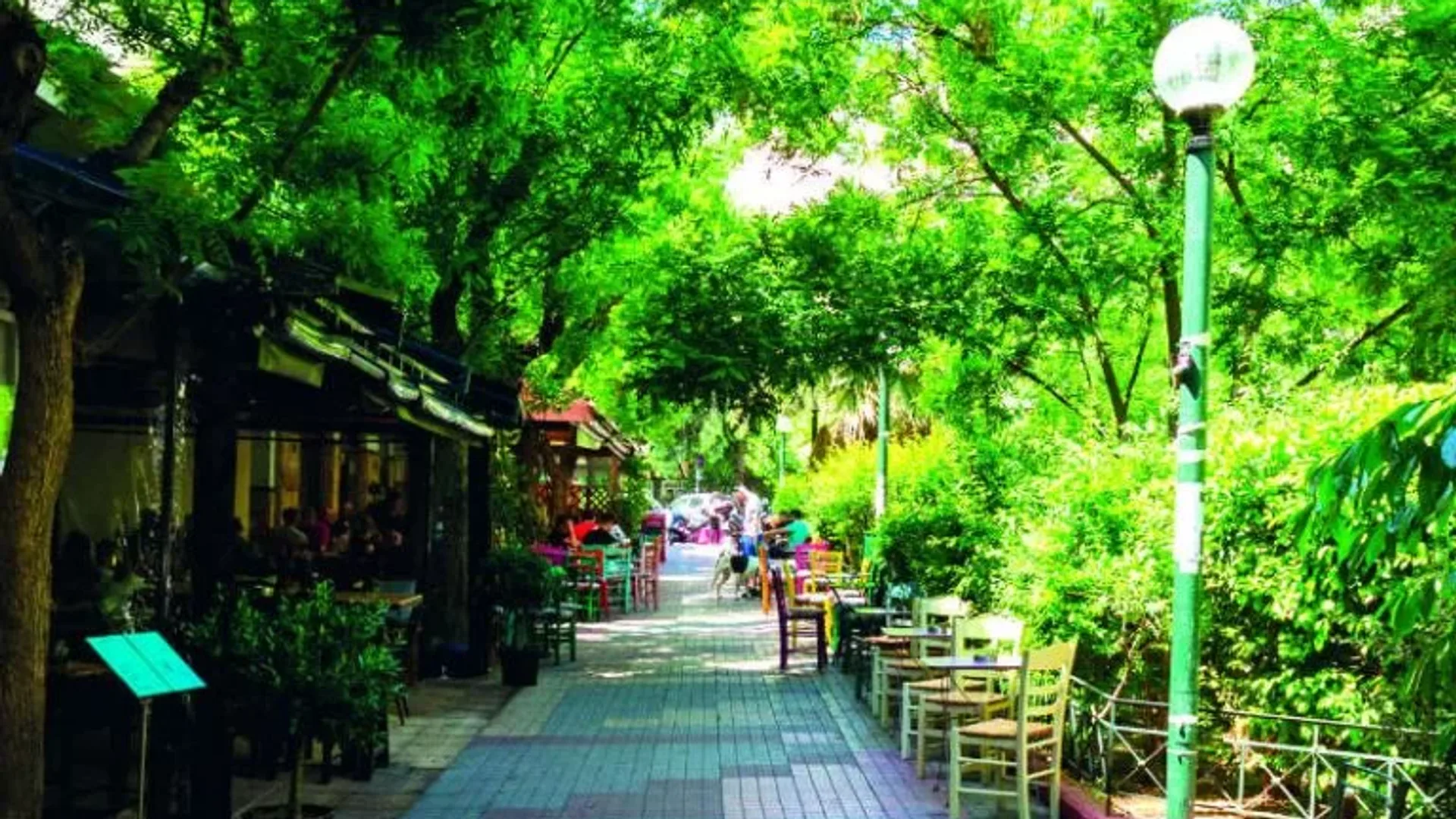
For a central Athenian neighbourhood, there is more greenery than many visitors expect. Orange trees, jasmine, wisteria, and small private gardens often appear behind gates and walls.
Acropolis views
From some higher points near the cemetery, the Acropolis appears to the west between roofs and balconies. It is not the broad view you get from Filopappou. It is shorter, more everyday, and interesting for that reason.
📍 From Angels Athens to Mets
See at a glance how to get from the apartment at Iouliánou 50 to the heart of the neighborhood. Drag the map and zoom for detail.
The First Cemetery: a place of memory and sculpture
The oldest cemetery of modern Athens
The First Cemetery of Athens, founded in 1837, is the oldest cemetery of the modern city and one of the main places for funerary sculpture in Greece. Entry is usually free, but opening hours can change. Check them before you go, especially if you want to combine it with a late-afternoon walk.
- Graves and monuments: Heinrich Schliemann, Kostis Palamas, politicians, composers, archbishops, and benefactors of modern Greece are buried here.
- The “Sleeping Maiden”: the 1877 marble work by Yannoulis Halepas on the grave of Sofia Afentaki, one of the best-known funerary sculptures of 19th-century Greece.
- Monuments and sculpture: neoclassical, Byzantine revival, and other funerary monuments show how Athens spoke about memory, status, and loss.
- Respect for the place: it is an active cemetery. Walk quietly, avoid ceremonies, and photograph with discretion.
The Panathenaic Stadium
Next to Mets stands the Panathenaic Stadium (Kallimarmaro), built entirely of Pentelic marble. An ancient stadium stood on the site from the 4th century BCE, while the current form is mostly connected with the reconstruction for the first modern Olympic Games of 1896. Tickets, opening hours, and available services change, so check before you go. There is usually an audio guide and the option to walk on the marble track. See also the Panathenaic Stadium guide.
The walking route through Mets
- Start at the Panathenaic Stadium: from Akropoli metro it is about a 15-minute walk, or about 20 minutes from Syntagma.
- Walk toward Iosif ton Rogon: the change from the larger road to residential Mets appears almost immediately.
- Climb Markou Mousourou: the steps and slopes bring the first small views toward the Acropolis.
- Pass through Trivonianou and Anapafseos: several of the area's older houses are concentrated here.
- Go into the First Cemetery: allow 30-45 minutes for the main route and the Sleeping Maiden.
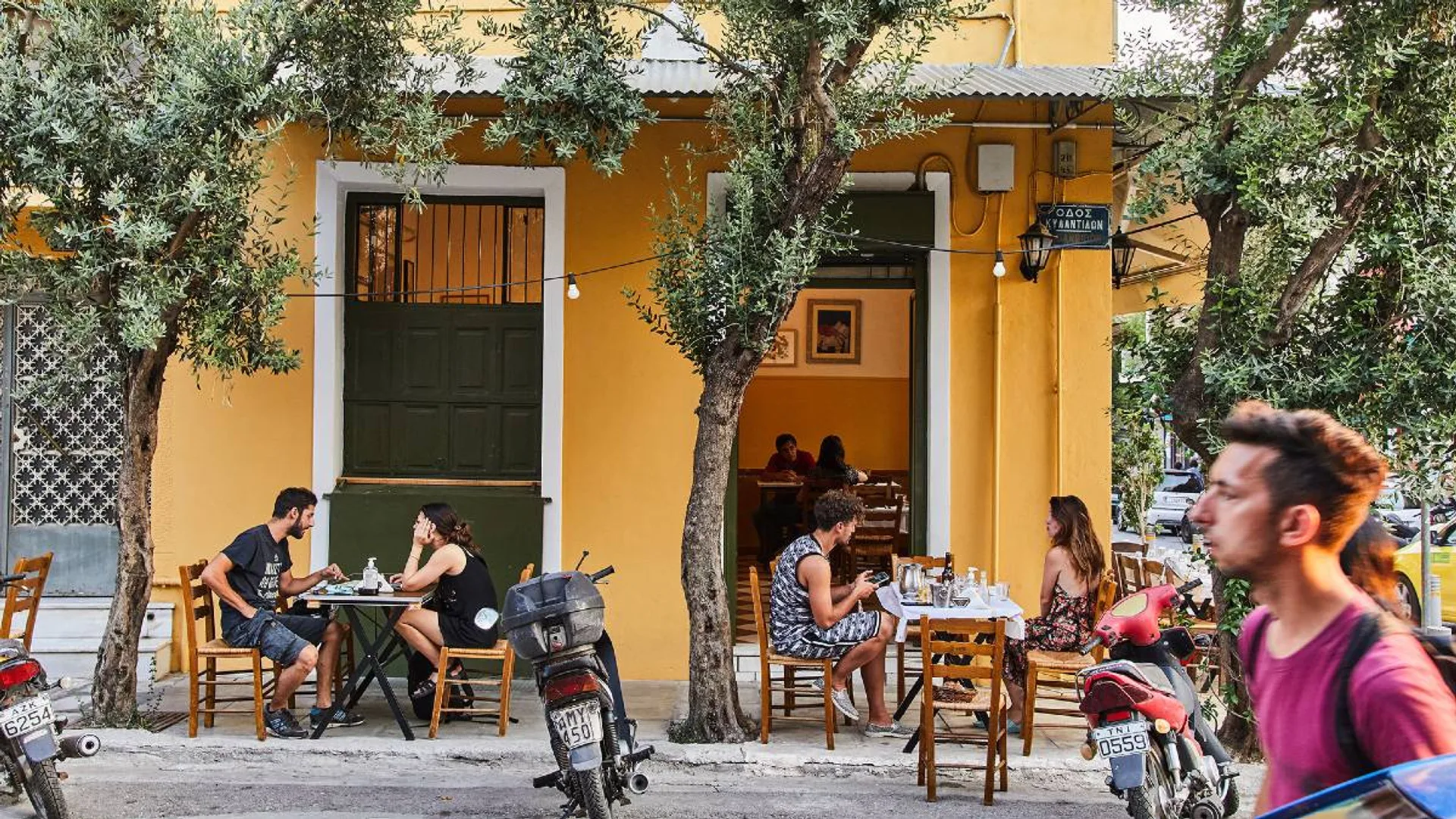
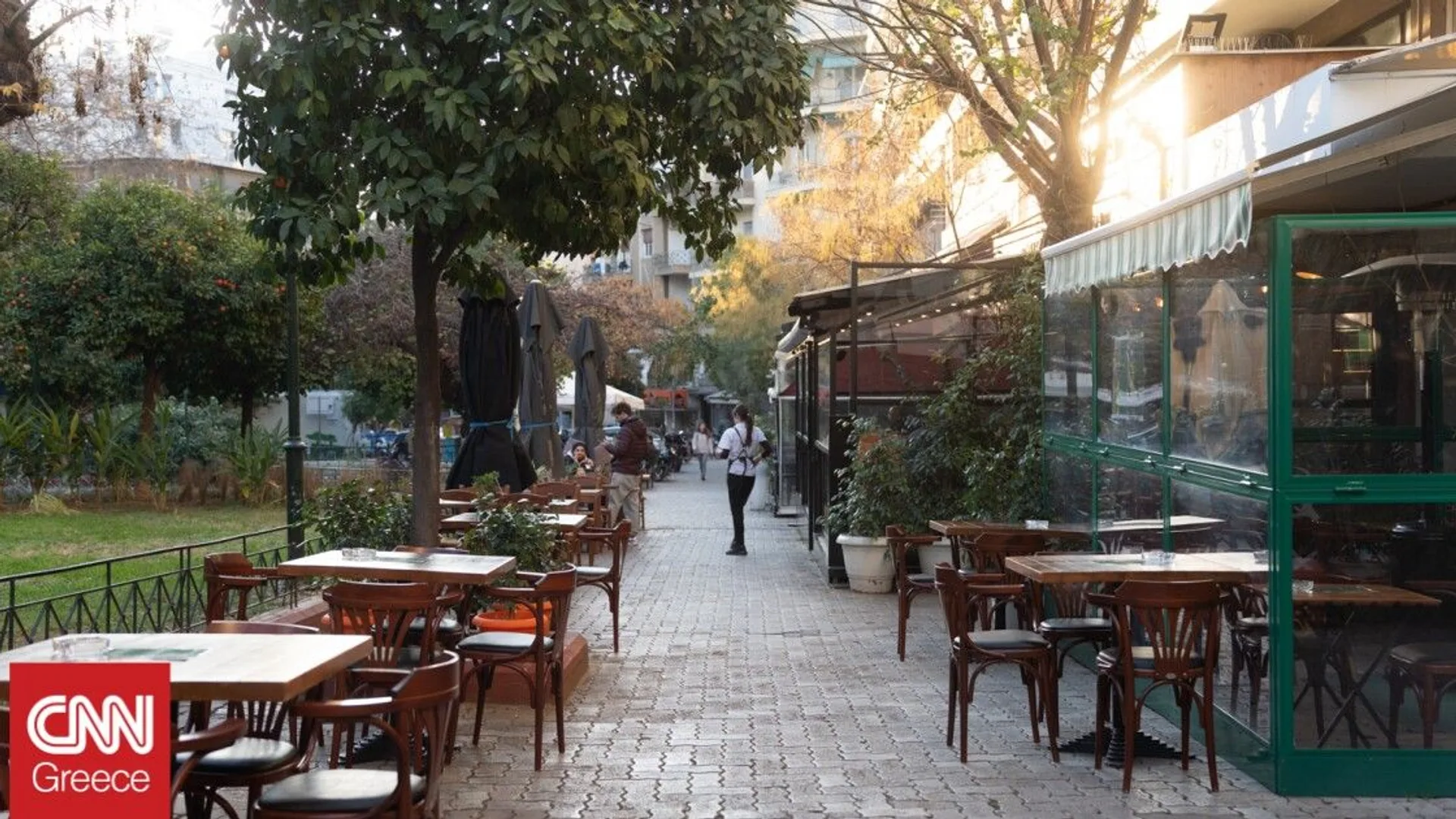
- Stop for food: the tavernas of the area are usually in the middle price range, but menus change.
- Have a coffee in a quiet spot: on Markou Mousourou or nearby streets, with a calmer rhythm than the centre.
- End in the Zappeion area: the exit toward the gardens gives an easy continuation toward Syntagma.
The food scene
- Karavitis: an older Greek taverna, known for meze, grilled dishes, and a classic atmosphere. In the evenings, it is better to reserve.
- Vyrinis: a neighbourhood taverna with Greek meze and grilled dishes, a good choice for a relaxed meal without much movement.
- Dyo Dipla: more modern Greek cooking, with a style that changes depending on the season and the menu.
- Small cafes in Mets: quiet places to stop after the walk, without the noise of the more touristy streets.
- Pangrati: a few minutes farther south and east you will find more options, from simple spots to more expensive restaurants such as Spondi.
At a glance
~1 km²
A small neighbourhood that you can cross on foot without needing much of a plan.
1837
The founding year of the First Cemetery, before modern Athens had reached its current scale.
1896
The first modern Olympic Games at the Panathenaic Stadium next to Mets.
2-3 hours
Enough time for a walk in Mets, a short stop in the cemetery, and food or coffee.
How to get there
- Akropoli metro (Line 2): about 12-15 minutes on foot through Hadrian's Arch and the Zappeion area.
- Syntagma metro (Lines 2 and 3): about 18-22 minutes on foot through the Zappeion gardens.
- Evangelismos metro (Line 3): about 15 minutes on foot to the south.
- From Victoria: Line 1 to Omonia, change to Line 2 to Syntagma, then continue on foot. Expect about 30-35 minutes in total.
- Walking from Plaka: about 20 minutes through the Zappeion area, pleasant during the day.
Best time to visit
Late afternoon
The light falls more softly on the older facades and the streets remain quiet. If you also want to enter the cemetery, check the hours first.
Early morning
The neighbourhood is cooler and the slopes are easier. It is also a good time for photos without much movement.
Spring (April-May)
In April and May the wisteria, jasmine, and bougainvillea add more colour to the walk.
Avoid
Summer mid-day makes the slopes tiring. Some smaller shops may also keep irregular or limited hours.
Safety
Mets is generally a quiet residential area. During the day it is comfortable to walk around. In the evening the main streets have lighting and some movement, while the smaller side streets empty quickly. Keep the usual attention you would keep in any central neighbourhood and avoid very isolated spots if you do not know the area.
Why Mets matters
Mets shows an Athens that does not need to raise its voice. It is close to Syntagma, next to the Panathenaic Stadium, and far enough from the heaviest tourist routes to keep a residential rhythm. The older houses, the First Cemetery, and the short views toward the Acropolis make a walk on a smaller scale, without too much staging. The area has changed and rents have risen, but it remains a useful stop if you want to see a quieter side of central Athens.
A plan for one afternoon in Mets
Half-day route
- 14:00: Panathenaic Stadium, if it fits your plan. Allow about 45 minutes.
- 15:00: Enter Mets from Iosif ton Rogon and walk up toward Markou Mousourou.
- 15:30: First Cemetery, with a stop at the Sleeping Maiden and a walk along the main route.
- 16:30: Coffee on a quiet street in Mets.
- 17:00: Walk along Trivonianou and Anapafseos for older houses and small views toward the Acropolis.
- 18:00: A short stop for a drink or continue toward the Zappeion area, depending on your mood.
- 19:30: Dinner in a local taverna, with a reservation if it is evening or the weekend.
- 21:00: Return toward Syntagma through the Zappeion area.
Frequently asked questions
Is the cemetery weird to visit?
No, as long as the visit is respectful. Athenians come here for family graves, and many others visit for the sculpture and the history. Do not disturb ceremonies and keep a low profile.
Can I photograph in the cemetery?
Usually yes for personal photography, if done discreetly. Commercial photography may require permission. Avoid drones, flash, and photographing ceremonies or mourners.
Are the pre-war villas private?
Most are private homes or small businesses. Photograph from the public street, without entering gardens or looking into windows.
Best villa-photography street?
Trivonianou and Anapafseos offer a good variety of older facades. Markou Mousourou works well for smaller Acropolis views between the buildings.
Eating after the cemetery feels strange?
No. If you have visited the place with respect, continuing with coffee or food in the neighbourhood feels natural. Mets works like that: memory, homes, tavernas, and daily life sit very close to one another.
Combine Mets with what?
Combine it with Pangrati, the Zappeion gardens, the Panathenaic Stadium, or the Acropolis area. Pangrati is immediately to the south and the Pangrati guide is useful if you want more stops for coffee and food.
Sources:
— Kathy