What we mean by "Greek breakfast"
The Greek Breakfast initiative began in 2010 through the Hellenic Chamber of Hotels in cooperation with the tourism sector. Its aim was to bring local products, pies, honey, dairy, and regional recipes into hotels instead of the same neutral continental buffet everywhere. Today, the official label is used by many hotels across Greece.
In Athens and Attica, the everyday version is simpler. Most often, you find it in bakeries, cafes, and a few old-style dairy shops:
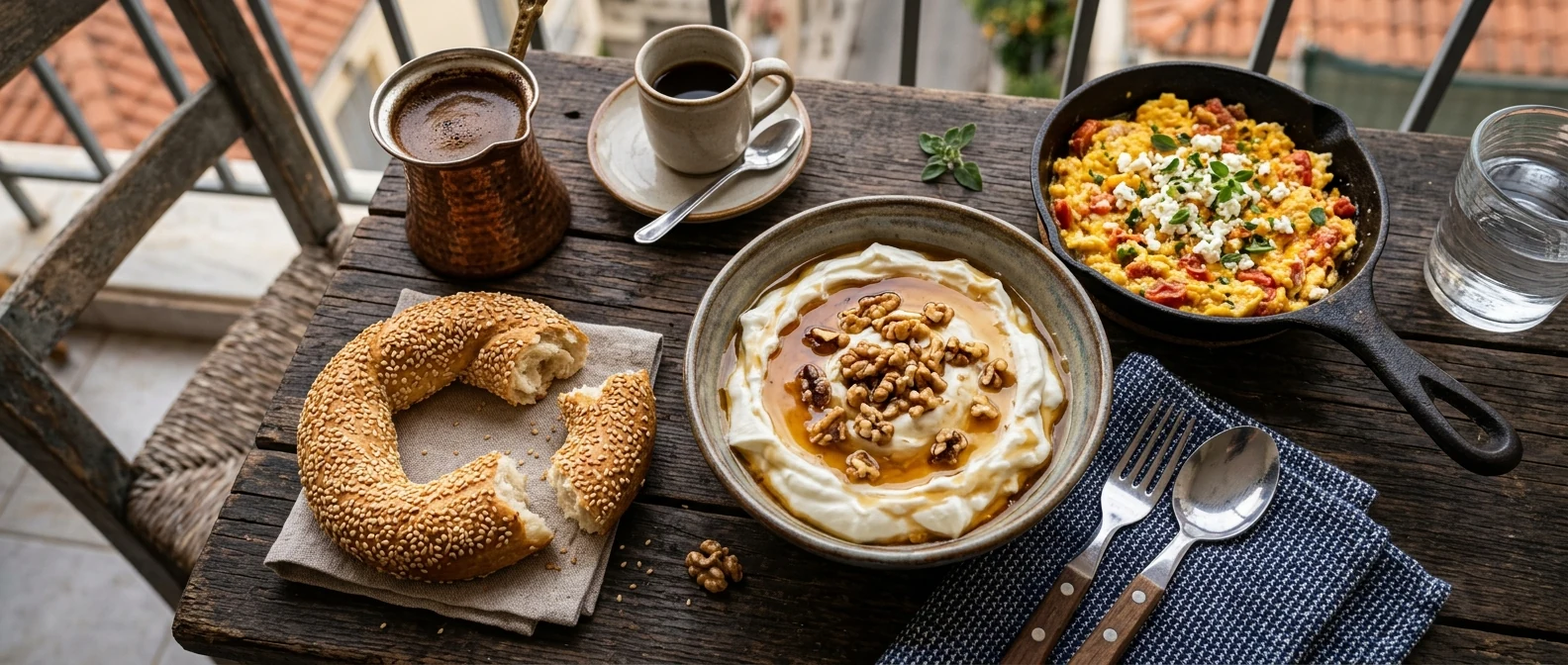
Strapatsada
Eggs cooked with ripe tomato and feta. It is a simple dish, and usually best in summer, when the tomatoes do most of the work.
Yoghurt with honey and walnuts
Thick strained yoghurt, often sheep's milk, with thyme honey and walnuts. It sounds simple, but the quality of the yoghurt and honey changes the whole plate.
Tyropita / spanakopita
Pastry with feta and egg, or with spinach and feta. Usually eaten warm, standing up or on the move, and still one of the city's most everyday breakfasts.
Koulouri Thessalonikis
The sesame bread ring sold from carts and bakeries in the centre. It usually costs about €0.50-€0.80 and is eaten plain or with a little feta and tomato.
Bougatsa
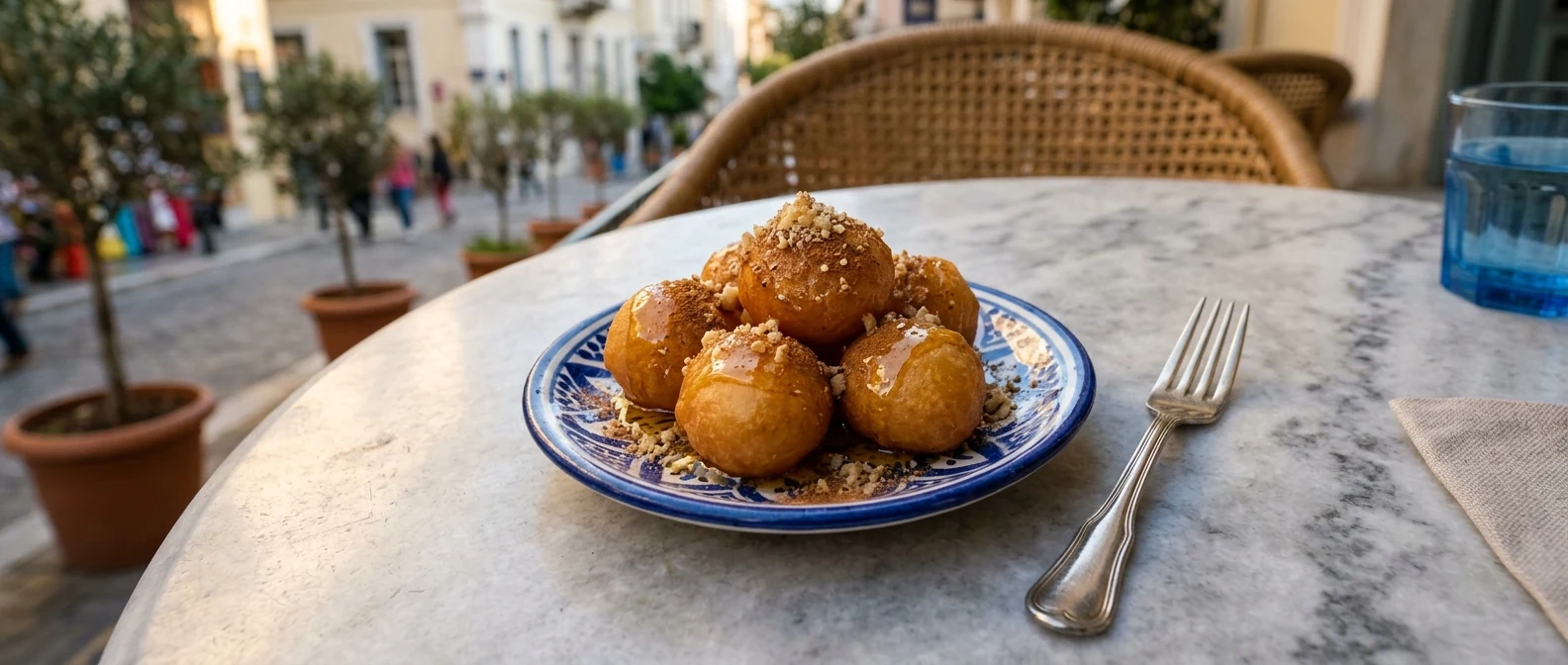
Pastry filled with sweet custard, cheese, or minced meat. The sweet version is often dusted with icing sugar and cinnamon. It came from northern Greece and is easy to find in Athens bakeries too.
Eliopita / paximadia
Olive bread or barley rusks with olive oil, tomato, and feta. This moves closer to the logic of Cretan food, where a few ingredients do most of the work.
Where you find it
Greek breakfast does not come from just one kind of place. Depending on the hour and your mood, it changes shape:
- At the bakery — the fastest and cheapest option. Walk in, choose a cheese pie, spinach pie, or koulouri, and carry on with your day. With €2-4, you already have a proper breakfast.
- At an old-style dairy shop — traditional places for yoghurt, rice pudding, custard, warm milk, and eggs. There are fewer than there used to be, but around Plaka, Kolonaki, and the centre you still find some good ones.
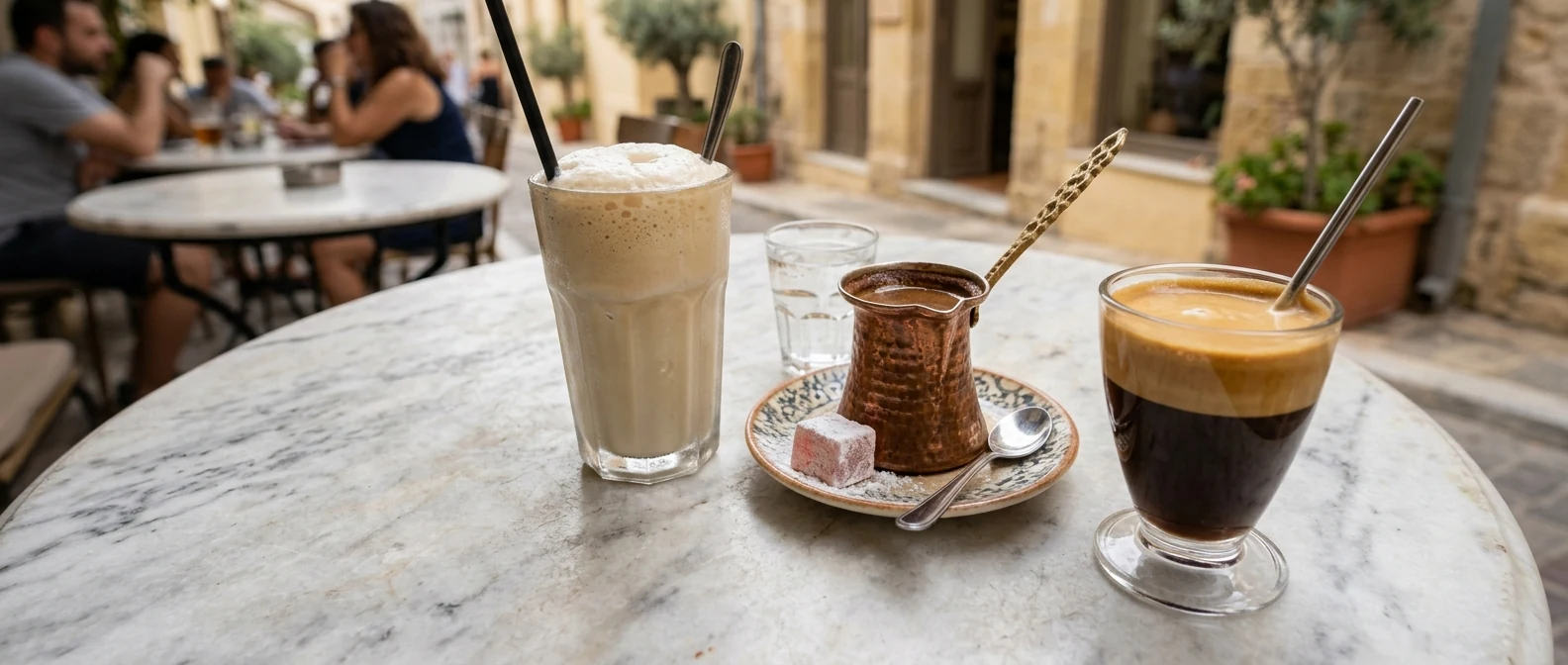
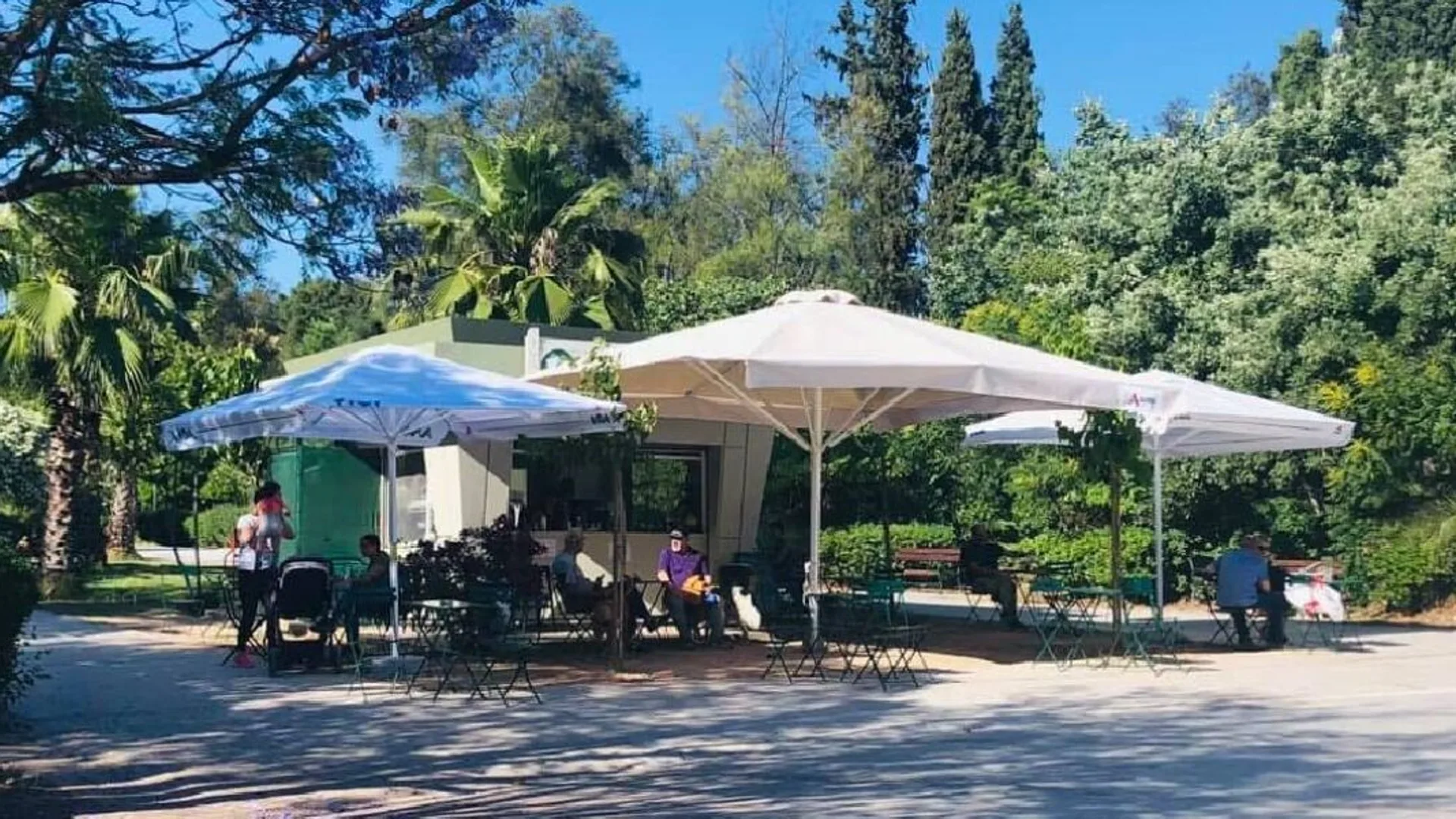
- At a kafeneio — here breakfast is often just coffee and something small from the bakery next door. More of a neighbourhood habit than a full meal.
- At a modern brunch place — in Exarchia and elsewhere you find strapatsada with whipped feta, yoghurt parfaits, and eggs benedict on koulouri. See also the Exarchia brunch guide.
- At a hotel buffet with the official Greek Breakfast label — if you are staying in a hotel, look for the official sign. Without it, the buffet may be little more than omelette, bread, and croissants.
When Greeks eat breakfast
Three small meals, not one big one
Many Athenians do not sit down to one large breakfast. The day often starts with coffee at home around 07:00, continues with a pie or koulouri on the way to work around 09:30-10:00, and then a second coffee later. The main meal is still usually lunch, around 14:00-16:00. For visitors, that means something practical: bakeries are busy around 09:00-10:00, brunch places fill after 11:00, and tavernas wake up later.
Bakeries around Victoria Square
Around Victoria Square, close to Angel Athens, there are several bakeries that open early and work around the rhythm of the neighbourhood. In a short walk, you will usually pass:
- Bakeries with fresh tyropita, spanakopita, and bougatsa from early in the morning.
- The Venetis chain, which started in Athens and now has branches across Greece. See also our Venetis guide.
- Koulouri carts around the square and the nearby streets, especially during working hours.
The difference in price is clear. In a tourist-facing cafe in Plaka, a Greek breakfast plate may cost €8-10. In a bakery near Victoria, a warm pie and a small coffee often stay closer to €2.50-4.50.
Greek ingredients worth trying
Thyme honey (μέλι θυμαρίσιο)
An aromatic honey that works especially well with yoghurt and walnuts. You often see thyme honey from Crete, the Cyclades, or the Peloponnese.
Greek strained yoghurt
Sheep's milk for the more traditional version, cow's milk for the more common modern one. Sheep's milk yoghurt is usually denser and slightly tangier.
Trahanas
Small grains made from wheat and milk or yoghurt. More often eaten as a warm winter soup at home than ordered in a cafe.
Petimezi
A thick syrup made from grape must. It appears on yoghurt, pancakes, and sweets, with a deeper, raisin-like taste than honey.
What it costs
In central Athens, prices change a lot depending on the kind of place:
- Bakery breakfast — €2.50-€4.50 for a pie or koulouri and a small coffee.
- Breakfast at a brunch place — €10-€18 for a plate, specialty coffee, and maybe a fresh juice.
- Mid-range hotel buffet — usually €15-€25, with large differences in quality from hotel to hotel.
How to get there from Angel Athens (Ioulianou 50)
From Ioulianou 50, start on foot. In 1-3 minutes you already reach bakeries on Ioulianou, Ipirou, Patission, and Alkamenous, with no metro and no real planning needed. For a more modern brunch, Exarchia is 12-15 minutes south on foot. For an old-style dairy shop in Plaka, take Line 1 from Victoria to Monastiraki and continue with a short walk.
FAQ
Is Greek yoghurt really different from regular yoghurt?
Yes, especially if you try sheep's-milk yoghurt. Many products sold abroad as Greek-style yoghurt are strained cow's-milk yoghurt, with a different texture and taste. In Athens, it is worth trying sheep's-milk yoghurt or a good strained yoghurt from a Greek brand or smaller producer.
Are bakery items vegetarian?
Most cheese and spinach pies are vegetarian, but if you need certainty, ask about the dough and the fats used. Greek bakeries also often have nistisima items, meaning fasting foods without dairy, especially during Lent.
Where can I buy thyme honey to take home?
At delis, airport duty-free, the central market (see the Varvakeios guide), and shops run by producer cooperatives. Look for thyme honey from Crete or the Peloponnese.
Should I sit down for Greek breakfast or grab something from a bakery?
Ideally, do both on different mornings. A bakery shows you everyday Athens quickly and cheaply, while a sit-down breakfast in a dairy shop or a good cafe gives you more time for yoghurt, honey, eggs, and coffee without rushing.
Sources:
— Kathy