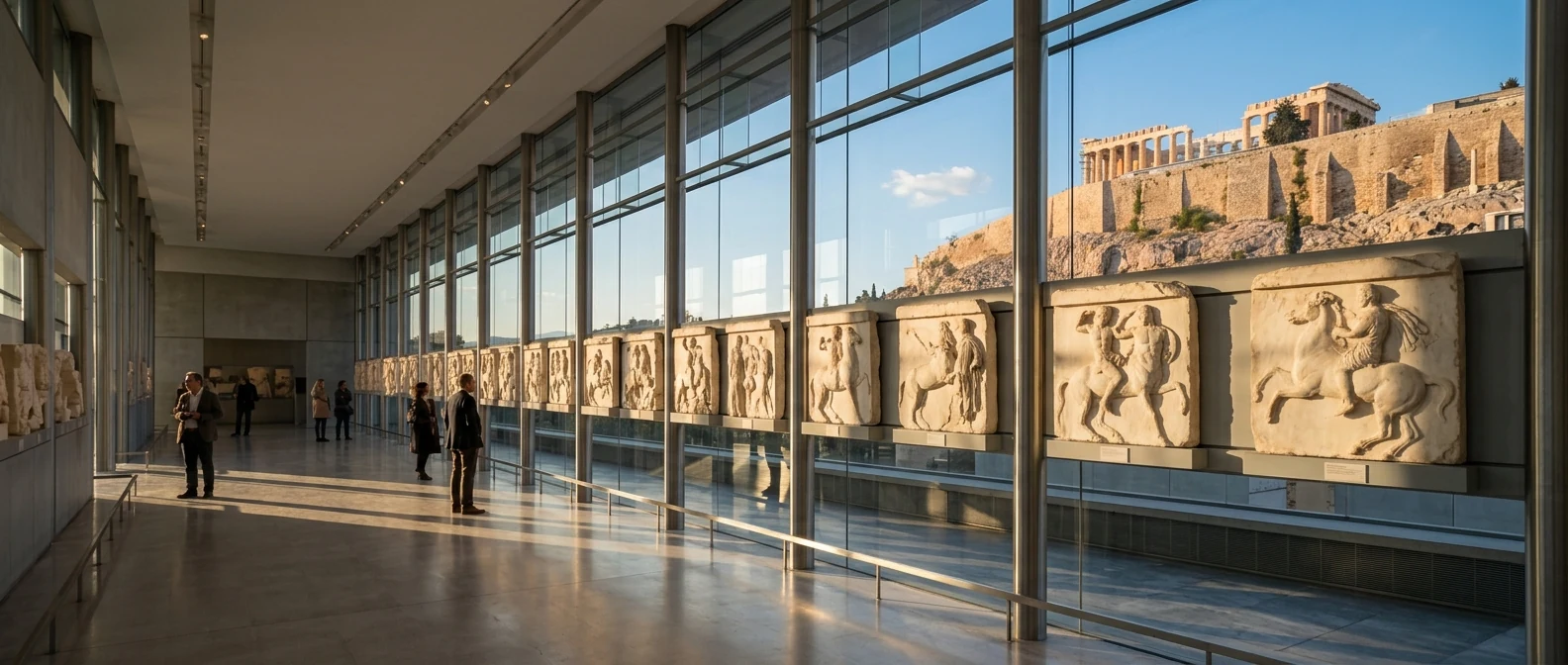
The building was designed by Bernard Tschumi in collaboration with Michalis Photiadis. Its architecture does not try to compete with the Acropolis; it organizes the view toward it. The top floor is aligned with the orientation of the Parthenon so that the Parthenon Gallery can be read together with the monument standing opposite.
The route feels like an ascent. You begin at ground level, above glass openings that reveal the excavation below, and move upward through the galleries of the Acropolis. At the end you reach the Parthenon floor, where the link to the site becomes clearest.
Tickets, opening hours, and practical information
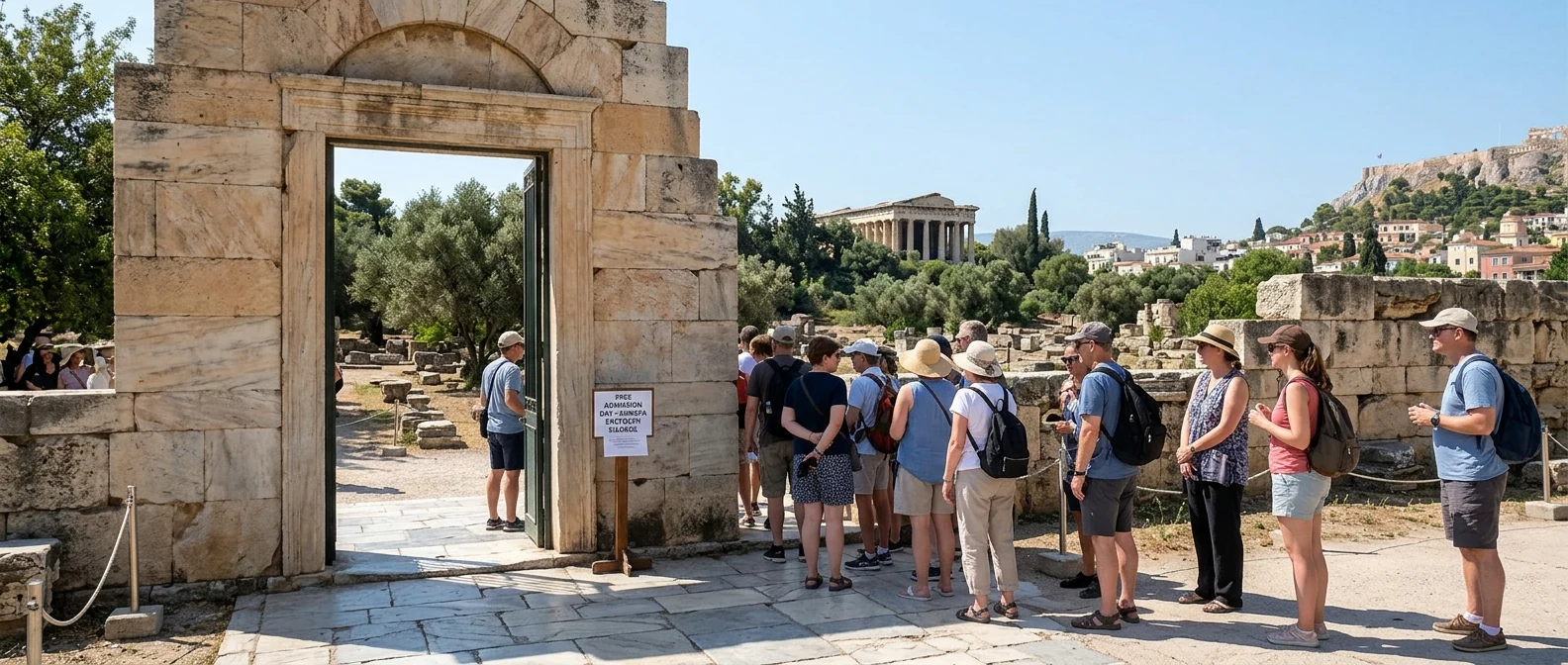
Prices and opening hours change by season, so it is worth checking the official website before you go. Reduced tickets apply to some visitor categories with the right documents, and certain days may offer free entry. You can buy tickets at the entrance or through the museum's official online system.
If you can choose, aim for a weekday morning or a later slot in the day. Weekends, school periods and heavy group traffic can mean more waiting. On days with extended opening hours, the last part of the day is often calmer, but always check the schedule for the exact date you are visiting.
How to get there
From Ioulianou 50, walk a few minutes to Victoria Station. Take Line 1 to Omonia, change to Line 2 and get off at Akropoli. From there, the entrance is across Dionysiou Areopagitou. Allow around 25 minutes door to door.
Address: Dionysiou Areopagitou 15, 11742 Athens. Phone: 210 900 0900.
How the building is laid out
The permanent collection is spread across three main levels. On the ground floor, the glass floor reveals parts of an ancient Athenian neighbourhood uncovered during construction. When the excavation is open to visitors, it is worth giving it a little time before you move up into the galleries.
The rising ramp is the Gallery of the Slopes of the Acropolis. Its incline echoes the approach to the rock. In the cases you see offerings, ceramics and smaller objects from the sanctuaries around the Acropolis, not only large masterpieces but traces of everyday religious life.
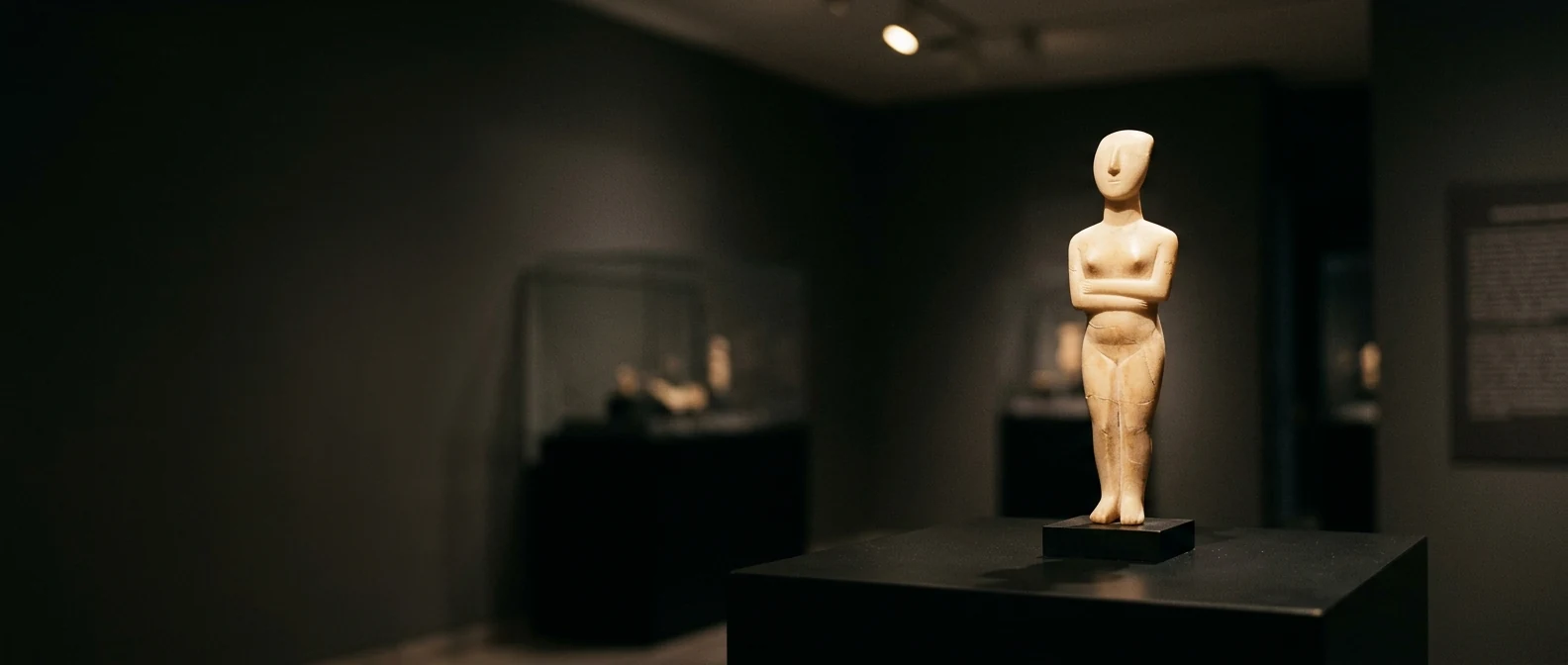
The first floor opens into the Archaic Gallery, a large hall full of korai and kouroi standing almost like a marble crowd. This is where much of the early Athenian sculpture is displayed:
- The Moschophoros — around 560 BC. A young man carries a calf on his shoulders for sacrifice, with the archaic smile still intact.
- The Peplos Kore — around 530 BC. Its original appearance was painted, which helps remind visitors that ancient sculpture was not always the white marble we imagine today.
- The Kritios Boy — around 480 BC. A body beginning to stand more naturally, with weight on one leg and a different sense of movement.
- The Pensive Athena — around 460 BC. Small in scale, but quietly powerful: the goddess leans toward a stele without any theatrical effect.
On the same floor stand five of the original six Caryatids from the Erechtheion. The sixth is in the British Museum. The empty space does not need much explanation. You can see it for yourself.
The Parthenon Gallery
You go up again and enter a glass room aligned toward the Parthenon. The frieze, the metopes and the sculptural elements are presented in a way that helps you understand their position on the original monument. Through the glass, the actual Parthenon remains constantly in view.
Original pieces appear alongside plaster casts of the missing sections. The difference is immediately visible. The museum's argument for the reunification of the sculptures does not rely on a long explanation. The display itself makes the point clear.
The Parthenon Gallery does not separate the sculptures from their place. It puts them back into dialogue with the temple itself.
— Visit note
Visit plan: 90 minutes is enough
You do not need to turn this into an exhausting visit. For a first time, 90 minutes is enough. If you want coffee, the excavation or a slower pace in the Parthenon Gallery, allow two hours.
- 0:00 – 0:15 — Slopes ramp. Read a few labels, look at the votive offerings and glance down through the glass floor.
- 0:15 – 0:50 — Archaic Gallery. Spend most of your time here. Start with the Calf-Bearer; it sets the tone well.
- 0:50 – 1:00 — Caryatids. Walk all the way around them. Most visitors only see one side.
- 1:00 – 1:30 — Parthenon Gallery. This is the room the museum was built around, so do not rush it.
- 1:30 – 2:00 — Coffee on the second floor or a descent to the excavation, if it is open.
Food, coffee, and the view
The cafe and restaurant on the second floor earn their place mainly through the view. You do not need to plan a full meal. Even a coffee is enough to spend a little time facing the Acropolis. At weekends and during busy periods, a reservation or a quick availability check can save you from waiting.
Frequently asked questions
Can I take photos?
Follow the signage in each gallery. In many areas, photography without flash is allowed, but temporary exhibitions or certain rooms may have restrictions.
How long does the visit take?
Ninety minutes is enough for a good first visit. Two hours if you stop for coffee or include the excavation. An audio guide usually adds around half an hour.
Is it worth it before or after the Acropolis itself?
Both orders can work. If you visit the Acropolis first, the museum helps explain what you have just seen on the rock. If you visit the museum first, you go up afterward with a clearer idea of the sculptures and where they belonged. In hot weather, it is usually better to do the Acropolis early and the museum later.