🏛️ The building and the garden
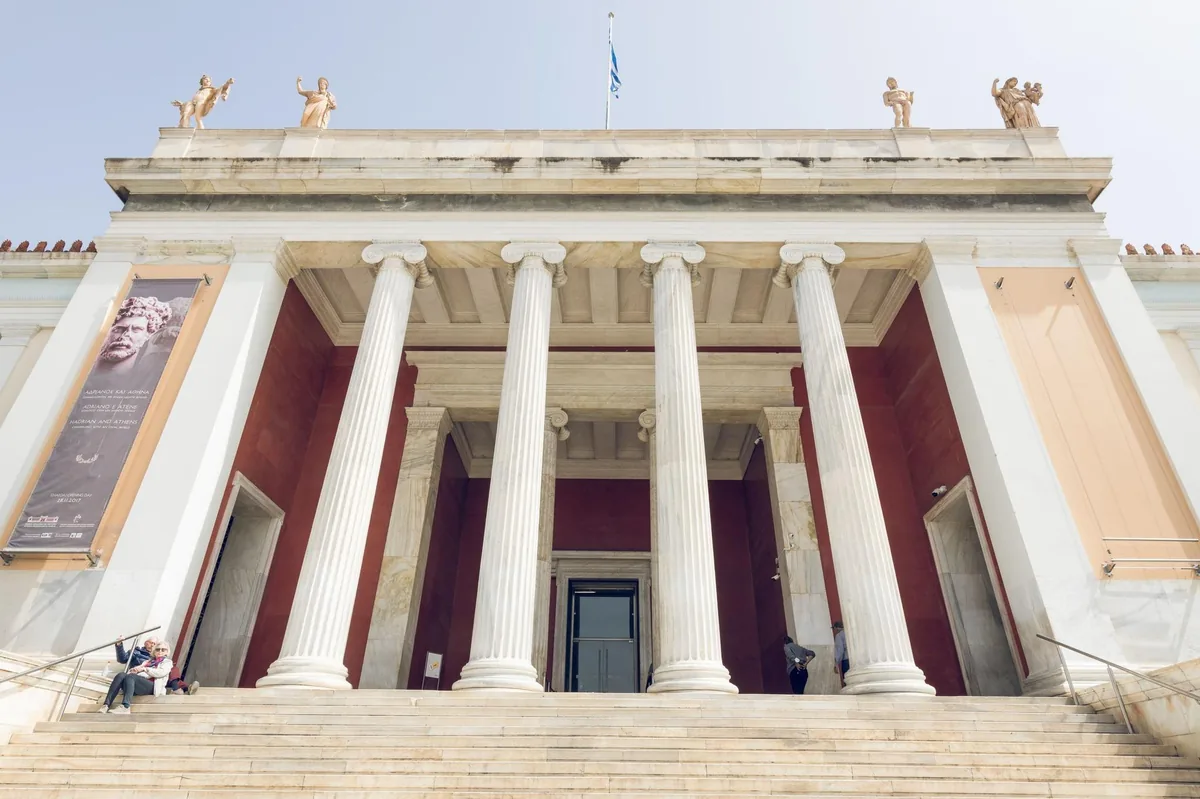
The museum occupies the imposing neoclassical building at 44 Patission (28is Oktovriou) Street, between Victoria and Omonia, right next to the Polytechnic. The foundations were laid in 1866 on land donated by Eleni Tositsa, with funds from the Bernardakis family of St Petersburg, designs by Ludwig Lange and the final façade by Ernst Ziller. It opened its doors in 1889 and was extended eastwards in 1932–1939. In front of it stretches the garden with its palm trees and flower beds — one of the loveliest "courtyards" in Athens, where Polytechnic students and locals sit in the afternoons.
The National Archaeological Museum from outside
Ziller's façade, the garden and the entrance from Patission Street
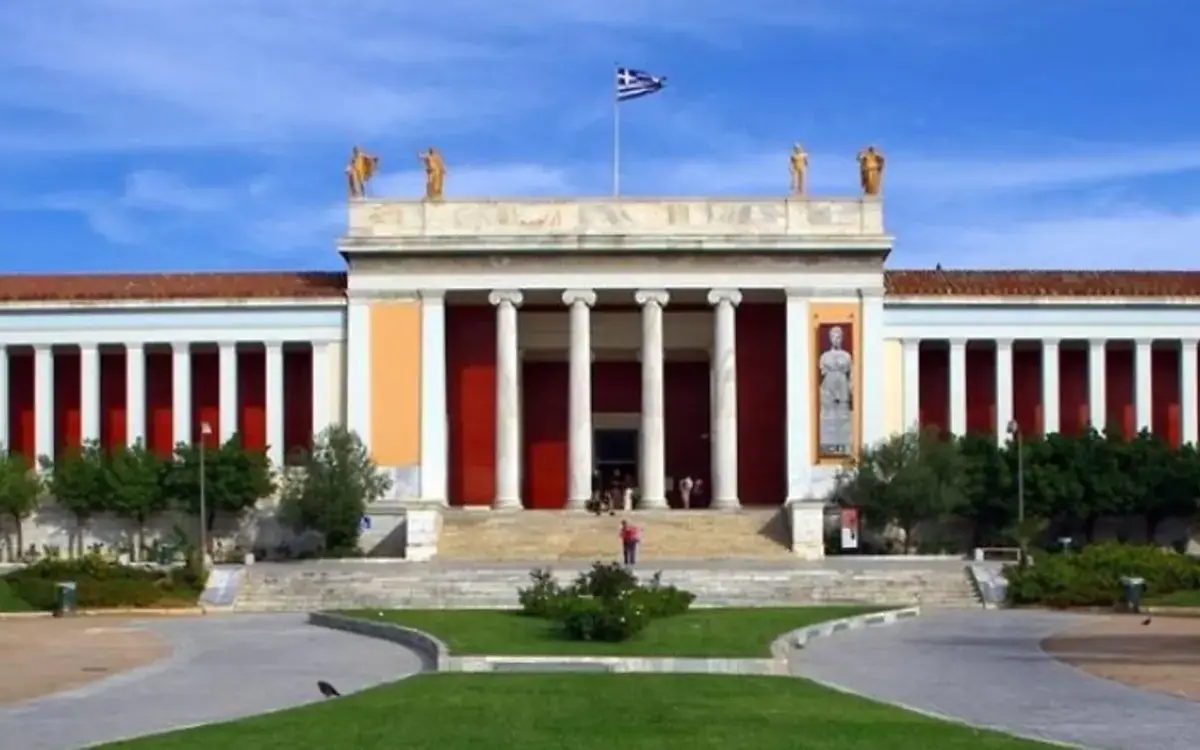
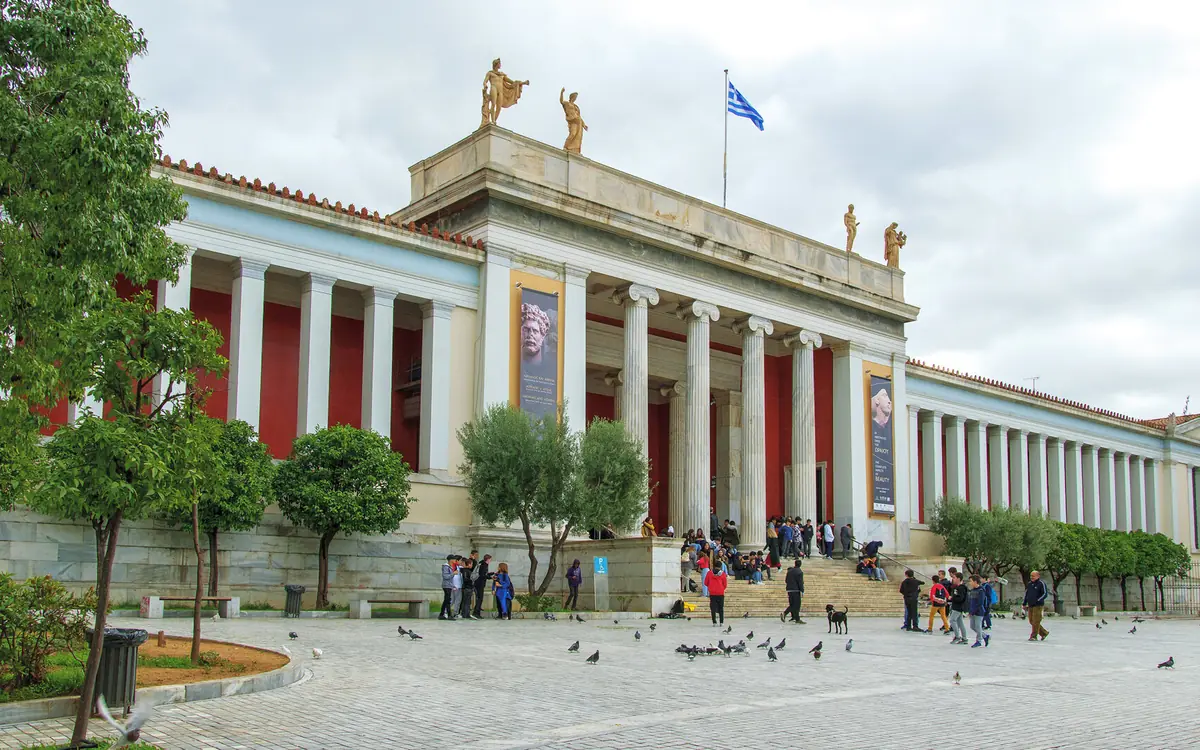
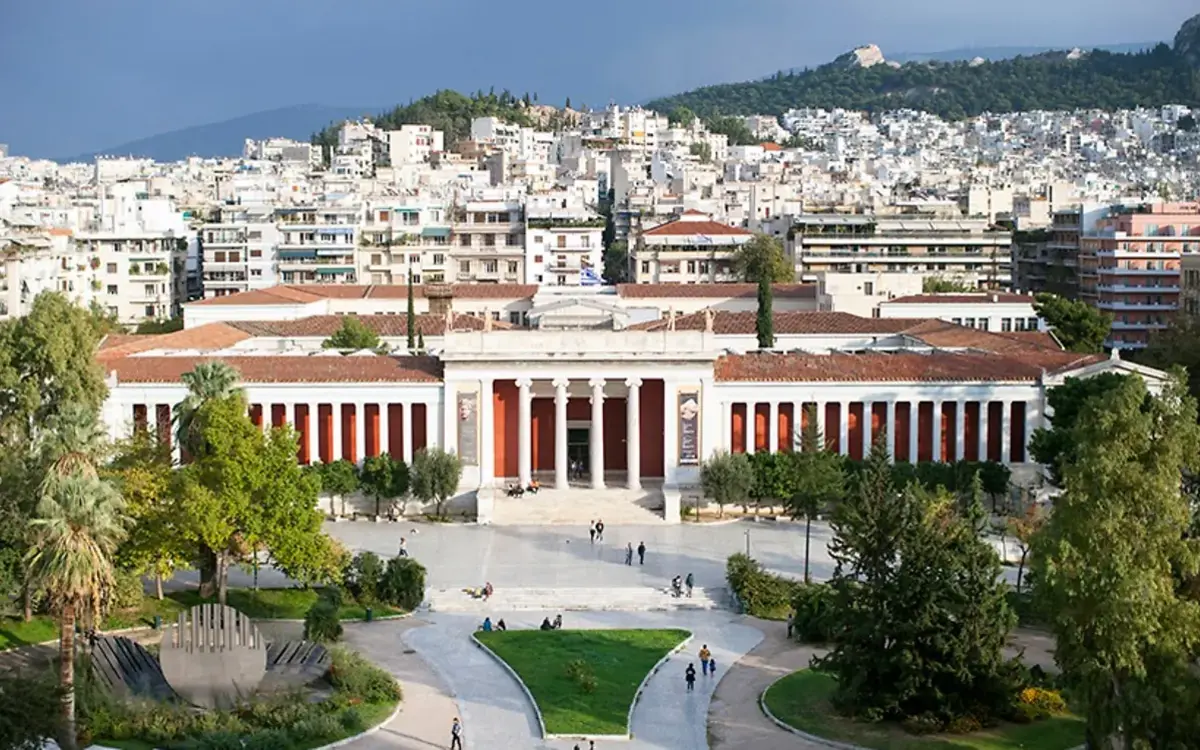
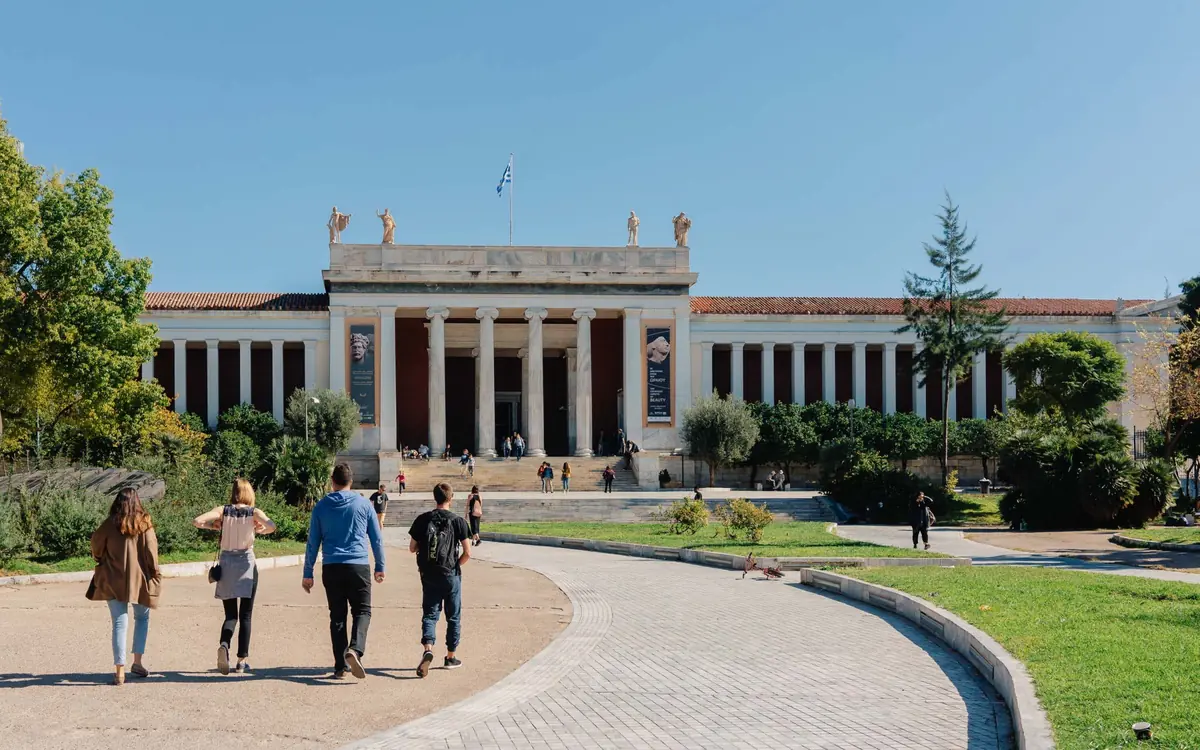
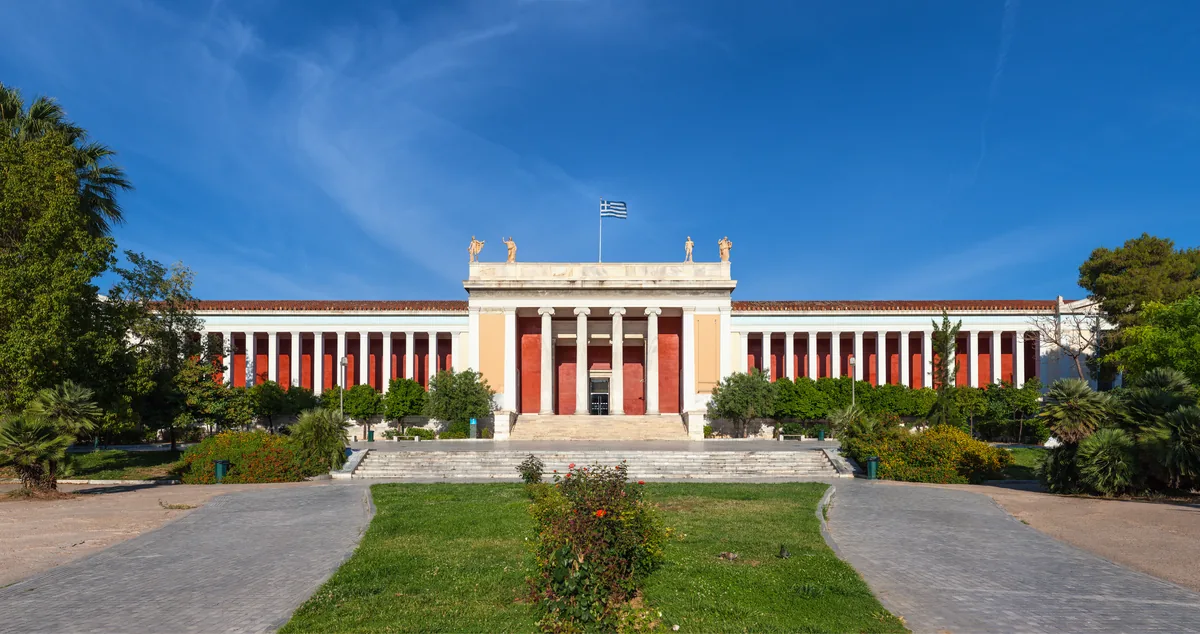
The façade with the Ionic columns and the palms — the museum opened in 1889.
🎬 Video: a walk through the galleries
Before reading about the exhibits, see what the museum looks like inside. The video walks through the Prehistoric, Sculpture and Bronze galleries — you'll recognise several of the works below. Press play to load it (the video is only fetched from YouTube when you ask for it).

🧭 Before you go in: how the museum is laid out
The museum is far too big for a casual stroll. You can easily spend half a day there and leave feeling you've only seen the beginning. It helps to know the logic of the building: on the ground floor are the Prehistoric Antiquities (rooms 3–6, directly opposite the entrance), Sculpture (rooms 7–35, in a loop around the building), the Bronzes (36–39) and the Egyptian Collection (40–41). On the first floor are the Thera frescoes (room 48), the Vase and Minor Arts Collection (49–63) and the Cypriot Collection (64).
Tip: start with the Prehistoric Antiquities. That's where the Mask of "Agamemnon", the Mycenaean finds and the Cycladic figurines are. Early in the morning the route is usually calmer and you can linger a little longer in front of the star pieces. Pick up the map at the entrance (or download the floor plans to your phone) — the room numbers below follow the official numbering.
🏆 The 12 exhibits you must not miss
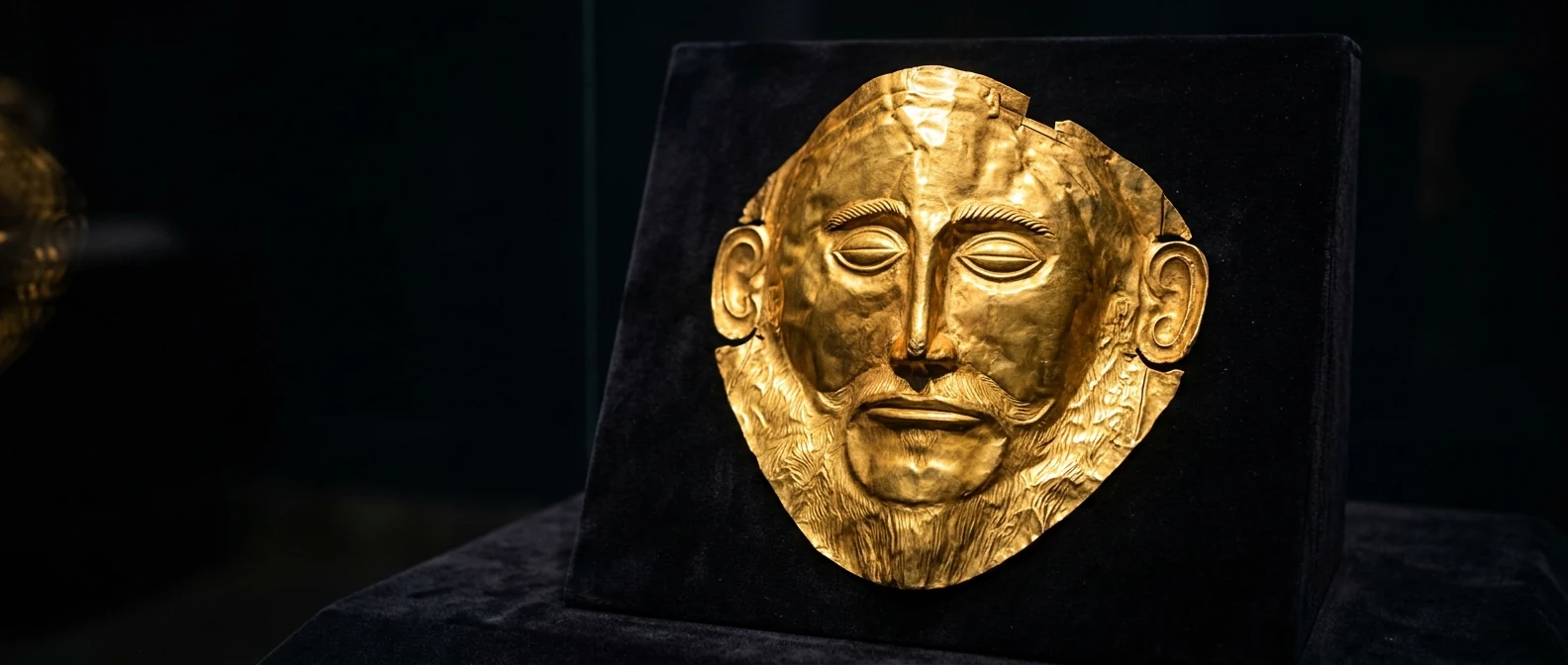
1. The Mask of "Agamemnon"
📍 Room 4 · Ground floor · Mycenaean Collection · c. 1550–1500 BC
Heinrich Schliemann found it in a shaft grave at Mycenae in 1876 and immediately linked it to Agamemnon. The dating, however, places it about three centuries before the Trojan War as we know it from the epic tradition. The name stuck, but the mask is more interesting when you see it as a Mycenaean funerary object: thin gold sheet, closed eyes, a face that looks more like a ritual image than a portrait. In the same room, look at the other, less famous gold masks and the swords with gold inlay — the comparison says a lot.
2. The royal tombs of Mycenae and the Vapheio Cups
📍 Rooms 3–4 · Ground floor · Mycenaean Collection · 16th–15th c. BC
In the same rooms you'll see gold cups, daggers with inlaid hunting scenes, libation vessels, seal stones and the famous "Warrior Vase" — objects that show wealth, technical mastery and contacts with the whole eastern Mediterranean of the Bronze Age. The two Vapheio Cups, with scenes of wild bulls being captured in gold relief, were found in a tholos tomb in Laconia and are considered among the finest examples of prehistoric Aegean metalwork. Take your time: the details are tiny.
3. Cycladic figurines and the "Harpist" of Keros
📍 Room 6 · Ground floor · Cycladic Collection · 3200–2000 BC
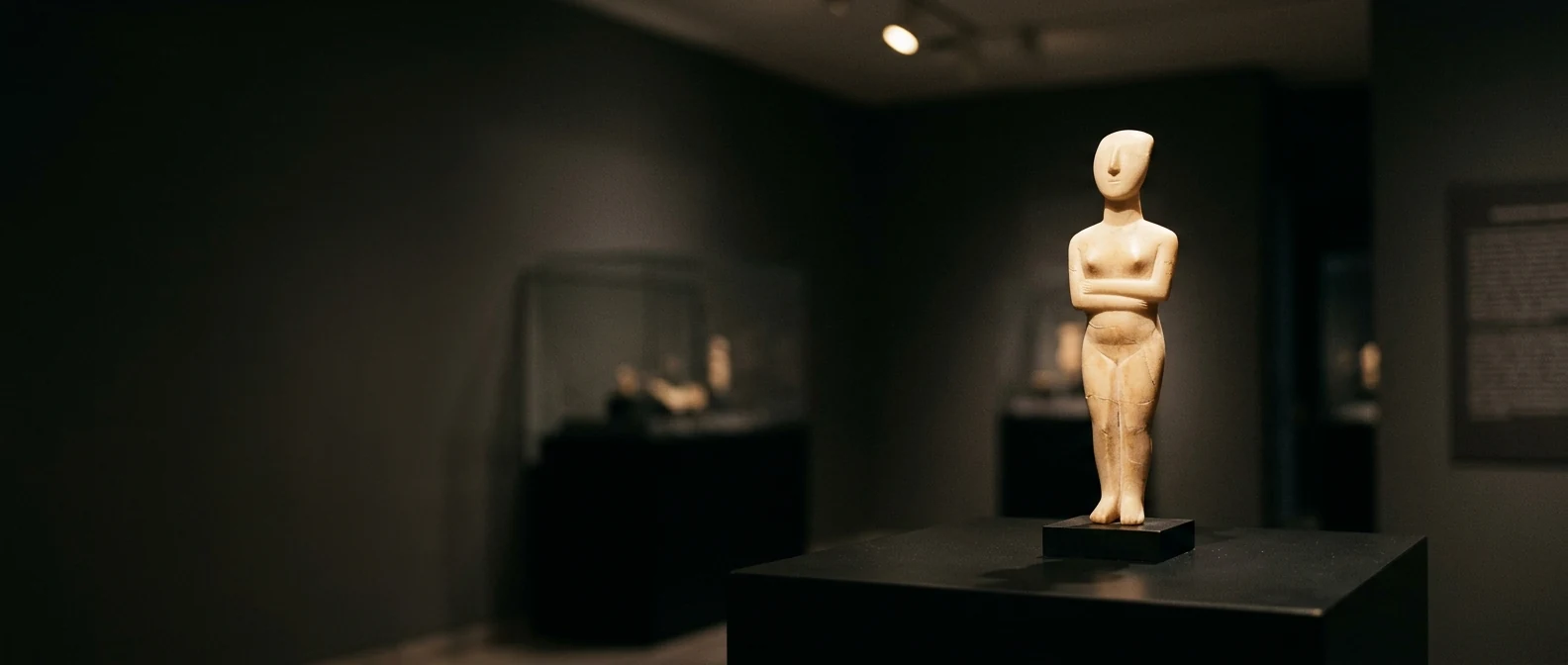
The marble Cycladic figurines are small, austere and far more sophisticated than they look at first glance — it's no accident that they inspired Modigliani, Brancusi and Picasso. Look for the "Harpist", a seated male figure playing a triangular harp, and the large female figurine from Amorgos, 1.5 metres tall. This room is a good, quiet breather before you move on to the sculpture.
4. The Akrotiri frescoes from Thera
📍 Room 48 · First floor · Thera Collection · c. 1600 BC
Akrotiri on Thera: the "Pompeii of the Aegean"
The eruption of the Thera volcano buried the prehistoric town of Akrotiri under volcanic ash, preserving wall paintings of unusual vividness. The "Boxing Children", the "Antelopes" and the "Spring" fresco with its lilies and swallows show an Aegean world that is colourful, maritime and far more familiar than you'd expect from the Bronze Age. The room is dark and cool — a perfect stop on hot days.
5. Linear B tablets
📍 Room 5 · Ground floor · Mycenaean Collection · 1450–1200 BC
Small clay tablets, some no bigger than a credit card, inscribed with the earliest deciphered Greek script: a syllabic system used for accounting records in the Mycenaean palaces of Pylos, Mycenae and Thebes. They survived by pure accident: the palaces burned, the unbaked clay was fired, and the bureaucratic notes endured. Michael Ventris's decipherment in 1952 pushed the history of the Greek language back by about 700 years.
6. The Kouros of Sounion
📍 Room 8 · Ground floor · Archaic Sculpture · c. 600 BC
As soon as you pass from the Prehistoric galleries into Sculpture, the three-metre Kouros of Sounion shows the Archaic figure in its strictest form: frontal, upright, with the familiar "archaic smile" and a body organised in clean lines. It was set up as a votive offering in the sanctuary of Poseidon at Sounion. Keep it in mind when you reach the bronzes of the following rooms — the difference says a lot about how Greek sculpture evolved in just 150 years.
7. The Artemision Bronze (Zeus or Poseidon)
📍 Room 15 · Ground floor · Classical Sculpture · c. 460 BC
Raised from a shipwreck off Cape Artemision in Euboea in 1926–1928. The bronze body, 2.09 m tall, is caught in the moment of throwing — the open hand once held a thunderbolt or a trident, which is why you'll see it called both Zeus and Poseidon. Its value is enormous for one simple reason: original Greek bronzes rarely survive, because most were melted down for their metal in later centuries. It is the star of room 15 and the most photographed statue in the museum.
Inside the galleries
Sculpture and Bronzes — photos from our visit
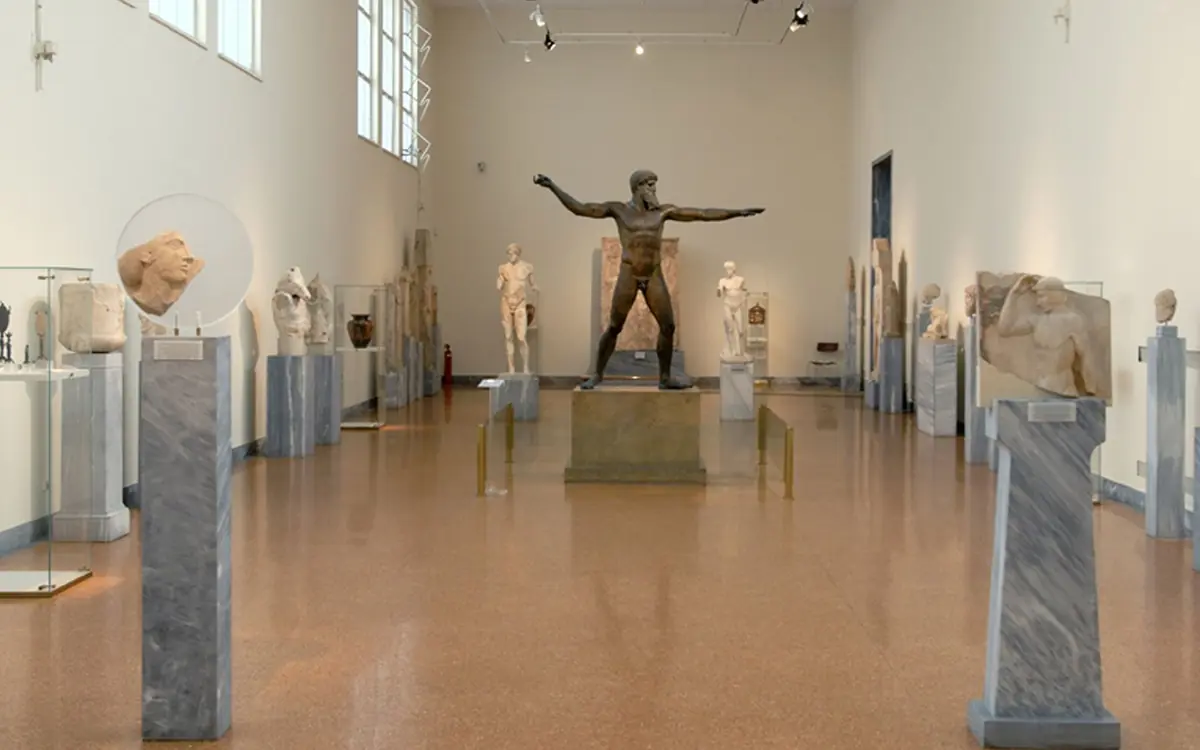
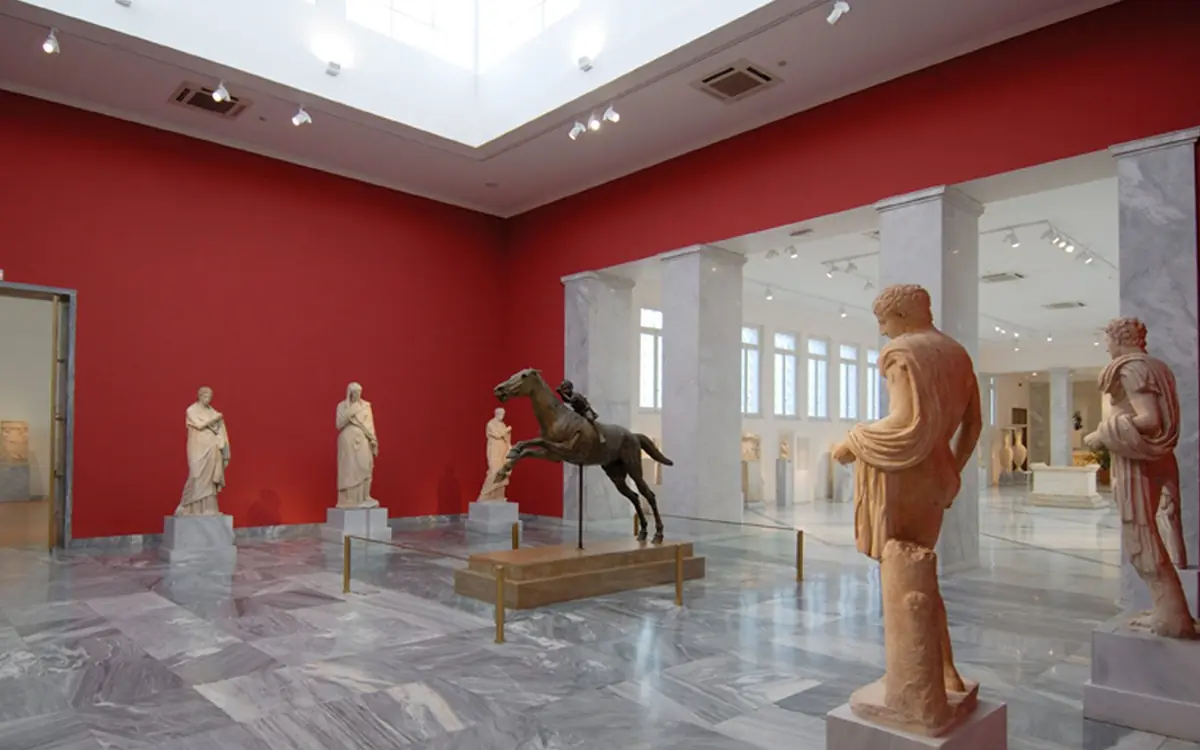
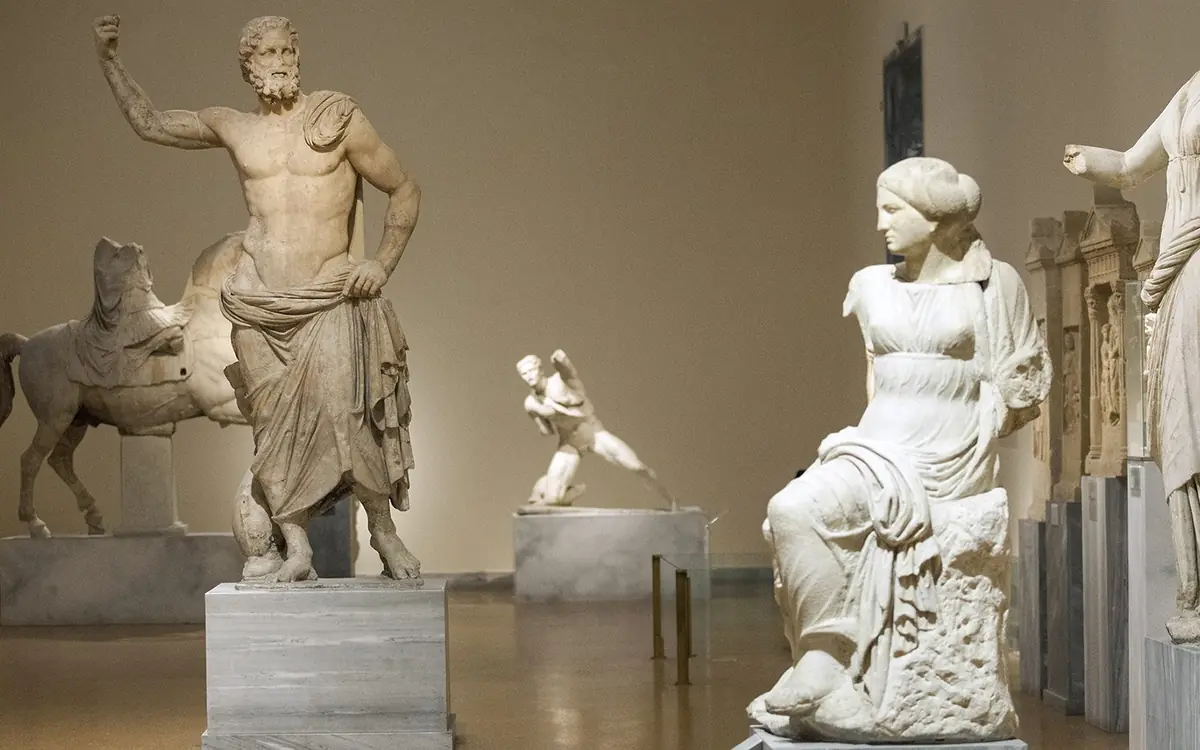
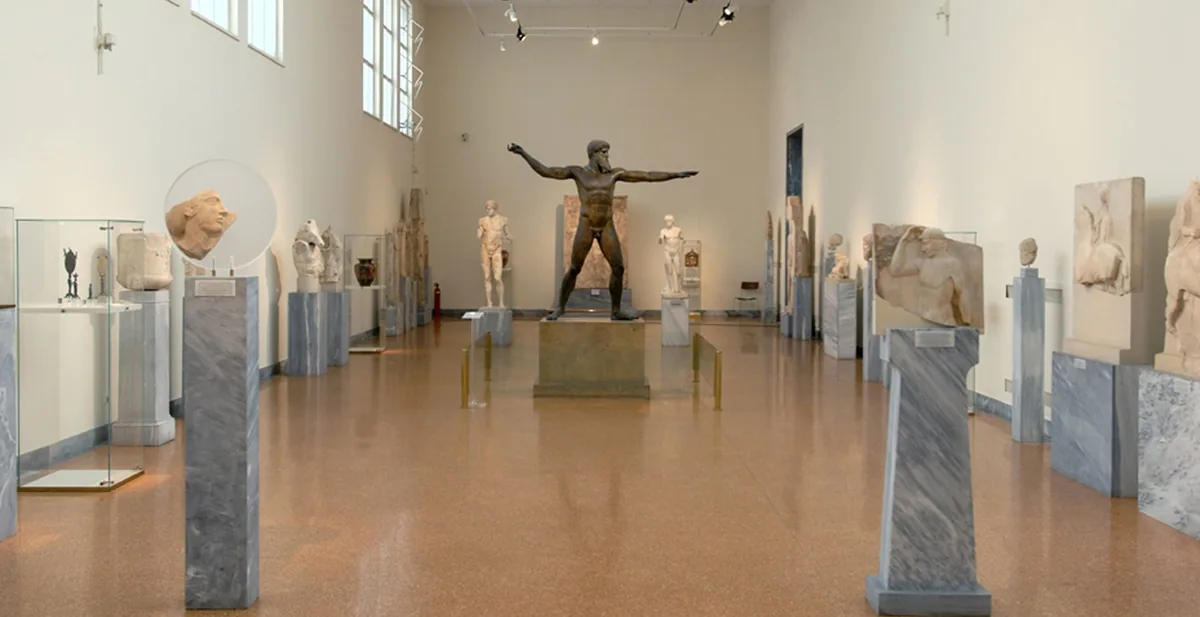
The gallery with the Artemision Bronze — original bronzes are the rarest thing in ancient Greek art.
8. The Marathon Boy
📍 Room 28 · Ground floor · Classical bronzes · c. 340–330 BC
Another original bronze, from the sea off Marathon, where it was found in 1925. The young athlete stands with a slight tilt and originally held something that hasn't survived — perhaps a disc or a lamp. The attribution to the circle of Praxiteles has been much debated, without being certain. See it after the Kouros of Sounion: the distance between the two works shows how much the relationship between body and movement had changed. In the same room stands the bronze Antikythera Ephebe.
9. The Jockey of Artemision
📍 Room 21 · Ground floor · Hellenistic Sculpture · c. 140 BC
From the same shipwreck as the Zeus/Poseidon comes the most "cinematic" work in the museum: a small boy, possibly an African rider, on a horse galloping with legs outstretched. The fragments were raised in two phases (1928 and 1936–37) and the group was only reassembled in 1972. The horse is 2.90 m tall and the child just 84 cm — the contrast in scale makes the movement even more intense. It's the piece you'll look at longest in room 21.
10. The Antikythera Mechanism
📍 Room 38 · Ground floor · Metalwork Collection · 2nd–1st c. BC
The Antikythera Mechanism is one of the main reasons to visit the museum — the oldest known analogue computer in the world. The 82 fragments of the geared bronze device were raised from a shipwreck off Antikythera by sponge divers from Symi in 1900–1901; it calculated the positions of the Sun, Moon and planets, eclipses and the dates of the Olympic Games. Nothing of comparable complexity was made for more than a thousand years afterwards. Don't settle for a first glance: the reconstruction models and the video in the room help enormously in understanding what you're looking at.
11. The bronze "Philosopher" of Antikythera
📍 Room 28 · Ground floor · Hellenistic bronzes · c. 240–200 BC
From the same shipwreck comes the so-called "Philosopher": a head with unkempt hair, a beard, wrinkles and a gaze that follows you. We don't need to know for certain whom it depicts (the Cynic Bion of Borysthenes and others have been proposed) to understand its significance. Hellenistic art here leaves behind the ideal youth of the Classical period and looks at the face with far greater psychological intensity.
12. The Dipylon Amphora
📍 Room 49 · First floor · Vase Collection · c. 760–750 BC
Upstairs, at the start of the Vase Collection, the Dipylon Amphora (1.55 m tall) shows Geometric art on a monumental scale: bands of meanders, rows of animals and, on the neck, a scene of a dead woman laid out with mourners clutching their heads. It served as a grave marker in the Dipylon cemetery at Kerameikos. It's a good final stop, because it takes you away from the "big names" and reminds you how powerful pottery can be.
🎁 Bonus: 8 more works if you have time
- The Kouros of Aristodikos (room 13, c. 500 BC) — the last step before the Classical style.
- The Great Eleusinian Relief (room 14, c. 440 BC) — Demeter, Persephone and Triptolemos in high Classical style.
- The Grave Stele of Hegeso (room 18, c. 410 BC) — the most tender funerary monument in Athens.
- The Varvakeion Athena (room 20) — the most faithful copy of Phidias' gold-and-ivory Athena Parthenos.
- Aphrodite, Pan and Eros (room 30, c. 100 BC) — the museum's most humorous sculpture, from Delos.
- The Poseidon of Melos (room 30, c. 130 BC) — a monumental Hellenistic deity.
- The Egyptian Collection (rooms 40–41) — mummies, sarcophagi and one of the most important Egyptian collections outside Egypt, from the Dimitriou (1880) and Rostovitz (1904) donations.
- The Cypriot Collection (room 64, first floor) — around 850 works, the richest Cypriot collection outside Cyprus.
📜 The museum's history — and how the statues were saved in the war
The National Archaeological Museum is the first museum founded by the Greek state, in 1829, initially on Aegina, then the capital. It moved to Athens in 1834 and passed through several buildings (the Theseion, Hadrian's Library, the Tower of the Winds, the University) before getting its own home on Patission Street. The collections grew rapidly with the excavations of the 19th century — Mycenae, Sounion, Epidaurus, Delos, Antikythera — and in 1932–1939 the east wing by G. Nomikos was added.
November 1940: the museum "buries" its treasures
A few days after Greece entered the Second World War, the museum's management was ordered to hide all the antiquities. Within six months, archaeologists, conservators, guards and workmen laboured day and night: the marble statues were buried in trenches dug into the floors of the galleries themselves and covered with sand and concrete; the bronzes and pottery were packed into 57 crates hidden in the cave of Enneakrounos and the so-called "Prison of Socrates" on Philopappos Hill, while the gold treasures of Mycenae went down into the vaults of the Bank of Greece. During the Occupation the Germans demanded that 103 statues be re-erected for their soldiers — director Christos Karouzos and Semni Karouzou refused. In December 1944, during the Dekemvriana fighting, mortar shells hit the roof; the buried marbles were untouched. Unearthing began in June 1946, and the poet George Seferis, who watched it, spoke of "a dance of resurrection". The museum gradually reopened from 1947.
The 1999 earthquake caused damage and led to the major renovation of 2002–2004 ahead of the Olympic Games. The collections reopened one by one until 2009, with new displays and lighting. The Numismatic Museum, which had been housed here, moved to the Iliou Melathron, Schliemann's mansion on Panepistimiou Street. A large underground extension beneath the garden, designed by David Chipperfield, has been announced for the coming years — when complete, the museum will almost double its exhibition space.
🕐 Opening hours 2026
| Period | Wednesday – Monday | Tuesday |
|---|---|---|
| Winter 16 Nov 2025 – 3 May 2026 | 08:30 – 15:30 last admission 15:00 | 13:00 – 20:00 last admission 19:30 |
| Summer 4 May – 15 Nov 2026 | 08:00 – 20:00 last admission 19:30 | 13:00 – 20:00 last admission 19:30 |
- Closed: 1 January, 25 March, 1 May, Orthodox Easter Sunday, 25 & 26 December.
- On Tuesdays the museum opens late (13:00) — but stays open until 20:00 all year round. It's the best day for a quiet afternoon visit in winter.
- Hours change from year to year; confirm them on the museum's official page before you go.
🎟️ Tickets and free days
€20
Full ticket (single price all year round).
€10
Reduced: EU citizens 65+, non-EU students, unemployment card holders etc. — with ID.
Free
Children and young people up to 25 from the EU, children up to 5 from non-EU countries, disabled visitors with a companion, EU students.
E-tickets are issued at tickets.hh.gr (Hellenic Heritage) — there are no time slots, the ticket is valid for the day you choose and it saves you the queue at the desk. There are also physical ticket desks at the entrance. The ticket is not included in the Acropolis combined ticket (see our guide to the combined ticket).
📅 Free admission days
- 6 March (Melina Mercouri memorial day)
- 18 April (International Day for Monuments)
- 18 May (International Museum Day)
- Last weekend of September (European Heritage Days)
- 28 October
- Every 1st and 3rd Sunday from 1 November to 31 March
More in our article Free museum days in Athens 2026.
🚇 How to get there
Address: Patission (28is Oktovriou) 44, 106 82 Athens · Google Maps · Tel. +30 213 214 4800
An 8-minute walk: Ioulianou → Patission, turn right and the museum is on your left, just past the Polytechnic. See the route step by step in our article on the walk from Victoria.
Line 1 (green) "Victoria": 8 minutes on foot. Line 2 (red) "Omonia": 12 minutes. From Syntagma → Omonia, 2 stops.
Buses: Β5, Α6, Β6, Ε6, Α7, Β7, Ε7, Α8, Β8, Α12, Β12, Γ12, Ε12, 022, 035, 046, 060, 200, 224, 605, 608, 622.
Trolleybuses: 2, 3, 4, 5, 6, 7, 8, 9, 11, 13, 14.
Metro Line 3 to Syntagma or Monastiraki and change for Omonia/Victoria (approx. 50 minutes), or the X95 bus to Syntagma.
📍 From Angels Athens to National Archaeological Museum
See at a glance how to get from the apartment at Iouliánou 50. Drag the map and zoom in for details.
♿ Accessibility
- Accessible entrance: a separate entrance on the Vas. Irakleiou Street side (the side street to the right of the façade). You reach it either by ramp from the front garden or directly from the Vas. Irakleiou pavement. The main entrance has steps.
- A lift connects the ground and first floors (priority for visitors with mobility impairments). The ground-floor galleries are level, with only a few small changes in height.
- A wheelchair can be requested from the entrance staff, subject to availability — best to phone ahead (+30 213 214 4800).
- Accessible toilets on the ground floor. Free WiFi and a cloakroom for backpacks (large backpacks must be checked in).
- The museum offers a digital virtual tour for people with mobility or hearing impairments, and organises touch tours for blind visitors by arrangement.
- Admission: free for disabled visitors and one companion, on presentation of the relevant document.
☕ The café in the garden: "O Kipos tou Mouseiou"
One of the best-kept secrets in the area: the museum café operates in the inner garden-patio, with tables under the trees, among ancient architectural fragments and planting renewed with 700 new plant species. Best of all: entry to the café is free, no ticket required — you go in through the secondary entrance to the right of the main staircase. It keeps museum hours, with extended hours in the summer months.
O Kipos tou Mouseiou (The Museum Garden)
Coffee, light food and wine under the trees — no ticket needed
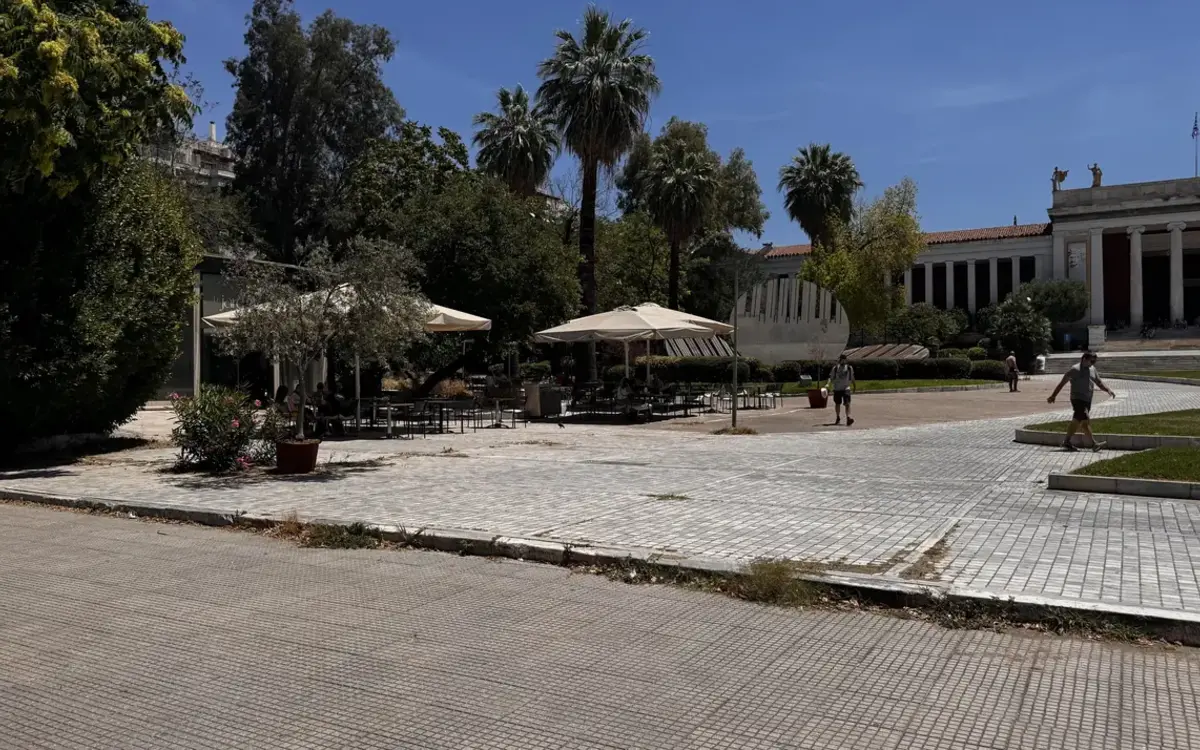
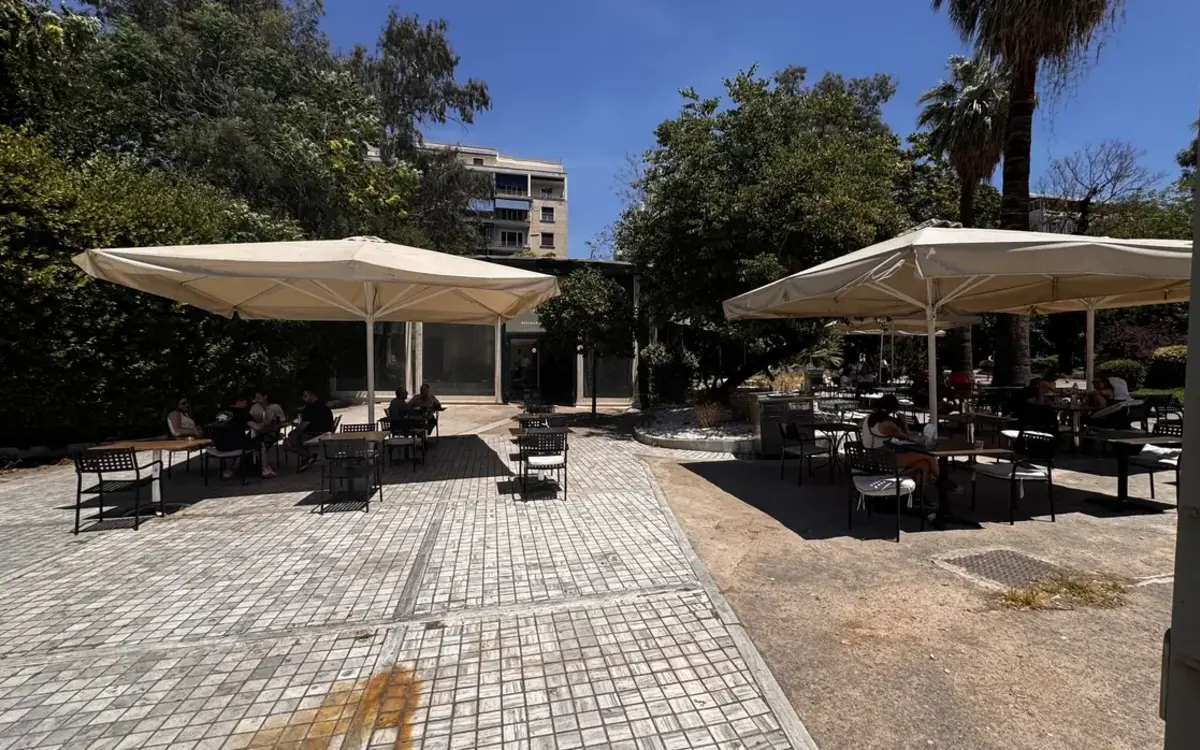
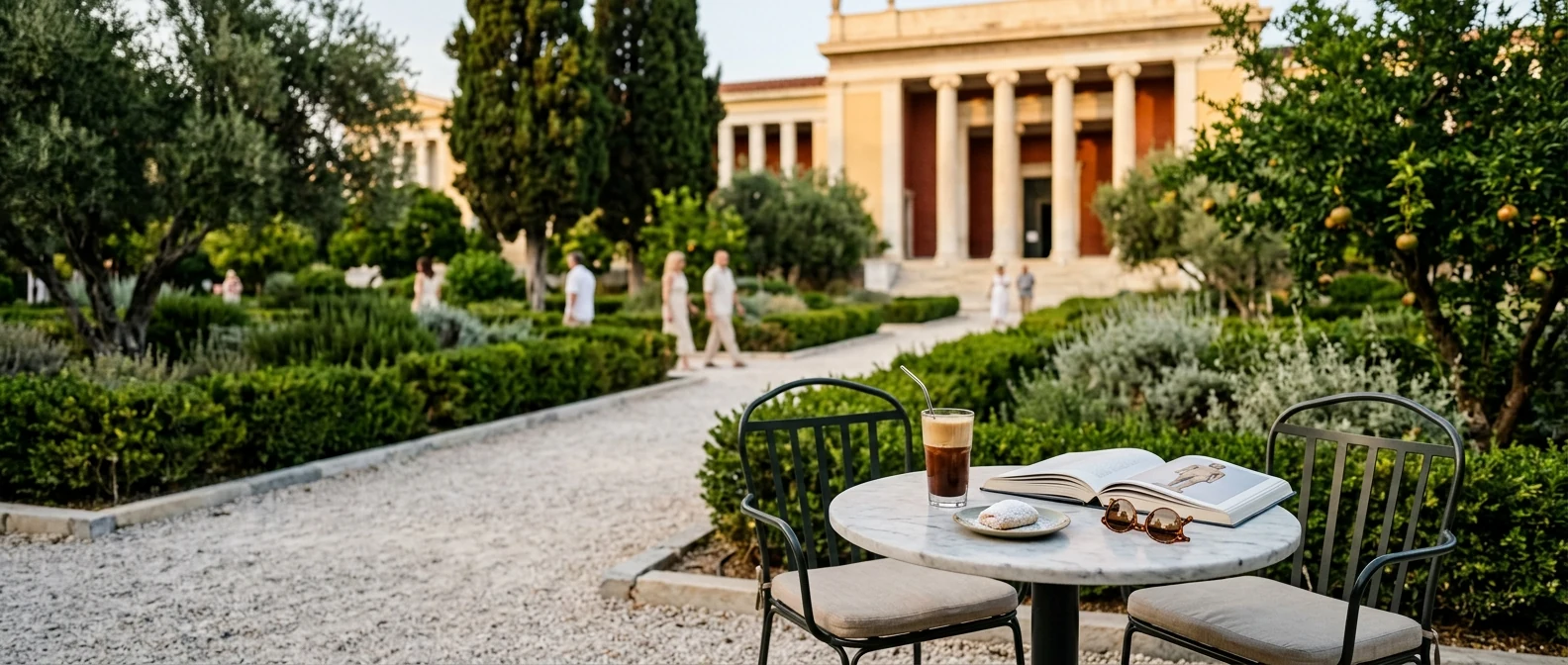
The tables in the garden — one of the quietest corners of central Athens.
On the menu: specialty espresso and freddo, fresh juices, salads, sandwiches, pies and small plates, Greek wines by the glass. Prices are reasonable for a museum (coffee €3–4, plates €7–14). The space hosts art exhibitions and music evenings during Ministry of Culture events — International Museum Day, the August Full Moon, European Heritage Days. We wrote about the café in detail in O Kipos tou Mouseiou: coffee in the garden of the National Archaeological Museum.
🛍️ The museum shop
The museum shop reopened, renovated and under new management, in August 2025 and keeps the museum's days and hours. You'll find the museum's official publications and catalogues, faithful replicas of exhibits (Cycladic figurines, the Mask of Agamemnon in various sizes, the Antikythera Mechanism), jewellery inspired by the collection and quality souvenirs — a far better choice than the tourist shops of Plaka for a gift with meaning.
⏳ How much time to allow — 3 ready-made routes
90 minutes — the highlights
Mask of Agamemnon (room 4) → Cycladic (6) → Kouros of Sounion (8) → Zeus/Poseidon (15) → Jockey (21) → Marathon Boy (28) → Antikythera Mechanism (38). All on the ground floor, in a logical order.
3 hours — recommended
All 12 exhibits at a relaxed pace, plus the Sculpture bonus, the Thera frescoes (48) and the vases on the first floor. Coffee break in the garden halfway through.
5+ hours — the full museum
All six collections, including Egyptian and Cypriot, with lunch in the garden. Or split it over two visits — you're staying 8 minutes away.
💡 10 tips from Kathy
- Go early or on a Tuesday afternoon. Cruise-ship groups arrive between 10:30 and 13:00. At 08:30 you'll have the Mask almost to yourself.
- Start with the Prehistoric galleries (rooms 3–6) and continue clockwise through Sculpture — that way you see the art in chronological order.
- Download the floor plans (PDF from namuseum.gr) before you go in. The building is a labyrinth.
- Photography without flash is allowed for personal use. No tripods or selfie sticks. Don't pose "imitating" the statues — staff will stop you.
- Large backpacks go to the cloakroom (free). Take only your phone and water with you.
- Buy an e-ticket at tickets.hh.gr to skip the queue, especially April–October.
- The café needs no ticket — you can go just for a coffee in the garden, even on days you're not visiting the museum.
- With children: aim for the Mechanism, the Jockey, the bronzes and the Egyptian mummies. One hour, then out for ice cream.
- Combine it with a walk in Pedion tou Areos park (5 minutes) or along historic Patission Street.
- Check the temporary exhibitions — they're often excellent and included in the ticket.
🏠 From Angel Athens
The National Archaeological Museum is the great advantage of staying in Victoria. From Ioulianou 50 it's an 8-minute walk — no metro, no taxi — so you can split it into two visits, come back for coffee in the garden, or go on a Tuesday afternoon when the galleries empty out. In the morning, before the groups arrive, you're there within 10 minutes of getting out of bed. See the route with photos in National Archaeological Museum from Victoria: a 10-minute walk and all the nearby sights in our Museums category.
❓ Frequently asked questions
How much is a ticket to the National Archaeological Museum?
€20 full and €10 reduced, all year round. Free for children and young people up to 25 from EU countries, disabled visitors with a companion, and for everyone on free-admission days (6 March, 18 April, 18 May, last weekend of September, 28 October, 1st and 3rd Sundays from November to March).
What are the opening hours?
In winter (mid-November to early May) Wednesday–Monday 08:30–15:30 and Tuesday 13:00–20:00. In summer (May to mid-November) Wednesday–Monday 08:00–20:00 and Tuesday 13:00–20:00. Last admission 30 minutes before closing. Closed 1 Jan, 25 Mar, 1 May, Easter Sunday, 25–26 Dec.
How long does a visit take?
90 minutes for the ground-floor highlights, 3 hours for a full visit including the first floor, 5+ hours if you want to see all six collections. If you're staying nearby, it's more pleasant to split it over two days.
Is it worth the trip just for the Antikythera Mechanism?
For anyone interested in the history of science or technology, yes. It isn't the most spectacular exhibit at first glance, but the more you understand what it did, the more impressive it becomes. The reconstruction models in room 38 help a lot.
Can you visit with children?
Yes, but keep the route short. For younger children pick a few exhibits with a clear image: the Mechanism, the Jockey of Artemision, the Cycladic harpist, the Egyptian mummies and the bronzes. The garden café is ideal for a break. If you try to see the whole museum, they'll tire quickly.
Is it wheelchair accessible?
Yes. There's a separate accessible entrance on Vas. Irakleiou Street with a ramp, a lift to the first floor and accessible toilets. Admission is free for the disabled visitor and their companion.
Is photography allowed?
Yes, without flash, for personal use. Tripods, professional equipment and commercial use require a permit. Posing in imitation of the exhibits is not allowed.
Can I go to the café without a ticket?
Yes. Entry to the café and garden is free, via the secondary entrance to the right of the main staircase, during museum hours.
Is it closer to the Acropolis or to Omonia?
Omonia — about 12 minutes on foot north of the metro station, and 8 minutes from Victoria station. From the Acropolis it's a 30–35 minute walk through the centre, or metro Line 2 from Akropoli to Omonia (3 stops).
Sources:
- National Archaeological Museum — Visit (hours, access, disabled visitors, café, shop)
- National Archaeological Museum — Collections
- National Archaeological Museum — History of the Museum
- National Archaeological Museum — The rescue of the statues 1940–1944
- Hellenic Heritage (hh.gr) — tickets, free days, access
- tickets.hh.gr — e-tickets
- National Archaeological Museum, Athens — Wikipedia
Photos of the galleries and café are from our own visits. The video tour belongs to its creator on YouTube.
— Kathy