The short answer
Yes, the Victoria Square area works for visitors who use basic city awareness. It is not a polished tourist zone like Plaka, and it is not an expensive residential district like Kolonaki. It is a real central neighbourhood, lively through the day and quieter on some streets late at night. For visitors, the main risk is petty theft in the metro, on the square and in other busy places, not violent crime.
The practical picture
Pickpocketing
The most common issue for visitors in central Athens. Pay attention in the metro, on platforms, along Patission and in busy squares.
Violent crime
Not what usually concerns a visitor in this area. Use the same care you would in any central neighbourhood.
Drug-related activity
On some streets toward Omonoia, quite far from our area, you may see harder sides of the city centre. Do not engage, do not photograph people and keep walking on a main road.
Police presence
You will often see patrols or police presence around central roads and stations.
Reality check: day versus night
Daytime (07:00–22:00)
- Comfortable for most visitors, including solo travellers, families and older people.
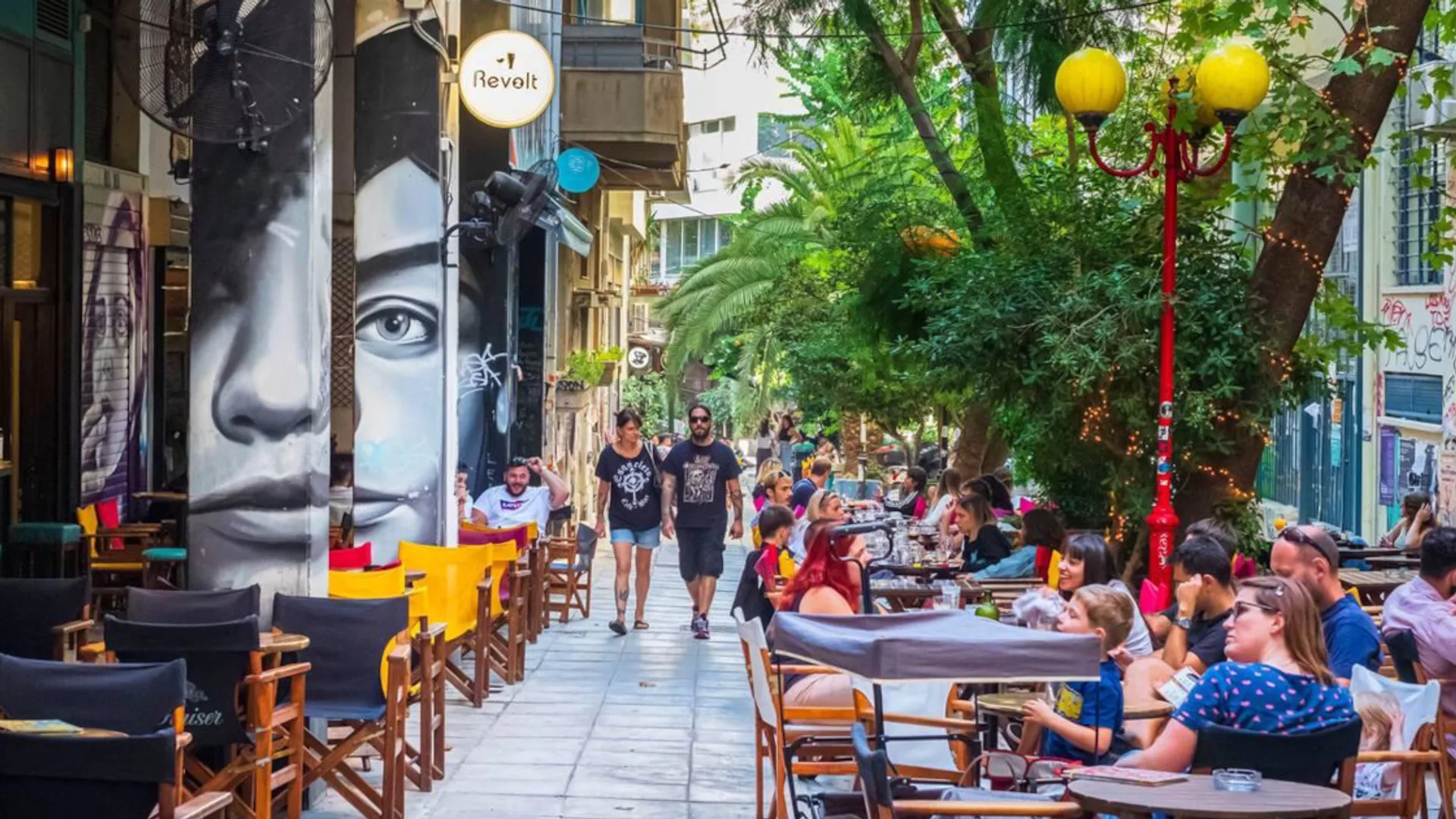
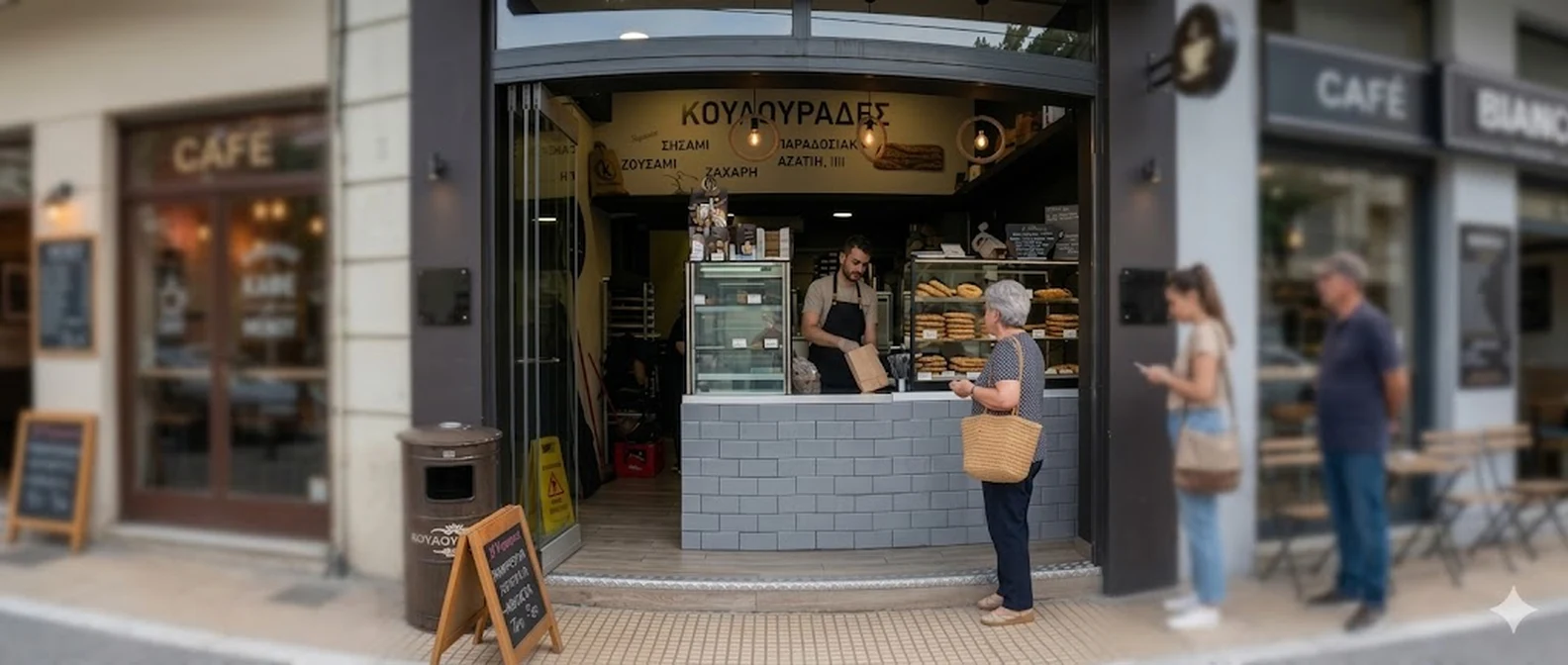
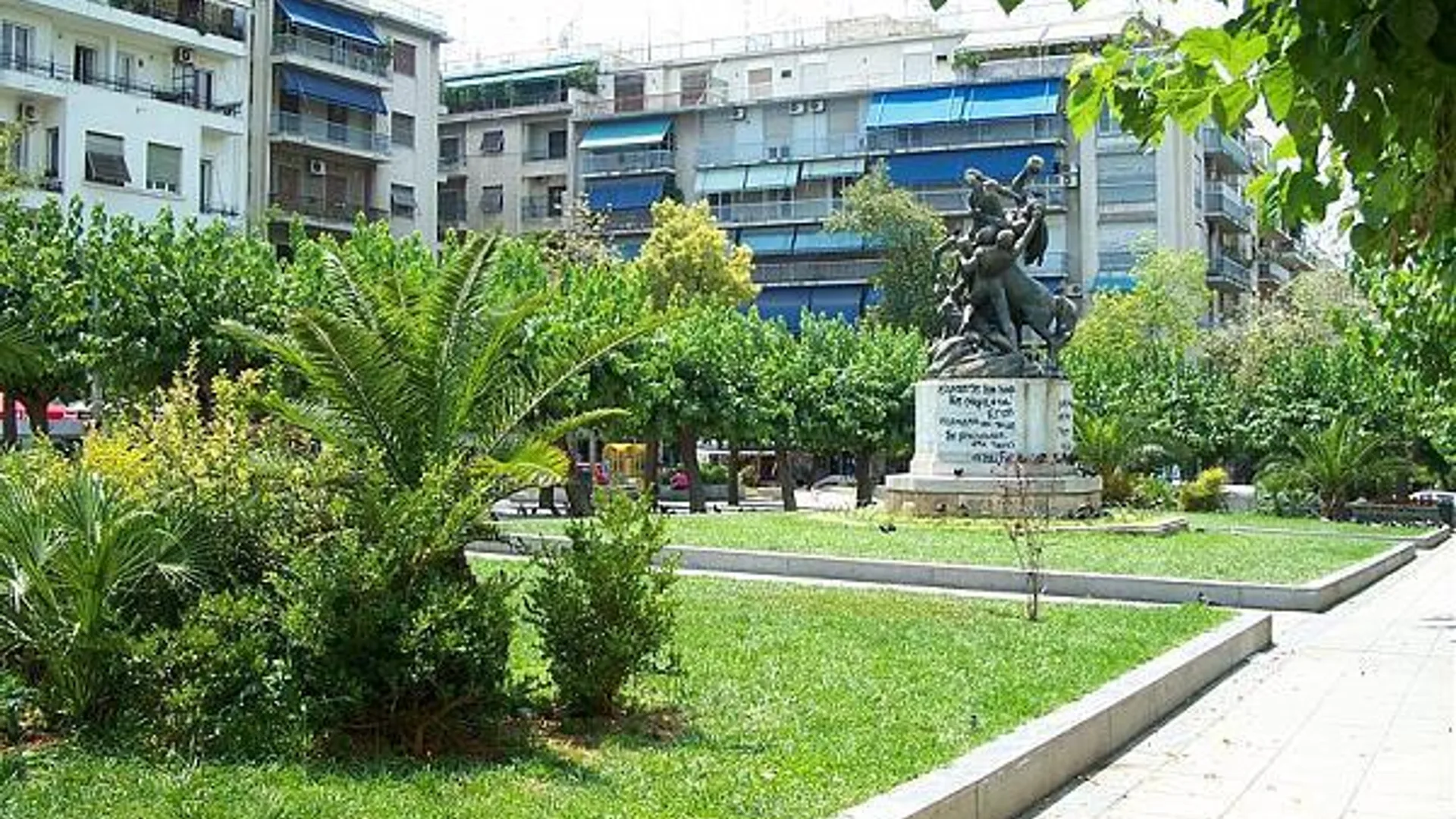
- Cafes and shops are busy. The square fills with locals, children, pensioners and families.
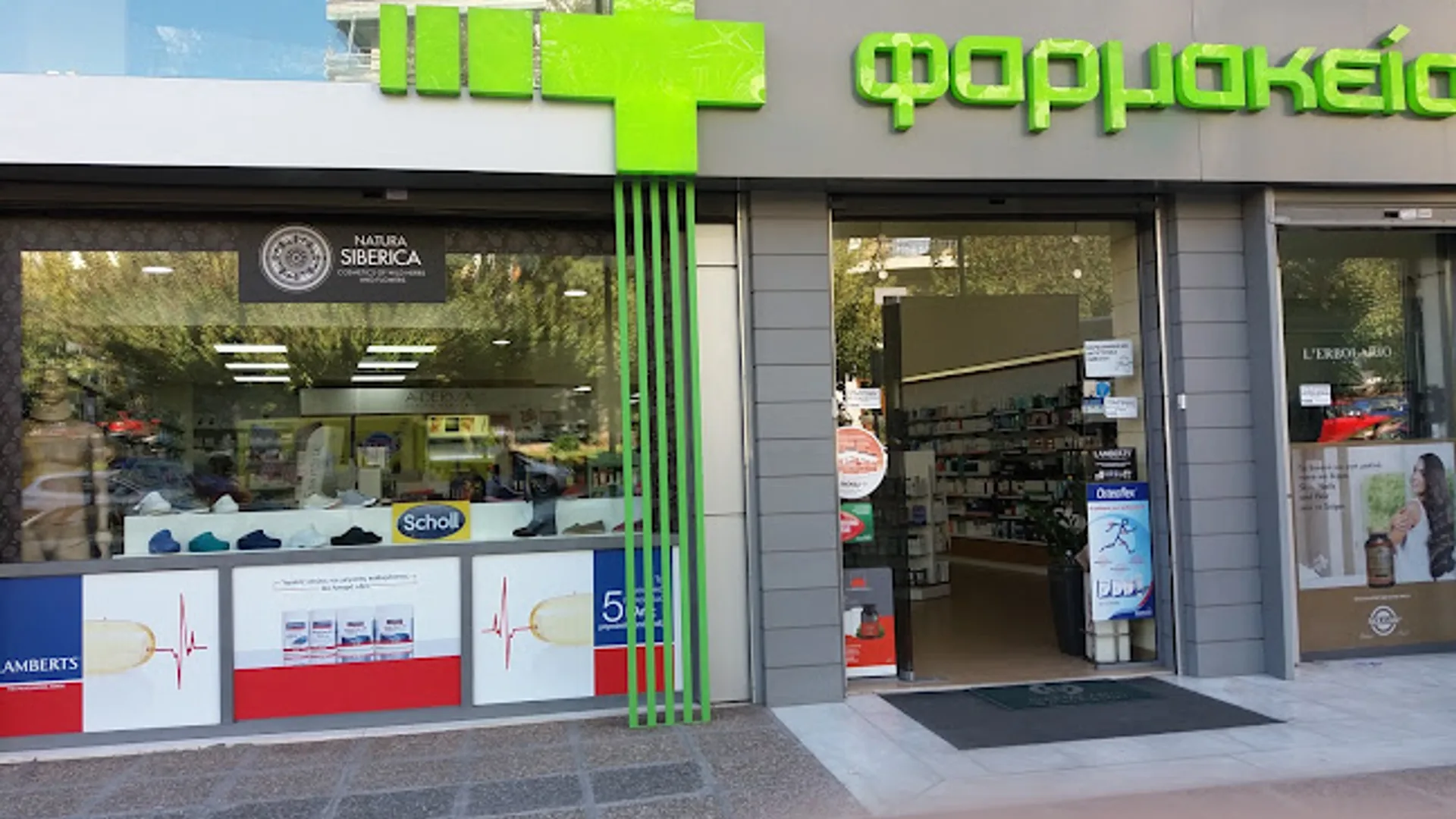
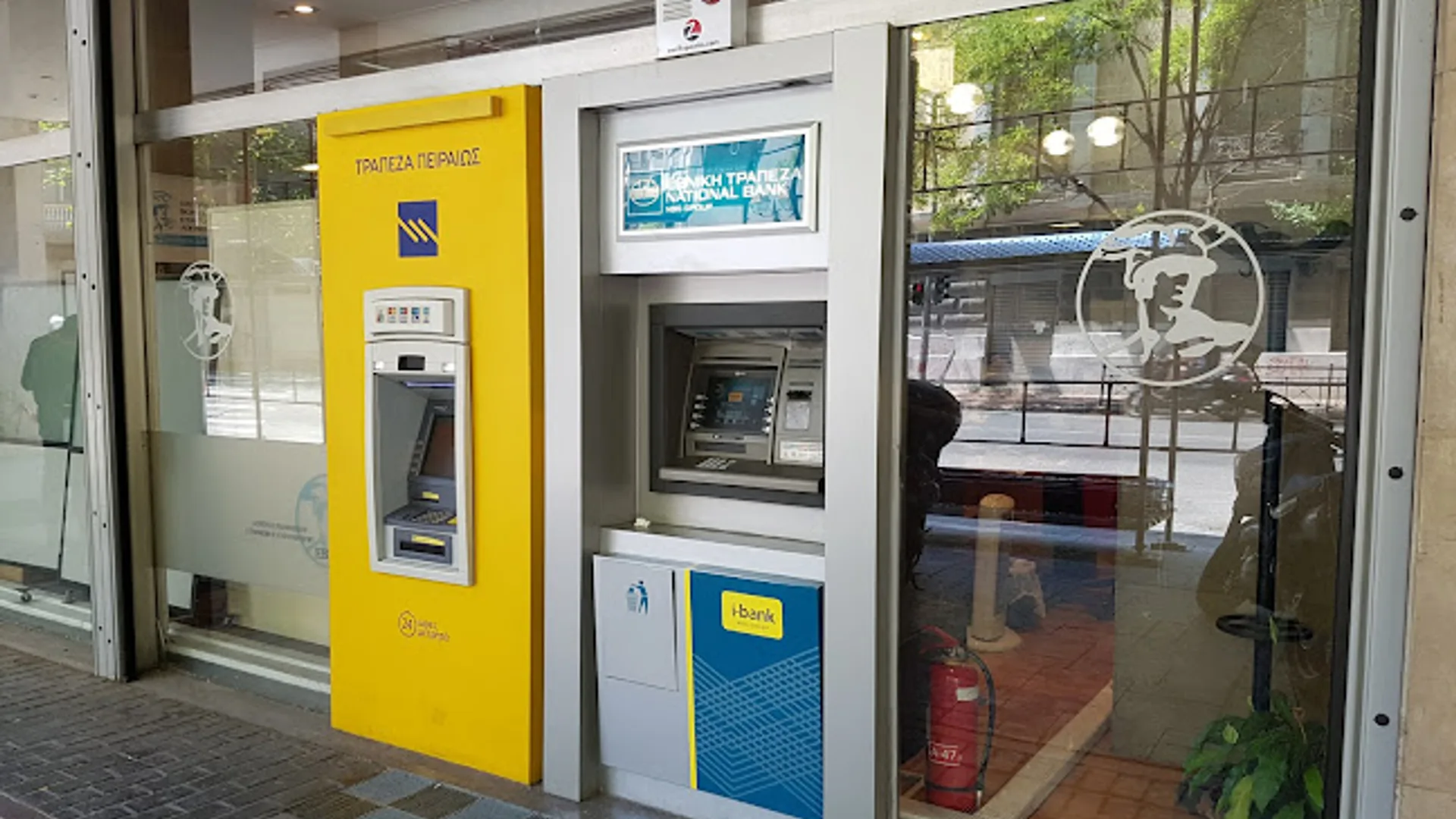
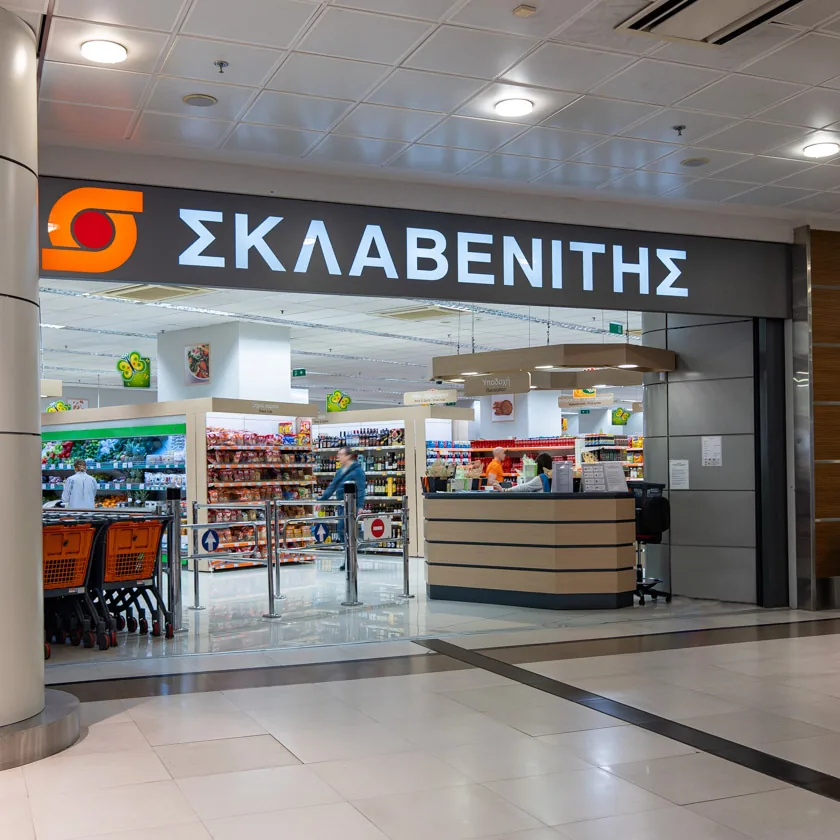
- Plenty of ATMs, supermarkets, pharmacies and bakeries — everyday neighbourhood life is fully active.
- Schools nearby — the area is lived in, not just passed through.
Evening (22:00–02:00)
- Still active — restaurants, late bakeries, gym-goers, dog-walkers.
- Standard city awareness: avoid empty side streets, walk on main thoroughfares, keep phone in pocket.
- Solo women: choose main streets, especially late. If a street feels empty, change route.
- Late-night taxis are easy to find on Patission and the square; booking through an app works reliably.
Late night (02:00–06:00)
- Quieter — most shops closed, foot traffic down.
- Best practice: after a very late night out, take a taxi or an app car instead of walking a long distance.
- The square itself remains lit; a few late-night bakeries provide presence.
Streets worth knowing
Patission (28th October Street)
The main north-south boulevard. Busy during the day and in the evening. Be careful with personal belongings on the metro and near Victoria station.
Heyden, Aristotelous, 3 September Street
Residential streets east of Patission, with cafes, small shops and everyday movement. This is where the apartment is.
Acharnon
A major boulevard west of Patission. It has a mixed character, with some parts busier and others quieter. At night, prefer the more central, better-lit stretches.
Filis, Kapodistriou
Smaller streets. Quieter at night; daytime active. Standard city common sense.
The streets south of Victoria toward Omonoia
A more intense urban zone, with heavier movement and some harder scenes in places. In the daytime you can pass normally; at night prefer Patission or other main roads.
Pedion Areos (north of Ioulianou)
In the daytime it works as a public park for a walk. After dark, it is better to move around the perimeter rather than through the darker interior paths.
Practical safety habits
- Use a cross-body bag, not a backpack on the metro and at busy squares. Front-facing, zipper closed.
- Phone goes in front pocket when walking, not in hand displayed at chest height.
- Use ATMs at well-lit times. Prefer branch ATMs in daylight or early evening.
- Trust your gut. If a street feels off, take a different street. Athens centre has many parallel options.
- Walk with orientation. Check the route before you start so you do not keep stopping with your phone in your hand.
- Don't leave bags unattended on café terraces. Common sense applies as in any city.
Who to call if something happens
- Police: 100 (general emergency).
- Tourist Police: 1571 — English-speaking, specialised in tourist incidents.
- Ambulance: 166.
- Fire: 199.
- European emergency line: 112 — works for all of the above, with English support.
Pickpocketing reports go through the local police station. For tourists, Tourist Police is usually the better first call.
The neighbourhood character
Who lives in Victoria Square in 2026?
- Long-term Greek working-class families — the historic backbone of the neighbourhood since the 1950s.
- Migrant communities — Egyptian, Bangladeshi, Pakistani, Albanian, more recent Syrian and Afghan arrivals. Many family businesses (mini-markets, halal butchers, ethnic cafés).
- Young professionals — gentrification has brought more 25-40-year-olds into renovated apartments, and a few coworking spaces and third-wave cafes have appeared.
- Retirees who've lived here their whole adult lives.
- Visitors staying in apartments and small hotels — the rental market is growing.
The diversity is part of Victoria's identity and should not be confused with a safety issue.
Stereotypes versus reality
- "Victoria is dangerous" — the more useful answer is simpler: it is a central neighbourhood that asks for city awareness, not fear.
- "It's full of refugees" — there is a migrant community, mostly long-settled families. The acute refugee presence seen on the square in 2015-2017 is no longer the reality.
- "Tourists should not stay there" — many visitors choose Victoria because it has a metro stop, daily services and good access to the centre.
- "It's a no-go area" — no. There are schools, cafes, supermarkets, pharmacies and ordinary neighbourhood life.
How to get to Angel Athens (Ioulianou 50)
Ioulianou 50 sits on a quiet, residential stretch of the neighbourhood, between Aristotelous and Acharnon. From Victoria metro station it is about 4-5 minutes on foot. The main routes toward Heyden, 3 September Street and Victoria Square are short and well lit.
FAQ
Should solo female travellers stay in Victoria?
Yes, with the usual precautions for a central neighbourhood: stick to main streets at night, keep your phone charged and change route if something feels uncomfortable. In the daytime the area has a lot of ordinary movement.
Is the metro safe at night?
Yes, with the usual attention on platforms and inside the train. Keep your bag and phone in front of you, especially at busier times.
What about families with kids?
During the day and in the early evening, the area works normally for families. There are cafes, bakeries, pharmacies and Pedion Areos nearby for a daytime walk.
How does Victoria compare to Exarchia or Omonoia?
Victoria feels more residential and everyday than Exarchia, which has more nightlife and a stronger political identity. Compared with Omonoia, it is smaller and less of a transit hub, so it often feels calmer for staying.
Has the area changed in the last 5 years?
Yes. New cafes and small places to stay have opened, several apartments have been renovated and the area draws more interest from visitors and newer residents. Its character still remains different from the more expensive central districts.