🪪 The trip at a glance
📍 Where it is and what you’ll see
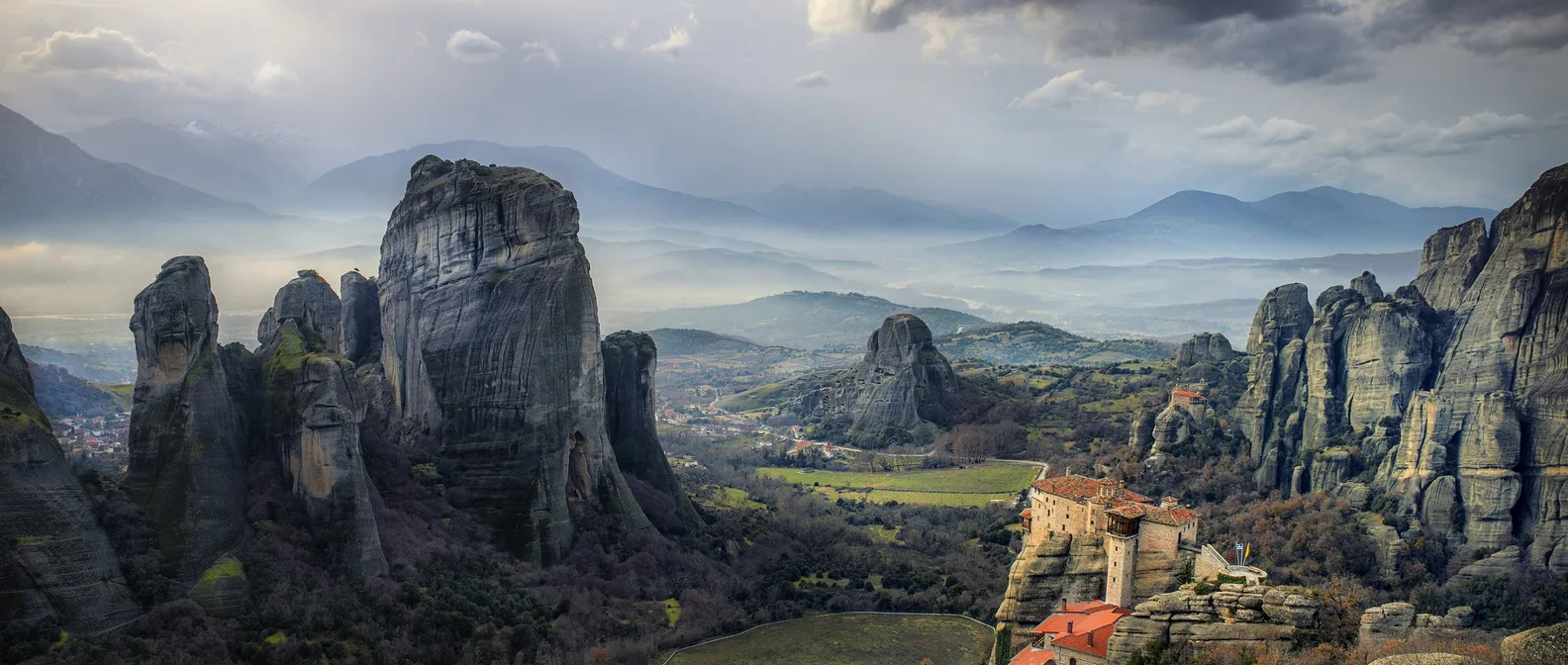
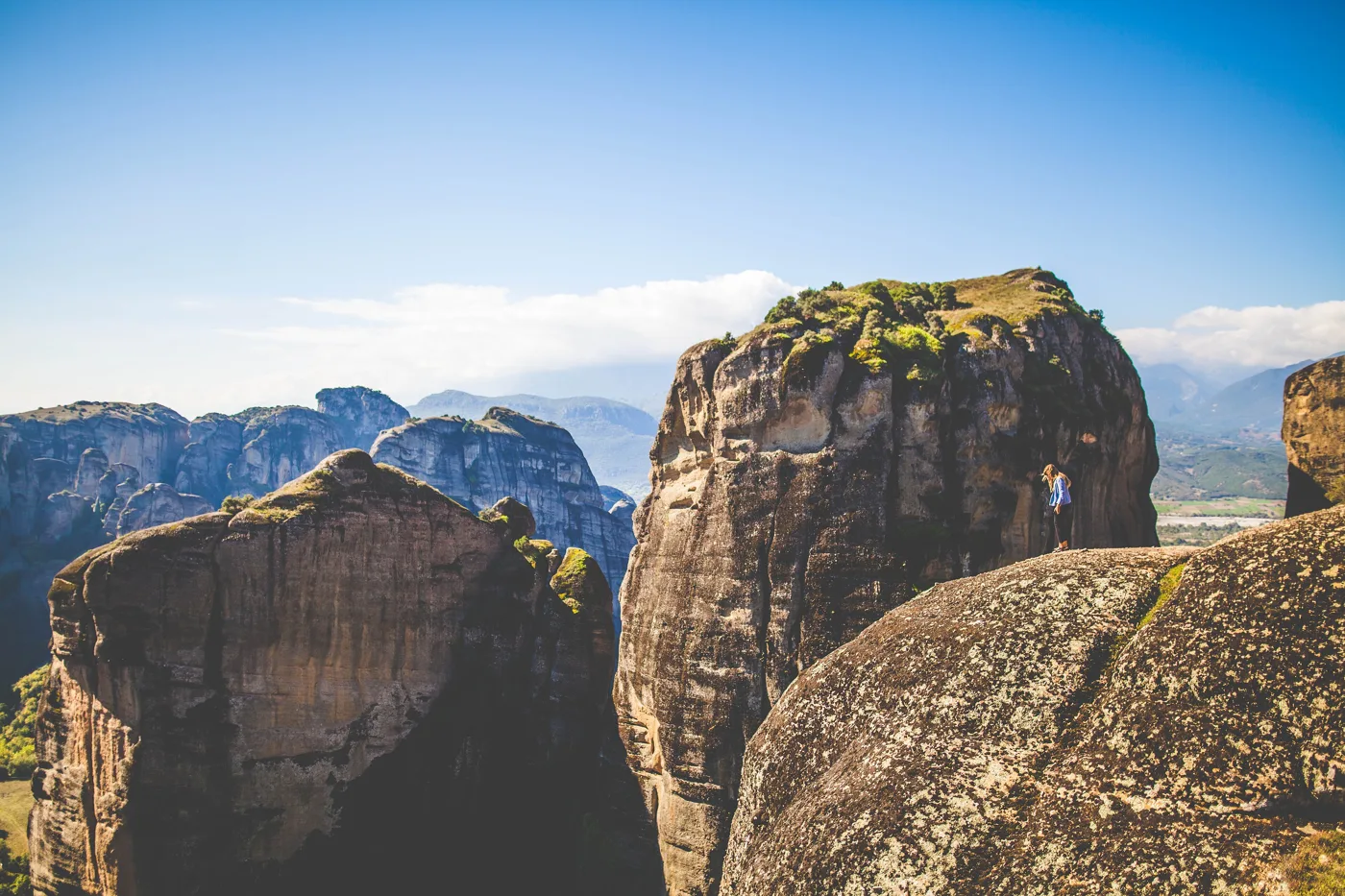
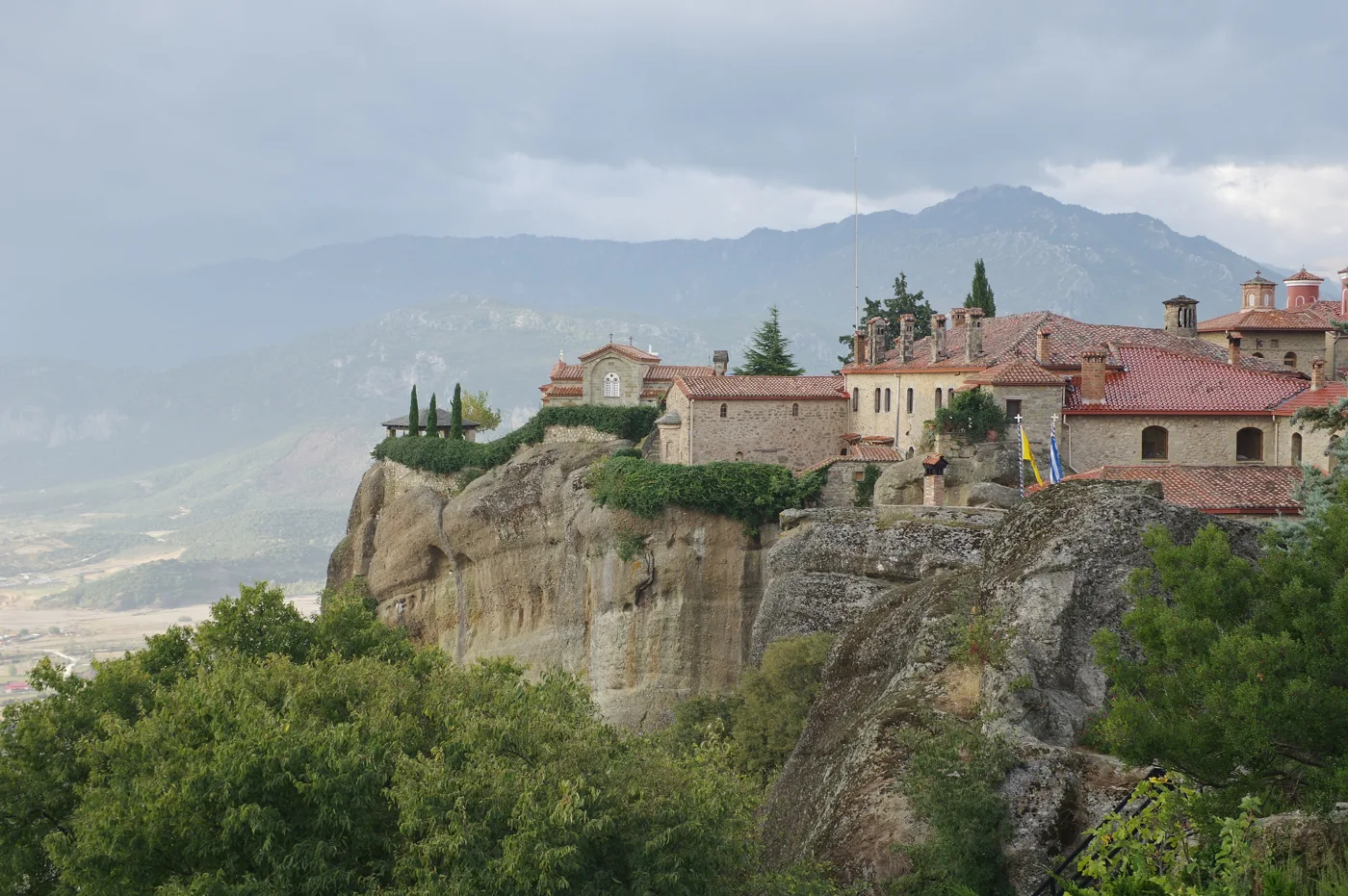
Meteora is a cluster of sandstone and conglomerate rocks on the edge of the plain of Thessaly, where the Pineios leaves the gorges of the Pindus, next to Kalambaka, a town of 8,000 people, and the village of Kastraki. The rocks were formed 60 million years ago from the deposits of a river flowing into a lake that once covered Thessaly, and wind, water and earthquakes cut them into columns and towers, with sheer walls and rounded tops. The highest, the Platys Lithos (Broad Rock) of Great Meteoron, reaches 613 metres, 400 above the town. The first hermits moved into its caves in the 11th century, the skete of Doupiani was organised in the 12th, and around 1340 Athanasios the Meteorite, a learned monk from Mount Athos, climbed the Broad Rock, founded the first organised monastery and gave it the name the whole place took: Meteoro, that which hangs in the air. In the 16th century 24 monasteries were active, with donations from Serbian and Wallachian princes and frescoes by the best painters of the Cretan School. Today six remain: four for monks, Great Meteoron, Varlaam, Agios Nikolaos Anapafsas and Agia Triada, and two for nuns, Rousanou and Agios Stefanos. UNESCO added them to the World Heritage List in 1988 as a natural and a cultural site at once, something very few places in the world can claim.
📍 Where Meteora is and how to get there
In blue, the route by car, 338 kilometres on the A1 and the E65 via Lamia and Trikala, 4 hours. In yellow, the route of the direct KTEL bus from Kato Patisia, 344 kilometres, 4.5 hours. In dashed red, the Athens–Palaiofarsalos–Kalambaka railway line: in 2026 the train only goes as far as Palaiofarsalos, and from there you carry on by bus. Tap each point.
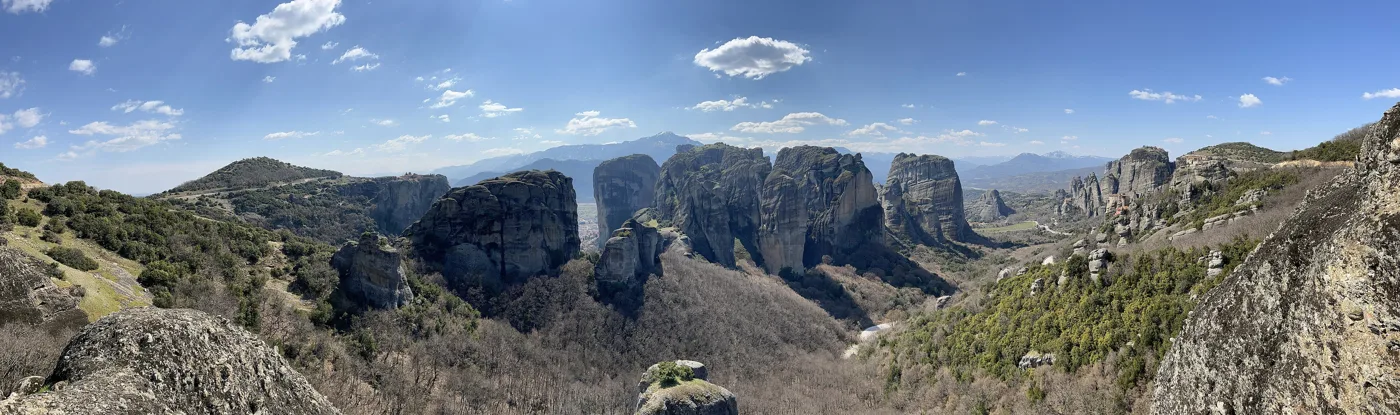
From the monastery road, above Kastraki.
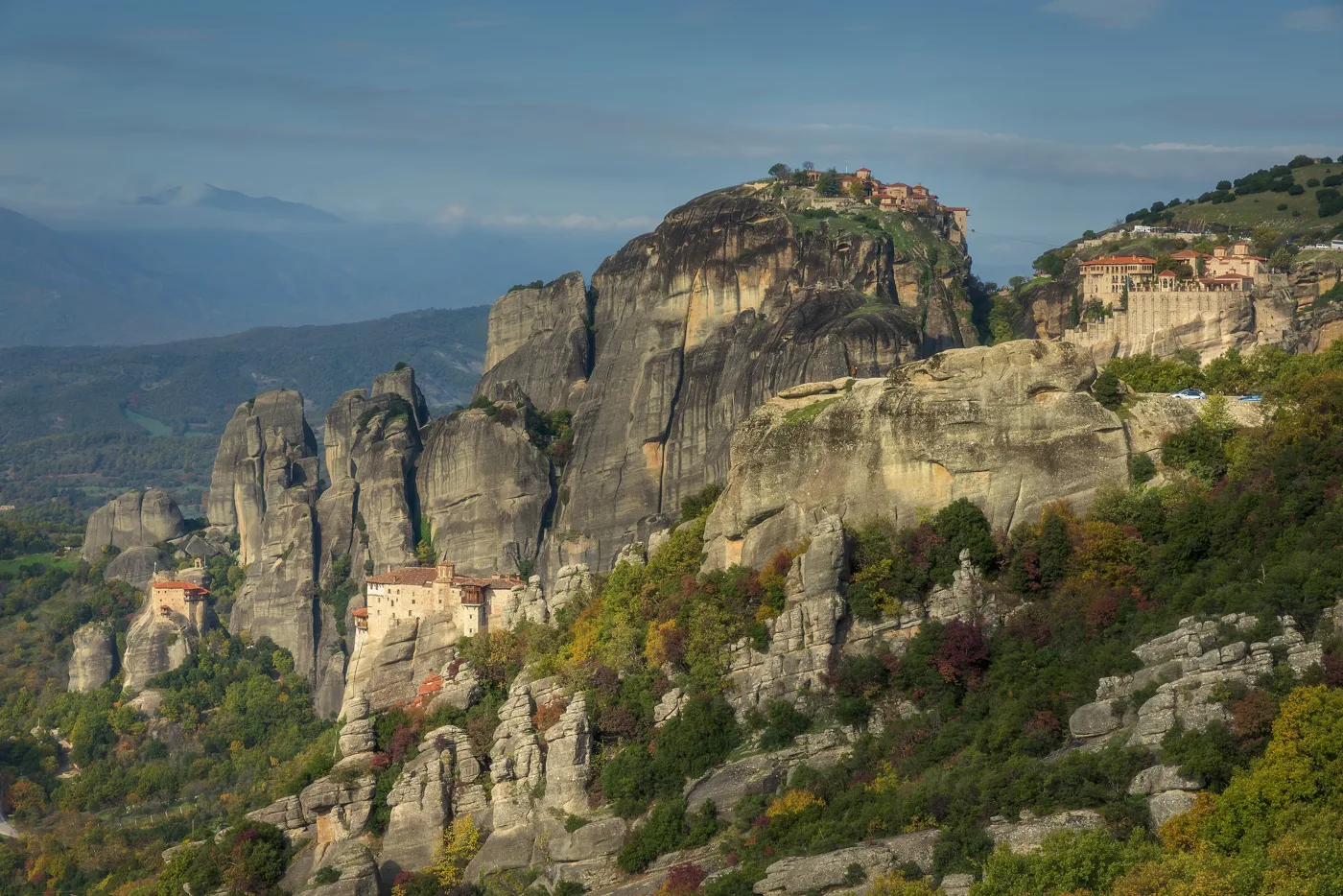
The light falls at a slant and the rocks turn gold.
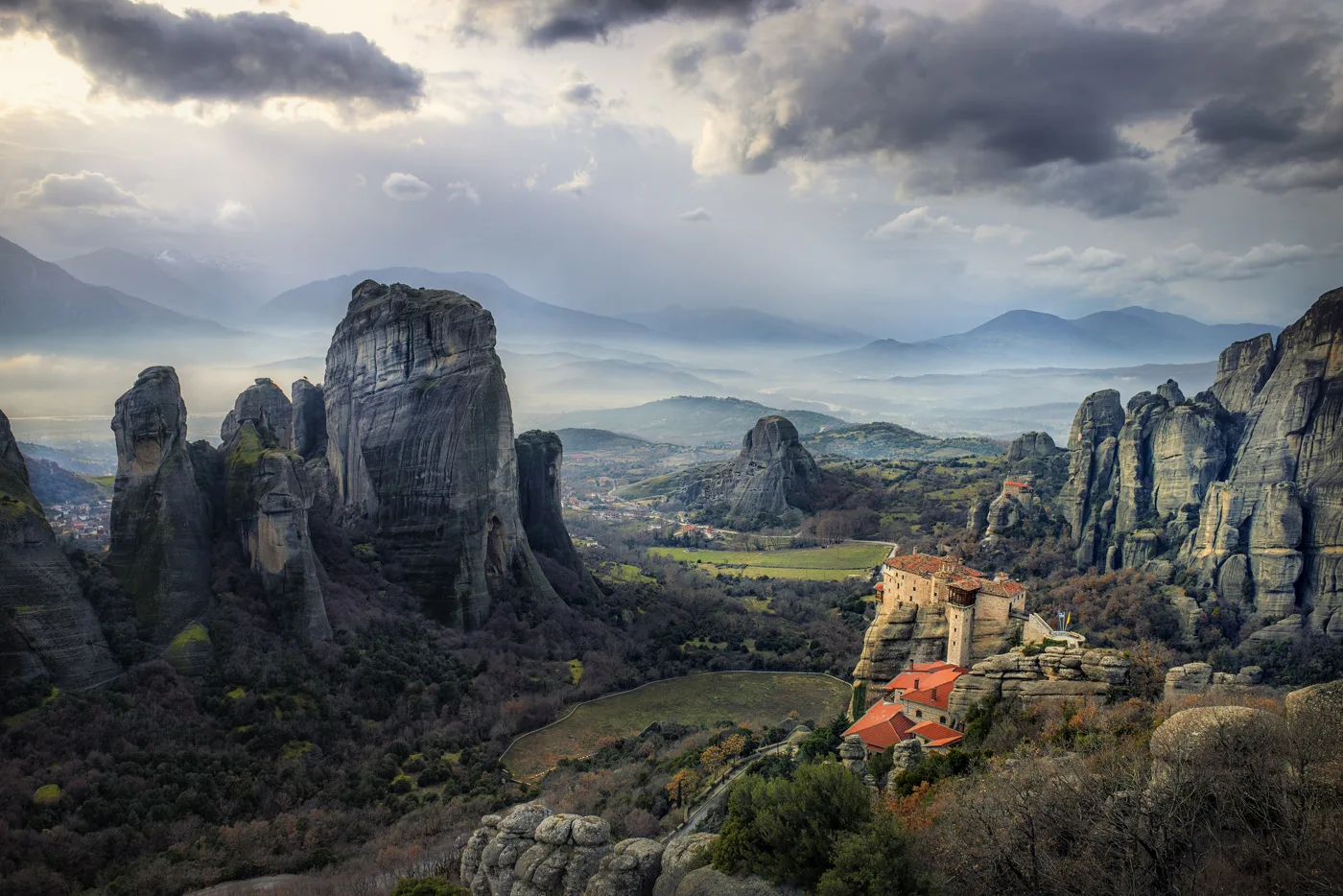
The most photographed spot on the route.
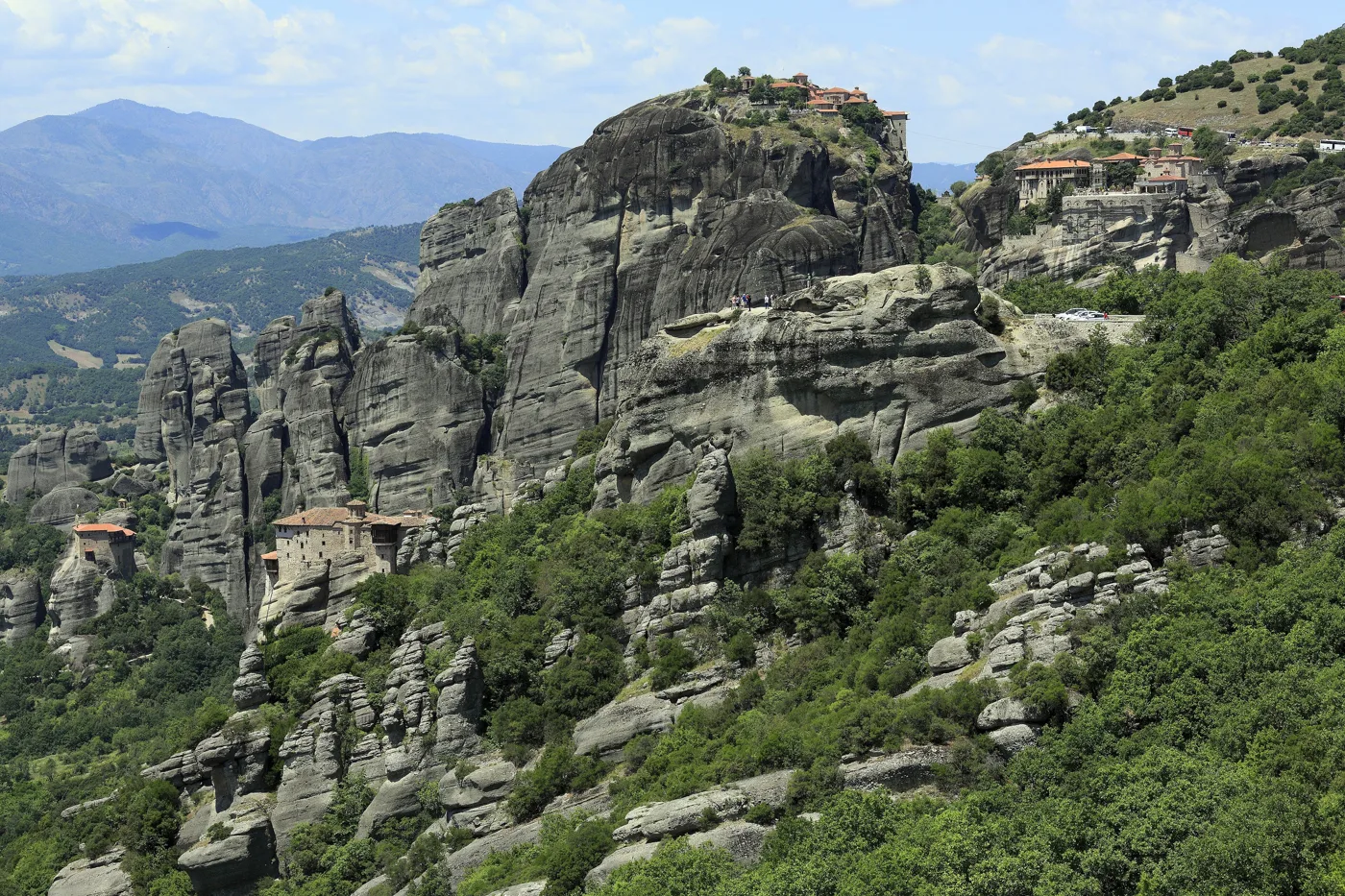
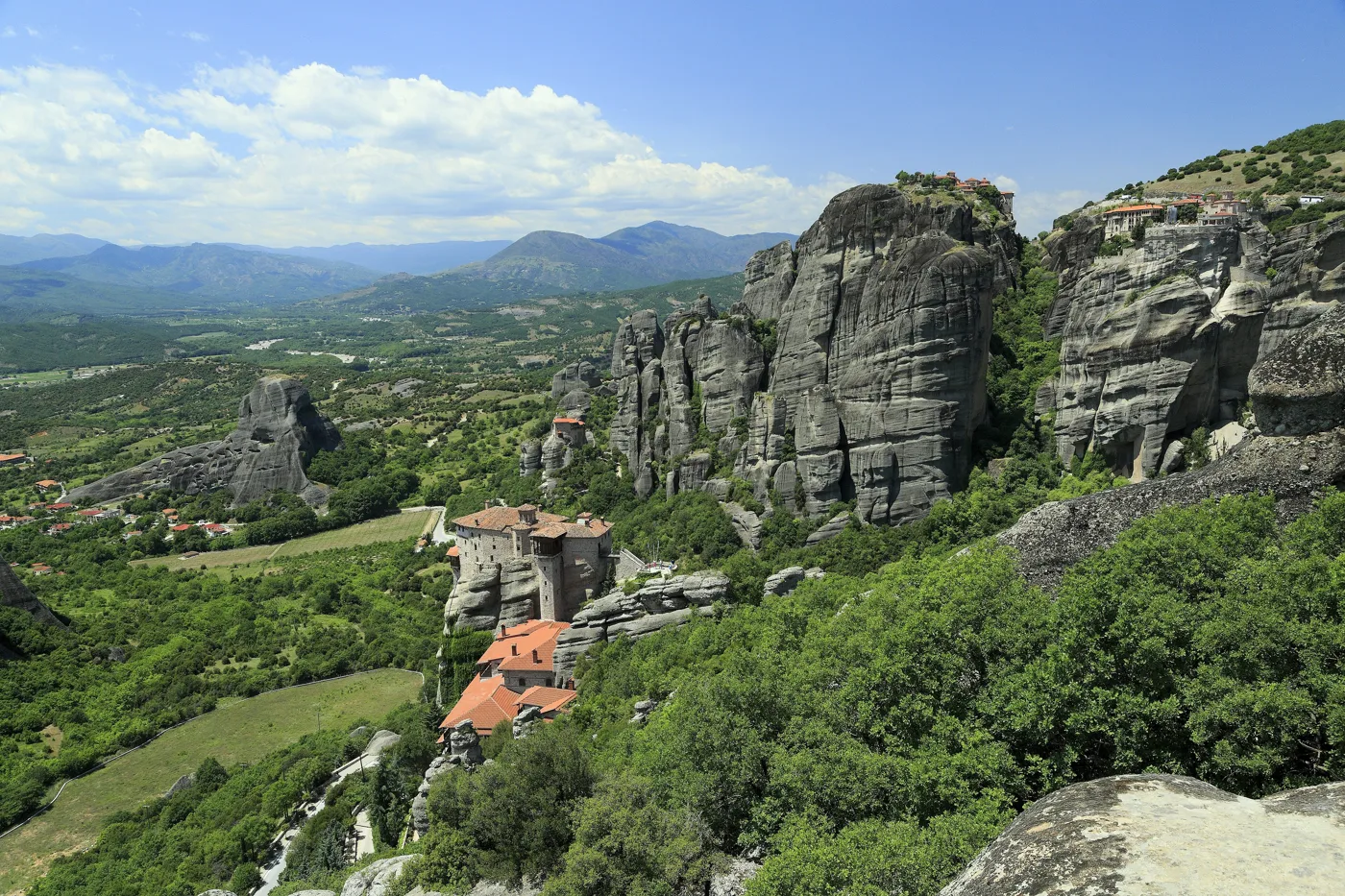
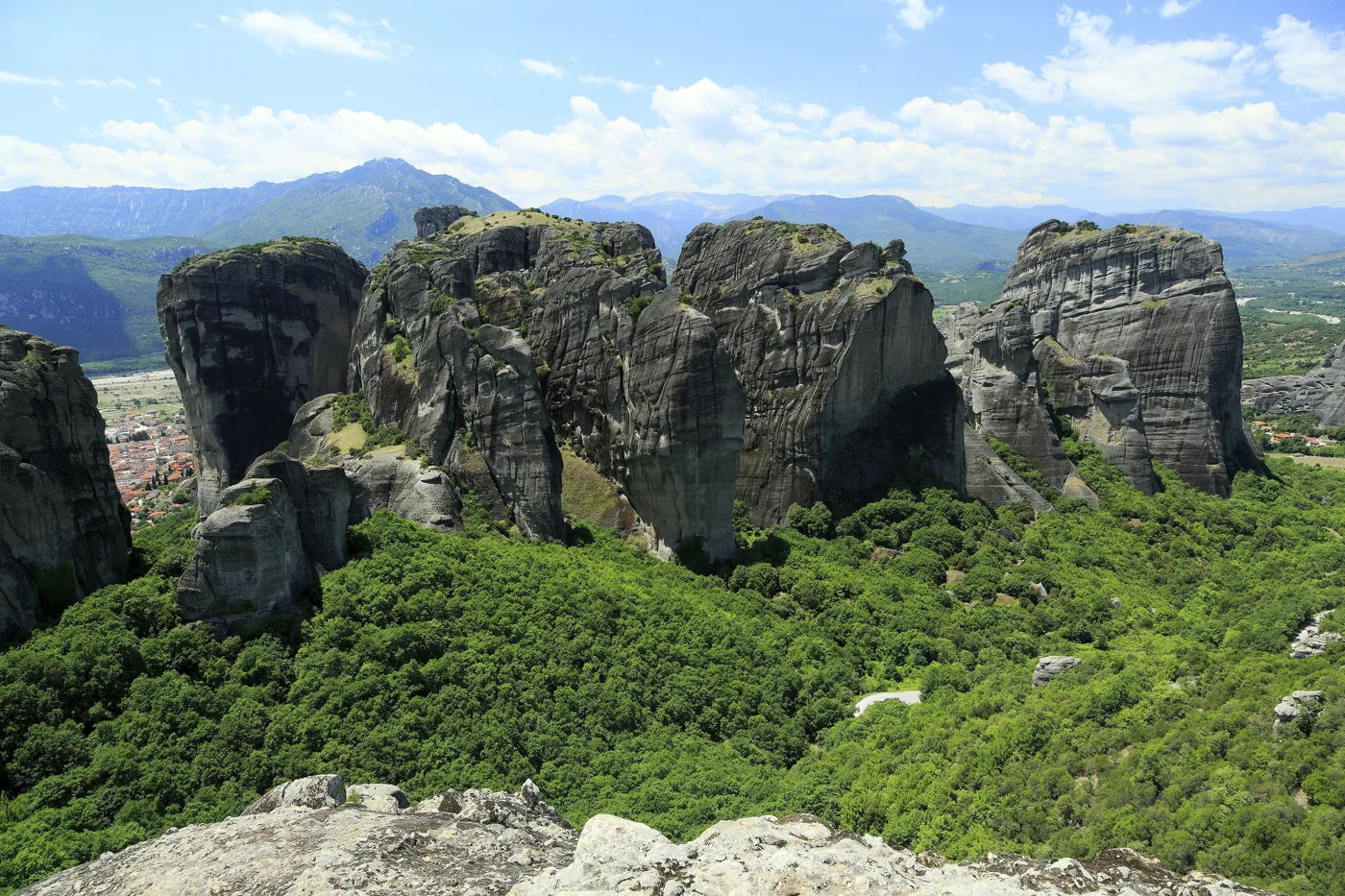
Agios Nikolaos, Rousanou, Great Meteoron, Varlaam.
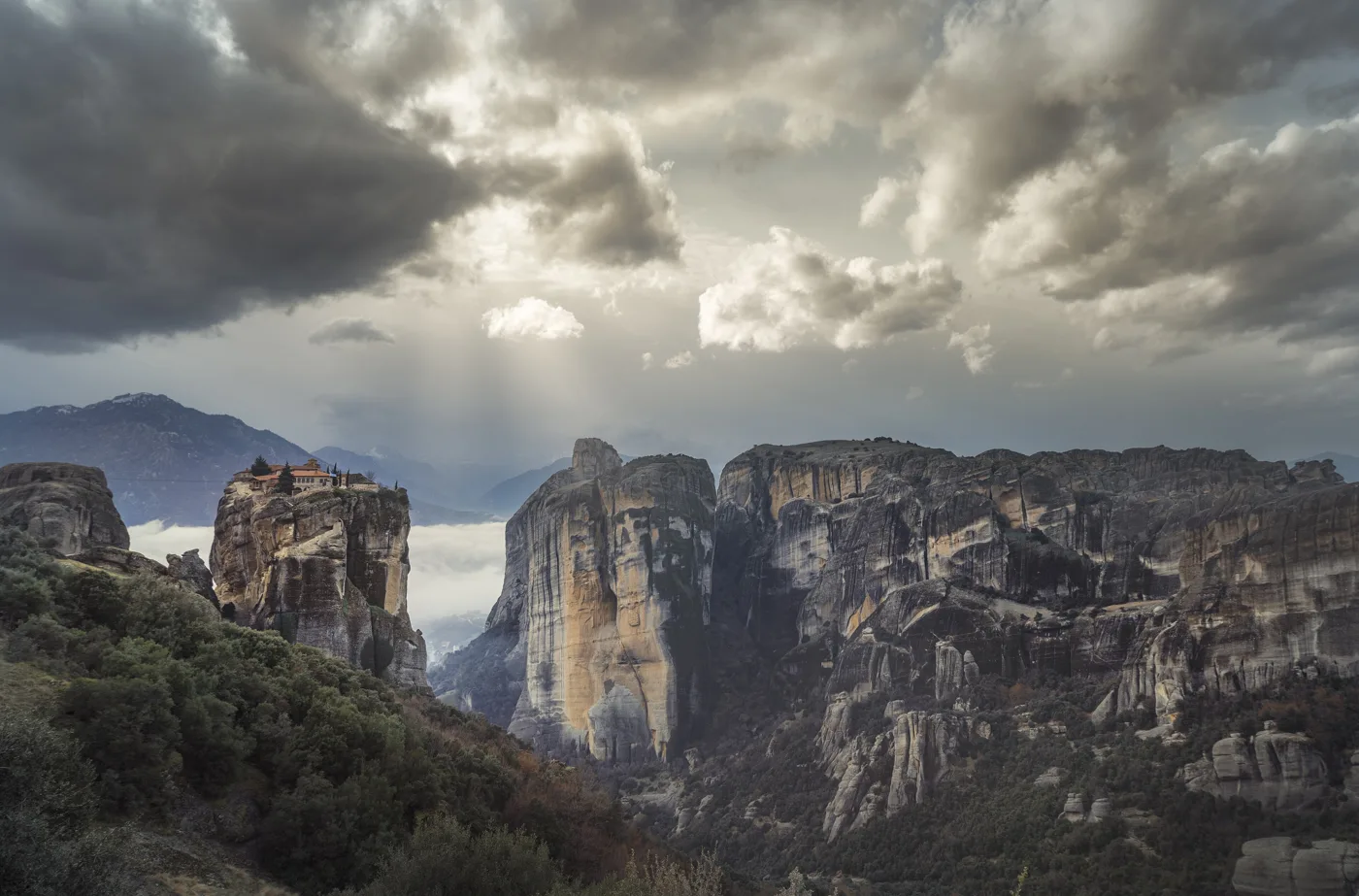
The rocks after the rain: the light breaks through the clouds.
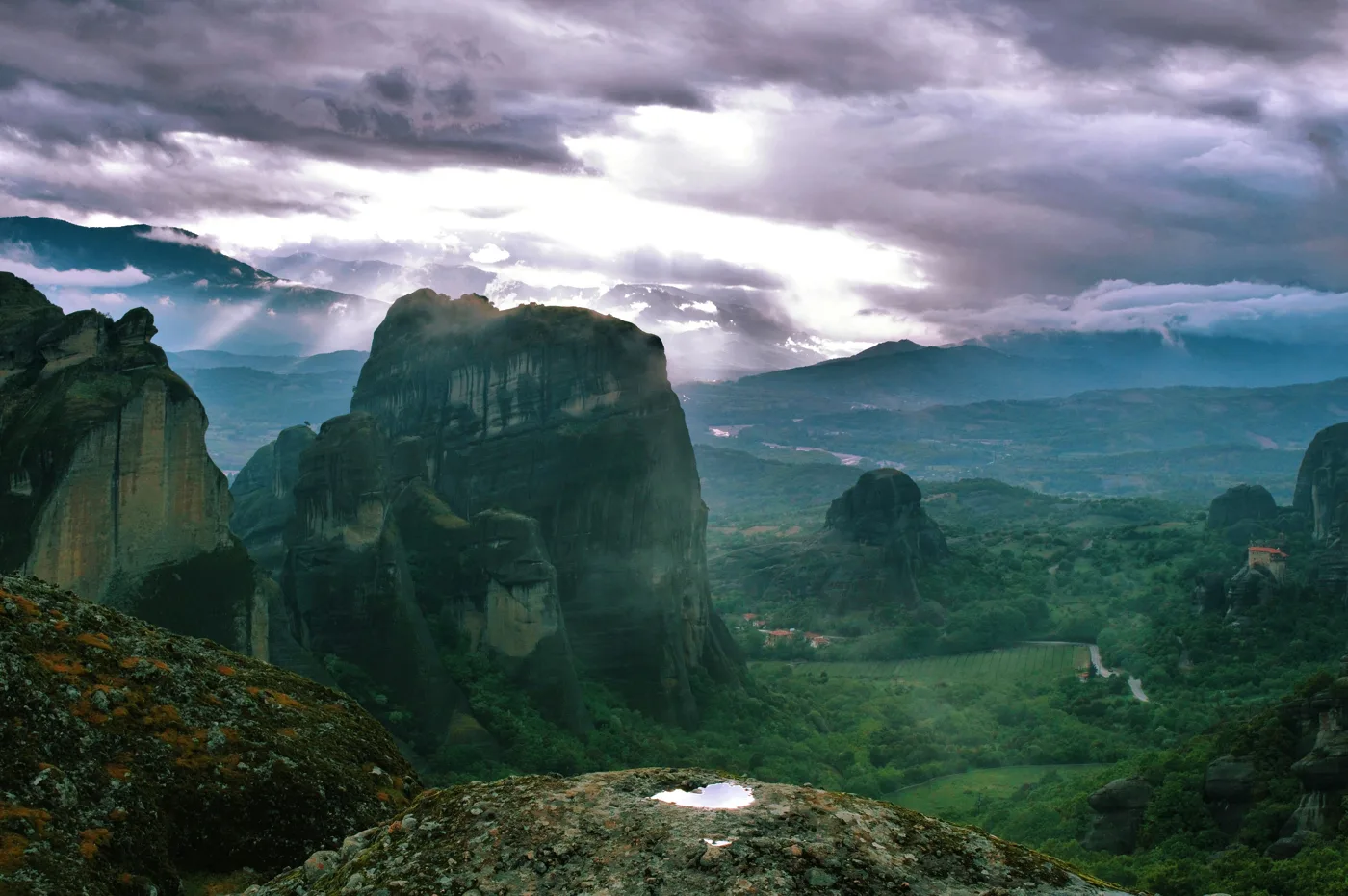
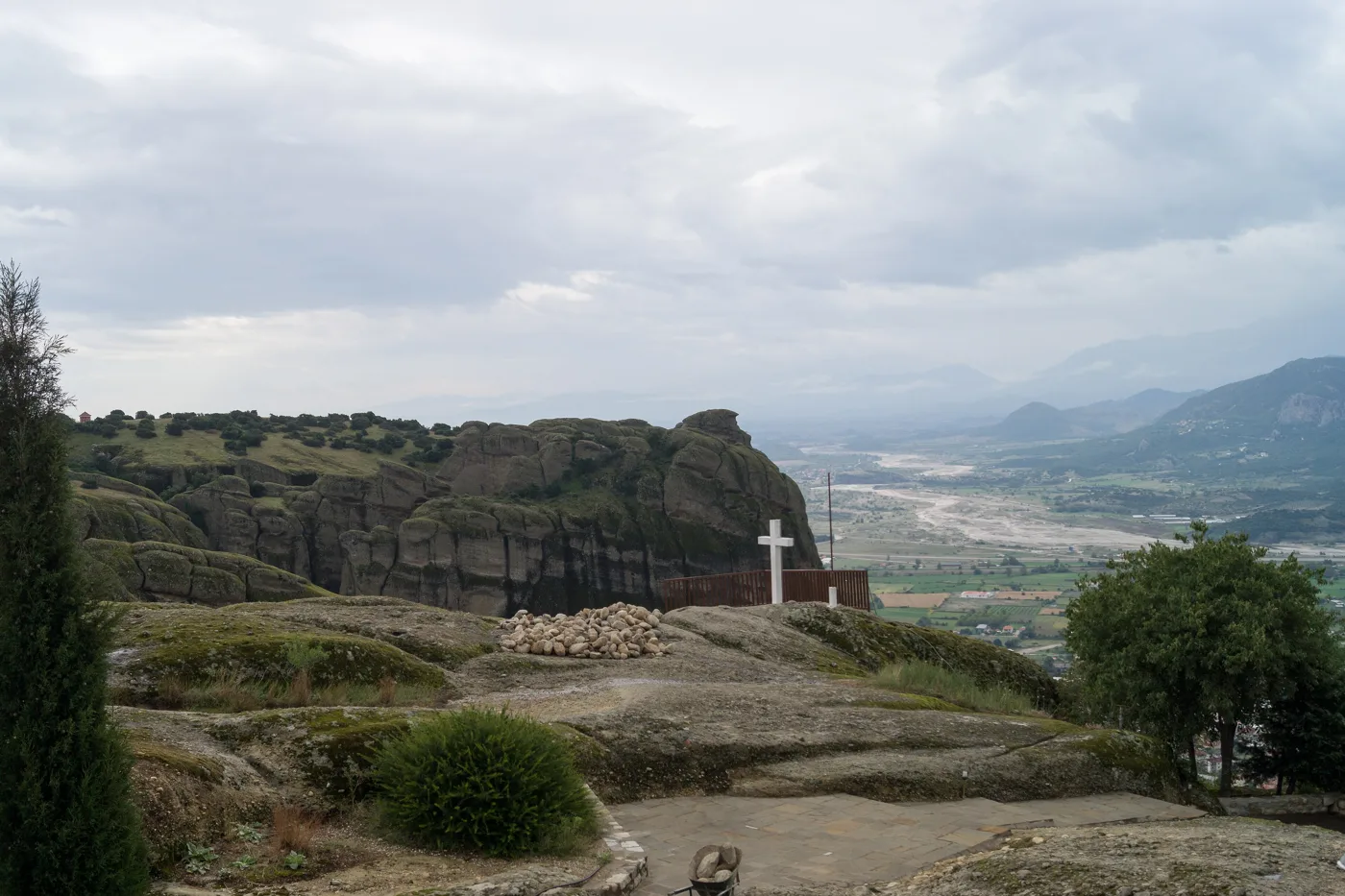
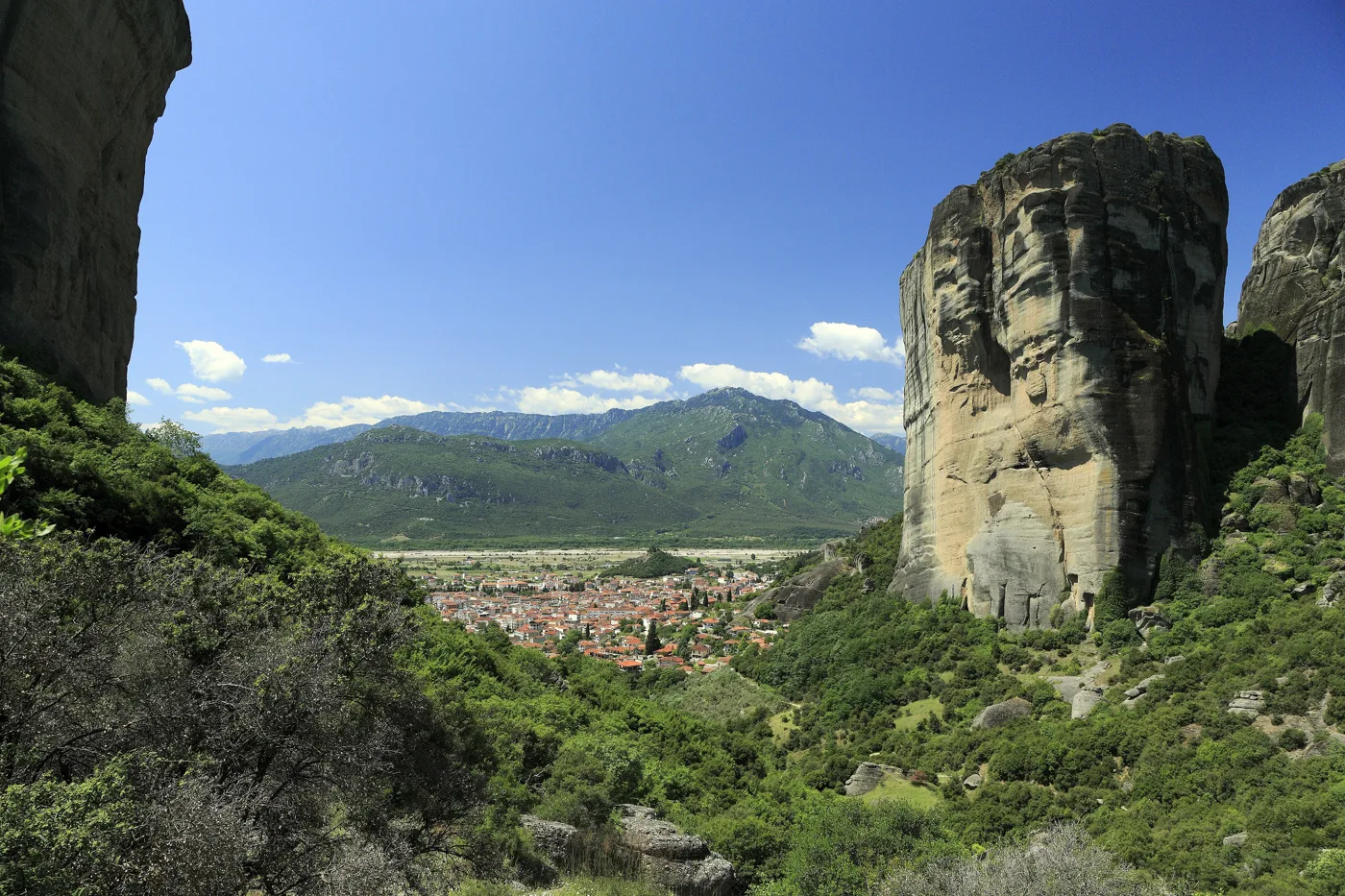
The plain of Thessaly opens out below.
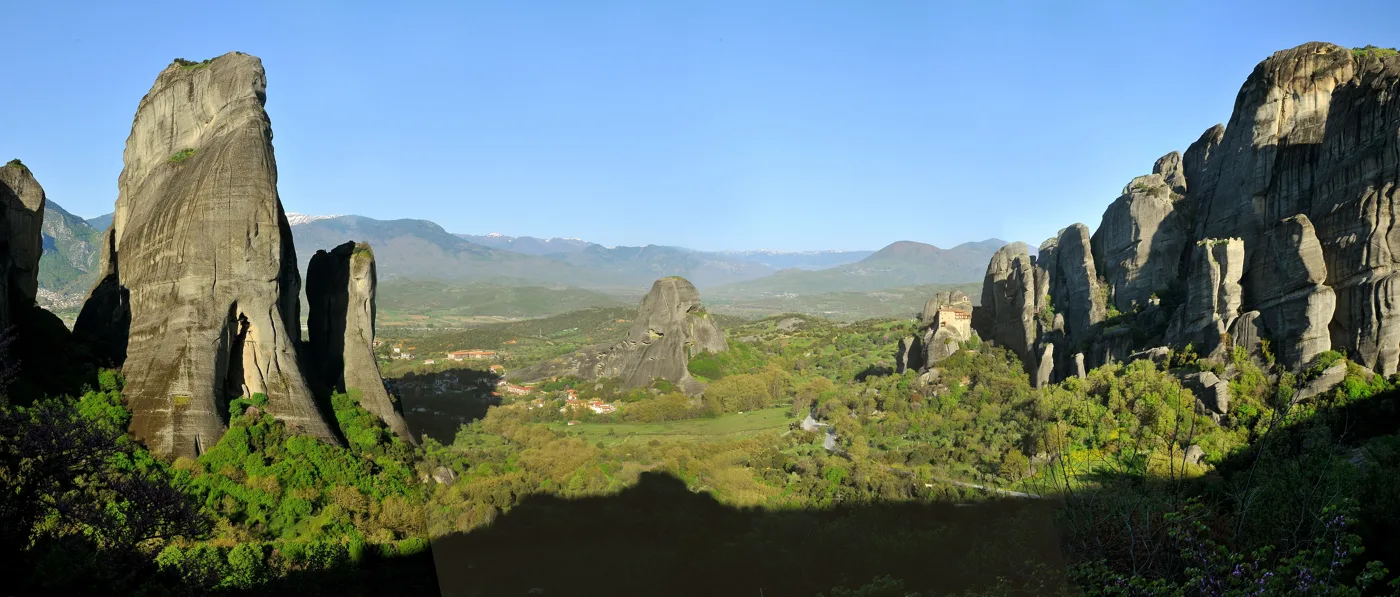
The ring road runs between the rocks.
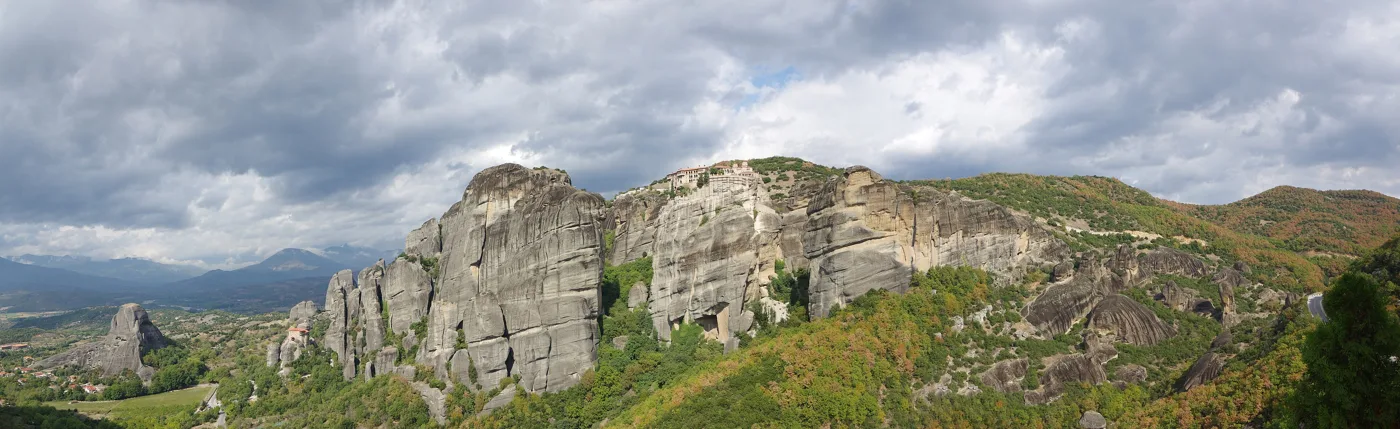
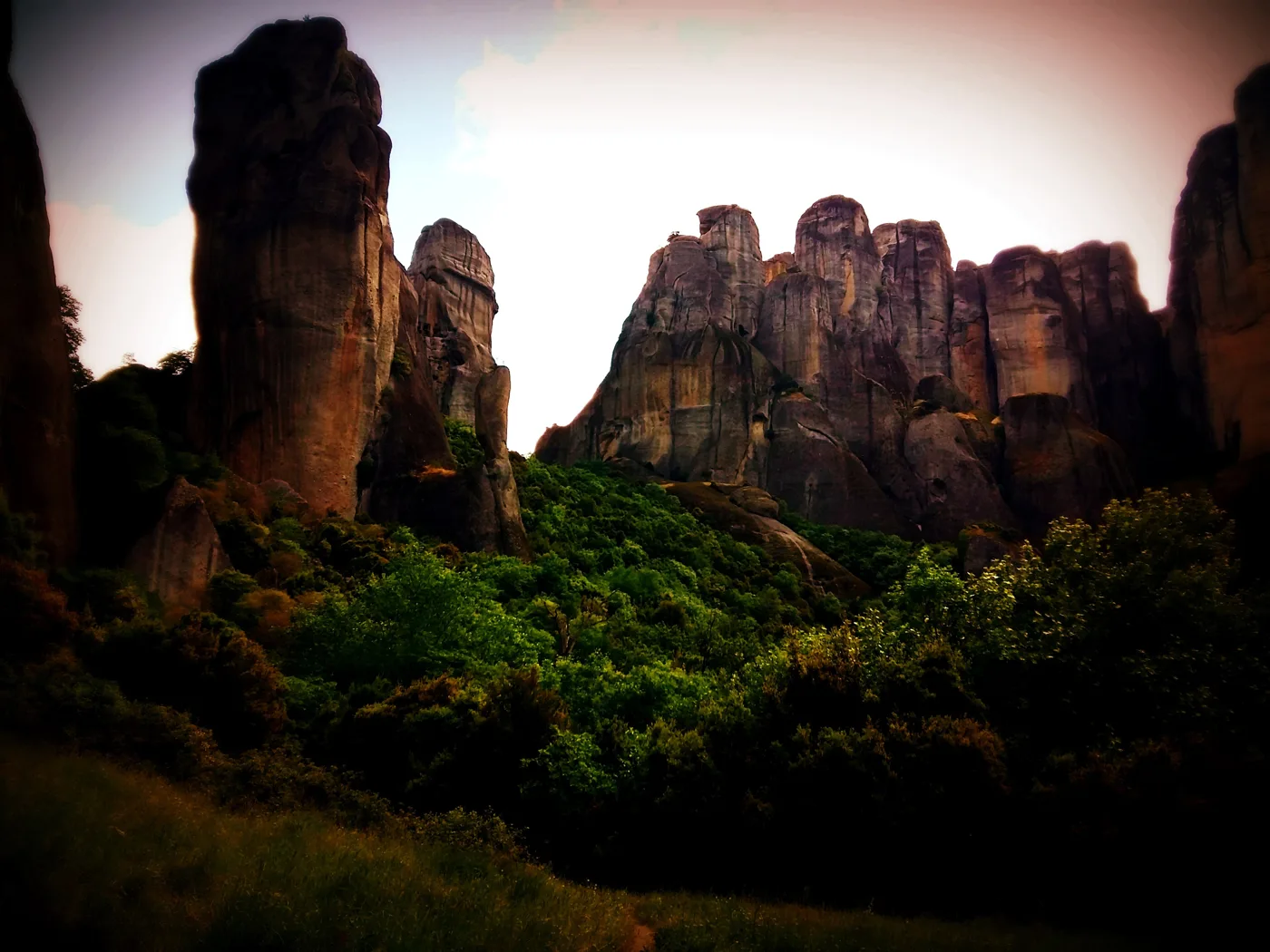
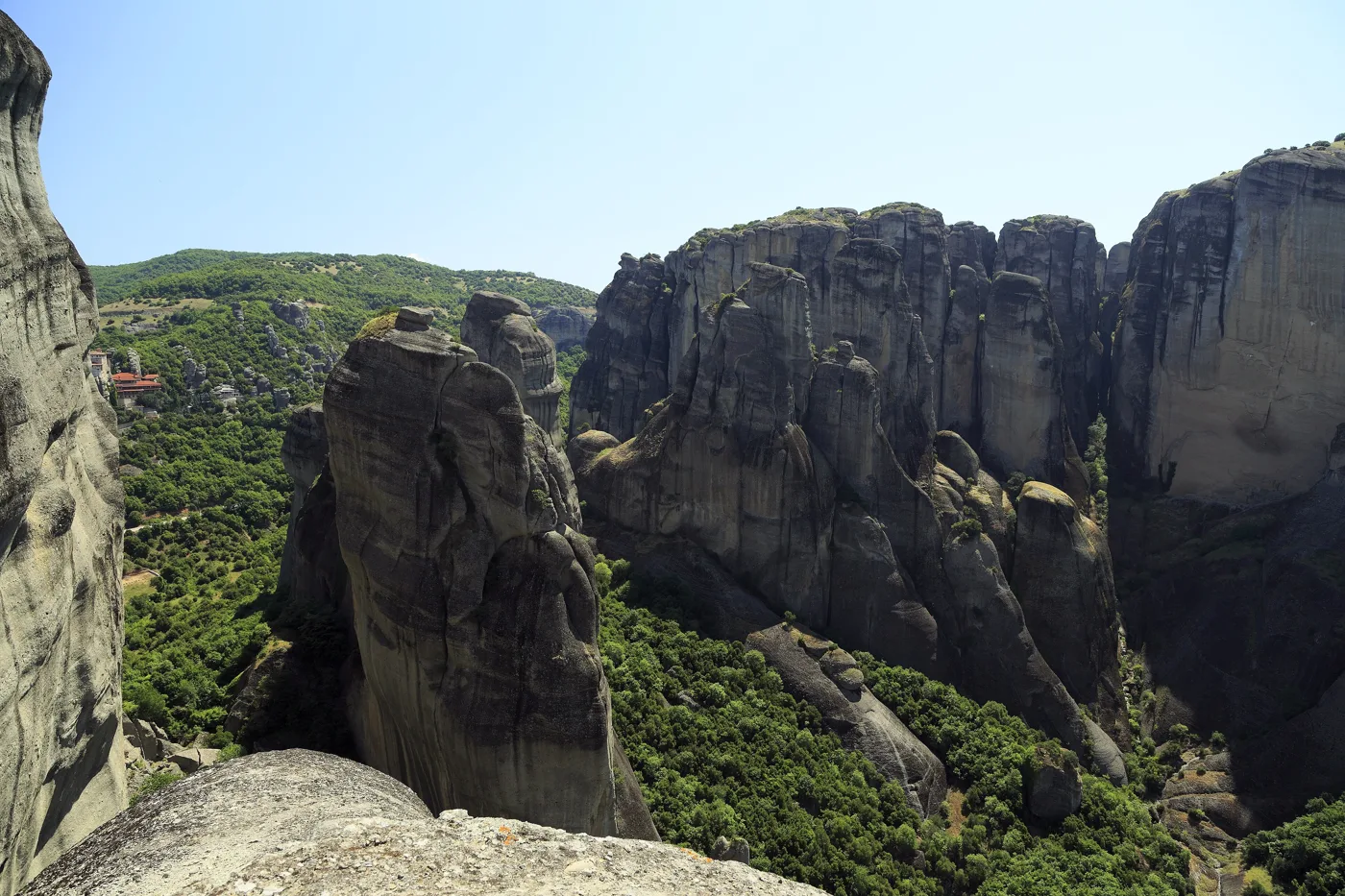
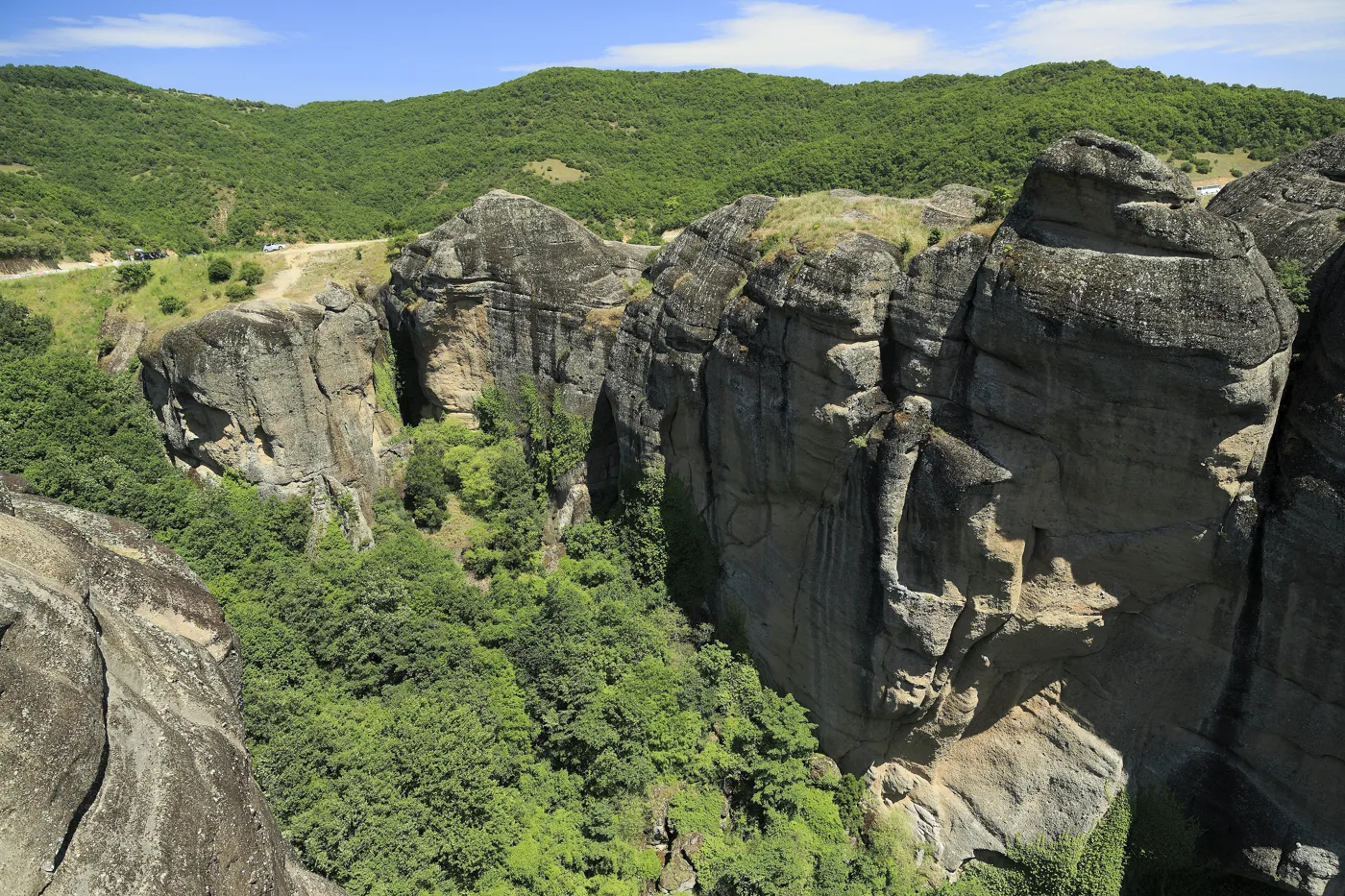
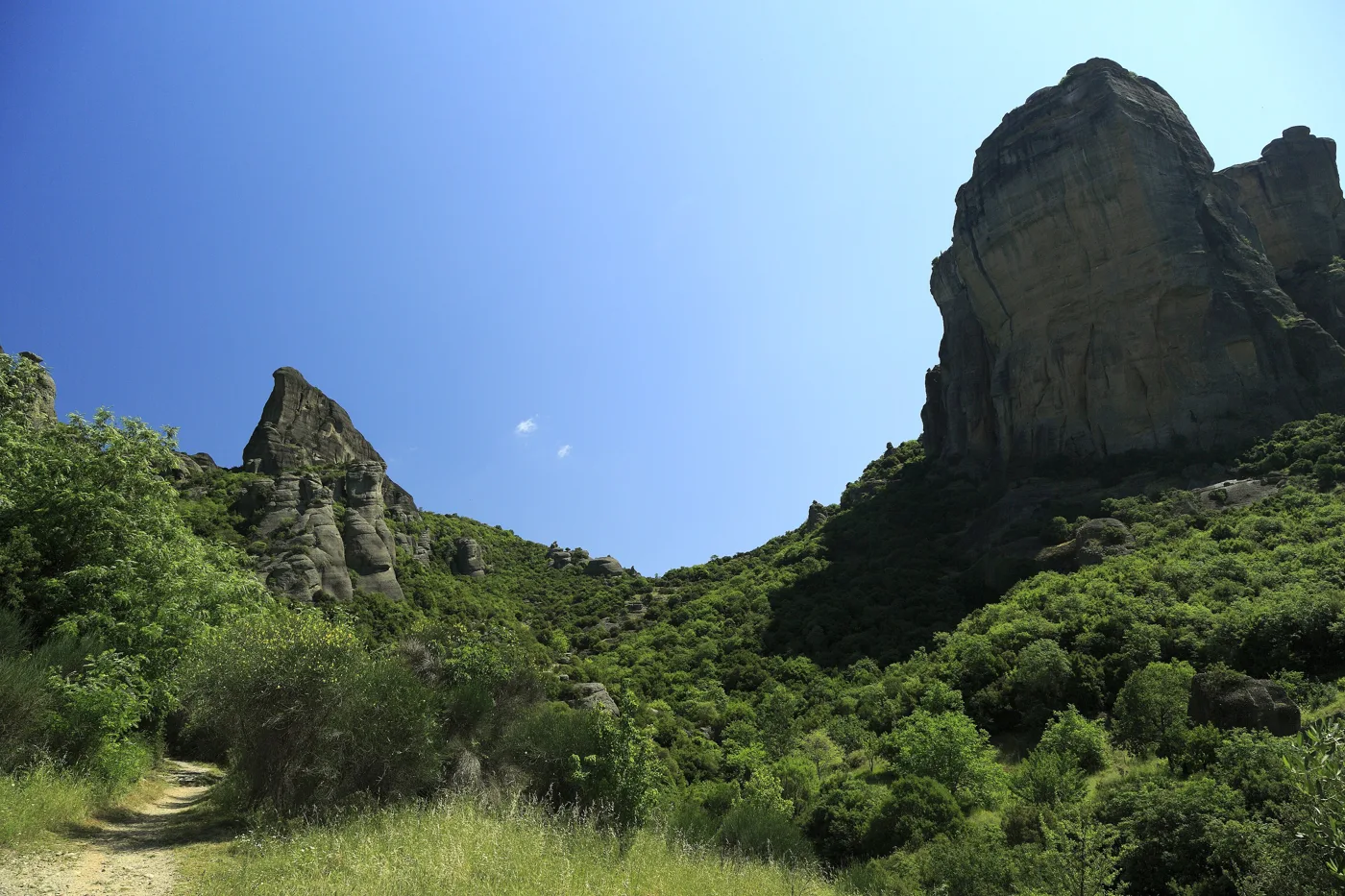
Sandstone and conglomerate, 60 million years old.
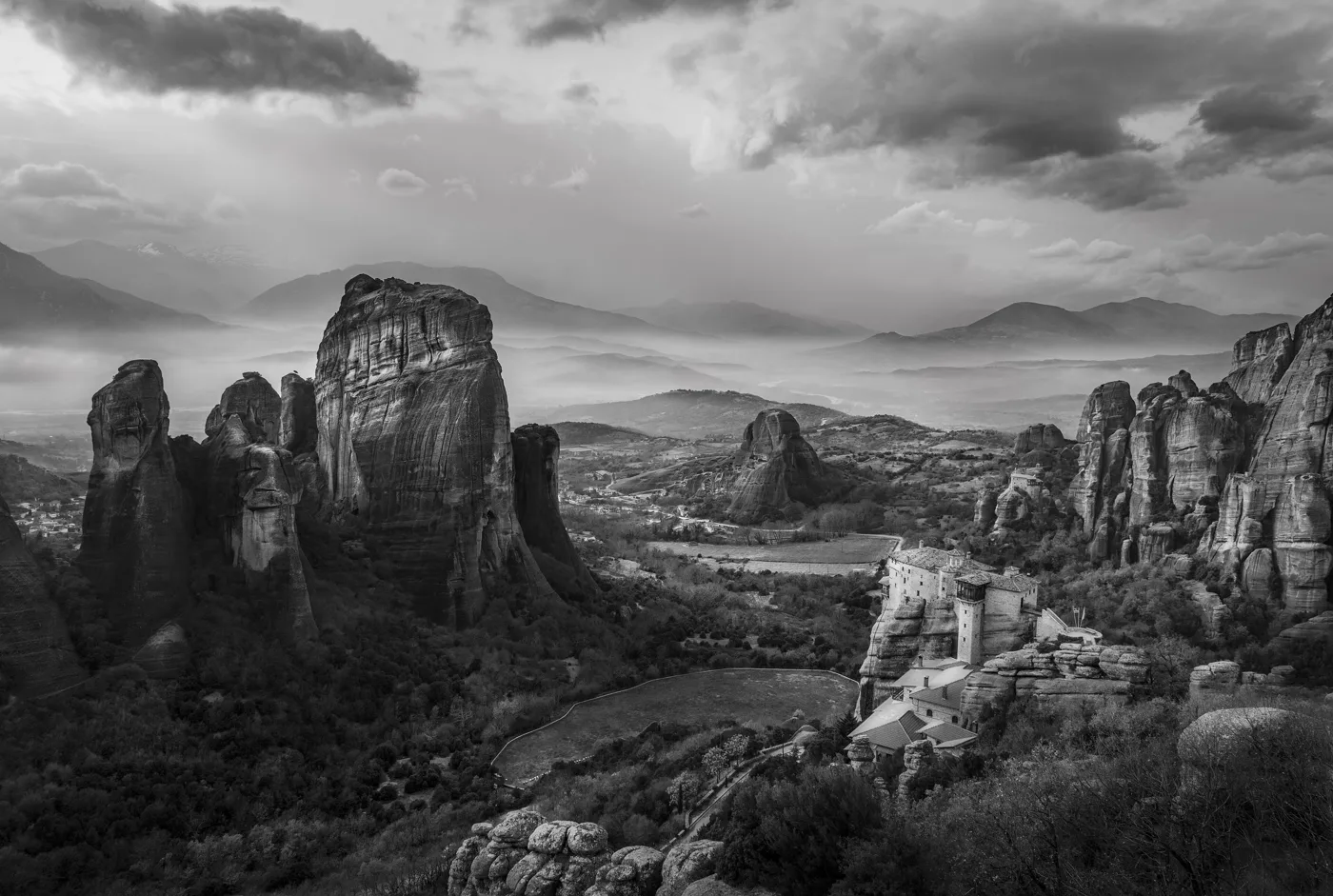
In the morning the mist rises from the Pineios.
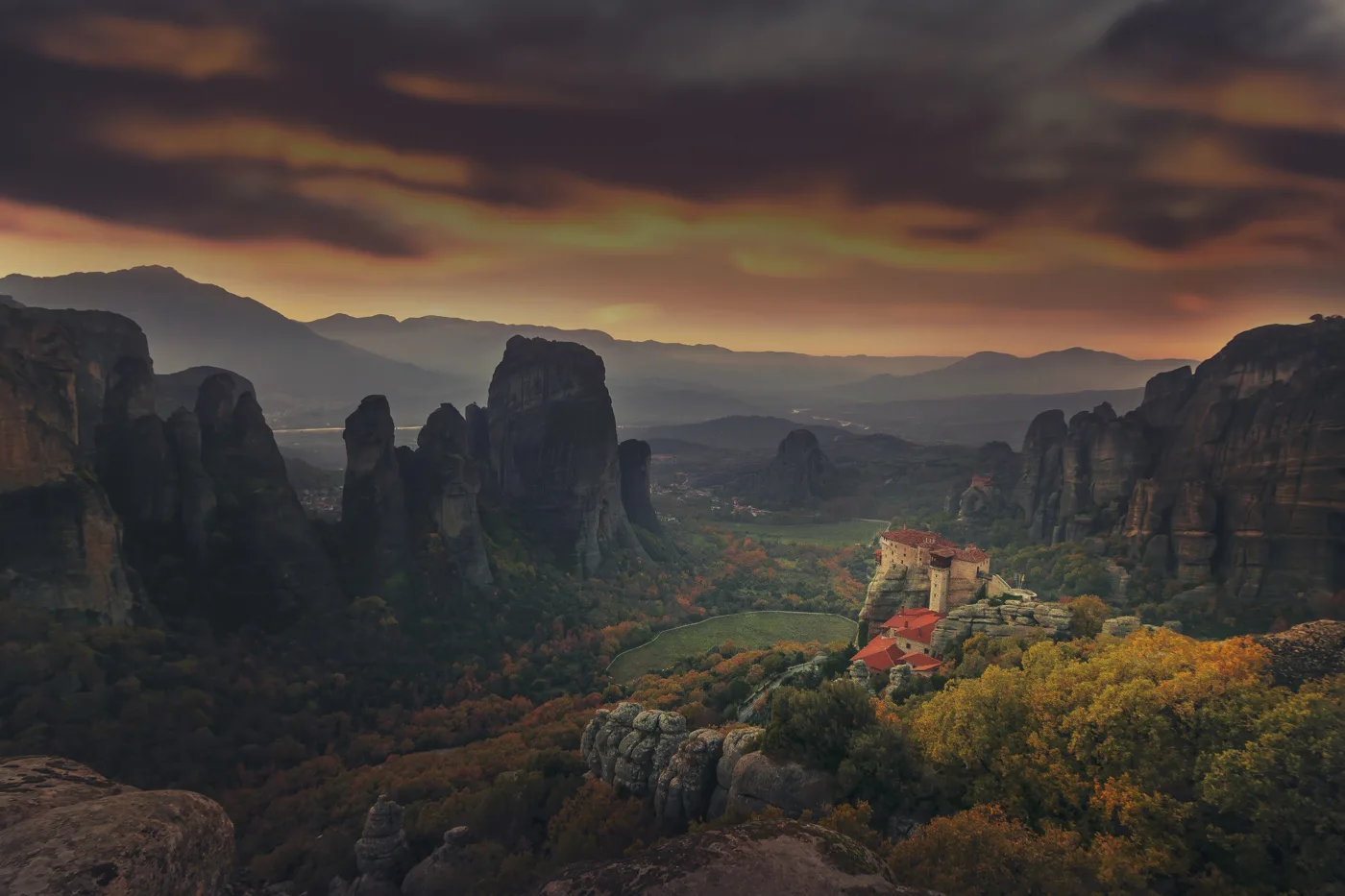
The monasteries are lit up at night.
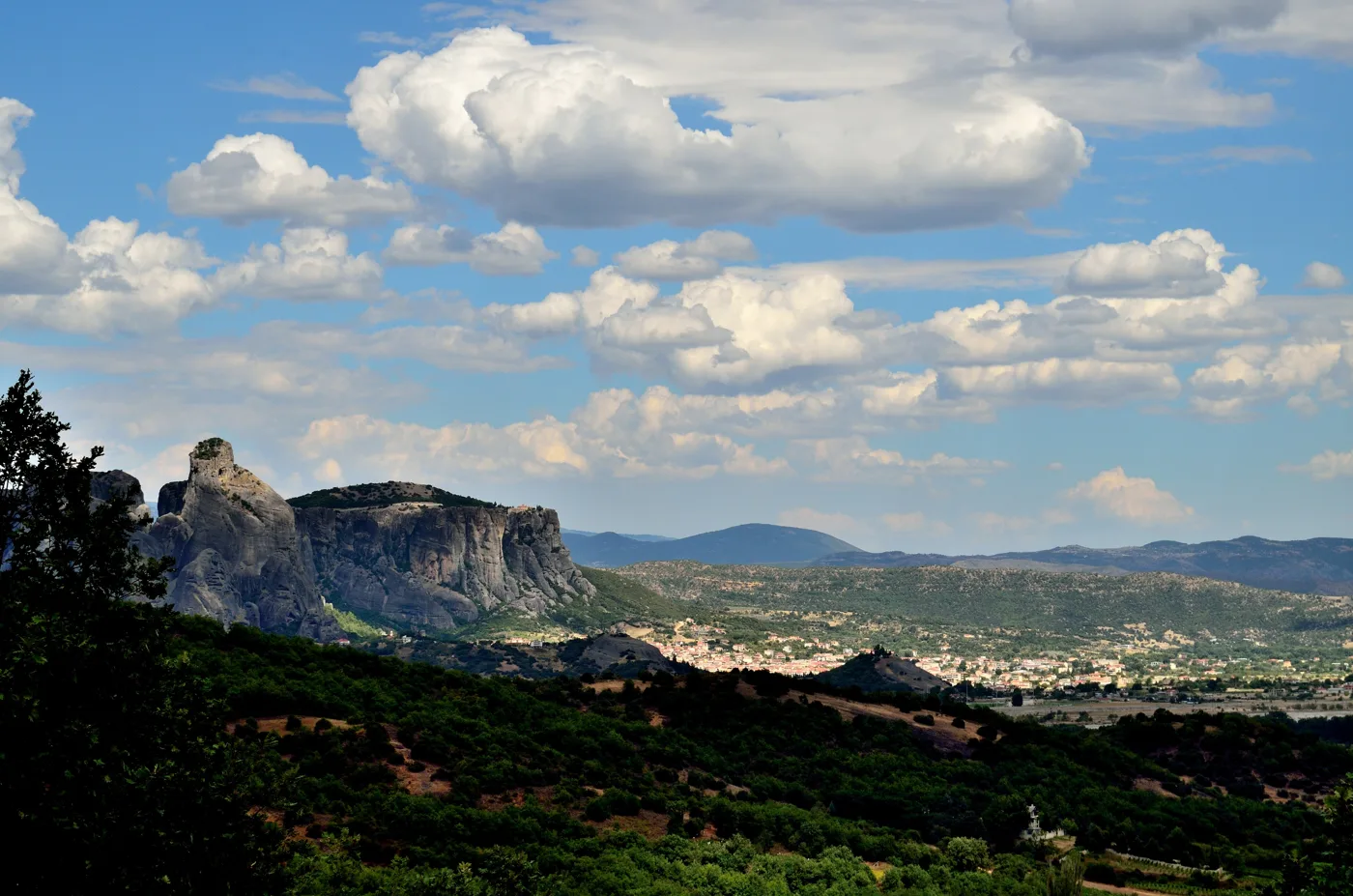
The Pineios leaves the gorges and opens out into the plain.
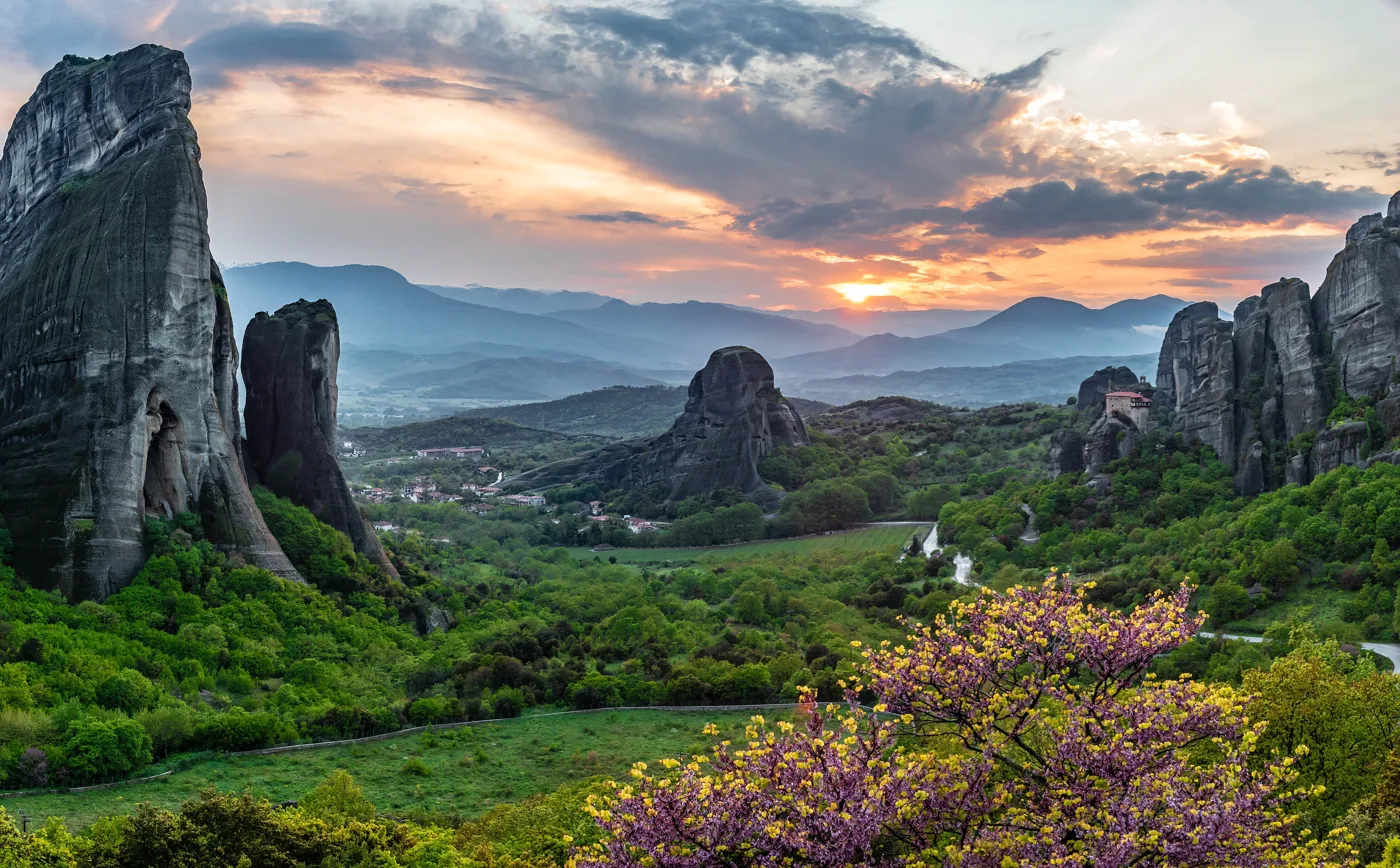
In April and May Meteora is green.
Photos: Chabe01 (CC BY-SA 4.0), Jolovema (CC BY-SA 4.0), Stathis floros (CC BY-SA 4.0), Falk2 (CC BY-SA 4.0), ChrysanthiAkoni (CC BY-SA 4.0), LBM1948 (CC BY-SA 4.0), Berthold Werner (CC BY-SA 3.0), Ioannis Ioannidis (CC BY-SA 4.0), kmakris66 (CC BY-SA 4.0), Gidvgreece (CC BY-SA 4.0) · Wikimedia Commons
⚖️ Is it worth a day trip? The honest answer
Yes, with conditions. Meteora is the one place in Greece that looks like nothing else, and the view from Psaropetra, with six monasteries on the rocks, is worth nine hours on a bus; anyone who comes to Athens for a week and won’t be back in Greece should go. But the day trip is a long day, 15 hours door to door: you see three, at most four, of the six monasteries, you miss the sunset and the dawn, which are the rocks’ finest hours, and in summer you are at the monasteries at the same time as every bus from Athens and Thessaloniki. If you have two days, a night in Kastraki, at €50 to €90 a room, changes the experience completely: monasteries in the morning with empty courtyards, a trail in the afternoon, sunset from Sunset Rock, and the next day the other three and Theopetra. If you have one, go on a Saturday, when everything is open and the KTEL bus runs, or on a weekday with a tour, and don’t try to see it all. Here’s the picture without the brochure.
📊 At a glance, from 1 to 5
👍 The pros
- The most powerful landscape in mainland Greece: 400-metre rocks with monasteries on top, like nothing else in Europe.
- Six living monasteries with 16th-century frescoes, museums, gardens and monks who live there, not museum pieces.
- Cheap: €5 per monastery, €63 for the return bus, tavernas at €15.
- The monastery road is 17 kilometres and the trails are old and waymarked: you see a lot in a few hours.
- The KTEL bus gives you 6.5 hours there and brings you back the same evening, with no changes.
👎 The cons
- Far: 4.5 hours by bus, 4 by car, a 13- to 15-hour day door to door.
- The direct train, the loveliest way to go, isn’t running in 2026; via Palaiofarsalos it takes over 5 hours.
- The monasteries close early, at 14:00 or 15:00 in winter, and each one for a day a week: in one day you see three, at most four.
- Steps: 140 to 300 at every monastery except Agios Stefanos; in heat or rain they are tiring.
- In summer, from 10:00 to 14:00, tour buses, queues and full car parks at the big monasteries.
📜 A little history: from nets to steps
The first inhabitants of the rocks were hermits who lived in caves fitted with wooden platforms, met on Sundays at the skete of Doupiani below Kastraki and climbed up with ropes. Athanasios brought the organisation of Mount Athos, rules, communal life, a common table, and his successor Ioasaf, son of the Serbian king of Thessaly, Symeon Uroš, brought money: the katholikon of Great Meteoron of 1388 and the great renovation of 1544 are his. In the 16th century, with the Ottoman conquest having left the monasteries in peace as tax-paying institutions, came the golden age: the Apsaras brothers from Ioannina rebuilt Varlaam in 1517, Theophanes the Cretan and Frangos Katelanos painted Agios Nikolaos in 1527 and Varlaam in 1548, and 24 monasteries shared the rocks. From the 17th century came the decline, with taxes, bandits and fewer monks; by the 19th most had been abandoned, and travellers, Louis Dupré in 1819 and Robert Curzon in 1834, who was hauled up to Great Meteoron in the net and described it in terror, made Meteora known in Europe. The steps were cut into the rocks in the 1920s, on the orders of Metropolitan Polykarpos of Trikki, and the road arrived in the 1960s; until then, nets and rope ladders were the only way up. The Second World War and the Civil War plundered treasures and emptied monasteries; from the 1960s the communities filled up again, Rousanou and Agios Stefanos became convents, and today Meteora is the second monastic centre in Greece after Mount Athos, with the difference that women can come in here too.
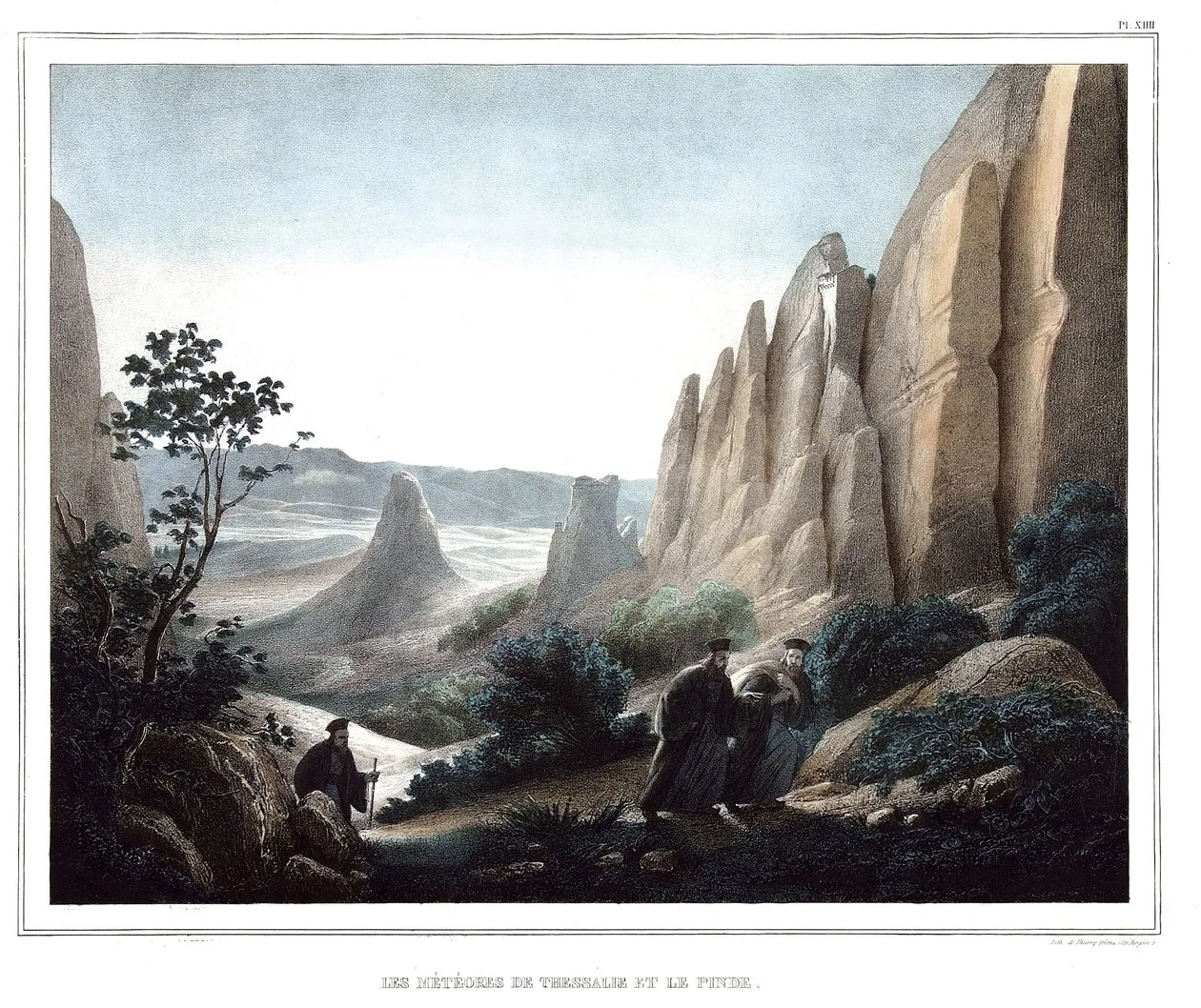
From “Voyage à Athènes et à Constantinople”.
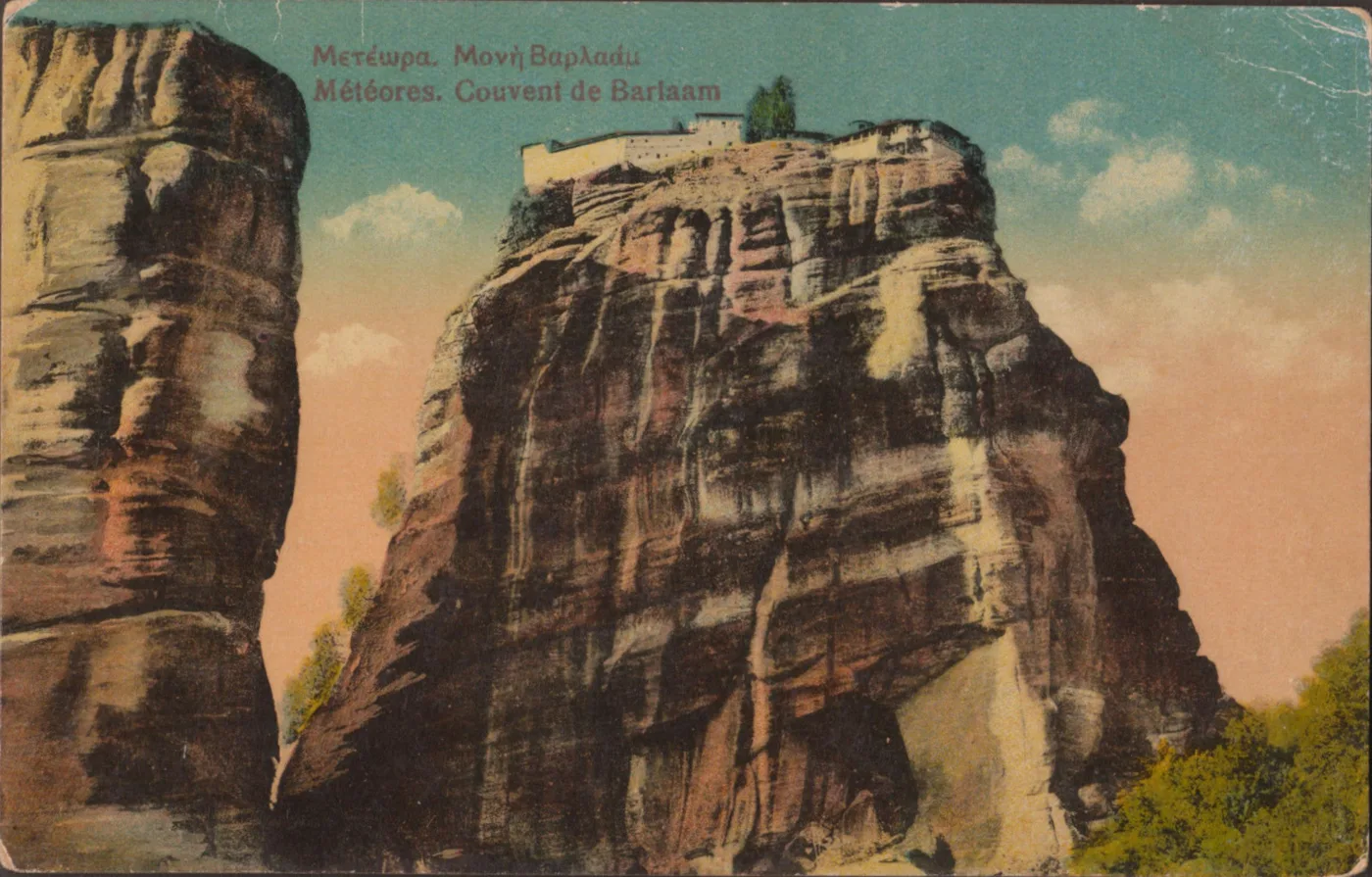
The photographer from Volos, early 20th century.
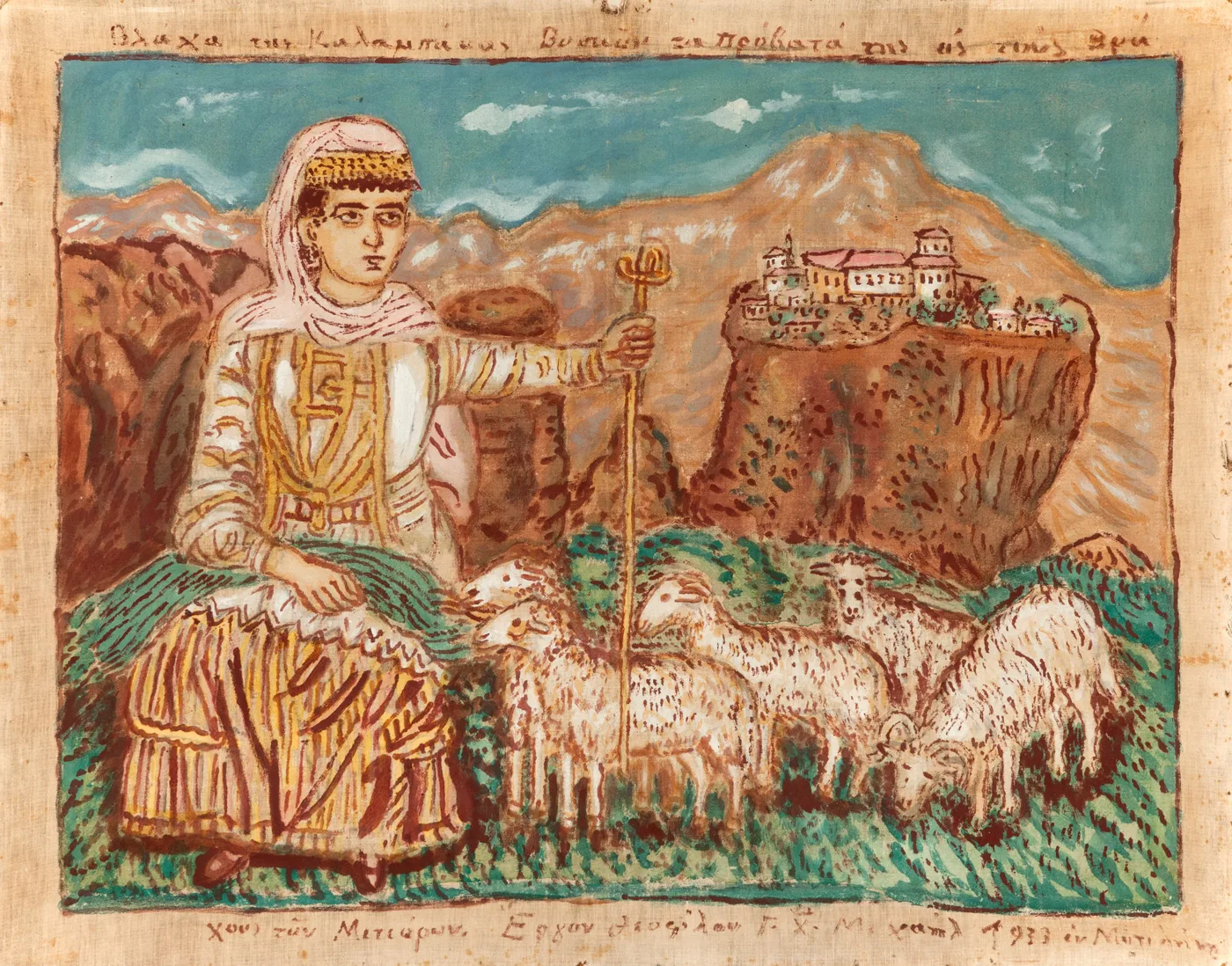
The Vlach woman from Kalambaka.
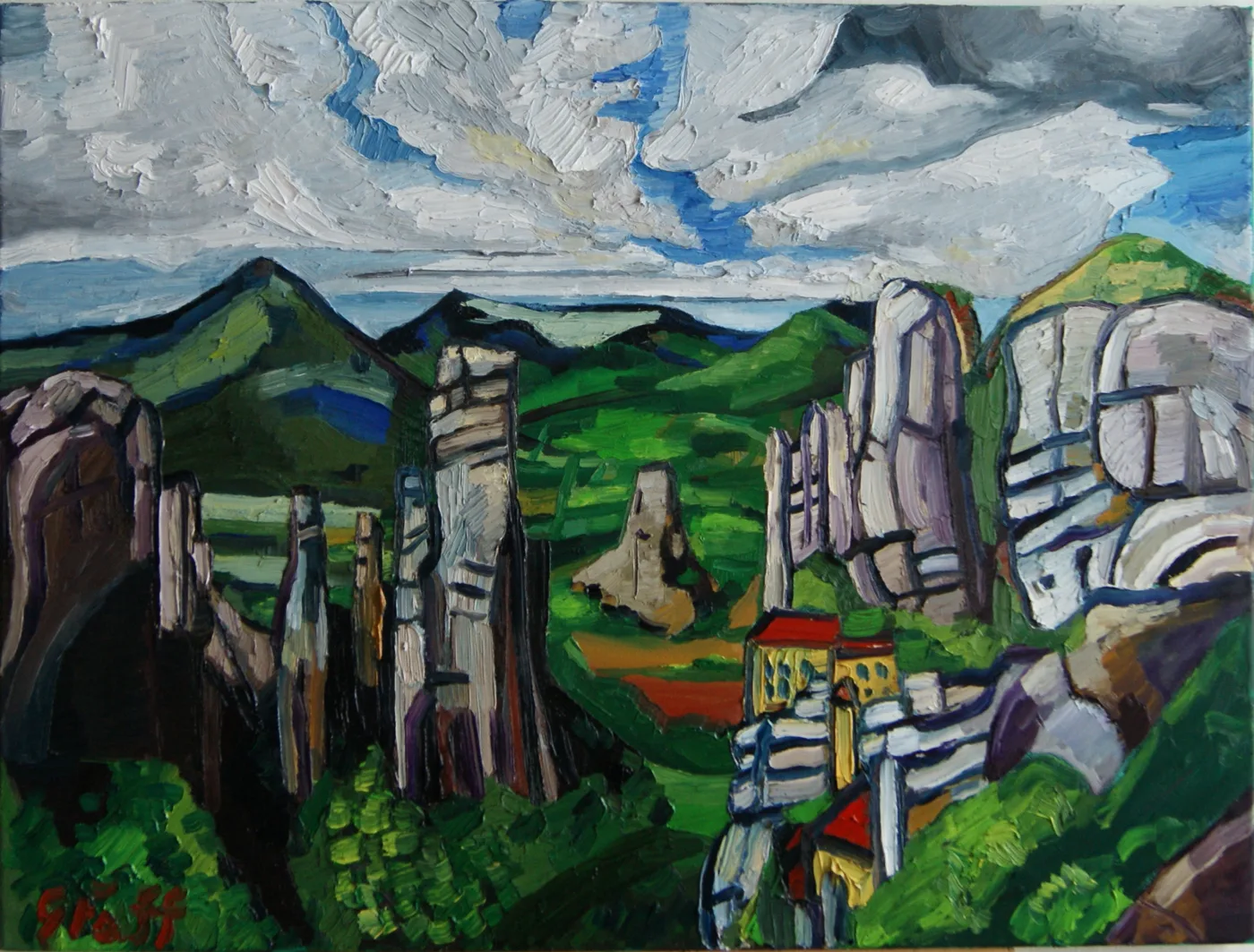
Meteora has been painted for two centuries.
Photos: Louis Dupré (Public domain), Stephanos Stournaras (Public domain), Theophilos Chatzimichael (Public domain), Matthias Laurenz Gräff (CC BY-SA 3.0) · Wikimedia Commons
Agia Triada is the monastery of “For Your Eyes Only” from 1981, with Roger Moore climbing the rock; the monks didn’t want the filming and hung sheets from the windows, and the production built its own summit on a neighbouring rock. In 2019 Meteora became a Game of Thrones setting, digitally, as the Eyrie, and car adverts are filmed here every year: the rocks are the best-known Greek landscape after Santorini.
🏛️ Great Meteoron: the biggest and the oldest
The Monastery of the Transfiguration of the Saviour, Great Meteoron, is the monastery of Athanasios and Ioasaf, on the highest rock, and the first one everyone sees: from the car park, downhill, a bridge over the gorge and around 300 steps uphill through a tunnel in the rock, ten minutes with stops. At the top, a small town: the katholikon of 1544 with frescoes of the Cretan School, Athanasios’s old church as its sanctuary and the carved wooden iconostasis, the old kitchen with its cauldrons and oven, blackened by 400 years of smoke, the cellar with its barrels and tools, the refectory, now a museum with manuscripts, icons and gold embroidery, the ossuary with the monks’ skulls on shelves, and the winch tower with the net, which until 1920 was the only way up and today lifts supplies beside the cable car. From the edge of the courtyard, the view of Varlaam, Rousanou below, Agios Nikolaos and the plain. It is the monastery fullest of things and of people: an hour inside, and in summer before 10:30 or after 13:30, between the buses. Closed on Tuesdays all year round, and in winter on Wednesdays and Thursdays too.
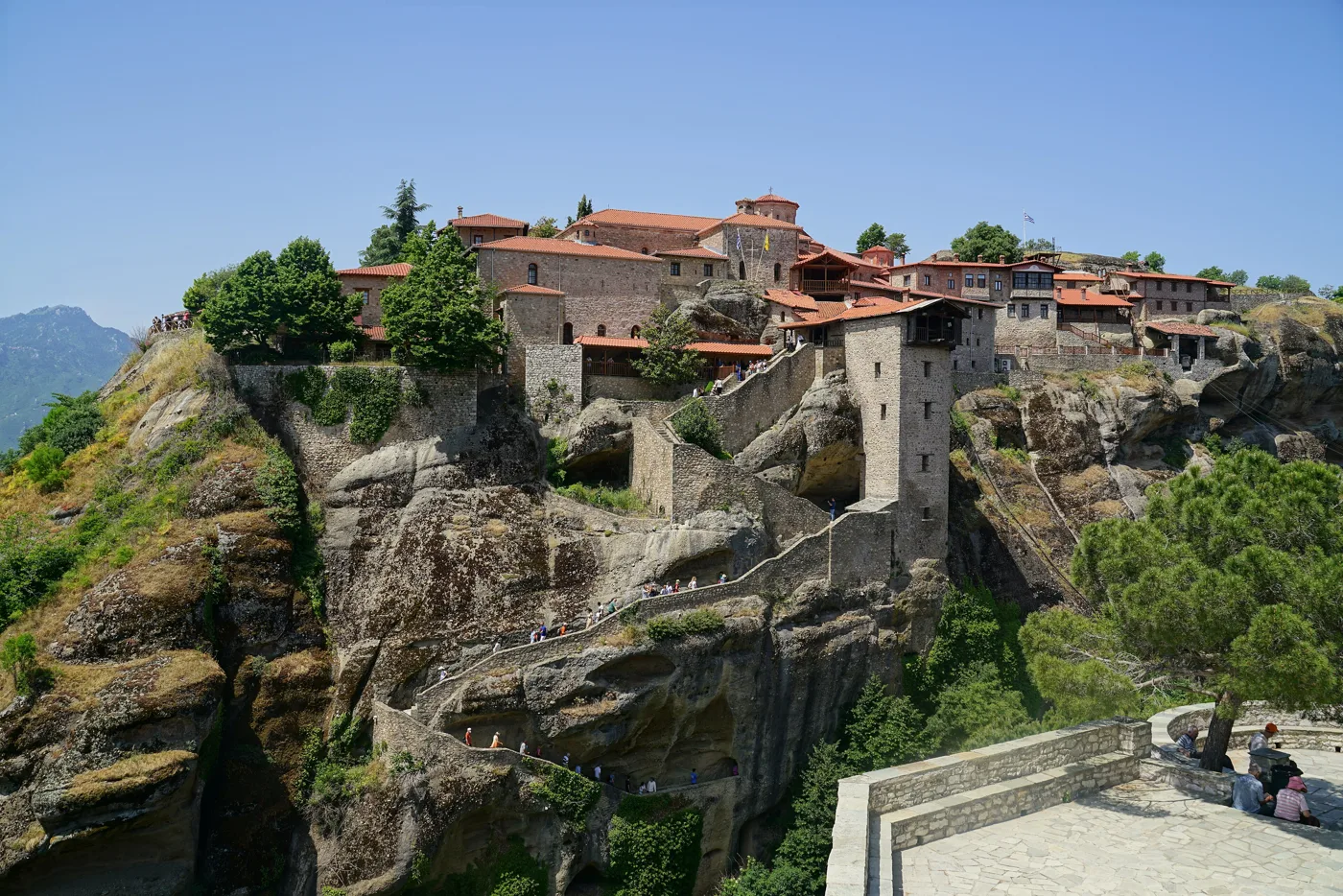
The biggest rock, 613 metres, the oldest monastery.
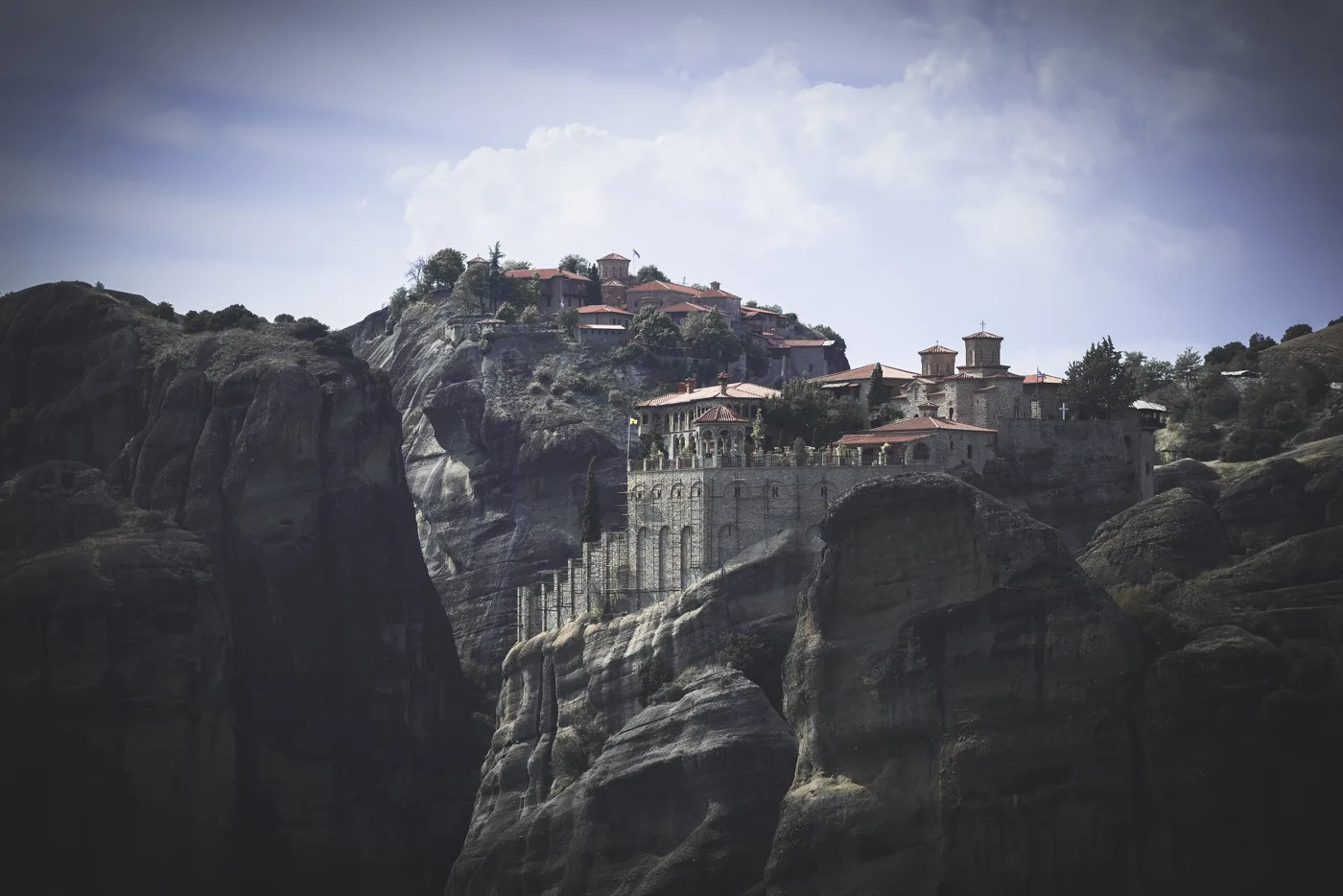
The two big monasteries are five minutes from each other.
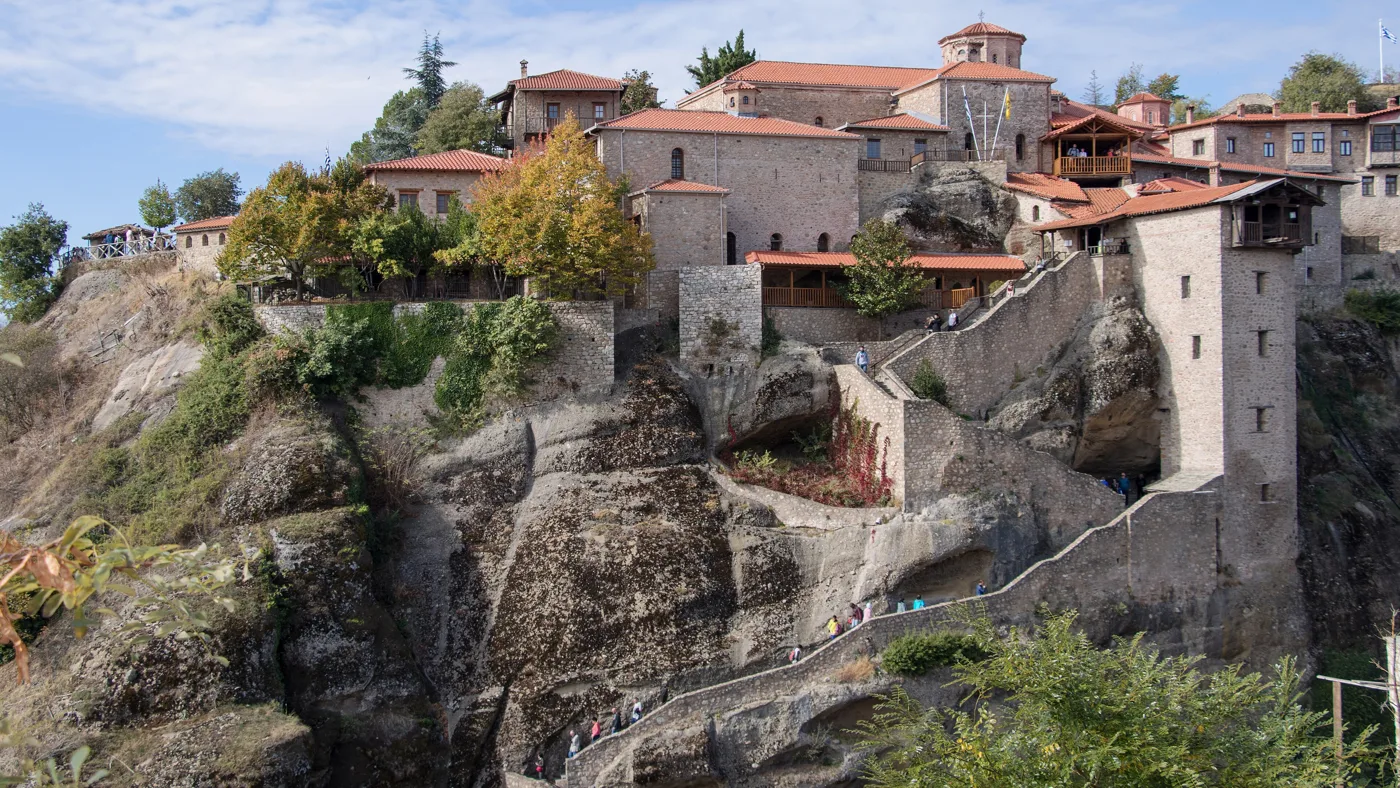
Athanasios the Meteorite climbed up here around 1340.
The car park fills up from 10:00 in summer.
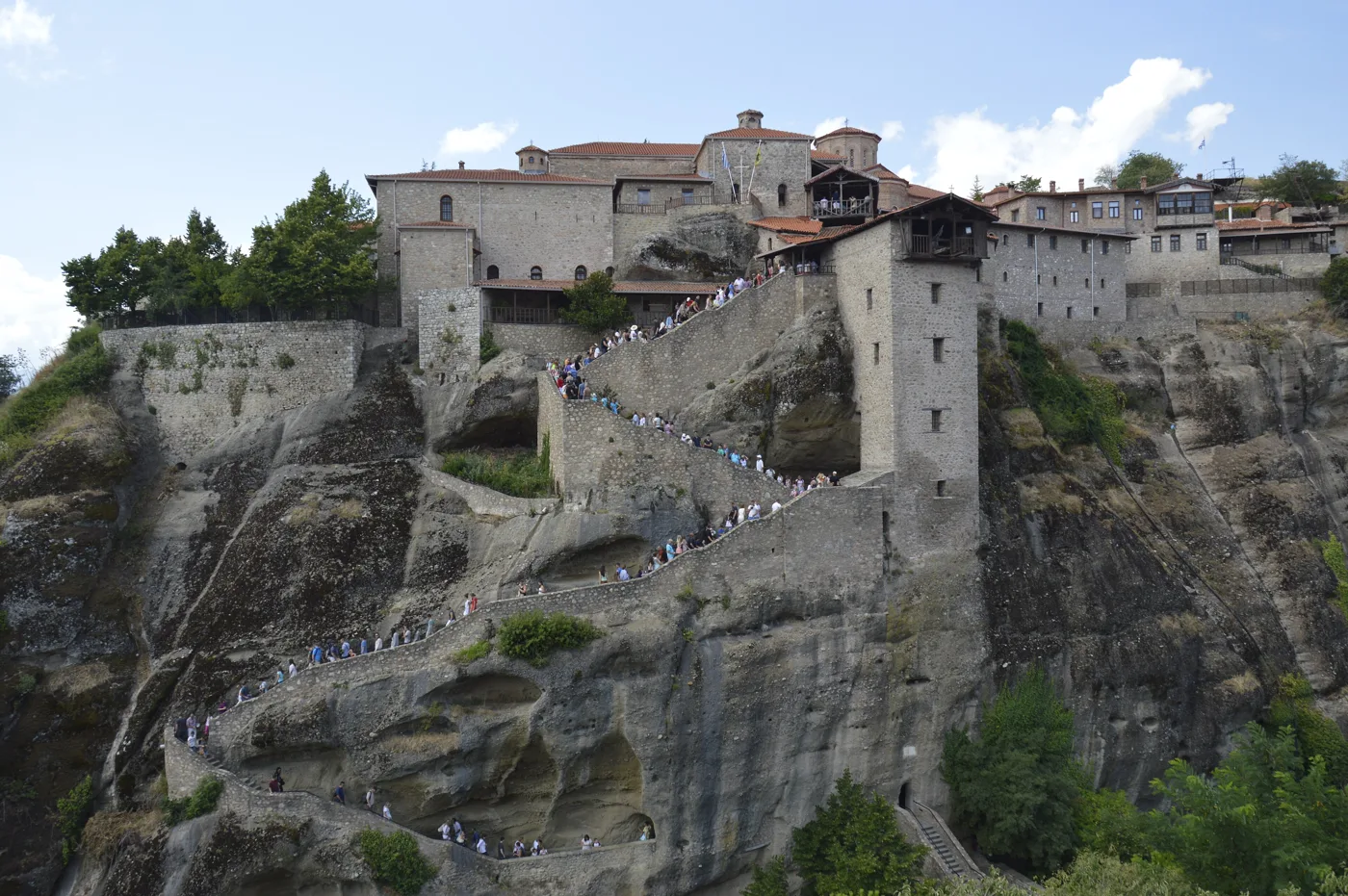
Around 300: downhill, a bridge, uphill.
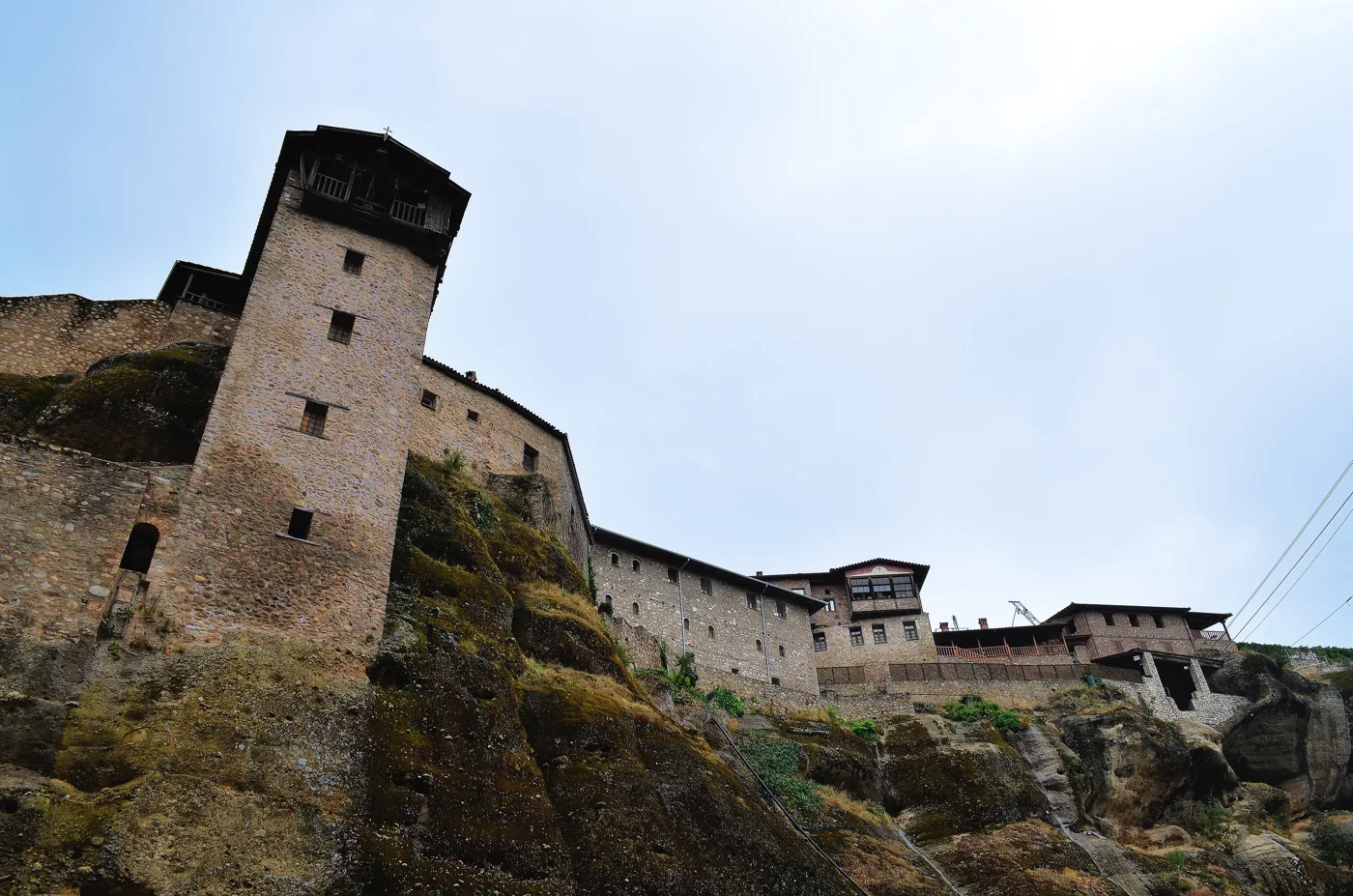
Until 1920 the monks went up in the net or on rope ladders.
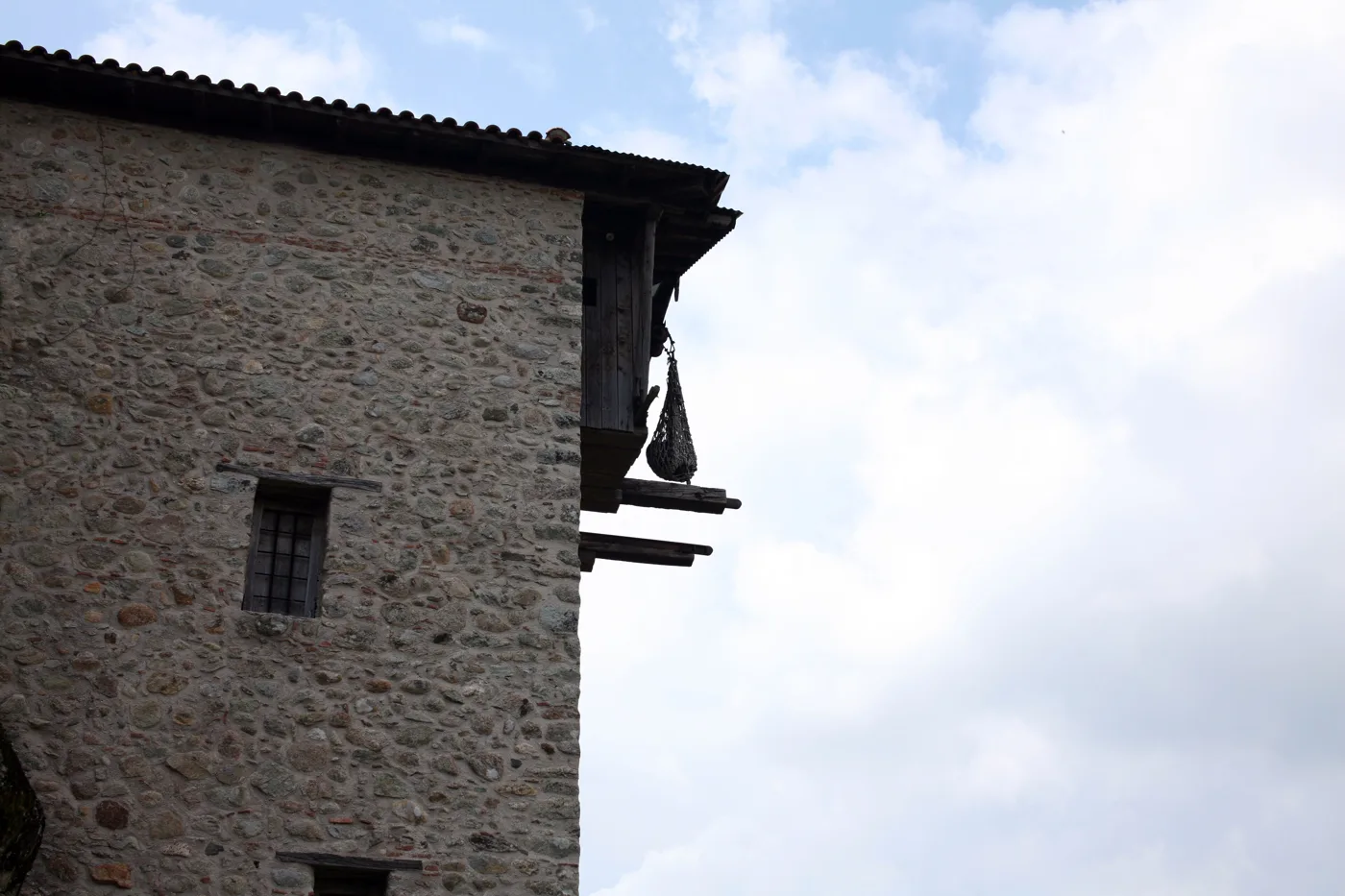
Today it only lifts supplies.
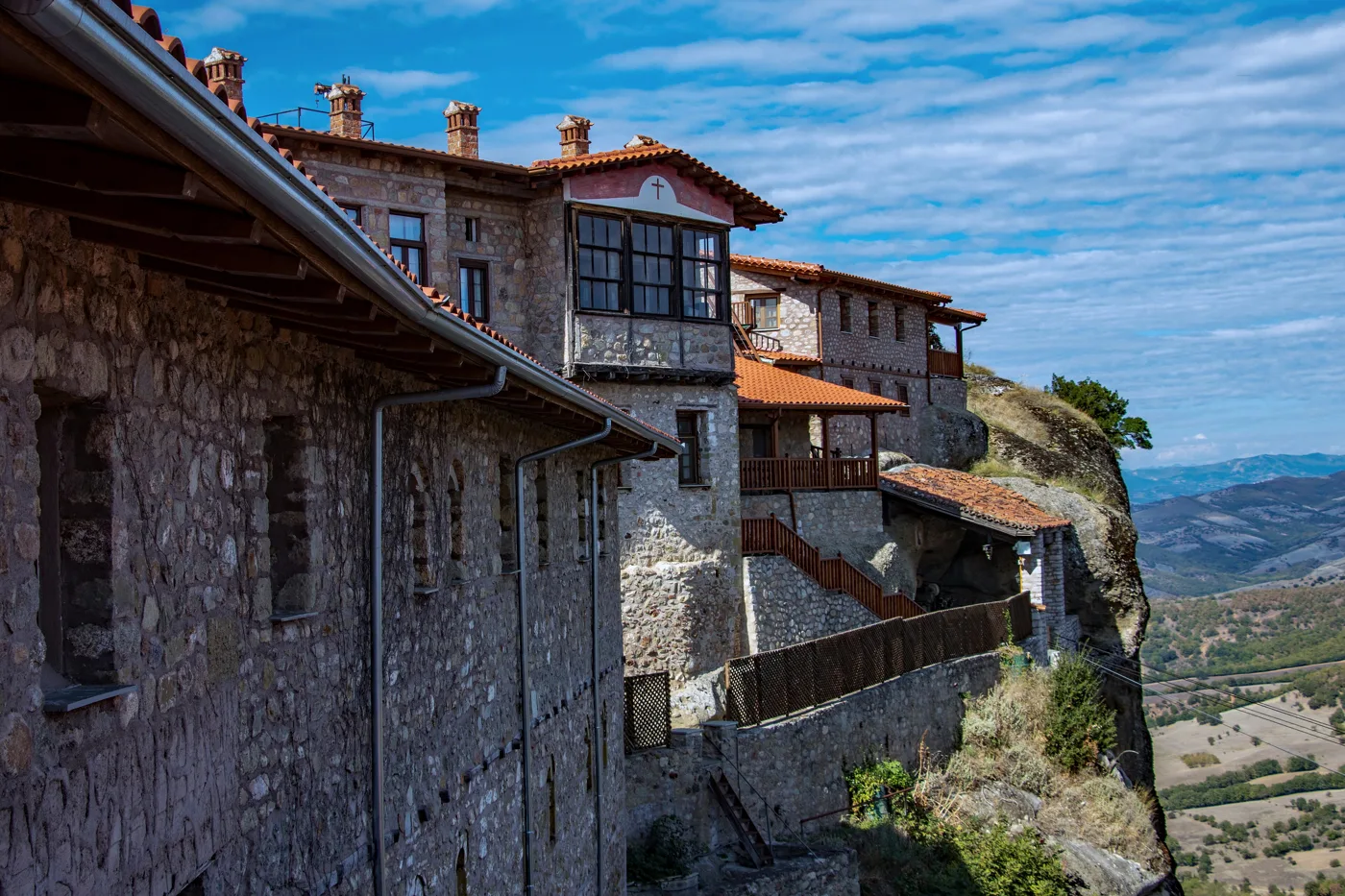
The cells hang over the void.
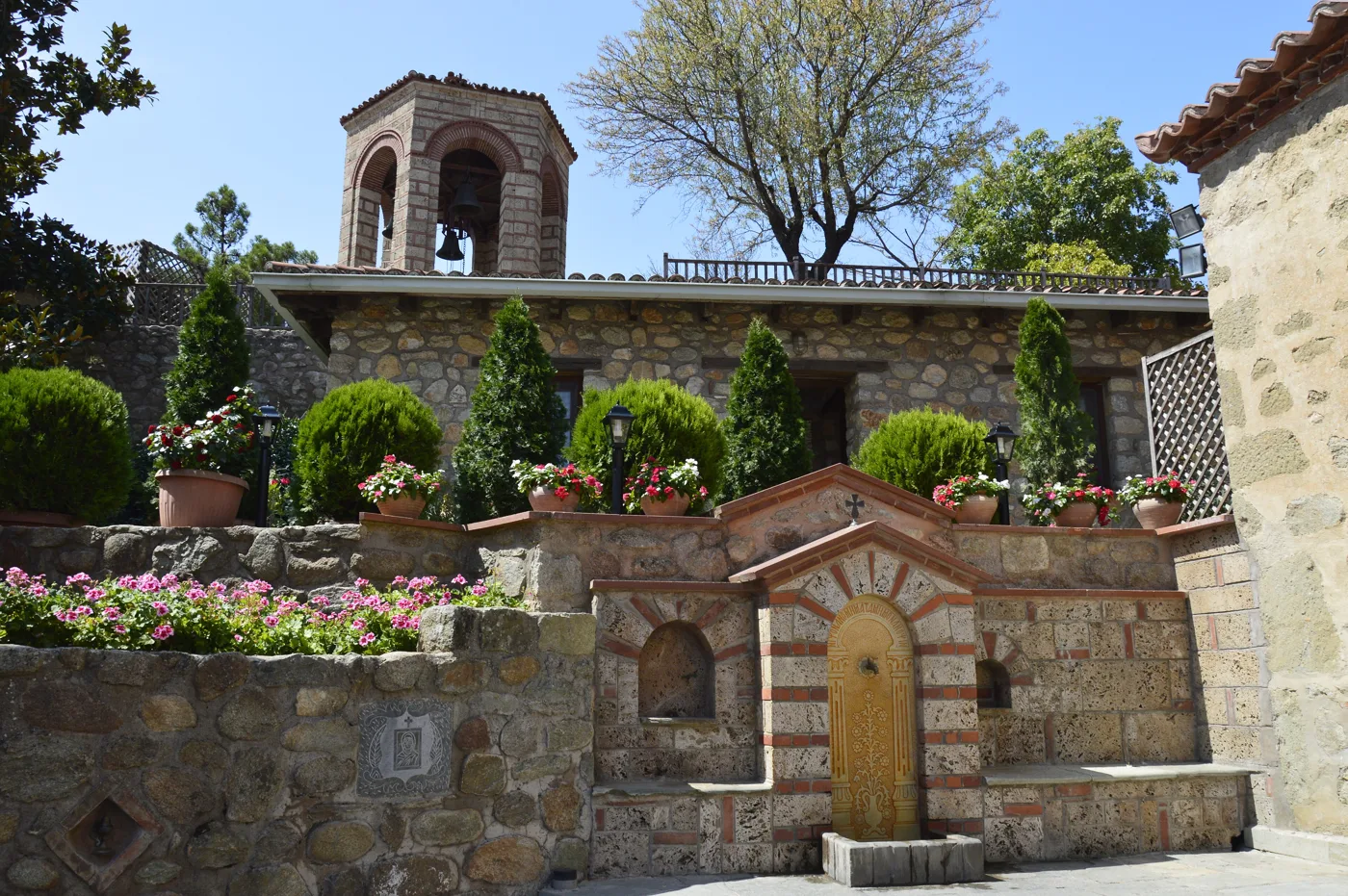
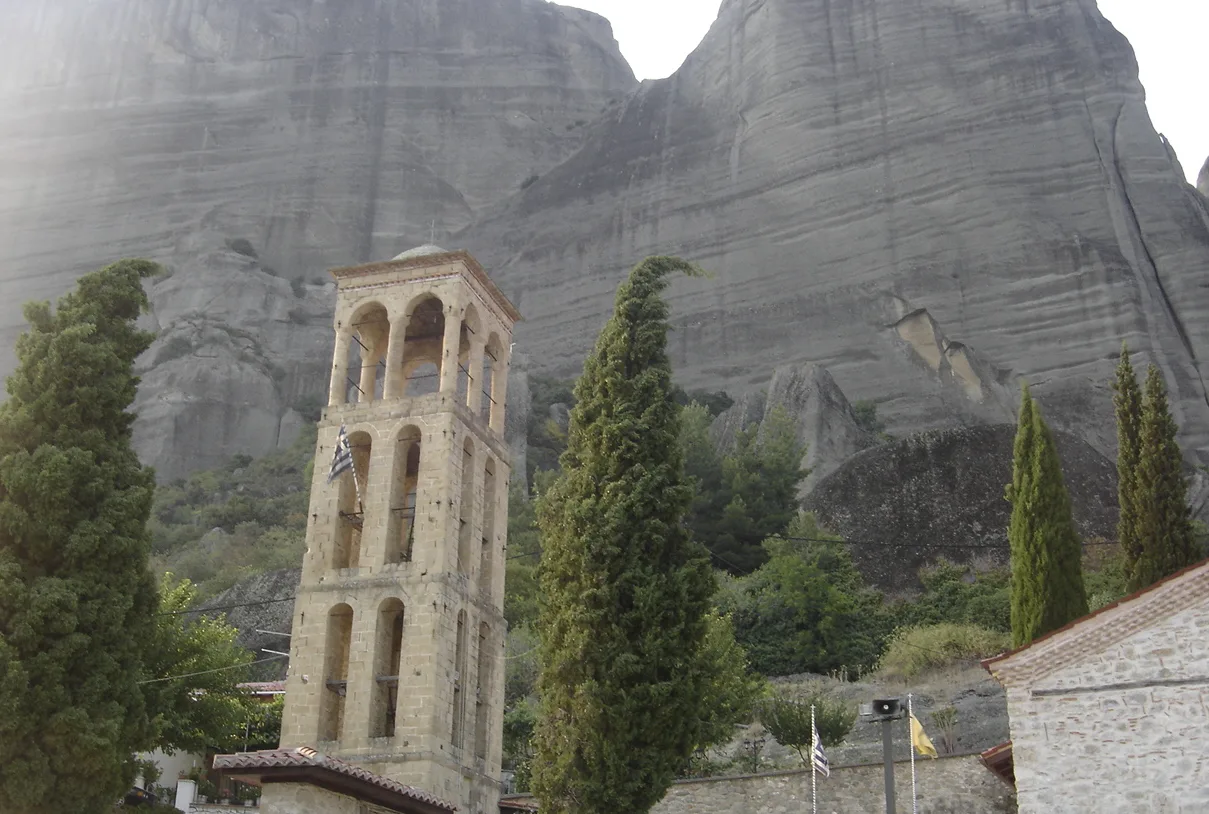
Flowers, cypresses and the bell.
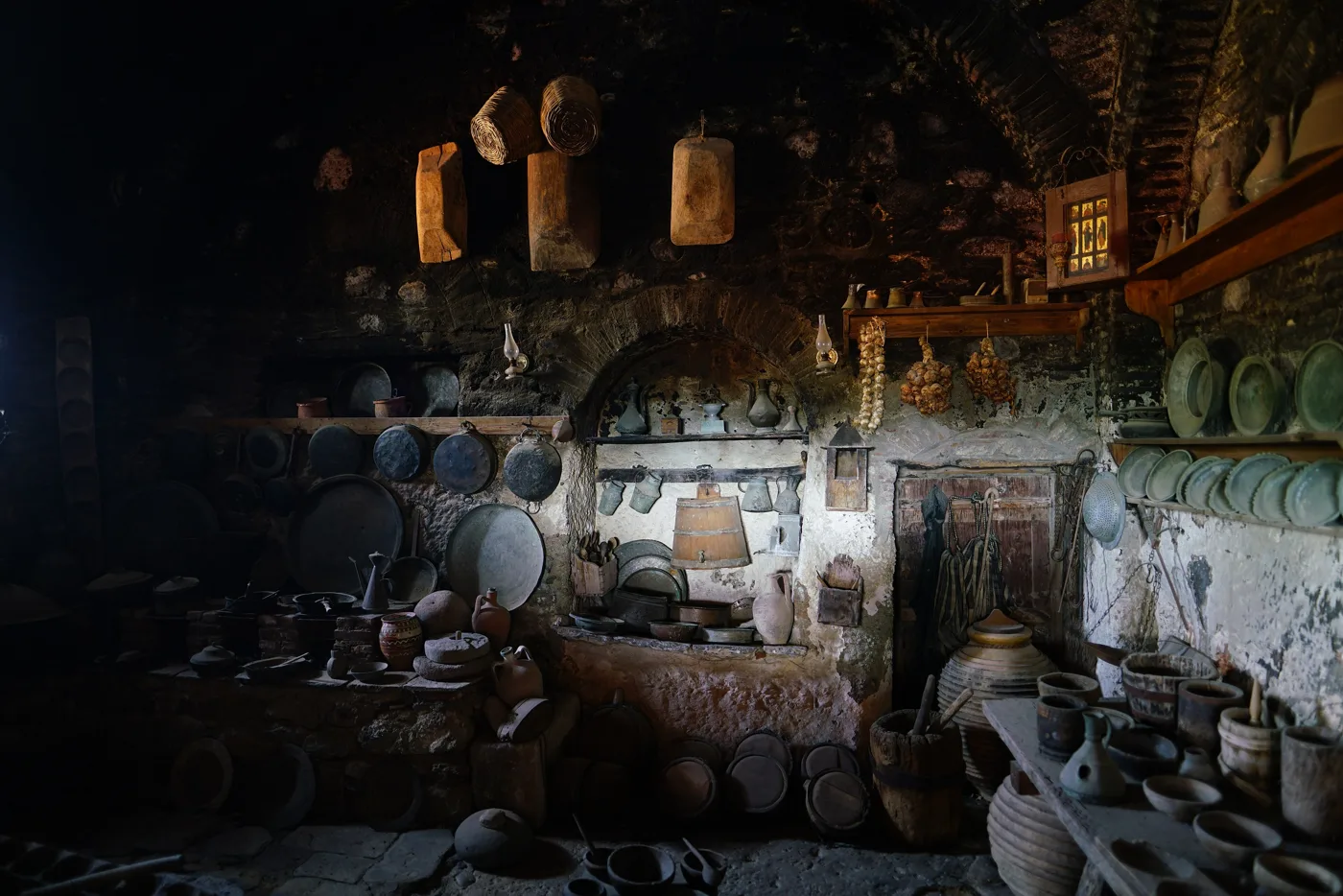
Cauldrons, an oven and 400 years of soot.
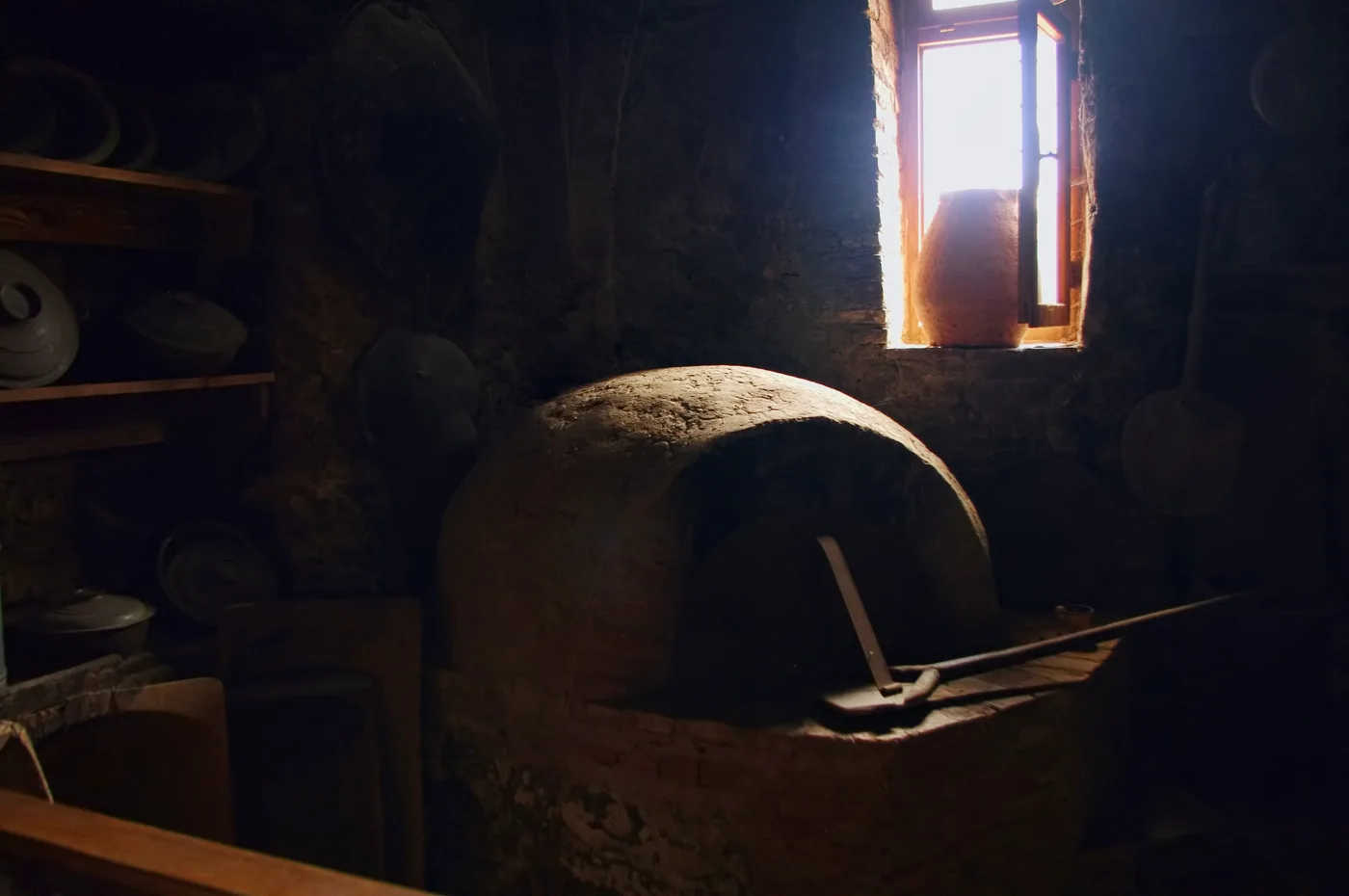
The community’s bread was baked here.
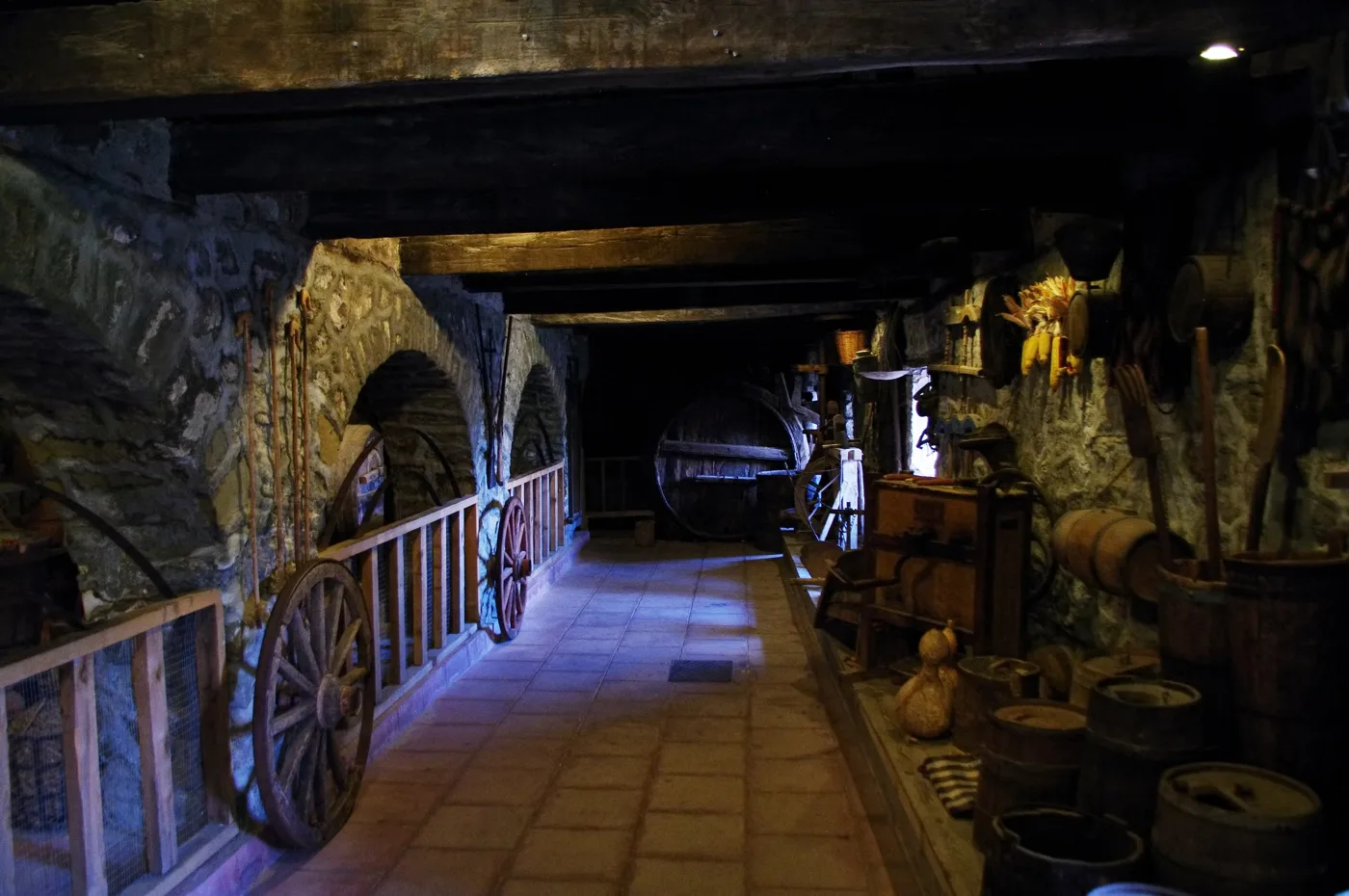
Barrels, ploughs and the tools of self-sufficiency.
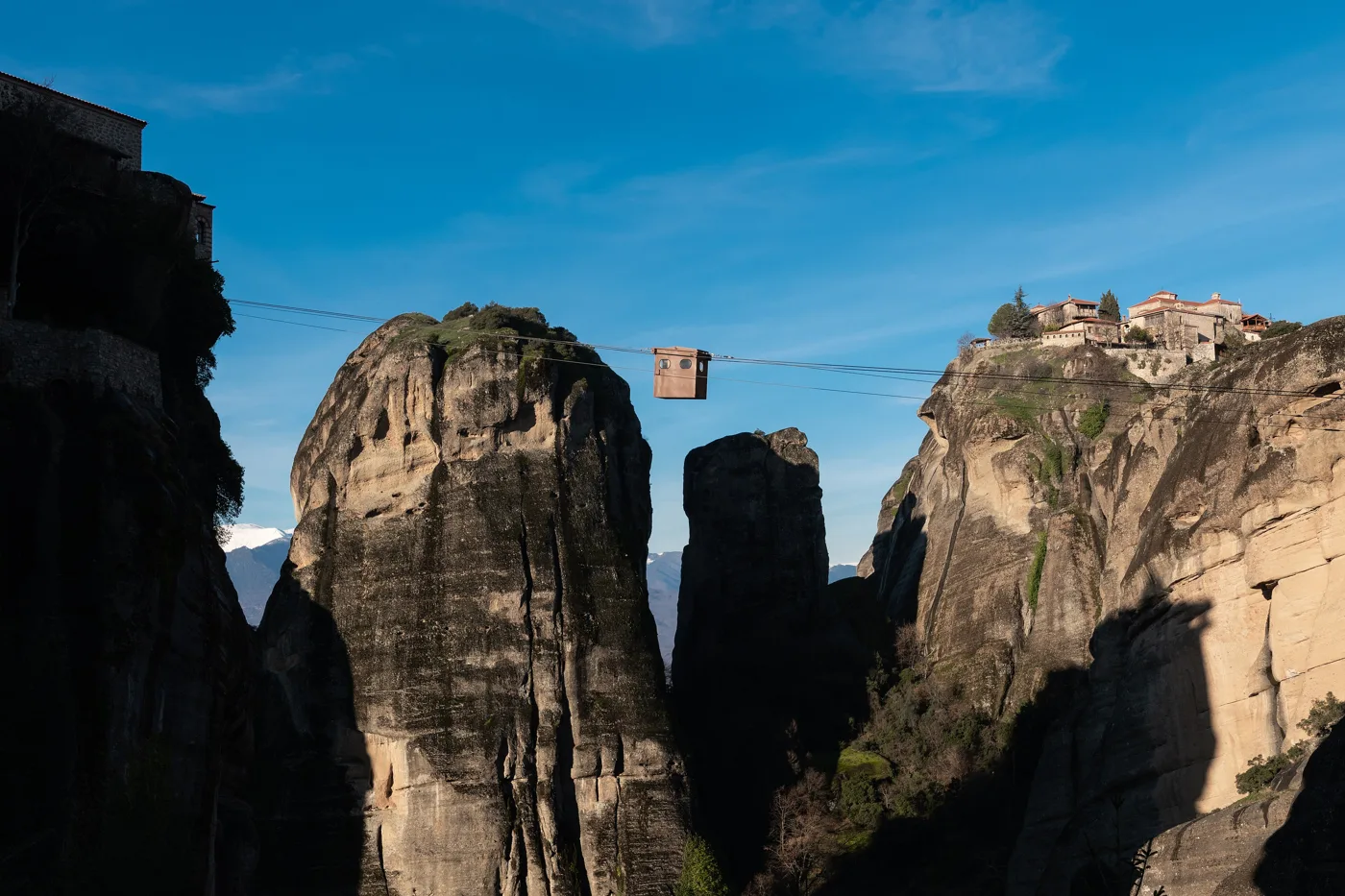
For supplies and monks, not for visitors.
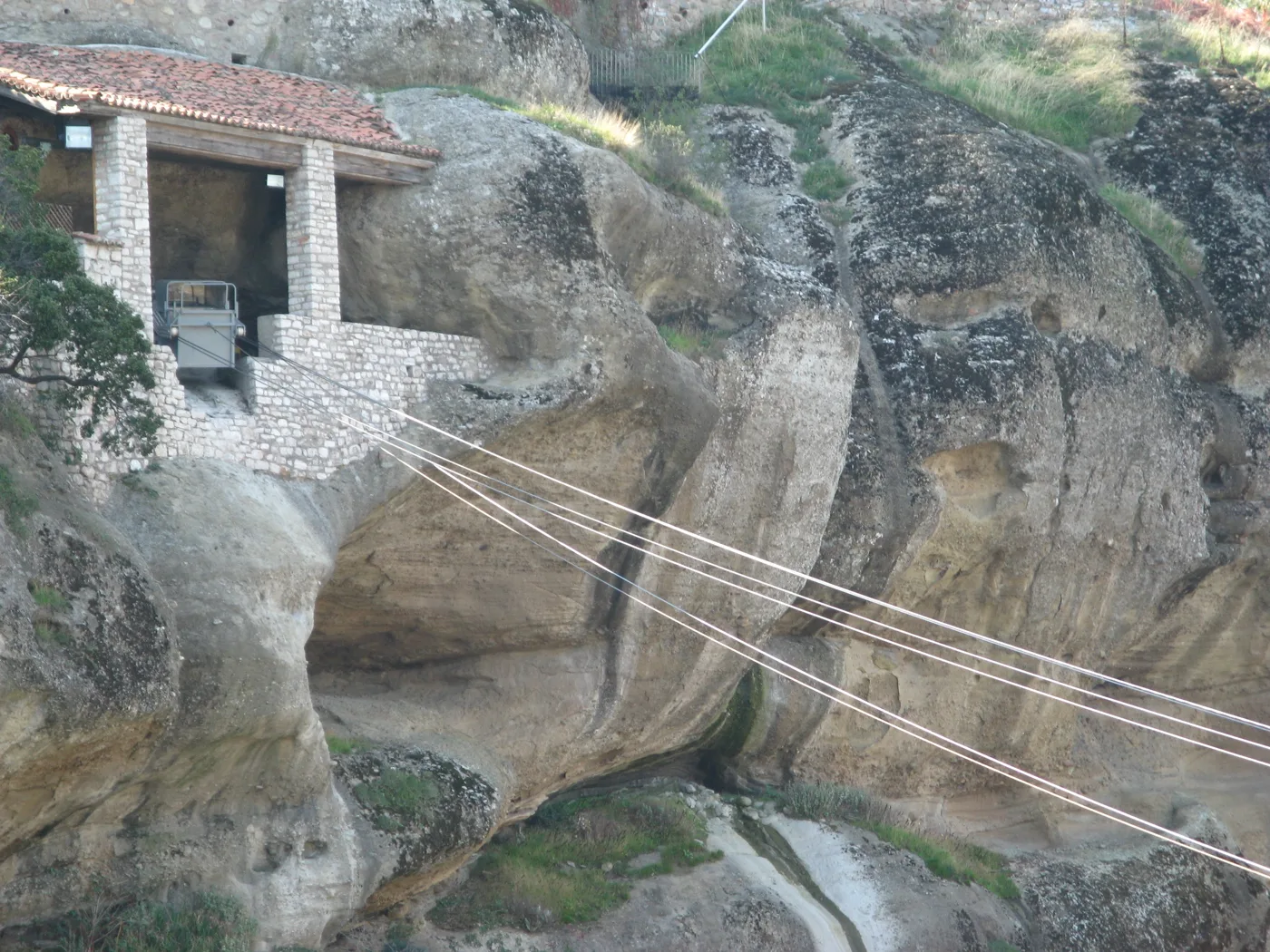
From the road to the rock in a minute.
Photos: Redeemer (CC BY-SA 4.0), Sanshiro KUBOTA from London, UK (CC BY 2.0), DimitrisP67 (CC BY-SA 4.0), Joyofmuseums (CC BY-SA 4.0), Mrcsifkin (CC BY-SA 3.0), revolution540 (CC BY 2.0), Elena Chochkova (CC BY-SA 3.0), Michael Nicht (CC BY-SA 4.0), Fotis Petrakogiannis (CC BY-SA 4.0), Yair Haklai (CC BY-SA 4.0) · Wikimedia Commons
🏛️ Varlaam: the barrel, the museum and the best courtyard
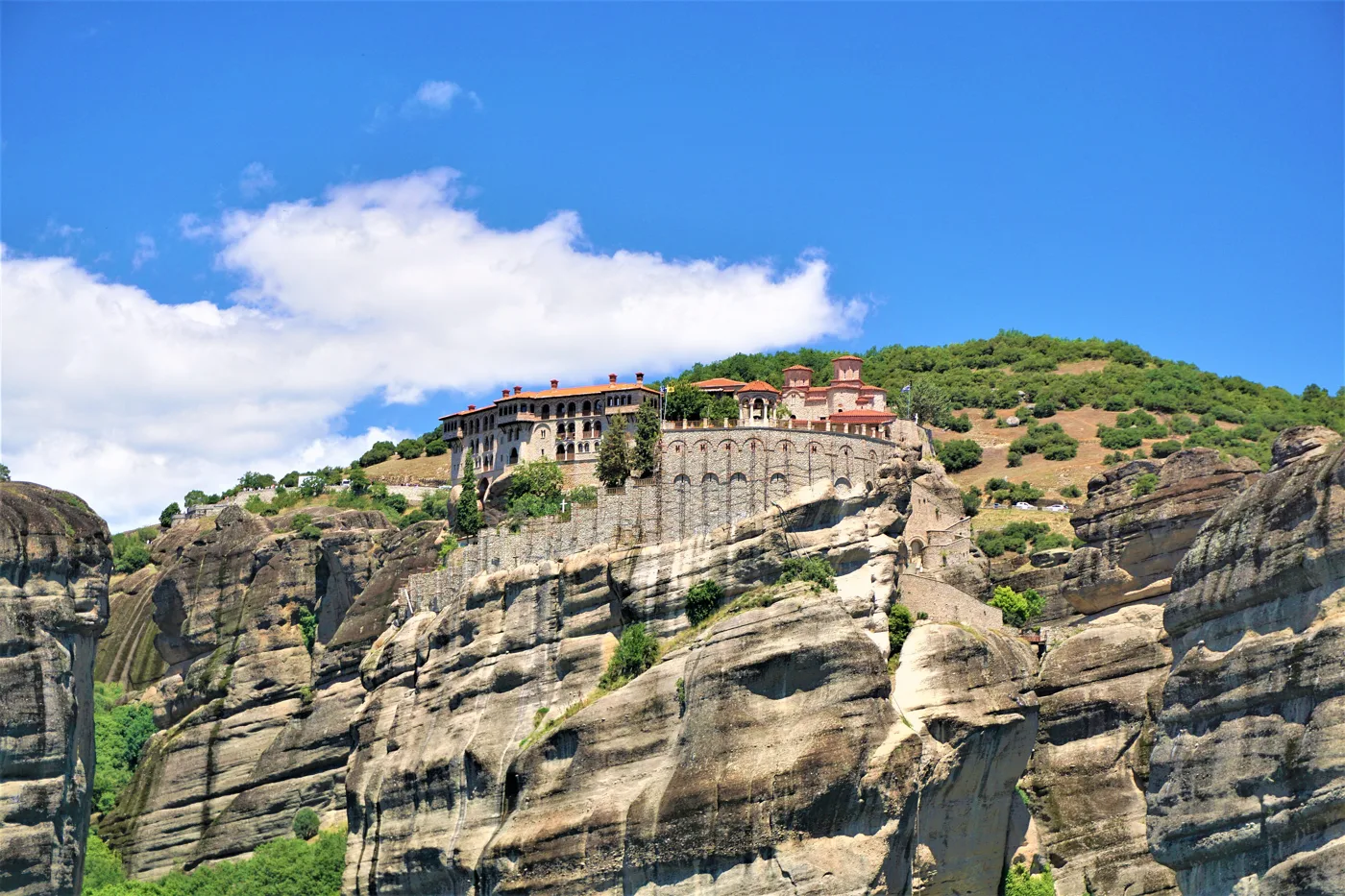
Five minutes on foot from the Great Meteoron car park, on the rock opposite, Varlaam takes its name from the hermit who climbed up first, in 1350, and built three small churches; when he died the rock stood empty for 150 years, until in 1517 the brothers Theophanes and Nektarios Apsaras, young noblemen from Ioannina, climbed up the ladder and rebuilt the monastery. The katholikon of All Saints, from 1541, has frescoes by Frangos Katelanos of Thebes, from 1548, among the finest at Meteora, with the Last Judgement and the life of Christ in colours that haven’t faded. In the courtyard, the loveliest at Meteora, with flowers, paving and benches, stands the 12,000-litre oak barrel that collected rainwater for the whole year, and the museum in the old refectory, with gold-embroidered vestments, 16th-century icons, manuscripts and the embroidered Epitaphios. At the edge, the winch tower with the net and the old infirmary. 195 steps from the road, easier than at Great Meteoron, and 45 minutes inside. Closed on Fridays, and in winter on Thursdays too.
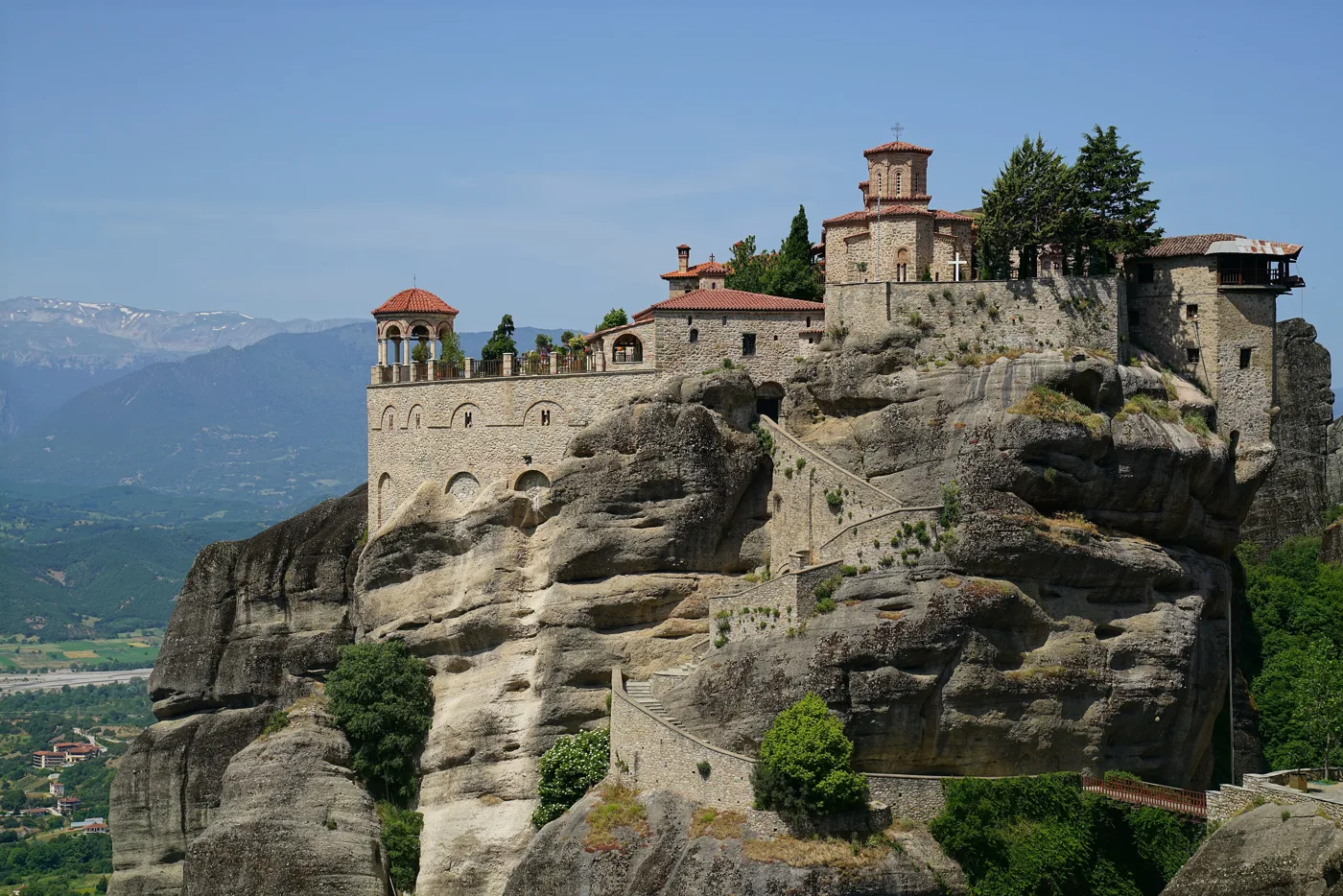
The hermit Varlaam was the first to climb up, in 1350.
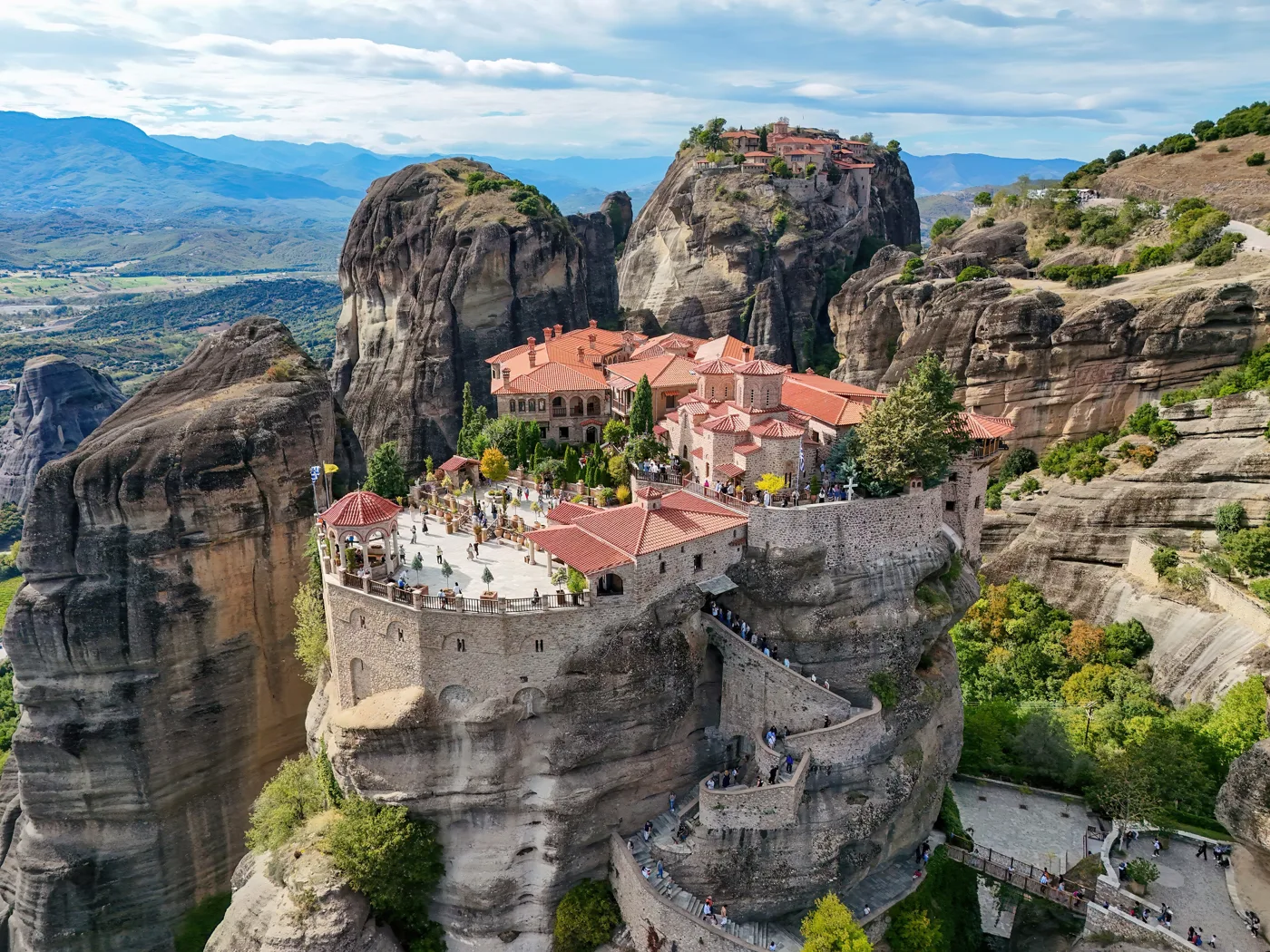
The Apsaras brothers rebuilt it in 1517.
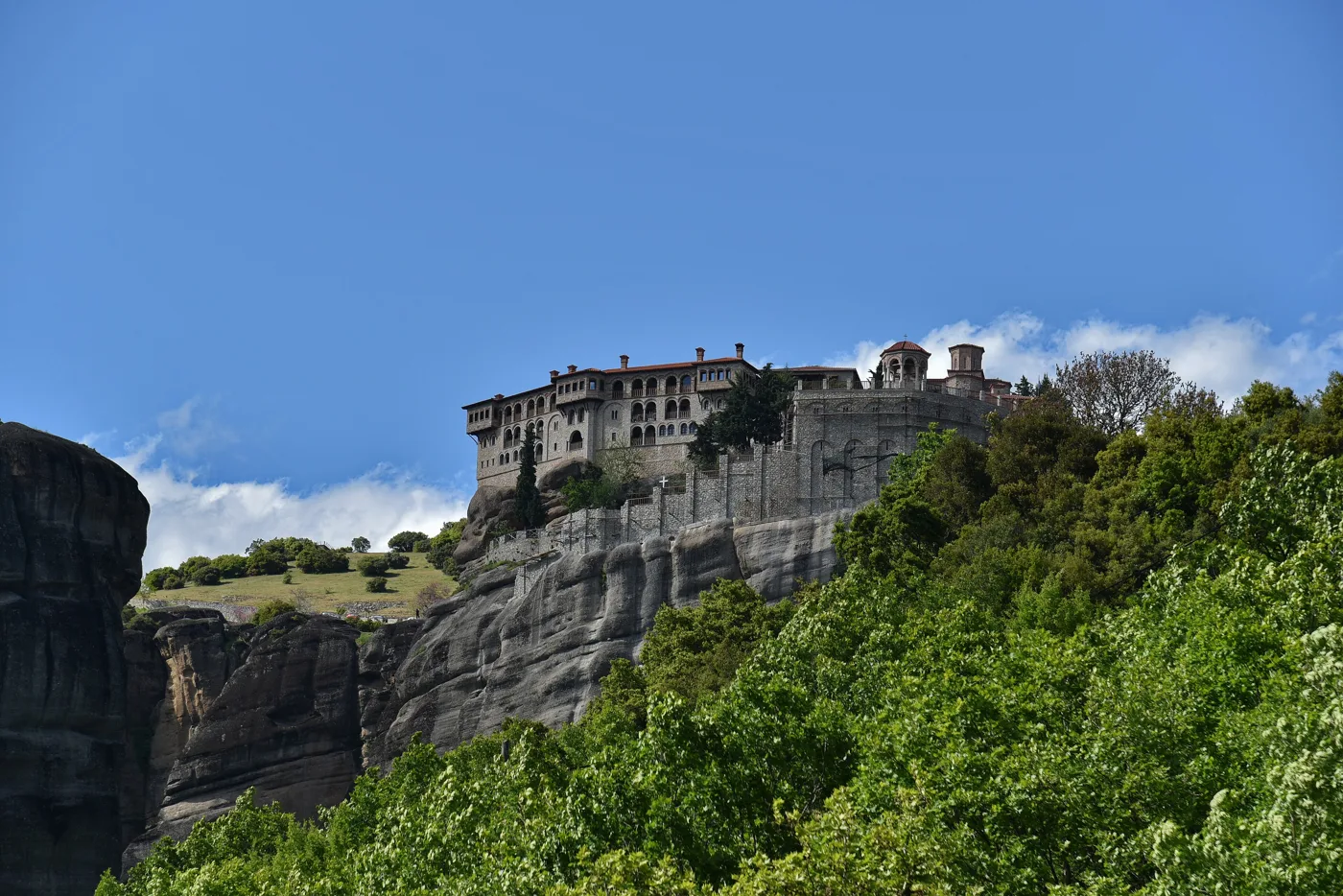
195 steps from the road.
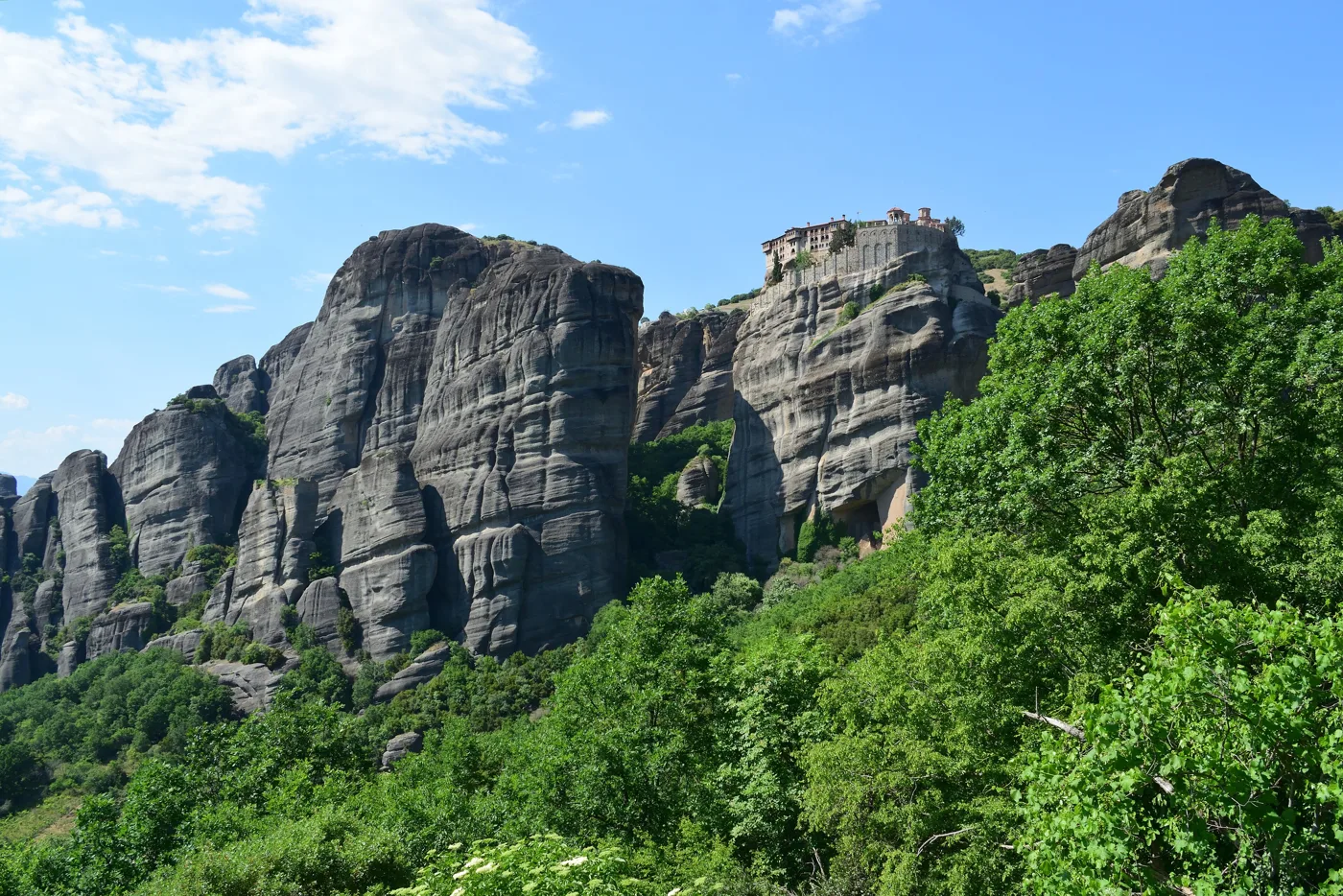
The most photogenic rock from the road.
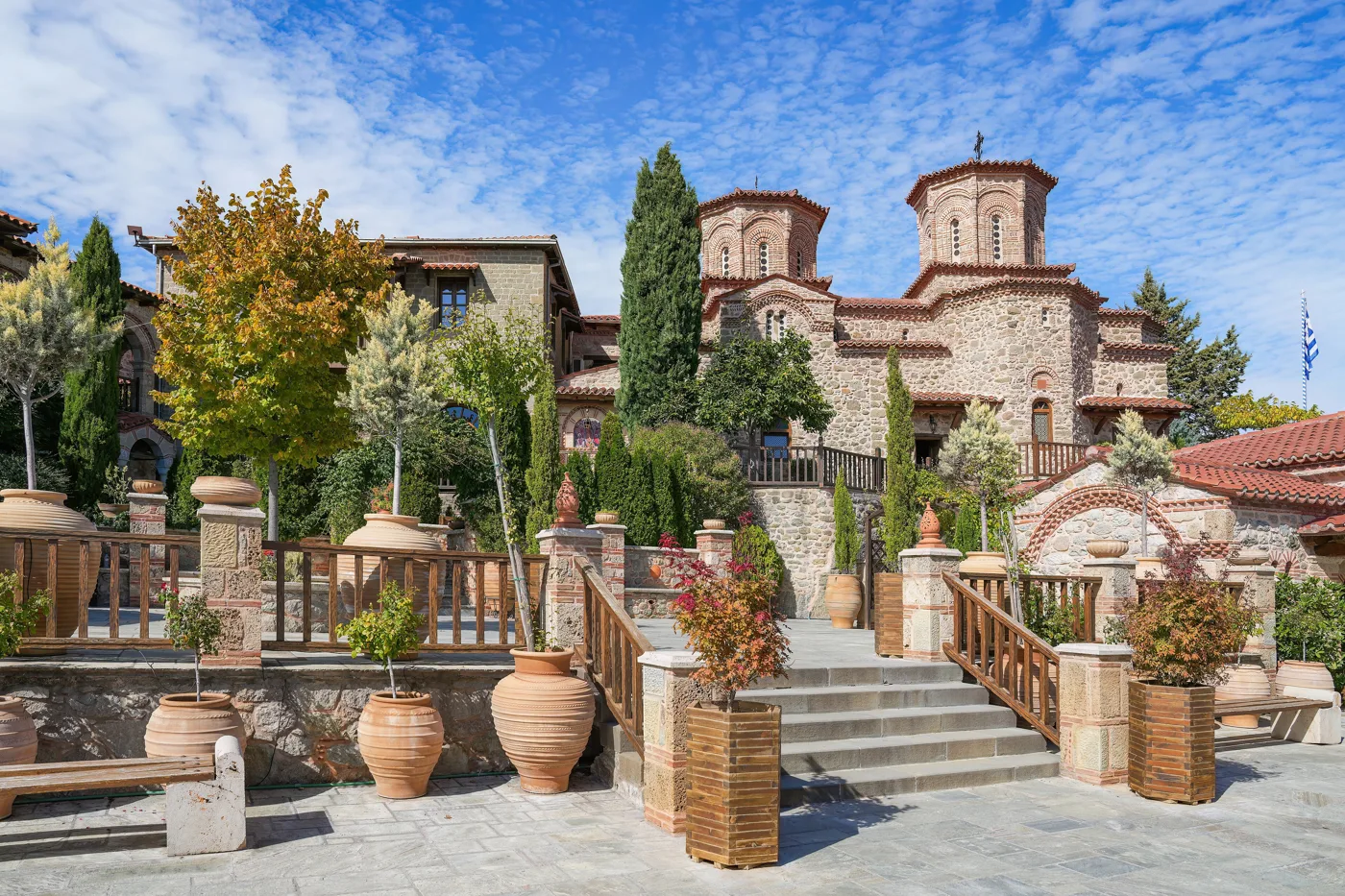
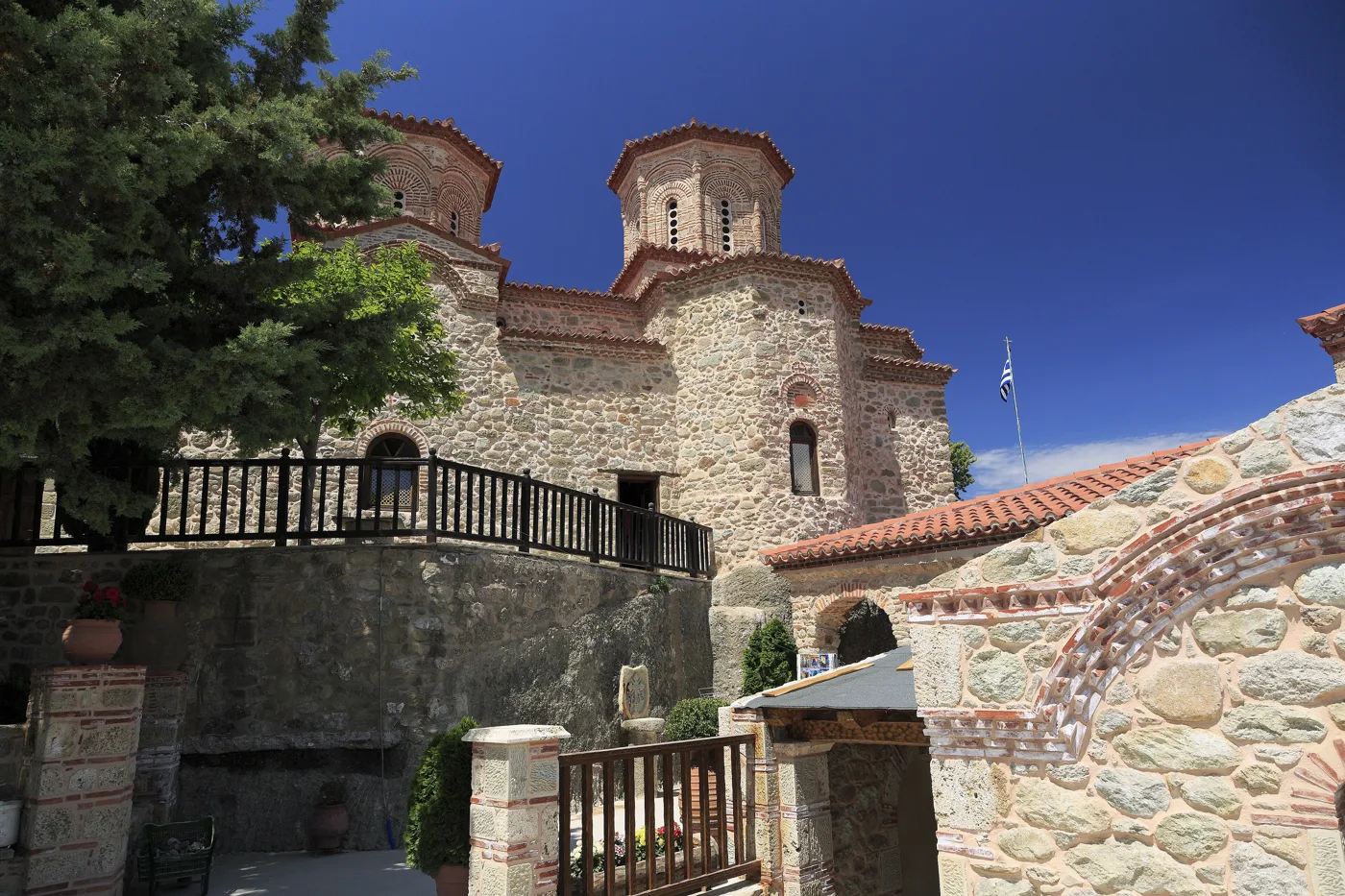
Flowers, paving and the katholikon of All Saints.
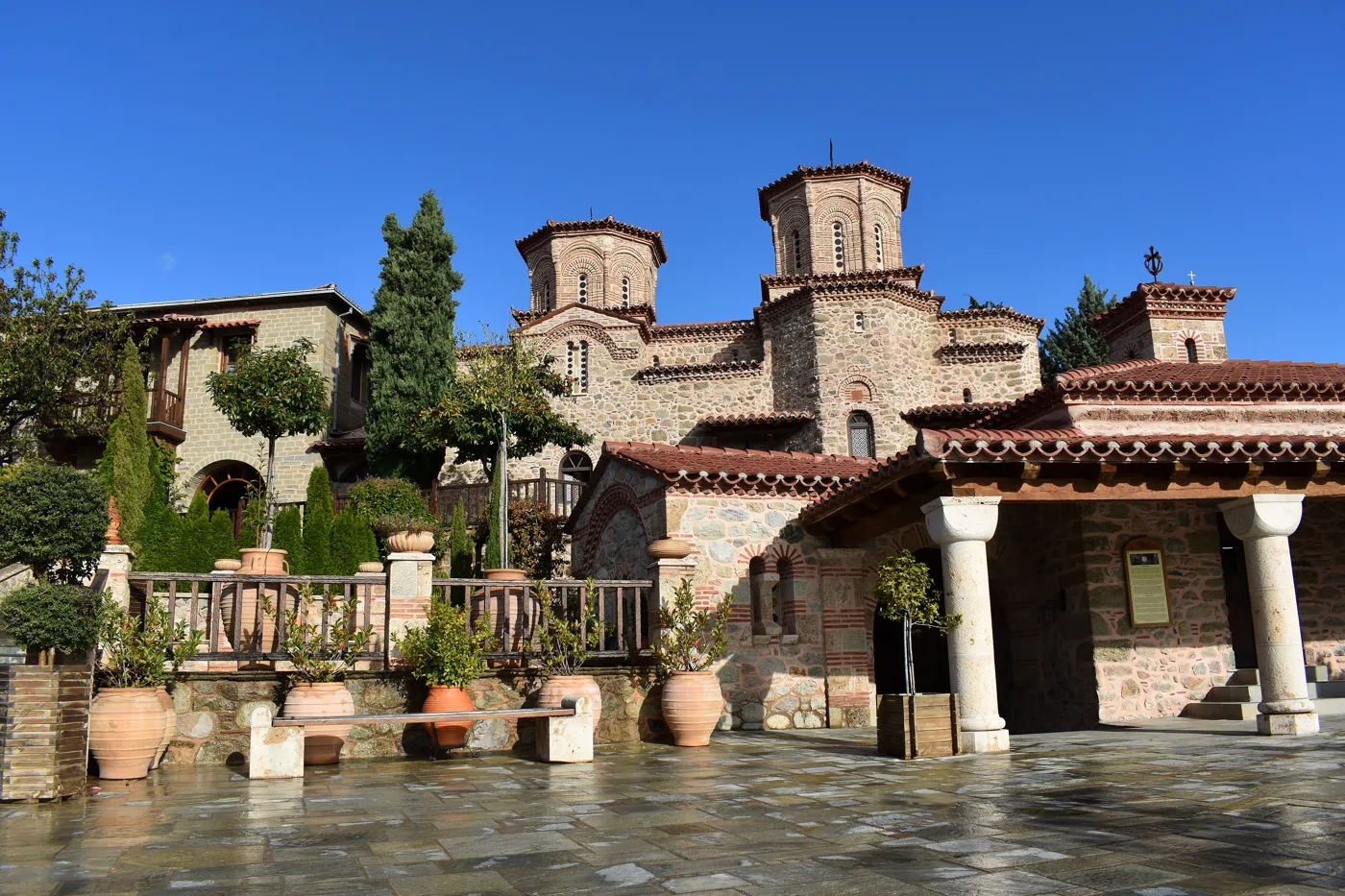
All Saints, 1541, with frescoes by Frangos Katelanos.
The frescoes of 1548 are among the finest at Meteora.
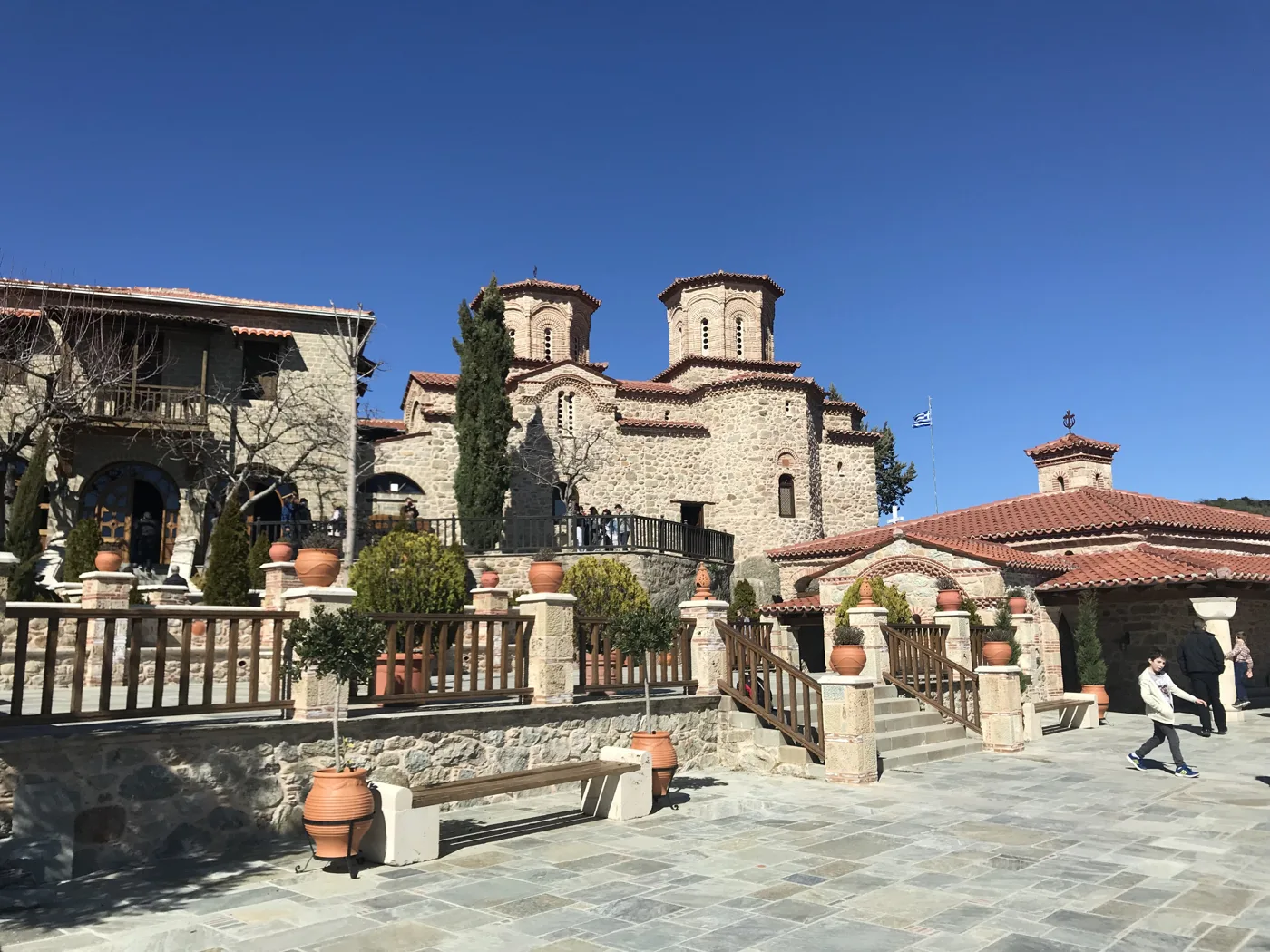
In summer it fills up from 10:00.
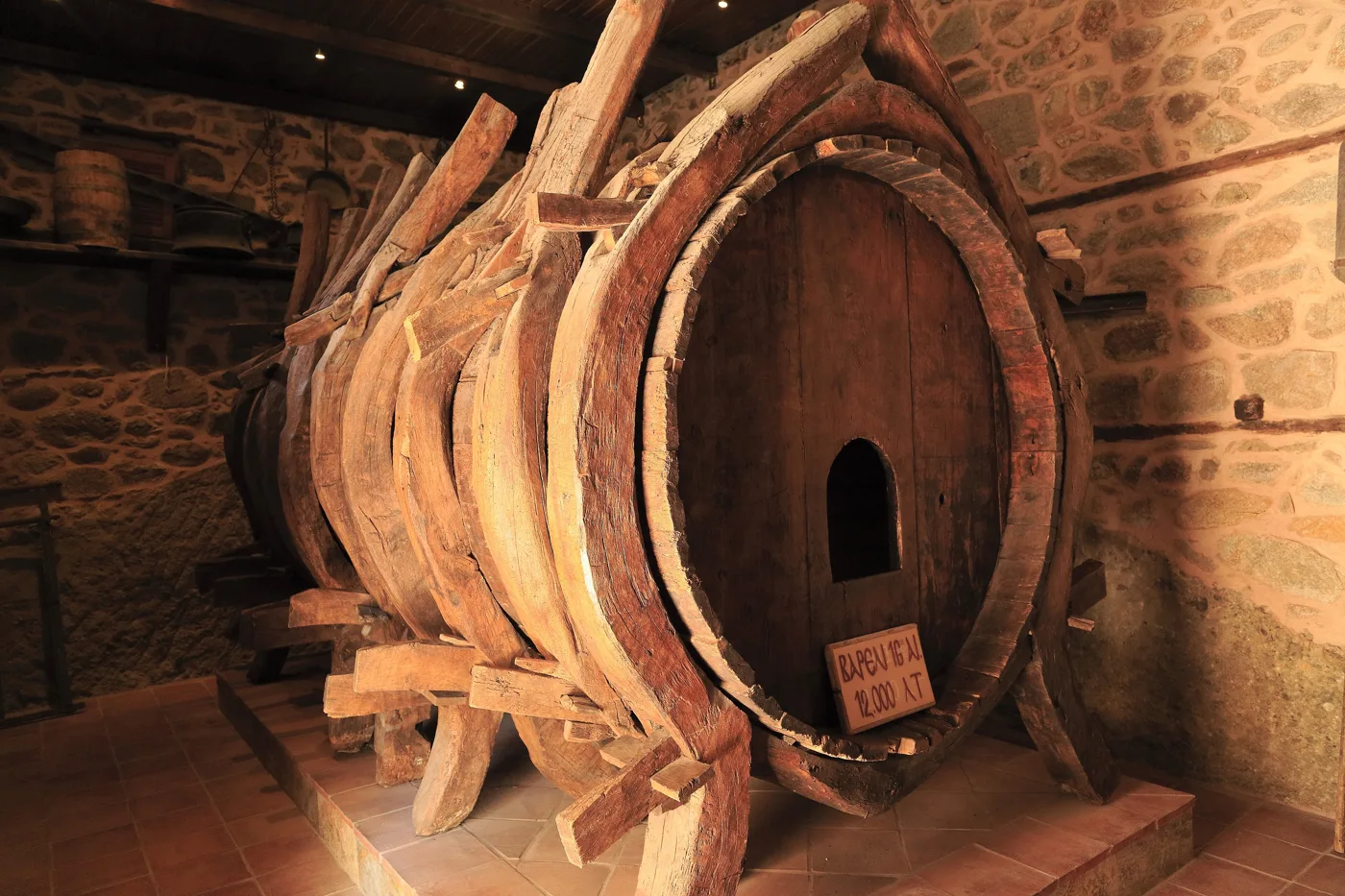
12,000 litres: rainwater for the whole year.
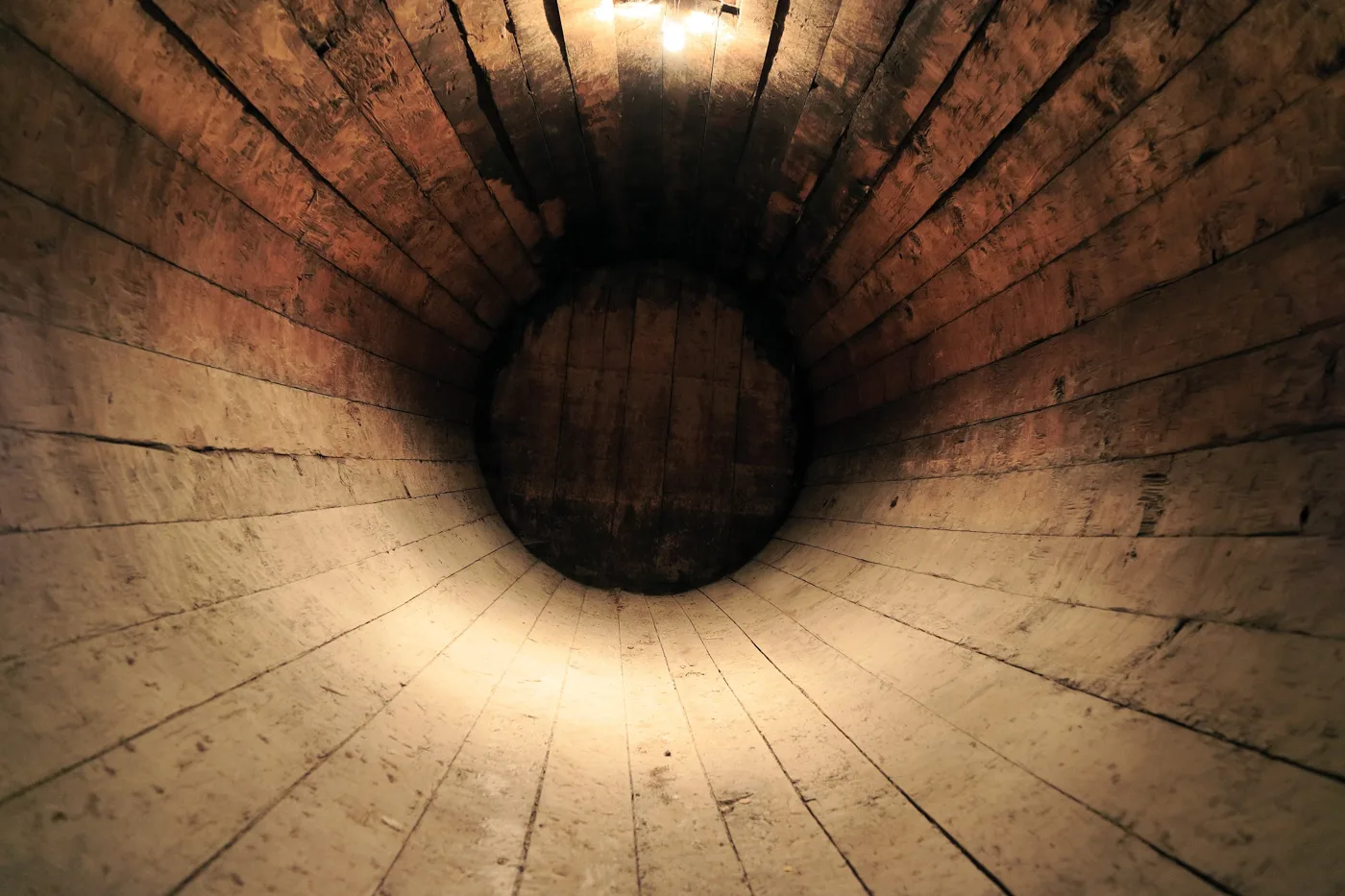
Oak, 16th century.
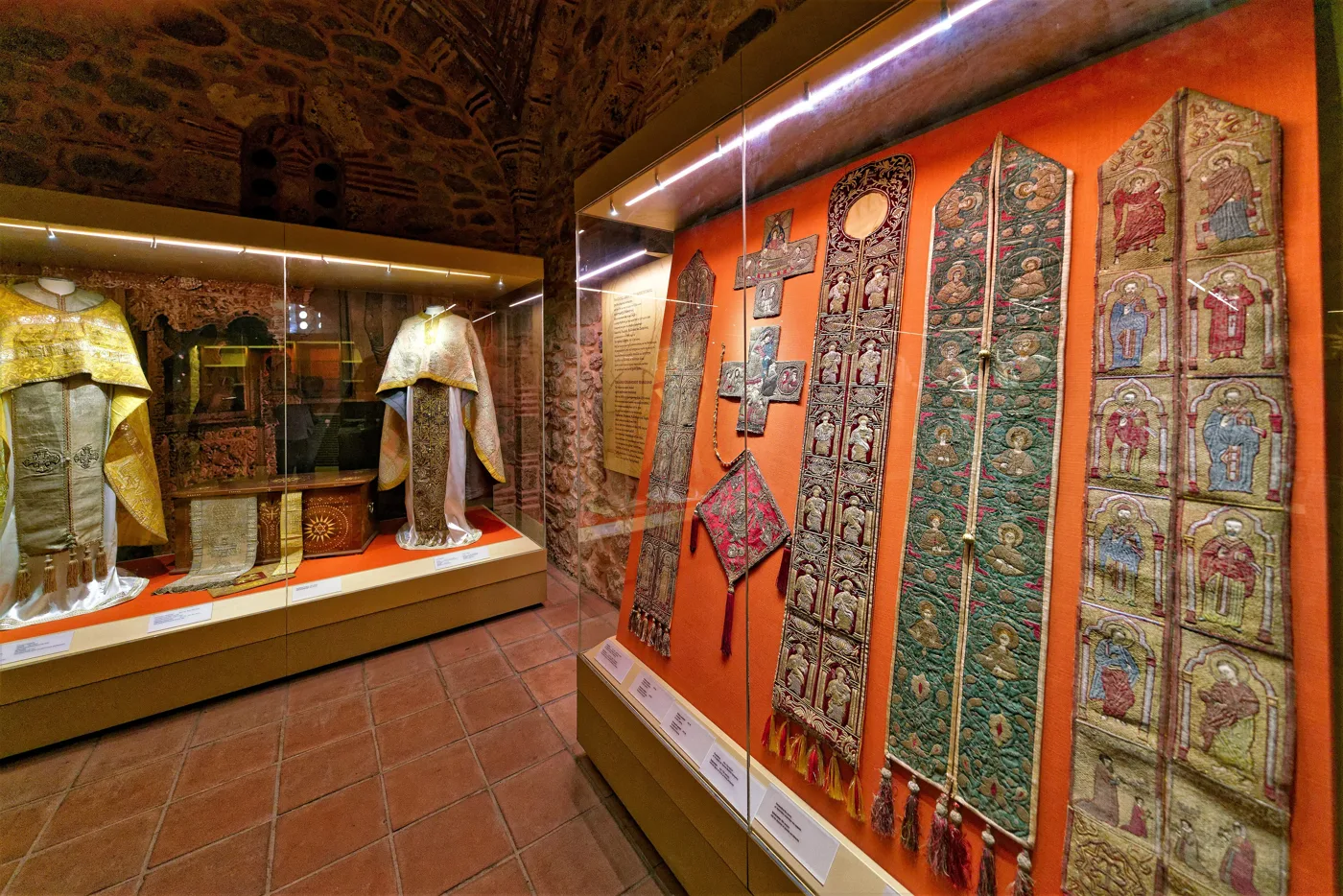
Gold-embroidered vestments, manuscripts and icons.
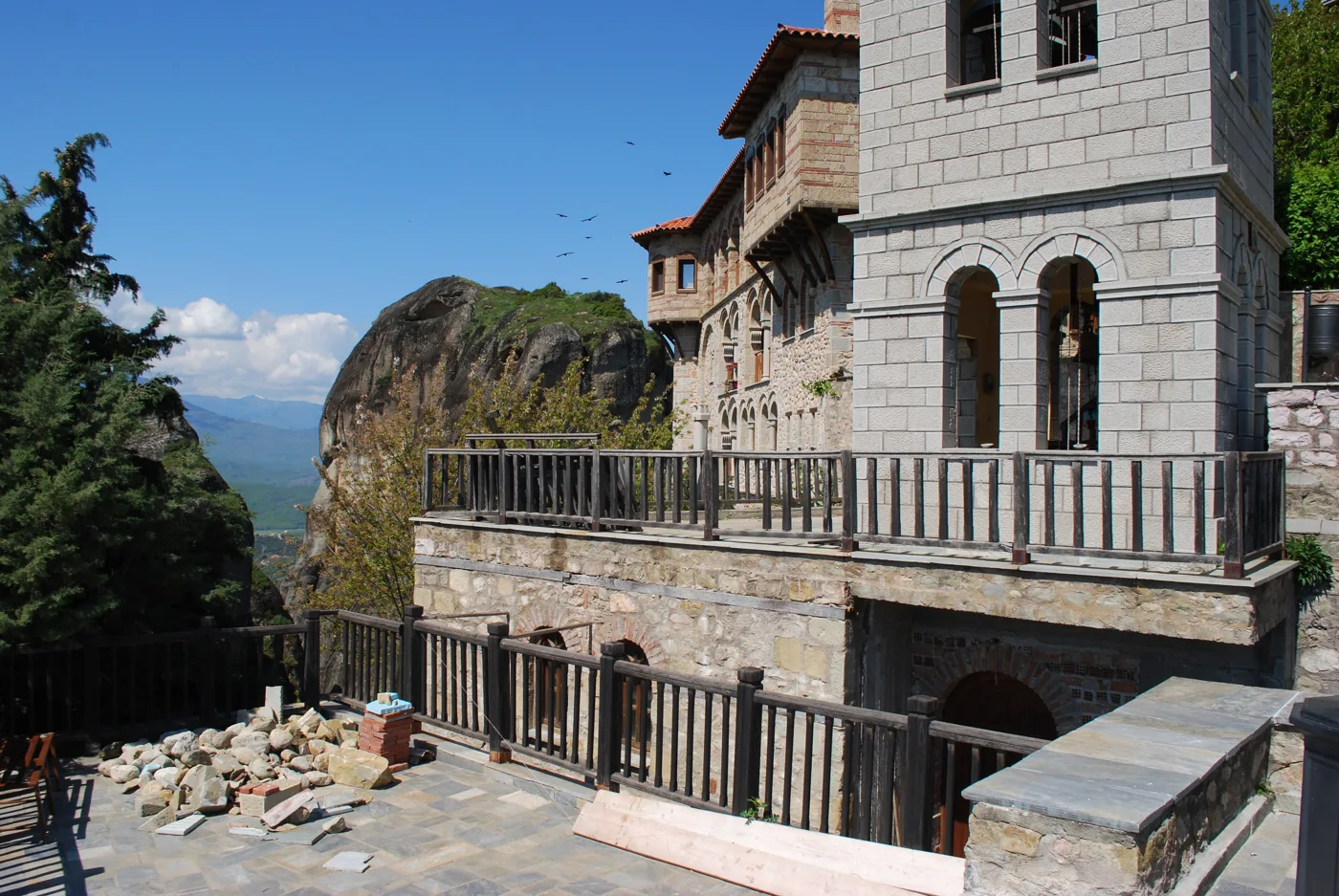
The view from the edge of the courtyard.
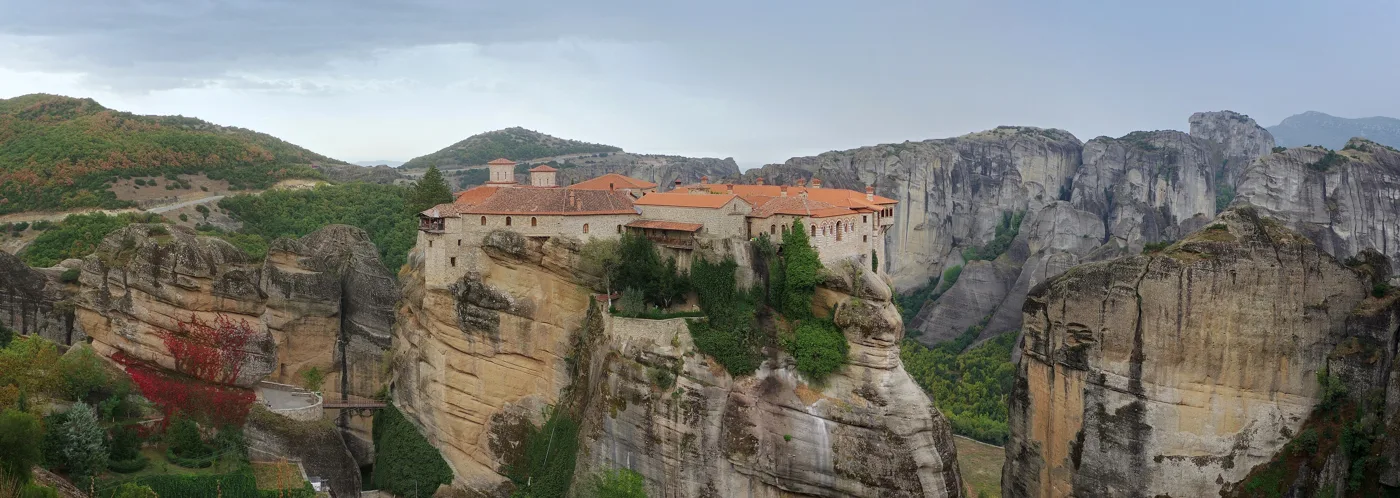
Great Meteoron on the left, Rousanou below, the plain beyond.
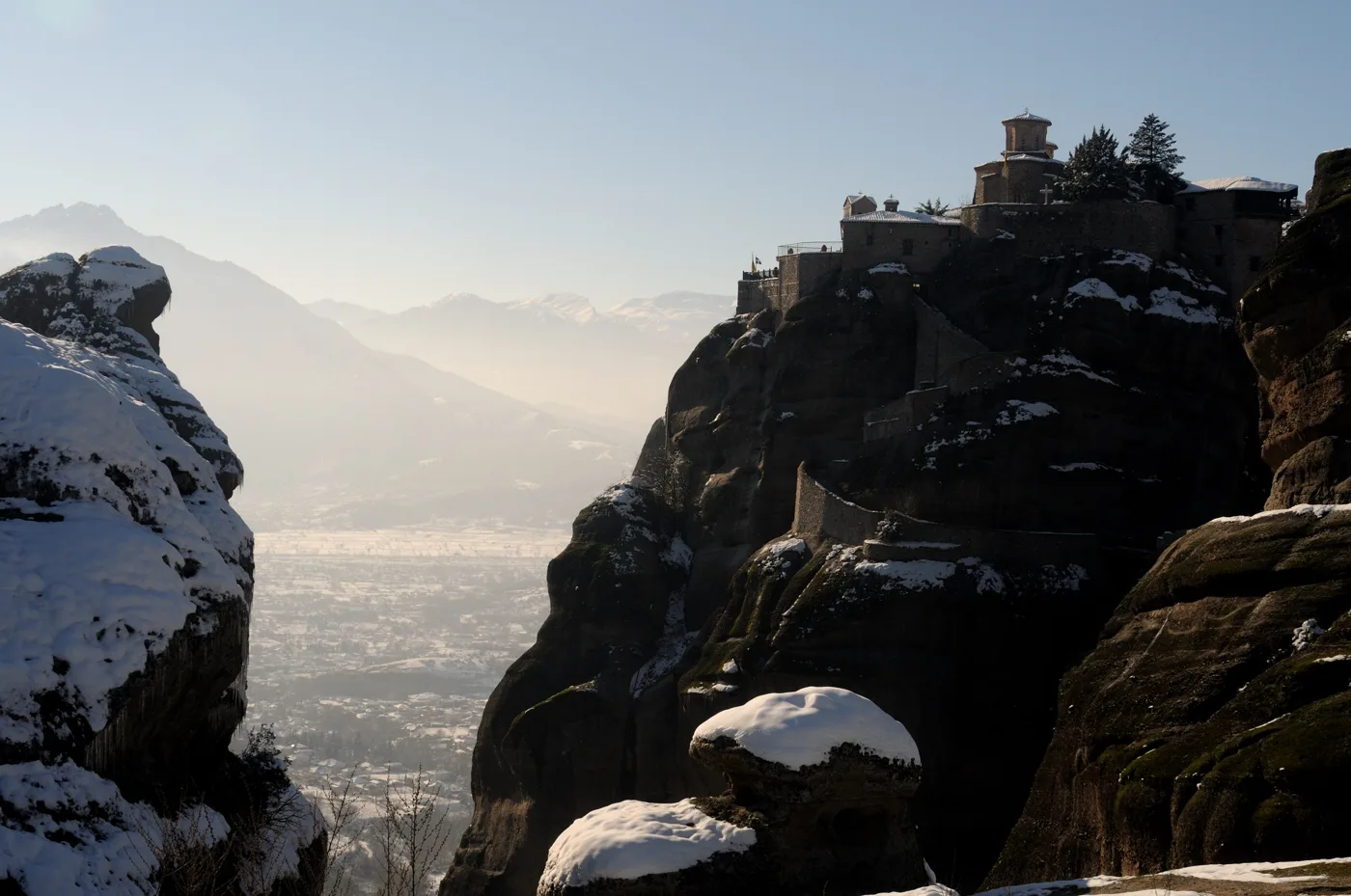
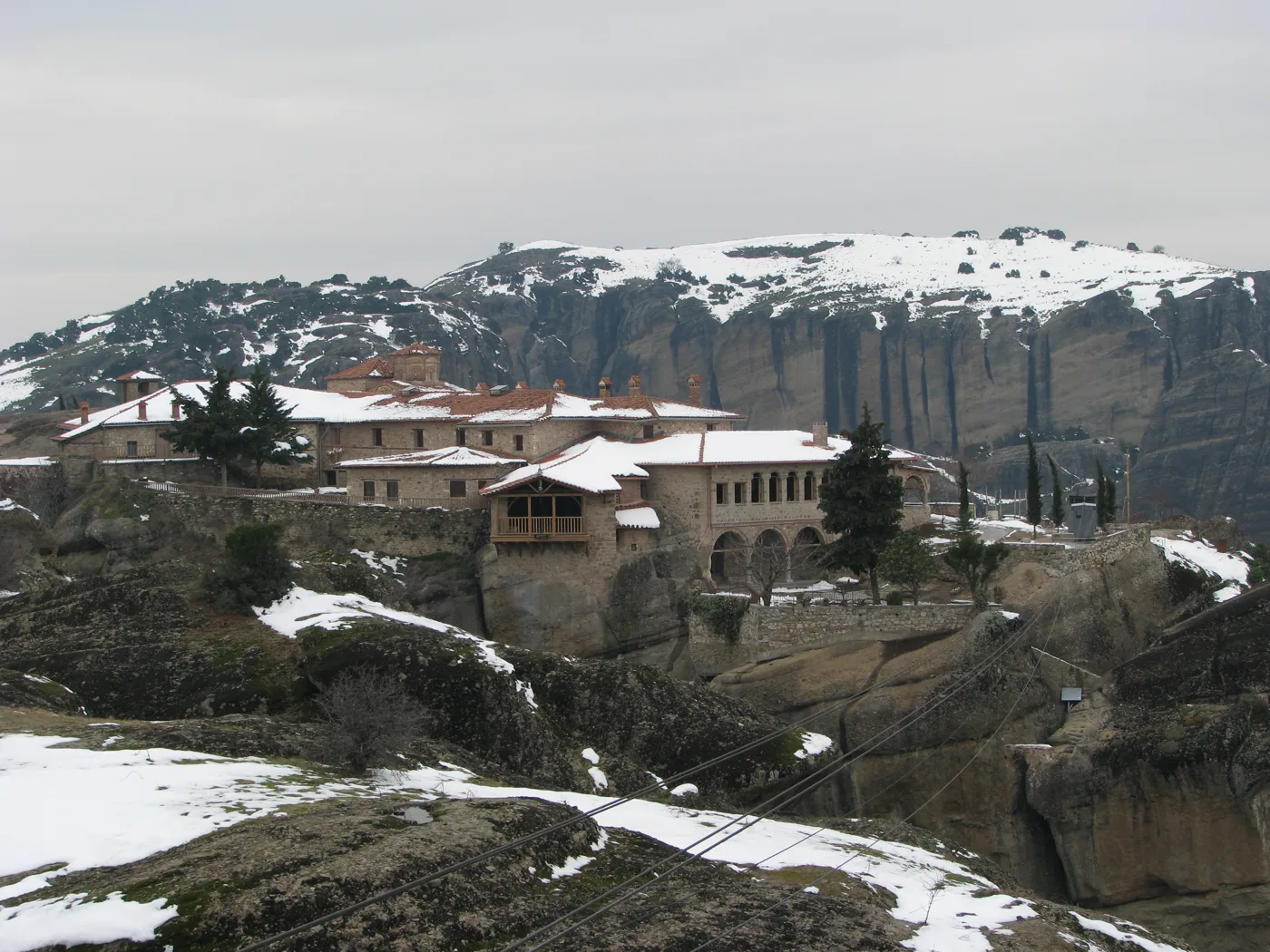
In January and February the rocks turn white.
Photos: Redeemer (CC BY-SA 4.0), Giles Laurent (CC BY-SA 4.0), Stefanos Dermetzidis (CC BY-SA 4.0), Long lasting memories (CC BY-SA 4.0), Misa.stefanovic.07 (CC BY-SA 4.0), Falk2 (CC BY-SA 4.0), Mindtravelfitness (CC BY-SA 4.0), Holger Uwe Schmitt (CC BY-SA 4.0), Jean Housen (CC BY-SA 3.0), Berthold Werner (CC BY-SA 3.0), Josep M. Gracia (CC BY-SA 4.0) · Wikimedia Commons
🏛️ Rousanou: the garden monastery
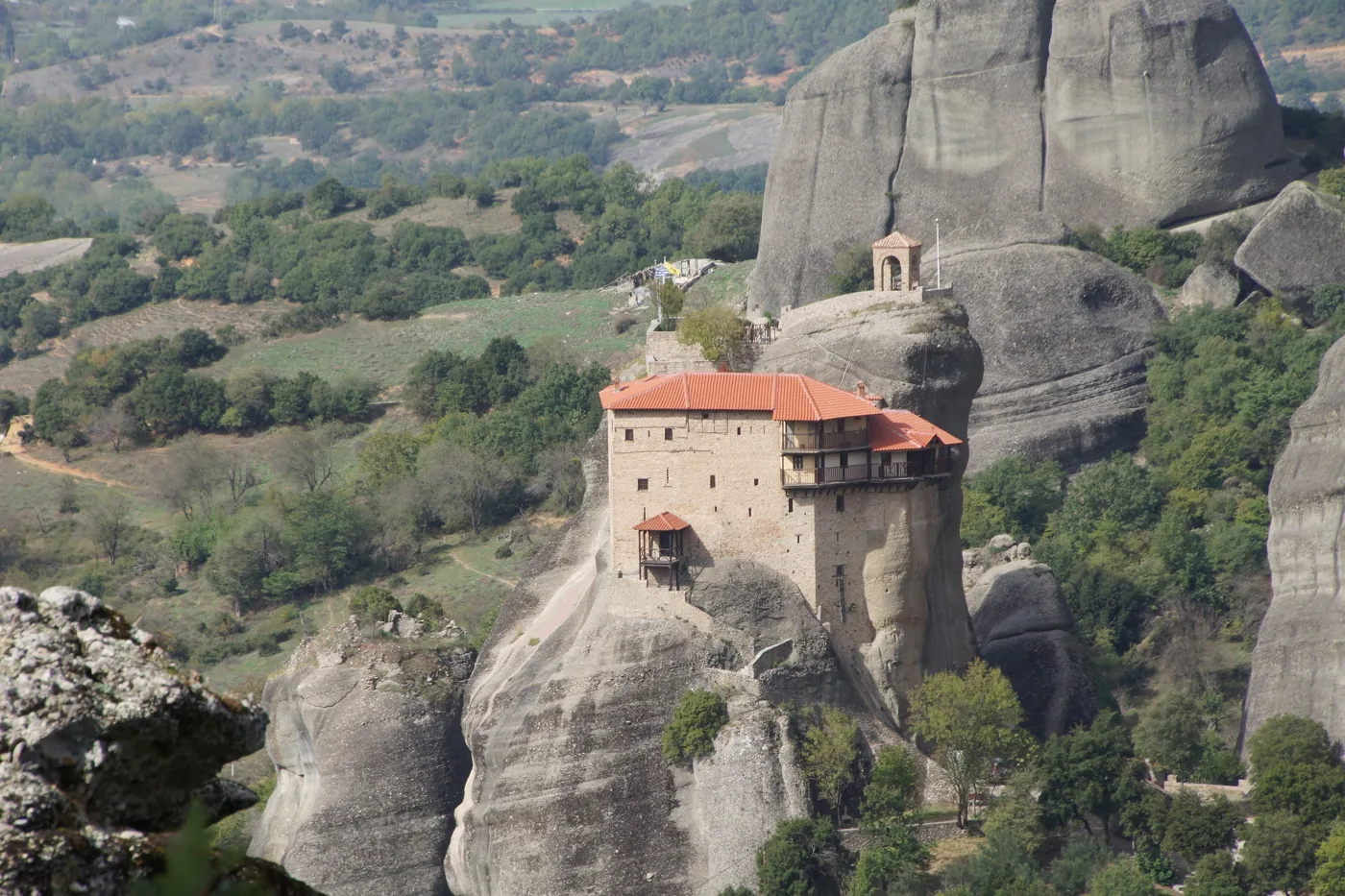
Rousanou, dedicated to the Transfiguration and known as the Monastery of Agia Varvara (St Barbara), sits on a narrow, lower rock between the road and the gorge, and fills it completely: the buildings are the rock and the rock is the buildings. It was built in 1545 by the brothers Maximos and Ioasaf from Ioannina on top of an older hermitage, the katholikon was painted in 1560, and the monastery went through decline, wartime looting and abandonment, until in 1988 nuns took it over and made it what it is today: the best-kept monastery at Meteora, with a garden full of flowers in every season, spotless courtyards, and sweets and handicrafts in the little shop. Access is the easiest after Agios Stefanos: from the roadside car park, a short path and a 1930 bridge over the void, with a few steps, or uphill from the lower car park. Inside, the katholikon with frescoes of the Crucifixion and the martyrdoms, and balconies with views of the rocks around. It is the monastery everyone photographs from above, from the Varlaam road and from Psaropetra, and the loveliest close up. Half an hour. Closed on Wednesdays, and in winter it closes at 14:00 on weekdays.
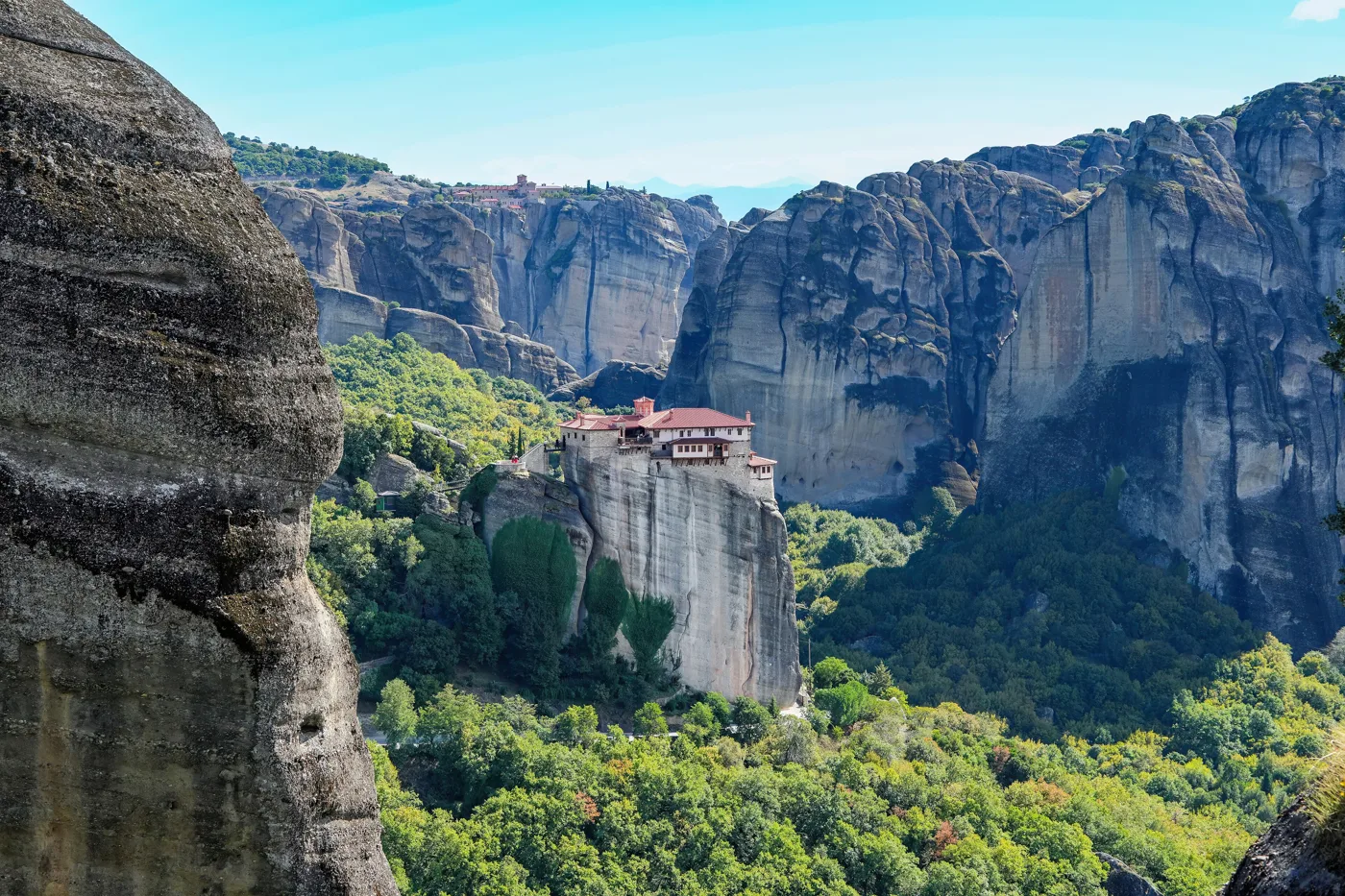
The monastery covers the whole top of the rock.
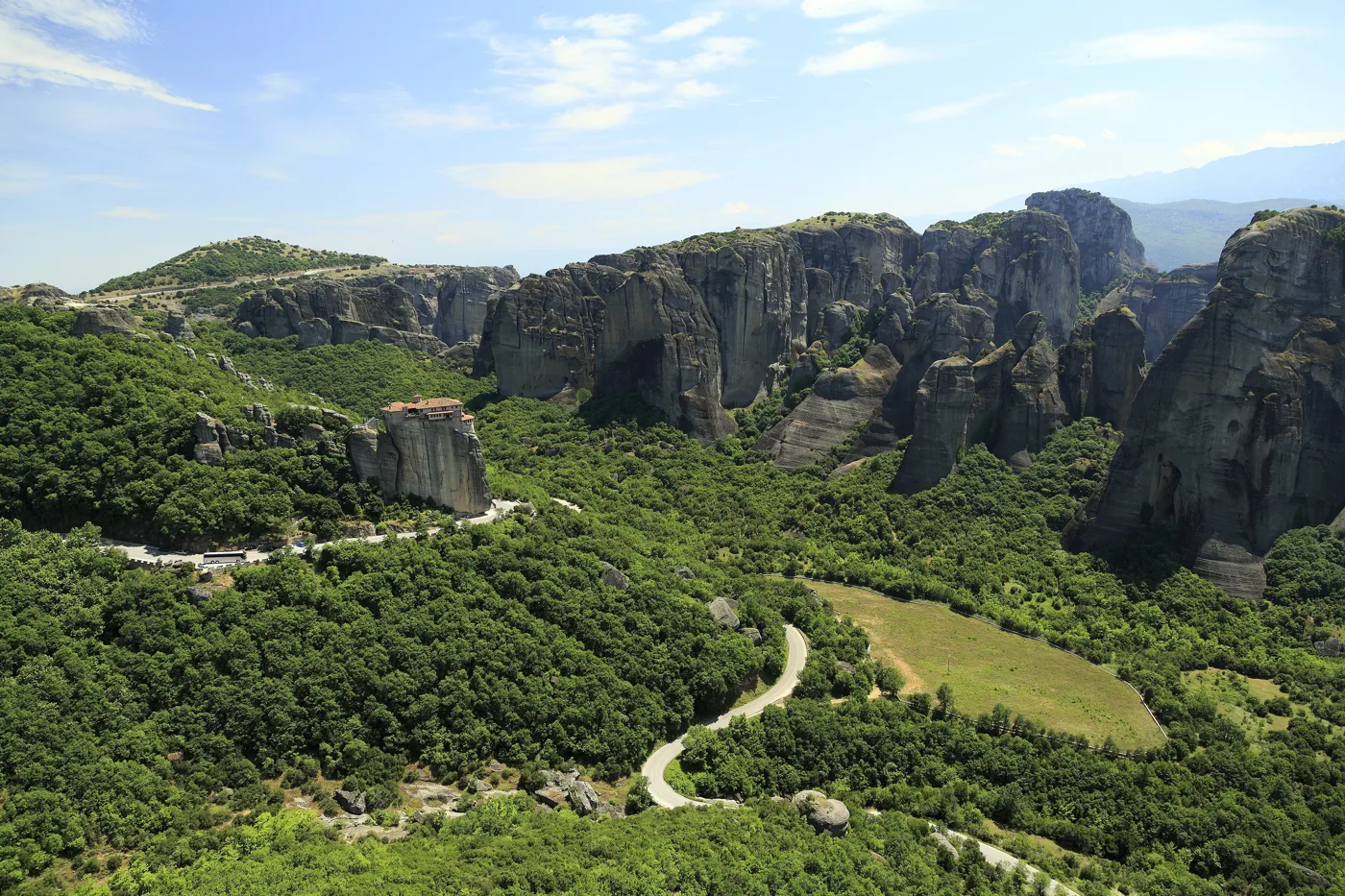
The easiest access: a bridge and a few steps.
Maximos and Ioasaf from Ioannina, 1545.
From Varlaam you see it from above.
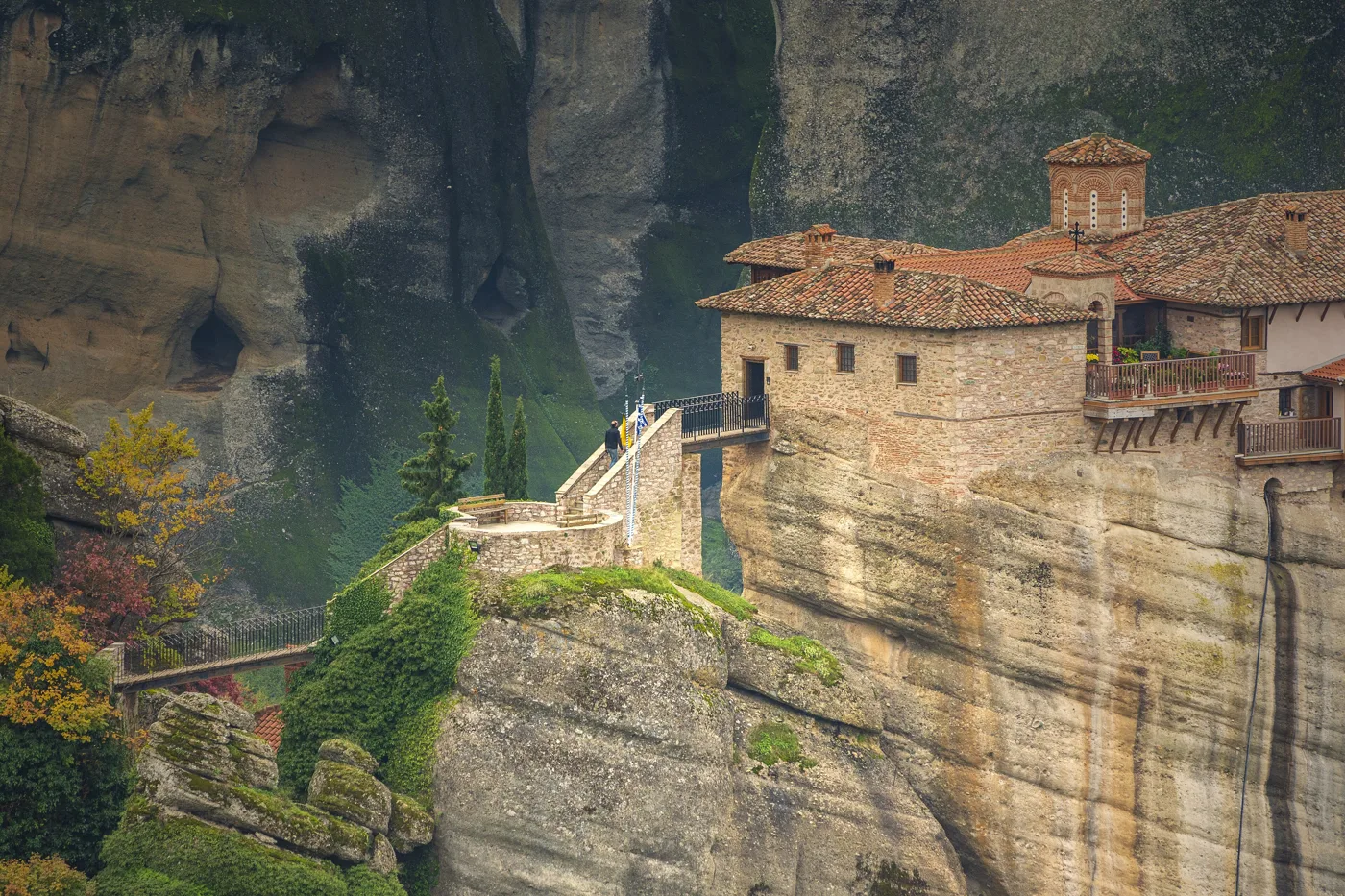
Wooden balconies over the void.
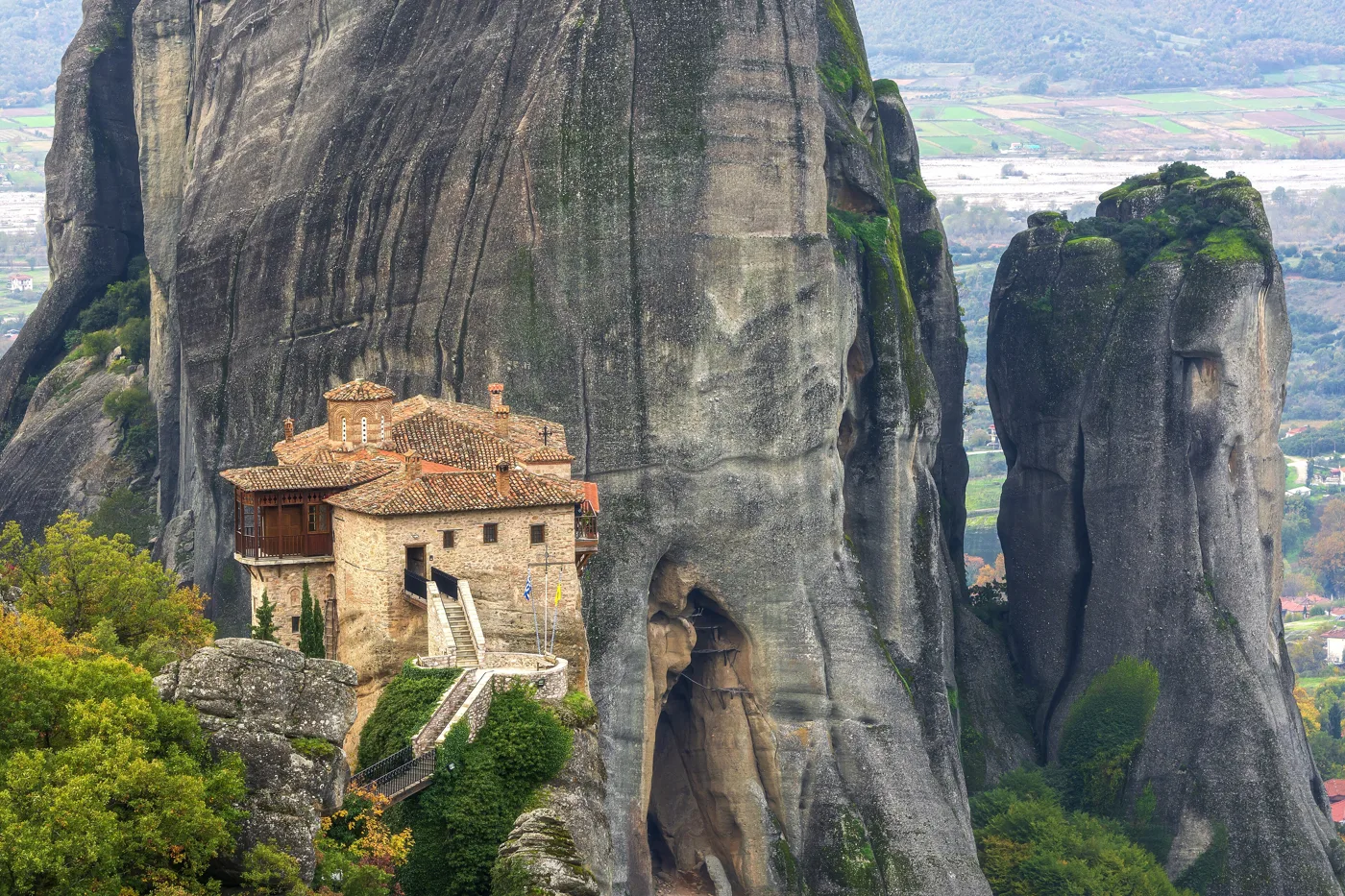
Its rock is lower than its neighbours.
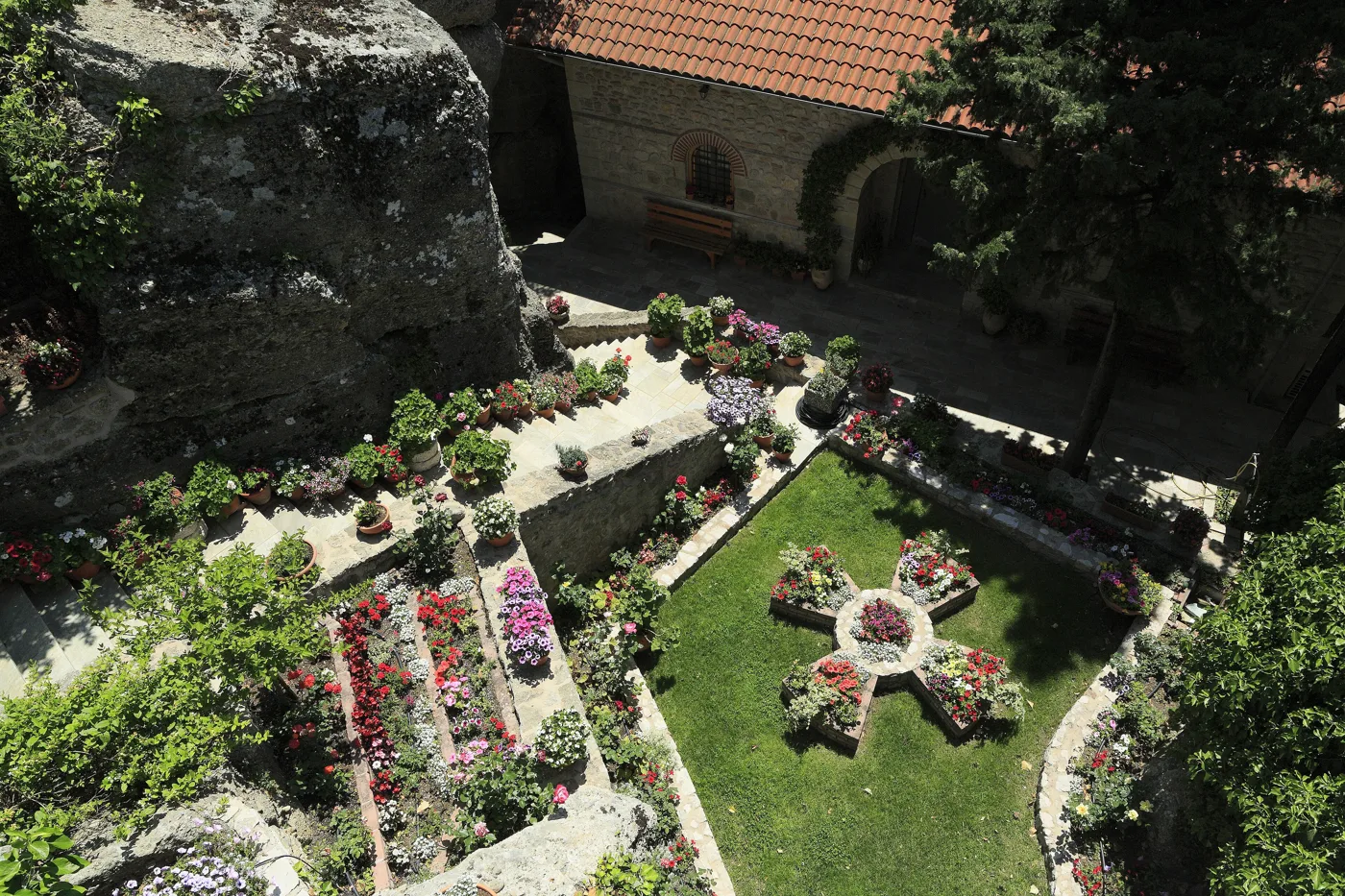
The nuns tend the loveliest garden at Meteora.
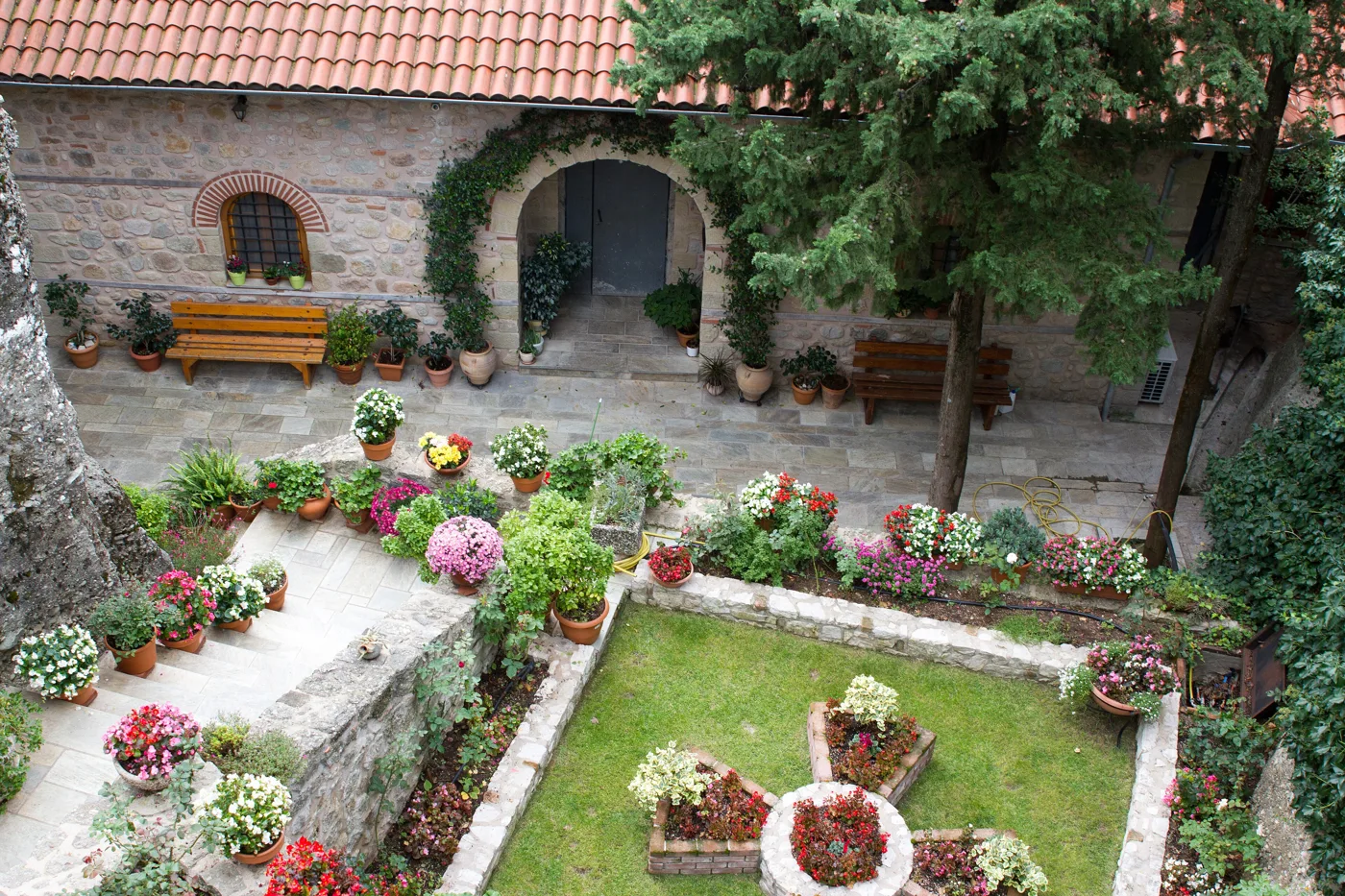
A convent since 1988.
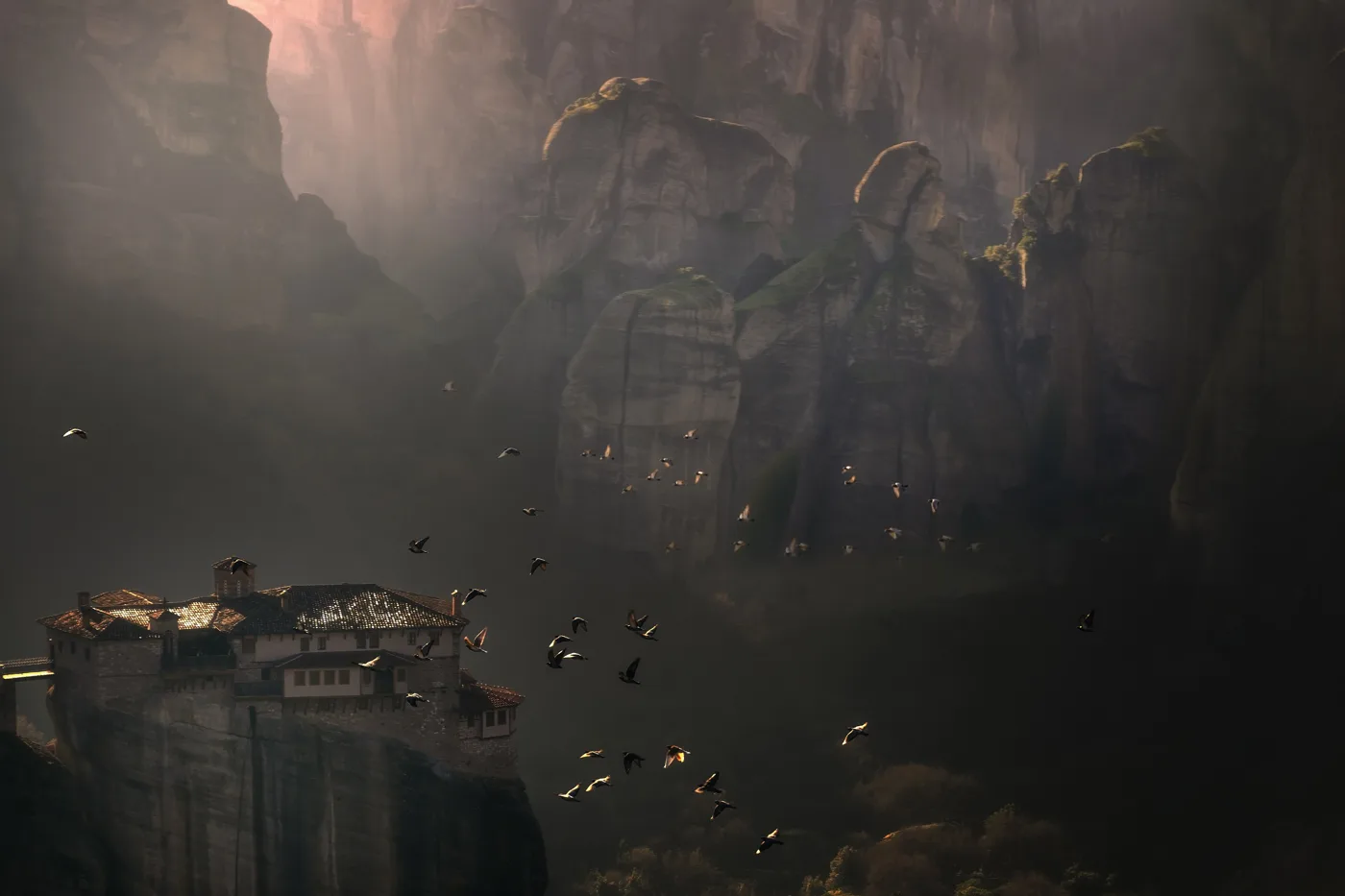
The jackdaws circle the rocks in the evening.
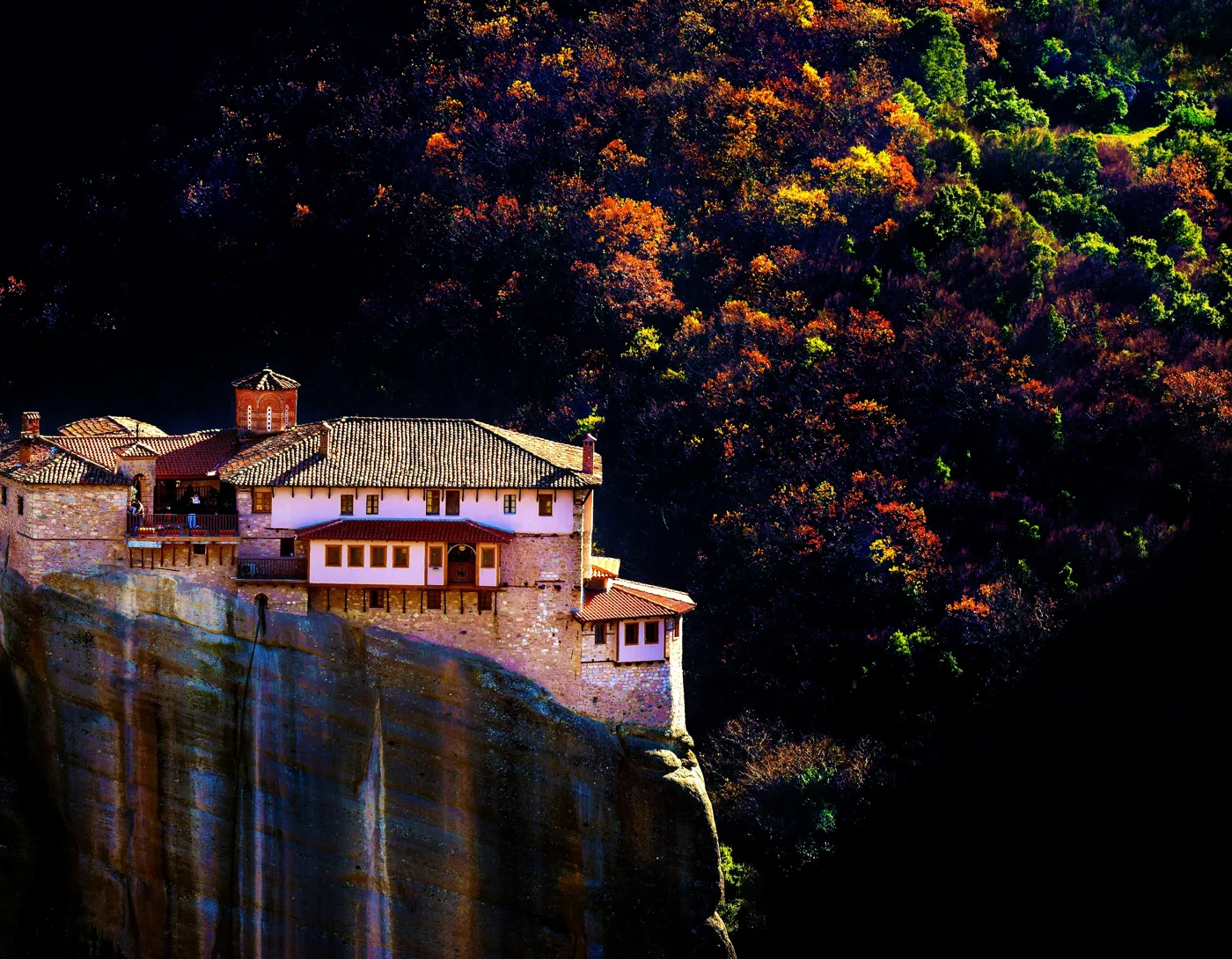
In October and November the oaks turn red.
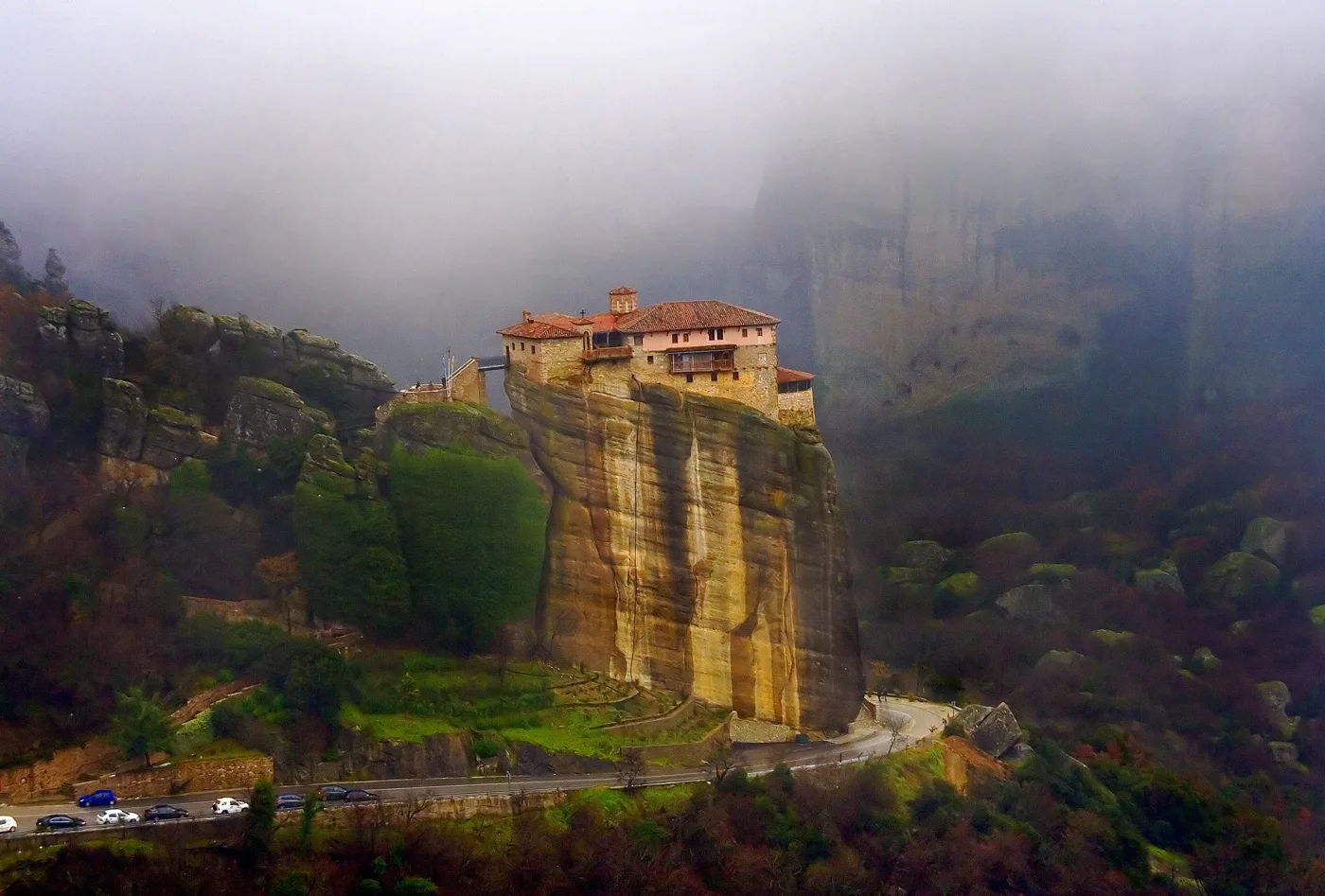
An hour before sunset.
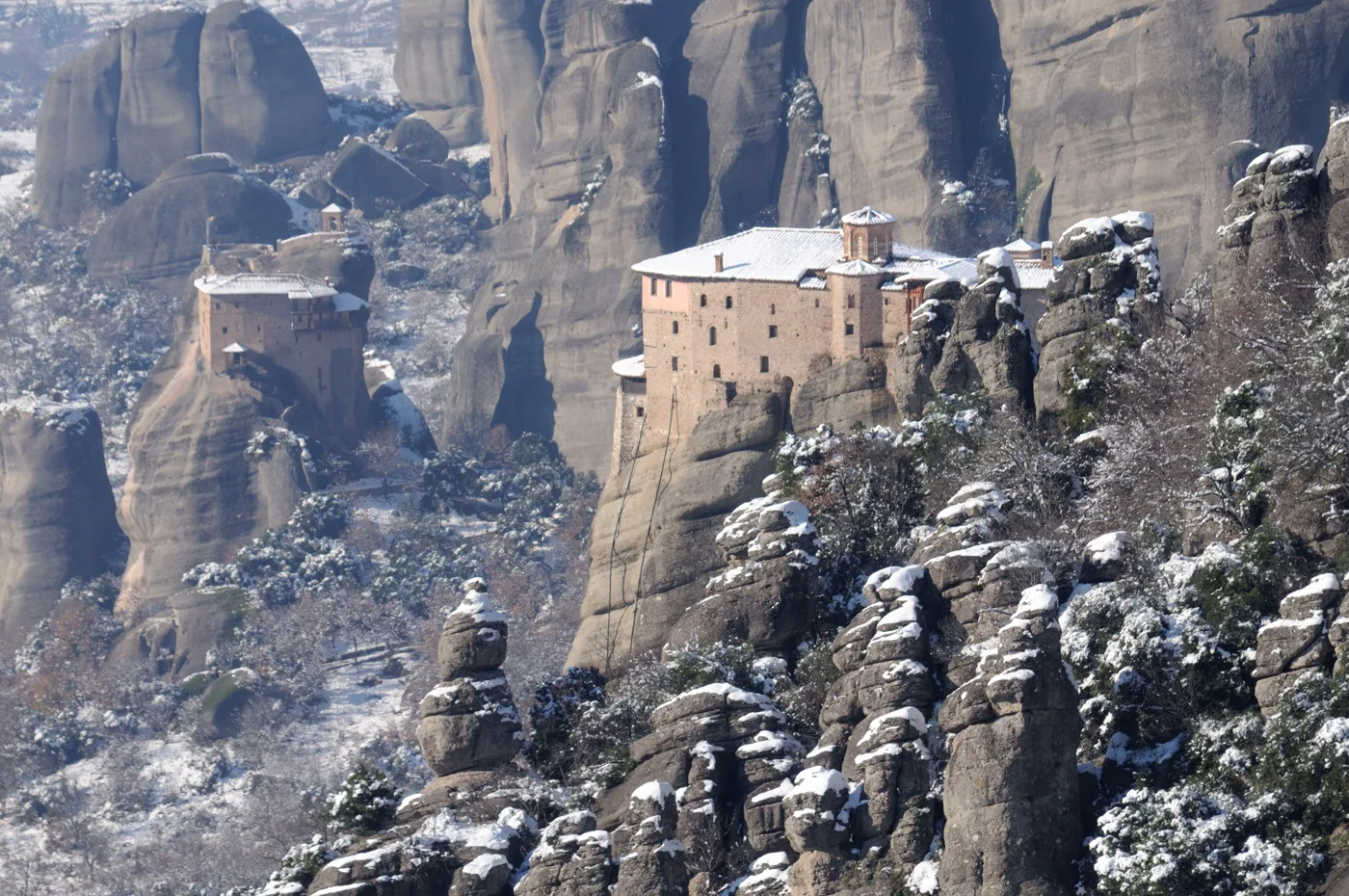
Winter at Meteora brings few people and a lot of beauty.
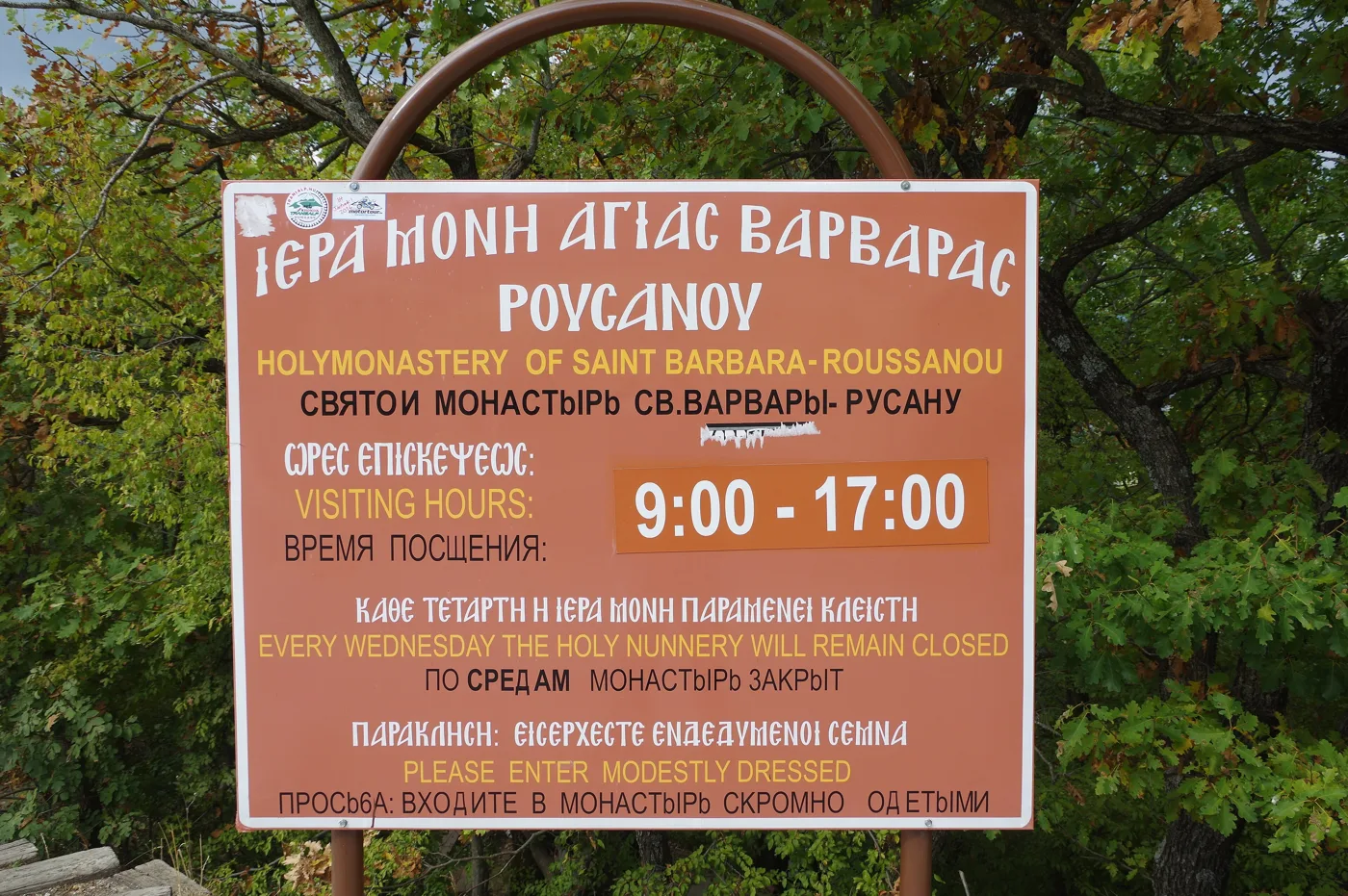
Closed on Wednesdays, all year round.
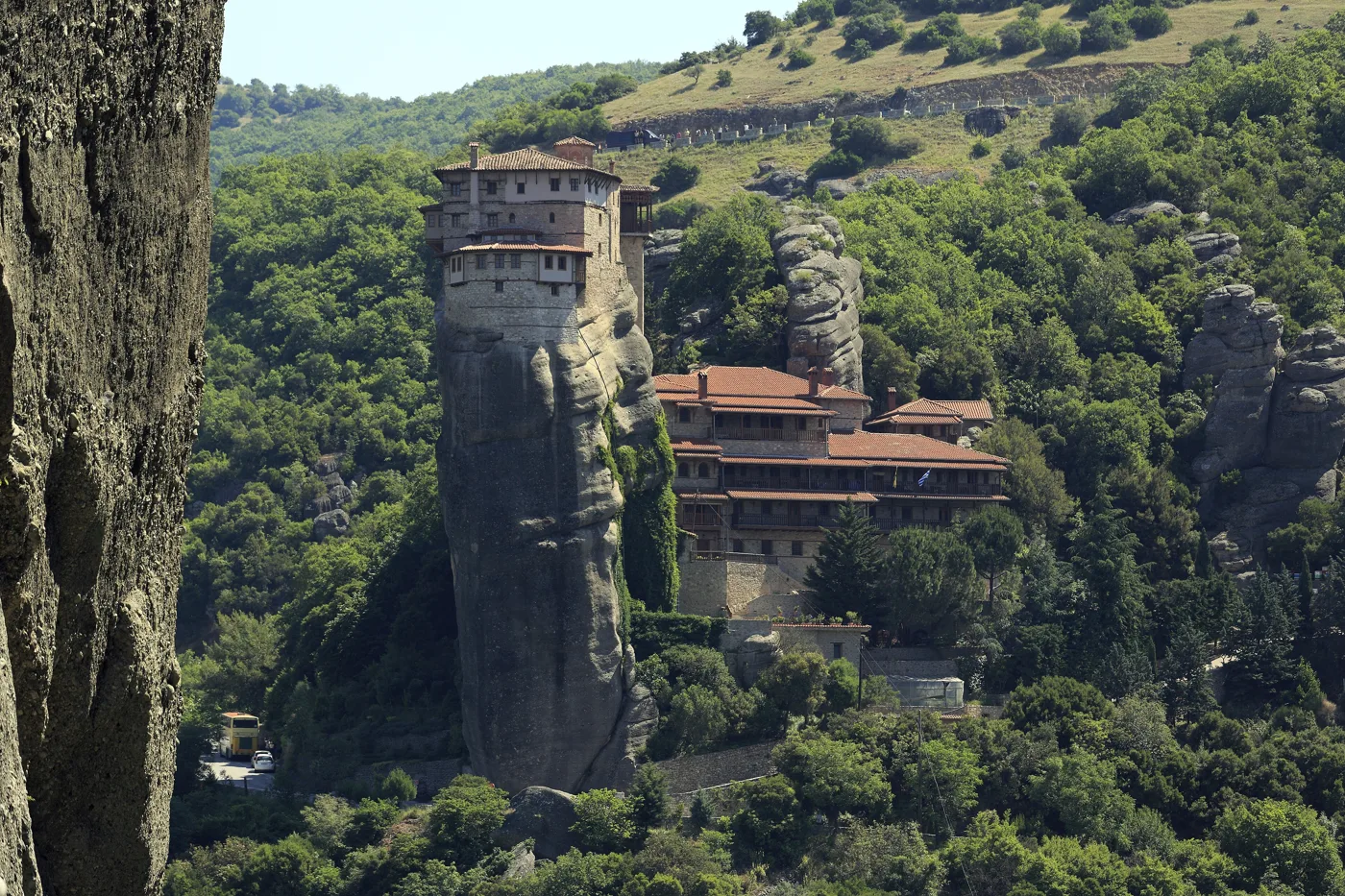
The path from Kastraki comes out here.
Photos: Giles Laurent (CC BY-SA 4.0), Falk2 (CC BY-SA 4.0), Aidan Meyer (CC0), rob Stoeltje from loenen, netherlands (CC BY 2.0), Ioannis Ioannidis (CC BY-SA 4.0), Jolovema (CC BY-SA 4.0), CucombreLibre (CC BY 2.0), Jolovema (CC BY 4.0), Alexandris Alexis (CC BY-SA 4.0), Vaggelis Vlahos (CC BY 3.0), Josep M. Gracia (CC BY-SA 4.0), Berthold Werner (CC BY-SA 3.0) · Wikimedia Commons
🏛️ Agios Nikolaos Anapafsas: the frescoes of Theophanes
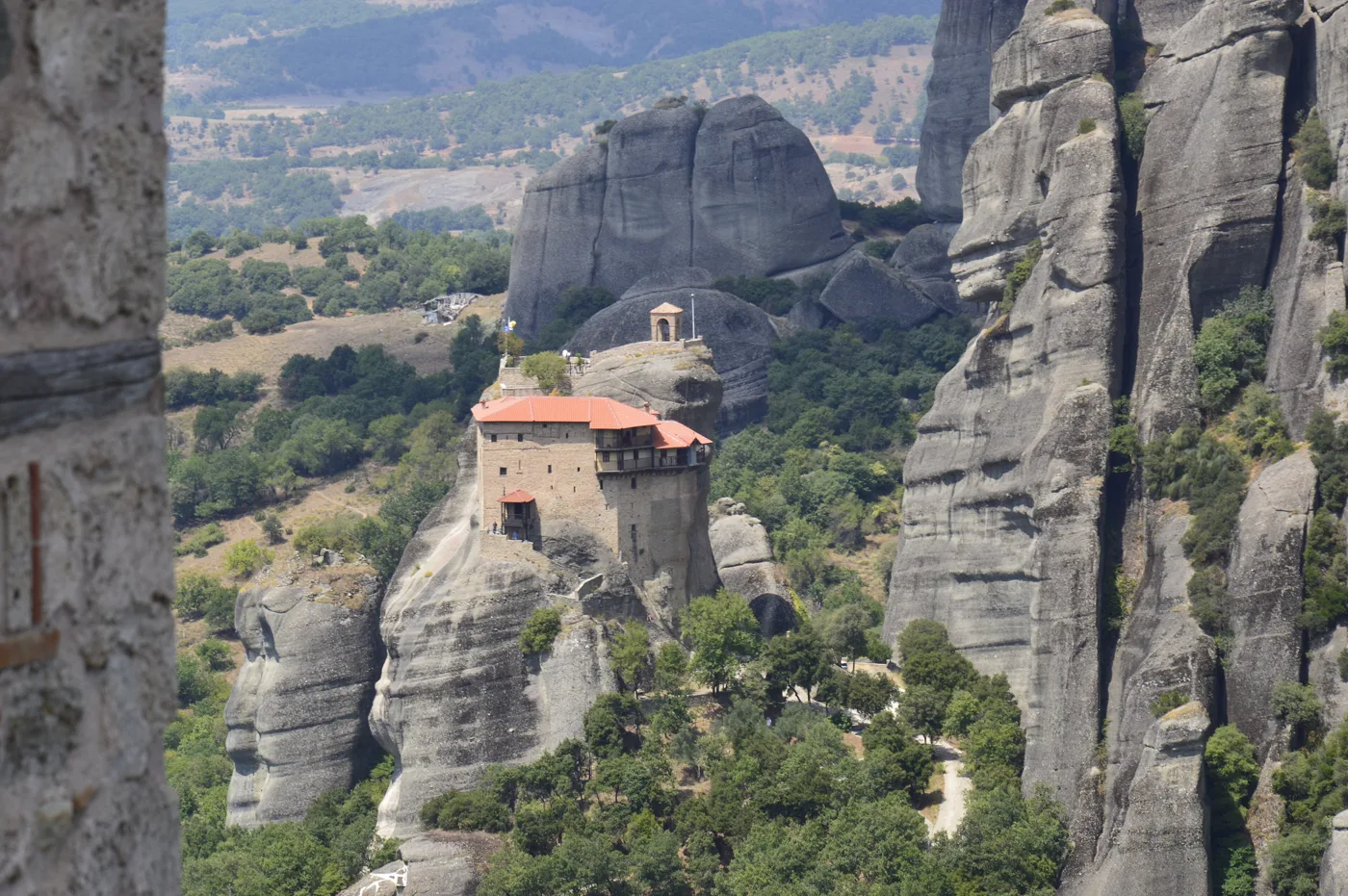
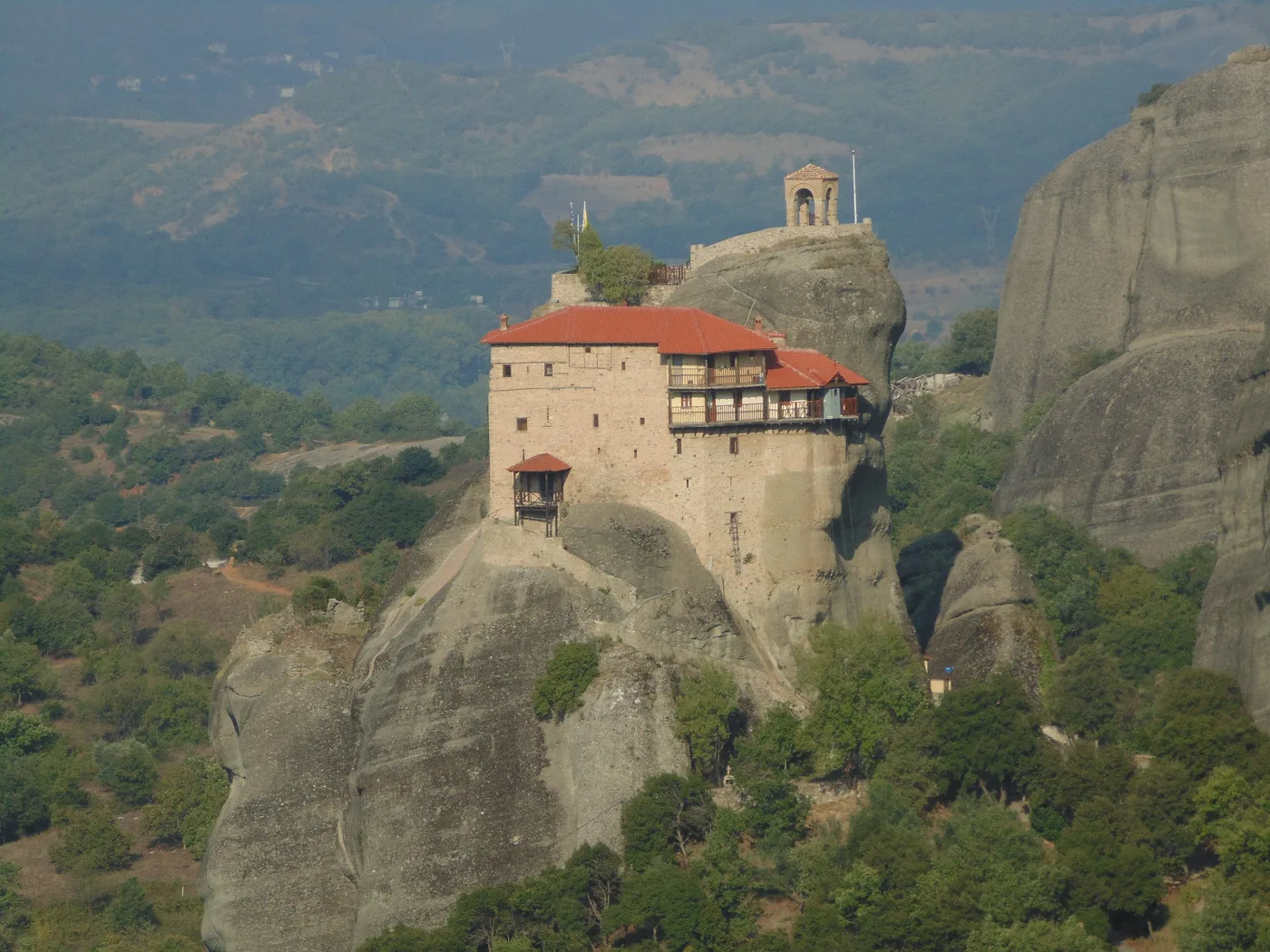
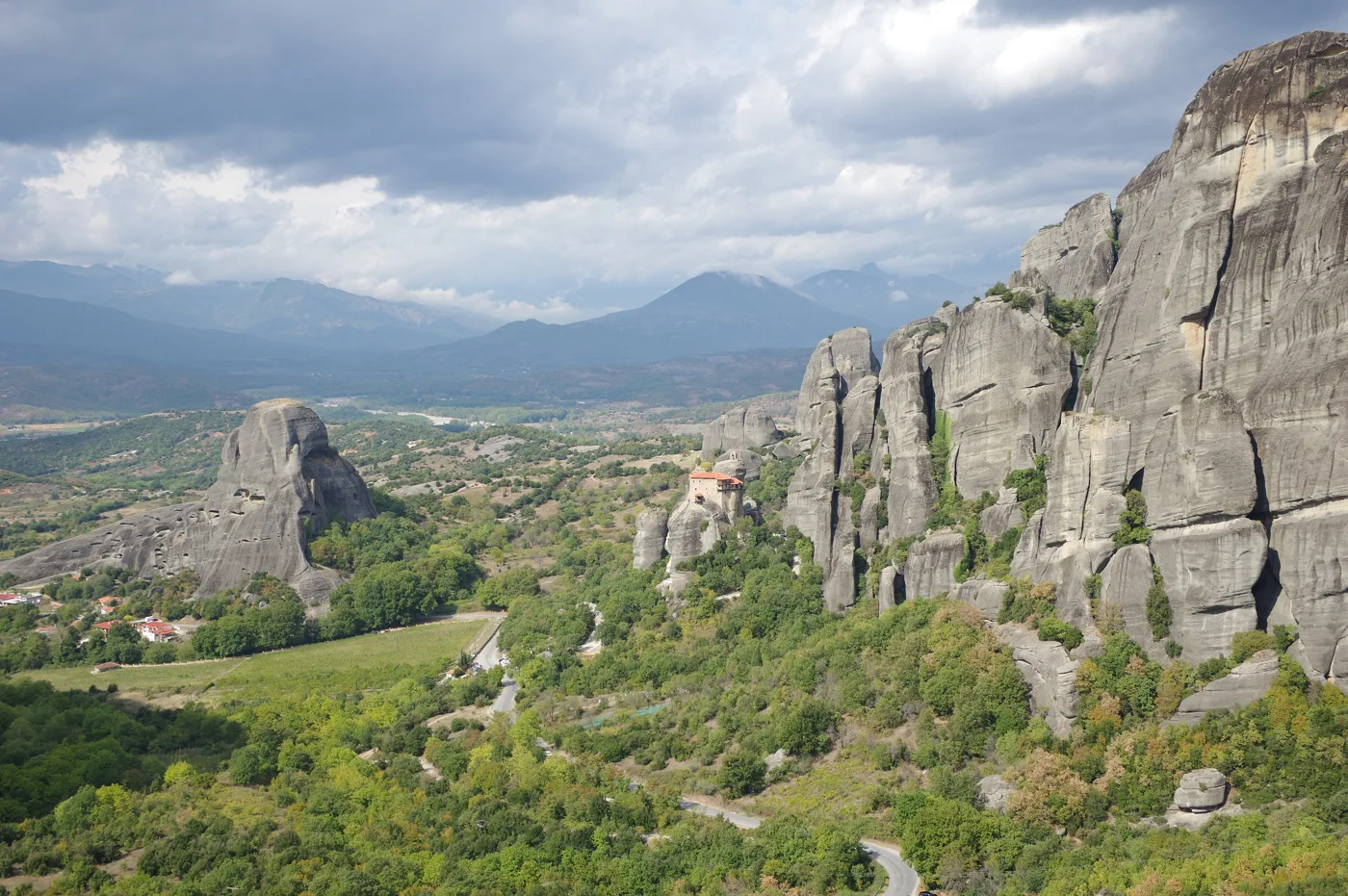
The first monastery after Kastraki, on a narrow rock with no room for a courtyard, so the monks built upwards: cells on the first floor, the katholikon on the second, the refectory and ossuary on the third, a building like a tower. Agios Nikolaos Anapafsas, founded in the 14th century and rebuilt around 1510 by Dionysios, Metropolitan of Larissa, is the smallest of the six and the most important for art: its katholikon was painted in 1527 by Theophanes Strelitzas Bathas, Theophanes the Cretan, the greatest painter of the Cretan School, before he went to Mount Athos, and it is his first signed work. The scene of Adam naming the animals, with lions, elephants and peacocks in a paradise on a gold background, is the best-loved fresco at Meteora. The monastery was abandoned in 1900, restored by the state in the 1960s and reopened with a few monks. Around 140 steps from the car park, uphill but short, and half an hour inside; from the balcony, the view of Kastraki, Rousanou and Varlaam. Closed on Fridays.
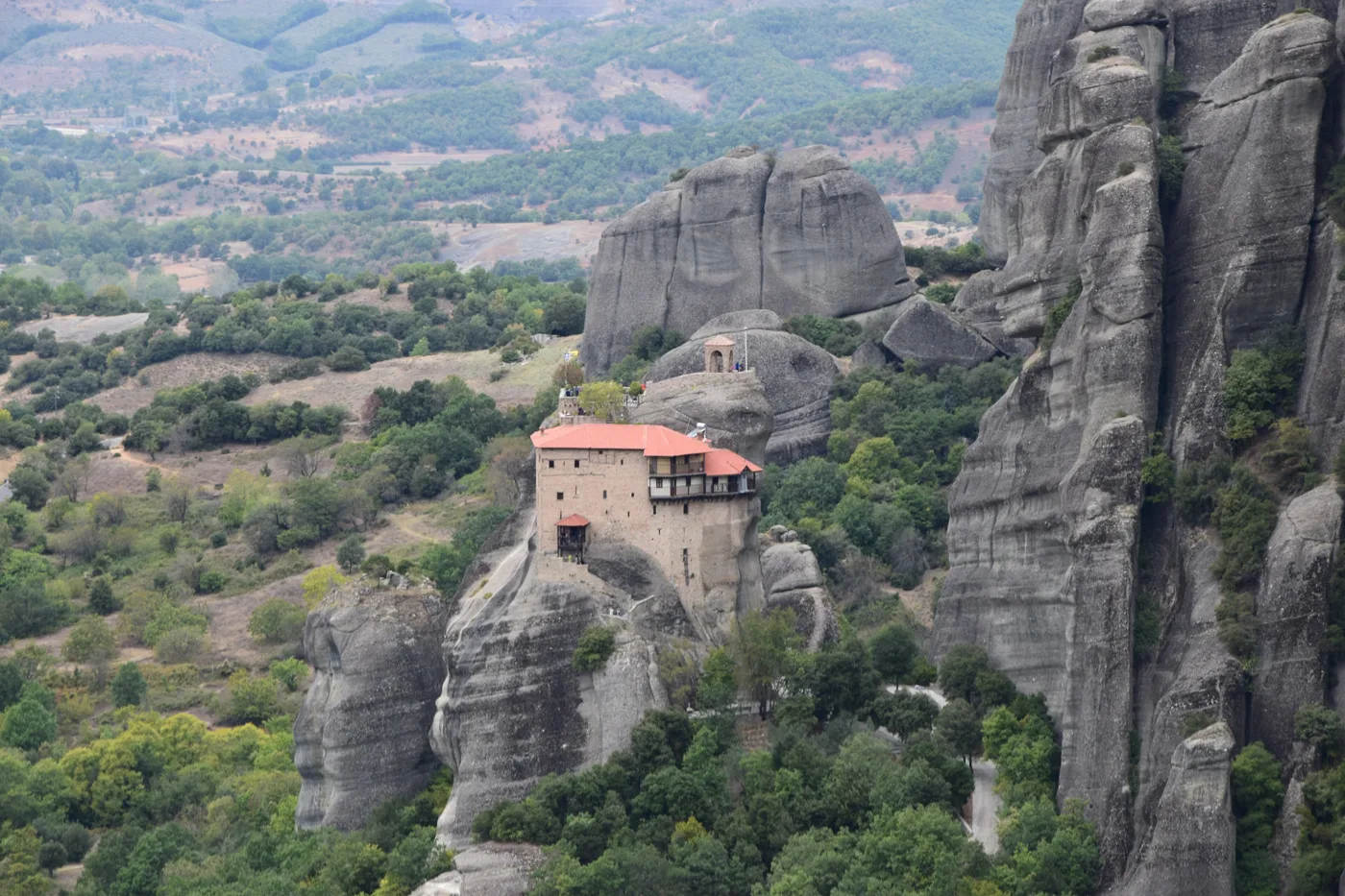
The narrow rock forced the monks to build upwards.
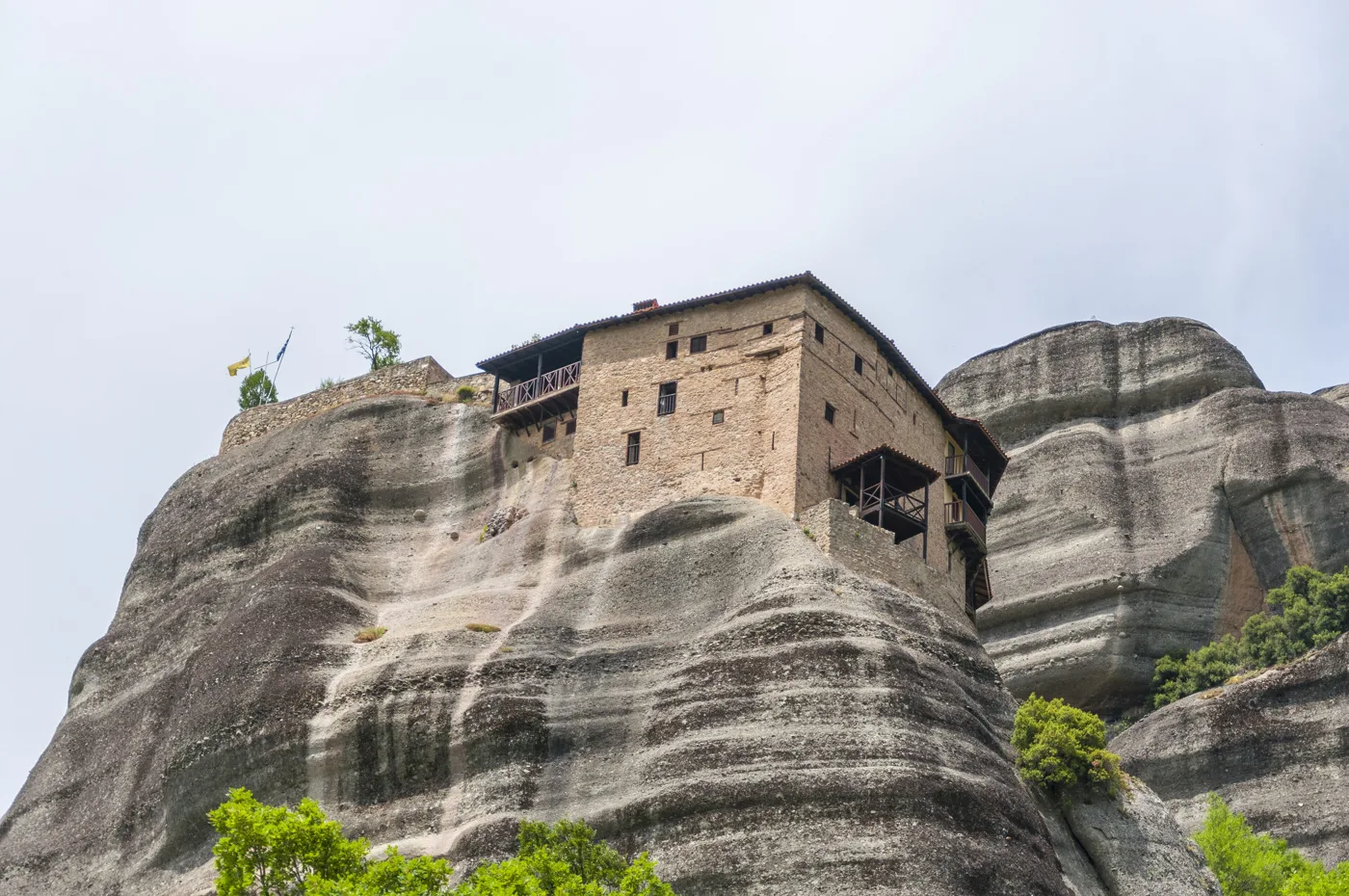
The katholikon on the second floor, the refectory on the third.
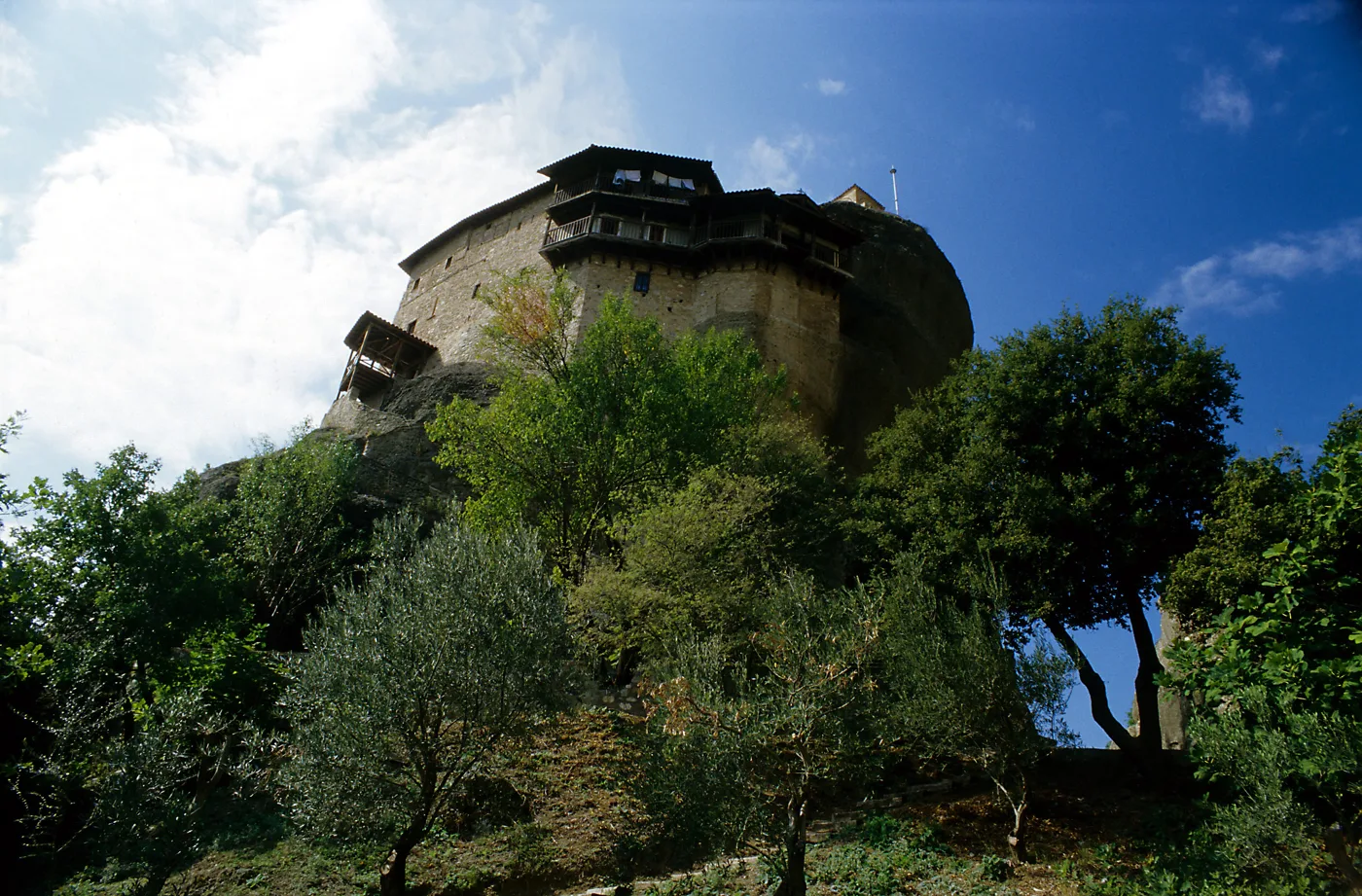
The first monastery after Kastraki.
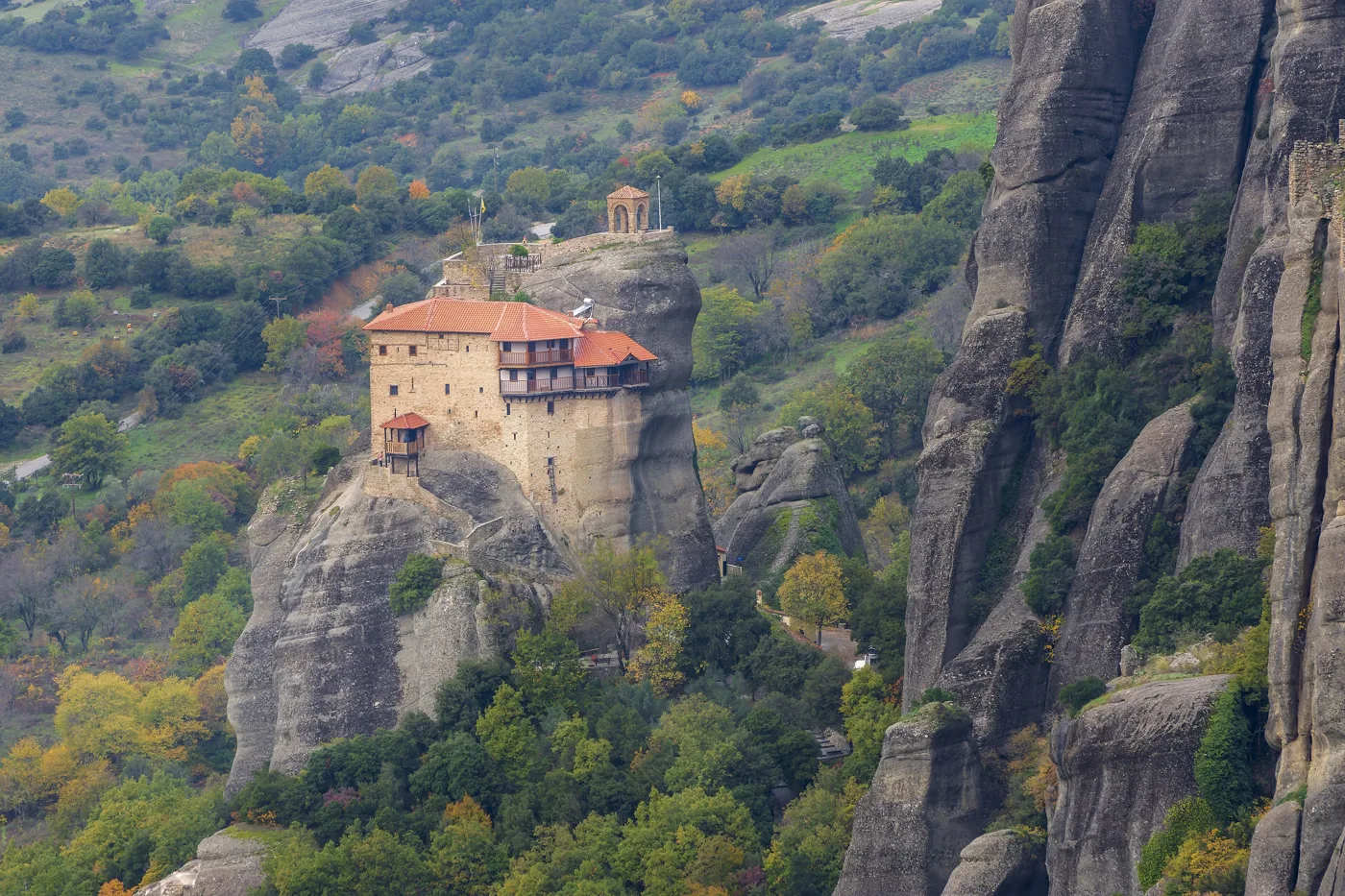
The two monasteries are ten minutes apart by car.
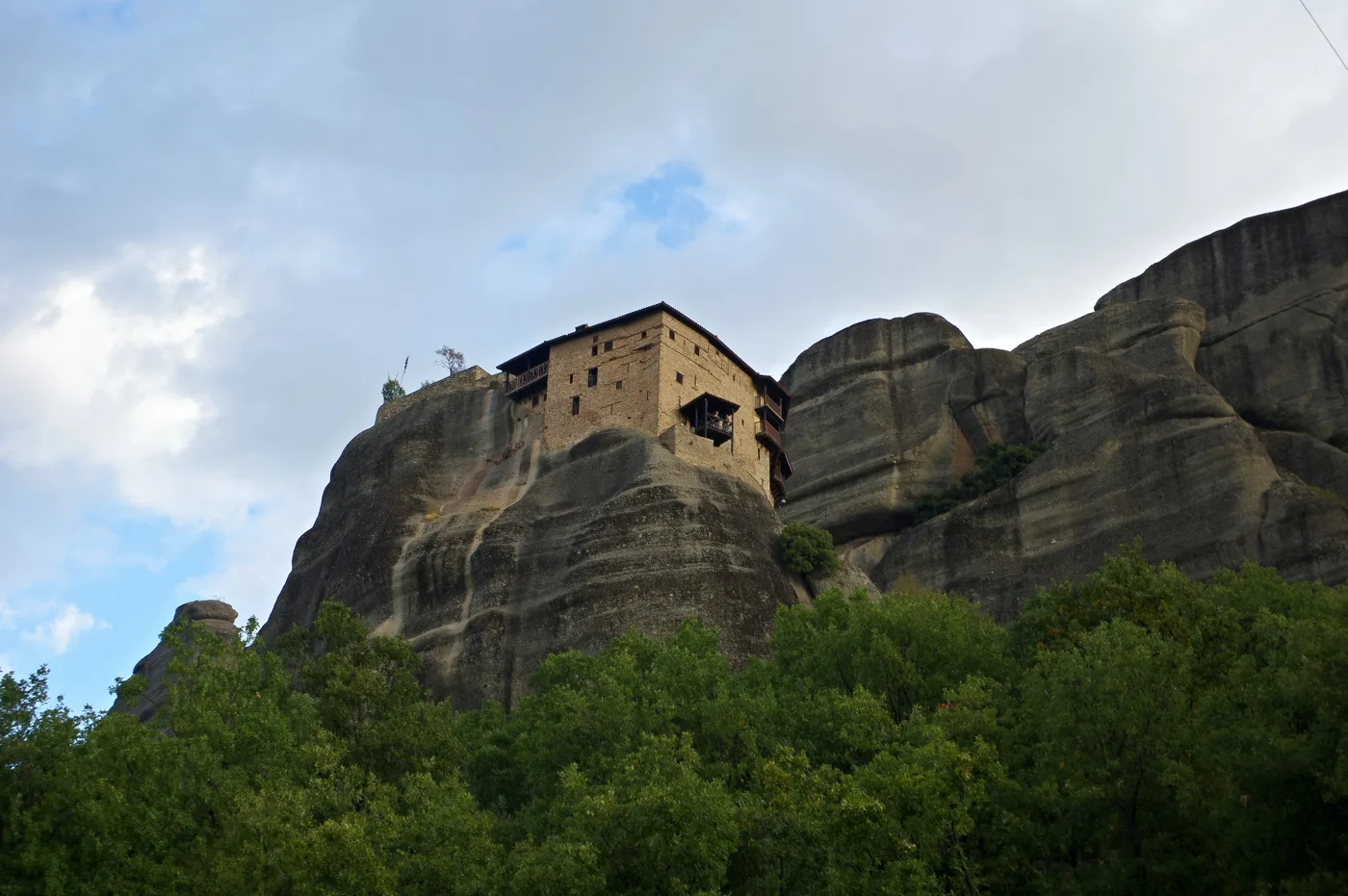
Around 140 steps from the car park.
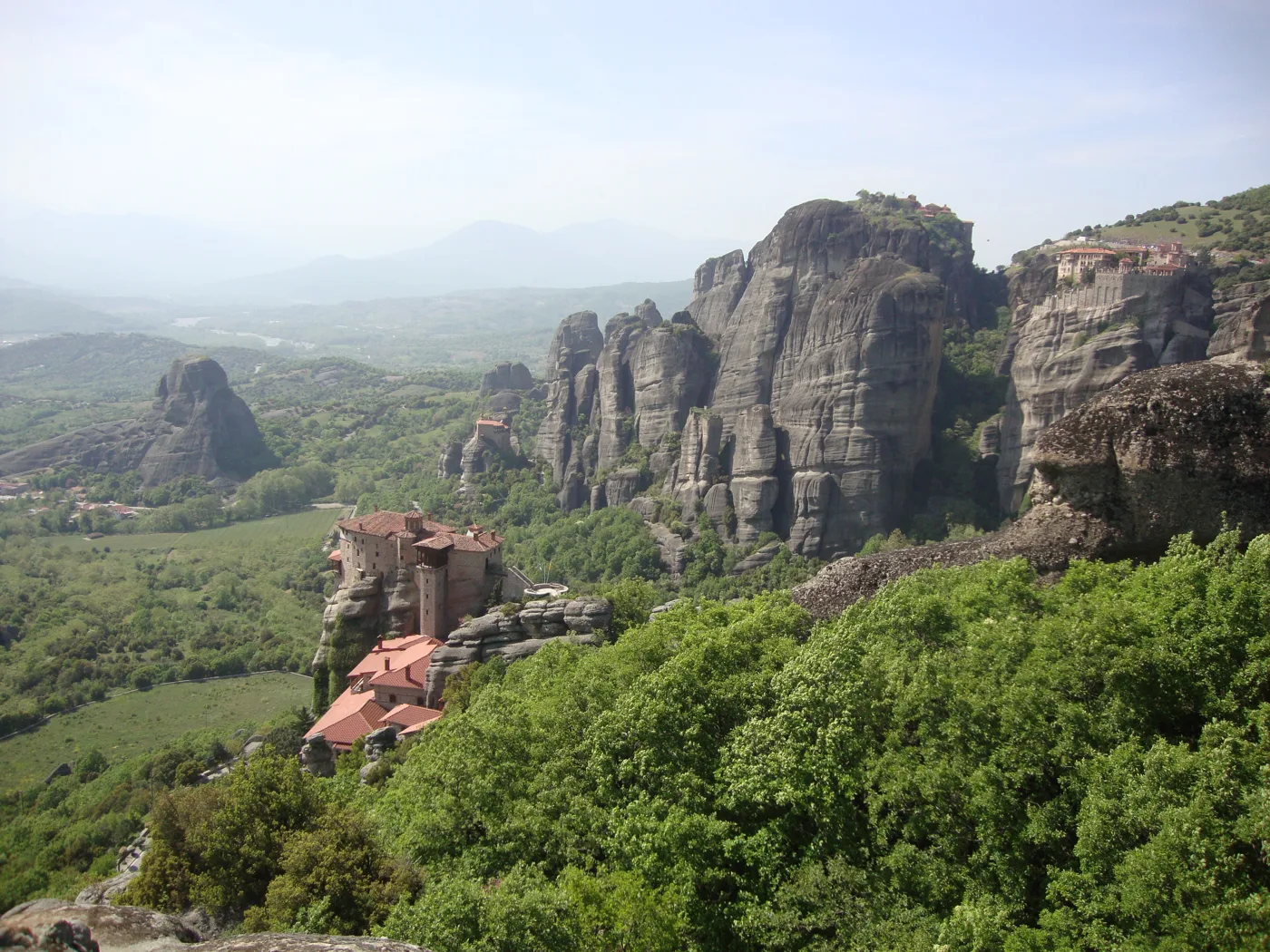
The smallest of the six.
Great Meteoron and Varlaam from above.
The Pindus and the Antichasia.
The plain and Kastraki from the balcony.
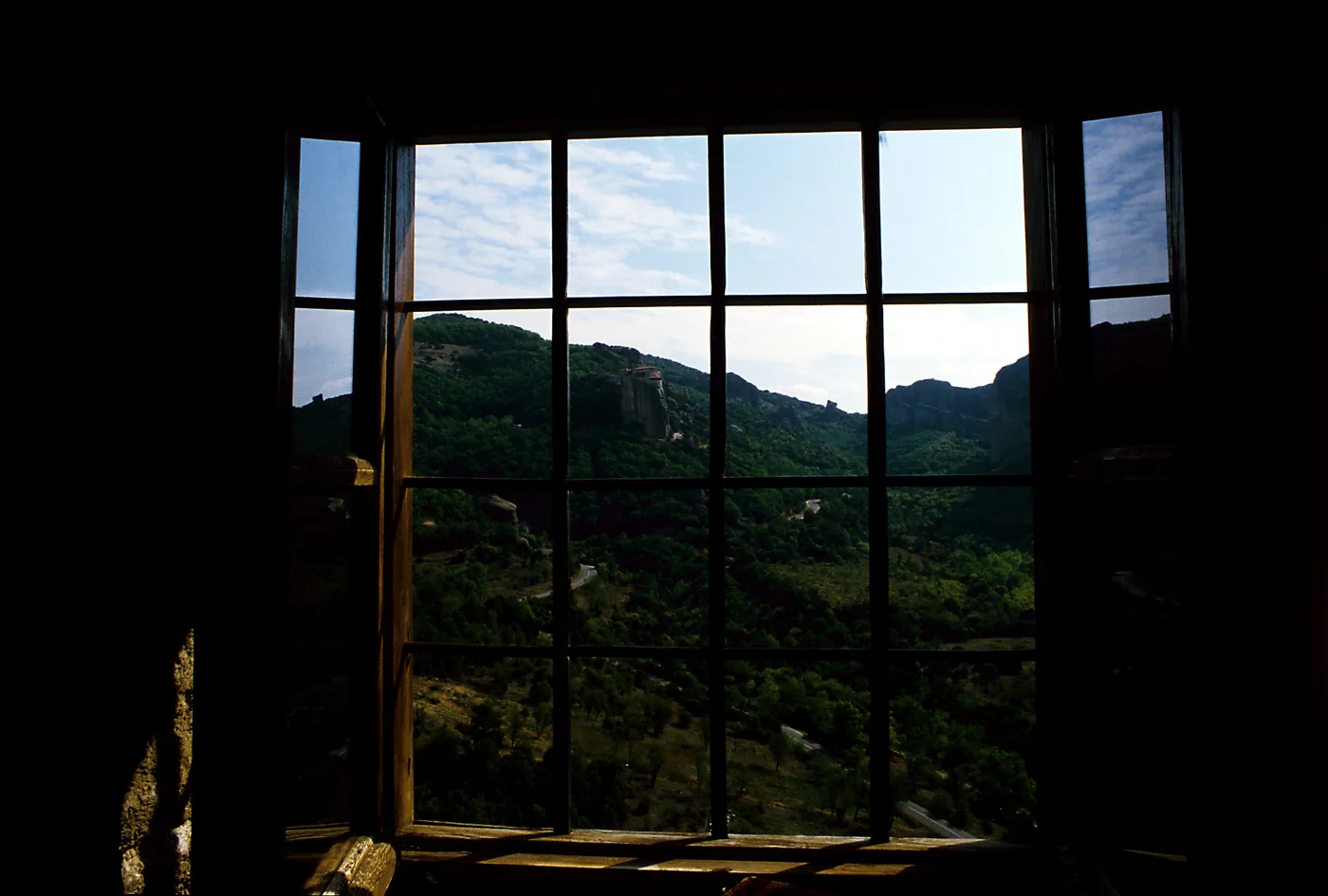
The rocks from inside, like a painting.
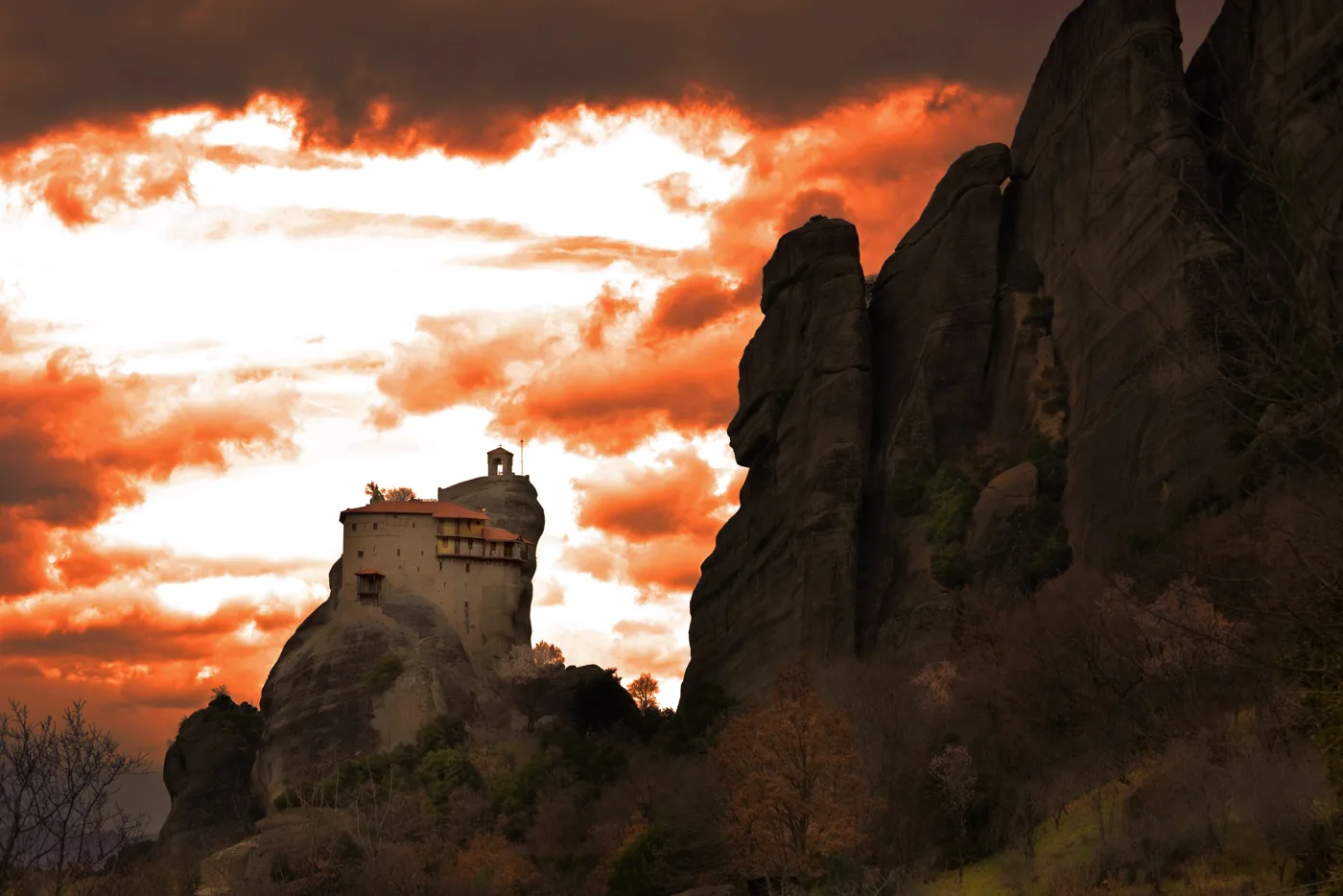
The sun sets behind the rock.
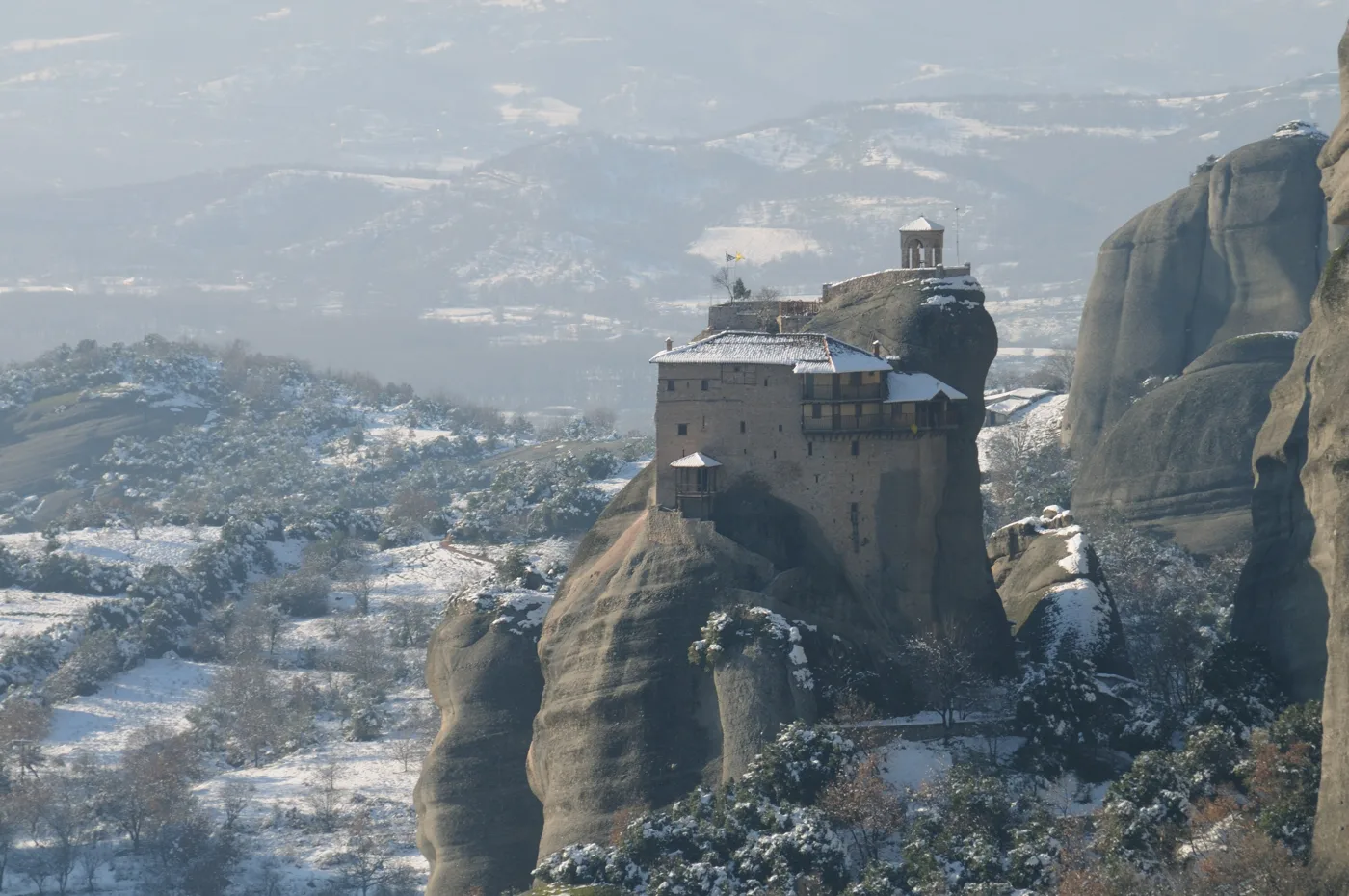
Theophanes the Cretan painted here in 1527.
Photos: Patryk Morawiec (CC BY-SA 4.0), Ava Babili (CC BY-SA 4.0), Falk2 (CC BY-SA 4.0), Jolovema (CC BY-SA 4.0), Berthold Werner (CC BY-SA 3.0), XeresNelro (CC BY-SA 4.0), Mrcsifkin (CC BY-SA 3.0), Itto Ogami (CC BY 3.0), Alexandris Alexis (CC BY-SA 4.0), Josep M. Gracia (CC BY-SA 4.0) · Wikimedia Commons
🏛️ Agia Triada: the James Bond rock
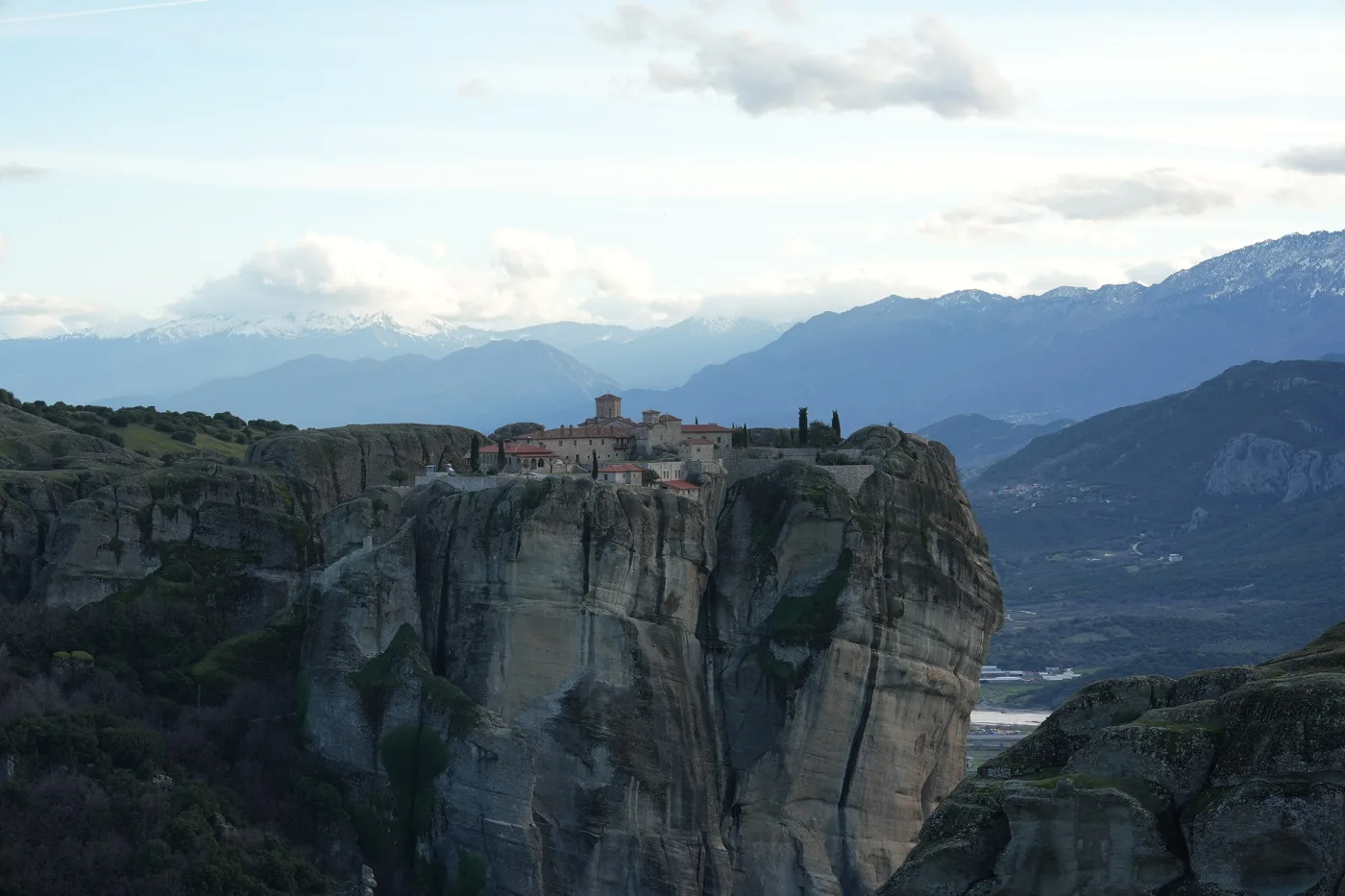
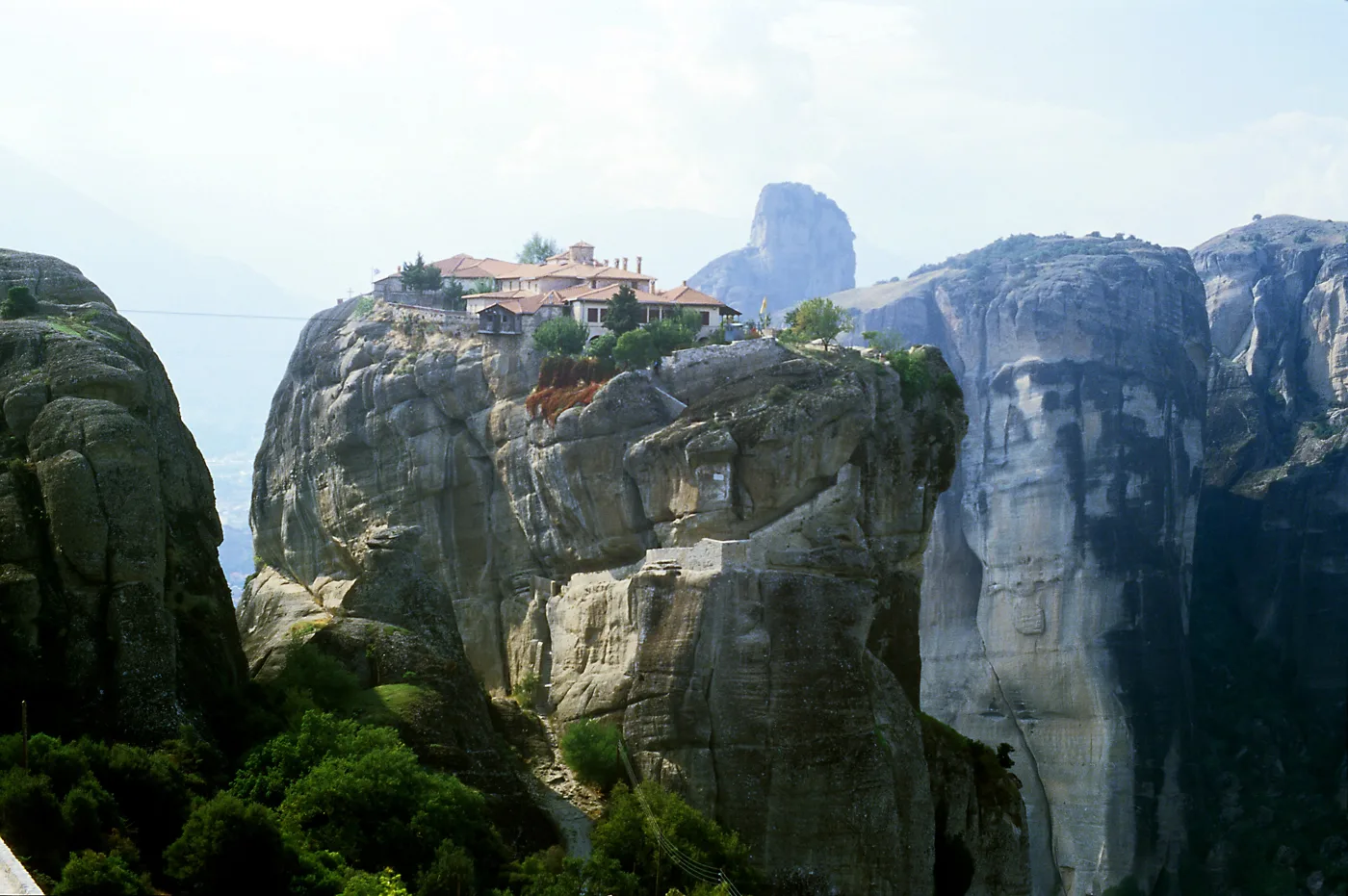
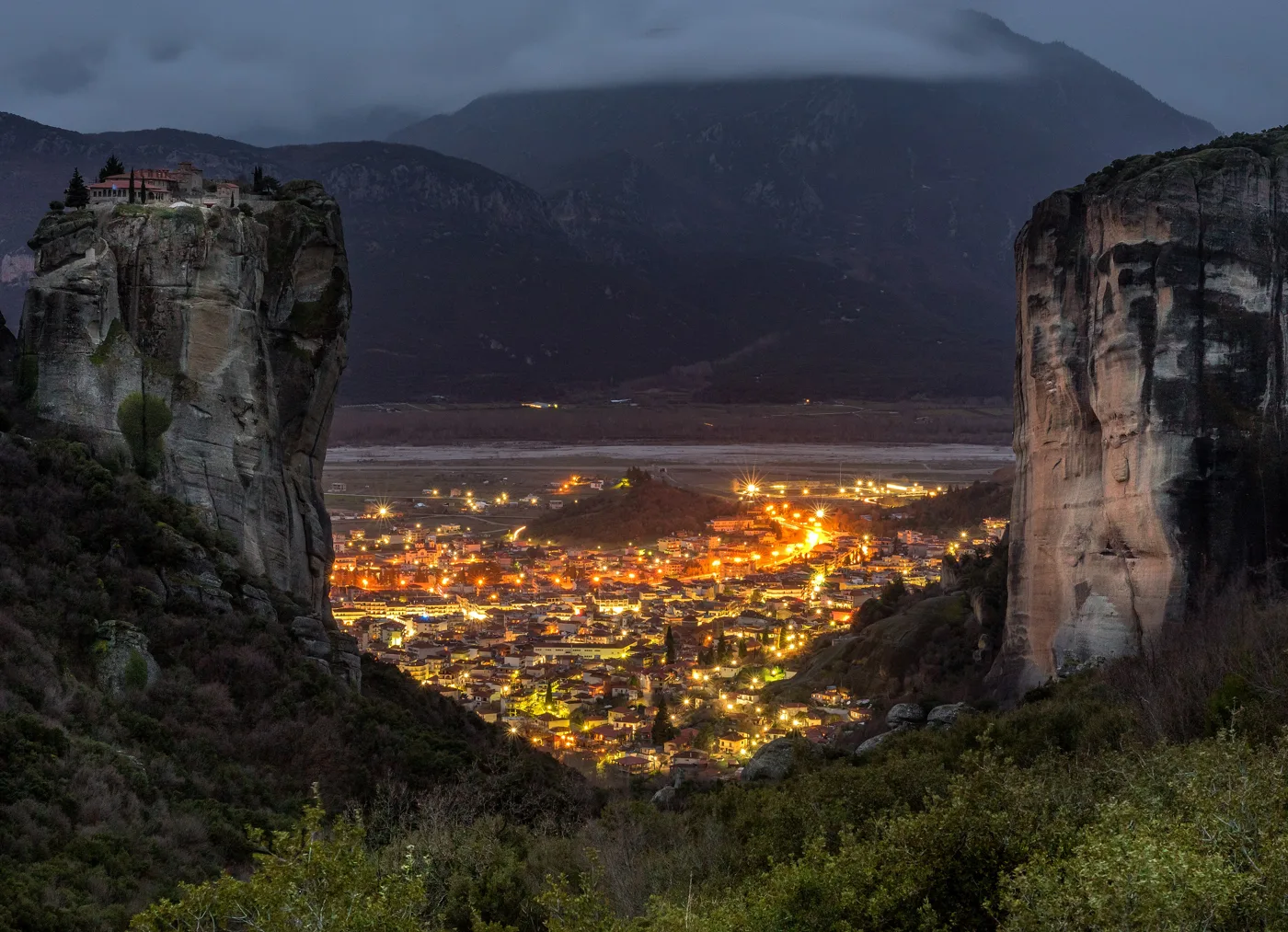
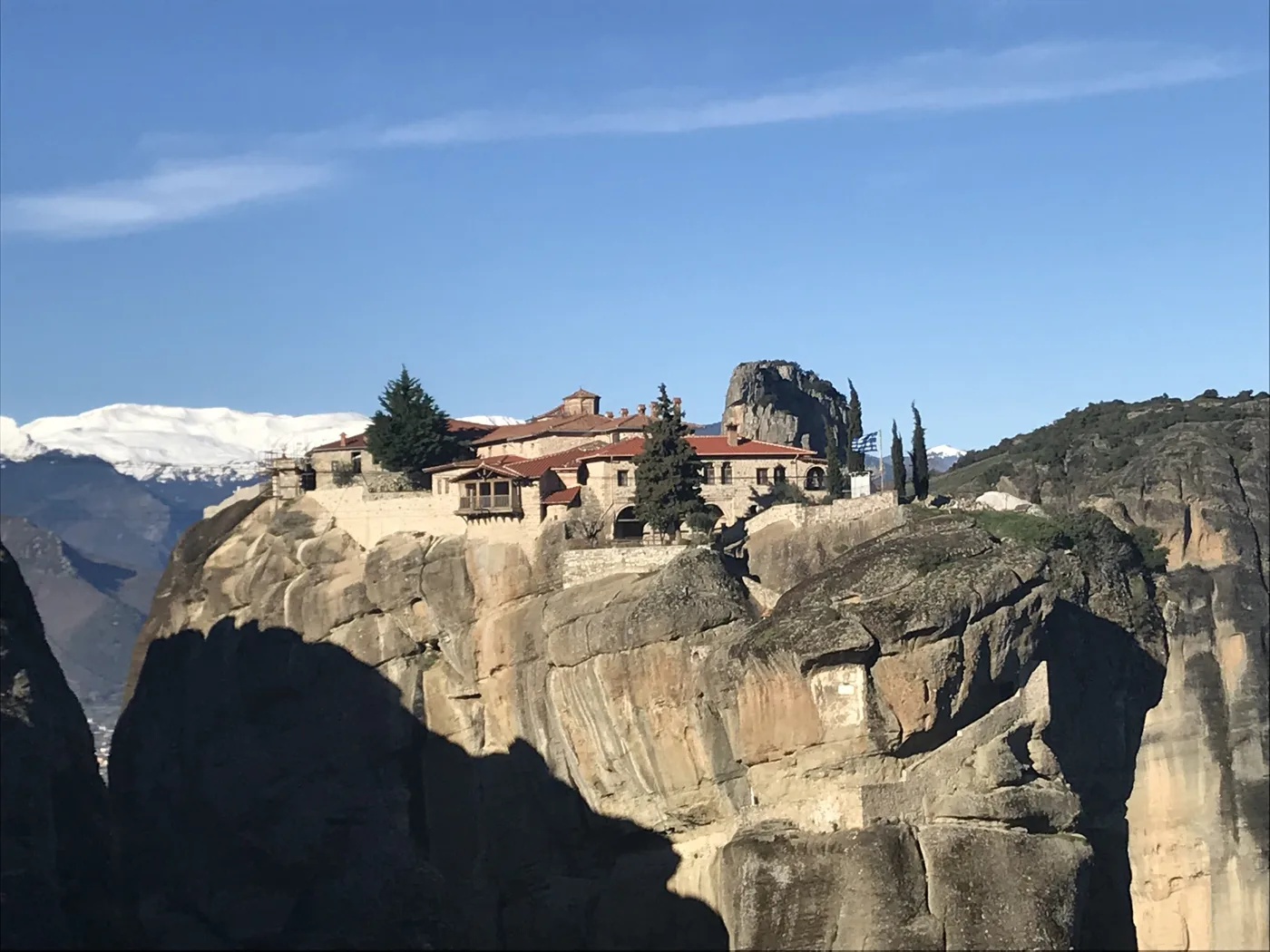
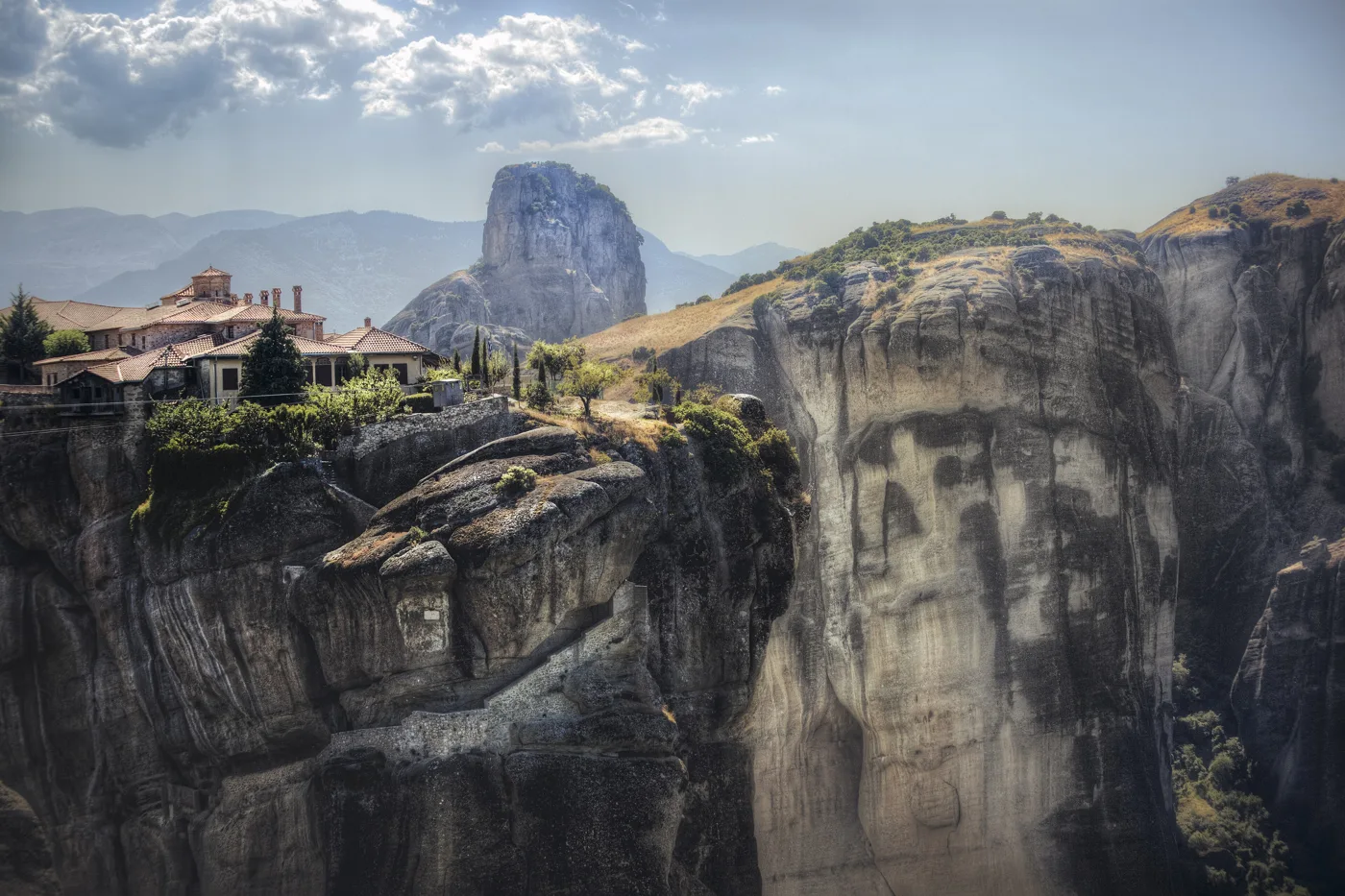
If Meteora has one image, it is Agia Triada: a rock sheer on every side, 400 metres above Kalambaka, and on its summit a small monastery with tiled roofs, built in 1458 by the monk Dometios. Access is the most adventurous: from the road, down a path, across the gorge and up 140 steps cut into the rock in 1925, half an hour from the car park including the return. Inside, the katholikon with frescoes from 1741, the chapel of St John the Baptist carved into the rock, a small courtyard with a garden, and the view: all of Kalambaka at your feet, the Pineios, the plain as far as Trikala and, behind, the Pindus, snow-capped until April. Its treasures were looted in the war, the monks are few, and the monastery has the peace the big ones lack. In 1981 Roger Moore climbed this rock, on screen, in “For Your Eyes Only”, and the viewpoint for the rock on the road is still called James Bond. From Kalambaka the path comes up here from the Byzantine church, 1.7 kilometres, 25 to 35 minutes uphill, 20 down: the best way to end the day. Closed on Thursdays; in winter 10:00 to 14:00.
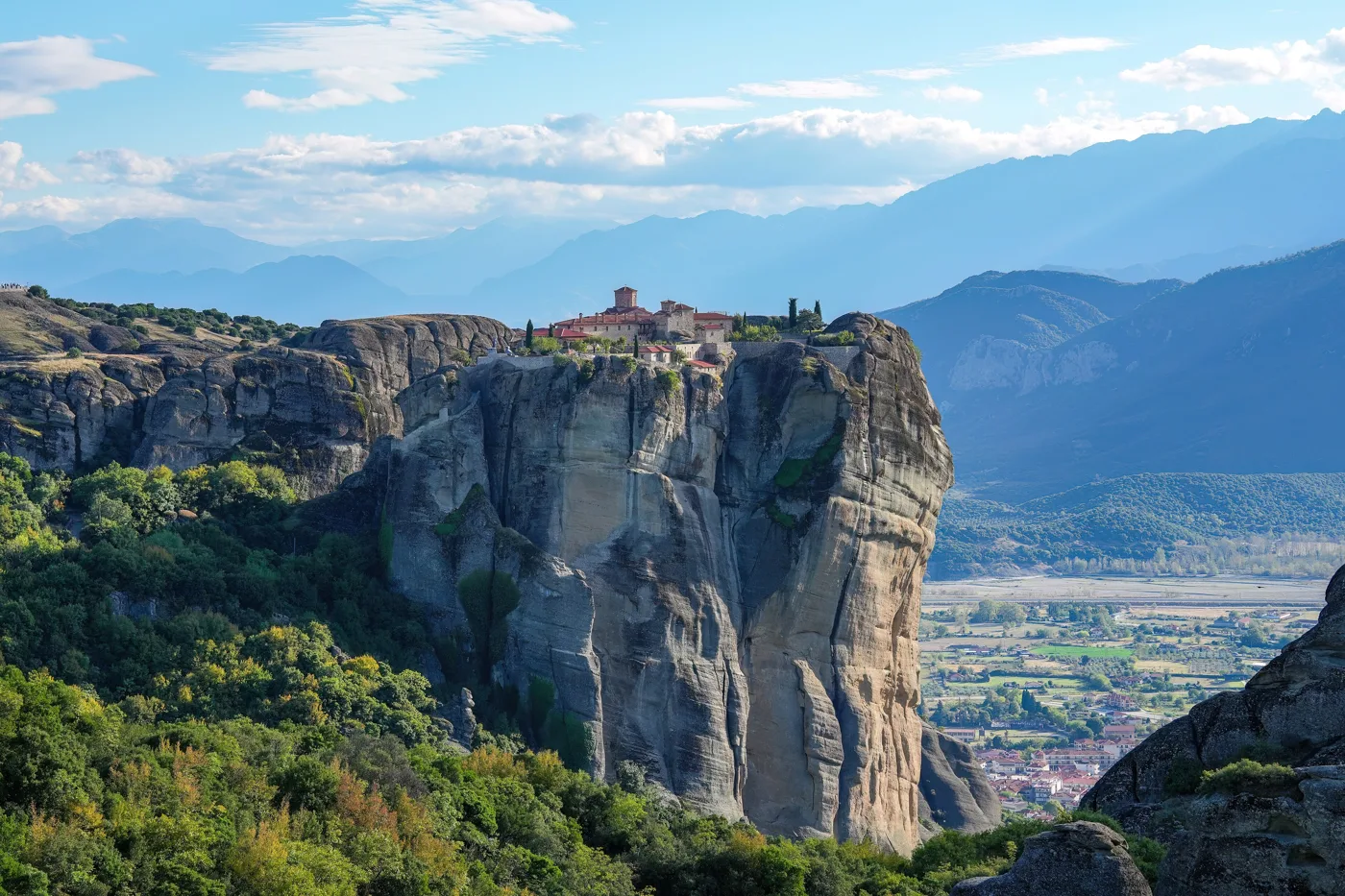
The most dramatic rock, 1458.
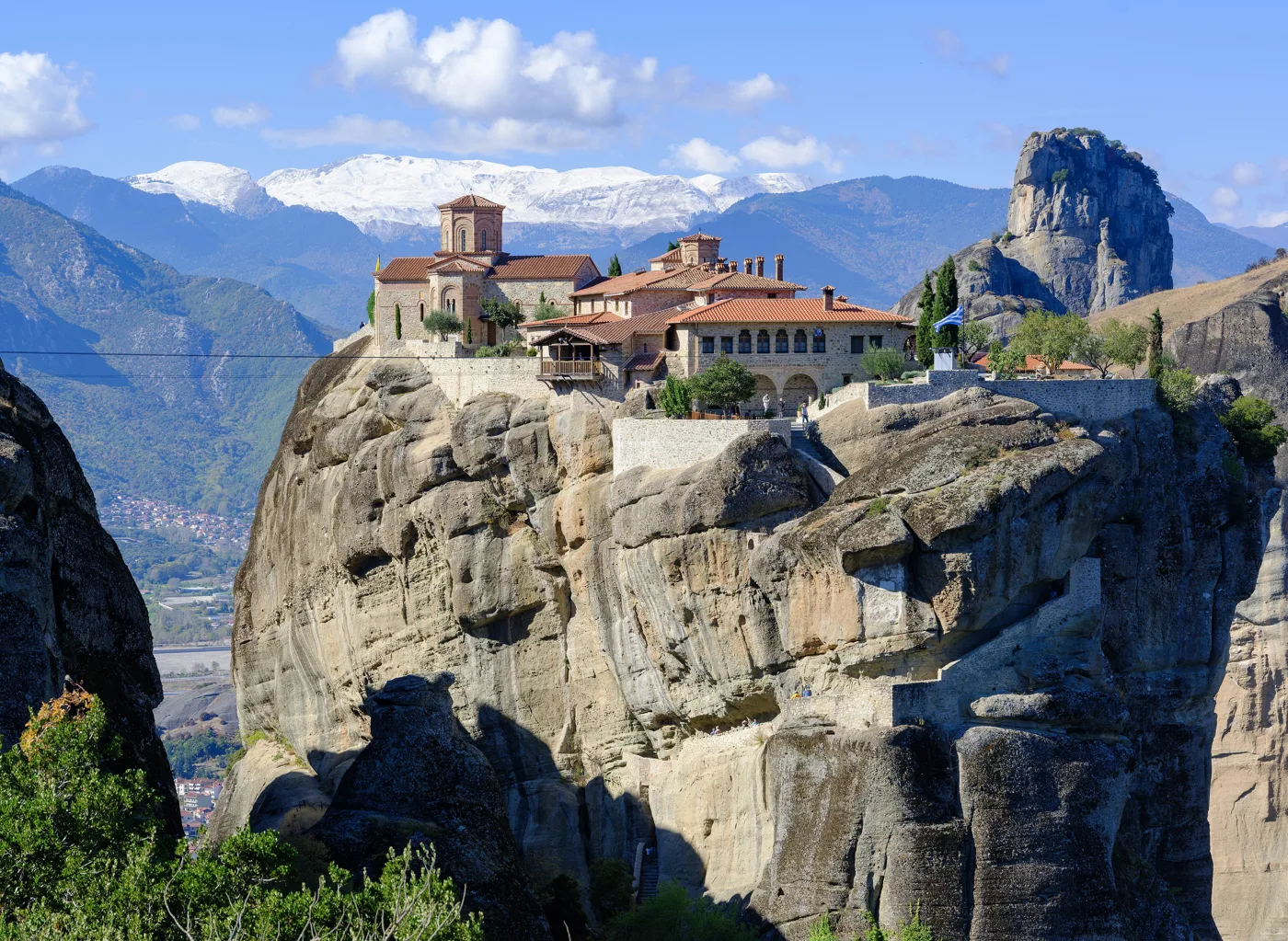
The Pindus is snow-capped until April.
Downhill, a bridge and 140 steps in the rock.
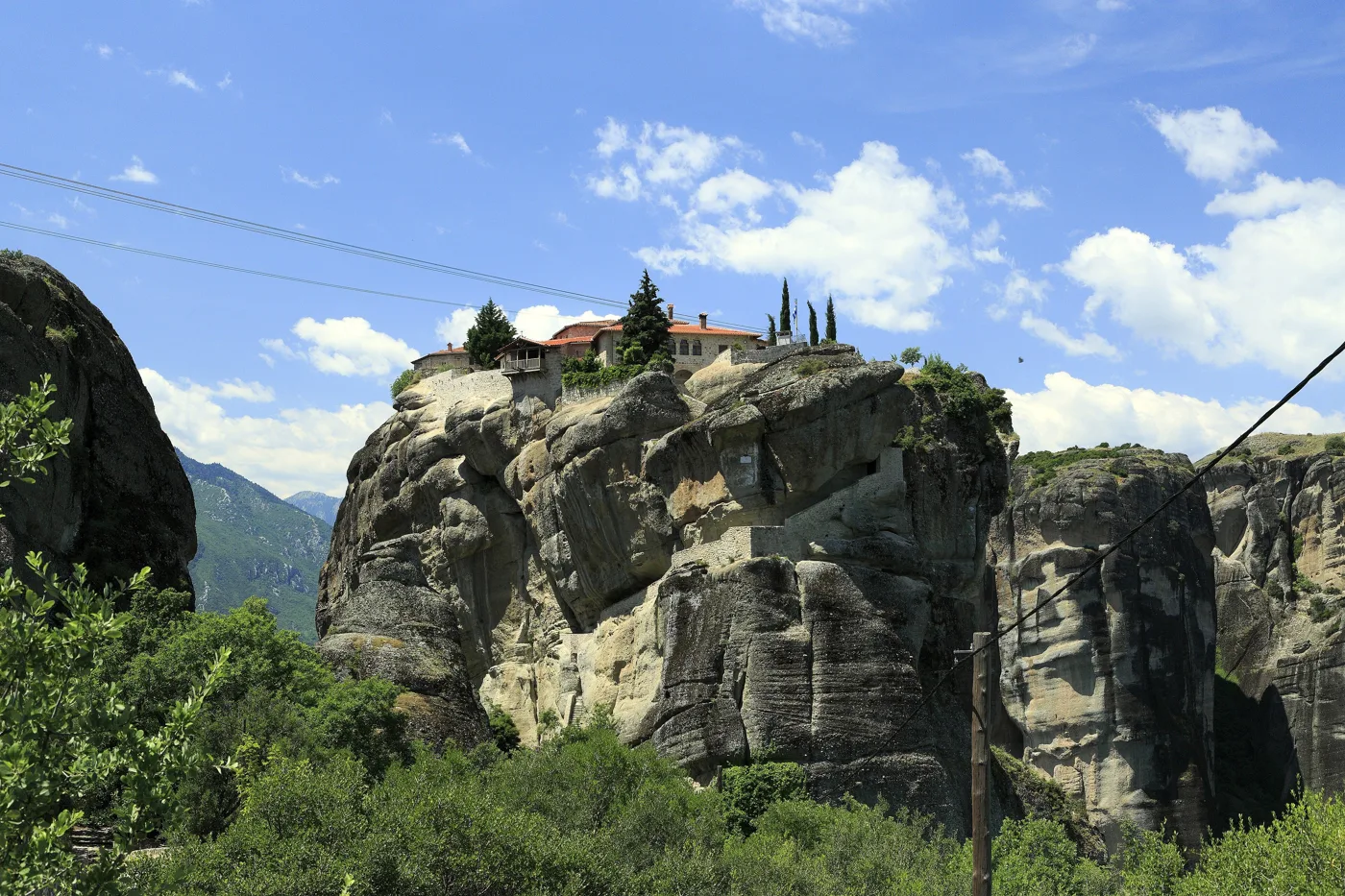
The James Bond scene was filmed on the 1925 steps.
The two monasteries are 1.5 kilometres apart.
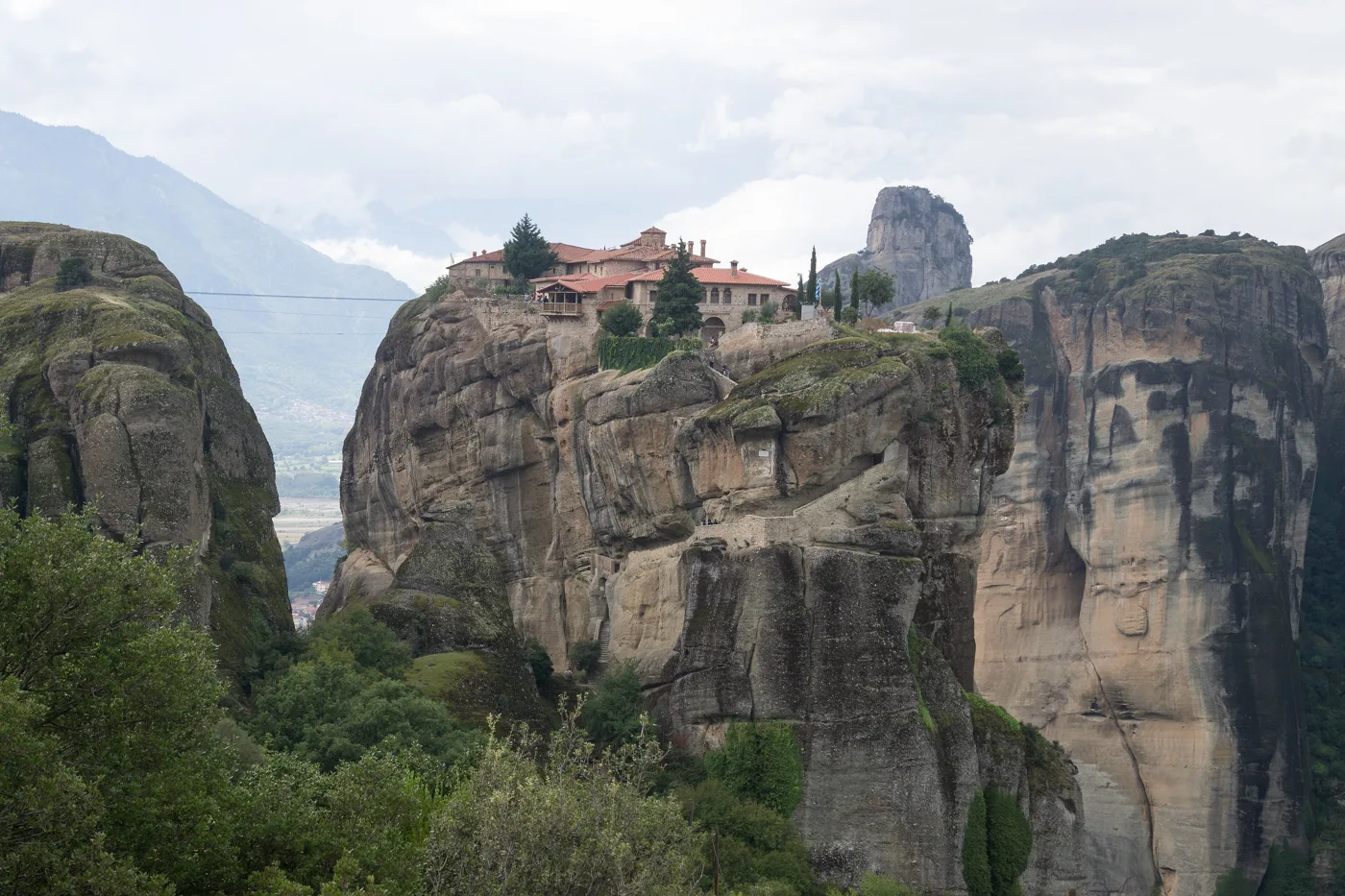
The rock is sheer on every side.
The view towards Kalambaka and the Pineios.
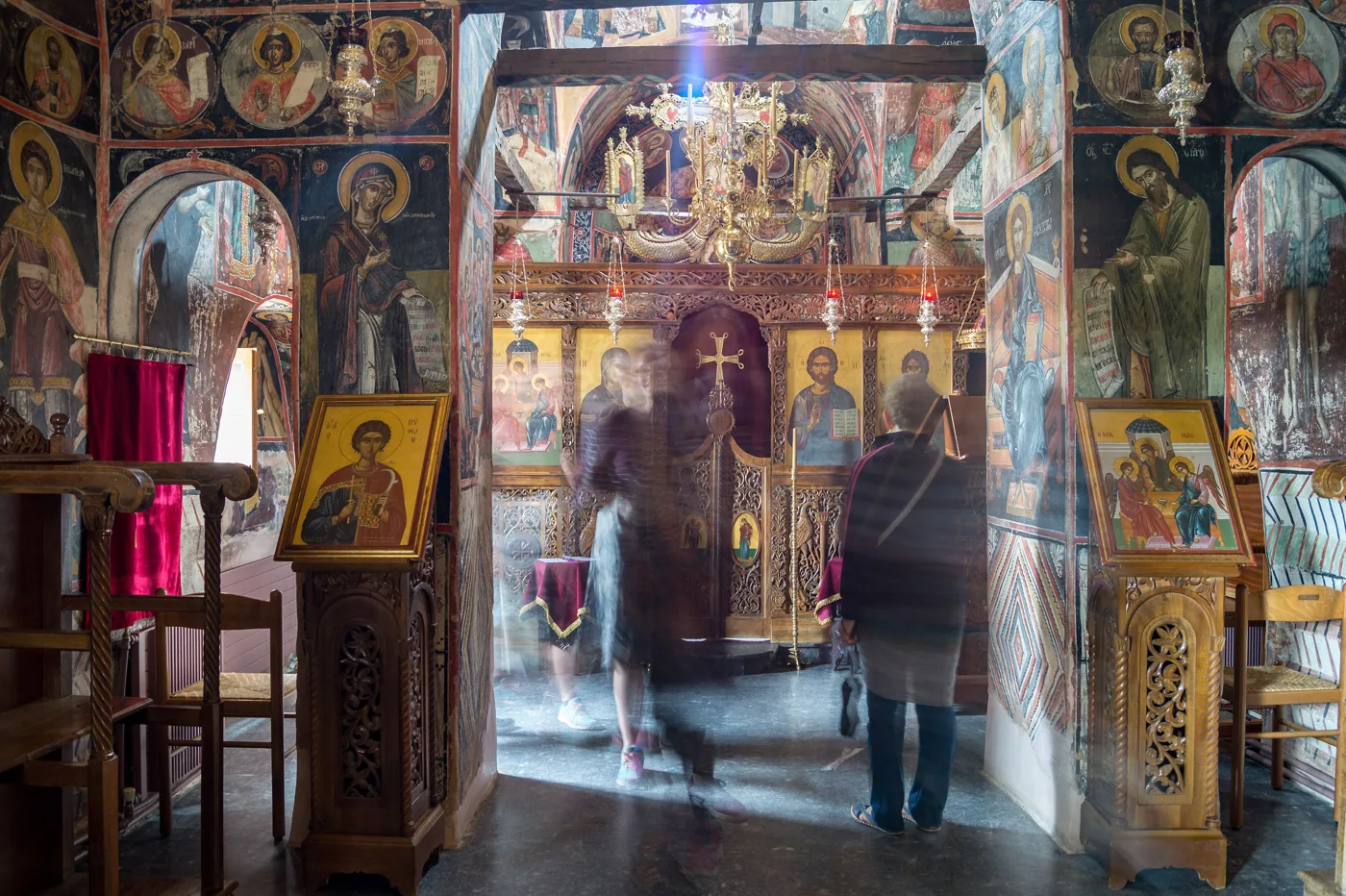
Frescoes from 1741.
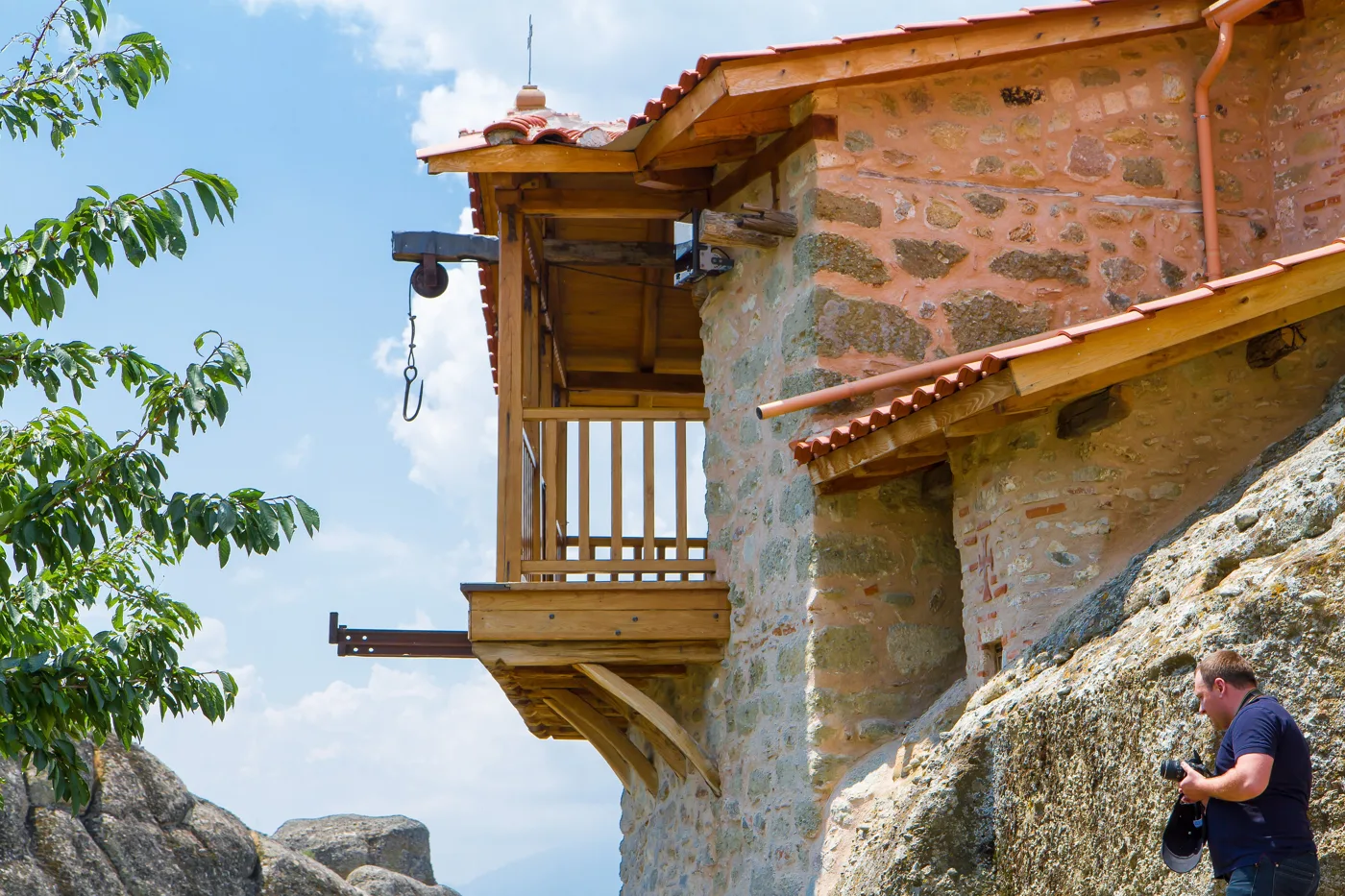
The net used to come down from here.
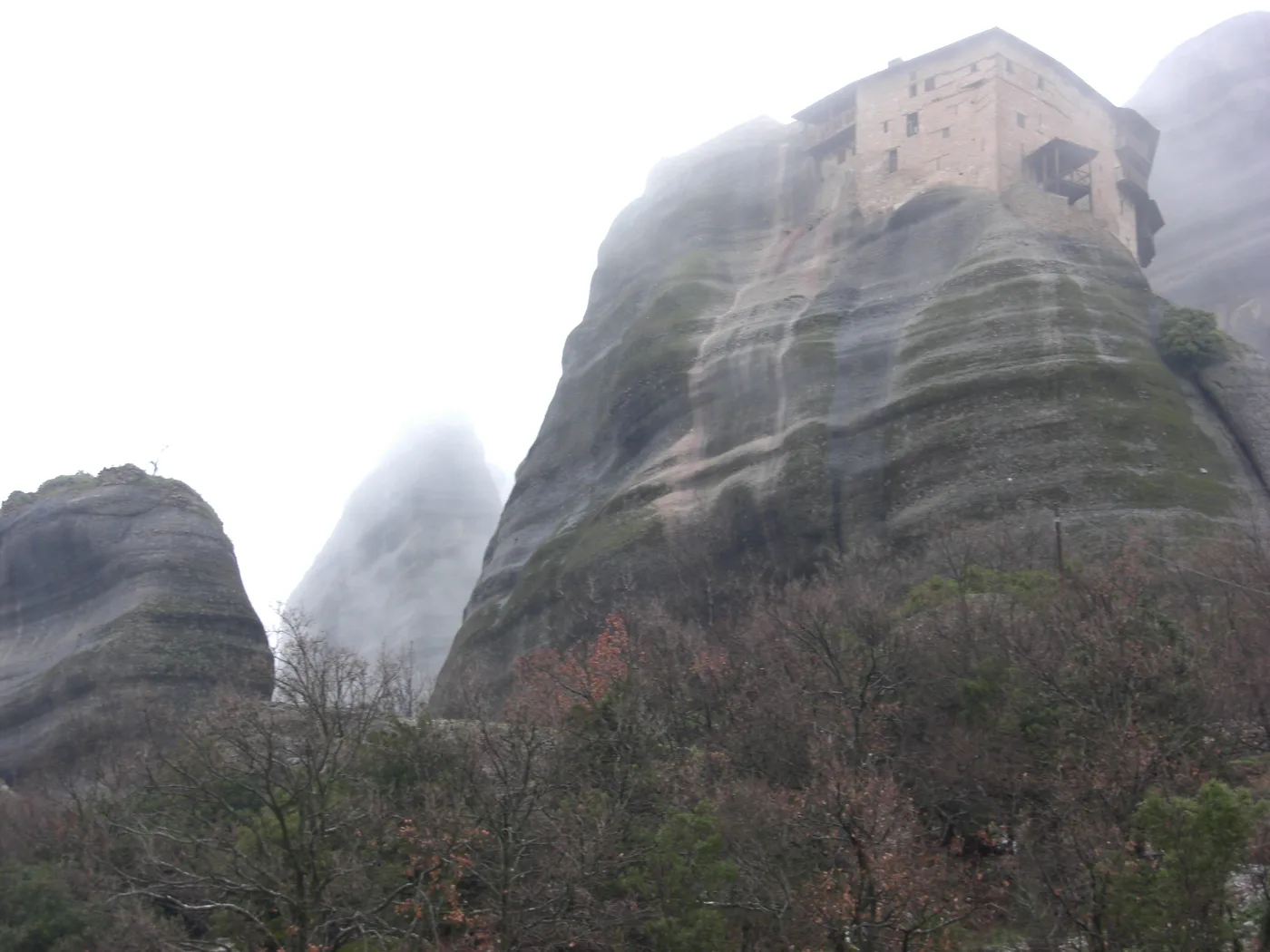
In winter the monastery disappears into the clouds.
Icy steps call for care.
From the rock of Agia Triada.
Behind Meteora, the mountains of Epirus.
The path from Kalambaka comes out here, in 25 minutes.
Photos: Giles Laurent (CC BY-SA 4.0), Chensiyuan (CC BY-SA 4.0), Sadopaul (CC BY-SA 4.0), Falk2 (CC BY-SA 4.0), HerrAdams (CC BY-SA 4.0), Максим Улитин (CC BY 3.0), Steffyrun (CC BY-SA 3.0), stefg74 (CC BY 2.0), Argiriskaramouzas (CC BY-SA 4.0), Mindtravelfitness (CC BY-SA 4.0), Stathis floros (CC BY-SA 4.0) · Wikimedia Commons
🏛️ Agios Stefanos: the monastery without steps
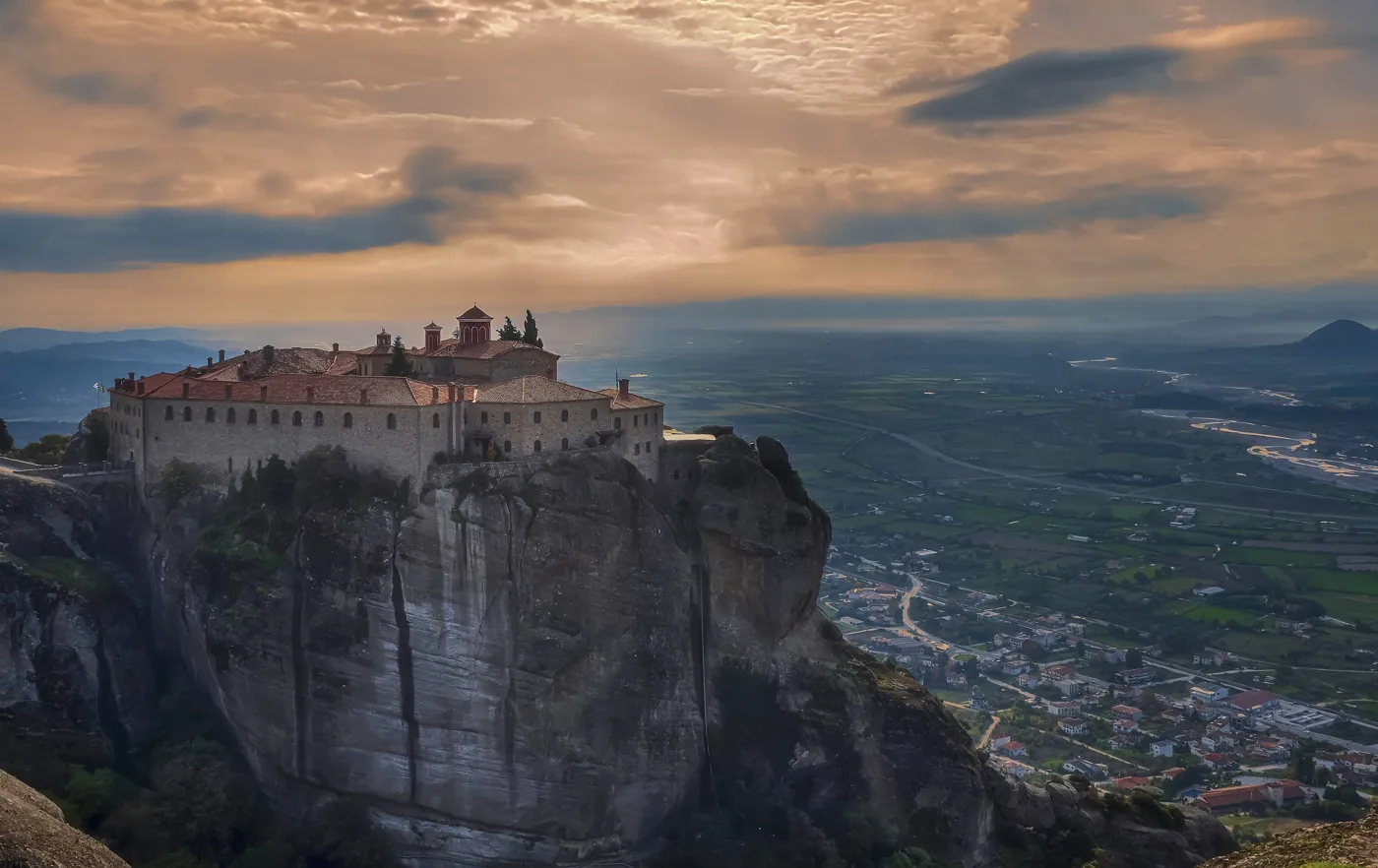
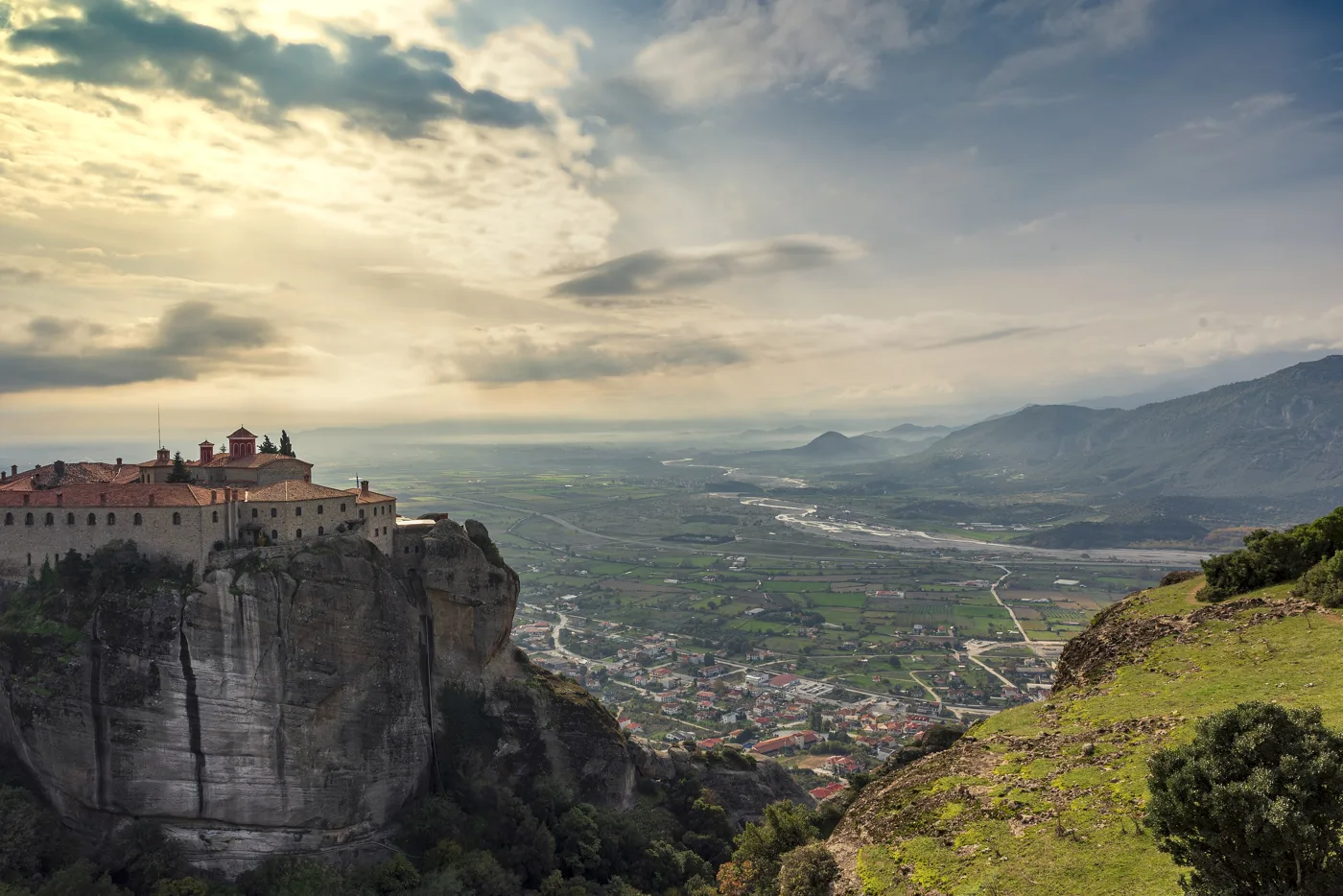
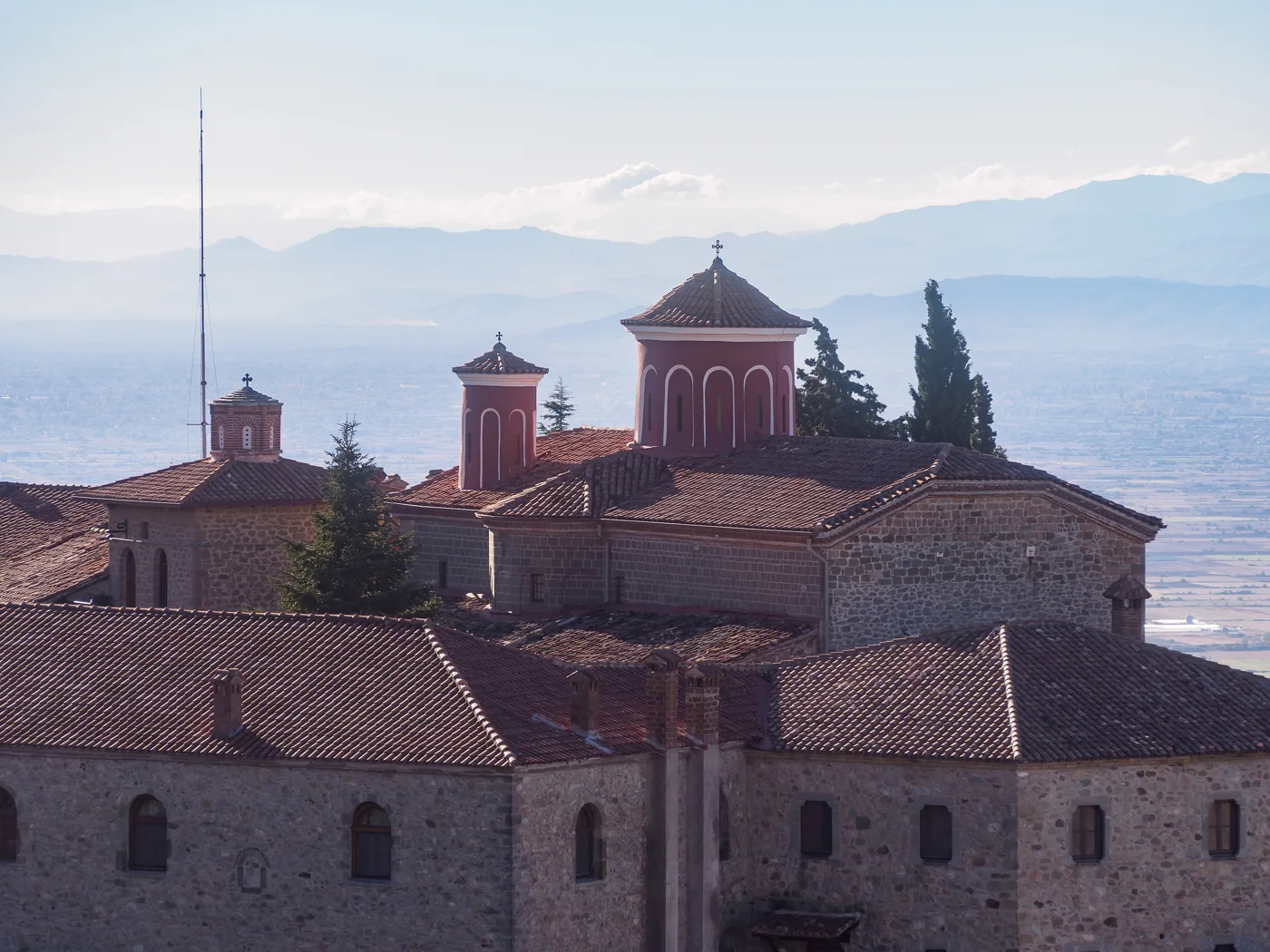
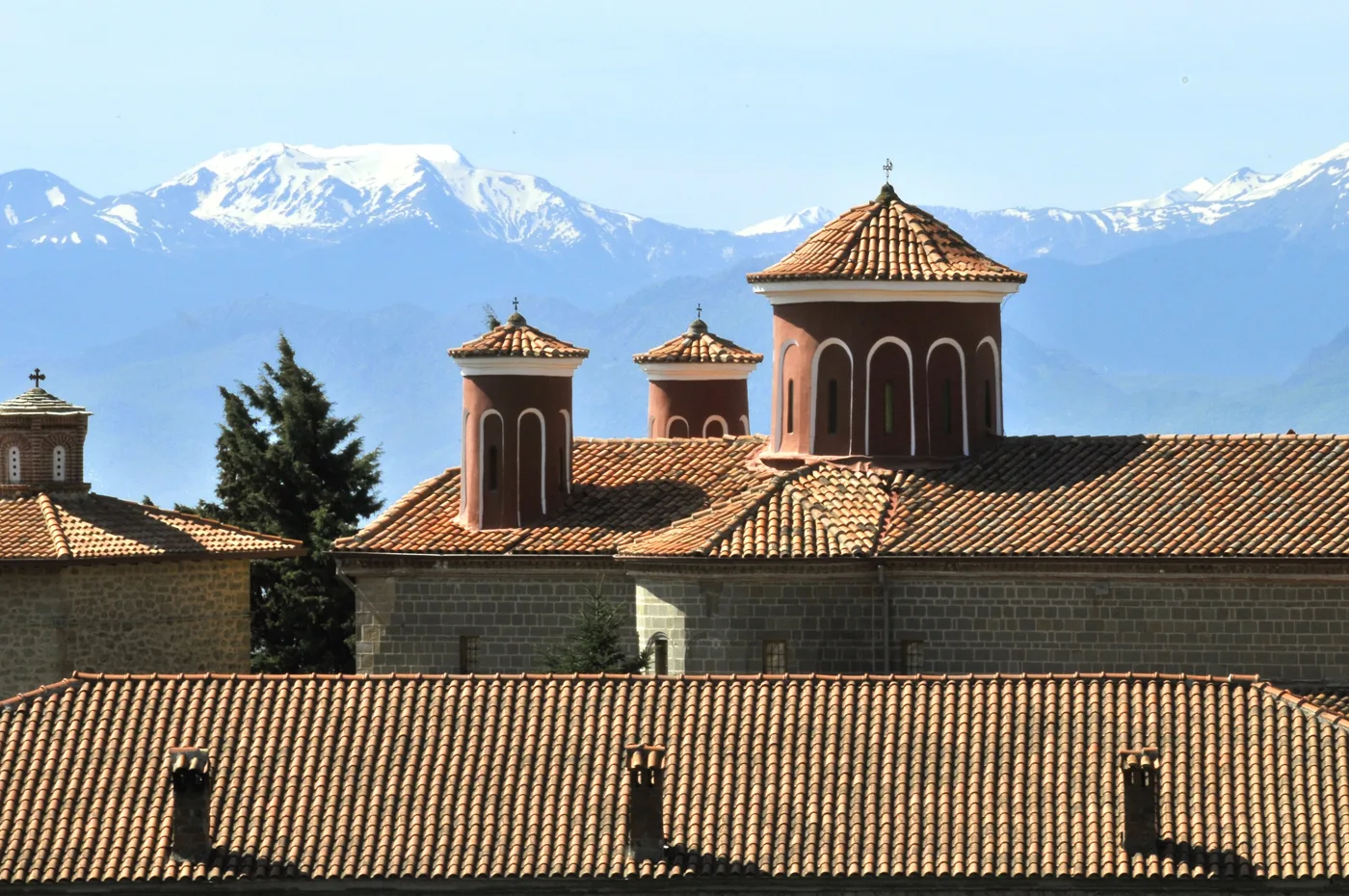
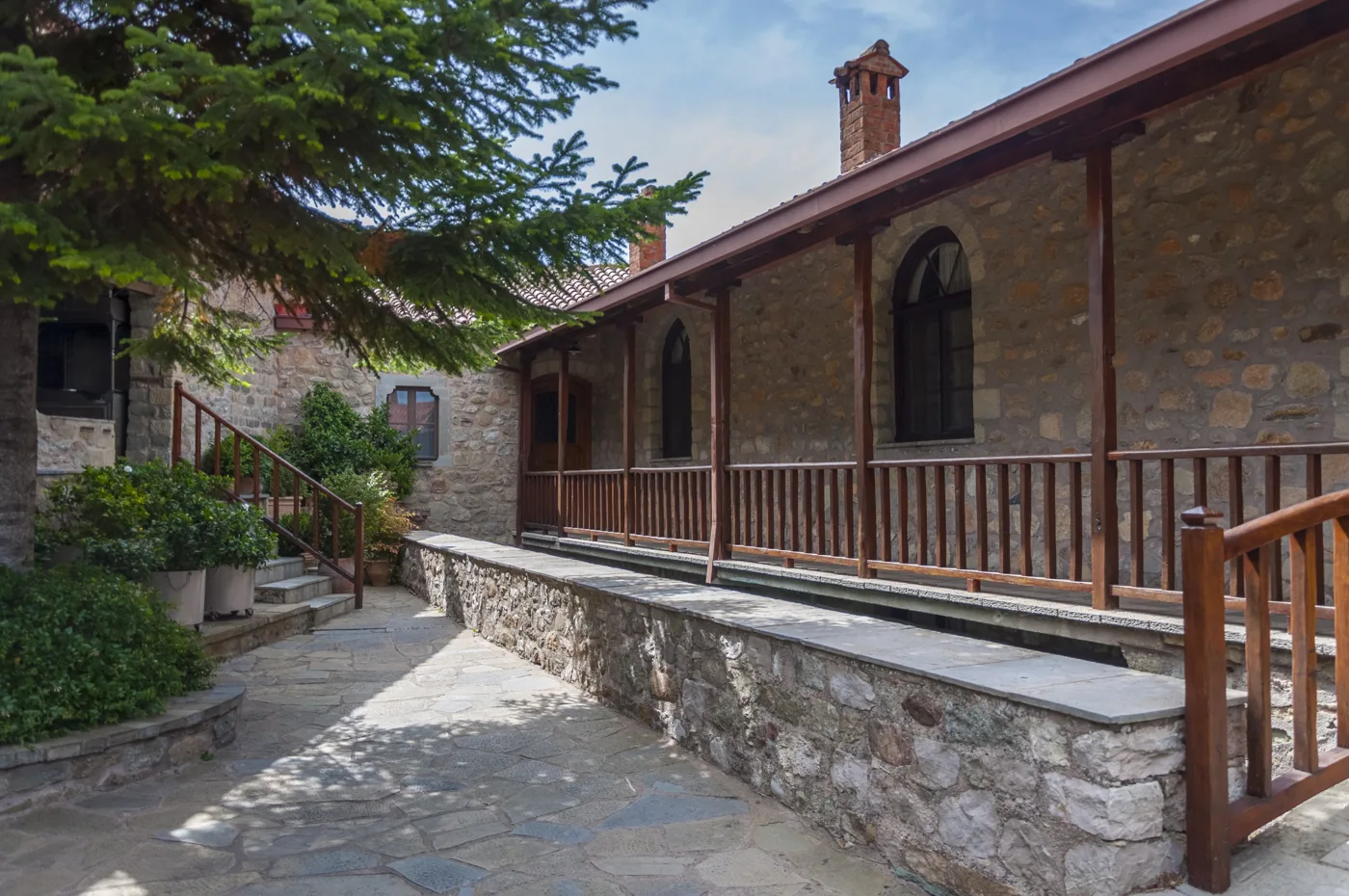
At the end of the road, above Kalambaka, Agios Stefanos is the only monastery with no steps: from the car park, an eight-metre stone bridge and you are inside. It was founded in the 14th century; the old katholikon of St Stephen was built in 1545, with frescoes damaged by Civil War bullets, and the new one, of Agios Charalambos, in 1798, with its carved wooden iconostasis and the saint’s skull, which Thessalians venerate against illness. The monastery was wrecked in the war and abandoned, and in 1961 nuns took it over and made it the liveliest at Meteora: a large community, a museum in the old refectory with manuscripts, icons and vestments, icon-painting workshops and gardens. The view from the courtyard is the view of the plain: Kalambaka below, the Pineios, Trikala, the Antichasia. It is the monastery for older people, children and families, and the only one that opens in the afternoon, 15:30 to 17:30 in summer, 15:00 to 17:00 in winter, with a midday break from 13:30 to 15:30: leave it till last. Forty minutes. Closed on Mondays.
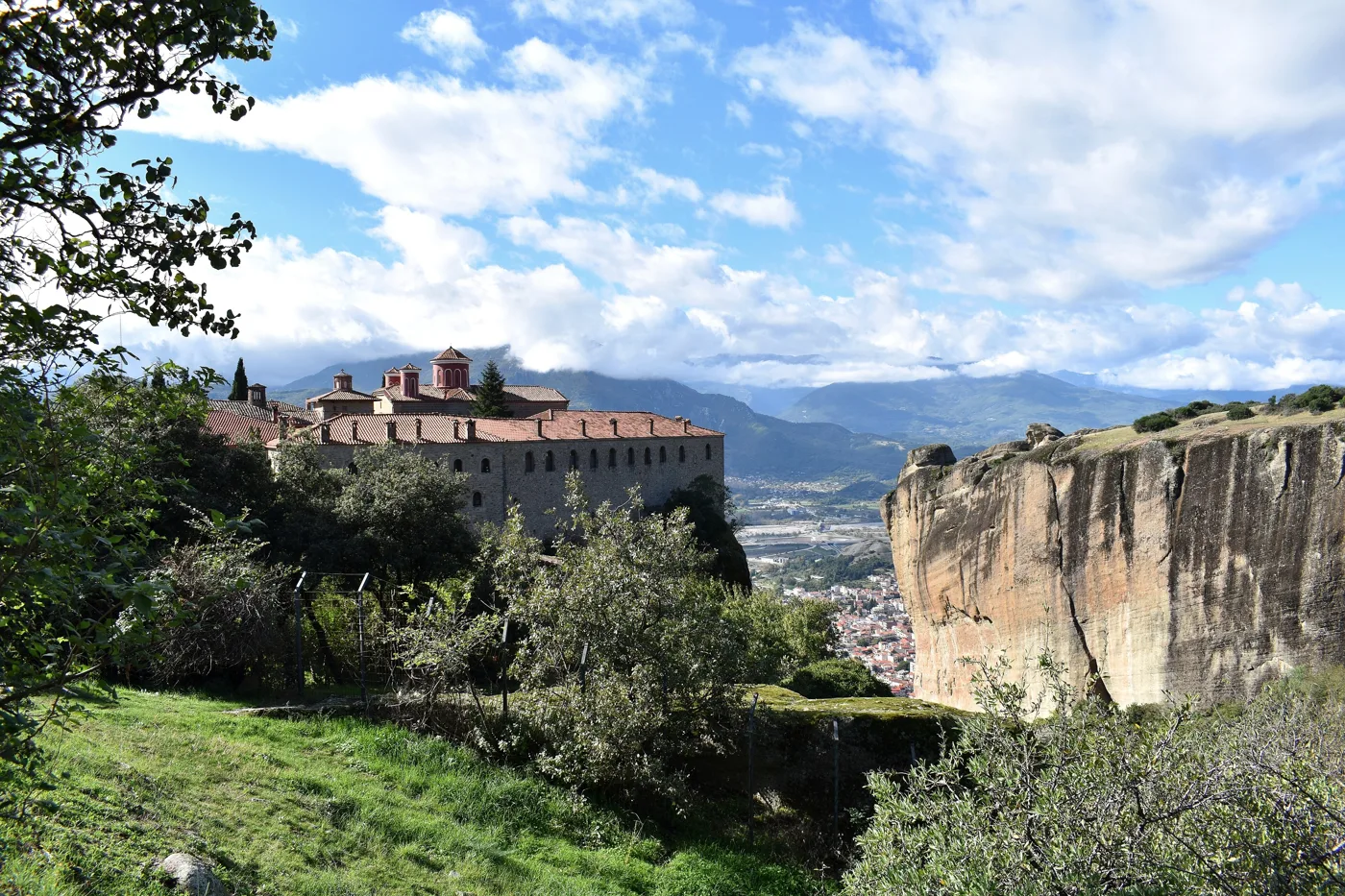
The monastery above the town.
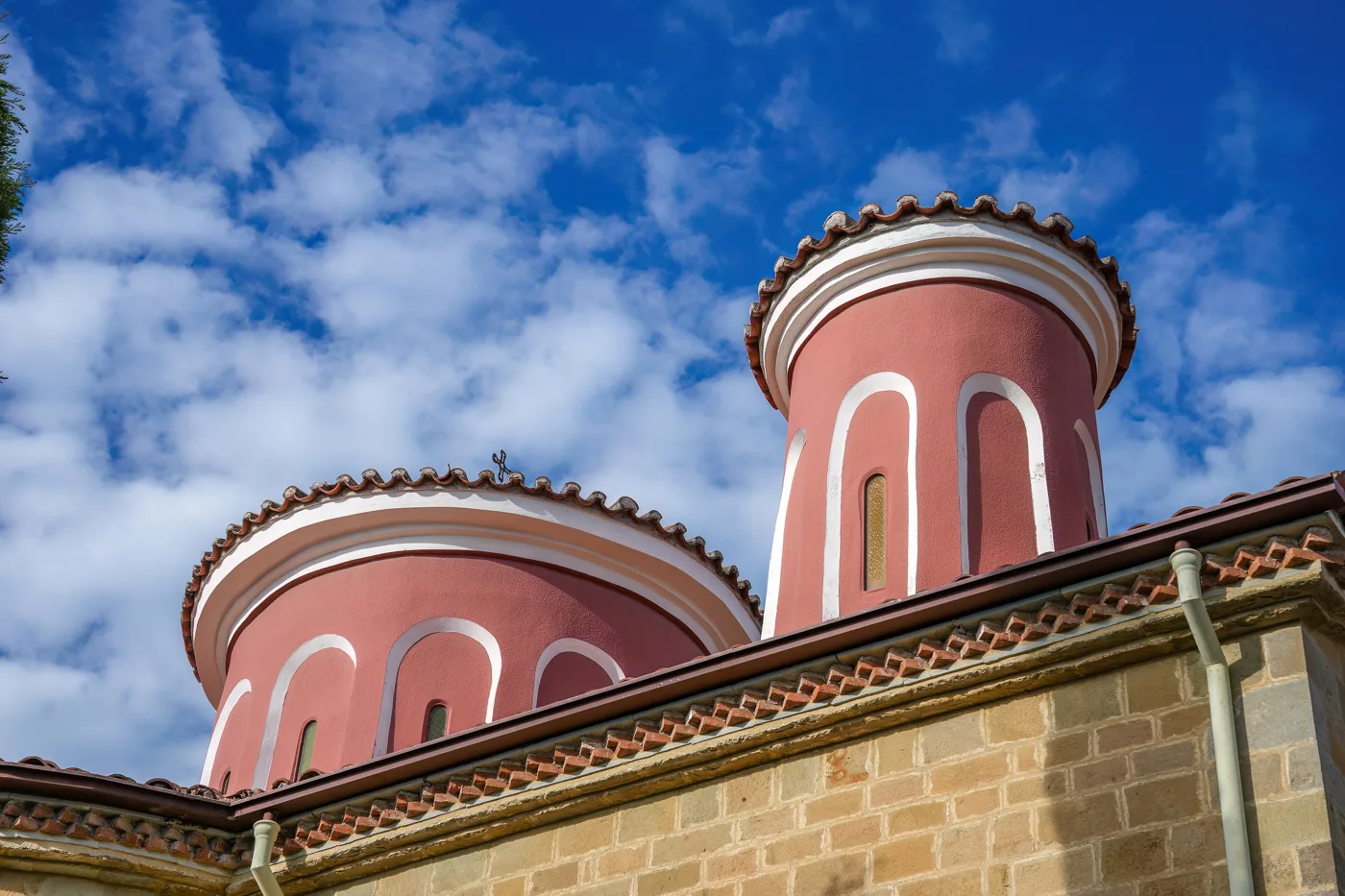
The katholikon of Agios Charalambos, 1798.
The view as far as Trikala on clear days.
The only monastery without steps: a bridge from the car park.
An eight-metre bridge instead of a staircase.
A convent since 1961.
The skull of Agios Charalambos is kept here.
Paving, flowers and silence.
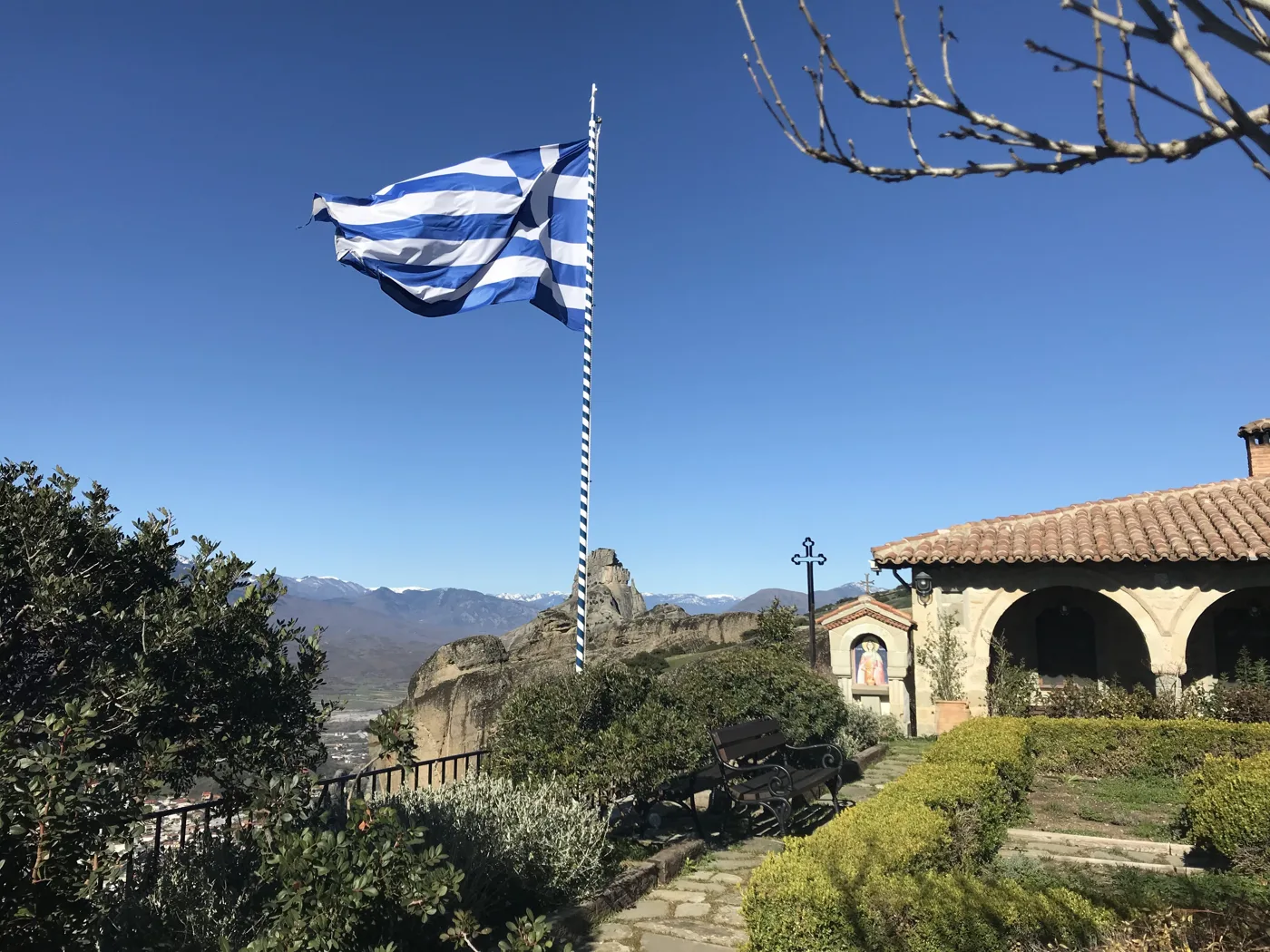
The monastery you see from every street in Kalambaka.
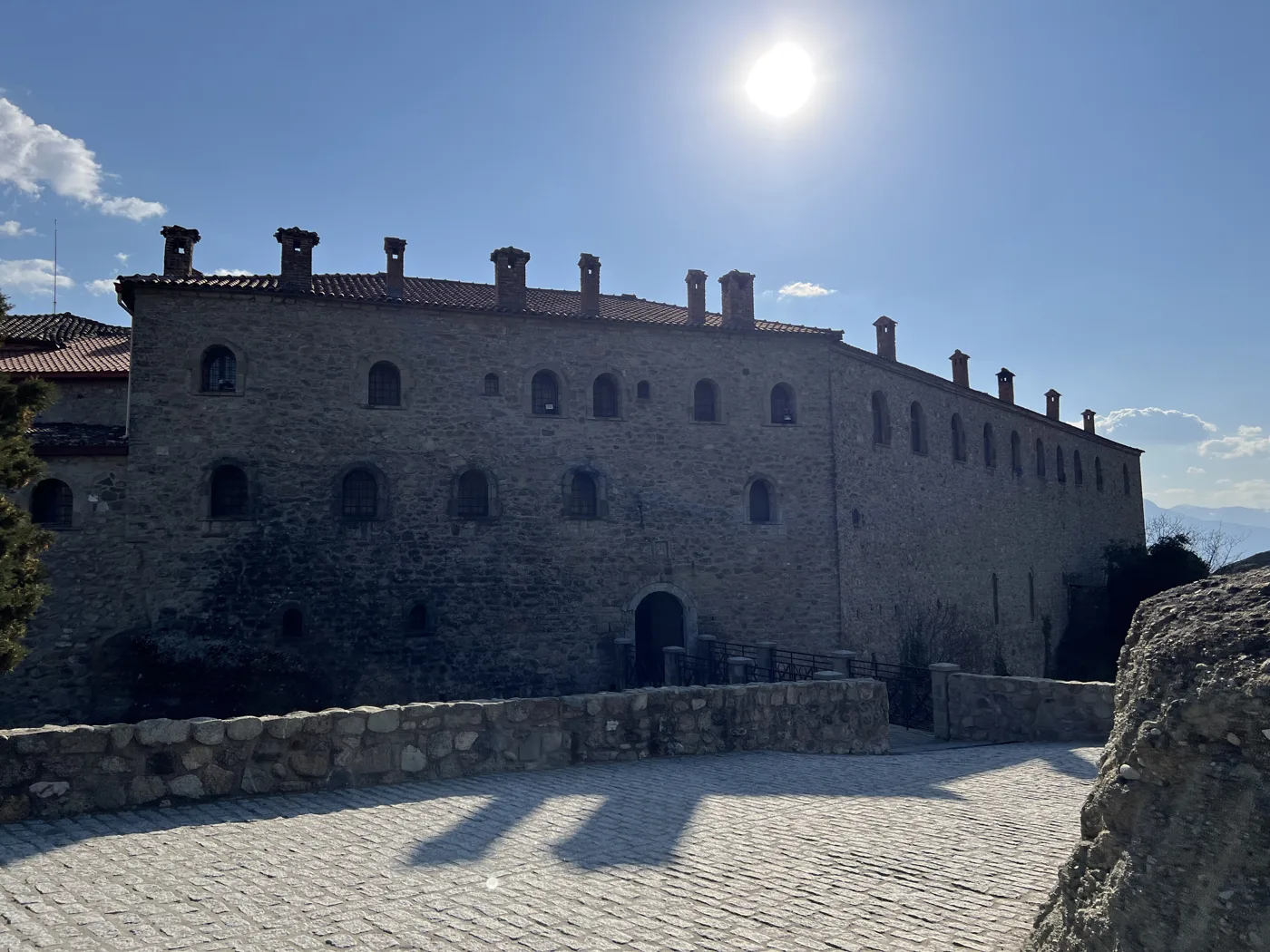
Open until 17:30 in summer, the last of the day.
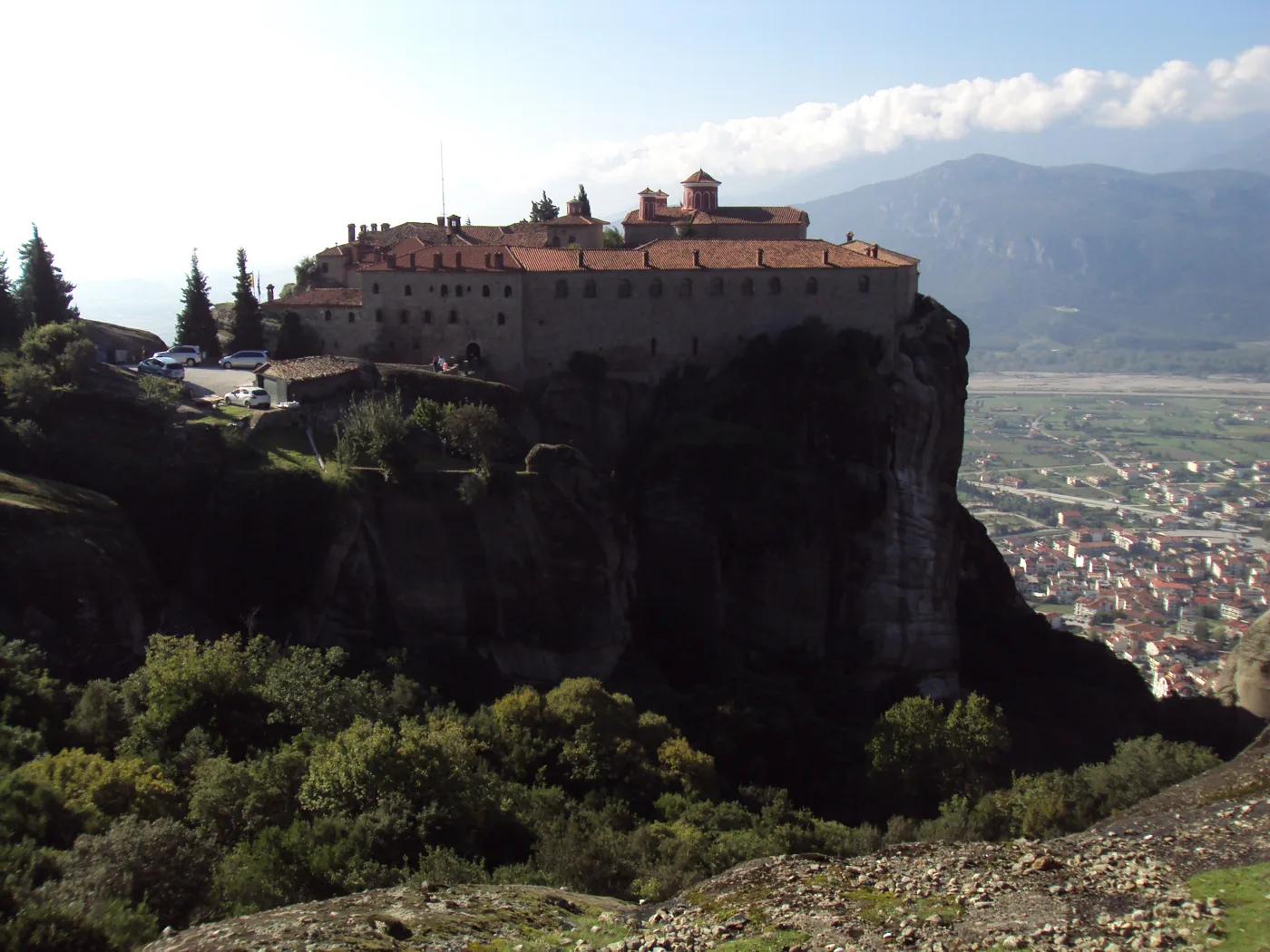
From the Agia Triada road.
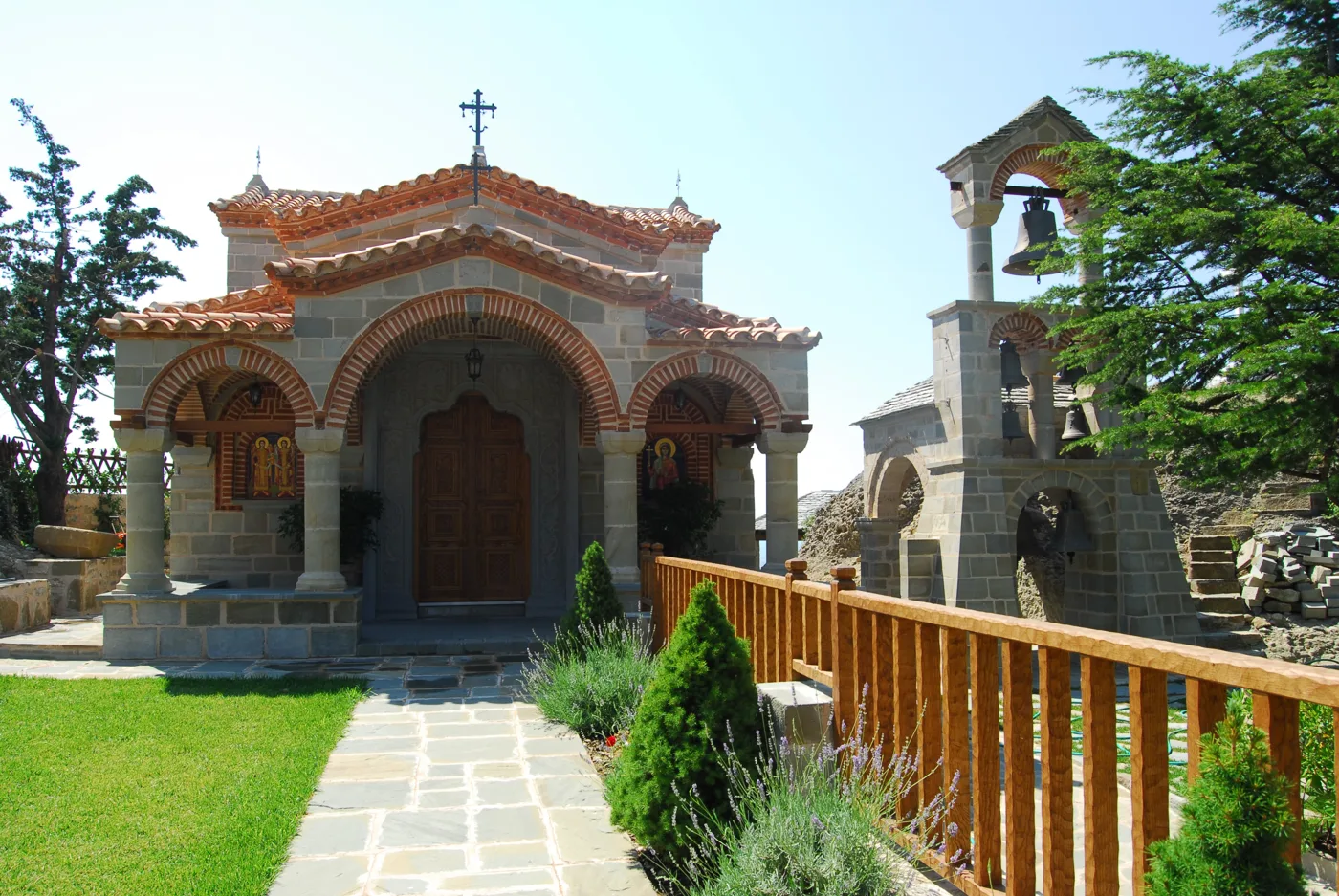
The old katholikon of Agios Stefanos, 1545.
Photos: Misa.stefanovic.07 (CC BY-SA 4.0), Giles Laurent (CC BY-SA 4.0), Jolovema (CC BY-SA 4.0), Berthold Werner (CC BY-SA 3.0), C messier (CC BY-SA 4.0), LBM1948 (CC BY-SA 4.0), Ava Babili (CC BY-SA 4.0), Mindtravelfitness (CC BY-SA 4.0), Chabe01 (CC BY-SA 4.0), Vislupus (CC BY-SA 4.0), Delvaux Michel (CC BY 3.0) · Wikimedia Commons
🎫 2026 opening hours, closing days and tickets
Each monastery has its own opening hours, its own closing day and its own ticket office: €5 per adult, cash at the door, children up to 12 free, no booking, no combined ticket and no card machine. Summer hours apply from 1 April to 31 October and winter hours from 1 November to 31 March, with the monasteries closing at 14:00 or 15:00 in winter and Agios Stefanos taking a midday break all year round. The only days when all six are open are Saturday and Sunday, which are also the busiest. At the door of every monastery they hand out skirts and shawls for women in trousers or with bare shoulders, and men in shorts can’t go in: long trousers. Photos are allowed in the courtyards and forbidden inside the churches and museums, without exception.
🕗 The six monasteries: 2026 opening hours, closing days, steps
With the KTEL bus, which doesn’t run on Sundays, Saturday is the perfect day: everything is open. On weekdays, Monday loses Agios Stefanos, the easiest, Tuesday Great Meteoron, the biggest, Wednesday Rousanou, Thursday Agia Triada, and Friday Varlaam and Agios Nikolaos. In winter Thursday is the worst day, with three closed, and Wednesday has two. If one particular monastery matters to you, choose the day around it.
🥾 The trails and the viewpoints
Meteora is made for walking: before the road of the 1960s, the monks’ paths were the only way to reach the foot of the rocks, and most survive, cleared and waymarked, around 40 kilometres of them. Three are useful on a day trip: from Kastraki to Great Meteoron, 2.7 kilometres and 40 minutes, from the village square, below the rocks of Doupiani and Agios Nikolaos, through oak woods to the car park of the two big monasteries; from the Byzantine church of Kalambaka to Agia Triada, 1.7 kilometres, 25 to 35 minutes uphill on cobbles and earth, with the town shrinking below you, the loveliest descent at the end of the day; and from Rousanou to Psaropetra, 800 metres along the road. Psaropetra, a natural balcony beside the road between Rousanou and Agia Triada, is the spot where all the monasteries can be seen together and the first place to catch the dawn. Sunset Rock, on the road just before Varlaam, is the sunset balcony, with the tour buses arriving an hour before the sun goes down. For those with time to spare: the path from Kastraki to the rock of Agio Pnevma, an hour uphill between the Pixari and Amparia rocks, with the hermitages, the “monks’ prisons” and Agia Triada opposite, and climbing, with more than 700 routes on the rock walls since the 1970s, which has made Meteora one of the great climbing areas of Europe. Shoes with grip, water, a hat, and care at the viewpoints: there are no railings anywhere.
🗺️ The six monasteries, the trails and the viewpoints
In blue, the monastery ring road from Kastraki: Agios Nikolaos (4), Rousanou (3), Great Meteoron (1), Varlaam (2), back past Psaropetra to Agia Triada (5) and Agios Stefanos (6), and down to Kalambaka, 17 kilometres. In dashed red, the three trails: from Kastraki to Great Meteoron, 2.7 kilometres, from the Byzantine church of Kalambaka to Agia Triada, 1.7 kilometres, and from the station to the church. In yellow, the viewpoints; in purple, the hermits’ rocks. Tap each number for the steps and the closing day.
From Kastraki, an hour uphill.
The old monks’ path, Kastraki to Great Meteoron.
The rocks have names, like mountains.
The path runs along their foot.
Shade, moss and coolness even in August.
Meteora is one of the great climbing areas of Europe.
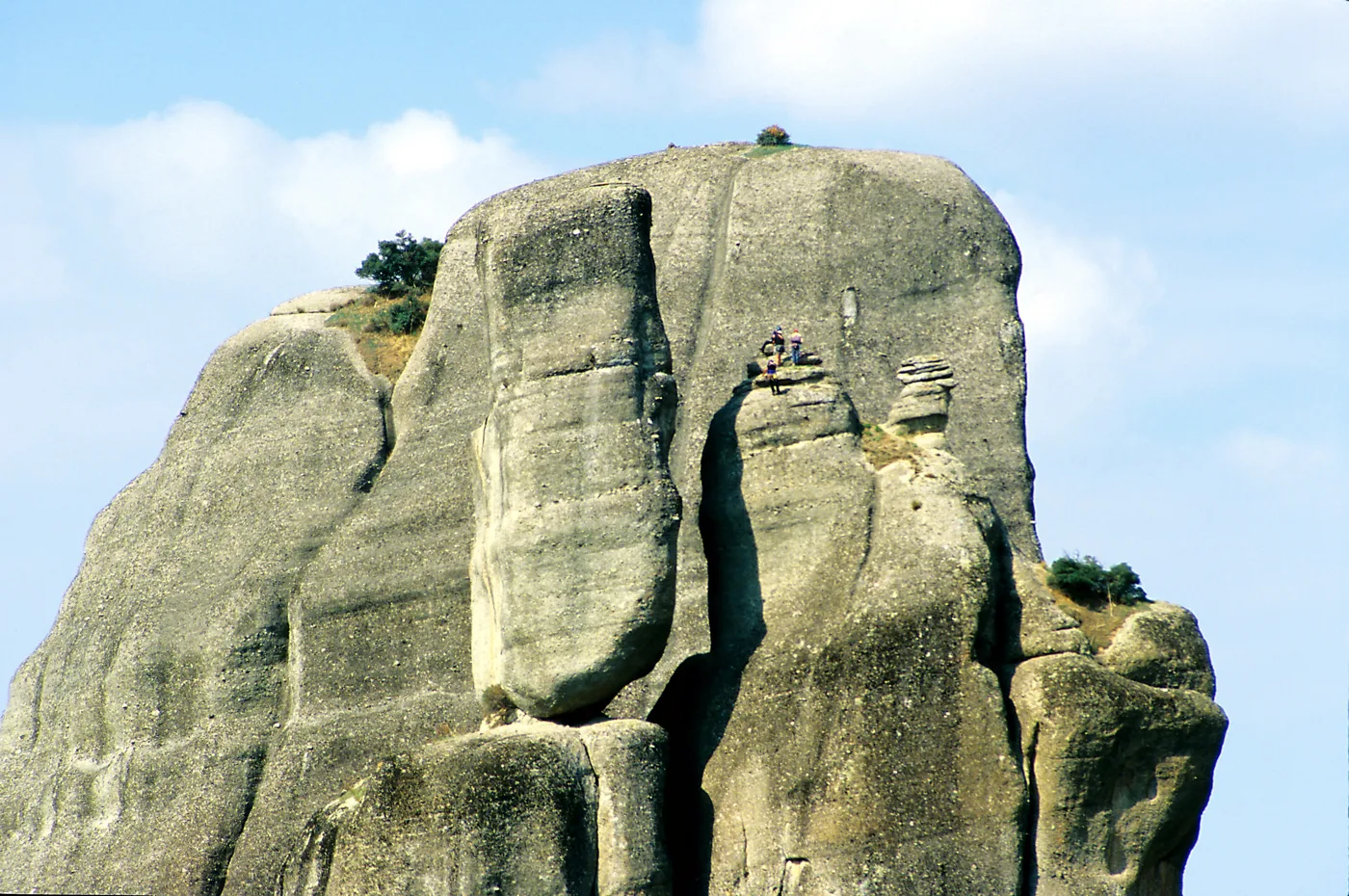
More than 700 routes on the rocks.
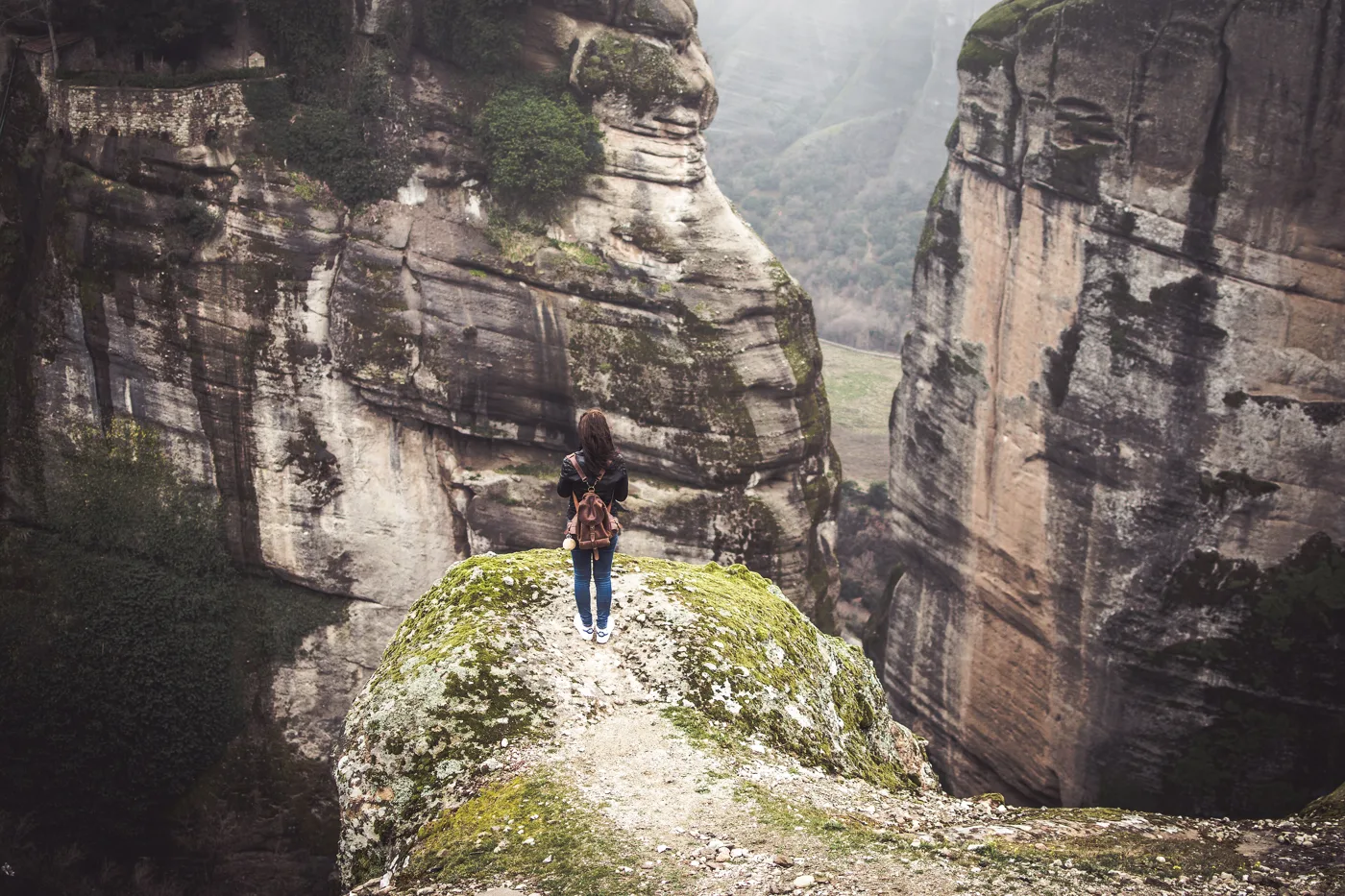
The viewpoints have no railings.
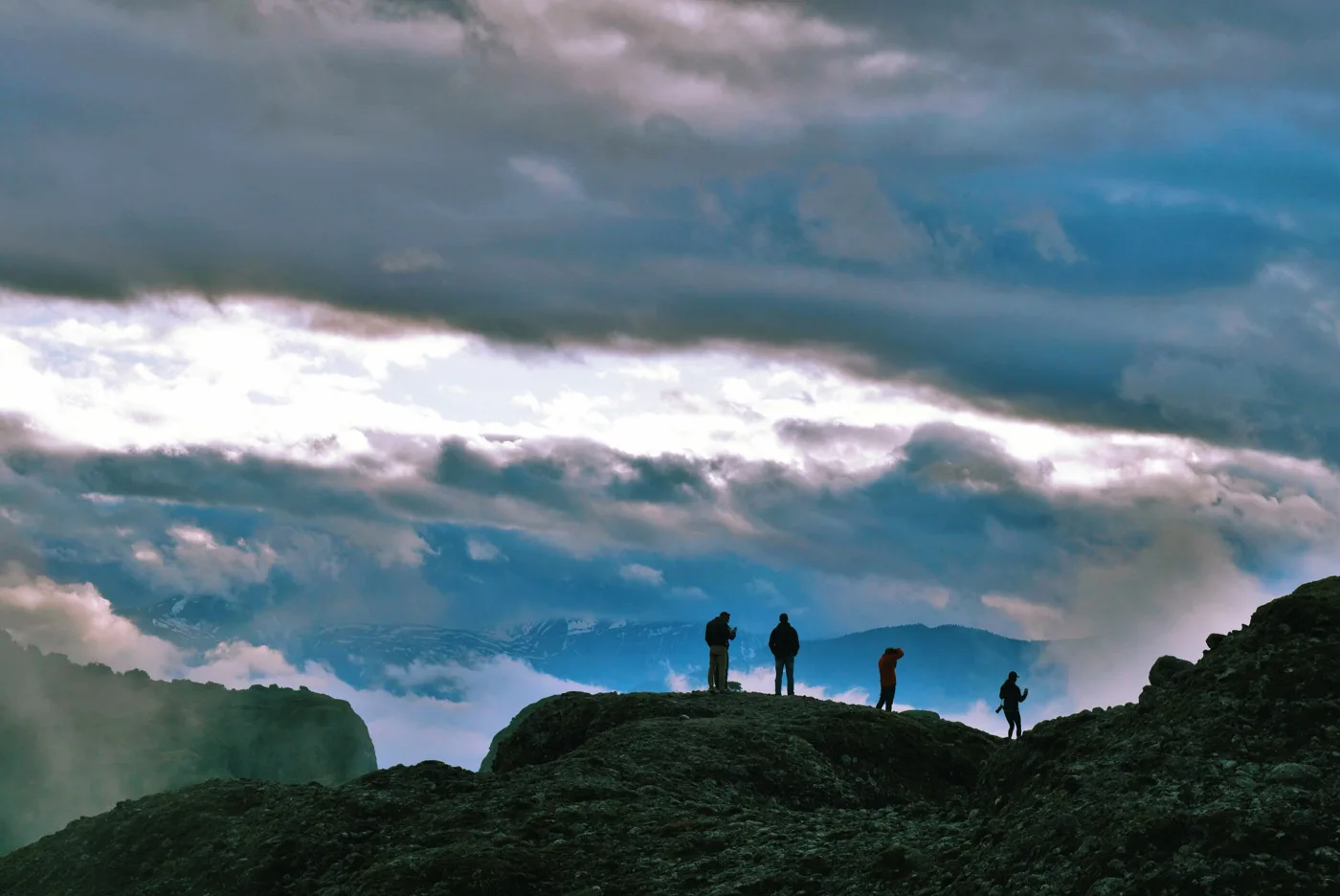
At Sunset Rock an hour before sunset.
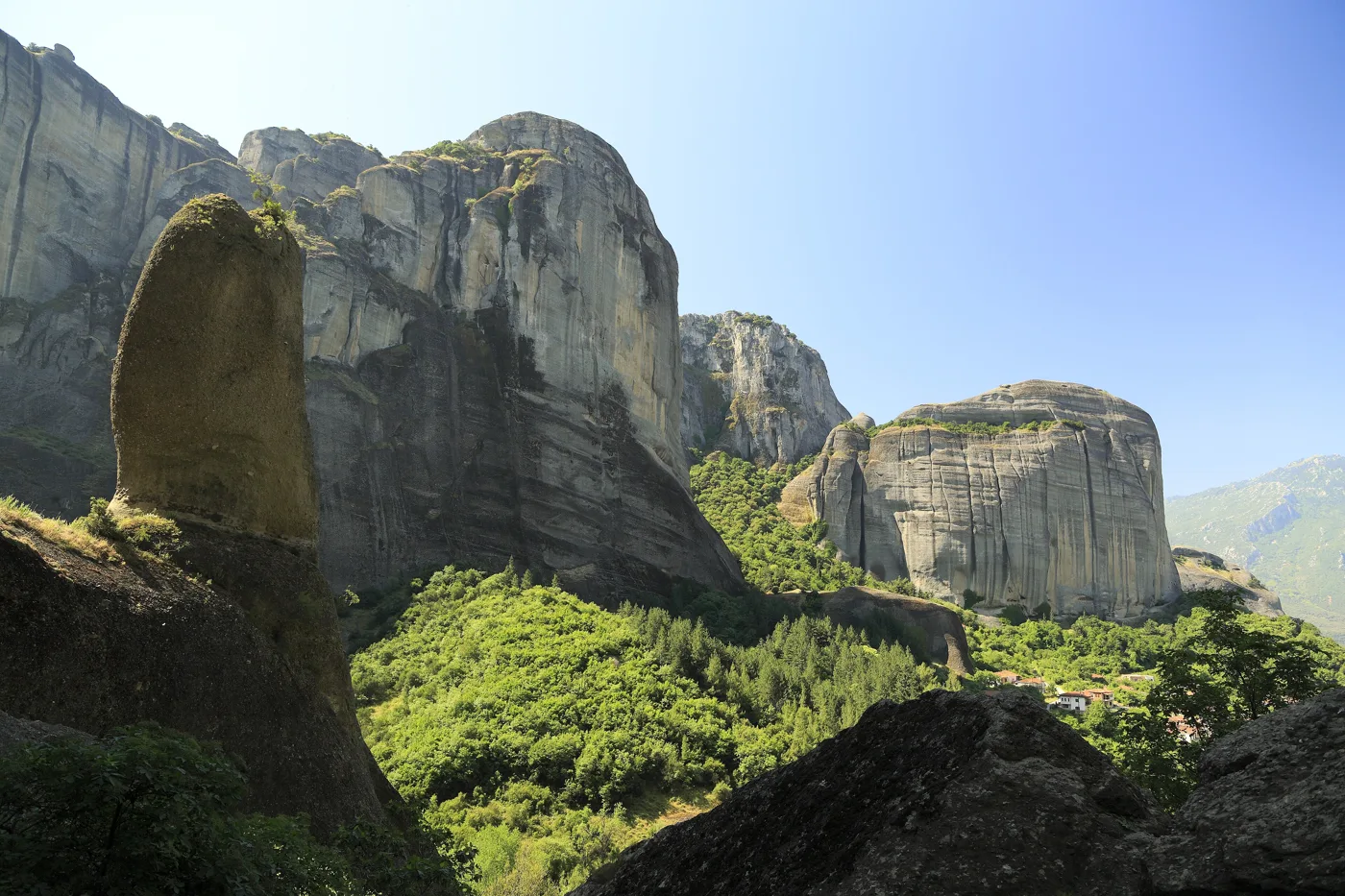
The rocks behind Kastraki.
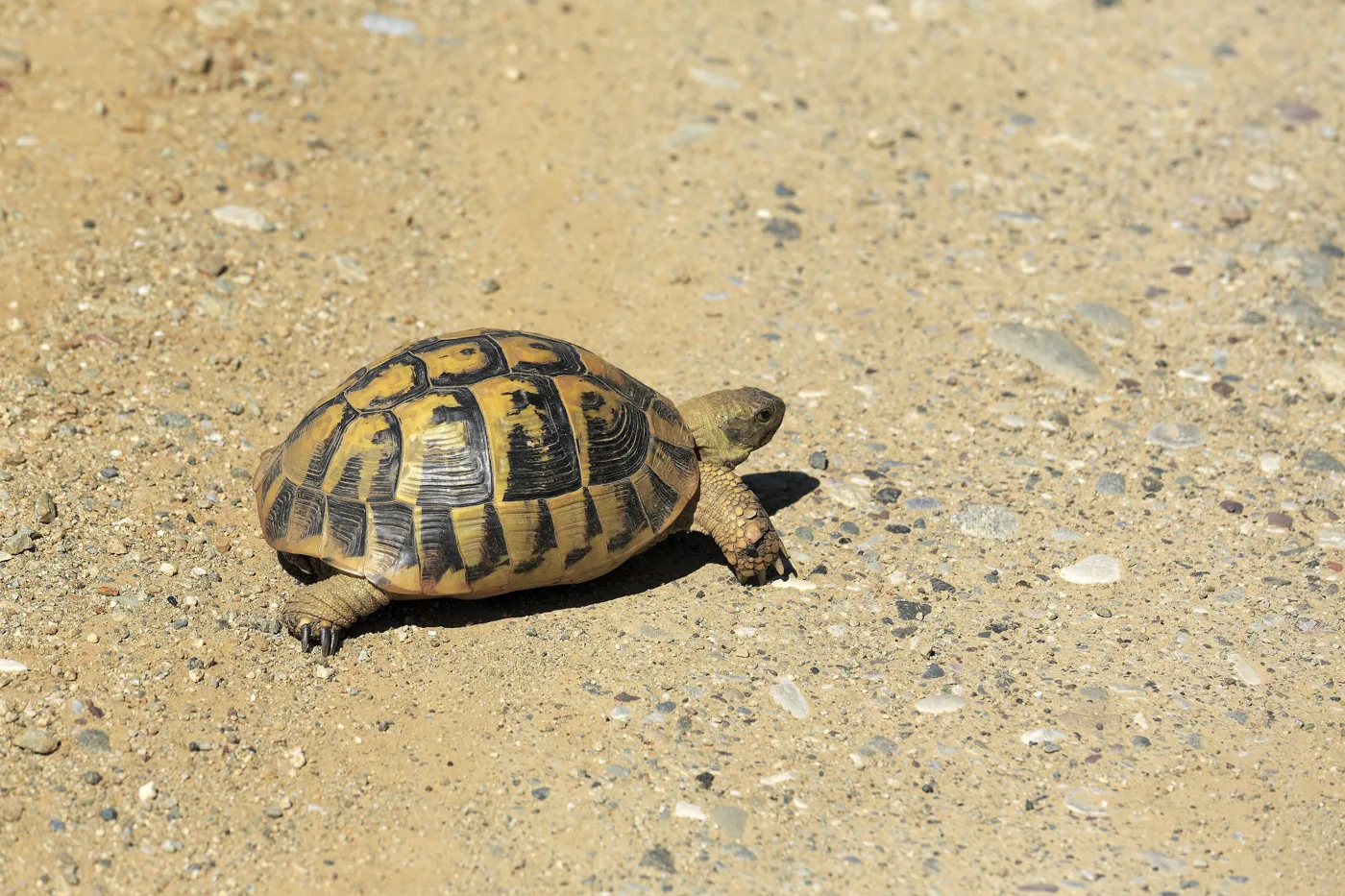
The trails have tortoises, lizards and wild flowers.
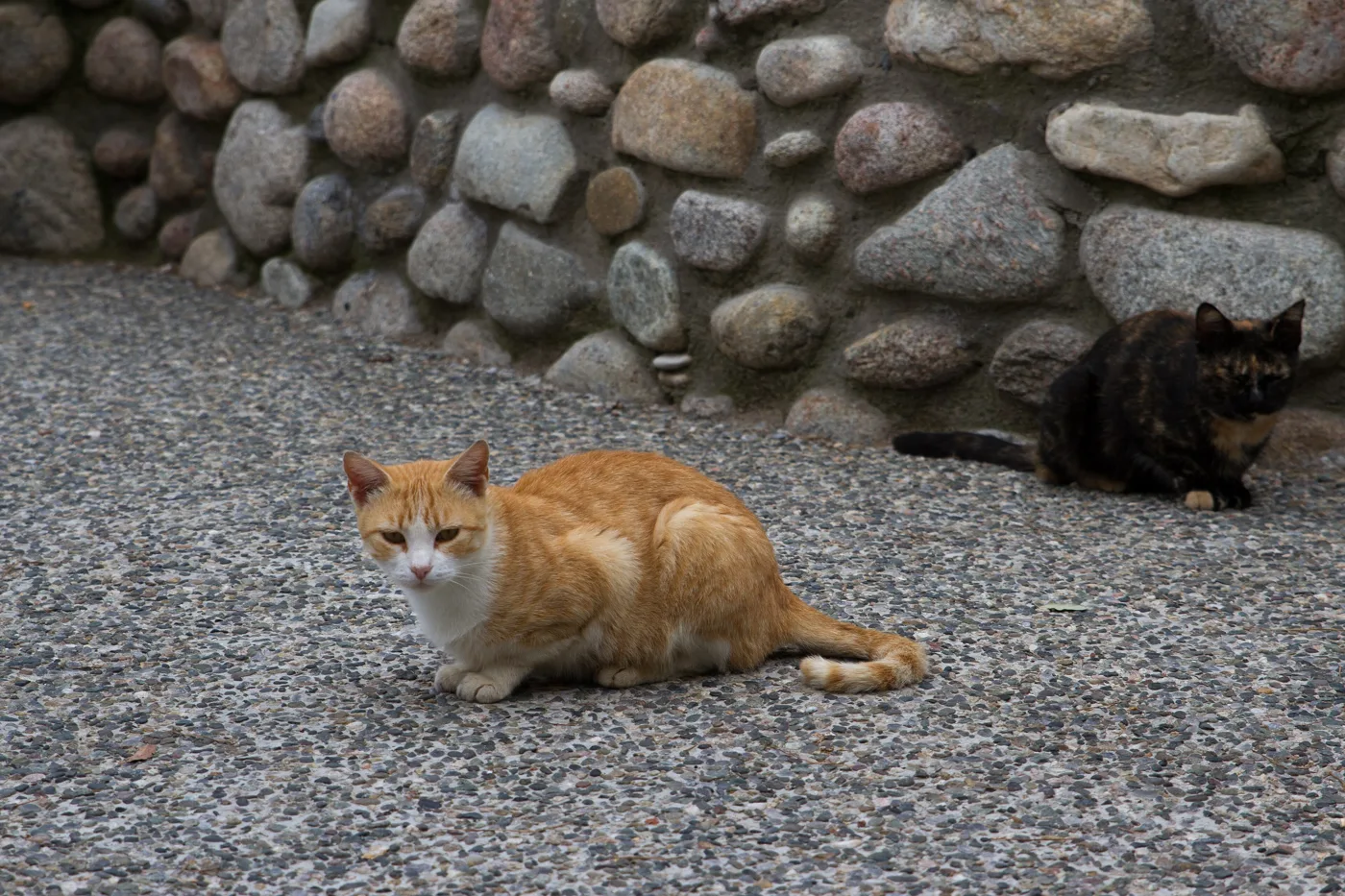
Every monastery has its cats.
Photos: Athinavaitsi (CC BY-SA 4.0), Falk2 (CC BY-SA 4.0), Jason Blackeye (CC0), ChrysanthiAkoni (CC BY-SA 4.0), CucombreLibre (CC BY 2.0) · Wikimedia Commons
On the KTEL day trip you won’t catch either: the bus leaves at 17:45 and the sun sets at 17:15 in December, 20:45 in June. By car you can catch the sunset from Sunset Rock, 15 minutes from Kalambaka, and be back in Athens by midnight. For the dawn from Psaropetra, with the rocks emerging from the Pineios mist, you need to stay the night: it’s the reason to do it.
🪨 The hermits: Kastraki, Adrachti, kerchiefs
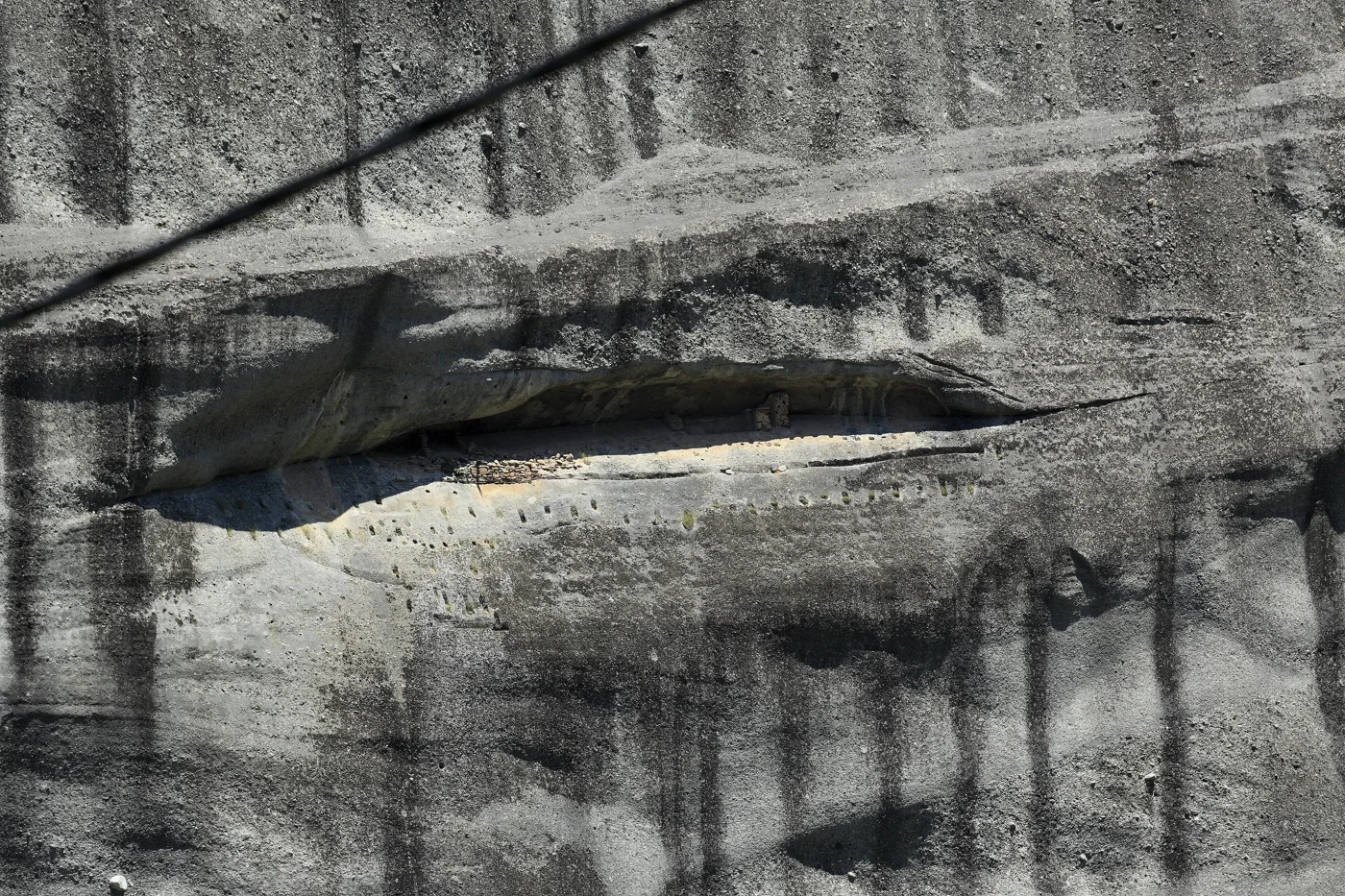
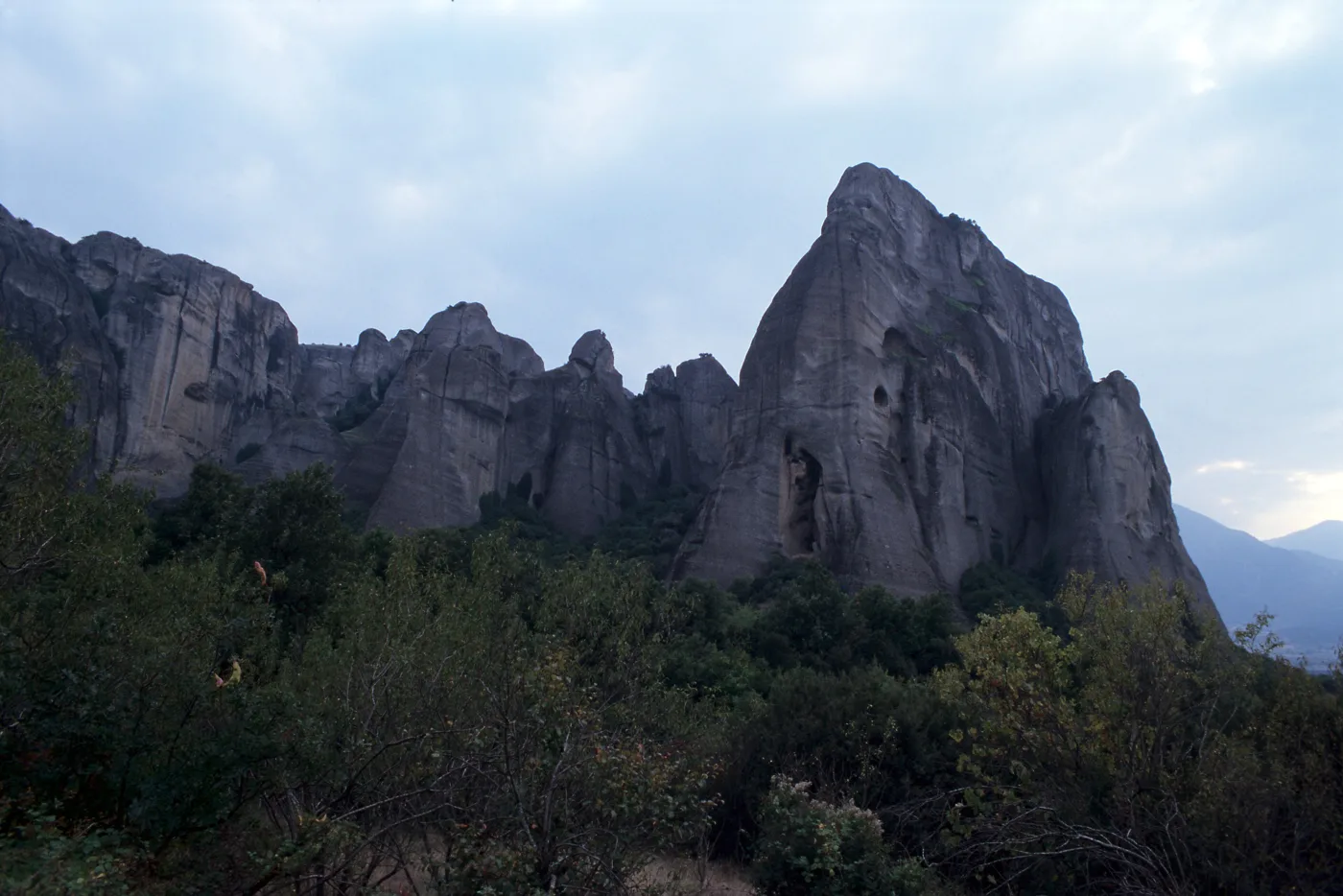
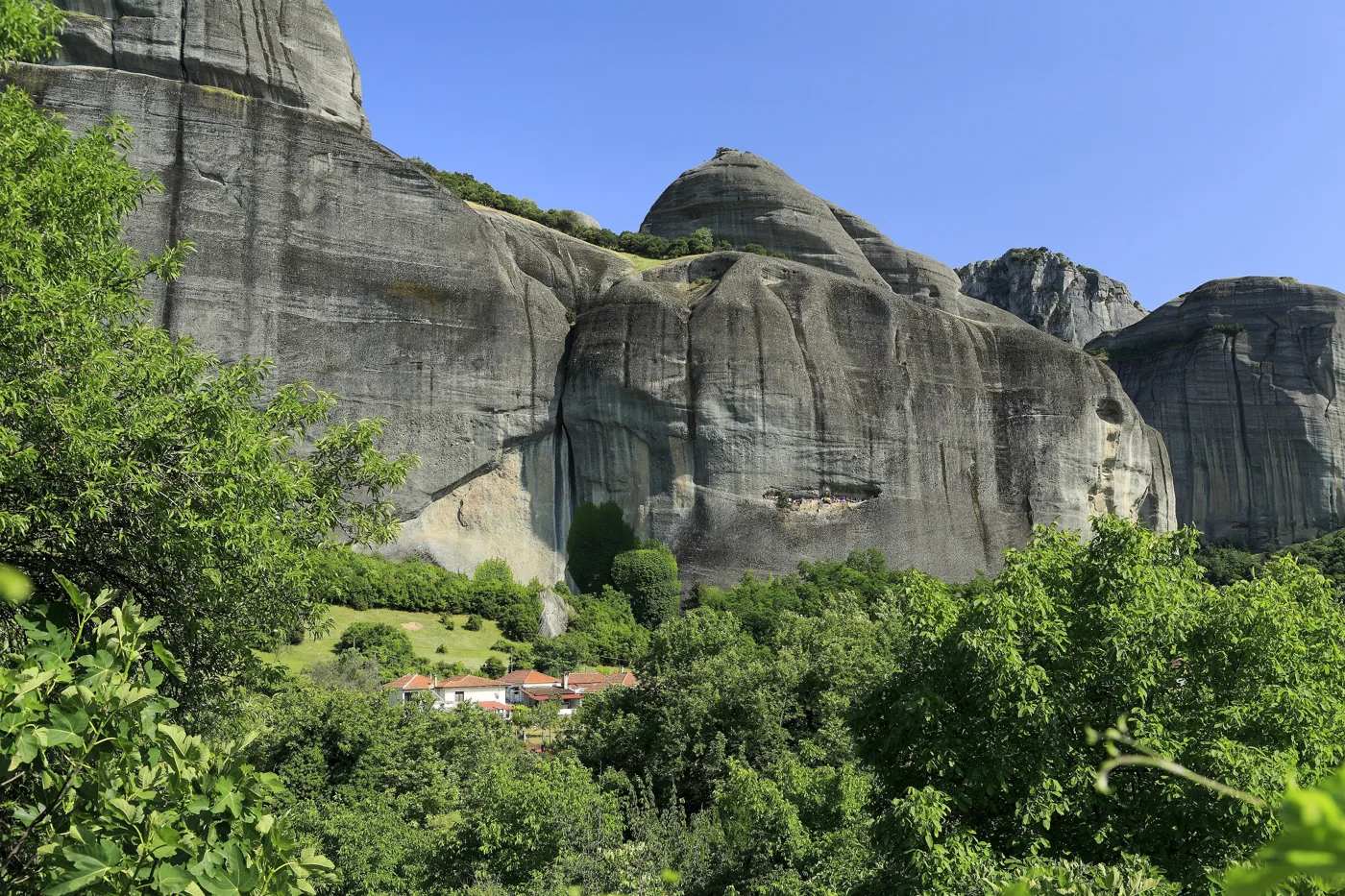
Behind Kastraki, the village that sits below the rocks, is Meteora before the monasteries: rocks with hermitages carved into their faces, 500-year-old wooden platforms wedged into caves, ladders of rope and branches. The rock of Agio Pnevma (the Holy Spirit), the highest above the village, has a little church on its summit, the skete where it all began, and on its face the “monks’ prisons”, caves with wooden structures, where legend says unruly monks were locked up, and history says the strictest ascetics lived. The Adrachti, a rock as slender as a spindle, is the symbol of Kastraki. From the rock of Agios Georgios Mandilas hang colourful kerchiefs: every 23 April, St George’s Day, young men from the village climb the sheer wall without ropes, take down the old ones and hang new ones, votive offerings for good health, a custom said to have begun when a Turkish woman gave her kerchief for the salvation of her husband. The small monastery of Agios Antonios, wedged into the Pixari rock ten minutes from the village, has come back to life in recent years and opens to visitors, and further on the Monastery of Agios Nikolaos Bantovas hangs like a nest in a cave. Kastraki is also the village for food: tavernas with views of the rocks, quieter and cheaper than Kalambaka, and Camping Vrachos for those who stay.
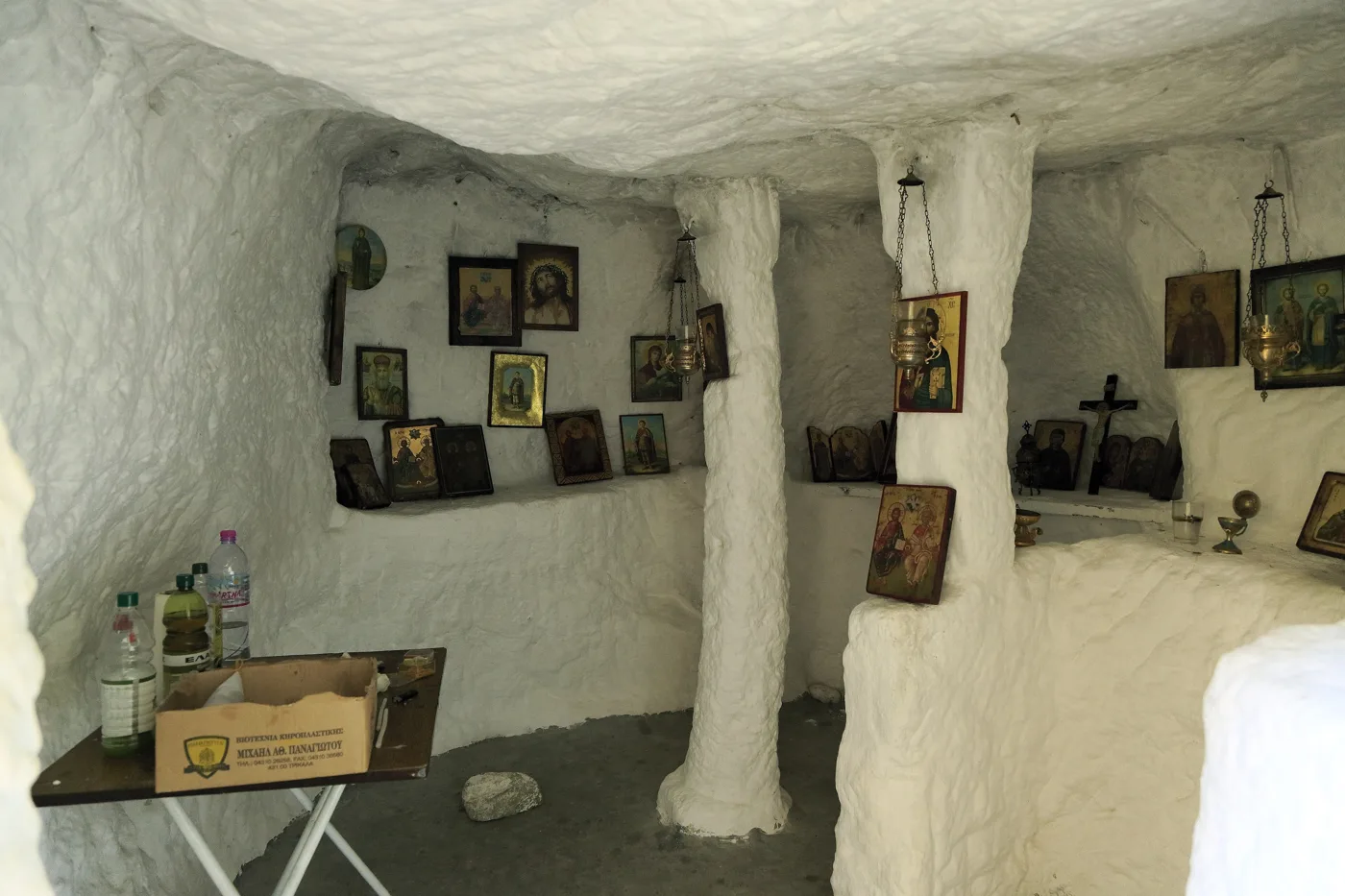
The first hermits lived here, in the 11th century.
A hole in the rock, a wooden ladder.
Legend says the unruly were locked up here.
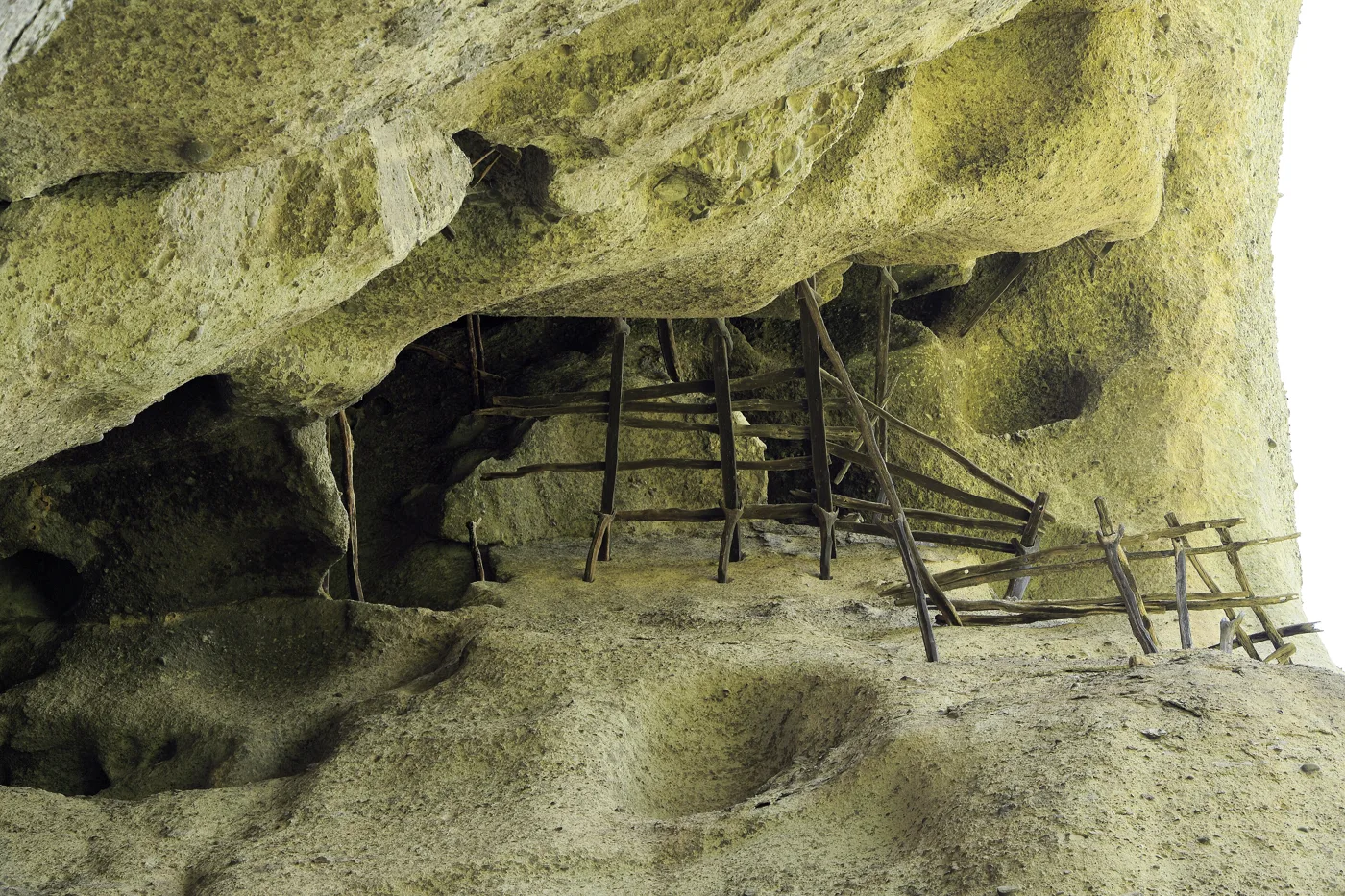
500-year-old wooden platforms in the caves.
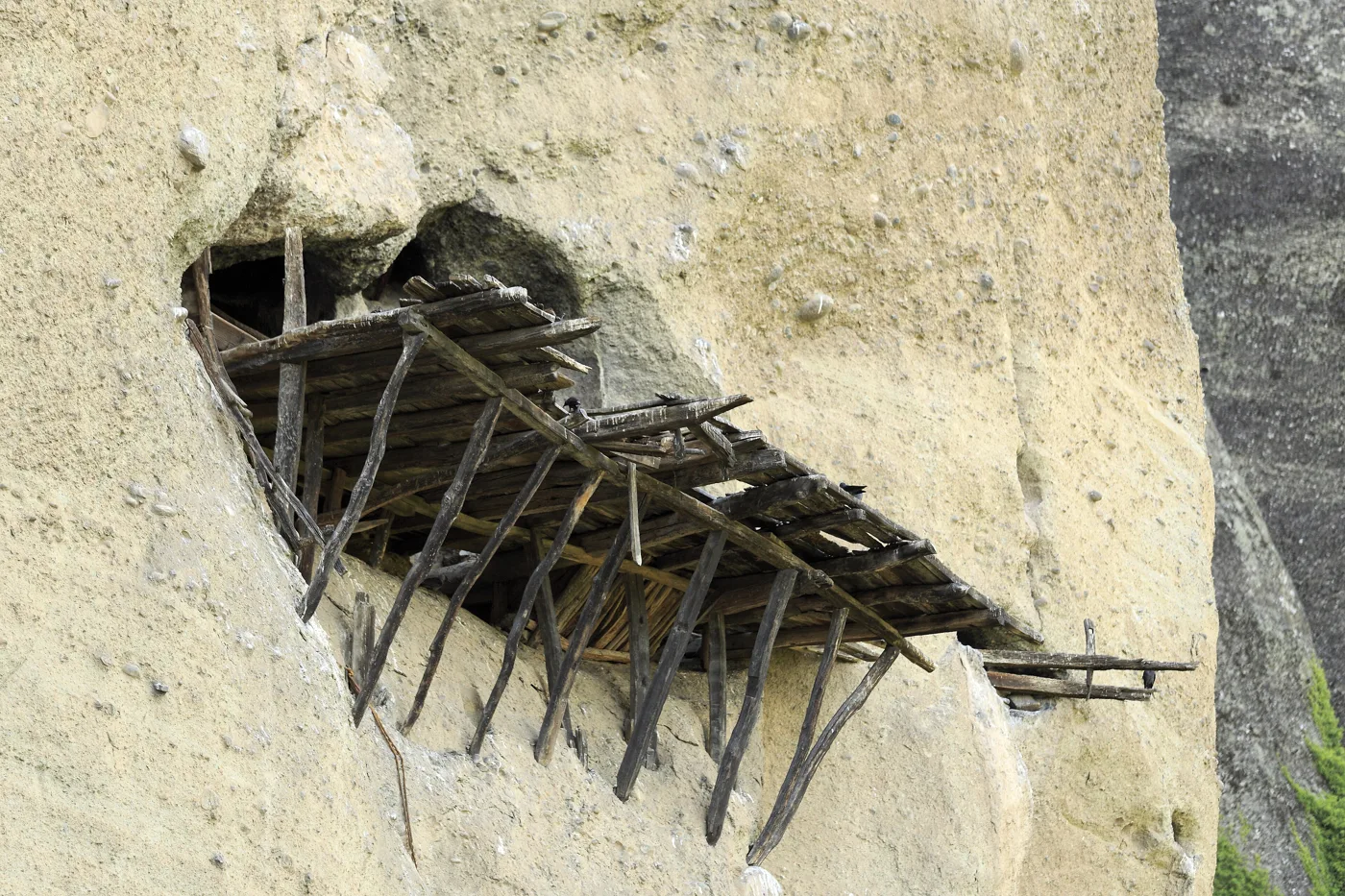
The ascetics’ caves, seen from Kastraki.
The kerchiefs in the cave, as votive offerings.
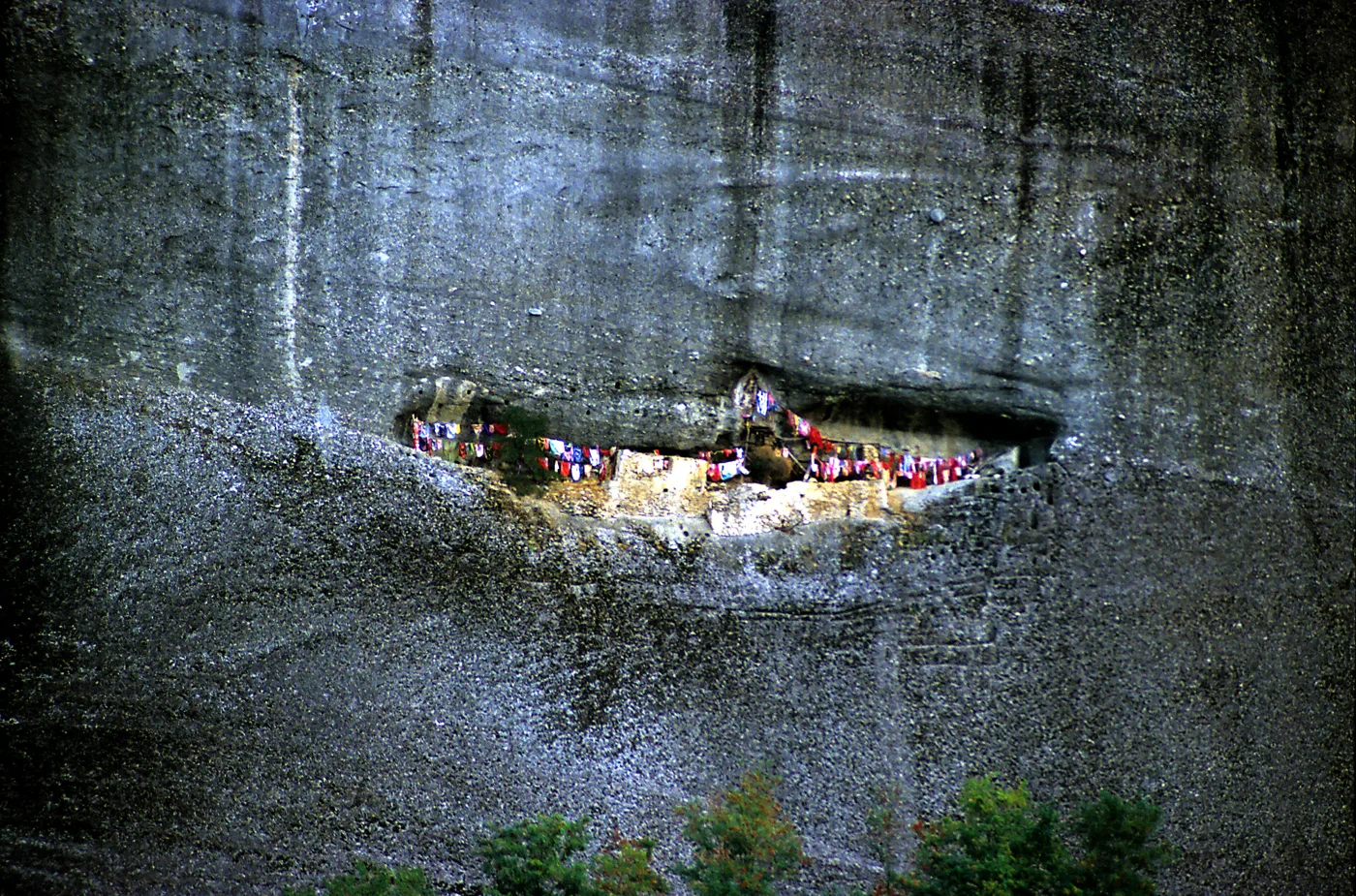
Every 23 April young men from Kastraki climb up and change them.
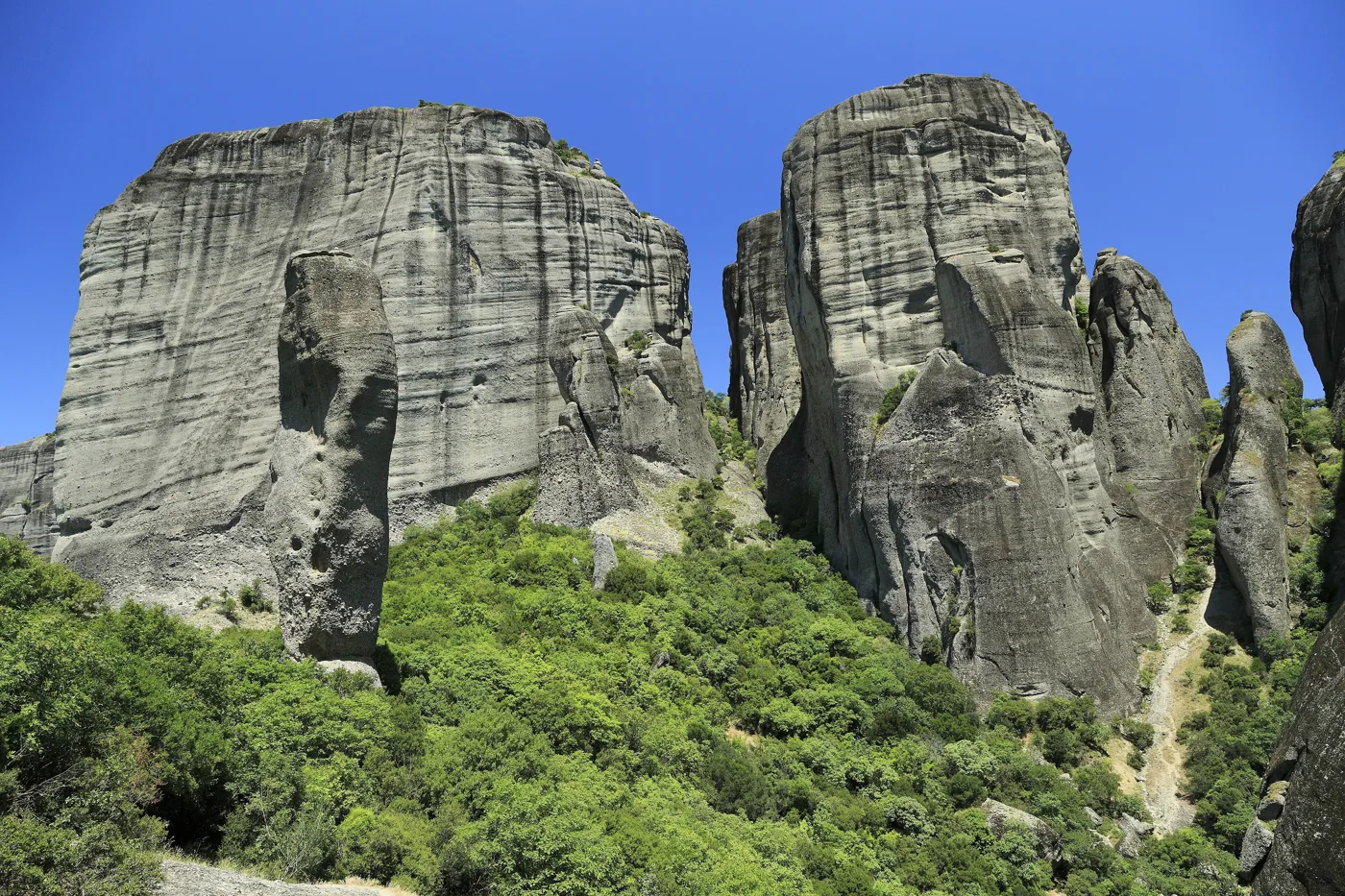
The slenderest rock at Meteora.
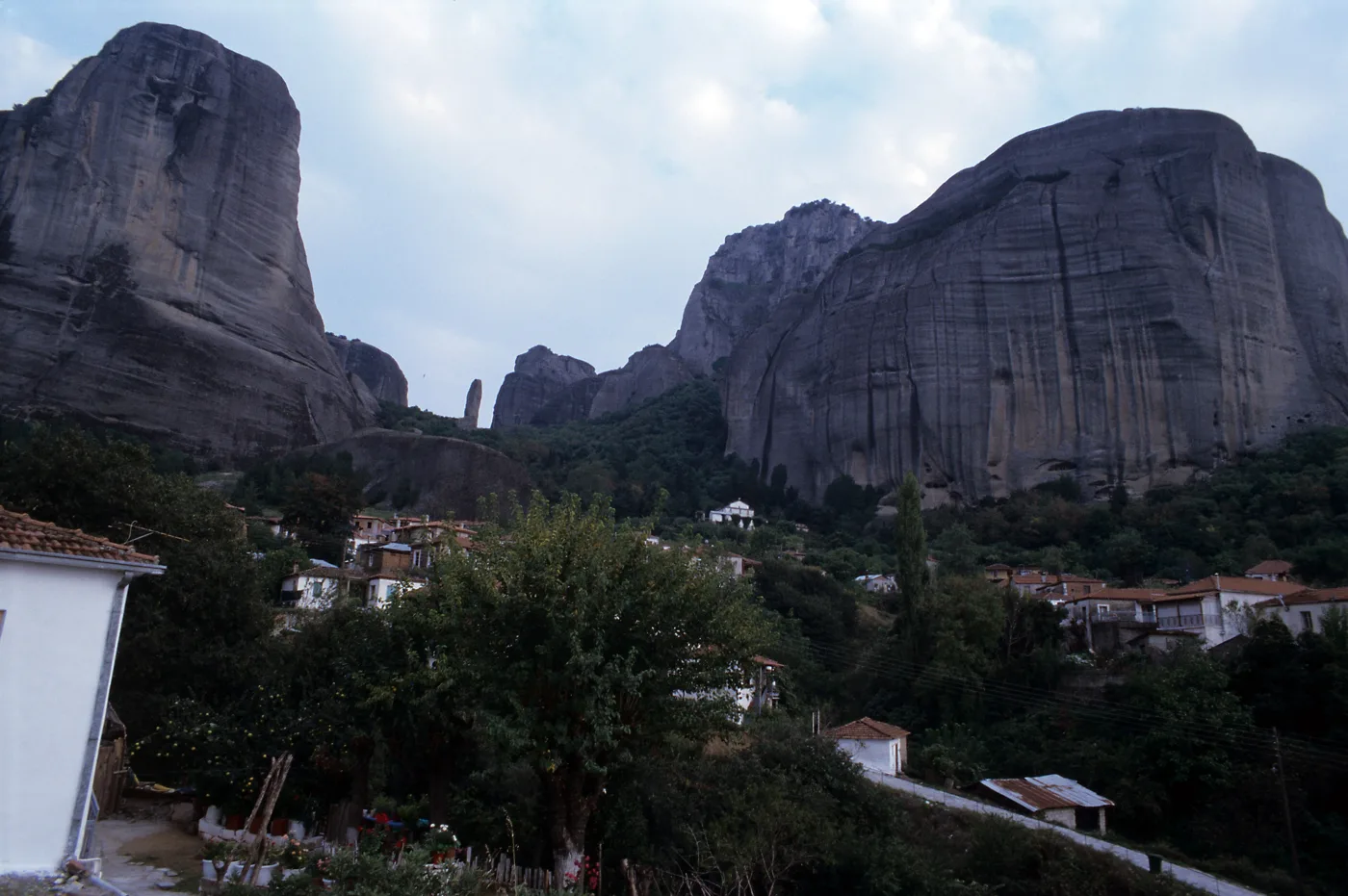
The village below the rock.
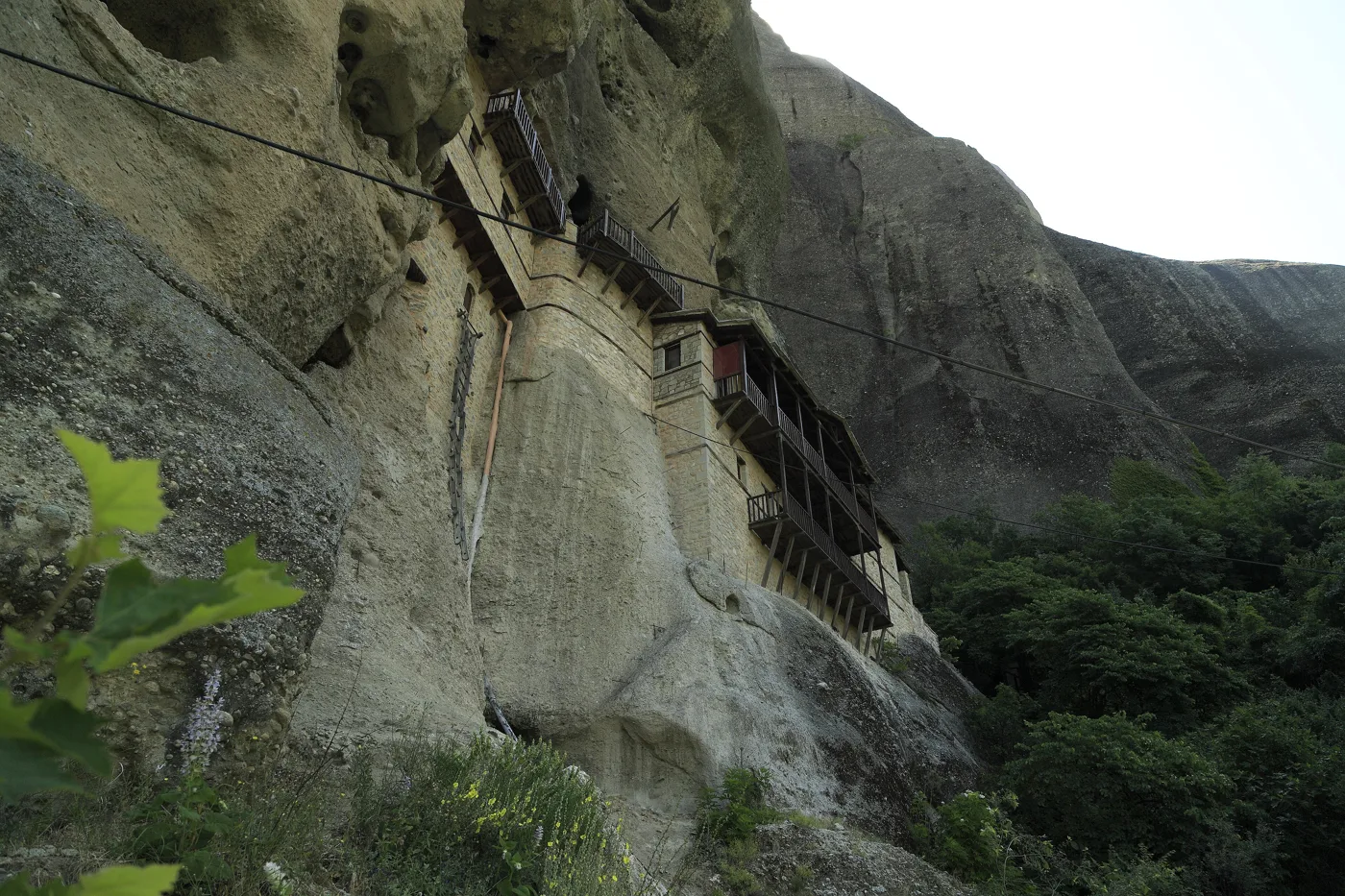
A small monastery carved into the rock, with monks again.
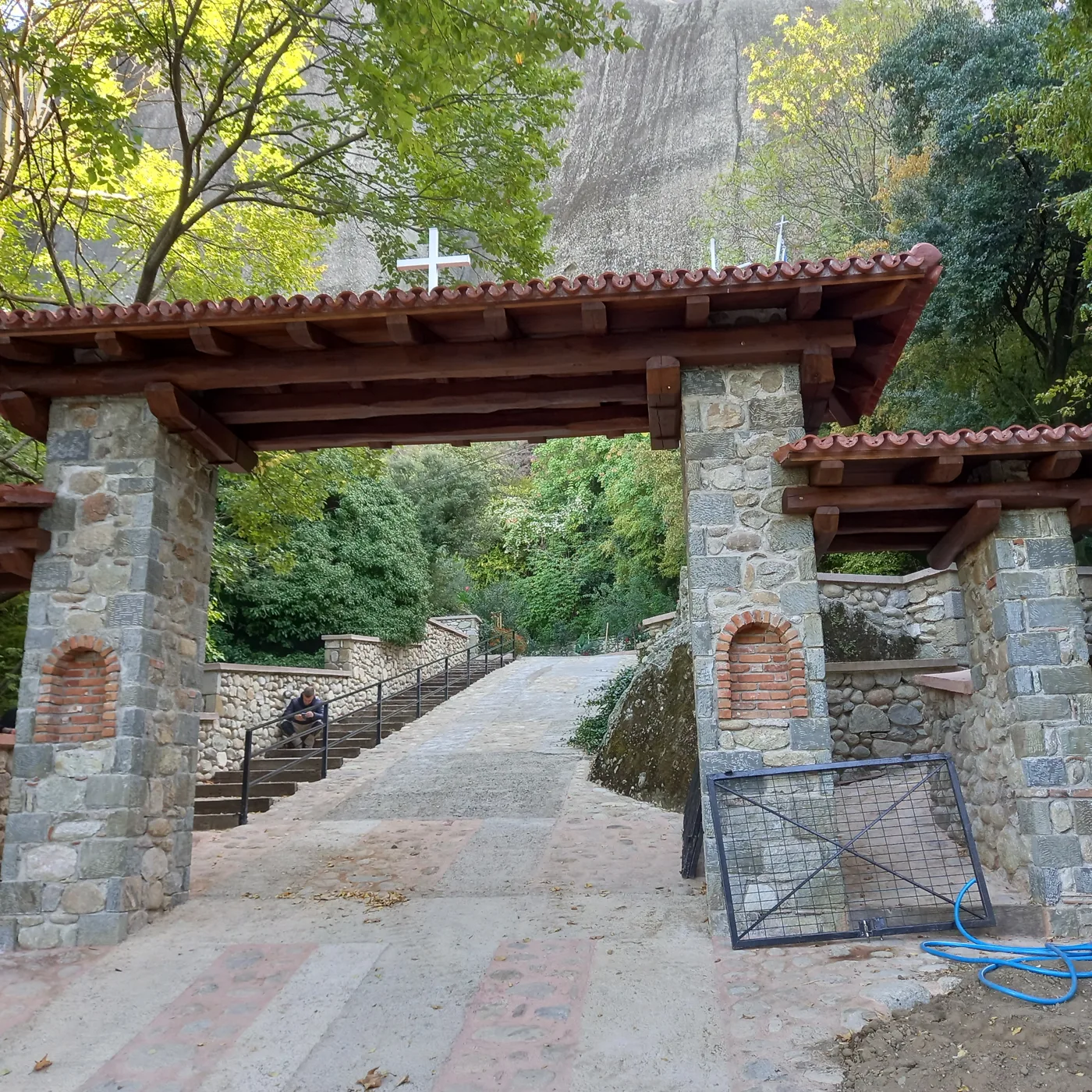
Ten minutes on foot from Kastraki.
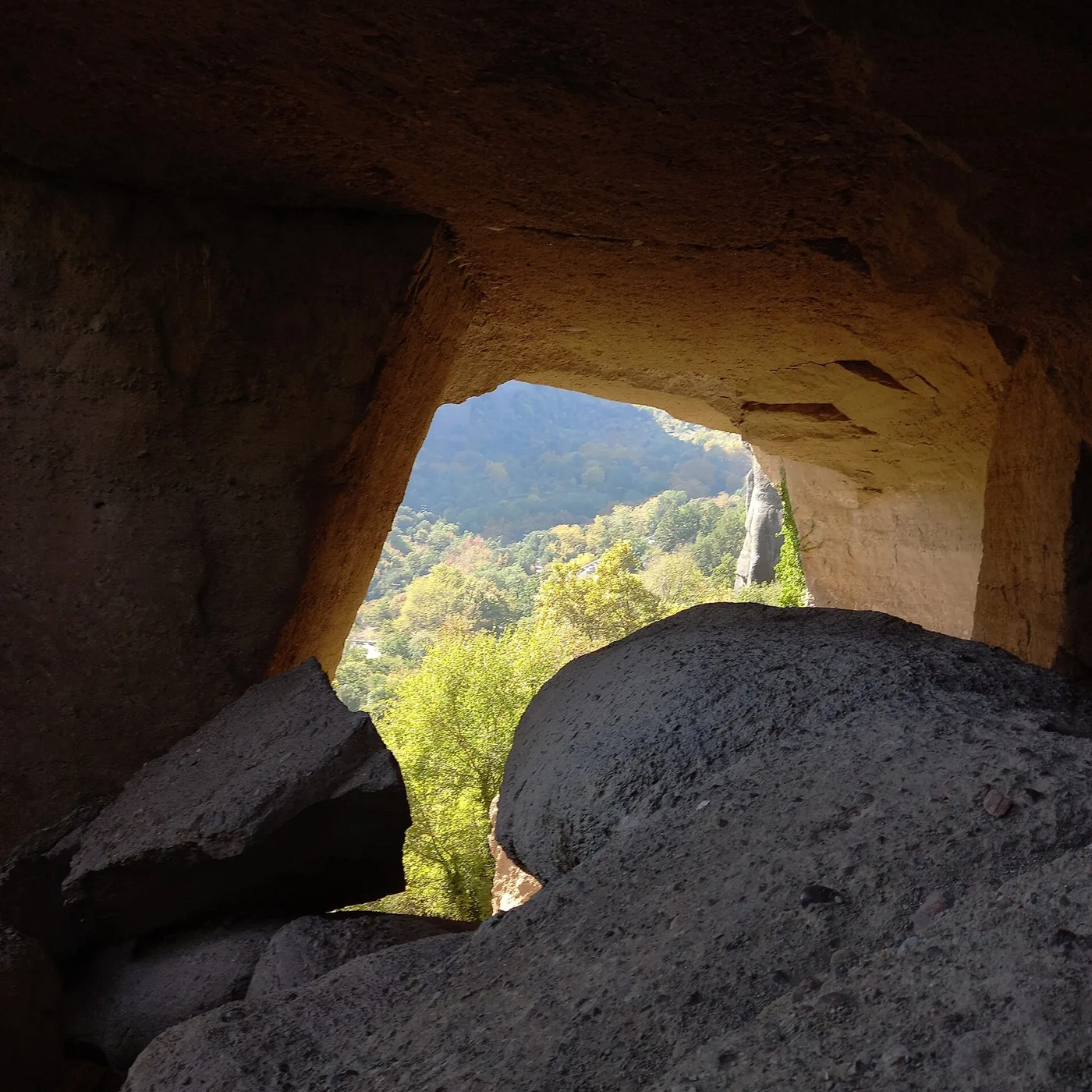
The caves in the rocks, before the monasteries.
Photos: Falk2 (CC BY-SA 4.0), Florificapis (CC BY-SA 4.0) · Wikimedia Commons
🏘️ Kalambaka, the Byzantine church and Theopetra
Kalambaka is the town at the foot of the rocks: 8,000 people, the KTEL bus station, the railway station, hotels, tavernas and a central square with plane trees, where every street ends in a rock. The one thing worth your time is the Byzantine church of the Dormition of the Virgin, in the upper town, at the start of the path to Agia Triada: an 11th-century three-aisled basilica, built on top of a 5th-century Early Christian one with marble from an ancient temple of Apollo, with a marble ambo in the middle of the nave, as in the earliest churches, a synthronon in the sanctuary and frescoes from 1573 by Neophytos, son of Theophanes the Cretan. It opens mornings and afternoons for a small fee; if it’s closed, the courtyard and the view are enough. Eight kilometres from town, on the road to Trikala, Theopetra Cave is one of the most important prehistoric caves in Europe: people lived in it for 130,000 years, from the Neanderthals to the first farmers, without a break, and left children’s footprints and the oldest known wall in the world, 23,000 years old, built across the entrance to keep out the wind of the Ice Age. The cave reopened to the public in 2025, after eight years closed for safety works, with guided tours, from morning to early afternoon and closed on Tuesdays, and the Documentation Centre at the entrance to the village, its museum, is free; check the hours before you go, because they change. On the KTEL day trip there’s no time for it; by car it’s an hour well spent.
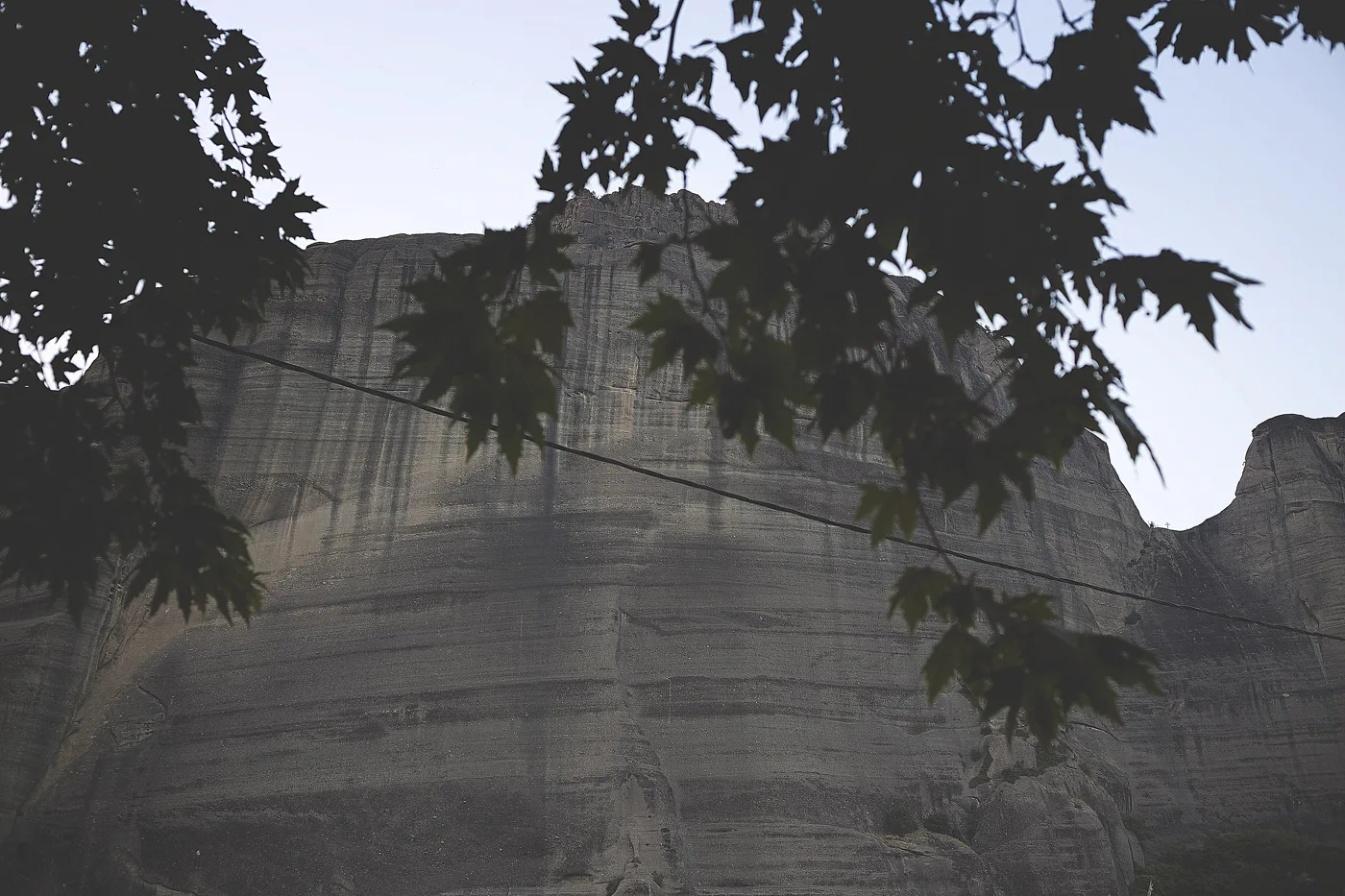
The rocks rise from the end of the street.
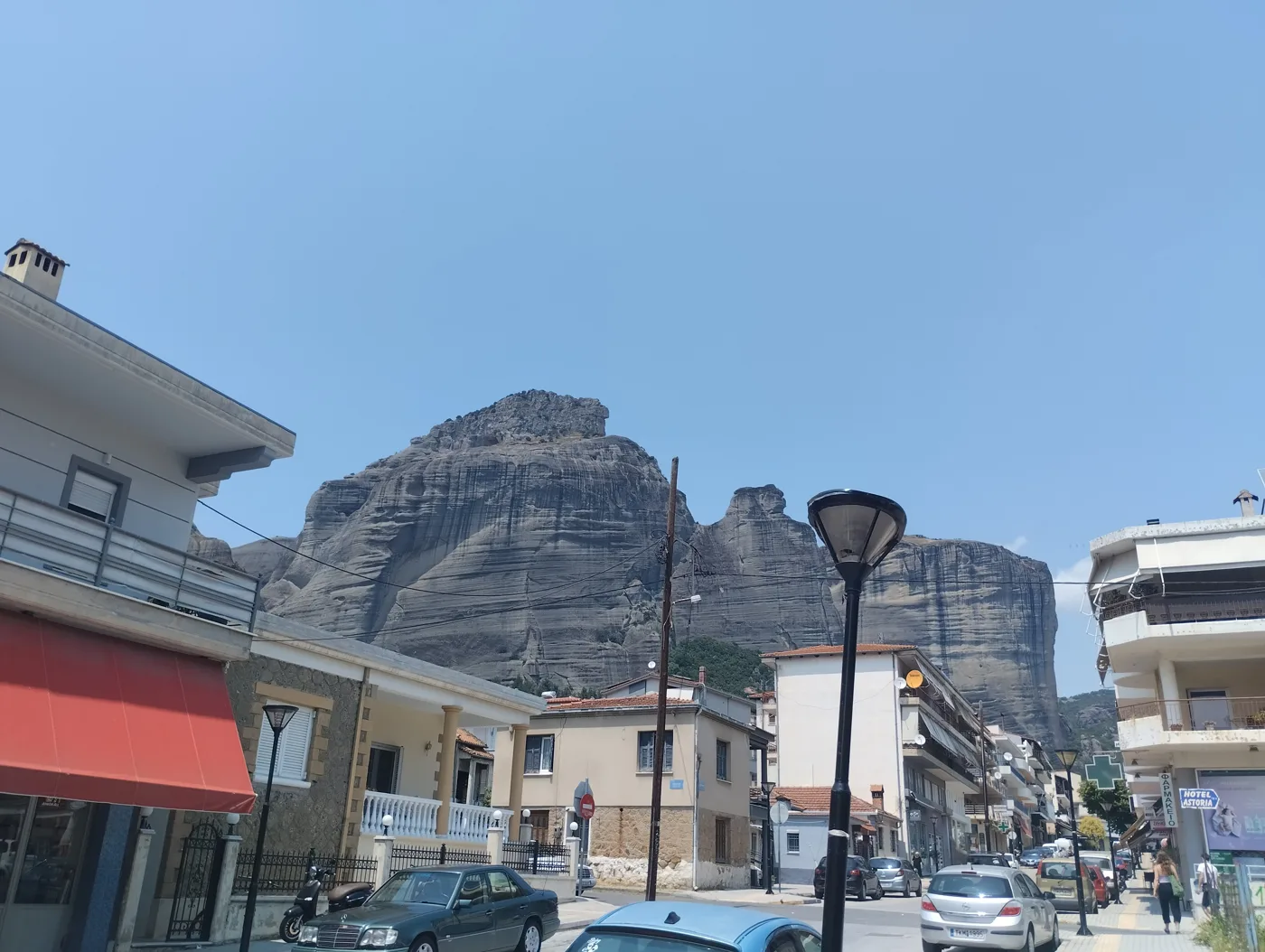
Every street in town ends in a rock.
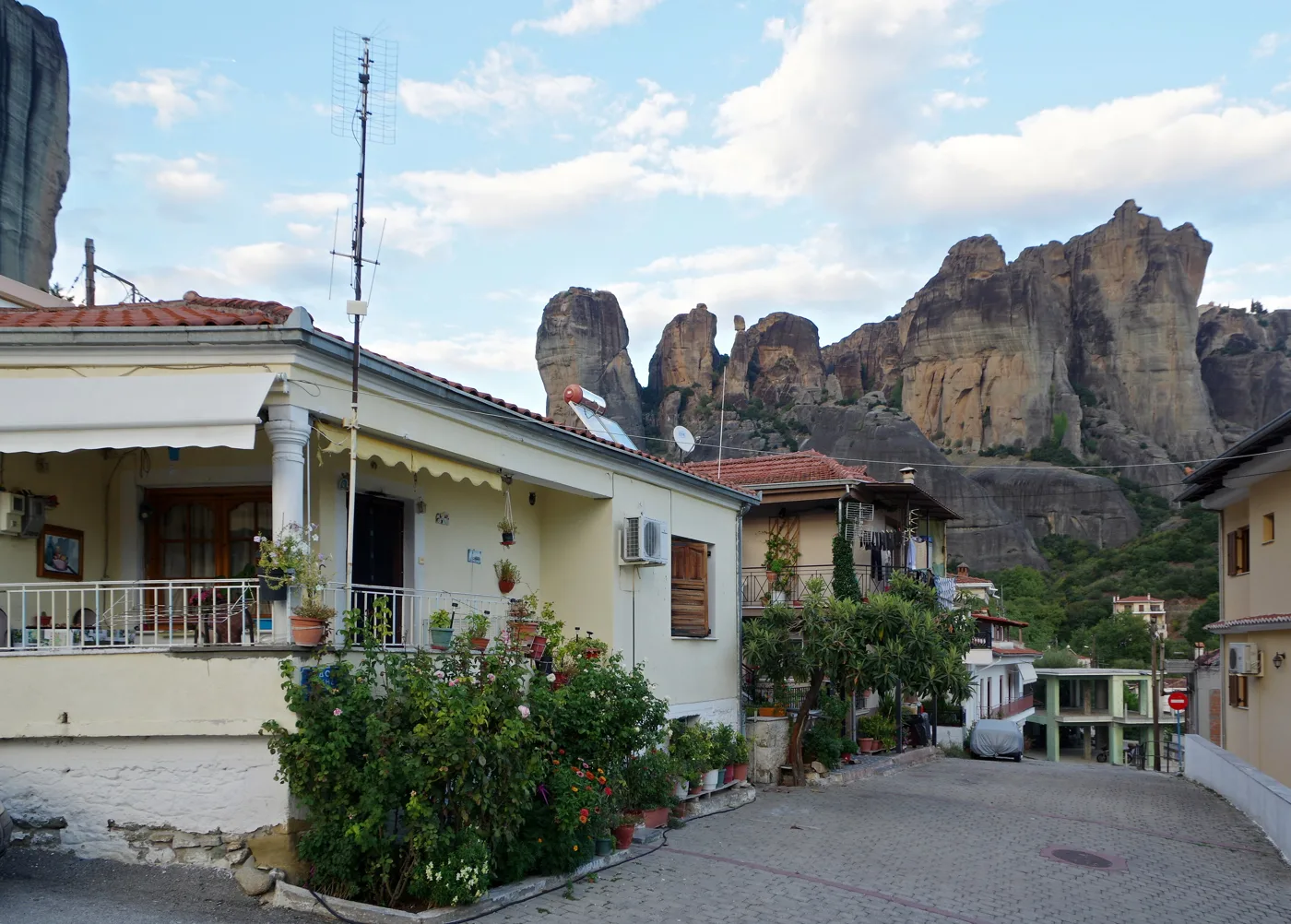
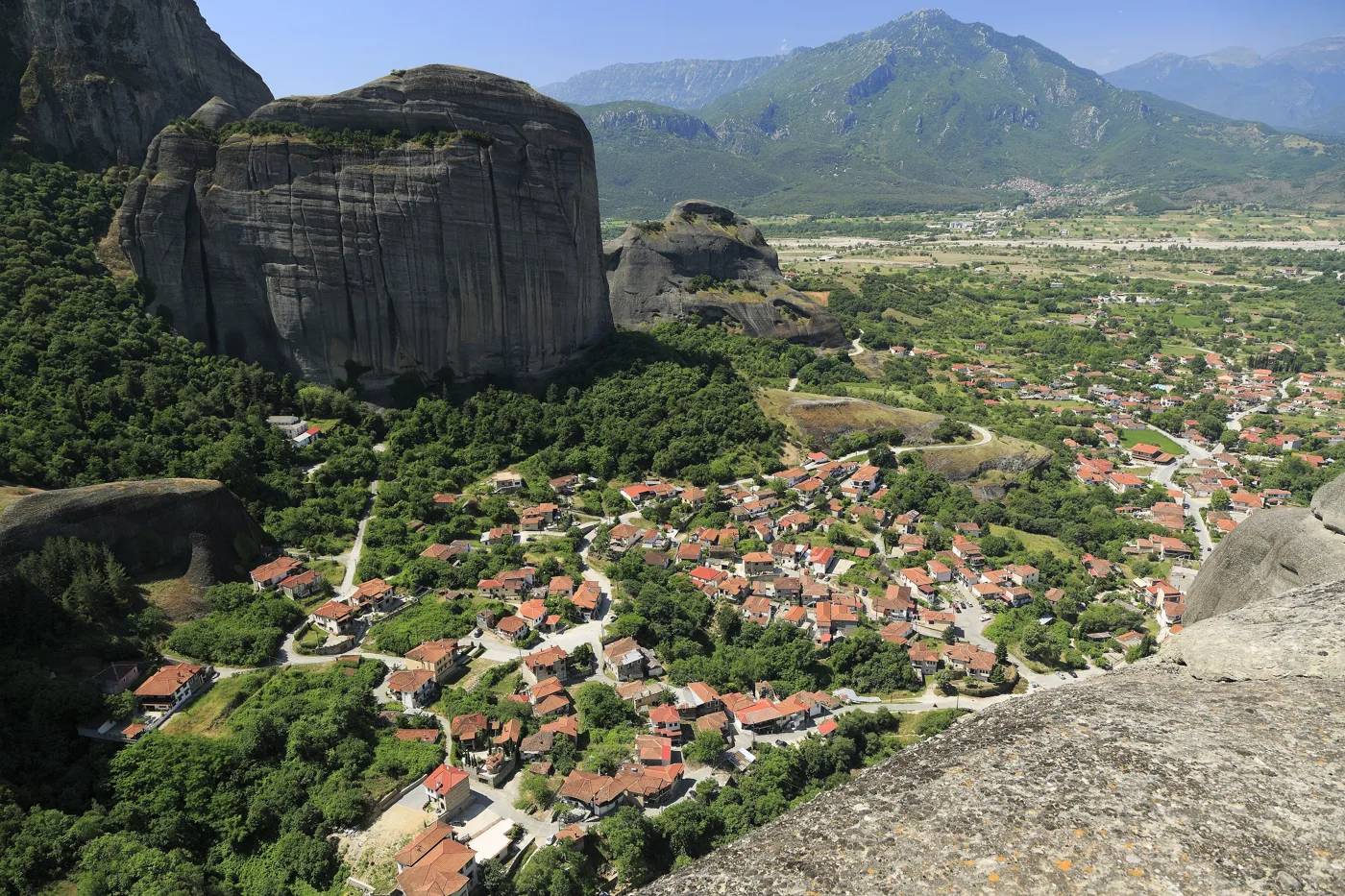
8,000 people below the rocks.
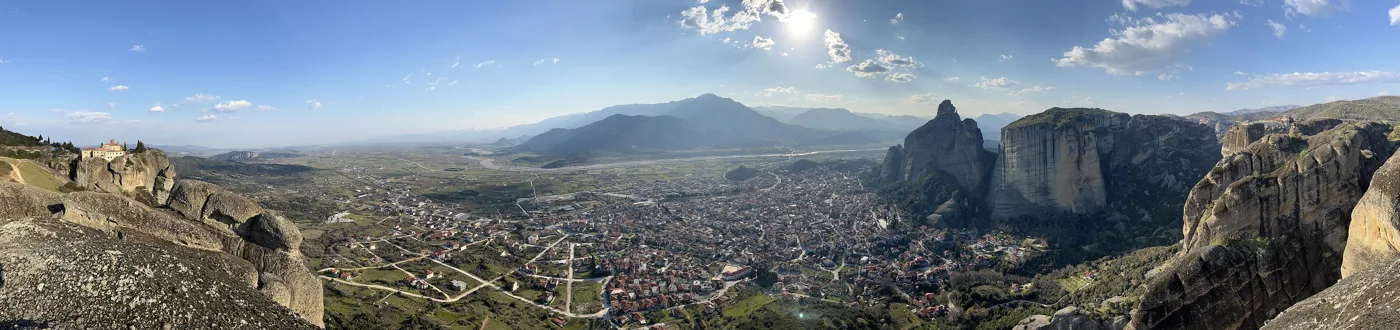
From the Agios Stefanos road.
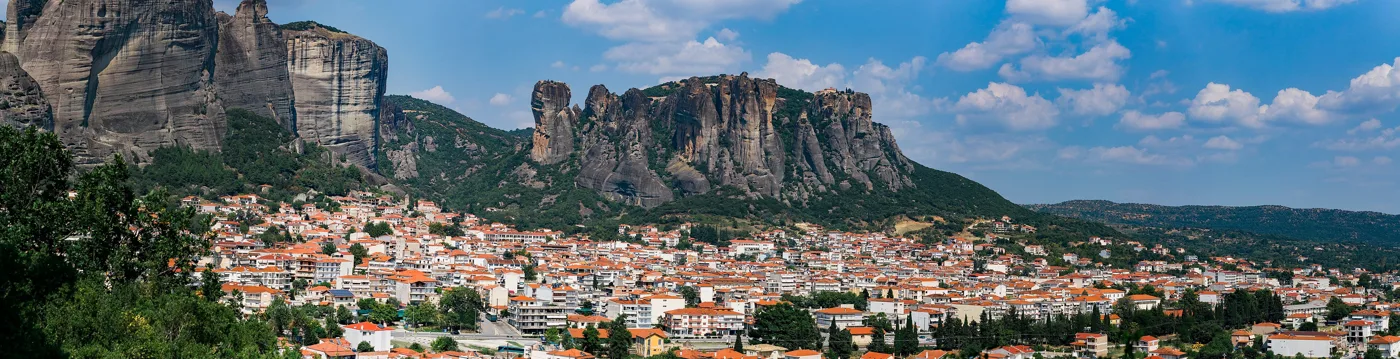
The town at the foot of the rocks.
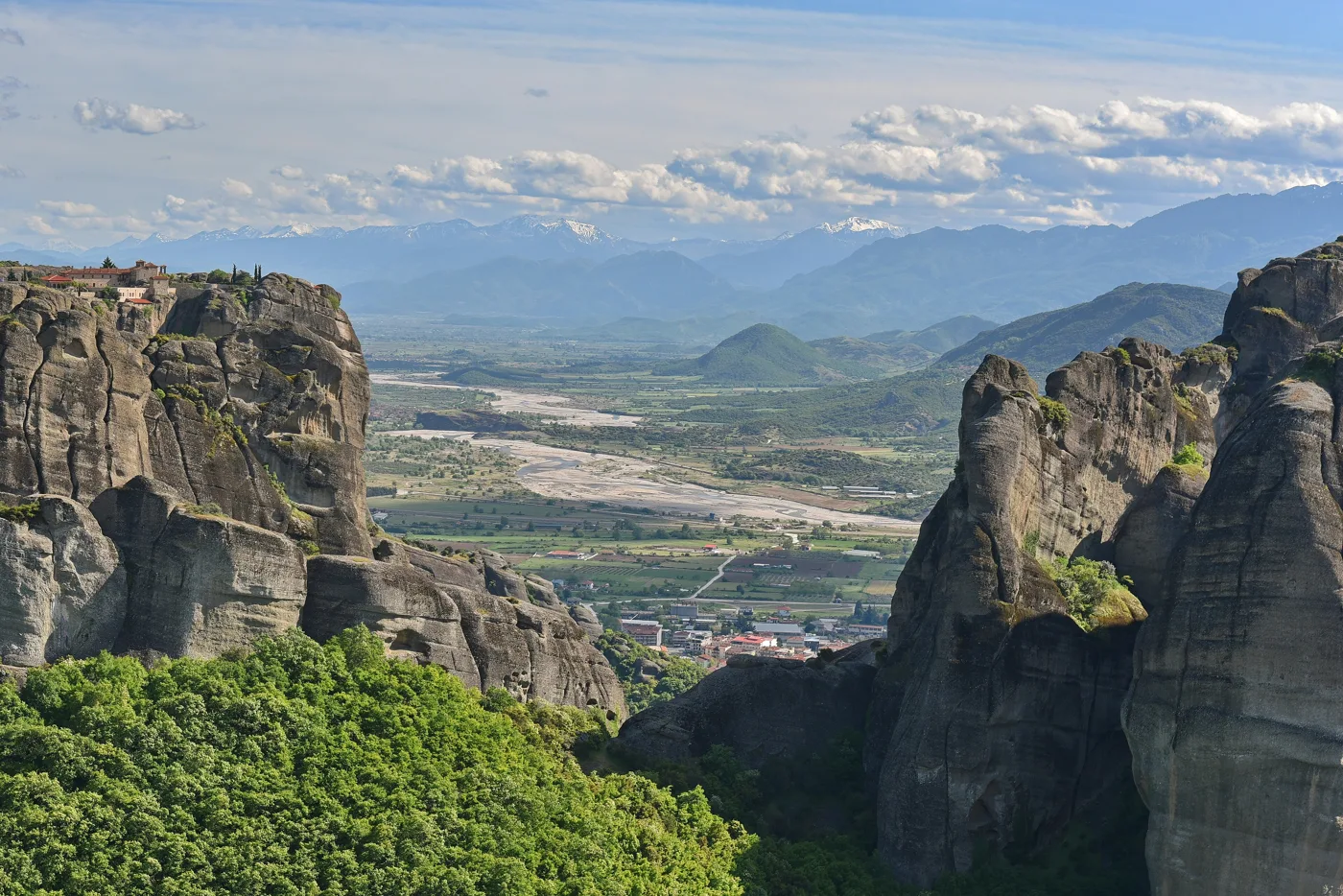
In the afternoon the shadow falls on the town.
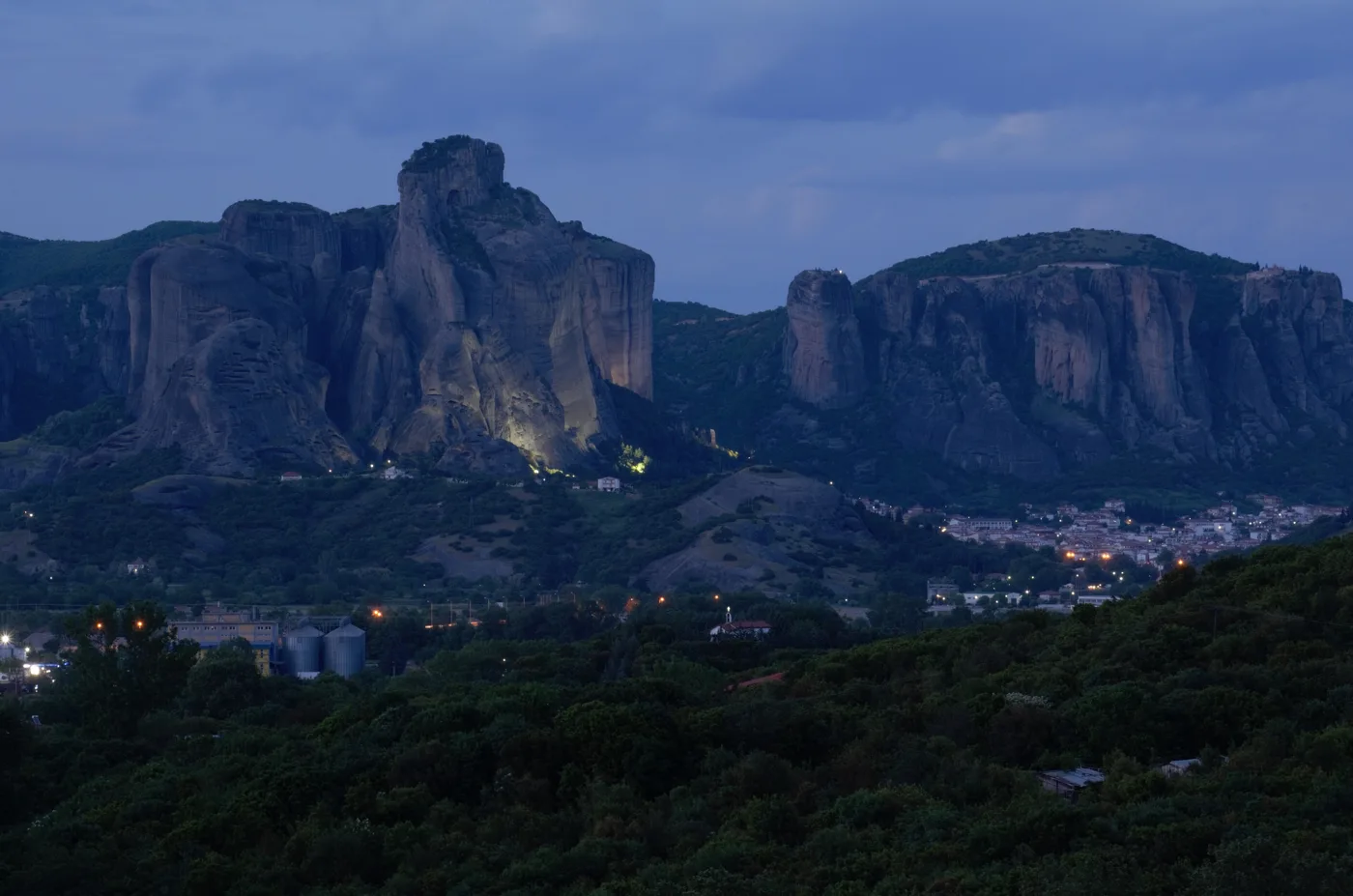
From the other bank of the Pineios.
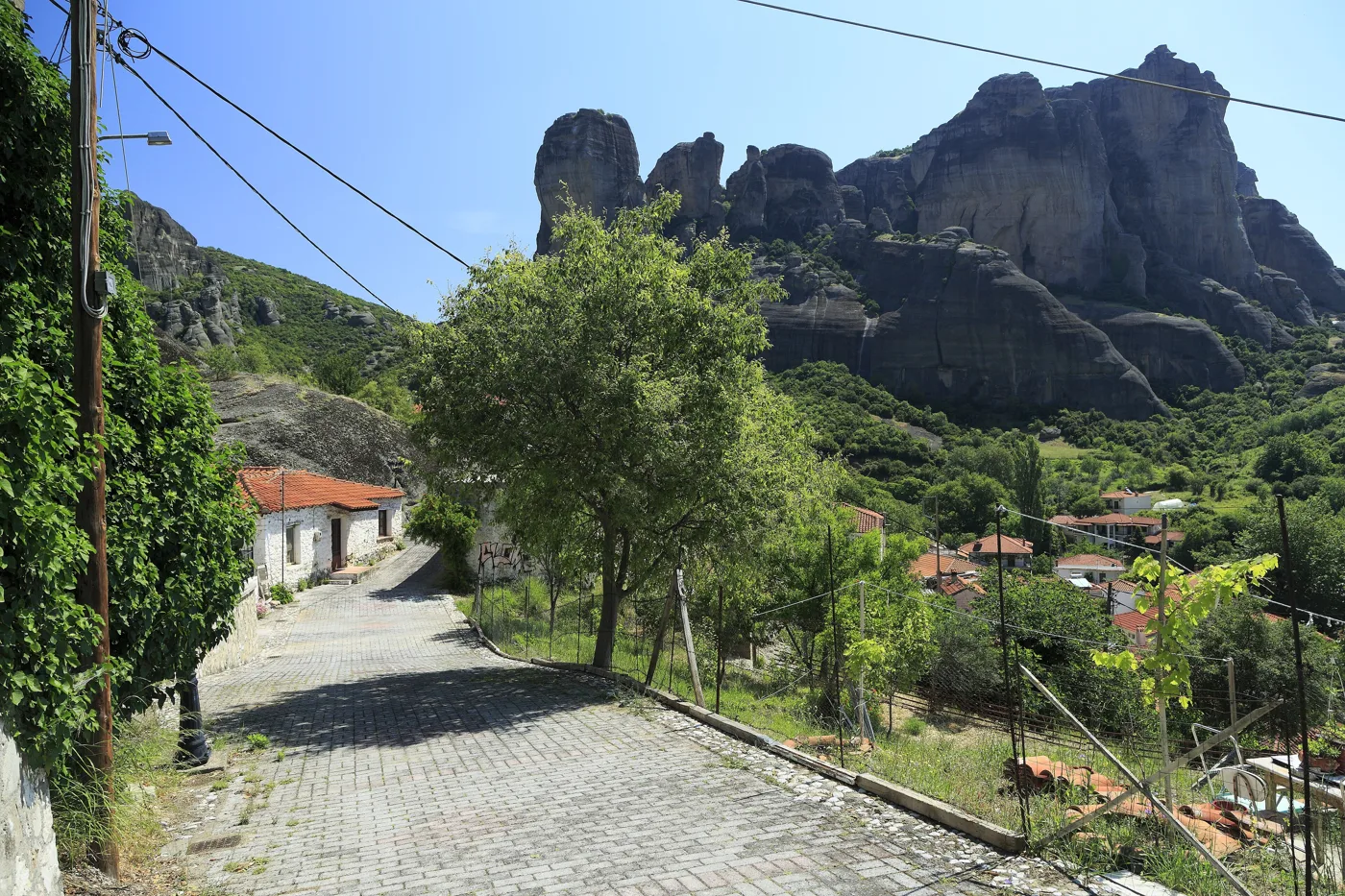
Stone houses, cobbled lanes and plane trees.
The street that climbs to the Byzantine church.
Plane trees and shade for a July midday.
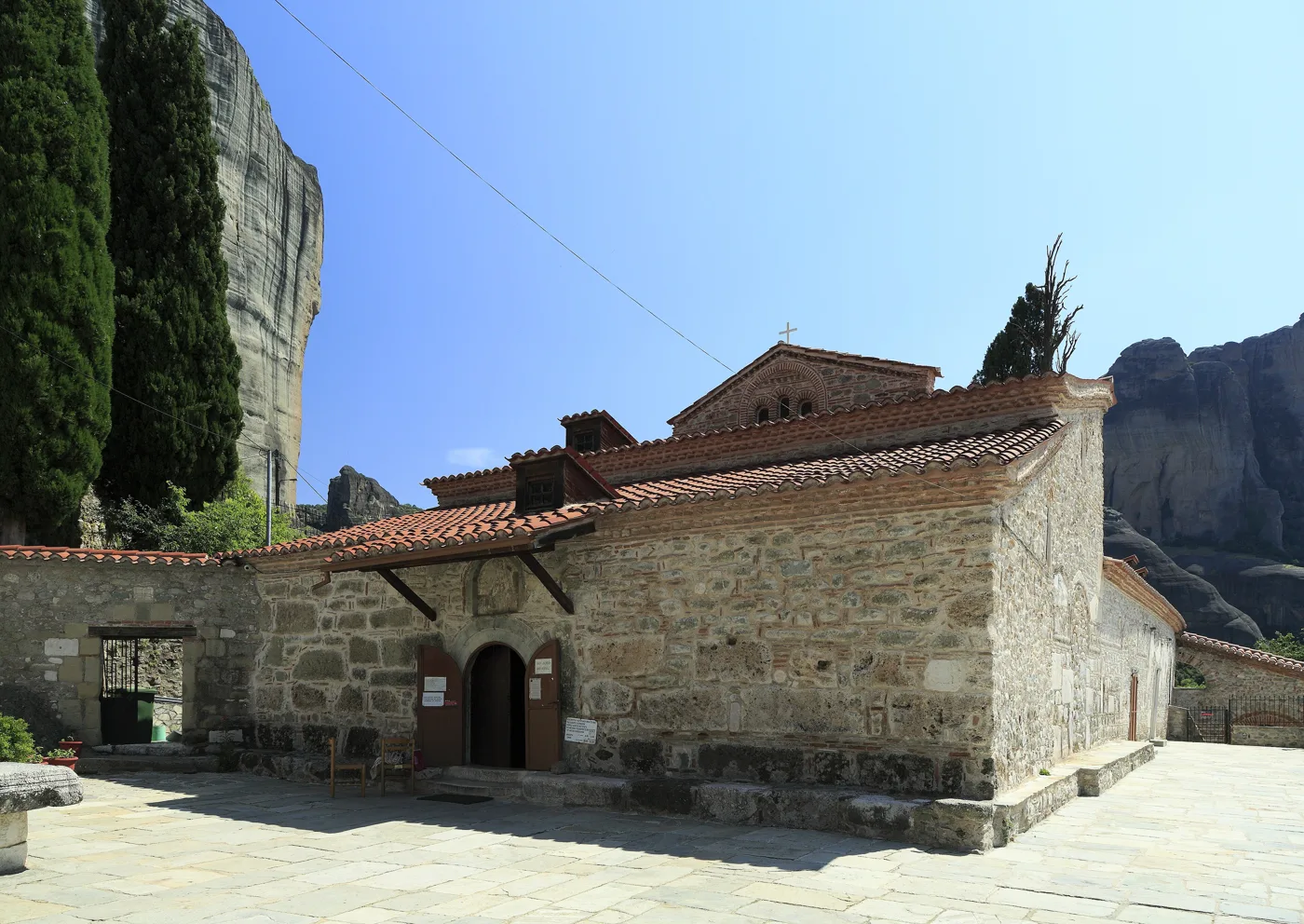
The 11th-century church, with a marble ambo in the middle.
Built on top of an Early Christian basilica.
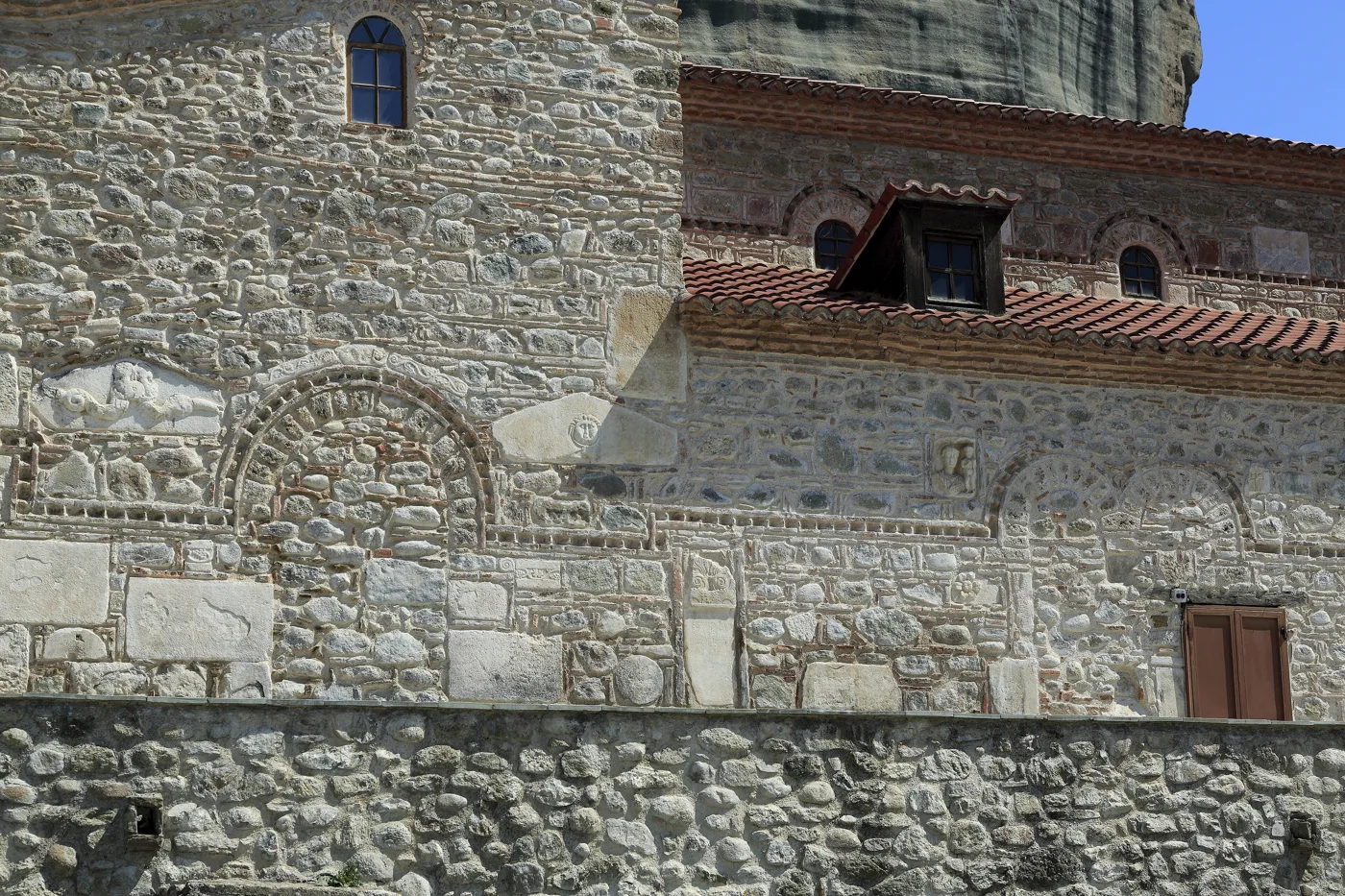
Stone, brick and reused ancient marble.
Photos: Dennis David Auger (CC BY-SA 4.0), Pavlos1988 (CC BY-SA 4.0), Berthold Werner (CC BY-SA 3.0), Chabe01 (CC BY-SA 4.0), Thodorisv (CC BY-SA 4.0), Stefanos Dermetzidis (CC BY-SA 4.0), Nickalts (CC BY-SA 4.0), Falk2 (CC BY-SA 4.0), Lemur12 (CC BY-SA 3.0) · Wikimedia Commons
🗺️ From Kalambaka to Theopetra
Theopetra Cave is 8 kilometres from Kalambaka, on the road to Trikala, ten minutes by taxi or car: the rock with the cave at the edge of the village, and the museum, the Documentation Centre, at its entrance. For those with a car or a second day.
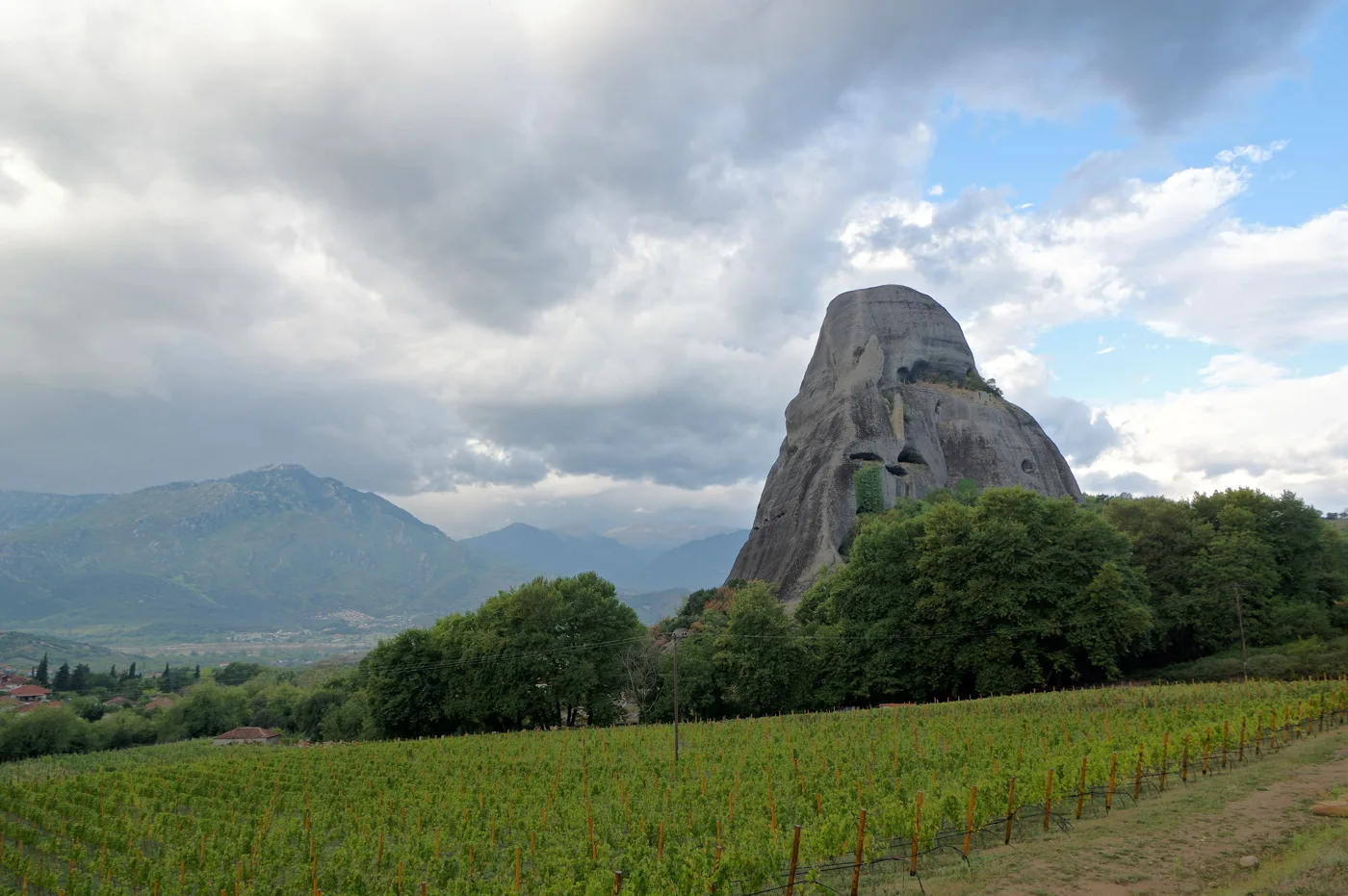
The village of Meteora, 2 kilometres from Kalambaka.
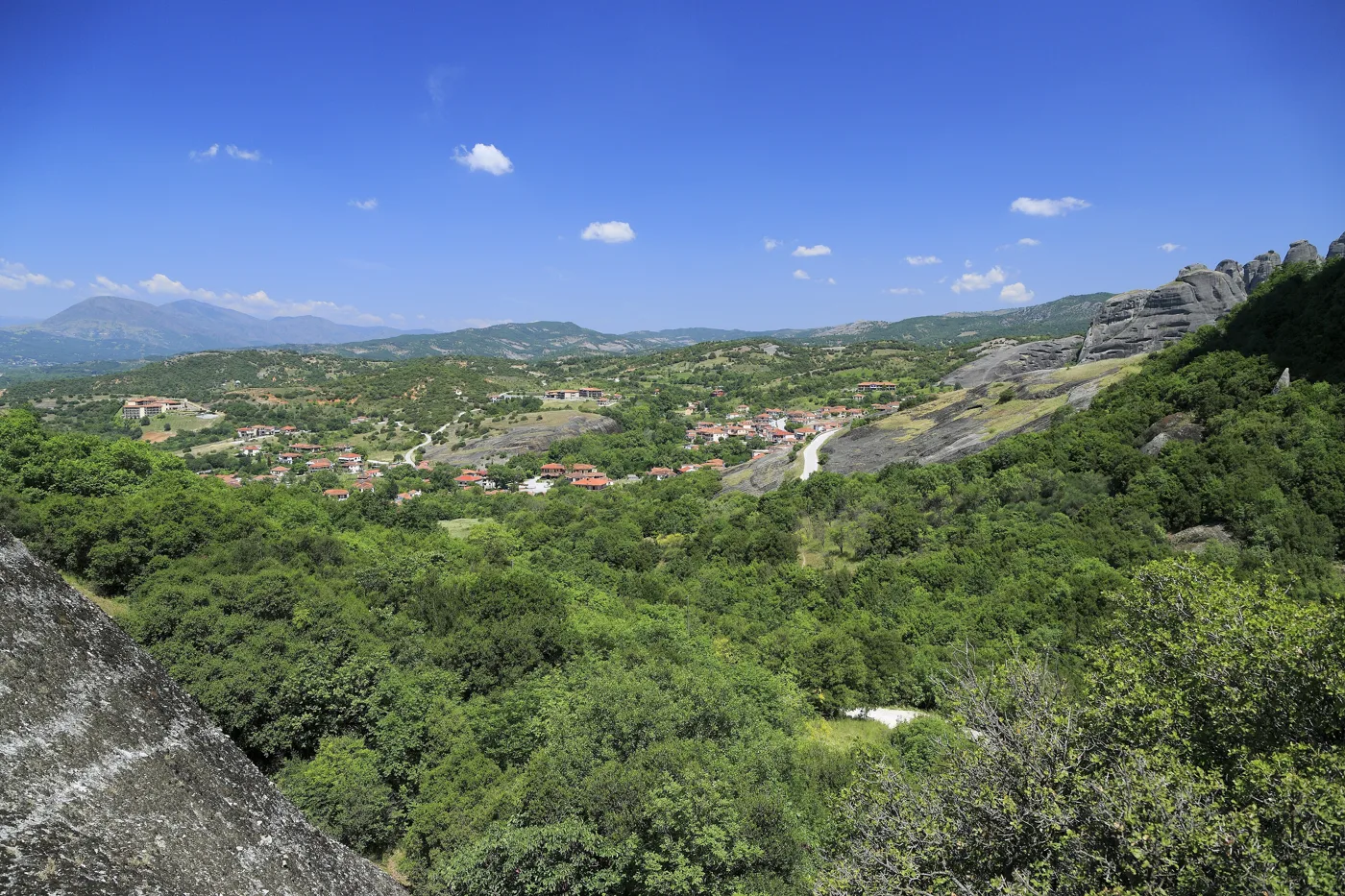
Stone, tiles and rocks.
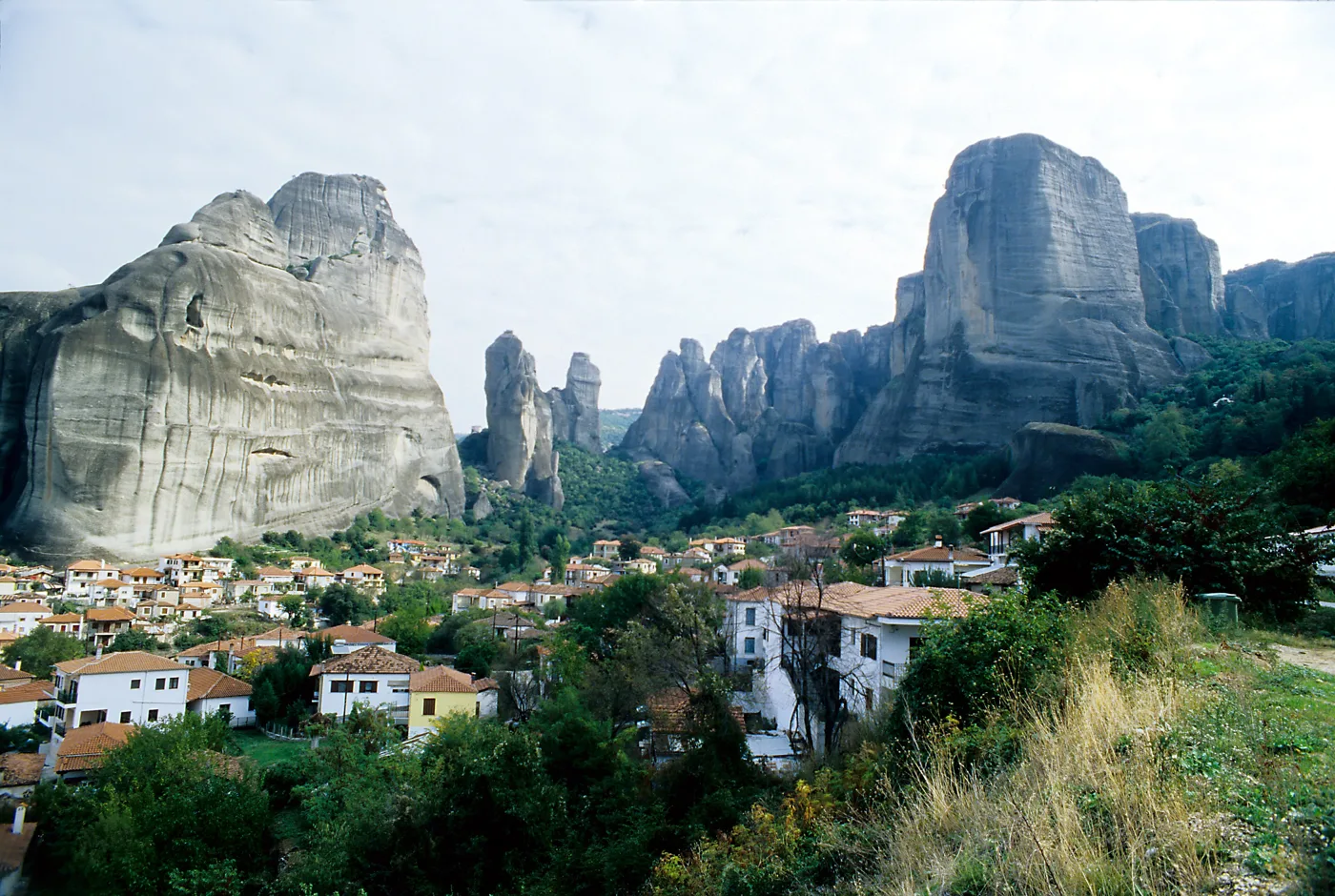
The village’s rocks.
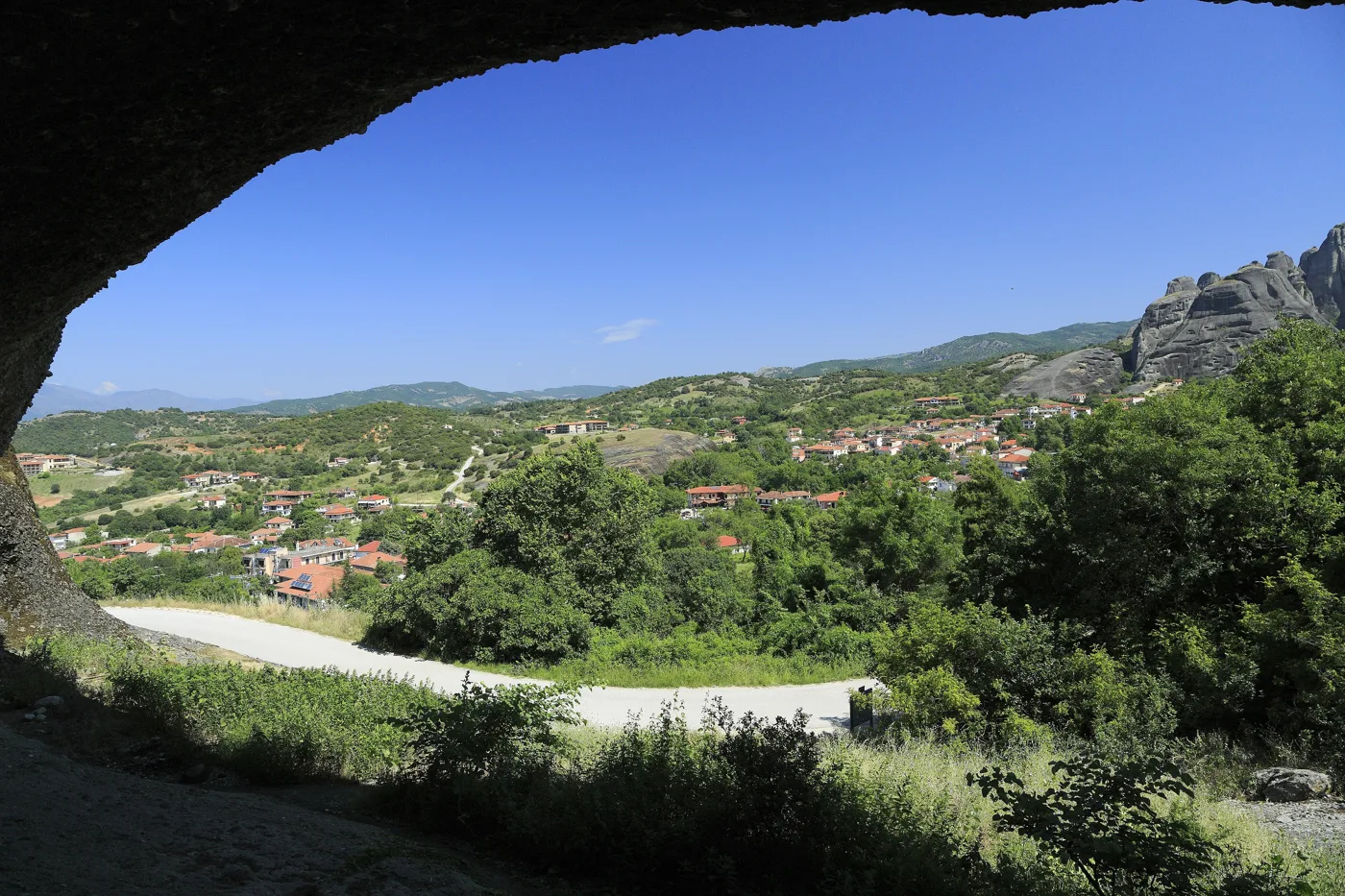
From the trails above the village.
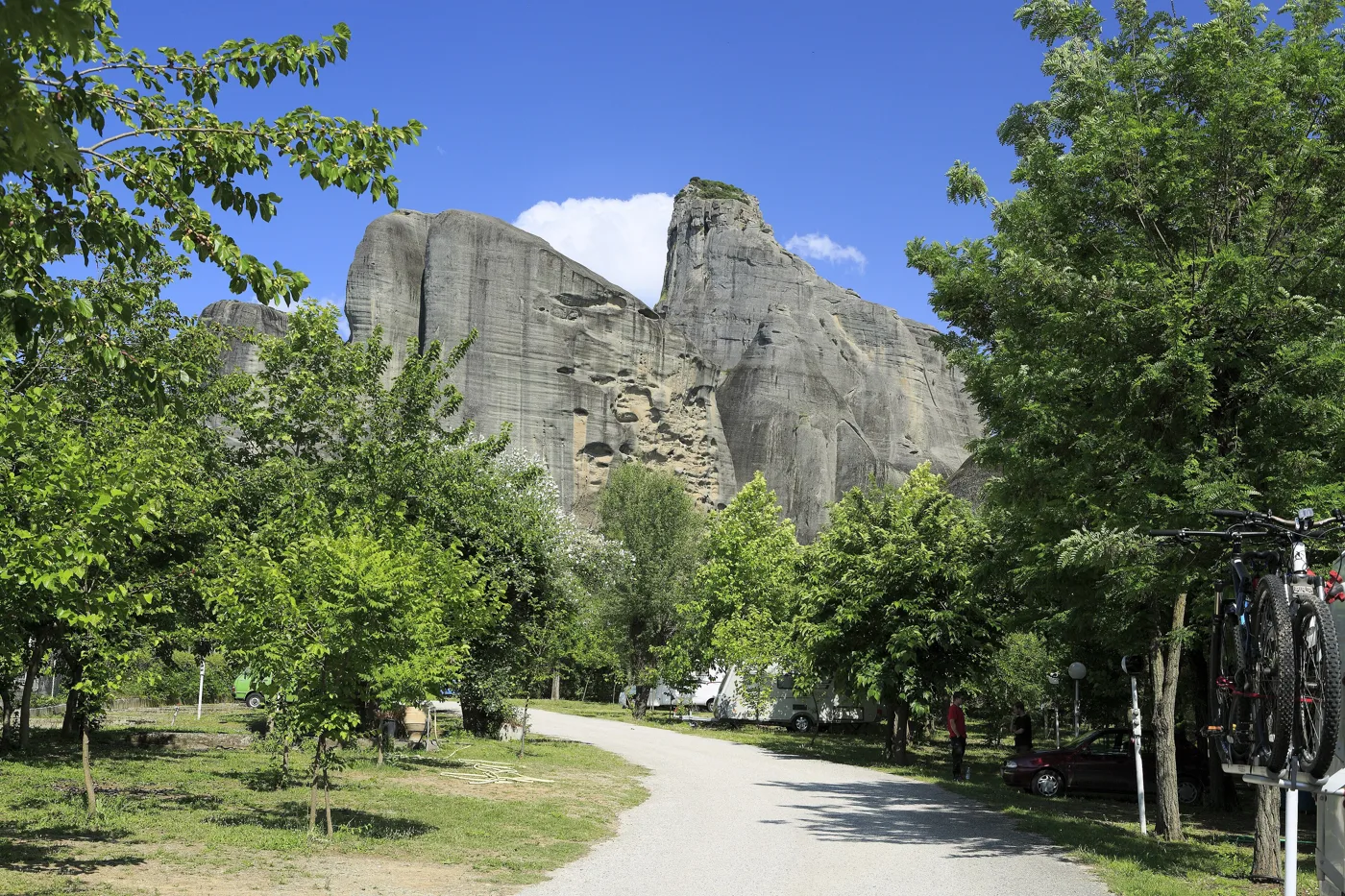
Tents below the rocks, with a pool.
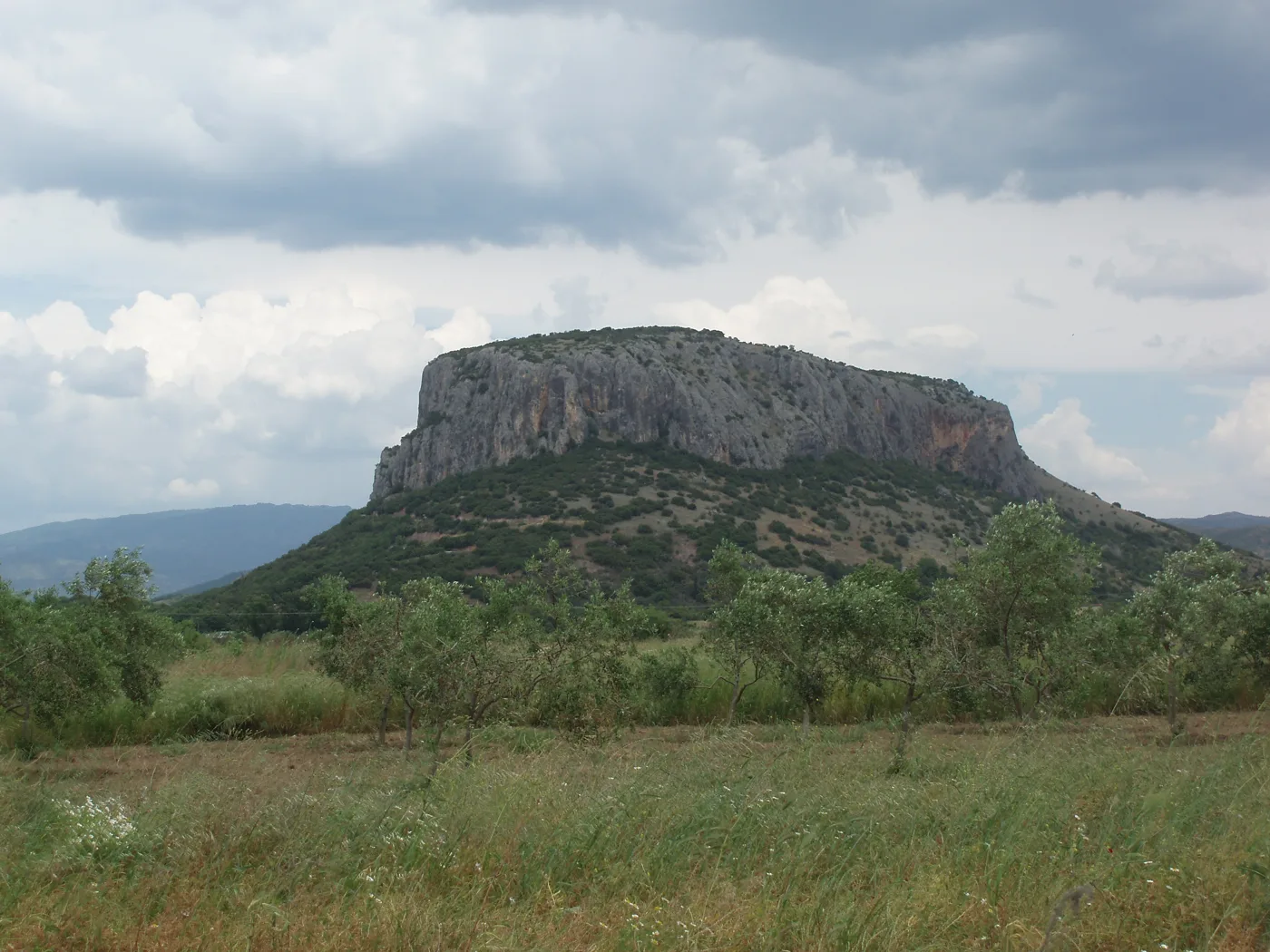
130,000 years of human presence.
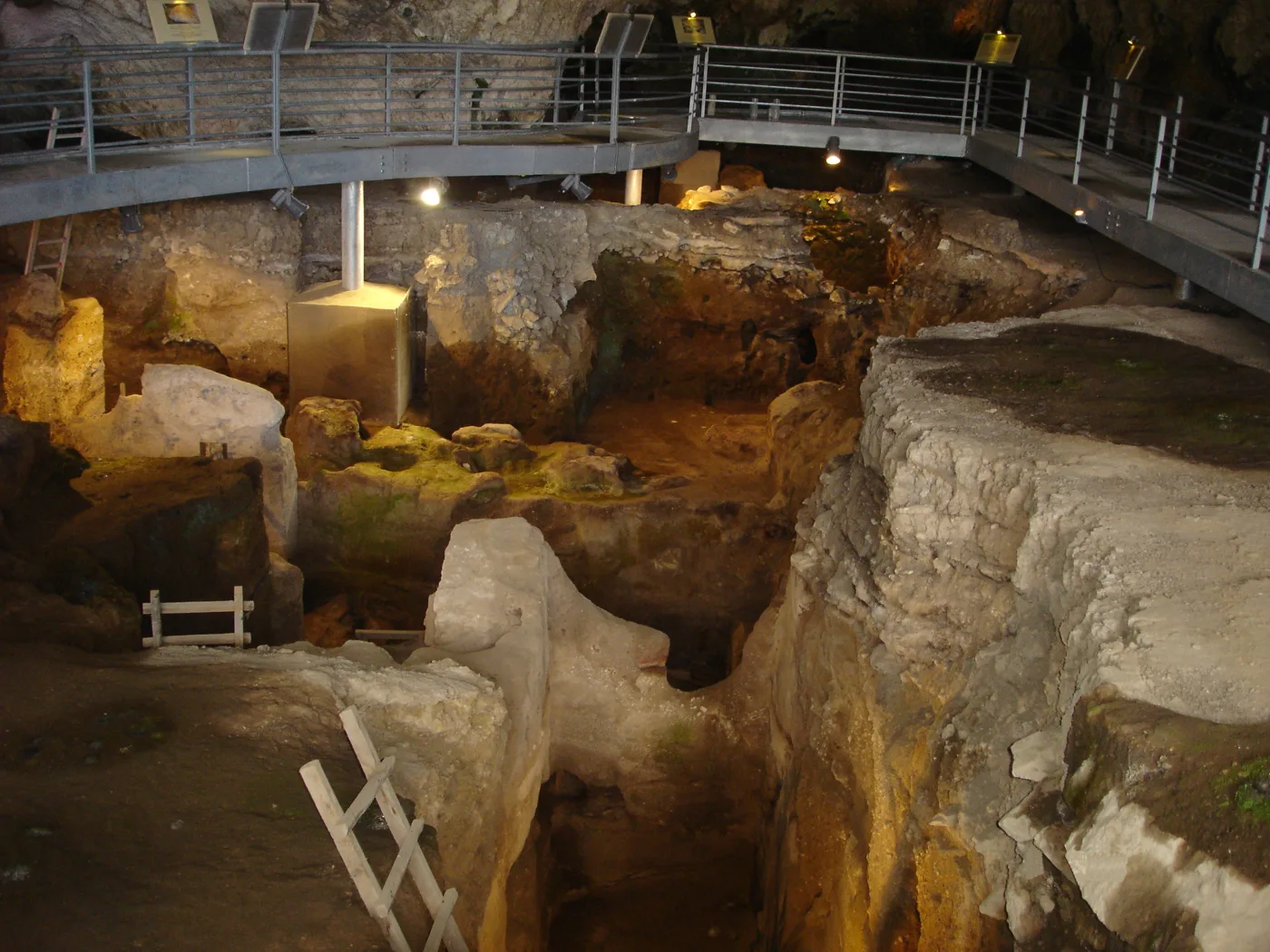
The oldest wall in the world, 23,000 years old.
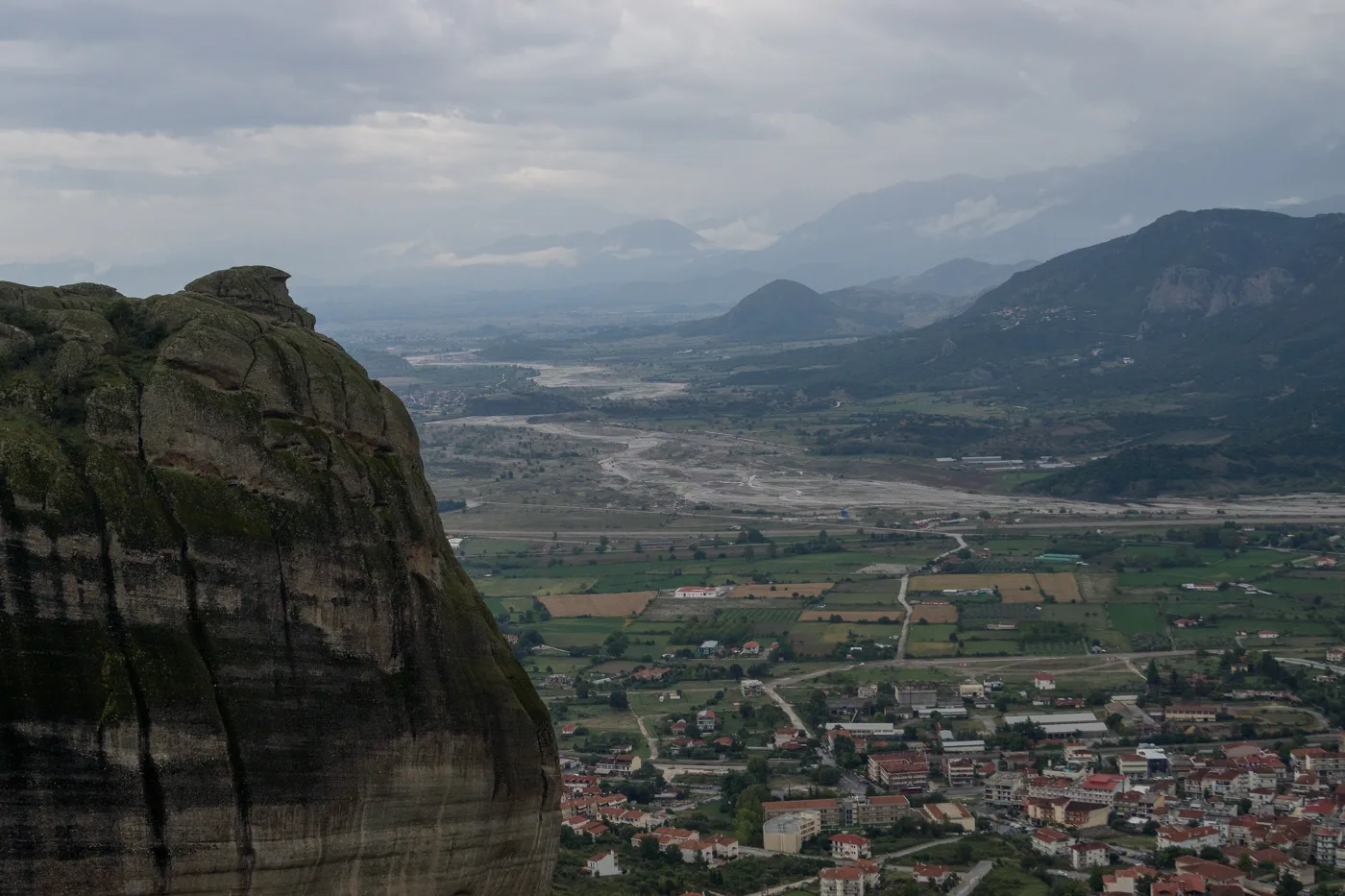
The river leaves the gorges and flows past below the town.
Photos: Berthold Werner (CC BY-SA 3.0), Falk2 (CC BY-SA 4.0), Nature & Ancient buildings of Greece (CC BY-SA 4.0), Tolis-3kala (CC BY-SA 4.0), HerrAdams (CC BY-SA 4.0) · Wikimedia Commons
🚍 How to get there: the facts for 2026
The big change: the train to Kalambaka isn’t running, and nobody knows when it will be back. That leaves the direct KTEL bus at 06:30, the most sensible option for one or two people; the organised tour, the most relaxing and the only one on a Sunday; the car, the freest and the cheapest for four; and the train as far as Palaiofarsalos with a bus, for those staying the night. Tap each tab.
🚍 How to get there
The direct bus: 06:30 from Kato Patisia, 17:45 from Kalambaka
- KTEL Trikala runs a direct Athens–Trikala–Kalambaka service for Meteora, designed for day trips: it leaves Monday to Saturday at 06:30, not from the Liosion bus station but from the Kato Patisia stop, in front of the metro station, where a member of staff with a “KTEL” sign gathers the passengers. It returns from Kalambaka KTEL station at 17:45, Monday to Saturday. It doesn’t run on Sundays.
- The route is 344 kilometres on the national road, with one 15-minute stop, around 4.5 hours: in Kalambaka around 11:00, 6.5 hours there, back in Athens around 22:15. Tickets €36.30 one way, €63.20 return, students €27.30. Book a seat online at ktelbus.gr, at a KTEL Trikala agency, or with the driver if there are seats left; on Saturdays and in spring it fills up.
- From Ioulianou 50: three minutes to Victoria, the metro towards Kifisia, three stops, Attiki, Agios Nikolaos, Kato Patisia, five minutes, €1.20. Come out onto Patision Street and wait at the bus stop in front of the station: the bus says TRIKALA or KALAMBAKA. Be there by 06:15; the metro starts at 05:30.
- In Kalambaka the bus drops you at the KTEL station, on the edge of town, ten minutes on foot from the square: from there, a taxi to the monasteries, the local bus if you catch it, or the path. Same place for the return: be at the station by 17:30.
The times and prices are KTEL Trikala’s for 2026; check them at ktel-trikala.gr before the trip, because the service is seasonal and changes.
The train to Kalambaka: the situation in 2026
- The direct Athens–Kalambaka train, which left Larissa Station in the morning and reached the foot of the rocks in five hours, isn’t running: the Palaiofarsalos–Kalambaka section is closed for works after the damage done by Storm Daniel in 2023; OSE had given summer 2026 as a target, and as of November 2026 no restart has been announced. If you read about the train elsewhere, check the date.
- What there is: the Athens–Palaiofarsalos train, around 3 hours on the Intercity services of the Thessaloniki line, and from there a Hellenic Train replacement bus to Kalambaka, around 2 hours via Karditsa and Trikala: over 5 hours in all, with two changes and times that don’t work for a day trip. For those staying the night, it’s a comfortable alternative.
- When the line reopens, the train will once again be the best way: the plain of Thessaly from the window, arrival at a station that looks out on the rocks, 15 minutes on foot from Ioulianou to Larissa Station. Before the suspension, tickets were around €20 to €30 one way and there was one direct train in the morning and one in the afternoon. We’ll update this page.
Check hellenictrain.gr: if you see an Athens–Kalambaka service without a “bus” in the route, the train is back.
By bus with a guide: €60 to €100, 13 to 14 hours
- Organised day tours leave central Athens at 06:30 to 07:00, with pick-up from hotels or meeting points, reach Meteora around 11:00, visit two or three monasteries with a guide, stop at the viewpoints and at a taverna for lunch, and get back to Athens at 21:00 to 22:00. Price €60 to €100 per person, with the monastery tickets extra, €5 each, and lunch optional.
- The pros: you don’t have to think about anything, the guide explains the frescoes and the history, the bus takes you door to door to the monasteries, and the tour runs on Sundays too, when the KTEL bus doesn’t. The cons: you see the monasteries the company chooses, at the time when everyone is there, and the day is 14 hours with 9 on the bus. Small groups, up to 9 people, cost €110 to €150; a private tour €400 to €600.
- In summer book the week before, with free cancellation; ask which monasteries are included on that particular day, because they change with the closing days, and whether the meeting point is near Omonia or Syntagma.
338 kilometres, 4 hours, for groups of friends and families
- From Athens take the A1 towards Lamia, 215 kilometres of motorway, and from Lamia the Central Greece E65 motorway to Trikala, recently completed, then 20 kilometres of national road to Kalambaka: 338 kilometres, around 4 hours without stops, tolls around €20 each way. Leaving at 06:00 you are at the monasteries by 10:15, ahead of the tour buses.
- At Meteora the ring road from Kastraki passes all the monasteries in 17 kilometres, with free car parks in front of each one: from May to October, 10:00 to 14:00, Great Meteoron and Varlaam fill up and you park on the road. By car you can fit in four monasteries, the sunset from Sunset Rock and be back in Athens around midnight.
- Car hire in Athens €40 to €70 a day, fuel around €80 for the 680 kilometres. For two people it comes to the same as the KTEL bus, for four it’s cheaper than any other way, and driving back at night after 14 hours calls for a second driver.
From the KTEL station to the monasteries: taxi, local bus, path
- The monasteries are 3 to 7 kilometres from Kalambaka, uphill. A taxi from the KTEL station or the square costs around €10 to €12 to Great Meteoron, and the drivers do a tour of the monasteries with waiting time, around €25 an hour; split between four, it’s the fastest option for a day trip.
- The KTEL local bus Kalambaka–Kastraki–Meteora goes up a few times a day, usually around 09:00 and 13:00 in summer, with fewer services in winter, about €2, and stops at the monasteries; ask at the KTEL station as soon as you arrive, because arriving at 11:00 you can usually only catch the midday one.
- On foot: from the Byzantine church of Kalambaka the path climbs to Agia Triada in 1.7 kilometres and 25 to 35 minutes, and from Kastraki the old monks’ path reaches Great Meteoron in 2.7 kilometres and 40 minutes, passing below Agios Nikolaos. Between the monasteries, the road: Great Meteoron–Varlaam 5 minutes, Varlaam–Rousanou 25, Rousanou–Agia Triada 35, Agia Triada–Agios Stefanos 20.
🚇 From Ioulianou 50 to the bus and the train
Three minutes on foot to Victoria and the green metro line, three stops towards Kifisia, to Kato Patisia: the direct KTEL stop is on Patision Street, in front of the station. In dashed red, the two other routes on foot: 25 minutes to the Liosion station for the Trikala buses and 15 minutes to Larissa Station for the train. Tap the stop for Google directions.
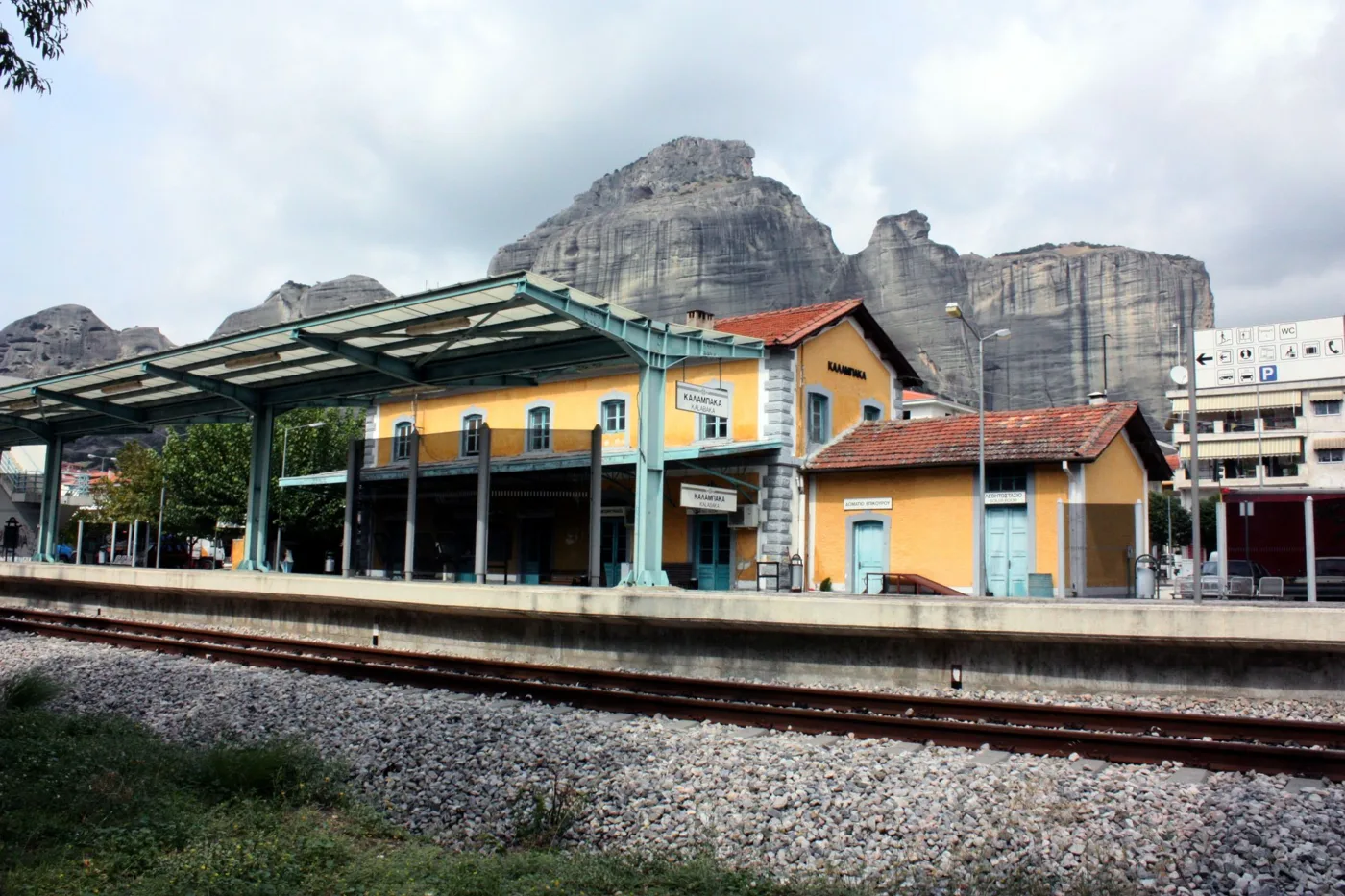
The end of the line, at the foot of the rocks.
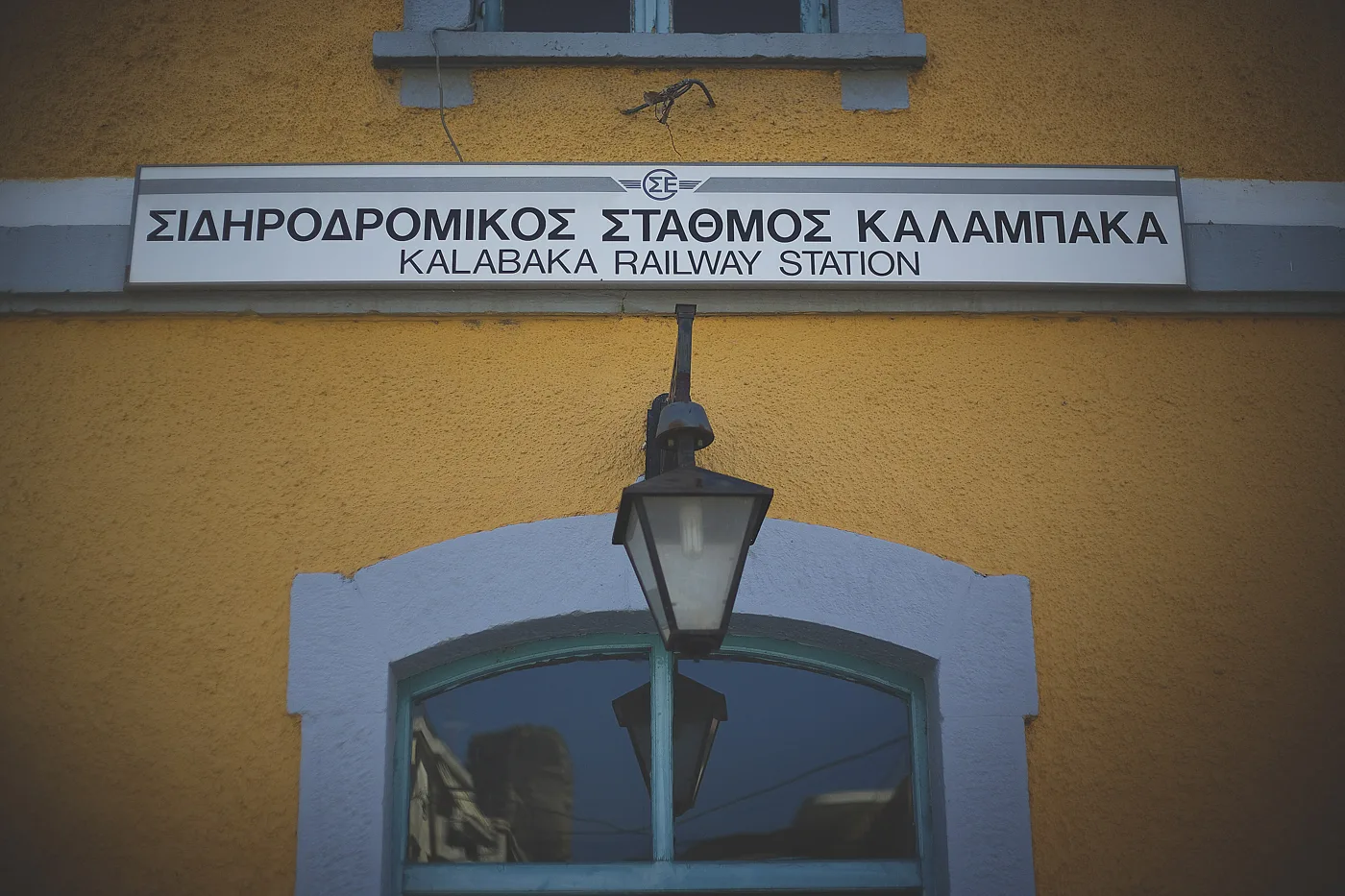
Kalambaka Railway Station.
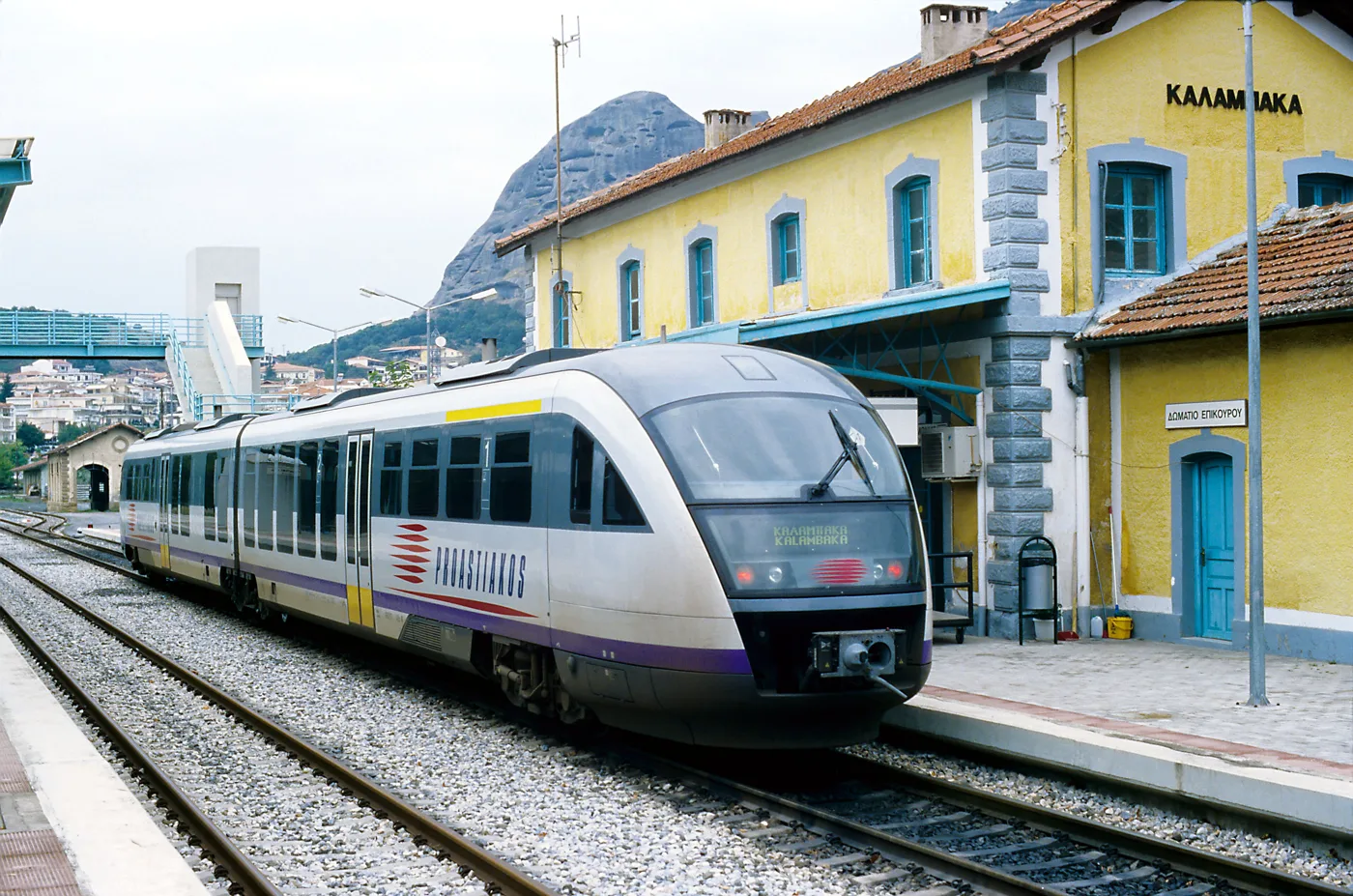
Until 2023, one direct train a day from Athens.
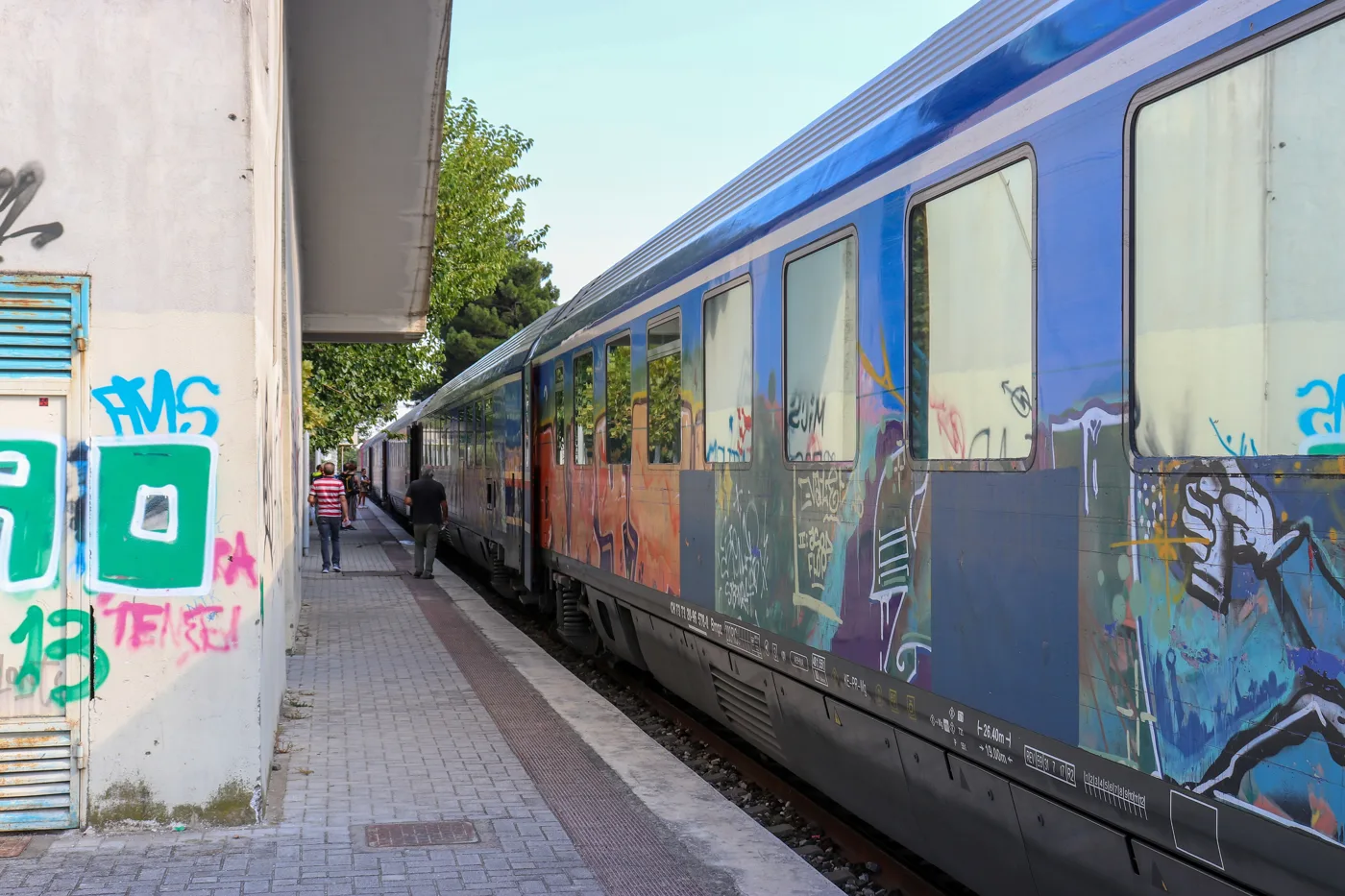
The line is waiting to reopen.
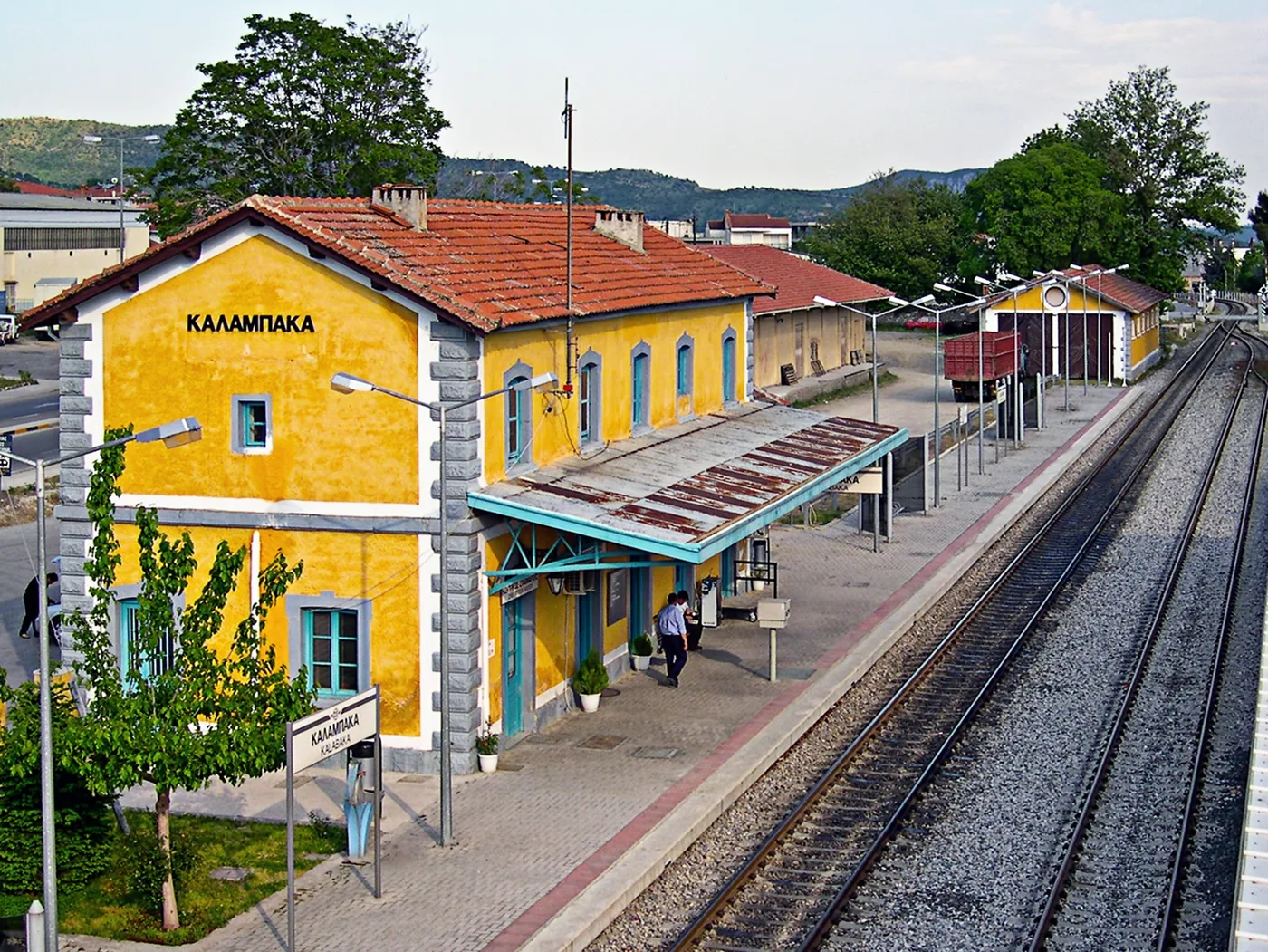
Ten minutes on foot from the centre.
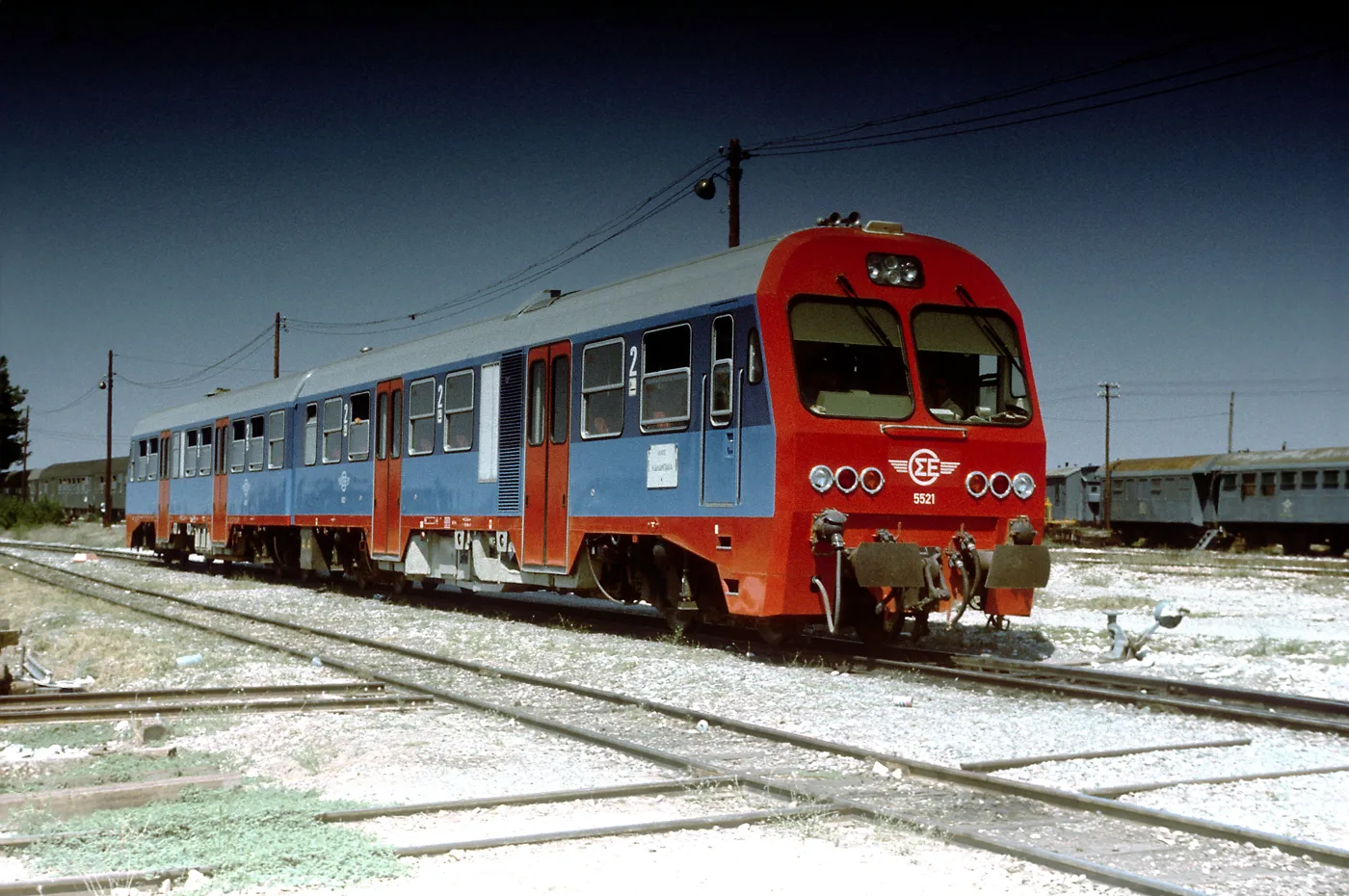
You change here: train from Athens, bus to Kalambaka.
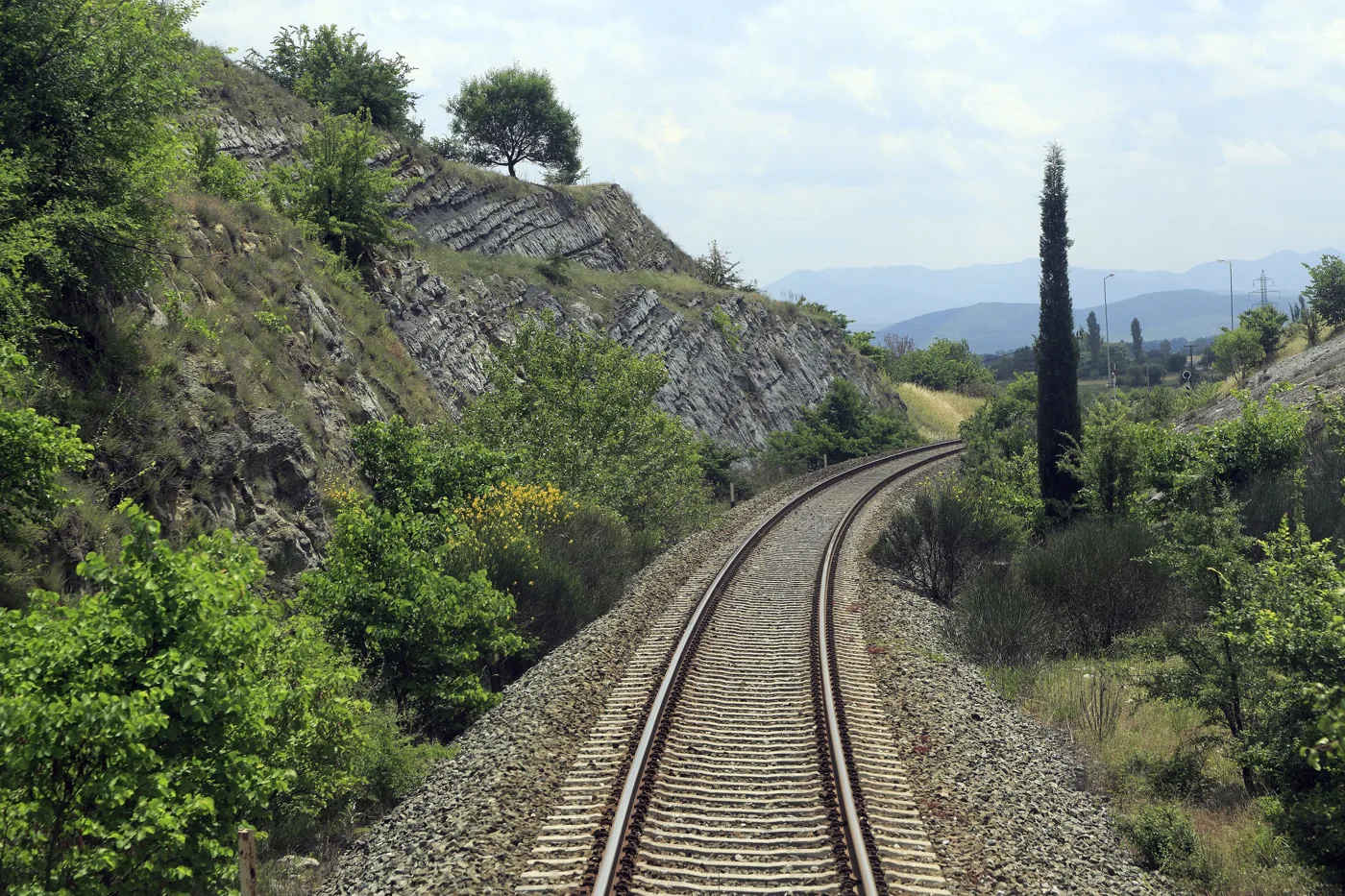
The plain of Thessaly from the window.
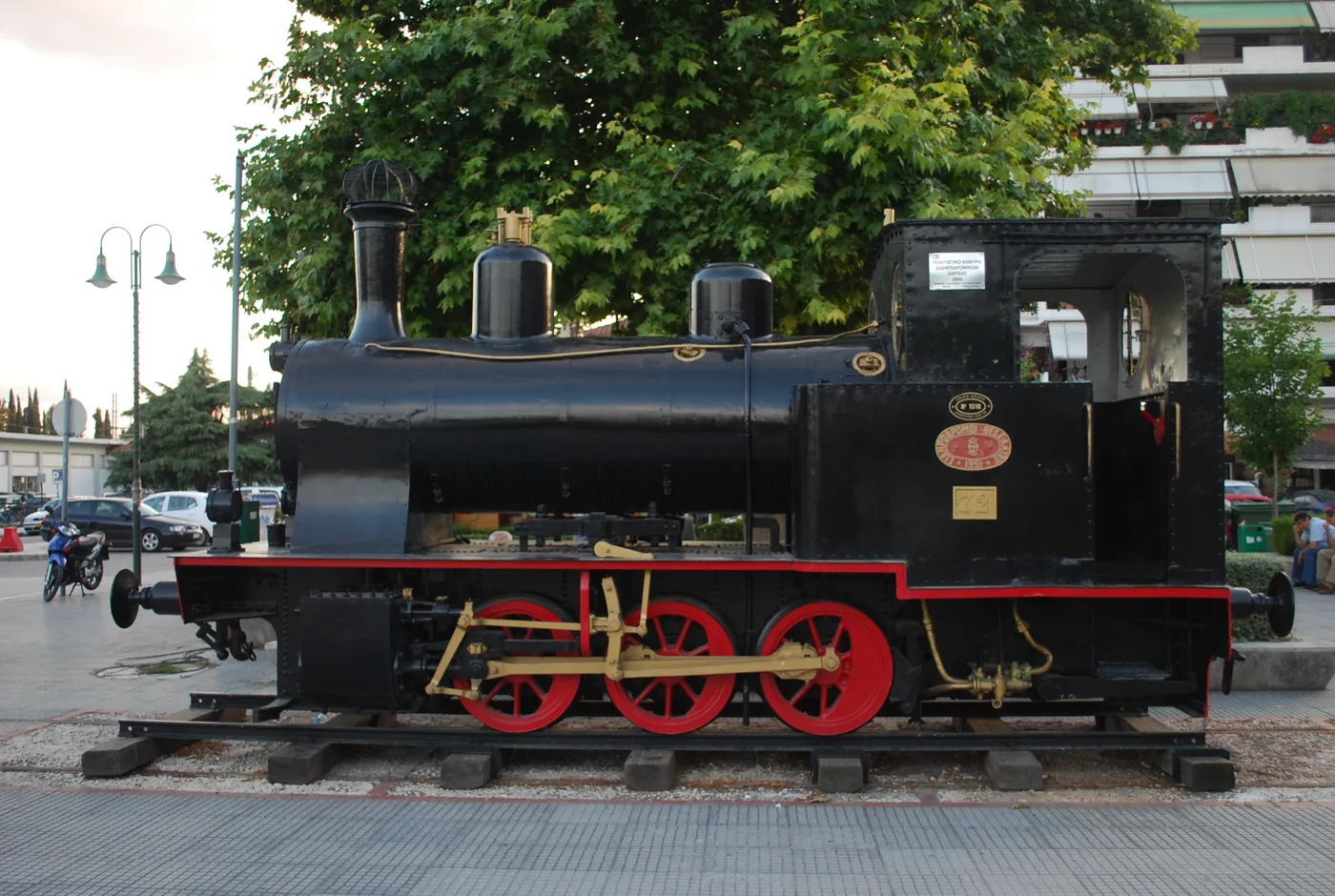
The Volos–Kalambaka line opened in 1886.
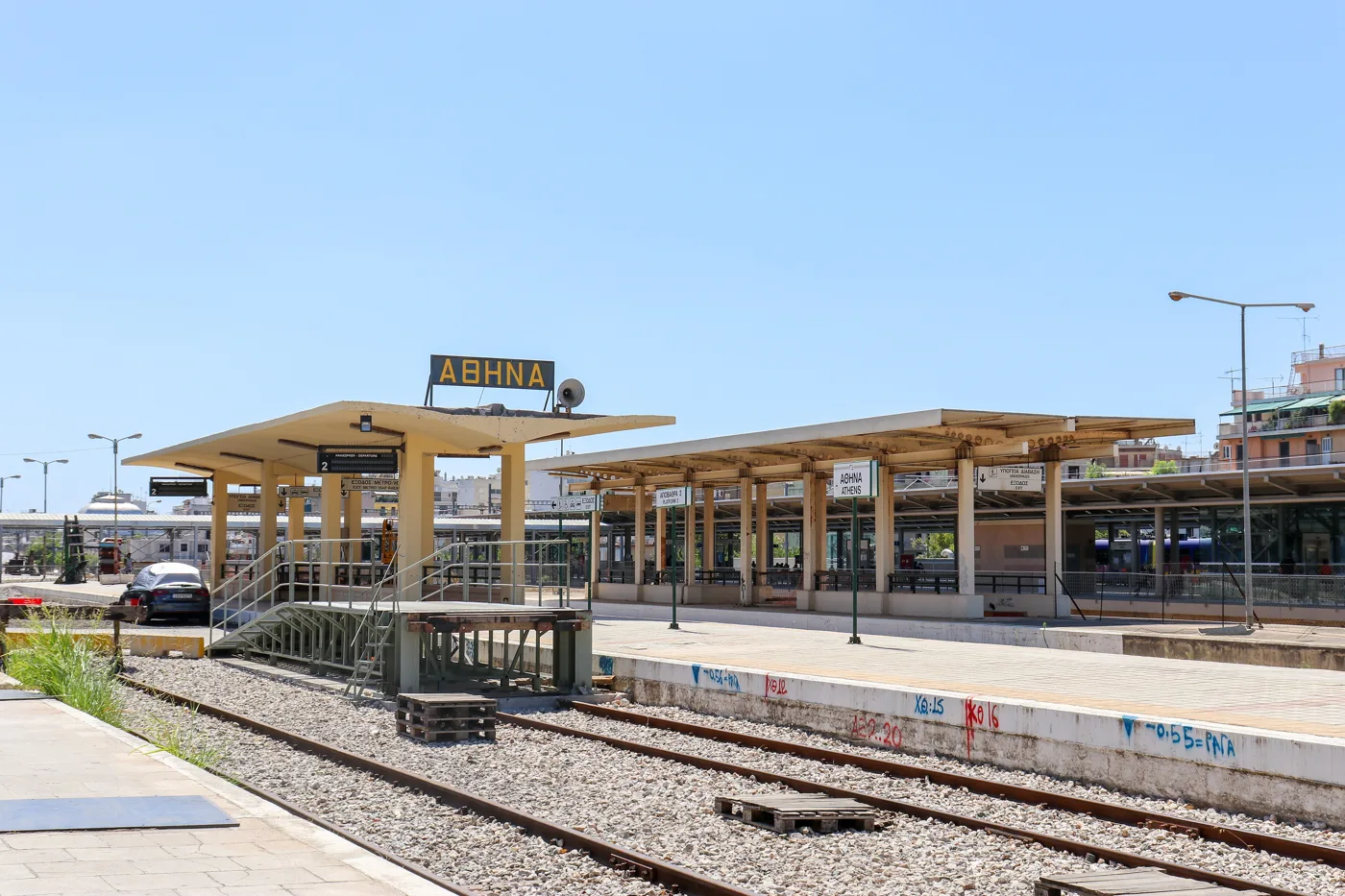
The train leaves from here, when it runs.
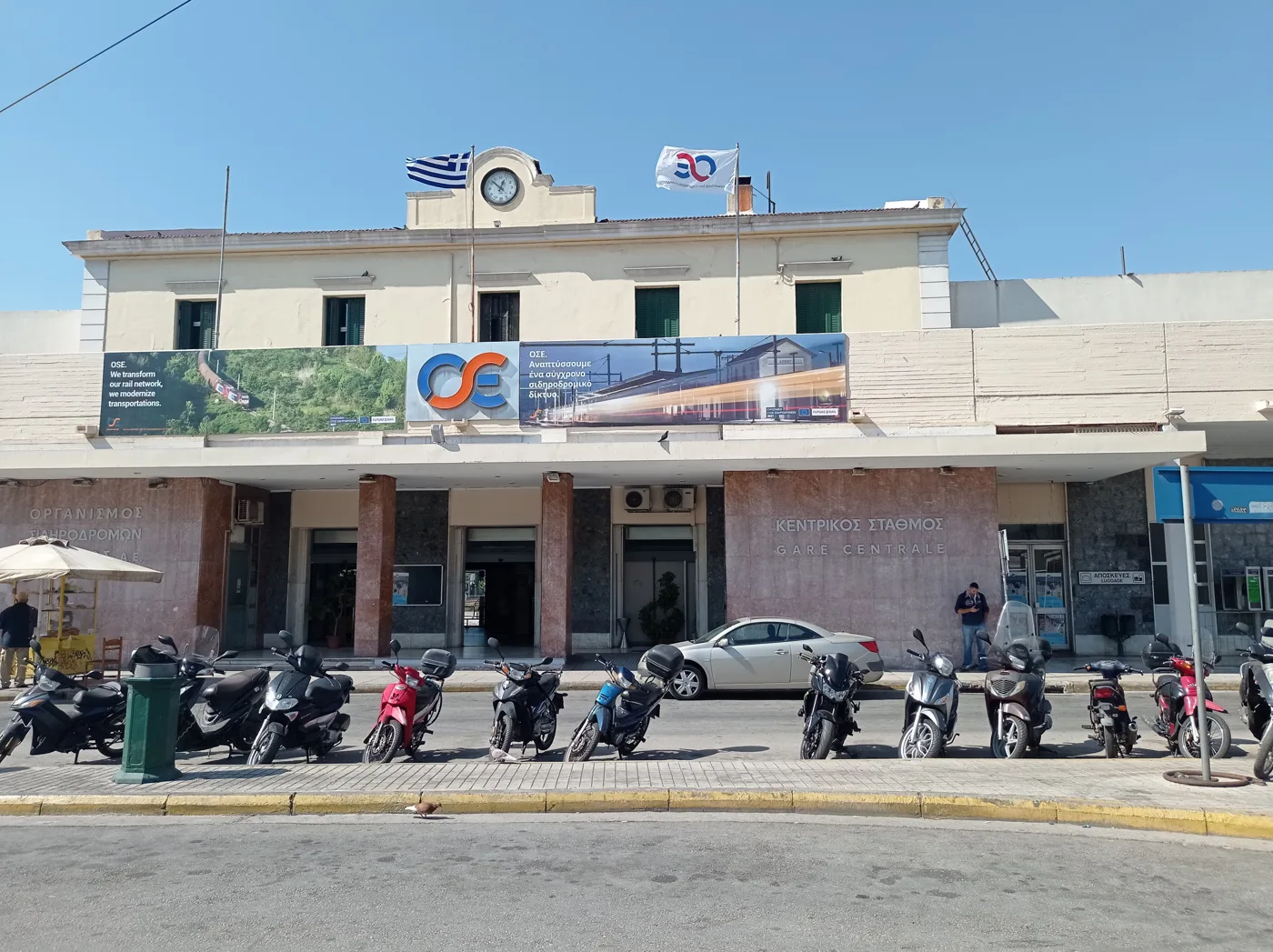
Fifteen minutes on foot from Ioulianou.
Photos: Hombre (CC BY-SA 3.0), Dennis David Auger (CC BY-SA 4.0), Falk2 (CC BY-SA 3.0), Stolbovsky (CC BY-SA 3.0), Ioannis Houvardas (CC BY-SA 3.0), Falk2 (CC BY-SA 4.0), Roman Klementschitz (CC BY 3.0), Rakoon (CC0) · Wikimedia Commons
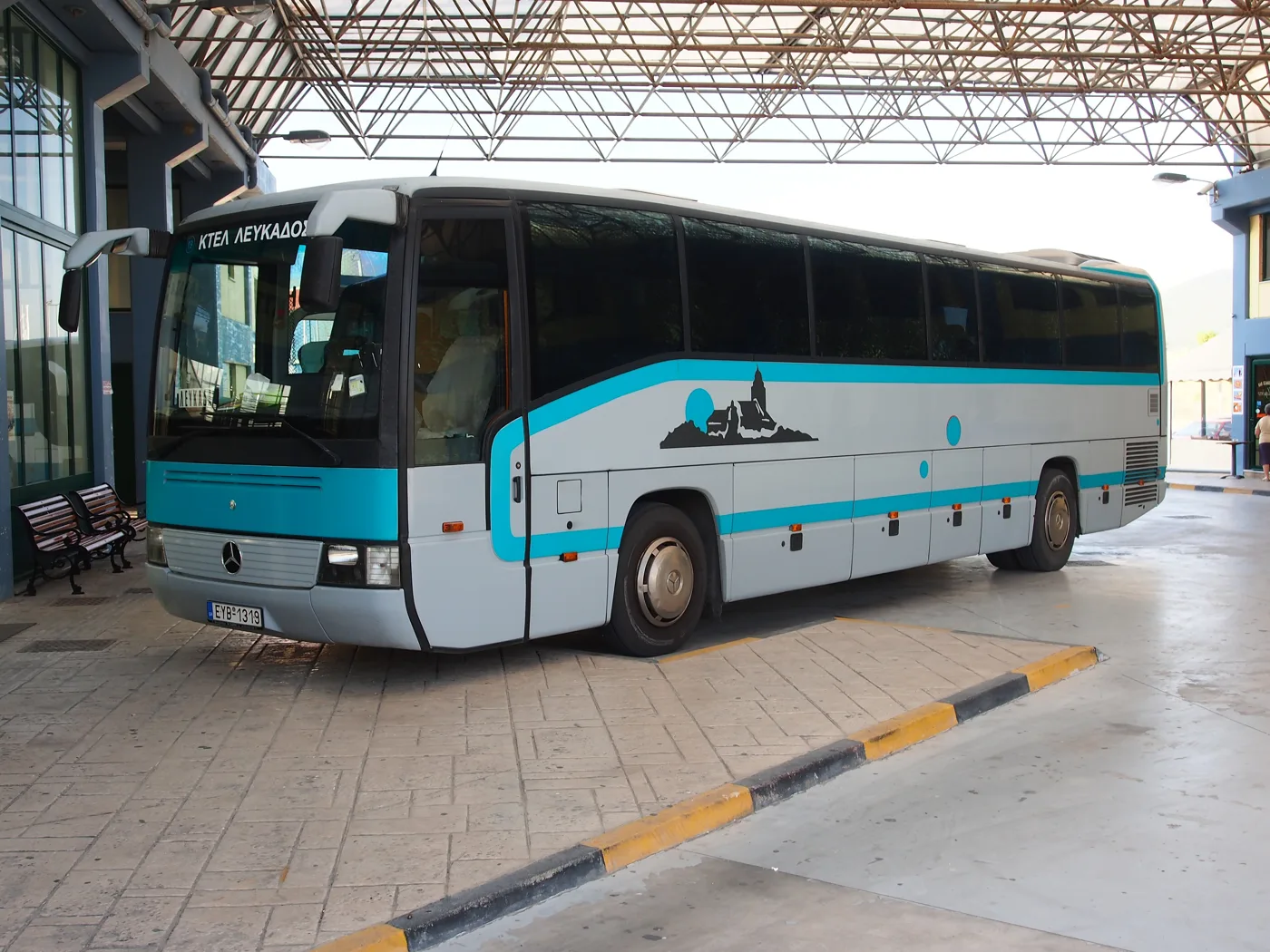
The direct KTEL Trikala bus, 06:30 from Kato Patisia.
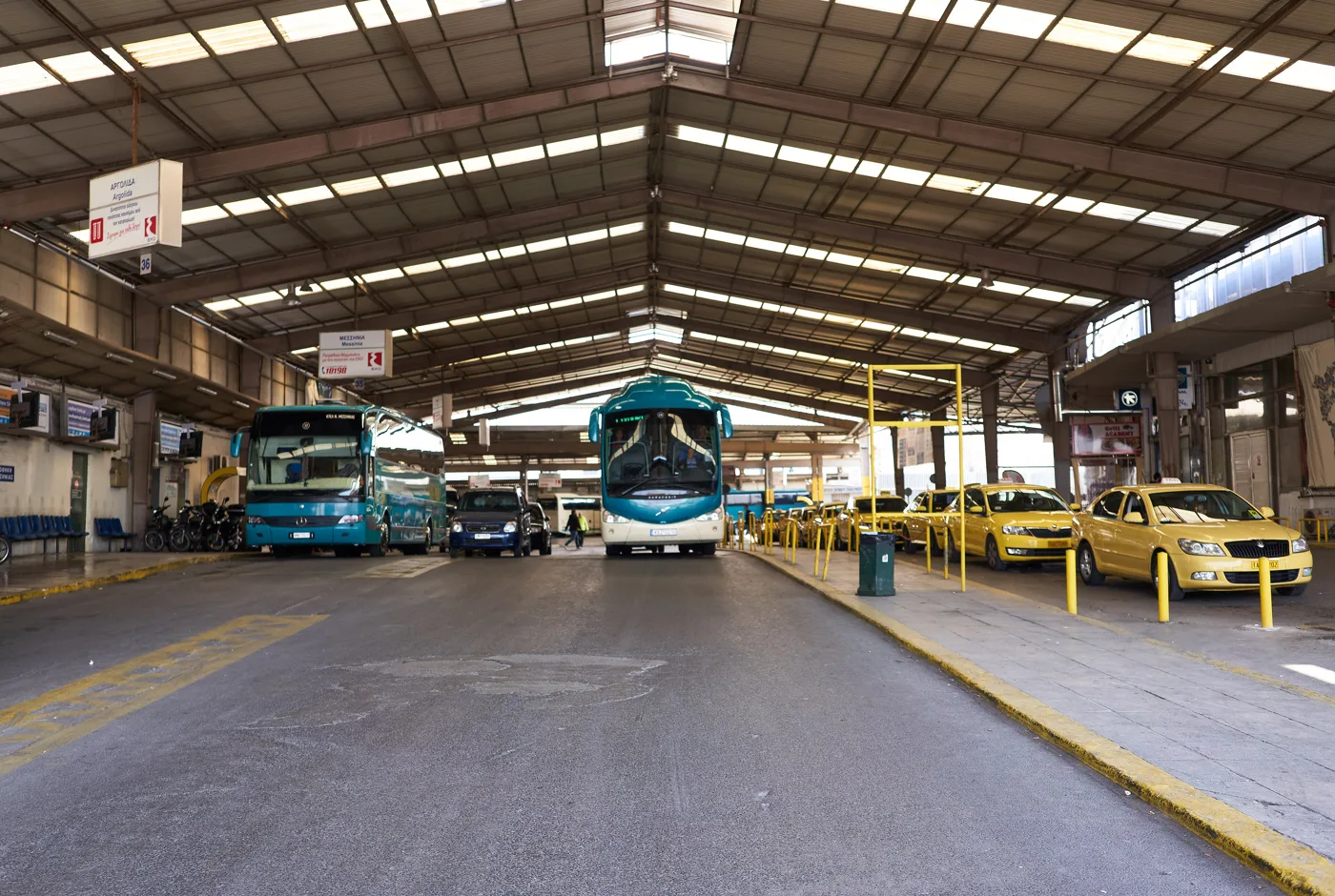
The buses to Trikala leave from the Liosion station.
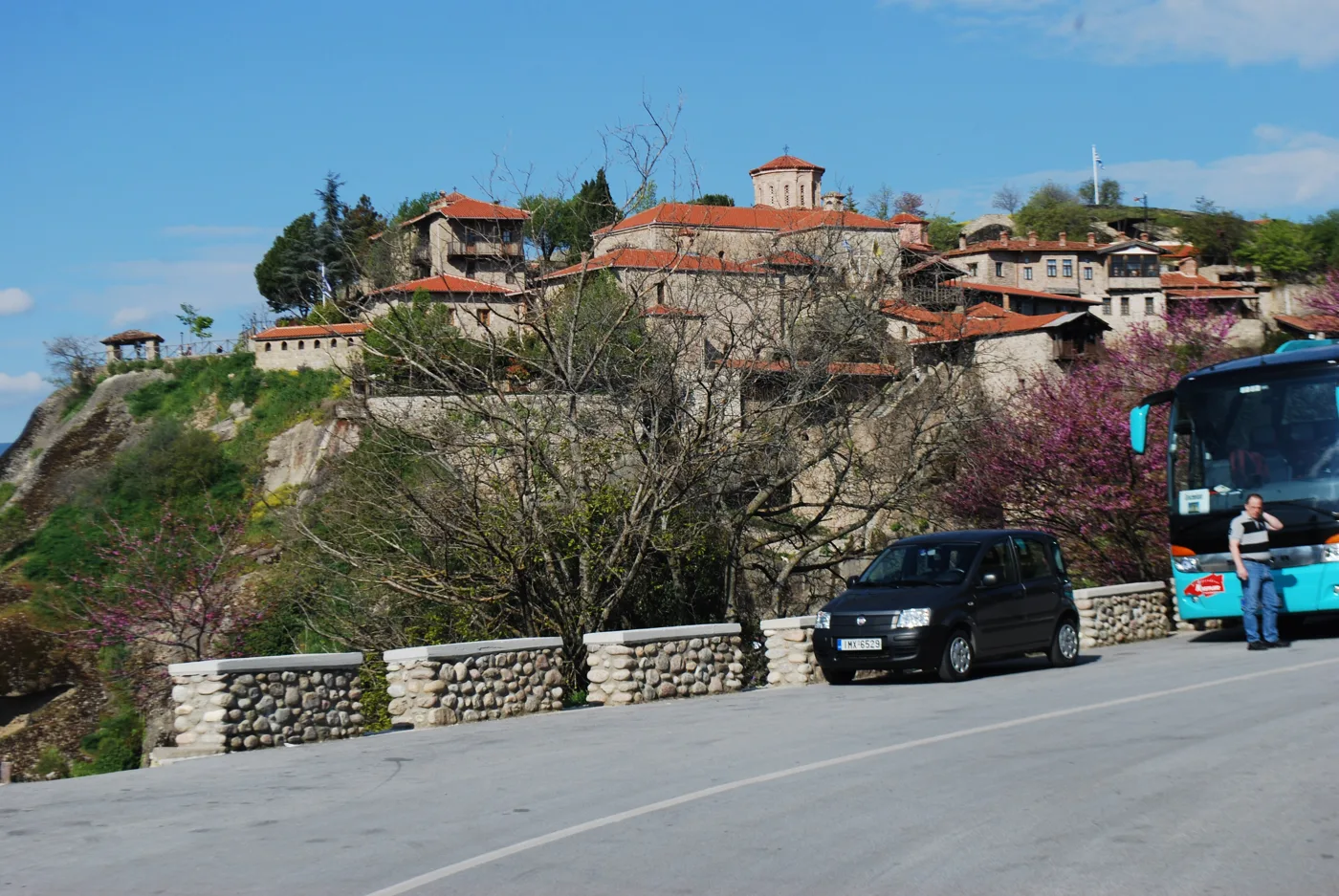
Organised tours arrive around 11:00.
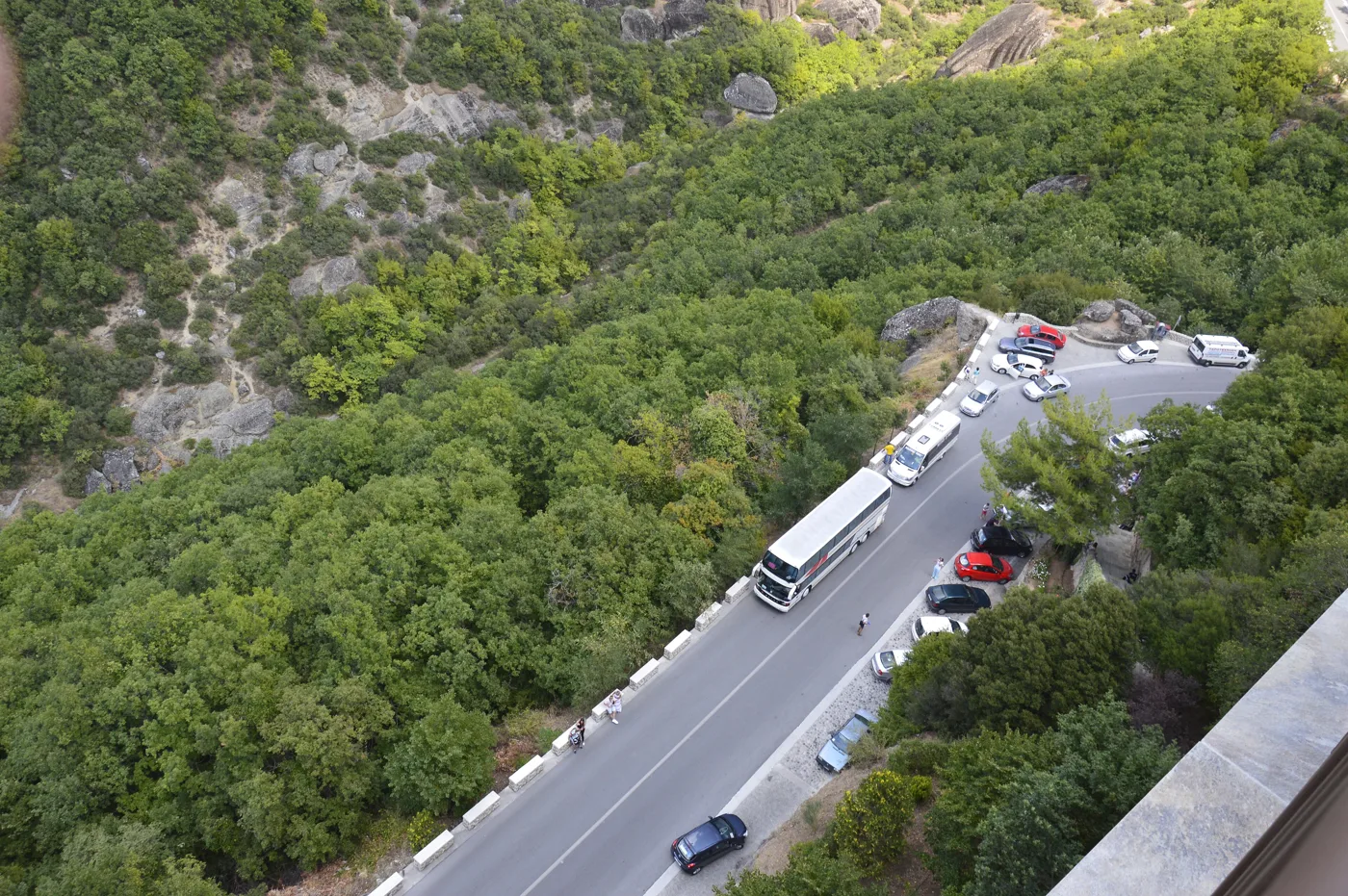
From May to October it’s full by 10:00.
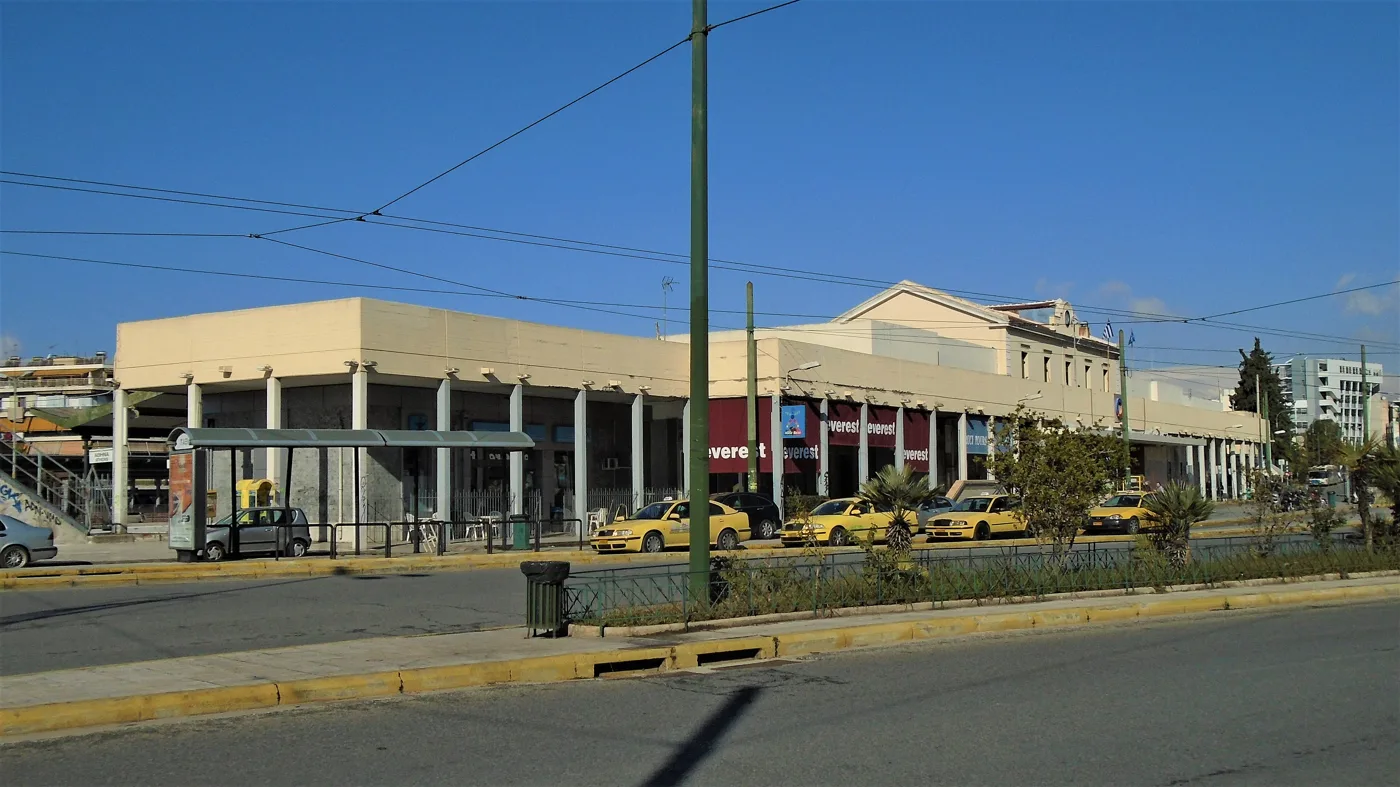
The station for trains to the north.
Photos: Alf van Beem (CC0), George E. Koronaios (CC BY-SA 4.0), Jean Housen (CC BY-SA 3.0), Mrcsifkin (CC BY-SA 3.0), Argos (CC BY-SA 4.0) · Wikimedia Commons
🕗 The day’s schedule with the KTEL bus
🕗 The day's schedule
The schedule is for summer hours, 1 April to 31 October, and for a Saturday, when everything is open; on weekdays replace the monastery that’s closed that day with Agios Nikolaos. It takes strong legs: 7 kilometres of walking and 800 steps. With taxis between the monasteries, €25 an hour, you cut the walking in half. In winter the monasteries close at 14:00 or 15:00: Varlaam and Rousanou before 14:00, Agios Stefanos in the afternoon, and more trail.
From Ioulianou 50 to Kato Patisia
Three minutes to Victoria, metro towards Kifisia, three stops, five minutes. At the Patision Street stop in front of the station by 06:10, with a coffee from the bakery that opens next door.
The KTEL bus leaves
A seat on the right for Parnassos and Oiti in the morning light. One 15-minute stop halfway; sleep until Lamia.
Kalambaka
The bus drops you at the KTEL station. Taxi to Great Meteoron, 15 minutes and €12, or the local bus if it goes up within half an hour.
Great Meteoron
The 300 steps, the katholikon of the Transfiguration, the old kitchen, the cellar, the museum and the ossuary. An hour. If it’s a Tuesday, or a Wednesday or Thursday in winter, start with Varlaam.
Varlaam
Five minutes on foot from the Great Meteoron car park, 195 steps, the barrel, Katelanos’s frescoes, the view from the courtyard. Forty-five minutes.
Rousanou
Twenty-five minutes downhill along the road, 1.5 kilometres, with the view of it from above all the way; bridge, garden, katholikon. Half an hour. In winter it closes at 14:00 on weekdays: fit it in before Varlaam.
Psaropetra
Twenty minutes uphill to the Psaropetra balcony, where all the monasteries can be seen together. The day’s sandwich here, on the rock.
Agia Triada
Fifteen minutes along the road, downhill, a bridge and 140 steps; the James Bond rock and Kalambaka at your feet. Forty minutes; in summer it closes at 16:00.
Agios Stefanos
Twenty minutes along the road. It opens in the afternoon at 15:30, no steps, with the museum and the view of the plain. Forty minutes.
The path to Kalambaka
Twenty minutes back to the Agia Triada bridge and 25 minutes down the path to the Byzantine church of the Dormition; ten minutes to the KTEL station. If your legs say no, a taxi from Agios Stefanos to the KTEL station, ten minutes and €8 to €10.
Return
The bus to Athens. At Kato Patisia around 22:15, metro to Victoria, on Ioulianou before 22:45.
💶 What it costs
Meteora is one of the cheapest big day trips in Greece: the monasteries cost €5, the bus €63 return, a meal in Kastraki €12 to €18 with wine. The only expense that pushes the day up is taxis between the monasteries, which are expensive for one person and nothing for four. Here’s the day by each means, for comparison.
💶 What the day costs, by each means
🍽️ What to eat
The cooking of Kalambaka is Thessalian and Vlach: meat on the spit and over charcoal, kontosouvli and kokoretsi, lamb in the clay pot, kid with lemon, Trikala sausages with leek, home-made pies with greens and cheese in hand-rolled pastry, cheeses from the Pindus mountains, feta and manouri, and the spinach and okra of the plain. In Kastraki the tavernas have views of the rocks and village prices, €12 to €18 with carafe wine: the best stop if you have a car. In Kalambaka the tavernas around the square and towards the church serve all day, and the grills on Trikalon Street do gyros or kontosouvli sandwiches for the road. On the KTEL schedule lunch is a sandwich on the rock, from a Kalambaka bakery in the morning, with a proper meal at 17:00, before the bus, or at 22:30 back in Athens. The monasteries sell sweets, candles, liqueurs and icons made by the communities, not food, and the water from their taps is rain and spring water, safe to drink. The local sweets: rice pudding and the halva of Farsala, which you’ll see in the patisseries on the square.
📅 When to go
The best months are April and May, with Meteora green, flowers in the monastery gardens, snow still on the Pindus and temperatures fit for steps, and September and October, with autumn colours in the oaks and fewer buses. June is good but hot at midday; July and August bring 35 degrees on the steps, queues at Great Meteoron and full car parks: if you go then, be at the monasteries from 09:00 and in the shade at midday. Winter is Meteora’s secret season, with snow on the rocks, mist rising from the Pineios and empty monasteries, but with hours only until 14:00 or 15:00, extra closing days and icy steps: for two days, not for a day trip. On the big feast days, the Transfiguration on 6 August at Great Meteoron and Rousanou, and Agios Charalambos on 10 February at Agios Stefanos, the monasteries hold all-night vigils with people from all over Thessaly, and the hours change.
💡 Tips before you set off
Cash for the monasteries, the taxi and the bus, around €60 per person. Shoes with grip for the steps and the path, a hat, water, a sandwich. Long trousers for men; for women a skirt below the knee, or a skirt in the bag, and a shawl for the shoulders: they hand them out at the entrances, but your own is better. In winter, a warm jacket: it’s windy on the rocks.
In one day pick three monasteries, four at most: Great Meteoron or Varlaam for size and museums, Rousanou or Agios Nikolaos for the art and the garden, Agia Triada or Agios Stefanos for the view. The others you see from the road, which is half the show. Whoever tries for all six sees steps.
Rousanou from the Varlaam road, from above. All of them together from Psaropetra. Agia Triada from the James Bond viewpoint on the Agios Stefanos road. Agios Stefanos and the plain from its bridge. Inside the churches, none: the monks mean it.
🚶 How to get there from Ioulianou 50
For the direct KTEL bus: Victoria station is three minutes on foot from the house, the metro towards Kifisia takes five minutes and three stops, Attiki, Agios Nikolaos, Kato Patisia, and the bus stop is on Patision Street, in front of the station: be there at 06:15, on the 06:00 metro or on foot, 2 kilometres along Patision in 25 minutes. For the Trikala buses from the Liosion station, 25 minutes on foot from the house, or the metro to Attiki and 13 minutes on foot. For the train, when it returns, Larissa Station is 15 minutes on foot from Ioulianou, or the metro from Attiki, one stop. In the evening, at 22:15 at Kato Patisia, the metro runs until midnight and a taxi to Ioulianou is €5.
Frequently asked questions
Is there a train to Meteora in 2026?
Not a direct one. The Palaiofarsalos–Kalambaka line has been closed for works since 2023, and as of November 2026 no restart has been announced. You can take the train to Palaiofarsalos, 3 hours, and the Hellenic Train replacement bus to Kalambaka, 2 hours, but the times don’t work for a day trip. The direct 06:30 KTEL bus is the train of 2026.
How many monasteries can I see in one day?
Three comfortably, four with taxis between them, five only by car, in summer hours and skipping lunch. The monasteries close at 15:00 to 17:00 in summer and at 14:00 or 15:00 in winter, each needs 30 to 60 minutes, and between them there is road and steps. The road, though, passes them all: you see all six from outside.
Which day of the week?
Saturday or Sunday, when all six are open; the KTEL bus doesn’t run on Sundays, so Saturday. On weekdays one monastery closes each day: Monday Agios Stefanos, Tuesday Great Meteoron, Wednesday Rousanou, Thursday Agia Triada, Friday Varlaam and Agios Nikolaos. In winter Great Meteoron also closes on Wednesday and Thursday, and Varlaam on Thursday.
What should I wear?
Women: a skirt below the knee and covered shoulders, no trousers, no shorts, nothing sleeveless; men: long trousers, no shorts. At the entrance to each monastery there are skirts and shawls that you wear over your clothes, free, but they can run out or you may not like them: a light long skirt in your bag solves the problem. Children the same, with some leniency.
How much does the day cost?
By KTEL bus, for one person: €63.20 for the bus, €15 for three monasteries, €20 to €25 for taxis, €15 for food and coffees, around €115. On an organised tour €90 to €140. By car for two, €170 to €200 together; for four, €230 to €260. Prices are for 2026.
Is it suitable for children and older people?
For children aged 6 and up, yes: the steps, the nets, the ossuary and the monastery cats go down well, and Agios Stefanos and Rousanou are easy. For older people who struggle with steps, Agios Stefanos has none, Rousanou has a few, and the others 140 to 300: by car or on a tour that stops at the door, it can be done; by KTEL bus and on foot, it’s too much. Pushchairs and wheelchairs can’t get through anywhere except Agios Stefanos.
A day trip or an overnight stay?
If you can, stay the night: €50 to €90 for a room in Kastraki or Kalambaka, the sunset from Sunset Rock, dawn from Psaropetra with the mist, monasteries in the morning without the buses, all six in two days, the Agio Pnevma path and Theopetra. If not, the day trip by KTEL bus or with a tour gives you the essentials: three monasteries and the view. Both are worth it; one more so.
Where does the KTEL bus stop in Athens, and how do I book?
At the bus stop on Patision Street in front of Kato Patisia metro station, not at the Liosion station: a member of staff with a “KTEL” sign gathers the passengers from 06:15. Book a seat online at ktelbus.gr by choosing KTEL Trikala, Athens–Kalambaka, or buy a ticket from the driver if there are seats. The service runs Monday to Saturday; check it beforehand, because it’s seasonal.
— Kathy