Why Delphi was special
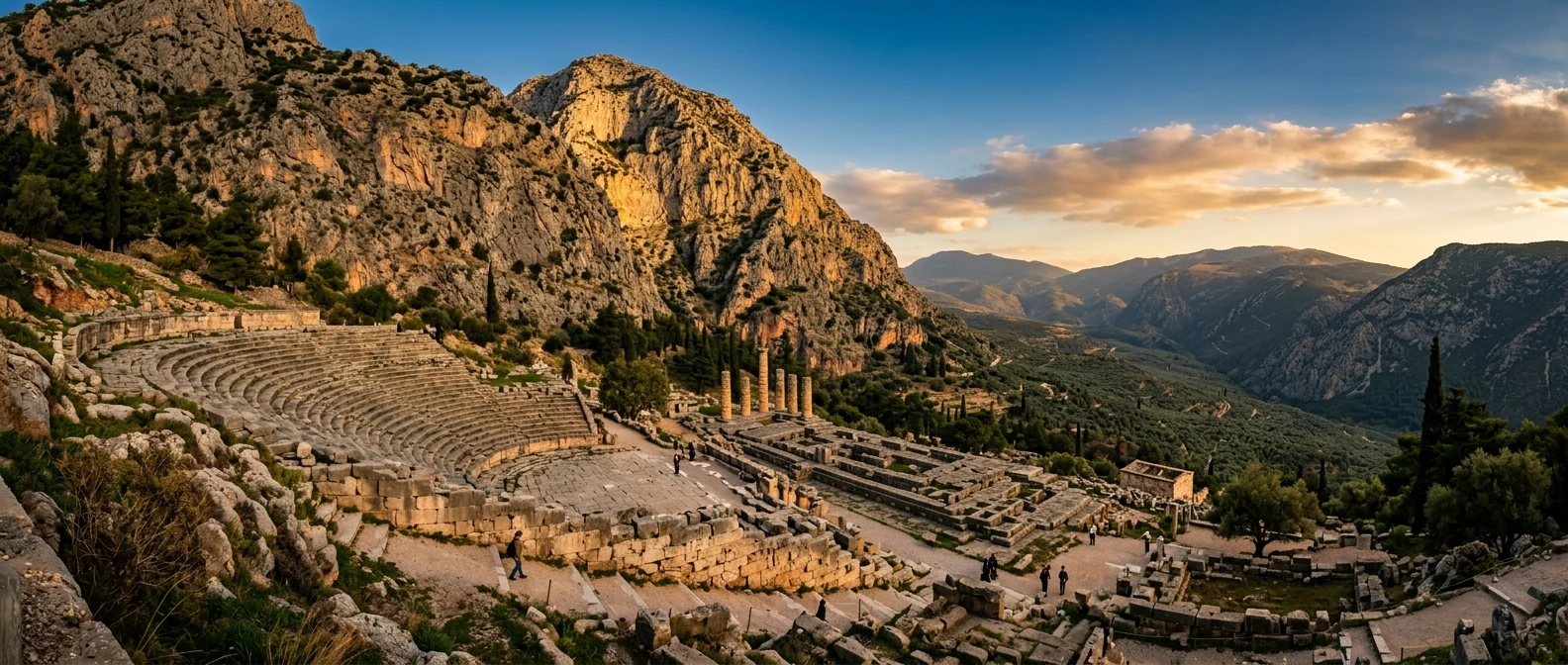
Delphi is built on the southern slope of Mount Parnassus, above the valley of olive groves that drops toward the Gulf of Itea. The ancient Greeks connected it with the omphalos, the symbolic center of the world. The Sanctuary of Apollo, with the Pythia giving oracles in the god's name, carried major religious and political importance for centuries, from the archaic period to late antiquity. Cities, rulers, and private visitors dedicated offerings here, which is why the Sacred Way is lined with the remains of treasuries and monuments.
How to get there
KTEL bus
From Liosion in Athens. The trip takes around 3 hours and usually costs around 17 euros each way. The bus stops in the modern village of Delphi, about 500 m from the site entrance. It is the most economical option without a car.
Rental car
Around 180 km and roughly 2 hours 15-30 minutes of driving, depending on traffic and stops. A car gives the most flexibility, especially if you also want Arachova or Hosios Loukas on the same day.
Organized day tour
Usually 80-140 euros per person. It includes the coach and a guide, while entry tickets and lunch vary by company. Some tours also add the Byzantine monastery of Hosios Loukas.
Overnight option
If you have the time, staying overnight in Delphi or Arachova makes the trip much easier. You can enter the site in the morning before most buses arrive.
The archaeological site
- Sacred Way: the uphill route lined with the foundations of treasuries. The reconstructed Athenian Treasury helps show how these offering buildings once worked.
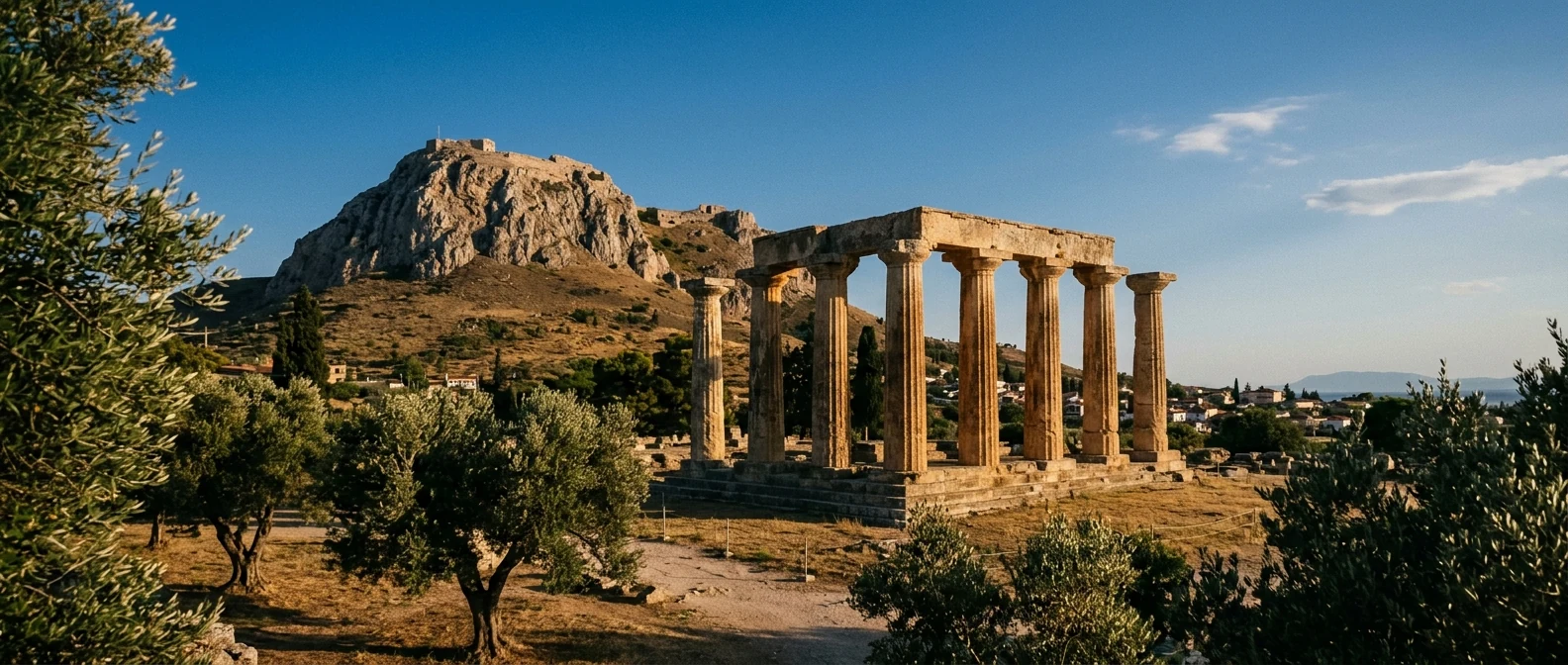
- Temple of Apollo: partly restored, with six columns standing. The present form is mainly linked with the 4th-century BCE temple.
- Theatre: well preserved, with a capacity of around 5,000 spectators and an open view over the valley.
- Stadium: higher up in the site, reached by an uphill walk. This is where events of the Pythian Games took place.
- Tholos of Athena Pronaia: around 5 minutes on foot below the main site, in a separate part of the sanctuary. Its three restored columns are one of the best-known images of Delphi.
- Castalian Spring: the sacred spring where pilgrims purified themselves before consulting the oracle. Visible from the road.
The Archaeological Museum of Delphi
Why the museum needs time
The Delphi Museum is not just an extra stop. It holds many of the pieces that explain the wealth and standing of the sanctuary:
- The Charioteer of Delphi (~470 BCE): a bronze statue of natural size, with glass-paste eyes.
- The Sphinx of Naxos: a monumental archaic work that once stood on a high column.
- The twin kouroi, Kleobis and Biton: archaic statues linked with the story told by Herodotus.
- Metopes from the Athenian Treasury: sculptures from the reconstructed treasury.
- The omphalos stone: the conical marble omphalos of the world.
The site and museum share a combined ticket. Leave 1-2 hours for the museum alone, especially if you want to spend time with the Charioteer.
Arachova, the mountain village
Arachova is 9 km from Delphi and is a stone-built village on the slopes of Parnassus. It is known for woven goods, formaela cheese, herbs, and winter traffic toward the ski area. On a day trip, it works mainly as a stop for lunch or coffee. If you only have a few hours, the archaeological site and the museum should stay the priority.
At a glance
~180 km
Athens to Delphi via E65 motorway. ~2 h 15-30 min driving.
~800 BCE
Beginning of Delphi's sanctuary as the dominant Greek oracle. Active until 390 CE.
€12
Usual combined ticket for the site and museum. Opening hours change by season.
Charioteer
~470 BCE bronze. One of Greece's most important sculptures. In Delphi Museum.
A realistic one-day plan
Athens → Delphi round trip (10-12 h, by car or tour)
- 06:30: Depart Athens. Highway driving. Coffee stop en route (€3).
- 09:00: Arrive Delphi. Enter site at opening for cooler temperature + fewer crowds.
- 09:00-12:00: Sacred Way + Temple + Theatre + Stadium (3 h site visit).
- 12:00-13:30: Athena Pronaia (Tholos), Castalian Spring, Museum (combined).
- 13:30-15:00: Lunch in Delphi village or drive to Aráchova (€20-€30).
- 15:30-16:00: Aráchova walk + photographs + maybe coffee.
- 16:00: Optional Hosios Loukas (Byzantine UNESCO monastery) detour, 30 min drive.
- 17:00-19:30: Drive back to Athens.
By KTEL bus, without a car
- 07:30: KTEL bus from Liosíon. €17.
- 10:30: Arrive modern Delphi village.
- 10:45: Walk 500 m to site entrance.
- 11:00-14:30: Site + museum + lunch.
- 15:00: Walk back to bus stop.
- 15:30 / 17:00: KTEL bus back. Check schedule day-of.
- ~20:00: Arrive Athens.
Where to eat
- Tavernas in Delphi village: practical options near the site, often with pies, cooked dishes, and meat.
- Restaurants in Arachova: more choice and a mountain-village atmosphere. You may find hilopites, formaela, or lamb.
- Roadside tavernas on the route: the Livadia and Distomo area has good country-style Greek food.
- Museum cafe: basic snacks and coffee.
Practical tips
- Walking shoes are necessary: the site is on a slope, with stone surfaces and ancient marble, sometimes uneven. The walk up to the stadium is steeper.
- Hat, water, and sunscreen in summer; layers and a light jacket in spring, autumn, or winter.
- Leave enough time: a full visit to Delphi, including the site, museum, and Tholos, takes around 3.5-4.5 hours, not 2.
- Combined ticket: it covers the site and the museum together. Confirm the price and opening hours before you go.
- Photography: morning light works well on the Sacred Way and the Temple, while afternoon light suits the Tholos more.
- Drone restrictions: drones are prohibited at archaeological sites in Greece.
The decision: stay overnight or not?
Reasons to stay overnight in Delphi or Arachova
- You enter the site in the morning: before the temperature rises and before most buses arrive.
- You see Arachova more comfortably instead of as a short stop.
- You combine the trip with Hosios Loukas, the Byzantine monastery, without too much time pressure.
- You keep time for dinner in a mountain village, which feels very different from Athens.
- Cost: around 60-120 euros per night for a comfortable mountain hotel in Delphi or Arachova.
If you have two days, staying overnight makes the trip clearly easier. If you only have one day, the day trip still works, but you will make compromises in time and pace.
Combine Delphi with
- Arachova: 9 km away and an easy stop for lunch or coffee.
- Hosios Loukas: a Byzantine monastery and UNESCO site, around 30 minutes to the south by car. Adds around 1.5-2 hours to the day.
- Galaxidi: a coastal village around 30 minutes south of Delphi. Better as an overnight or two-day extension.
- Itea: a port town with a beach and tavernas, around 20 minutes from Delphi.
- Parnassos ski area: winter only, around 30 minutes from Arachova by car.
How to get there from Angel Athens (Ioulianou 50)
From Ioulianou 50, Liosion KTEL is around 10 minutes away on foot. The bus to Delphi leaves from there. By car, head out toward Kifisou Avenue and continue toward Livadia, Arachova, and Delphi. Plan on around 2.5-3 hours door to door by car and around 3.5 hours with KTEL, including the trip to the station.
Frequently asked questions
Worth doing as a day trip from Athens?
Yes, but it is a long day, usually 10-12 hours door to door. An overnight stay is clearly more comfortable if you have the flexibility.
Best month?
April, May, September, and October are usually the most comfortable months. Summer is hotter at midday, while winter can be cold and may even bring snow on the access road.
Site only or with museum?
Both. The museum has the Charioteer and gives the main context for what you see in the site. Skipping it weakens the visit.
How long do I need on site?
Around 3.5-4.5 hours for a full visit including the museum. With only 2.5 hours, you will likely need to skip the stadium or parts of the museum.
Are bus connections reliable?
Generally yes. Still, confirm the return departure on the day of travel, because schedules change by season.
Do I need a guide?
An independent visit works well with a good guidebook or app. A guide helps more if you want historical context for the oracle, the offerings, and the Pythian Games.
Sources:
— Kathy