🪪 The trip at a glance
📍 Where it is and how far
Sounion is the cape that closes Attica to the south, where the Saronic Gulf meets the Aegean. From Ioulianou 50 it is about 70 kilometres: an hour and a quarter by car along the coast road without traffic, and about two hours by KTEL bus, which stops in every suburb of the Riviera. The temple can be seen from far away, from the second bend after Legrena, and from the sea: anyone arriving by ferry from the Cyclades sees it first.
📍 Where Sounion is
Sounion is the southernmost tip of Attica, 72 kilometres from Ioulianou 50. In blue you see the coastal route, Poseidonos Avenue and Sounion Avenue, with the stops of the Riviera in green. The purple dashed line is the way back through the Mesogeia, via Lavrio and the Attiki Odos motorway, and in orange are Lavrio and the KTEL bus terminal at Pedion Areos. Tap any point.
⚖️ Is it worth it? The pros and cons
Sounion is the trip we recommend first to anyone coming to Athens for a few days: close, easy, with sea, antiquities and the most famous sunset in Attica in one afternoon. It has its flaws too: the few buses, the sunset crowds and the wind. Here is an honest picture.
📊 At a glance, from 1 to 5
👍 The pros
- The closest big excursion from Athens: half a day is enough.
- A fifth-century BC temple above the sea, with a view of five islands.
- The best-known sunset in Attica.
- The drive along the Athens Riviera, with beaches to swim at on the way.
- You can go without a car, by KTEL bus from Pedion Areos.
👎 The cons
- Few buses a day, and the last one often leaves before the summer sunset.
- Crowds and coaches at sunset in July and August.
- No shade at all on the site and often a strong wind.
- A twenty-euro ticket for an hour's visit.
🏛️ The history of the cape
Sounion was sacred long before the temple you see. Homer, in the Odyssey, calls it “Sounion hiron”, the sacred headland: here the helmsman of Menelaus' ship died on the way home from Troy. Around 600 BC the huge marble Kouroi of Sounion were set up here; today you can see them in the National Archaeological Museum, ten minutes from Ioulianou 50. A first temple of limestone began to rise in the early fifth century BC, but the Persians destroyed it in 480 BC, before it was even finished.
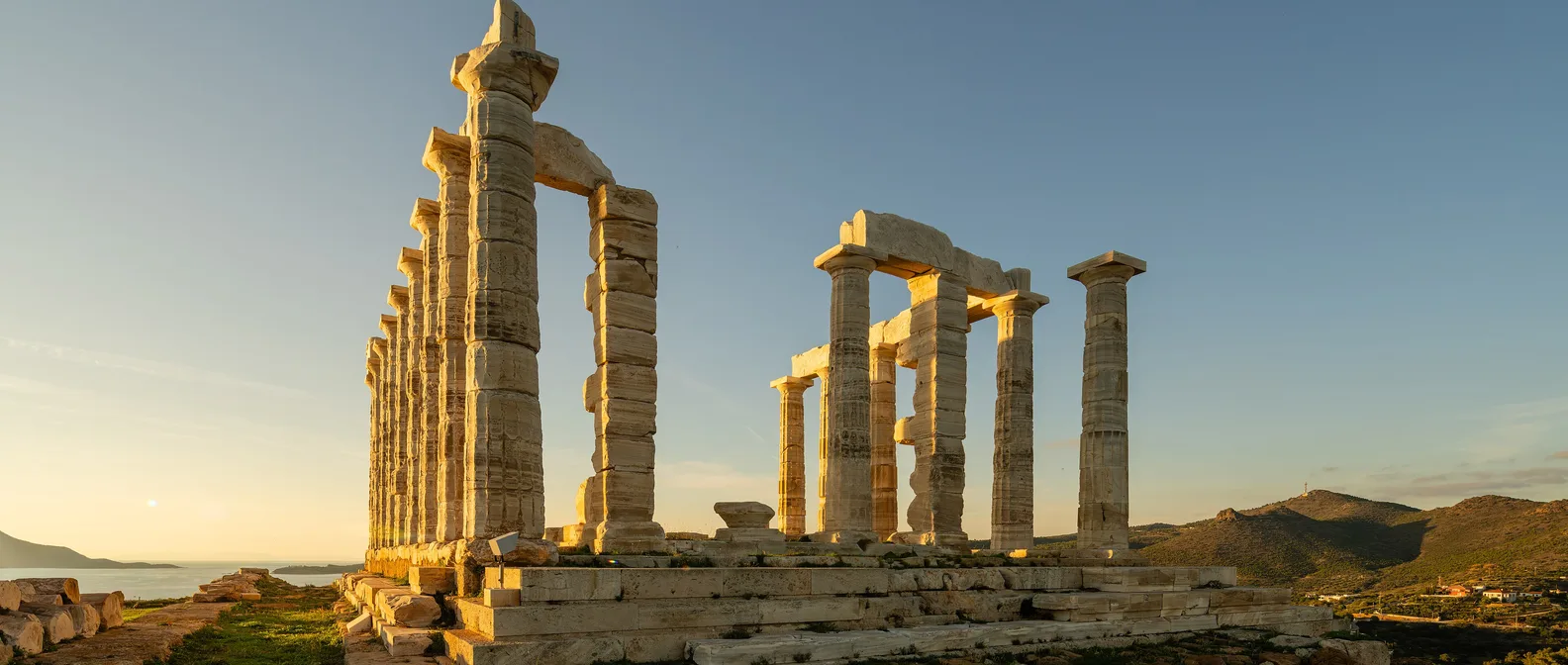
The temple standing today was built around 444 to 440 BC, in the years of Pericles, most likely by the same architect who built the Temple of Hephaestus in the Ancient Agora. It is Doric, with six columns on the short sides and thirteen on the long ones, of white marble from nearby Agrileza: a marble with no iron in it, which does not rust and stays brilliant white after 2,500 years beside the salt spray. Of the 34 columns, 15 are standing, about six metres tall. Inside the cella stood a bronze statue of Poseidon six metres high, and the frieze with the Centaurs, the Giants and the labours of Theseus is today in the Archaeological Museum of Lavrio.
In the Peloponnesian War, in 413 BC, the Athenians fortified the cape with walls and towers to protect the grain ships coming from the Black Sea, and cut two shipsheds for warships into the rock on the western side. A little further north, on a low rise, the Temple of Athena Sounias was built around 470 BC, with an unusual plan: a colonnade only on the south and east sides. In the Middle Ages the Temple of Poseidon became a landmark for sailors under the name Capo Colonne, the cape of the columns.
In 1810 the 22-year-old Lord Byron climbed up here with friends and carved his name on a column, as dozens of travellers did in those days. A few years later he wrote in “Don Juan” the line “Place me on Sunium's marbled steep”, and Sounion entered the romantic map of Europe for good. Excavations began in 1884 with Wilhelm Dörpfeld, who found the foundations of the older temple beneath the present one, and continued under Valerios Stais until 1915.
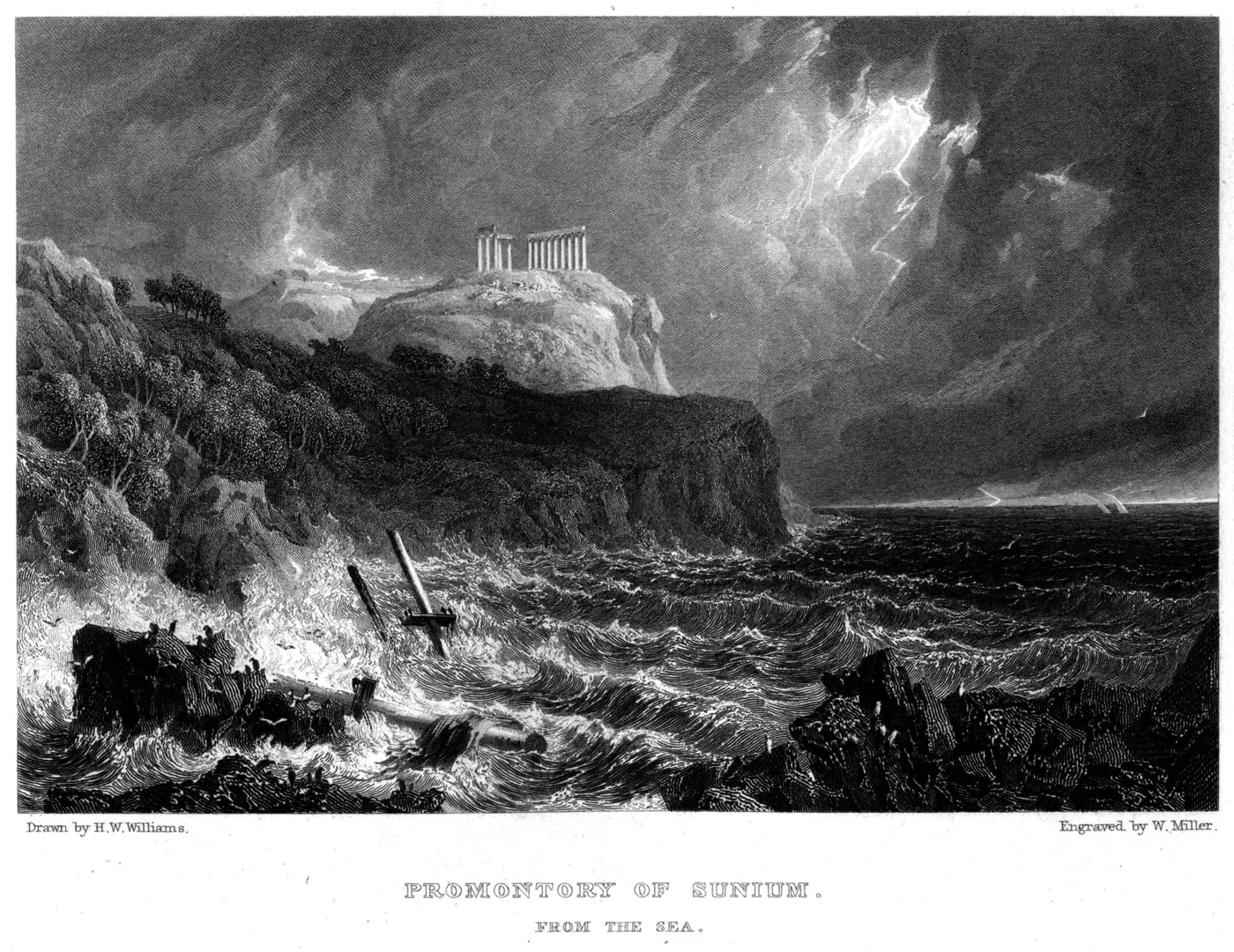
The temple as the travellers saw it.
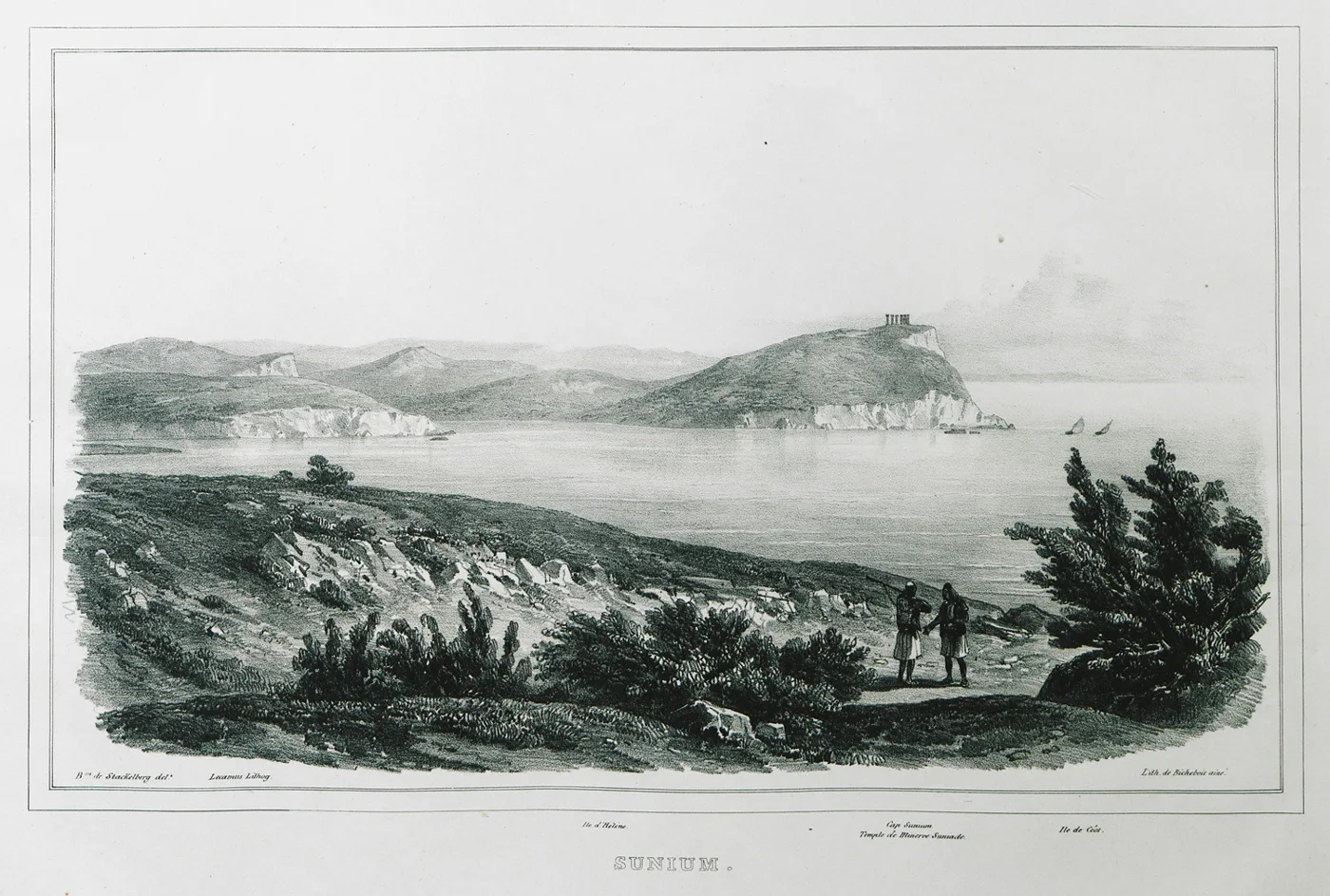
By the painter who drew the Greece of 1810.
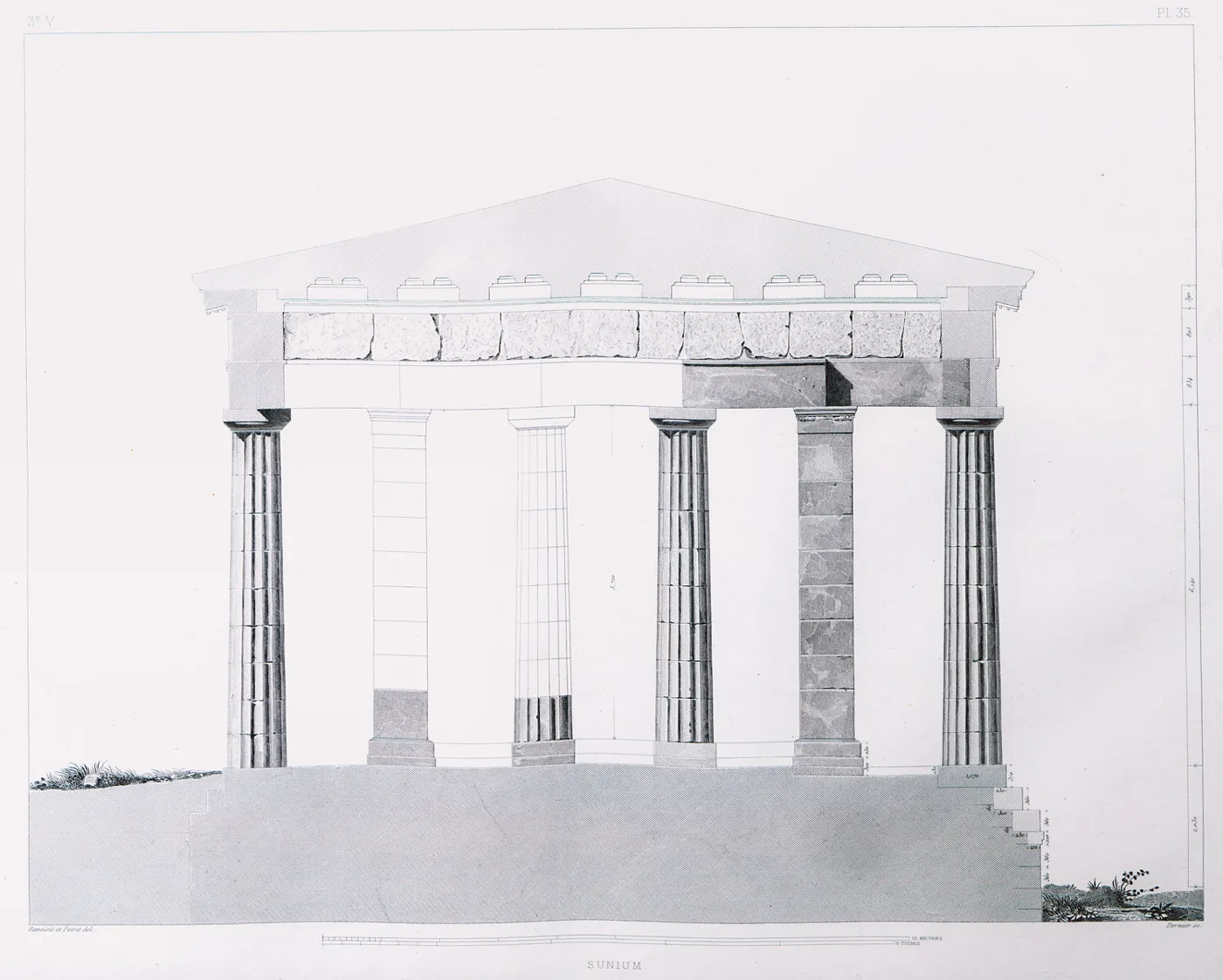
The façade as restored by the French expedition.
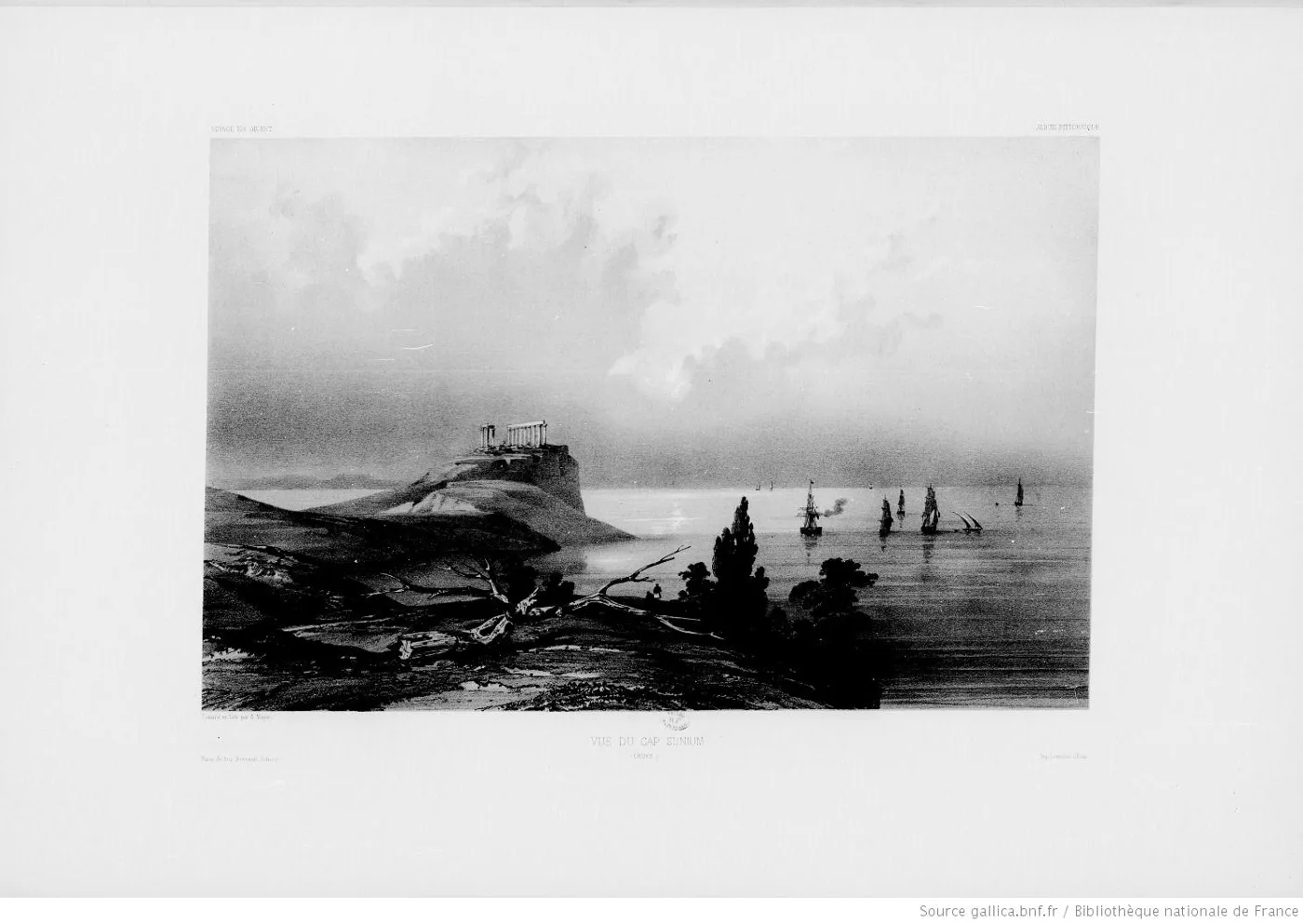
Fishermen below the columns.
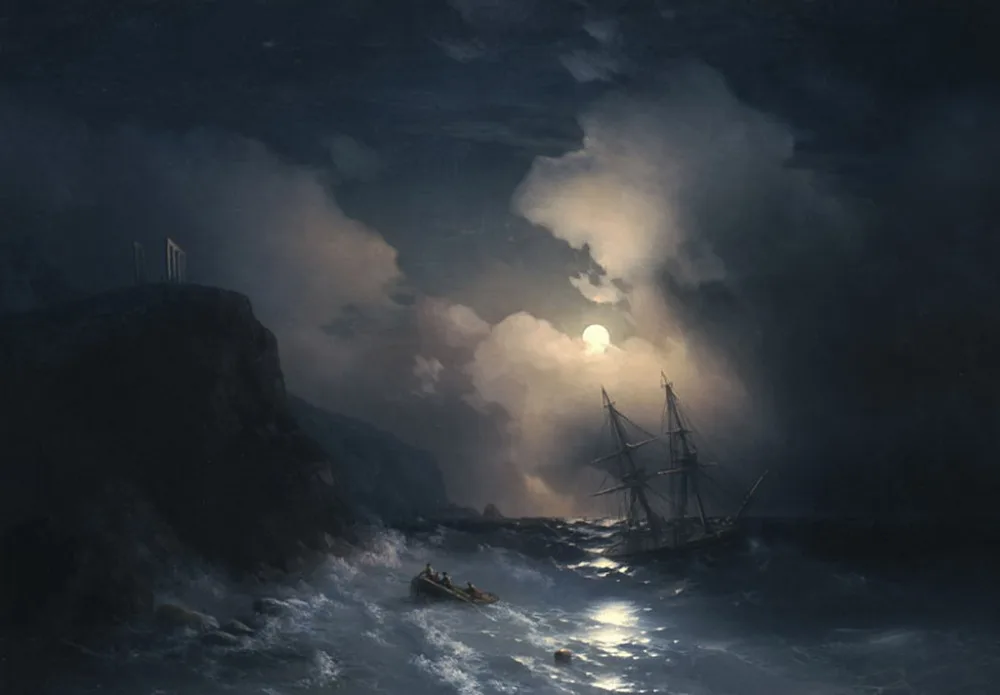
“Tempest by Sounion”, 19th century.
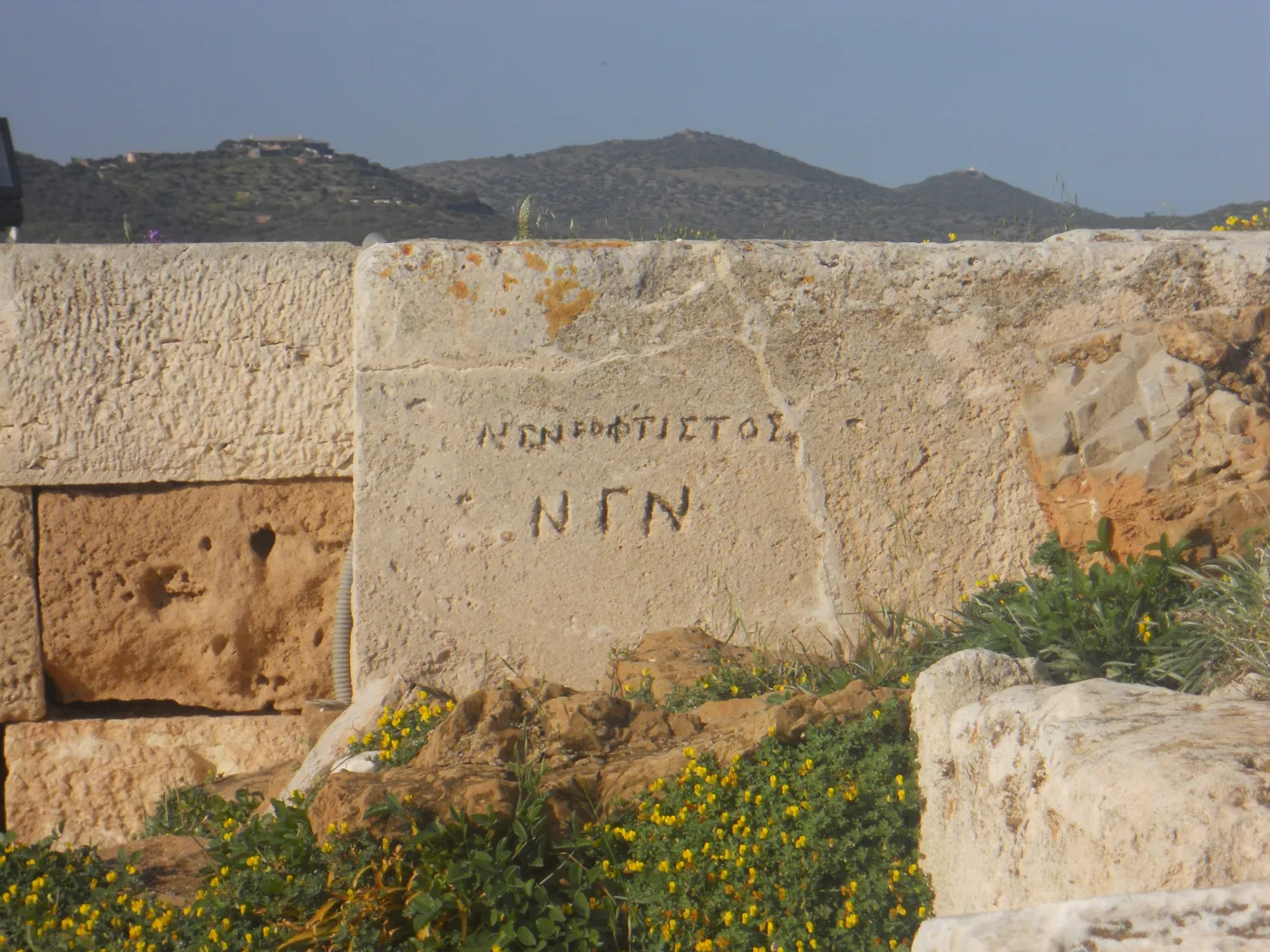
Travellers carved their names, as Byron did.
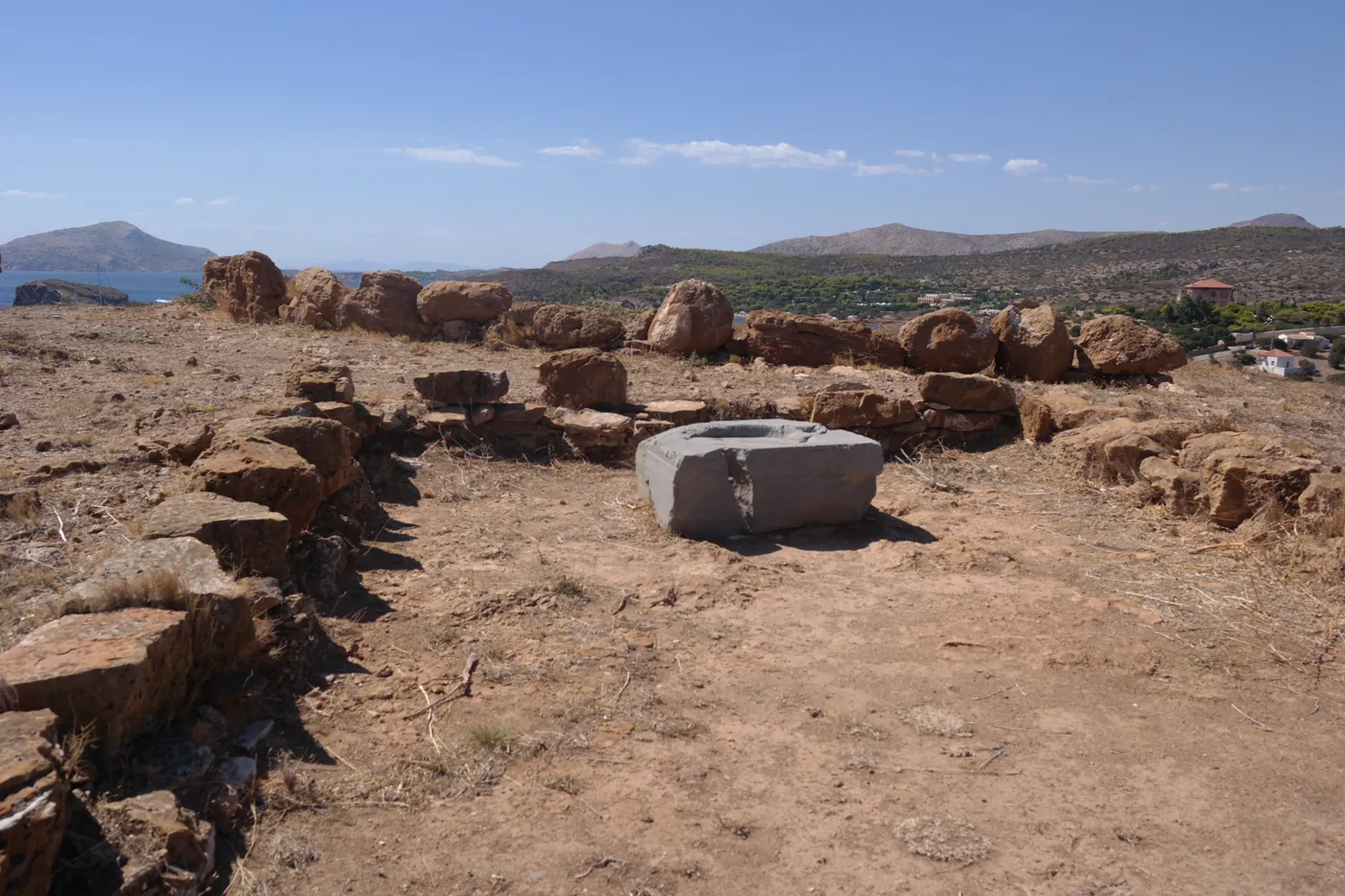
On the second rise, a little further north.
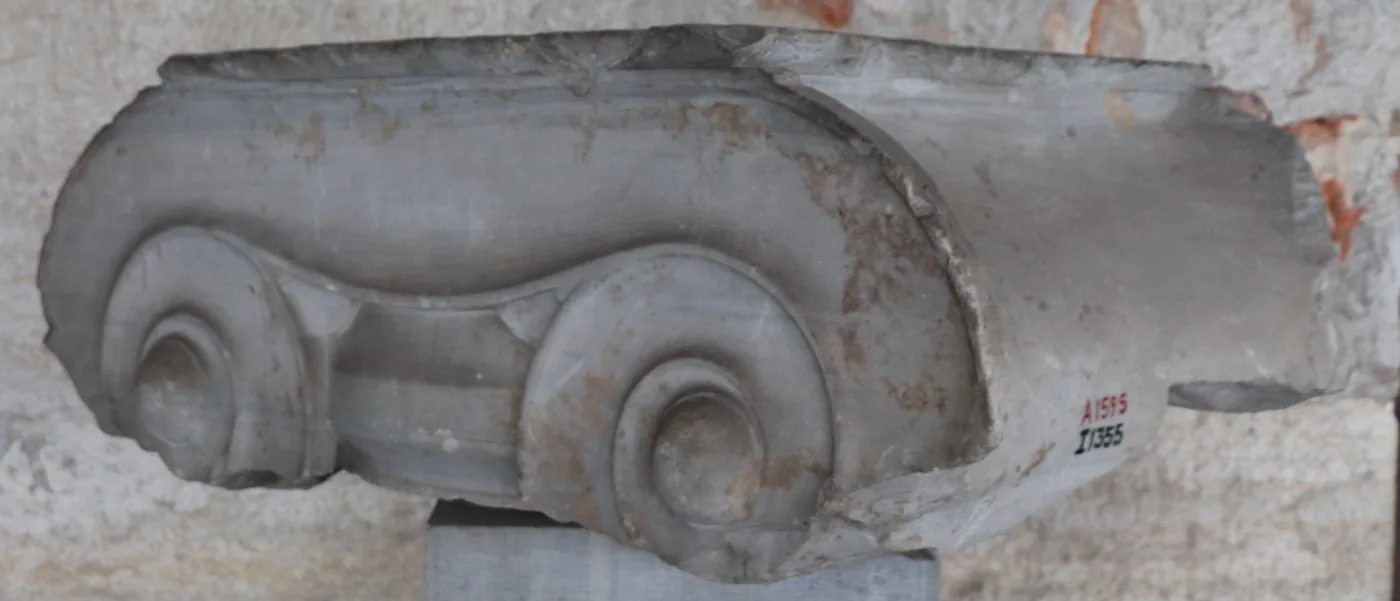
From the Temple of Athena, today in a museum.
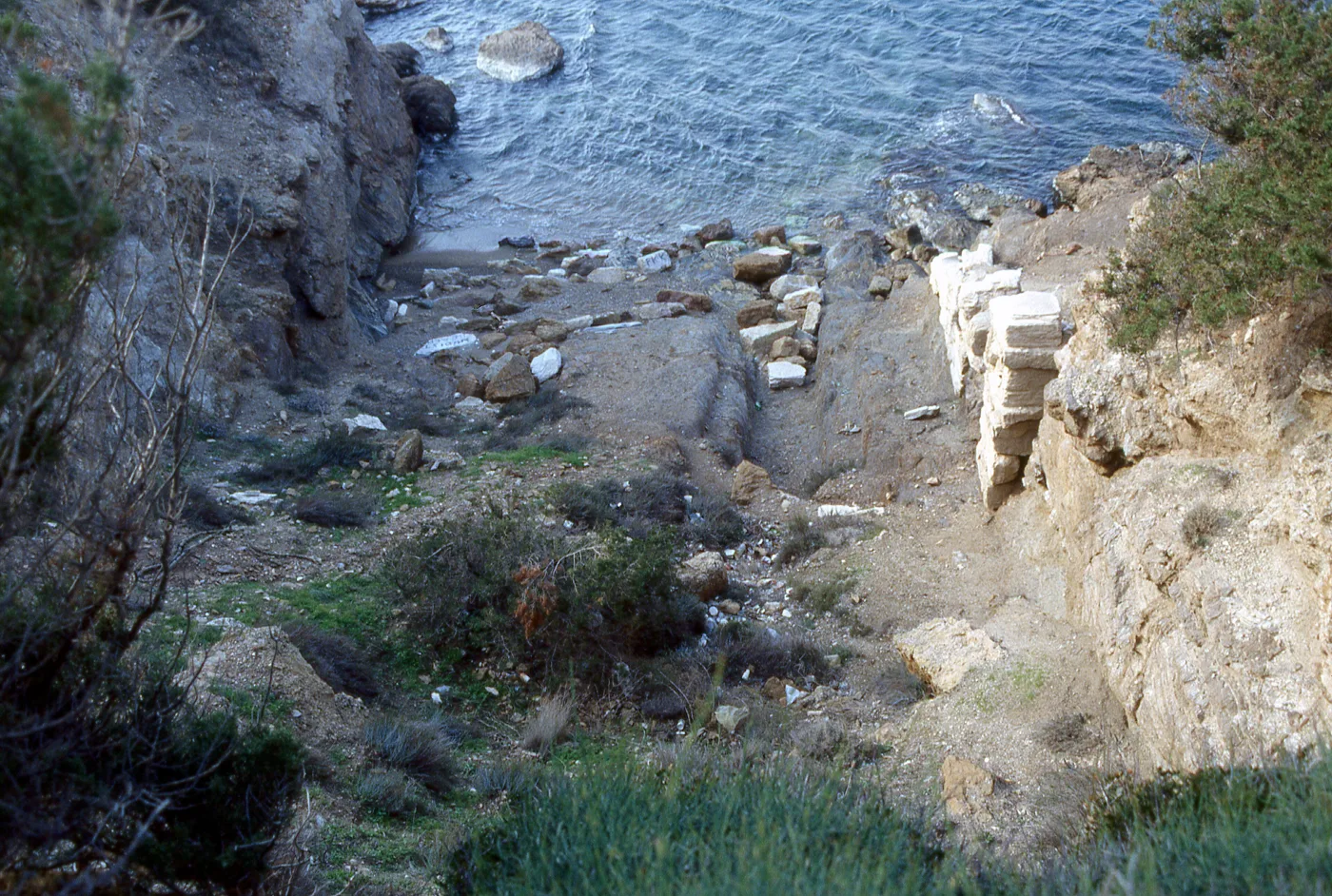
Two warships were kept here from 413 BC.
Photos: William Miller / Hugh William Williams (Public domain), Otto Magnus von Stackelberg (Public domain), Guillaume Abel Blouet (Public domain), Antoine Latour (Public domain), Ivan Aivazovsky (Public domain), Erik Drost (CC BY 2.0), Mirjanamimi (CC BY-SA 4.0), Furius (CC0), Mark Landon (CC BY 4.0) · Wikimedia Commons
From this rock, the myth says, King Aegeus threw himself into the sea when he saw his son's ship returning from Crete under black sails. Theseus had killed the Minotaur, but forgot to change the sails to white, as he had promised. The sea took the king's name: the Aegean.
🏛️ The temple today: what you will see on site
From the car park and the ticket office you climb up in five minutes, on a sloping dirt path. First you pass the Propylaea, the monumental gateway of the sanctuary in limestone and marble, and the Stoa, forty metres long, where pilgrims sheltered from the sun. Then the rock opens out and you see the whole temple, with the sea on three sides. A path runs around it: from the south side you see the islet of Patroklos and, on the horizon, Kea and Kythnos, and from the east side Makronisos and Lavrio. On the north side the walls of 413 BC survive with their bastion, and below them, by the sea, the traces of the shipsheds. Partridges live on the site too: you will see them walking among the marbles, indifferent to the visitors.
You cannot go inside the temple: a low rope protects it, ever since the carvings and the footsteps had begun to wear the marble away. Allow 45 minutes to an hour and a half, more if you wait for the sunset. The Temple of Athena, four hundred metres to the north-east, is a low hill with foundations, which you can see from the road.
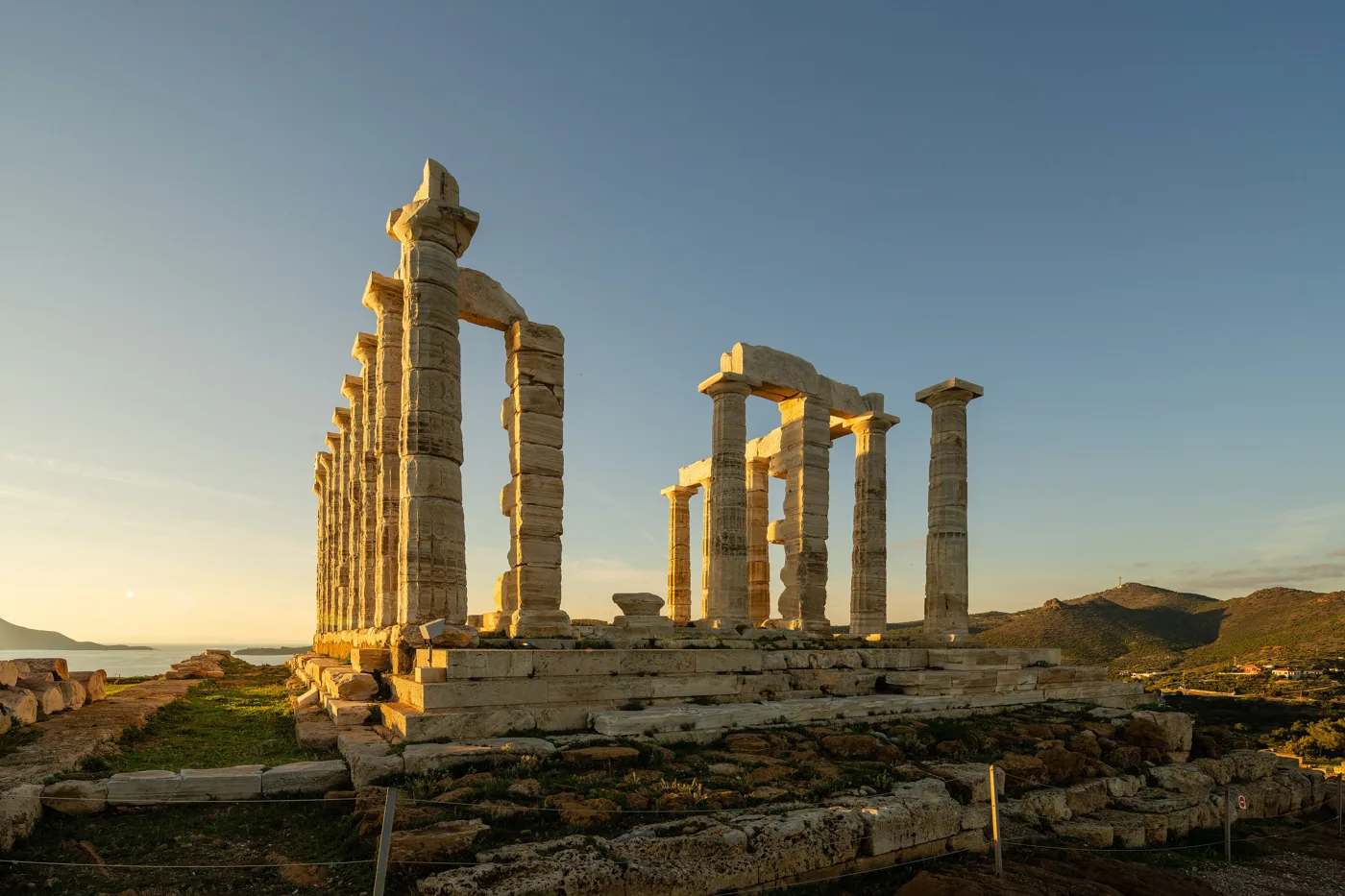
The Agrileza marble takes on colour before sunset.
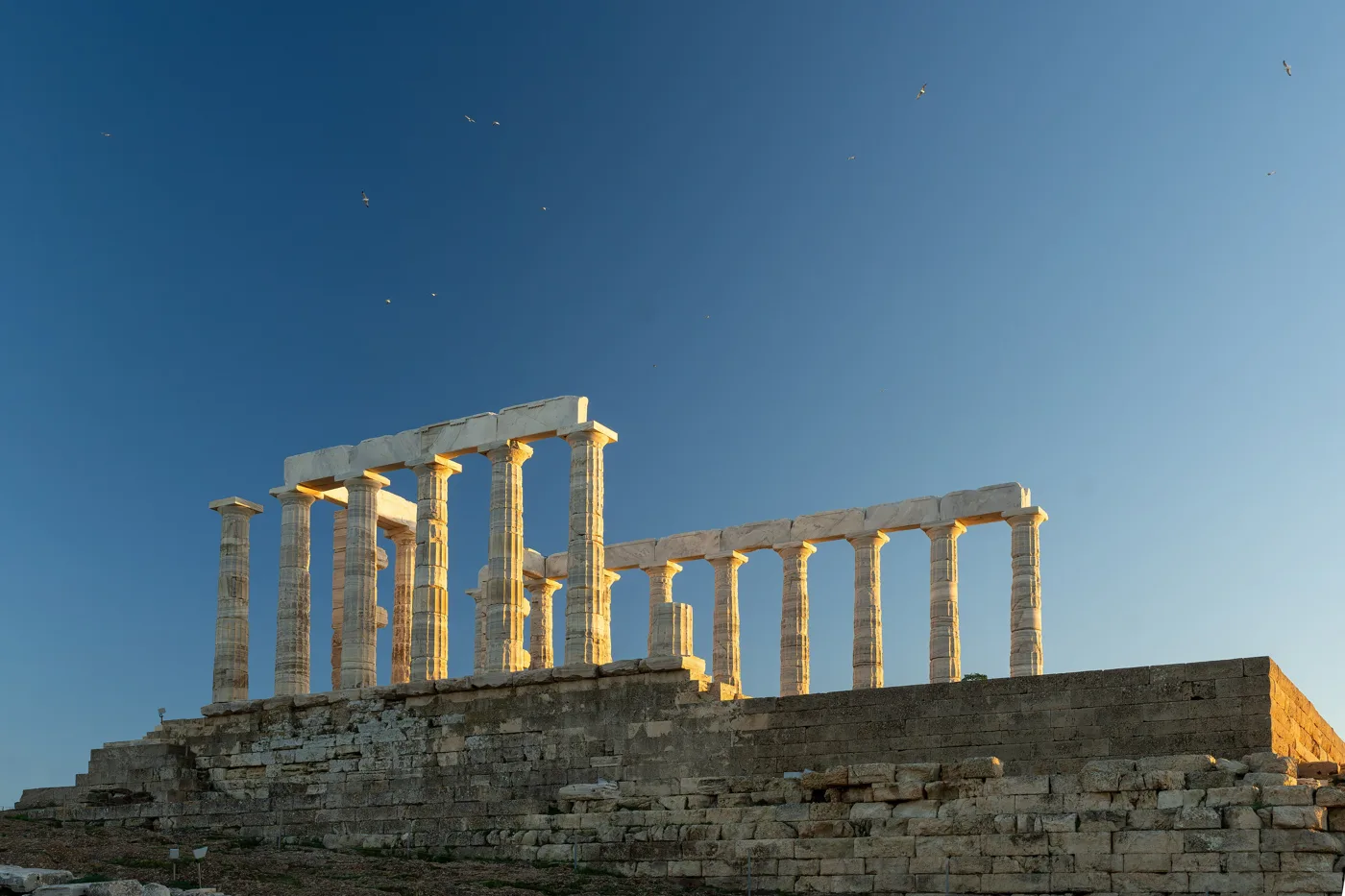
Each long side had thirteen columns.
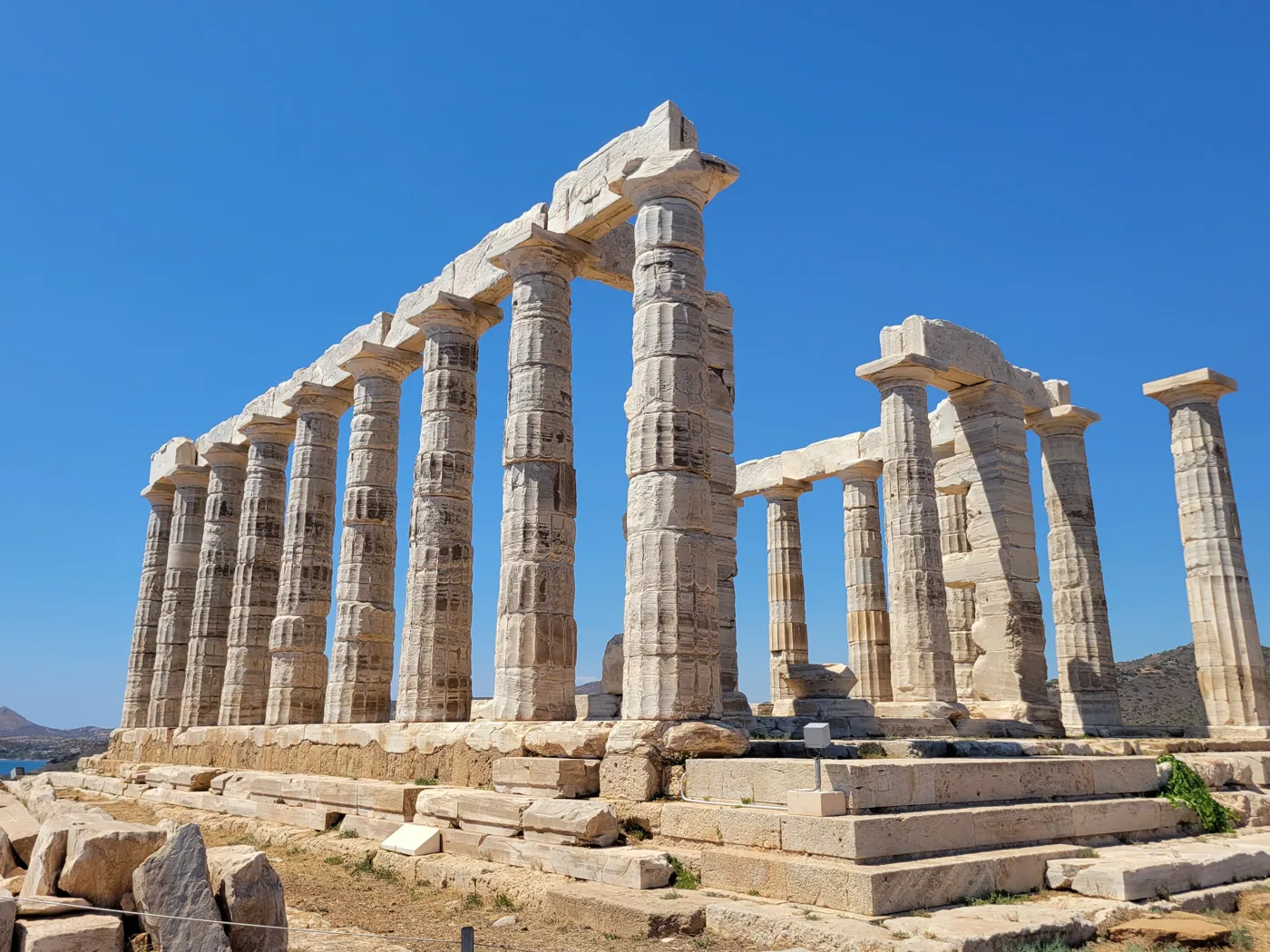
A rope keeps you two metres from the marble.
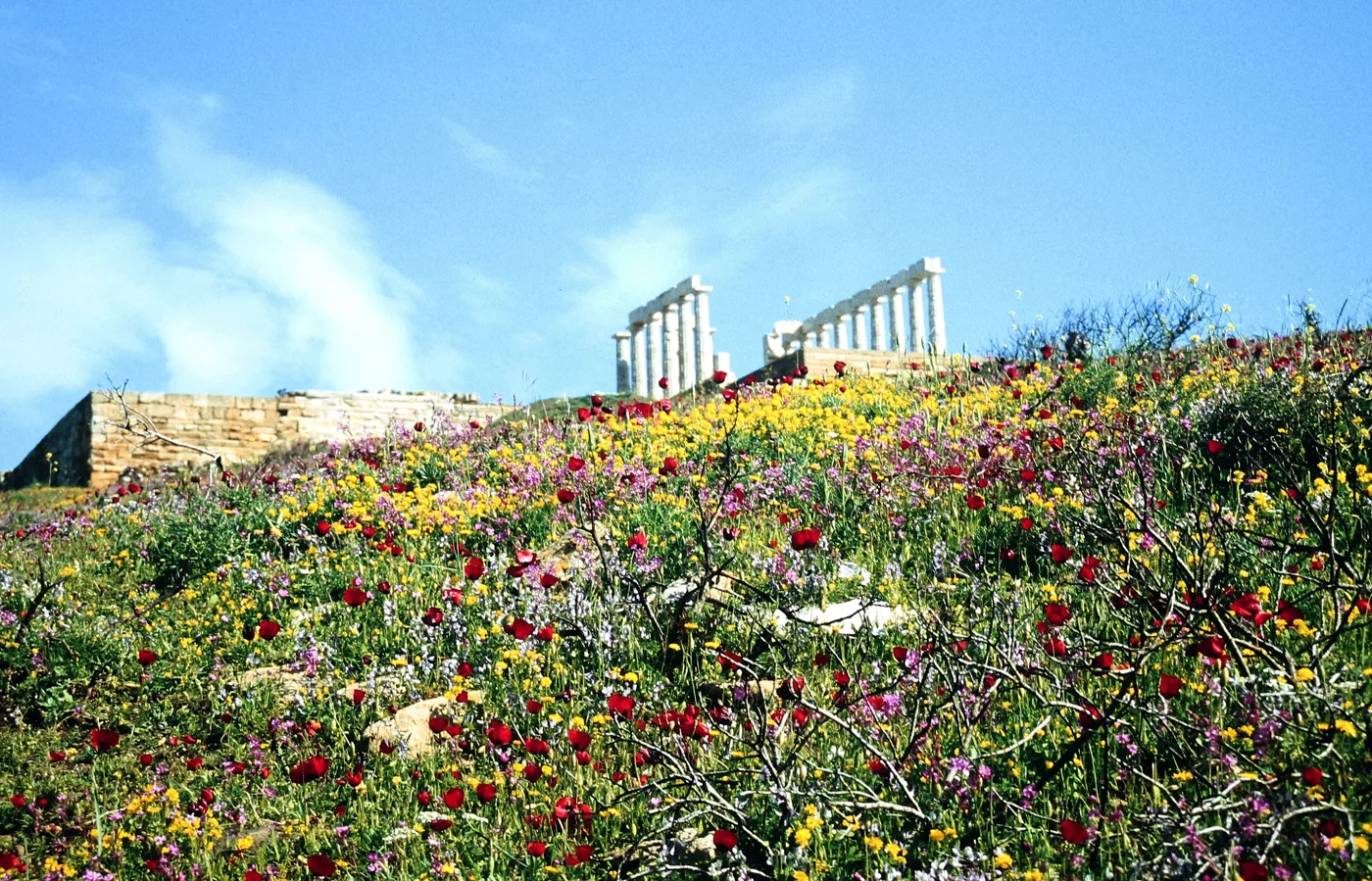
In April the rock fills with poppies.
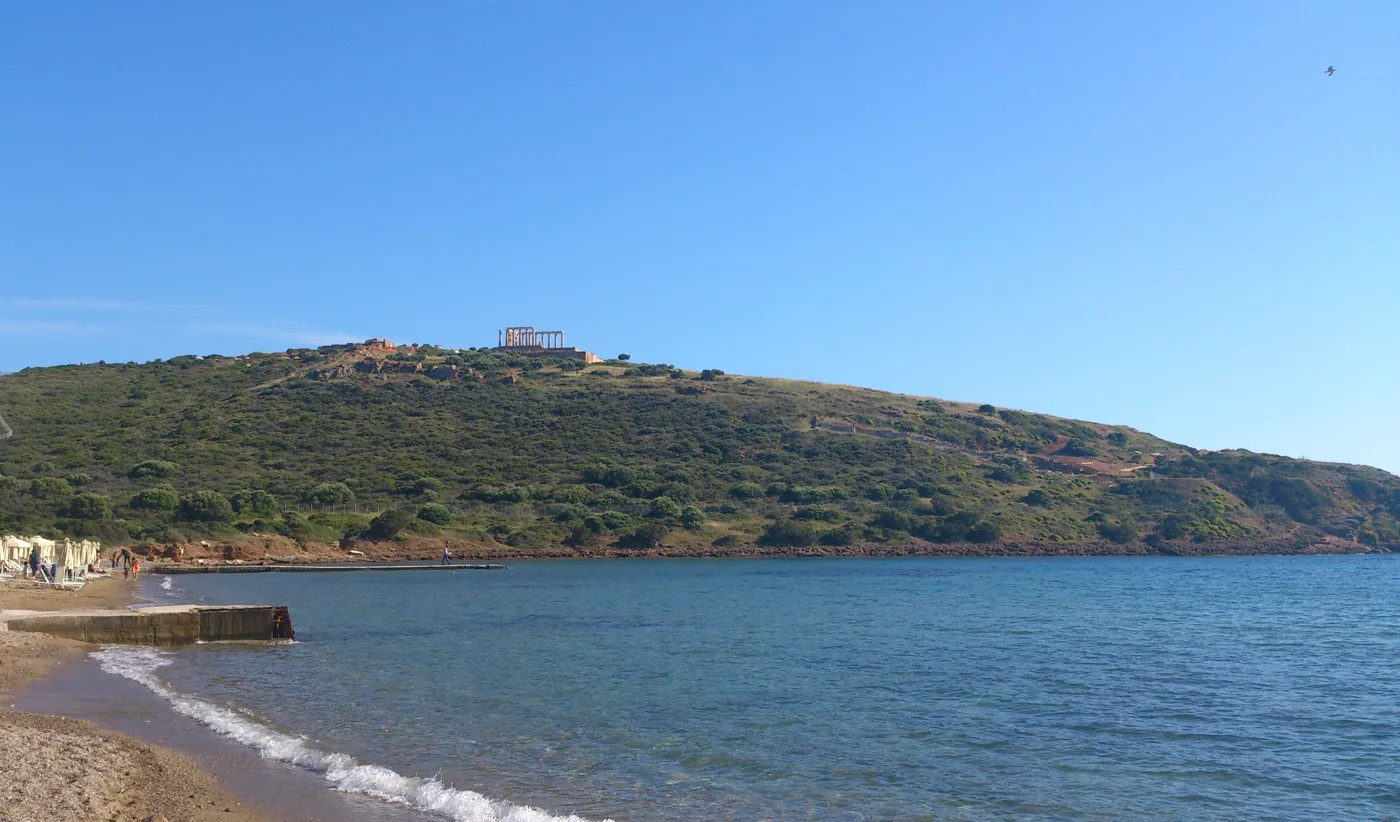
The little beach at the foot of the temple.
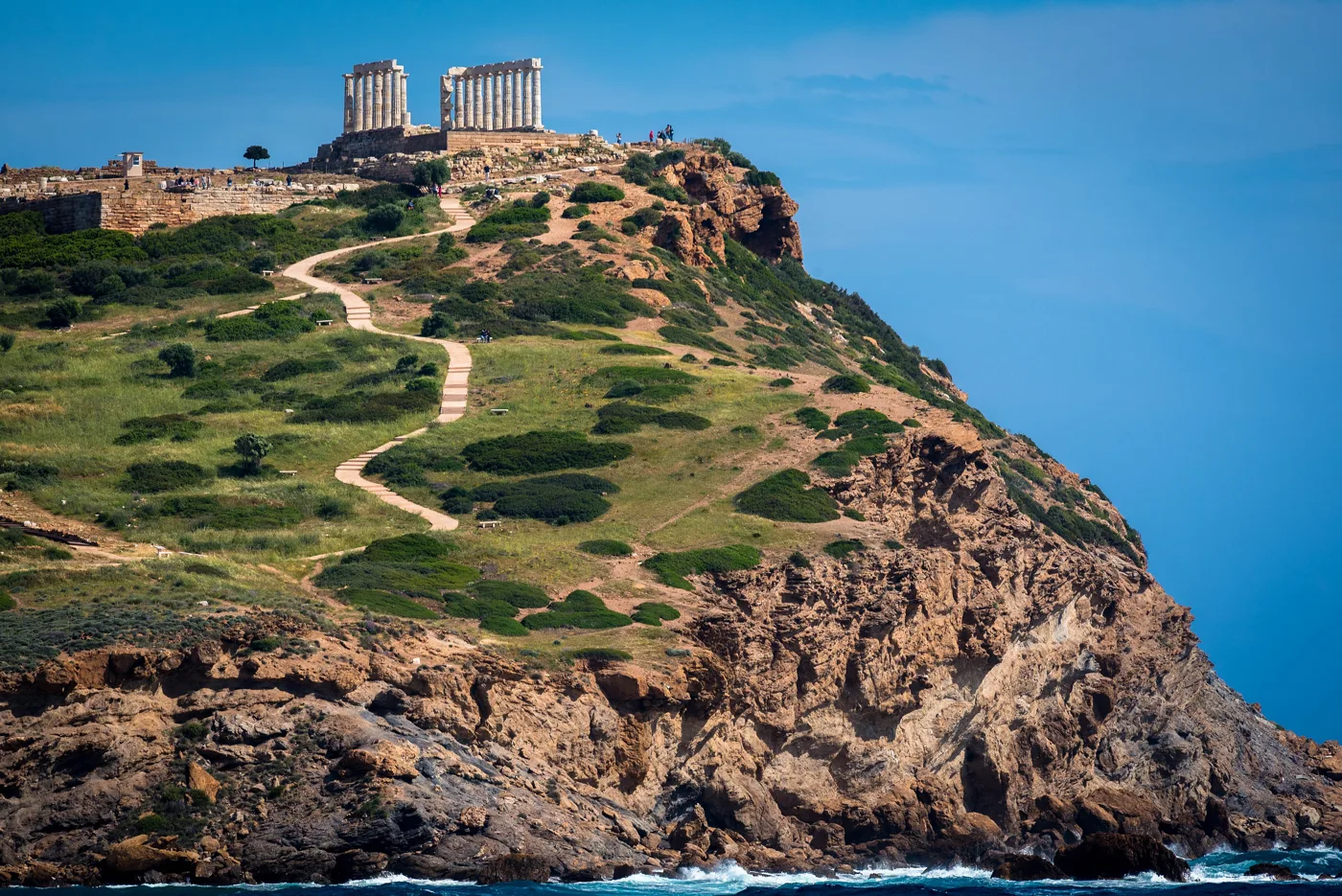
Sixty metres above the sea.
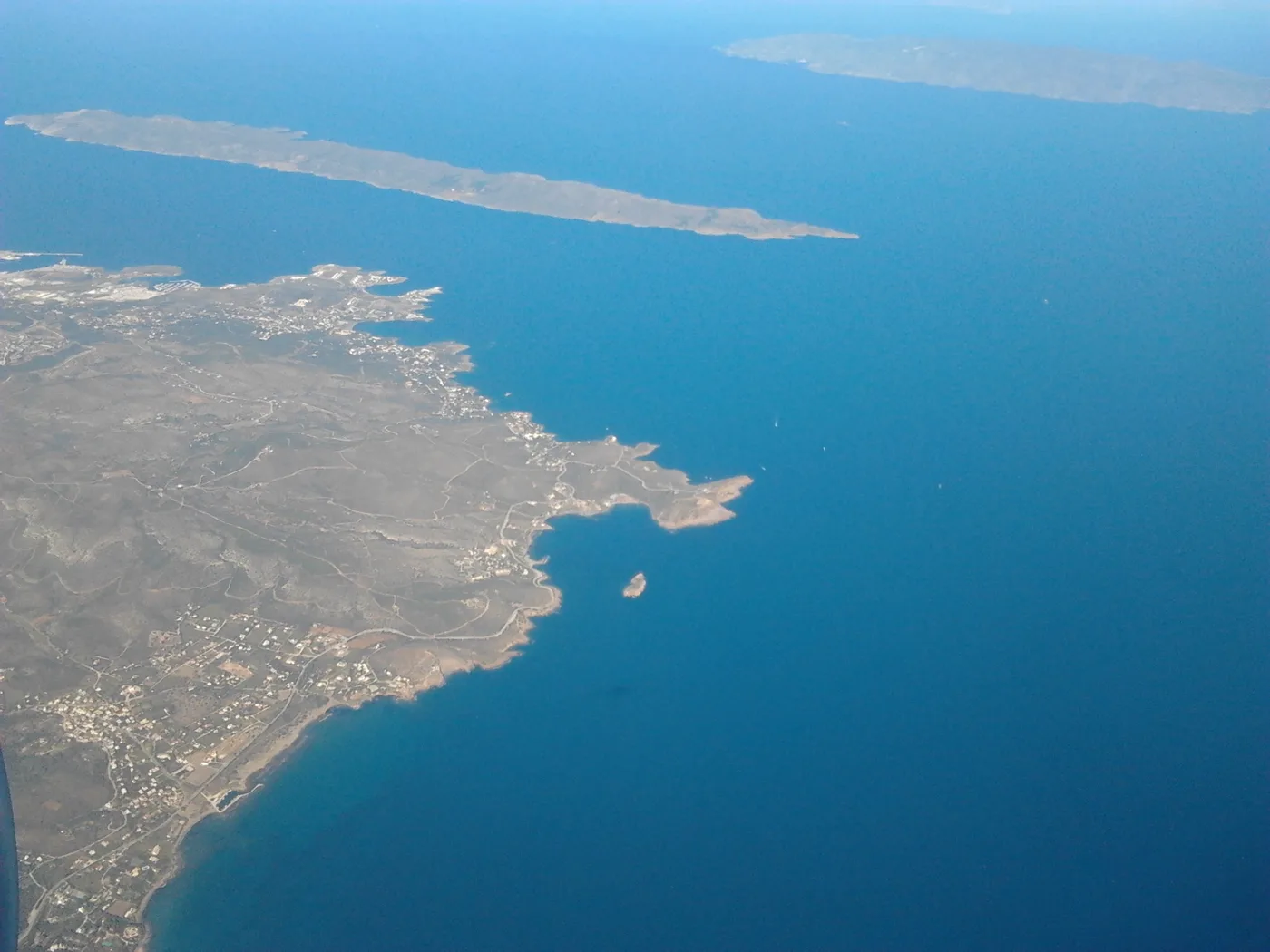
Sea on three sides.
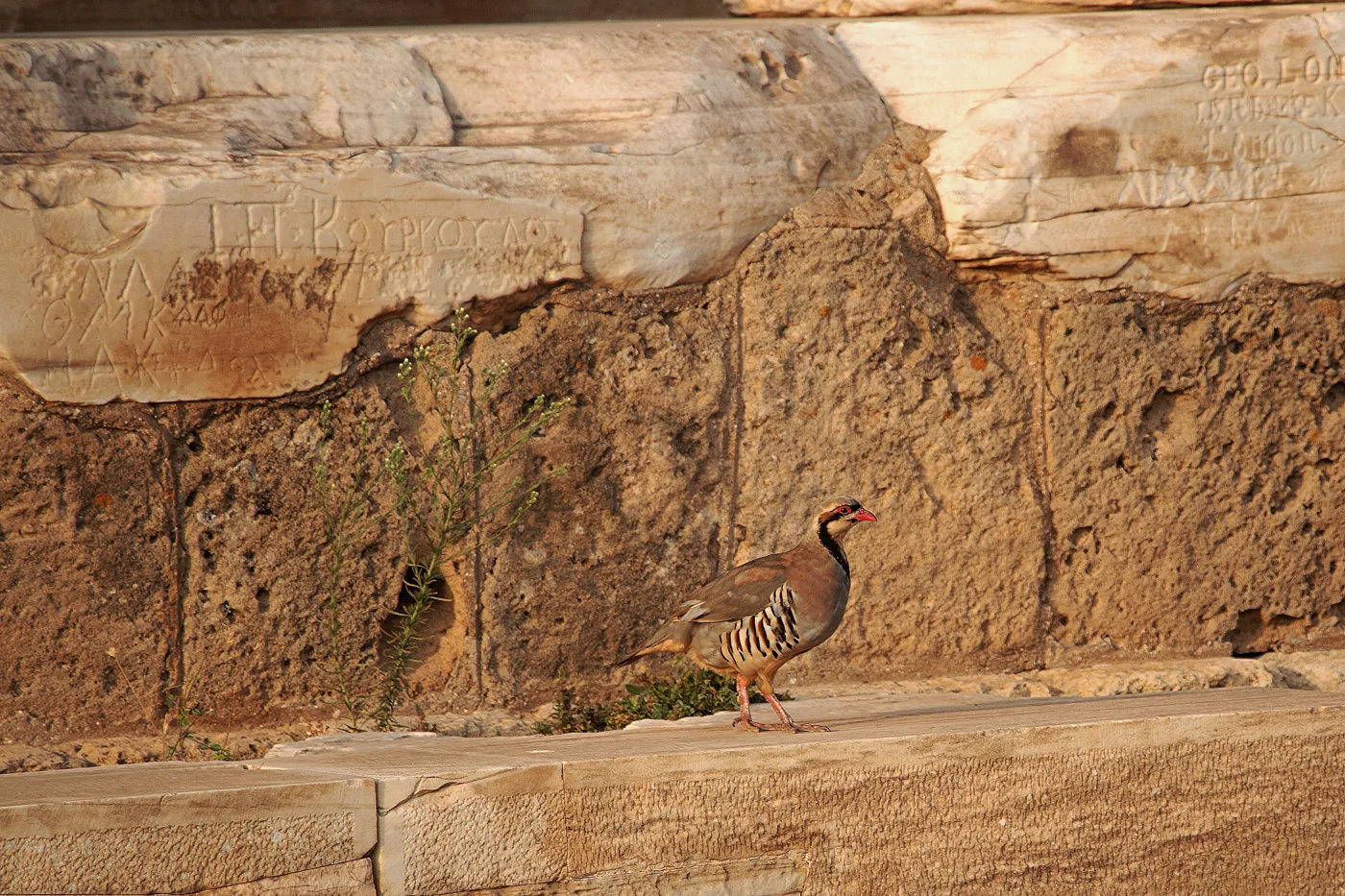
They live permanently among the marbles.
Photos: Skander zarrad (CC BY-SA 4.0), JaedosdeDelos (CC BY-SA 4.0), Christian-wittmann-1964 (CC BY-SA 4.0), Mary Markou (CC BY-SA 4.0), M.Perdiou (CC BY-SA 4.0), C messier (CC BY-SA 3.0), DimitrisP67 (CC BY-SA 4.0) · Wikimedia Commons
🗺️ The map of the archaeological site
From the ticket office and car park (1) you climb in five minutes to the Propylaea and the stoa (2) and to the temple (3). On the north side the walls with the bastion (4) survive and, below them, the shipsheds by the sea (5). The Temple of Athena (6) is on the next rise, and the beach with the tavernas (7) in the bay below the rock. Tap any number.
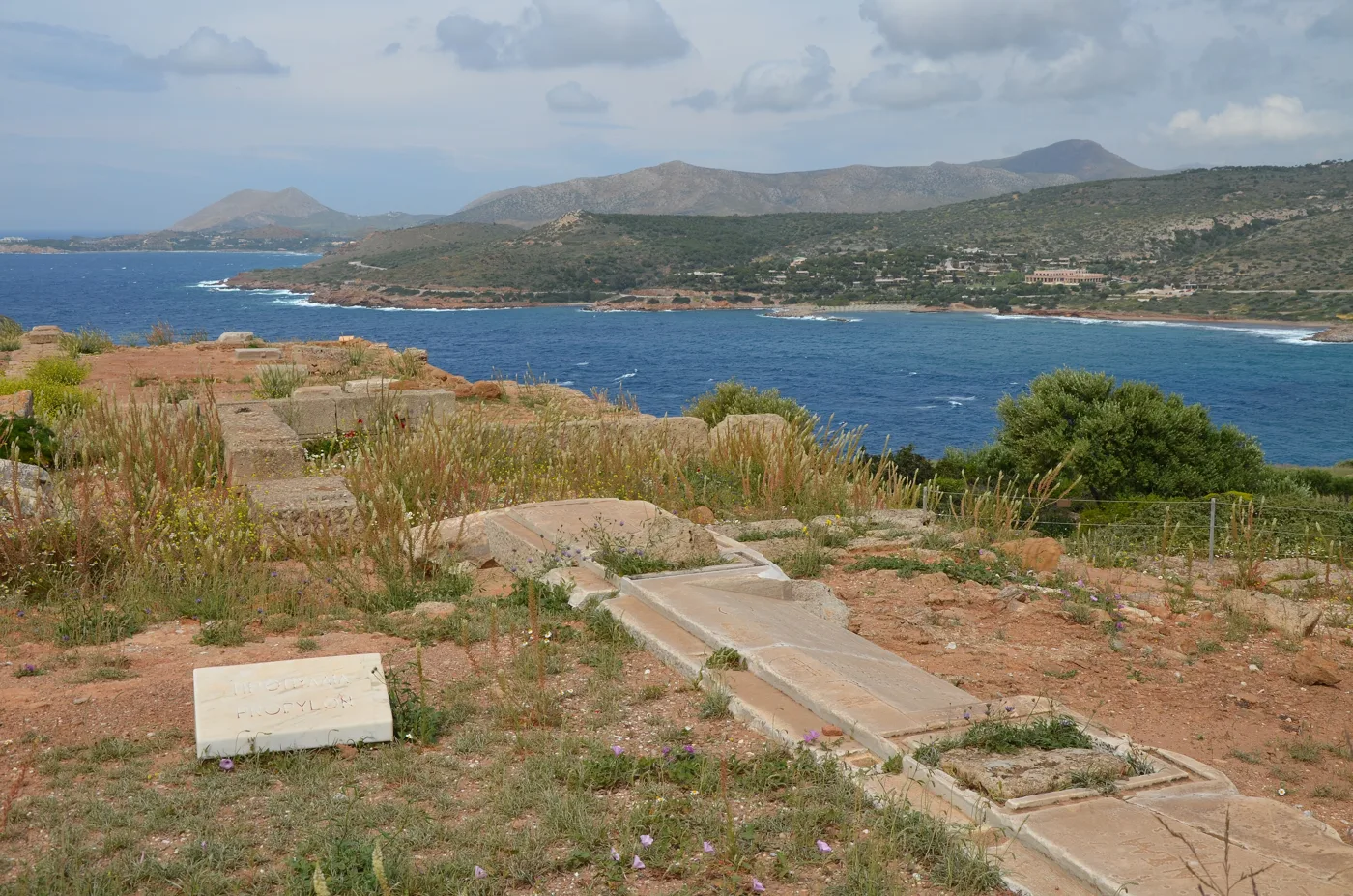
The gateway of the sanctuary, in limestone and marble.
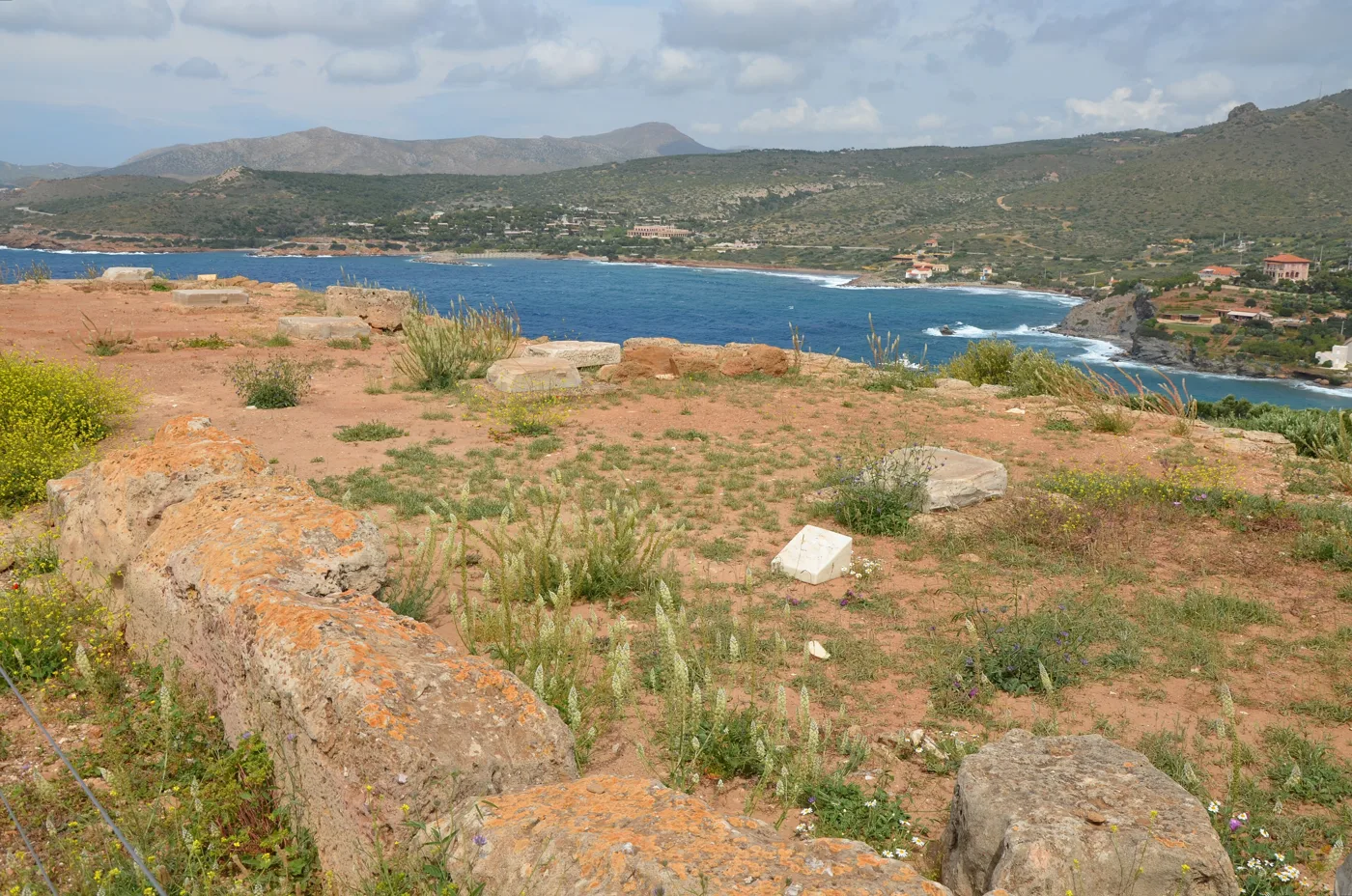
Forty metres of roof for the pilgrims.
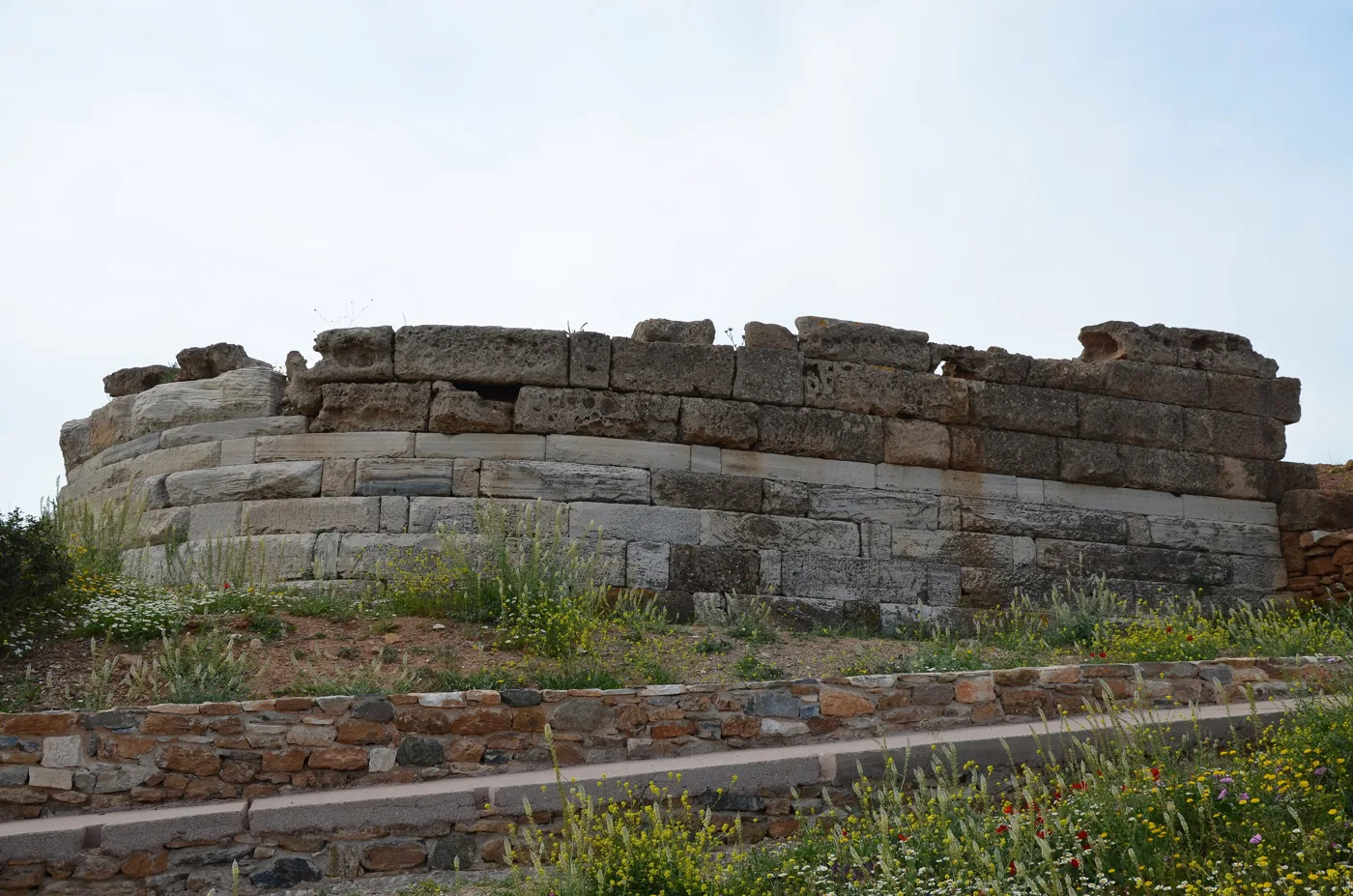
The walls of 413 BC from the north side.
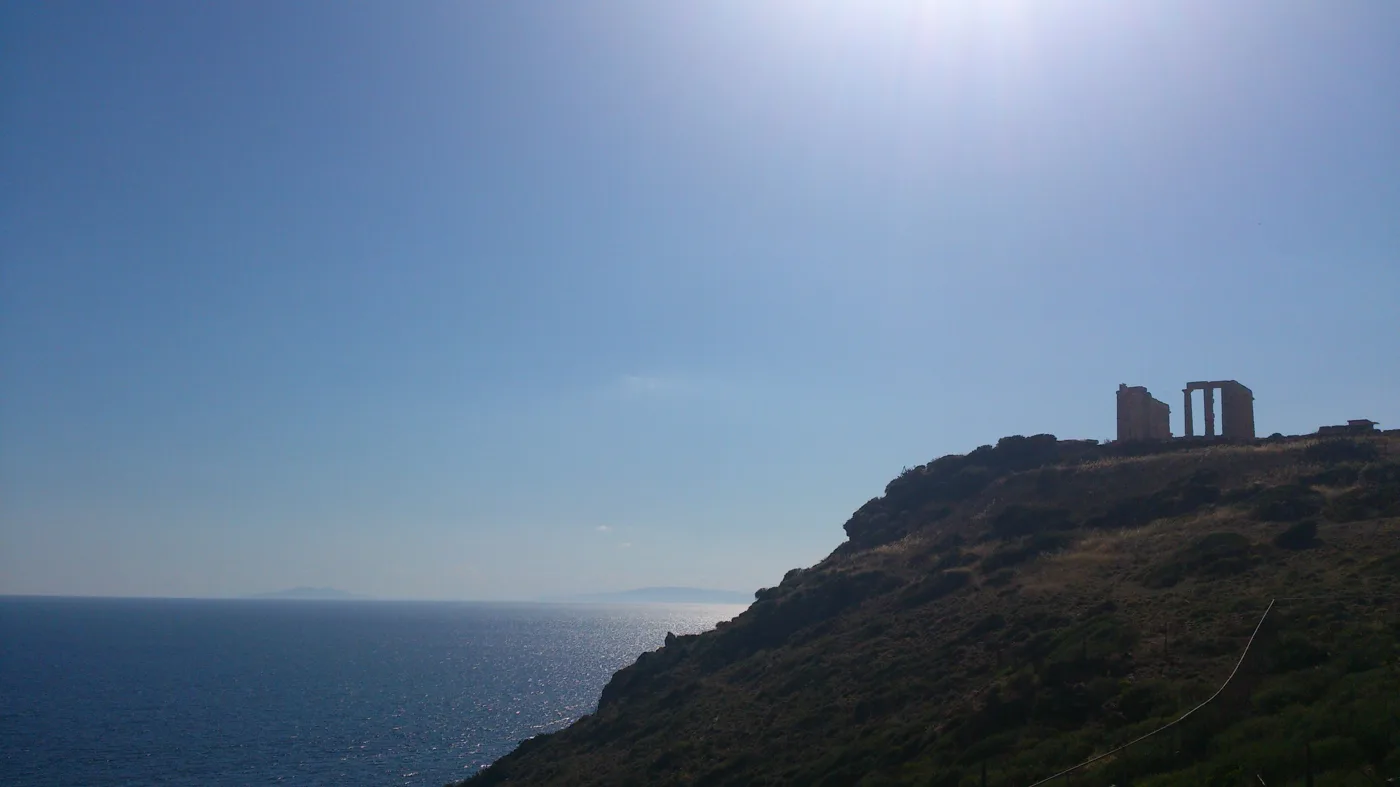
This is how it looks from Sounion Avenue.
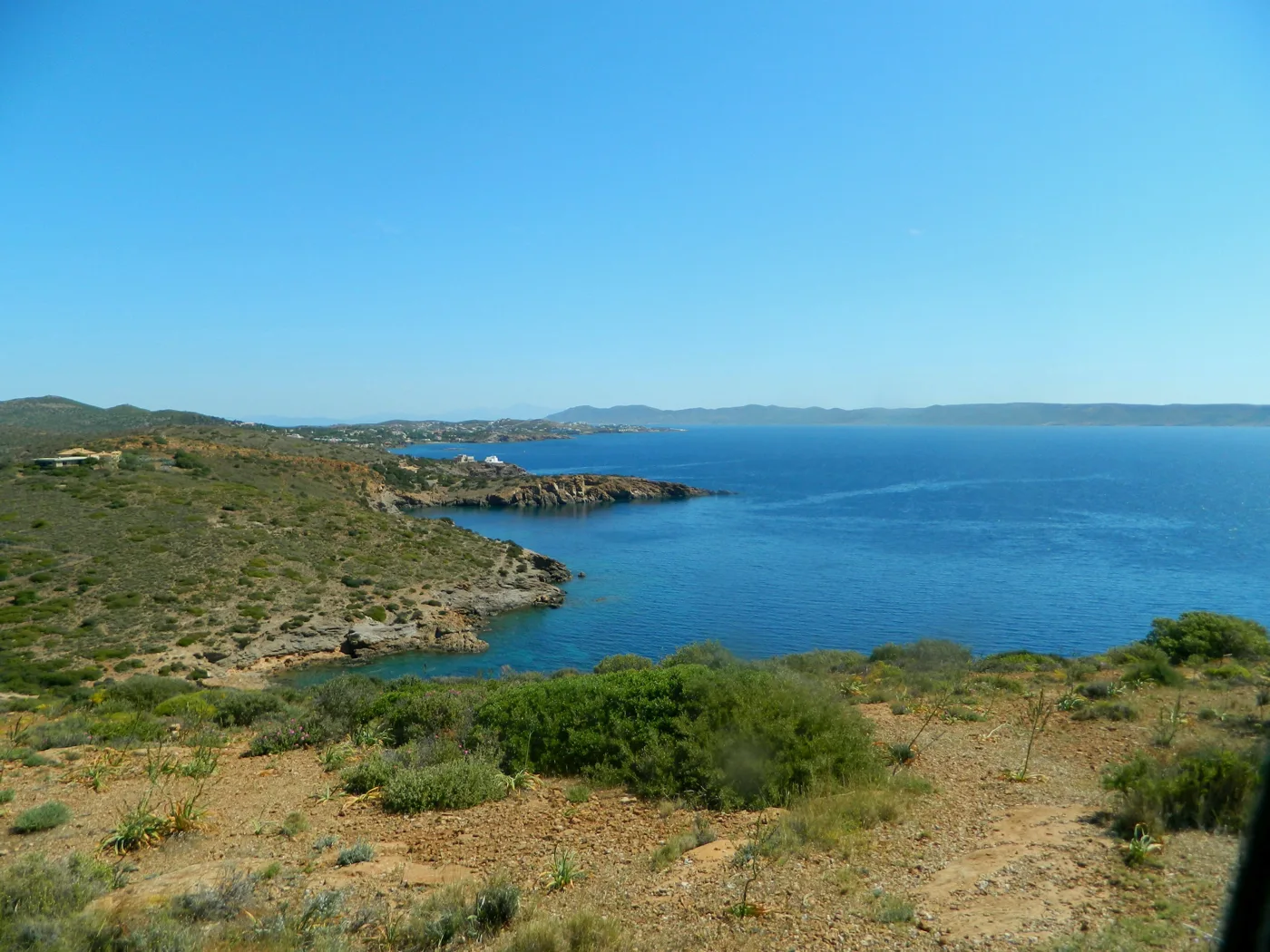
To the east, the island of exile.
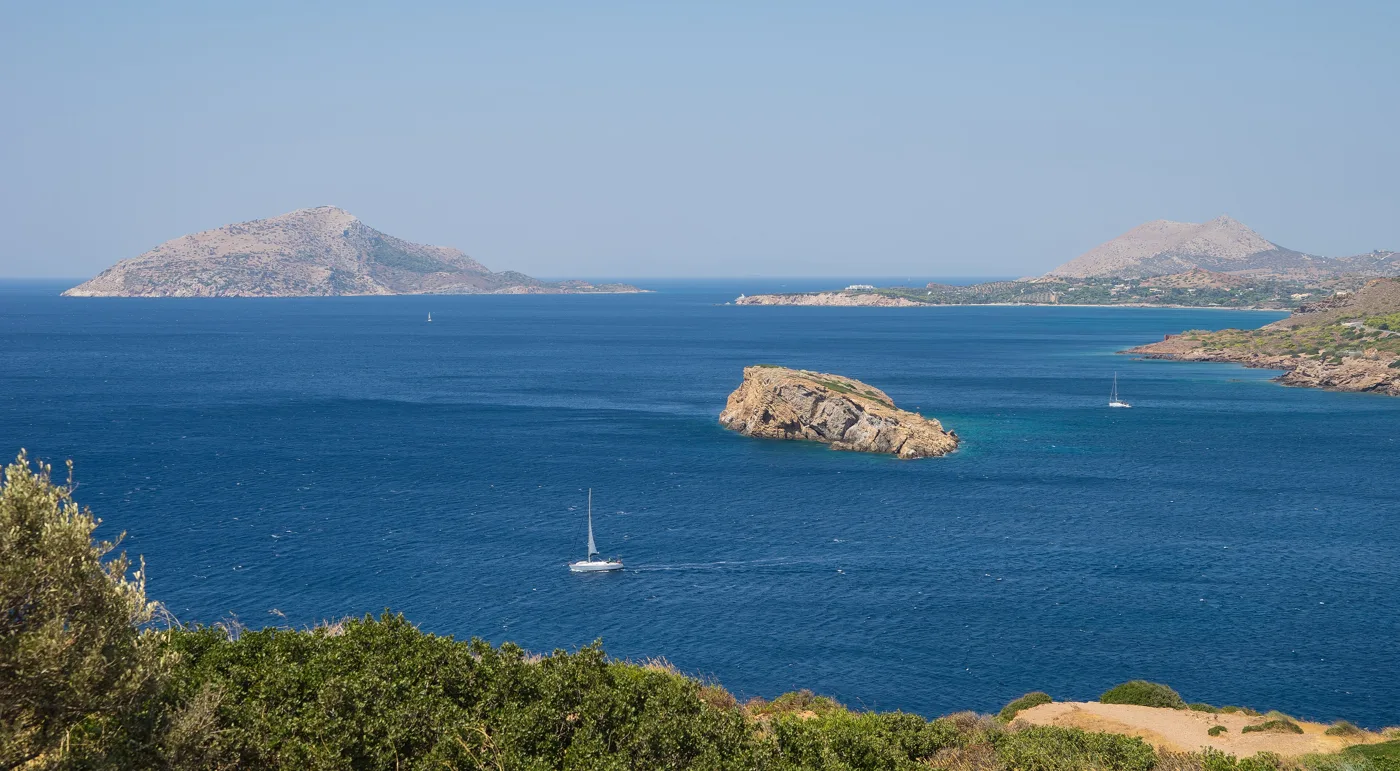
Below the temple, towards Patroklos.
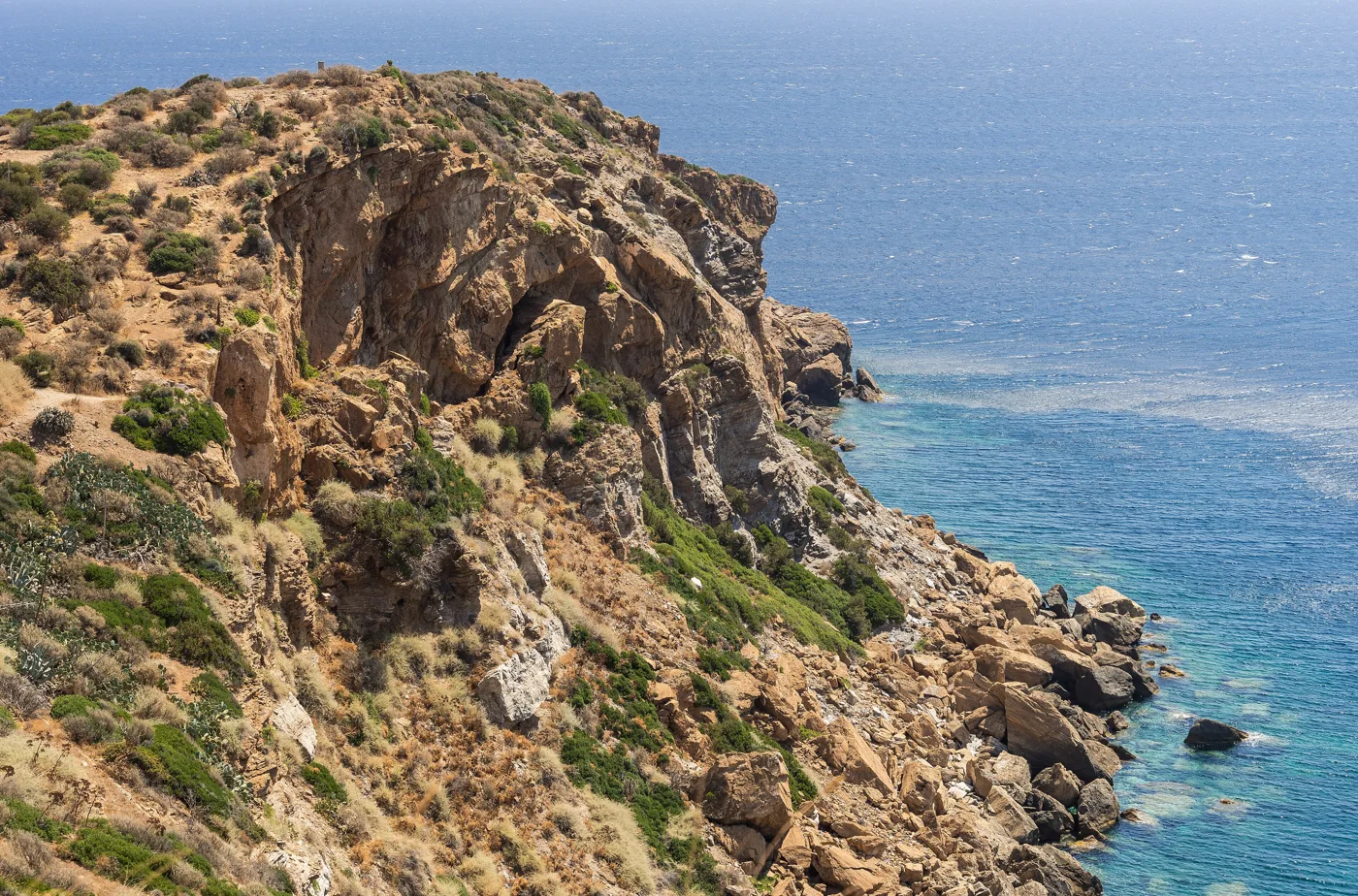
The cliff from which Aegeus fell, says the myth.
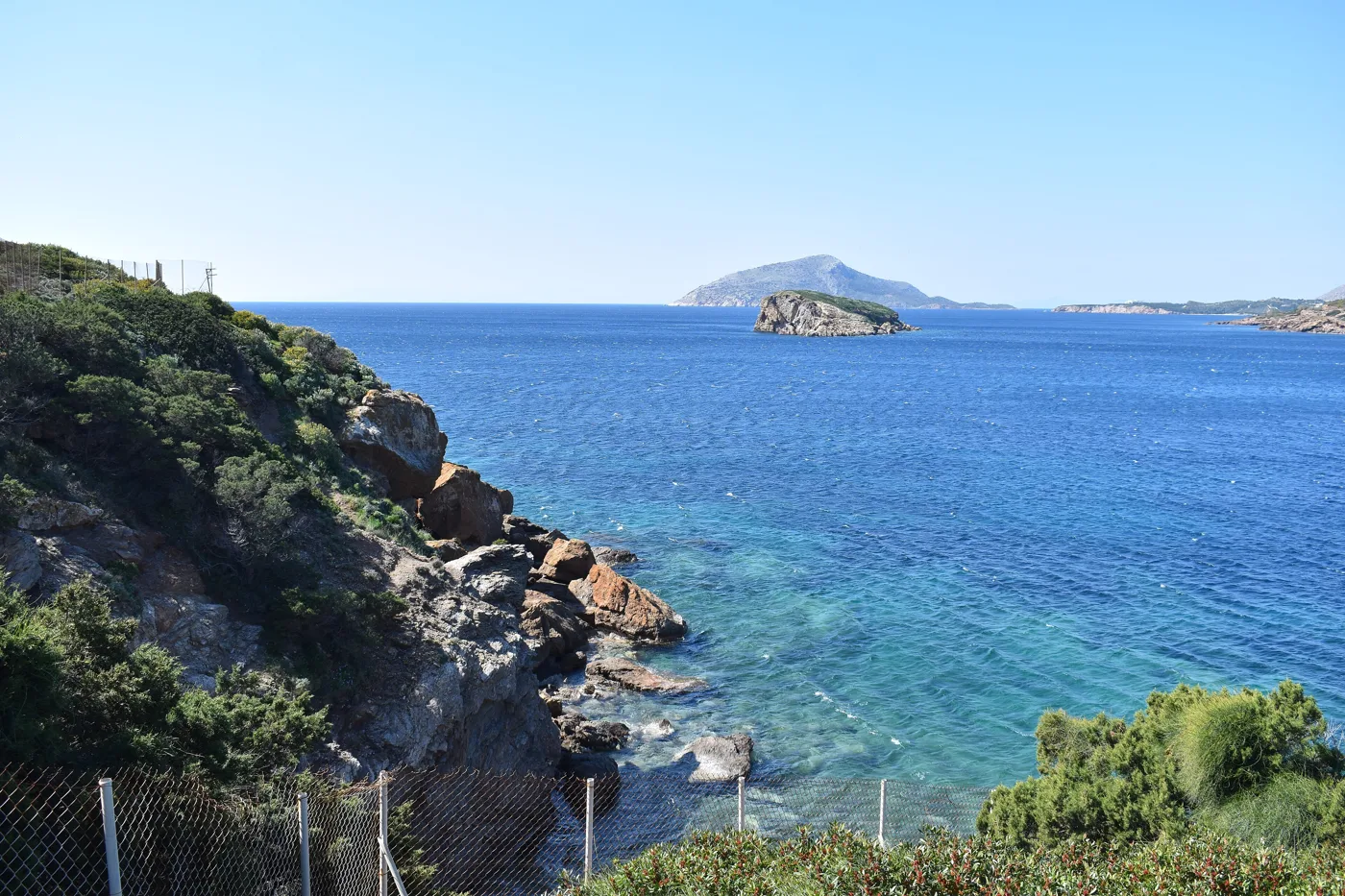
Rocks and blue water at the foot of the temple.
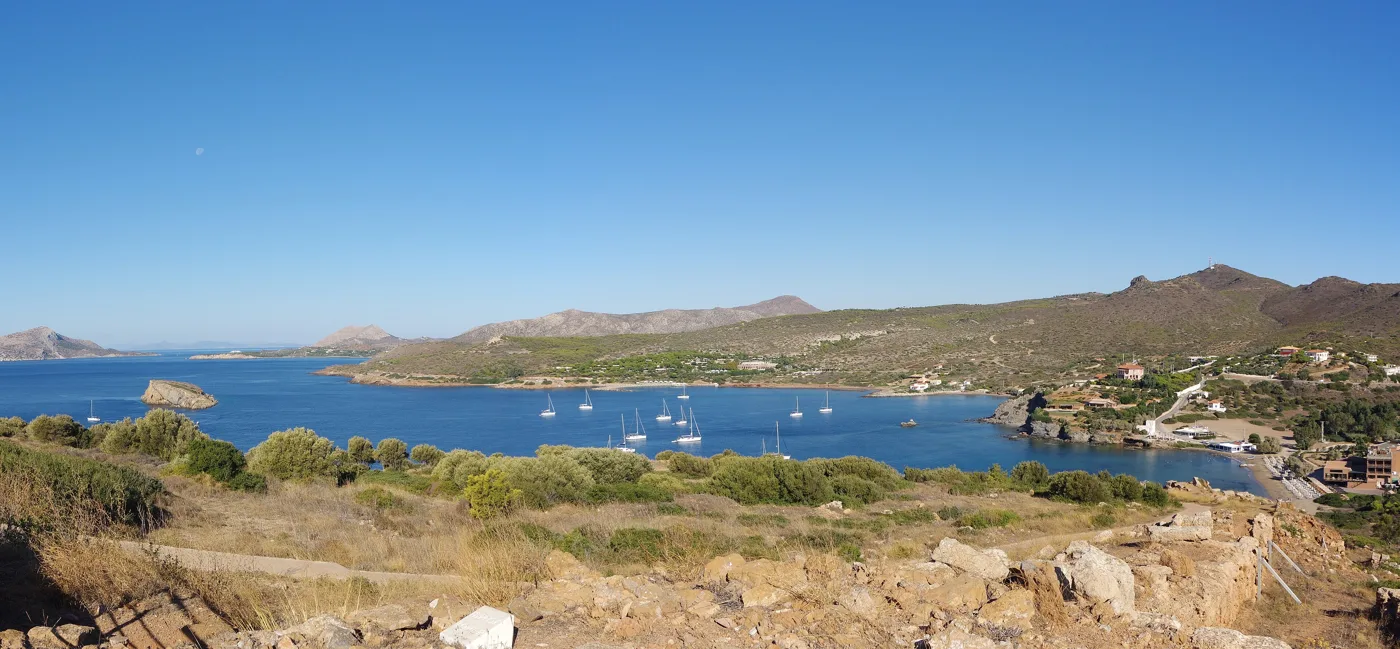
The bay with the boats, west of the temple.
Photos: Carole Raddato (CC BY-SA 2.0), Mary Markou (CC BY-SA 4.0), Ria.photocatcher (CC BY-SA 4.0), Jebulon (CC0), Vasilis Kiarri (CC BY-SA 4.0), Berthold Werner (CC BY-SA 3.0) · Wikimedia Commons
🎫 Opening hours and tickets
🌅 The sunset
The sunset is the reason most people come. The sun drops into the sea west of the temple, behind Patroklos, and for twenty minutes the columns turn orange, then pink, then dark silhouettes against a red sky. The site closes at sunset: you watch the sun disappear from inside and then leave, with the guards whistling politely. At night, with the full moon or the Milky Way above the floodlit columns, the temple is photographed from the road and the hill opposite, outside the site.
| Season | Sunset time | Be at the temple by | What to expect |
|---|---|---|---|
| June to August | 20:00 to 20:55 | 19:00 | The biggest crowds, coaches and heat. The sea is warm for a swim beforehand. |
| April and May | 19:45 to 20:40 | 18:45 | Wildflowers on the rock, soft light, few people. |
| September and October | 17:30 to 19:55 | An hour before | Clear horizon and the most intense colours. The clocks change at the end of October. |
| November to March | 17:05 to 18:30 | 16:00 to 17:30 | The temple almost empty, cold and wind. Take a jacket. |
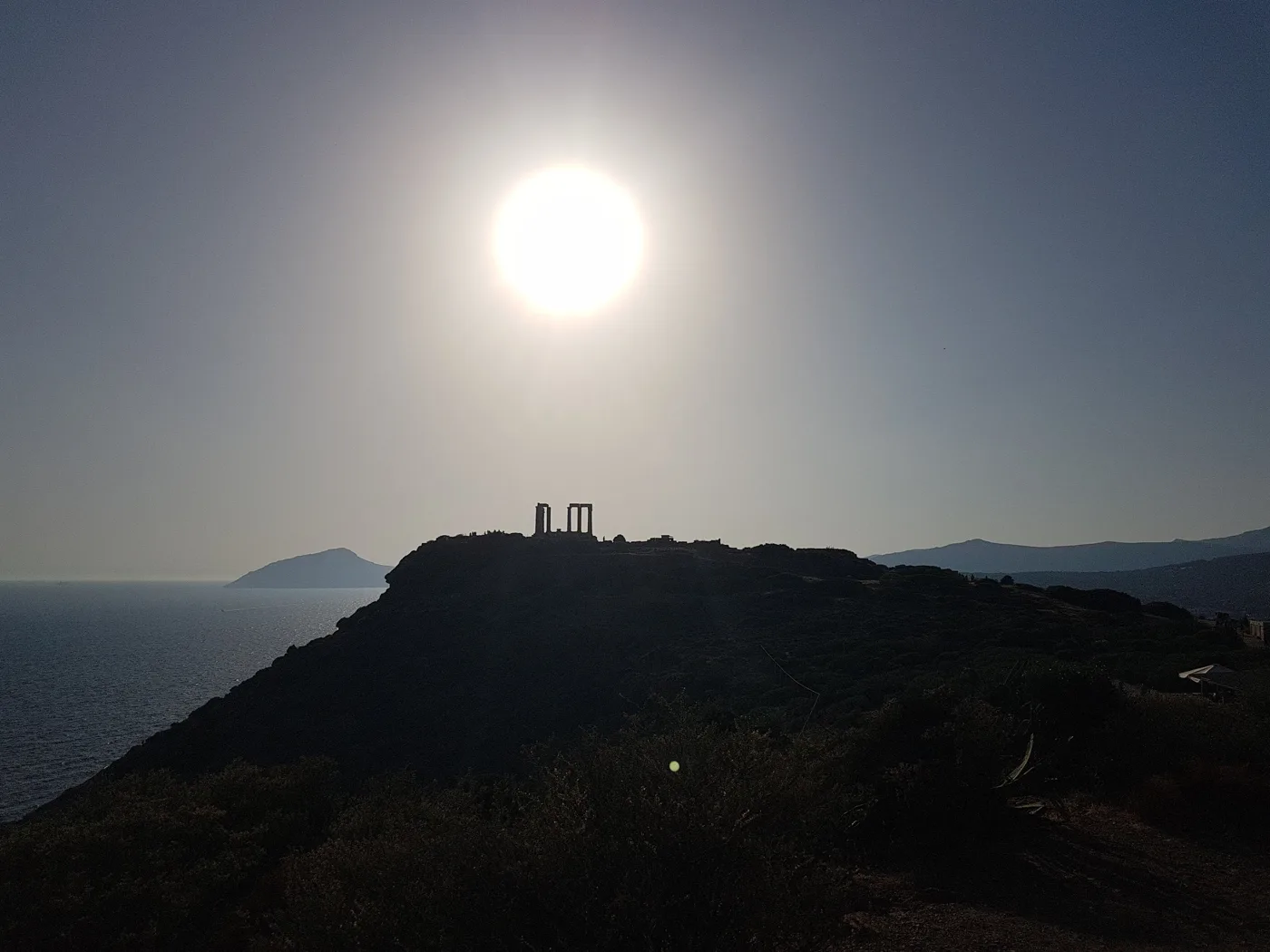
Time to have found your spot already.
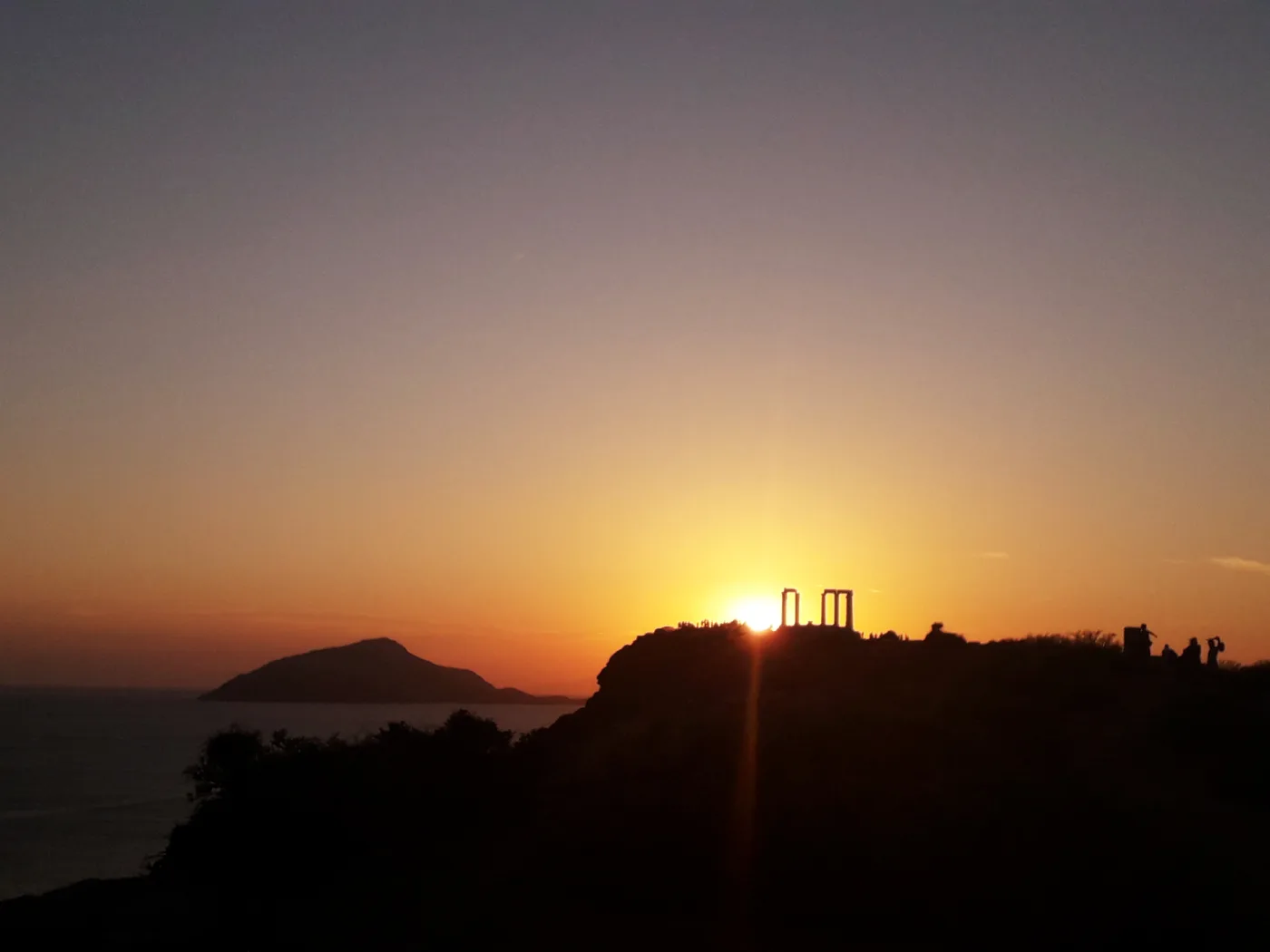
The sun drops behind Patroklos.
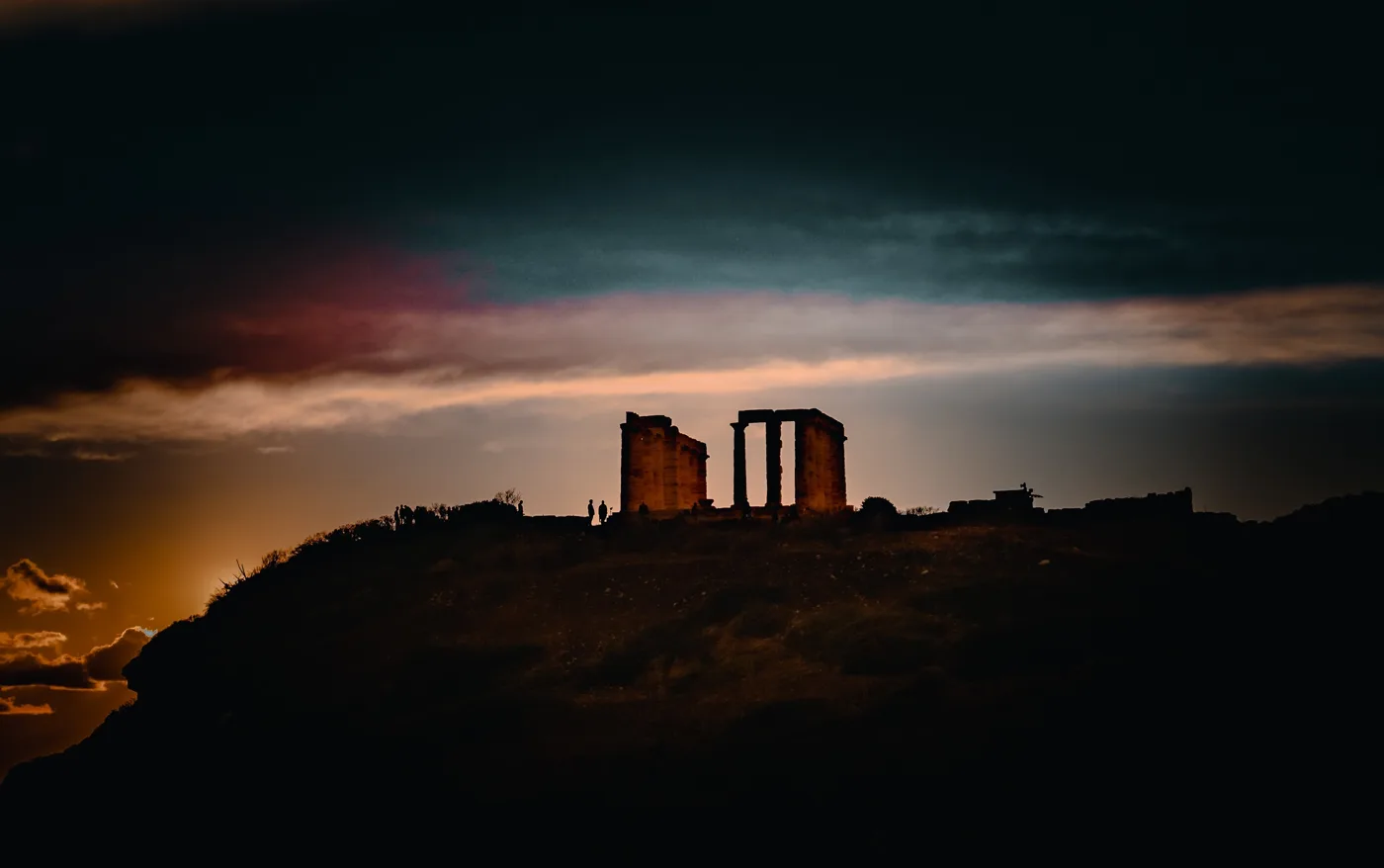
A few minutes after sunset.
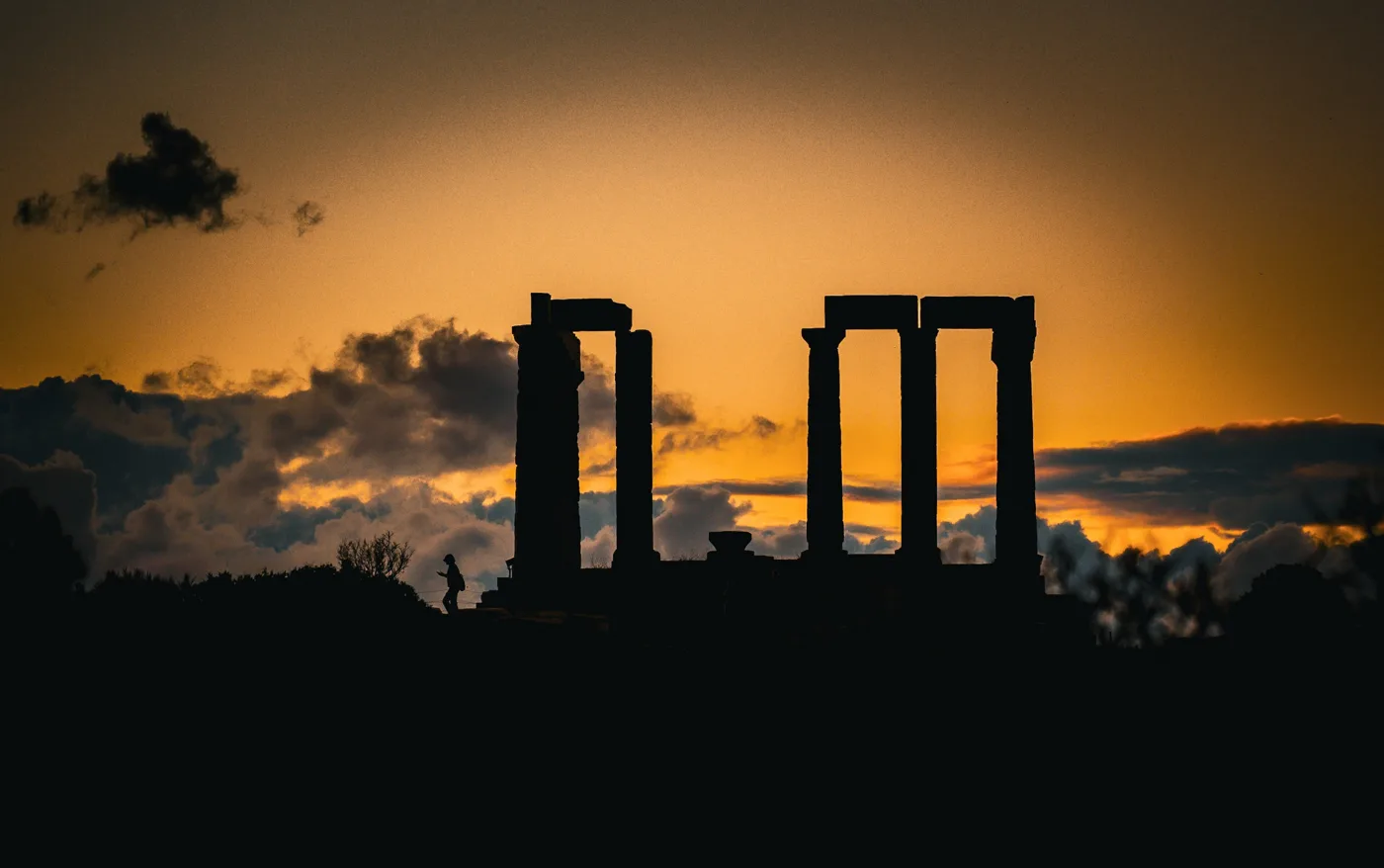
The light passes through the temple.
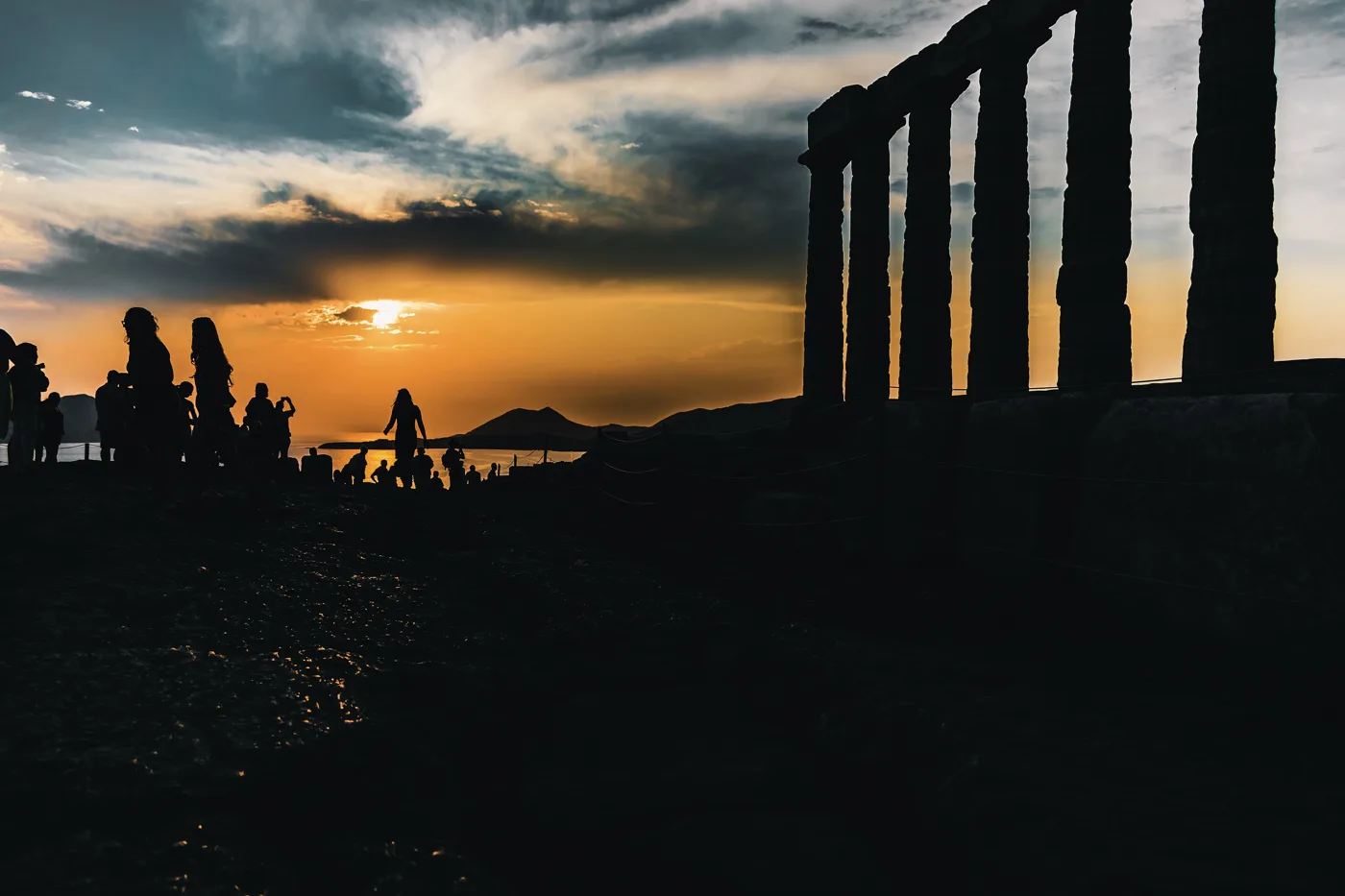
Every evening, the same show.
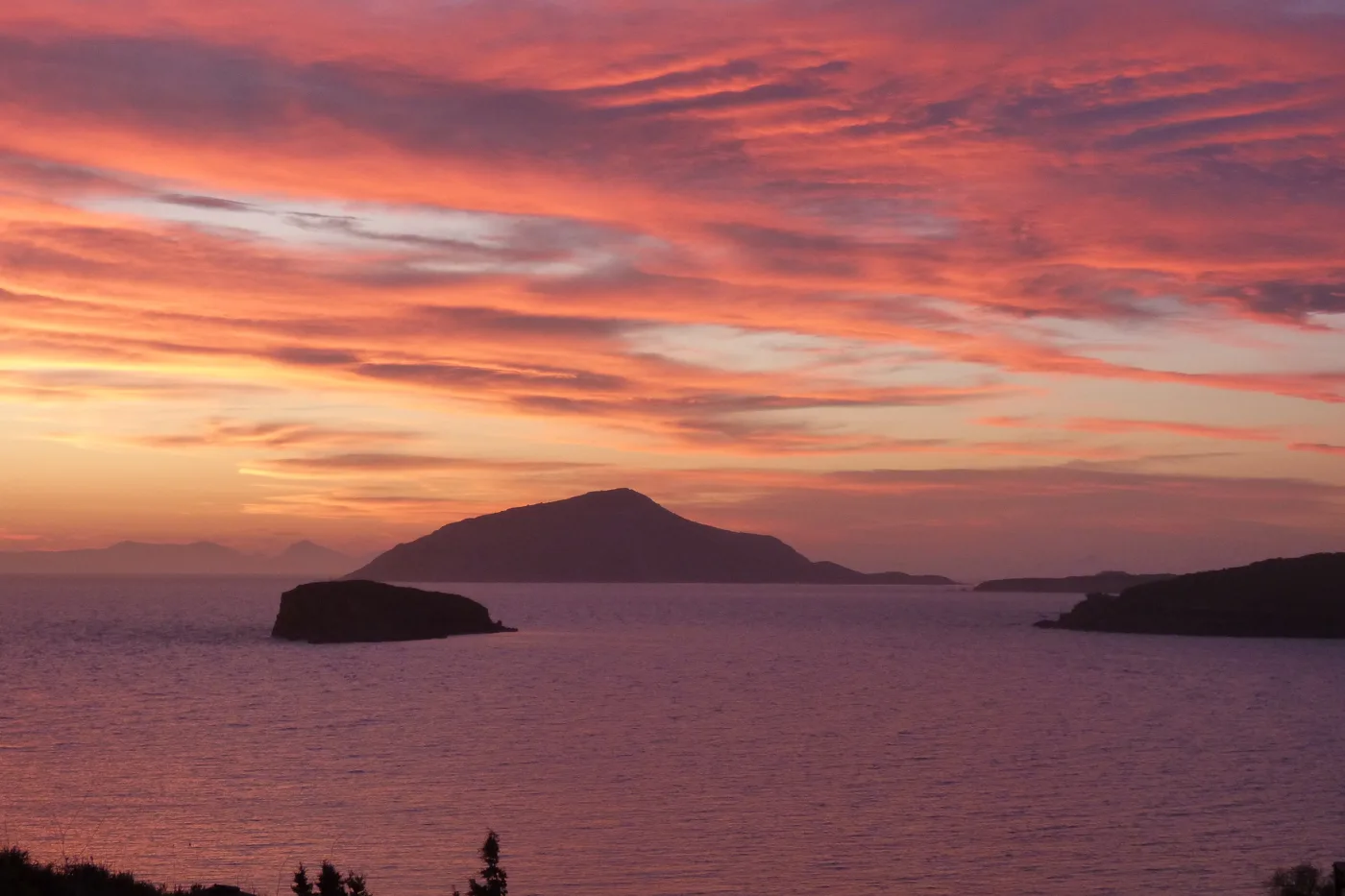
The island in front of the sunset.
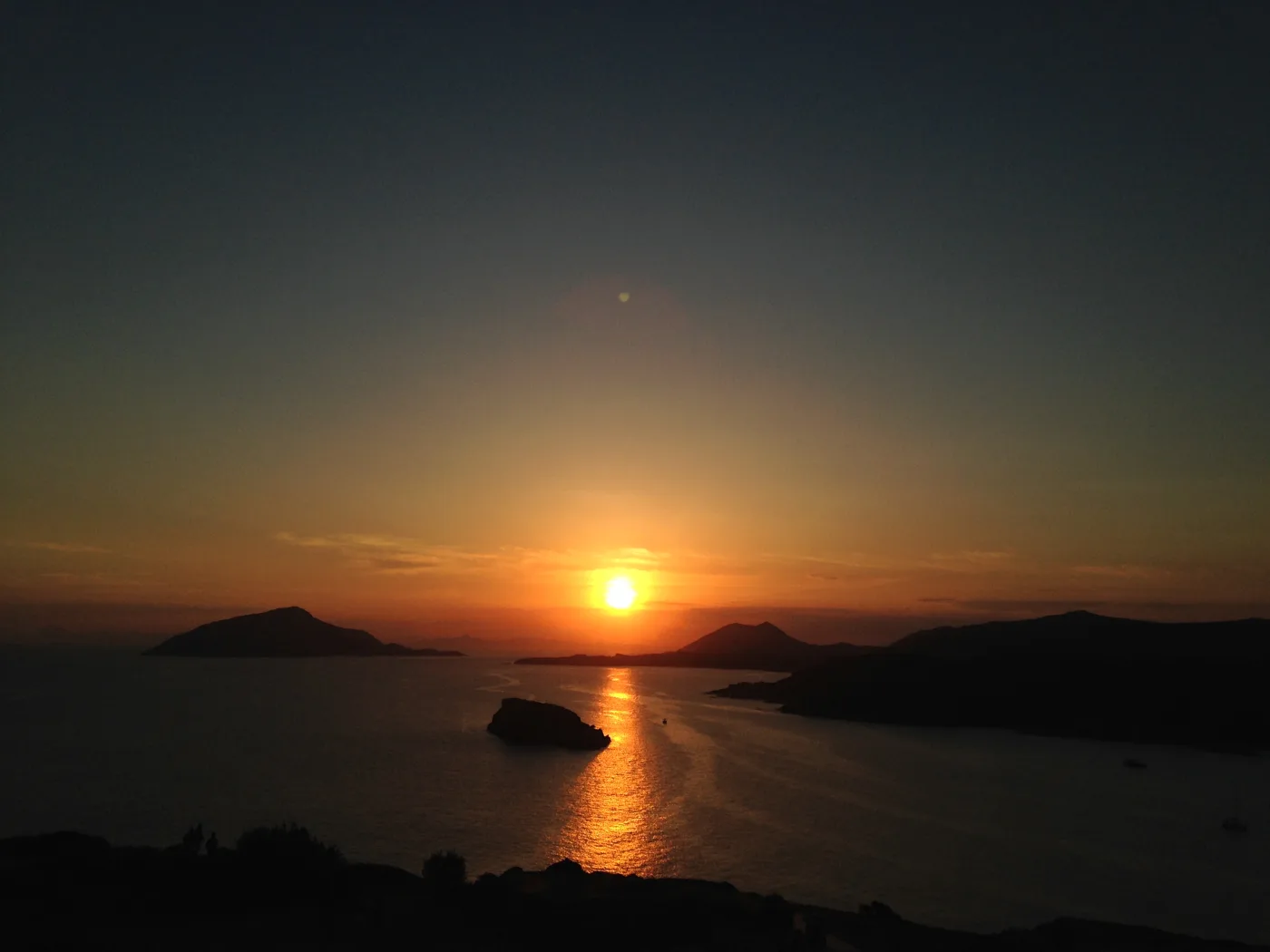
The glow reaches the rocks.
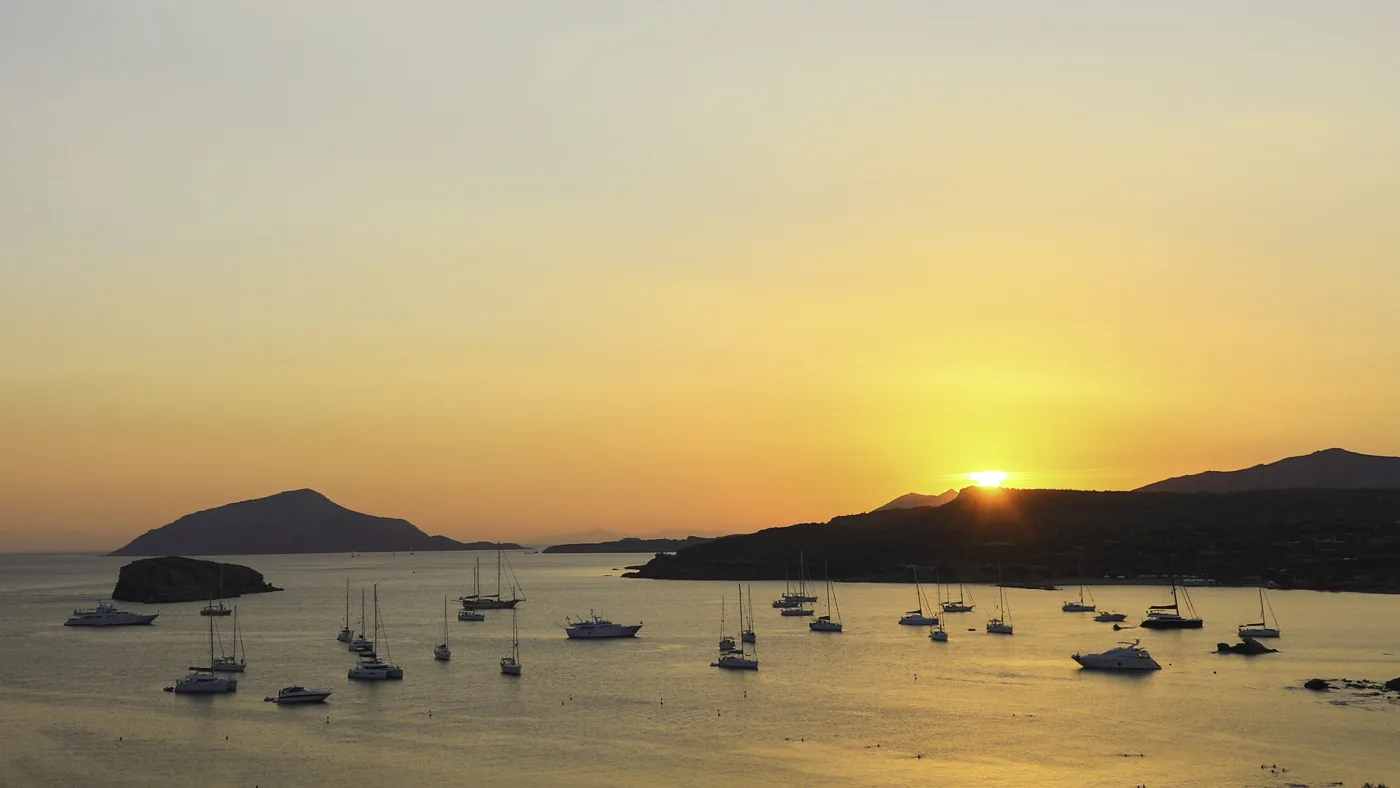
The boats in the bay at sunset.
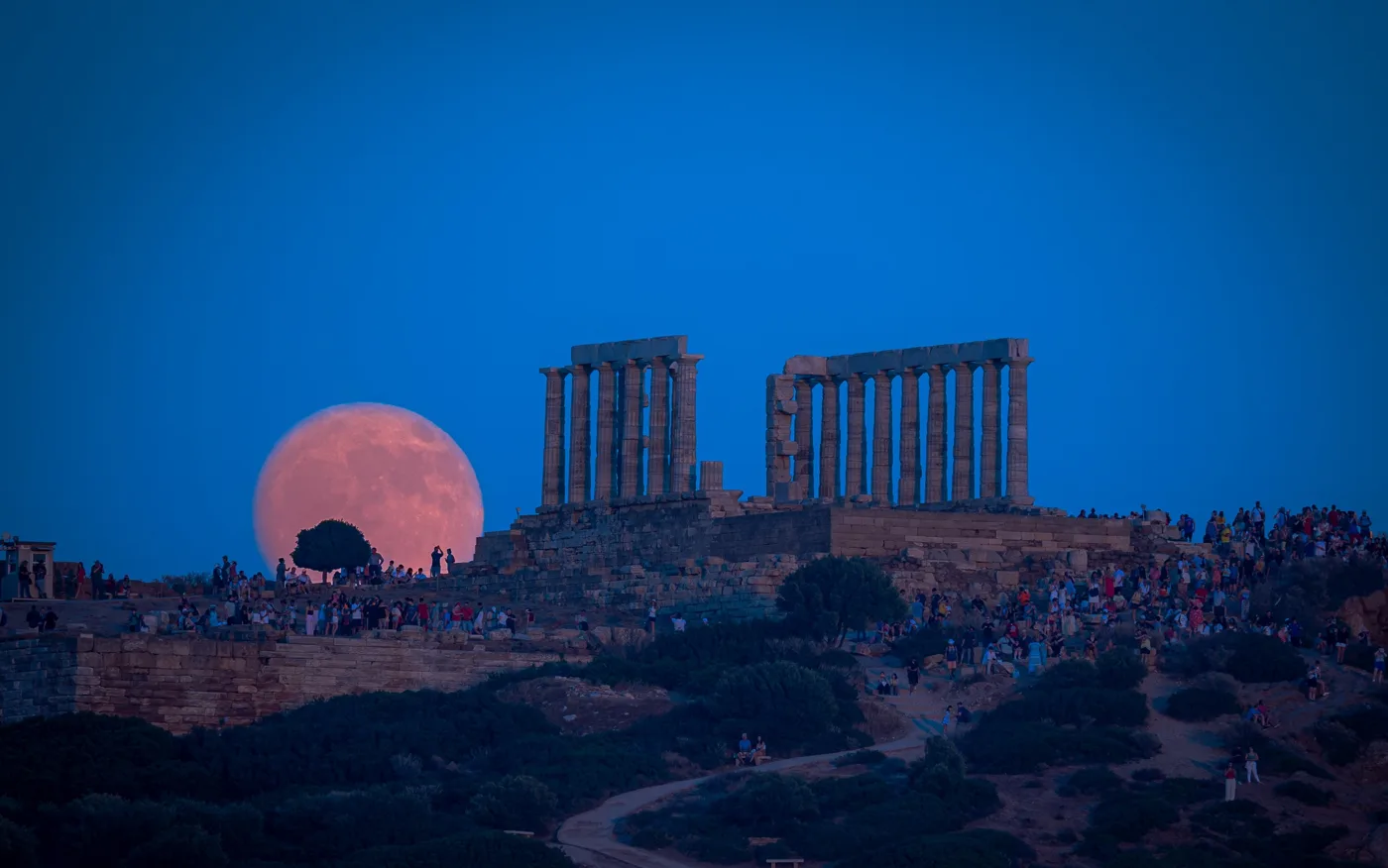
In August the site often opens at night.
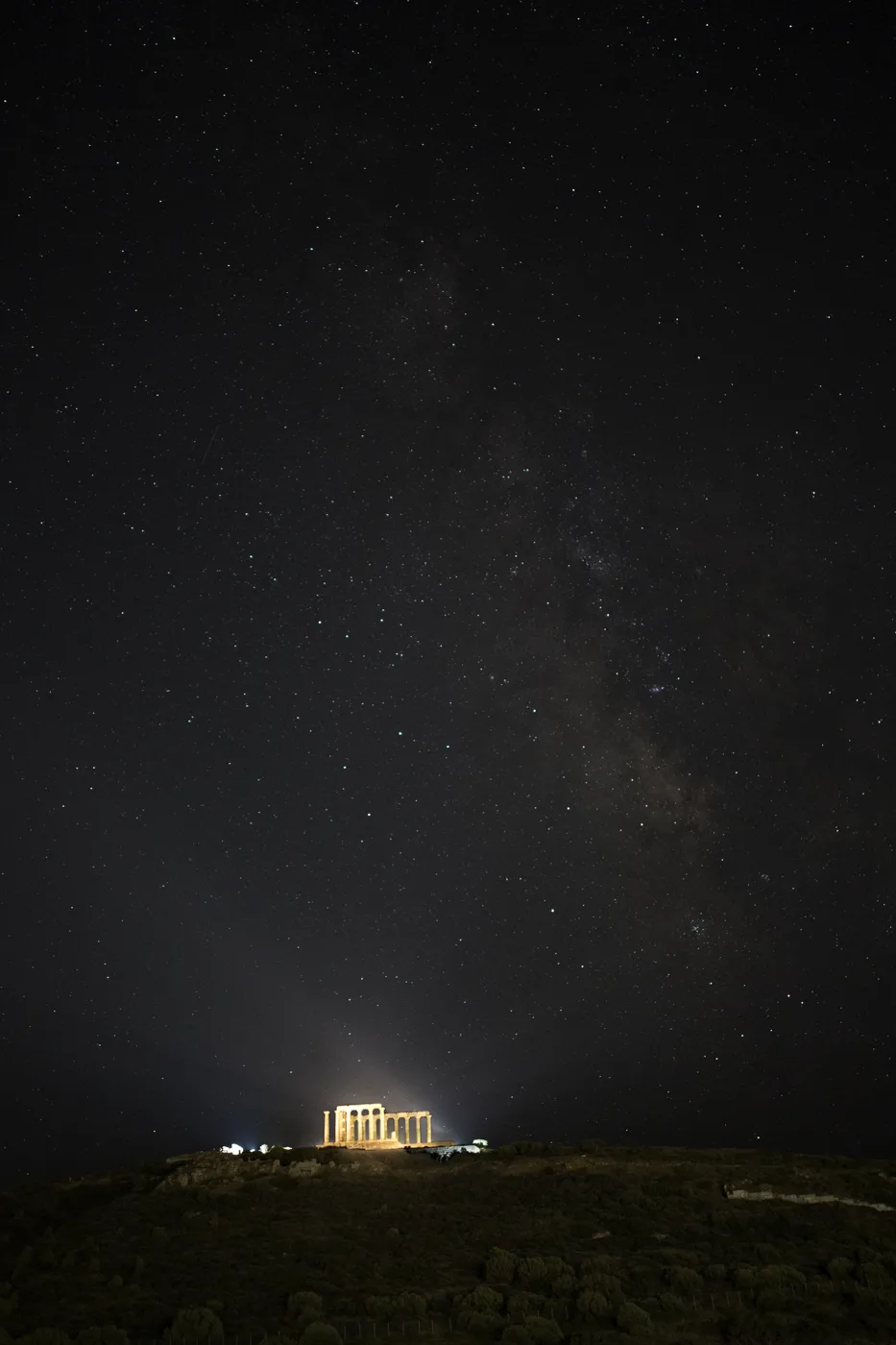
Photo from the hill, outside the site.
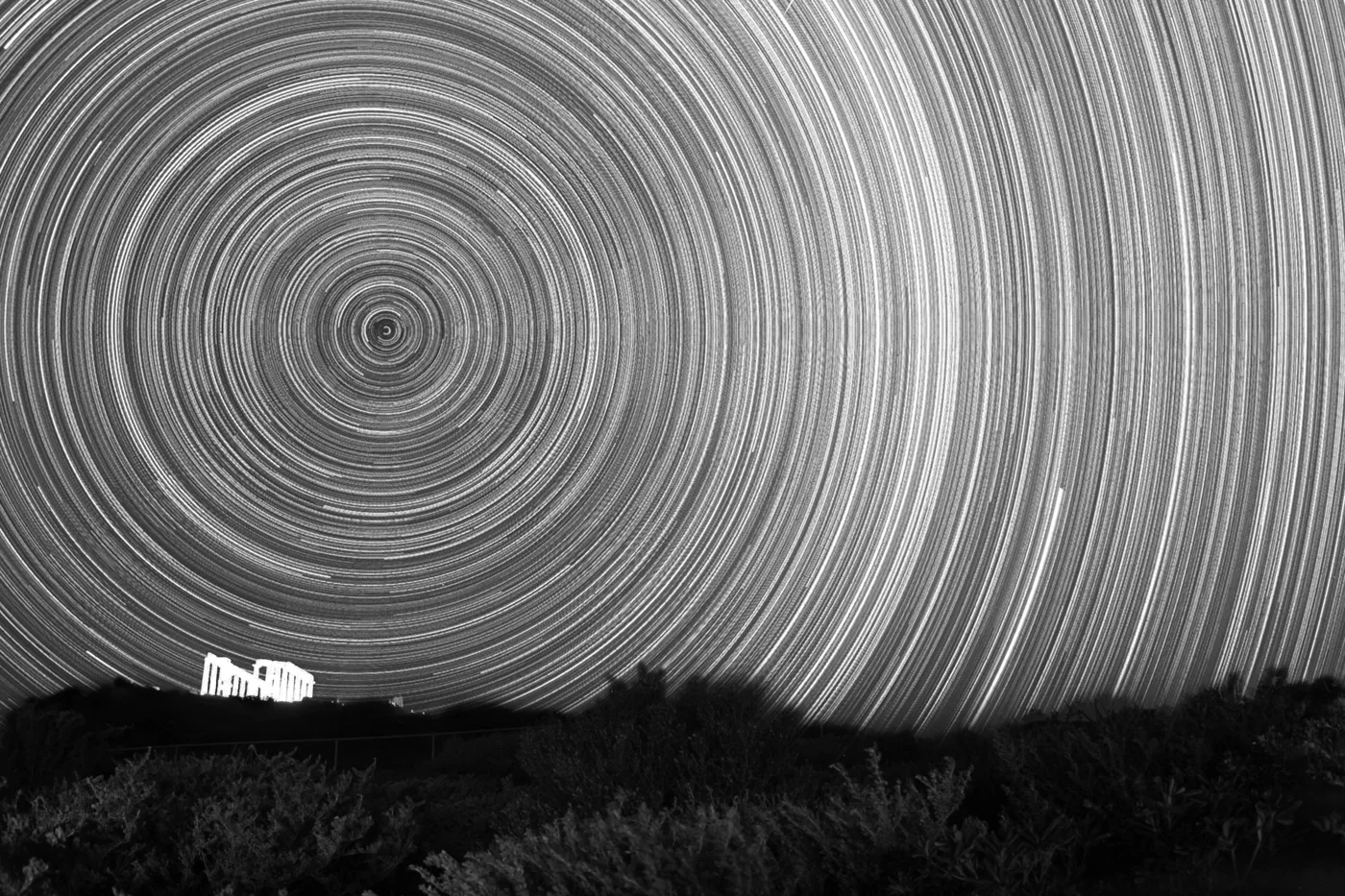
The sky turns around the Pole Star.
Photos: Alexisathens (CC BY-SA 4.0), Elisana789 (CC BY-SA 4.0), Wkkasimag (CC BY-SA 4.0), Sarantis Karydas (CC BY-SA 4.0), Kleonpl (CC BY-SA 4.0), Aphrodite Moissis (CC BY-SA 4.0), Banlout (CC BY-SA 4.0), Oculusrif (CC BY-SA 4.0), Dimitris Drougoutis (CC BY-SA 2.0) · Wikimedia Commons
Be at the temple at least an hour before: the golden hour before sunset gives the best photos, and in the last half hour the site fills up with the coaches. In August, on the night of the full moon, the site often stays open late with free entry, like many archaeological sites: check the announcements of the Ministry of Culture.
🚍 How to get to Sounion from Athens
Four ways, with different costs and different freedom. The car is the most flexible, the KTEL bus the cheapest, the organised tour the most relaxed for the sunset. Tap each tab.
🚍 How to get there
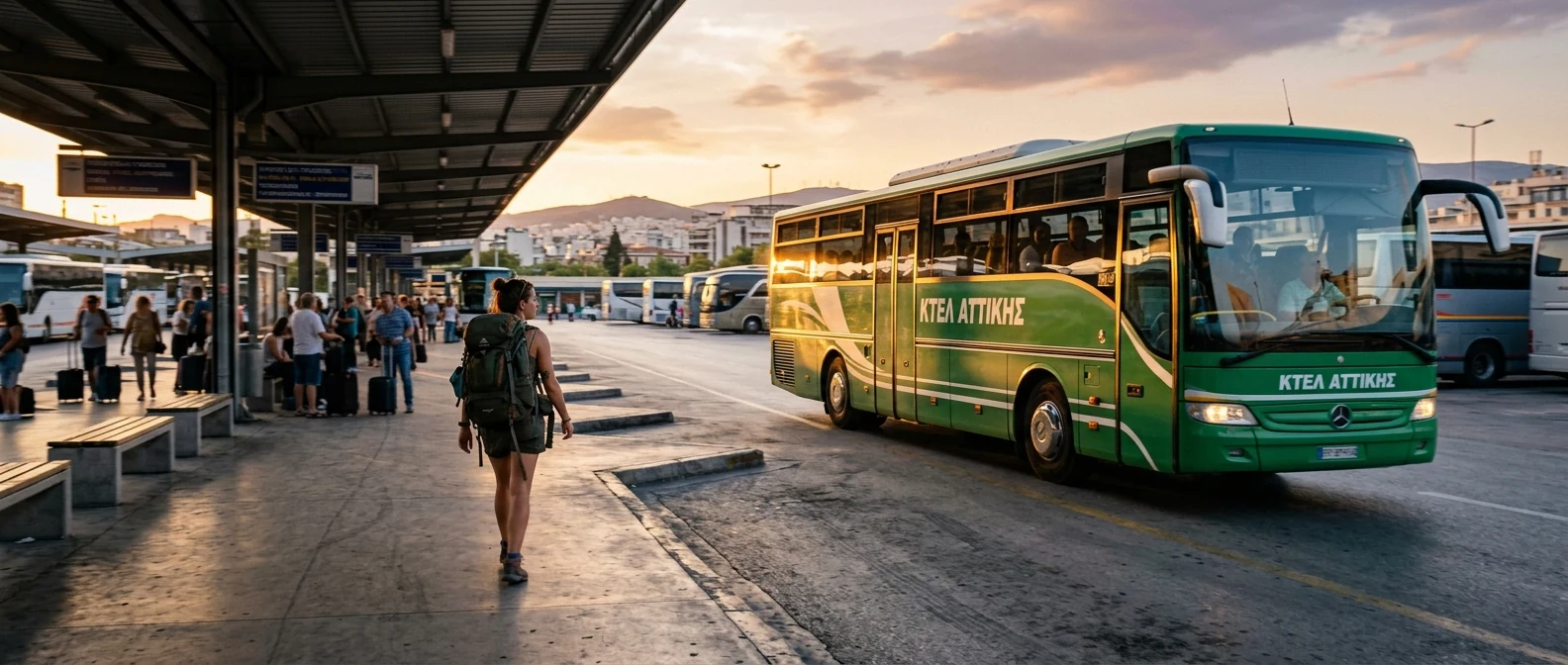
By KTEL Attikis bus along the coast
- Departure from Pedion Areos, Mavrommataion Street, next to Egyptou Square: seven minutes on foot from Ioulianou 50.
- Ticket €6.90 each way, according to the official fare list, paid in cash to the conductor or at the ticket desk. The metro ticket is not valid.
- Journey time about 2 hours, with stops at Glyfada, Voula, Vouliagmeni, Varkiza, Lagonisi, Saronida, Anavyssos and Legrena.
- Few departures a day: in summer usually one in the morning around 10:30 and one or two in the afternoon. There is also a line through the Mesogeia (Markopoulo, Lavrio), which is slower.
- The bus stops on top of the hill, a few metres from the ticket office of the archaeological site.
Check the time of the last bus back at ktelattikis.gr before you set off: in summer it often leaves before sunset, so for the sunset a car or an organised tour works better.
By car, along the coast and back through the Mesogeia
- About 72 km and 1 hour 15 min without traffic from the centre: Syngrou, Poseidonos Avenue and then Sounion Avenue to the cape.
- Free parking next to the ticket office. On summer afternoons it fills up, so go early.
- Return through the Mesogeia: Lavrio, Keratea, Markopoulo, Attiki Odos, 77 km in about 1 hour 25 min, without the traffic of the coast road.
- Car hire for a day: €35 to €60 in summer, plus about €15 of fuel for the round trip.
- Take care on Sounion Avenue after Lagonisi: bends, motorbikes and cars parked on the verge for the beaches.
On an organised sunset tour
- Coach with pick-up from the centre, departing 15:00 to 16:00 and returning around 21:00 to 22:00 in summer.
- Price €45 to €80 per person, often without the €20 entry ticket. Ask whether it is included and whether there is a guide.
- The most relaxed way to do the sunset without a car, but with less time on site, usually an hour and a half.
- There are also small-group tours by van, with a stop for a swim on the Athens Riviera.
By taxi or private transfer
- One way €80 to €120 on the meter, depending on the time and the traffic.
- Return with a two-hour wait: agree the price beforehand, usually €180 to €250.
- Private drivers with a minivan for 4 to 8 people: €200 to €300 for the half day, with stops on the Riviera.
- For two or three people, hiring a car works out much cheaper.
🌊 The drive along the Athens Riviera
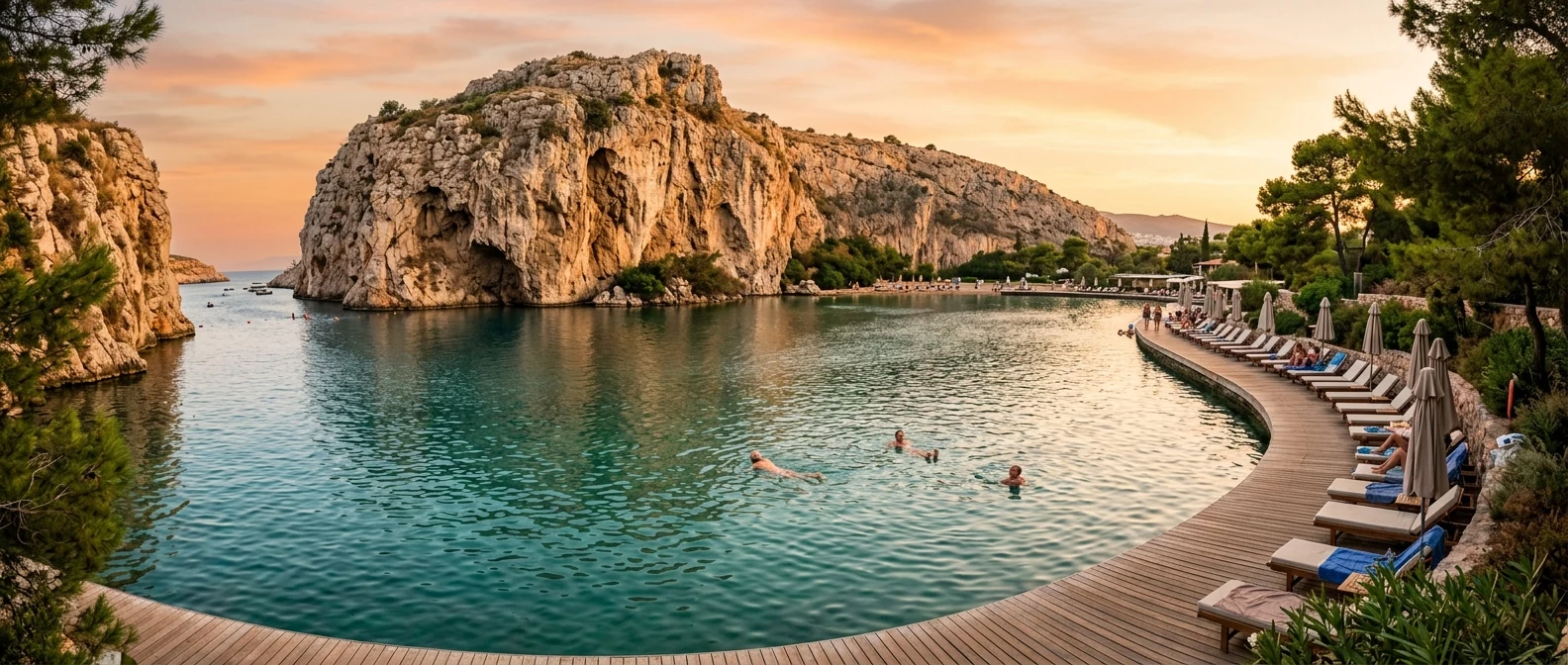
The road to Sounion is part of the trip. After Faliro, Poseidonos Avenue and then Sounion Avenue follow the coast for sixty kilometres, with the sea almost always on your right. You pass Glyfada with its marinas, Voula, Vouliagmeni with its lake, whose water is warm all year round, Varkiza with its long sandy beach, Lagonisi with pines down to the waves, Saronida, Anavyssos with its fish tavernas, and Legrena, just before the cape. The beaches after Varkiza are freer and cheaper: Agios Nikolaos at Anavyssos, KAPE at Legrena, the little sandy beach below the temple. For the lake, see our guide to Lake Vouliagmeni.
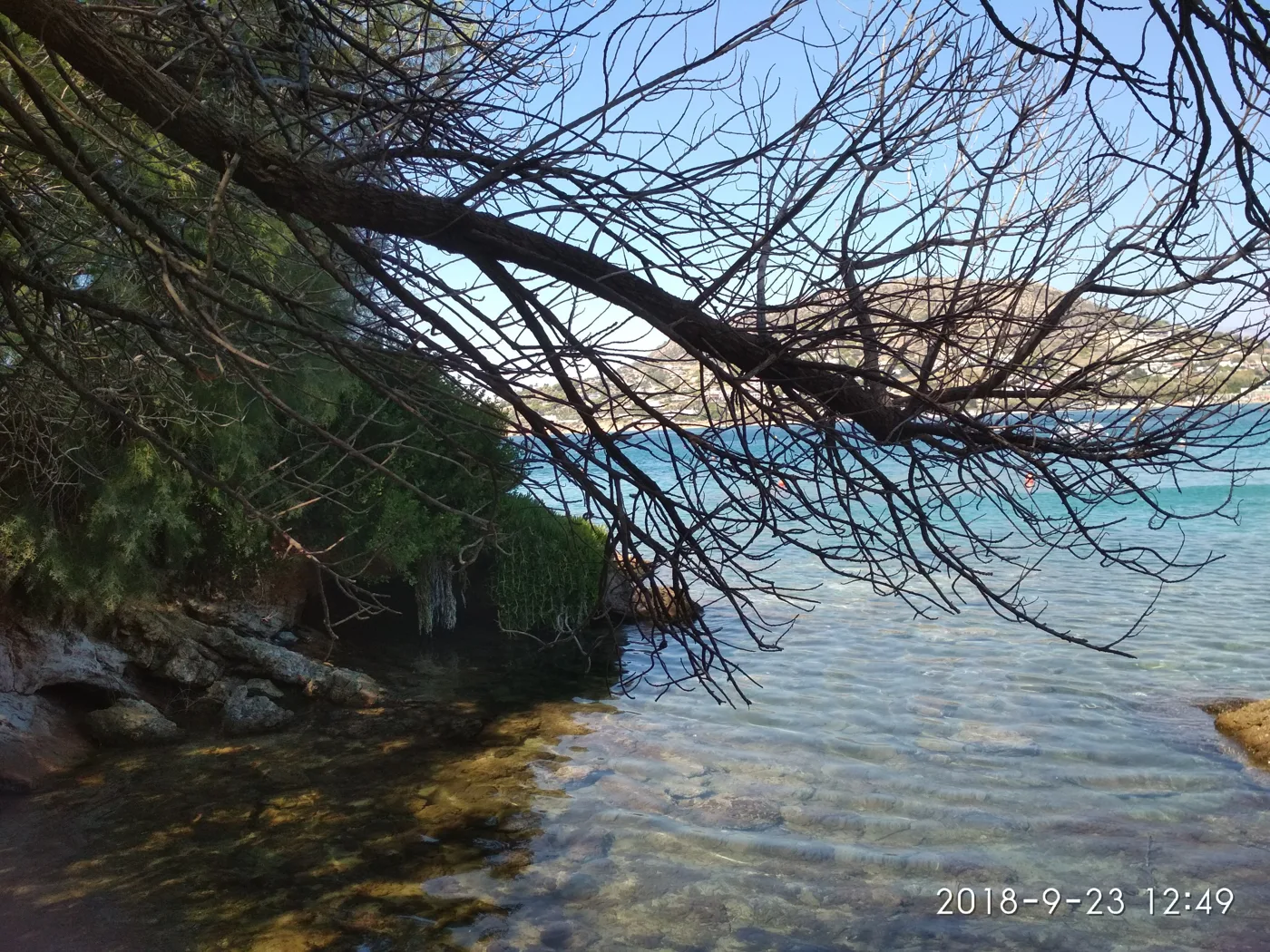
Pine trees down to the waves.
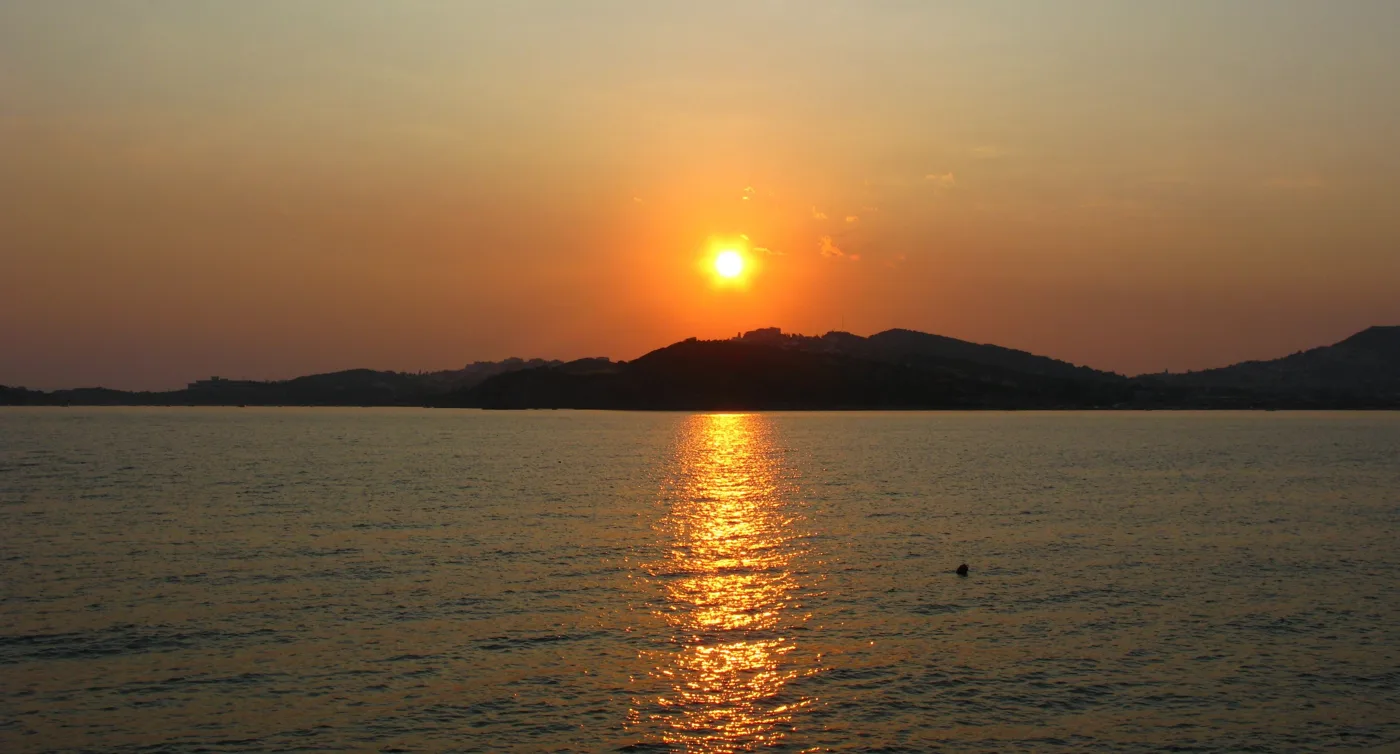
Fish tavernas and sunset.
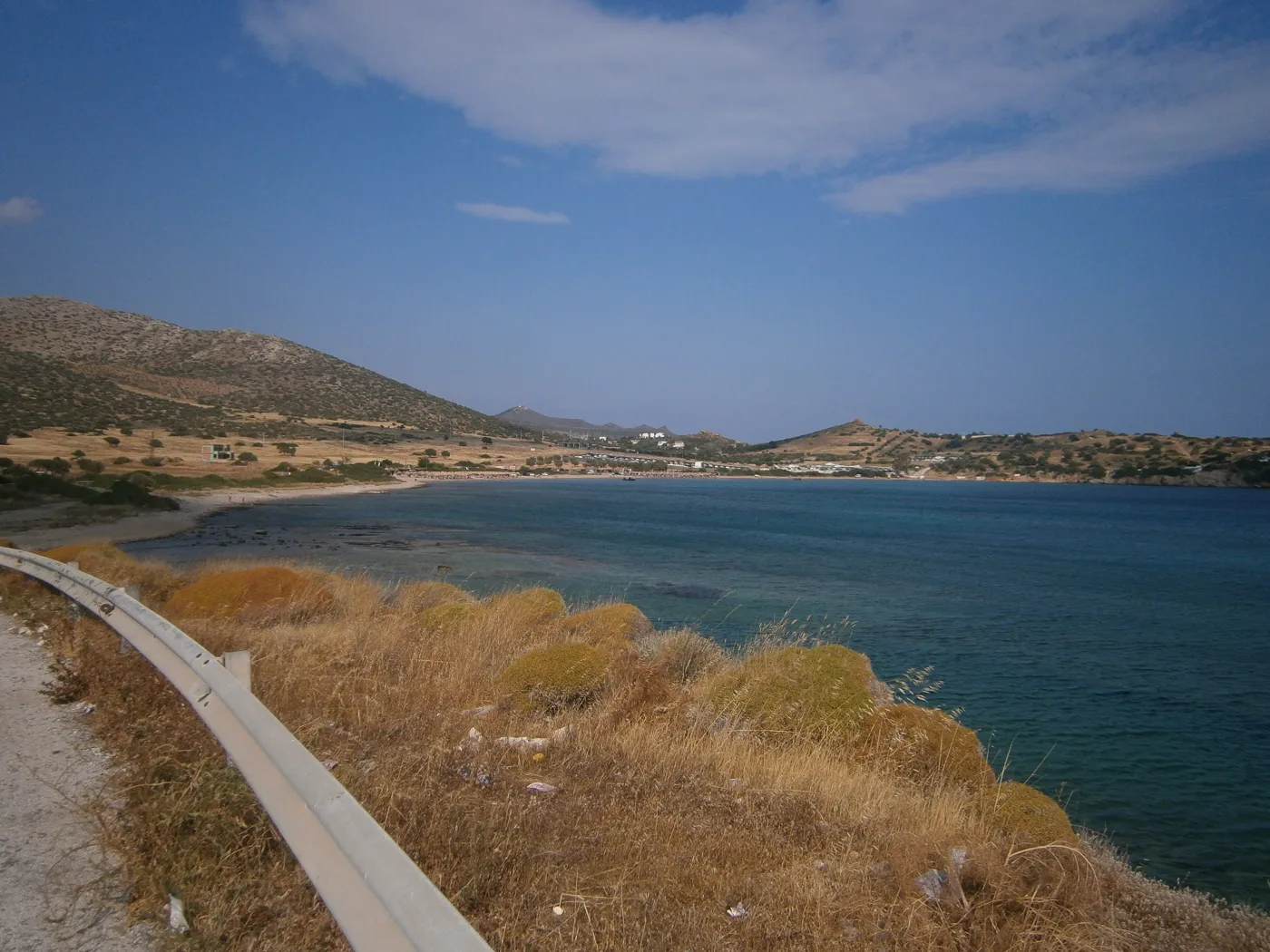
Sounion Avenue above the beach.
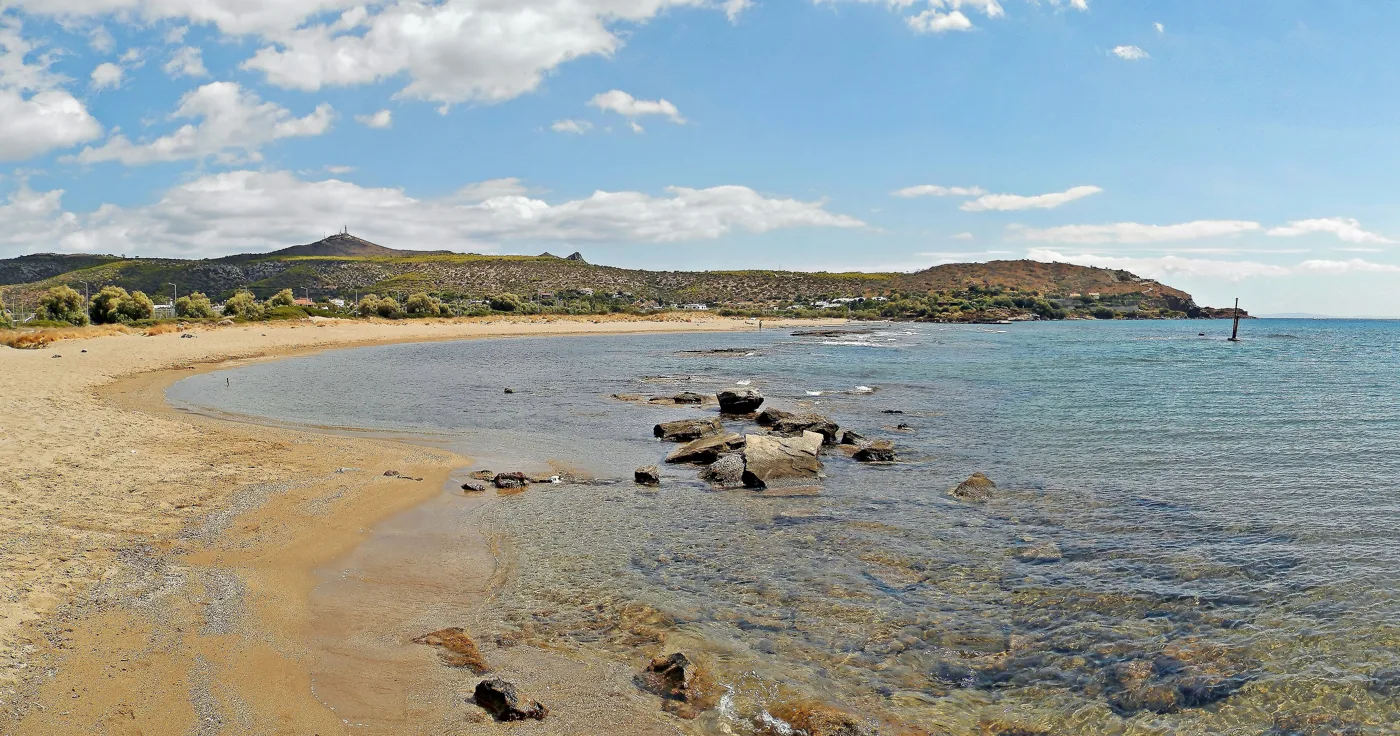
The last village before the cape.
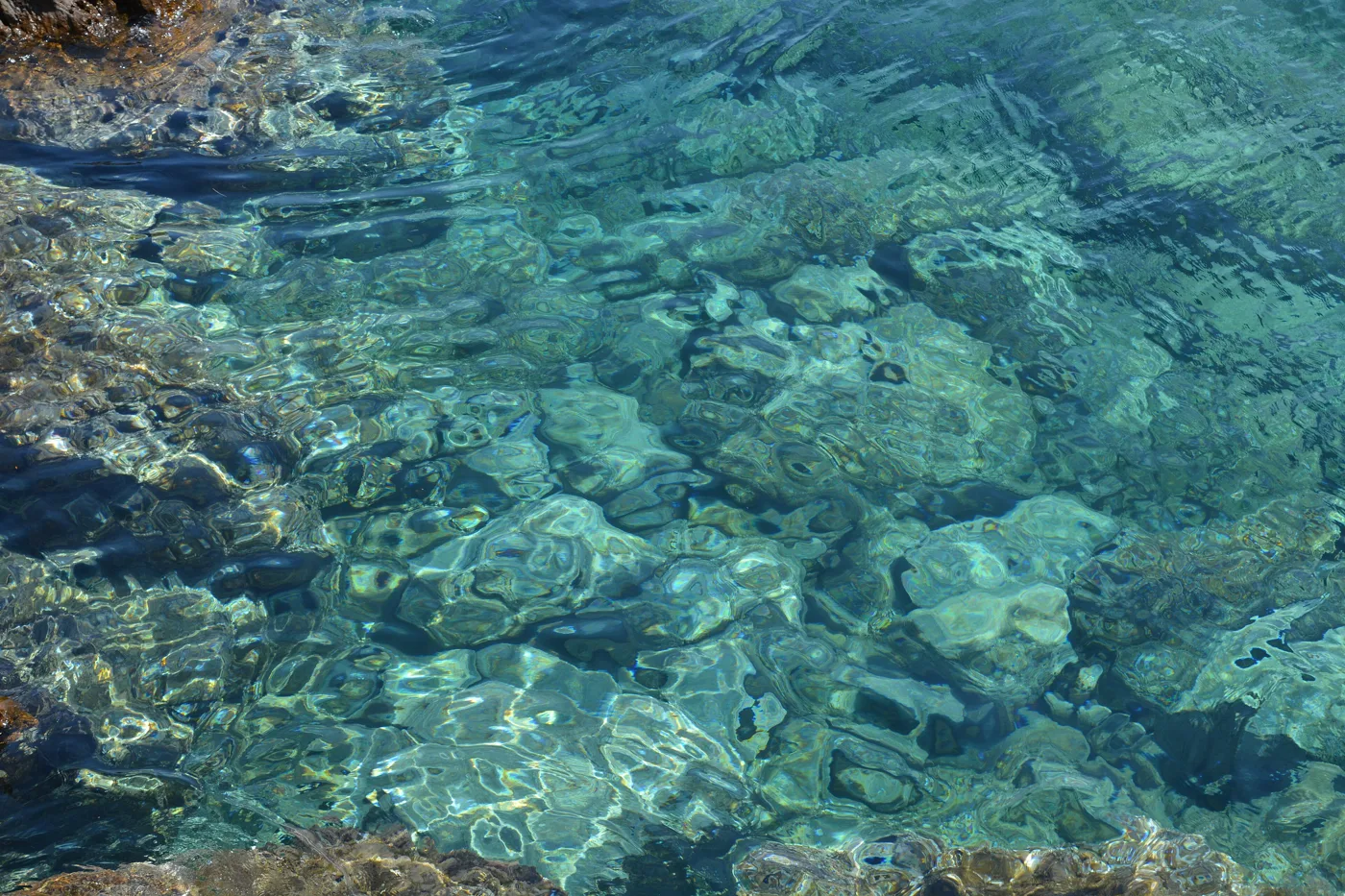
The water at the beaches of Sounion.
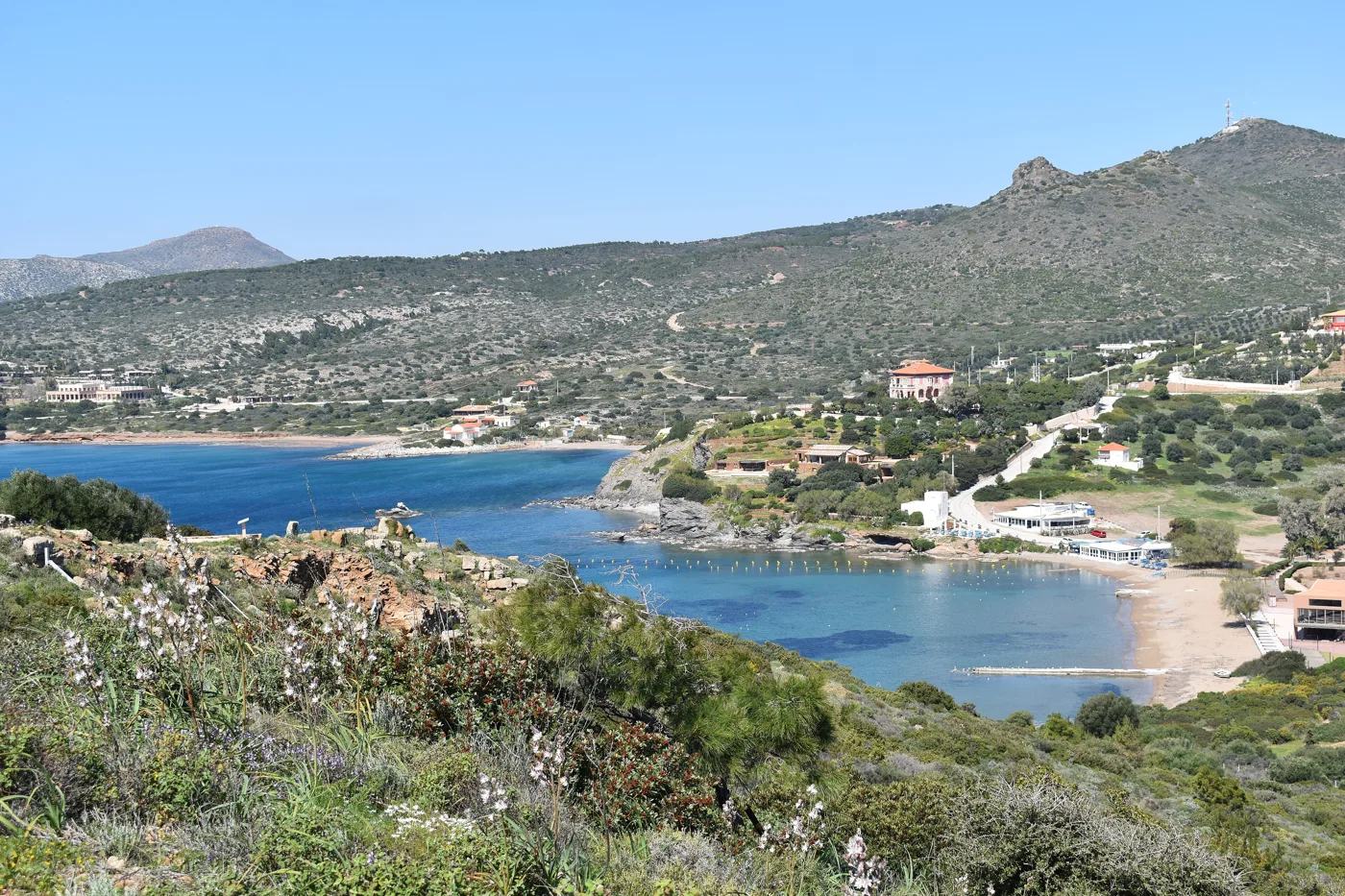
The bay with the tavernas, below the temple.
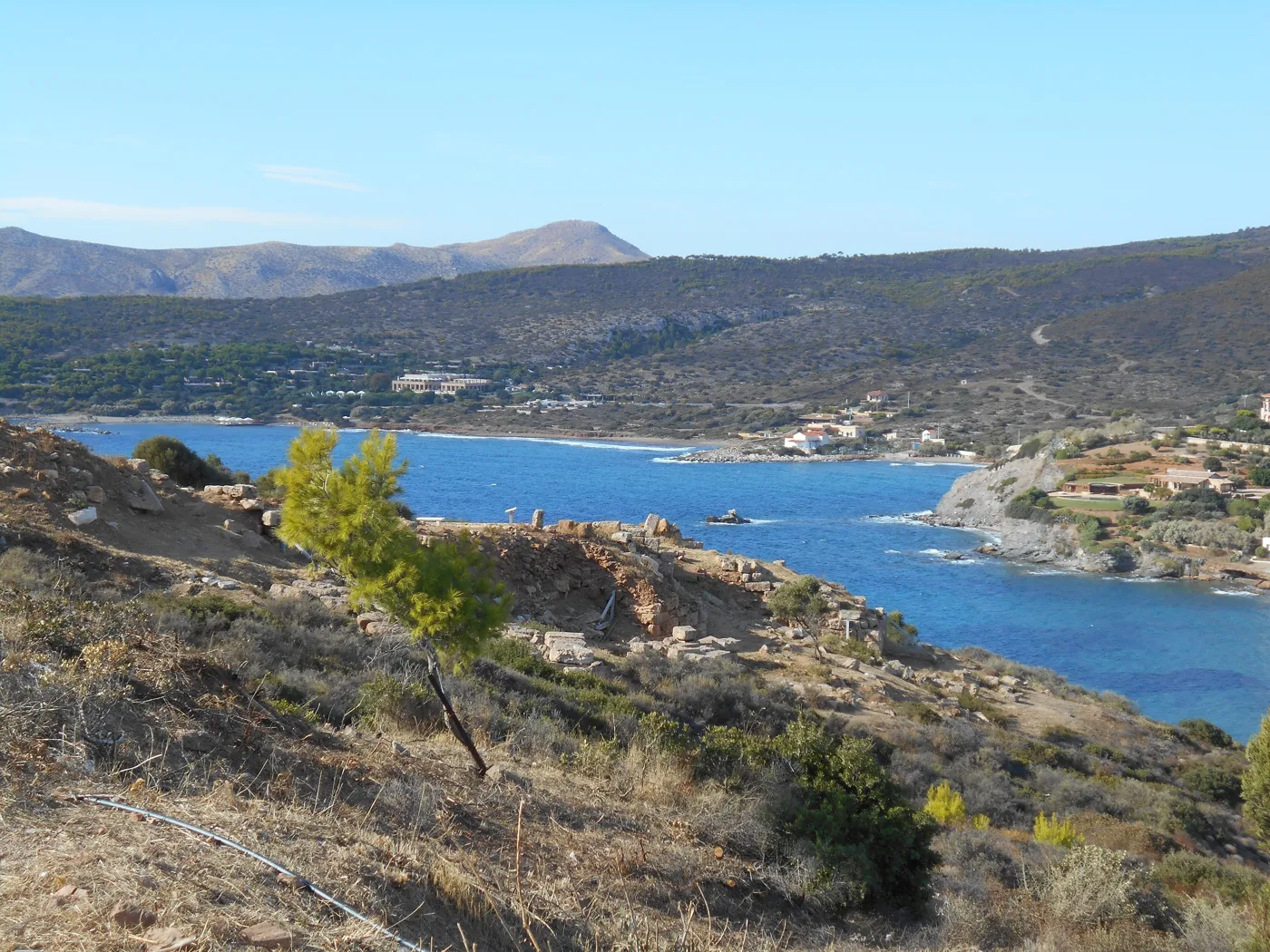
From the temple path.
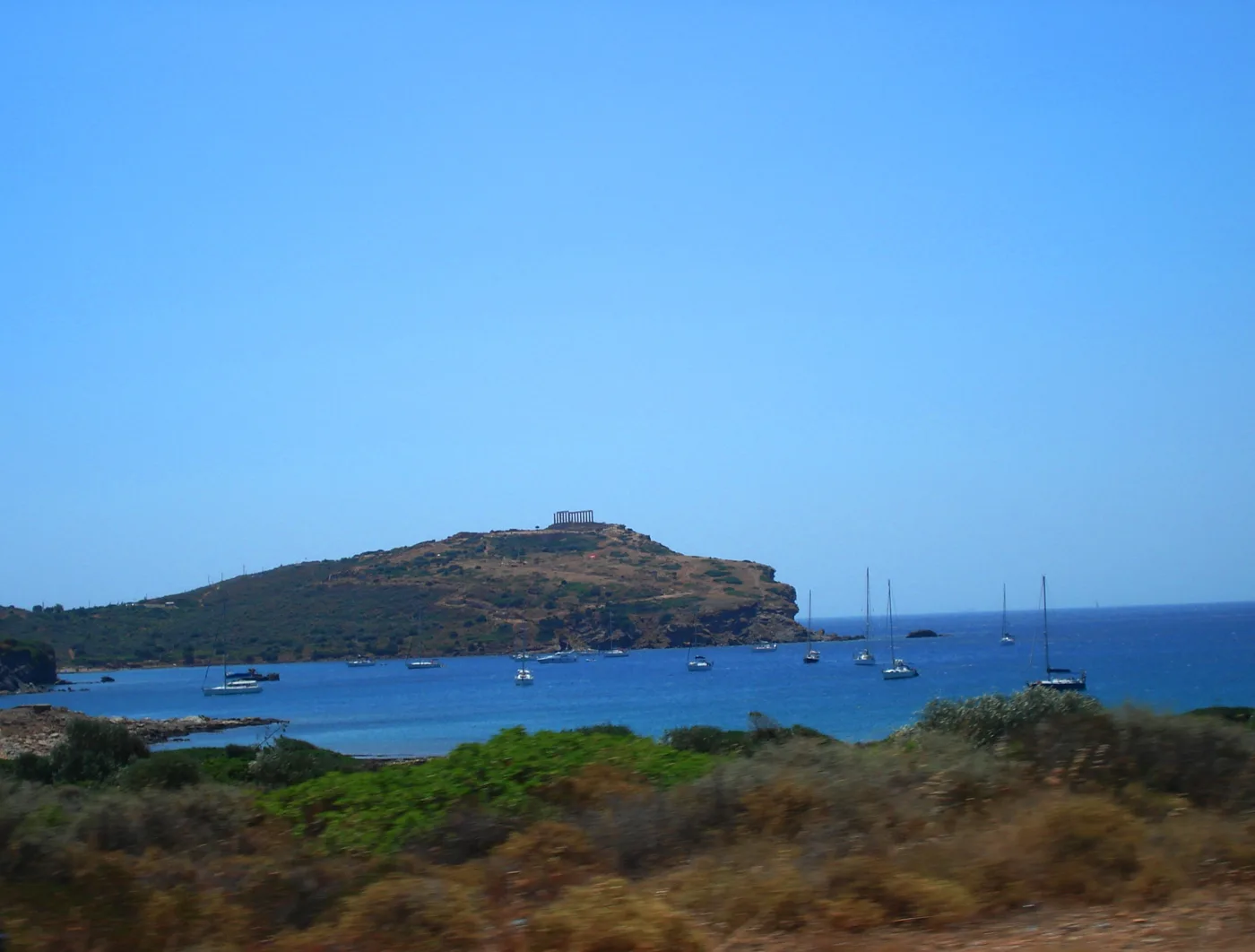
The cape from the western shore.
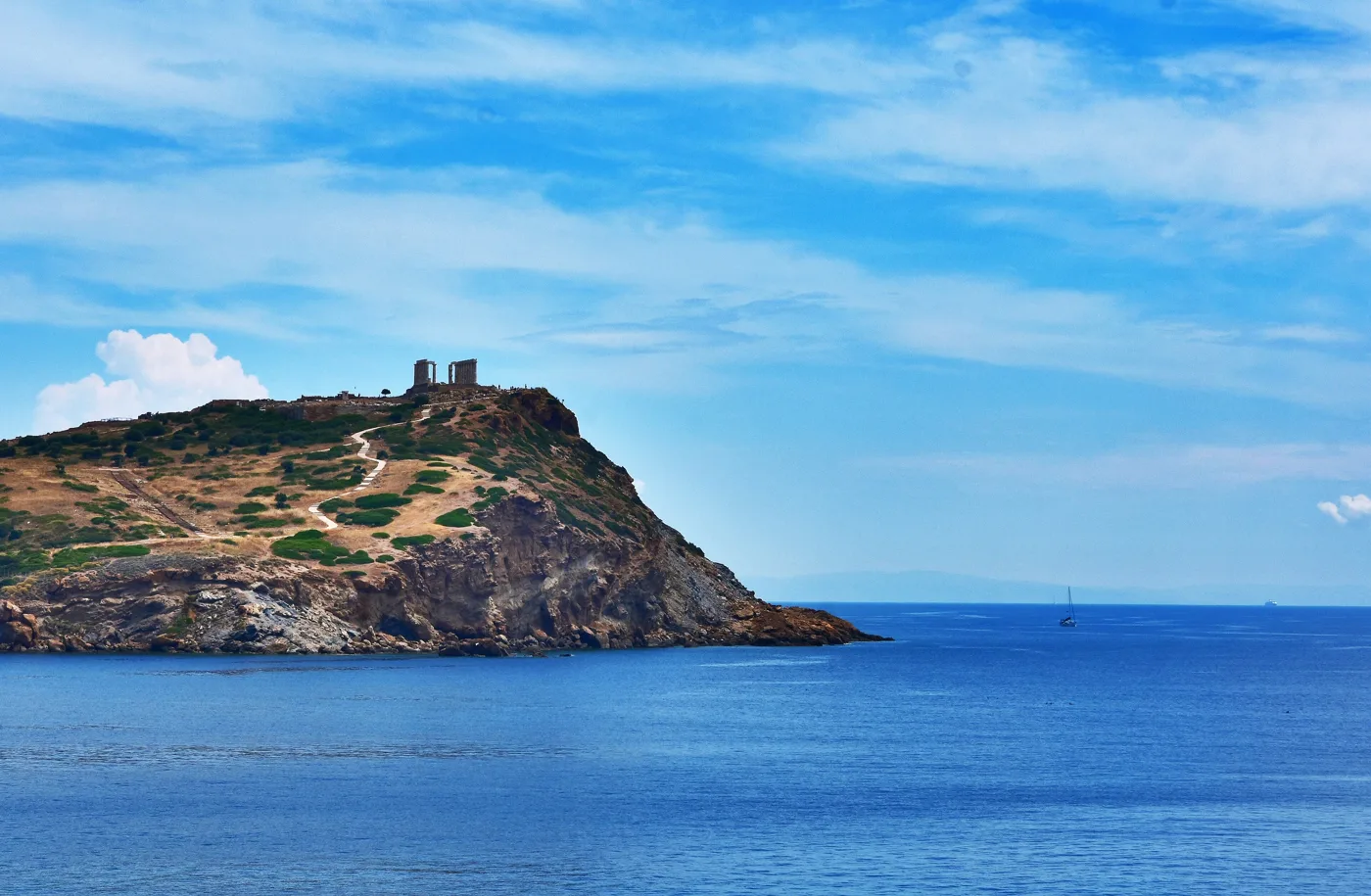
The temple from the sea, as the sailors saw it.
Photos: TTHHAANNnn (CC BY-SA 4.0), Tilemahos Efthimiadis (CC BY 2.0), Ιδομενεύς (CC BY-SA 4.0), Sylva-ae (CC BY-SA 4.0), Stefania Papadima (CC BY-SA 4.0), Vasilis Kiarri (CC BY-SA 4.0), Ribouldingue (CC BY-SA 4.0), Belua1234 (CC BY-SA 4.0), Ian gkoutas (CC BY-SA 4.0) · Wikimedia Commons
⛏️ Lavrio and Thorikos: if you have the whole day
With a car and a whole day, carry on ten kilometres east to Lavrio, the port for Kea and Kythnos. Here were the ancient silver mines that paid for the fleet of Salamis and the Parthenon, and the nineteenth-century town still keeps the French Pier, the factories of the mining company, today a Technological and Cultural Park, and neoclassical houses. The small Archaeological Museum of Lavrio holds the frieze of the Temple of Poseidon and finds from the mines, with morning hours that are worth checking before you go. Five minutes further north, at Thorikos, survives the oldest theatre in Greece, from the sixth century BC, with an elliptical orchestra, in an open archaeological site. In the port you eat fish while watching the ferries to the Cyclades.
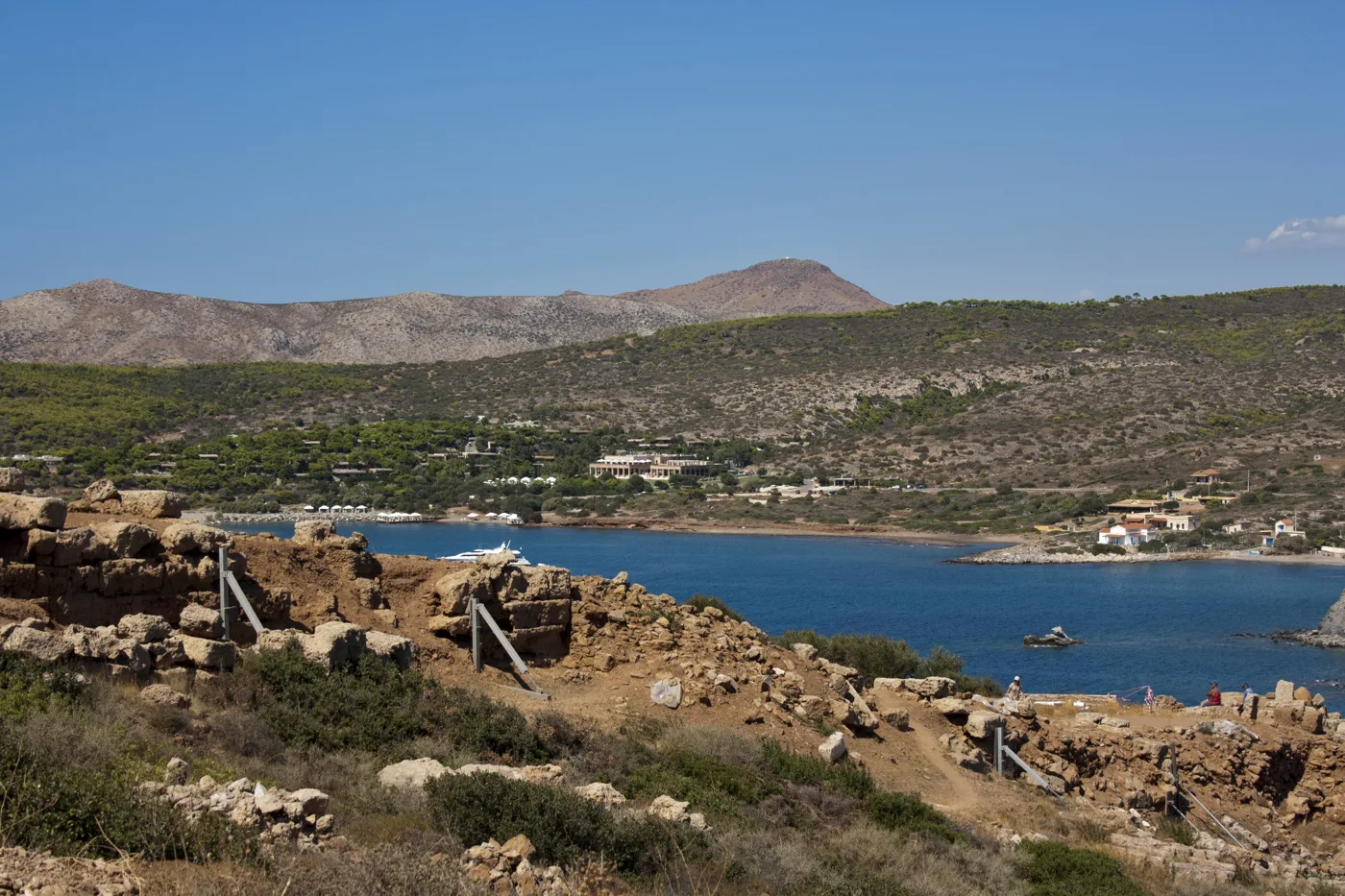
The mining town, ten kilometres from Sounion.
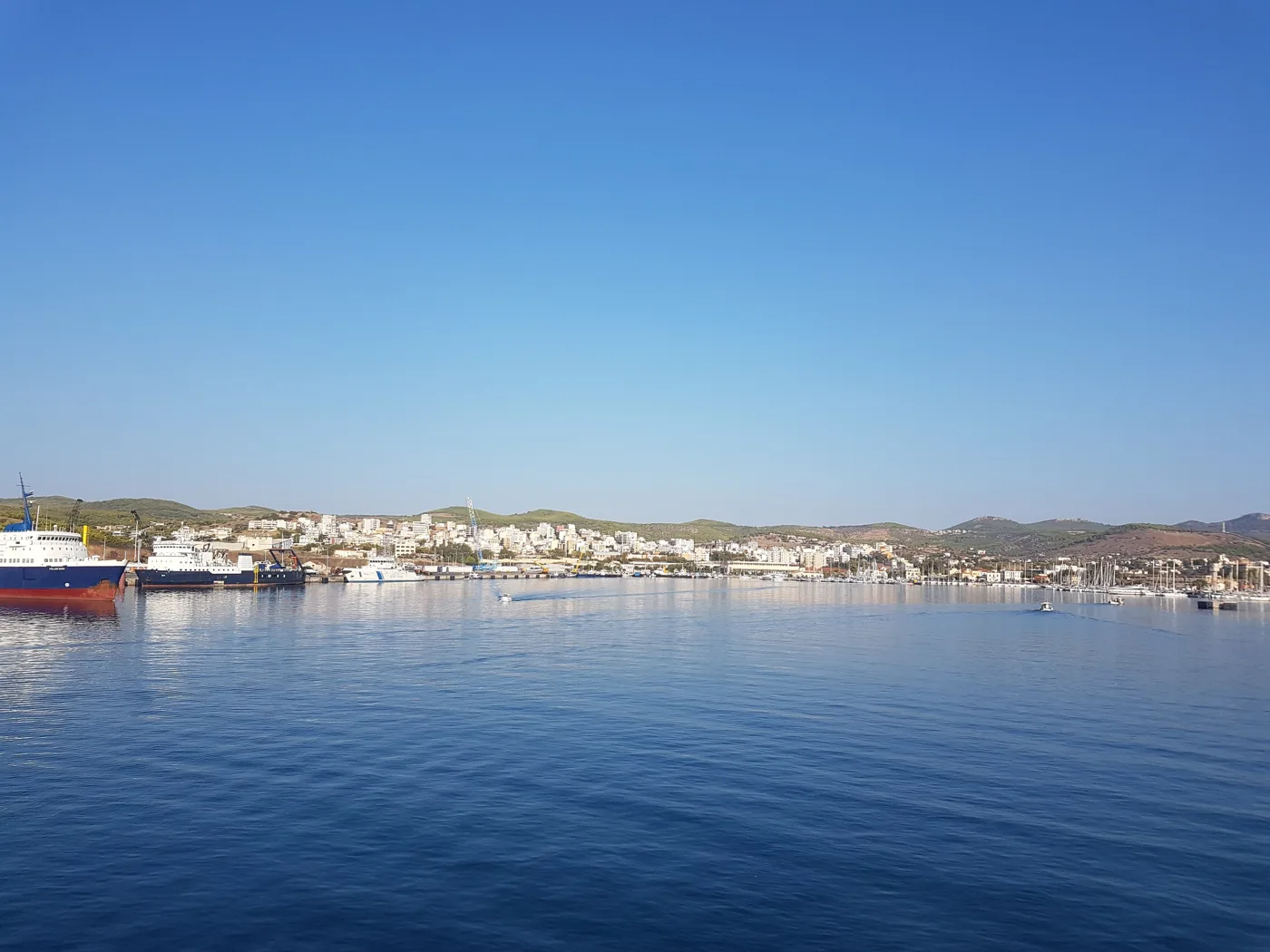
The ferries to Kea and Kythnos leave from here.
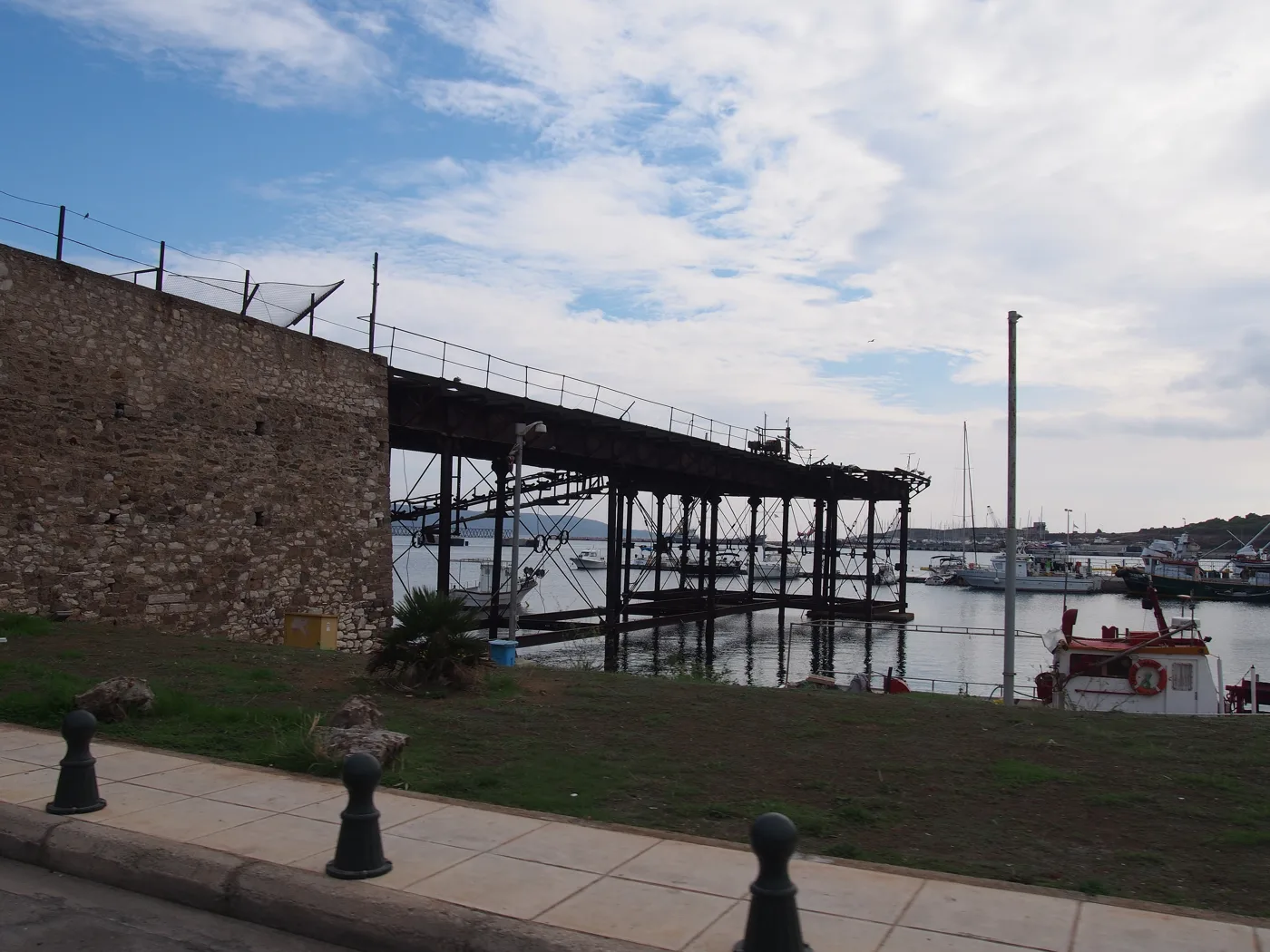
Ore was loaded here in the 19th century.
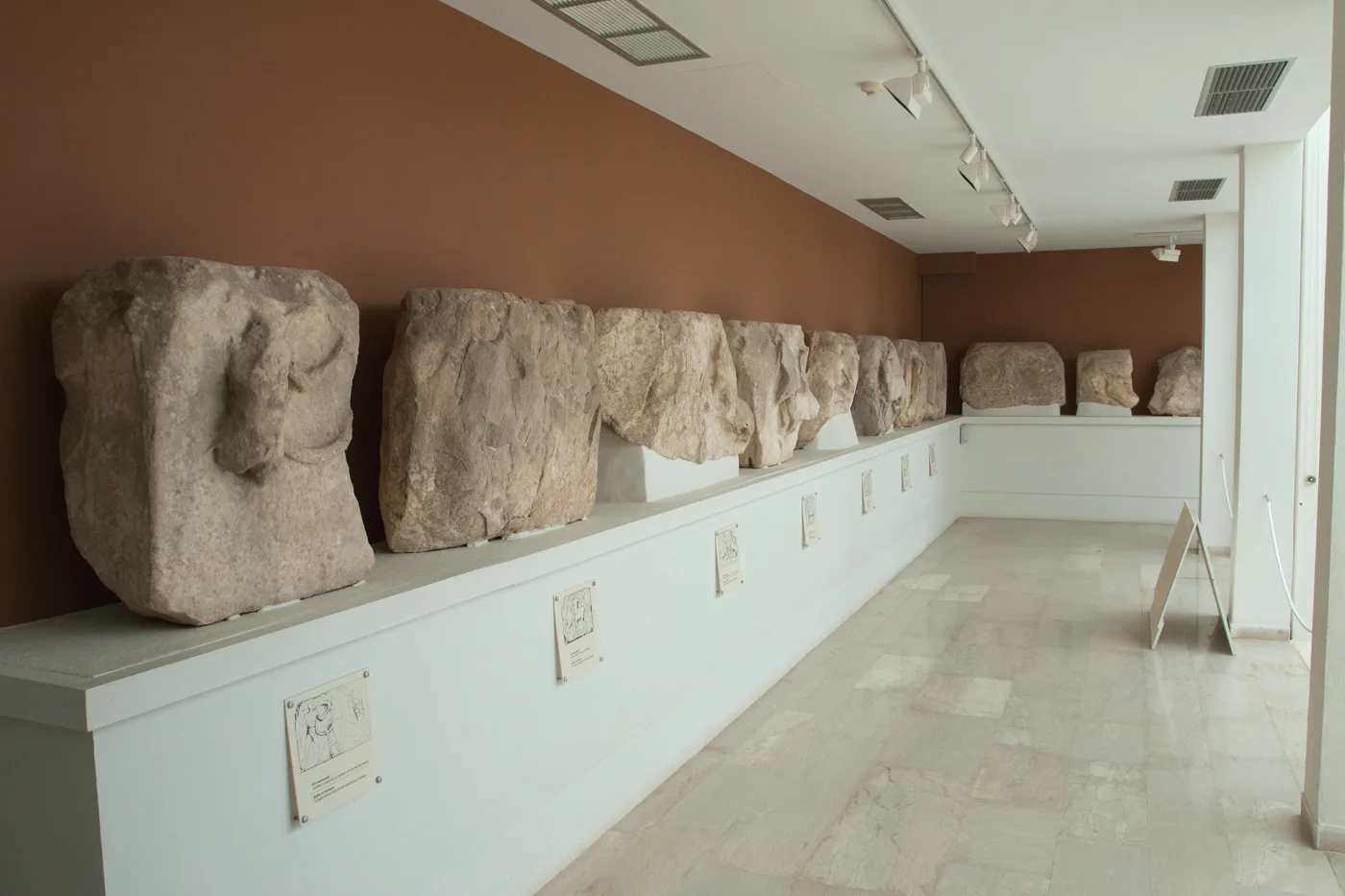
In the Archaeological Museum of Lavrio.
Photos: Kell Kell (CC BY-SA 3.0), FocalPoint (CC BY-SA 4.0), C messier (CC0), Zde (CC BY-SA 4.0) · Wikimedia Commons
🕗 The day's schedule
🕗 The day's schedule
The plan for a summer afternoon by car. In winter move everything about three hours earlier, based on the time of sunset.
Setting off from Ioulianou 50
Coffee, swimsuit in the bag, and from Syngrou onto the coast road. An hour to Varkiza.
A swim on the Riviera
A stop at Varkiza or Anavyssos for a swim and a bit of fish by the waves.
The road to the cape
Sounion Avenue winds between the rocks and, at the last bend, the temple appears above you.
The temple in calm light
You go in two hours before sunset: the Propylaea, the stoa, the walk around the temple, the travellers' carvings, the partridges.
Sunset
Sit on the rocks of the western side. The sun drops behind Patroklos and the columns catch fire.
Dinner by the sea
Fish taverna on the beach below the temple or at Legrena. Return through the Mesogeia, 1 hour 20 min home.
Without a car: KTEL bus at 10:30 from Pedion Areos, at the temple around 12:30, an hour and a half on site, lunch on the beach below the temple and back on the afternoon bus. For the sunset, take the afternoon bus, and if there is no return service after sunset, arrange a taxi from Lavrio or prefer an organised tour.
🍽️ What to eat
On the cape itself there is a café-restaurant in the car park of the site, with a view and tourist prices, fine for a coffee and an ice cream. For a meal, go down to the beach below the temple, where two or three tavernas serve fresh fish, calamari and greens with a view of the columns, around €25 to €35 per person. At Legrena and Anavyssos the fish tavernas are simpler and cheaper, €20 to €30, and in Lavrio you eat on the harbour, €25 to €40. In Vouliagmeni and Glyfada prices go up, €30 to €60. Take water and a snack for the wait on the site, where nothing is sold.
📅 When to go
Sounion is worth it all year round, because the sun sets every day. From April to June the rock has wildflowers and soft light, and in September and October the sea is still warm for a swim on the way. In July and August it is hot at midday, and at sunset dozens of coaches arrive together. In winter, with a clear sky after a north wind, visibility is the best of the year and the temple almost empty, but the sun sets at five.
💡 Tips before you set off
The cape is open on every side: the north wind blows hard even in summer, and there is no shade anywhere. Hat, water, sunscreen, closed shoes for the dirt path, and a jacket for after sunset, even in July.
Tripods are allowed, drones are not, without a permit from the Ministry of Culture. The best shots: from the path on the south side, with the temple and the sea together, and from the road before the last bend, with the whole cape.
The bus needs cash, while the site ticket can also be bought by card or online. Allow 45 minutes extra for the return on summer Sundays, when the whole Riviera is heading back to Athens.
🚶 How to get there from Ioulianou 50
For the bus, the KTEL Attikis terminal is seven minutes on foot from Ioulianou 50, on Mavrommataion Street, at the start of Pedion Areos park. For a car, the rental companies on Syngrou Avenue are ten minutes away by taxi, and the coast road starts at the end of it. Organised tours usually pick you up from a point in the centre or from your hotel.
🚶 From Ioulianou 50 to the bus
Seven minutes on foot: walk down Ioulianou to Patission Street, cross over at Egyptou Square, next to the National Archaeological Museum, and the KTEL Attikis buses wait on Mavrommataion Street, at the start of Pedion Areos park. Look for the «SOUNIO» sign in the windscreen.
Frequently asked questions
How long does the visit to the temple take?
From 45 minutes to an hour and a half for the site, with the path around the temple and the walls. For the sunset add the wait: be inside an hour before it sets. With the drive and a stop for a swim, Sounion is half a day to a full day.
Can I make the sunset by KTEL bus?
In summer often not, because the last bus back leaves before or around sunset; in winter more easily, because the sun sets at five. Check the timetable at ktelattikis.gr. For the summer sunset, a car or an organised tour is safer.
Can I swim at Sounion?
Yes. In the bay below the temple there is a small sandy beach with tavernas, and on the way the beaches of KAPE at Legrena, Agios Nikolaos at Anavyssos and Varkiza. The sea is warm from June to October.
Can I see the temple without a ticket?
From the road and from the beach you see it from afar, and it is lovely. But the view from the rock, the path around the columns and the sunset between them are only from inside, and they are worth the €20.
Is it suitable for children and older people?
Yes, with care in the sun and the wind. The climb from the car park is five minutes on a sloping dirt path, with no steps, and children love the partridges and the rocks. With a wheelchair the path is hard, but the temple can be seen from the car park.
Sounion or Delphi, if I have only one free day?
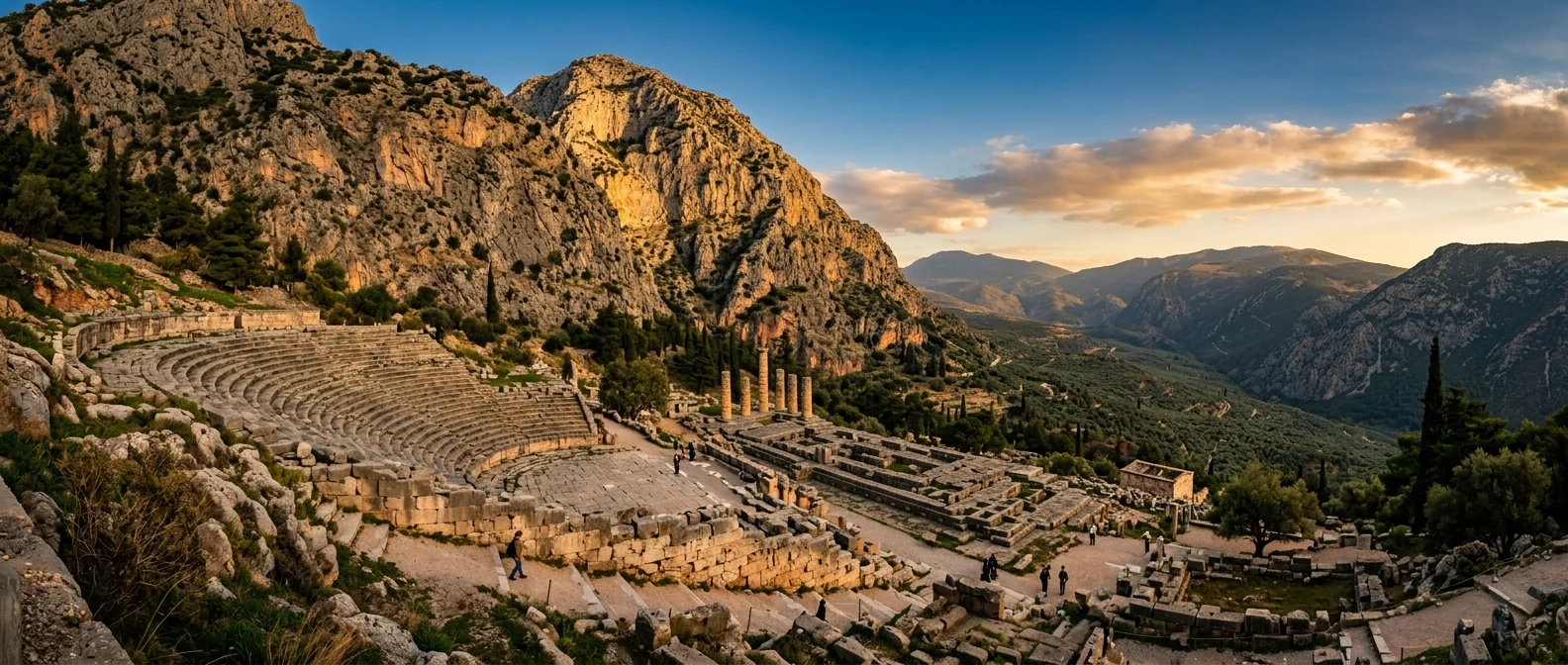
If you have half a day, Sounion, without a second thought. If you have a whole day and want antiquities and mountains, Delphi is the bigger experience, but three hours away. Many do both: Delphi for the day and Sounion the next afternoon.
— Kathy