🪪 The trip at a glance
📍 Where it is and how far
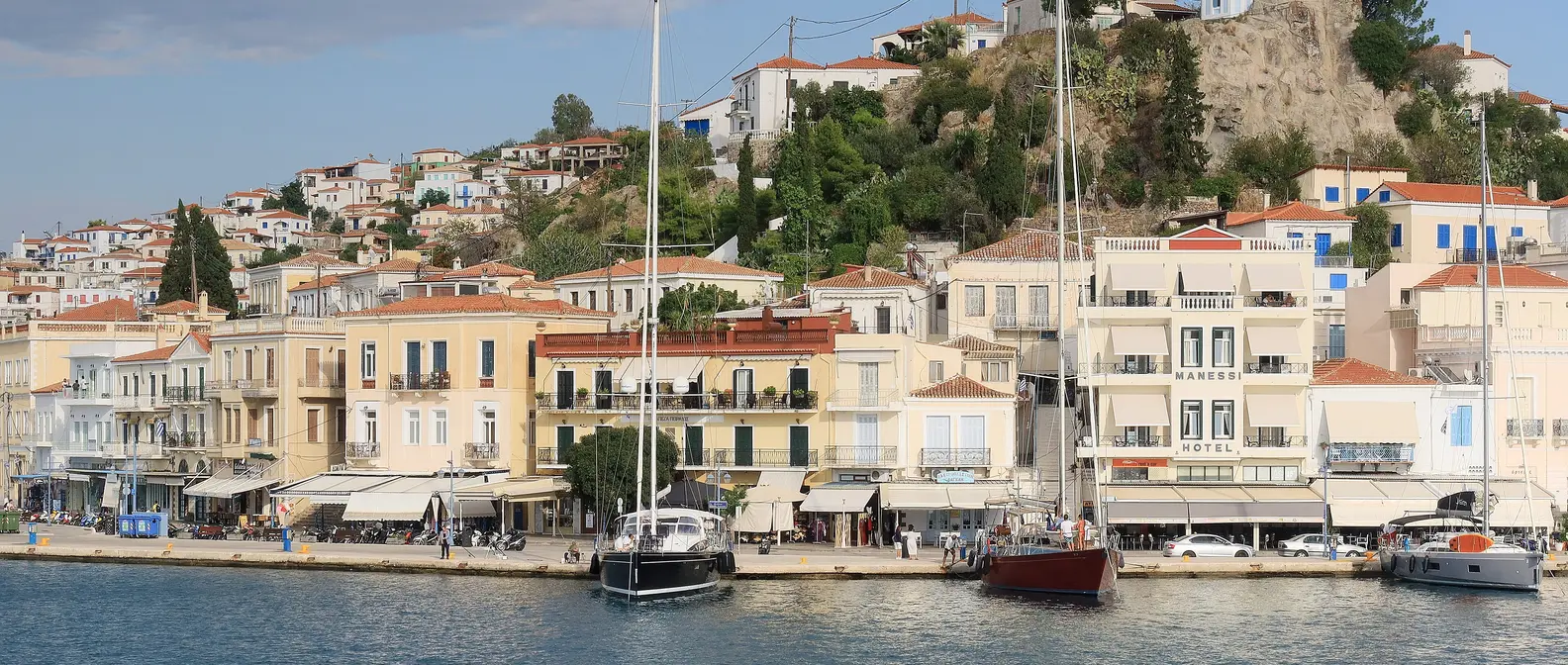
Poros is in the Saronic Gulf, between Aegina and Hydra, 28 nautical miles from Piraeus, pressed against the coast of the Peloponnese: a strait two hundred metres wide separates it from Galatas, and that strait is its whole story, because it gave it its name, “poros”, a passage, and the best natural harbour in the area. It is really two islands: little Sferia, a volcanic rock the town climbs up, and big Kalaureia, covered in pines, with the beaches, the Monastery and the ancient sanctuary. A bridge joins them at Kanali. Around 3,300 people live here all year round. From Piraeus you arrive in an hour by hydrofoil or two and a half by ferry, from Galatas in five minutes by boat, and from Ioulianou 50 the metro drops you in Piraeus in 25 minutes.
📍 Where Poros is
Poros is in the Saronic Gulf, pressed against the coast of the Peloponnese: a strait two hundred metres wide separates it from Galatas. The blue line is the route of the conventional ferry from Gate E8, with stops at Aegina and Methana, and the dashed line the hydrofoils, which pass outside Aegina. In red, Poros; in green, Galatas; in yellow, the ferry stops and Hydra; in purple, ancient Troezen. Tap each point.
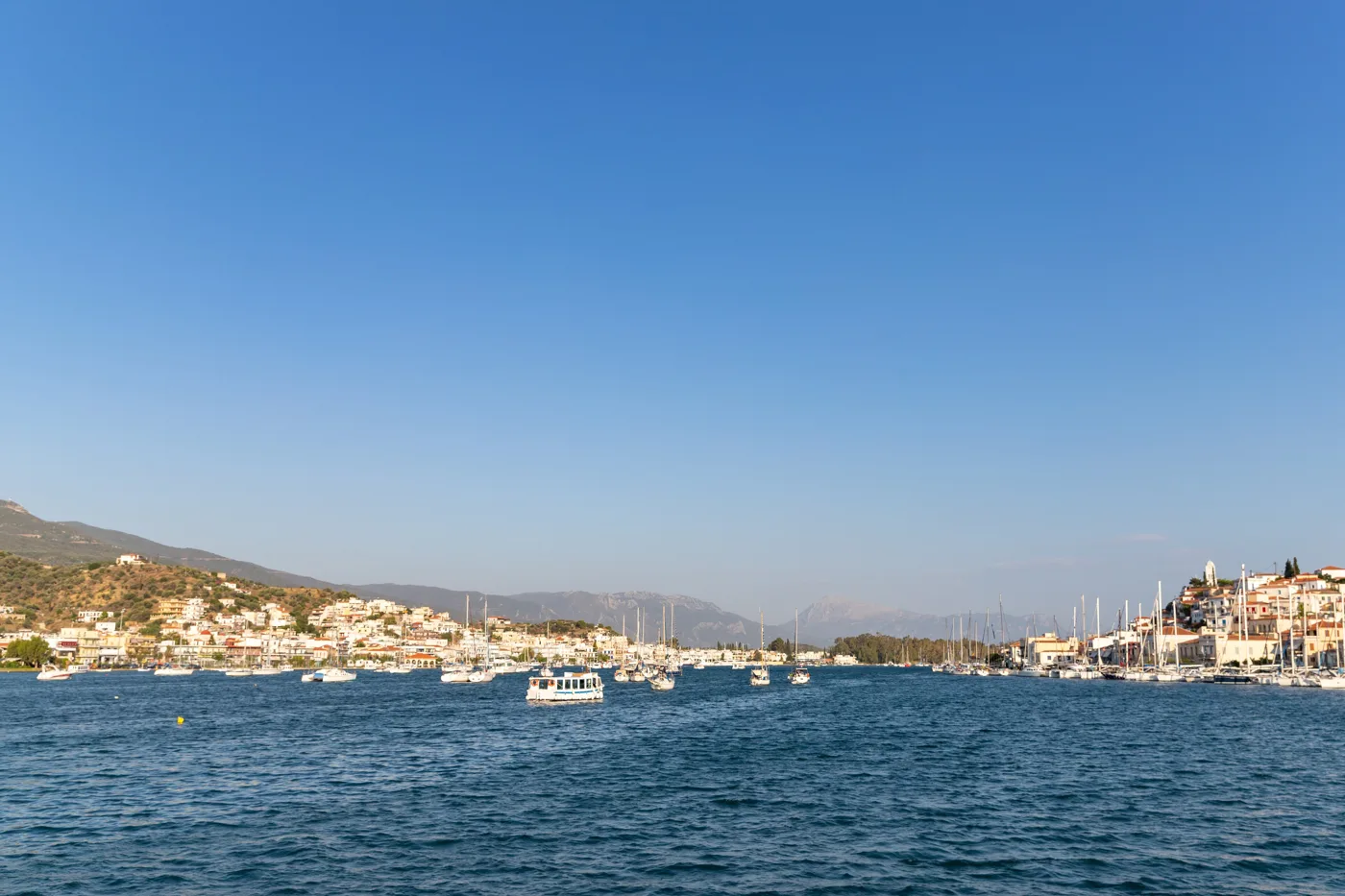
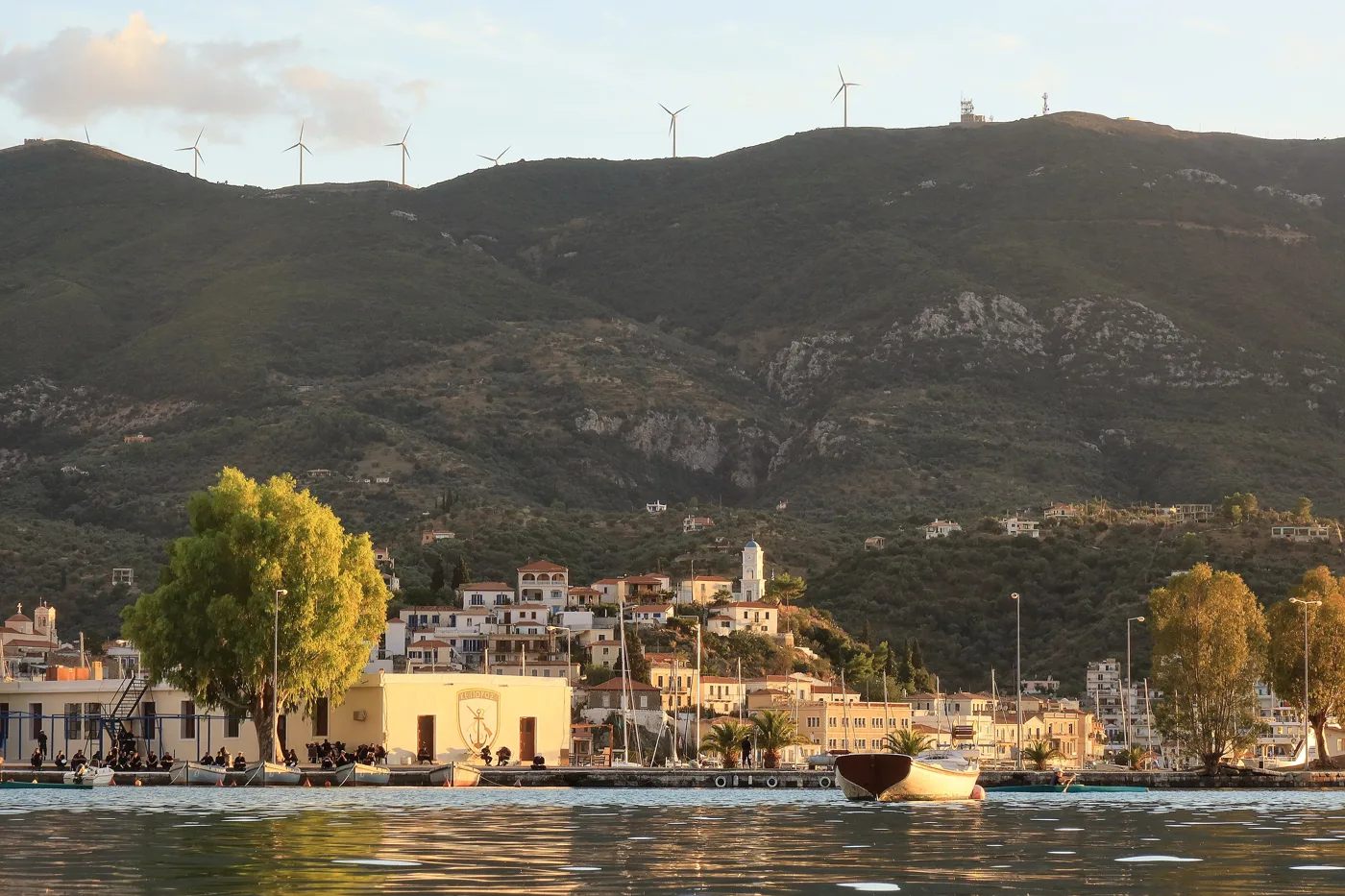
Two hundred metres of sea separate the island from the Peloponnese.
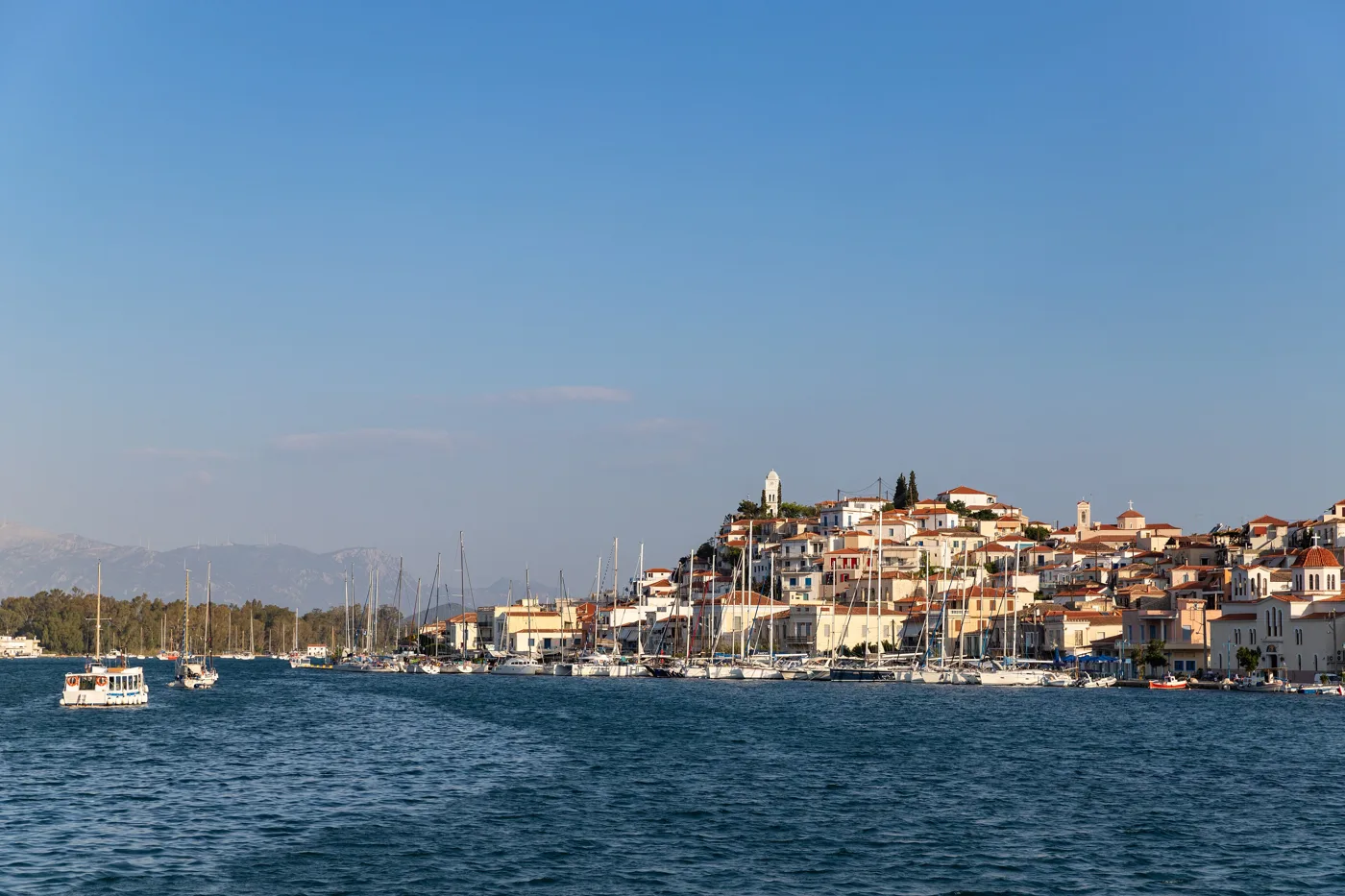
This is how you see it from the ferry.
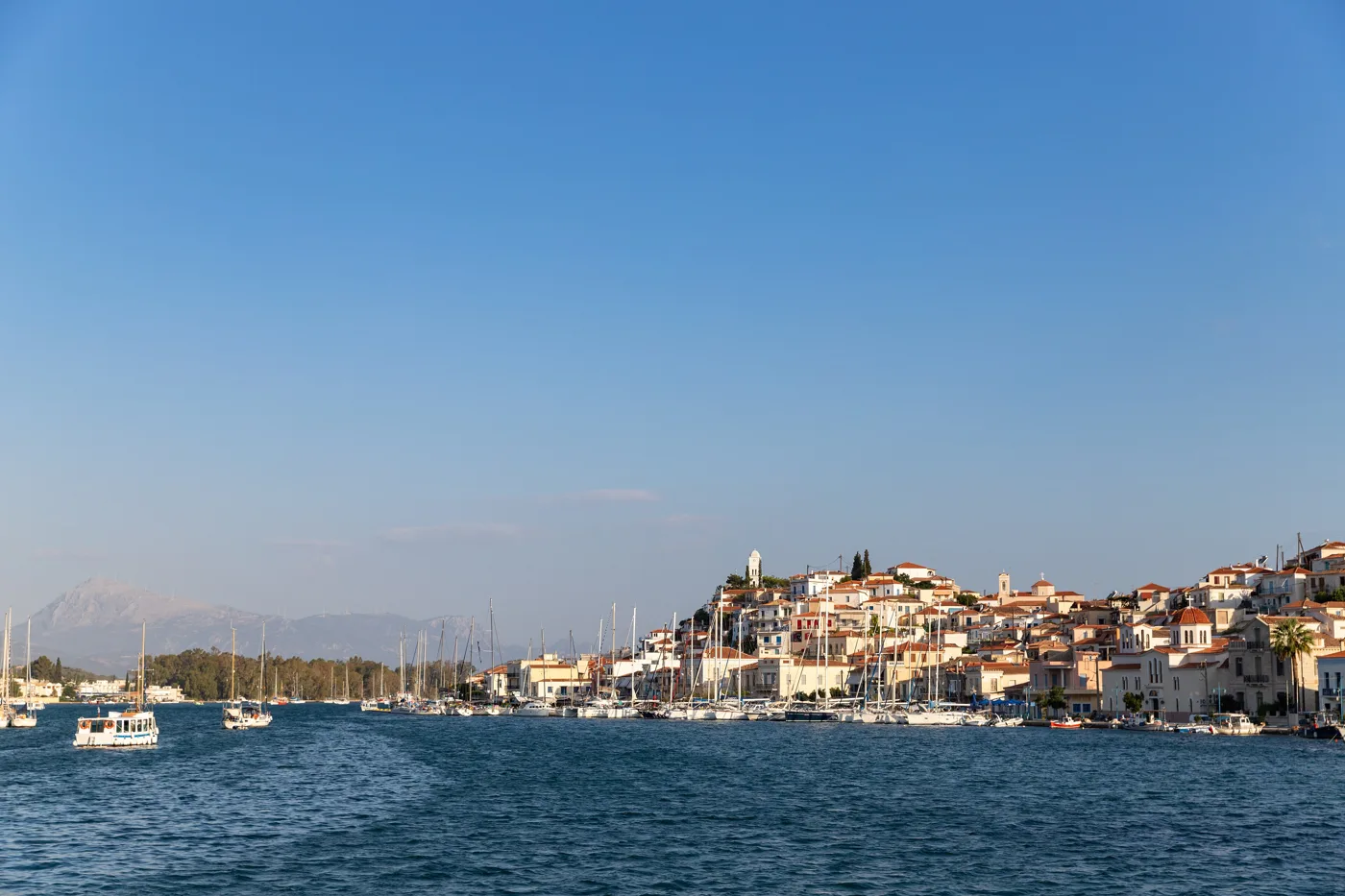
The rock of the town.
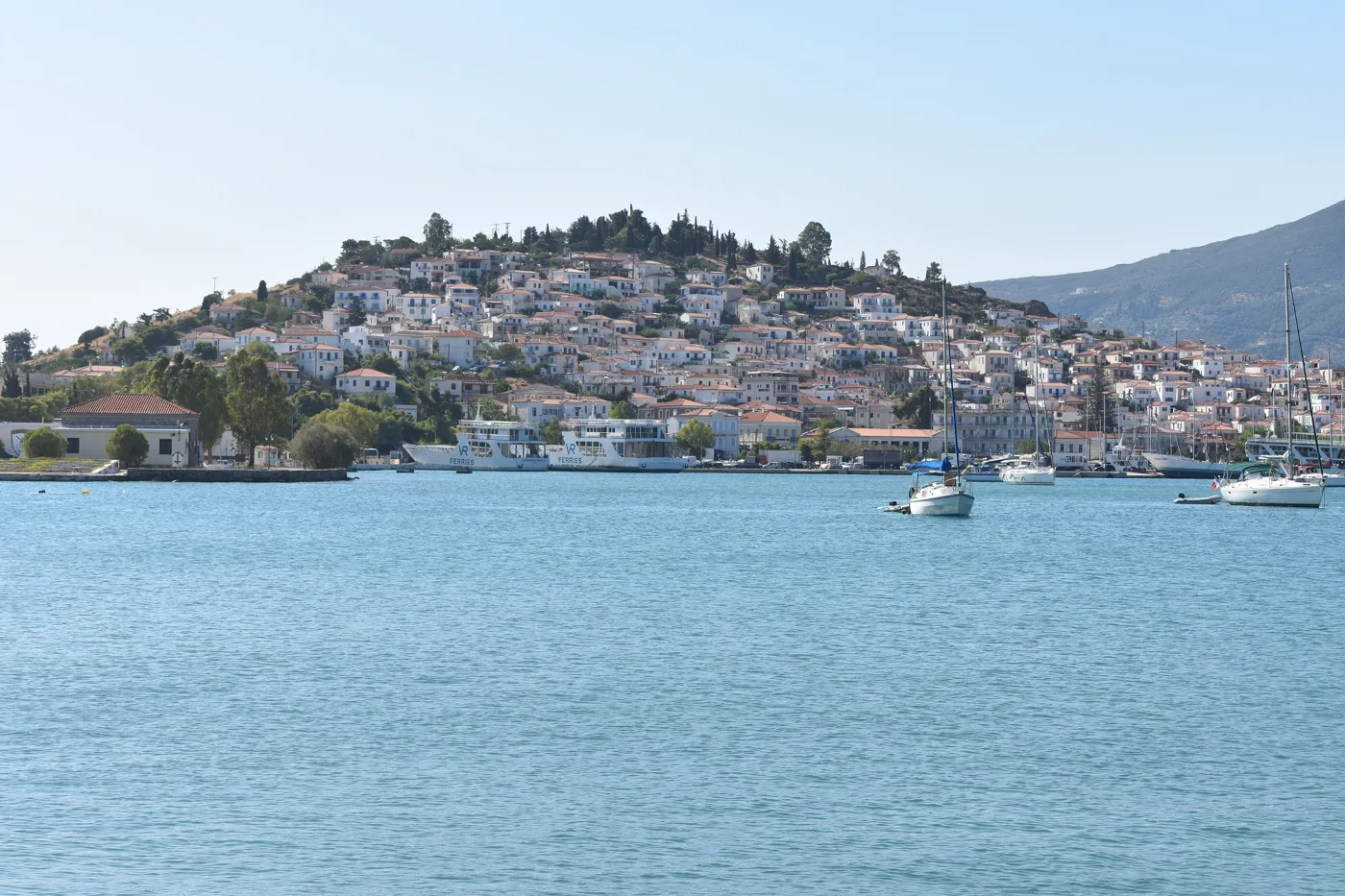
Two towns, one strait.
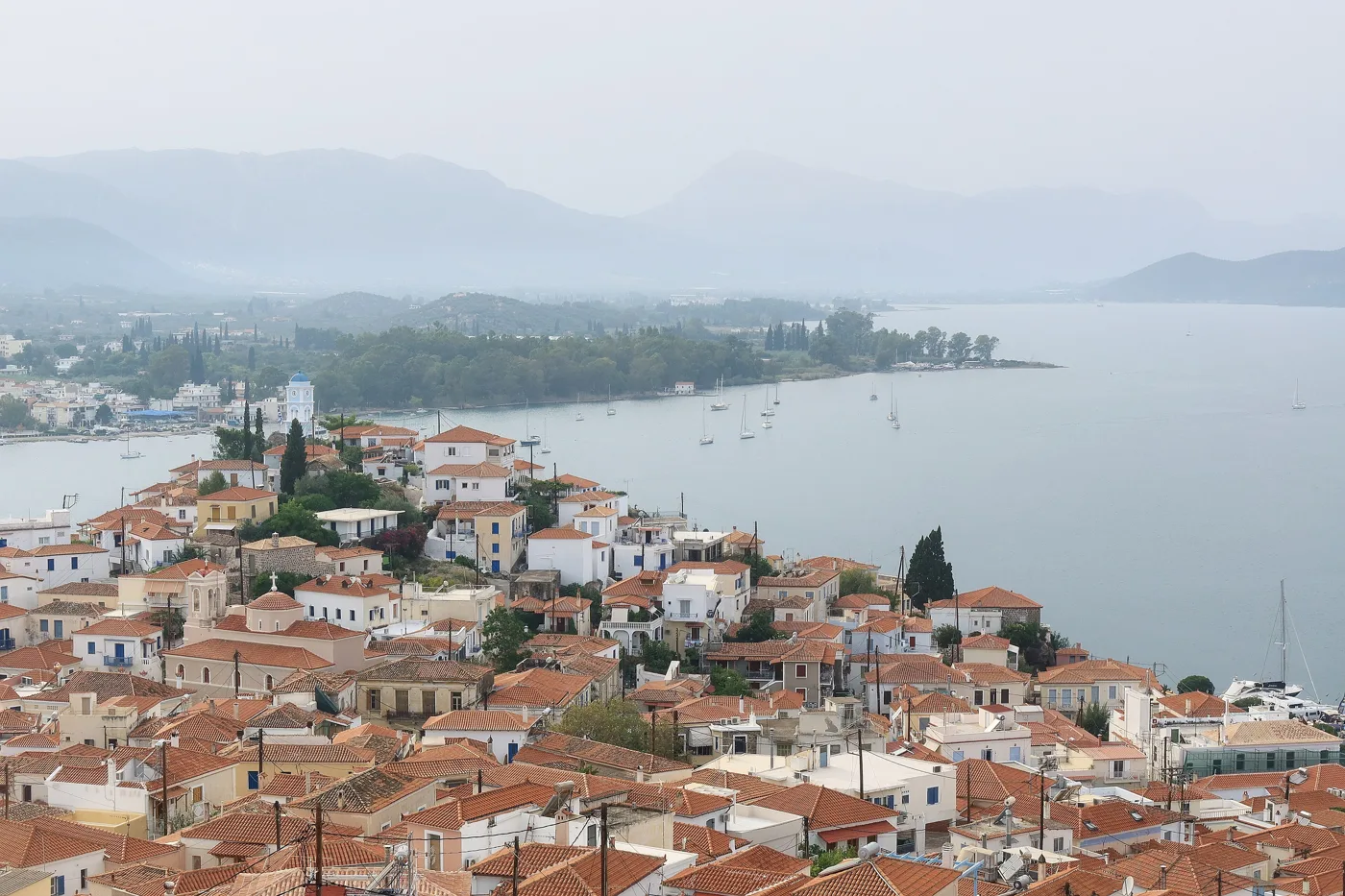
The roofs, the strait, the Peloponnese.
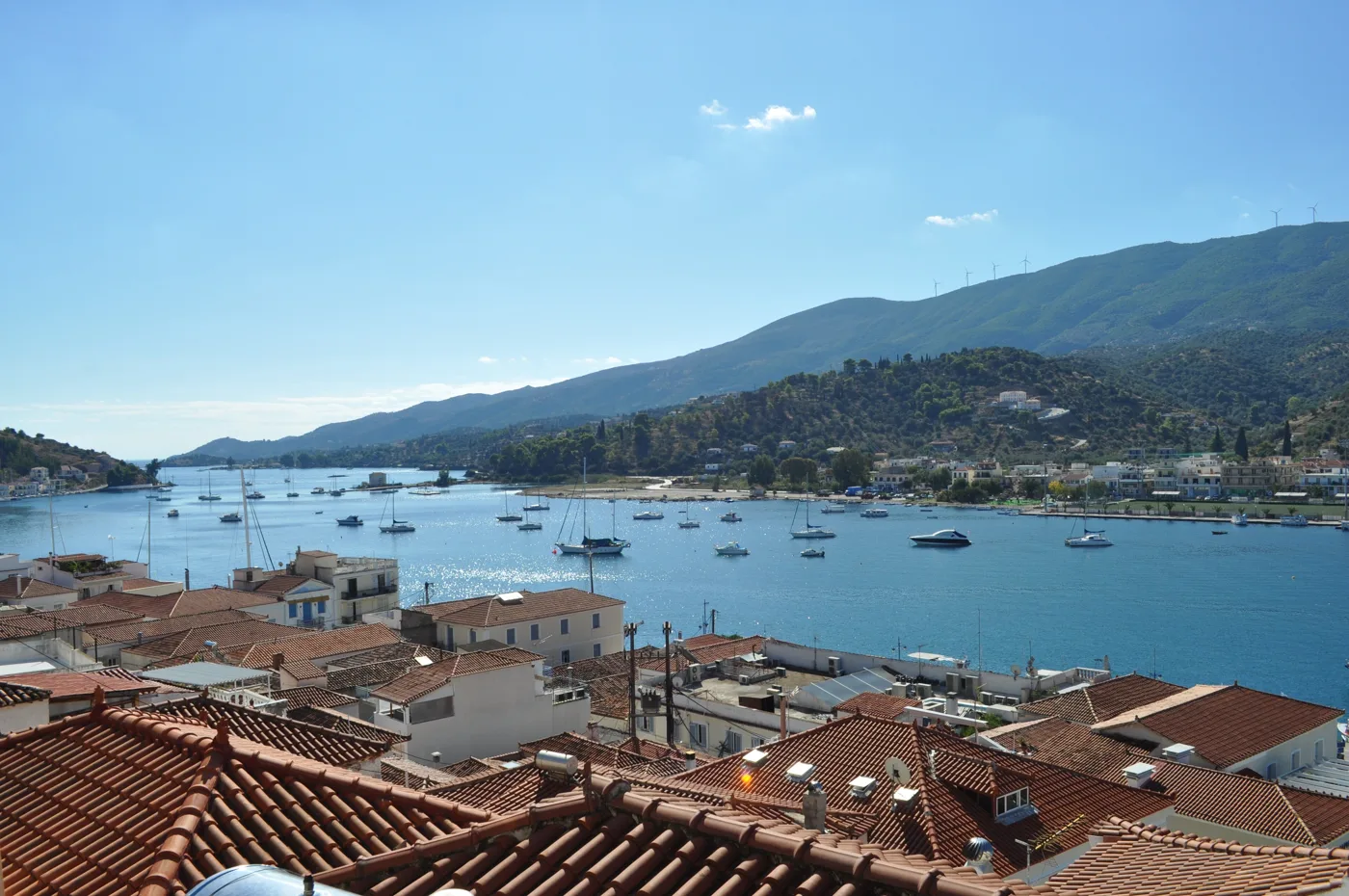
The natural harbour that sailors loved.
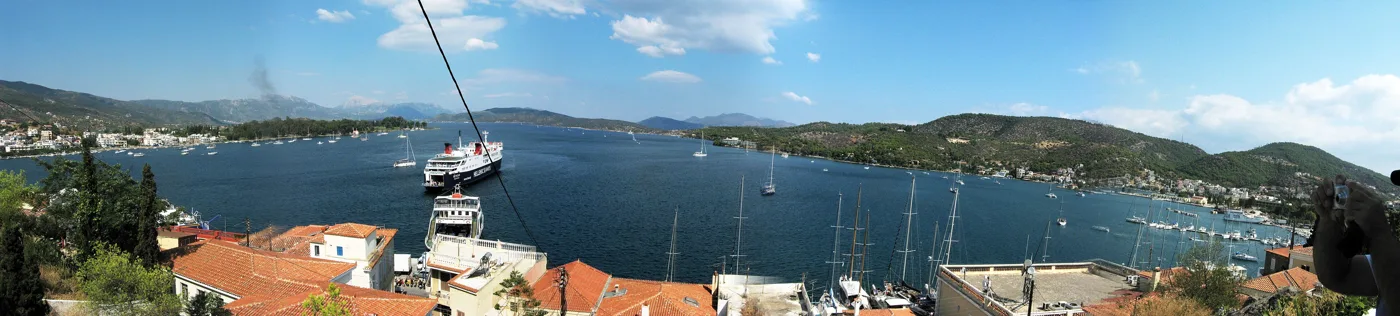
The whole harbour.
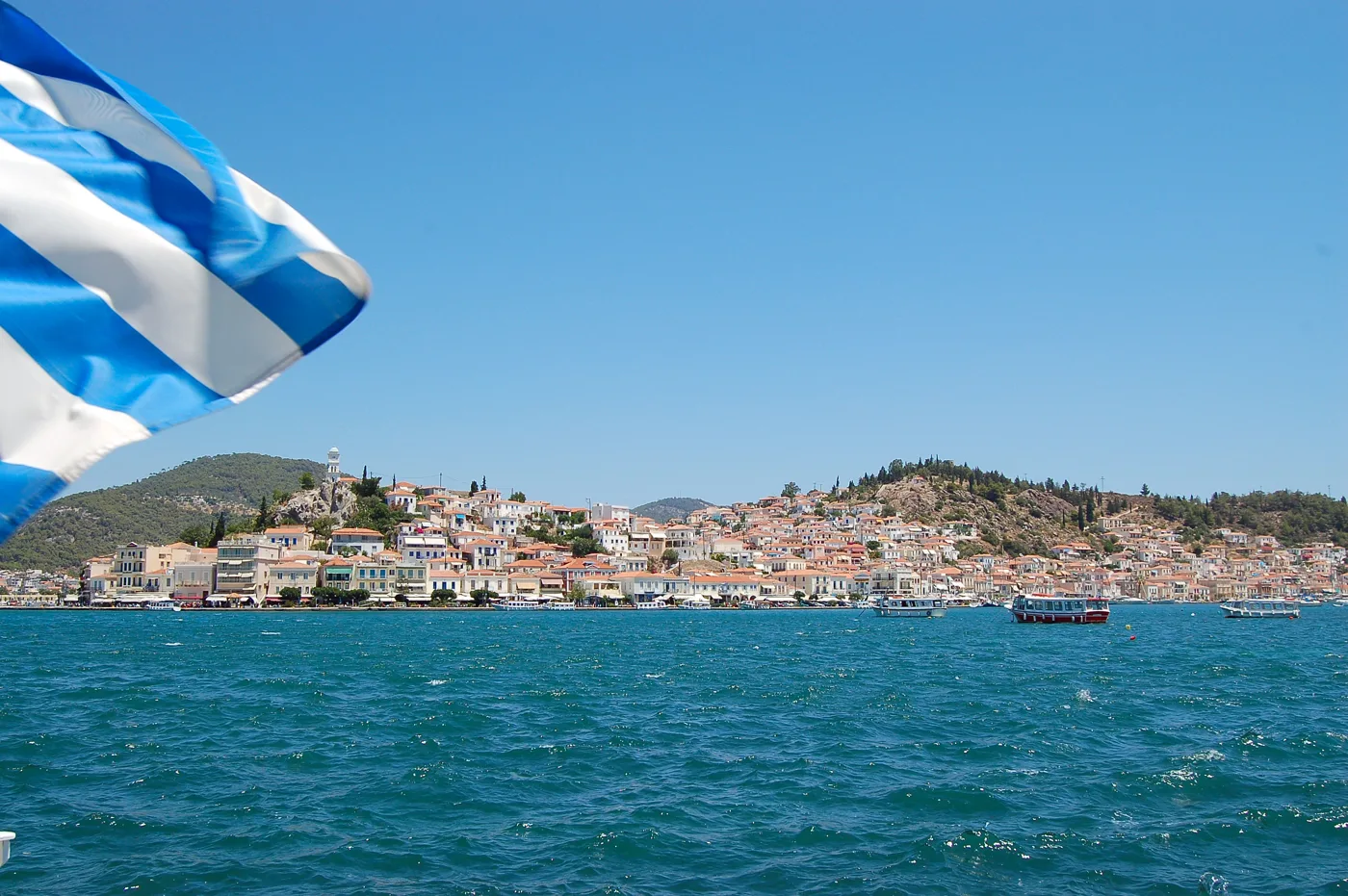
Five minutes by boat.
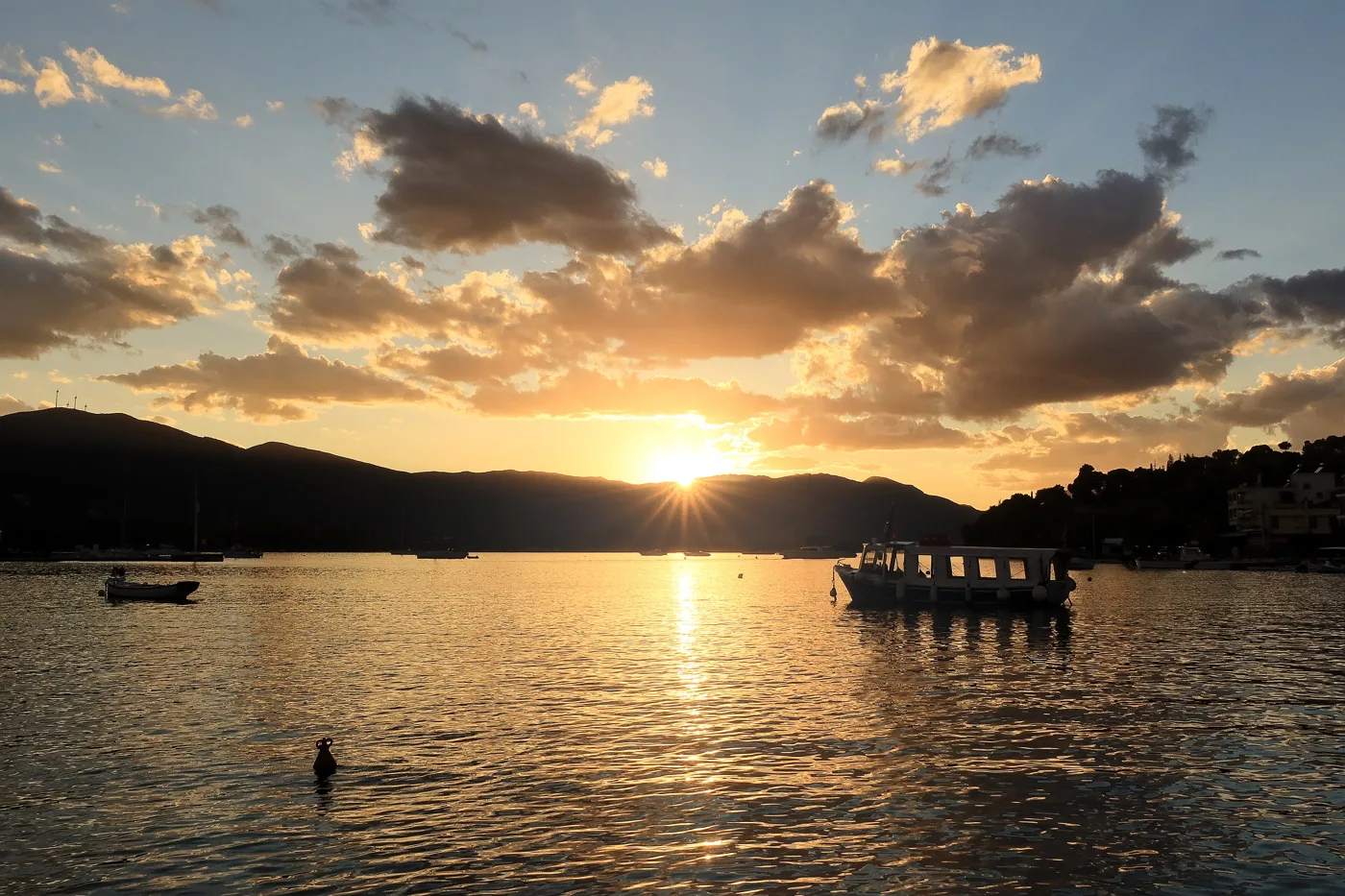
The sun sets behind the mountains of the Argolid.
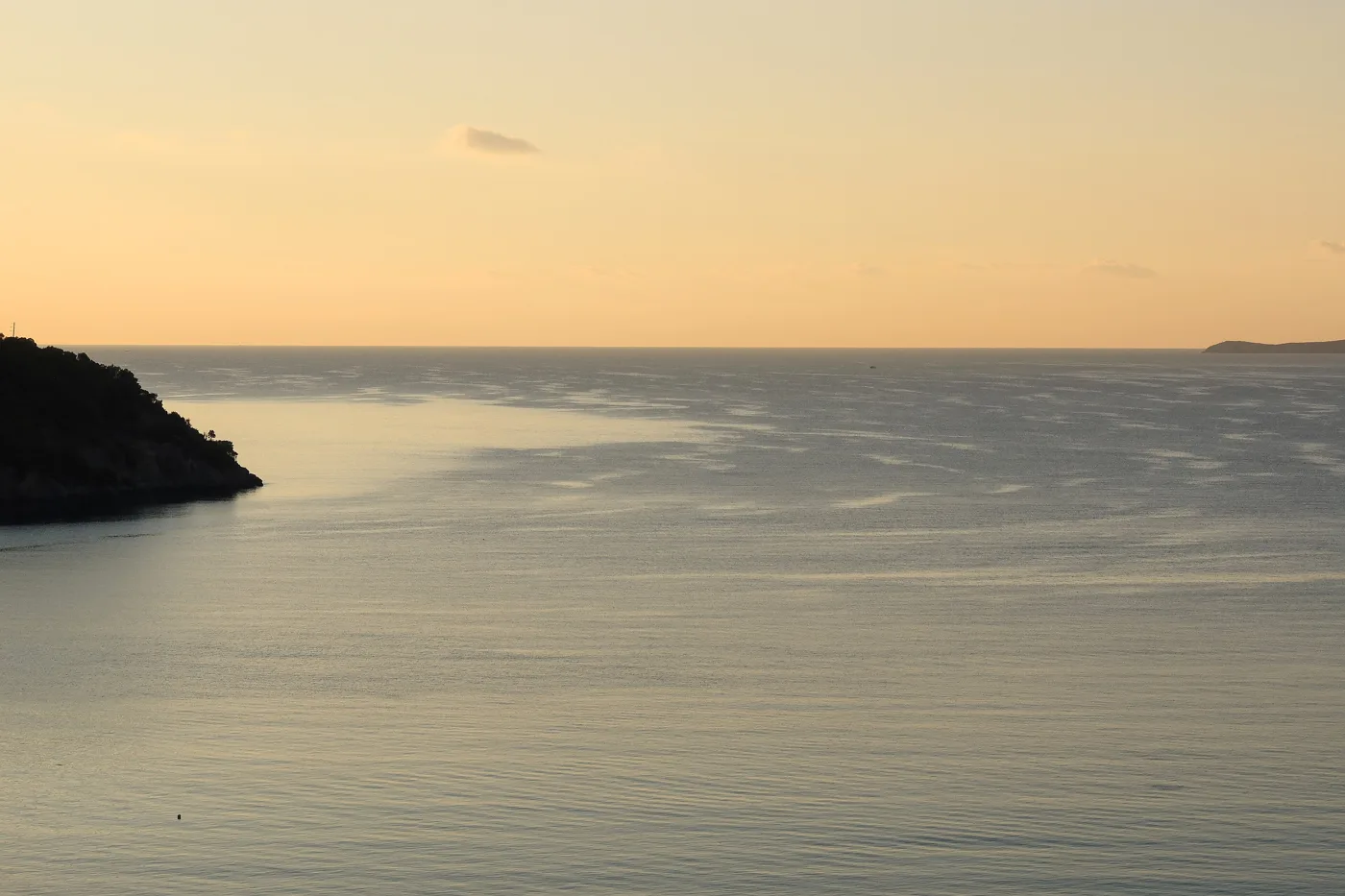
The last light of the day.
For those who stay a night.
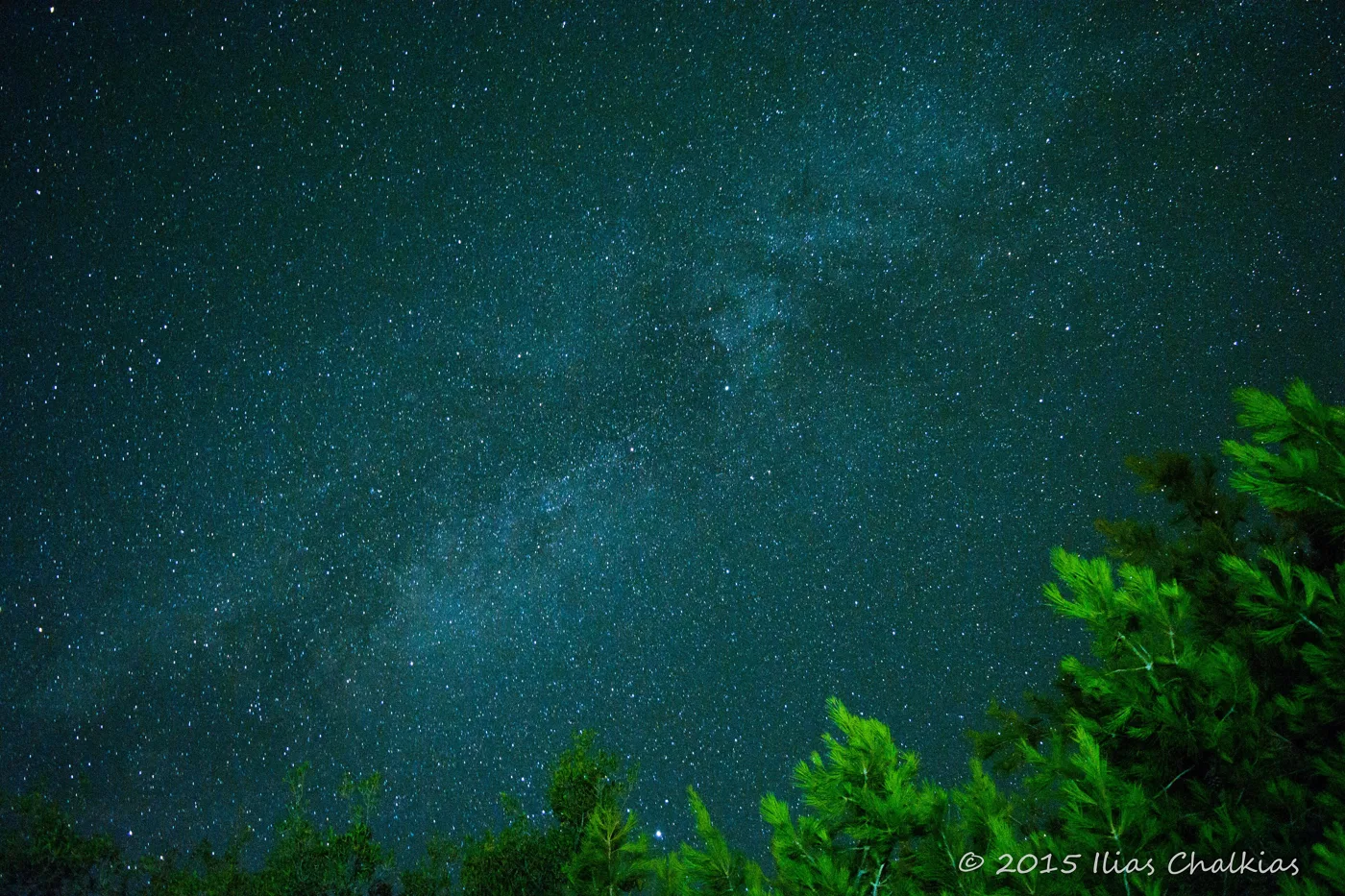
Pines, sea and stars.
Photos: dronepicr (CC BY 2.0), Andhn (CC BY-SA 4.0), Julien Seguinot (CC BY-SA 2.0), Scott McLeod (CC BY 2.0), Юкатан (CC BY-SA 3.0), Michael Paraskevas (CC BY-SA 3.0), Ilias Chalkias (CC BY-SA 4.0) · Wikimedia Commons
⚖️ Is it worth it? The pros and cons
Poros is not Hydra and it is not the Cyclades: it is a green, easy, friendly island, an hour from Athens, that gives you more different things in one day than any other island in the Saronic Gulf. Here is an honest picture.
📊 At a glance, from 1 to 5
👍 The pros
- The easiest island for a day: an hour by hydrofoil, 17 € by ferry.
- The most beautiful arrival in the Saronic Gulf, through the strait, right beside the houses.
- Island and Peloponnese together: the Lemon Forest and Troezen five minutes across the water.
- Pines down to the sea, a monastery, an ancient sanctuary and Russian ruins.
- Open and lively all year round, cheaper than Hydra and Spetses.
👎 The cons
- The beaches are small, with coarse sand or pebbles, nothing like the Cyclades.
- On summer weekends it fills up with Athenians and sailing boats.
- Cars and scooters on the roads, not the quiet of Hydra.
- The sights are spread out: for Kalaureia you need the bus or a scooter.
📜 The history: from Demosthenes to Kapodistrias
In antiquity the island was called Kalaureia and the Sanctuary of Poseidon, in its centre, was the heart of an Amphictyony, a league of seven cities around the Saronic Gulf, from Athens and Aegina to Epidaurus and Hermione, which sent delegates to sacrifice together. The sanctuary was a place of asylum, and here in 322 BC Demosthenes, the greatest orator of Athens, took refuge, hunted by the Macedonians after his city’s defeat: when Antipater’s soldiers reached the temple, he drank the poison he kept hidden in his writing reed and died on the steps of the altar. In 480 BC, before Salamis, the women and children of Athens had found shelter across the water, in Troezen, the birthplace of Theseus, and the decree of Themistocles that ordered it was found there, carved in marble.
The modern history of Poros is naval. In 1828 Ioannis Kapodistrias chose the sheltered strait for the first naval base of the Greek state, with a shipyard and a school, and in the autumn of the same year he met here the ambassadors of Britain, France and Russia, at the Poros Conference, which drew the first borders of Greece. In 1834 the Russians built on the west coast a supply station for their Mediterranean fleet, the warehouses you see in ruins at Russian Bay. The Navy stayed: the training centre, where the sailors are trained, is still here, next to Neorio, and for years the battleship Averof was moored in front of it. In 1927 a merchant and member of parliament, Ioannis Papadopoulos, gave the town its Clock Tower. In the winter of 1946 George Seferis wrote “Thrush” here, at Villa Galini, Henry Miller sailed through the strait and put it in “The Colossus of Maroussi”, and Thanasis Veggos shot his comedy “Marlon Brando has nothing on me” on Poros.
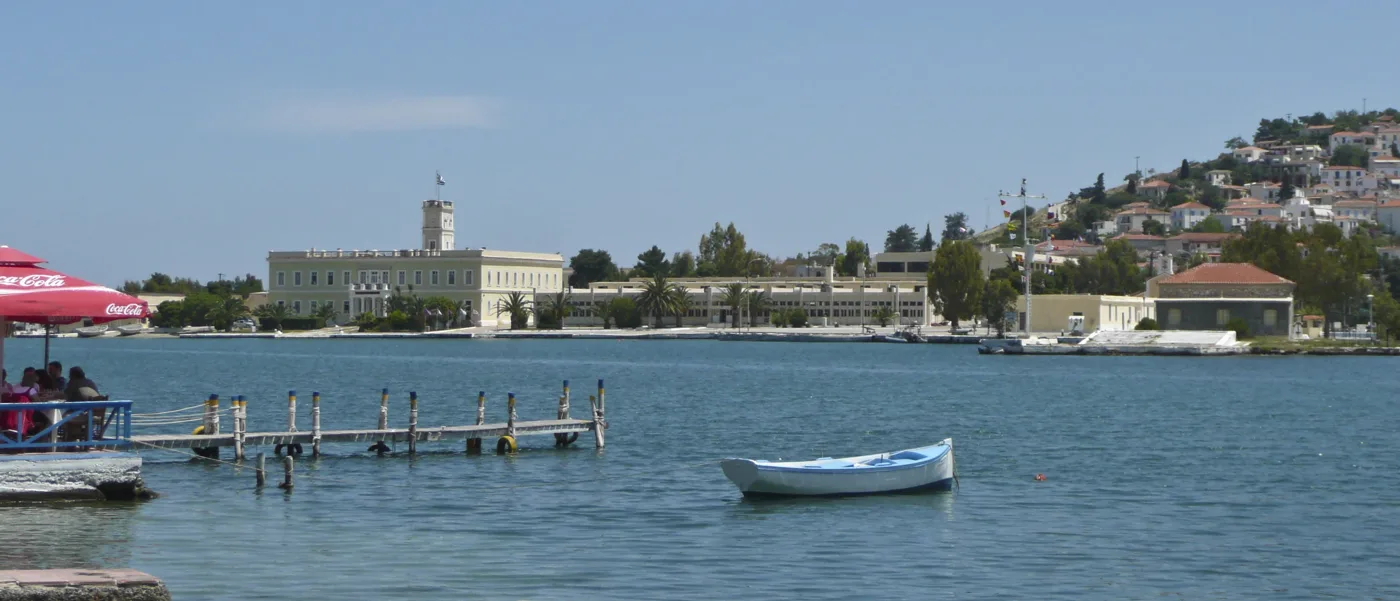
The first naval base of Greece, since 1828.
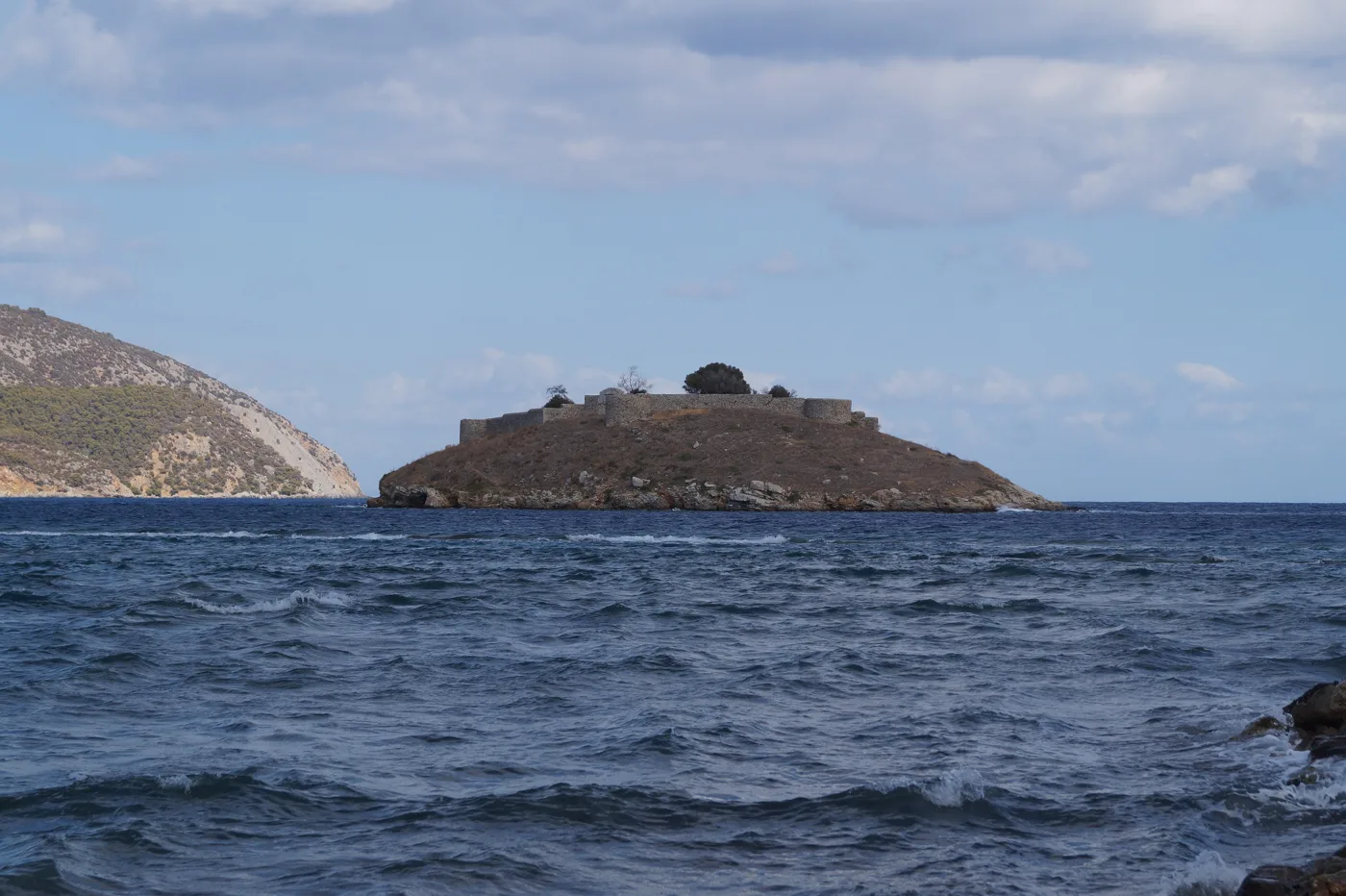
The fort at the eastern entrance.
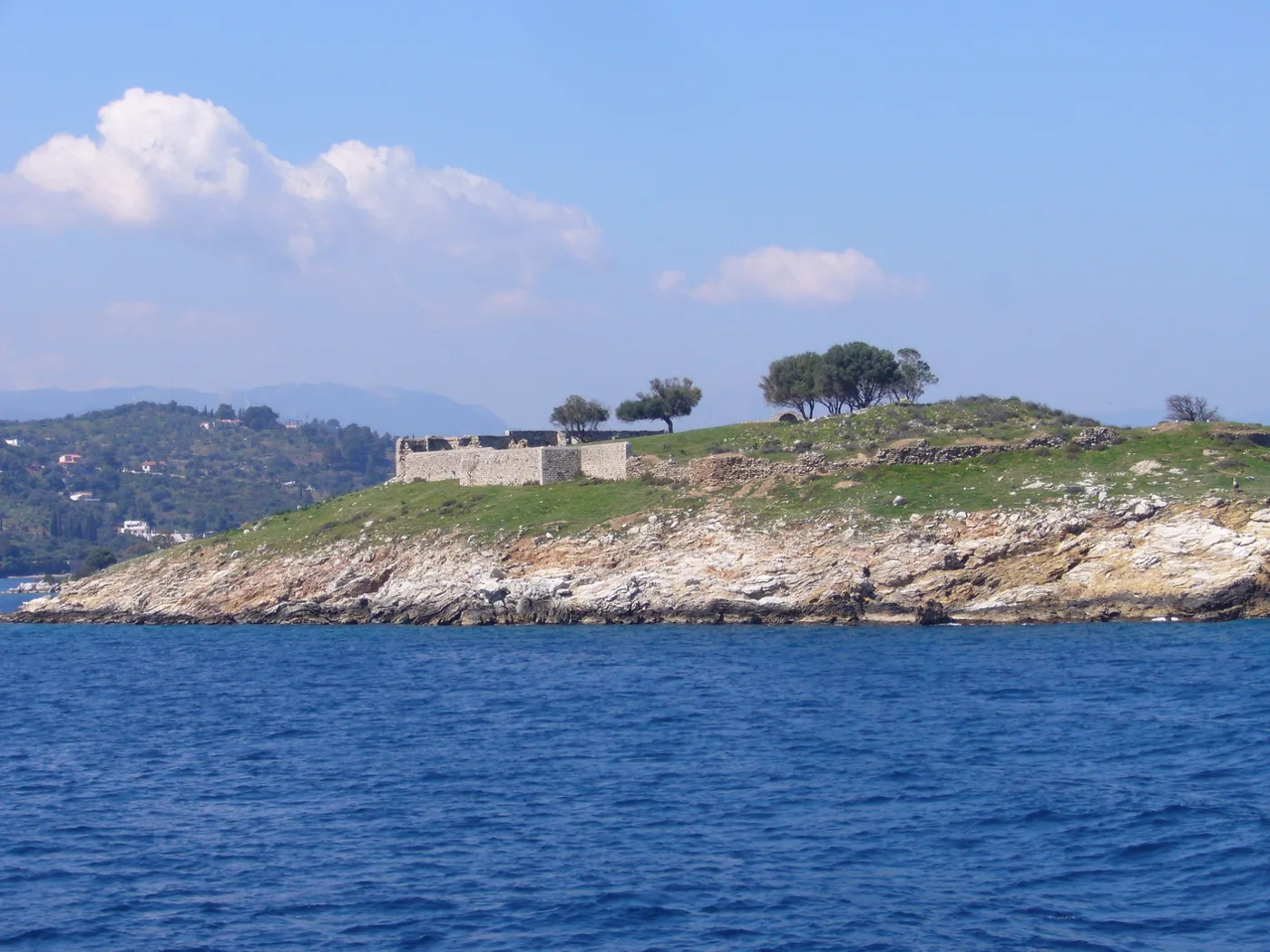
It guarded the harbour from the time of the Revolution.
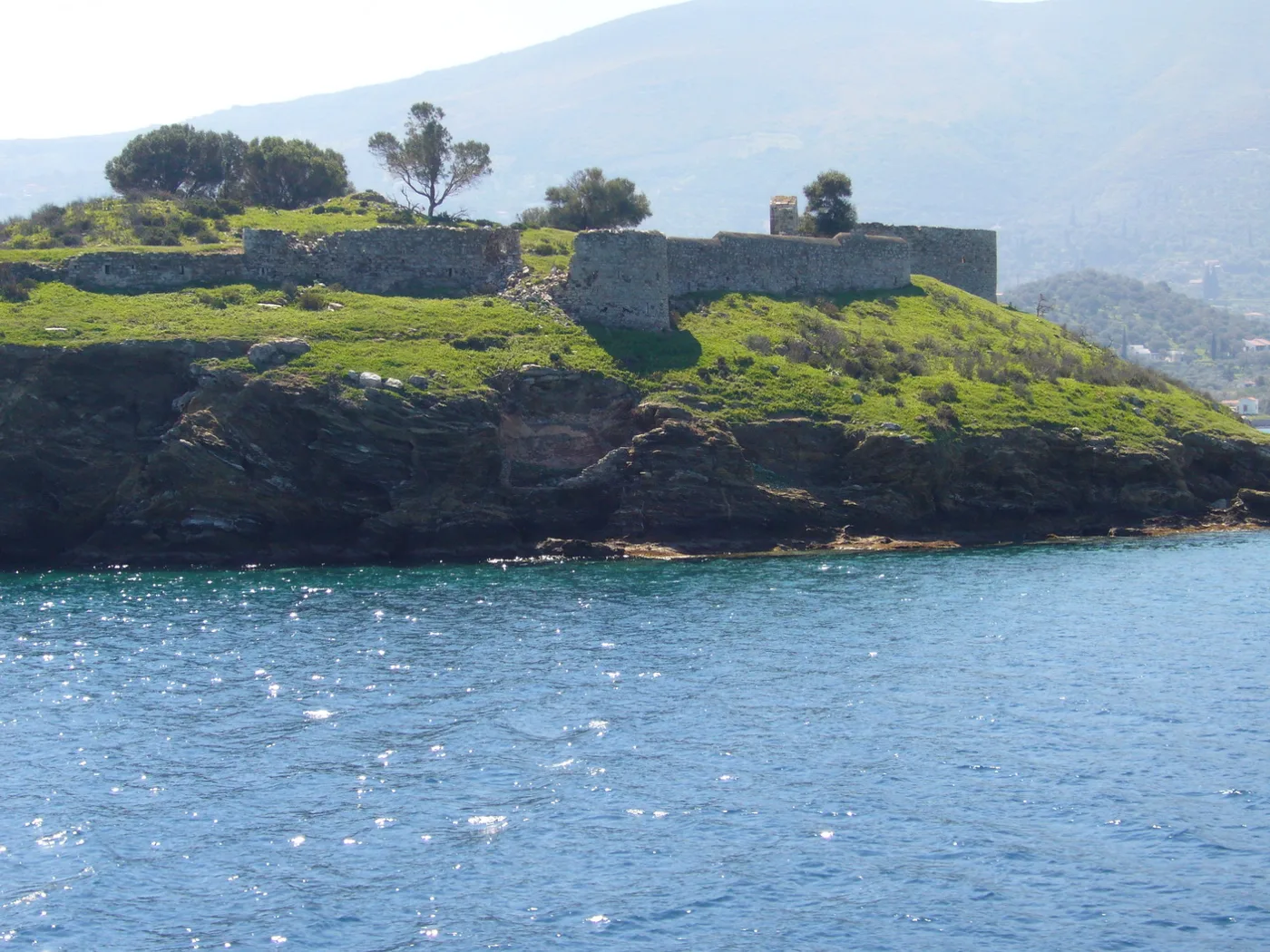
Today only seagulls.
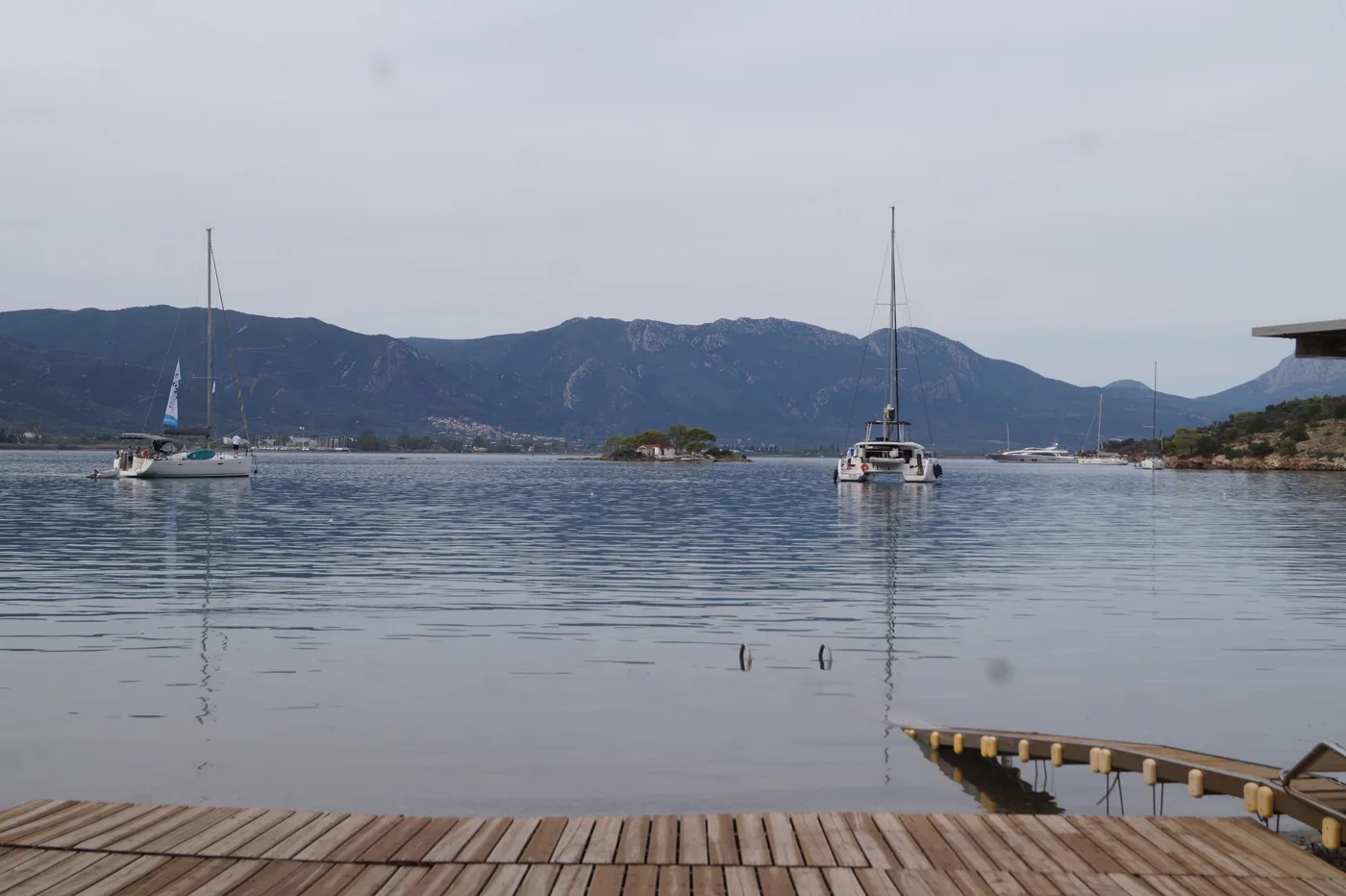
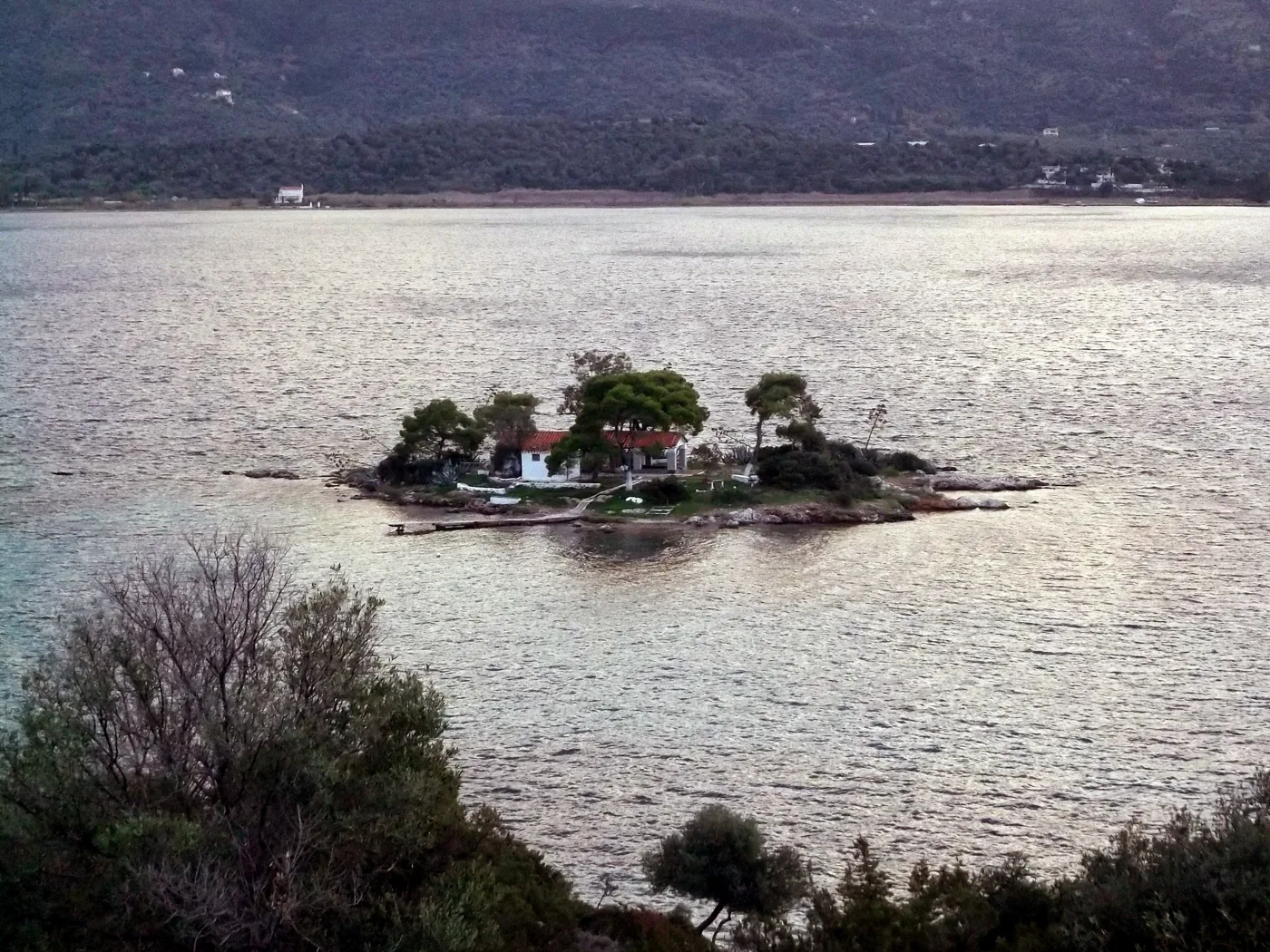
The islet with the chapel, in the middle of the strait.
Weddings by boat.
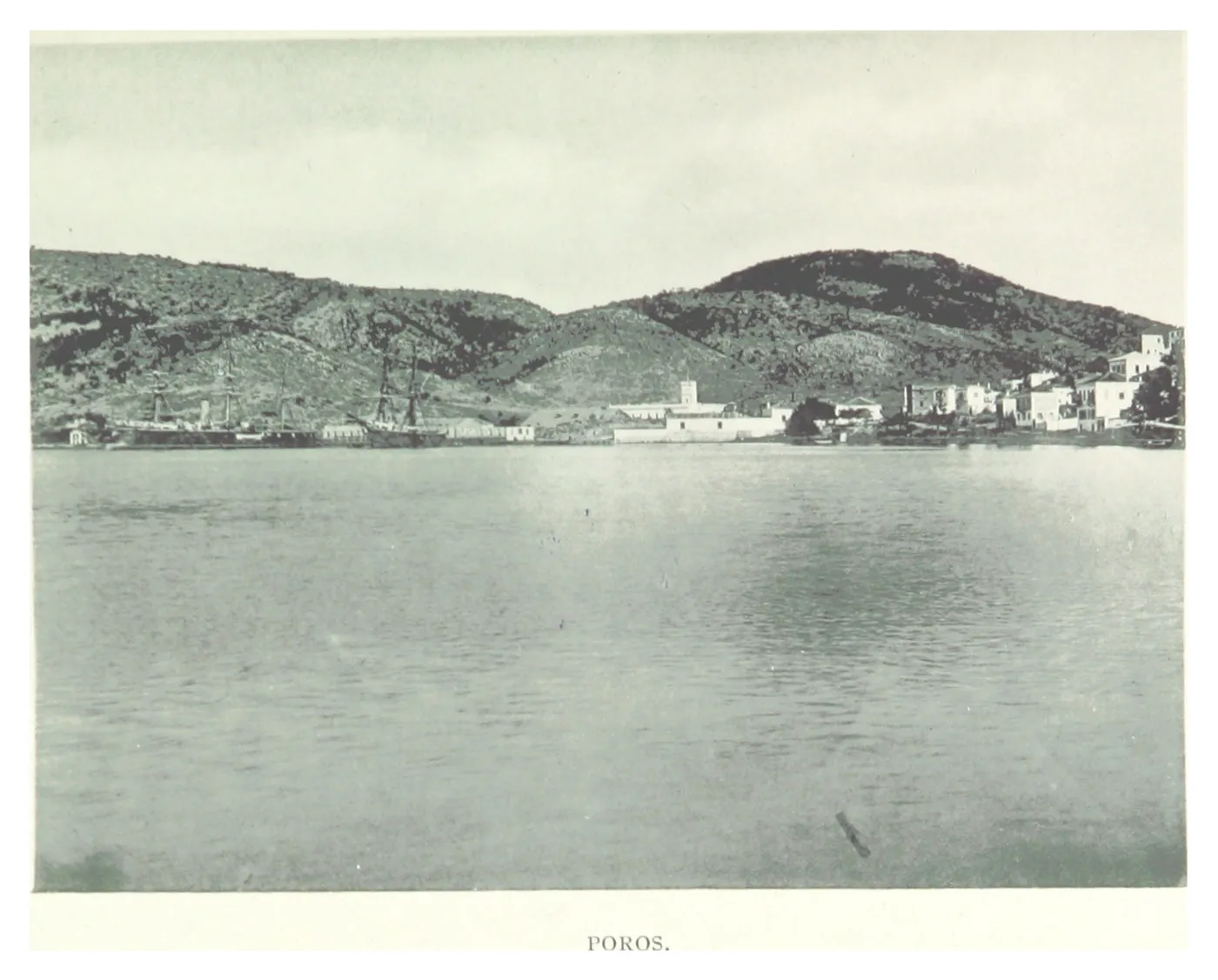
From a travel book of 1897.
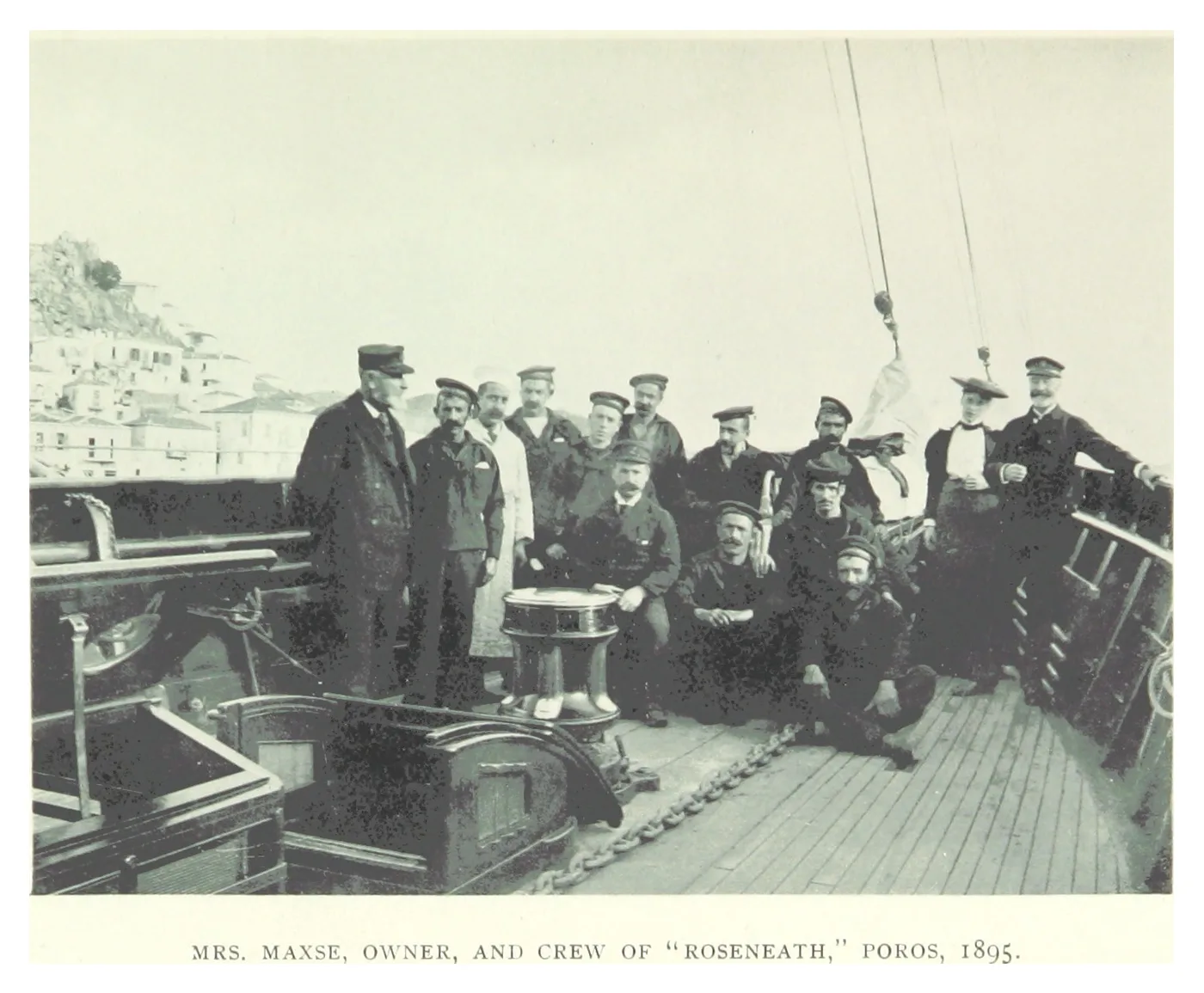
An English sailing ship in Poros, 1895.
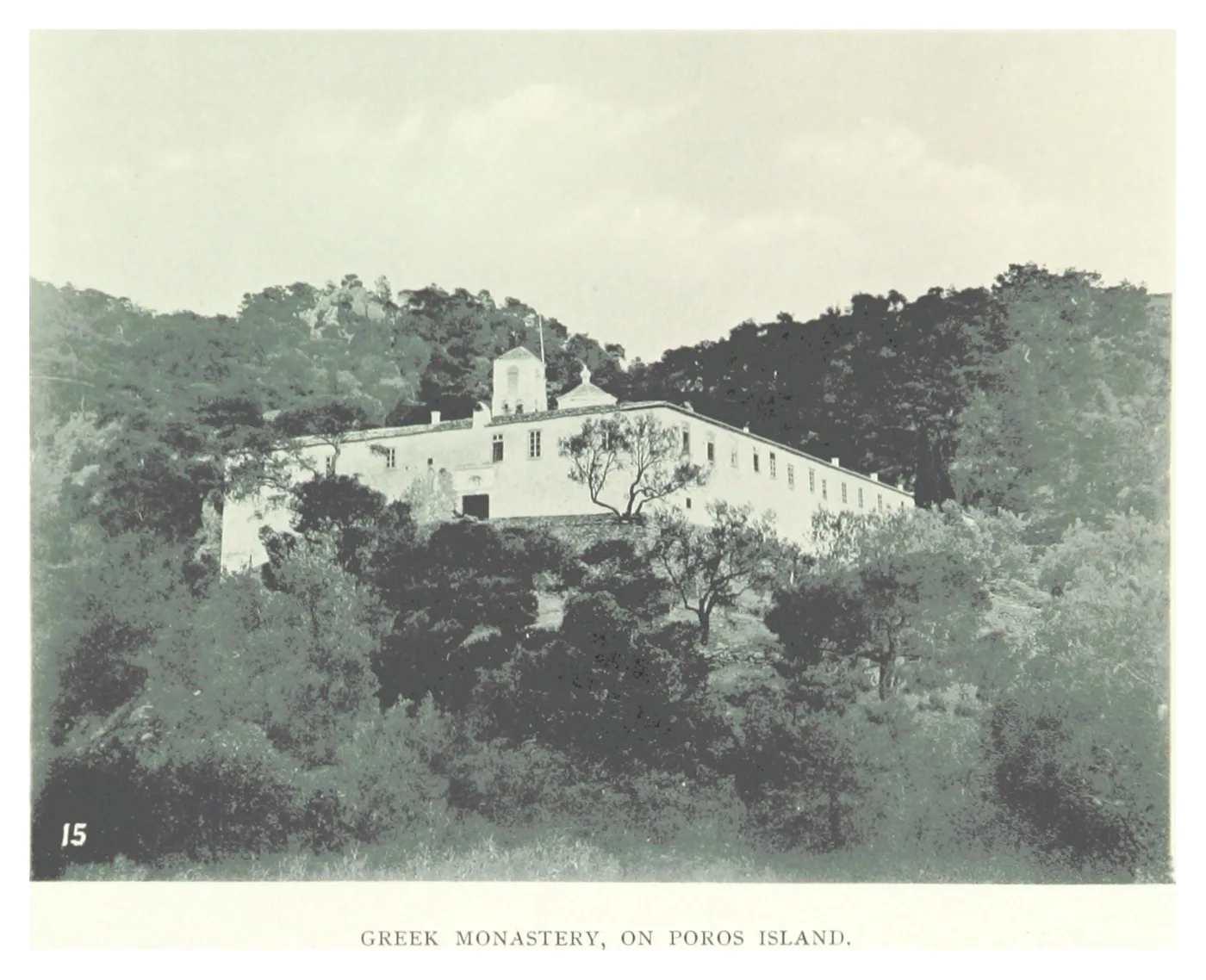
Zoodochos Pigi 130 years ago.
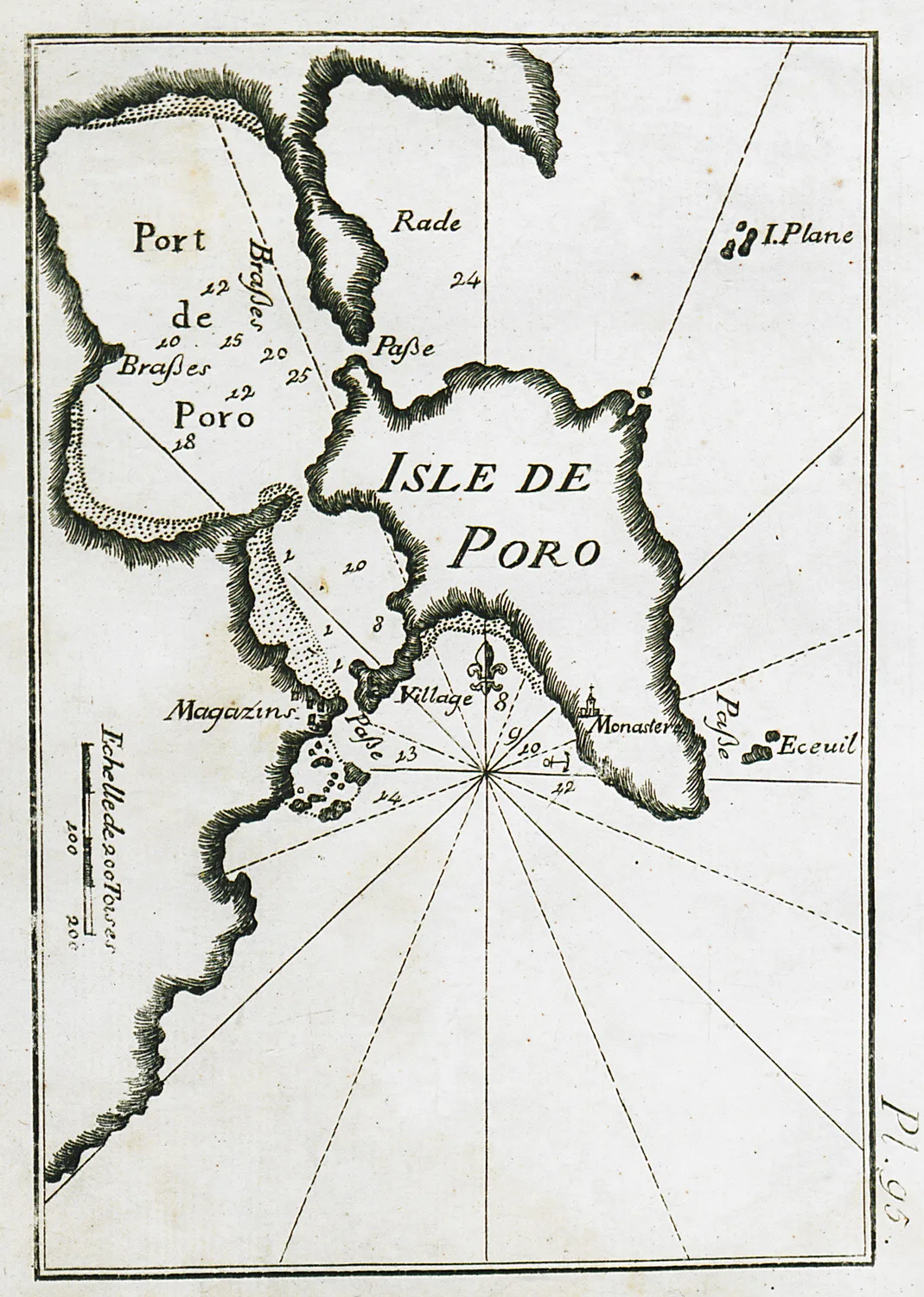
“Isle de Poro”, by Joseph Roux.
Photos: Ardfern (CC BY-SA 2.0), Schuppi (CC BY-SA 4.0), Tanya Dedyukhina (CC BY 3.0), Evgeny L. (CC BY-SA 3.0), Lambart, 1897 (Public domain), Joseph Roux (Public domain) · Wikimedia Commons
🚤 The journey: from Gate E8 into the strait
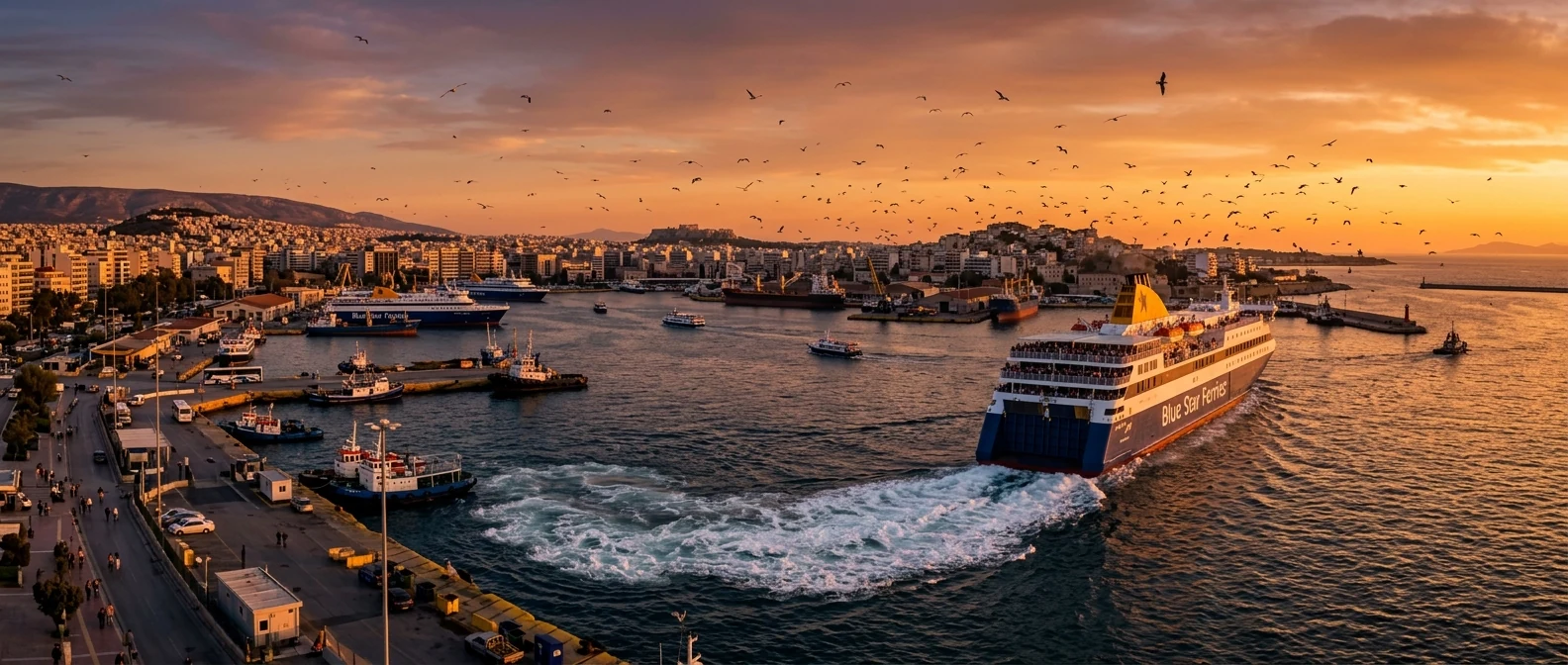
For Poros you have two ways from the same Gate E8 in Piraeus, five minutes on foot from the metro. The hydrofoil, the Flying Cats of Hellenic Seaways and Blue Star, the Speed Cat of Alpha Lines or the boat of Magic Sea Ferries, takes 1 hour to 1 hour 15′ and costs 29 to 36 €; enclosed, with airline-style seats, no open deck. The conventional ferry of Saronic Ferries takes 2 hours 35′, with stops at Aegina and Methana, and costs 17 €: it has an open deck, coffee in the sun, and the view of the Methana volcano. The best combination for one day is the ferry on the way out, in the morning light, and the hydrofoil on the way back. With both, the last ten minutes are the show: the boat slows down, enters the strait between the Peloponnese and the island, and glides past the houses, the cafés and the boats, with the Clock Tower above. Go out on deck or stand at the window.
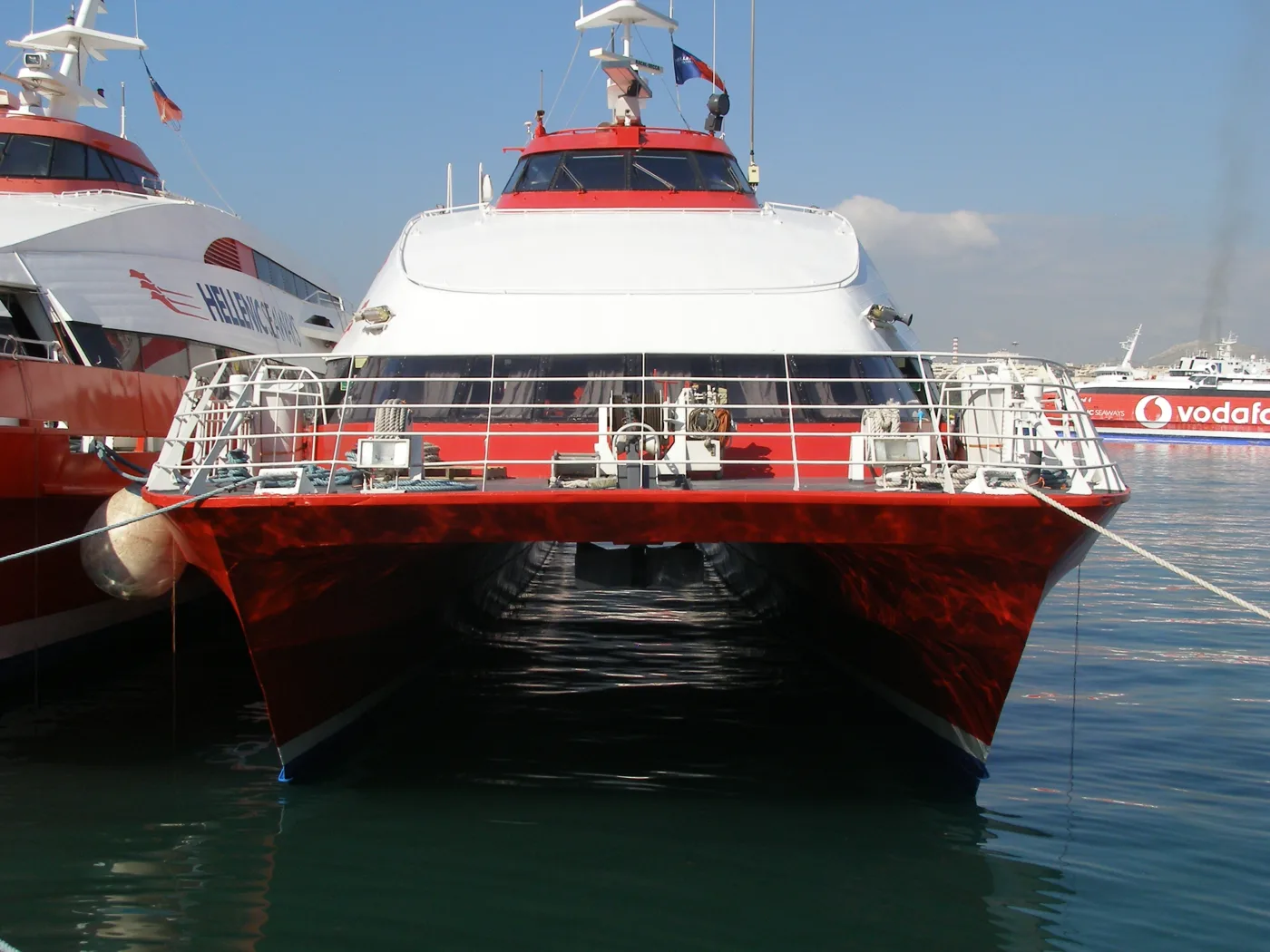
One hour from Gate E8.
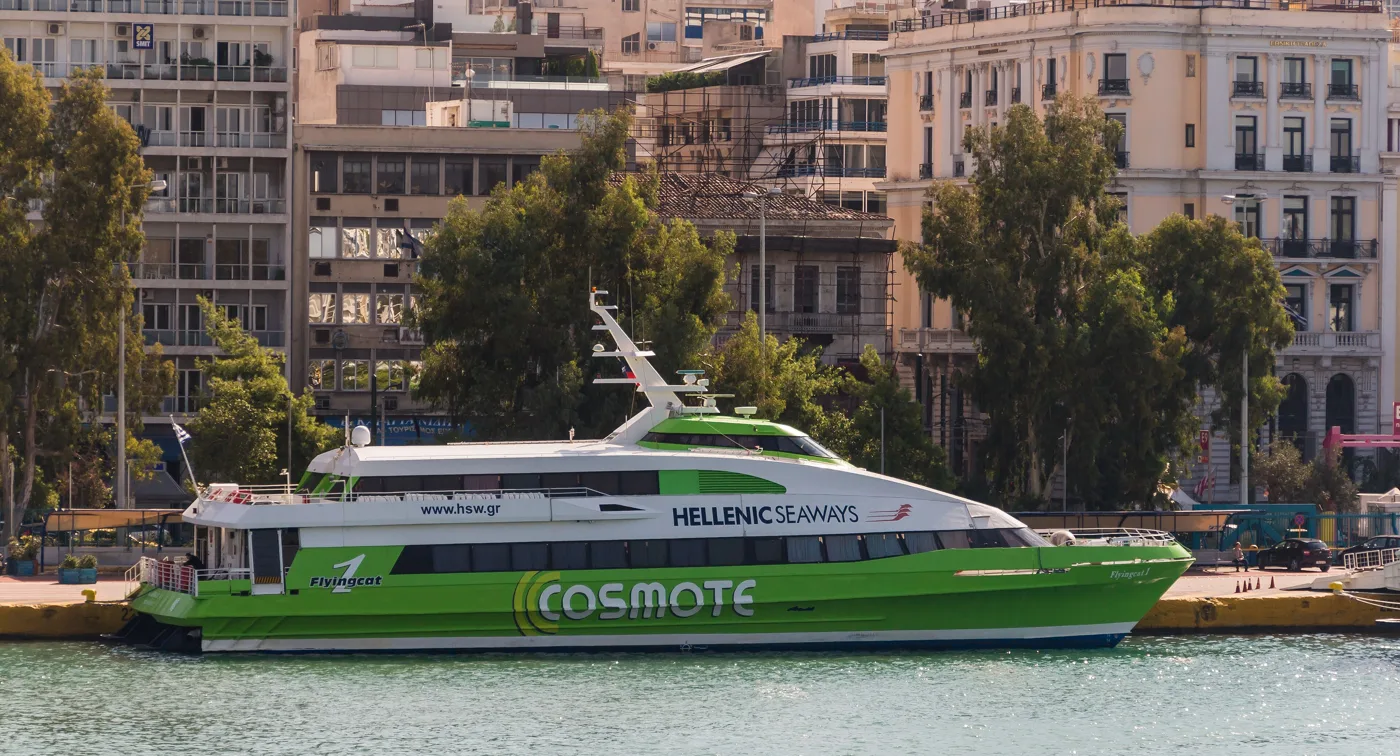
Catamarans with airline-style seats.
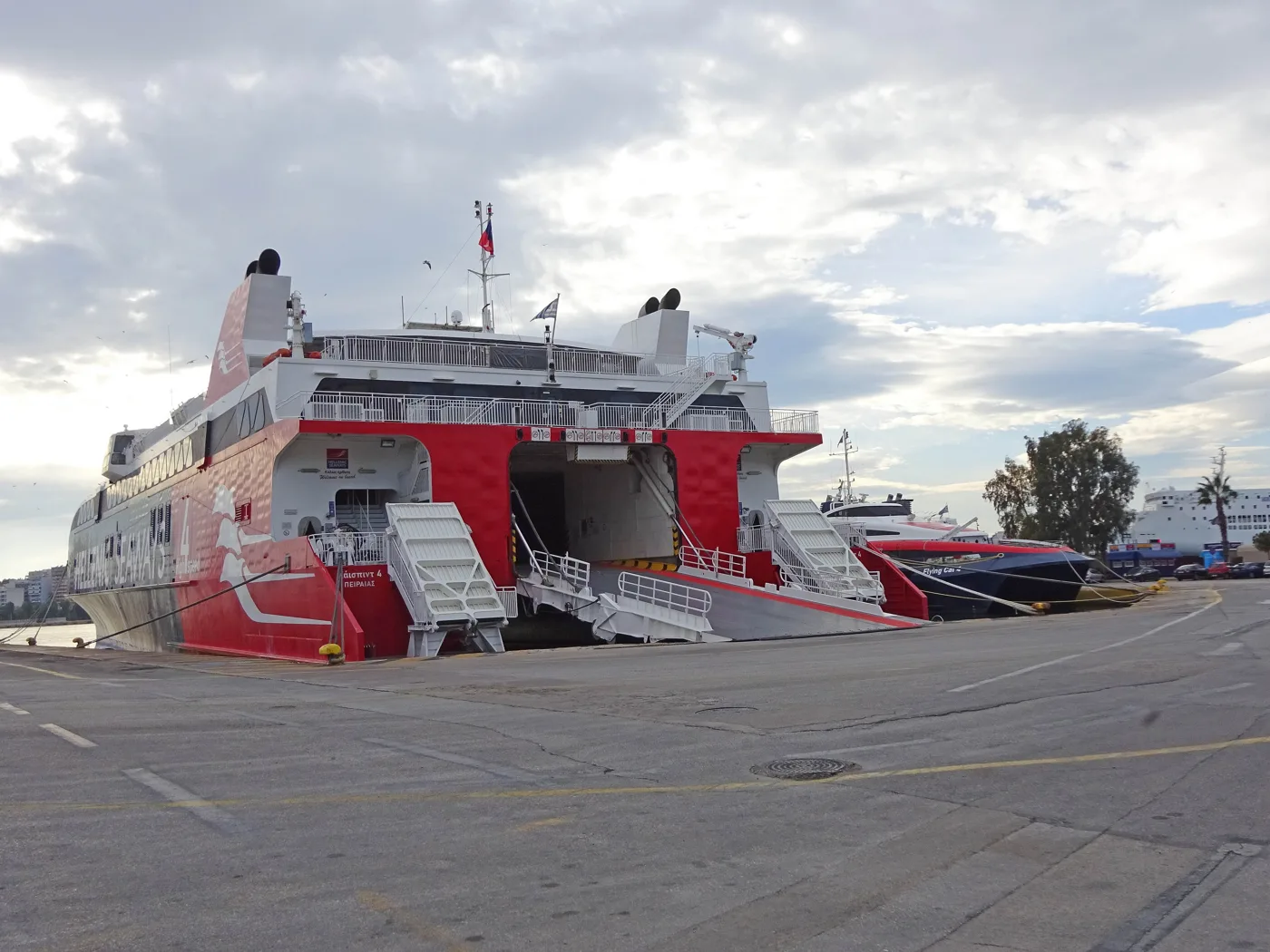
The hydrofoils leave from E8.
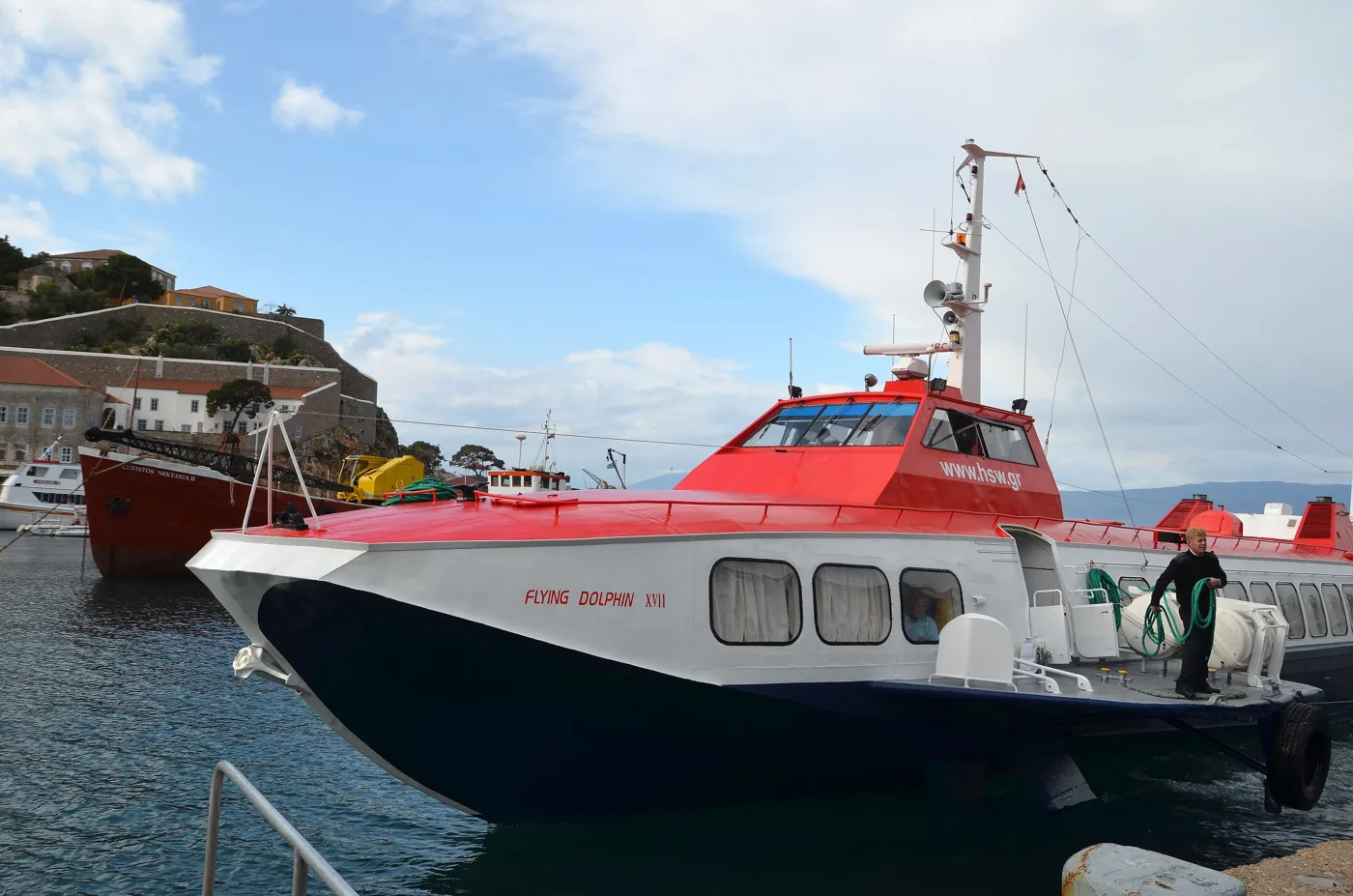
The old Flying Dolphins worked the route for decades.
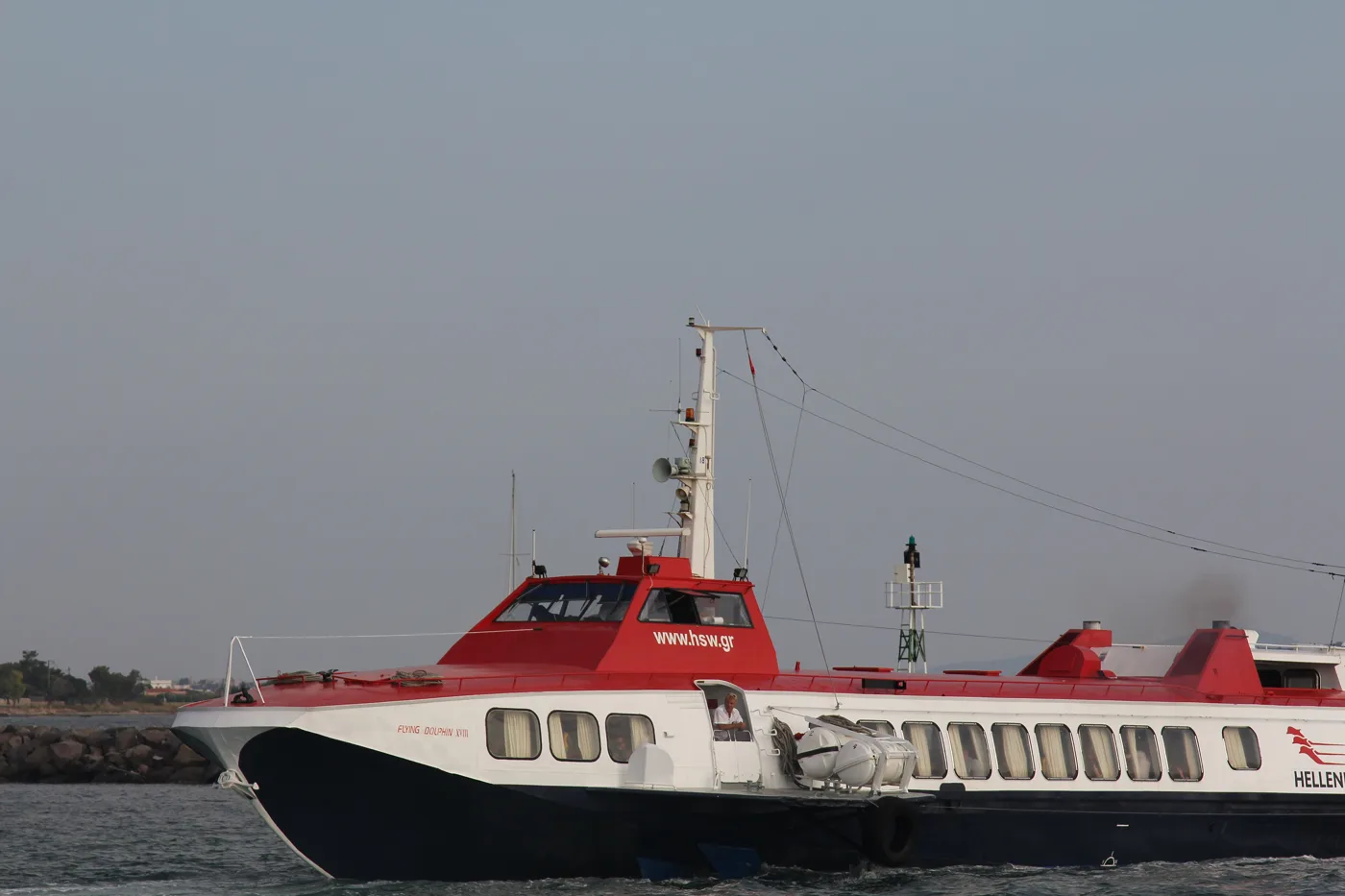
The old image of the Saronic Gulf.
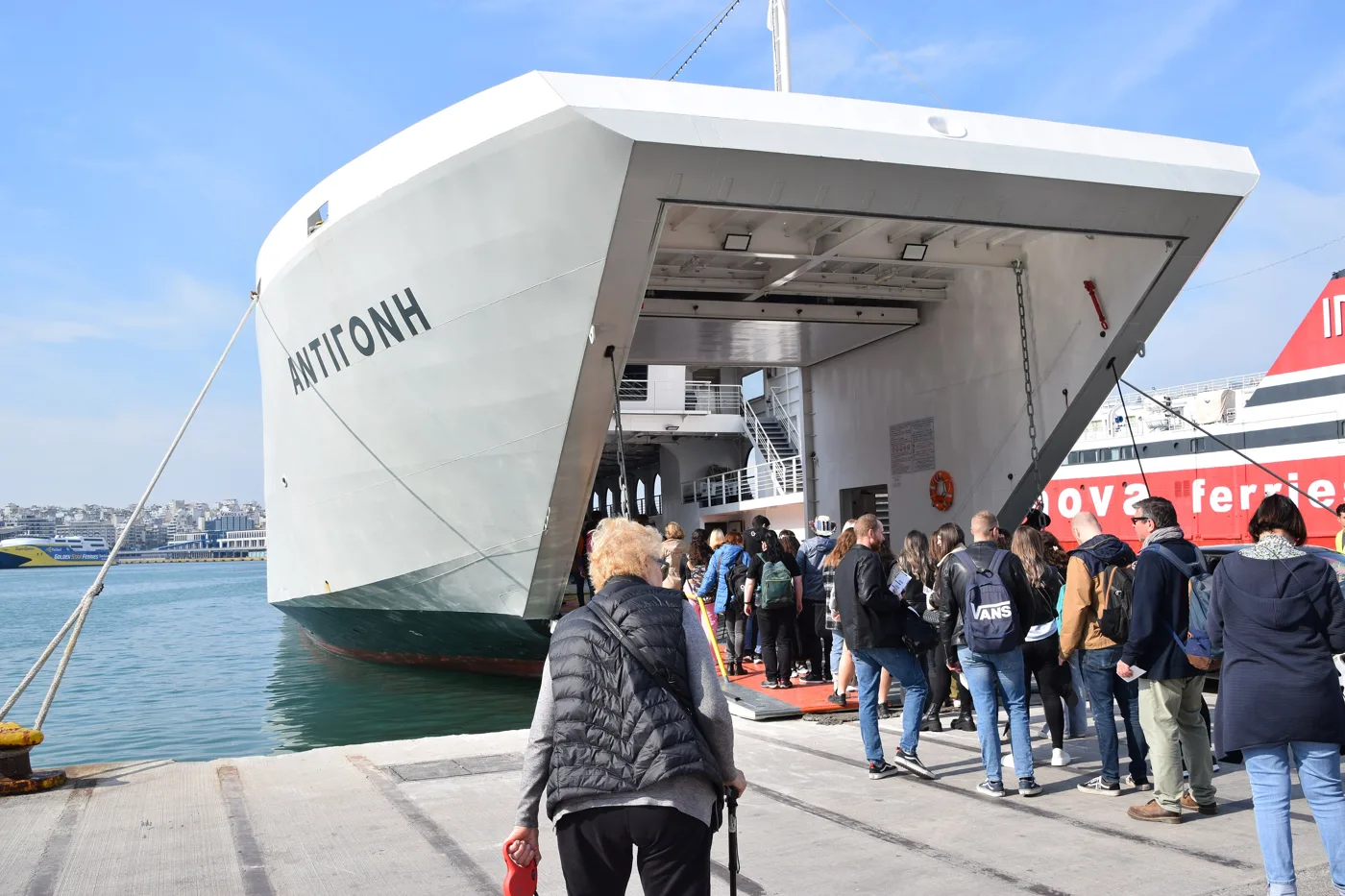
The conventional ferry: 2.5 hours, 17 €, an open deck.
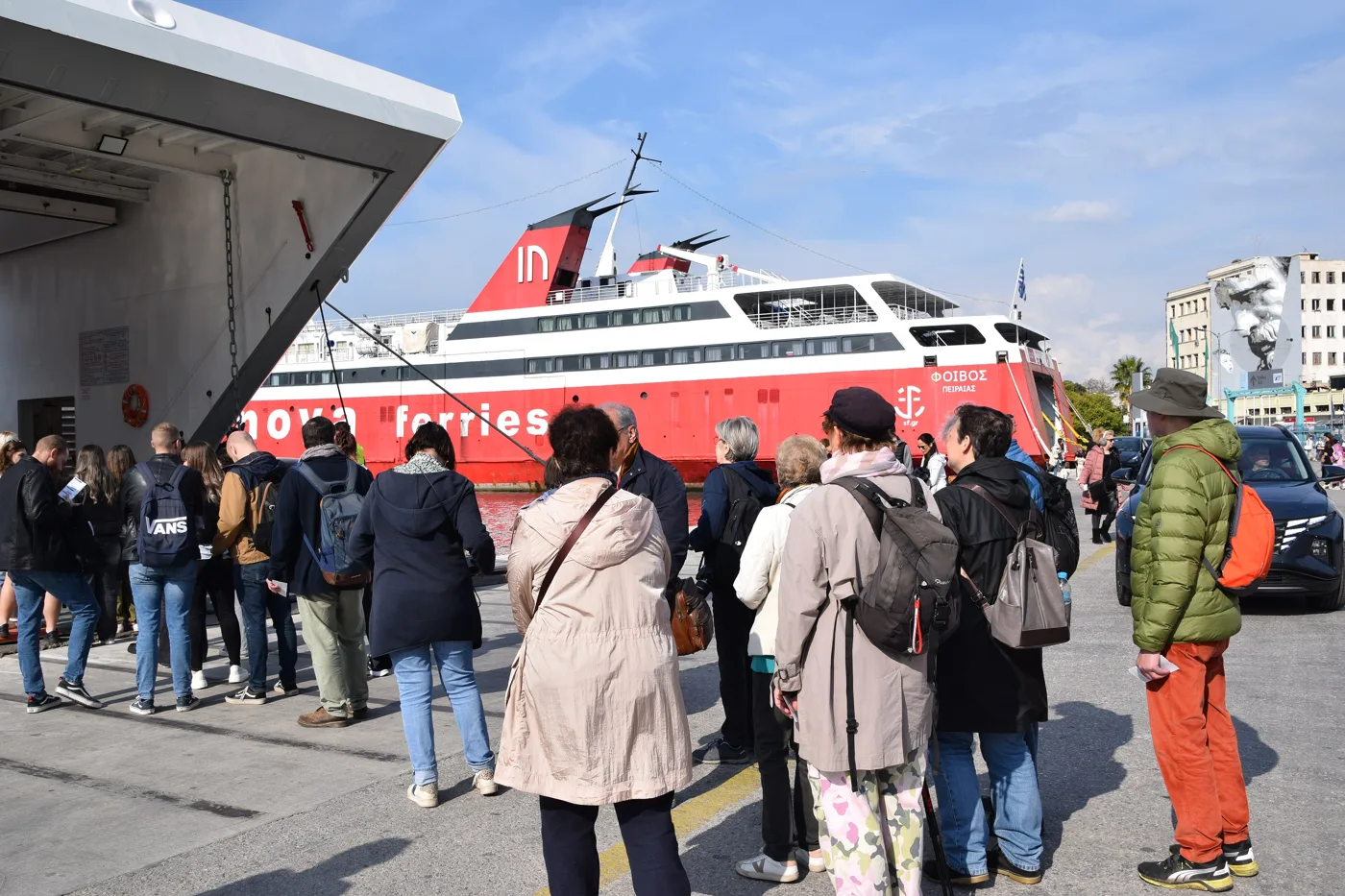
At weekends, come 30 minutes early.
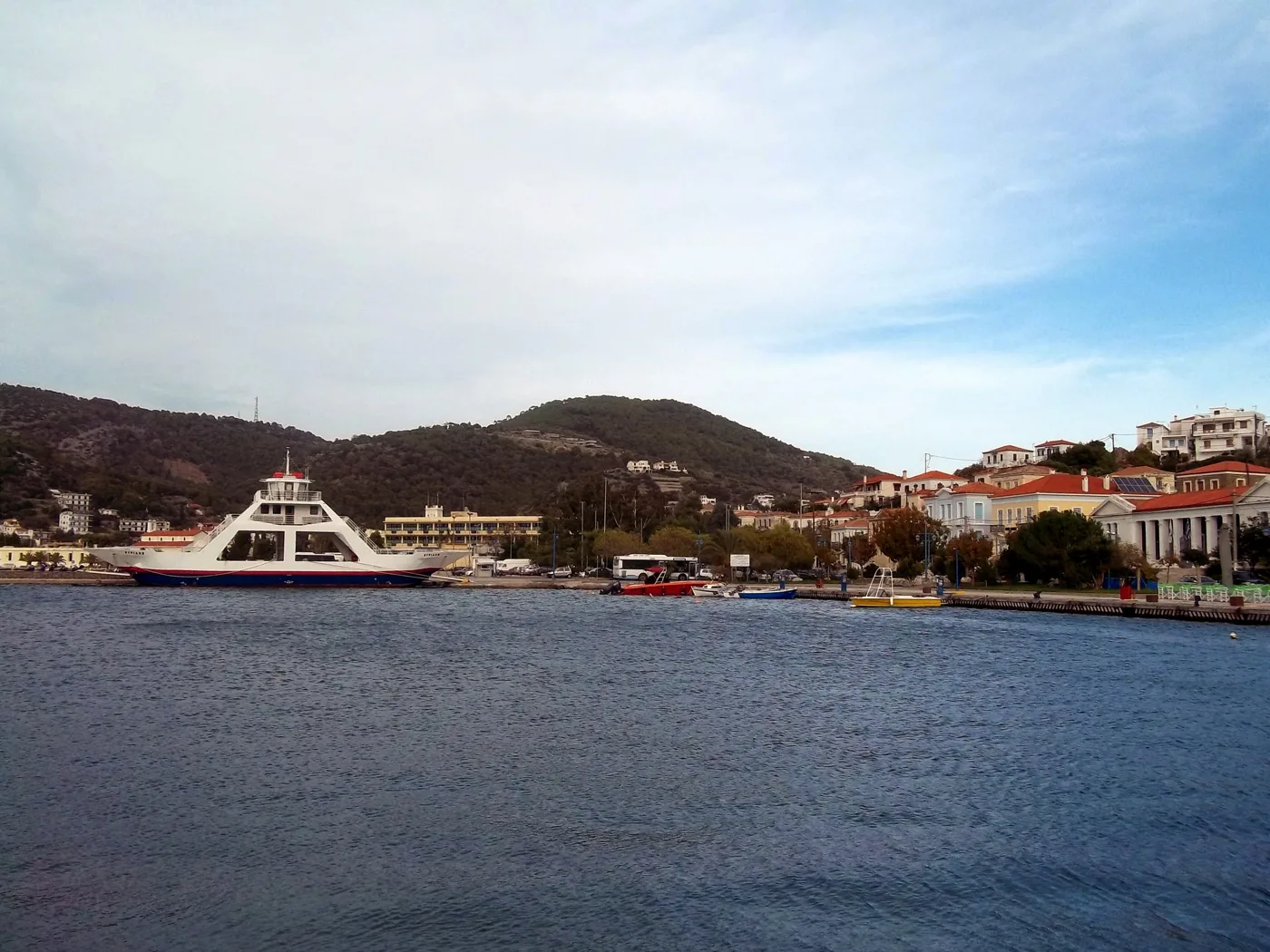
The ferry passes right beside the houses.
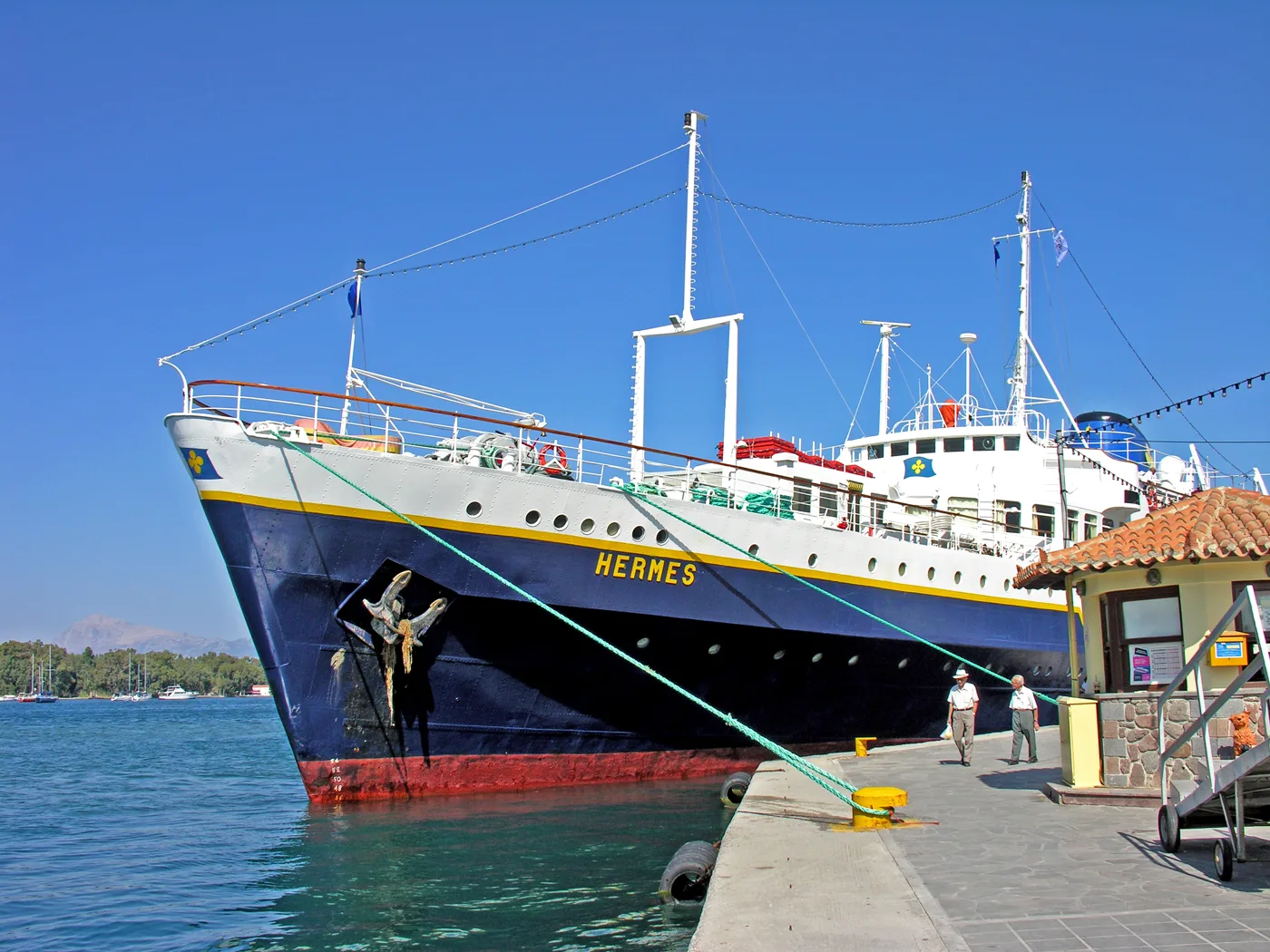
The ferries moor in front of the cafés.
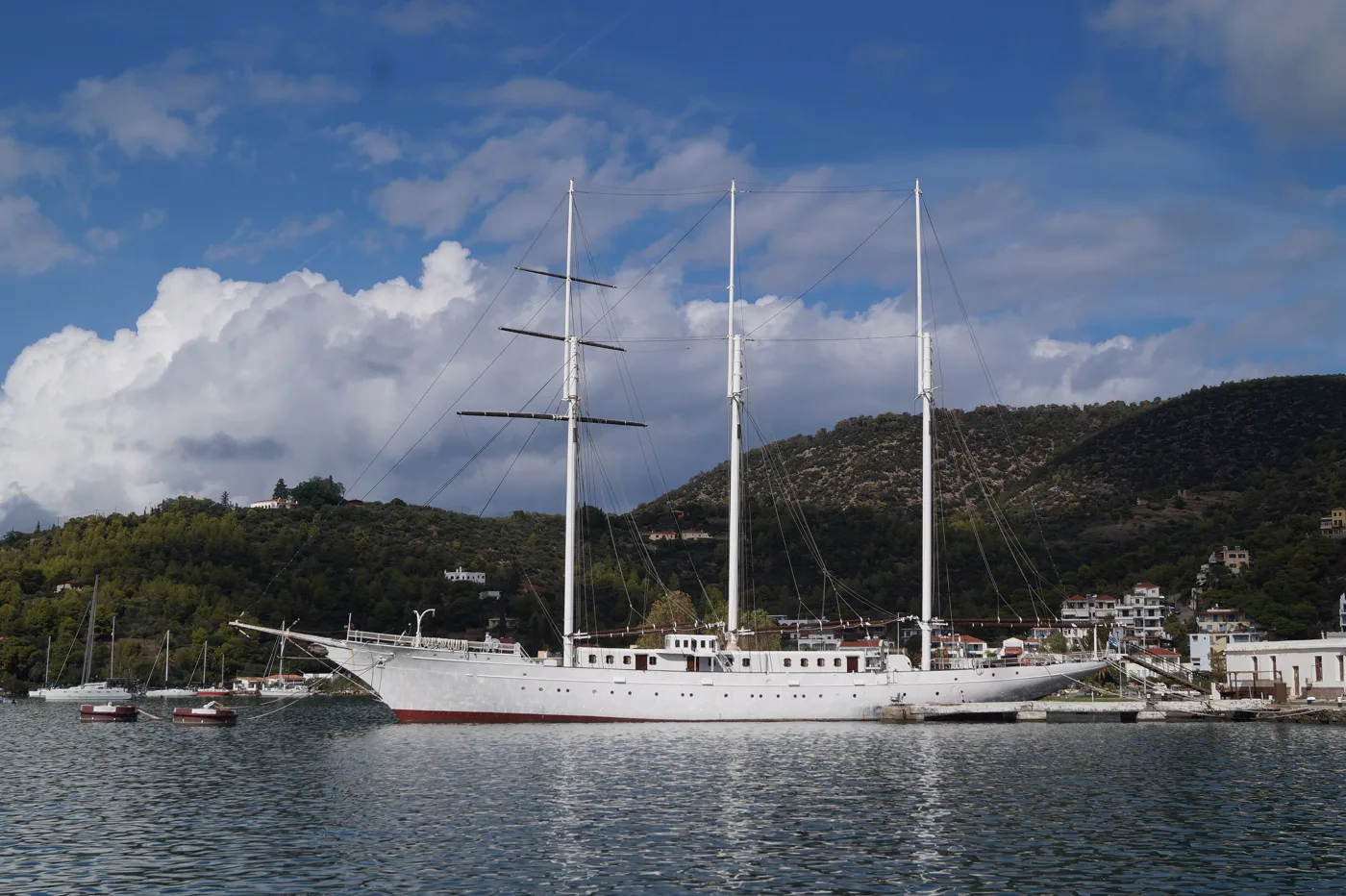
The sail training ship of 1929 in the bay.
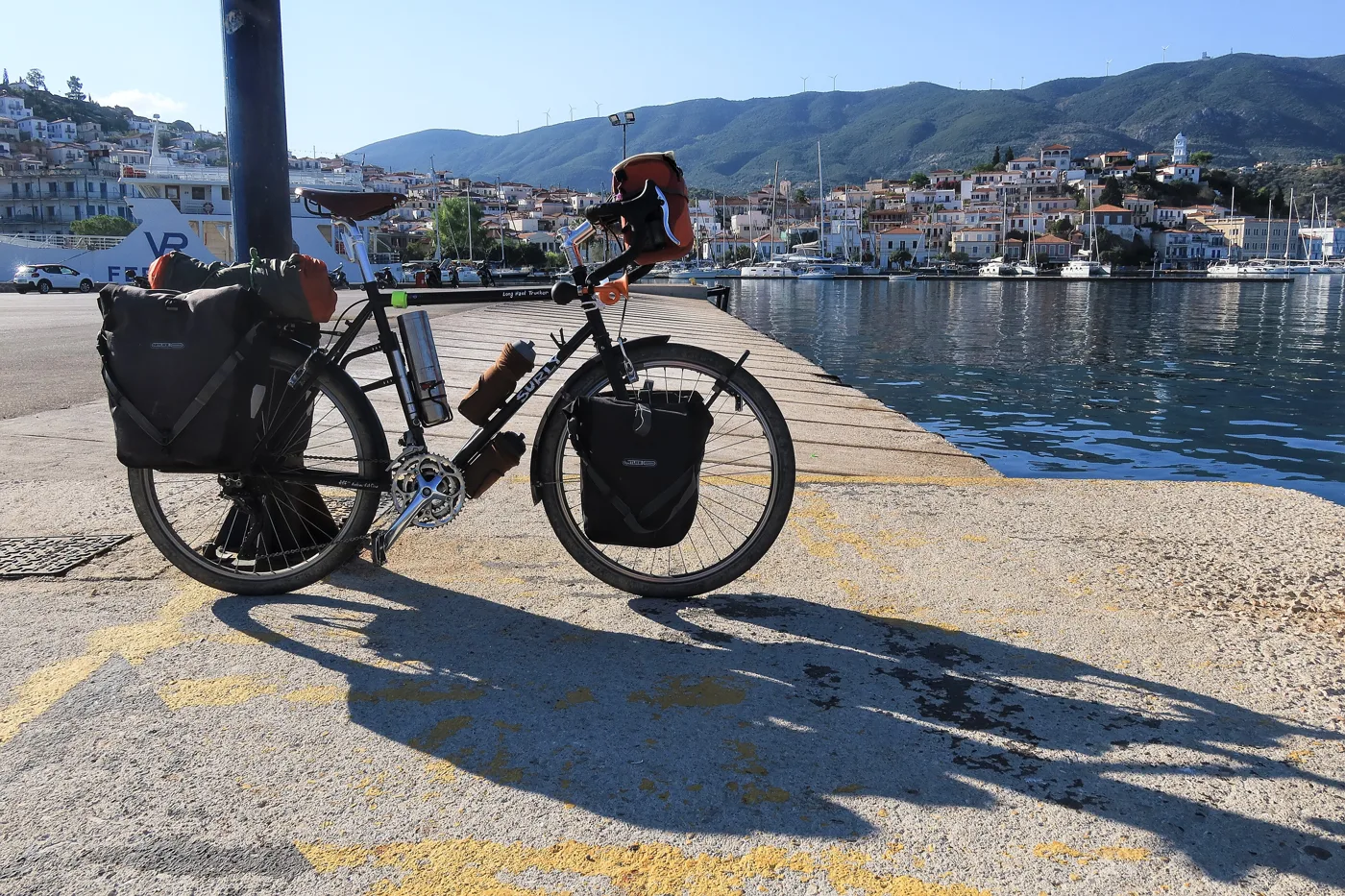
The last ones for Piraeus leave in the afternoon.
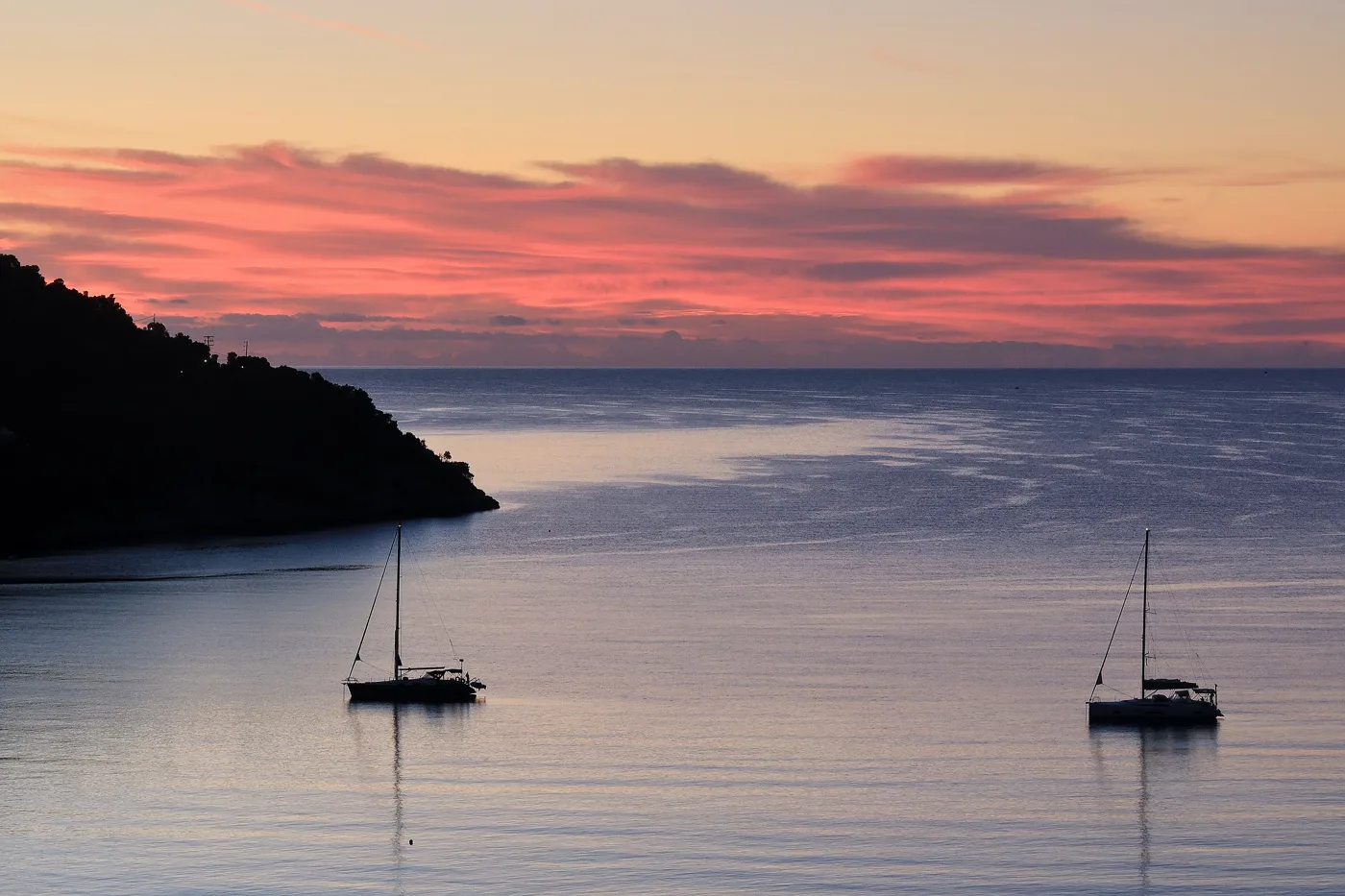
If you stay a night.
Photos: Andrzej Otrębski (CC BY-SA 3.0), Jebulon (CC0), Walter Baur (CC BY-SA 4.0), Popolon (CC BY-SA 3.0), Tilemahos Efthimiadis (CC BY-SA 2.0), Jeanhousen (CC BY-SA 4.0), Evgeny L. (CC BY-SA 3.0), Dennis G. Jarvis (CC BY-SA 2.0), Schuppi (CC BY-SA 4.0), Julien Seguinot (CC BY-SA 2.0) · Wikimedia Commons
With little time, hydrofoil both ways: 9 hours on the island. With the whole day and an appetite for the sea, the 07:30 ferry on the way out: you arrive at 10:15, but you have seen Aegina, Agistri and Methana from the deck. Always back by hydrofoil, because the last ferry leaves early in the afternoon. With children, the ferry: they run around the deck and they do not get seasick.
🕰️ The town and the Clock Tower
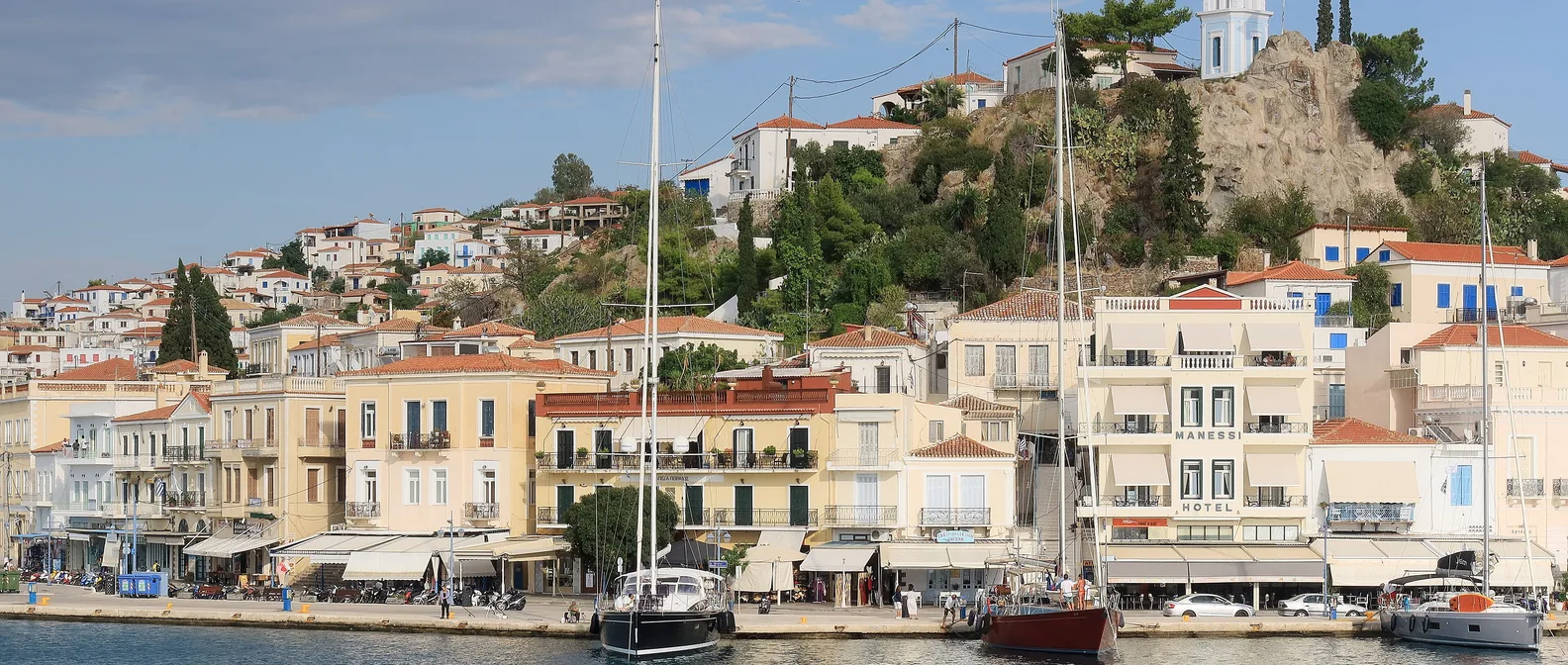
Poros town is built like an amphitheatre on the rock of Sferia: neoclassical houses in white, ochre and pink, with balconies and ironwork, come down to the waterfront, and above them, on the top, stands the white Clock Tower of 1927, the island’s landmark. You climb up by steps through the alleys in five minutes, and from the Clock Tower square you see the whole strait, Galatas opposite, the mountains of the Argolid, the sailing boats coming and going and, in the distance, the volcano of Methana. The town is small, you walk round it in half an hour: the whitewashed steps, the flower pots made from anchors, the cathedral of Agios Georgios, the square with the plane tree and its tavernas, and the waterfront, which is the life of the island, with the cafés, the pastry shops, the fishing caiques and the yachts from all over Europe. Unlike Hydra, Poros has cars and scooters: mind the coastal road.
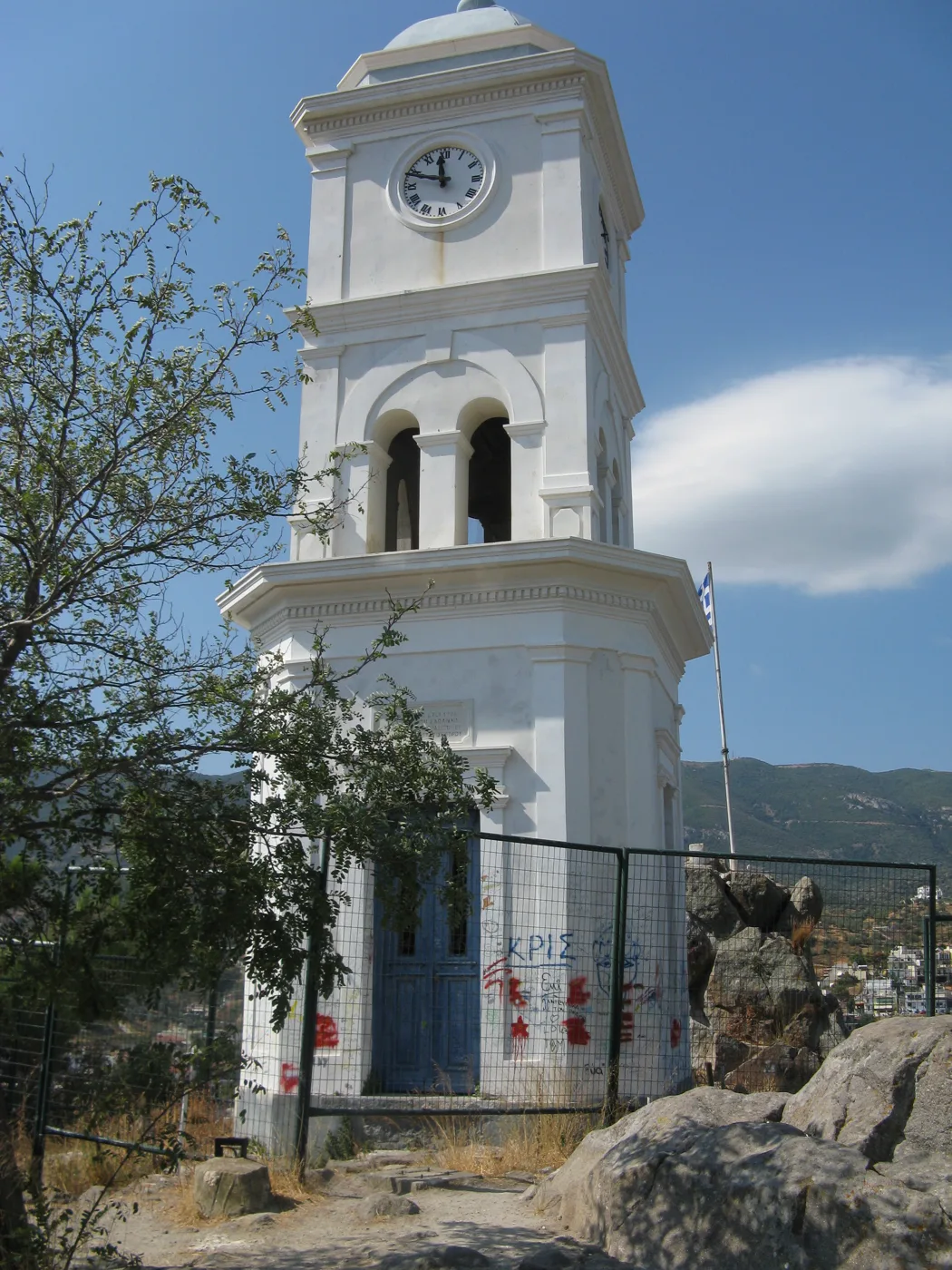
The symbol of the island, since 1927.
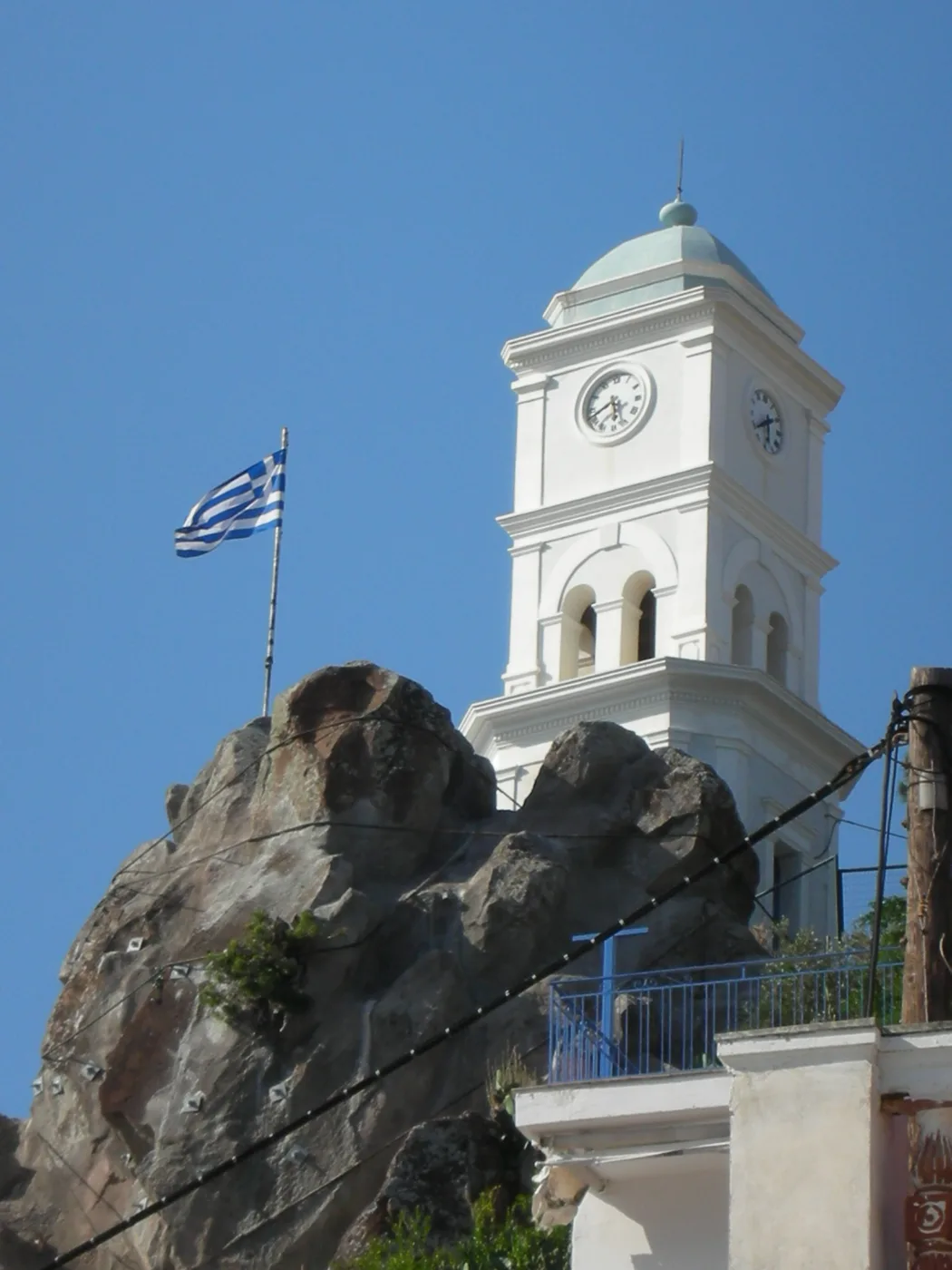
Five minutes of steps from the harbour.
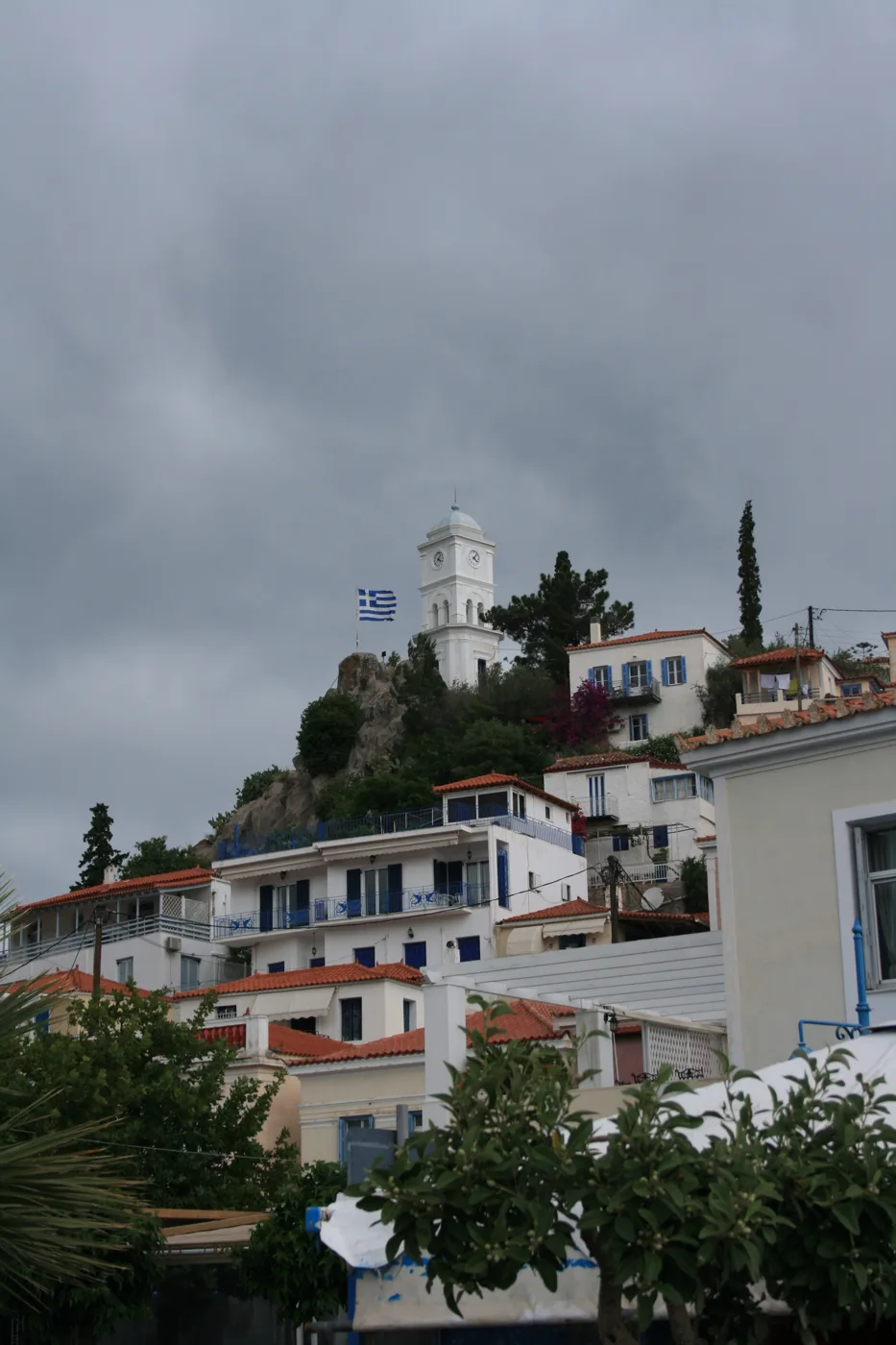
Neoclassical houses in ochre, pink and white.
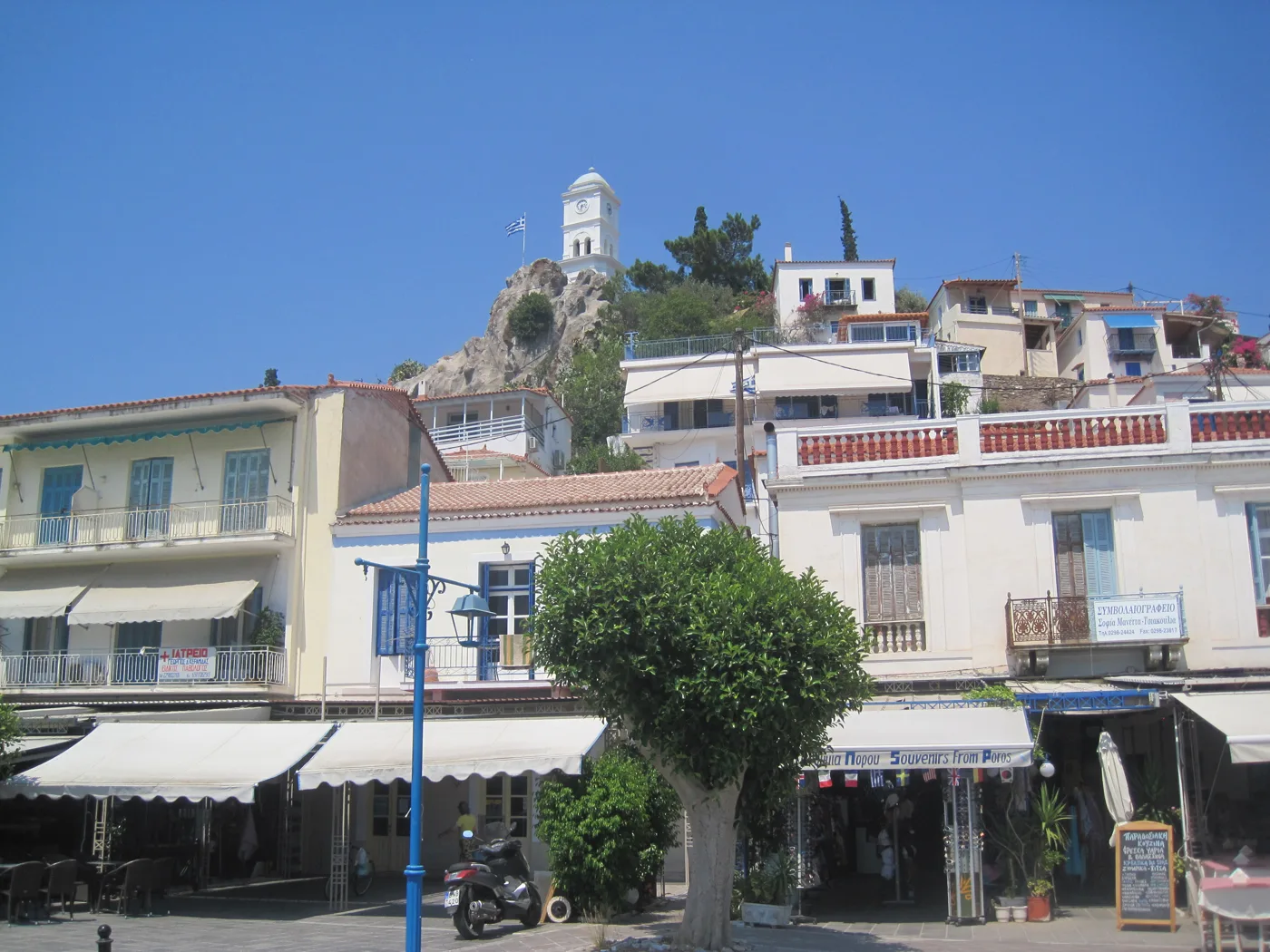
The Clock Tower can be seen from everywhere.
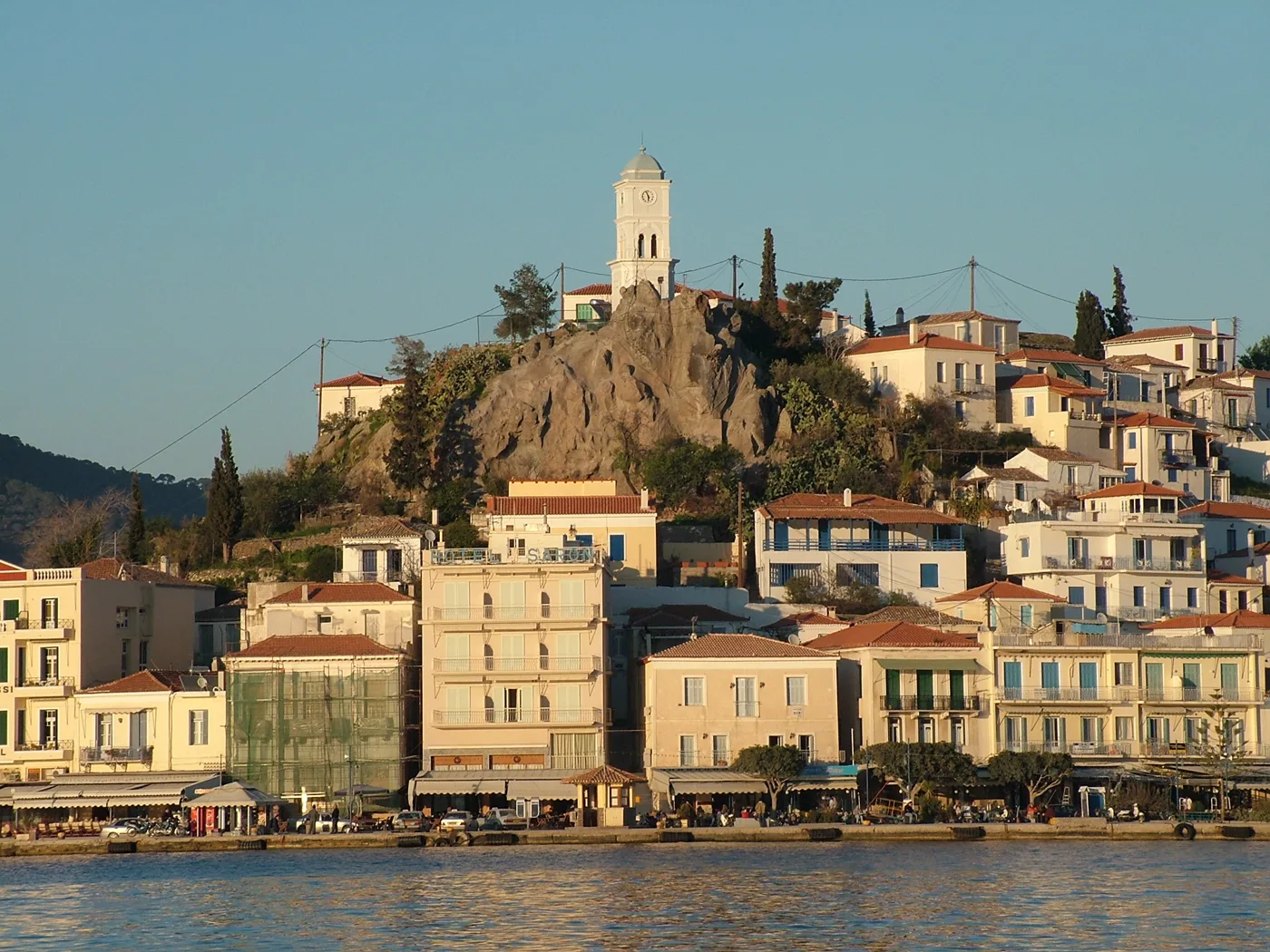
The best time for photographs.
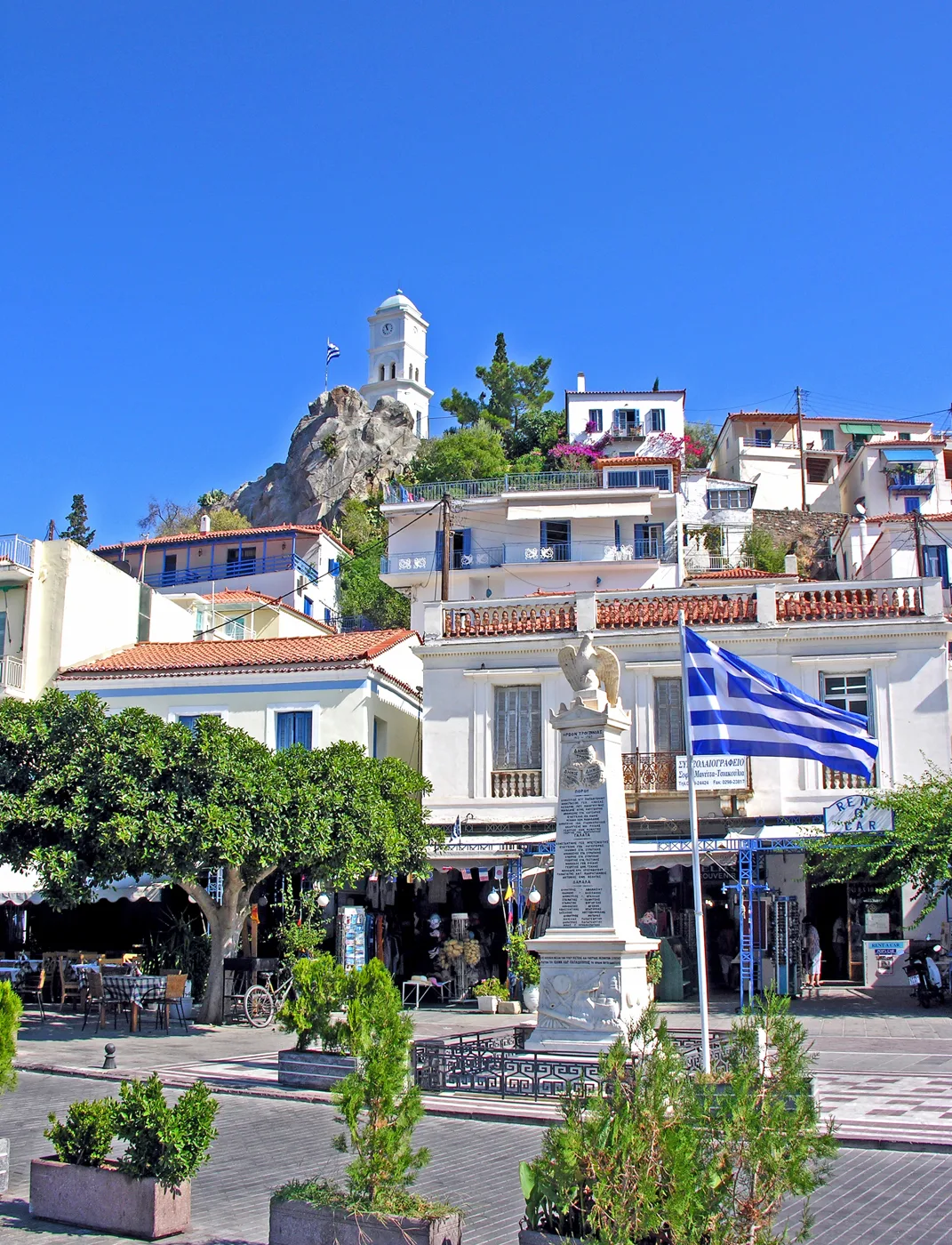
Sferia, the rock of the town.
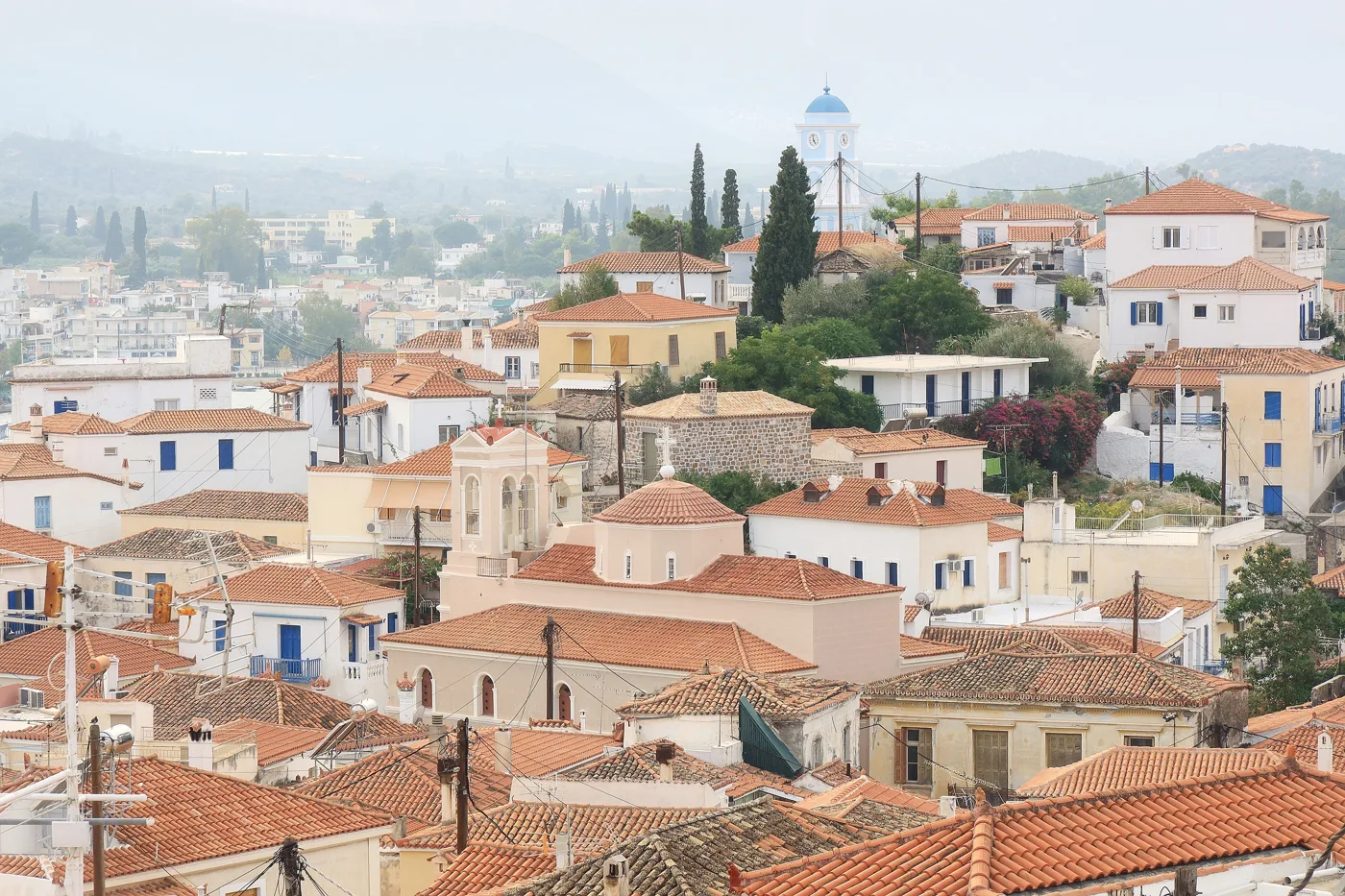
From the steps up to the Clock Tower.
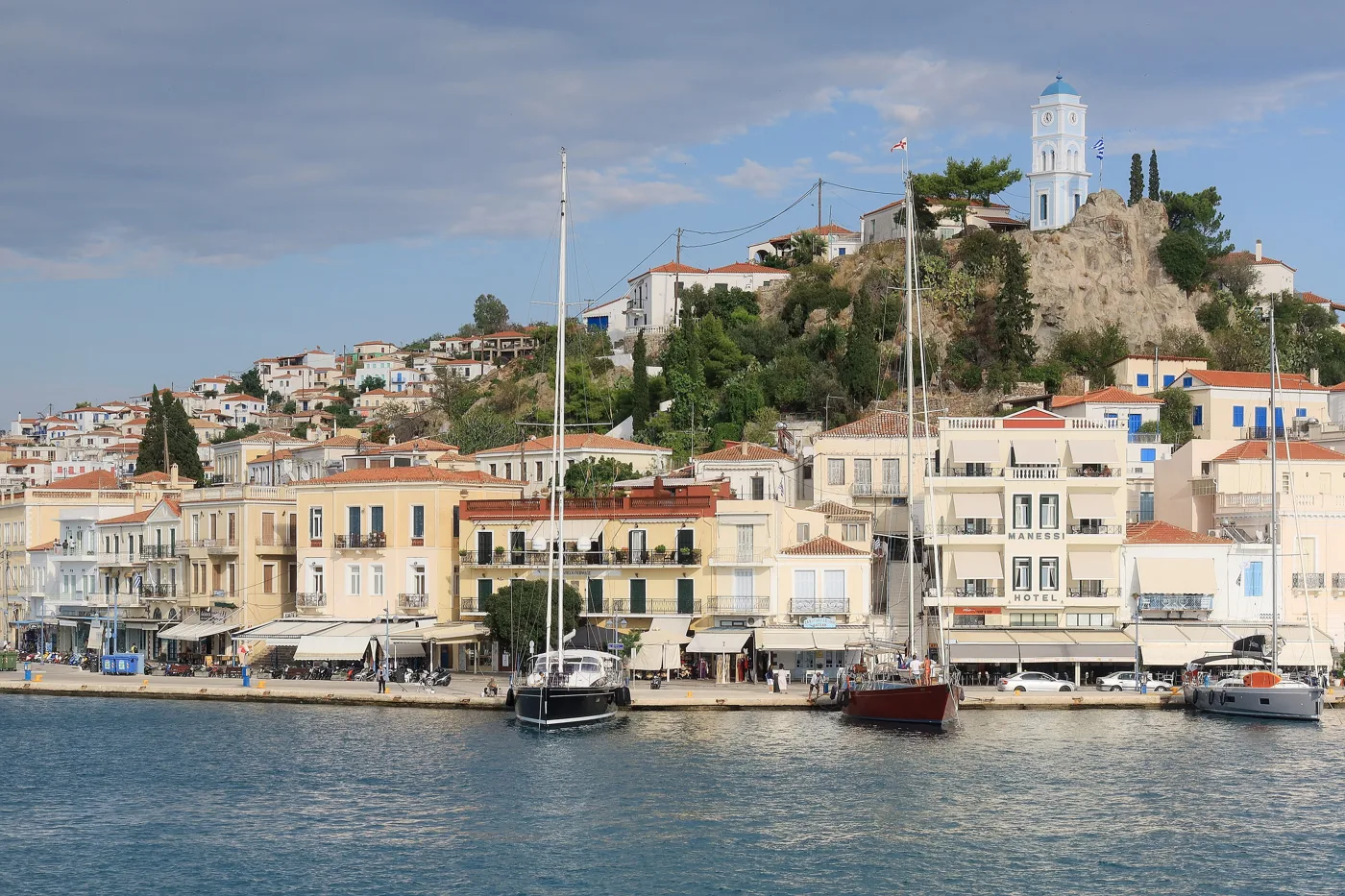
The harbour below, the Clock Tower above.
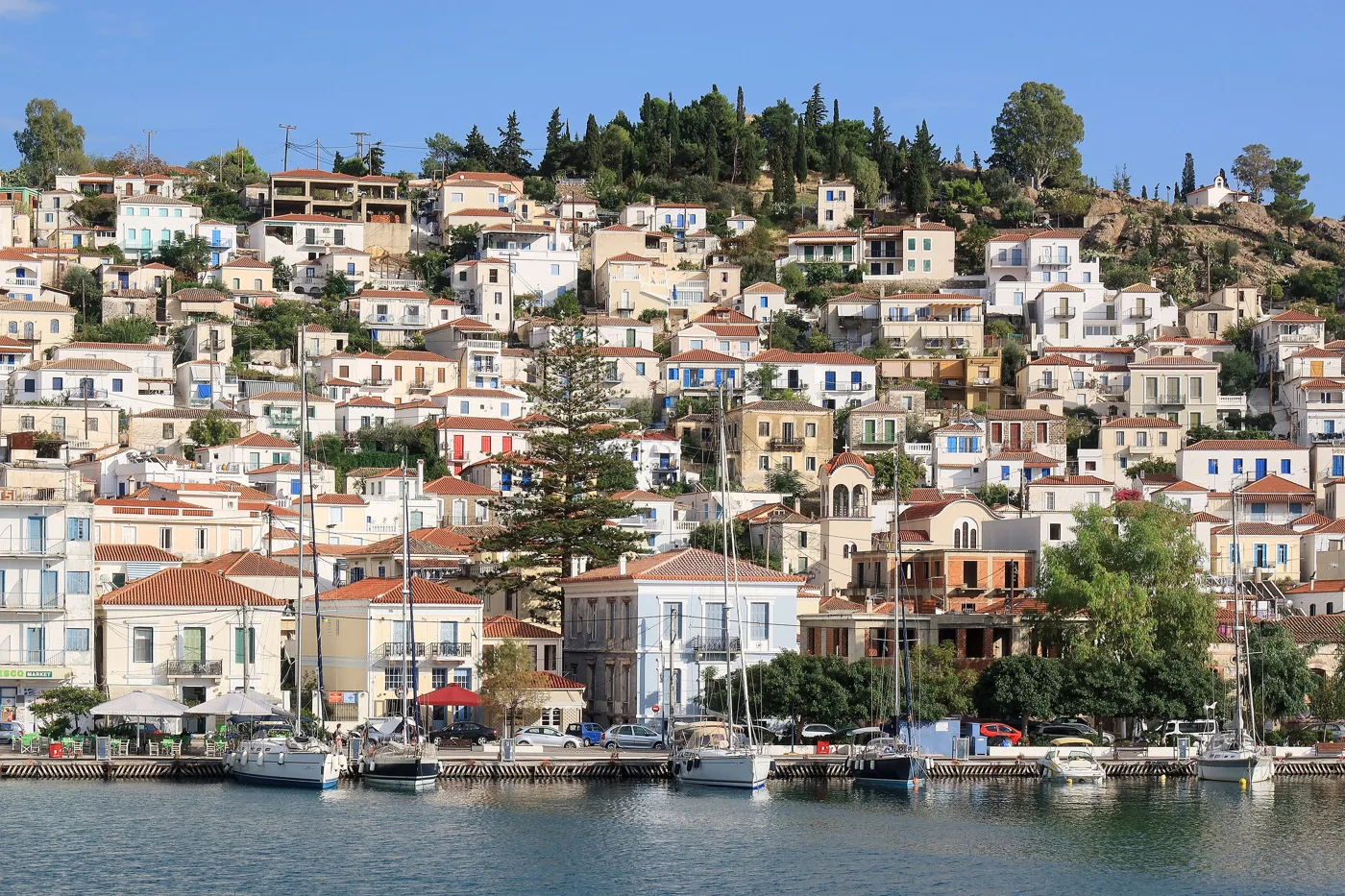
The houses of the waterfront.
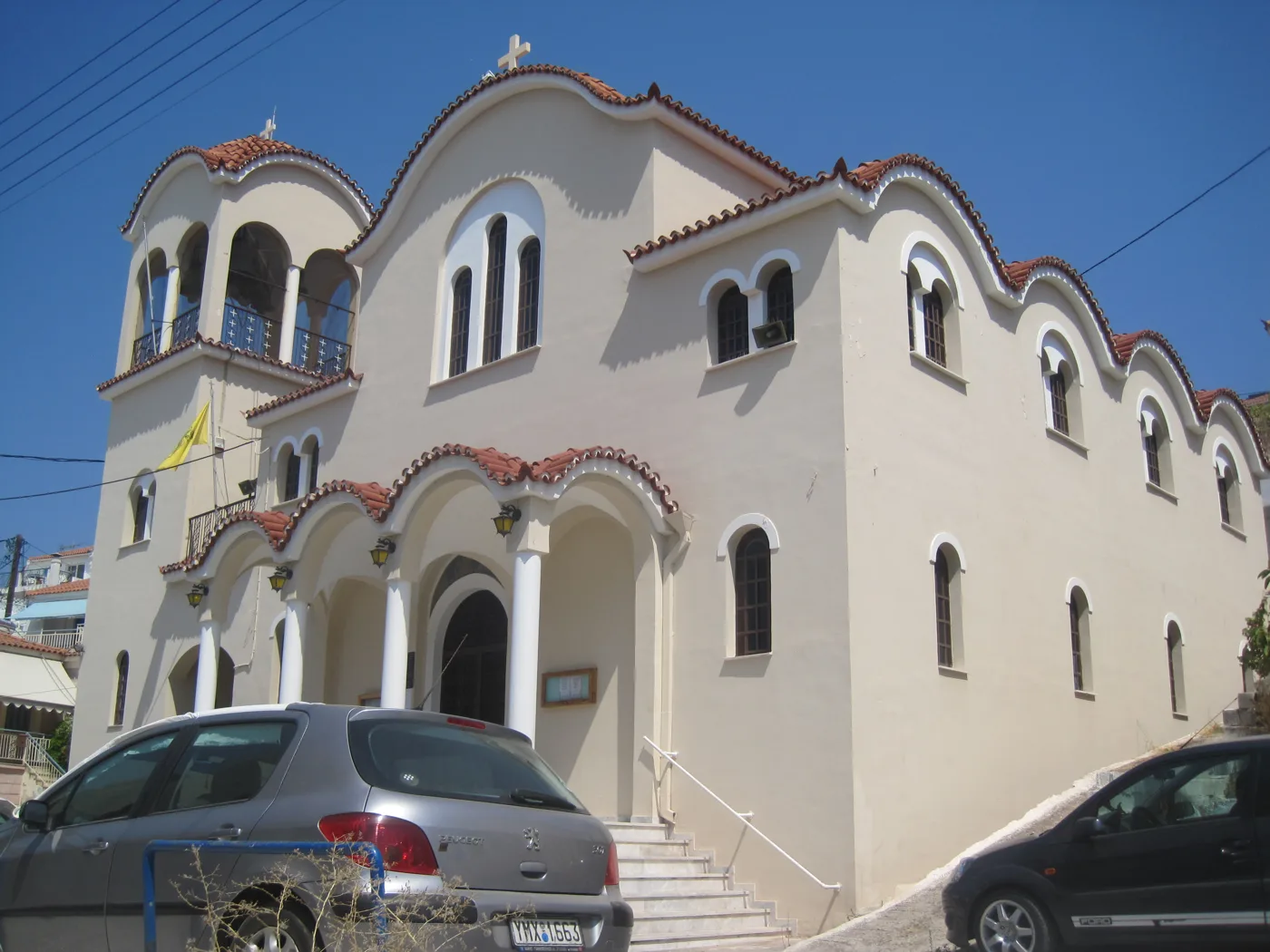
Agios Georgios, the cathedral of the island.
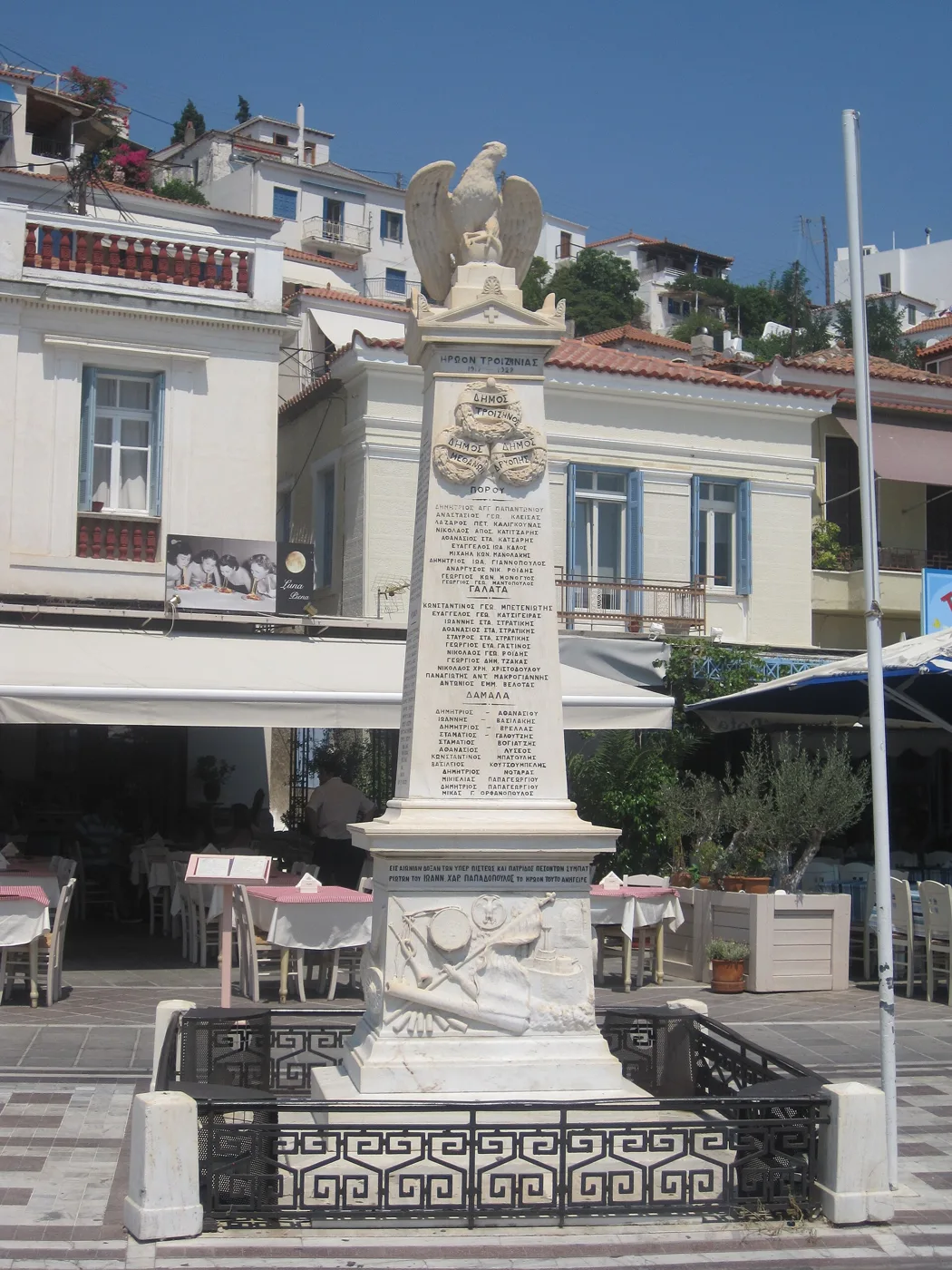
On the waterfront square.
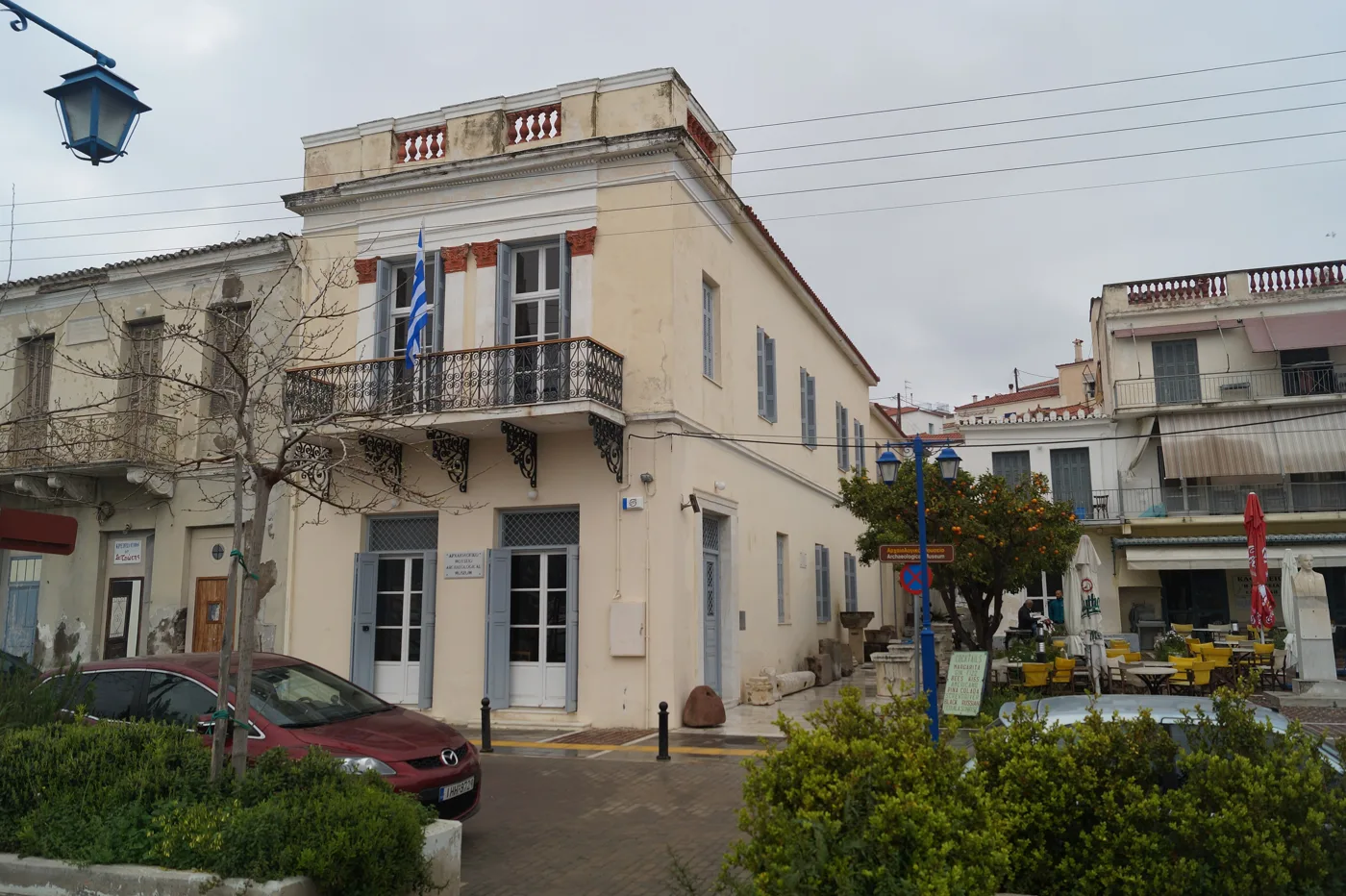
On Korizis Square, on the waterfront.
Photos: Юкатан (CC BY-SA 3.0), Justkillingtime (Public domain), Micah Craig (CC BY-SA 2.0), Qweasdqwe (CC BY-SA 4.0), koupakia (CC BY 3.0), Dennis G. Jarvis (CC BY-SA 2.0), Julien Seguinot (CC BY-SA 2.0), Schuppi (CC BY-SA 3.0) · Wikimedia Commons
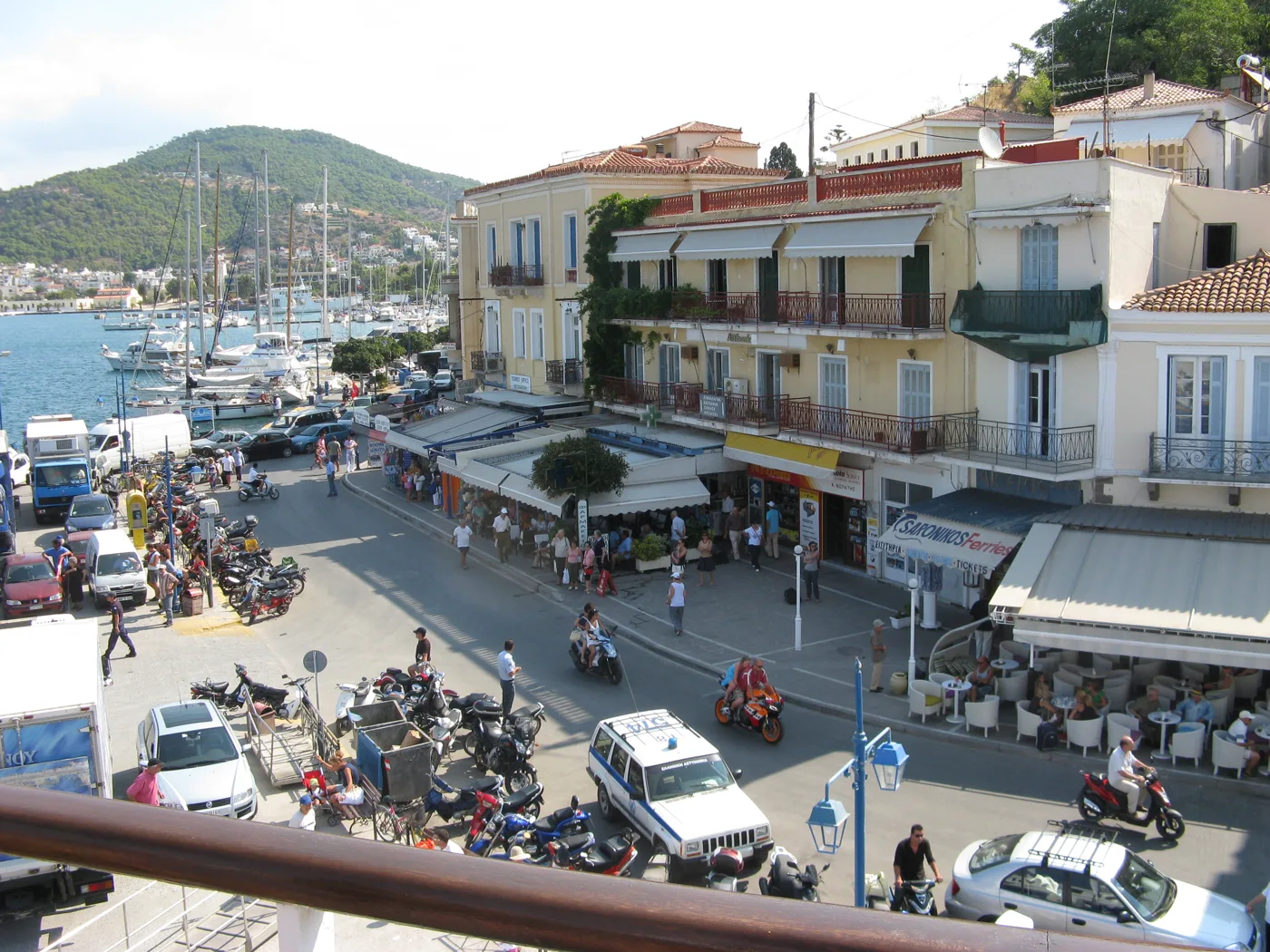
Cafés, tavernas and boats from all over Europe.
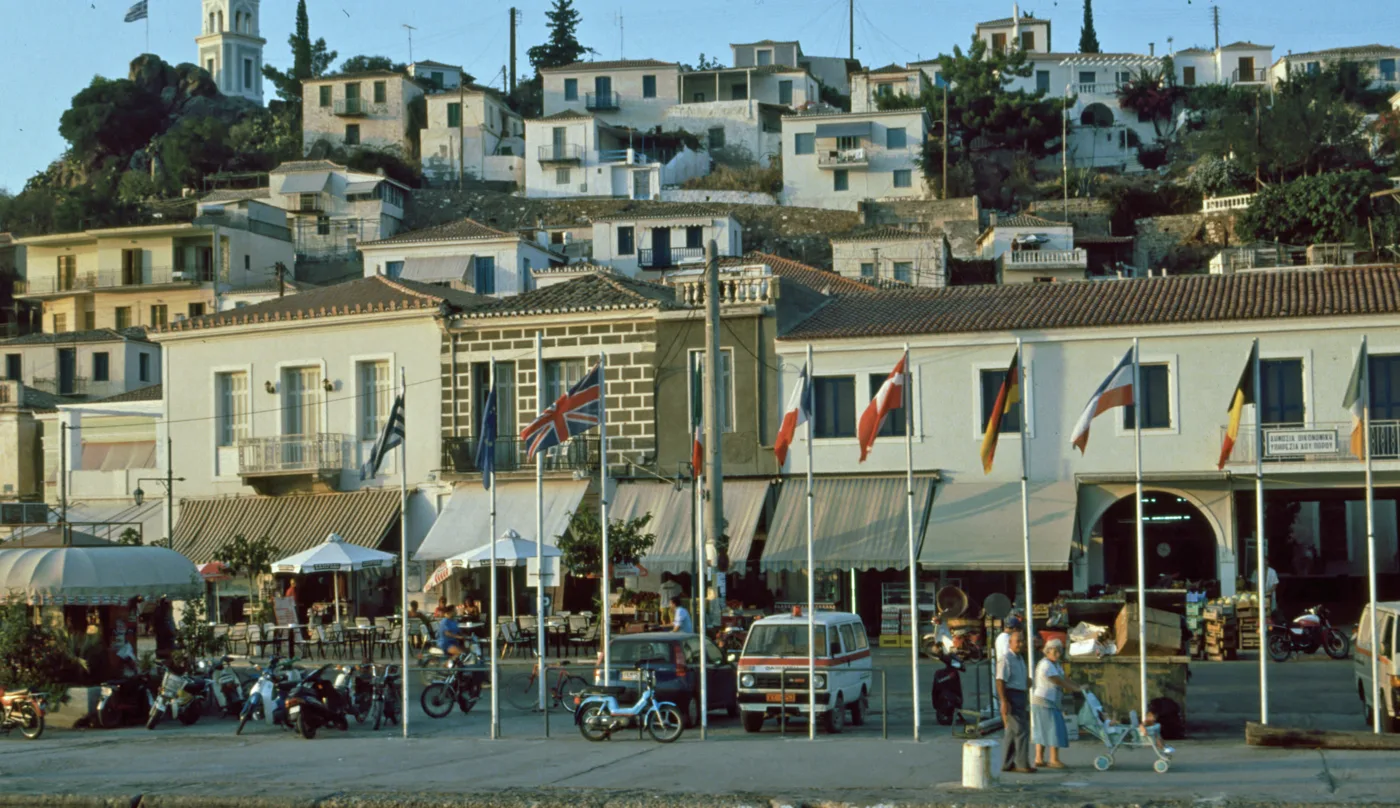
The neoclassical houses of the waterfront.
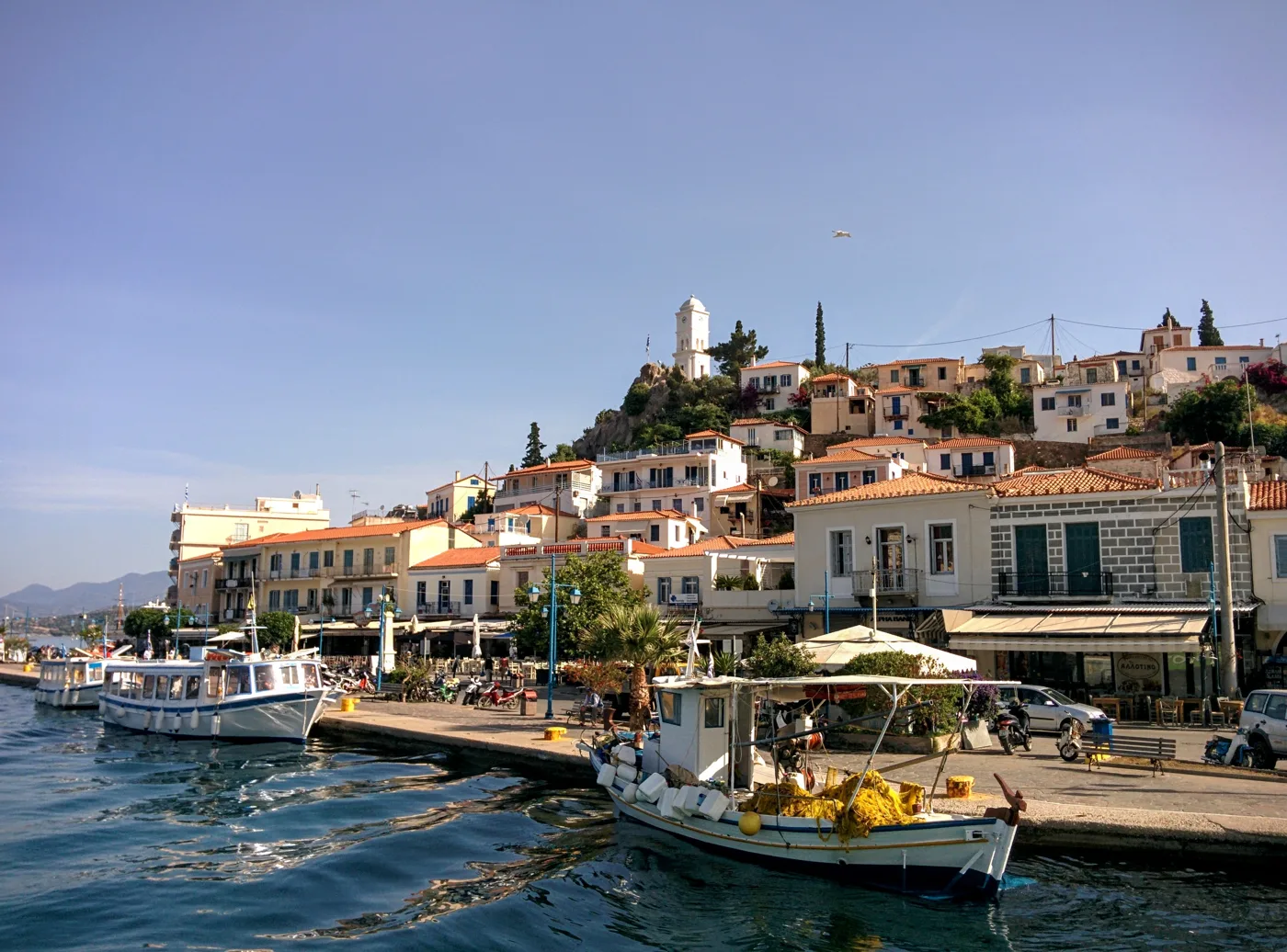
The most welcoming harbour in the Saronic Gulf.
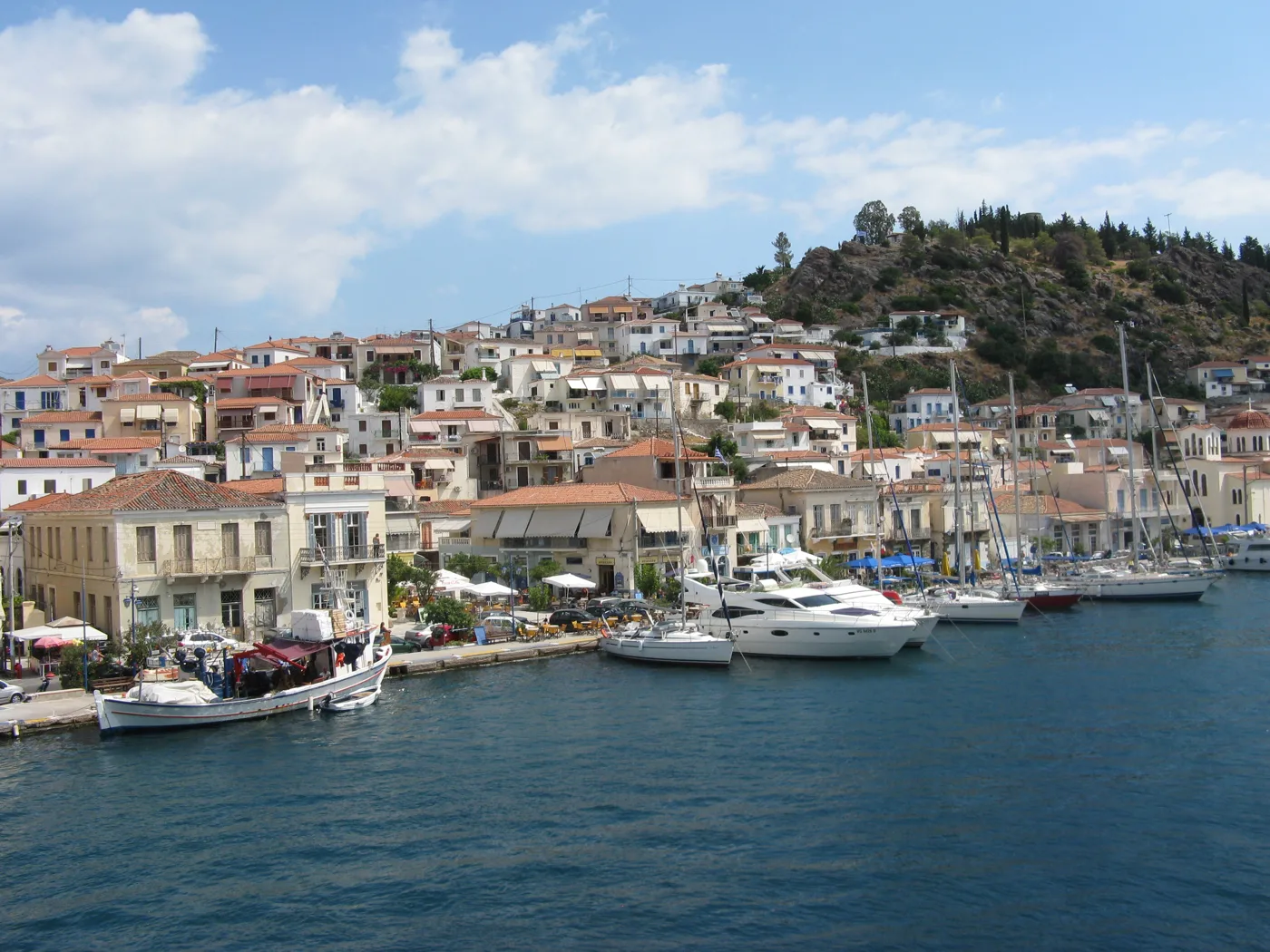
At weekends it fills with sailing boats.
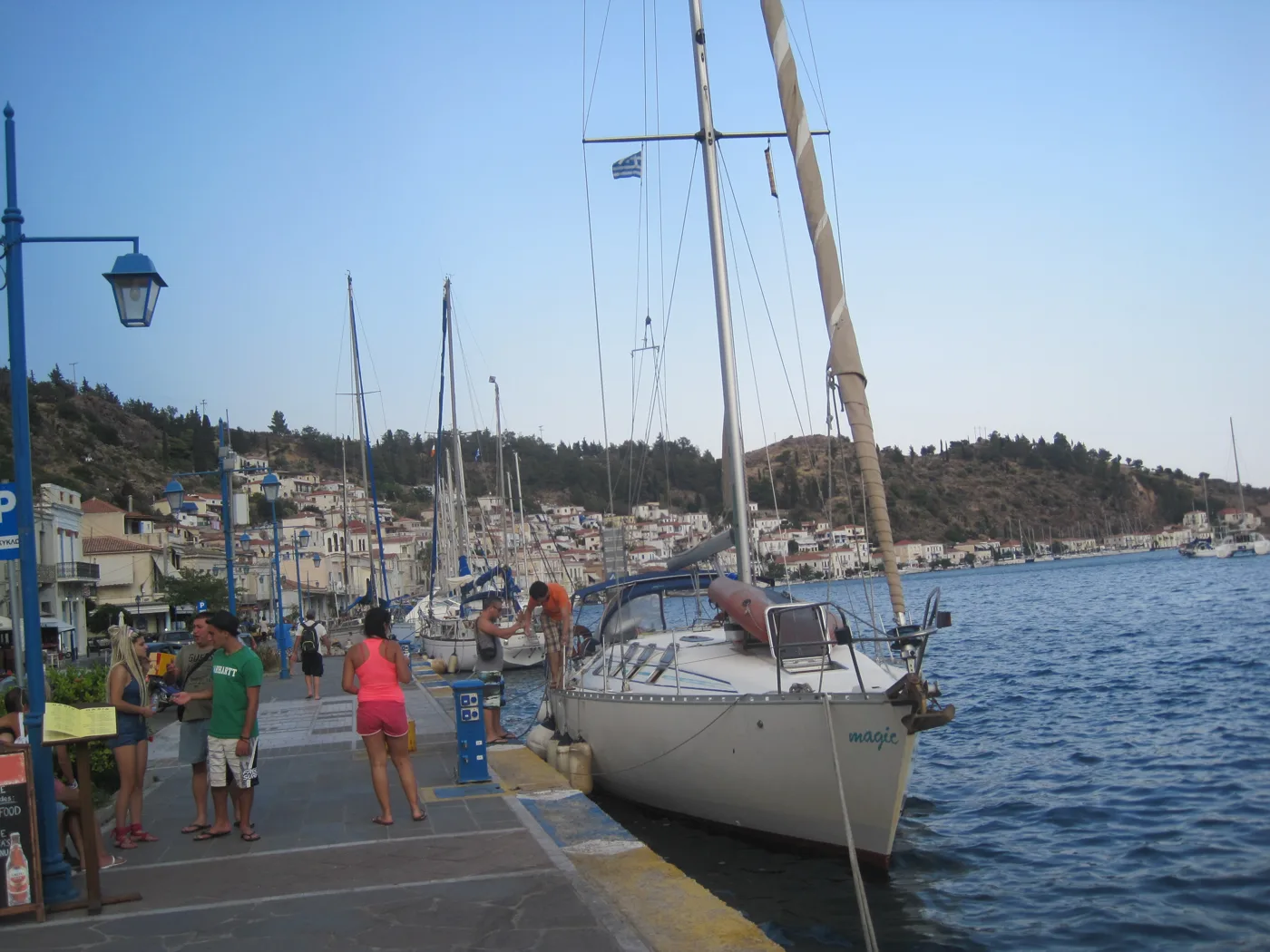
Poros is the sailing hub of the Saronic Gulf.
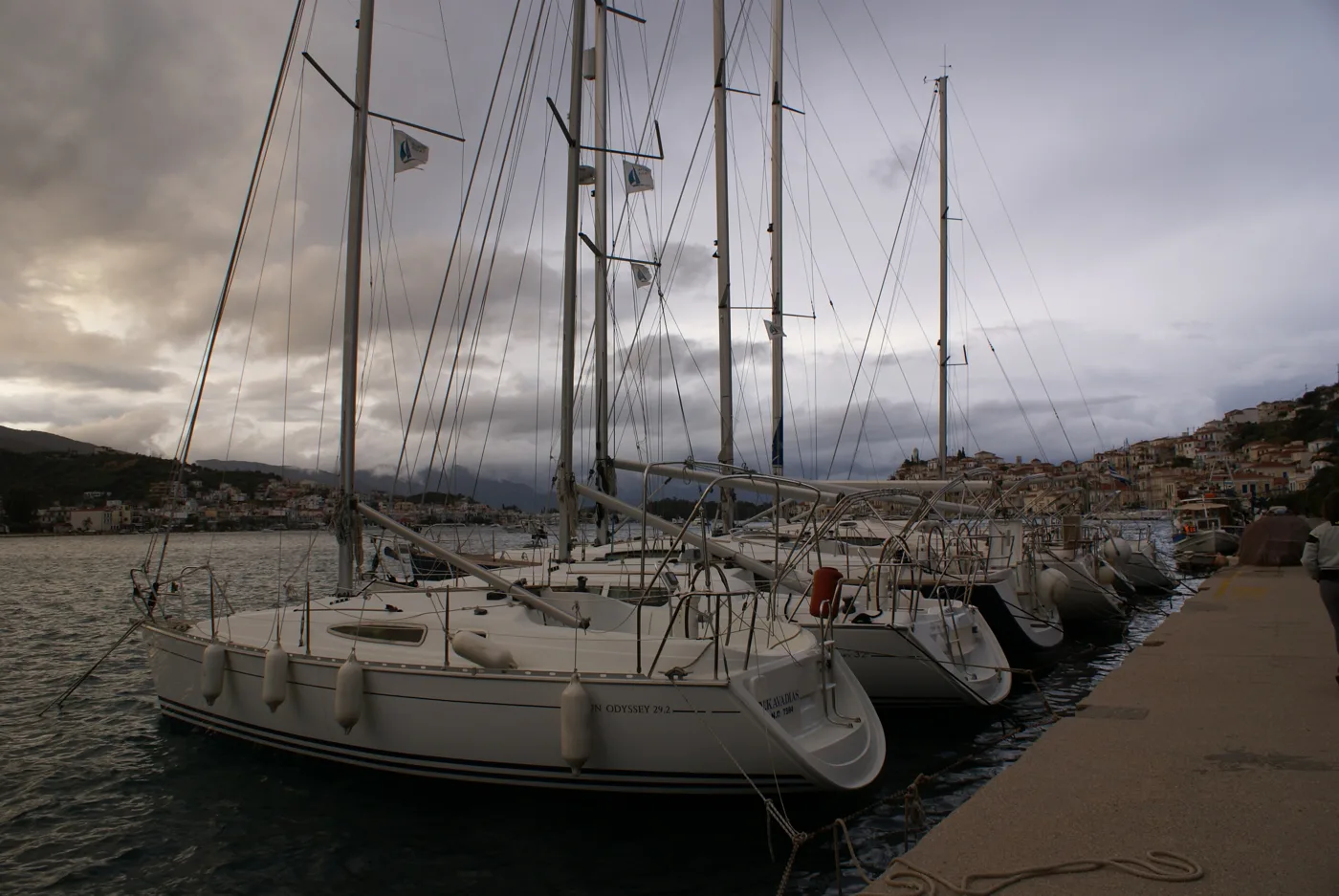
The boats spend the winter here.
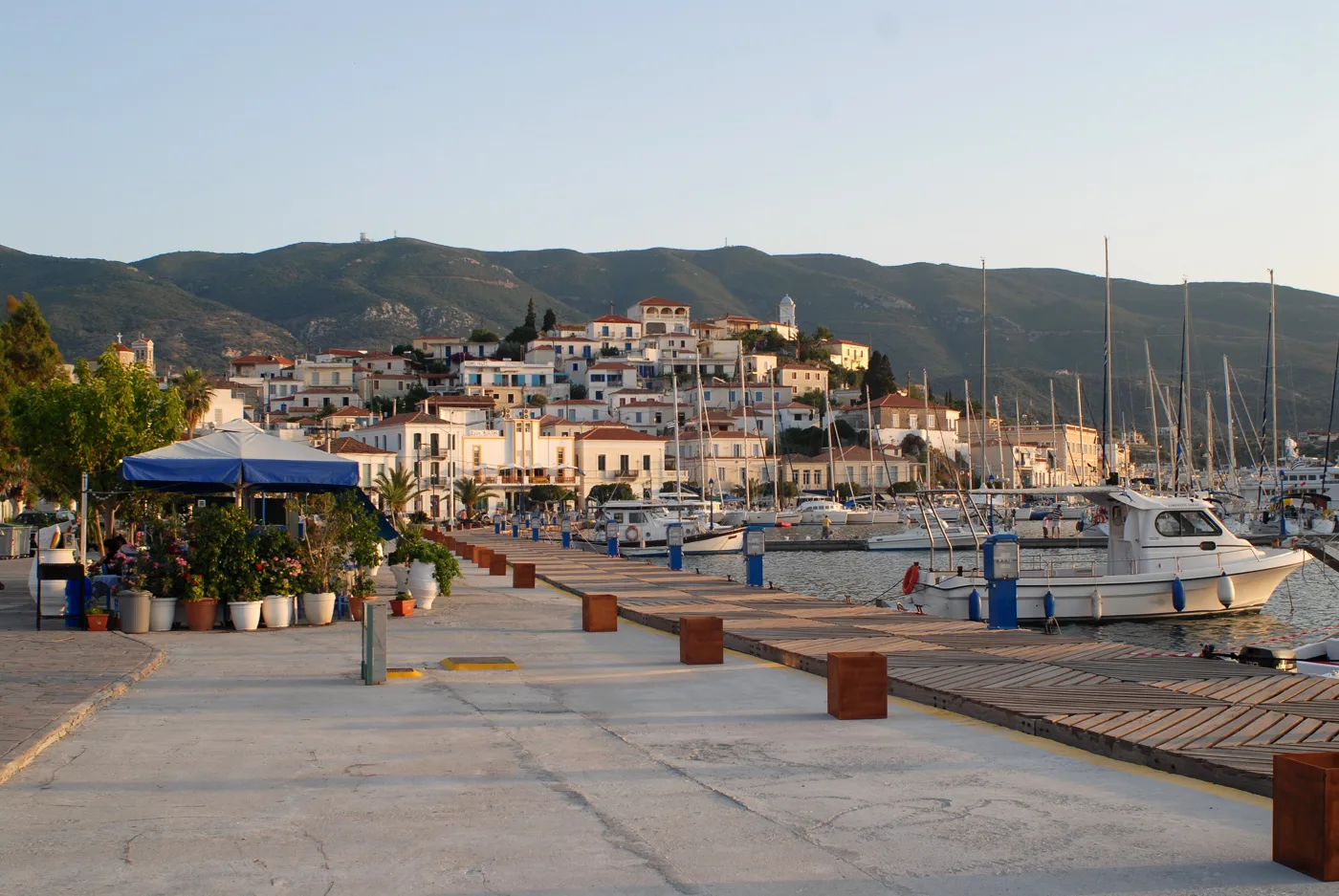
The waterfront and the slope.
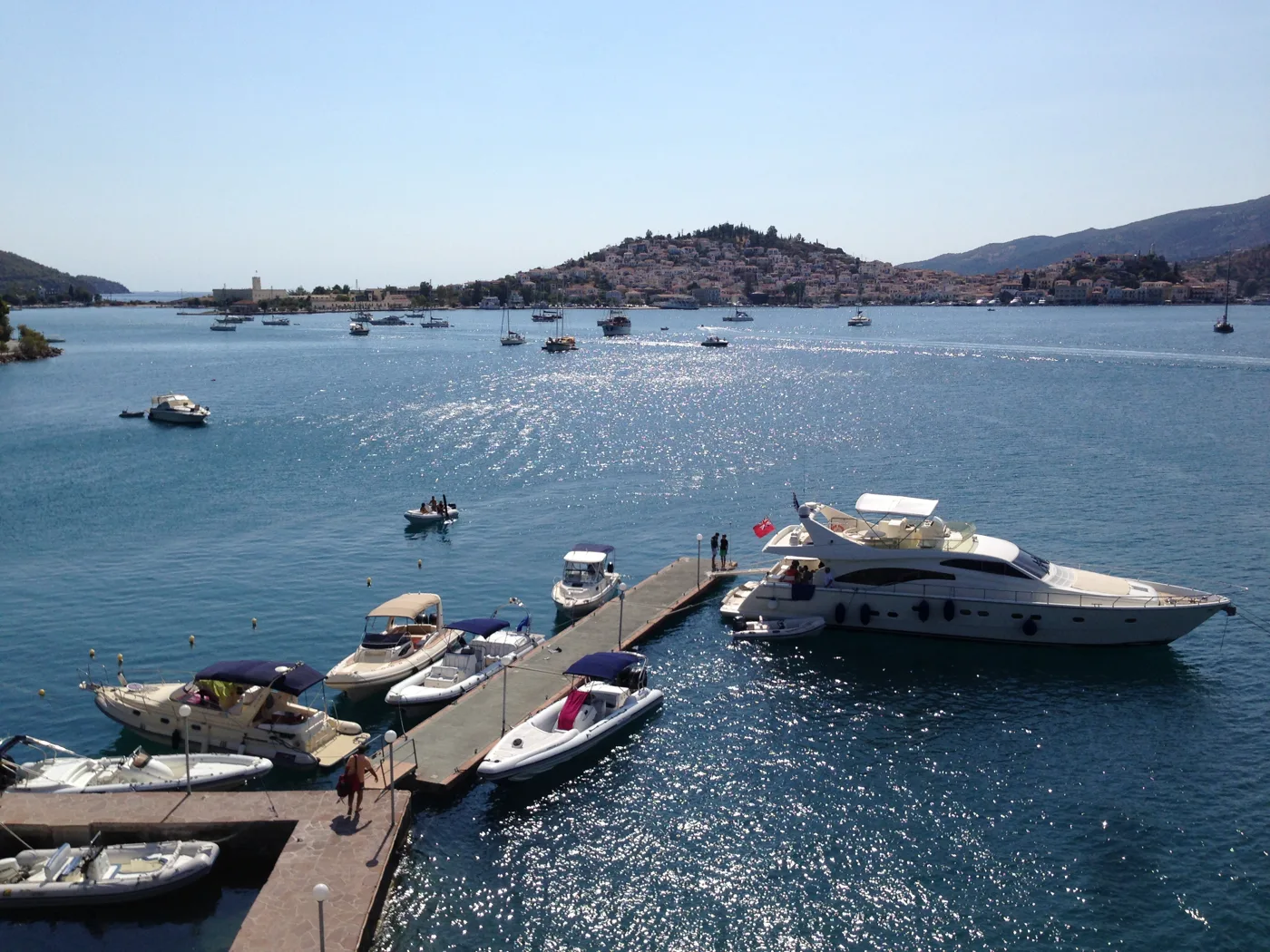
The strait from the hotels of Askeli.
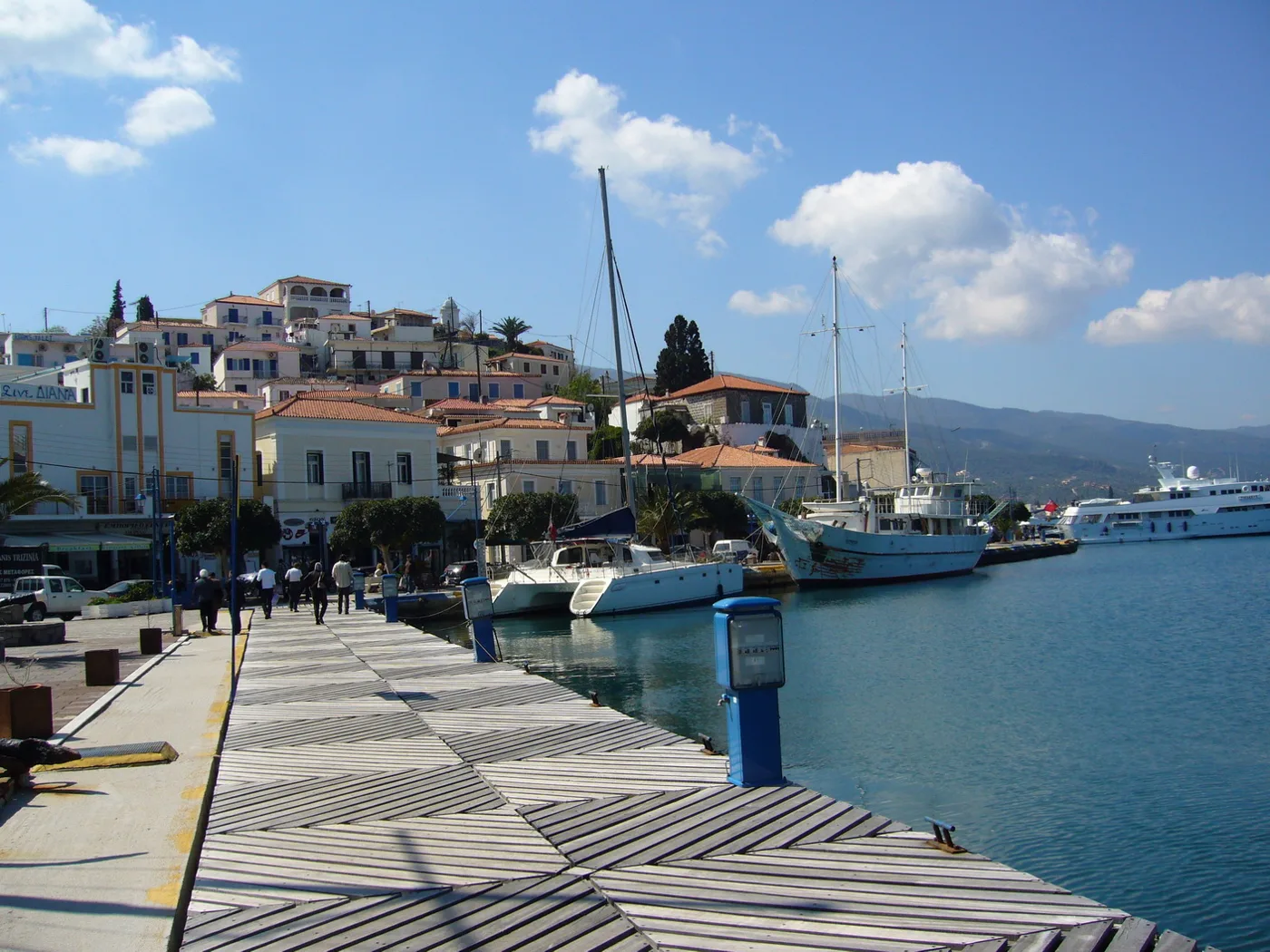
Wooden deck and a view of Galatas.
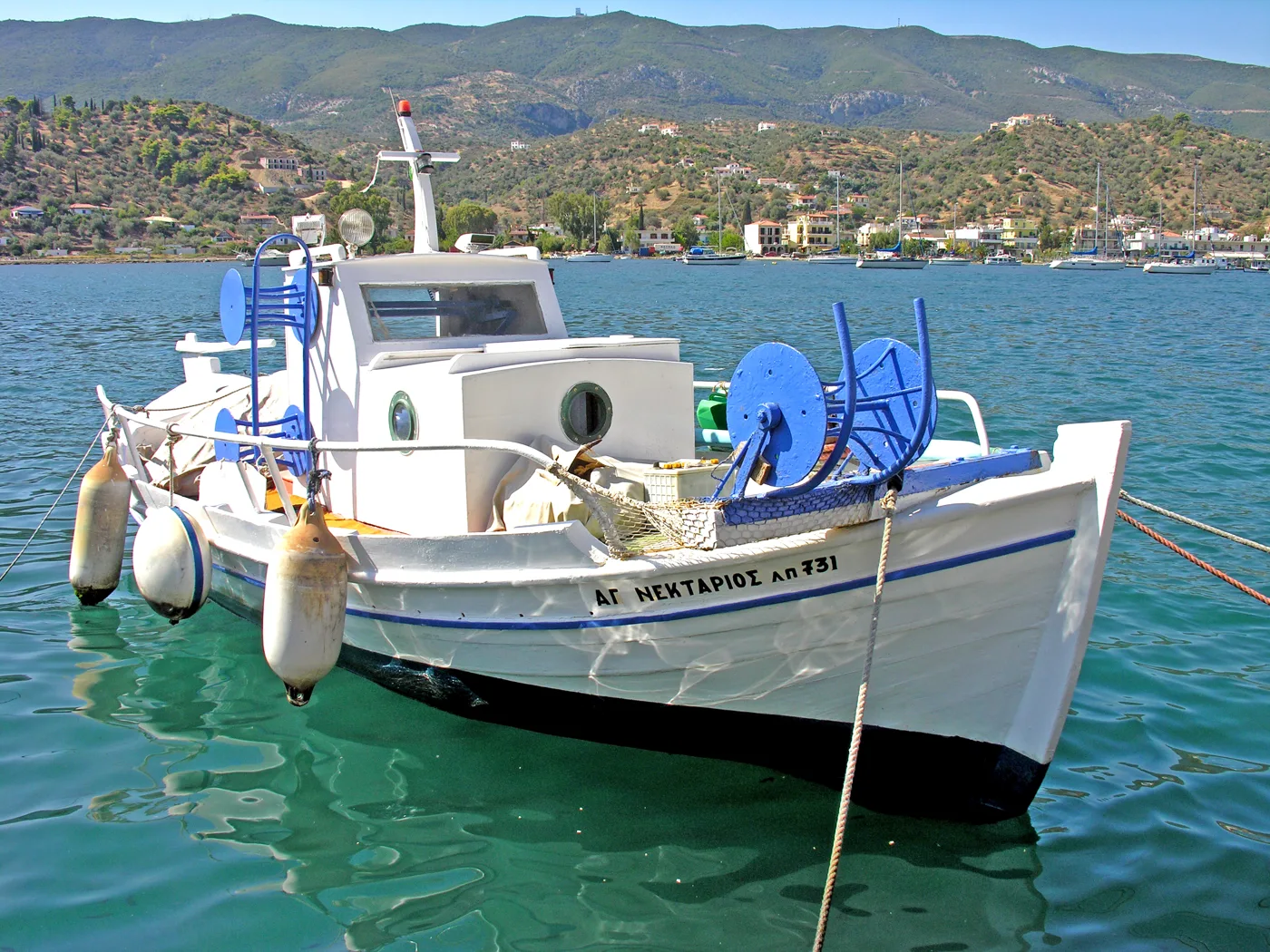
The taverna’s fish.
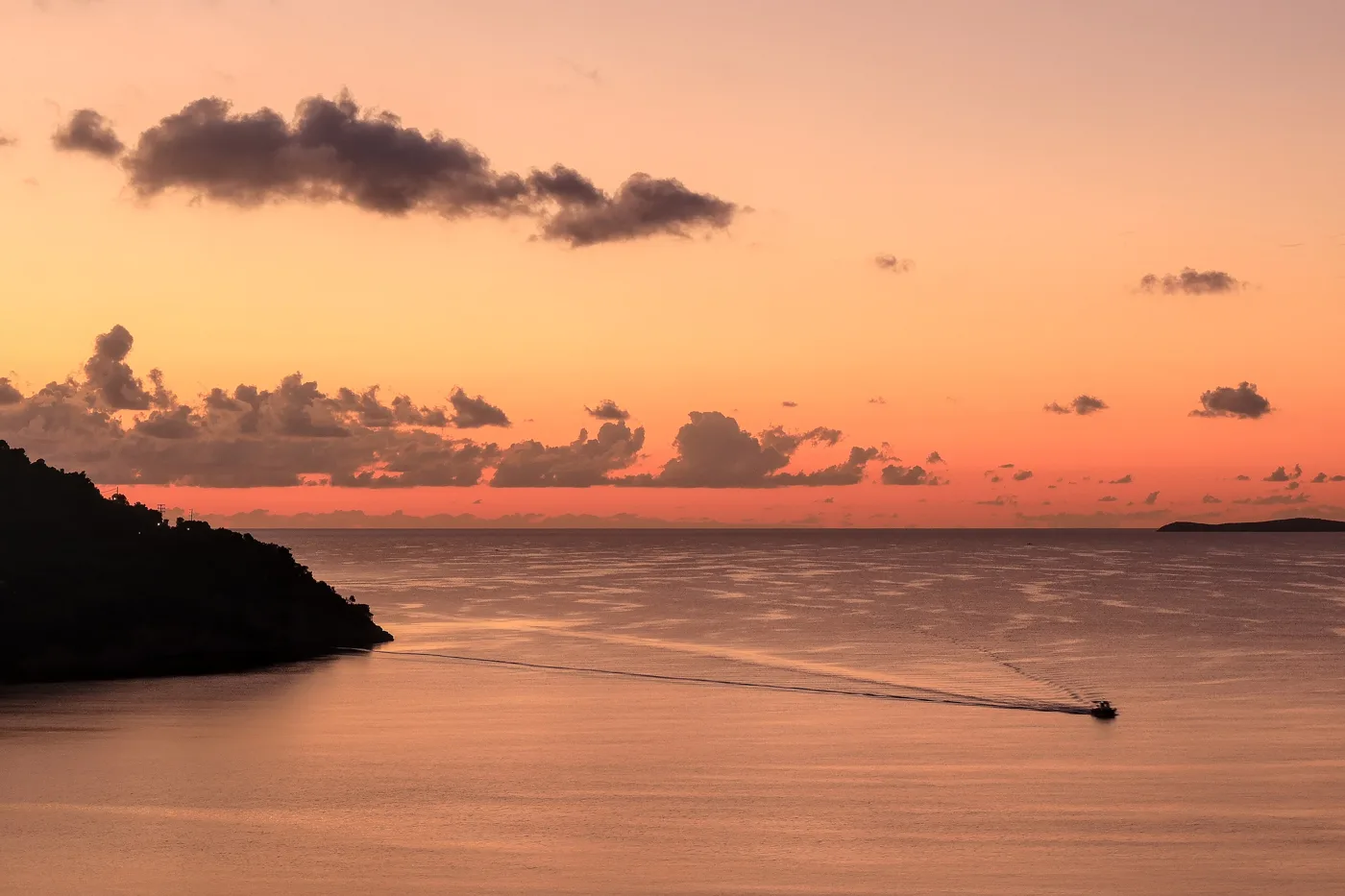
The fishermen come back before the harbour wakes up.
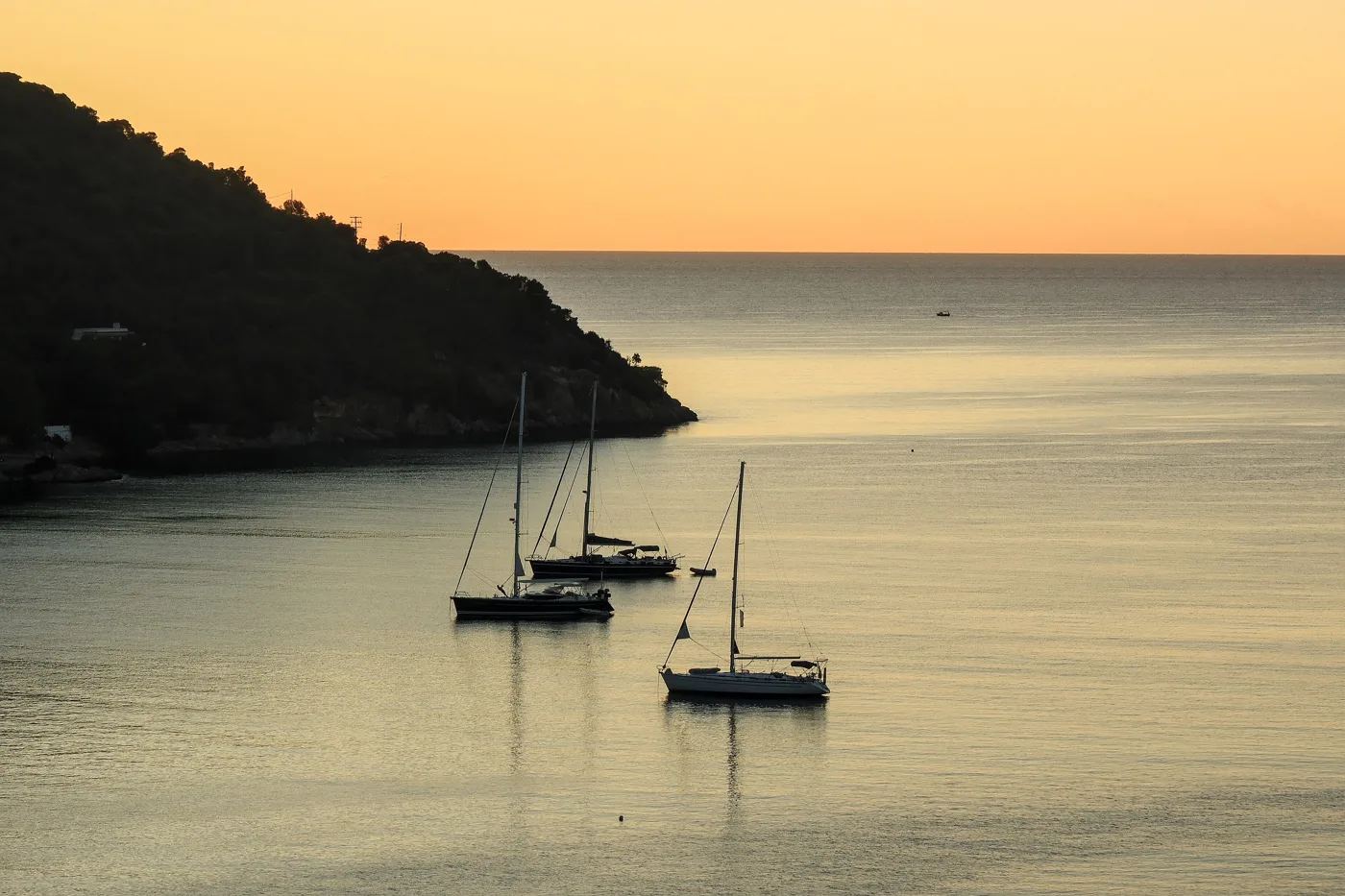
The sailing boats drop anchor in the bay.
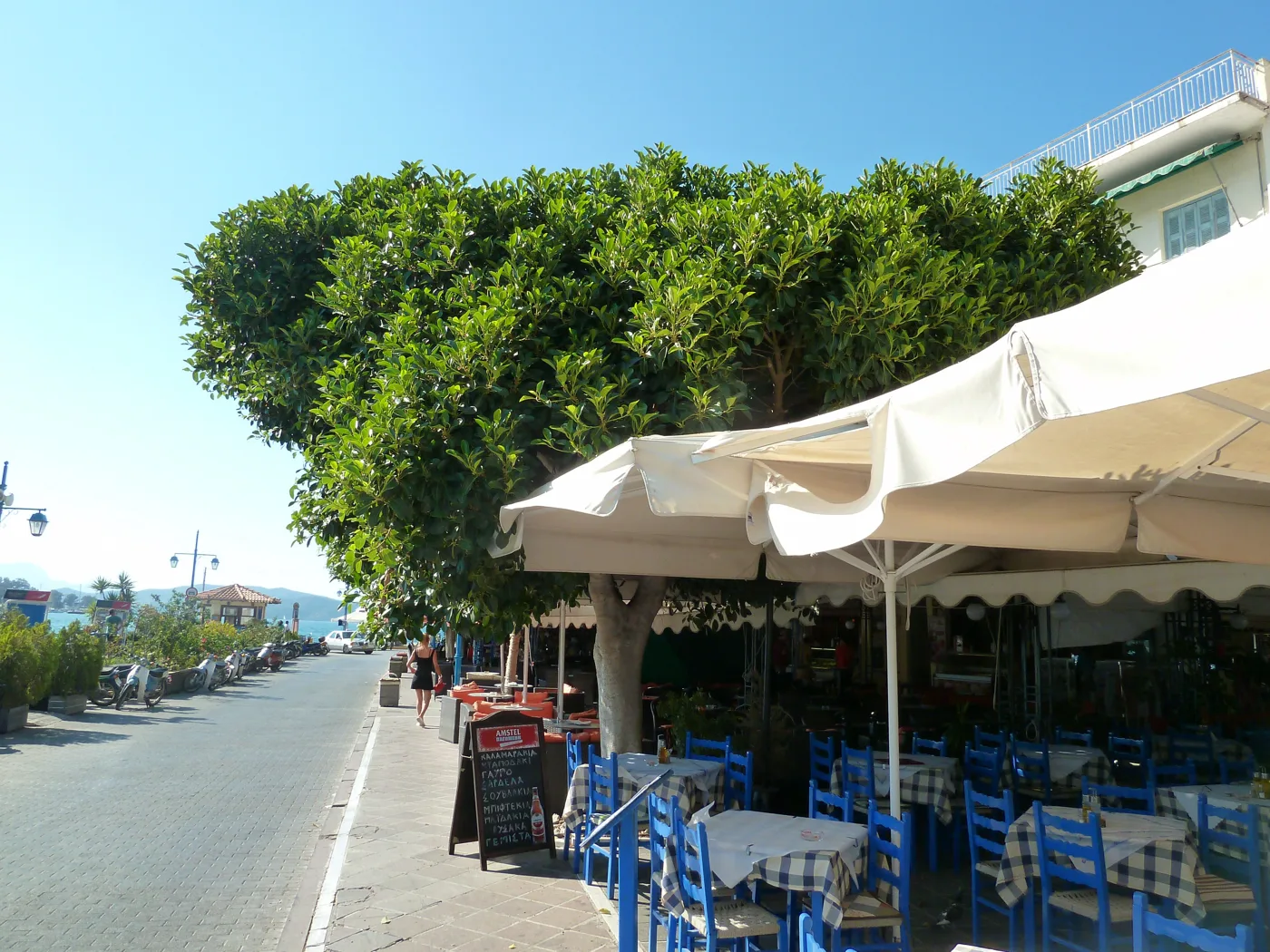
Coffee with a view of the strait.
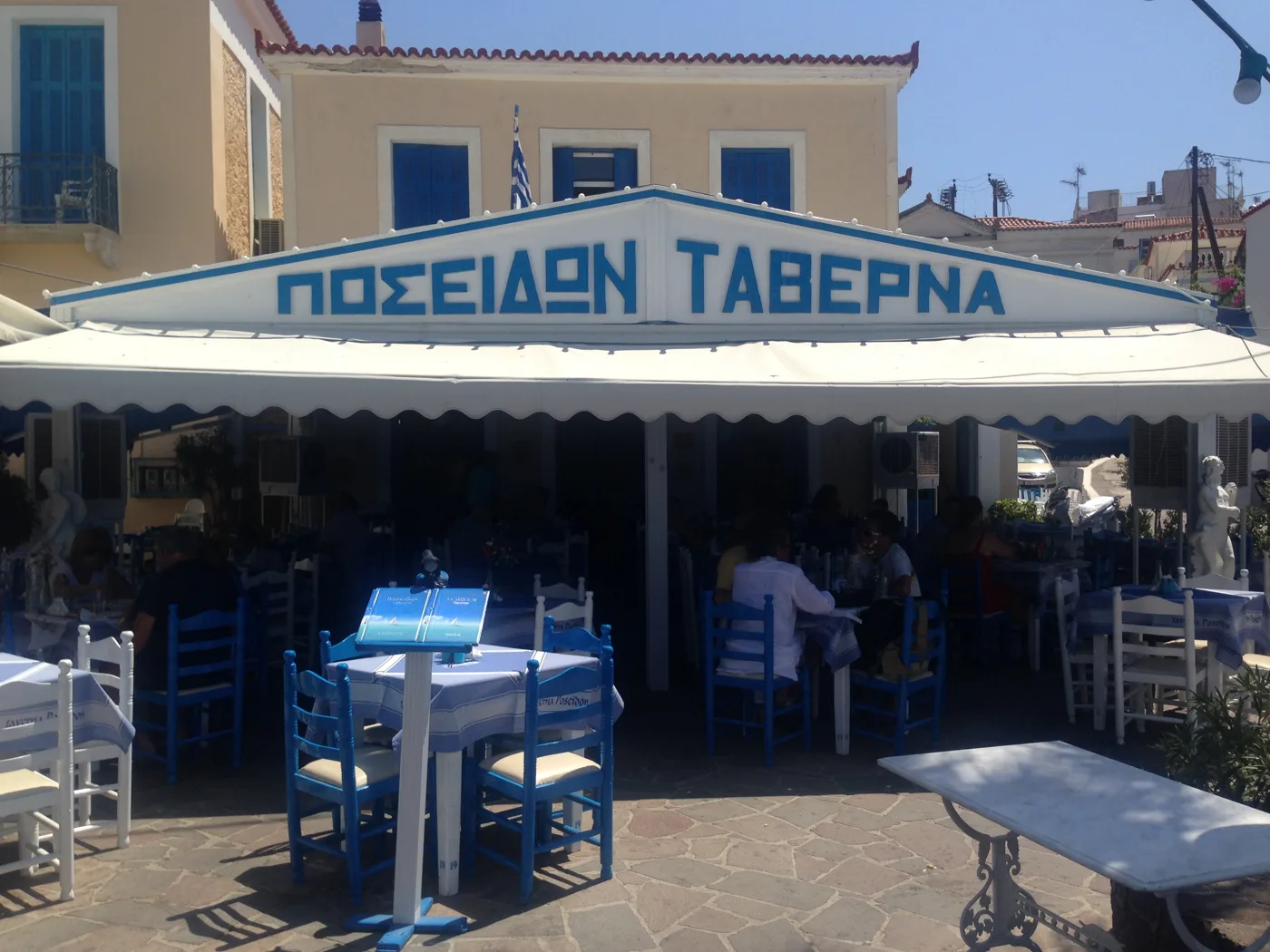
Fish and meze right by the water.
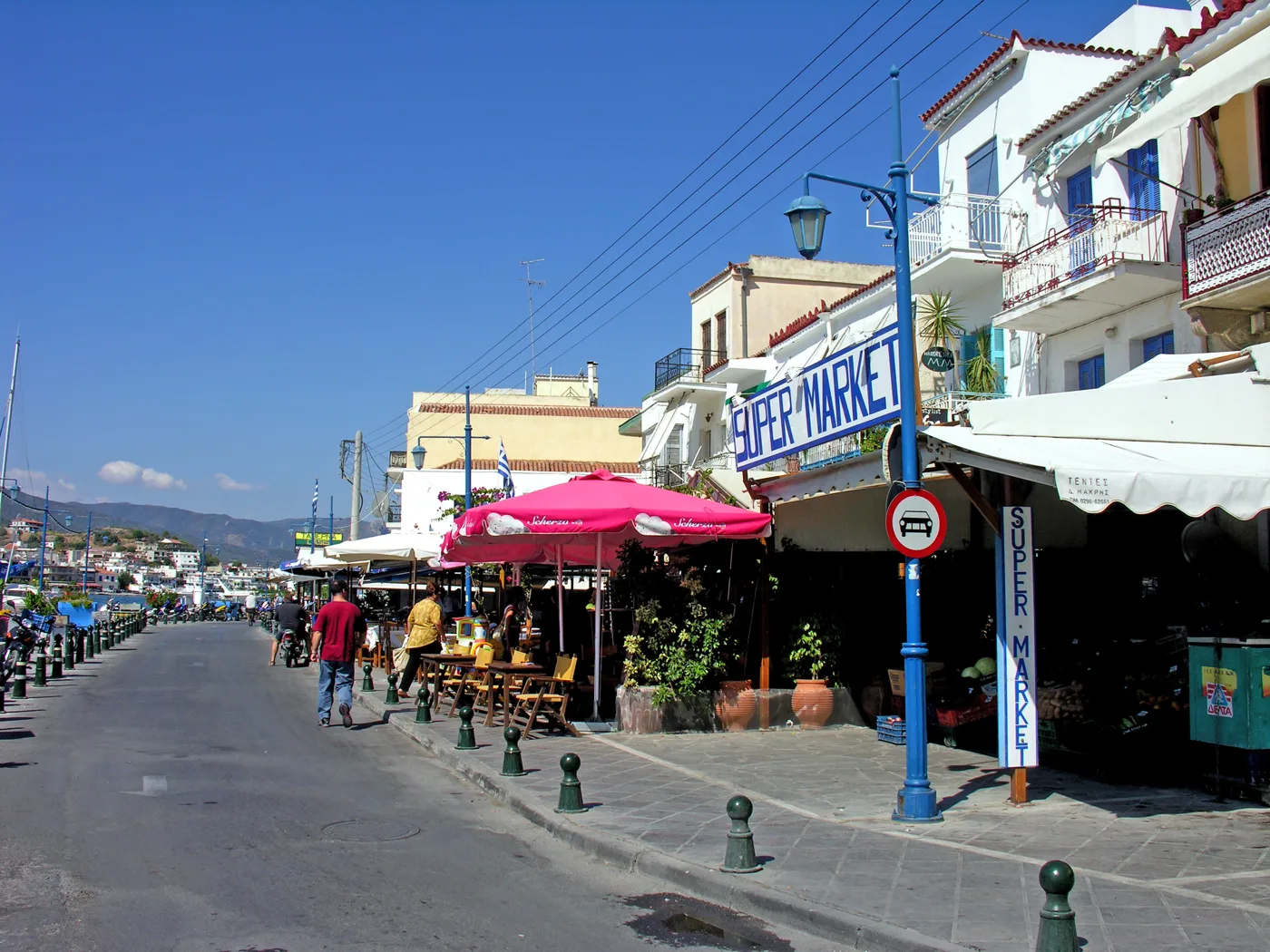
Shops, bakeries, pastry shops.
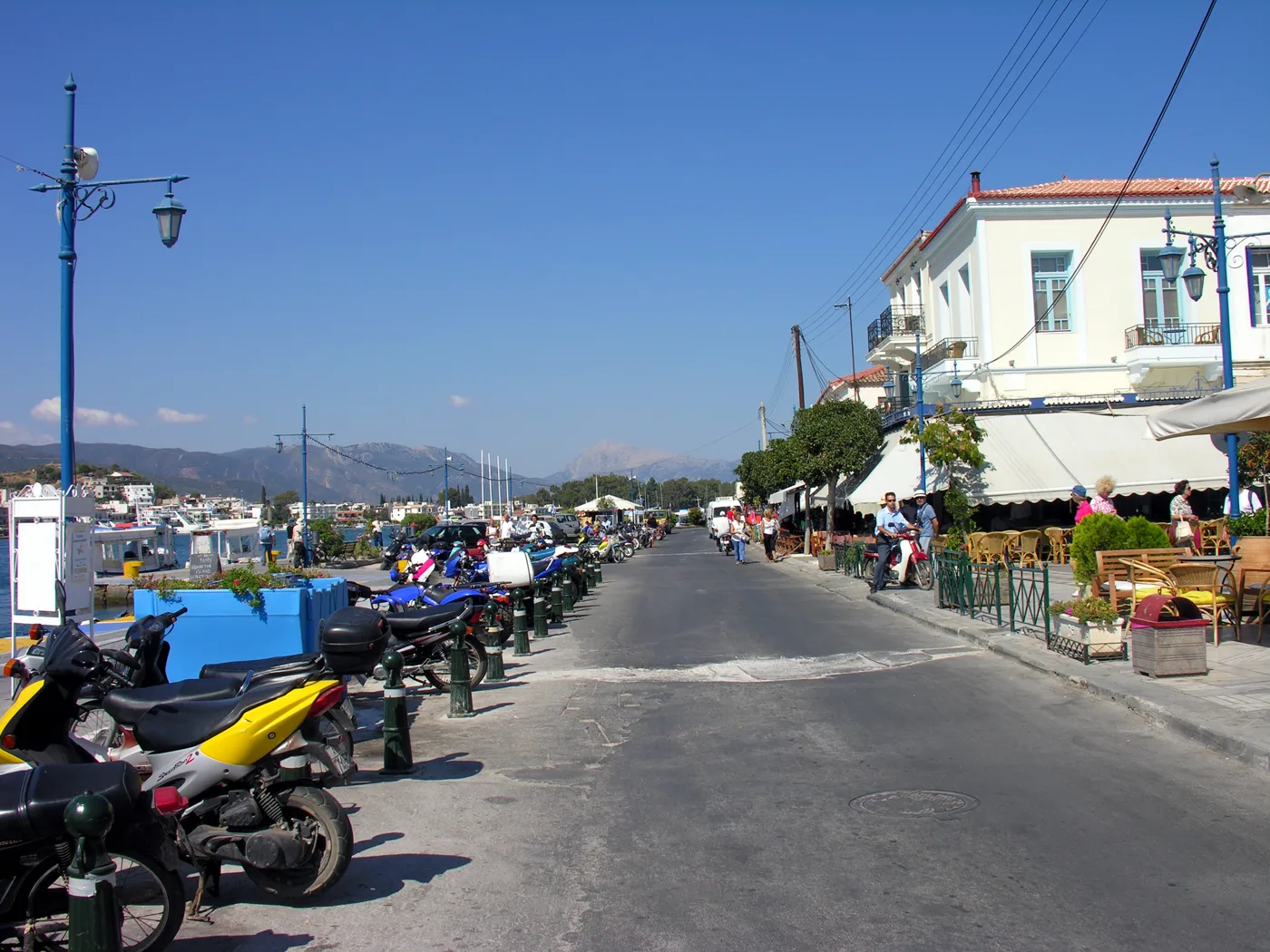
Poros has cars and scooters, unlike Hydra.
Photos: Юкатан (CC BY-SA 3.0), qwesy qwesy (CC BY 3.0), Gonzolito (CC BY-SA 4.0), Qweasdqwe (CC BY-SA 4.0), Matti Blume (CC BY-SA 3.0), ArnoWinter (CC BY 3.0), Agustin Bartolome (CC BY-SA 3.0), Tanya Dedyukhina (CC BY 3.0), Dennis G. Jarvis (CC BY-SA 2.0), Julien Seguinot (CC BY-SA 2.0) · Wikimedia Commons
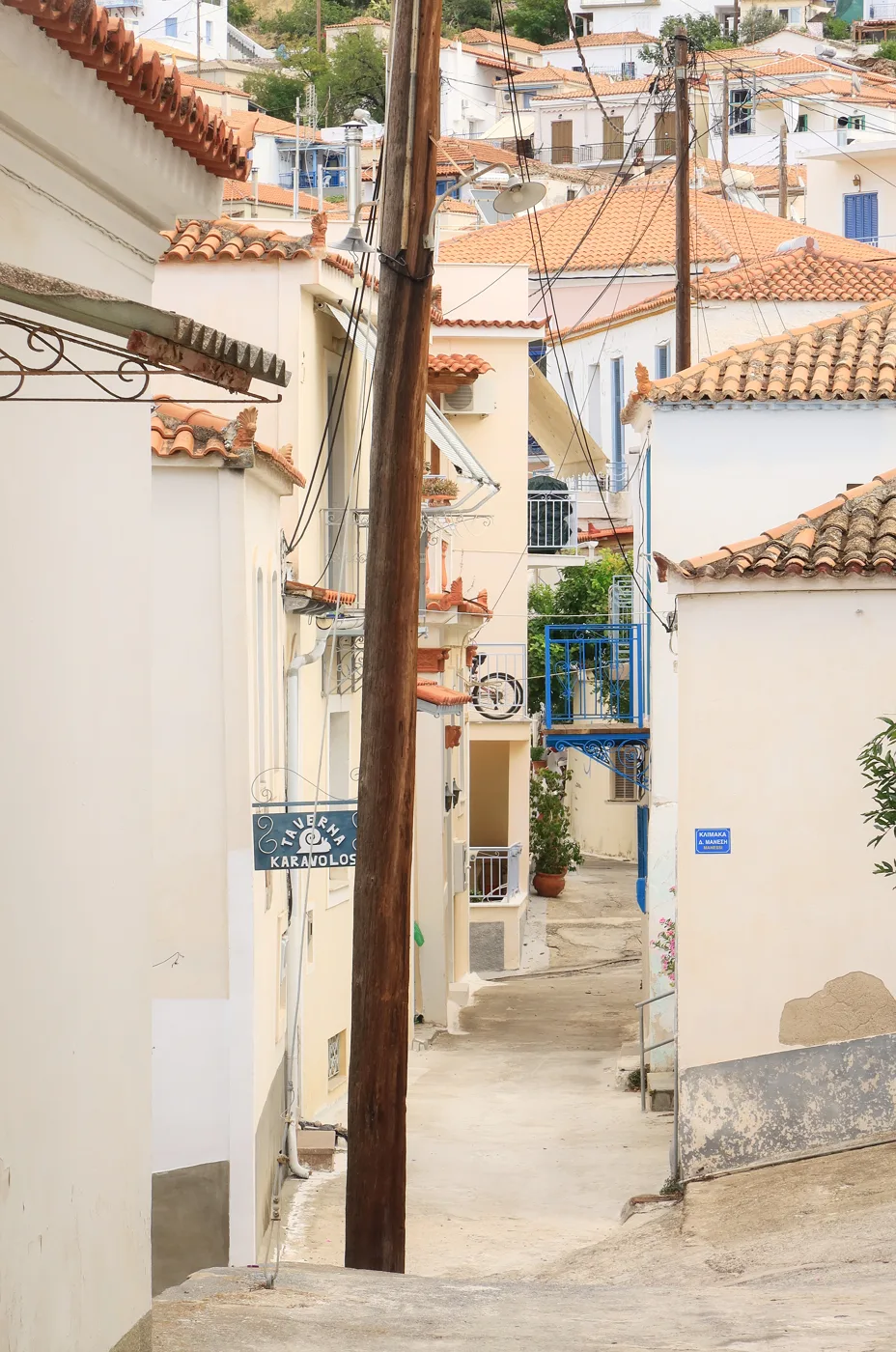
Behind the waterfront, the town climbs.
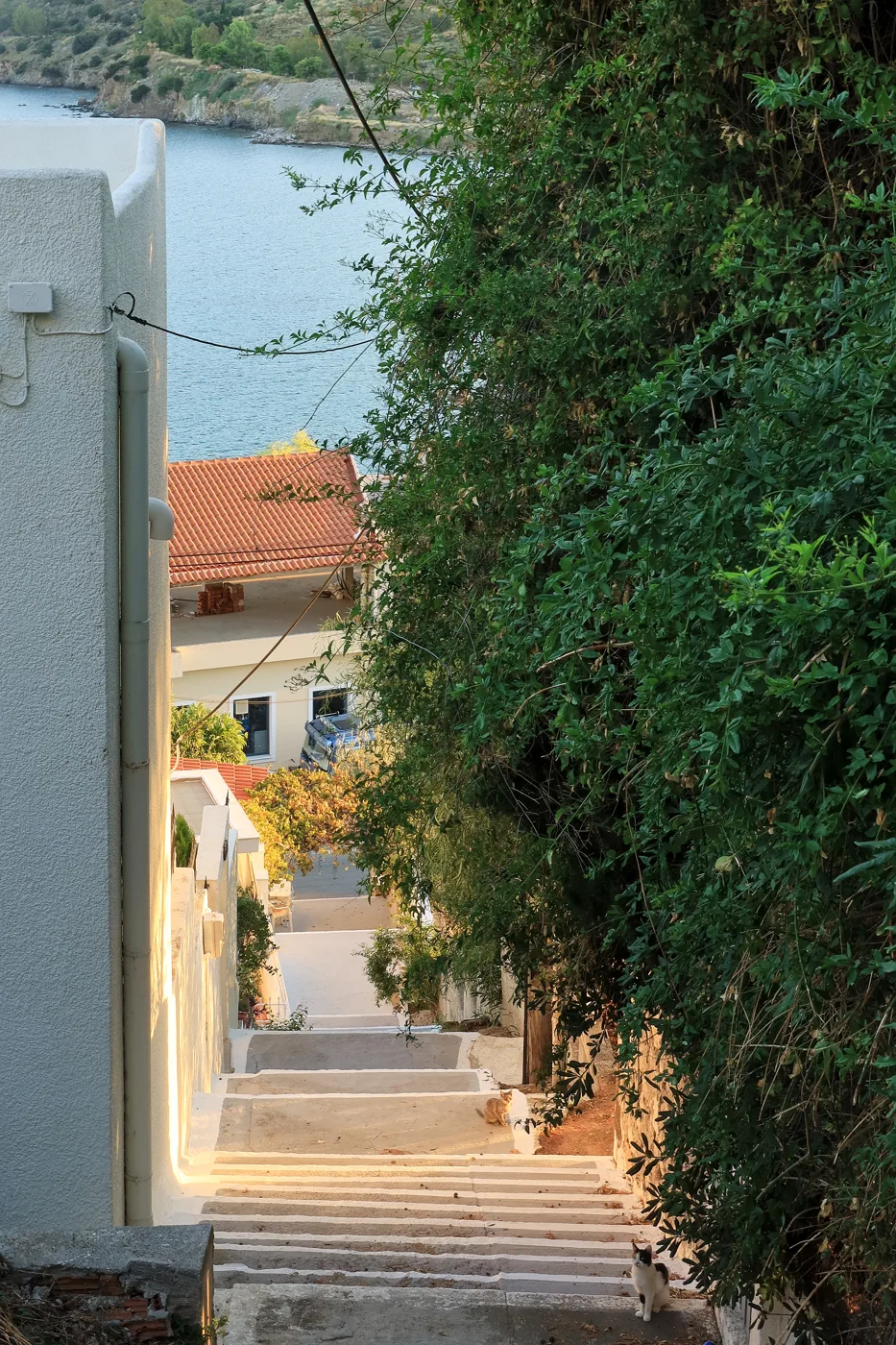
From the Clock Tower to the harbour, steps.
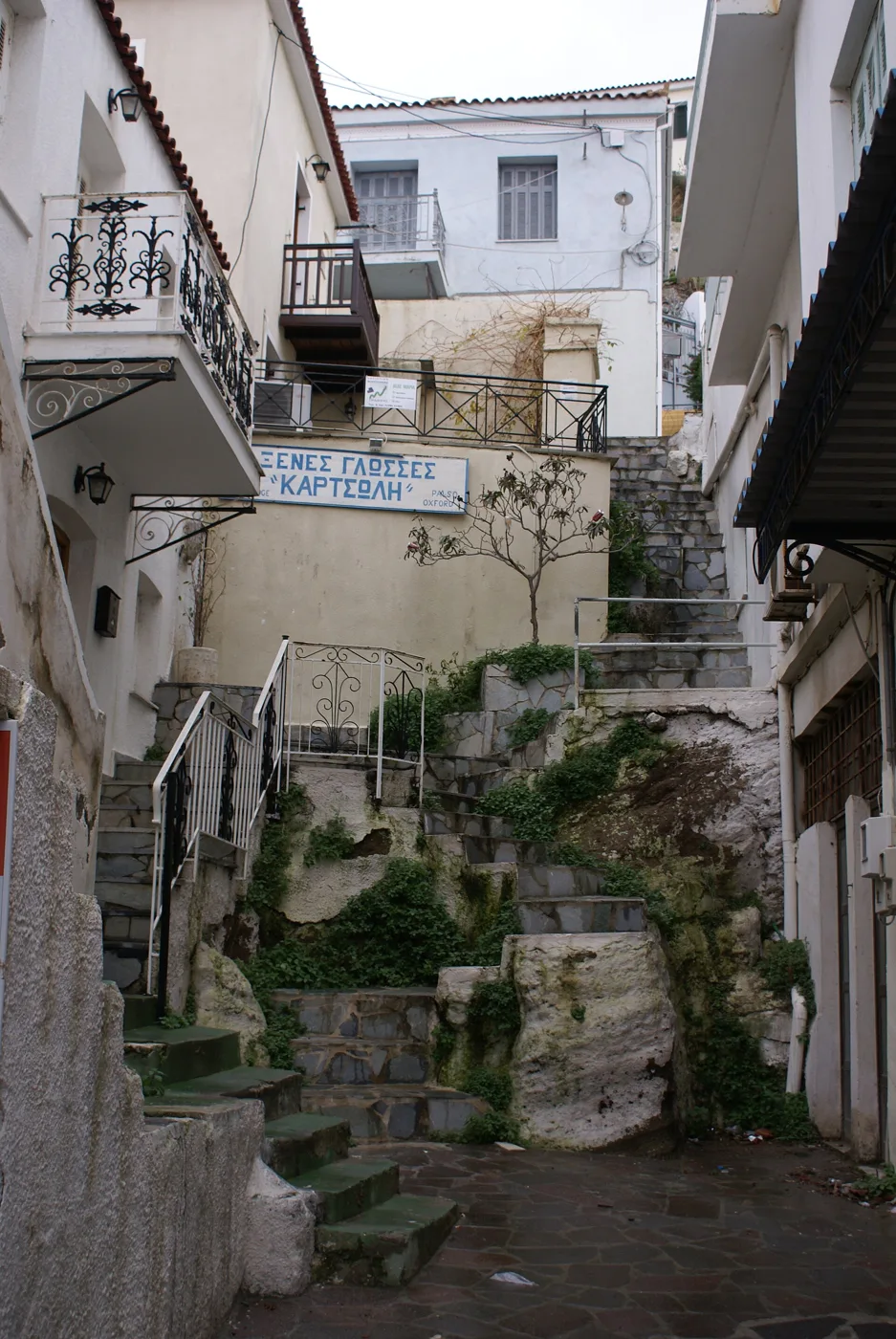
The town is built on a rock.
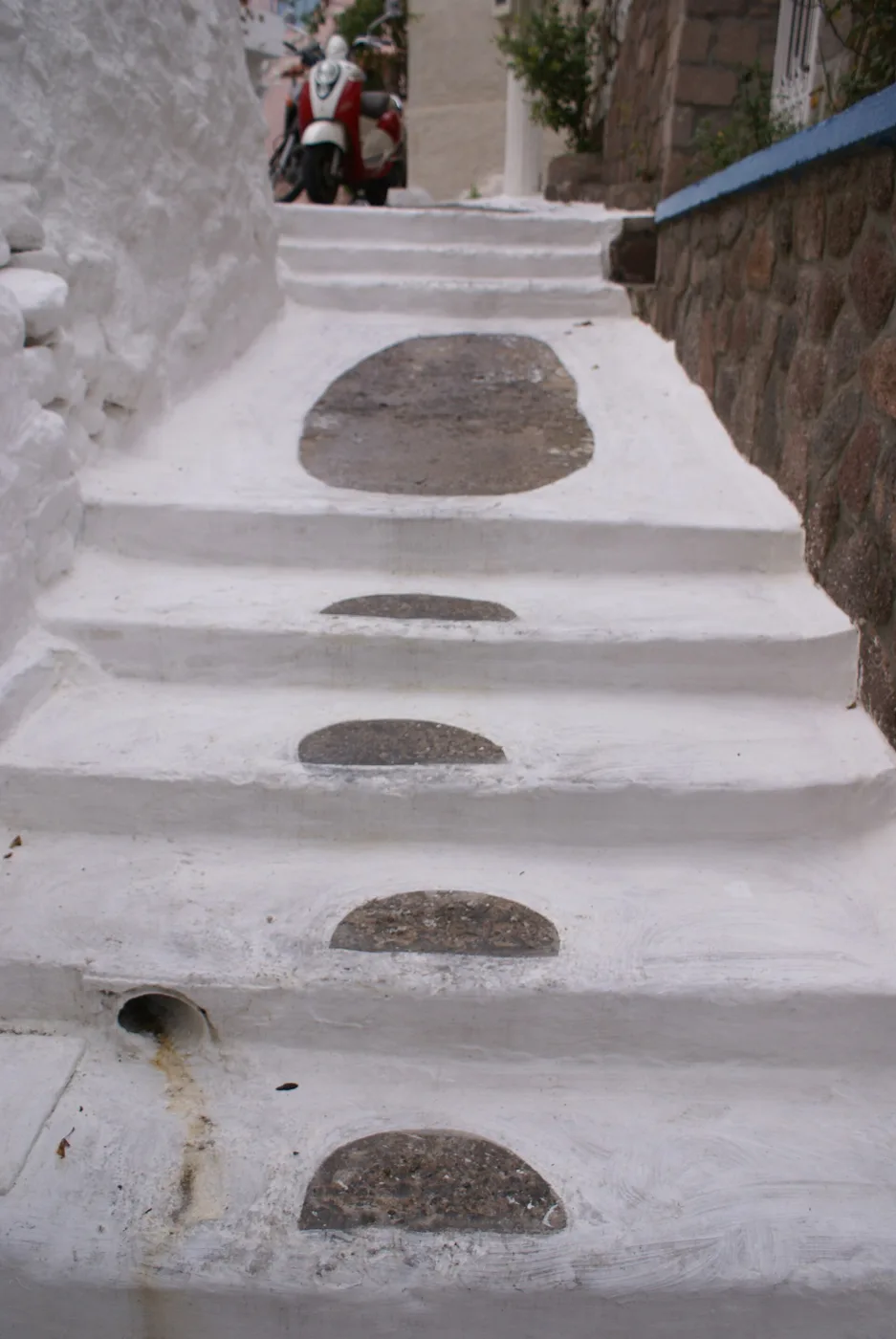
The steps are repainted every Easter.
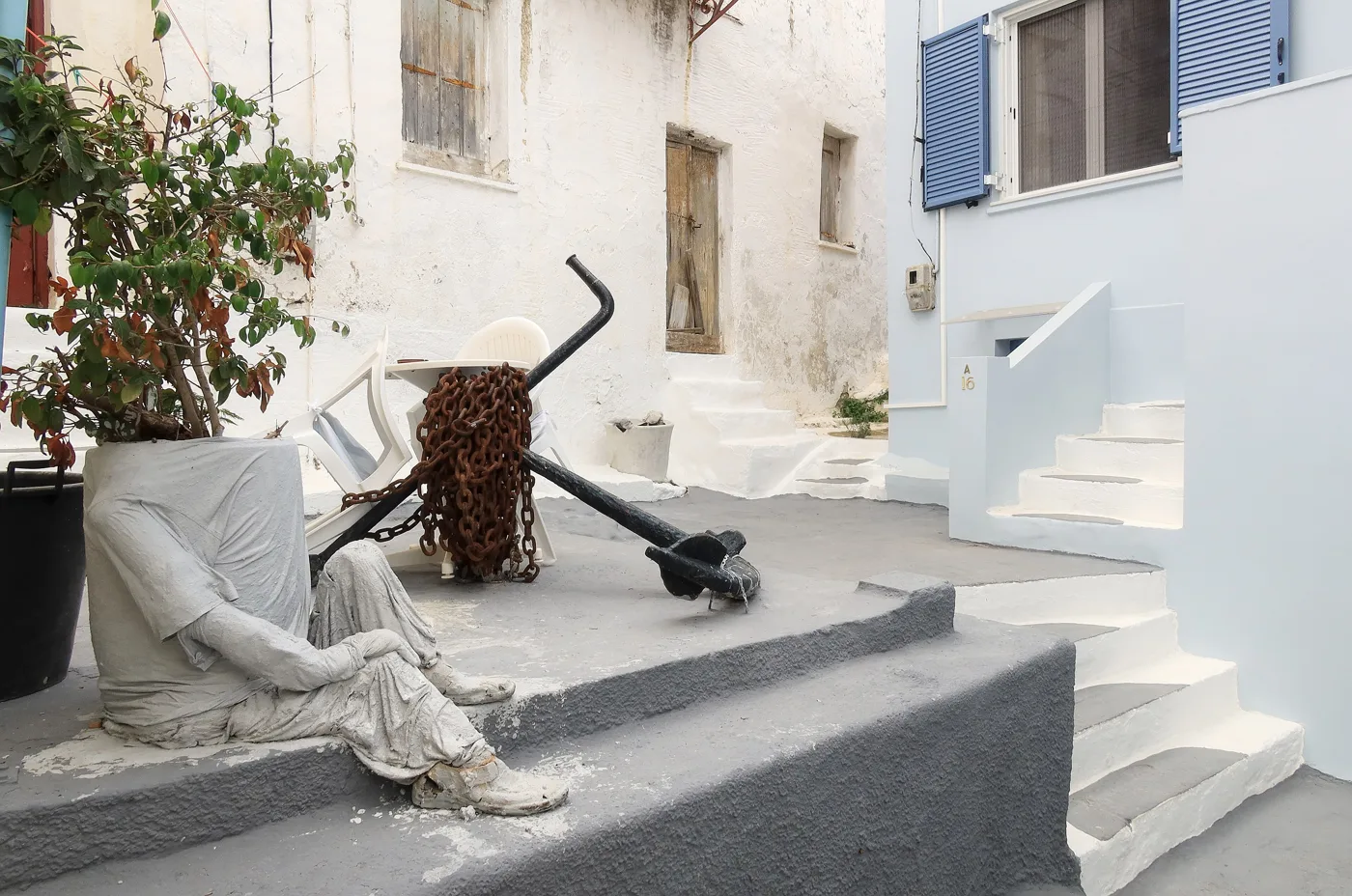
A seafaring island, seafaring flower pots.
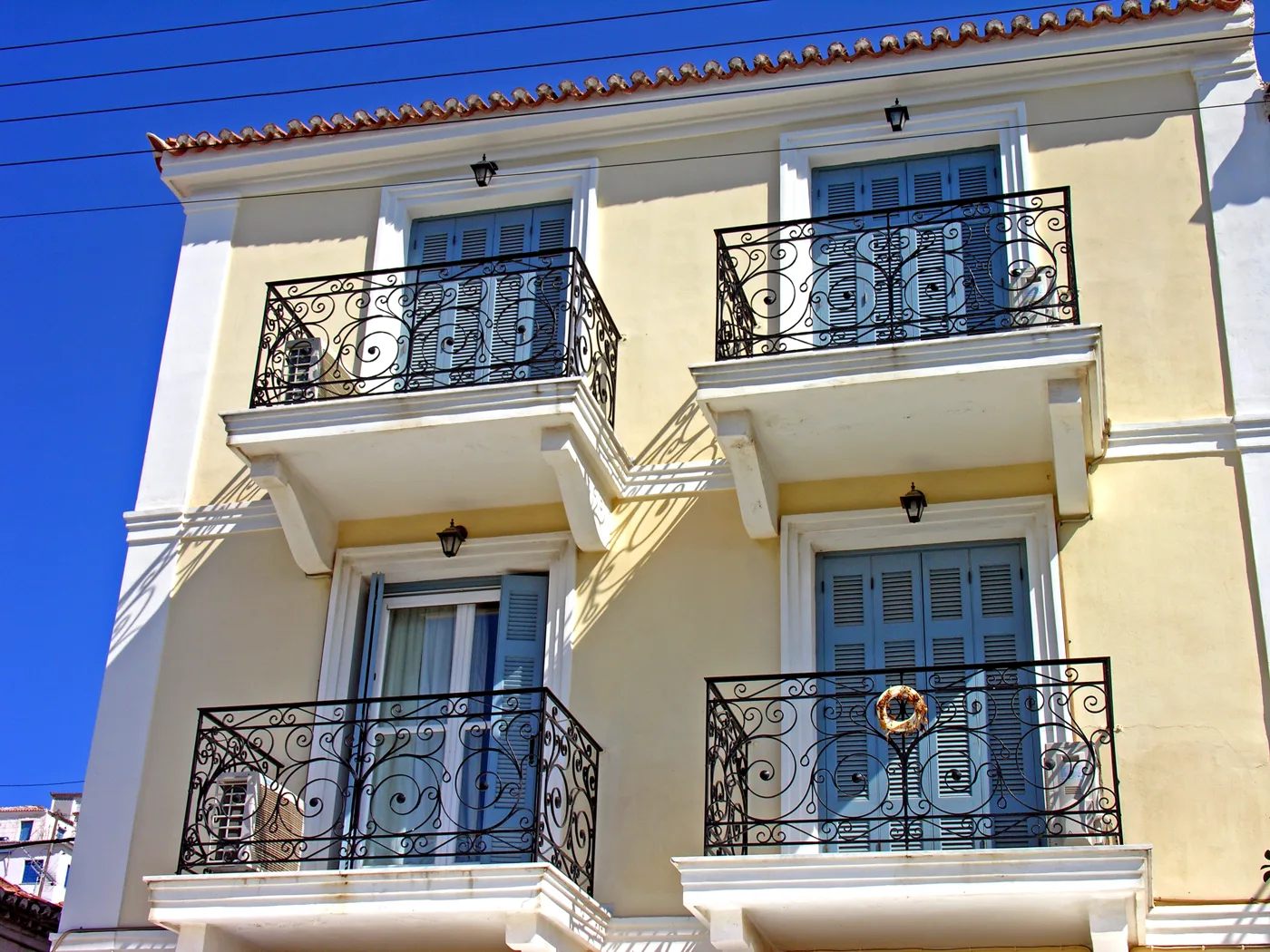
The 19th century of Poros.
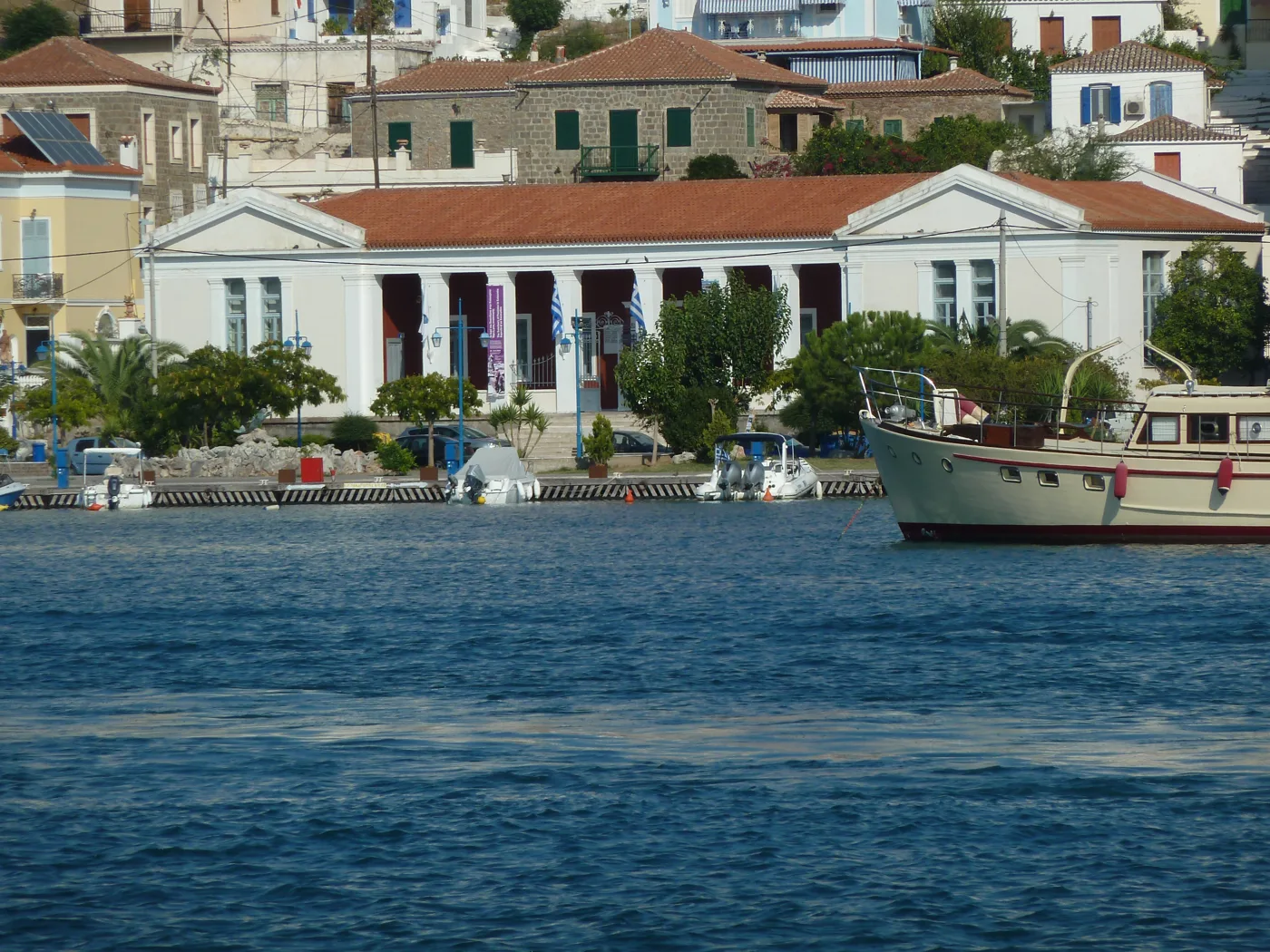
Ochre and white.
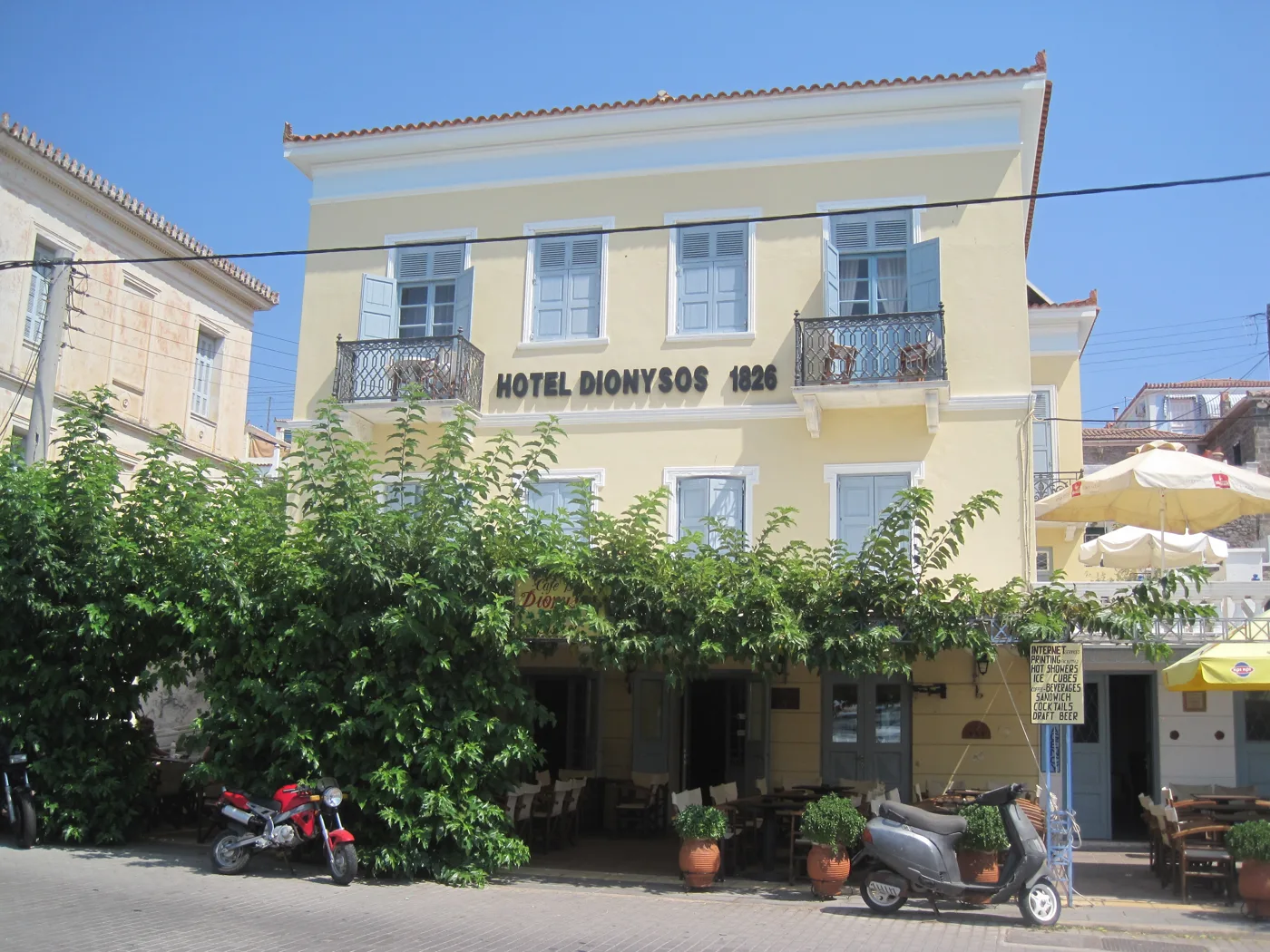
Many neoclassical houses became hotels.
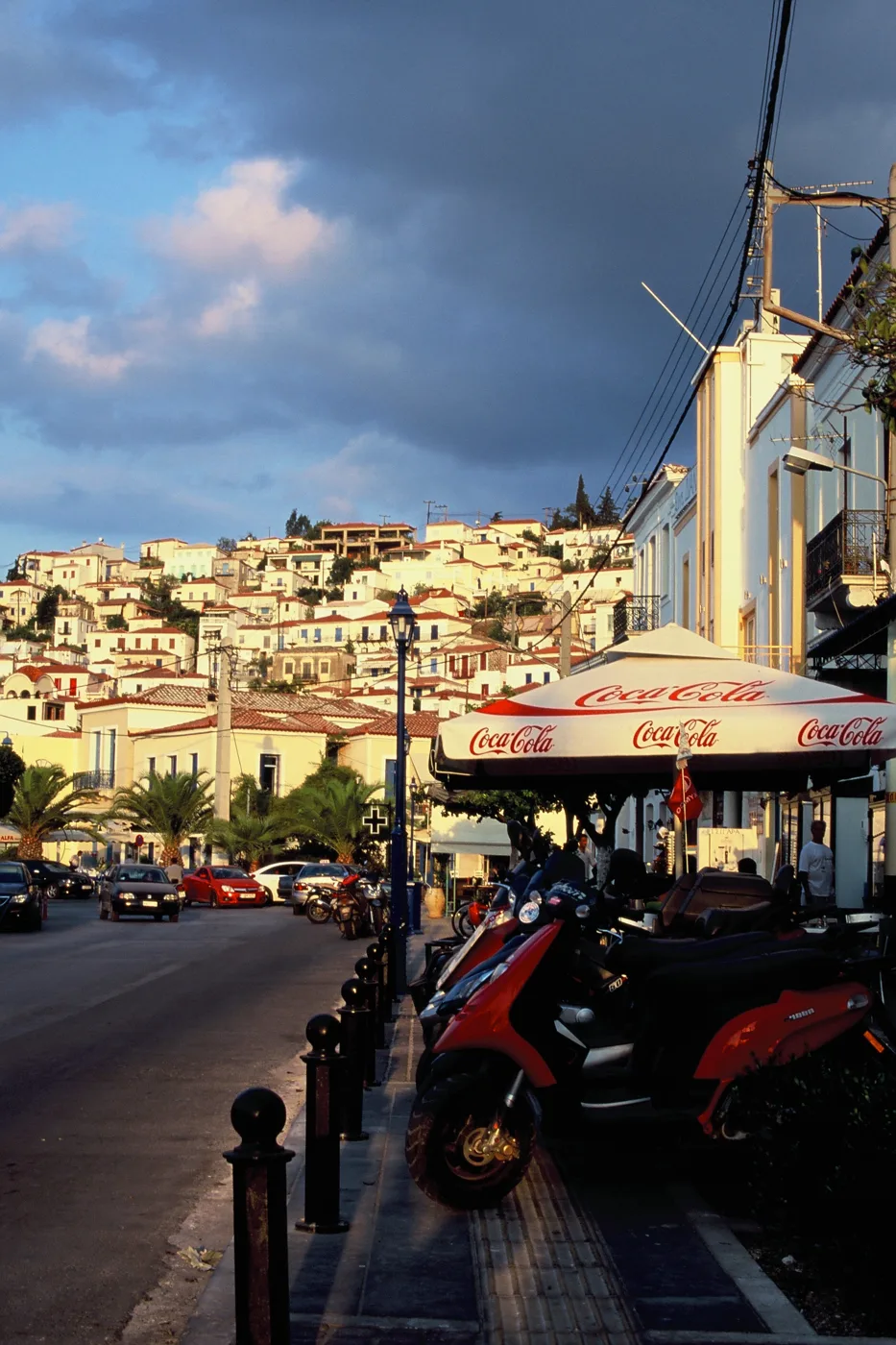
The town is small, you walk round it in half an hour.
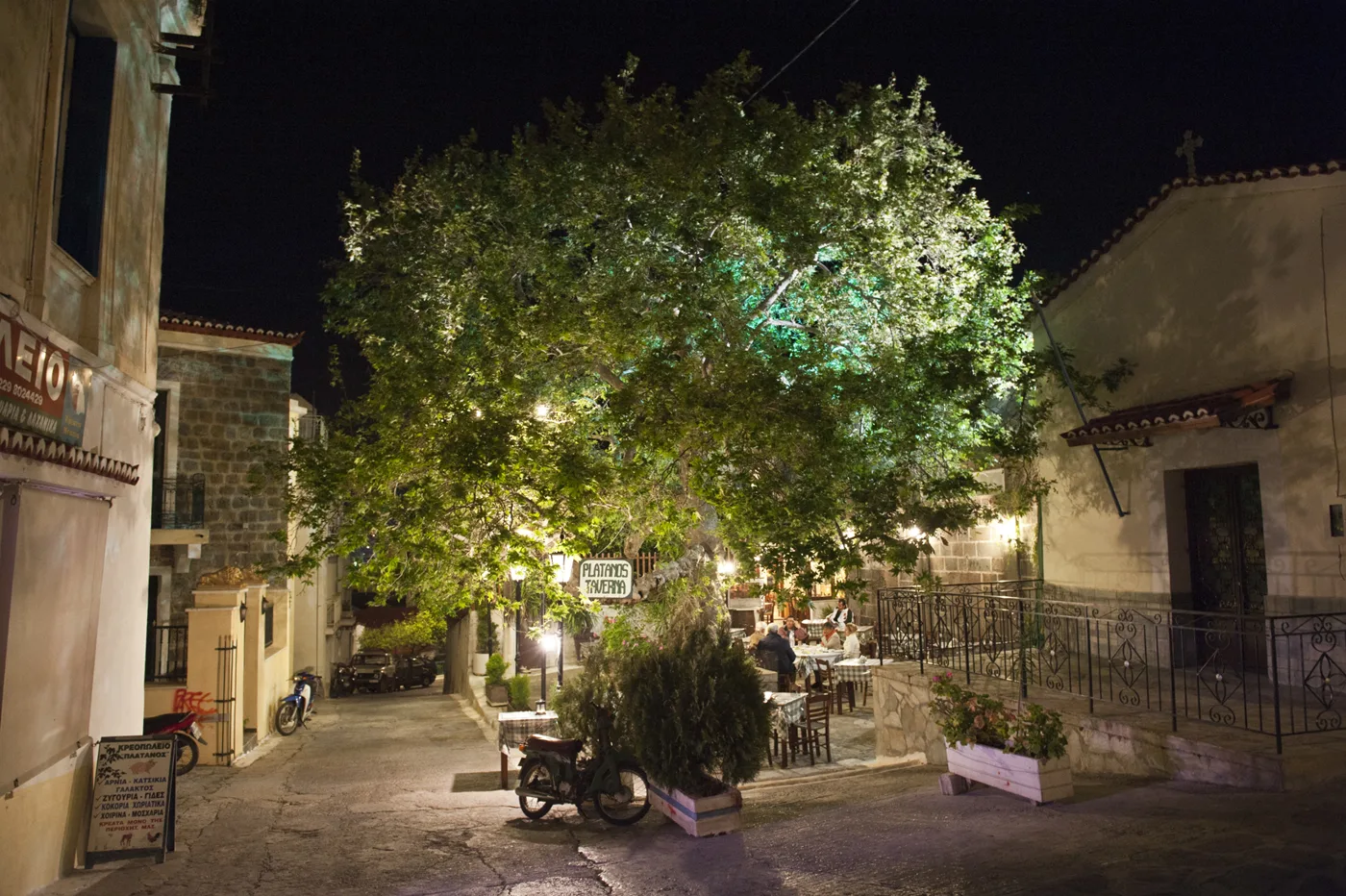
The tavernas under the plane tree.
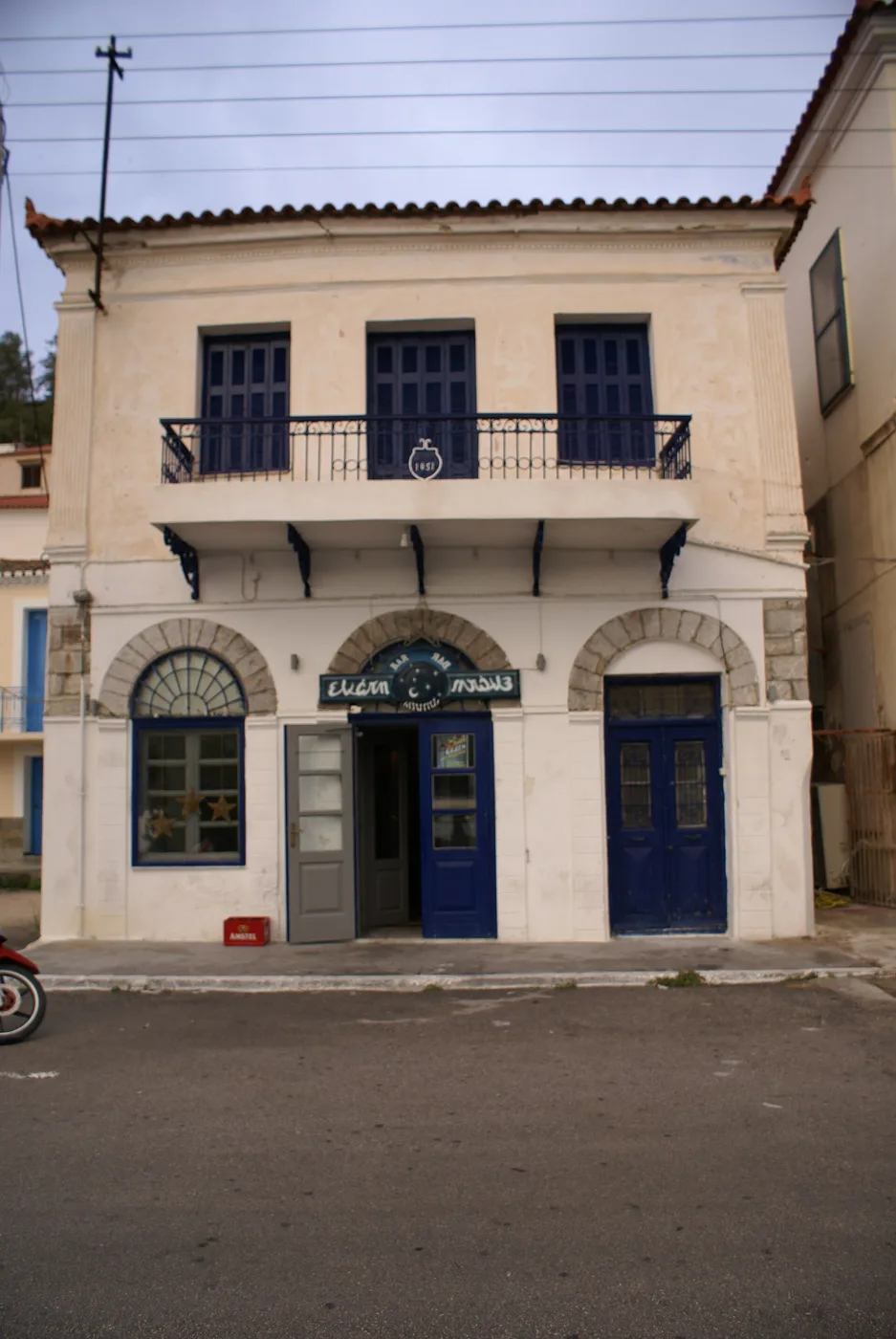
Away from the waterfront, cheaper.
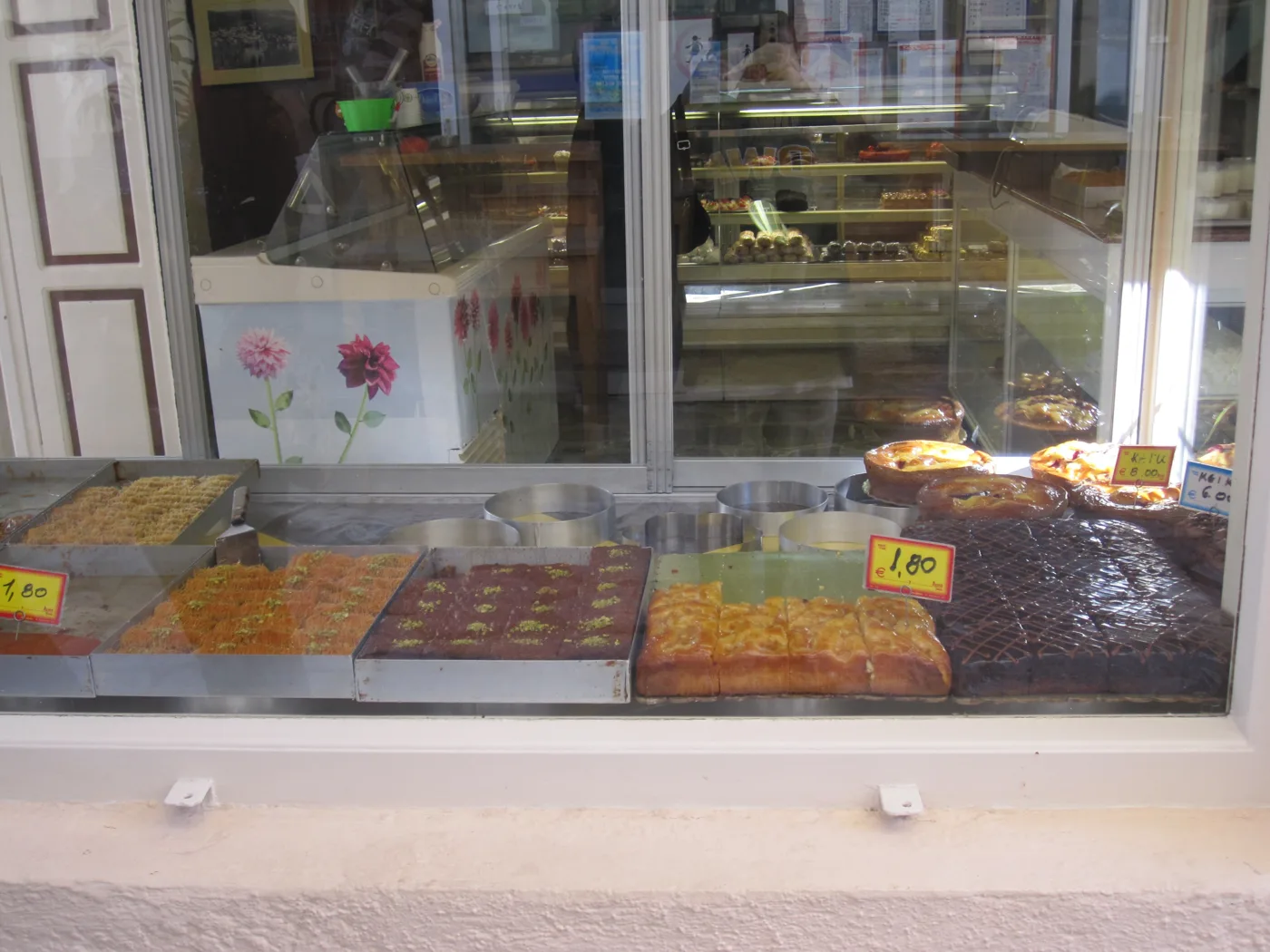
Spoon sweets made from lemon.
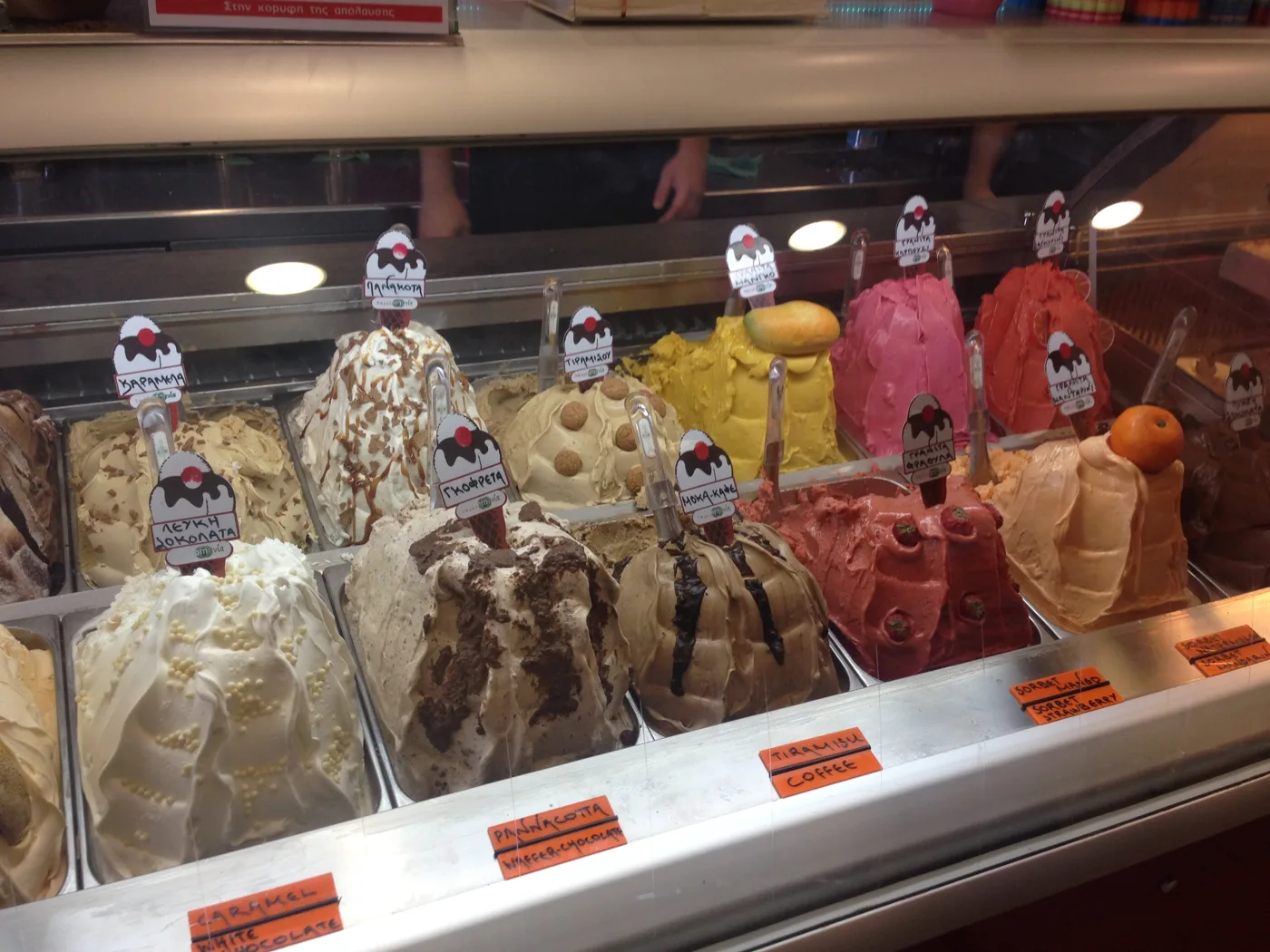
Poros ice cream, for the deck on the way home.
Photos: Julien Seguinot (CC BY-SA 2.0), Matti Blume (CC BY-SA 3.0), Dennis G. Jarvis (CC BY-SA 2.0), Agustin Bartolome (CC BY-SA 3.0), Qweasdqwe (CC BY-SA 4.0), S. Veyrié (CC BY-SA 3.0), Neil Aitkenhead (CC BY-SA 3.0), Scott McLeod (CC BY 2.0) · Wikimedia Commons
Climb up to the Clock Tower in the morning, as soon as you arrive, to understand the geography: the strait, the two islands, Galatas. And again an hour before the hydrofoil home: the sun sets behind the mountains of the Argolid, the strait turns gold and the lights of Galatas come on across the water.
🏺 The Archaeological Museum
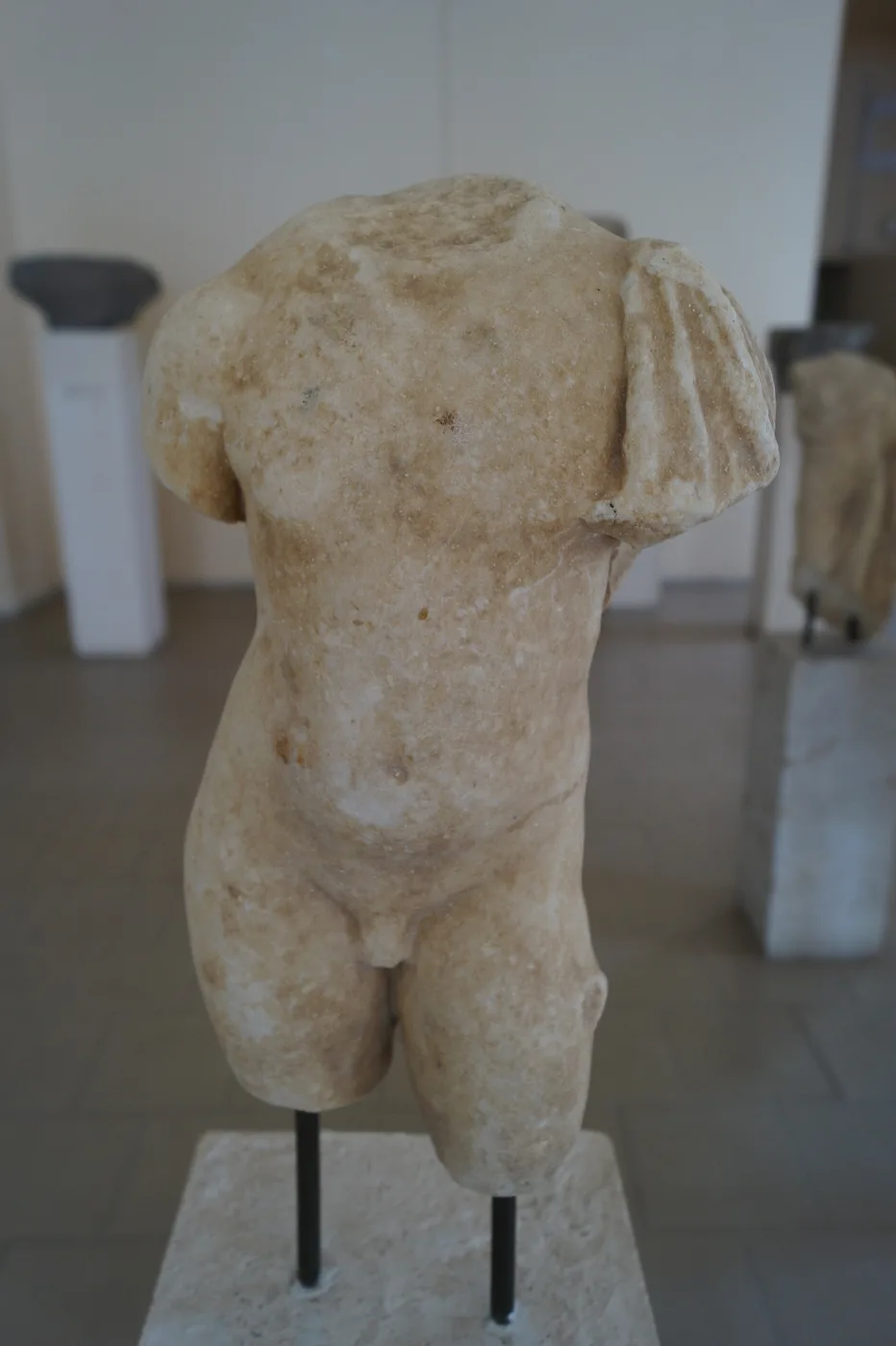
On Korizis Square, on the waterfront, the small Archaeological Museum of Poros, of 1960, holds the finds from the Sanctuary of Poseidon: the clay ram, the painted terracotta pieces of the temple, Doric and Ionic capitals in poros stone, a Roman Asclepius. From Troezen across the water, grave stelae, vases from the Geometric period, architectural pieces from the temple of Aphrodite and a copy of the Decree of Themistocles, the decision that sent the women and children of Athens to Troezen before the battle of Salamis. From the islet of Modi, Mycenaean finds, and from Kavos Vasili, on the north coast, an Early Helladic seal. Half an hour, 5 €, closed on Monday and Tuesday. If you are short of time, the courtyard with the capitals is free.
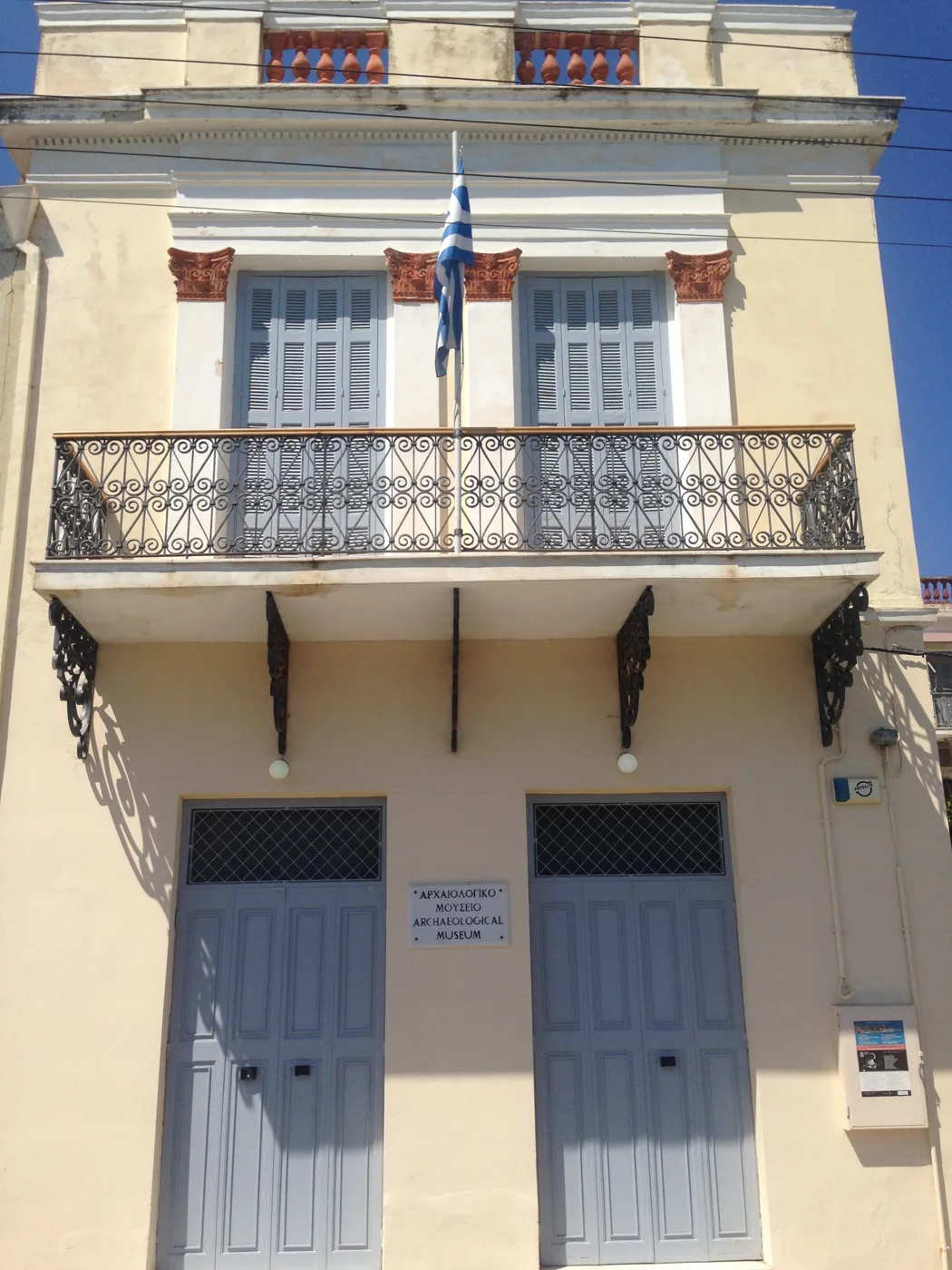
Since 1960, on the waterfront.
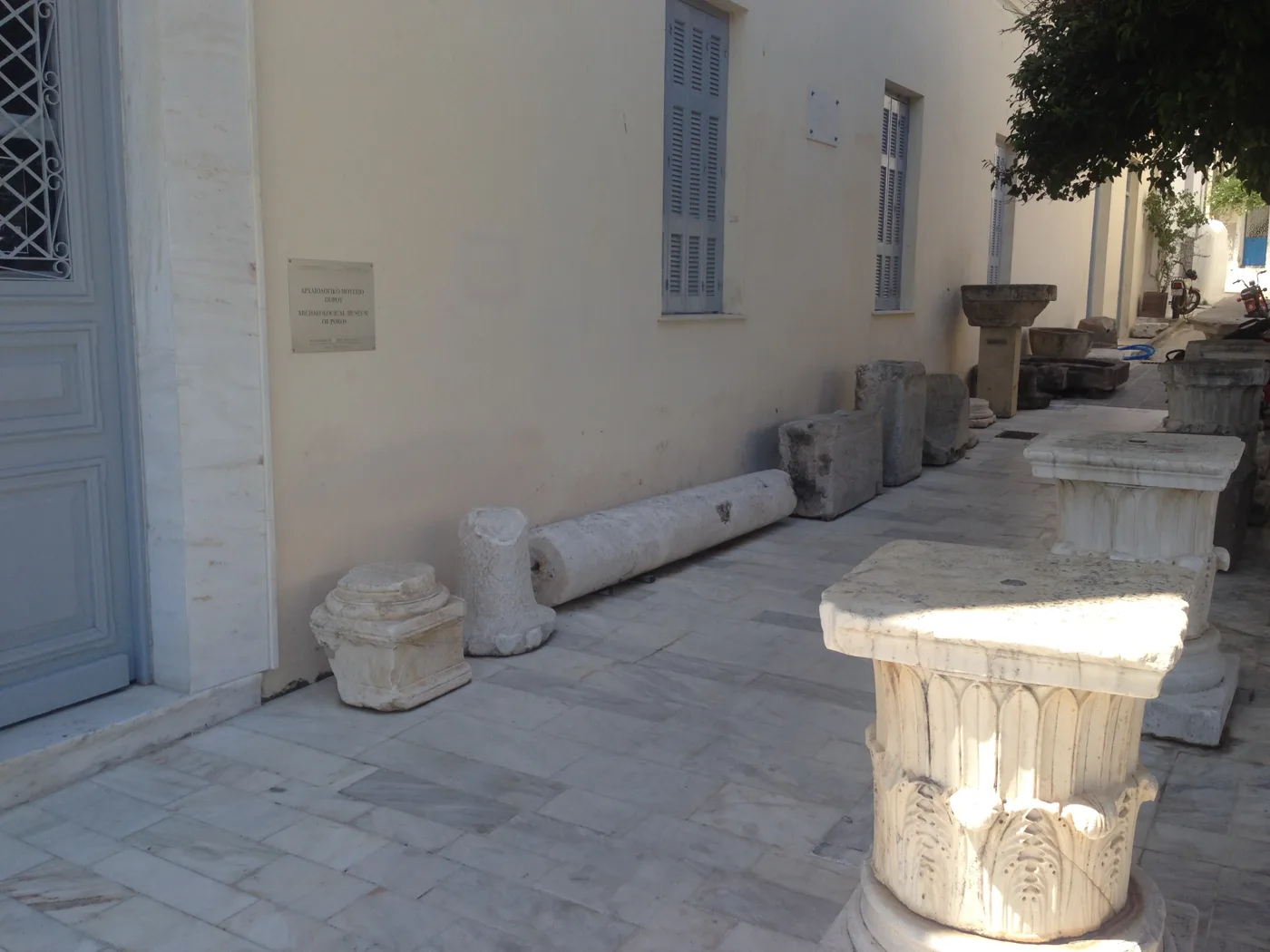
Capitals and inscriptions in the courtyard.
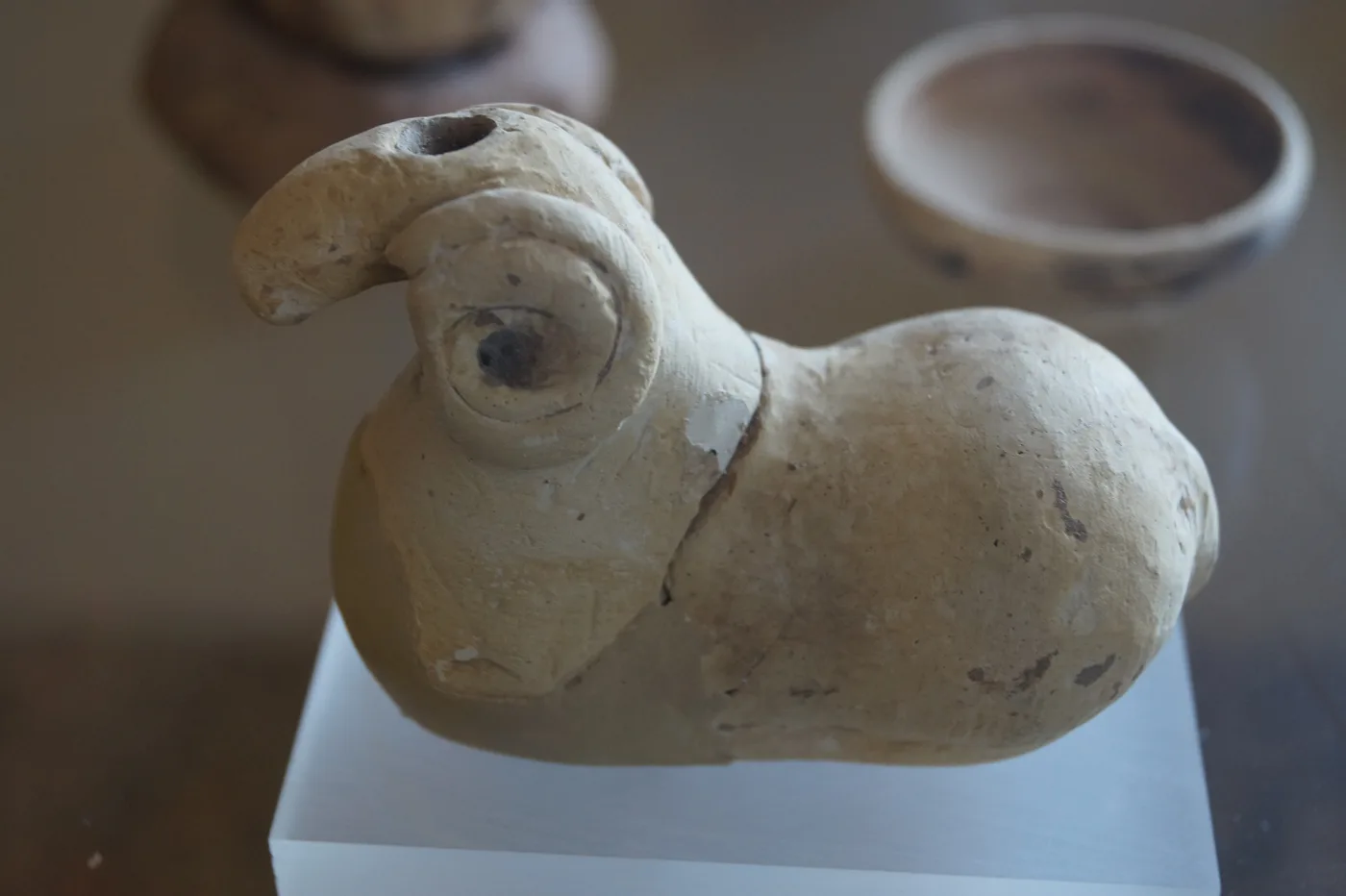
From the Sanctuary of Poseidon.
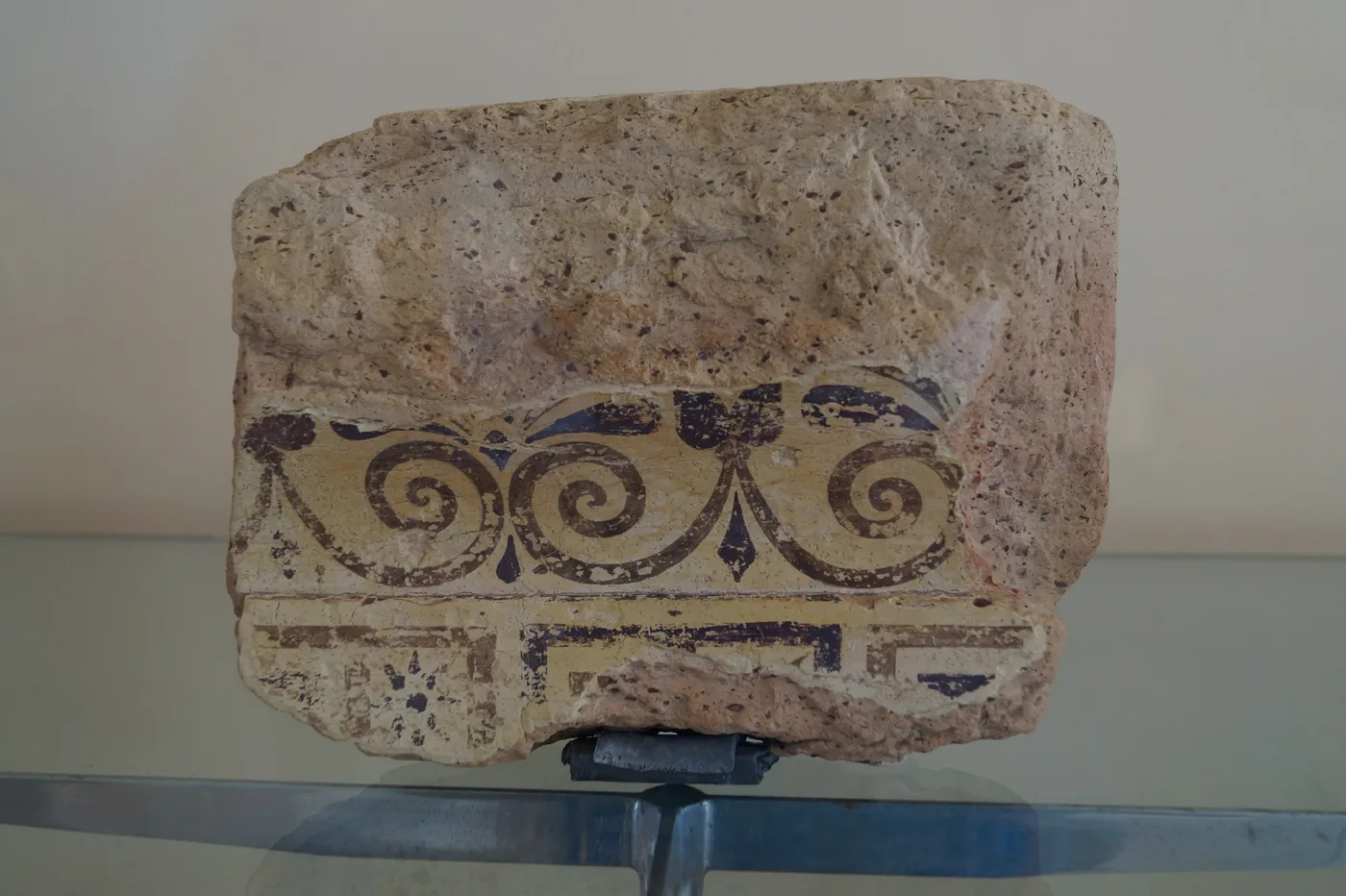
The colours of the temple.
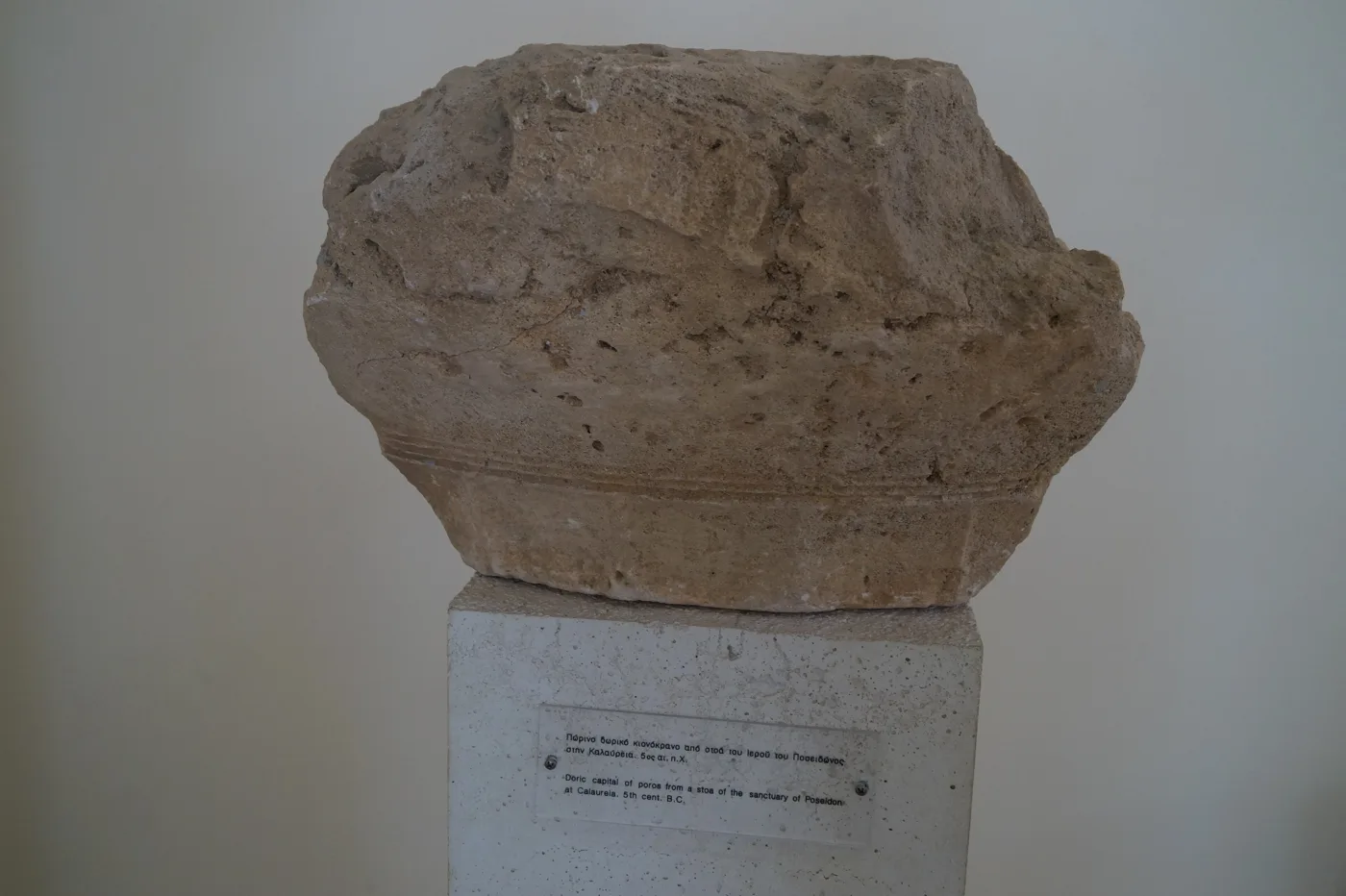
From the temple of the 6th century BC.
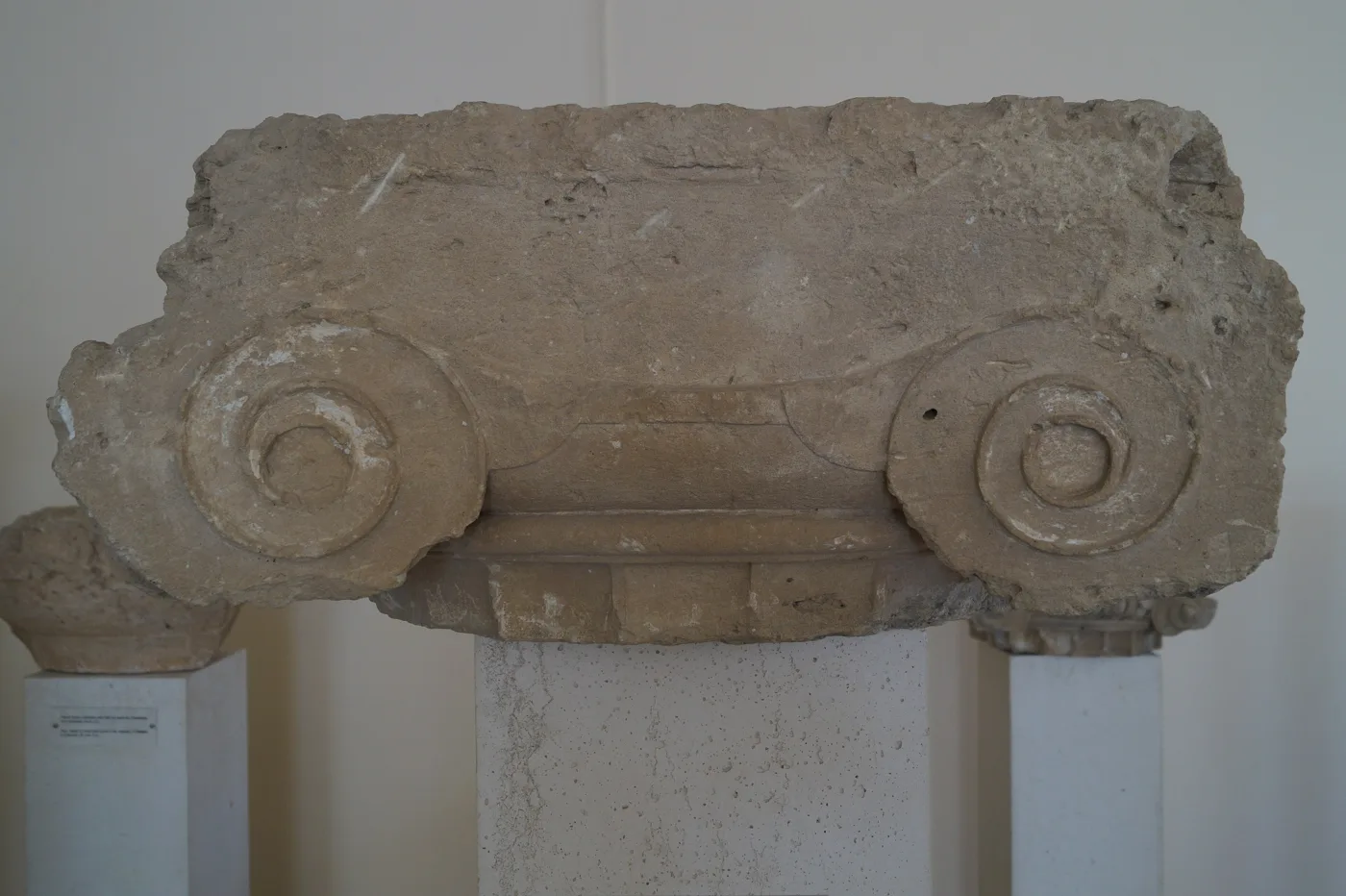
From the stoas of the sanctuary.
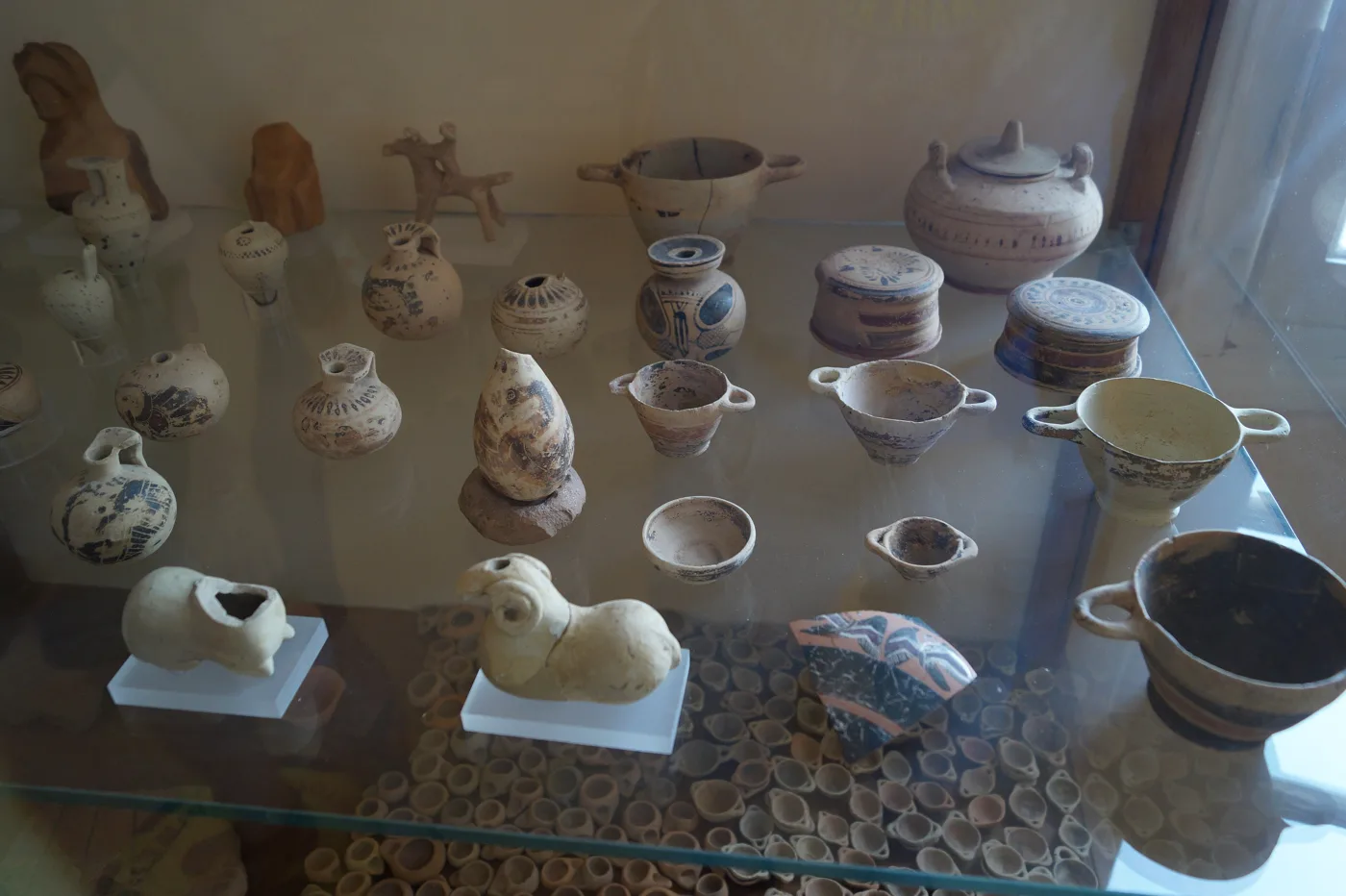
Kalaureia, Troezen, Hermione.
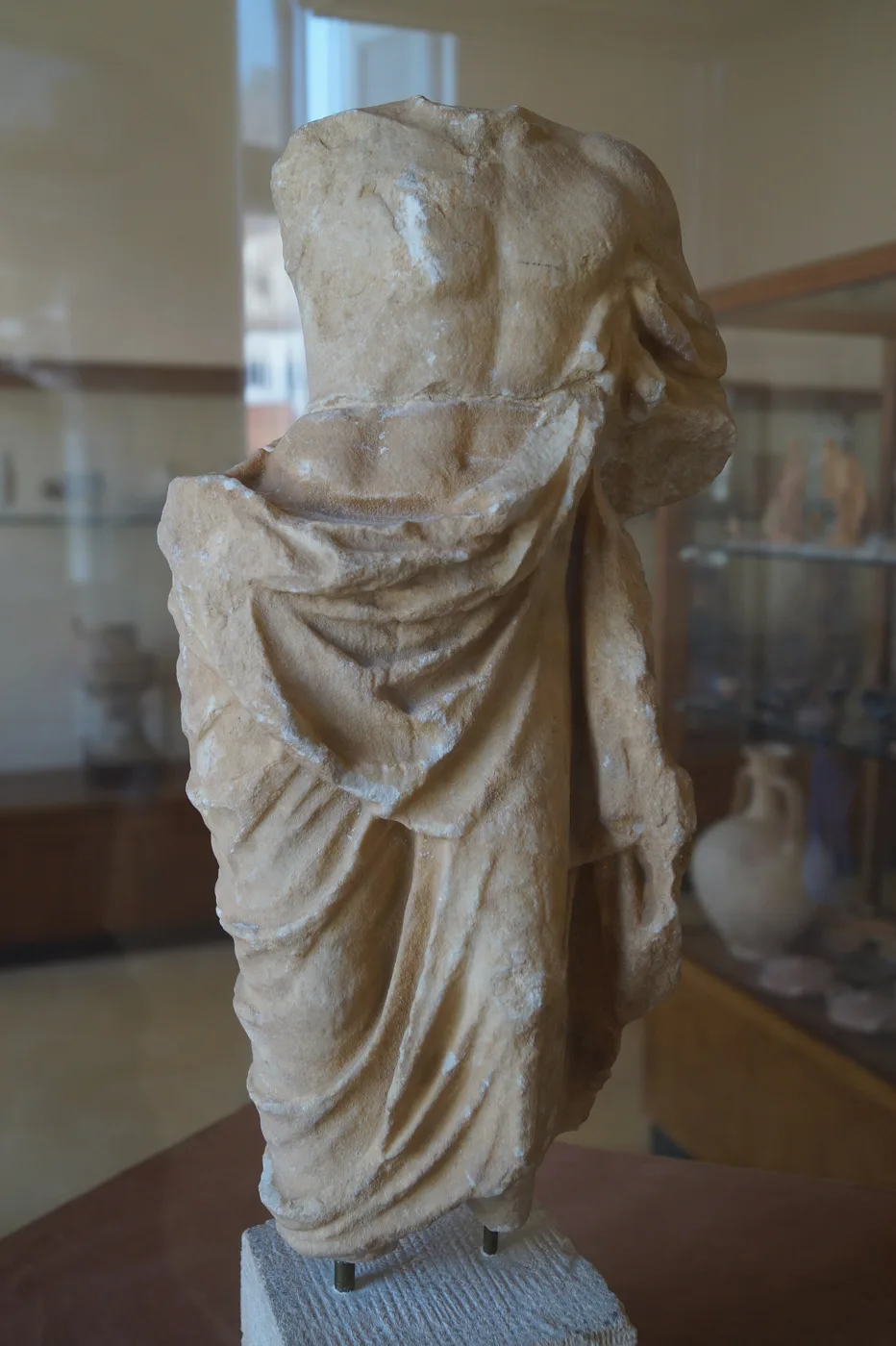
Of the Roman period.
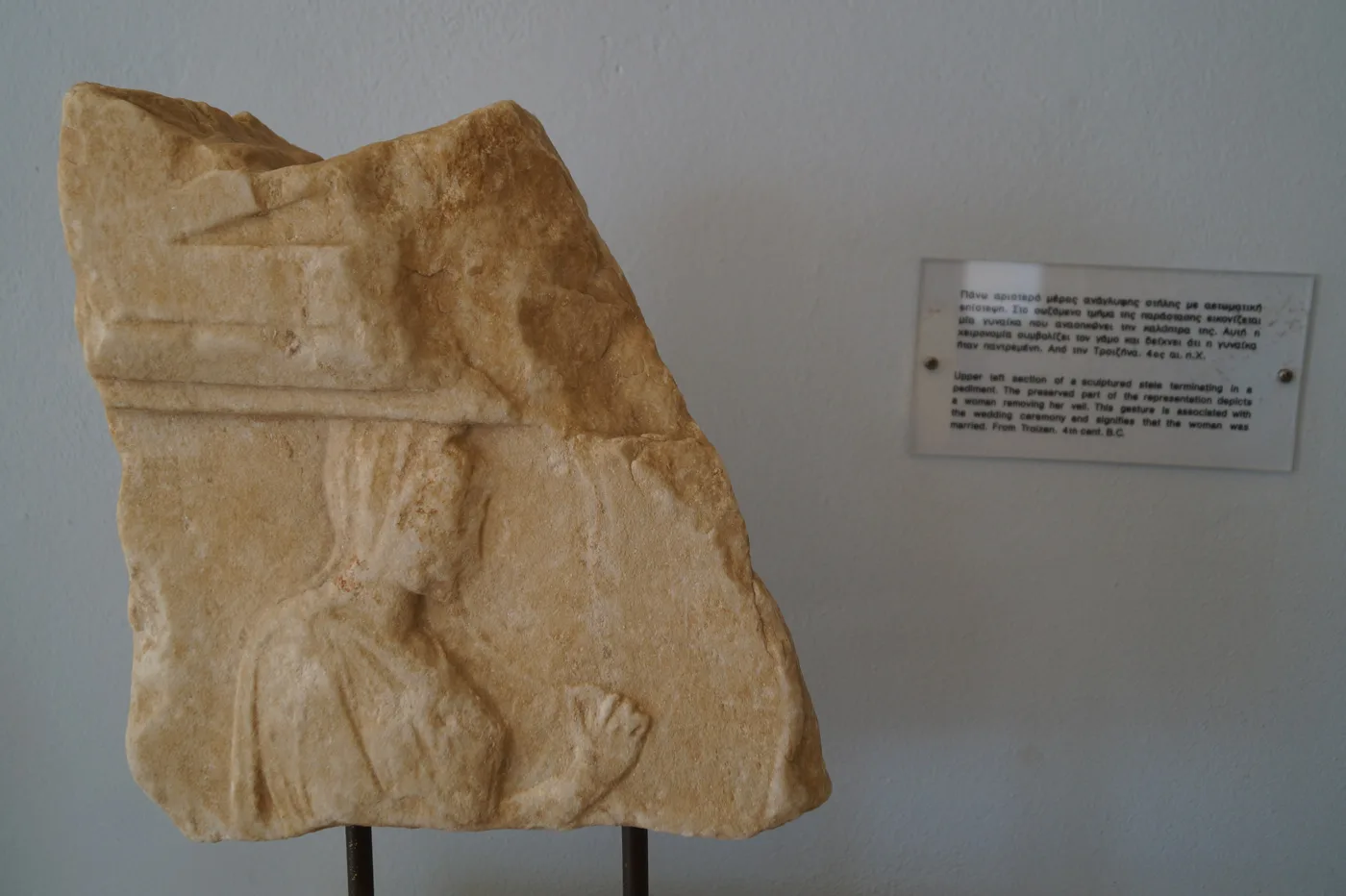
From Troezen.
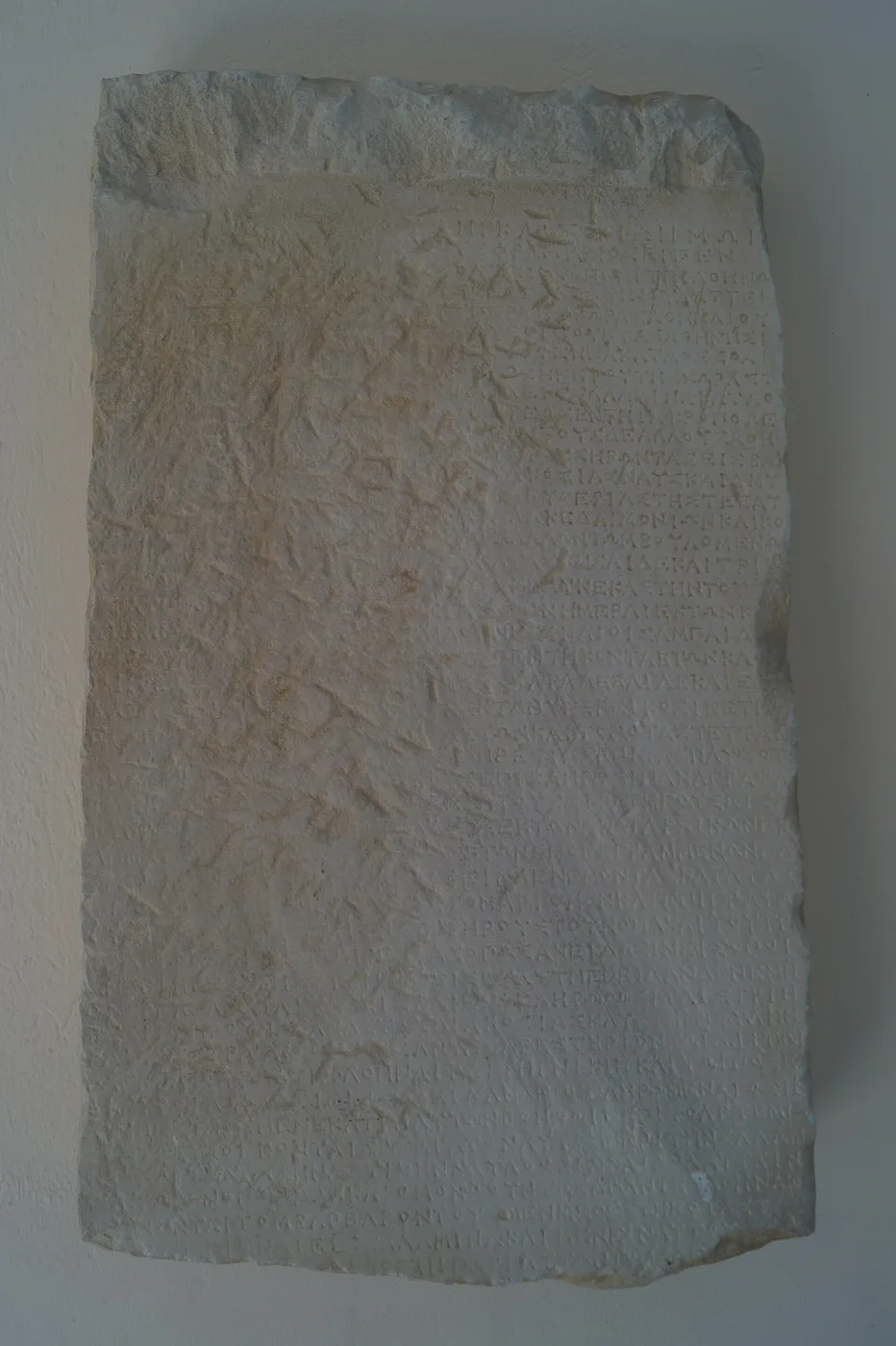
Troezen sheltered the women and children of Athens in 480 BC.
From the birthplace of Theseus.
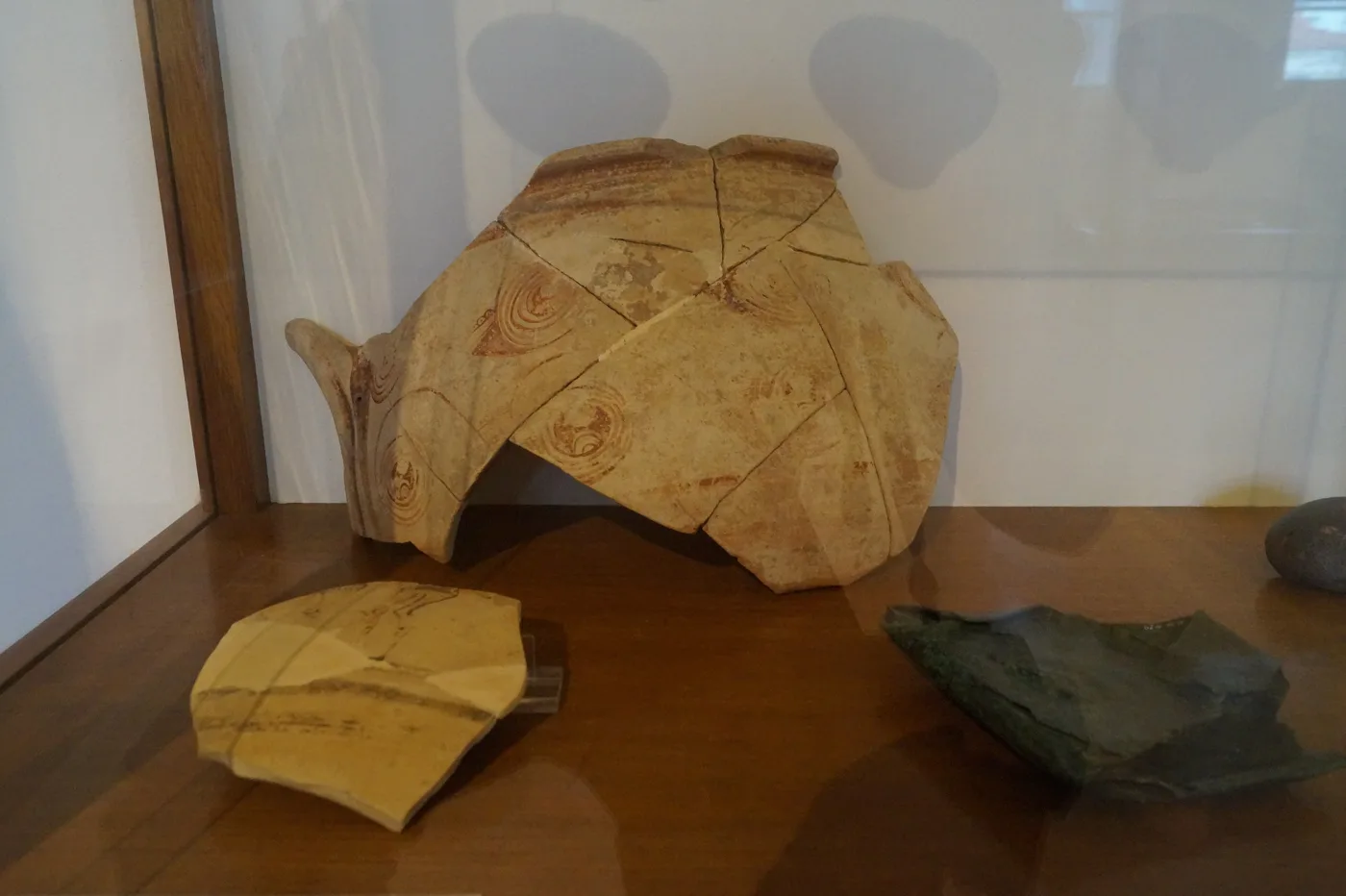
From Modi, the islet east of Poros.
Photos: Agustin Bartolome (CC BY-SA 3.0), Schuppi (CC BY-SA 4.0) · Wikimedia Commons
🚣 Galatas: five minutes across the water
From the eastern end of the waterfront, the boats cross to Galatas every few minutes, day and night, in five minutes, for 1 to 2 €: it is the cheapest sea voyage in Greece and the easiest change of continent. Galatas is a small harbour of the Peloponnese, with palm trees, fishing boats, fish tavernas cheaper than on Poros, and the view of the whole of Poros opposite, which is best photographed from here. From Galatas leave the bus and the taxis for Troezen and Methana, and from here, on foot or by water taxi to Plaka, you go to the Lemon Forest. In the middle of the strait, the islet of Daskalio with its chapel is the favourite for weddings by boat.
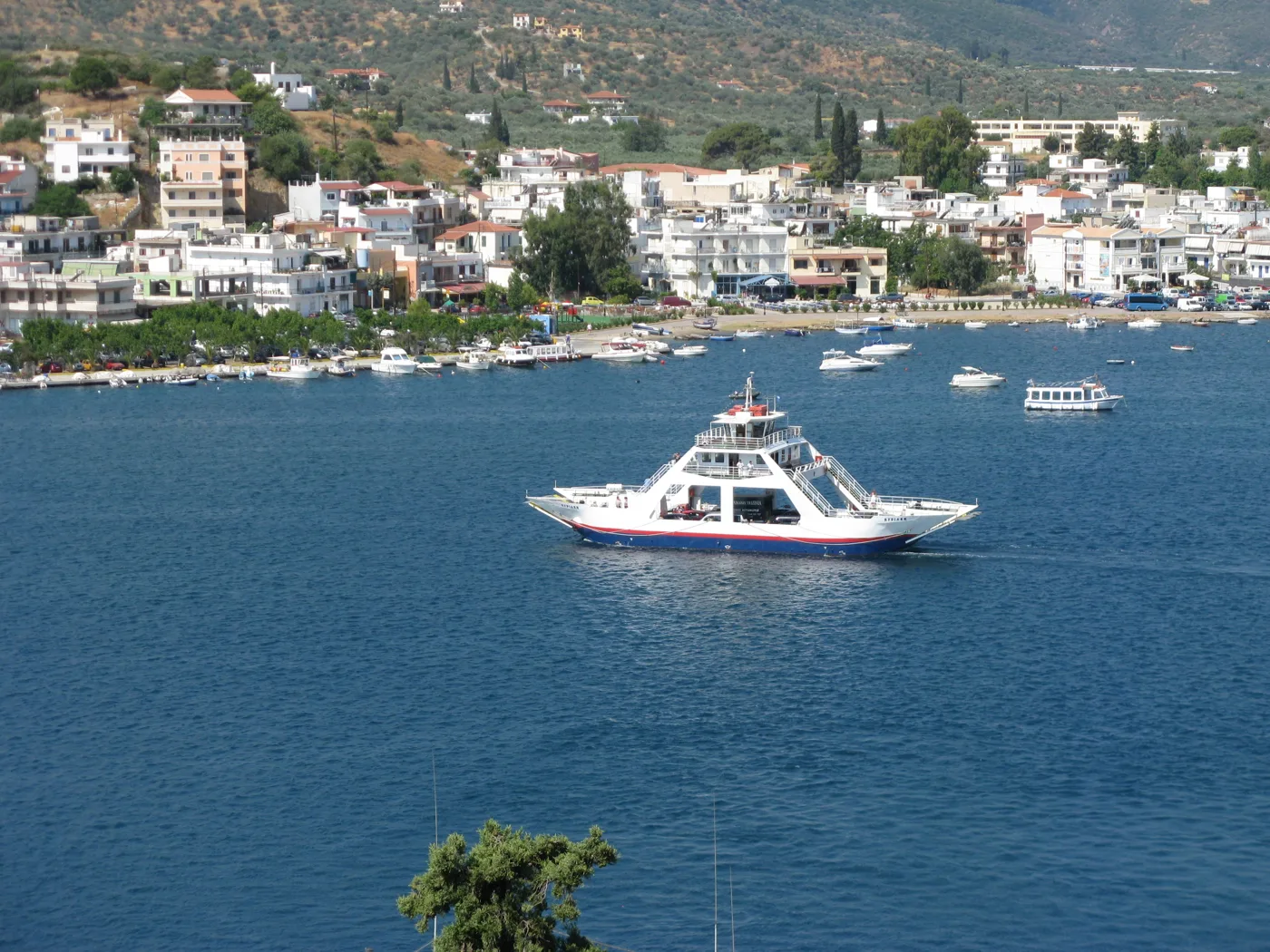
Five minutes, all day.
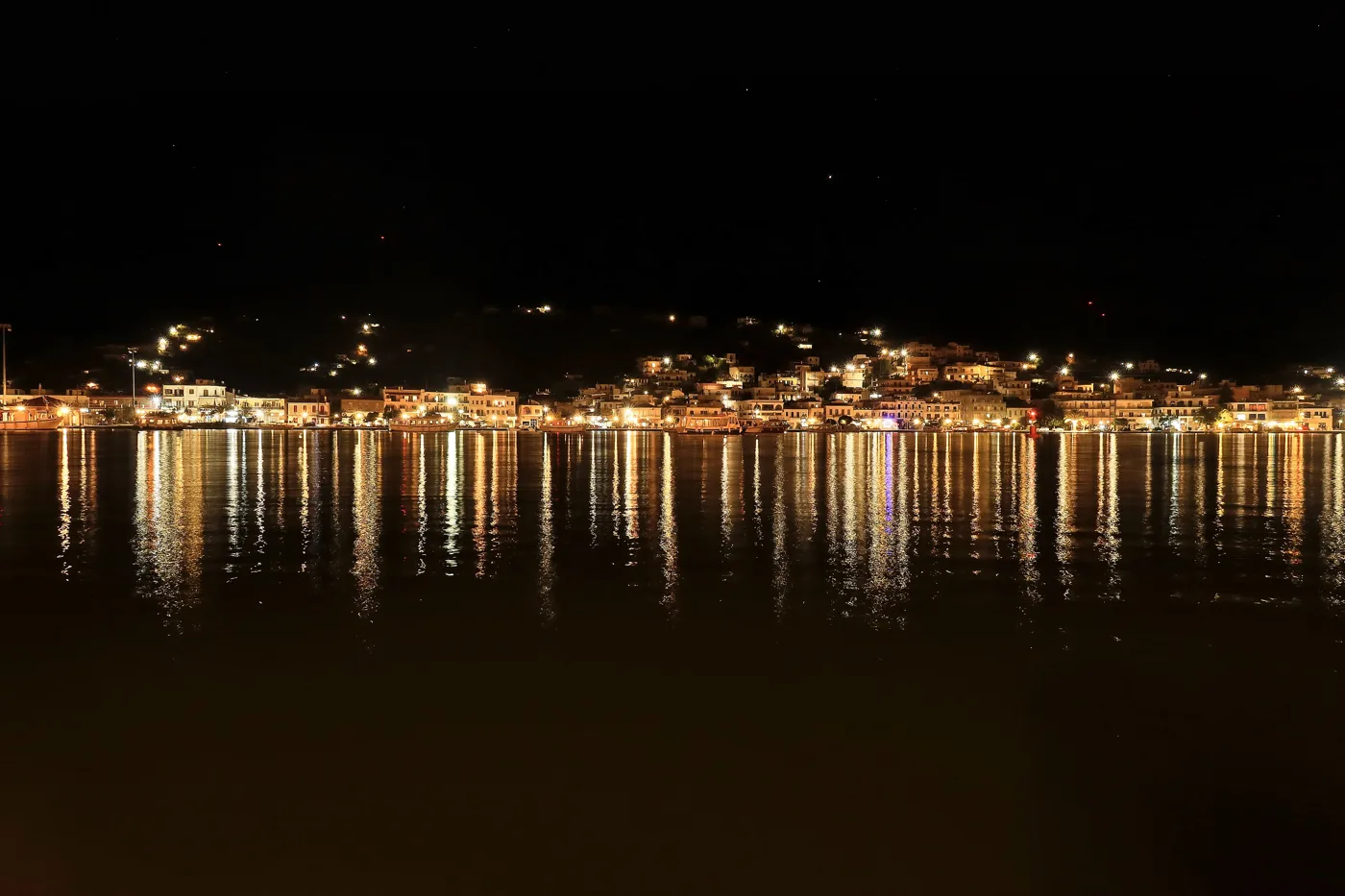
At night, the taxis carry on.
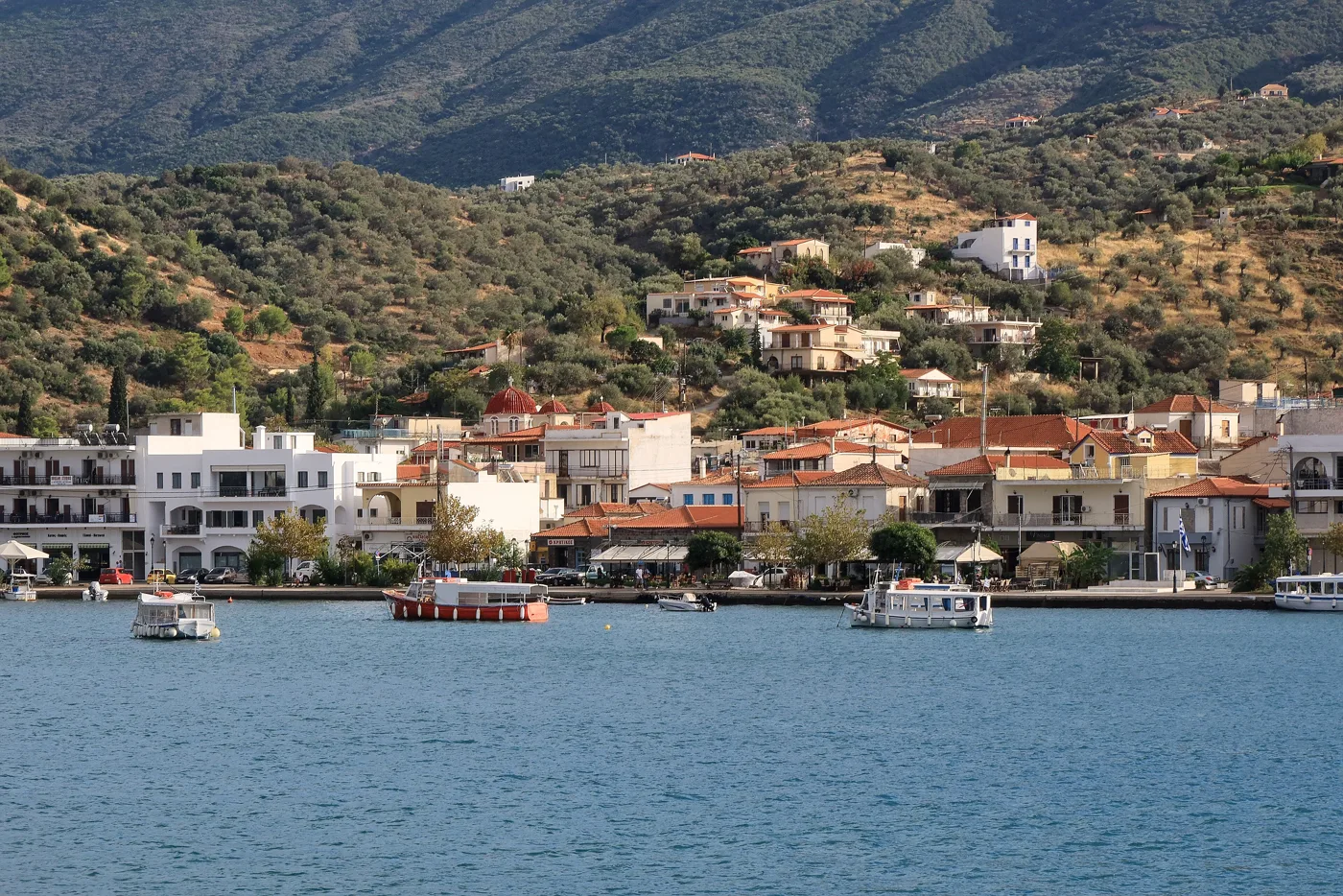
Opposite, the Peloponnese.
Cheaper tavernas, fewer people.
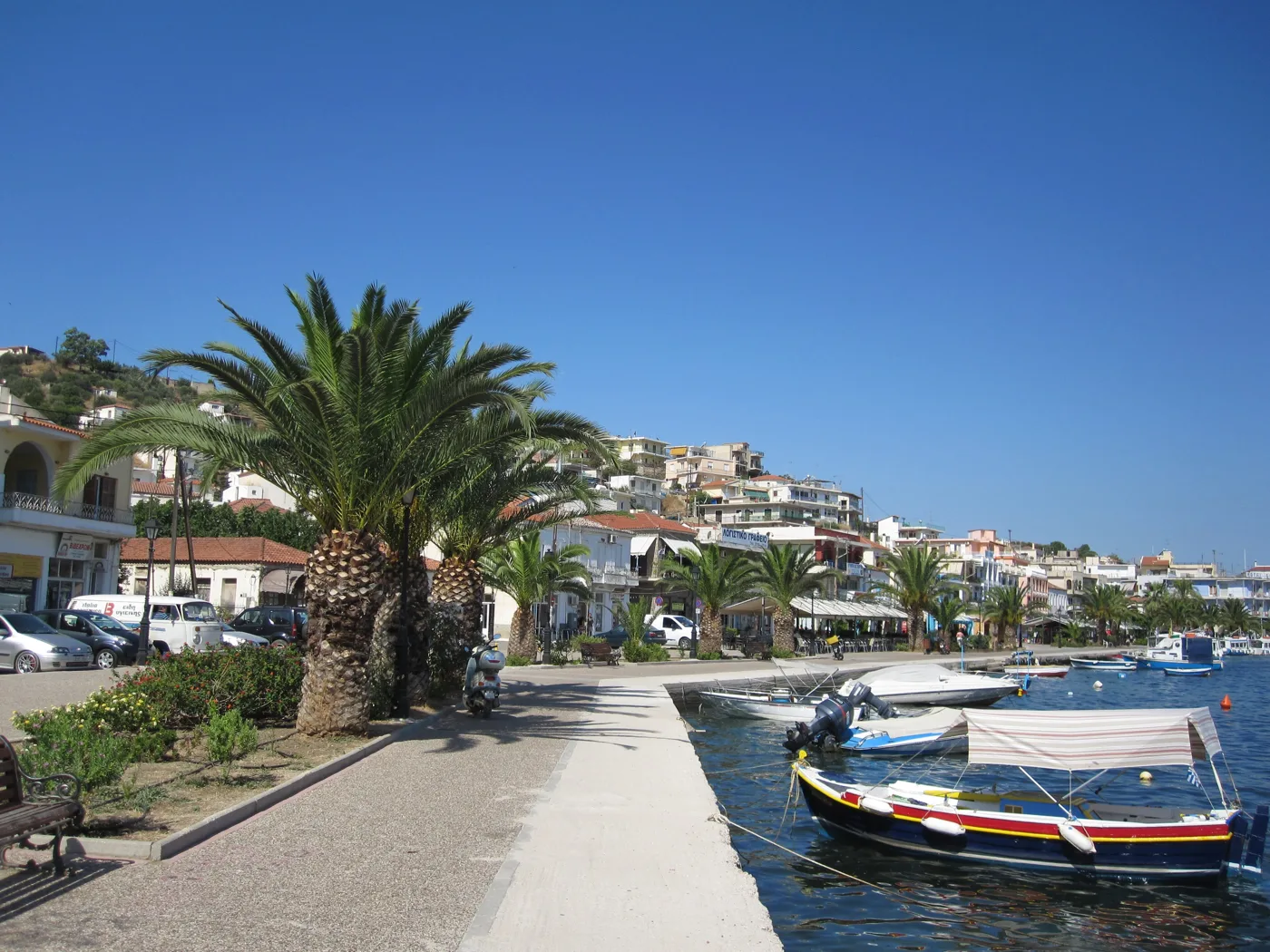
Palm trees and fishing boats.
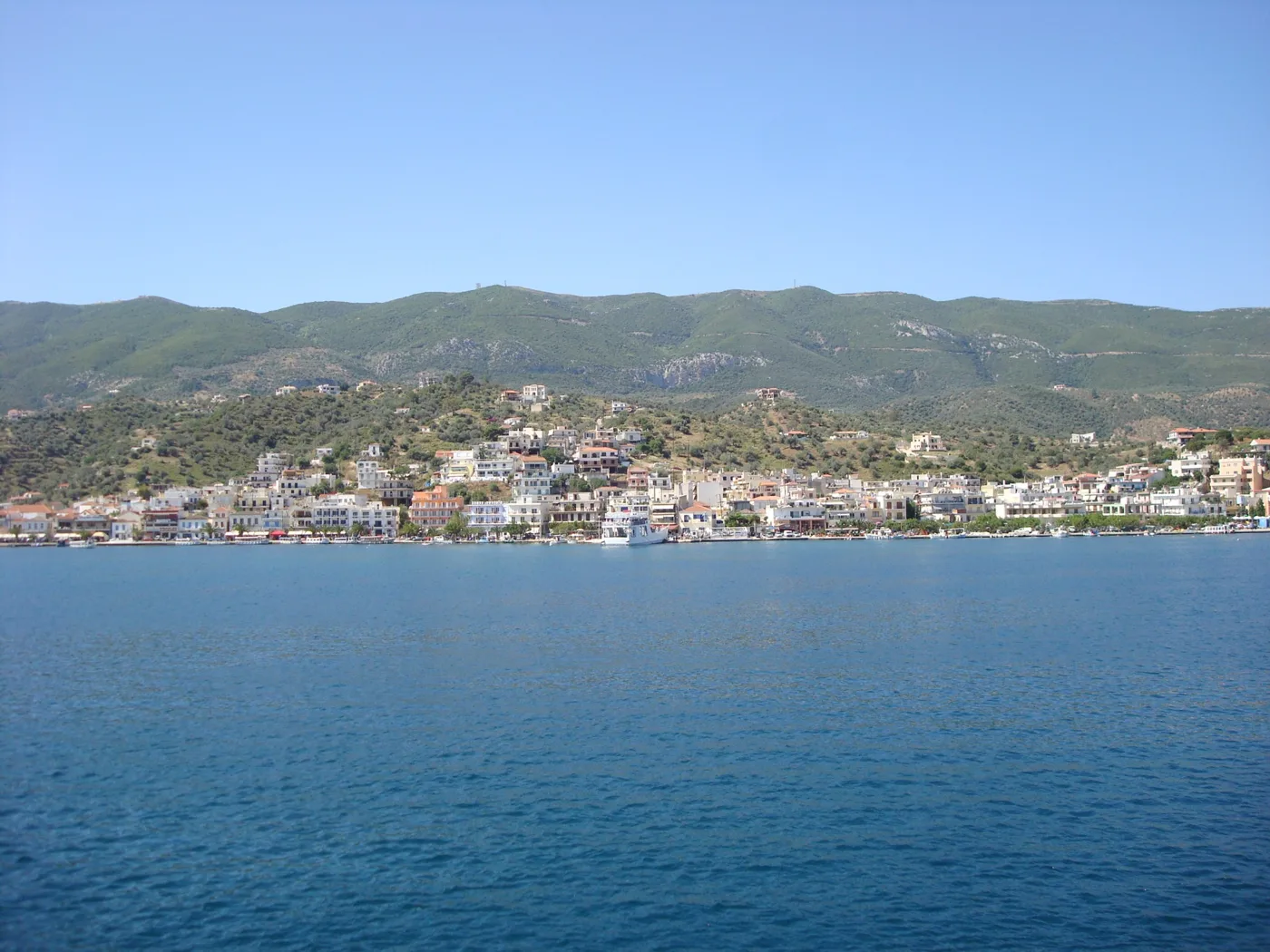
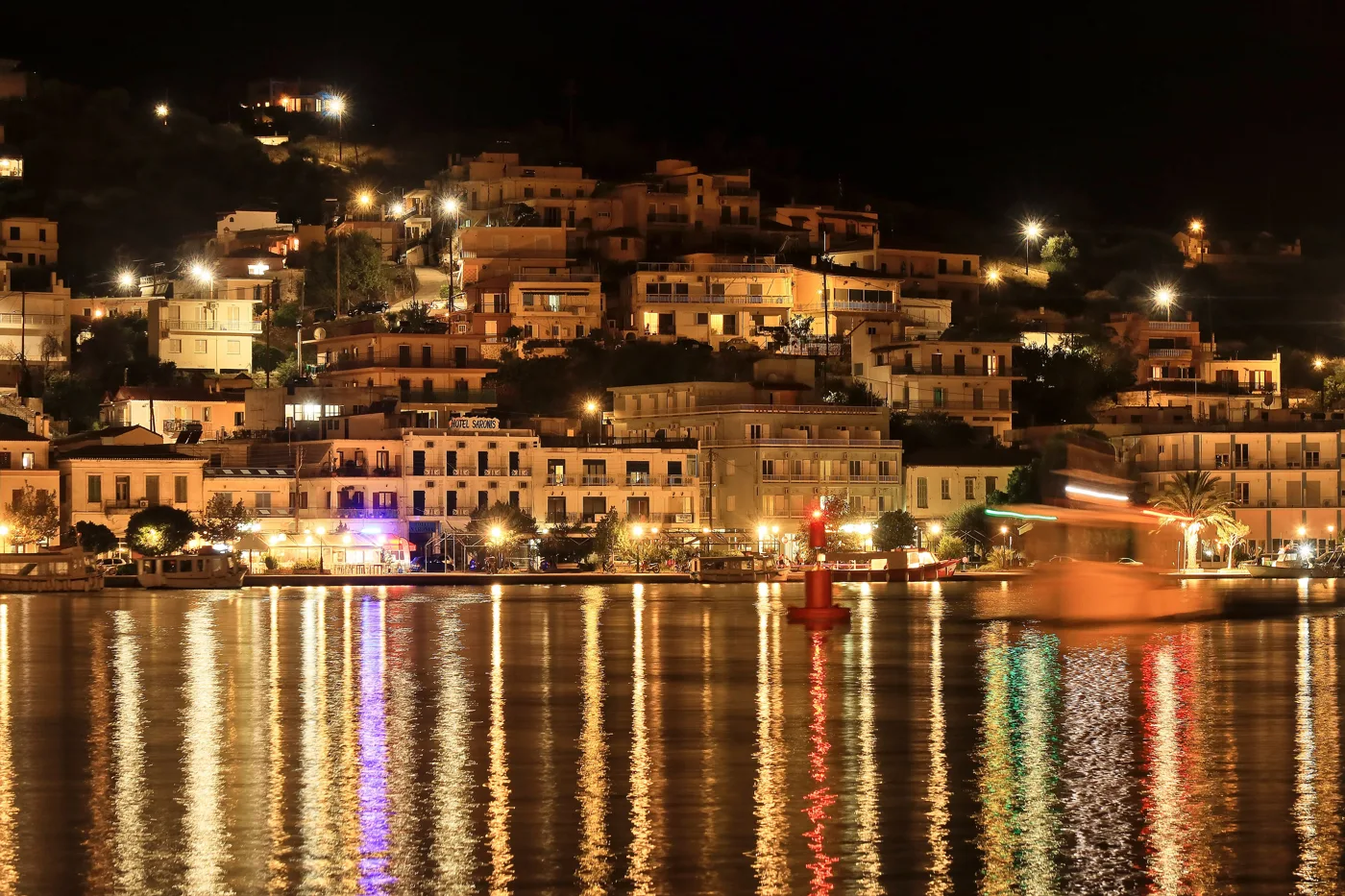
Poros a breath away.
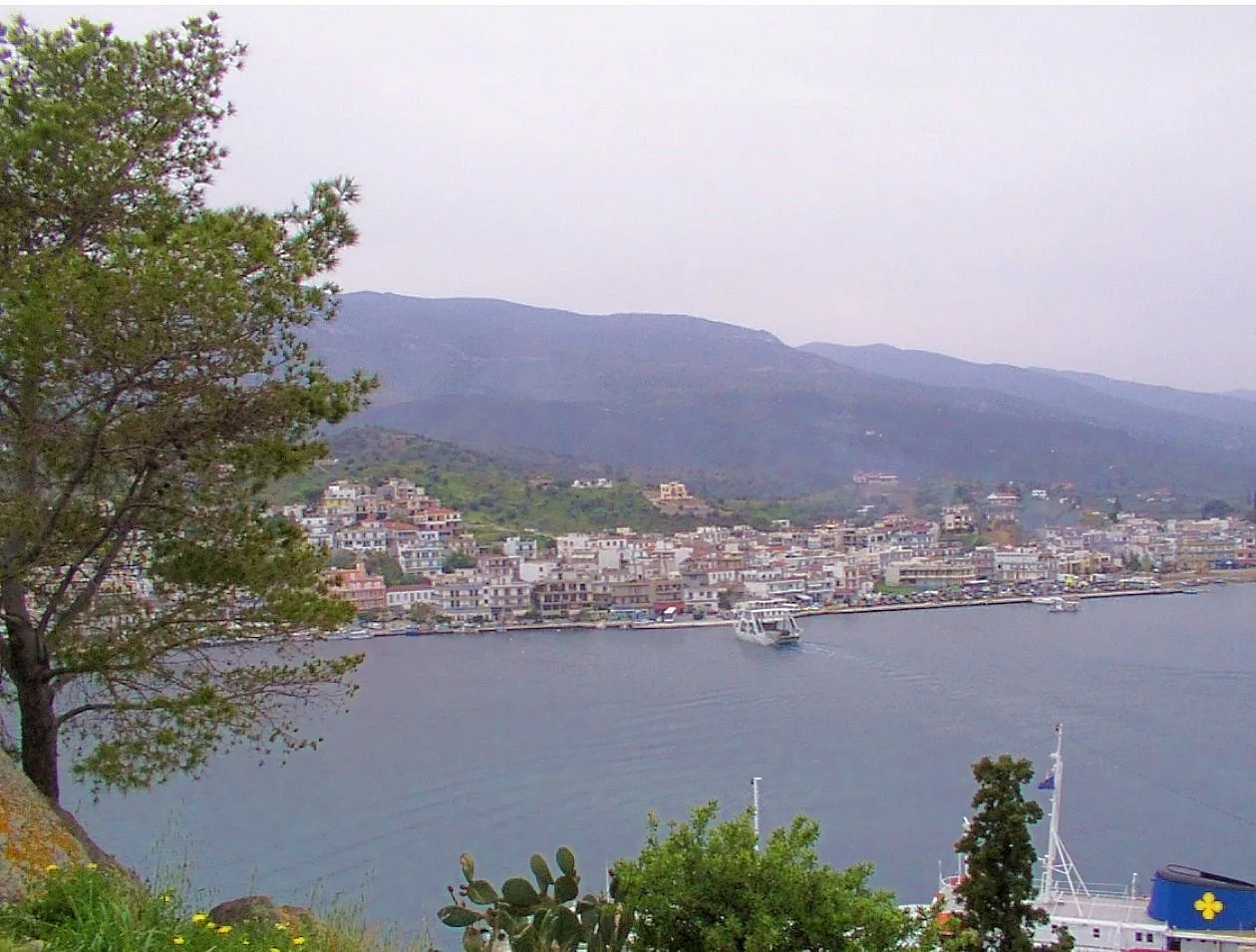
The coast south of Galatas.
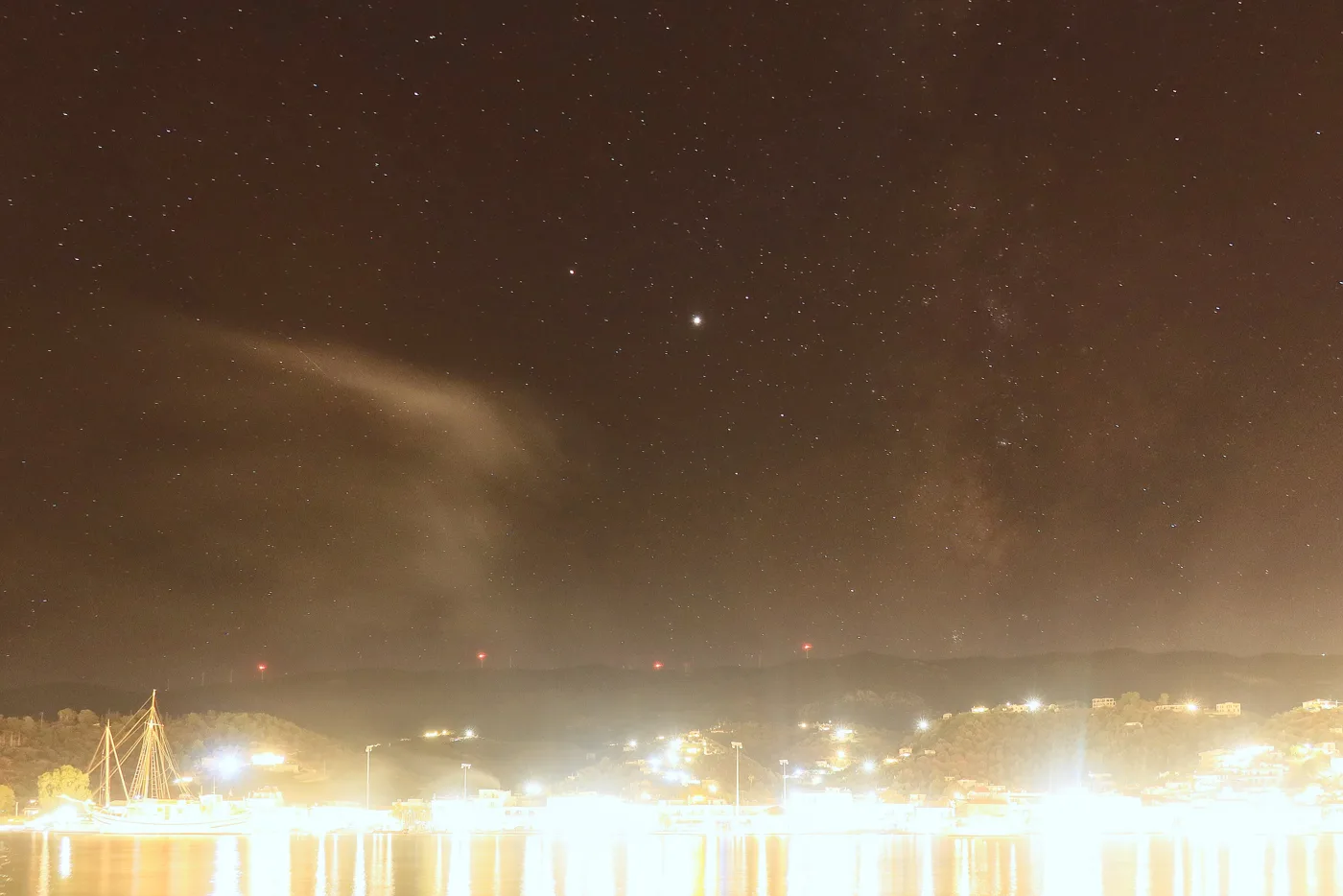
From the Poros waterfront.
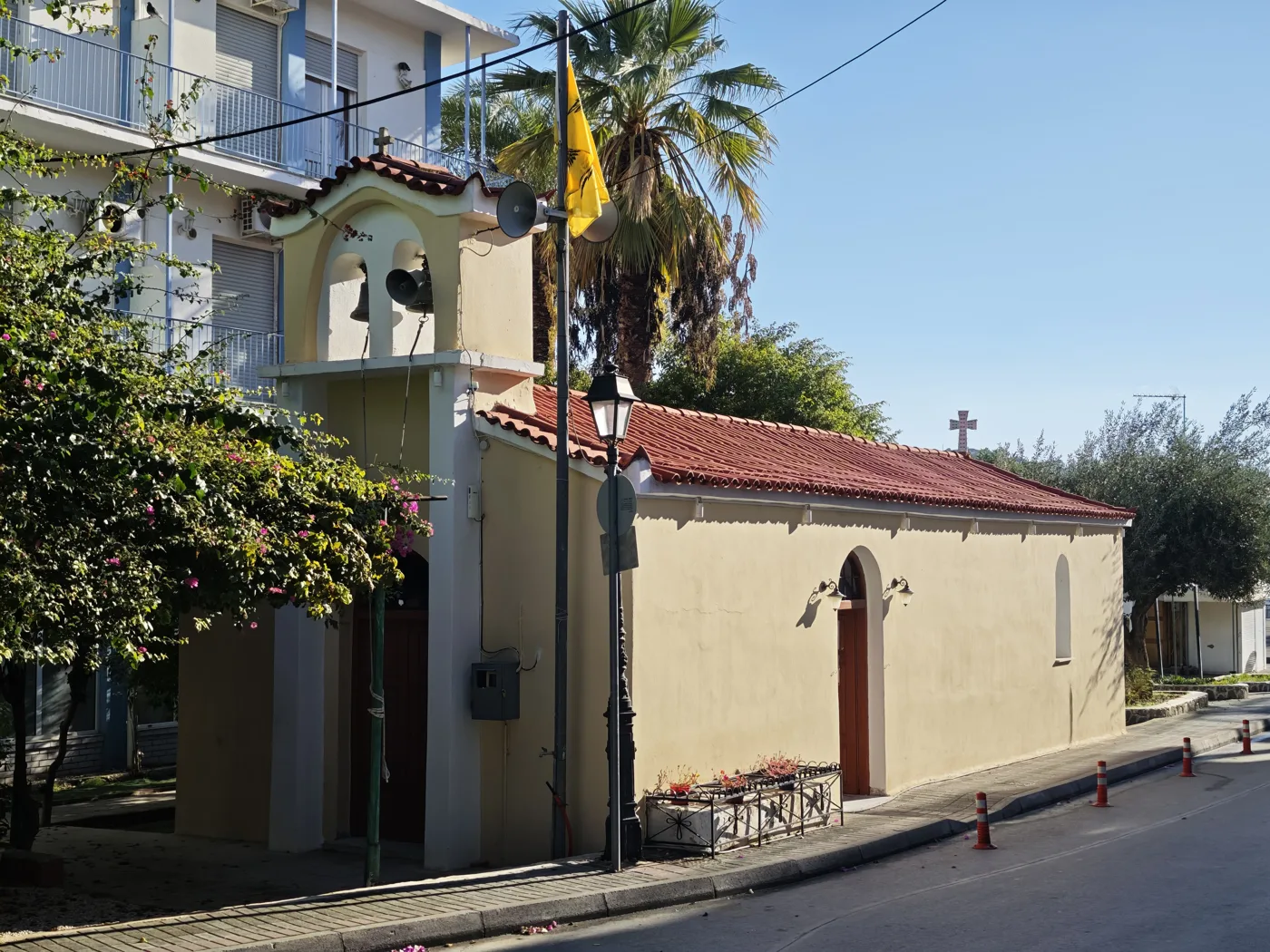
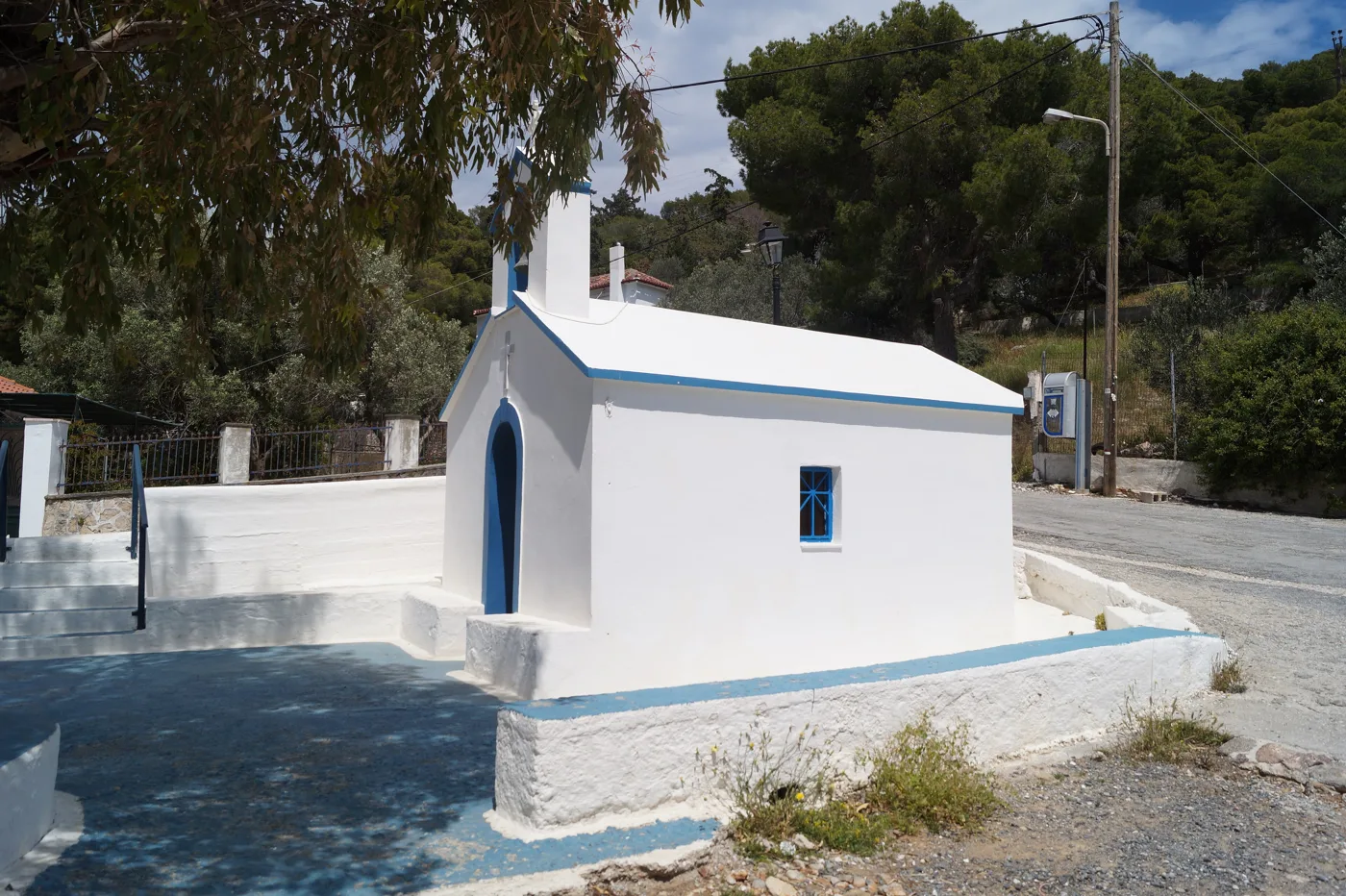
The Dormition of the Virgin.
On Tombazi Street.
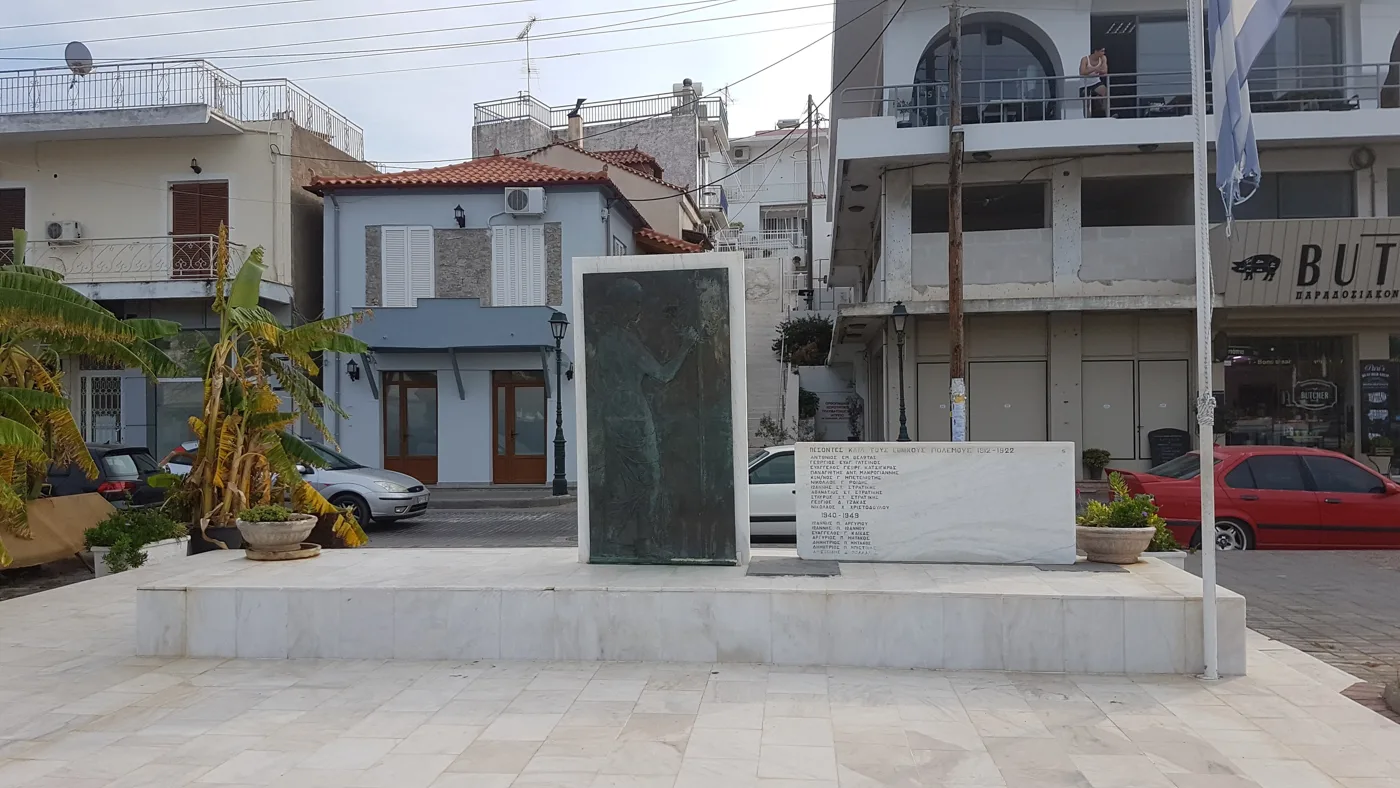
On the Galatas square.
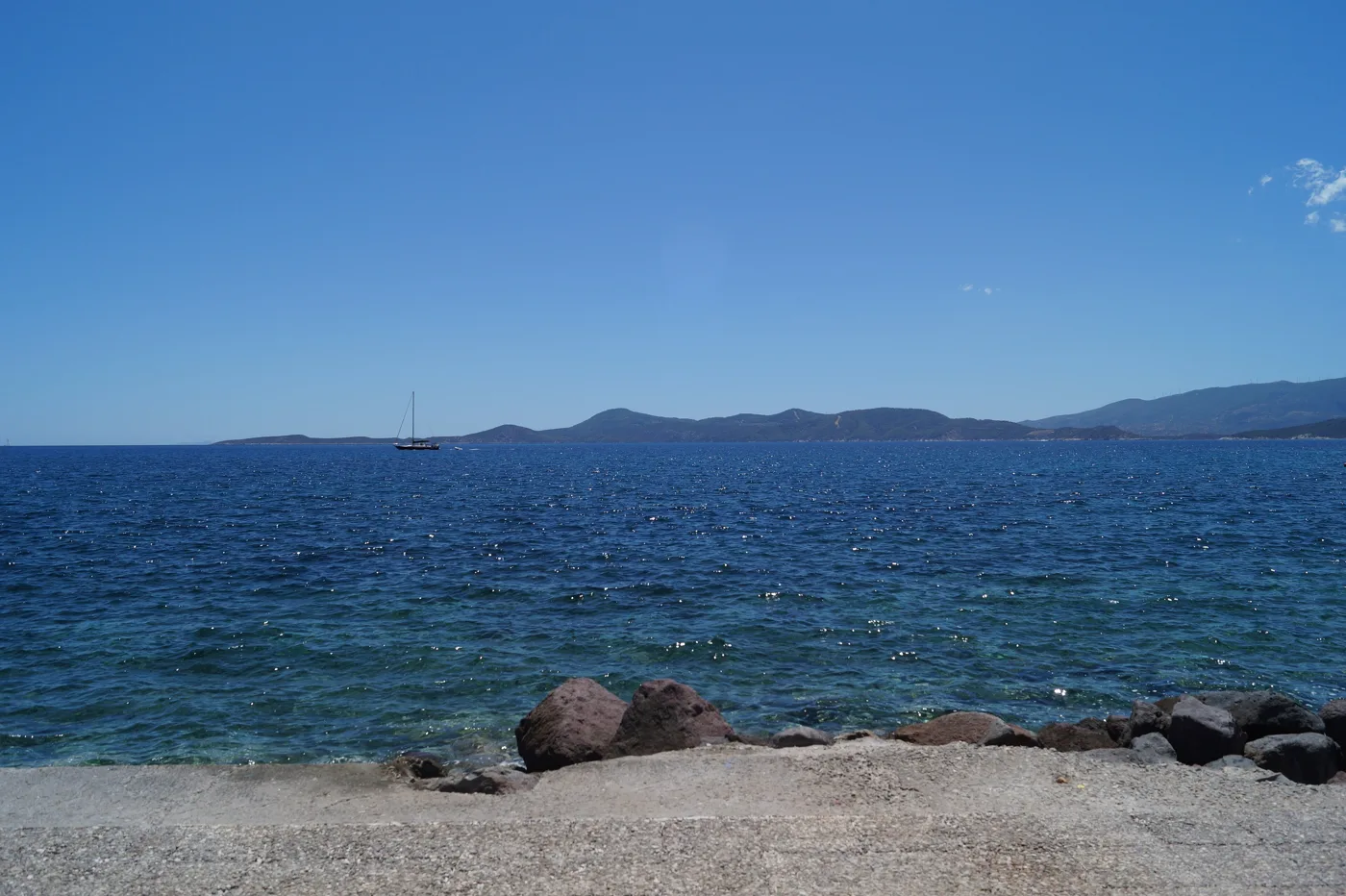
The volcano opposite, a stop for the ferry.
Photos: Юкатан (CC BY-SA 3.0), Julien Seguinot (CC BY-SA 2.0), Matti (CC BY-SA 3.0), Georgios Pazios (Attribution), Pierre André (CC BY-SA 4.0), Schuppi (CC BY-SA 4.0), Schuppi (CC BY-SA 3.0) · Wikimedia Commons
🍋 The Lemon Forest
On the slope opposite Poros, south of Galatas, the Lemon Forest is a forest of thirty thousand lemon and orange trees, over 500 stremmata, with springs every hundred metres, old watermills and paths among the trees. Kosmas Politis made it famous with his novel “Lemon Forest” in 1930, and in the 1960s tourists rode up from Plaka on donkeys. Today the plots are small and private, many abandoned, the mills dry and the old taverna at the top closed, but the walk among the lemon trees, with the scent of the blossom in April and May, is still one of the most beautiful hours of the day. Take a water taxi from Poros to Plaka, five minutes, and climb 15 to 20 minutes up the dirt road among the trees; or walk from Galatas, 3 kilometres and 40 minutes, along the coast. Shoes with grip, water, and respect for the plots: the lemons have owners.
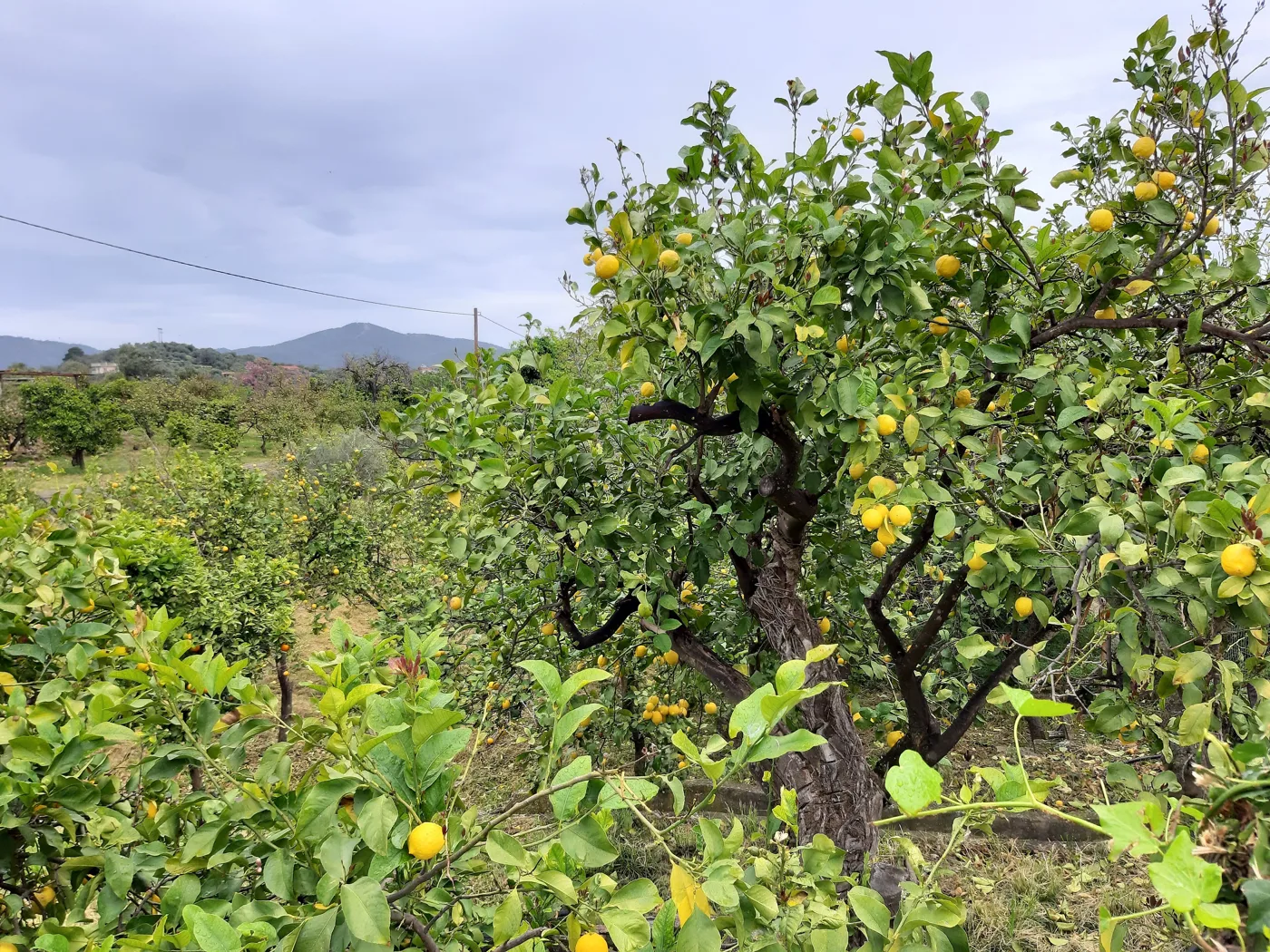
Thirty thousand lemon trees on a hillside.
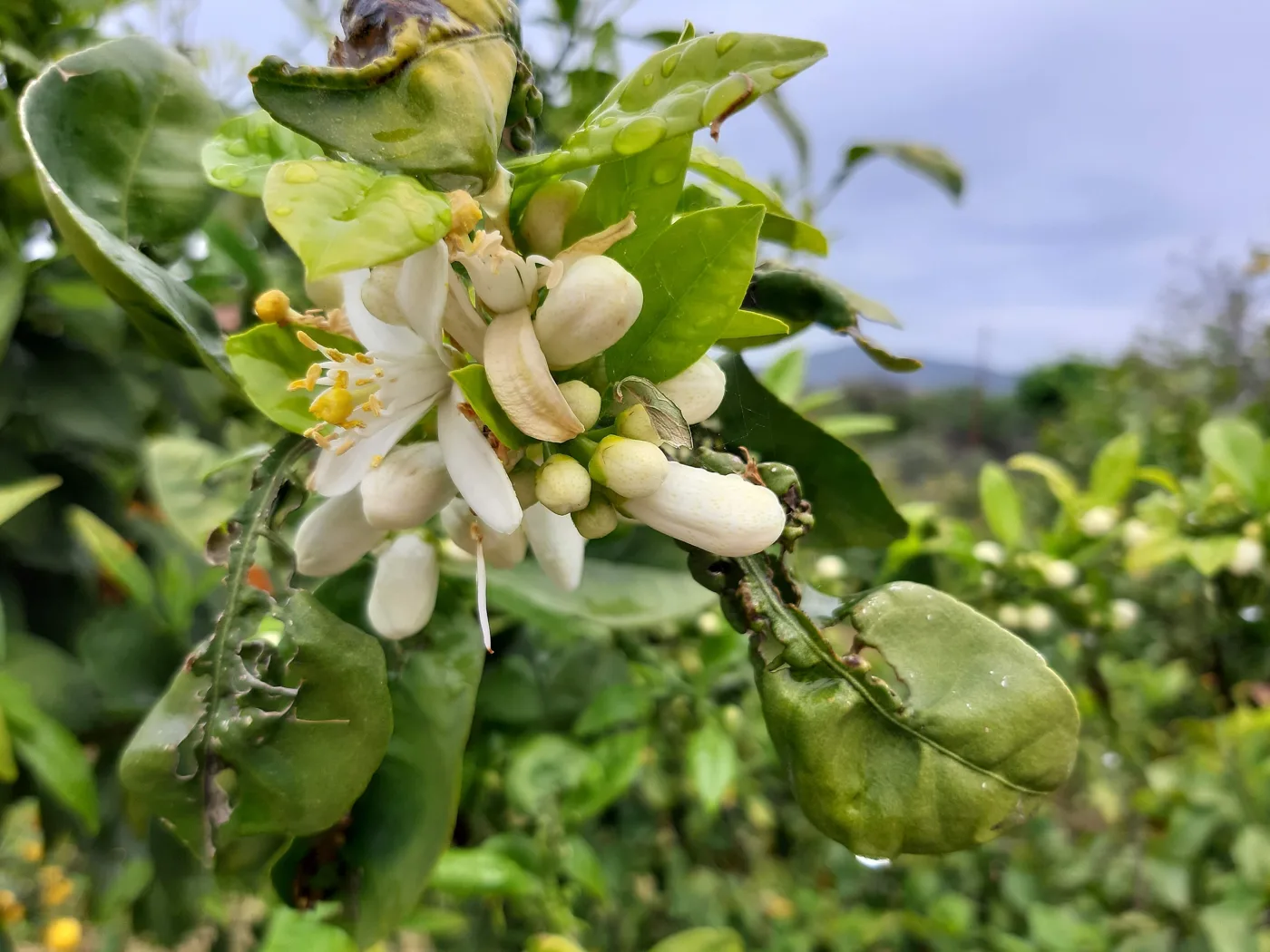
In spring, the scent reaches Poros.
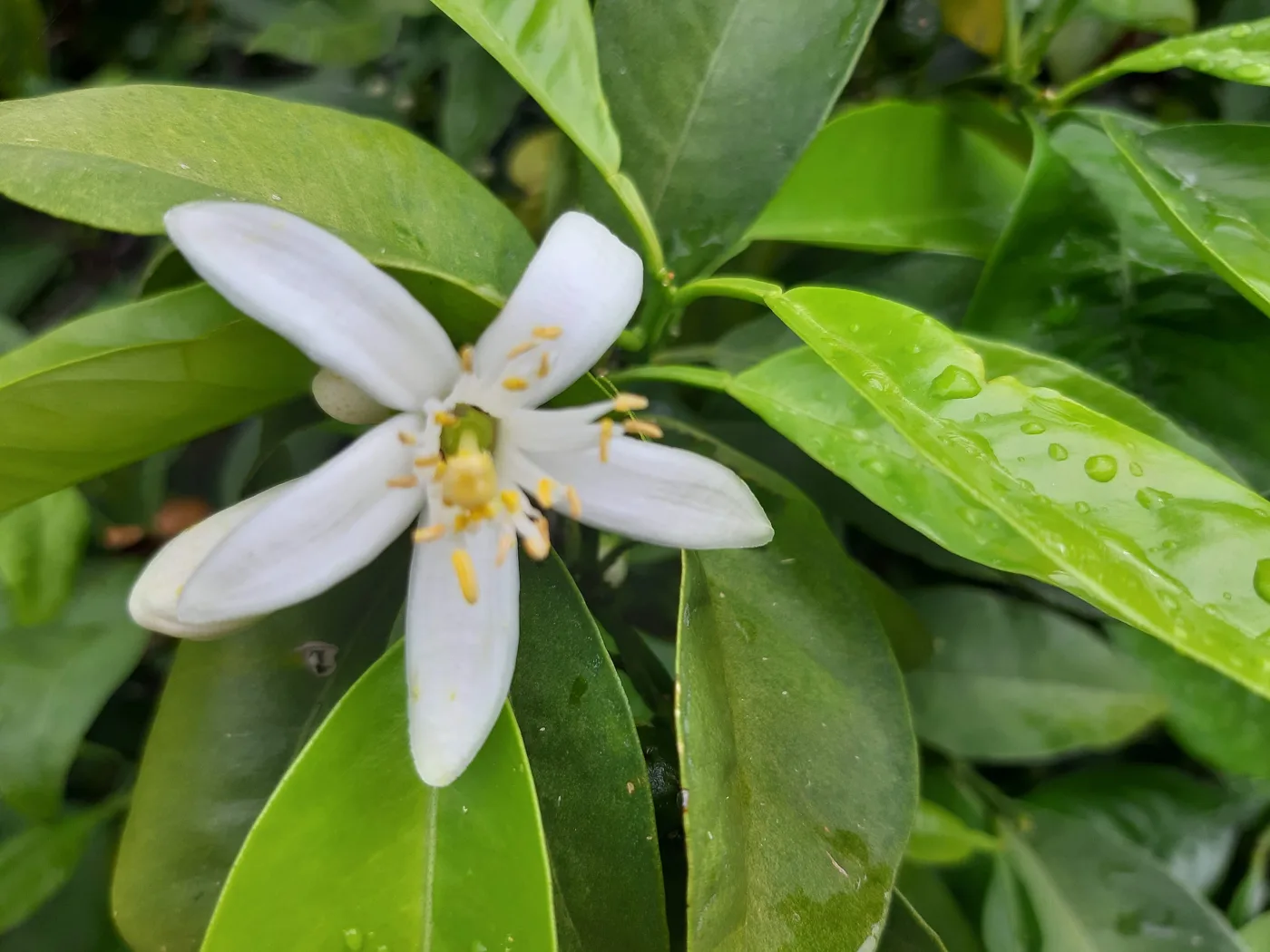
April and May.
From the lemons of Galatas, spoon sweet and lemonade.
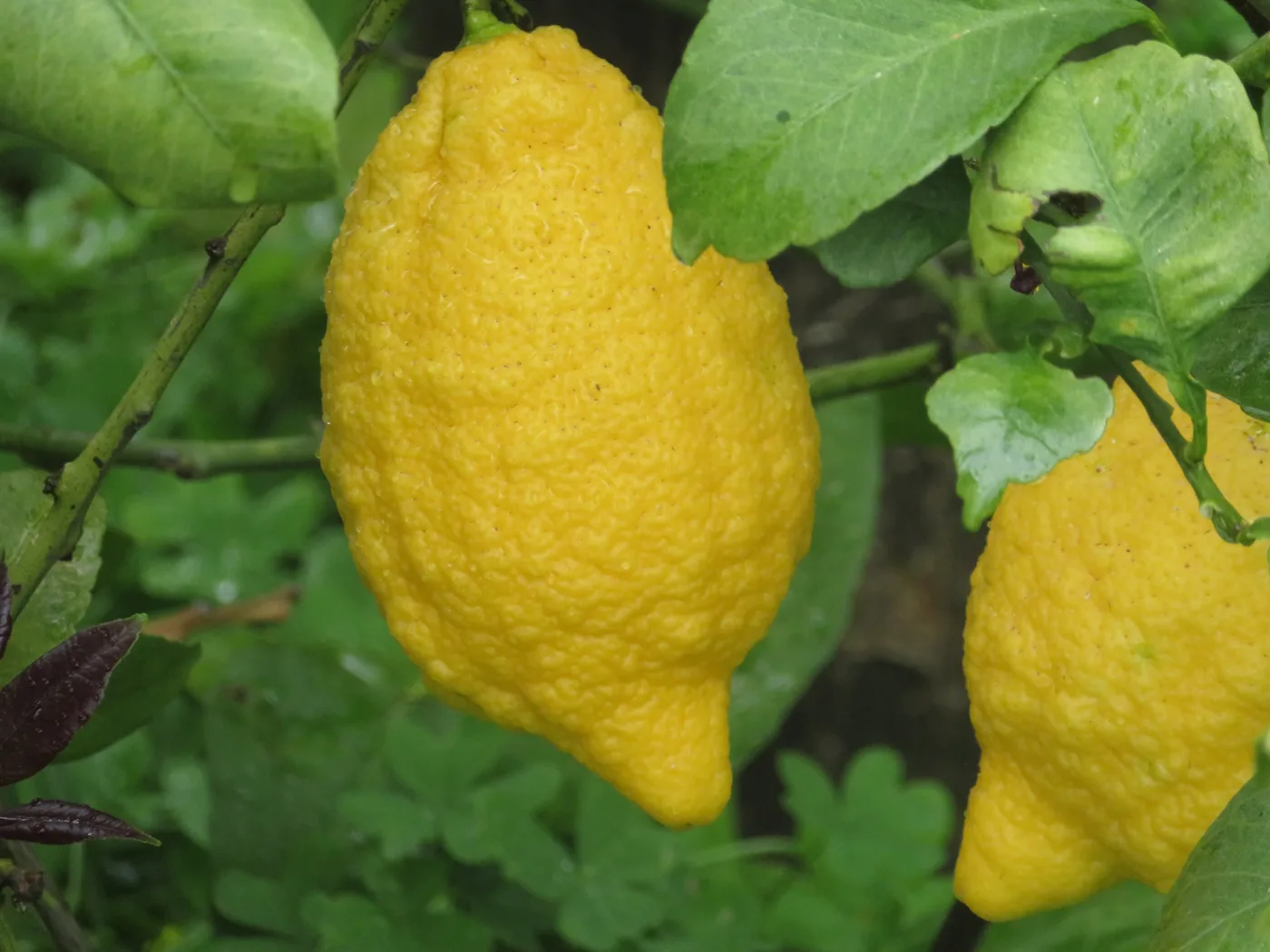
Lemons as big as a fist.
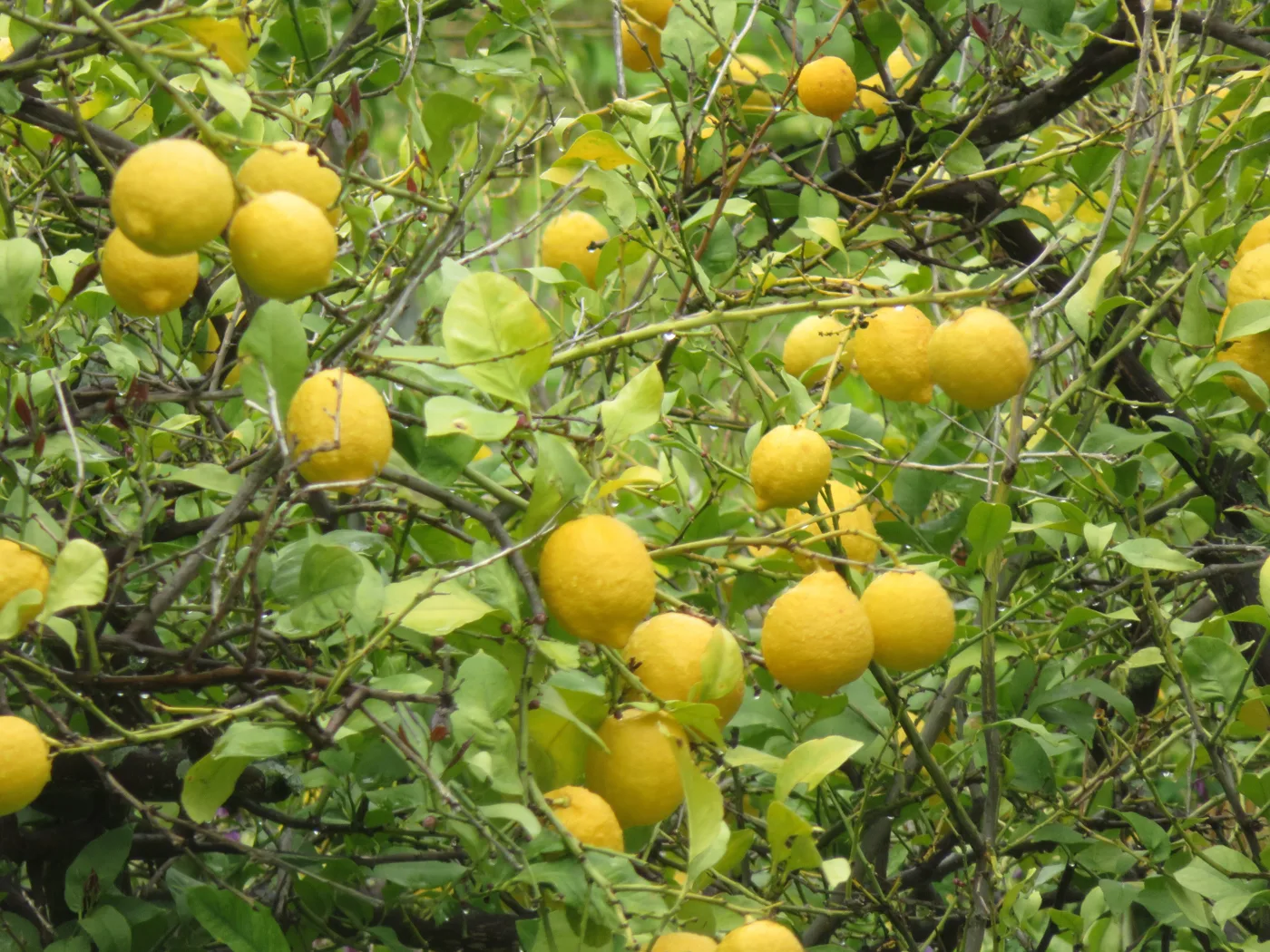
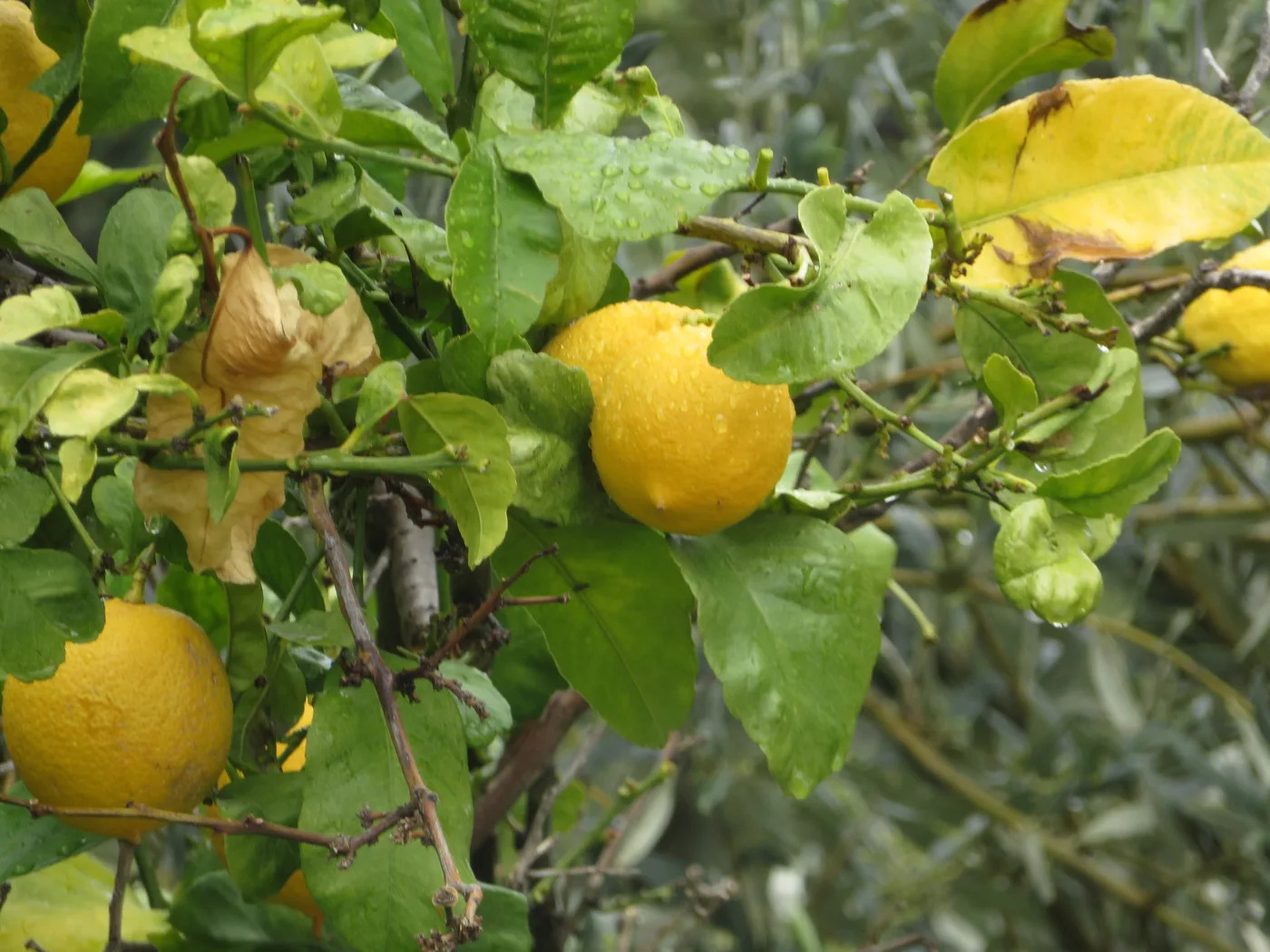
The lemon trees bear fruit in winter.
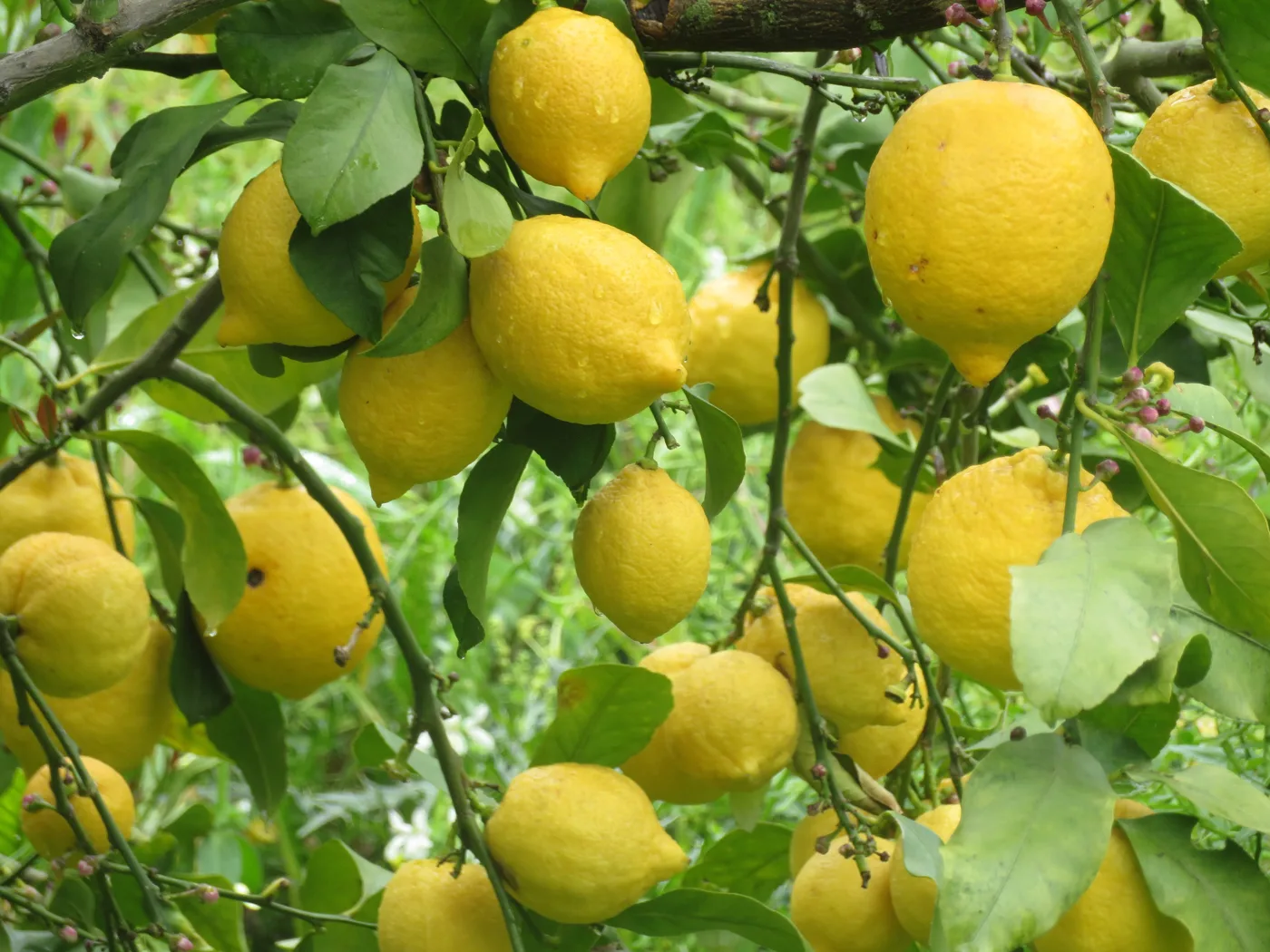
Yellow and blue.
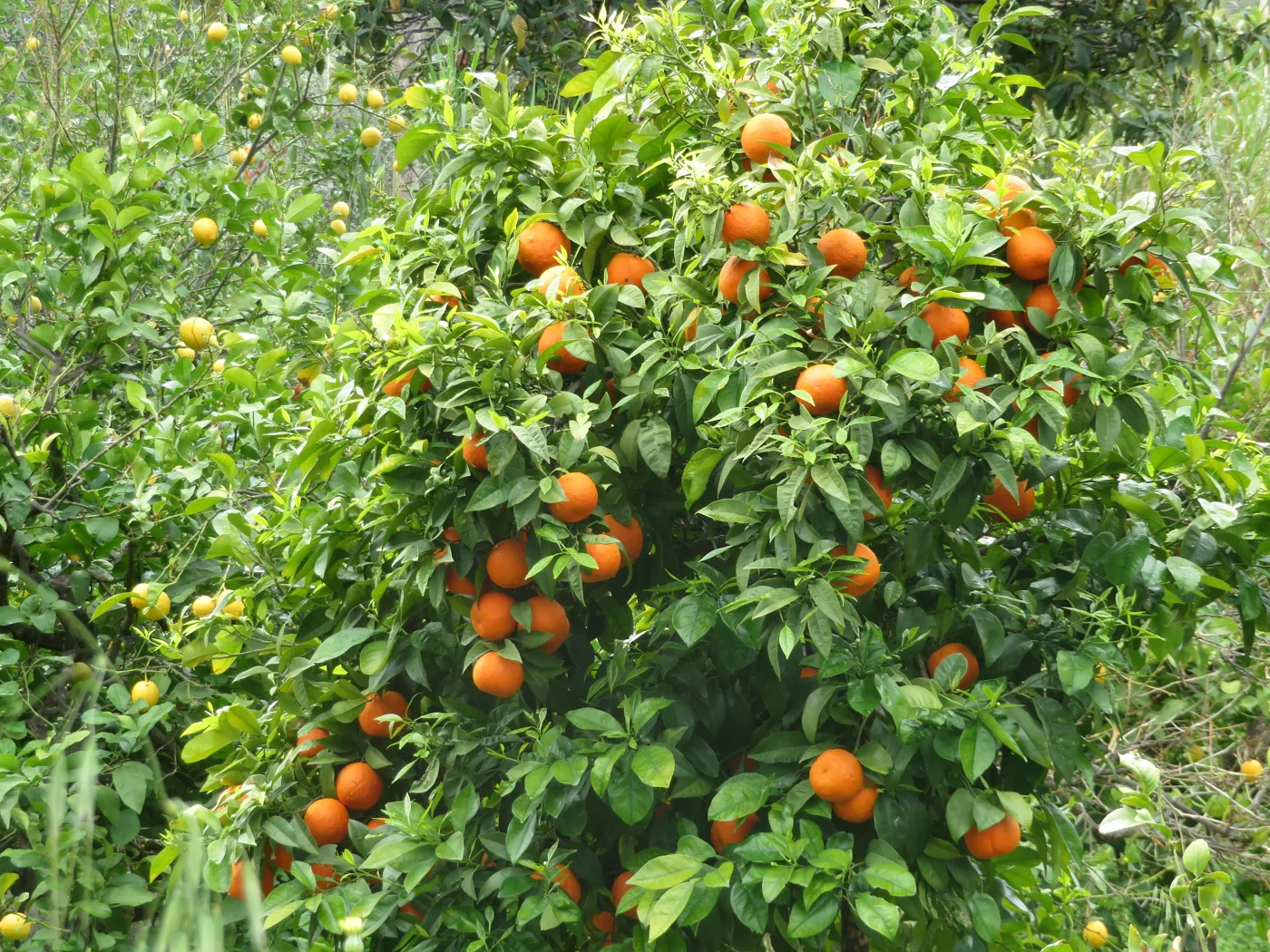
Lemon and orange trees together.
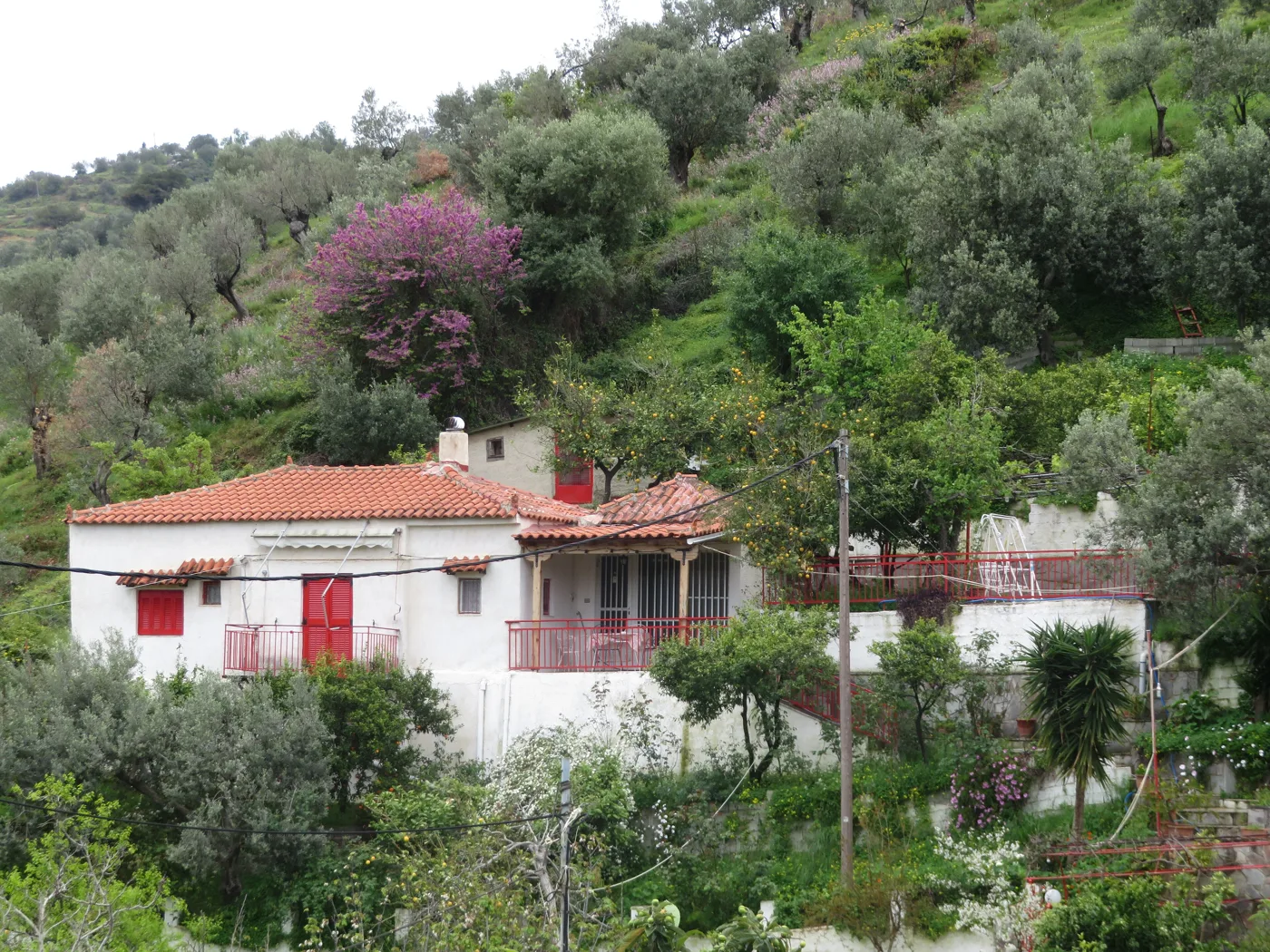
The small plots, many abandoned.
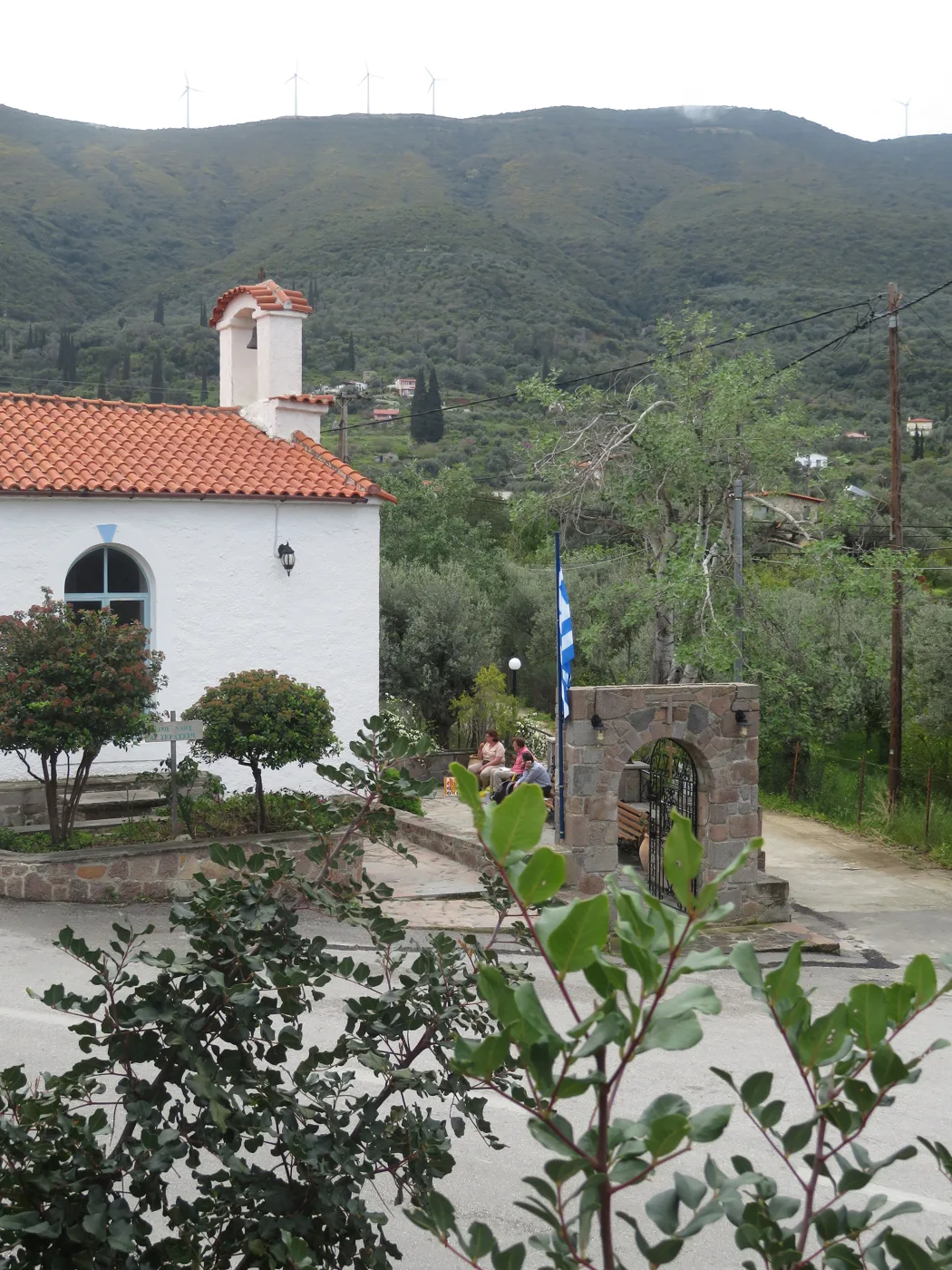
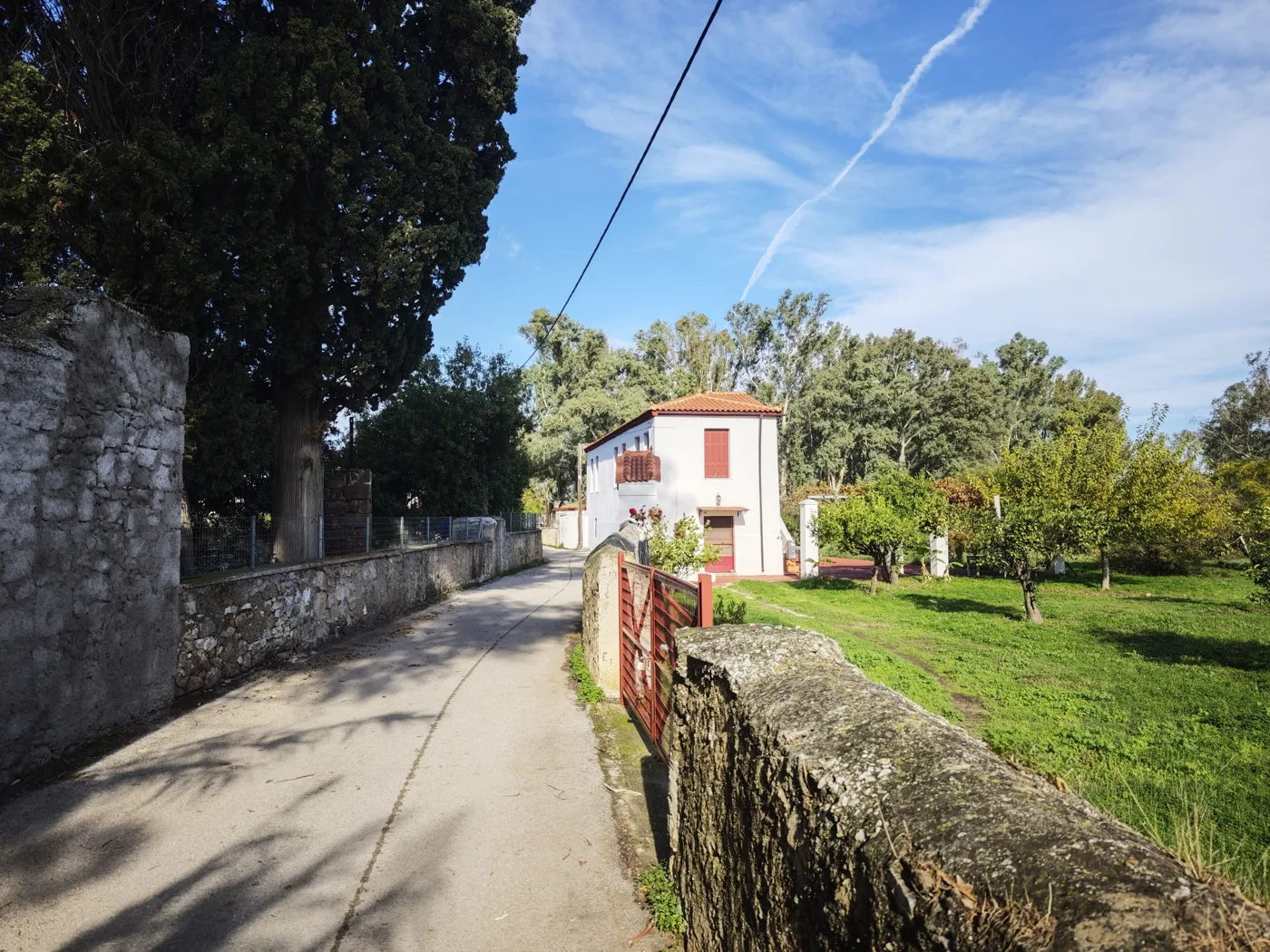
On the forest path.
Photos: Donarreiskoffer (CC BY-SA 4.0) · Wikimedia Commons
Twelve kilometres from Galatas, by taxi or the bus, ancient Troezen is the birthplace of Theseus: here, under the Rock of Theseus, he found his father’s sword, and here Hippolytus refused Phaedra. The ruins are few, the tower they call the Palace of Theseus and the wall, but the Devil’s Bridge, a natural stone bridge over a gorge with water all year round, is worth the trip. For those with a car or staying a night.
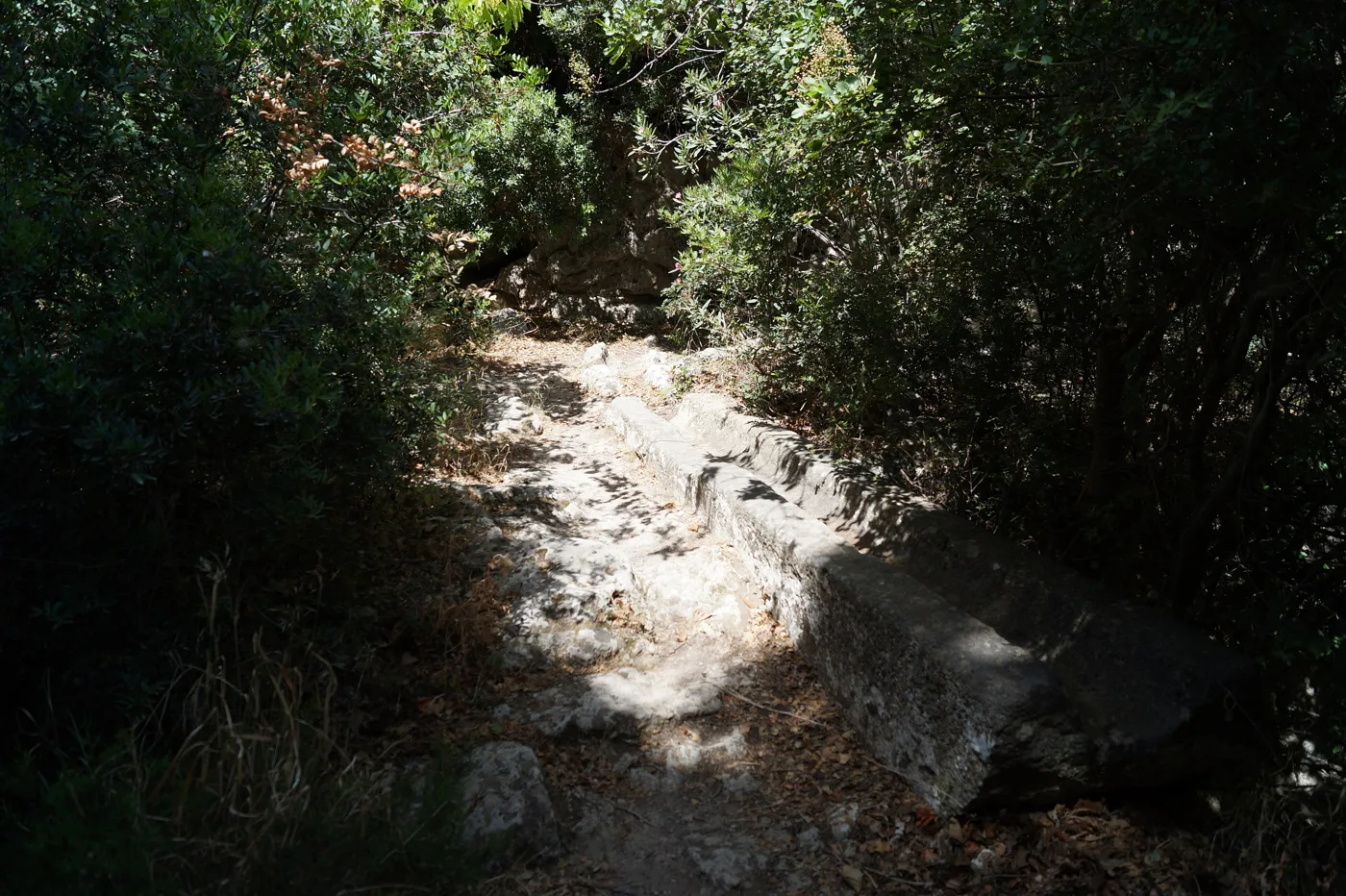
A natural bridge in the gorge.
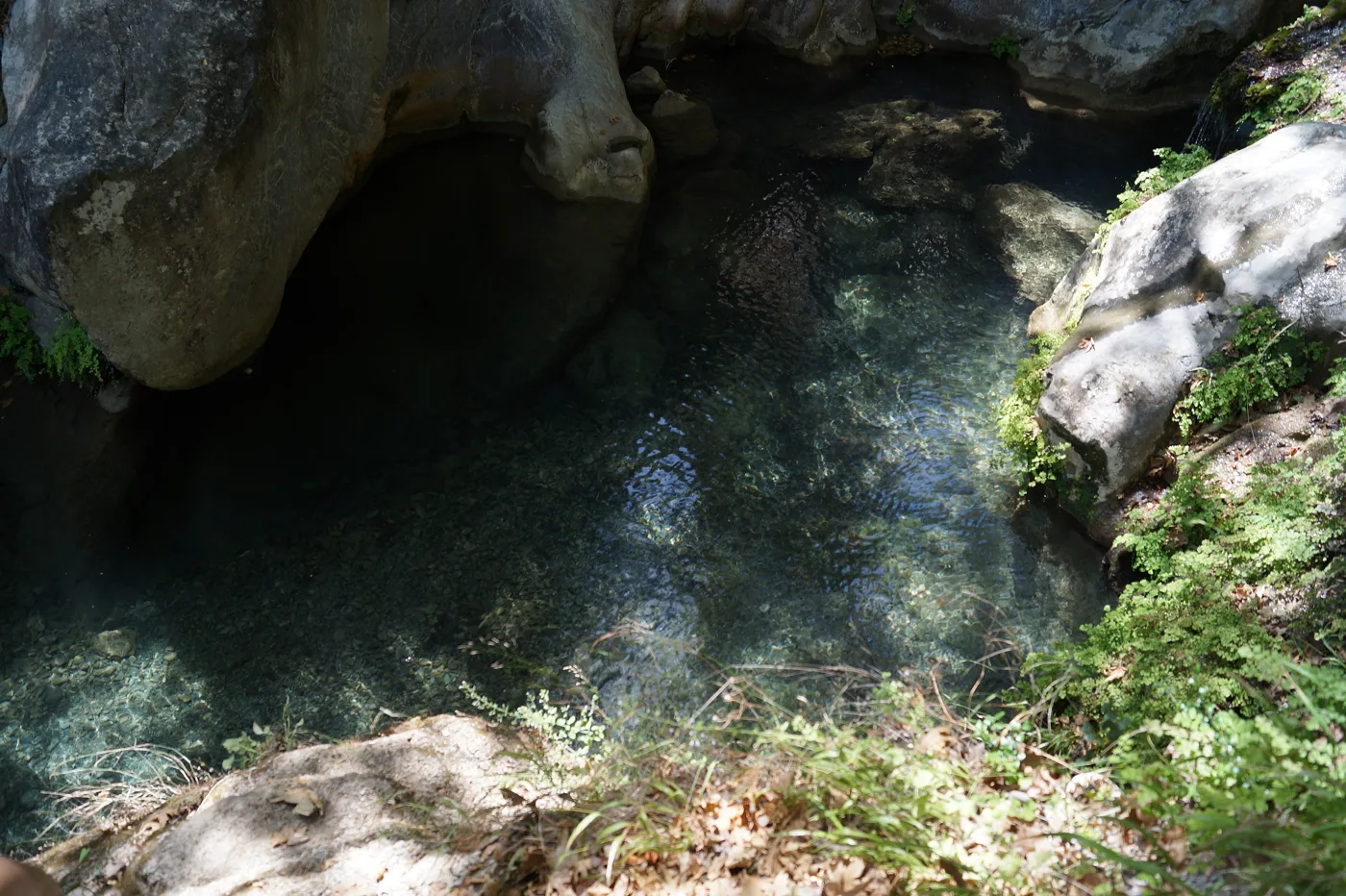
Water all year round.
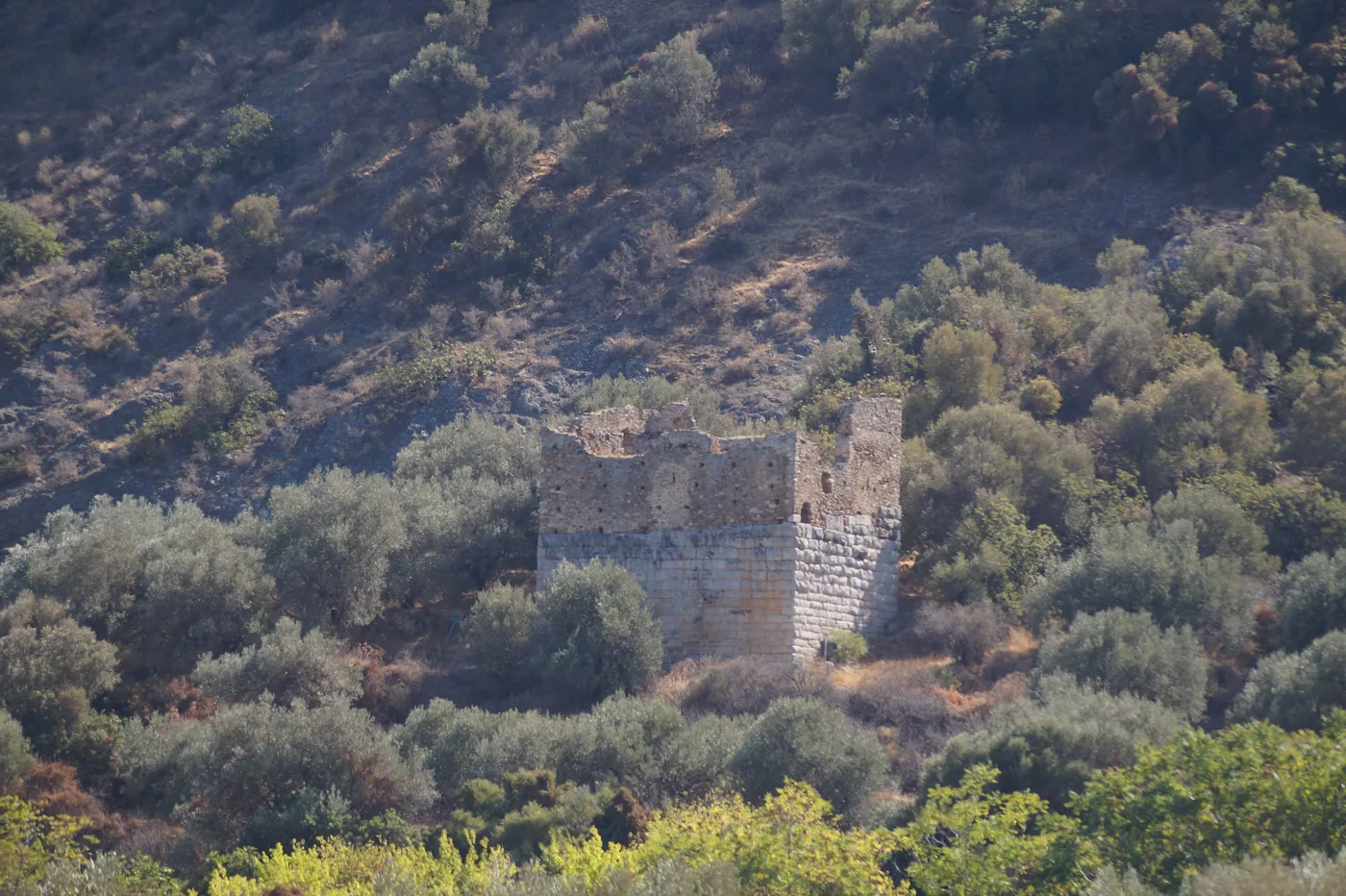
The tower of ancient Troezen.
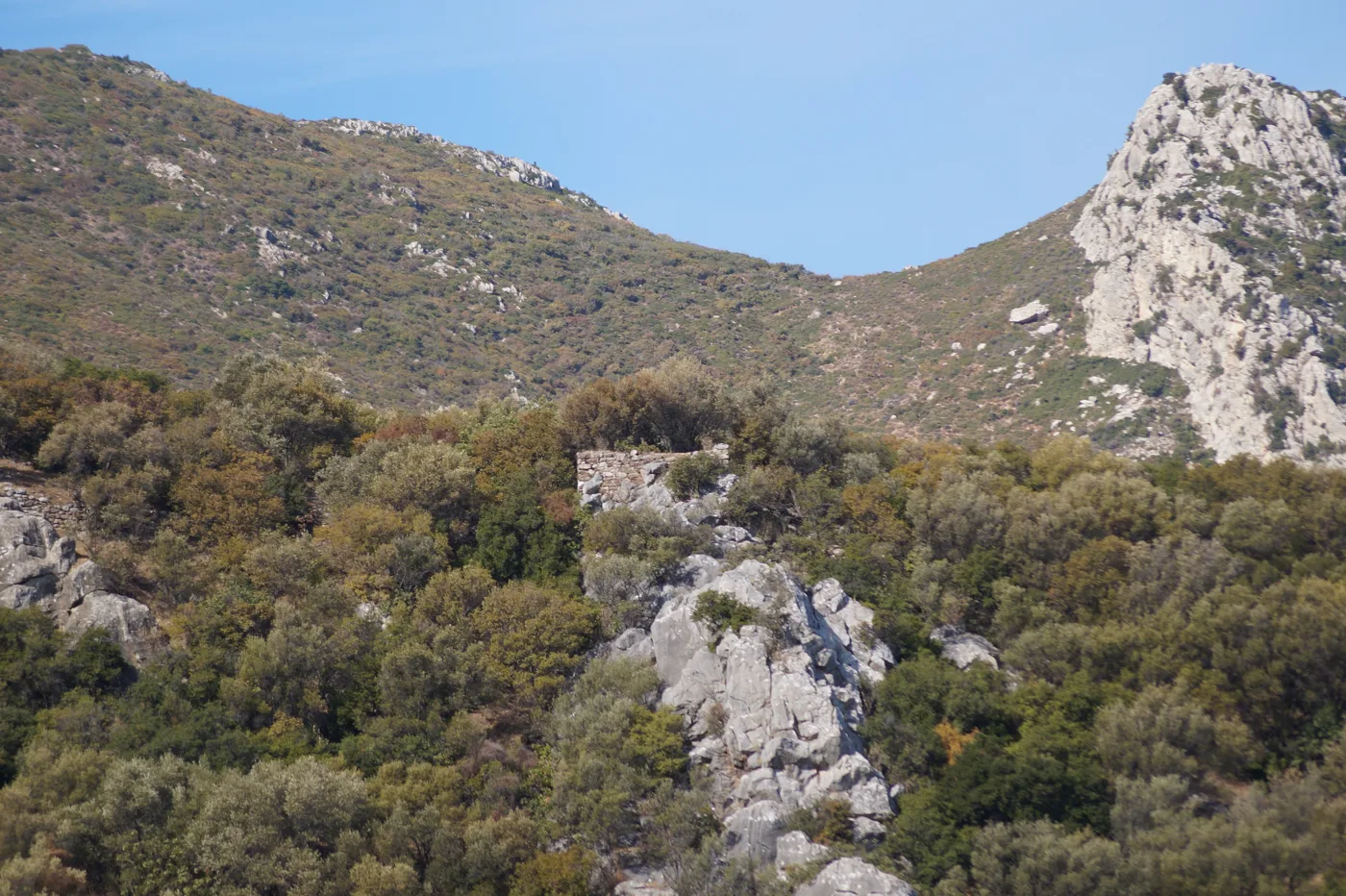
The birthplace of Theseus.
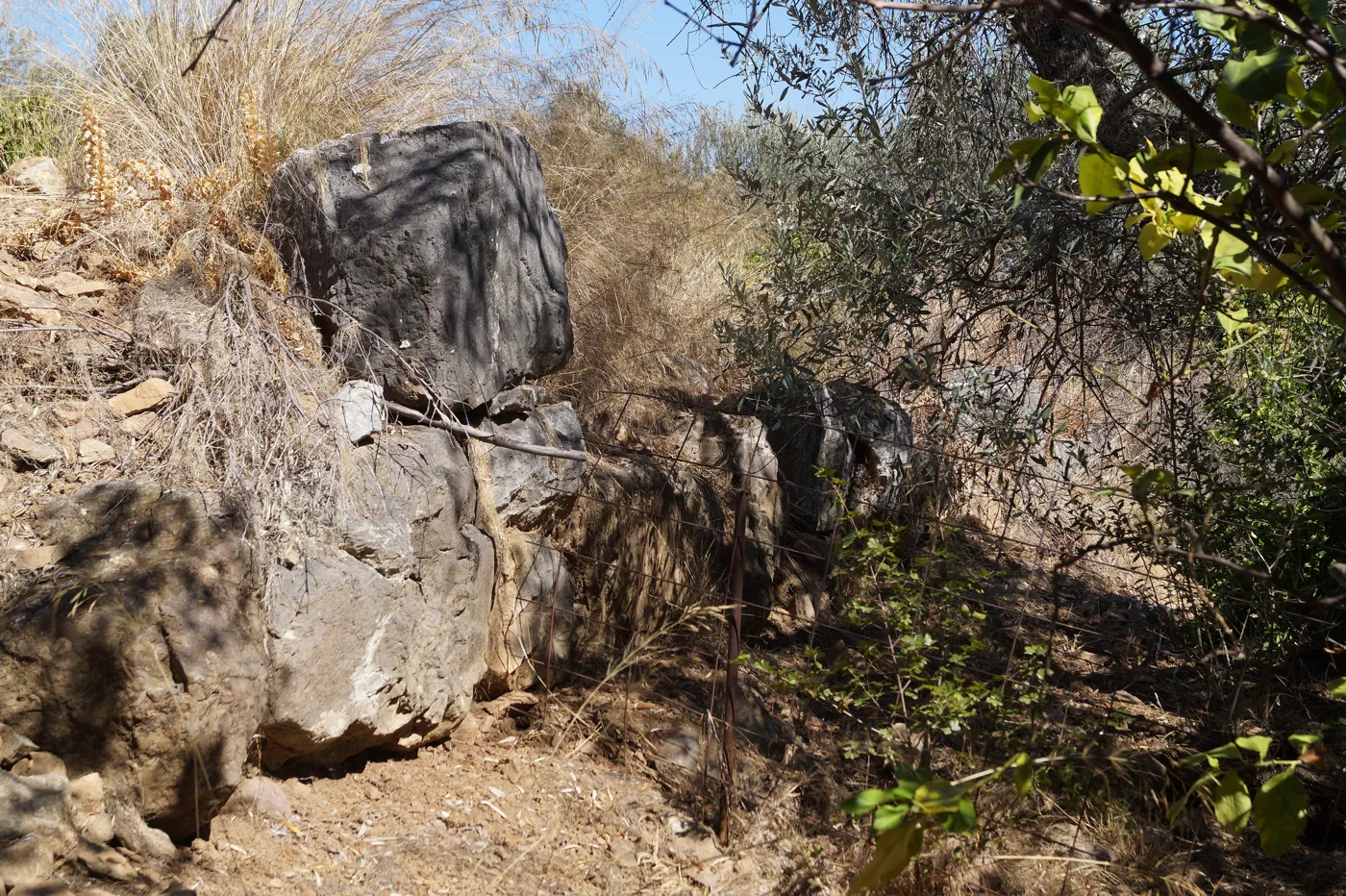
Ancient Troezen.
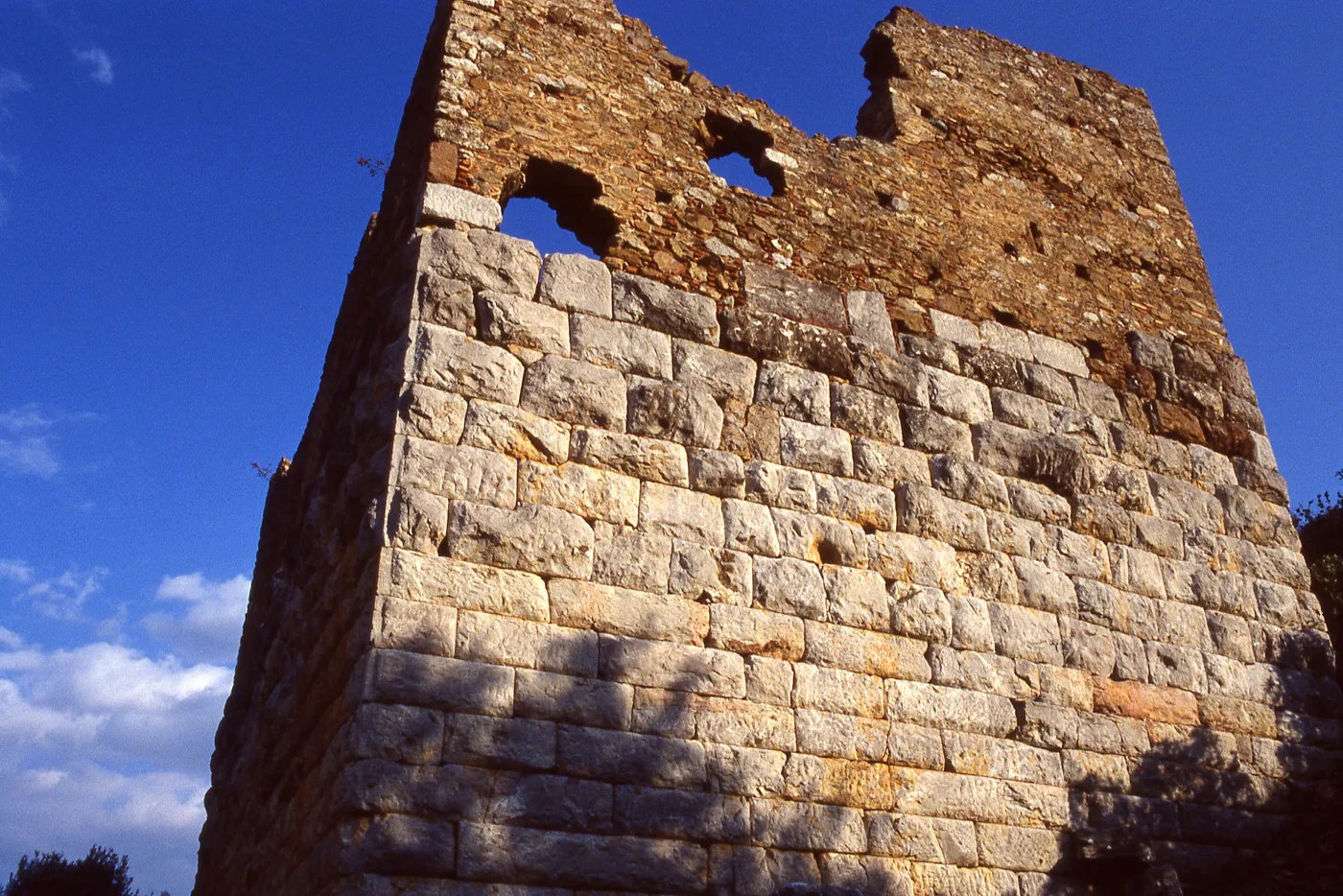
With a medieval addition.
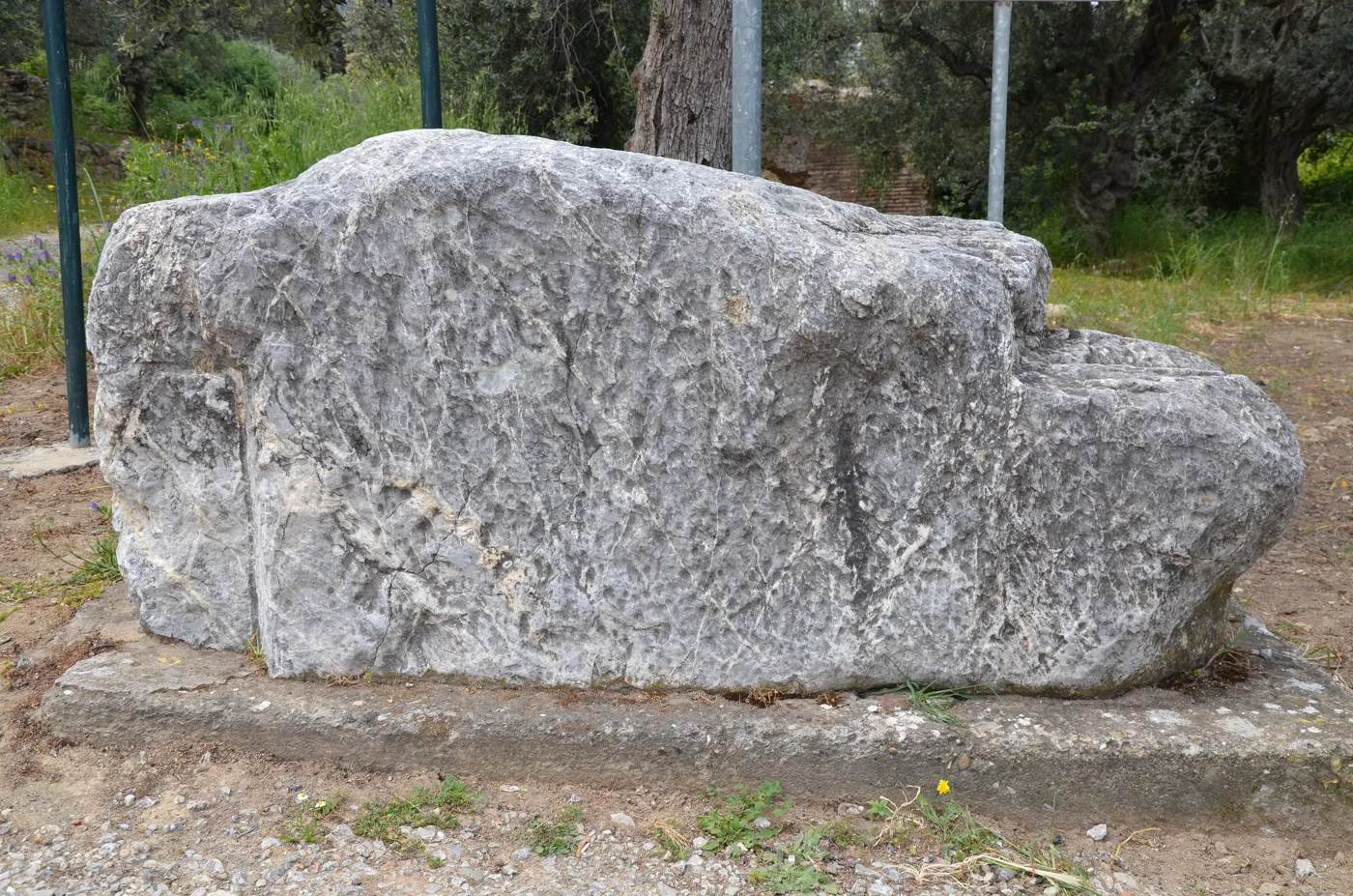
Under it Theseus found his father’s sword.
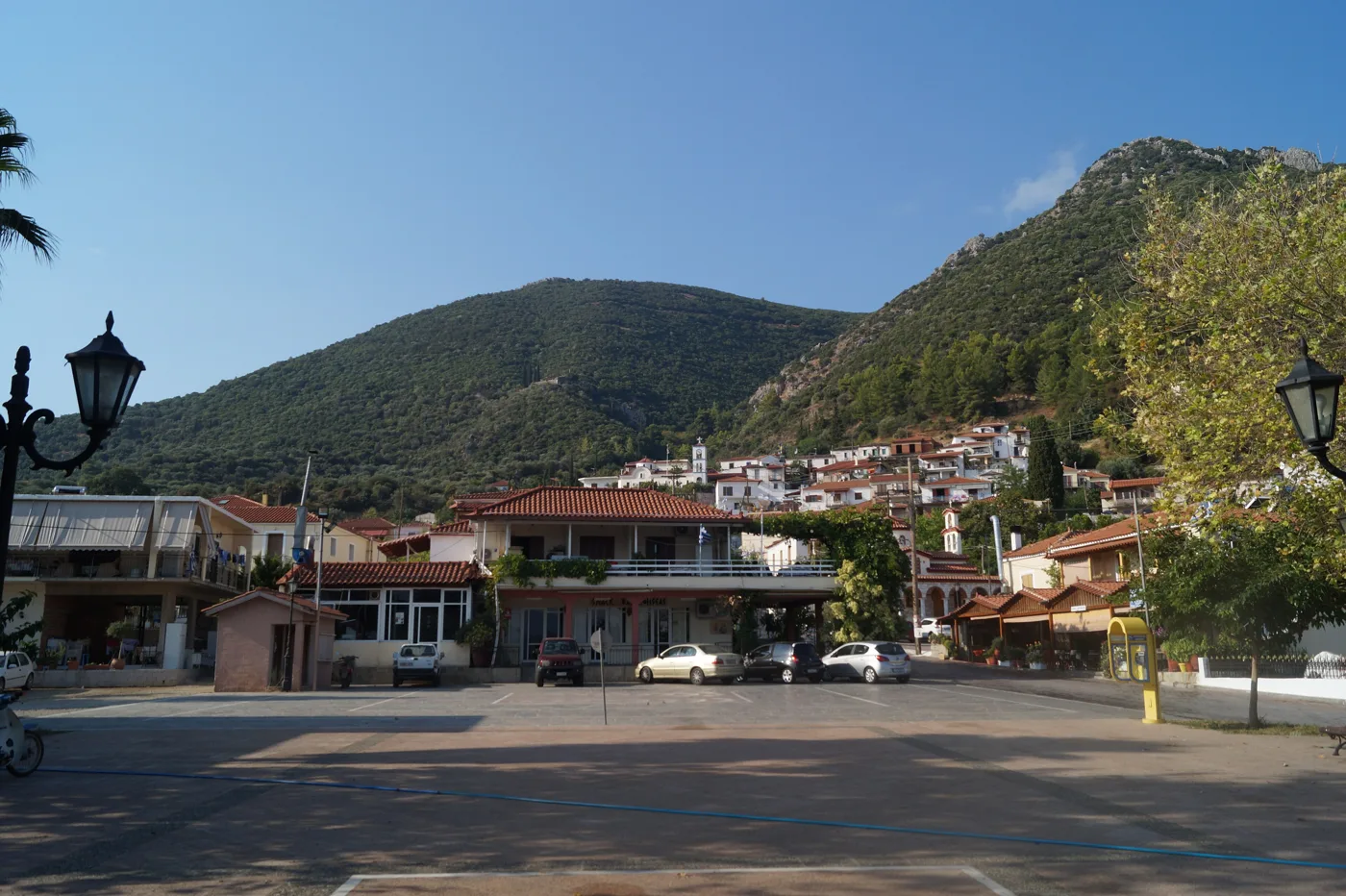
Ten minutes from Galatas.
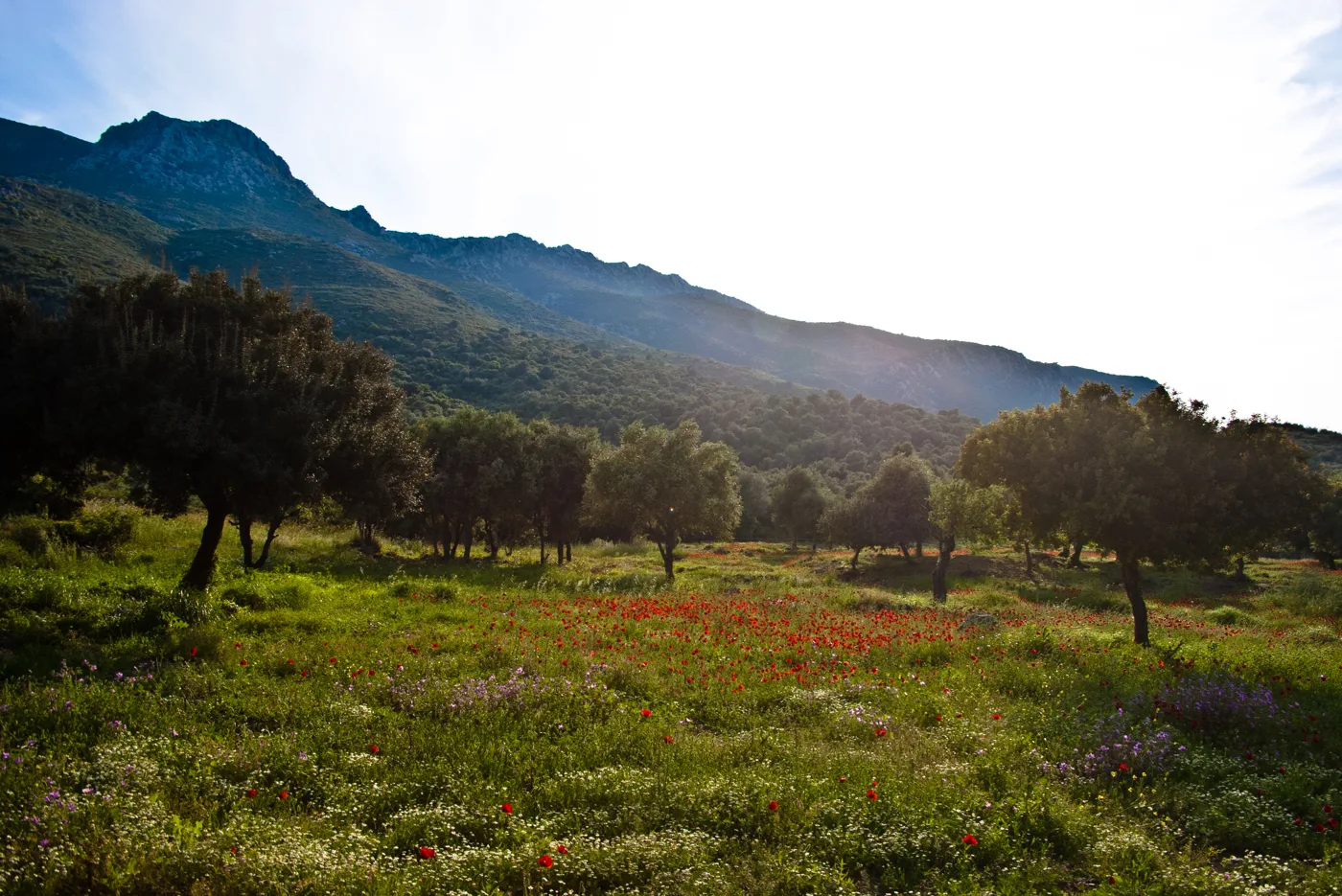
Olive trees and wild flowers.
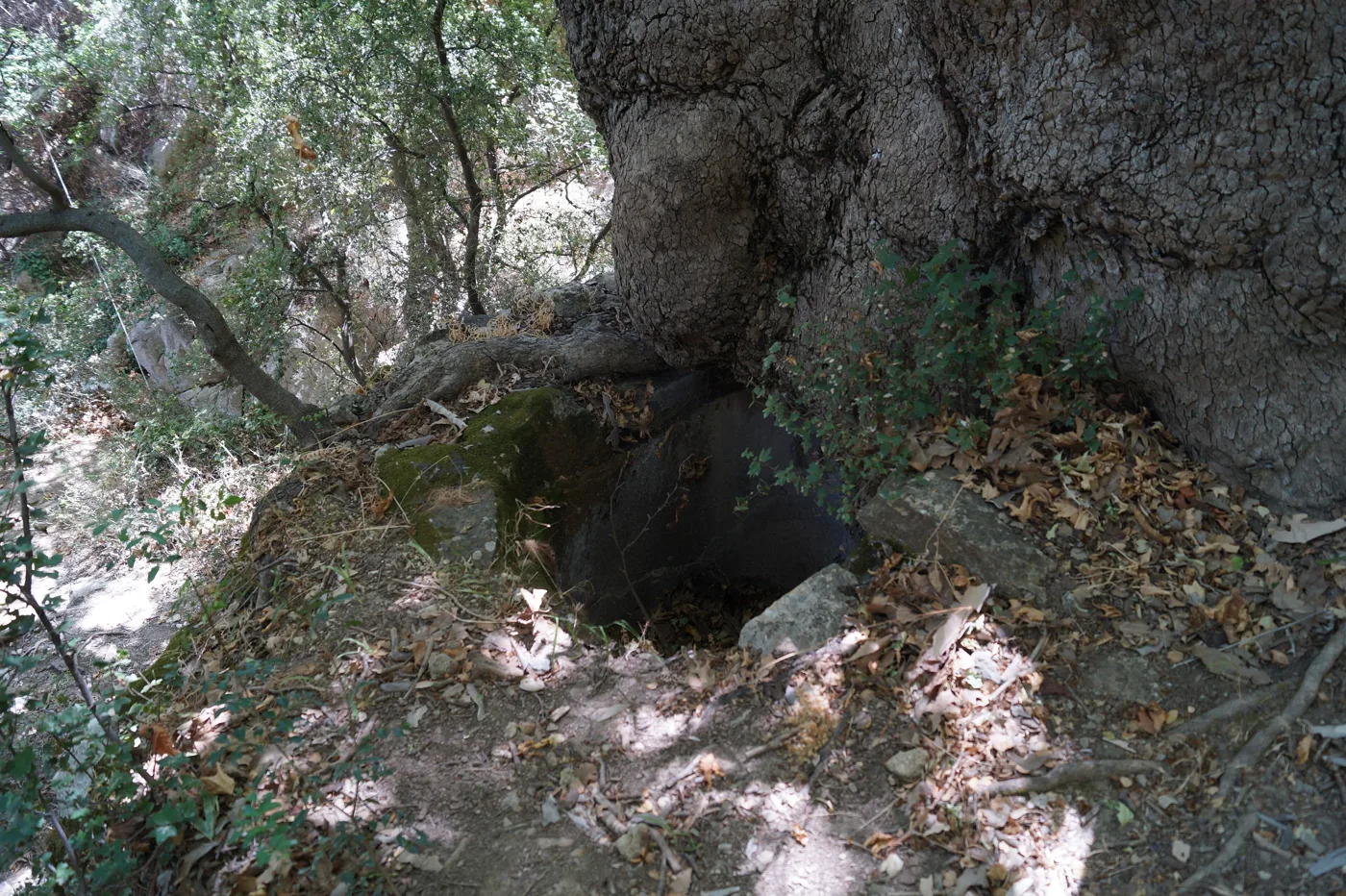
The water of the gorge drove mills.
Photos: Schuppi (CC BY-SA 4.0), Mark Landon (CC BY 4.0), Carole Raddato (CC BY-SA 2.0), Robin Iversen Rönnlund (CC BY-SA 3.0) · Wikimedia Commons
🏖️ Kanali, Askeli and the beaches
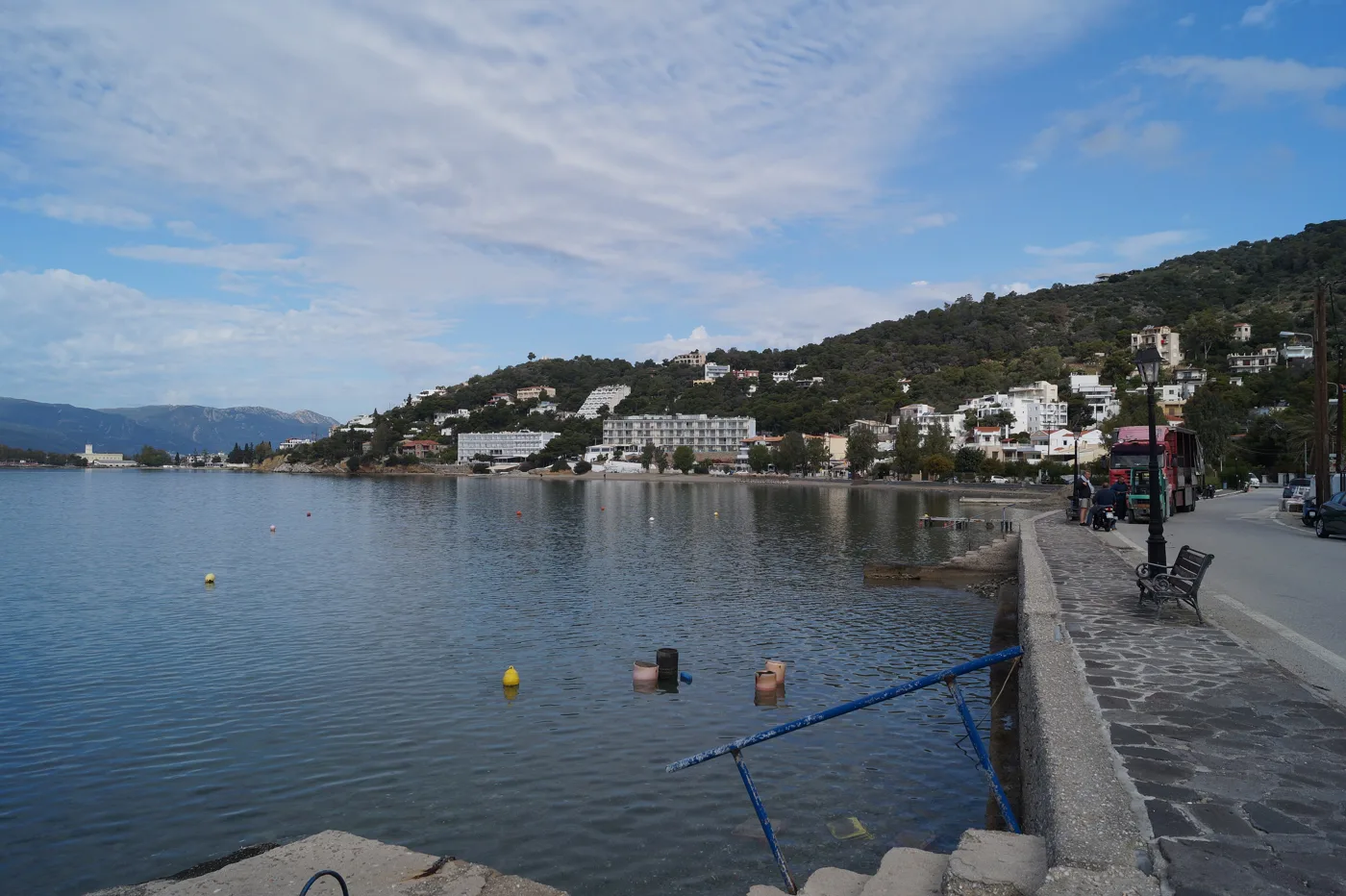
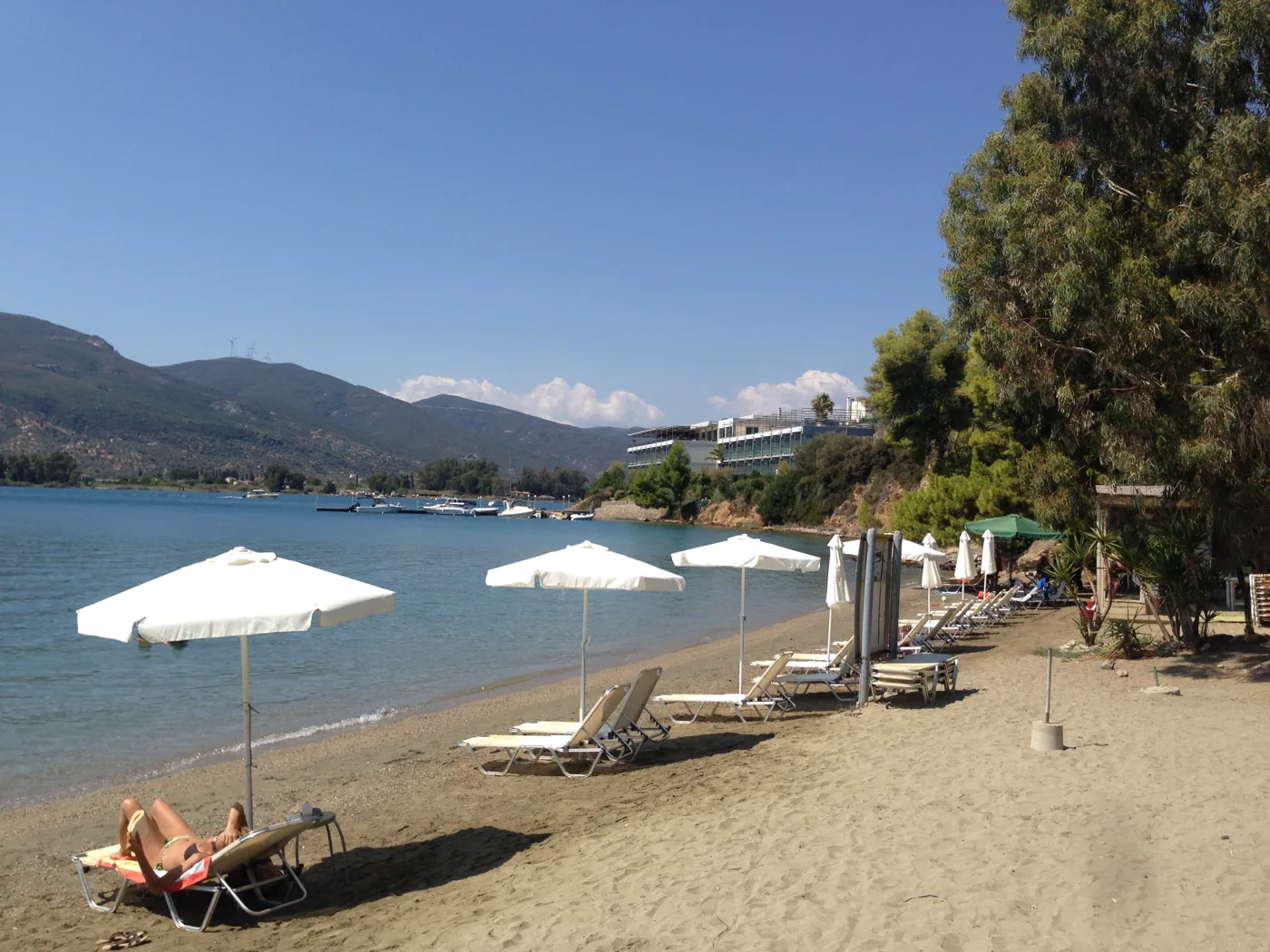
The beaches of Poros are small, with coarse sand or pebbles, and all of them among pines. Kanali, next to the bridge that joins the two islands, is the town beach, 15 minutes on foot from the waterfront, with the chapel of the Dormition at its end. Askeli, 2 kilometres further on, is the biggest and the best organised, with hotels, sunbeds, water sports and tavernas: the beach for families. Monastiri, below the Monastery of Zoodochos Pigi, is a quiet sandy beach with sunbeds and a bar. West of the town, Neorio, small and big, has water sports and bars, and a little further on Love Bay, the most photographed beach on the island, a thirty-metre strip of sand in the pines that fills up by eleven. In the north, Vagionia is a remote cove where, under the water, you can see the foundations of an ancient town.
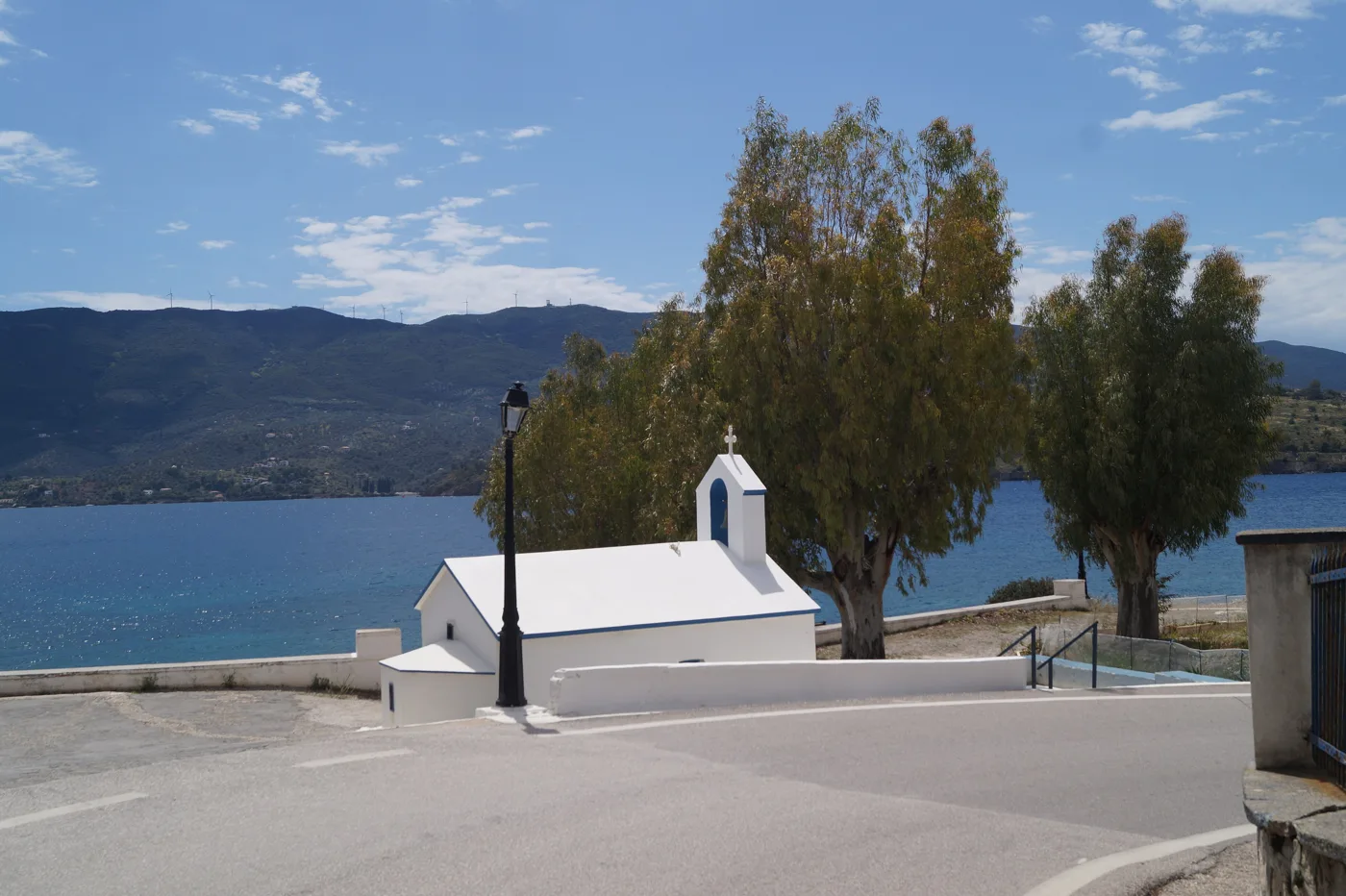
The town beach, next to the bridge.
At the point where the two islands meet.
The big beach, 20 minutes from the town.
Organised, with water sports.
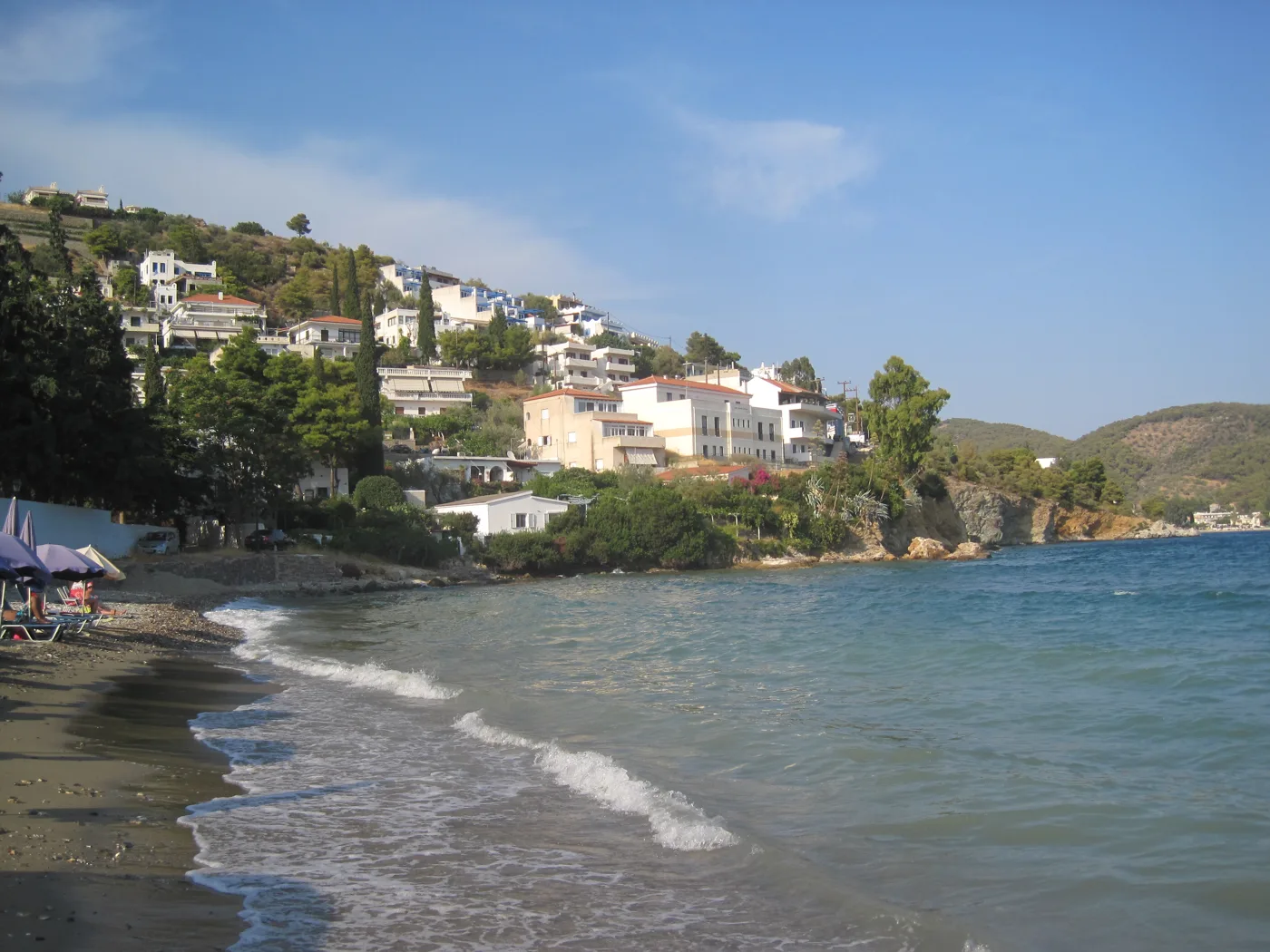
The small coves of Kalaureia.
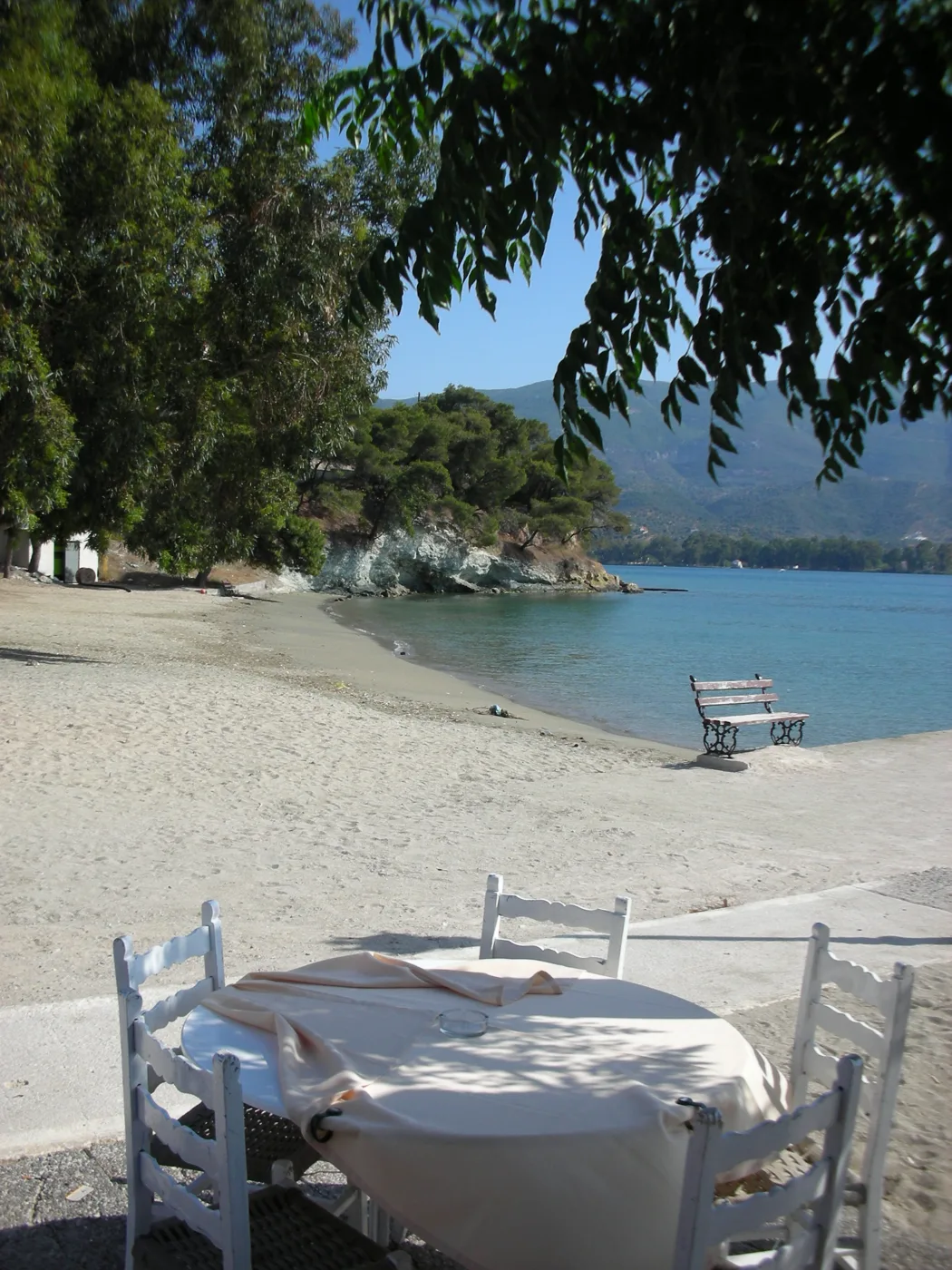
A meal with your feet in the sand.
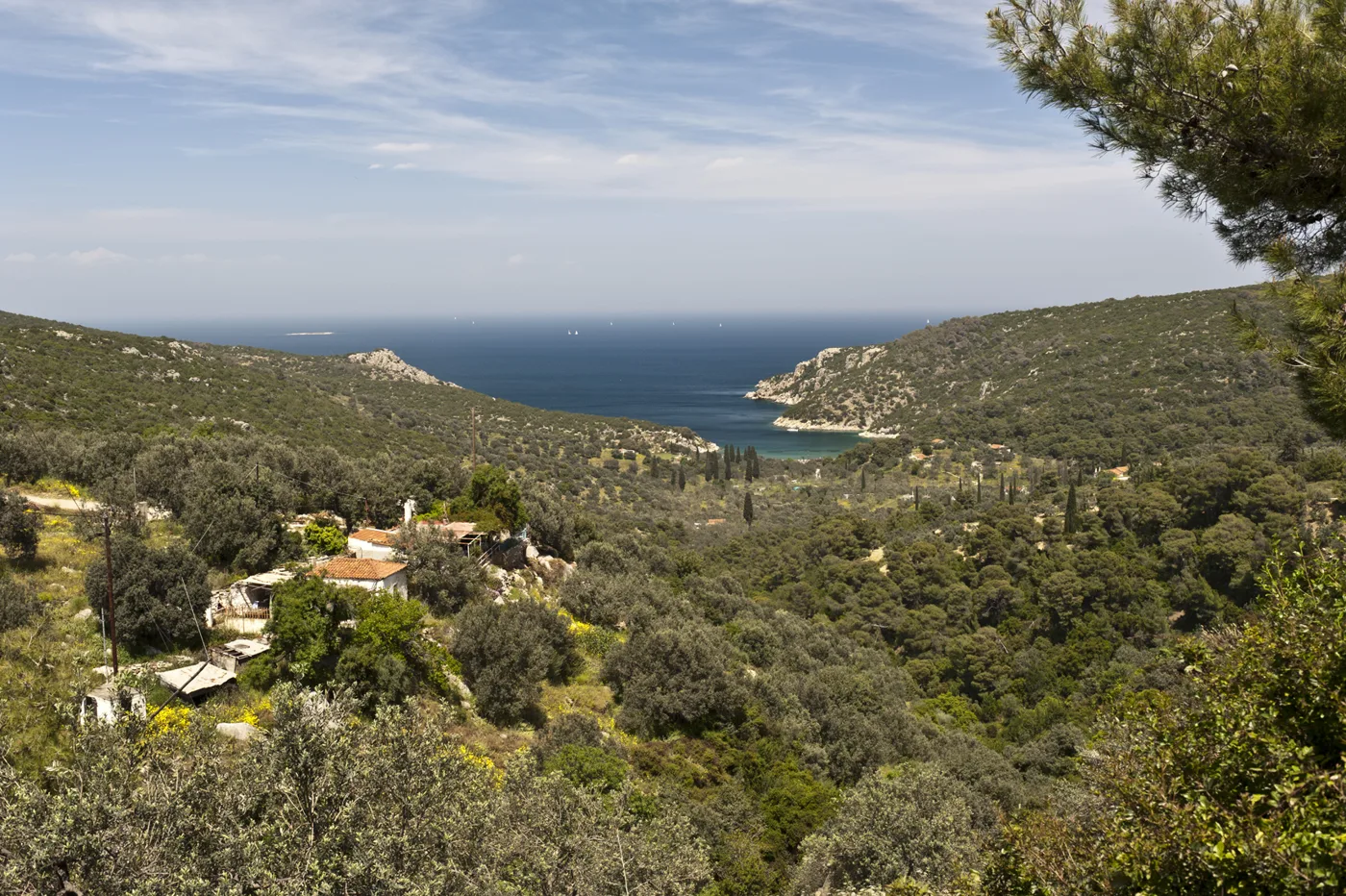
All the beaches of Poros have pines.
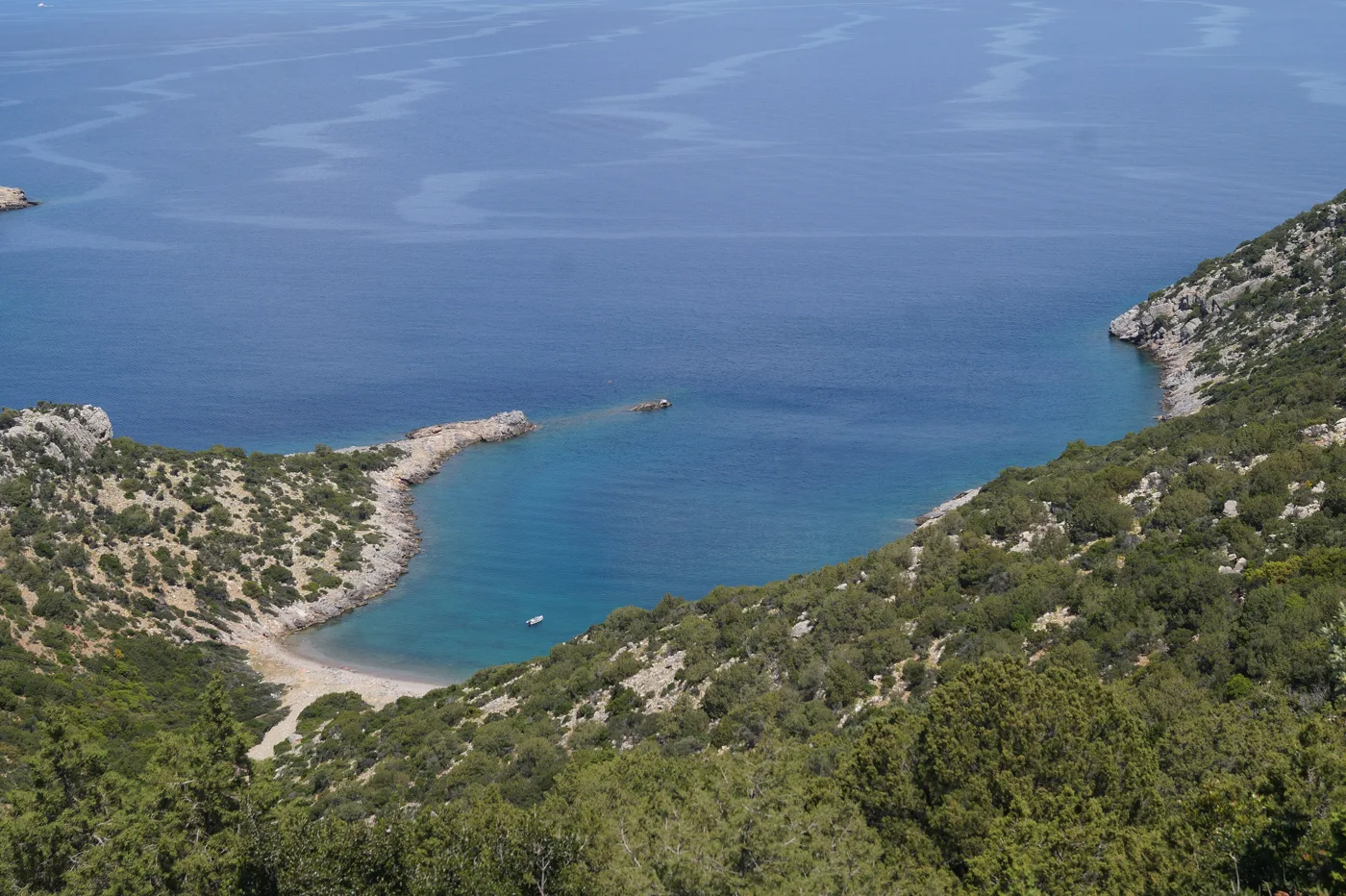
On the north coast, quiet.
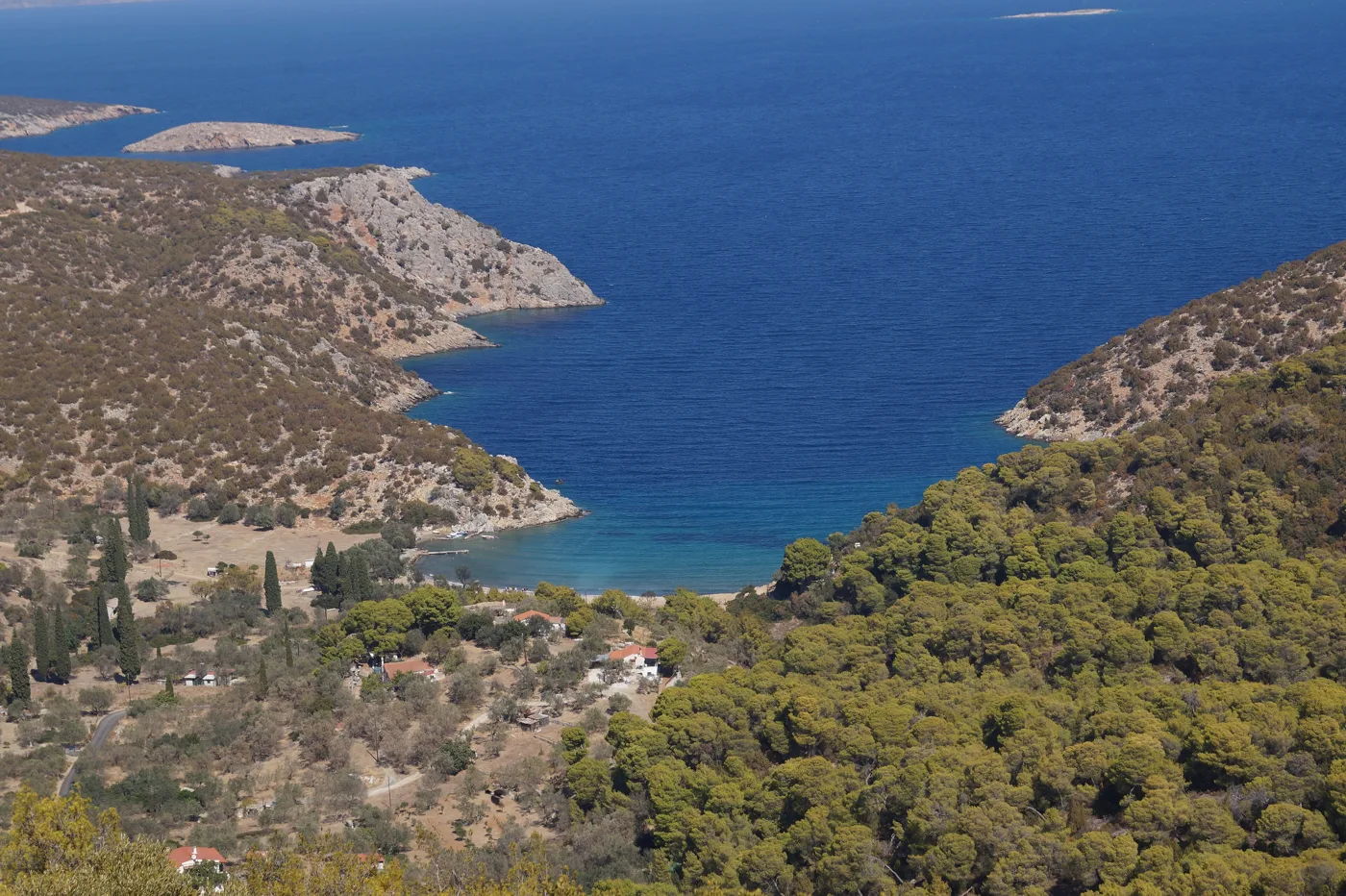
With the foundations of an ancient town under the water.
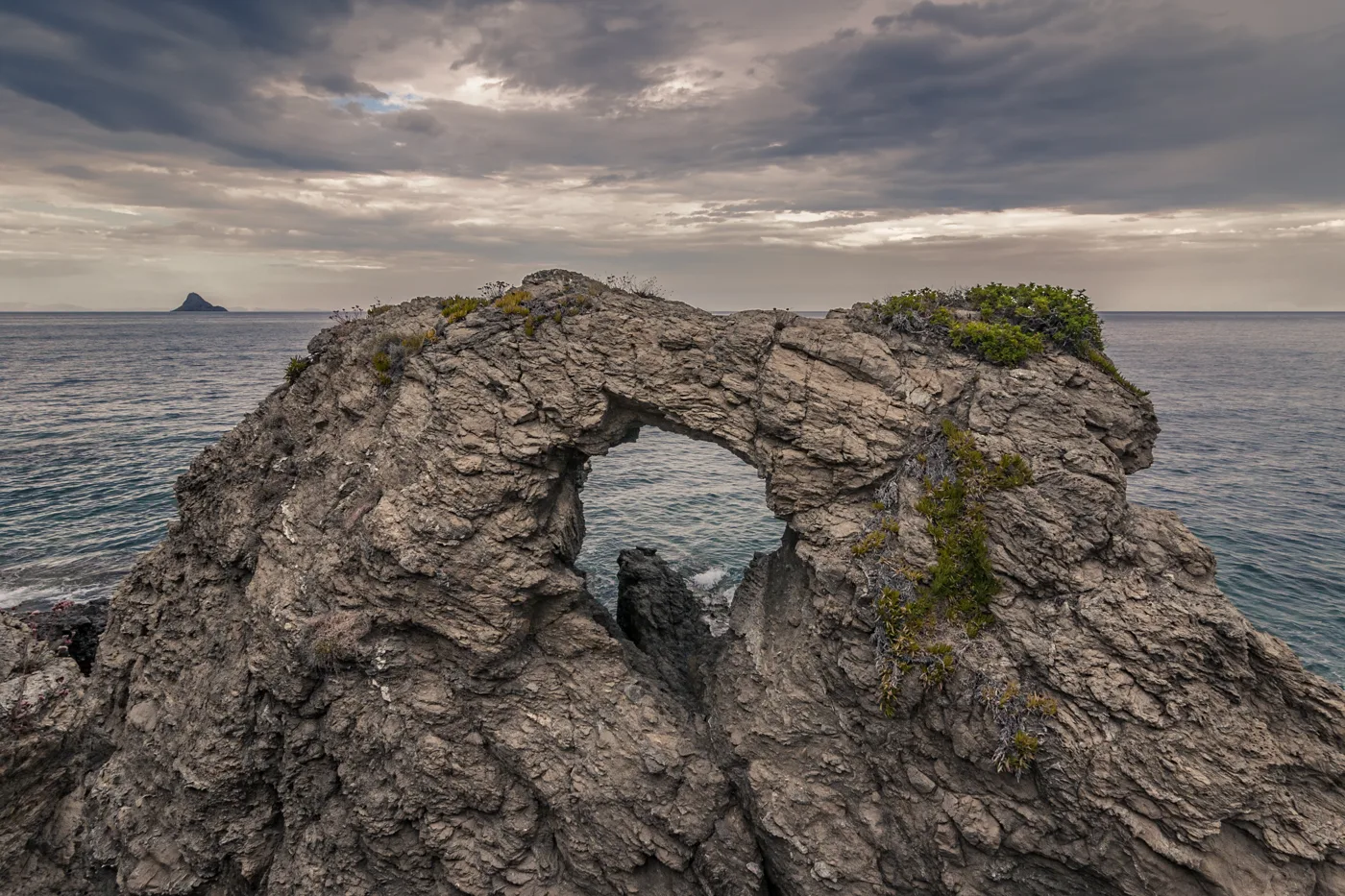
On the rocks of the coast.
The rock that looks like a ship.
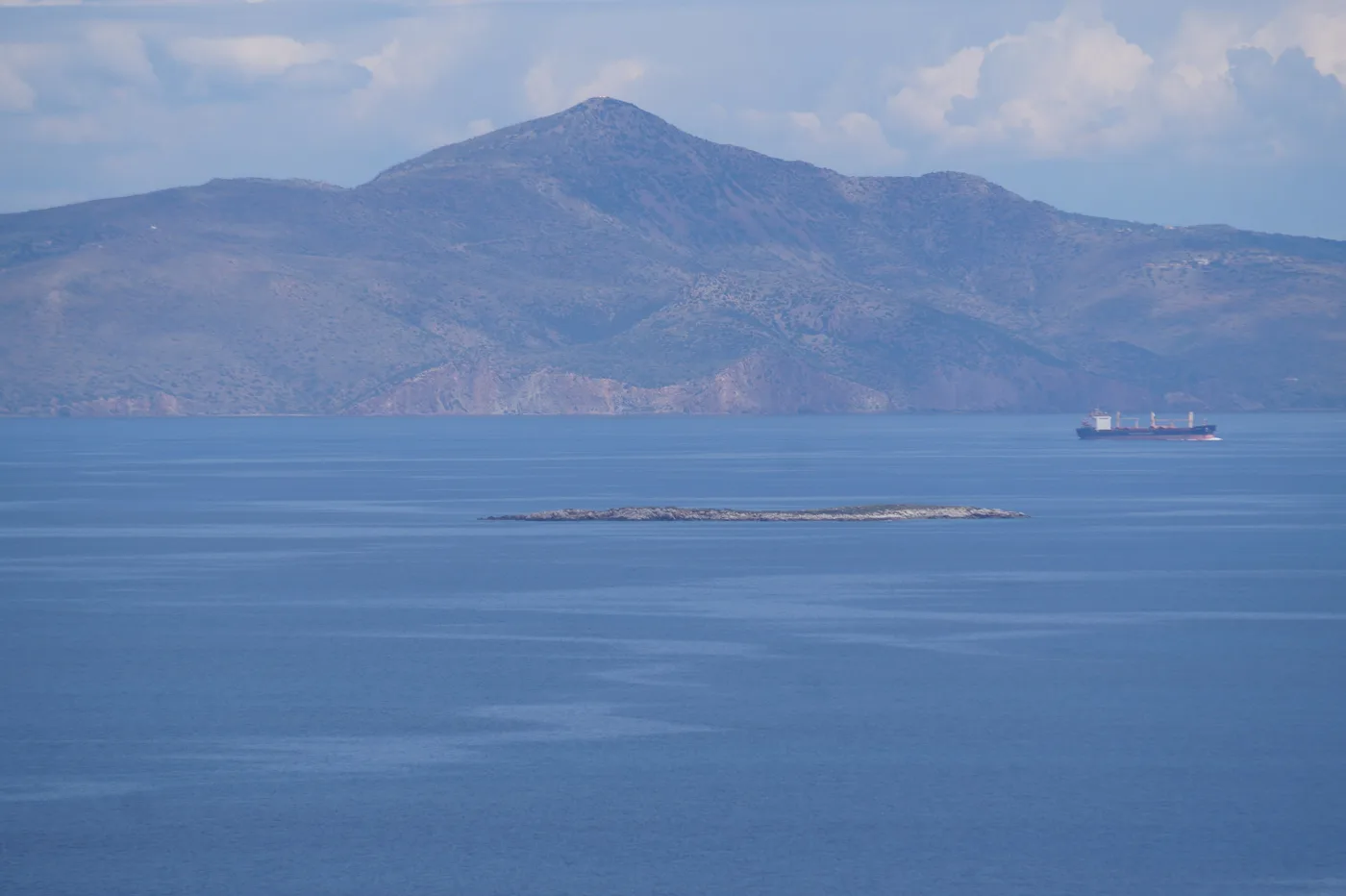
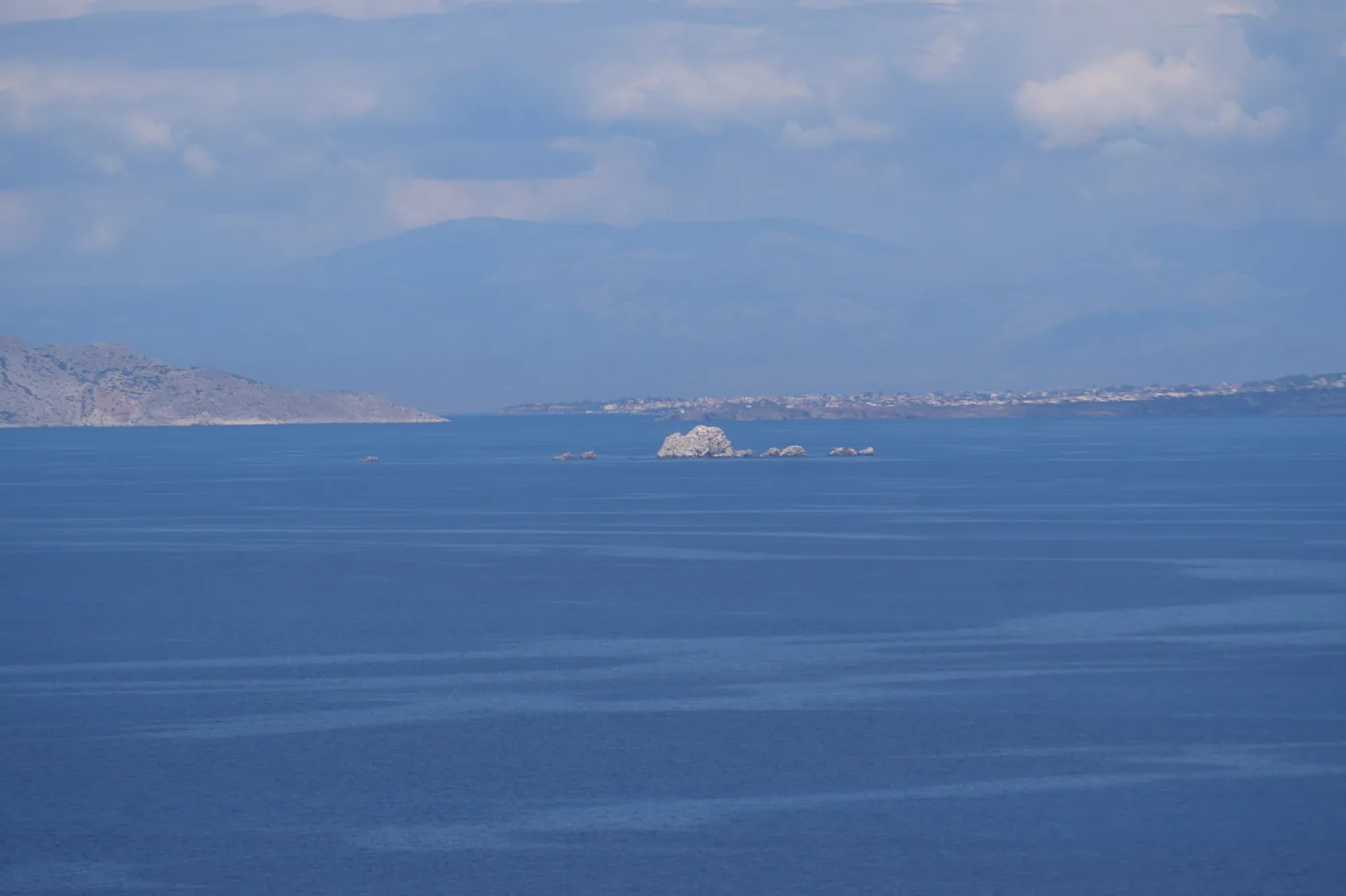
The islets around Poros.
Photos: Schuppi (CC BY-SA 4.0), Agustin Bartolome (CC BY-SA 3.0), Qweasdqwe (CC BY-SA 4.0), Justkillingtime (Public domain), Neil Aitkenhead (CC BY-SA 3.0), sage_solar (CC BY 2.0) · Wikimedia Commons
🌲 Love Bay and the Russian Naval Station
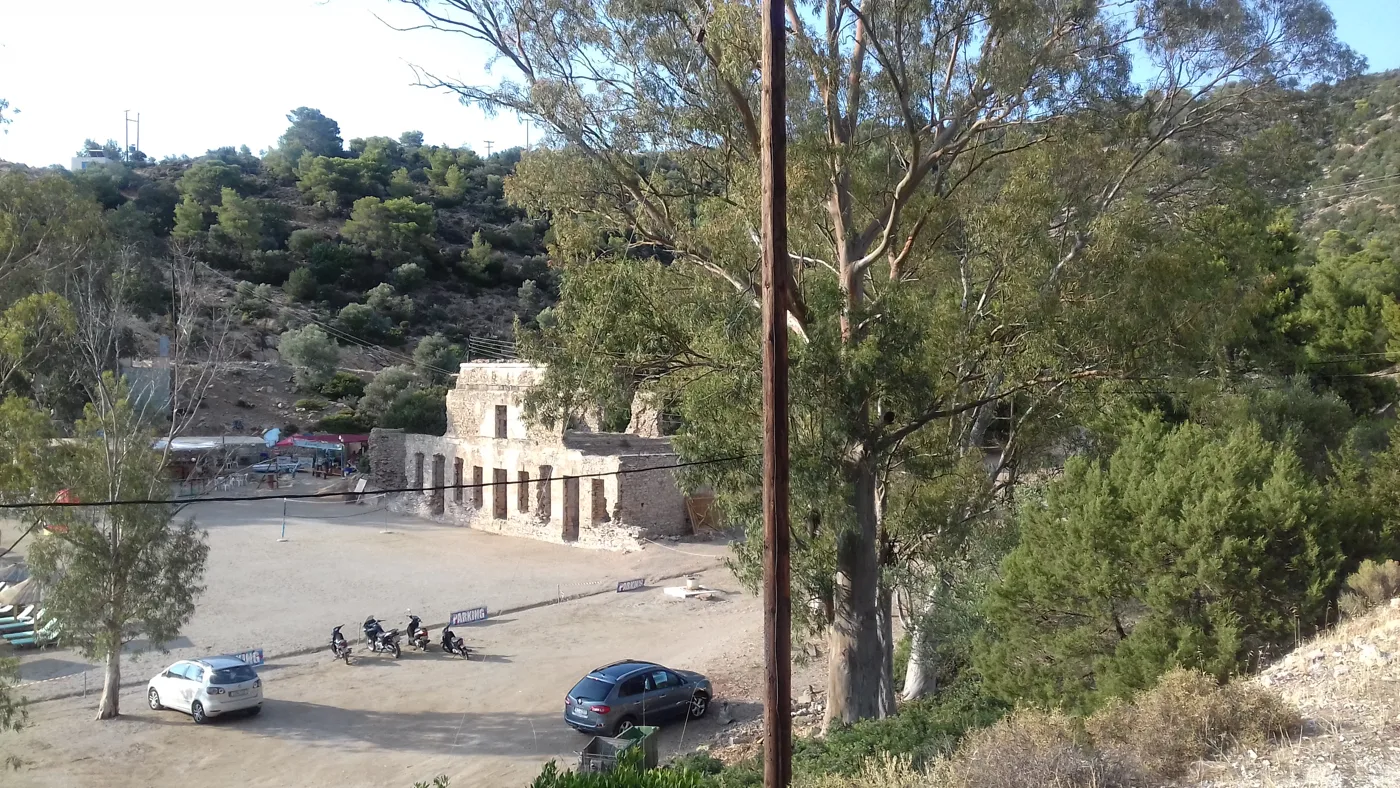
The western bus line, or twenty minutes by scooter, takes you from Neorio to Love Bay and the Russian Naval Station, at the end of Kalaureia. In 1834, by agreement between Greece and Russia, the Russians built here the warehouses that supplied their Mediterranean fleet with hardtack, rope and ammunition: stone buildings with arches, a small naval station in the pines, abandoned in the early 20th century. The ruins, dry and standing, sit beside Russian Bay, pebbles and calm water, with a chapel on the rocks and the sailing boats anchoring in the bay. It is the most remote and the most atmospheric bay on the island, and the best place for a swim away from the crowds of Askeli.
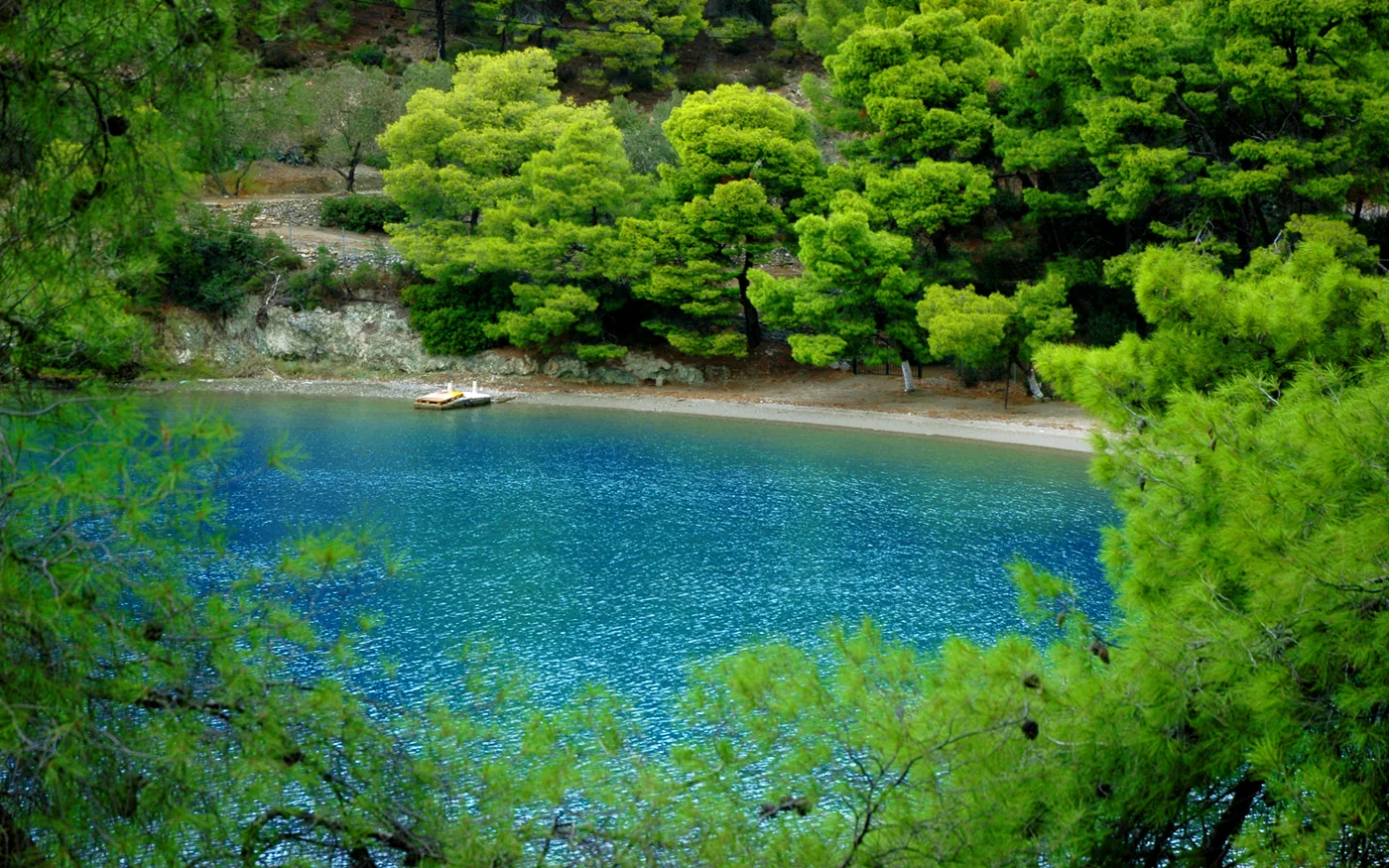
The most photographed beach on the island.
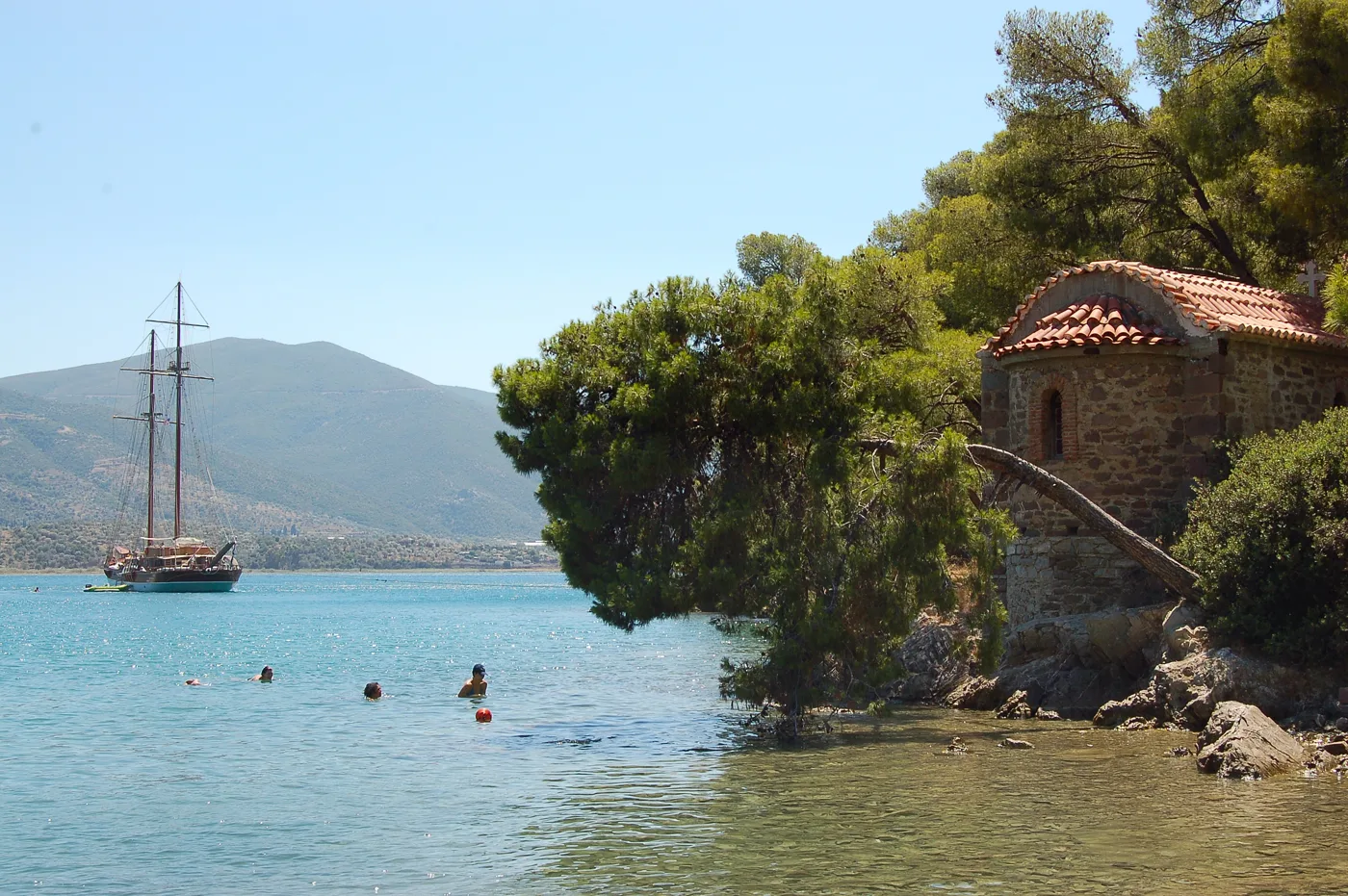
Sailing ships and a chapel on the rocks.
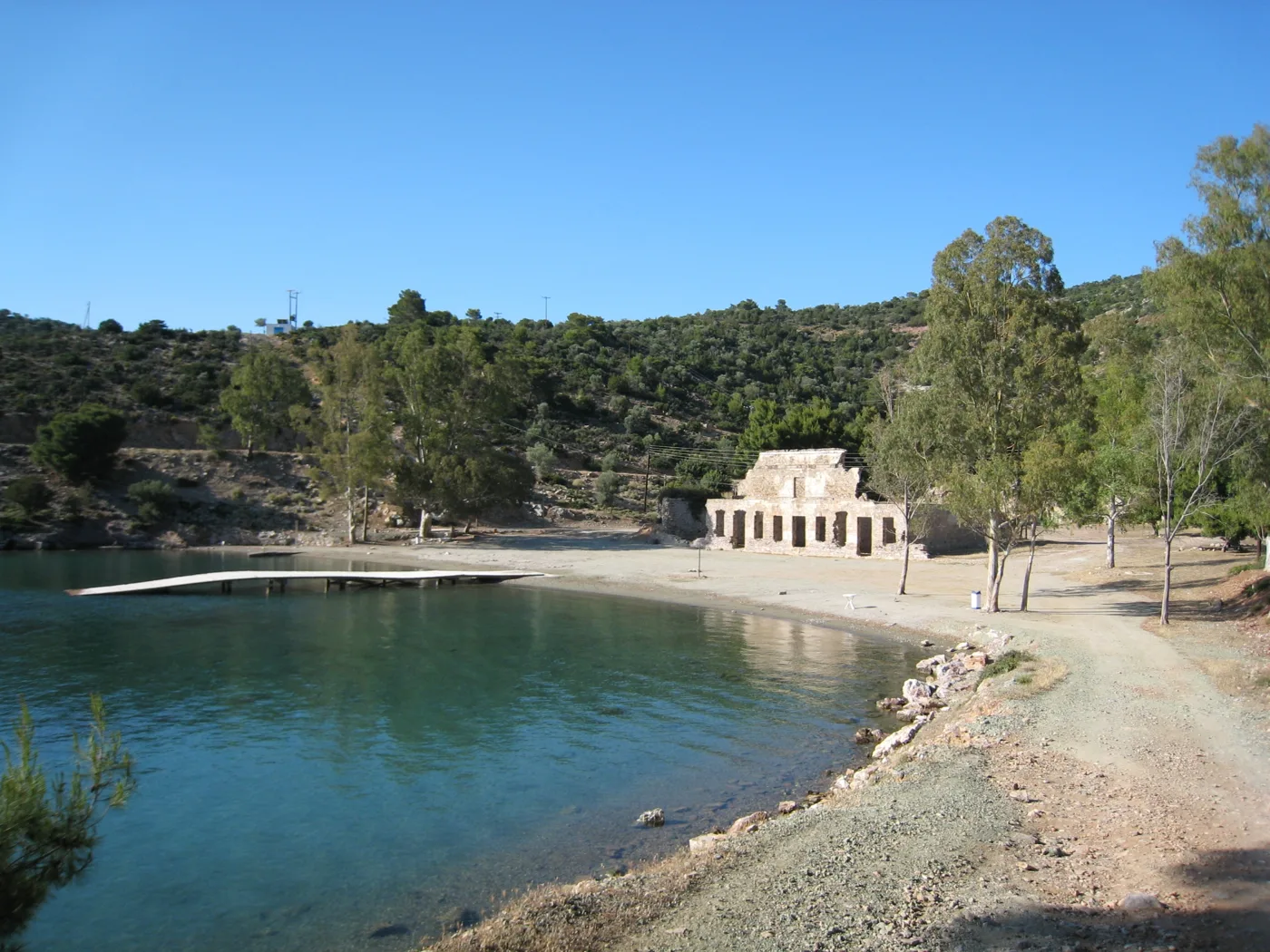
Pebbles and calm water.
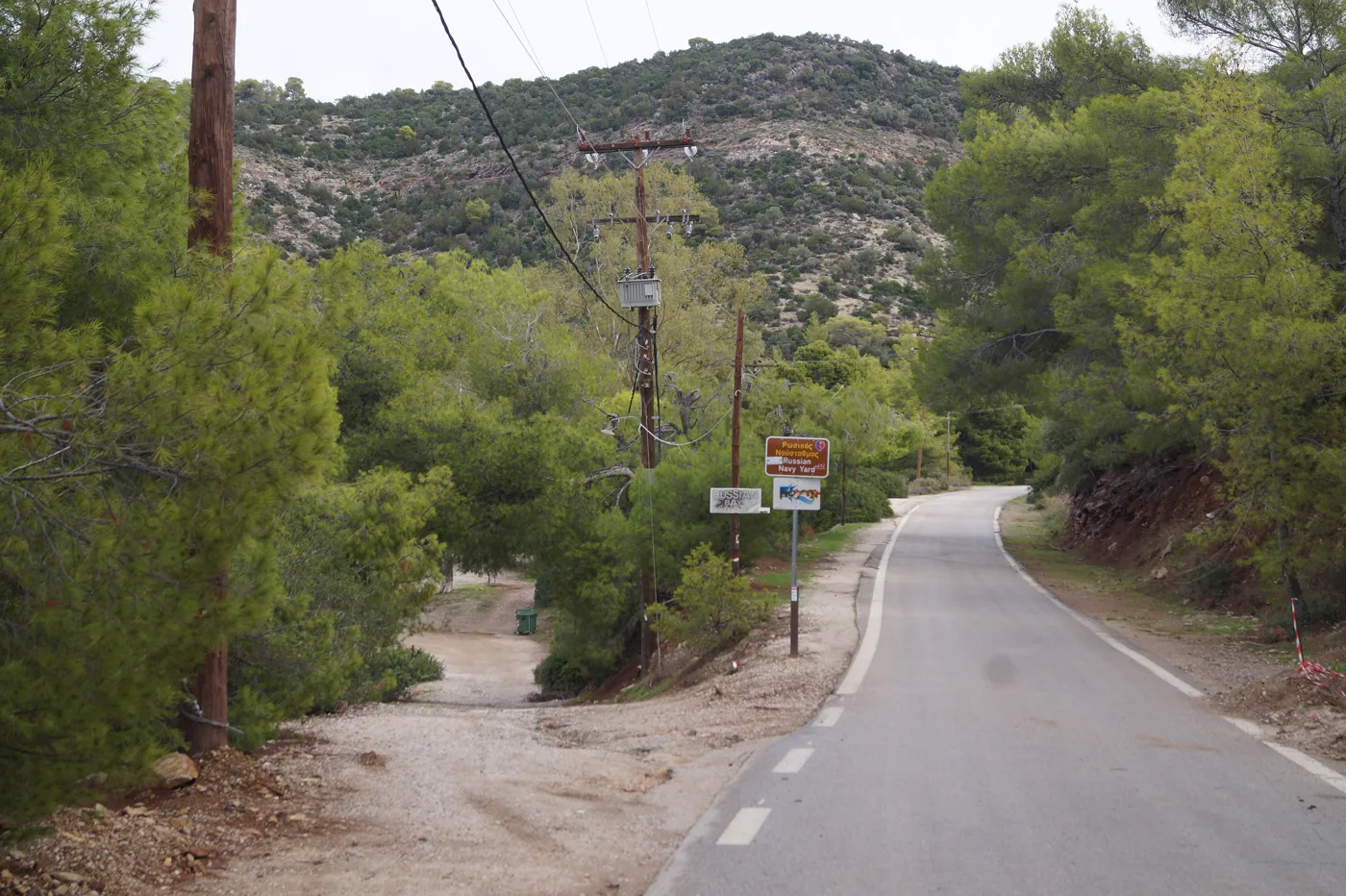
In the pines.
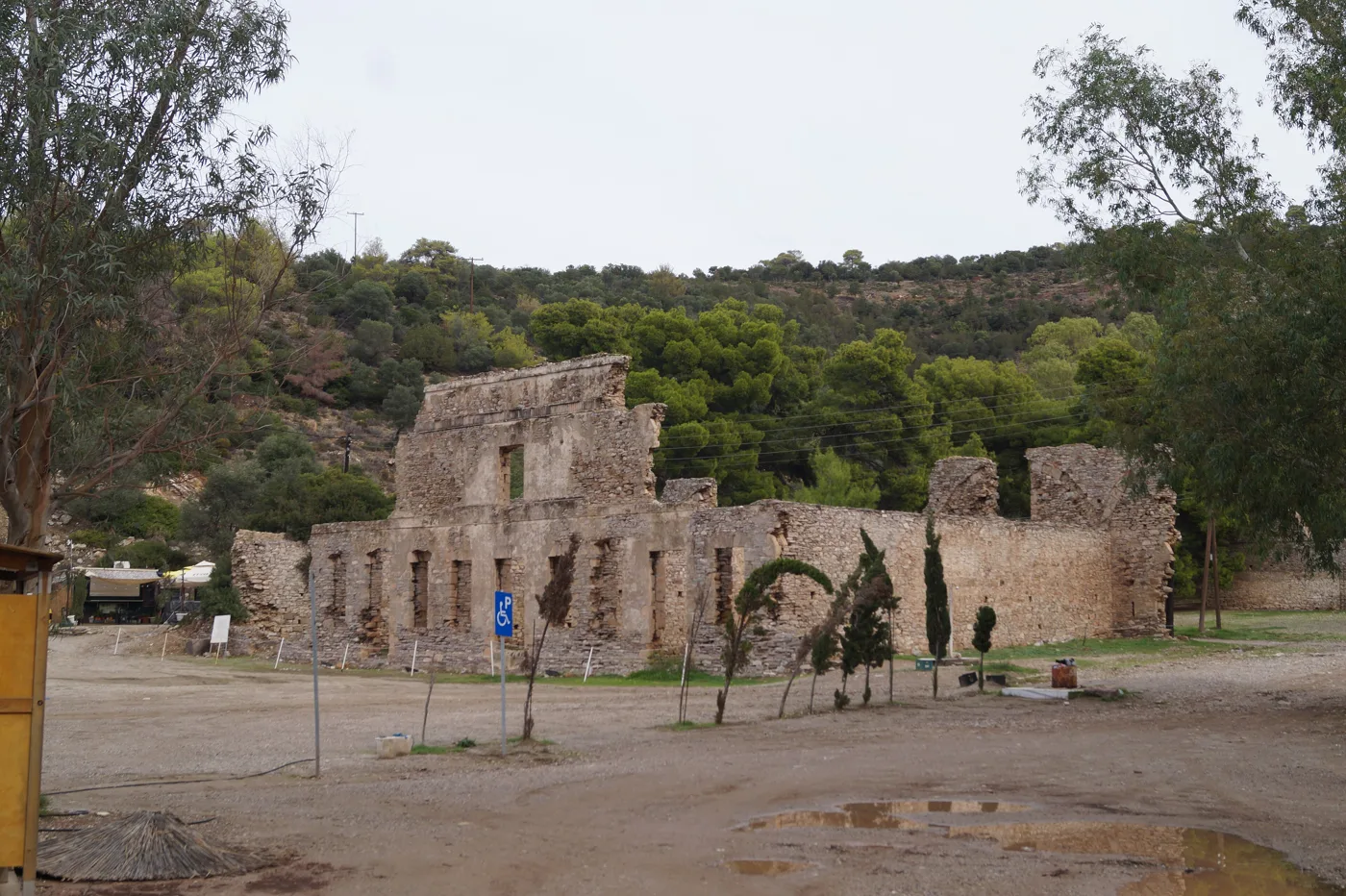
The warehouses of the Russian fleet, from 1834.
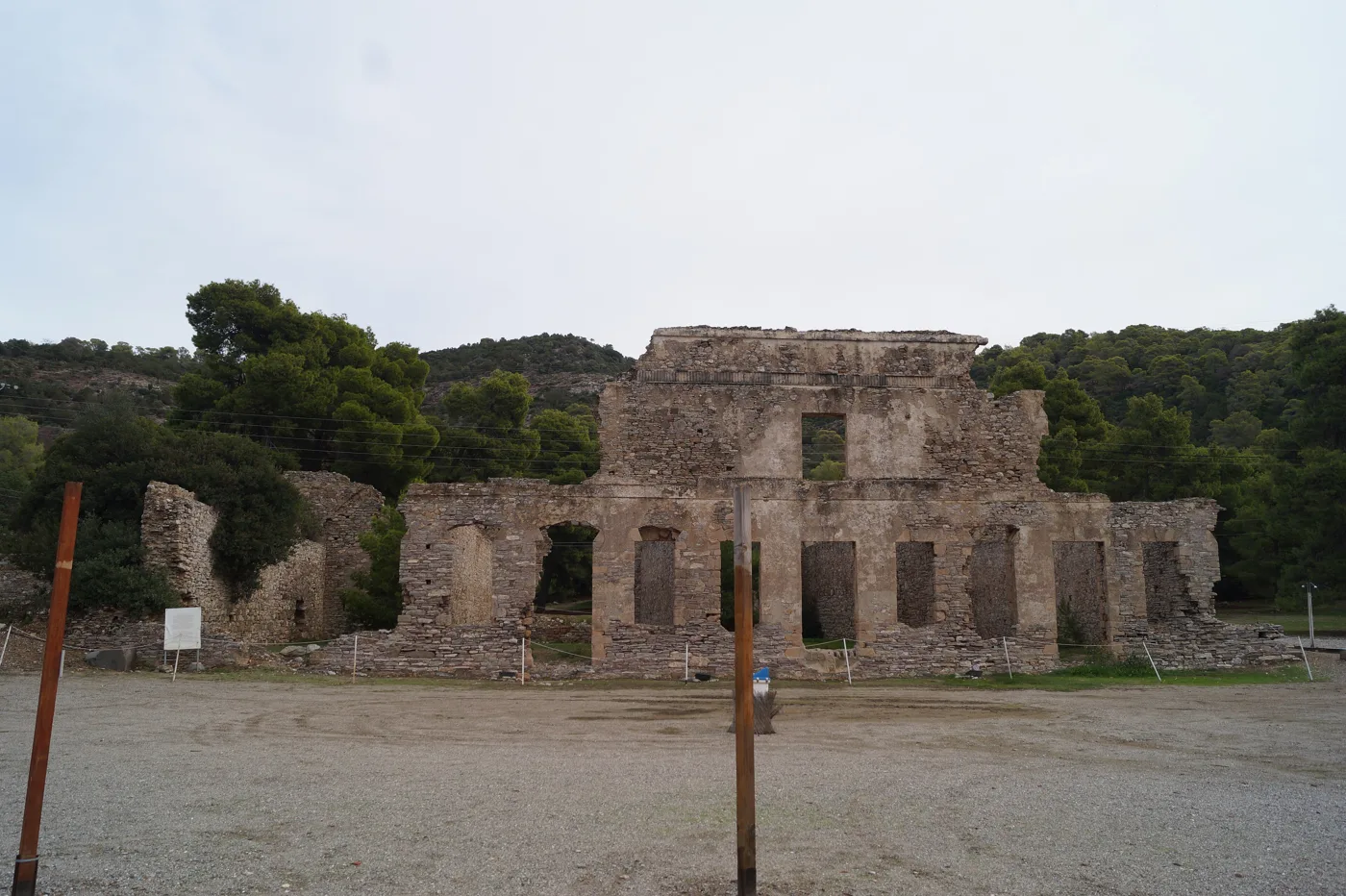
Stone and arches.
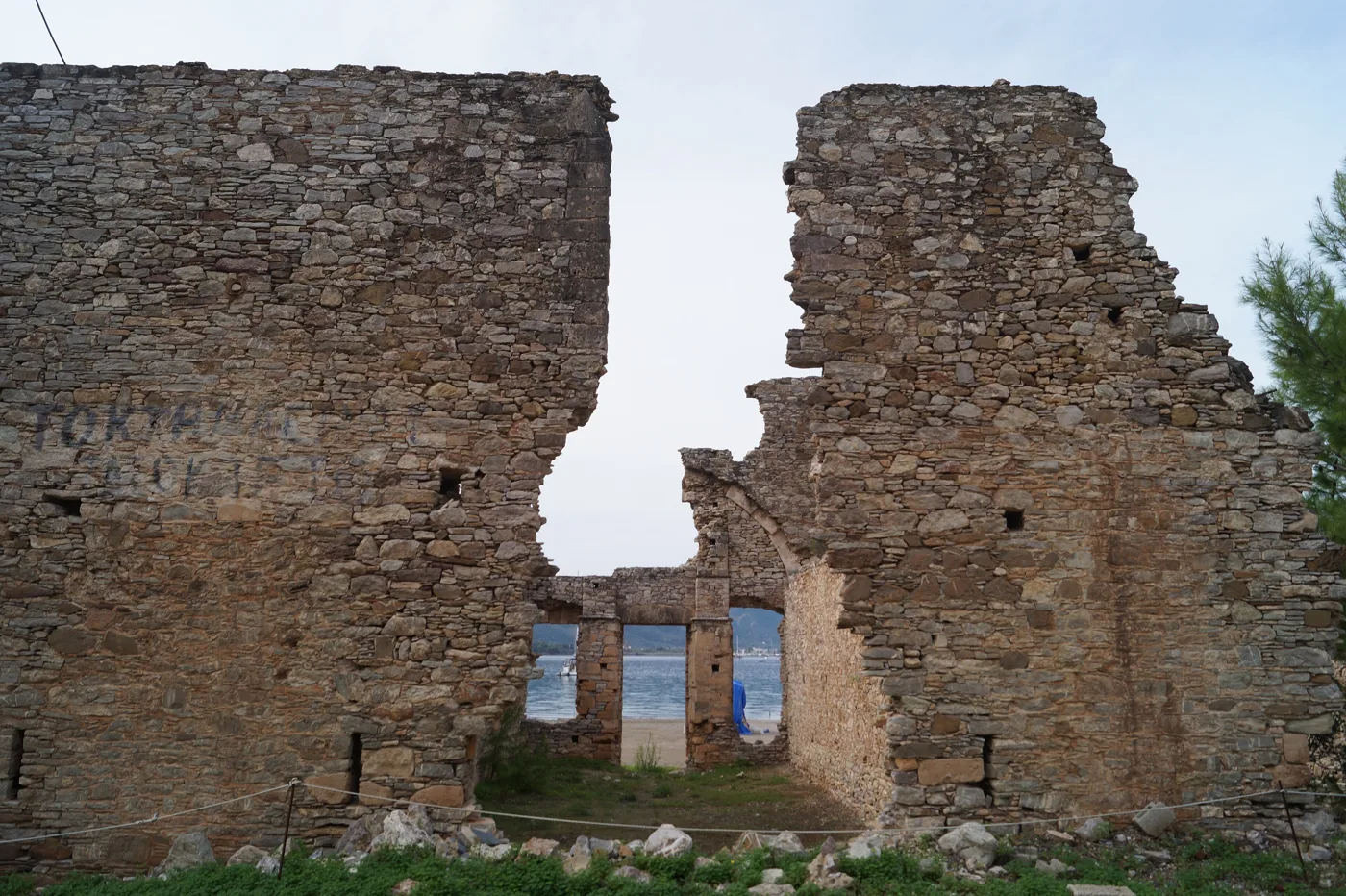
Warehouses for hardtack and rope.
By bus or by scooter.
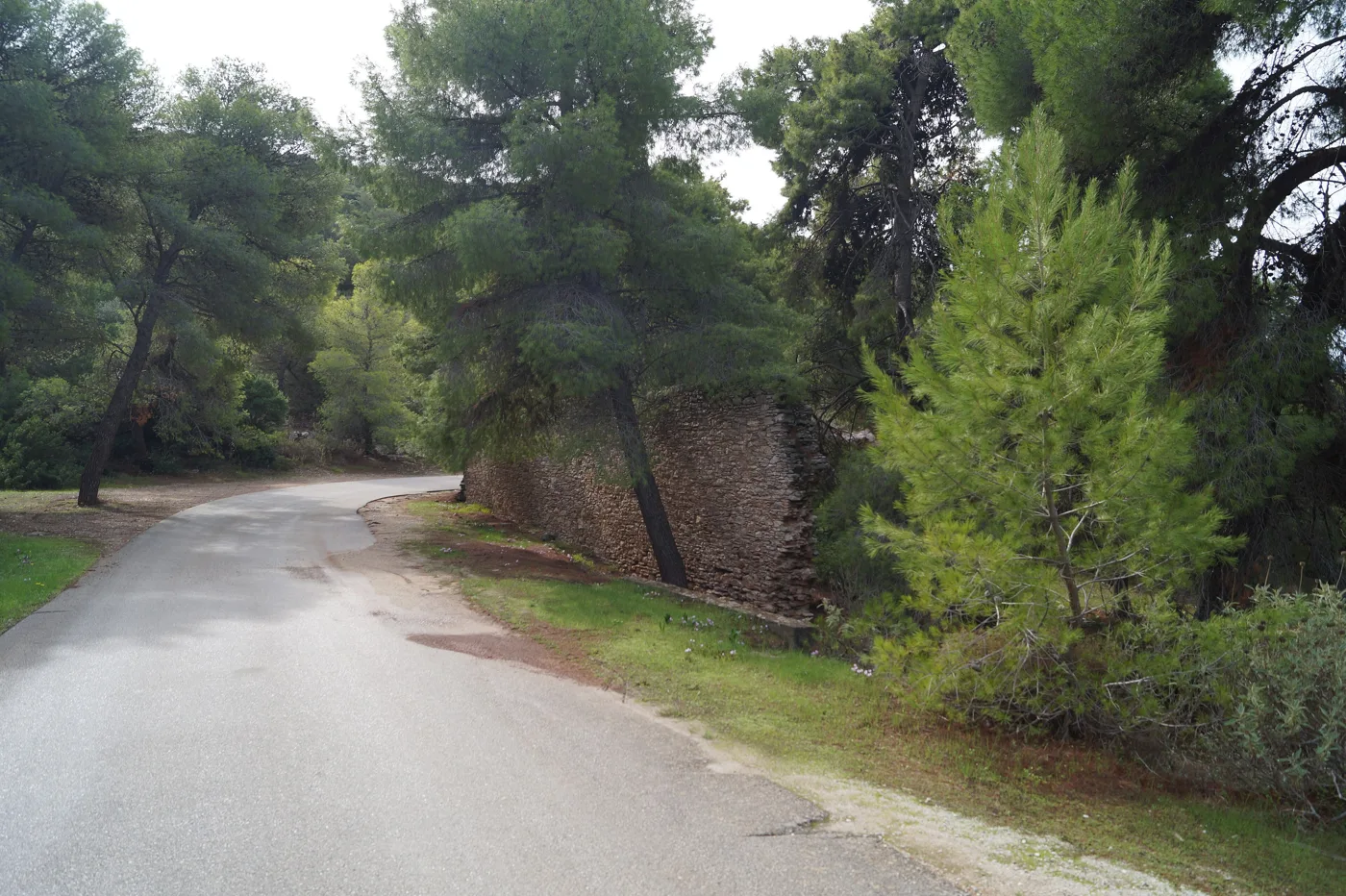
Kalaureia is pines.
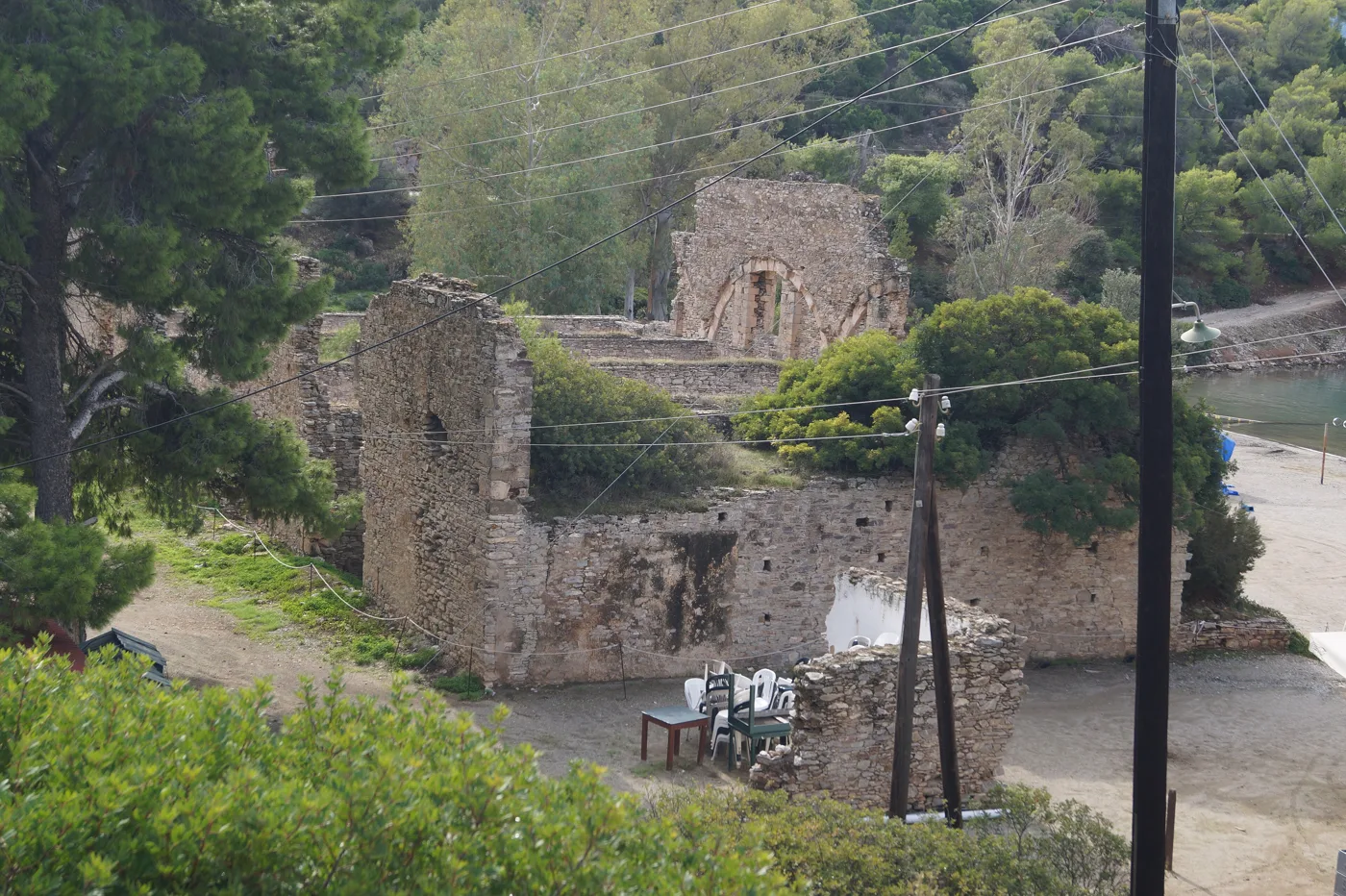
History among the trees.
Photos: G Da (CC BY-SA 3.0), Michael Paraskevas (CC BY-SA 3.0), Joyradost (CC BY-SA 3.0), Schuppi (CC BY-SA 4.0), KSKatsikopoulou (CC BY-SA 4.0) · Wikimedia Commons
⛪ The Monastery and the Temple of Poseidon
On the east coast, 4 kilometres from the town, the Monastery of Zoodochos Pigi, of 1720, is built above a spring of healing water, among pines and cypresses. In the church, a wood-carved iconostasis of the 17th century from Cappadocia, an icon of 1650 by Theodoros Poulakis and a sundial of 1820 on the wall; in the courtyard, the graves of the Hydriot naval commander Manolis Tombazis and of Nikolis Apostolis from Psara, and here, in 1830, Kapodistrias opened the first Ecclesiastical School in Greece. Drink water from the spring with the lion and have a lemonade at the café next door. From the Monastery, the road climbs to the centre of Kalaureia, at 190 metres, where among olive trees and pines is what remains of the Sanctuary of Poseidon, the Doric temple of the 6th century BC and the stoas of the Amphictyony: a few stones, because the Hydriots took the rest in the 18th century to build their mansions, but the view to Methana and Aegina, the silence and the plaque to Demosthenes are worth the road. The Swedes excavated it in 1894 and again from 1997 to 2012, and the Swedish Institute carries on. Free entrance.
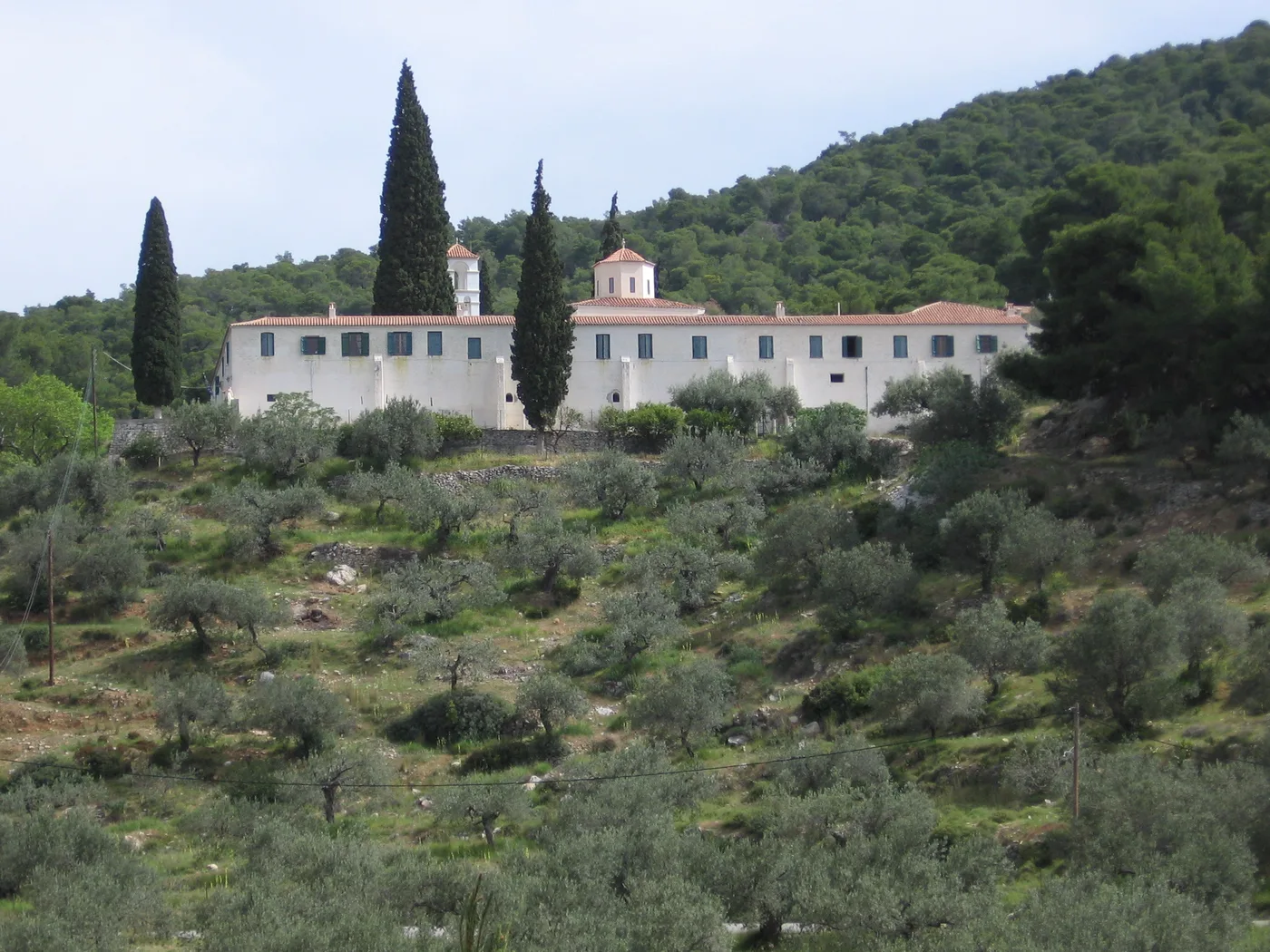
Since 1720, above a spring.
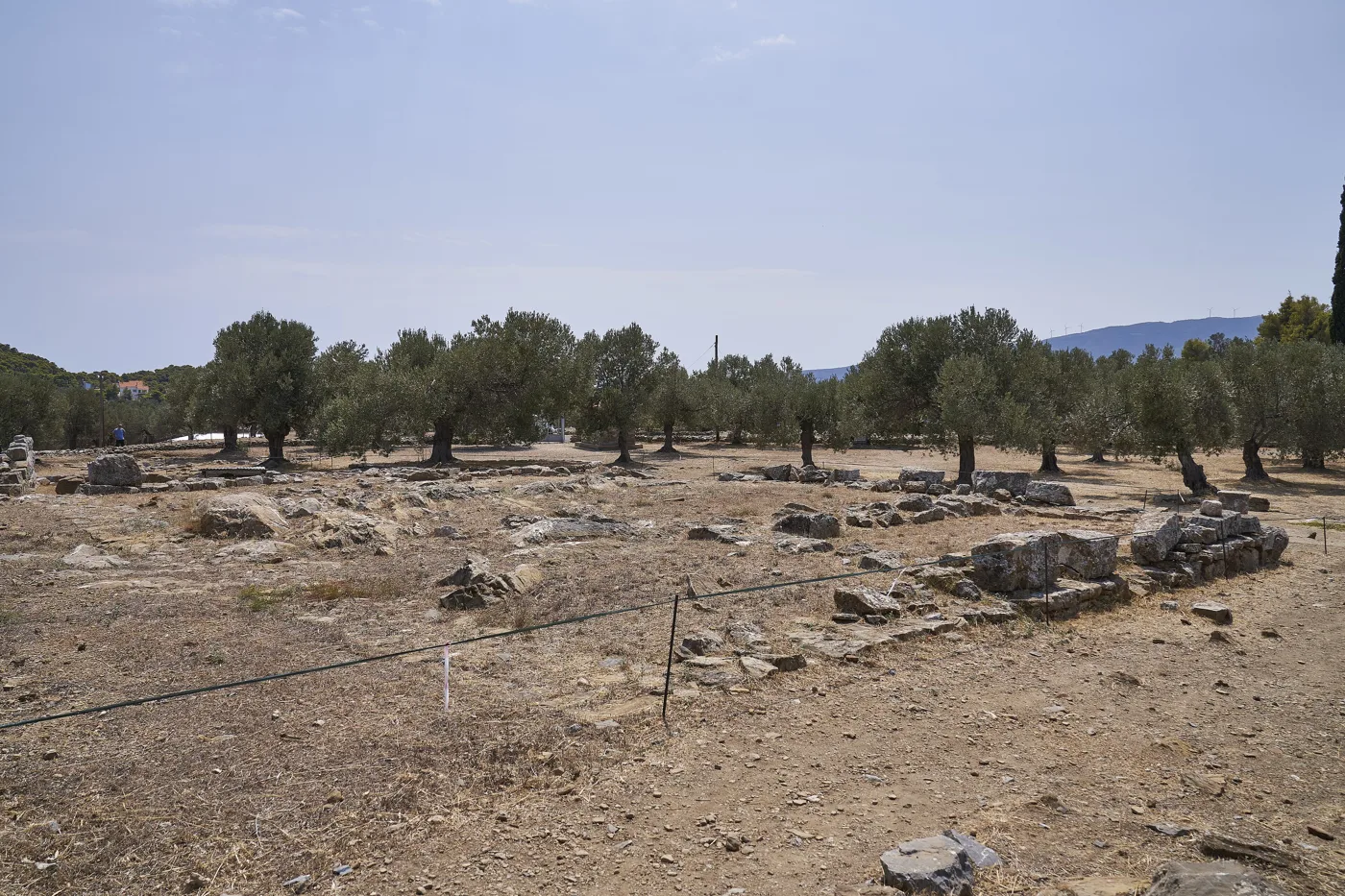
The Sanctuary of Poseidon, 6th century BC.
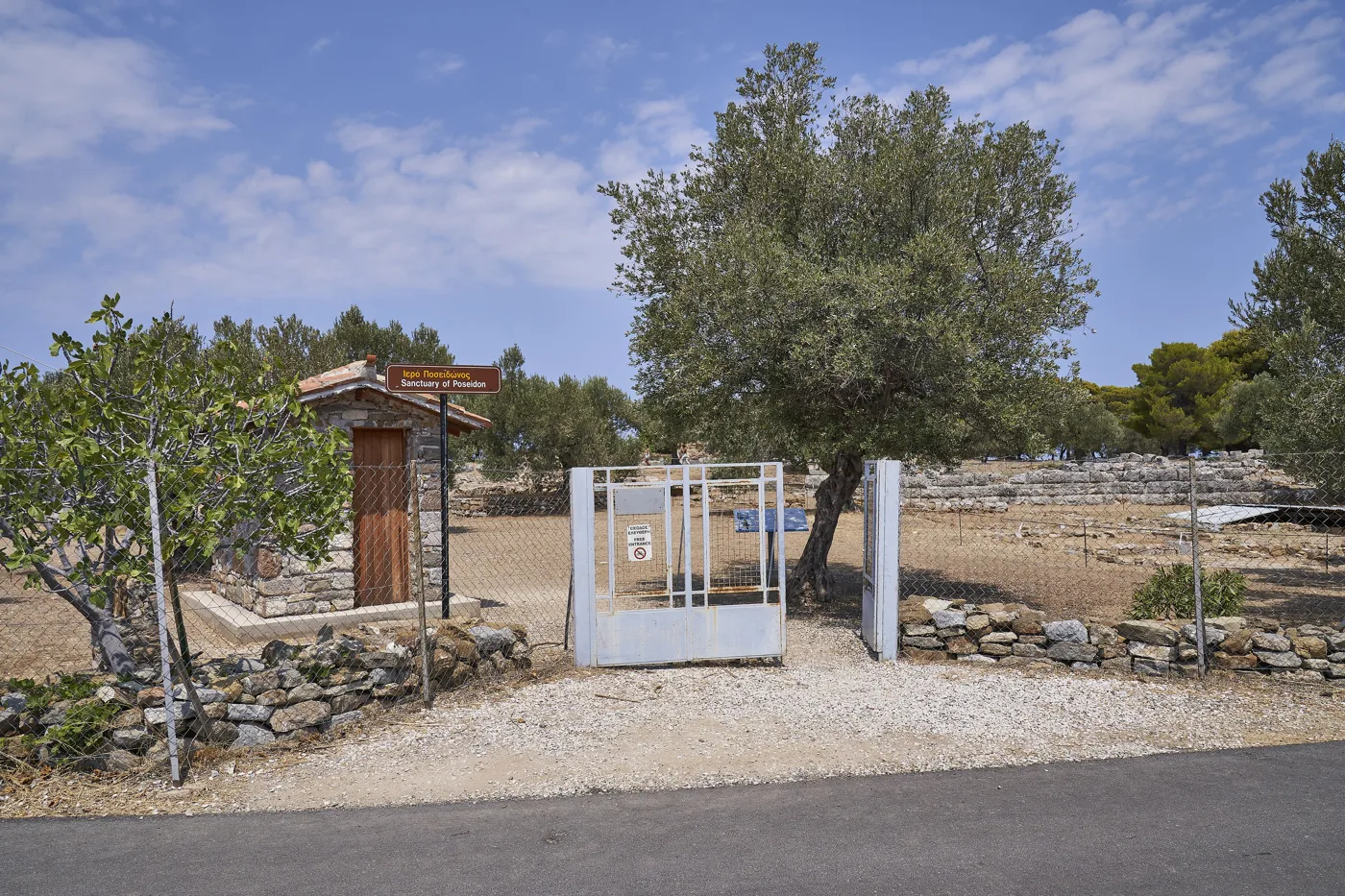
Free entrance.
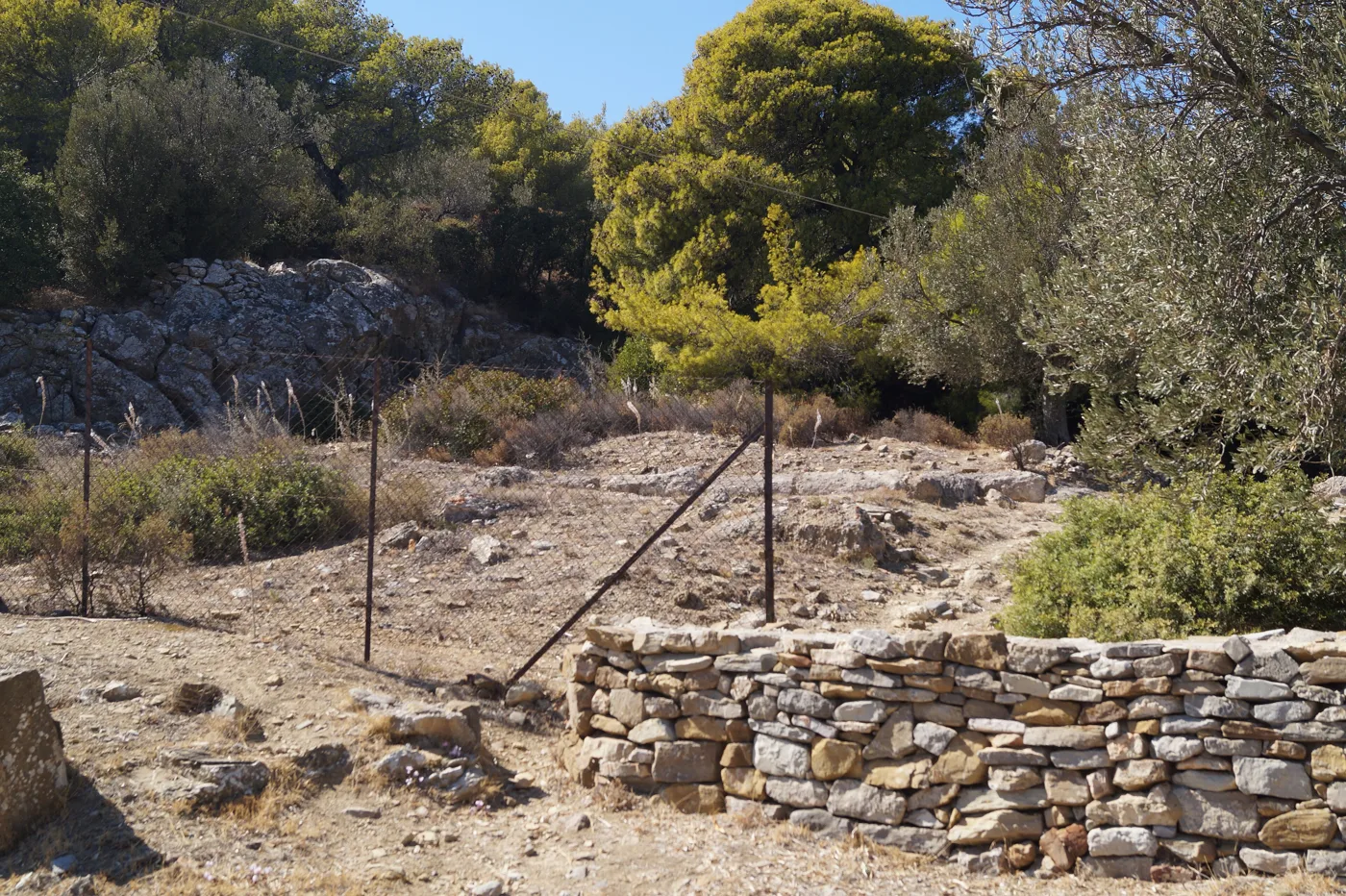
A few stones: the Hydriots took the rest.
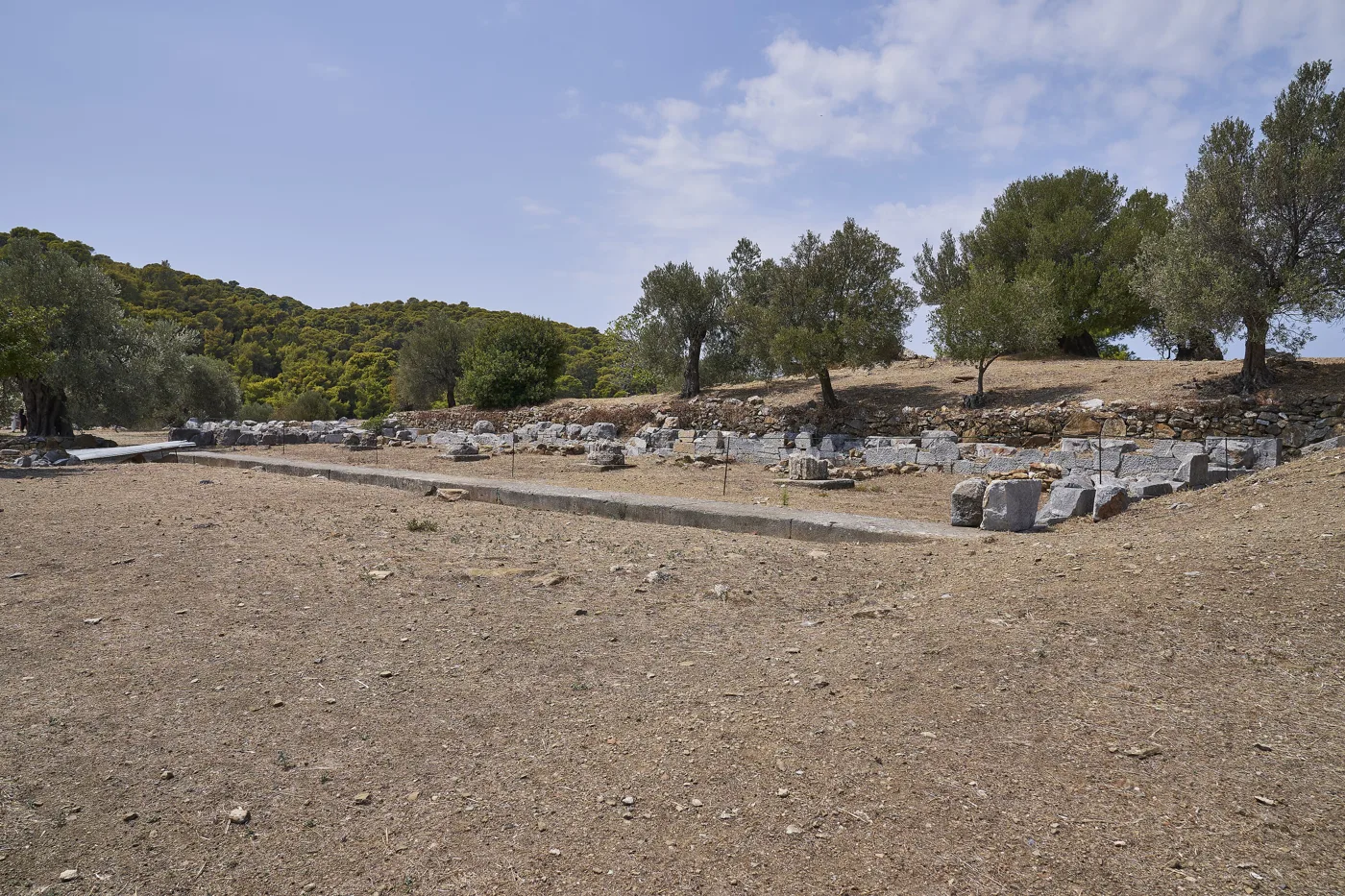
The stoas around the temple.
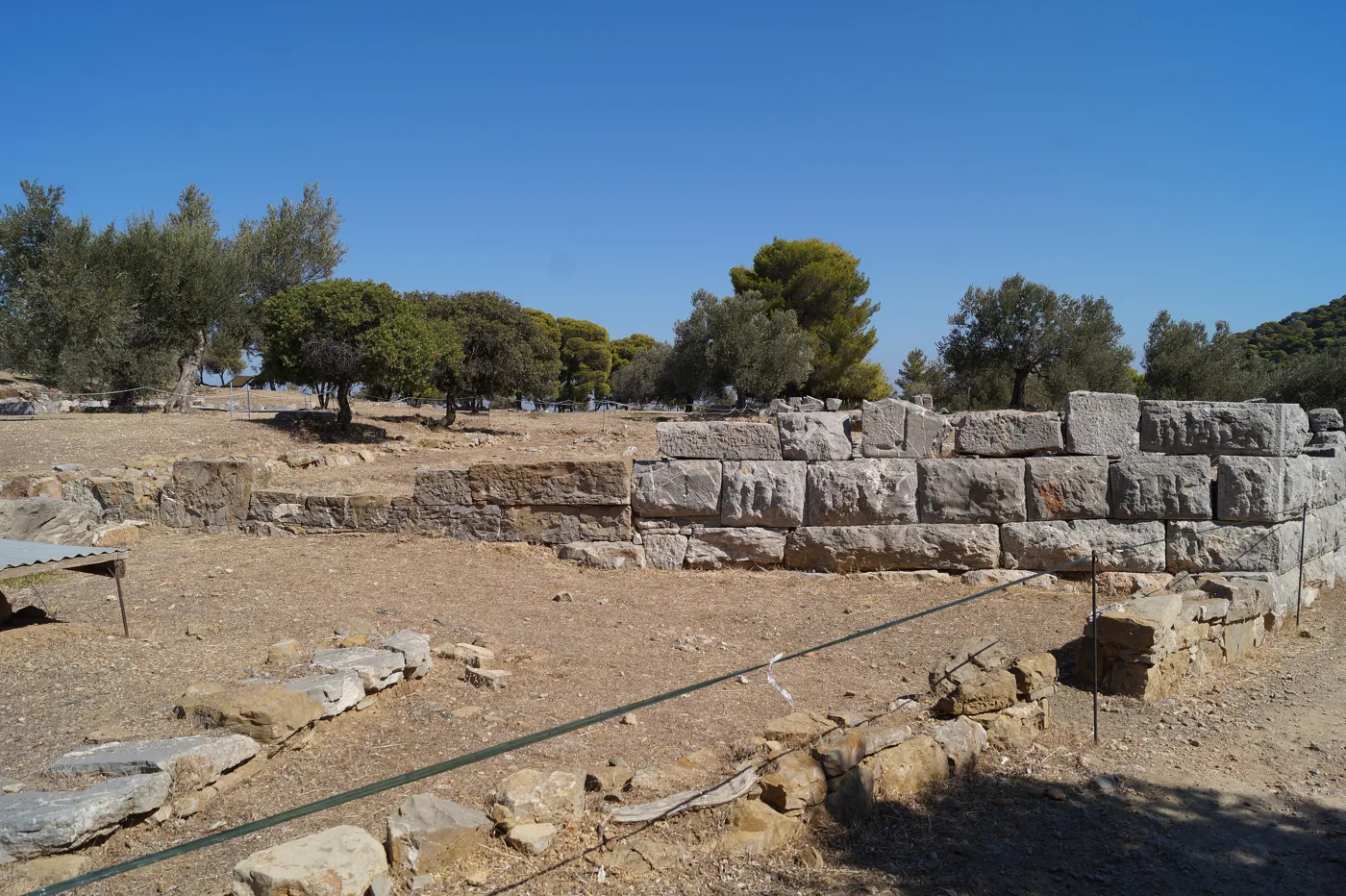
The sanctuary of the Kalaurian Amphictyony.
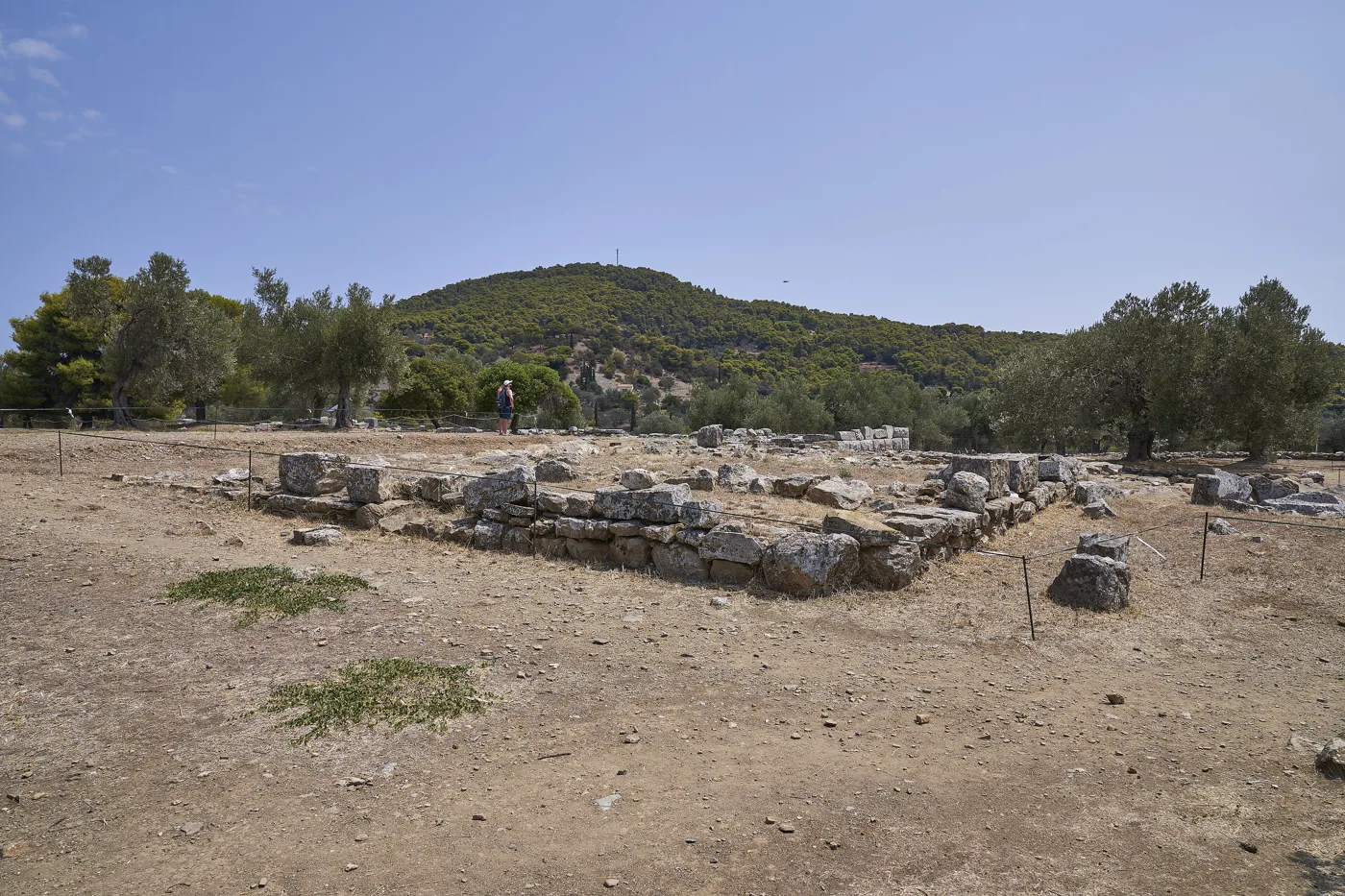
Among olive trees and pines.
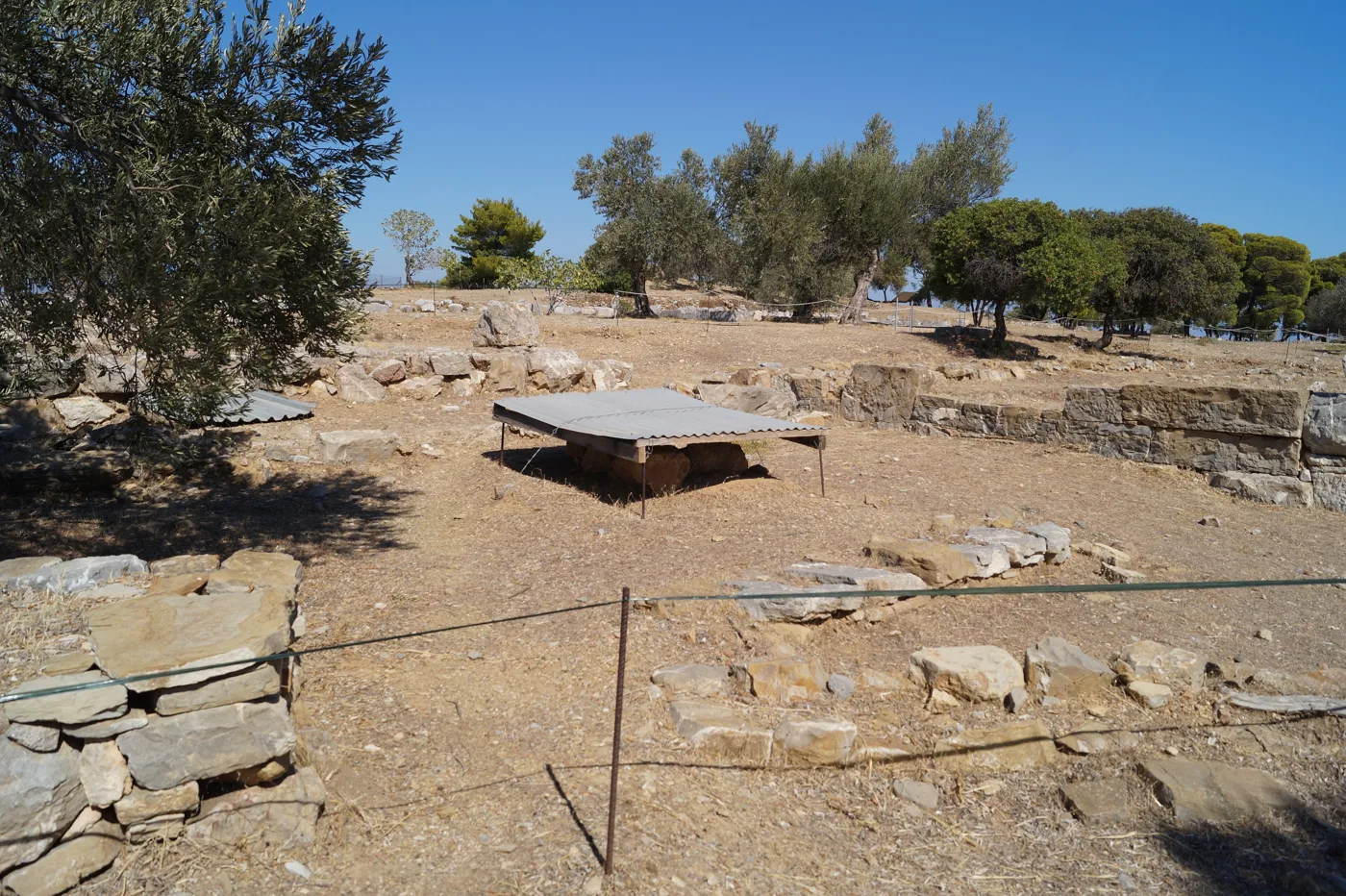
Here the cities of the Amphictyony sacrificed.
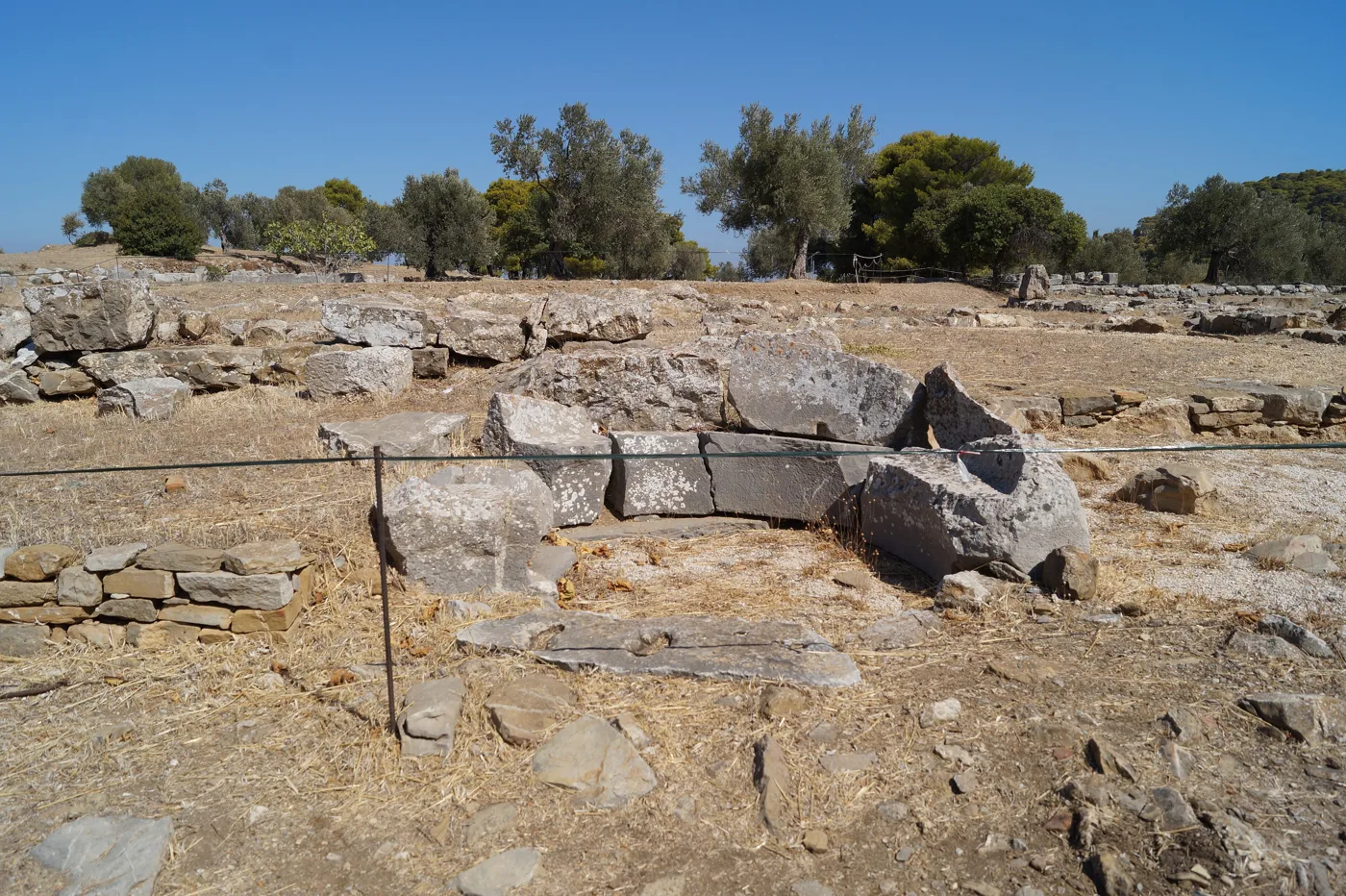
From Hellenistic times.
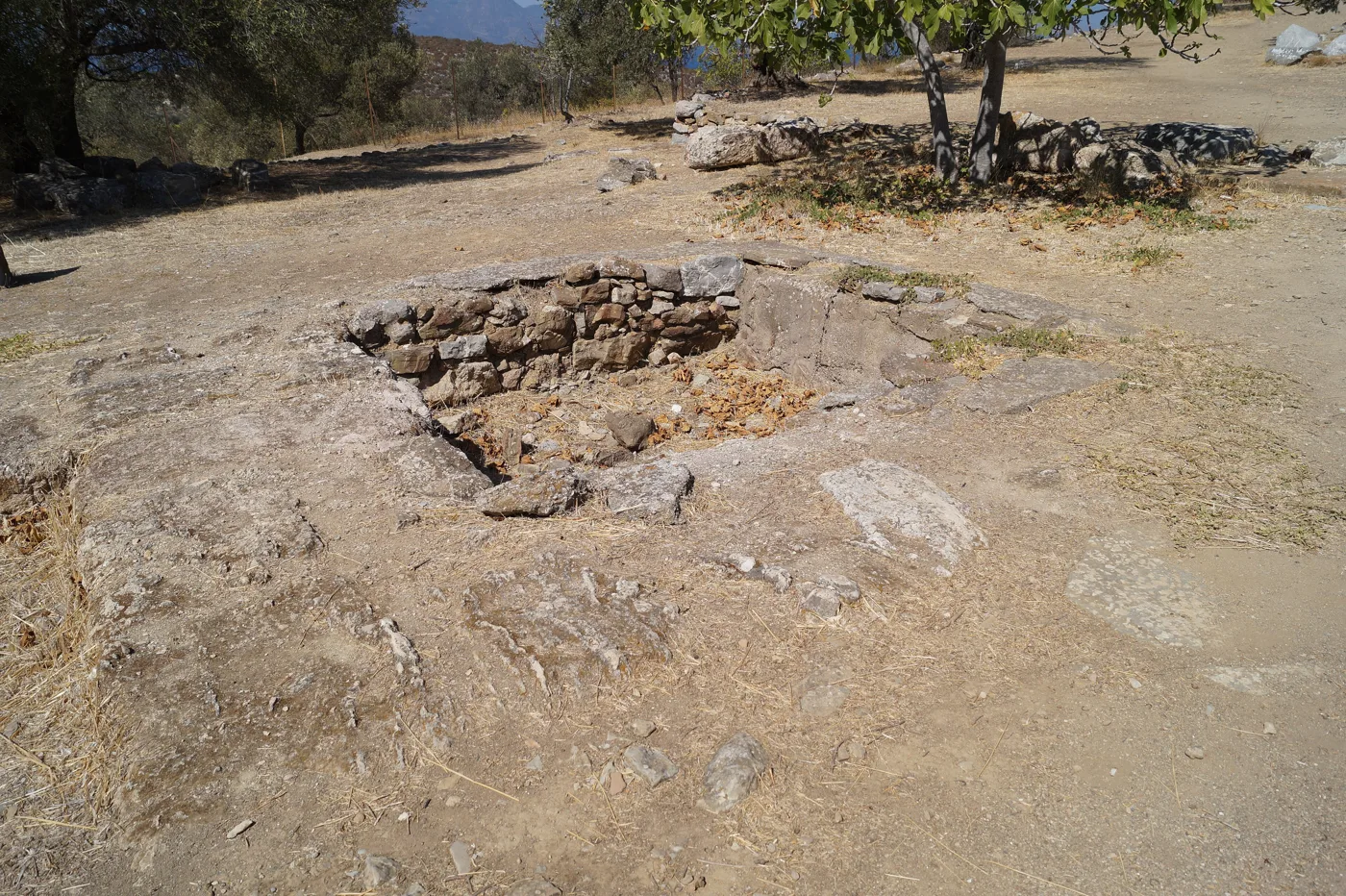
Water for the sanctuary.
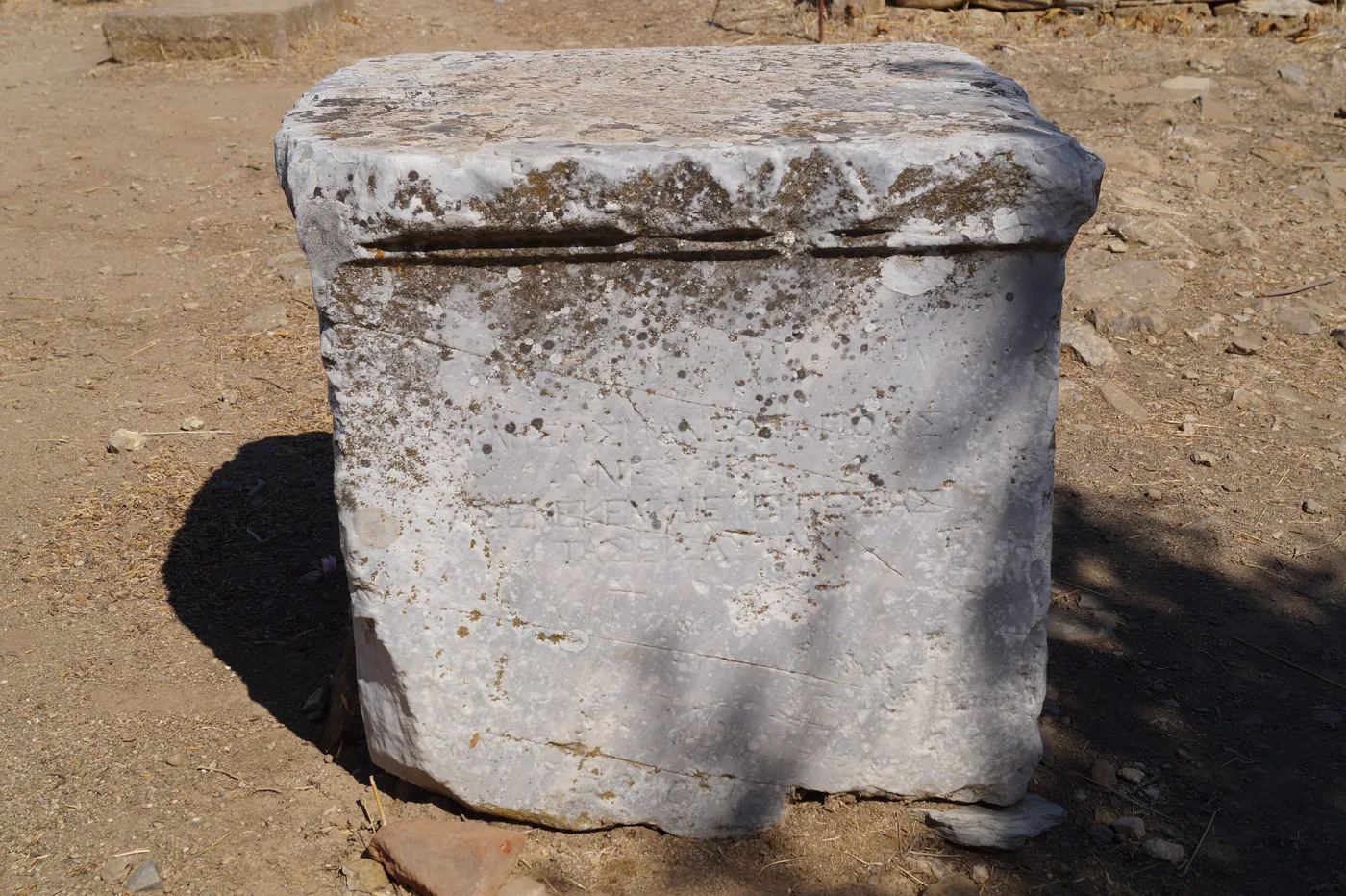
IG IV 846.
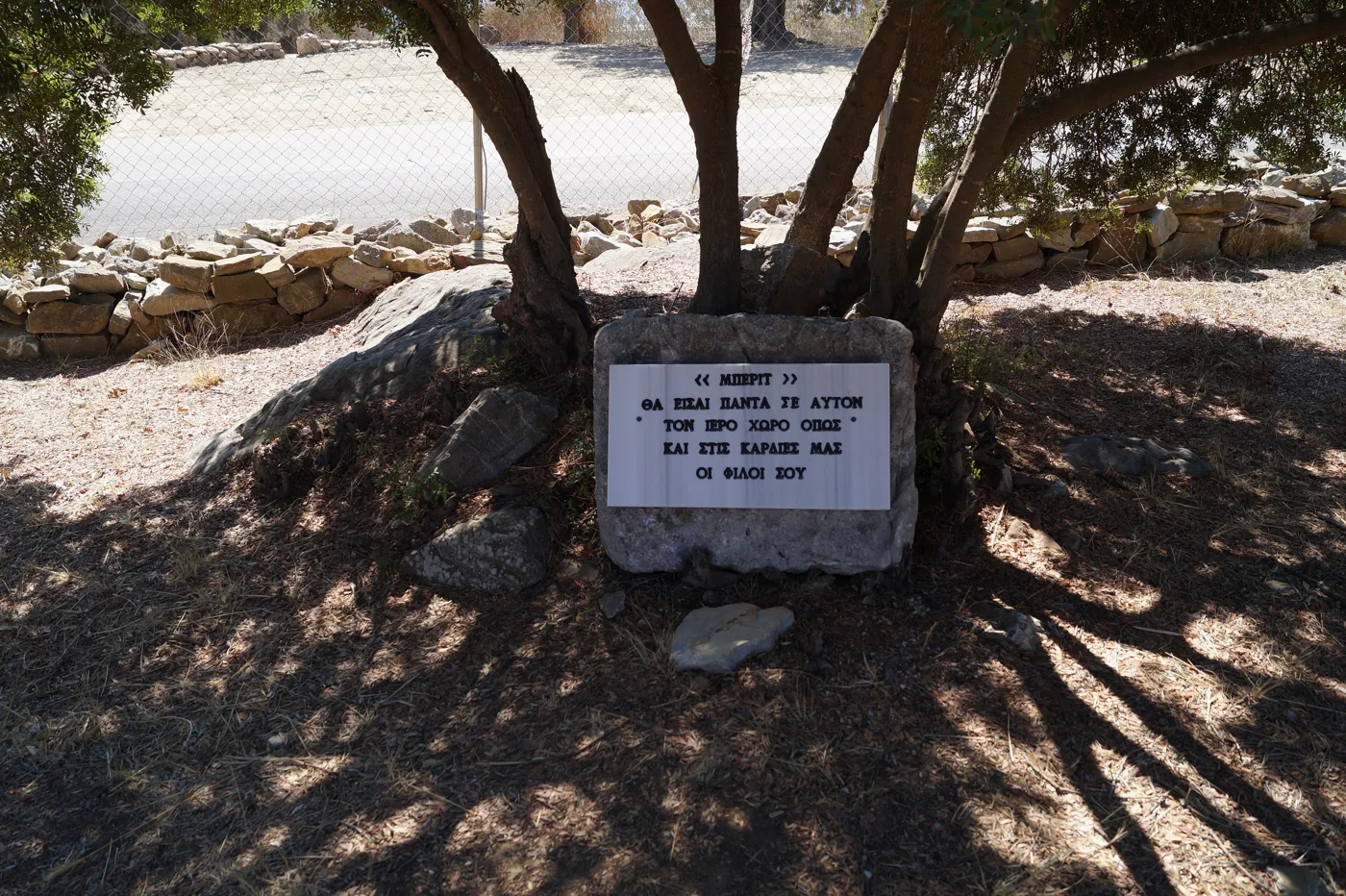
He died here in 322 BC.
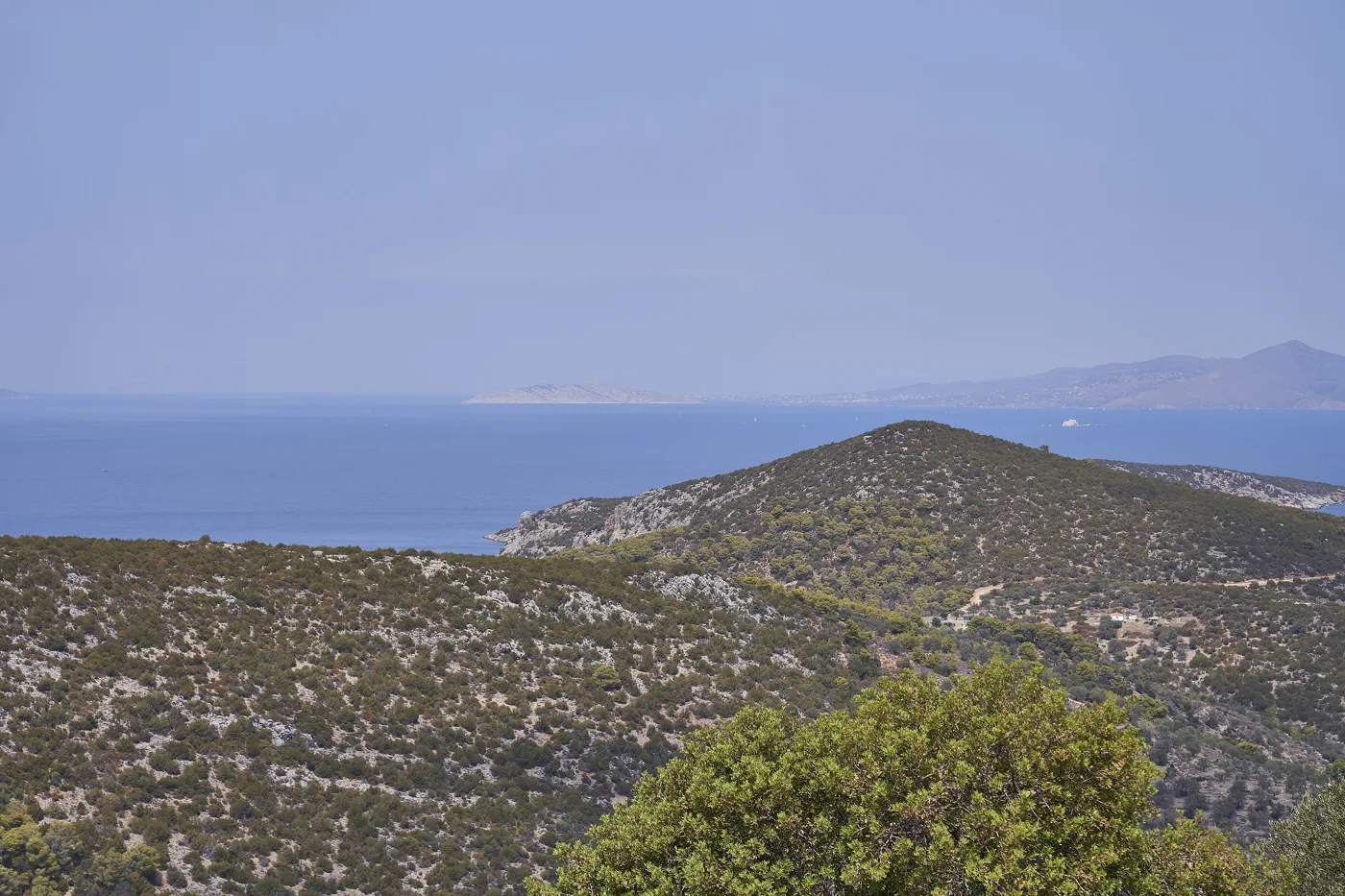
From the sanctuary to Methana and Aegina.
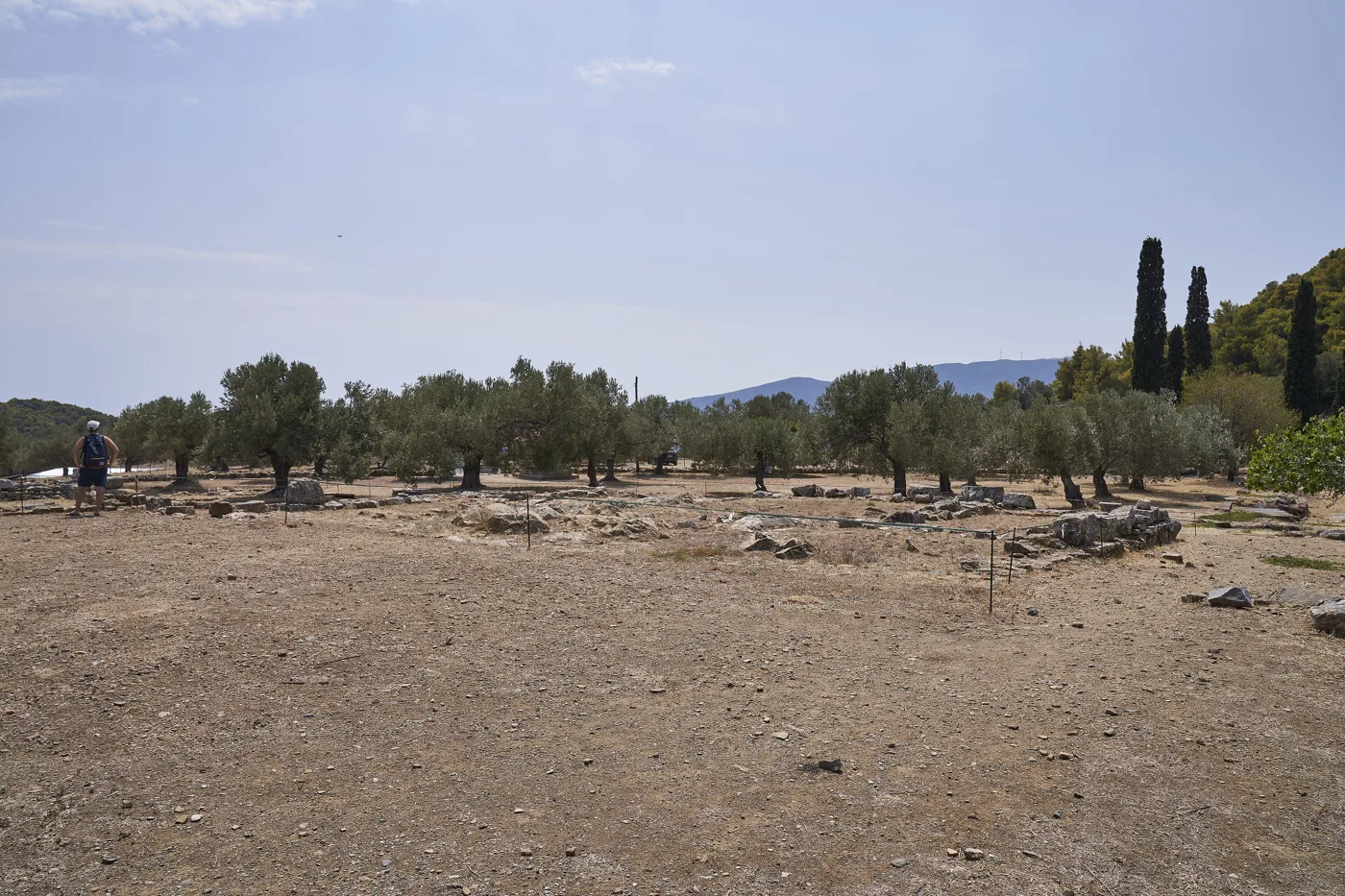
Silence and cicadas.
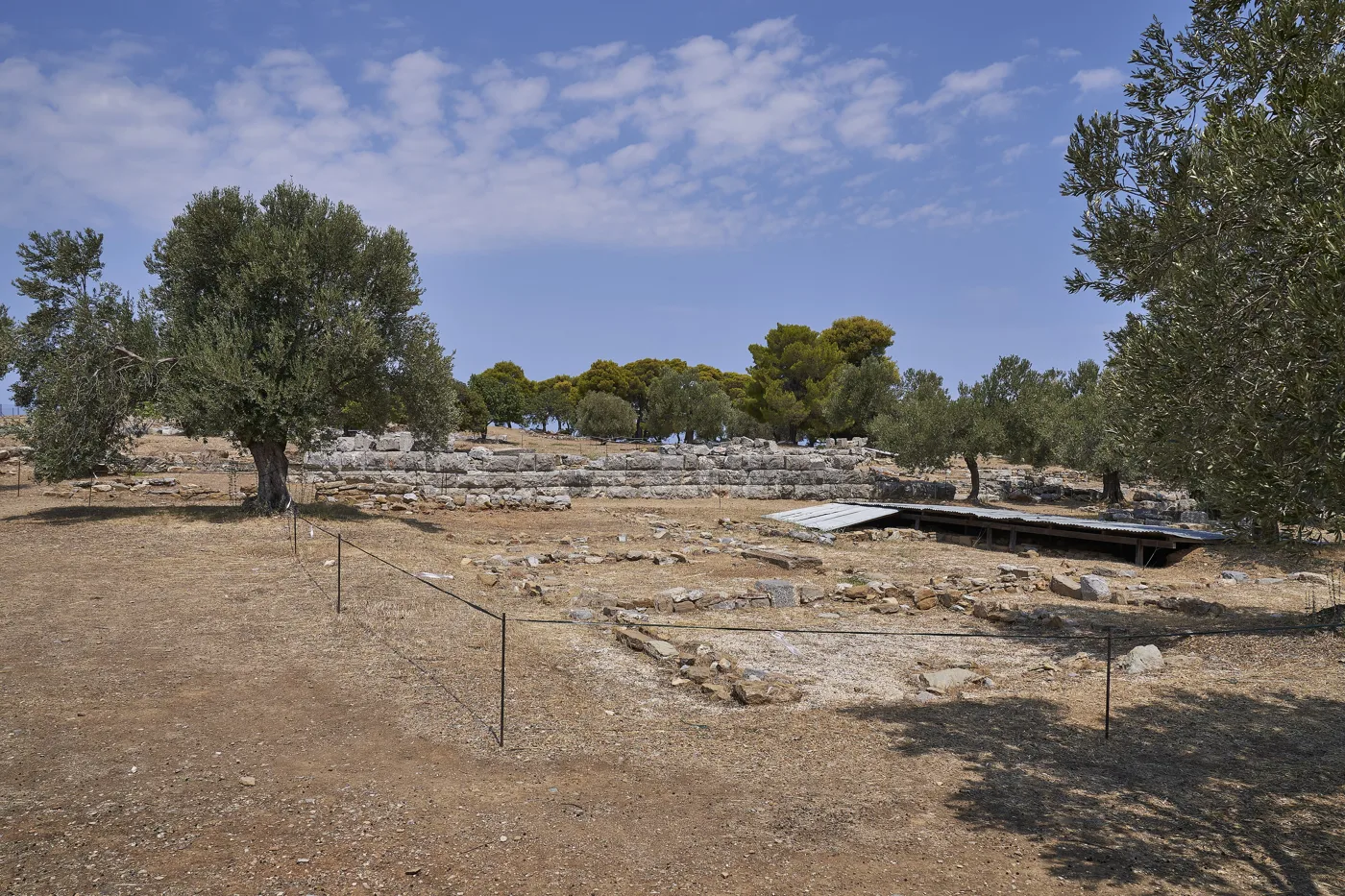
Swedish excavations since 1894.
Photos: Einer flog zu Weit (CC BY-SA 3.0), George E. Koronaios (CC BY-SA 4.0), Schuppi (CC BY-SA 4.0) · Wikimedia Commons
🗺️ The map of the day
The ferries moor on the waterfront (1), five minutes of steps below the Clock Tower (2) and next to the Archaeological Museum (3). From the eastern end of the waterfront the boats cross to Galatas (4) and the water taxis to Plaka, from where you climb to the Lemon Forest (5), in dashed red. On the island, the road in blue: Kanali (6), Askeli (7), the Monastery of Zoodochos Pigi (8), and from there uphill to the Temple of Poseidon (9) in the centre of Kalaureia, and downhill to the Russian Naval Station (12). The other bus line: Neorio (10), Love Bay (11), Russian Naval Station (12). Tap each number.
🎫 Opening hours and tickets
Poros is a cheap island: one museum at 5 €, and everything else, the Clock Tower, the Temple of Poseidon, the Monastery, the Lemon Forest, the beaches, is free. The hours change with the season; the ones below are for 2026.
🎫 Opening hours and tickets
🚍 How to get there
From Piraeus by hydrofoil or by ferry, from the Peloponnese by boat, and on the island on foot, by bus, by bicycle or by scooter. Tap each tab.
🚍 How to get there
By hydrofoil from Gate E8, one hour
- The Flying Cats of Hellenic Seaways and Blue Star, the Speed Cat 1 of Alpha Lines and the boats of Magic Sea Ferries leave from Gate E8 in Piraeus, five minutes on foot from the metro, and reach Poros in 1 hour to 1 hour 15′, with or without a stop at Aegina. Most of them carry on to Hydra, Ermioni and Spetses.
- Ticket 29 to 36 € one way (2026 prices), children half price. In summer 5 to 8 departures a day from 08:00 until the afternoon, in winter 2 to 4. The last ones for Piraeus leave Poros between 18:00 and 20:00 in summer, around 17:00 in winter.
- Enclosed boats with airline-style seats, no open deck. Choose a seat on the right on the way out, for Aegina and Methana, and look out during the last ten minutes: the boat enters the strait and passes right beside the houses of Poros.
- Book online (hsw.gr, alphalines.gr, ferryhopper): weekends and July and August sell out, especially the afternoon return. In winds above 7 Beaufort the hydrofoils do not sail, but for Poros there is always the conventional ferry.
By conventional ferry, 2 hours 35′, 17 €
- The conventional ferries of Saronic Ferries leave from the same Gate E8 and take 2 hours 35′ to Poros, with stops at Aegina, Agistri and Methana. Ticket 17 € one way, 2 to 3 sailings a day, the first around 07:30 or 08:00.
- It is the cheapest and the most beautiful journey in this guide: an open deck, coffee in the sun, Aegina and the Methana volcano from the ship, and the arrival through the strait with all the time in the world. Go by ferry and come back by hydrofoil: 50 € for the combination.
- The ferry takes cars and scooters, around 35 € for a car, but for a day on Poros you do not need one.
- The last ferry from Poros to Piraeus leaves early in the afternoon, around 16:00 to 17:00: if you stay late, the return is by hydrofoil.
By car to Galatas and a boat
- From Athens you drive 2 hours 30′, 180 kilometres, along the motorway, the Isthmus, Epidaurus and Troezen to Galatas, the little harbour opposite Poros. Parking on the Galatas waterfront, free or for a few euros.
- From Galatas, the boats cross to Poros every few minutes, all day and until late at night, 1 to 2 € per person, five minutes. Small ferries also take cars across, but on the island you do not need one.
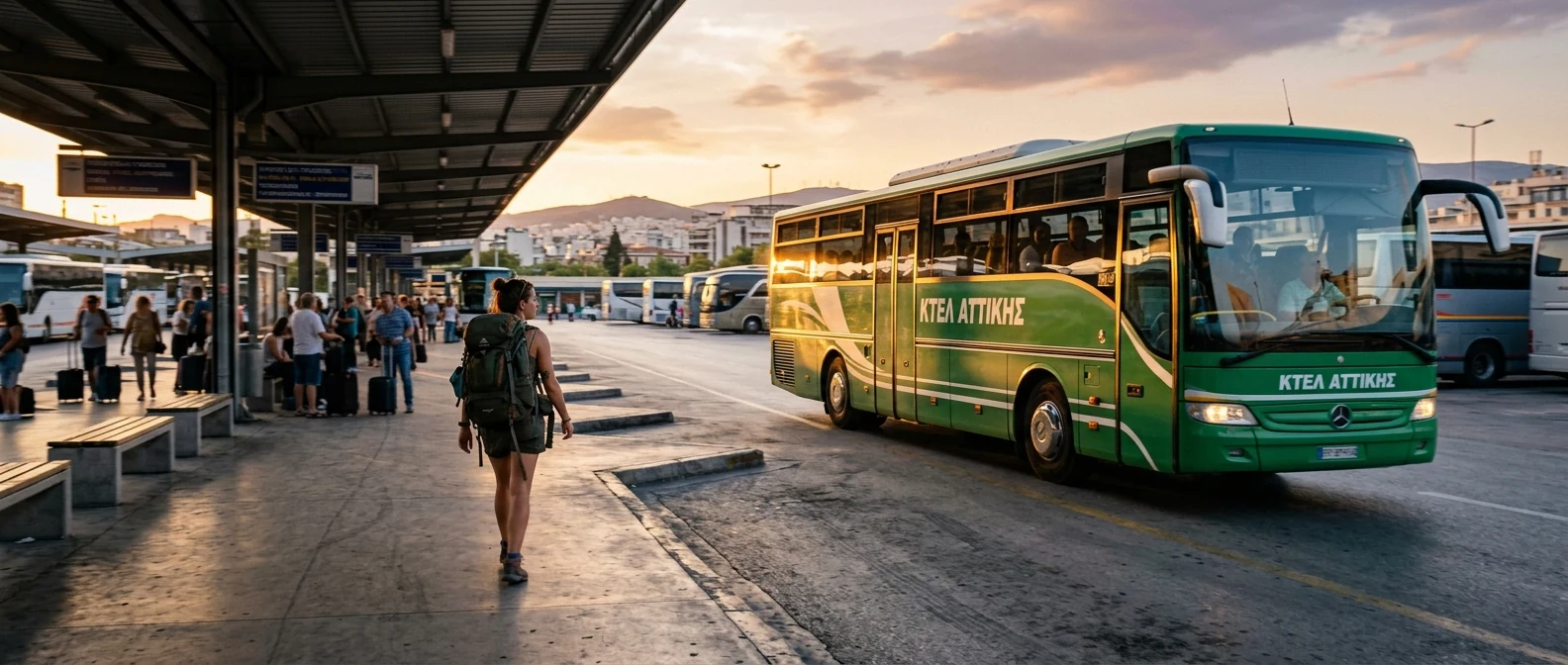
- The KTEL Argolidas bus from the Kifissou station goes to Galatas once a day, at 16:30, 18.20 € and 2 hours 45′: useful only for an overnight stay, not for a day trip.
- With a car you gain the Peloponnese: the Lemon Forest, ancient Troezen and the Devil’s Bridge, 12 kilometres from Galatas, and Methana with its volcano, 20 kilometres.
Bus, bicycle, scooter, boats
- The town, the Clock Tower, the museum and Kanali are on foot: you walk round the town in half an hour and Kanali, its beach, is 15 minutes from the waterfront.
- The bus leaves the waterfront on two lines: to Kanali, Askeli and the Monastery, and to Neorio, Love Bay and the Russian Naval Station, every 30 to 60 minutes in summer, around 2 €.
- Bicycle around 10 € and scooter 15 to 20 € a day, on the waterfront. The round of Kalaureia, 20 kilometres through the pines, takes an hour by scooter, two by bicycle, with hills.
- Water taxis from the harbour to the beaches and to Plaka, across the water, from where you climb to the Lemon Forest. The Galatas boats from the eastern end of the waterfront, 1 to 2 €.
🕗 The day's schedule
🕗 The day's schedule
The plan for a summer day with the 08:00 hydrofoil and a return in the evening. With the conventional ferry, the day starts earlier, you arrive around 10:15 and you lose the museum or the Lemon Forest. In winter, with the last boats around 17:00, you stay in the town, the museum and the Lemon Forest.
Departure from Ioulianou 50
Metro from Victoria to Piraeus, 25 minutes, and five minutes on foot to Gate E8.
The hydrofoil
One hour to Poros. A window on the right for Aegina, Methana and the strait. Or the 07:30 ferry, with an open deck, 2.5 hours.
The harbour and the Clock Tower
Coffee on the waterfront, the steps up to the Clock Tower for the view of the strait, a stroll through the alleys and the neoclassical houses.
The Archaeological Museum
Half an hour for the ram, the capitals of Poseidon and the finds from Troezen. Or straight to the boats.
Lemon Forest
Water taxi to Plaka, five minutes, and twenty minutes uphill among the lemon trees. Back from Galatas by boat.
Food
Fish at the tavernas of Galatas, cheaper, or on the Poros waterfront with a view of the strait.
Kalavria
Bus or scooter to Askeli and a swim, with a stop at the Monastery of Zoodochos Pigi. Or the other line: Love Bay and the Russian Naval Station.
Back in town
Ice cream, lemon spoon sweet to take home, and the sunset from the Clock Tower or from the waterfront.
Return
The 18:30 to 19:30 hydrofoil drops you in Piraeus in an hour. At Ioulianou around 20:30 to 21:30.
The sea day: 08:00 hydrofoil, Clock Tower, scooter from the waterfront, Love Bay in the morning before it fills up, Russian Naval Station, lunch at Askeli, the Monastery and a swim at Monastiri, back from Askeli by bus, ice cream, 19:00 hydrofoil. The history day: 07:30 ferry with an open deck, Clock Tower, museum, scooter to the Monastery and the Temple of Poseidon, lunch in Galatas, the Lemon Forest in the afternoon, 19:00 hydrofoil. With children: ferry, Clock Tower, boat to Galatas and back, ice cream, Kanali or Askeli by bus, hydrofoil.
🍽️ What to eat
On the Poros waterfront you eat fish, calamari and meze with a view of the strait, 20 to 35 € per person, at the front-row tavernas and on the plane tree square, further in, where it is quieter and a little cheaper. Across the water, in Galatas, the fish tavernas on the waterfront have the same fish for fewer euros and the view of Poros, and at Askeli you eat with your feet in the sand. The sweet of Poros is the lemon: spoon sweet, liqueur and lemonade from the Lemon Forest, and honey from the pines of Kalaureia. At the pastry shops on the waterfront, homemade ice cream for the deck on the way home. In the evening, at weekends, the harbour fills with bars, Athenians and sailors from all over Europe.
📅 When to go
Poros is an island for all year round, because it is an hour from Athens and its town never shuts down. The best season is spring, from April to June, when the lemon trees blossom and Kalaureia is green, and September and October, with a warm sea and empty beaches. In July and August, at weekends, the island fills with Athenians, sailing boats and the three-island cruises that unload onto the waterfront at midday: go Tuesday to Thursday. In winter, with three or four hydrofoils a day, it is a quiet, green day out with the museum, the Clock Tower, the Lemon Forest and fish in the sun.
💡 Tips before you set off
Clock Tower and museum in the morning, the Lemon Forest before the heat, beaches at midday, the waterfront and the sunset in the afternoon. The three-island cruises arrive between 12:00 and 13:00 and leave within an hour: that is when to be on Kalaureia.
Swimsuit and towel, shoes for the paths of the Lemon Forest and the temple, a hat, water, and some cash for the Galatas boats and the bus, which do not take cards. On the ferry with the open deck, a windbreaker even in June.
The strait from the deck of the ferry, the last ten minutes. The town with the Clock Tower from the Galatas waterfront, in the afternoon. The roofs and the strait from the Clock Tower. Love Bay from the road, before you go down. And the lemon trees close up, in April.
🚶 How to get there from Ioulianou 50
Victoria station is three minutes on foot from Ioulianou 50, and the metro, Line 1, goes straight to Piraeus, the last station, in 25 minutes, every 5 to 10 minutes from 05:30. Coming out of the station, Gate E8, with the ticket offices of Saronic Ferries, Hellenic Seaways, Blue Star and Alpha Lines in a row, is five minutes to the left, along the sea. The ferry needs you on board 15 minutes before, the hydrofoil 20: set off 50 minutes to an hour ahead. A taxi from the apartment to E8, 20 minutes and 15 to 18 €. Coming back in the evening, the metro from Piraeus to Victoria takes the same 25 minutes and the last one leaves after midnight.
🚇 From Ioulianou 50 to Gate E8 in Piraeus
Three minutes on foot to Victoria station and the metro, Line 1, straight to Piraeus, the last station, in 25 minutes. From the station, Gate E8 is five minutes on foot to the left, along the sea, with the companies’ ticket offices in a row. 40 minutes in all, door to gate; set off 50 minutes ahead for the ferry, an hour for the hydrofoil.
Frequently asked questions
Ferry or hydrofoil to Poros?
The ferry on the way out, for the open deck, the stops at Aegina and Methana and the 17 €; the hydrofoil on the way back, because the last ferry leaves early in the afternoon. If you want as many hours as possible on the island, the hydrofoil both ways, an hour each.
Can Poros be done in a day?
Yes, it is the easiest island for a day trip: with the 08:00 hydrofoil you have 9 hours, enough for the Clock Tower, the museum, the Lemon Forest, a swim at Askeli or Love Bay and fish on the waterfront. For the Temple of Poseidon and the Monastery you need a scooter or the bus, and you can fit them in if you skip the walk in the Lemon Forest. With one night, you do it all.
How much does the day cost?
With the ferry, 17 € on the way out and 30 to 36 € for the hydrofoil back, 3 € for the Galatas boats, 5 € for the museum, 20 to 30 € for food: around 80 € per person. With the hydrofoil both ways, 100 to 110 €. It is the cheapest island day trip in the Saronic Gulf after Aegina.
Poros or Aegina?
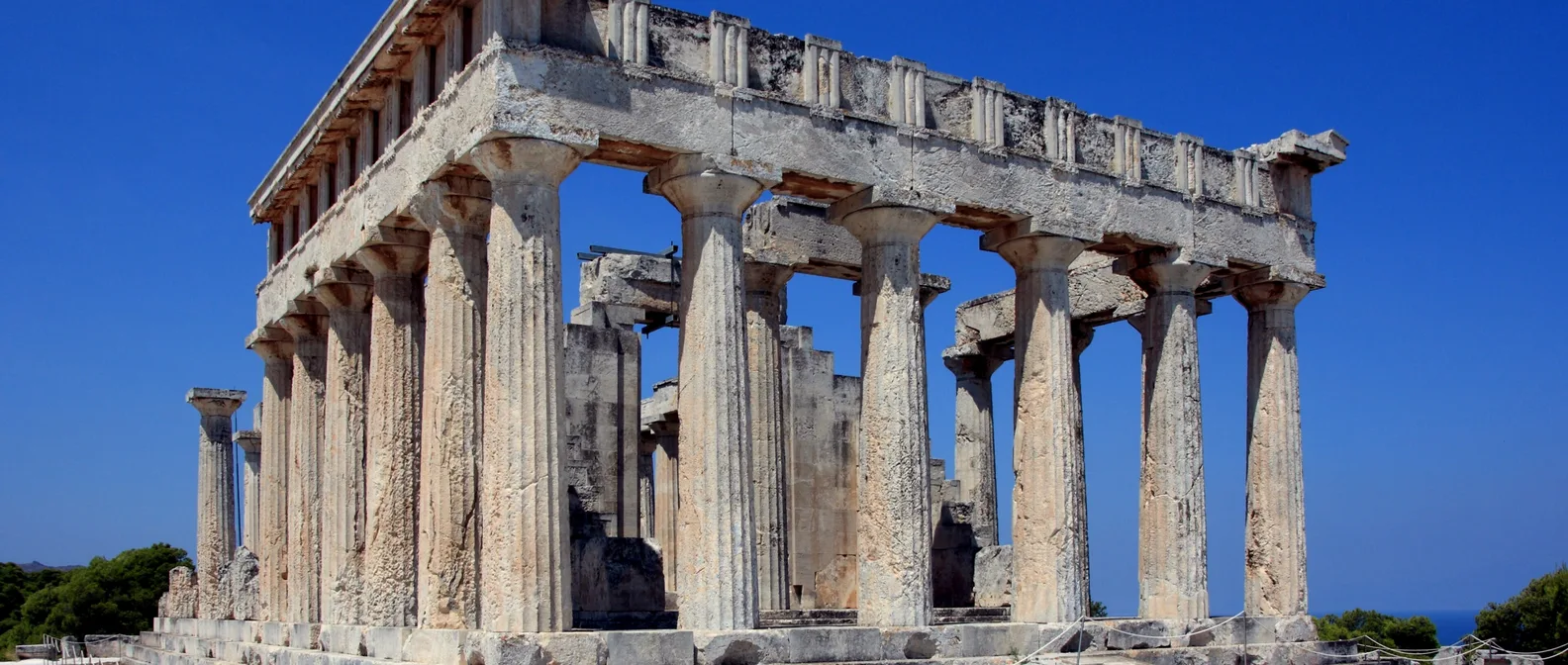
Aegina for the Temple of Aphaia, the pistachios and the 40-minute ferry. Poros for the strait, the Clock Tower, the pines, the Lemon Forest and the Peloponnese across the water. If it is your first time on a Greek island, Poros feels more like an “island”: the arrival through the strait is the most beautiful in the Saronic Gulf.
Poros or Hydra?
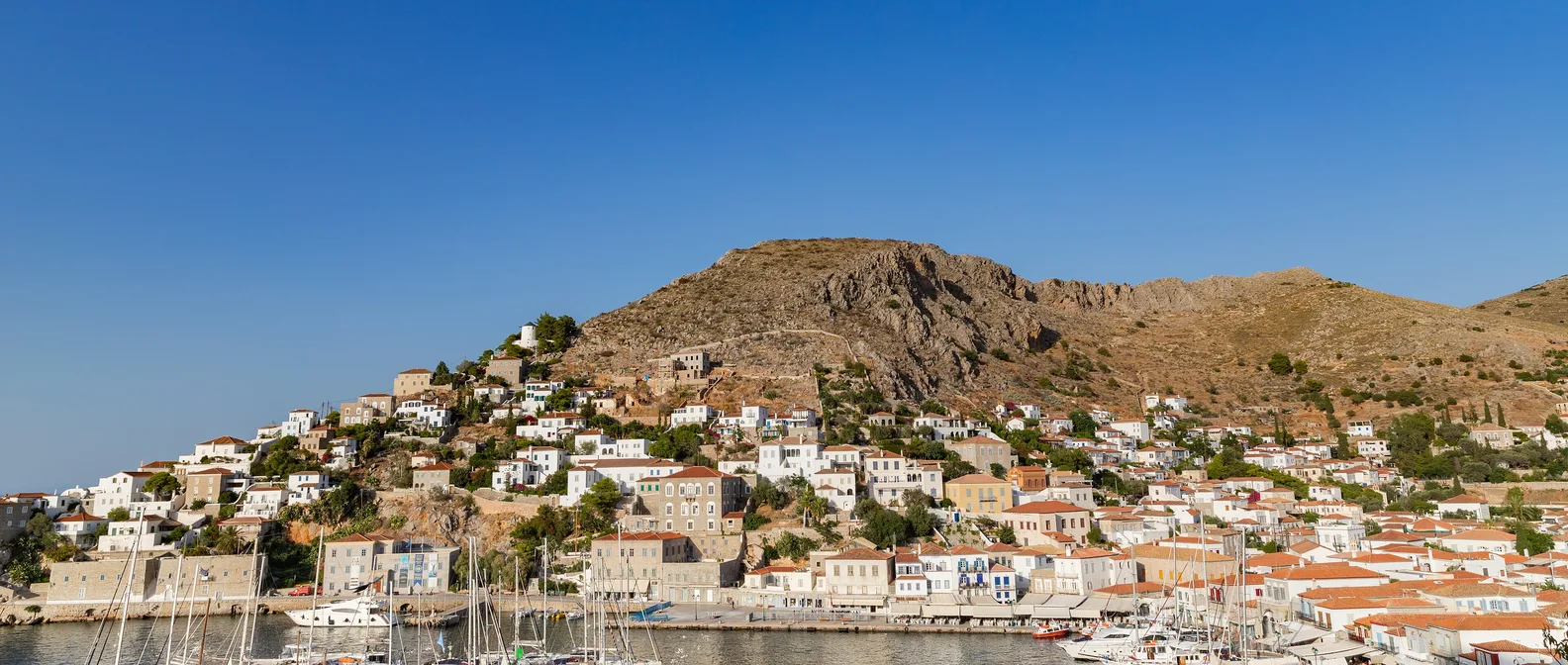
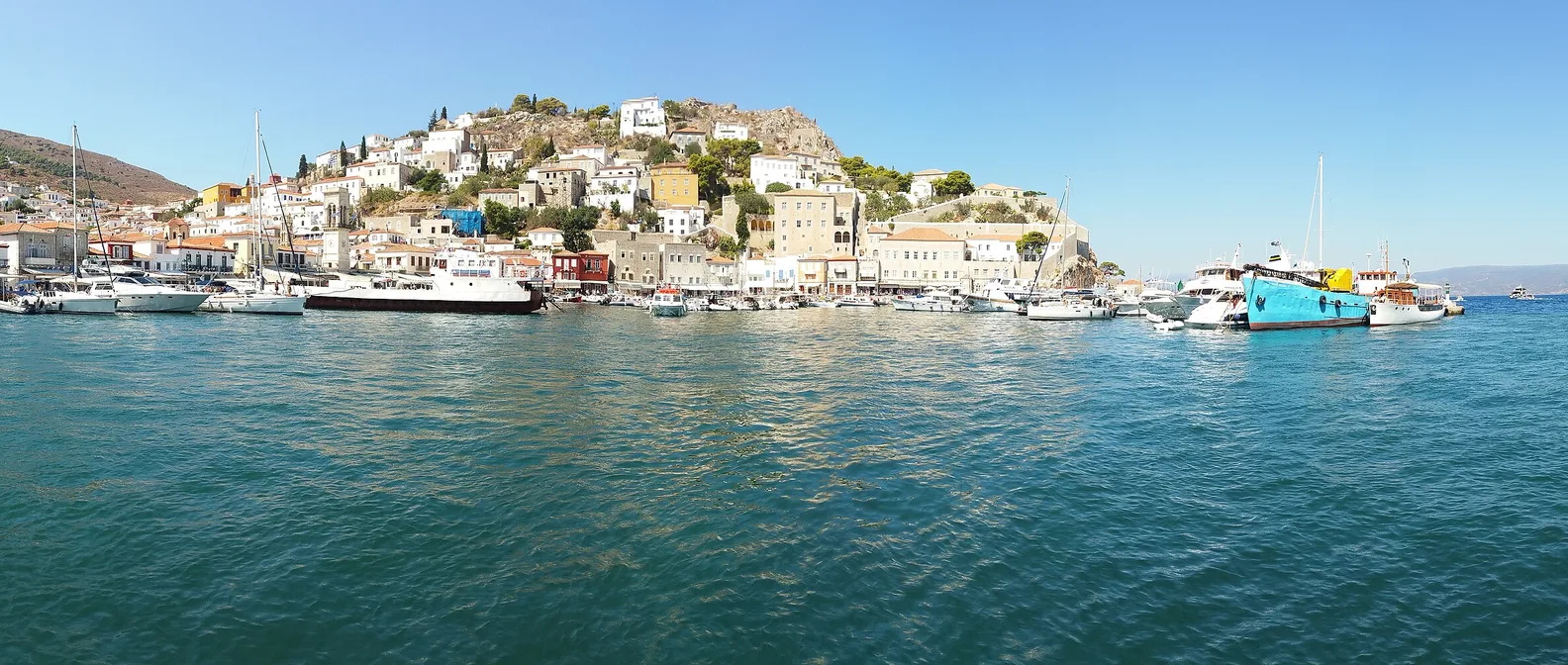
Hydra is more beautiful, stricter and more expensive: 80 € for the hydrofoils, no cars, with mansions and swimming off the rocks. Poros is easier, greener, cheaper and better for children, with a ferry, beaches and the Lemon Forest. If you have two days, the same route links them: the hydrofoil from Poros to Hydra takes 30 minutes.
Are there cars on Poros?
Yes, cars, scooters and a bus, unlike Hydra. The town is pedestrian in its alleys, but the coastal road has traffic. On the island you do not need your own car: the bus, a bicycle or a scooter are enough for the whole of Kalaureia.
— Kathy