Why Hydra is special
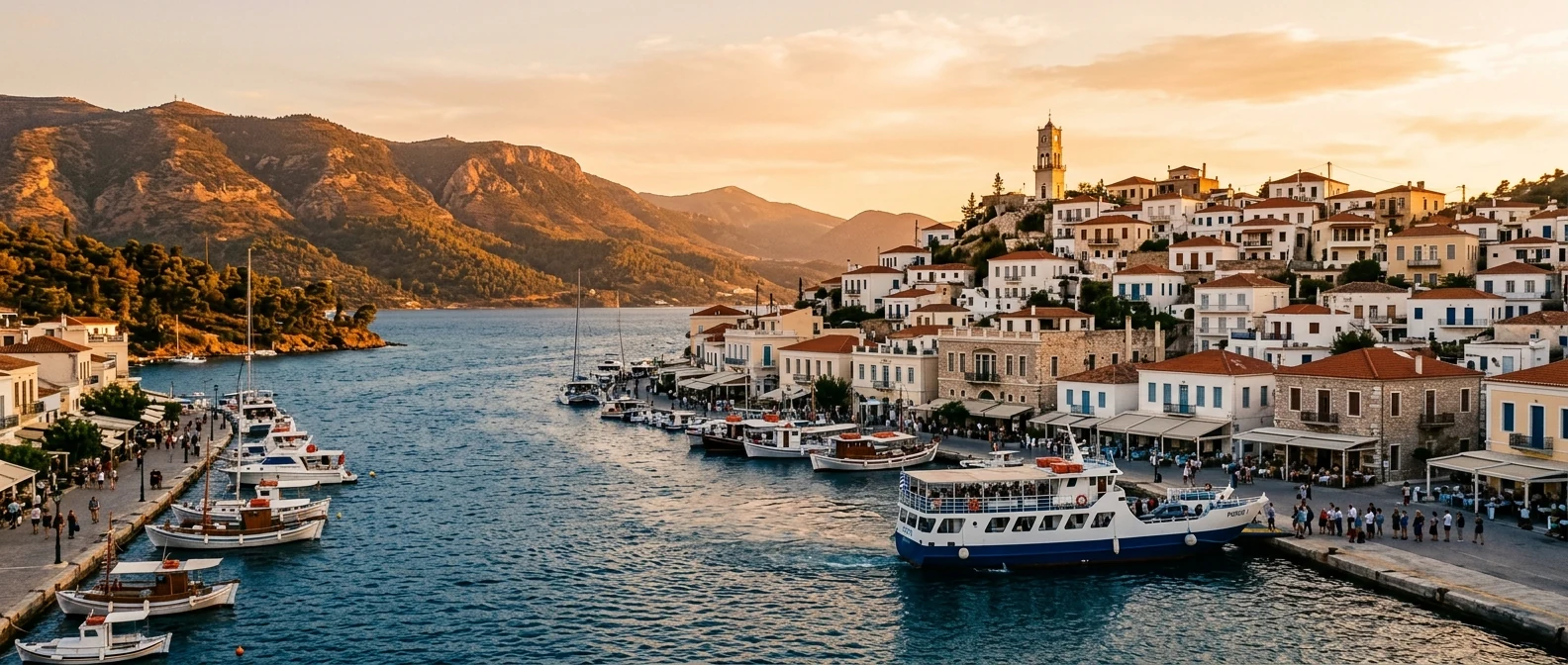
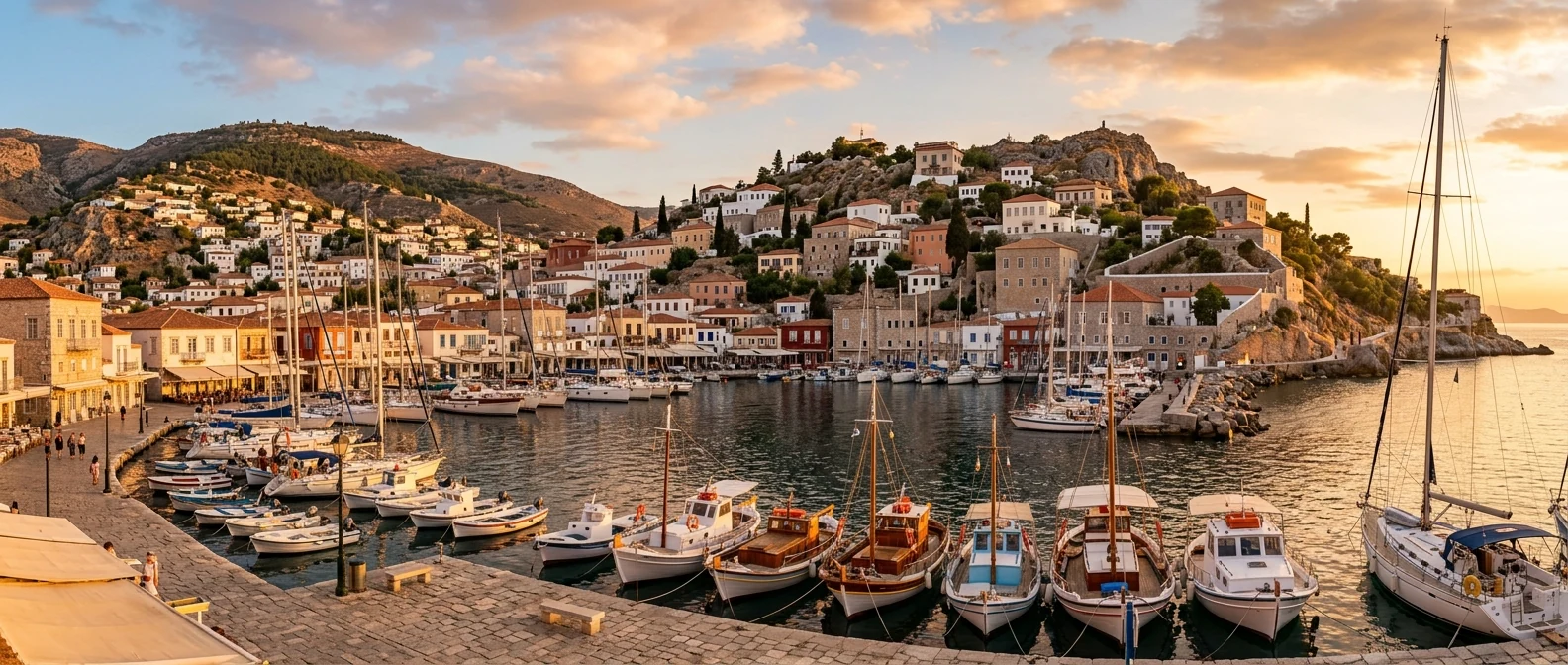
Hydra is a rocky island of around 50 km² in the Saronic. Its feel comes mainly from three things: the ban on cars, the protection of its architecture, and the compact harbor with its stone mansions of the 18th and 19th centuries. During the Greek War of Independence in 1821, Hydra's ship-owning families supported the struggle financially and at sea. Later the merchant fleet lost its strength, but the island kept its maritime memory and became a place for artists and writers. Leonard Cohen lived here in the 1960s, Henry Miller wrote about Hydra, and Patrick Leigh Fermor visited often.
How to get there
Hydrofoil (Flying Cat / Flying Dolphin)
Piraeus to Hydra in around 90 minutes. Usually 30-40 euros each way, with more departures in summer and fewer out of season. Companies such as Hellenic Seaways and Alpha Lines serve the route.
Conventional ferry
Less common for a day trip. It takes around 3-4 hours, so it suits people staying on the island more than same-day visitors.
From Piraeus port
Saronic ferries usually leave from Gate E8 or E9. Take Line 1 to Piraeus and then walk around 8-12 minutes, depending on the gate.
Booking
Book through the ferry companies' sites or through ferry-ticket platforms. In summer and on weekends, book the return as well in advance.
🚫 The no-cars rule
How transport works on the island
Hydra has no regular traffic of cars or motorbikes. The exceptions mostly concern municipal and emergency needs. For the visitor, the options are simple:
- Donkeys and mules — for luggage and cargo from the harbor to houses and hotels.
- A few service vehicles — for fire, health, sanitation, and public needs.
- Water taxis — small boats from the harbor to beaches and more distant points.
- Walking — the main way for most visitors.
You notice the difference immediately. In the harbor you hear boats, voices, footsteps on the stone lanes, and the hooves of transport animals, not engines.
🏘️ Hydra Town (the harbour)
- Stone neoclassical mansions built by shipping captains of the 18th and 19th centuries.
- Cathedral of the Assumption — at the edge of the harbor, with dome, bell tower, and a small museum of religious art.
- Lazaros Koundouriotis Mansion — historic mansion of a family from the War of Independence, now a museum.
- Historical Archives Museum — on Hydra's role in 1821 and the island's maritime history.
- The cannons at the mouth of the harbor — bronze cannons in memory of 1821.
- Cafes and tavernas fill the harbor. Prices are more tourist-oriented, but for a coffee the setting is worth it.
🏊 Swimming on Hydra
Hydra does not have large sandy beaches. Swimming happens mainly from rocks, small platforms, and stony coves. The water is clean, but you need shoes that do not slip.
Spilia + Hydroneta (harbour swimming)
Platforms and rocks 5 minutes on foot from the harbor. Convenient for a swim without extra transport, but crowded in summer.
Vlychós + Vlychós Plakes
30-40 minutes coastal walk west of town or a few minutes by water taxi. Stony beach with a taverna, usually quieter than the spots by the harbor.
Kamíni
Small settlement 20 minutes on foot to the west. It has tavernas and places to swim from the rocks.
Mandráki
15 minutes on foot east of the harbor. Small sandy beach, family-friendly.
🎨 Hydra's artist colony
Since the 1960s Hydra has been connected with writers, musicians, and visual artists. There is no need to present it as a romantic myth; one walk through the lanes is enough to see why the place attracts people who want quiet, light, and distance from the city.
- Leonard Cohen — lived in a house on the hill above Hydra Town from the 1960s. The house is well known, but remains private.
- Henry Miller wrote about Hydra in The Colossus of Maroussi.
- DESTE Foundation Project Space (Slaughterhouse) — annual contemporary art exhibition in the former municipal slaughterhouse, summer only. Free.
- Hydra School of Fine Arts — summer programs and workshops, depending on the period.
- Galleries and bookshops — mostly around the harbor and the first lanes.
📊 At a glance
~90 min
Fast ferry from Piraeus, with more frequent schedules in summer.
50 km²
Island area. Population ~2,000 all year.
1821
The year that links Hydra with the War of Independence and its maritime role.
0 cars
For the visitor: walking, water taxi, and transport animals for luggage.
🍴 Where to eat
- Harbor tavernas — more expensive, mainly because of the location. €30-€45 per person.
- Tavernas in the back lanes — often quieter and a bit cheaper. €25-€35 per person.
- Vlychós and Kamíni — coastal tavernas near the swimming spots, with an emphasis on fish. €25-€40.
- Bakeries and small grocers — for a quick meal or picnic. €5-€10 per person.
- Mediterraneo, Sunset, Omilos — more expensive options for food or a drink with a view. €50-€80+ per person.
📅 A realistic one-day plan
Hydra in 7-8 hours from Athens
- 08:30: Hydrofoil Piraeus → Hydra.
- 10:00: Arrive Hydra. Coffee at harbour (€4-€6).
- 10:30-12:00: Walk around the harbor and visit one museum, such as the Koundouriotis Mansion or the Historical Archives.
- 12:00-14:00: Walk to Kamíni (20 minutes) or Vlychós (40 minutes). Swim. Lunch at a coastal taverna.
- 15:00-16:30: Return on foot or by water taxi and take another walk around the harbor.
- 16:30-17:30: Coffee or a drink before the return ferry.
- 18:00: Hydrofoil back. Arrive Piraeus 19:30.
🛡️ Practical tips
- Walking shoes — cobblestones, slopes, and steps. Sandals need a good sole.
- Summer heat: midday in the open harbor is tiring. Take a hat, sunscreen, and water.
- Cash and card: cards are accepted at most restaurants and shops. Keep cash for the water taxi and small purchases.
- Last fast ferry: in summer it usually leaves late in the afternoon or early in the evening. Confirm the same day, because if you miss it the return becomes difficult and expensive.
- Book the fast ferry in summer and on weekends. Same-day tickets often sell out.
- Wind: fast-ferry routes are occasionally cancelled in heavy weather. Have flexibility.
🎯 Hydra vs alternatives
- Hydra vs Aegina: Hydra is farther, about 90 minutes instead of 40, and more expensive. Aegina is faster and has the Temple of Aphaia. Hydra suits you more if you want a harbor without cars and stone mansions. See the Aegina guide.
- Hydra vs Poros: Hydra has a stricter historic character and less traffic. Poros is closer to the Peloponnese and often more relaxed.
- Hydra vs three-island cruise: the cruise gives about two hours on Hydra. If you go on your own, you have 6 hours or more, but you need to organize tickets and timings. See the three-island cruise guide.
- Hydra vs Spetses: Spetses is larger, has more sandy beaches, and is about 2-2.5 hours by ferry from Athens. Hydra is more compact for a day trip.
How to get there from Angel Athens (Ioulianou 50)
From Ioulianou 50, walk 3 minutes to Victoria station. Line 1 goes directly to Piraeus in about 30 minutes. From the station, allow 8-12 minutes on foot to gates E8 or E9, depending on the ferry. In total, you need about 40-45 minutes to reach the port, plus another half hour of buffer before departure.
🎯 FAQ
Best month?
May, June, September, and early October. It is warm enough for swimming, but with less crowd than August. From November to February the island is quiet, but several tavernas and shops close.
Family-friendly?
Yes, especially for children who enjoy boats, swimming, and walking. The lack of cars helps, but the stone lanes make strollers difficult away from the flat harbor level.
Wheelchair accessibility?
Difficult. Hydra has stone lanes, slopes, and many steps. The harbor level is the easiest zone, but the inner streets are not comfortable for a wheelchair.
Worth the day trip vs overnight?
A day trip works, if you take an early ferry and return late. An overnight stay gives a calmer picture of the island, especially after the day visitors leave. Rooms are roughly €100 to €300 per night, depending on the season.
Can I bring a suitcase?
Yes. Hotels usually arrange luggage transfer from the harbor by transport animal. Keep a small day bag with you, because you will walk yourself.
Pickpockets / safety?
Hydra is considered a calm destination. In the harbor and on ferries, keep the basics in mind: bag closed, tickets and wallet close to you.
Sources:
— Kathy