Aegina in one paragraph
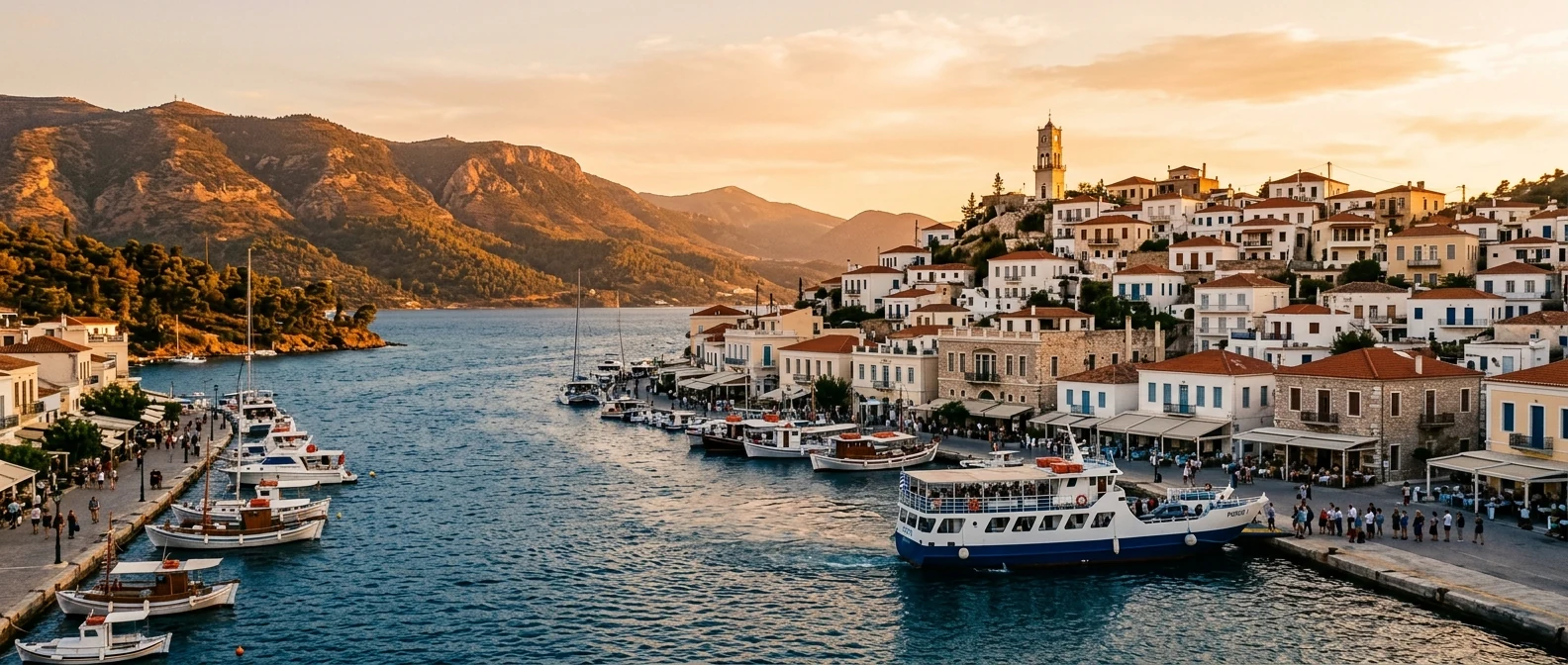
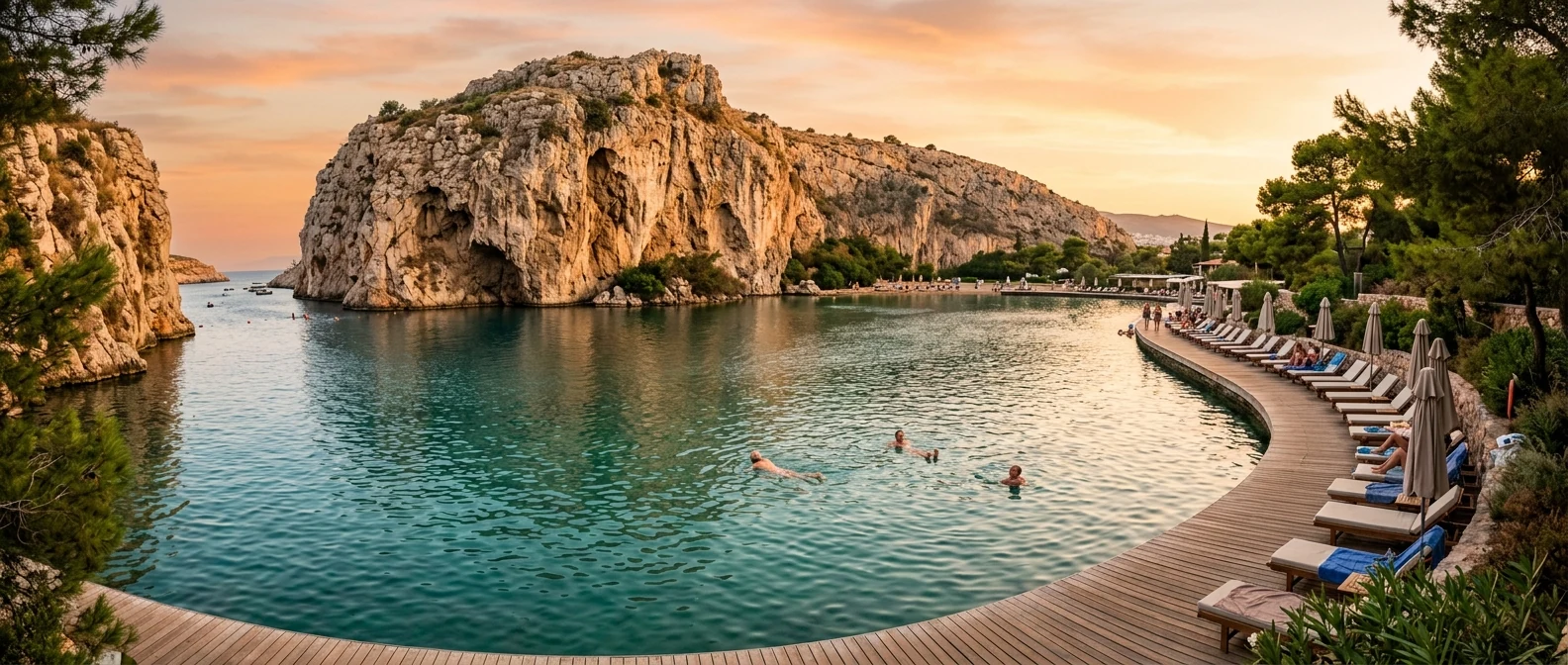
Aegina is around 40 minutes by fast ferry or 70 minutes by conventional ferry from Piraeus. In antiquity it was an important naval power; its silver "turtle" stater circulated widely across the Aegean from the 6th and 5th centuries BCE. In 1828, it briefly became the first capital of the modern Greek state. Today it keeps a practical island character: a fishing port, pistachio groves, a neoclassical town, and the Temple of Aphaia, built around 500 BCE and slightly older than the Parthenon.
How to get there from Piraeus
Hydrofoil (Flying Dolphin)
Piraeus to Aegina port in around 40 minutes. A one-way ticket is usually around 15-20 euros. In summer there are frequent departures; out of season, fewer. Operators include Hellenic Seaways and AlphaLines.
Conventional ferry
Usually 60-75 minutes. A one-way ticket is often around 10-14 euros. It carries cars and works well for larger groups. It is slower, but often cheaper. Operators include Saronic Ferries and ANES.
From Piraeus port
Saronic ferries usually leave from the Gate E8 area. Line 1 reaches Piraeus, and from there it is around 8-12 minutes on foot to the gates.
Booking
You can book on ferries.gr or on the operators' own websites. In summer and on weekends it helps to book early. Out of season, you can often still buy tickets at the port.
The Temple of Aphaia
Why this temple matters
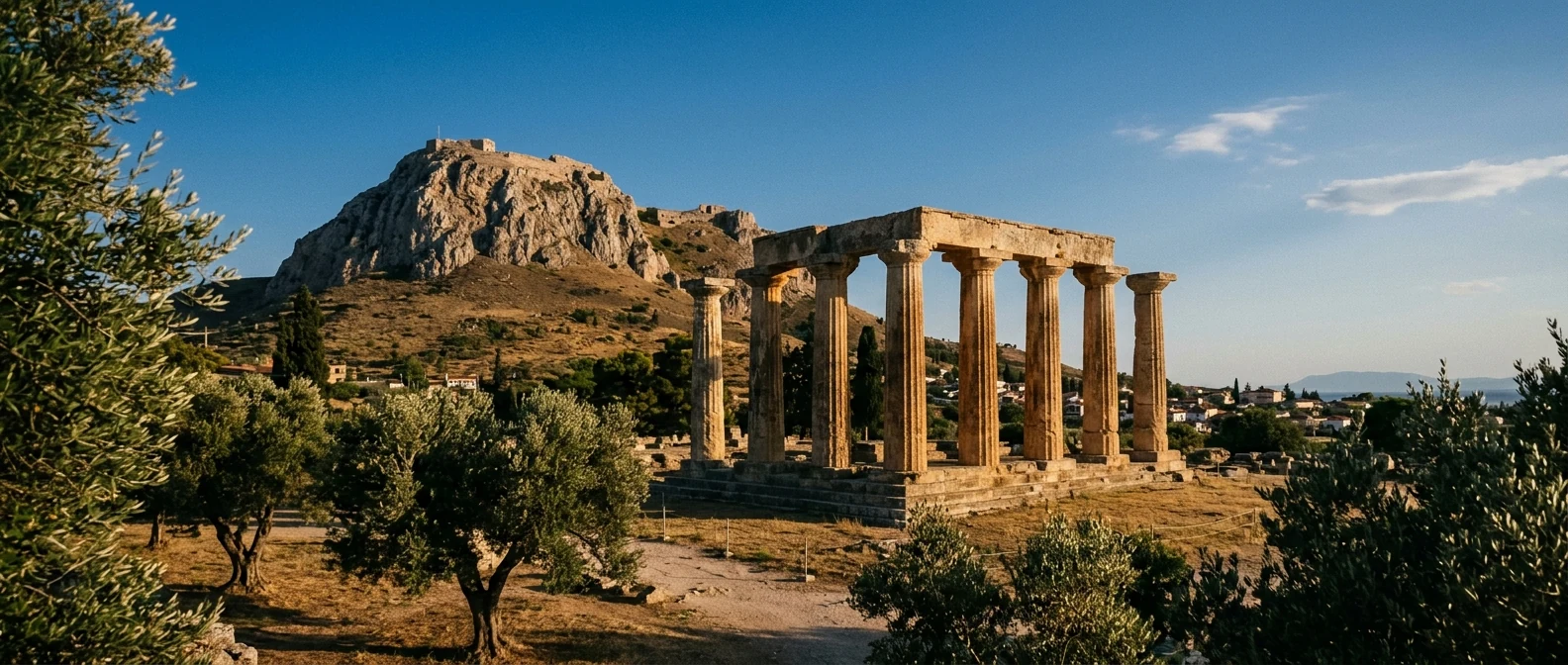
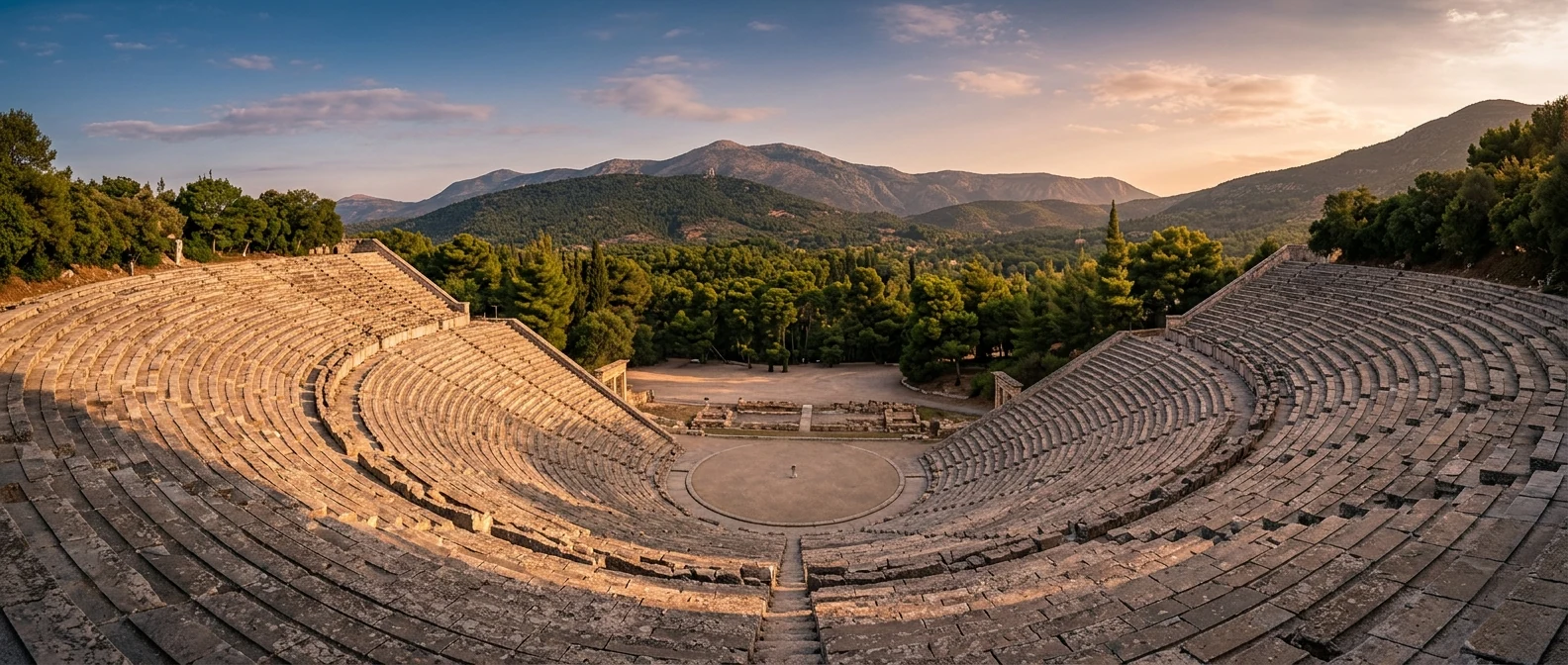
The Temple of Aphaia was built around 500 BCE at the eastern end of Aegina. It is often linked with the so-called "sacred triangle" alongside the Parthenon and the Temple of Poseidon at Sounion. It preserves 24 of its original 32 columns and gives a clear picture of an archaic Doric temple. From Aegina town, the trip takes around 25 minutes by bus or 15-20 minutes by taxi.
Aegina's archaic fame: the "turtle" silver stater
From the 6th and 5th centuries BCE, Aegina minted the silver "turtle" stater, with a sea turtle on one side. The coin circulated widely across the Aegean and is one of the earliest known coins to see broad use in Europe. The local museum displays examples. Aegina remained a rival of Athens until it passed under Athenian control in 459 BCE.
Aegina town
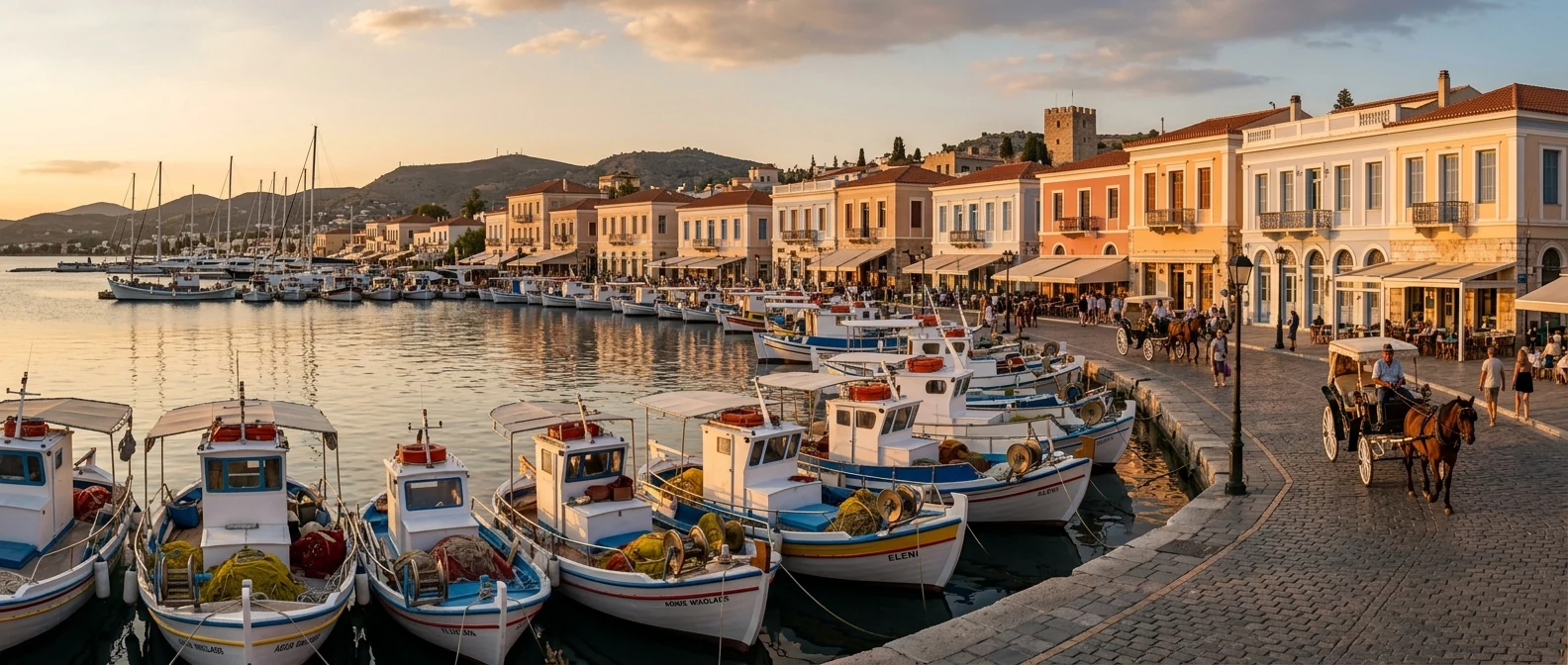
- Neoclassical waterfront: Aegina was the first capital of Greece under Kapodistrias in 1828-29, and some buildings from that period still remain.
- Fishing harbour: an active port with a morning fish market. Boats unload along the quay early in the day.
- Waterside sales: at times, fishermen also sell directly from boats tied along the waterfront.
- Pistachio shops and tavernas line the main waterfront.
- Markellos Tower: a small tower from the Venetian period on a side street, with free access from outside.
- Archaeological Museum: small, but worth a short stop.
Aegina pistachios
Aegina has PDO (Protected Designation of Origin) status for its pistachios. The soil and microclimate of the island produce nuts that are small, sweet, and aromatic. Harvest usually happens from late August into early September. Along the waterfront you will find roasted and salted pistachios, raw nuts, pistachio butter, liqueur, and sweets. Realistic prices are around 15-25 euros per kilo for roasted pistachios, and 30-40 euros for more selected grades.
Beaches
Marathonas + Aiginitissa
Sandy beaches 5-7 km south of town, reached by bus or taxi. Calm water, nearby tavernas, and a good option for families.
Agia Marina
On the eastern side of the island, close to the Temple of Aphaia. It has sand, organized spots, and more people in summer. Easy to combine with the temple.
Perdika
A fishing village in the southwest, 13 km from town. It is not the first choice for a long beach stop, but it works well for fish tavernas and a walk around the small harbor.
Souvala
On the north coast, with a smaller resort feel and a tradition of thermal waters. Usually quieter than Agia Marina.
How to get around the island
- Bus: the local bus starts from the port and runs to Aphaia, Agia Marina, Marathonas, and Perdika. Tickets are usually around 1.80-2.50 euros per ride.
- Taxi: available at the port. Expect around 15-25 euros to most beaches and around 15-20 euros to Aphaia.
- ATV rental: available from rental shops at the port. An international or Greek license may be required.
- Bicycle: the flatter coastal areas are easier, while the island interior is hillier.
- Walking: the town is easy on foot, but you will need transport for beaches and for Aphaia.
Where to eat
- Fish tavernas in Perdika: around 30 minutes south from town, with fresh fish, meze, and sea views. Expect roughly 30-45 euros per person.
- Waterfront tavernas in town: convenient, but usually priced for visitors.
- Side streets in town: usually a better place for simpler local tavernas.
- Quick food: souvlaki or cheese pie at the port for a simple stop.
- Pistachios and ouzo: an easy option for a small picnic from the waterfront shops.
At a glance
40-70 min
Hydrofoil to conventional ferry travel time from Piraeus.
~500 BCE
Construction date of the Temple of Aphaia. Older than the Parthenon (~447-432 BCE).
1828-29
Aegina's brief tenure as the first capital of independent Greece under Kapodistrias.
~85 km²
Island area. Compact, drivable in a day, but not walkable in a day.
A realistic one-day plan
Aegina in 8-9 hours from Piraeus
- 08:00: Hydrofoil from Piraeus E8.
- 08:45: Arrive Aegina port. Coffee on waterfront (€3).
- 09:30: Bus or taxi to Temple of Aphaia.
- 10:00-11:30: Visit temple + photos + small adjacent museum (€6 entry).
- 11:45: Continue to Agia Marina beach (5 min by taxi/bus).
- 12:00-14:00: Beach swim + light lunch (€20-€30).
- 14:30: Return to Aegina town.
- 15:00-16:30: Walk waterfront, buy pistachios + sweets, see Markéllos Tower.
- 16:30: Late lunch / early dinner at side-street taverna (€20-€30).
- 18:30: Hydrofoil back to Piraeus.
- 19:15: Arrive Piraeus, metro back to Athens.
Alternative day plans
- Food-focused day: morning in town, then fish lunch in Perdika and a later ferry back. In this plan, Aphaia usually drops out.
- Beach day: ferry, then bus to Marathonas or Aiginitissa for swimming and lunch, before returning to town for shopping and the ferry back.
- Three-island cruise: an organized one-day cruise to Aegina, Hydra, and Poros. It gives less time on each island, but combines three stops. See the three-island cruise guide.
Practical tips
- Book the fast ferry in summer and on weekends. Out of season, you can often buy tickets at the port.
- Cash and card: most places take cards, but some smaller tavernas, buses, and small shops may prefer cash.
- Sun and water: bring sunscreen and water, especially in warmer months.
- Walking shoes for Aphaia: the site has uneven stone paths.
- Wind: the Saronic can be windy, and some fast-ferry services may be affected by bad weather. Check forecasts.
- Last ferry: usually between 19:30 and 21:00 depending on the day. Always confirm on the day you travel.
How to get there from Angel Athens (Ioulianou 50)
From Ioulianou 50, Victoria station is around 3 minutes away on foot. From there, Line 1 goes directly to Piraeus in about 30 minutes. From Piraeus station, allow around 8-12 minutes on foot to the Saronic gates E8 or E9, depending on your boat. In total, expect around 40-45 minutes from the apartment to the gate, and leave 60-75 minutes before departure.
Frequently asked questions
Aegina or Hydra for a day trip?
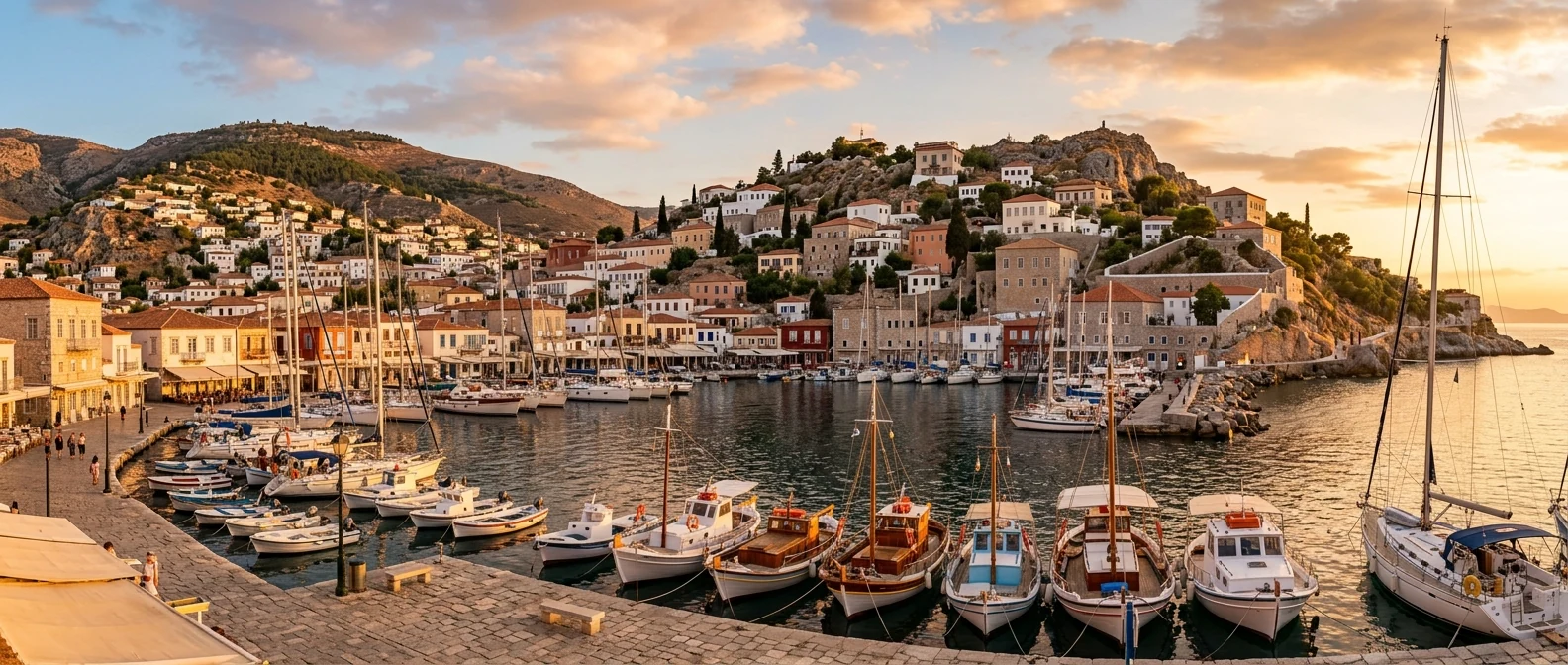
Aegina is closer at around 40 minutes, with Aphaia, pistachios, and an easier logistics plan. Hydra is farther away, has no cars, and has a different atmosphere. Aegina works more easily as a shorter day; Hydra usually asks for more time.
Worth visiting Aphaia or just stay at the port?
Yes, it is worth visiting. It is one of the better-preserved ancient temples in Greece and gives a fuller picture of the island beyond the port. Add around 2-3 hours in total, including the bus or taxi.
Best time of year?
April to June and September to October are usually the most comfortable months: warm enough for the beach, better for walking, and with fewer people. July and August are hotter, but ferry schedules are fuller. In winter, sailings thin out and some seasonal tavernas close.
Are Aegina pistachios really different?
Yes. They are smaller, sweet, and aromatic, and they carry PDO status. It is worth buying them on the island, where prices are usually better than at the airport.
Can I drive on Aegina?
Yes. You can bring a car on a conventional ferry, usually for an extra charge, or rent on the island. The main roads are fine, but some inland routes are narrow.
Family-friendly?
Yes. The ferry trip is short, there are sandy beaches, and getting around by bus or taxi is relatively simple.
Sources:
— Kathy