
At a glance
One night
The night of the August full moon. In 2027: Tuesday 17 August (estimate).
0€
Free entry to the sites on the list, and to their events.
126 sites
All over Greece in 2026. Usually from 19:30 or 20:00 until 23:00 or midnight.
8 minutes
On foot from Ioulianou 50 to the National Archaeological Museum.
What happens that night
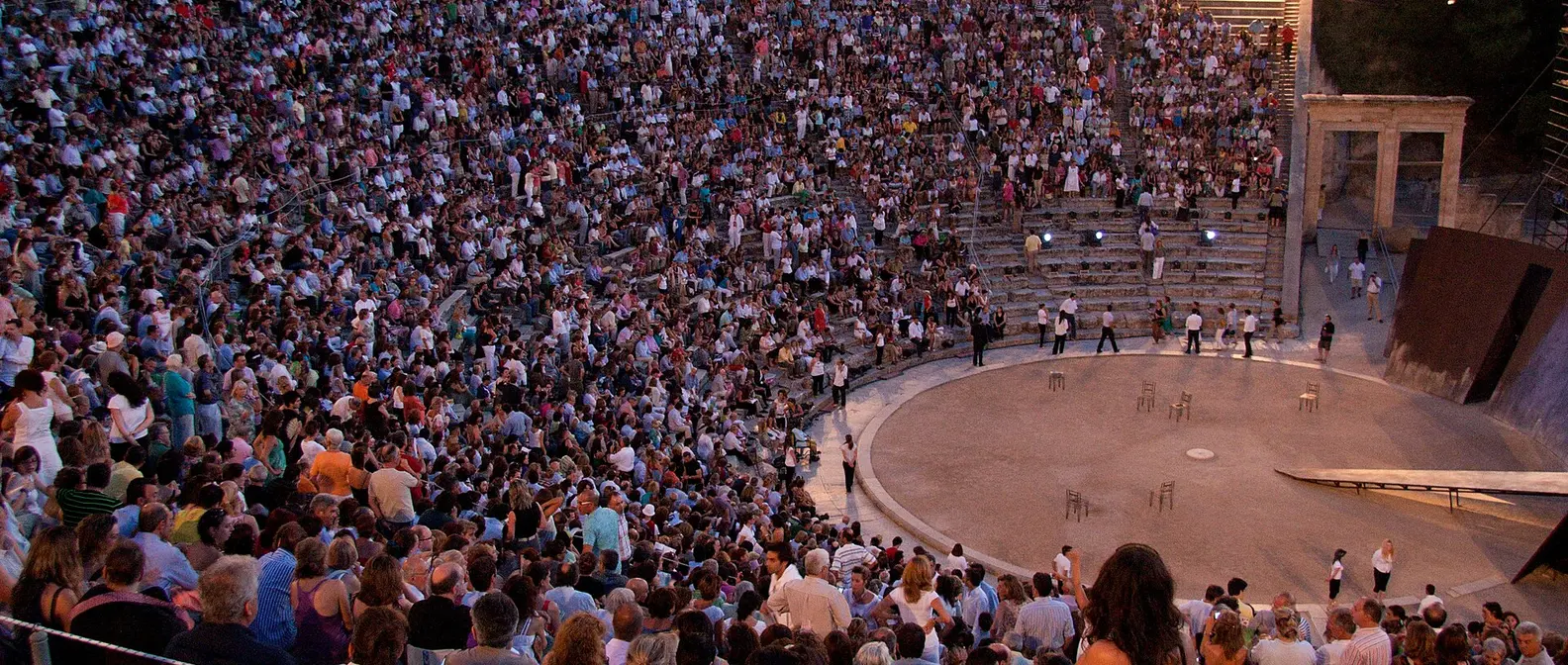
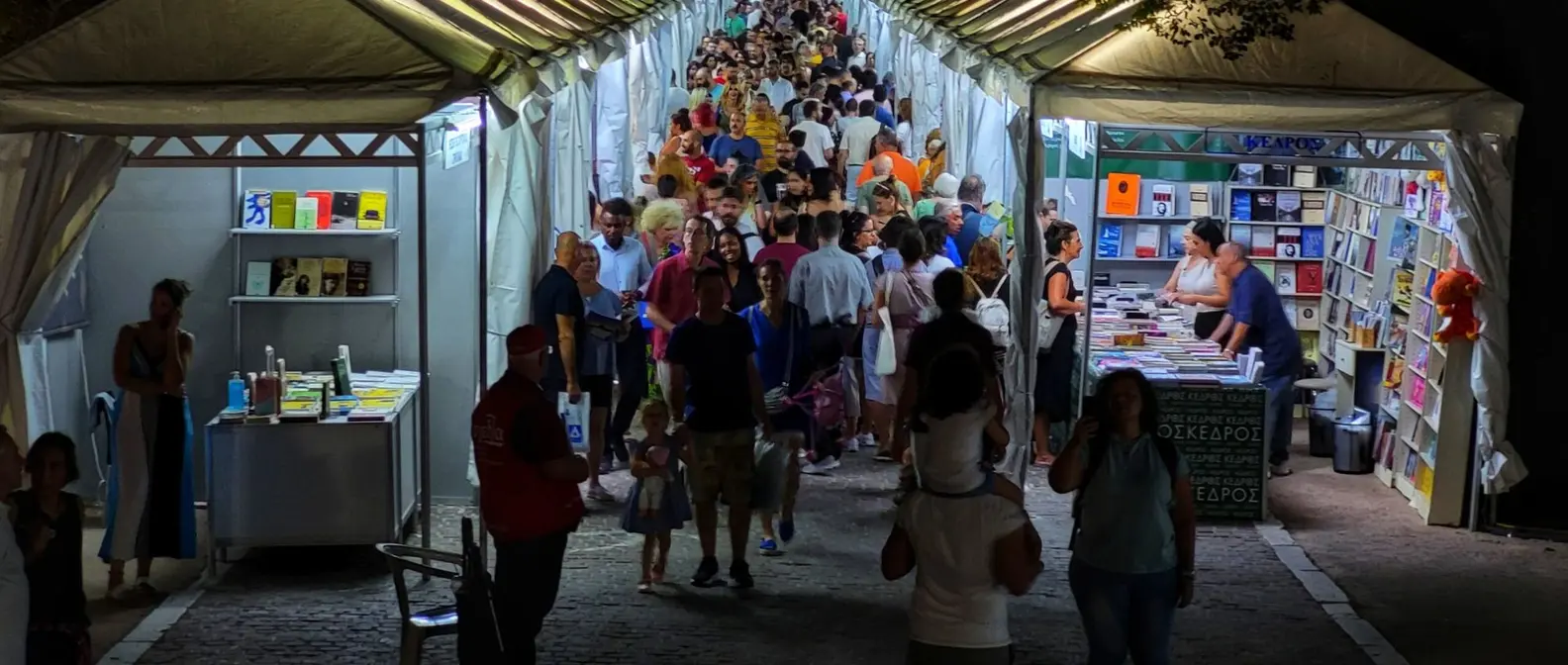
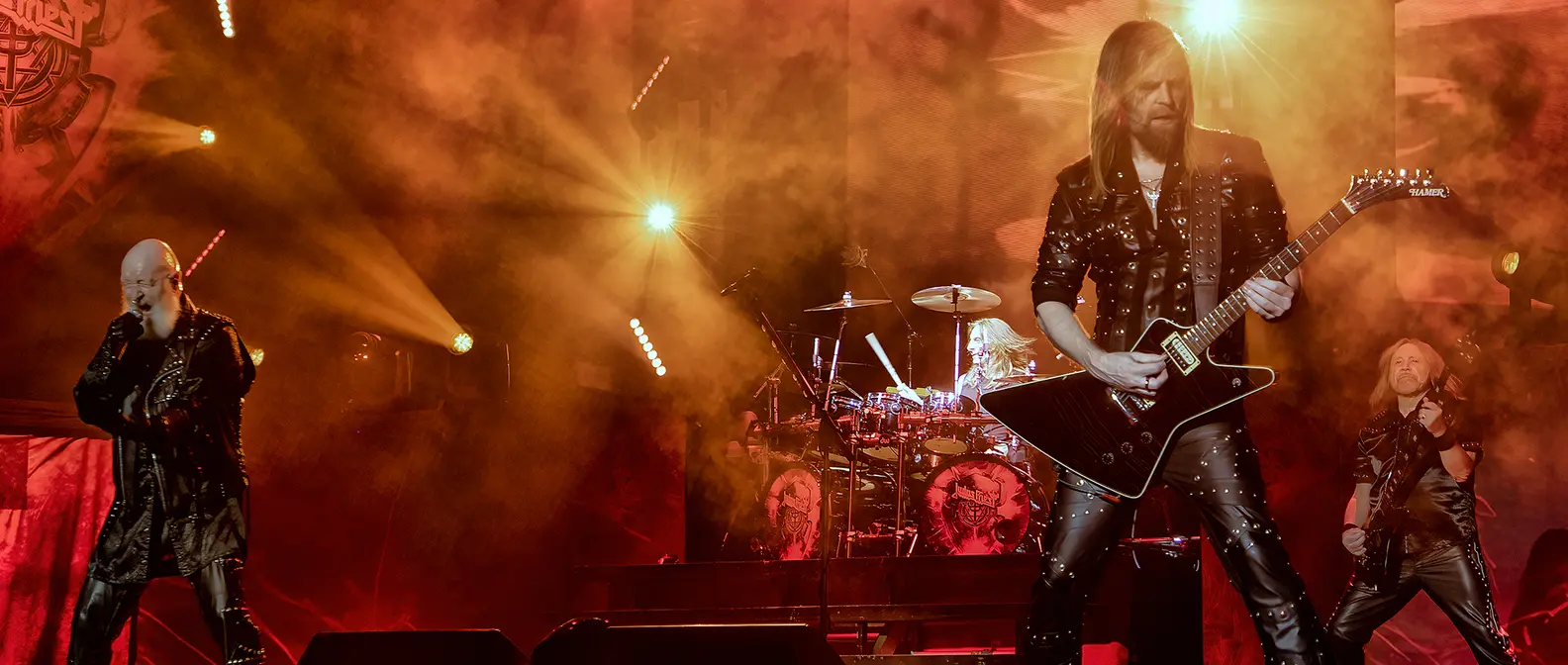
The August full moon is the brightest night of the Greek summer, and Athenians celebrate it outdoors: on hills, on rooftops, at ancient sites. For over twenty years the Ministry of Culture has used it to open its museums to the public for free. Each ephorate of antiquities decides what to do: some sites simply stay open until midnight, others put on a concert or a play. In 2026 there were events at 61 of the 126 sites.
The date follows the moon, so it moves every year between early and late August. The ministry announces the list of sites and hours a few days before, on culture.gov.gr. Where there is a performance, seats are usually first come, first served, so go early.
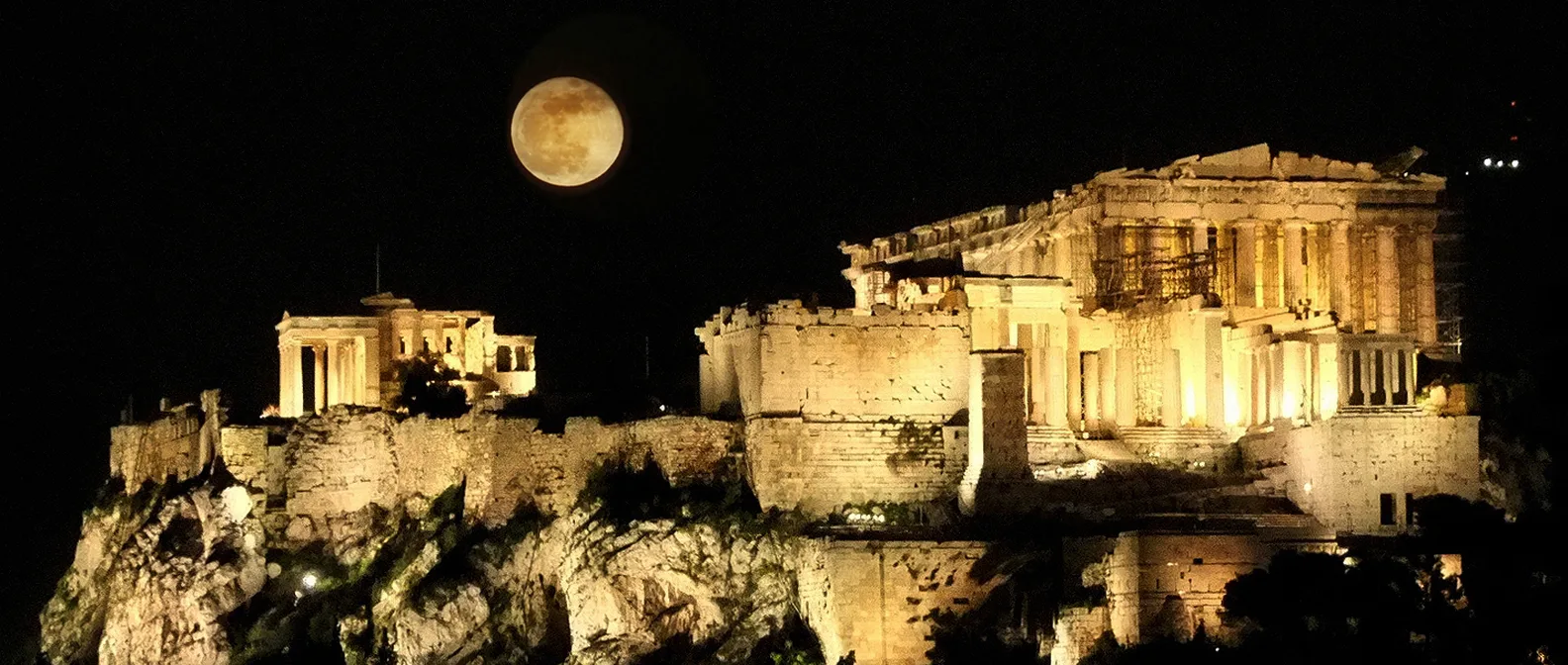
The rock is lit every night; on the night of the full moon it also has the moon above it.
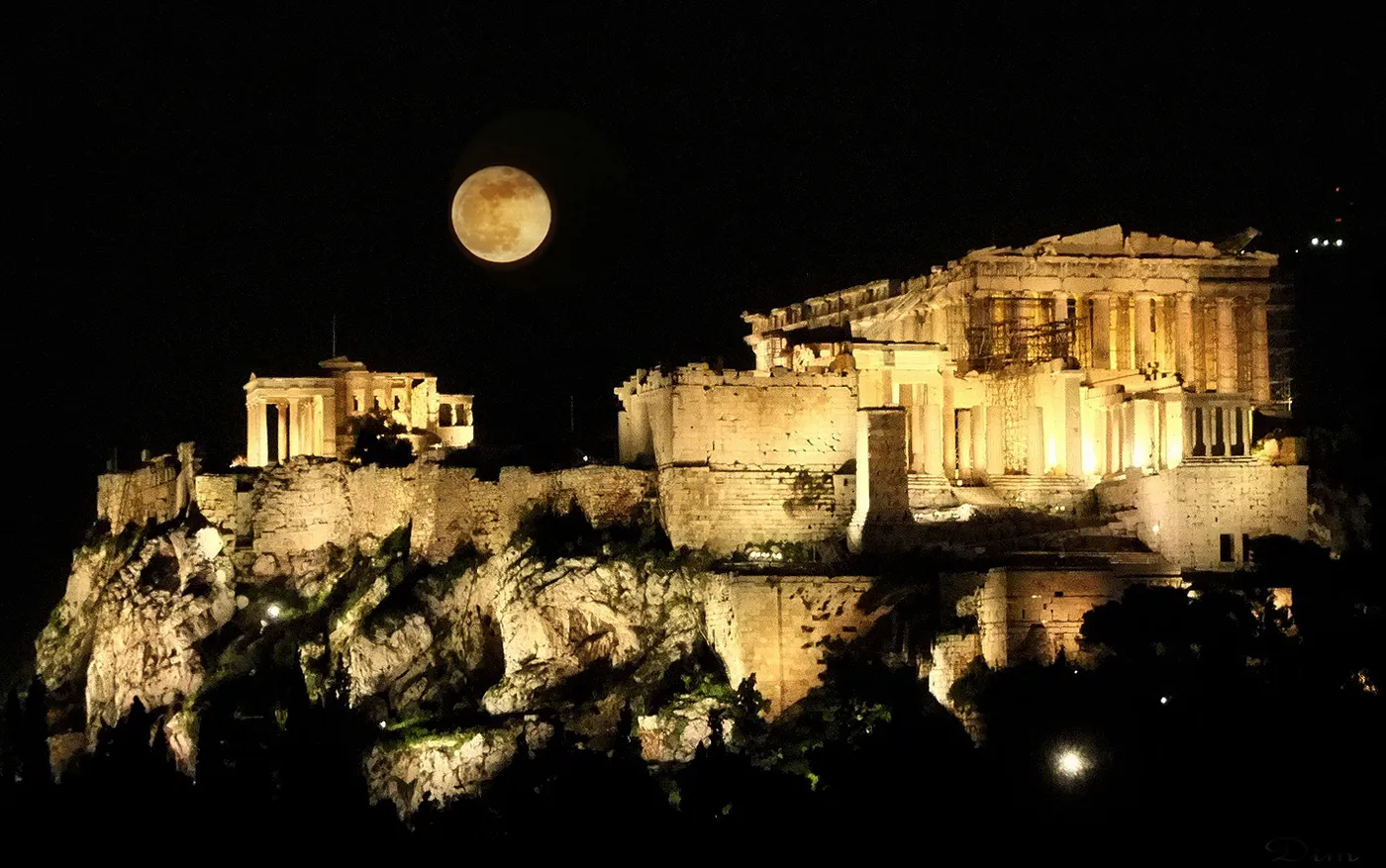
The August full moon, as people see it from the surrounding hills.
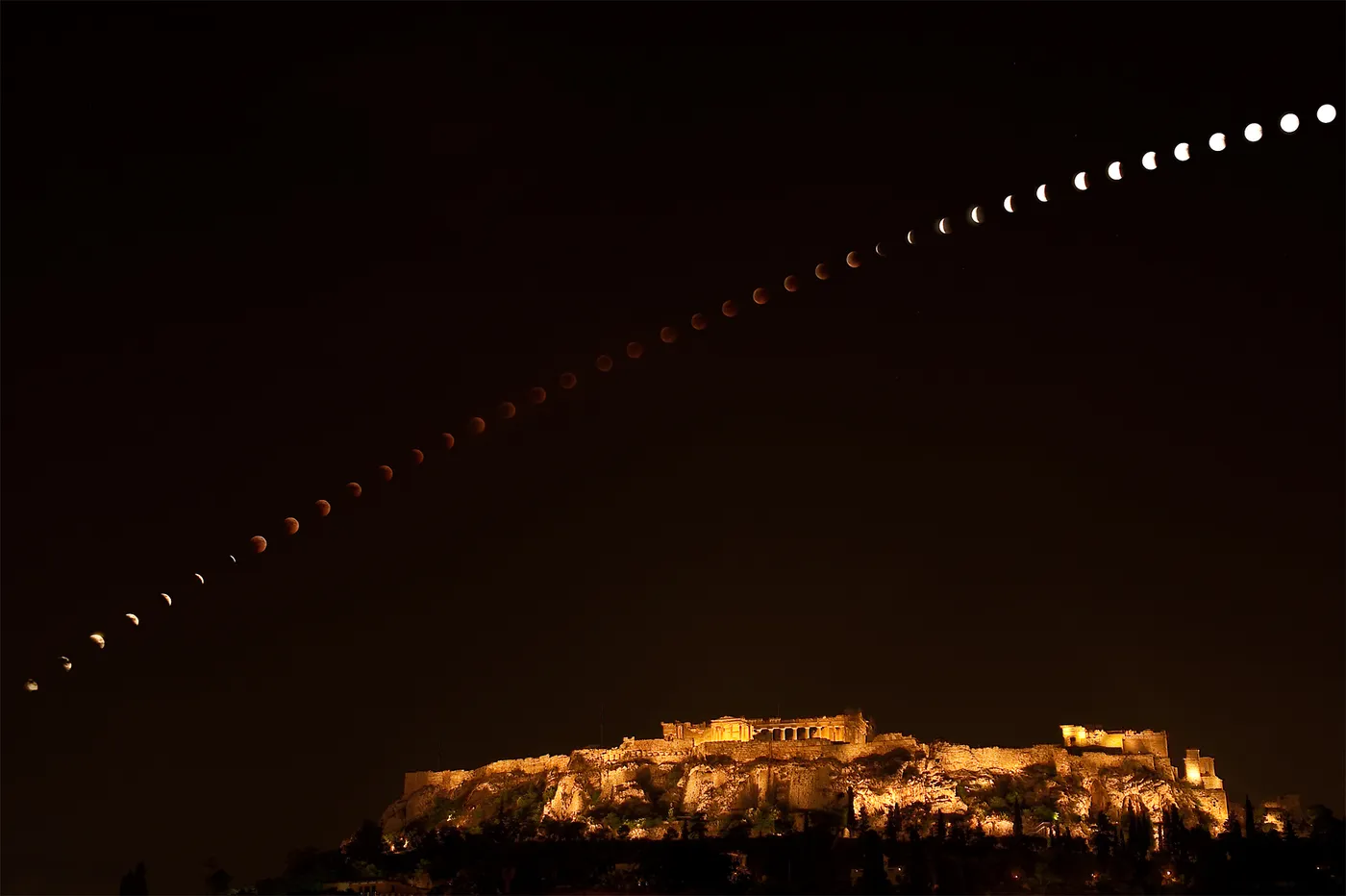
The total lunar eclipse of 15 June 2011, in successive shots.
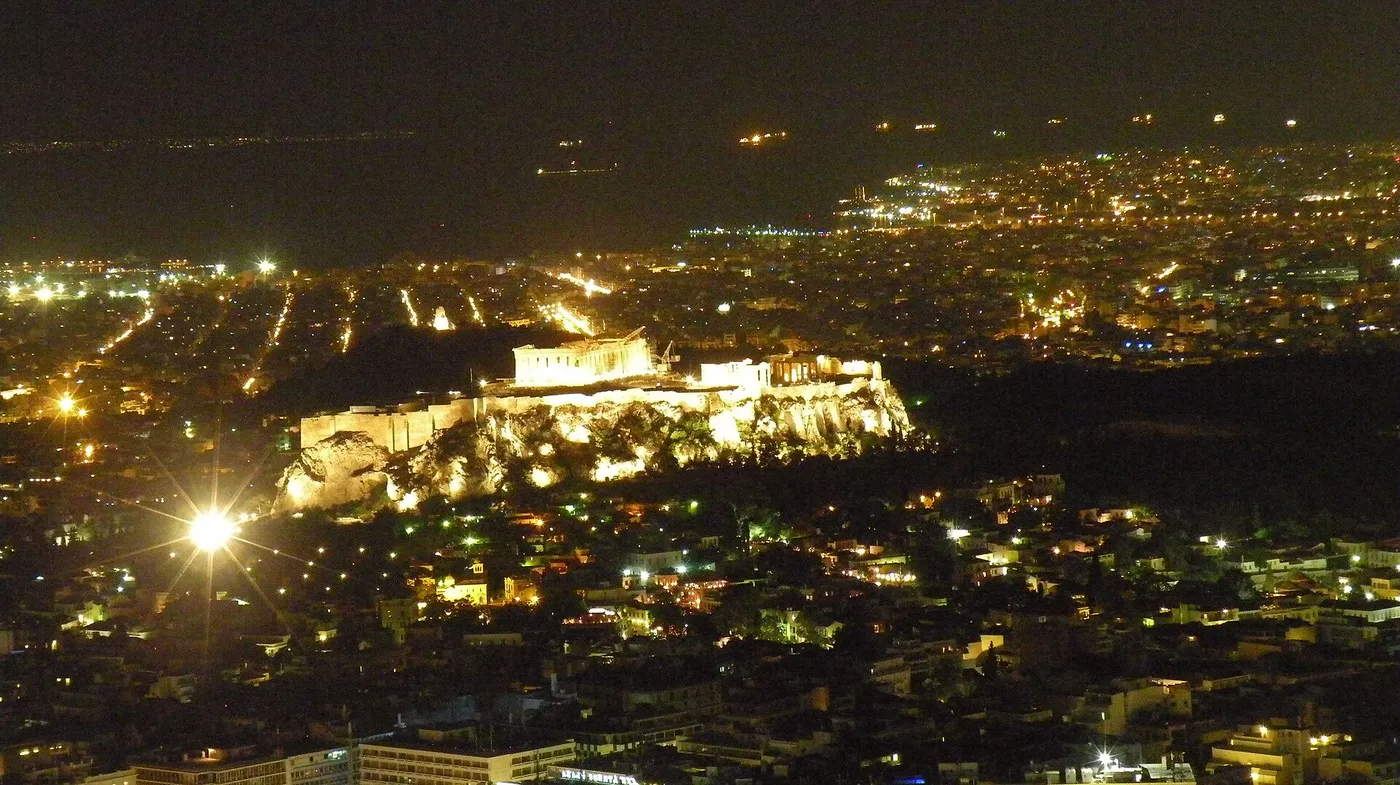
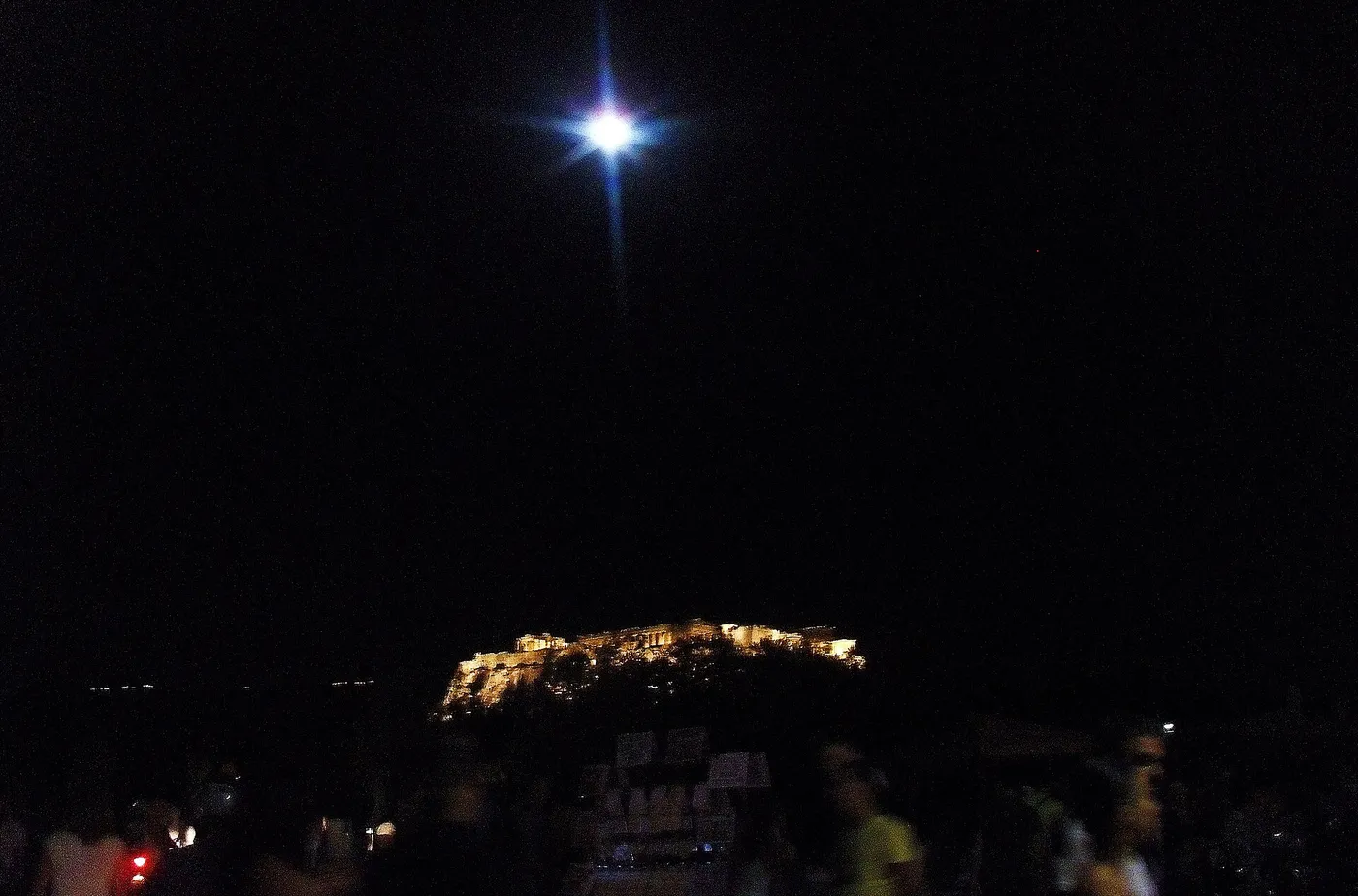
From Lycabettus the Acropolis appears in the middle of the city lights.
Photos: Dim Leventis (CC BY-SA 2.0), Ellelaime (CC BY-SA 3.0), Elias Politis (CC BY-SA 3.0), Tednat (CC BY-SA 4.0), Wikimedia Commons.
What opens in Athens
The list changes every year, but the museums in the centre almost always take part. To give you an idea, these opened near you in 2026:
- National Archaeological Museum (Patision 44): free entry from 19:00, with themed tours by its archaeologists. It is the closest to you, an 8-minute walk.
- Epigraphic Museum (Tositsa 1, in the same building): open 19:30–24:00, with tours in small groups until 20:30 and a silent film with piano.
- Numismatic Museum (Iliou Melathron, Panepistimiou 12): a concert in the garden at 21:00.
- Museum of Modern Greek Culture, in Plaka: open 20:00–24:00.
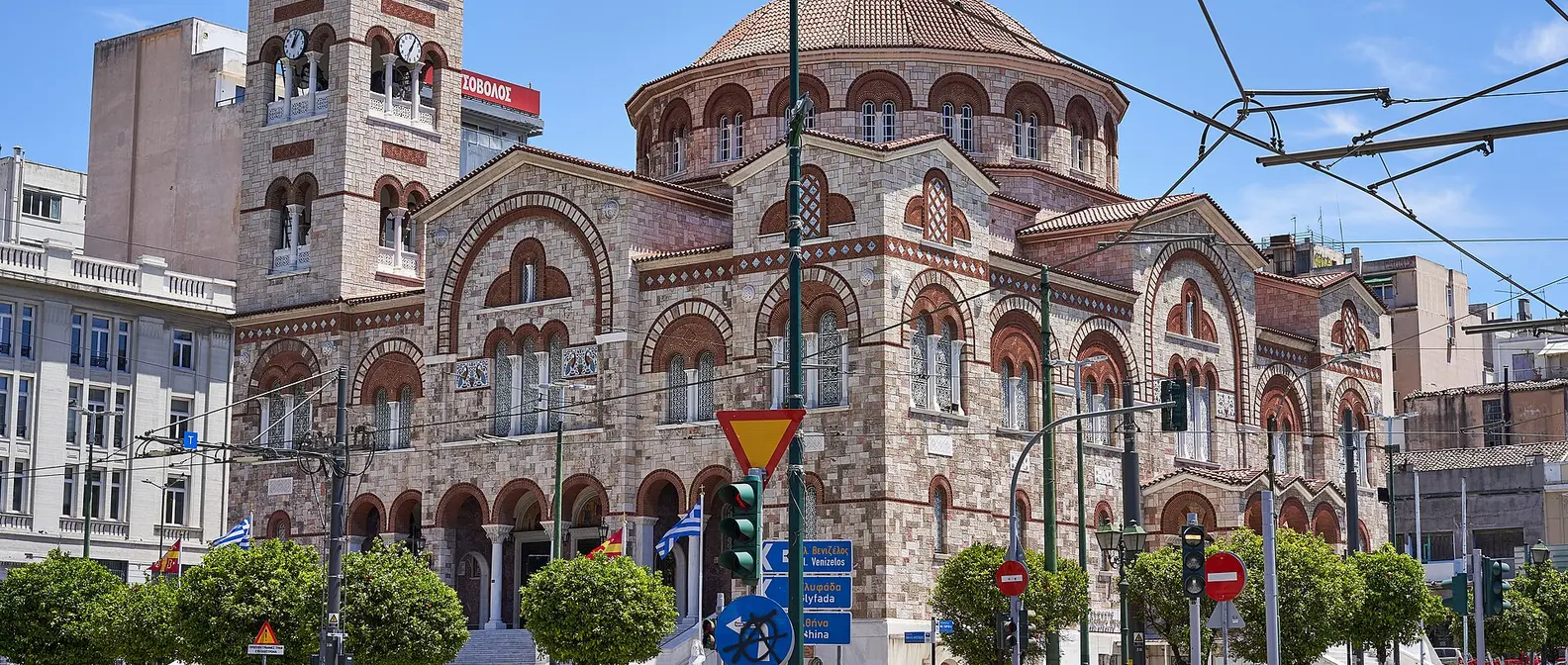
- Archaeological Museum of Piraeus: a string concert with members of the Athens State Orchestra in the courtyard, at 21:00.
The Acropolis Museum is not on the ministry’s list, but in recent years it has stayed open until midnight that day, with a regular ticket, and the second-floor restaurant looks straight onto the rock. The Acropolis archaeological site does not necessarily open in the evening; check that year’s list before you plan anything there.
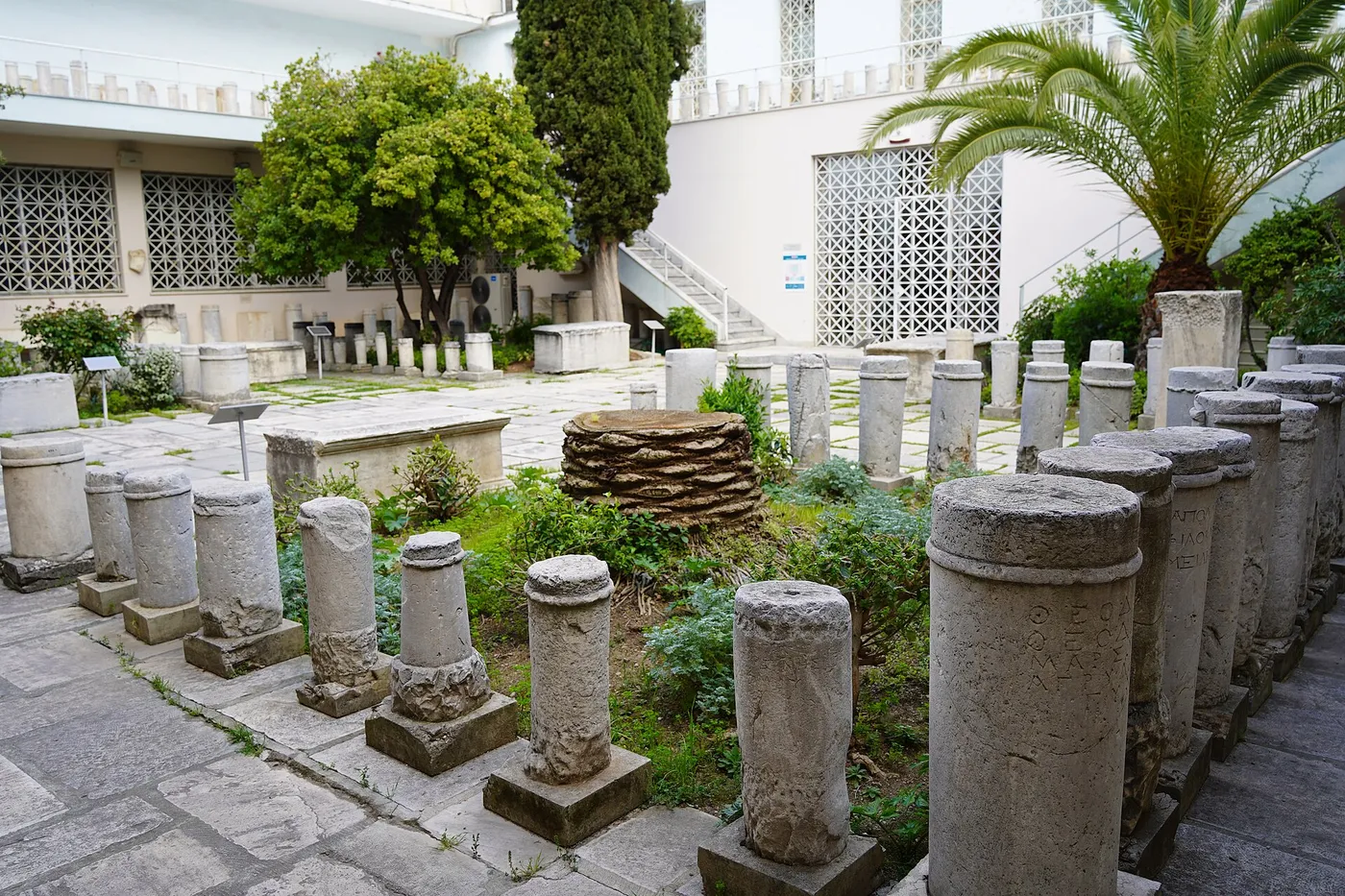
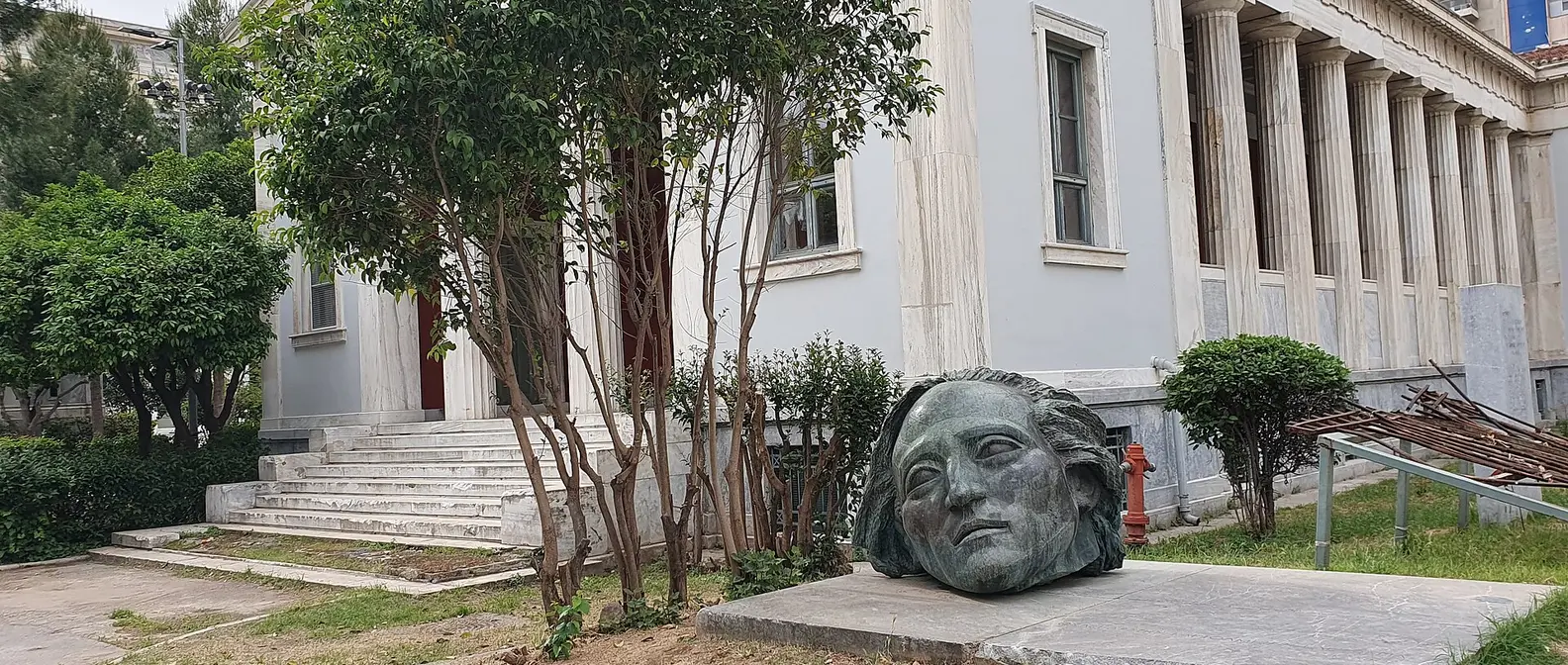
The courtyard with the ancient stelae, in the same building as the National Archaeological Museum.
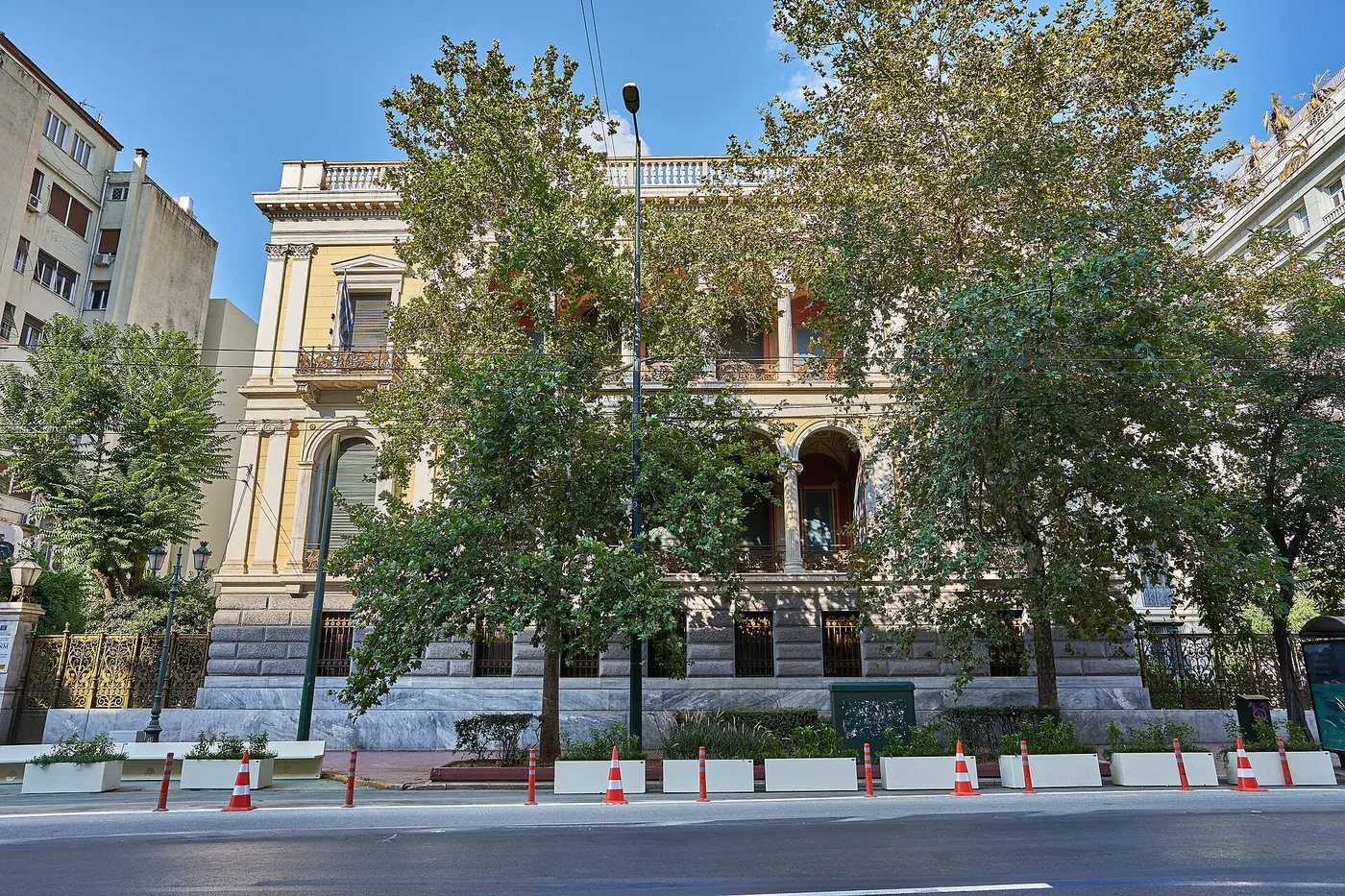
Schliemann’s house on Panepistimiou Street, now the Numismatic Museum. Concerts take place in the garden at the back.
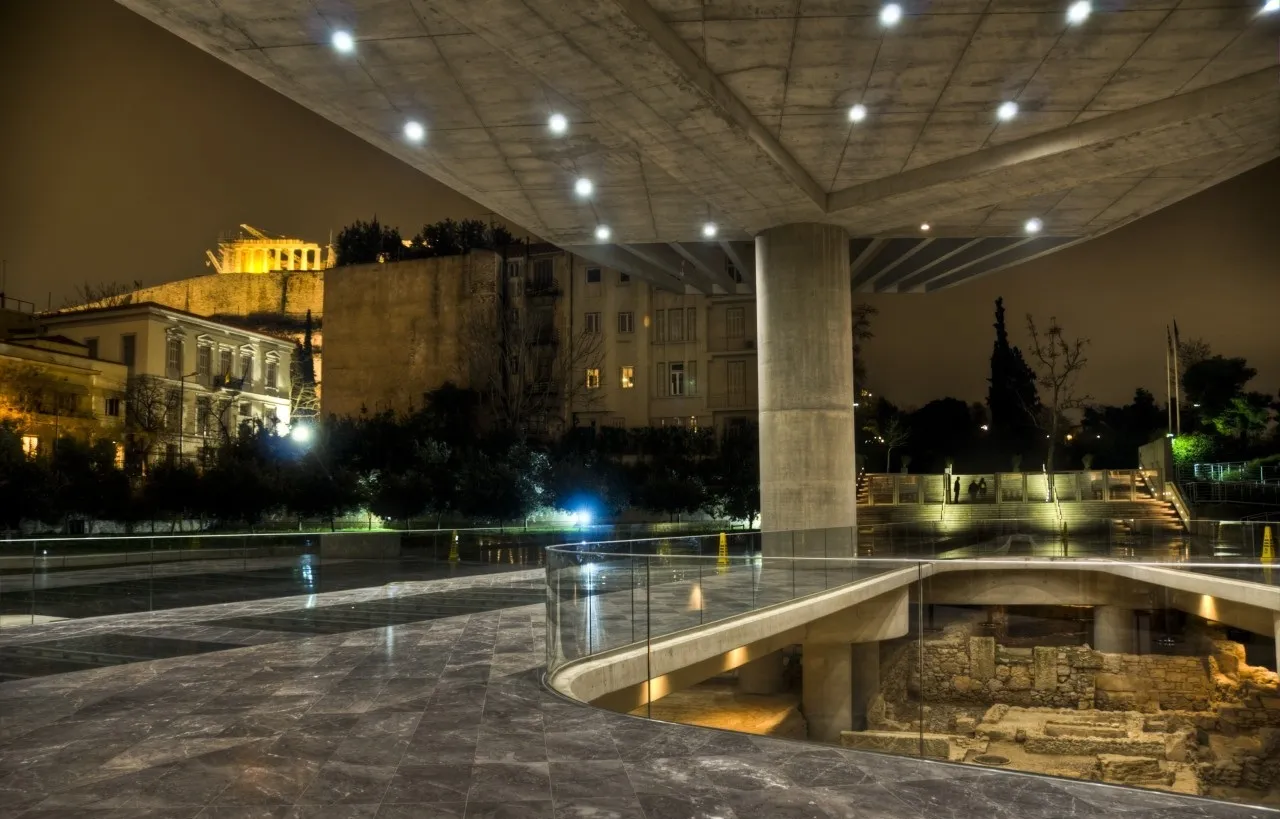
In the evening the excavations under the glass floor are lit, and the rock appears high above.
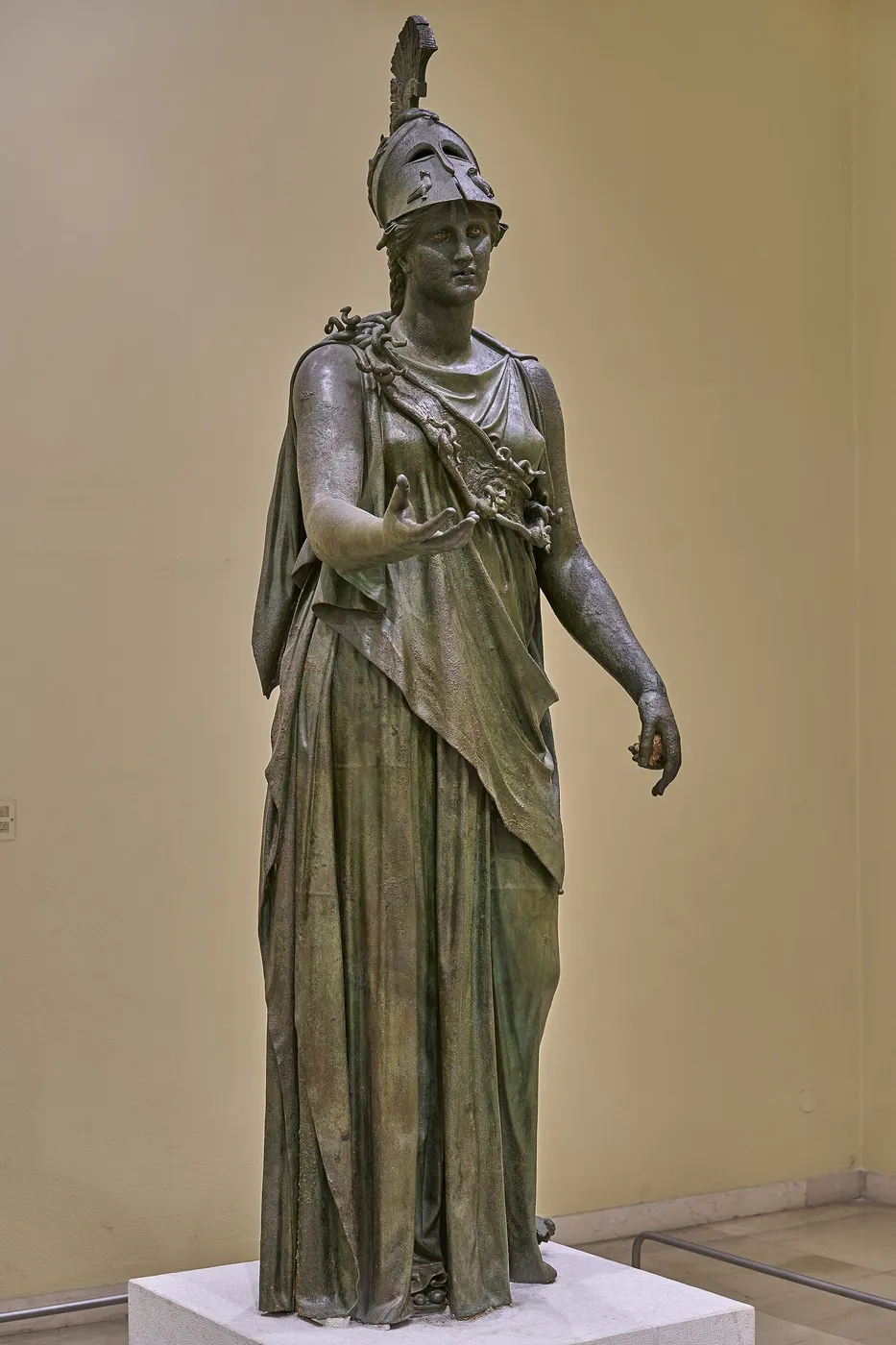
One of the bronze statues of the Archaeological Museum of Piraeus, straight down Line 1 from Victoria.
Photos: TimeTravelRome (CC BY 2.0), George E. Koronaios (CC BY-SA 4.0), Michal Huniewicz (CC BY 3.0), Wikimedia Commons.
A little further out, in Attica
If you have a car or want to take a taxi, the sites outside the centre often have the most atmospheric events. In 2026, at the Byzantine church of Agios Georgios, the «Omorfi Ekklisia» (Beautiful Church) in Galatsi, there was a concert of poetry set to music at 21:00. At the Amphiareion of Oropos, an ancient healing sanctuary among pine trees, «Medea» was performed at 20:30. At the Sanctuary of Aphrodite in Chaidari, next to the Sacred Way, there was a night-sky watching evening.
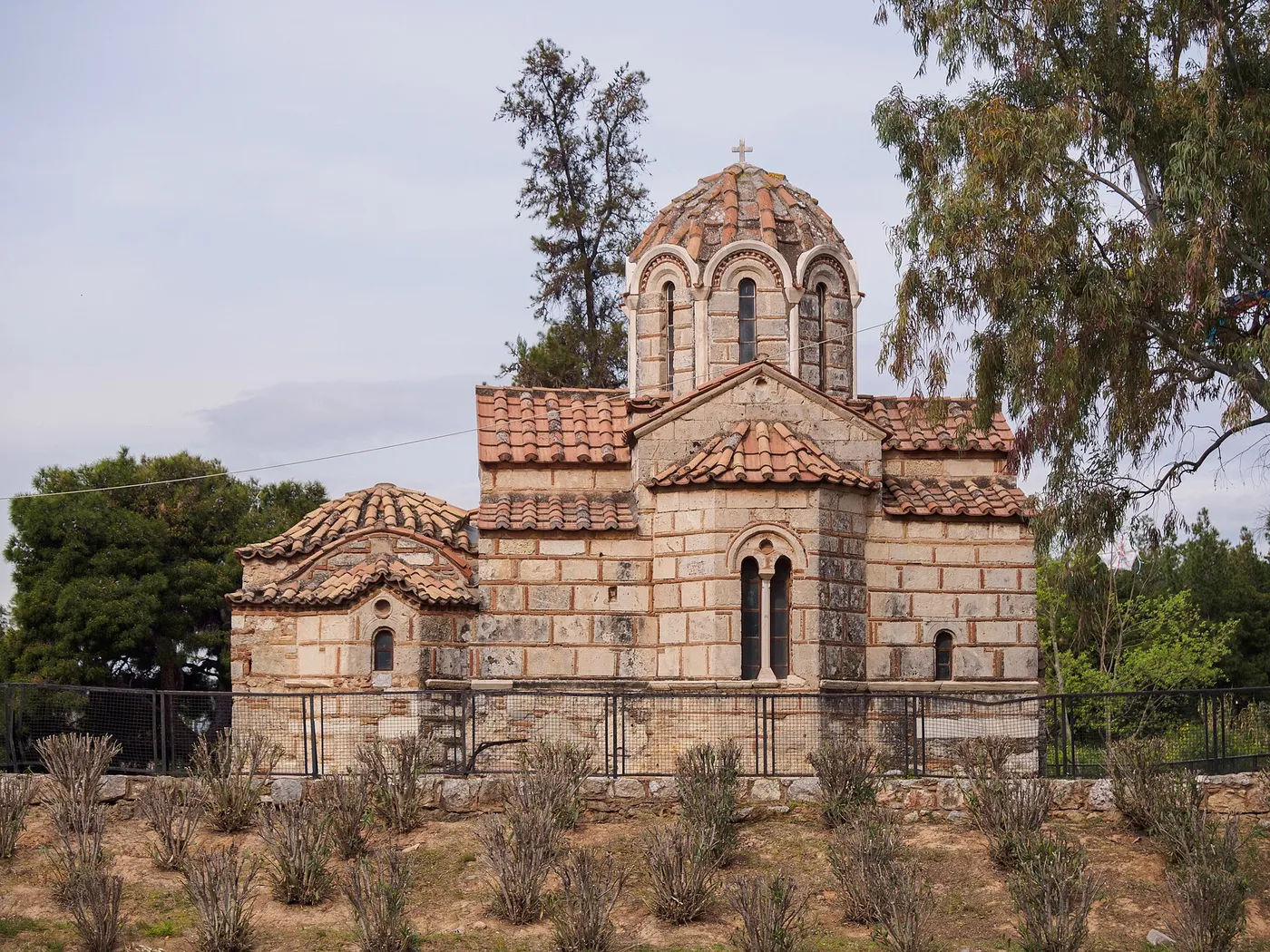
A Byzantine church of the 12th–13th century, about 15 minutes by taxi from Victoria.
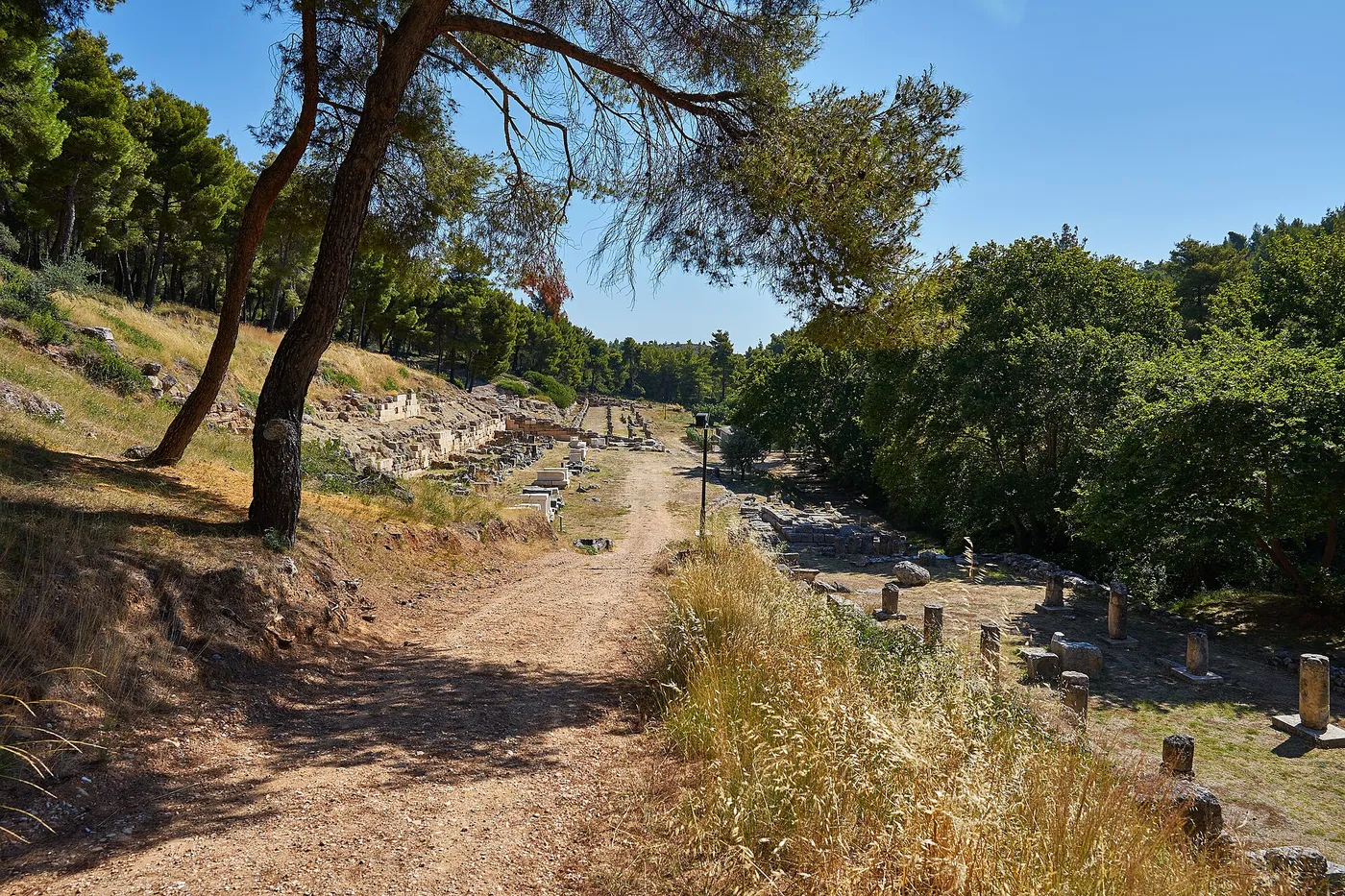
The sanctuary spreads along a ravine with pine trees, about an hour by car from the centre.
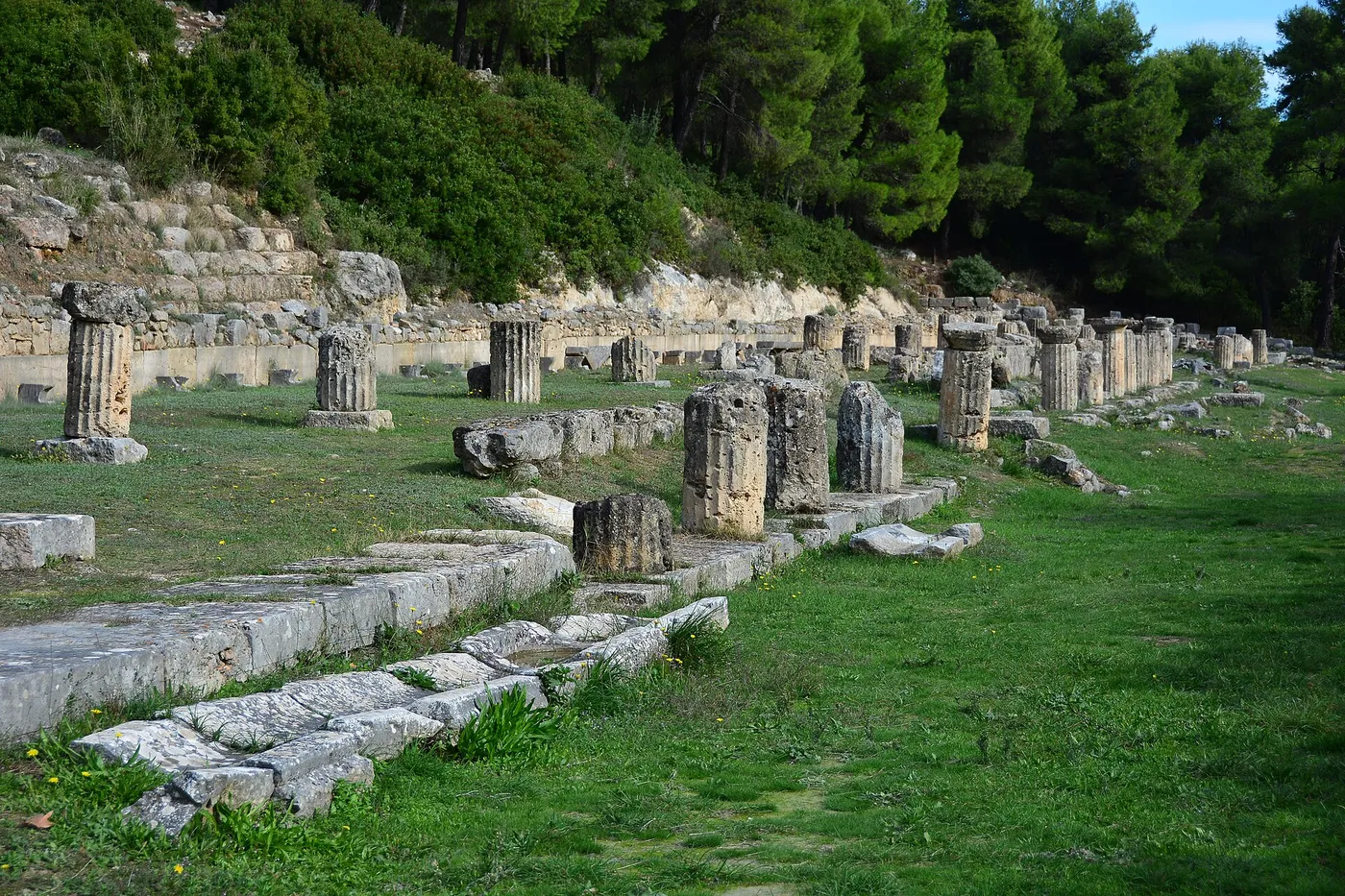
The sick slept here, waiting to be healed in a dream.
Photos: C messier (CC BY-SA 4.0), George E. Koronaios (CC0), George Fournaris (CC BY-SA 4.0), Wikimedia Commons.
Where to watch the moon for free
The full moon rises as the sun sets, in the east, behind Mount Hymettus. The best spots are high up and open all night:
- Philopappos Hill: you have the Acropolis opposite and the moon rising over Hymettus. It is the busiest hill that evening.
- Areopagus: the rock right below the Acropolis; from here the moon rises behind its walls. The stone is slippery, so wear shoes with grip.
- Lycabettus: the highest view in the city, with the moon above Hymettus.
How to get to the National Archaeological Museum
- Ioulianou 50 → Patision: walk east along Ioulianou, about 330 metres, to Patision Street.
- Patision → Museum: turn right and walk down Patision for about 250 metres. The museum is on your left, inside its garden, just before the Polytechnic.
About 650 metres in total, 8 minutes. The Epigraphic Museum has its entrance on the side of the same building, on Tositsa Street. For the Numismatic Museum, take Line 1 to Omonia and Line 2 one stop to Panepistimio. For Piraeus, Line 1 goes from Victoria to the end of the line without a change, and from the station the museum is about 15 minutes on foot.
🌕 From Ioulianou 50 to the National Archaeological Museum
About 650 metres on foot. Tap the museum to open the route in Google Maps.
Kathy’s tip: start at the National Archaeological Museum at 19:00, while it is still quiet, and see the Epigraphic Museum in the same building. Then take a taxi to Philopappos or the Areopagus to see the moon and the Acropolis together. Bring water and use your phone torch on the steps on the way back.
Frequently asked questions
When is the August Full Moon in 2027?
Going by the moon, Tuesday 17 August (estimate). The ministry sets the night and announces the list of sites a few days before.
Do I need a ticket or a booking?
Not for the sites on the list: entry is free. For some tours or performances with few seats, you may be asked to register; each site’s announcement says so.
Does the Acropolis open in the evening?
Not necessarily. Check that year’s list. You can watch the moon above the rock for free from Philopappos, the Areopagus and Lycabettus.
What time do the sites open?
Usually from 19:30 or 20:00 until 23:00 or midnight. In 2026 the National Archaeological Museum opened for free from 19:00.
Does it happen in other months too?
The big night is only in August. You also get free entry to museums and archaeological sites on other days, such as 18 April, 18 May and 28 October.
— Kathy