At a glance
15–17 November
Three days of remembrance at the Polytechnic. The 17th is a school holiday; shops and services work as normal.
9 minutes
On foot from Ioulianou 50 to the Patision gate, about 700 metres.
14:30
The time the march to the US Embassy set off last year.
5 stations
Closed in 2025 from 14:00: Omonia, Panepistimio, Syntagma, Evangelismos, Megaro Mousikis.
What happens each day
The programme barely changes from year to year. The times here are from the 52nd anniversary in 2025; this year’s are announced by the Polytechnic and the police a few days before.
| When | What happens |
|---|---|
| 15 November and 16 November, 09:00–20:00 | The gates on Patision Street are open. People walk past the memorial and leave red carnations; school classes come with their teachers. Exhibitions of photos and documents are set up in the courtyard. |
| 17 November, from 09:00 | Official wreaths: the President of the Republic, the Speaker of Parliament, parties, mayors and organisations. Families with children, songs of the time from the loudspeakers. |
| 13:00 | The gates close. Inside, the Anniversary Committee holds its ceremony, without the public. |
| From 14:00 | The central metro stations close, and gradually the main roads of the centre. |
| 14:30 | The march sets off from the Polytechnic. At the front is the blood-stained flag of the uprising. |
| Around 16:30 | The head of the march reaches the US Embassy on Vasilissis Sofias Avenue. A minute’s silence, the national anthem, and the crowd disperses. |
The route of the march runs along Panepistimiou Street, through Syntagma and along Vasilissis Sofias Avenue. Last year the flag made a short stop at the Tomb of the Unknown Soldier and reached the embassy at 16:20. The blocks of students, unions and parties follow for hours.
Visiting the Polytechnic
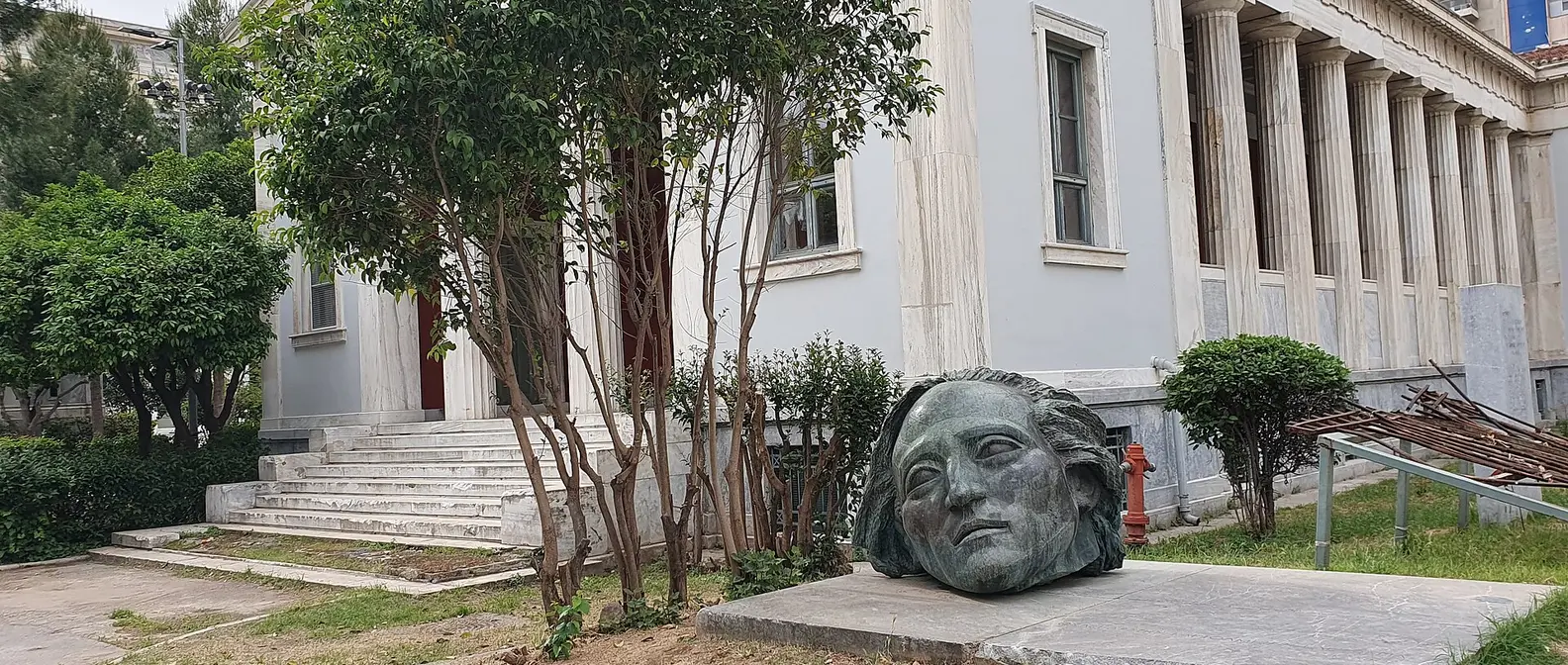
You enter through the main gate on Patision Street. On the right, on the lawn of the courtyard, stands the memorial: a large bronze head by the sculptor Memos Makris, titled «In honour of the victims», and next to it the very iron gate that the tank brought down in 1973, bent, just as it was found that morning. This is where people leave their flowers. Over the three days it fills with carnations.
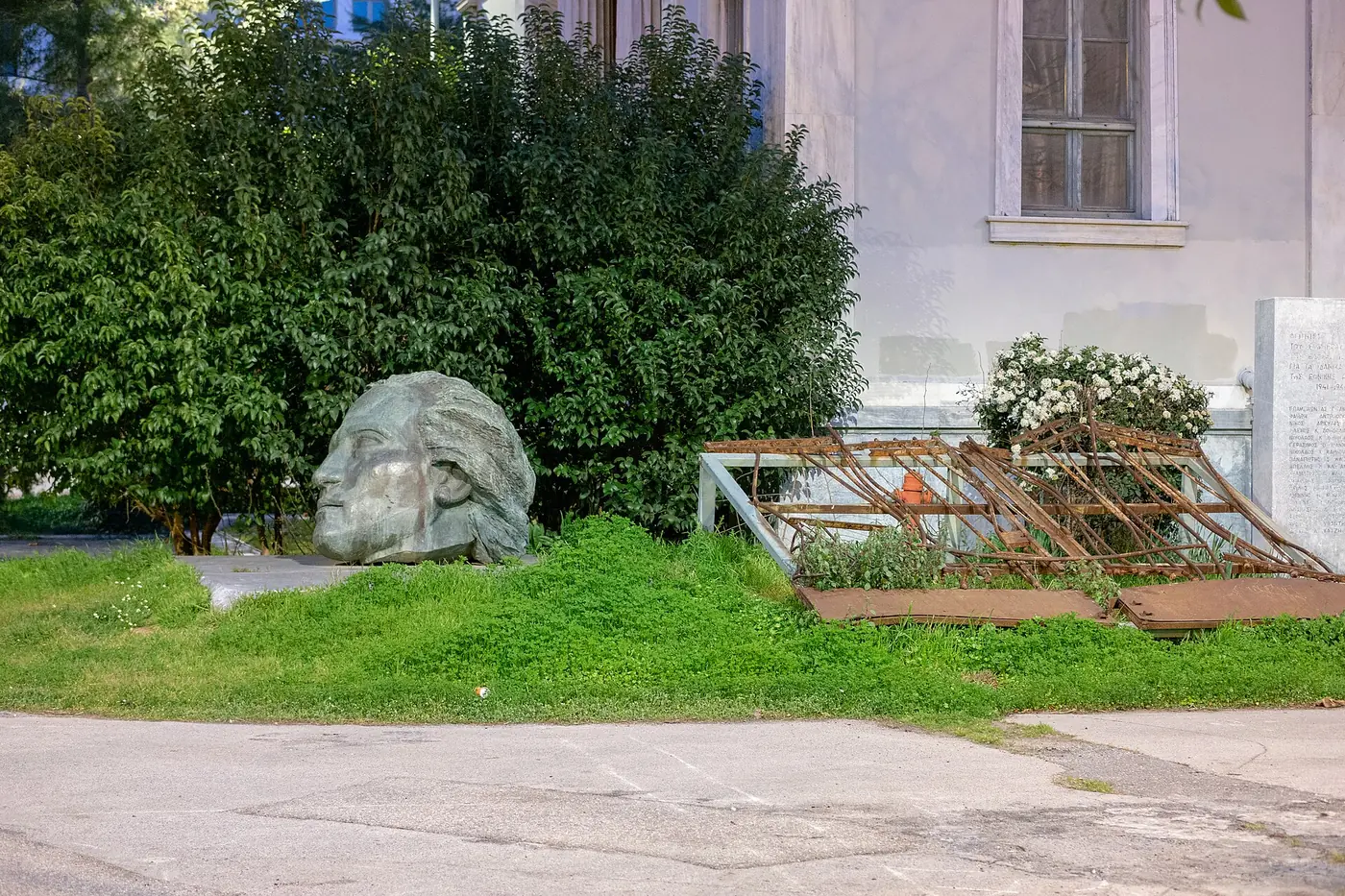
The sculpture «In honour of the victims» and the main gate of 1973. This is where you leave flowers.
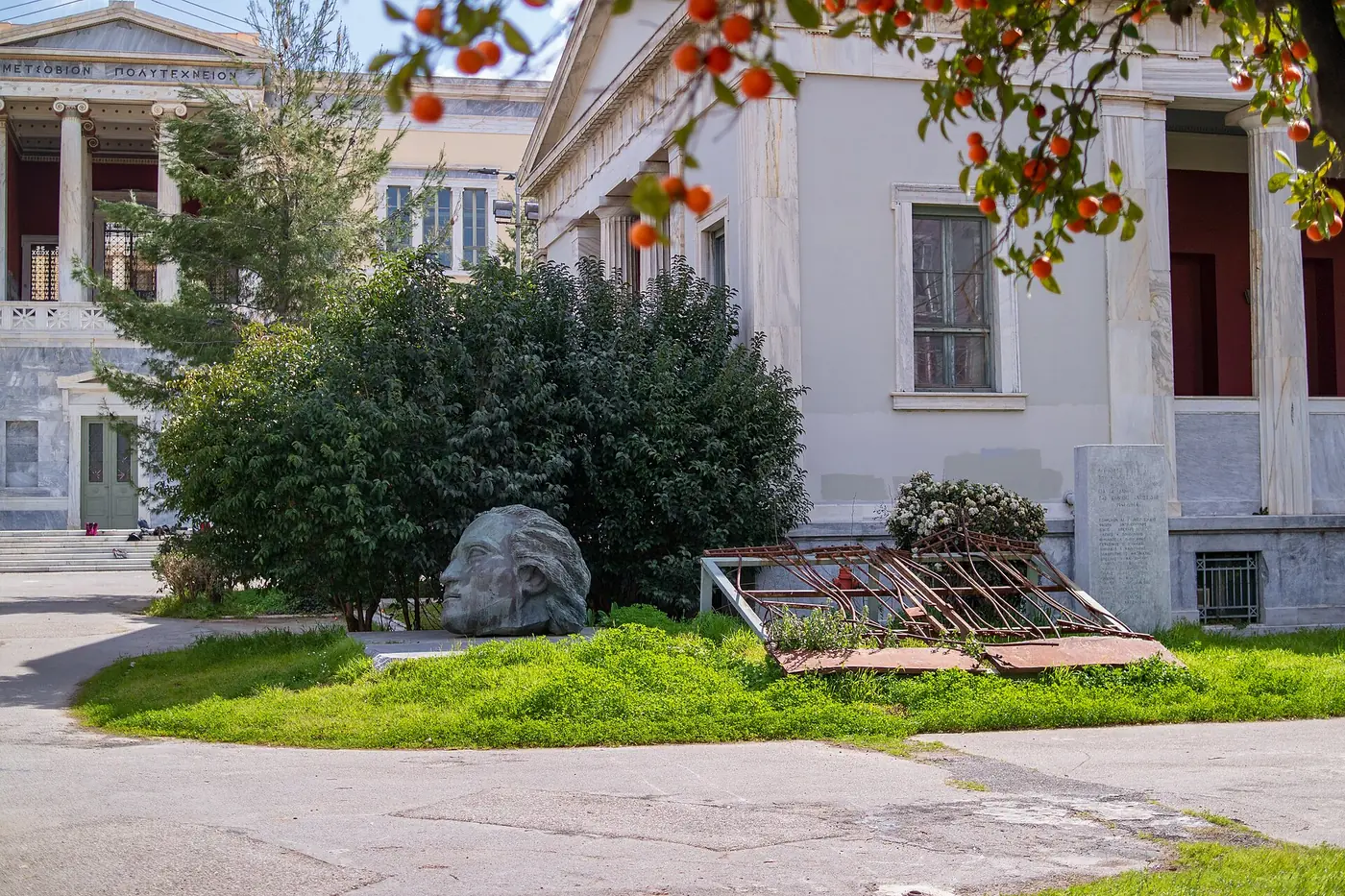
The memorial stands a few metres inside the entrance, in front of the neoclassical buildings of the complex.
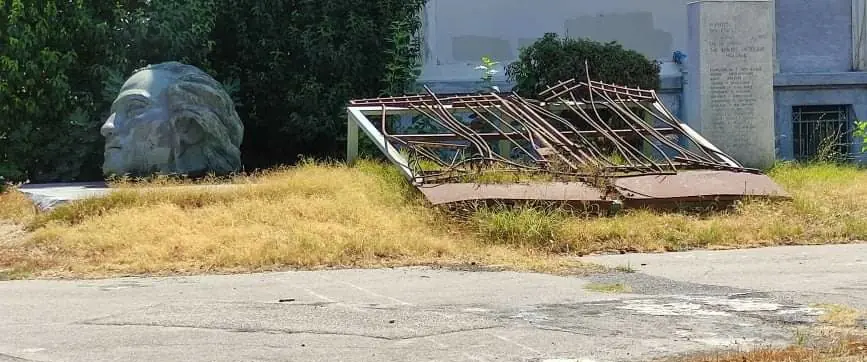
The bent bars show where the tank struck in the early hours of 17 November.
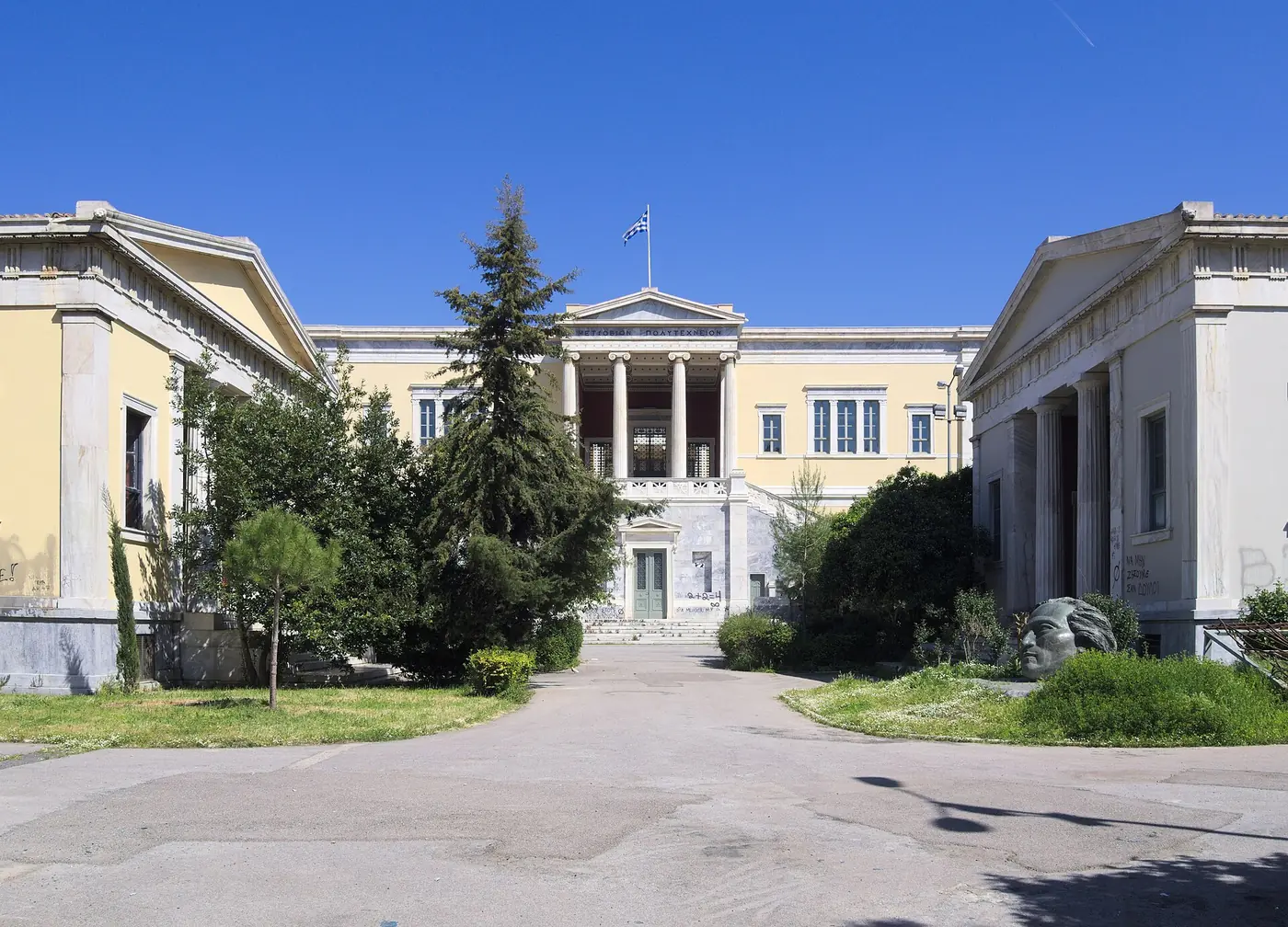
As soon as you pass the gate: the Averof building straight ahead, the memorial on the right.
Photos: StrangeTraveler, C messier (CC BY-SA 4.0), GreatBernard (CC0), Wikimedia Commons.
The building with the columns at the back is the Averof, built in the 19th century to designs by Lysandros Kaftanzoglou. From the balcony of its propylaea Nikos Xylouris sang to the crowd on 16 November 1973. During the anniversary the halls are closed; you see the courtyard and the buildings from outside.
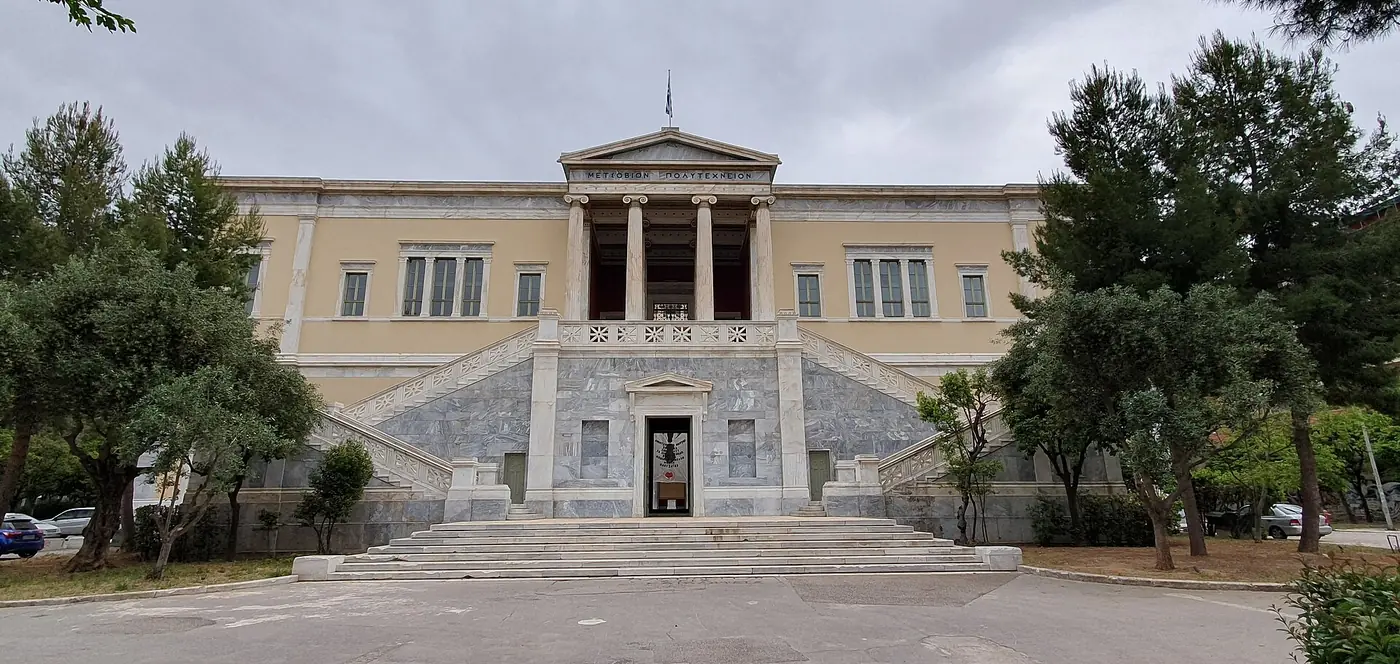
The main building of the complex. Xylouris sang from its balcony in 1973.

The balcony above the staircase. The same spot appears in many photos from November 1973.
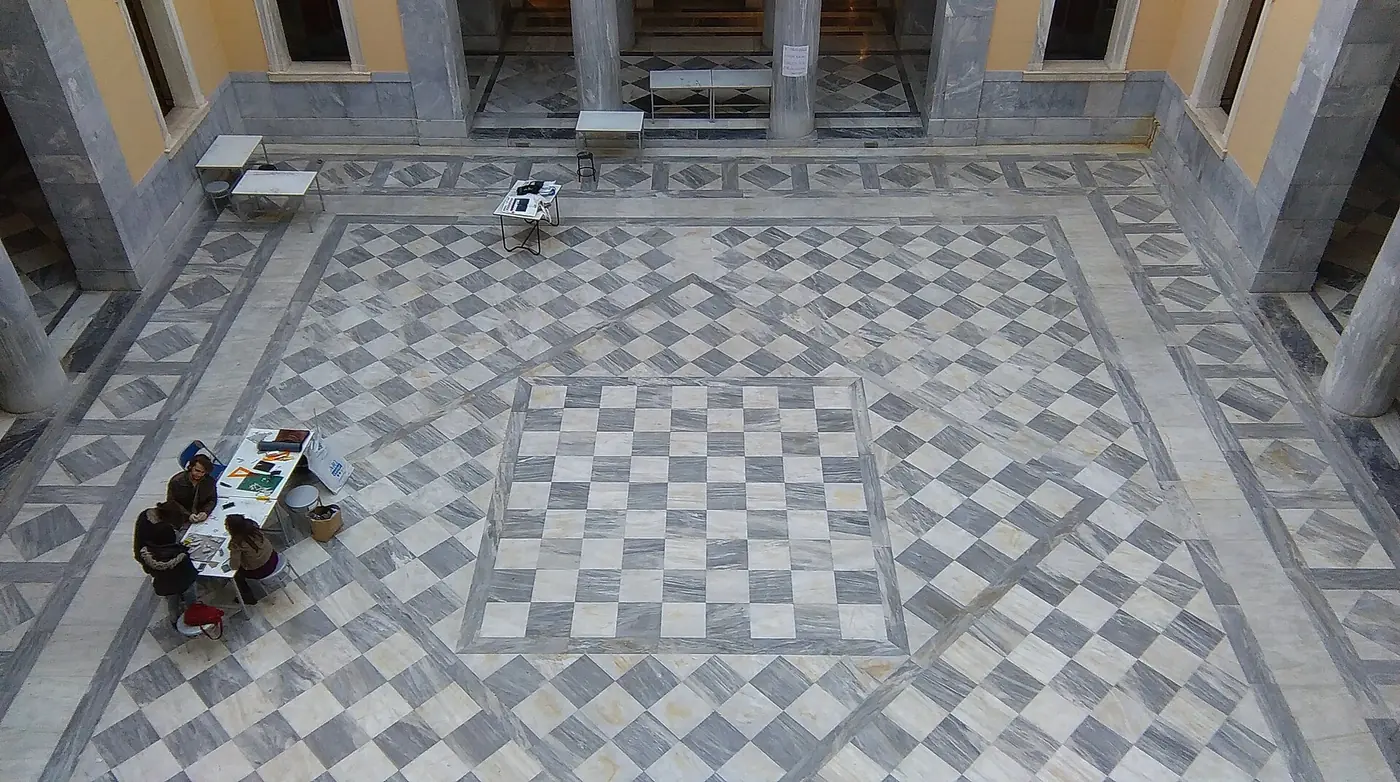
Inside the Averof building. During the anniversary the interiors stay closed.
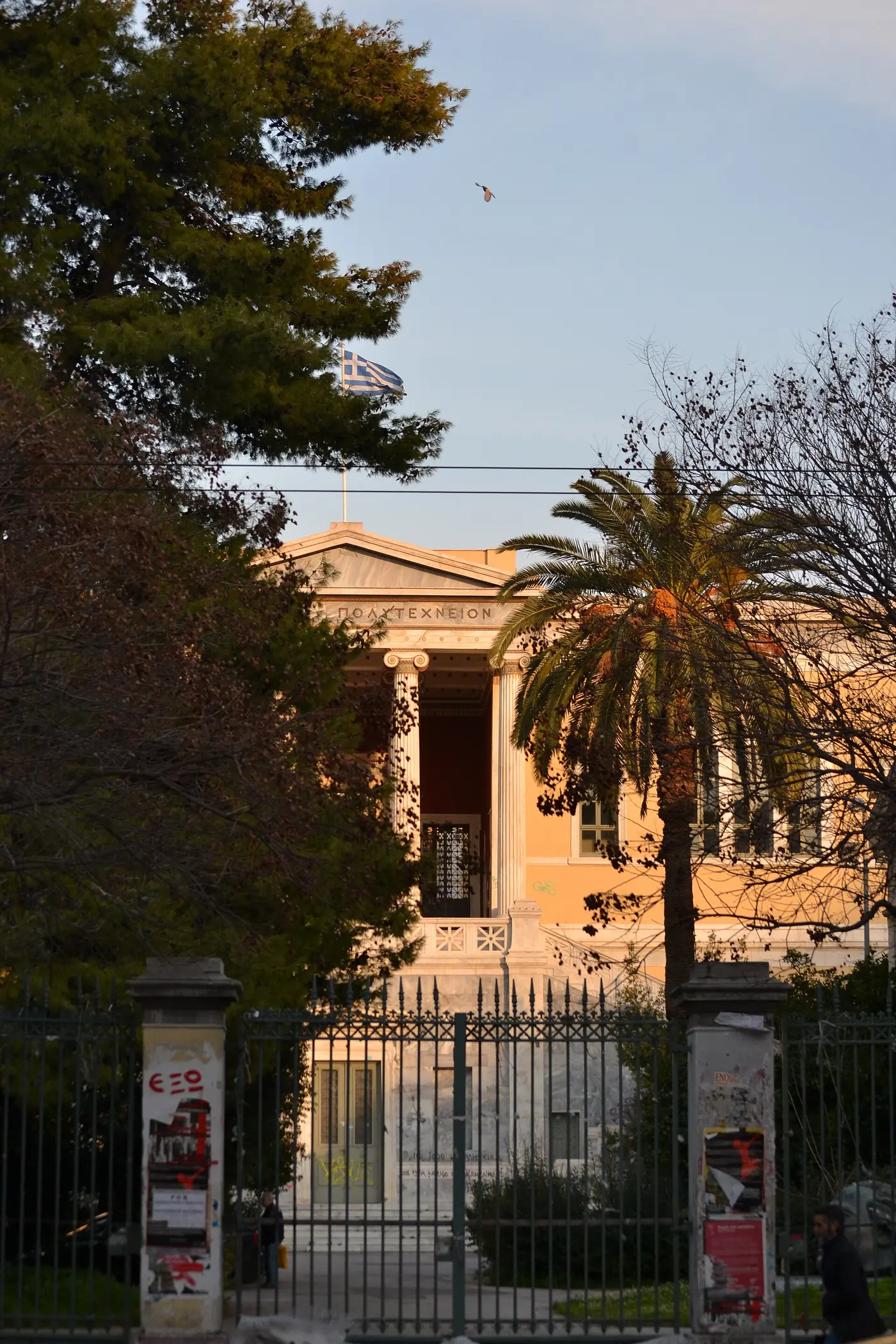
Today’s main entrance, where the gate of 1973 stood.
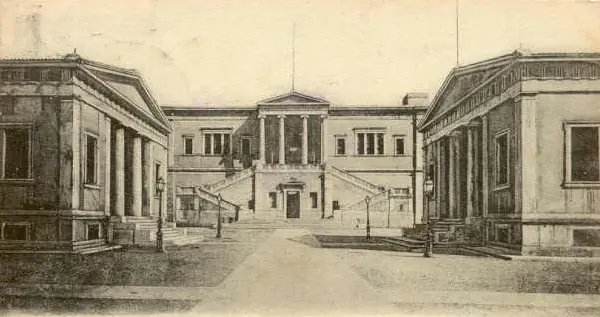
A postcard from the turn of the century. The courtyard and the buildings have stayed almost the same.
Photos: Yair Haklai, Costis 66, Katerina Zisimopoulou (CC BY-SA 4.0), Neosmyrnian (CC BY-SA 3.0), postcard (public domain), Wikimedia Commons.
When to go: the morning of the 15th or the 16th. There are fewer people, the courtyard is quiet and you can leave a flower without rushing. On the morning of the 17th the official wreaths arrive and the crowd grows until 13:00.
How to get there from Ioulianou 50
The Polytechnic is on our side of town. You don’t need the metro — which is just as well, because the nearby stations close on these days:
- Ioulianou 50 → Patision: walk east along Ioulianou, about 330 metres, to Patision Street.
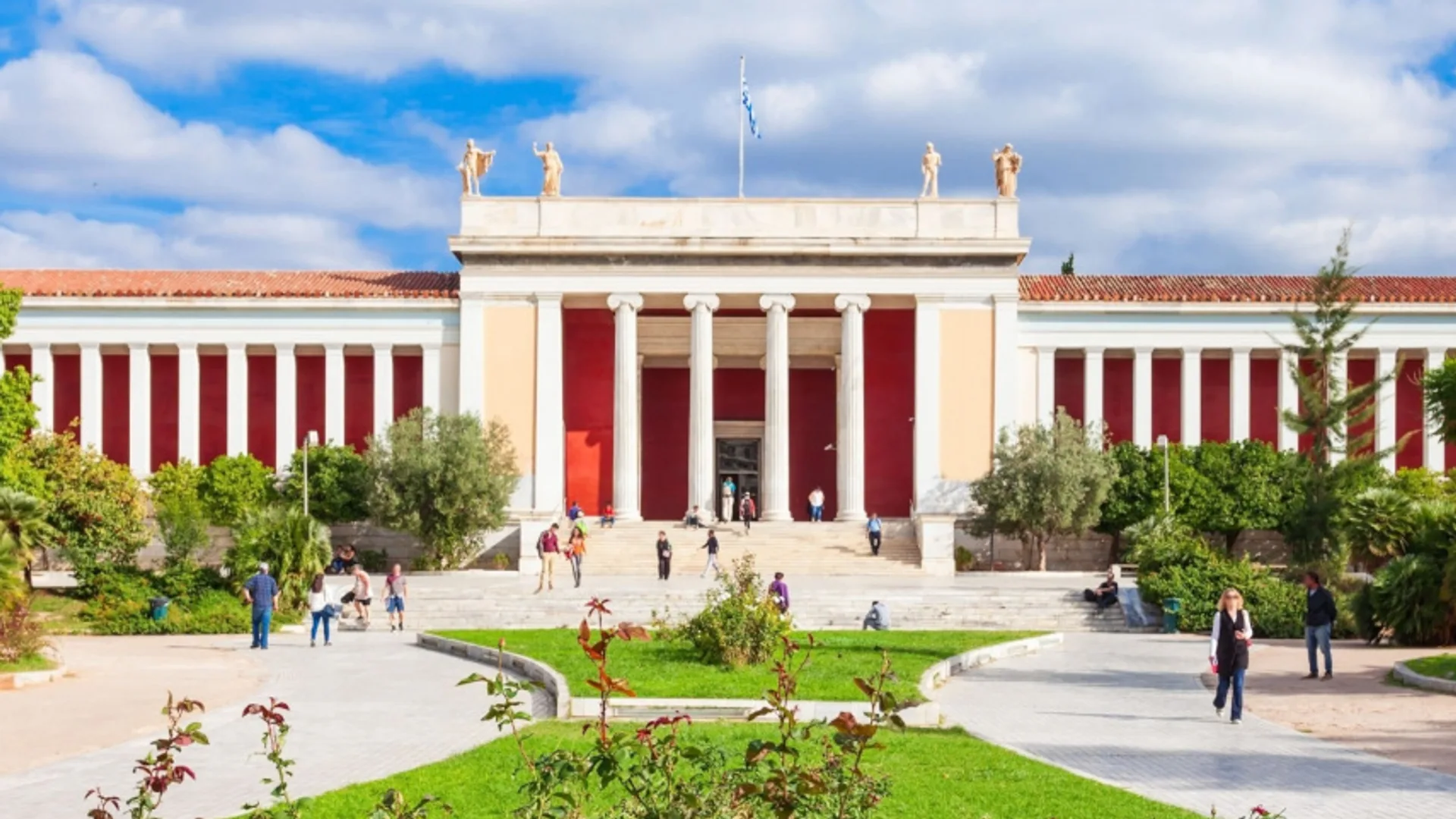
- Patision → Polytechnic: turn right and walk down Patision. After about 370 metres, on your left, is the main gate, just after the National Archaeological Museum.
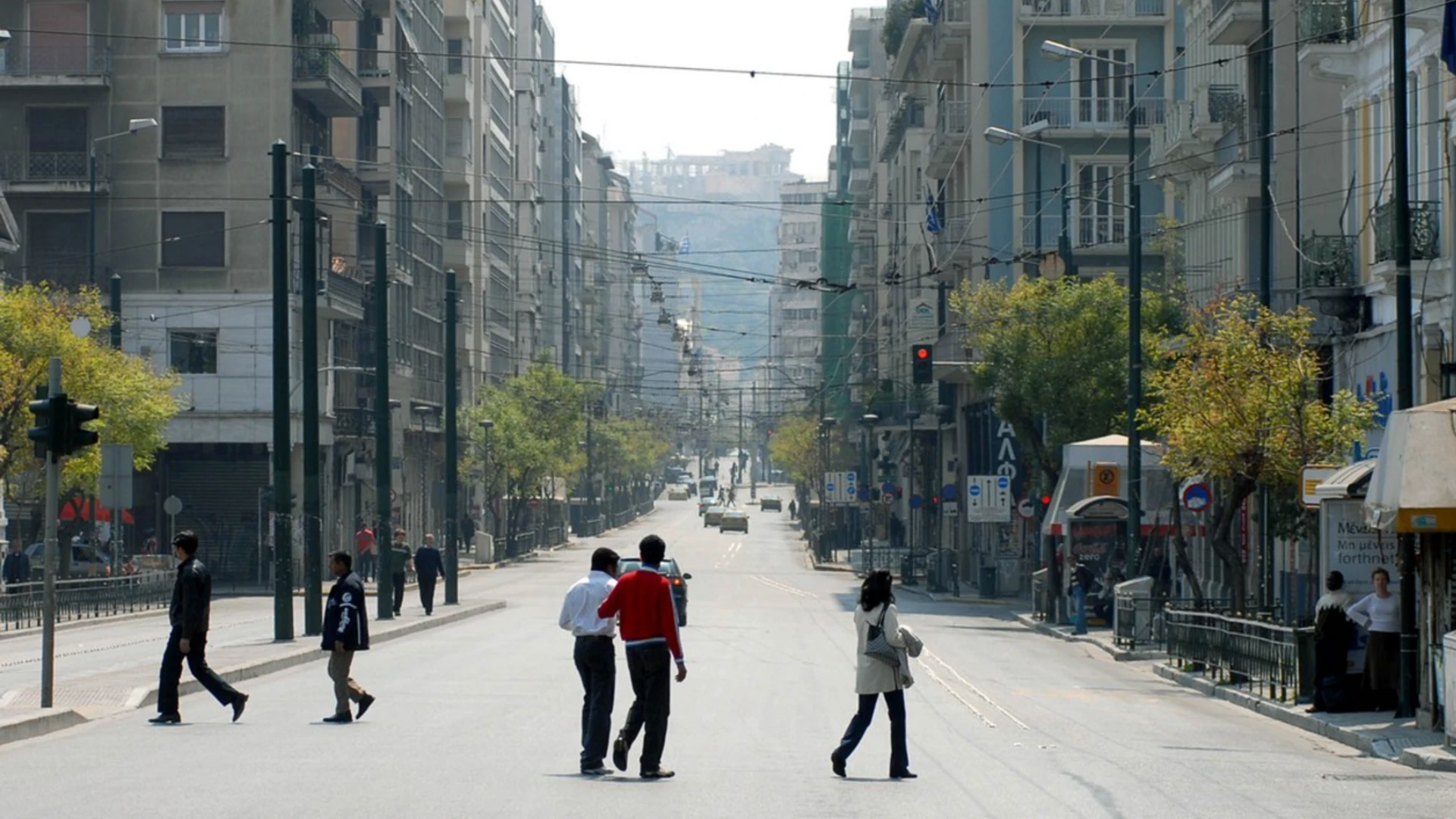
About 700 metres in total, 9 minutes. From Kodrigktonos Street down, Patision is closed to cars on these days, so walking is easy.
🌹 From Ioulianou 50 to the Polytechnic
About 700 metres on foot. Tap the Polytechnic to open the route in Google Maps.
Closed roads and metro stations
The traffic police publish the arrangements every year a few days before. Last year they applied in two rounds.
From Saturday at 06:00 to Tuesday at 06:00 (15–18 November 2025), around the Polytechnic:
- Patision Street, from Kodrigktonos to Panepistimiou, in both directions — that is, from just below Victoria to Omonia.
- Stournari Street, from Exarchia Square to 3is Septemvriou.
- The side streets of Exarchia around the square: Boumboulinas, Tzortz, Botasi, Solomou, Sp. Trikoupi and others.
On the 17th, from midday until the end of the march, gradually:
- Panepistimiou, Stadiou, Akadimias along their whole length.
- Vasilissis Sofias, Vasileos Georgiou, Amalias, Filellinon, around Syntagma.
- Alexandras Avenue along its whole length, and sections of Kifissias, Mesogeion and Pireos towards the centre.
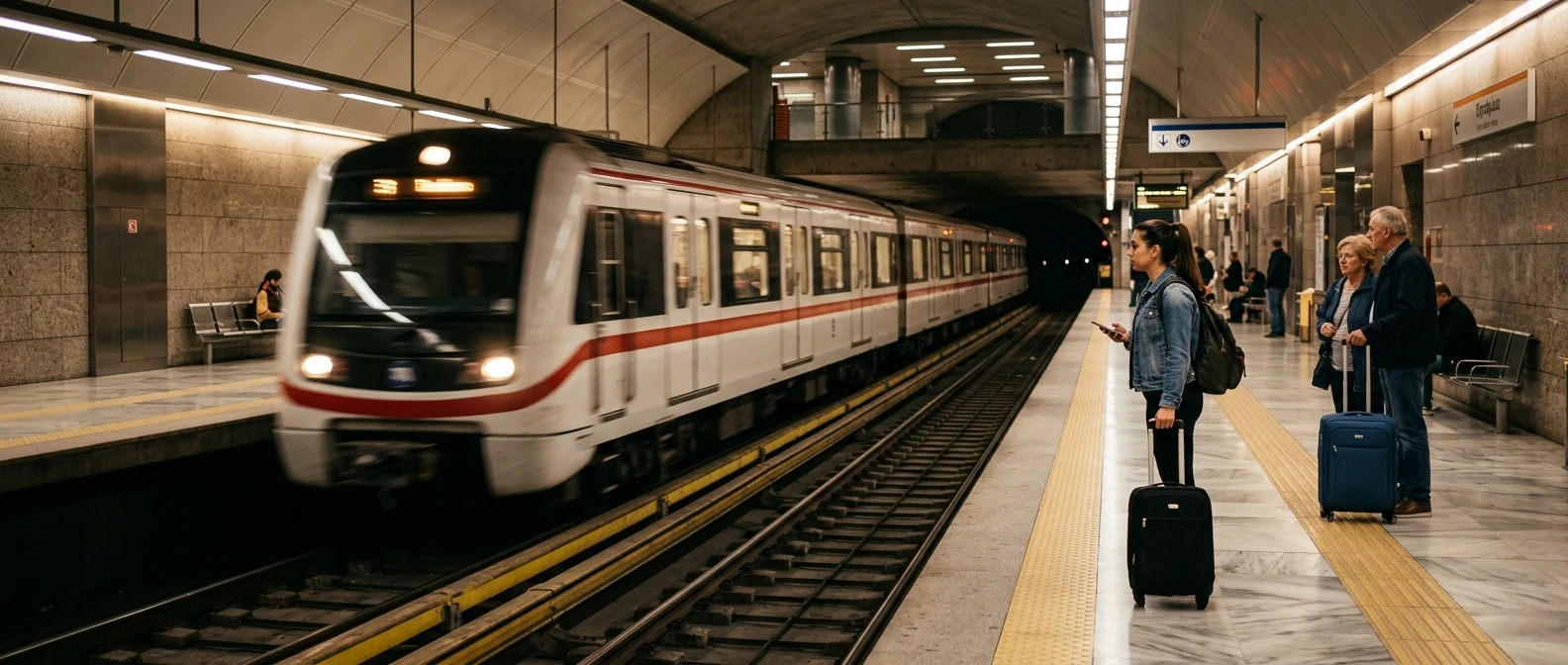
On the metro, after 14:00 the stations Omonia, Panepistimio, Syntagma, Evangelismos and Megaro Mousikis closed and reopened when the police allowed. Trains pass through without stopping. The X95 airport bus left from Katechaki station instead of Syntagma.
What it means for you: Victoria station stays open and Line 1 runs normally towards Kifissia and towards Piraeus. If you are leaving for the airport on the afternoon of the 17th, don’t count on Syntagma: take Line 1 to Monastiraki and from there Line 3 towards the Airport, and leave an hour earlier. Taxis in the centre move very slowly that afternoon.
What happened in November 1973
Since 21 April 1967 Greece had been living under a military dictatorship. On 14 November 1973 the students of the Polytechnic decided to boycott classes and stayed inside the complex on Patision Street. Students from other faculties soon joined them.
The next day a makeshift radio station, built in the school’s labs, began broadcasting. Its message, «This is the Polytechnic!», could be heard all over Athens. By 16 November thousands of people had gathered outside: school pupils, workers, farmers from Megara.
At 3 in the morning of 17 November a tank brought down the main gate and the army entered the grounds. Over the following hours people were killed inside and outside the Polytechnic, all over the city. Research by the historian Leonidas Kallivretakis recorded 24 named dead. The dictatorship fell in July 1974.
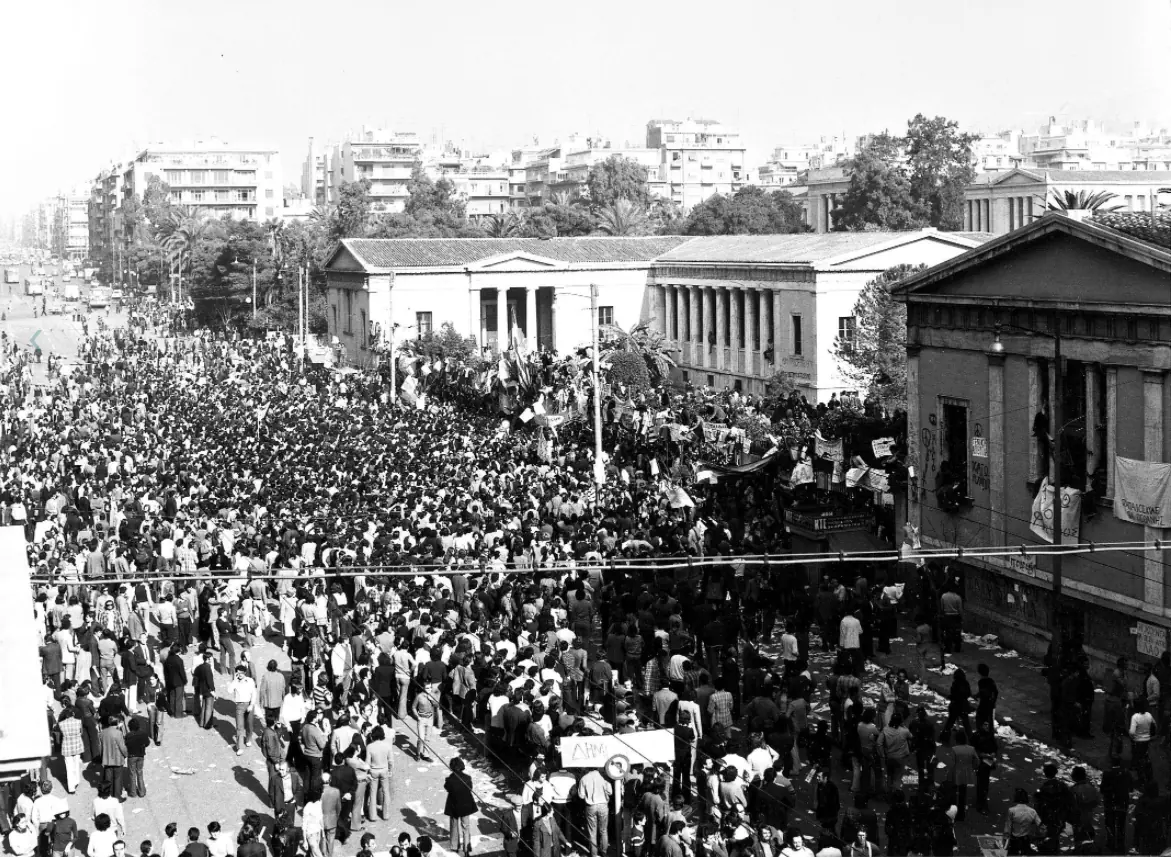
The crowd on Patision Street, in front of the Polytechnic, during the days of the uprising.
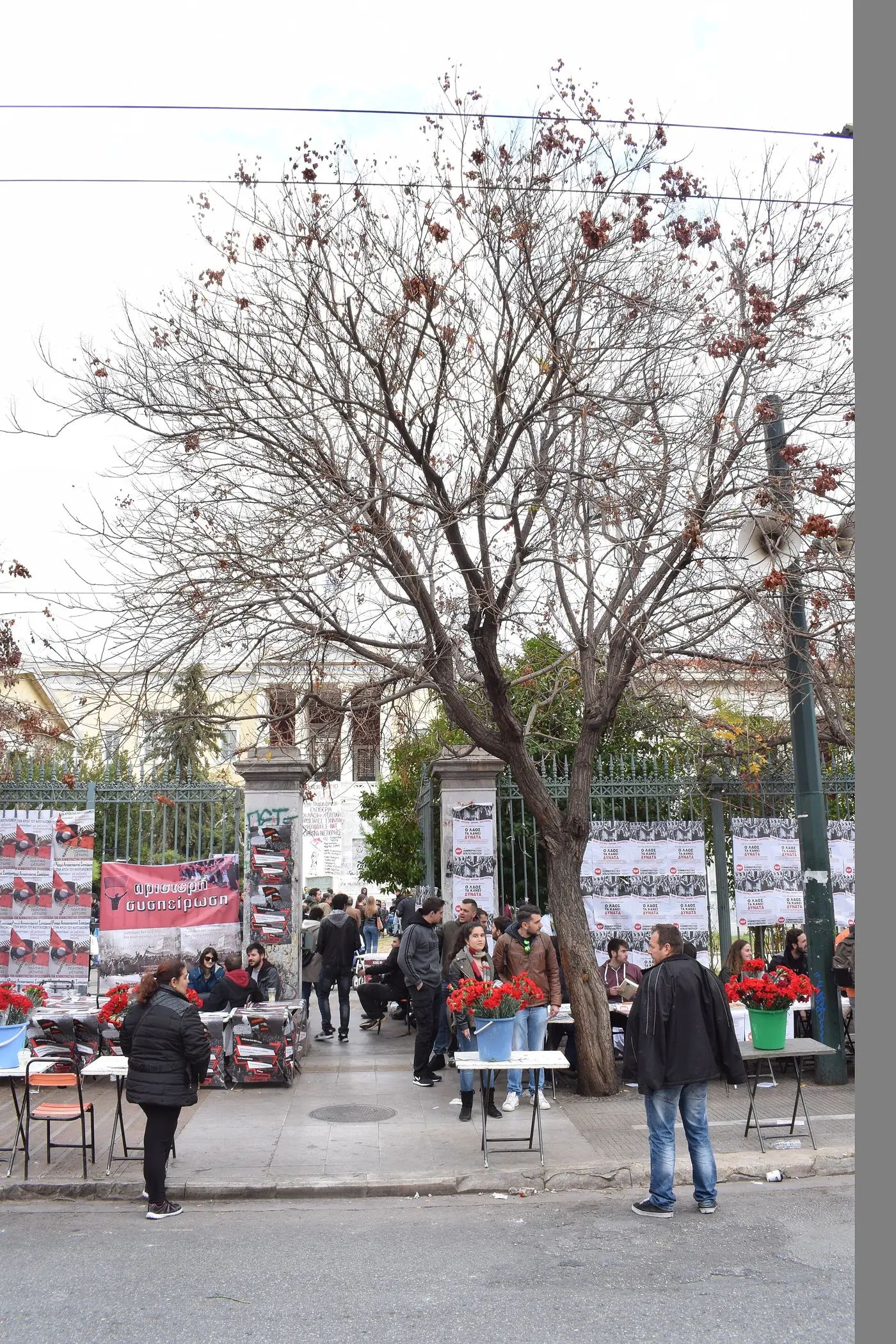
16 November 2016. Stalls and exhibitions are set up at the entrance, and people come and go all day.
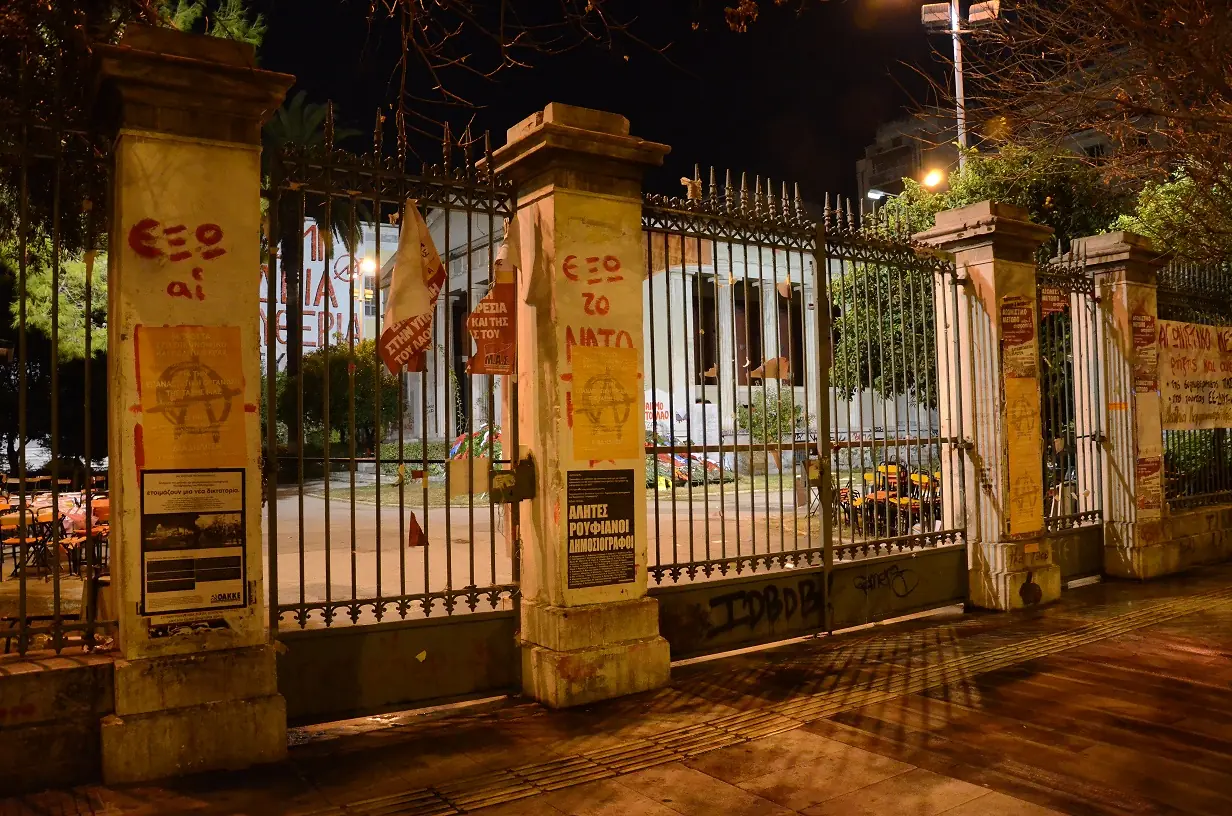
17 November 2011. After the march the gate stays closed, with the slogans of the day.
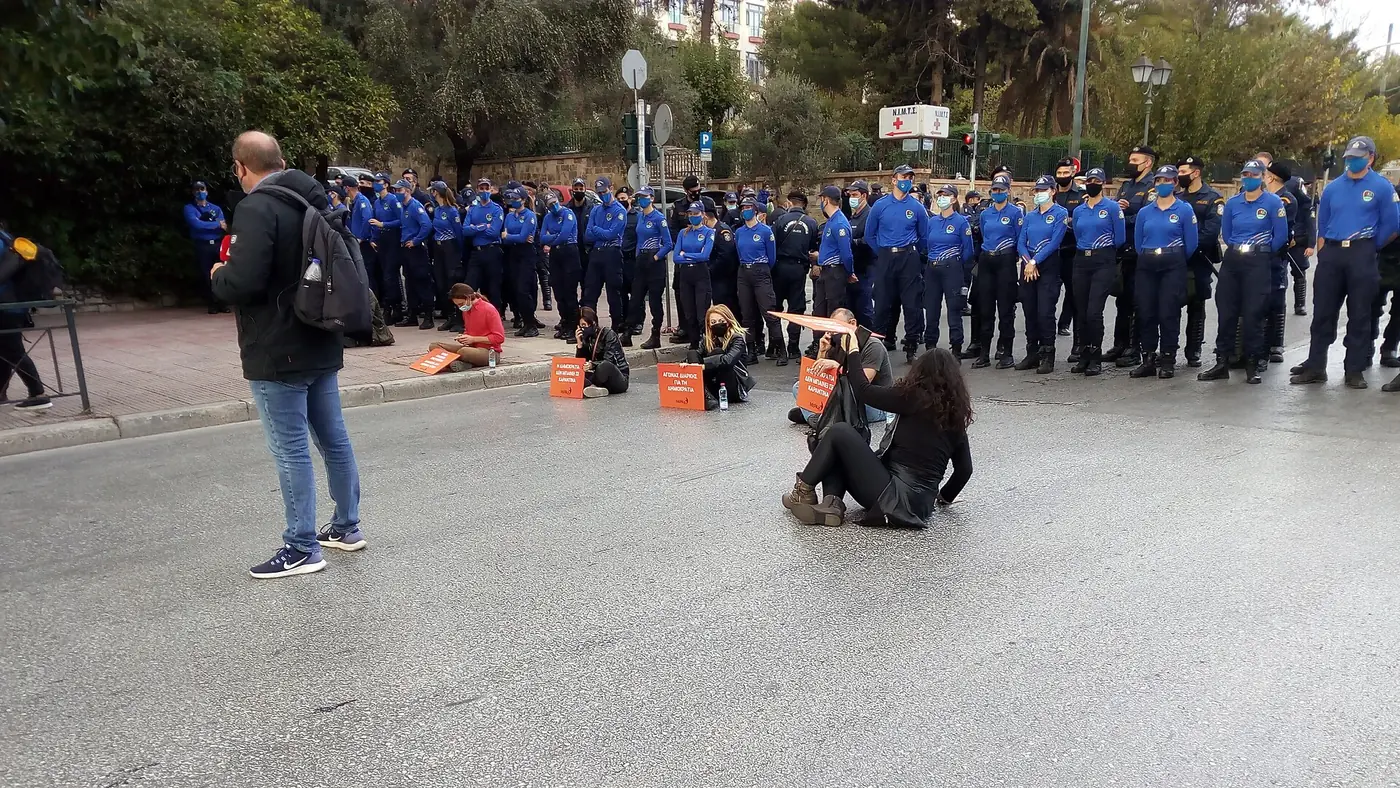
17 November 2020. On the day of the anniversary there is a very large police presence in the centre.
Photos: unknown photographer (1973), Yorgossinior, Pavlos1988 (CC BY-SA 4.0), Apaleutos25 (CC BY-SA 3.0), Wikimedia Commons.
What is open on 17 November
17 November is not an official public holiday. Schools have no lessons, but pupils attend the school remembrance events. Universities are closed. Banks, public services, shops, restaurants and cafés work as normal. The Acropolis and the archaeological sites are open on winter hours.
The National Archaeological Museum is on the plot next door, on the same side of Patision Street. During the anniversary the road in front of it is closed to cars. If you want to visit, go on the morning of the 15th or 16th and check the museum’s announcements the day before. More about the route in our guide to the National Archaeological Museum.
The night of the 17th: the march is overwhelmingly peaceful. After it ends, in the late afternoon and evening, there are often clashes with the police around Exarchia and the Polytechnic, with tear gas drifting into nearby streets. That evening, avoid Exarchia, Stournari Street and Patision below Kodrigktonos. Victoria and Pedion tou Areos usually stay quiet.
Frequently asked questions
When is the Polytechnic anniversary in 2026?
The main day is Tuesday 17 November 2026. The gates open to the public from 15 November.
Can I enter the Polytechnic as a visitor?
Yes. On 15 and 16 November the courtyard is open from 09:00 to 20:00 and on 17 November until 13:00 (2025 hours). Entry is free. Keep quiet in front of the memorial; photos are allowed.
How far is it from Ioulianou 50?
About 700 metres, a 9-minute walk: Ioulianou to Patision and then straight down Patision.
Will the metro be running?
Yes, except for the central stations that close on the afternoon of the 17th. Last year they were Omonia, Panepistimio, Syntagma, Evangelismos and Megaro Mousikis, from 14:00. Victoria stayed open.
Is it safe to walk around the centre?
During the day, yes. The march is large but peaceful. On the evening of the 17th, avoid Exarchia and the streets around the Polytechnic, where clashes often happen.
Why does the march end at the US Embassy?
The protesters consider that the United States supported the dictatorship of 1967–1974. The embassy has been the end point of the march since the first years after the fall of the junta.
— Kathy