What a kafeneio really is
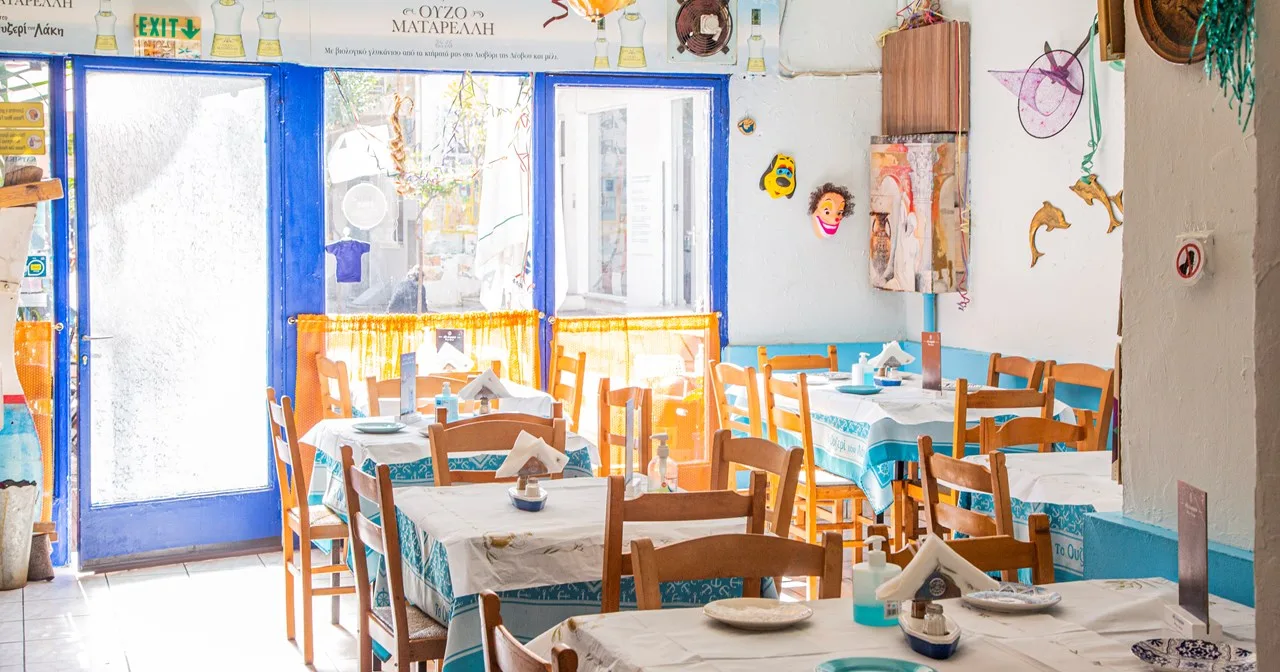
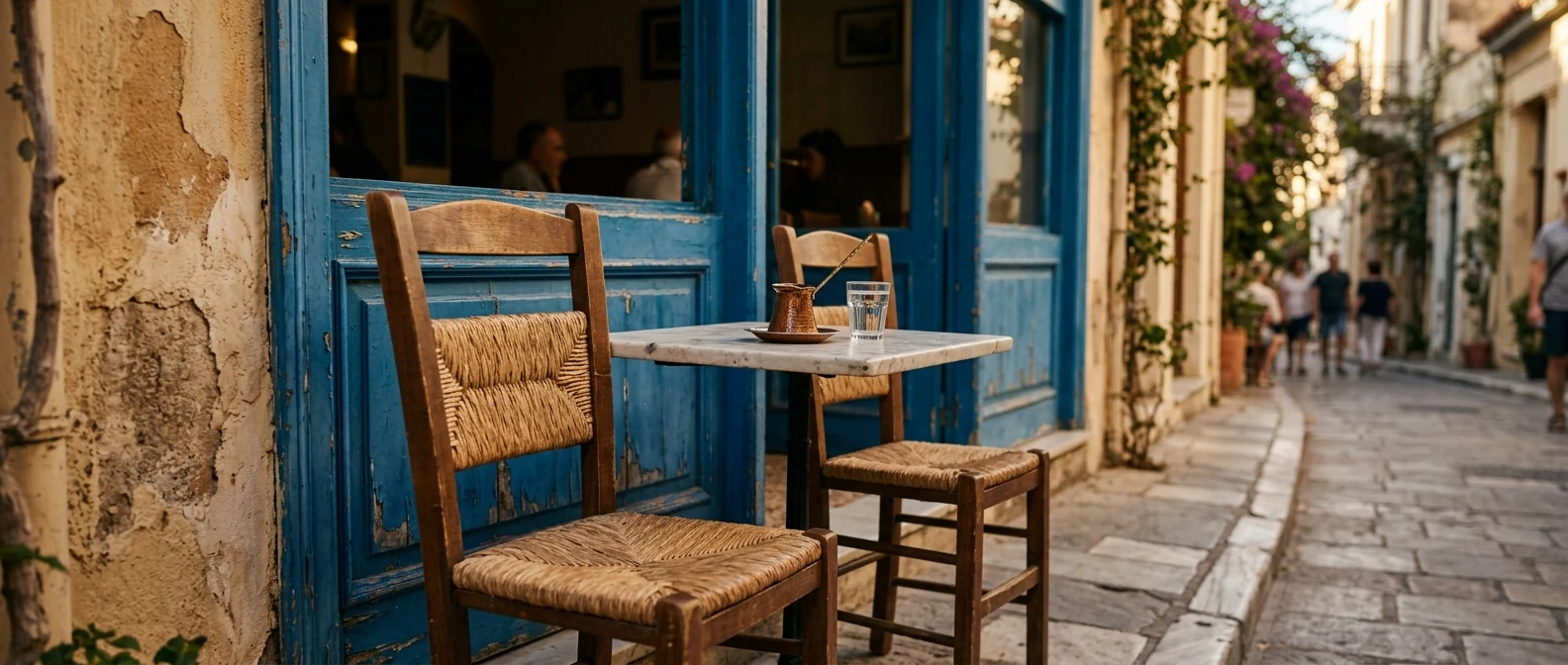
The Greek kafeneio is not a modern cafe, and it does not work like a Mikel or a Coffee Island. For chains, see the guide to Greek coffee chains. A kafeneio is a place for slow coffee, conversation, tavli and often a small drink with meze. The usual signs are:
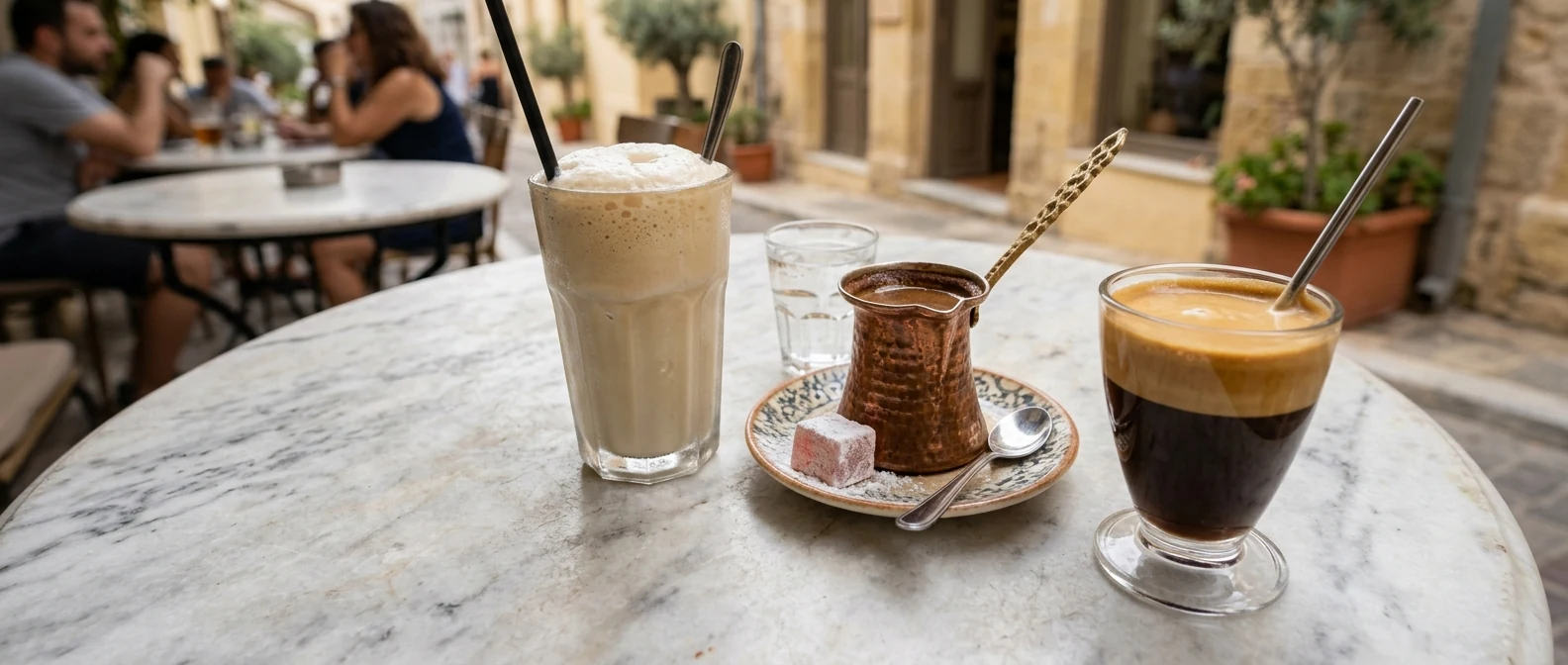
- Greek coffee, not espresso. Made in a briki, served with the grounds at the bottom and a glass of cold water on the side. See also the guide to Greek coffee types.
- Tables made for staying. Greek coffee here is not a takeaway stop. You sit, drink slowly and stay a while.
- Tavli, cards, conversation. In many neighbourhoods the kafeneio was the place for news, political talk and everyday meetings.
- Neighbourhood regulars. Older kafeneia often still have regular customers, especially around midday and early evening.
- Meze, ouzo, tsipouro. Many kafeneia later in the day work almost like small meze places.
A short history
The kafeneio is linked to the Ottoman period and to the spread of coffee across the eastern Mediterranean. In 19th- and 20th-century Athens, the neighbourhood kafeneio was a meeting point for news, work talk and political discussion. Some places today still keep that atmosphere, while others continue it in a newer mix of kafeneio, mezedopoleio and old-style Athenian cafe.
From the 1980s onward, espresso bars, coffee chains and changing habits reduced the number of older kafeneia. Some places continue as part of everyday neighbourhood life, while others keep the same style alive more deliberately. Both can be worth visiting, depending on what you are looking for.
Where to look
Psyrri / Monastiraki alleys
A good area for older kafeneia and coffee places near the market. Look around Plateia Iroon and the streets behind Athinas. Near the market, the daily rhythm starts early because of the butchers and fishmongers.
Anafiotika / Plaka backstreets
In the backstreets of Plaka and Anafiotika you find small family-run cafes and kafeneia with an older atmosphere. Prices are often higher because of the area, but the setting is special.
Exarchia
In Exarchia, old kafeneia sit next to modern specialty cafes. Around the square and the nearby streets you can still find places for Greek coffee, ouzo or a simple afternoon stop. See also the guide to Exarchia.
Central Market area
The streets between Athinas, Sokratous and Aiolou, together with the Central Market arcade, still have kafeneia and small food places serving people who work in the market. Diporto is one of the best-known examples in the area. See the Varvakeios Market guide.
Pangrati and Kypseli
In residential neighbourhoods like Pangrati and Kypseli, kafeneia often keep a more everyday character. Look around Plateia Plastira and Plateia Kypselis.
Outer neighbourhoods — Petralona, Kerameikós, Mets
In less touristed neighbourhoods, the kafeneio style often survives more naturally. The metro ride can be worth it if you want a quieter side of the city.
What it costs
Greek coffee
€1.50–€2.20 — often cheaper than a freddo at a chain.
Glass of ouzo / tsipouro
€2.50–€4.00 — typically with a small free meze (olives, cheese, cucumber) at the more traditional places.
Plate of mezédes
€4–€8 per plate — taramosalata, fried small fish (γαύρος), sausage, cheese.
Two-hour visit, two people
€10–€20 with two coffees, an ouzo each and one meze plate.
Tavli in the kafeneio
The three tavli games
Greek tavli uses the same board as backgammon, but it is often played as a sequence of different games:
- Portes — the version closest to international backgammon.
- Plakoto — different starting positions; you trap pieces instead of hitting them.
- Fevga — both players move in the same direction; it almost feels like a different game.
Two players move from one game to the next and count points across the rounds. A match often lasts a while, especially when the conversation matters more than the score.
The smoke question
Indoor smoking is banned, but in some older kafeneia the reality can still be uneven, especially in small indoor rooms with regular customers. If smoke bothers you, choose an outside table or a place with a clear outdoor seating area.
How to order
- Sit yourself. Usually nobody will lead you to a table. Pick a free one and sit down.
- Order at the table, not the counter. The owner or waiter will come around within a few minutes.
- Order Greek coffee with the sweetness specified. Sketos, metrios, glykos. If you are not sure, ask for metrios. See also the Greek coffee types guide.
- Drink a little water first. It clears the palate before the coffee.
- Drink slowly. The grounds settle at the bottom of the cup. Stop before you reach them.
- Pay at the end. Cash is useful because some older places do not always take cards.
- Take your time. A kafeneio is a place to sit for a while, not to rush through a drink.
Meze pairings
If you order ouzo or tsipouro, expect a small meze to arrive. The classic pairings:
- Ouzo + olives + feta — a classic combination. The anise flavour works well with salt and fat.
- Tsipouro + grilled octopus / fried anchovies — the seafood version, common in kafeneia that also work as meze places.
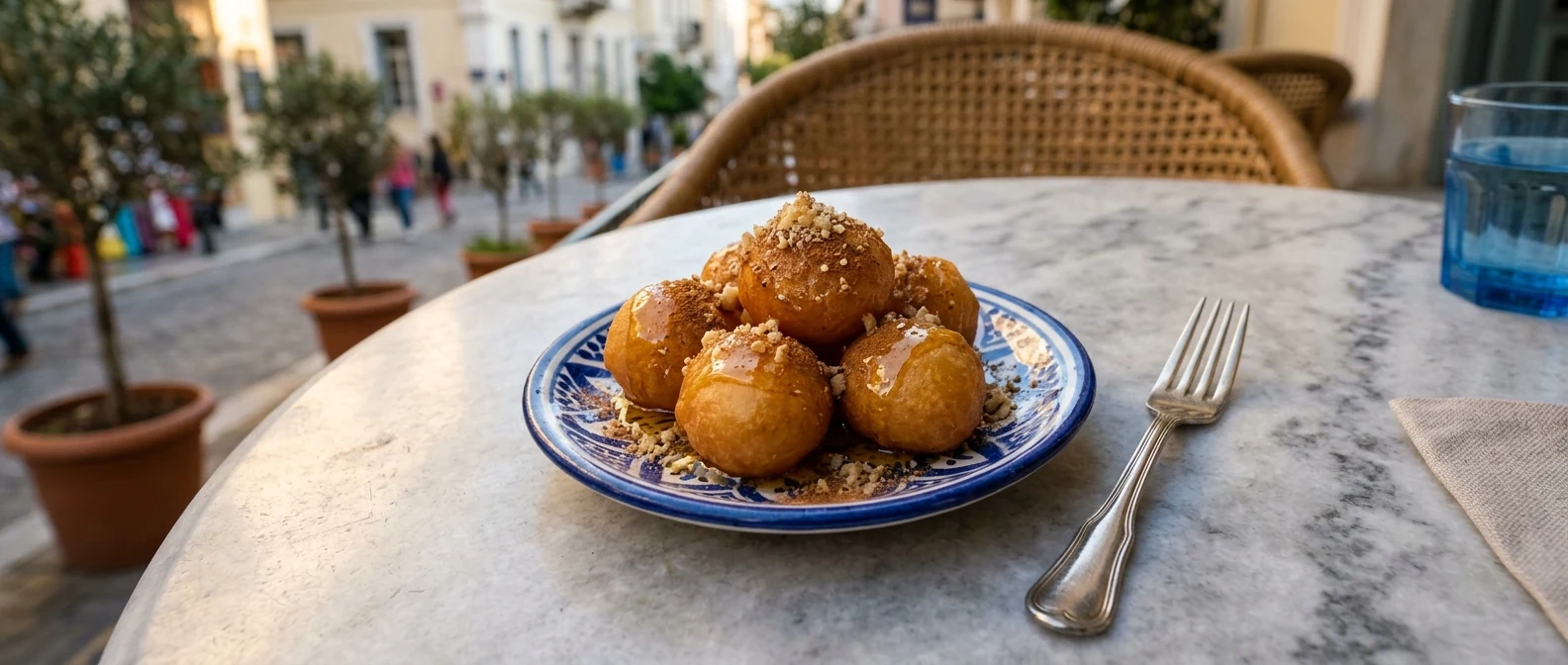
- Greek coffee + loukoumi — the sweet finish, traditional with Greek coffee.
- Greek coffee + spoon sweet — candied fruit such as cherry, fig or bergamot, served on the side. See also the Greek sweets guide.
How to get there from Angel Athens (Ioulianou 50)
From Ioulianou 50, the closest old-style kafeneia are the ones toward Exarchia or the streets around Patision and Acharnon, about 5-10 minutes on foot. For Diporto and the kafeneia around the Central Market, take Line 1 from Victoria to Omonia and continue 5-7 minutes on foot. In total, allow about 12-15 minutes. For Plaka and Anafiotika, take the metro to Monastiraki and continue on foot.
Frequently asked questions
Are women welcome?
Yes. Historically, many kafeneia were male-dominated spaces, and in some older places the regulars are still mostly older men. In present-day Athens, women on their own and mixed groups are normal, especially in Psyrri, Exarchia and Plaka.
Do they speak English?
It depends on the place. In older kafeneia, English may be limited. Point at the menu, keep it simple and use a couple of Greek courtesies like "parakalo" and "efcharisto".
Are there food options at lunch?
Most kafeneia are not lunch restaurants. For a full cooked meal, a magireio is usually the better choice, like Krouskas. Some kafeneia that also work as meze places do serve plates, but the menu is usually small and focused on sharing dishes with drinks.
Can I bring my laptop?
You can, but it is not the best use of the space. A kafeneio is not a specialty coffee shop, and the small tables are not very practical for work. For somewhere laptop-friendly, choose Mikel, Coffee Island or one of the more modern cafes in Exarchia.
Sources:
— Kathy