Why step away from the front line?
The less publicised islands are not always empty, and they are not always cheap. In August they fill too. What they often offer is a different scale: simpler movement, evenings that feel less staged, and a programme that does not revolve only around bookings, beach bars and photo points. The trade-off is clear: fewer sailings, smaller infrastructure, less English in smaller villages and more need for planning. If you start from Ioulianou 50, Piraeus is the most common departure point: a short walk to Victoria and about 30 minutes on Line 1. For some islands, though, you may need Rhodes, the Peloponnese or a domestic flight.
🏝️ The six picks
Folegandros
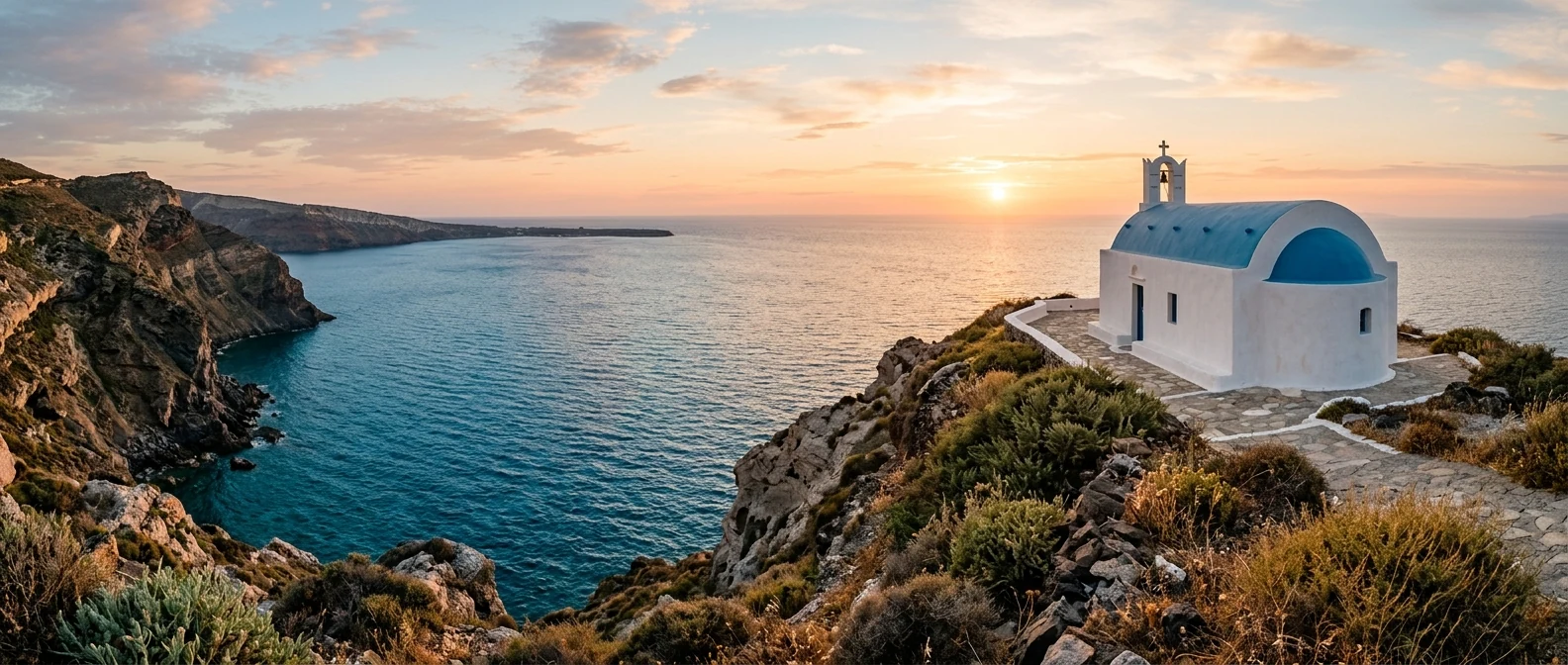
A small Cycladic island without an airport, with a Chora above the cliff and paths to beaches that need walking or a small boat.
Amorgos
A steep island with the Monastery of Hozoviotissa in the rock and routes that join villages, sea and stone.
Symi
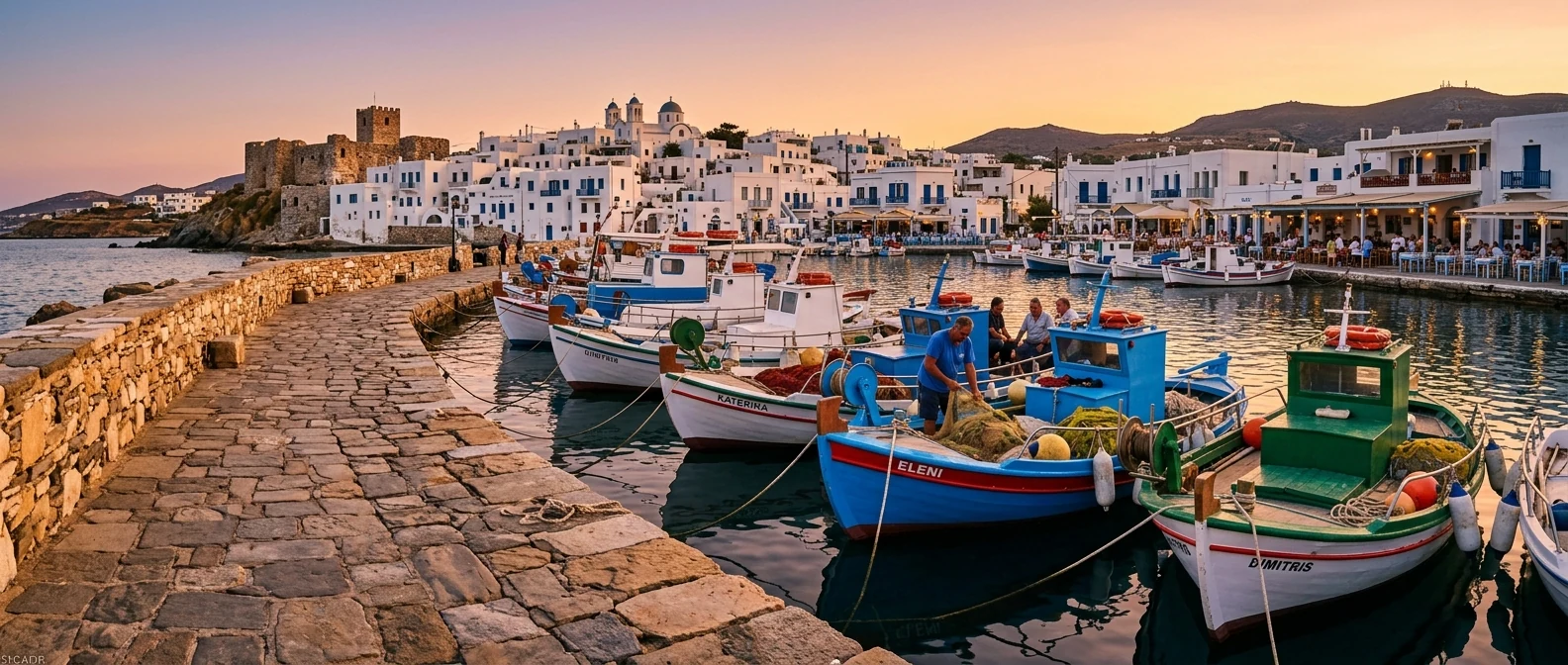
A small Dodecanese island near Rhodes, with a neoclassical harbour, an uphill Chorio and Panormitis on the southern side.
Karpathos
A long mountainous island between Rhodes and Crete, with strong wind, wild beaches and Olympos in the north.
Kythira
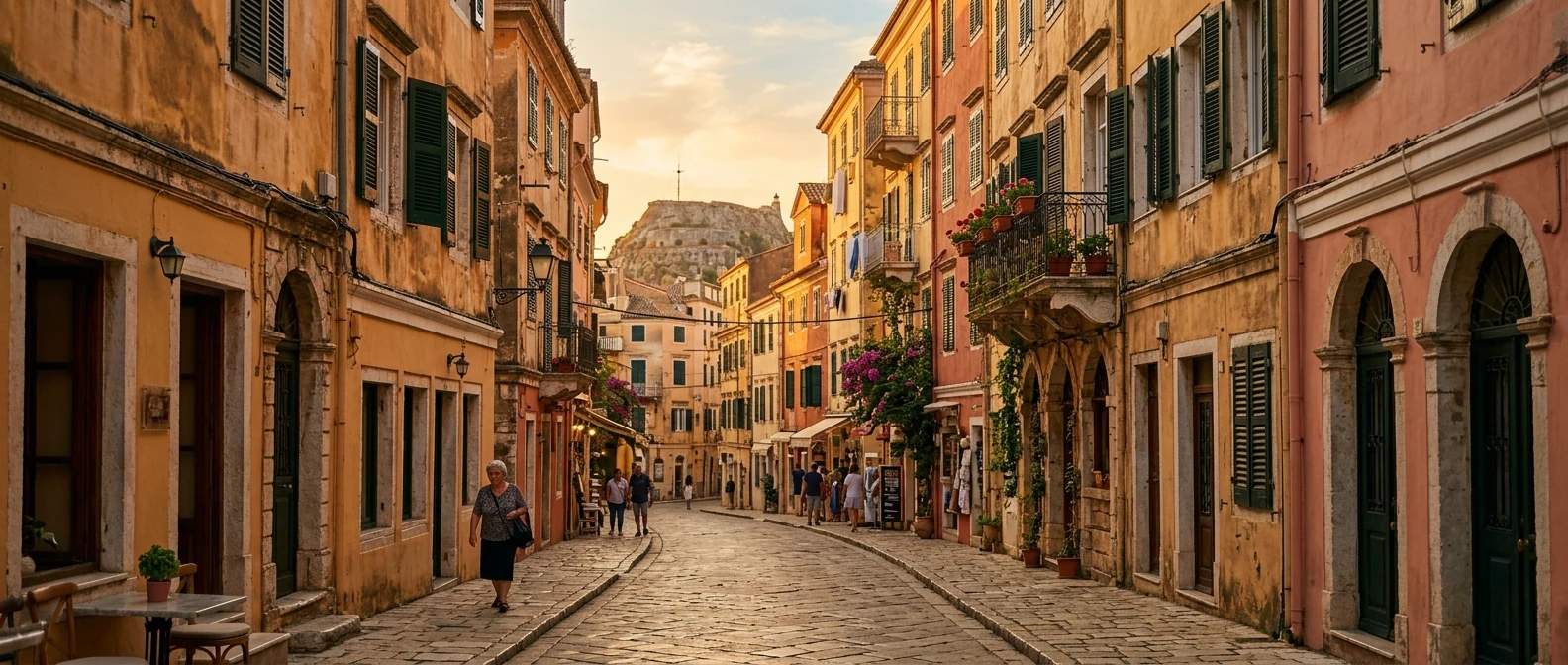
Between the Peloponnese and Crete, with a Venetian Chora, a waterfall at Mylopotamos and coasts that work better with a car.
Ikaria
An island in the Northeast Aegean, known for longevity, village festivals, hot springs and a rhythm that does not hurry.
Folegandros: Chora above the cliff
- About 32 km² and around 700 permanent residents.
- Chora stands above a cliff of around 200 metres, with small squares and whitewashed passages.
- The beaches are not all easy. Agali is the simpler option, while Livadaki and Katergo need walking or a boat.
- That keeps Folegandros quieter than several other Cycladic islands, but it also asks for better shoes than flip-flops.
- There is no airport, and the ferry from Piraeus can take anything from about 3 to 9 hours depending on the ship.
- June and September are more human months than August.
🏛️ Amorgos — sea + cliffs
The Monastery of Hozoviotissa
Founded in 1088, the monastery is built into a steep rock about 300 metres above the sea. The building has eight levels but only a depth of a few metres. Modest clothing is needed, and covers are usually provided at the entrance where necessary. The climb includes about 300 steps, and the monastery closes at midday for rest, so check the opening times before you start.
🏛️ Symi — the postcard harbour
- ~58 km², ~2,500 residents.
- Yialós harbour: 19th-century neoclassical mansions in ochre, blue, pink — sponge-trader wealth. Near-perfectly preserved.
- Chorió: upper village, 357 steps above harbour. Quieter, traditional.
- Panormítis Monastery: 18th-c. on south coast. Pilgrimage site.
- Access: ferry from Rhodes (1.5 hrs by hydrofoil, 2-3 hrs slow). No airport.
- Best as 2-3 day trip from Rhodes; or longer base for hiking + beaches.
🏛️ Karpathos — the wild Dodecanese
- ~302 km², ~6,000 residents. Long thin island.
- Olympos: a northern mountain village that held on strongly to local customs, dress and speech for a long time.
- Beaches: Apella + Achata + Kyra Panagia. Among Greece's most beautiful.
- Wind: north end famously windy — kitesurfing capital.
- Access: small airport (KAR), domestic flights from Athens + Rhodes. Ferry from Rhodes or Crete or Athens (Athens-Karpathos 14-19 hrs).
🏛️ Kythira — Aphrodite's birthplace
- ~280 km², ~3,600 residents. Off southern Peloponnese.
- Mythological birthplace of Aphrodite (according to Hesiod's Theogony).
- Venetian Chóra: hilltop, with castle + neoclassical houses.
- Mylopótamos: village with stream, watermills, waterfall.
- Beaches: Kapsáli, Mylopótamos, Diakofti — gorgeous + uncrowded.
- Access: small airport (KIT) or ferry from Piraeus (~6-7 hrs) or Neápoli (1 hr) on Peloponnese.
🏛️ Ikaria — the Blue Zone island
- ~255 km², ~8,500 residents.
- Blue Zone: Ikaria is often linked internationally to the places where people seem to live longer and often better.
- The local rhythm is loose. Timetables matter less, village festivals run late, and the island does not speed up because you are in a hurry.
- Therma hot springs: radioactive natural baths. Used since antiquity.
- Wild beaches: Seychelles (Naós), Mesakti (windy + good for surfers).
- Music + Panigíria: village festivals with live folk music + dancing till dawn. Most authentic in summer.
- Access: small airport (JIK) or ferry from Piraeus (7-9 hrs).
📊 At a glance
~227 inhabited
Greek islands. Vast majority underexplored.
Softer costs
Often lower than the most exposed islands, depending on month and demand.
5 places
Worldwide Blue Zones; Ikaria is one of them.
1088 CE
Hozoviótissa Monastery founded on Amorgos cliff.
🎯 More to consider
- Astypalea: butterfly-shaped Dodecanese gem with whitewashed castle village.
- Patmos: where John of Patmos wrote Revelation. UNESCO monastery.
- Anafi: smallest, easternmost Cyclades. Beach paradise.
- Donousa, Iraklia, Schinoussa, Koufonisia: Lesser Cyclades. Tiny islands east of Naxos.
- Skopelos: Sporades. Mamma Mia filmed here. Pine forests + sea.
- Alonnisos: Sporades. Marine park + monk seal sanctuary.
- Tilos: Dodecanese. First fully renewable-energy Greek island. Tiny.
🚶 Practical tips
- Plan logistics carefully: smaller islands have limited daily ferries.
- Cash matters: smaller islands often have 1-2 ATMs; some businesses cash-only.
- Book accommodation ahead in summer: limited supply.
- Learn basic Greek phrases: English fluency varies. (See our phrase guide.)
- Rental cars / scooters: limited fleets, book ahead.
- Don't expect 24/7 service: many islands shut down 2-5 PM for siesta.
When to go
- June and September are usually the most balanced months for these islands.
- The sea is warm enough, the schedules work and the prices have not reached their peak.
- July is fuller, but still manageable.
- August brings Greek holidaymakers, full rooms and higher prices. From October to May, many tourist businesses close.
Frequently asked questions
Which of the six is easiest for a first trip?
Folegandros, if you are already in the Cyclades, and Symi, if you are using Rhodes as a base. Both need less adjustment.
Which is harder to reach?
Karpathos and Ikaria, depending on the season and the schedules. They need more careful coordination or a flight.
How many days do you need?
Three nights is the minimum to make the effort worthwhile. Five nights gives a much better picture.
How long do I need?
Kythira and Karpathos are more comfortable with a car. Folegandros has cliffs and a fair amount of walking, so it needs more care with very small children.
English spoken?
In accommodation and the main tourist spots, yes. In villages and old kafenia, less so. A little Greek helps.
Can Folegandros work as a day trip from Santorini?
Technically, on some days perhaps. In practice, an overnight stay is better. Folegandros does not show itself properly in only a few hours.
Sources:
— Kathy