Why Naxos keeps regular visitors
Naxos has something several Cycladic islands lack: ordinary daily life. Chora has a port, shops, schools and services. The inland villages are not just scenery for photographs; people live there all year. That changes the atmosphere.
Compared with Mykonos and Santorini, prices often stay more grounded, although peak summer is no longer cheap. Greek families know that well. That is why July and August beaches fill with children, umbrellas, rackets and tavernas that feel busy without trying to be anything else.
Portara and the unfinished temple
The marble gateway on Palatia
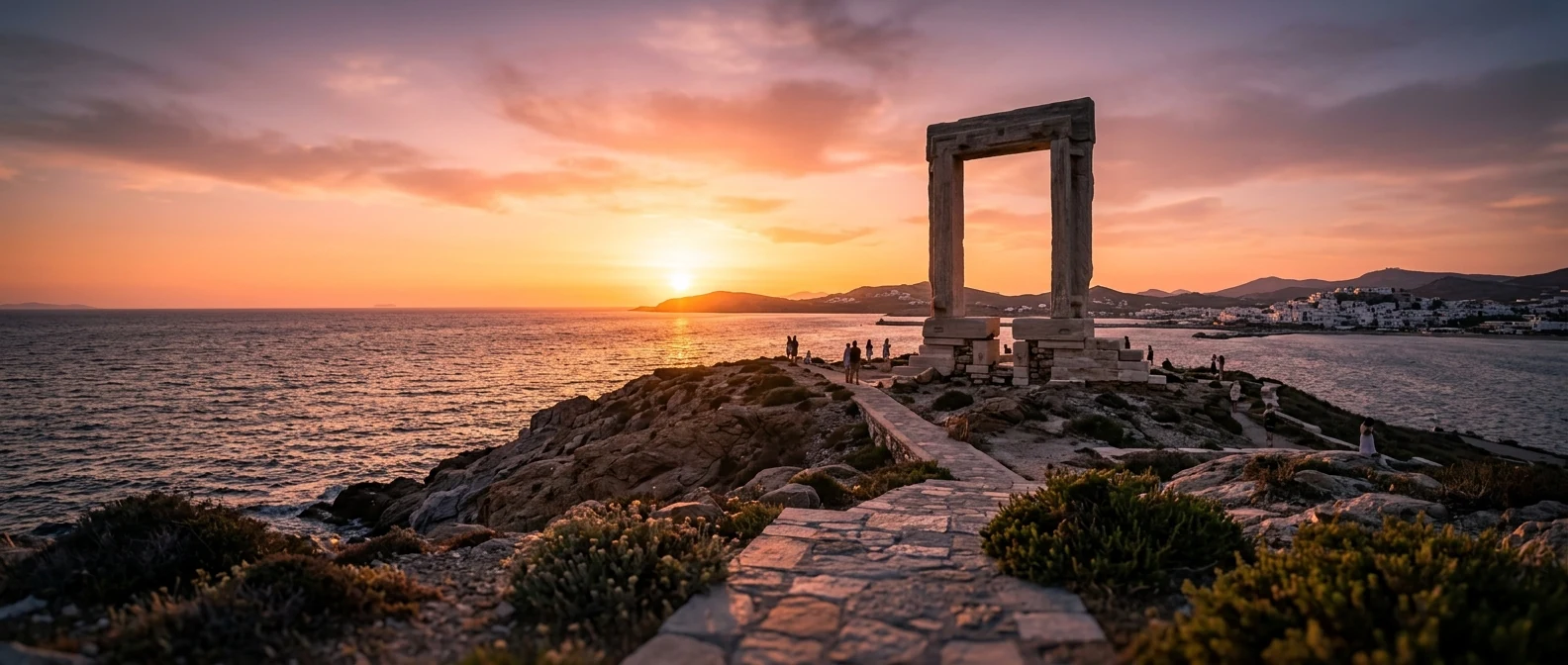
Portara stands on the Palatia islet, a short walk from Chora. It is the marble gateway of an archaic temple usually associated with Apollo and begun around the 6th century BCE, in the time of Lygdamis. The temple was never completed. In later centuries much of it was reused as building material, while the gate stayed in place, probably because the huge marble blocks were difficult to move. Sunset draws a crowd because the view faces west and the setting is genuinely striking.
Chora and the Castle
- Lower Chora: starts at the port, with cafes, shops and tavernas.
- The Castle (Kastro): the medieval town linked with Marco Sanudo and the Duchy of the Aegean after the Fourth Crusade.
- Latin presence: a Catholic cathedral stands beside Orthodox churches, giving the town a different texture from the usual Cycladic chora.
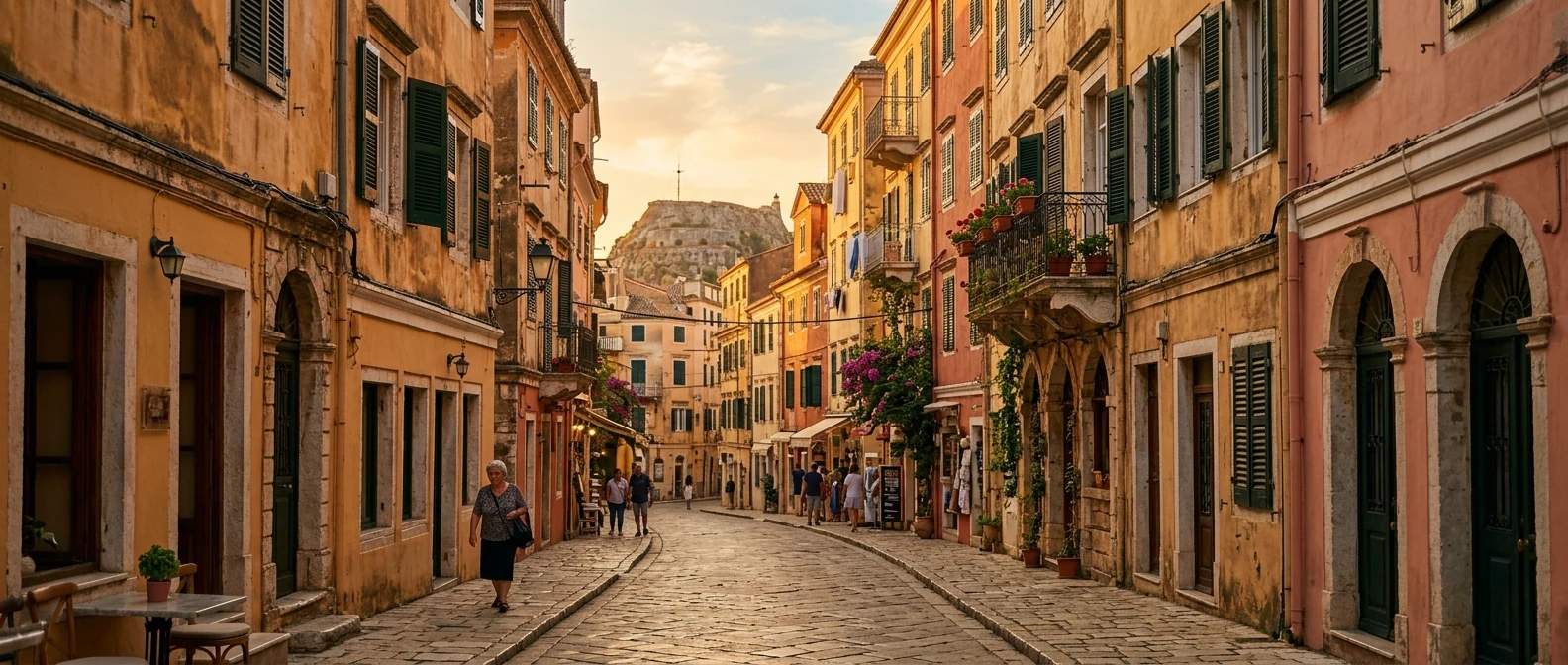
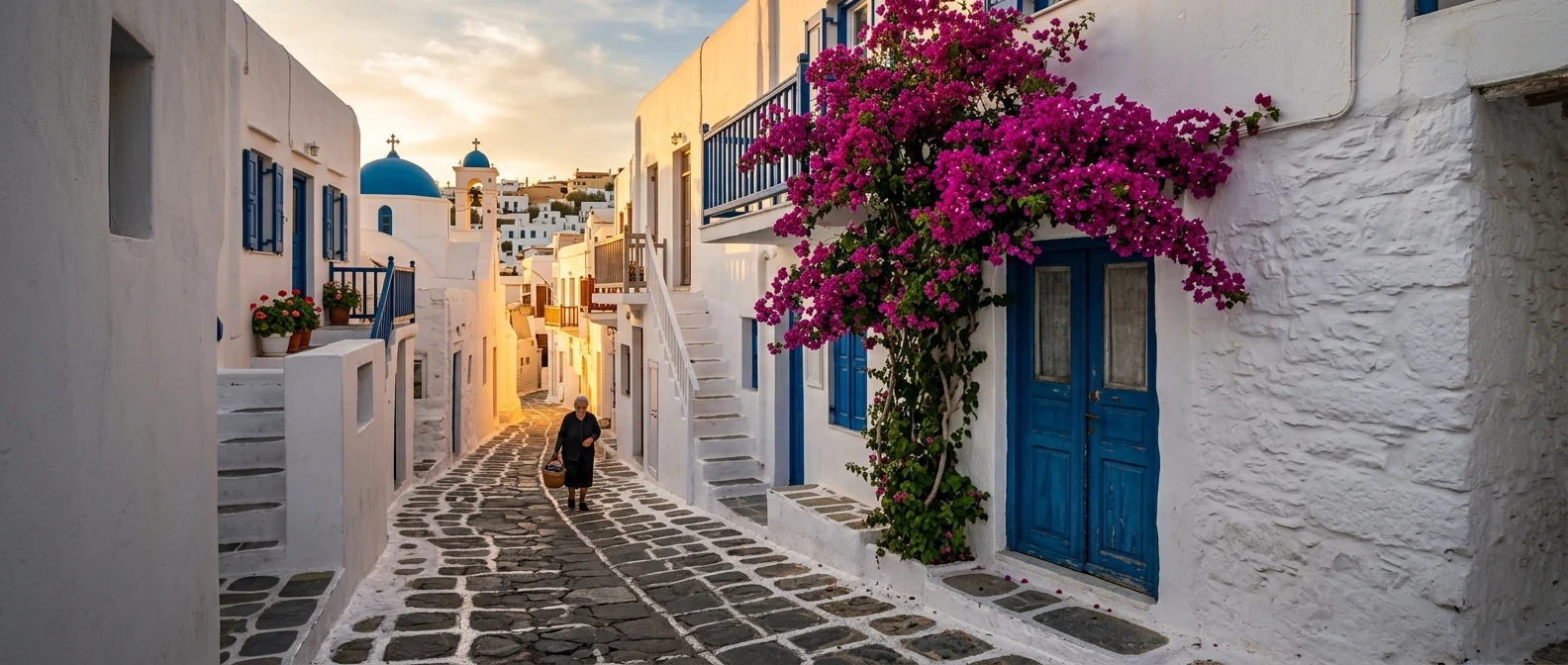
- The lanes: they keep shade, soften the wind and still feel like part of a protected town.
- Museums and collections: check current opening hours before you go, because schedules can change.
The beaches of the west coast
Agios Georgios
Closest to Chora. Shallow, sandy and practical if you arrive without a car.
Agios Prokopios
Long sandy beach with clear water. There are organised stretches, but usually freer sections too.
Agia Anna
Continuation of Agios Prokopios, with fish tavernas, rooms and a calmer rhythm.
Plaka
Long sandy beach with a more open feel. Farther south you find quieter patches, dunes and cedar trees.
Mikri Vigla
Steady winds and schools for windsurfing and kitesurfing. It is not the calmest option on windy days.
Alyko
Cedars, small coves and the remains of an unfinished hotel covered in graffiti.
Mountain villages and inland Naxos
- Apiranthos: marble-paved lanes, stone houses and small museums.
- Filoti: one of the liveliest villages inland and a good base for Mount Zas.
- Halki: shows the older commercial side of Naxos, with neoclassical houses, quiet courtyards and the Vallindras distillery.
- Koronos and Skado: villages that keep the memory of the emery trade that supported much of the island before tourism.
- The inland side: it is a big part of what makes Naxos feel fuller than a beach-only destination.
Mount Zas
- Mount Zas: at 1,001 metres, it is the highest point in the Cyclades.
- Zas Cave: linked with one of the myths about the upbringing of Zeus.
- For the walk: wear proper shoes and carry water.
- Keep it realistic: it is not a flip-flop stroll, even if it looks manageable on the map.
Marble and the kouroi
- Naxian marble: known in antiquity for its fine grain and white colour.
- Workshop routes: the island supplied workshops across the Cyclades, Delos and Athens.
- Old quarries: unfinished statues still remain in the landscape.
- Kouros near Apollonas: huge, and left in the quarry, probably because a problem appeared during carving.
- Kouroi in Melanes: two smaller figures survive where they were abandoned.
Kitron and distilling in Halki
- Kitron: made mainly from the leaves of the citron tree and one of the island's signature products.
- Different versions: the liqueur comes in more than one style, with changes in sweetness and strength.
- In Halki: you can see the distilling tradition up close if the visiting areas are open that day.
Useful facts
Large island
Beaches, villages, mountains and farmland fit into the same trip.
1,001m
Mount Zas is the highest point in the Cyclades.
Portara
The marble gateway stands a short walk from Chora.
1896
The Vallindras distillery in Halki has been operating since 1896.
Graviera, arseniko and Naxos potatoes
- Graviera Naxou: a PDO hard cheese with a mild sweetness.
- Arseniko: a stronger, aged cheese made from sheep and goat's milk.
- Naxos potatoes: well known across the Cyclades.
- Fertile inland plain: one reason food matters here as much as the beaches.
- Village tavernas: often the best place to notice that agricultural side of the island.
Getting around Naxos
- Buses (KTEL): connect the port and Chora with the main beaches and several villages. In summer there are more routes, but it is still worth checking the timetable on the day.
- By car: it saves time for Apiranthos, Filoti, Halki, Apollonas and the old quarries.
- On foot: Chora is easy to walk, but distances across the island are not as short as they may look.
Getting there from Athens
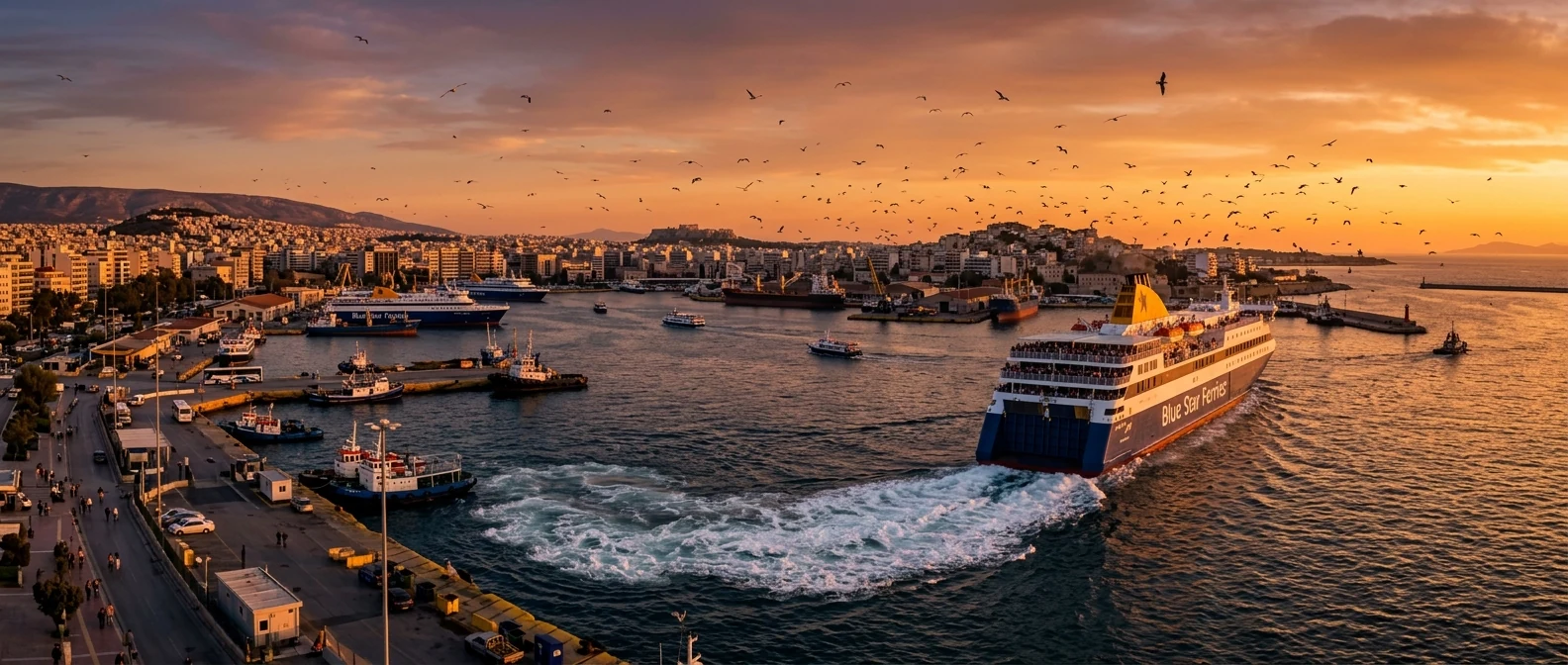
- From 50 Ioulianou: Victoria station is a short walk away, and Line 1 goes directly to Piraeus port.
- Ferries: sailings to Naxos vary by company, season and vessel type, so check the timetable before you fix your departure.
- Airport and island links: the airport is small and has limited flights from Athens, while Naxos is also well connected by sea with Paros, Mykonos, Santorini and Ios.
When to go
- June and September: usually the easiest months, with warm sea, enough sailings and more reasonable prices.
- July and August: the Greek family holiday period, so beaches get busier while the mountain villages stay cooler.
- May and October: good for walking, villages and food.
- Late season: the sea often stays pleasant in October, but seasonal services begin to close.
A week in Naxos
- Day 1: Chora, the Castle and Portara.
- Day 2: Agios Georgios, Agios Prokopios and Agia Anna.
- Day 3: Plaka and the west coast.
- Day 4: Filoti, Apiranthos and Halki.
- Day 5: Mount Zas or the kouros near Apollonas.
- Day 6: Alyko or a quieter stretch of the southern coast.
- Day 7: If you want one slower detour, a boat day toward the Small Cyclades works well.
Frequently asked questions
Is Naxos only about beaches?
No. The beaches are important, but the villages, mountain routes and food are a big part of why people return.
Can you enjoy it without a car?
Yes, especially if you stay around Chora and the west-coast beaches. A car becomes more useful once you start exploring inland villages.
Is it good for families?
Usually yes. Shallow beaches, village stops and a less pressured atmosphere make it practical for family trips.
Is Mount Zas an easy walk?
It needs proper shoes, water and respect for the sun. It is manageable for many visitors, but it is not a casual stroll.
What local things should I try?
Kitron, graviera, arseniko and the island's potatoes are the obvious starting points.
When is the easiest time to visit?
June and September are usually the most comfortable balance of weather, transport and prices.
Sources:
— Kathy