👋 The essential greetings
Γειά σου / Γειά σας
Yiá sou / Yiá sas — "Hello" (informal/formal). Universal. Use freely.
Καλημέρα
Kaliméra — "Good morning." Until ~12:00. Used as general "hello" in morning.
Καλησπέρα
Kalispéra — "Good evening." Used from afternoon onwards.
Καληνύχτα
Kalinýchta — "Good night." Said when leaving, going to bed.
🙏 Politeness essentials
- Ευχαριστώ — Efcharistó — "Thank you." The single most important Greek word for tourists. Use constantly.
- Παρακαλώ — Parakaló — "Please" / "You're welcome" / "May I help you." Triple-meaning word.
- Συγγνώμη — Sygnómi — "Excuse me" / "Sorry." Use to get attention or apologise.
- Ναι — Ne — "Yes." (Confusingly sounds like "no" to English speakers.)
- Όχι — Óchi — "No."
- Καλά — Kalá — "Good" / "OK" / "Fine." Universal positive.
🍽️ Restaurants + cafés
The dining phrases
- Έναν καφέ, παρακαλώ — Enan kafé, parakaló — "A coffee, please."
- Έναν φραπέ — Enan frapé — "A frappé" (iced Nescafe; Greek classic).
- Μία μπίρα, παρακαλώ — Mía bíra, parakaló — "A beer, please."
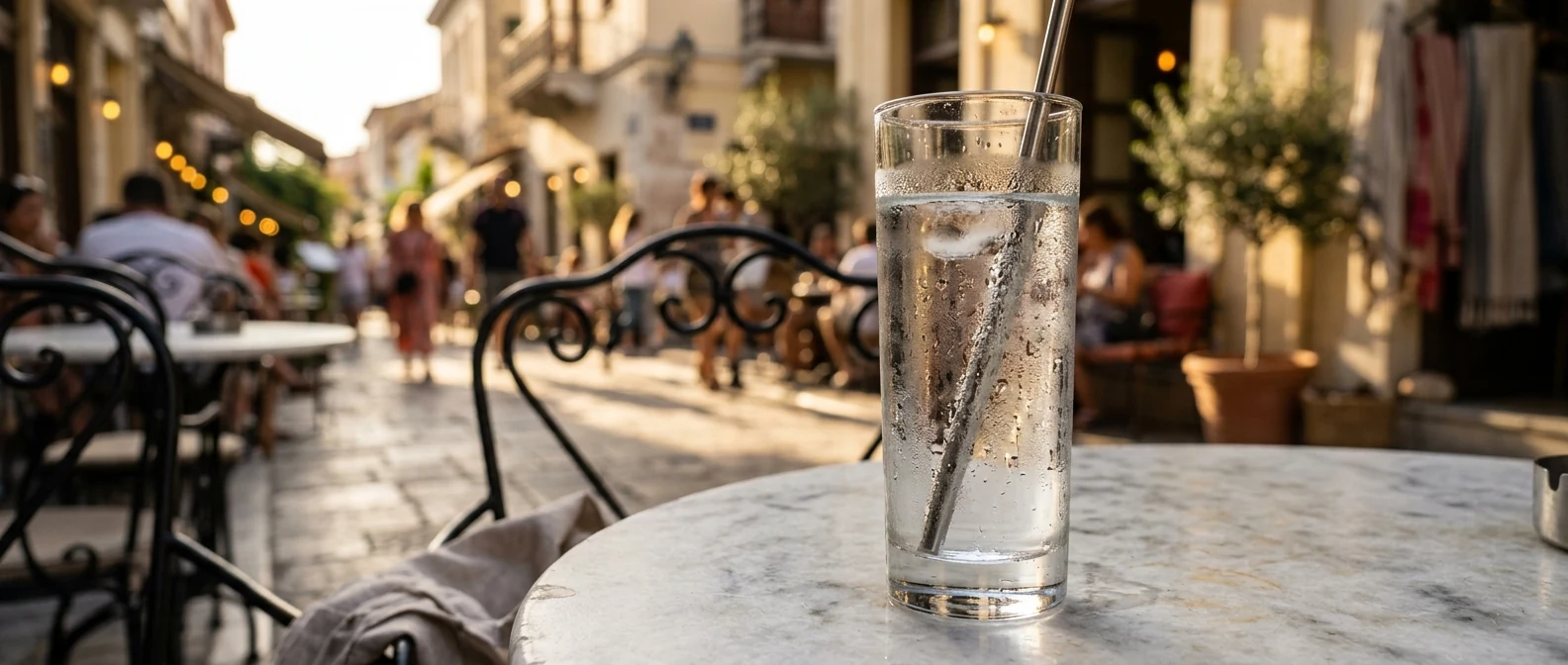
- Νερό — Neró — "Water." (Add παρακαλώ for politeness.)
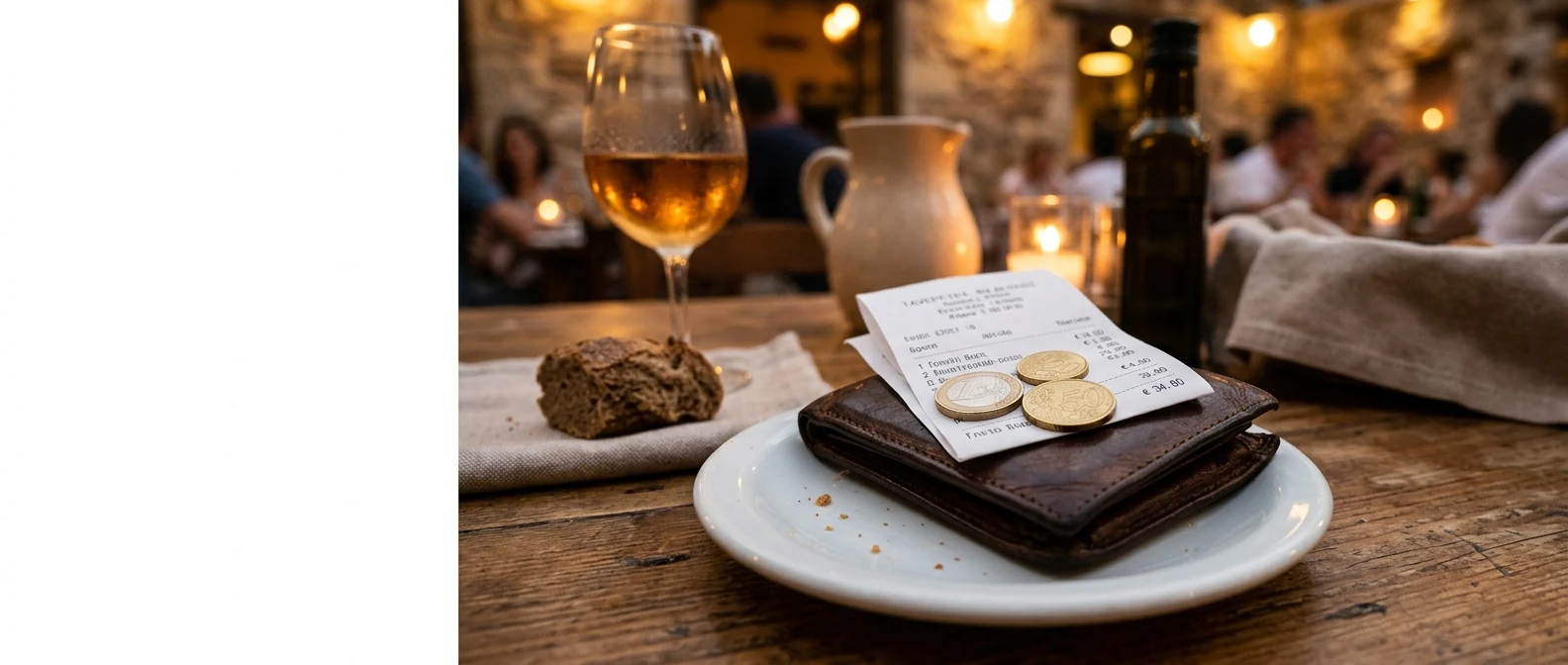
- Έναν λογαριασμό, παρακαλώ — Enan logariasmó, parakaló — "The bill, please."
- Δεν θέλω — Den thélo — "I don't want." For declining.
- Είναι νόστιμο — Ínai nóstimo — "It's delicious."
- Στην υγειά σας! — Stin yiá sas! — "Cheers!" (Lit. "to your health.")
🛒 Shopping
- Πόσο κάνει; — Póso kánei? — "How much?"
- Ακριβό — Akrivó — "Expensive."
- Φτηνό — Ftinó — "Cheap."
- Πληρώνω με κάρτα — Plironó me kárta — "I pay with card."
- Πληρώνω μετρητά — Plironó metritá — "I pay cash."
- Έχετε...; — Échete...? — "Do you have...?" Followed by item name.
📍 Directions + transportation
- Πού είναι...; — Pou ínai...? — "Where is...?"
- Μετρό — Metró — "Metro."
- Σταθμός — Stathmós — "Station."
- Ταξί — Taxí — "Taxi."
- Δεξιά / Αριστερά — Dexiá / Aristerá — "Right / Left."
- Ευθεία — Eftheíá — "Straight."
- Πόσο μακριά; — Póso makriá? — "How far?"
- Δεν καταλαβαίνω — Den katalavaíno — "I don't understand."
🤝 Building rapport
- Με λένε... — Me léne... — "My name is..."
- Από πού είστε; — Apó pou íste? — "Where are you from?"
- Είμαι από... — Ímai apó... — "I am from..."
- Πώς είστε; — Pos íste? — "How are you?"
- Καλά, ευχαριστώ — Kalá, efcharistó — "Well, thank you."
📊 At a glance
Yiá sou
Universal hello. Works any time. Use constantly.
Efcharistó
Thank you — most important word. Use after every transaction.
Parakaló
Triple-meaning: please, you're welcome, may I help. Use freely.
Sygnómi
Excuse me / sorry. For getting attention or polite apology.
🍷 Food + menu vocabulary
- Ψωμί — Psomí — "Bread."
- Λάδι / Ξύδι — Ládi / Xýdi — "Oil / Vinegar."
- Κρέας — Kréas — "Meat."
- Ψάρι — Psári — "Fish."
- Σαλάτα — Saláta — "Salad."
- Φέτα — Féta — "Feta cheese."
- Γιαούρτι — Yiaoúrti — "Yogurt."
- Ελιές — Eliés — "Olives."
- Πατάτες — Patátes — "Potatoes."
- Ντομάτα — Domáta — "Tomato."
- Κρασί — Krasí — "Wine."
🚨 Emergency phrases
- Βοήθεια! — Voíthia! — "Help!"
- Καλέστε αστυνομία — Kaléste astynomía — "Call police."
- Καλέστε γιατρό — Kaléste yiatró — "Call doctor."
- Νοσοκομείο — Nosokomío — "Hospital."
- Πονάω — Ponáo — "I am in pain."
- 112 — Pan-EU emergency. Operators speak English.
📚 Pronunciation tips
The Greek alphabet basics
- Vowels are pure: like Italian. α=ah, ε=eh, η=ee, ι=ee, ο=oh, υ=ee, ω=oh.
- Stress matters: stress shown by accent (κάνει = KÁ-nei). Wrong stress sounds odd to Greeks.
- Th sound: θ = "th" as in "thin"; δ = "th" as in "this."
- Ch sound: χ = guttural "ch" as in Scottish "loch" or German "Bach."
- Gh sound: γ = soft "gh" or "y" depending on following vowel.
- R is rolled: like Italian/Spanish r, not English.
- S is sharp: like English s.
📅 Time phrases
- Σήμερα — Símera — "Today."
- Αύριο — Ávrio — "Tomorrow."
- Τώρα — Tóra — "Now."
- Τι ώρα είναι; — Ti óra ínai? — "What time is it?"
- Γρήγορα — Grígora — "Quickly."
- Σιγά σιγά — Sigá sigá — "Slowly slowly" (Greek philosophy of life).
🎯 The pointing-and-smiling rule
- Don't worry about perfect grammar: Greeks appreciate any attempt + will help fill gaps.
- Pronunciation effort matters: even badly-pronounced "efcharistó" earns warm response.
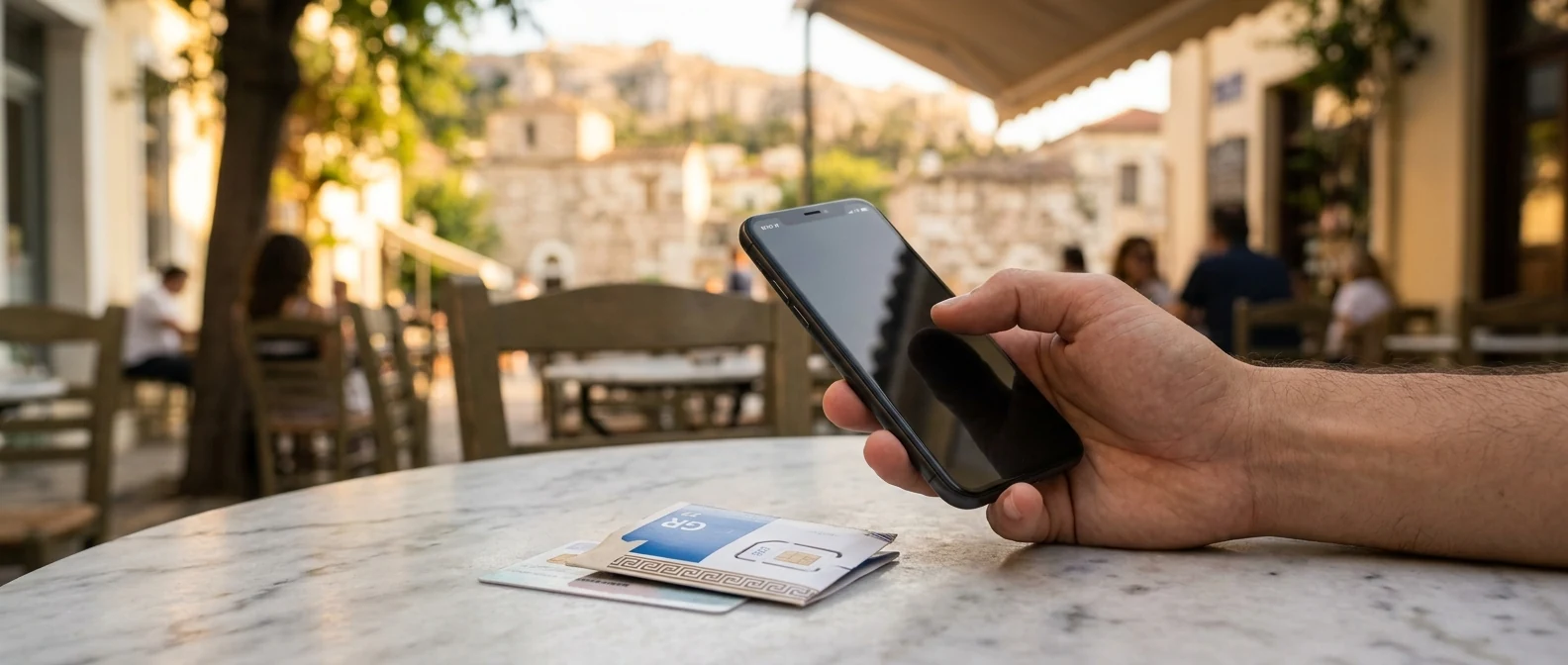
- Use phrasebook or app freely: showing translation on phone is common + accepted.
- Hand gestures help: pointing at menu, fingers for numbers.
- "Thank you" goes a long way: most important habit — say efcharistó after every interaction.
📱 Useful apps
- Google Translate: camera mode reads Greek menus + signs in real time.
- Greek alphabet apps: practice reading basic words.
- Duolingo Greek: 15 minutes of practice before trip earns goodwill.
- Linguee / Reverso: better for context than Google Translate.
🎯 FAQ
Will Athenians speak English to me?
Yes, generally. Younger Greeks fluent. Older sometimes less so but typically functional.
Should I learn Greek alphabet?
Helpful but not essential. Reading menus + street signs gets easier with basic alphabet recognition.
Best one phrase to learn?
Efcharistó (thank you). Then yiá sou + parakaló. These three words alone build goodwill.
Do Greeks appreciate broken Greek?
Yes very much. Effort matters more than accuracy.
What's the most common mistake?
Confusing "ne" (yes) with "no" — Greek "ne" sounds like English "nay/no" but means yes!
Can I use Cypriot Greek?
Yes — same language with regional differences. Greeks understand both.
Sources:
— Kathy