The geology before the plan
Milos lies at the southwestern edge of the Cyclades, about 150 km southeast of Athens. It belongs to the volcanic arc of the South Aegean, together with Santorini and Nisyros, but it looks different: not one big caldera in the first plan, but an island with constant changes in rock, colour and coastline. That geology explains why two beaches only a few kilometres apart can look as if they belong to different islands.
🏖️ The signature beaches
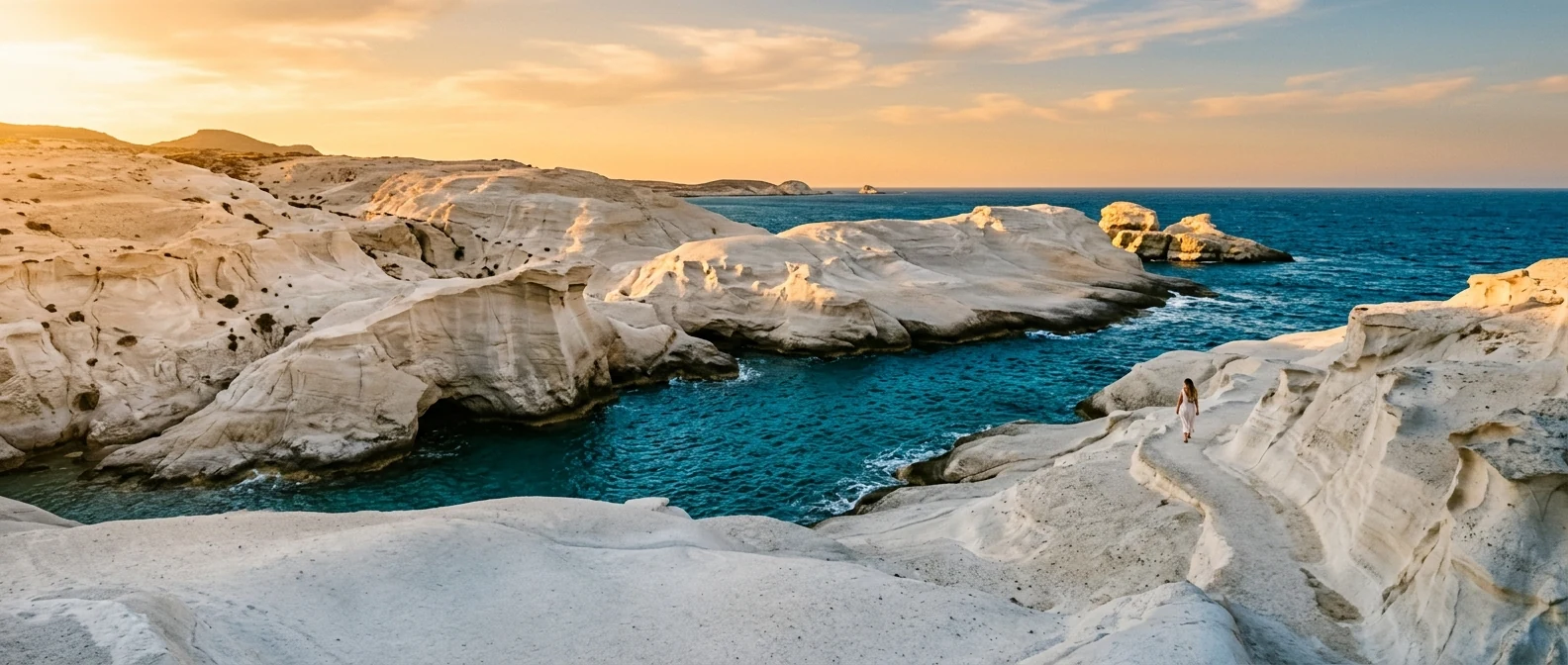
Sarakíniko
White volcanic rock, small coves and a lot of people after 10:00 in summer. Go early or late.
Kléftiko
Sea caves on the southwestern side. You reach them by boat or kayak, not by a normal road.
Tsigrádo
A small beach with a steep descent, rope and ladder. It is not for anyone who dislikes heights.
Firiplaka
A long southern beach with sand and cliffs in red and white tones. Sunbeds appear there seasonally.
Paleochóri
A beach with geothermal activity. In some places the sand and pebbles keep natural warmth.
Papáfragas
A narrow cove between high cliffs, near Phylakopi. The access needs care.
Plaka, Adamas and Klima
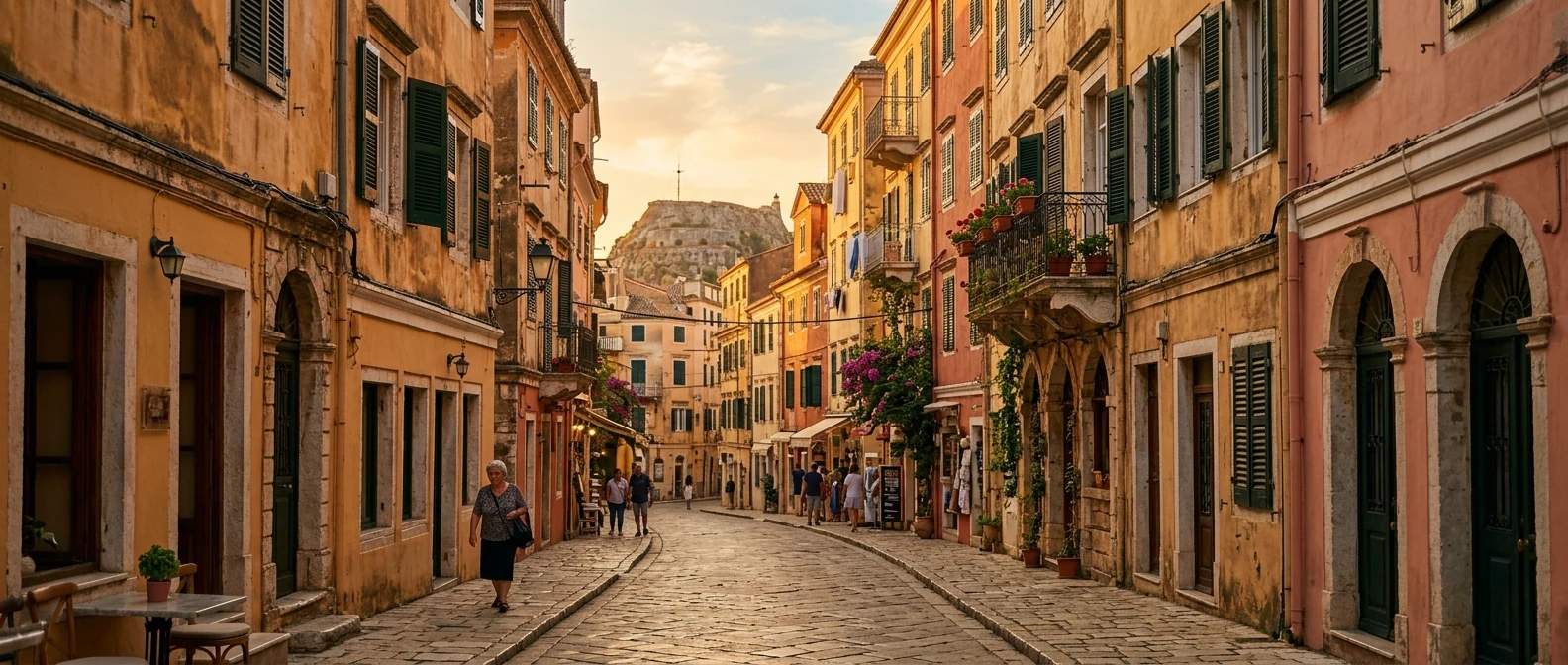
- Plaka: the old Chora of Milos, standing high with white houses, narrow passages and castle ruins.
- The sunset there has people, but it is worth the time.
- The churches and small museums help put the island into context beyond the beaches.
- Adamas: the port, more practical than atmospheric, with hotels, rentals, agencies and food.
- Klima: lower by the sea, keeping the coloured syrmata, the old boat-house dwellings.
The Venus de Milo
The statue that left for the Louvre
The Venus de Milo, a work from about 150-100 BCE, was found on Milos in 1820, near the area of Trypiti. The statue later passed to France and has been in the Louvre since 1821. On Milos you can see the find spot near the ancient theatre, and a copy in Plaka.
Obsidian and mining
- Obsidian, the black volcanic glass of Milos, travelled around the Aegean already in the Neolithic period.
- That shows that seaborne exchange began very early here.
- Mining is not only in the past: bentonite and perlite are still extracted on the island.
- The Mining Museum in Adamas is one of the most useful stops if you want to understand the geological variety of Milos.
Ancient and early Christian Milos
- The ancient theatre near Trypiti is preserved in good condition and is easy to visit.
- The catacombs are an early Christian burial network from the 1st to the 5th century CE, with about 185 metres of passages.
- Phylakopi is a Bronze Age settlement, roughly from 3000 to 1100 BCE.
- It is not a site for a rushed photo; a little reading before or after helps a lot.
📊 At a glance
151 km²
About the size of Milos.
70+
Beaches and smaller coastal spots around the island.
1820
Venus de Milo discovered. Now in Louvre.
3000 BCE
An early phase of Phylakopi.
Boat tours and Kleftiko
- Kleftiko is the main reason many people book a day boat trip.
- Tours usually last several hours, and the price changes with the boat, the season, the duration and what is included.
- Polyaigos and Kimolos are often combined with Milos excursions.
- Smaller boats and sailing trips give more flexibility, while kayak can work well for small coves without a large group.
🚗 Getting around
- A car or scooter is almost essential.
- Buses connect the main points in summer, but they are not enough for full exploration.
- Book rentals early, especially in August.
- Watch the dirt roads: some companies do not cover damage if you leave the paved roads.
- Quad bikes are popular, but the island roads have narrow sections, cliffs and strong wind.
How to get to Milos
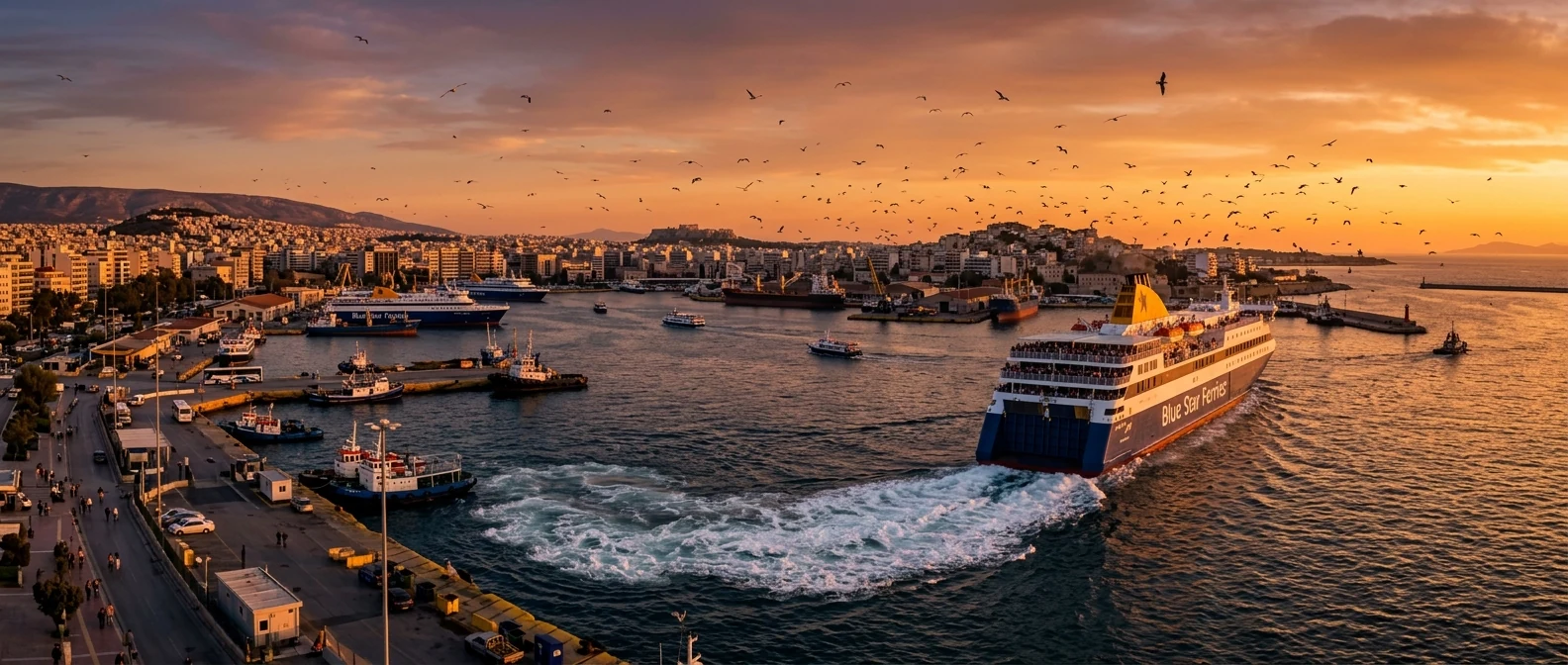
- From Ioulianou 50, the simplest ferry route starts from Piraeus: a short walk to Victoria and about 30 minutes on Line 1 to the port.
- The conventional ferry to Milos takes several hours, while the fast one cuts the time noticeably, depending on the route and stops.
- Milos also has a small airport, with short flights from Athens. Availability is limited and prices rise as the date gets closer.
- From Ioulianou 50 to Athens Airport, go by Line 1 to Monastiraki and then change to Line 3; allow about one hour depending on the wait.
- There are also inter-Cyclades links with Santorini, Folegandros, Sifnos and Serifos, depending on season and timetable.
📅 Best time
- June and September are the most balanced months.
- The sea is warm enough then, the schedules work well, and Sarakiniko does not fill from the early morning the way it does in August.
- July and August are full season. The easier beaches fill, prices rise and boat, car and room bookings matter more.
- May and October are quieter, but you may have fewer services and a cooler sea.
🍽️ Local food
- Milos pitarakia: small cheese pies with local cheese, one of the foods you will see often.
- Karpouzopita: sweet, simple and summery.
- Koufeto: a local sweet with white pumpkin, honey and almond.
- In the fishing villages you will often find octopus, sun-dried fish and salads with purslane or capers.
- It is better to eat close to the day's rhythm: Plaka in the evening, Adamas after the ferry or the boat trip, Pollonia for a quieter dinner near the sea.
How many days do you need
- In 3 days you can see Plaka, Sarakiniko, Kleftiko by boat and one southern beach. It will be compressed, but it works.
- In 5 days you add the catacombs, the ancient theatre, Phylakopi, Klima, Tsigrado and Pollonia.
- In 7 days Milos starts to breathe. You can change beach according to the wind, make a day trip to Kimolos and stop treating every afternoon as a checklist.
Useful warnings
- Sarakiniko gets very hot, because the white rock reflects the sun. Go early, take water and do not rely on shade.
- Tsigrado is not for everyone; the rope and ladder descent needs steadiness.
- You do not go to Kleftiko by car. If an app shows a road, ignore it. You need a boat or kayak.
- In caves and narrow coves, wind and swell can change swimming safety quickly.
- Beach shoes help on pebbles and rocks.
- Keep some cash, especially if you move around smaller villages or quieter hours.
Frequently asked questions
Is Milos better than Santorini?
It is different. Santorini has the caldera and a more organised tourist scene. Milos has more variety of coasts and stronger geological interest.
Why is Sarakíniko so famous?
Because of the white volcanic rock and the clear lines of the landscape. Since around 2015 it has become very popular on social media, so the timing of the visit matters.
Can I see the Venus de Milo on Milos?
The original is in the Louvre. On Milos you can see the find spot near Trypiti and a copy in Plaka.
Best beach for kids?
Firiplaka, Papikinou and Pollonia are easier choices, with simpler access and more services in the busy season. Paleochori is interesting too, but the geothermal activity and pebbles need a little more care.
Hot springs?
Yes. Paleochori has visible geothermal activity on the beach, while Adamas also has thermal springs with more organised access.
How long is enough?
Three or four days is the minimum. Five to seven days is the more fitting amount of time for Milos.
Sources:
— Kathy