🪪 The island at a glance
📍 Where it is
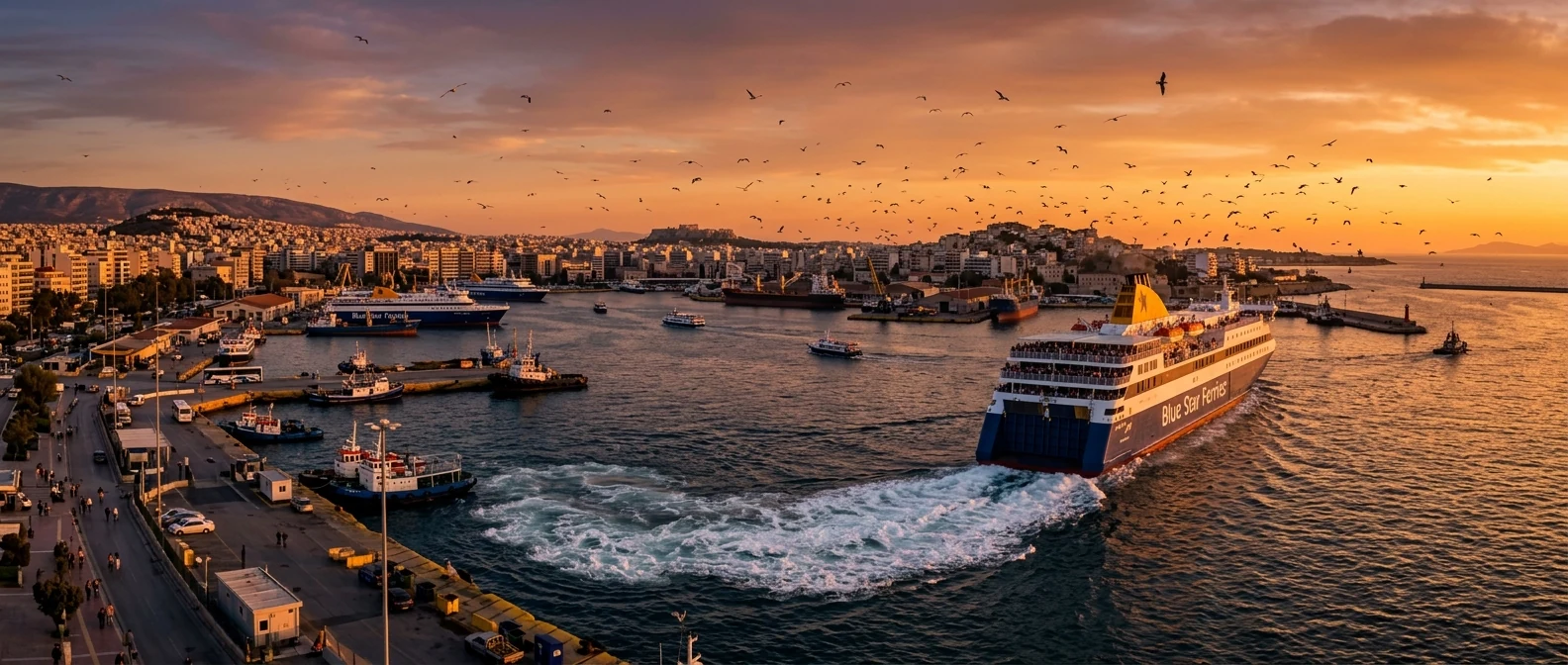
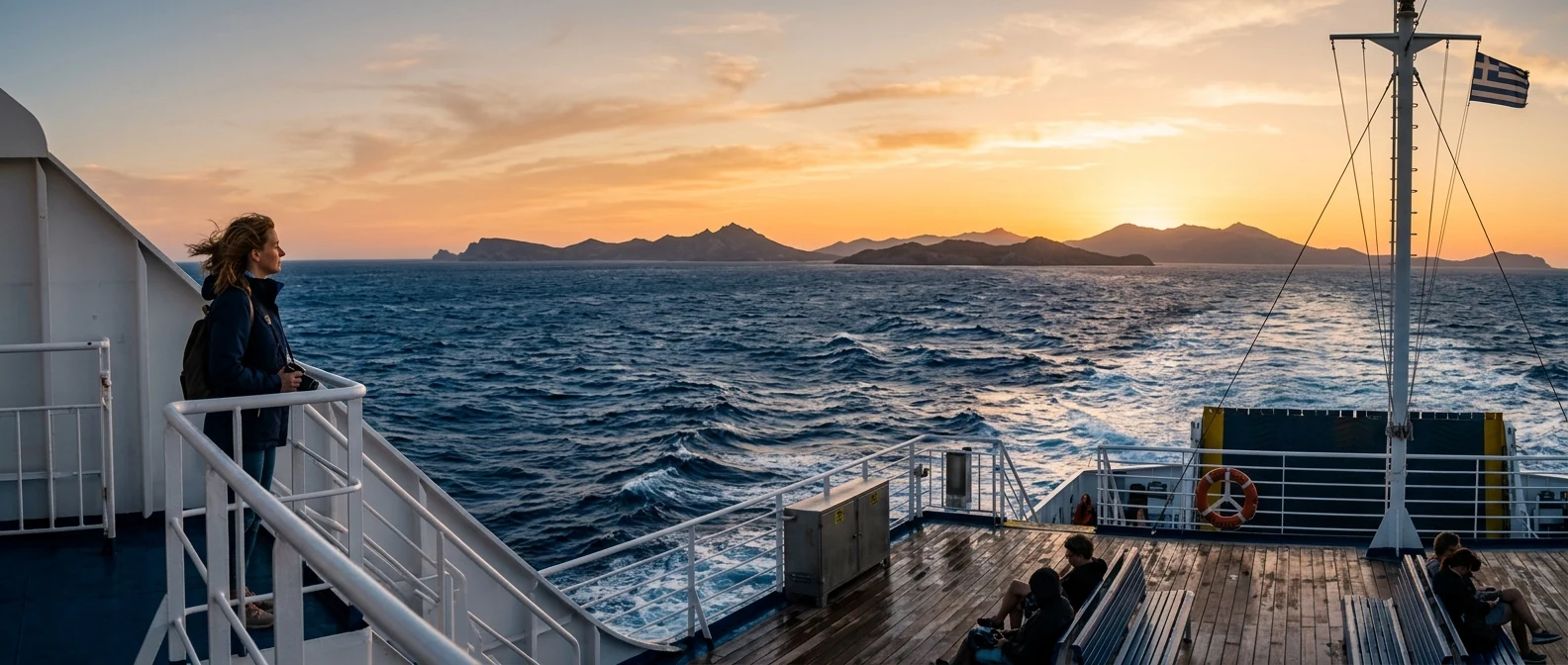
Serifos is in the western Cyclades, between Kythnos and Sifnos, and is one of the Cycladic islands closest to Athens. It has no airport, but the ferries from Piraeus arrive in two and a half hours by fast ferry and four to four and a half by conventional ferry, on the route to Sifnos and Milos.
📍 Where Serifos is
Serifos is in the western Cyclades, between Kythnos and Sifnos, on the ferry route from Piraeus to Milos. The island is shown in red, and in green Piraeus and Athens airport.
🗺️ The map of the island
Serifos is round, mountainous and dry. Livadi, the port, is on the south coast, at the head of a sheltered bay, in the island’s only green valley, and Chora is on the hill right above it. Around Livadi are the easiest beaches: Livadakia, Psili Ammos and Agios Sostis. The road west reaches Koutalas and Megalo Livadi, the old mines, and north Panagia, Taxiarches and Sykamia.
🗺️ Map of Serifos
Livadi, the port, is in the south, inside a sheltered bay, and Chora on the hill above it. Psili Ammos and Agios Sostis are a little further east. In the west, Megalo Livadi with the mines, and Koutalas. In the north, Panagia, Taxiarches and Sykamia. Tap each number to see what it is.
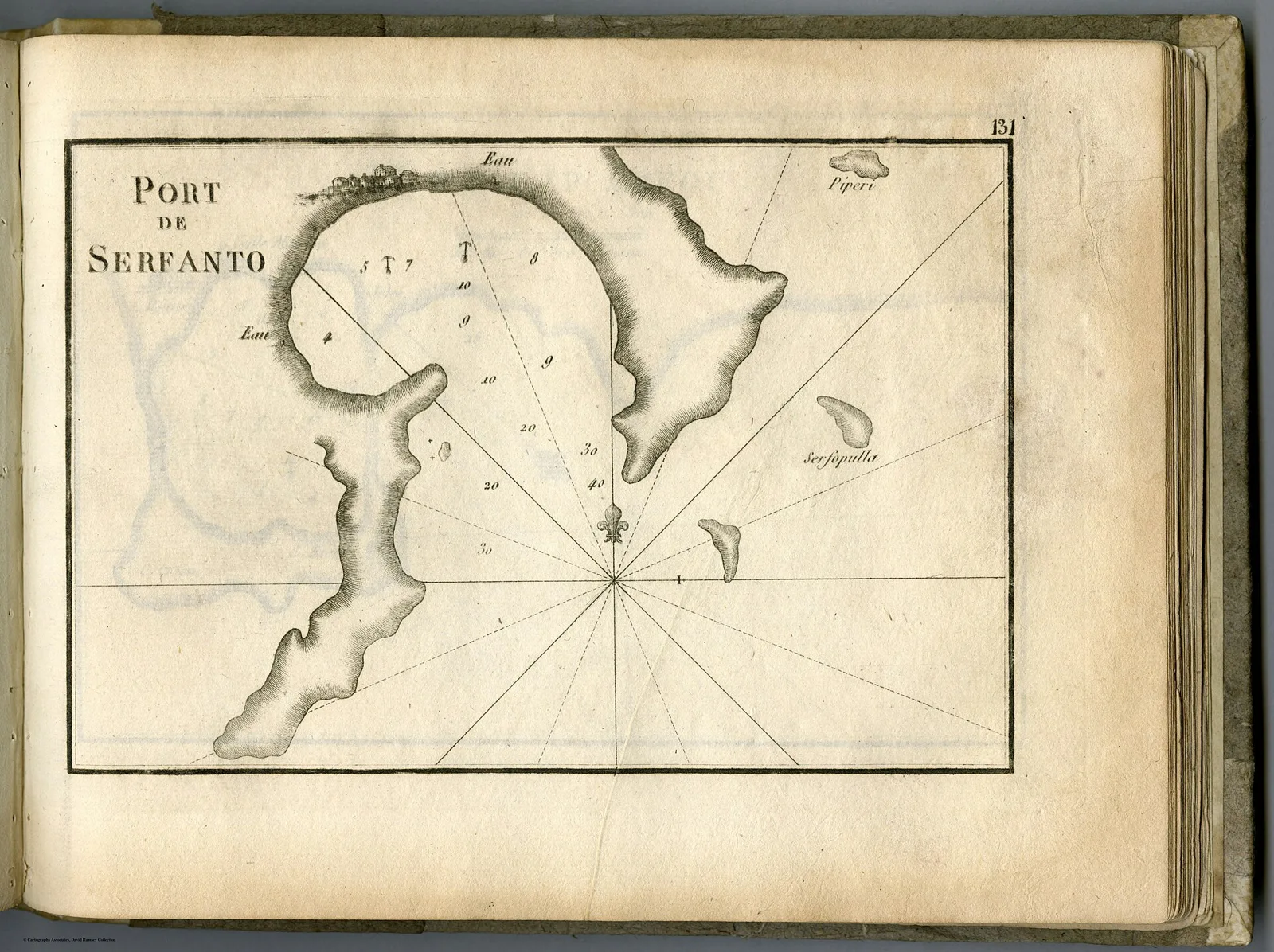
Map: Joseph Roux, 1764 (Public domain) · Wikimedia Commons
⚖️ Is it worth it? The pros and cons
Serifos is an island for those who want landscape, quiet and beaches, and do not mind the wind and the dirt roads. Here is an honest picture.
📊 At a glance, from 1 to 5
👍 The pros
- The most spectacular Chora in the Cyclades, on a conical hill.
- Beaches without crowds, many without a single umbrella.
- Two and a half hours from Piraeus by fast ferry.
- Still an authentic island, without mass tourism.
- The story of the mines, which you will not find elsewhere.
👎 The cons
- Dry and rocky, with hardly any greenery.
- The meltemi blows hard in July and August.
- You need a vehicle for the beaches, many on dirt roads.
- Few rooms, book early for summer.
🏰 Chora
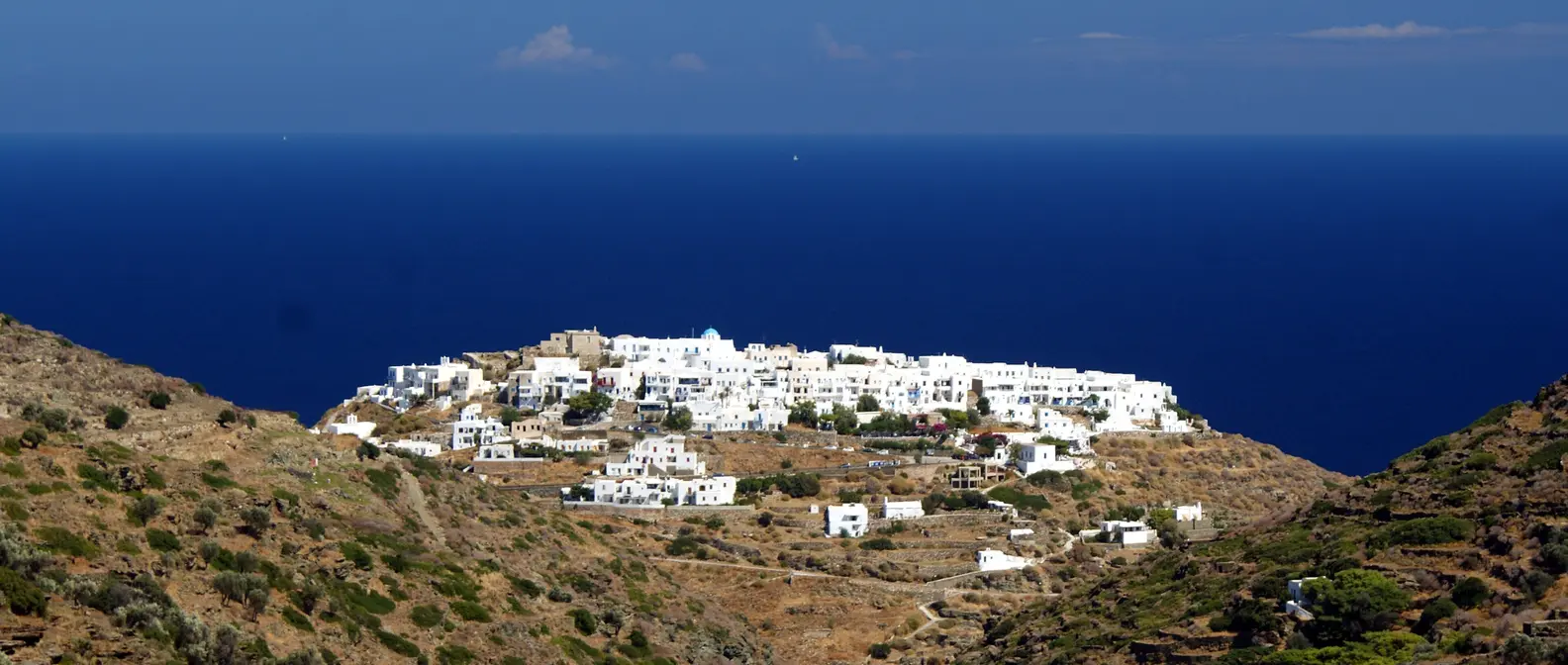
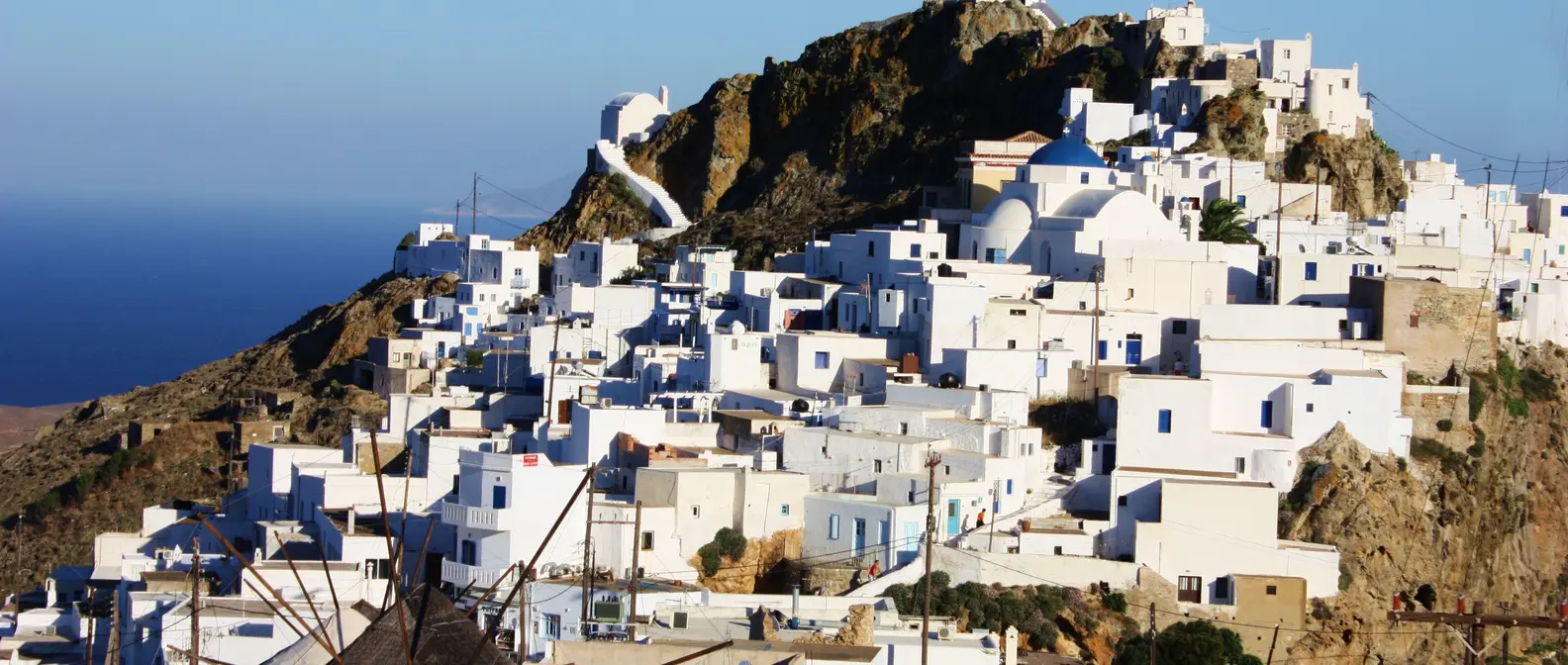
The Chora of Serifos is the most spectacular in the Cyclades: the white houses climb a conical rock, one on top of the other, up to the Castle at the summit, and from the ferry it looks like snow on the mountain. It is divided into Kato Chora, with the lanes and the arches, and Ano Chora, with the square of Agios Athanasios, the neoclassical Town Hall of 1908 and the cafés. At the top, among the ruins of the medieval Castle, the little church of Agios Konstantinos has the view: all of Livadi, the bay, Sifnos and the sunset. At the entrance to Ano Chora, the windmills are the meeting point in the evening.
According to the myth, this is where the chest with Danae and the baby Perseus washed ashore, after her father had thrown them into the sea. Perseus grew up on Serifos, and when he came back with the head of Medusa, he turned King Polydectes and his court to stone. The people of Serifos say that is why their island is full of rocks.
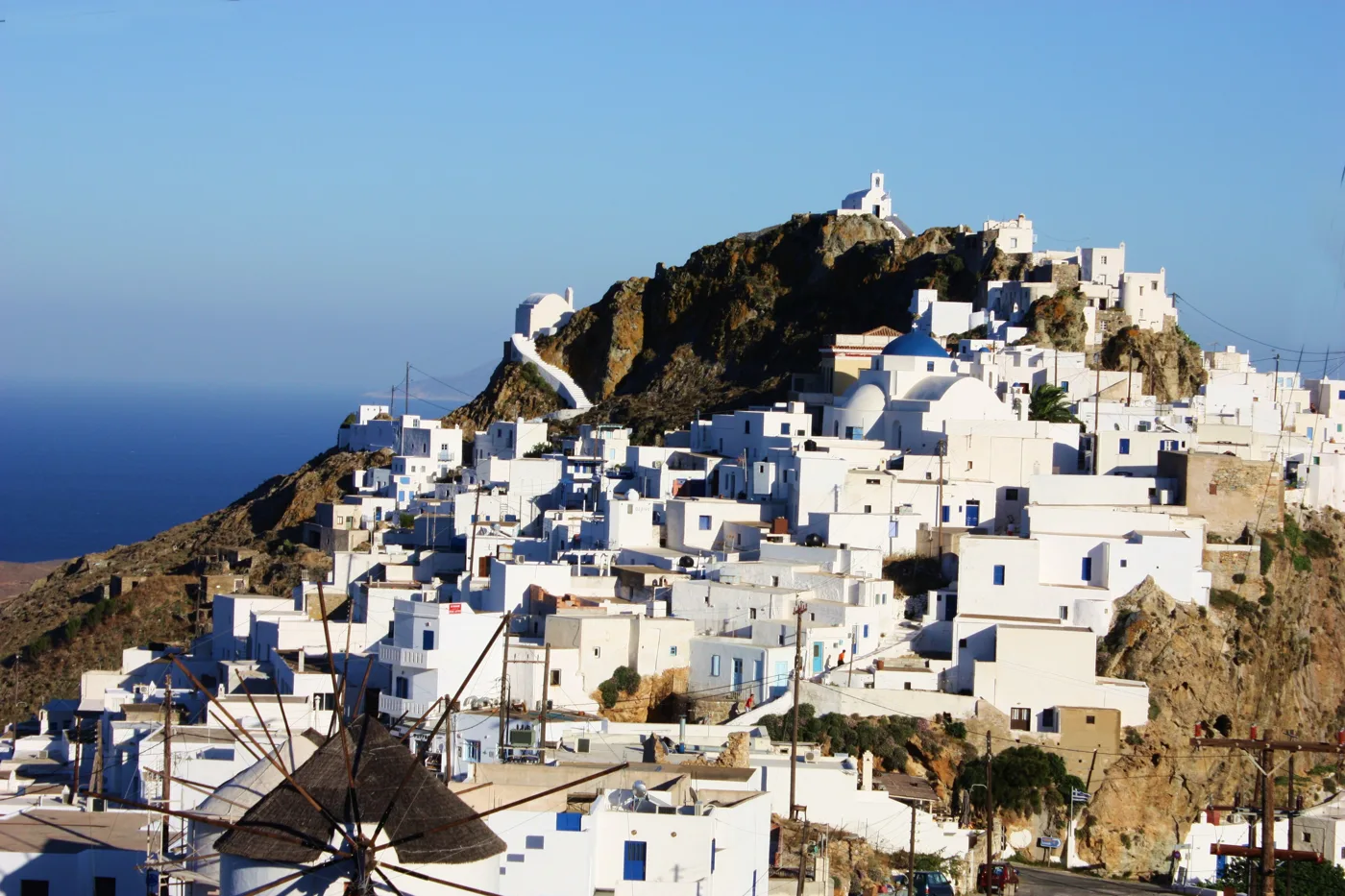
Like an amphitheatre, on a conical hill.
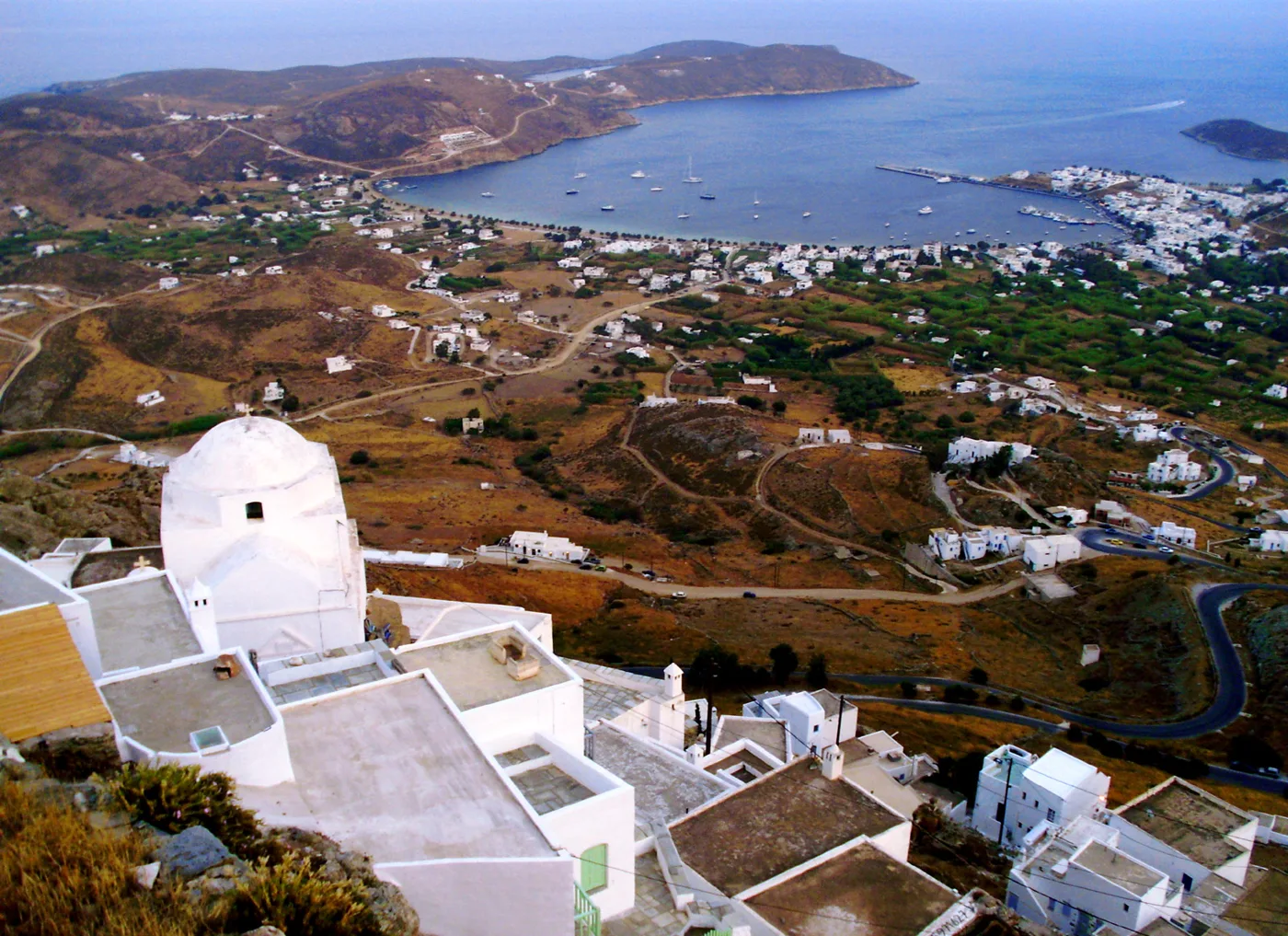
Below, Livadi and the harbour.
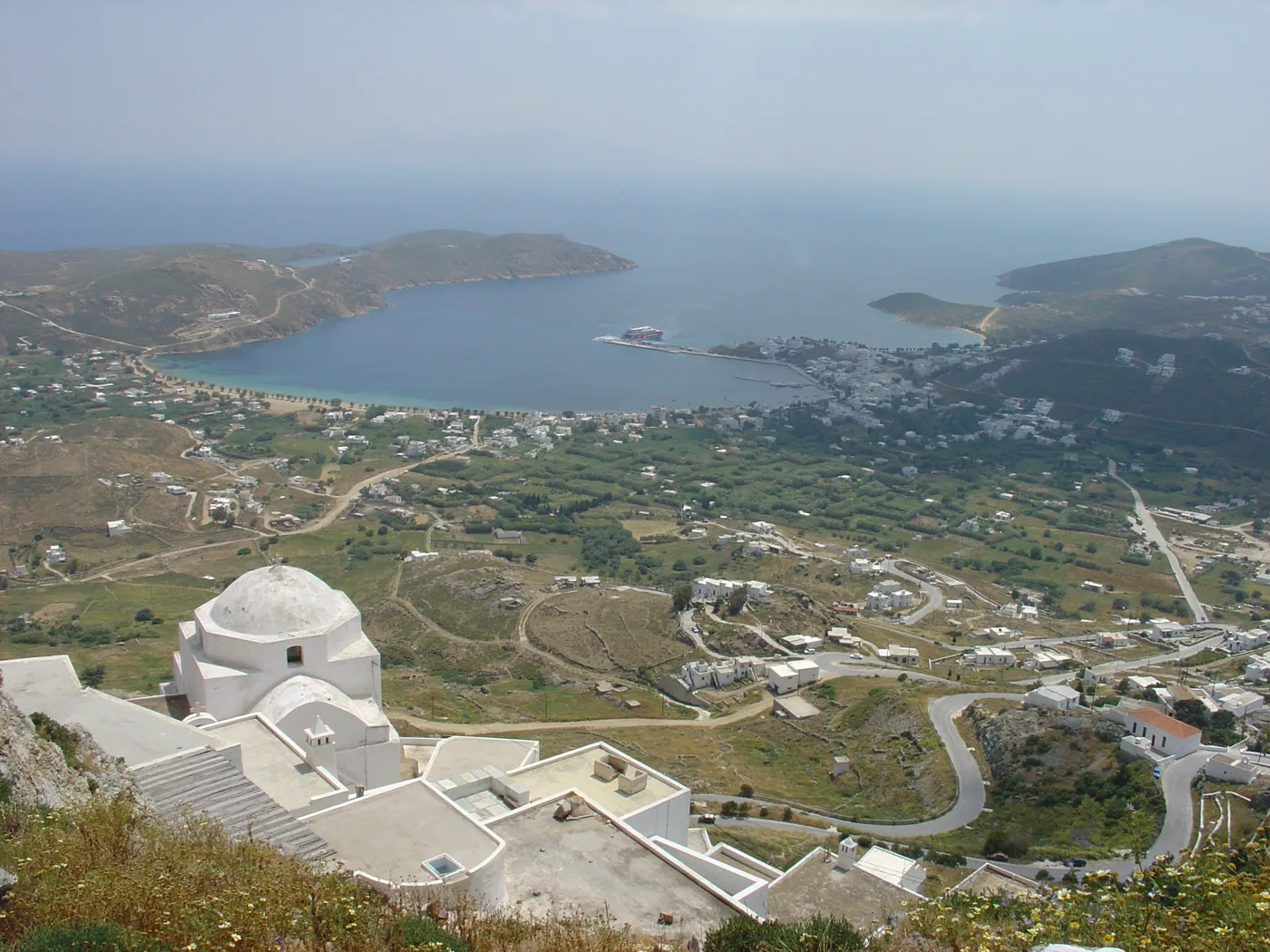
From the upper lanes of Chora.
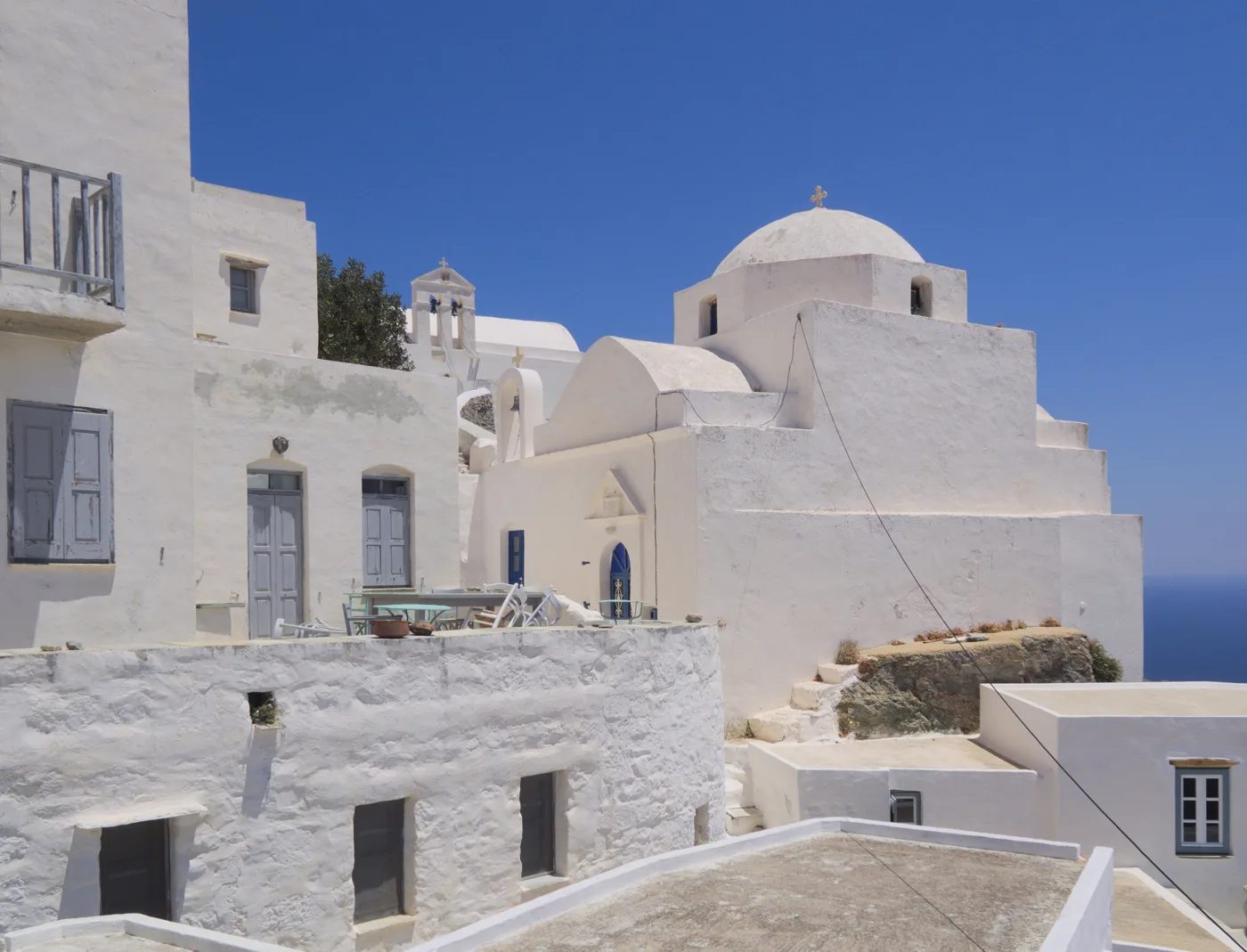
White churches among the houses.
Photos: photosiotas (CC BY-SA 4.0), G Da (CC BY-SA 3.0), eanastaso (Public domain), C messier (CC BY-SA 4.0) · Wikimedia Commons
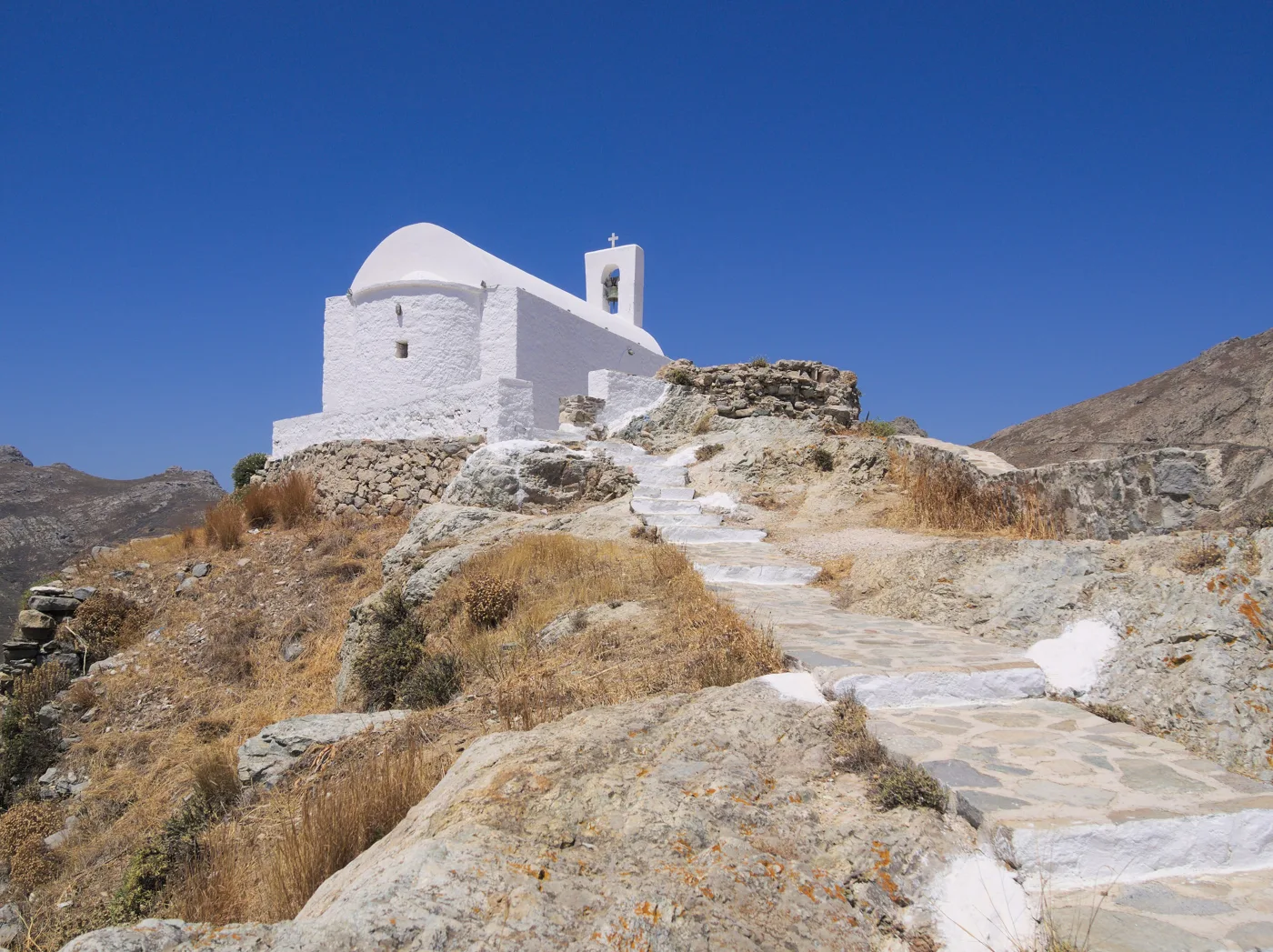
At the top of the Castle.
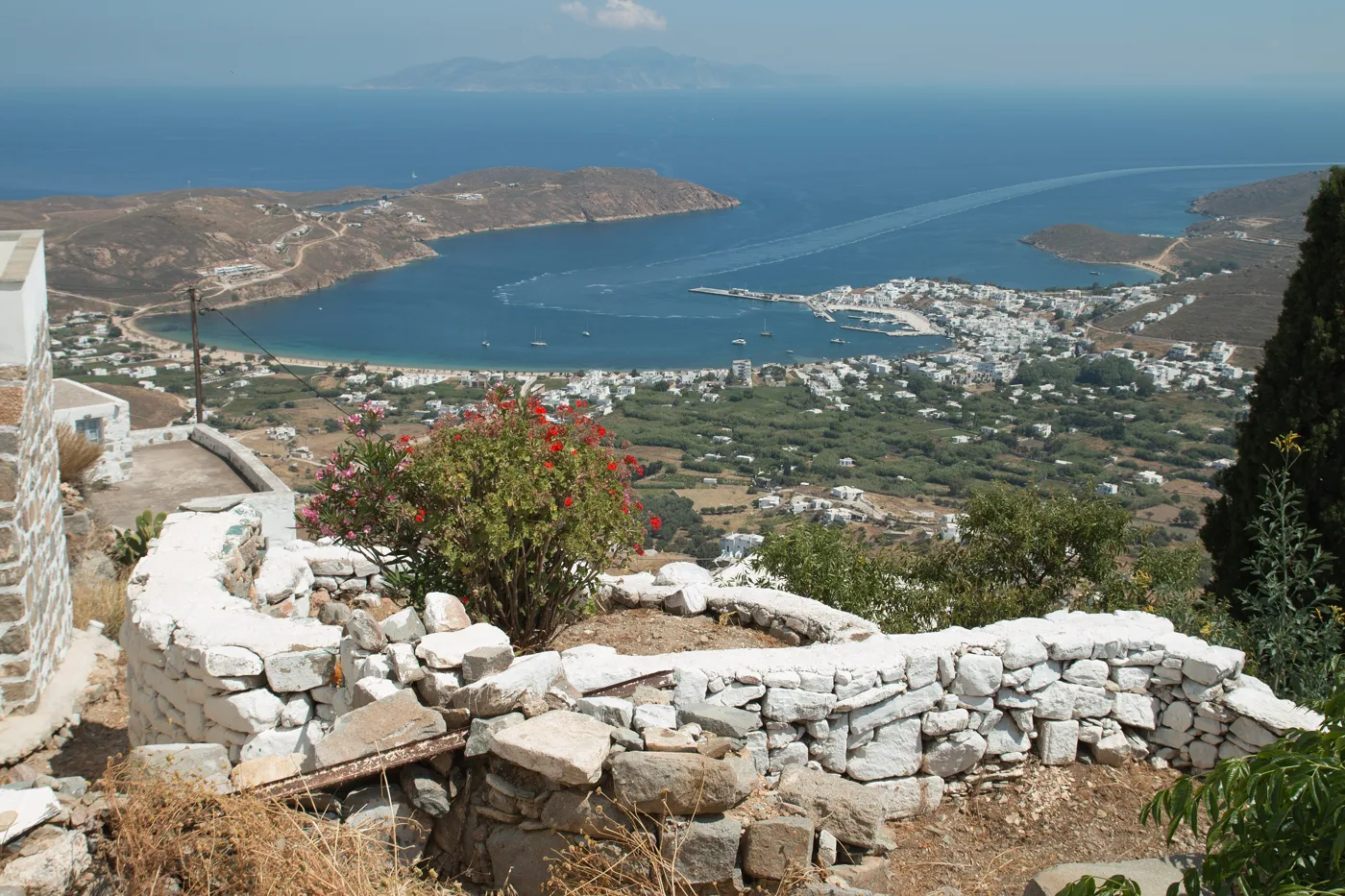
The walls and, below, the harbour.
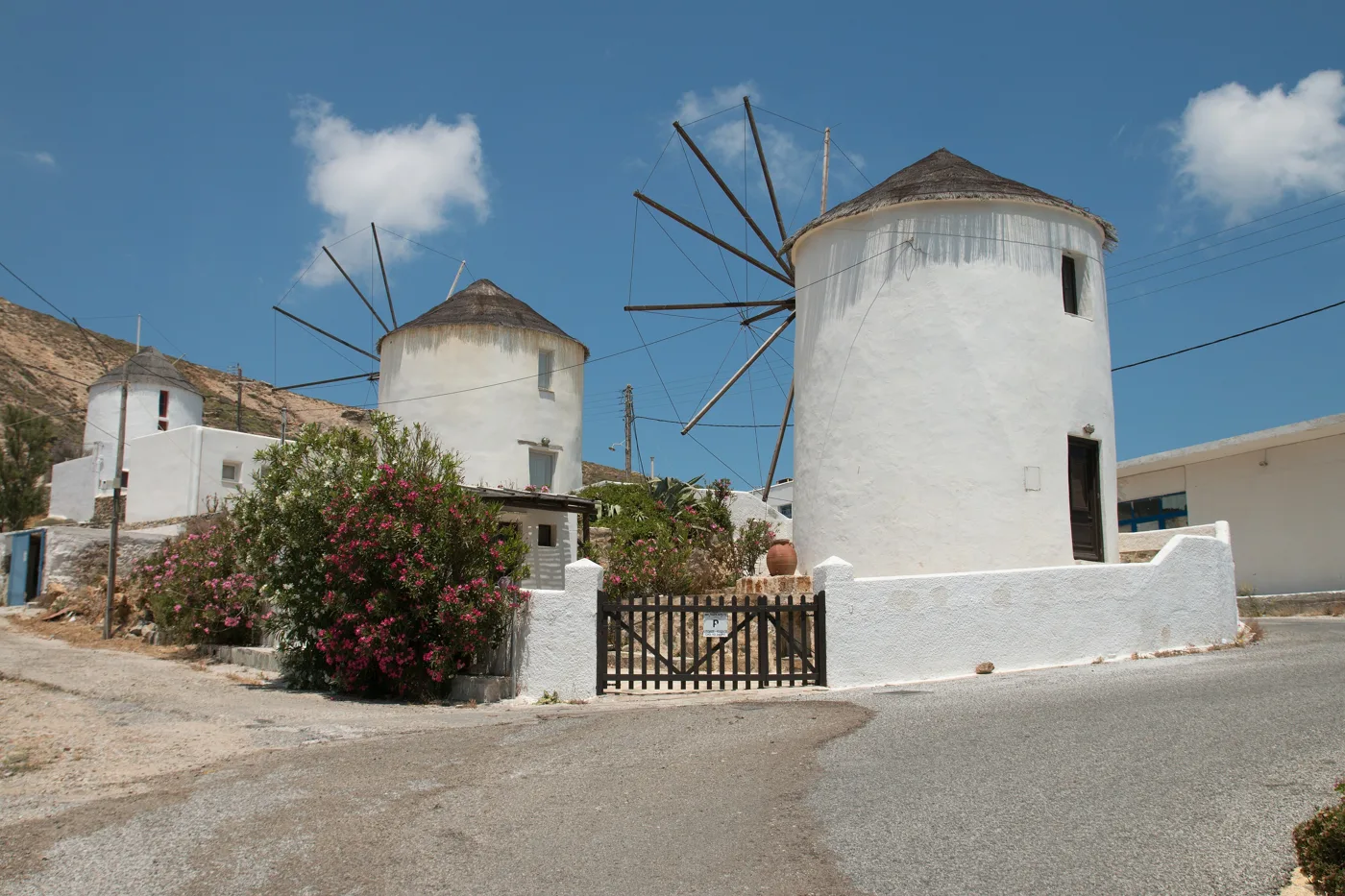
At the entrance to Ano Chora.
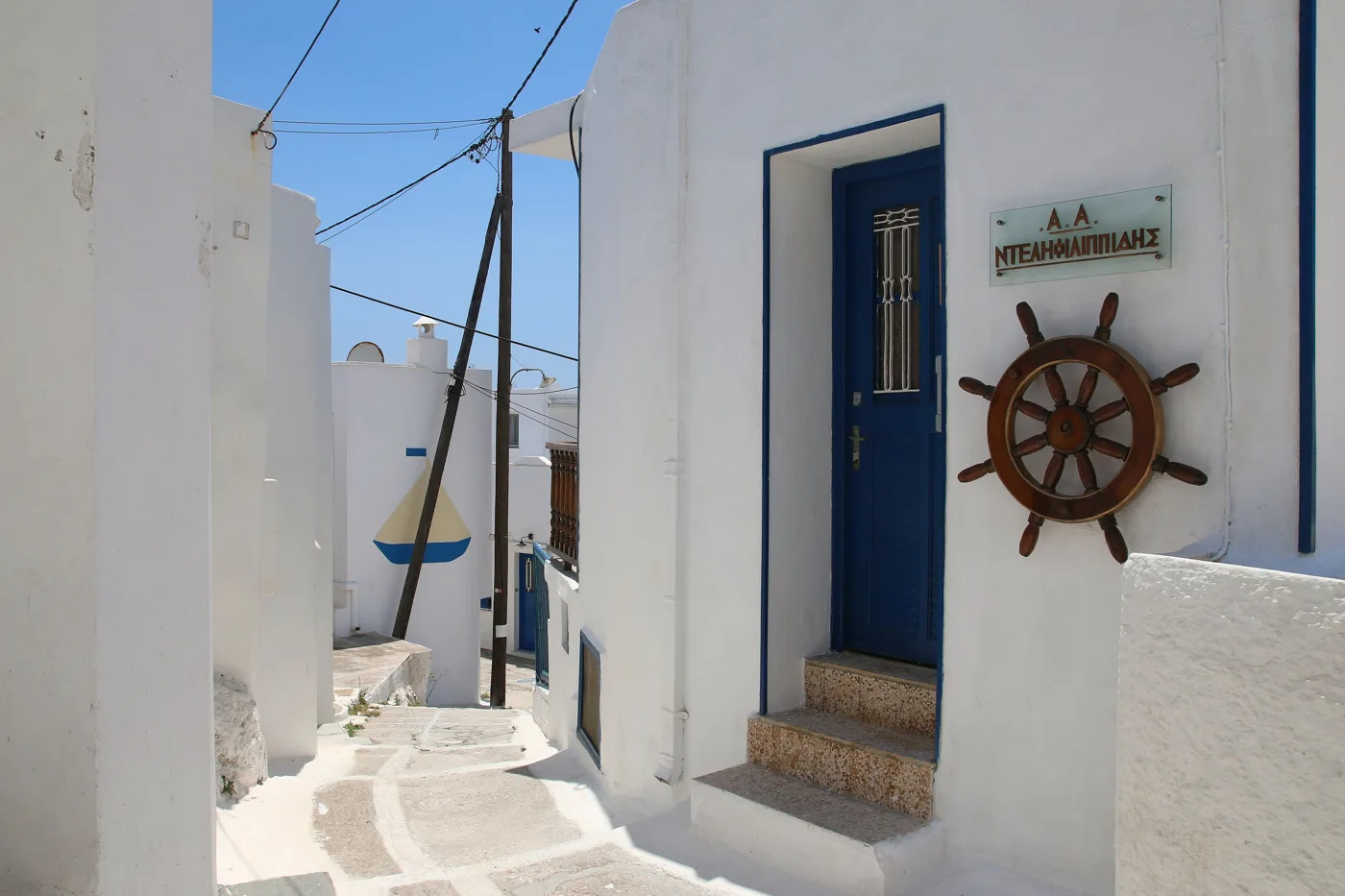
In Kato Chora.
Photos: C messier (CC BY-SA 4.0), Zde (CC BY-SA 4.0) · Wikimedia Commons
From Livadi, an old cobbled path with steps climbs to Chora in half to three quarters of an hour, with views over the whole bay. Go up in the afternoon, stay for the sunset at the Castle, and come down by bus or on foot, with a torch.
⛏️ The mines and Megalo Livadi
Serifos mined iron since antiquity, but its mines became known in the early 20th century, when thousands of workers dug the mountains of the western side for a German company. In August 1916, the miners demanded an eight-hour day and better conditions, went on strike and refused to load a ship. The gendarmes opened fire. Four workers and two gendarmes were killed, and the Serifos strike went down in history as the first bloody strike in Greece. The mines closed in the 1960s.
At Megalo Livadi, at the western tip of the island, you see what is left: the rusty loading bridge that runs out into the sea, the ruined neoclassical building of the company offices, the monument to the strikers, and a quiet beach with two tavernas. Next door, at Koutalas, more ruins, wagons and the Cyclops cave. The old miners’ roads are today signposted footpaths, among the loveliest on the island.
In the north, Panagia is the oldest village on the island, with a 10th-century church and a festival on 15 August that keeps the custom of the “first dance”. A little further on, the Monastery of Taxiarches, from 1572, is built like a fortress, with high walls and a single door, to protect it from pirates.
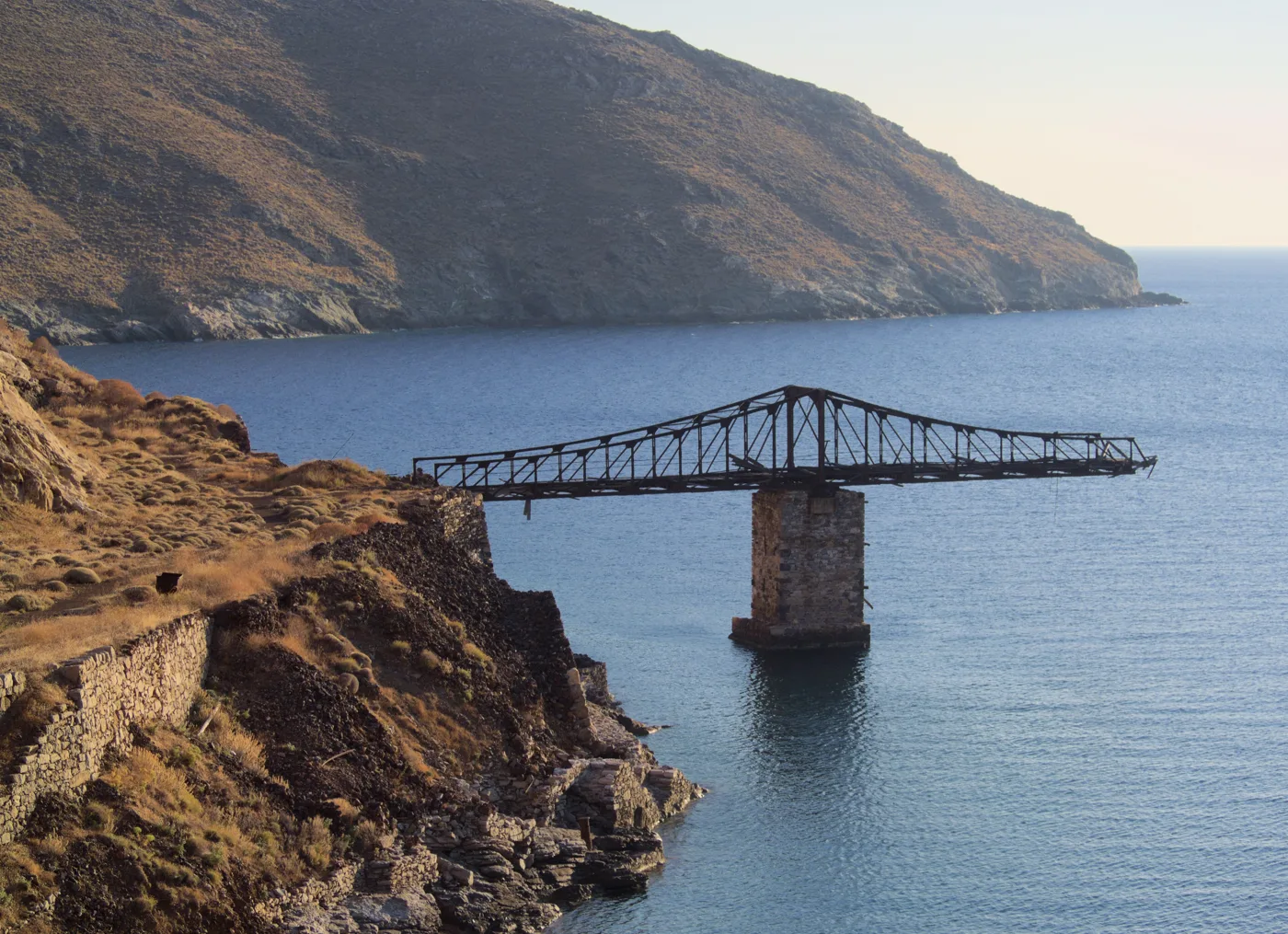
From here the ore was loaded onto the ships.
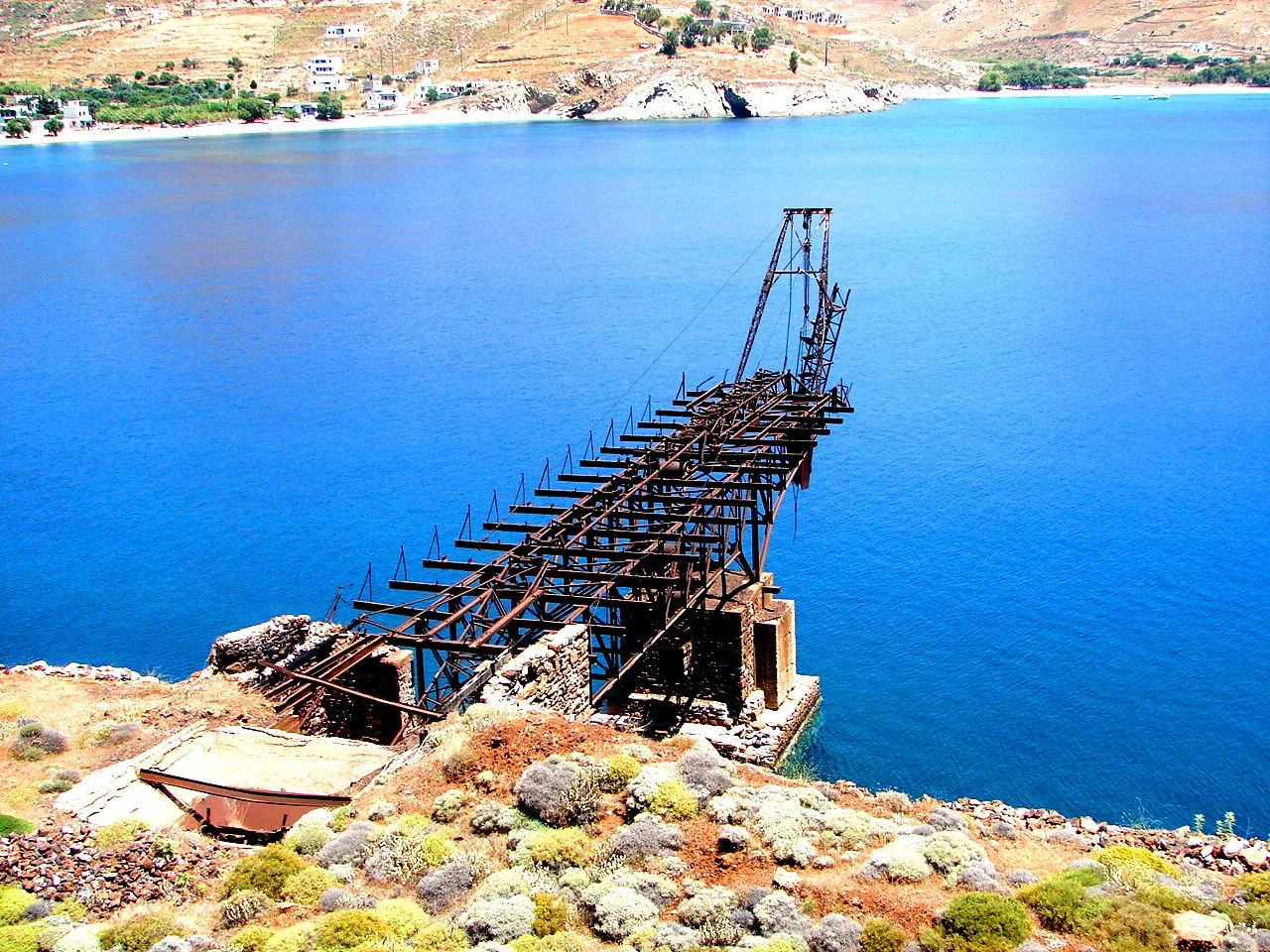
Rust in the blue.
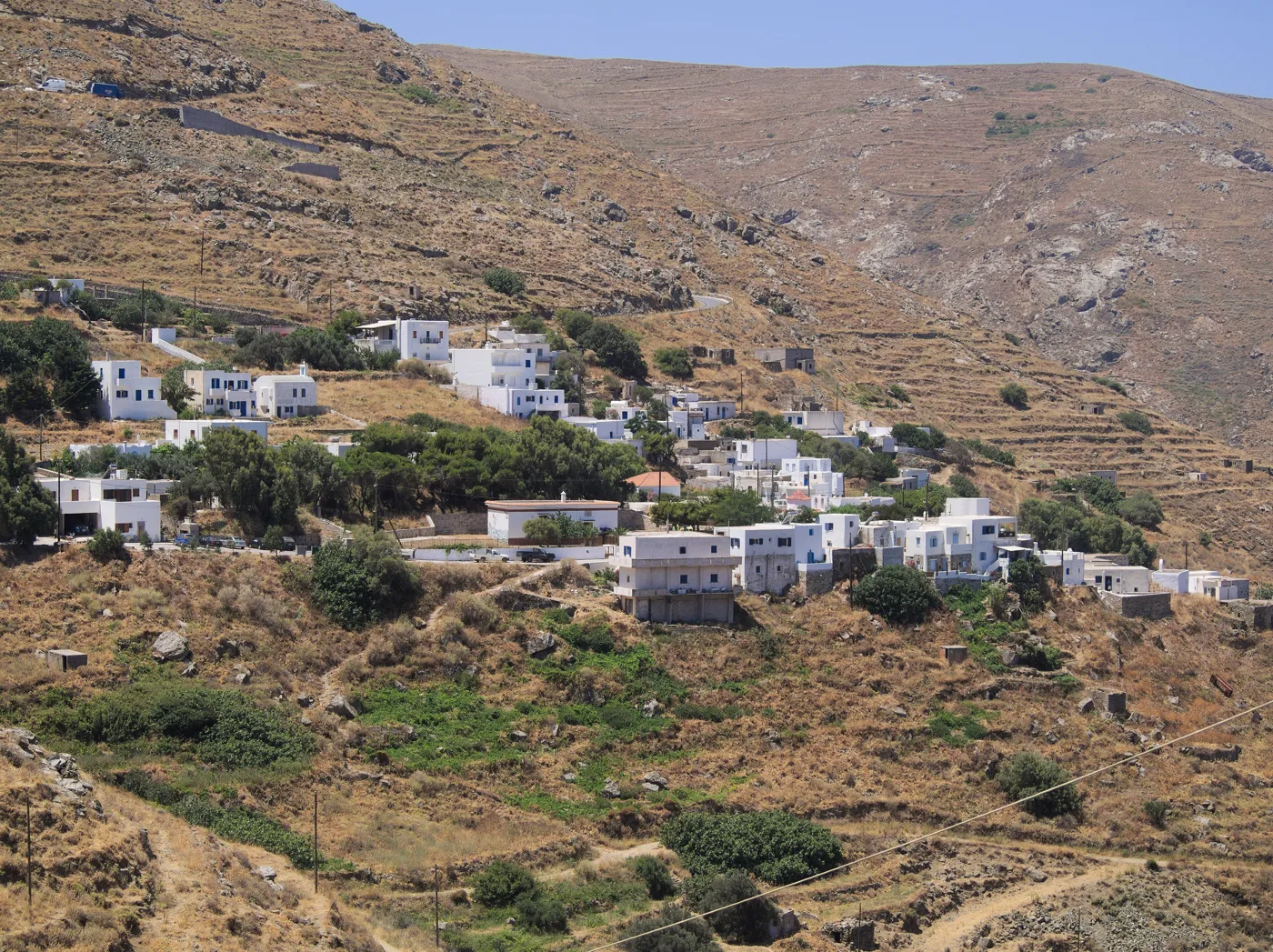
The oldest village on the island.
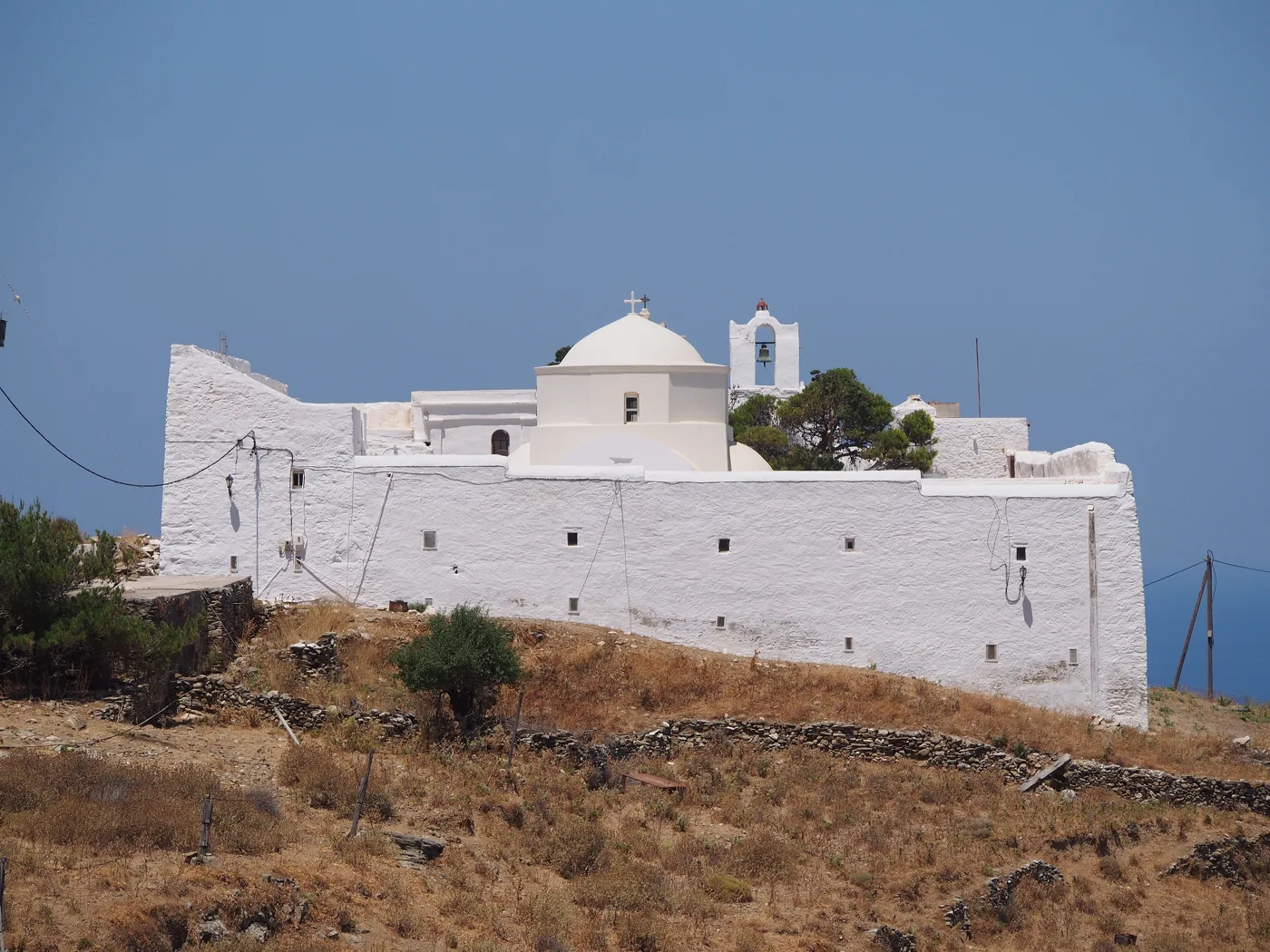
Fortified, since 1572.
Photos: C messier (CC BY-SA 4.0), An. Antoniou (CC BY-SA 3.0) · Wikimedia Commons
🏖️ The beaches
The beaches of Serifos are the reason many people come back every year: sand, tamarisks, clear water and almost nowhere any sunbeds. Psili Ammos, a few minutes from Livadi, is the best known, with fine sand, two tavernas and often a Blue Flag. Next to it, Agios Sostis is two small sandy beaches with a chapel in between. Livadakia, next to the port, is the easiest, organised, for families. In the west, Koutalas, Ganema and Vagia have pebbles, quiet and tavernas, and in the north Sykamia, by dirt road, is the most remote.
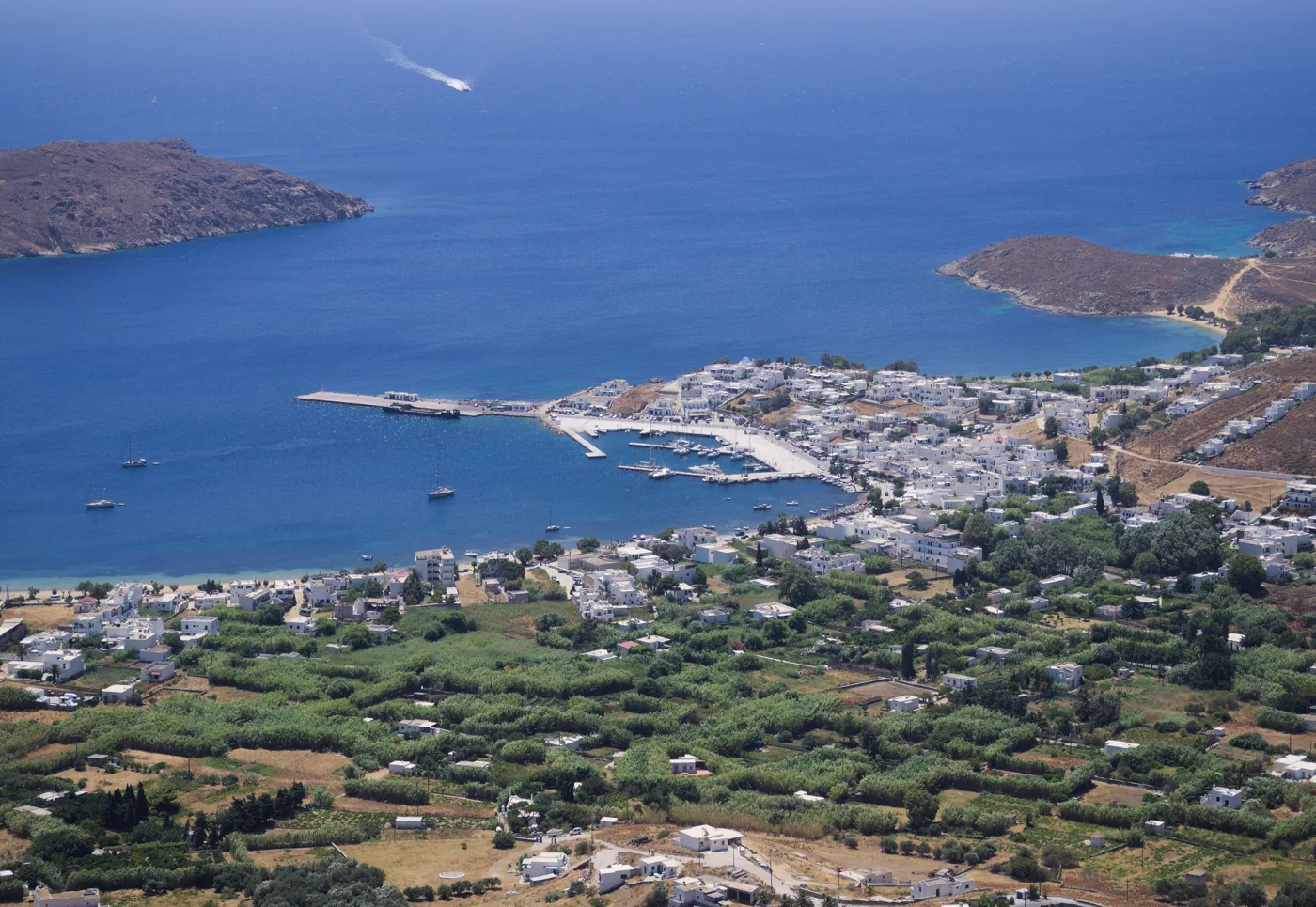
The port, in a green valley.
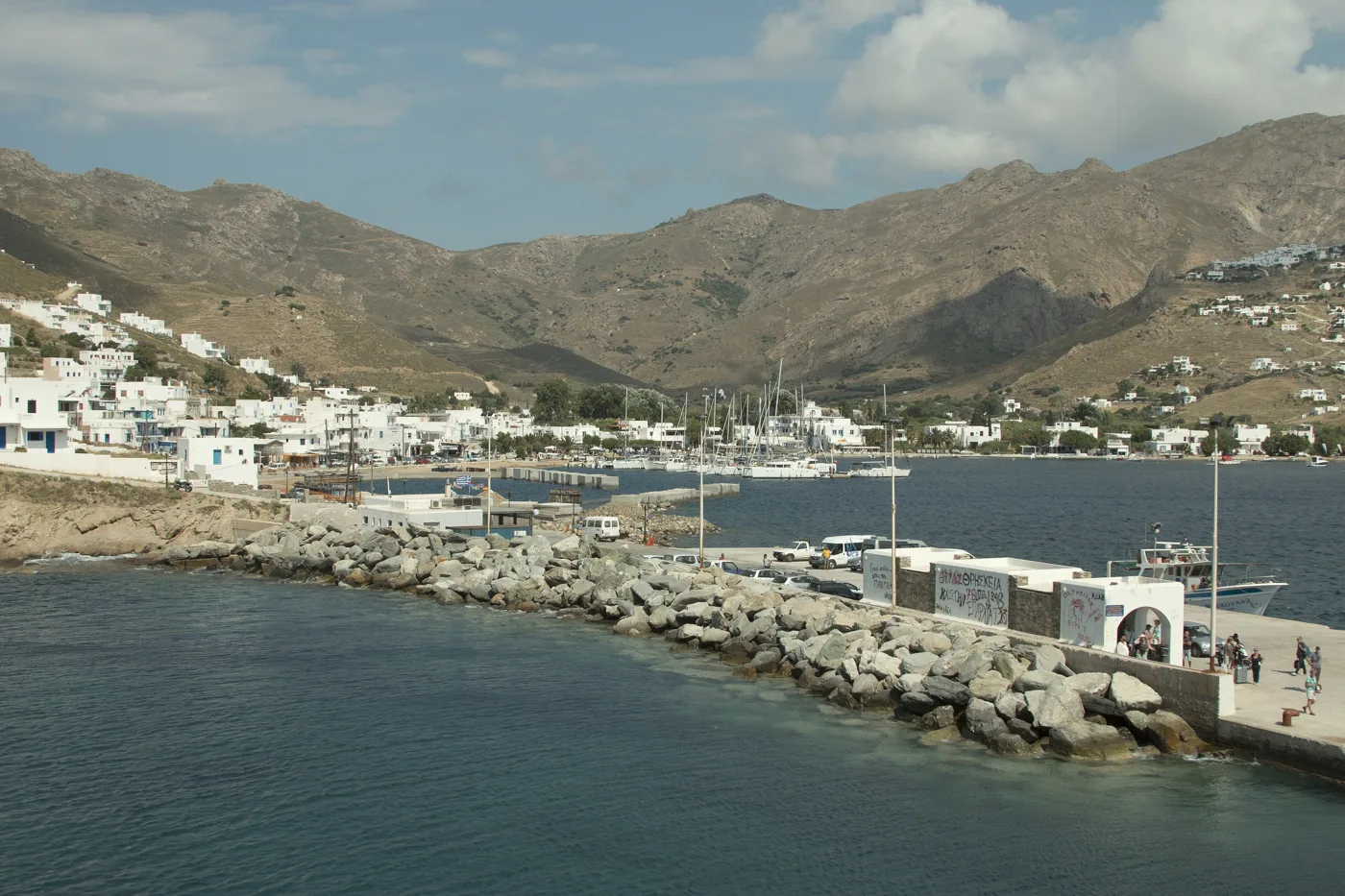
The ferries arrive here.
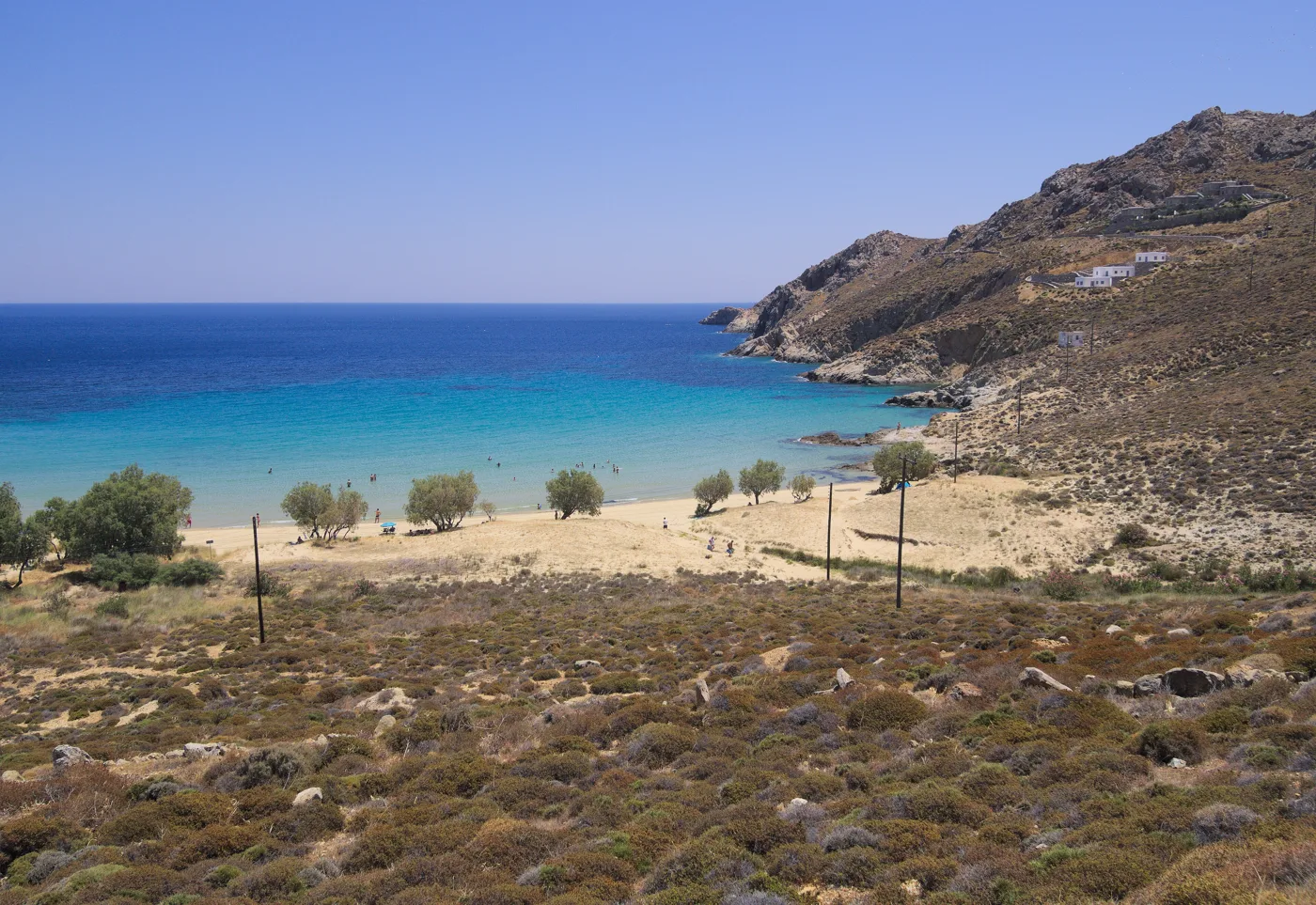
The island’s best-known beach.
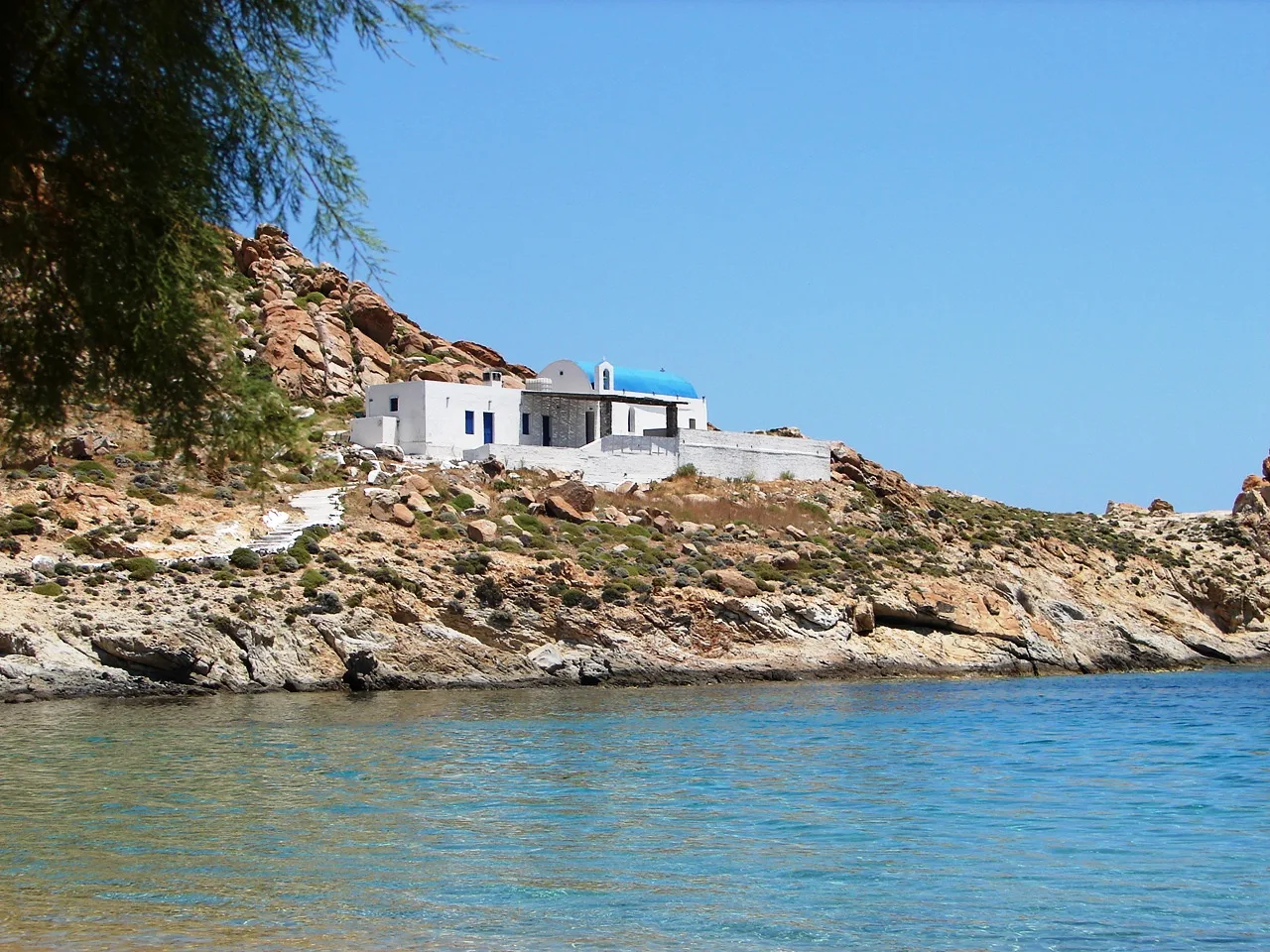
Two beaches and a chapel.
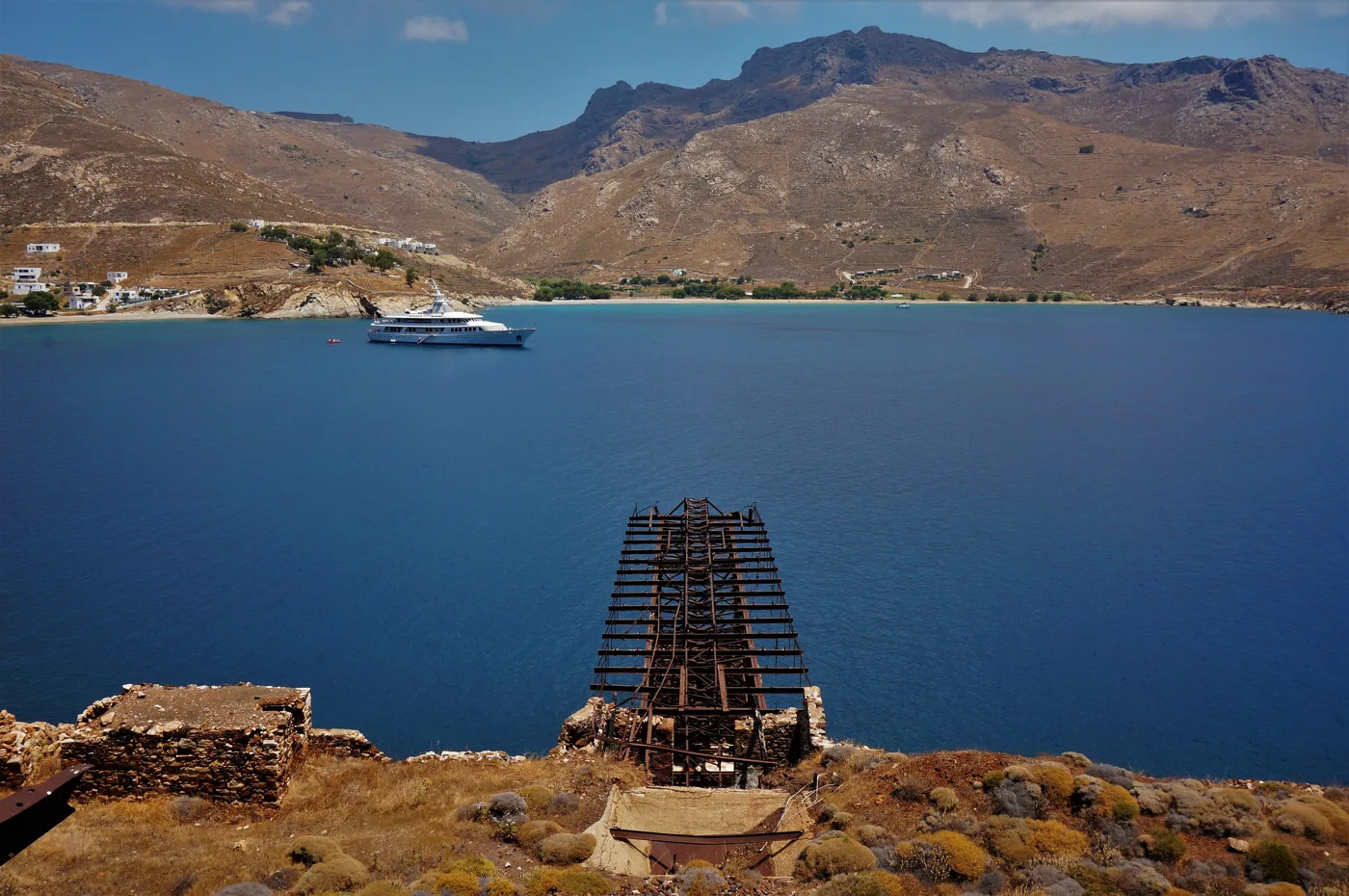
With ruins of the mines on the shore.
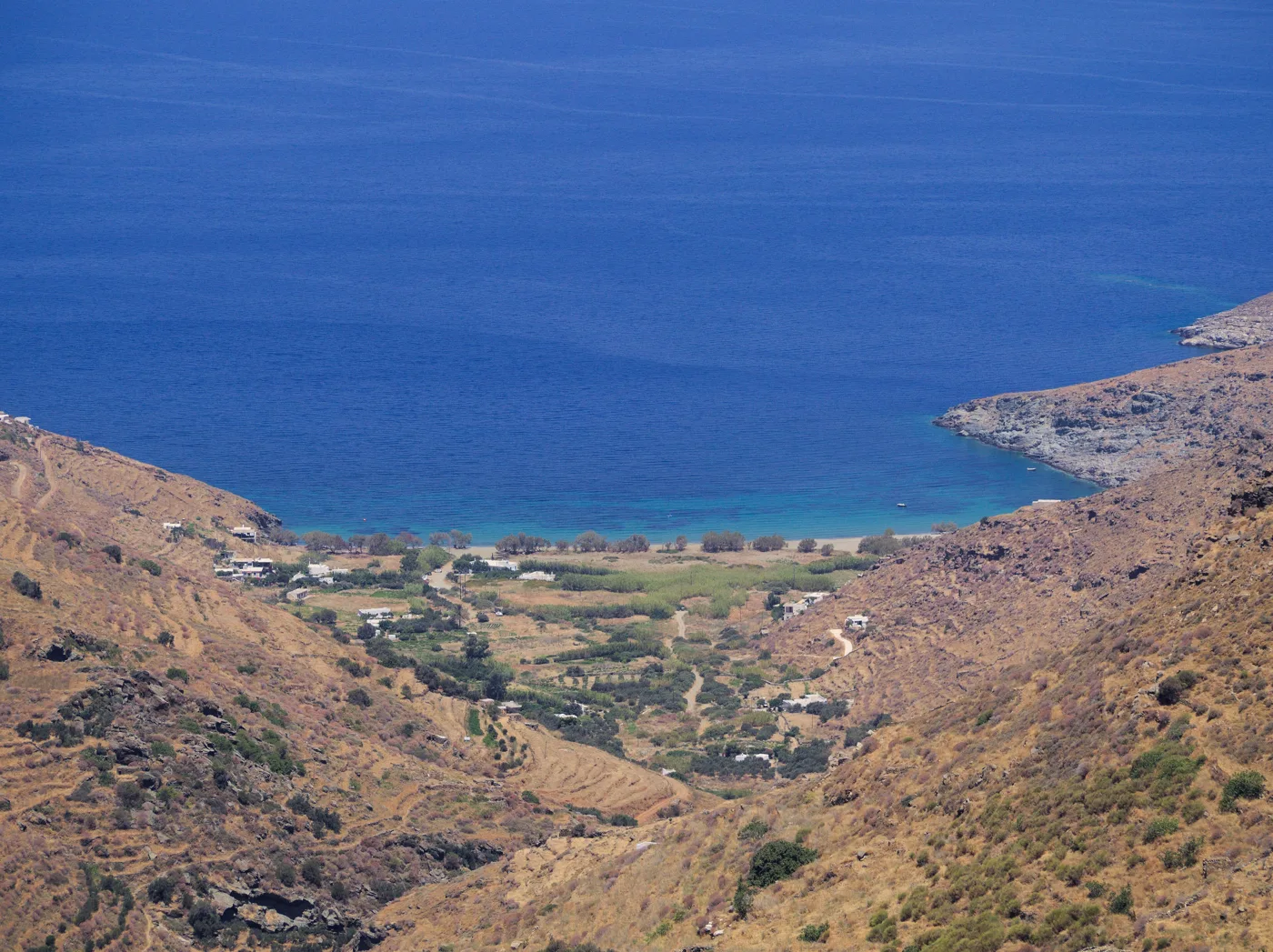
In the north, by dirt road.
Photos: C messier (CC BY-SA 4.0), Zde (CC BY-SA 4.0), An. Antoniou (CC BY-SA 3.0), Vassilis Papanikolopoulos (CC BY-SA 4.0) · Wikimedia Commons
- Psili Ammos: fine sand and tamarisks, the best known.
- Agios Sostis: two sandy beaches and a chapel.
- Livadakia: next to the port, organised, for families.
- Koutalas: big, with pebbles and the Cyclops cave.
- Ganema and Vagia: quiet, with a taverna, in the west.
- Sykamia: in the north, by dirt road, with a taverna.
- Megalo Livadi: a calm bay next to the mines.
When the meltemi blows, the beaches of the north, such as Sykamia, become unwelcoming. Go south then: Psili Ammos, Livadakia, Koutalas, Ganema. Chora, high up, is always windy; take a light jacket in the evening.
🍽️ What to eat
Try marathotiganites, fritters with fennel and onion, and revithada, chickpeas baked in the oven, the Sunday dish. The island has its own cheese, xinomyzithra, good thyme honey, fava and kid goat. In Livadi, at Psili Ammos and at Ganema you will find fresh fish, and in the square of Ano Chora meze and raki with a view.
📅 When to go
June and September are the best months: warm sea, empty beaches, less wind. In July and August Serifos fills up with Athenians who have known it for years, rooms are few, and the meltemi blows hard. In May and October it is ideal for walking the footpaths, but many places are closed.
⛴️ How to get there from Athens
| How | Duration | From | Notes |
|---|---|---|---|
| Fast boat | About 2.5 hours | Piraeus | Every day in summer. More expensive, does not sail in strong wind. |
| Conventional ferry | About 4–4.5 hours | Piraeus | Cheaper, all year round. Continues to Sifnos and Milos. |
From Ioulianou 50 you go to Piraeus on Line 1, straight to the port. On the island there is a bus from Livadi to Chora and, in summer, to a few beaches, but to see the mines and the north you need a car or a scooter. Serifos combines easily with Sifnos, which is half an hour away by ferry: see our guide to Sifnos.
🗓️ Three days on Serifos
Chora
Morning at Psili Ammos or Livadakia. In the afternoon go up to Chora: the square of Ano Chora, the lanes, the Castle with Agios Konstantinos for the sunset, and then a drink at the windmills or dinner in the square.
The mines and the south
By car to Megalo Livadi, for the loading bridge and the strike monument. A swim at Koutalas or Ganema, and lunch by the sea. On the way back, a stop at Vagia.
The north
The Monastery of Taxiarches and the village of Panagia in the morning, then the dirt road to Sykamia for a swim and a taverna. Afternoon at Agios Sostis, and fish in Livadi in the evening.
Frequently asked questions
Where should I stay on Serifos?
In Livadi or Livadakia, for the port, the tavernas, the beach and the bus. In Chora, for the view and the evenings, if you do not mind the steps. At Psili Ammos, to wake up next to the sand.
Do I need a car?
For the beaches near Livadi and Chora, no. For the mines, Koutalas, Sykamia and the north, yes, and prefer something that can handle a dirt road. You rent in Livadi, but in August book in advance.
Is Serifos good for families?
Yes, if the children can cope with a bit of wind and steps. Livadakia and Psili Ammos have shallow water, and the island is quiet and safe. In the evening in Chora, mind the lanes.
How many days do I need?
Three days for Chora, the mines and three beaches. A week if you want to see all the beaches at your own pace. It combines easily with Sifnos or Milos.
— Kathy