🪪 The island at a glance
📍 Where it is
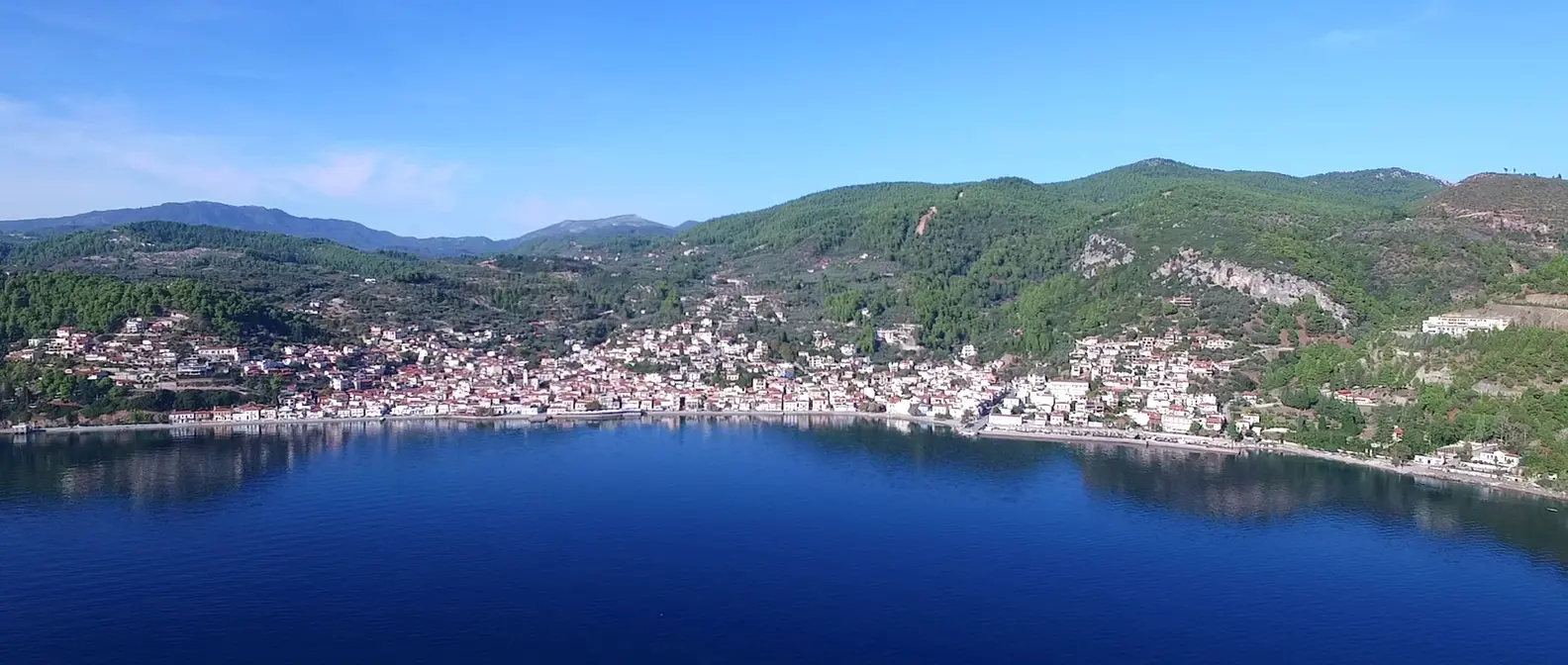
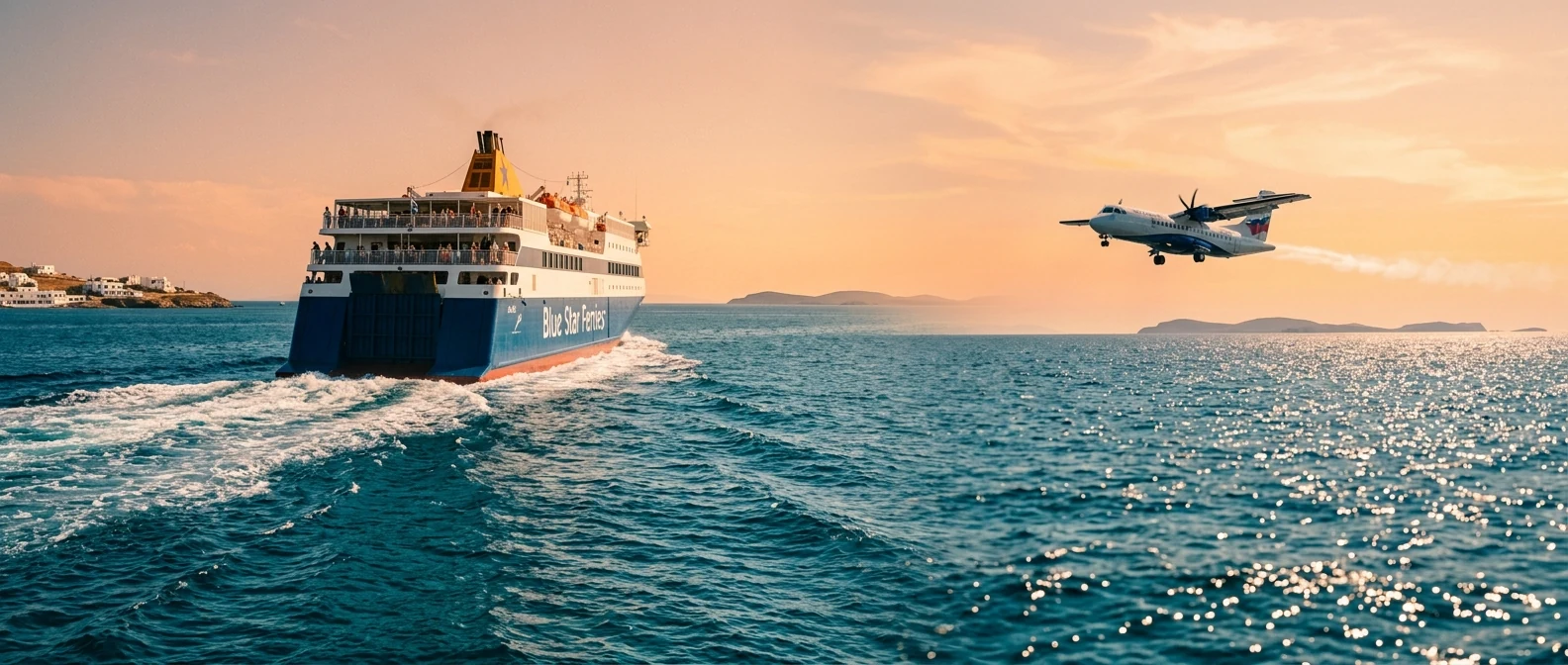
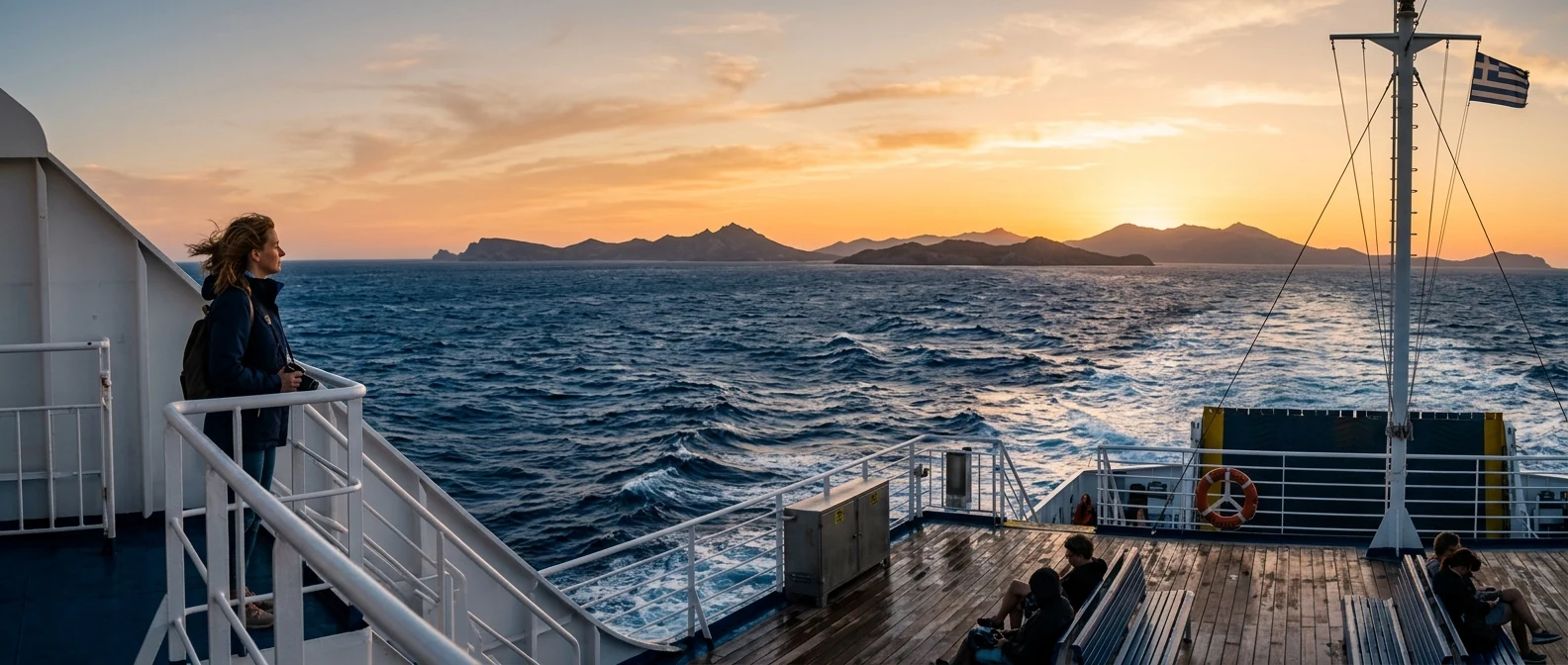
Skyros is the largest and southernmost island of the Sporades, east of Evia, alone in the middle of the Aegean. There are no ferries from Piraeus: the ferry leaves from Kymi, on the east coast of Evia, and reaches Linaria in about an hour and three quarters. It also has an airport, with flights from Athens.
📍 Where Skyros is
Skyros is the southernmost and largest island of the Sporades, east of Evia, isolated in the middle of the Aegean. The island is shown in red, and in green Kymi, the port on Evia where the ferry leaves from, and Athens airport.
🗺️ The map of the island
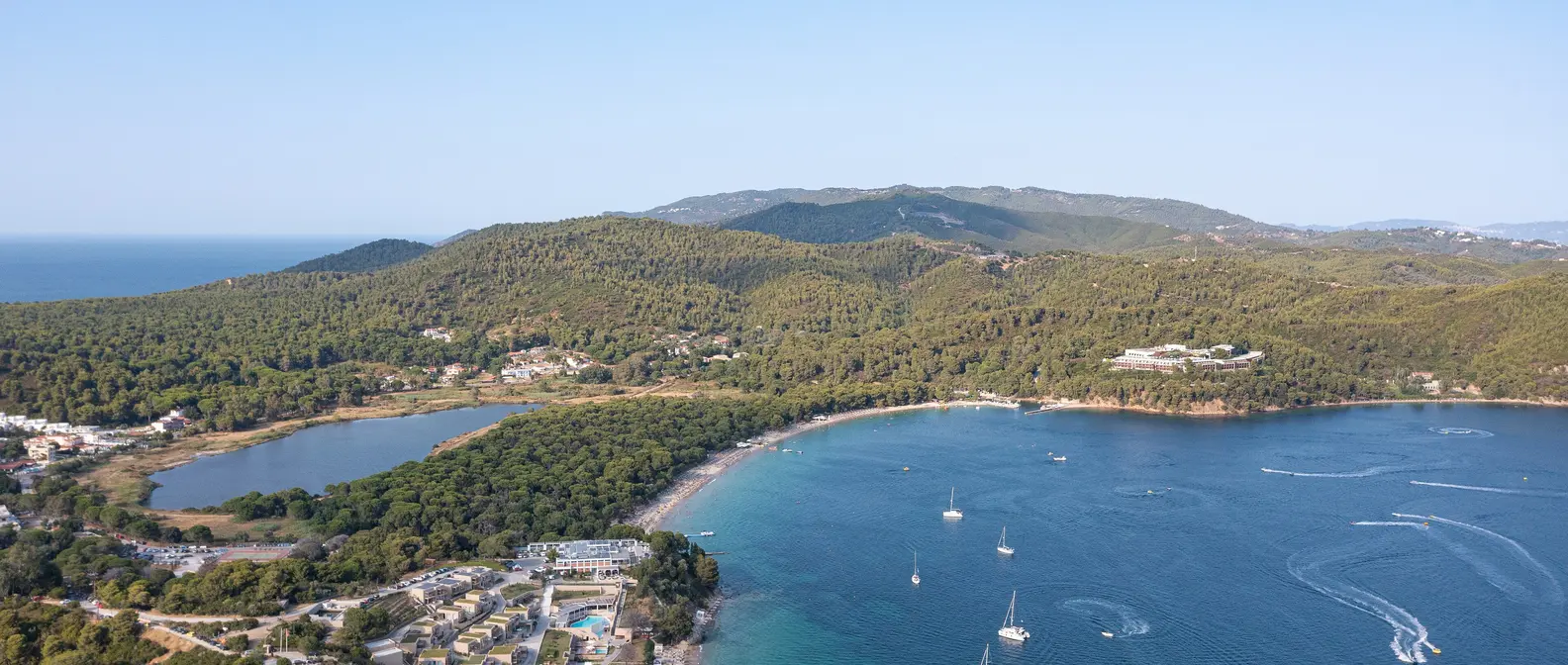
Skyros is narrow in the middle and wide at both ends, like two islands joined together. The north is low, with fields and pine forests reaching down to the sea, around Atsitsa and Agios Petros. The south is mountainous, bare and wild, with Mount Kochylas, the goats and the ponies. Chora is on the east coast, above the sandy beaches of Magazia and Molos, and Linaria, the port, is on the west coast, ten minutes away by car.
🗺️ Map of Skyros
Skyros looks like two islands joined in the middle. The north is low and green, with pine trees, Atsitsa and Agios Petros. The south is mountainous and dry, with Mount Kochylas, the ponies and Brooke’s grave. In the middle are Chora on the east coast and Linaria, the port, on the west. Tap each number to see what it is.
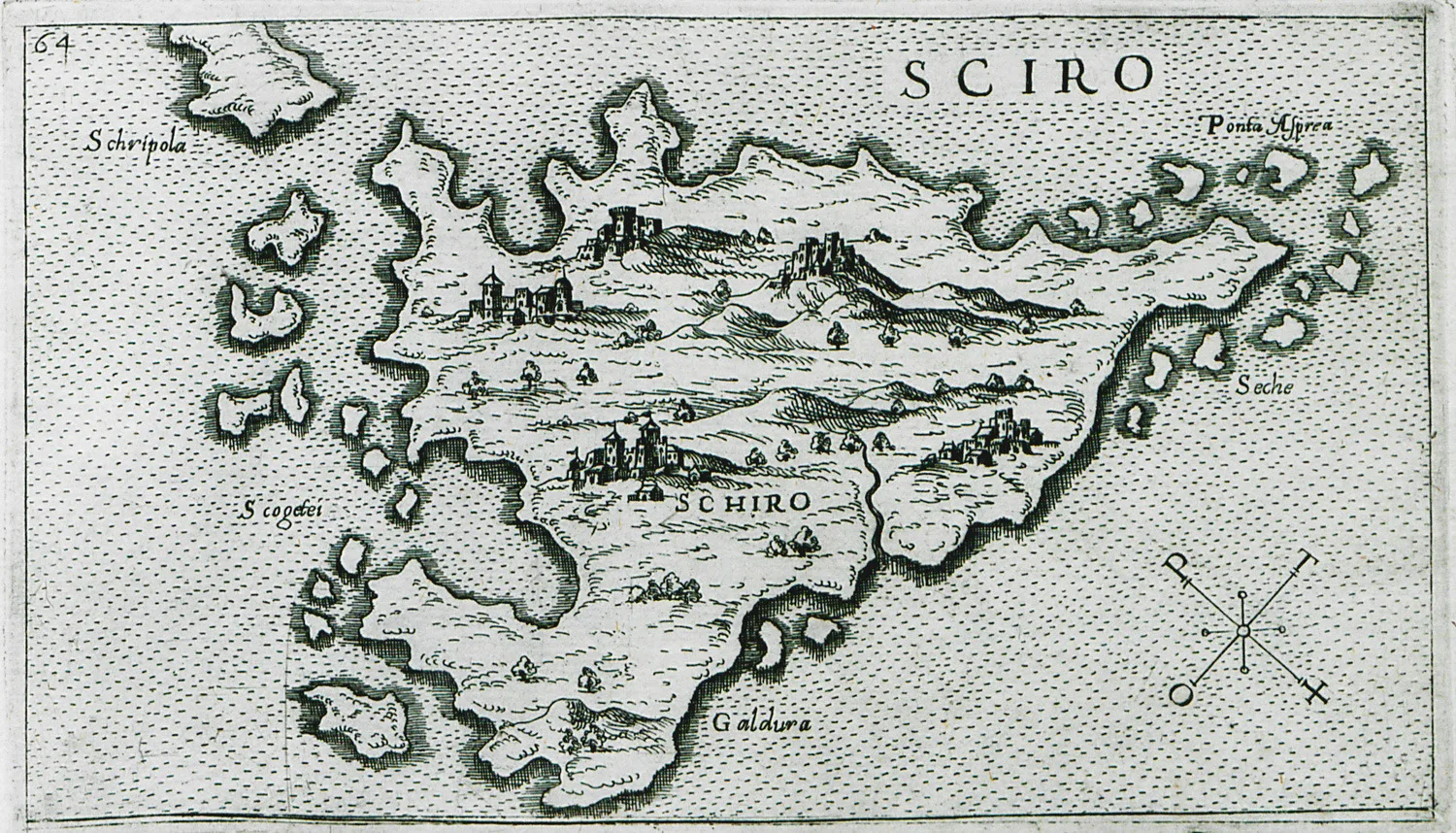
Map: Giuseppe Rosaccio, 1598 (Public domain) · Wikimedia Commons
⚖️ Is it worth it? The pros and cons
Skyros is an island for people who want peace and authenticity, and don’t mind a trickier journey. Here is an honest picture.
📊 At a glance, from 1 to 5
👍 The pros
- A Chora with its own character, below a Venetian castle.
- The Skyros ponies, which live nowhere else.
- Living traditions: houses, embroidery, carnival.
- Very few tourists and quiet beaches.
- A pine-covered north and a wild south, on the same island.
👎 The cons
- The journey has two parts: the road to Kymi and the ferry.
- Few sailings, plan ahead.
- You need a car for the beaches.
- The wind often blows hard.
🏘️ Chora
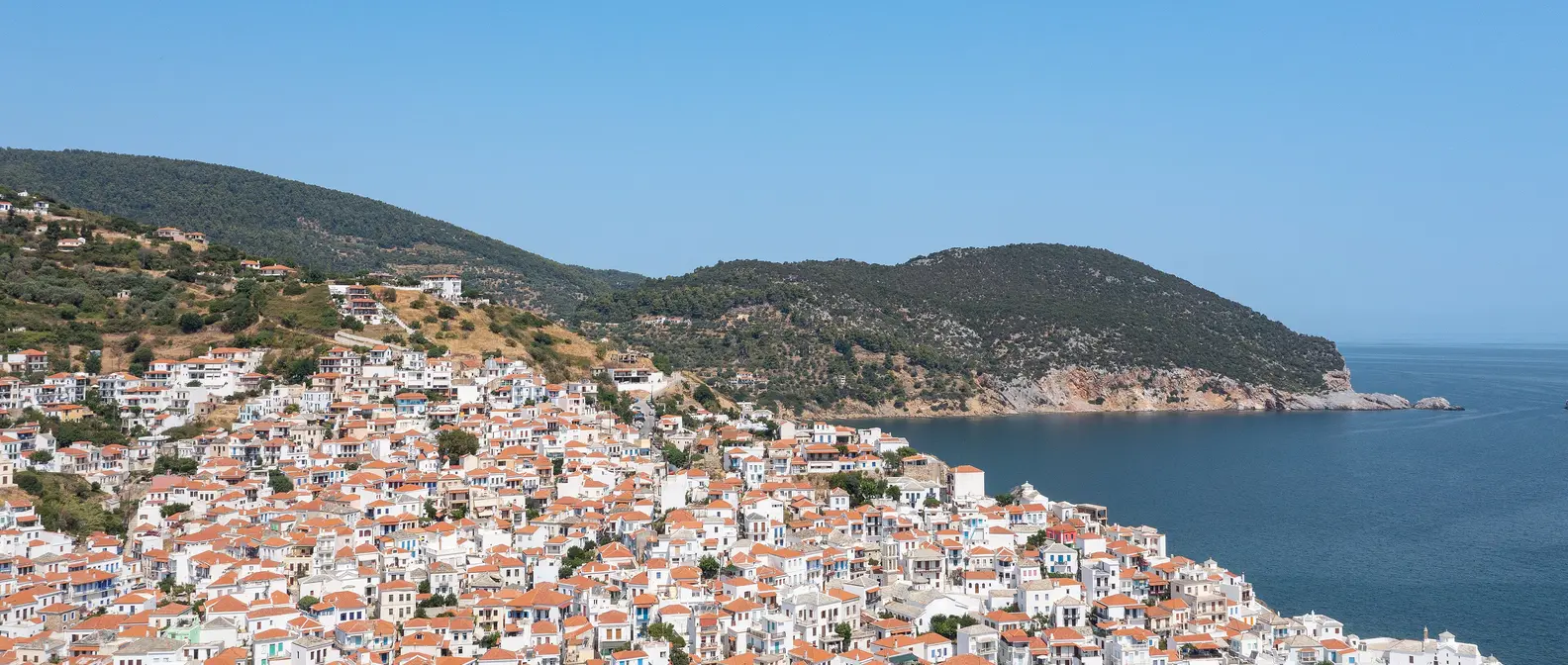
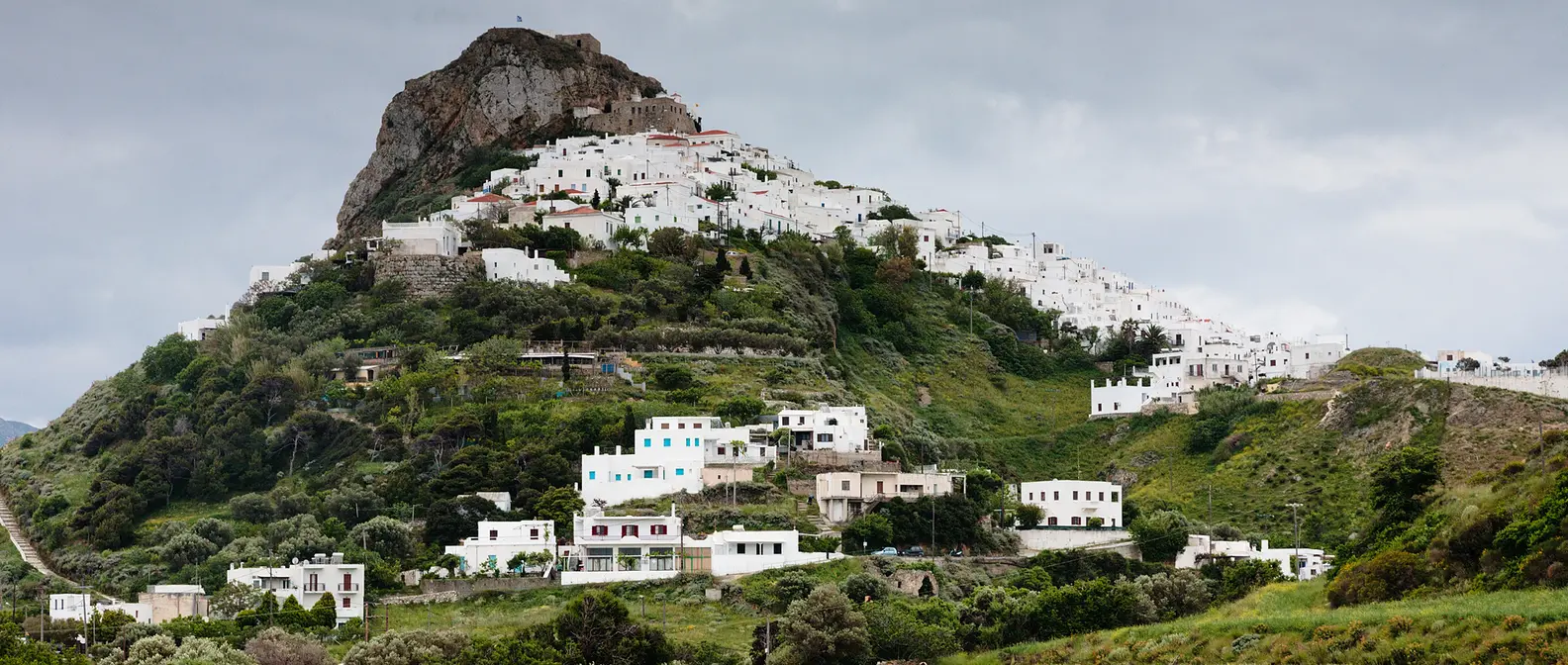
Chora on Skyros does not look like the Choras of the Cyclades. The white, flat-roofed houses climb the slope of a huge rock, one on top of the other, and from afar they look like snow. A long, narrow street, the agora, runs through Chora with little shops, cafés and tavernas, and around it spread lanes with steps, chapels and courtyards.
The most special part is inside the houses. The Skyrian house is one large room, with carved wooden furniture, the “soufa”, a wooden loft for sleeping, and walls covered with decorative plates, copperware and embroidery, which the islanders collected from passing ships. Many houses leave their doors open, and you can see one from the inside at the Faltaits Museum, the folklore museum at the edge of Chora. The Archaeological Museum holds the island’s finds.
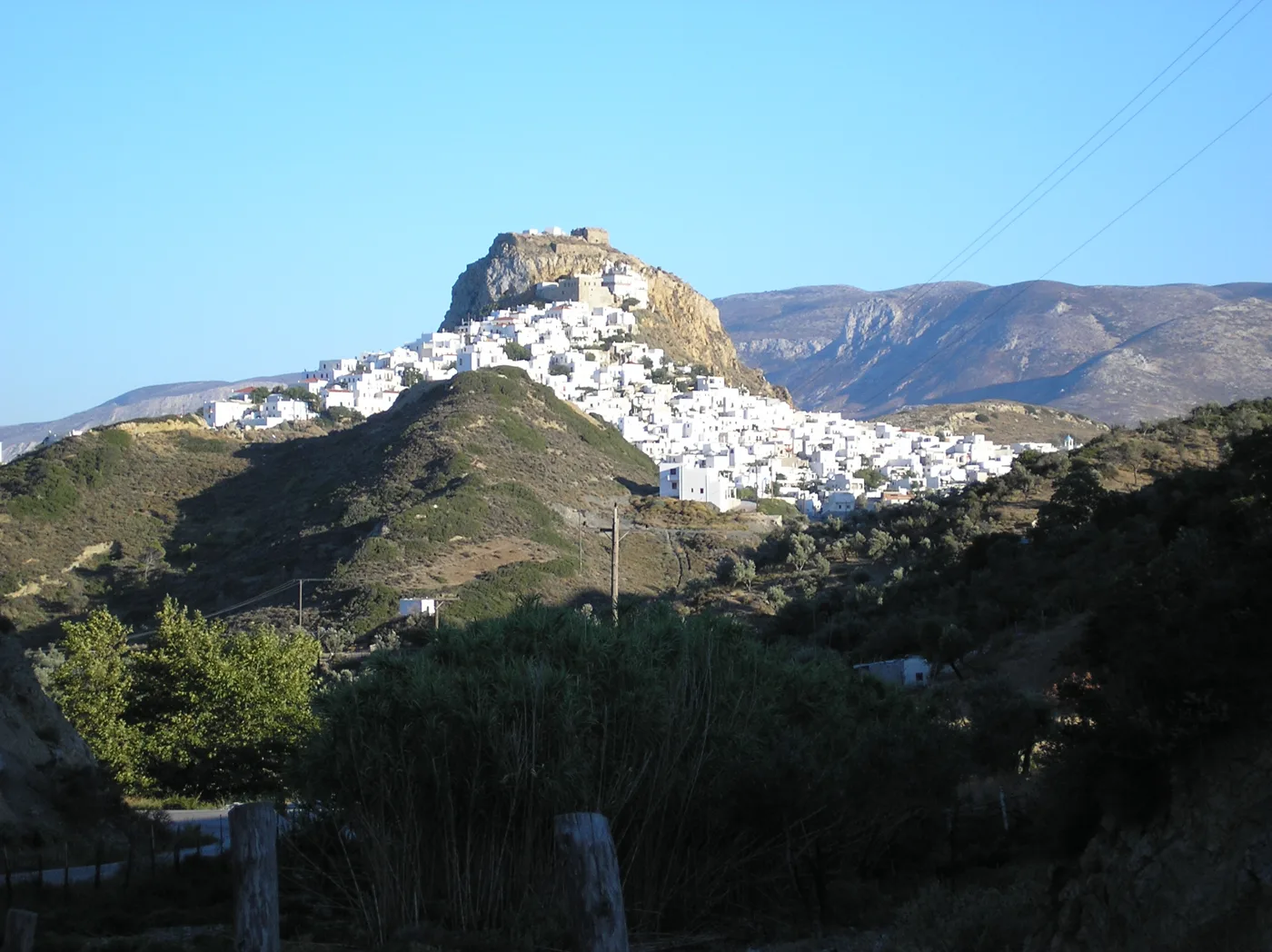
White, below the rock of the Castle.
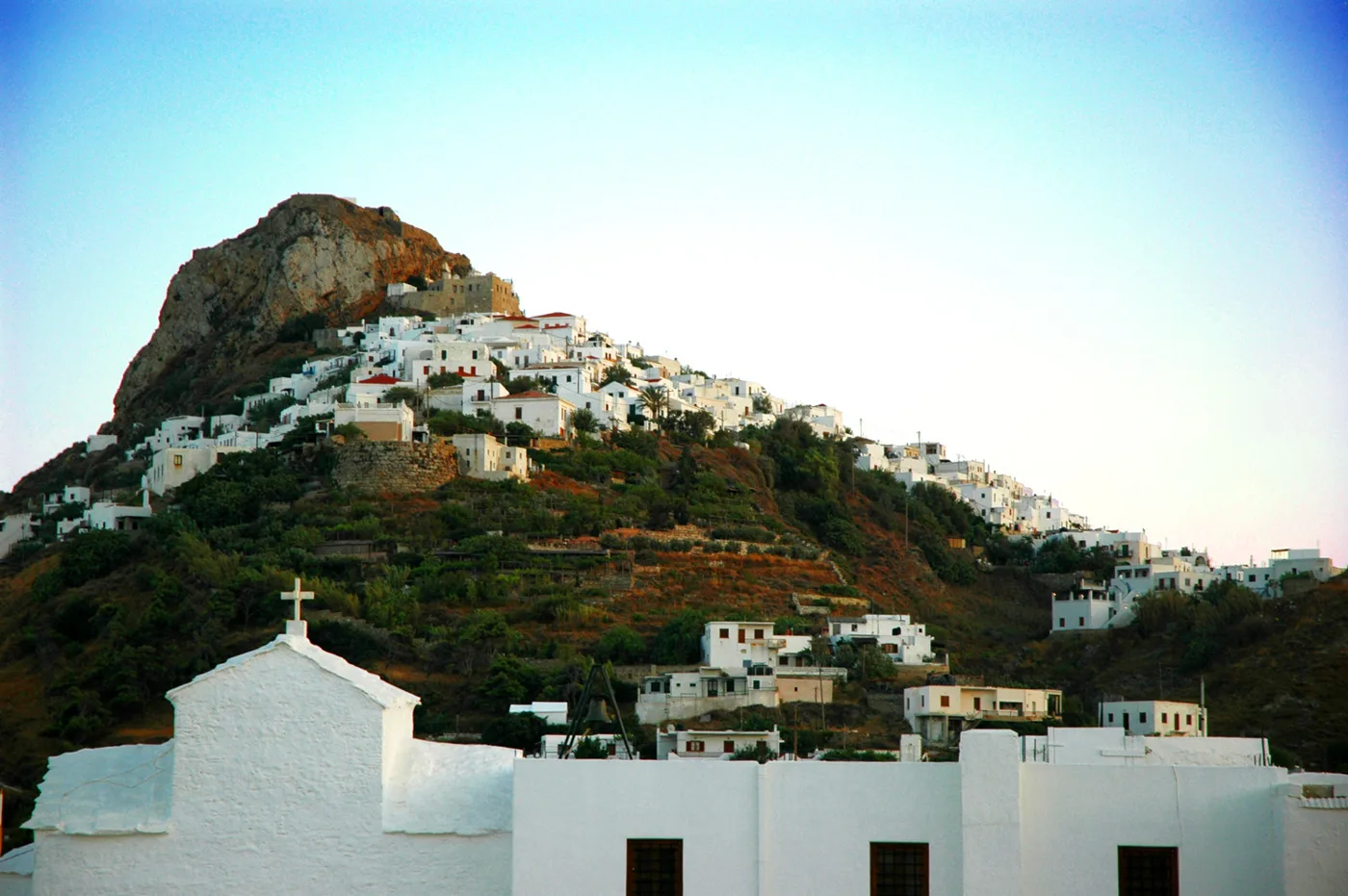
Houses one on top of the other.
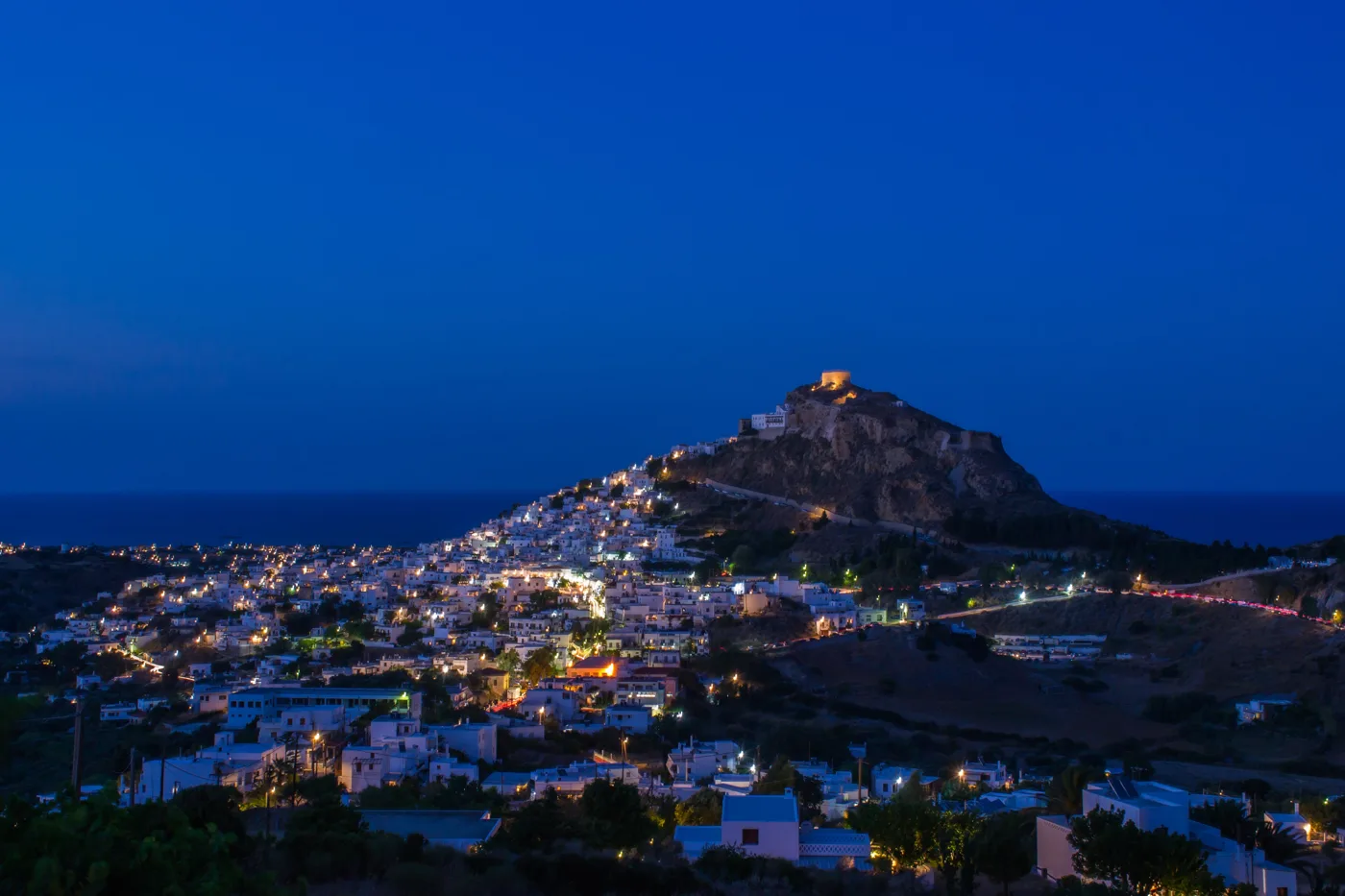
The lights come on up to the Castle.
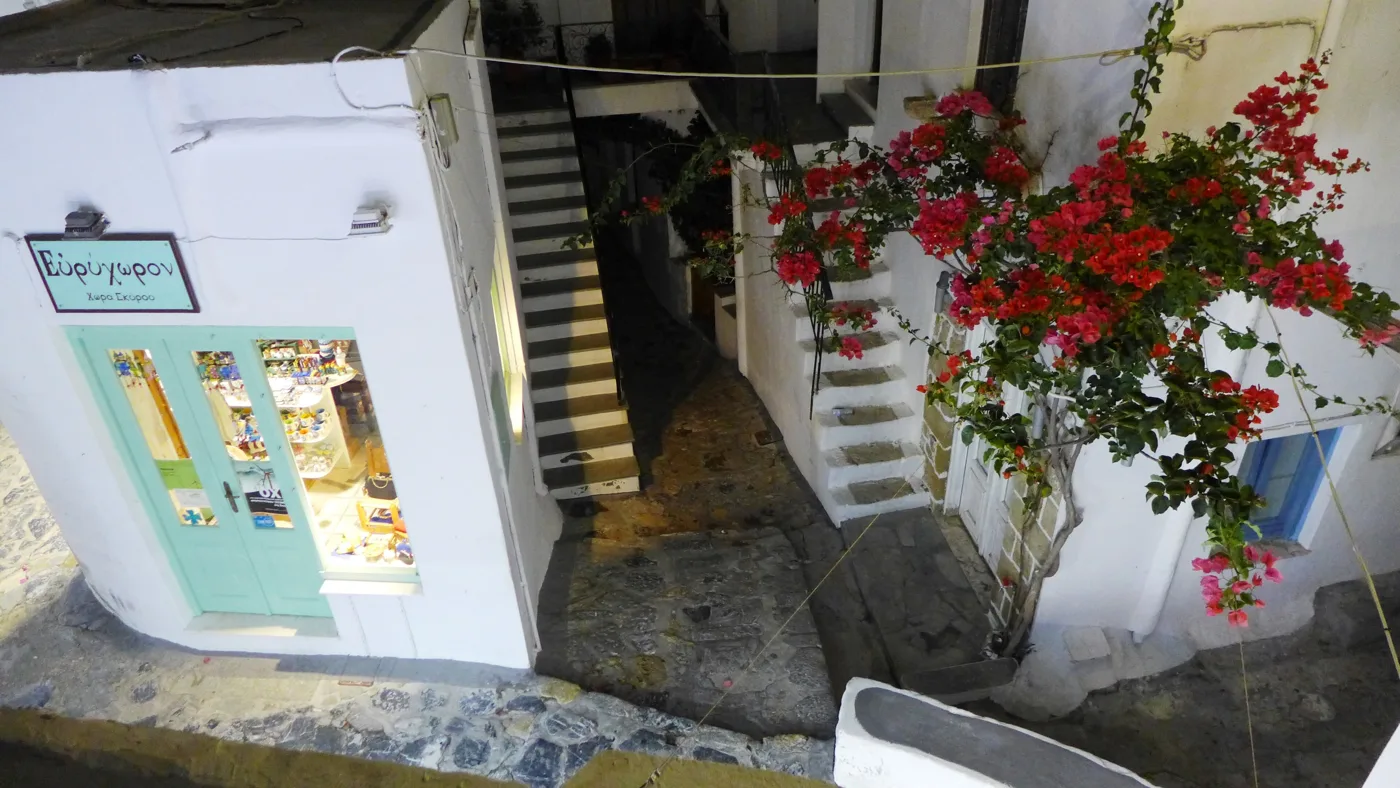
The agora, climbing towards the Castle.
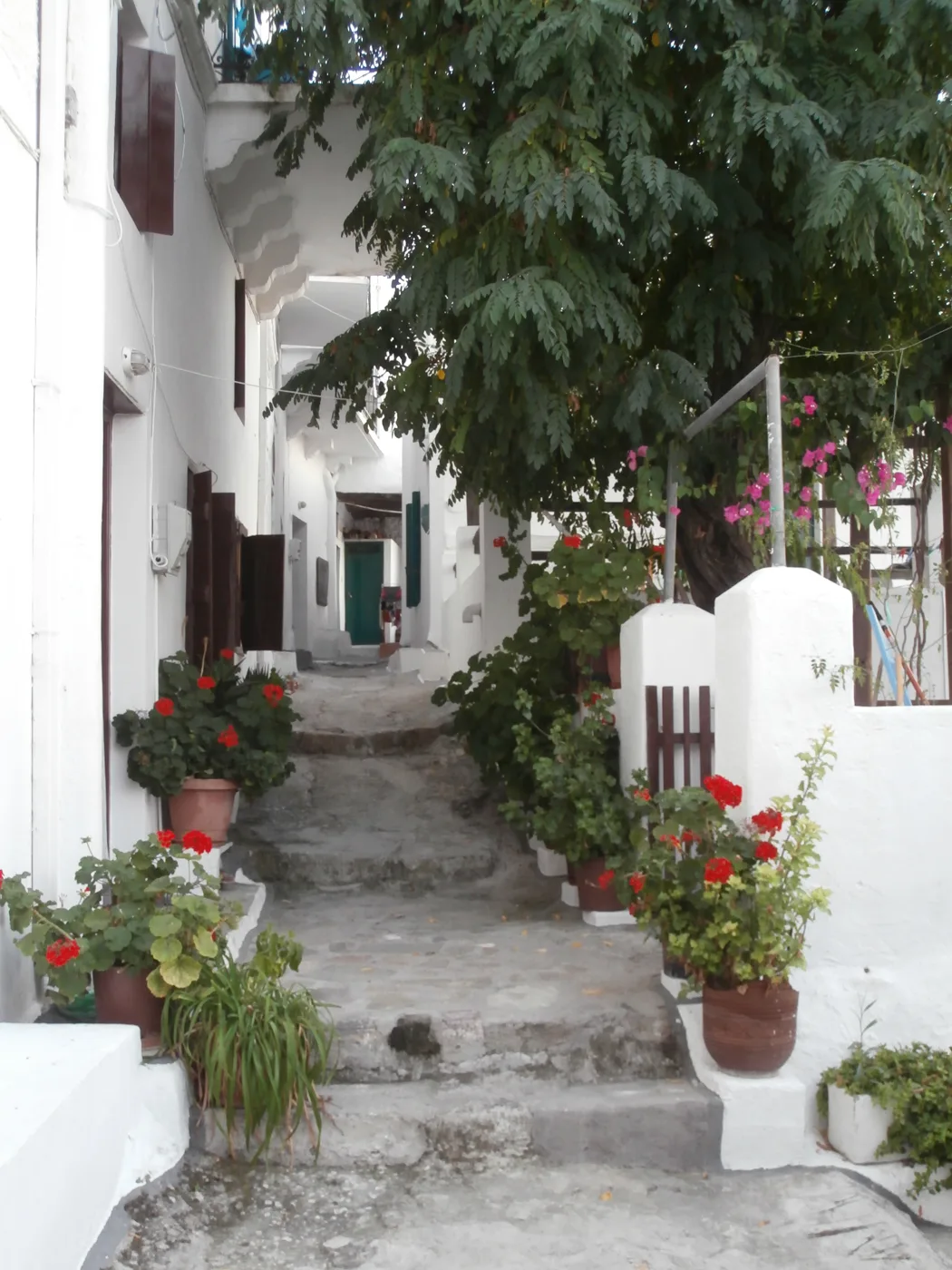
Whitewash and flowerpots.
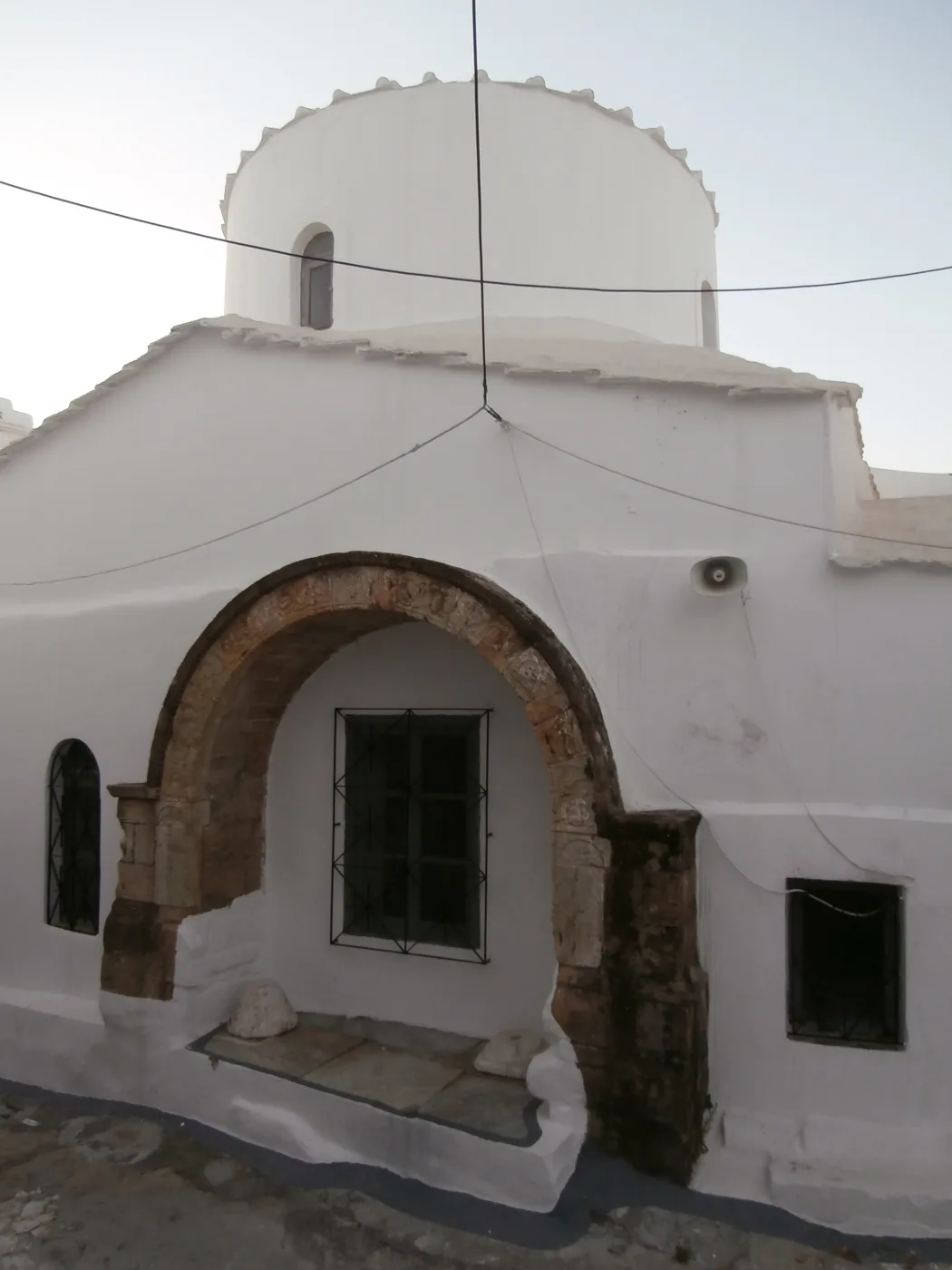
One of the many churches of Chora.
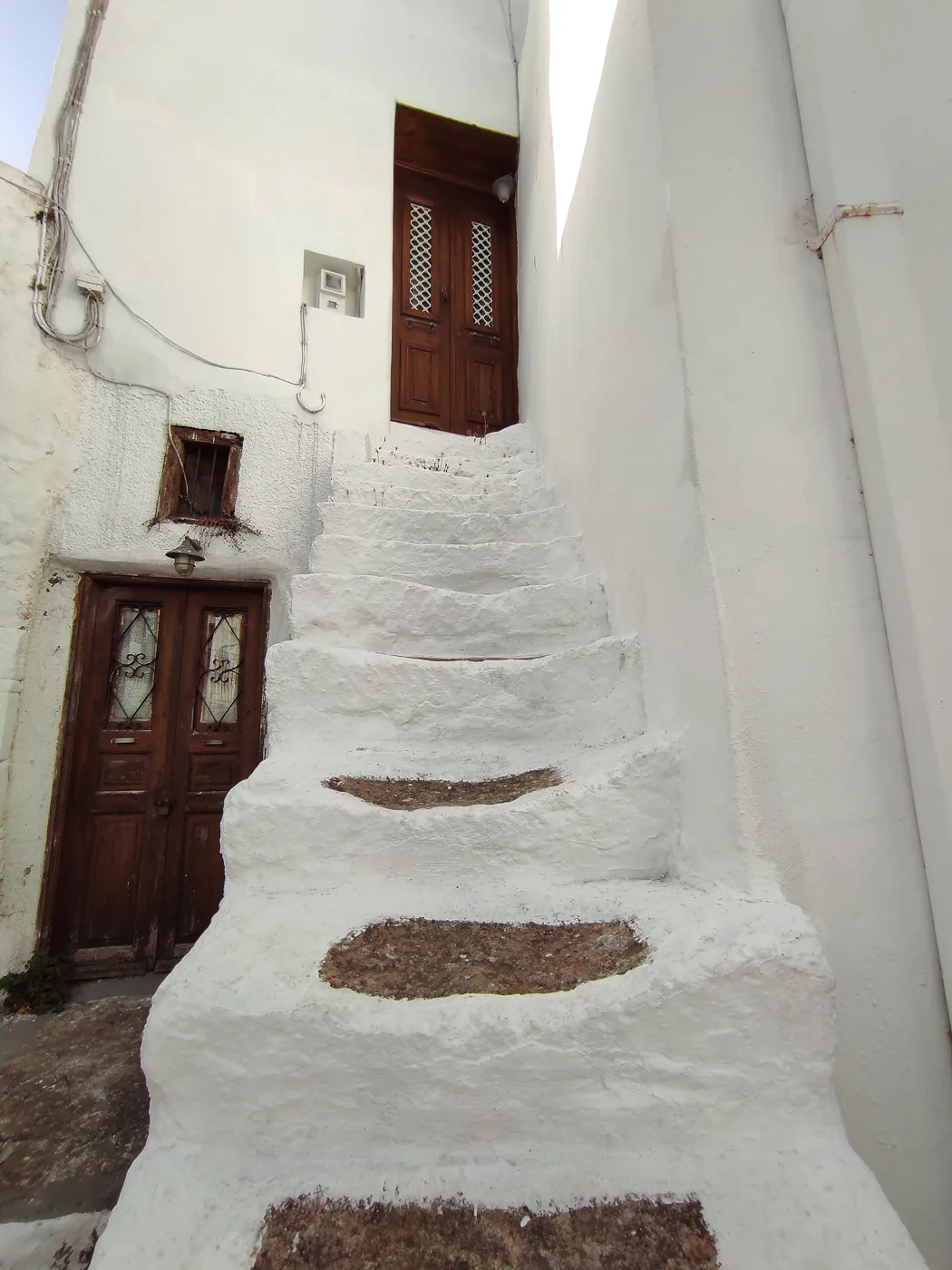
The castle houses, below the Castle.
Photos: Han borg (Public domain), G Da (CC BY-SA 3.0), Athacosi (CC BY-SA 4.0), PLAKLE (CC BY-SA 4.0), Lunar sea n (CC BY-SA 4.0) · Wikimedia Commons
🏰 The Castle and the Monastery of Saint George
At the top of the rock, above Chora, the Castle was the ancient acropolis, and later a Byzantine and Venetian fortress. According to myth, it was from here that King Lycomedes threw Theseus off the cliff, and here that Thetis hid the young Achilles, dressed as a girl, among the king’s daughters, so that he would not go to the Trojan War, until Odysseus found him.
You climb up through the lanes, pass through a gate with a marble lion built into the wall, and reach the Monastery of Saint George, founded in the 10th century, with the icon of the saint which, according to tradition, came from Constantinople. From the walls, the view takes in the whole of Chora, the bay of Magazia and the mountains.
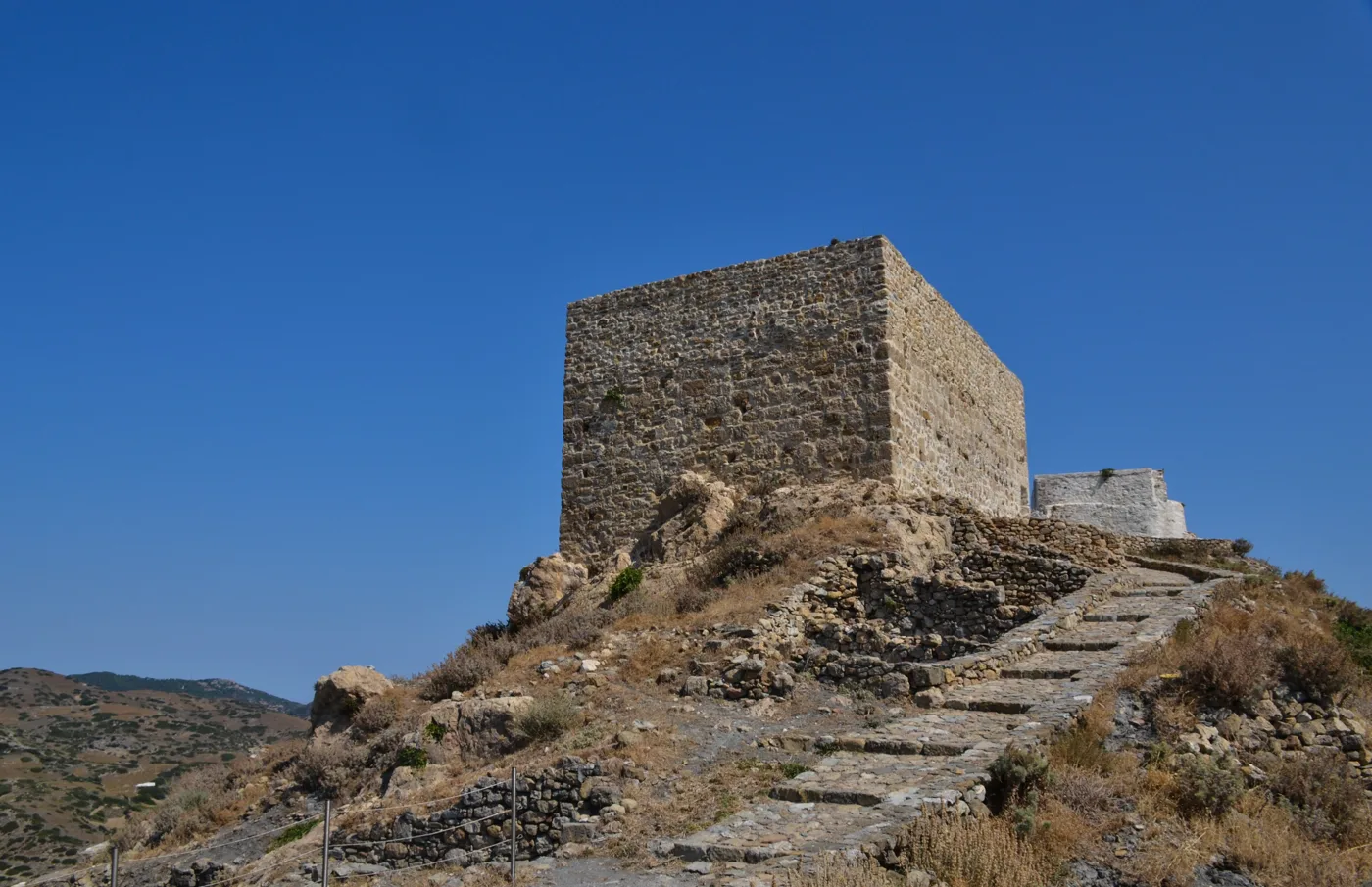
At the top of the rock.
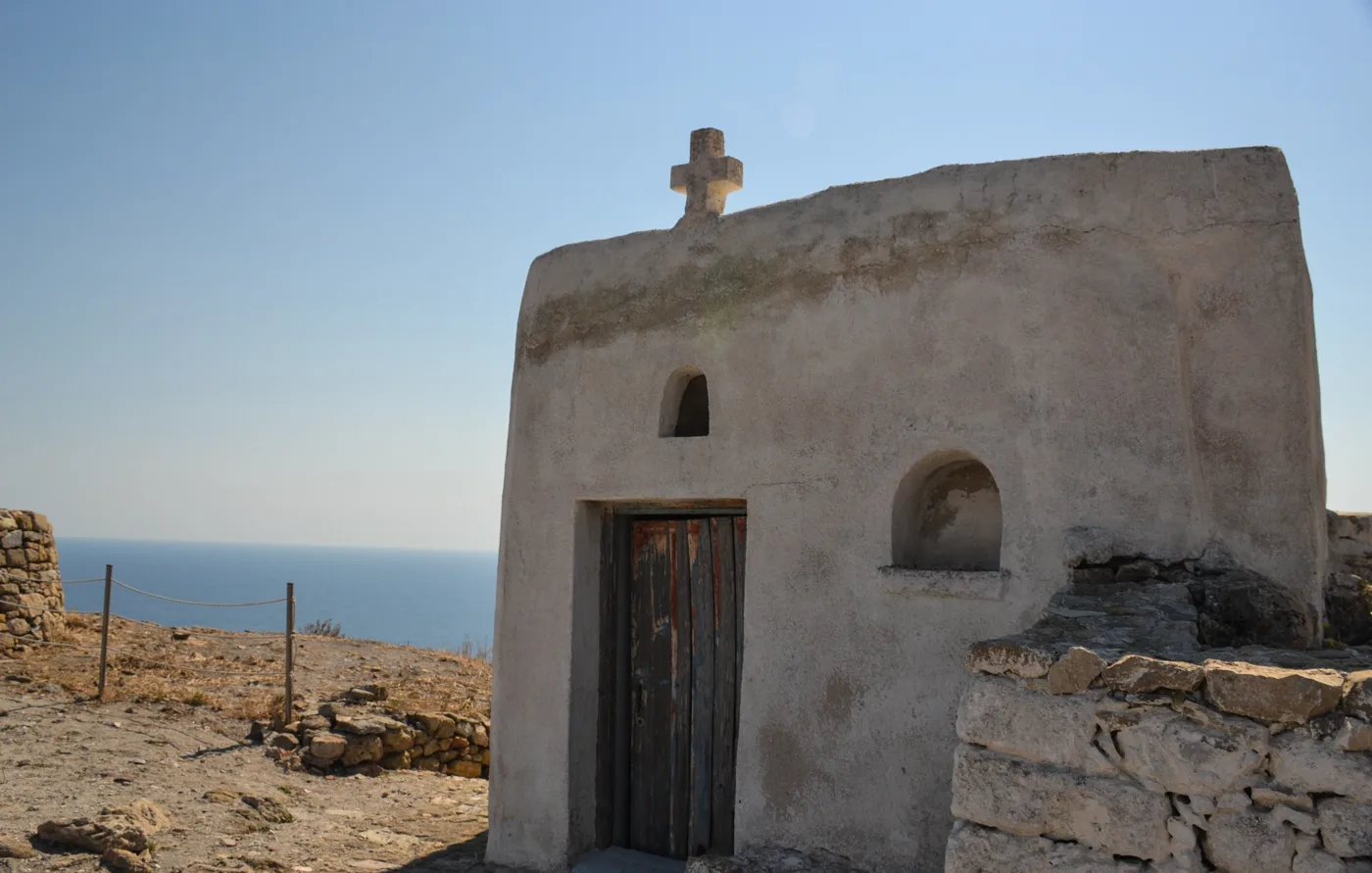
On the Castle, with a view of the Aegean.
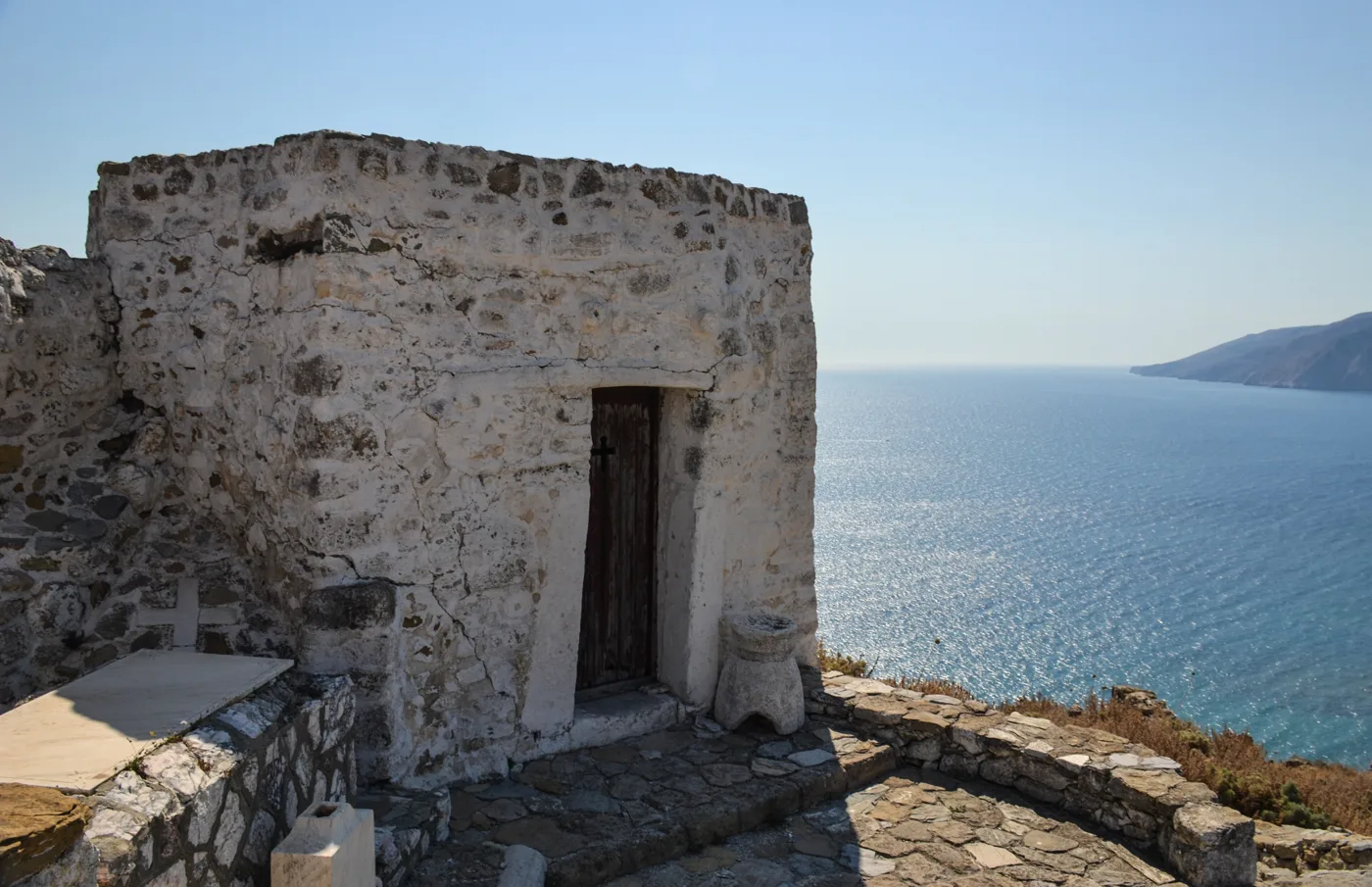
Chora, the bay and the mountains.
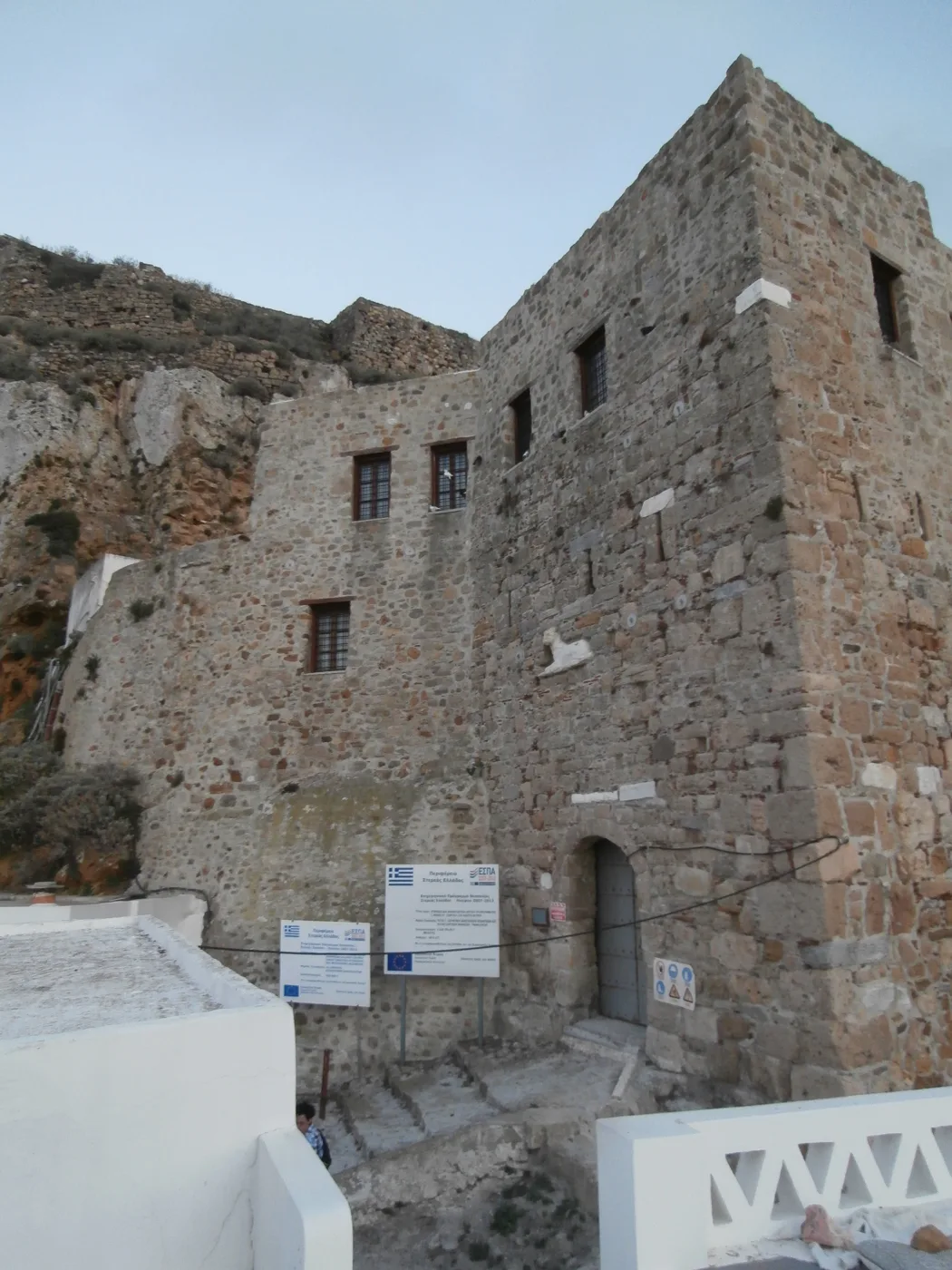
From here you climb up to the monastery.
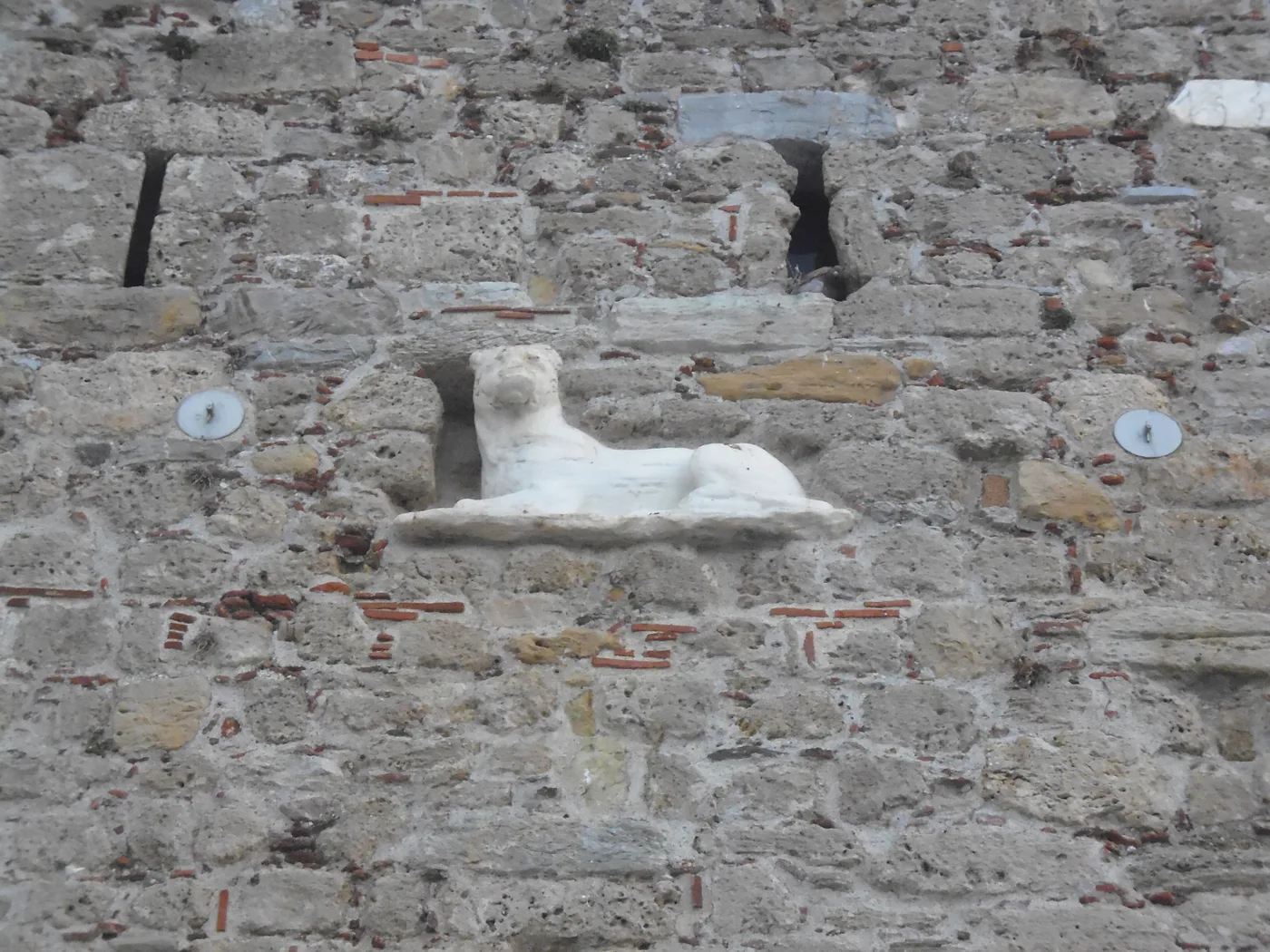
Built into the wall, above the gate.
Photos: Athacosi (CC BY-SA 4.0), Lunar sea n (CC BY-SA 4.0), Meltedrainbow (CC BY-SA 4.0) · Wikimedia Commons
The climb to the Castle is on foot only, with steps and paving, and the sun is fierce at midday. Go up in the morning or the afternoon, in closed shoes, and check when the monastery is open.
📜 Rupert Brooke
At the northern edge of Chora, Brooke Square has the bronze statue of “Immortal Poetry”, a naked young man looking out over the Aegean, and the sunset from here is one of the finest on the island. It is dedicated to Rupert Brooke, the English poet who died in 1915 on a ship off Skyros, on his way to Gallipoli, and was buried on the island.
His grave is in the south, in a quiet olive grove above the bay of Tris Boukes, and you reach it by dirt road. It is one of the most moving places on the island, and many British visitors come to Skyros just for it.
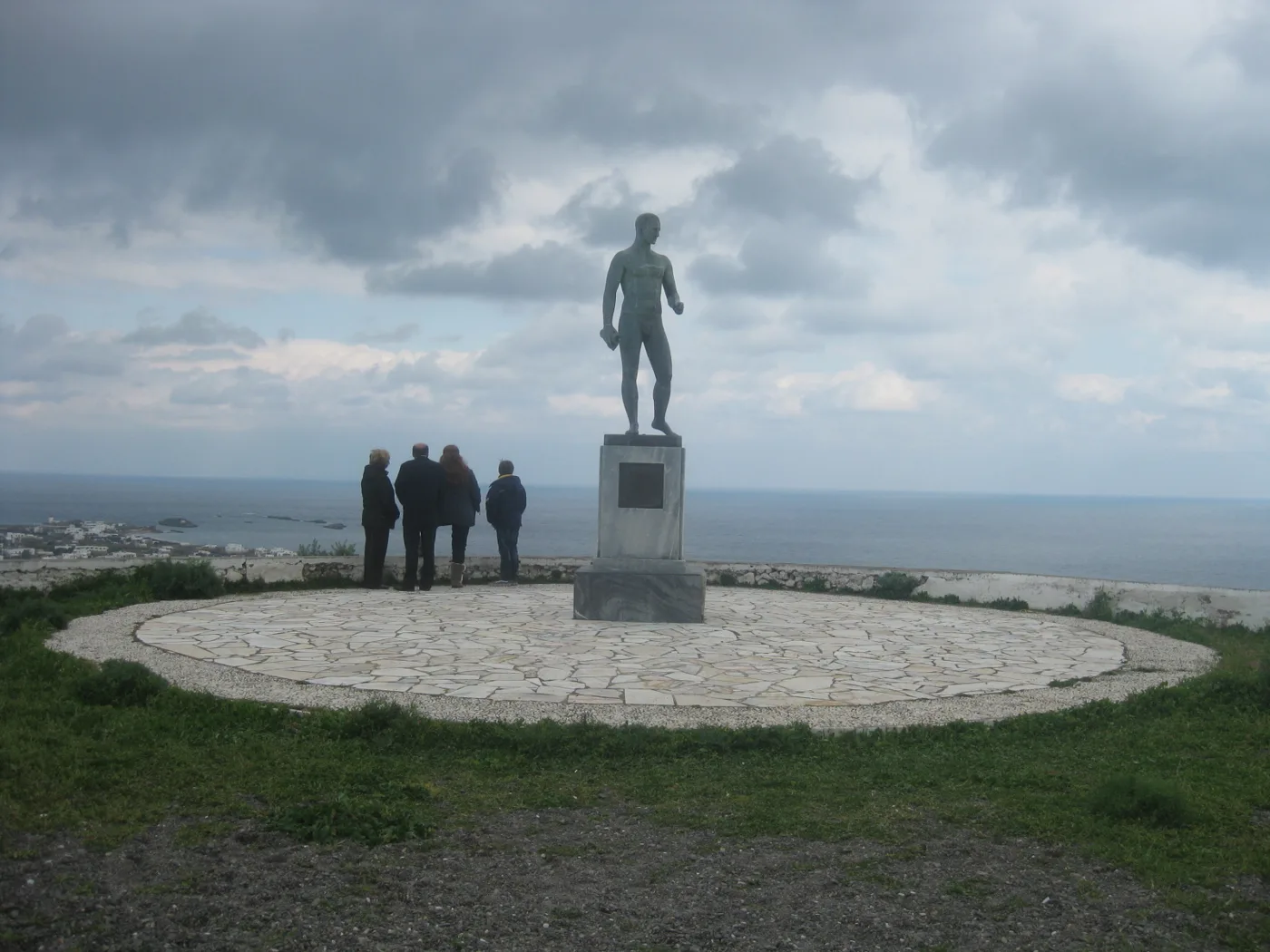
At the edge of Chora, looking out over the Aegean.
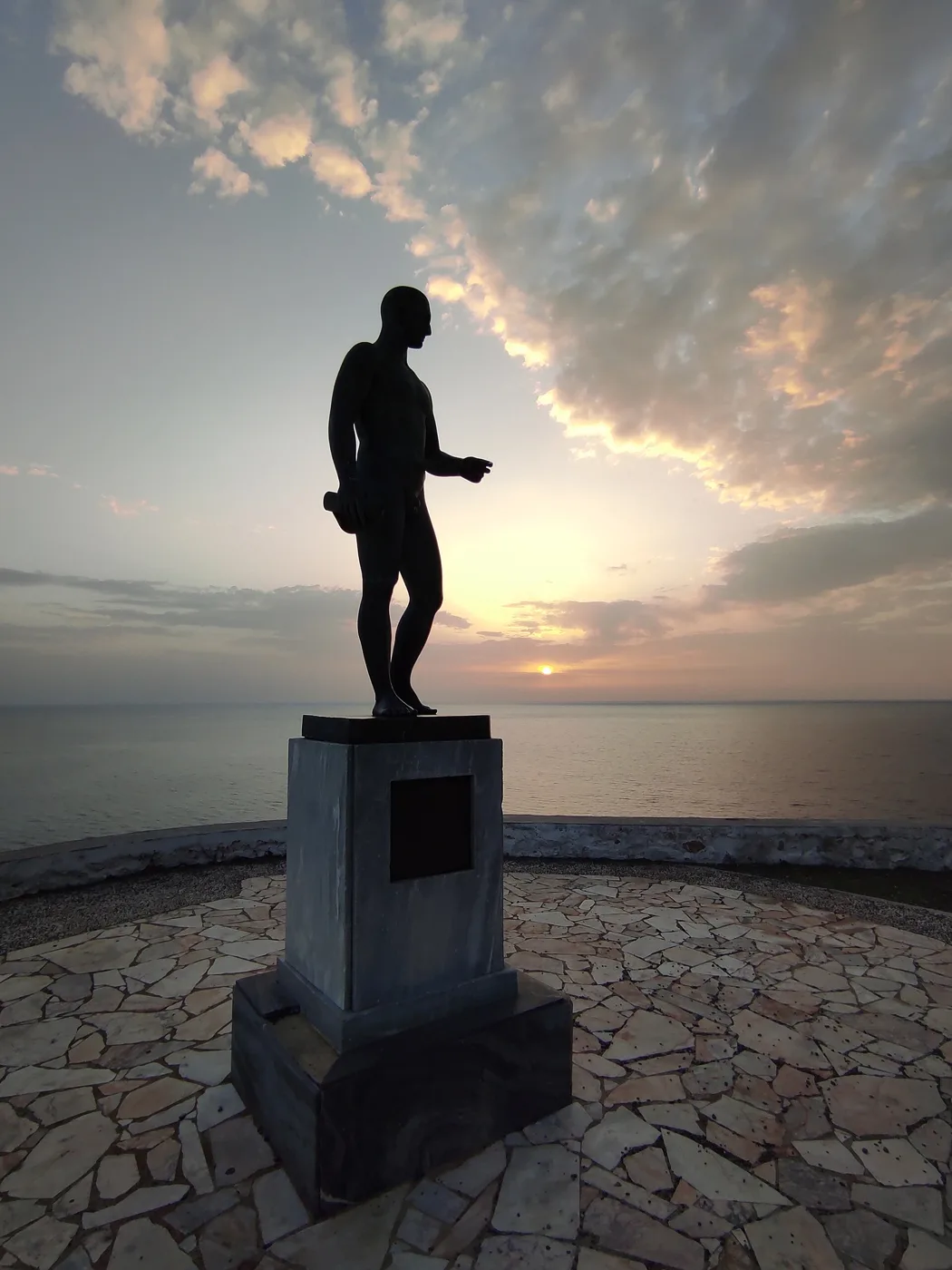
“Immortal Poetry”, for Rupert Brooke.
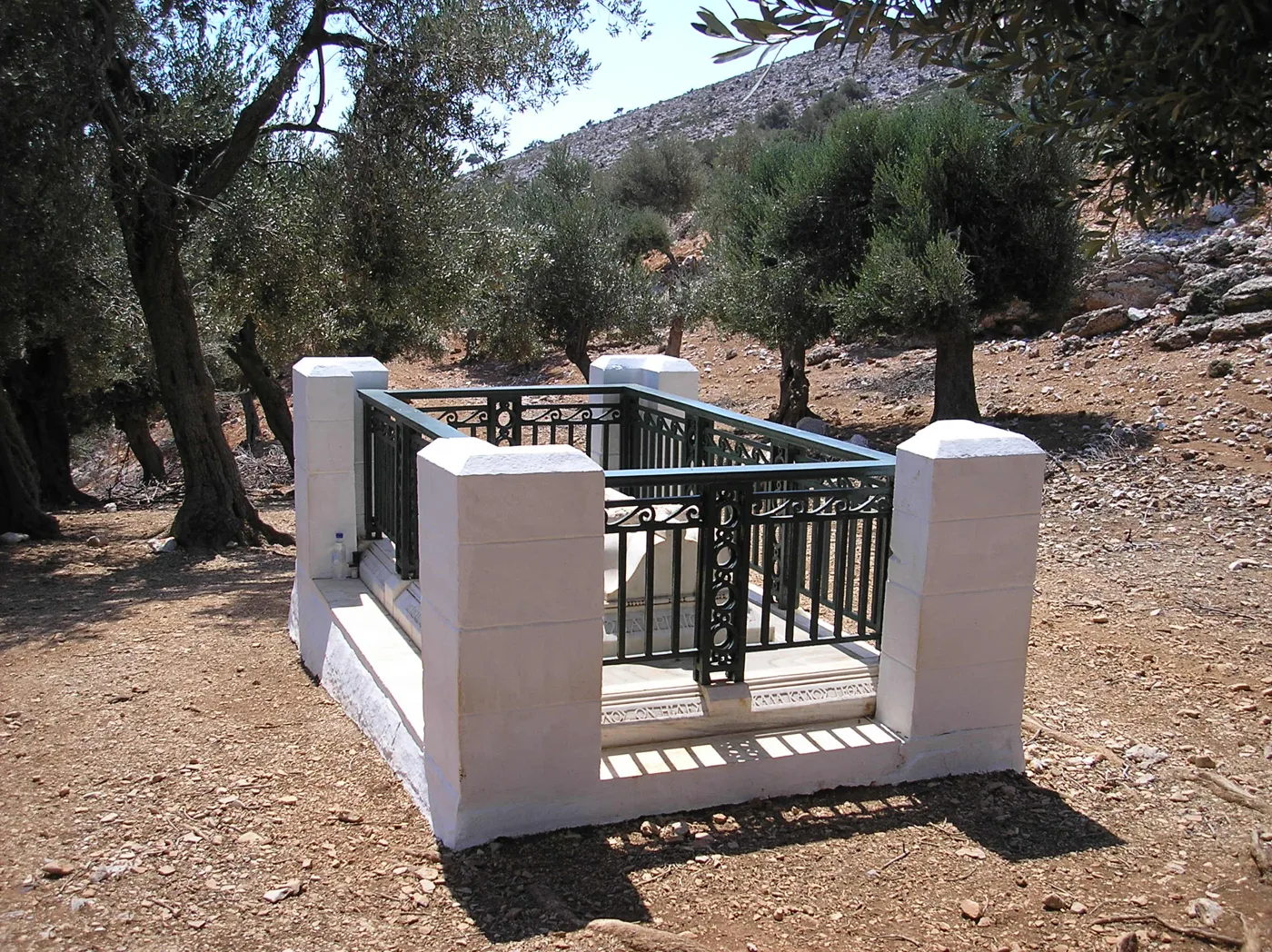
Among the olive trees, in the south of the island.
Photos: LFP (CC BY-SA 3.0), PLAKLE (CC BY-SA 4.0), Han borg (Public domain) · Wikimedia Commons
🐴 The Skyros ponies
Skyros has its own breed of horse: the Skyros ponies, small, strong horses that have lived on the island since antiquity. They are one of the rarest breeds in Greece and are endangered, so today they are protected. Most live almost free in the mountains of the south, and you will see them near ponds of water on the plateau. A few farms near Chora let you meet them up close, and children adore them.
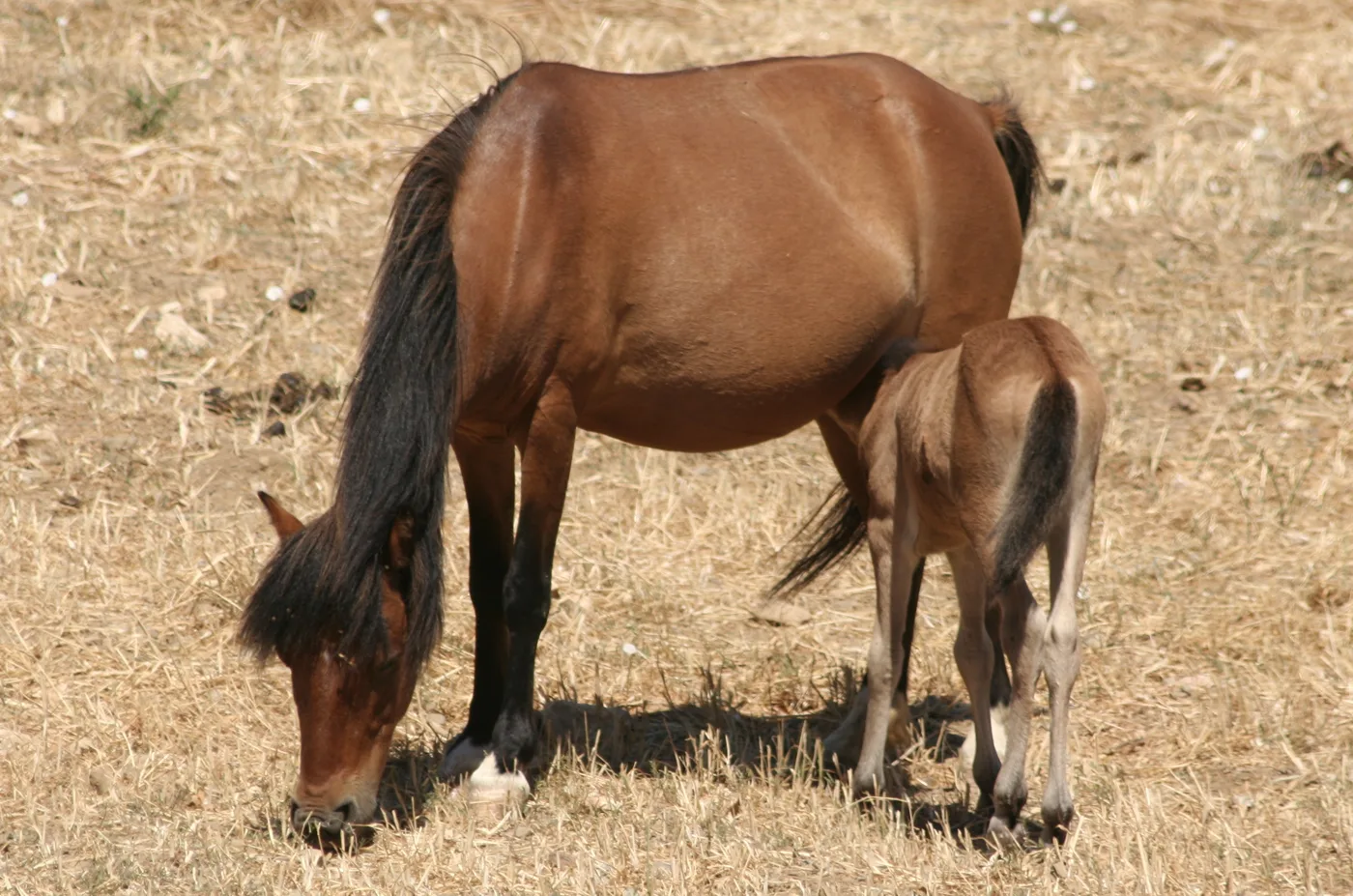
A mother and her foal.
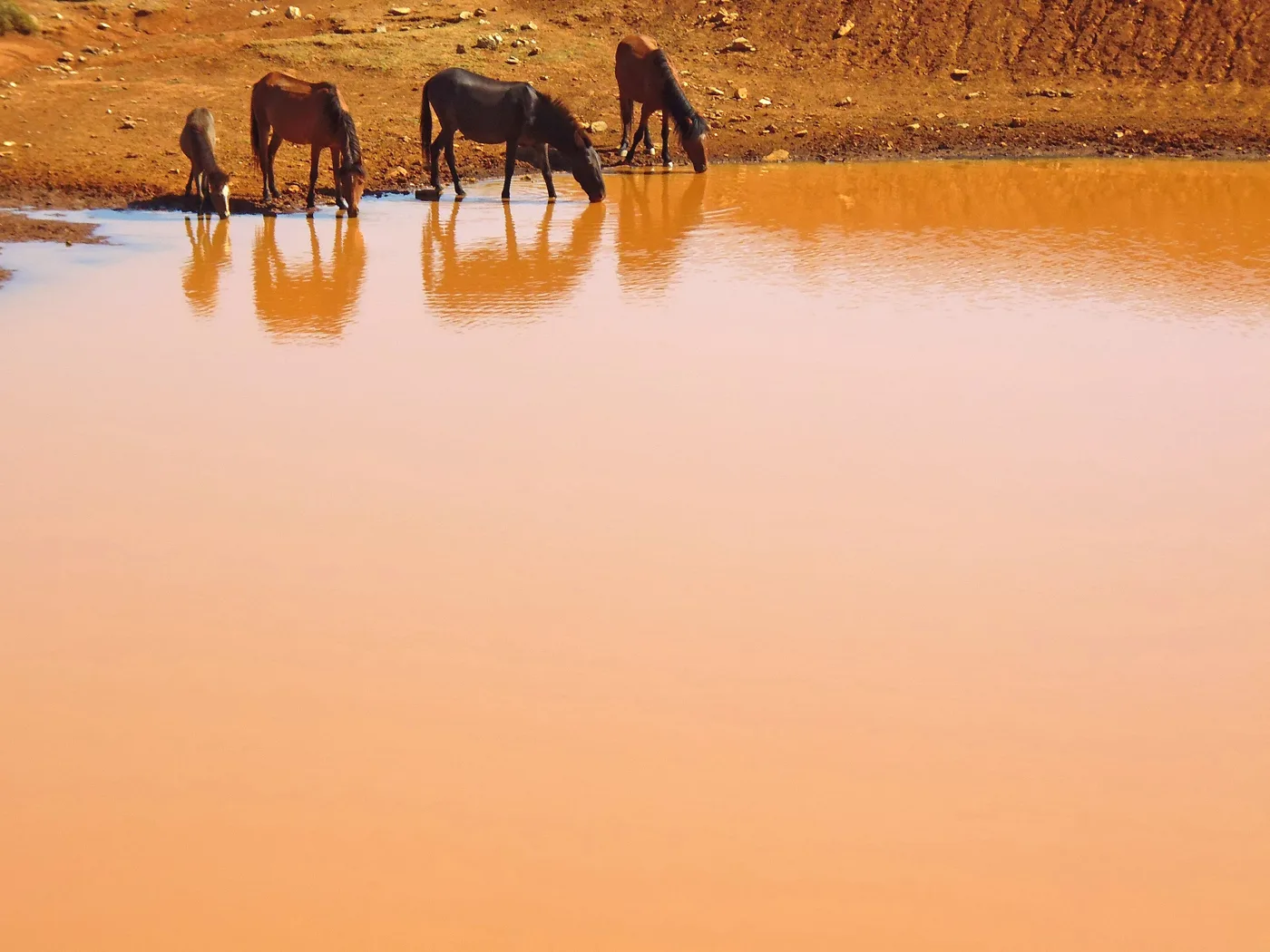
On the plateau, in the afternoon.
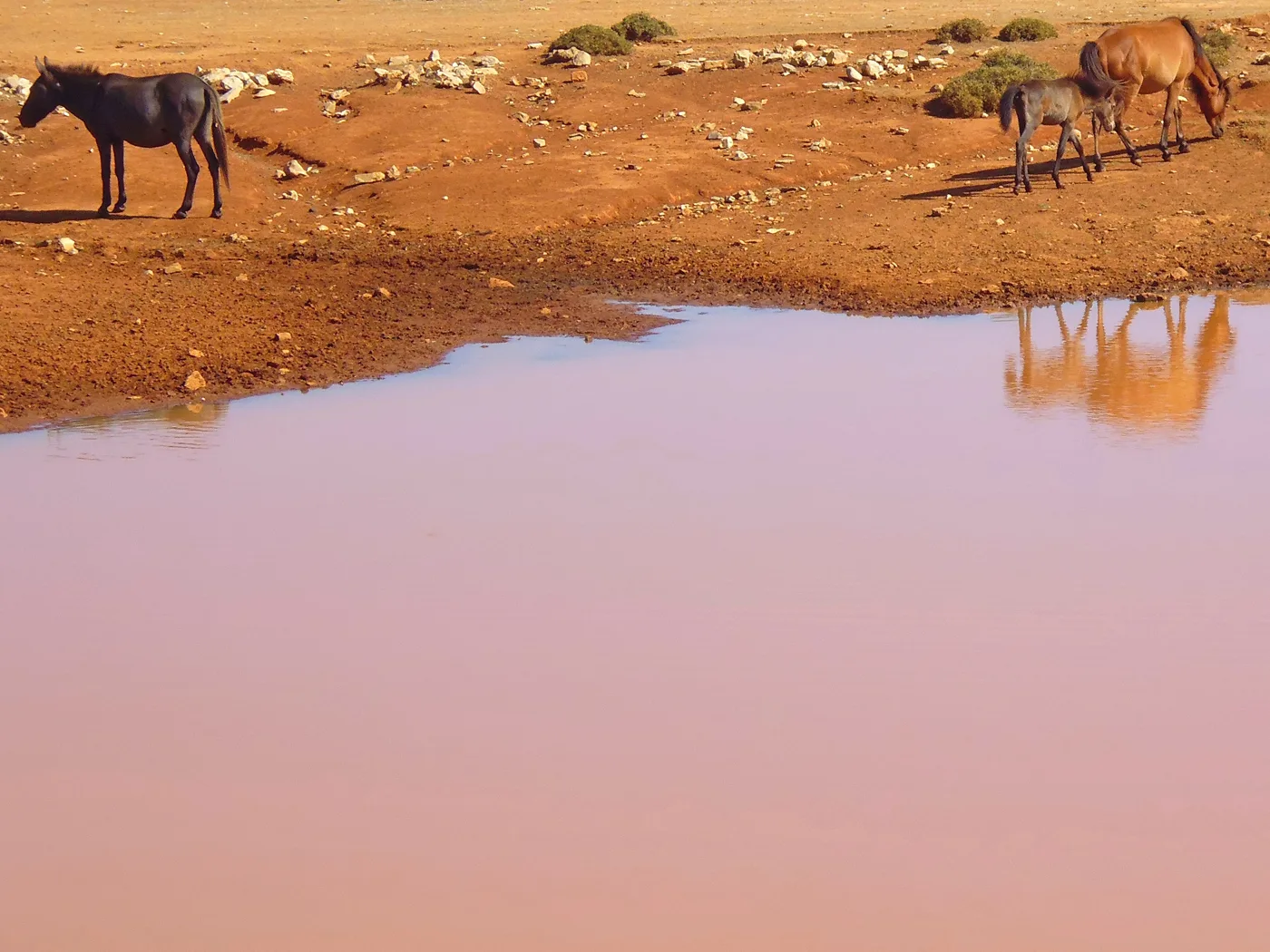
They live almost wild in the south.
Photos: Andrew Frey-Lempicki (CC BY-SA 2.0), Meltedrainbow (CC BY-SA 4.0) · Wikimedia Commons
The ponies in the mountains are not pets. Keep your distance, don’t feed them and don’t chase them for a photo. To touch and feed them, visit one of the centres that look after them.
🔔 The carnival and the Geri
If you are on Skyros at Carnival time, you will see something you won’t forget. The Geri, men dressed in black goatskins and masks made of kid leather, with dozens of heavy bells tied around their waist, dance their way up the lanes of Chora and the bells thunder across the whole island. They are accompanied by the Korelles, young men dressed in Skyrian bridal costumes, and the Frangoi. It is one of the oldest customs in Greece, and the island fills up then, so book early.
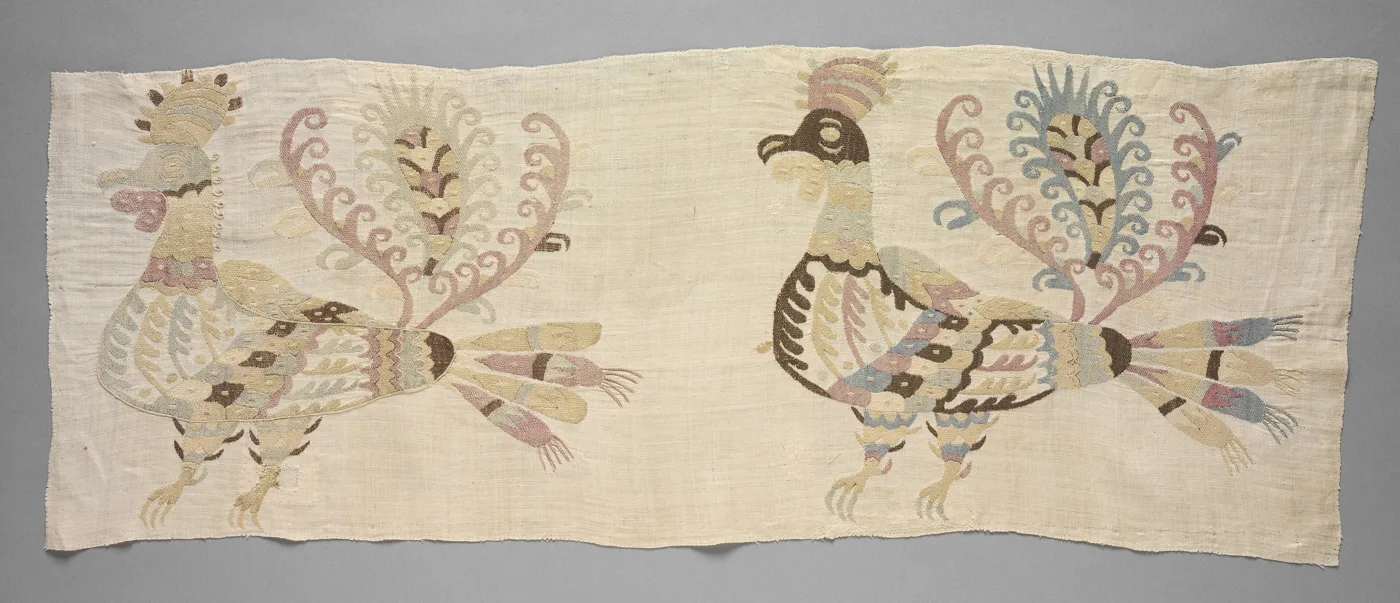
Skyrian embroidery from the 18th century.
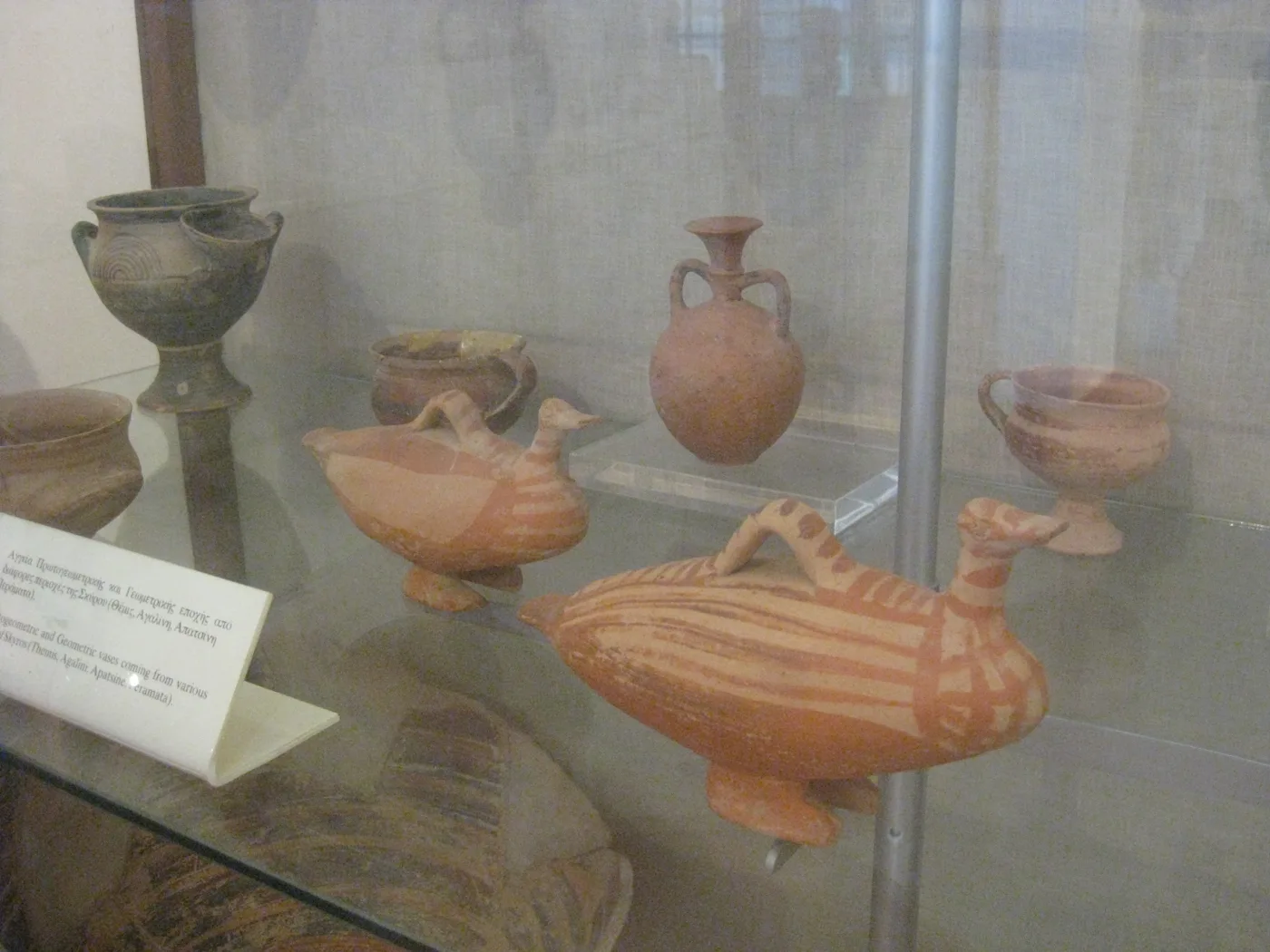
Finds from Palamari.
Photos: Cleveland Museum of Art (CC0), LFP (CC BY-SA 3.0) · Wikimedia Commons
🏖️ The beaches
The easiest beaches are below Chora: Magazia and Molos form one long sandy beach with tavernas, cafés and rooms, ideal for families. On the west coast, Pefkos and Agios Fokas are calm bays, the second with a famous taverna. In the north, Atsitsa, Kyra Panagia and Agios Petros have pine trees reaching down to the waves, and Agalipa has an old shipwreck on the sand. Near Linaria, Kalamitsa is a long pebble beach. Next to the airport, at Palamari, you can see a fortified settlement from the Early Bronze Age, right on the sea.
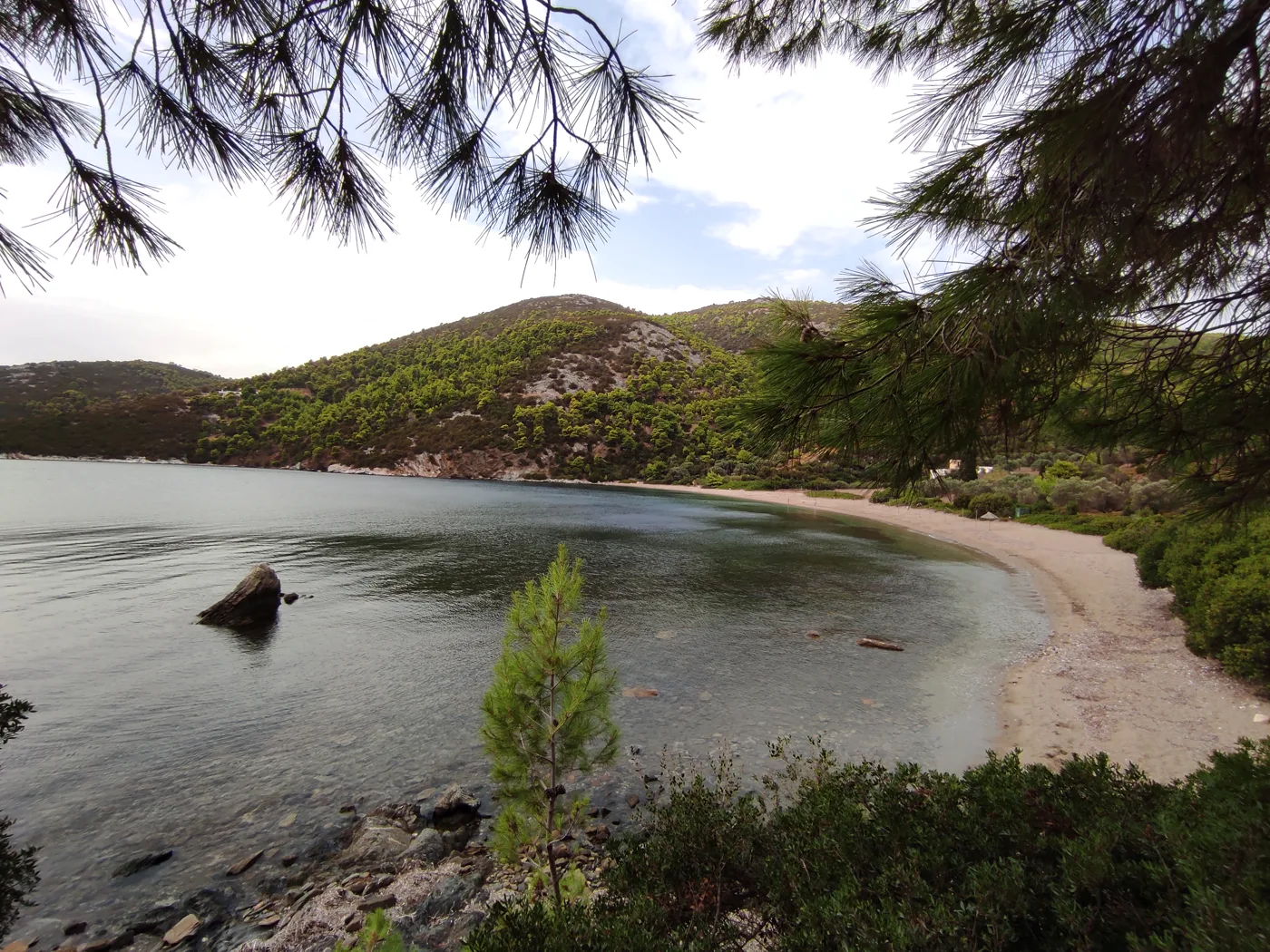
A calm bay on the west coast.
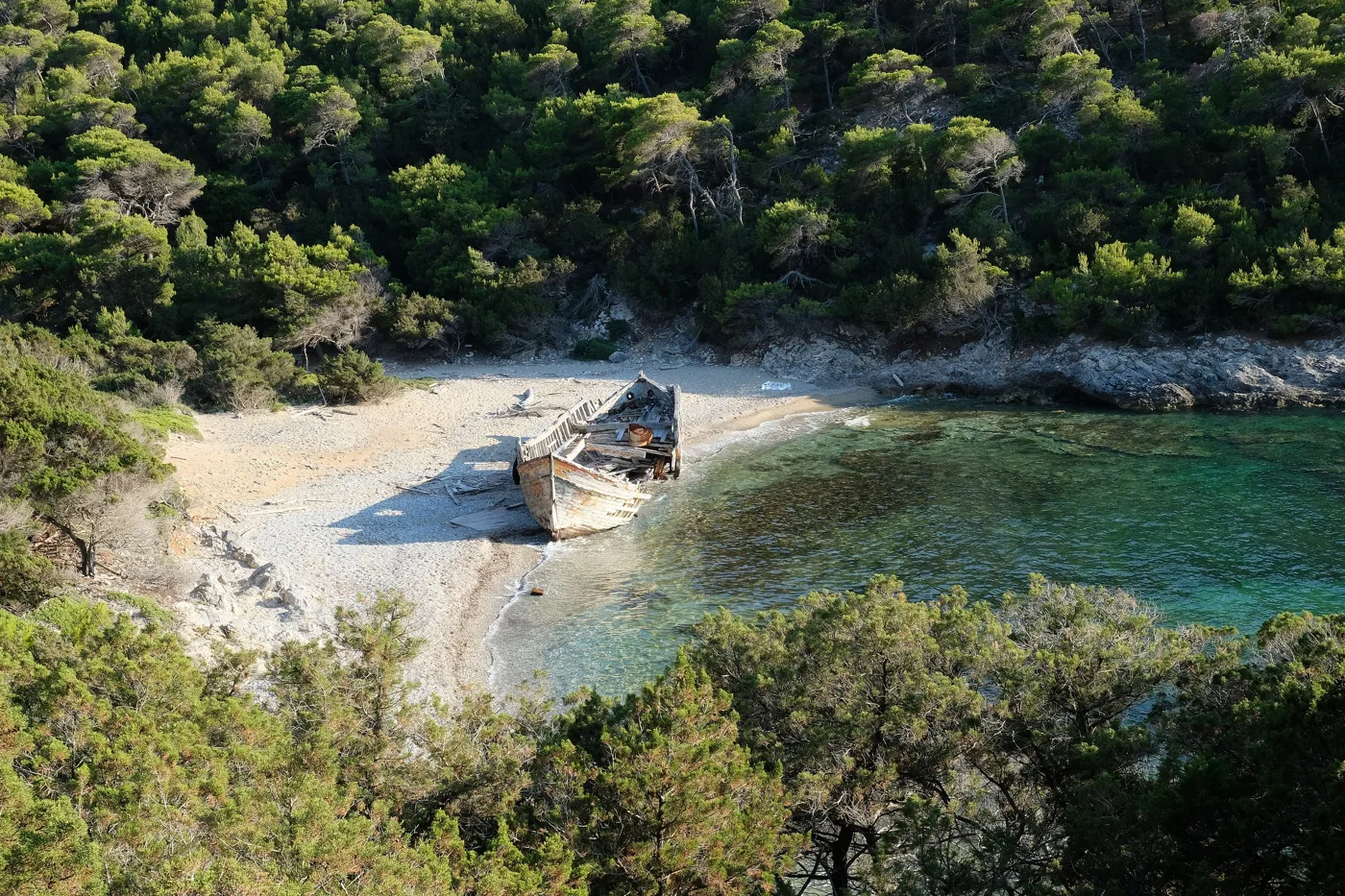
An old shipwreck among the pines.
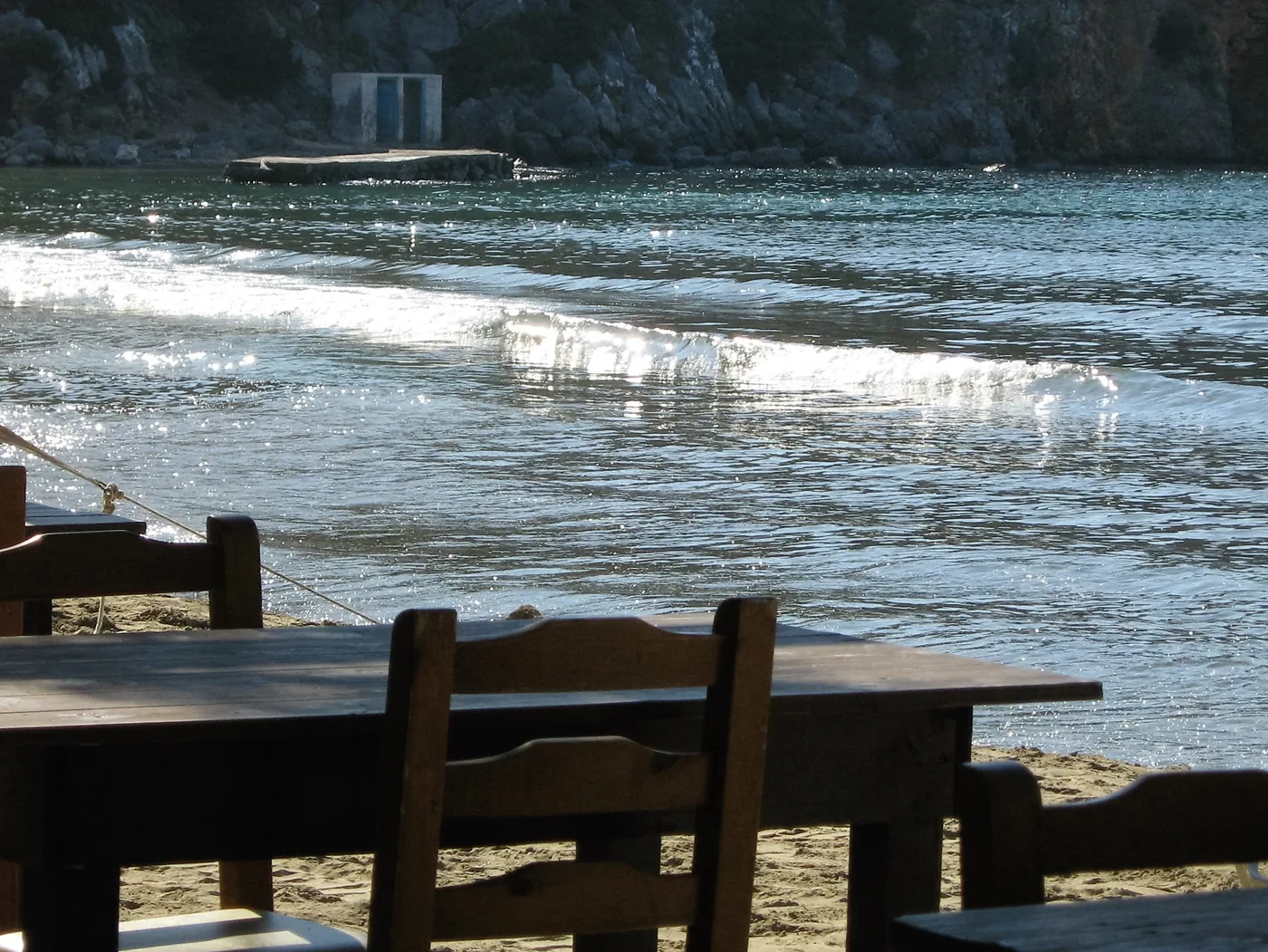
Tavernas on the sand.
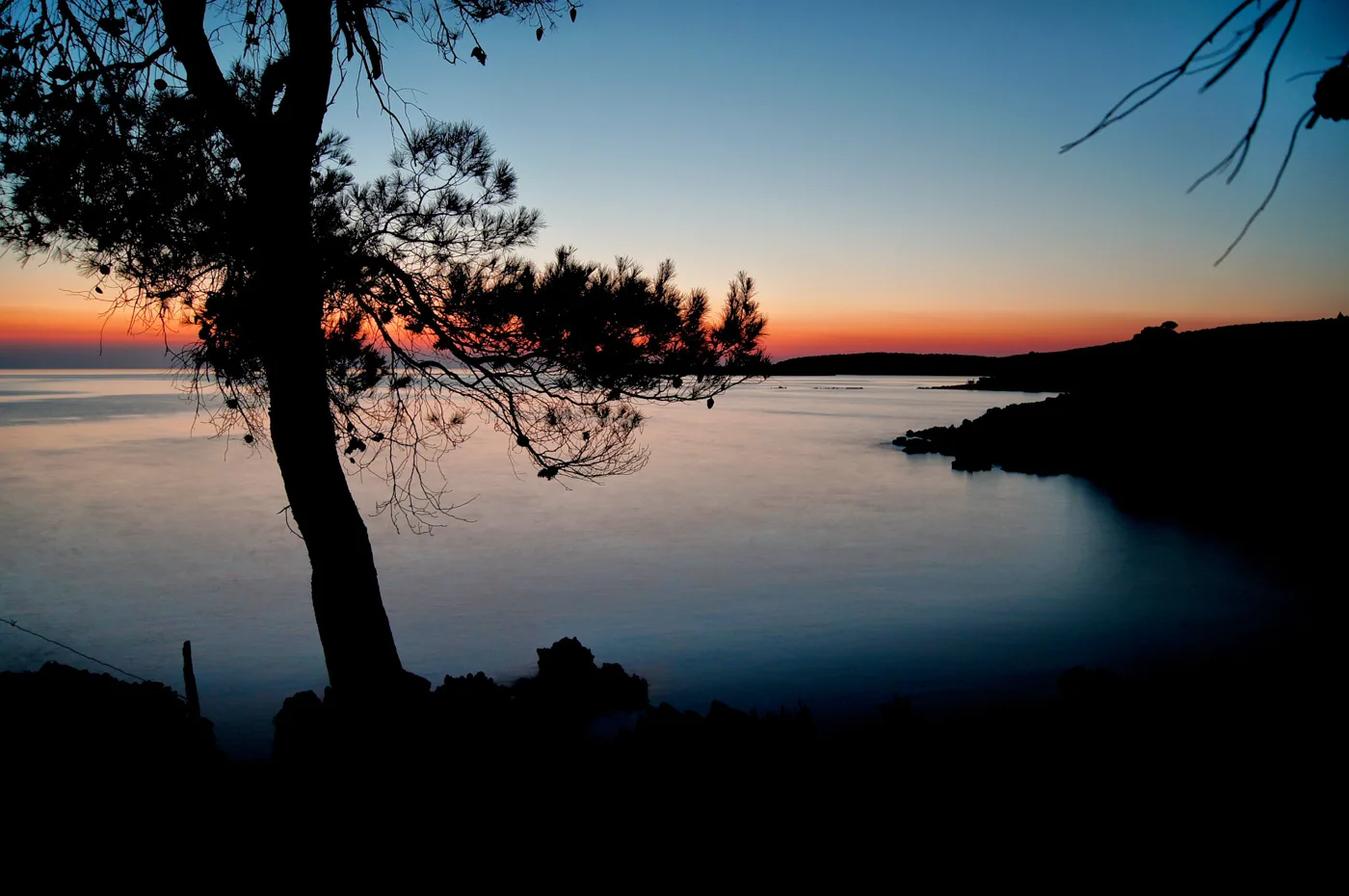
Sunset on the west coast.
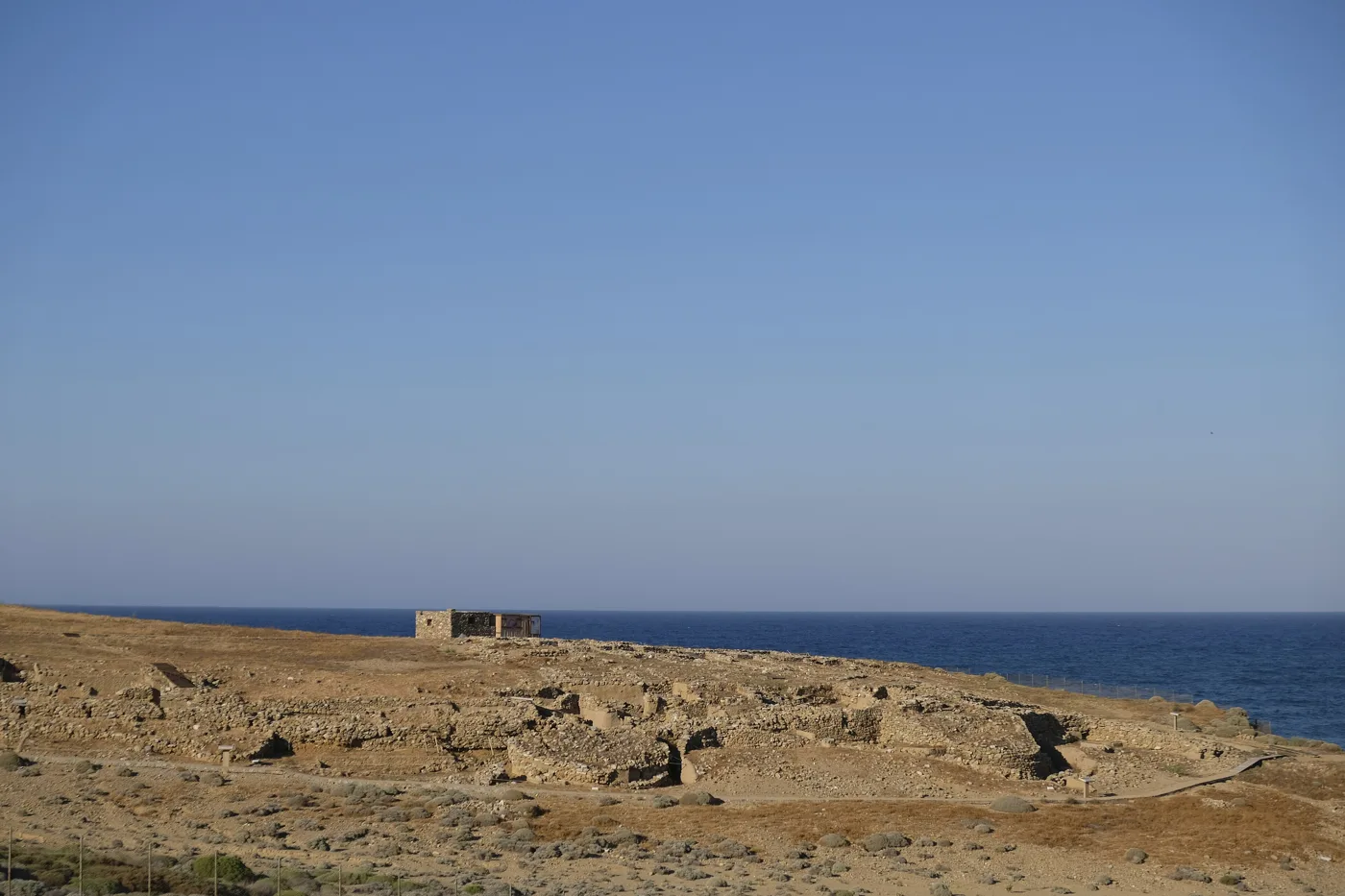
A settlement from the Early Bronze Age.
Photos: PLAKLE (CC BY-SA 4.0), Alexander Lechner (CC BY 4.0), Afbeelding4 (CC BY-SA 4.0), Jason Efstathiou (CC BY-SA 3.0), Incredibleusername (CC BY 4.0) · Wikimedia Commons
- Magazia and Molos: a long sandy beach below Chora.
- Atsitsa: pine trees down to the sea, in the north.
- Agios Petros: sand in a pine forest.
- Pefkos: a calm bay in the west.
- Agios Fokas: a small bay with a taverna.
- Kalamitsa: long, with pebbles, near Linaria.
- Agalipa: with a shipwreck on the shore.
When a strong north wind blows, Magazia and Molos get waves. Go to the west coast then, to Pefkos, Agios Fokas or Atsitsa, which are more sheltered.
🍽️ What to eat
Skyros is famous for lobster spaghetti, which you will find in the tavernas of Linaria, Atsitsa and Agios Fokas. Also try lemony kid, the island’s goat cheese, and the sweets of Chora, such as amygdalota, almond sweets. Skyros thyme honey is excellent, and in Chora you will find meze places with a view of the sea.
📅 When to go
June and September are the best months, with warm sea and empty beaches. In July and August mostly Athenians come, without the crowds of other islands, but the ferries fill up. In February, or whenever Carnival falls, the carnival is worth the whole trip, even in winter.
⛴️ How to get there from Athens
| How | Duration | From | Notes |
|---|---|---|---|
| Plane | About 40 minutes | Athens airport | Few flights a week. The fastest option. |
| Car or KTEL bus and ferry | About 2.5 hours to Kymi, plus a 1 hour 45 minute ferry | Athens, via Chalkida | The ferry leaves from the port of Kymi, once or twice a day. |
From Ioulianou 50, KTEL buses to Kymi leave from the Liosion bus station and connect with the ferry. By car, you cross the bridge at Chalkida and drive across Evia to the port of Kymi: see our guide to Evia, so you can stop along the way. On the island there is a bus from Linaria to Chora, but for the beaches you need a car or a scooter.
🗓️ Three days on Skyros
Chora and the Castle
In the morning, climb up to the Castle and the Monastery of Saint George for the view. On the way down, get lost in the lanes, look inside a Skyrian house and visit the Faltaits Museum. In the afternoon, a swim at Magazia and Molos, and sunset at Brooke Square.
The pine-covered north
Drive to Atsitsa for a swim among the pines, then on to Agios Petros. Stop at Palamari, the prehistoric settlement by the sea. In the evening, dinner in Chora.
The wild south
Pass through Linaria for coffee at the port and continue south, looking for the Skyros ponies on the plateau. Visit Rupert Brooke’s grave at Tris Boukes, and come back for lobster spaghetti at a taverna by the sea.
Frequently asked questions
Where should I stay on Skyros?
In Chora, for the atmosphere, the evenings and perhaps a traditional Skyrian house. In Magazia or Molos, to be next to the sandy beach and five minutes from Chora. In Linaria, if you want the port and peace.
Do I need a car?
Yes, for the beaches in the north and for the south. The island is not very big, and a car or scooter for two or three days is enough. You can bring your own on the ferry from Kymi or rent on the island.
Is Skyros good for families?
Yes. Magazia has sand and shallow water, the island is quiet and safe, and the Skyros ponies are the greatest joy for children.
How many days do I need?
At least three, for Chora, the Castle, the north and the south. Five to seven days to relax and see all the beaches.
— Kathy