Chronology and place
The ancient Olympic Games were held at Olympia in Elis, in the western Peloponnese. The traditional founding date is 776 BCE, while their end is linked to 393 CE, when the Christian emperor Theodosius I banned pagan festivals. That amounts to around 293 Olympiads across 1,170 years.
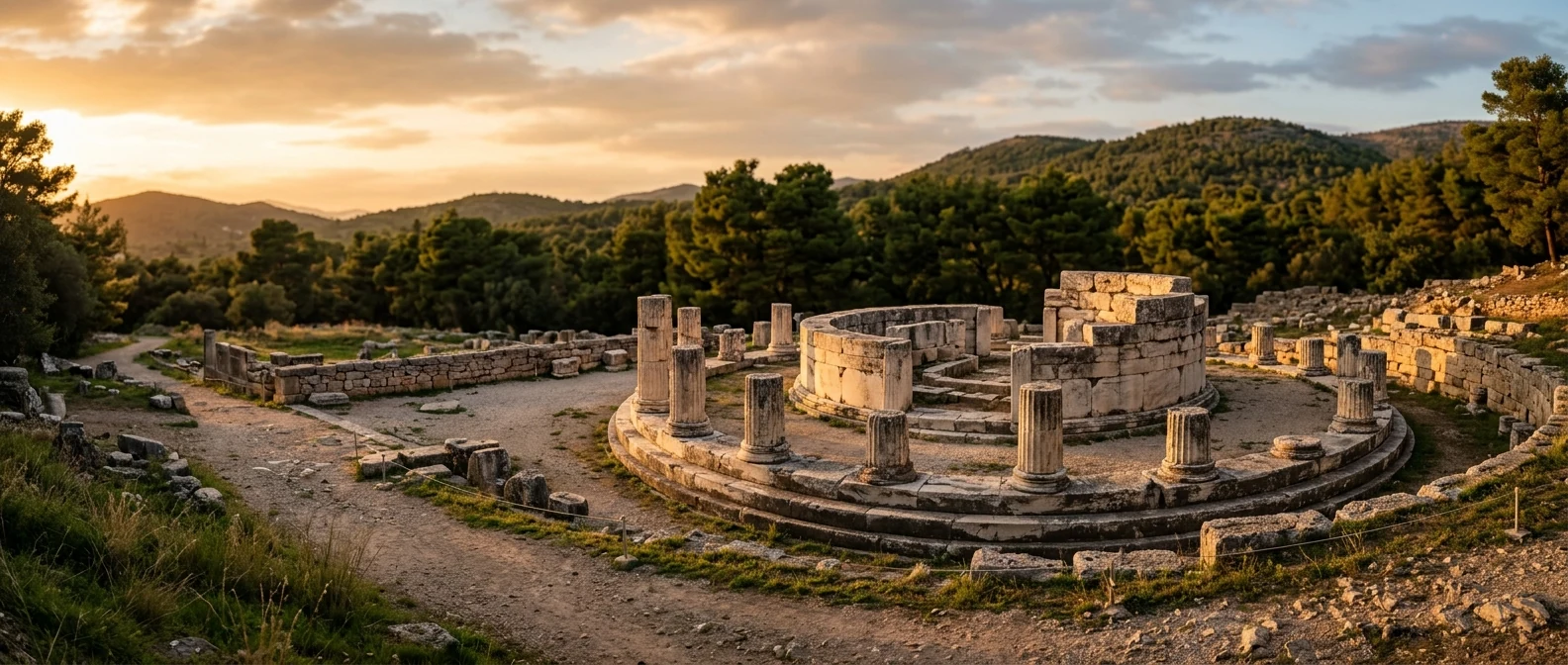
Olympia was not a city. It was a sanctuary of Zeus, with temples, treasuries, and athletic installations. The Games belonged to the four Panhellenic Games, together with the Pythian Games at Delphi, the Isthmian Games at Corinth, and the Nemean Games at Nemea. Of all these, Olympia carried the greatest prestige because its Games were regarded as the oldest.
Religion came first
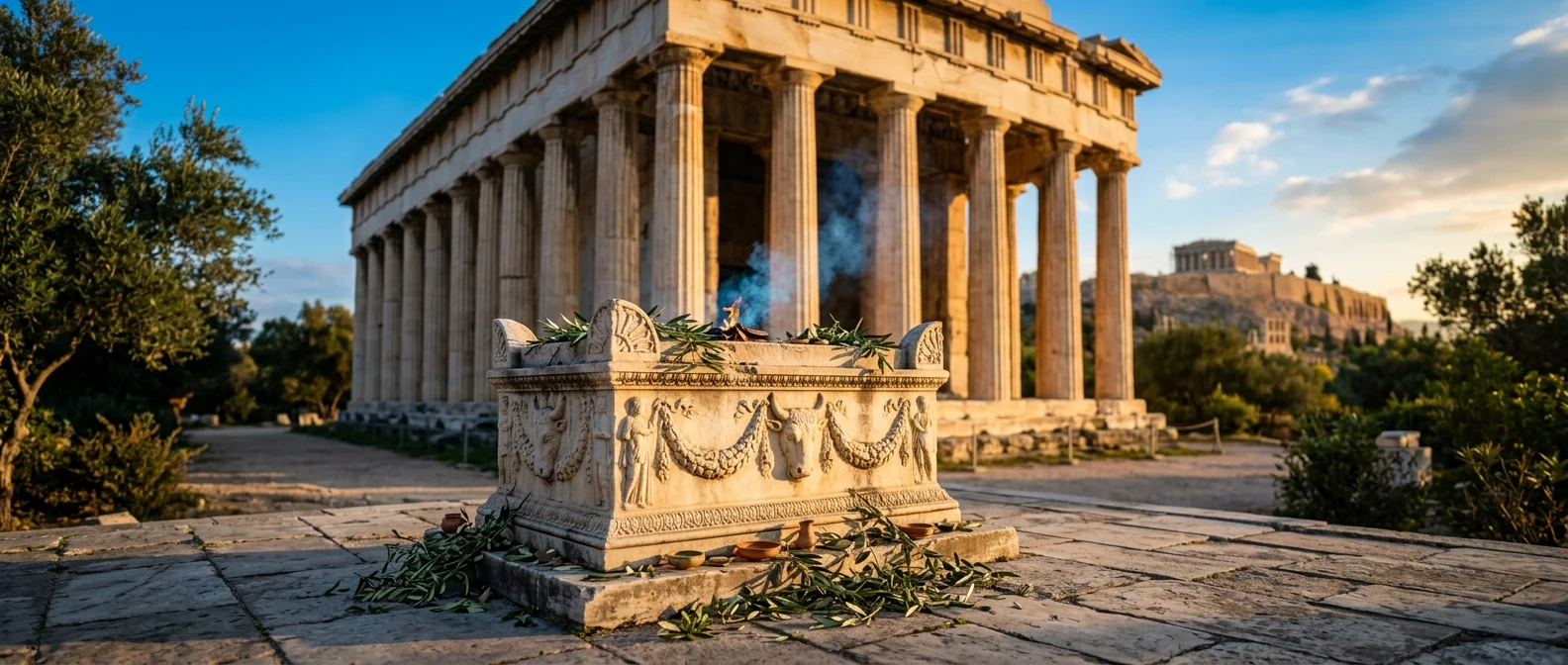
The Games were inseparable from the worship of Olympian Zeus. The first day included oaths, sacrifices, and ceremonies. The most important sacrifice, 100 oxen at the great altar of Zeus, took place on the third day, in the middle of the festival. Athletes swore at the altar that they would compete fairly. Those who broke the rules paid for statues called Zanes along the entrance to the stadium, with their offences inscribed on them.
The athletic contests were only one part of the festival. Olympia also hosted banquets, processions, sacrifices, consultations, and markets. Travelling philosophers, poets, and sophists came to give public lectures and readings. Tradition even says that Herodotus once read his Histories aloud there.
The events
Stadion
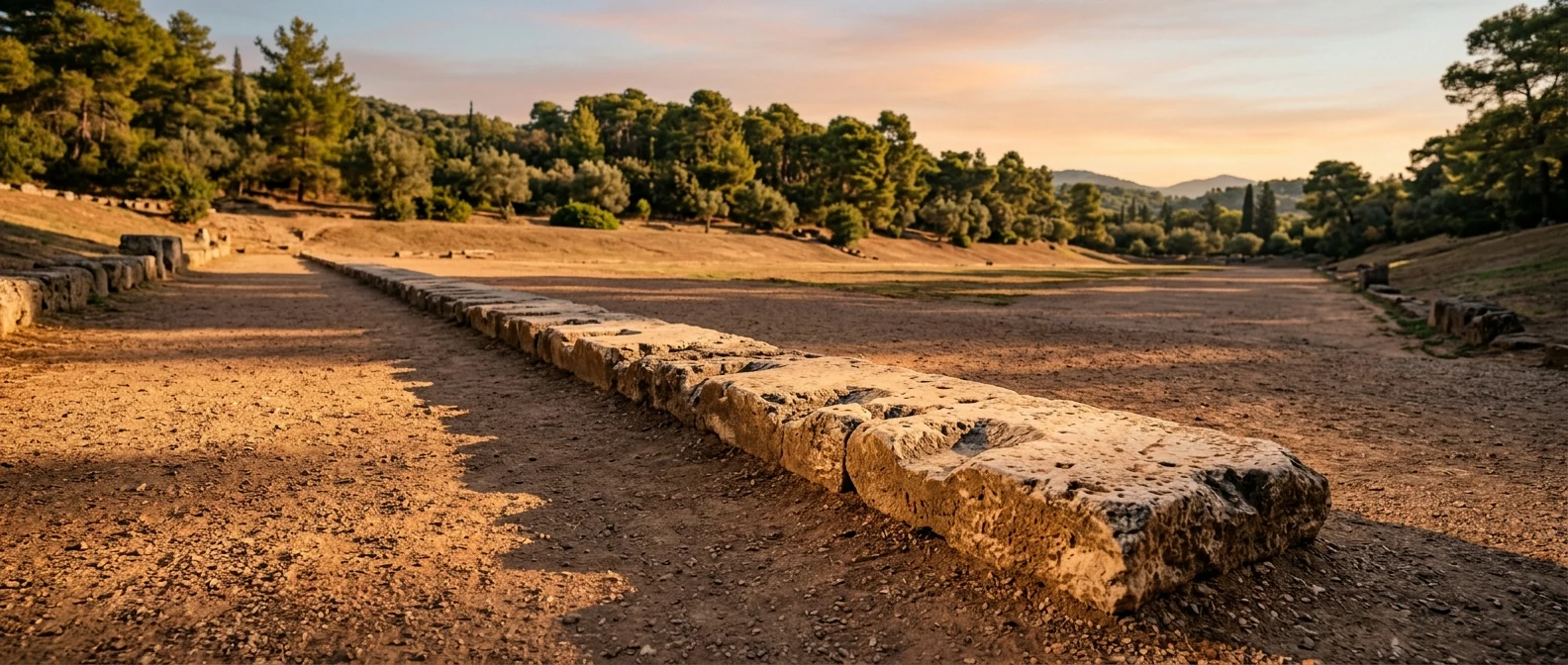
The original event: a sprint of one stadion, about 192 metres at Olympia. Winners became so well known that an Olympiad could be identified by their name.
Diaulos and dolichos
A double race of about 384 metres and a longer-distance race of seven to nine lengths, perhaps around 4,500 metres.
Pentathlon
Five events: stadion, long jump, javelin, discus, and wrestling. It expressed the athletic ideal of all-round ability.
Wrestling, boxing, pankration
Wrestling, boxing, and combat with almost no rules. Only eye-gouging and biting were forbidden; most other blows were allowed. These were harsh events, and deaths are recorded.
Hippic events
Chariot races with four or two horses, along with horseback races. The winner was the owner, not the rider or charioteer, so the wealthy dominated.
Hoplitodromos
A race in armour, with helmet, shield, and greaves. It was added in the late 6th century BCE and reflected the ideal of military readiness.
The prize
The olive crown
Officially, winners received only a wreath of wild olive, the kotinos, cut from a sacred grove at Olympia, along with a palm branch. There were no medals and no second prize. The substantial rewards came from the winner's home city: public honours, statues at Olympia or at home, free meals at the prytaneion, tax relief, and sometimes money. Athens, for example, awarded Olympic victors 500 drachmas. Sport could bring both prestige and material gain, and specialised athletes already existed.
Who could compete
- Only free Greek men could compete. Enslaved people, women, and non-Greeks were excluded.
- Greek identity had to be proven: Macedonians, for example, had to establish their Greek status, as in the case of Alexander I in the 5th century BCE.
- Romans were accepted later as part of a Hellenised world. Nero took part absurdly in 67 CE, fell from his chariot, and was still declared the winner.
- Married women were excluded from the spectacle, under the famous threat of being thrown from Mount Typaion. Unmarried girls and virgins were allowed.
- Hippic victories were credited to the owner, not the rider or charioteer, which is how women could "win" through ownership. The Spartan princess Cynisca was the first female victor, in 396 and 392 BCE.
- There was a preparation period: athletes spent 30 days in nearby Elis under official supervision, and some exclusions happened there.
Naked and oiled
- Athletes competed naked. Even the word "gymnasium" points back to naked exercise. The shift away from loincloths is usually placed around 720 BCE.
- Oiled bodies: athletes anointed themselves with olive oil before the contests and often added dust for better grip in wrestling.
- Strigil: a curved bronze scraper used to remove oil, sweat, and dust afterwards.
At a glance
776 BCE
The traditional founding year. The first recorded victor was Koroibos of Elis in the stadion.
393 CE
The prohibition by Theodosius I, ending a tradition of 1,170 years.
~40-50,000
The estimated capacity of the stadium at Olympia. Spectators camped across the sanctuary.
Olive crown
The only official prize. Material rewards came from the victor's home city.
The Sacred Truce
The truth about the truce
The Ekecheiria was proclaimed before each Games for the athletes and spectators who were travelling. It guaranteed safe passage to and from Olympia. It did not mean general peace. Wars could continue, but the routes to the sanctuary were meant to remain neutral. There were violations, and Sparta was excluded in 420 BCE for allegedly breaking the truce. The modern Olympic Truce, revived in 1992, is a ceremonial reference to this idea, not an unbroken continuation.
Famous victors
- Milo of Croton (~6th century BCE): a six-time wrestling champion. Tradition credits him with exaggerated feats of strength, such as carrying a four-year-old bull around the stadium.
- Diagoras of Rhodes: a boxer whose sons and grandsons also won. According to tradition, he died of joy when his victorious sons lifted him onto their shoulders.
- Leonidas of Rhodes (164-152 BCE): 12 victories across four Olympiads in three running events. His record is often compared with modern Olympic achievements.
- Cynisca of Sparta: first female "victor" via chariot ownership (396 BCE).
- Theagenes of Thasos: ancient sources credit him with 1,300 victories across Greek festivals.
The end of the Games
- Roman period: the Games continued, with more and more Romans and non-Greek spectators present.
- Decline: over time the old religious prestige weakened and the festival changed in character.
- 393 CE: Theodosius I banned pagan festivals, and the Olympics came to an end.
- Destruction of the site: Theodosius II ordered the destruction of temples in 426 CE. Earthquakes and floods gradually buried the sanctuary.
- Rediscovery: Olympia returned to attention in the 18th and 19th centuries, when excavations revealed the site again.
The modern revival
- Pierre de Coubertin launched the modern Olympics in Athens in 1896, inspired by the ancient model and by the earlier Greek "Zappas Olympics" of 1859, 1870, and 1875.
- Athens 1896: the first modern Games were held at the Panathenaic Stadium (Kallimarmaro), and the first marathon was tied to the memory of the Battle of Marathon.
- Olympic flame: an invention of 1928. The lighting in Olympia and the relay began in 1936.
- Athens 2004: Olympics returned to Athens. Marathon ended at Panathenaic Stadium.
Where you can still encounter the Games today
- Olympia archaeological site (about four hours by car from Athens): the Temple of Zeus, the stadium, Phidias' workshop, the treasuries, and the on-site museum.
- Olympia Archaeological Museum: pediments of Temple of Zeus, Hermes of Praxiteles, athletic statuary.
- Panathenaic Stadium (Athens): the venue of the 1896 modern Games. Entirely marble and open to the public.
- National Archaeological Museum (Athens): athletic art and objects from the period of Olympia.
FAQ
Did the ancient Olympics really happen every four years?
Yes. They followed the same four-year cycle as the modern Games. The Olympiad itself became a Greek way of dating time.
How long did the Games last?
Five days at their height. Earlier versions were shorter, and later ones expanded to fit more events.
Did athletes train all year round?
Yes. Professional athletes existed in major sanctuaries and cities, with developed diets, training programmes, and coaches.
What about cheating?
There were documented cases of bribery and rule-breaking. Penalties included fines, payment for a Zane statue, exclusion, and public shame.
Were victors really treated like gods?
They were treated more like heroes than gods. Victors received statues, free meals, tax exemptions, and in some cities even a special entrance through the walls.
Can I visit Olympia today?
Yes. Olympia is a major archaeological site with an important museum. It can be done as a long day trip from Athens, but an overnight stay is easier, and you can still walk through the ancient stadium.
Sources:
— Kathy