Why twelve?
The Twelve Olympians, or the Dodekatheon, were the main group of great Greek gods. Mythically they lived on Olympus, the 2,917-metre peak in Thessaly. The number 12 carried weight for the Greeks, from the months to the signs of the zodiac. But the exact composition was not always the same. In some lists Hestia is included; in others Dionysus takes her place. Hades is usually left out, because he ruled the Underworld rather than Olympus. In the Athenian Agora there was an Altar of the Twelve Gods, built around 522 BCE, which also served as a reference point for measuring distances from Athens.
The classic twelve
Zeus
King of the gods, linked with the sky, order, and the thunderbolt. Symbols: thunderbolt, eagle, oak. Roman equivalent: Jupiter.
Hera
Queen of the gods, protector of marriage and the lawful family. Symbols: peacock, cow, pomegranate. Wife and sister of Zeus. Roman equivalent: Juno.
Poseidon
The sea, earthquakes, and horses. Symbols: trident, dolphin, horse. Brother of Zeus. Roman equivalent: Neptune. In Attica he is strongly linked with the temple at Sounion.
Demeter
Agriculture, grain, and the cycle of the seasons. Symbols: sheaves of wheat, torch. Mother of Persephone. Roman equivalent: Ceres. The Eleusinian Mysteries were dedicated to her and Persephone.
Athena
Wisdom, strategy, crafts, and the city. Symbols: owl, olive tree, the aegis with the head of Medusa. Protector of Athens. Roman equivalent: Minerva. The Parthenon was dedicated to her.
Apollo
Music, prophecy, healing, light, and the bow. Symbols: lyre, laurel, bow. Roman equivalent: Apollo. The oracle of Delphi was his sanctuary.
Artemis
Hunting, wild nature, young women, and childbirth. Later she was also linked with the moon. Symbols: bow, arrows, deer, crescent. Twin sister of Apollo. Roman equivalent: Diana.
Ares
The violent side of war. Symbols: spear, helmet, vulture, dog. In Greek worship he carried less prestige than Athena, who was linked with strategy. Roman equivalent: Mars.
Aphrodite
Love, beauty, and desire. Symbols: dove, swan, rose, shell. In Hesiod's version she was born from sea foam near Cyprus. Roman equivalent: Venus.
Hephaestus
Fire, smithing, and technical work. Symbols: hammer, anvil, tongs. The lame god and craftsman of the Olympians. Roman equivalent: Vulcan. The temple of Hephaestus in the Ancient Agora was dedicated to him.
Hermes
Messenger, travel, trade, roads, and trickery. Symbols: caduceus, winged sandals, winged hat. A psychopomp, meaning a guide of souls. Roman equivalent: Mercury.
Dionysus
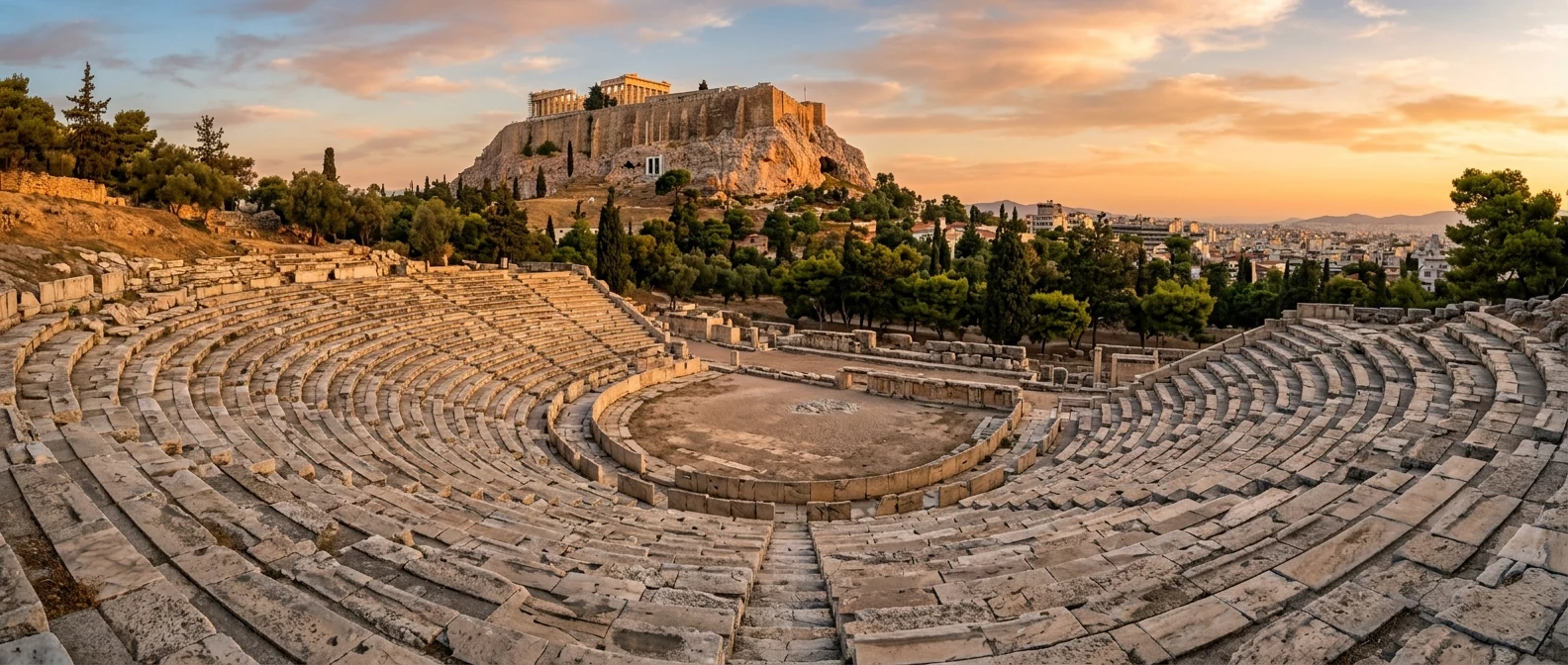
Wine, ecstasy, theatre, and the disruption of everyday order. Symbols: ivy, vine, thyrsus, leopard. He often takes Hestia's place in the list of twelve. Roman equivalent: Bacchus. The Theatre of Dionysus stands on the south slope of the Acropolis.
Hestia and Hades: the alternatives
- Hestia: goddess of the hearth and the home, central to family worship. In some lists she is the 12th Olympian instead of Dionysus. A quiet virgin goddess, with rarer iconography than the other Olympians.
- Hades: ruler of the Underworld, brother of Zeus and Poseidon. The myth of Persephone's abduction links him directly with Demeter. He is usually not counted among the Olympians, because he did not live on Olympus. As Pluto, he was also connected with the wealth of the earth.
Family relationships
The family tree in brief
First come the primordial beings: Chaos, Gaia, Uranus, Tartarus, and Eros. Then come the Titans, children of Gaia and Uranus, such as Cronus, Rhea, Oceanus, Themis, and Mnemosyne. From Cronus and Rhea are born Zeus, Poseidon, Hades, Hera, Demeter, and Hestia. The next generation includes gods such as Apollo, Artemis, Ares, Athena, Hermes, Hephaestus, and Dionysus. The Titanomachy and the Gigantomachy explained mythologically how the Olympian order came to prevail.
📊 At a glance
12 standard
Olympians in the standard list. Dionysus or Hestia can vary.
~2,917 m
The summit of Olympus, the mythical home of the gods.
~120 festivals/yr
The Athenian religious calendar. Most festivals concerned Olympian gods.
~393 CE
Late 4th century CE: the Theodosian decrees restrict the old cults.
Which gods appear in Athens
- Athena: the Parthenon, the Erechtheion, and the Temple of Athena Nike, essentially the whole Acropolis.
- Zeus: the Temple of Olympian Zeus, one of the largest temples of ancient Athens.
- Hephaestus: the temple of Hephaestus in the Ancient Agora, one of the best-preserved Greek temples.
- Apollo and Dionysus: smaller temples and altars; Dionysus especially in the Theatre of Dionysus and the sanctuary on the south slope of the Acropolis.
- Poseidon: the temple at Sounion, 70 km to the south.
- Hermes: herms, or boundary pillars, throughout the city.
- Artemis: the sanctuary of Artemis Brauronia on the Acropolis. A major temple stood at Brauron east of Athens.
Roman equivalents
- The Romans largely identified their own pantheon with the Greek one. They kept many stories, but the gods also acquired Roman character.
- Zeus = Jupiter; Hera = Juno; Poseidon = Neptune; Demeter = Ceres; Athena = Minerva; Apollo = Apollo; Artemis = Diana; Ares = Mars; Aphrodite = Venus; Hephaestus = Vulcan; Hermes = Mercury; Dionysus = Bacchus.
- The days of the week in Romance languages preserve Roman gods, as with mardi for Mars. English weekdays mostly keep Germanic and Norse equivalents.
- Most planets in their Latin-derived names carry Roman deities, that is, forms often identified with Greek gods.
Mythology in Greek life
- Not "religion" in the modern sense: there was no sacred book and no single creed. Stories varied by city and period.
- Festivals and sacrifices were central: not personal belief so much as communal practice.
- Heroes such as Heracles, Theseus, and Perseus were demigods, and cult centres existed for them.
- Mystery religions such as the Eleusinian, Orphic, and Dionysian cults offered personal salvation and hope after death. The guide to ancient Greek religion in everyday worship explains that setting better.
- Imperial cult: Hellenistic and Roman emperors received more and more divine honours.
How the gods are recognised in art
- Zeus: bearded, mature, holding a thunderbolt, often seated.
- Poseidon: similar to Zeus, but holding a trident and often shown with horses or dolphins, usually standing.
- Athena: a woman with helmet and shield, sometimes carrying a small figure of Nike.
- Apollo: youthful and beardless, often with a lyre or bow.
- Artemis: a young woman with a bow and sometimes a deer.
- Aphrodite: a nude or partly draped woman, sometimes with a dove or shell.
- Dionysus: crowned with ivy, holding a thyrsus, often with grapes and a leopard.
- Hermes: winged sandals, caduceus, and a traveller's hat.
Where the Olympian gods appear in Athens
National Archaeological Museum
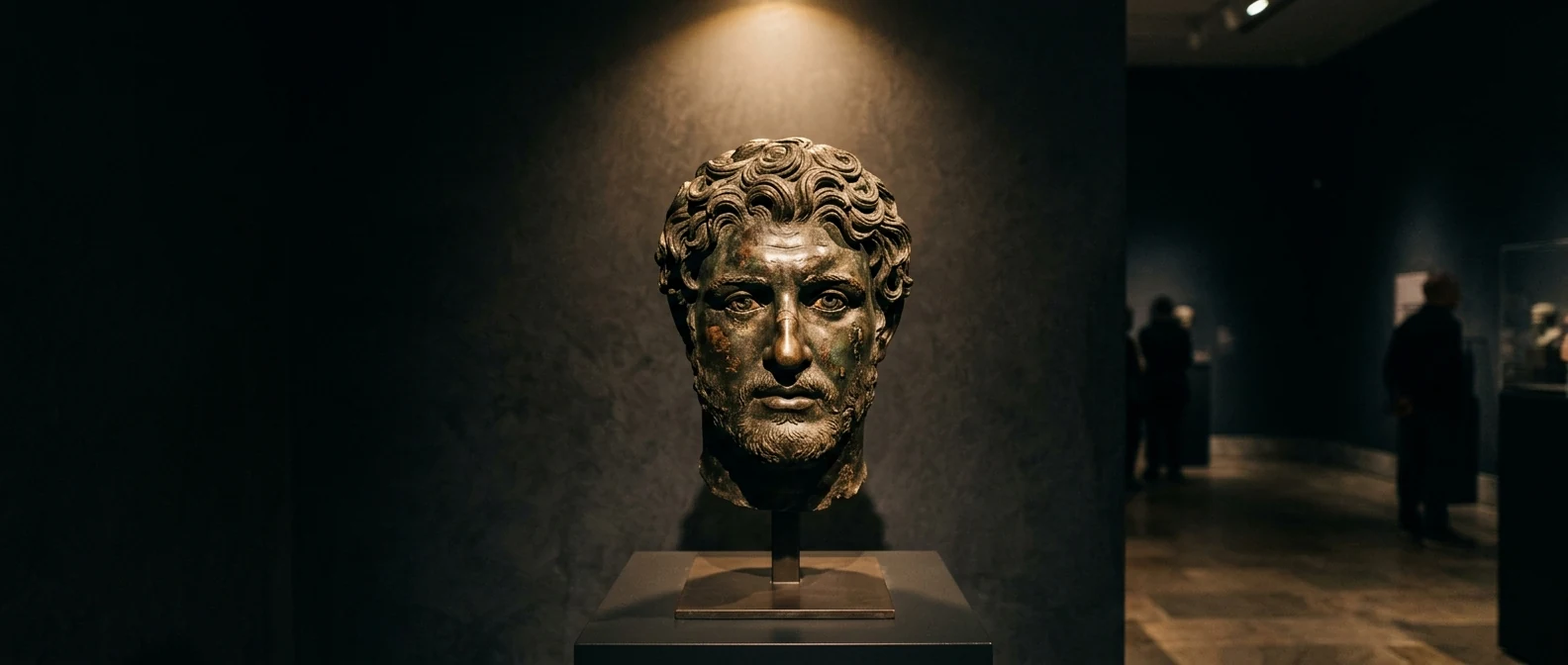
The Artemision Bronze, often read as Zeus or Poseidon, the Aphrodite of Syracuse, and statues of Apollo give a clear sense of divine iconography.
Acropolis Museum
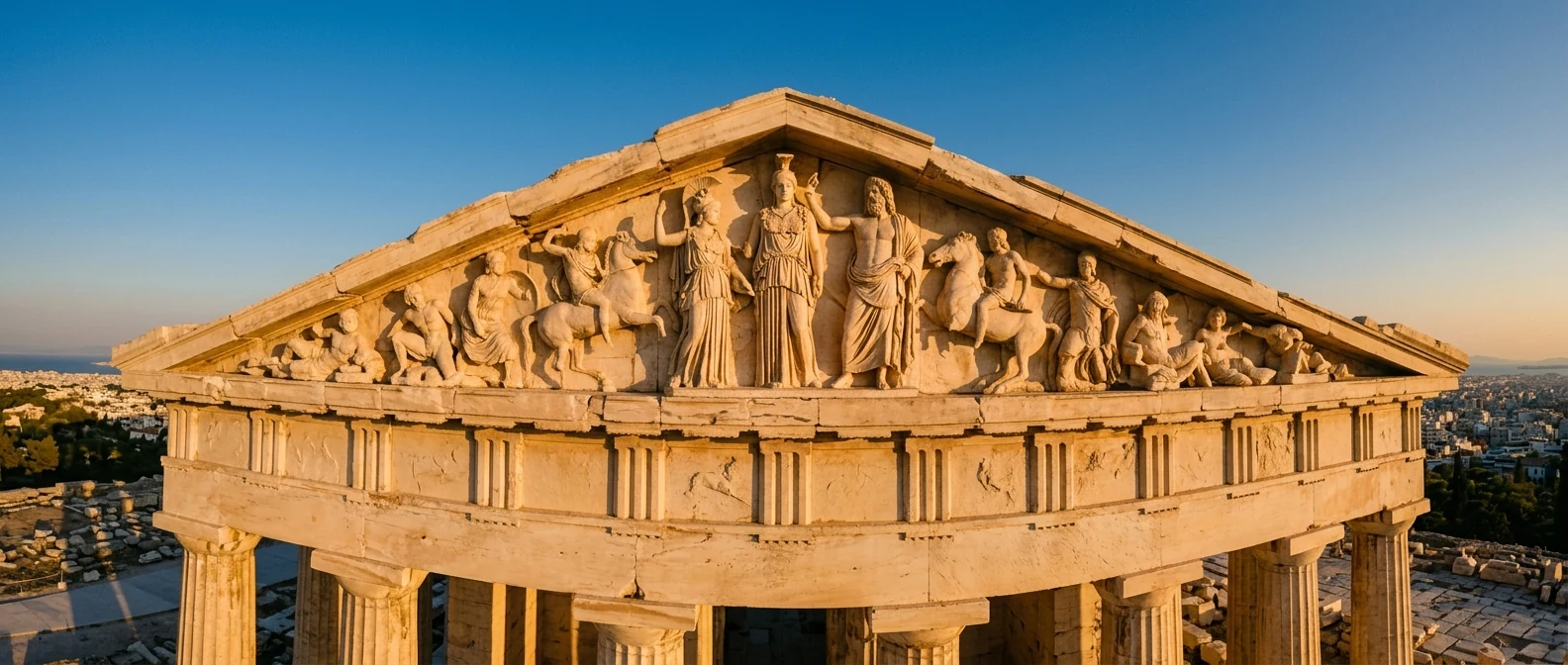
Roman copies of Athena Parthenos, pedimental sculptures with Olympian figures, and finds linked to the worship of Athena.
Olympieion
The Temple of Olympian Zeus. Fifteen columns survive, and much of the site can also be seen from outside.
Theseion (Agora)
The temple of Hephaestus in the Ancient Agora, one of the best-preserved examples of a Greek temple.
Frequently asked questions
Why is Hades sometimes excluded?
He ruled the Underworld, not Olympus. Most lists leave him aside. Even so, he was powerful and worshipped, especially as Pluto, the "rich one."
What is the standard list?
There is no single fixed list. The Athenian version usually runs: Zeus, Hera, Poseidon, Demeter, Athena, Apollo, Artemis, Ares, Aphrodite, Hephaestus, Hermes, and Dionysus.
Did Greeks really believe in them?
Most did, but in complex ways. Philosophers debated the nature of the gods. Ordinary people offered sacrifices and kept festivals. Belief varied by class and education.
What is the link with constellations?
Many constellations carry mythological stories. In several cases, Greek myths were attached to older star patterns, some of them of Babylonian origin.
How long was Olympian religion practiced?
For about 1,500 years, from the earliest evidence to Christianisation. The last old temples and cults were gradually restricted from the late 4th to the 5th century CE.
Best book to read?
Hesiod's Theogony for cosmology and genealogy; Homer's Iliad and Odyssey for gods inside narrative; Apollodorus' Library for collected myths; and Edith Hamilton's Mythology as an accessible modern introduction.
Sources:
— Kathy