Two cities, two models of society
Athens and Sparta were the two strongest cities of classical Greece. Athens was maritime, commercial, democratic, and culturally productive. Around 250,000 to 300,000 people lived in Attica, of whom only 30,000 to 50,000 were adult male citizens.
Sparta was inland, agrarian, oligarchic, and organised around military discipline. The full citizens, the Spartiates or Homoioi, numbered around 8,000 to 10,000 at the city's height. Below them were the perioikoi and the helots. The helots were far more numerous and worked the land.
The two cities cooperated against the Persians in 490 and 480 BCE. Later they fought each other in the Peloponnesian War, from 431 to 404 BCE. Sparta won, but its dominance was short-lived. In 371 BCE, defeat at Leuctra broke the image of Sparta as an invincible military city.
The basic picture
Athens: democracy and the sea
Direct democracy for male citizens. An economy built on trade, silver, olives, pottery, and allied tribute. A strong navy. Women, slaves, and metics stood outside politics.
Sparta: army and land
A mixed constitution with two kings, a council of elders, ephors, and an assembly. Land worked by helots. The army was the central institution. Spartan women held property rights that were rare in Greece.
Spartan society
- Spartiates or Homoioi: full citizens, with political rights and military obligations.
- Perioikoi: free inhabitants without political rights. They worked in trade, crafts, and local production.
- Helots: state-owned dependants, mainly from Messenia. They cultivated Spartan estates and gave up part of the produce.
- Numbers: helots are estimated at 150,000 to 200,000. They outnumbered the full citizens by roughly seven to one.
- Krypteia: an institution of surveillance and terror. According to ancient sources, young Spartans went out secretly into the countryside and killed helots.
The Spartan agoge
State education from the age of seven
At seven years old, a Spartan boy left home and entered the agoge. The state controlled his education. Boys learned military discipline, endurance, music, dance, basic literacy, and physical exercise. Hunger, cold, and pain were part of the training. At 20 a young man joined a syssition, a mess group of about 15 men. He married around 20, but usually did not live normally with his wife before 30. At 30 he gained full political rights. Military service could last until 60.
Women in Sparta
- Spartan women had greater freedom than most women in ancient Greece.
- They could own and inherit land. In the 4th century BCE, women held about 40% of Spartan land.
- They received physical training and moved about without the Athenian form of domestic seclusion.
- They managed estates while men were at war or at the communal messes.
- They married later than Athenian women, usually around 18 to 20.
- Aristotle criticised them for excessive freedom and large landholding. His judgment shows how unusual their position seemed to other Greeks.
Athens as the contrasting example
- Direct democracy began with the reforms of Cleisthenes in 508/7 BCE. Adult male citizens voted in the Assembly.
- Around 250,000 to 300,000 people lived in Attica. Citizens were a minority.
- Slaves numbered about 80,000 to 100,000. They belonged to private owners, workshops, mines, and households.
- Athenian women lived under guardianship throughout their lives. They did not vote, did not speak in the Assembly, and had limited access to property.
- The economy rested on trade, the Laurion mines, pottery, olive oil, wine, and tribute from the Delian League.
- Theatre, philosophy, architecture, and sculpture flourished in 5th-century BCE Athens.
Comparison in numbers
Citizens
Athens: about 30,000 to 50,000 male citizens. Sparta: about 8,000 to 10,000 full citizens at its height.
Government
Athens: direct democracy. Sparta: two kings, council of elders, ephors, and assembly.
Military
Athens: a fleet of more than 200 triremes. Sparta: a hoplite army of about 5,000 men.
Education
Athens: private, depending on the family. Sparta: state-run and compulsory.
The Spartan constitution
- Two kings: from the two royal houses, the Agiads and the Eurypontids. They had religious and military duties.
- Gerousia: 28 elders and the two kings. It prepared proposals and acted as a senior council.
- Apella: the assembly of male citizens over 30. It voted on proposals.
- Ephors: five magistrates with one-year terms. They supervised the kings and daily administration.
- A mixed system: ancient writers saw it as a combination of monarchy, oligarchy, and a popular element.
Lycurgus: the lawgiver of tradition
- Lycurgus is usually placed in the 7th century BCE, but his historicity is uncertain.
- Tradition attributes to him the Spartan training system, common messes, austere way of life, and land distribution.
- Modern scholarship sees these institutions as a gradual development rather than the work of one man.
The Peloponnesian War
- 431-404 BCE. Athens and its allies against Sparta and the Peloponnesian League.
- Pericles' strategy was to keep the city behind the Long Walls and rely on the fleet.
- Sparta invaded Attica and devastated the countryside, but could not take the city.
- The plague at Athens in 430-426 BCE killed Pericles and about a quarter of the population.
- The Sicilian Expedition of 415-413 BCE ended in disaster for Athens.
- Sparta received Persian money and built a fleet. In 405 BCE it won at Aegospotami.
- In 404 BCE Athens surrendered. The Long Walls were demolished and the fleet was reduced.
The decline of Sparta
- From 404 to 371 BCE Sparta held a brief hegemony in Greece.
- In 371 BCE Epaminondas of Thebes defeated the Spartans at Leuctra.
- In 369 BCE Messenia was liberated. Sparta lost its main economic base.
- The number of full citizens collapsed. From about 10,000 it fell to around 1,000 during the 4th century BCE.
- In the 3rd century BCE reformers such as Agis IV and Cleomenes III tried to save the system. They failed.
- In 146 BCE Rome subdued Greece. In Roman times Sparta became a place people visited to see "Spartan" customs.
Cultural differences
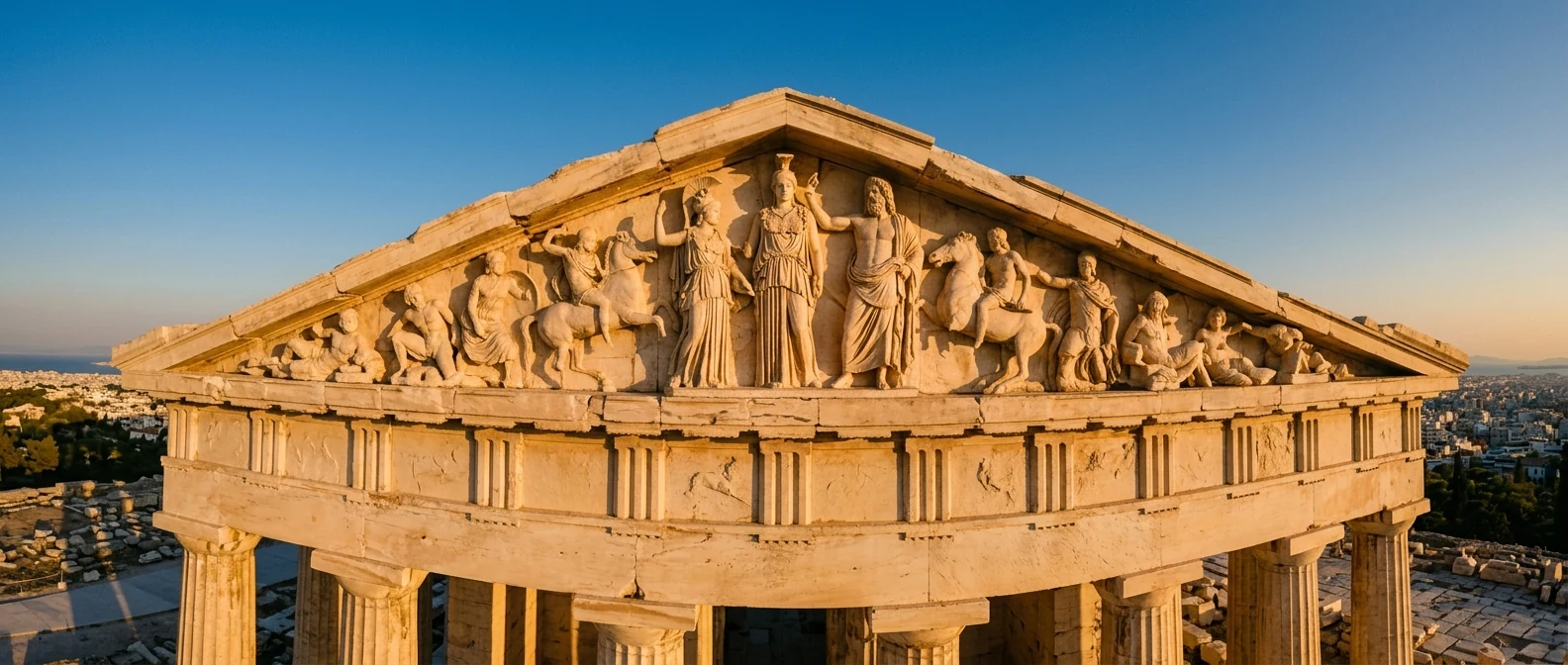
- Architecture: Athens left the Parthenon, the Erechtheion, the Propylaea, and monumental sites. Sparta left far fewer visible remains.
- Literature: almost all surviving ancient Greek drama is Athenian. Sparta left no comparable body of texts.
- Philosophy: Athens is linked with Socrates, Plato, Aristotle, and the Stoics. Sparta is remembered mostly for laconic sayings.
- Art: Sparta had good early production in the 7th and 6th centuries BCE, but militarisation limited what followed.
Myths and corrections
- "Sparta was only a military state": no. Full citizens did not farm the land; the helots did. Spartans also had time for music, dance, hunting, and politics.
- "Athens was a perfect democracy": no. Participation involved only a small part of the population. Women, slaves, and metics were excluded.
- "Spartans threw all weak babies into a chasm": the main source is Plutarch, writing about 600 years later. Archaeology does not confirm the story in that form.
- "Spartans were uneducated": no. Tradition stressed brief, laconic speech, but Spartans had education and political thought.
- "Only 300 Spartans fought at Thermopylae": the 300 were accompanied by about 7,000 other Greeks at first. In the final battle, about 1,400 to 2,000 remained.
Where Athens and Sparta appear today
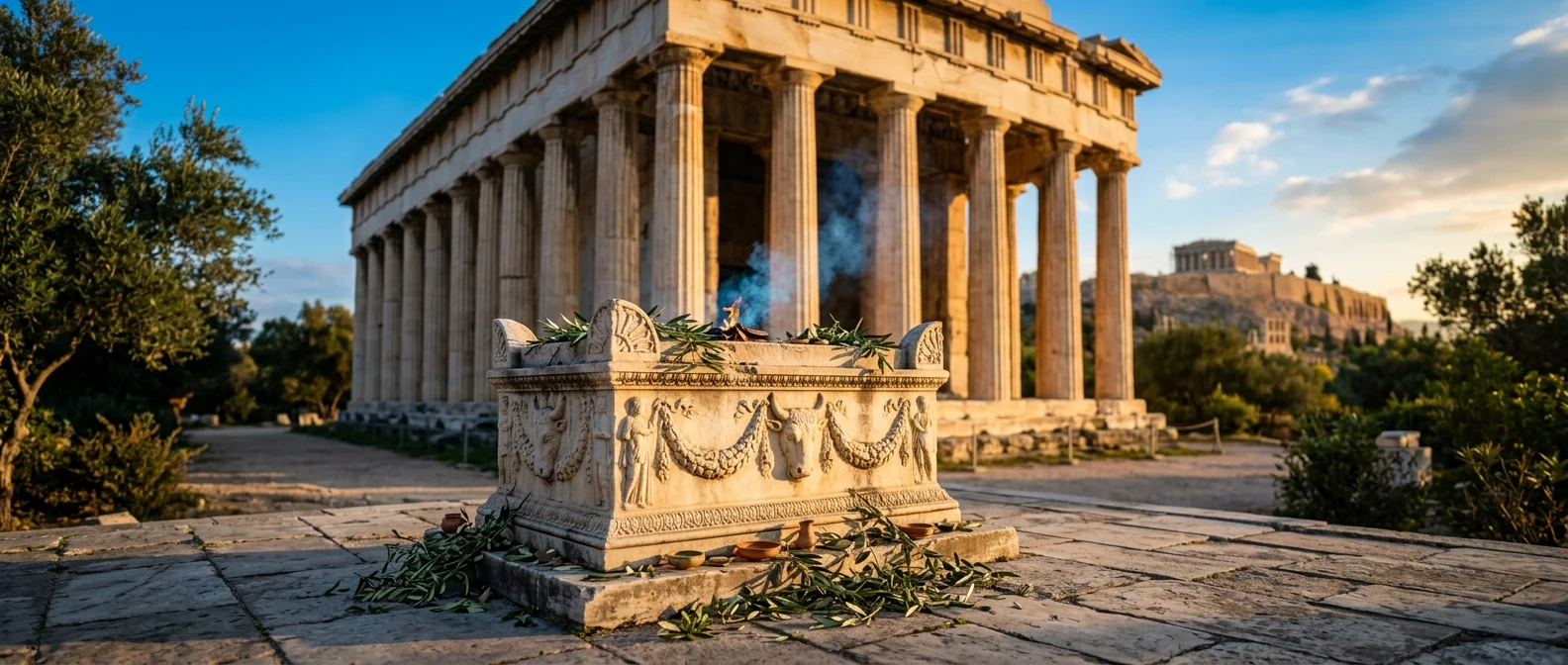
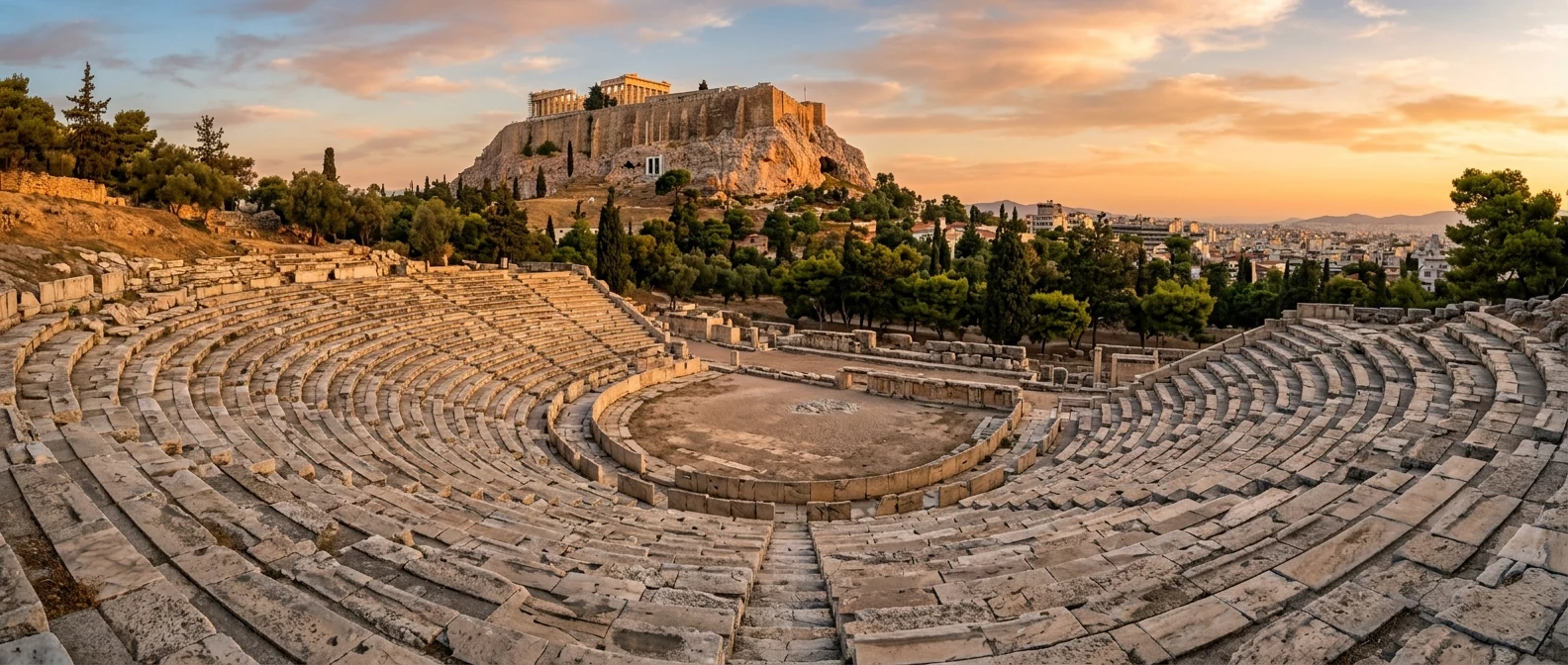
- Athens: the Acropolis, Ancient Agora, museums, and classical monuments survive on a large scale.
- Sparta: the modern town has few ancient remains. You can still see the acropolis, the theatre, and the sanctuary of Artemis Orthia.
- Mystras: 5 km from modern Sparta. A UNESCO Byzantine fortress-city and often the most substantial stop in the area.
- Athens-Sparta: about 250 km. By car it takes around 3.5 hours. Buses leave from Kifisos; from 50 Ioulianou allow about 20 minutes to get there.
Frequently asked questions
Did Sparta really conquer Athens?
Yes. Athens surrendered in 404 BCE. After 33 years, in 371 BCE, Sparta was defeated by Thebes at Leuctra.
Were Spartan women freer than Athenian women?
Yes, to a significant degree. They could own land, received physical training, and did not live under the same domestic restrictions found at Athens.
What was the agōgē?
The state education system for Spartan boys from the age of seven to 30. It involved military discipline, hardening, communal life, and submission to the city.
Were Spartans good fighters?
For about 150 years they had one of the most formidable hoplite armies in the Greek world. After Leuctra in 371 BCE, that superiority ended.
Why did Sparta decline?
The number of full citizens shrank, land concentrated in fewer families, defeats increased, and the loss of Messenia removed the basis of the Spartan system.
Which city was "better"?
The question is misleading. Athens offered a democratic experiment and major cultural production, but rested on exclusion and slavery. Sparta offered stability and military discipline, but on the oppression of the helots.
Sources:
— Kathy