🪪 The island at a glance
📍 Where it is
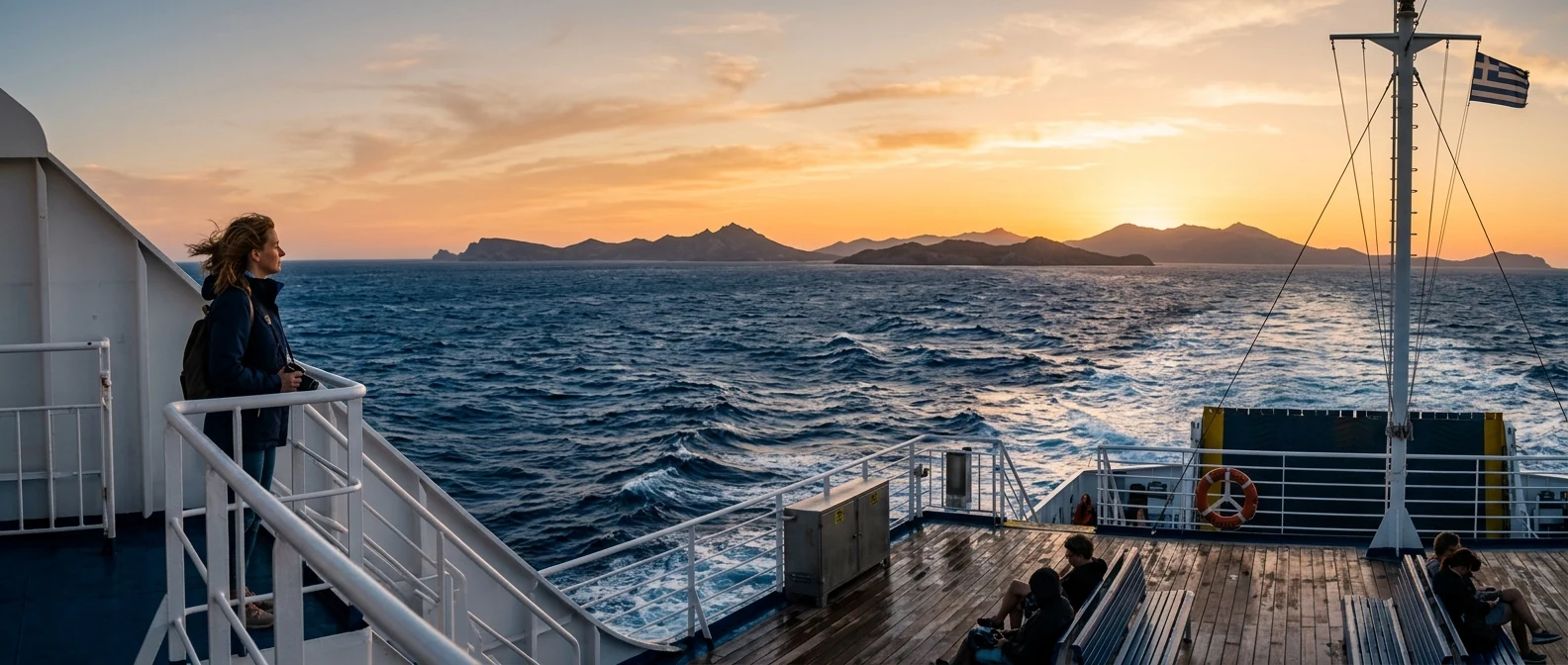
Elafonisi lies in the prefecture of Chania, in the southwest corner of Crete, about seventy-five kilometres from the town of Chania. The road passes through Kissamos or through the mountain villages of Enia, and at the end it descends to the sea. In summer, KTEL buses go every day from Chania and Kissamos, and boats from Paleochora. From Athens, you fly to Chania in fifty minutes or take the overnight ferry from Piraeus.
📍 Where Elafonisi is
Elafonisi is at the southwest tip of Crete, in the prefecture of Chania, where the west and south coasts meet. In red is the area, and in green Athens airport, Piraeus and Chania, where you arrive from.
🗺️ The map
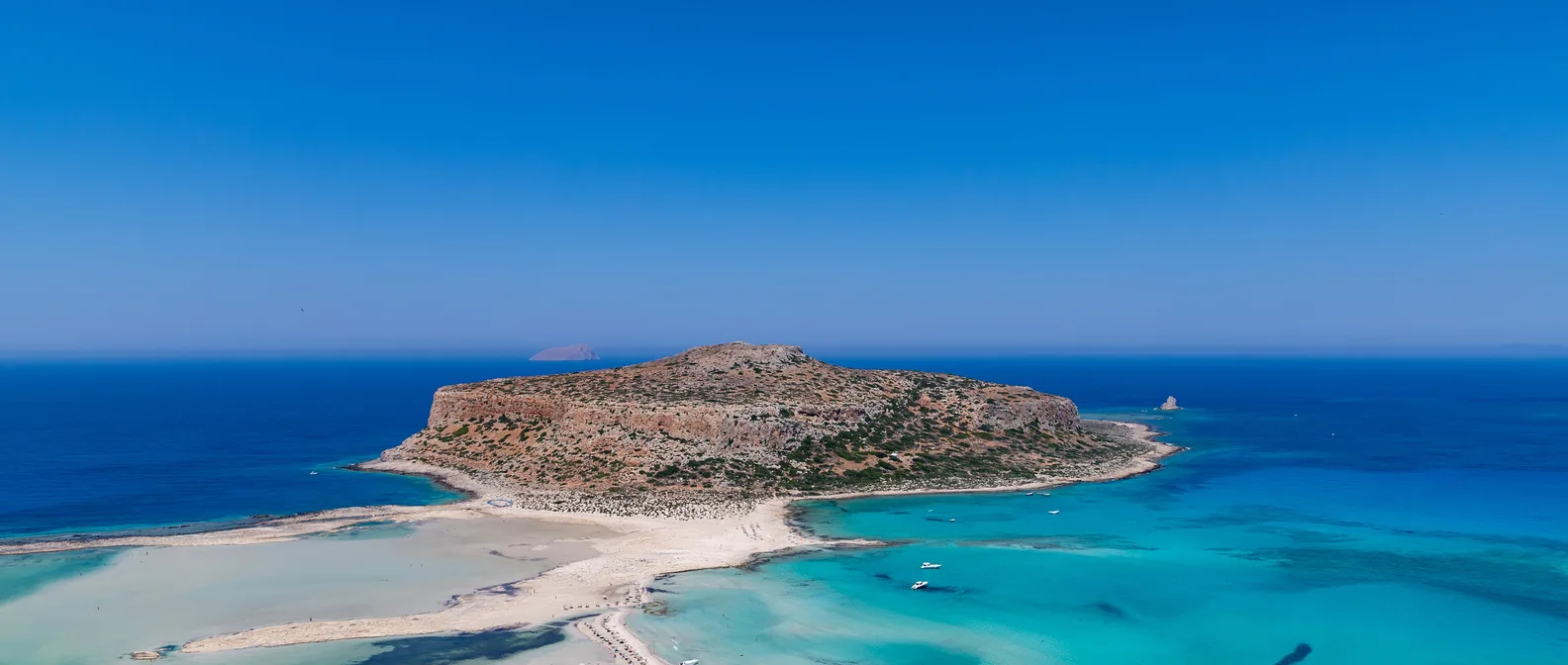
Elafonisi is two things at once: a long sandy beach on the coast of Crete and, opposite, an islet with dunes, shrubs and rocks. Between them is a shallow lagoon with water that rarely goes above half a metre, and a strip of sand that joins them. The pink sand appears mainly on the south side, at the water’s edge. To the east is Kedrodasos, and five kilometres to the north, on a rock, Chrysoskalitissa Monastery.
🗺️ The map of Elafonisi
The islet of Elafonisi is separated from the coast of Crete by a shallow lagoon that you cross on foot. The beach with the car park and the umbrellas is on the coast. The pink sand is mainly on the south side, near the islet. To the east, Kedrodasos. Tap each number to see what it is.
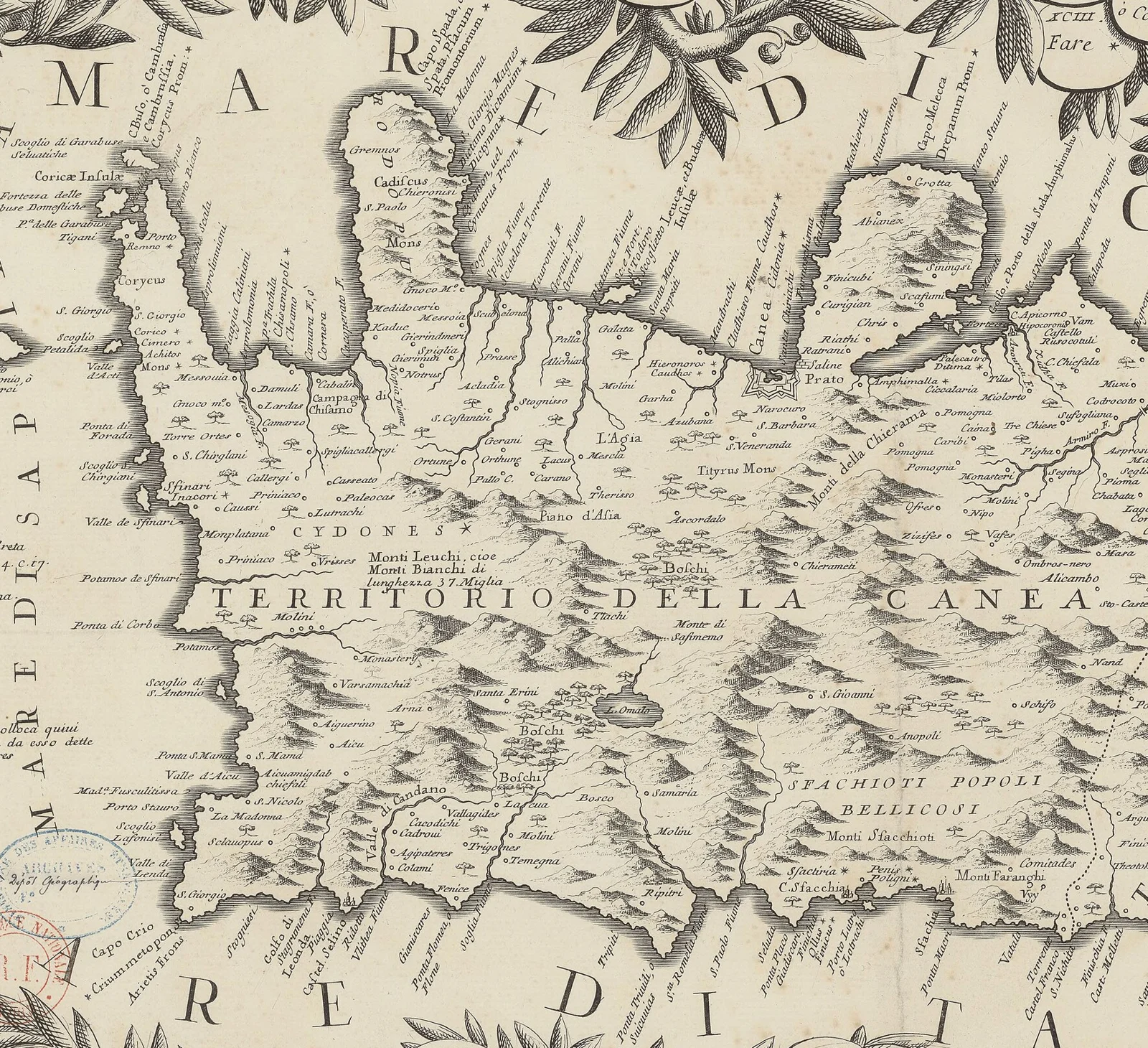
Map: Vincenzo Coronelli, 17th century (Public domain) · Wikimedia Commons
⚖️ Is it worth it? The pros and cons
Elafonisi is worth the drive, as long as you pick the right time. In summer at midday, buses and hundreds of cars arrive, and the lagoon looks like a hotel pool. Early in the morning or late in the afternoon, it is one of the most beautiful places in Crete. Here is an honest picture.
📊 At a glance, from 1 to 5
👍 The pros
- Pink sand and shallow turquoise water, one of the most distinctive landscapes in the Mediterranean.
- Ideal for children: you walk through the water for hundreds of metres.
- An islet with dunes, cedars and wild rocks to explore on foot.
- Kedrodasos and Chrysoskalitissa Monastery are close by.
- Warm water until late autumn.
👎 The cons
- Far too many people in July and August, from eleven to four.
- Far from Chania, on a narrow mountain road.
- The pink sand appears in a few spots, not along the whole beach.
- Very little shade and few options for food.
🌊 The lagoon
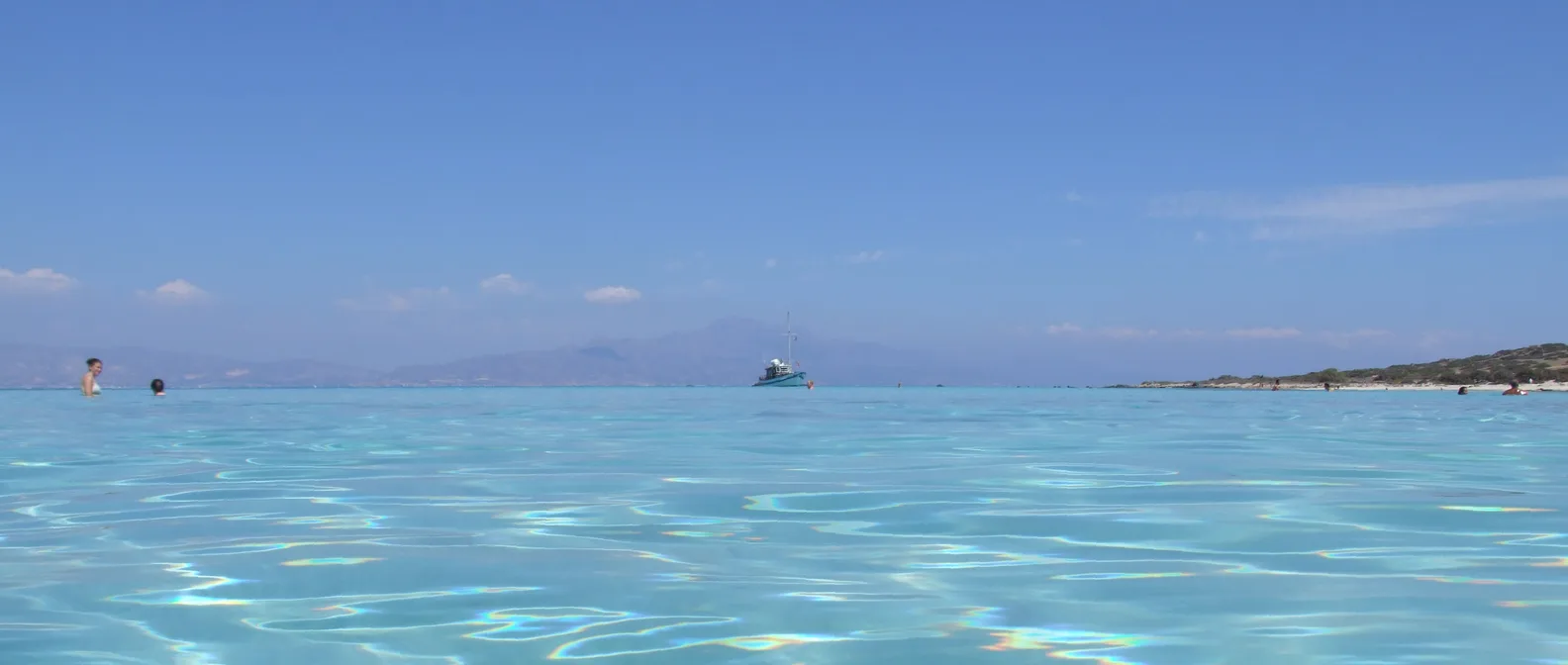
The lagoon of Elafonisi is the first thing you see when you arrive: a wide, shallow sea, warm as a bath, with colours that change from clear to turquoise and deep blue. Children play in the shallows without fear, and adults walk through the water to the islet, shoes in hand. On one side there are umbrellas and sunbeds, and further along the beach stays free.
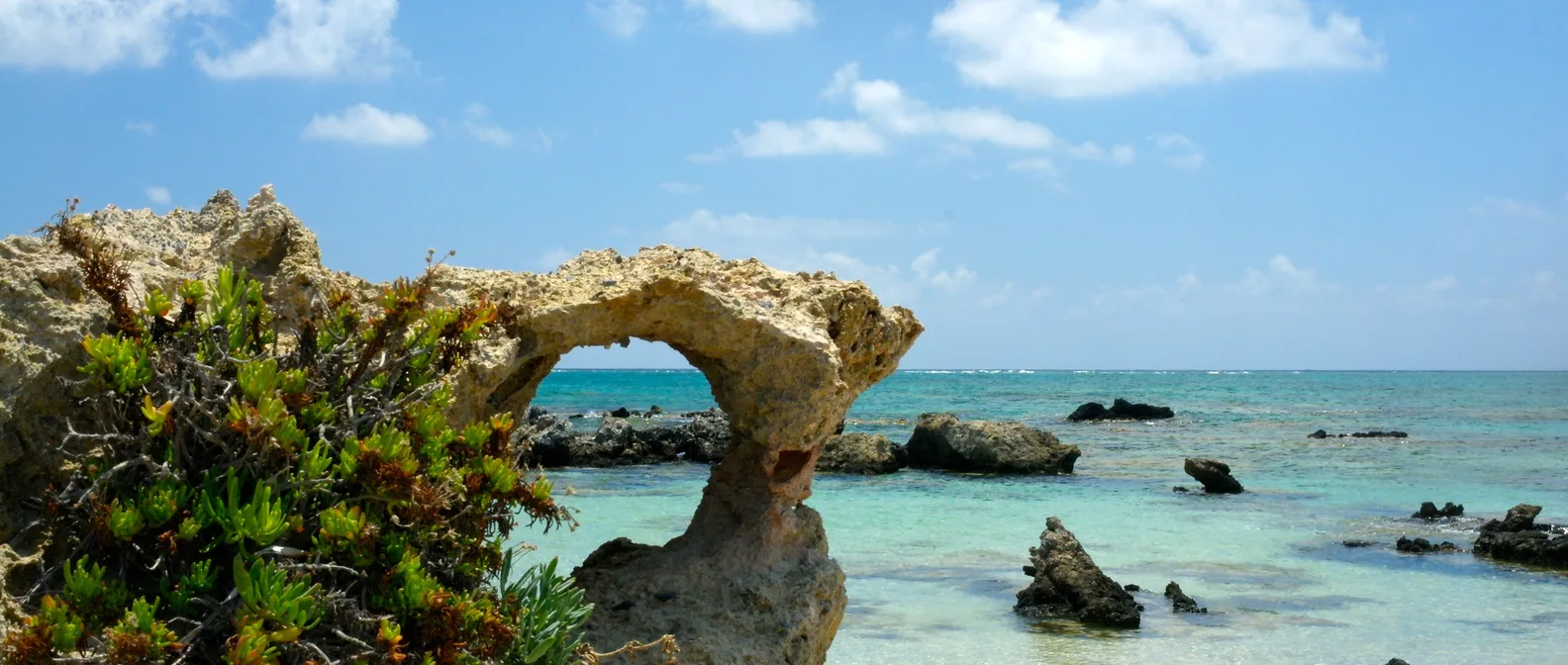
Around the lagoon, the wind and the waves have carved the limestone into strange shapes: a stone arch, mushroom-like rocks, flat slabs in the water. When the wind blows, the best spots are on the sheltered side of the lagoon.
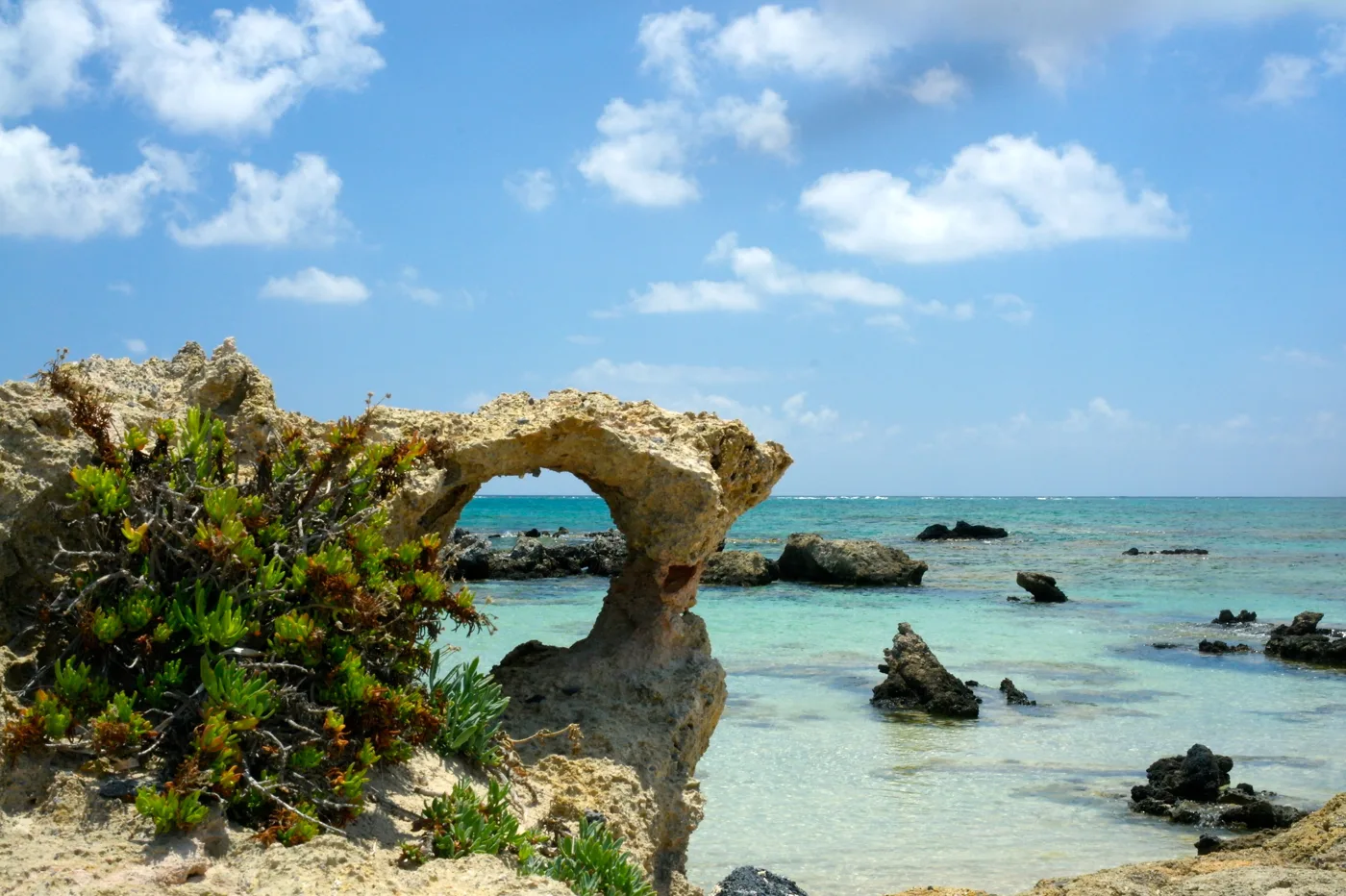
Stone, shrubs and turquoise.
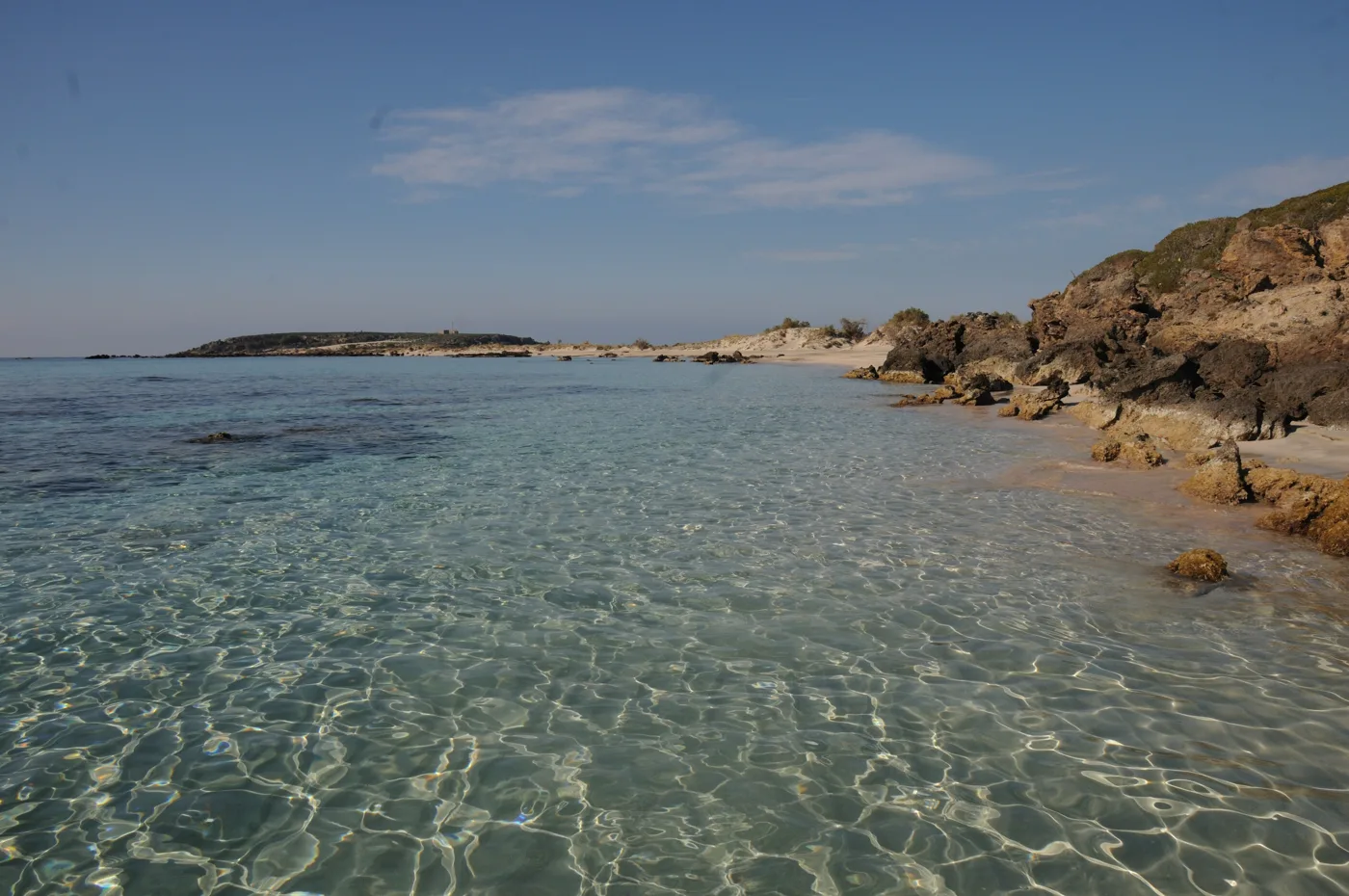
Water up to your knees.
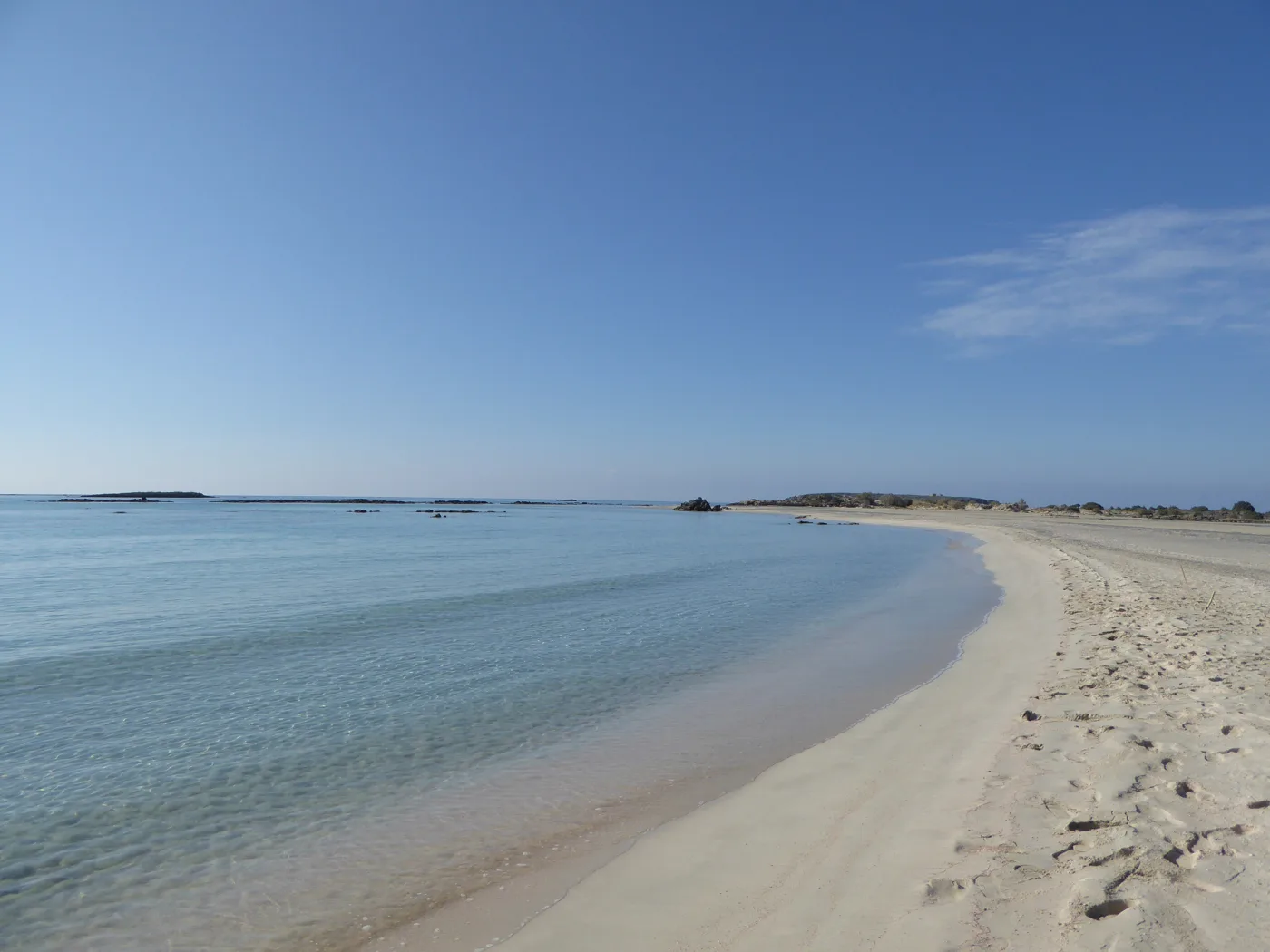
From the coast to the islet.
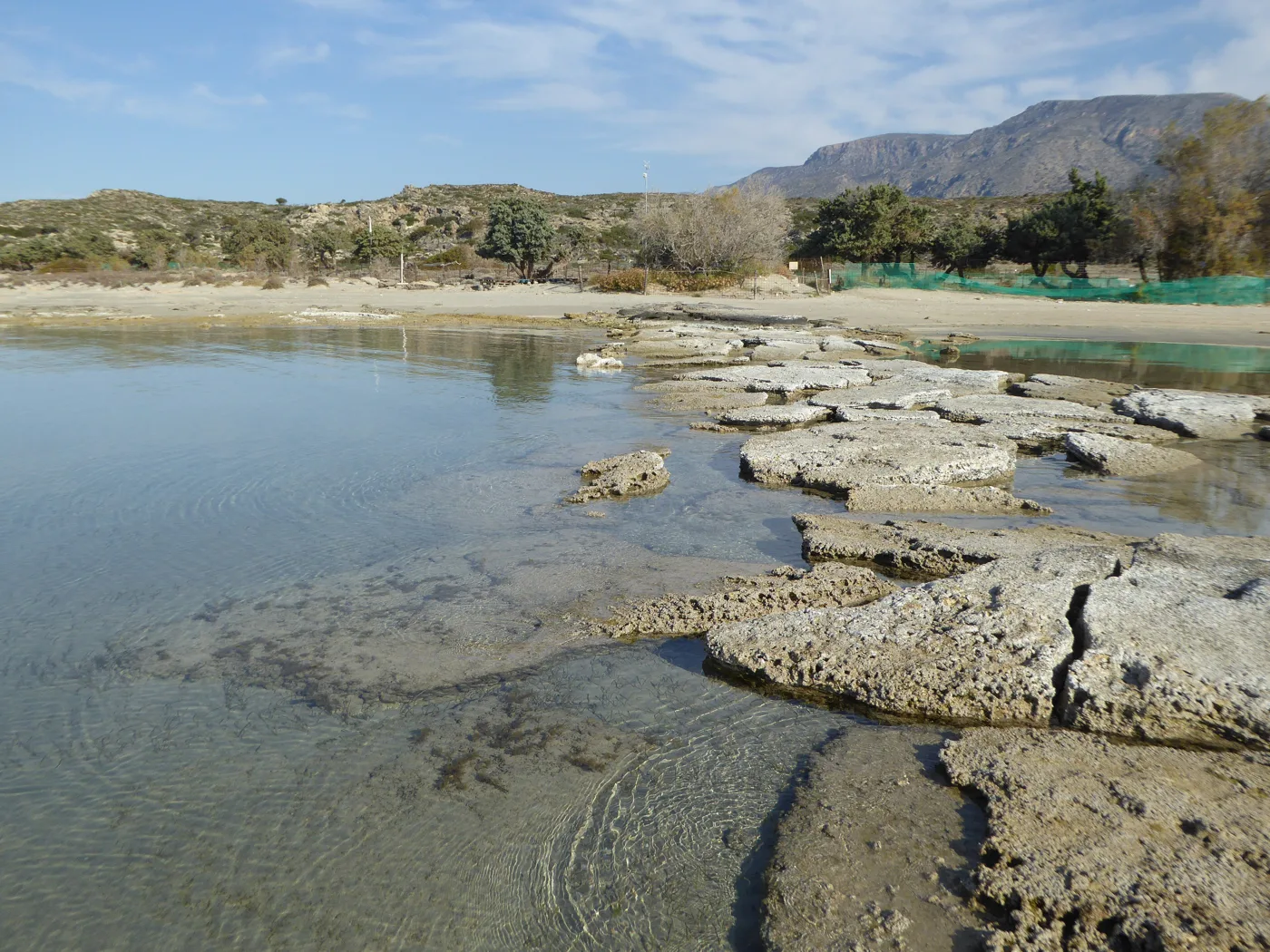
Shallow, warm, calm.
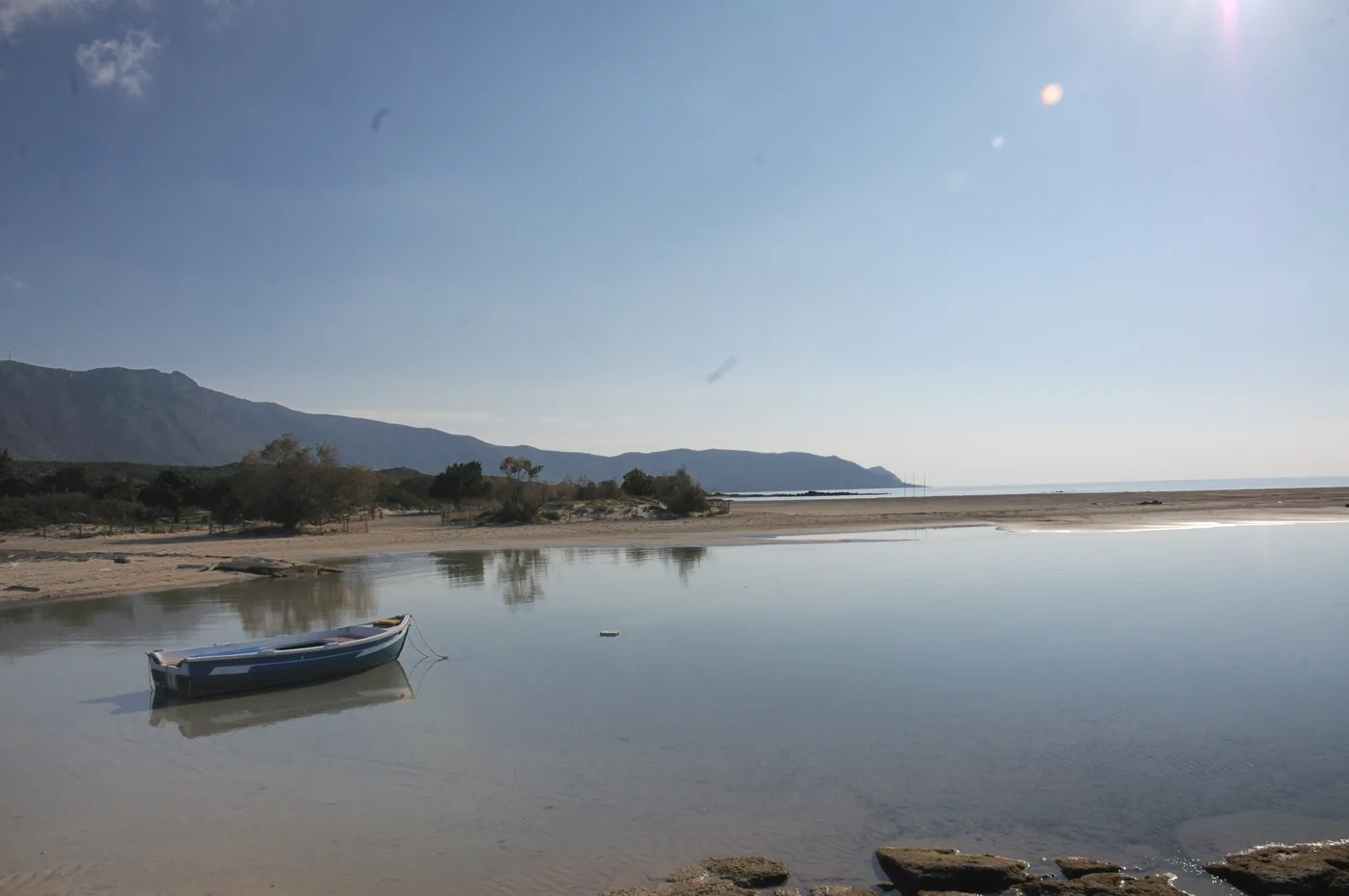
In the lagoon.
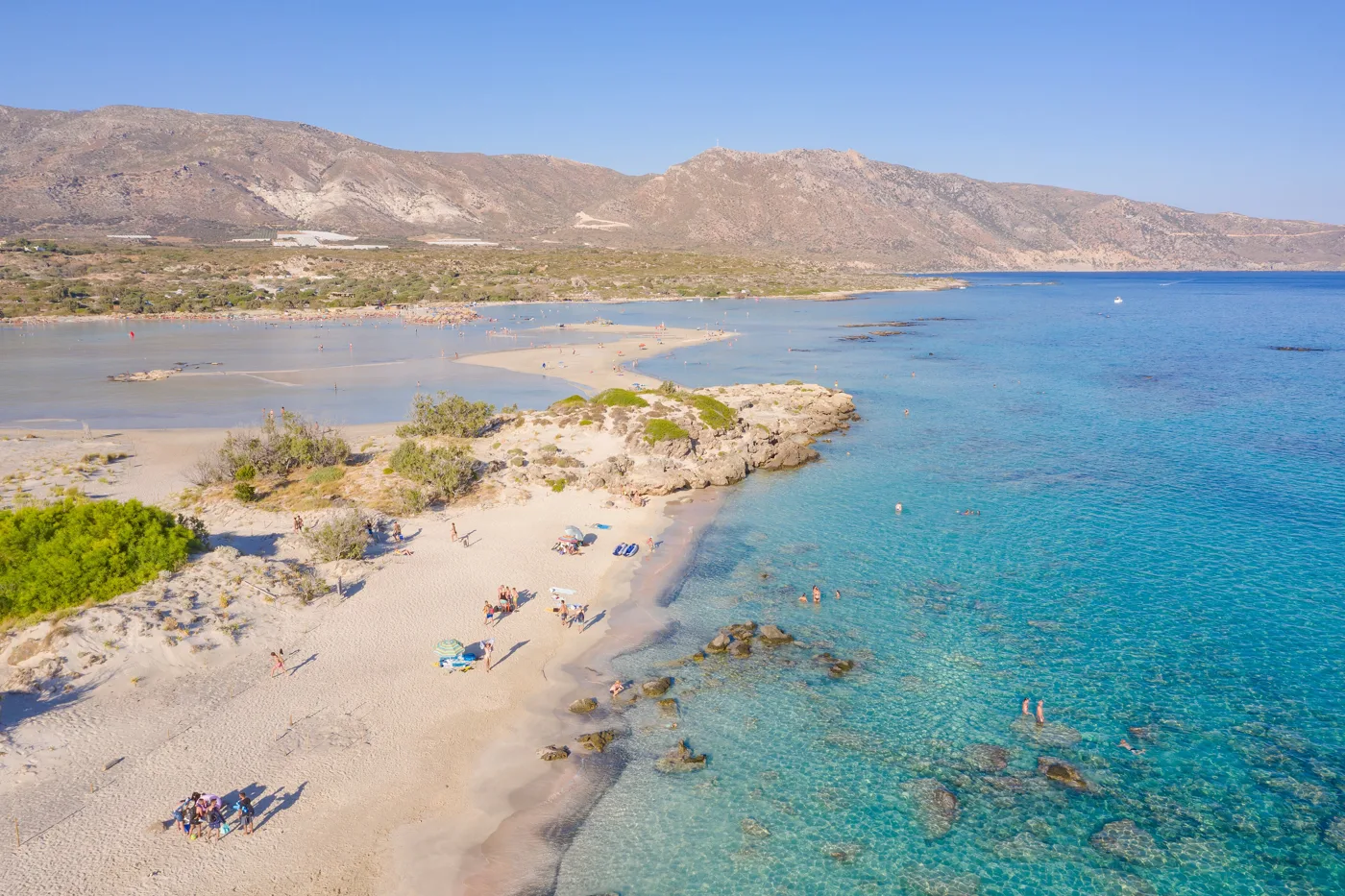
The coast of Crete opposite.
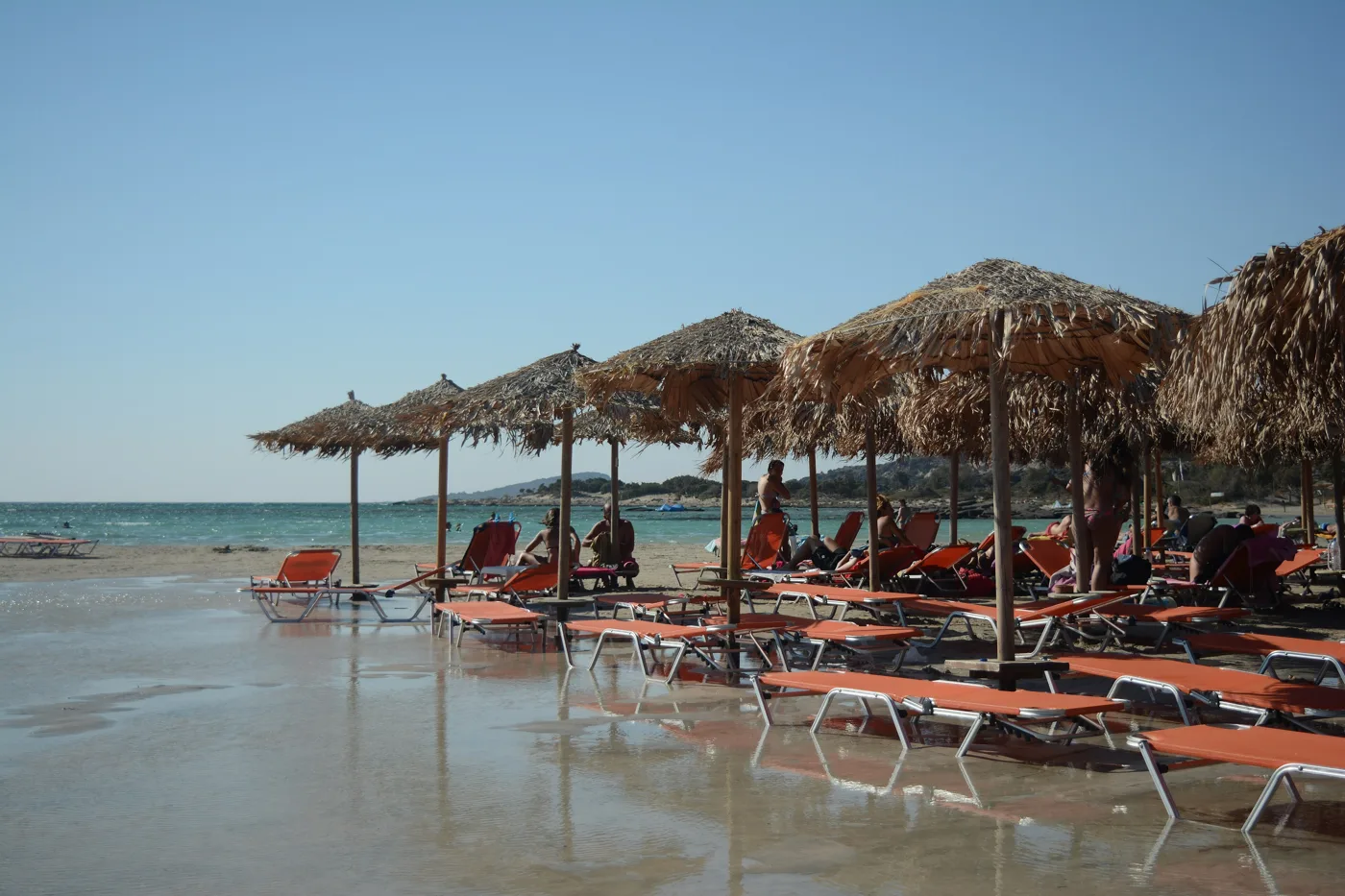
On the organised side.
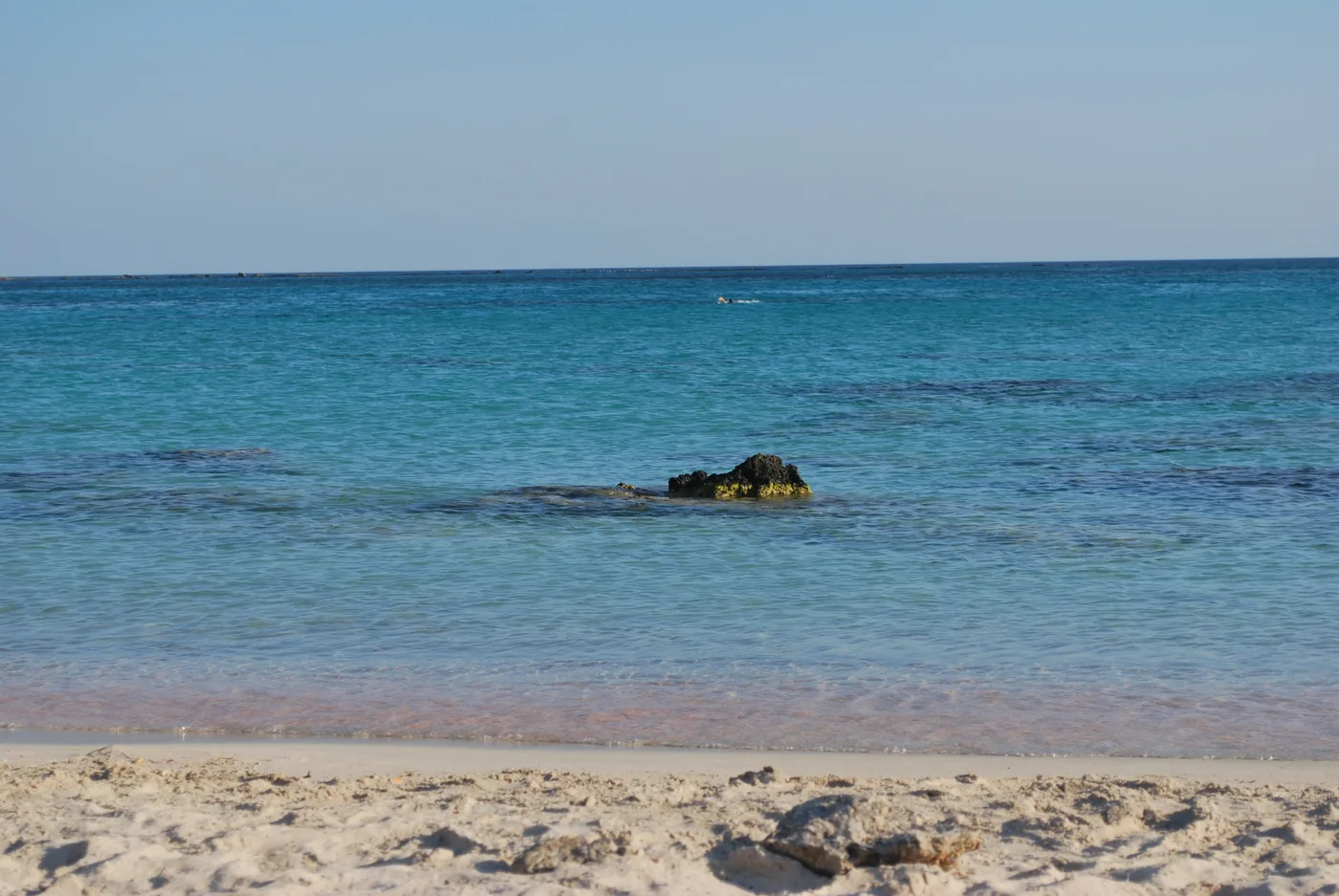
Calm and clear.
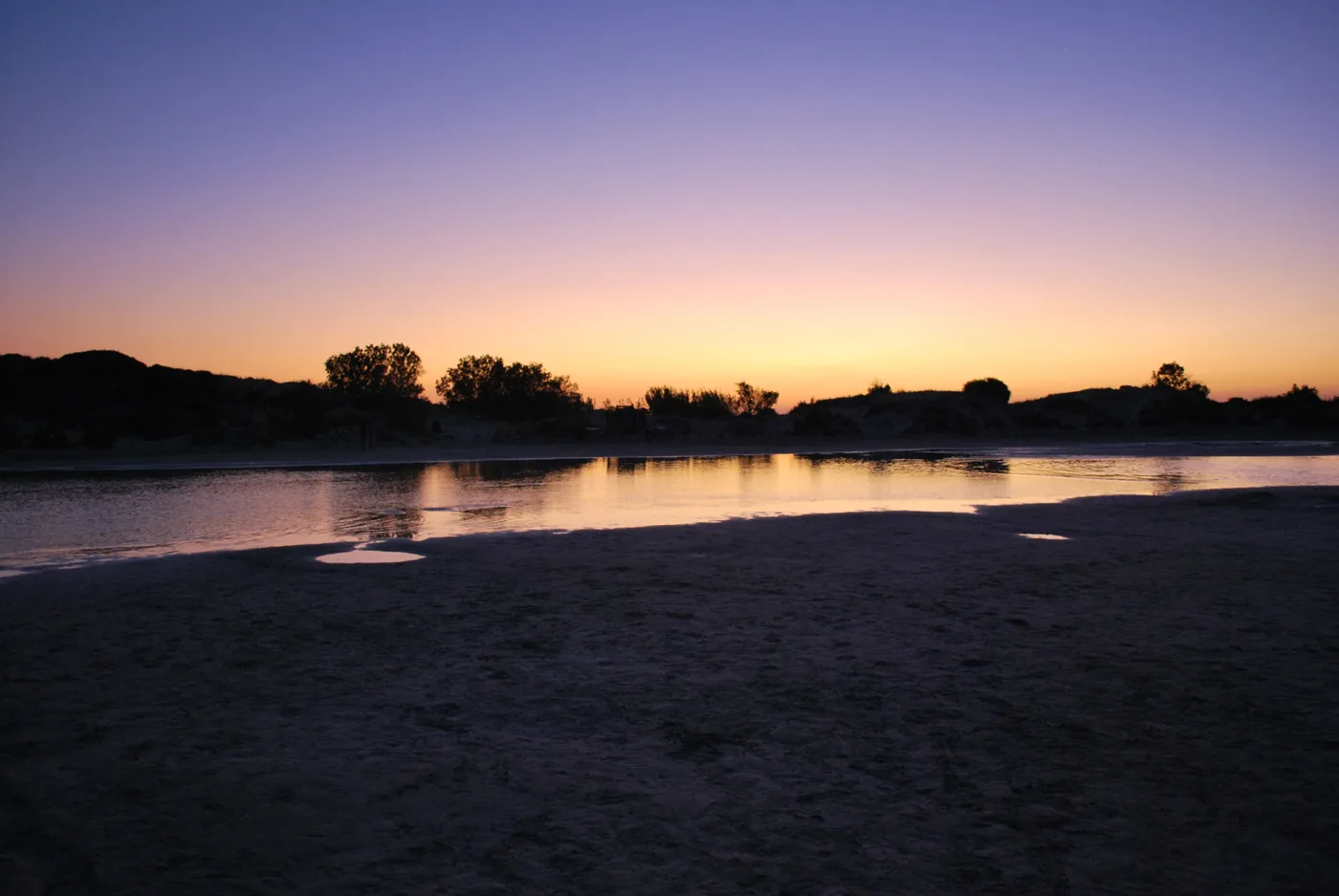
When the crowds leave.
Photos: Vamvaki (CC BY-SA 4.0), Josep M. Gracia (CC BY-SA 4.0), dronepicr (CC BY 2.0), Foto dell'arte (CC BY-SA 4.0), Kalogeras Nikolas (CC BY-SA 4.0) · Wikimedia Commons
In summer, arrive before nine in the morning or after five in the afternoon: you will find a space in the car park and the lagoon almost empty. At midday, the road and the car park fill up, and swimming becomes a crush.
🌸 The pink sand
The pink sand is the reason Elafonisi became famous. The colour comes from fragments of the shells of tiny sea creatures, which the waves break up and mix with the white sand. It is not everywhere: you will see it mainly on the south side, near the islet, in strips at the water’s edge, stronger when the sand is wet and the sun is low. Do not expect a whole pink beach, as in filtered photos.
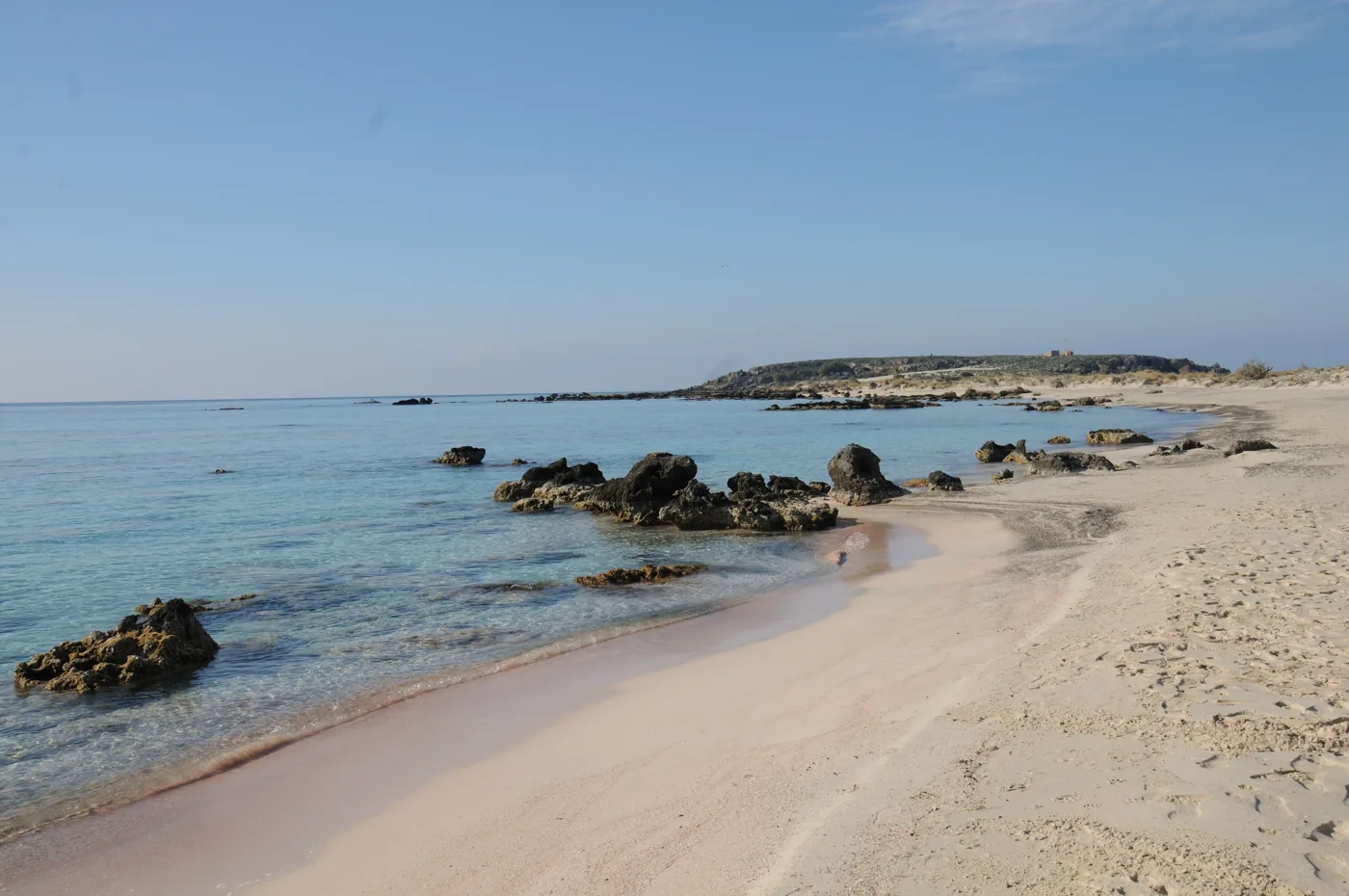
Pink at the water’s edge.
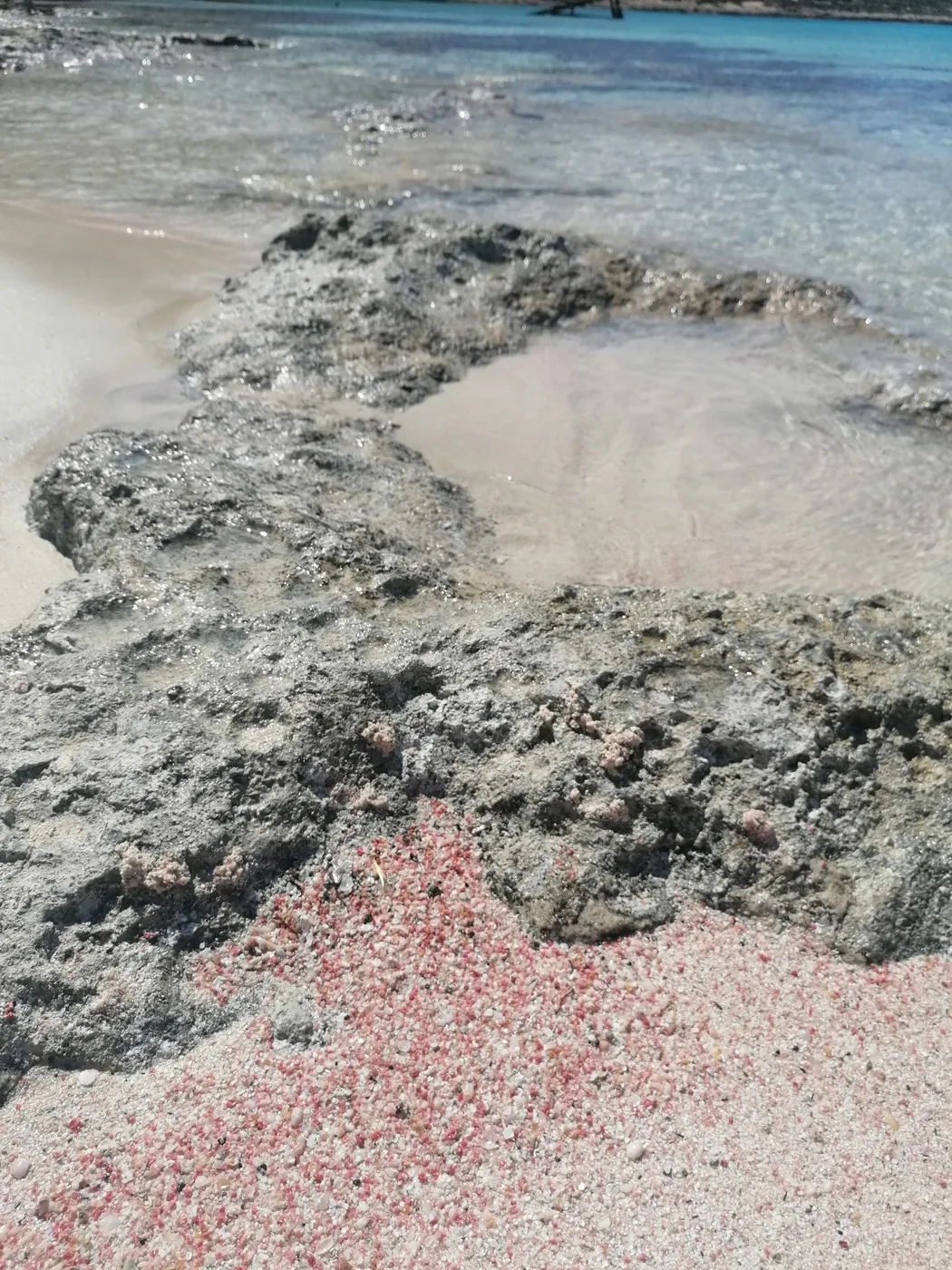
Fragments of shells.
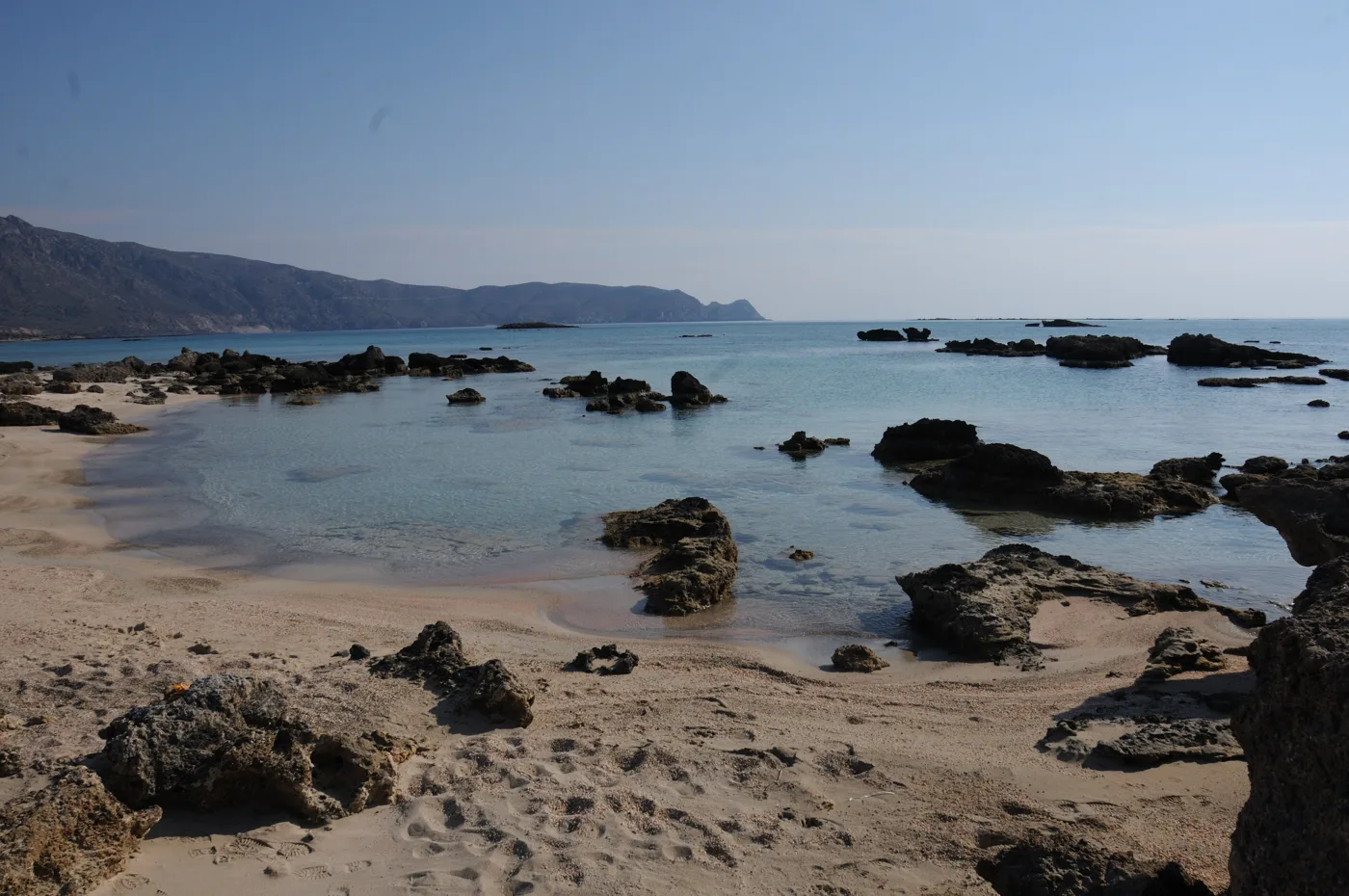
On the south shore.
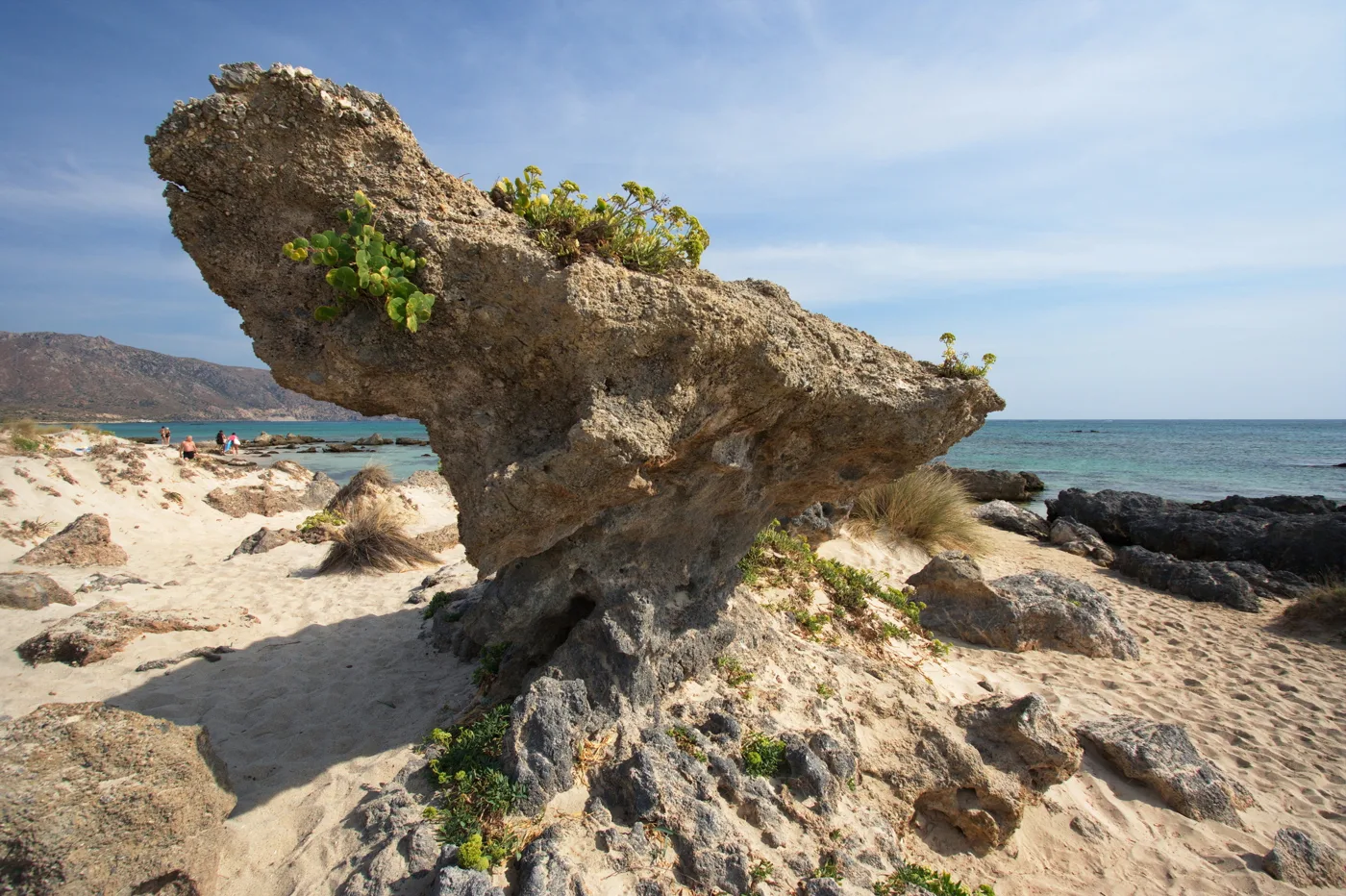
The wind carved the stone.
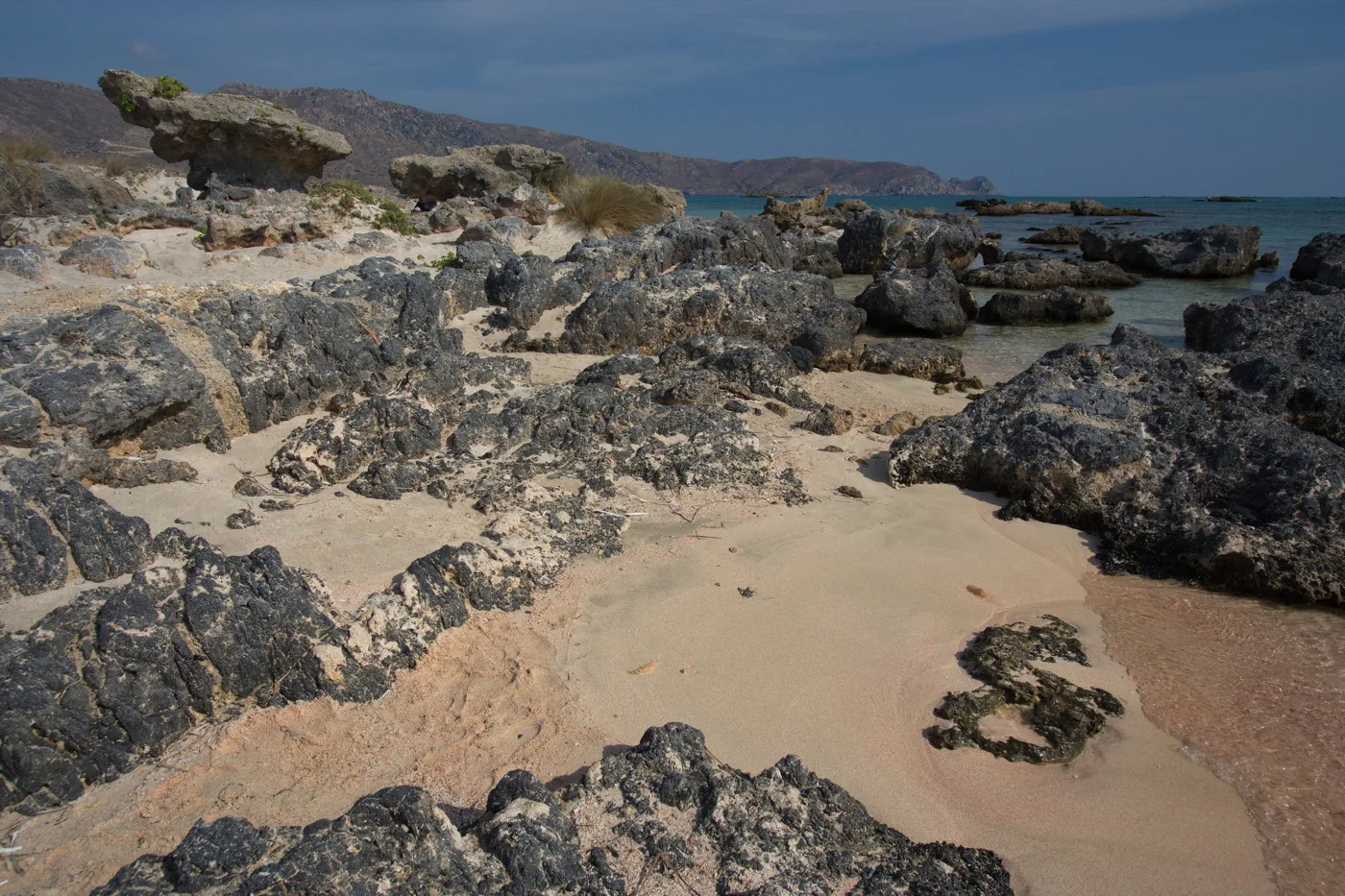
Sculptures of the wind.
Photos: Josep M. Gracia (CC BY-SA 4.0), Naidaso (CC BY-SA 4.0), Karel Stipek (CC BY 4.0) · Wikimedia Commons
The pink sand grows thinner every year, because visitors fill little bottles as souvenirs. It is forbidden, and the fines are heavy. Photograph it and leave it there.
🏝️ The islet
The islet of Elafonisi is a protected area, with dunes, centuries-old cedars, sea lilies that bloom in summer and rare plants. Footpaths cross it to the west coast, where the landscape turns wild: dark rocks, open sea, waves. Always stay on the paths, because the dunes are easily destroyed.
On the islet you will also see a small stone memorial. It recalls Easter 1824, when hundreds of women, children and old people, who had hidden here from the Turks, were killed or sold as slaves. Offshore, in 1907, an Austrian steamship was wrecked, and on the islet’s shore a lighthouse still guards the ships.
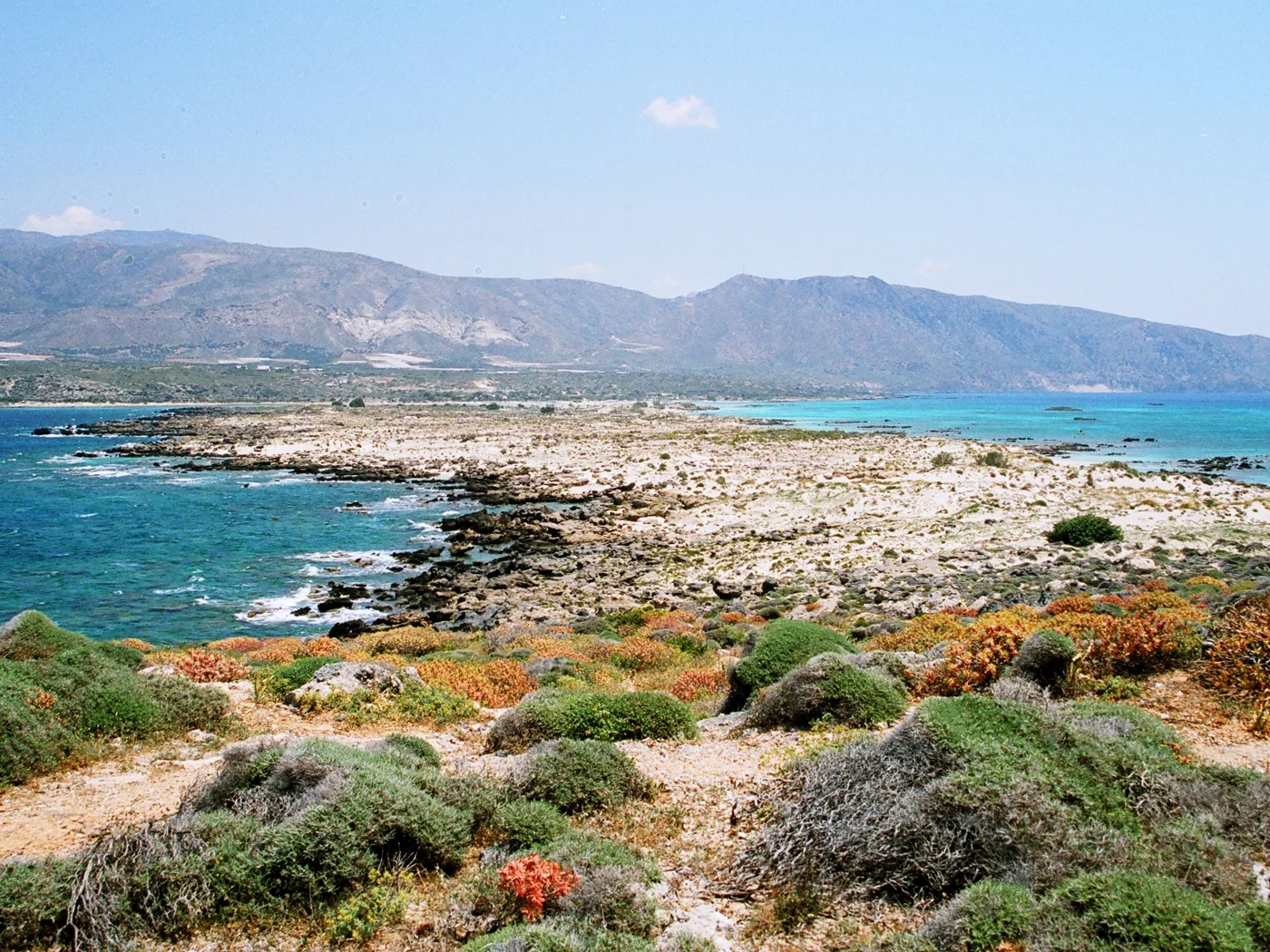
Protected nature.
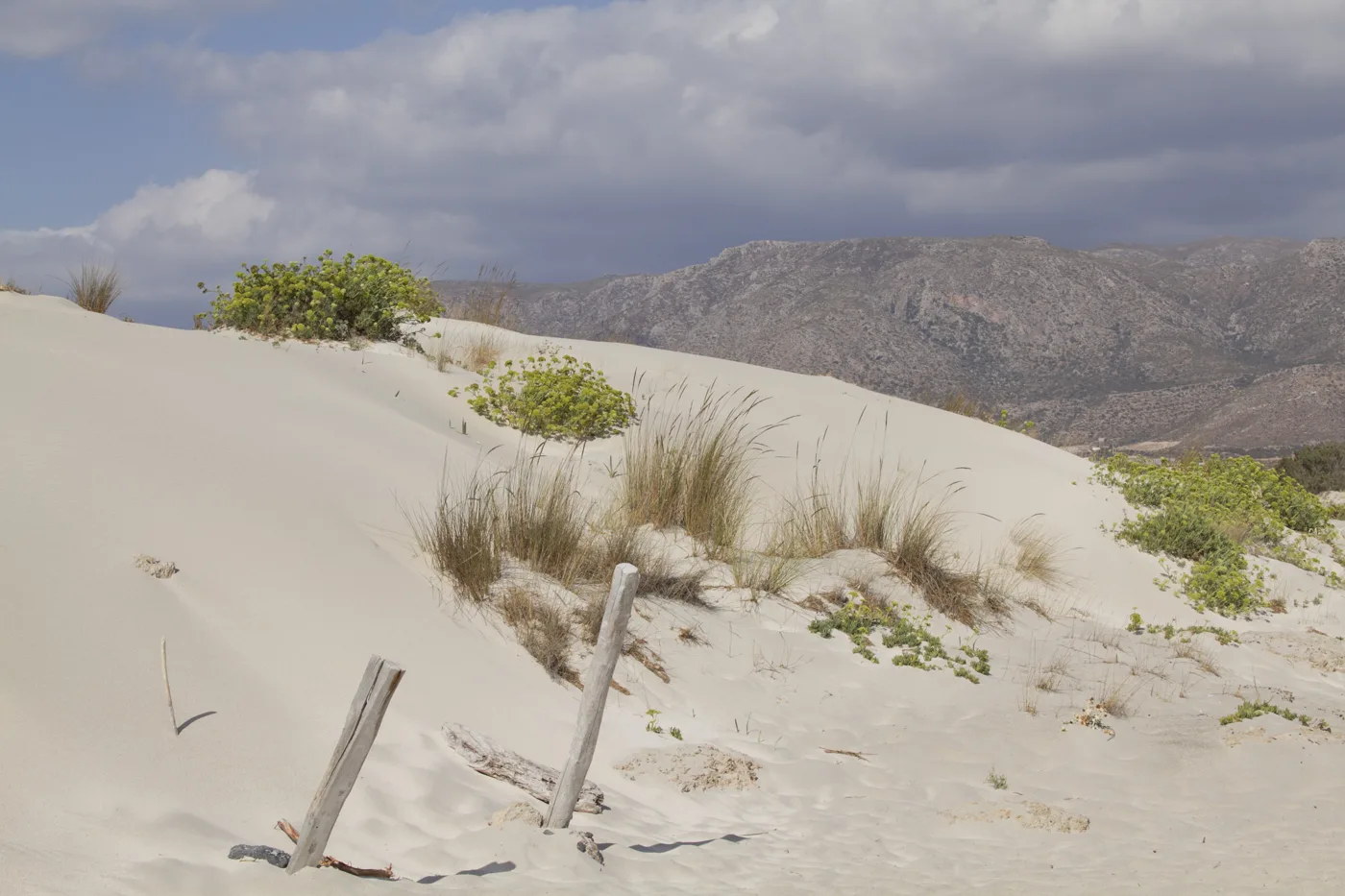
Stay on the paths.
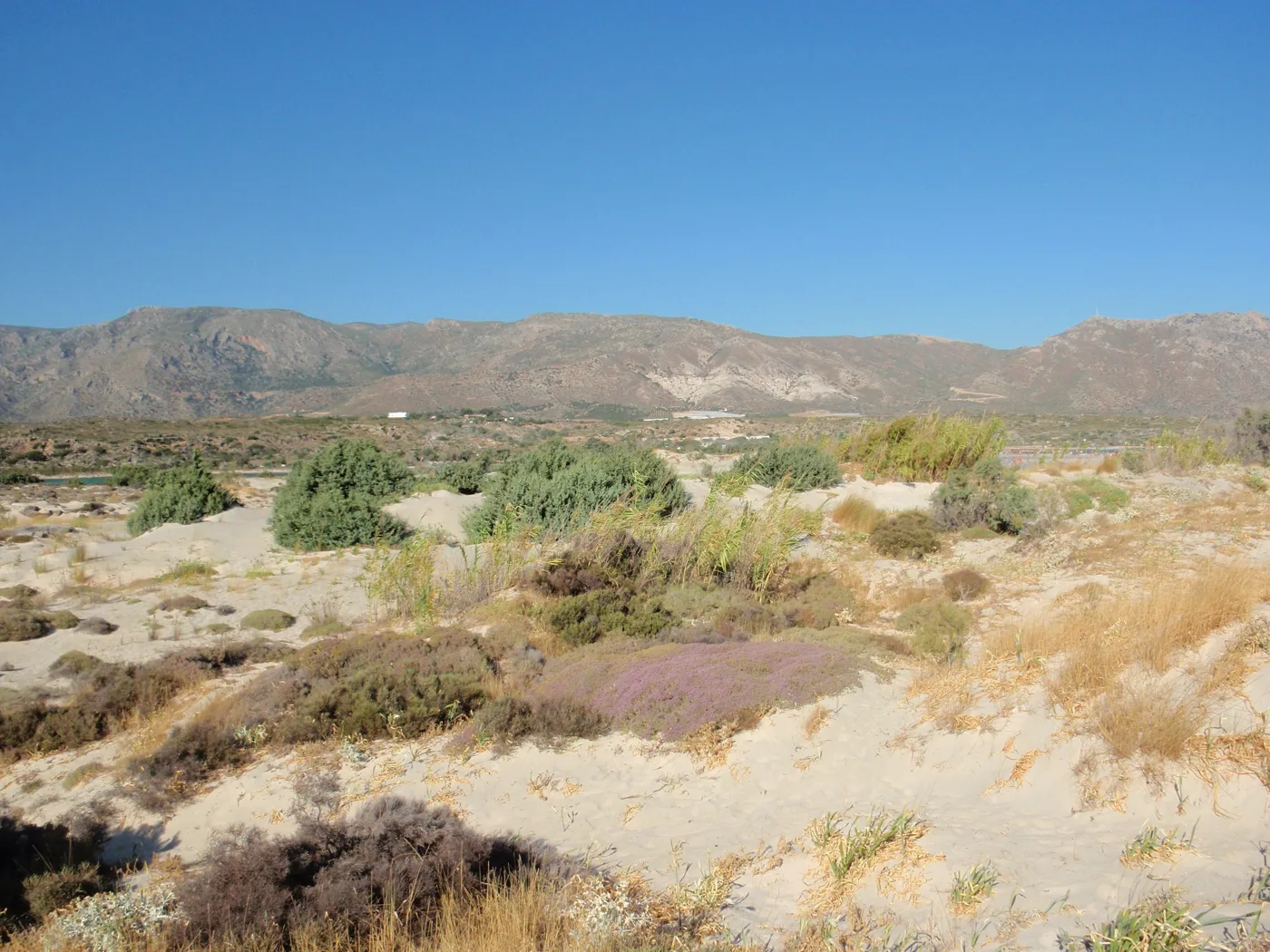
Life on the sand.
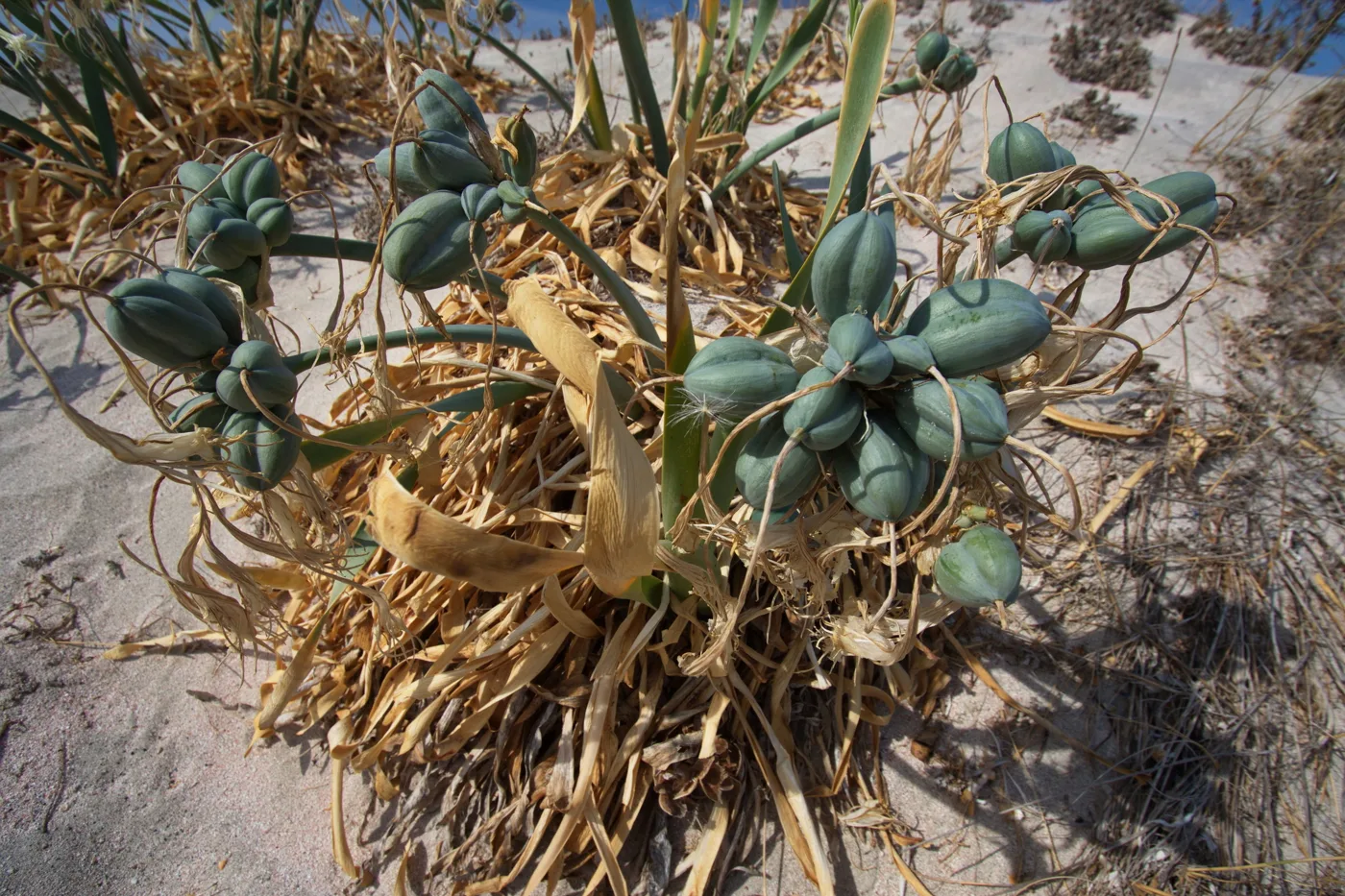
It blooms in summer.
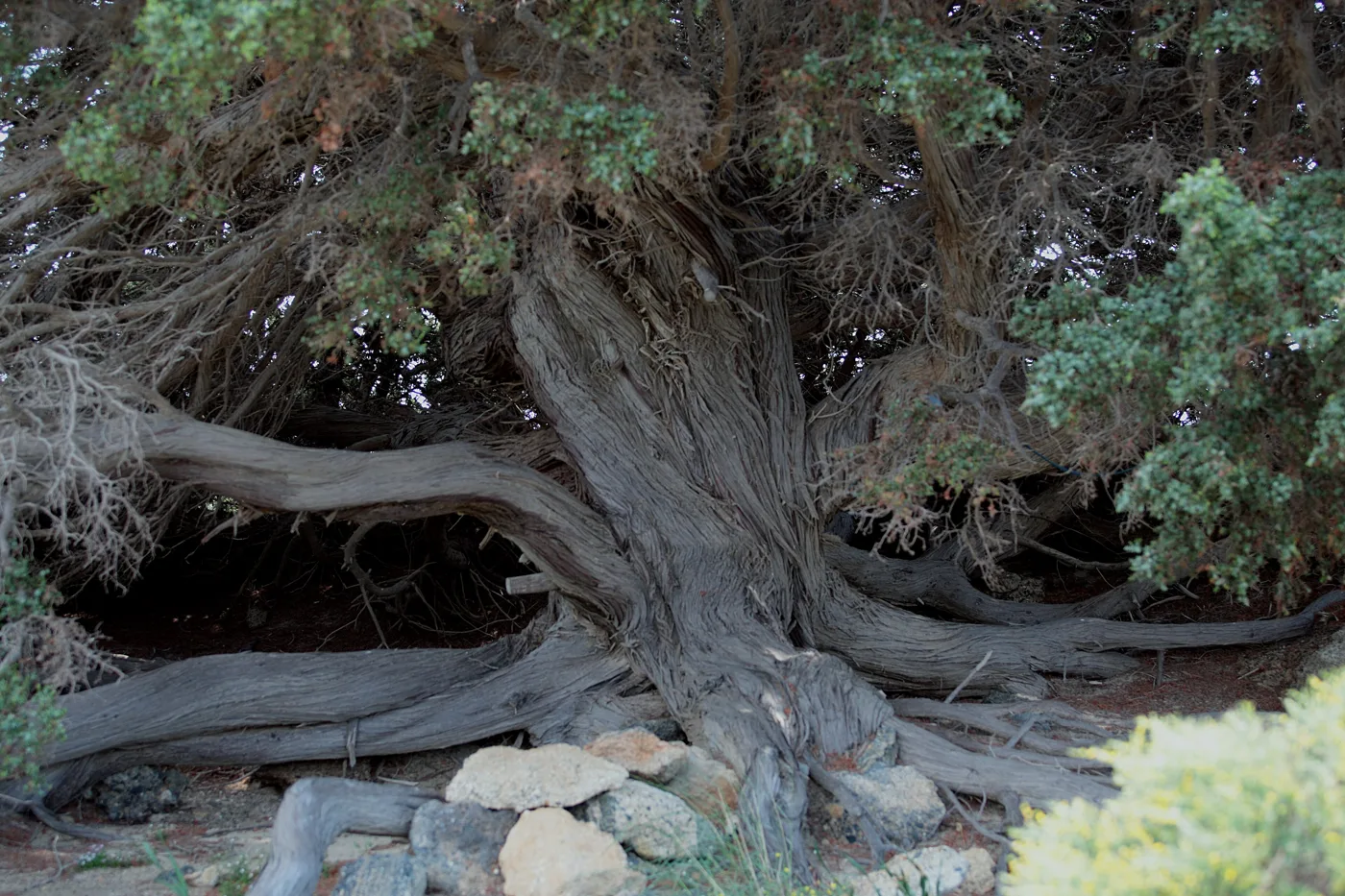
Centuries on the sand.
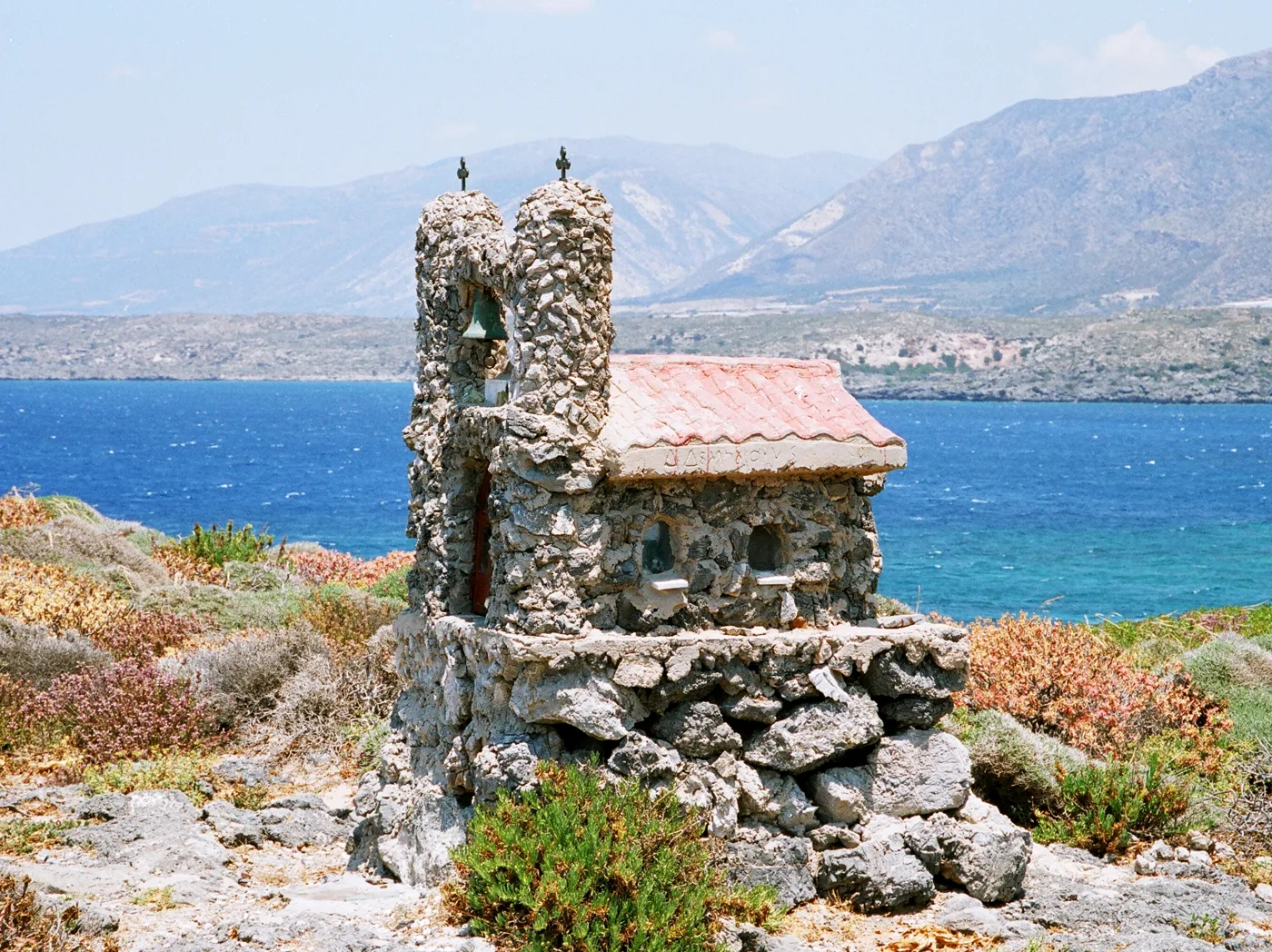
The memory of 1824.
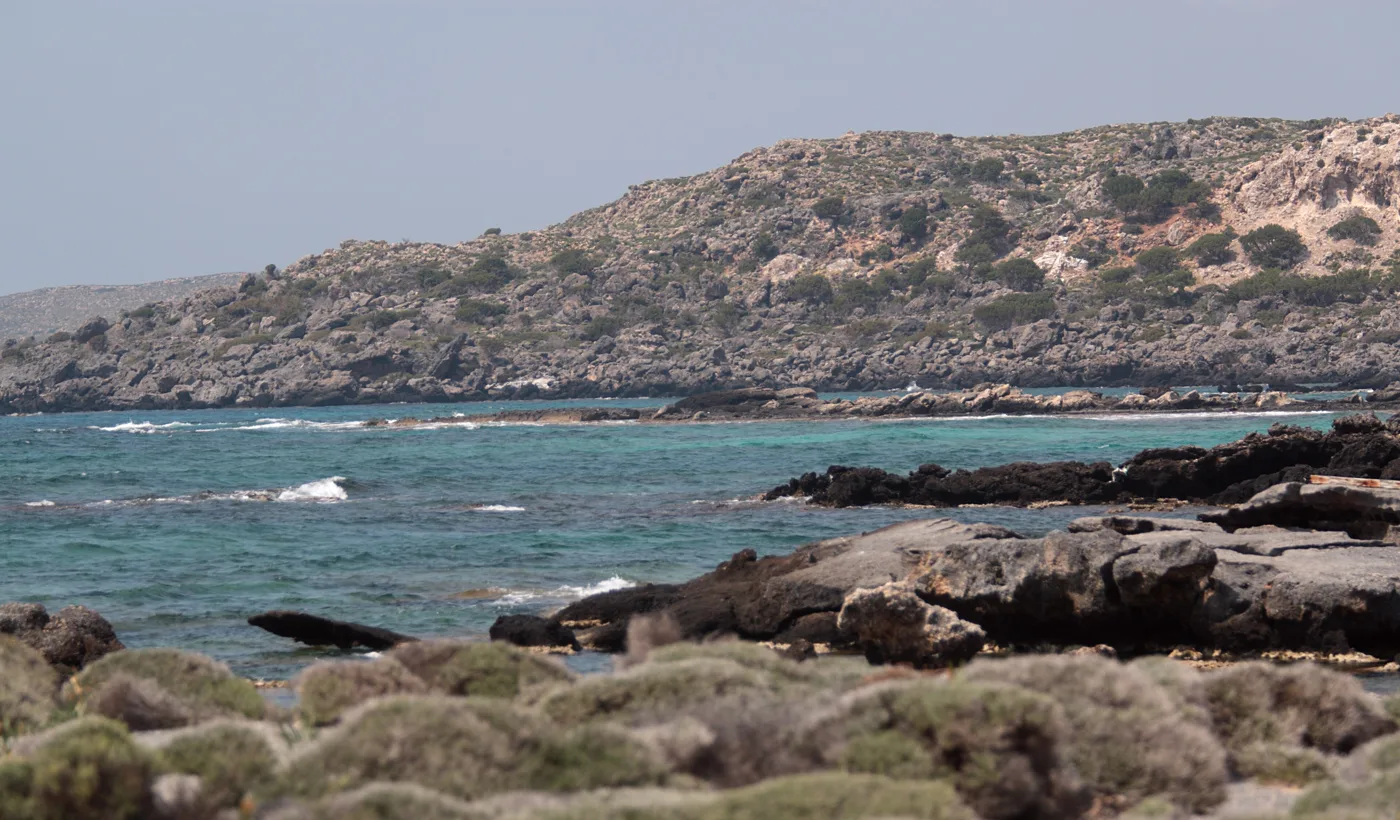
The west side of the islet.
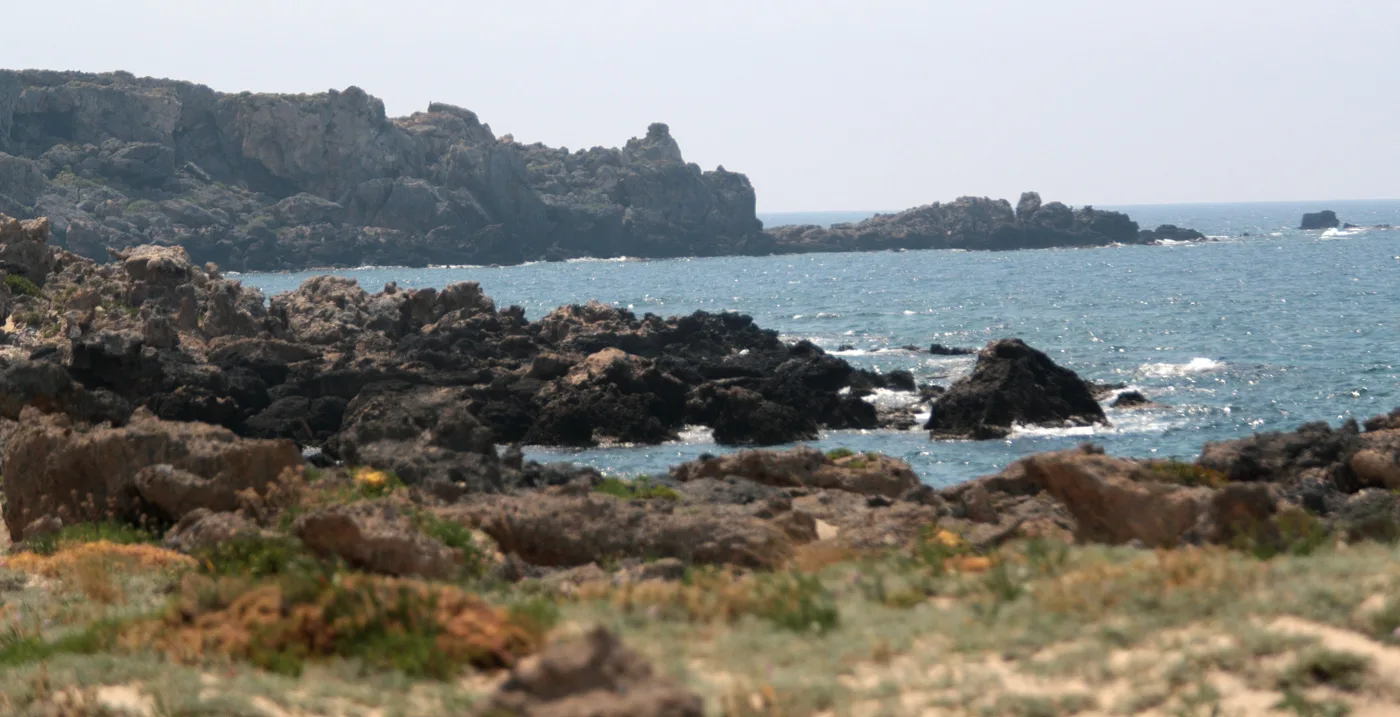
Open sea.
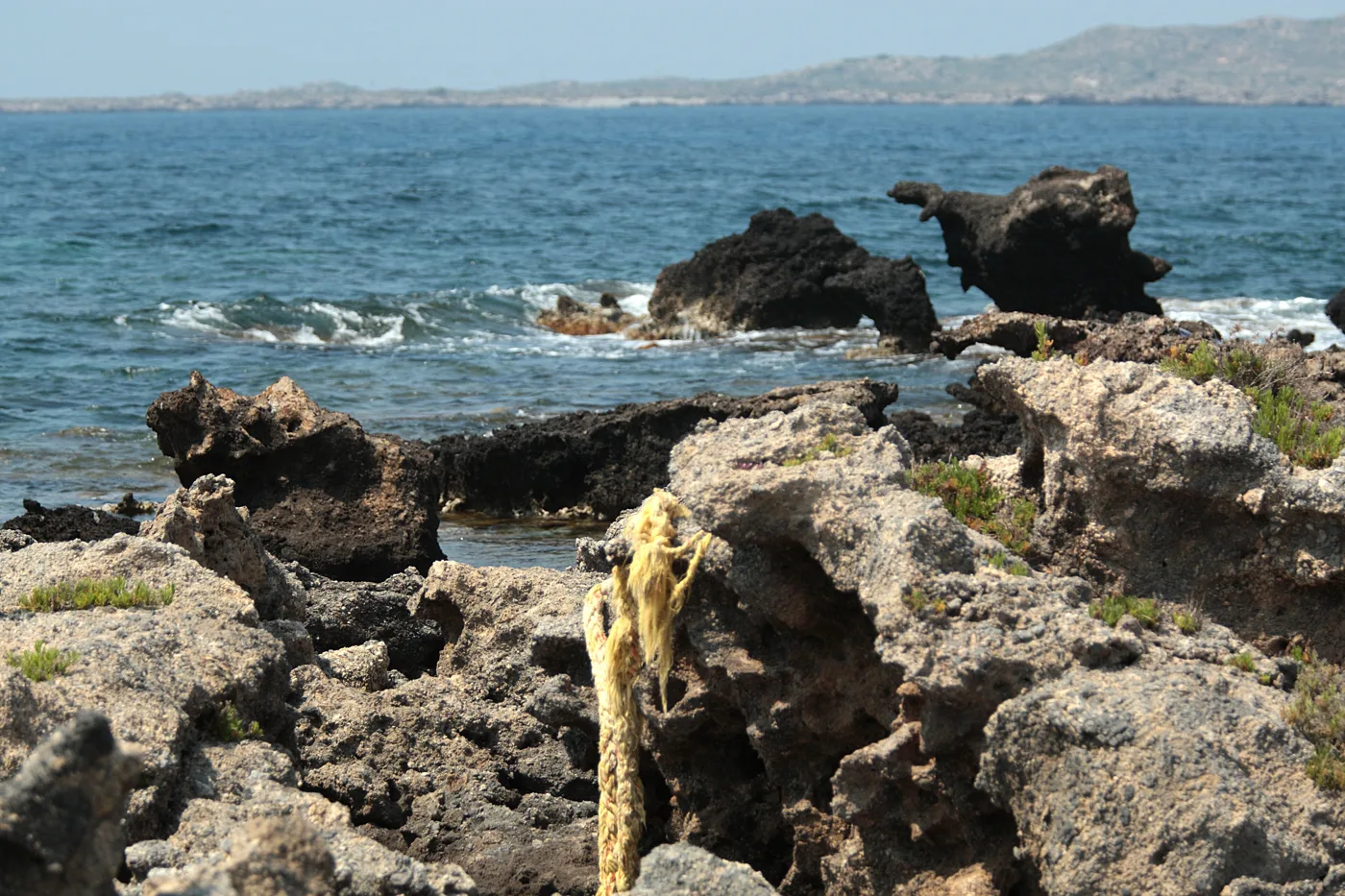
Stone and waves.
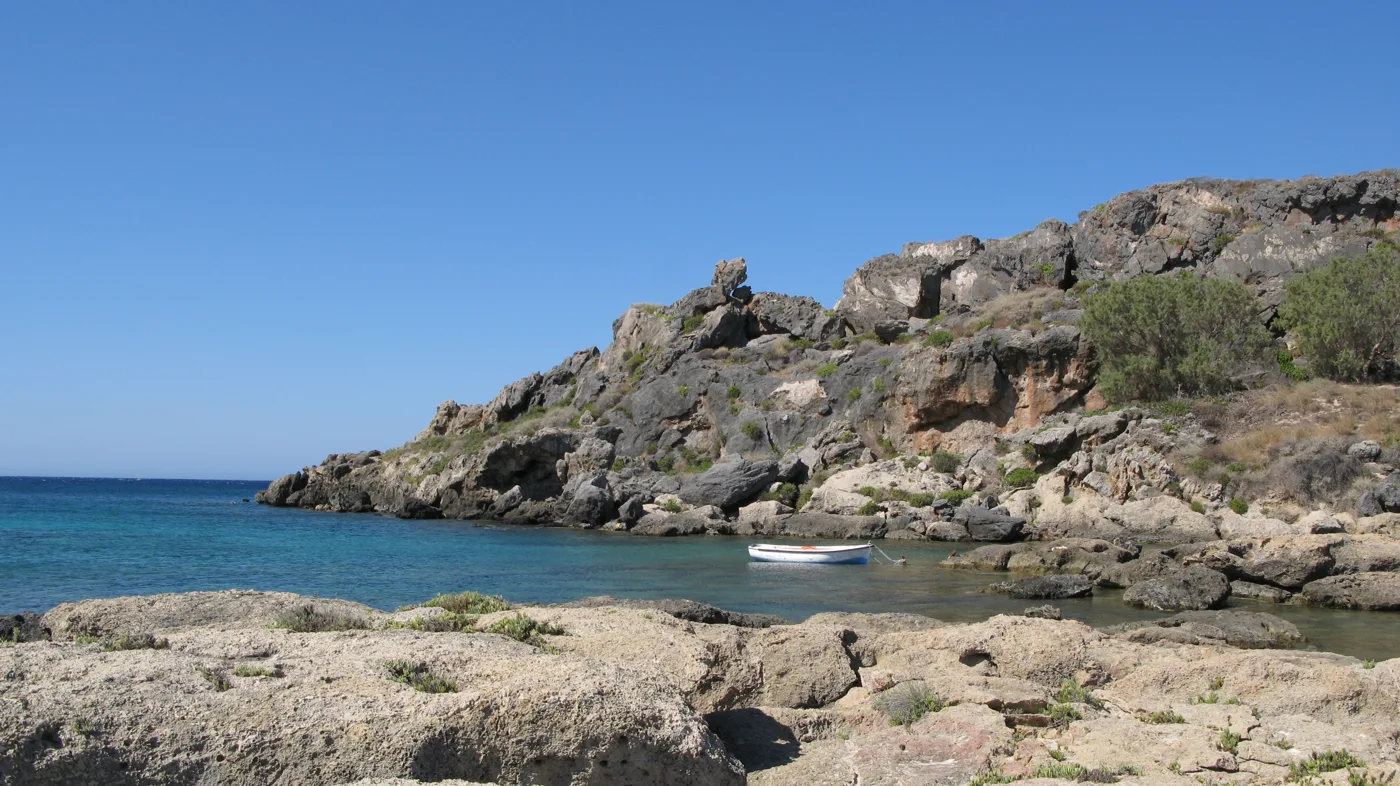
At the tip of the islet.
Photos: Olaf Tausch (CC BY-SA 3.0), trolvag (CC BY-SA 3.0), Jimzoun (CC BY-SA 4.0), Karel Stipek (CC BY 4.0), Jerzy Strzelecki (CC BY-SA 3.0), Gerasmag (CC BY-SA 4.0) · Wikimedia Commons
⛪ Kedrodasos and Chrysoskalitissa
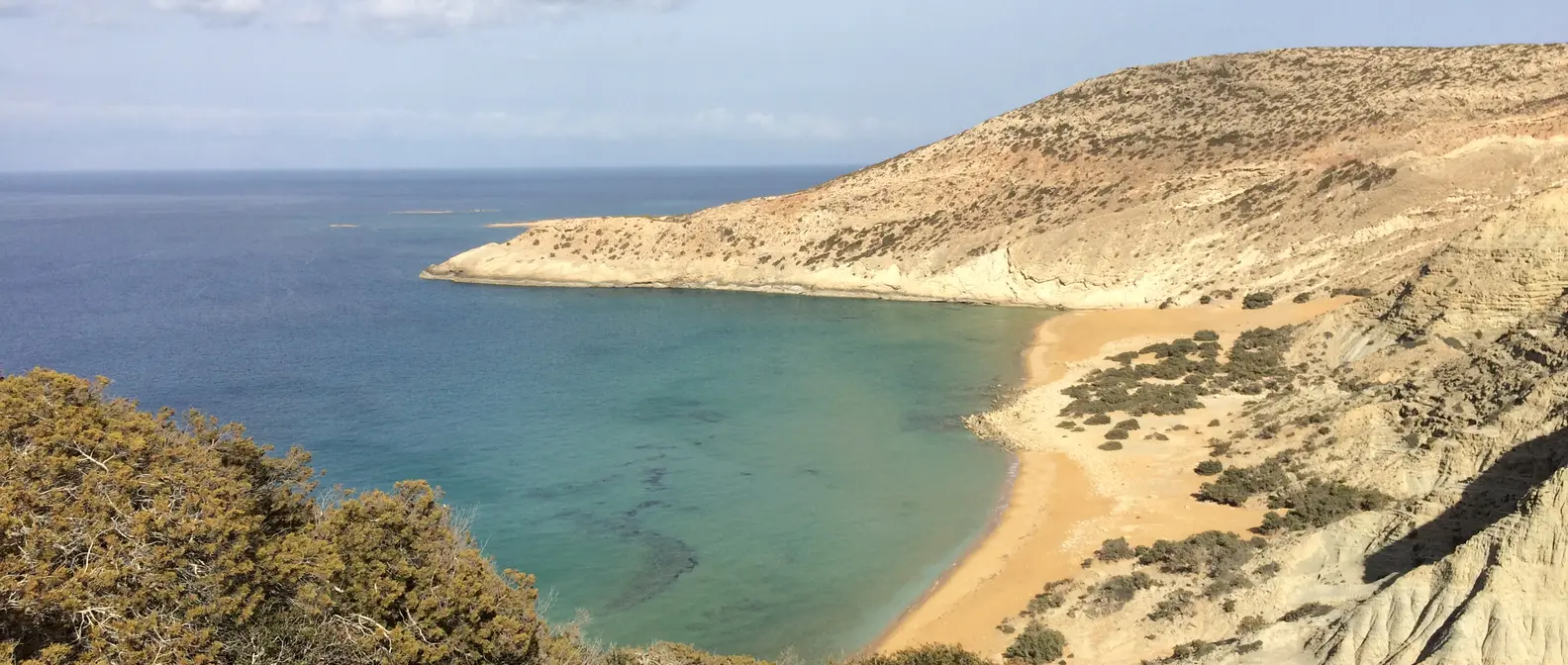
A little east of Elafonisi, Kedrodasos is a series of sandy beaches in a cedar forest, with natural pools between the rocks. Go by car on a dirt road or on foot from Elafonisi, and you will find far fewer people. Five kilometres further north, on a rock above the sea, Chrysoskalitissa Monastery, with its blue and white church, took its name from one of its steps, which according to tradition was golden and can only be seen by the pure of heart.
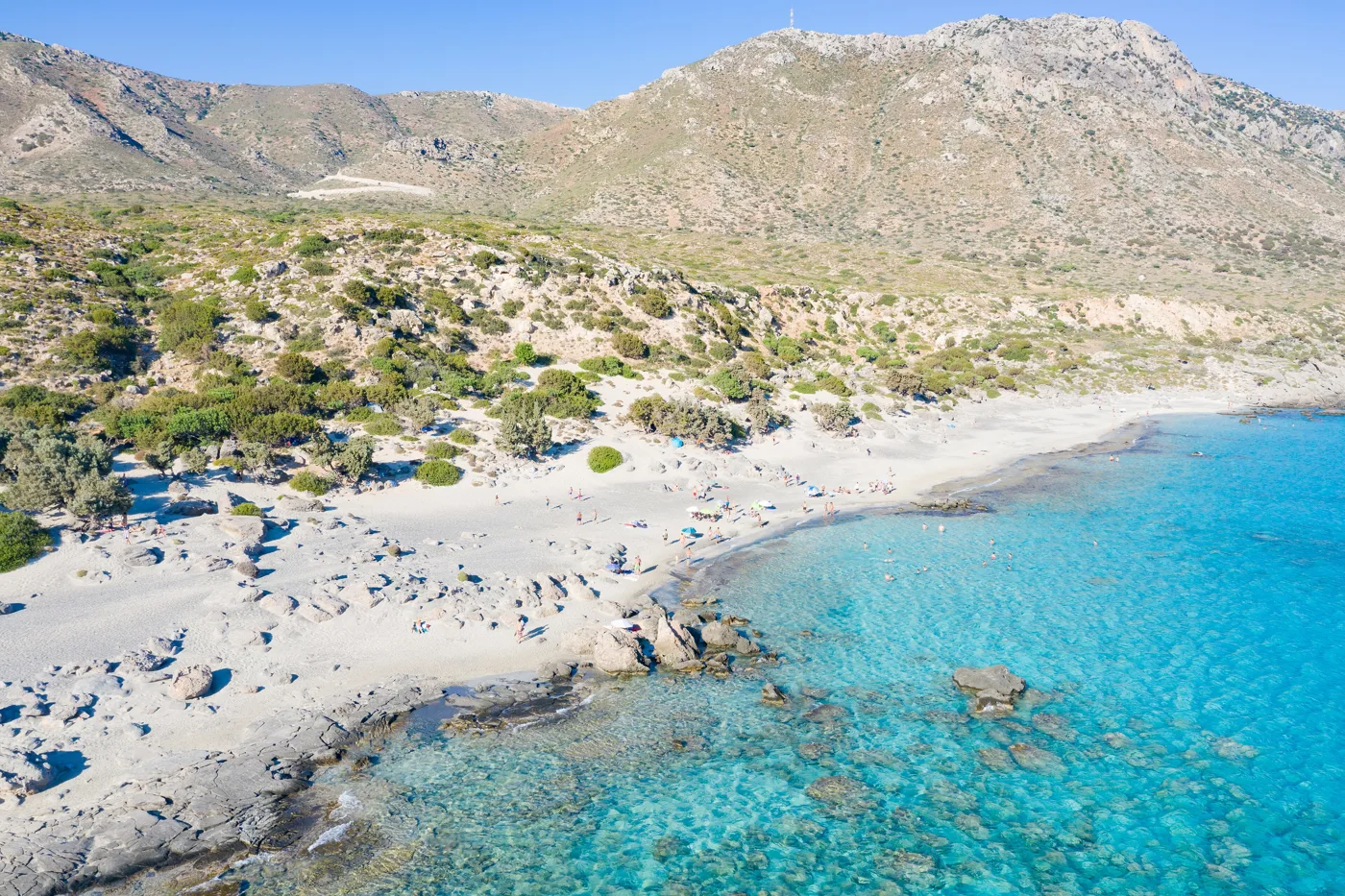
A little further east.
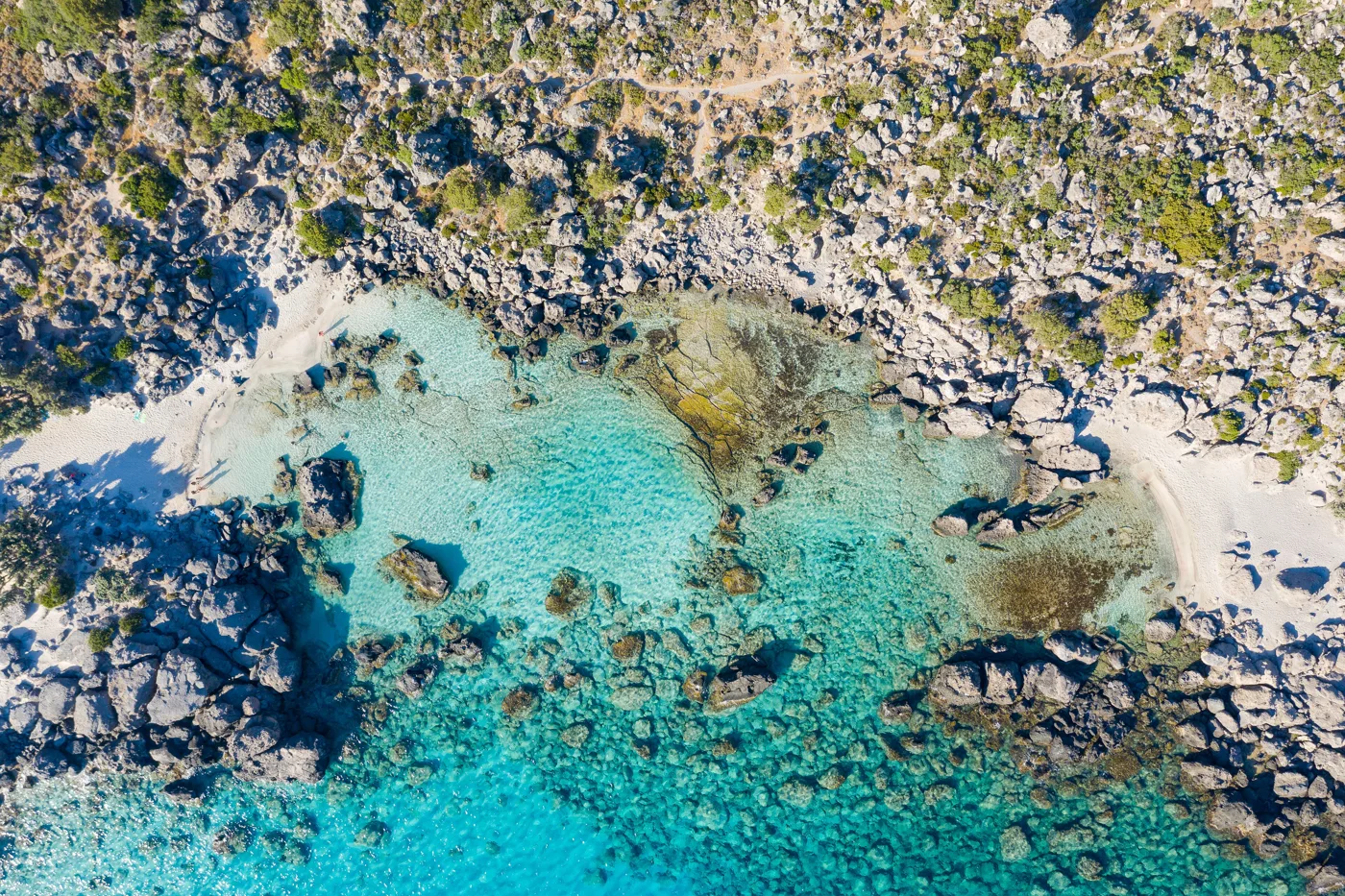
At Kedrodasos.
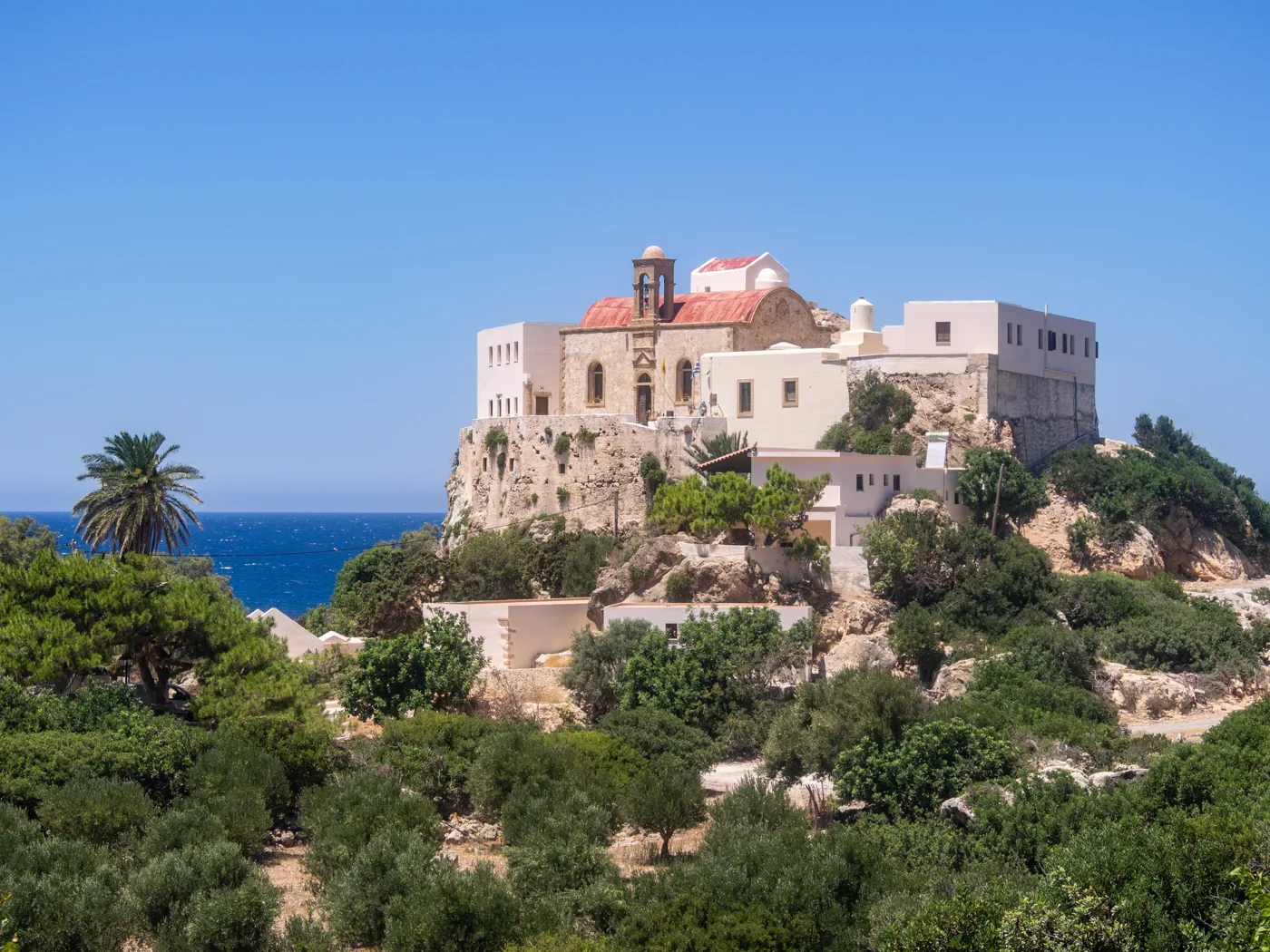
The monastery on the rock.
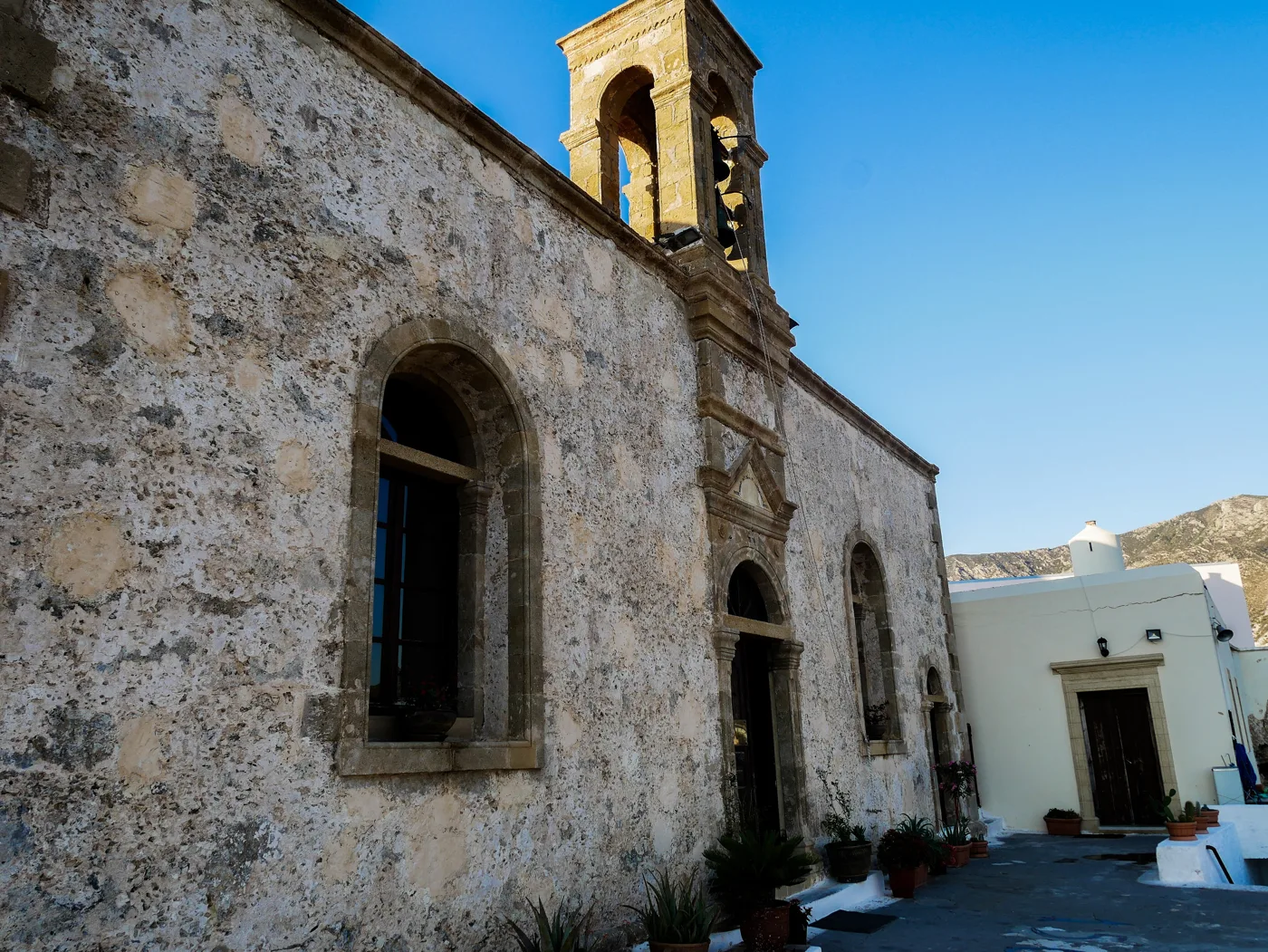
Five kilometres further north.
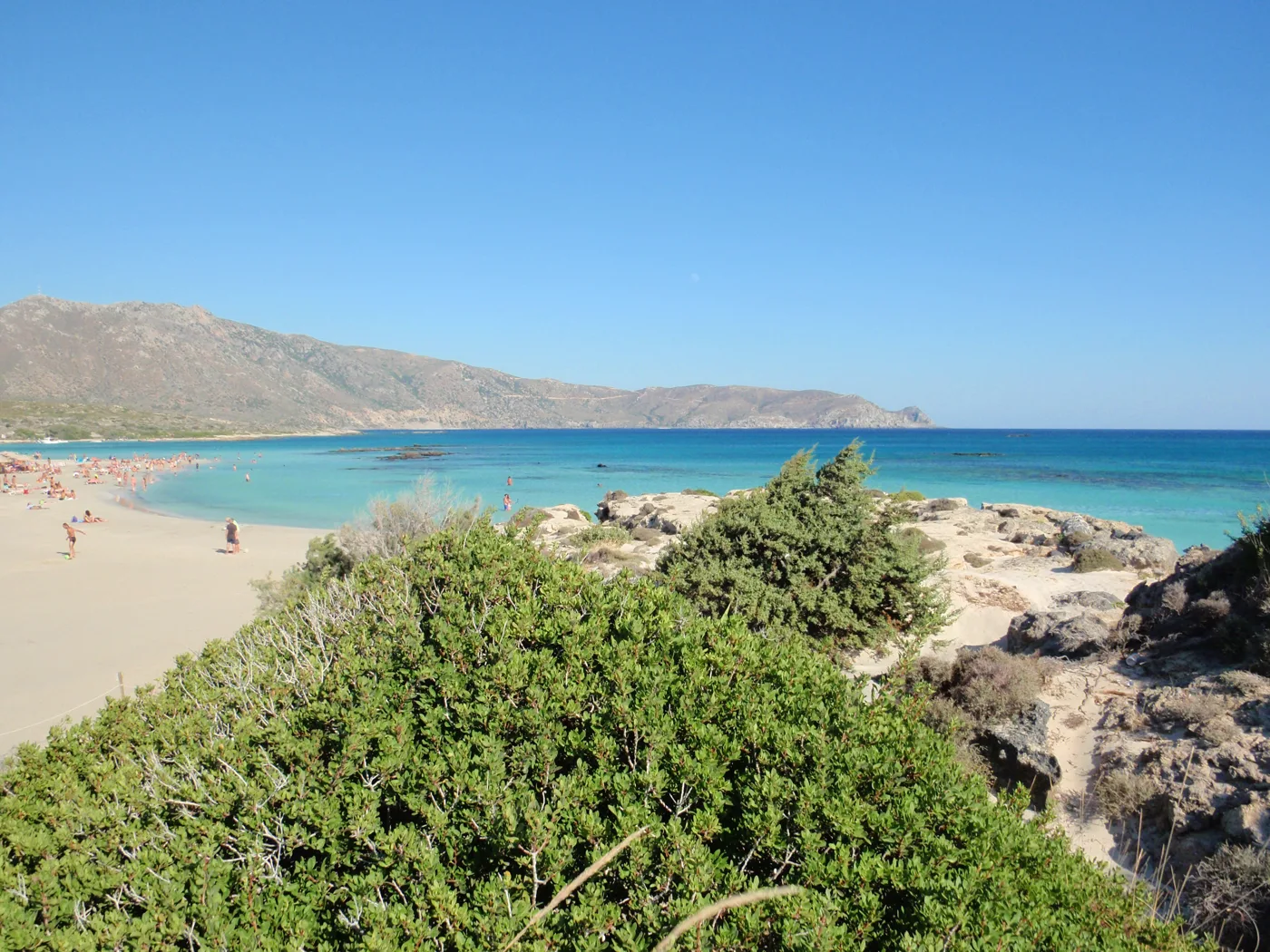
From the hills above the beach.
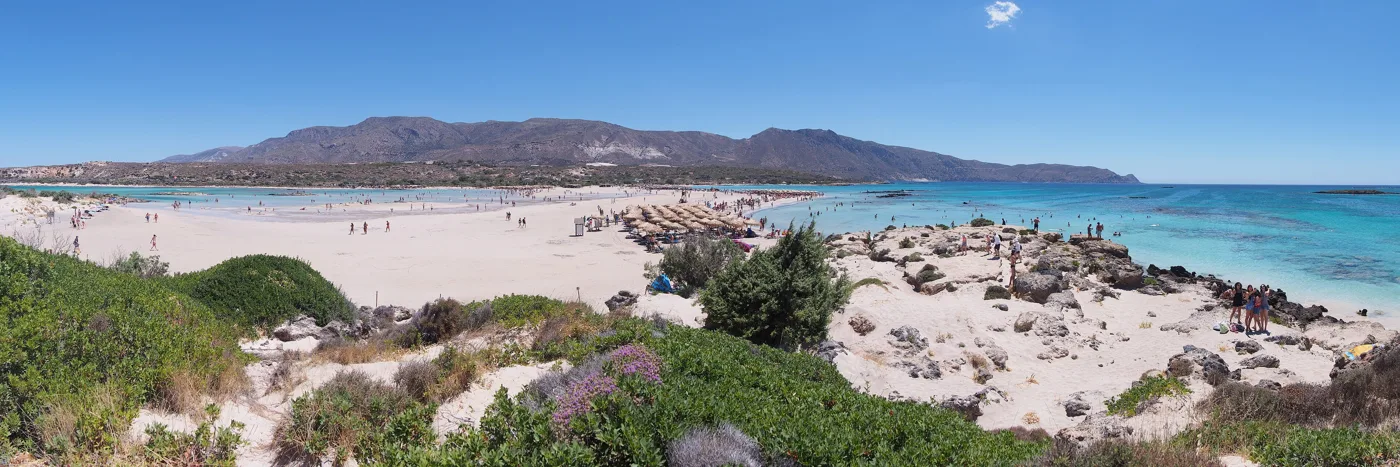
The whole beach.
Photos: dronepicr (CC BY 2.0), C messier (CC BY-SA 4.0), Destinygreece (CC BY-SA 4.0), Jimzoun (CC BY-SA 4.0) · Wikimedia Commons
🍽️ What to eat
On the beach of Elafonisi there are only snack bars, so take water and food. For a real meal, stop at the tavernas of the surrounding villages, on the road to Kissamos or Enia, or in Paleochora: fish, dakos, chochlioi (snails), Cretan cheeses, pies with mizithra and greens, and wine from the vineyards of Kissamos. At the end, always, raki.
📅 When to go
May, June, September and October are the best months: warm sea, fewer people, clear skies. Because it is shallow, the lagoon warms up early in spring and keeps its warmth until late autumn. In July and August go only very early or late. With a strong wind, the lagoon turns cloudy and the sand blows up.
✈️ How to get there from Athens
| How | Duration | From | Notes |
|---|---|---|---|
| Plane and car | About 50 minutes + 1.5 hours | Athens airport → Chania → Elafonisi | The easiest way. A mountain road at the end. |
| Ferry and car | About 9 hours + 2 hours | Piraeus → Souda (Chania) | Overnight ferry with a cabin. |
| Bus or boat | About 2 hours or 1 hour | Chania (KTEL) or Paleochora | Only in summer, once a day. |
From Ioulianou 50 go to the airport on Line 1 to Monastiraki and change to Line 3, or straight to Piraeus on Line 1 for the ferry. For the northern tip of the prefecture of Chania, see our guide to Gramvousa and Balos.
🗓️ A day at Elafonisi
The lagoon and the pink sand
Leave Chania at seven and arrive before nine, ahead of the buses. Walk through the shallows to the islet, find the pink sand at the water’s edge and swim in the lagoon while it is quiet.
The islet
Cross the islet on the marked paths, to the memorial and the rocks of the west coast, with the open sea in front. Take water and a hat: the only shade is under the cedars.
Kedrodasos and Chrysoskalitissa
When the beach fills up, go to Kedrodasos, for the natural pools between the rocks. On the way back, stop at Chrysoskalitissa Monastery and count the steps.
Frequently asked questions
Is the sand really pink?
Yes, but not everywhere. The pink tint appears in strips at the water’s edge, mainly on the south side, near the islet, and it is stronger when the sand is wet.
Can I walk to the islet?
Yes. The lagoon is so shallow that you cross it on foot, with the water up to your knees or a little higher. With a strong wind, the water can rise.
Is there shade?
A little. You can rent an umbrella on part of the beach, and elsewhere the only shade is under the cedars of the islet. Take a hat, sunscreen and plenty of water.
Is it the same as Elafonisos?
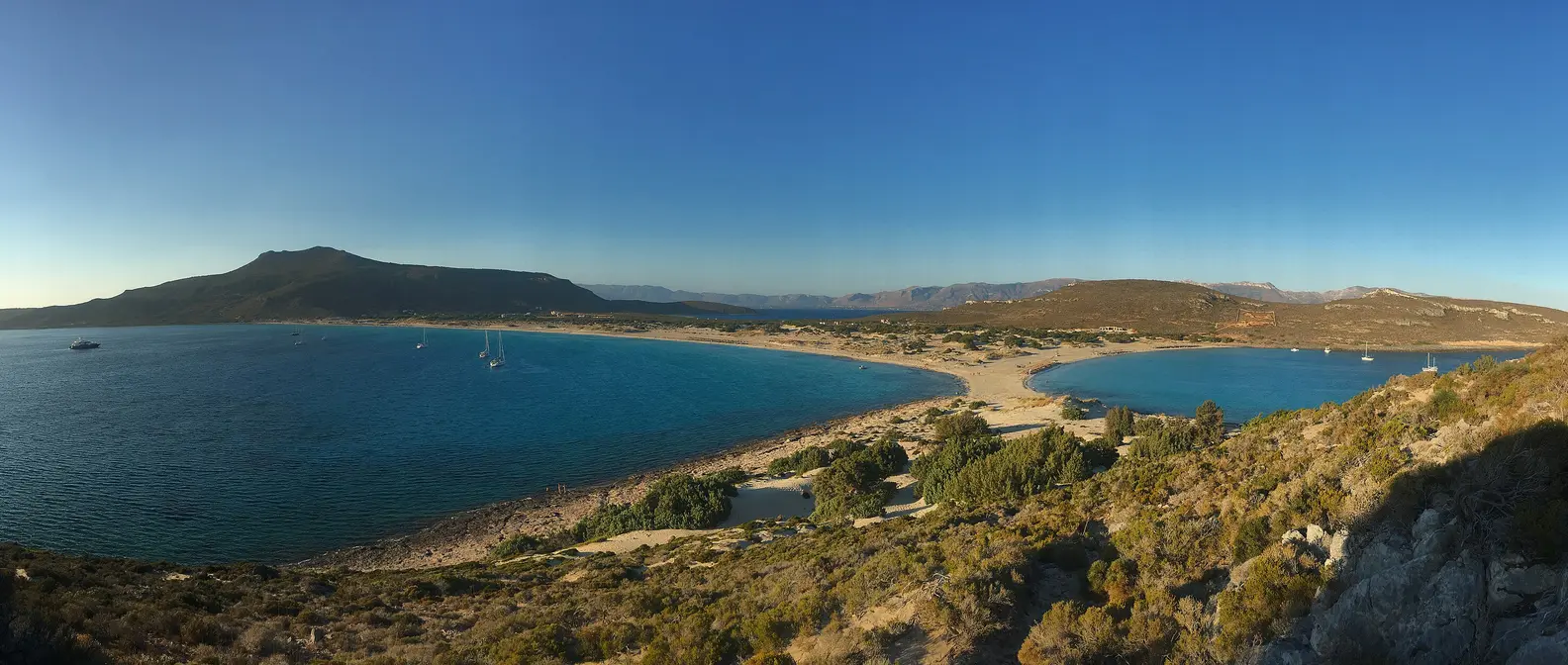
No. Elafonisi is in Crete. Elafonisos is an inhabited island in the southern Peloponnese, near Neapoli, with Simos beach, and it has its own guide.
— Kathy