🪪 The island at a glance
📍 Where it is
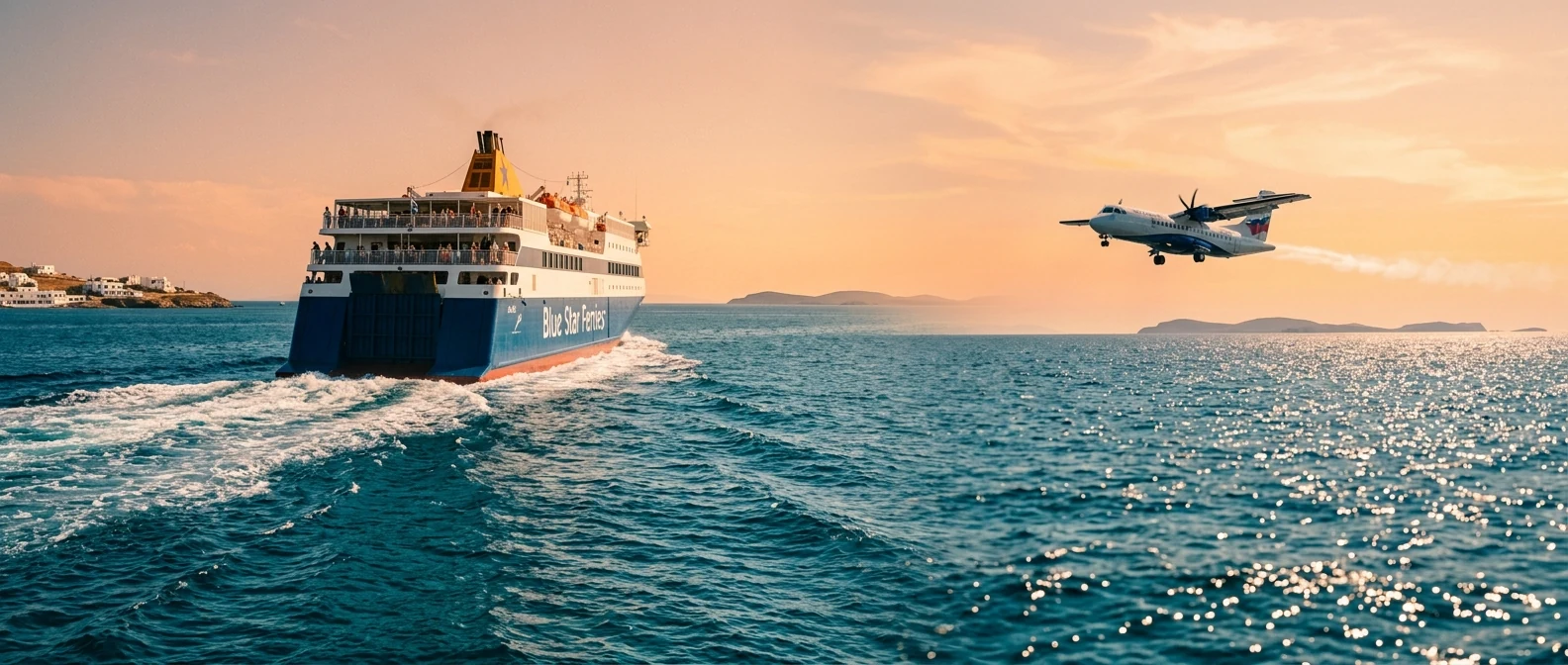
Patmos is in the northern Dodecanese, between Samos and Leros. It has no airport. From Piraeus the ferries take seven to nine hours, often overnight. The fastest way is to fly to Kos, Samos or Leros and continue by boat.
📍 Where Patmos is
Patmos is in the northern Dodecanese, between Samos and Leros. The island is shown in red, and in green Piraeus, Kos and Samos, where the ferries come from.
🗺️ The map of the island
Patmos is small and long, with many bays. At its narrowest point is Skala, the harbour, and above it, on the hill, Chora with the Monastery. On the road between them is the Cave of the Apocalypse. In the south are Grikos and Psili Ammos, in the north Kampos and Lampi.
🗺️ Map of Patmos
Skala, the harbour, is in the middle of the island, at its narrowest point. Above it, on the hill, is Chora with the Monastery, and on the road between them the Cave of the Apocalypse. The beaches are in the south and the north. Tap each number to see what it is.
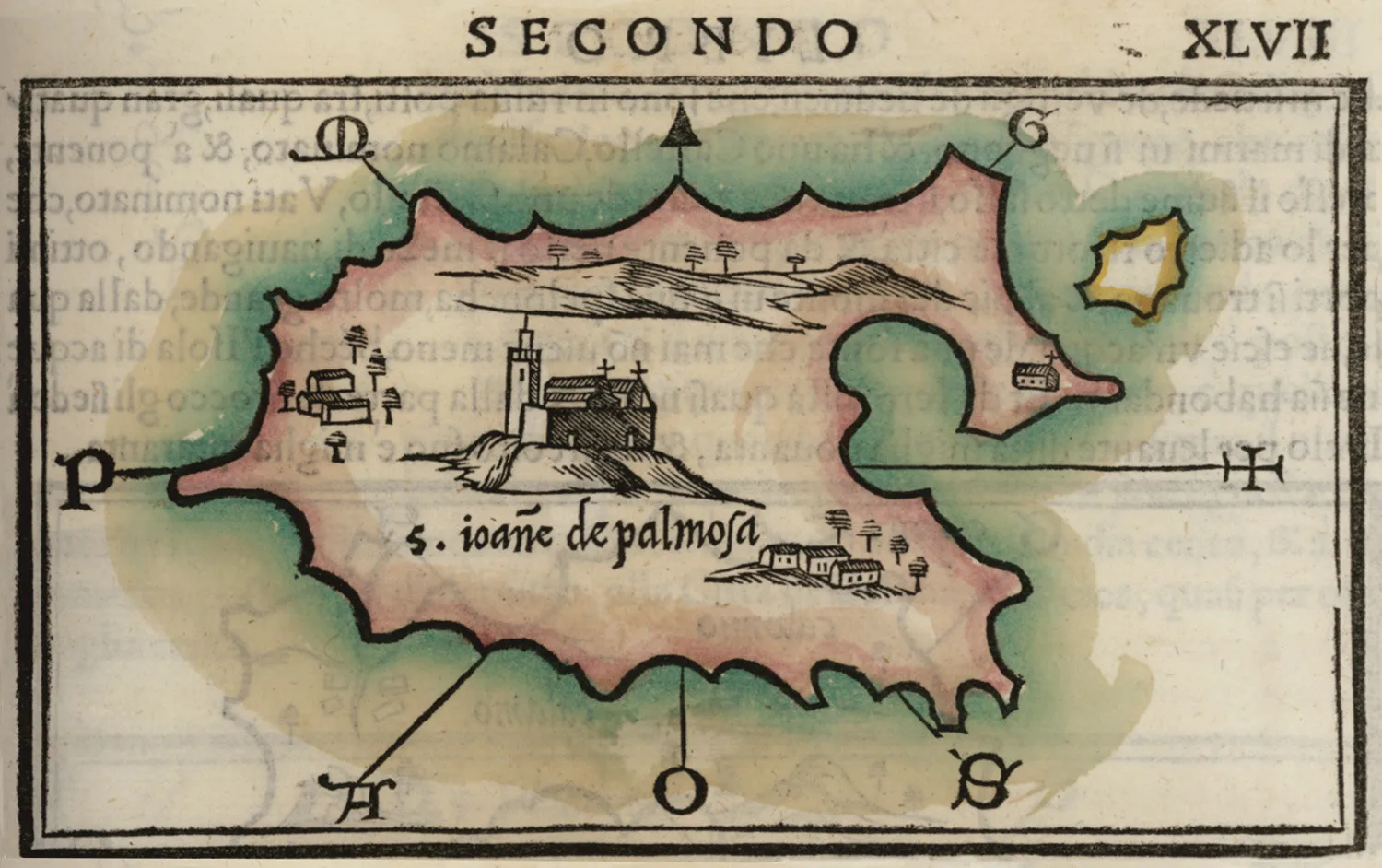
Map: Benedetto Bordone, 1547 (Public domain) · Wikimedia Commons
⚖️ Is it worth it? The pros and cons
Patmos is an island for history, quiet and calm swims. It is not an island for parties. Here is an honest picture.
📊 At a glance, from 1 to 5
👍 The pros
- One of the most important religious monuments in Europe.
- Chora, one of the loveliest medieval villages of the Aegean.
- Quiet, without mass tourism.
- Good beaches a short distance away.
- Easter, with ceremonies you will see nowhere else.
👎 The cons
- No airport, the journey needs a ferry.
- Visiting hours at the Monastery and the Cave are limited.
- At midday it fills up with cruise ships.
- Little nightlife.
⛪ The Monastery and the Cave of the Apocalypse
The Monastery of Saint John the Theologian was founded in 1088 by the blessed Christodoulos, with permission from the Byzantine emperor, and was built like a castle, with high walls and battlements, to protect it from pirates. Inside you will see the main church with its frescoes, small chapels, one of the most important libraries of manuscripts in Greece and a museum with icons and church treasures. From the terraces the view reaches as far as Samos.
Halfway up the road from Skala, the Cave of the Apocalypse is a small cave inside a monastic complex. According to tradition, here John, exiled by the Romans around 95 AD, heard the voice of God and dictated the Book of Revelation. In the rock they show the cleft from which the voice came. Since 1999 Chora, the Monastery and the Cave have been a UNESCO World Heritage Site.
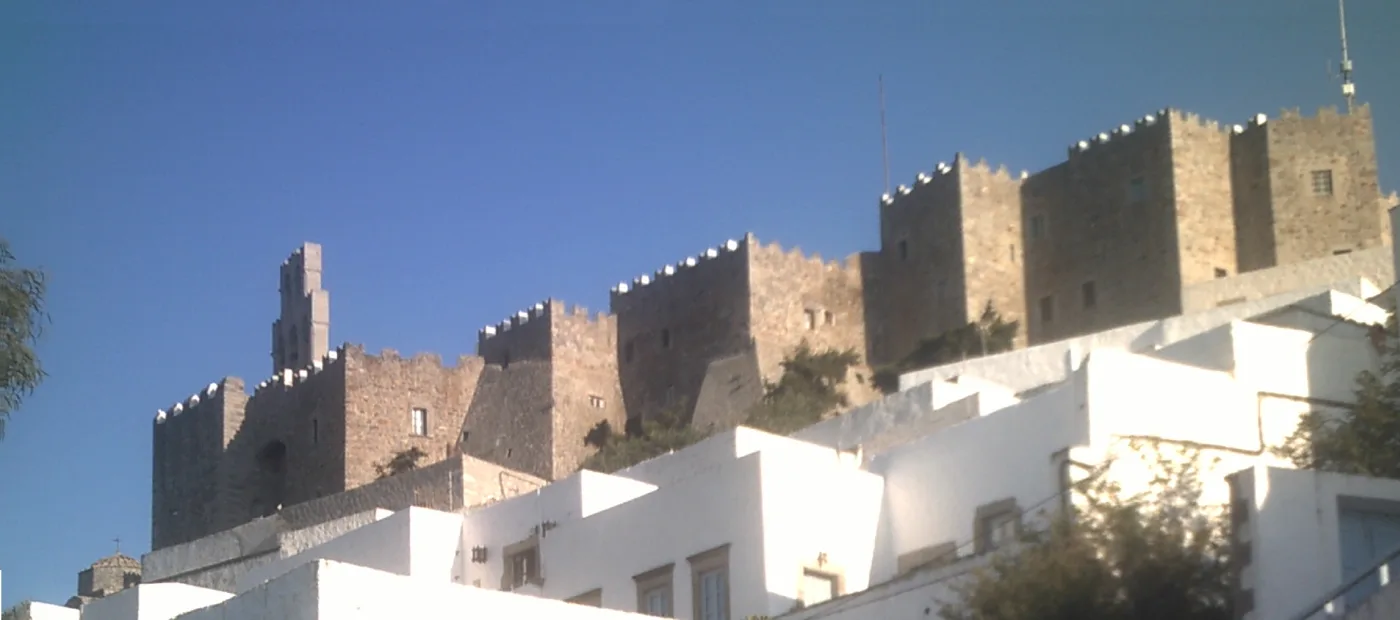
Like a castle above Chora.
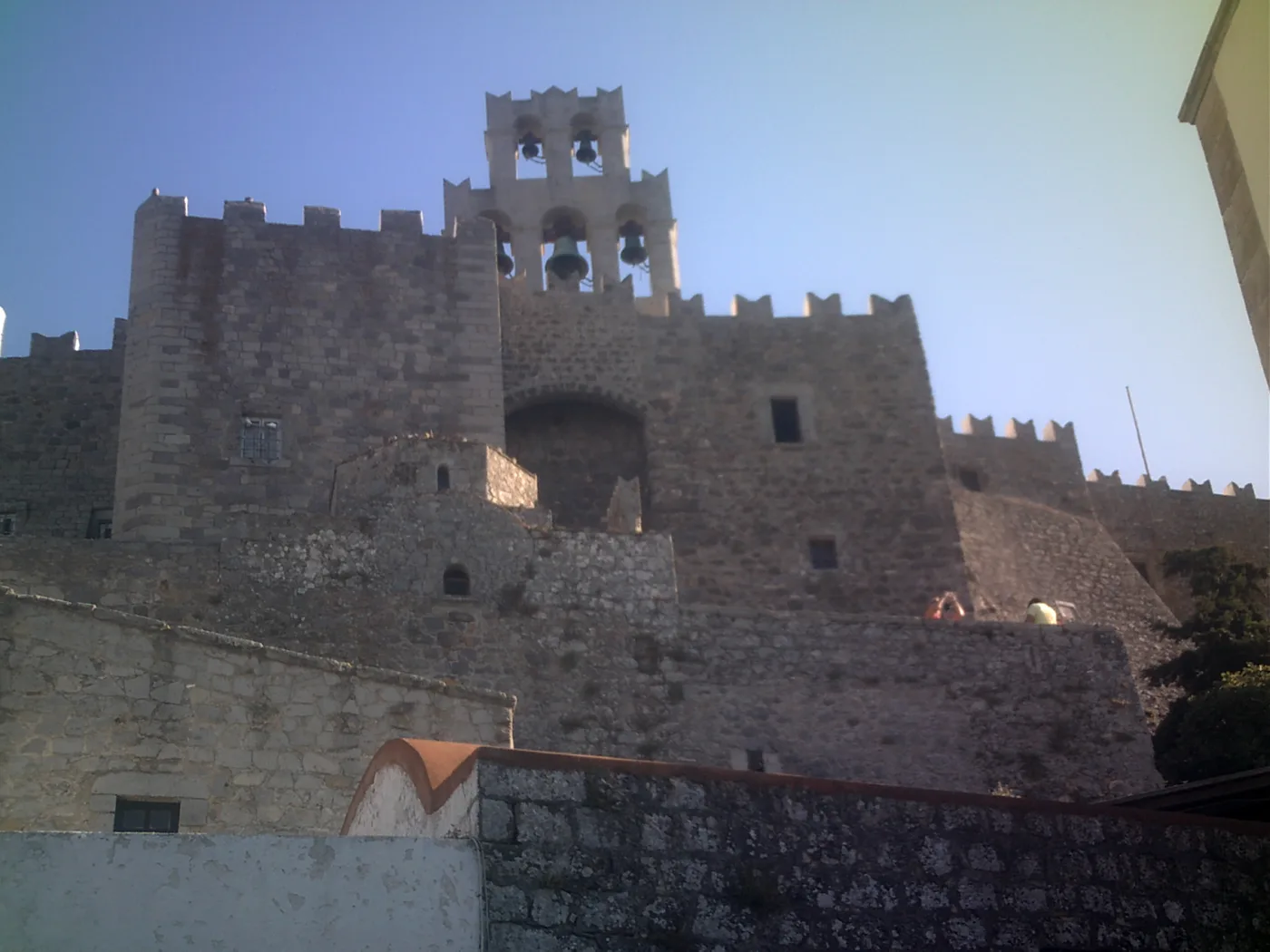
Built in 1088.
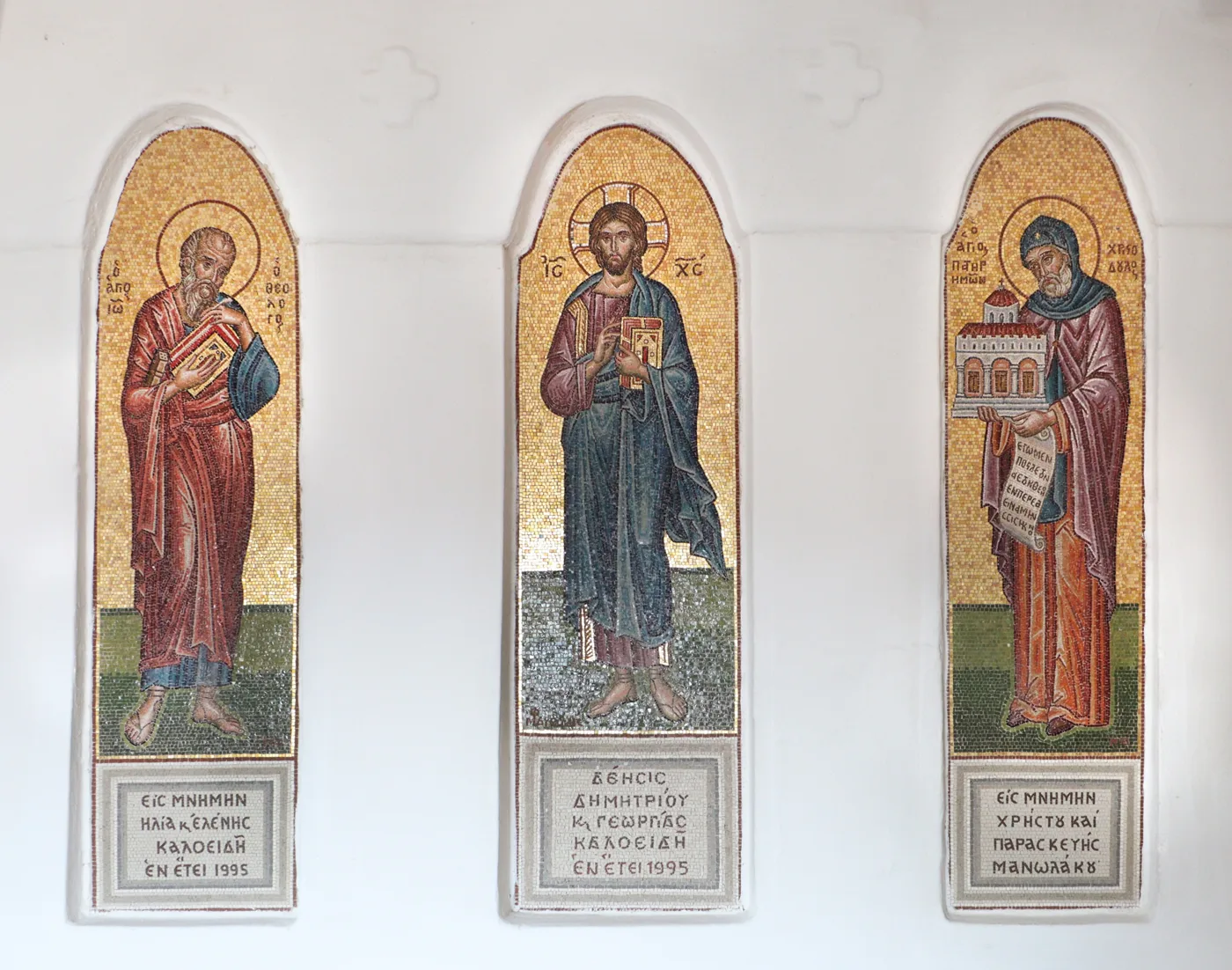
On the ramp to the chapel.
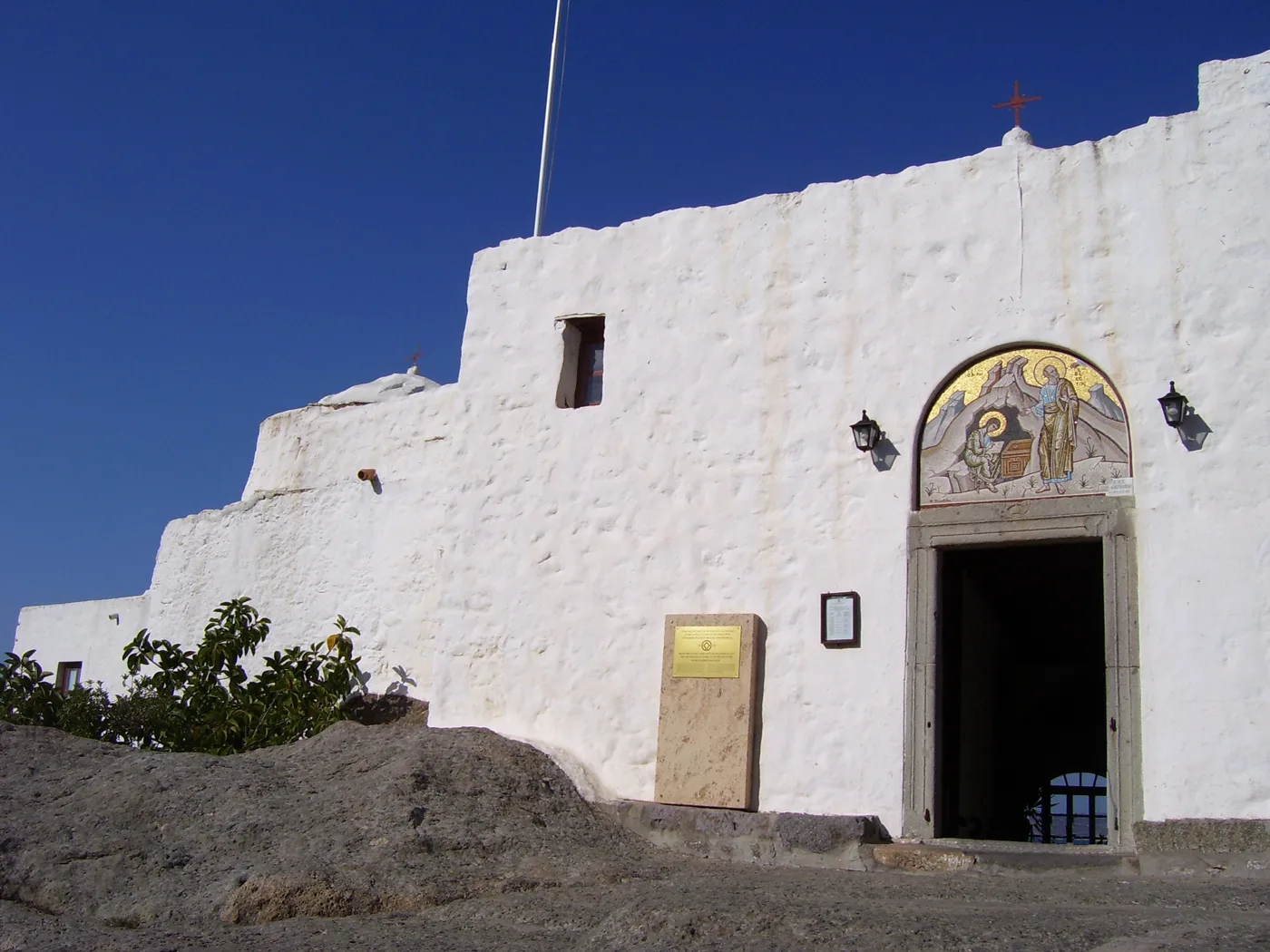
Between Skala and Chora.
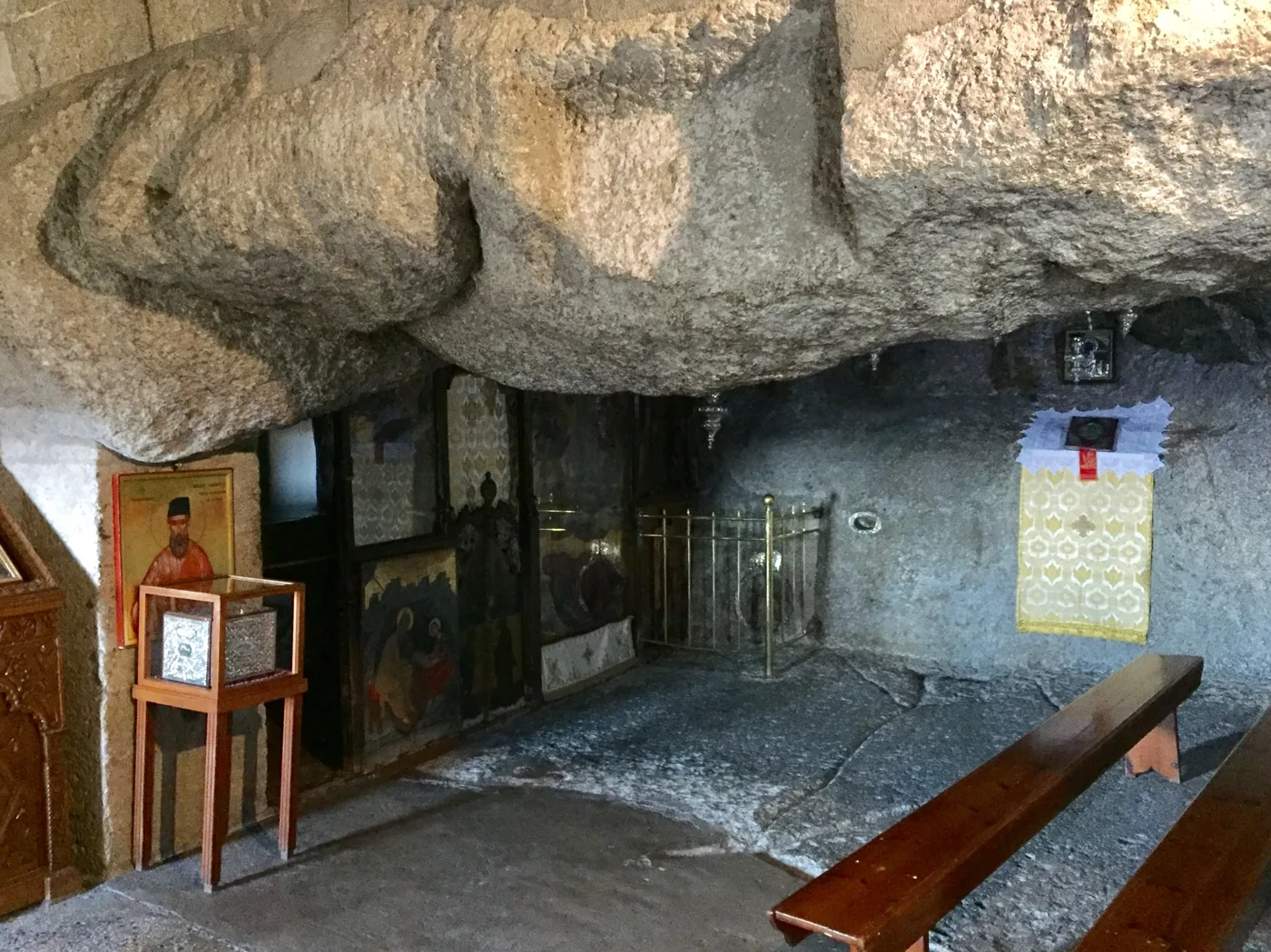
Here, according to tradition, the Book of Revelation was written.
Photos: Odysses (CC BY-SA 3.0), Francesco Bini (CC BY-SA 4.0), Vladimir Boskovic (Public domain), PLBechly (CC BY-SA 4.0) · Wikimedia Commons
The Monastery and the Cave open mainly in the morning, and on some days in the afternoon too. Check the hours in advance. Shoulders and knees must be covered, and at the entrance they lend clothing if you have none.
🏘️ Chora and Skala
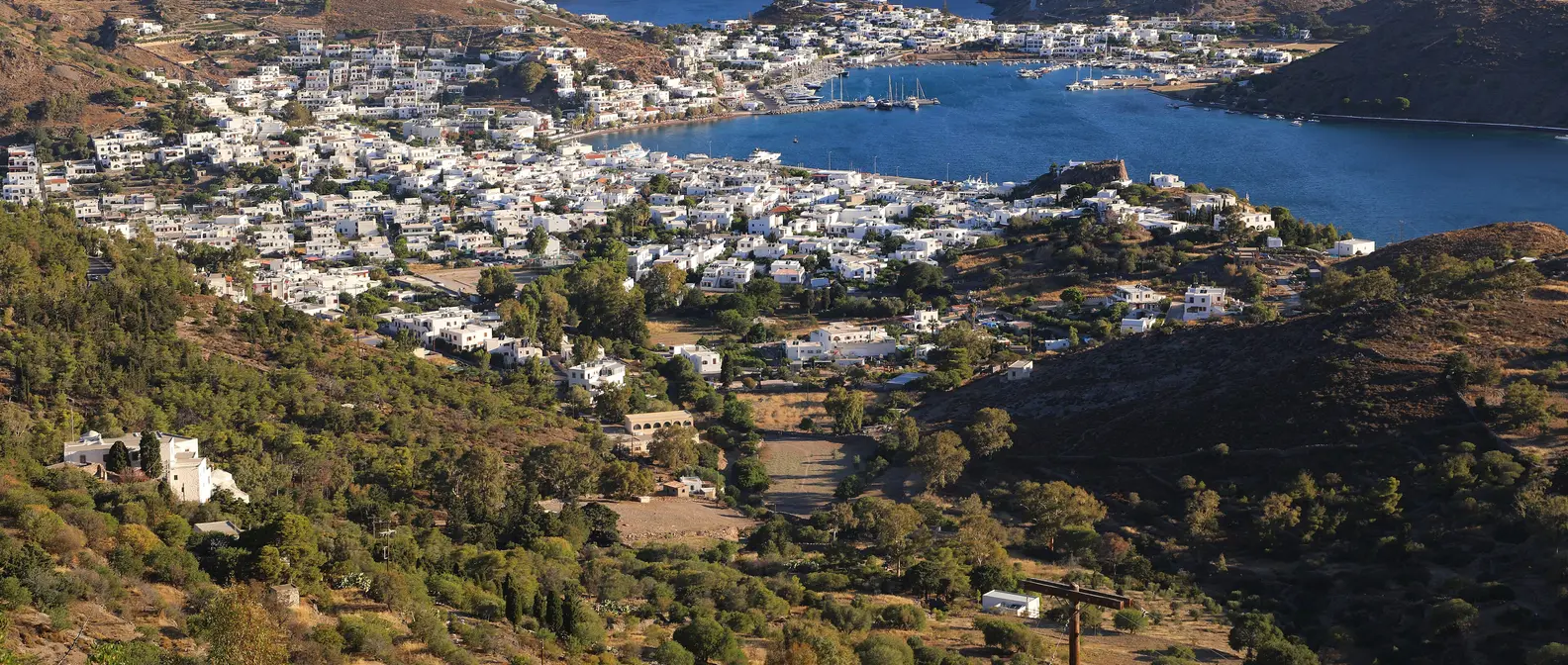
Chora spreads around the Monastery, a maze of white lanes, arches and mansions with tall courtyard doors, built from the 16th to the 19th century, when the island grew rich from shipping. It is almost car-free, and in the evening, once the day-trippers have left, it is one of the quietest places in the Aegean. At the windmills, on its edge, you watch the sunset.
Skala is the harbour and the living centre of the island, with cafés, tavernas, shops and a big square. Most people stay here, and from here the boats leave for the beaches. Between Skala and Chora, an old cobbled path climbs up in about forty minutes, passing the Cave.
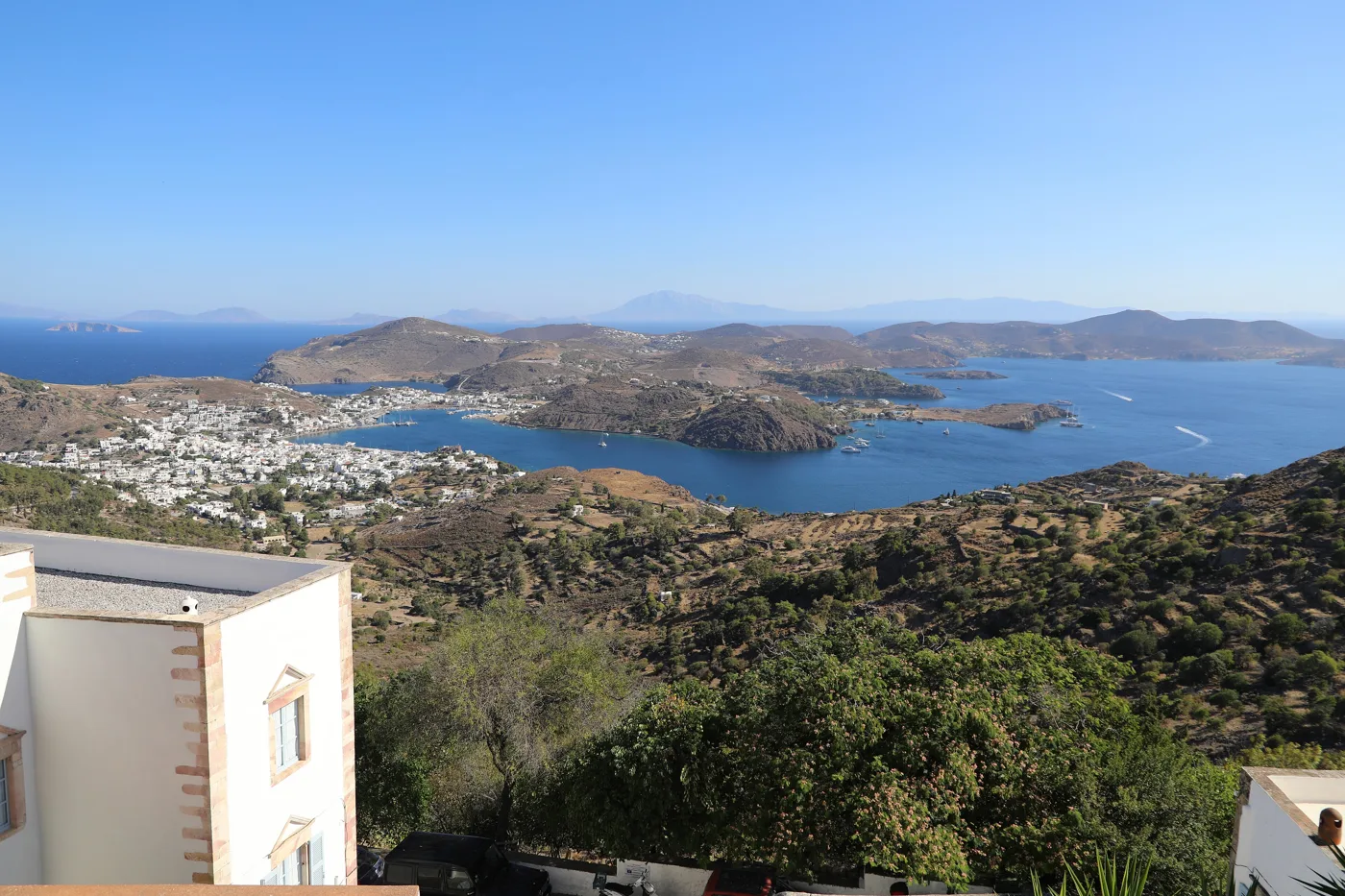
To Skala and beyond.
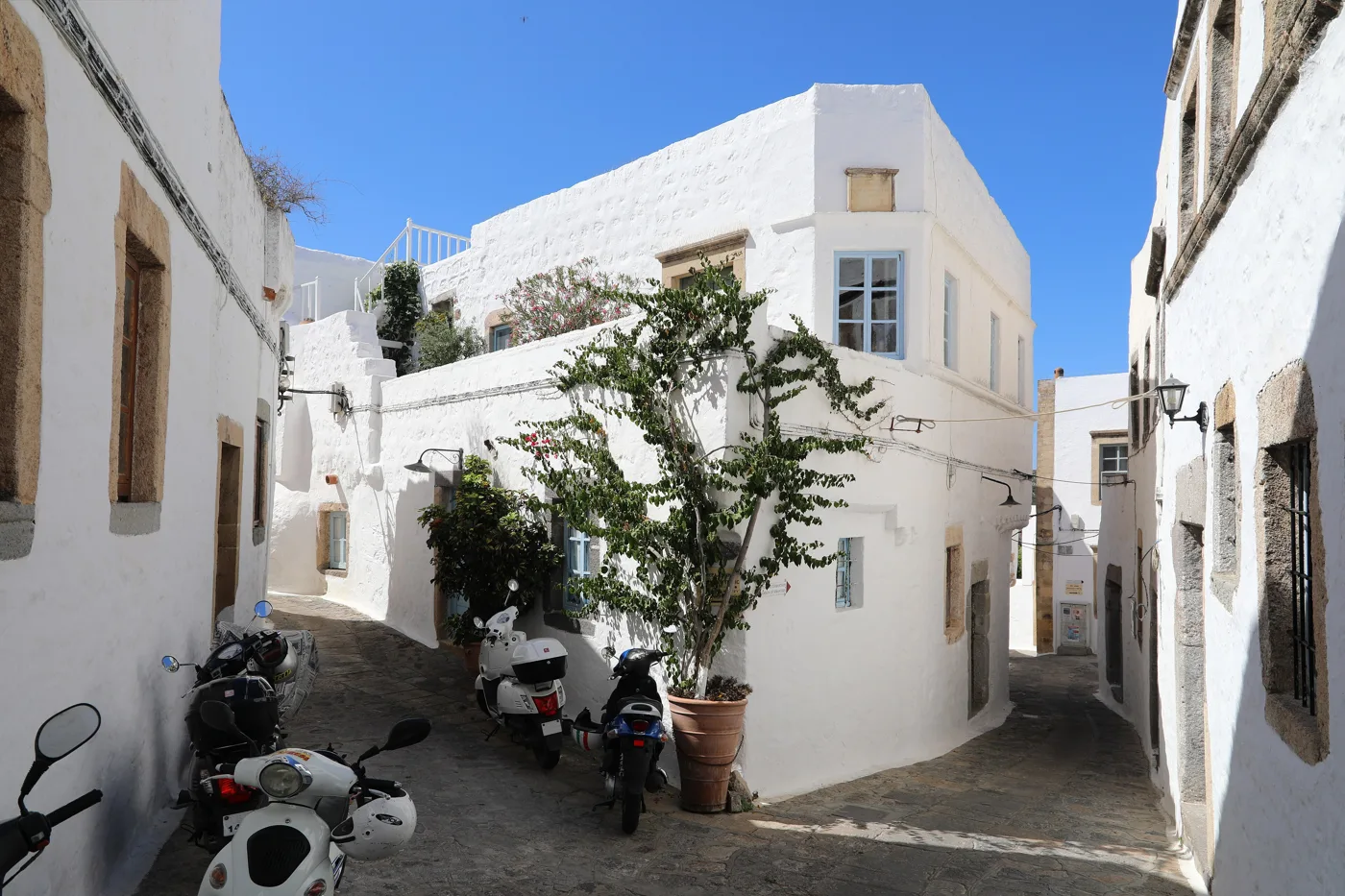
White, narrow and quiet.
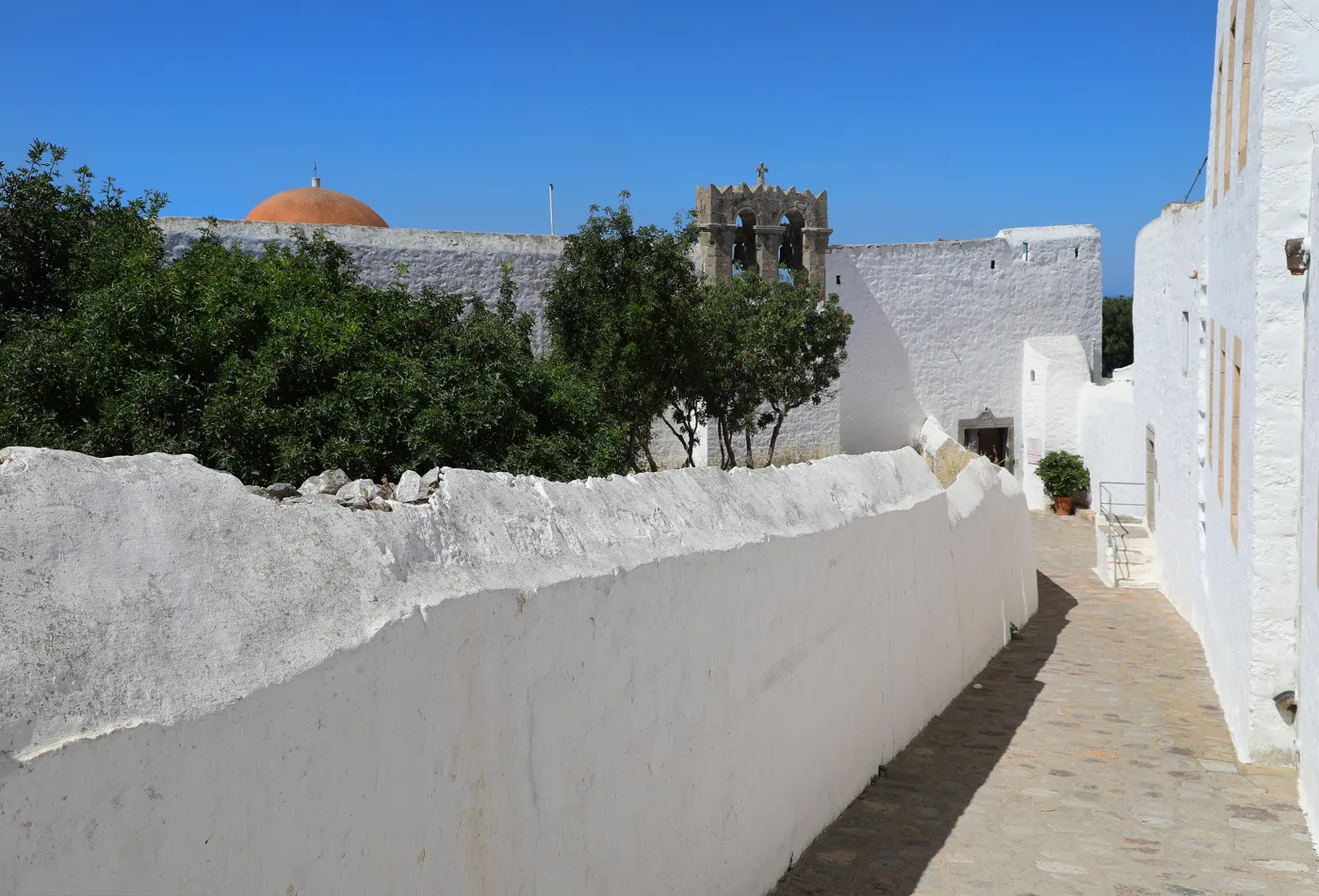
One of the monasteries of Chora.
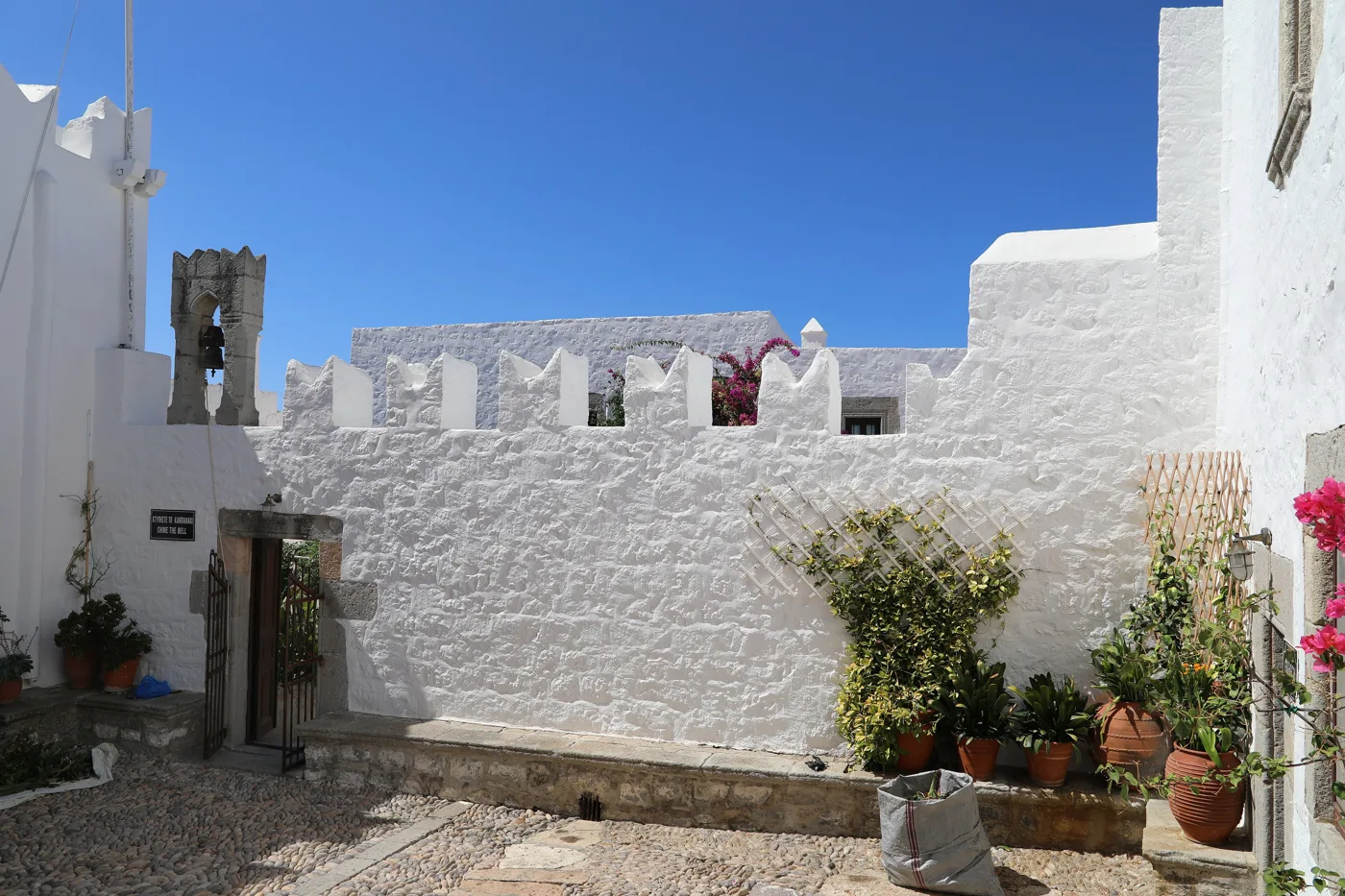
Flowers and whitewash.
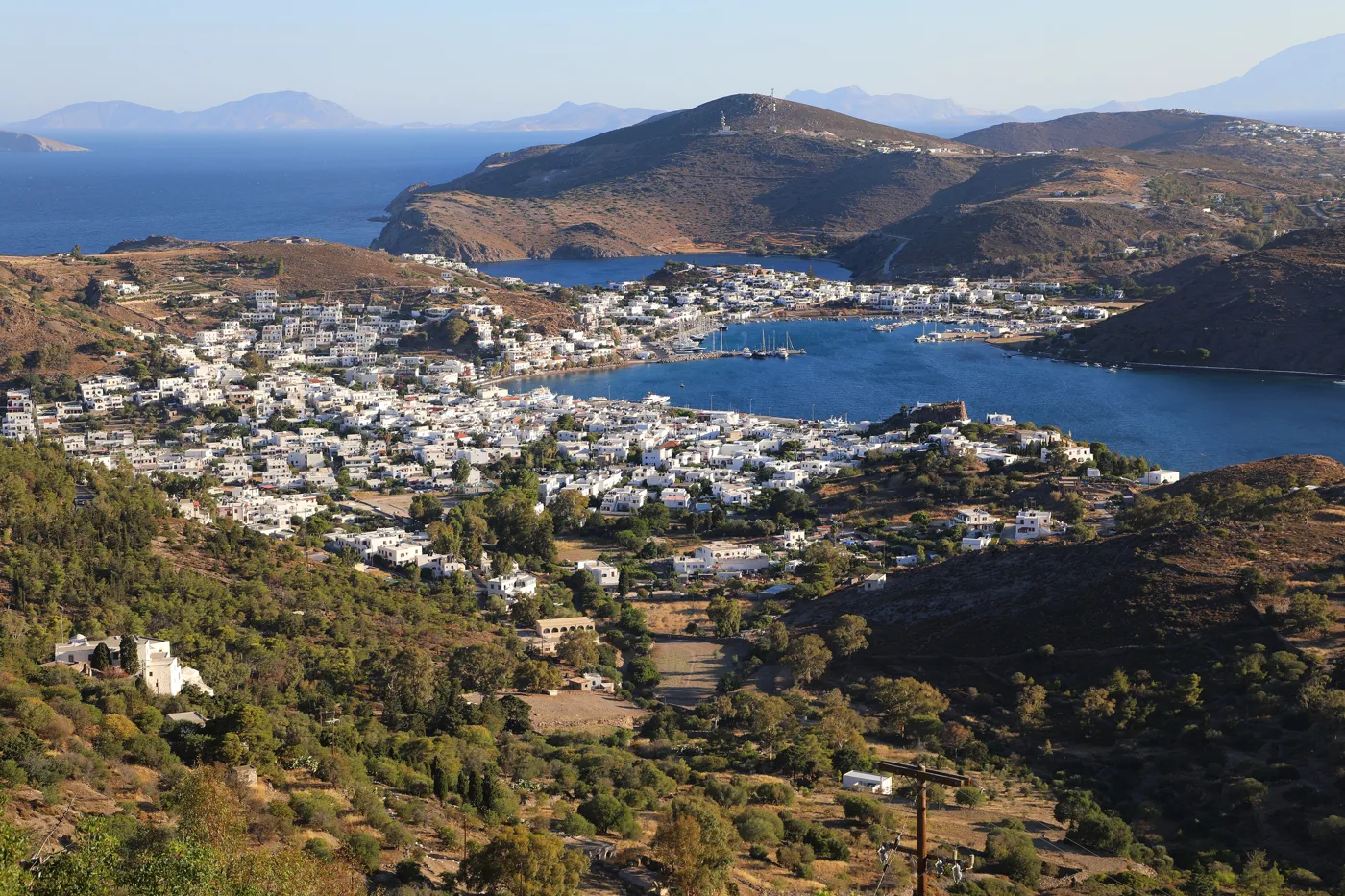
From the windmills of Chora.
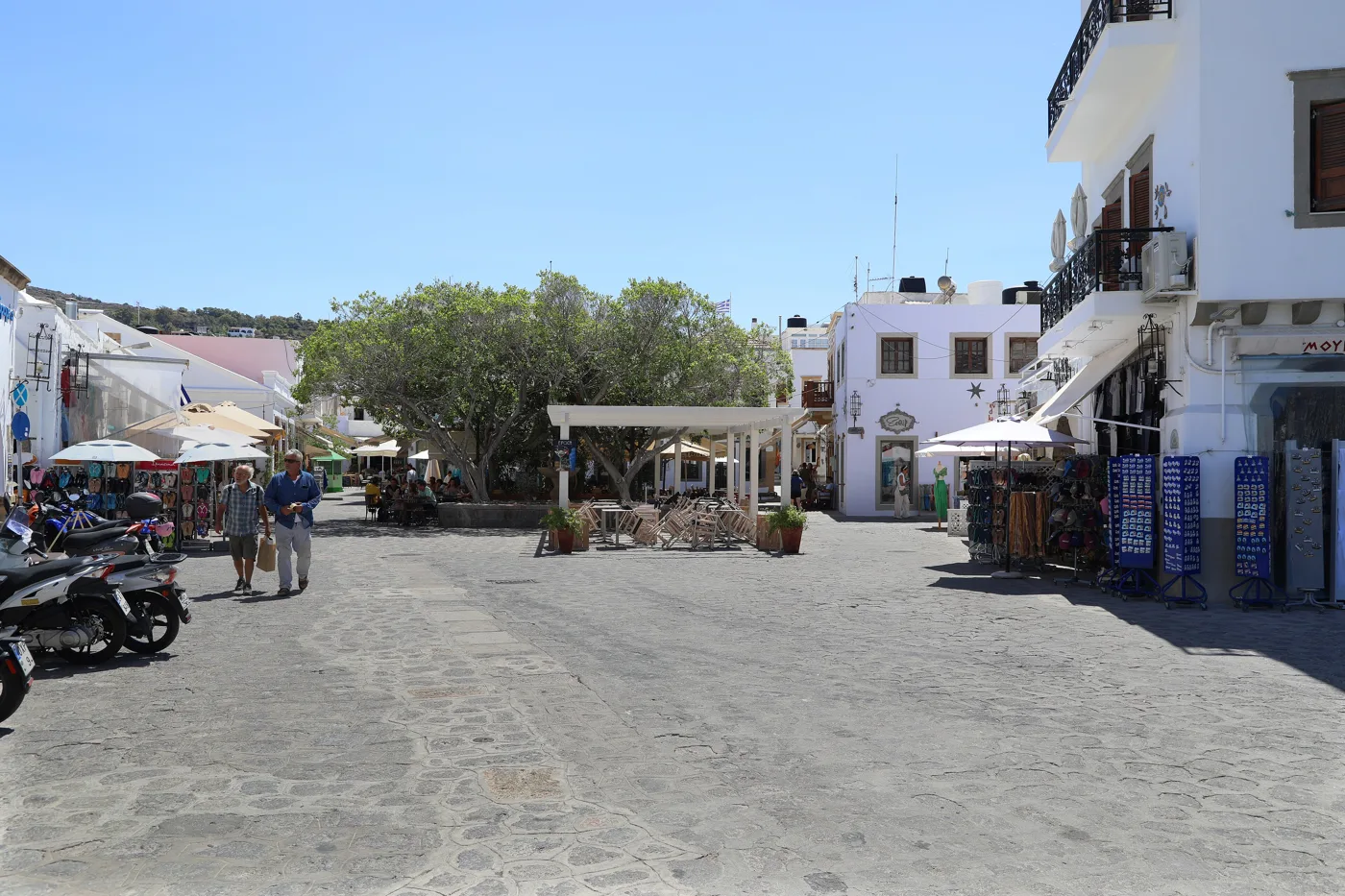
The centre of the harbour.
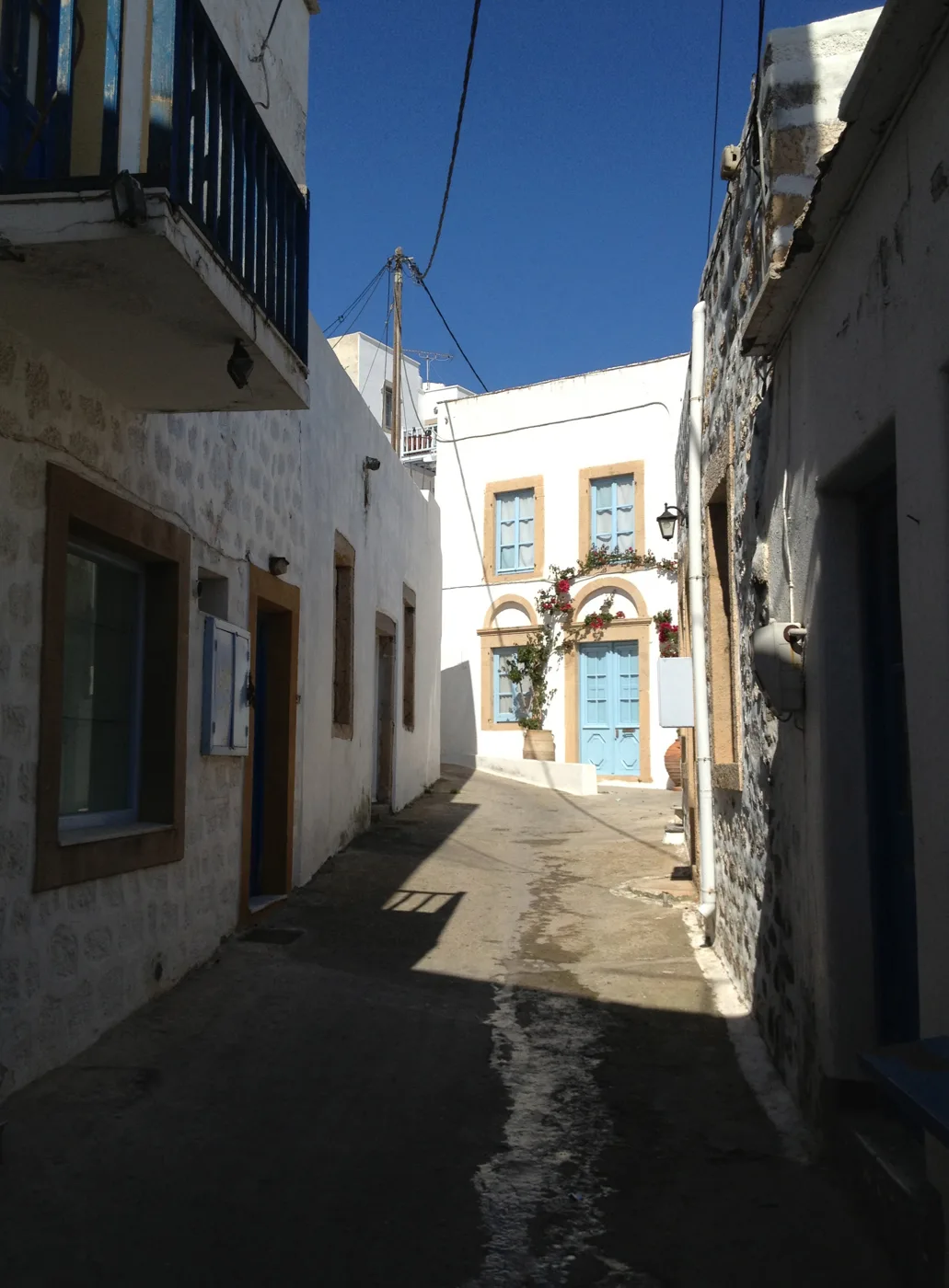
Behind the harbour.
Photos: Francesco Bini (CC BY-SA 4.0), simonjenkins' photos (CC BY-SA 2.0) · Wikimedia Commons
🏖️ The beaches
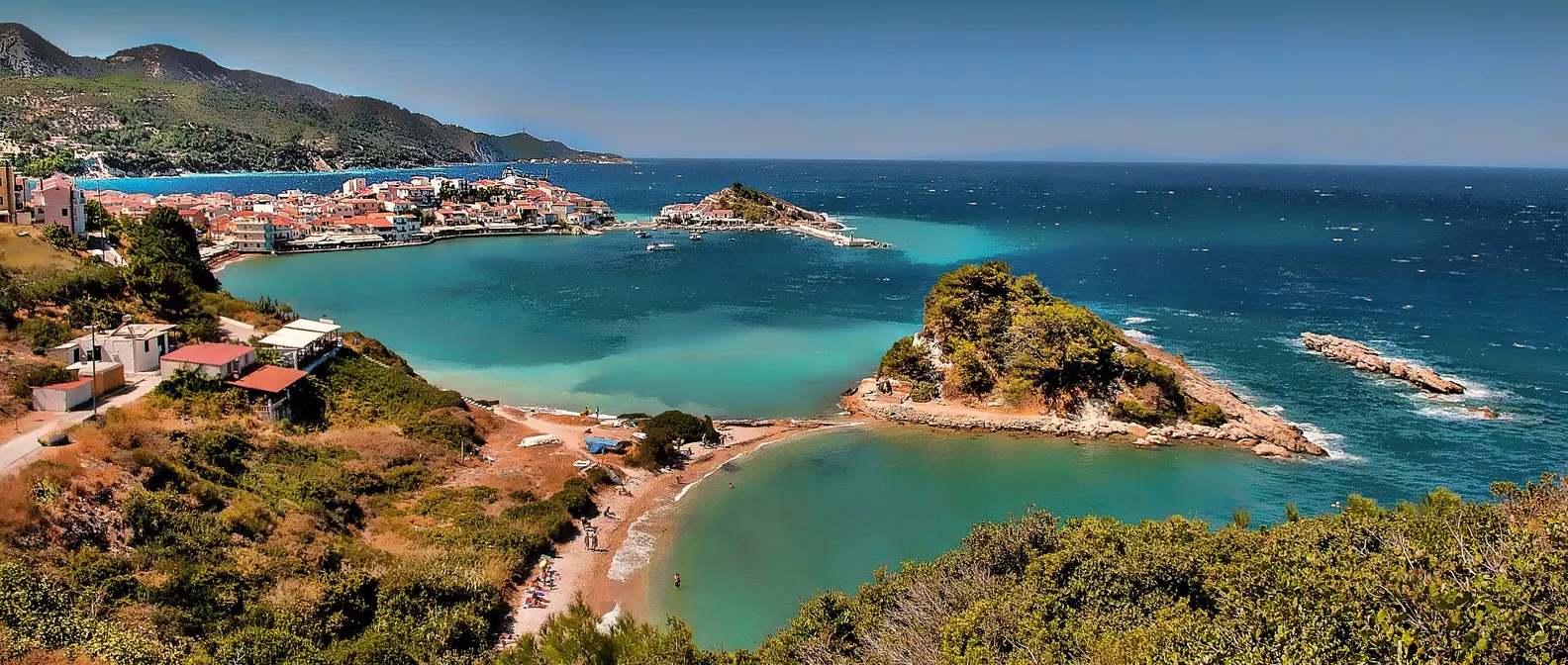
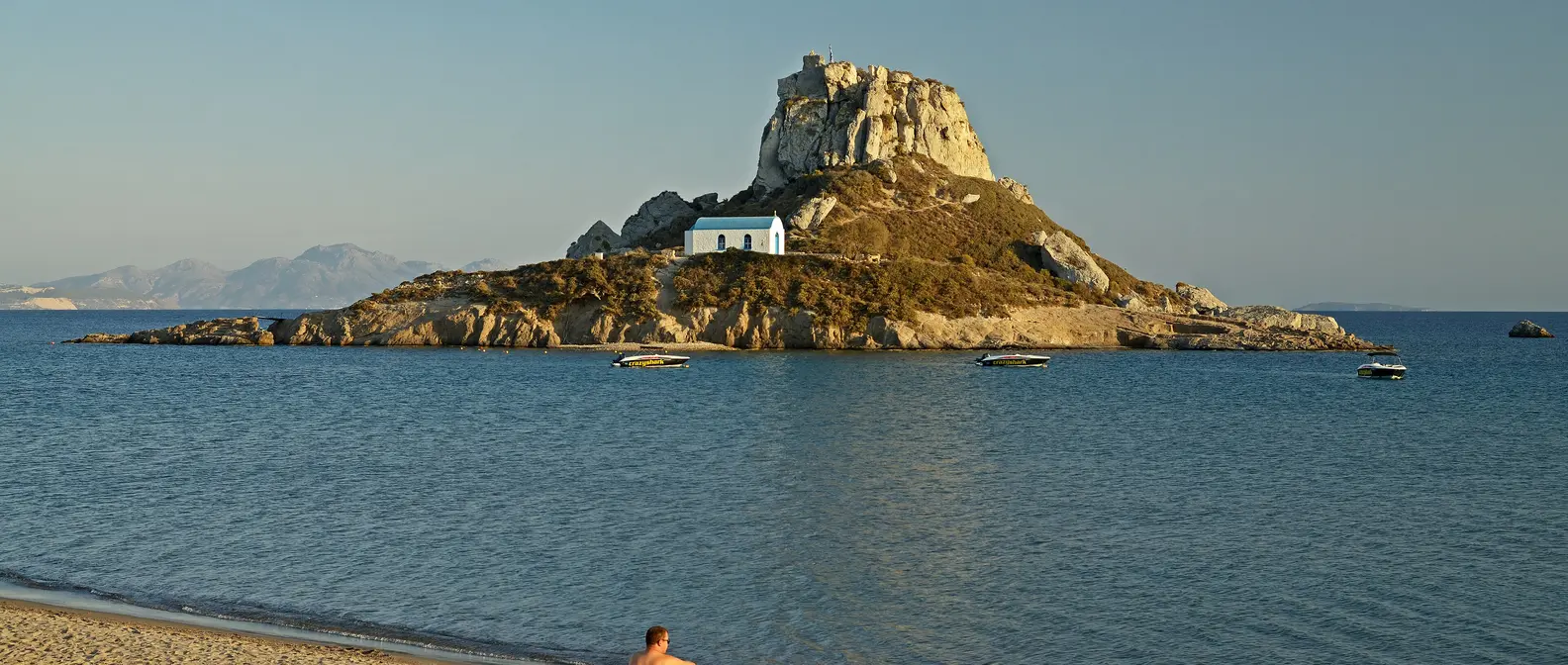
The beaches of Patmos are quiet, with sand or pebbles. In the south, Grikos is a sheltered bay with tavernas, and further down Psili Ammos, the island’s biggest sandy beach, is reached only by boat or on foot. In the north, Kampos is the most organised beach, Agriolivado and Meloi are close to Skala, and Lampi has pebbles in many colours.
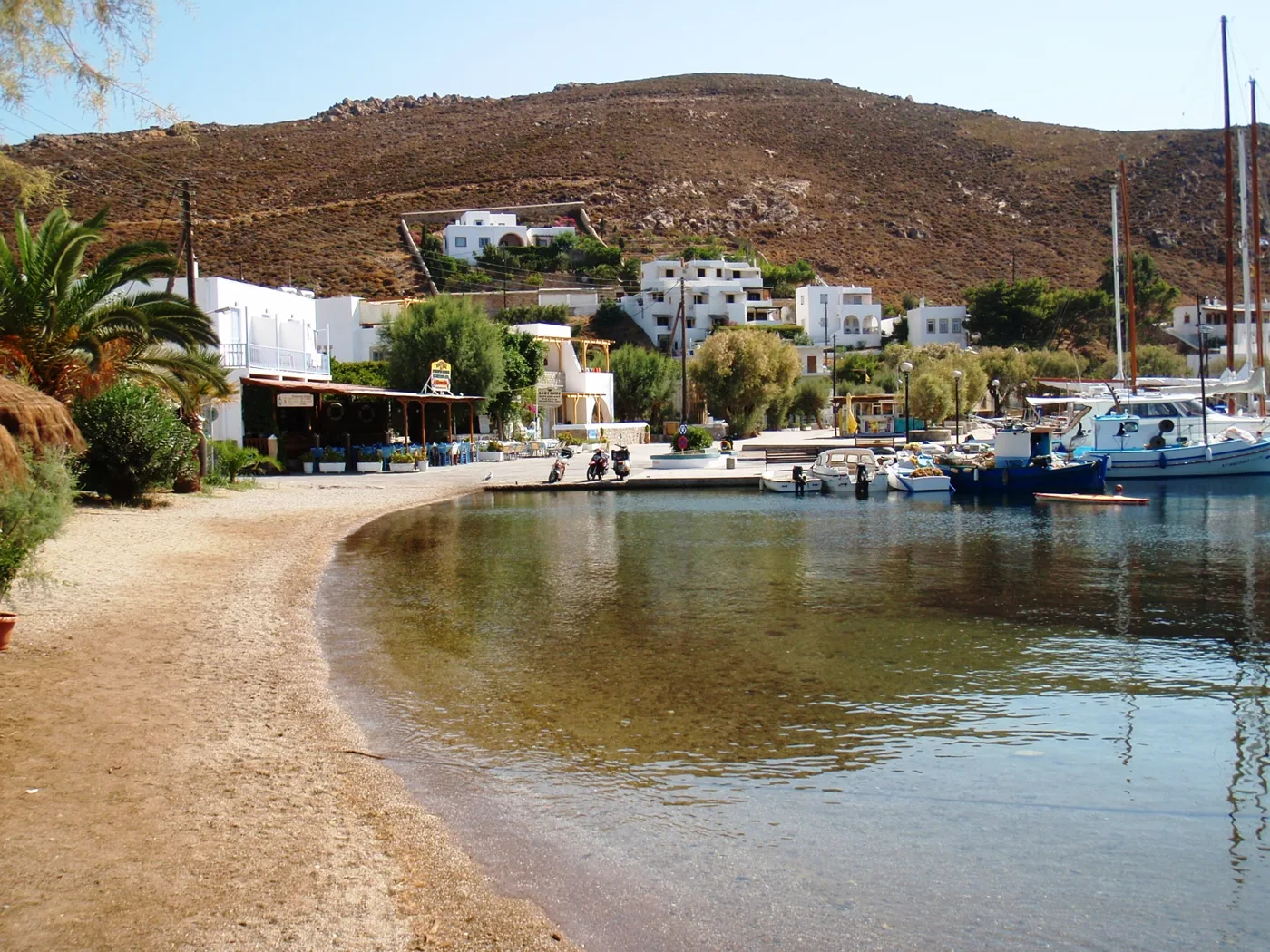
A sheltered bay south of Skala.
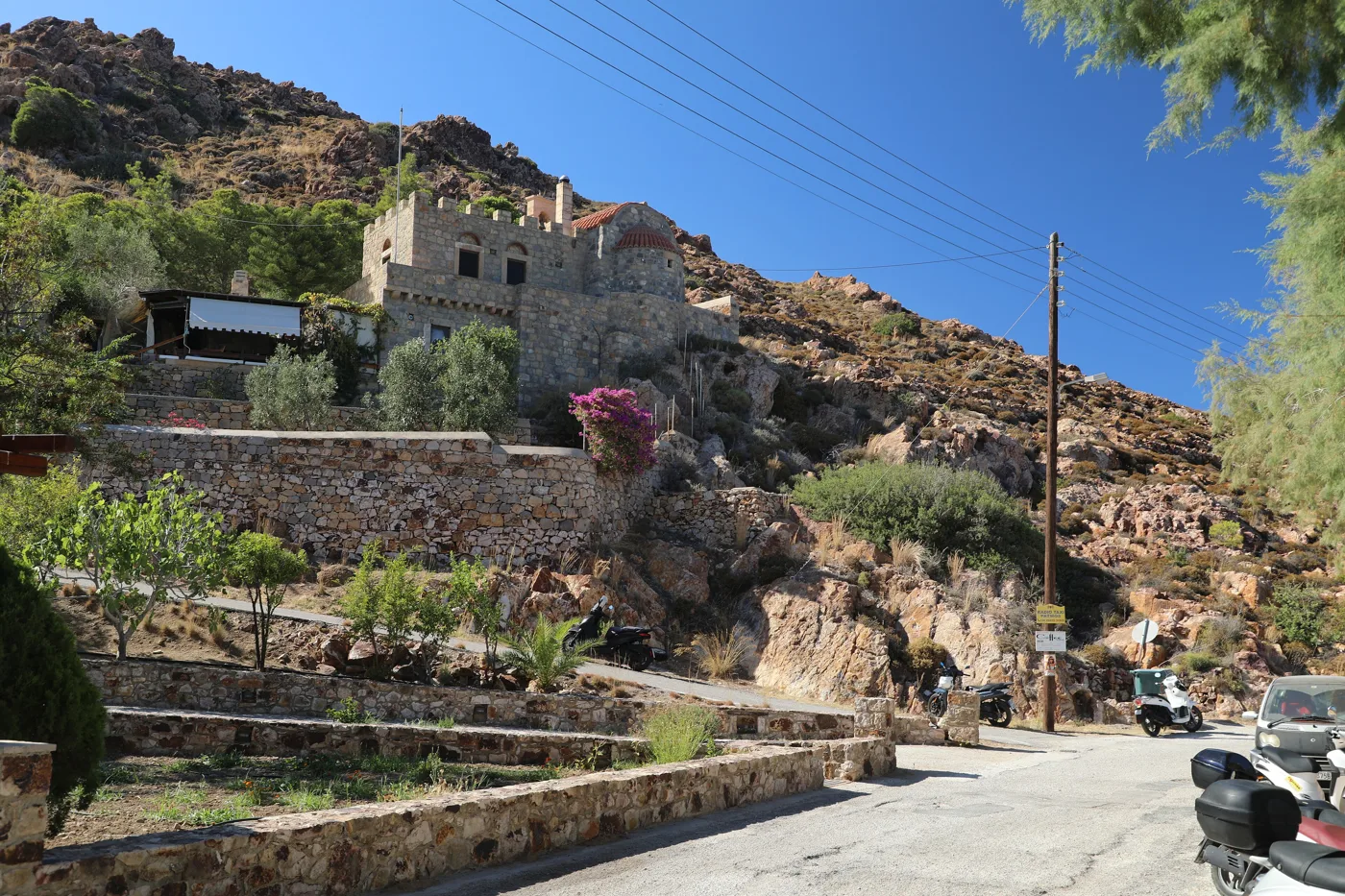
The chapel above the beach.
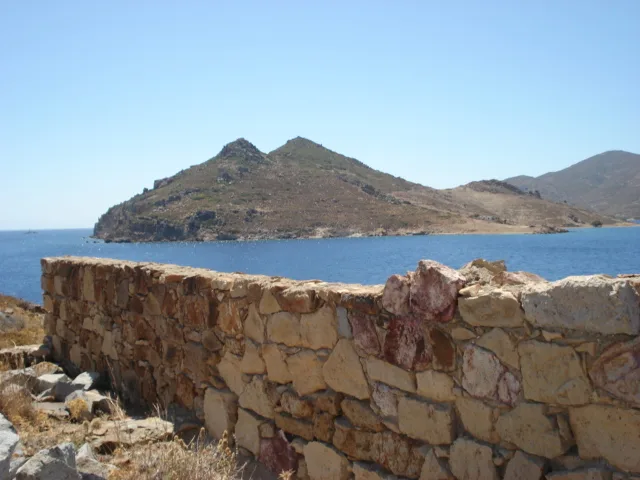
At the mouth of the bay.
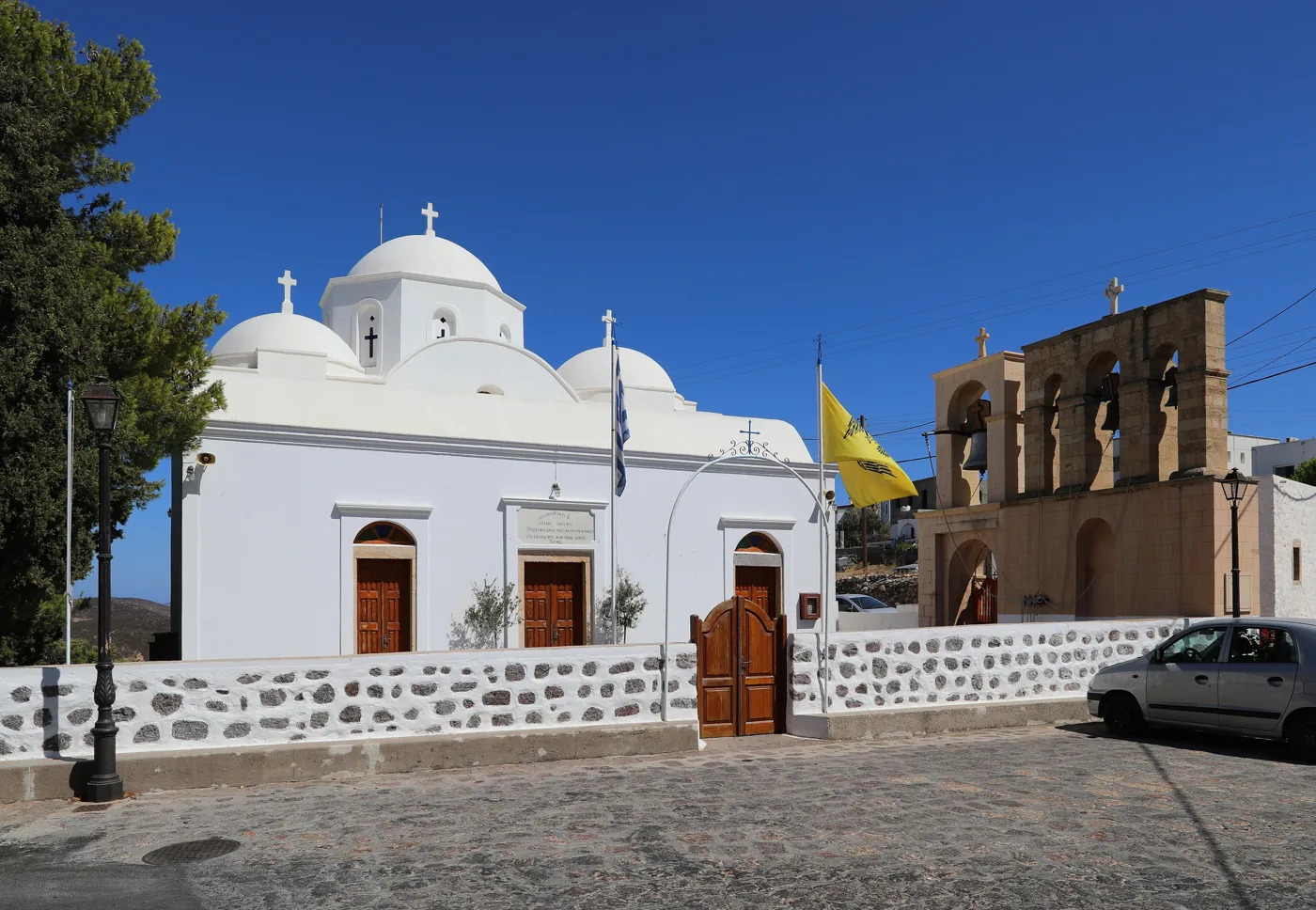
The village above the beach.
Photos: Raki_Man (CC BY 3.0), Francesco Bini (CC BY-SA 4.0), Hellenic horizons (CC BY-SA 3.0) · Wikimedia Commons
- Psili Ammos: a big sandy beach, by boat or on foot.
- Grikos: a sheltered bay with tavernas.
- Kampos: organised, good for families.
- Lampi: coloured pebbles, in the north.
- Agriolivado and Meloi: close to Skala.
On Maundy Thursday, in the square of Chora, the Niptir takes place: the abbot washes the feet of twelve monks, as Christ did for his disciples. It is the island’s best-known ceremony, and at Easter the rooms sell out months ahead.
🍽️ What to eat
Try the Patmos cheese pie, with local cheese, and pougia, small sweets with cheese and honey. In the tavernas of Skala, Grikos and Kampos you will find fresh fish, lobster pasta and octopus. The island also has its own cheese and honey, and many tavernas cook vegetables from their own gardens.
📅 When to go
The best time is May, June and September: warm sea, fewer people and a quiet Chora. Easter is the most special moment, but needs booking early. In July and August the island fills up, especially on the days when cruise ships arrive.
⛴️ How to get there from Athens
| How | Duration | From | Notes |
|---|---|---|---|
| Ferry | About 7–9 hours | Piraeus | Often overnight, with a cabin. A few times a week. |
| Plane and ferry | About 1 hour + 1–2.5 hours | Athens airport → Kos or Samos | The fastest way. Fast boats in summer. |
| Plane and ferry | About 1 hour + 1 hour | Athens airport → Leros | Small plane, few seats. |
From Ioulianou 50 you go to Piraeus on Line 1, straight to the port, or to the airport on Line 1 to Monastiraki and a change to Line 3. On the island there are buses from Skala to Chora, Grikos and Kampos. To compare ferry and plane, see our guide to ferry or plane.
🗓️ Three days on Patmos
The Monastery, the Cave and Chora
Morning at the Monastery of Saint John and its museum, a stroll through the lanes of Chora, and on the way down the Cave of the Apocalypse. Sunset from the windmills.
The beaches of the south
By boat or on foot from Grikos to Psili Ammos, the island’s big sandy beach. Afternoon in Grikos.
The north
A swim at Kampos or at Lampi with its coloured pebbles, a meal at a fish taverna, and the evening in Skala.
Frequently asked questions
Where should I stay on Patmos?
In Skala, for the harbour, the restaurants and the buses. In Chora, for quiet and the evenings in the lanes. In Grikos or Kampos, to be right by the sea.
Do I need a car?
Not necessarily. The buses link Skala with Chora, Grikos and Kampos, and the boats go to the beaches. With a scooter you reach the more distant ones too.
Can I enter the Monastery in shorts?
No. Shoulders and knees must be covered. They lend clothing at the entrance, but it is better to arrive suitably dressed.
How many days do I need?
Two to three days for the Monastery, the Cave, Chora and two beaches. For a quiet holiday, a week.
— Kathy