🪪 The island at a glance
📍 Where it is
Kos is the third largest island of the Dodecanese, after Rhodes and Karpathos. It lies in the south-east Aegean, between Kalymnos to the north and Nisyros to the south. Opposite, just a few kilometres away, is the Bodrum peninsula in Turkey, clearly visible from the town.
📍 Where Kos is
Kos is in the Dodecanese, in the south-east Aegean, very close to the coast of Turkey. The island is shown in red, and Piraeus and Athens airport in green.
🗺️ The map of the island
Kos is long and narrow, about 40 kilometres in length. Most of it is flat. In the middle rises Mount Dikaios, with the mountain villages on its slopes. The town, the harbour and the ancient sites are at the eastern tip. The long sandy beaches stretch along the north coast, from Lambi to Mastichari. In the south-west, a narrow strip of land leads to the Kefalos peninsula.
🗺️ Map of Kos
Kos is long and narrow. The town and the ancient sites are at the eastern tip, the mountain villages on the slopes of Dikaios, the long sandy beaches on the north coast, and Kefalos with Kastri on the south-western peninsula. Tap each number to see what it is.
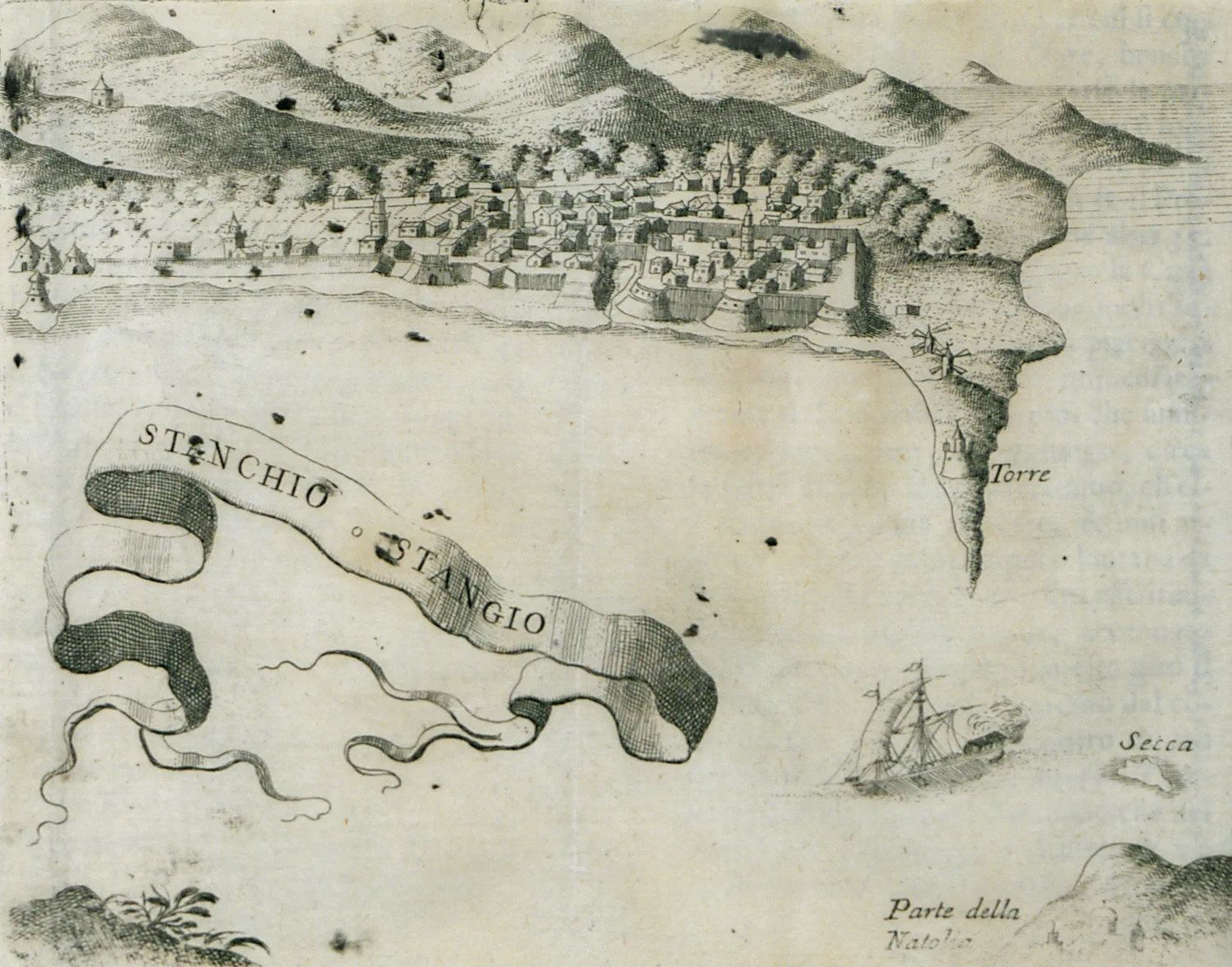
Engraving: Vincenzo Coronelli, 1688 (Public domain) · Wikimedia Commons
⚖️ Is it worth it? The pros and cons
Kos is an island for comfortable holidays: beaches, history and plenty of options for families. Here is an honest picture.
📊 At a glance, from 1 to 5
👍 The pros
- Long sandy beaches on every coast, many with shallow water for children.
- The homeland of Hippocrates: the Asklepieion, an ancient city, Roman houses.
- Flat for the most part, with cycle lanes in town.
- Direct flights from many countries and plenty of hotels in every category.
- Easy day trips to Nisyros, Kalymnos, Pserimos and Bodrum.
👎 The cons
- Many large all-inclusive hotels, and mass tourism in some places.
- In summer a strong northerly wind often blows on the north coast.
- Far from Piraeus: usually means flying.
- Fewer picturesque villages than the Cyclades.
- In winter most tourist shops close.
📜 A little history
In antiquity Kos was a rich island and a centre of medicine. Hippocrates, the physician regarded as the father of medicine, was born here in the 5th century BC. After his death the Asklepieion was built, a sanctuary of the god of medicine, where the sick came from all over the ancient world to be healed.
In the Middle Ages the island passed to the Knights of St John of Rhodes, who built the castles of Neratzia and Antimachia. Then came the Ottomans and, from 1912, the Italians. The great earthquake of 1933 destroyed much of the town. Italian archaeologists then excavated the ancient city that lay beneath, which is why today the ancient sites are scattered among the streets. Kos joined Greece in 1948, together with the rest of the Dodecanese.
🏰 Kos town
The town spreads around the harbour, with palm trees, pines and many parks. At the harbour entrance stands Neratzia Castle, the fortress of the Knights. It was damaged in the 2017 earthquake, so check before you go whether it is open. Next to it, in Platanou Square, is the plane tree of Hippocrates, a huge tree with iron supports under its branches. Tradition says Hippocrates taught beneath it. Today’s tree is much younger than Hippocrates, but it is several centuries old.
A little further in is Eleftherias Square, with the Defterdar Mosque, the municipal market and buildings from the Italian period, such as the Archaeological Museum. The town is flat and has cycle lanes, so a bicycle is the easiest way to get around it.
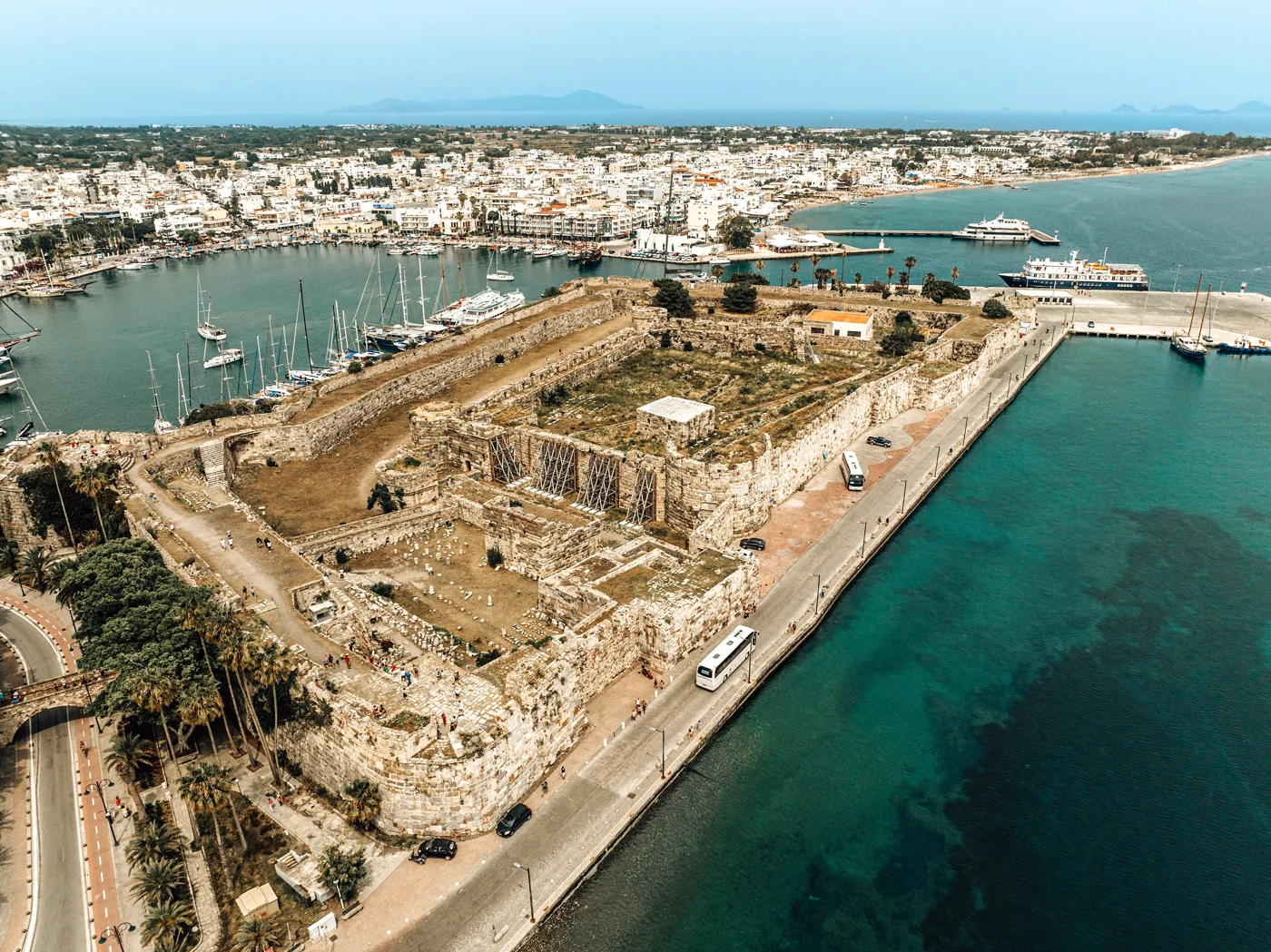
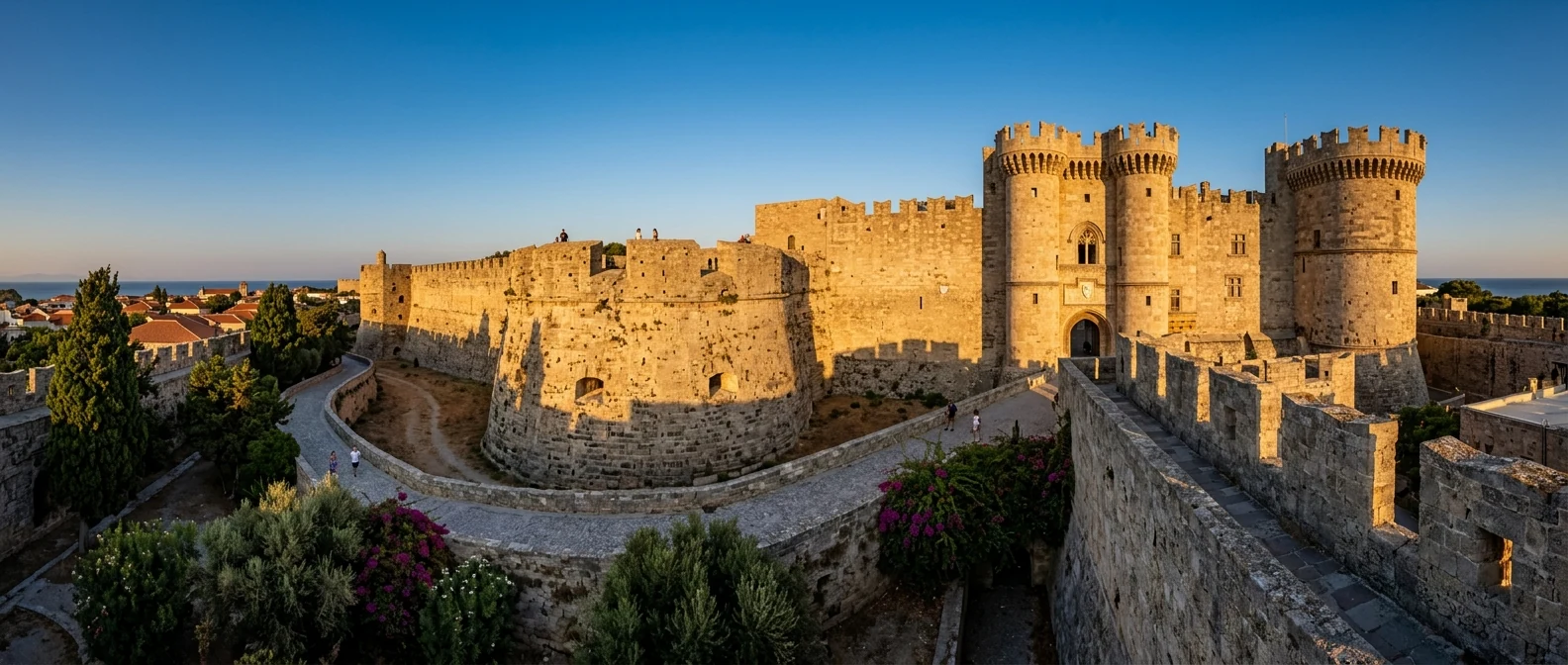
The Knights’ fortress at the harbour.
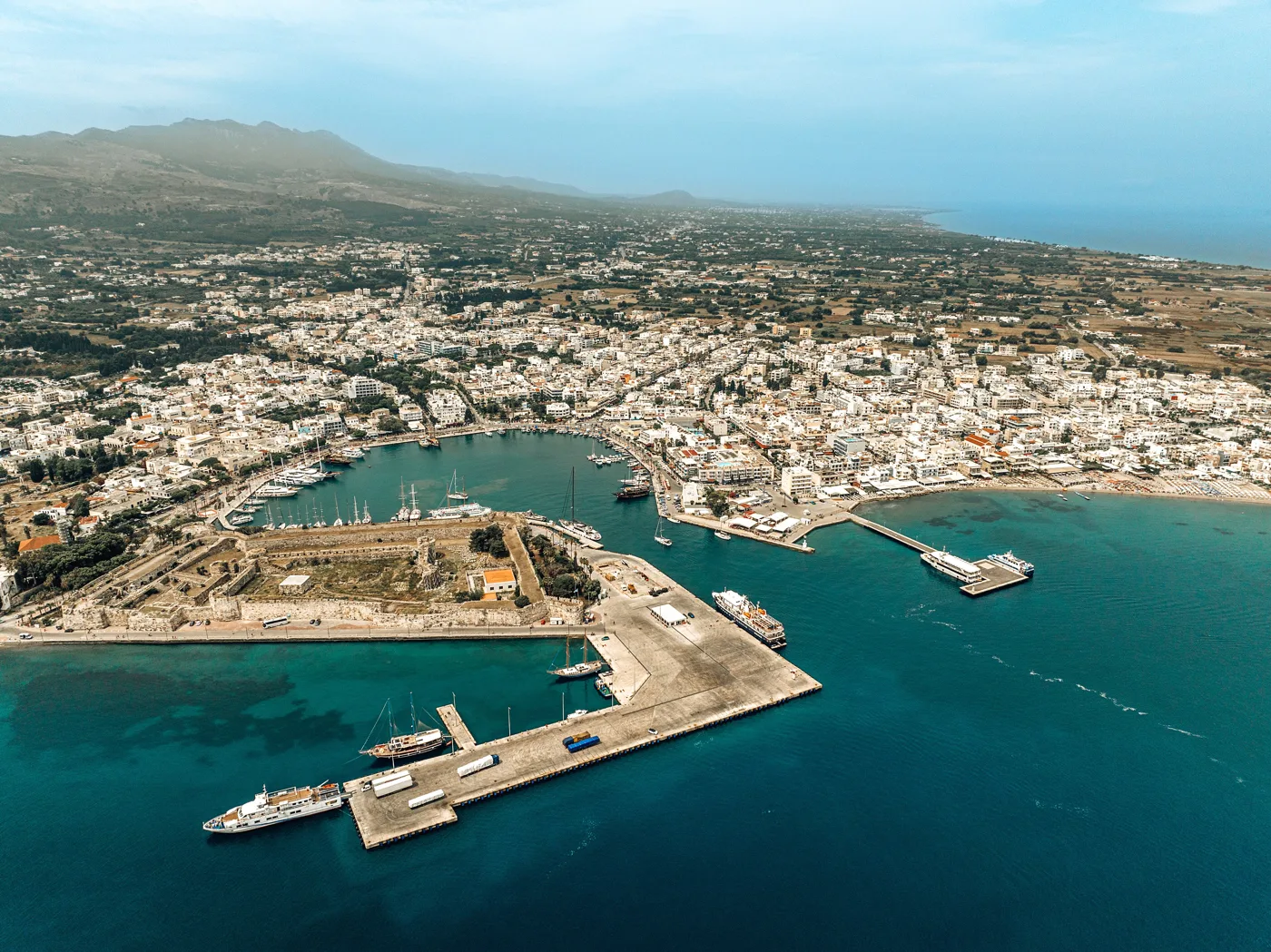
The town spreads around the harbour.
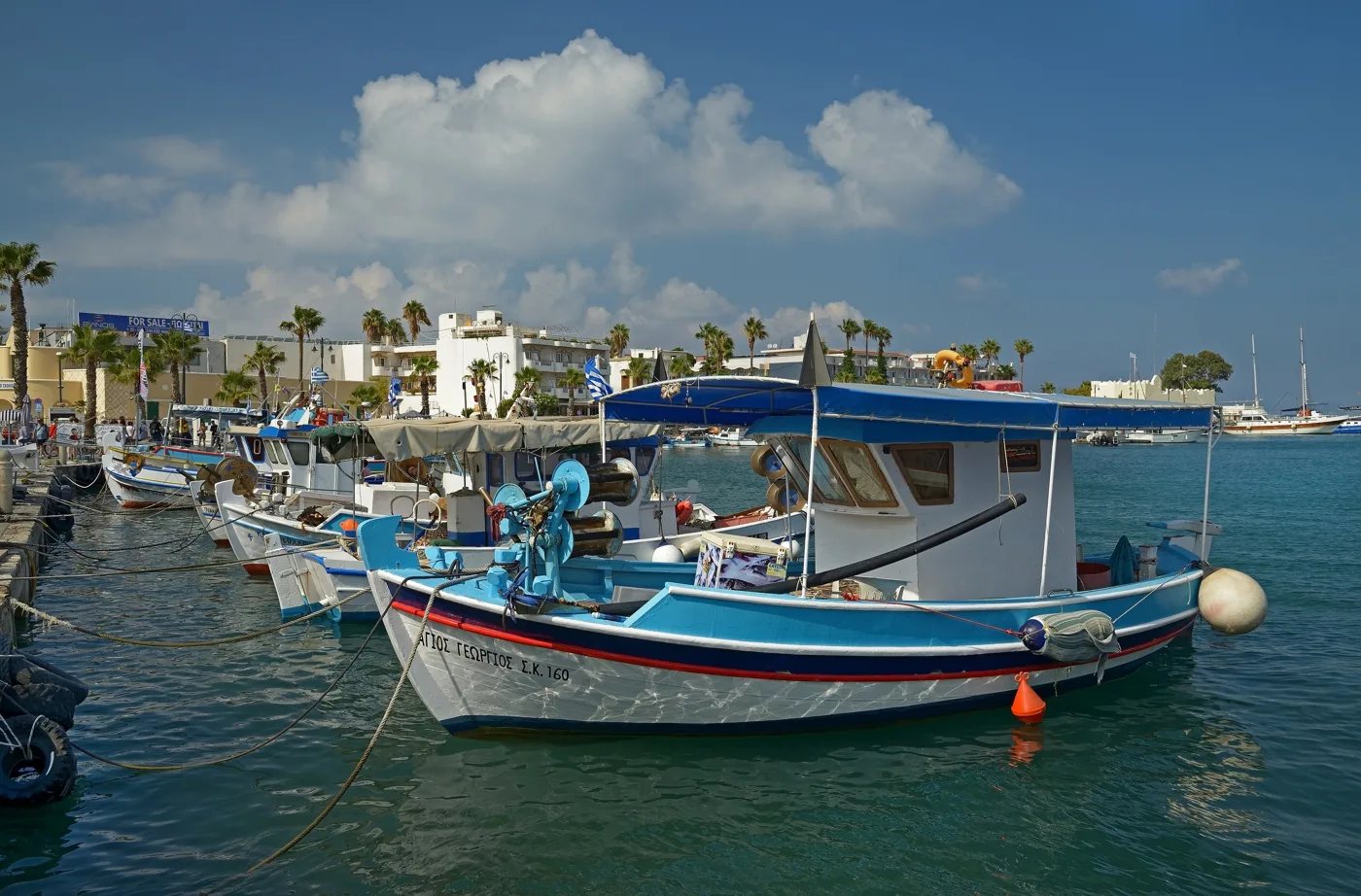
Fishing boats and palm trees.
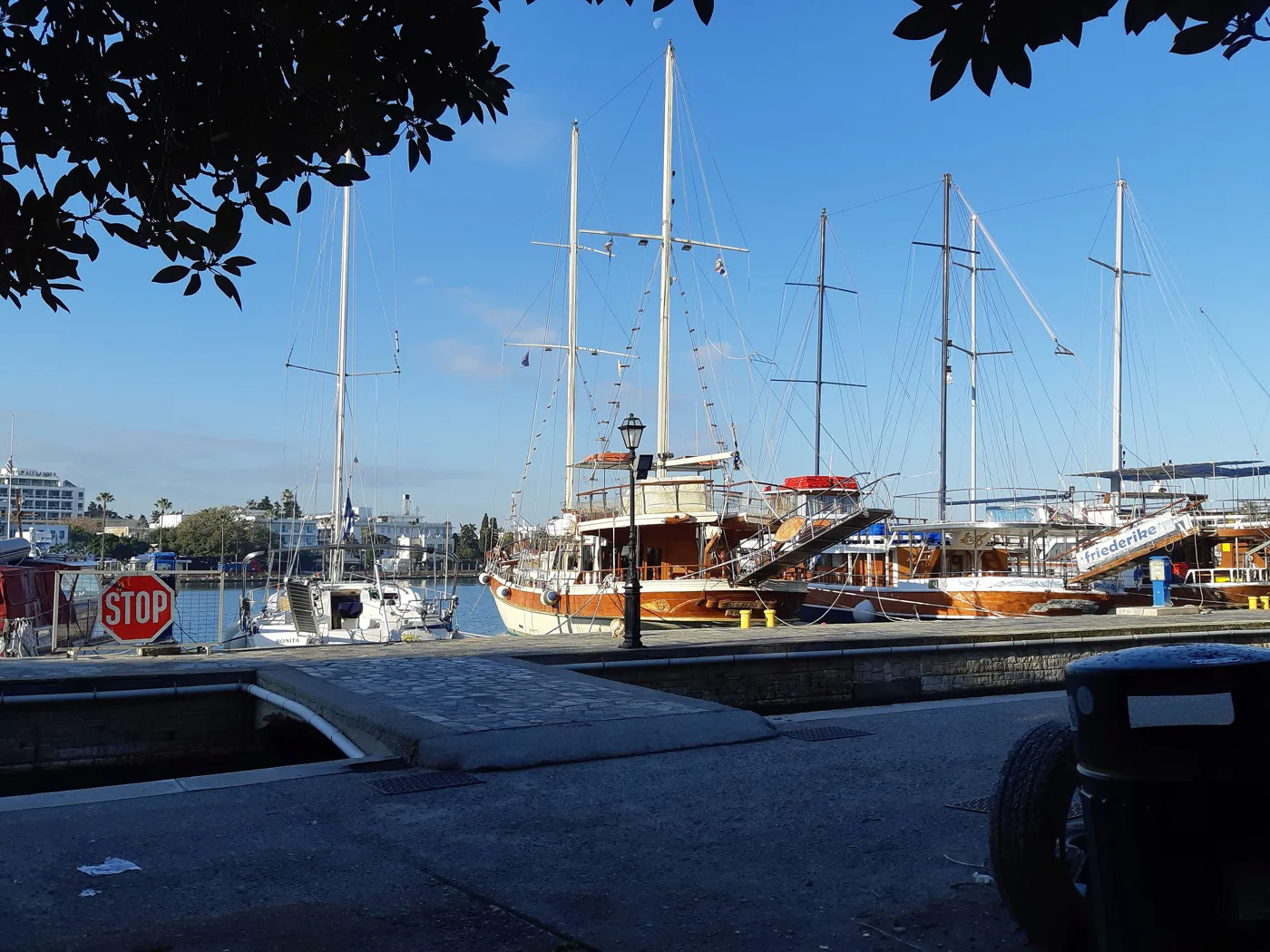
The boats to the nearby islands leave from here.
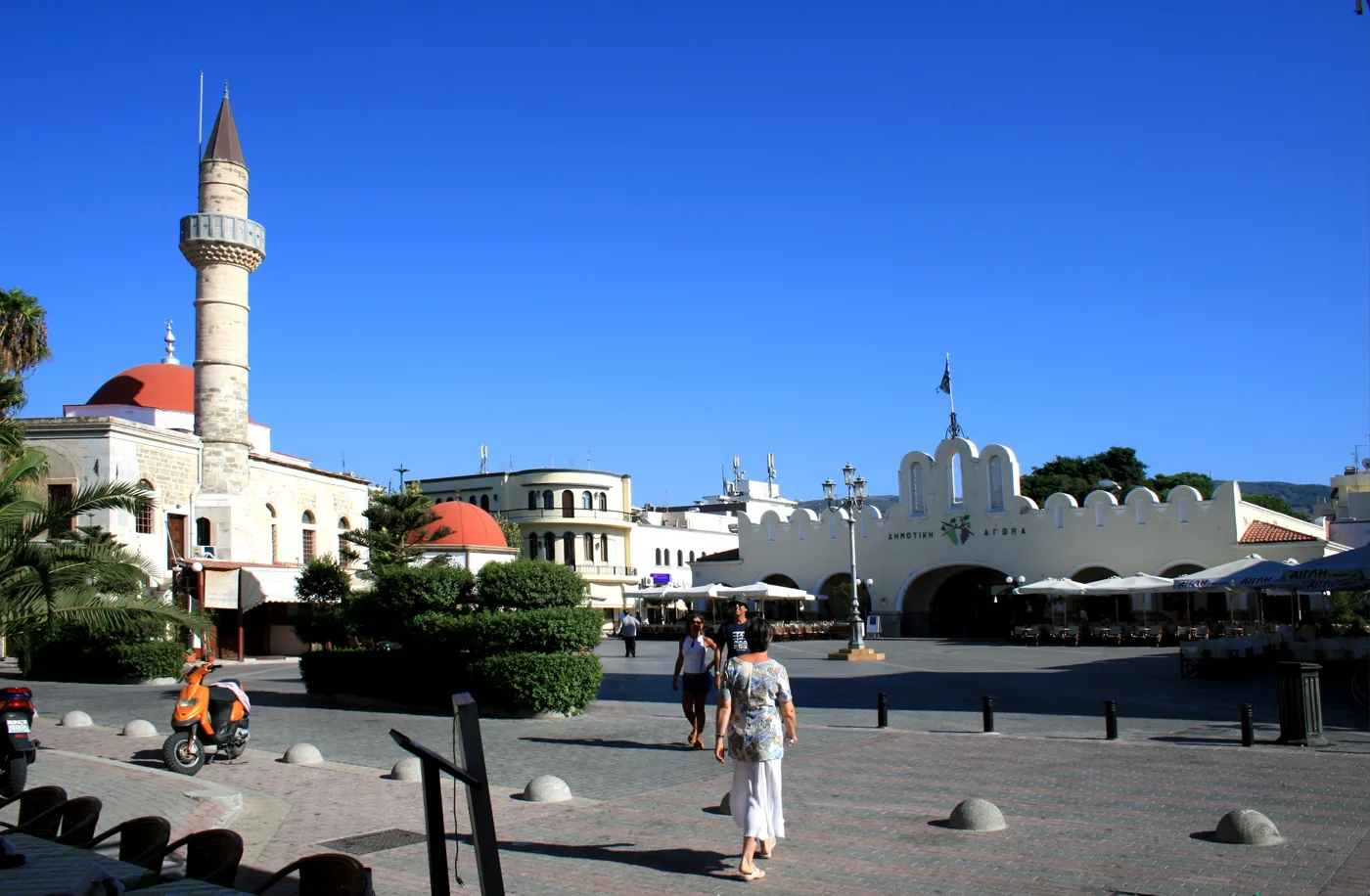
Mosque, market and Italian buildings.
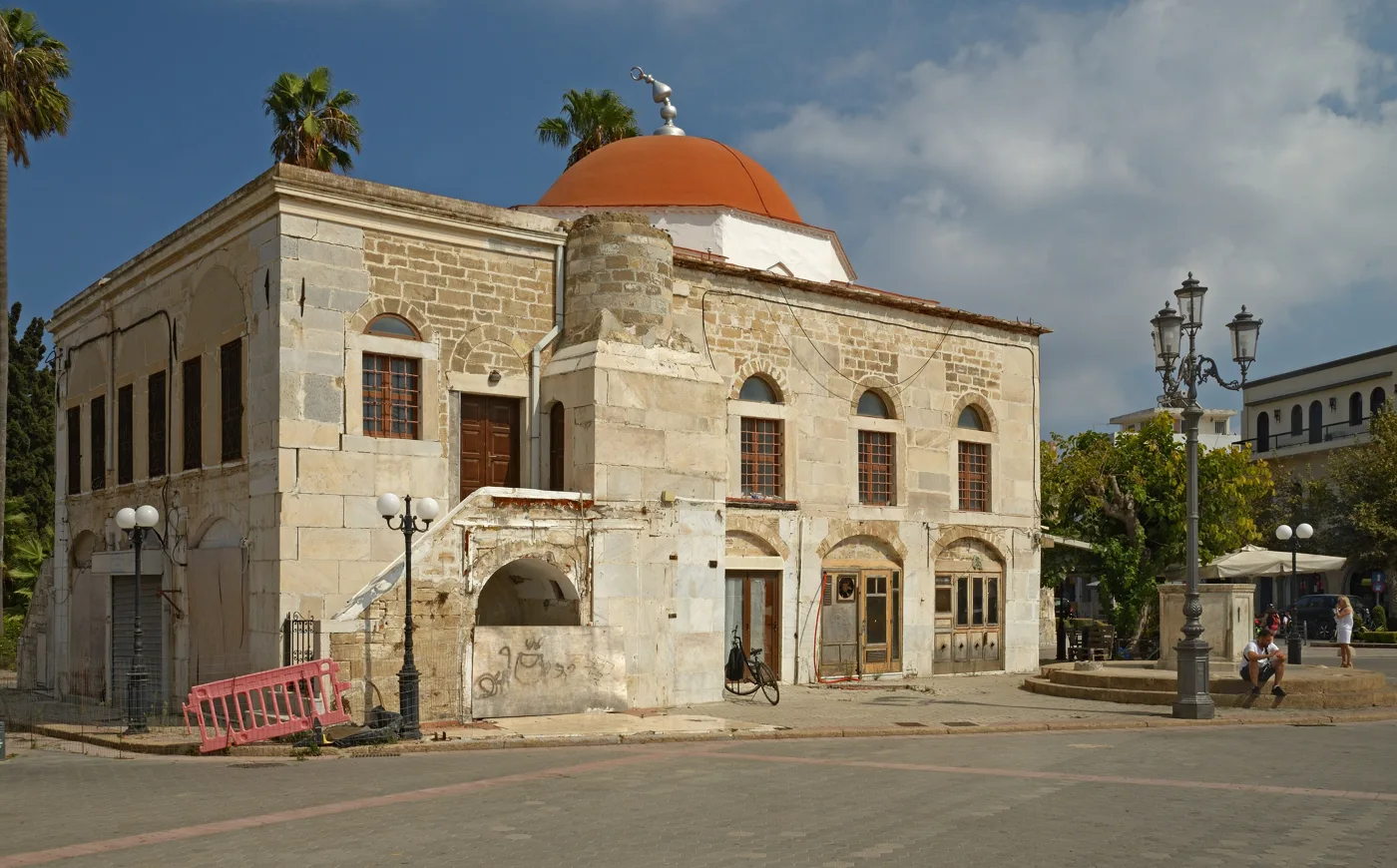
A trace of the Ottoman period.
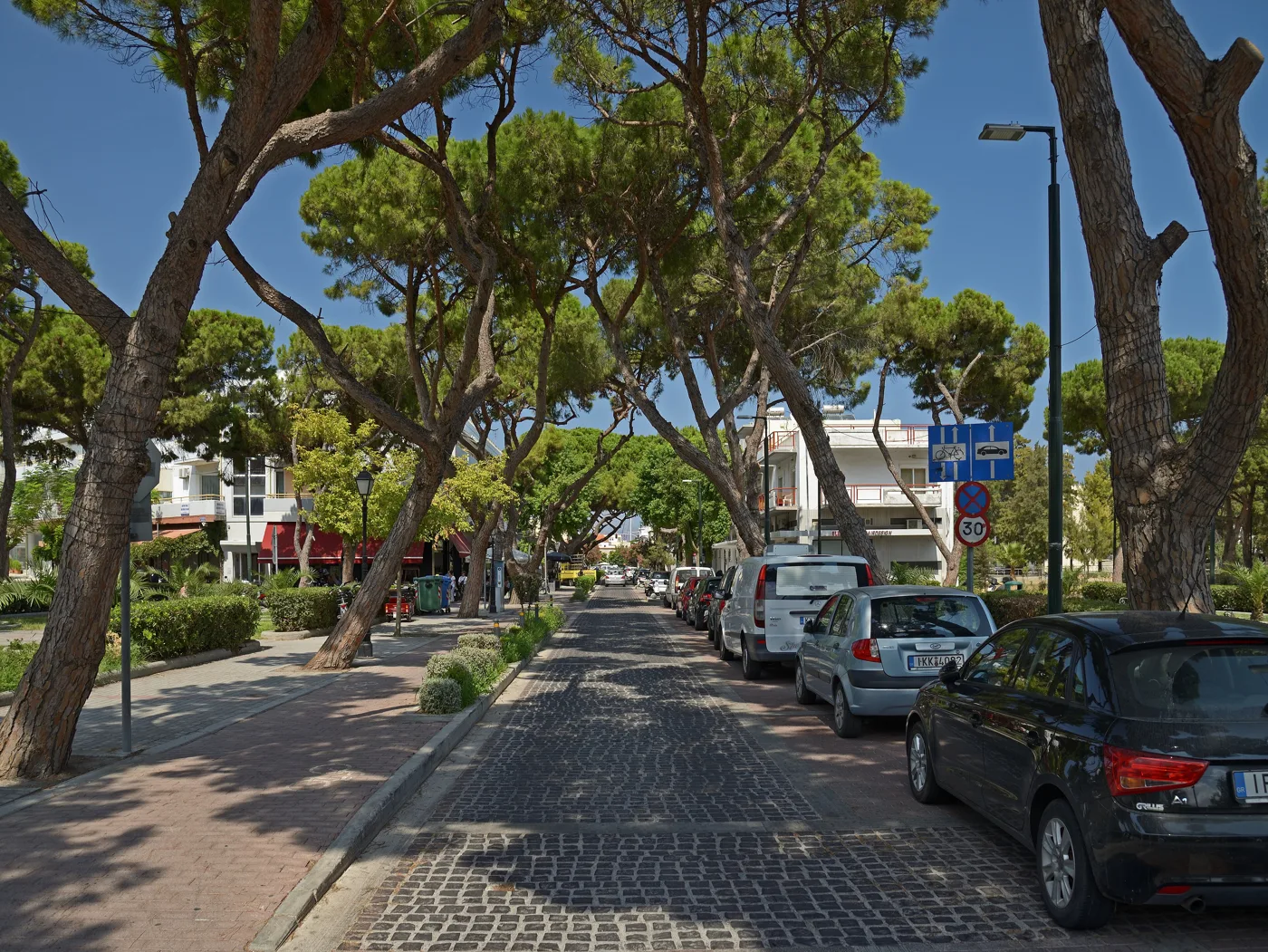
Kos is flat and bike-friendly.
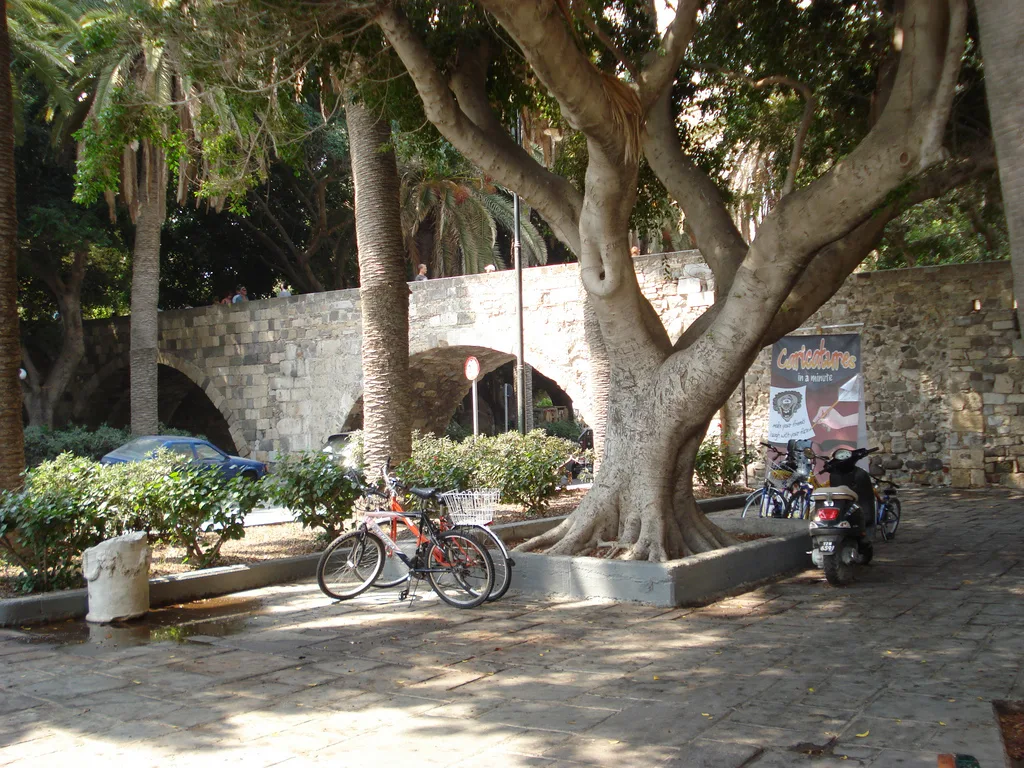
The way into the castle.
Photos: Arne Müseler (CC BY-SA 3.0 de), Ввласенко (CC BY-SA 3.0), Rikki Mitterer (CC BY-SA 4.0), Karelj (Public domain), Kevin Gibbons (CC BY 2.0) · Wikimedia Commons
🏛️ The Asklepieion and ancient Kos
The Asklepieion is about 4 kilometres outside town, on a slope with cypress trees. It was built on three terraces linked by grand stairways, with temples, stoas and baths. From the top terrace you see the town, the sea and the Turkish coast opposite. Go early in the morning, as there is no shade at midday.
In town, ancient remains are everywhere. The Ancient Agora stretches next to the harbour, with columns and foundations among the trees. On the west side are the Roman Odeon, with marble seats, and the Casa Romana, a restored Roman villa with mosaics and a peristyle.
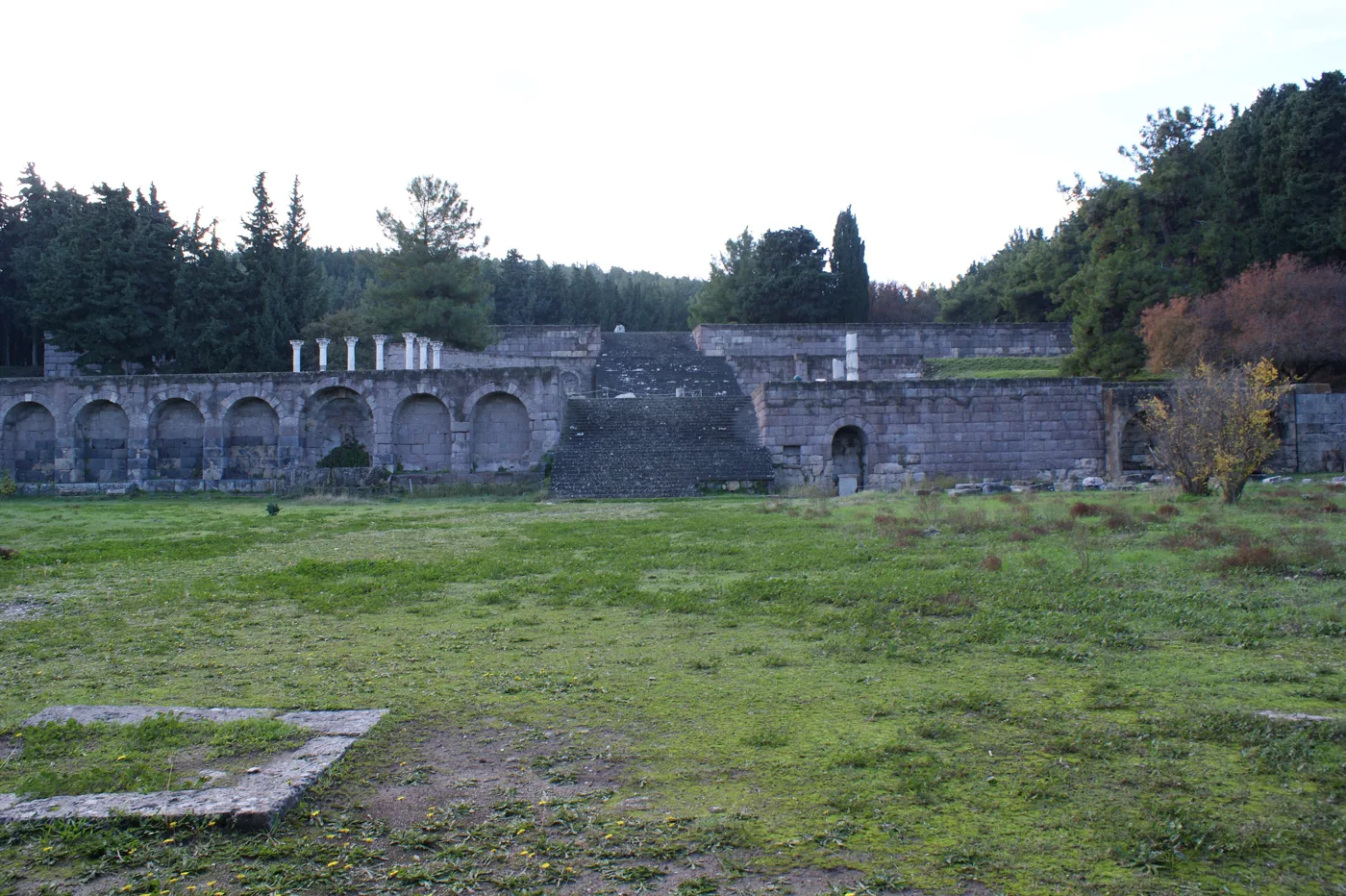
The ancient healing sanctuary on three terraces.
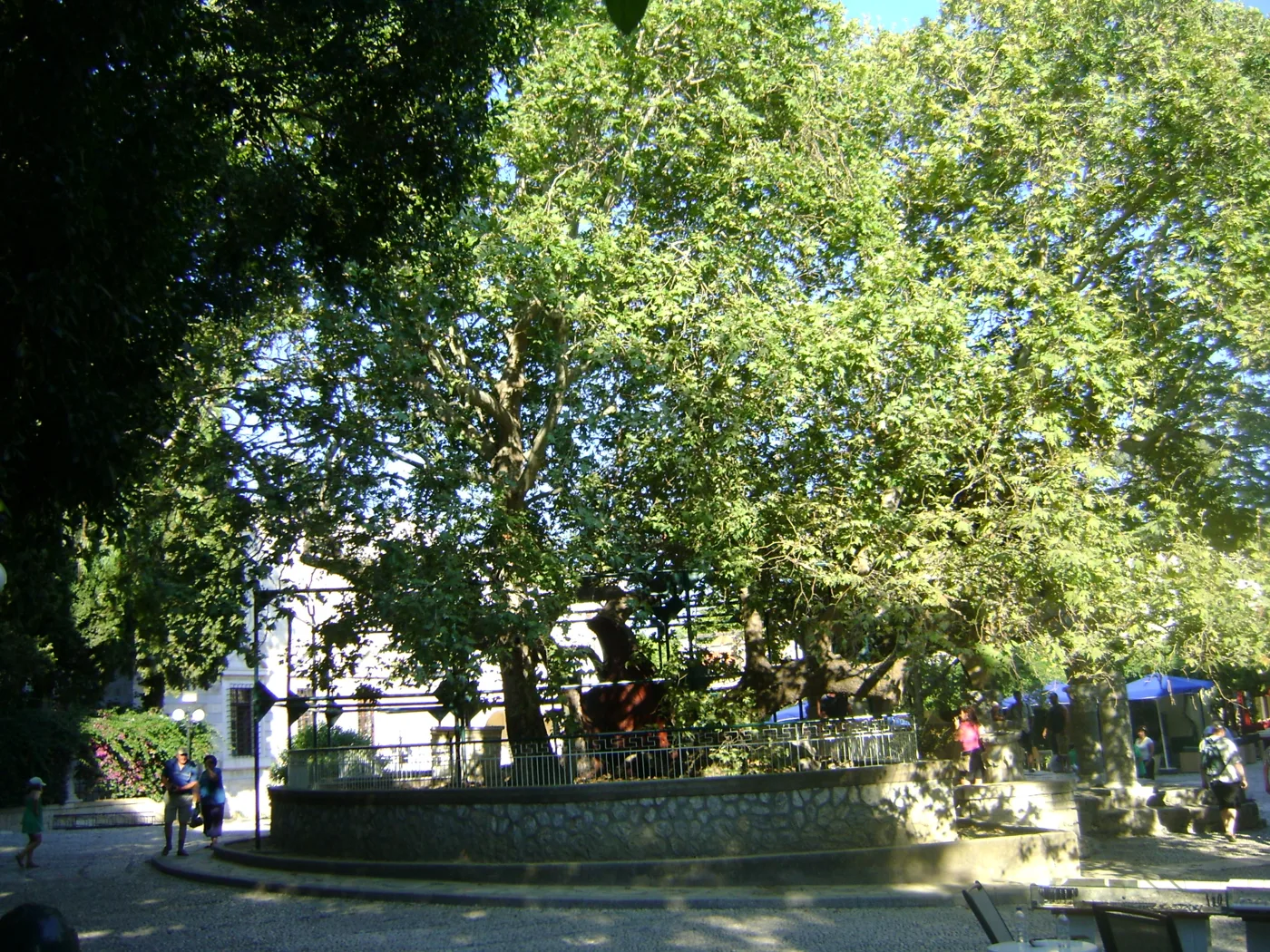
Here, tradition says, Hippocrates taught.
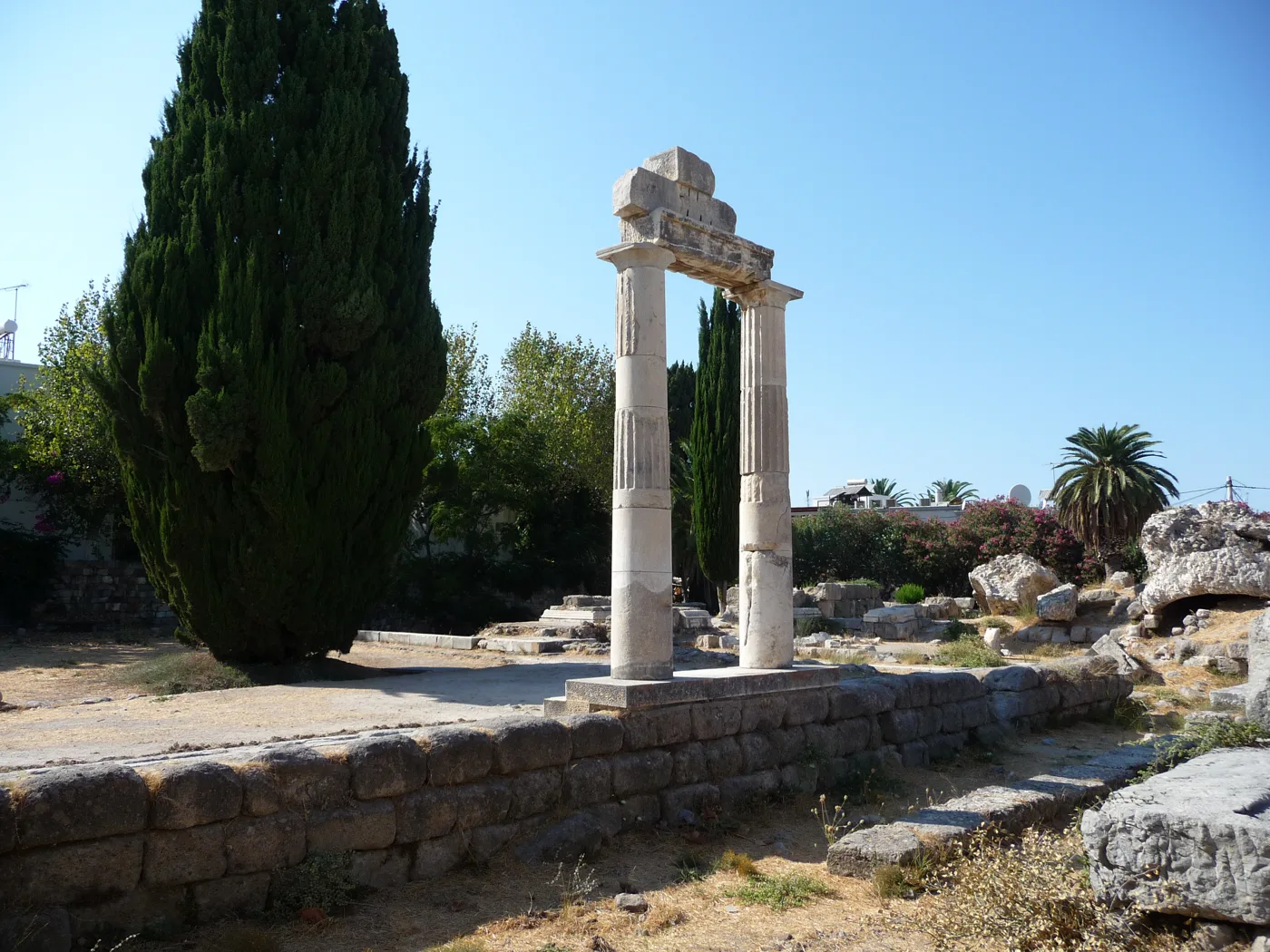
Ruins in the middle of town.
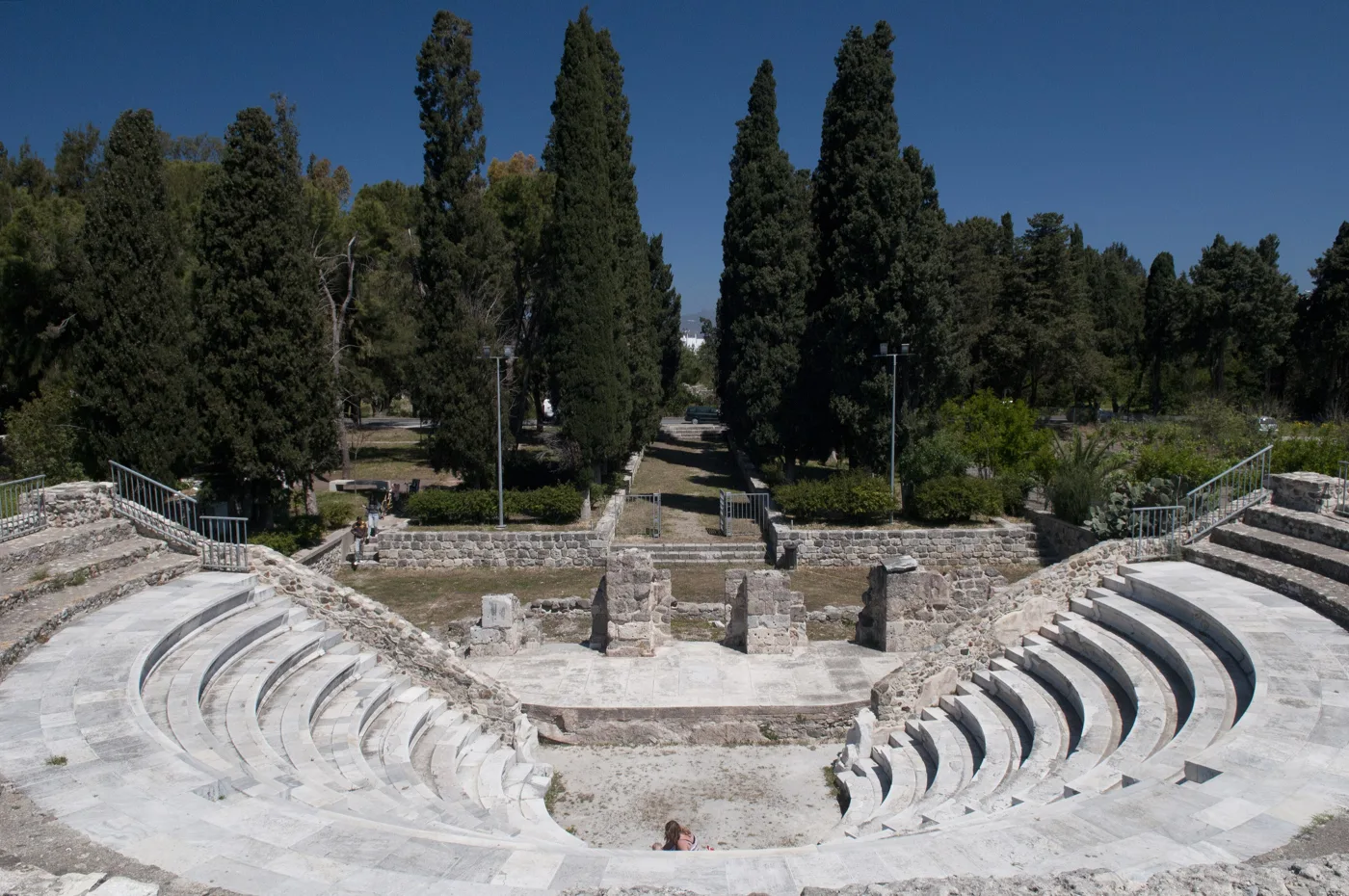
Marble seats from Roman times.
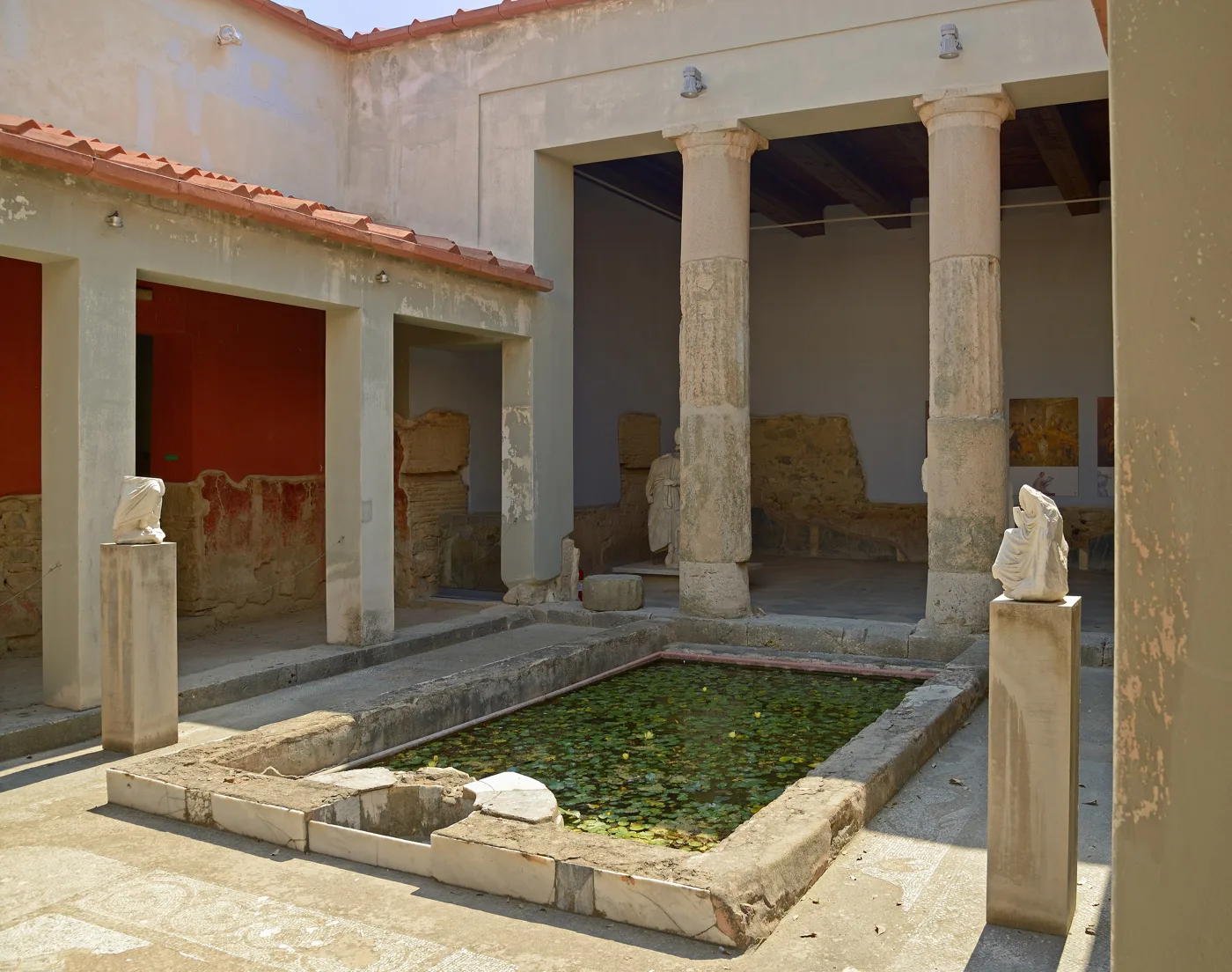
A Roman villa with mosaics.
Photos: Asurnipal (CC BY-SA 4.0), sophie (Public domain), JD554 (CC BY-SA 3.0), Michal Osmenda (CC BY-SA 2.0), Ввласенко (CC BY-SA 4.0) · Wikimedia Commons
⛰️ Zia, Pyli and the interior
The mountain villages lie on the slopes of Dikaios. Zia is the best known: a stone village with little shops, tavernas with views and one of the loveliest sunsets on the island. On summer evenings it fills with people. The path to the mountain’s summit also starts here. Nearby is Pyli, with a ruined medieval castle on a rock.
In the middle of the island, near the airport, is Antimachia Castle, the second large castle of the Knights, with walls and two little churches inside. South of it, the Plaka forest is a pine wood where peacocks roam free.
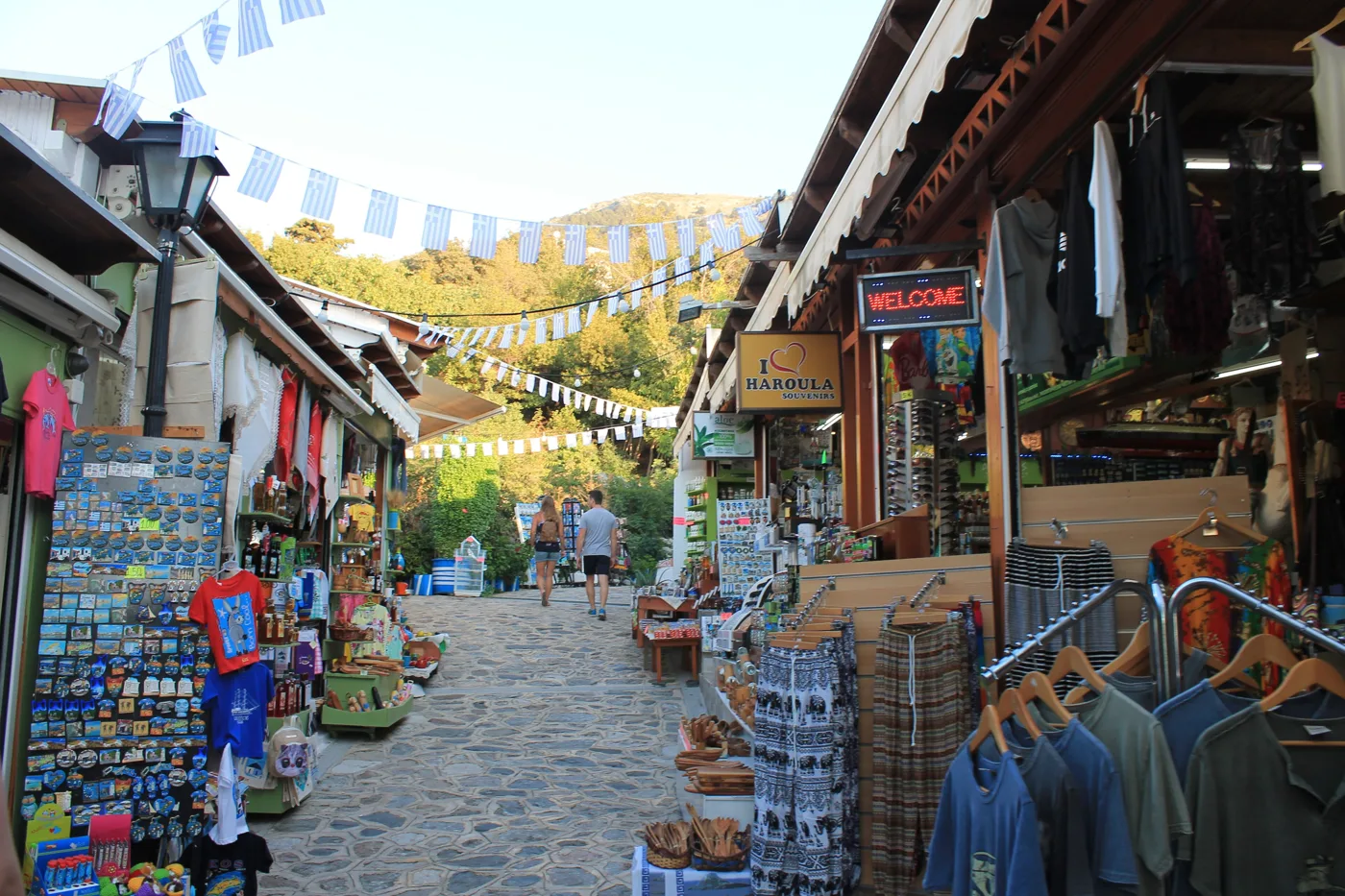
The mountain village with the sunset.
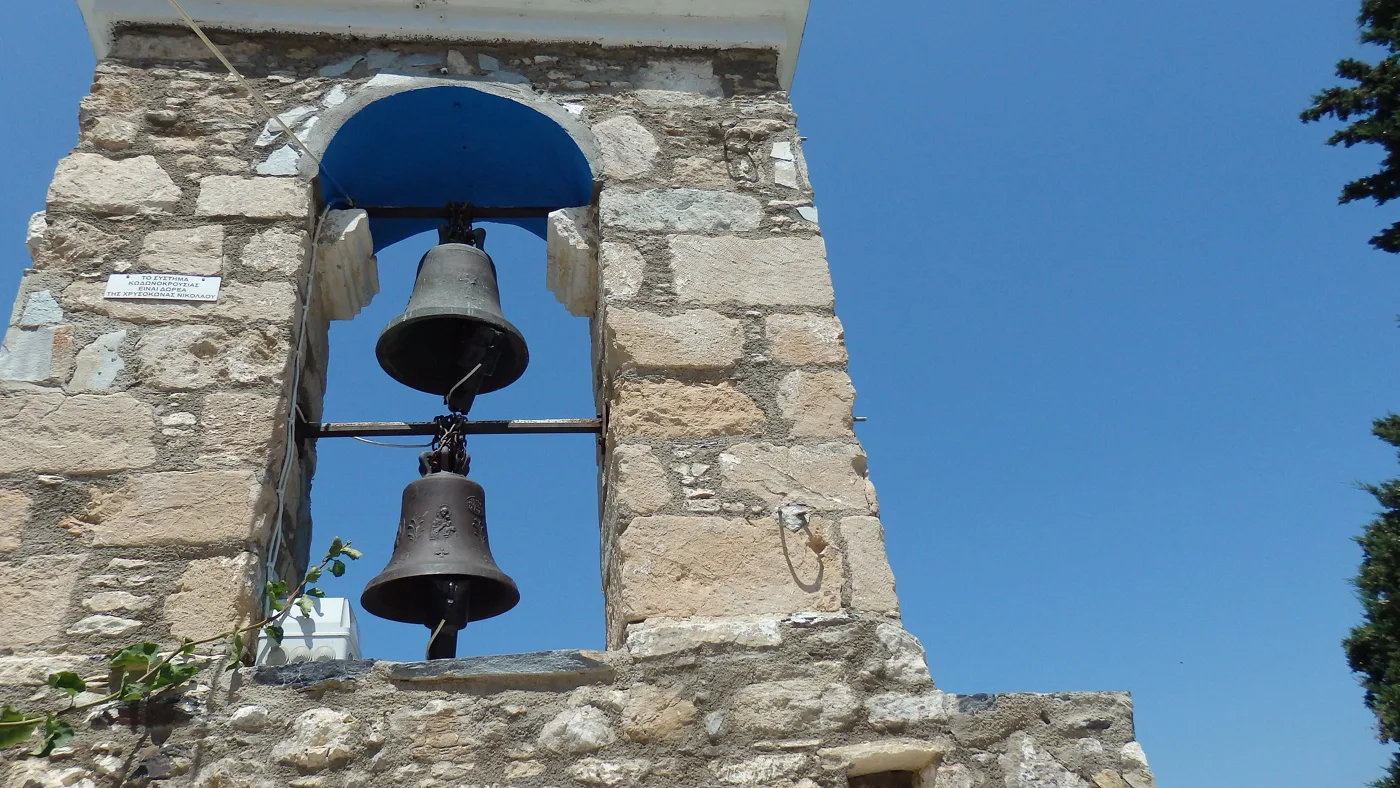
Stone and quiet in the mountains.
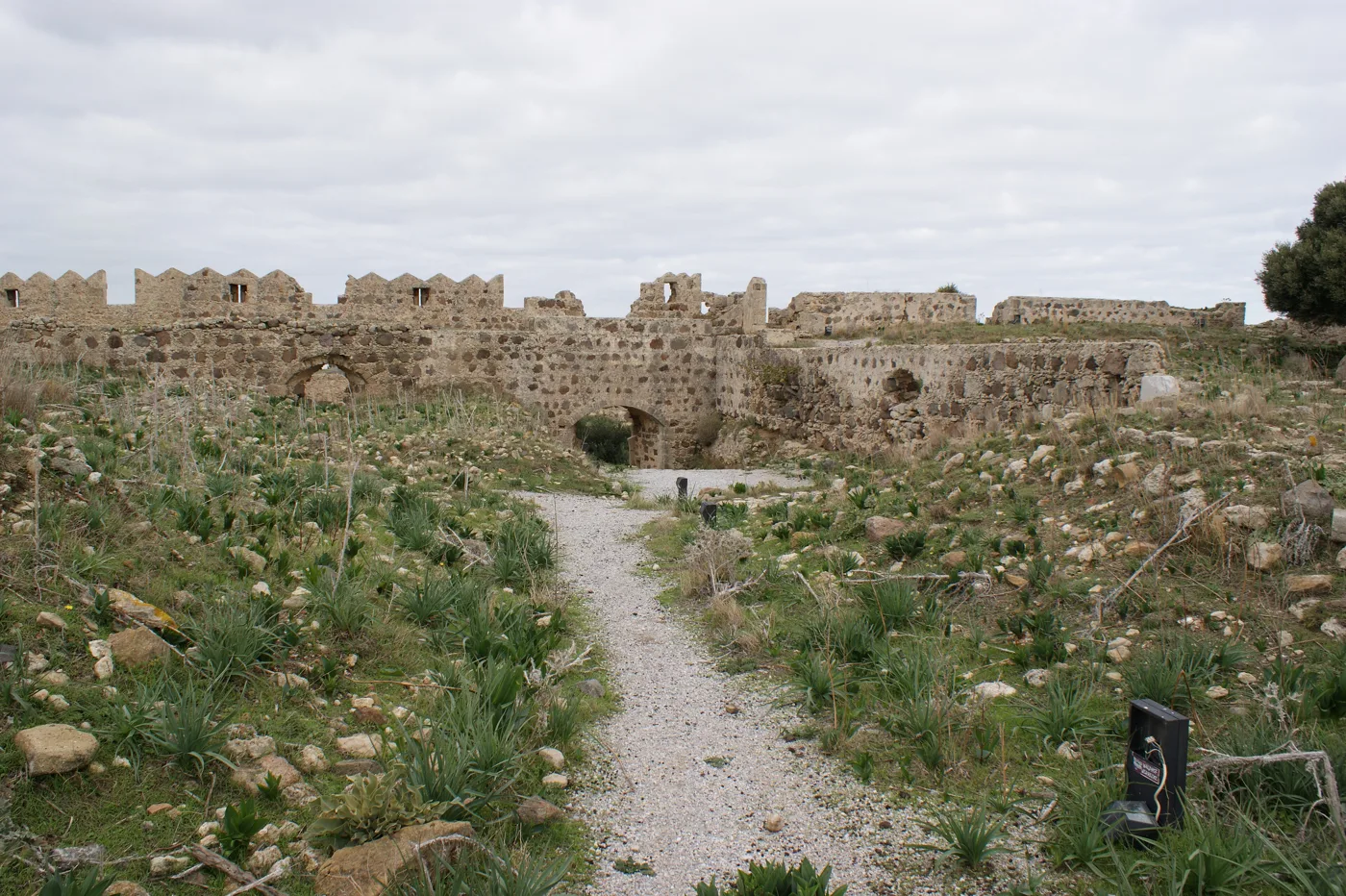
The second castle of the Knights.
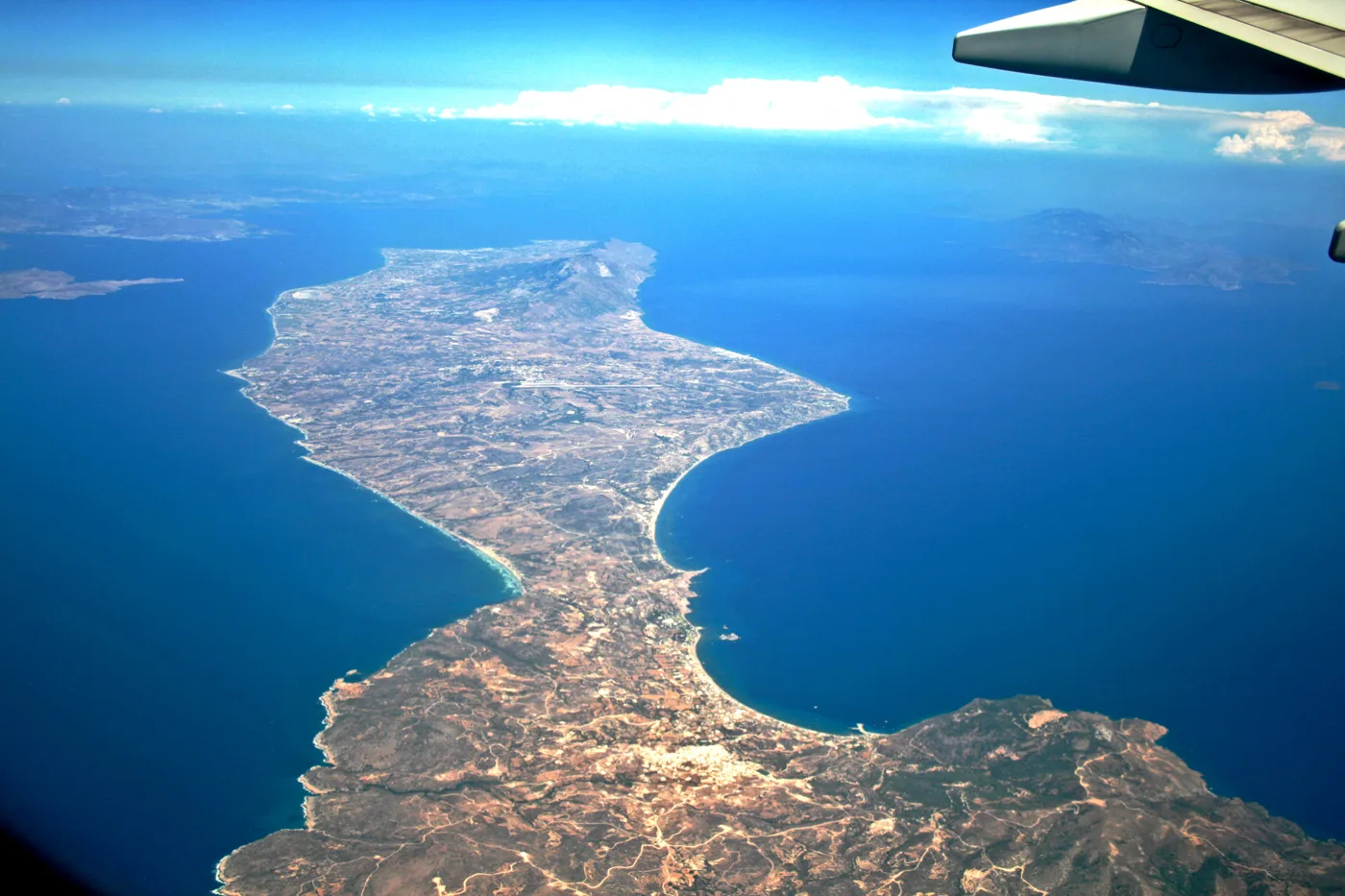
A long, narrow island.
Photos: Robert Ahner (CC BY-SA 4.0), Kopřiva2570 (CC BY-SA 4.0), Asurnipal (CC BY-SA 4.0), Karelj (Public domain) · Wikimedia Commons
🏖️ The beaches
Kos has beaches on every coast, most of them sandy. The north coast has the long, shallow sandy beaches: Lambi, Tigaki, Marmari, Mastichari. They are ideal for children, but when the northerly wind blows they get waves. In the east, Embros Thermes is a pebble beach where hot water from thermal springs flows into the sea, into a small pool ringed by stones.
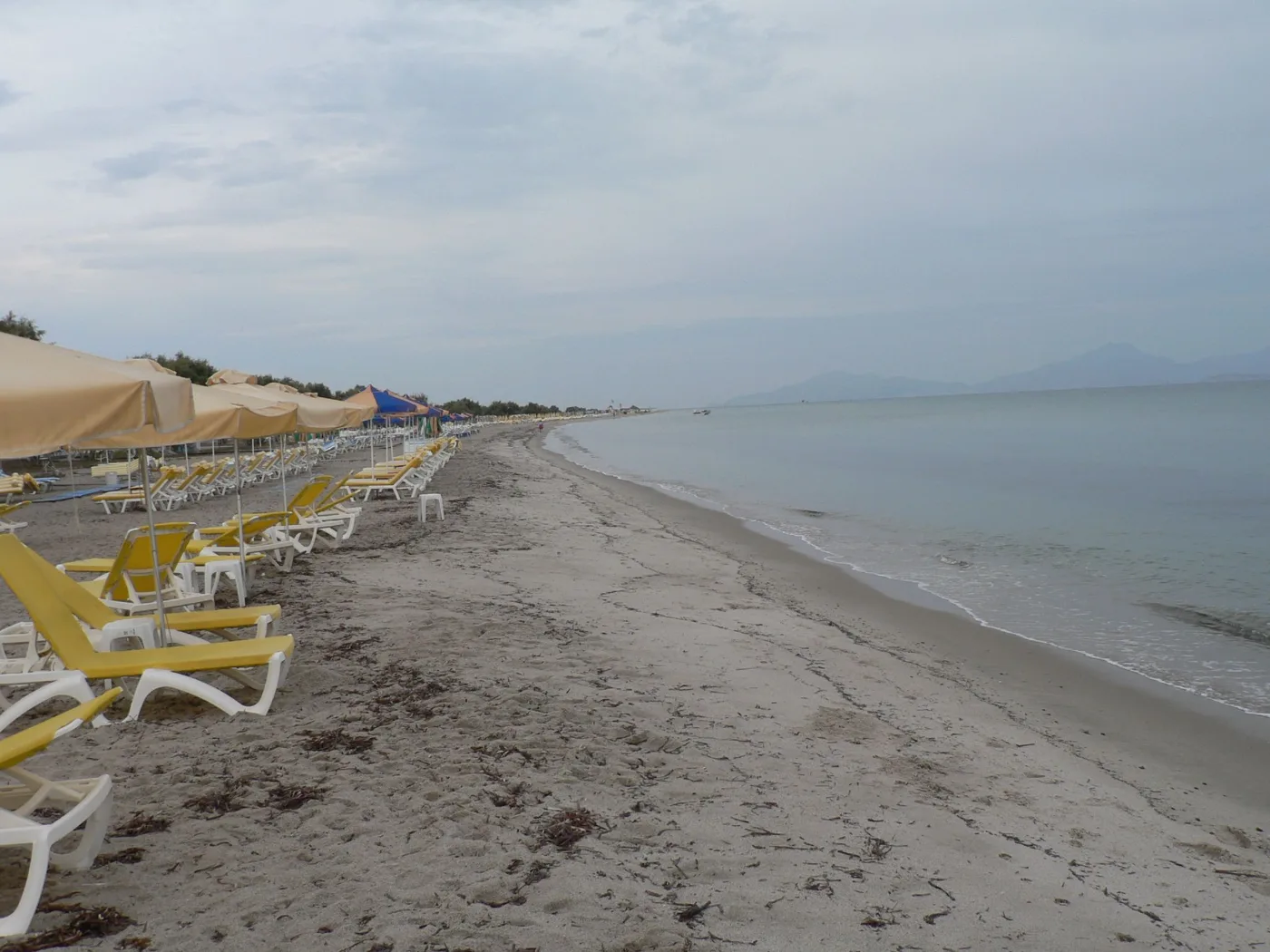
Shallow sea on the north coast.
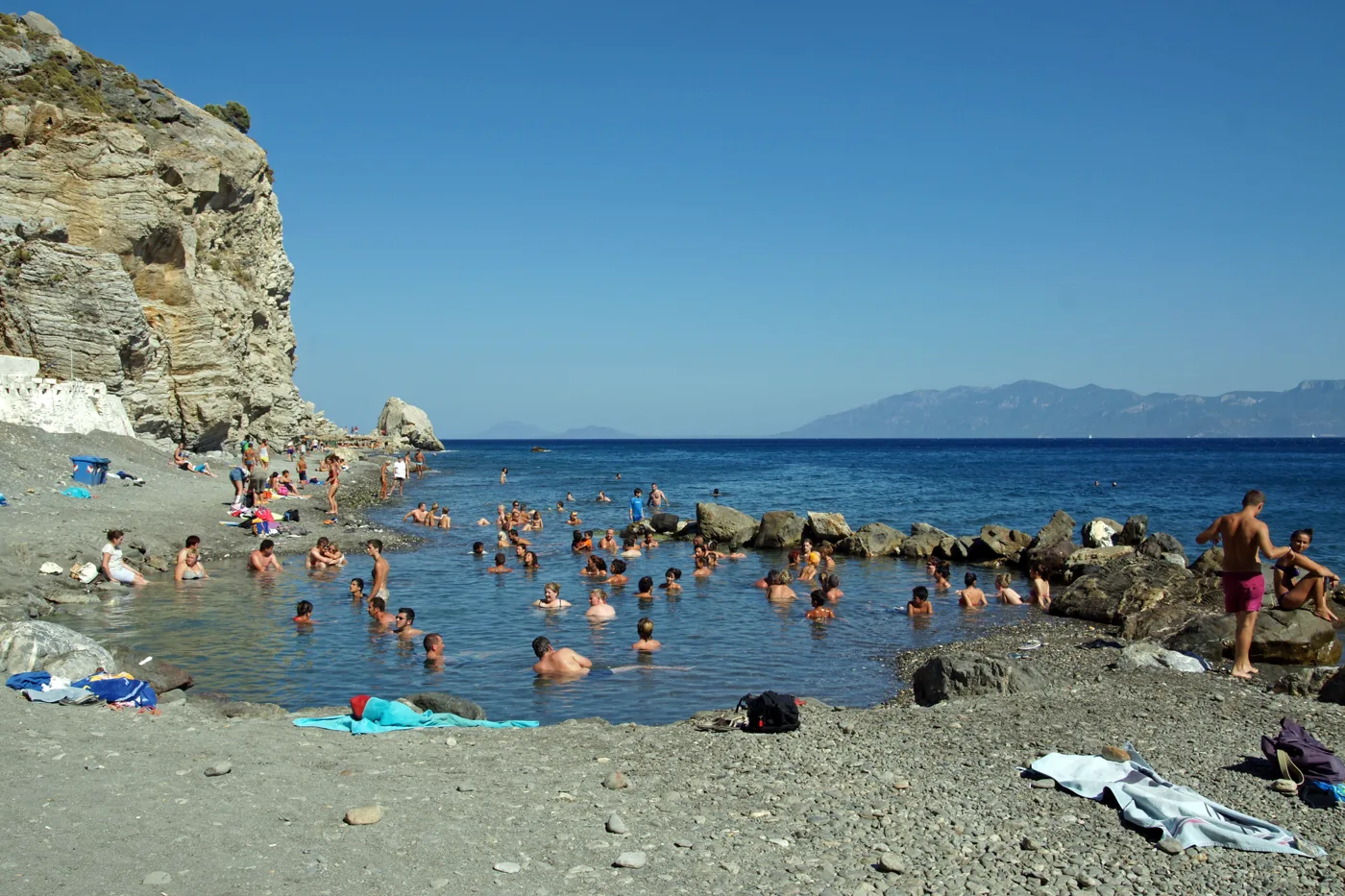
Hot water from the rock into the sea.
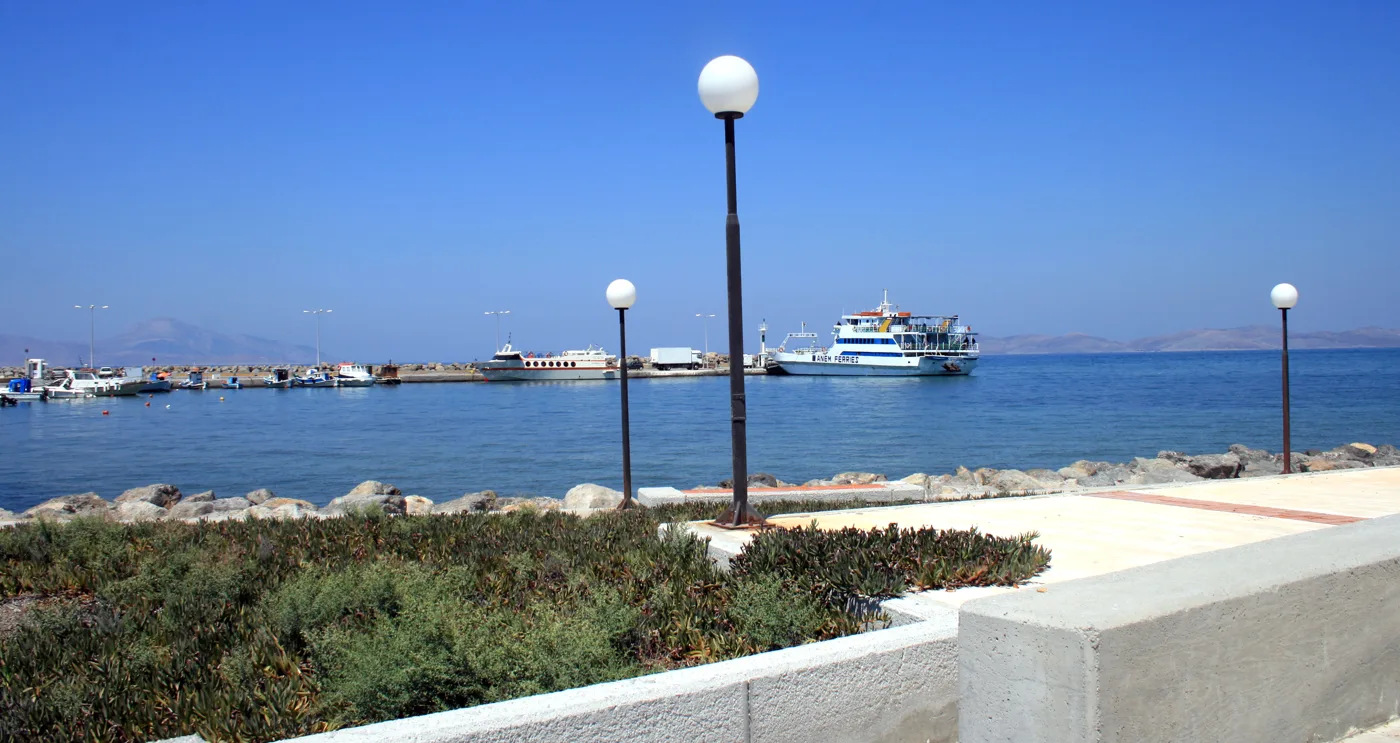
From here you cross to Kalymnos.
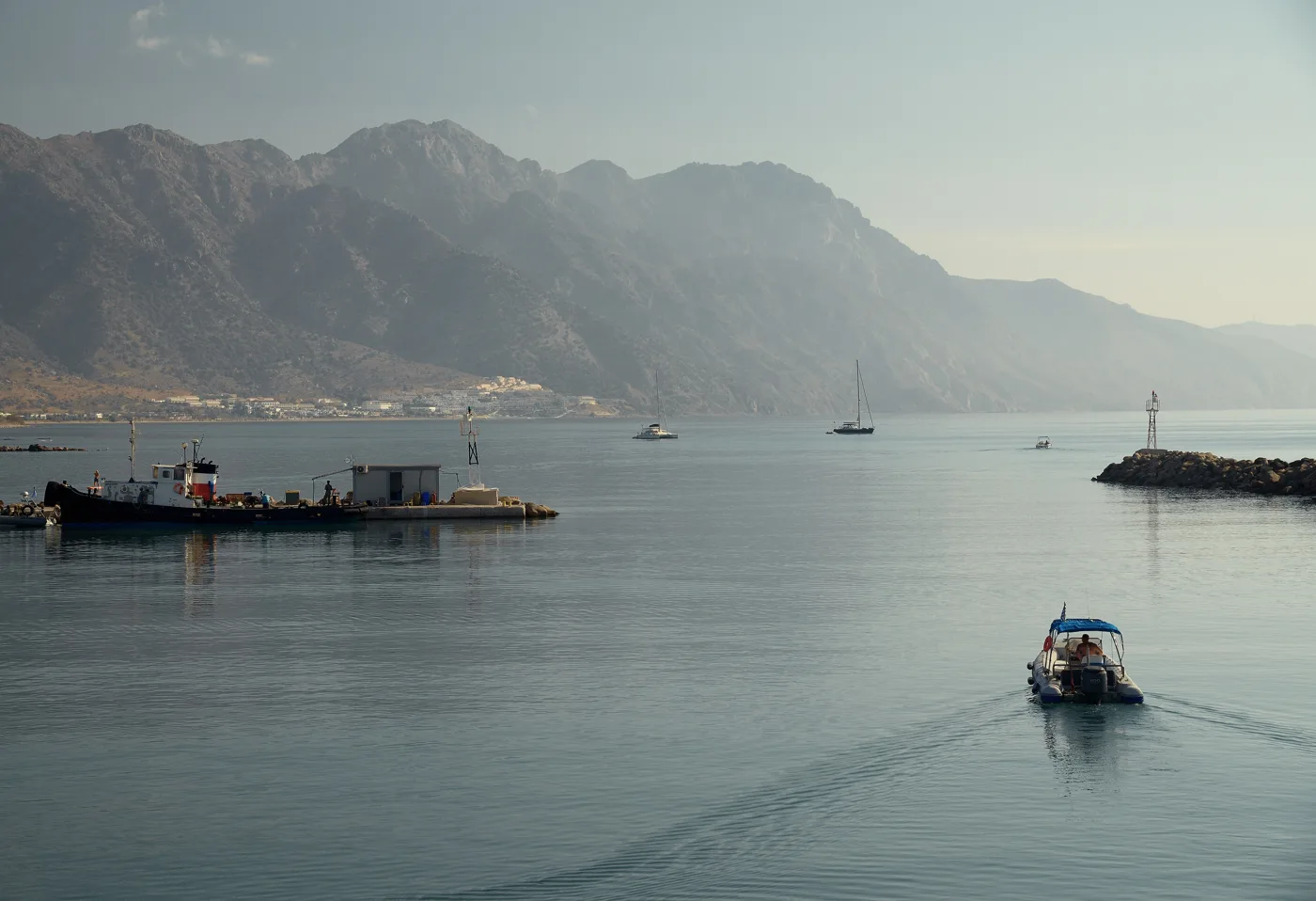
A resort village on the south coast.
Photos: Andy Mitchell (CC BY-SA 2.0), kallerna (CC BY-SA 3.0), Karelj (Public domain), Ввласенко (CC BY-SA 3.0) · Wikimedia Commons
When the northerly wind blows, the north coast gets waves. Then head to the south coast, to Kardamena or the beaches of Kefalos, which are sheltered.
🏝️ Kefalos and Kastri
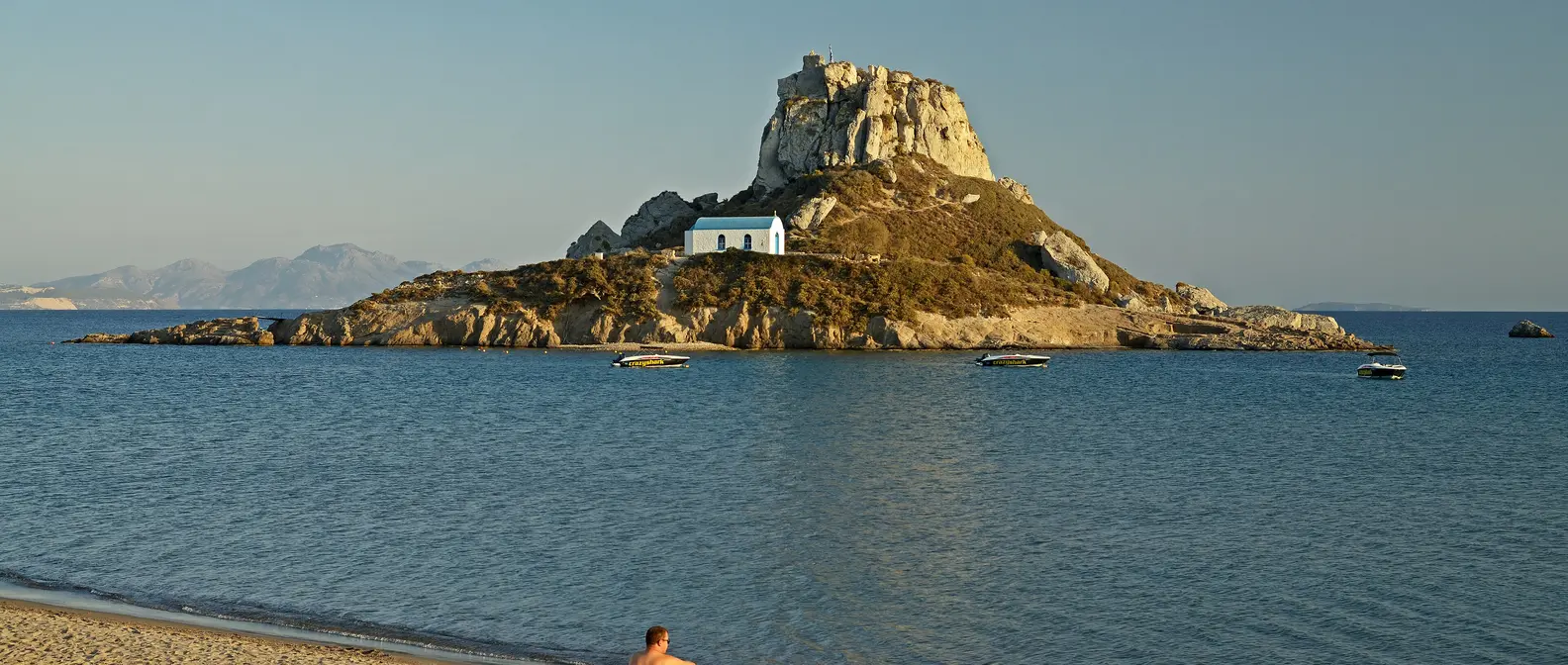
The south-western peninsula of Kefalos is the wildest side of Kos. In its bay lies Kastri, a rocky islet with a little white chapel, the most photographed view on the island. Opposite, on the beach of Agios Stefanos, the columns of an early Christian basilica stand right on the shore. You can swim out to Kastri when the sea is calm.
On the same coast is Paradise, one of the best-known beaches on Kos, with sand and turquoise water, and several more sandy beaches with names like Camel and Sunny. The village of Kefalos sits high on the hill, and down by the sea is its little harbour, Kamari.
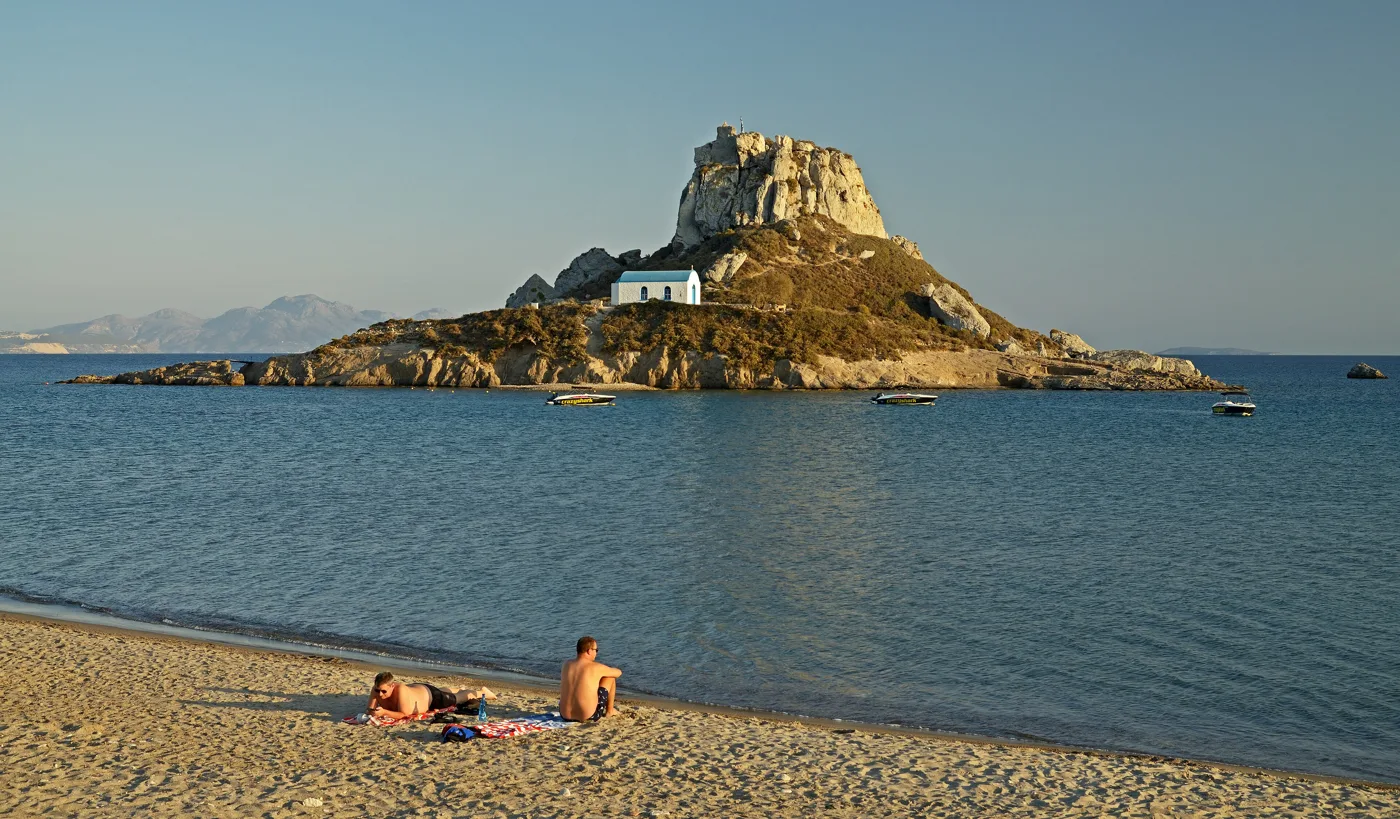
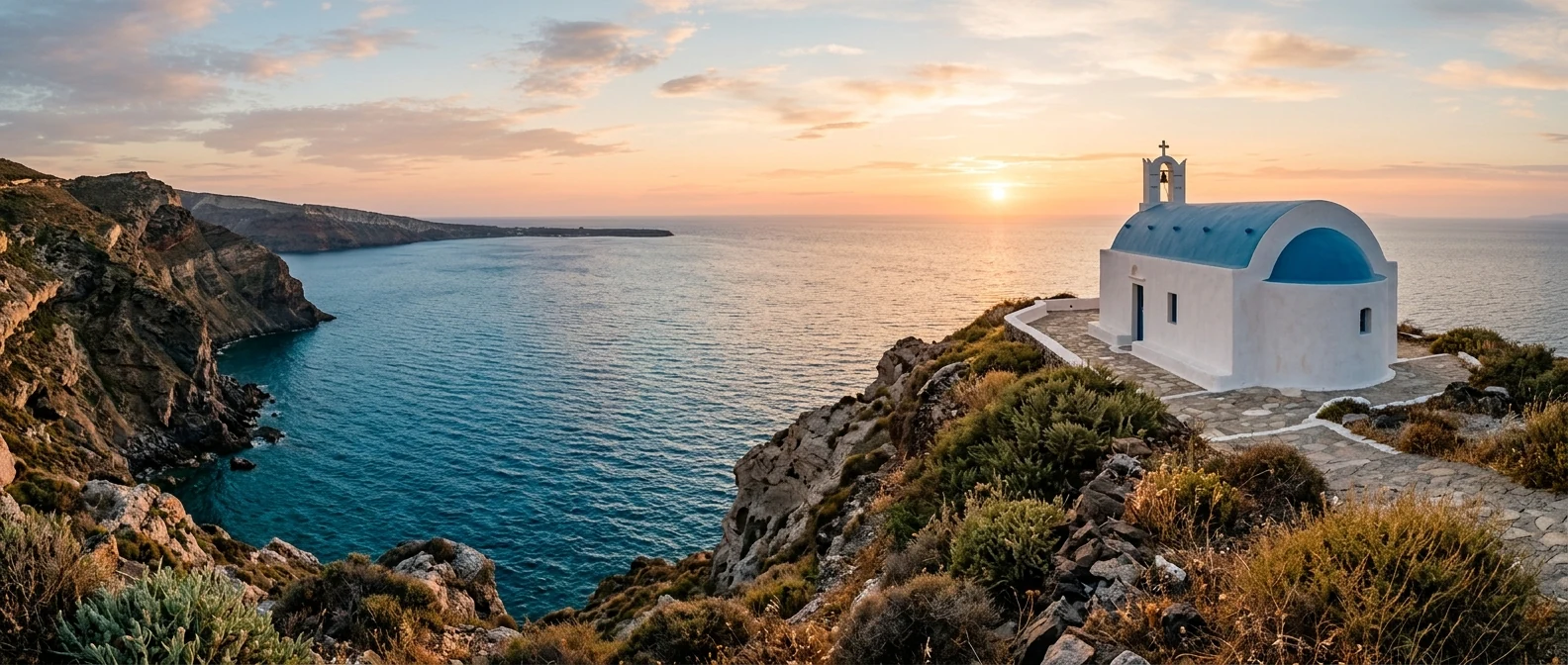
The best-known view on Kos.
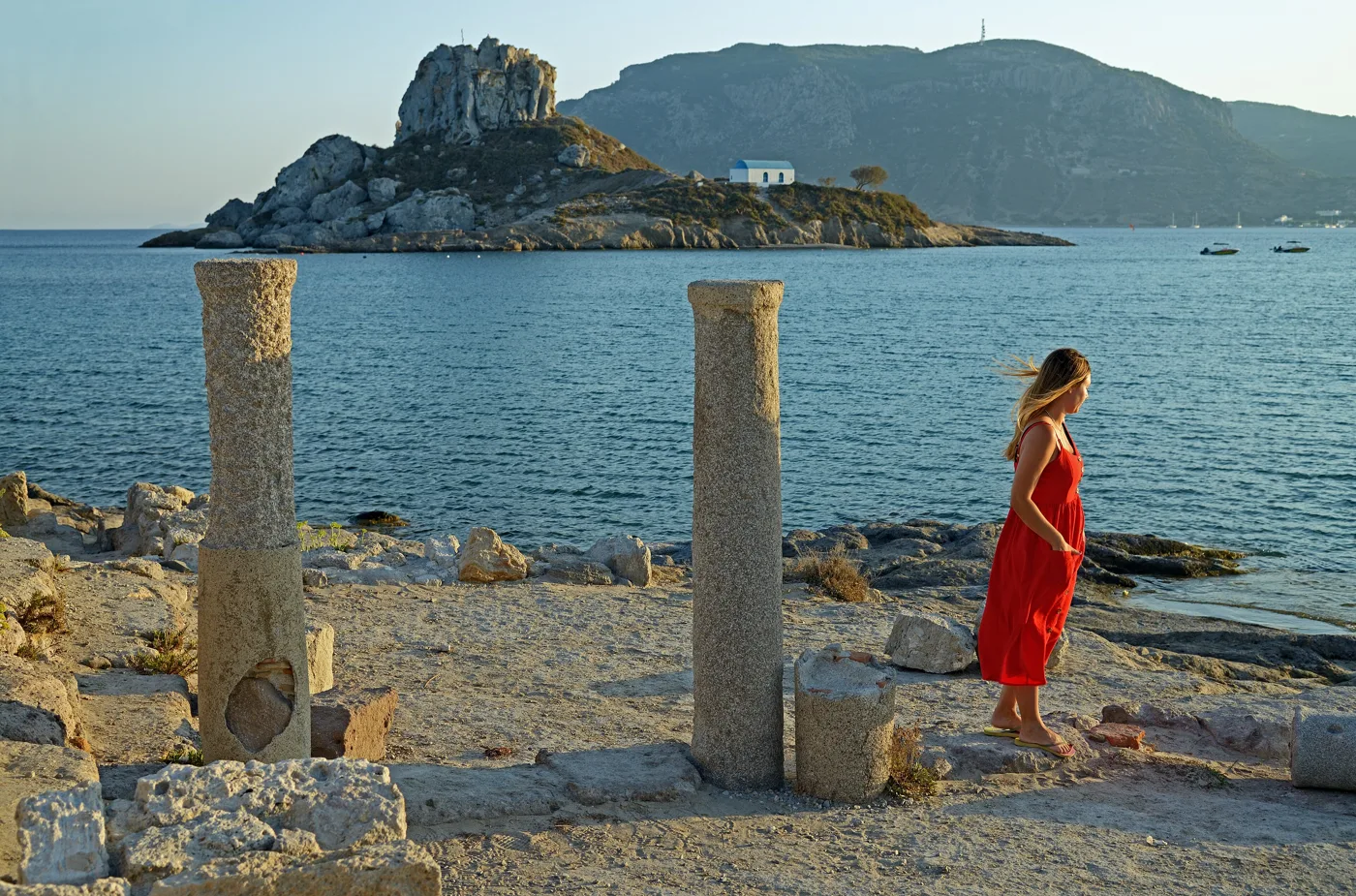
Ruins of a basilica on the shore.
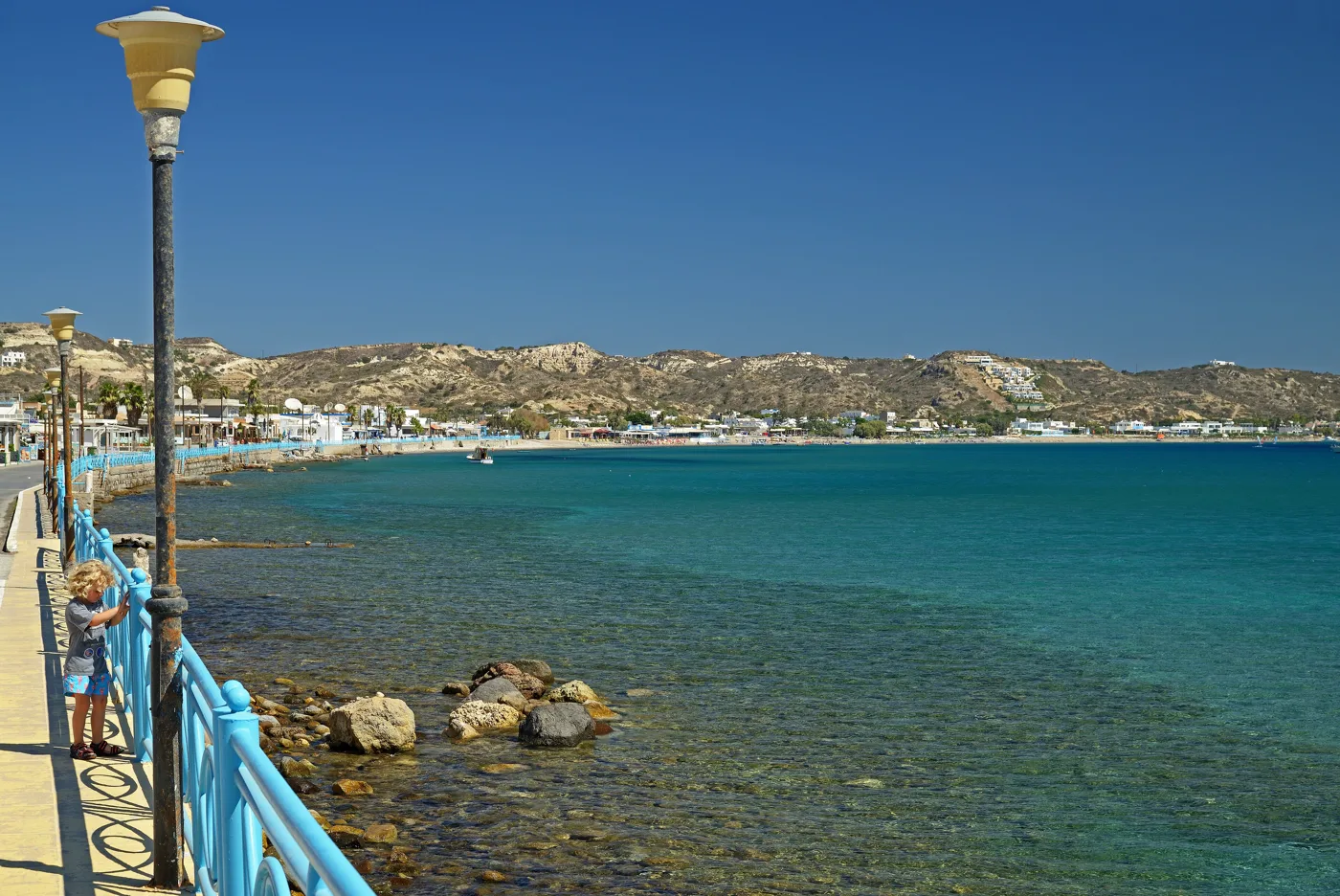
Long sandy beaches in the south-west.
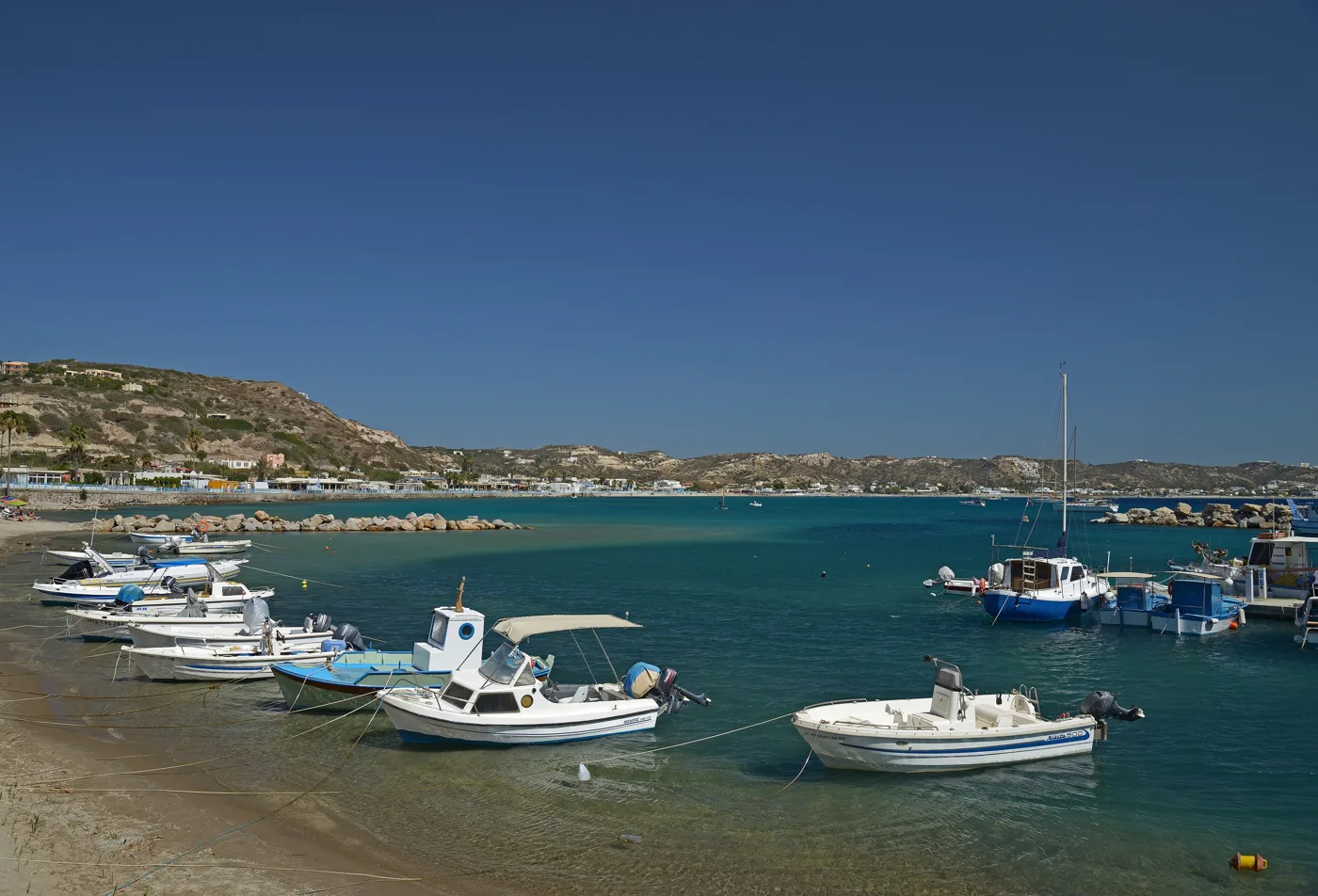
The little harbour of Kefalos.
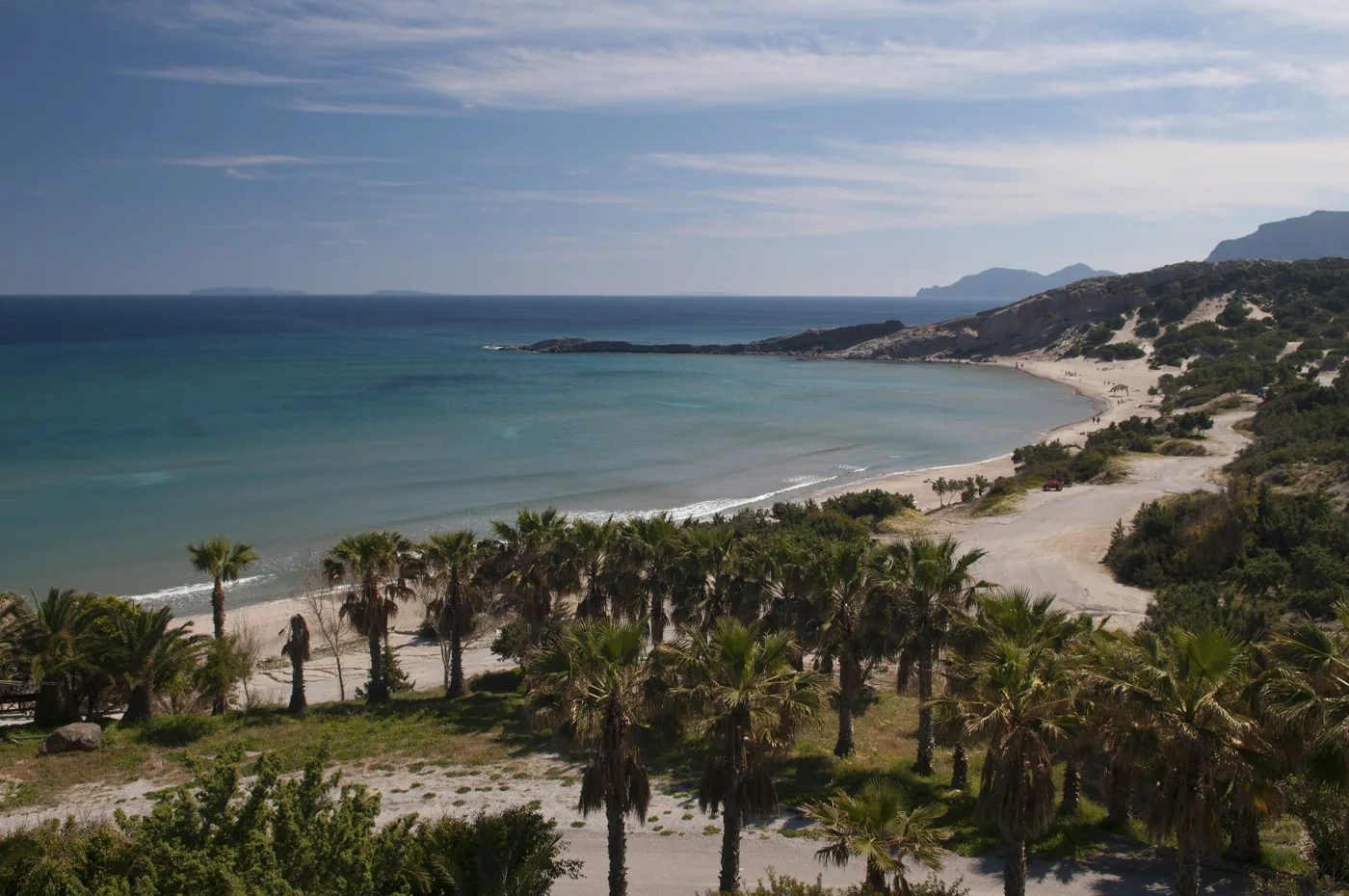
One of the best-known beaches of the south.
Photos: Ввласенко (CC BY-SA 4.0, CC BY-SA 3.0), Michal Osmenda (CC BY-SA 2.0) · Wikimedia Commons
⛵ Day trips from Kos
Boats and ferries leave the harbour of Kos and Mastichari for the nearby islands:
- Nisyros: a day trip to the volcano, where you walk down into the crater.
- Kalymnos and Pserimos: the island of the sponge divers and a small island with a sandy beach, often on the same trip.
- Bodrum (Halicarnassus): in Turkey, by boat in less than an hour. You need a passport, and check the visa rules for your country.
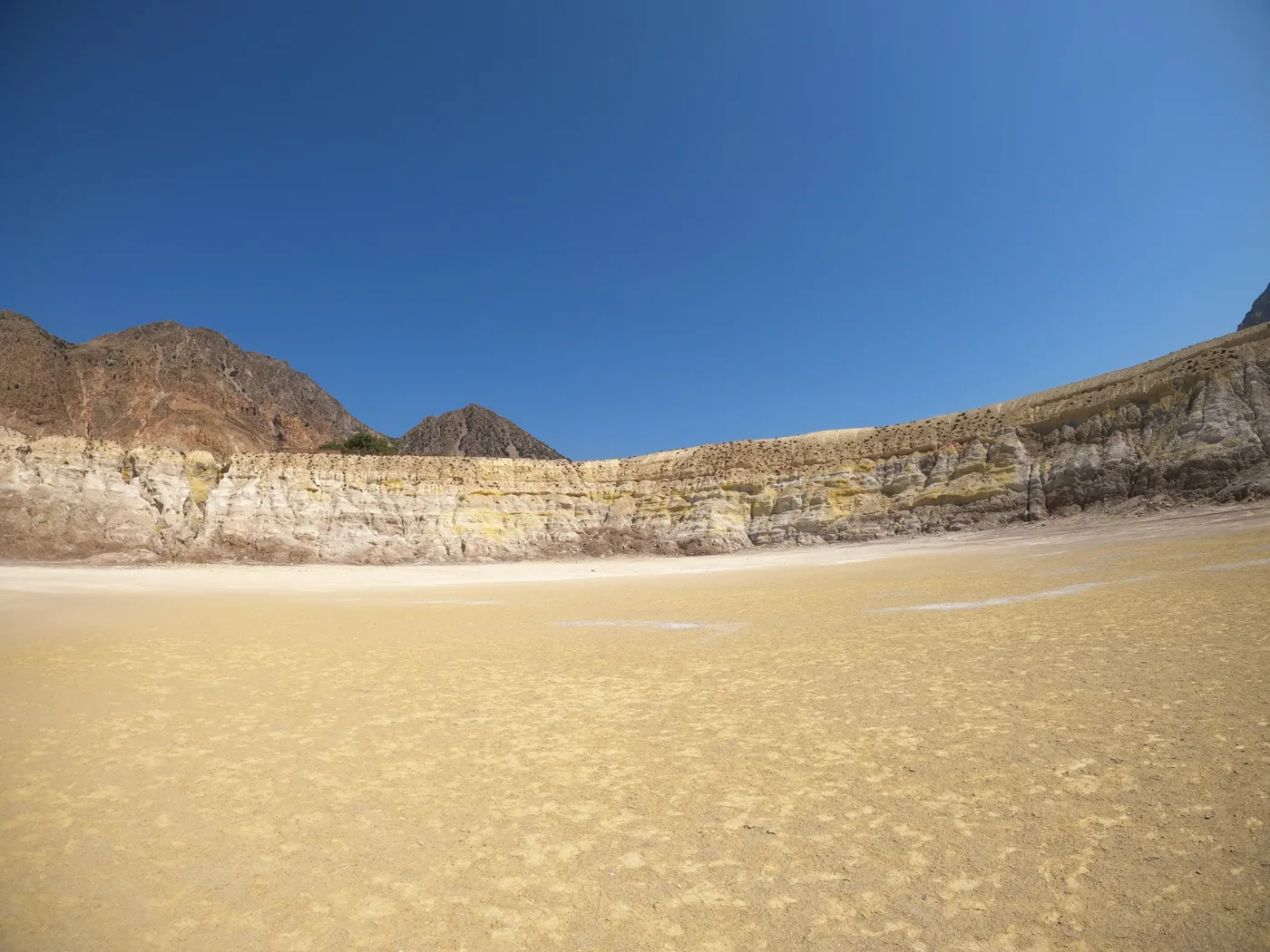
A day trip to the volcano.
Photo: Alexandros Kellaris (CC BY 2.0) · Wikimedia Commons
🍽️ What to eat
Try the krasotyri of Kos, a local cheese matured in red wine, and the island’s thyme honey. In the tavernas of Zia and the villages you will find home cooking and spit-roasted meat, and at the harbour, in Mastichari and in Kefalos, fresh fish.
📅 When to go
The best time is May, June and September: warm without extremes, a warm sea and fewer people. In July and August the island fills up. From November to March most hotels and shops close, but the town is alive all year round.
✈️ How to get there from Athens
| How | Duration | From | Notes |
|---|---|---|---|
| Plane | About one hour | Athens airport | The simplest way. Kos airport is near Antimachia. |
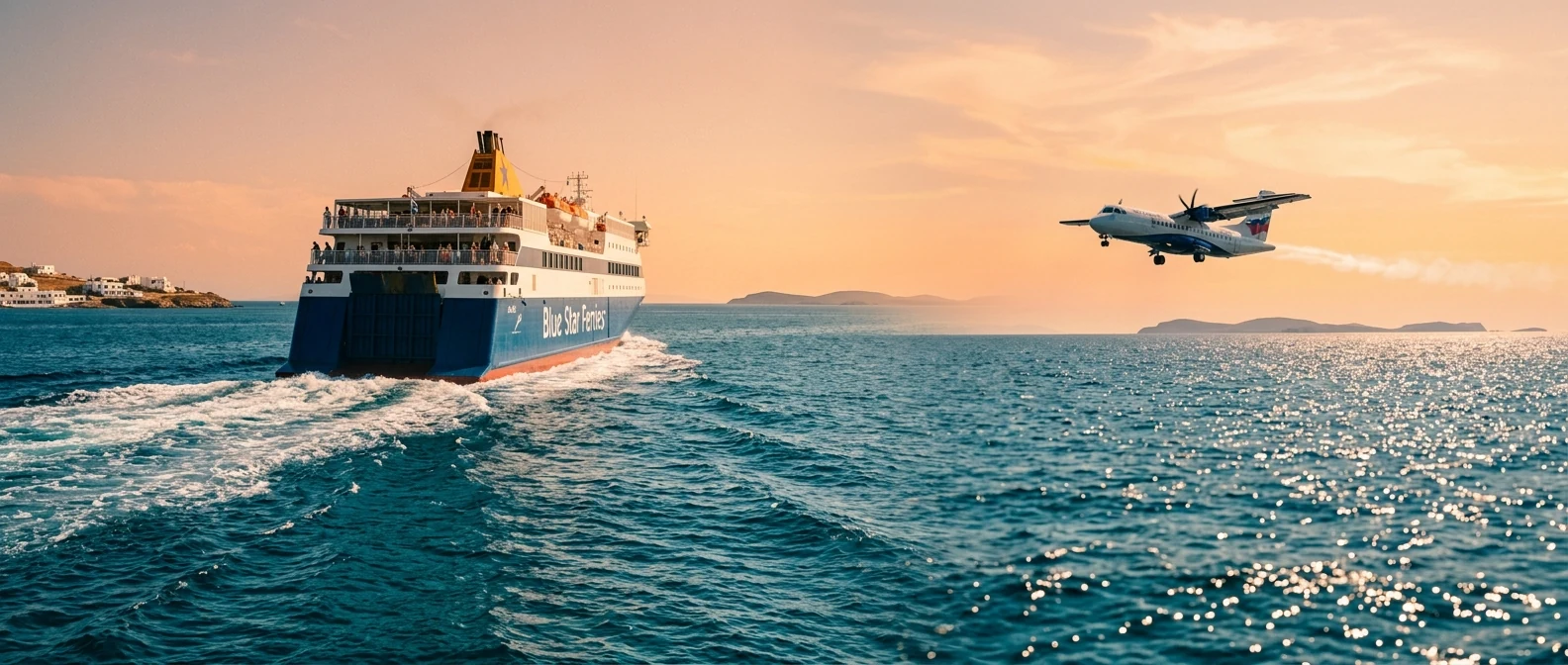
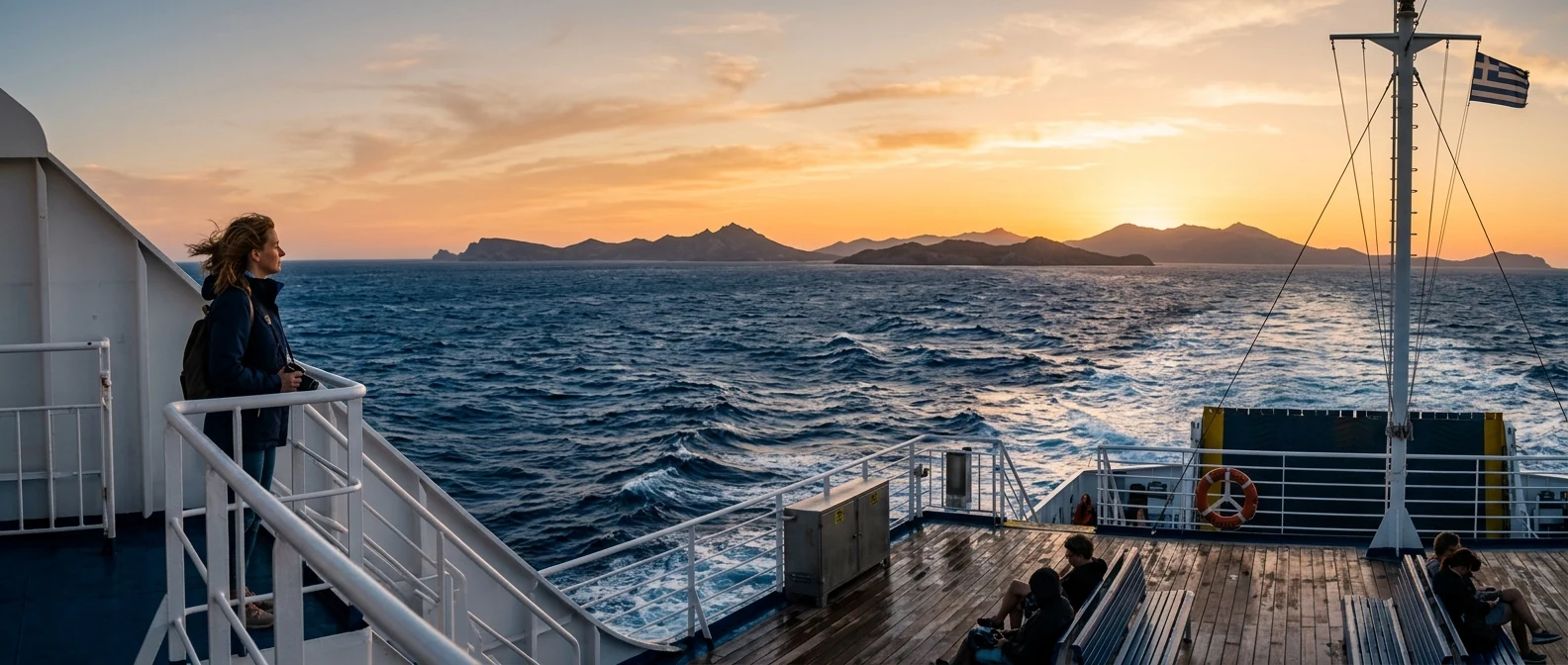
| Ferry | Usually 10 hours or more | Piraeus | Often overnight, stopping at other islands. Good if you bring a car. |
| Direct flight | Depends on the country | Many European cities | In summer there are many direct flights. |
From Ioulianou 50 you get to the airport on Line 1 to Monastiraki and then Line 3, and to Piraeus on Line 1 to the end of the line. Buses run on the island, but a car, a scooter or a bicycle gives you more freedom. To compare ferry and plane, see our guide to ferry or plane.
🗓️ Four days on Kos
The town and the Asklepieion
Morning at the Asklepieion, by bike or bus, before the heat. Then the plane tree of Hippocrates, Neratzia Castle, the Ancient Agora and the Casa Romana. Evening at the harbour.
Zia, Pyli and sunset
A swim at Tigaki or Marmari, then up to Pyli and Zia. Stay in Zia for the sunset and eat at a taverna with a view.
Kefalos and Kastri
Drive to Kefalos. A swim at Paradise or Agios Stefanos, opposite Kastri, and back via Antimachia Castle.
Day trip
A boat to Nisyros and its volcano, or to Kalymnos and Pserimos. With a passport you can also cross to Bodrum.
Frequently asked questions
How many days do I need on Kos?
Four to five days to see the town, the ancient sites, the villages and the beaches, and to take one day trip. For a relaxed beach holiday, a week.
Do I need a car?
Not in town: walking and cycling are enough. For Kefalos, Zia and the beaches, a car or scooter helps a lot, although there are buses too.
Is Kos good for families?
Yes, one of the best. It has shallow sandy beaches, many family hotels, flat roads and short distances.
Can I go to Turkey from Kos?
Yes, boats go to Bodrum every day in summer. You need a passport, and you should check whether your country needs a visa.
— Kathy