🪪 The island at a glance
📍 Where it is
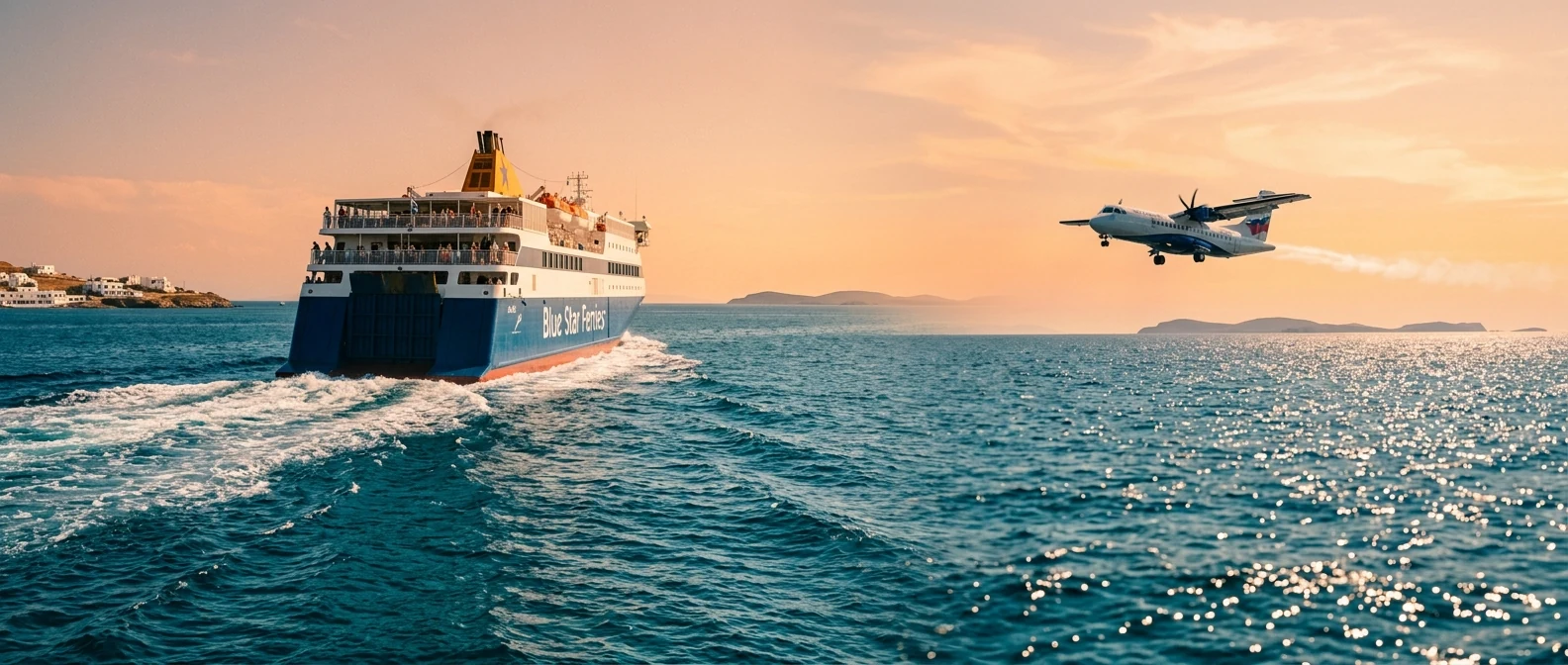
Kalymnos lies in the Dodecanese, north of Kos and south of Leros, very close to the coast of Turkey. It has a small airport with a few flights from Athens. Most people fly to Kos and cross by boat, about an hour from Kos town or twenty minutes from Mastichari.
📍 Where Kalymnos is
Kalymnos lies in the Dodecanese, between Kos and Leros, close to the coast of Turkey. The island is shown in red, and Kos, Piraeus and Athens airport in green.
🗺️ The map of the island
Kalymnos is bare and mountainous, with two big bays. In the south is Pothia, the port and capital, and a little above it Chora, the old capital. A road crosses to the west coast, where the resorts are: Kantouni, Myrties and Masouri, opposite Telendos. On the east coast is Vathy, and in the north Emporios.
🗺️ Map of Kalymnos
Pothia, the port, is in the south. Above it is Chora with the castles. On the west coast are Kantouni, Myrties and Masouri, opposite Telendos. Vathy is on the east coast and Emporios in the north. Tap each number to see what it is.
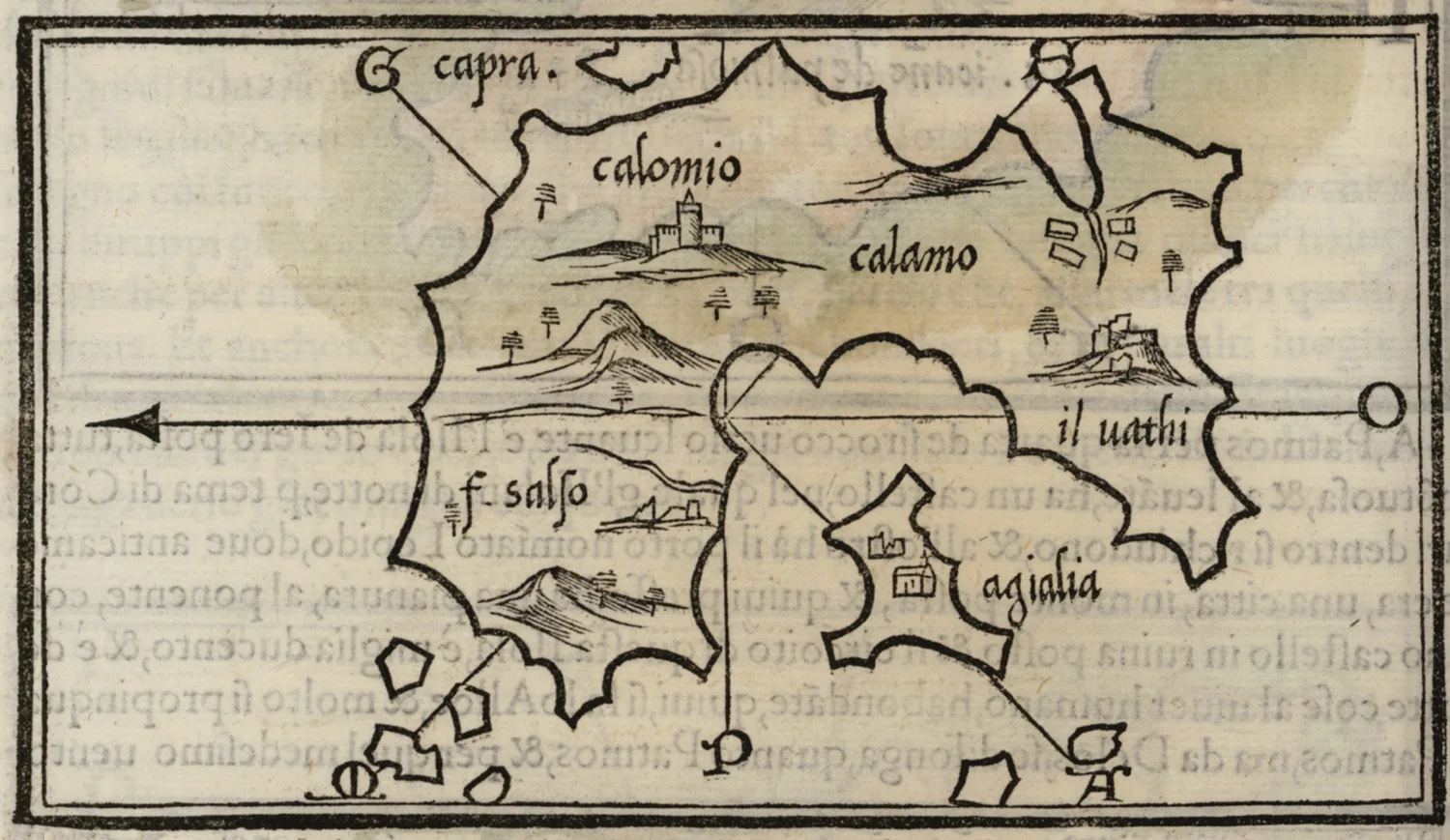
Map: Benedetto Bordone, 1547 (Public domain) · Wikimedia Commons
⚖️ Is it worth it? The pros and cons
Kalymnos is an island for people who love mountains, the sea and real island harbours. It is not an island for sandy beaches and parties. Here is an honest picture.
📊 At a glance, from 1 to 5
👍 The pros
- One of the best climbing destinations in the world.
- Telendos and the sunsets at Myrties.
- A living history of sponge diving.
- Cheaper than the neighbouring islands.
- Open and lively in spring and autumn too.
👎 The cons
- A bare, rocky landscape with little greenery.
- Few big sandy beaches.
- Flights from Athens are few.
- Masouri fills with climbers in spring and autumn.
🧽 Pothia and the sponge divers
Pothia is the capital, a lively town built like an amphitheatre around the harbour, with colourful neoclassical buildings, many churches and lanes climbing the hill. For more than a century, the people of Kalymnos were the best-known sponge divers of the Mediterranean. The boats left in spring for the coasts of Africa and returned in autumn, and the divers often paid with their health.
In Pothia you can see the Nautical Museum, with the story of the sponge divers and the old diving suits, the Archaeological Museum and workshops where sponges are still cleaned. Today most sponges come from elsewhere, but the craft of processing them stays here.
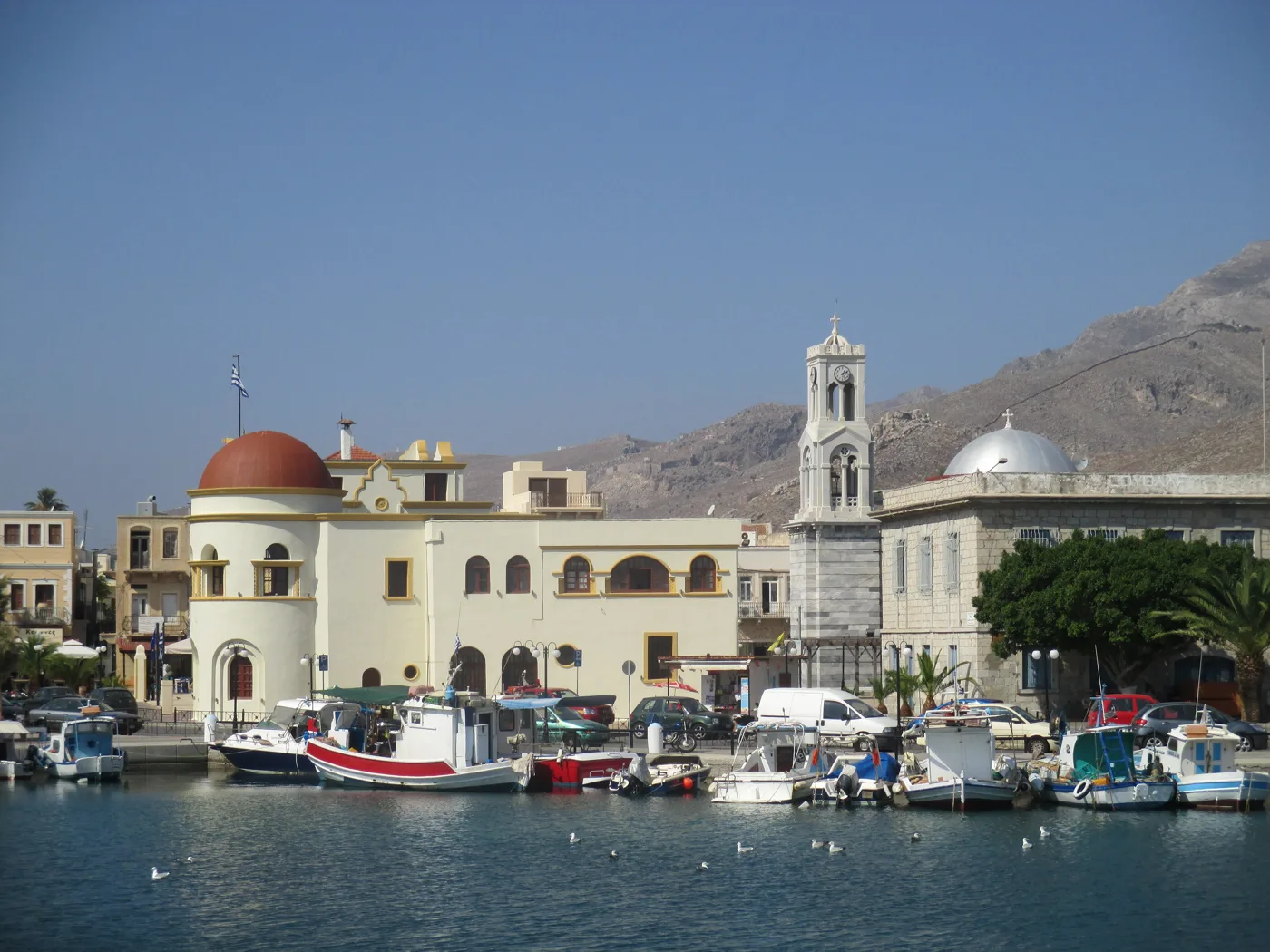
The capital, around the harbour.
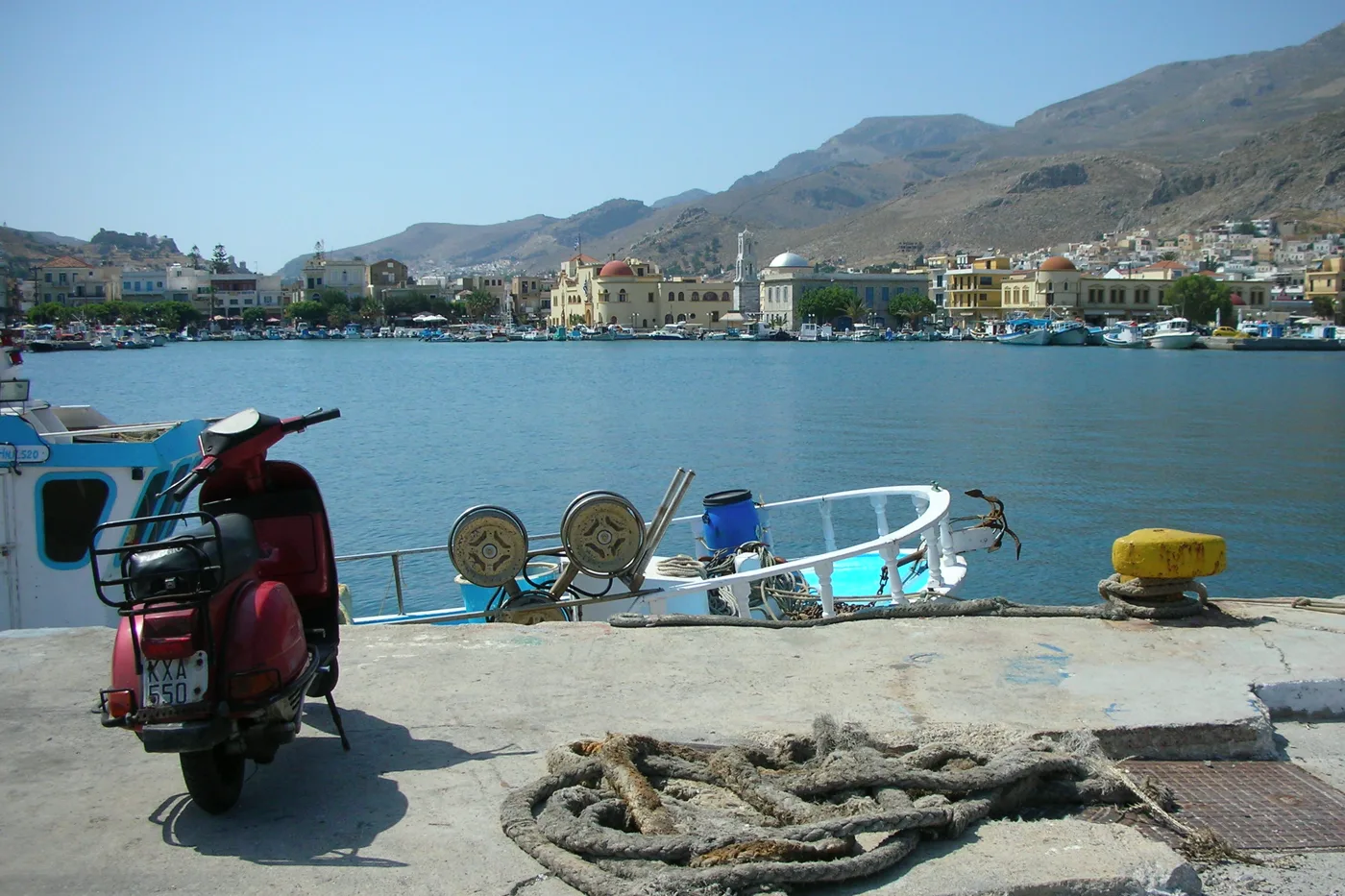
Houses climbing the hill.
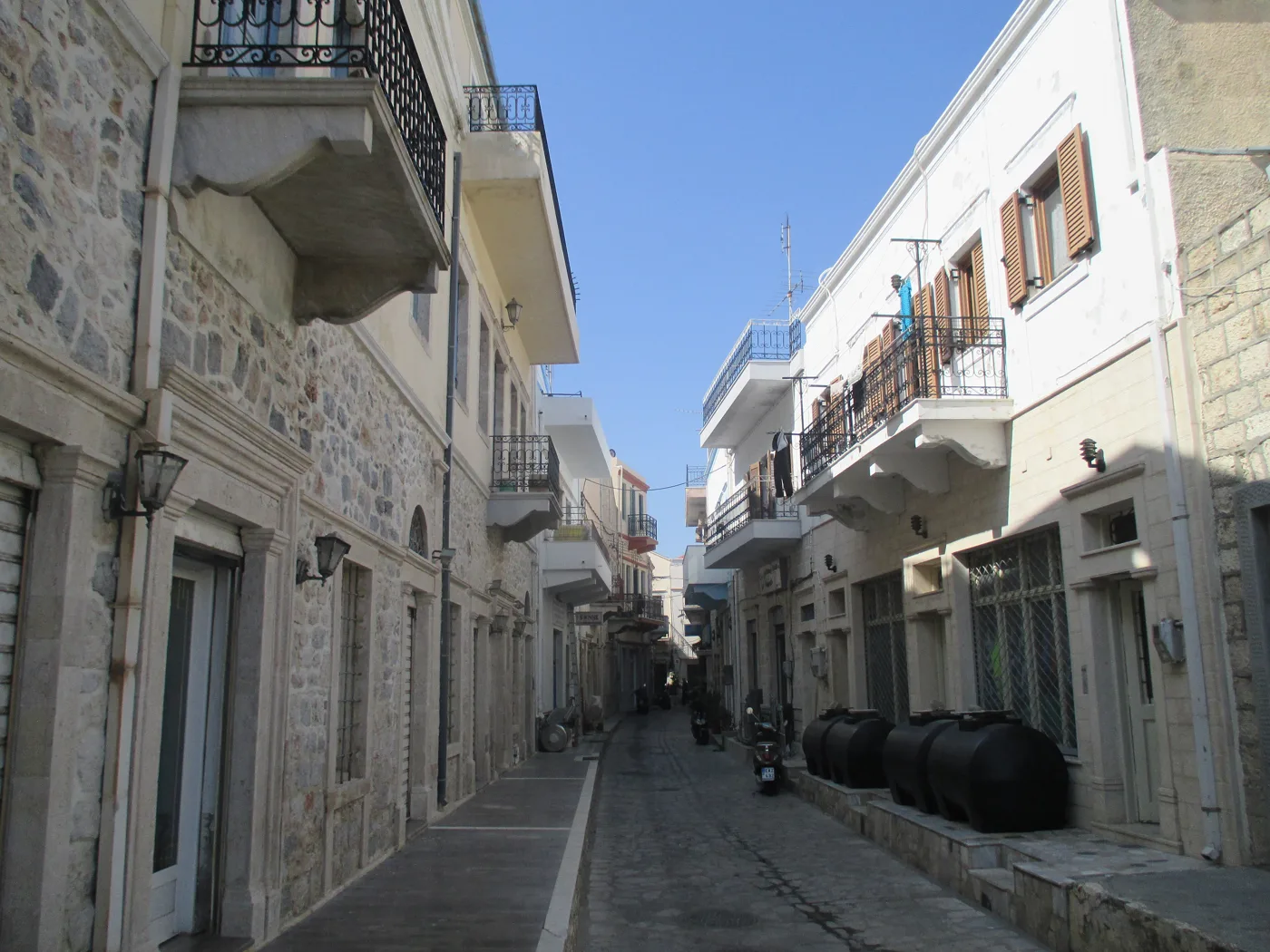
Behind the harbour.
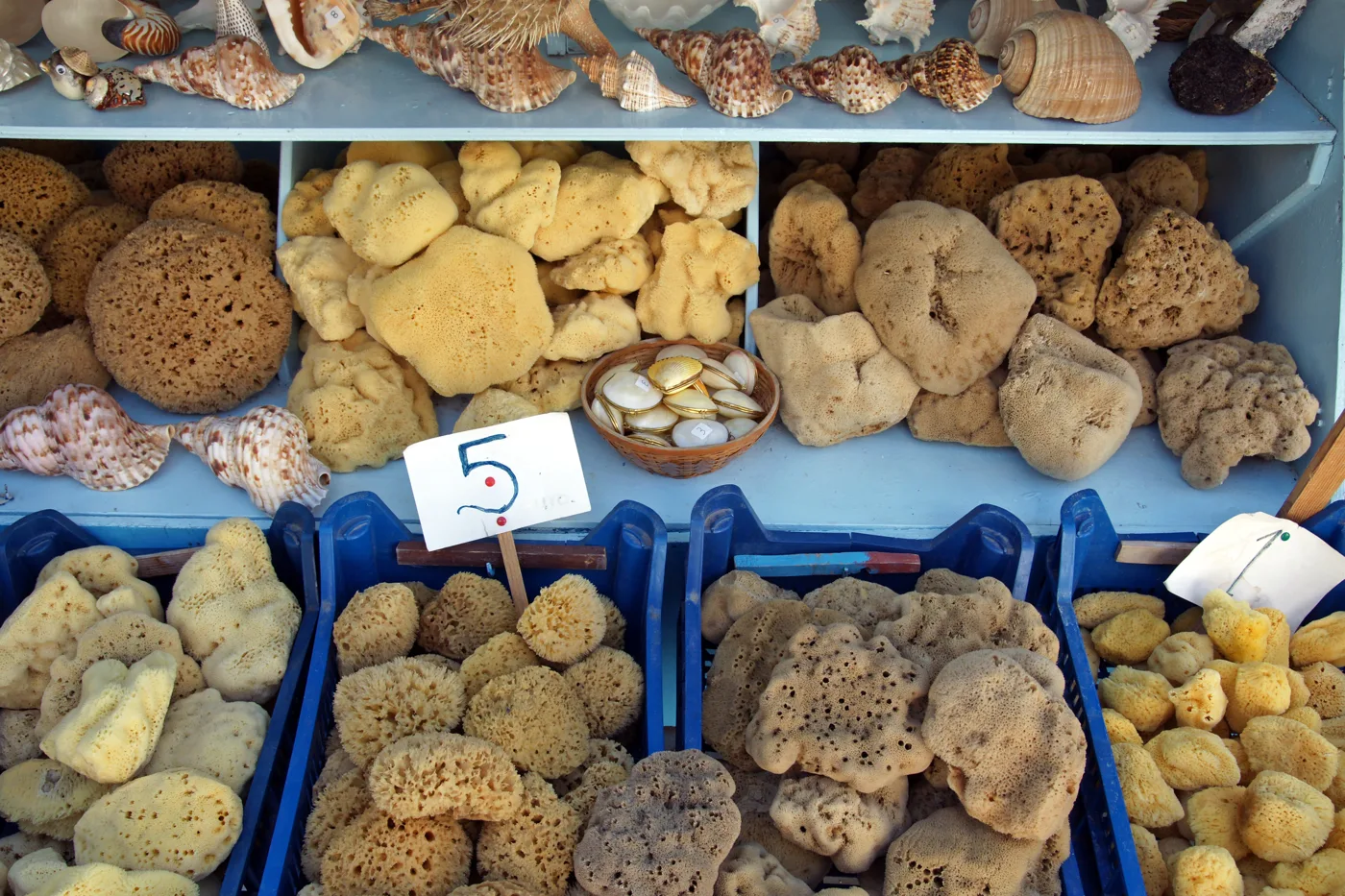
The island’s old trade.
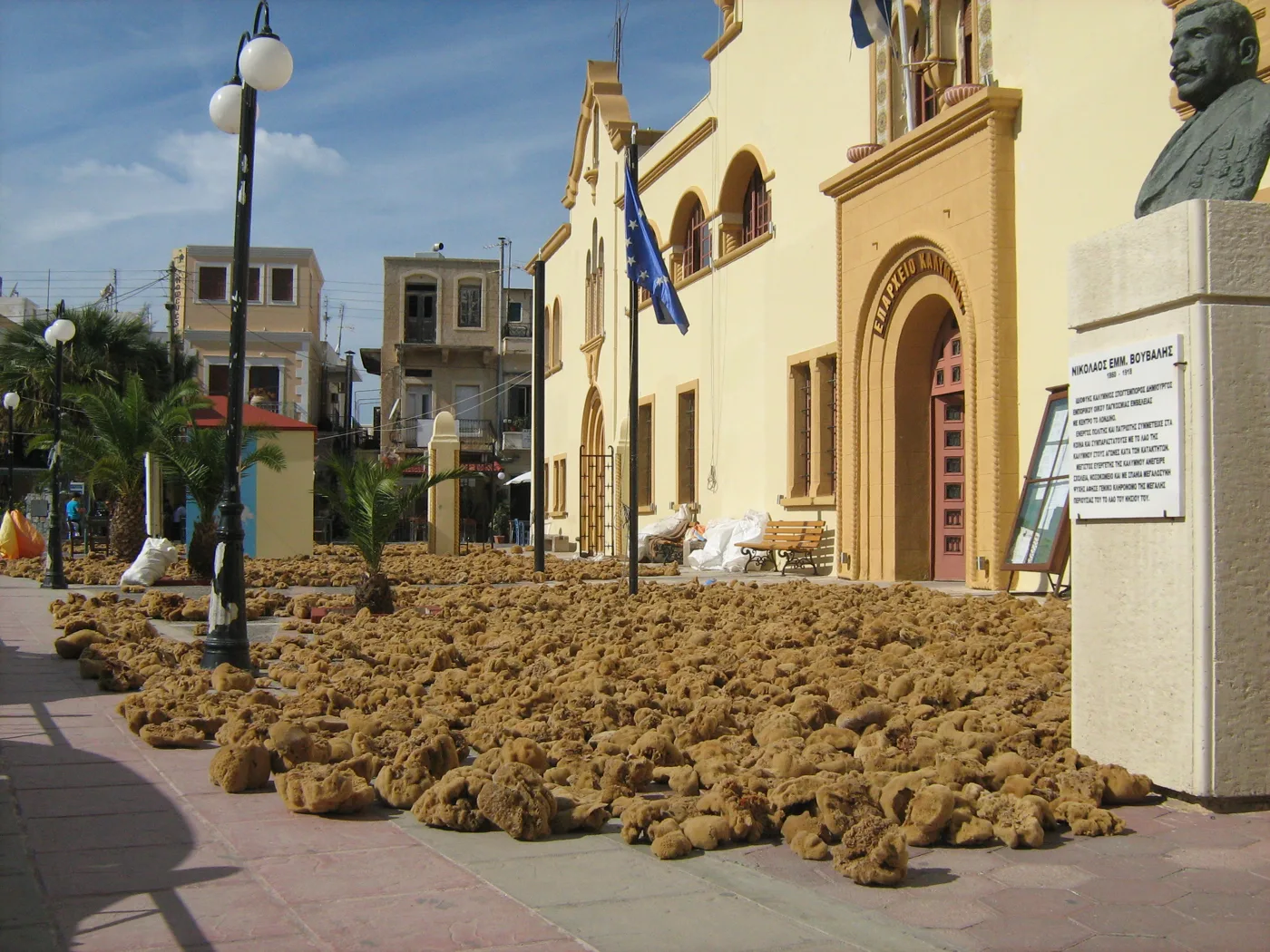
In front of the Eparcheio building.
Photos: Tomisti (CC BY-SA 4.0), Waldviertler (CC BY-SA 3.0 de), kallerna (CC BY-SA 3.0), Dorantoniou (Public domain) · Wikimedia Commons
Natural sponges are soft and light, with small holes, and their colour ranges from light brown to yellow. In Pothia they are sold in shops on the harbour, often by the same families who have worked them for generations.
🏰 Chora, the castles and Vathy
Above Pothia, on the road to the west coast, is Chora, the old capital, with the Castle of Chora on a rocky hill, with walls and small churches with frescoes. Between Pothia and Chora is the castle of Chrysocheria, built by the Knights of Saint John, with three windmills beside it and a view over the whole bay.
On the east coast, Vathy is the island’s surprise: a green valley of mandarin and orange trees between bare mountains, ending at Rina, a little harbour like a fjord, with tavernas on the water.
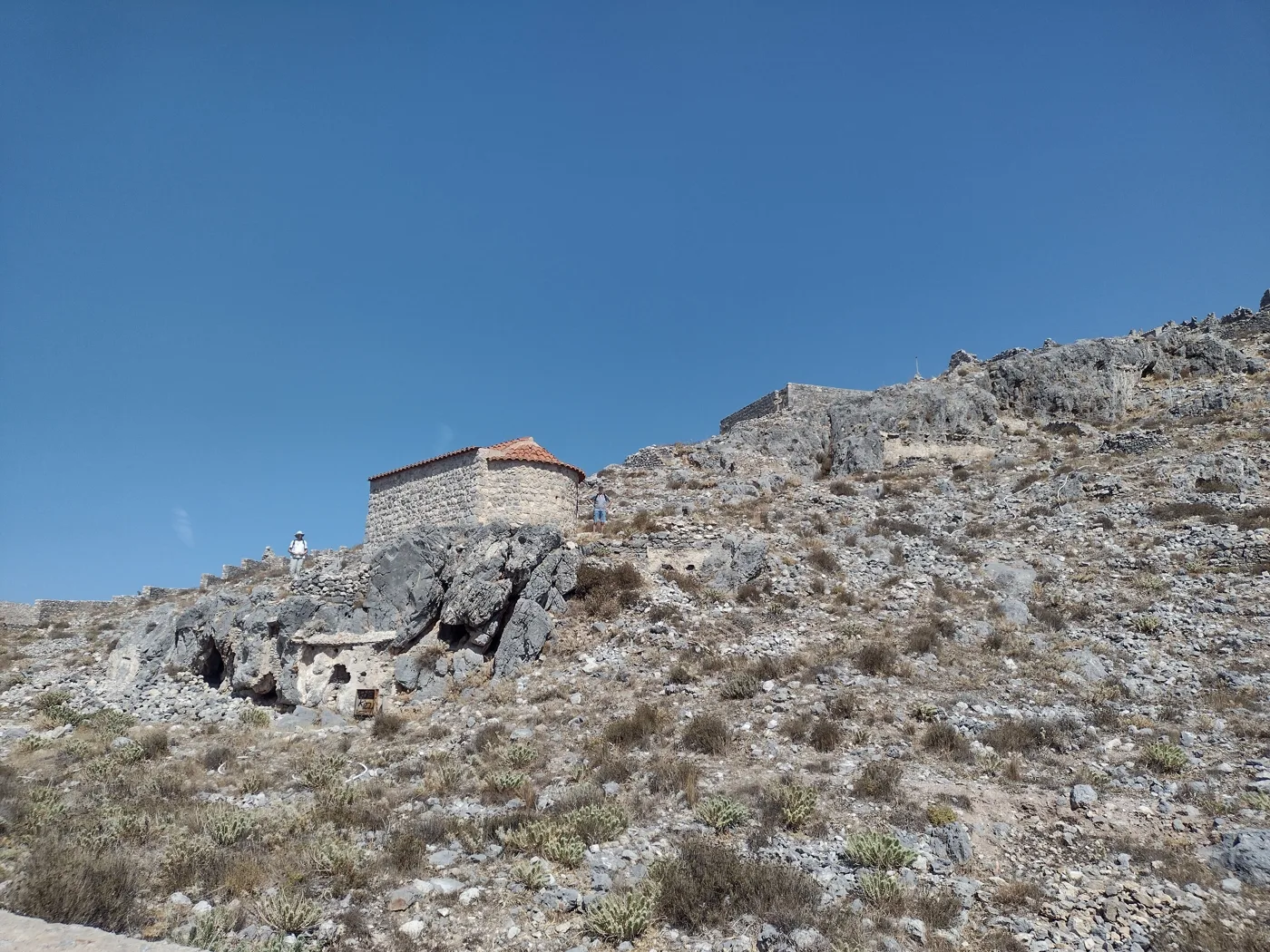
The medieval castle with its churches.
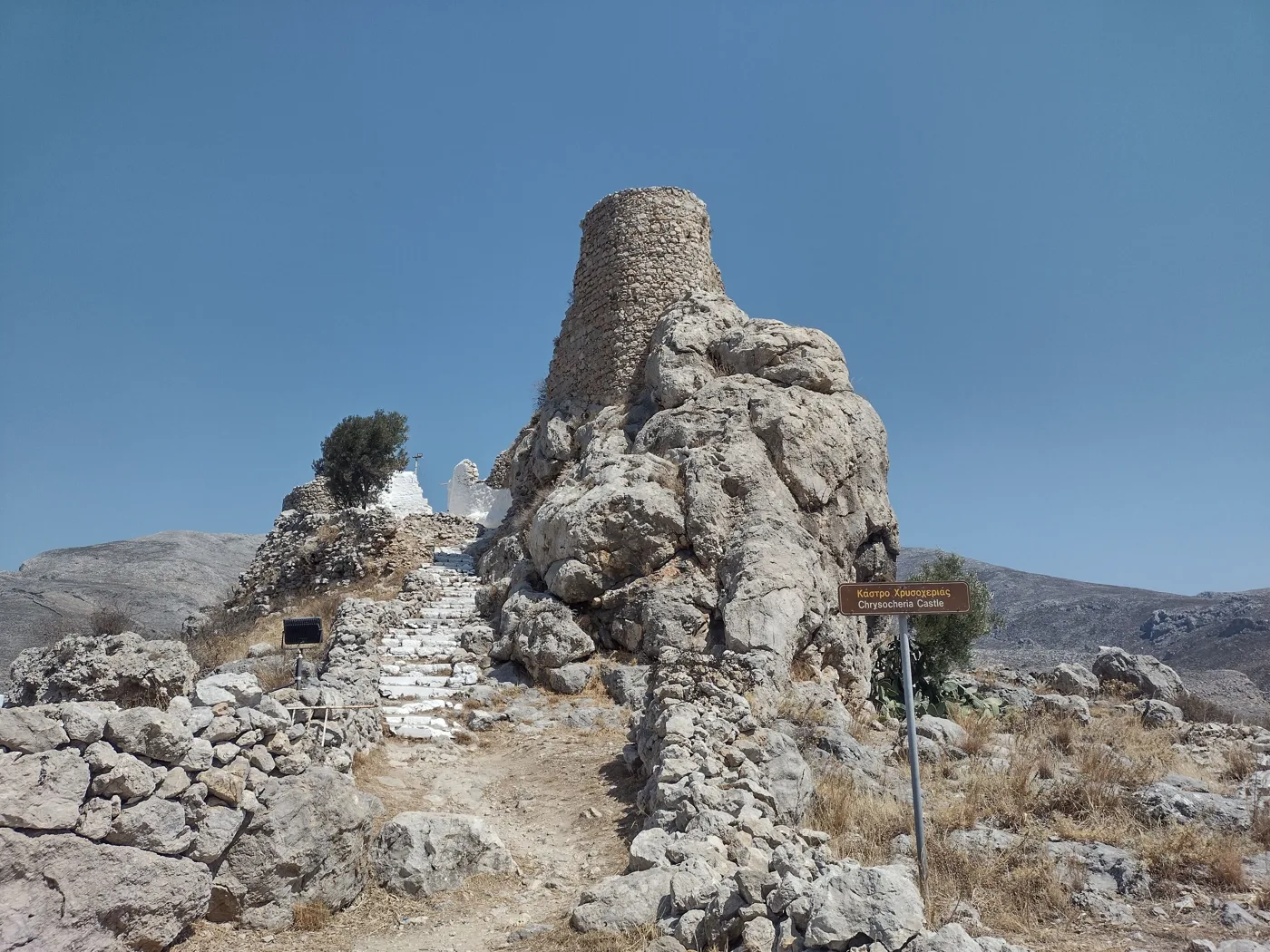
The Knights’ castle between Pothia and Chora.
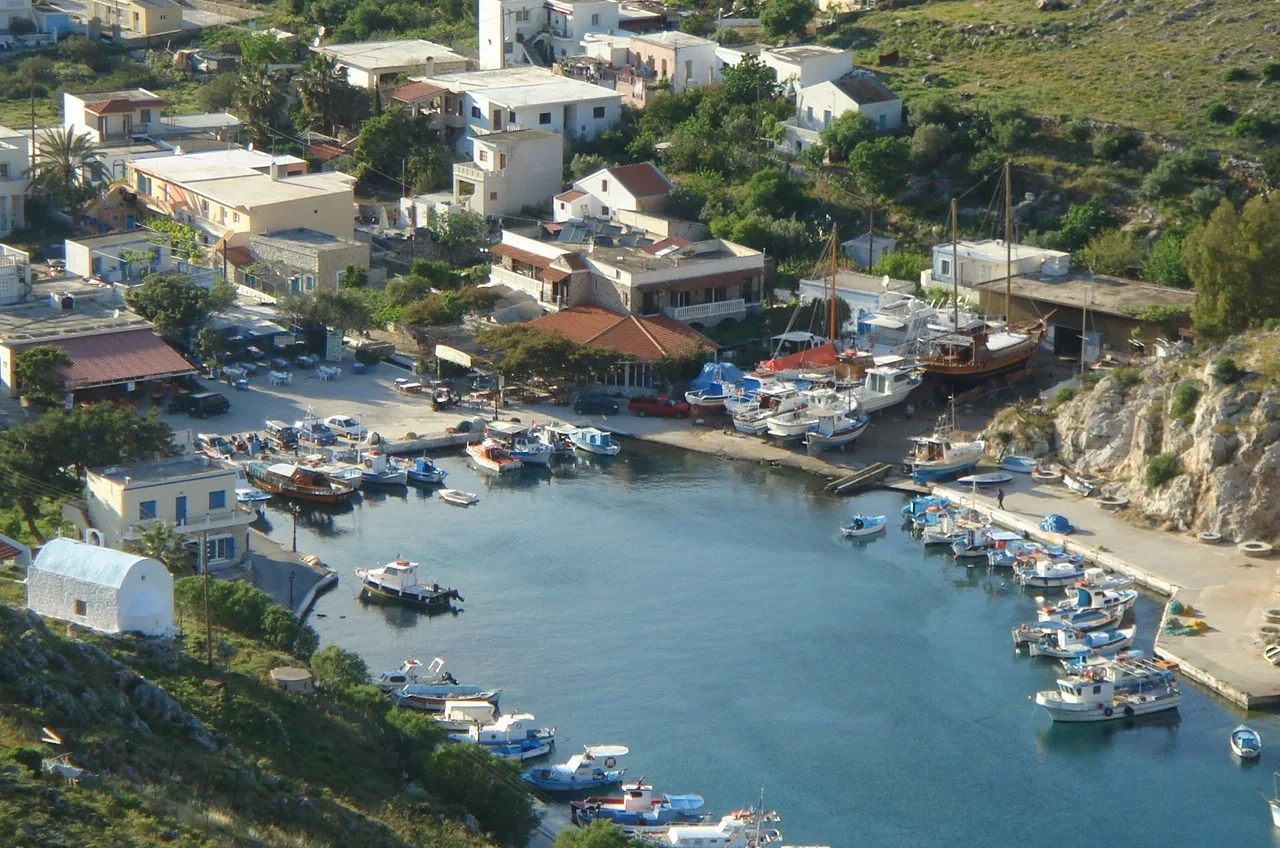
The little harbour of Vathy.
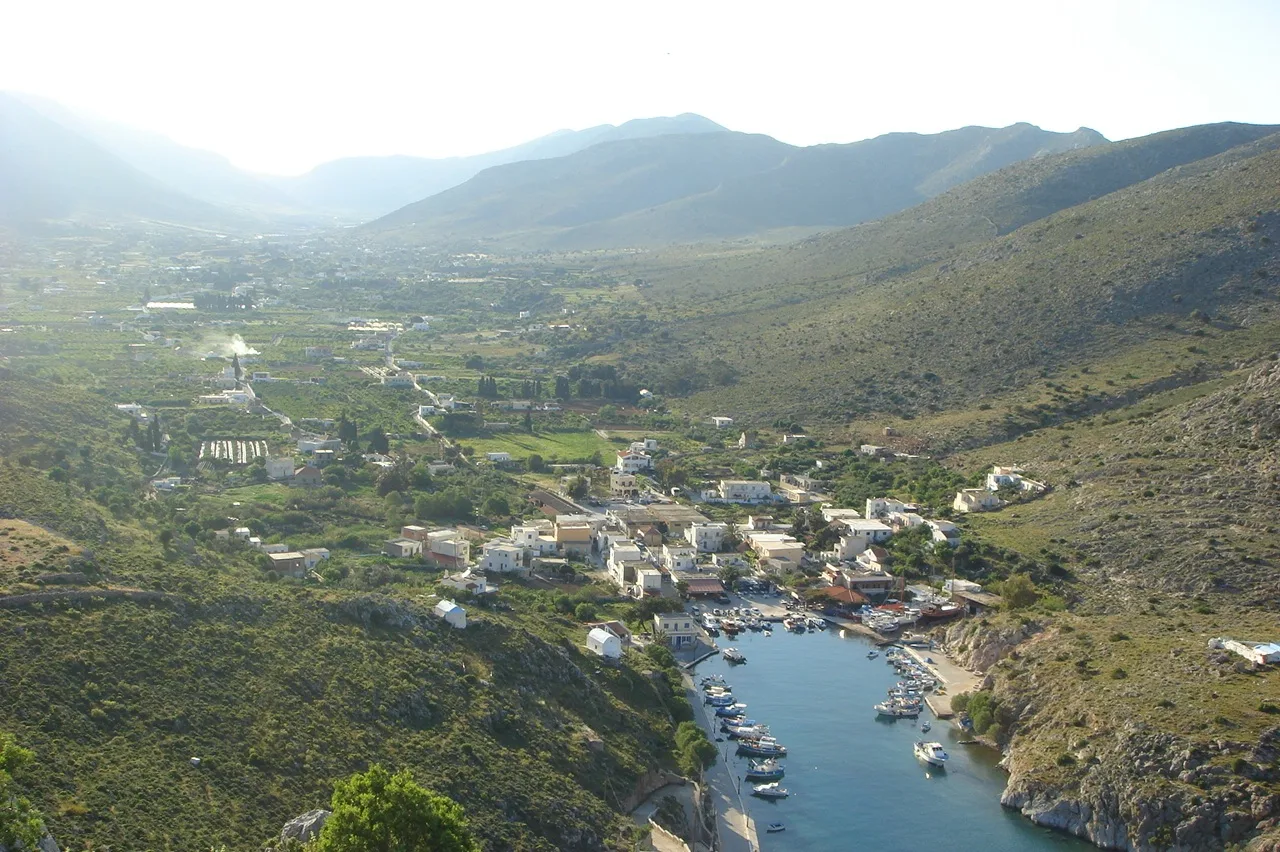
Mandarin trees between bare mountains.
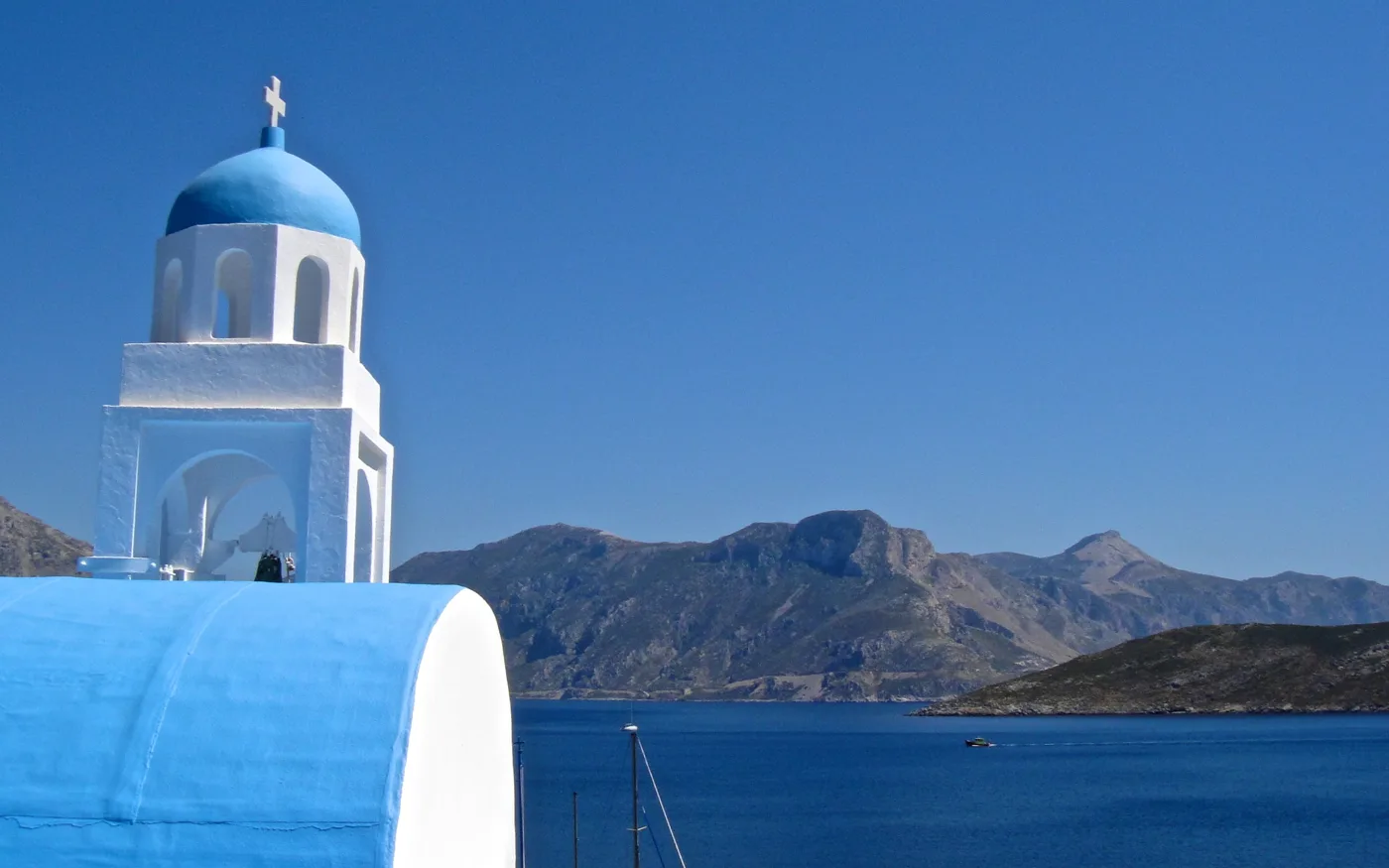
The quiet village in the north.
Photos: Hellerhoff (CC BY-SA 4.0), Egmontaz (CC BY-SA 3.0), gertrudis2010 (CC BY-SA 3.0) · Wikimedia Commons
🧗 Climbing and Masouri
Since the 1990s, Kalymnos has become one of the best-known climbing destinations in the world. Its rock is limestone, with caves, stalactites and the famous tufas, and it has thousands of routes for all levels, many with a view of the sea. Most of the crags are above Masouri and Myrties, such as the Grande Grotta, a huge cave above the road.
The climbing season is spring and autumn, when it is not hot. Masouri has gear shops, schools for beginners and tavernas full of climbers from all over the world. If you do not climb, you will also find lovely hiking trails.
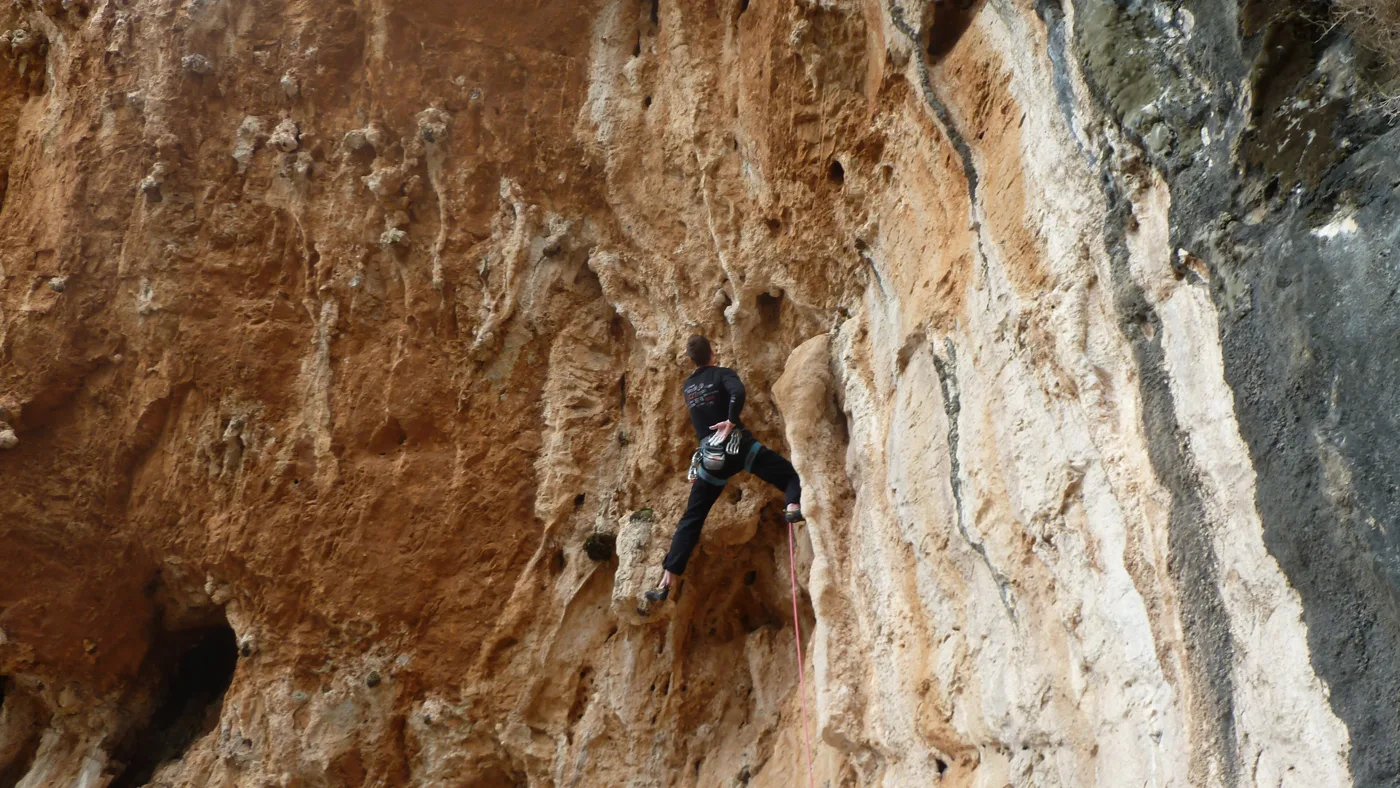
Rock for every level.
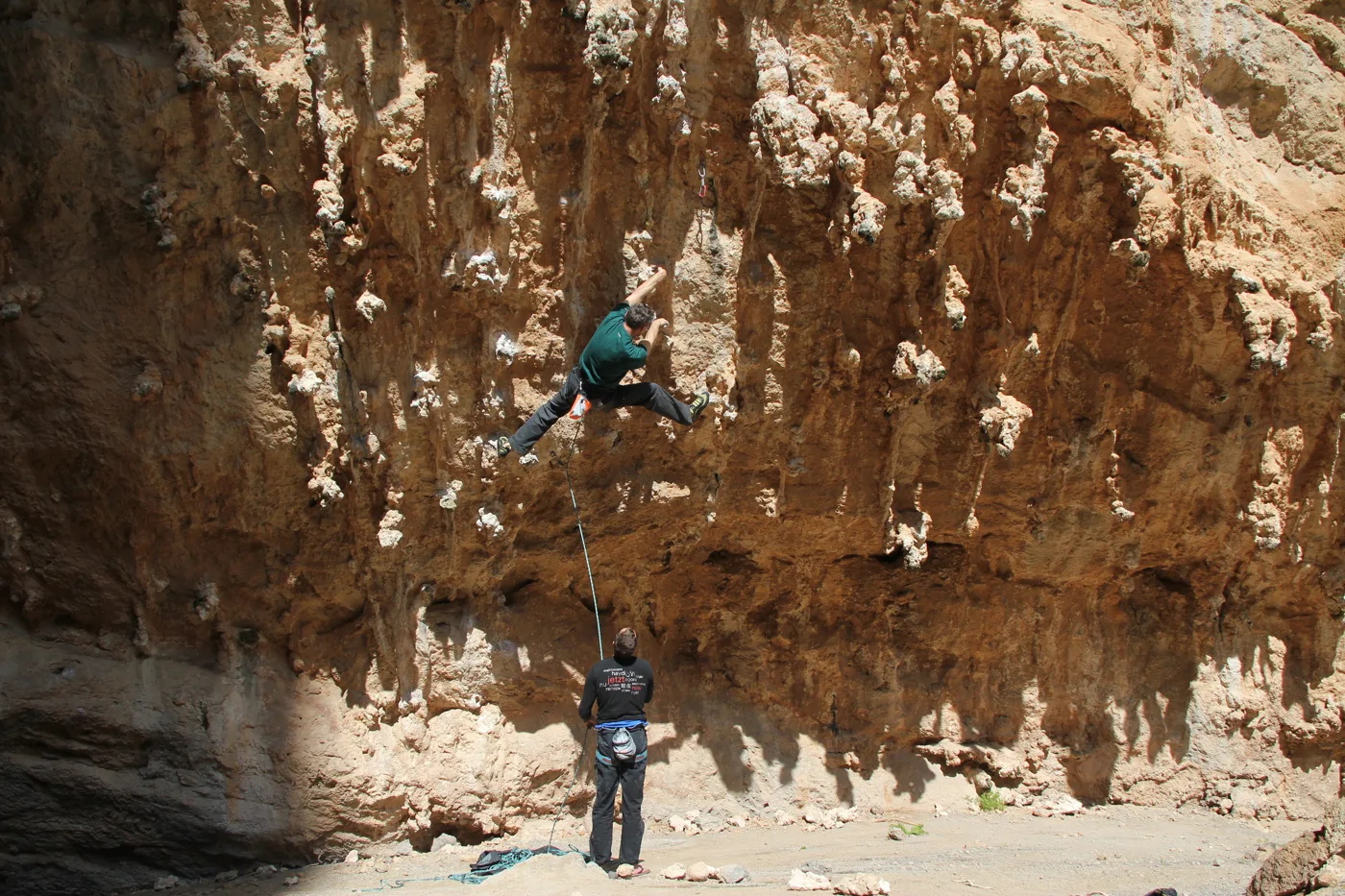
One of the big caves.
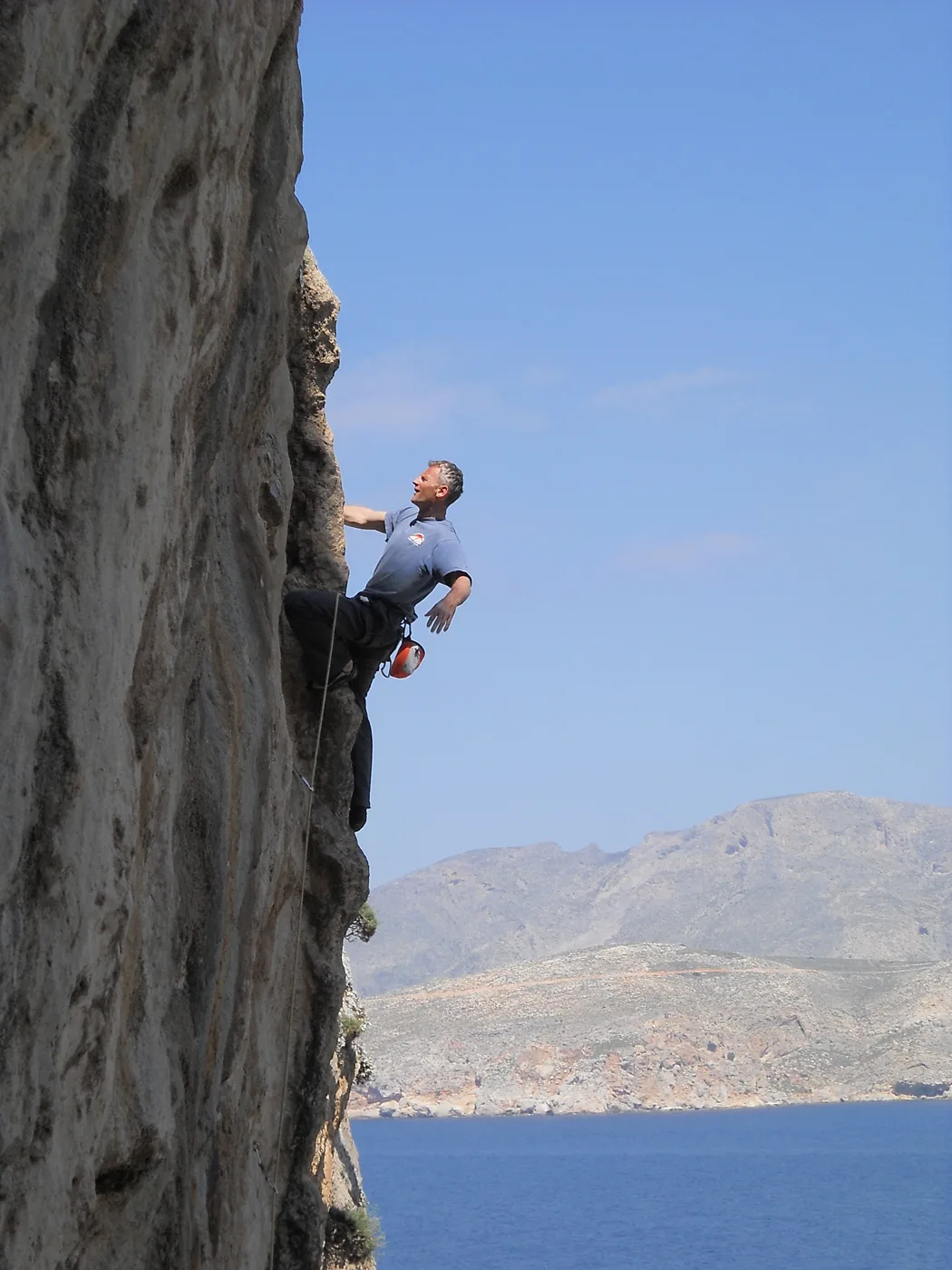
The famous tufas of Kalymnos.
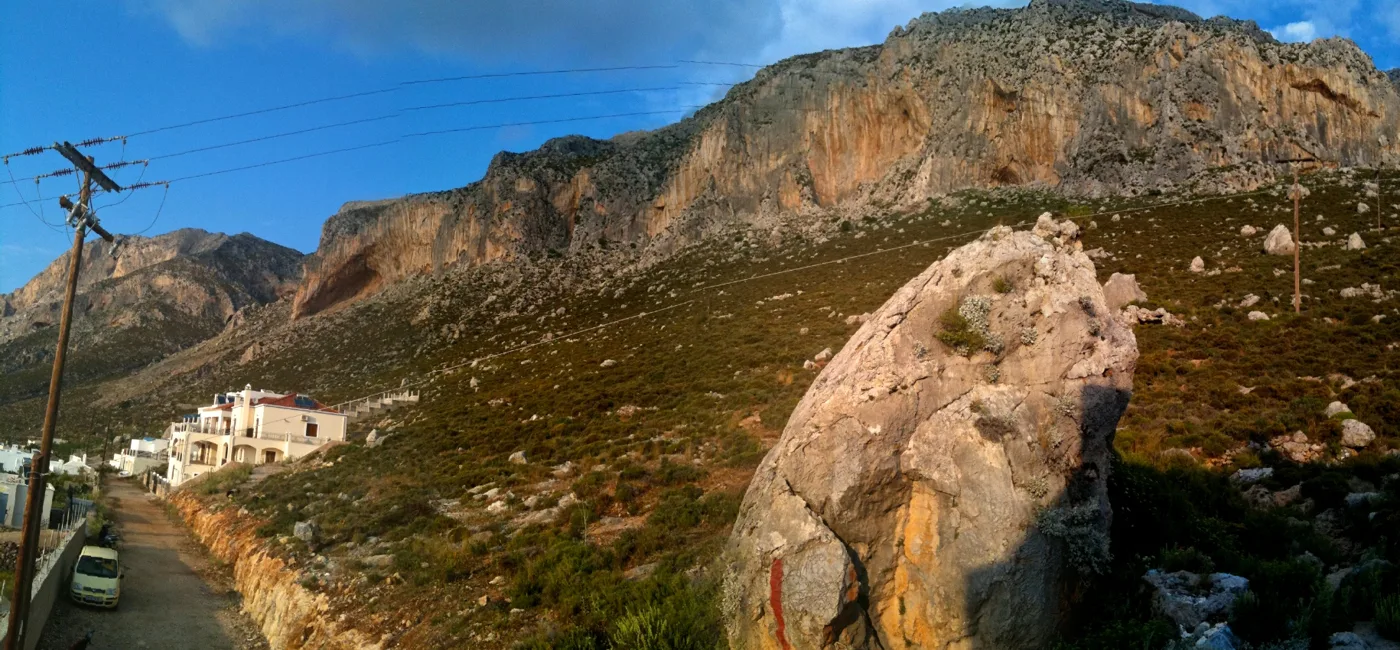
The best-known cave, above Masouri.
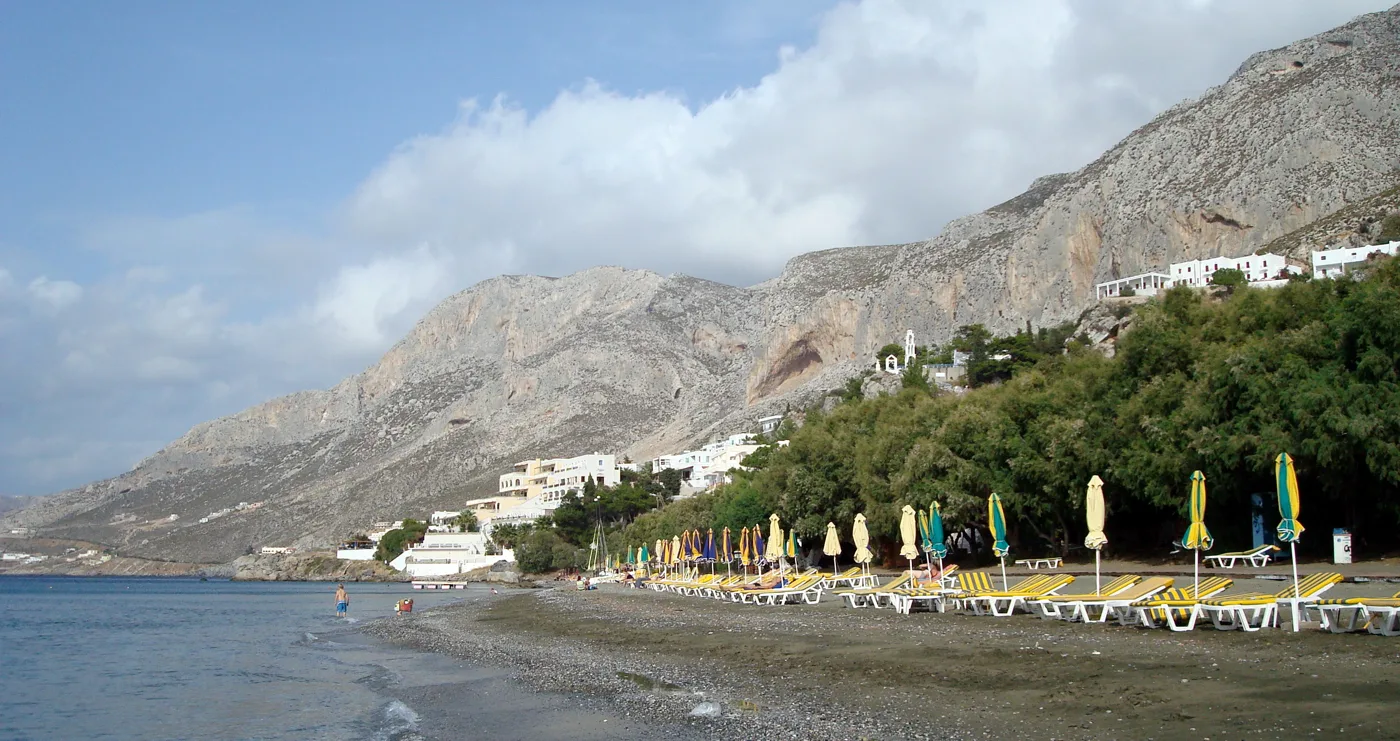
Beach and climbing in the same place.
Photos: alpguide (CC BY-SA 2.0), gertrudis2010 (CC BY-SA 3.0), mawieser (CC BY-SA 3.0) · Wikimedia Commons
At Masouri there are schools that take beginners up easy routes with a guide and gear, in half a day or a day. Go early in the morning or in the afternoon, when the rock is in the shade.
⛵ Telendos and the beaches
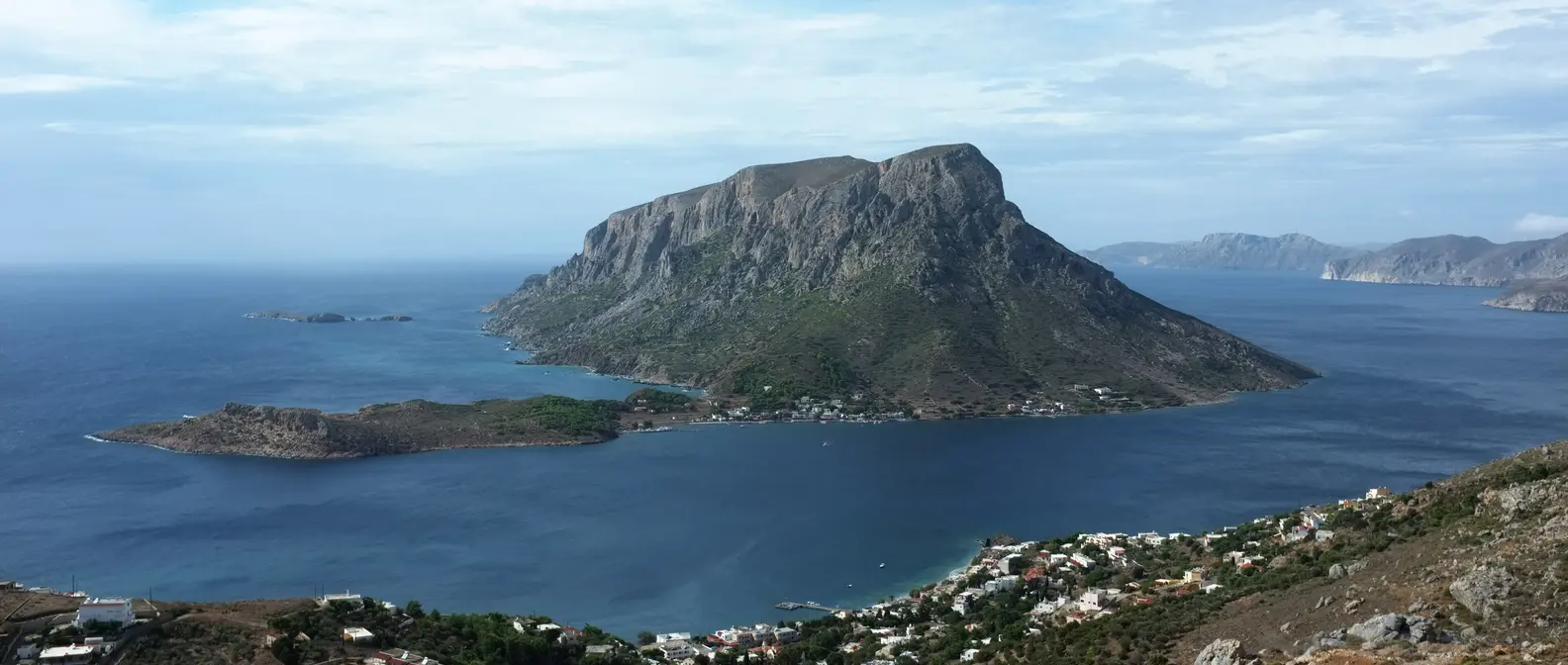
Opposite Myrties, ten minutes by boat, is Telendos, an islet that is almost nothing but a tall rock, with a small village without cars, tavernas on the water and a few small beaches. According to geologists, it broke away from Kalymnos after an earthquake in the 6th century. The sunset behind Telendos, seen from Myrties or Masouri, is the image of the island.
The beaches of Kalymnos are mainly on the west coast: Kantouni and Platys Gialos have sand, Masouri and Myrties pebbles and boats. In the north, Emporios is a quiet village with a beach and fish tavernas, and opposite Pothia, Pserimos has a big sandy beach, reached by boat.
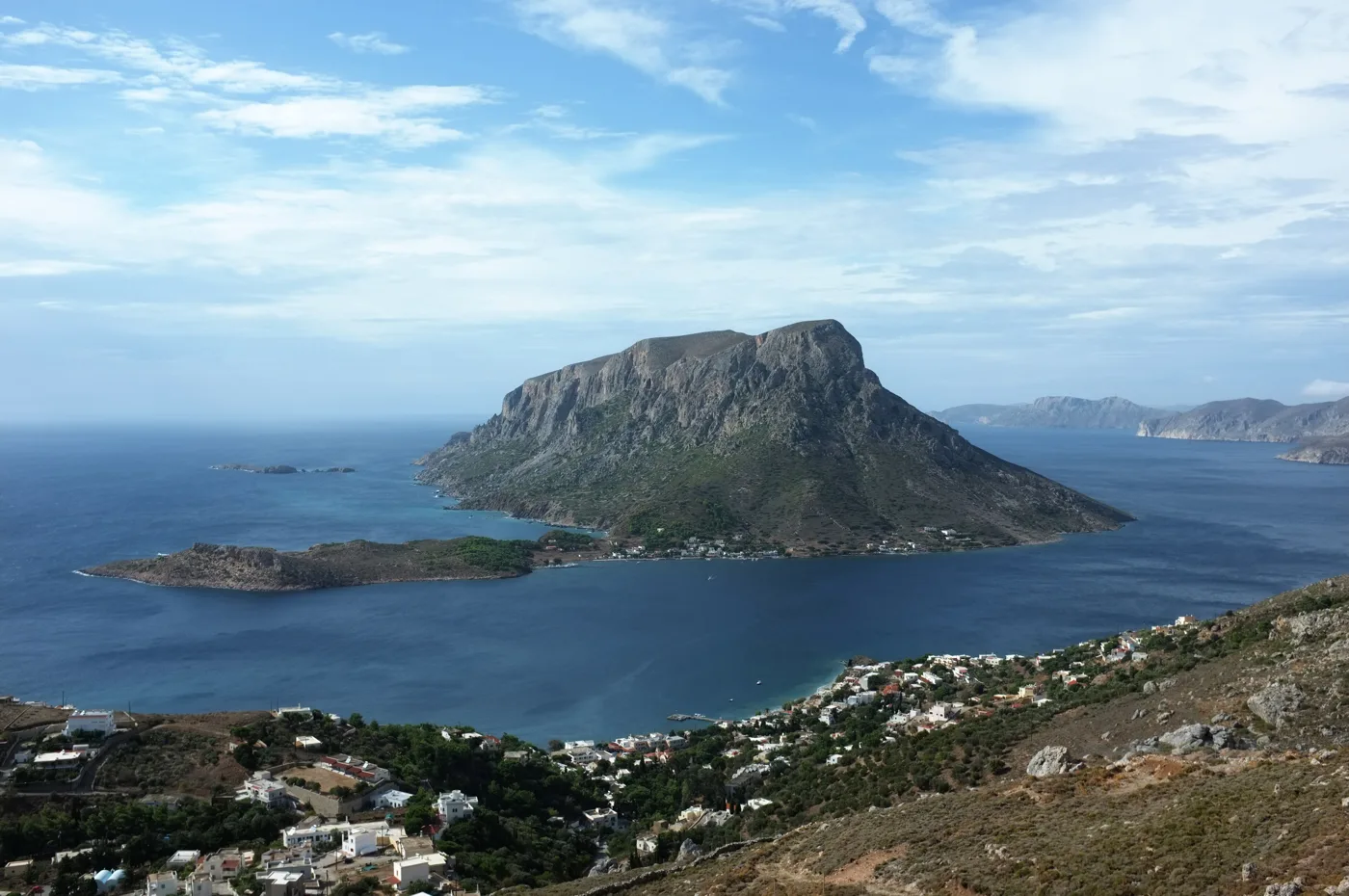
Opposite Myrties.
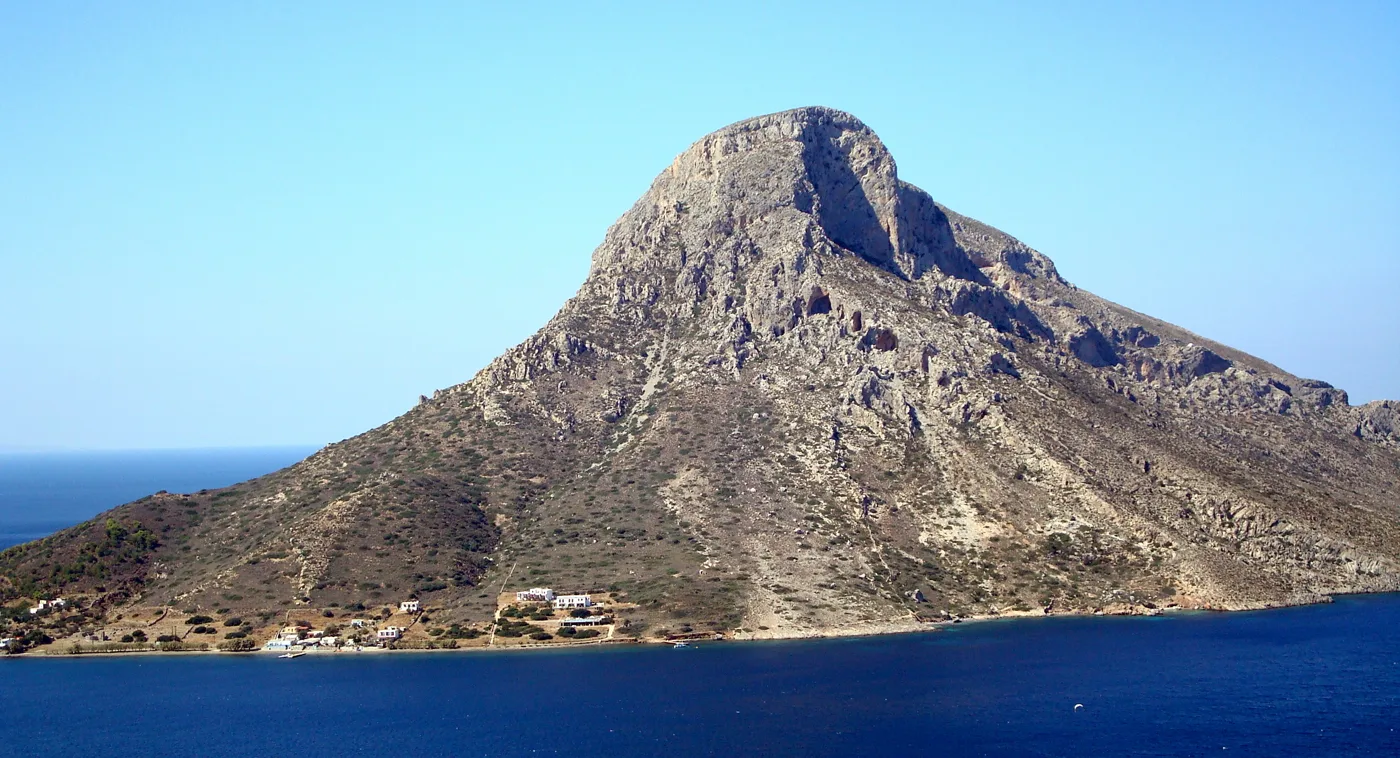
The village at the foot of the mountain.
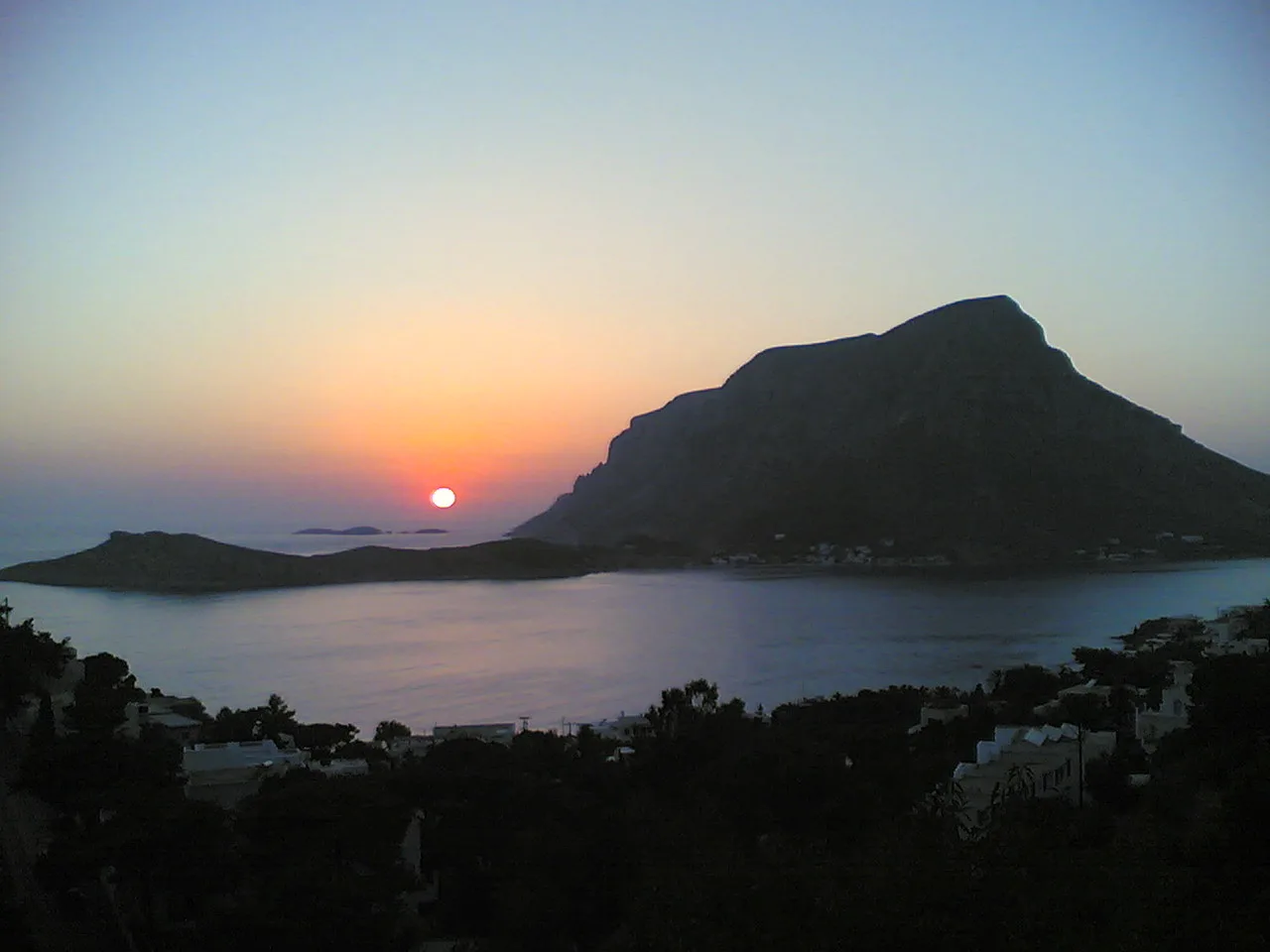
From Myrties and Masouri.
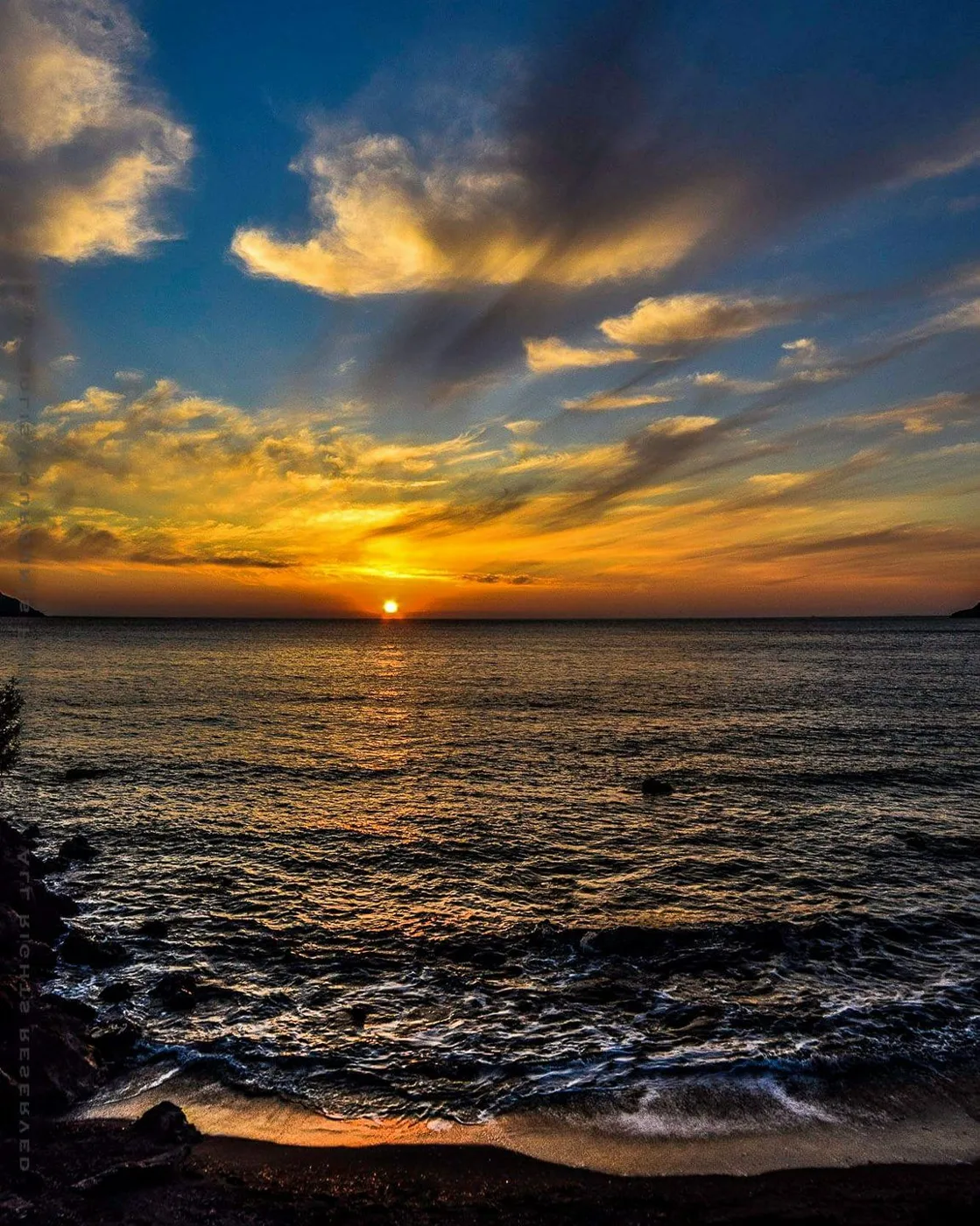
A sandy beach on the west coast.
Photos: Coronium (CC BY-SA 4.0), mawieser (CC BY-SA 3.0), Emma & Michael's Excellent Adventures (CC BY 2.0), Manolis Kourounis (CC BY-SA 4.0) · Wikimedia Commons
- Masouri: pebbles and a view of Telendos.
- Kantouni and Platys Gialos: sandy beaches on the west coast.
- Telendos: small beaches, by boat from Myrties.
- Emporios: a quiet beach in the north.
- Pserimos: a big sandy beach, by boat from Pothia.
🍽️ What to eat
Try mermizeli, a village salad with rusk, tomato and local cheese, and mouri, goat stuffed with rice and baked for hours in the oven, the Easter dish. At the tavernas of Rina, Emporios and Telendos you will find fresh fish, octopus and seafood, and in Pothia the island’s thyme honey.
📅 When to go
Kalymnos is one of the few islands that live outside summer too. The best time for climbing and walking is April, May, September and October. For swimming, June and September. In July and August it is too hot for the rock, but the sea is at its best.
✈️ How to get there from Athens
| How | Duration | From | Notes |
|---|---|---|---|
| Plane | About 1 hour | Athens airport | A small plane with few seats, book early. |
| Plane and ferry | About 1 hour + 20 minutes to 1 hour | Athens Airport → Kos | The most common way. Boats from Mastichari and Kos town. |
| Ferry | About 10–12 hours | Piraeus | A few times a week, usually overnight. |
From Ioulianou 50 you reach the airport on Line 1 to Monastiraki and then Line 3. On the island there are buses from Pothia to Masouri and Vathy, but a scooter or car gives you more freedom. For Kos, read our guide to Kos.
🗓️ Three days on Kalymnos
Pothia and the castles
A walk around the harbour of Pothia, the Nautical Museum and the sponge shops. In the afternoon Chrysocheria and the Castle of Chora.
Masouri and Telendos
A swim at Masouri or Myrties, then the boat across to Telendos for lunch. Sunset from Myrties.
Vathy and the north
The valley of Vathy and the little harbour of Rina, then Emporios for a swim and fish.
Frequently asked questions
Where should I stay on Kalymnos?
In Masouri or Myrties, for climbing, the view of Telendos and the beach. In Pothia, for the harbour, the museums and the boats. In Vathy or Emporios, for quiet.
Do I need a car?
Not necessarily. Buses link Pothia with Masouri, Vathy and Emporios. With a scooter or car, though, you get everywhere more easily.
Can I combine it with another island?
Yes. Kos is an hour by boat, Leros less than an hour, and Pserimos and Telendos make a day trip by boat.
How many days do I need?
Three to four days for Pothia, the castles, Masouri, Telendos and Vathy. For climbing, a week or more.
— Kathy