🪪 The island at a glance
📍 Where it is
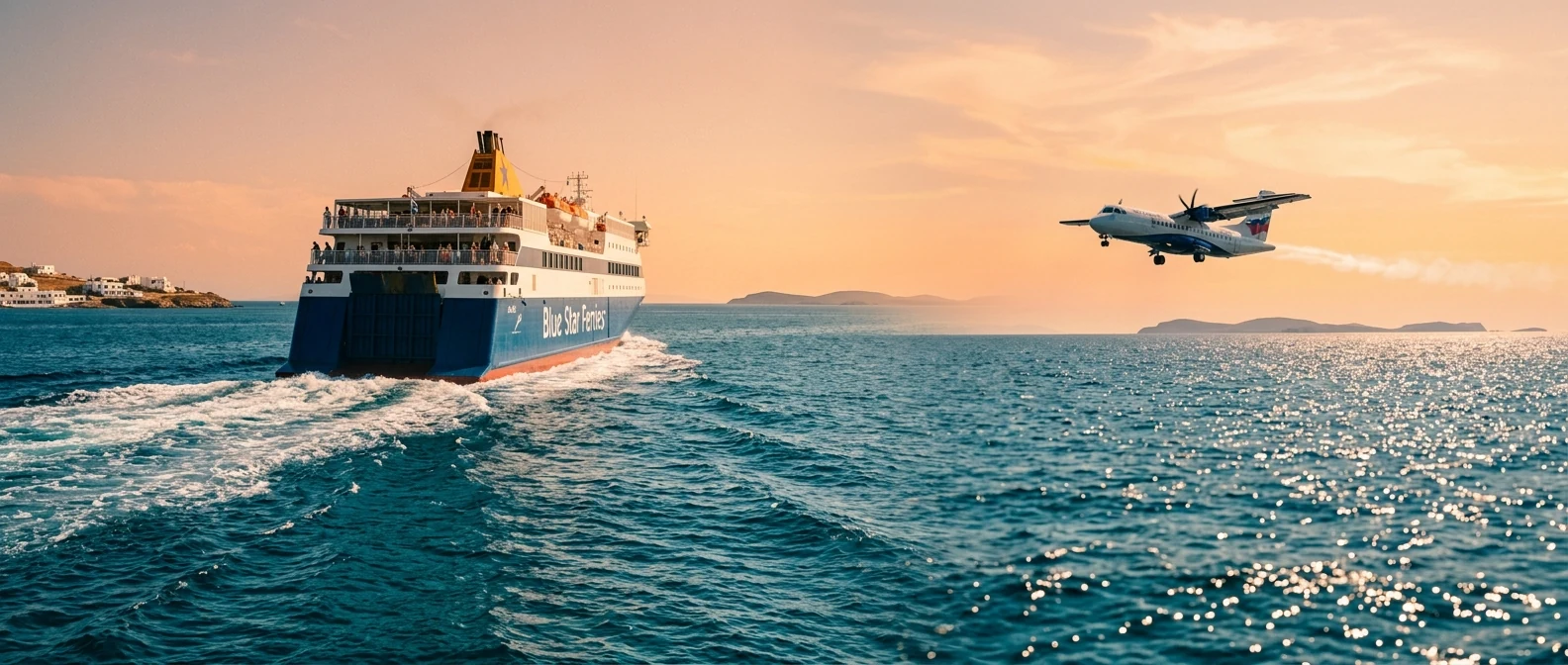
Samothraki lies in the northern Aegean, opposite Thrace, and is one of the most remote islands from Athens. It has no airport and no ferries from Piraeus. You get there via Alexandroupoli, from where the ferry reaches Kamariotissa in about two hours. You can fly to Alexandroupoli from Athens in about an hour.
📍 Where Samothraki is
Samothraki lies in the northern Aegean, opposite Thrace and close to the border with Turkey, very far from Athens. The island is shown in red, and in green Alexandroupoli, where the ferry leaves from, and Athens airport.
🗺️ The map of the island
Samothraki is almost round, and in the middle rises Fengari, or Saos, at 1,611 metres, the highest mountain of the Aegean islands. One road follows the north coast from Kamariotissa, the port at the western tip, past the Sanctuary at Palaiopoli and Therma, to Fonias and Kipos at the eastern tip. Another climbs to Chora and the mountain villages, and goes down to Pachia Ammos in the south. The south coast beyond Pachia Ammos has no road.
🗺️ Map of Samothraki
Samothraki is a mountain in the sea, with Fengari in the middle. Kamariotissa, the port, is at the western tip, and Chora a little inland, on the mountain. On the north coast are the Sanctuary, Therma and Fonias with the waterfalls. In the south are Pachia Ammos and Vatos, and at the eastern tip Kipos. Tap each number to see what it is.
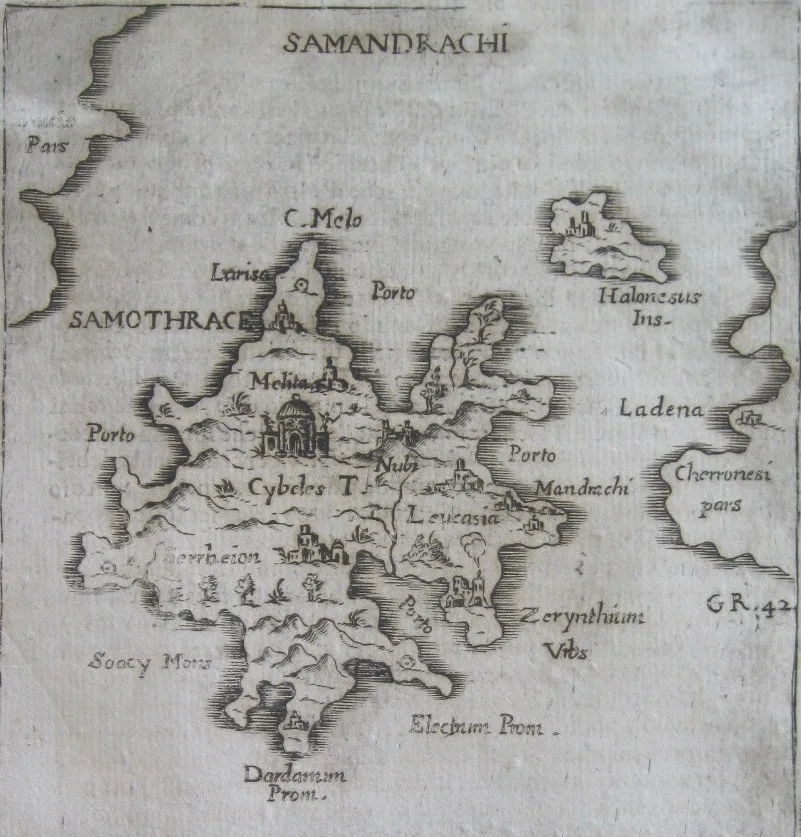
Map: Francesco Piacenza, 1688 (Public domain) · Wikimedia Commons
⚖️ Is it worth it? The pros and cons
Samothraki is an island for people who want nature, walking and history, not organised beaches. Here is an honest picture.
📊 At a glance, from 1 to 5
👍 The pros
- Waterfalls and rock pools with icy water, rare for an Aegean island.
- One of the most important sanctuaries of ancient Greece.
- The highest mountain of the Aegean islands, for climbing.
- Wild, unspoiled nature, with no mass tourism.
- Low prices and a free-spirited camping vibe.
👎 The cons
- Difficult access: a long journey to Alexandroupoli.
- Few sandy beaches, most have pebbles.
- The ferry stops in bad weather.
- Few organised things and few places to stay.
🏛️ The Sanctuary of the Great Gods and the Victory
On the north coast, in a ravine with olive and plane trees at the foot of the mountain, lies the Sanctuary of the Great Gods, one of the most important sanctuaries of the ancient world. Here the mysteries were held, secret initiation rites open to everyone, men, women, foreigners and slaves, and people came from all over the Mediterranean. According to Plutarch, it was here that Philip of Macedon and Olympias, the parents of Alexander the Great, met when they were young.
You can see the columns of the temple, the foundations of a large round building, the Arsinoeion, and the theatre, and high up on the slope the spot where the Winged Victory of Samothrace stood. The statue, a winged goddess on the prow of a ship, was found in 1863 by a French diplomat and today dominates the great staircase of the Louvre. In the Sanctuary’s museum you will see a copy and the finds. A little further on, at Palaiopoli, stand the medieval towers of the Gattilusi, Genoese lords of the 15th century.
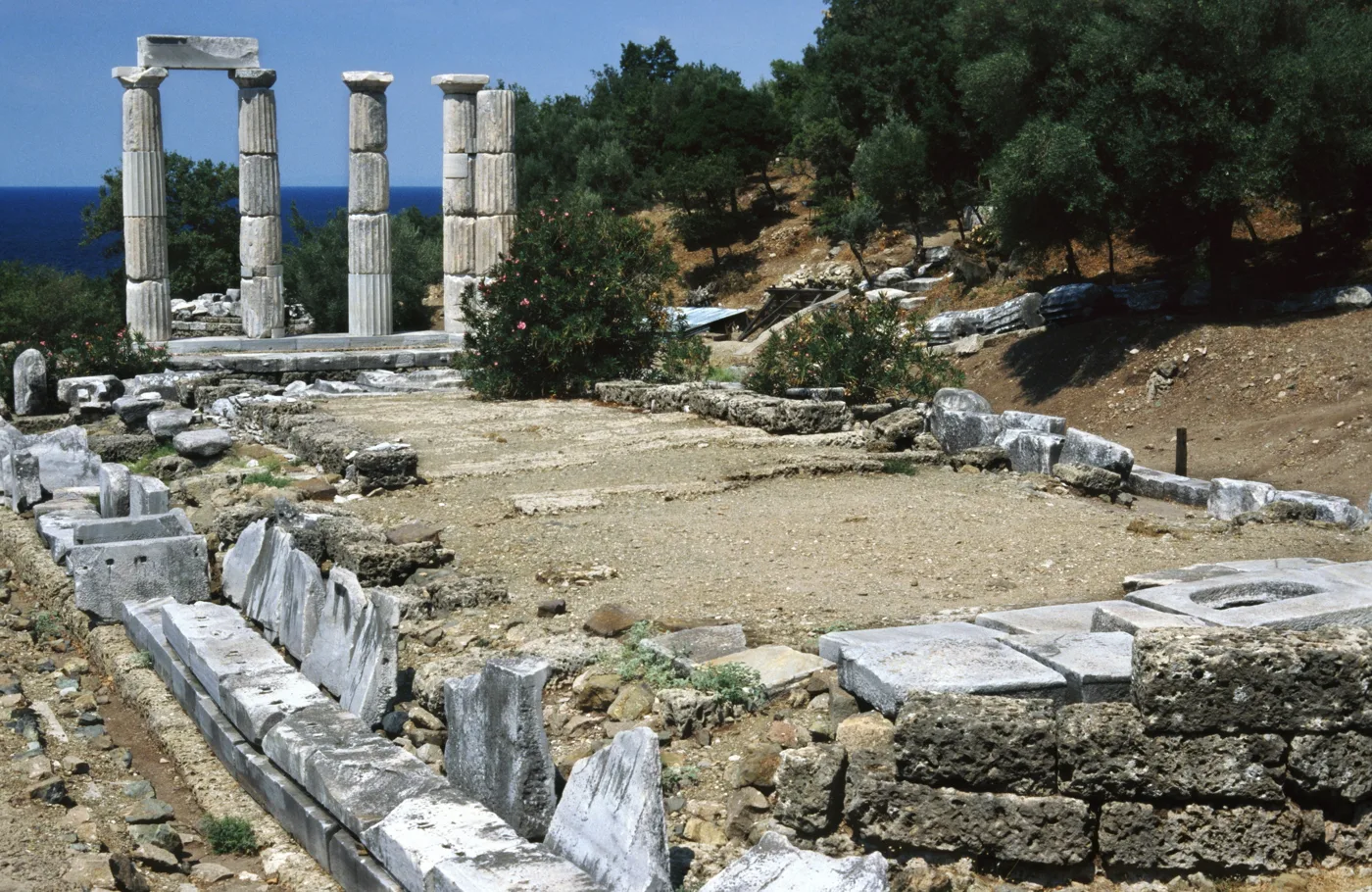
The columns of the Sanctuary, among the olive trees.
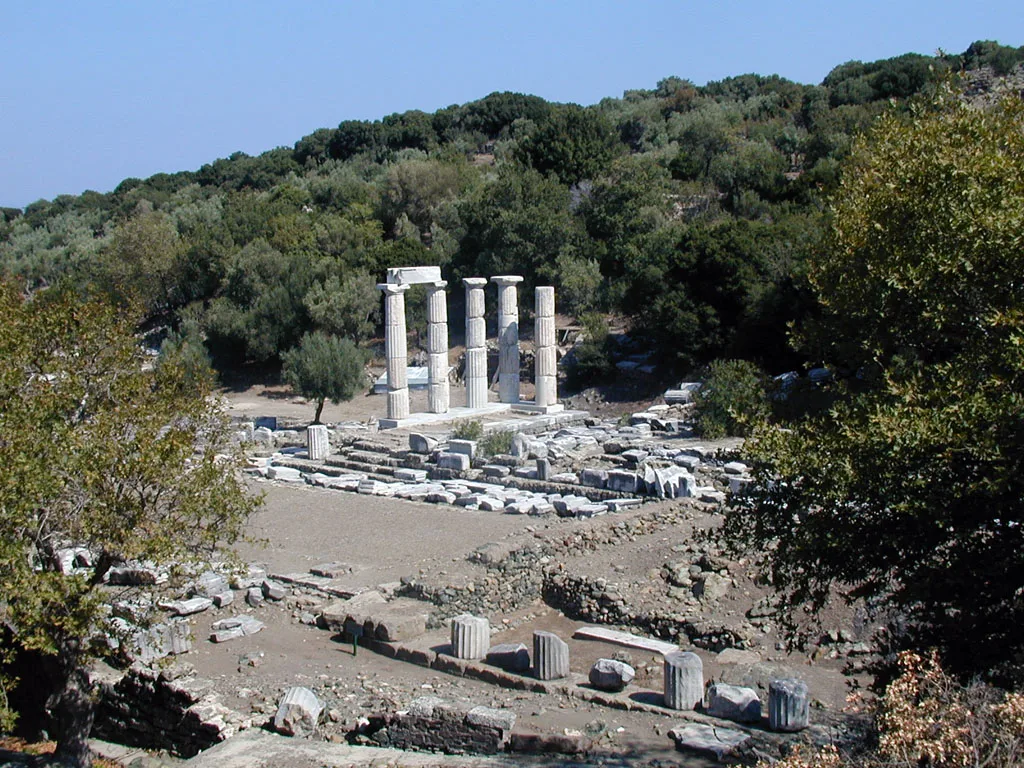
The Sanctuary, at the foot of the mountain.
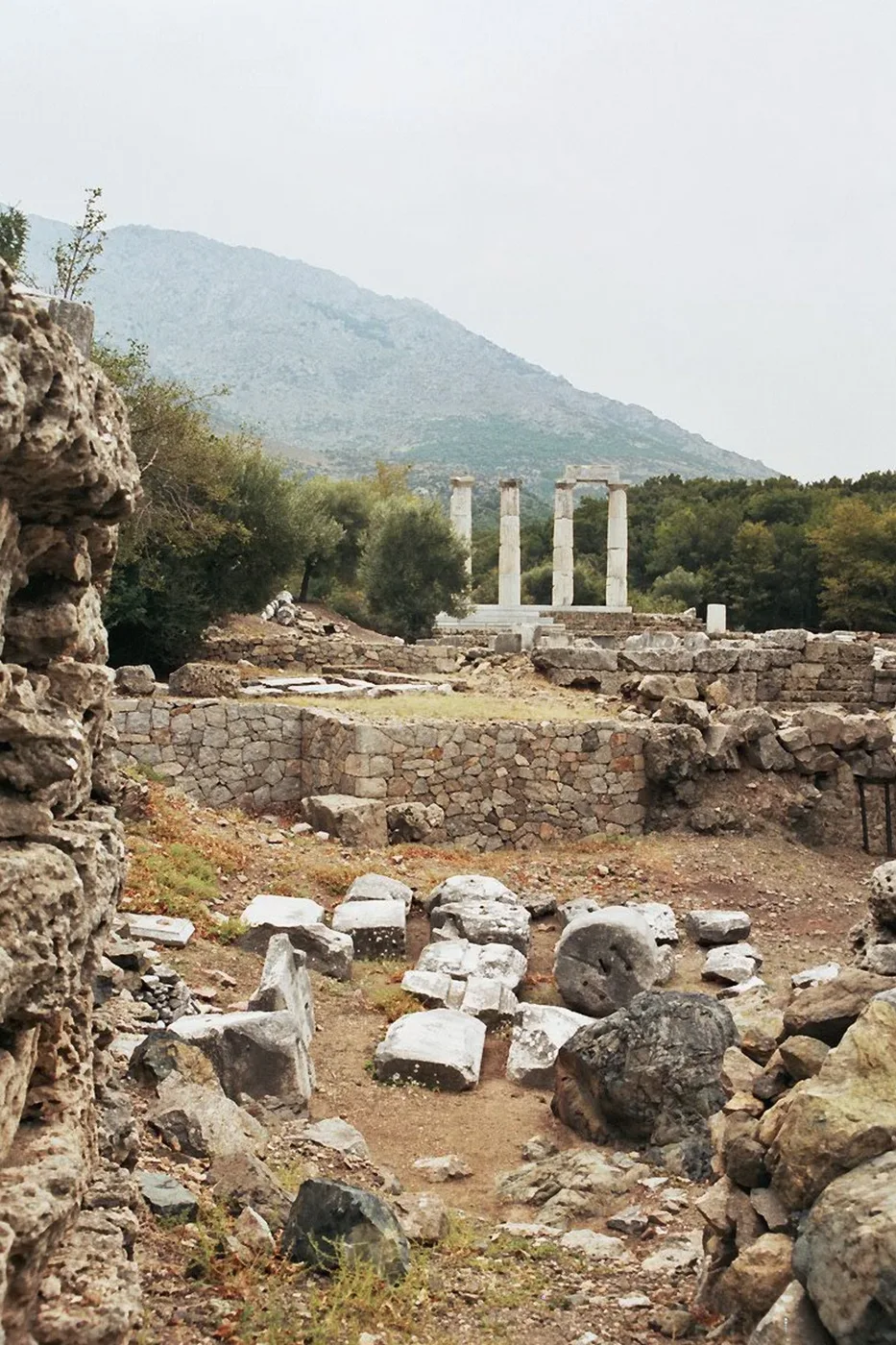
Foundations of temples and buildings.
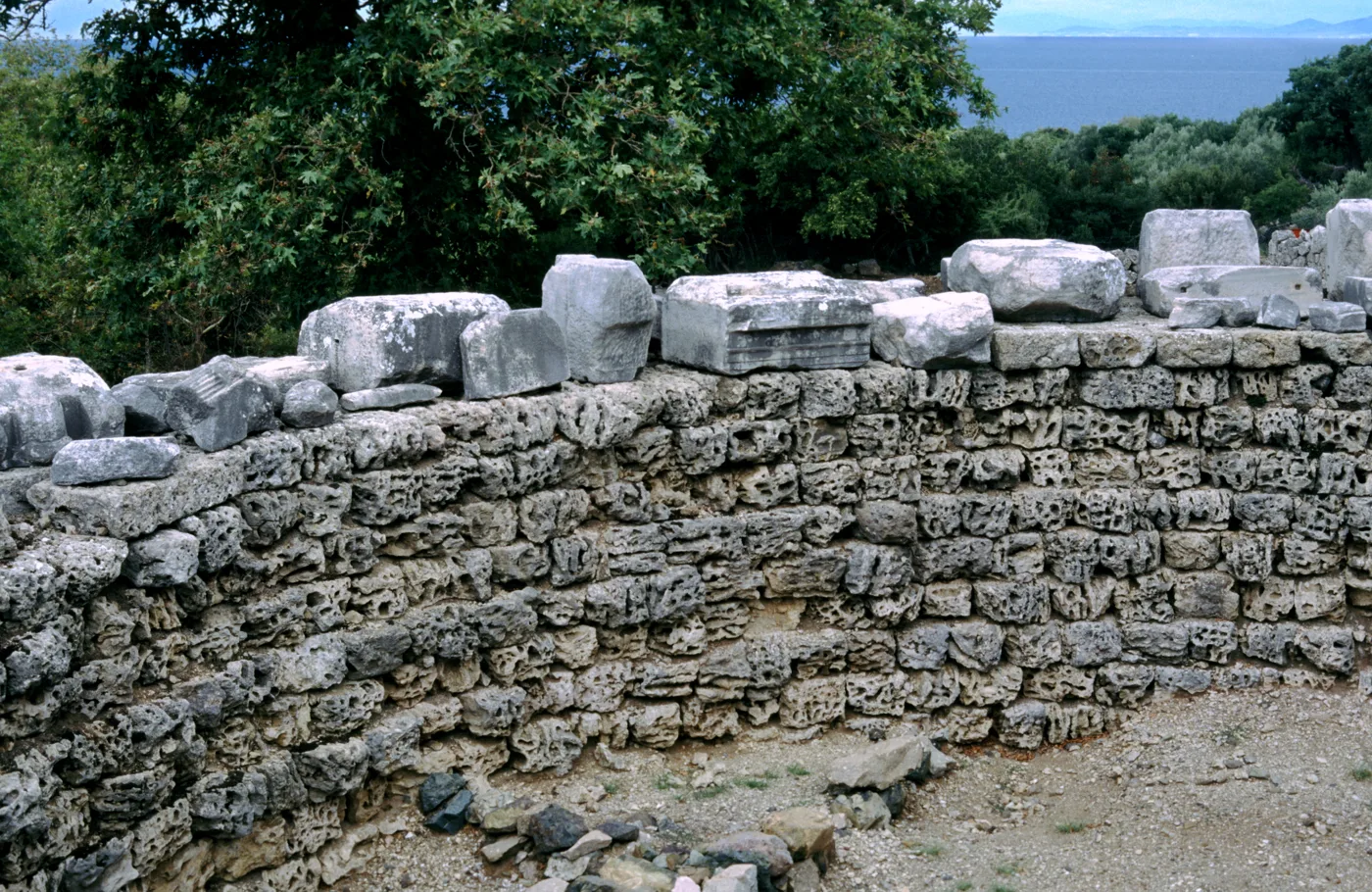
The walls of the ancient city.
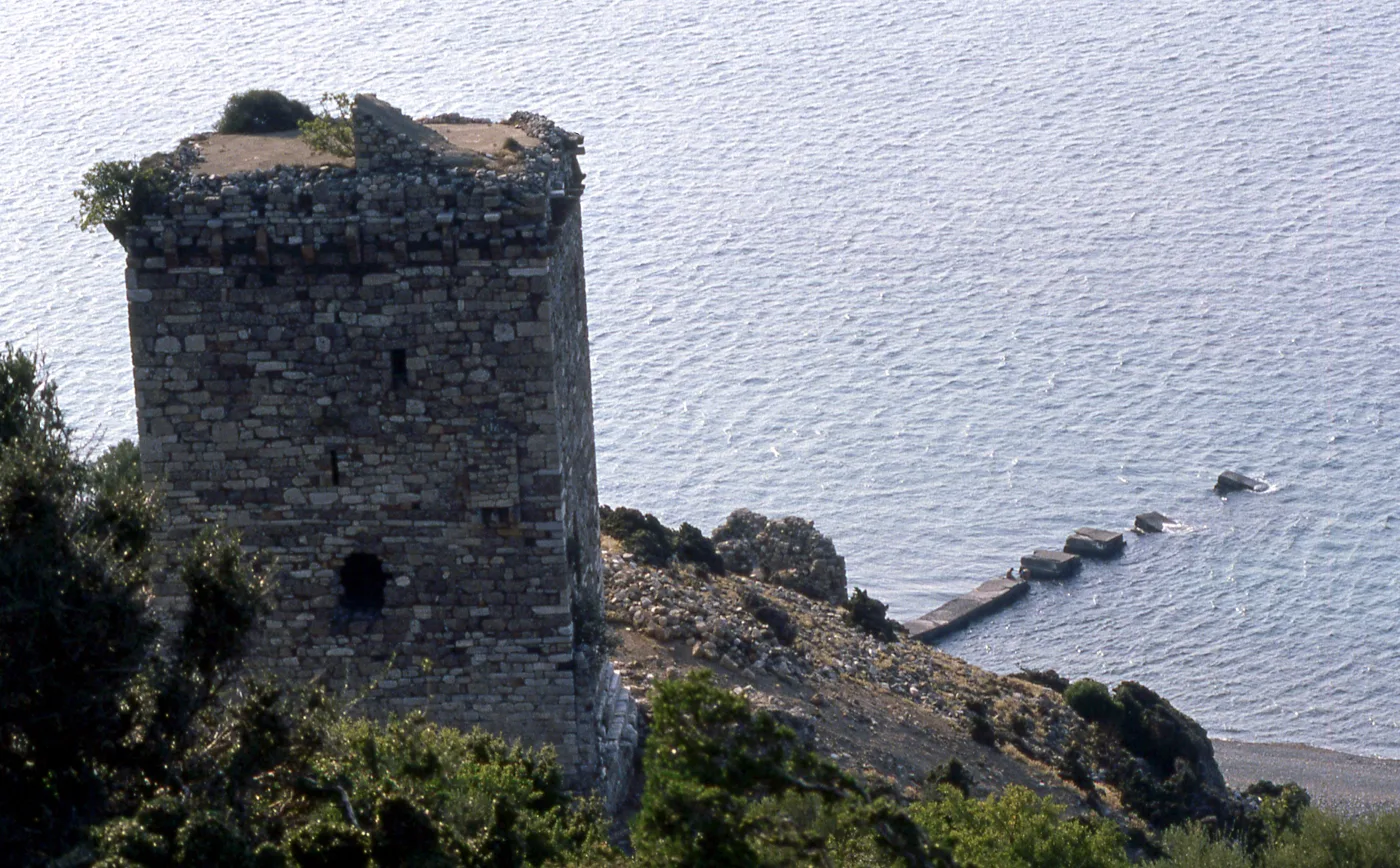
A Genoese tower from the 15th century.
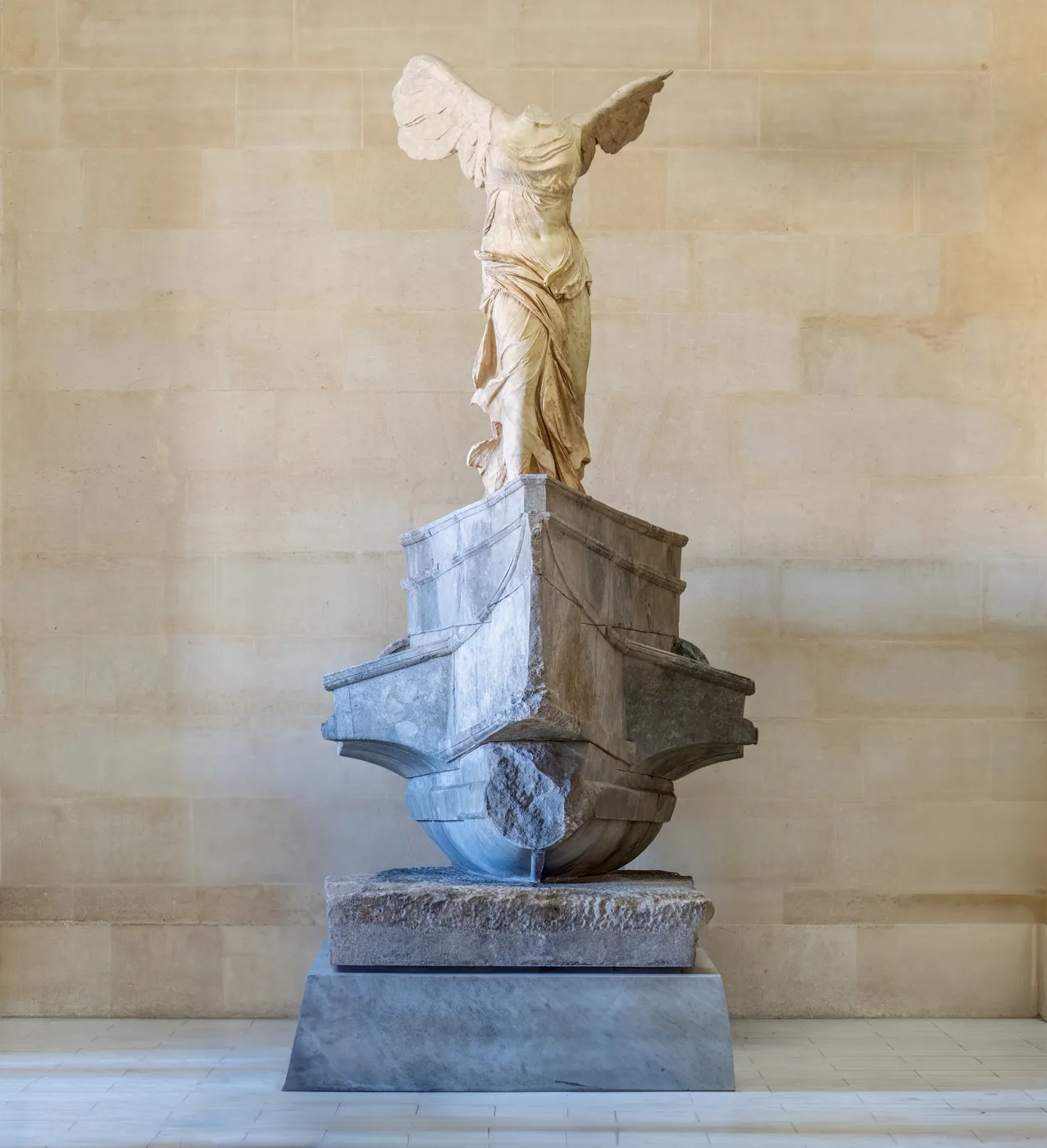
Found here in 1863, now in the Louvre.
Photos: Ggia (CC BY-SA 3.0), Marsyas (CC BY-SA 3.0), Félix Potuit (Public domain), Mark Landon (CC BY 4.0), Wilfredor (CC0) · Wikimedia Commons
The Sanctuary is among trees, but it gets hot at midday. Go in the morning, see the museum first to understand what you are looking at, then walk around the site. Check the opening hours, they change with the season.
🏘️ Chora
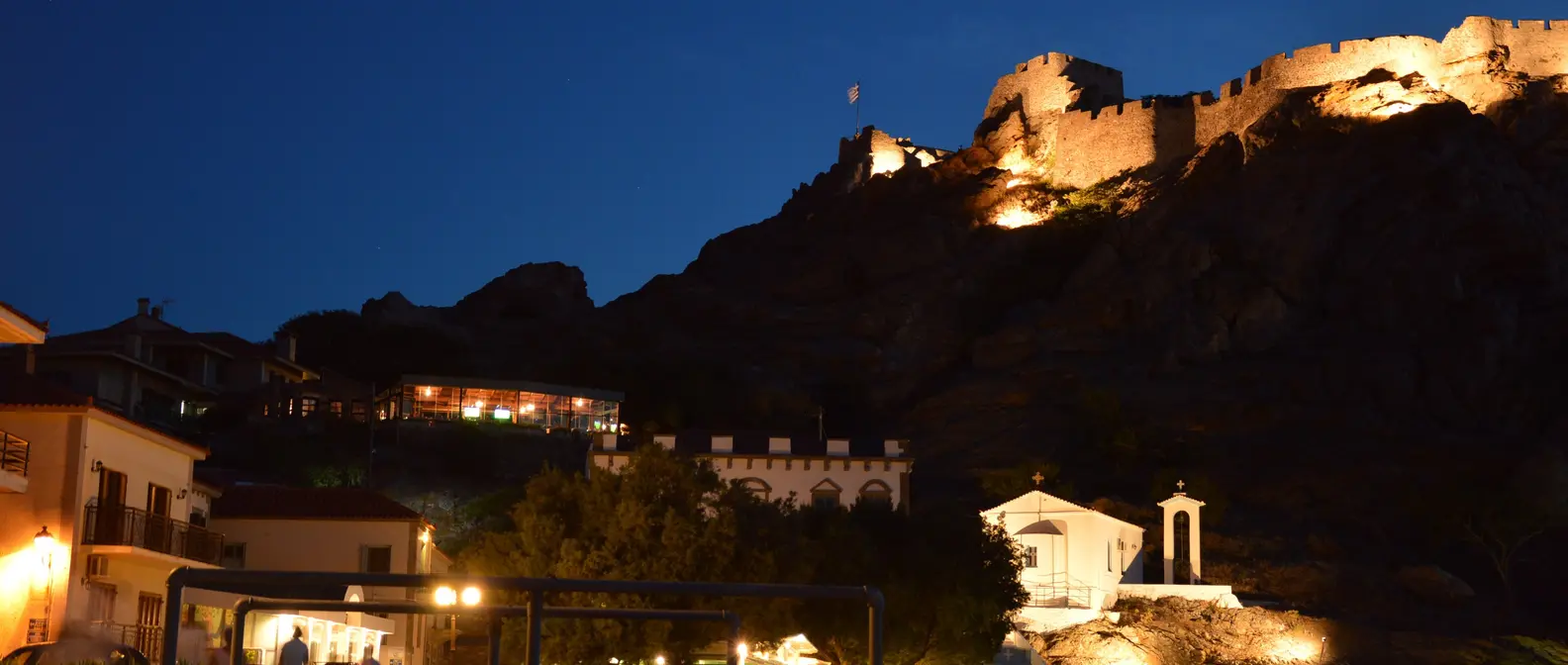
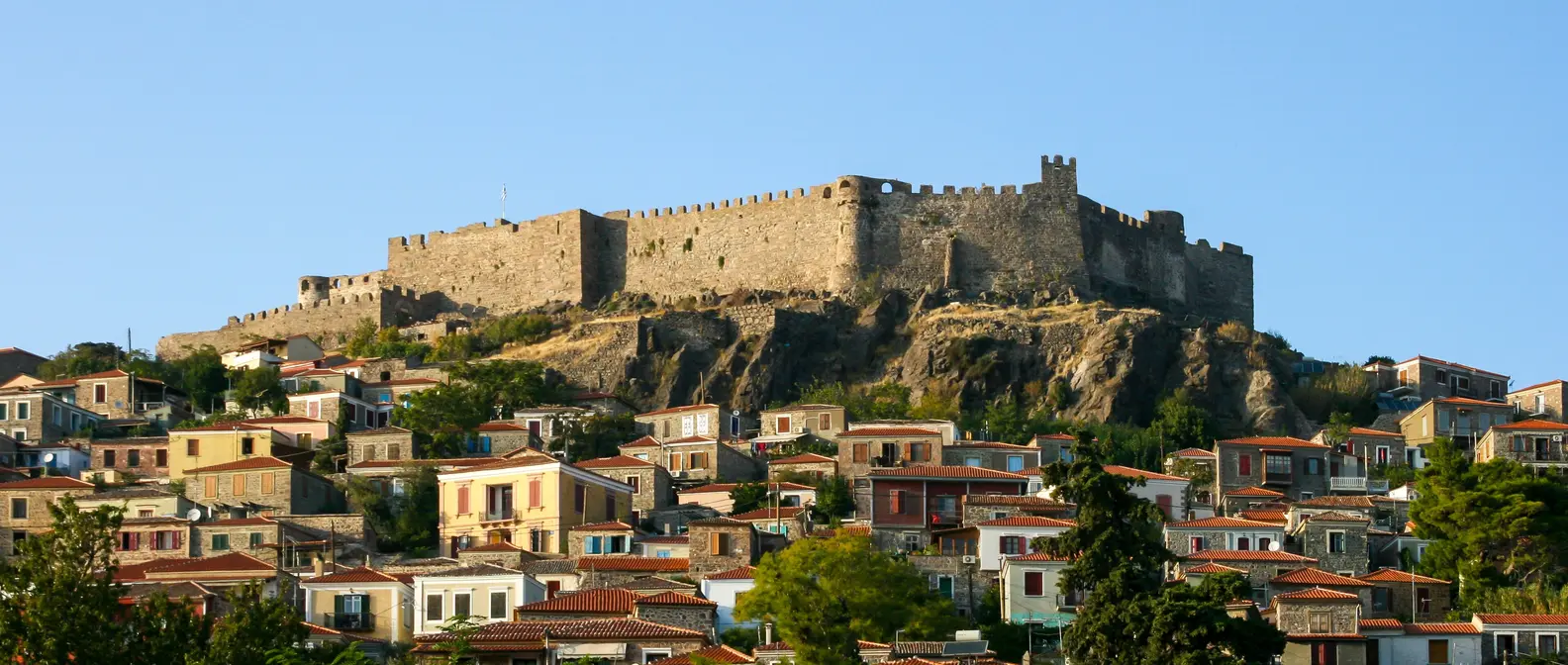
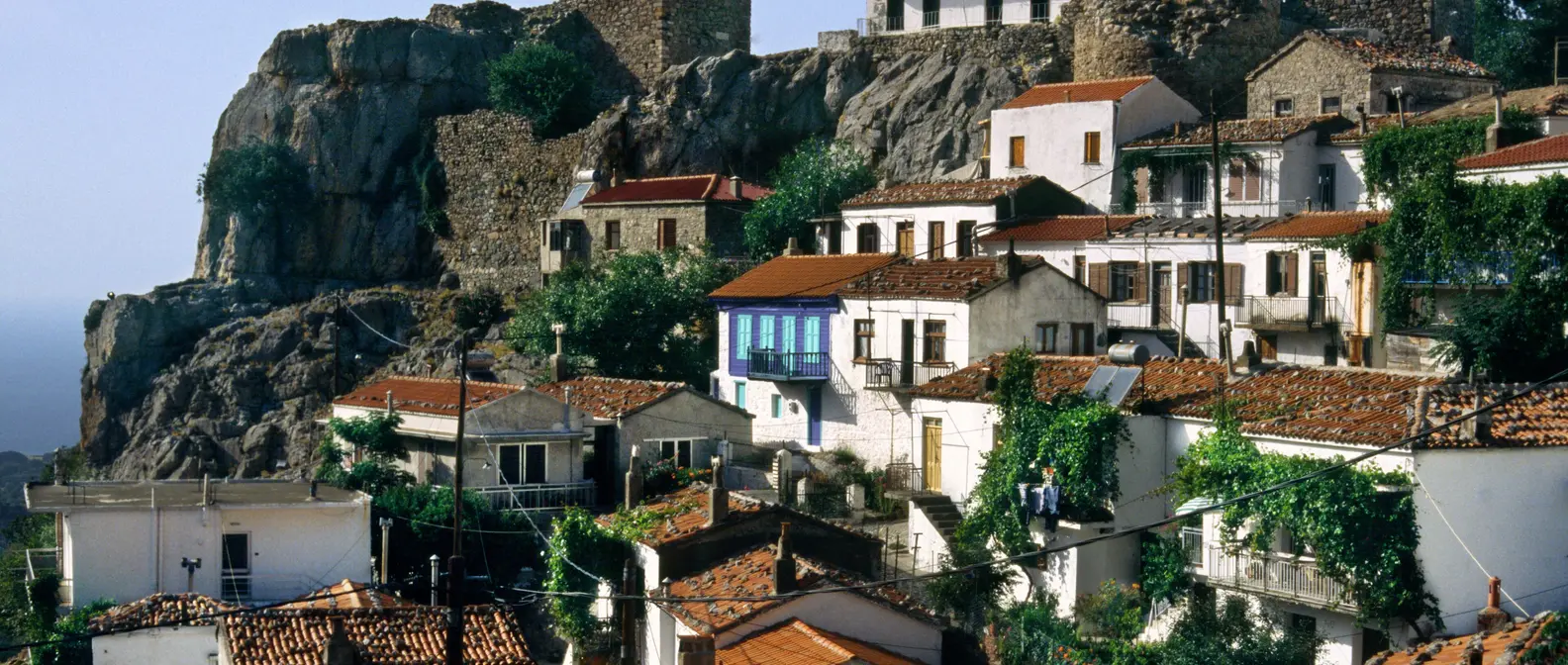
Chora on Samothraki is built like an amphitheatre in a ravine, up on the mountain, where it could not be seen from the sea, to protect it from pirates. The stone houses with red tiled roofs crowd around the rock with the castle of the Gattilusi, and the cobbled lanes climb up to the square, with cafés and tavernas on terraces looking out to sea. It is the most beautiful place for a sunset and dinner.
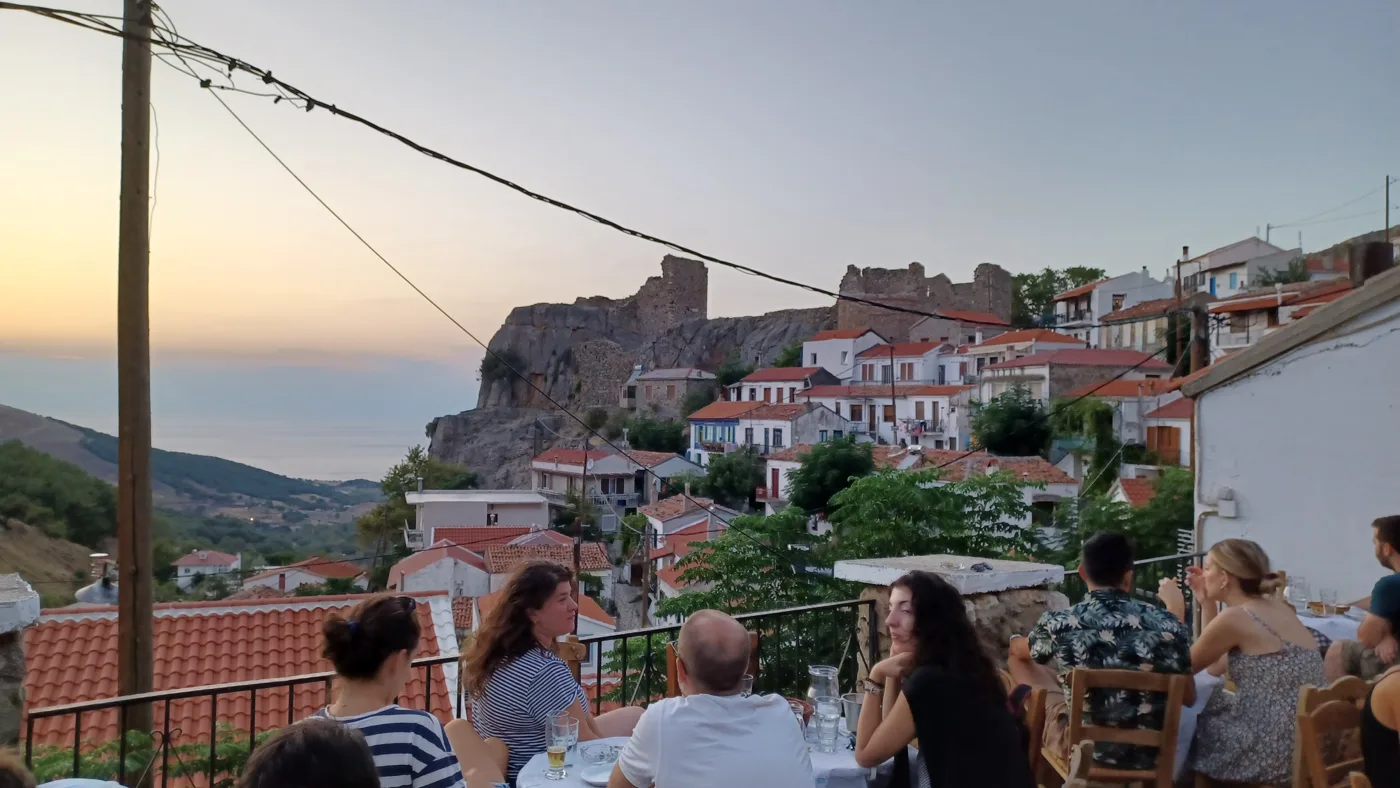
Tiled houses, below the castle.
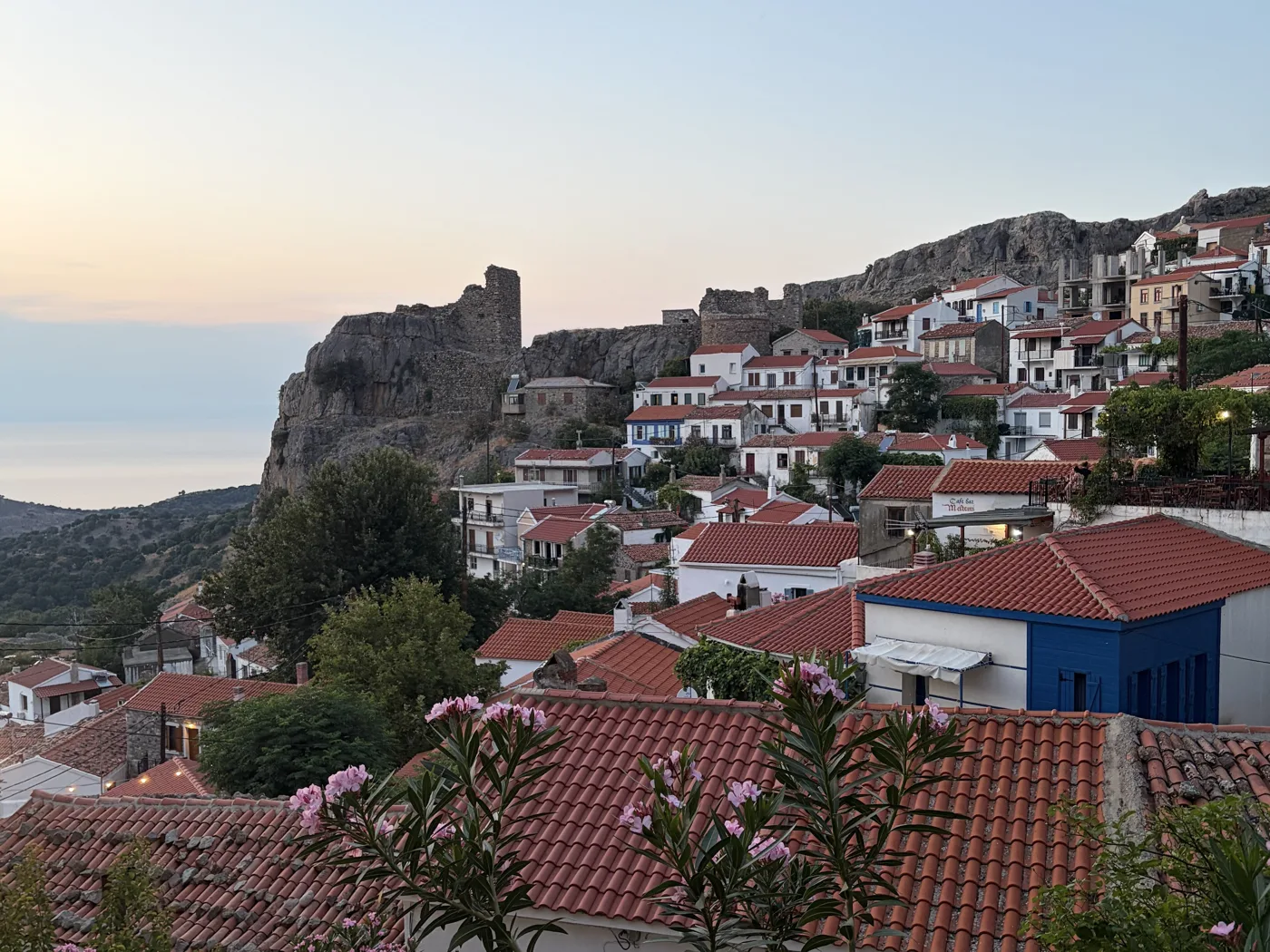
At the top of the rock, above the village.
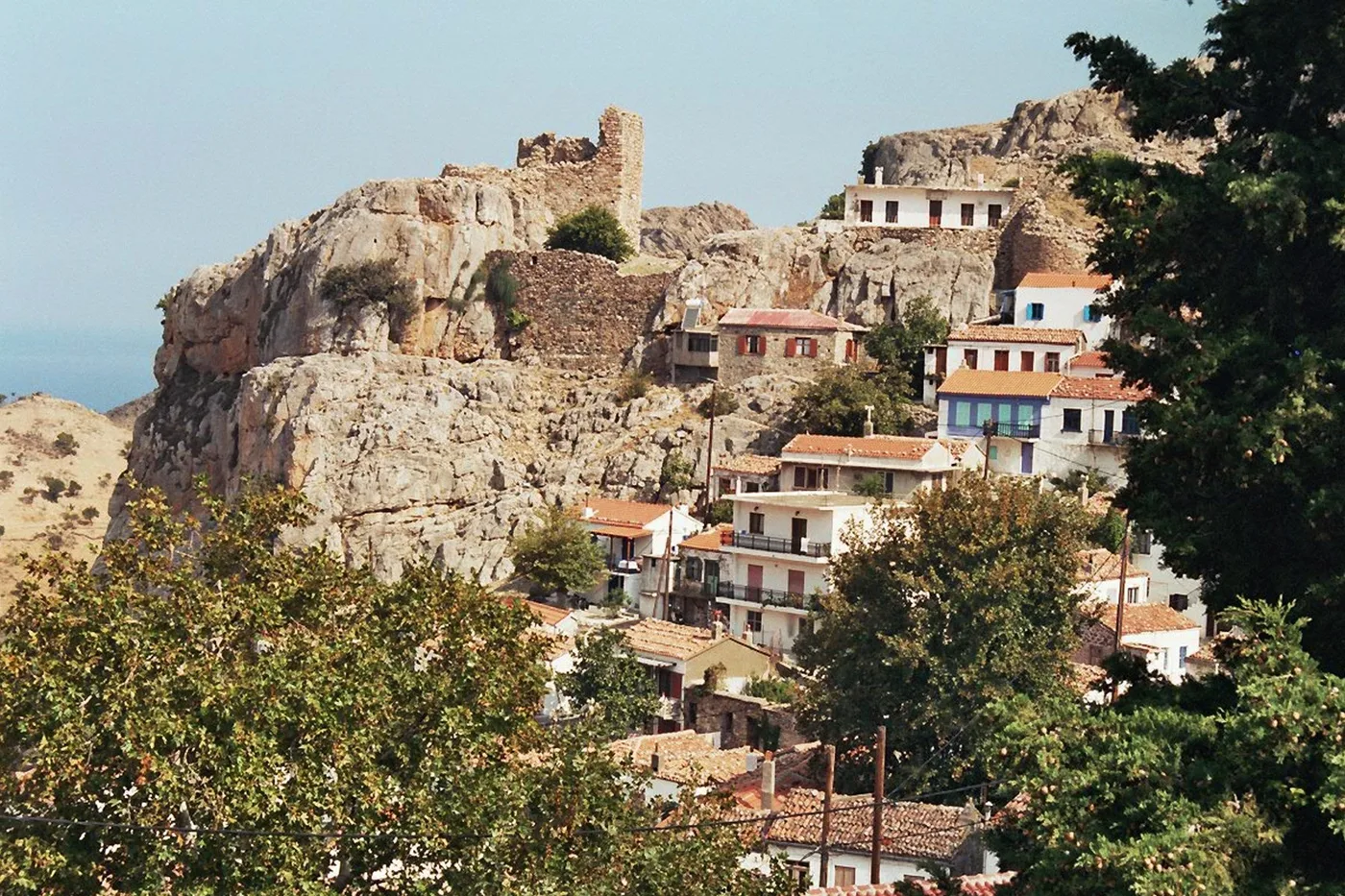
The village was built there to hide from the sea.
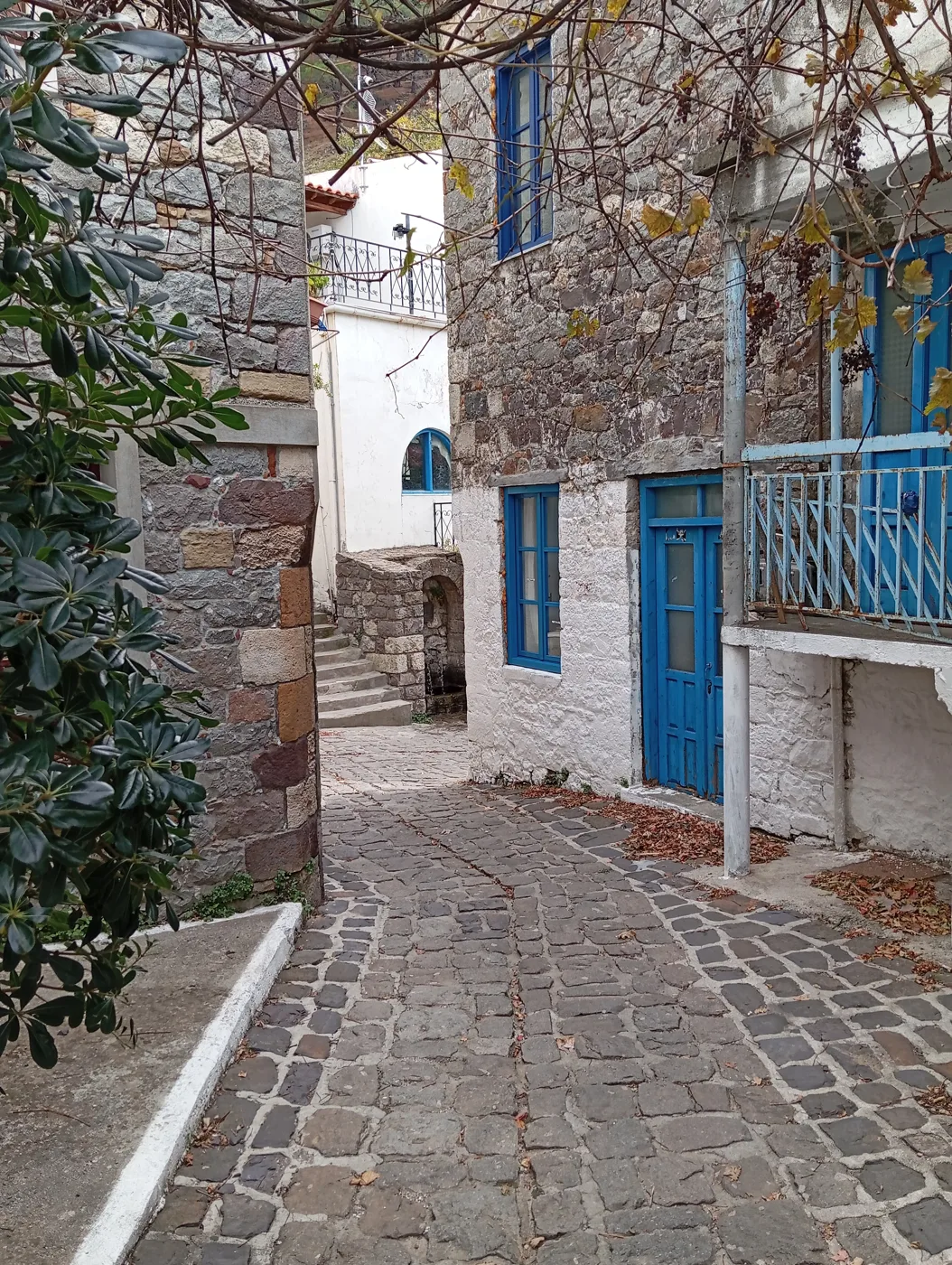
Cobbles and stone.
Photos: Juggertrout (CC BY 4.0), Stpiev (CC BY-SA 4.0), Félix Potuit (Public domain), Moleskine (CC BY 4.0) · Wikimedia Commons
💧 The waters: waterfalls, vathres, Therma
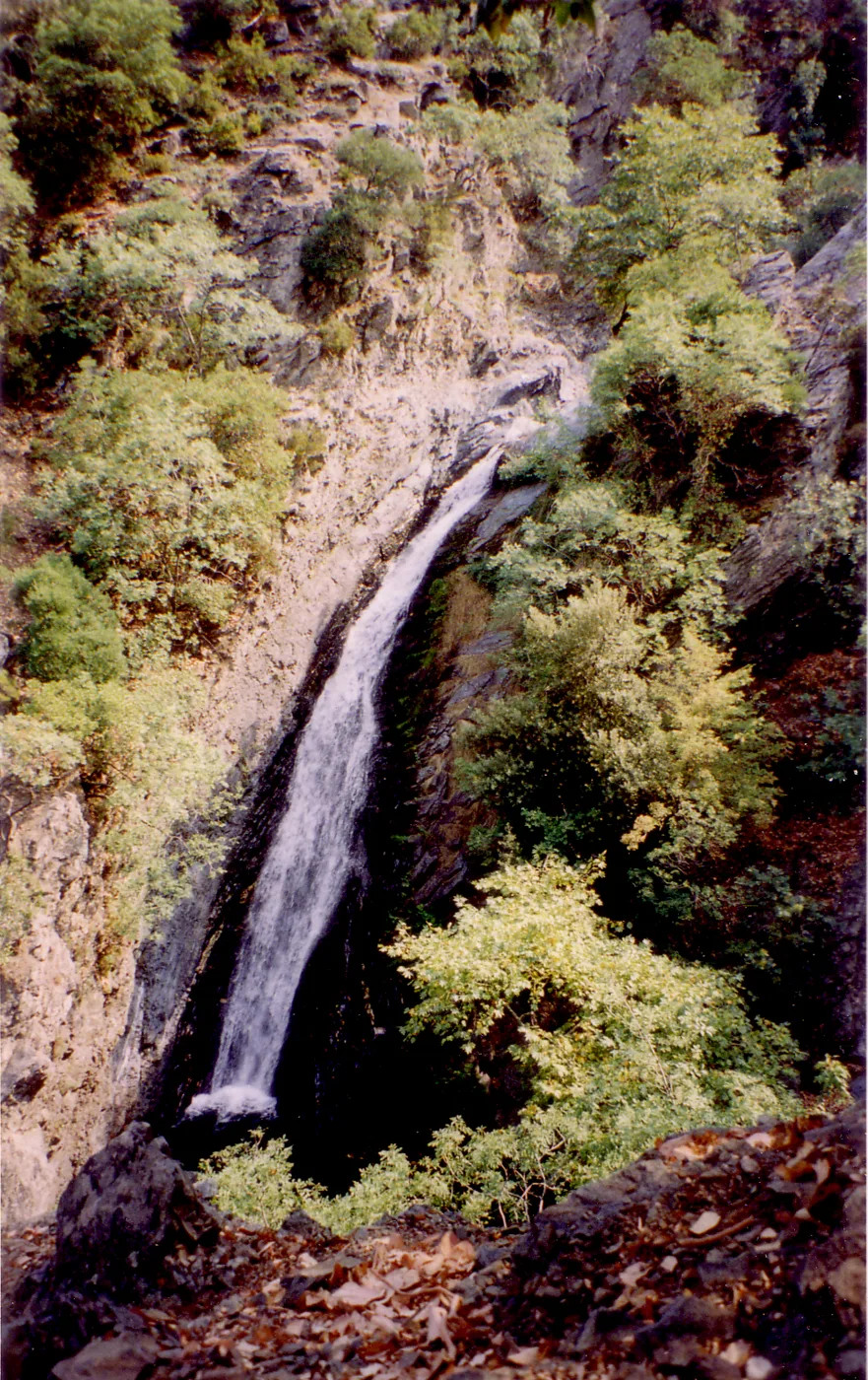
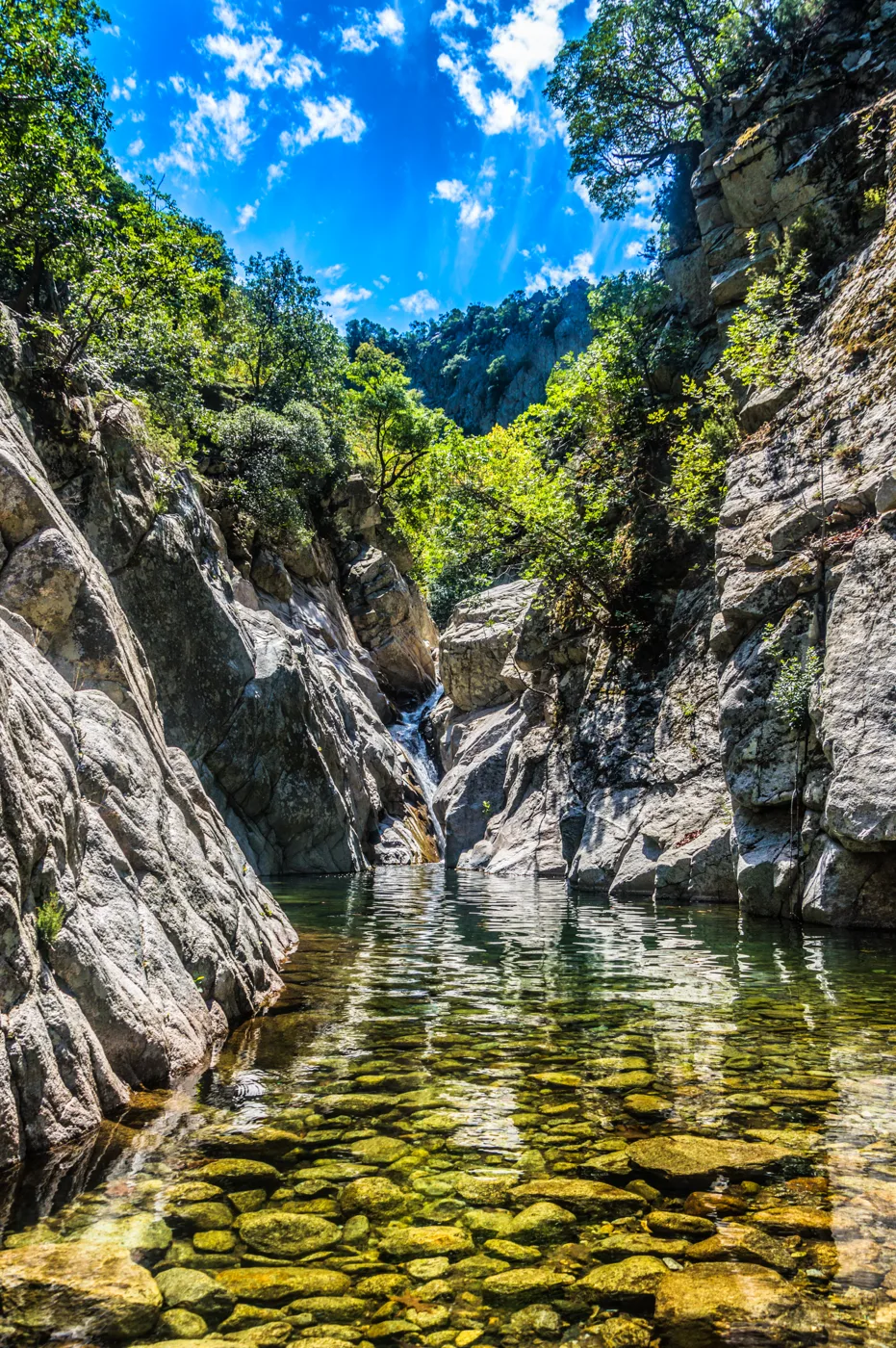
What makes Samothraki special is the water. Dozens of streams run down from Fengari through forests of plane trees, forming waterfalls and vathres, natural pools carved into the rock, with clear, icy water. The best-known walk is at Fonias: you leave the car near its mouth, and a path through the forest brings you in about half an hour to the first waterfall, with a large pool for a dip. Higher up there are more waterfalls, for more experienced walkers.
Therma is a village among the plane trees, with healing springs and baths, and above it Gria Vathra, an easy rock pool for families. In summer Therma is the heart of the island, with cafés, tavernas, campsites and people from all over Greece.
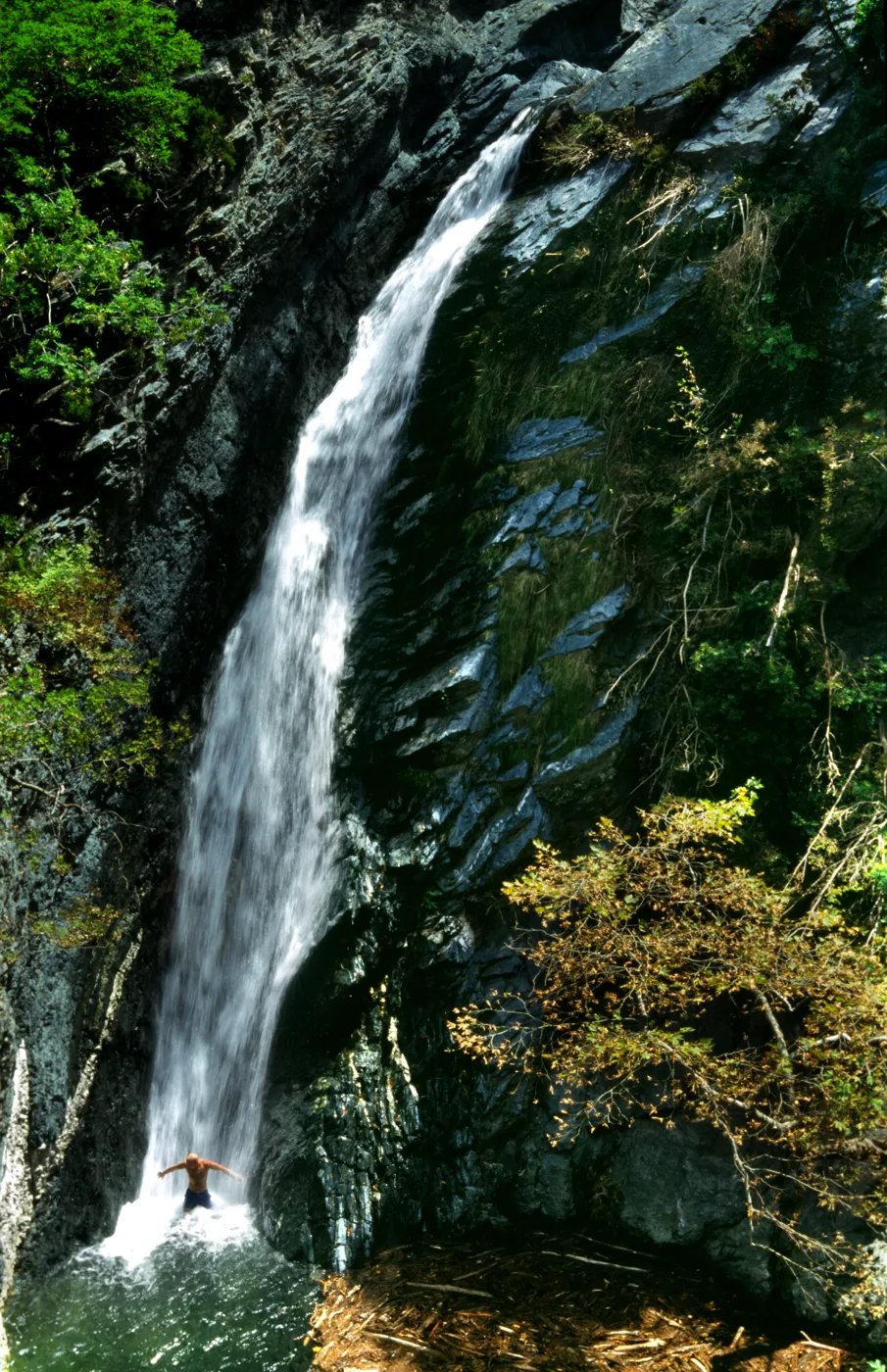
The first waterfall.
Higher up, in the gorge.
Natural pools with icy water.
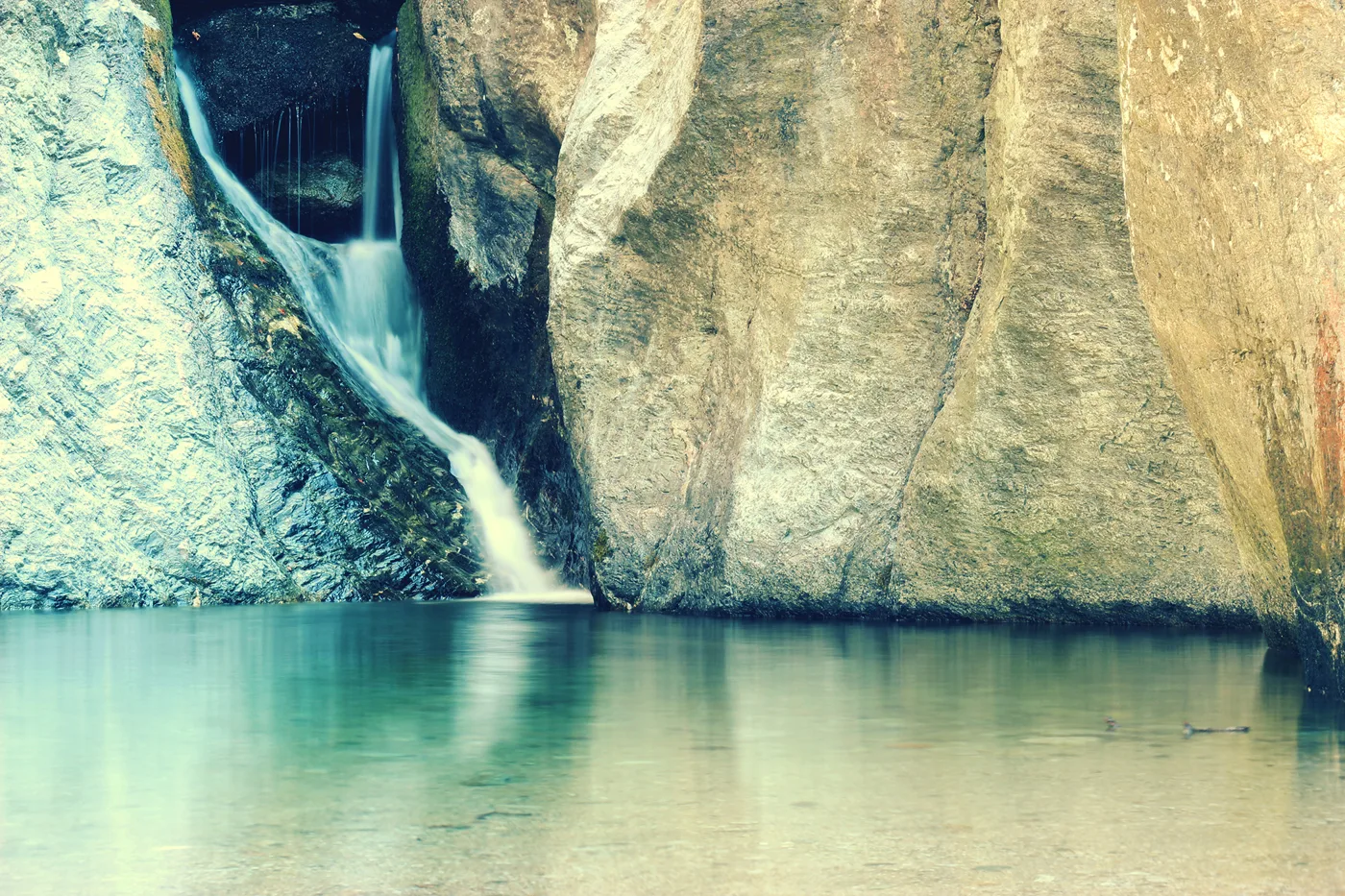
Some of the most beautiful on the island.
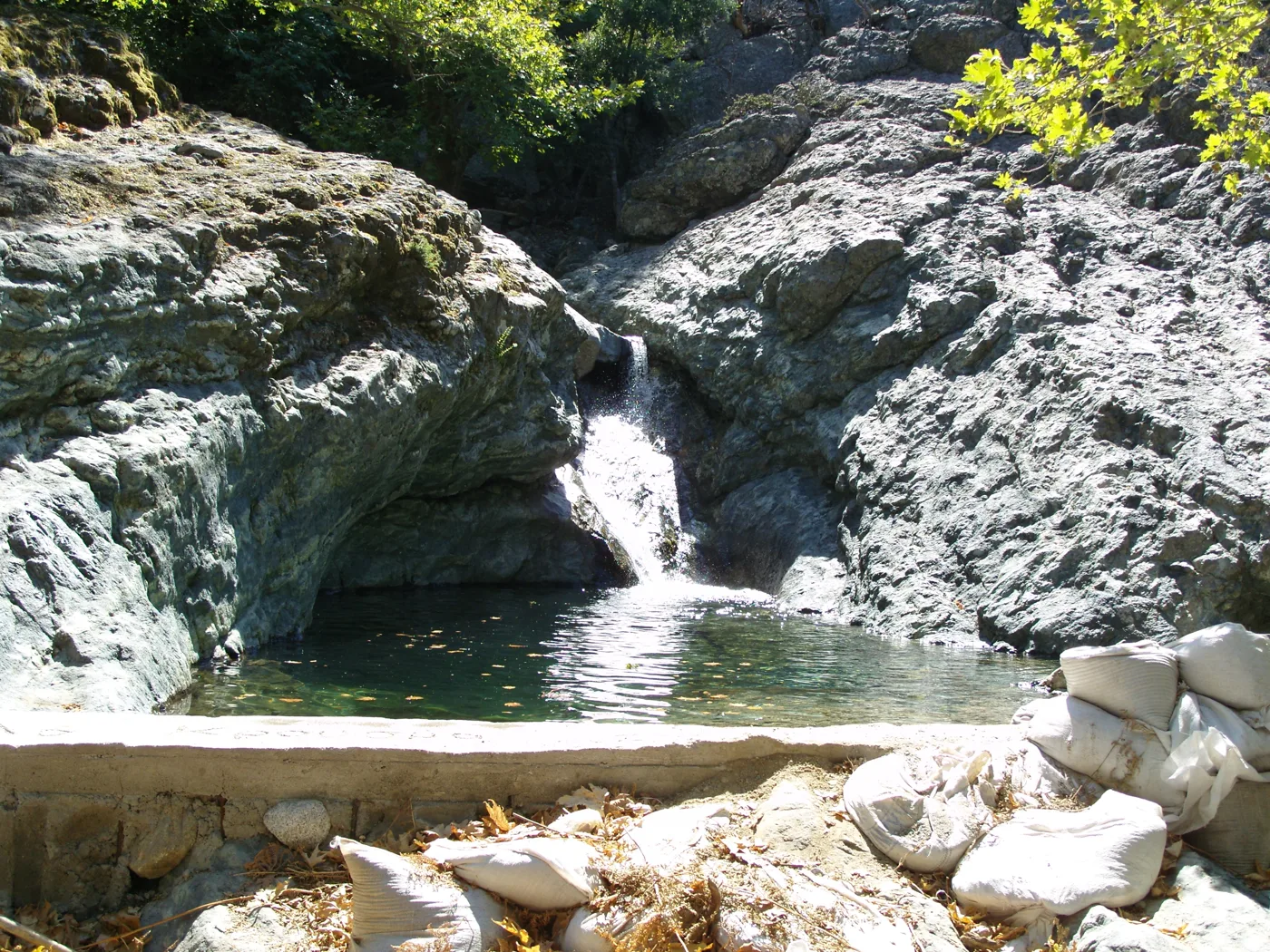
Next to Therma, easy.
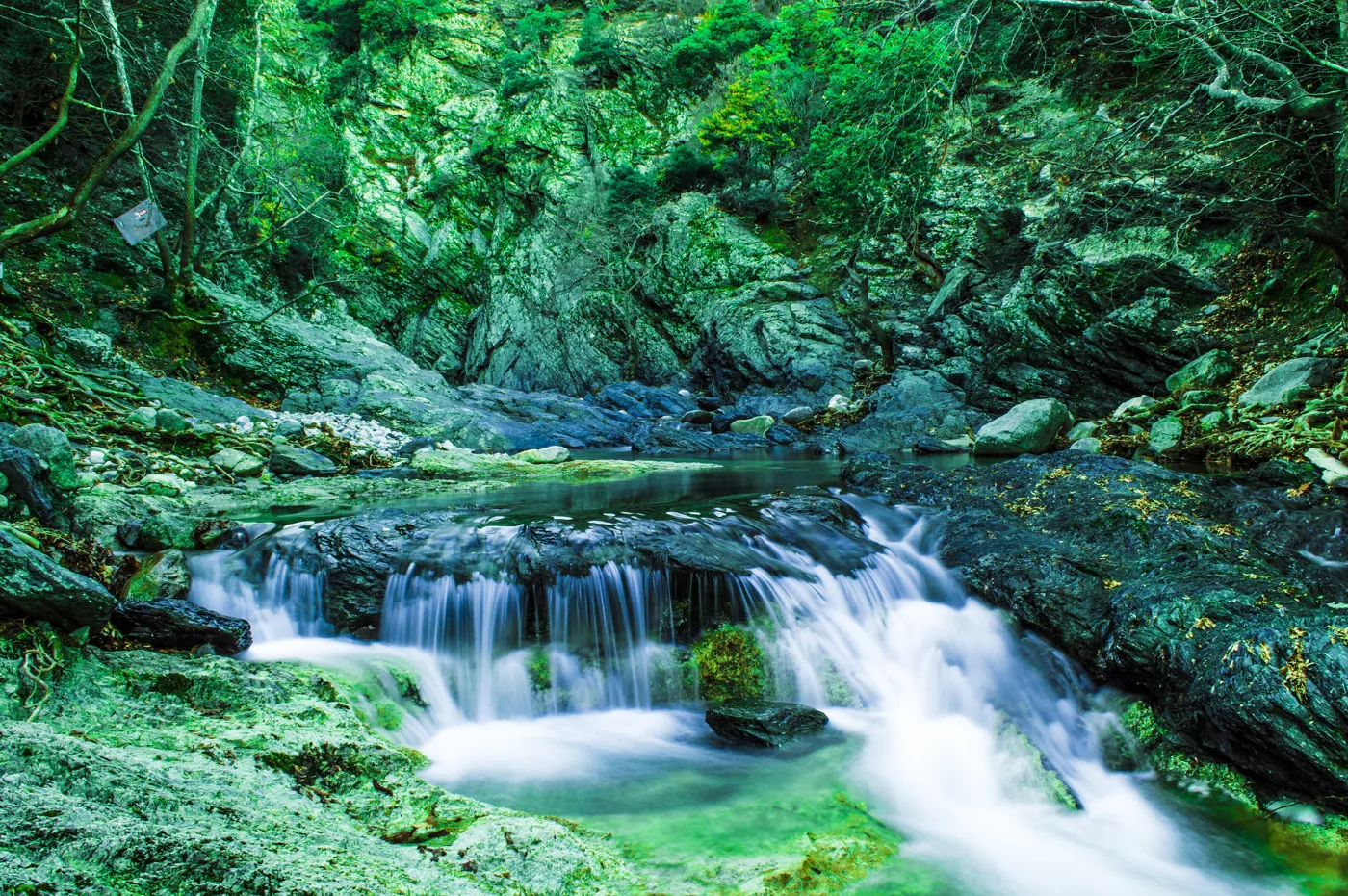
Forest, moss and water.
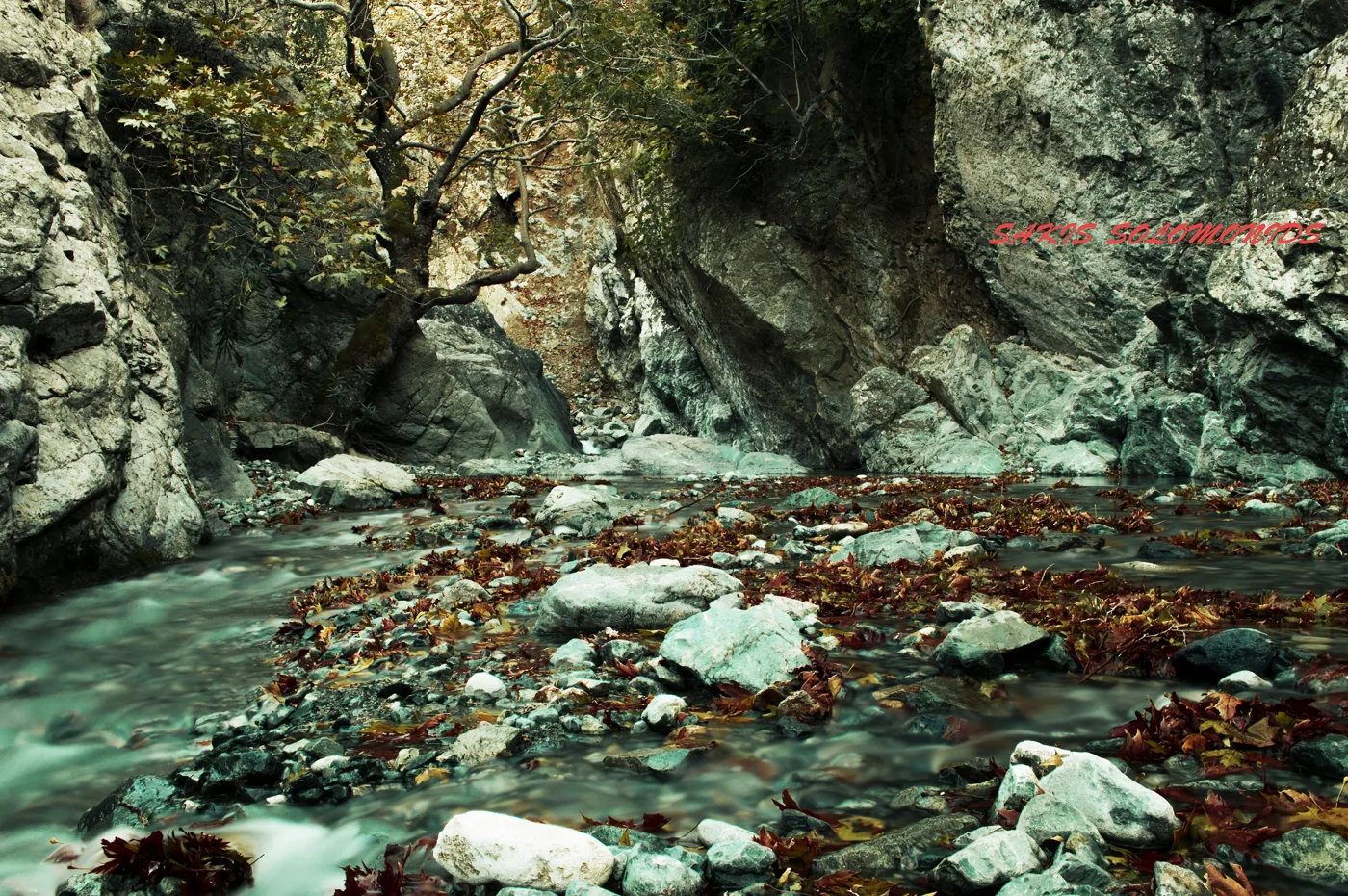
Cool in the middle of summer.
Photos: Ggia (CC BY-SA 3.0), Kalogeropoulos (CC BY-SA 3.0), Angelos Konstantinidis (CC BY 4.0), IrenV (CC BY-SA 4.0), Kamikaze1975 (CC BY-SA 3.0), Sakisolon (CC BY-SA 4.0) · Wikimedia Commons
The rocks in the streams are slippery, and Fonias, “the killer”, got its name from its sudden floods. Wear shoes with a good grip, don’t jump into pools if you don’t know how deep they are, and avoid the streams when it rains on the mountain.
⛰️ Mount Fengari
Fengari is the soul of Samothraki. According to Homer, Poseidon watched the Trojan War from its summit, and indeed, on a clear day you can see as far as Troy. The climb to the summit, Agios Christoforos, usually starts from Therma and takes about five to six hours up, with good fitness, plenty of water and a start before dawn. It is only worth it in good weather, and better with a guide.
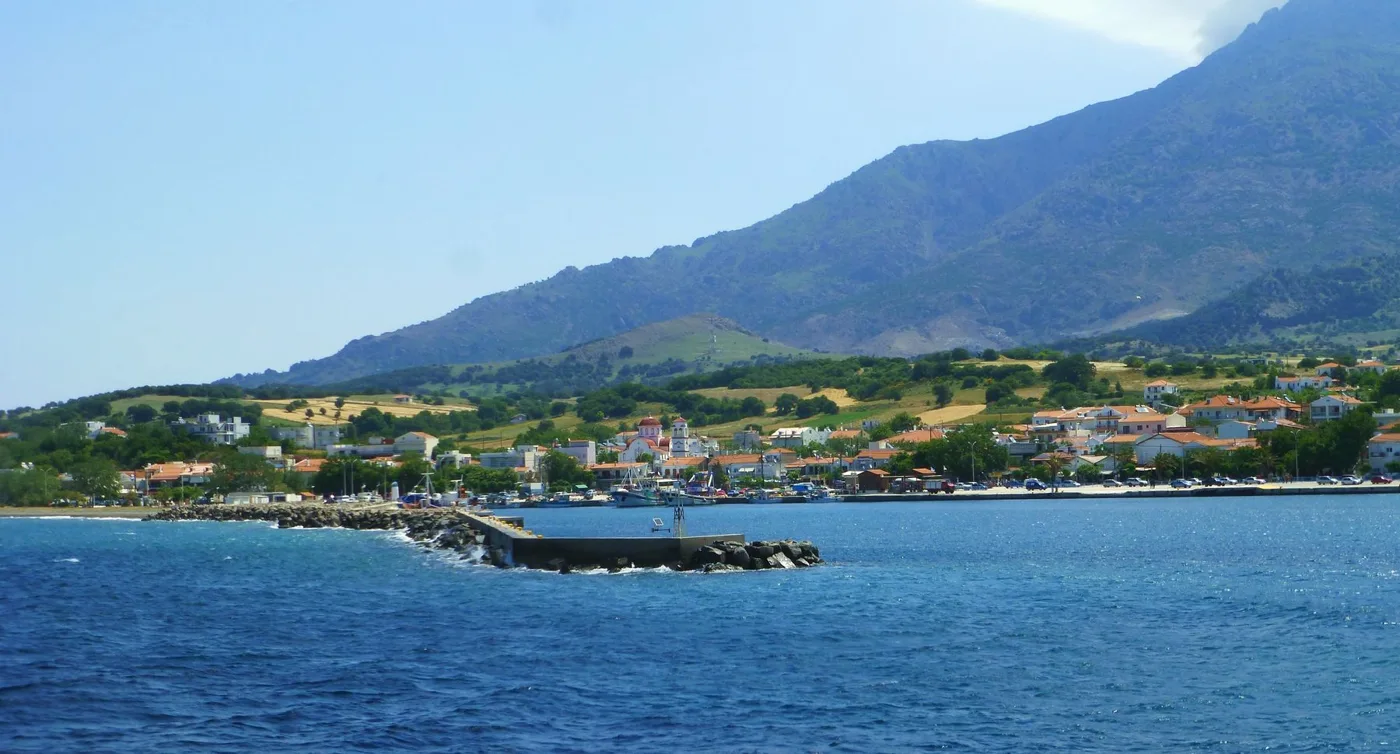
The port, below Fengari.
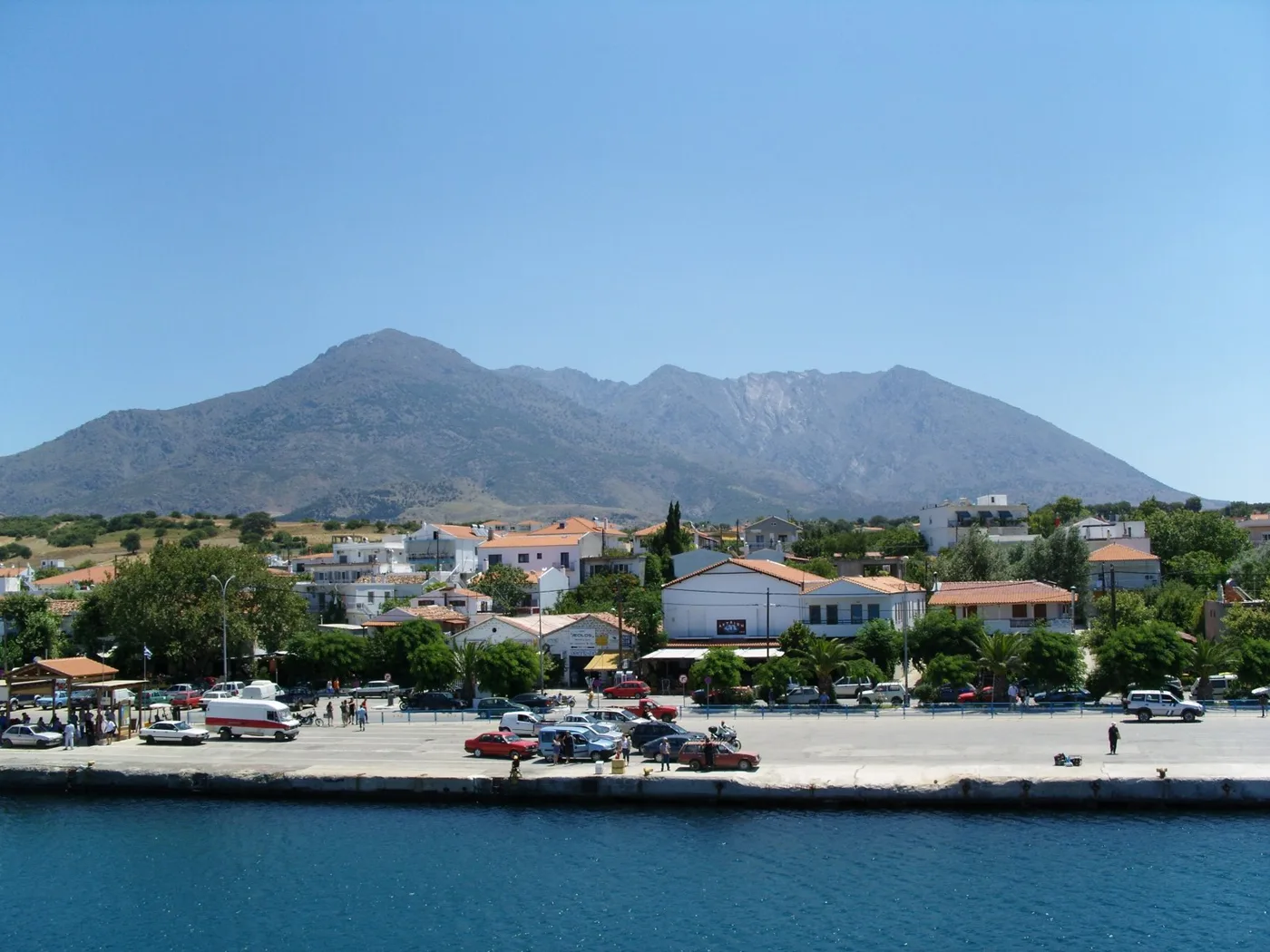
The ferries arrive here.
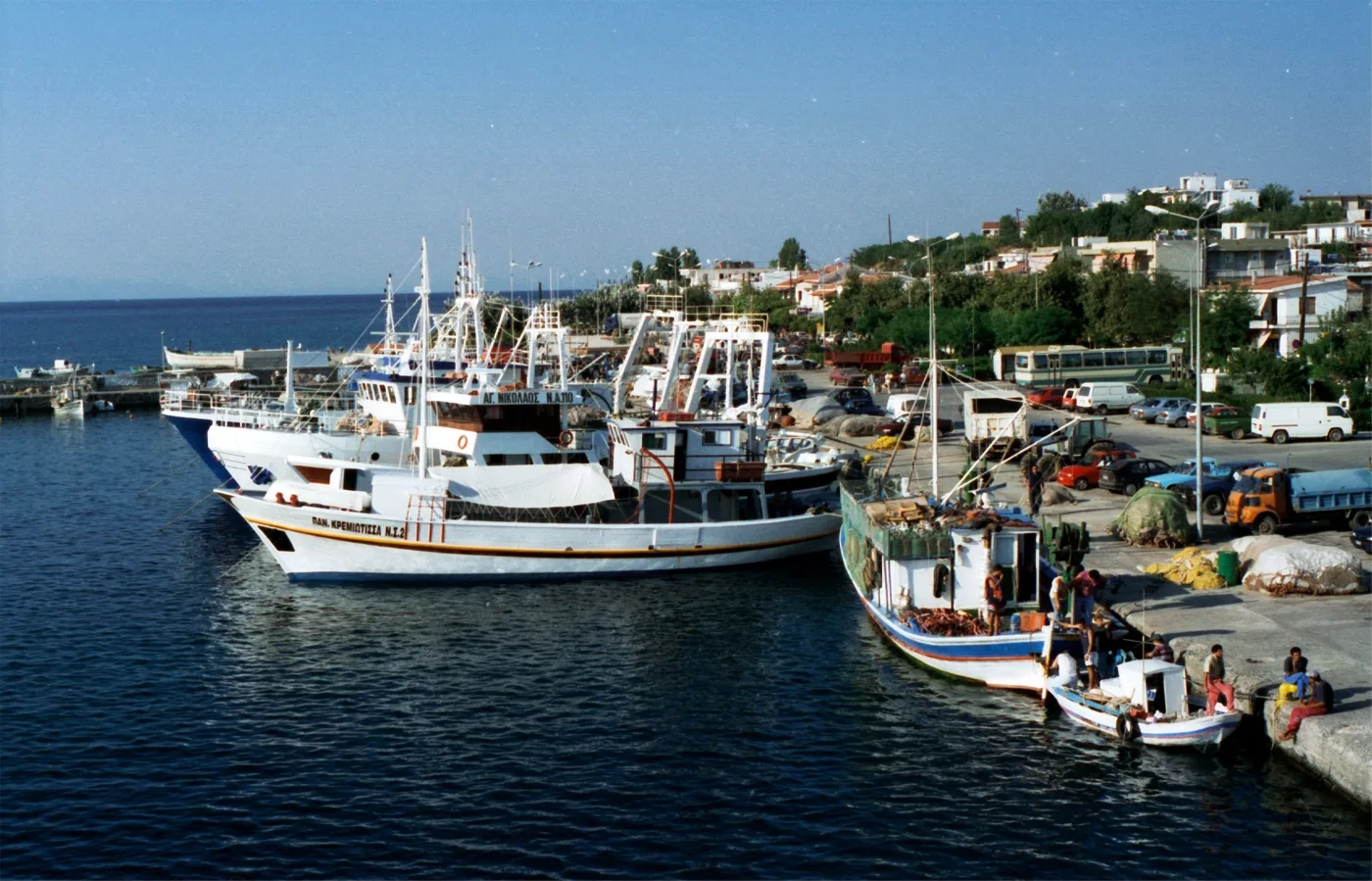
Fishermen and tavernas.
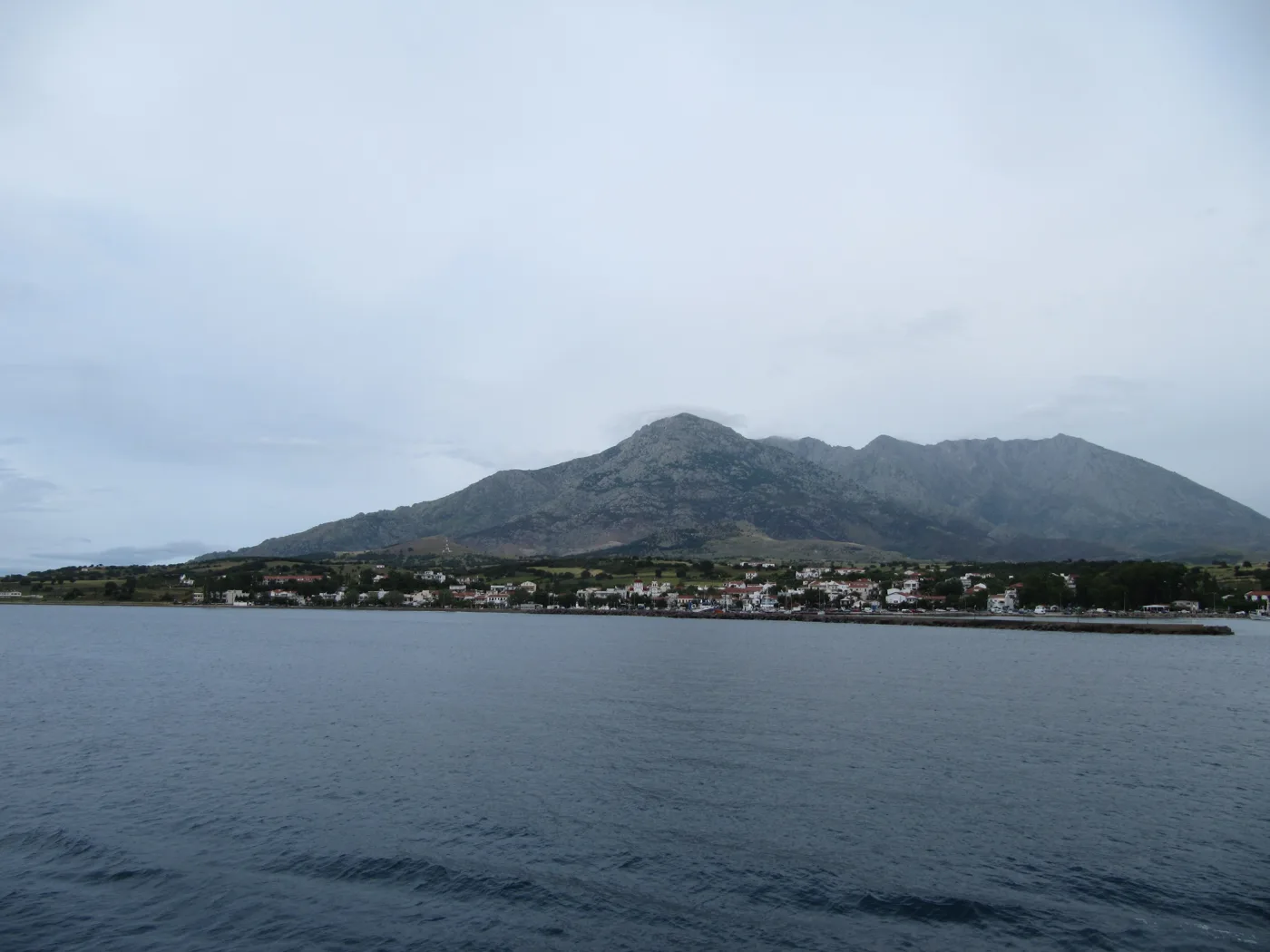
The summit, over 1,600 metres.
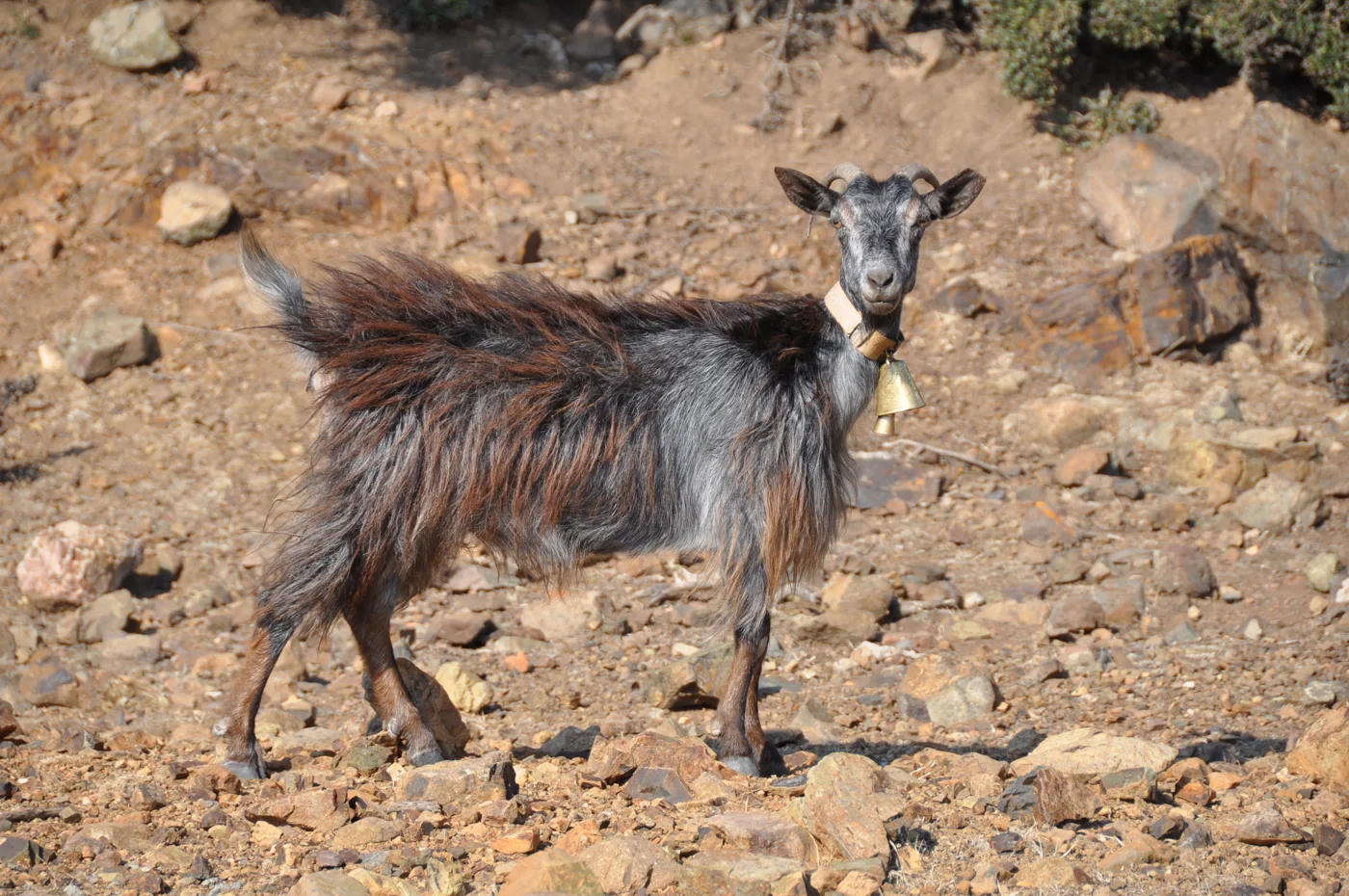
More numerous than the people.
Photos: DocWoKav (CC BY-SA 4.0), Kamikaze1975 (CC BY-SA 3.0), Adamantios (CC BY-SA 3.0), john melekidis (CC BY-SA 3.0), S.Nikolakakos (CC BY-SA 4.0) · Wikimedia Commons
🏖️ The beaches
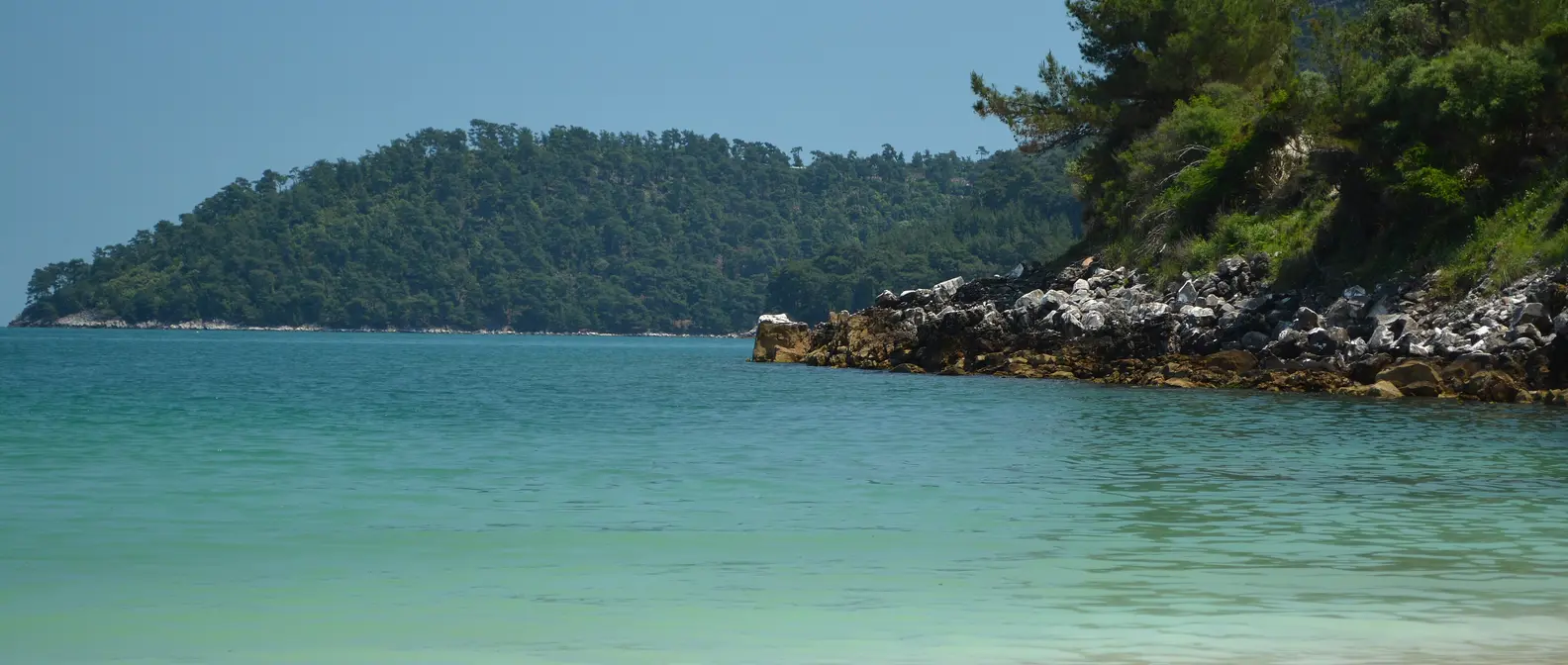
Samothraki is not an island for sandy beaches, but its few beaches are wild and beautiful. Pachia Ammos, in the south, is the only big sandy beach, with a taverna and a view of an empty sea. Next to it, Vatos is a small cove below steep cliffs, which you reach by the boat that goes round the south coast. At the eastern tip, Kipos is a long beach of grey pebbles, looking towards Turkey. On the north coast, near Therma, you will find pebble beaches with a few umbrellas.
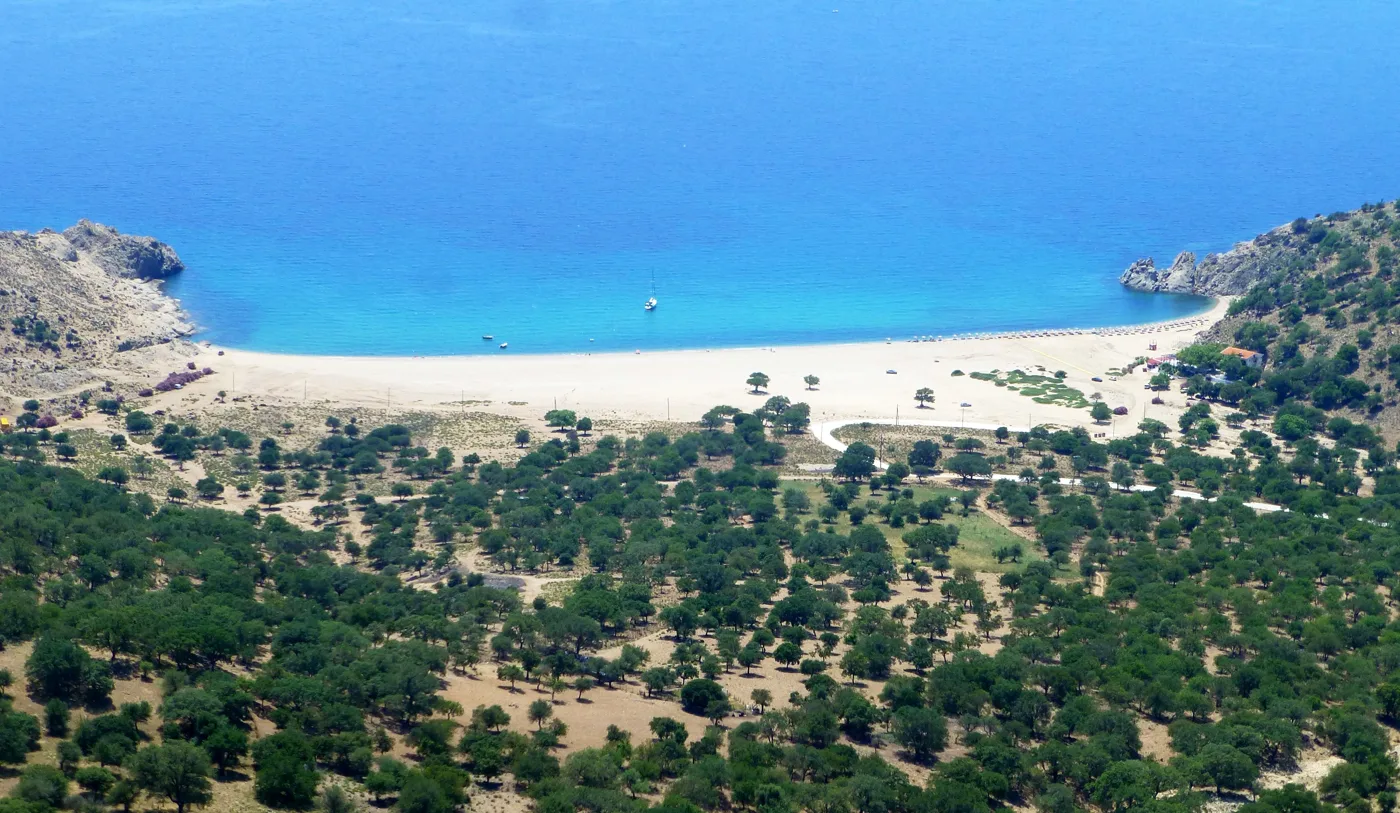
The only big sandy beach.
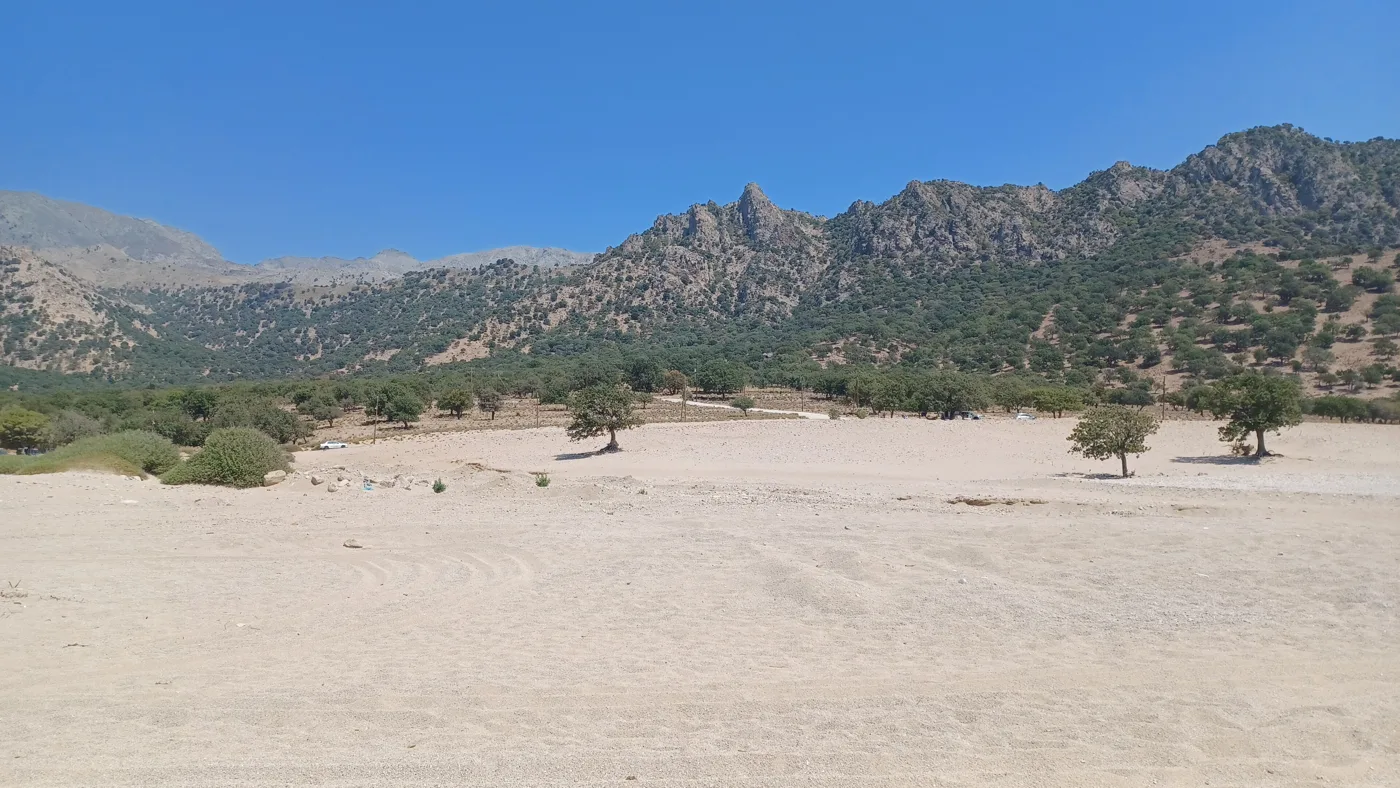
In the south, with a taverna.
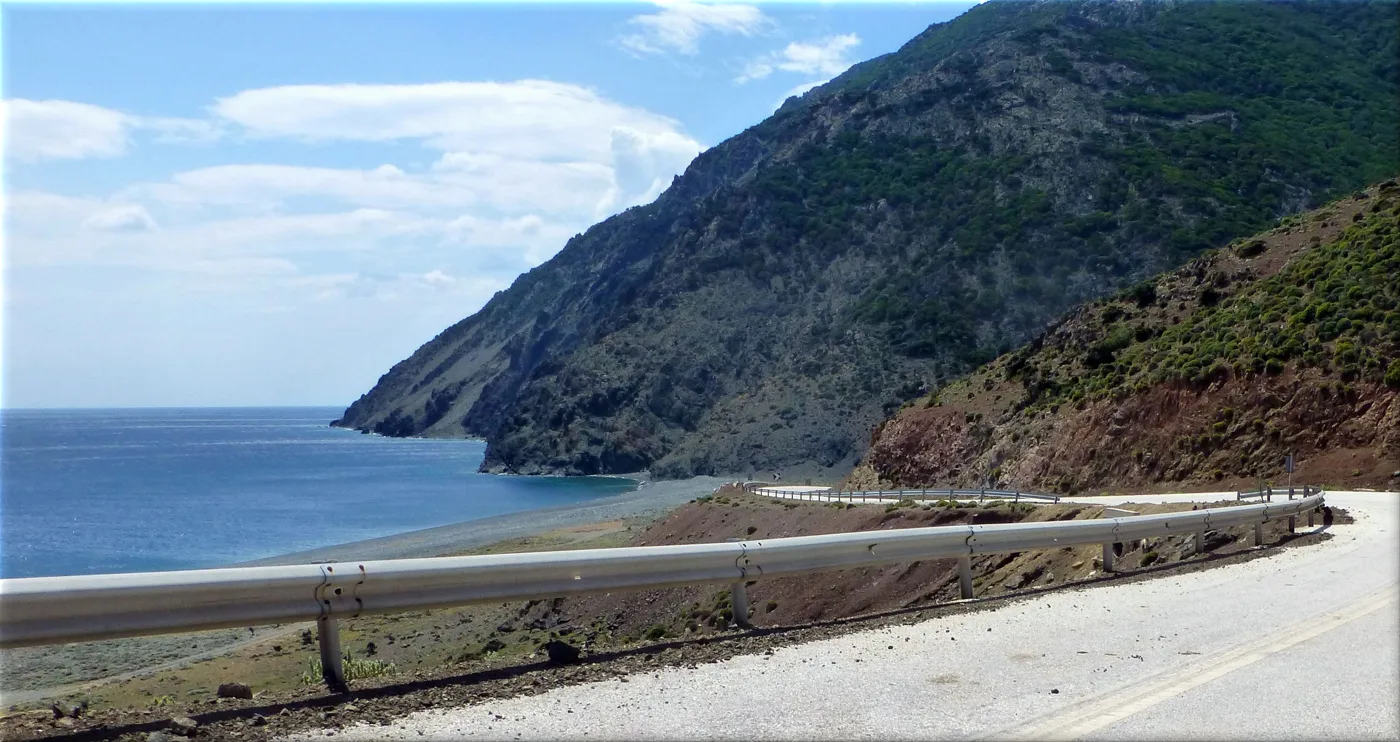
By boat or on foot.
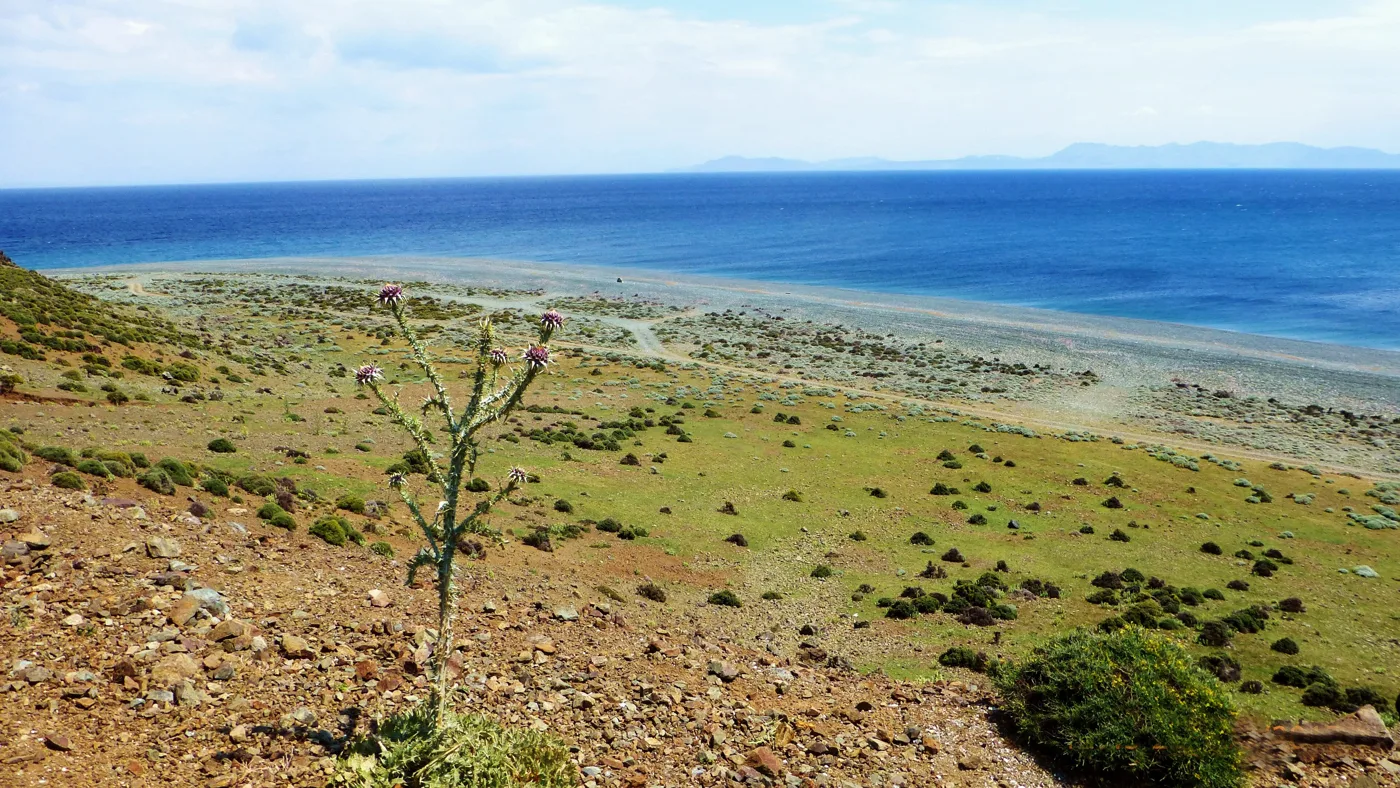
The tip of the island, facing Turkey.
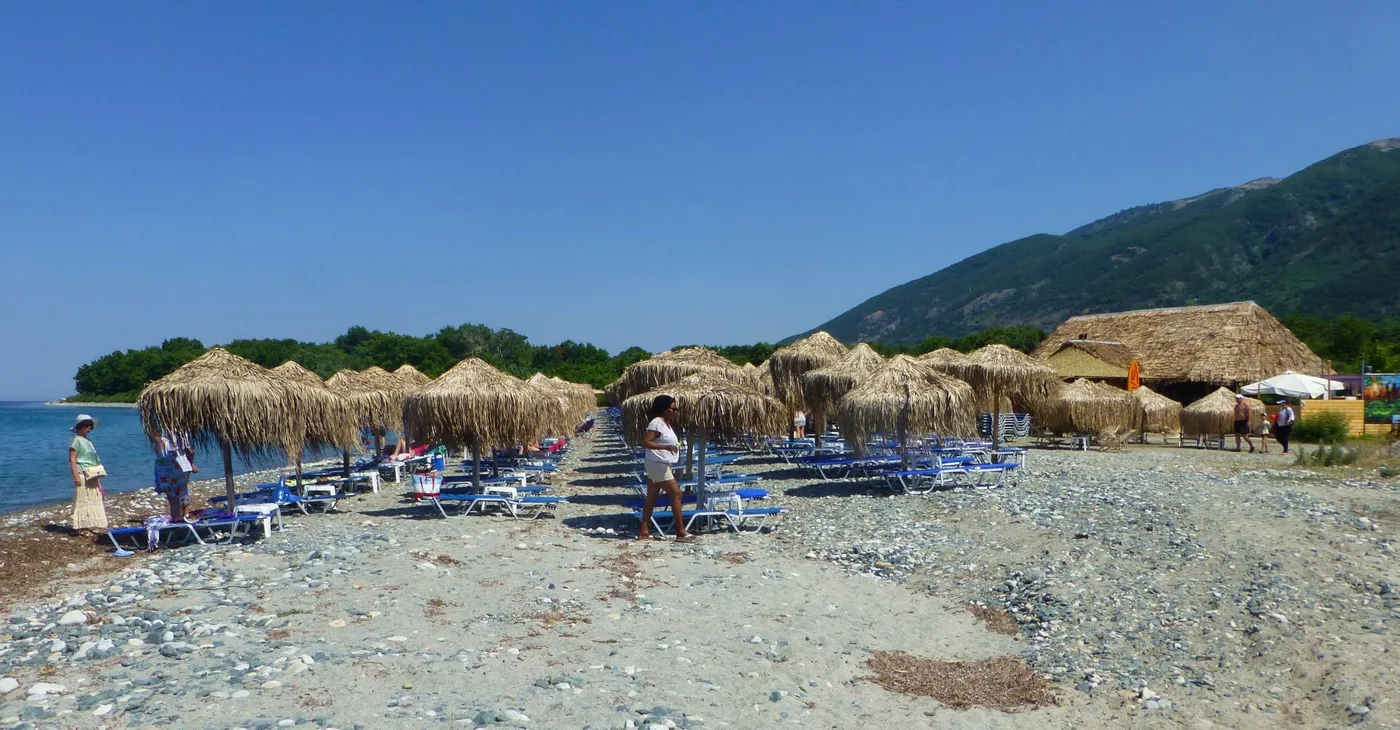
A beach with umbrellas near the village.
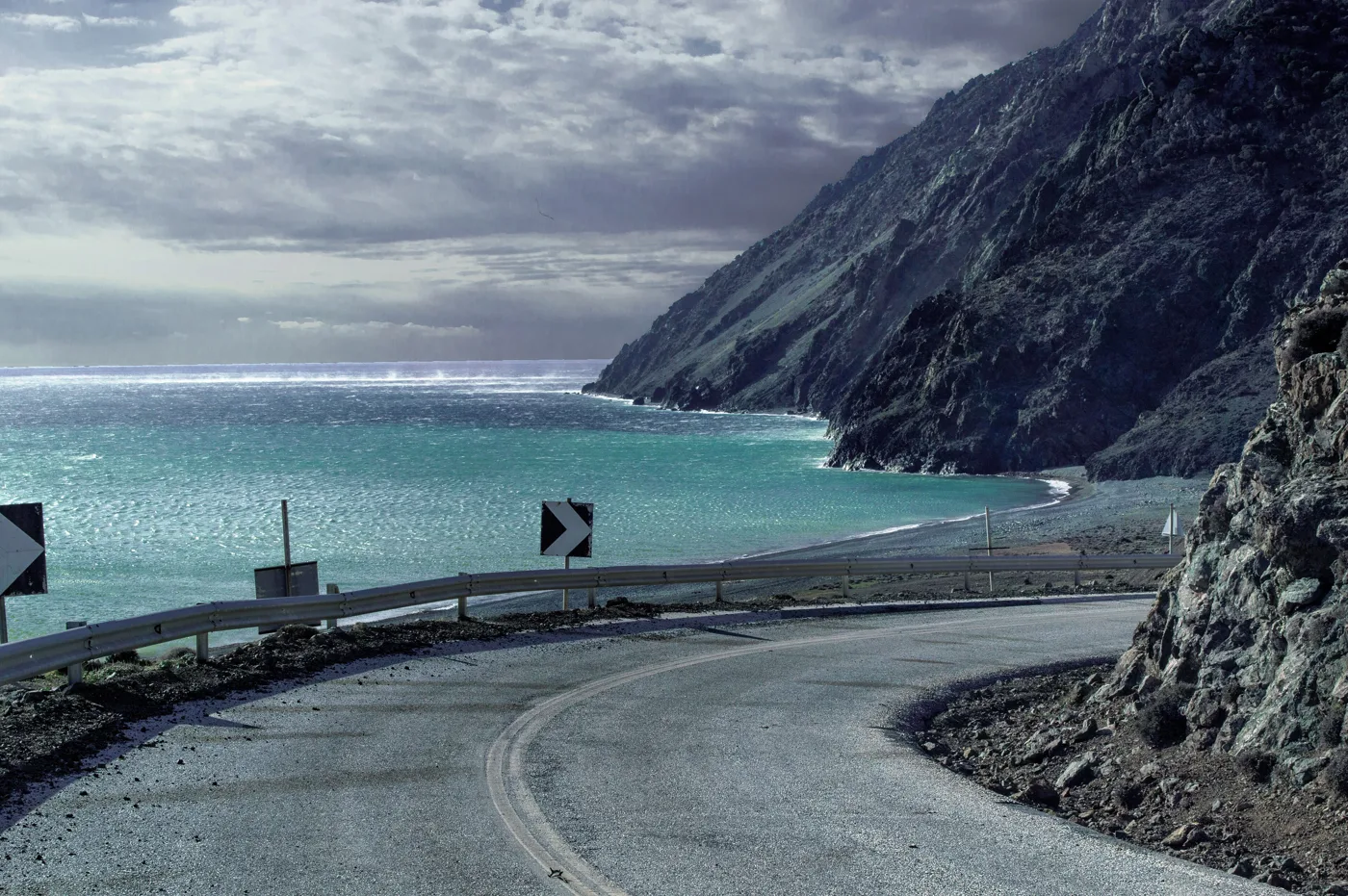
The road of the south coast.
Photos: DocWoKav (CC BY-SA 4.0), Juggertrout (CC BY 4.0), Sakisolon (CC BY-SA 4.0) · Wikimedia Commons
- Pachia Ammos: the only big sandy beach, in the south.
- Vatos: a small cove, by boat.
- Kipos: long grey pebbles, at the eastern tip.
- Therma: pebbles, near the village.
- Kamariotissa: beaches next to the port, for the sunset.
🍽️ What to eat
Samothraki has more goats than people, and its dish is kid: roasted, stuffed with rice or stewed in tomato, best in the mountain villages such as Profitis Ilias. Also try thyme honey, the goat cheese and fish in the tavernas of Kamariotissa. In Chora you will find spoon sweets and tsipouro with meze.
📅 When to go
June and September are the best months, with water in the streams, green nature and few people. In July the sea is warm and the rock pools cool. In August the island fills with young people and campers, especially at Therma, and the ferries fill up. Winter is cold and many places close.
⛴️ How to get there from Athens
| How | Duration | From | Notes |
|---|---|---|---|
| Plane and ferry | About a 1-hour flight, plus 2 hours by ferry | Athens airport | Fly to Alexandroupoli and take the ferry. The fastest option. |
| Car or KTEL bus and ferry | About 8–9 hours to Alexandroupoli, plus 2 hours by ferry | Athens | A long drive, ideal only if you are combining it with northern Greece. |
From Ioulianou 50, Athens airport is an hour away on metro Line 3. Book the ferry early in August, especially if you are taking a car, and check the weather: in strong winds sailings are cancelled. There are few buses on the island, and you will need a car for the waters and the beaches. From Alexandroupoli, if you have time, there is also a ferry to Limnos: see our guide to Limnos.
🗓️ Three days on Samothraki
The Sanctuary and Chora
In the morning, the Sanctuary of the Great Gods and the museum, and a look at the Gattilusi towers at Palaiopoli. In the afternoon go up to Chora, for a stroll through the lanes, the castle and dinner on a terrace with a view.
The waters
Early in the morning, Therma and a walk to Gria Vathra. Then drive to the mouth of Fonias and walk about half an hour to the first waterfall and its pool, for an icy swim. In the evening, a warm bath in the springs at Therma.
The south
By car to Pachia Ammos, for a swim and lunch at the taverna, or by boat to Vatos. On the way back, stop at Profitis Ilias for kid, and watch the sunset from the west coast.
Frequently asked questions
Where should I stay on Samothraki?
In Therma, for the waters, nature and the summer buzz. In Kamariotissa, for the port and the tavernas. In Chora, for the atmosphere and the view. Many visitors stay at campsites near Therma.
Do I need a car?
Yes. Buses are few, and the waters, villages and beaches are spread out. Rent in Kamariotissa or bring your own on the ferry, but book a place ahead.
Is Samothraki good for families?
Yes, for families who love nature. Gria Vathra and Therma are easy for children, and Pachia Ammos has sand. The higher waterfalls and the climb up Fengari are not for small children.
How many days do I need?
At least three, for the Sanctuary, Chora, the waters and a beach. Five to seven if you want to climb Fengari and see more waterfalls.
— Kathy