🪪 The island at a glance
📍 Where it is
Antikythira lies in the strait between Kythira and northwest Crete, roughly halfway across. Administratively it belongs to Piraeus, together with Kythira. It has no airport: the ferry on the Piraeus, Kythira, Antikythira, Kissamos line stops at the harbour of Potamos a few times a week, often at night. From Kissamos the crossing takes about two hours, from Kythira a little more. In strong wind, sailings are cancelled.
📍 Where Antikythira is
Antikythira lies in the middle of the sea between Kythira and northwest Crete, where the Aegean meets the Ionian and the Libyan Sea. In red is the island, and in green Piraeus, Kythira and Kissamos, where the ferry comes from.
🗺️ The map of the island
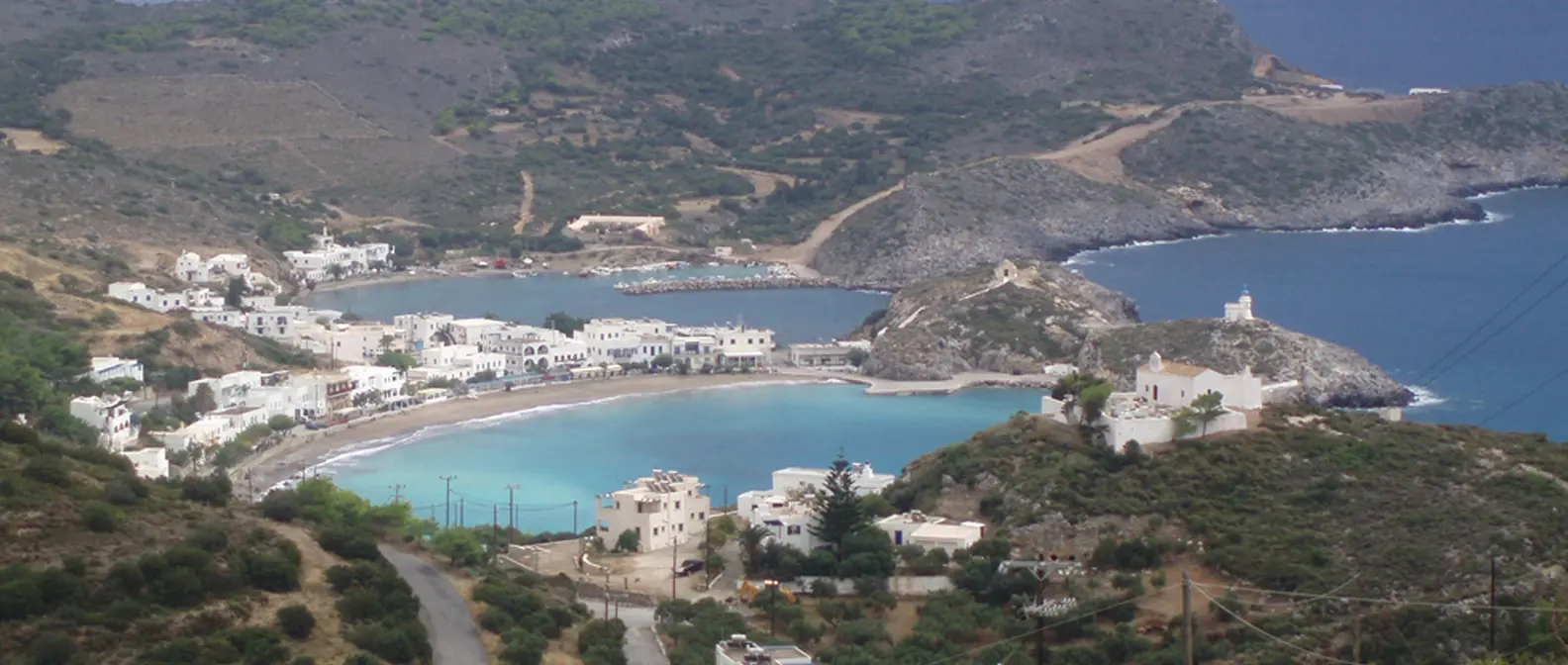
Antikythira is about twenty square kilometres, high and rocky, with steep shores and few coves. The harbour, Potamos, is on the north side, and just above it is the Kastro, with the walls of ancient Aigila. A road climbs to the centre of the island, where small villages lie scattered, such as Galaniana with the church of Agios Myronas. At the southern tip, the Apolytaras lighthouse looks out over the open sea towards Crete.
🗺️ The map of Antikythira
Antikythira is a high, rocky island with steep shores. In the north is Potamos with the harbour, and a little to the east the Kastro, above the bay of Xiropotamos. In the middle of the island, scattered villages, among them Galaniana. At the southern tip, the Apolytaras lighthouse. Tap each number to see what it is.
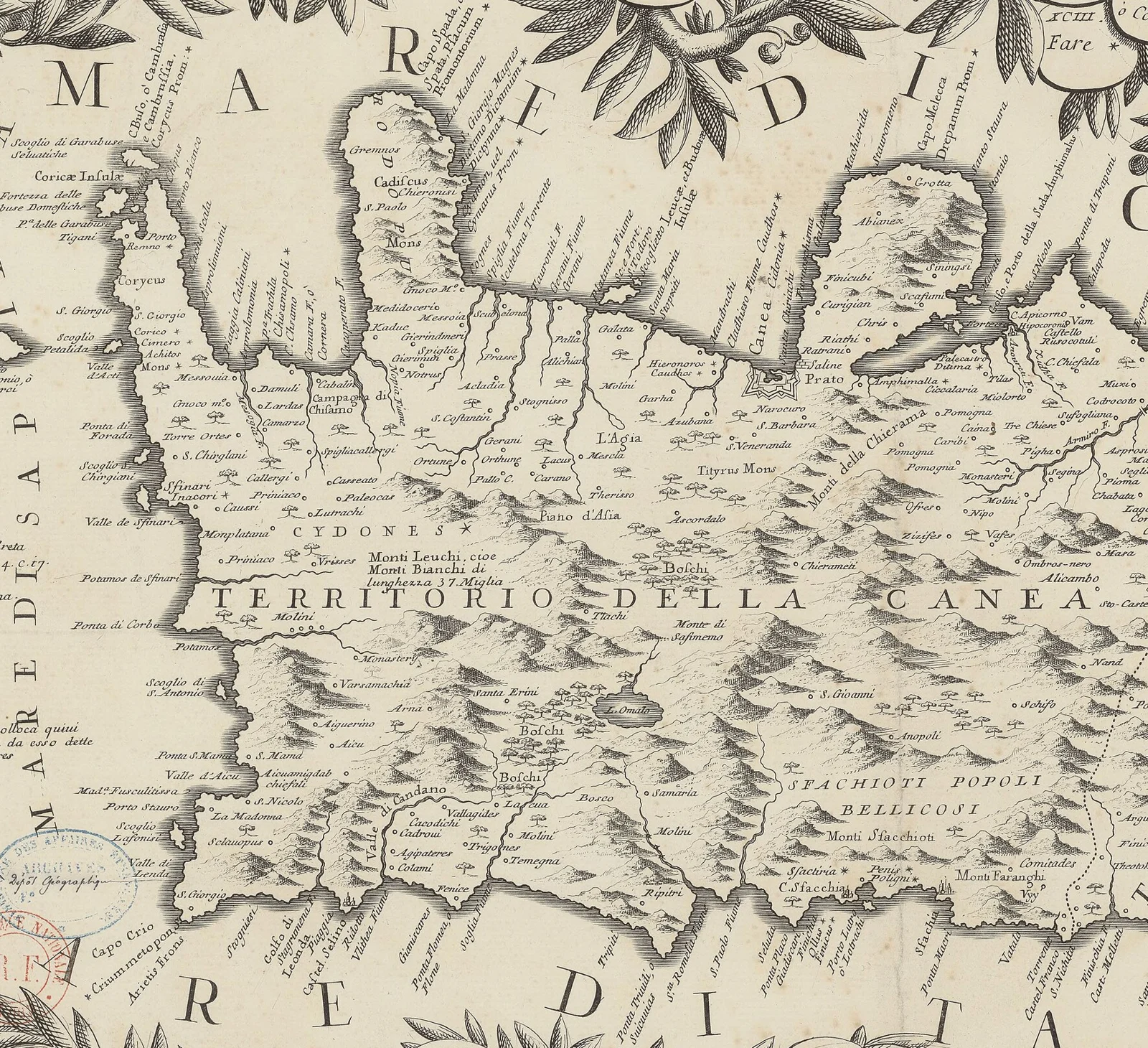
Map: Vincenzo Coronelli, 17th century (Public domain) · Wikimedia Commons
⚖️ Is it worth it? The pros and cons
Antikythira is not for everyone. It is for those who want to spend a few days in one of the most isolated places in Europe, without sandy beaches or tavernas, with the sea, birds and quiet. Here is an honest picture.
📊 At a glance, from 1 to 5
👍 The pros
- One of the most isolated islands in Greece, with a few dozen inhabitants.
- The sea of the shipwreck that gave the world the Mechanism.
- Clear water in rocky coves, with nobody else around.
- A stopover for migrating birds, a paradise for birdwatchers.
- Hospitality from people who know you by name within a day.
👎 The cons
- A hard journey: few ferries a week, often cancelled by the wind.
- Few rooms, one or two cafés, nothing organised.
- No sandy beaches, only rocks and pebbles.
- You have to stay at least until the next ferry.
⚓ Potamos and the people
Potamos is the harbour and the gateway to the island: a few white houses on a rocky slope, a quay, a café, fishing boats. When the ferry arrives, the whole island comes down to the harbour, for food, letters and news. The inhabitants are descended mostly from Sfakians from Crete, who came and built homes on the island in the 18th century, and they still speak with a Cretan accent.
Today a few dozen people live here all year, and in summer those whose families come from here return. The hospitality is that of a small village: they will treat you, tell you stories and show you the path to the best cove.
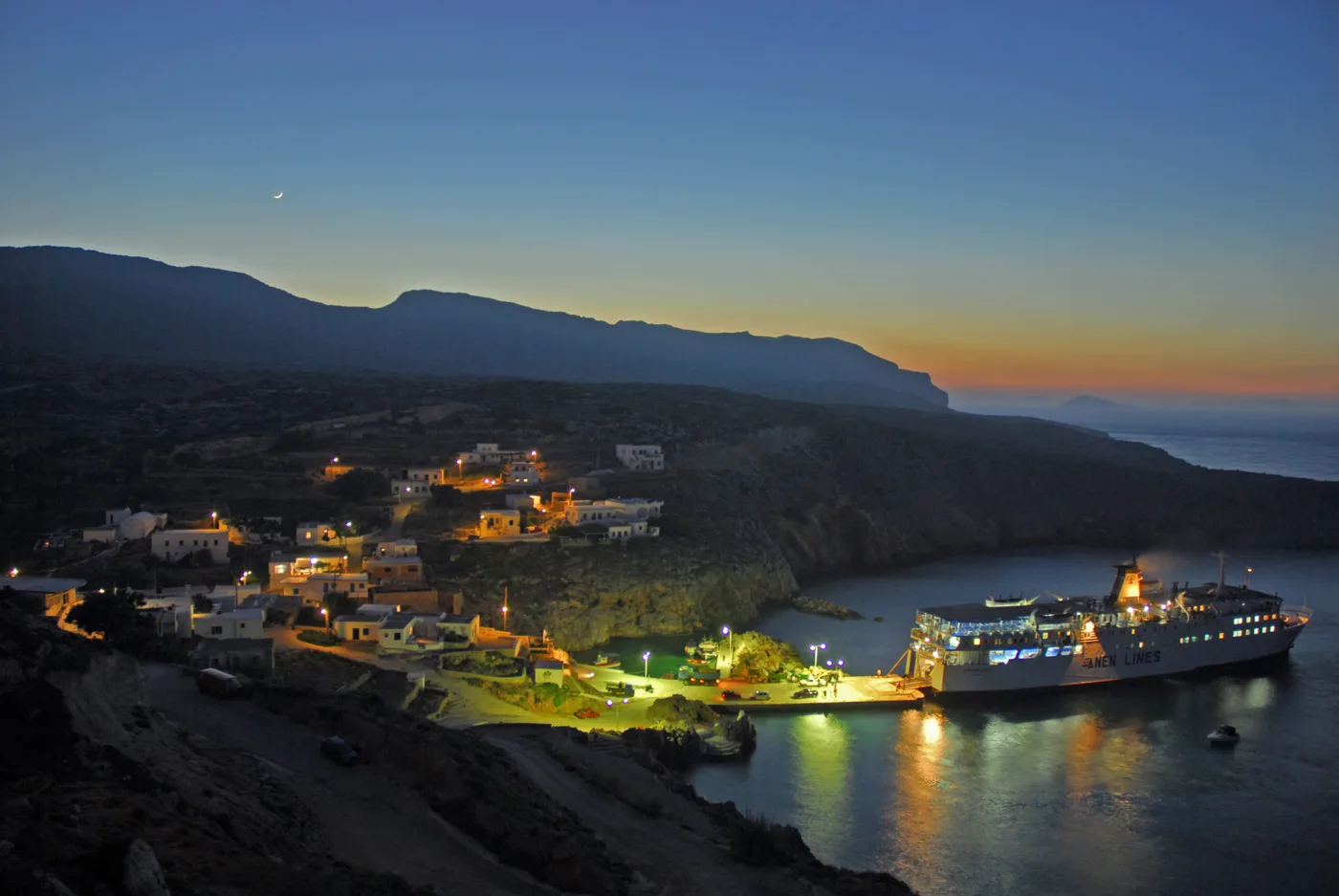
When the ferry arrives.
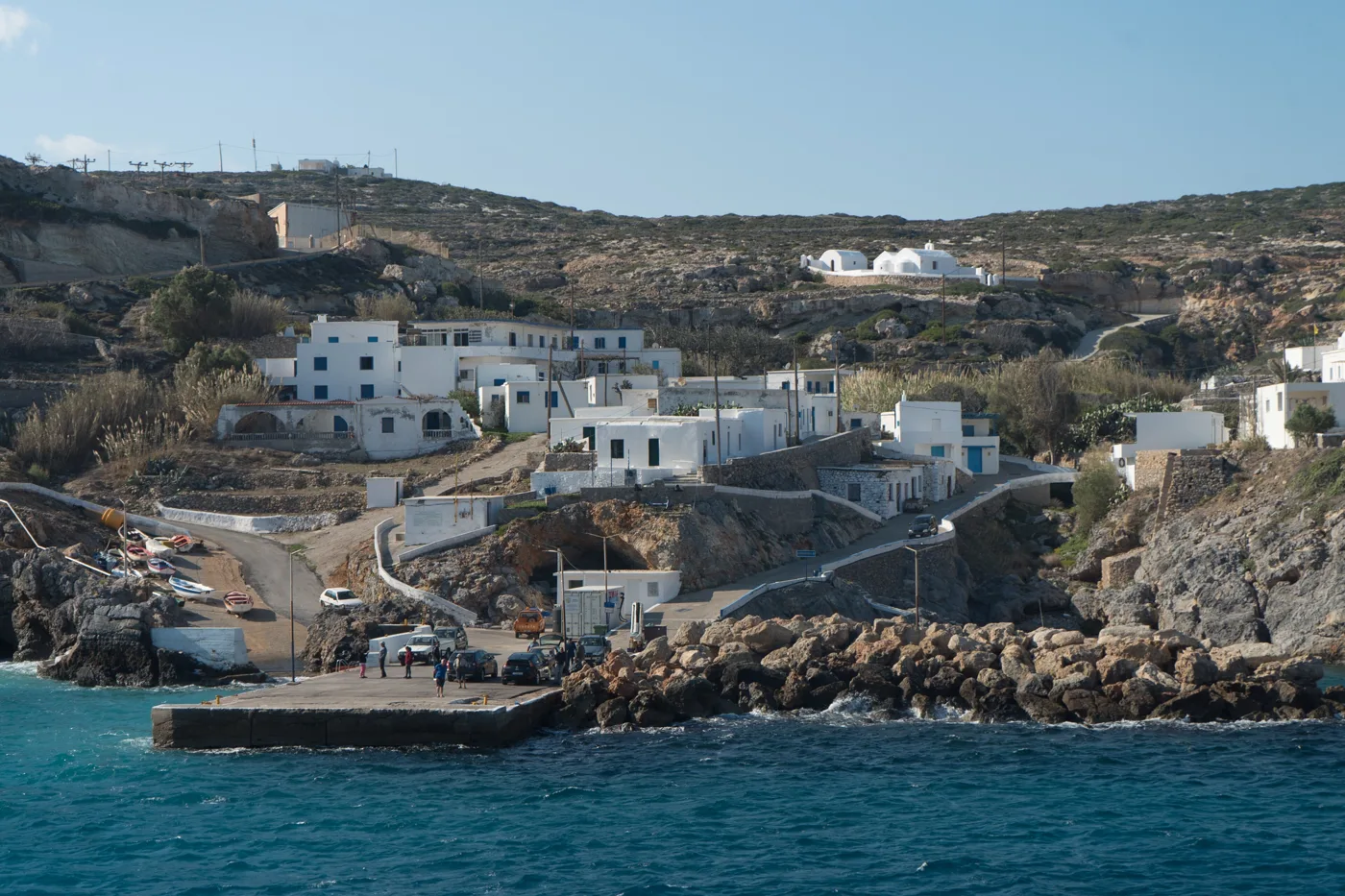
Potamos from the sea.
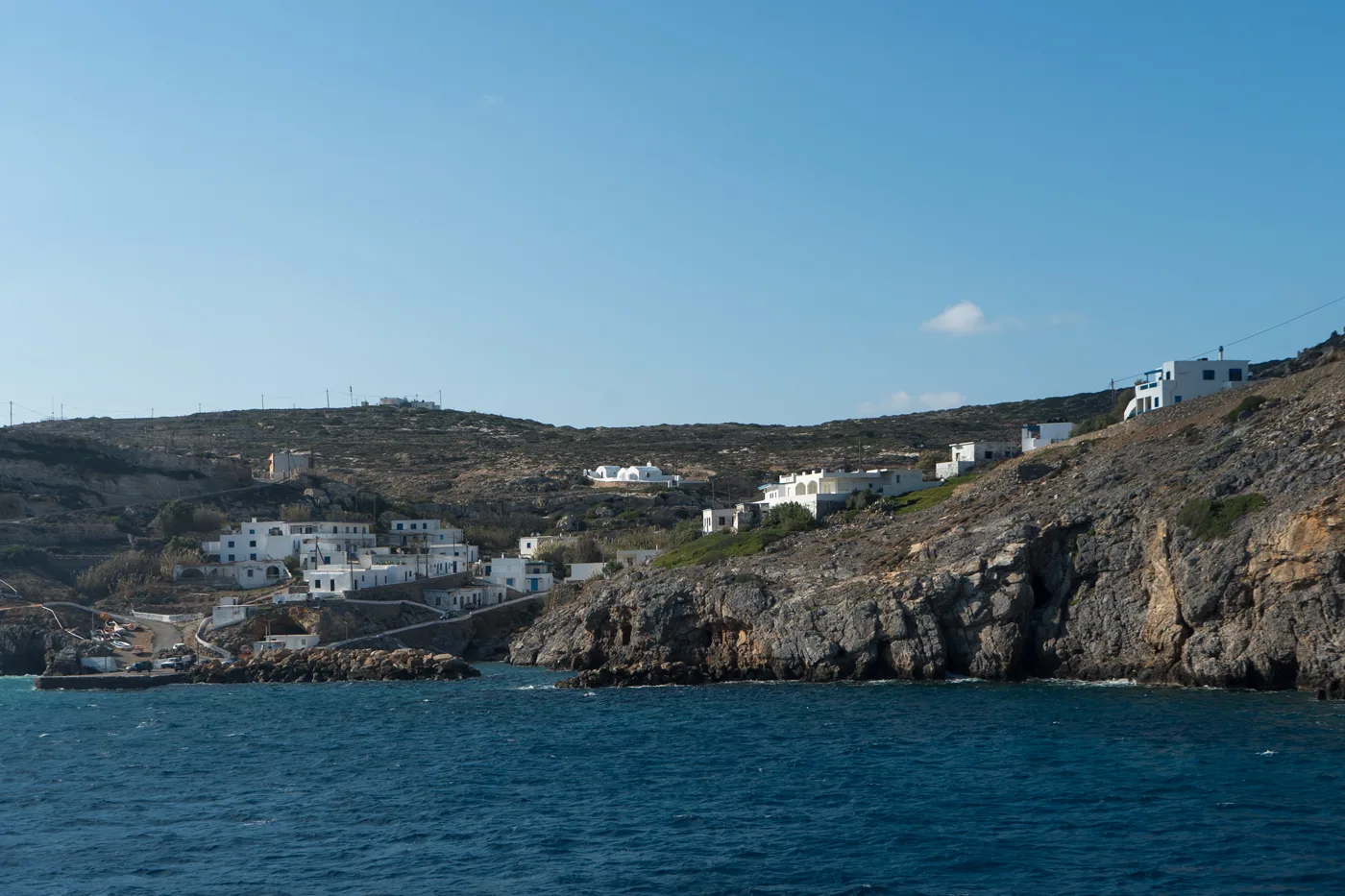
The village spread over the slope.
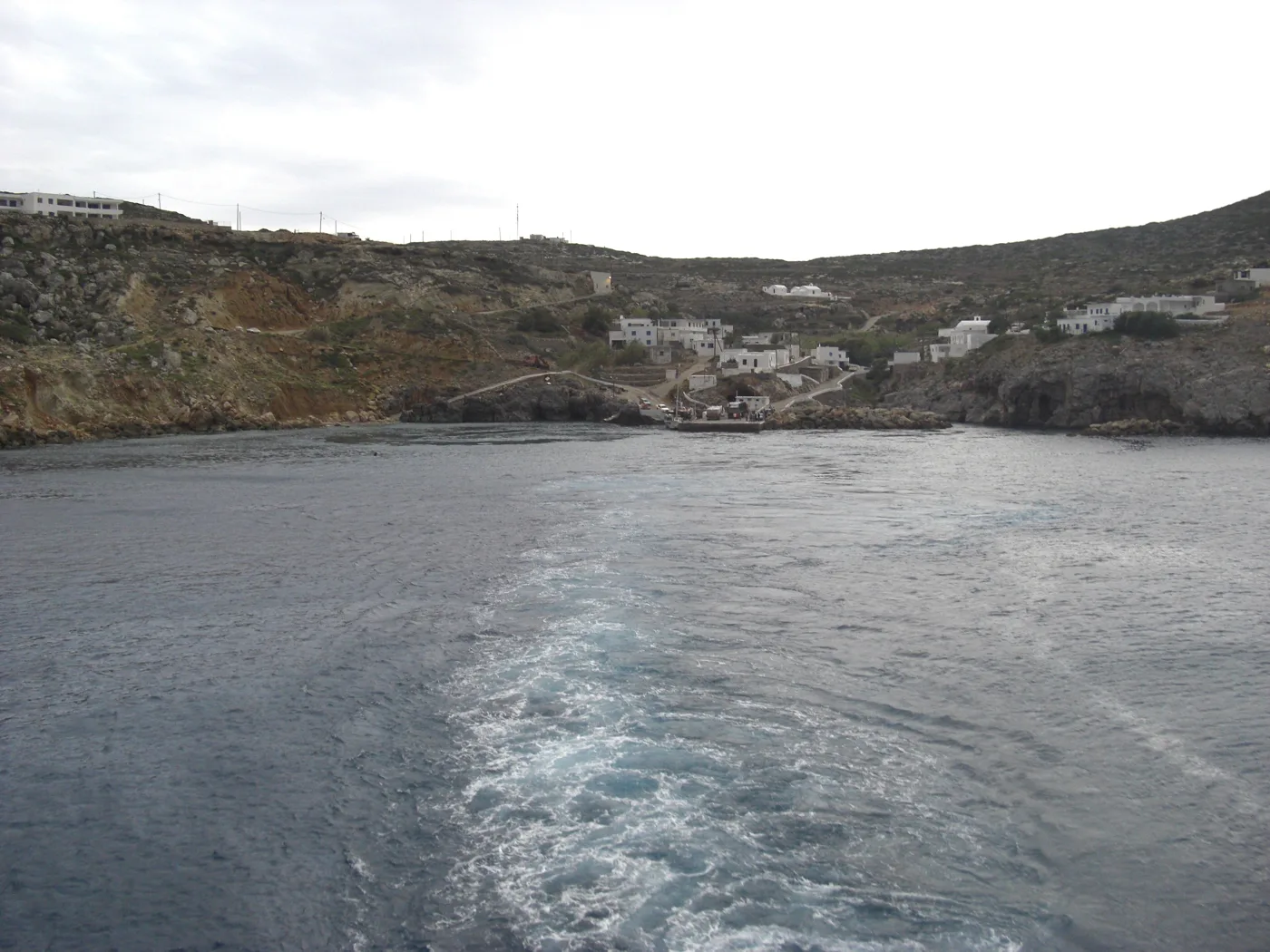
From the deck.
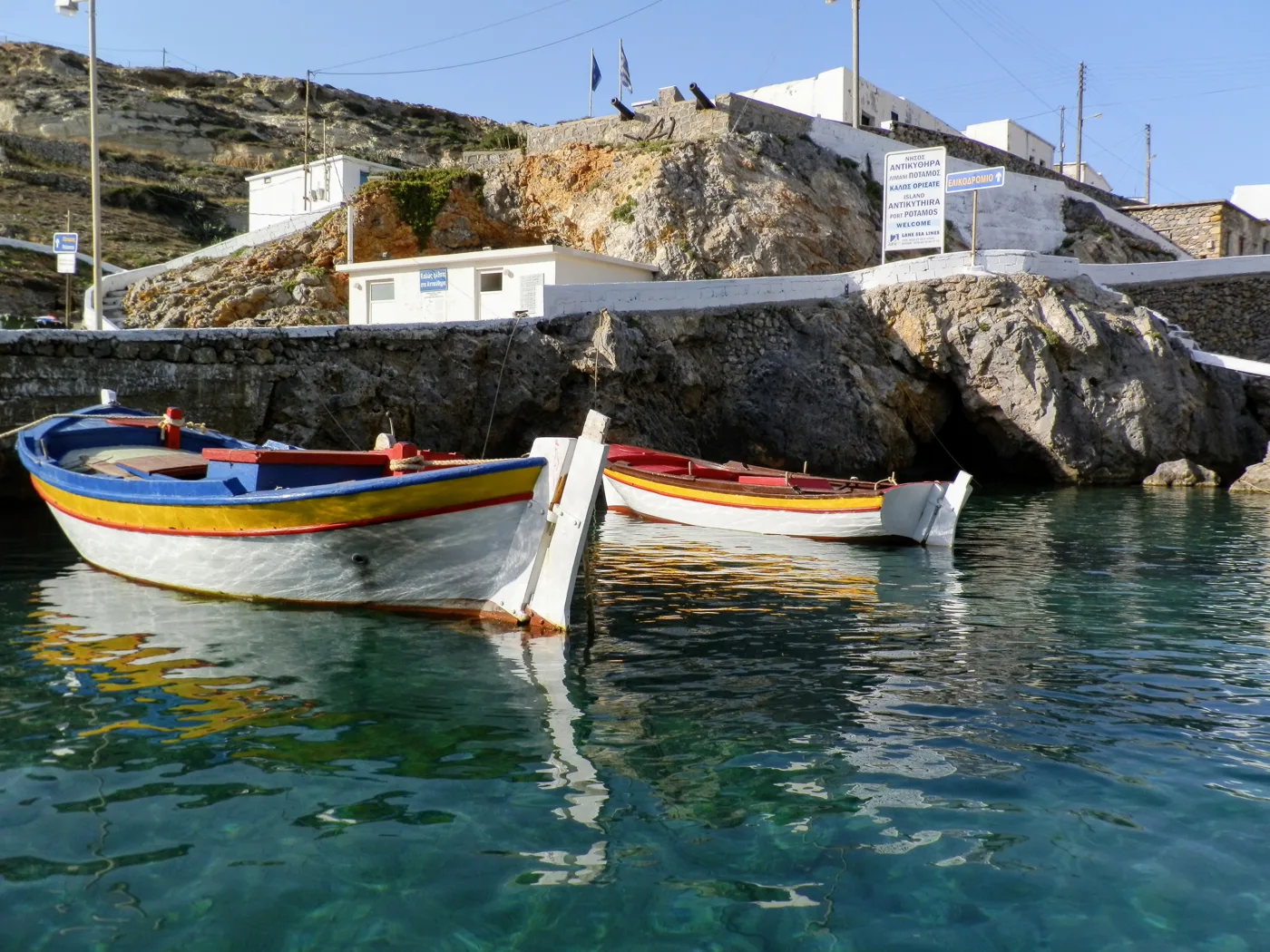
In the little harbour.
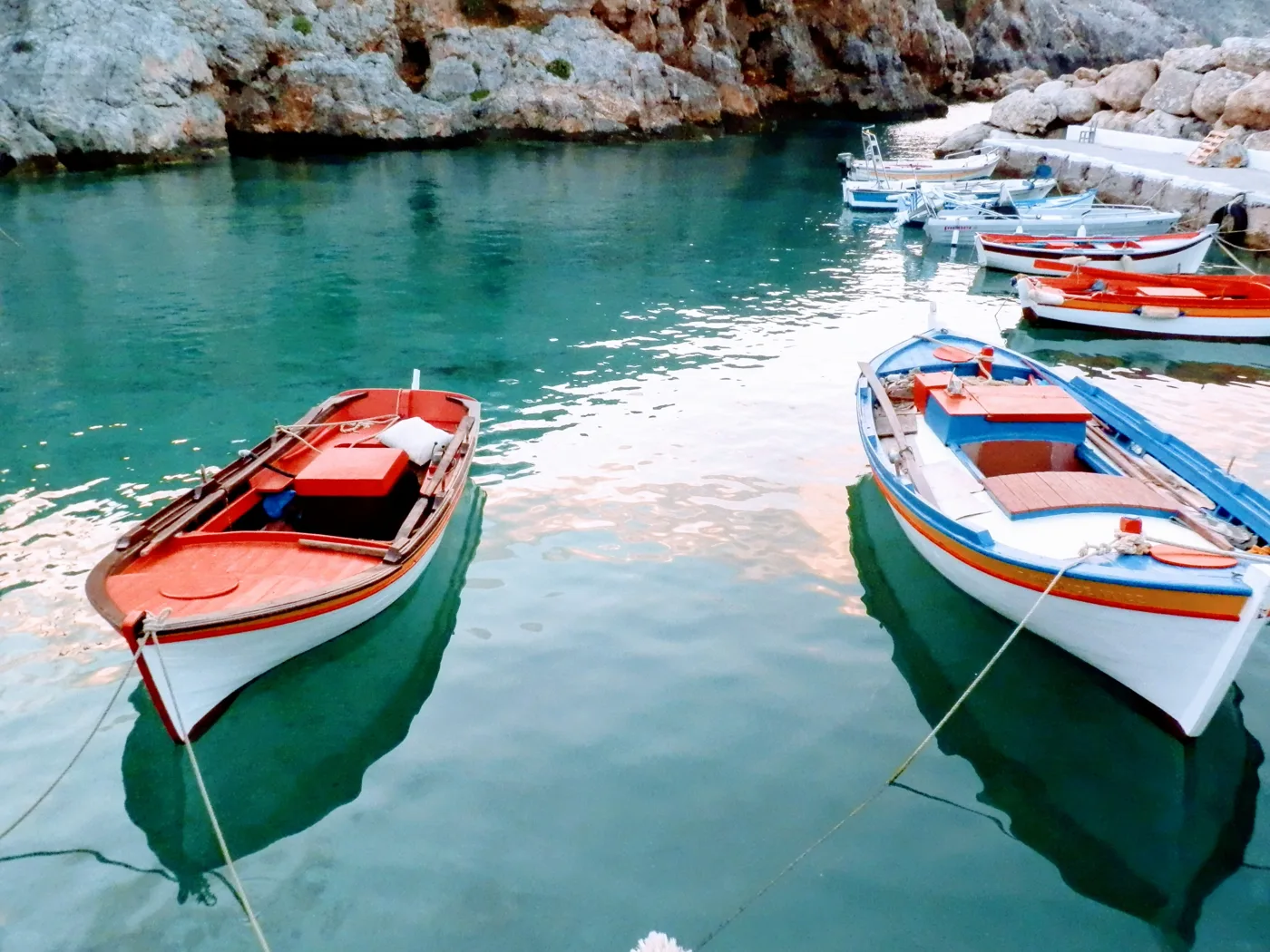
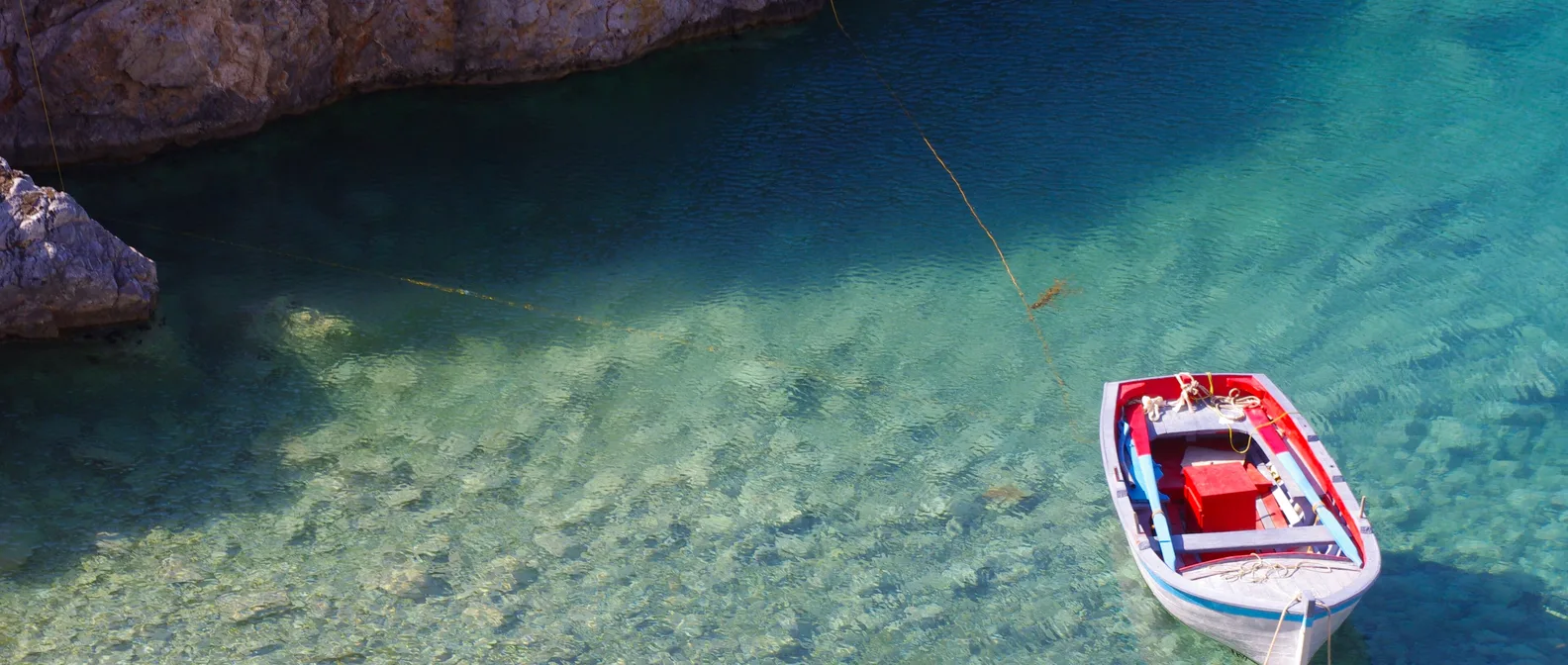
Fishing boats in the cove.
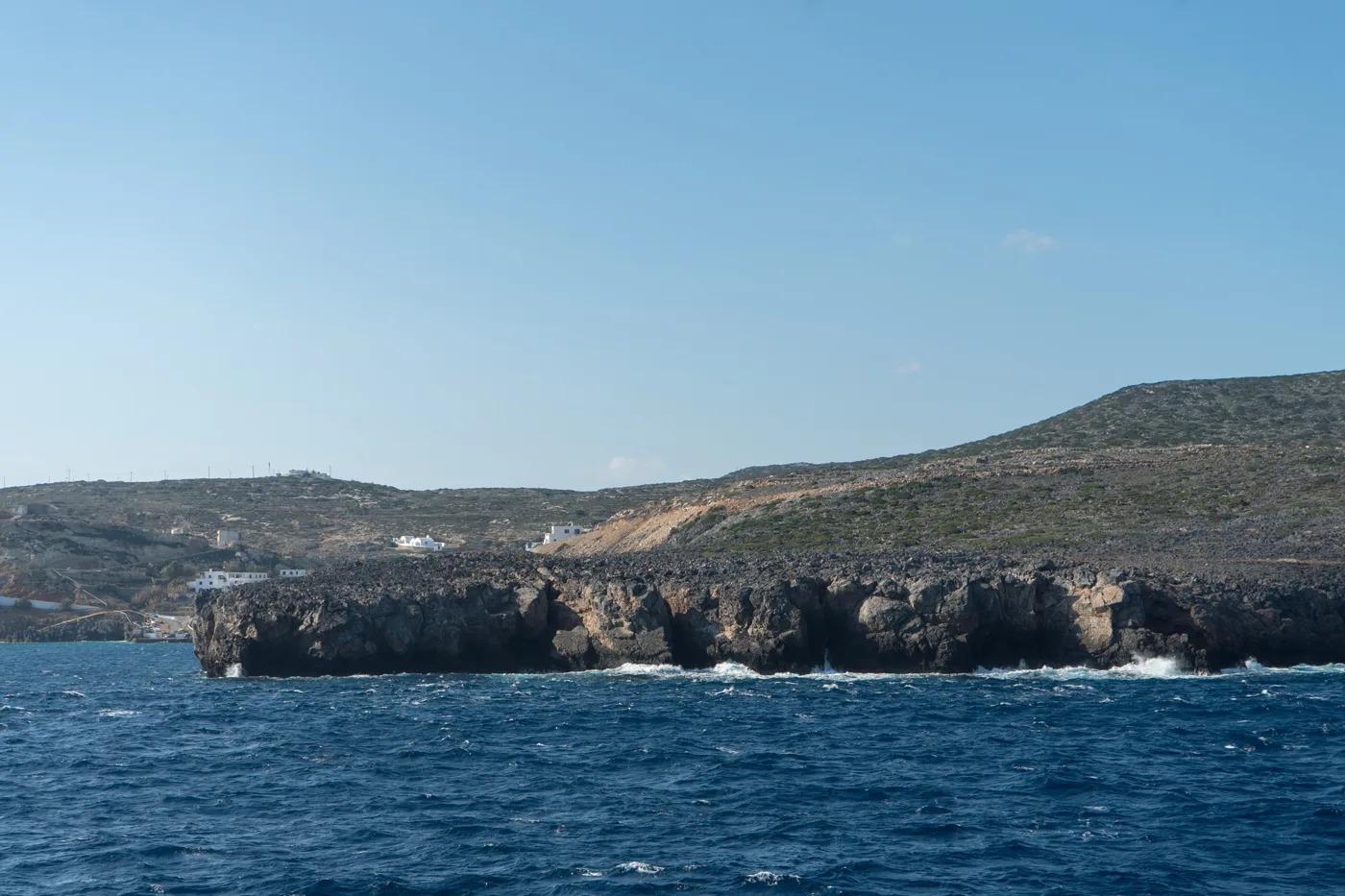
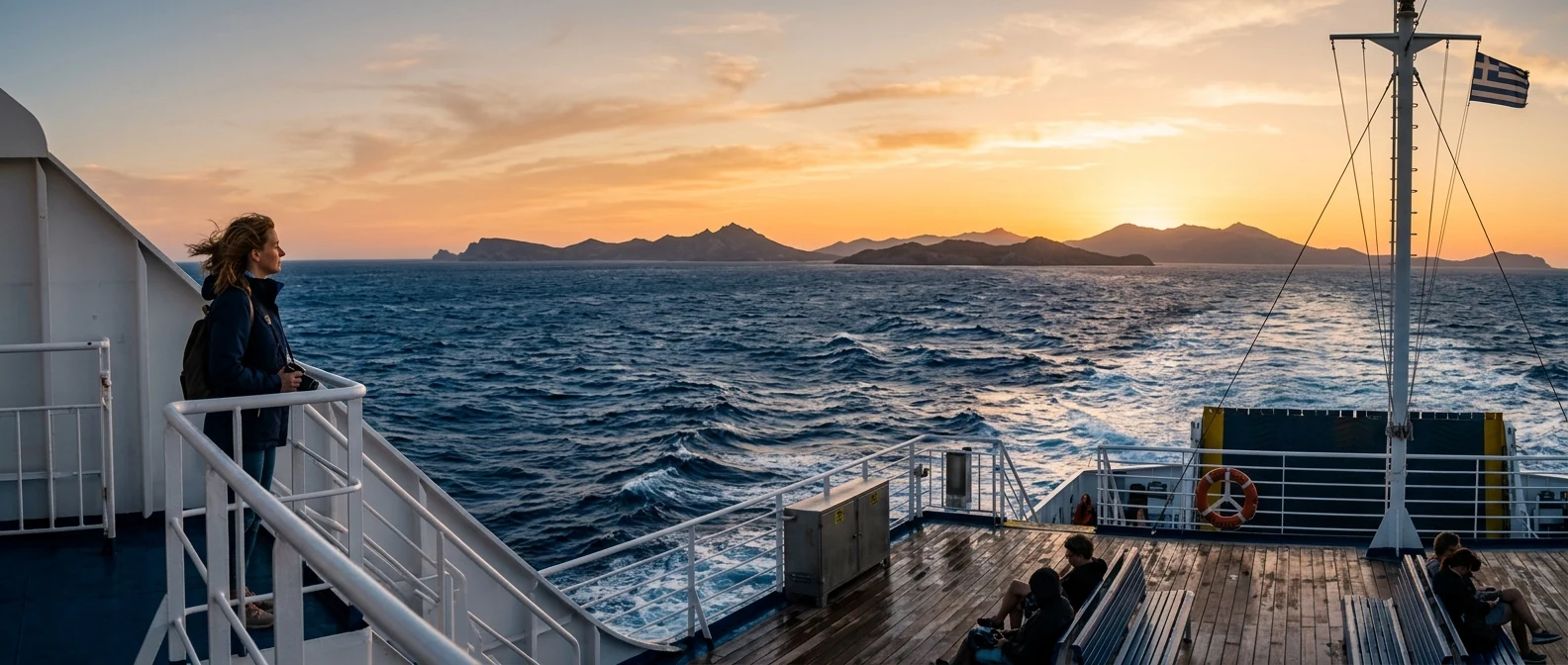
Arriving from Crete.
Photos: Jimmyoneill (CC BY 2.5), Alexey Komarov (CC BY-SA 4.0), AlMare (CC BY-SA 3.0), Natasjabn (CC BY-SA 4.0) · Wikimedia Commons
Rooms on Antikythira are few and shops are scarce. Book accommodation before you set off, bring everything you need, and plan at least two nights, until the next ferry.
⚙️ The shipwreck and the Mechanism
At Easter 1900, a caique of sponge divers from Symi was returning from Africa and stopped at Antikythira to wait out the weather. A diver went down offshore and came up terrified: on the seabed, he said, there were corpses. They were statues. He had found the Antikythera shipwreck, a Roman ship of the 1st century BC loaded with statues, vases and jewellery.
From the wreck came the Antikythera Ephebe, one of the finest bronze statues of antiquity, and a corroded lump of wood and bronze that nobody noticed at first: the Antikythera Mechanism. It took a century of research to understand what it was: a device with dozens of gears that calculated the positions of the sun and the moon, eclipses and the dates of the Olympic Games. Both are today in the National Archaeological Museum in Athens, a few minutes on foot from Ioulianou.
Before or after the island, visit the National Archaeological Museum, on Patission Street, ten minutes on foot from Ioulianou 50. The Mechanism and the Ephebe have their own room, together with the other finds from the shipwreck.
🏰 The Kastro of ancient Aigila
Above Potamos, on a hill overlooking the bay of Xiropotamos, lie the ruins of ancient Aigila: a Hellenistic fortress with strong walls and towers, built on the cliff. Archaeologists believe it was a pirates’ nest, from where they controlled the passage between the Aegean and the West, until the Romans came and wiped them out. Go up in the afternoon, for the view and the light on the stones.
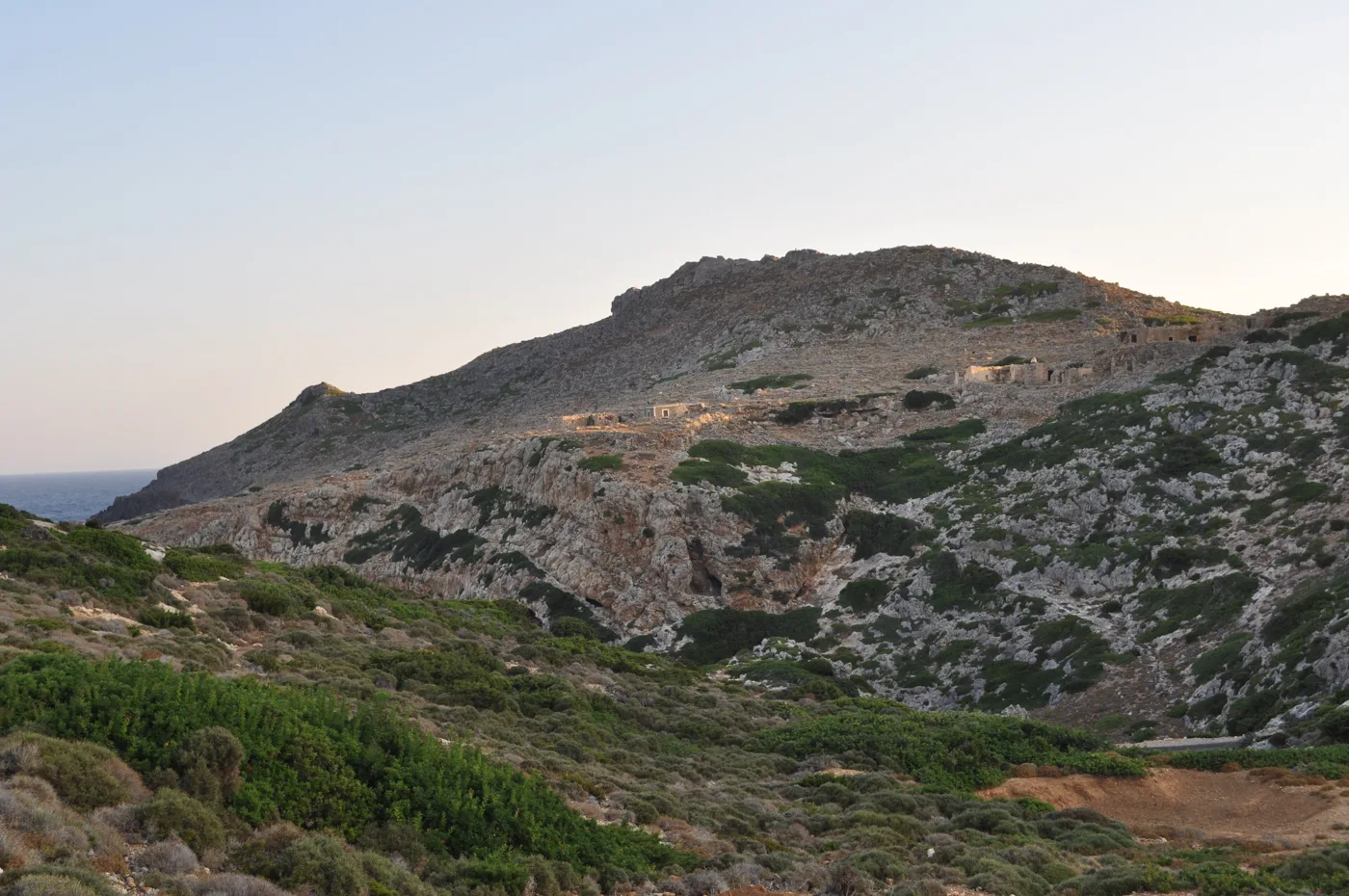
This was ancient Aigila.
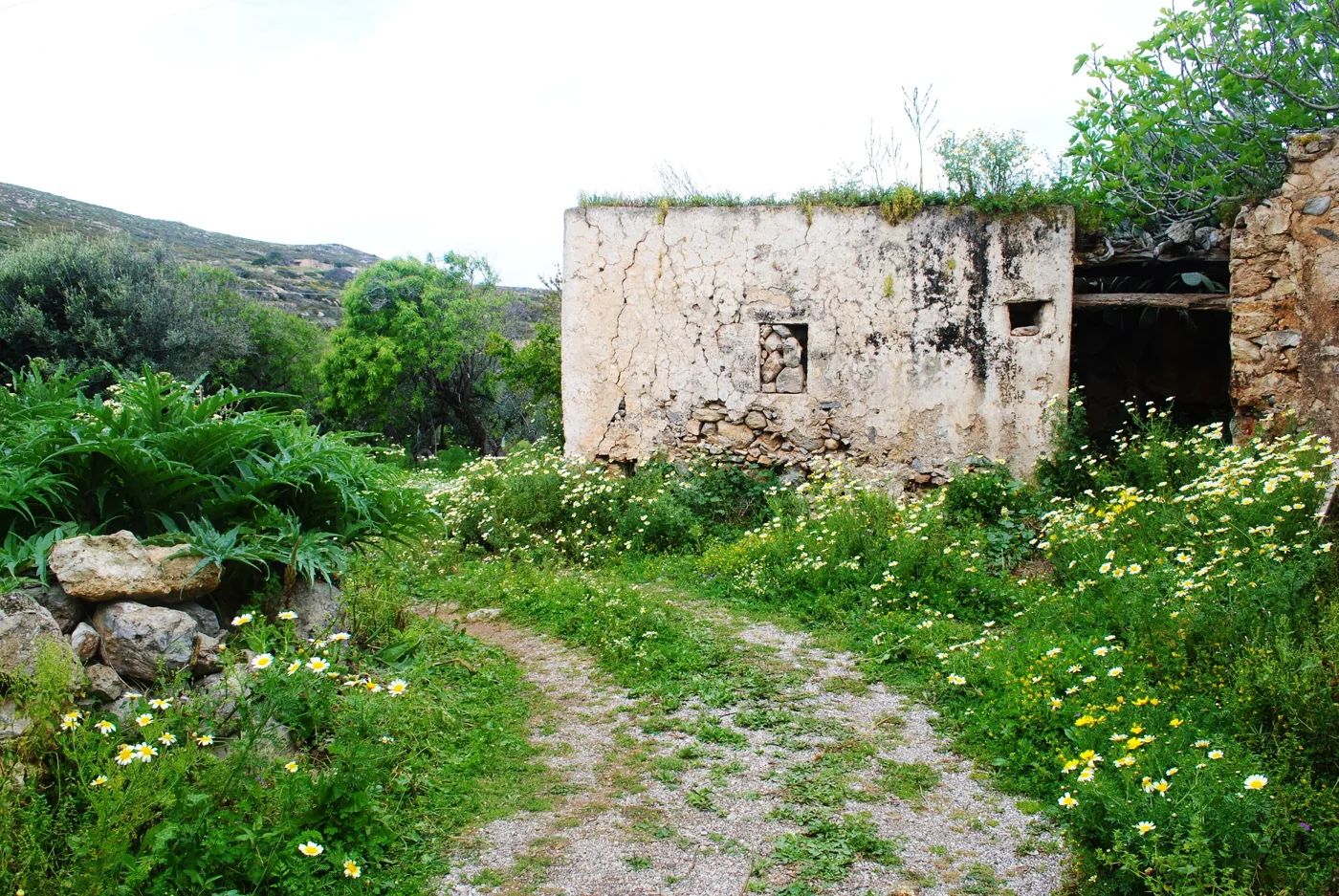
Among the villages.
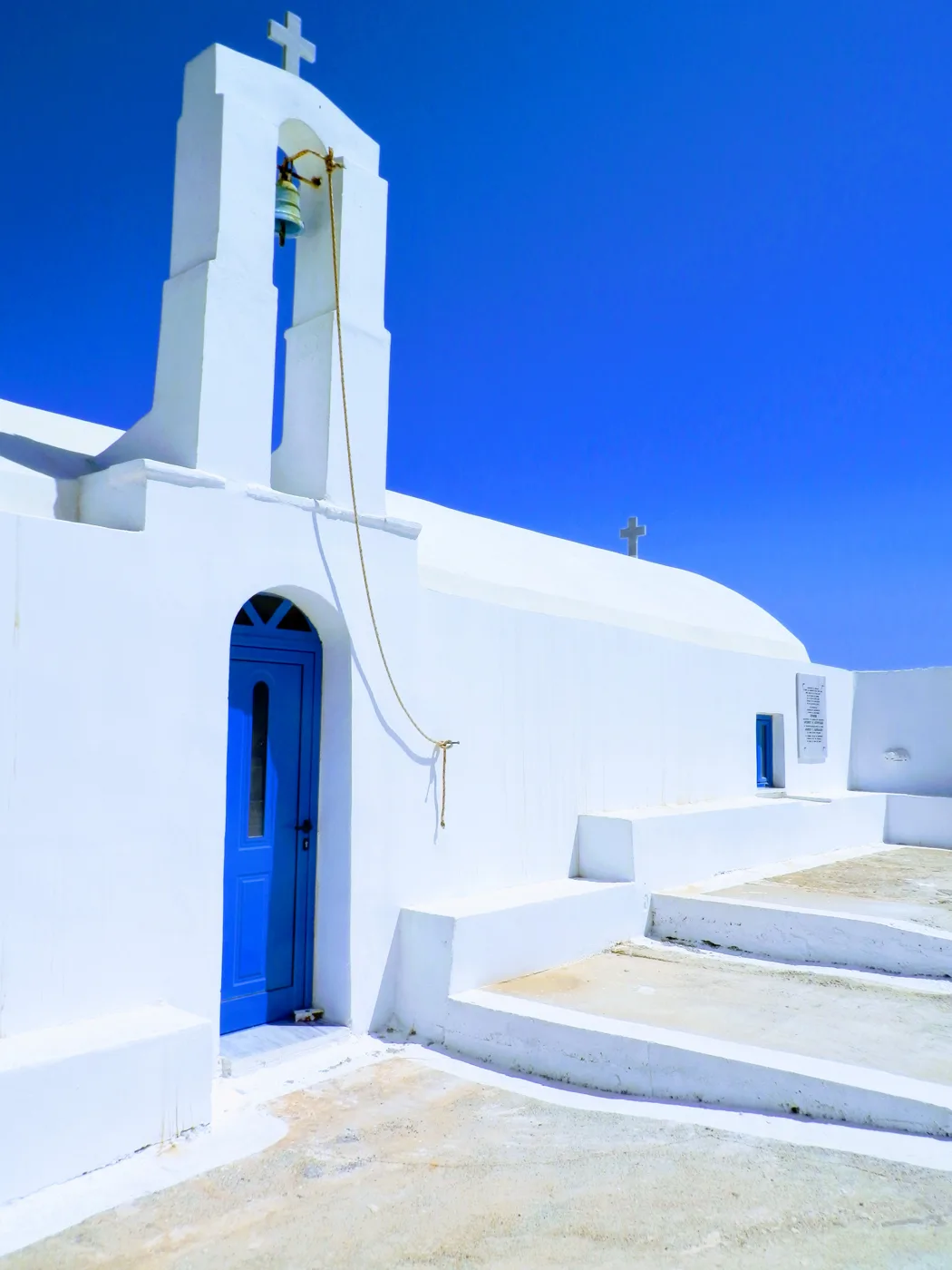
White and blue.
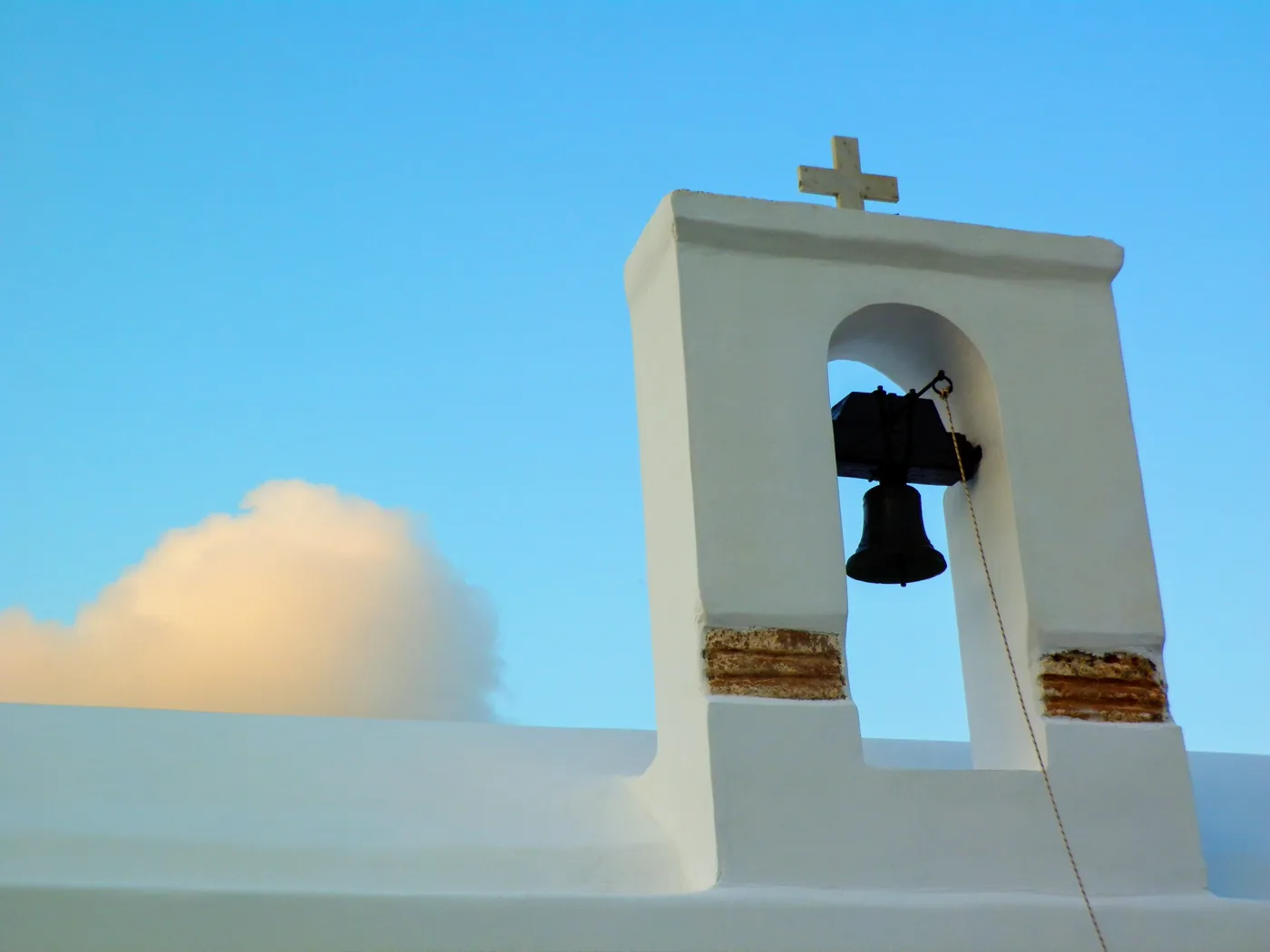
On the road to the Chora.
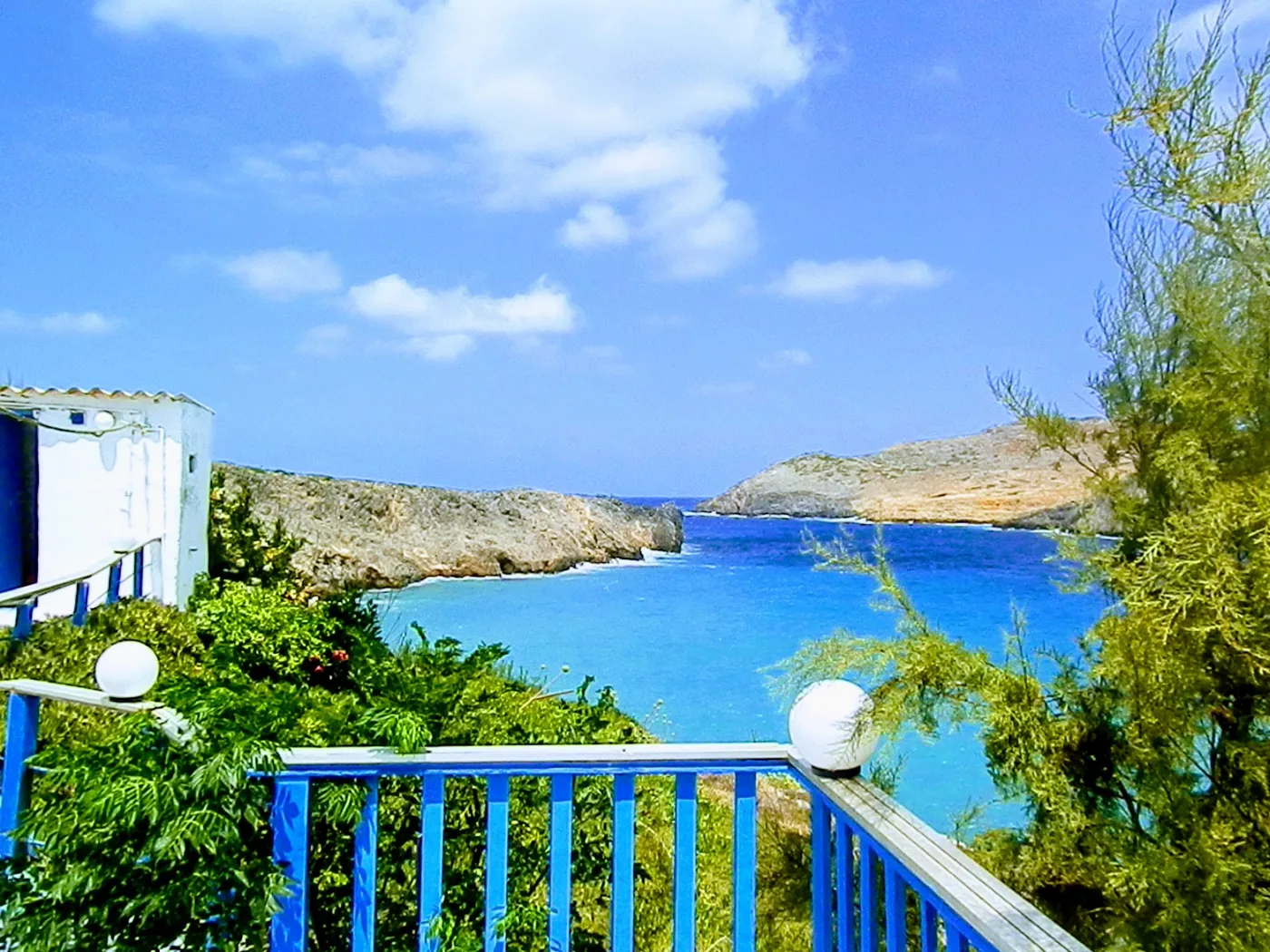
A view over Potamos.
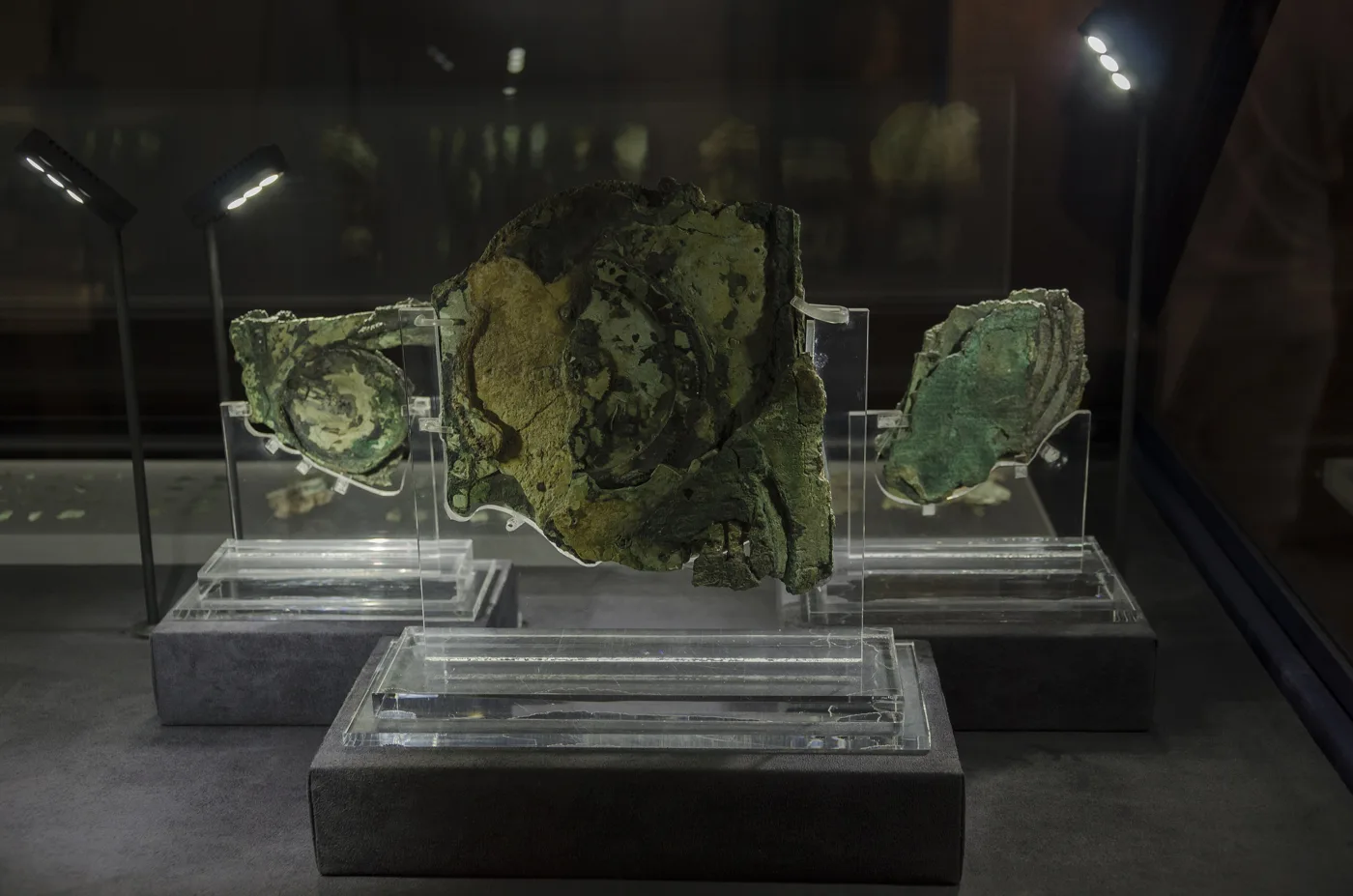
In the National Archaeological Museum.
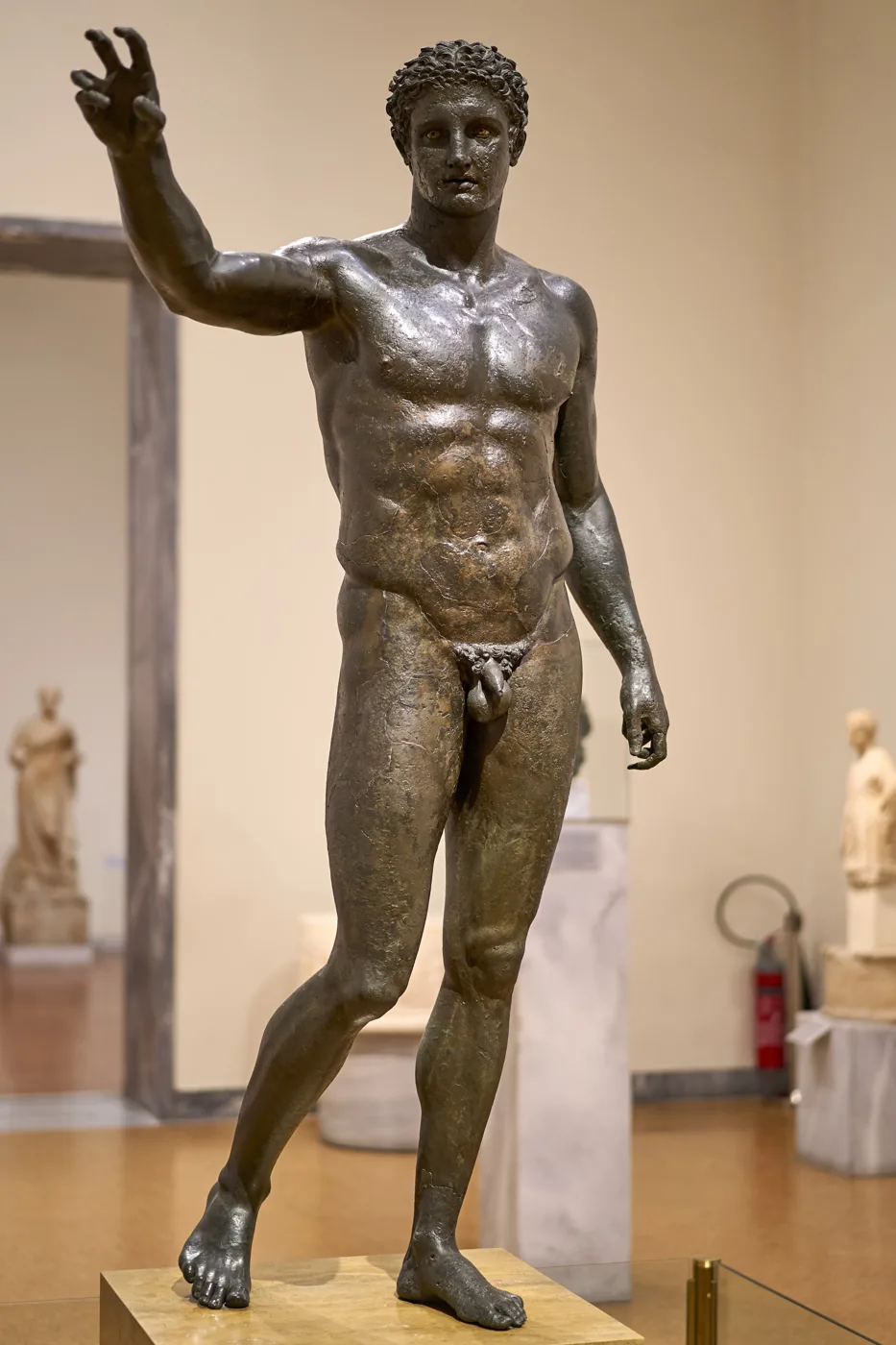
Found in the shipwreck.
Photos: Soviof (CC BY 3.0), Artemis Katsadoura (CC BY-SA 4.0), Natasjabn (CC BY-SA 4.0), Peulle (CC BY-SA 4.0), George E. Koronaios (CC BY-SA 4.0) · Wikimedia Commons
🌊 The sea, nature and the birds
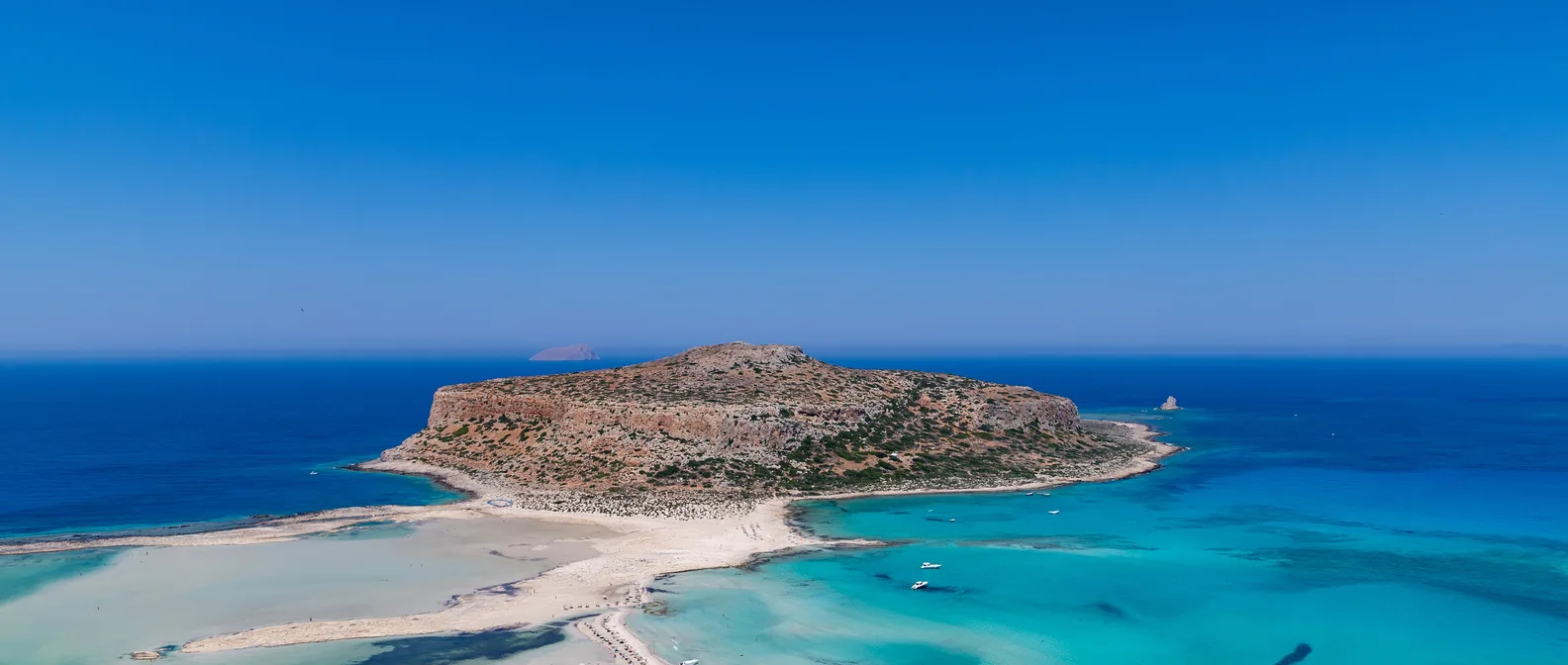
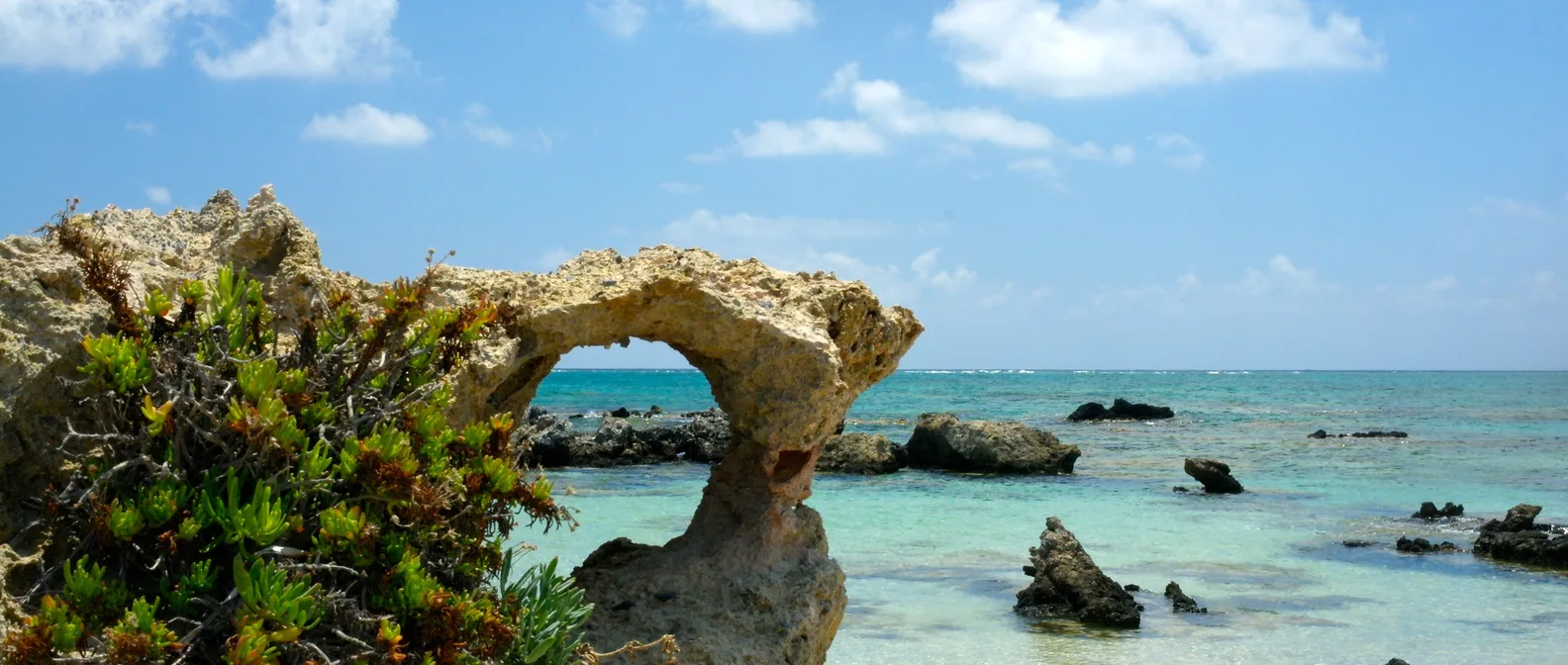
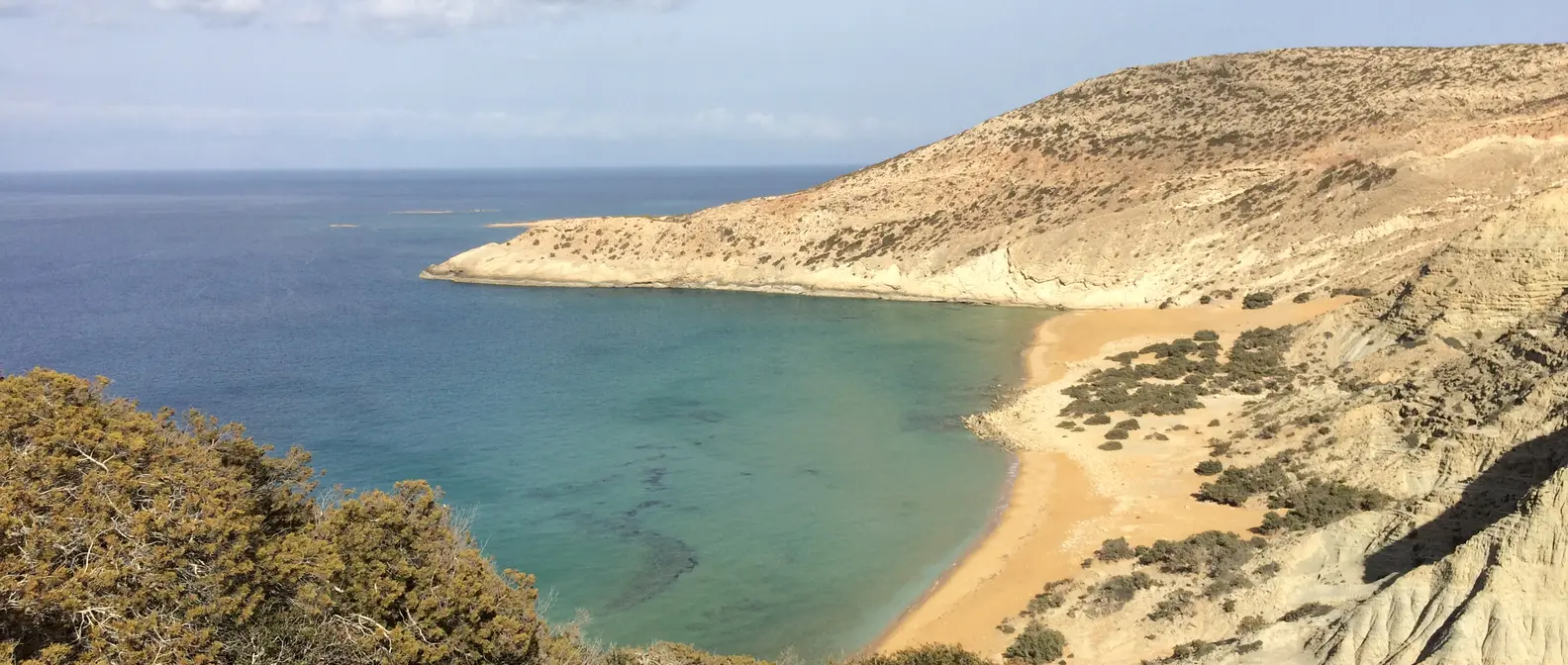
Antikythira has no sandy beaches, but it has something rarer: a completely clean sea, without boats and without people. At Xiropotamos, near Potamos, and in coves along the shore that the locals will show you, you swim between rocks in deep, clear water. In summer, bring a mask: the seabed is full of life.
The island is also one of the most important places in Europe for migrating birds. In spring and autumn, hundreds of species stop here to rest on their journey between Africa and Europe, and an observatory records their passage. In spring, the slopes fill with flowers, asphodels and thyme.
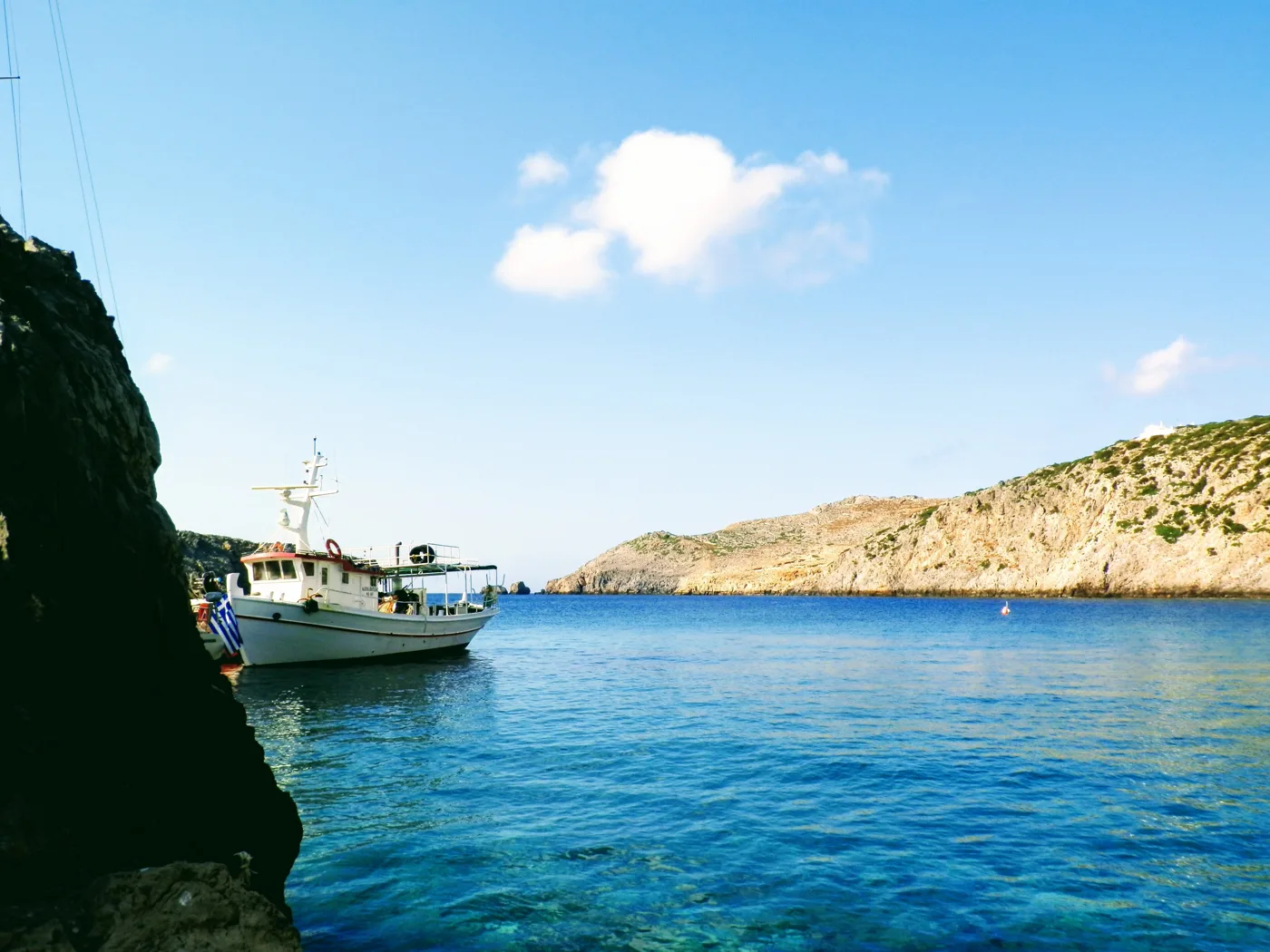
Water like glass.
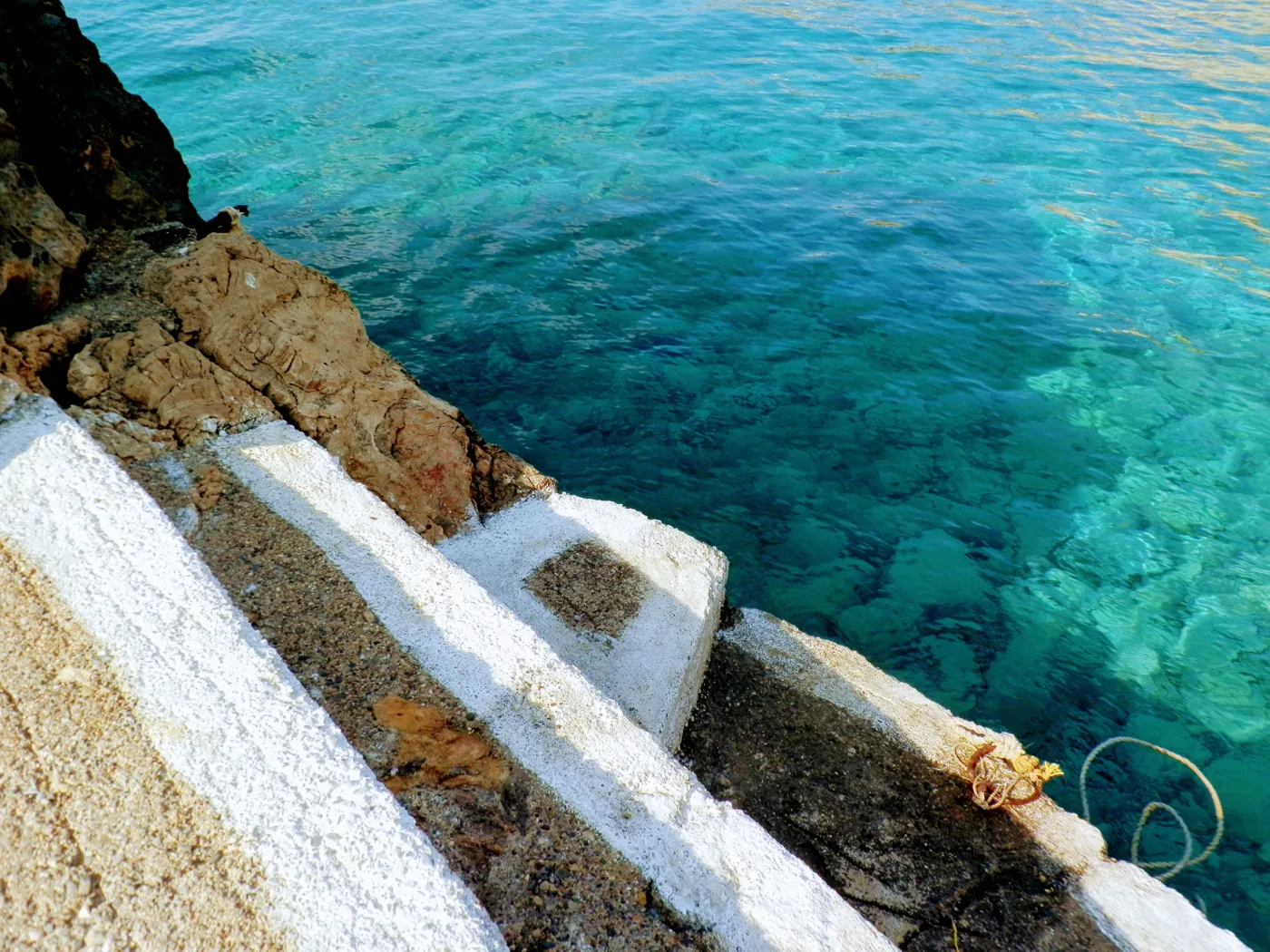
Straight into the sea.
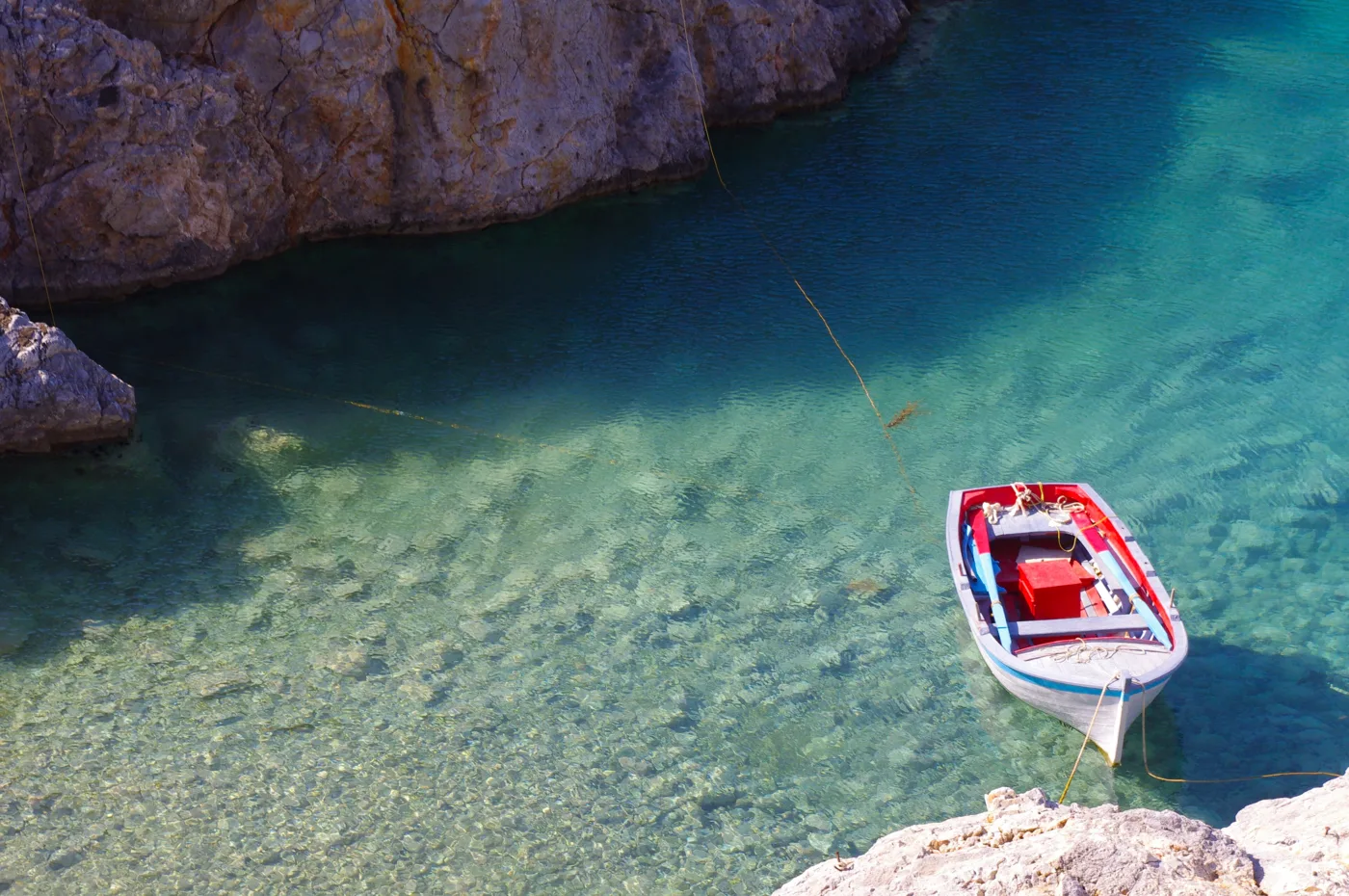
A cove just for you.
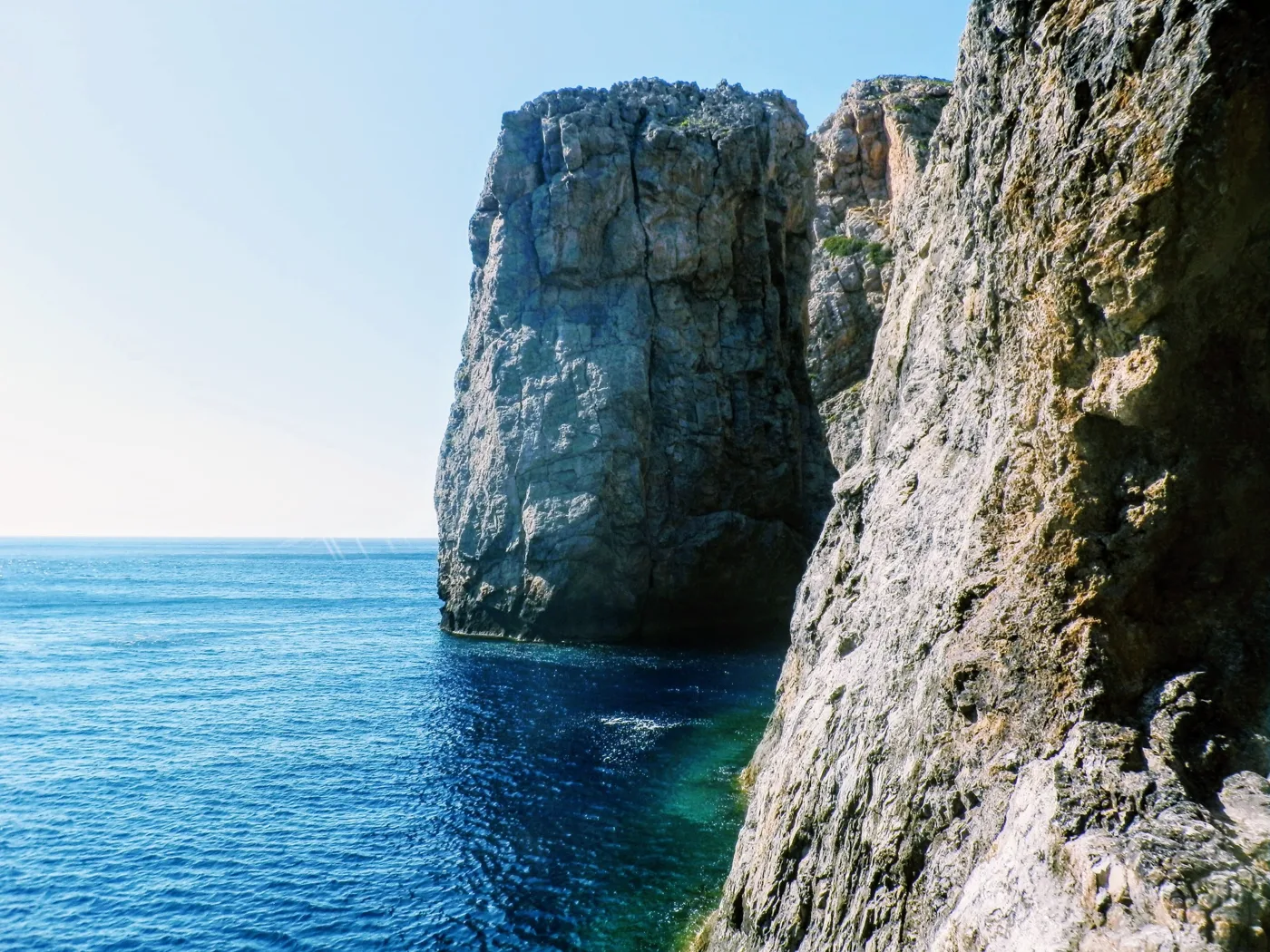
A shore carved by the waves.
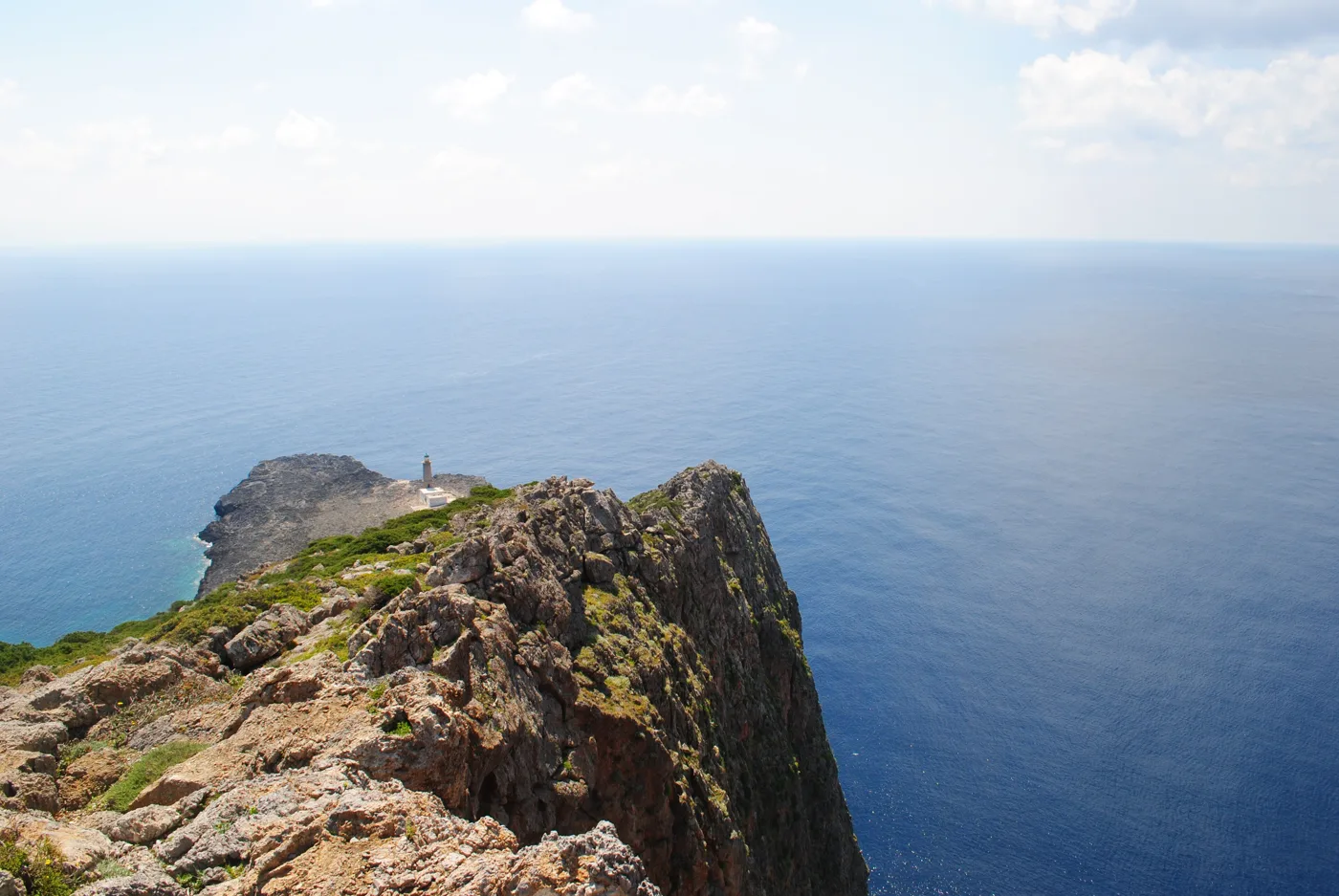
At the tip of the islet.
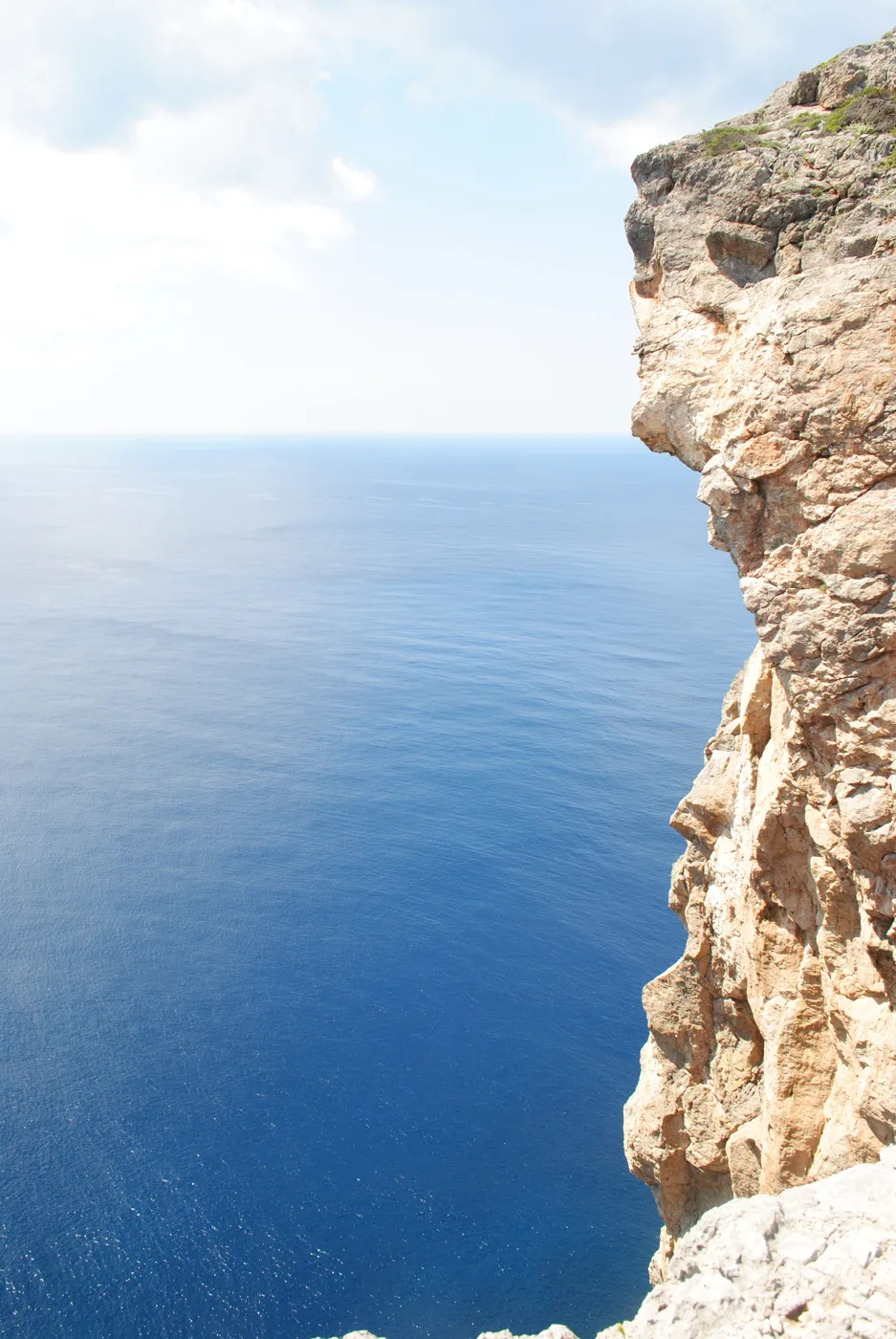
The Aegean from above.
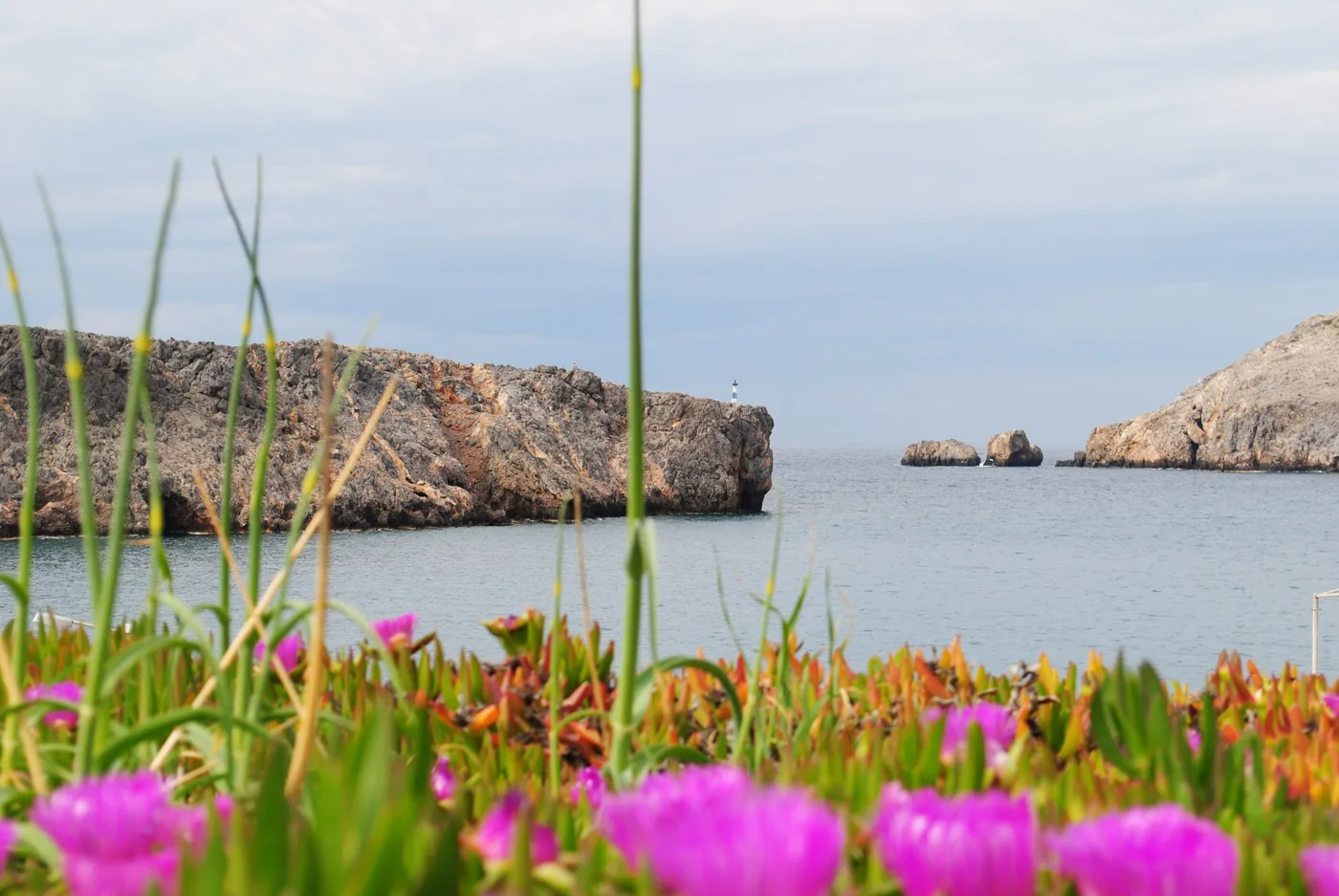
Flowers down to the sea.
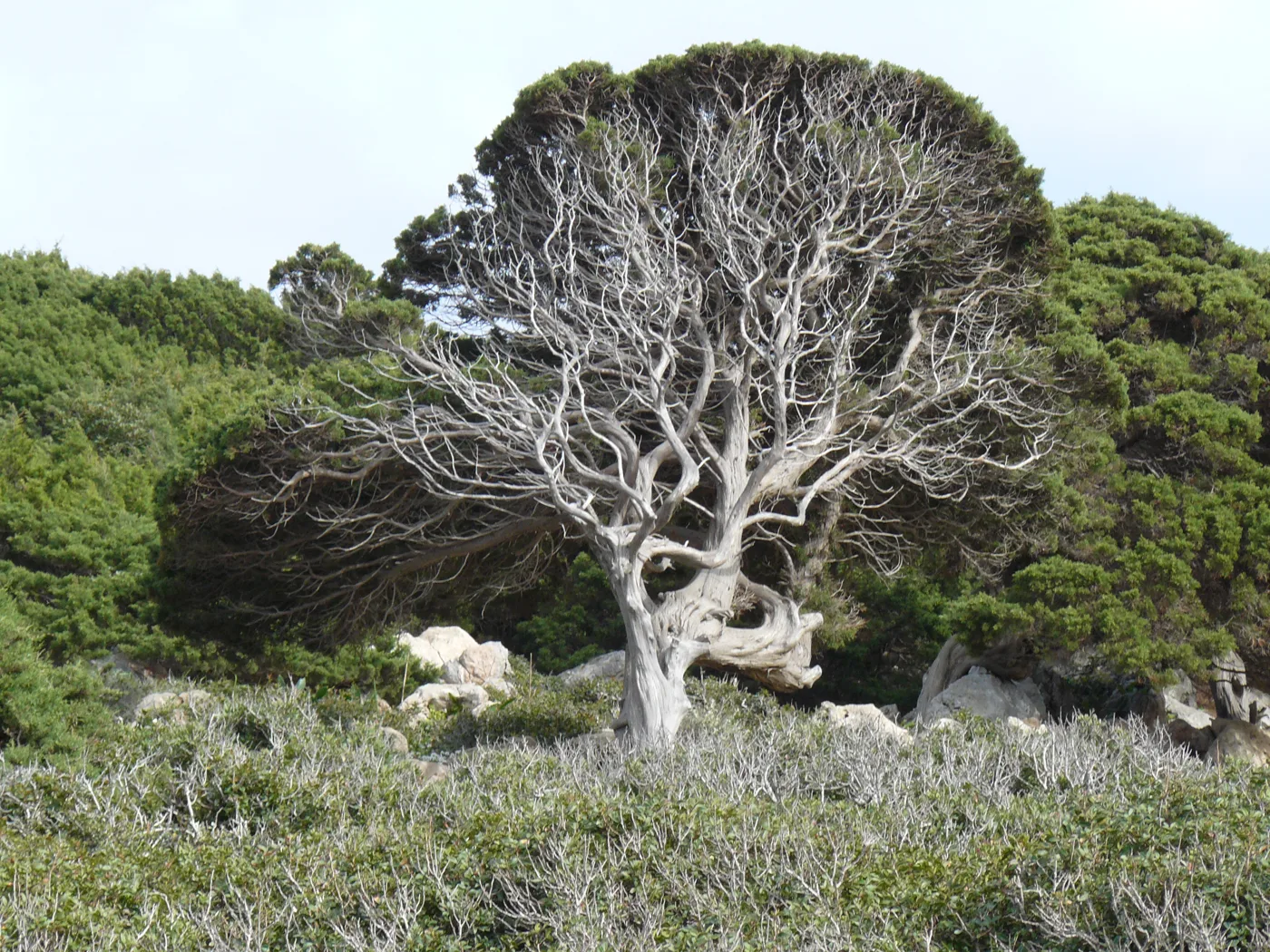
Bent by the wind.
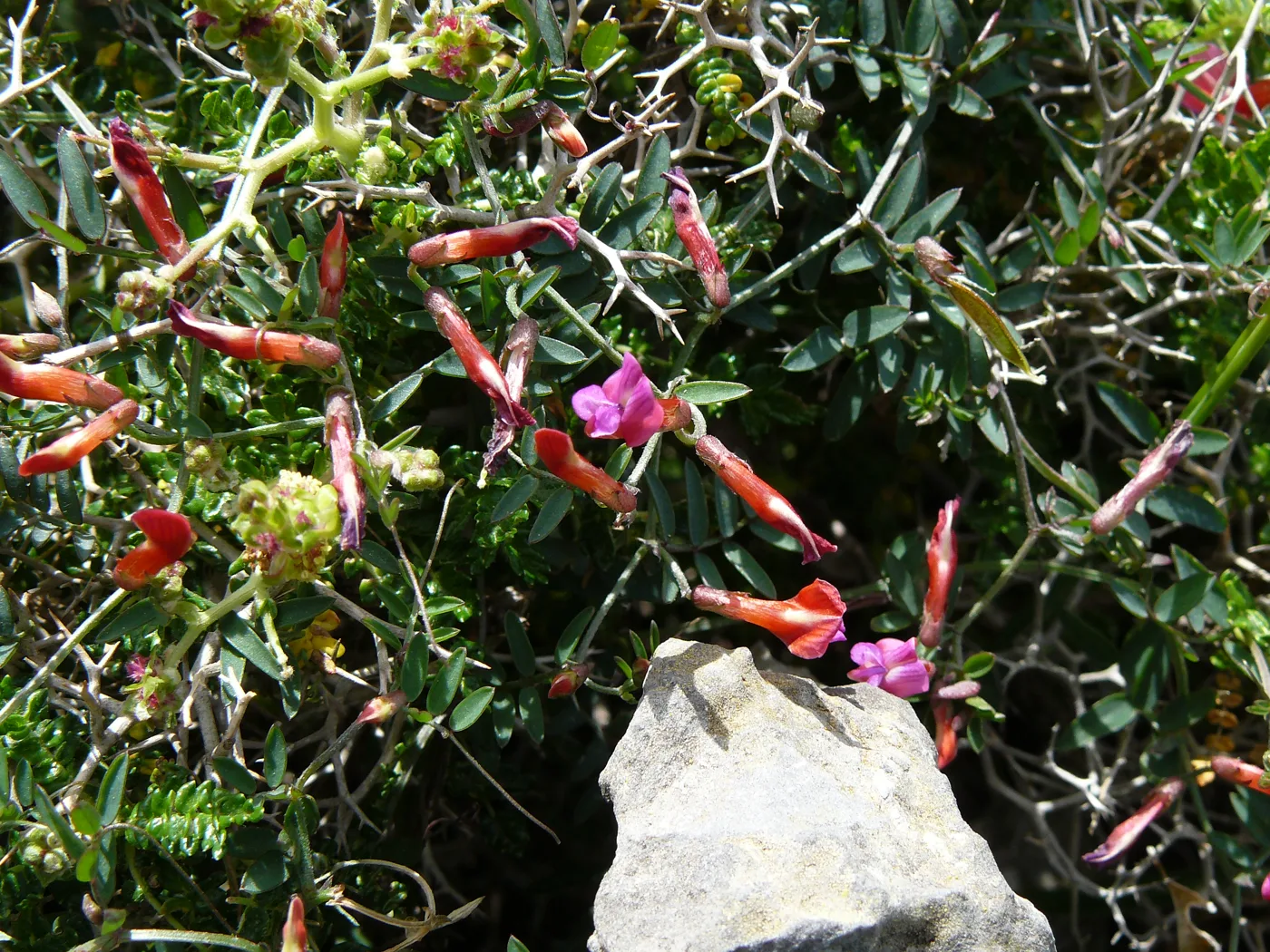
Spring on Antikythira.
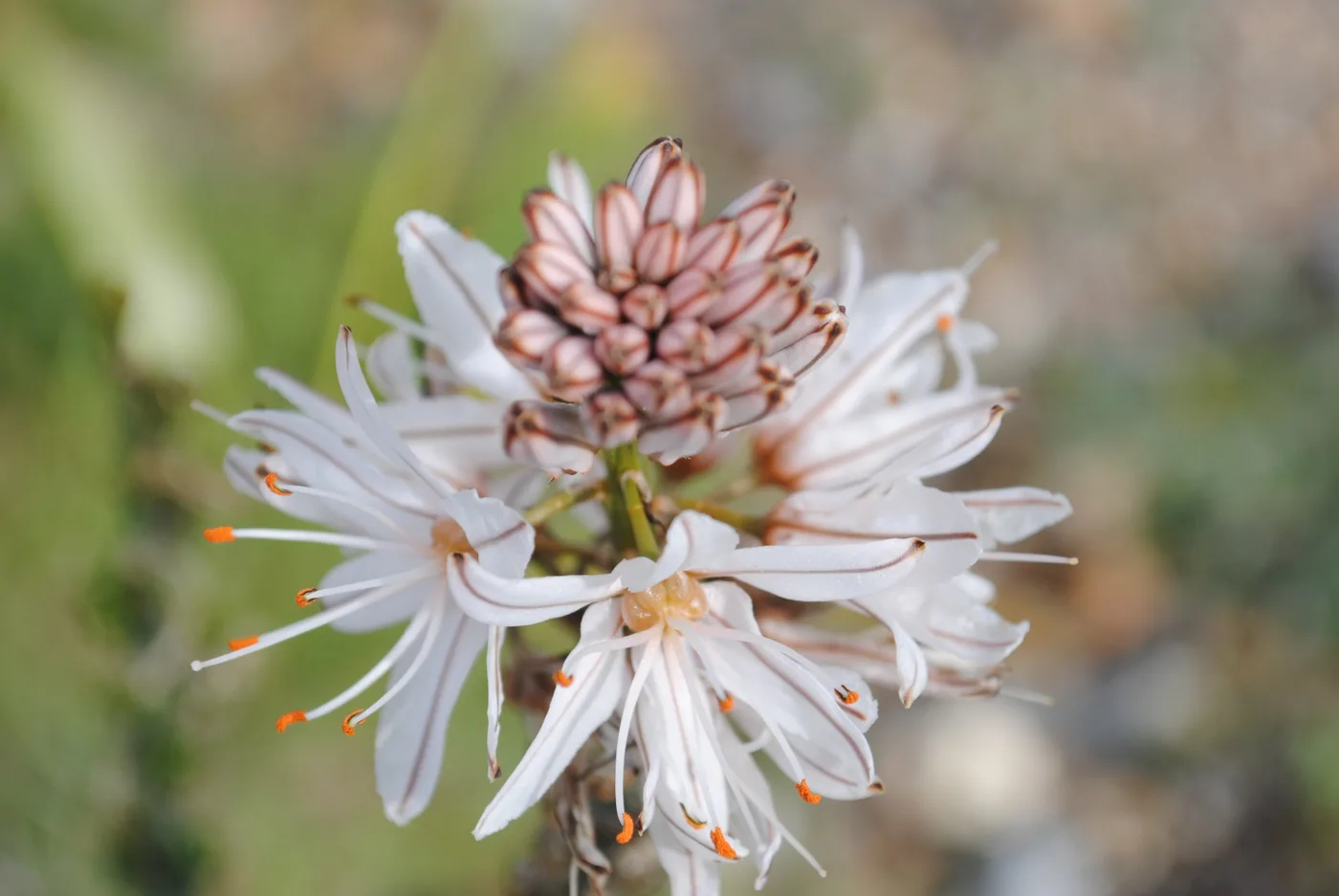
On the slopes in spring.
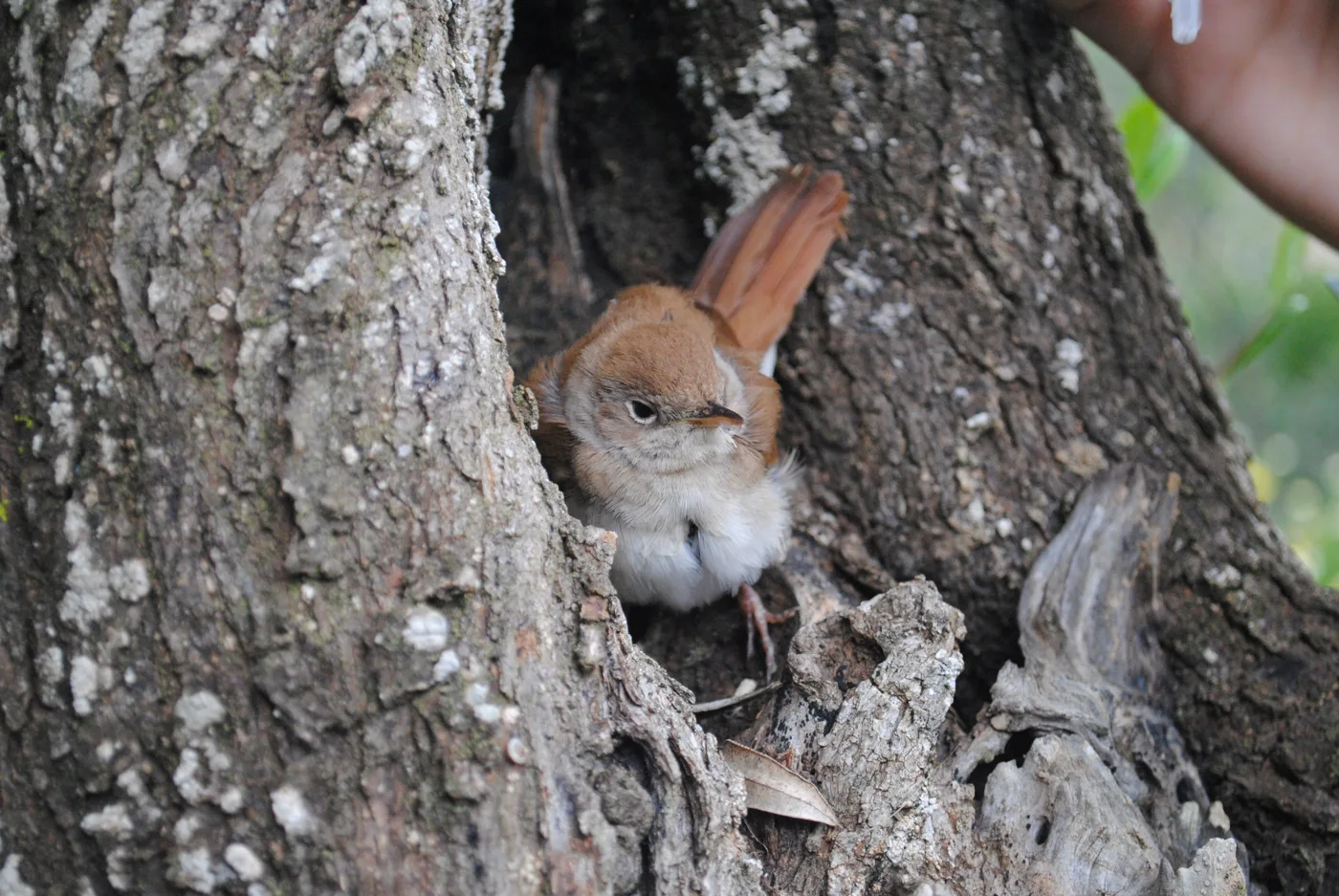
A stop on their journey.
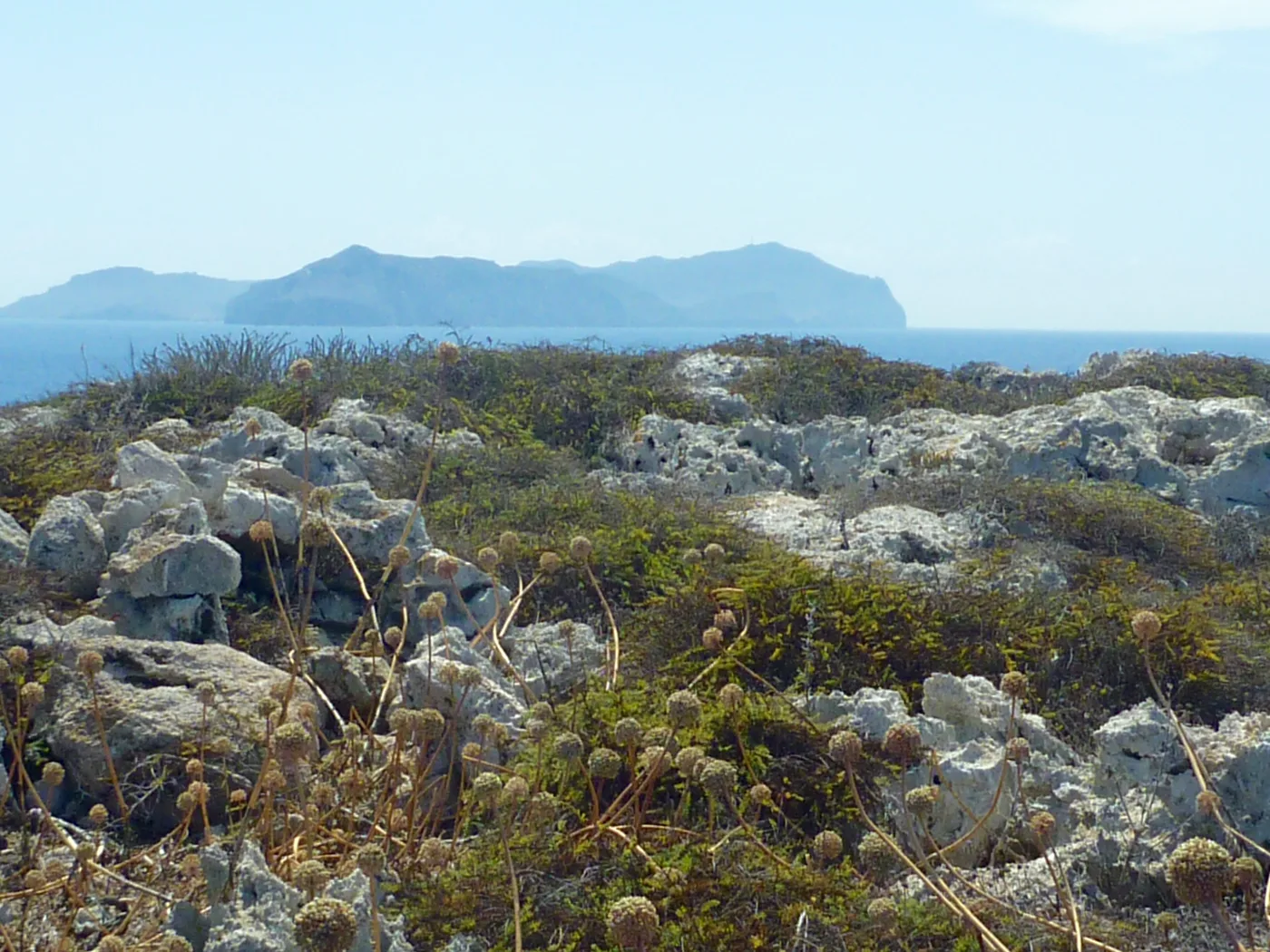
An islet offshore.
Photos: Natasjabn (CC BY-SA 4.0), Fivos Avgerinos (CC0), Artemis Katsadoura (CC BY-SA 4.0), Penny turner (CC BY-SA 4.0), Antonis Bartsiokas (CC BY-SA 4.0) · Wikimedia Commons
Footpaths link the villages, the lighthouse and the shores, but they are stony and without shade. Wear good shoes, take water, and ask about the wind: on Antikythira it blows often, and the weather changes quickly.
🍽️ What to eat
On Antikythira you will not find tavernas with menus. You will eat whatever the café or the family hosting you is cooking: fresh fish if the boats went out, kid goat, pies, cheeses and the island’s thyme honey, and the Cretan dishes brought by the Sfakian ancestors. Bring the basics with you from Kissamos or Kythira.
📅 When to go
May, June and September are the best months: warm sea, calmer weather, and in spring and autumn the bird migrations. In July and August the meltemi wind can cancel ferries for days. In winter the island is almost empty, and the sailings become rare.
⛴️ How to get there from Athens
| How | Duration | From | Notes |
|---|---|---|---|
| Ferry from Piraeus | Many hours, via Kythira | Piraeus → Kythira → Antikythira | A few times a week, often overnight. |
| Plane and ferry | About 50 minutes + 2 hours | Athens airport → Chania → Kissamos | The fastest way, if it fits the ferry schedule. |
| Plane to Kythira | About 45 minutes + ferry | Athens airport → Kythira | Combines well with Kythira. |
From Ioulianou 50 go straight to Piraeus on Line 1, or to the airport on Line 1 to Monastiraki and change to Line 3. Check the schedules well ahead, because they change every season. For the big island next door, see our guide to Kythira.
🗓️ Three days on Antikythira
Potamos and the Kastro
A stroll around Potamos and coffee at the harbour café. In the afternoon, go up to the Kastro, to the walls of ancient Aigila, and come down for a swim at Xiropotamos.
The villages and the lighthouse
A walk on the footpaths between the villages, as far as Galaniana and Agios Myronas. In the afternoon, south to the Apolytaras lighthouse, for the sunset over the open sea.
Sea and birds
A morning with binoculars, for the birds resting on the island during their journey. Then a swim in one of the coves along the shore, and late in the evening wait for the ferry at Potamos.
Frequently asked questions
Can I see the Mechanism on the island?
No. The Mechanism and the Ephebe are in the National Archaeological Museum in Athens. On the island you will see the sea where the shipwreck was found and ancient Aigila.
How many days do I need?
As many as the ferry decides: usually two to four nights, until the next sailing. Check the schedule before you book, and allow an extra day for the weather.
Are there shops and tavernas?
Very few: one or two cafés that cook and a small shop. Bring the basics and your medicines with you.
Is it suitable for children?
For older children who love nature, yes. For small children, not easily: there are no sandy beaches, no permanent doctor and no easy way back if needed.
— Kathy