🪪 The island at a glance
📍 Where it is
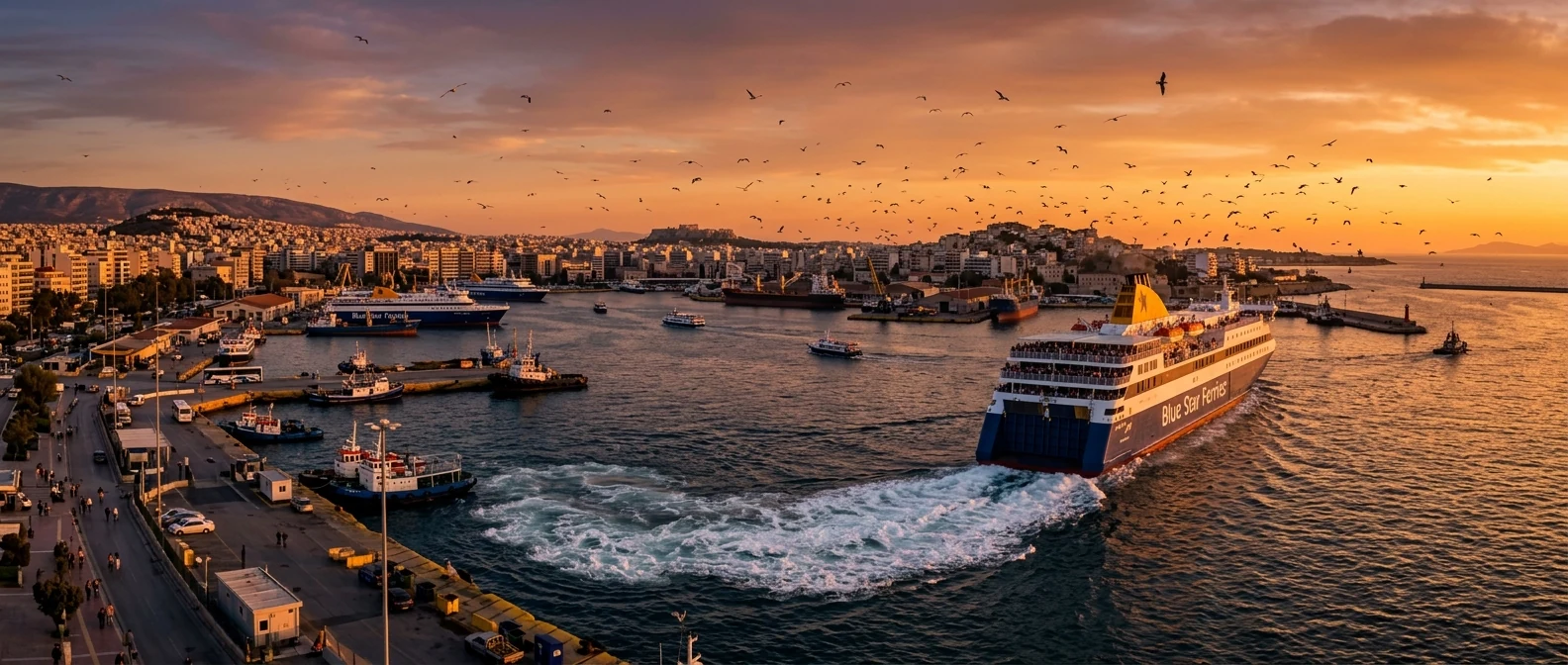
Chios lies in the north-eastern Aegean, between Lesvos and Samos, a few kilometres off the coast of Turkey. It is the fifth largest island in Greece. Ferries leave from Piraeus, often overnight, and from Chios town small boats cross over to Çeşme.
📍 Where Chios is
Chios is in the north-eastern Aegean, between Lesvos and Samos, opposite the Erythrae peninsula in Turkey. The island is in red, and in green are Piraeus, where the ferry leaves from, and Athens airport.
🗺️ The map of the island
Chios is long and narrow, about 50 kilometres from north to south. The town is in the middle of the east coast. The south is low-lying, with the mastic trees and the mastic villages. The centre and the north are mountainous, with pine forests, monasteries and villages high in the mountains. The villages are far apart, so you will need a car.
🗺️ Map of Chios
The town, Kambos and the airport are on the east coast, with Vrontados a little further north. Nea Moni and Anavatos are in the central mountains. The mastic villages and Mavra Volia are in the south, Volissos and Kardamyla in the north. Tap each number to see what it is.
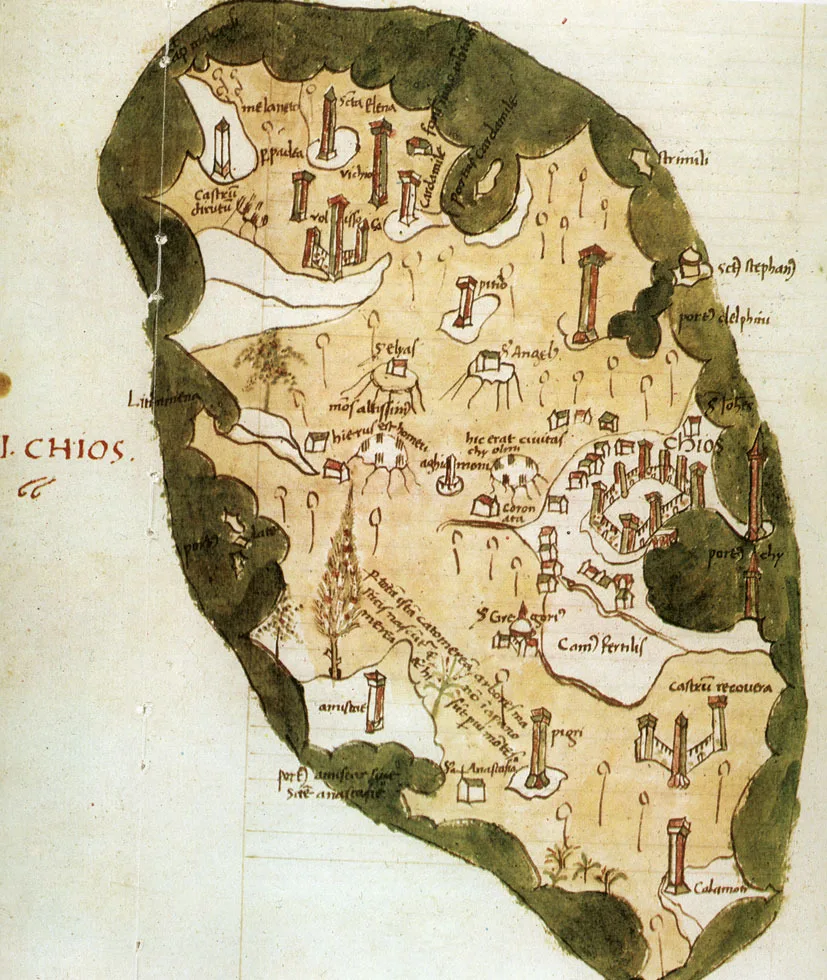
Map: Cristoforo Buondelmonti, c. 1420 (Public domain) · Wikimedia Commons
⚖️ Is it worth it? The pros and cons
Chios is not an island for those who only want beaches. It is an island for those who want to see something different. Here is an honest picture.
📊 At a glance, from 1 to 5
👍 The pros
- The mastic villages, like nowhere else.
- Nea Moni and its mosaics.
- An authentic island, with little mass tourism.
- Mastic, mandarins and good food.
- Good prices all year round.
👎 The cons
- A big island, you need a car.
- Many hours by ferry from Piraeus.
- The best beaches are far from town.
- Little nightlife.
- Large fires have burned parts of the island.
🏰 The town and the castle
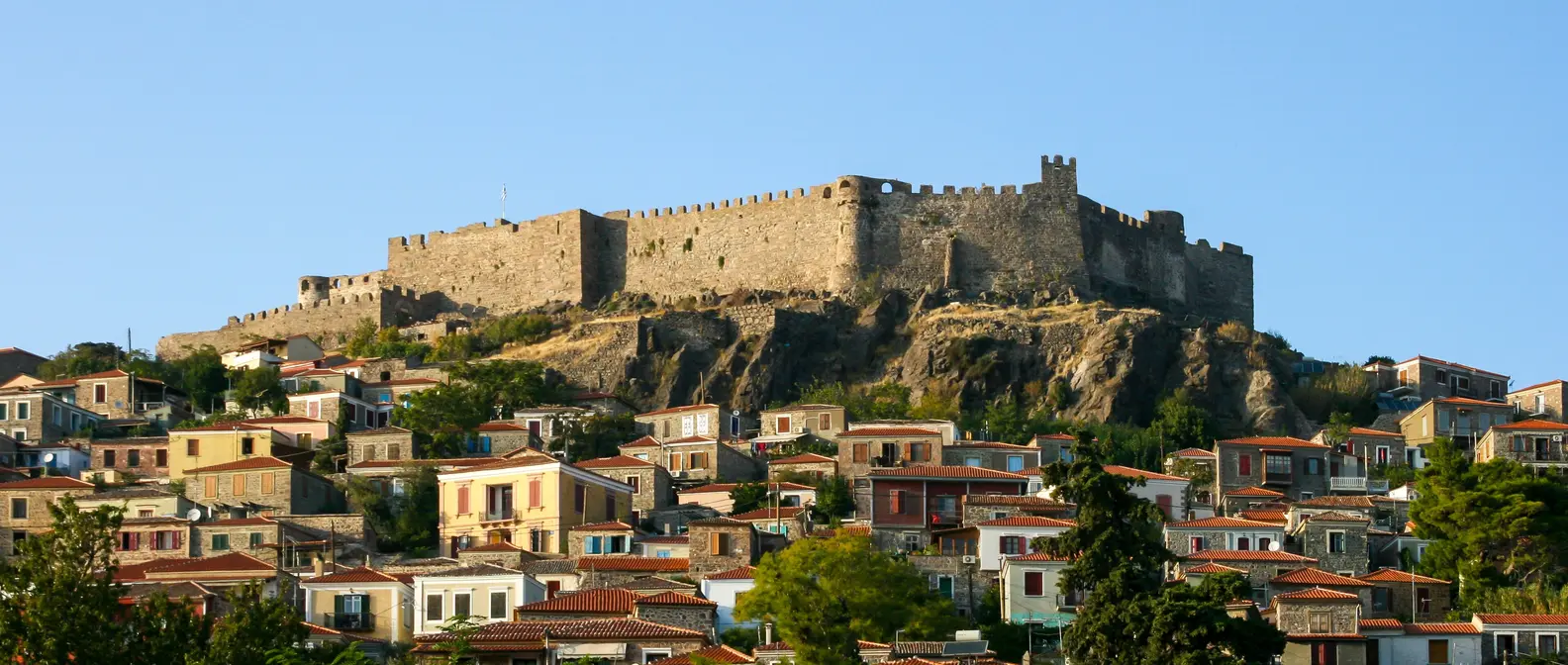
Chios town, or Chora, is a lively town around a large harbour, with cafés on the waterfront and a market in the streets behind it. At the northern end of the harbour is the castle, built by the Byzantines and enlarged by the Genoese, who held the island from the 14th to the 16th century. A small neighbourhood still lives inside, with alleys, an old Ottoman bath and the palace of the Giustiniani.
South of town begins Kambos, a plain of mandarin, lemon and orange orchards hidden behind high stone walls. Here the wealthy merchants of Chios built stone mansions, with waterwheels for irrigation and courtyards paved with pebbles. Some are hotels today.
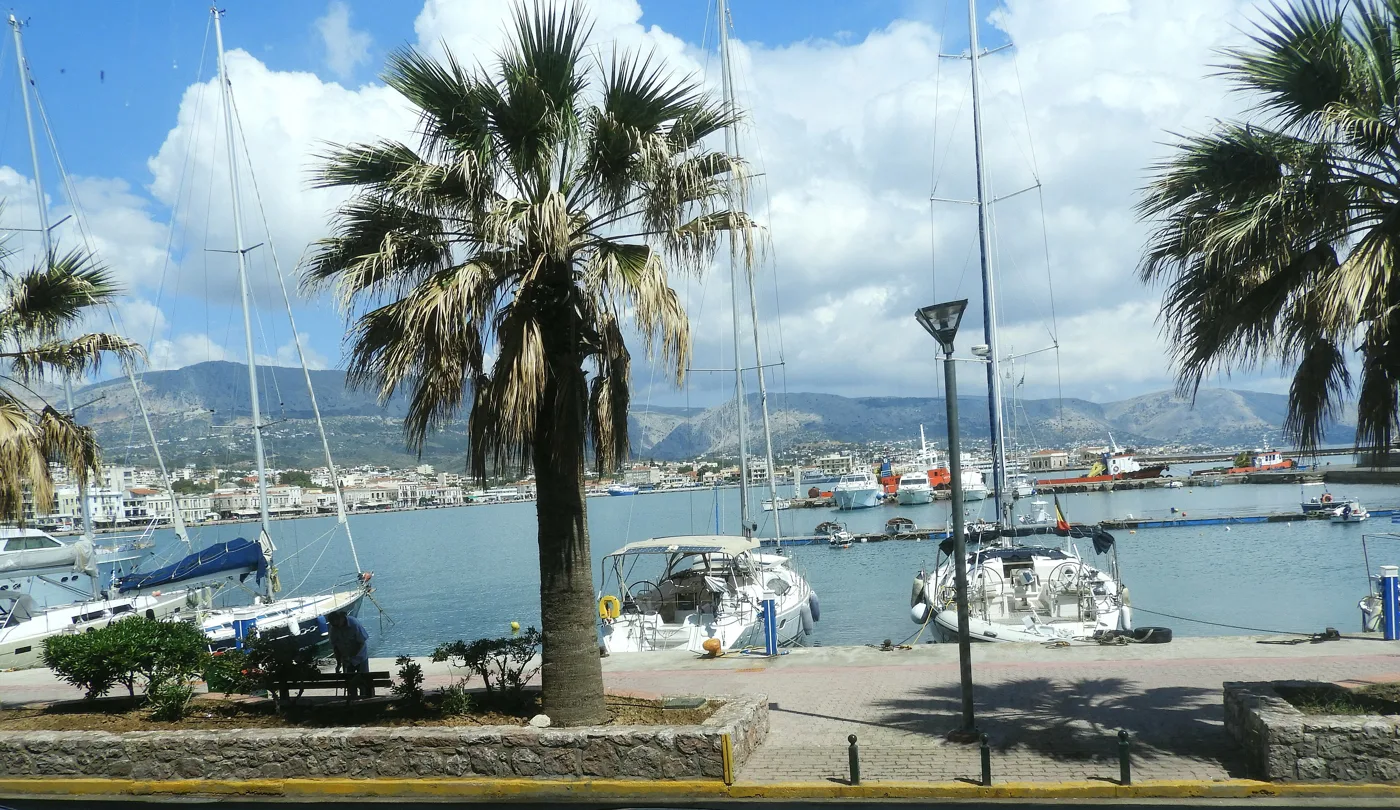
The town lives around the harbour.
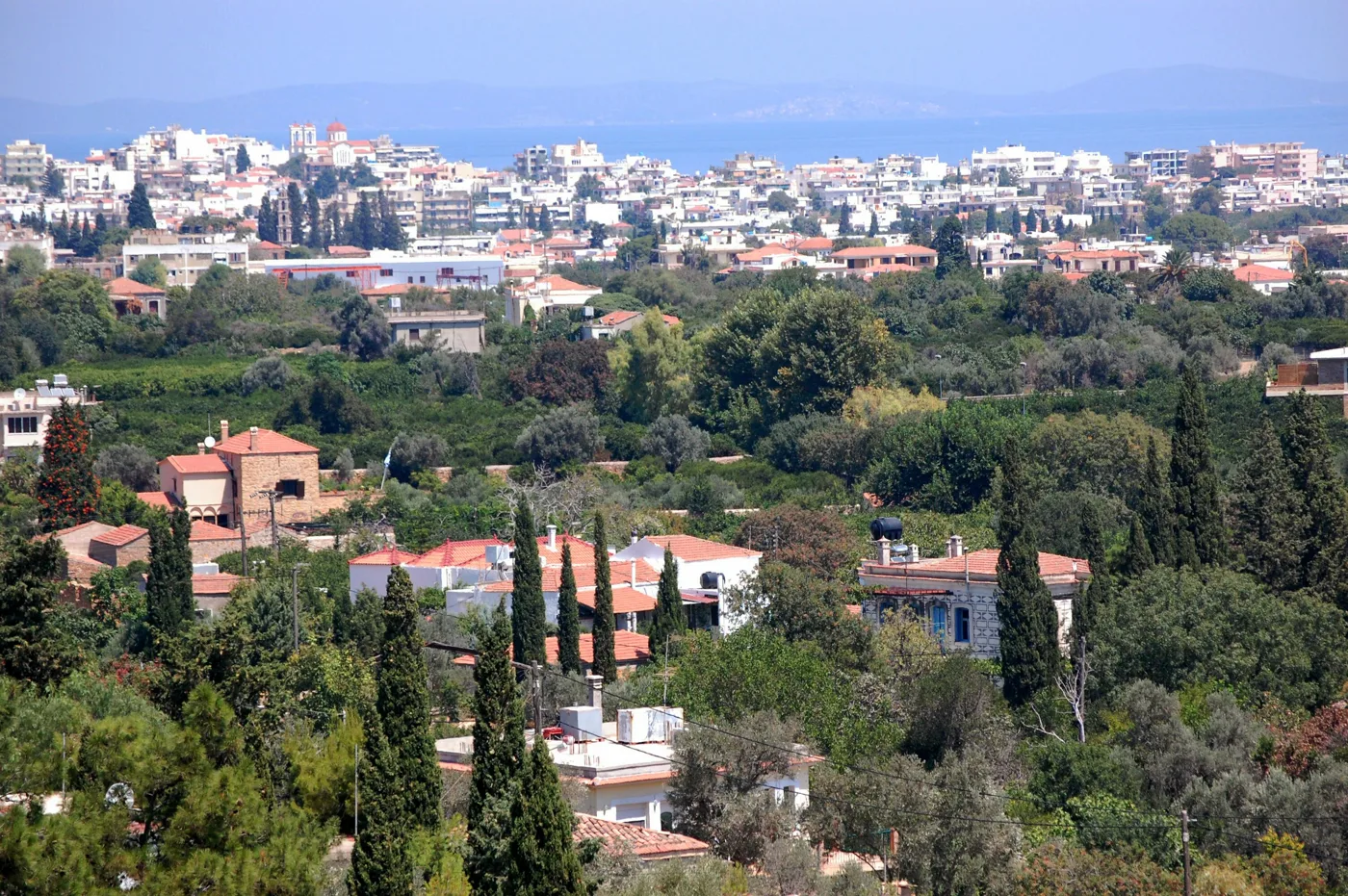
Gardens and houses down to the sea.
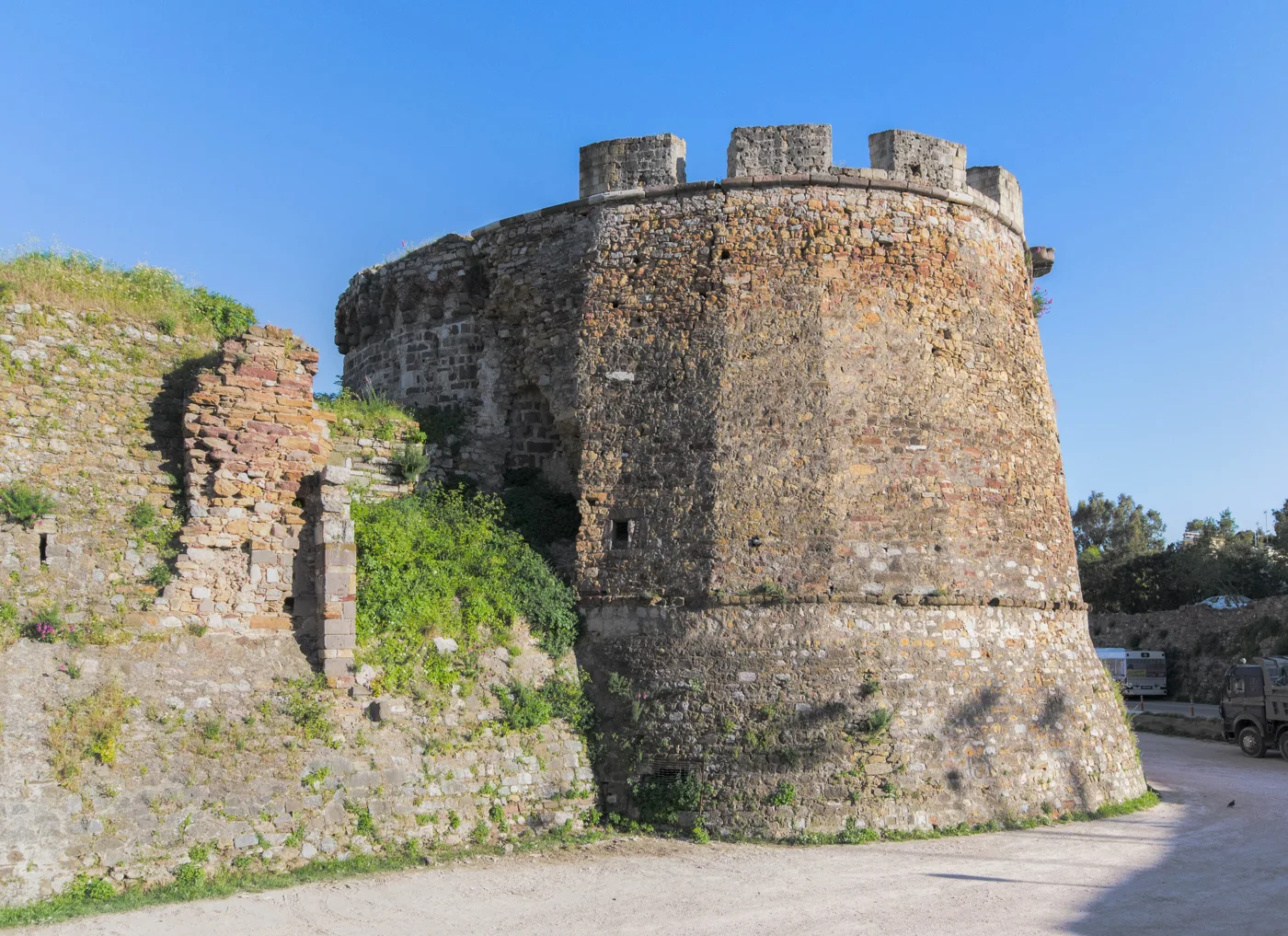
Byzantine and Genoese walls.
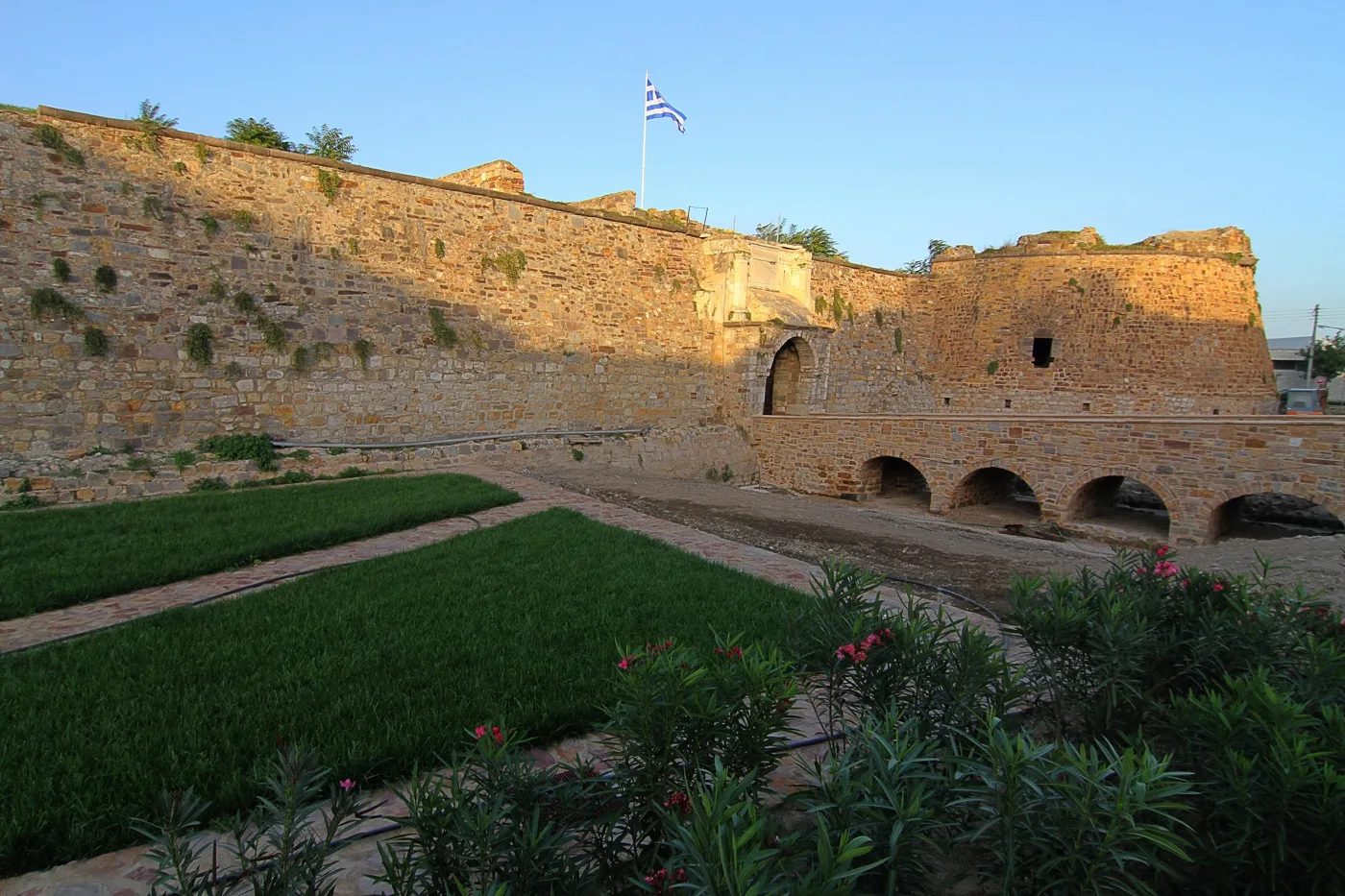
A neighbourhood still lives inside.
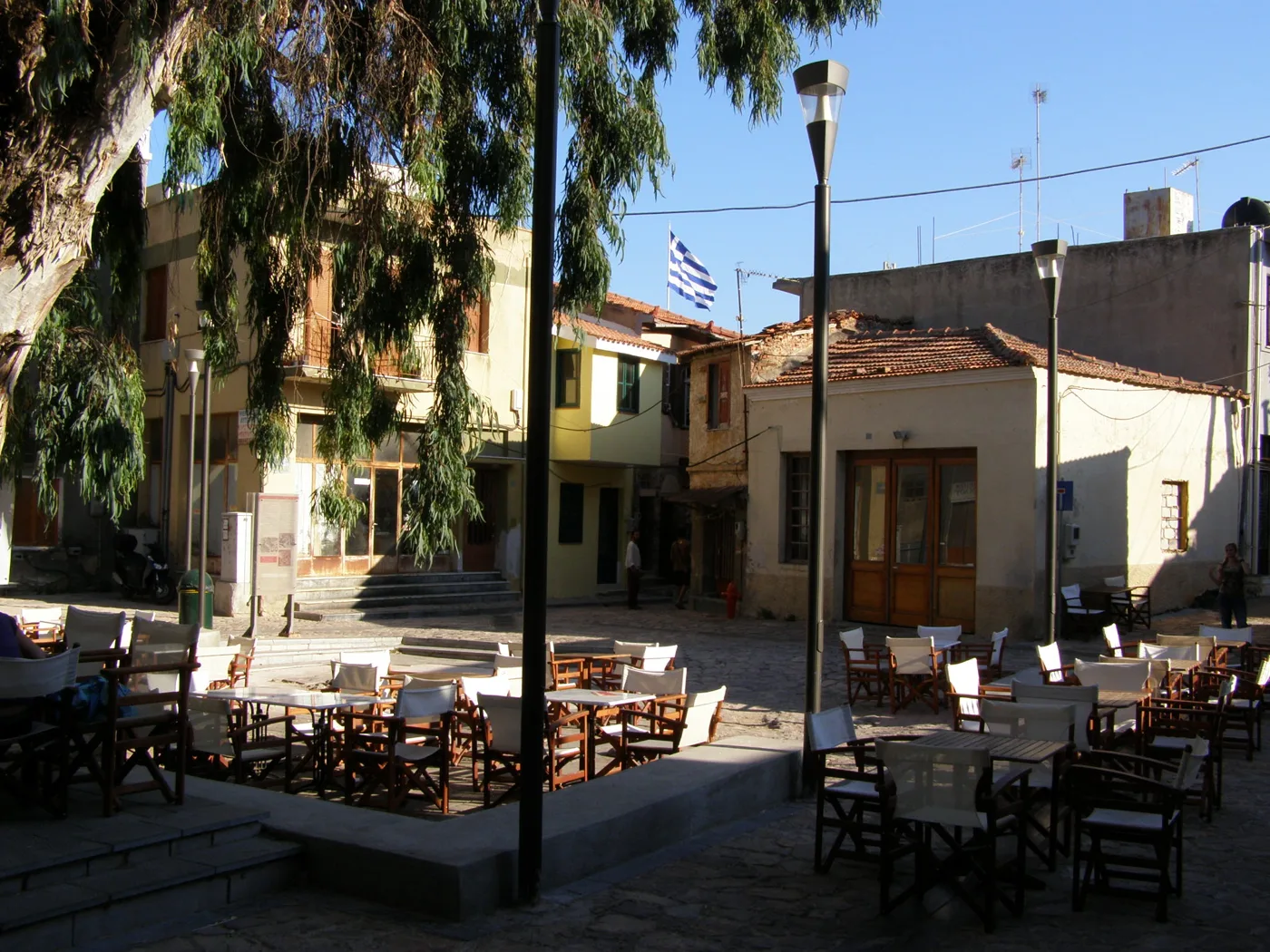
Alleys, houses and cafés.
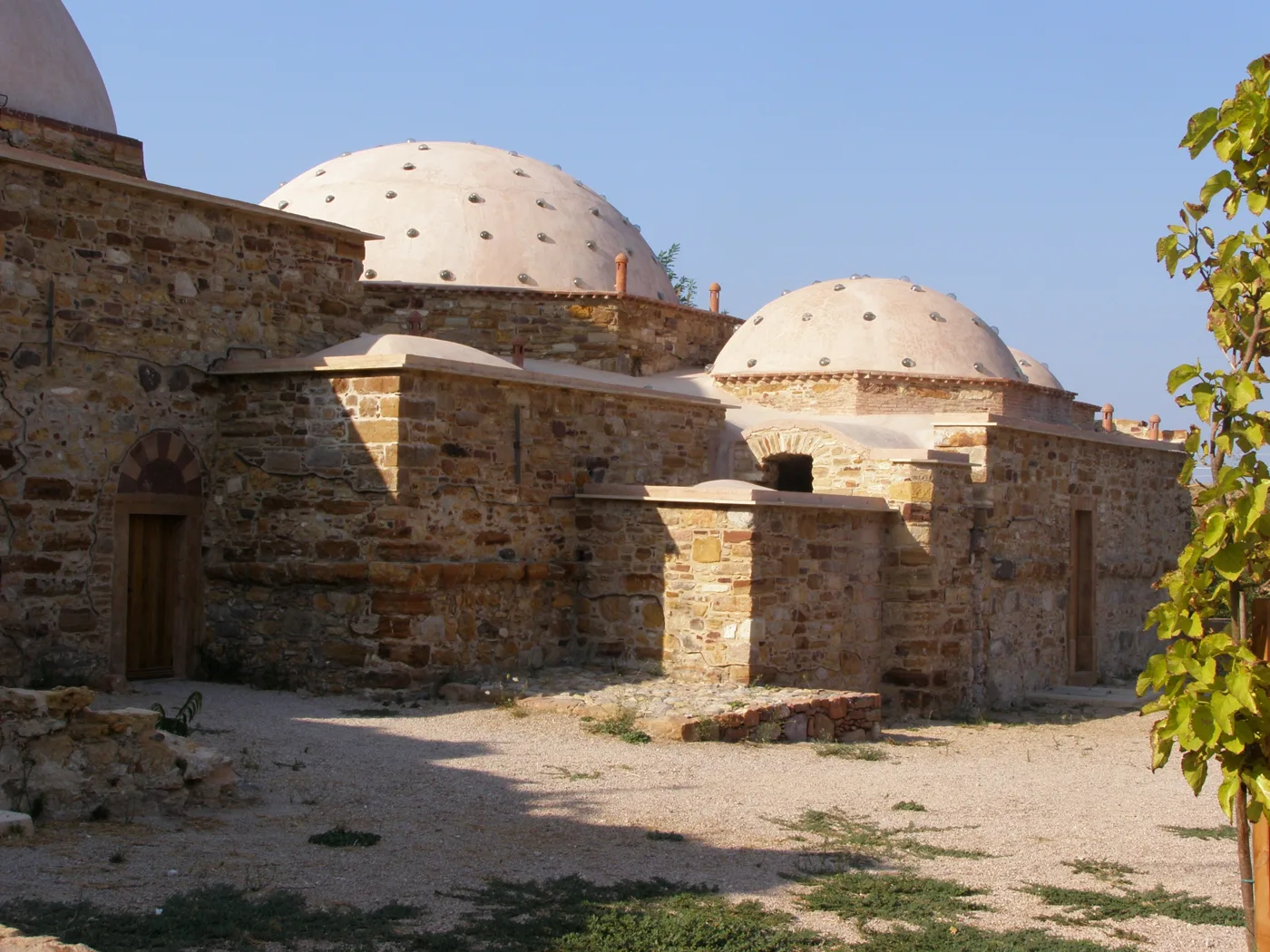
Stone domes inside the castle.
Photos: Güldem Üstün (CC BY 2.0), AlekH (CC BY 3.0), Katsiaryna Naliuka (CC BY-SA 3.0), FLIOUKAS (CC BY-SA 4.0), Mariolovre (CC BY-SA 4.0) · Wikimedia Commons
⛪ Kambos, Nea Moni and Anavatos
In the mountains west of town is Nea Moni, an 11th-century monastery with gold mosaics, a UNESCO World Heritage Site together with Daphni and Hosios Loukas. The tiles shine in the darkness of the church, and around it there are cells, a tower and an old cistern.
A little further on, Anavatos is an abandoned village on a steep rock. In 1822, during the Chios massacre, many residents threw themselves off the cliff to avoid capture. Today you walk among roofless stone houses, with a view over all of western Chios.
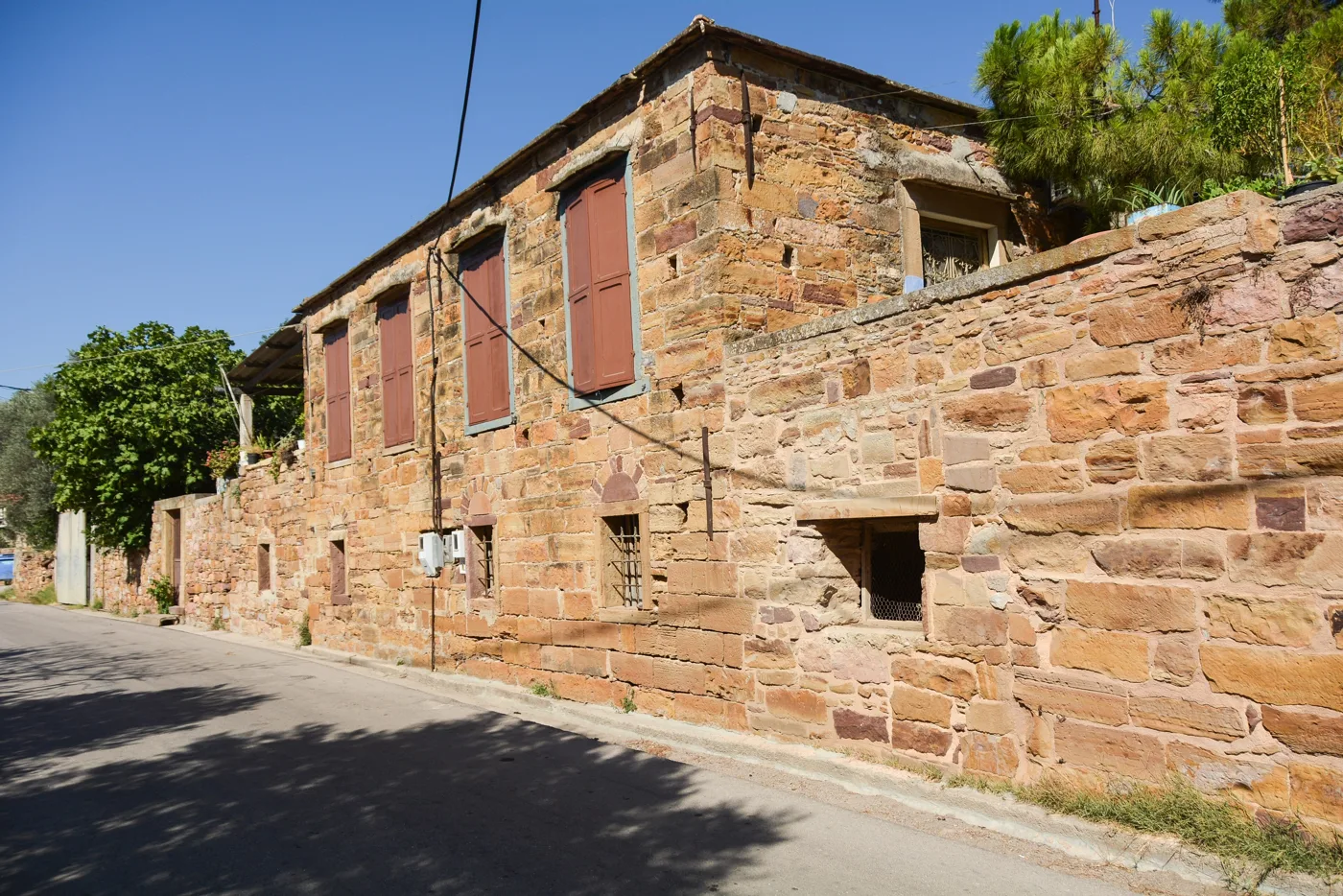
Gates, high walls and orchards.
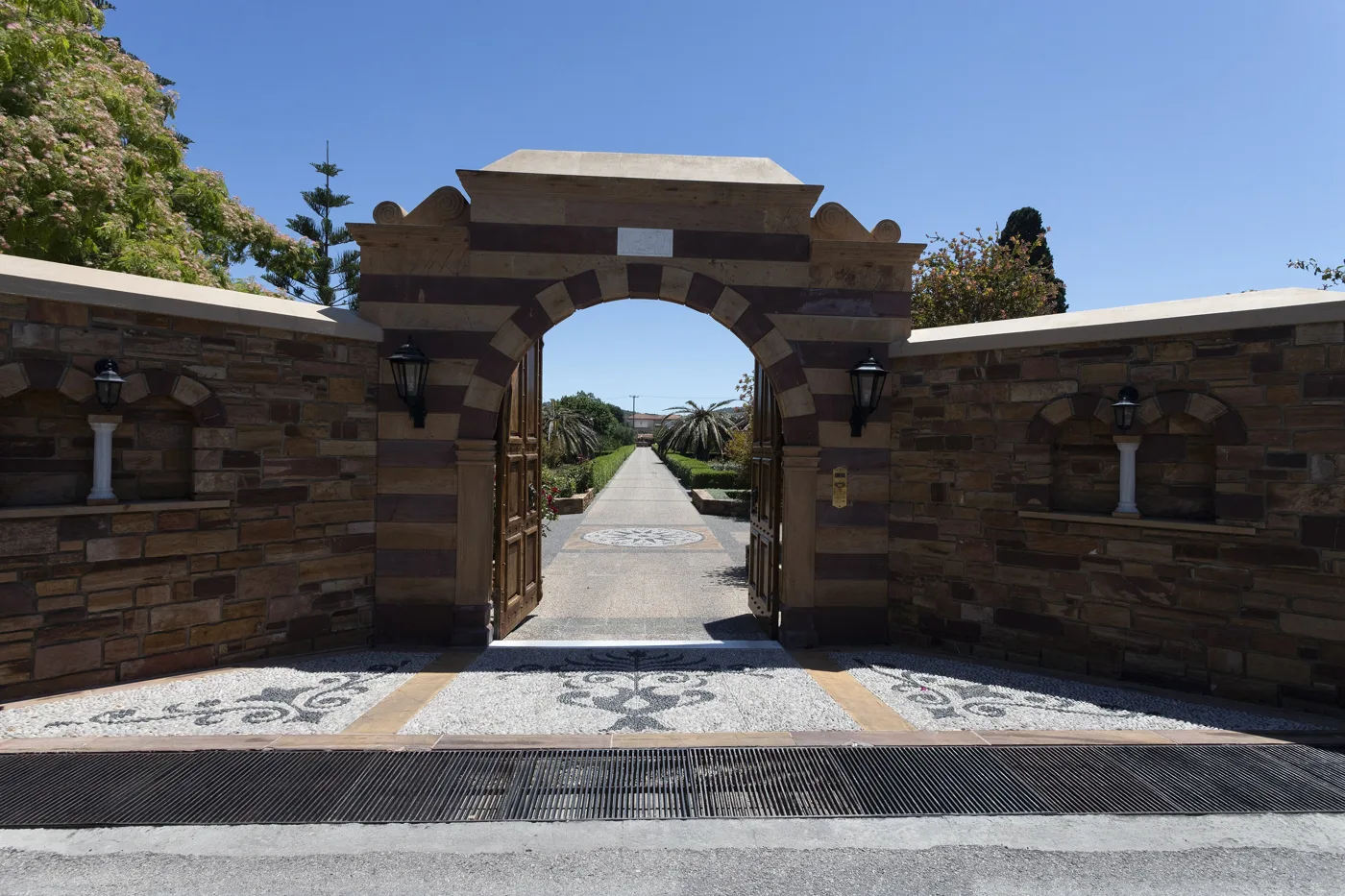
Stone houses of the old merchants.
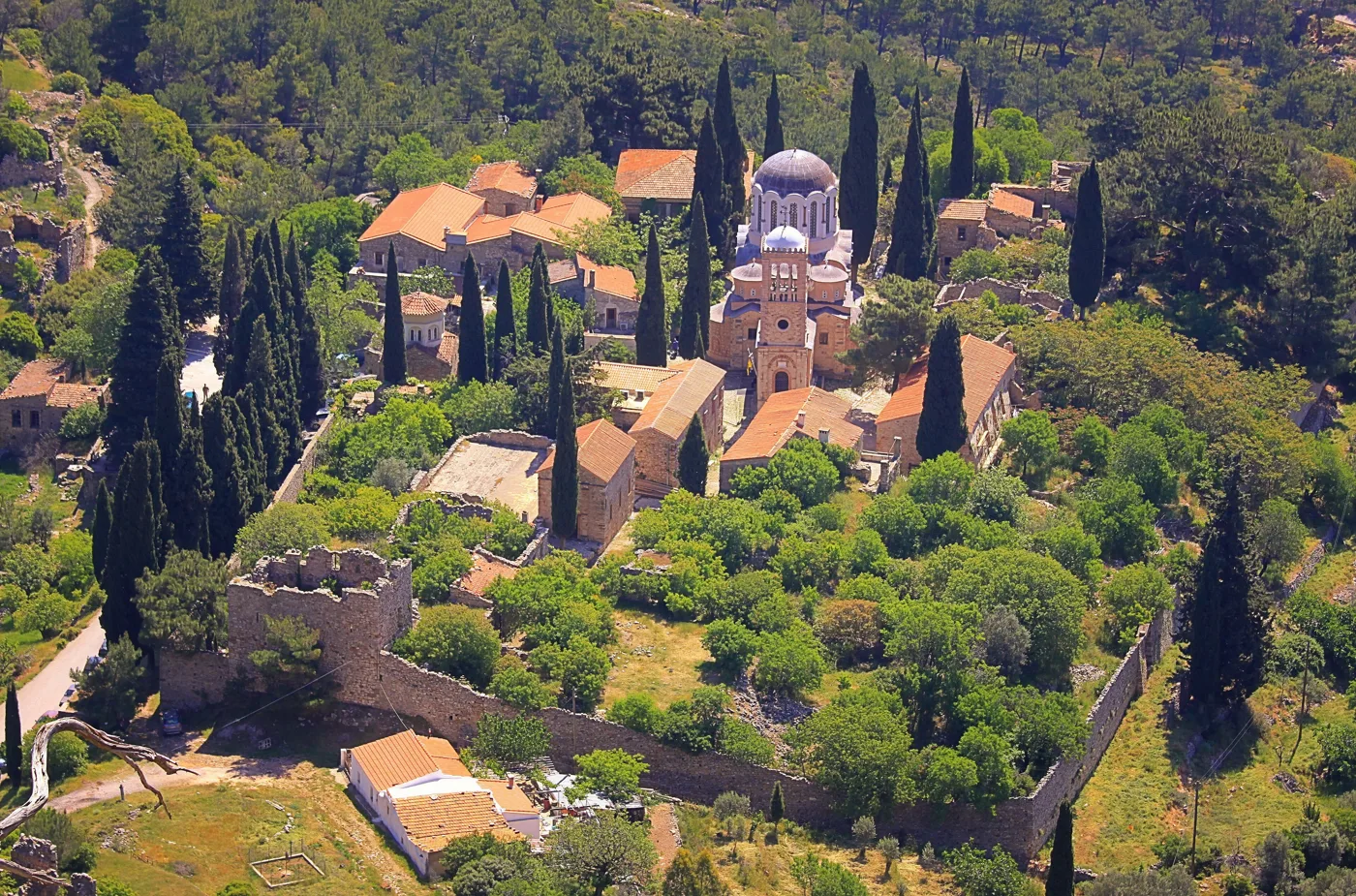
A World Heritage Site.
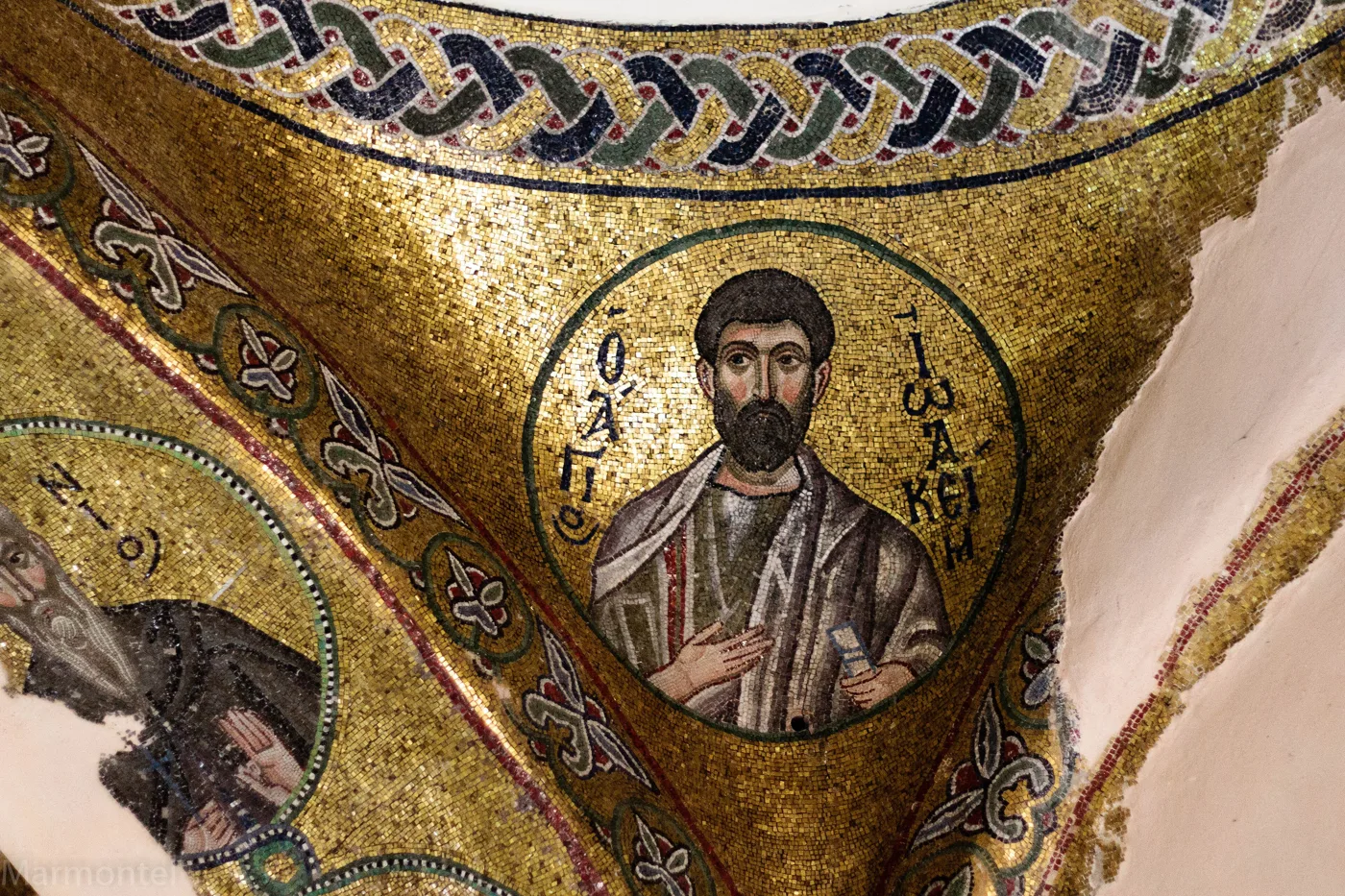
Gold tiles from the 11th century.
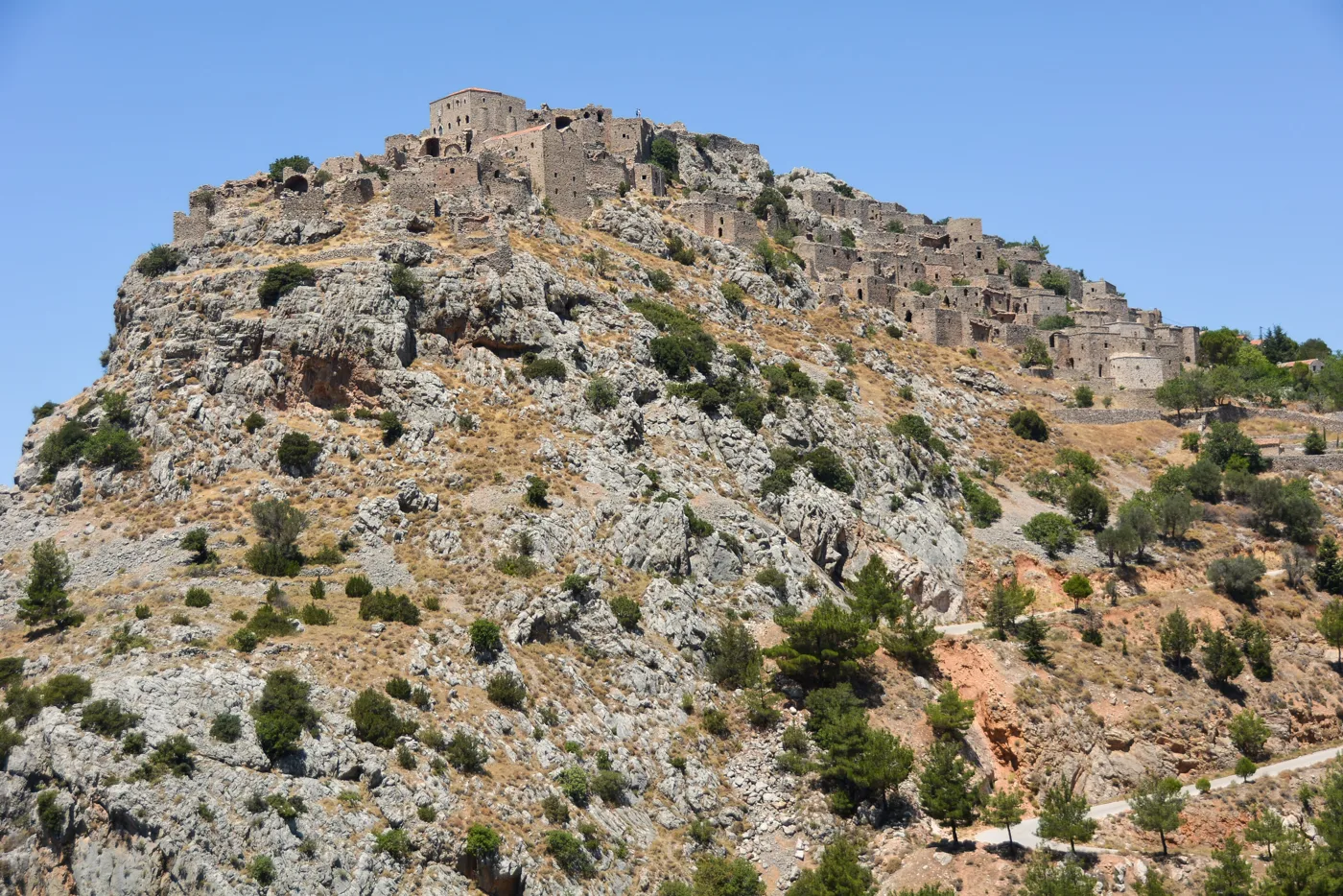
A ghost village on the rock.
Photos: Vgargan (CC BY-SA 4.0), George Ntekas (CC BY-SA 4.0), FLIOUKAS (CC BY-SA 4.0), Marmontel (CC BY-SA 2.0) · Wikimedia Commons
Nea Moni closes at midday, so go in the morning. Dress modestly, with shoulders and knees covered.
🌿 The mastic villages
Southern Chios is the only place in the world where the mastic trees give mastic. Farmers cut the trunks in summer, and the resin drips and hardens into tears. The cultivation of mastic is on the UNESCO list of intangible cultural heritage. The villages where this happens are called the mastic villages, and the Genoese built them like small fortresses to protect the mastic from pirates.
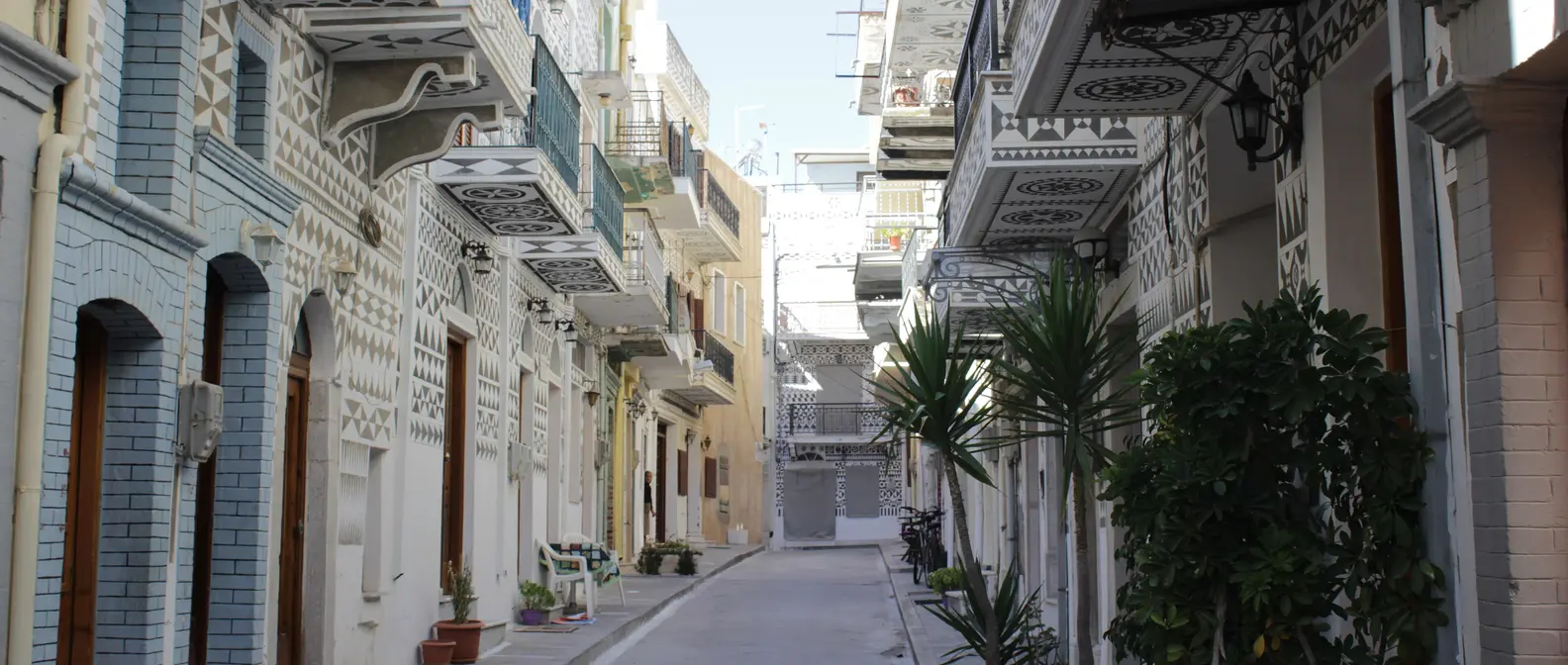
Pyrgi is the best known: its houses are decorated with xysta, grey and white geometric patterns scratched into the plaster. Mesta is one of the best-preserved medieval villages in Greece, with alleys like a labyrinth and arches. Nearby are the Chios Mastic Museum, the Olympi cave with its stalactites and, by the sea, Mavra Volia, a beach of black volcanic pebbles.
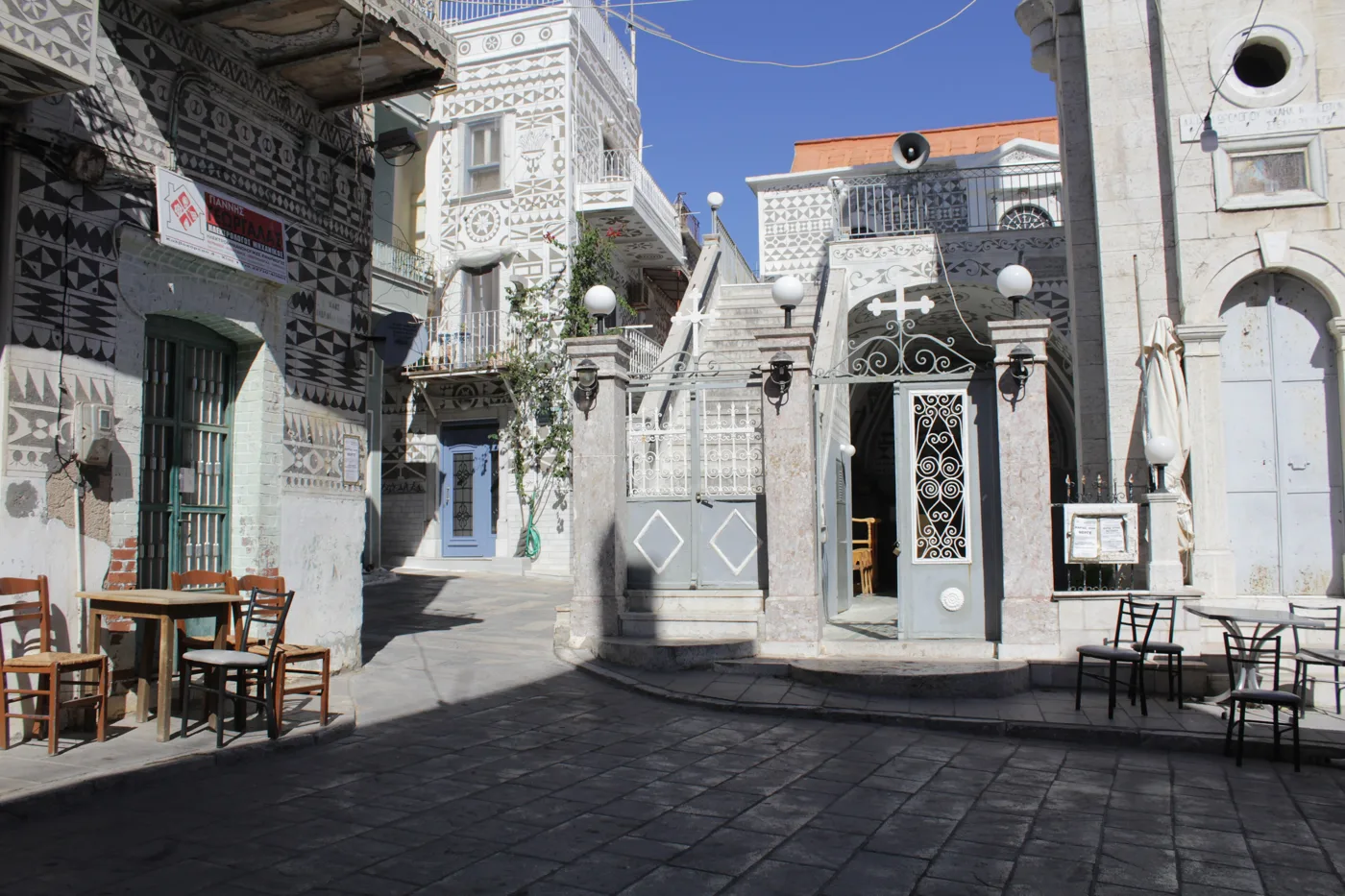
A village painted like embroidery.
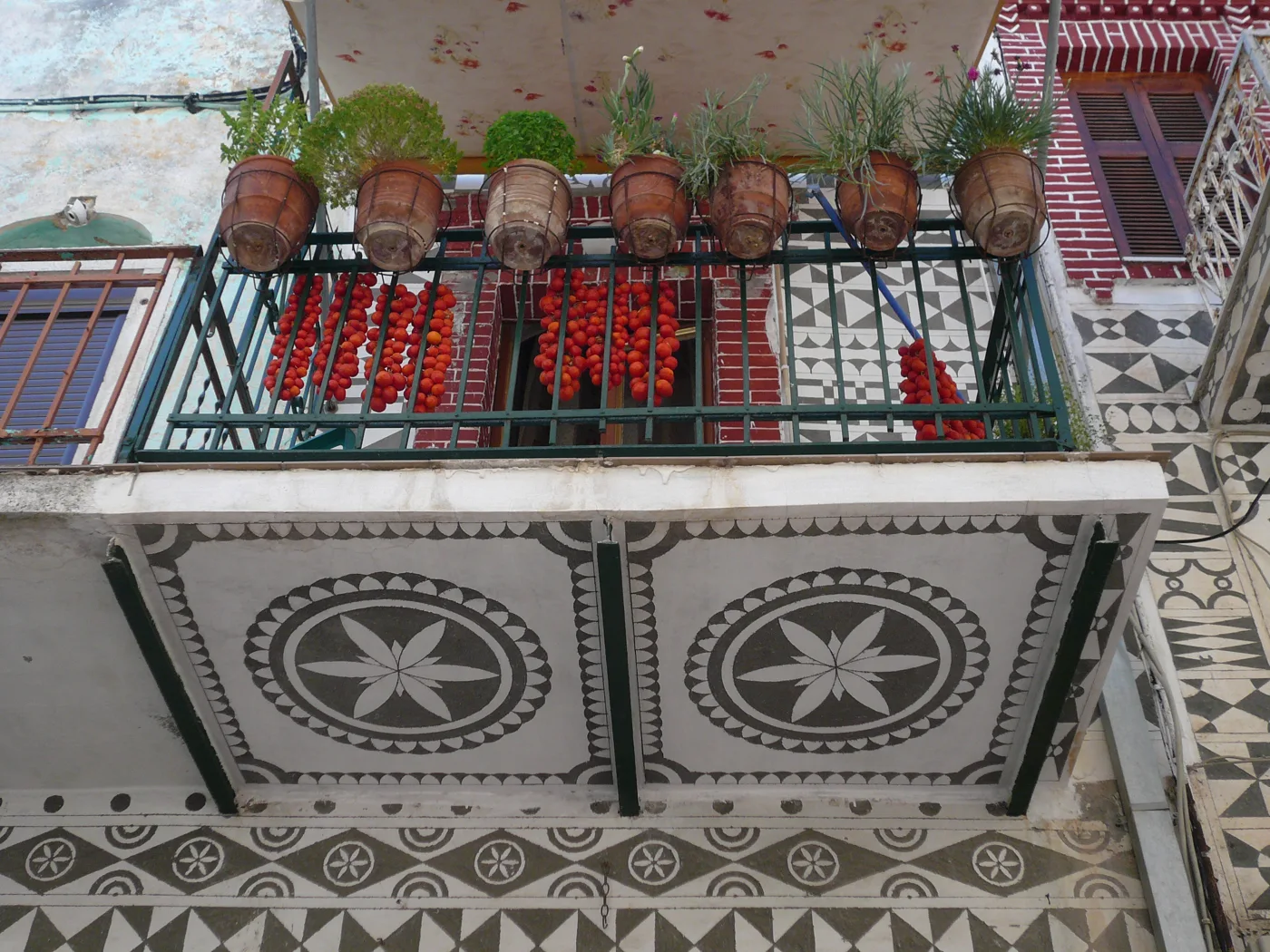
Patterns scratched into the plaster.
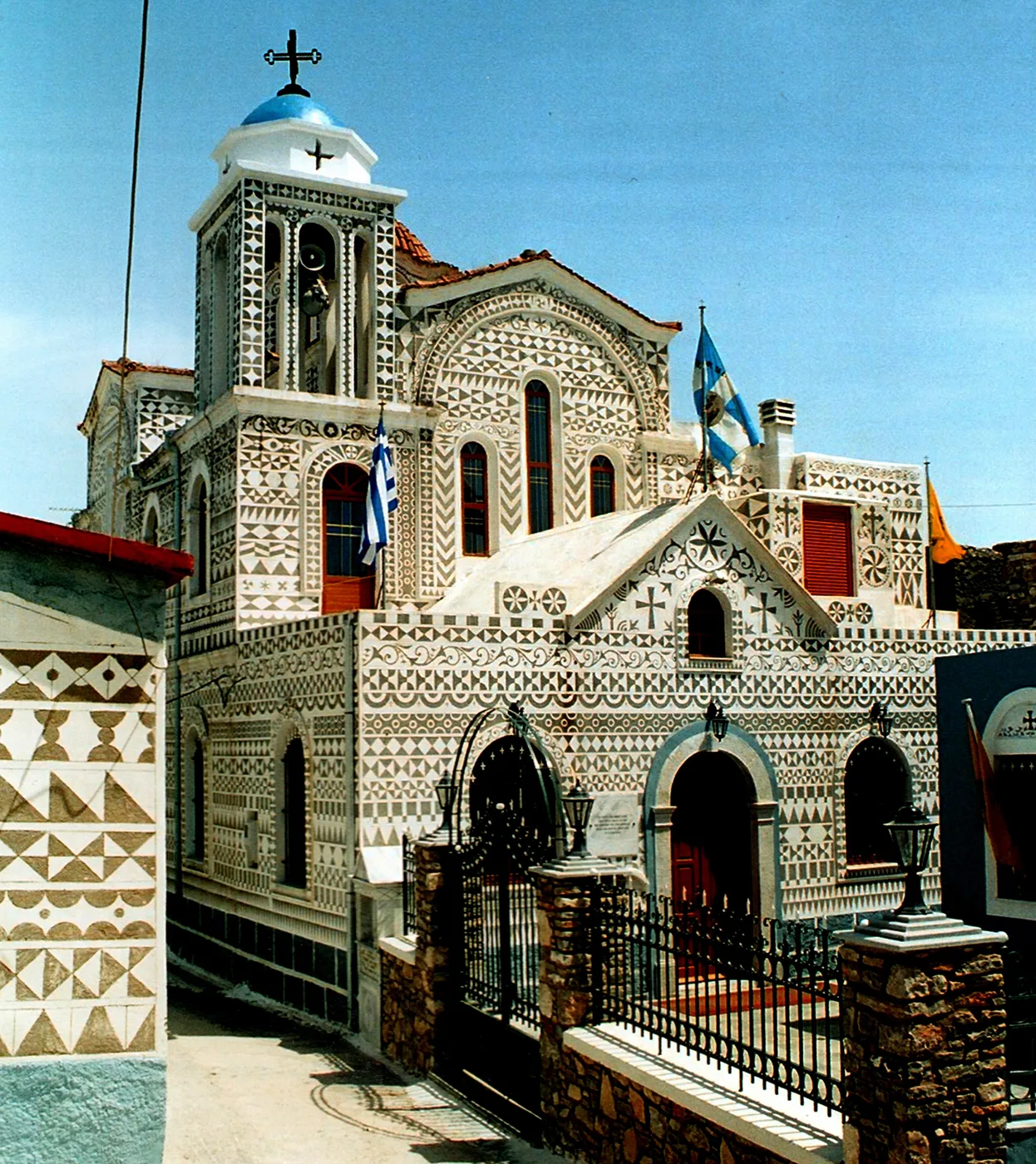
Even the churches are decorated.
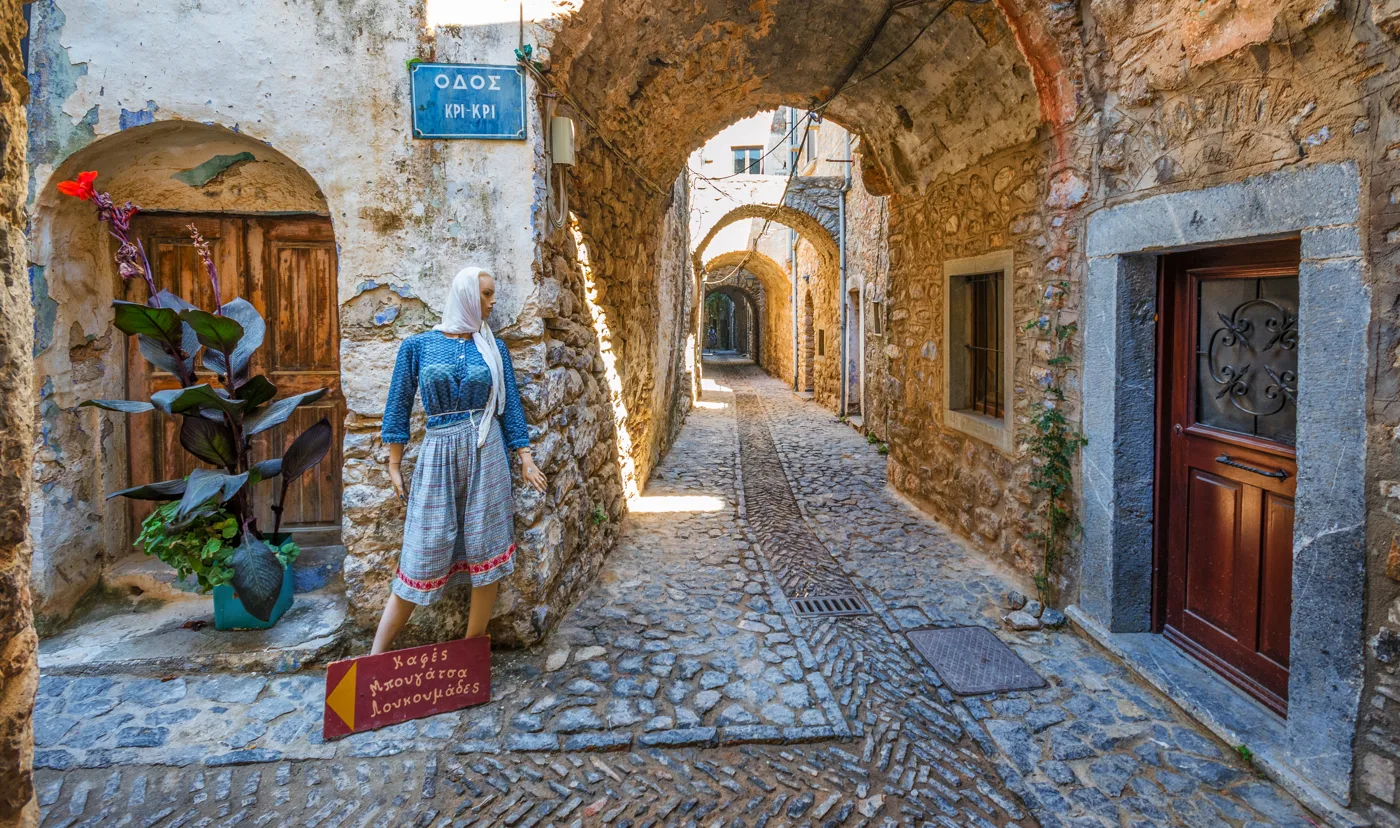
A medieval fortress village.
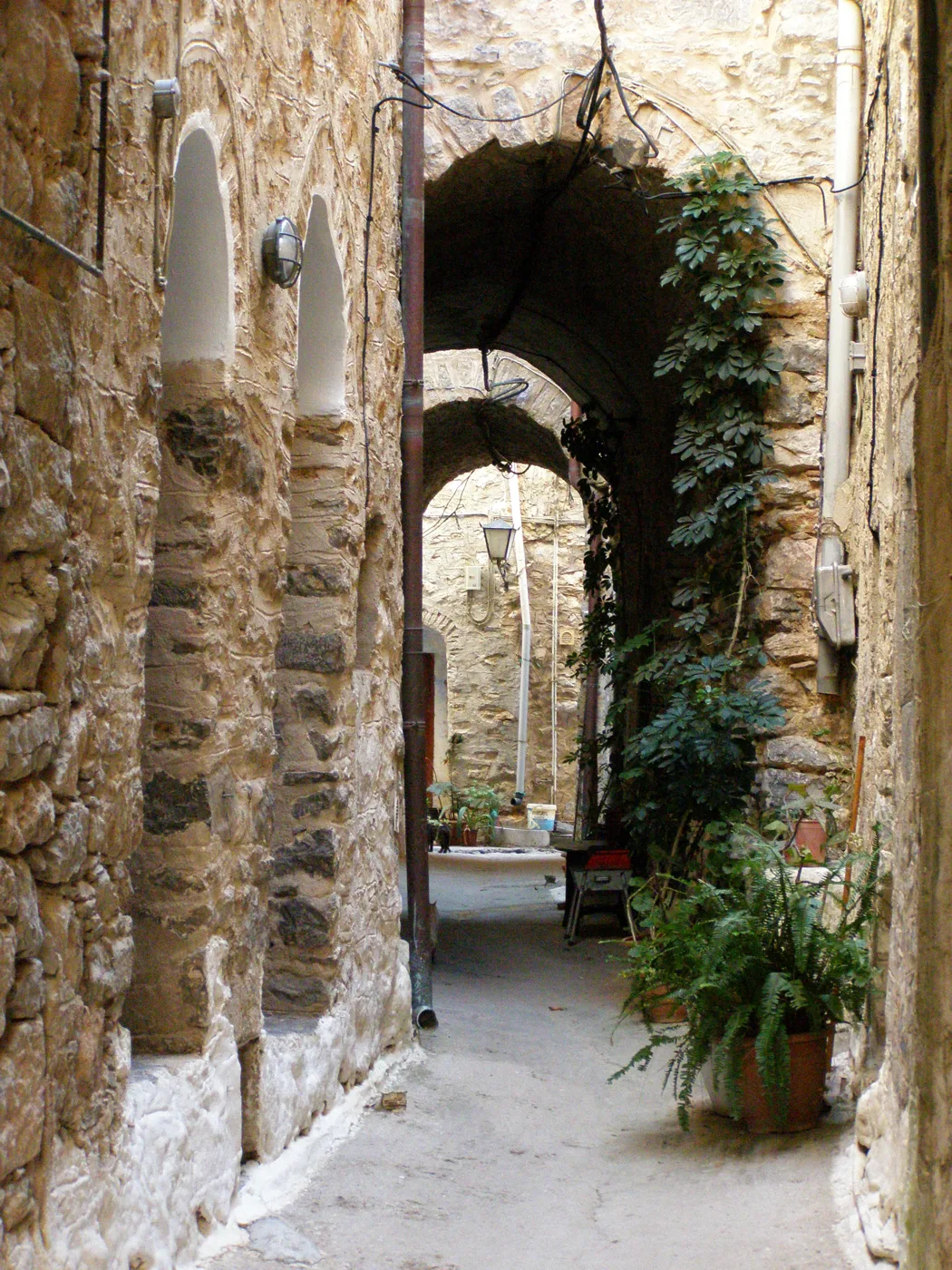
Alleys like a labyrinth.
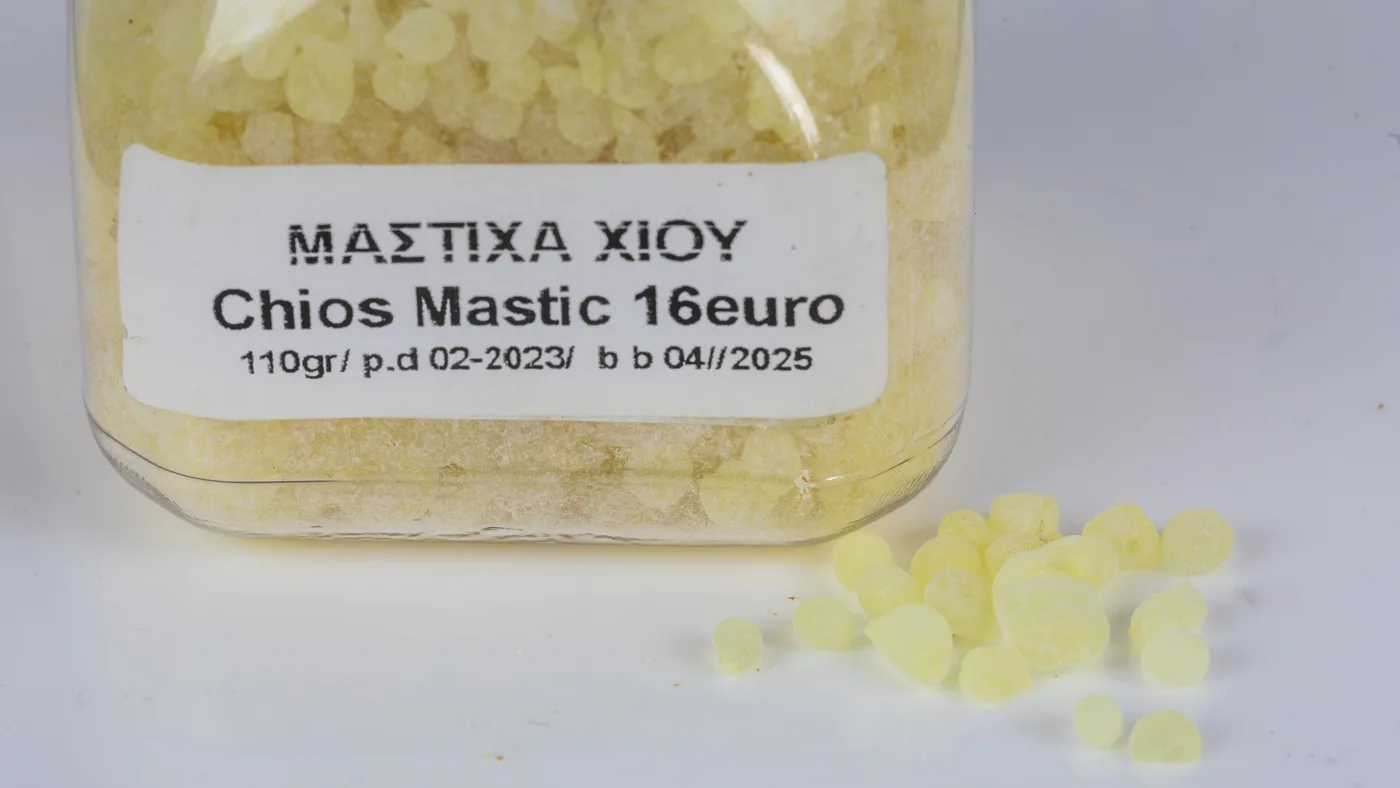
Found only in southern Chios.
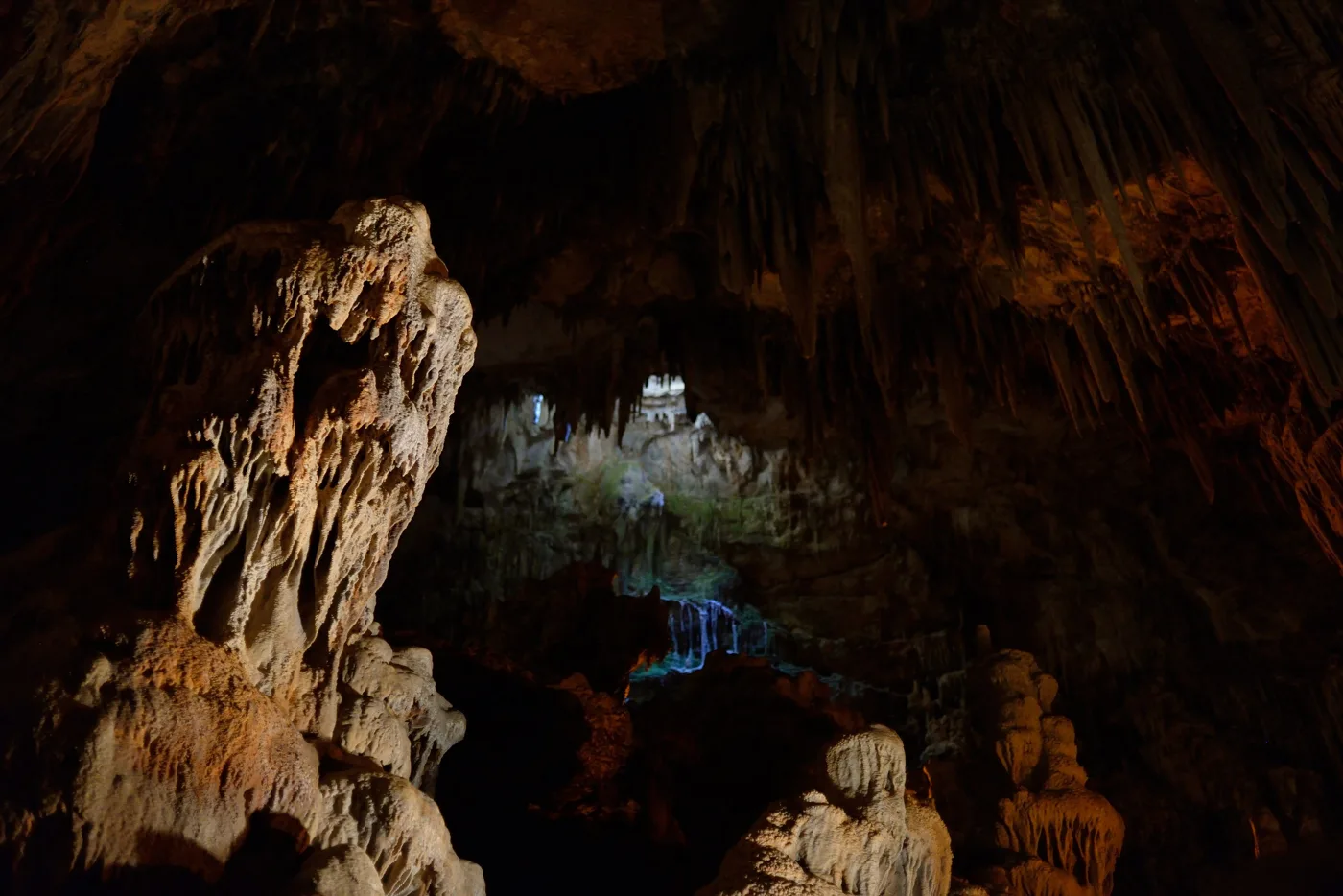
Stalactites near Mesta.
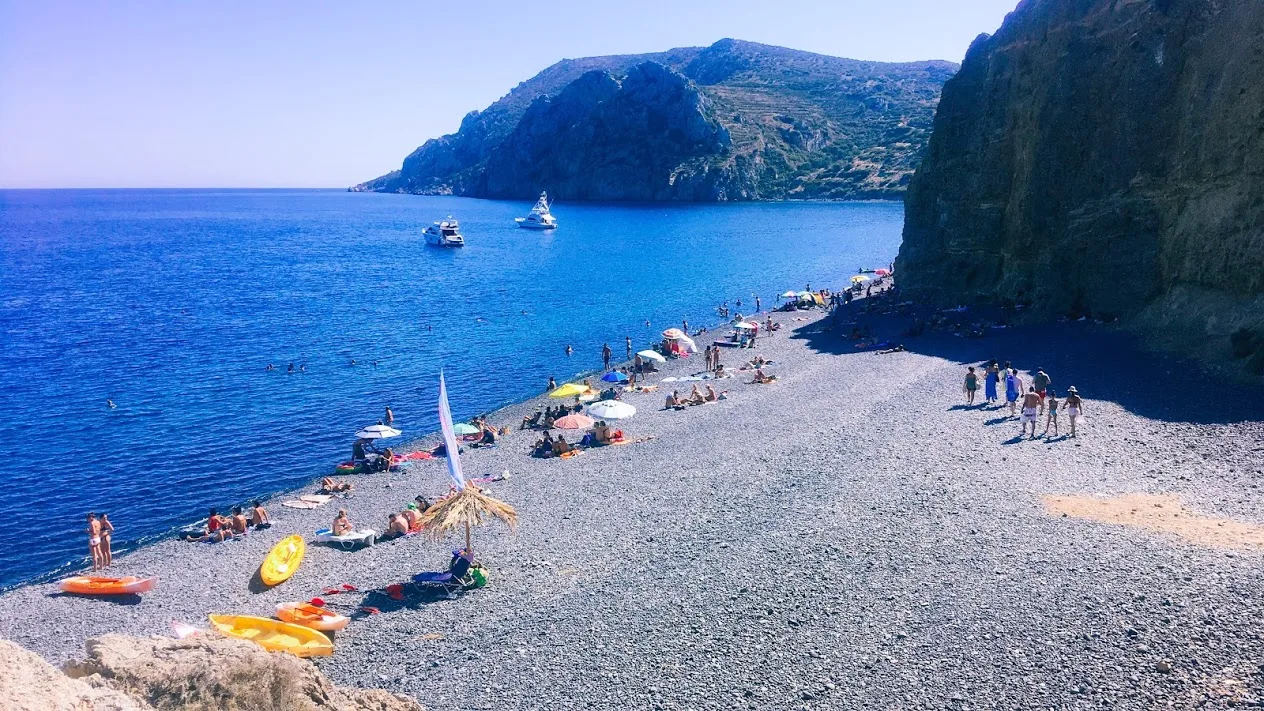
Black volcanic pebbles.
Photos: Eva-tzi (CC BY-SA 4.0), Lunar sea n (CC BY-SA 4.0), RomkeHoekstra (CC BY-SA 4.0), Dimitris Eleftheriou (CC BY-SA 4.0), Mariolovre (CC BY-SA 4.0), Raimond Spekking (CC BY-SA 4.0), Wim De Weerdt (CC BY 2.0), Aggelos1357 (CC0) · Wikimedia Commons
⛵ The north
Just north of town, Vrontados has windmills by the sea and Daskalopetra, a carved rock where, according to tradition, Homer taught. At Easter, Vrontados is known for the rocket war, when two parishes “fight” with thousands of home-made rockets.
Further up, Kardamyla is the village of shipowners, with a small harbour and the beach of Nagos. At the north-western tip, Volissos has a Byzantine castle on top of the hill and sandy beaches below it, such as Lefkathia and Managros. The north is wild and quiet, but parts of it have burned in large fires.
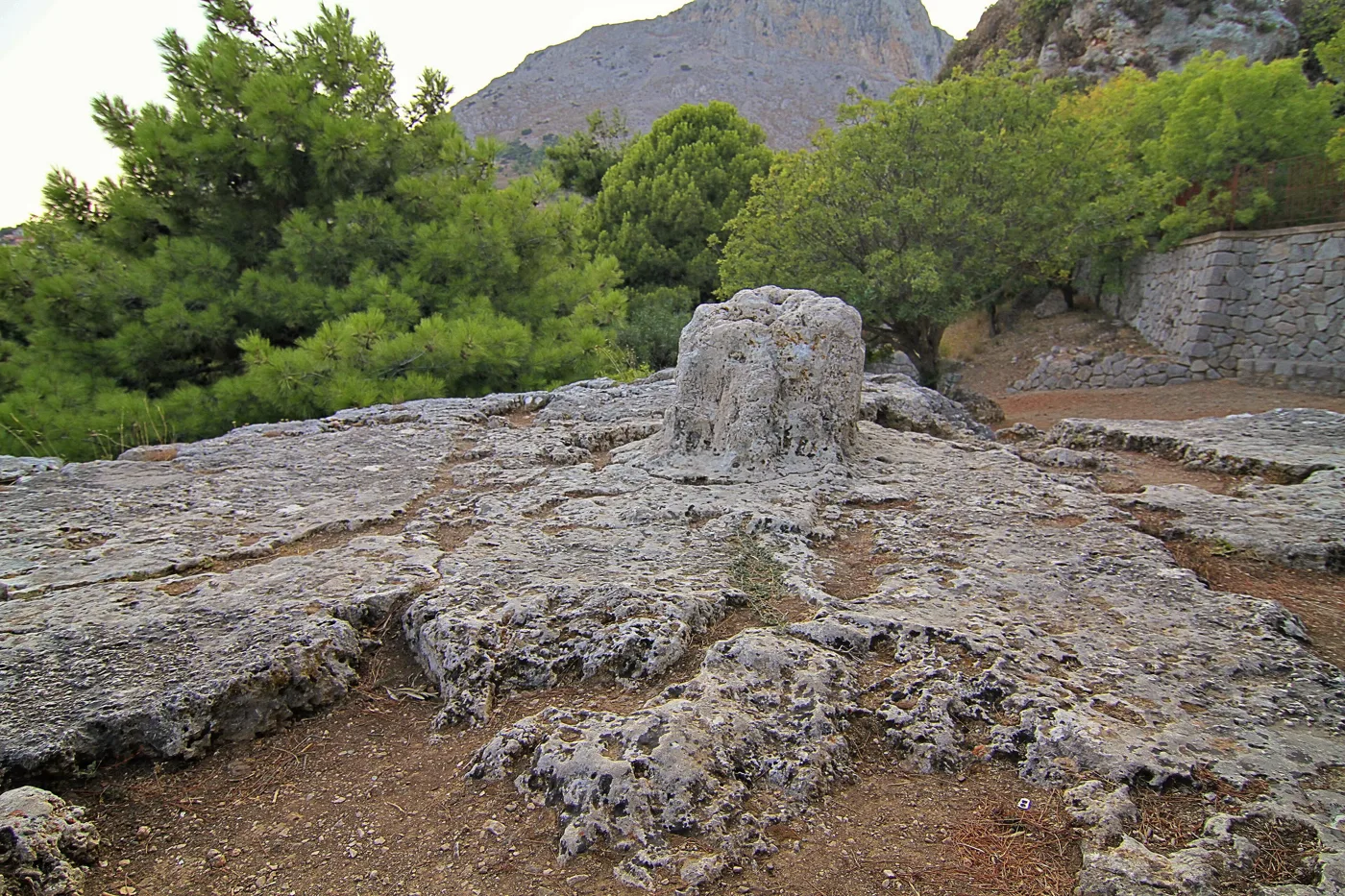
Homer's rock.
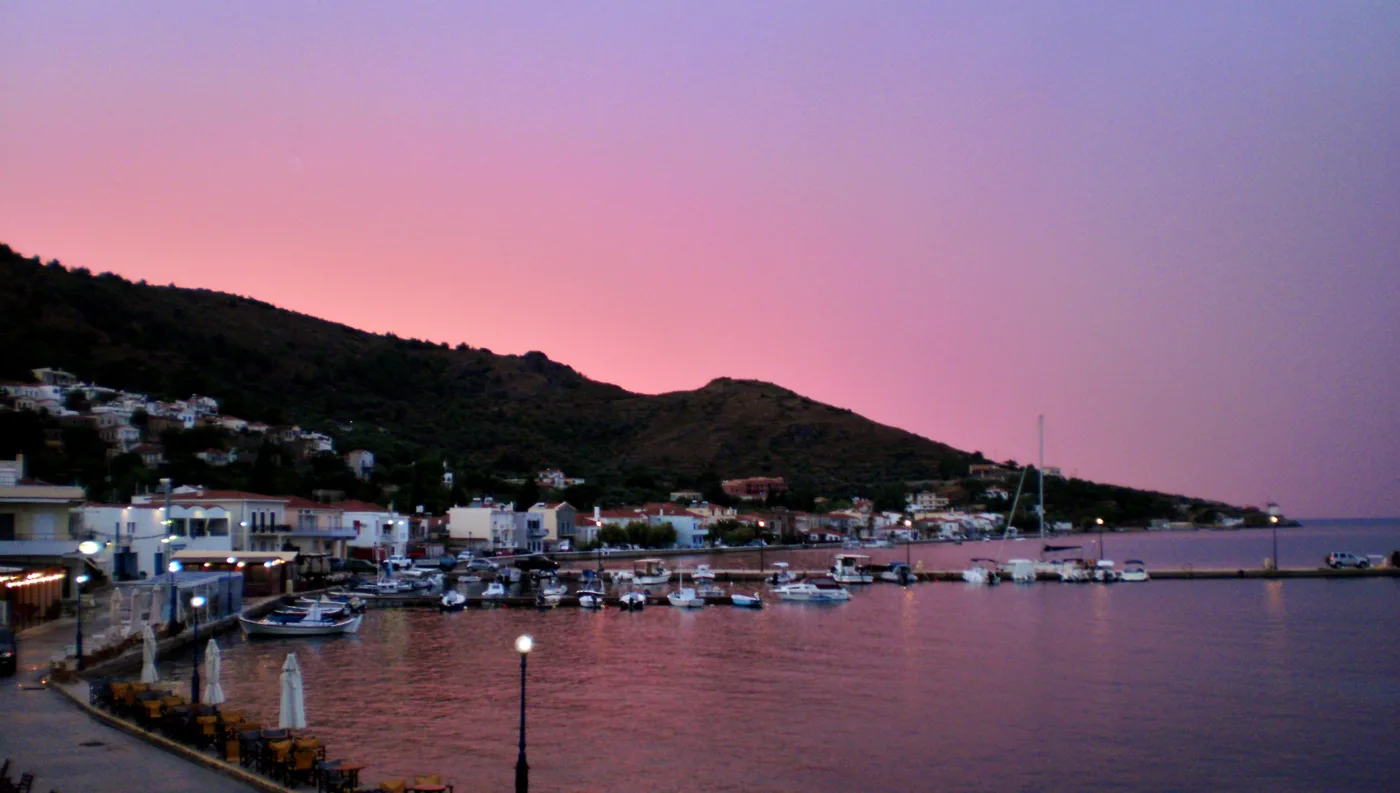
The village of shipowners.
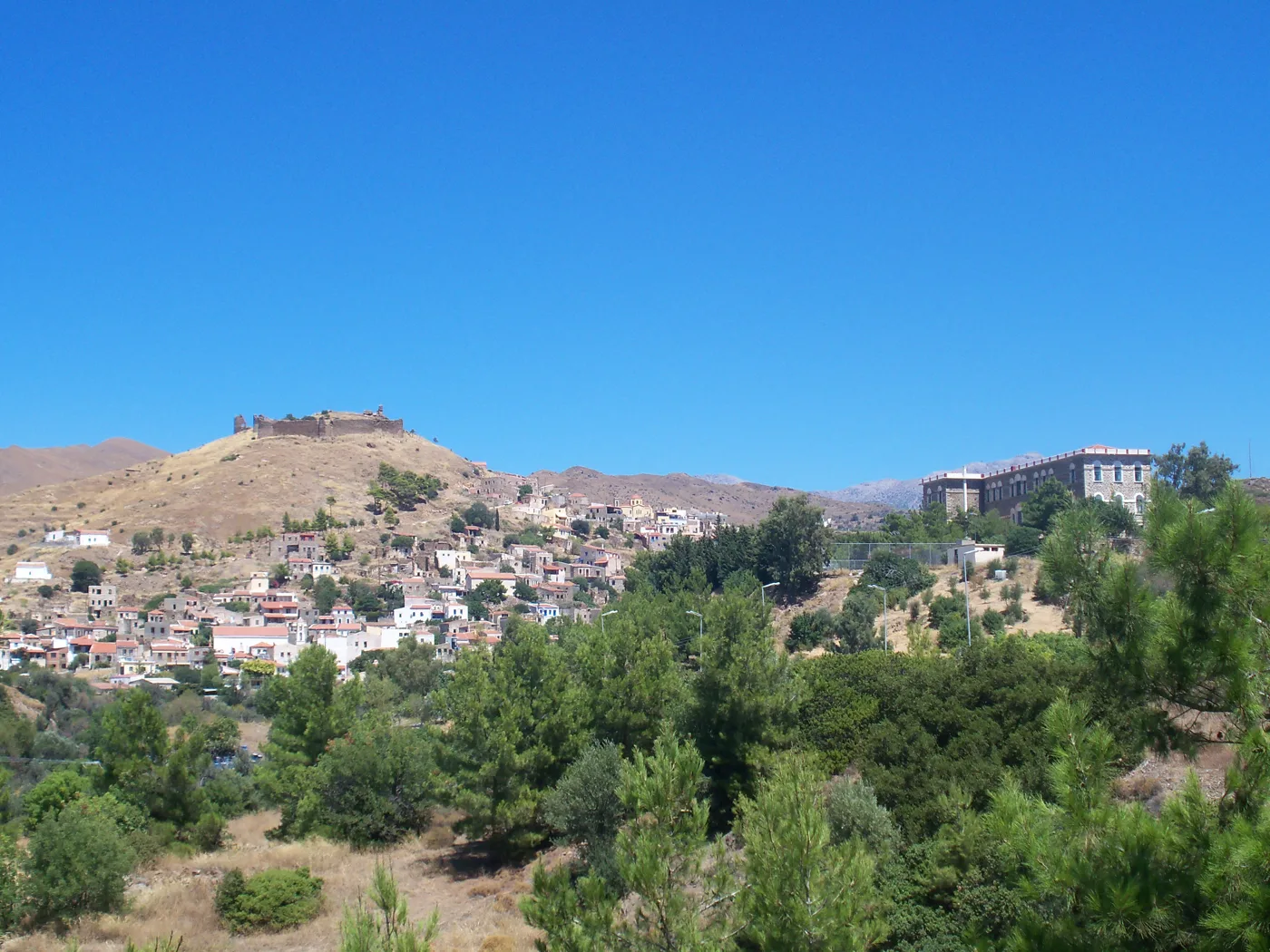
A village with a castle in north-western Chios.
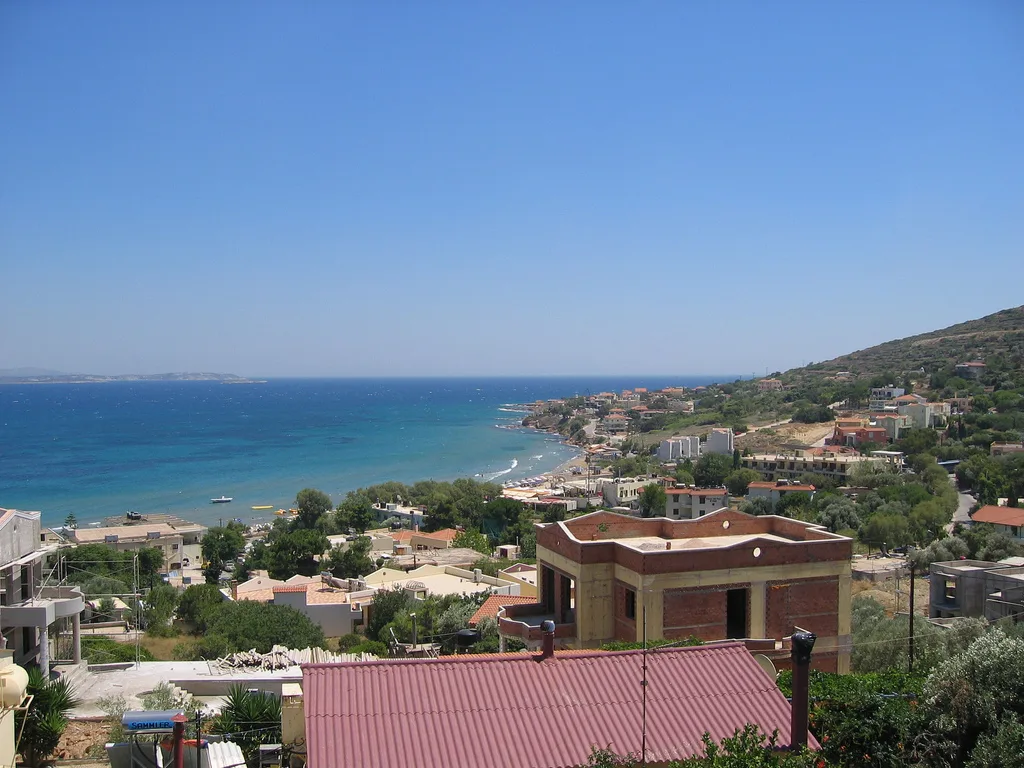
A sandy beach close to town.
Photos: FLIOUKAS (CC BY-SA 4.0), Ginak97 (CC BY-SA 4.0), Pitropakis (CC BY-SA 3.0), CostasTheGreek (CC BY-SA 3.0) · Wikimedia Commons
🏖️ The beaches
- Mavra Volia: black volcanic pebbles near Emporios.
- Karfas: a sandy beach with shallow water, a few minutes from town.
- Komi: a sandy beach with tavernas near Pyrgi.
- Agia Dynami: a small cove with blue water near Mesta.
- Lithi: a sandy beach in the west, with fish tavernas and sunset.
- Lefkathia and Managros: long beaches below Volissos.
- Nagos: pebbles and plane trees near Kardamyla.
Buses go to the larger villages, but not often. With a car you can see the south in one day, and Nea Moni and the north on another.
🍽️ What to eat
Try mastic in every form: liqueur, spoon sweets, ice cream and chewing gum. Kambos produces mandarins, which you will also find in sweets. In the tavernas ask for mastelo, a cheese grilled on the barbecue, local ouzo and soumada, a cool almond drink.
📅 When to go
The best time is May, June and September: warm sea, green nature and quiet roads. From July to September is the season when the mastic trees are cut. In July and August it is hot, but the island does not fill up like the Cyclades. If you go at Easter, you will see the rocket war.
✈️ How to get there from Athens
| How | Duration | From | Notes |
|---|---|---|---|
| Plane | Less than an hour | Athens airport | The fastest way. The airport is just outside town. |
| Ferry | About 7–9 hours | Piraeus | Often overnight, with a cabin. Arrives in the harbour of Chios. |
From Ioulianou 50, take Line 1 to Monastiraki and change to Line 3 for the airport. For Piraeus, Line 1 takes you straight to the port. On the island you need a car. To compare ferry and plane, see our guide to ferry or plane.
🗓️ Four days on Chios
The town and Kambos
Morning at the castle and a walk along the harbour. In the afternoon Kambos, among orchards and mansions, and a swim at Karfas.
The mastic villages
Pyrgi and Mesta, with a stop at the Mastic Museum. A swim at Mavra Volia and a meal in Emporios.
Nea Moni and Anavatos
Morning at Nea Moni for the mosaics. Then Anavatos and sunset at Lithi.
The north
Vrontados and Daskalopetra, then Kardamyla and the beach at Nagos. Return via Volissos, if you have time.
Frequently asked questions
Where should I stay on Chios?
In town, for the harbour and the food. In Kambos, for a mansion among the orchards. In Karfas or Komi, if you want to be by the sea. From all of these, the south and Nea Moni are close.
Can I go to Turkey from Chios?
Yes. Small boats go from Chios town to Çeşme in less than an hour. You need a passport and, depending on your nationality, a visa.
Is Chios good for children?
Yes. Karfas and Komi have shallow water, and children will enjoy the Olympi cave and the alleys of Mesta.
How many days do I need?
At least four days for the town, the mastic villages, Nea Moni and a little of the north. To see the island at your own pace, a week.
— Kathy