🪪 The island at a glance
📍 Where it is
Tinos lies in the Cyclades, between Andros and Mykonos. It has no airport, but it is one of the islands closest to Athens: ferries leave every day from Rafina and Piraeus, and Mykonos is only a few minutes away by boat.
📍 Where Tinos is
Tinos is in the Cyclades, between Andros and Mykonos, and not far from Athens. The island is in red, and in green are the two ports the ferries leave from, Piraeus and Rafina.
🗺️ The map of the island
Chora and the harbour are on the south coast. Behind it rises Exomvourgo, a rock with the ruins of a Venetian castle, and around it are the villages of the interior. In the west are Pyrgos and the marble villages. The roads are good but winding, and there are many villages, so you will need a car.
🗺️ Map of Tinos
Chora and the harbour are on the south coast. Exomvourgo, Volax and Arnados are in the mountains behind Chora. Pyrgos, Kardiani and Isternia are in the west, and the beaches are all around the island. Tap each number to see what it is.
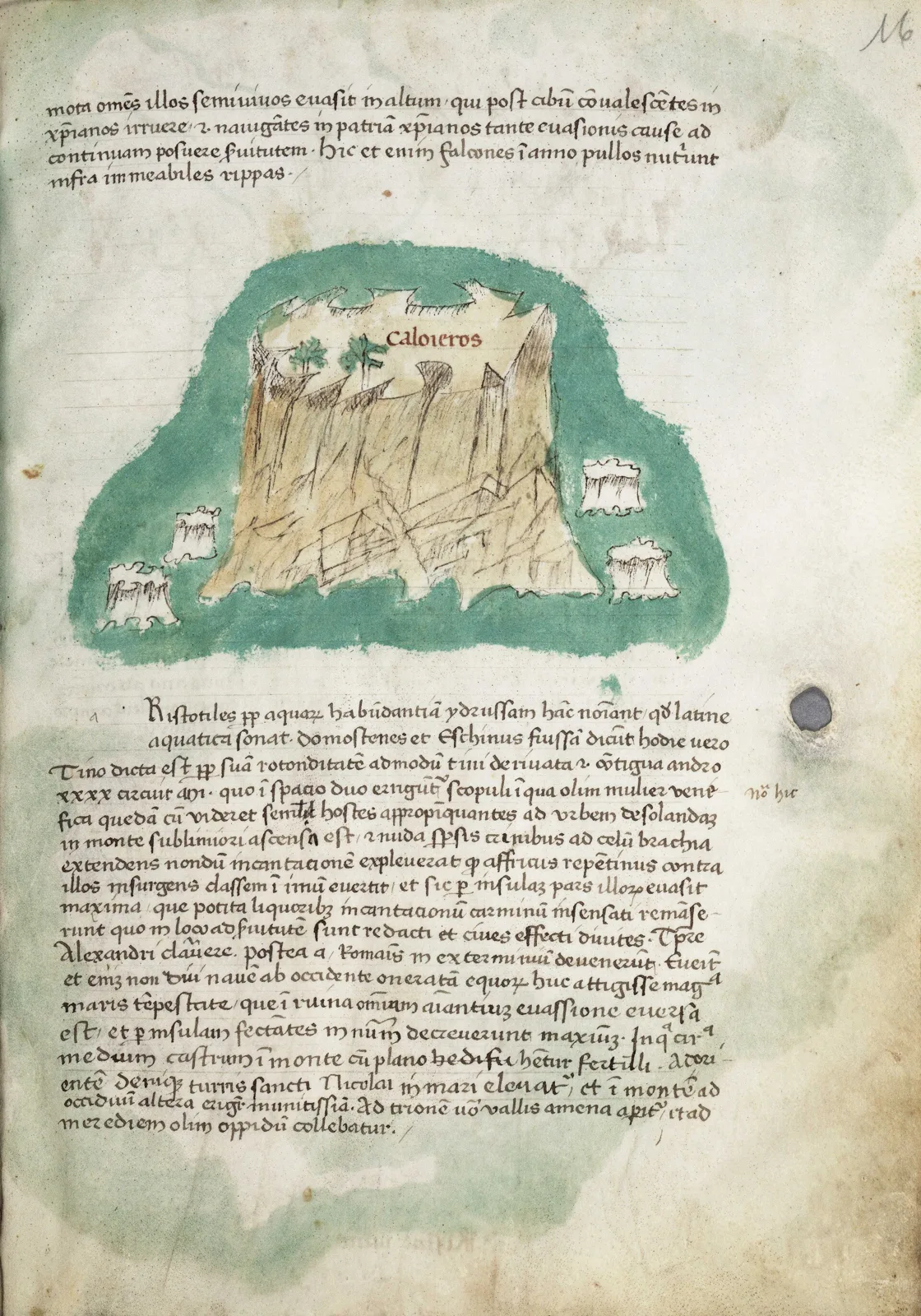
Map: Cristoforo Buondelmonti, c. 1420 (CC BY-SA 4.0) · Wikimedia Commons
⚖️ Is it worth it? The pros and cons
Tinos is not an island for those looking for parties and famous beaches. It is an island for those who want villages, food and quiet. Here is an honest picture.
📊 At a glance, from 1 to 5
👍 The pros
- More than 40 villages, each one different.
- The marble and the dovecotes.
- Very good food and local products.
- Close to Athens, with ferries every day.
- Quiet, without the crowds of Mykonos.
👎 The cons
- No airport.
- Very windy, especially in August.
- The beaches are good, not the best in the Cyclades.
- Full of pilgrims around 15 August.
- Little nightlife.
⛪ Chora and Panagia
Above the harbour, at the top of a wide street, stands Panagia Evangelistria, the church built after an icon was found here in 1823. It is the biggest pilgrimage site in Greece: many pilgrims climb up from the harbour on their knees, along a narrow carpet. On 15 August the island fills with people. On the same day in 1940, an Italian submarine sank the cruiser Elli in the harbour, and a memorial on the waterfront recalls it.
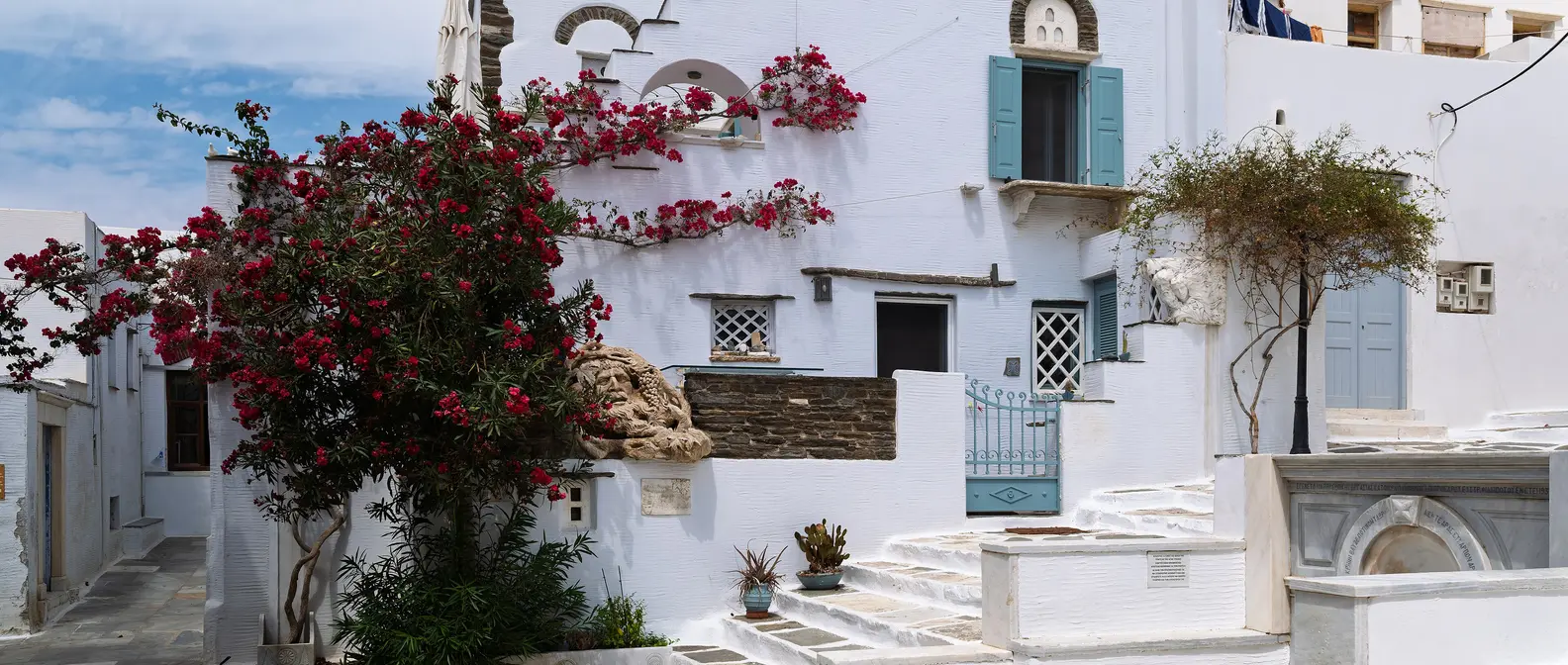
Chora is a lively small town, with cafés on the waterfront, alleys with bougainvillea and mansions with marble doorways. Around the church there are museums with icons and works by artists from Tinos.
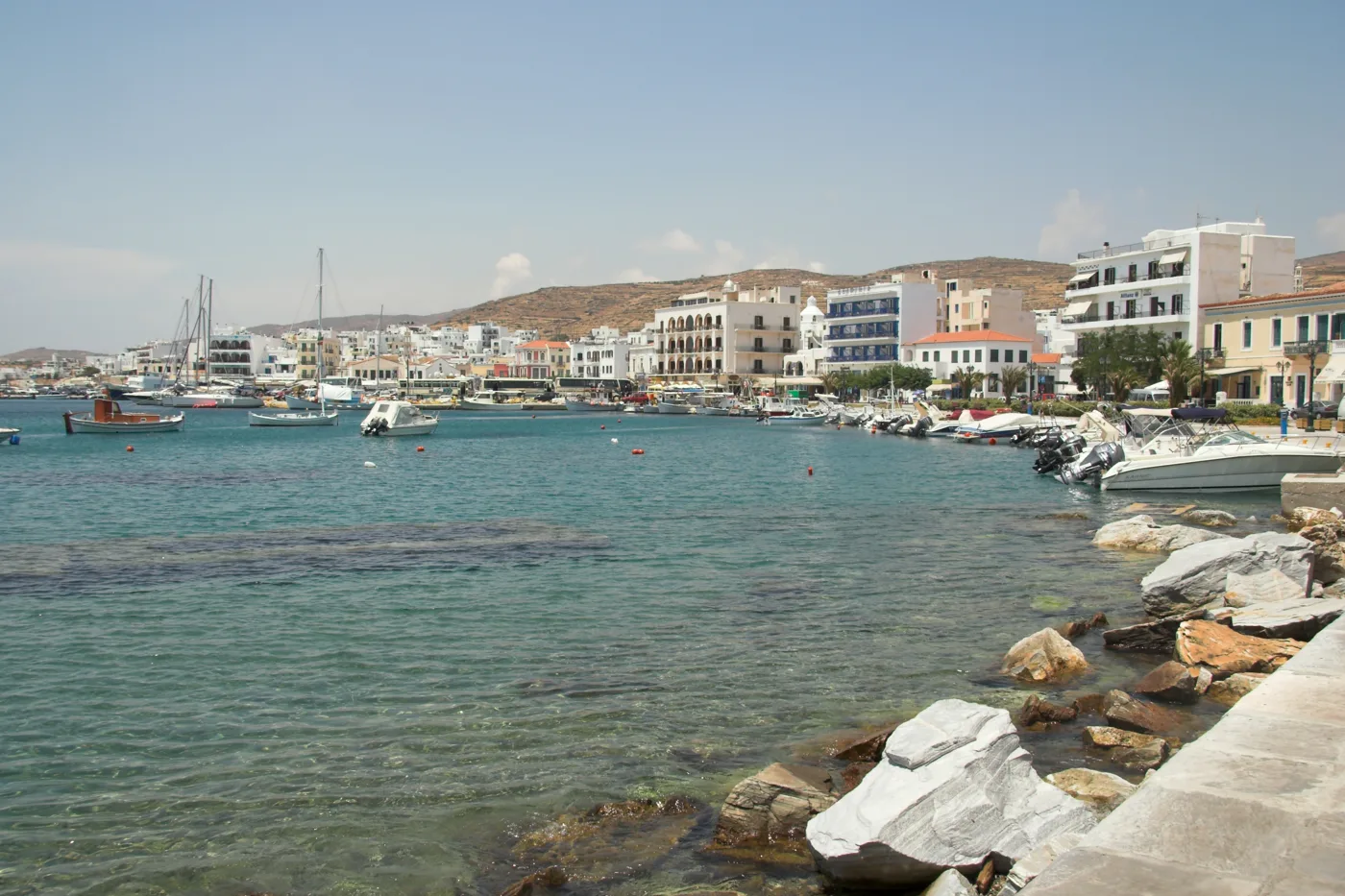
Chora lives around the harbour.
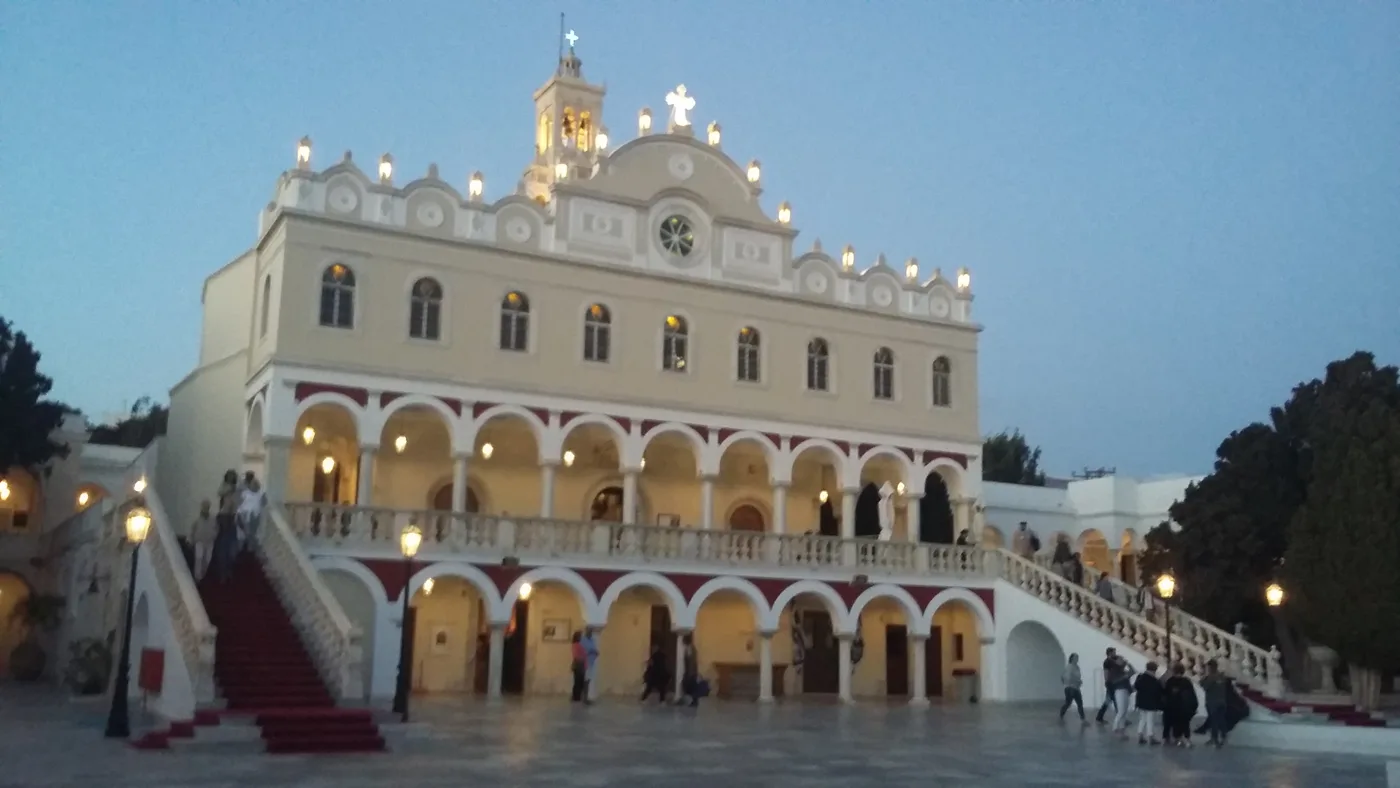
The biggest pilgrimage site in Greece.
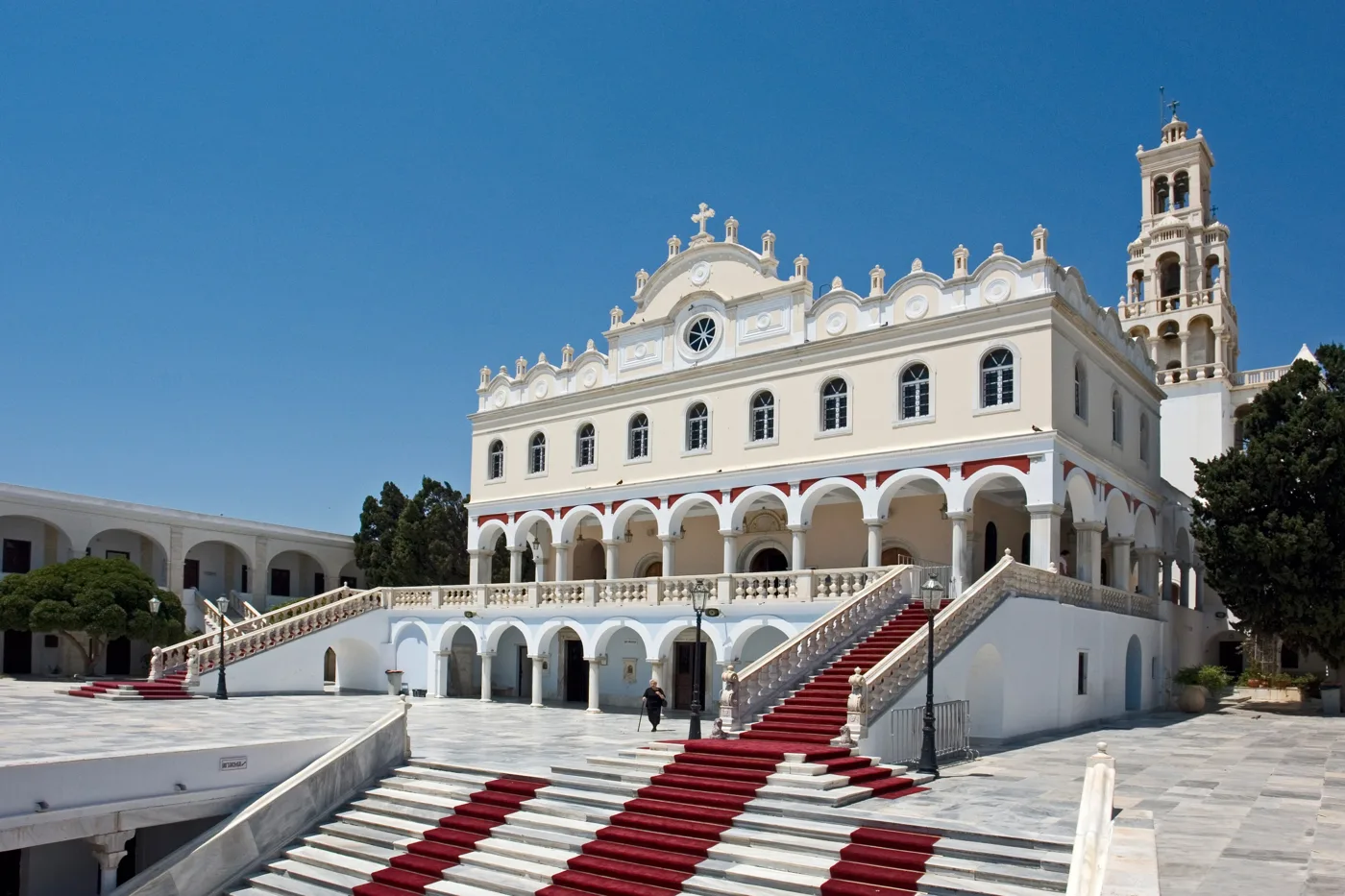
White marble and a red carpet.
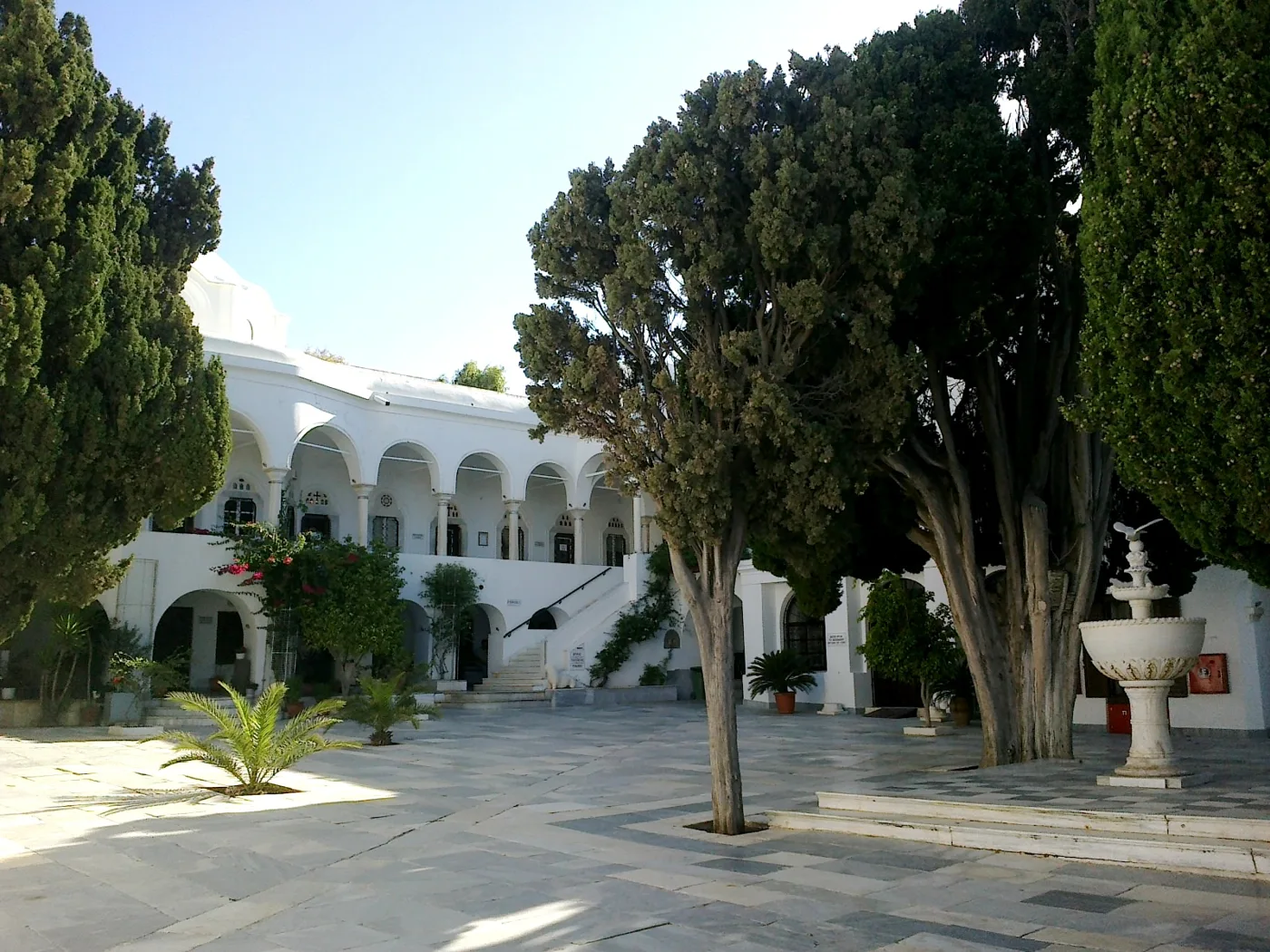
Shade and marble around the church.
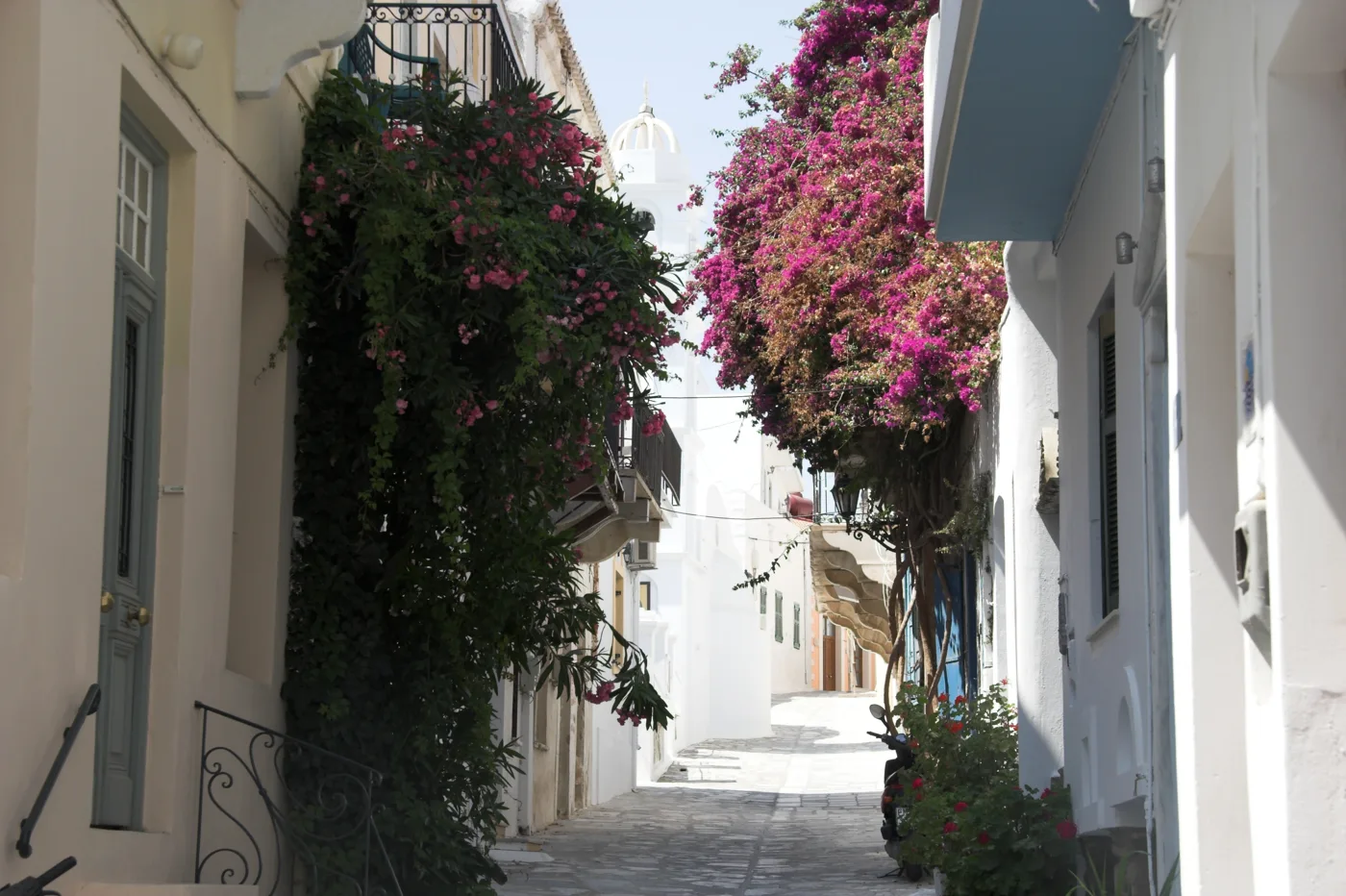
Old Chora behind the harbour.
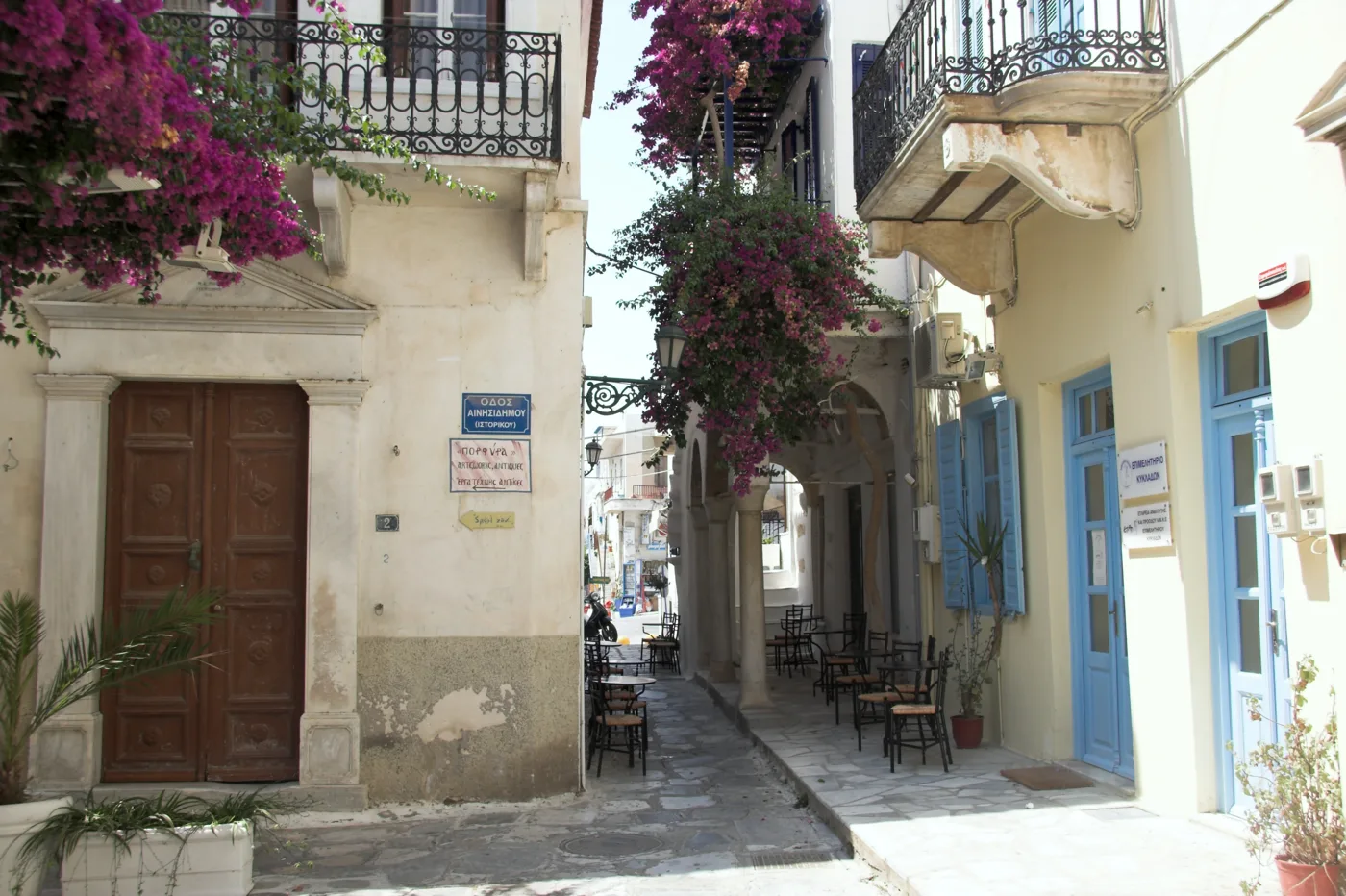
Mansions with marble doorways.
Photos: Zde (CC BY-SA 4.0), Silvie June (CC BY-SA 4.0), Hans Peter Schaefer, rene boulay (CC BY-SA 3.0) · Wikimedia Commons
Inside the Evangelistria, dress modestly and speak quietly. If you want peace, avoid the days around 15 August and 25 March.
🪨 Pyrgos and the villages
Tinos is the island of marble. Its marble craftsmanship is on the UNESCO list of intangible cultural heritage, and you will see marble on doors, fountains, windows and bell towers in every village. Pyrgos is the best known: it has a square with a plane tree, the Museum of Marble Crafts and the house of the sculptor Yannoulis Chalepas, who was born here. A little further down, Panormos is a small harbour with fish tavernas.
In the west, Kardiani and Isternia hang above the sea, with views as far as Syros. In the mountains of the interior, Arnados is a mountain village with narrow alleys. Many villages on Tinos are Catholic, and you will see Catholic and Orthodox churches side by side.
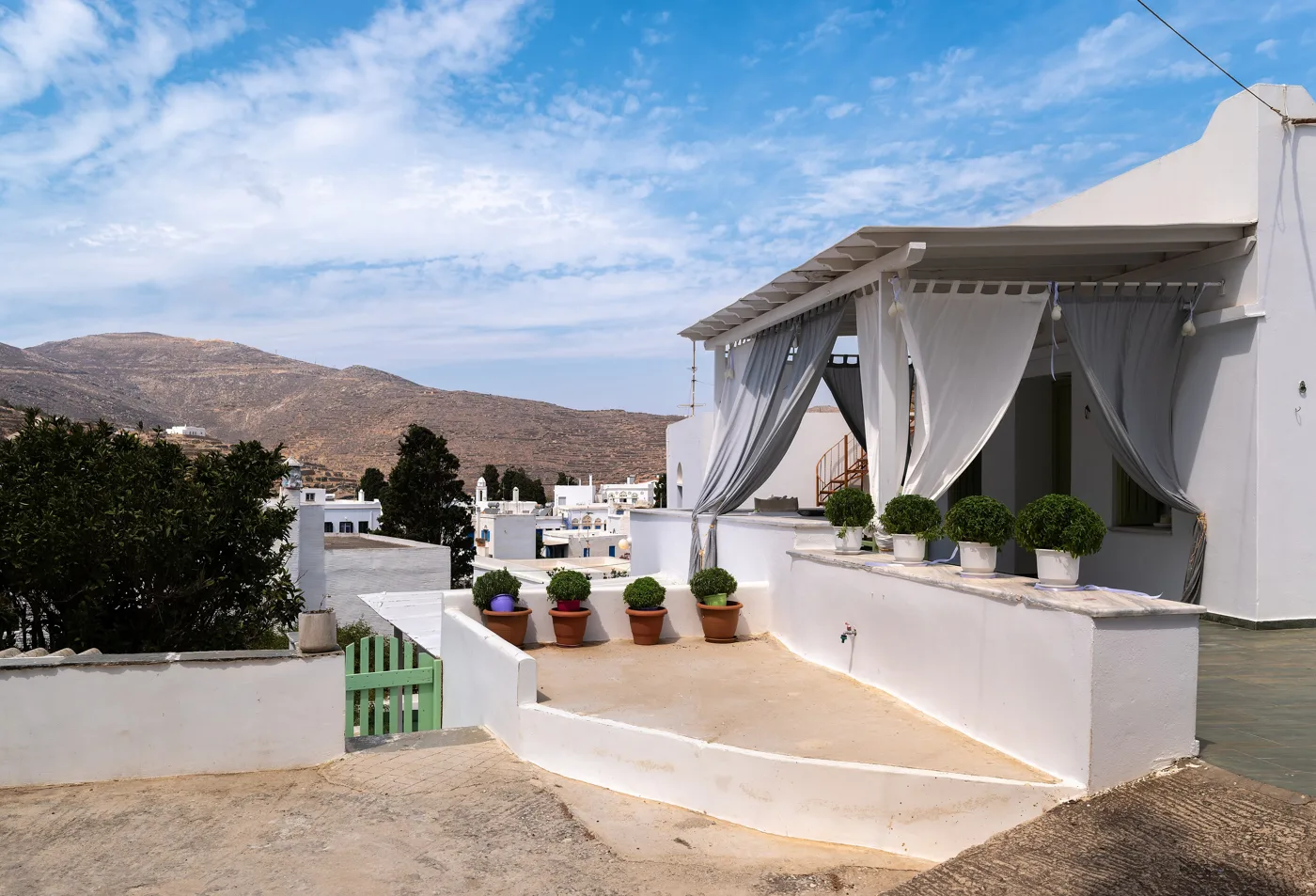
The village of the marble carvers.
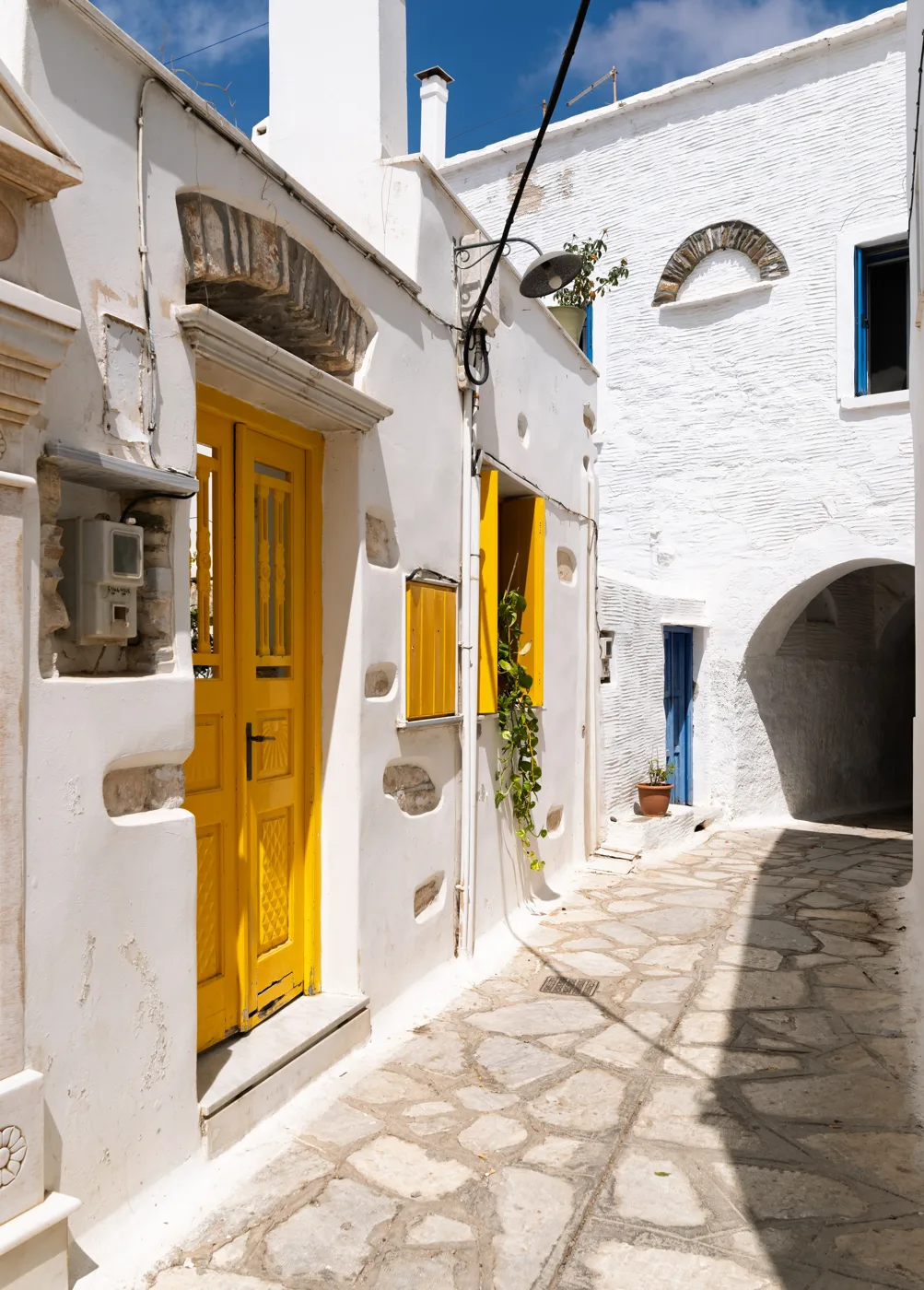
Marble on every door.
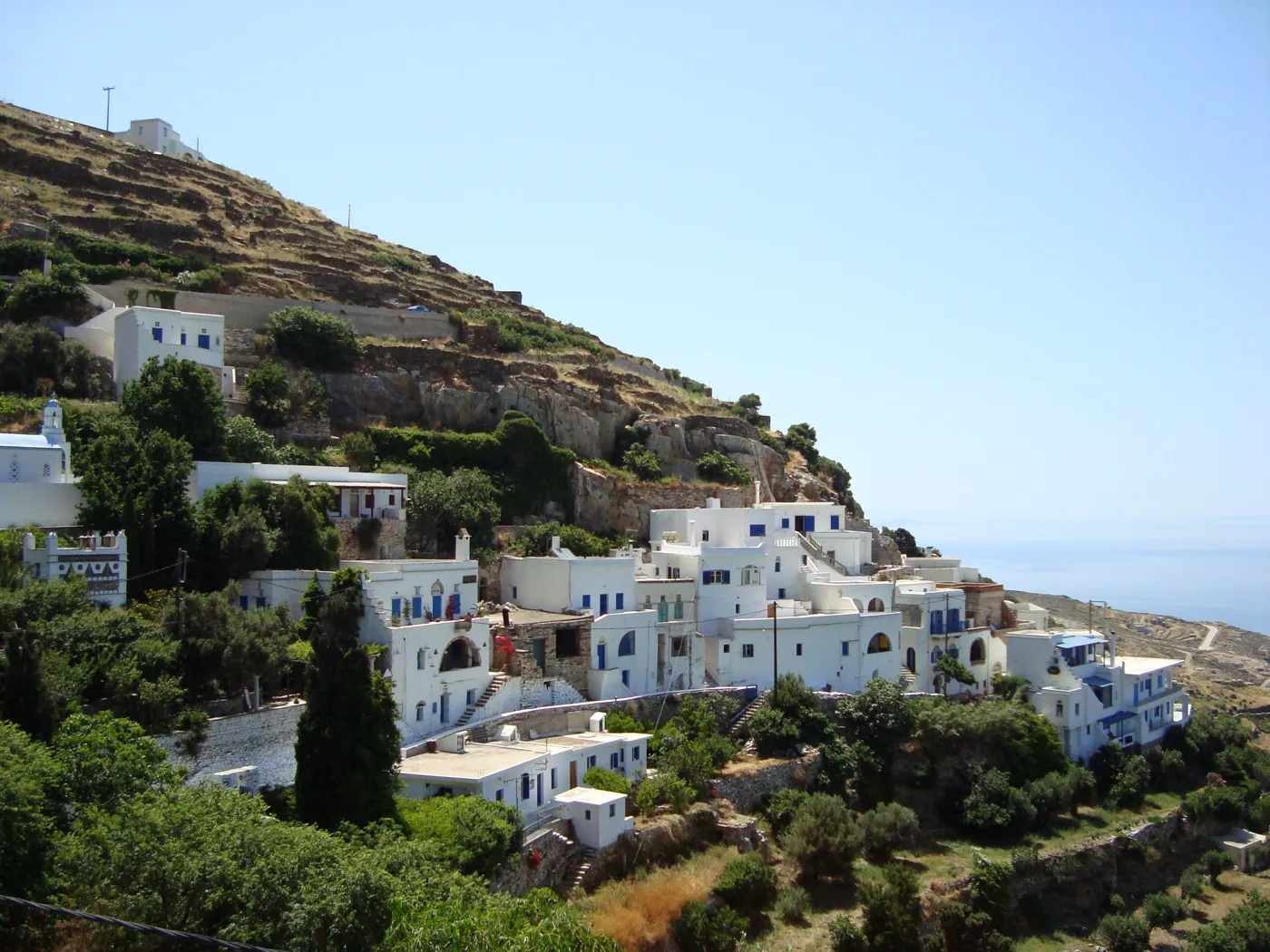
A village on the slope with a sea view.
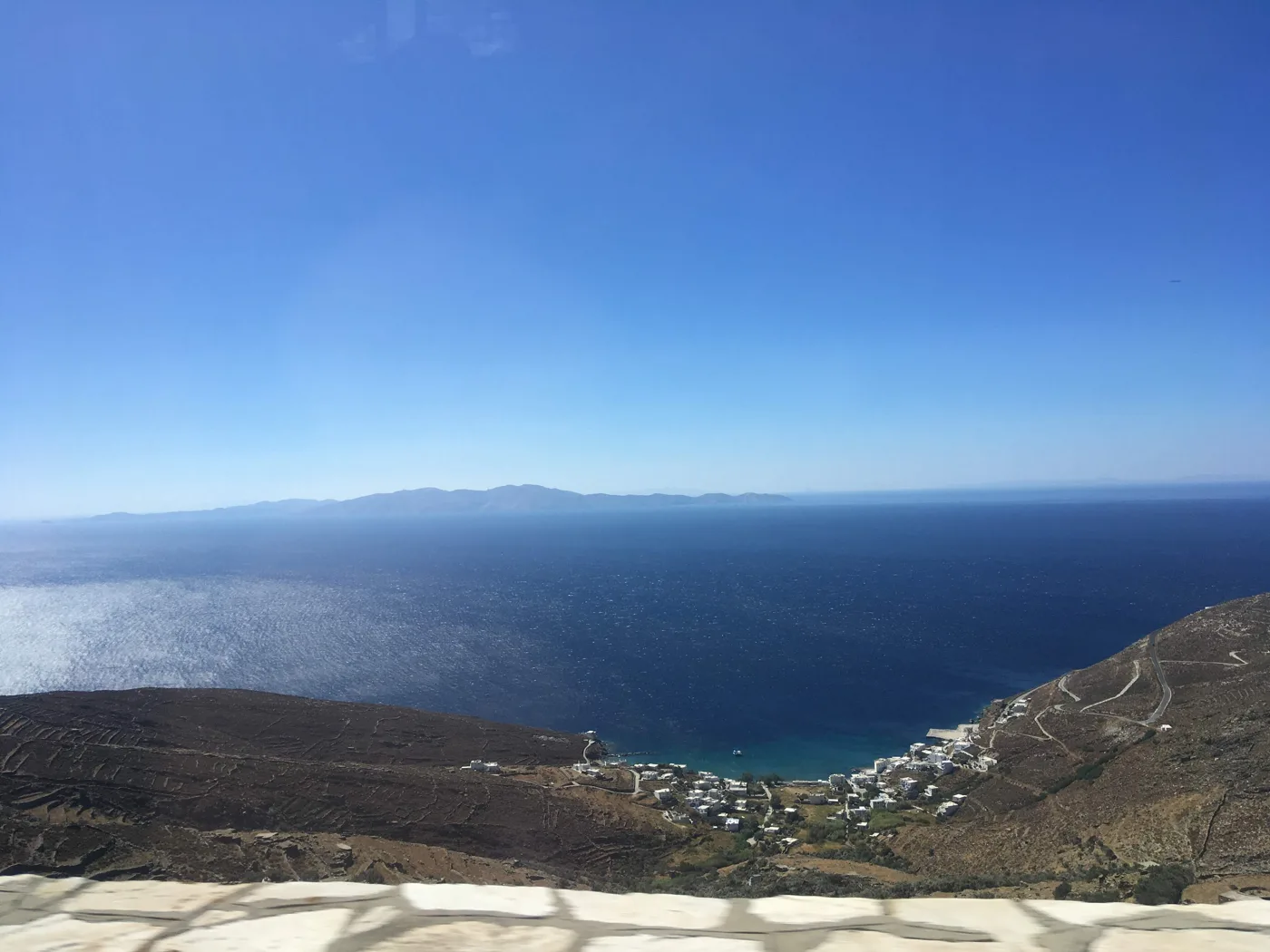
A view of the bay from above.
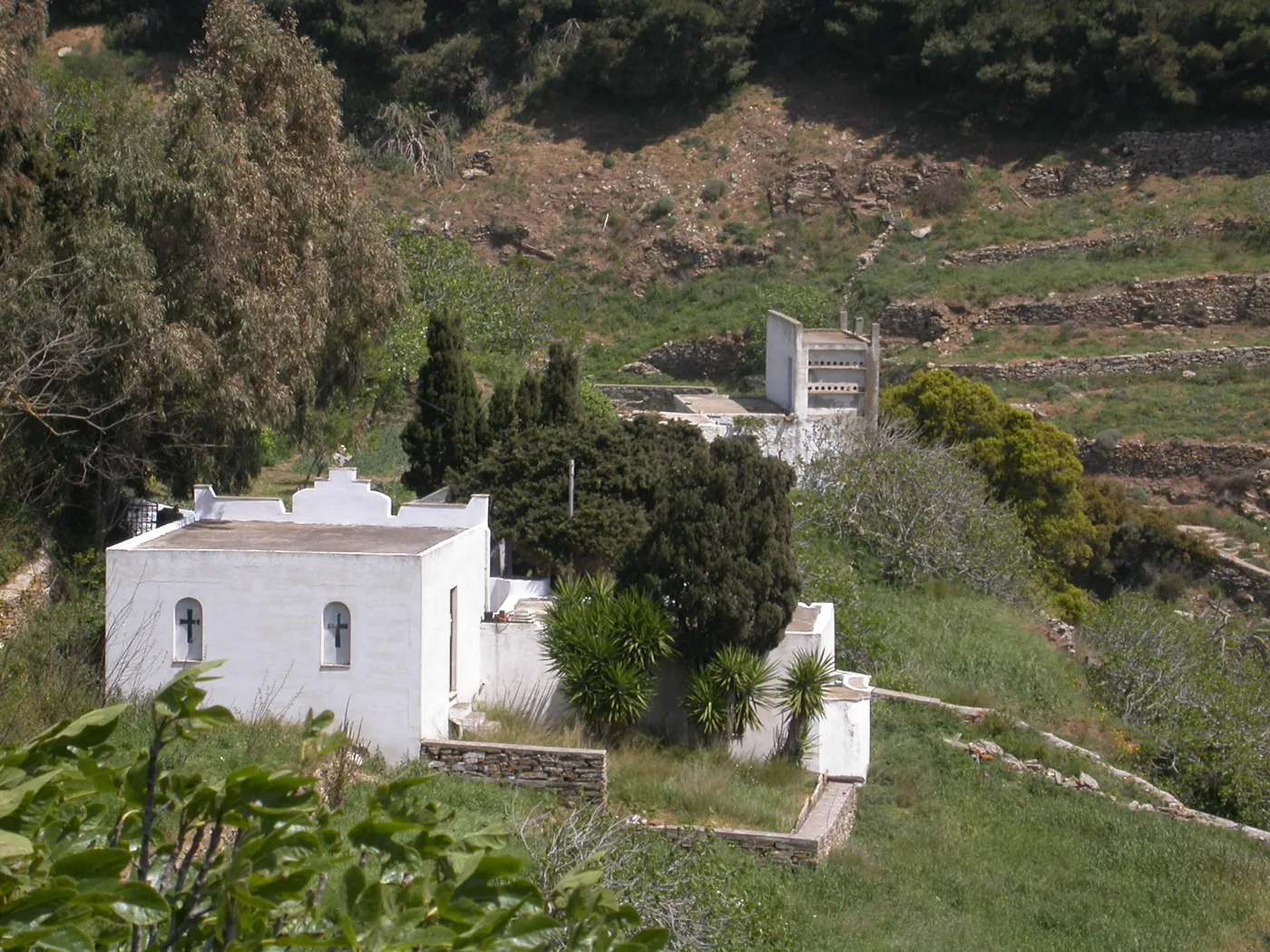
A mountain village below Exomvourgo.
Photos: Jules Verne Times Two (CC BY-SA 4.0), Rodou.lol (Attribution), Aggelos1357 (CC0), Stepanps (CC BY-SA 4.0) · Wikimedia Commons
🕊️ Dovecotes, Exomvourgo and Volax
All over Tinos you will see dovecotes: stone towers for pigeons, with white triangular and geometric patterns. There are hundreds of them, mostly in the valleys of the interior, among stone terraces. Some of the finest are around Tarambados, where there is also a footpath.
Above Chora, Exomvourgo is a rocky hill with the ruins of the Venetian castle. The Venetians held Tinos until 1715, longer than any other island in the Cyclades. You climb up on foot, and the view covers the whole island. A little further on, Volax is a small village among huge round granite boulders, known for the baskets its residents weave.
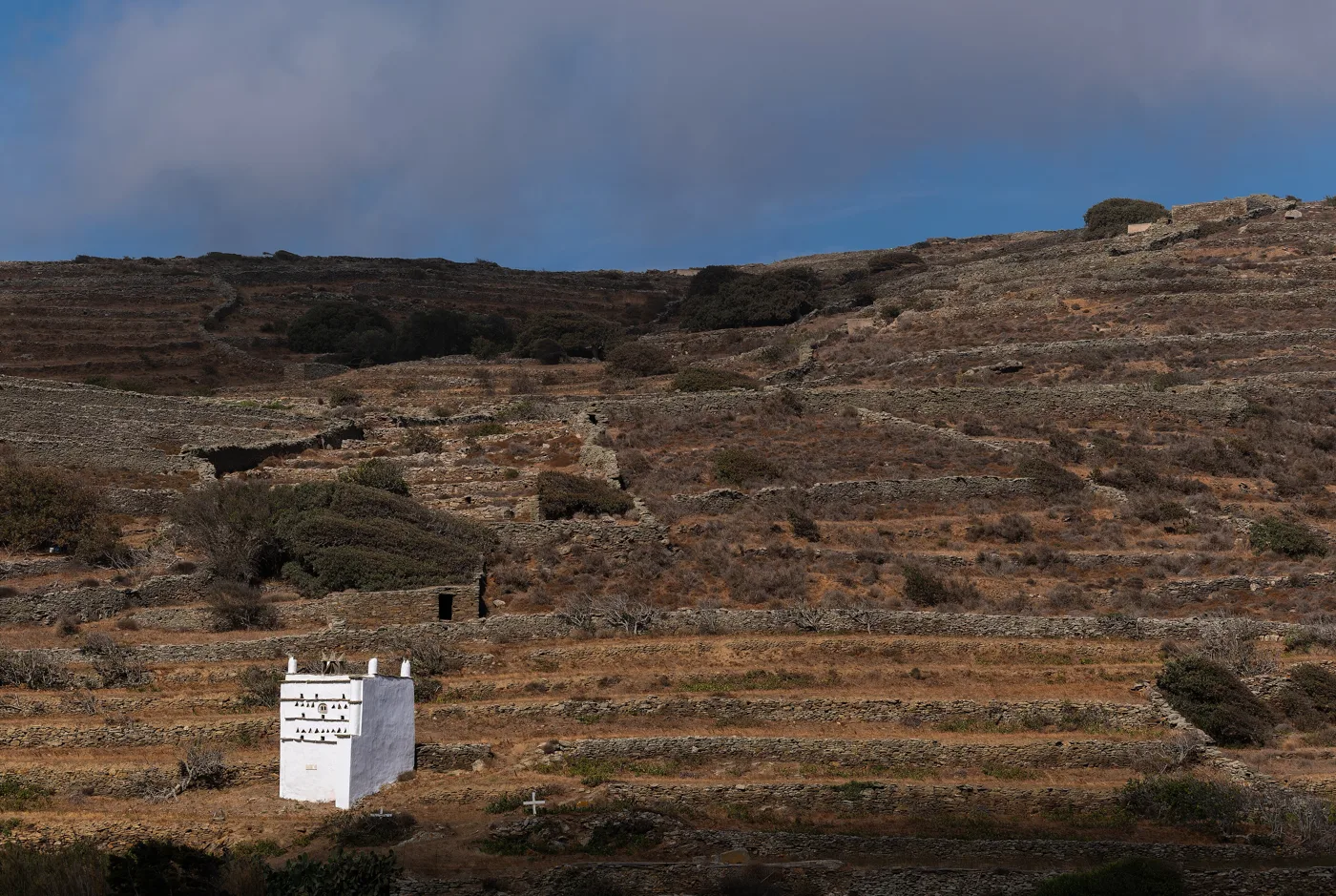
Towers for pigeons all over the island.
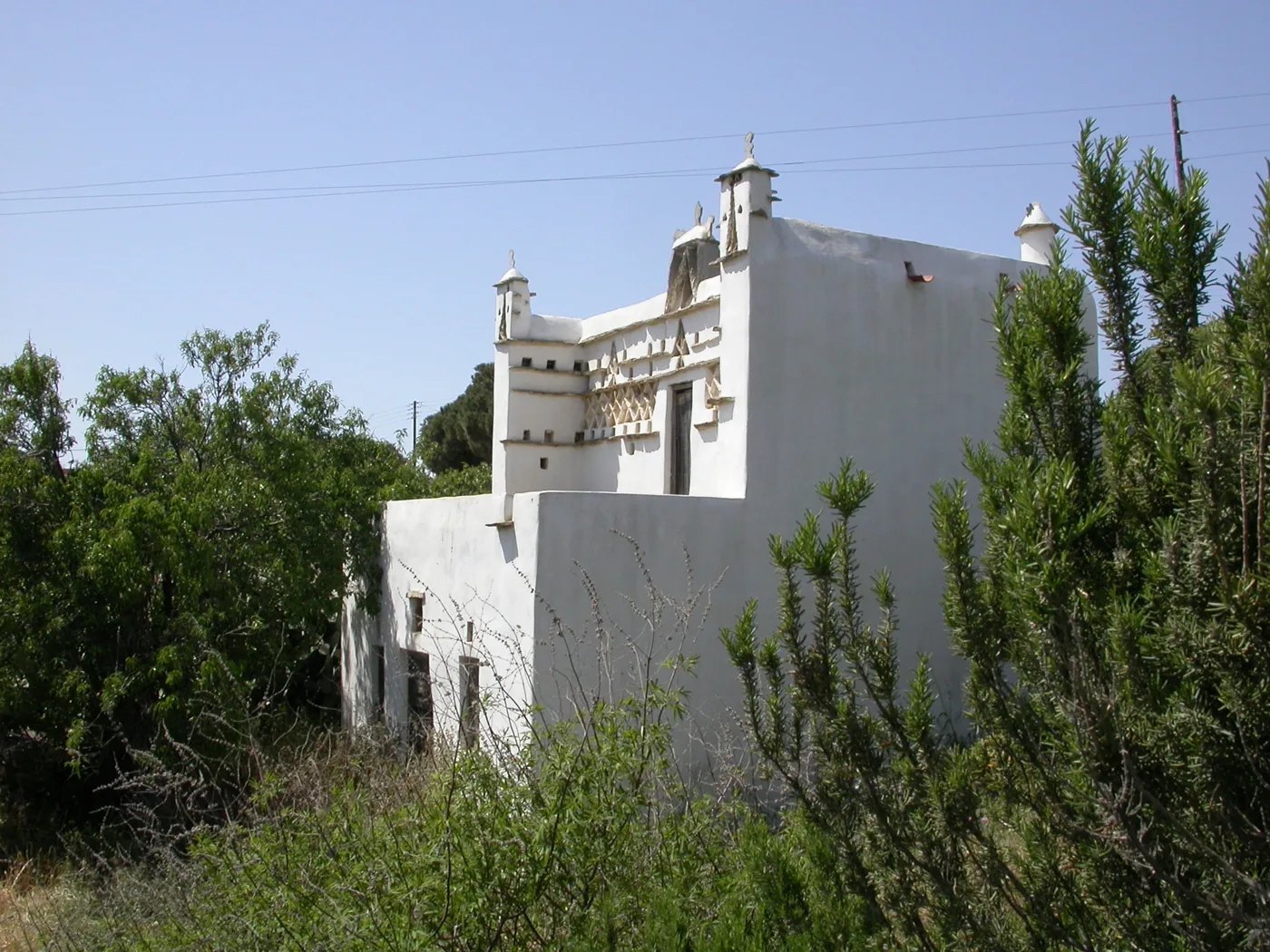
Every dovecote has different patterns.
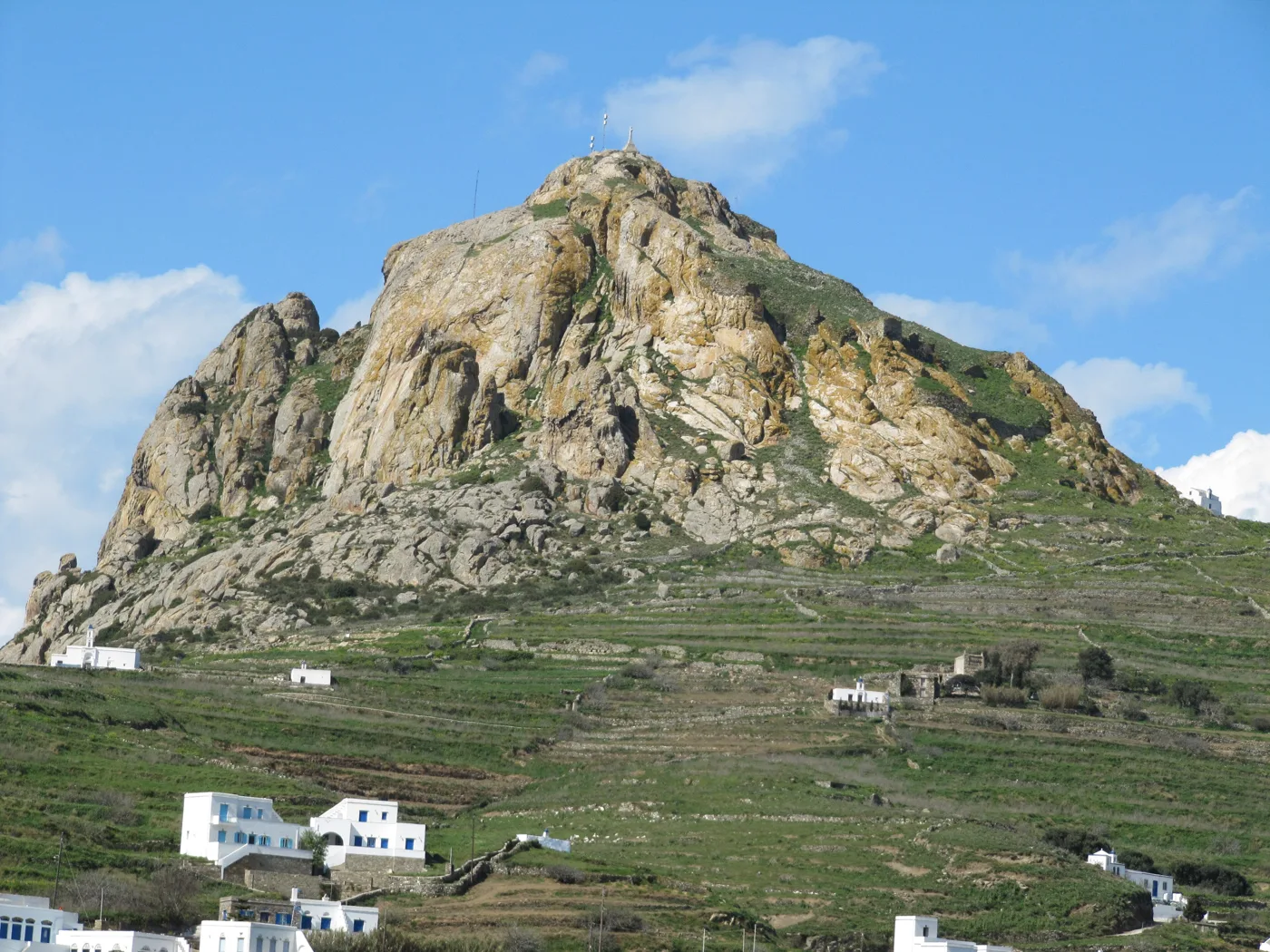
The rock with the Venetian castle.
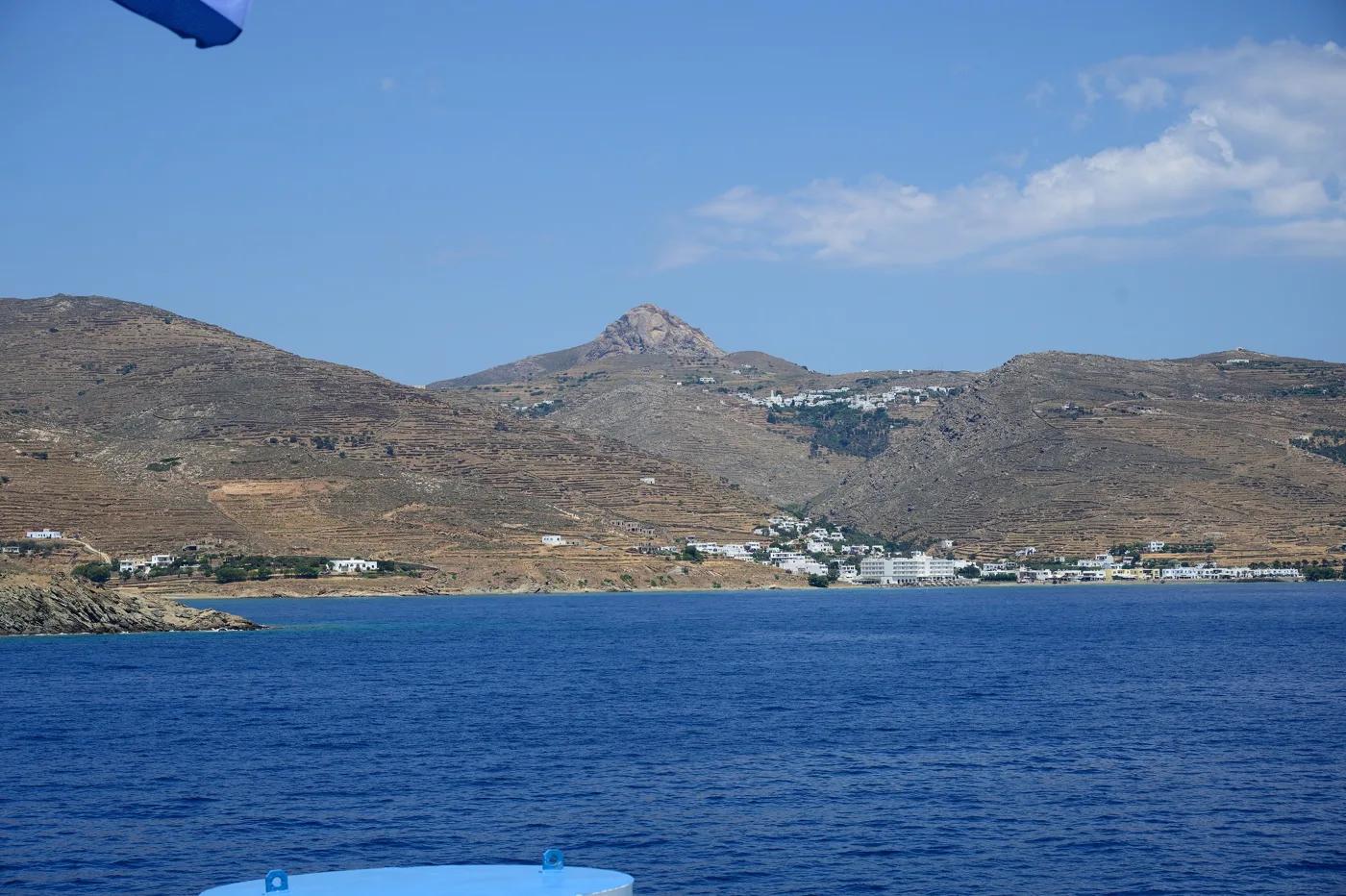
The rock can be seen from afar.
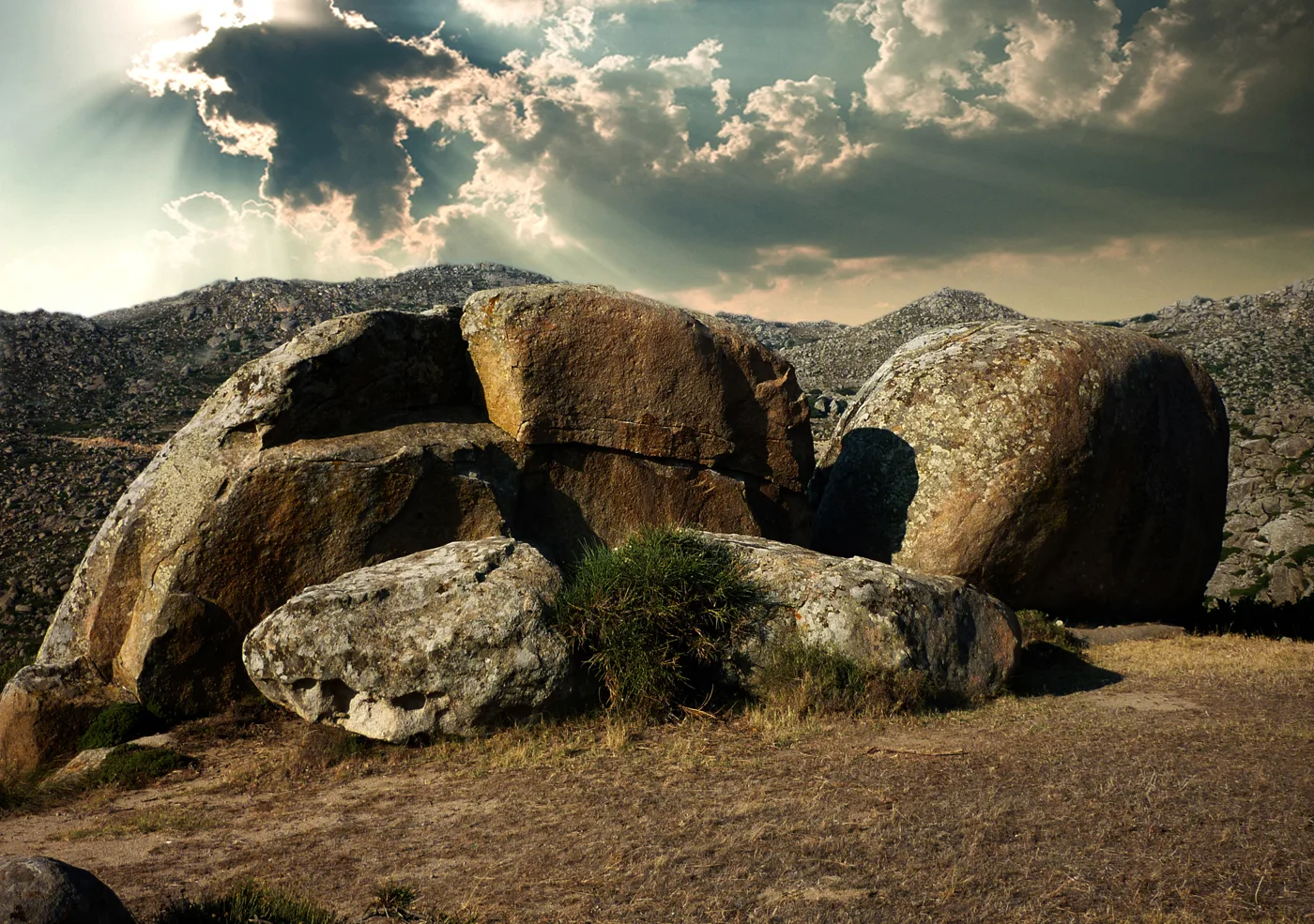
A village among granite boulders.
Photos: Jules Verne Times Two (CC BY-SA 4.0), Stepanps (CC BY-SA 4.0), Maria Delasoula (Attribution), Zde (CC BY-SA 4.0), Jimel69 (CC BY-SA 3.0) · Wikimedia Commons
🏖️ The beaches
The beaches of Tinos are less famous than those of the other Cyclades, but they are clean and often empty. Kolymbithra on the north coast has waves and a surf school. Kionia, near Chora, has the ruins of the sanctuary of Poseidon and Amphitrite right next to it. In the south, Agios Sostis and Agios Romanos are sheltered from the north wind.
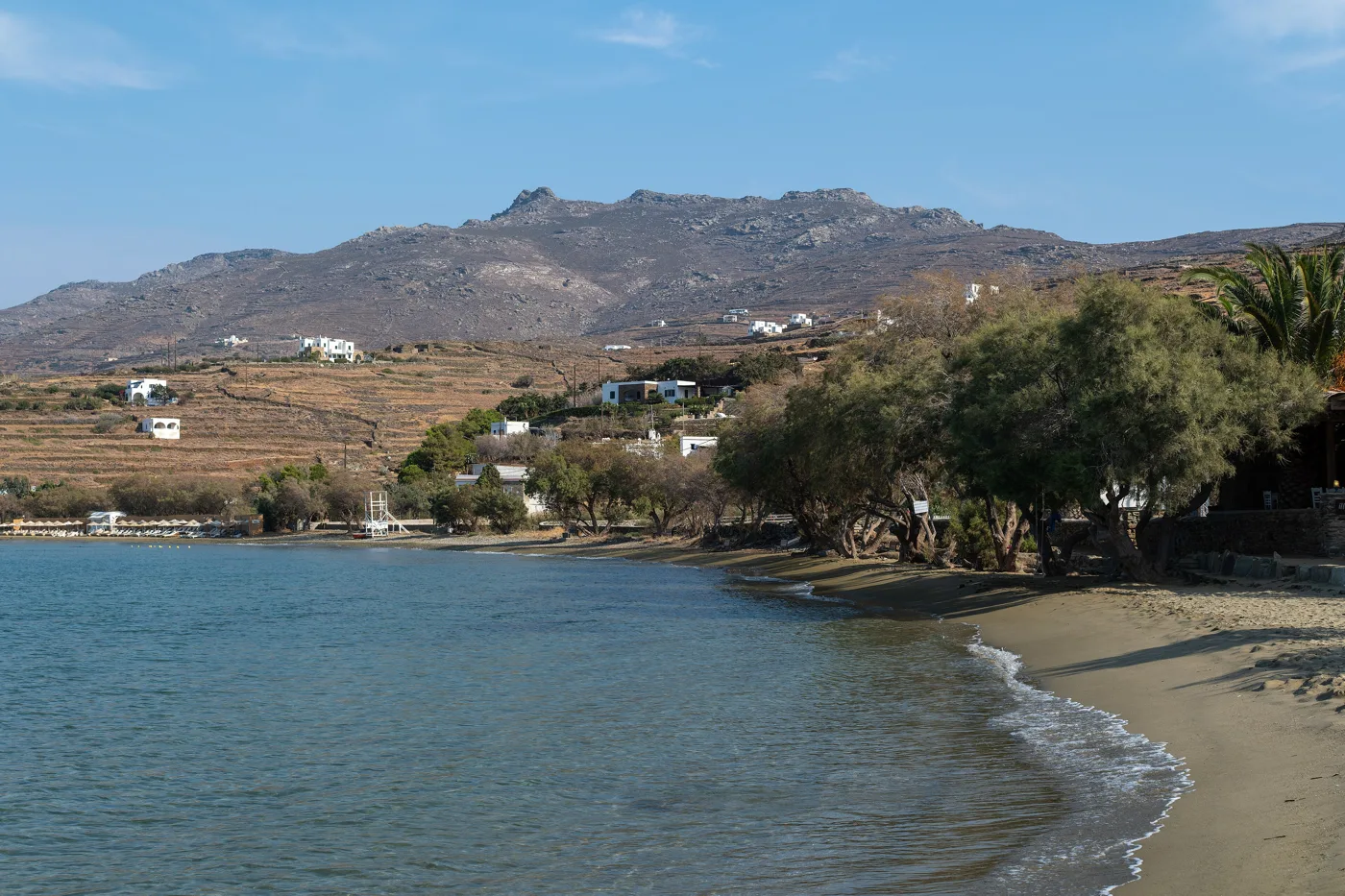
A sandy beach with tamarisks.
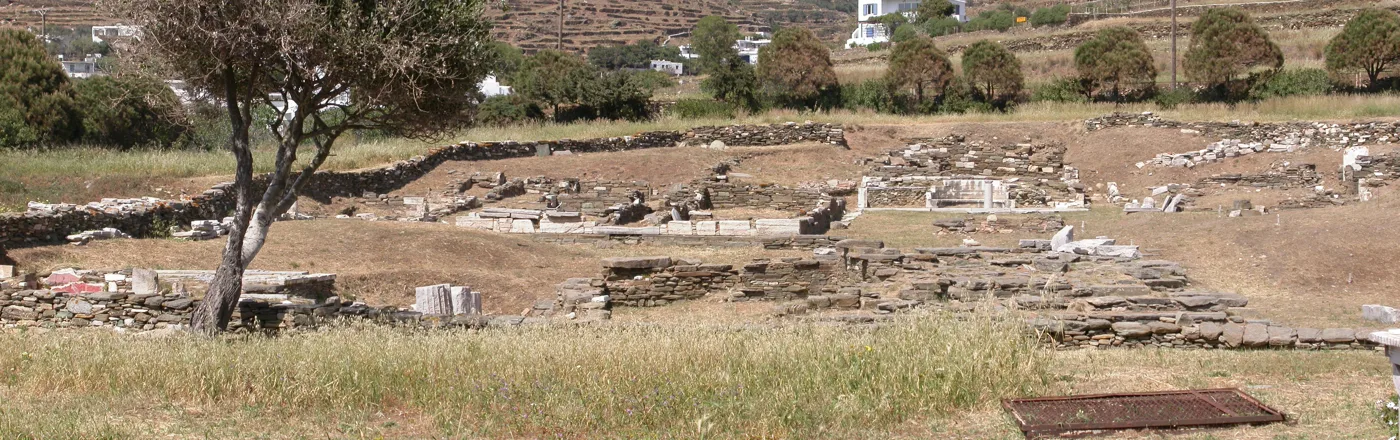
The temple of Poseidon by the sea.
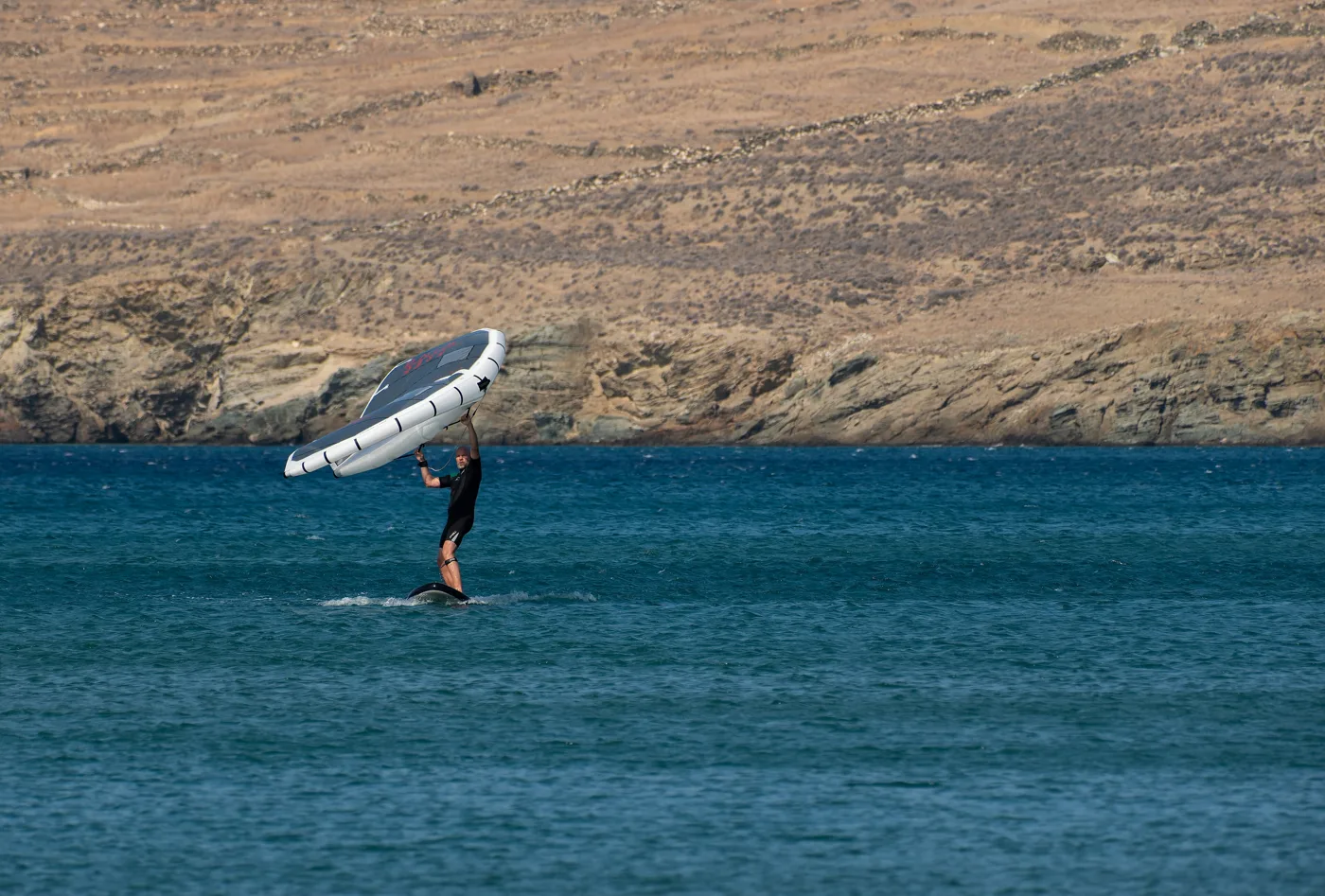
Sea and wind for water sports.
Photos: Jules Verne Times Two (CC BY-SA 4.0), Stepanps (CC BY-SA 4.0) · Wikimedia Commons
- Kolymbithra: a sandy beach with waves and surfing on the north coast.
- Kionia: close to Chora, next to the ancient sanctuary.
- Agios Sostis: a sandy beach in the south, sheltered from the wind.
- Agios Romanos: a sandy beach with tamarisks.
- Livada: a wild beach on the east coast.
- Panormos: small beaches next to the harbour.
Tinos is one of the windiest islands. When the north wind blows, go to the southern beaches, such as Agios Sostis. When it is calm, go to Kolymbithra.
🍽️ What to eat
Tinos is one of the islands with the best food in the Cyclades. Try louza, a cured pork meat, local cheeses, artichokes, which even have their own festival in spring, and fish at Panormos. In the villages you will find small tavernas serving what the island's land produces, and in Chora traditional sweets such as almond cookies.
📅 When to go
The best time is May, June and September: warm sea, less wind and quiet roads. Spring is ideal for hiking. In July and August it is very windy, and around 15 August the island fills with pilgrims.
⛴️ How to get there from Athens
| How | Duration | From | Notes |
|---|---|---|---|
| Ferry | About 2–3 hours | Rafina | The closest port. Ferries every day. |
| Ferry | About 3–4 hours | Piraeus | Ferries every day, often via Syros. |
From Ioulianou 50, take Line 1 straight to the port of Piraeus. For Rafina, there are buses from Pedion tou Areos, near Victoria station. On the island you need a car. For the ports and ferries, see our guide to the ferries.
🗓️ Four days on Tinos
Chora
Morning at Panagia Evangelistria and a walk through the alleys of Chora. In the afternoon a swim at Kionia and the sanctuary of Poseidon.
Pyrgos and the west
Pyrgos and the Museum of Marble Crafts. Then Panormos for fish and sunset at Kardiani or Isternia.
The villages of the interior
Dovecotes at Tarambados, a climb up Exomvourgo and a walk through Volax among the boulders.
Beaches
Morning at Kolymbithra, afternoon at Agios Sostis or Agios Romanos, and a meal in one of the villages.
Frequently asked questions
Where should I stay on Tinos?
In Chora, for the harbour, the restaurants and the buses. In a village, such as Pyrgos or Kardiani, for quiet and views. At Agios Sostis or Kionia, if you want to be by the sea.
Can I go to Mykonos for a day?
Yes. Mykonos is very close, with ferries several times a day. Many people stay on Tinos and spend a day on Mykonos.
Is Tinos good for children?
Yes. Agios Sostis and Kionia have calm water, and children will enjoy the boulders at Volax and the dovecotes.
How many days do I need?
Three to four days for Chora, Pyrgos, the villages and a few beaches. To see many villages and go hiking, a week.
— Kathy