🪪 The island at a glance
📍 Where it is
Kea is the northwestern island of the Cyclades, opposite Lavrio. From Lavrio the ferry reaches the port of Korissia in about an hour, with many sailings in summer. Lavrio is 40 minutes from Athens airport, and buses there leave from Pedion tou Areos, a few minutes’ walk from Ioulianou 50.
📍 Where Kea is
Kea is the first island of the Cyclades, opposite Lavrio, at the southeastern tip of Attica. The island is shown in red, and Athens airport and the port of Lavrio in green.
🗺️ The map of the island
Kea is large and mountainous, with many bays. The port, Korissia, is on the northwest coast, with Vourkari next to it. Ioulida, the Chora, sits high on the mountain, about 15 minutes by car. From there, winding roads lead to the beaches of the east and west coasts, and south as far as ancient Karthaia.
🗺️ Map of Kea
Korissia, the port, is on the northwest coast, with Vourkari and Agia Irini next to it. Ioulida and the Lion are on the mountain, a little inland. On the east coast are Otzias, Kastriani, Spathi and Orkos, on the west coast Pisses and Koundouros, and in the south ancient Karthaia. Tap each number to see what it is.
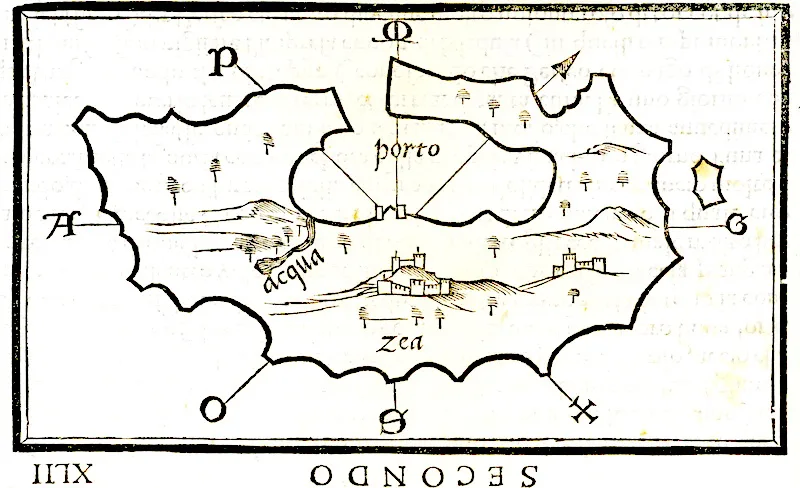
Map: Benedetto Bordone, 1547 (Public domain) · Wikimedia Commons
⚖️ Is it worth it? The pros and cons
Kea is ideal for a short trip from Athens, with walking, ancient sites and the sea. Here is an honest picture.
📊 At a glance, from 1 to 5
👍 The pros
- Very close to Athens: one hour by ferry from Lavrio.
- Ioulida, an unusual Chora with tiled roofs.
- One of the best footpath networks in the Cyclades.
- Ancient sites everywhere: the Lion, Karthaia, Agia Irini.
- Green, with oak trees and terraces.
👎 The cons
- On summer weekends it fills up with Athenians.
- Prices are Athenian, not low.
- You need a car: distances are long and roads are winding.
- The meltemi blows hard in July and August.
🏘️ Ioulida
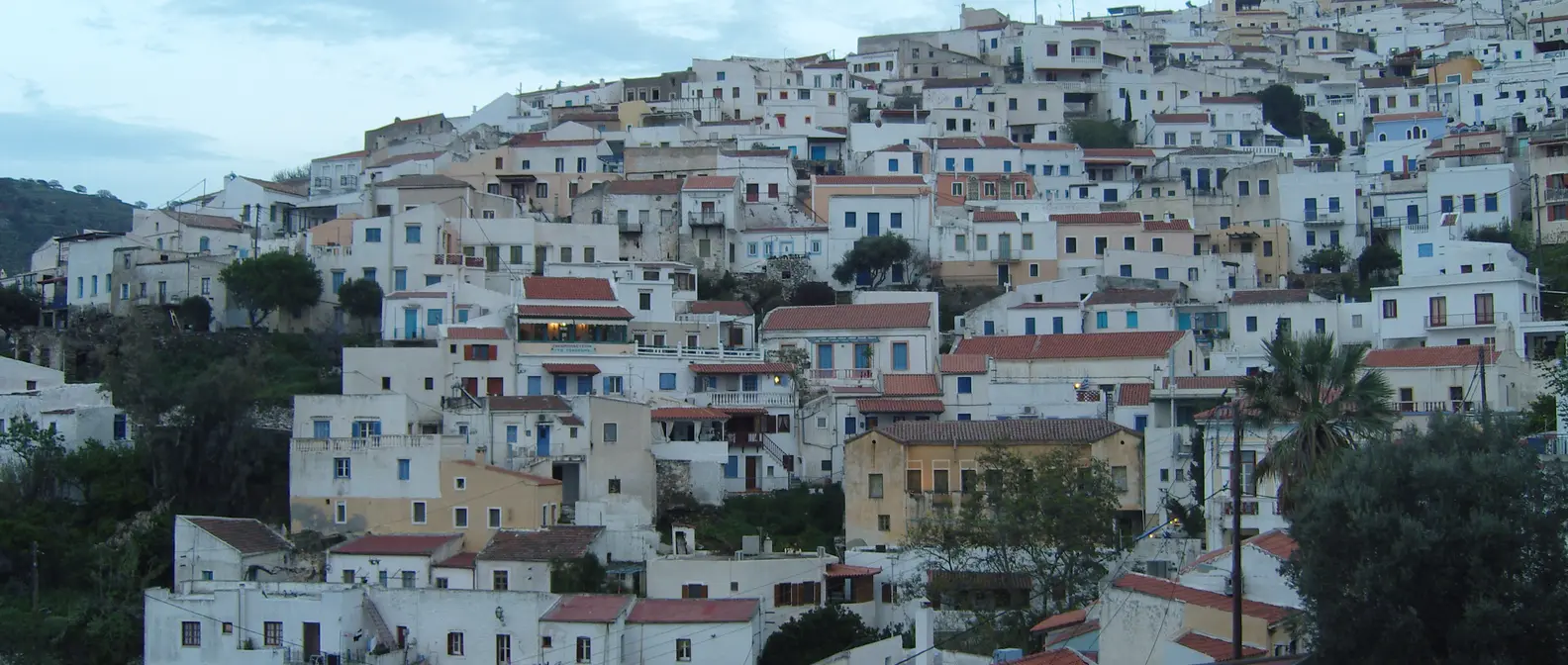
Ioulida, the Chora of Kea, is built like an amphitheatre on two hills, where the ancient city of Ioulis once stood. The islanders built it high up so it could not be seen by pirates. It is not all white like other Choras: the houses have tiled roofs, and among them stand neoclassical buildings such as the town hall.
The lanes climb up and down with steps, between tavernas, cafés and small shops. The Archaeological Museum has finds from all over the island, including the terracotta statues from Agia Irini. The view from the top takes in the terraces and the sea as far as Attica.
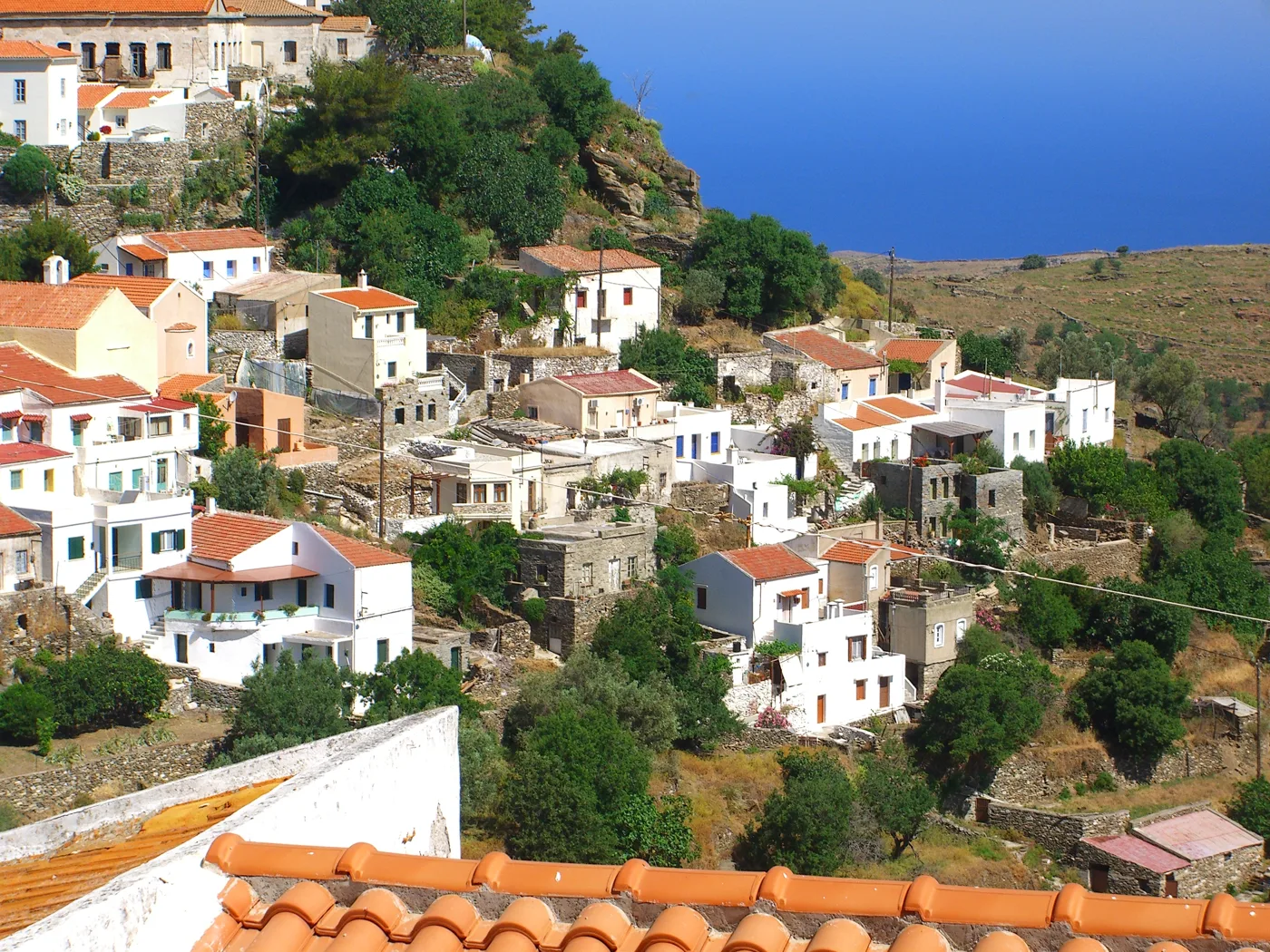
Tiled houses on the hill.
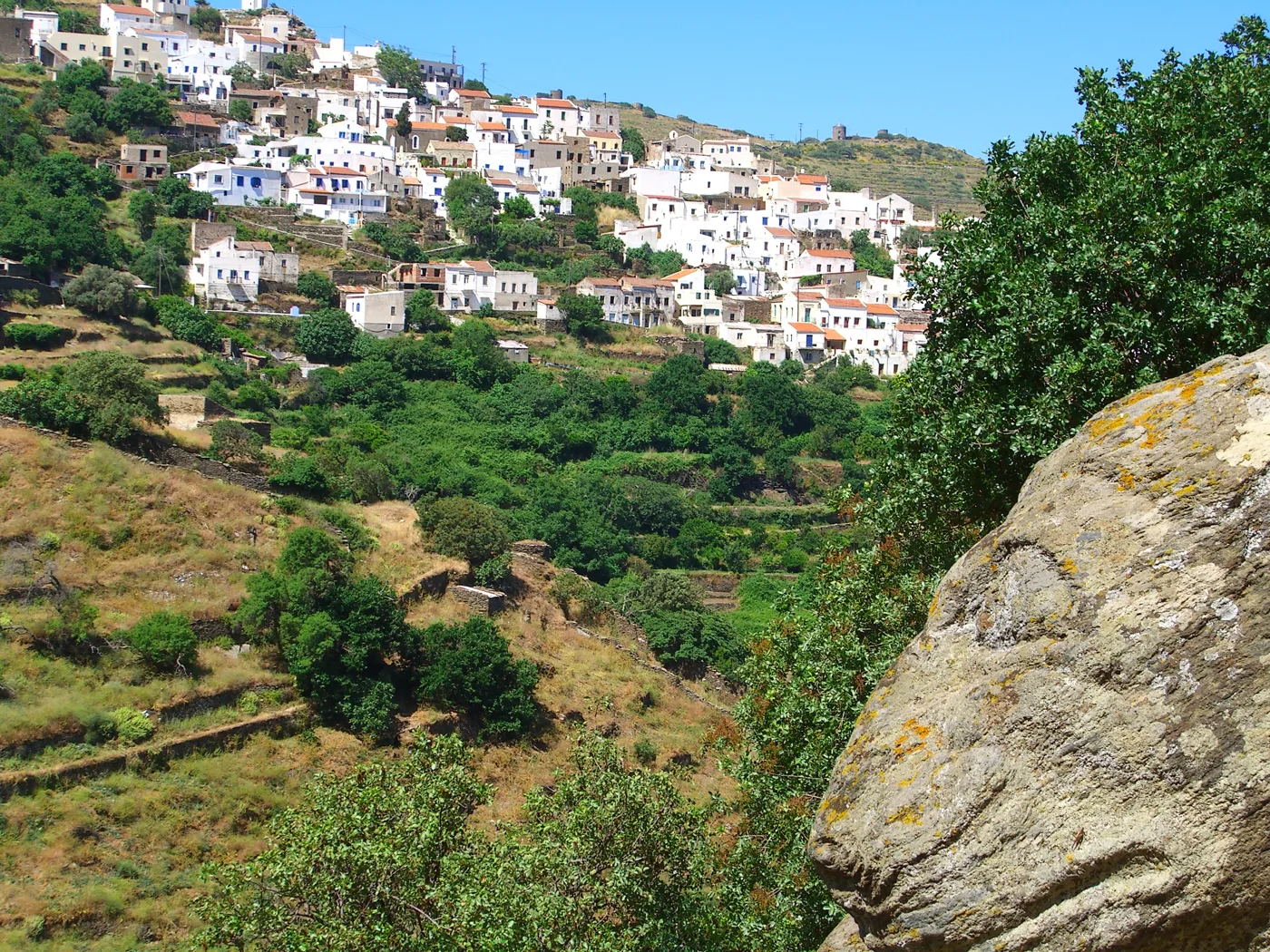
Above the green.
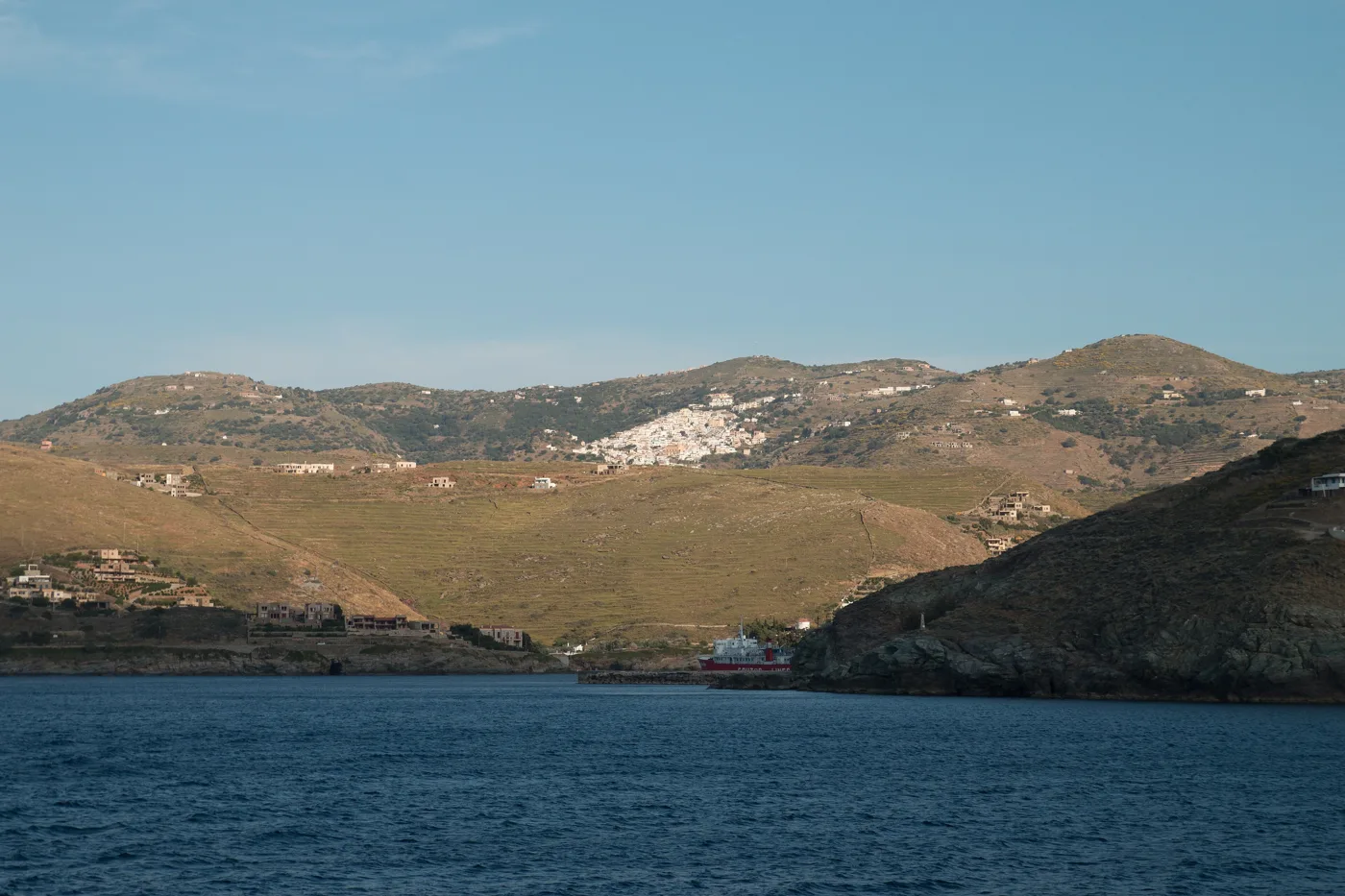
High up, out of sight.
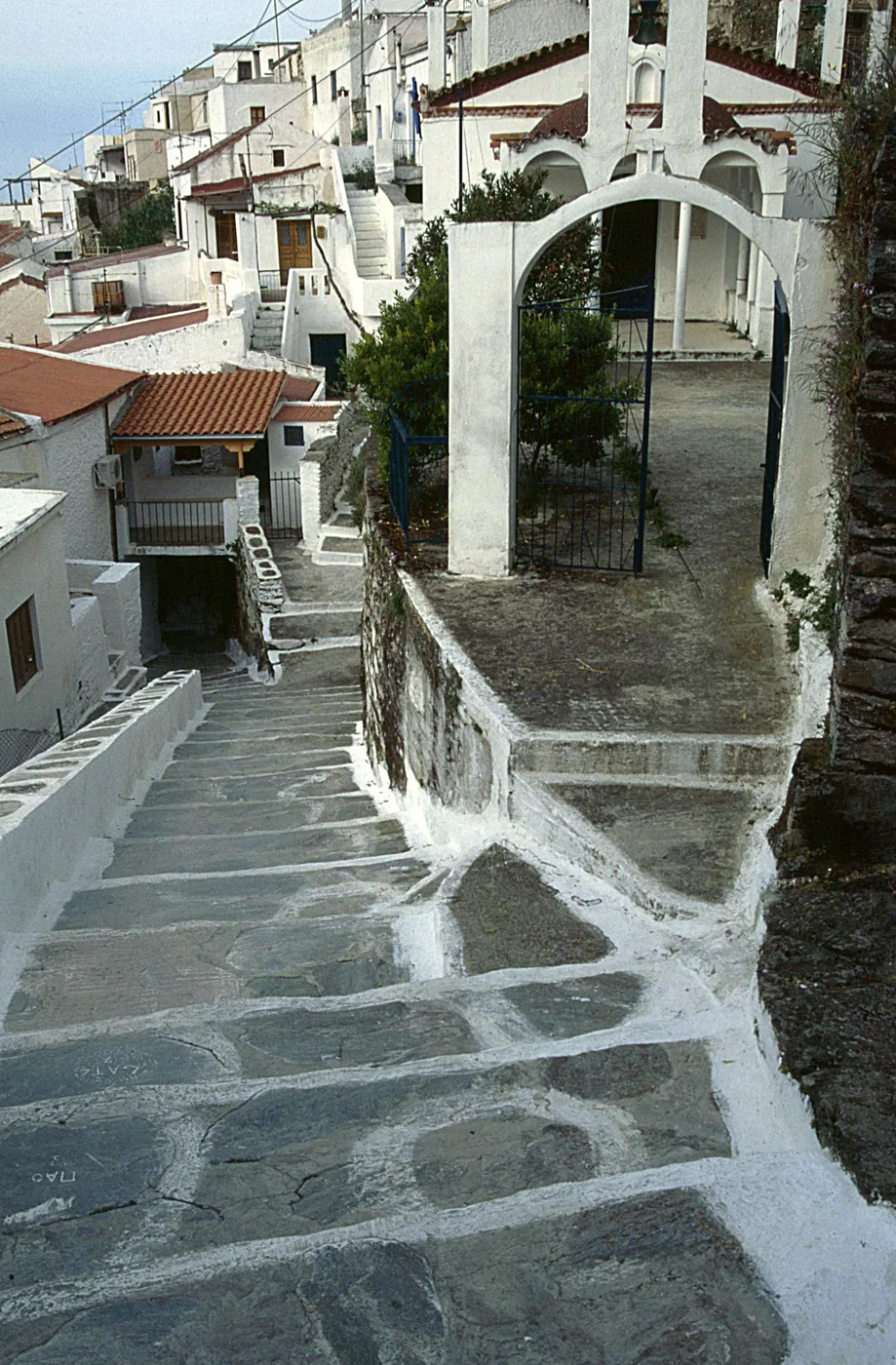
Stone and whitewash.
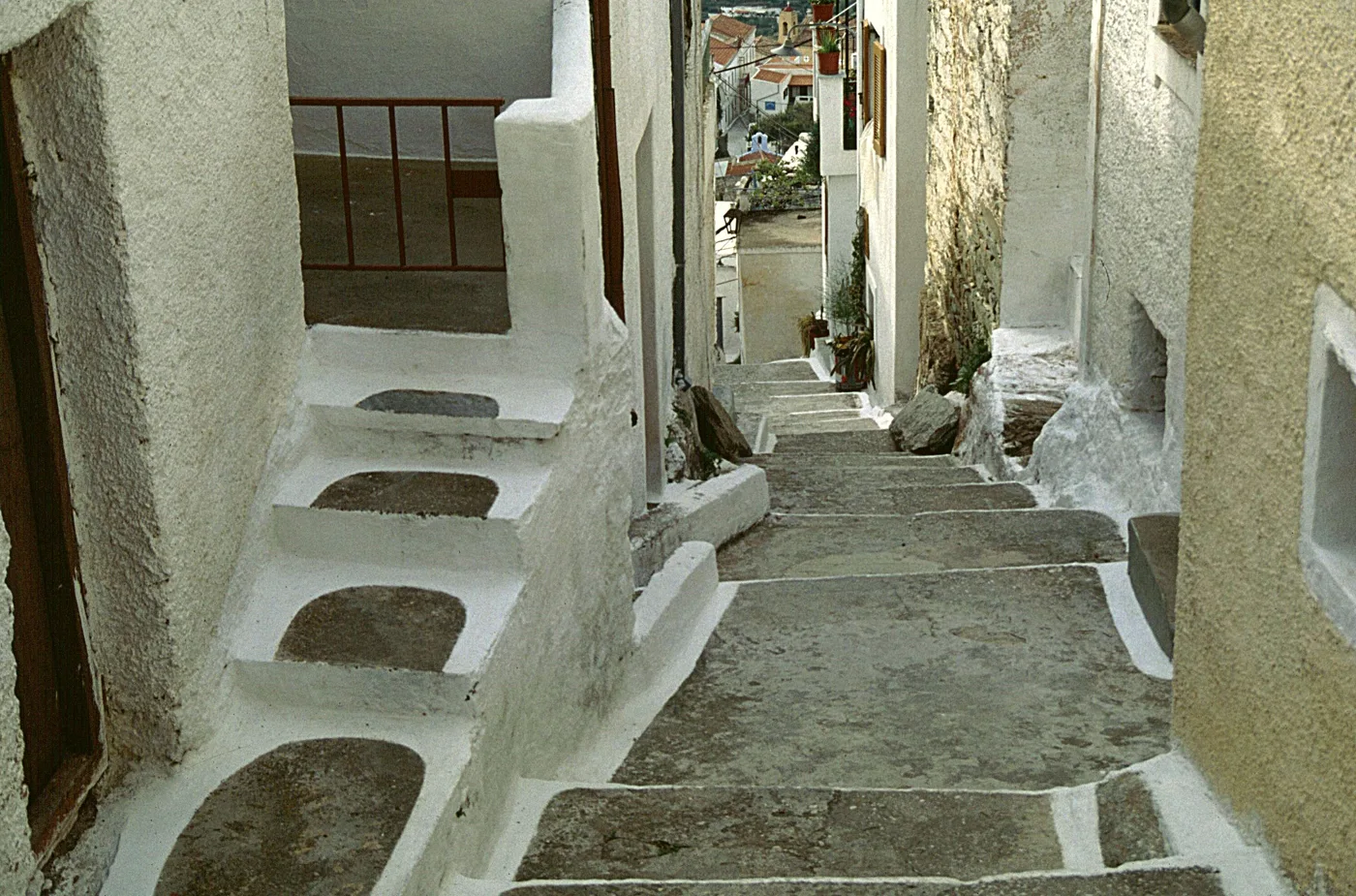
Up and down.
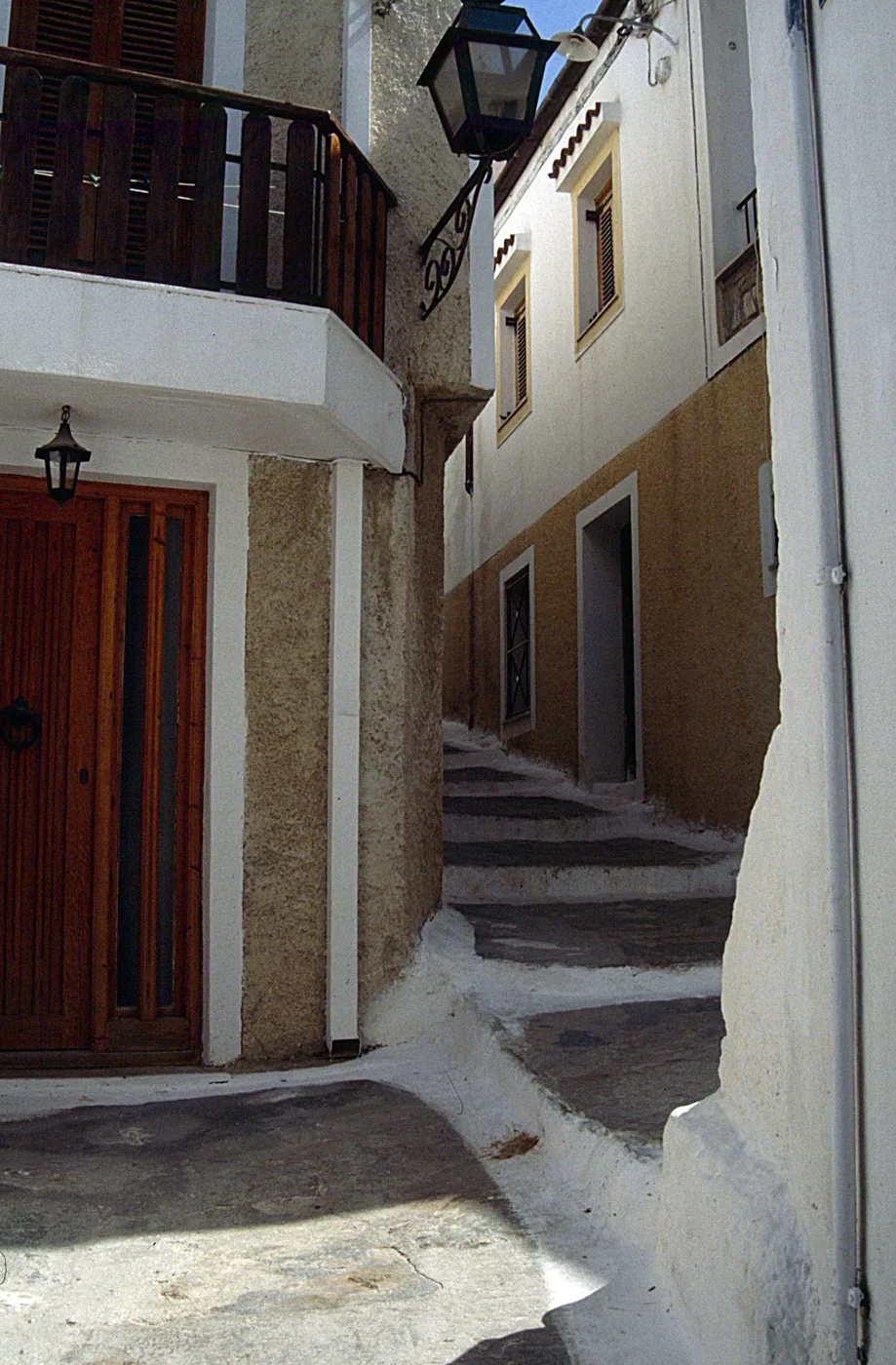
Wood and stone.
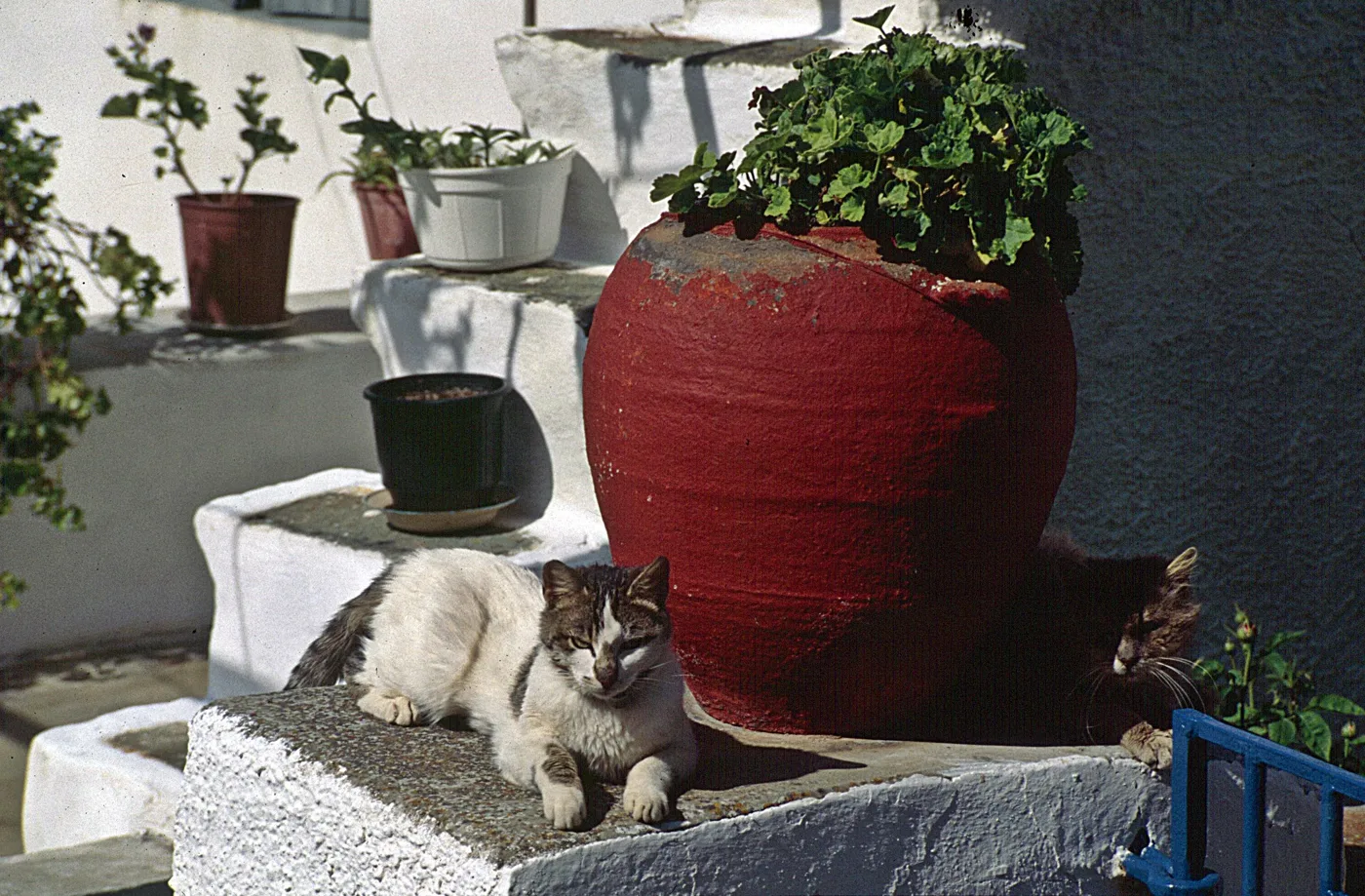
Next to the jar.
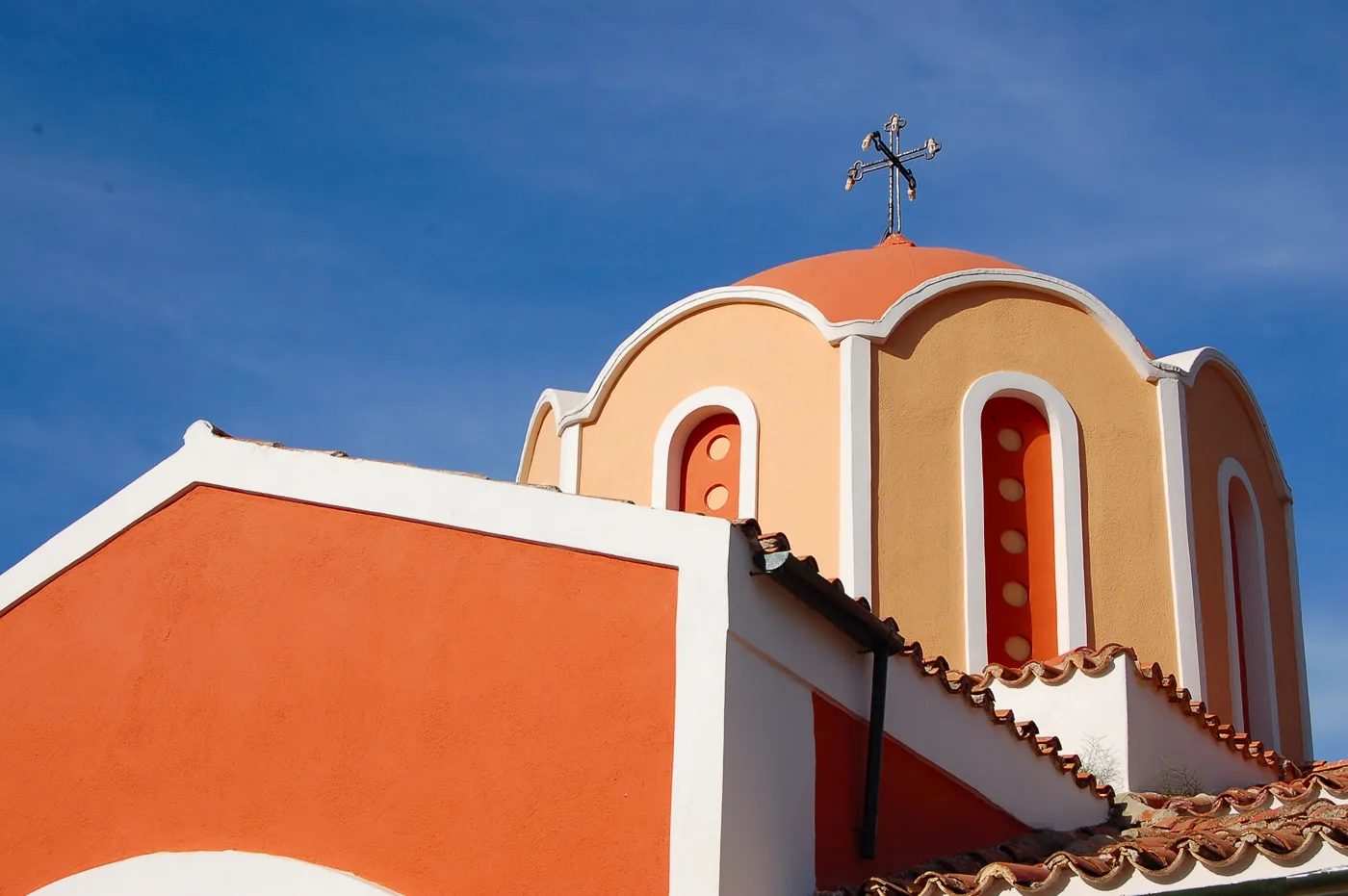
Colour in Ioulida.
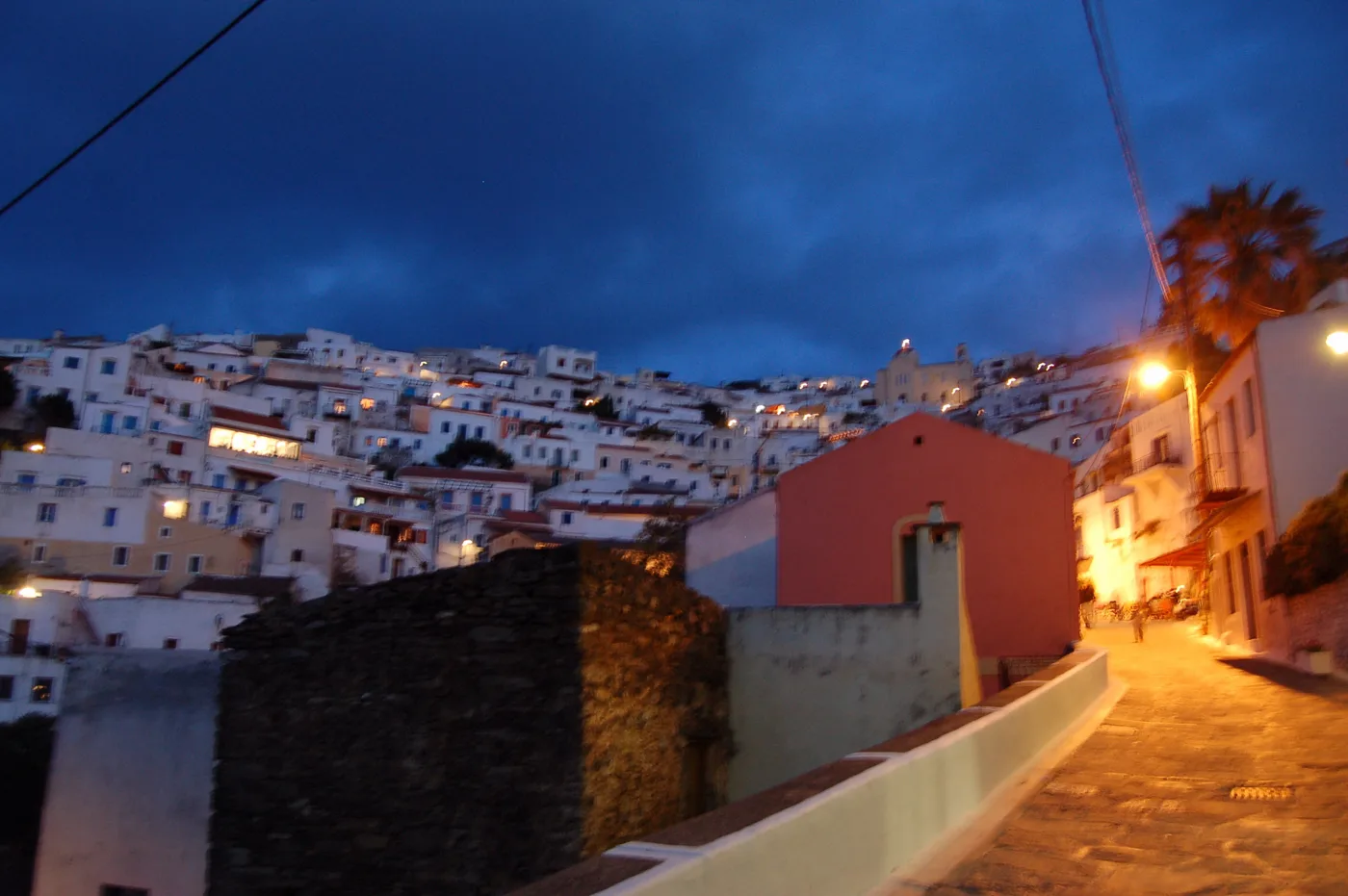
The lights come on.
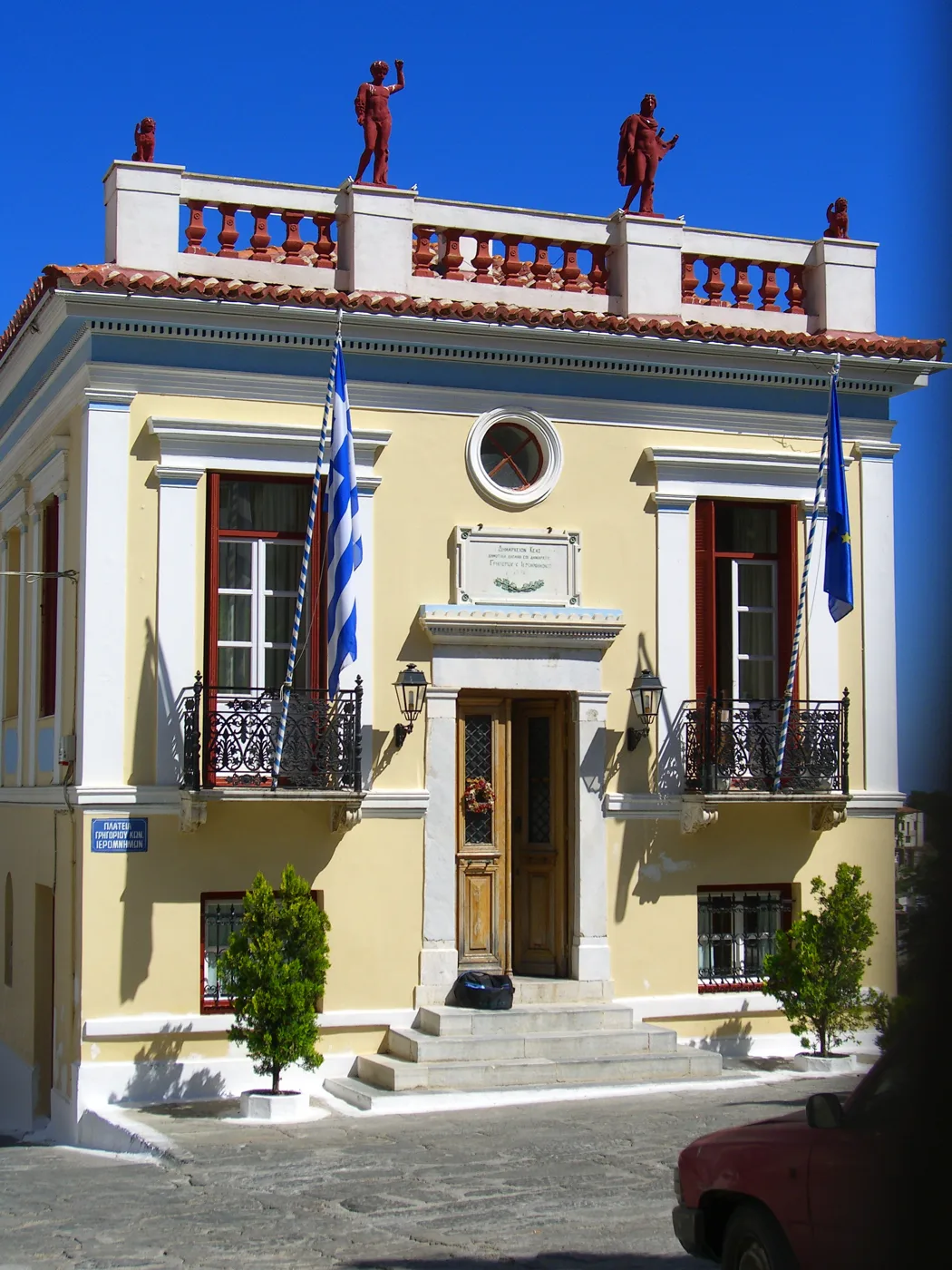
Neoclassical, in the centre.
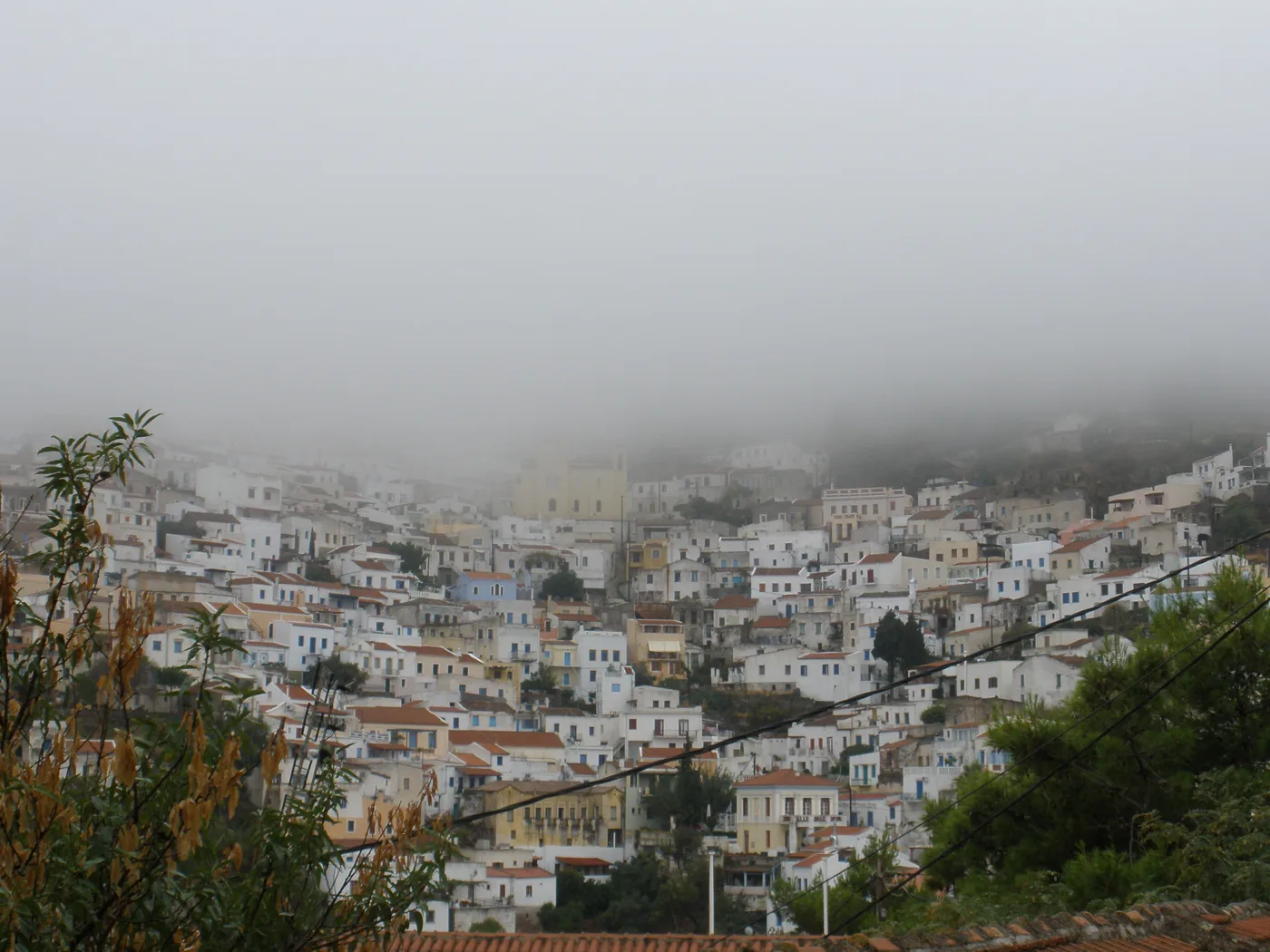
A cloudy day.
Photos: Phso2 (CC BY 3.0), Kevin Stroup (CC BY 3.0), Zde (CC BY-SA 4.0), Ziegler175 (CC BY-SA 3.0), Michael Paraskevas (CC BY-SA 3.0), Batsiandros (Attribution) · Wikimedia Commons
🦁 The Lion, Karthaia and the countryside
A few minutes’ walk from Ioulida, the Lion of Kea is a lion about six metres long, carved into the rock in the 6th century BC. It has a calm, almost smiling face. Legend says that Nymphs once lived on the island, and a lion drove them away, leaving Kea without water. The statue recalls this story.
On the south coast, ancient Karthaia was one of the island’s four cities. The temples of Athena and Pythian Apollo, a theatre and the walls survive above a small beach. You get there along a stone path, about an hour on foot, or by boat. In the north, near Vourkari, Agia Irini is a Bronze Age settlement, while the tower of Agia Marina is a tall ancient tower built of stone slabs. Kea has a large network of old footpaths, among oak trees and terraces.
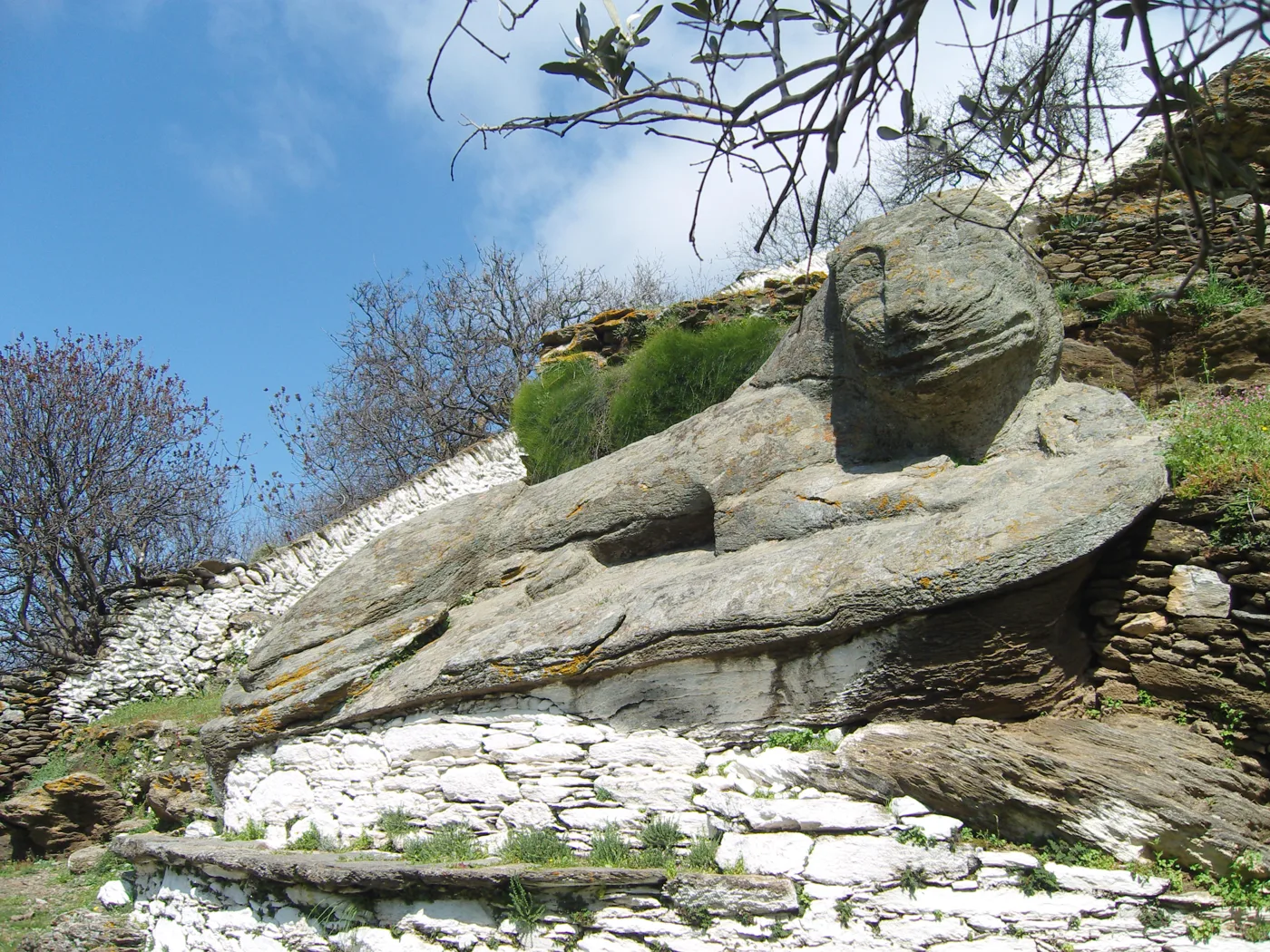
Carved into the rock.
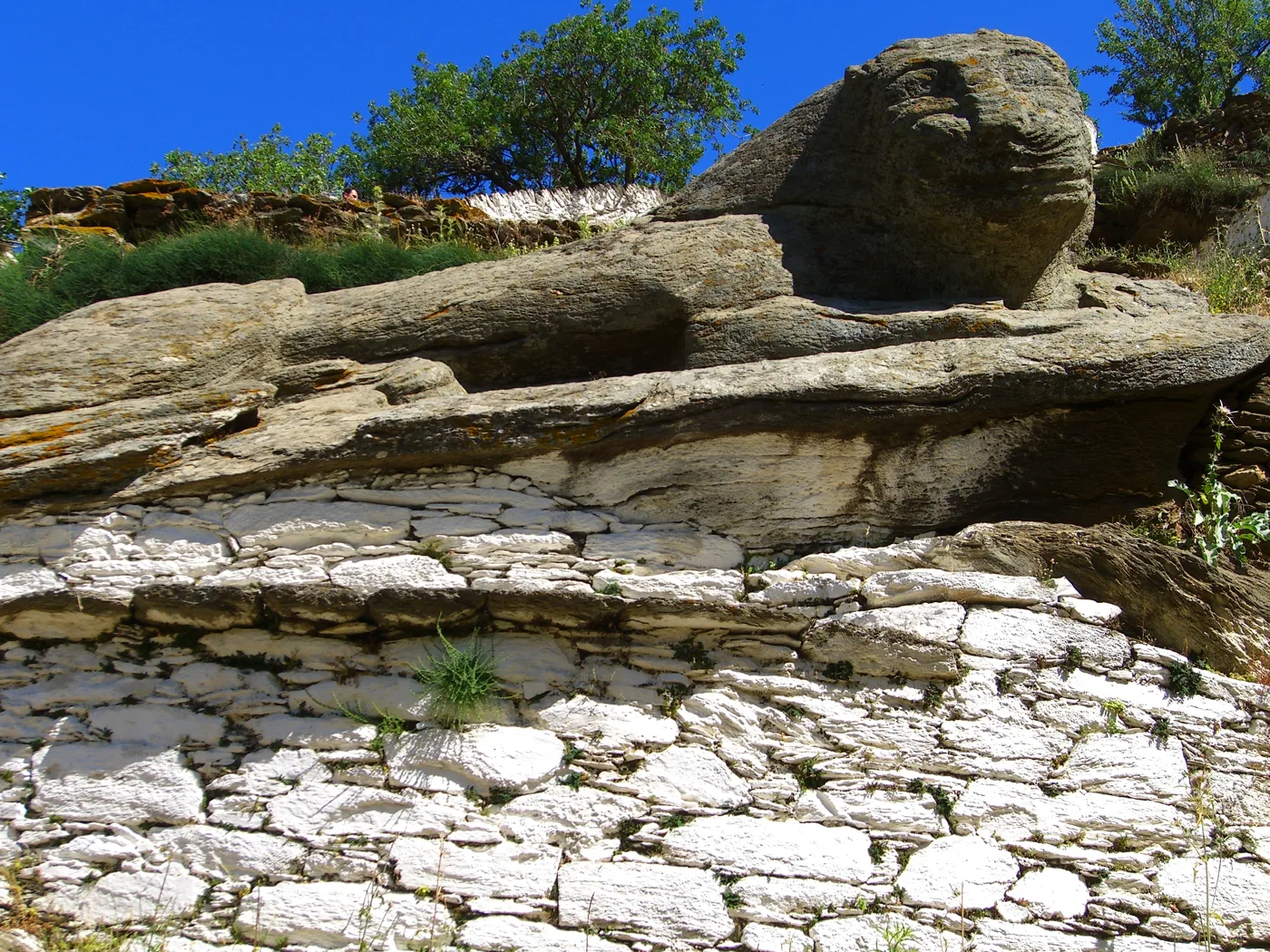
Smiling for 2,600 years.
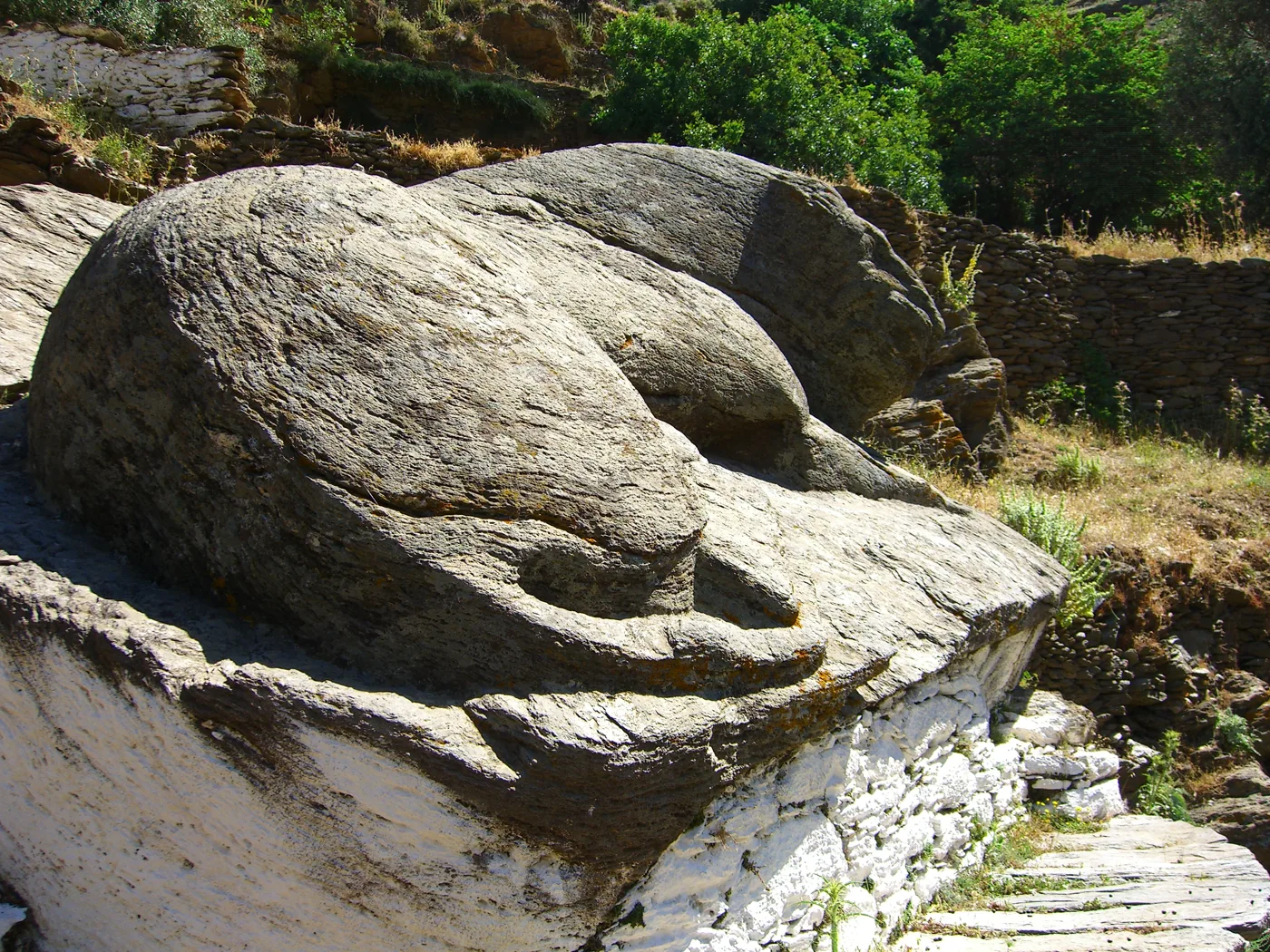
The lion’s stone.
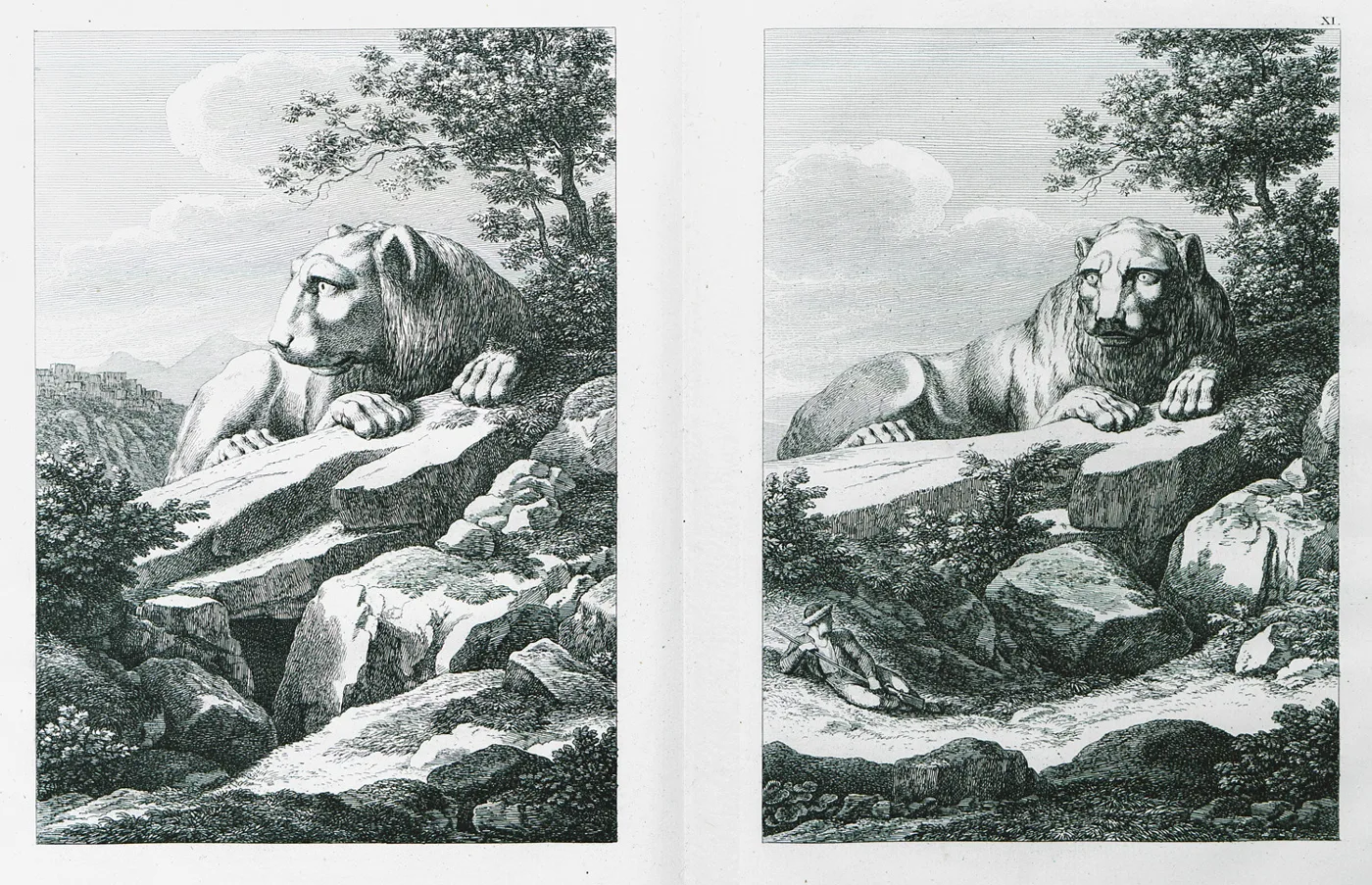
As a traveller saw it.
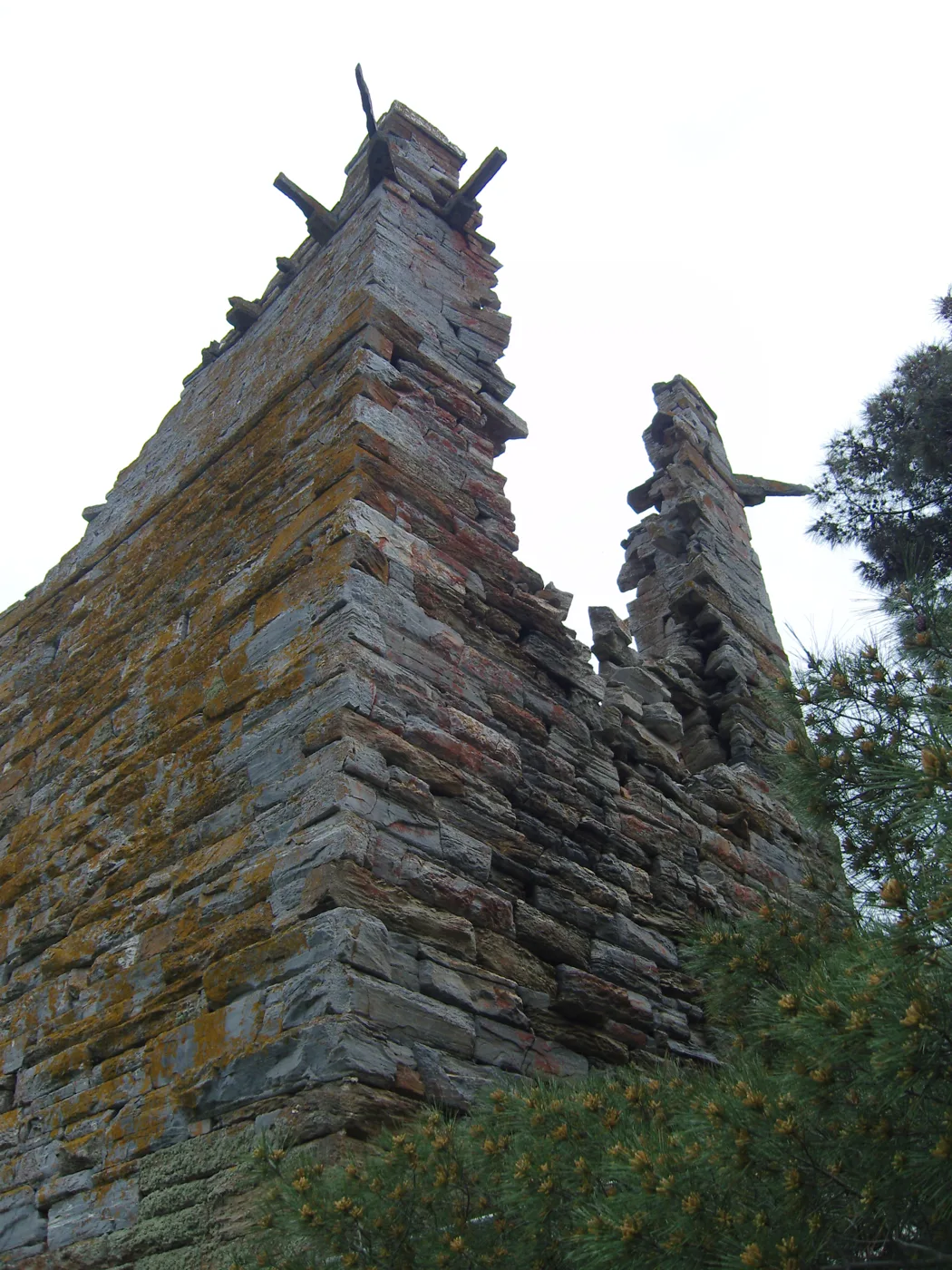
An ancient tower.
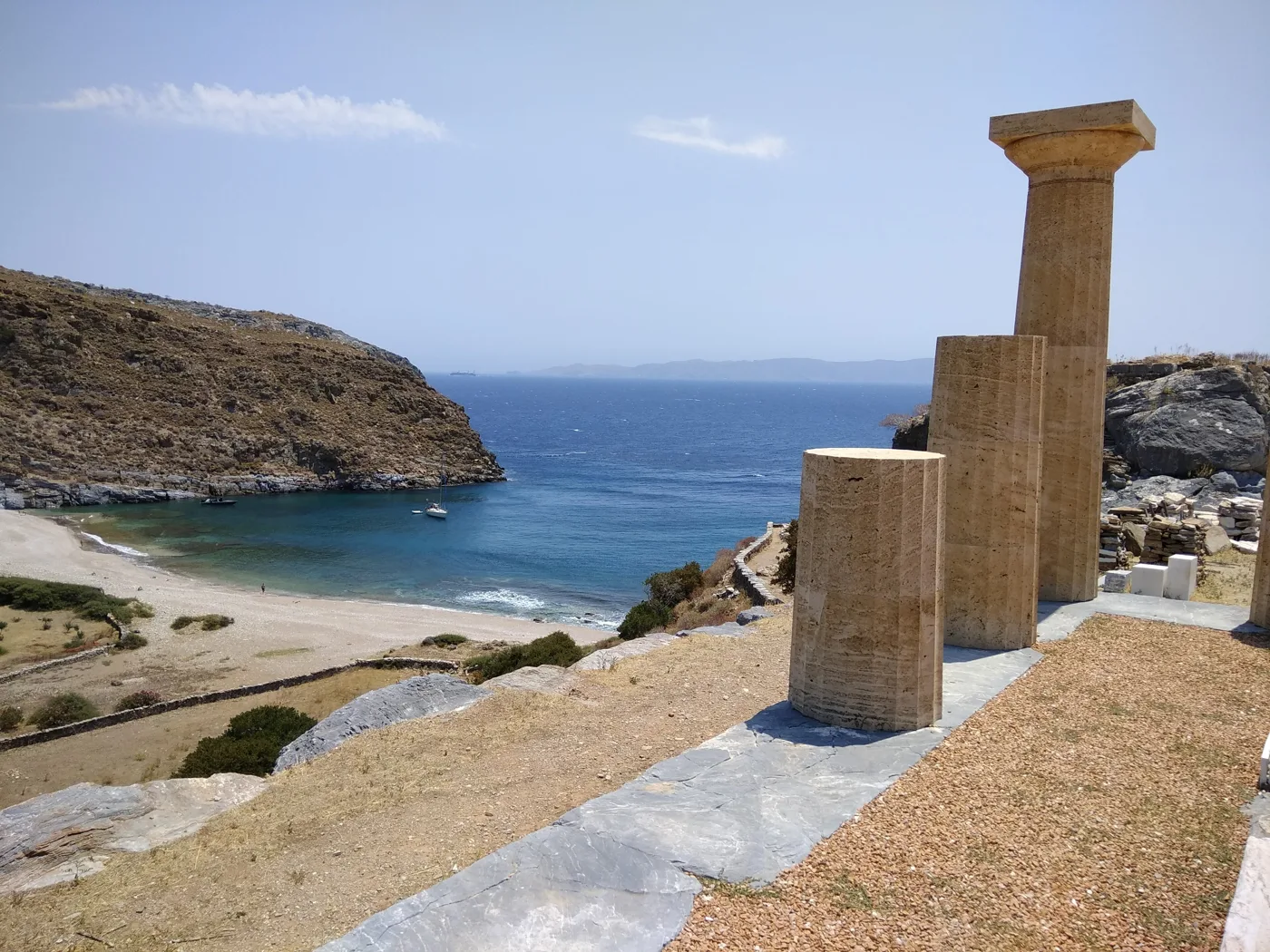
The ancient city above the waves.
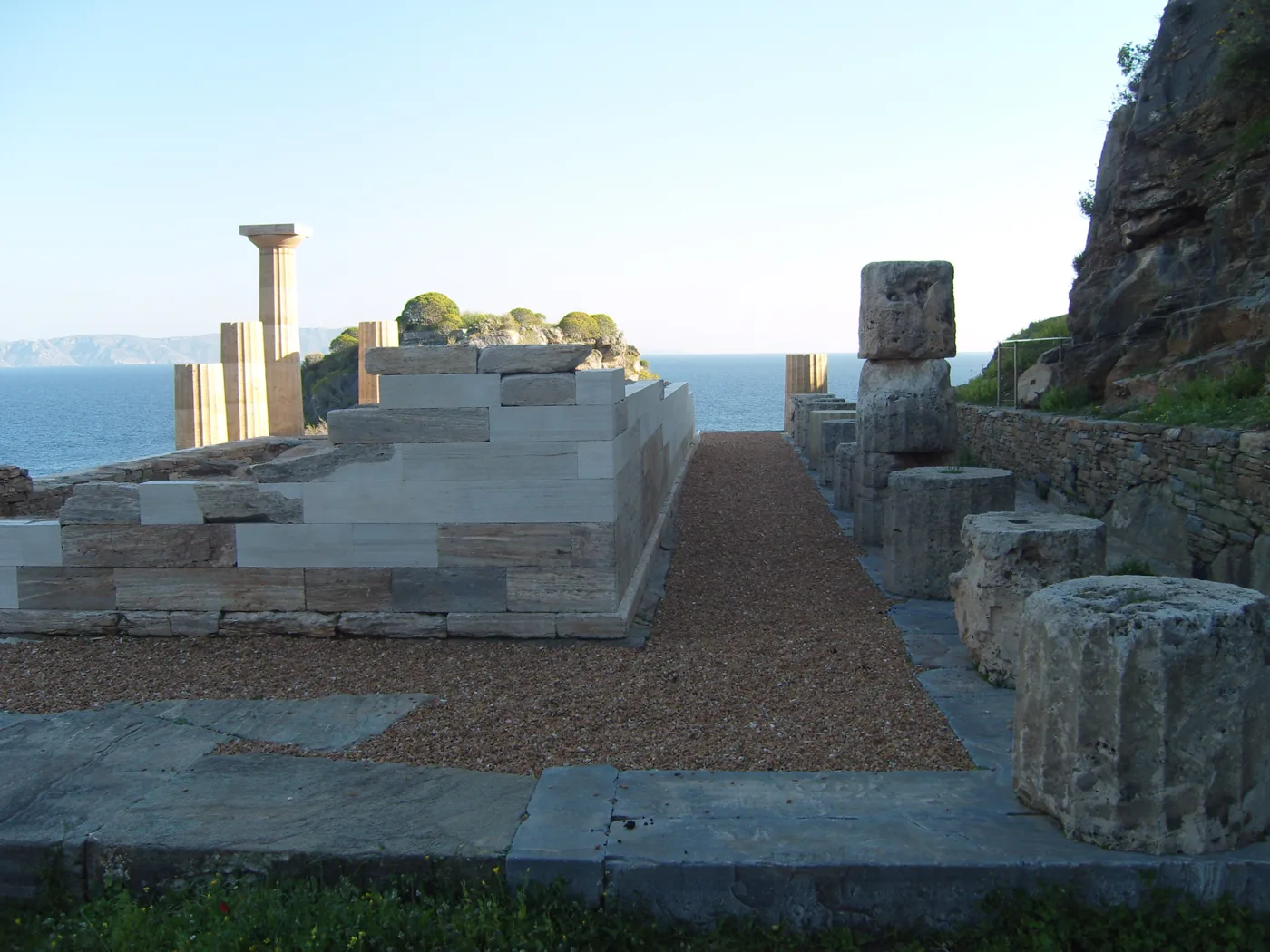
Above the open sea.
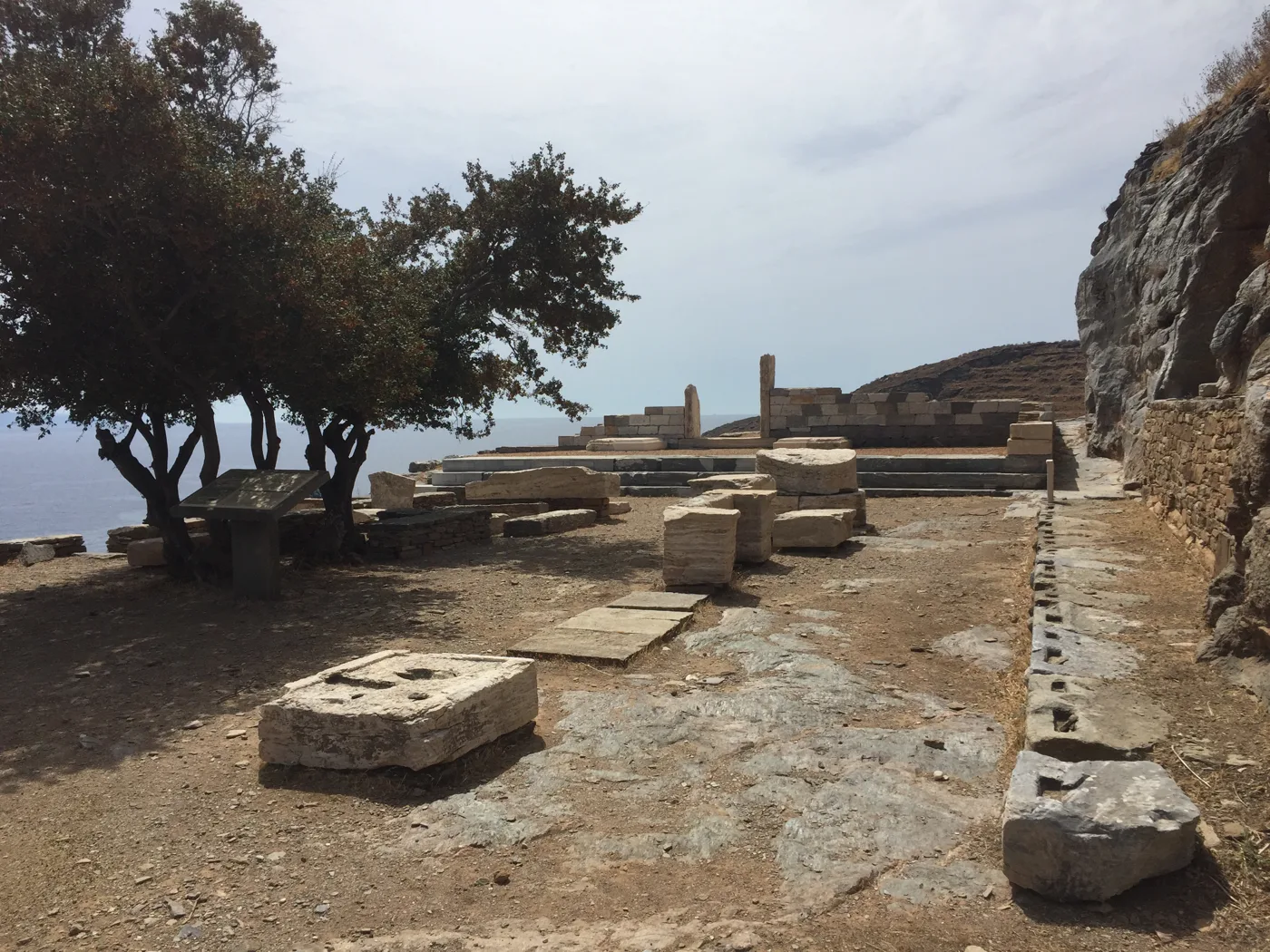
A little higher up.
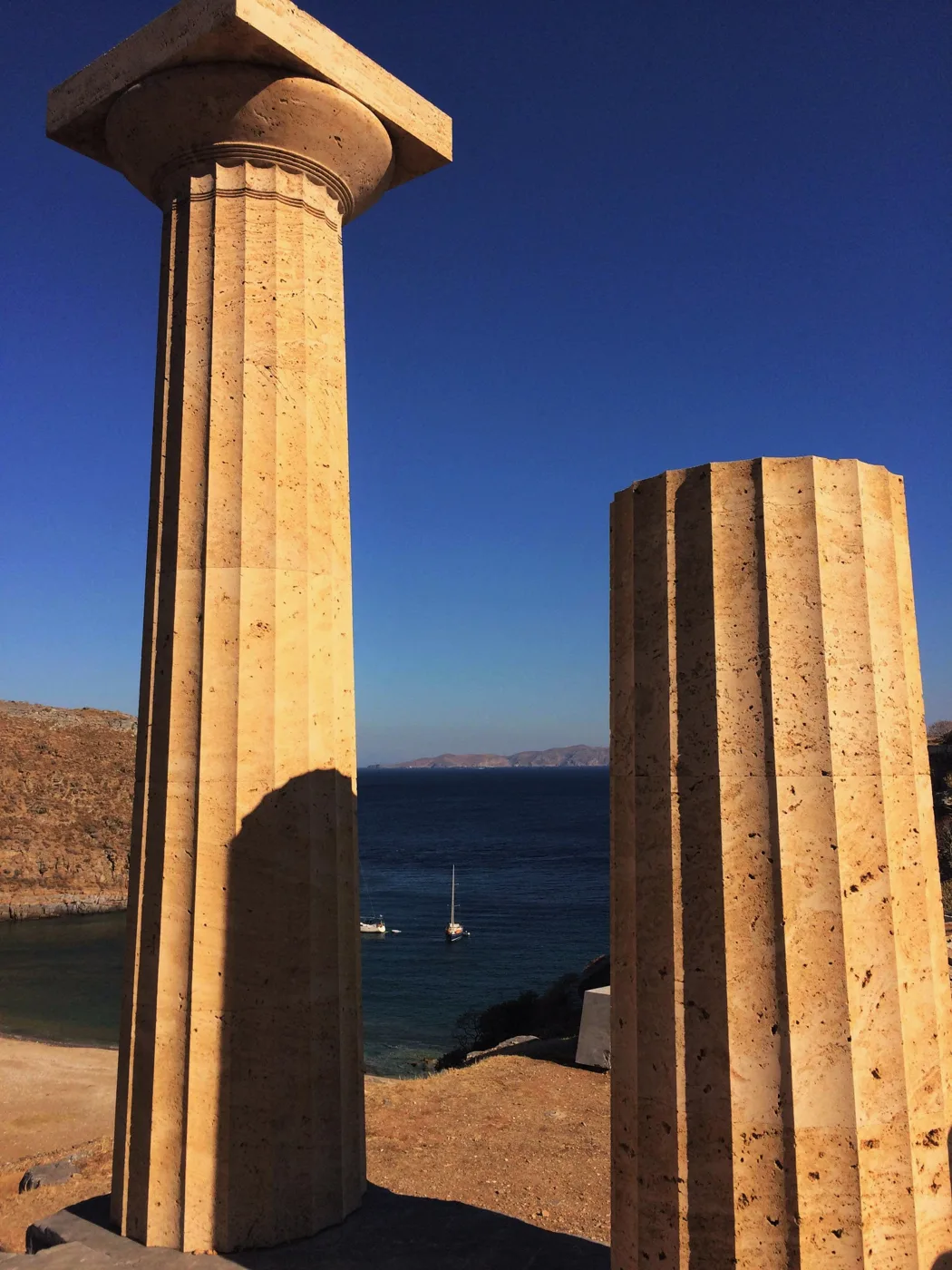
A window onto the Aegean.
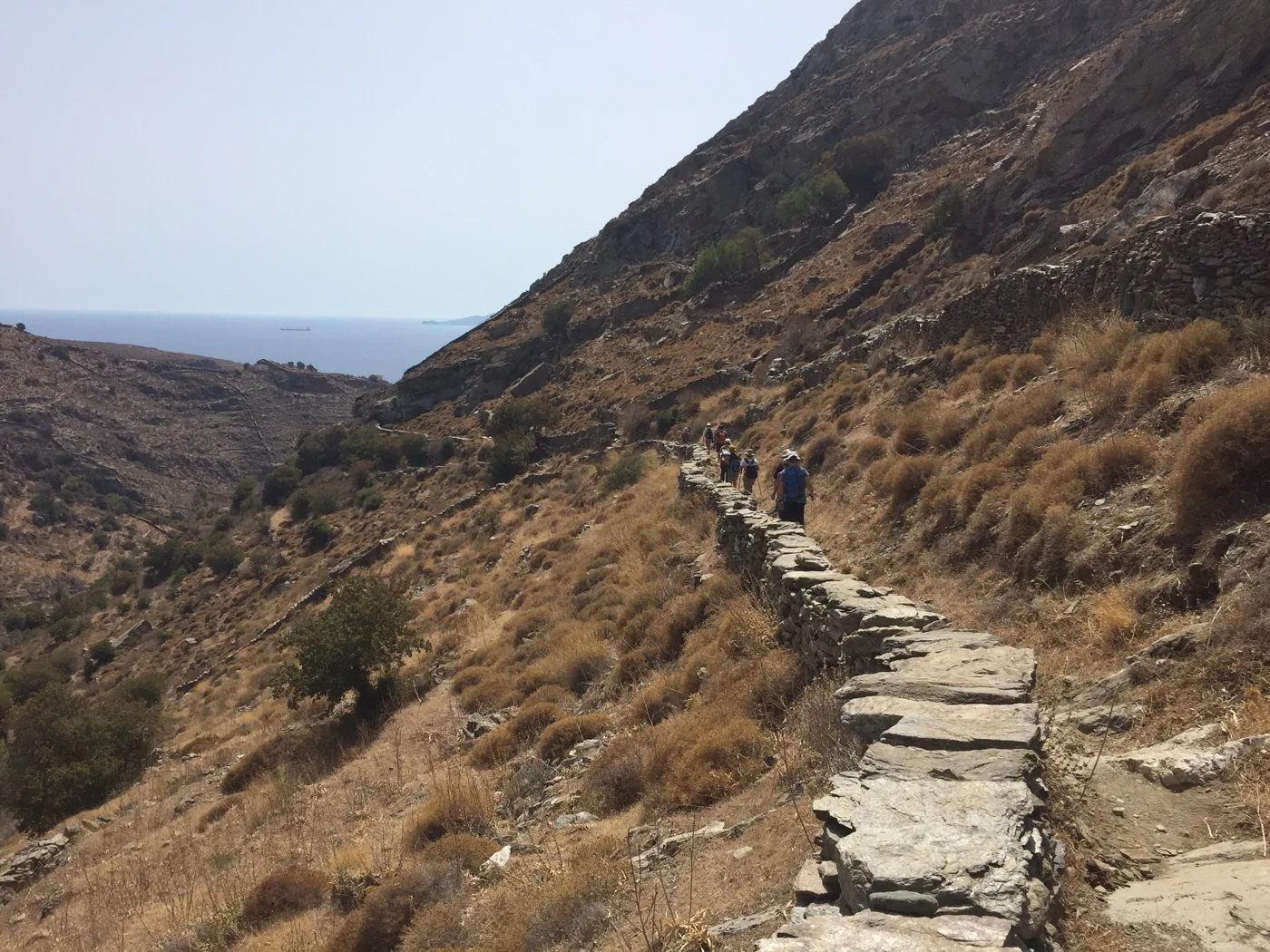
The way down to Karthaia.
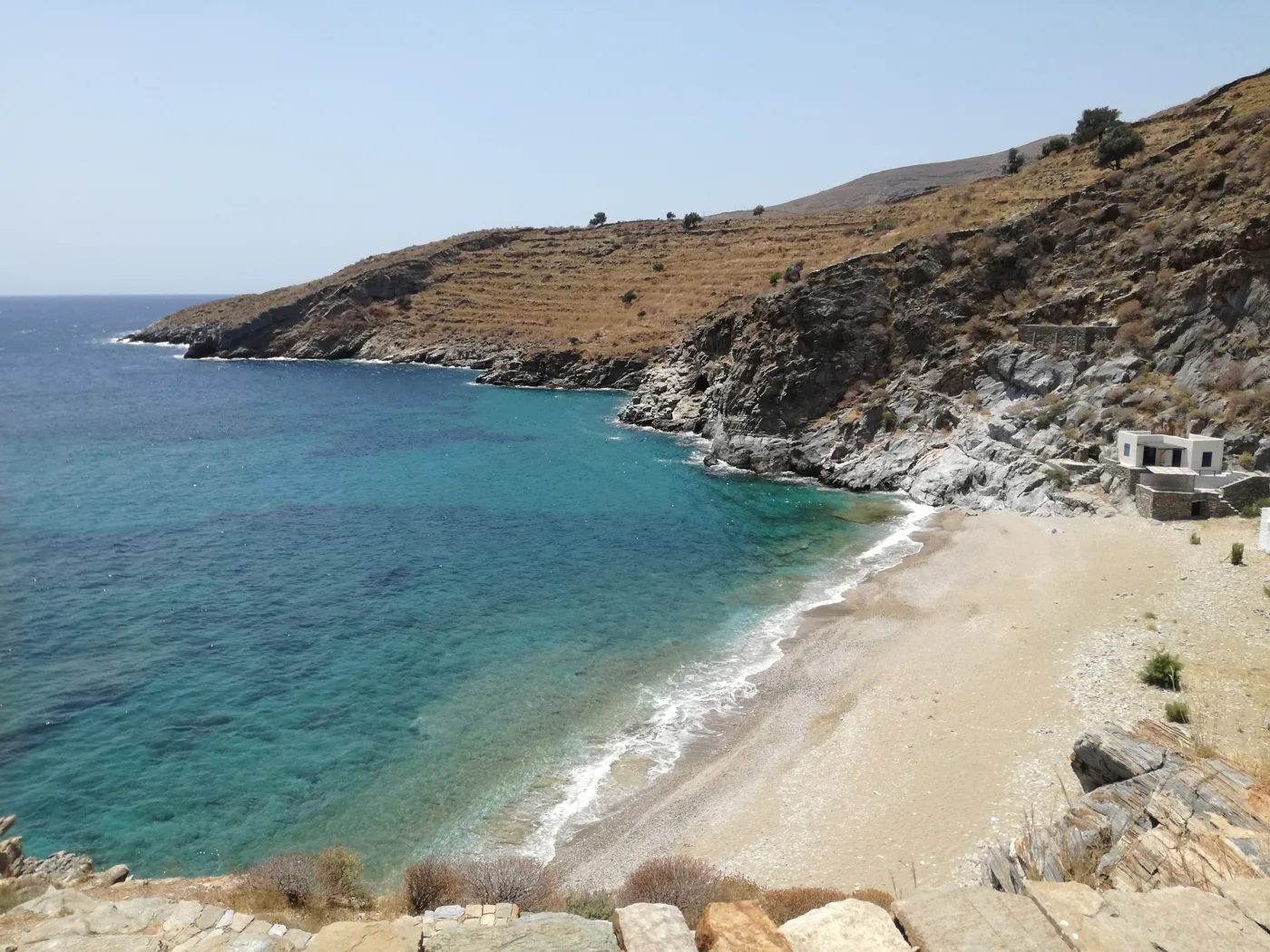
A swim after the ancient city.
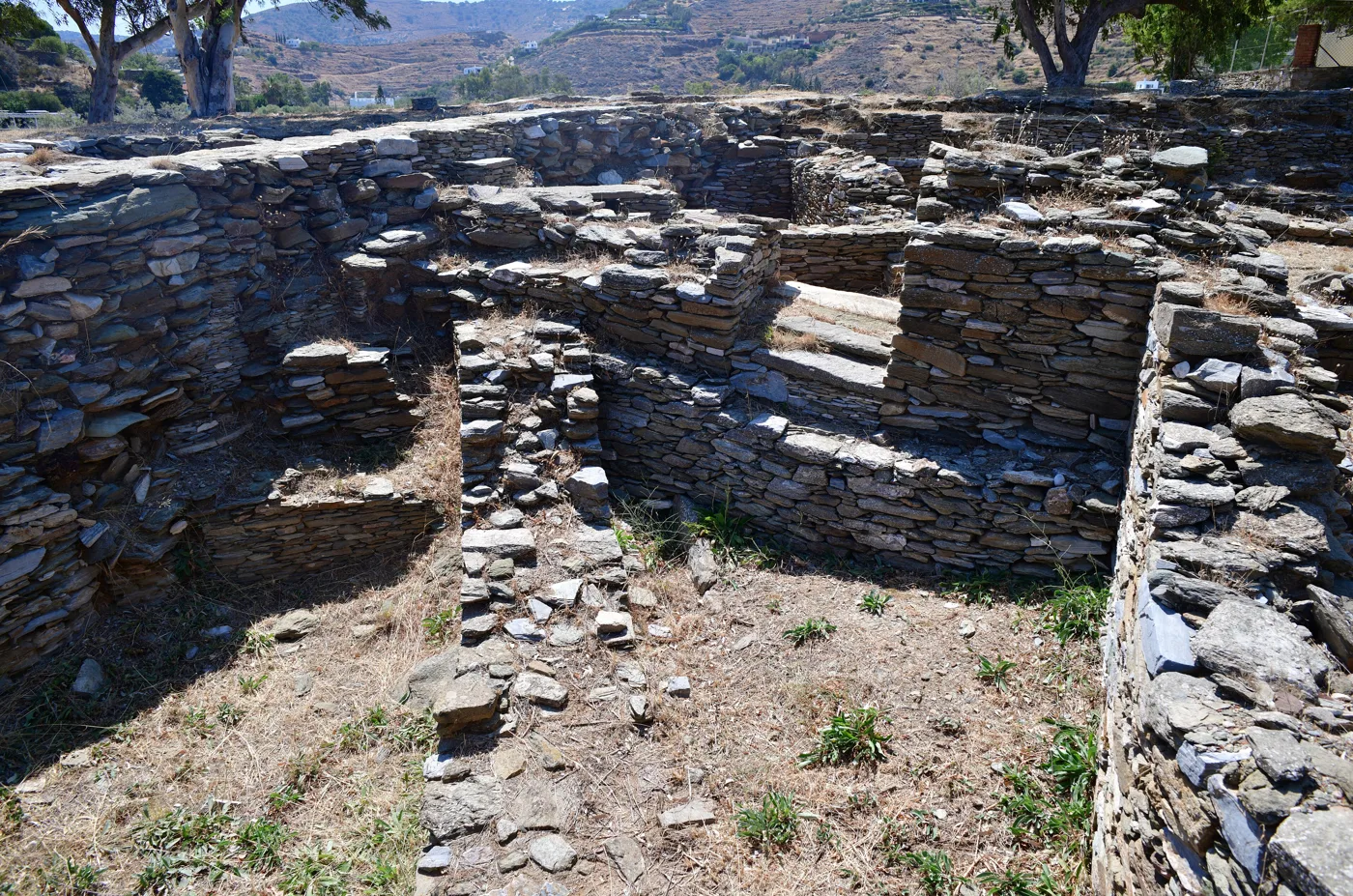
A 5,000-year-old settlement.
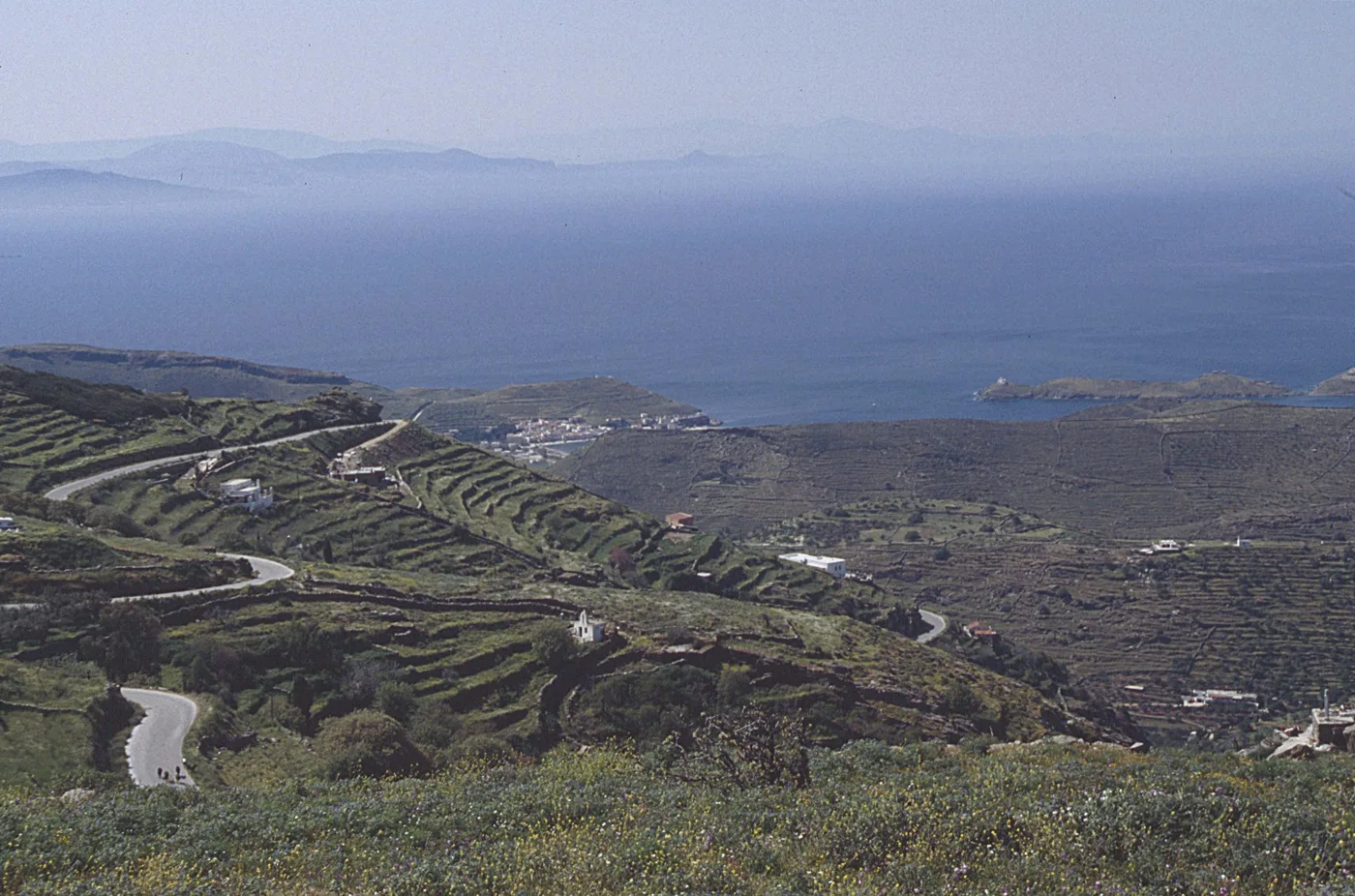
The Kea countryside.
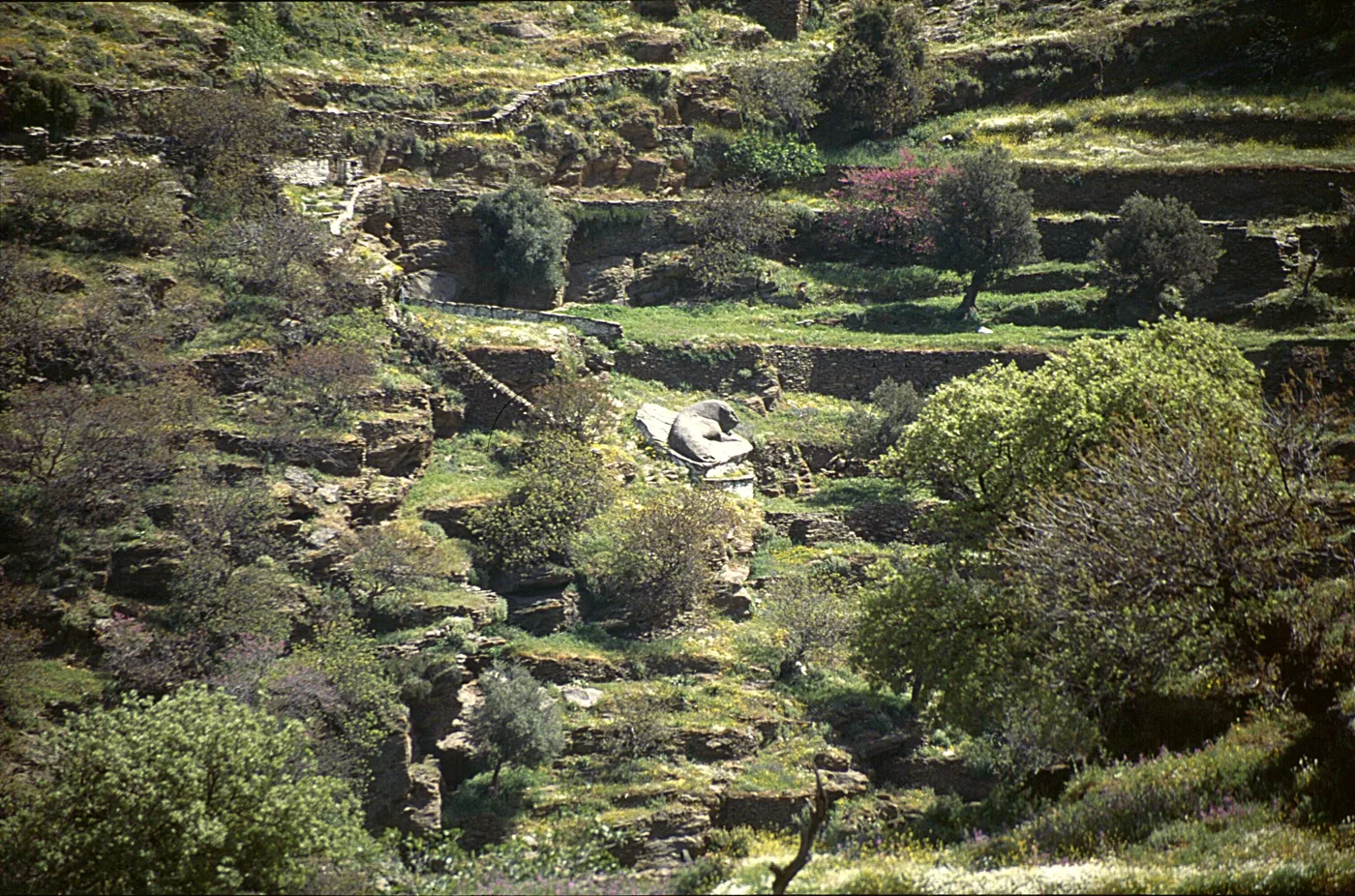
The green of Kea.
Photos: Phso2 (CC BY-SA 3.0), Kevin Stroup (CC BY 3.0), Peter Oluf Brøndsted (Public domain), Phso2 (CC BY 3.0), Stefanos1316 (CC BY-SA 4.0), VaioSiametis (CC BY-SA 4.0), Chareilia Ieromnemon (CC BY-SA 4.0), Panegyrics of Granovetter (CC BY-SA 2.0), Ziegler175 (CC BY-SA 3.0) · Wikimedia Commons
The old footpaths link the villages, the ancient sites and the beaches, and many are waymarked. Start early, wear closed shoes and take water. Spring, with its flowers, is the best season for walking.
⚓ The harbours, the monastery and the beaches
Korissia is the port, with tavernas, cafés and a sandy beach. Next to it, Vourkari is a fishing village with boats and tavernas on the water, the liveliest spot on the island in the evening. To the east, the monastery of Panagia Kastriani stands on a cliff, overlooking the sea.
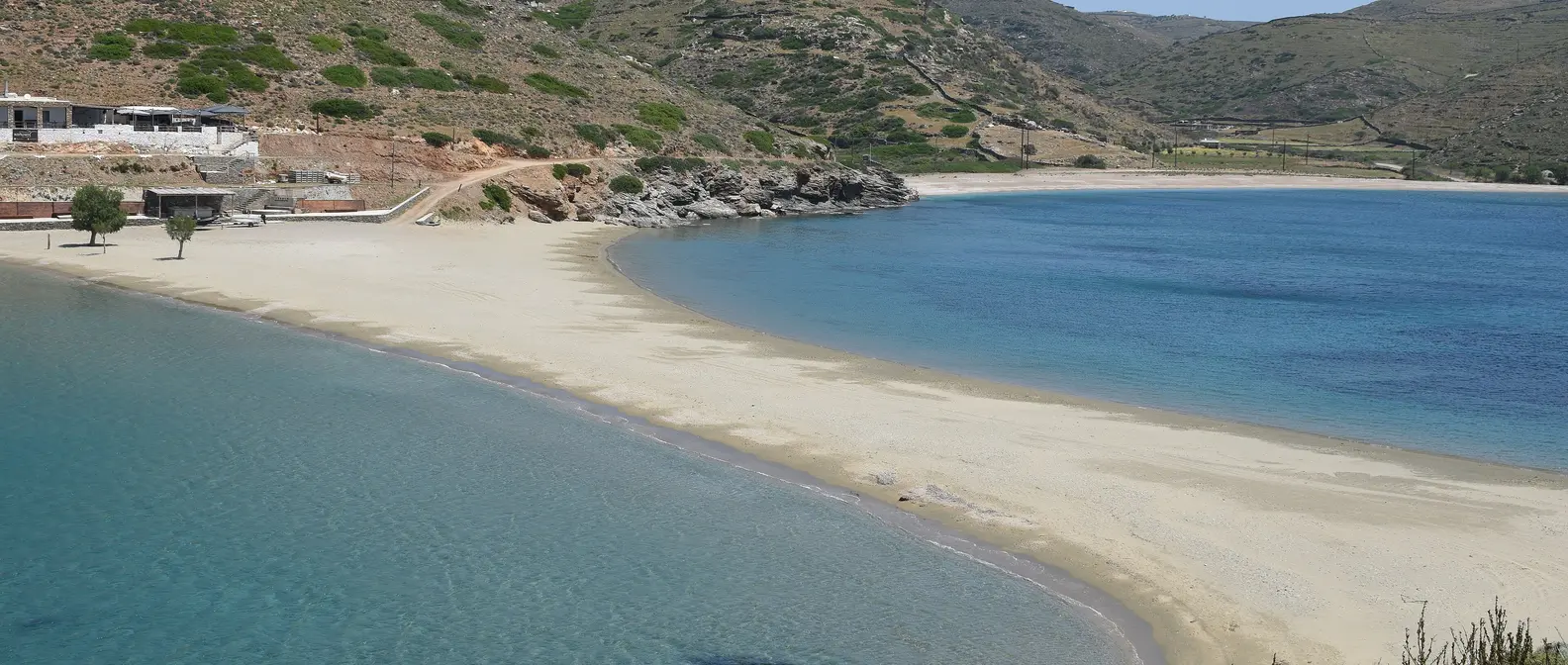
The beaches are many and varied. Otzias is a sandy beach in a sheltered bay, good for families, and Spathi and Orkos are sandy beaches on the east coast. On the west, Pisses is a large sandy beach in a green valley and Koundouros has small coves and windmills. Off Kea lies the wreck of the Britannic, the sister ship of the Titanic, which sank in 1916, but only experienced divers with a permit can visit it.
- Gialiskari: a sandy beach with trees, next to Korissia.
- Otzias: a sandy beach in a sheltered bay, for families.
- Spathi and Orkos: sandy beaches on the east coast.
- Pisses: a large sandy beach in a green valley.
- Koundouros: small coves on the west coast.
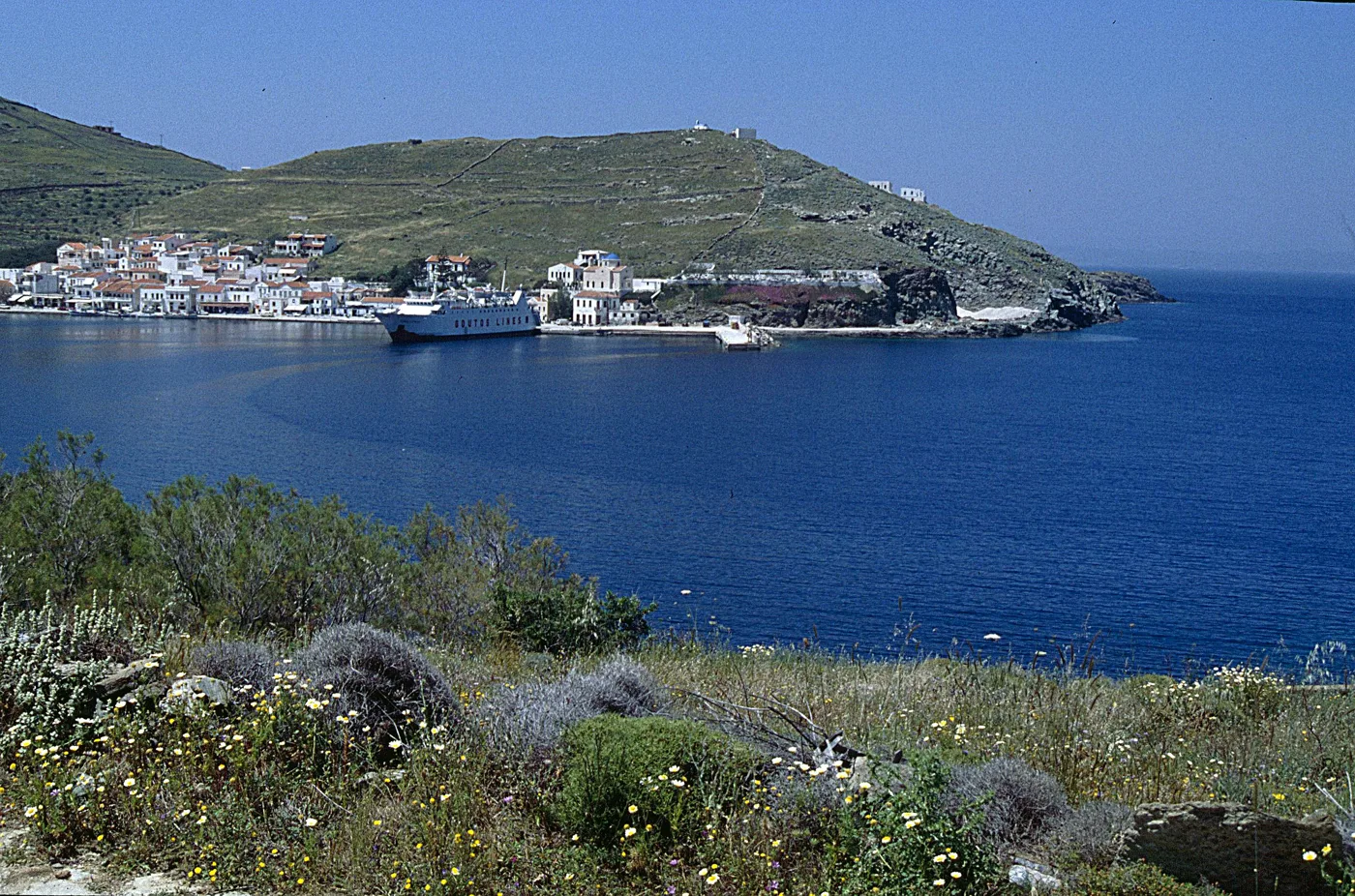
Where the ferry arrives.
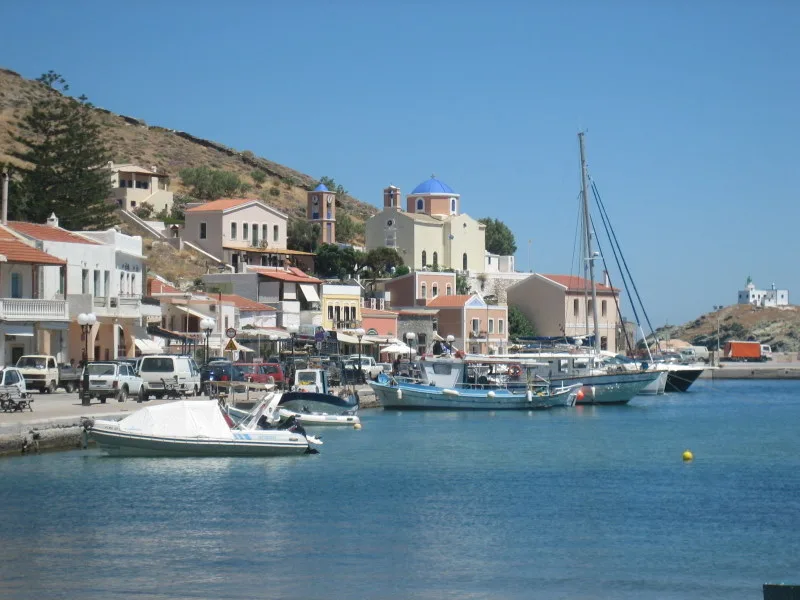
Boats and tavernas.
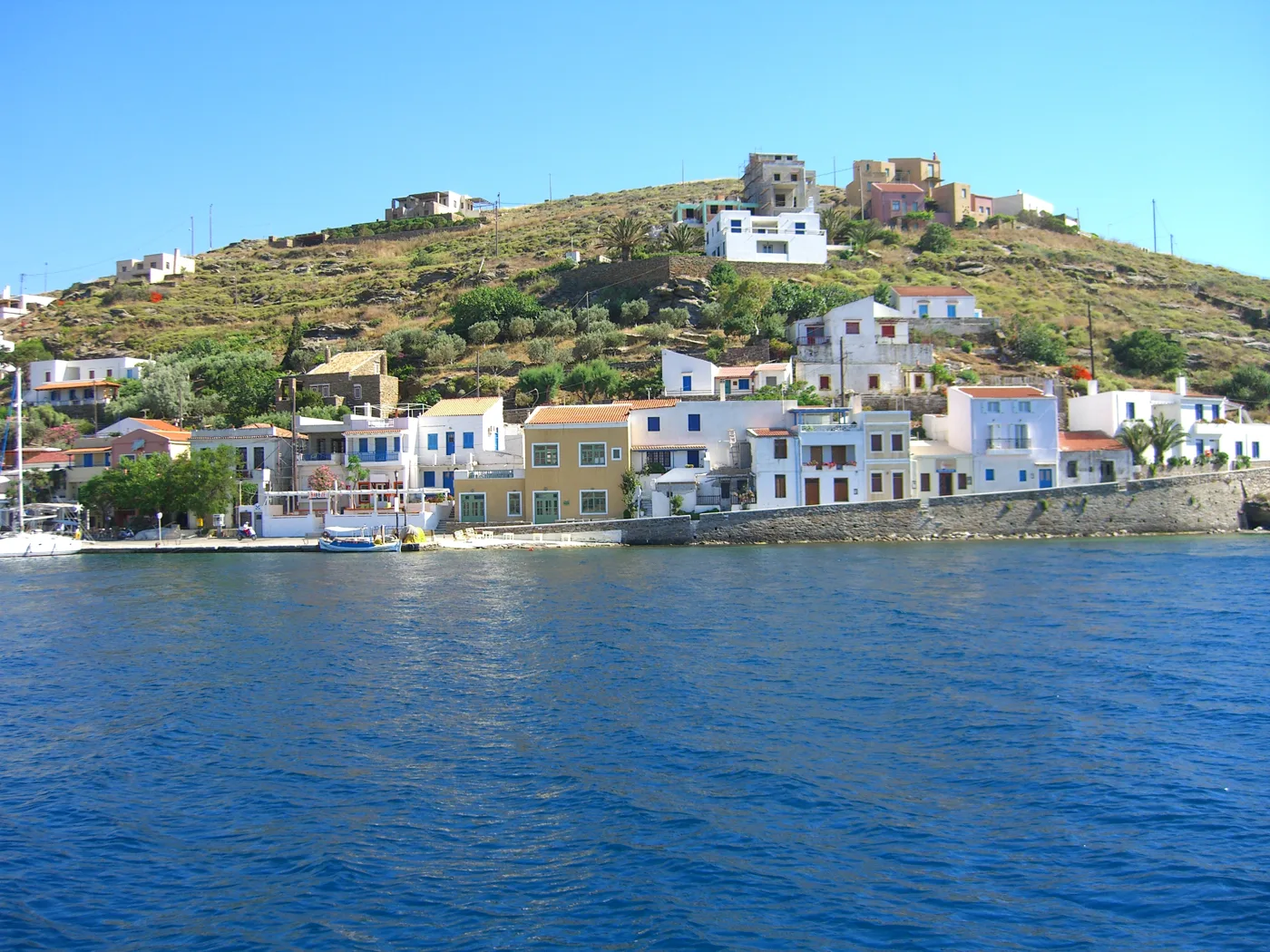
The fishing village with the tavernas.
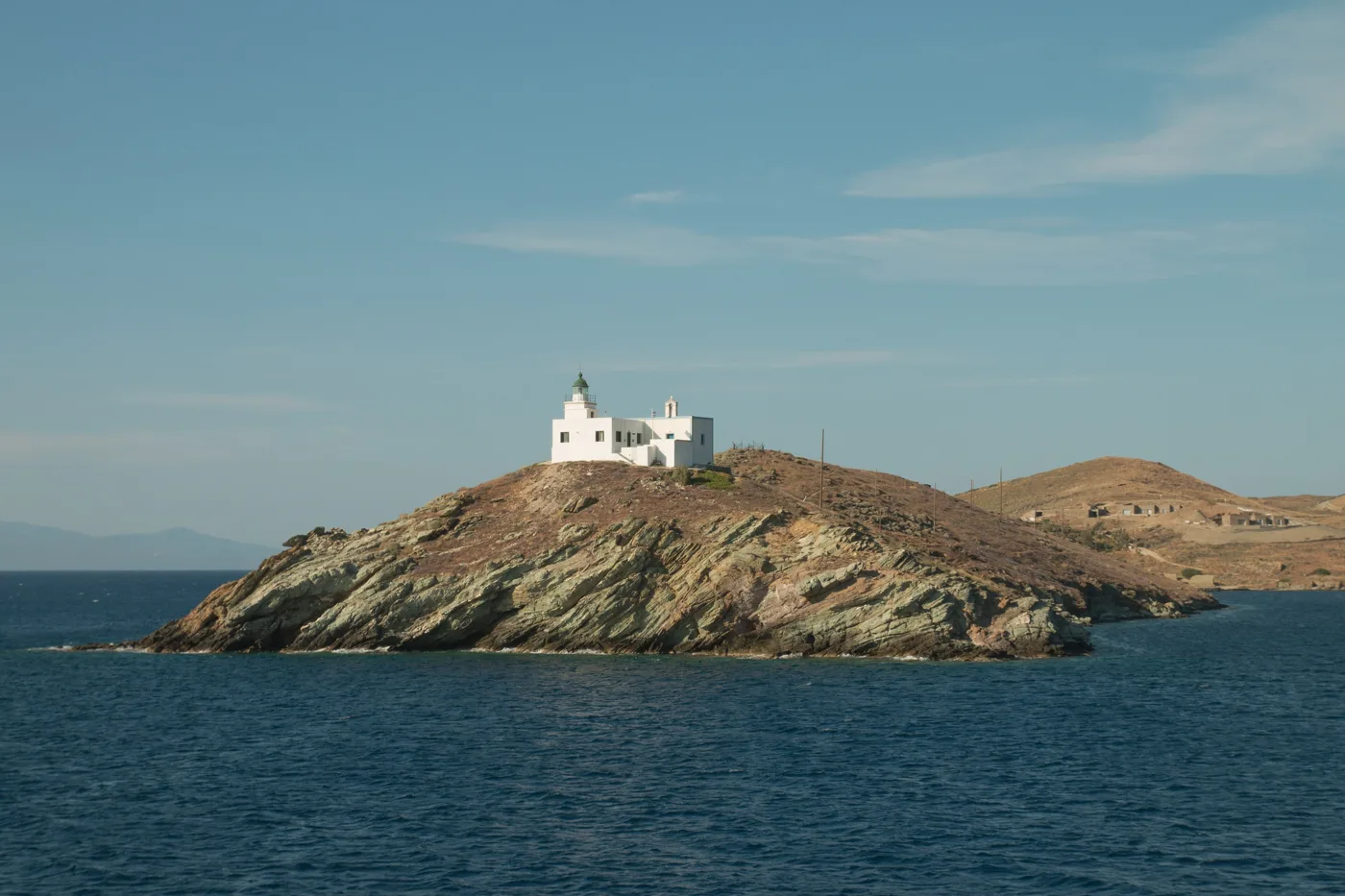
At the mouth of the bay.
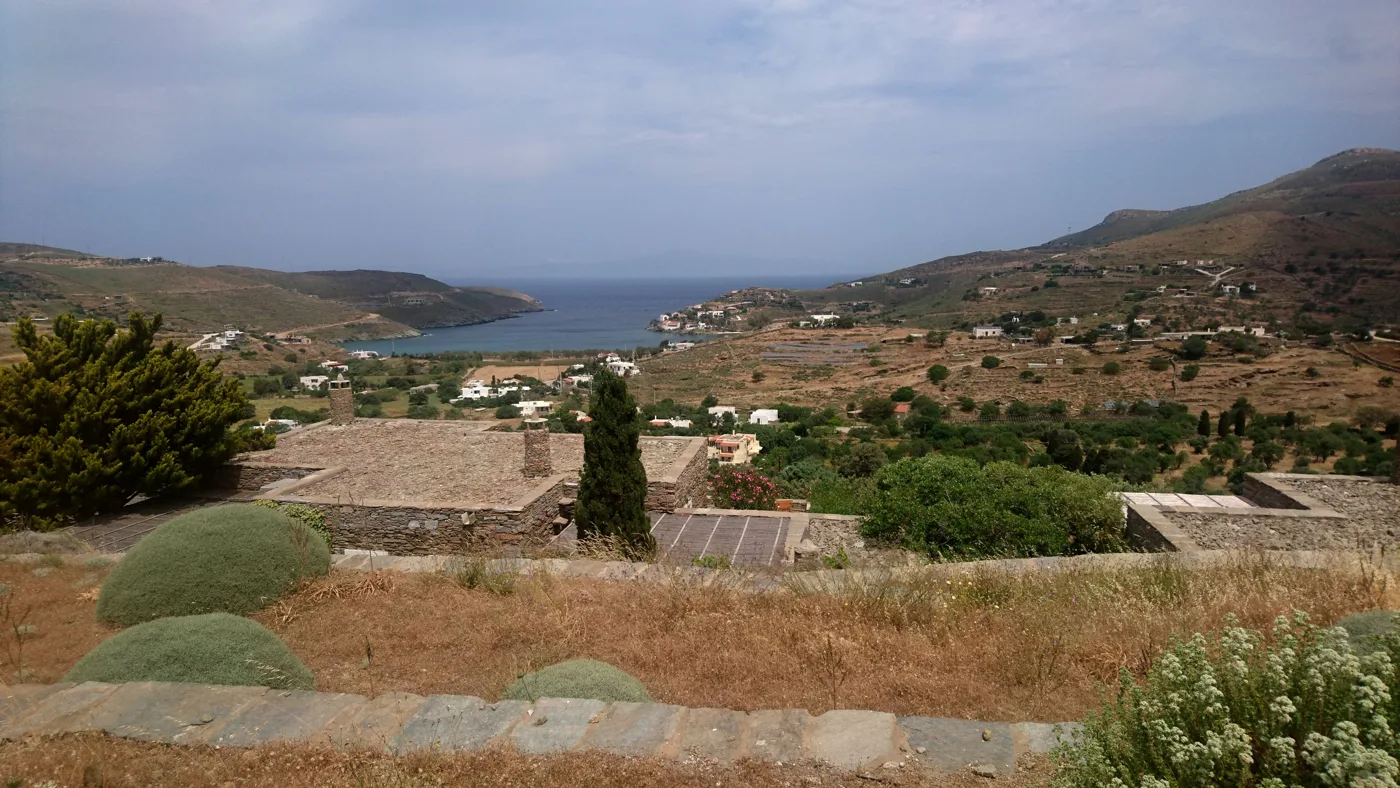
An enclosed bay.
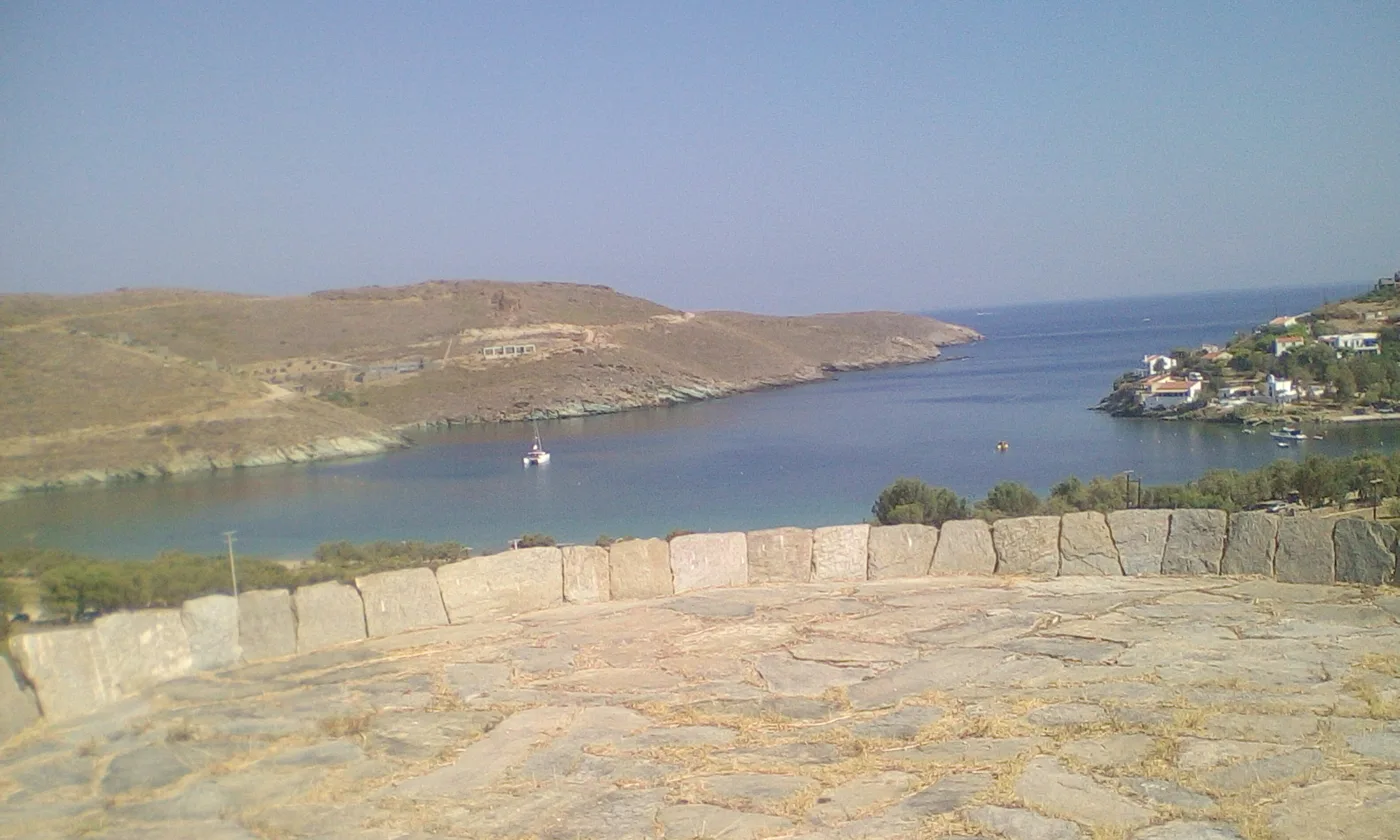
A view of Otzias.
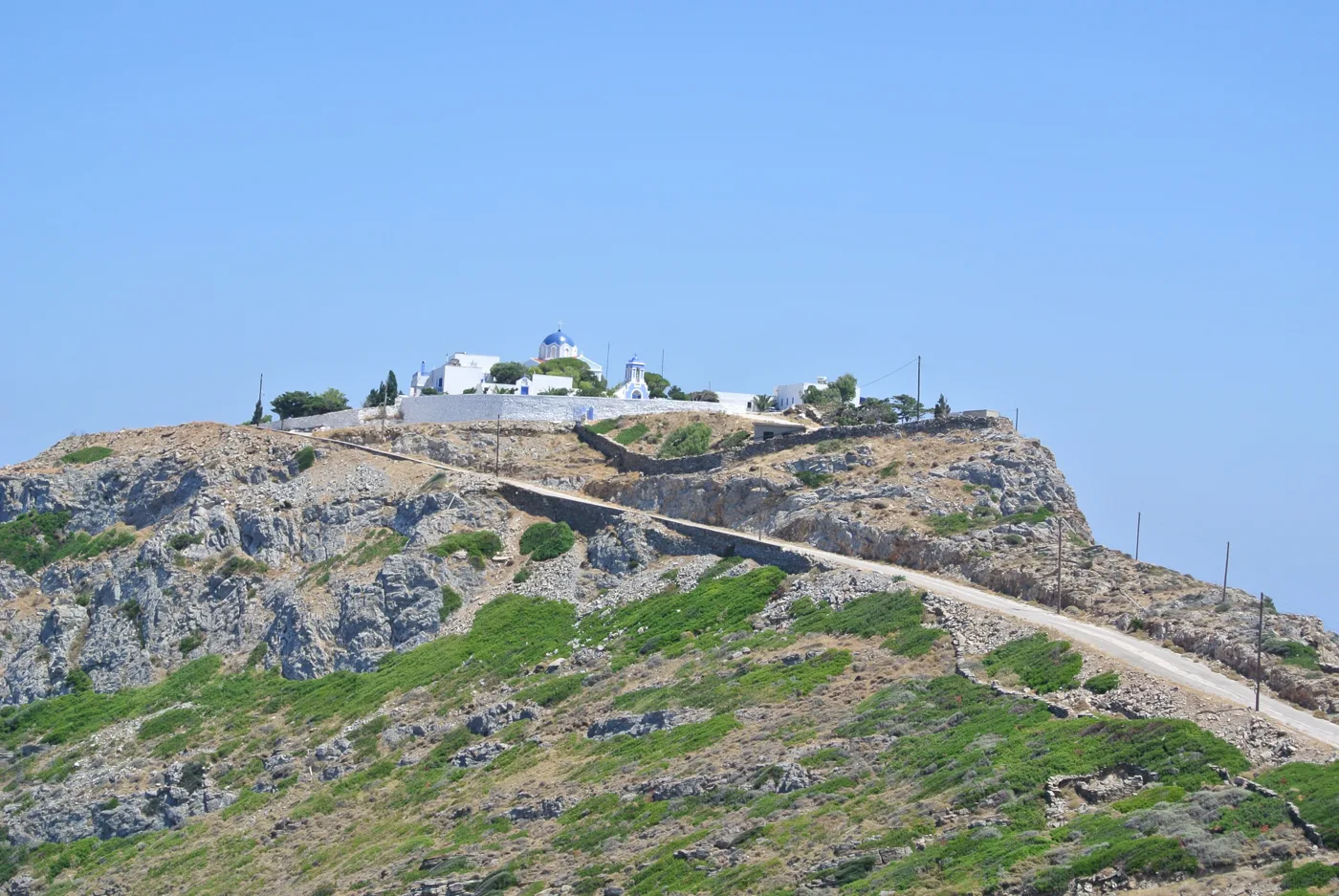
The monastery on the cliff.
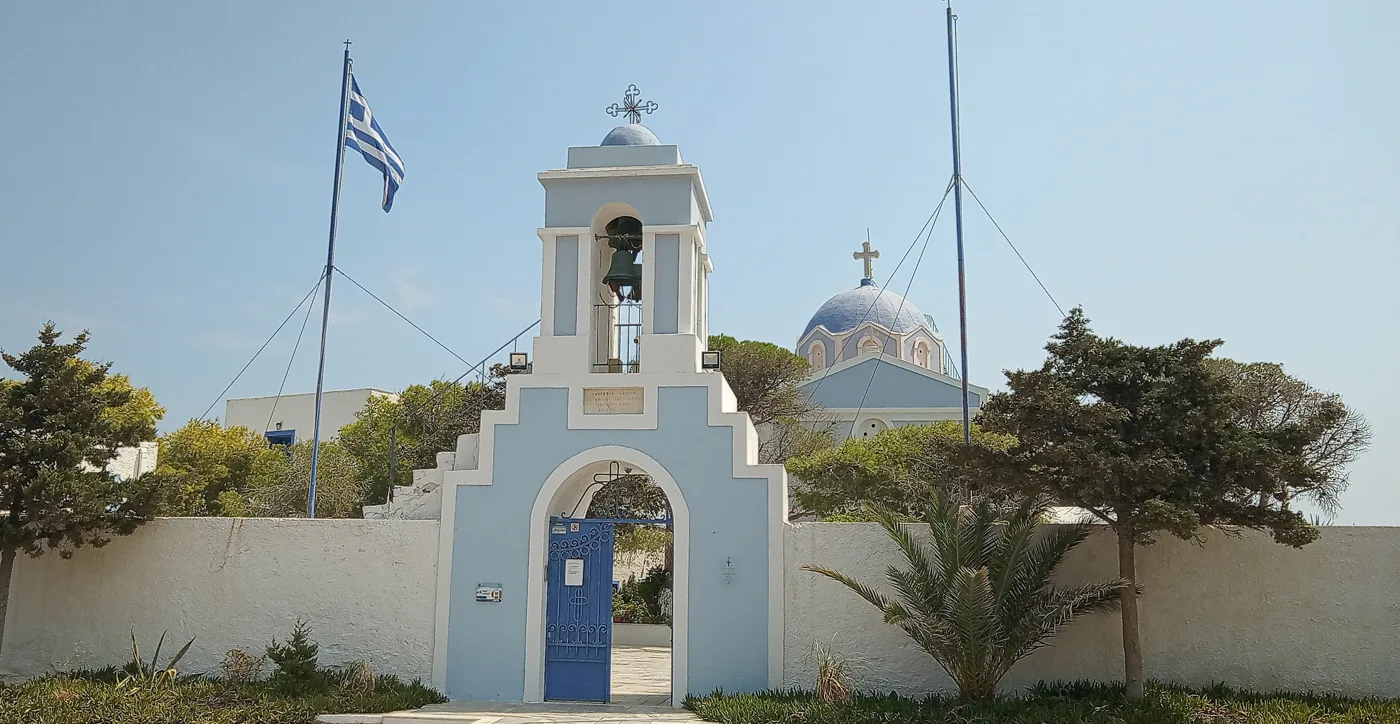
The monastery bell tower.
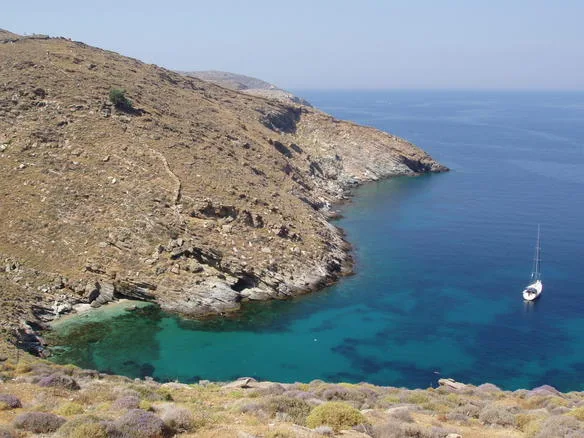
Water like a swimming pool.
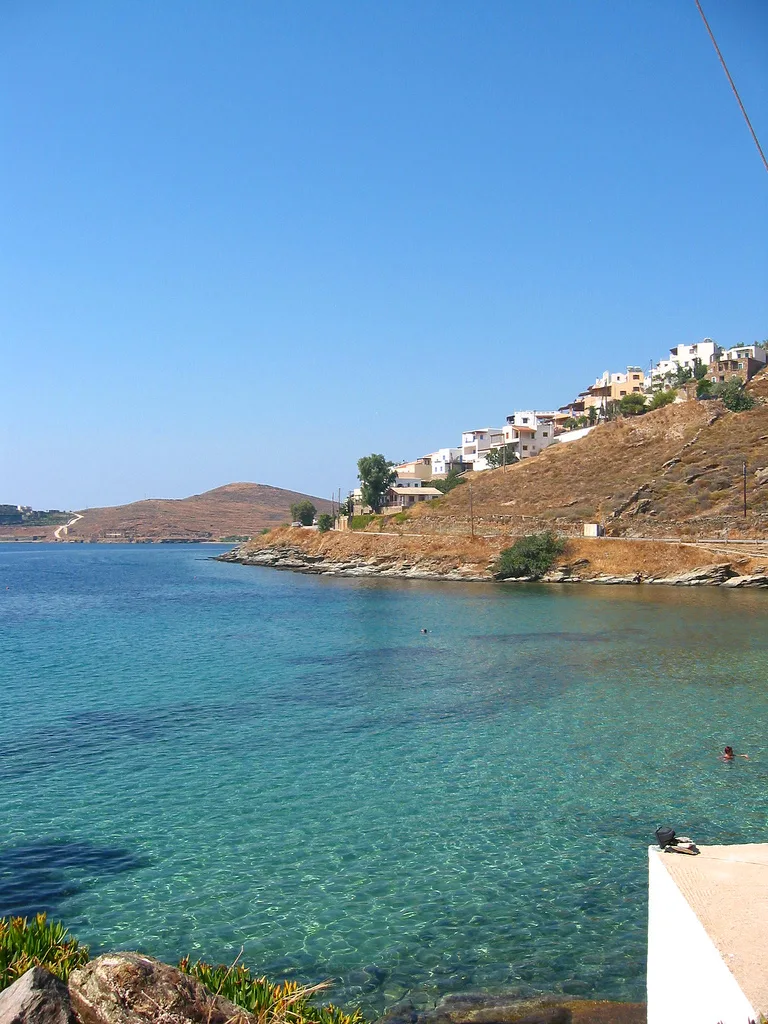
Clear water.
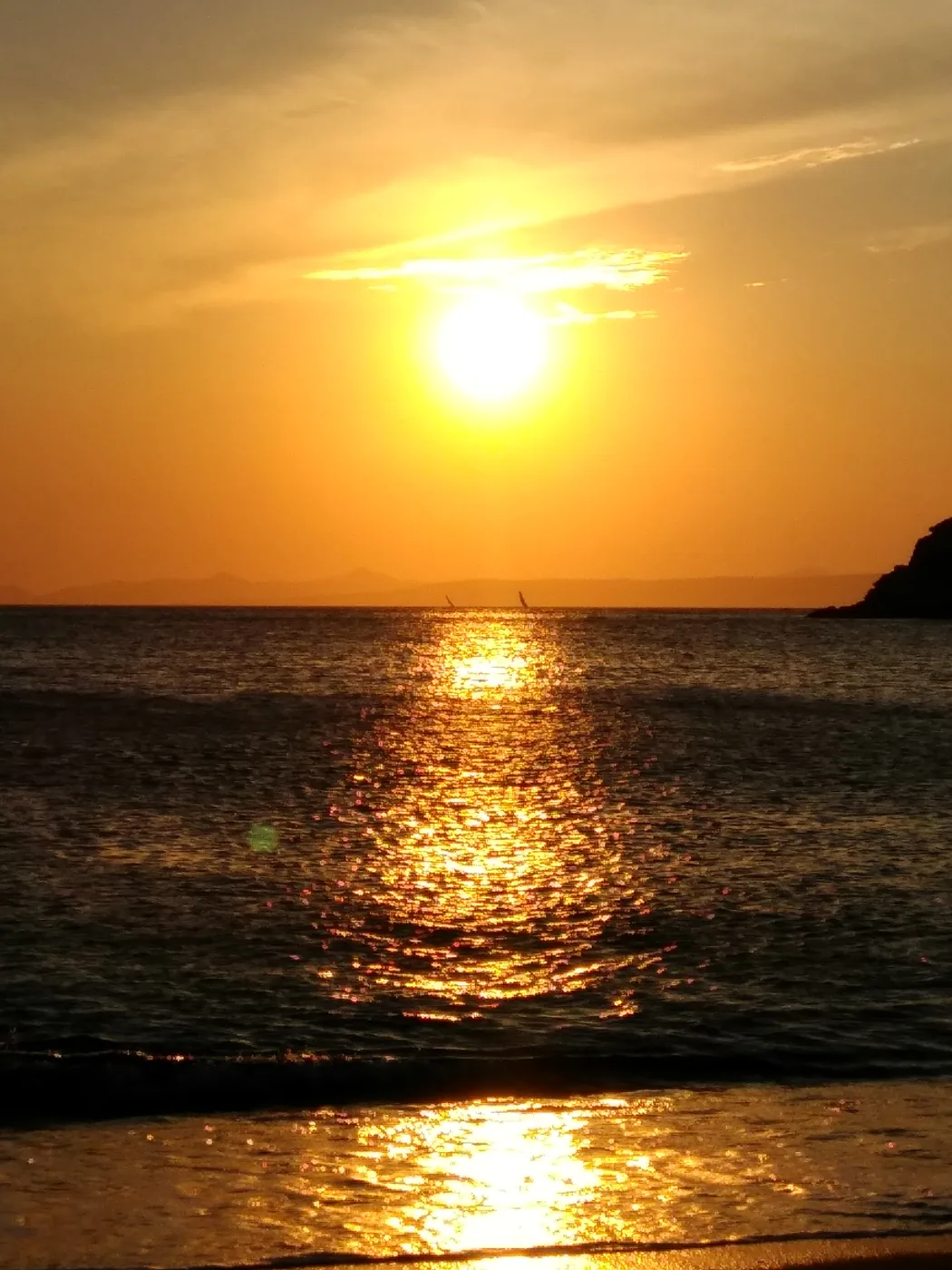
The west coast.
Photos: Ziegler175 (CC BY-SA 3.0), Richard Wurdel (CC BY-SA 2.0 DE), Kevin Stroup (CC BY 3.0), Zde (CC BY-SA 4.0), Pezoporikos Omilos (CC BY-SA 2.0), Mfassea (CC BY-SA 4.0), Morfoula Tsentidou (CC BY-SA 4.0), Katerina An (CC0), Yannis Tsoumos (CC BY-SA 1.0), Joy Coffman (CC BY 2.0), Stefanos1316 (CC BY-SA 4.0) · Wikimedia Commons
🍽️ What to eat
Try louza, a smoked pork fillet with spices, the thyme honey and Kea’s pasteli, a sesame and honey bar. In Vourkari you will find fresh fish and seafood, and in the mountain villages kid goat and local cheeses. In the past, Kea’s acorns were used for tanning leather.
📅 When to go
Spring is ideal for the footpaths, with flowers and greenery. June and September are the best months for swimming. In July and August weekends fill up with Athenians, and ferries and rooms are booked early. If you can, go during the week.
✈️ How to get there from Athens
| How | Duration | From | Notes |
|---|---|---|---|
| Bus and ferry | About 1.5 hours to Lavrio, plus 1 hour by ferry | Pedion tou Areos | KTEL Attica buses to Lavrio leave near Ioulianou 50. |
| Car and ferry | About 1 hour to Lavrio, plus 1 hour by ferry | Athens | The ferry also takes cars; book a spot at weekends. |
From Ioulianou 50, the KTEL Attica bus station at Pedion tou Areos is a few minutes’ walk away. On the island you need a car or scooter, because buses are few and distances long. If you want another island close to Athens, see also our guide to Kythnos.
🗓️ Three days on Kea
Ioulida and the Lion
Go up to Ioulida and walk its lanes. Visit the Archaeological Museum and follow the path to the Lion of Kea, about 15 minutes on foot. In the evening, dinner in Ioulida with a view of the sea.
Karthaia
Drive south and walk down the path to ancient Karthaia, with the temples of Athena and Apollo. Swim at the beach below the ruins. In the afternoon, swim and watch the sunset at Pisses or Koundouros.
The north
A morning swim at Otzias and a climb up to Panagia Kastriani, above the sea. At midday see the settlement of Agia Irini and eat fish in Vourkari before the ferry back.
Frequently asked questions
Can I go to Kea for a weekend?
Yes, it is the easiest island for a weekend from Athens. But book the ferry and your room early, because it fills up in summer. With two days you have time for Ioulida, the Lion and one or two beaches.
Where should I stay on Kea?
In Ioulida, for the view and the atmosphere. In Korissia or Vourkari, to be close to the port and the tavernas. At Otzias or Pisses, for a quiet holiday by the sea.
Do I need a car on Kea?
Yes, the island is large and buses are few. You can bring your own on the ferry or rent one in Korissia.
How many days do I need?
Two days for a first visit, three to four for Ioulida, Karthaia, the footpaths and several beaches.
— Kathy