🪪 The island at a glance
📍 Where they are
Koufonisia lie in the Small Cyclades, between Naxos and Amorgos. From Piraeus, ferries take 5 to 8 hours, depending on the boat and the stops. From Naxos, fast boats take about an hour, and the small local ferry a little longer, calling at the other small islands. There is no airport. The nearest one is on Naxos.
📍 Where Koufonisia are
Koufonisia lie in the Small Cyclades, southeast of Naxos and west of Amorgos. The two islands are shown in red, and Piraeus and the port of Naxos, where the boats leave from, in green.
🗺️ Map of the islands
Pano Koufonisi is small and flat, with Chora and the port on the south coast. From there, a dirt road and a seaside path run east, passing one sandy beach after another all the way to Pori. Across the water, Kato Koufonisi has only a church, a taverna and empty coves. Further east rises Keros, a high, uninhabited island.
🗺️ Map of Koufonisia
At the top is Pano Koufonisi, with Chora on the south coast. From Chora a road and a path run east, past Ammos, Finikas, Fanos and Italida to Pori, the Devil’s Eye and Piscina. Below is Kato Koufonisi, with Panagia and Nero, and to the east Keros with Daskalio. Tap each number to see what it is.
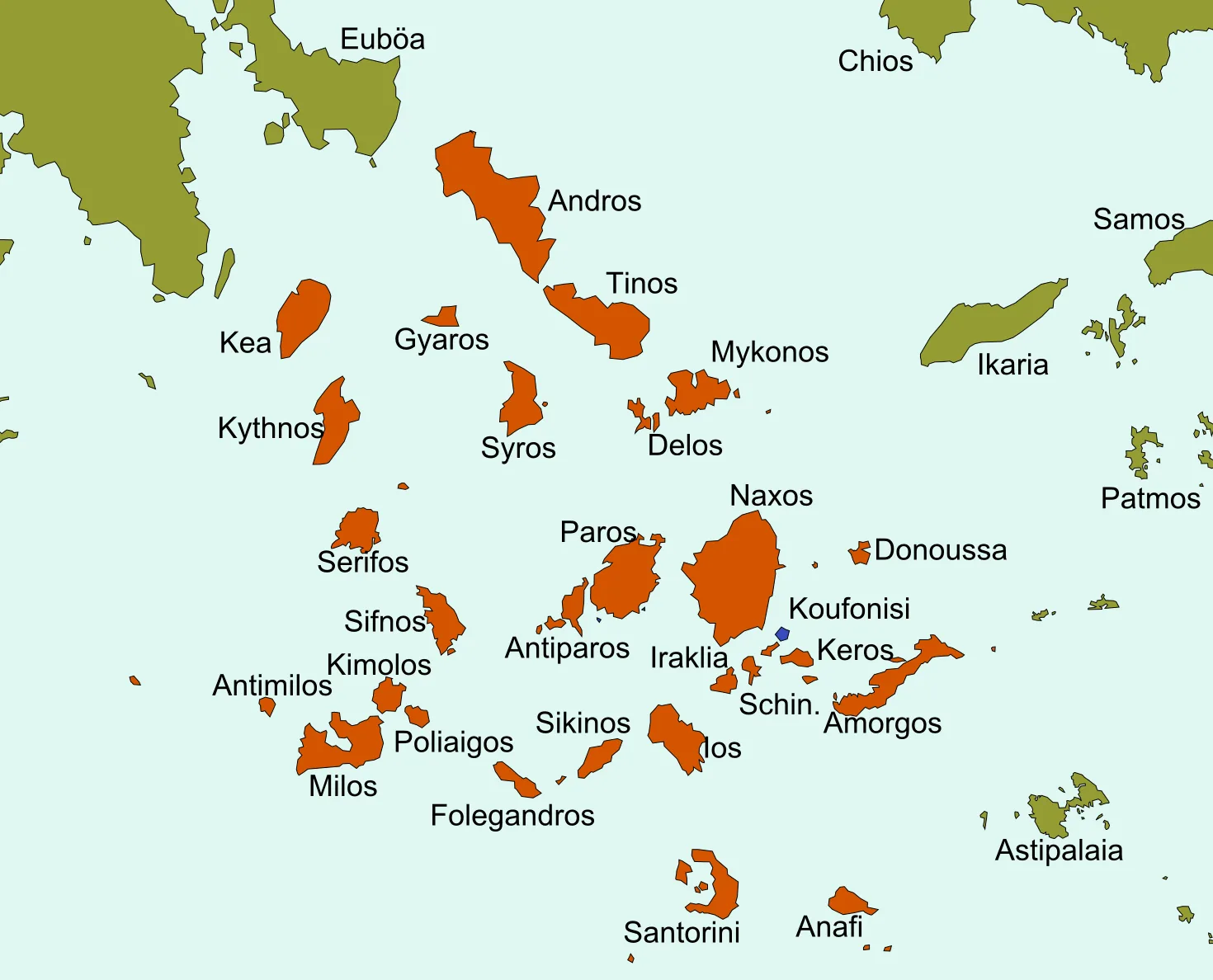
Map: Bgabel (CC BY-SA 3.0) · Wikimedia Commons
⚖️ Is it worth it? The pros and cons
Koufonisia are for people who live for the sea. Here is an honest picture.
📊 At a glance, from 1 to 5
👍 The pros
- Some of the clearest turquoise water in the Aegean.
- Everything is close: you reach the beaches on foot or by bike.
- A pretty, lively Chora with tavernas and bars.
- Kato Koufonisi, almost empty, by small boat.
- Very good fish.
👎 The cons
- In August it gets crowded and prices go up a lot.
- Almost no shade: bare rocks and sandy beaches.
- The meltemi often blows hard in July and August.
- You may not land on Keros without a permit.
🏘️ Chora
Chora is the only village on Pano Koufonisi, spread around the harbour and the beach of Ammos. Its main street, with white houses, blue doors and bougainvillea, fills up in the evening with people, tavernas, cafés and bars. In the middle stands the church of Agios Georgios, and further out a windmill by the sea.
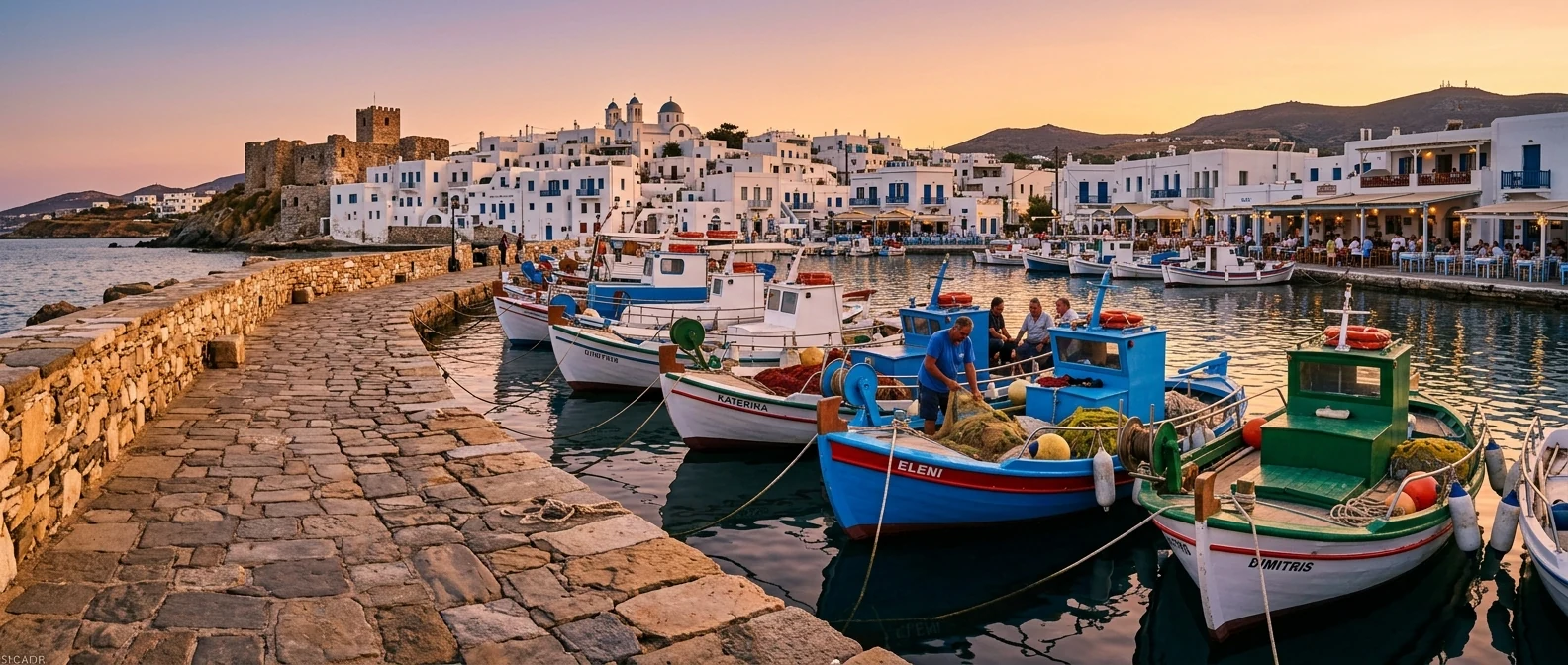
For their size, Koufonisia have one of the largest fishing fleets in the Cyclades. At the boatyard next to the village they still build and repair wooden boats, and at the little harbour of Parianos, to the west, you get the quietest sunset.
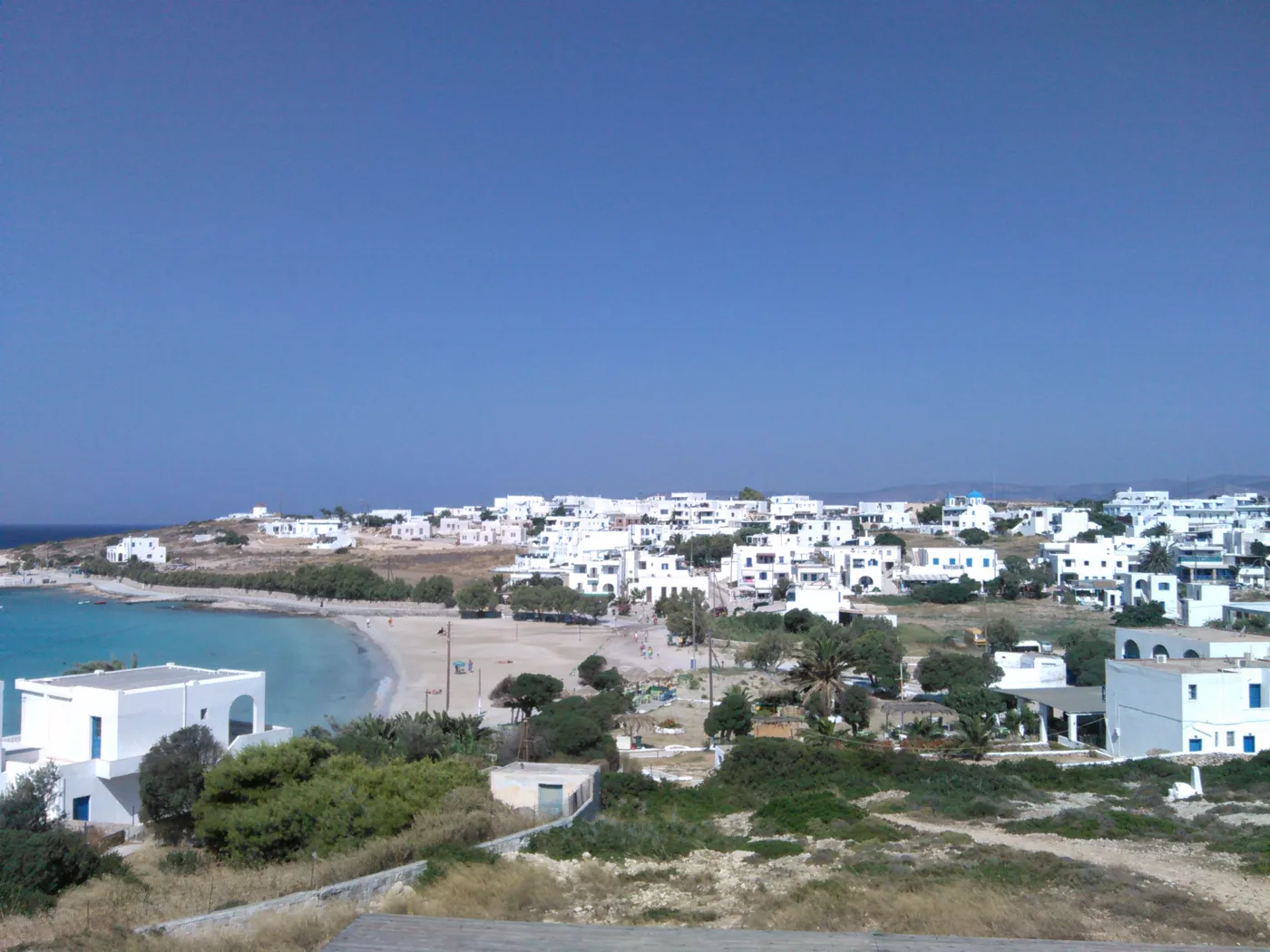
White houses above the sea.
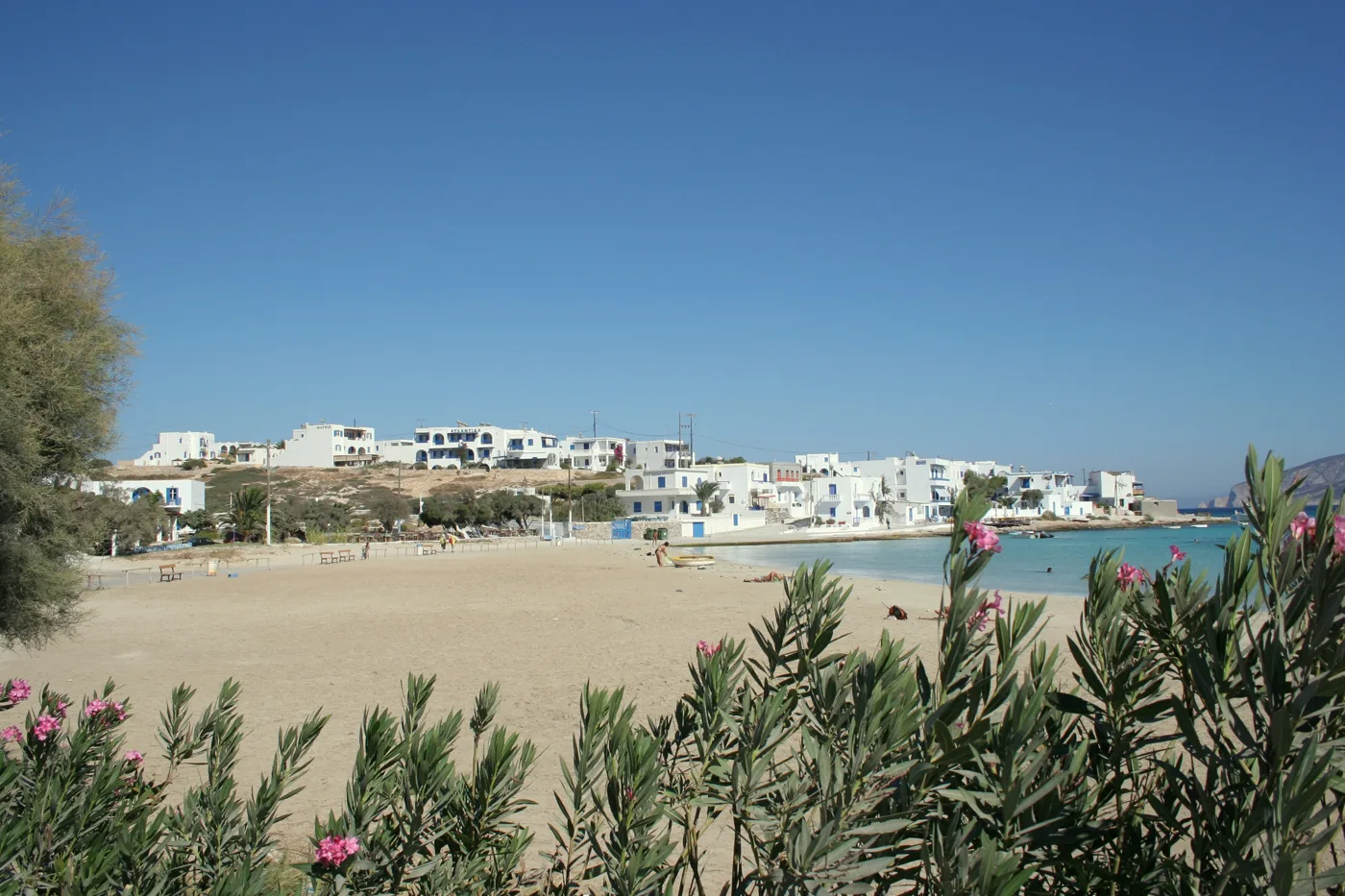
The beach inside the village.
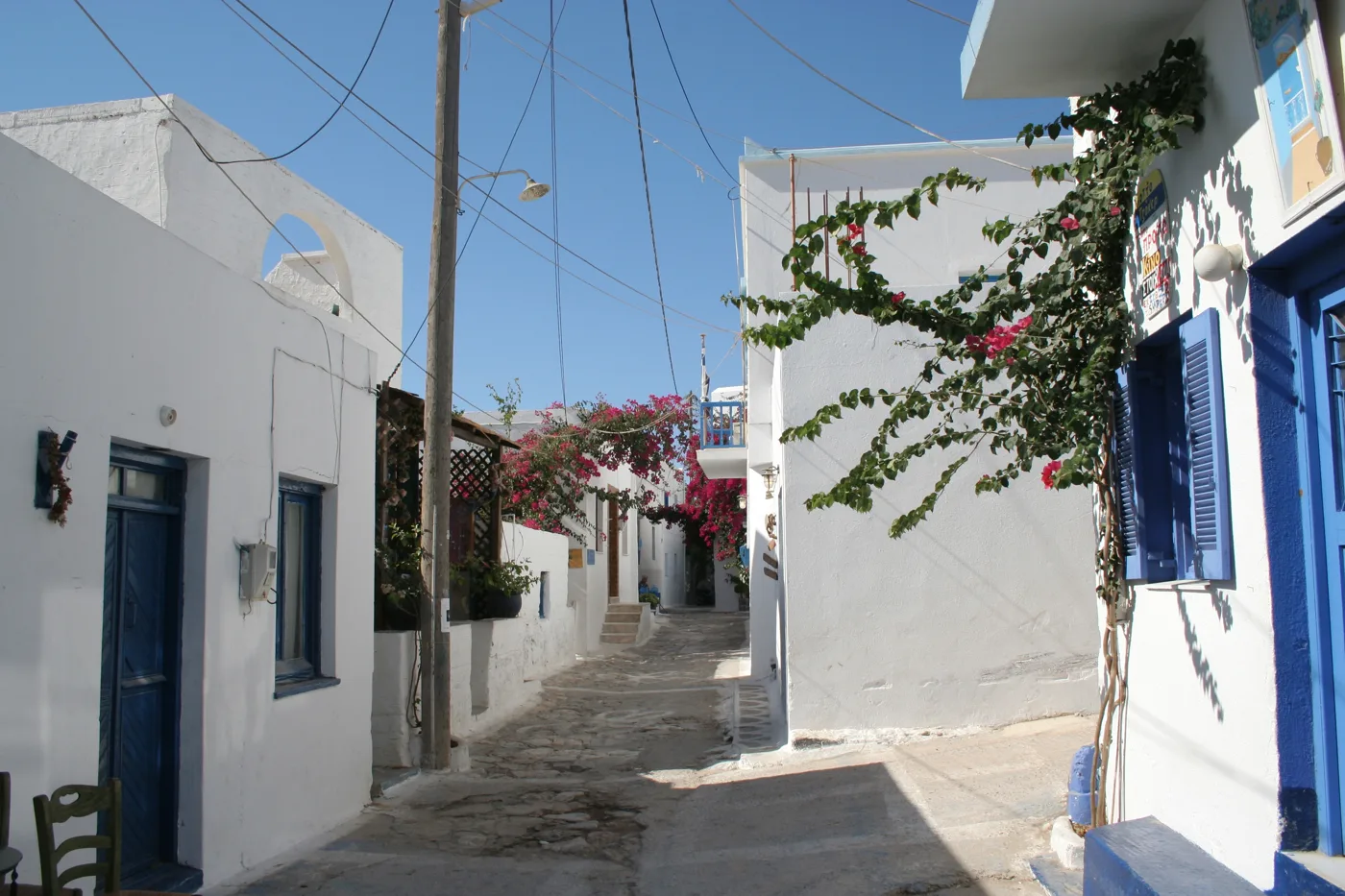
The evening stroll.
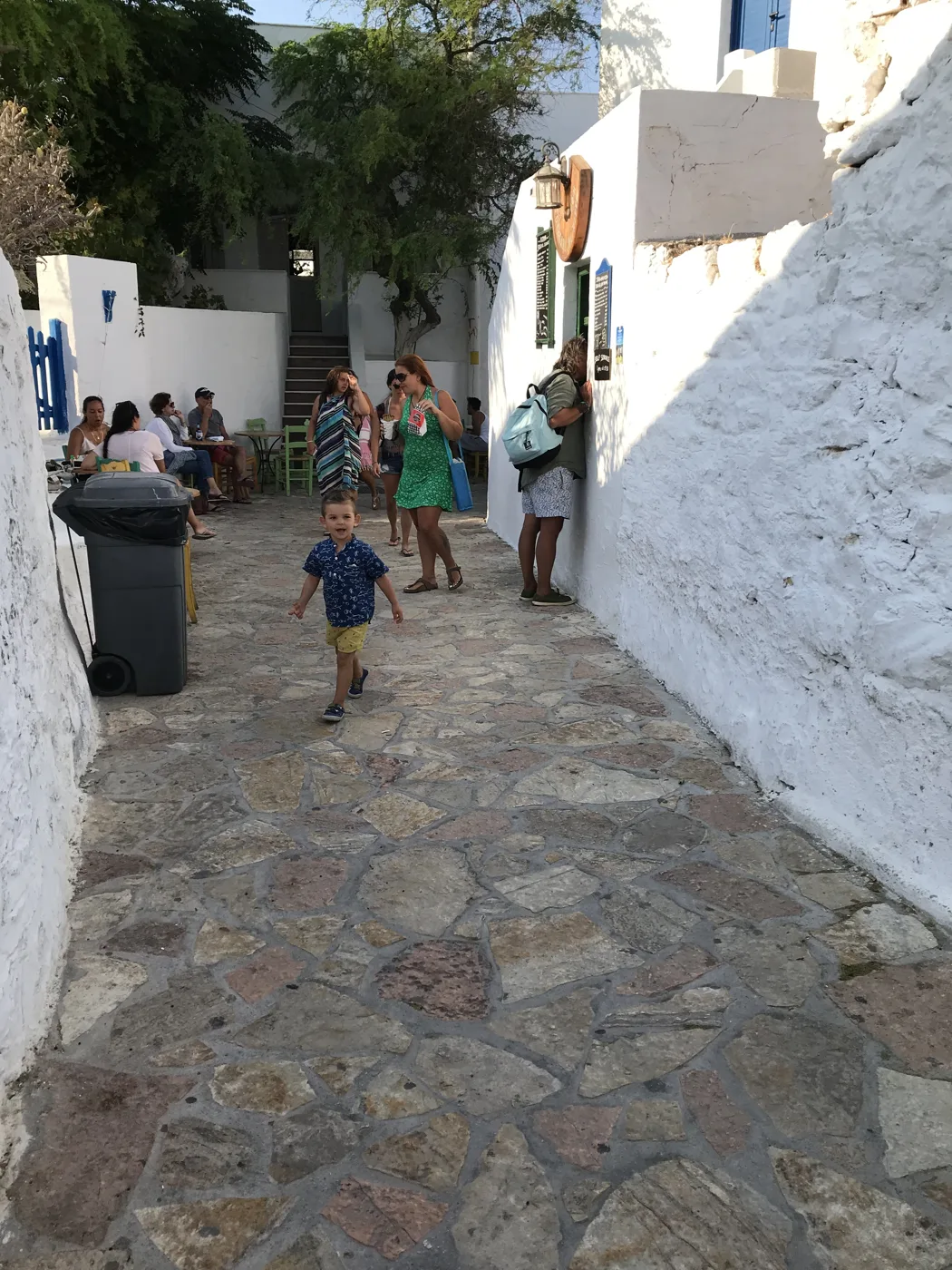
Stone and whitewash.
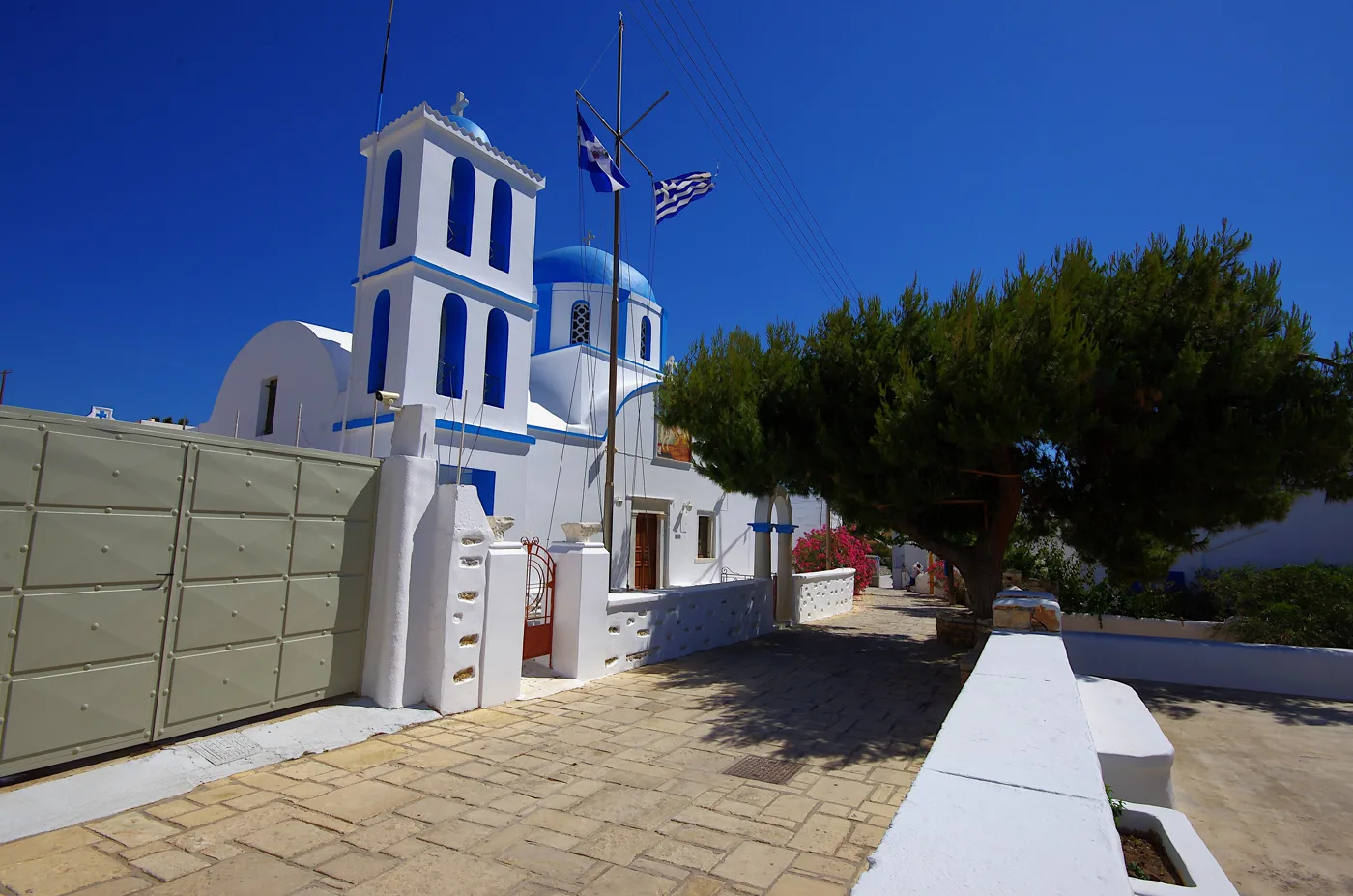
The village church.
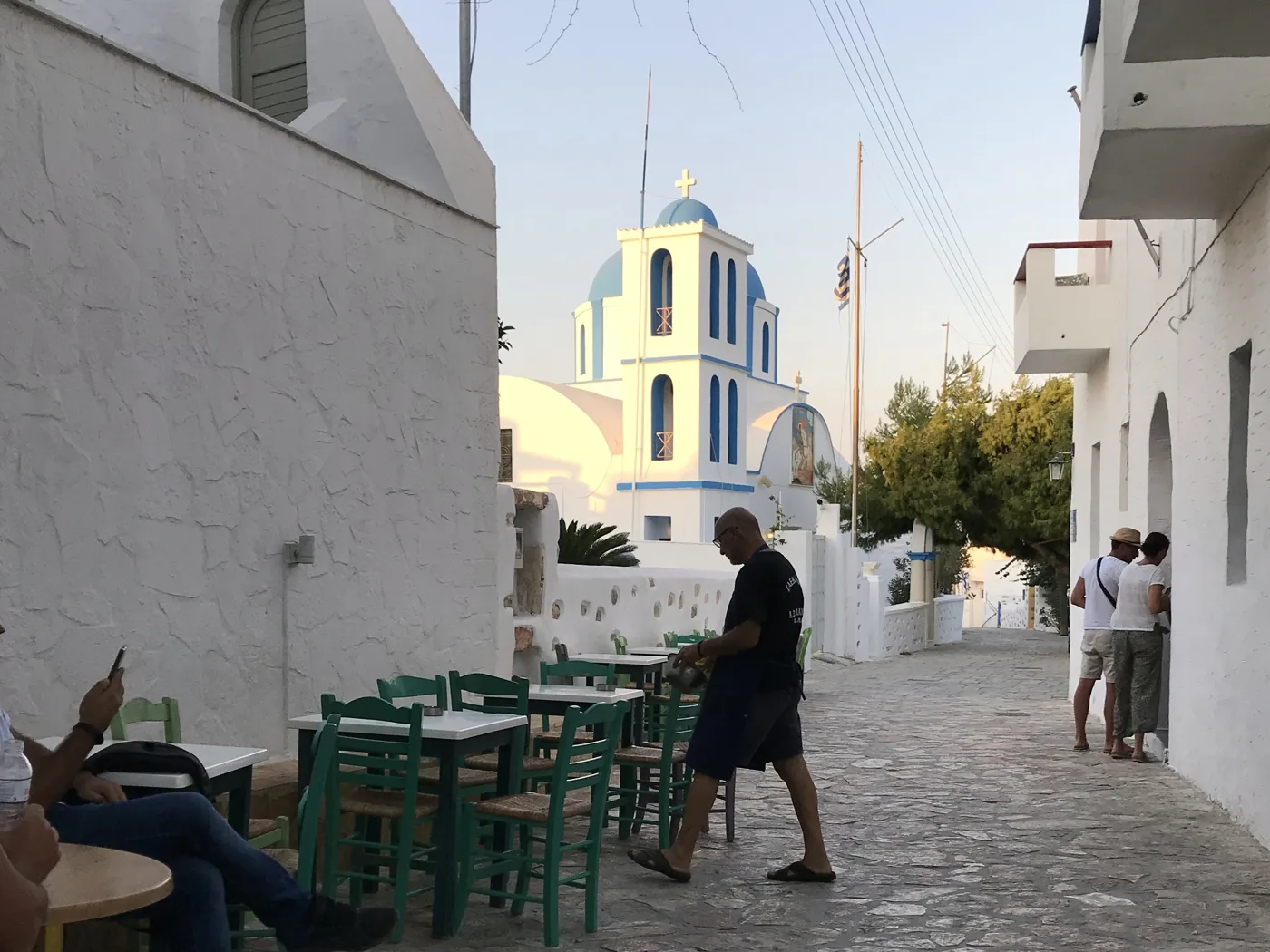
Coffee with a view of the church.
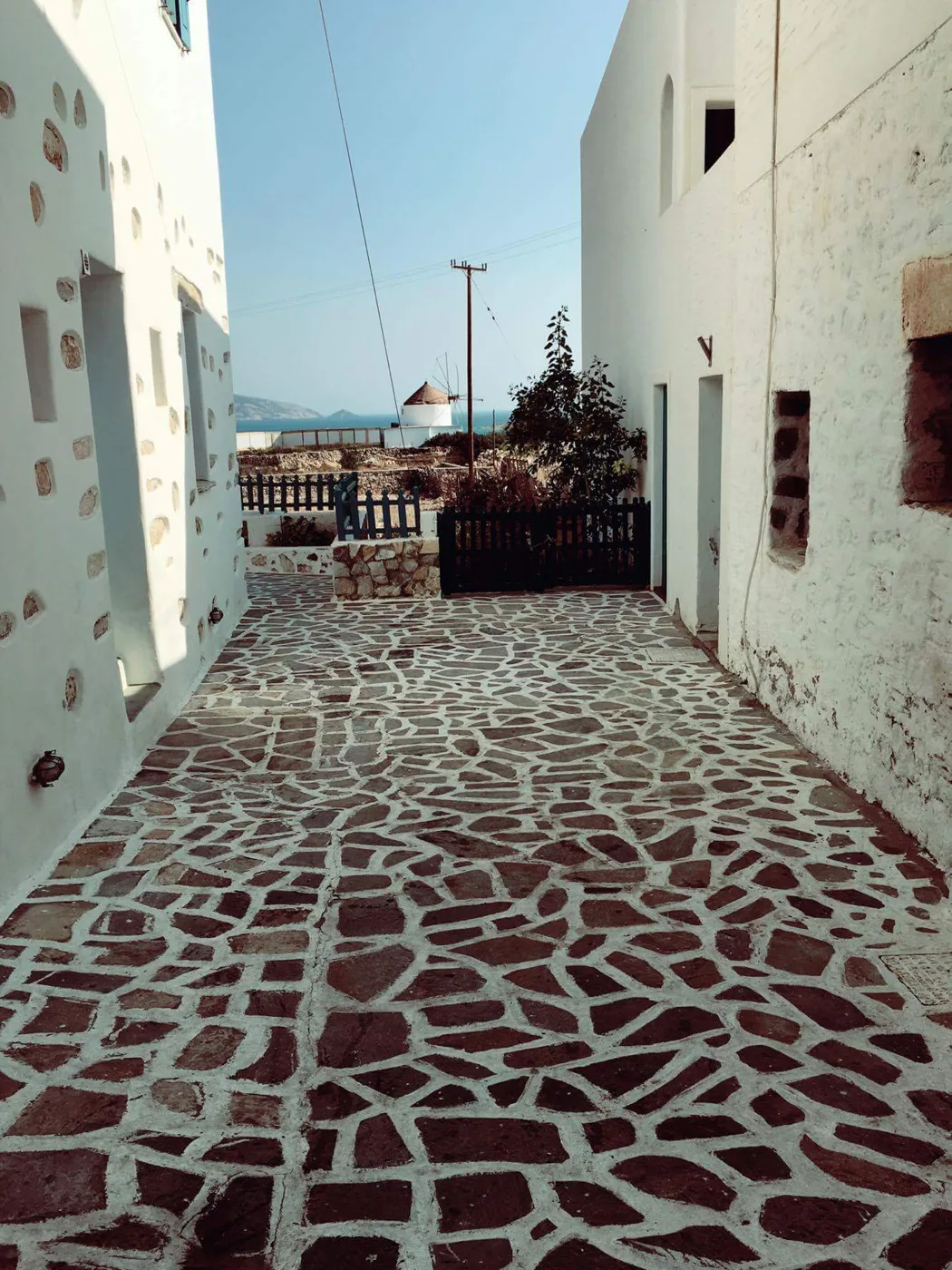
Red and white.
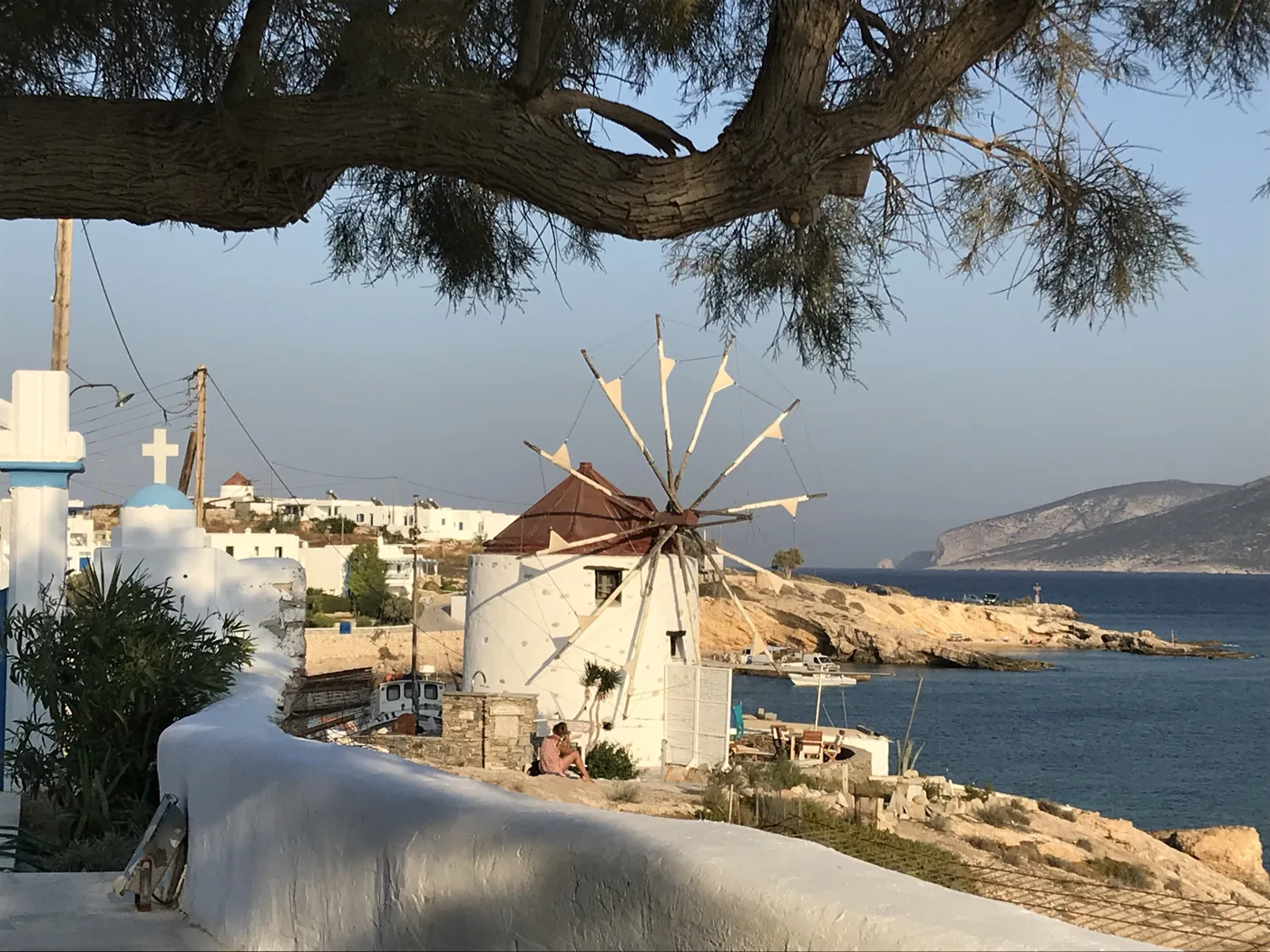
By the waves.
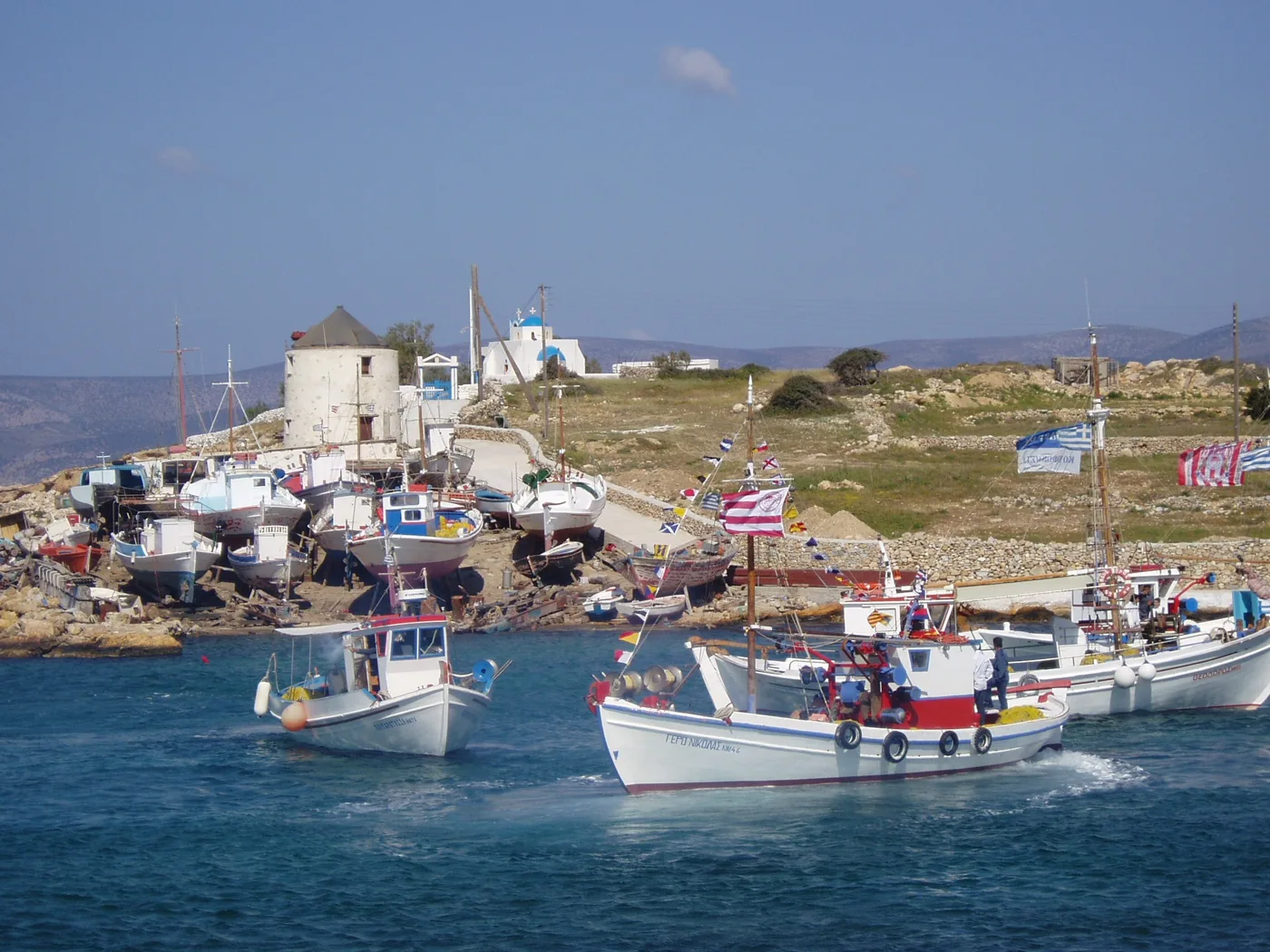
Where the boats are built.
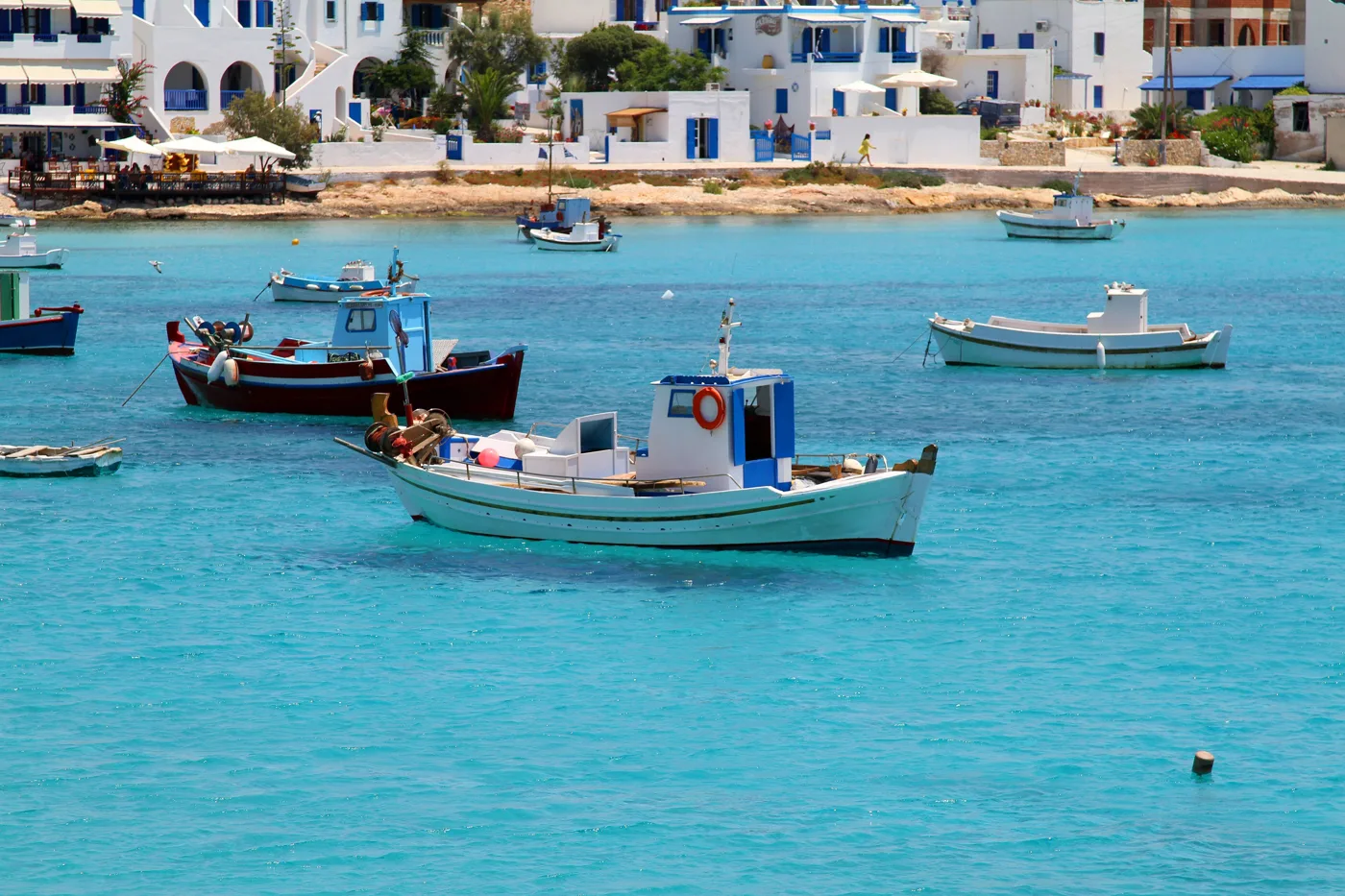
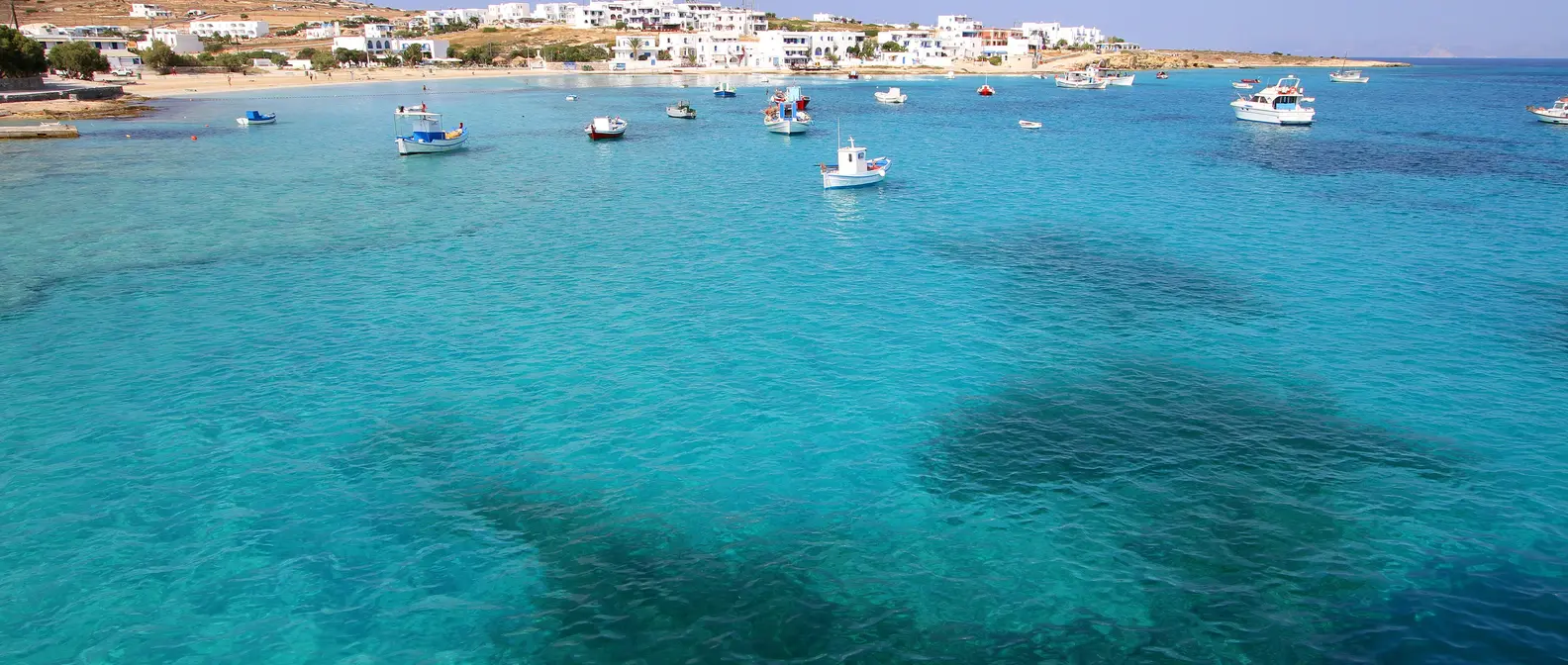
Boats in clear water.
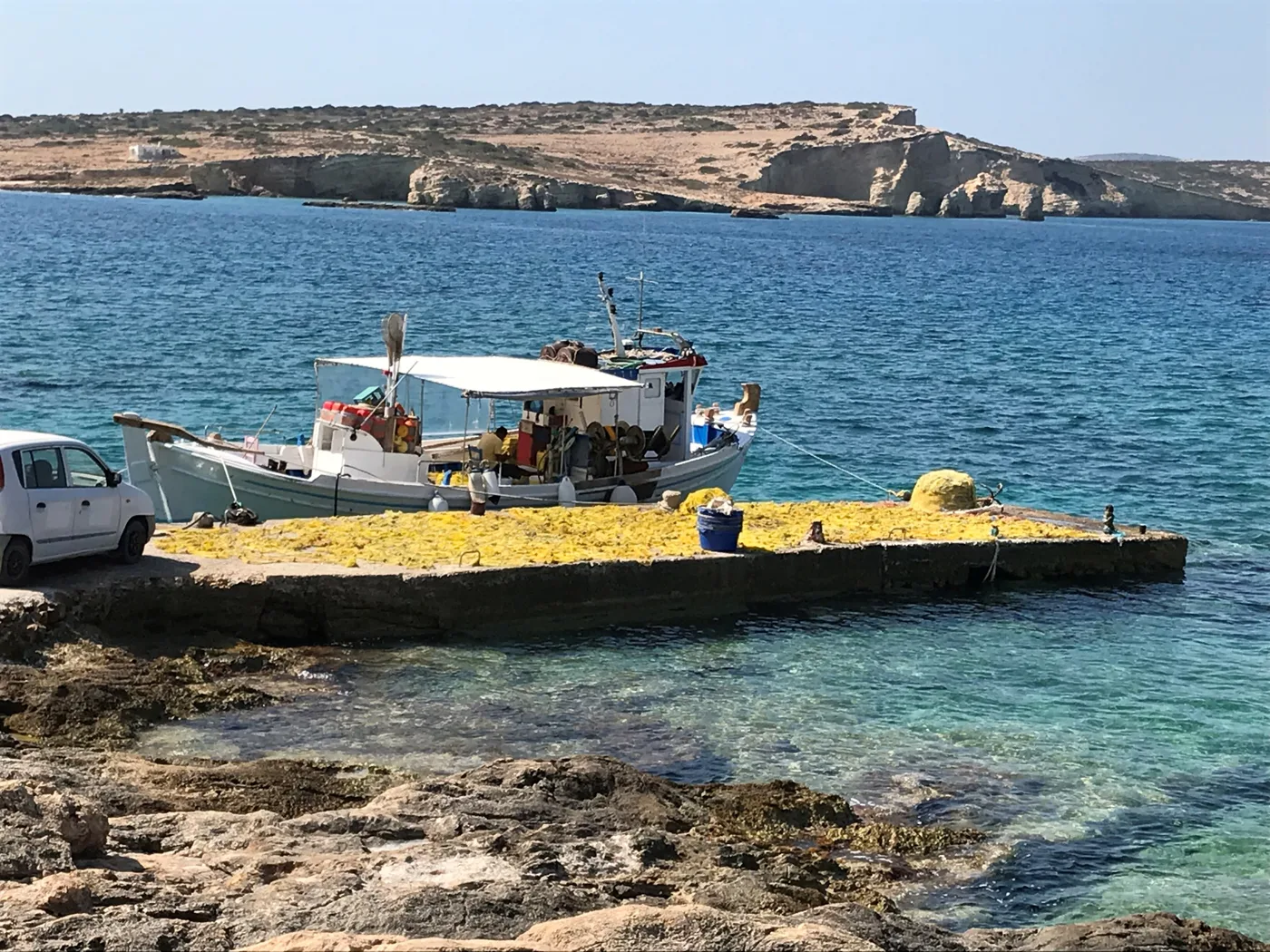
The island’s fishermen.
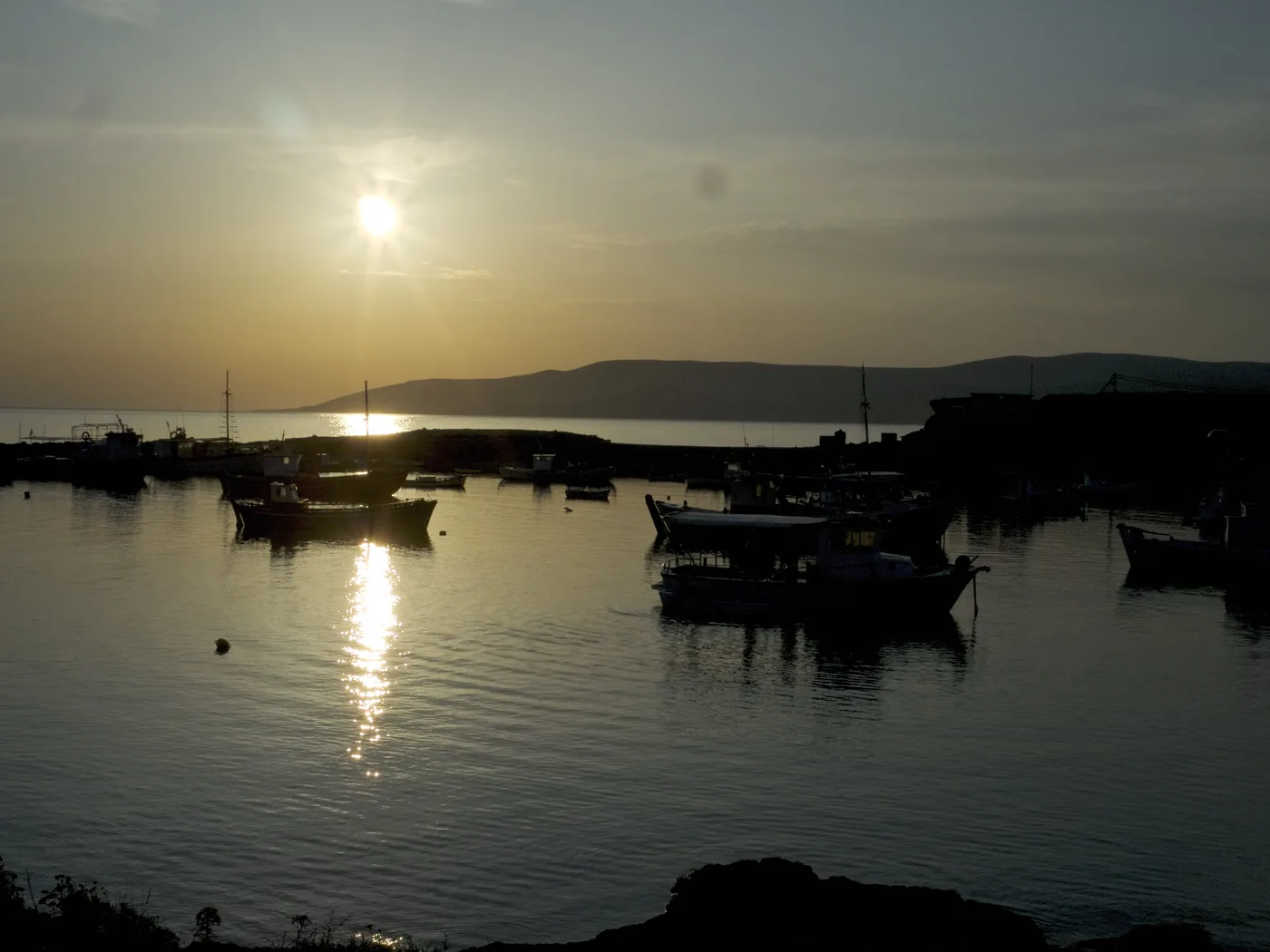
Parianos in the evening.
Photos: Carlo Pelagalli (CC BY-SA 3.0), NantiaP (CC BY-SA 4.0), Zde (CC BY-SA 4.0), Sale (CC BY-SA 4.0), Georgios86 (CC BY-SA 3.0), Thalassa (CC BY-SA 3.0 GR), Ikonomid1960 (CC BY-SA 4.0) · Wikimedia Commons
🏖️ The beaches of Pano Koufonisi
The beaches are the reason people come. Ammos is right in Chora, with shallow water. To the east, a seaside path passes Finikas, Fanos and Italida, three sandy beaches with turquoise water, and ends at Pori, the large sandy bay at the northeastern tip.
A little further on, among the rocks, is Piscina, a natural pool connected to the sea through a cave, and the Devil’s Eye, a large hole in the ground with the sea below. The rocks here have unusual shapes and colours, from white to pink. Be careful when diving: only jump where you can clearly see the bottom.
- Ammos: in Chora, shallow water.
- Finikas and Fanos: sandy beaches with a taverna, 15 minutes on foot.
- Italida: a quiet sandy beach, further east.
- Pori: the biggest bay, sand and turquoise water.
- Piscina: a natural pool in the rocks.
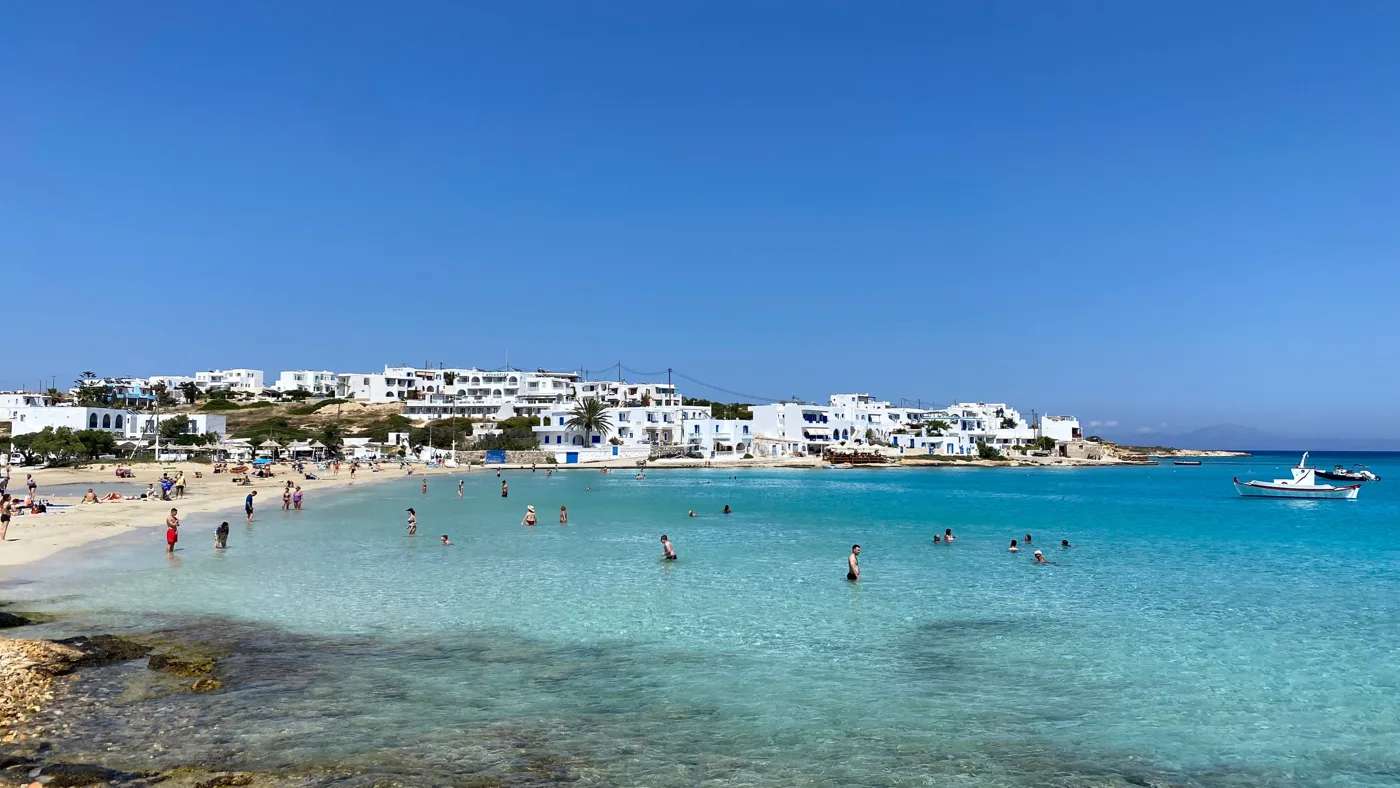
Shallow water in front of the village.
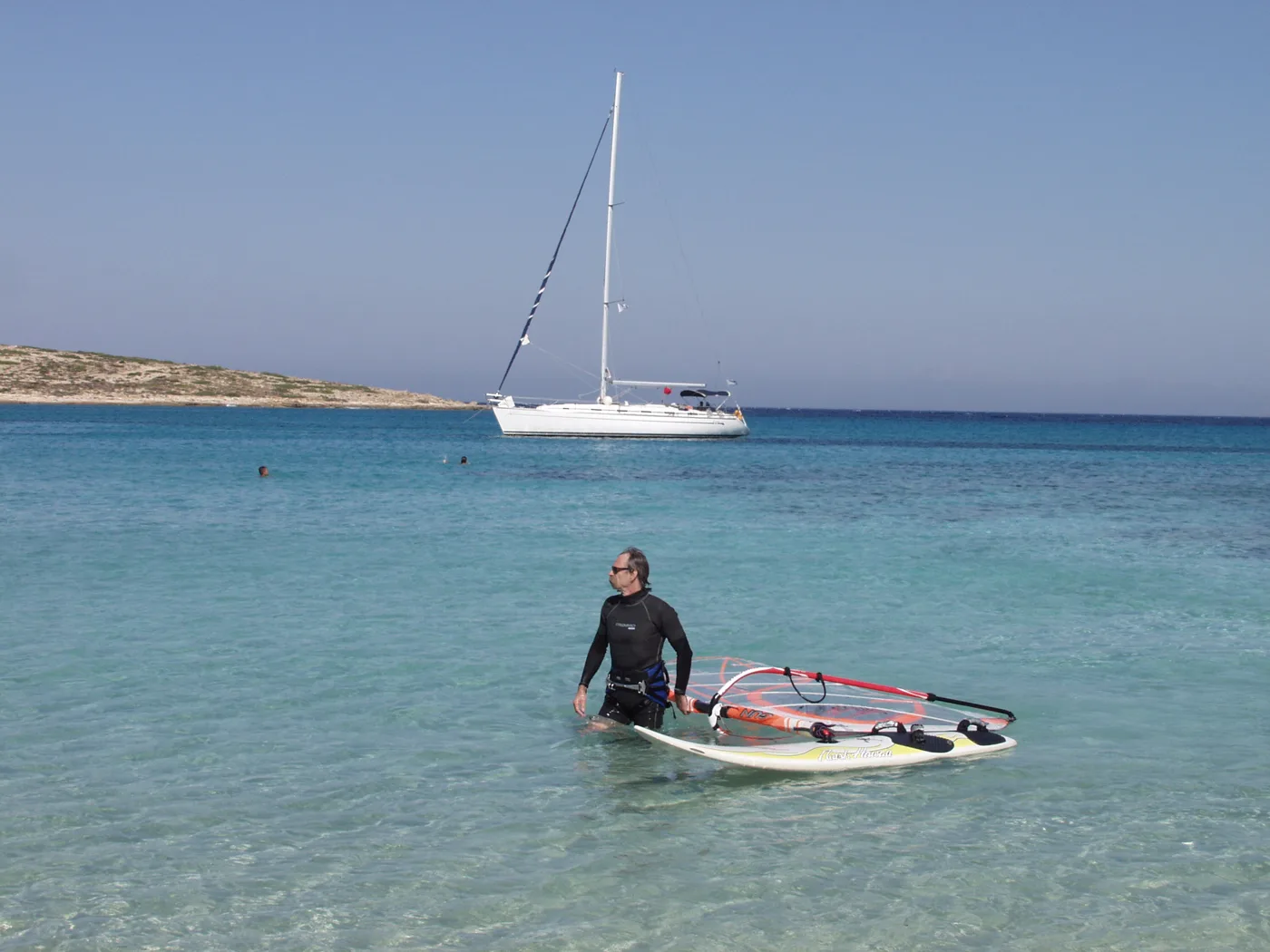
The big bay.
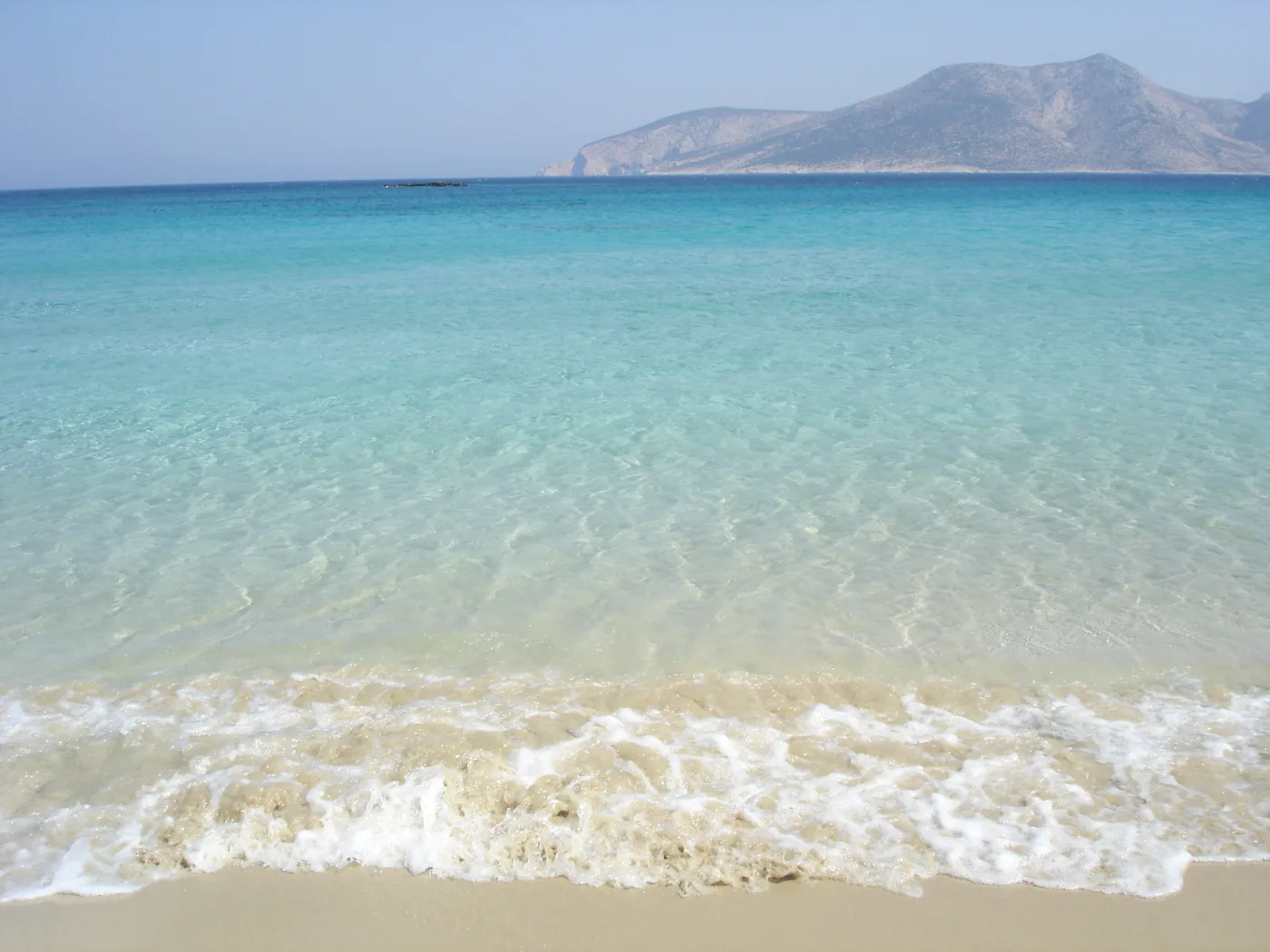
Sand as fine as flour.
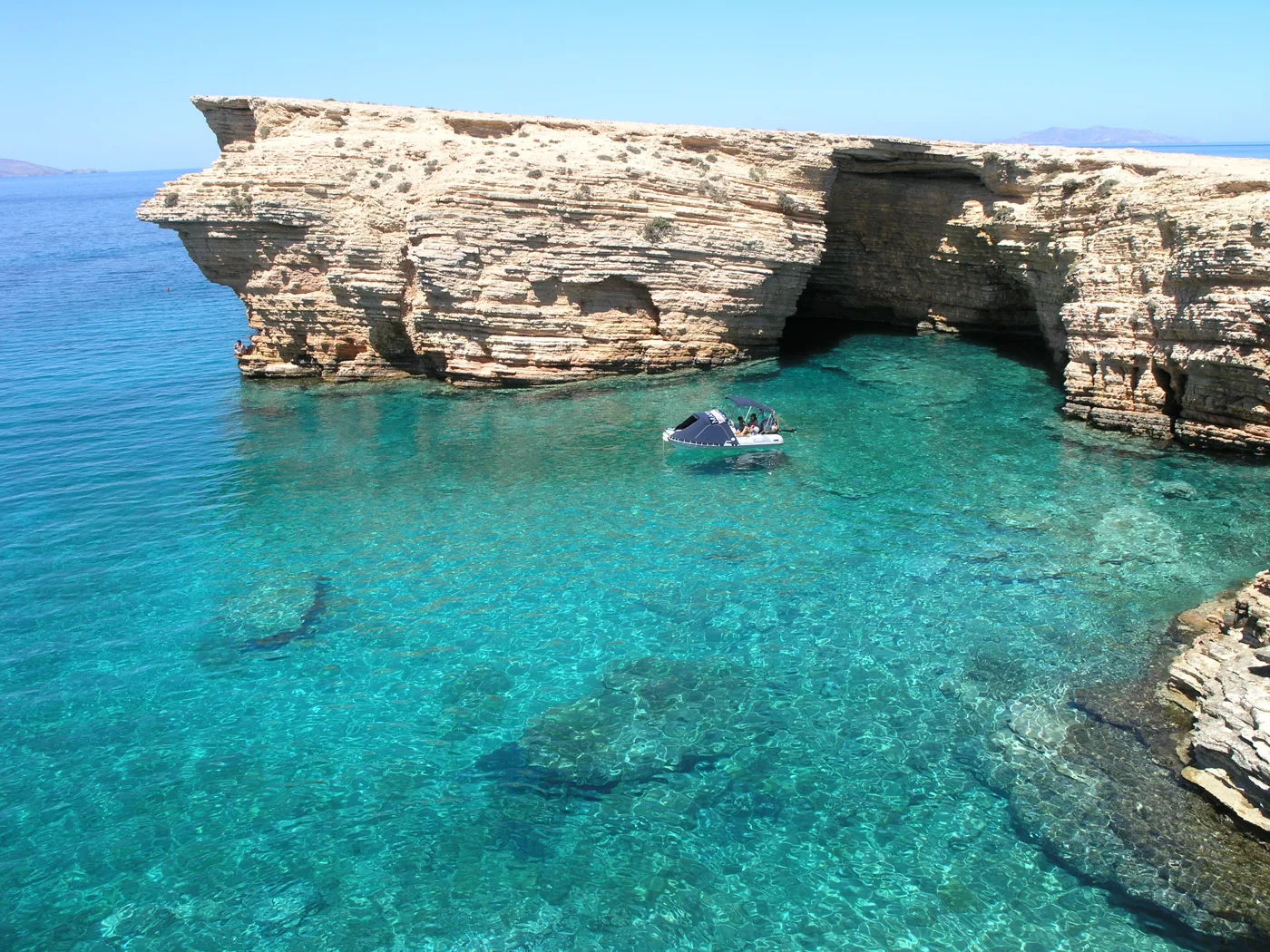
Water like a swimming pool.
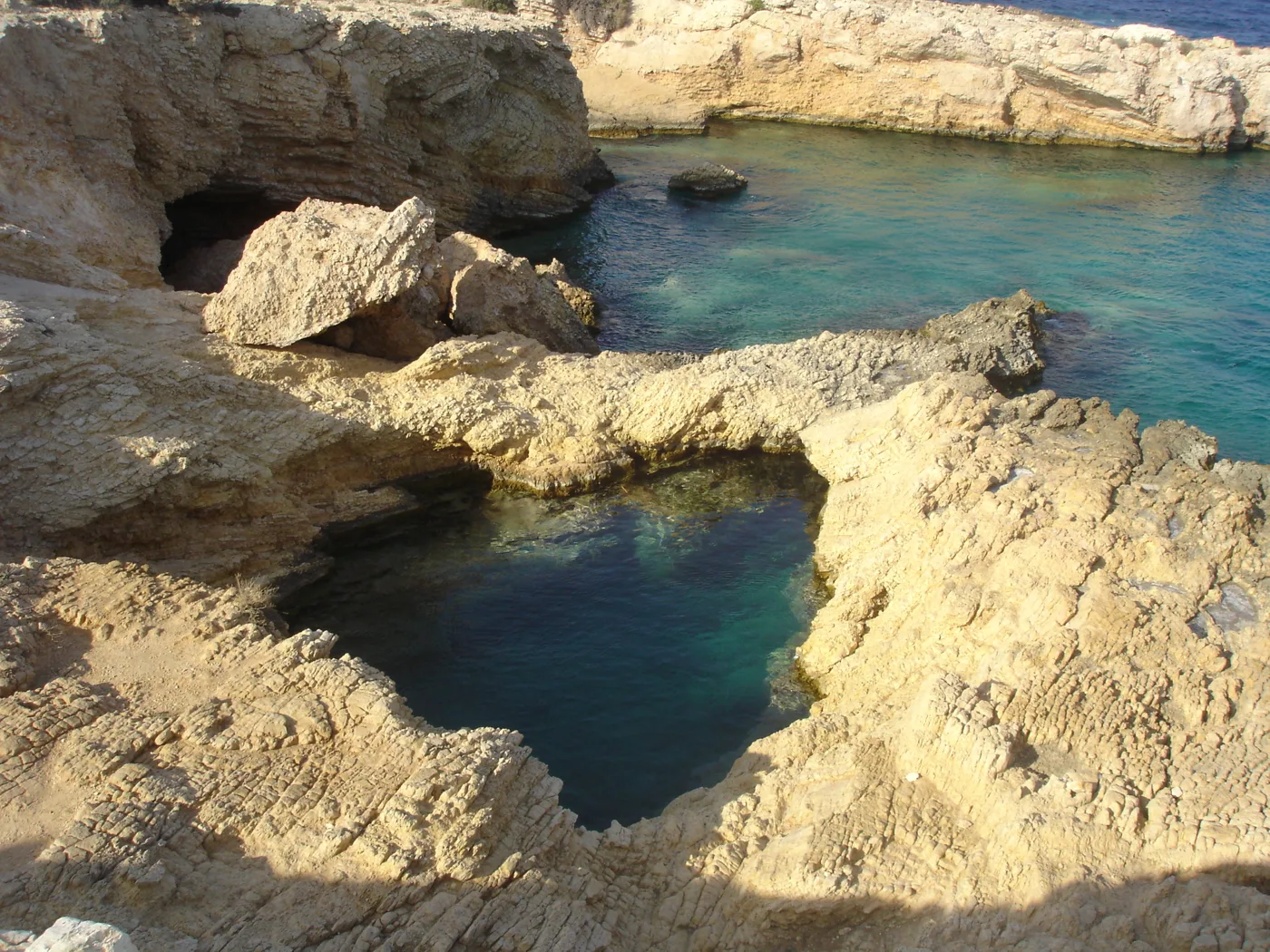
A hole in the ground.
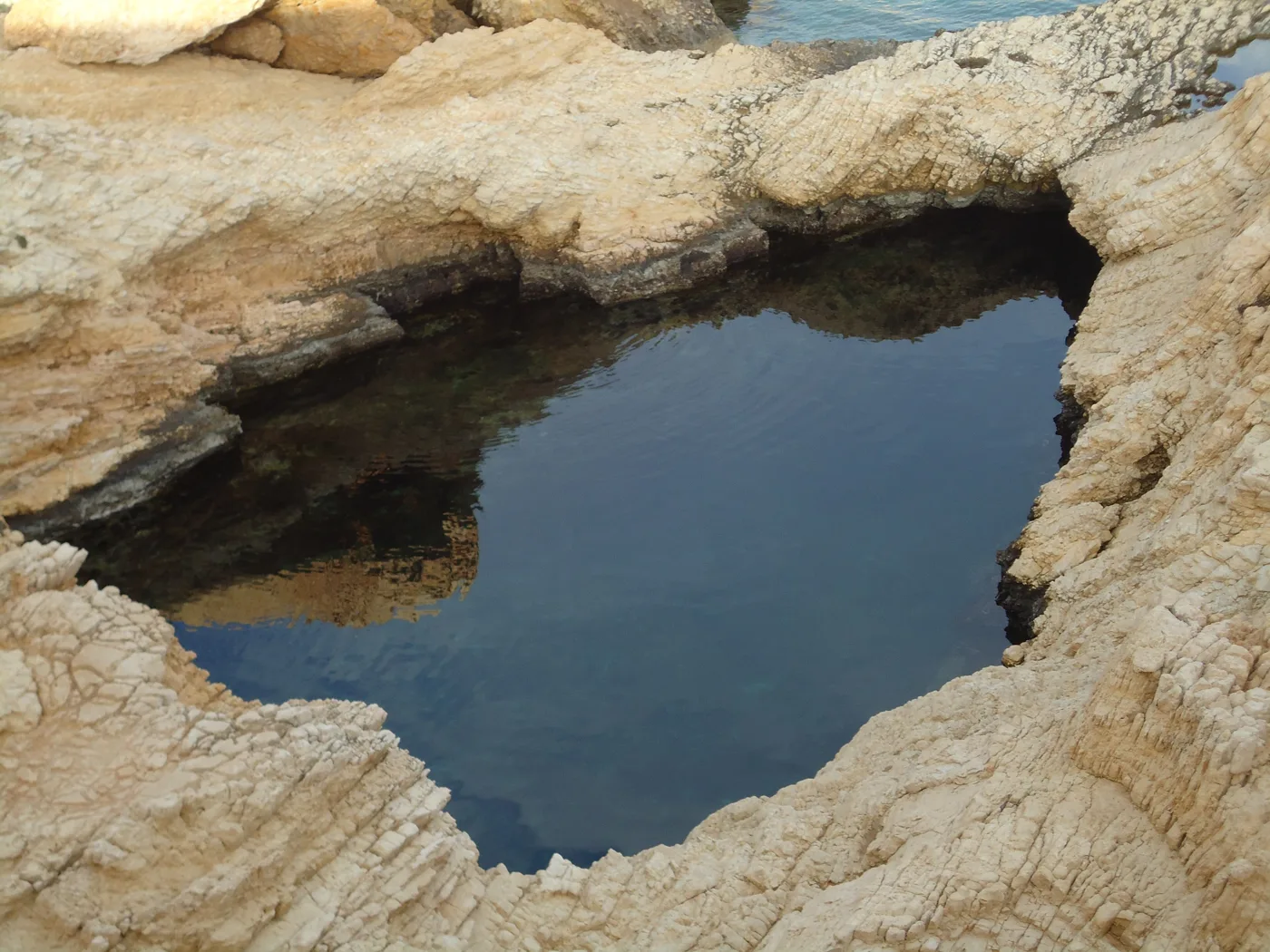
A dip inside the rock.
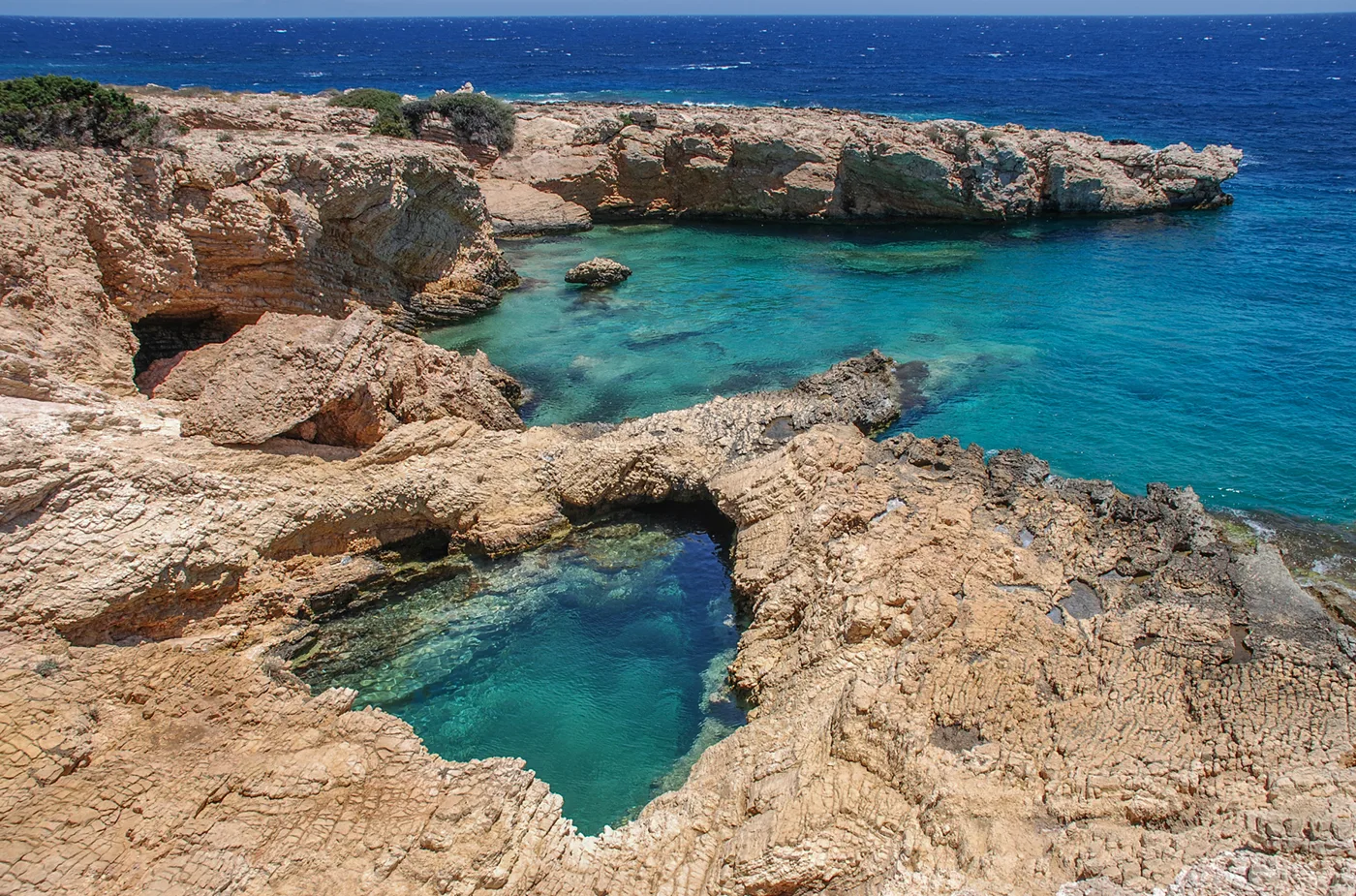
Like a heart in the rock.
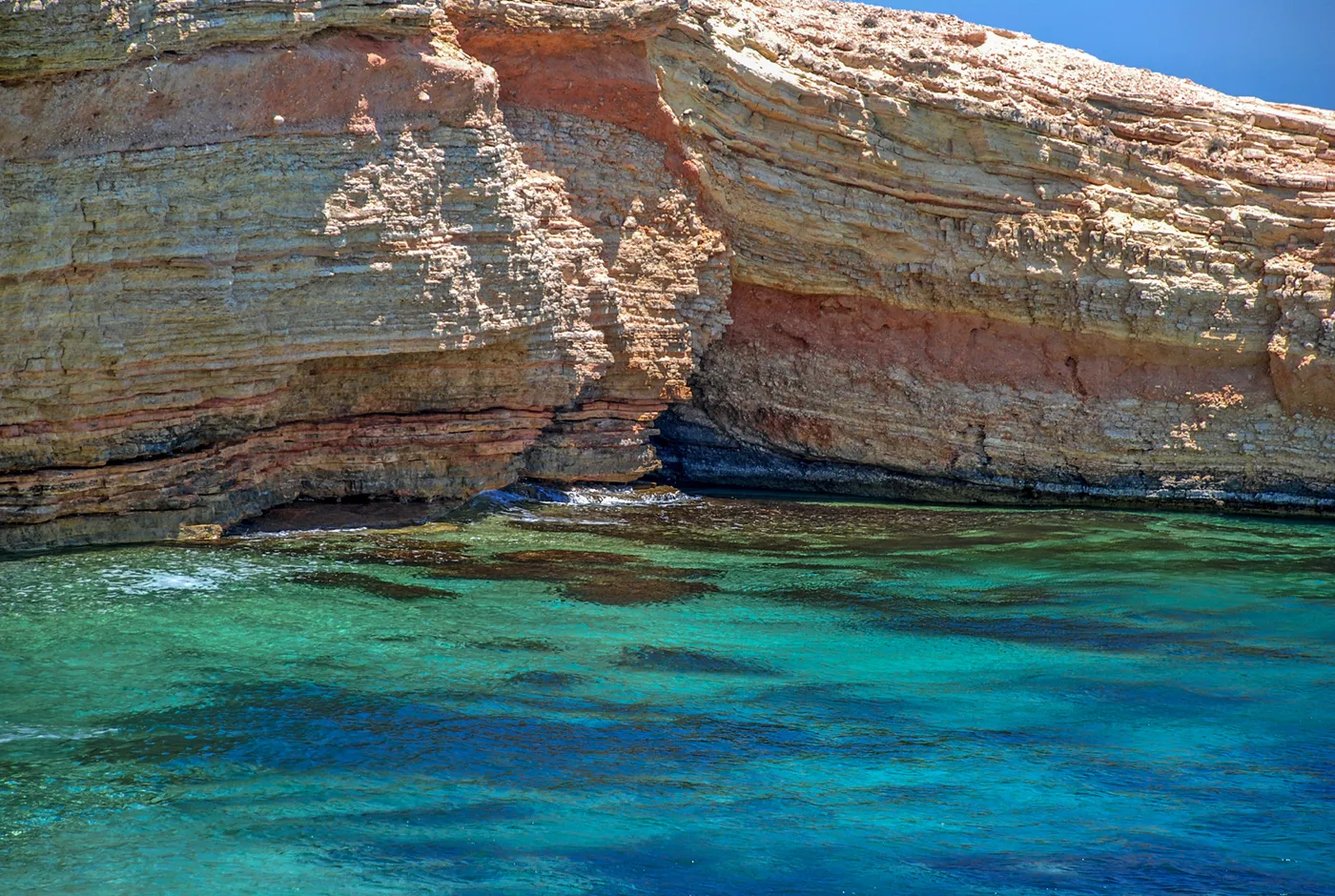
Stone in layers.
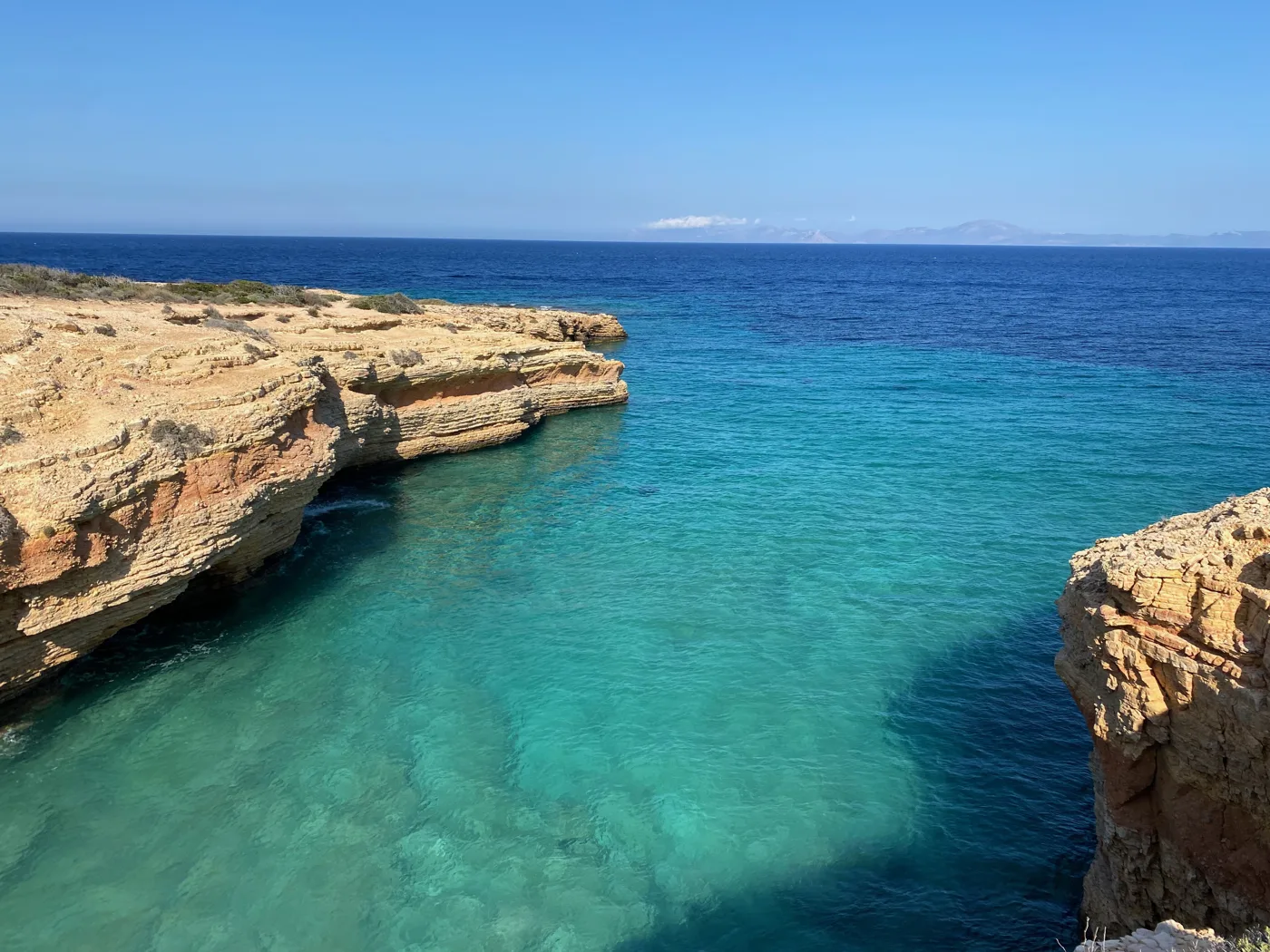
Turquoise between the rocks.
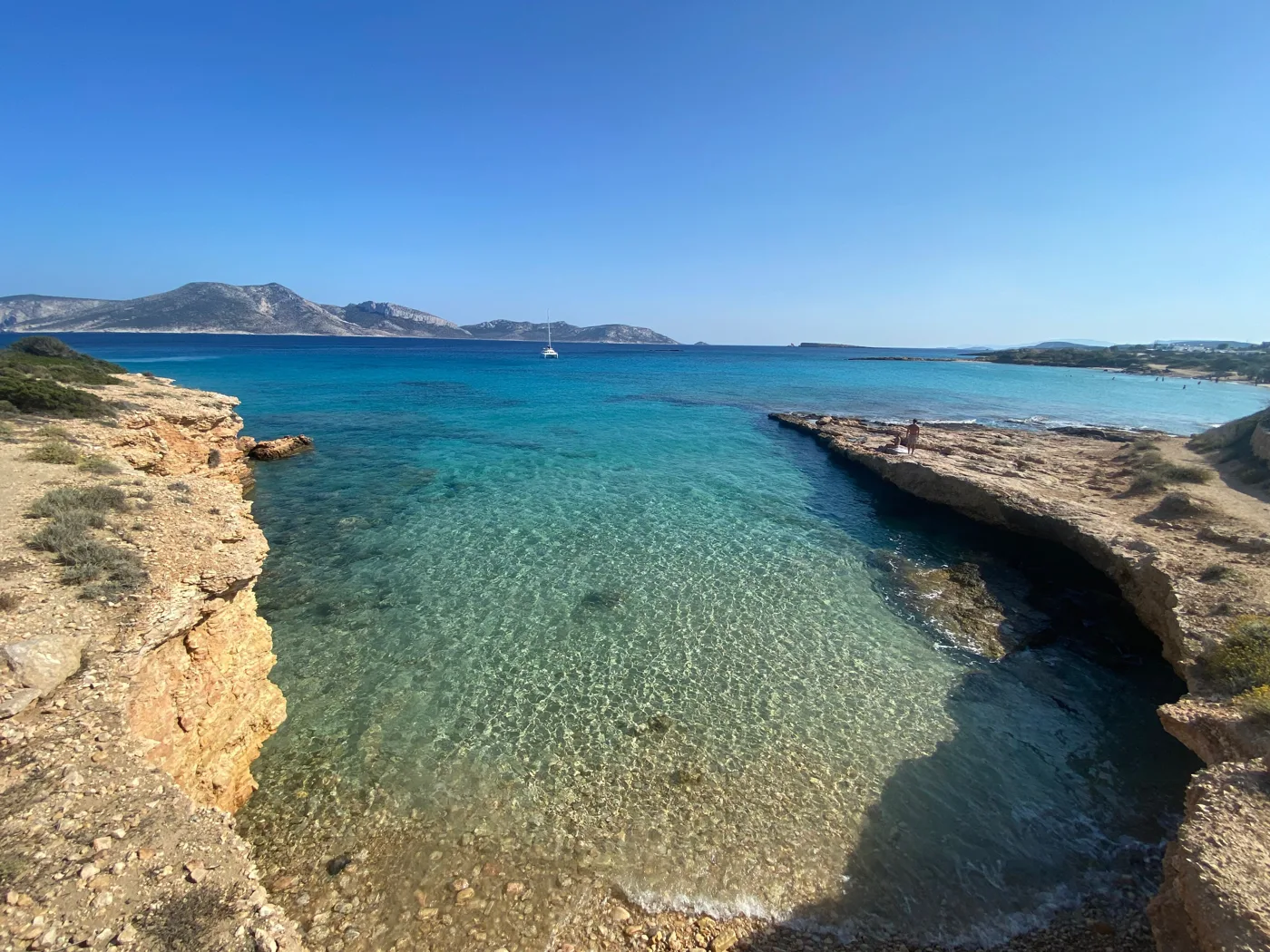
A tongue of sea.
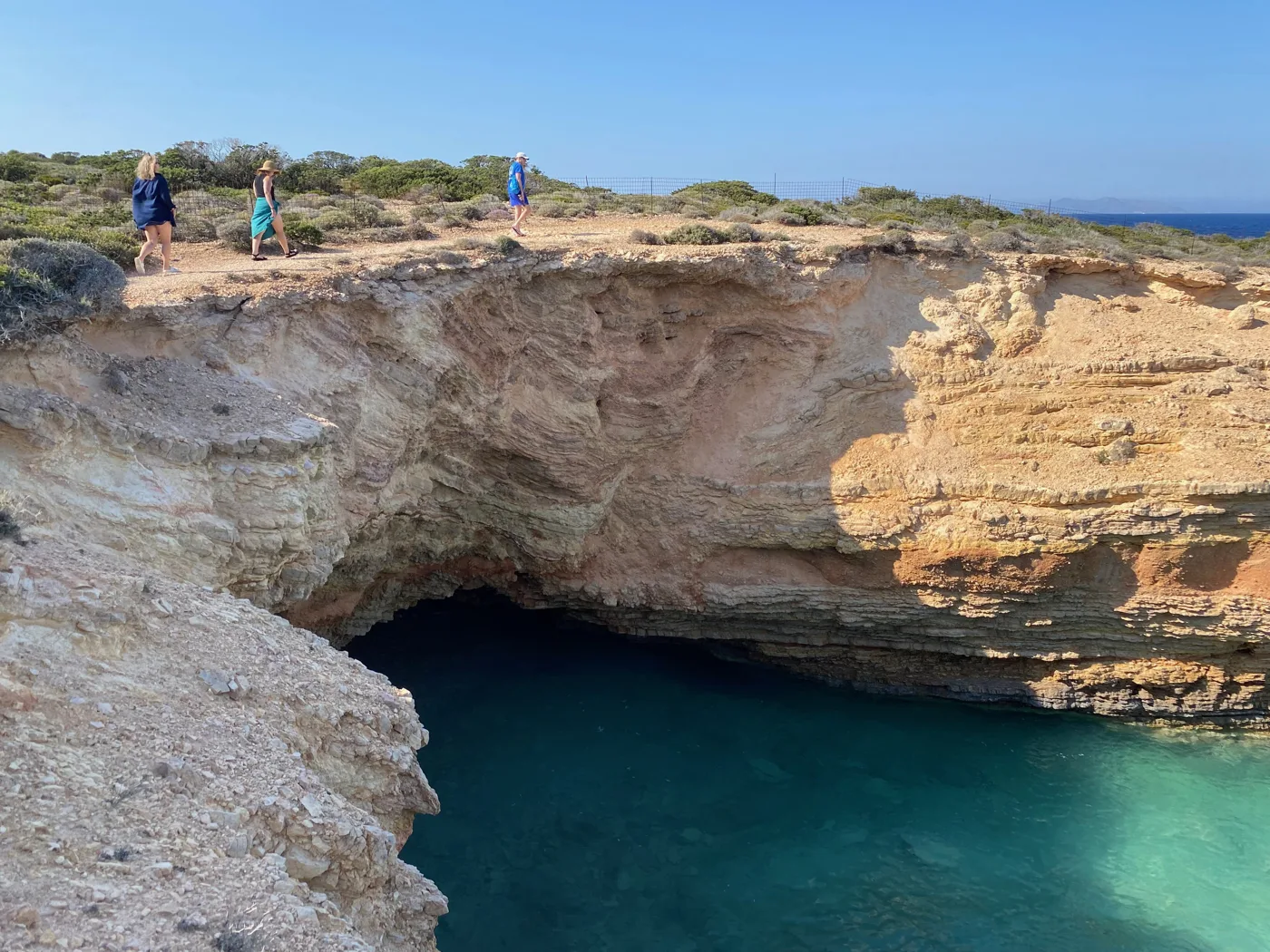
Rock and water.
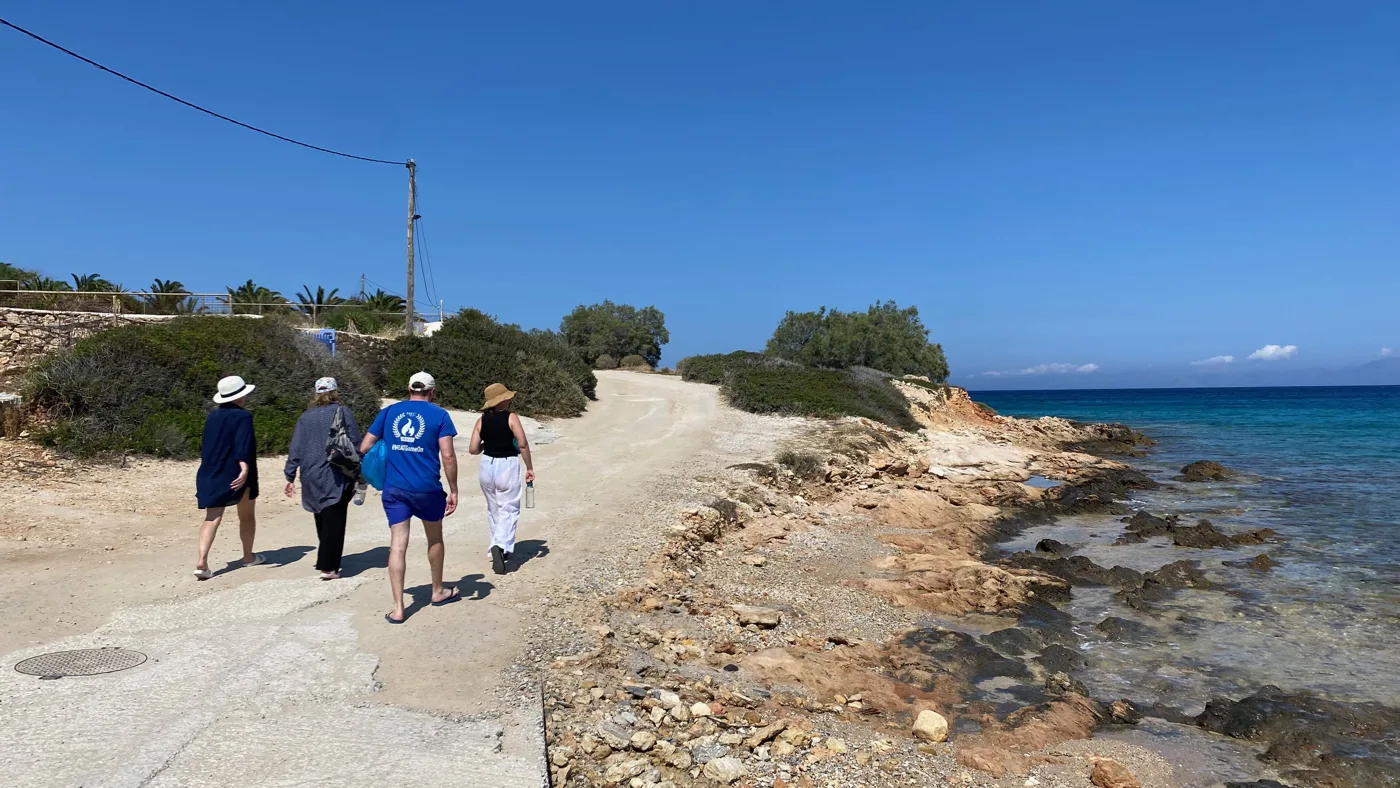
Walking to Pori.
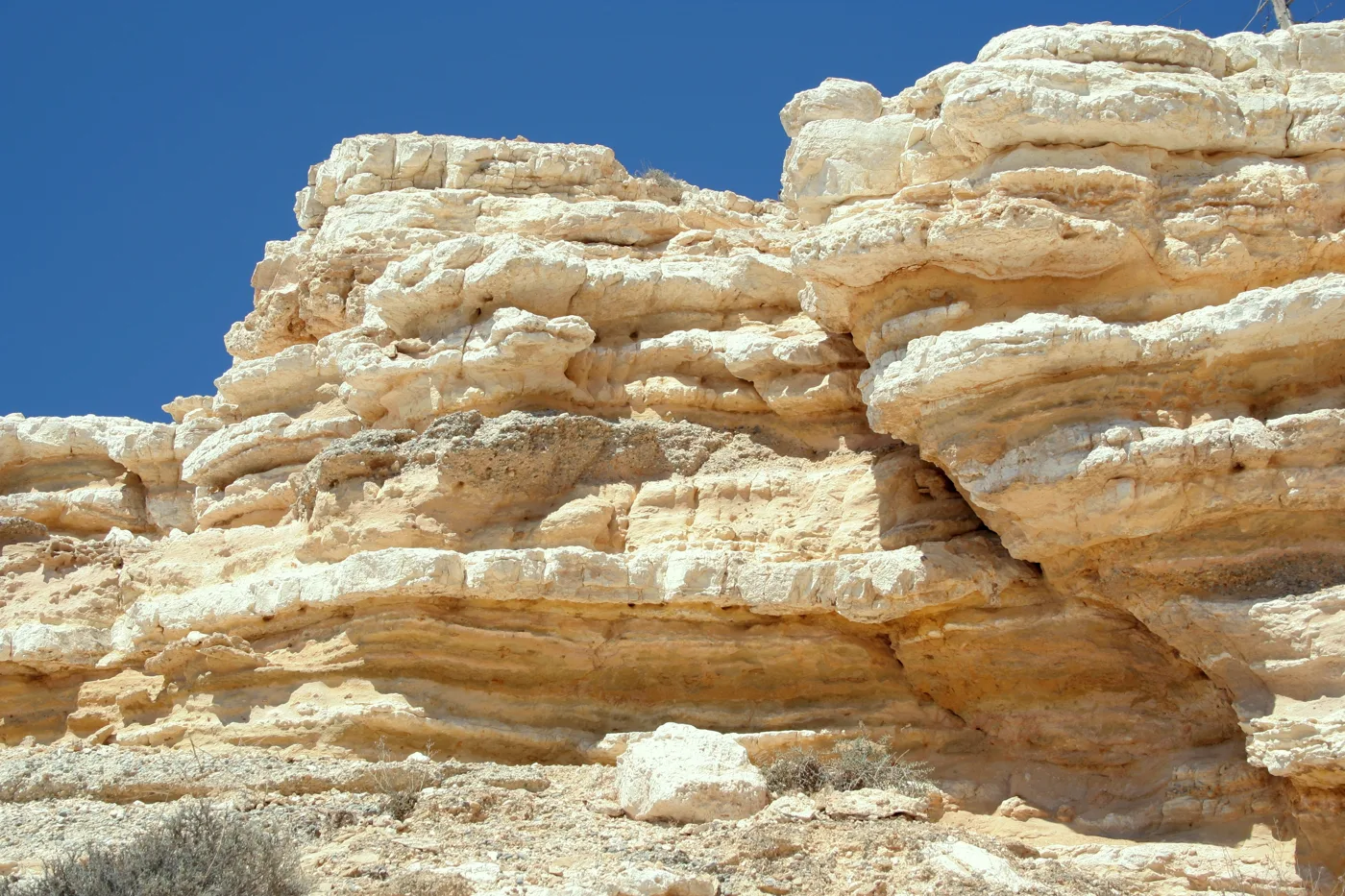
Rocks like biscuits.
Photos: Sgroey (CC BY-SA 4.0), Yanni Haviaras (CC BY-SA 3.0 US), Sisyphos23 (Public domain), Yanni Haviaras (CC BY 2.0), Konstantina15 (Public domain), ChristosKaragounis (CC BY-SA 4.0), Zde (CC BY-SA 4.0) · Wikimedia Commons
The island is flat and small. From Chora to Pori it is about an hour on foot along the sea, or 15 minutes by bike. Take water, a hat and sunscreen: there is almost no shade.
⛵ Kato Koufonisi and Keros
Kato Koufonisi is a few minutes by small boat from the harbour of Chora. The boat drops people at Panagia, a white church by the sea with a taverna next to it. From there you walk to coves with sand and clear water, such as Nero, with no roads and almost no houses. On a hill stand the ruins of an old Castle.
Further east, Keros is uninhabited today, but 4,500 years ago it was a sanctuary of the Early Cycladic people. Hundreds of fragments of marble figurines were found there, broken on purpose and left behind, and on the islet of Daskalio a settlement from the same period. Keros is a protected archaeological site and you may not land without a permit, but you can see it from the sea. Finds from Keros are on display at the Archaeological Museum of Naxos and the Museum of Cycladic Art in Athens.
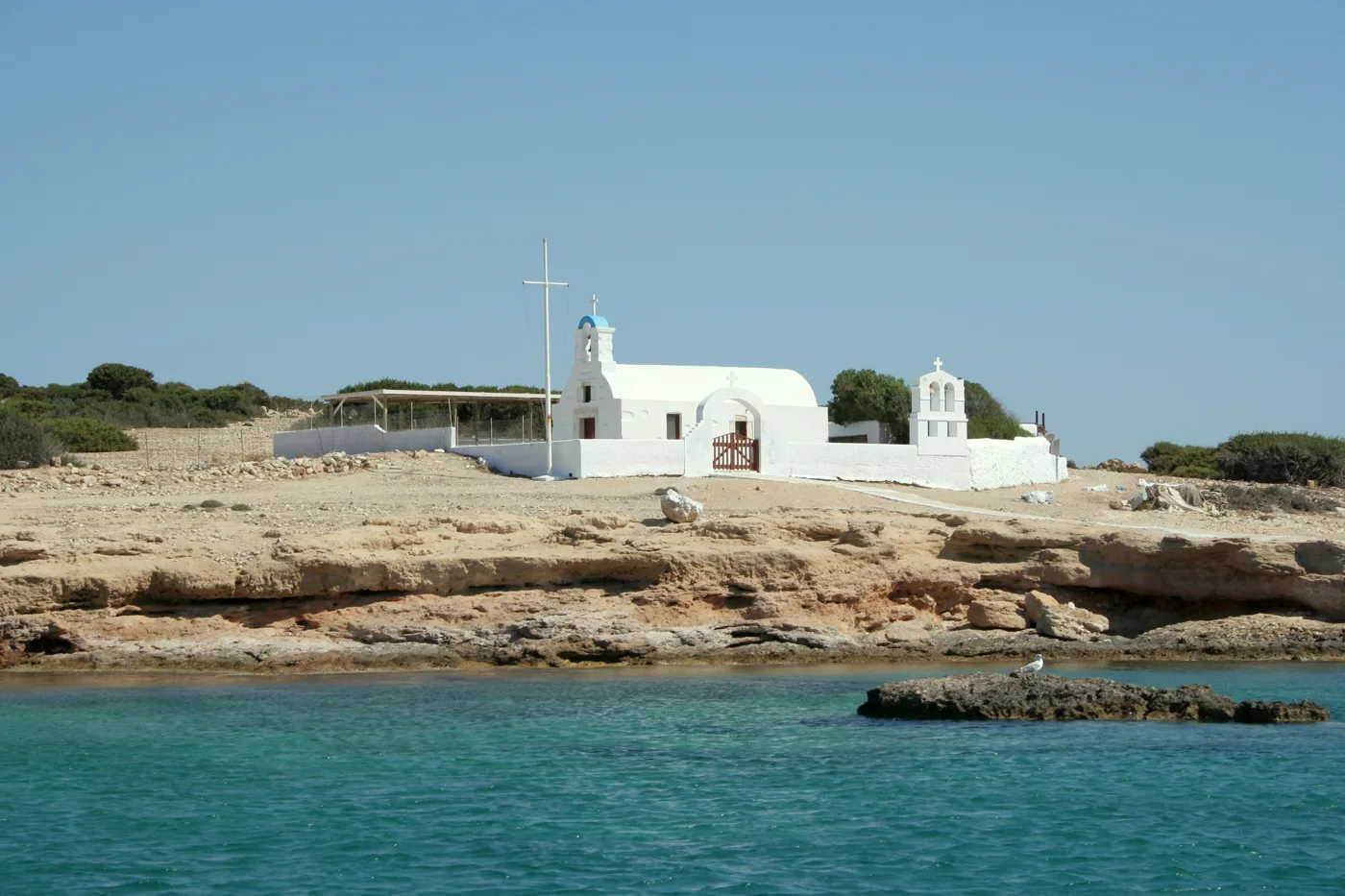
The church by the water.
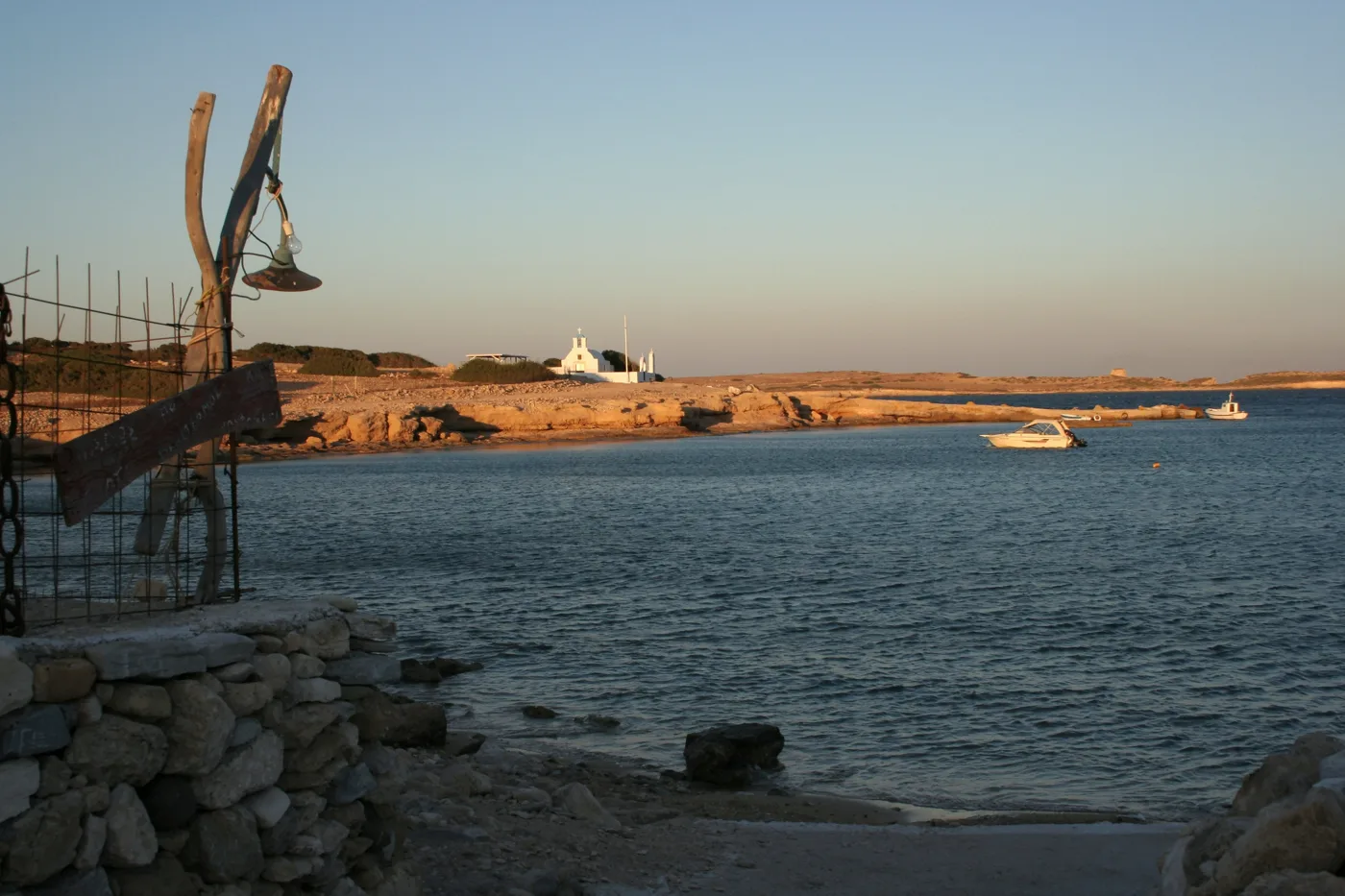
Evening on Kato Koufonisi.
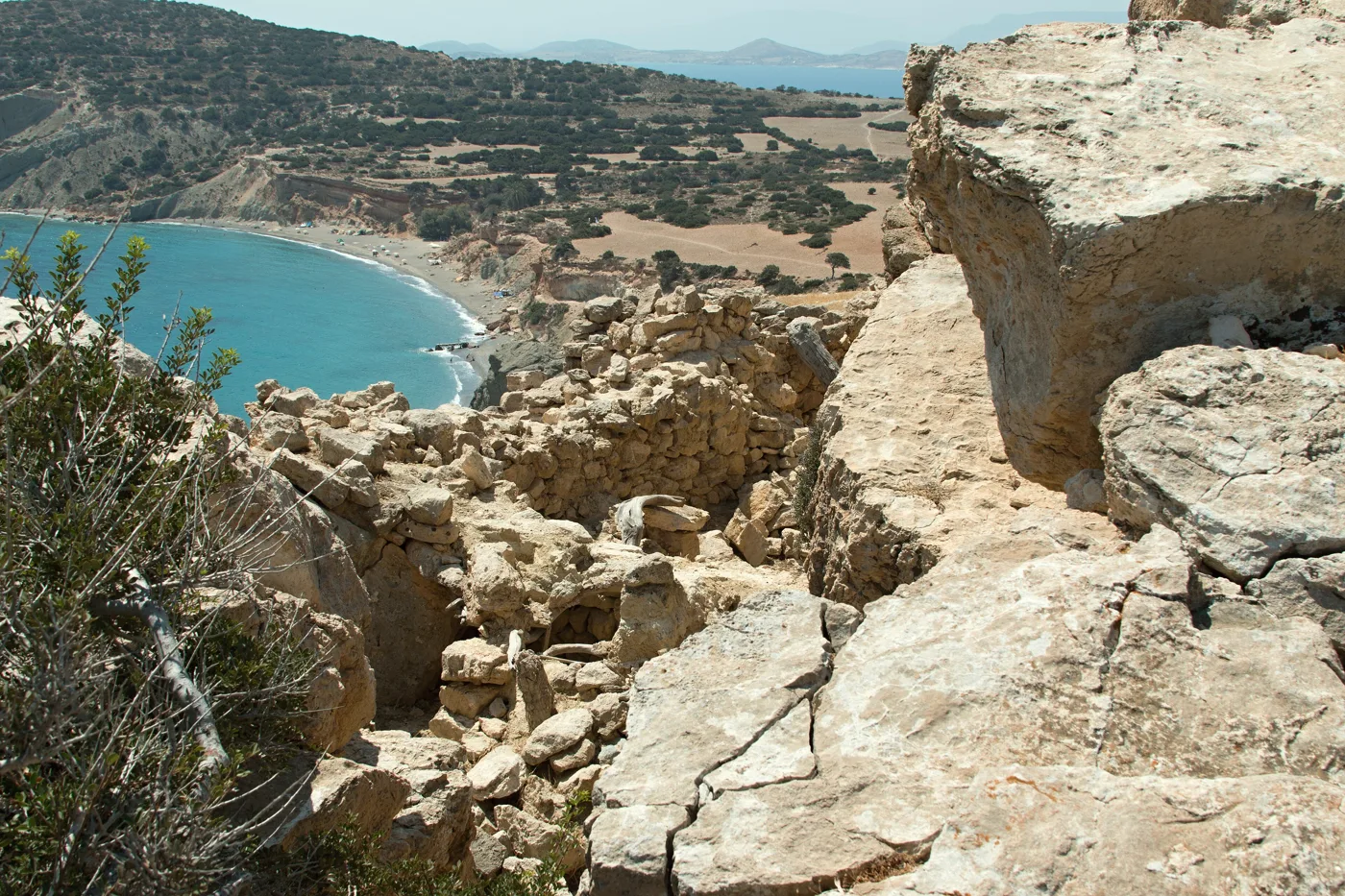
The best-known beach.
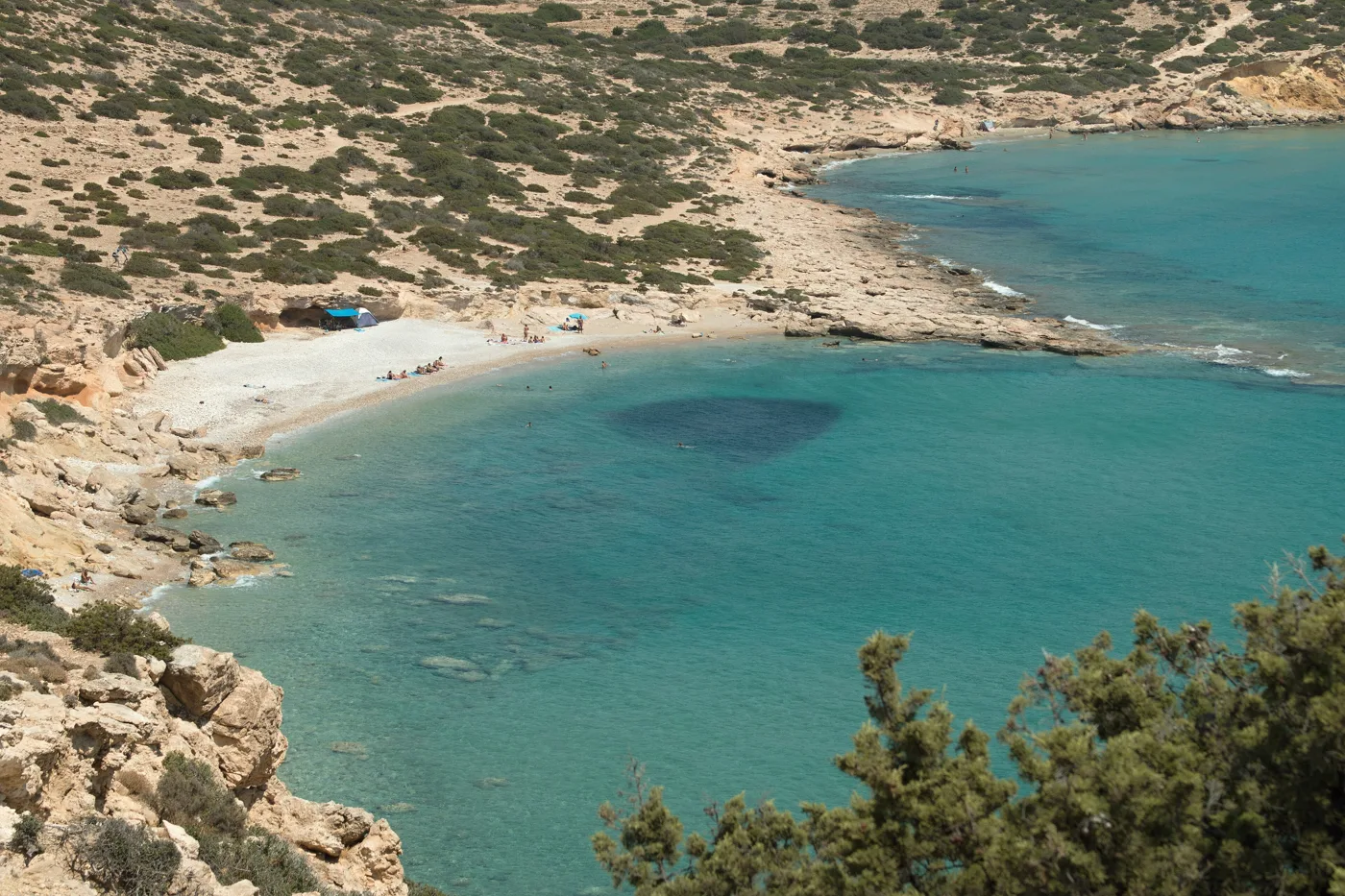
Empty beaches.
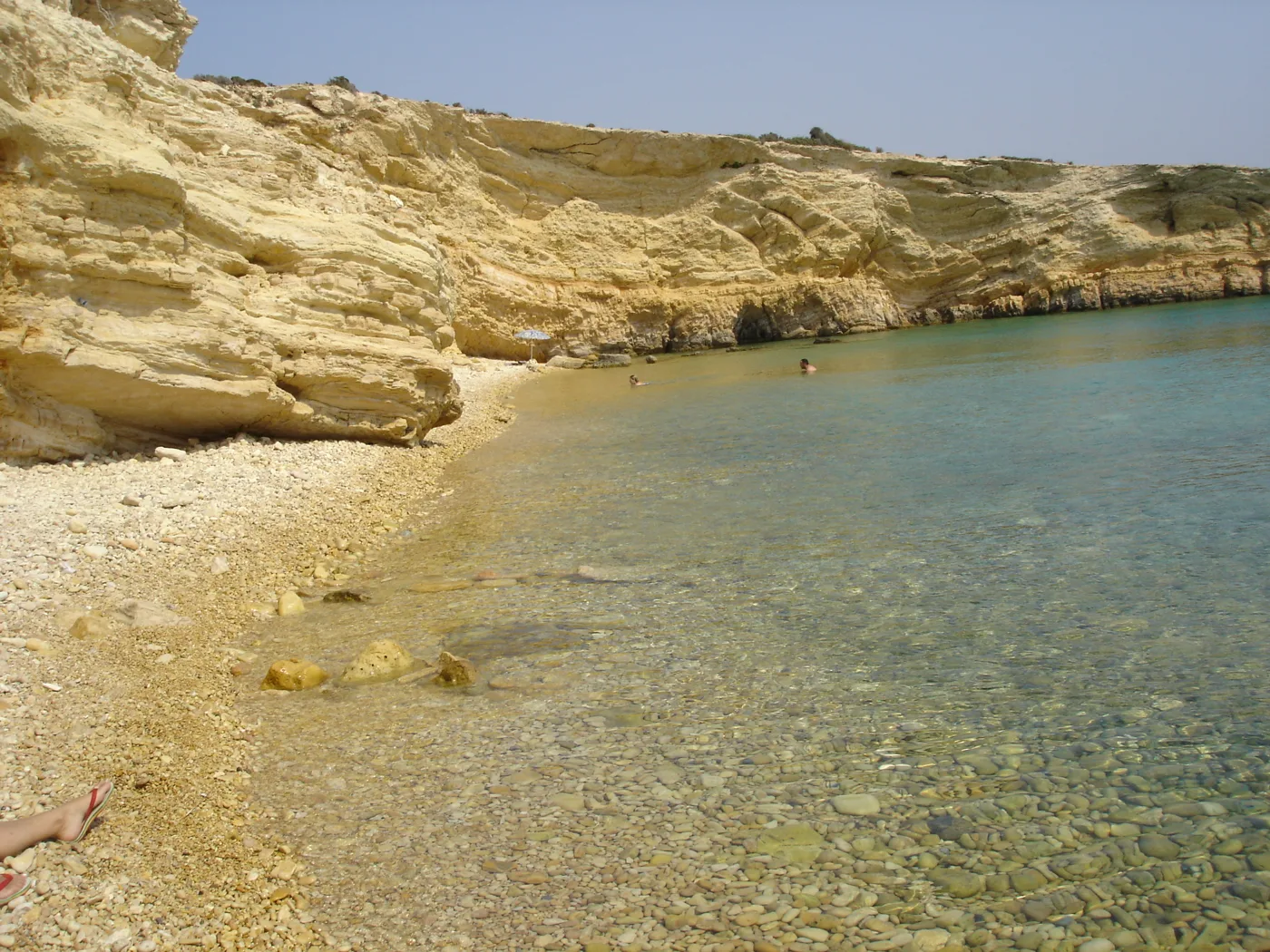
Nobody around.
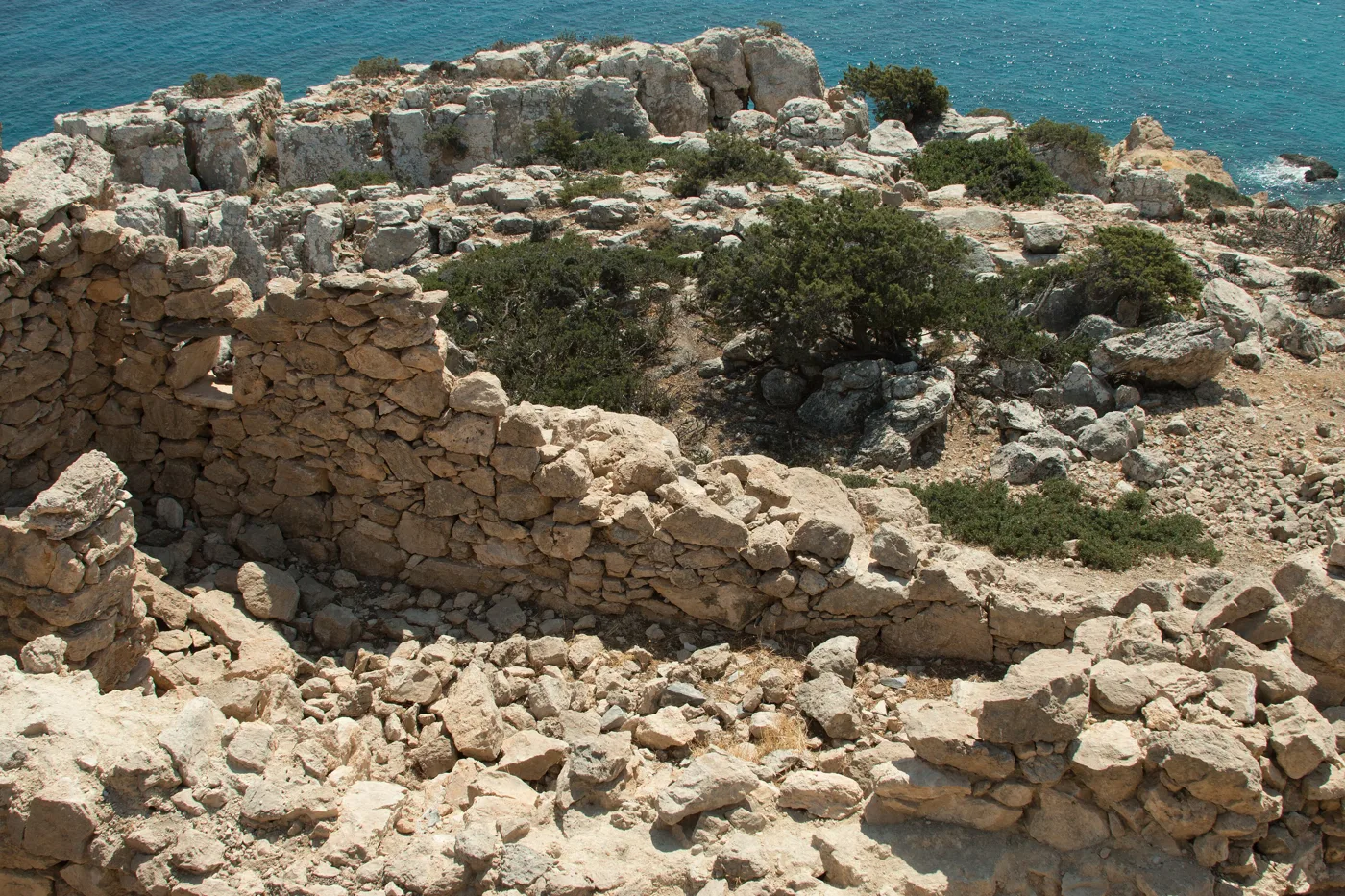
Ruins on the hill.
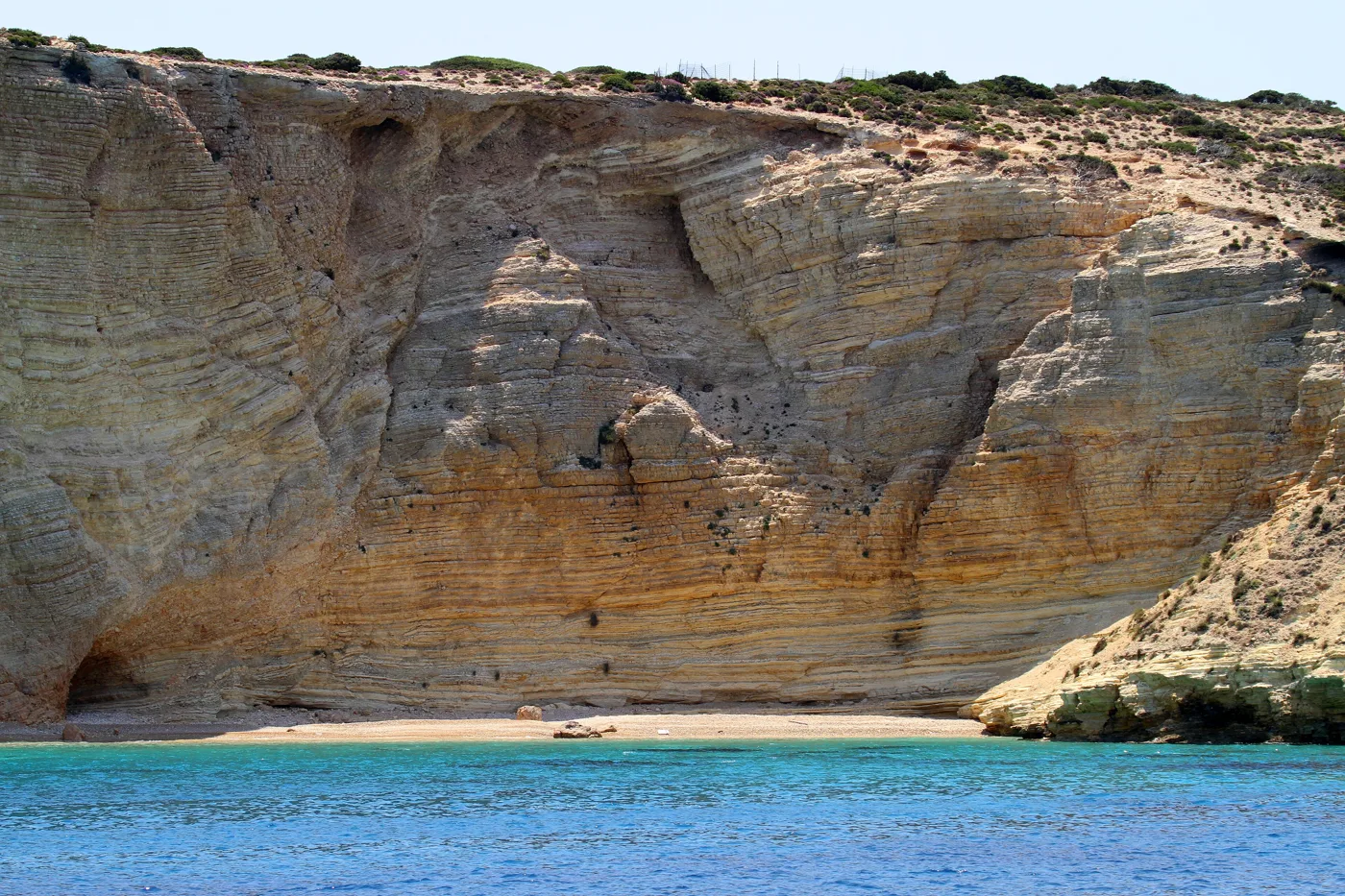
A sandy beach below the cliff.
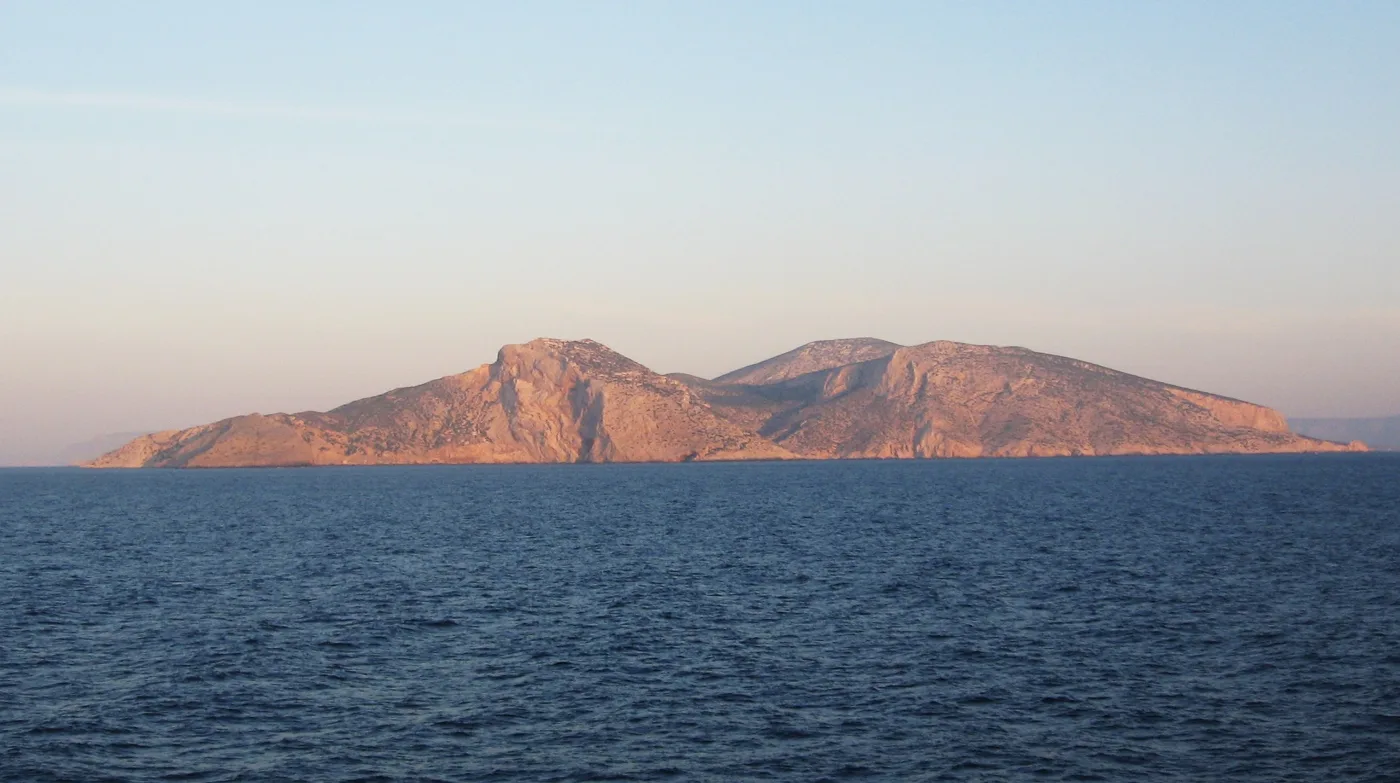
The sacred island.
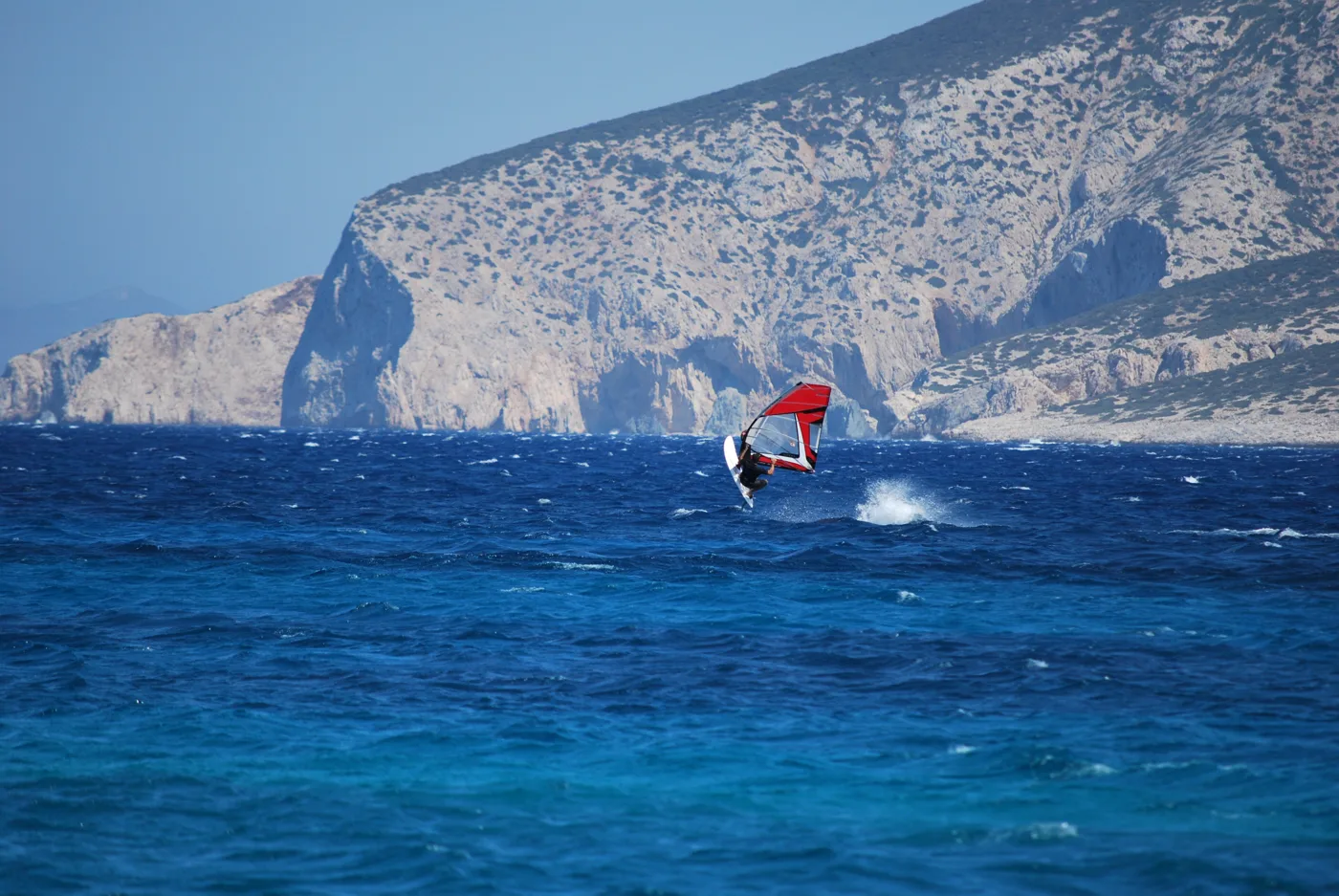
Wind and waves.
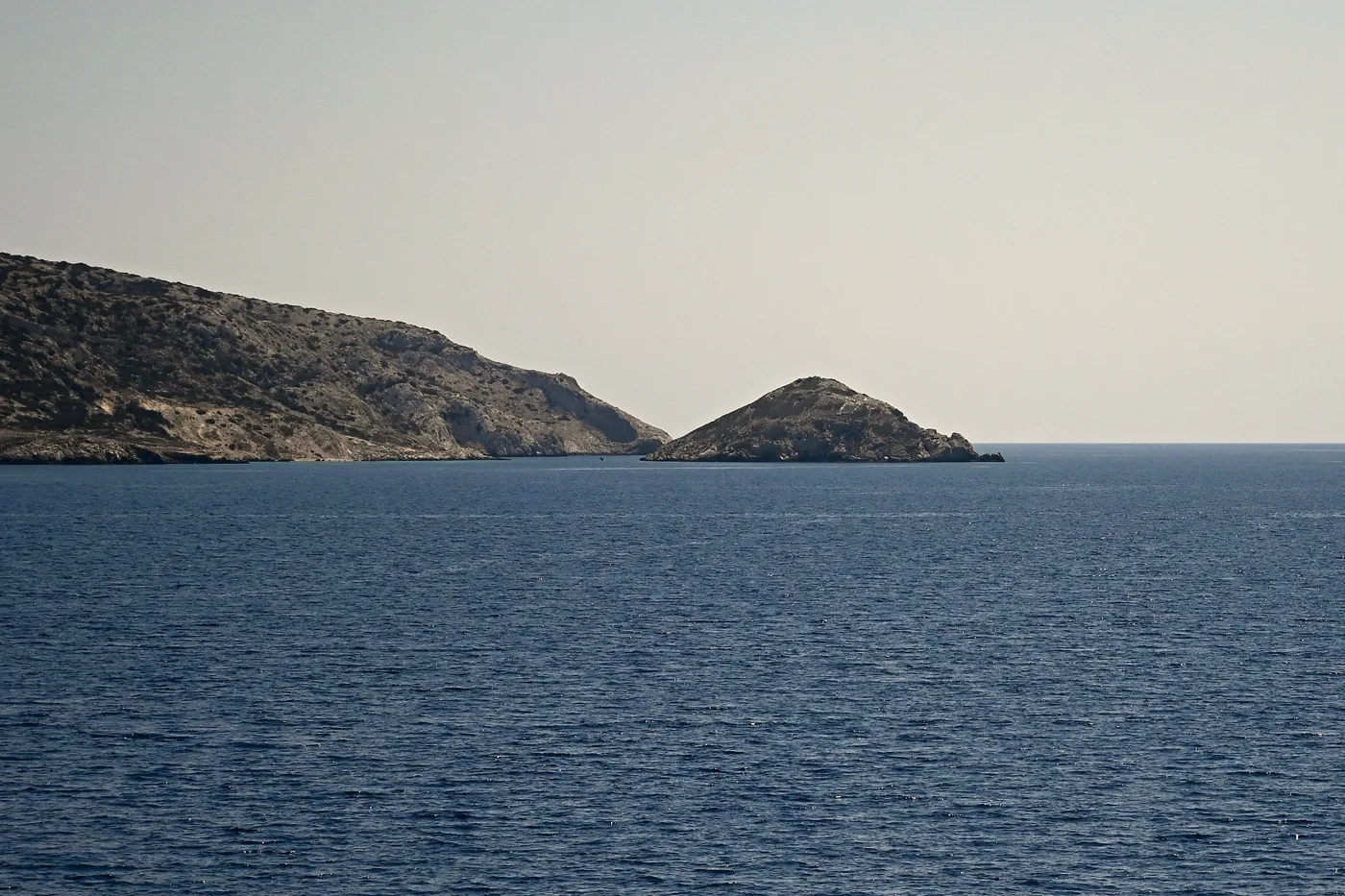
The islet with the ancient settlement.
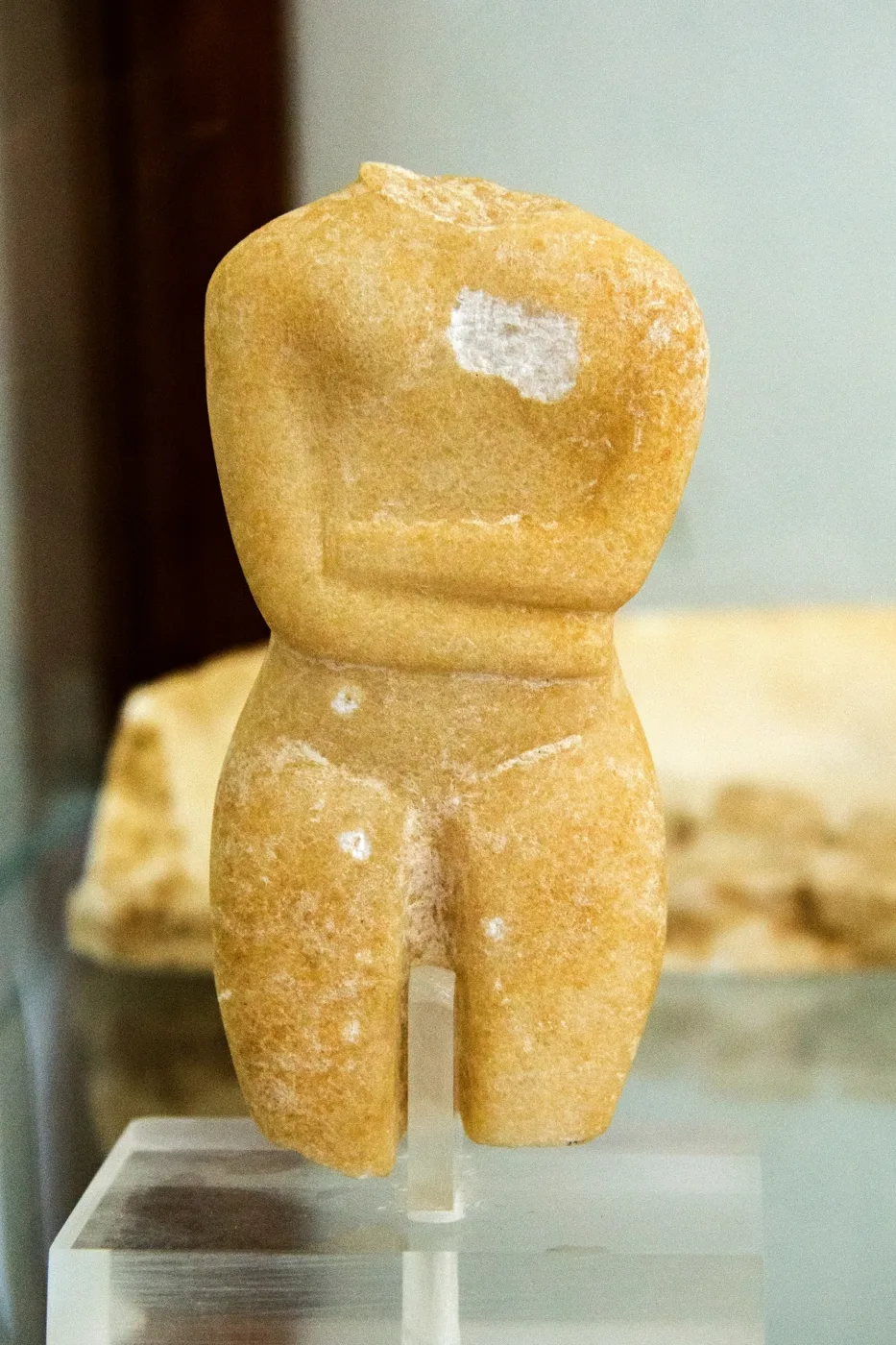
From Keros, 4,500 years ago.
Photos: Zde (CC BY-SA 3.0), Zde (CC BY-SA 4.0), Sisyphos23 (Public domain), Carlo Pelagalli (CC BY-SA 3.0), Phso2 (CC BY 3.0), giorgoskontaxis (CC BY 3.0) · Wikimedia Commons
🍽️ What to eat
Koufonisia are islands of fishermen, so try fresh fish, lobster spaghetti, octopus and squid. In the tavernas you will also find Cycladic fava, local cheeses and kid goat. For dessert, ask for xerotigana, fried pastry with honey.
📅 When to go
June and September are the best months, with warm sea and a reasonable number of people. In August Koufonisia fill up, mostly with young people, and rooms get very expensive. The meltemi often blows in July and August. On those days, choose beaches on the south coast, which are more sheltered.
✈️ How to get there from Athens
| How | Duration | From | Notes |
|---|---|---|---|
| Ferry from Piraeus | About 5 to 8 hours | Piraeus | Fast or conventional ferries, via Naxos. |
| Plane and ferry | 45 minutes to Naxos, plus about 1 hour by boat | Athens airport | Fly to Naxos and take a boat from its port. |
From Ioulianou 50, Piraeus is about 40 minutes by metro and the airport an hour on Line 3. In summer, book your tickets and room early. You do not need a car on the island: you walk, rent a bike or take the small boat. Koufonisia fit well into a trip to Naxos and Amorgos: see also our guide to Naxos.
🗓️ Three days on Koufonisia
Chora and the beaches of the south
Swim at Ammos, in the village, and walk along the south coast to Finikas, Fanos and Italida. In the evening, stroll along the main street and have dinner overlooking the harbour.
Pori and Piscina
Go early, on foot or by bike, to Pori. See the Devil’s Eye and jump into Piscina before the crowds arrive. Come back for the sunset at the windmill.
Kato Koufonisi
Take the small boat from the harbour to Panagia on Kato Koufonisi. Walk to Nero and the other empty coves, and eat at the taverna next to the church.
Frequently asked questions
Do I need a car on Koufonisia?
No. Pano Koufonisi is small and flat, and all the beaches are a few minutes away on foot or by bike. Visitors’ cars do not help and have nowhere to go.
Where should I stay on Koufonisia?
In Chora, to be close to the tavernas, the harbour and Ammos. On the eastern side, towards Finikas and Pori, for more peace next to the beaches.
Can I visit Keros?
Keros is a protected archaeological site and you may not go ashore without a permit. You can, however, sail past it by boat and see its finds in the museums of Naxos and Athens.
How many days do I need?
Three to four days are enough for Chora, the beaches up to Pori and a day on Kato Koufonisi. More if you only want sea and rest.
— Kathy