🪪 The island at a glance
📍 Where it is
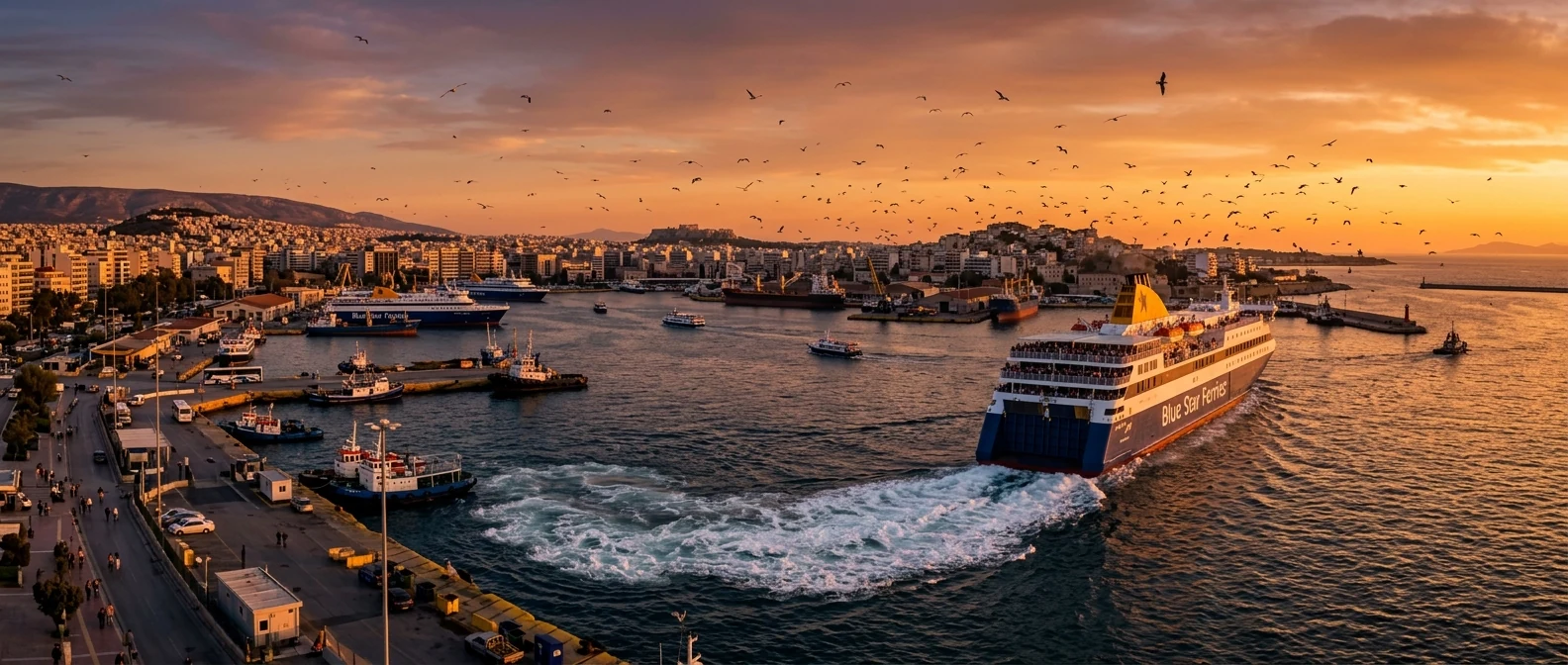
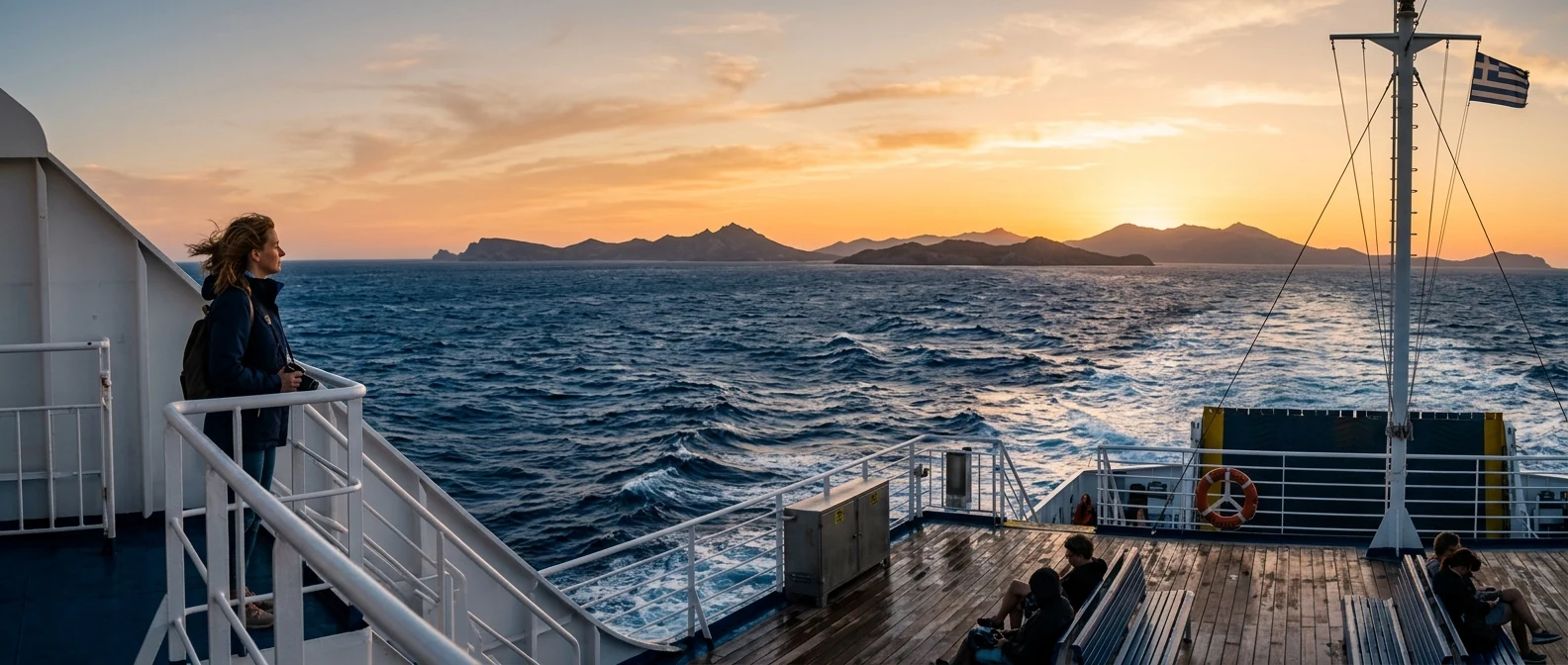
Kimolos lies in the western Cyclades, off the northeastern tip of Milos, separated from it by a strait a few kilometres wide. Ferries from Piraeus reach Psathi in about 5 to 7 hours, via Serifos, Sifnos or Milos. The most common route, though, is via Milos: from Pollonia a small ferry crosses in about 20 minutes, many times a day in summer.
📍 Where Kimolos is
Kimolos is in the western Cyclades, right next to Milos. The island is in red, and in green are Piraeus, where the ferries leave from, and Pollonia on Milos, where the little ferry crosses from.
🗺️ The map of the island
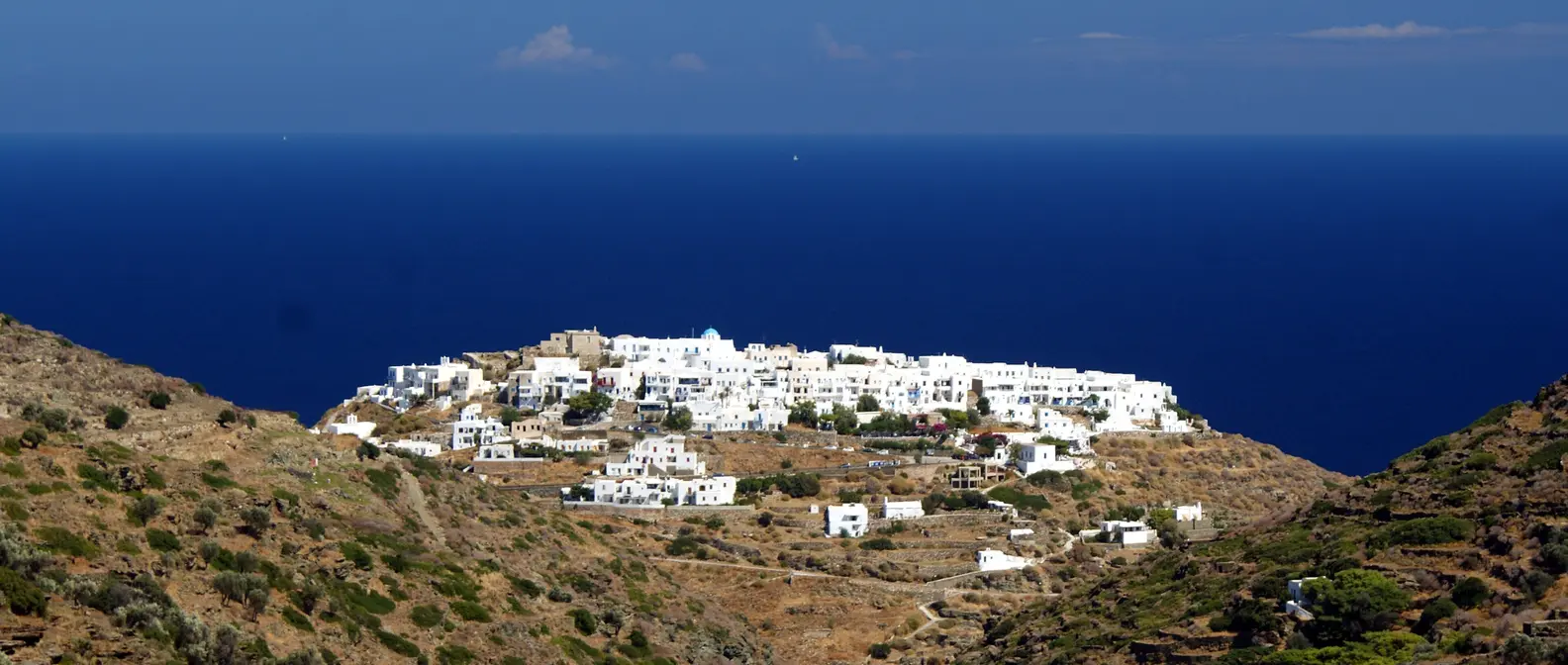
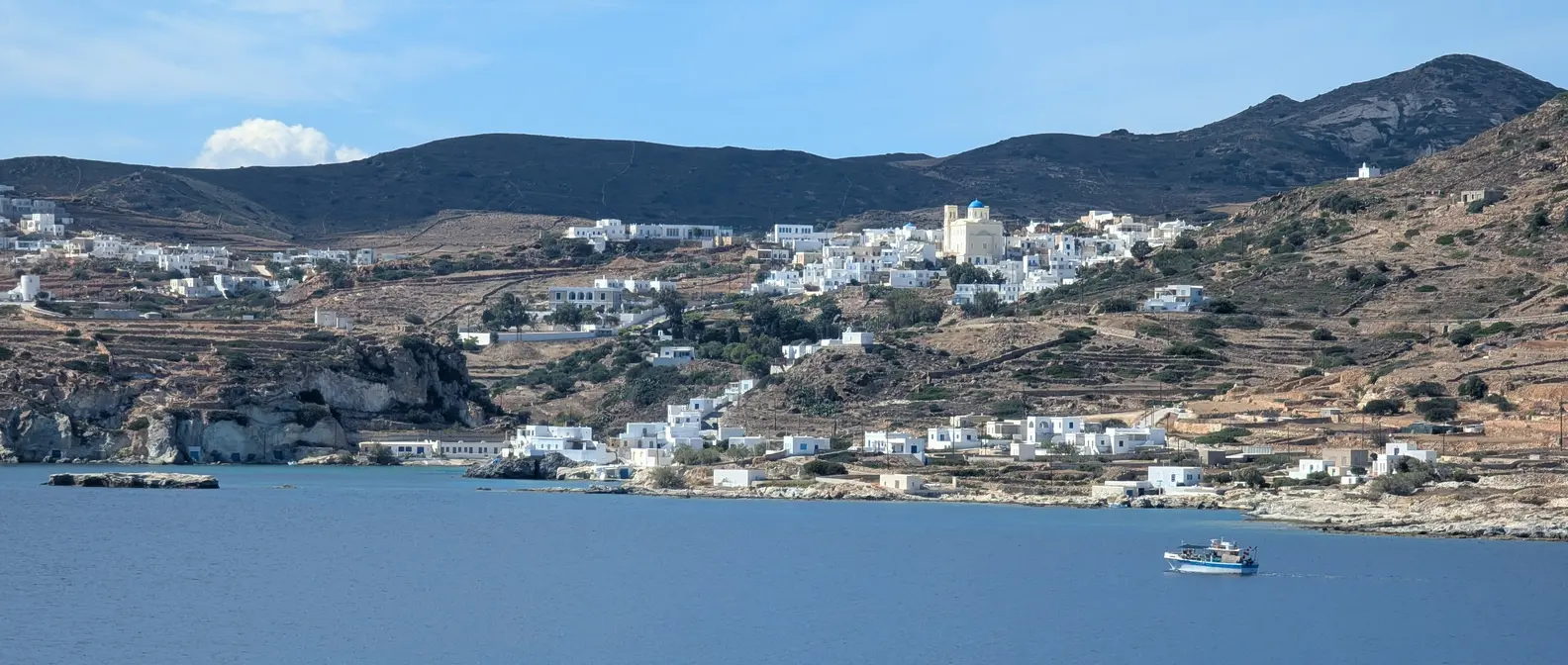
Kimolos is small, and you can get around it in a few hours. The port, Psathi, is on the southeast coast, and above it, ten minutes on foot, is Chorio, the main village. Next to the port are Goupa and Kara, with their fishermen’s houses. The nearest beaches are to the south, and a road runs north to Prassa. The north and west are wild and empty, with walking paths.
🗺️ Map of Kimolos
Kimolos is small, and almost everything is in its southern part. Psathi, the port, and Chorio above it are on the southeast coast, with Goupa next door. To the south are Aliki, Bonatsa and Kalamitsi, to the west Ellinika, to the northwest Skiadi and to the northeast Prassa. To the east, in green, is Polyaigos. Tap each number to see what it is.
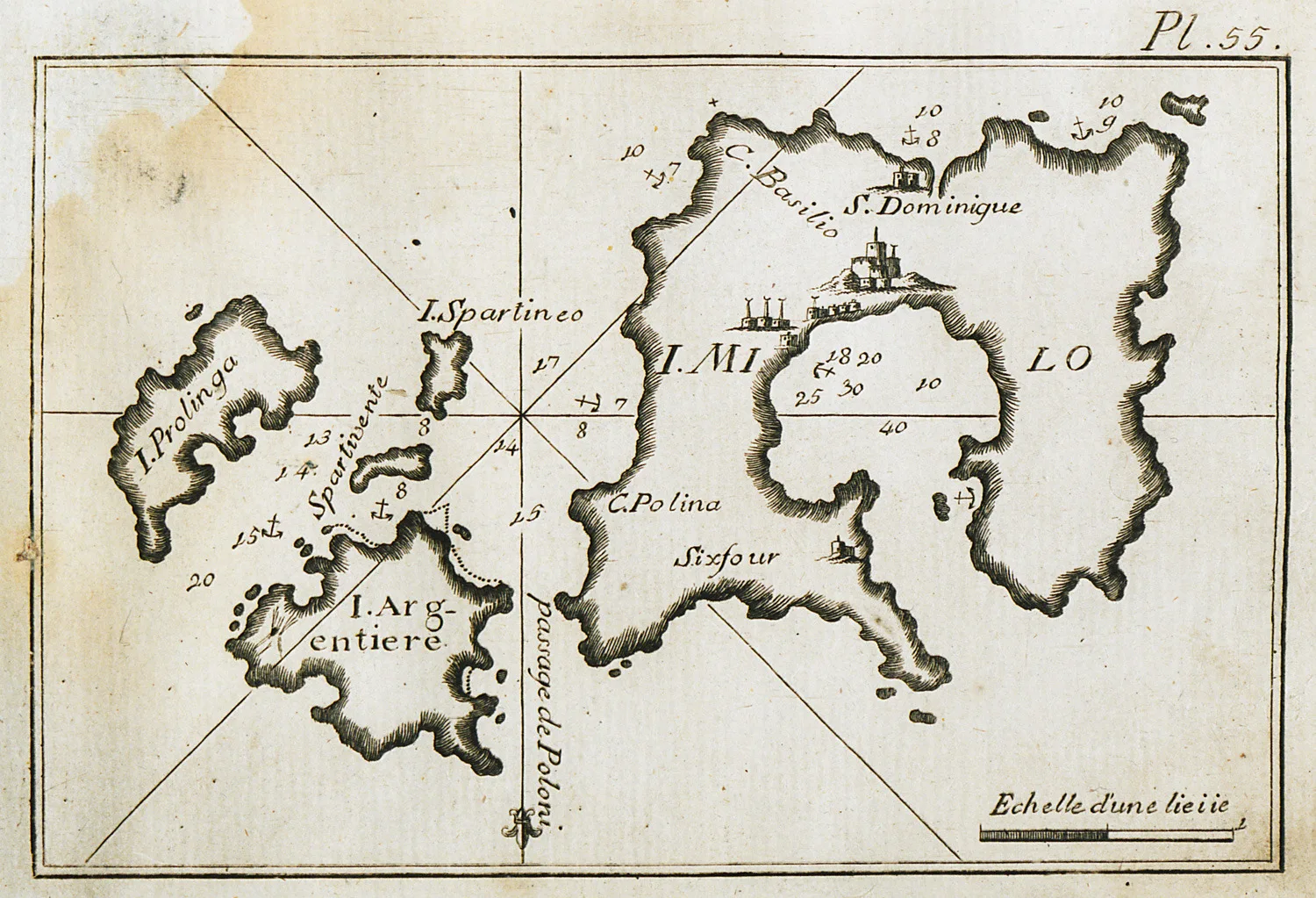
Map: Joseph Roux, 1804 (Public domain) · Wikimedia Commons
⚖️ Is it worth it? The pros and cons
Kimolos has no big sights. What it does have is something the Cyclades are losing: quiet, and an island that lives its own life. Here is an honest picture.
📊 At a glance, from 1 to 5
👍 The pros
- An authentic island, with no mass tourism and no queues.
- White sandy beaches with very clear water.
- Just 20 minutes from Milos, easy to combine.
- Small, easy to explore even on foot.
- Quiet, ideal for a real rest.
👎 The cons
- Few places to stay, book early for August.
- Almost no nightlife.
- Little shade: the island is dry and bare.
- The meltemi wind often blows in summer.
🏘️ Chorio and the Kastro
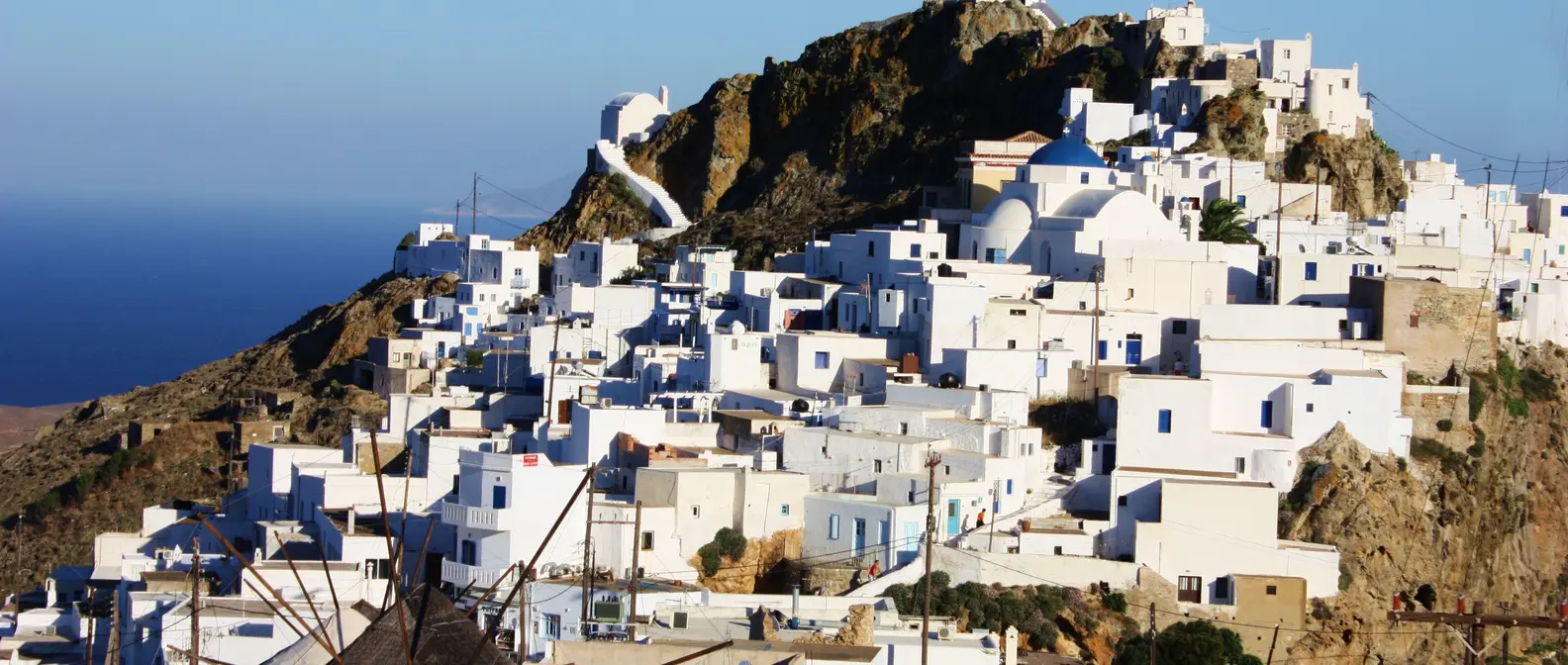
Chorio spreads over a hill above Psathi, with white houses, alleys with whitewashed paving and large churches. At its heart is the Kastro, built in the 16th century for protection against pirates: the houses were joined to one another, and their outer walls formed the defensive wall. Many of the houses are still lived in, others are ruins, and some are being restored.
In Chorio you will find the small Archaeological Museum, with finds from the ancient cemetery at Ellinika, and the Folklore Museum. On the ridge above stand the windmills, with views over the whole of Milos.
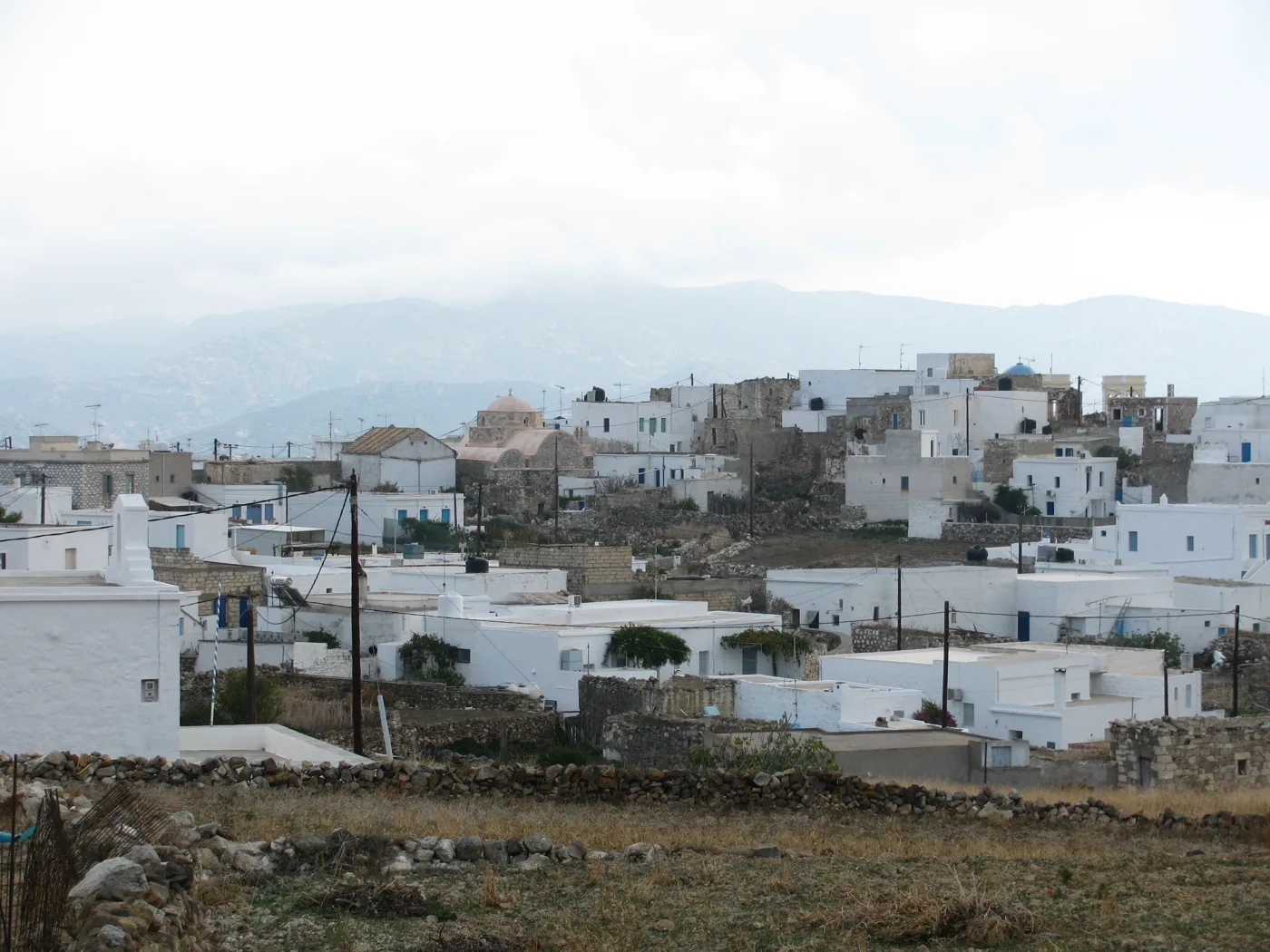
The main village, above the port.
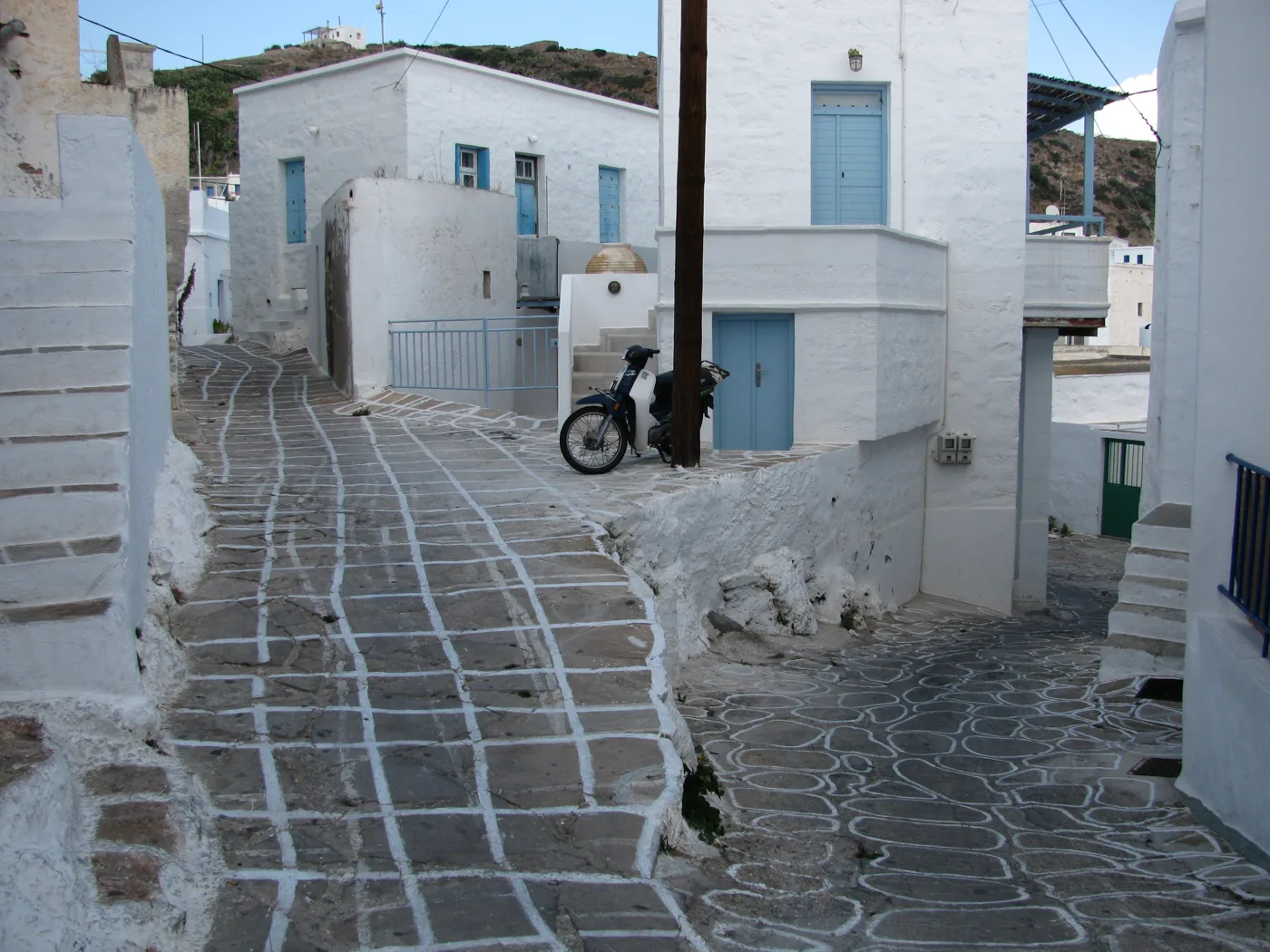
Whitewashed paving and silence.
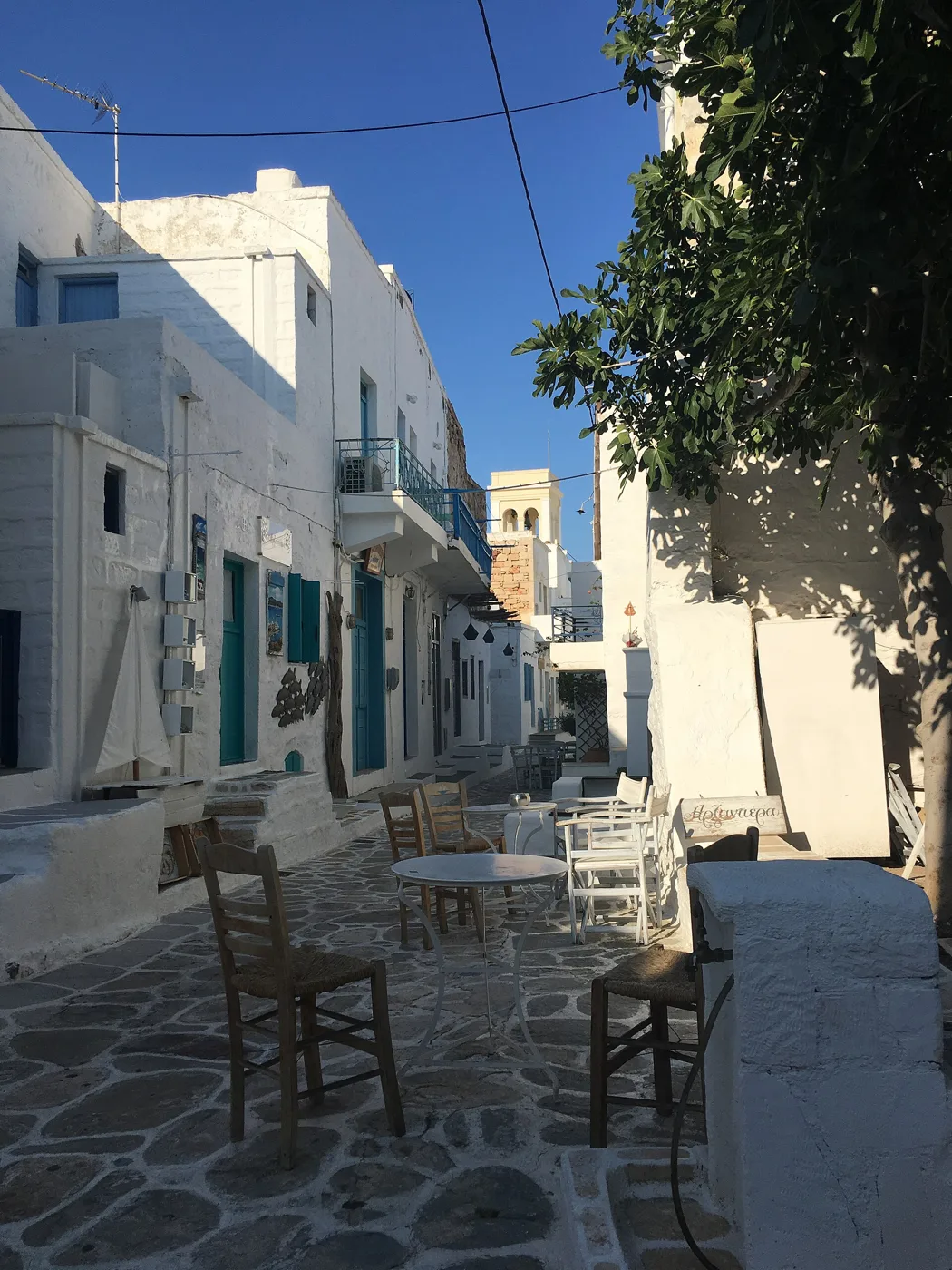
Cafés tucked into the alleys.
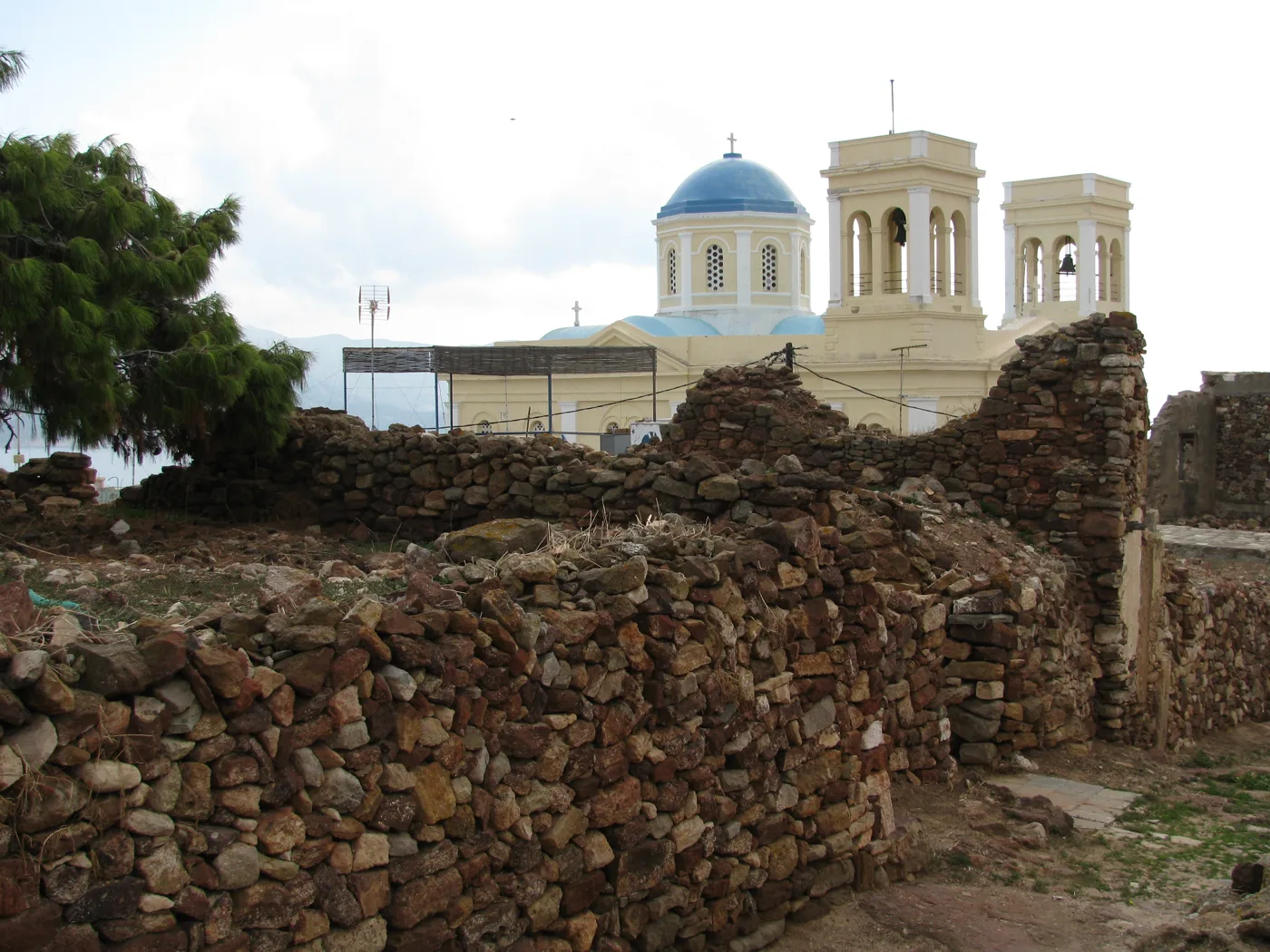
Built in the 16th century.
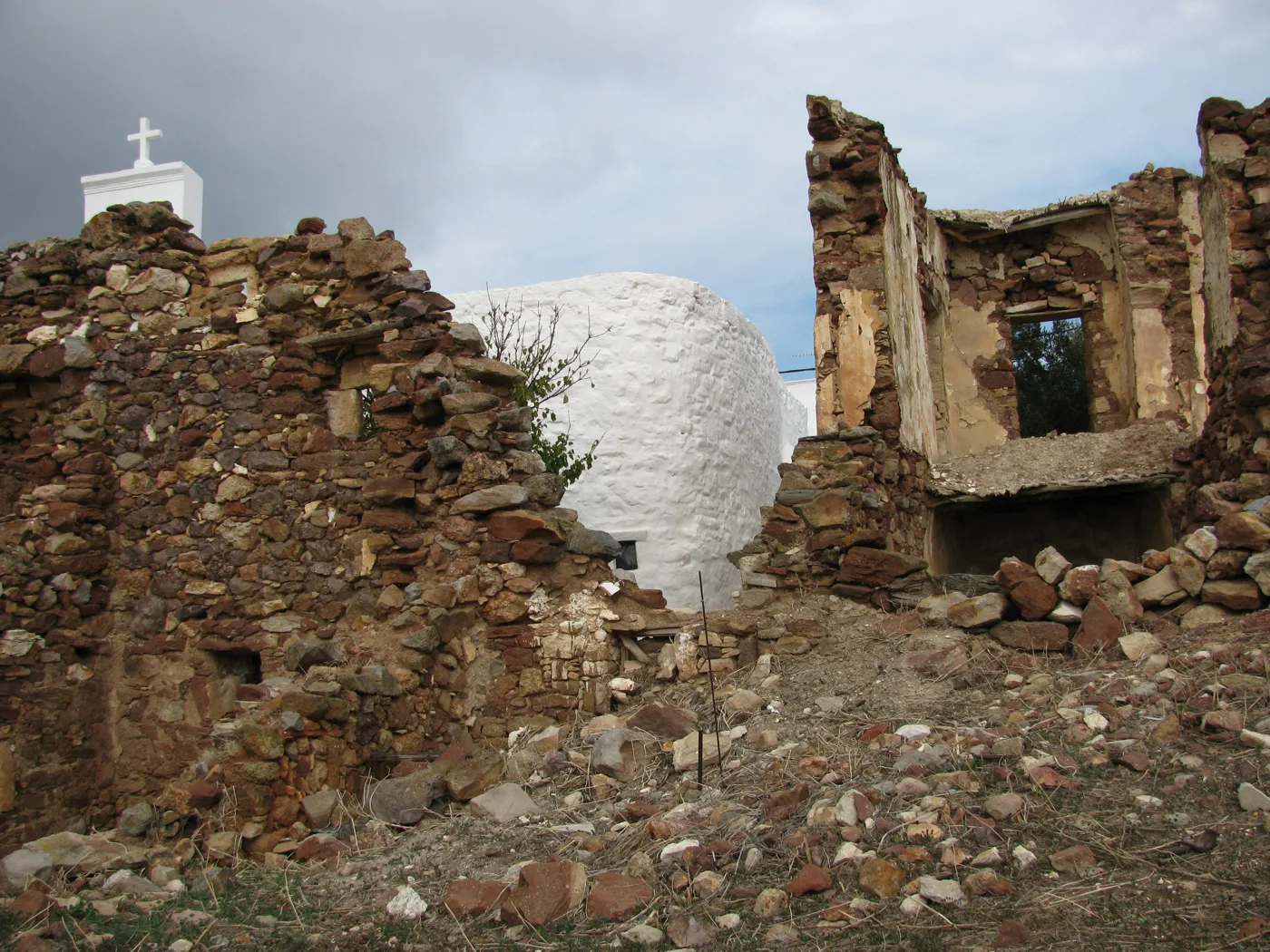
The houses were also the wall.
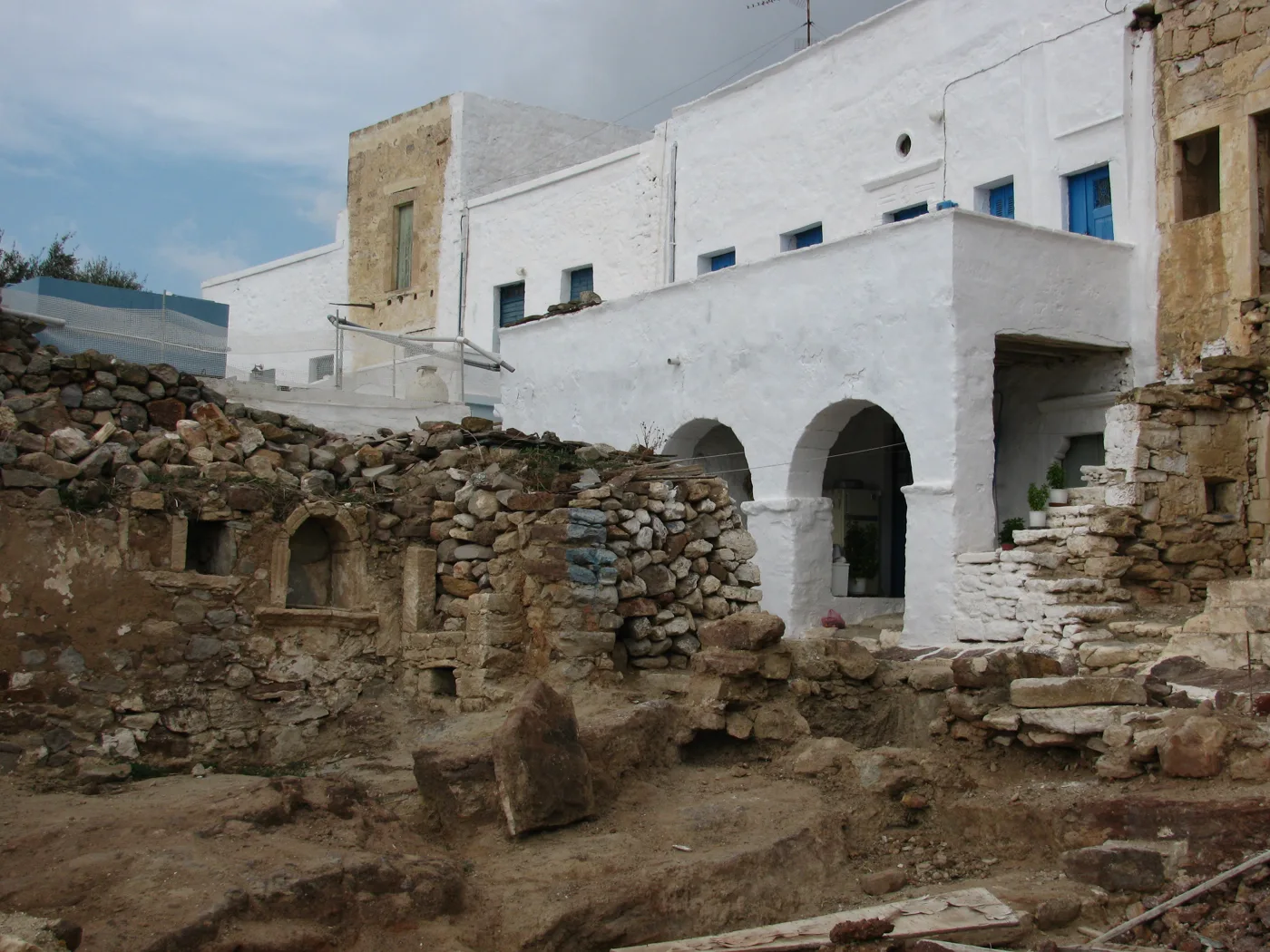
Old and new together.
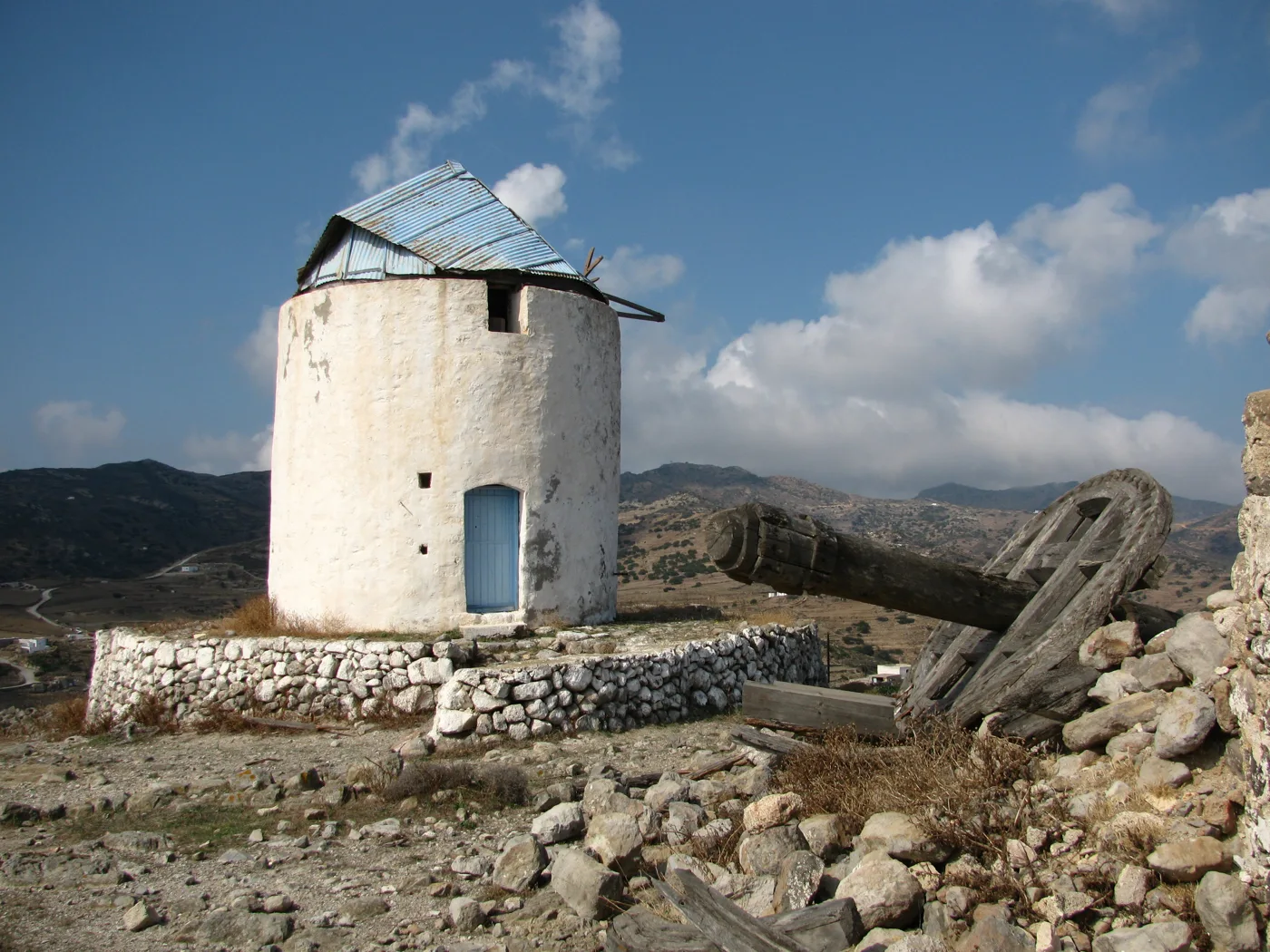
Above Chorio.
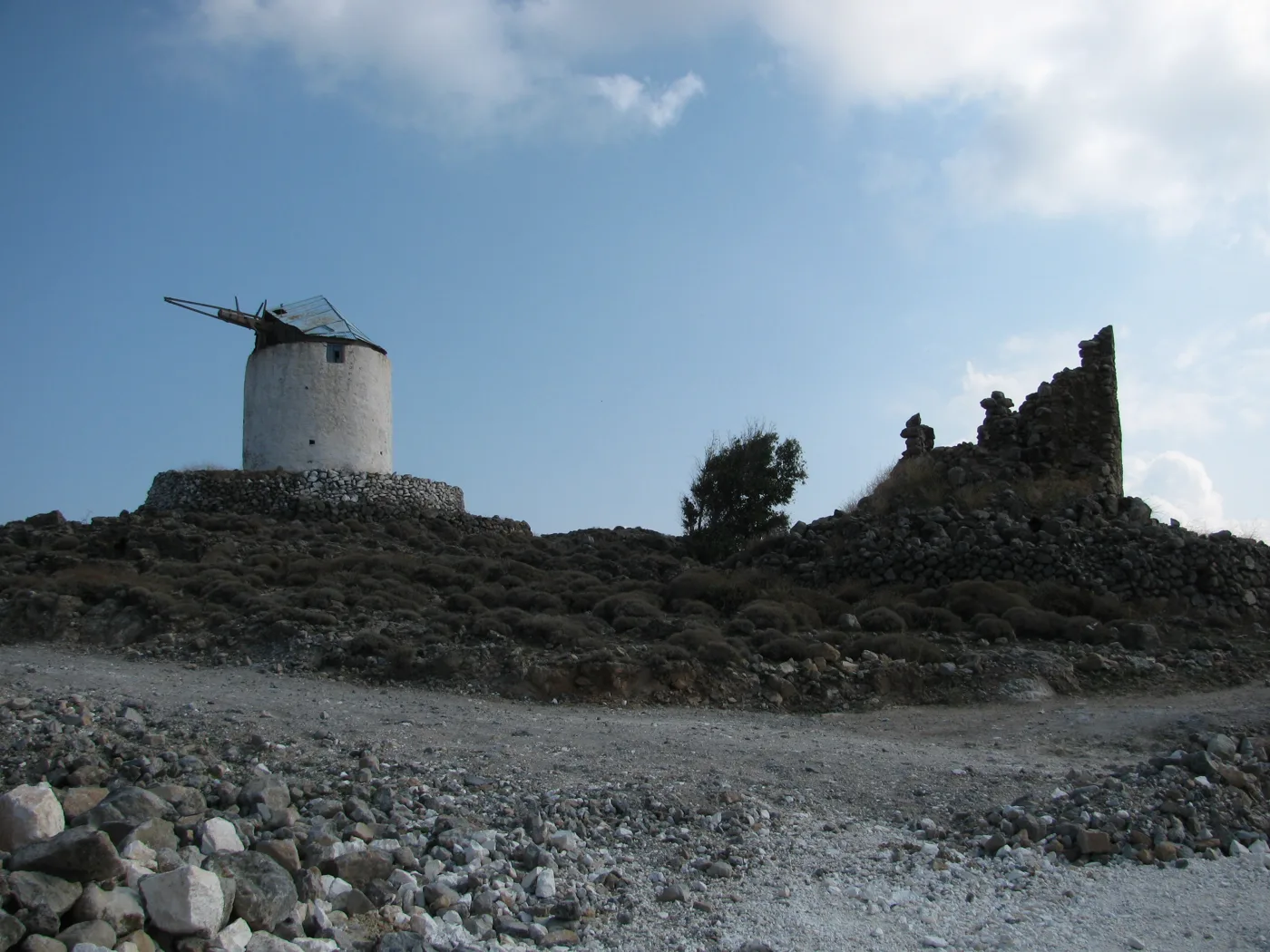
On the ridge, looking out to Milos.
Photos: Kritzolina (CC BY-SA 4.0), Amalia1984 (CC BY-SA 4.0) · Wikimedia Commons
From Psathi to Chorio is about ten minutes uphill on foot, along an old cobbled path. Late afternoon is the best time, when the sun goes down and people come out into the alleys.
⚓ Psathi
Psathi is a small port with a few tavernas, cafés and a little beach. This is where the ferries from Piraeus and the boat from Pollonia arrive, and where the boats to Polyaigos leave from. Around it, the houses stand on white chalk rocks.
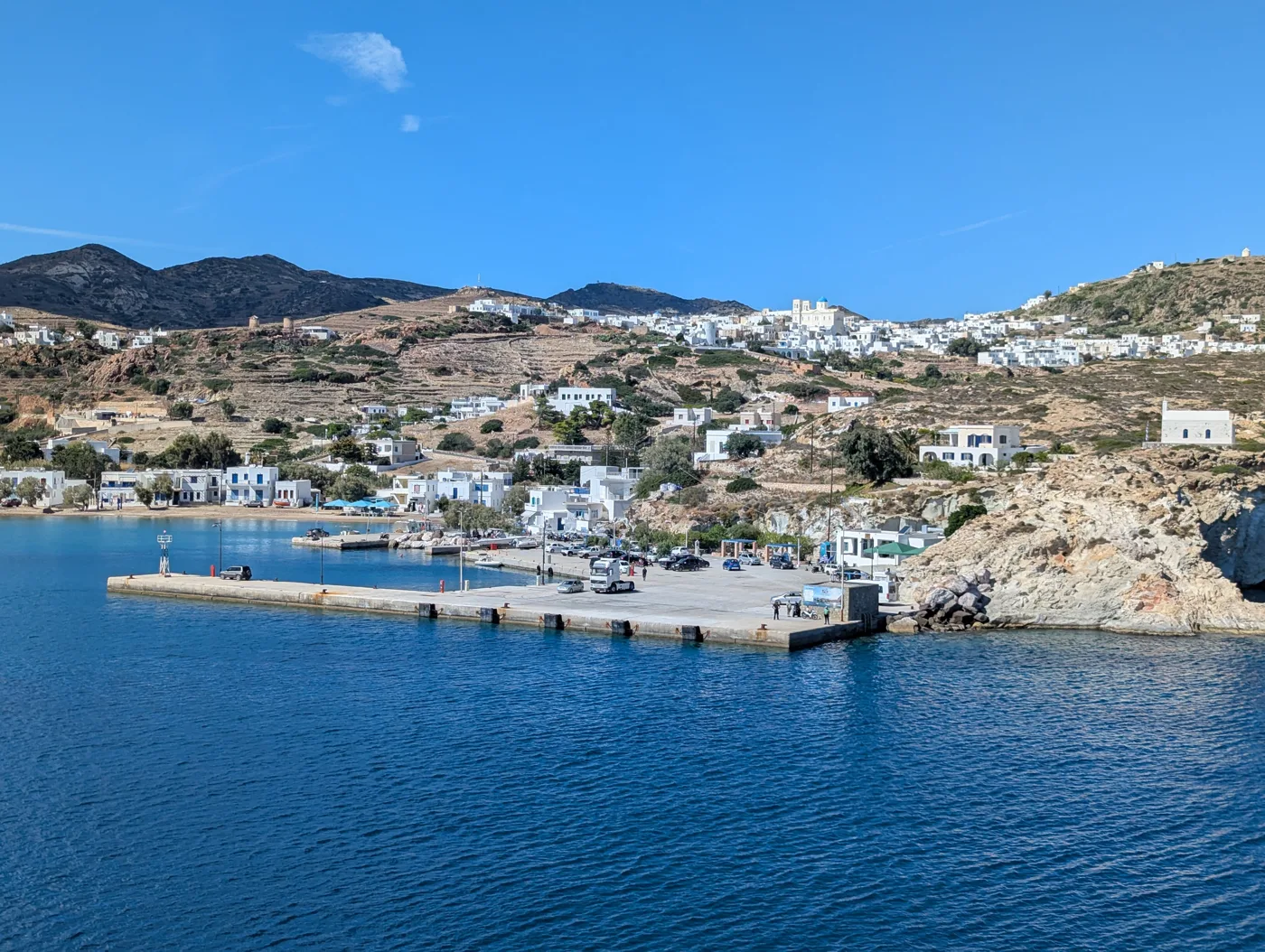
The port, with Chorio above.
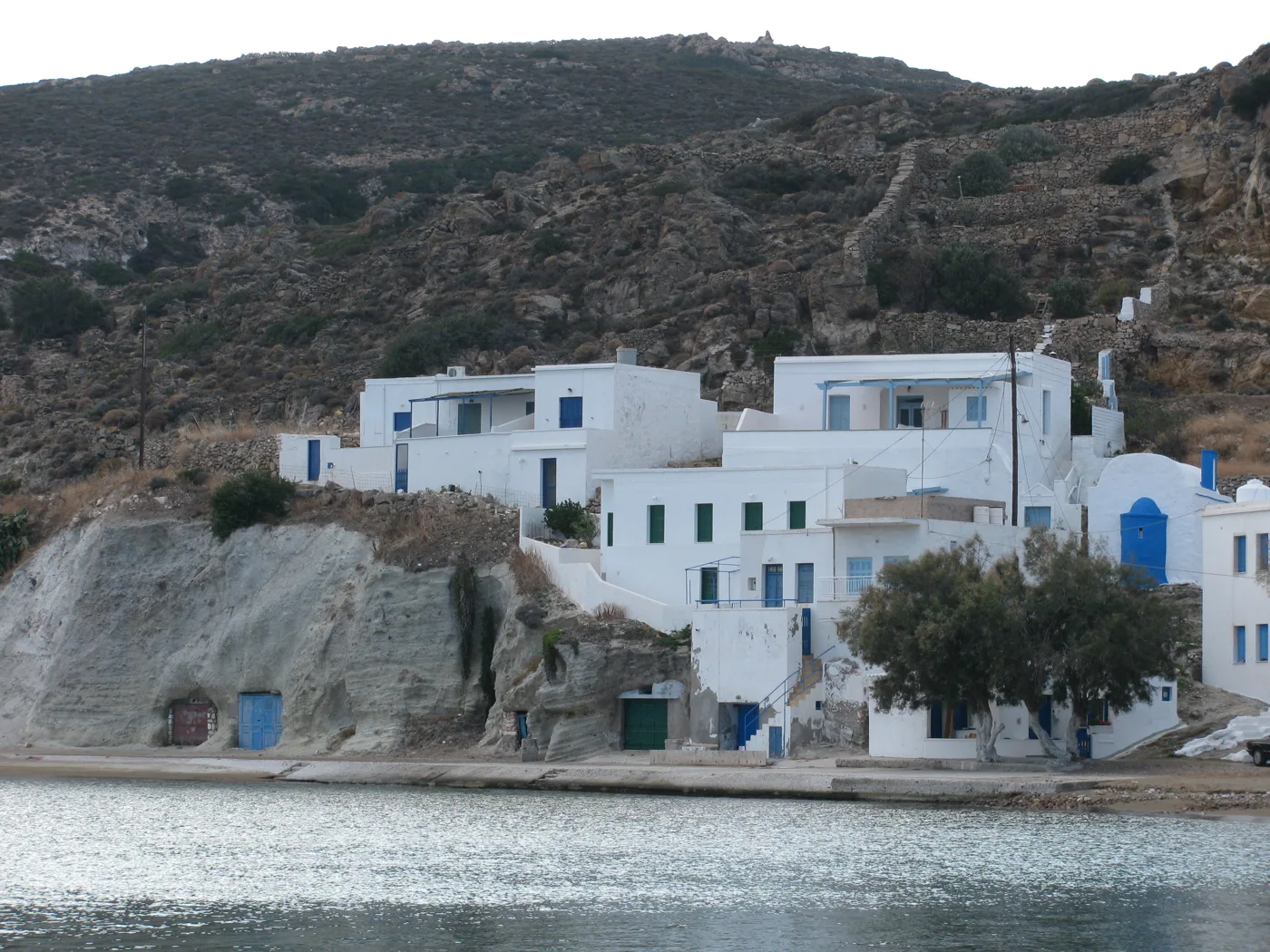
Houses on the chalk.
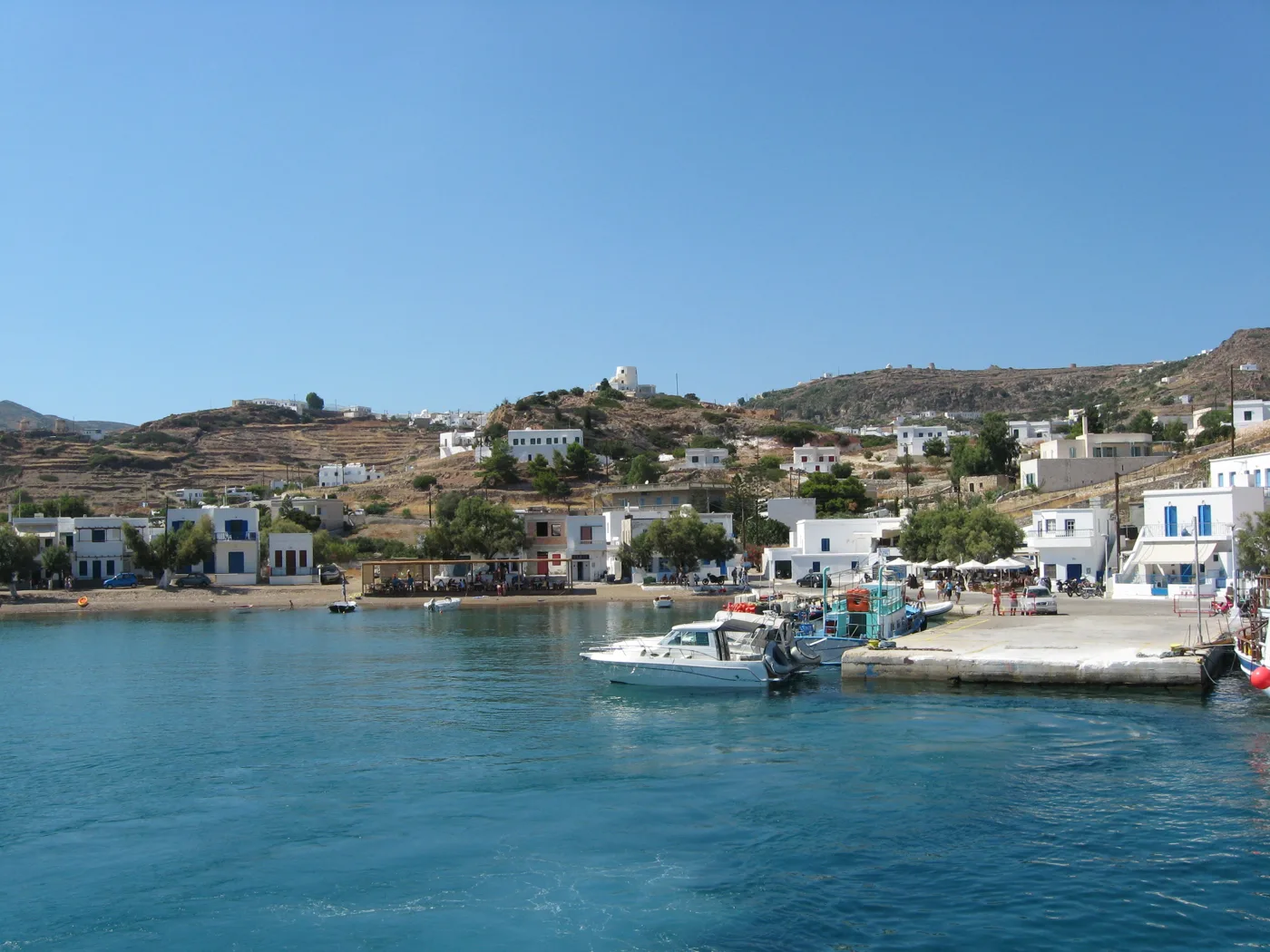
Boats and tavernas.
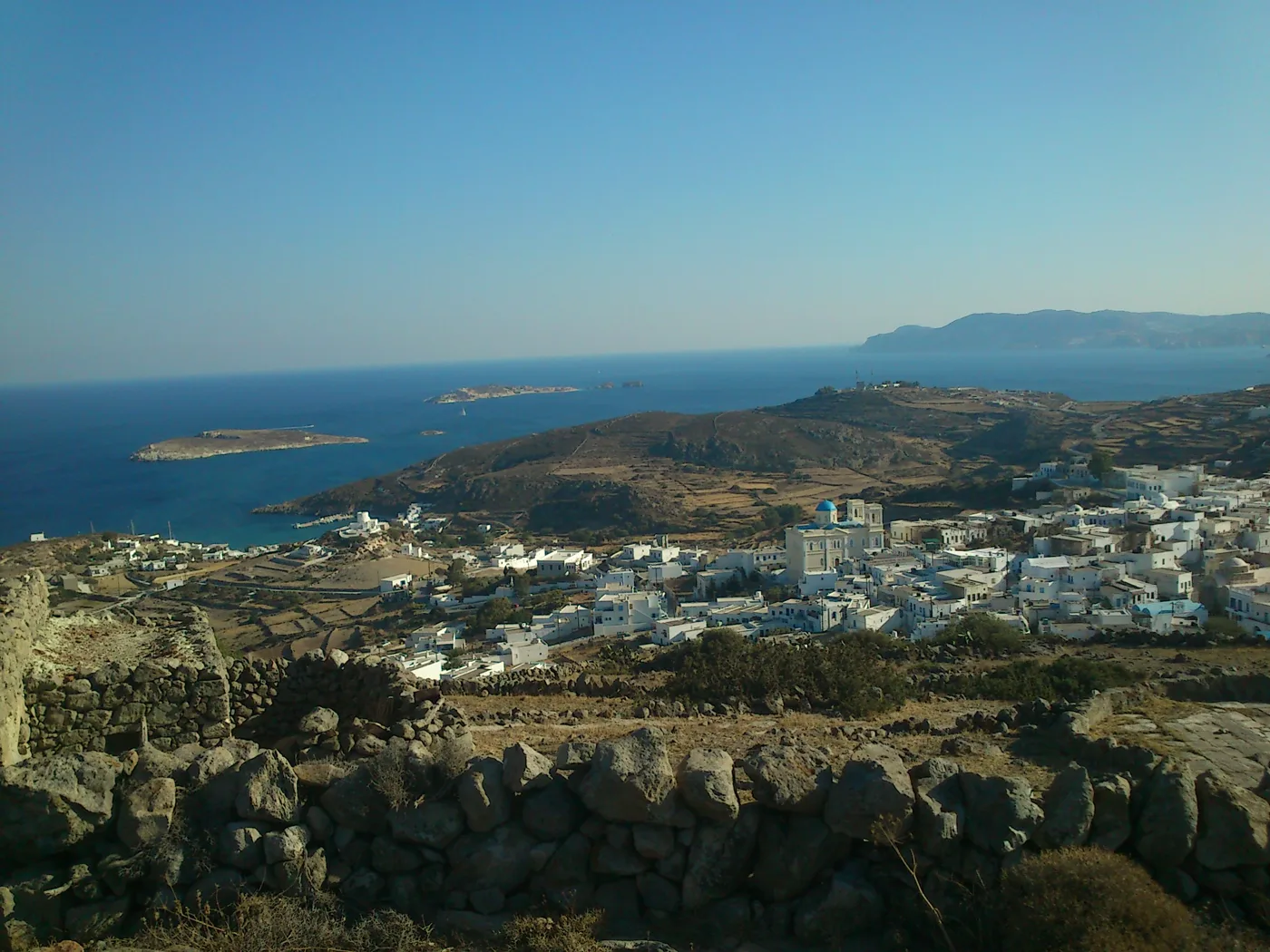
Milos, just across the water.
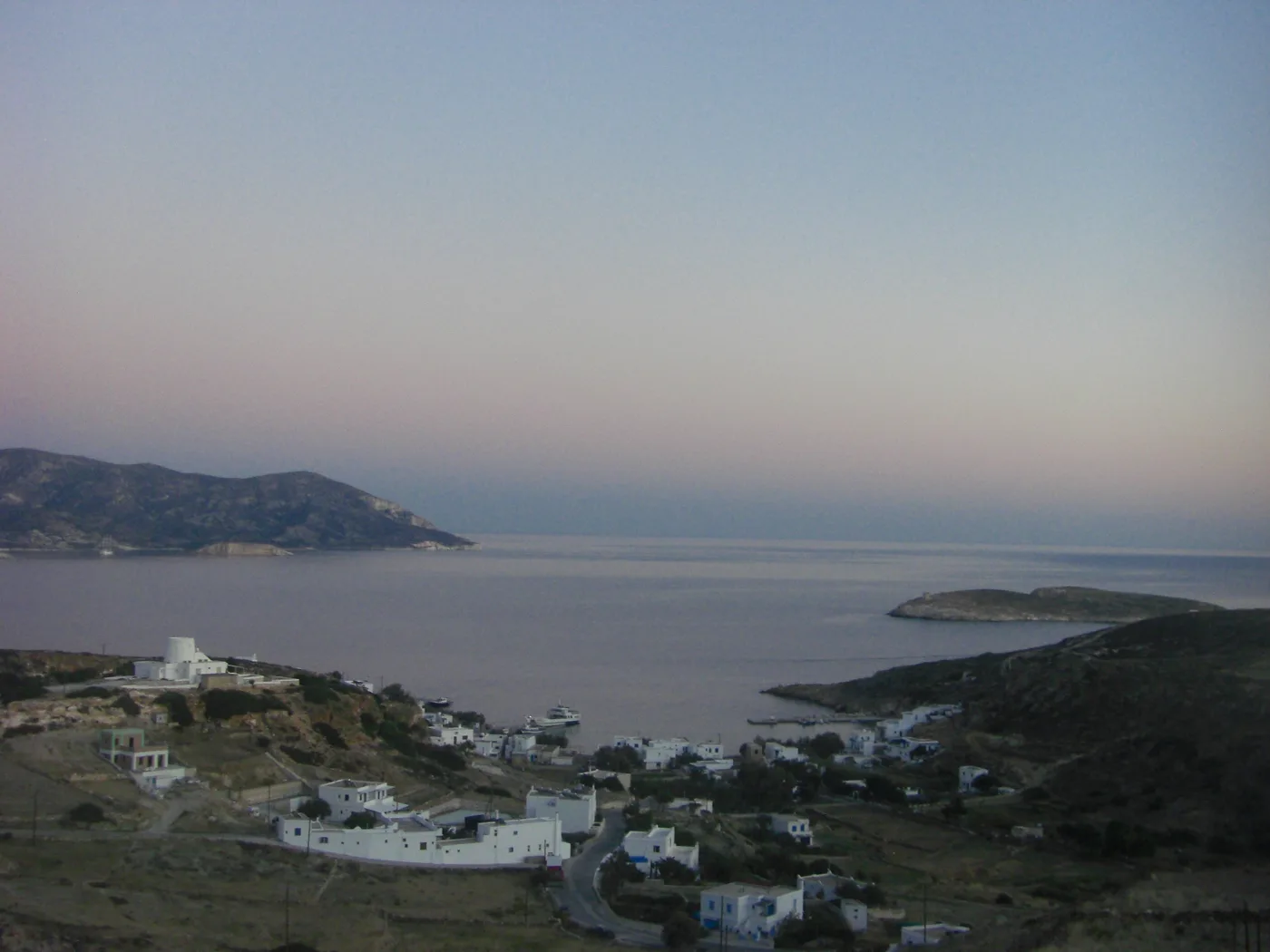
The time when the little boats leave.
Photos: AleWi (CC0), Kritzolina (CC BY-SA 4.0), Nikitas277 (CC BY-SA 3.0), Roza24 (CC BY-SA 4.0), Despoina Alexoudi (Public domain) · Wikimedia Commons
🛶 Goupa, the syrmata and Polyaigos
Goupa and Kara, next to Psathi, are small fishing hamlets with syrmata: houses carved into the soft rock, with the ground floor for the boat and the upper floor for the fisherman. The water is crystal clear, and swimming off the rocks here is among the best on the island.
East of Kimolos lies Polyaigos, one of the largest uninhabited islands in the Aegean, a protected area with monk seals, white cliffs and turquoise coves. There is nothing on it, no taverna and no road. You can only get there on the boats that run day trips from Psathi or from Milos.
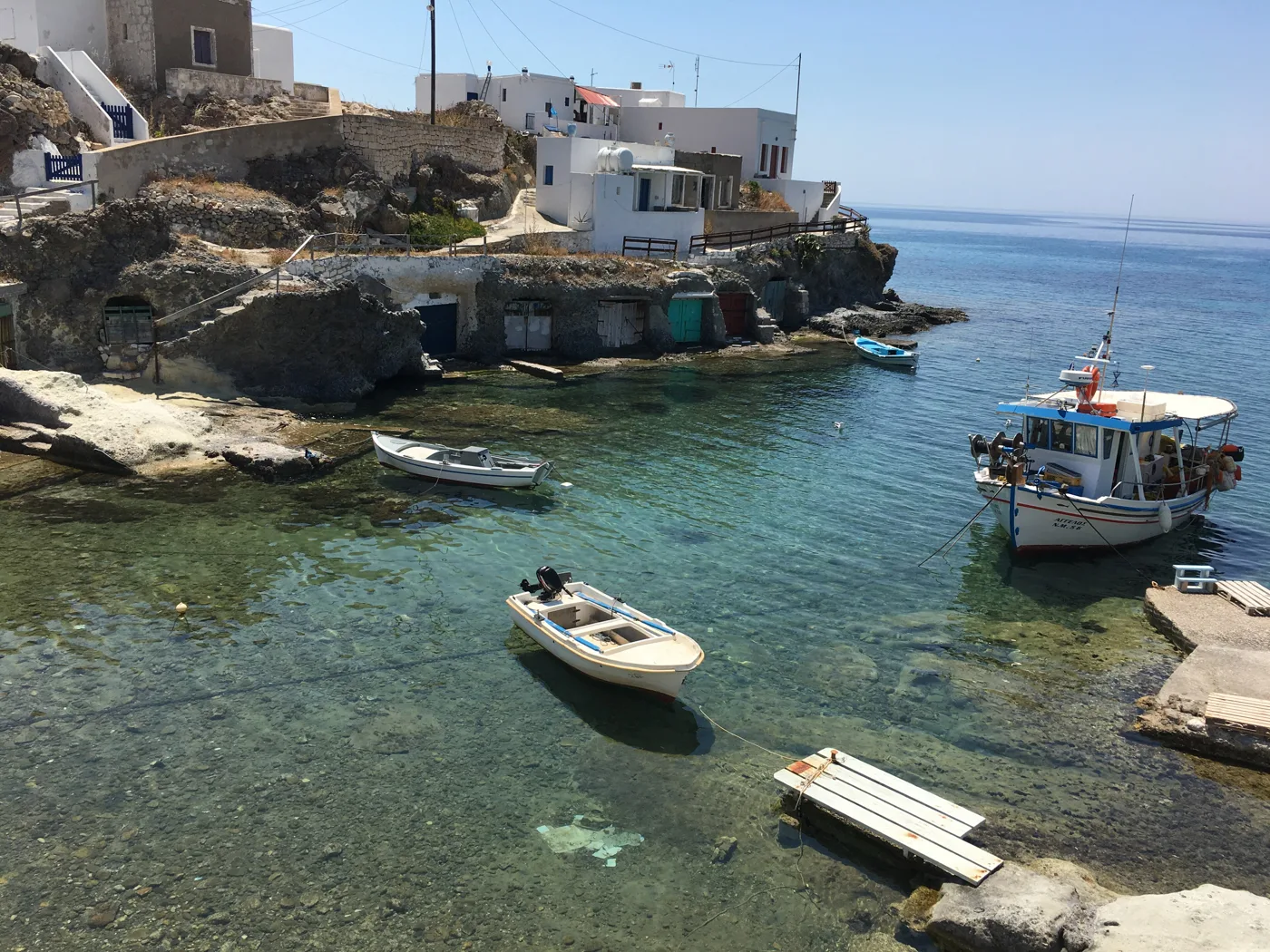
Fishermen’s houses and boats.
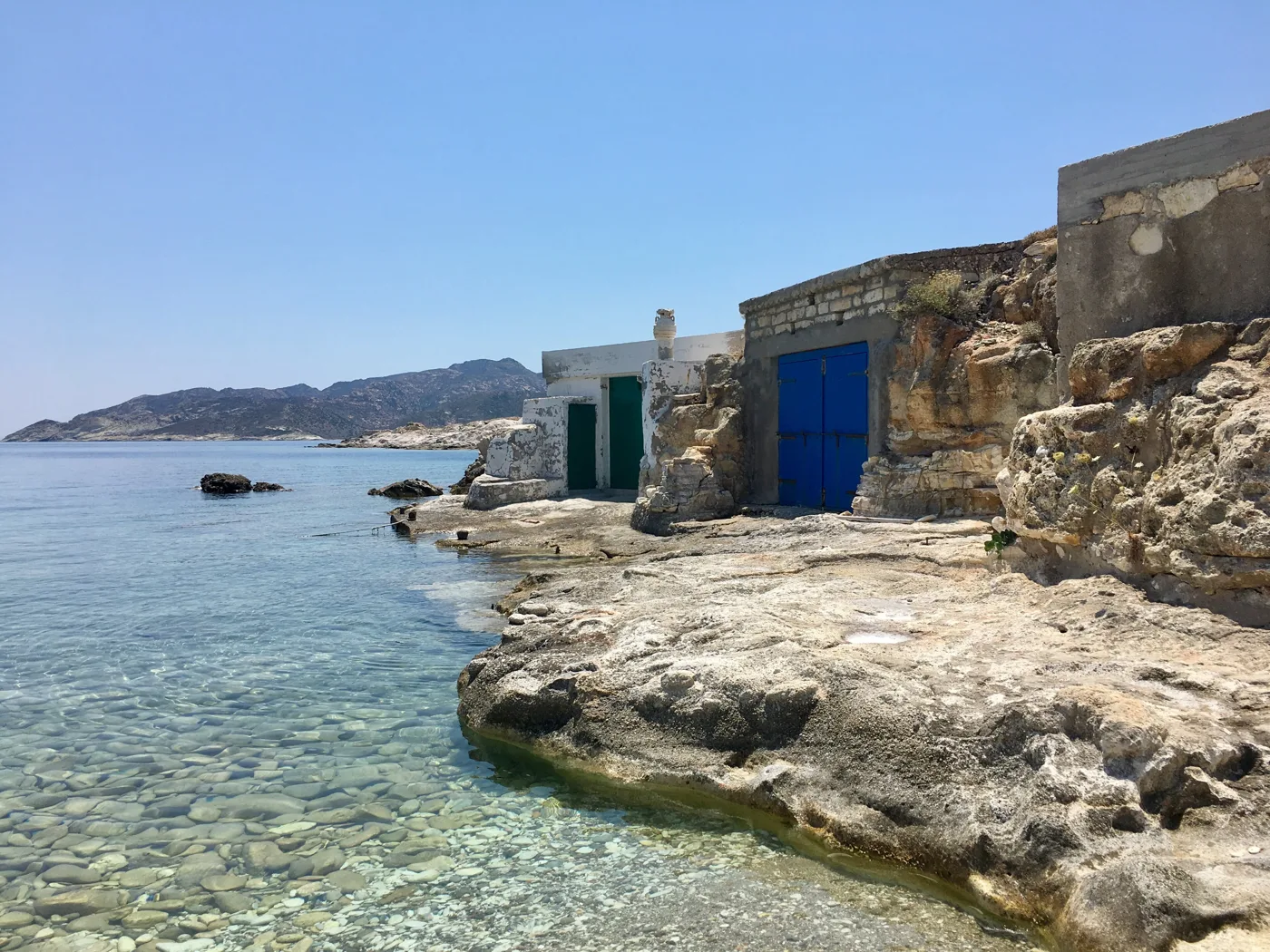
The ground floor for the boat, the upper floor for the home.
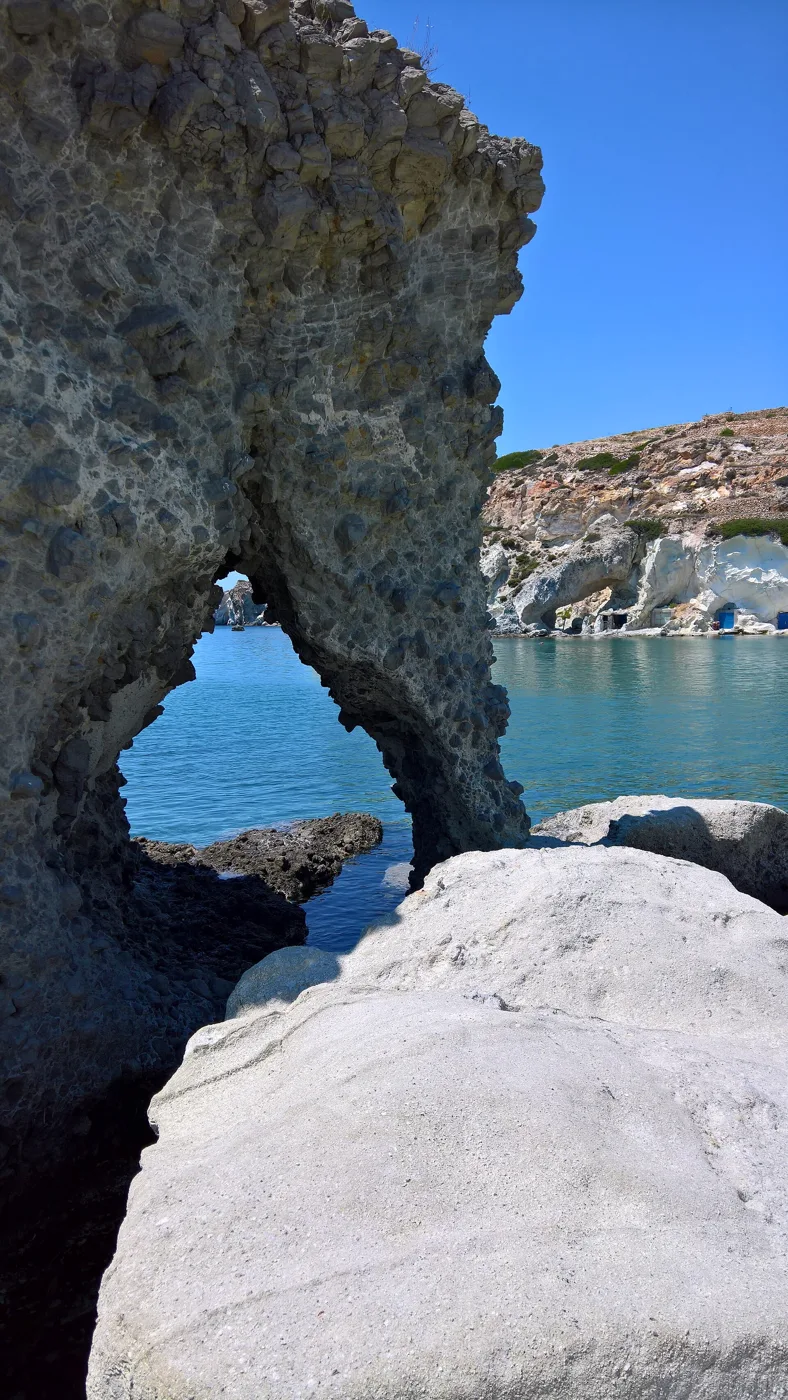
Rocks carved by the wind.
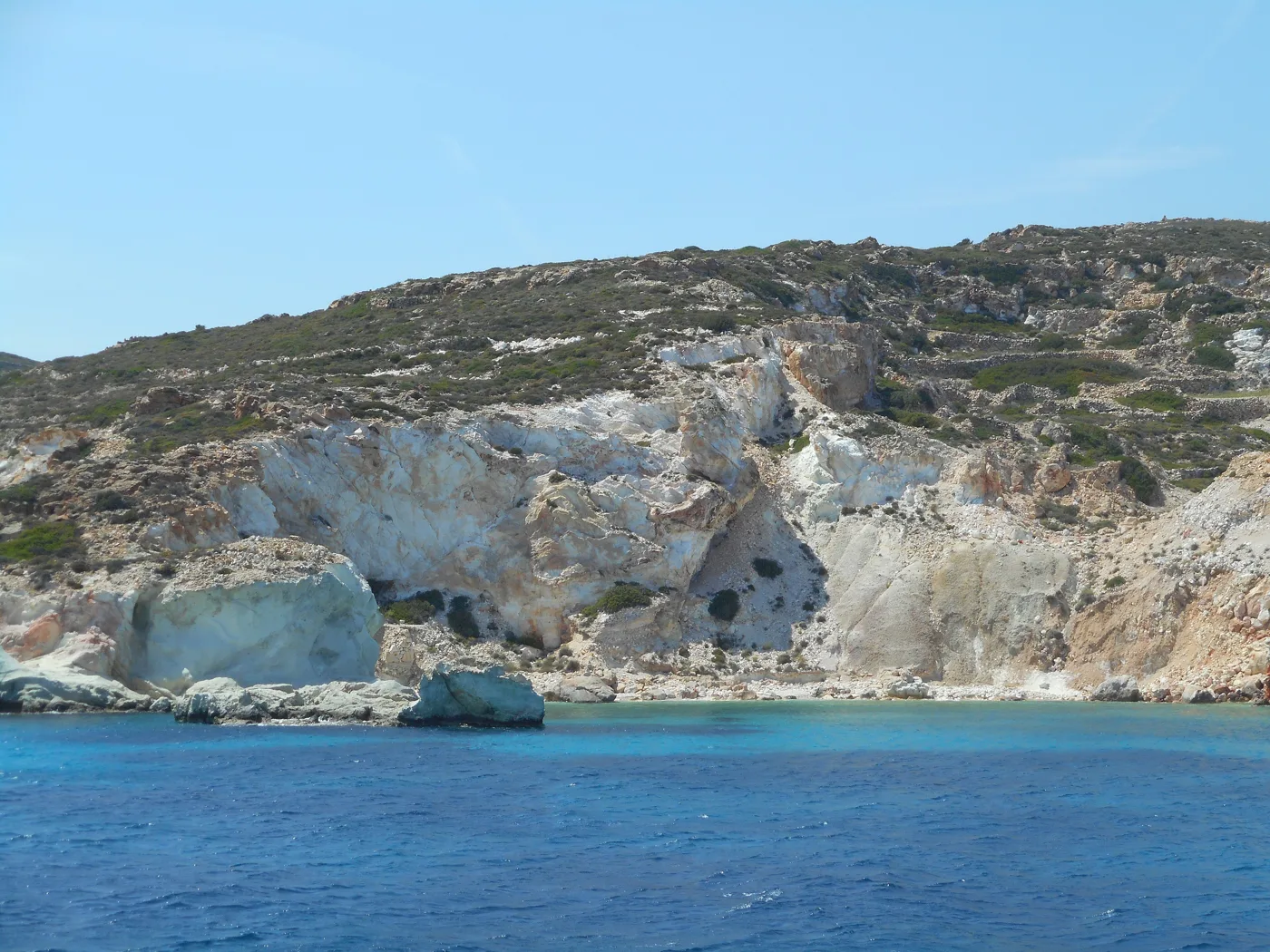
The colour of chalk.
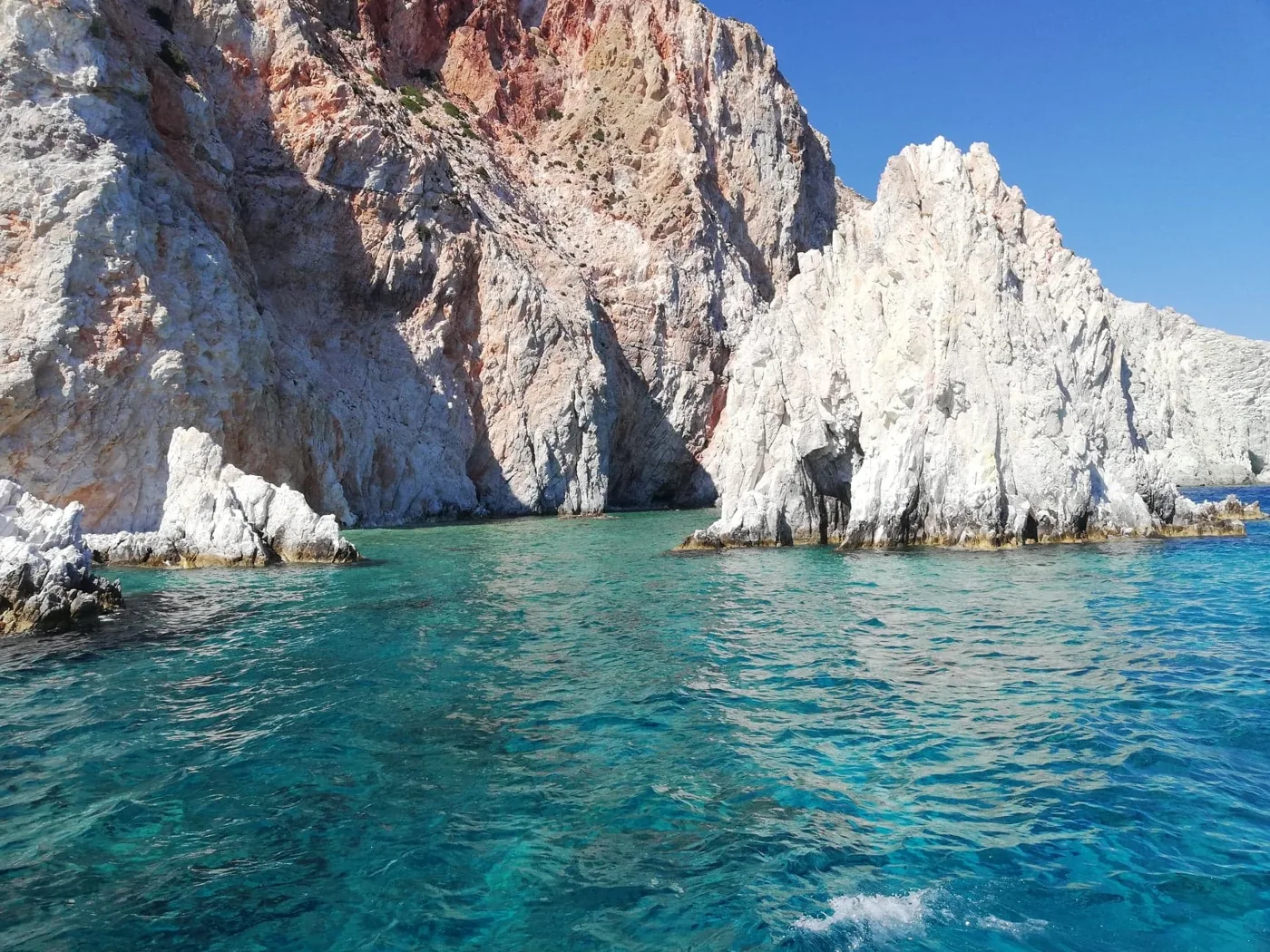
Uninhabited, reached by boat.
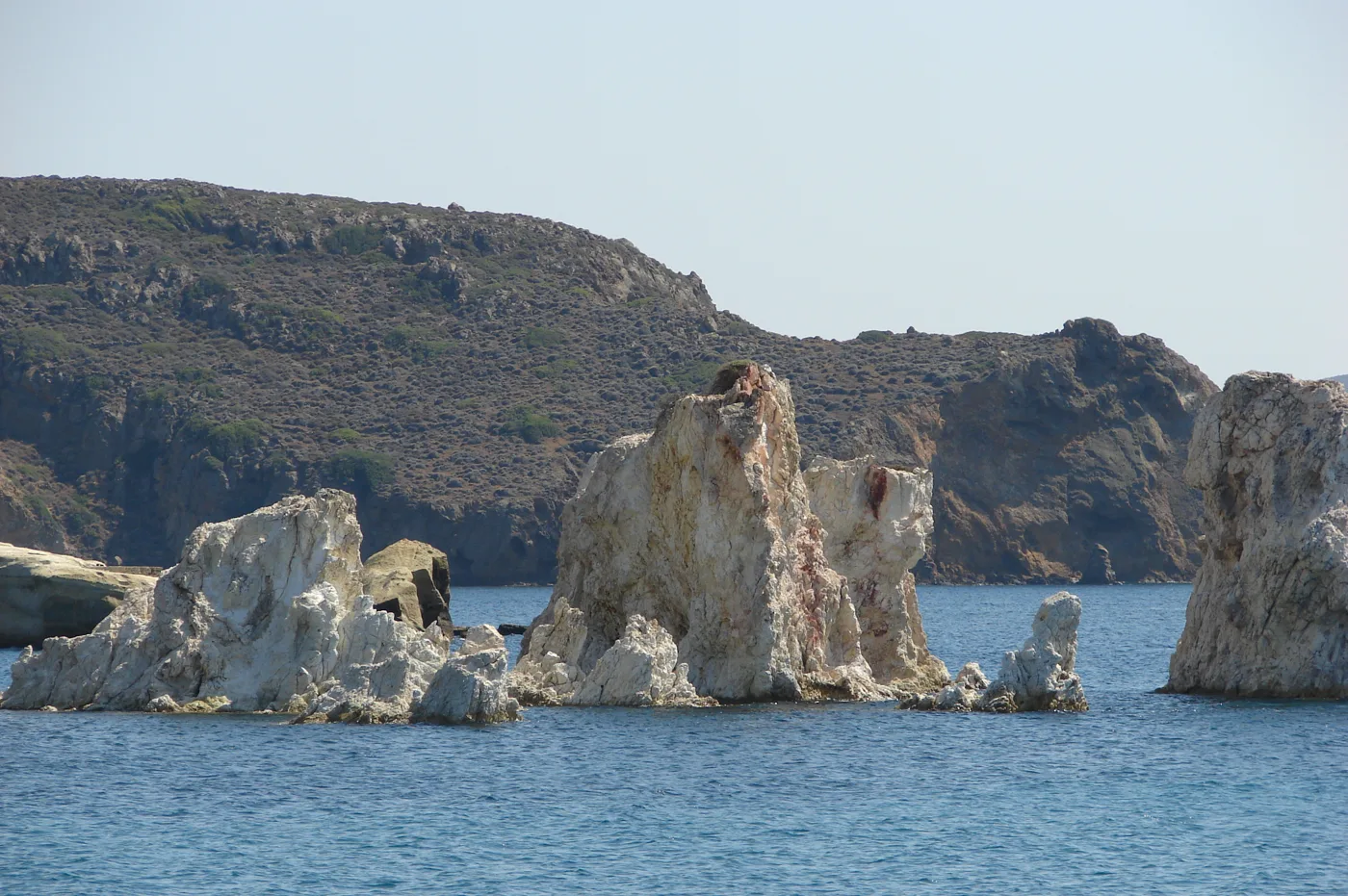
The coast, from the boat.
Photos: Amalia1984 (CC BY-SA 4.0), Elena Alexiou (CC BY-SA 4.0), IliasPtr (CC BY-SA 4.0), karlygr (CC BY-SA 3.0) · Wikimedia Commons
🍄 Skiadi and nature
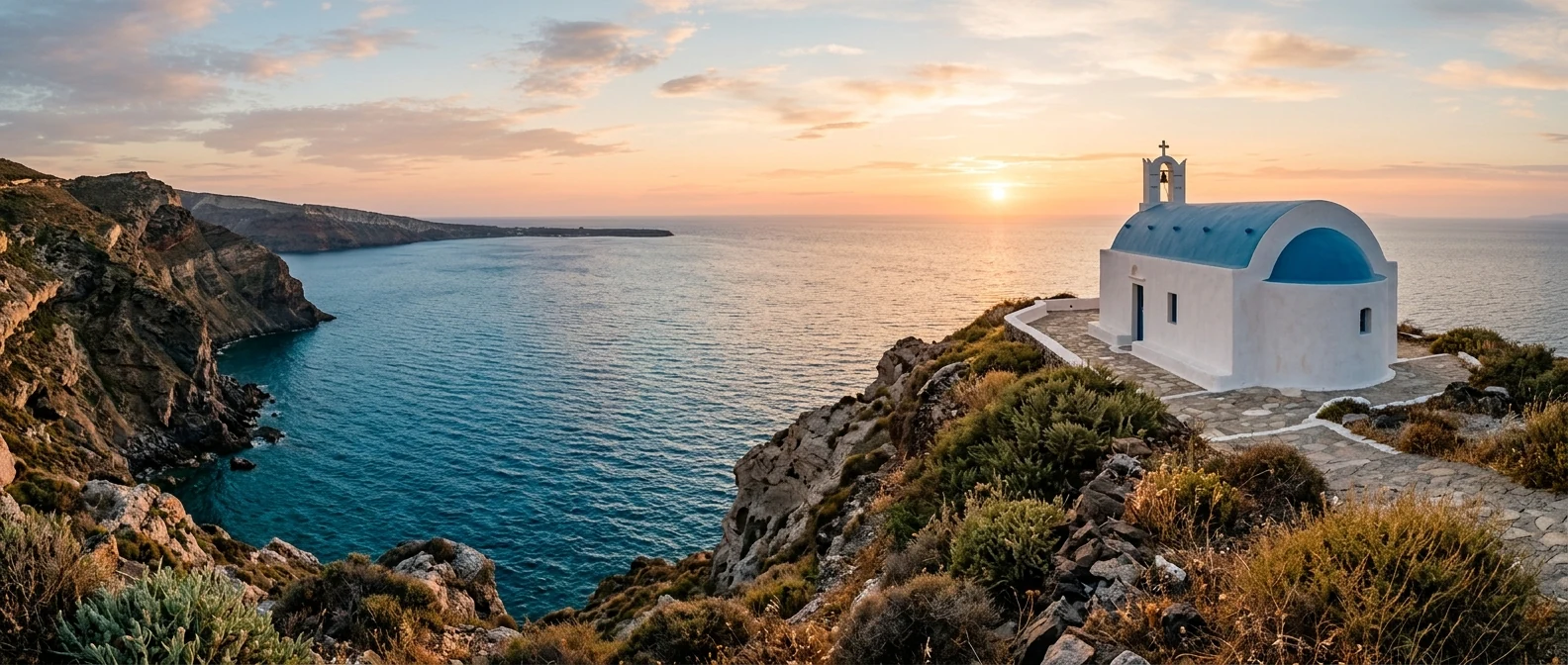
The symbol of Kimolos is Skiadi, a rock shaped like a giant mushroom, sculpted by wind and rain, on the northwestern side of the island. You reach it on a path from Chorio, about an hour’s walk through dry, bright countryside with sea views. Kimolos has a network of waymarked paths that pass chapels, old mines and deserted coves.
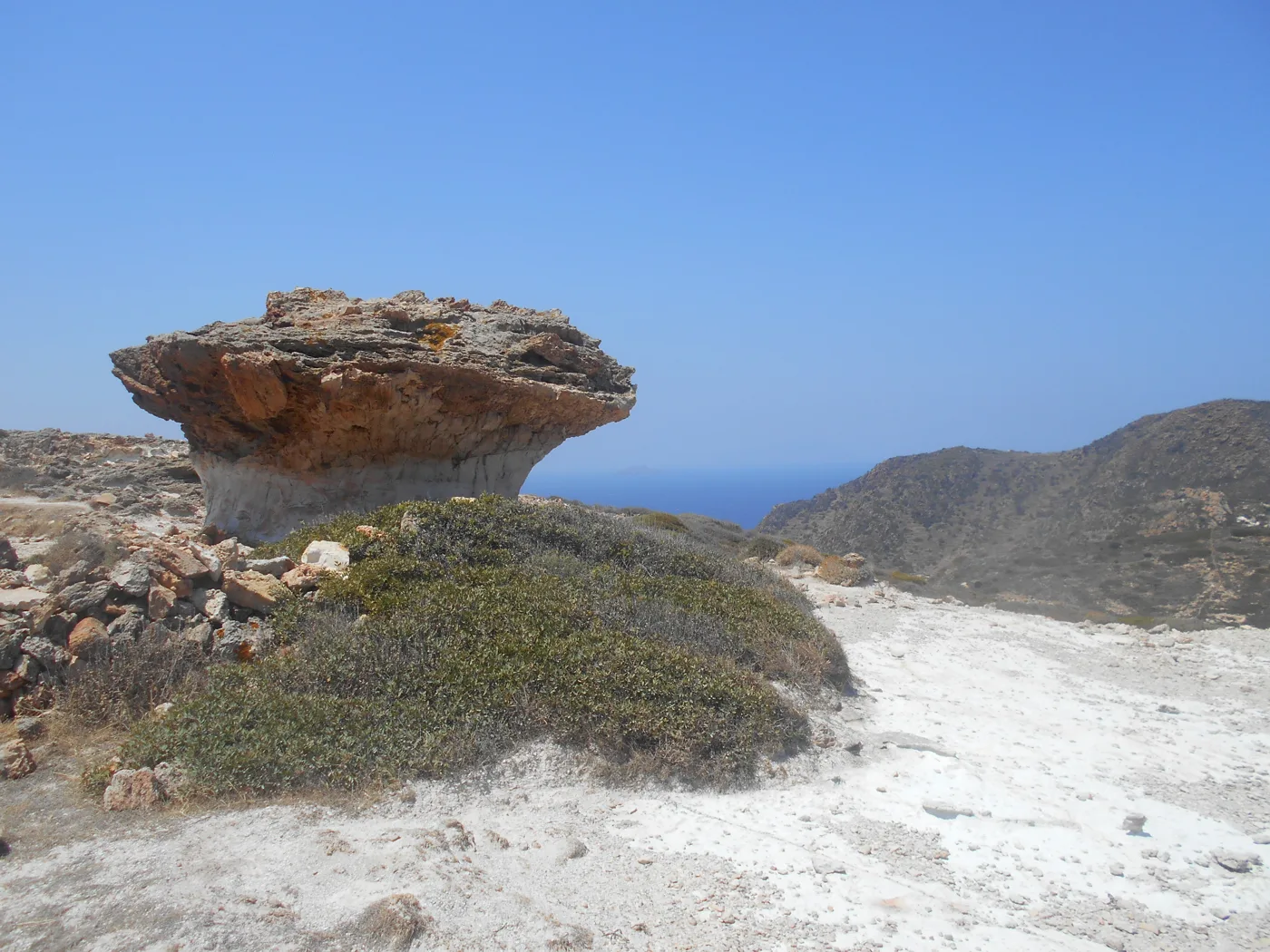
The mushroom rock.
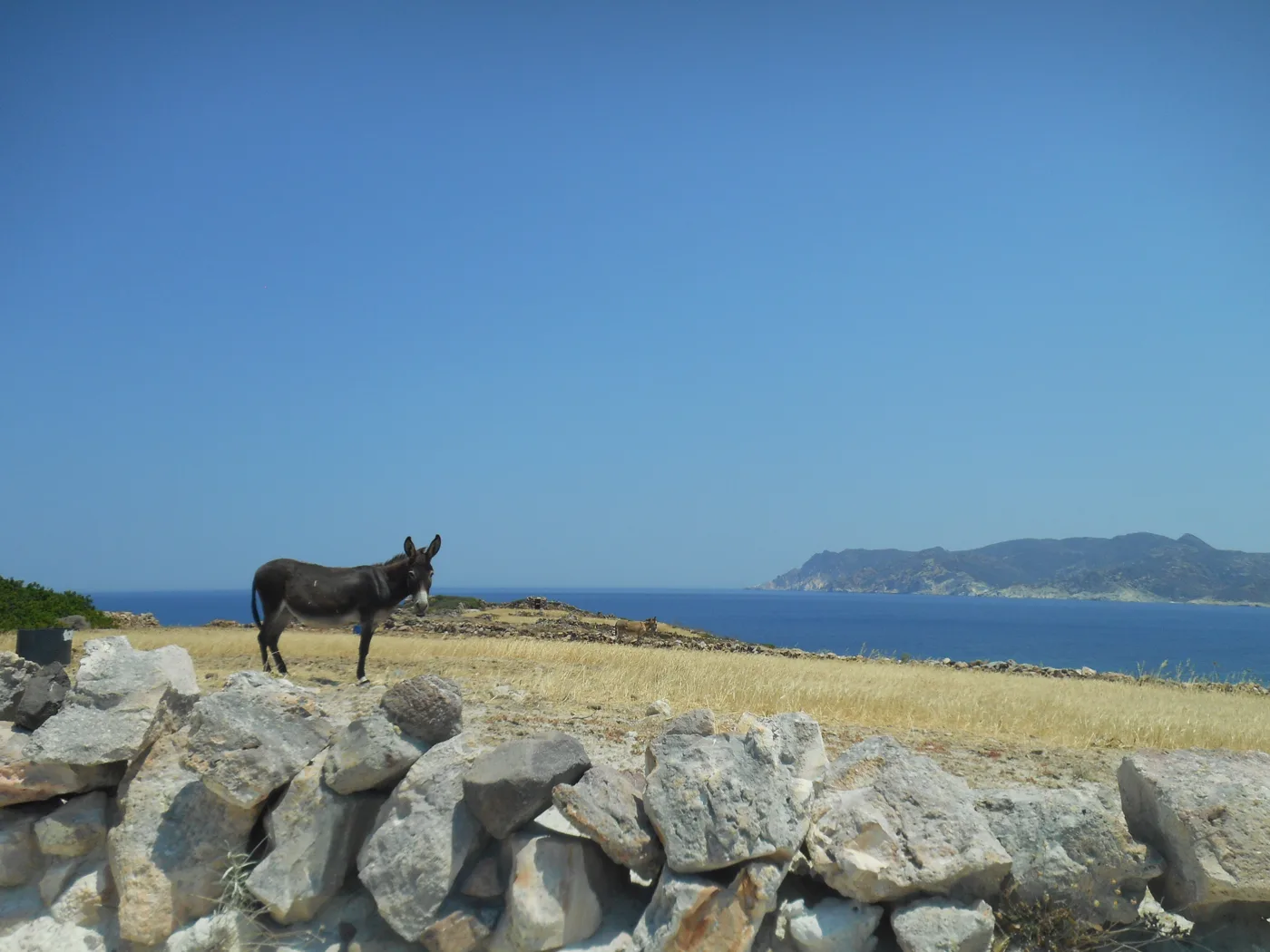
On the paths.
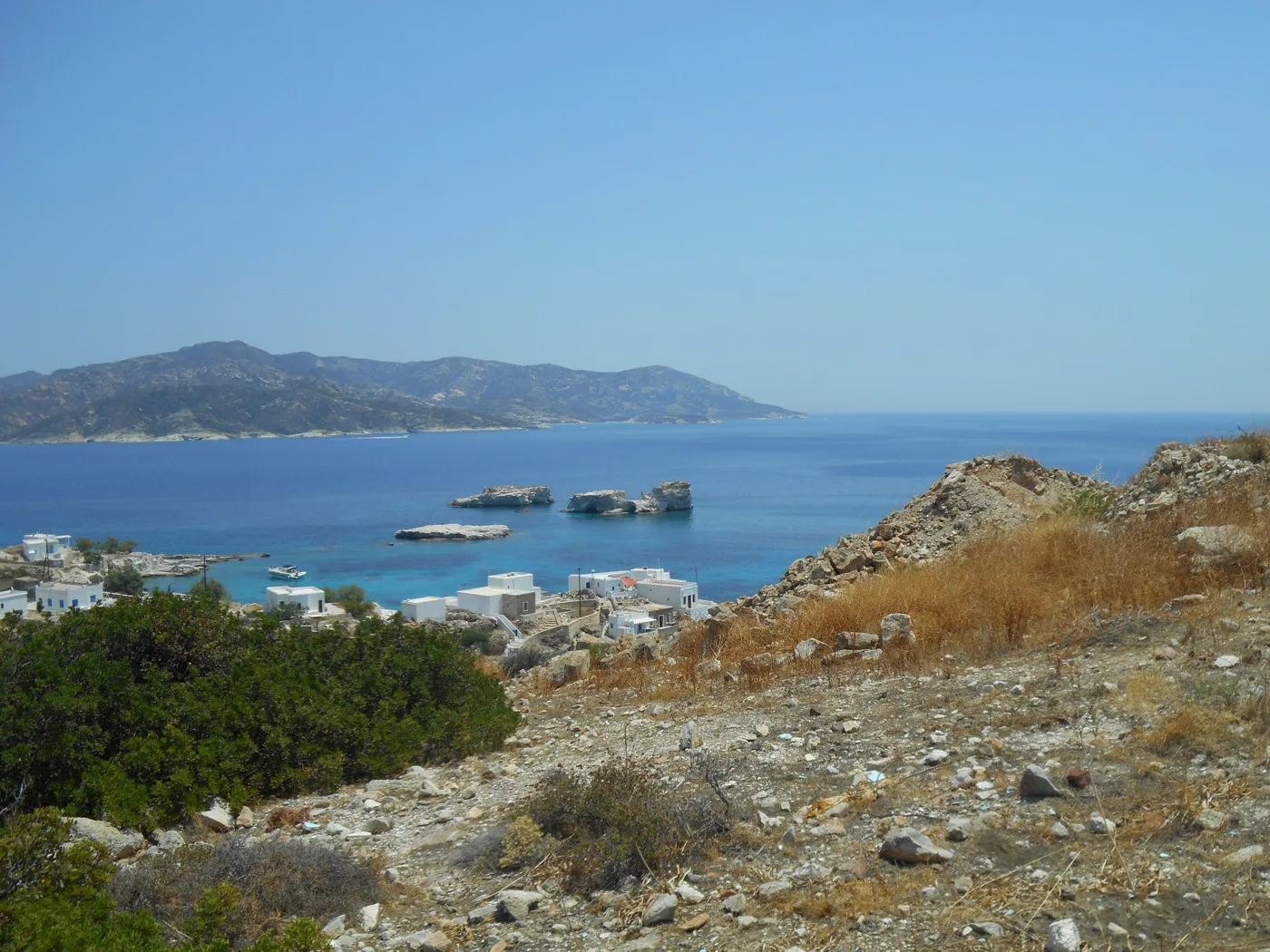
Dry, bright, quiet.
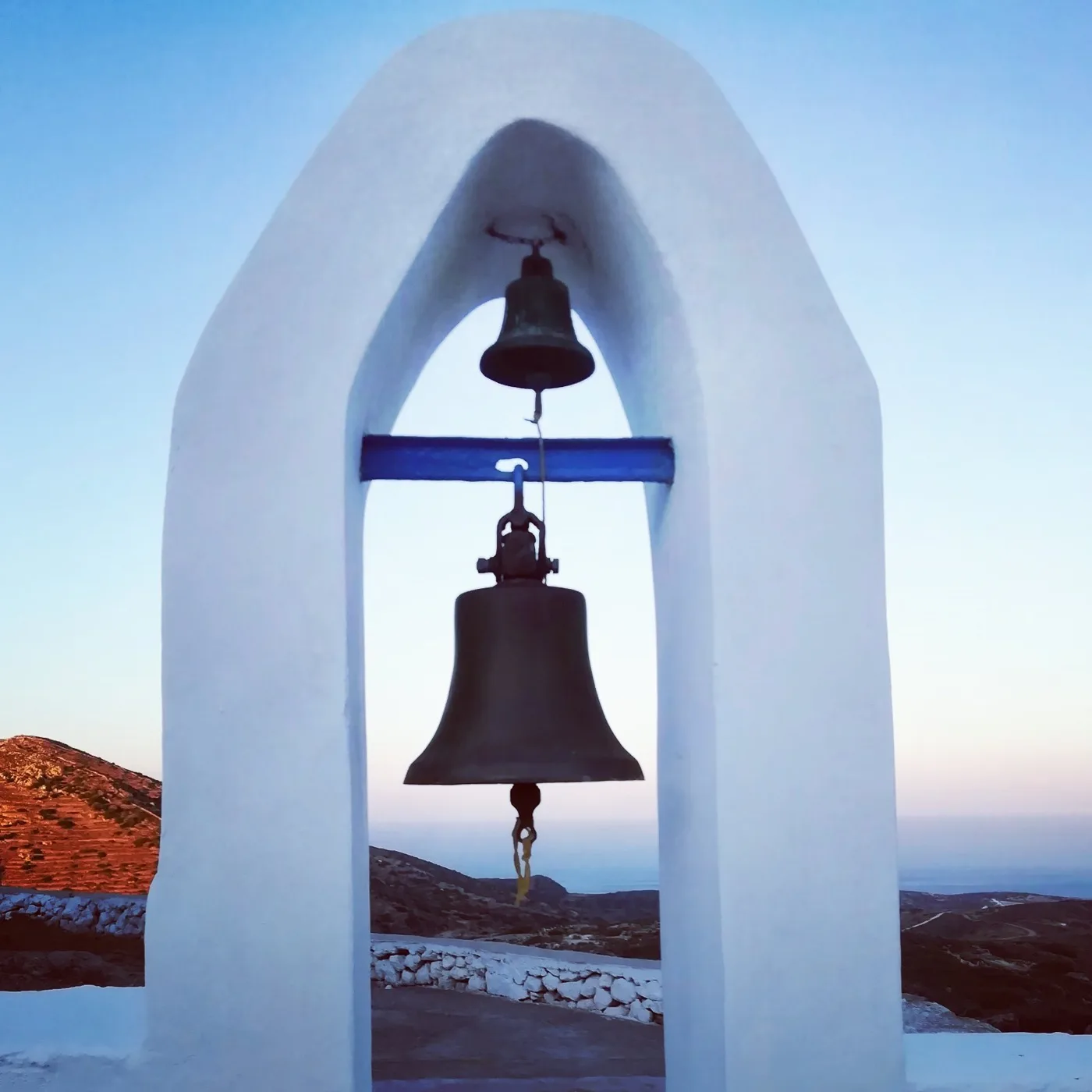
A bell tower with a view.
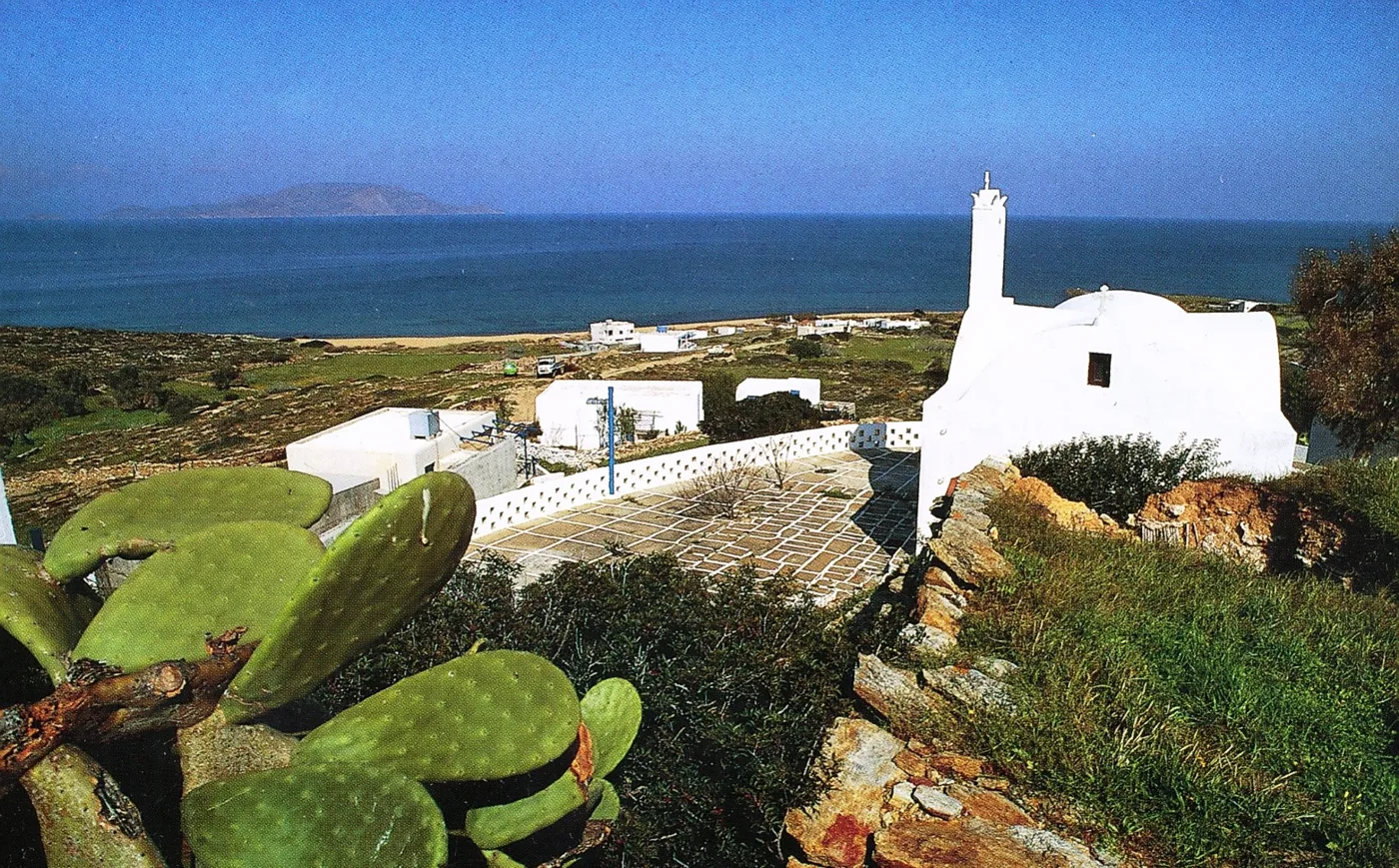
Above the open sea.
Photos: Elena Alexiou (CC BY-SA 4.0), Evgenia Vassou (Public domain), Nikos Kechagias (CC BY-SA 3.0) · Wikimedia Commons
Skiadi means “sunshade”, but there is no shade on the way: there is hardly a single tree along the path. Set off early in the morning or late in the afternoon, with a hat, shoes for dirt tracks and plenty of water.
🏖️ The beaches
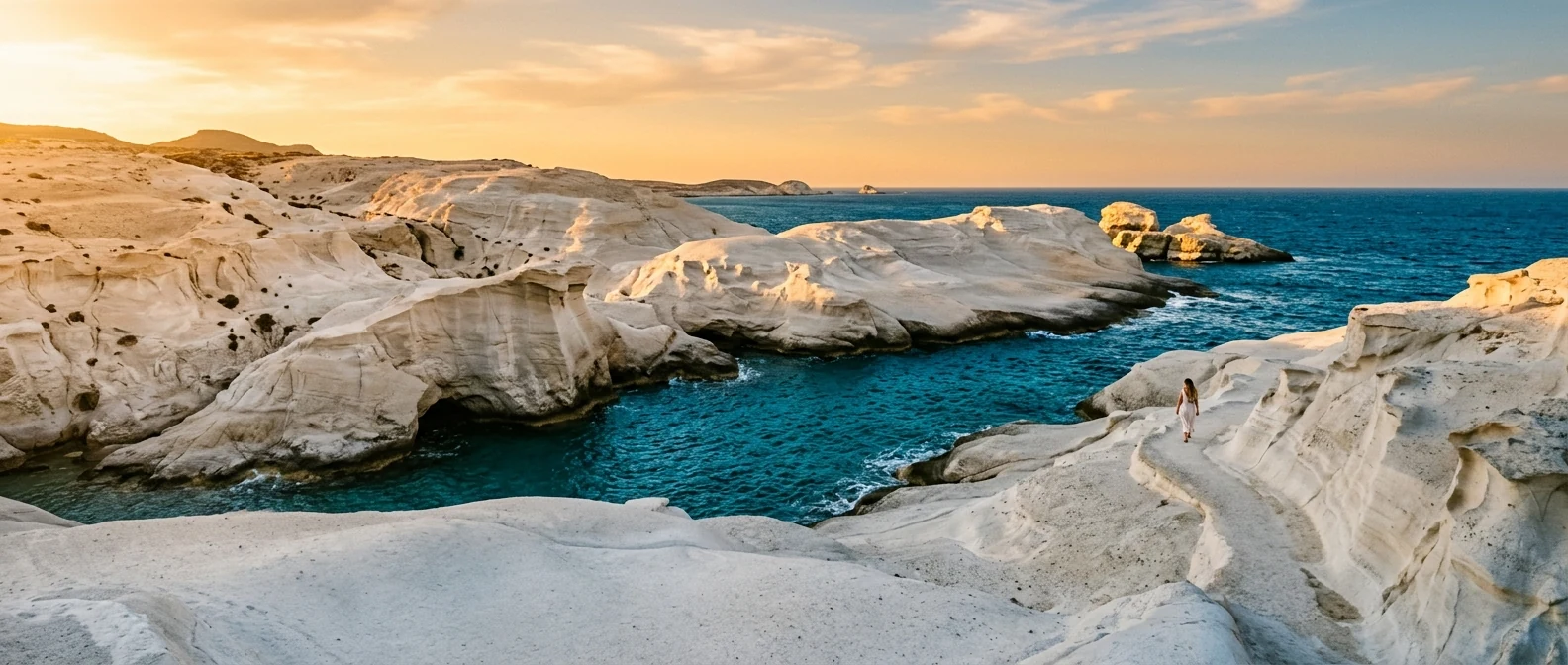
The best-known beach is Prassa, in the northeast, with white sand and water like a swimming pool, facing Polyaigos. It has a taverna and a few umbrellas, and a bus runs there in summer. In the south, near the port, Aliki, Bonatsa and Kalamitsi are sandy beaches with shallow water, good for children. In the west, Ellinika is a quiet sandy beach facing the islet of Agios Andreas, with the best sunset on the island.
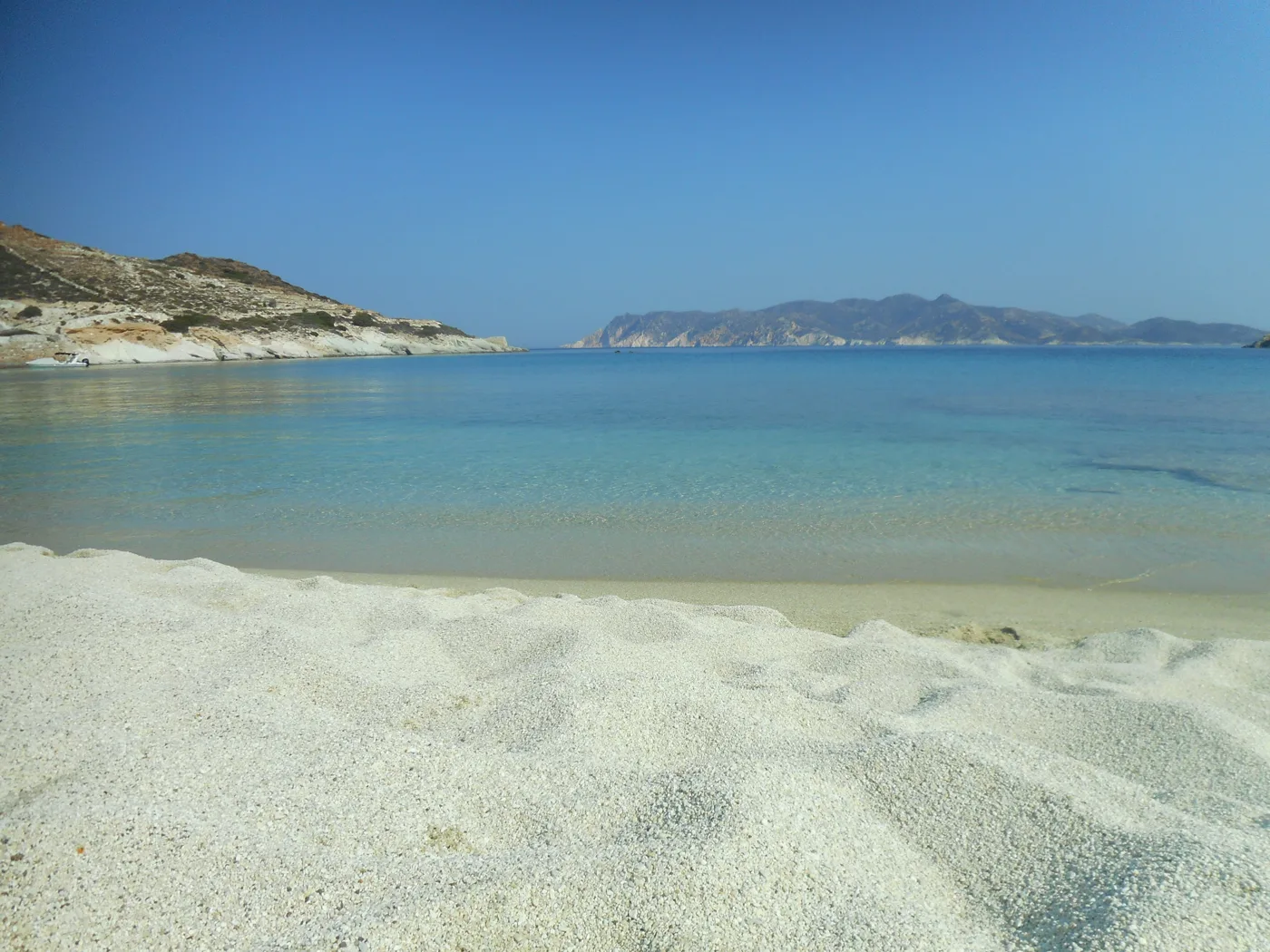
White sand, blue water.
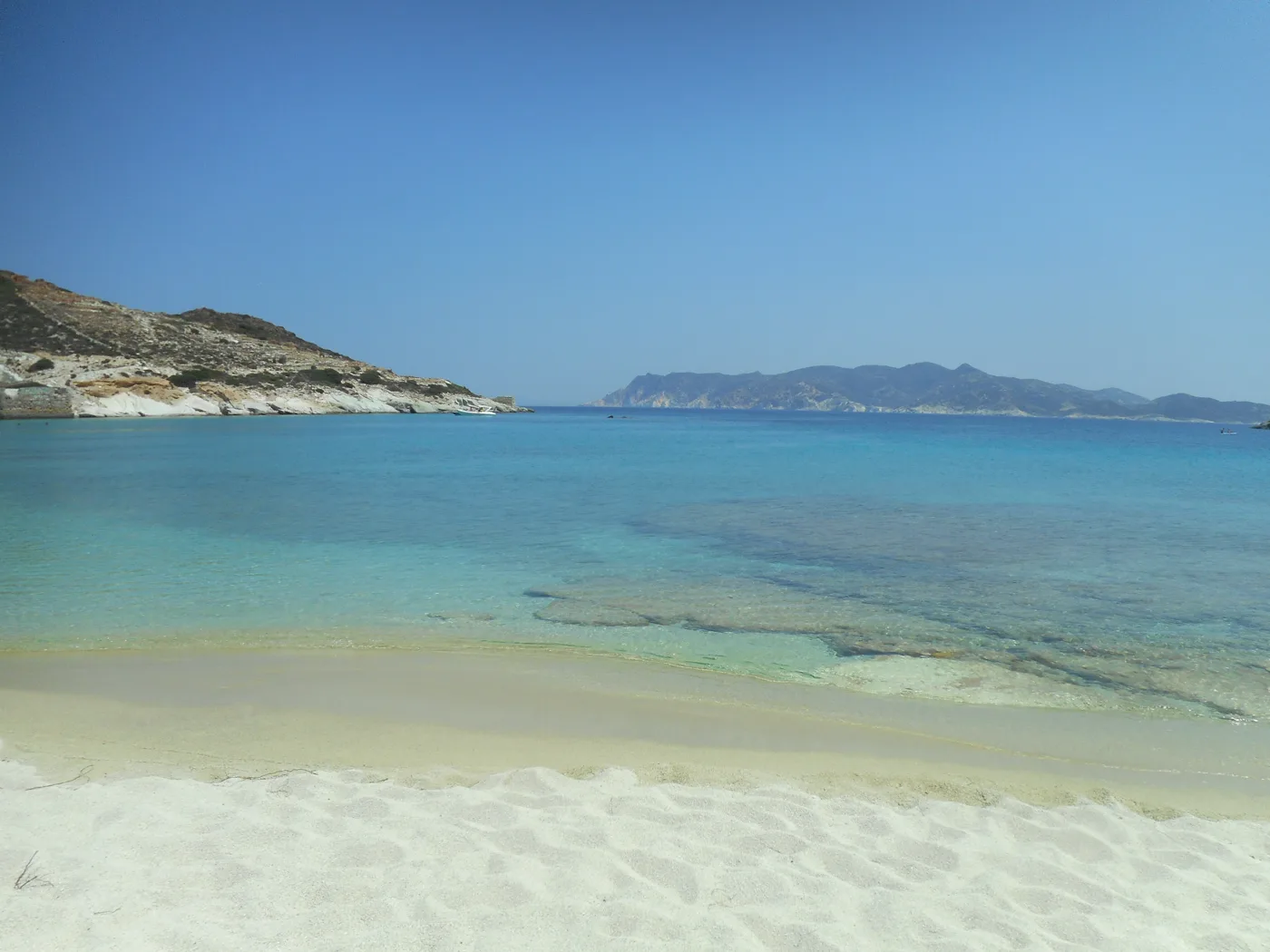
Polyaigos, just across.
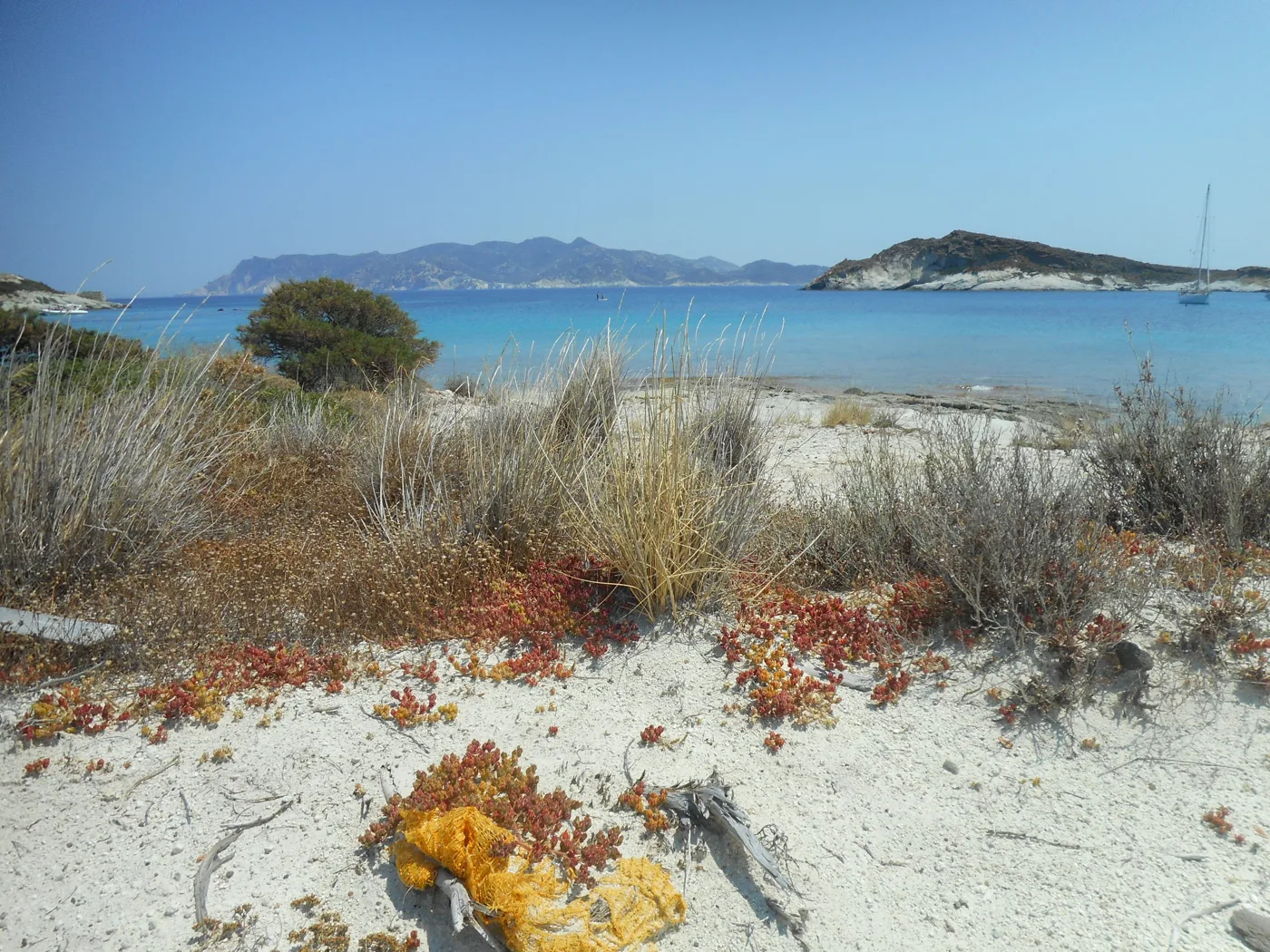
Behind the beach.
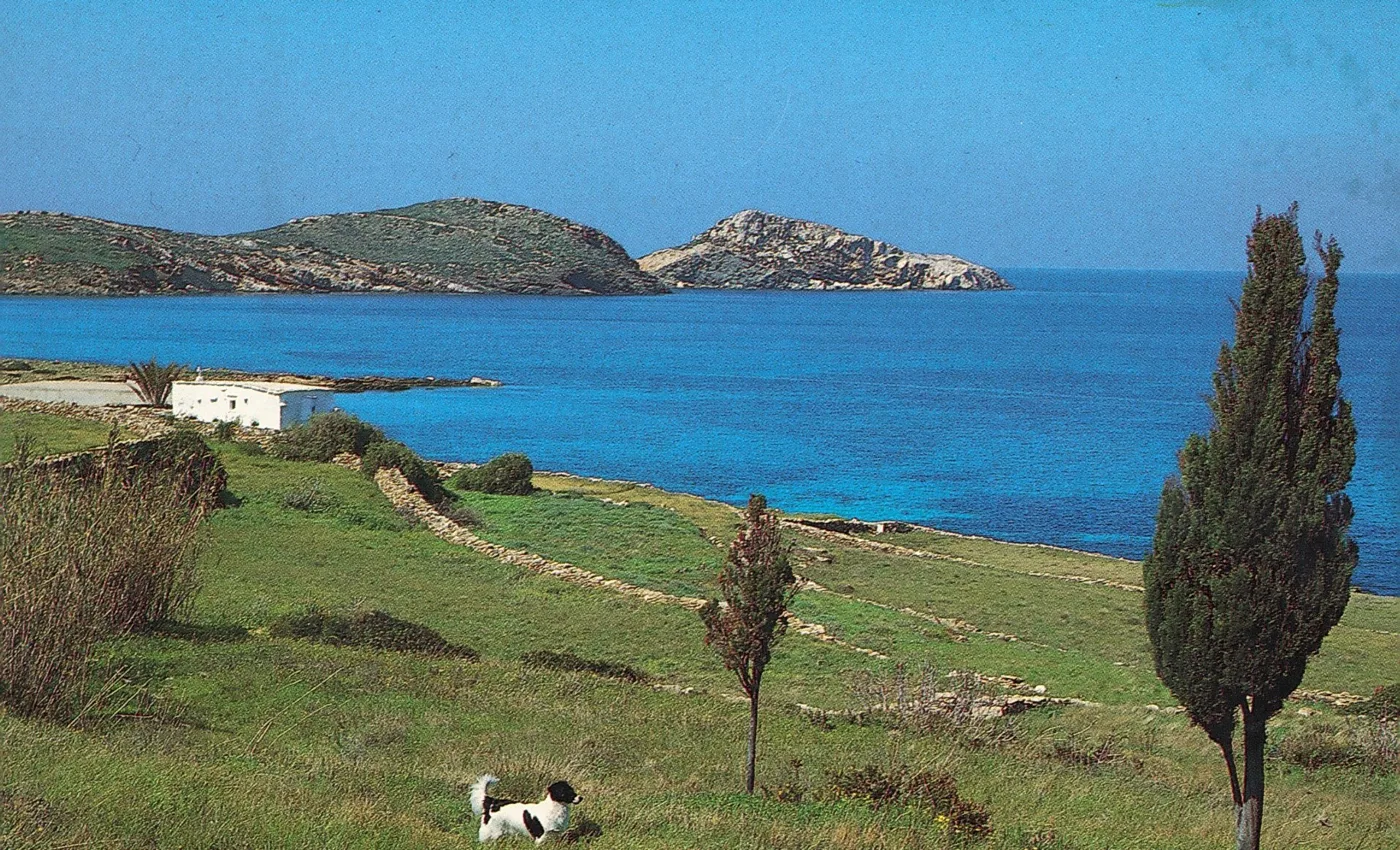
Meadow and sea.
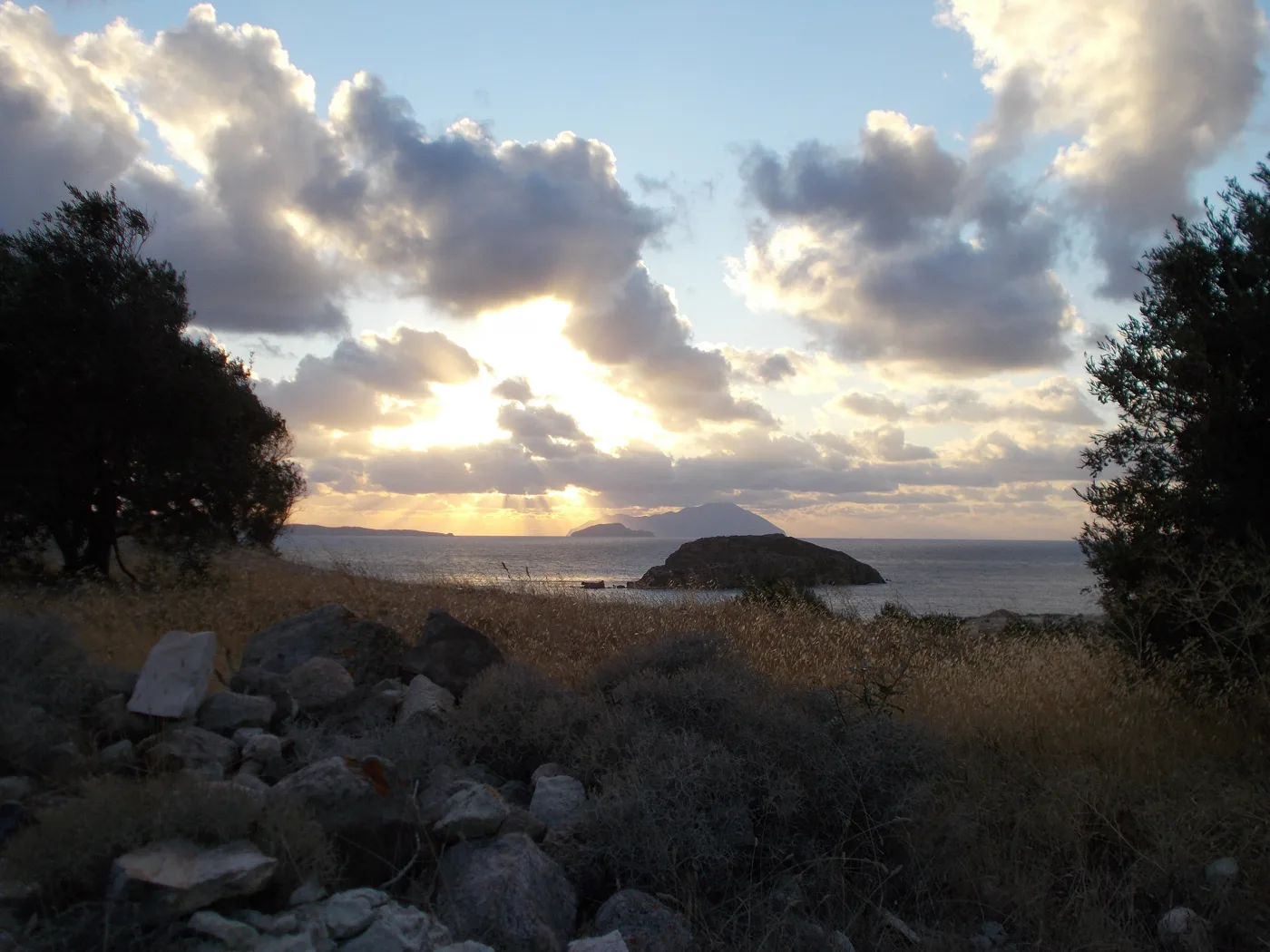
From the west coast.
Photos: Elena Alexiou (CC BY-SA 4.0), Nikos Kechagias (CC BY-SA 3.0) · Wikimedia Commons
- Prassa: white sand and turquoise water, with a taverna.
- Aliki: sandy beach near the port, with tavernas.
- Bonatsa: shallow, calm water, for children.
- Kalamitsi: small sandy beach with tamarisks.
- Ellinika: quiet, for the sunset.
🍽️ What to eat
The dish of Kimolos is ladenia, a thin bread-dough pie topped with tomato, onion and plenty of olive oil, like an old island pizza. Try fresh fish and fried baby squid in the tavernas of Psathi and Goupa, local cheese and capers. Most places are simple, family-run and reasonably priced.
📅 When to go
June and September are the best months, with a warm sea and few people. In July the meltemi often blows. In August the island fills up, mostly with Greeks, and the few places to stay book up early. In winter most places close.
⛴️ How to get there from Athens
| How | Duration | From | Notes |
|---|---|---|---|
| Ferry | About 5 to 7 hours | Piraeus | A few sailings a week, via Serifos, Sifnos or Milos. |
| Via Milos | Ferry or flight to Milos, plus a 20-minute boat | Piraeus or Athens Airport | The easiest way: many boats a day from Pollonia. |
From Ioulianou 50, Piraeus is about 40 minutes by metro, and the airport an hour on Line 3. On the island there is a small bus in summer, and for the farther spots you can rent a car or a quad bike in Psathi. If you are staying on Milos, Kimolos makes an easy day trip: see also our guide to Milos.
🗓️ Three days on Kimolos
Chorio and Goupa
In the morning, walk up from Psathi to Chorio and get lost in the alleys and the Kastro. Climb up to the windmills for the view of Milos. In the afternoon, head down to Goupa and Kara for a swim off the rocks, and have fish for dinner in Psathi.
Skiadi and Prassa
Early in the morning, walk to Skiadi before it gets hot, and take water with you. Then go by car or bus to Prassa for a swim in the white water. In the evening, ladenia and wine at a taverna in Chorio.
Polyaigos
A boat trip around Polyaigos, with stops to swim in caves and coves you can only reach from the sea. On the way back, watch the sunset at Ellinika.
Frequently asked questions
Where should I stay on Kimolos?
In Chorio, for the atmosphere and the alleys. In Psathi, to be next to the port and the tavernas. In Aliki or Goupa, to be right by the sea. Places to stay are few, so book early.
Do I need a car?
Not necessarily. Chorio, Goupa and the southern beaches are within walking distance, and in summer there is a bus to Prassa. A car or a quad bike for one day is enough for the rest.
Can I visit Kimolos on a day trip from Milos?
Yes, and many people do. Take the morning boat from Pollonia, walk up to Chorio, swim at Prassa or Goupa and return on the afternoon boat. It is worth staying a night, though, when the day visitors have gone.
How many days do I need?
Two to three days are enough for Chorio, the beaches, Skiadi and a boat trip. More if you simply want to rest.
— Kathy