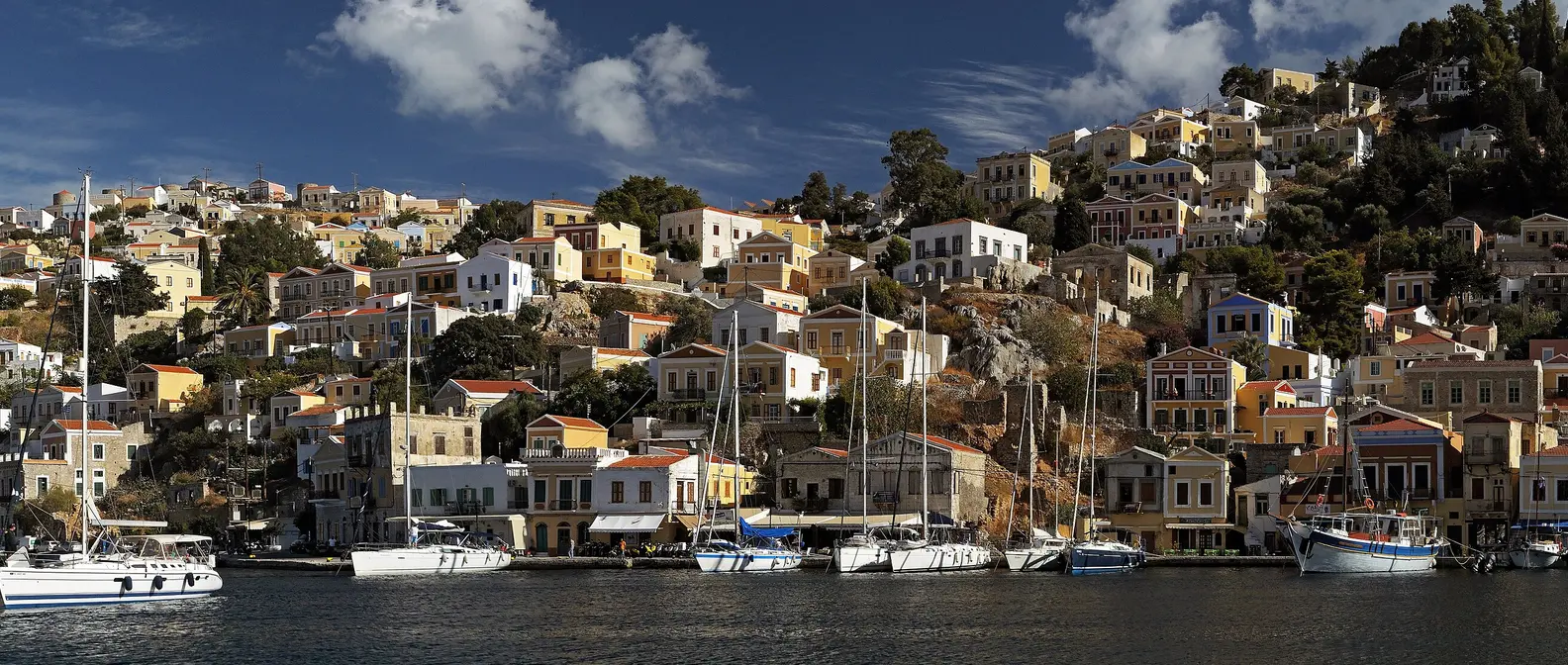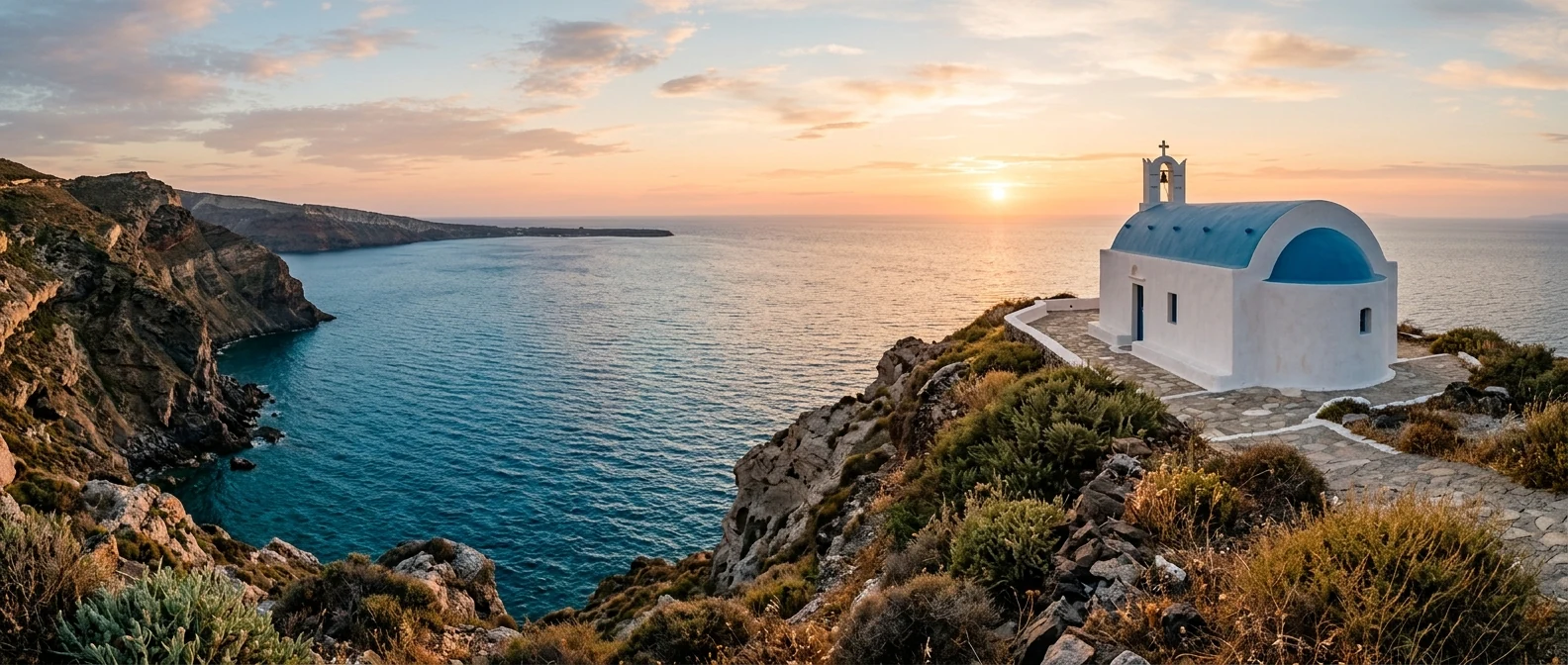
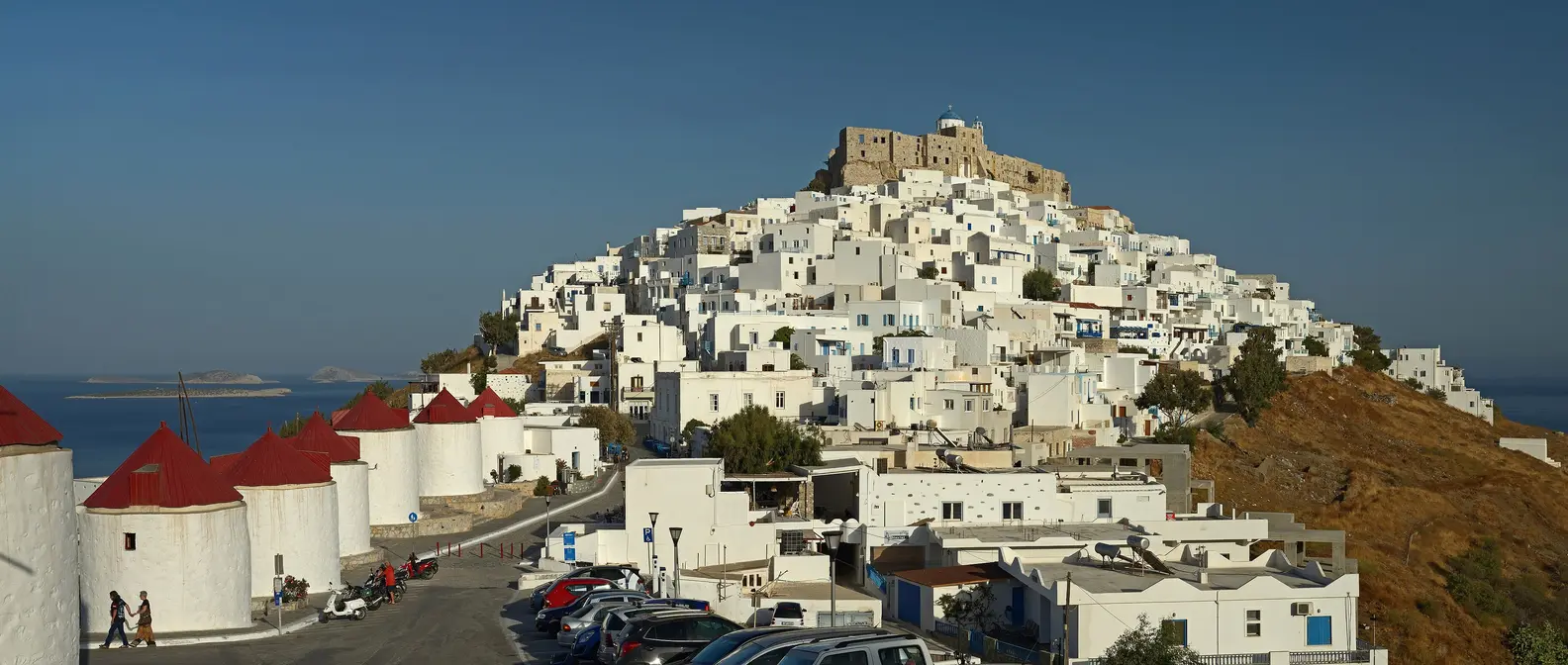
🪪 The island at a glance
📍 Where it is
Astypalaia belongs to the Dodecanese, but sits at their western edge, between Amorgos, Anafi and Kos. The quickest way is by plane: from Athens the flight takes about an hour. Ferries from Piraeus go through the Cyclades and take 9 to 10 hours to Pera Gialos.
📍 Where Astypalaia is
Astypalaia lies at the western edge of the Dodecanese, between Amorgos, Anafi and Kos. The island is shown in red, and Athens airport and the port of Piraeus in green.
🗺️ The map of the island
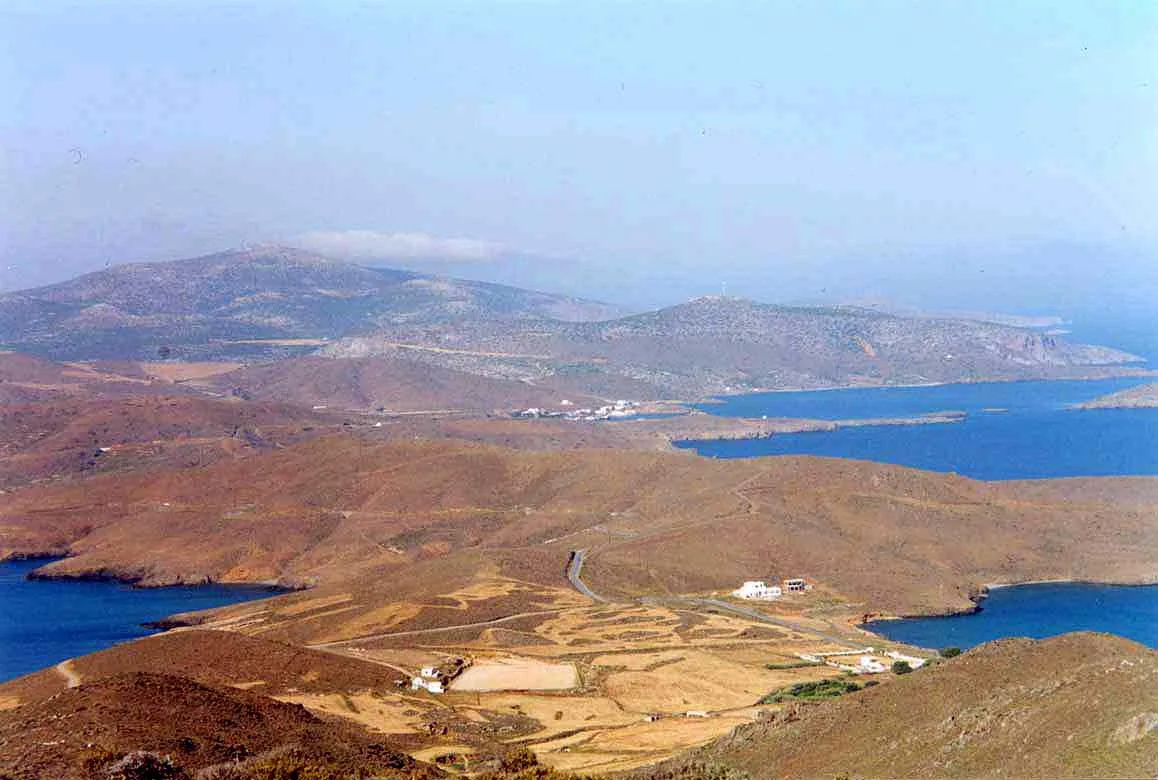
The island has two halves. In the western one, higher and larger, is Chora with the Castle, the port of Pera Gialos below and Livadi a little further south, along with most of the beaches. In the middle, Steno is only a few metres wide, with sea on both sides. In the eastern half are Maltezana, the airport and, at the northern tip, Vathy, a closed bay like a lake.
🗺️ Map of Astypalaia
Astypalaia has two large pieces, joined in the middle at Steno. Chora, Pera Gialos and Livadi are in the western piece, with the beaches of Agios Konstantinos, Vatses and Kaminakia further south. In the eastern piece are Maltezana, the airport and, in the north, Vathy. The Kounoupes are islets to the southeast. Tap each number to see what it is.
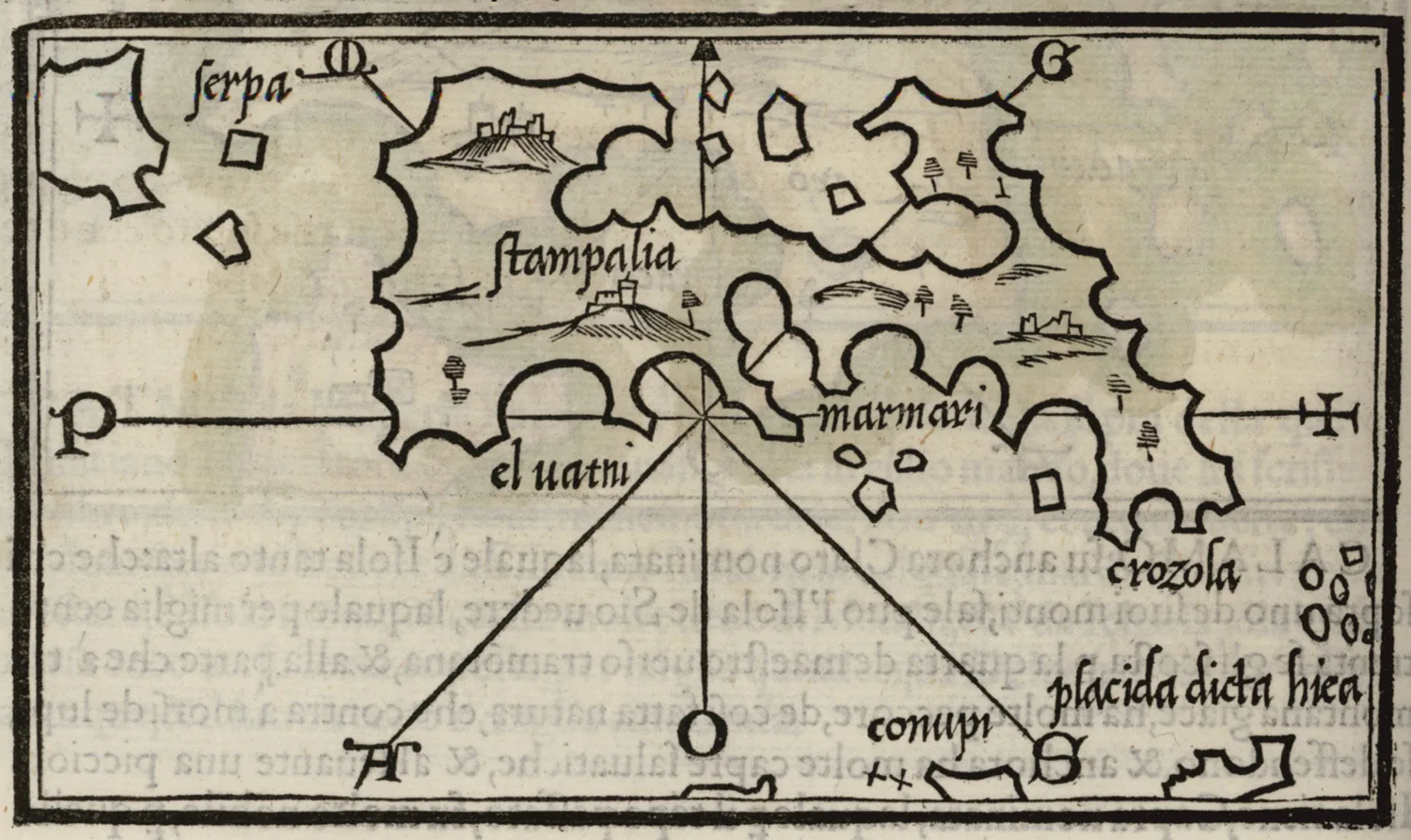
Map: Benedetto Bordone, 1547 (Public domain) · Wikimedia Commons
⚖️ Is it worth it? The pros and cons
Astypalaia is for people who want a beautiful, quiet island without crowds. Here is an honest picture.
📊 At a glance, from 1 to 5
👍 The pros
- One of the finest Choras in the Aegean, with a castle and windmills.
- Many beaches with clear water, and islets reached by boat.
- Peace and quiet, even in August.
- An airport with flights from Athens.
- Good fish and lobster spaghetti.
👎 The cons
- A very long ferry trip from Piraeus.
- Many beaches are reached by dirt road.
- Little greenery, bare hills and a lot of wind.
- Few ferries and flights in winter.
🏘️ Chora
Chora spreads over a hill above Pera Gialos, with white houses climbing up to the Castle. At its entrance stands a row of windmills, with a square and cafés next to them, the best spot for the sunset. The lanes have steps, wooden balconies in bright colours and bougainvillea. Chora is also home to the big church of Panagia Portaitissa, with a carved, gilded wooden iconostasis.
Below, Pera Gialos is the port, with tavernas, cafés and a small beach for a swim. Next to the harbour there is a small Archaeological Museum, with finds from all over the island.
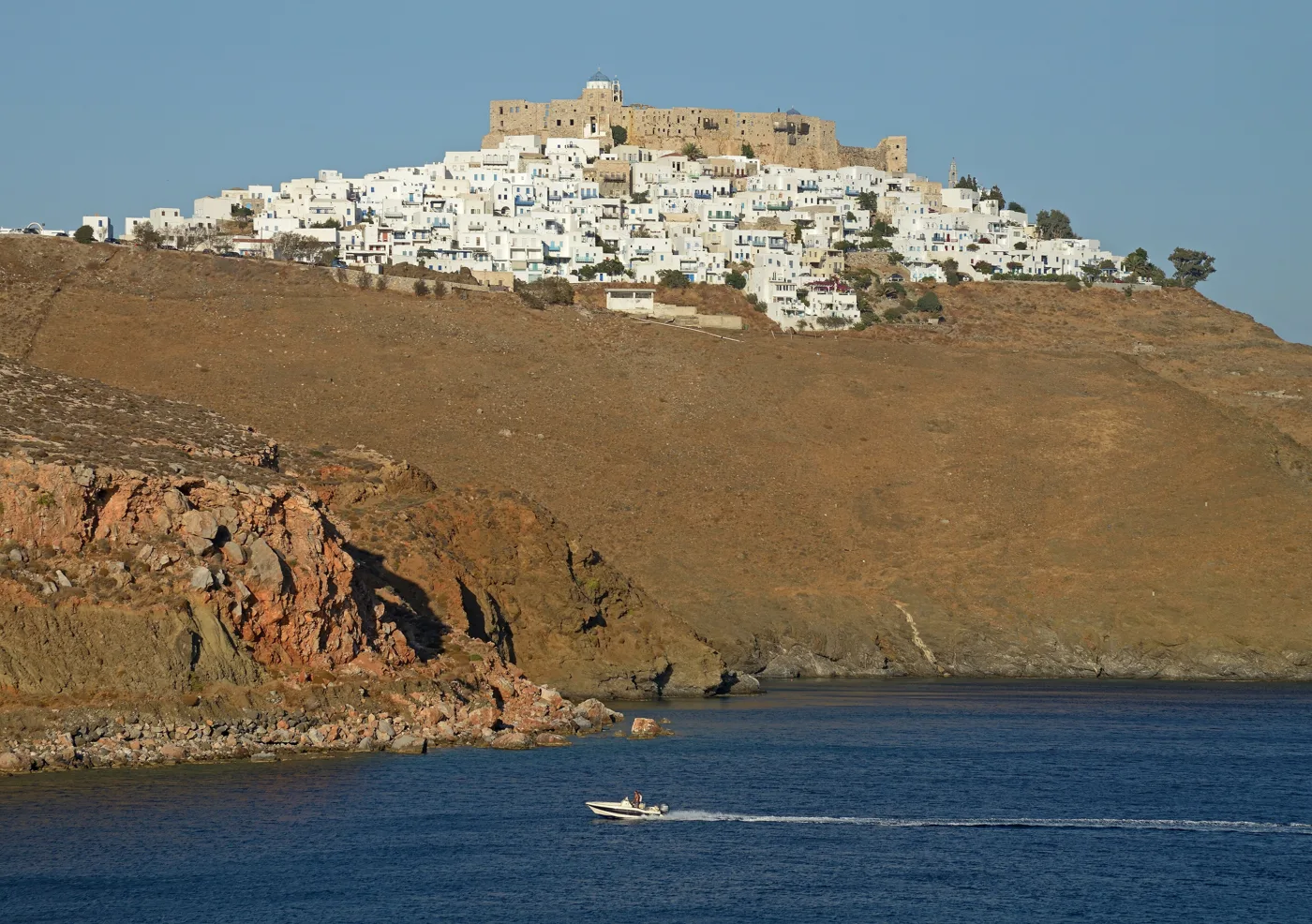
White, up on the hill.
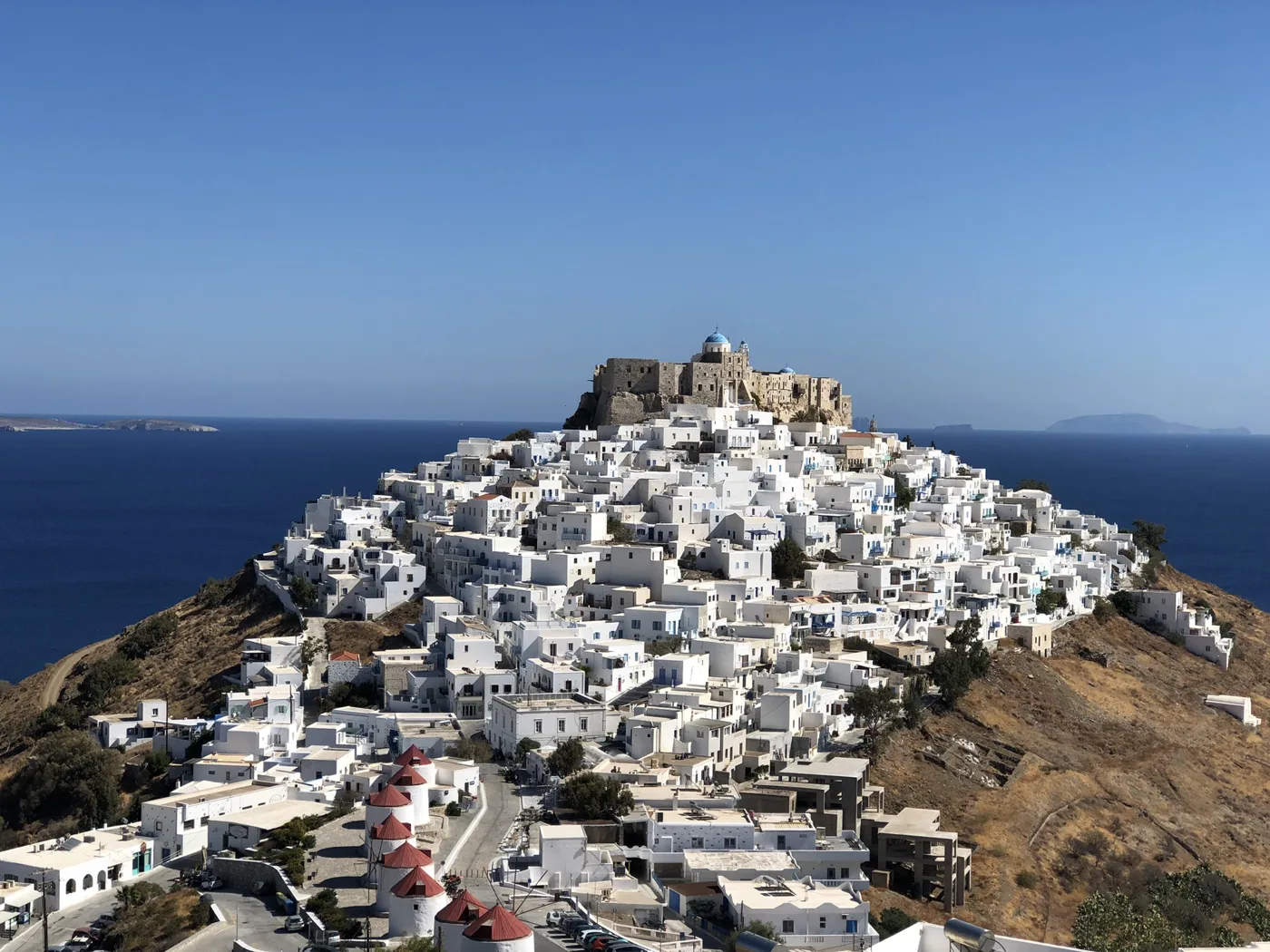
From the top down to the harbour.
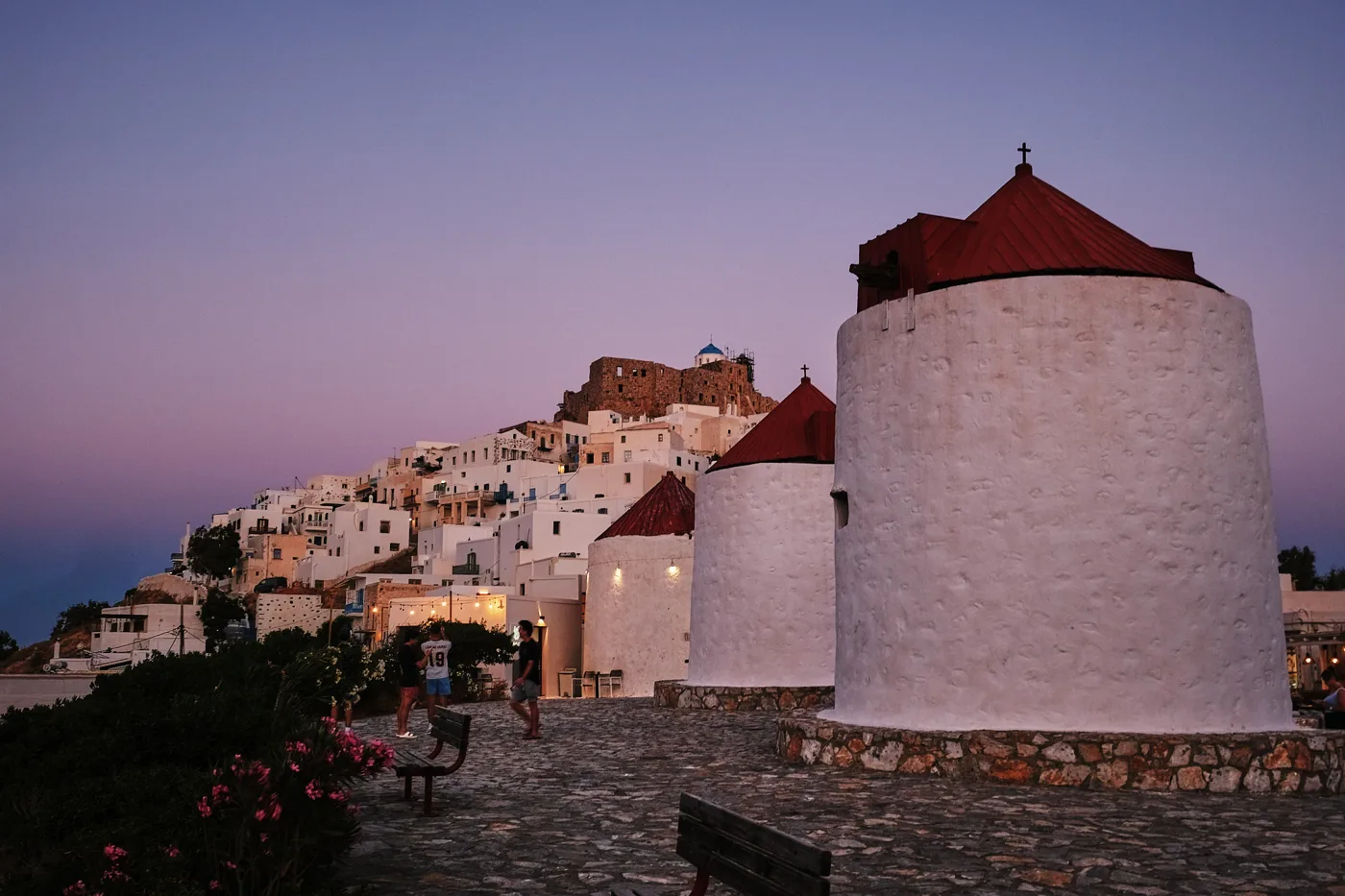
At the entrance to Chora.
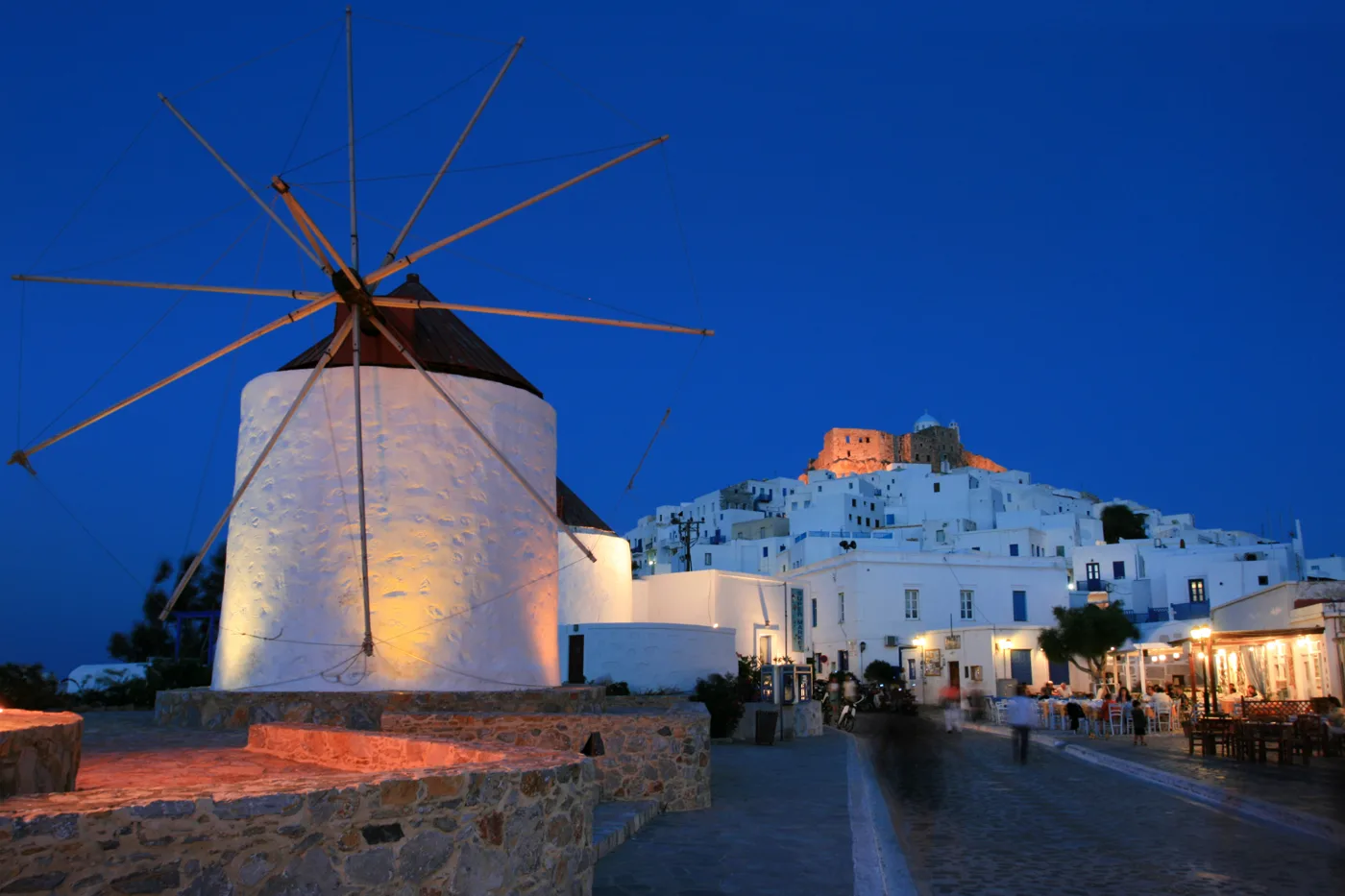
The mill and the square.
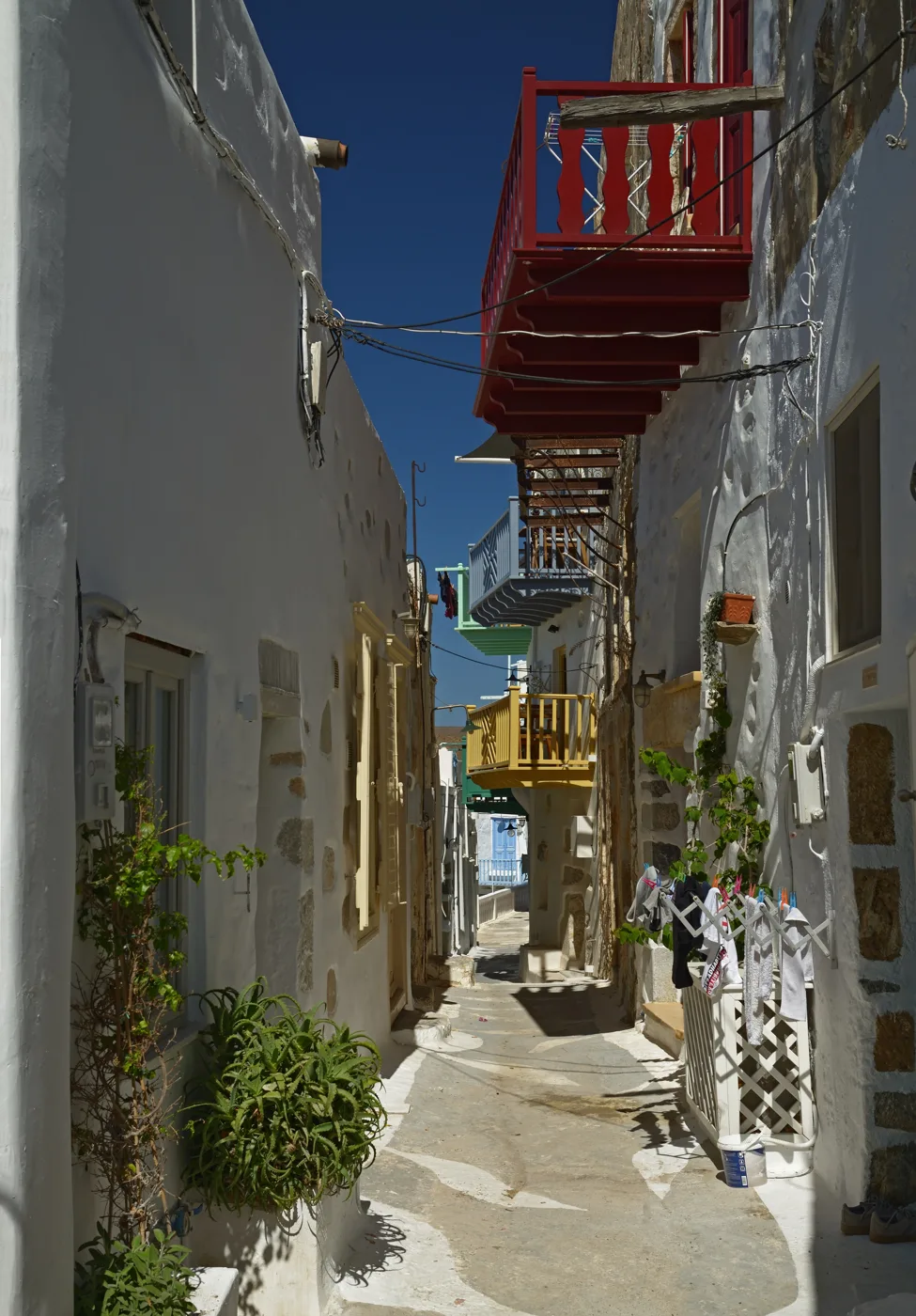
Wooden balconies.
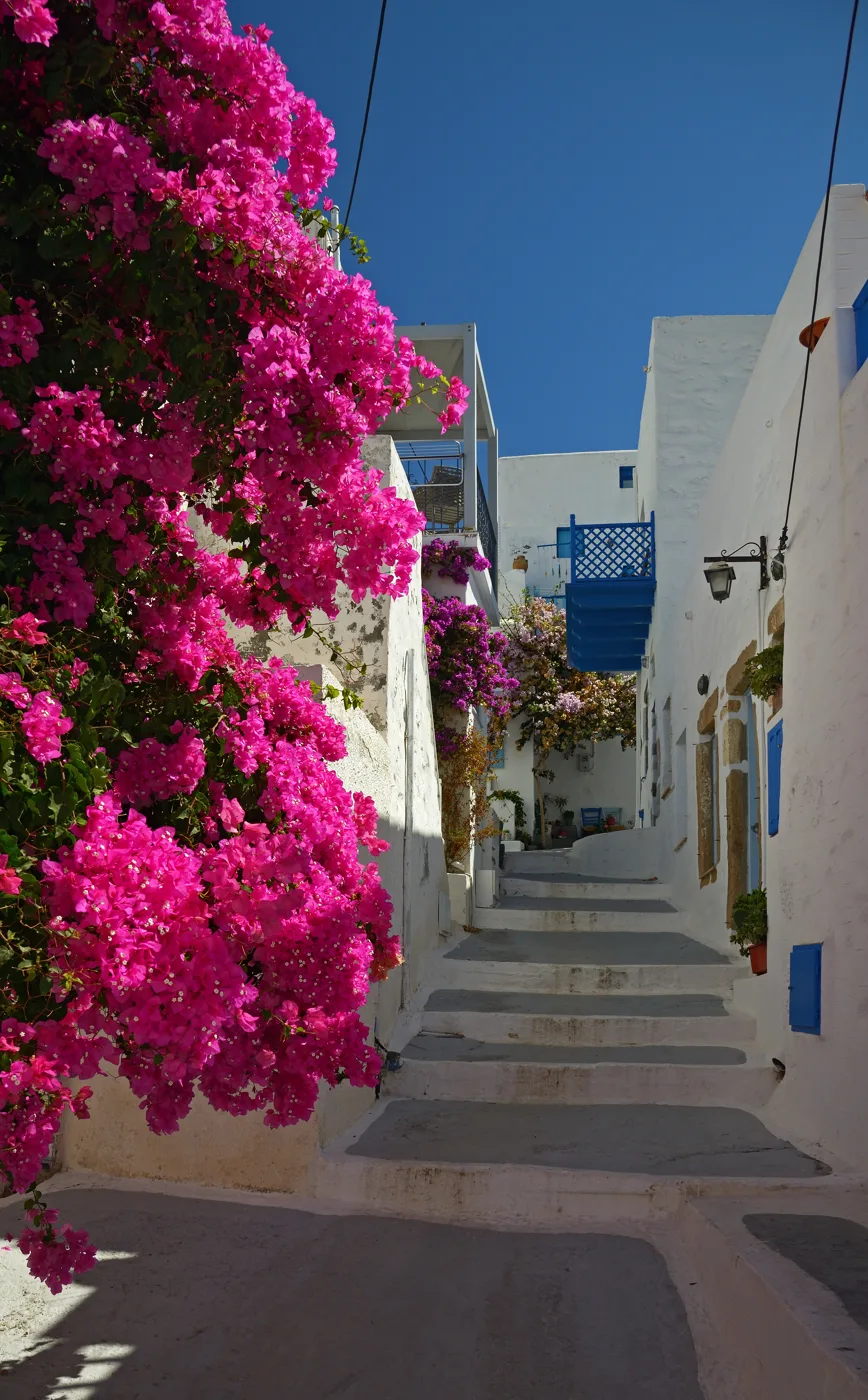
Bougainvillea and shade.
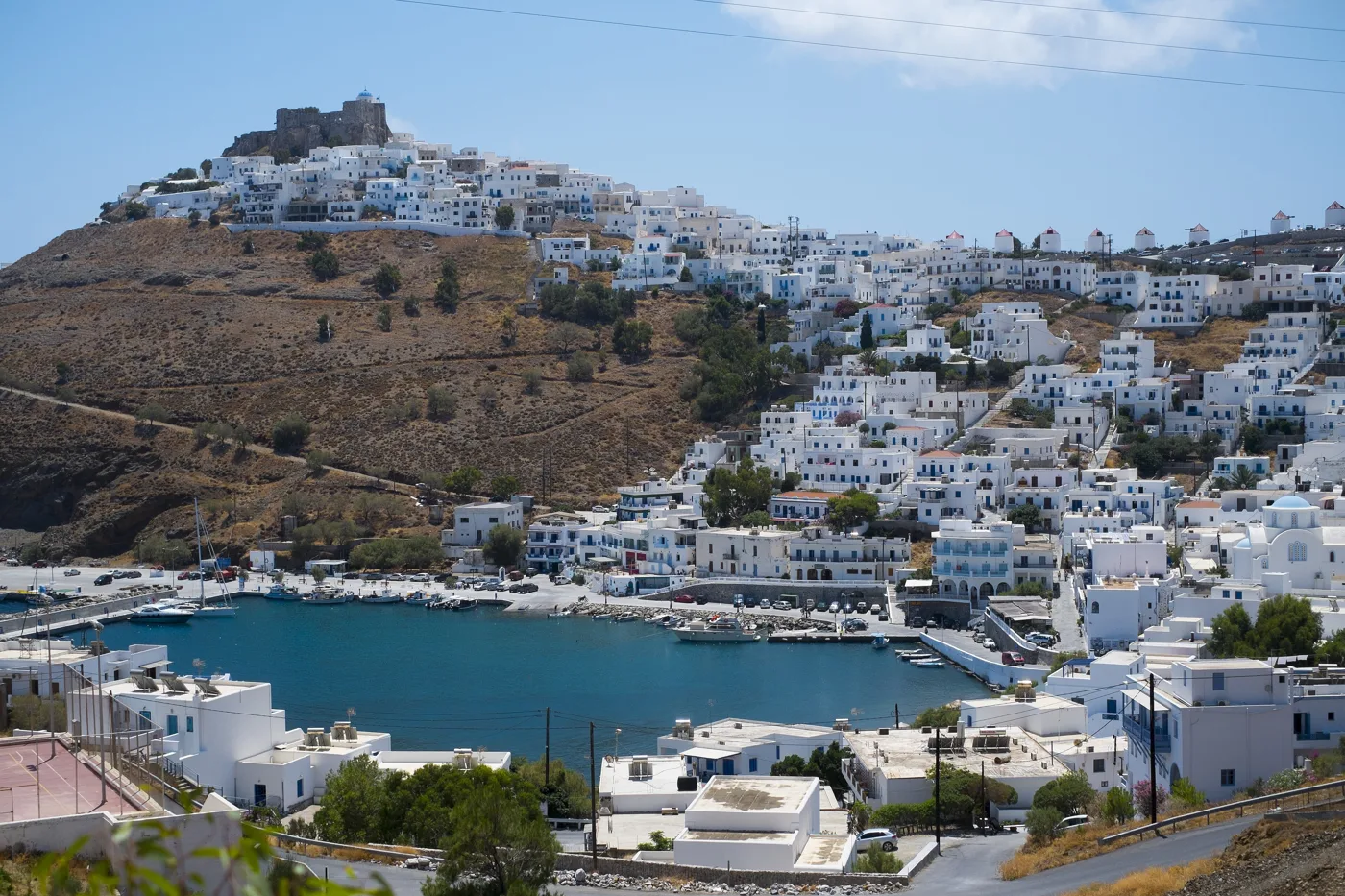
The harbour below Chora.
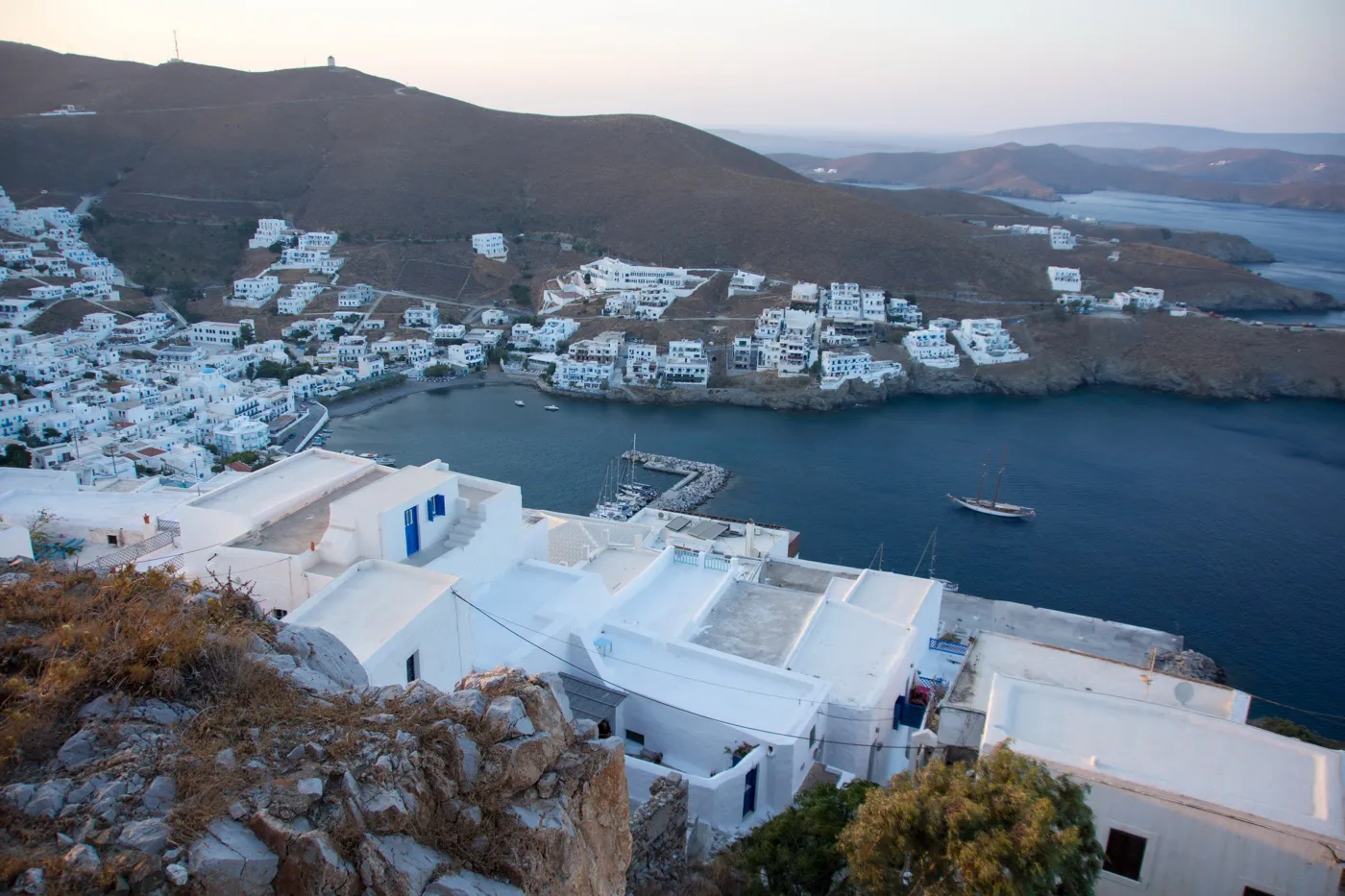
The view from the Castle.
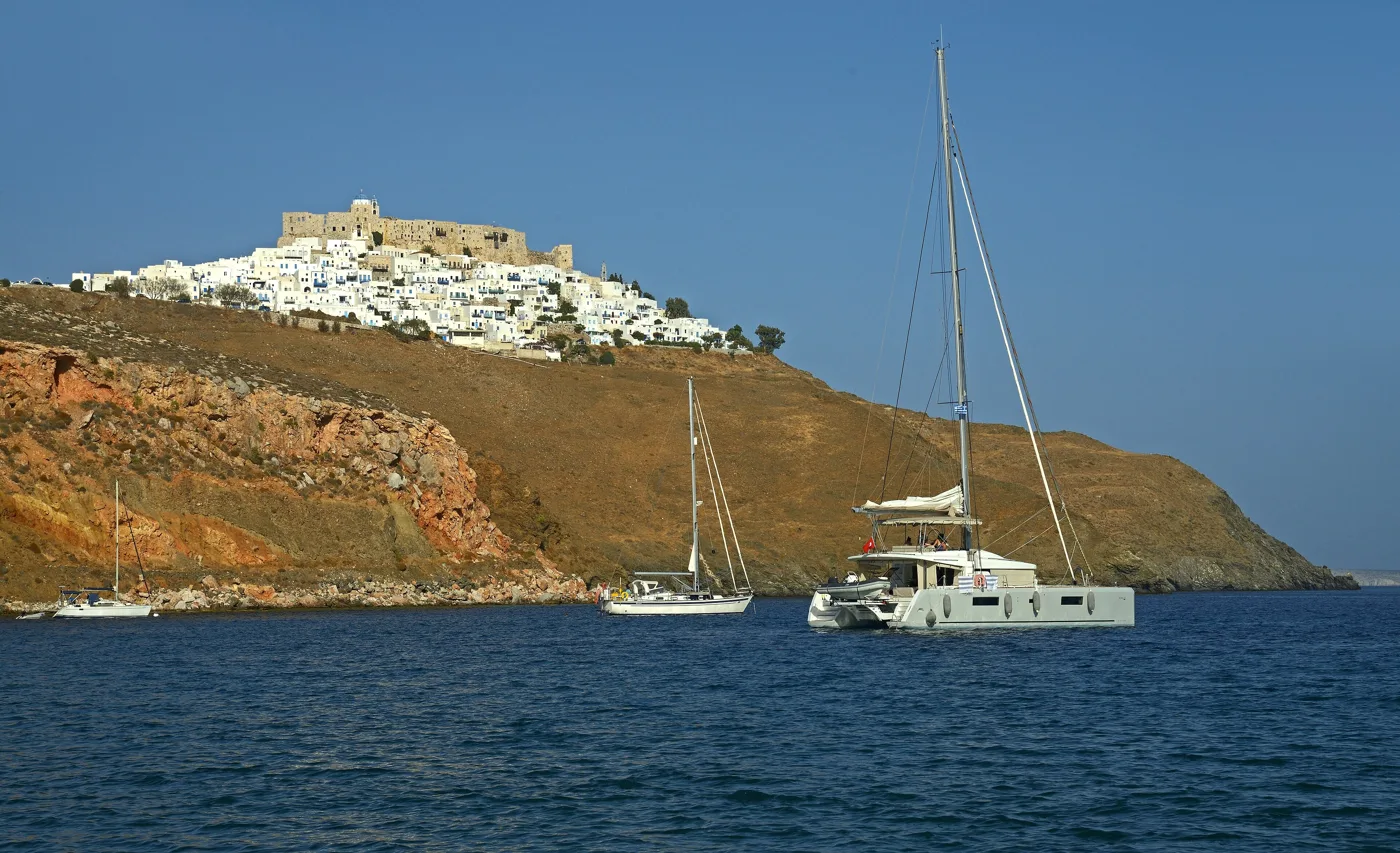
Chora from the water.
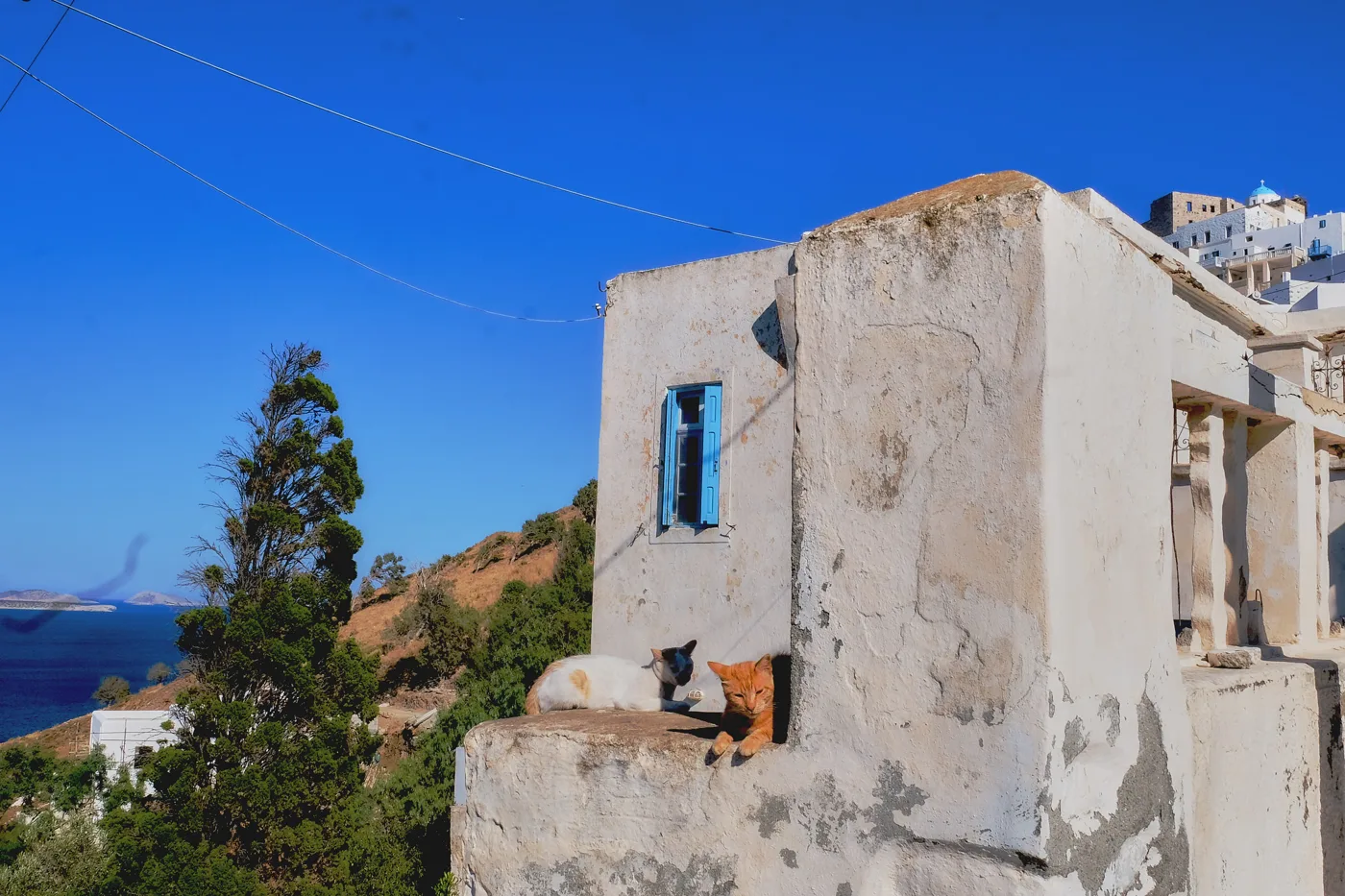
The permanent residents.
Photos: V. Vlasenko (CC BY-SA 3.0), Luca Aless (CC0), Magnus.chronicles (CC BY 4.0), Nikos Laskaridis (CC BY-SA 4.0), Asiomou (CC BY-SA 4.0), Andreas Routsias (CC BY-SA 3.0) · Wikimedia Commons
🏰 The Castle
The Castle was built by the Venetian Quirini family, who ruled the island for centuries, until the 16th century. Its outer walls are the walls of the houses themselves, built tightly against each other. You enter through an arch under a tall building with coats of arms. Inside you will see the ruins of the houses and two churches, Panagia tou Kastrou and Agios Georgios.
People lived inside the Castle until the early 20th century. From the walls the view takes in all of Chora, Pera Gialos, Livadi and the islets on the horizon.
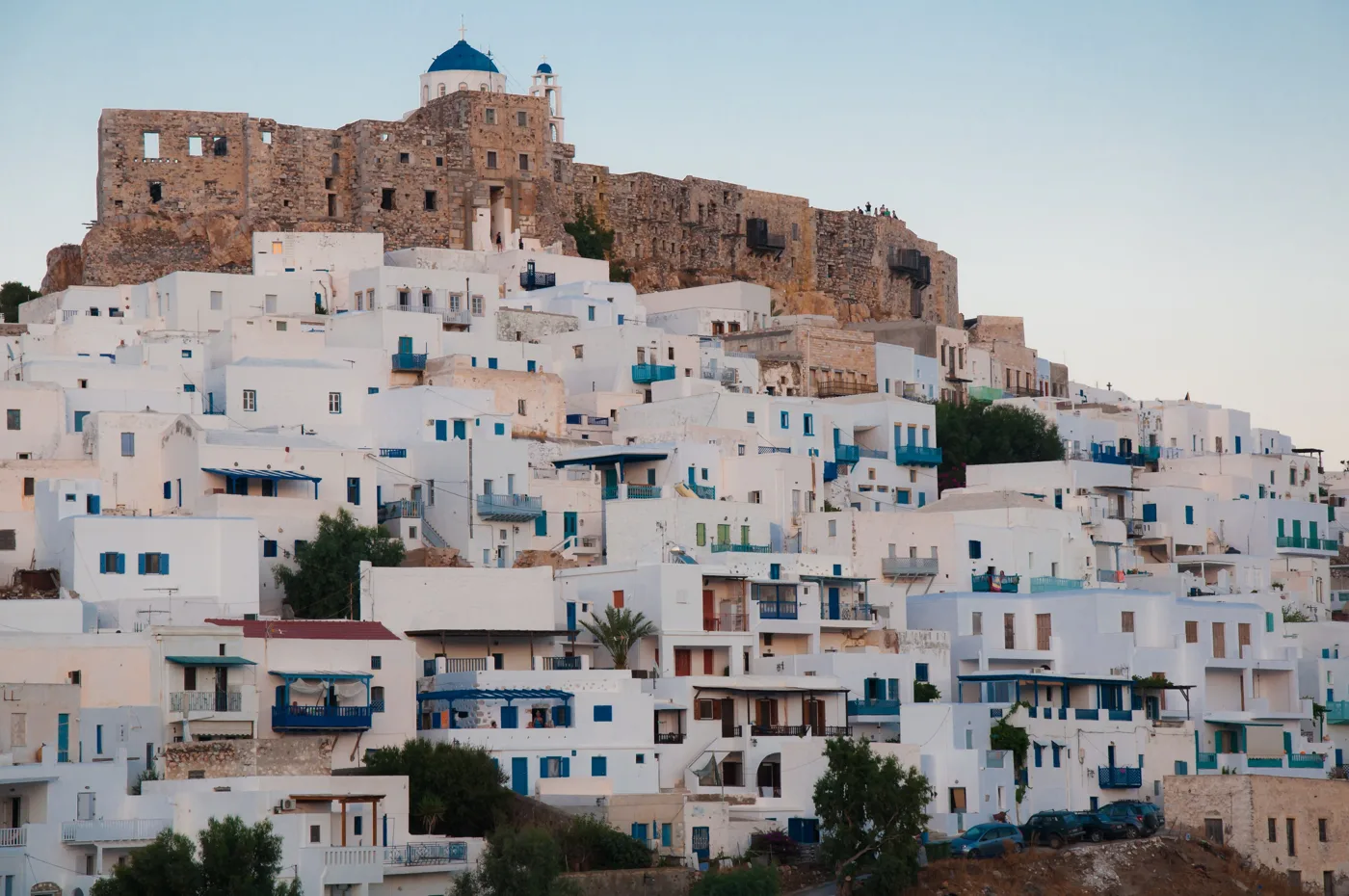
Above all of Chora.
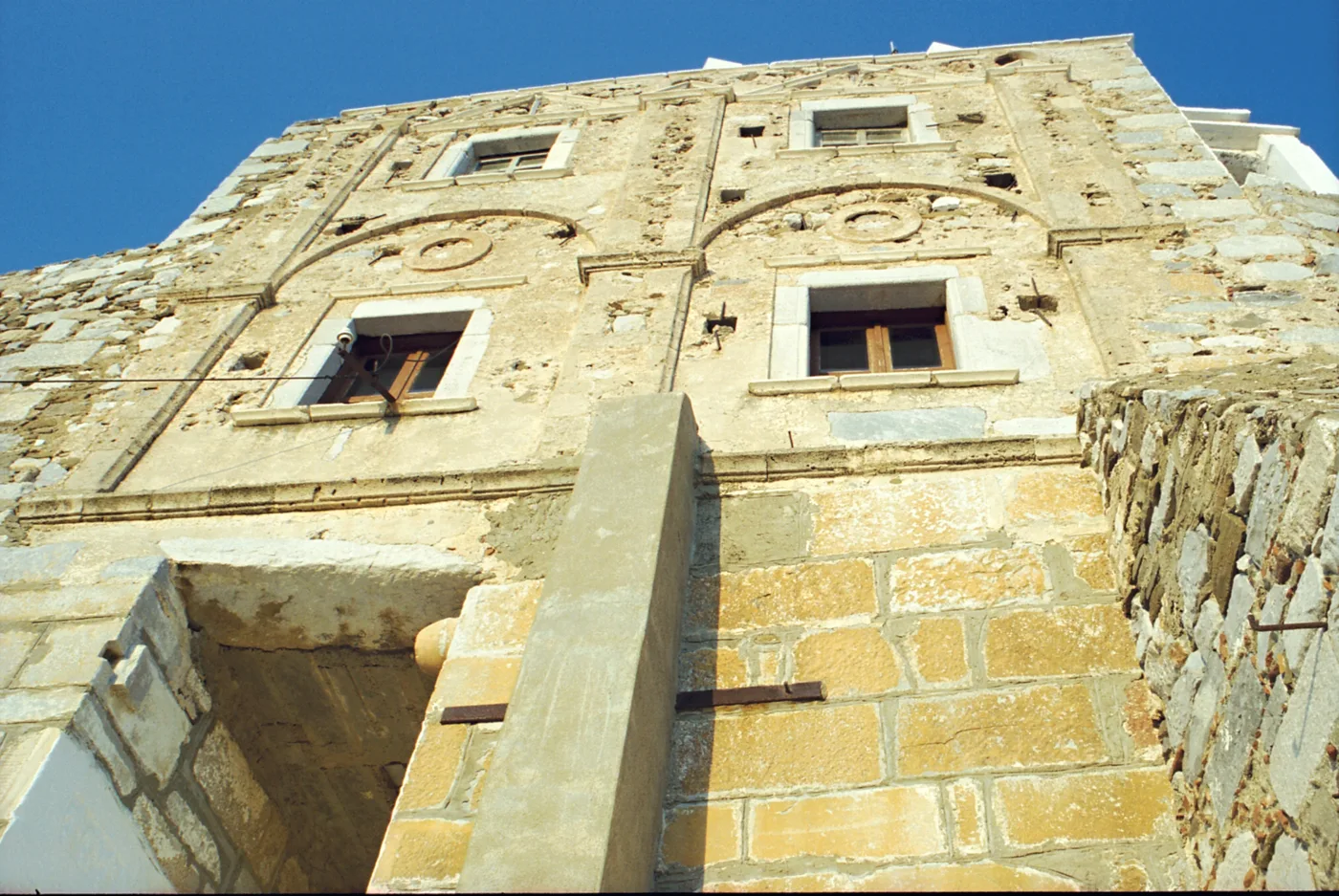
The wall with the windows.
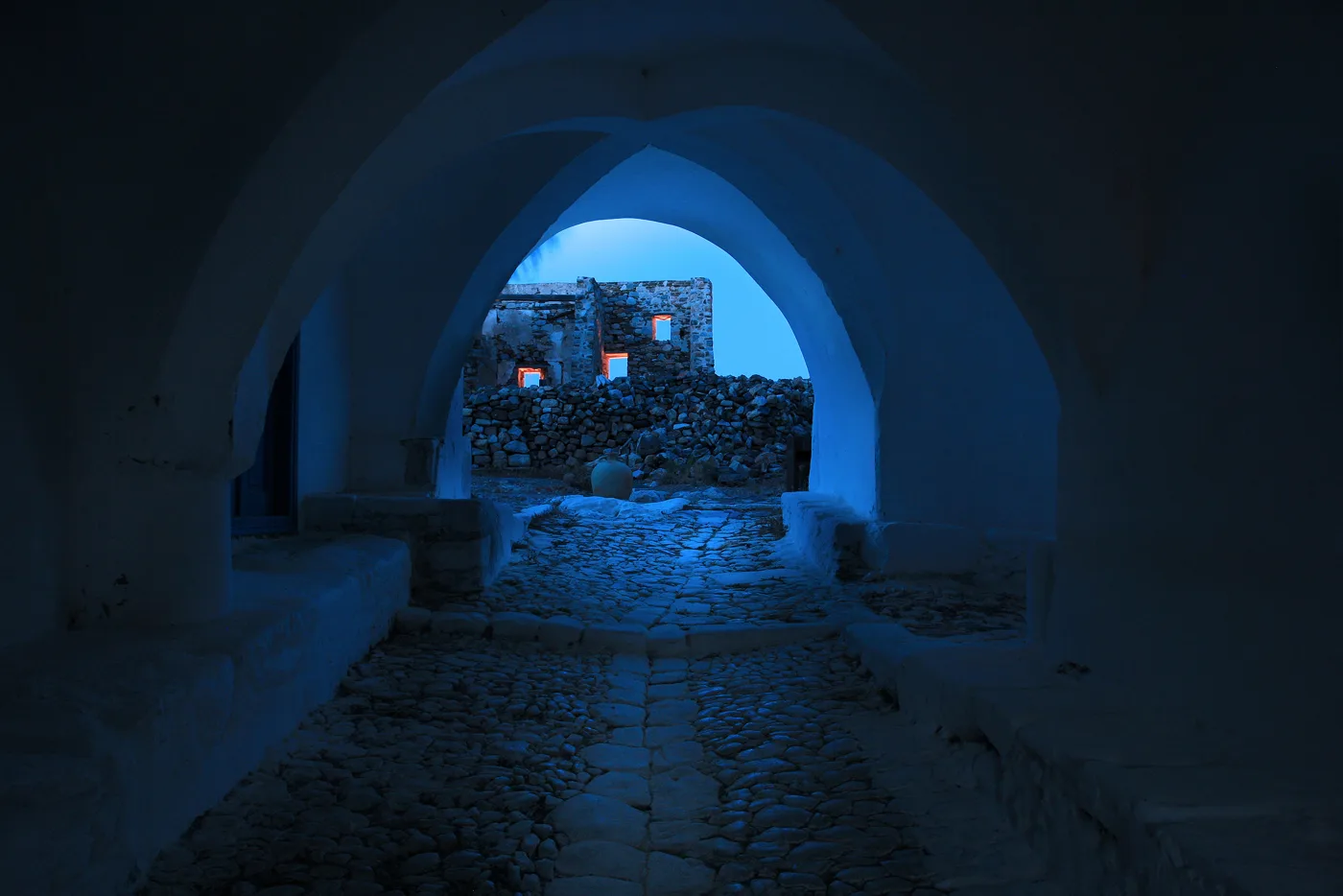
The arch at the entrance.
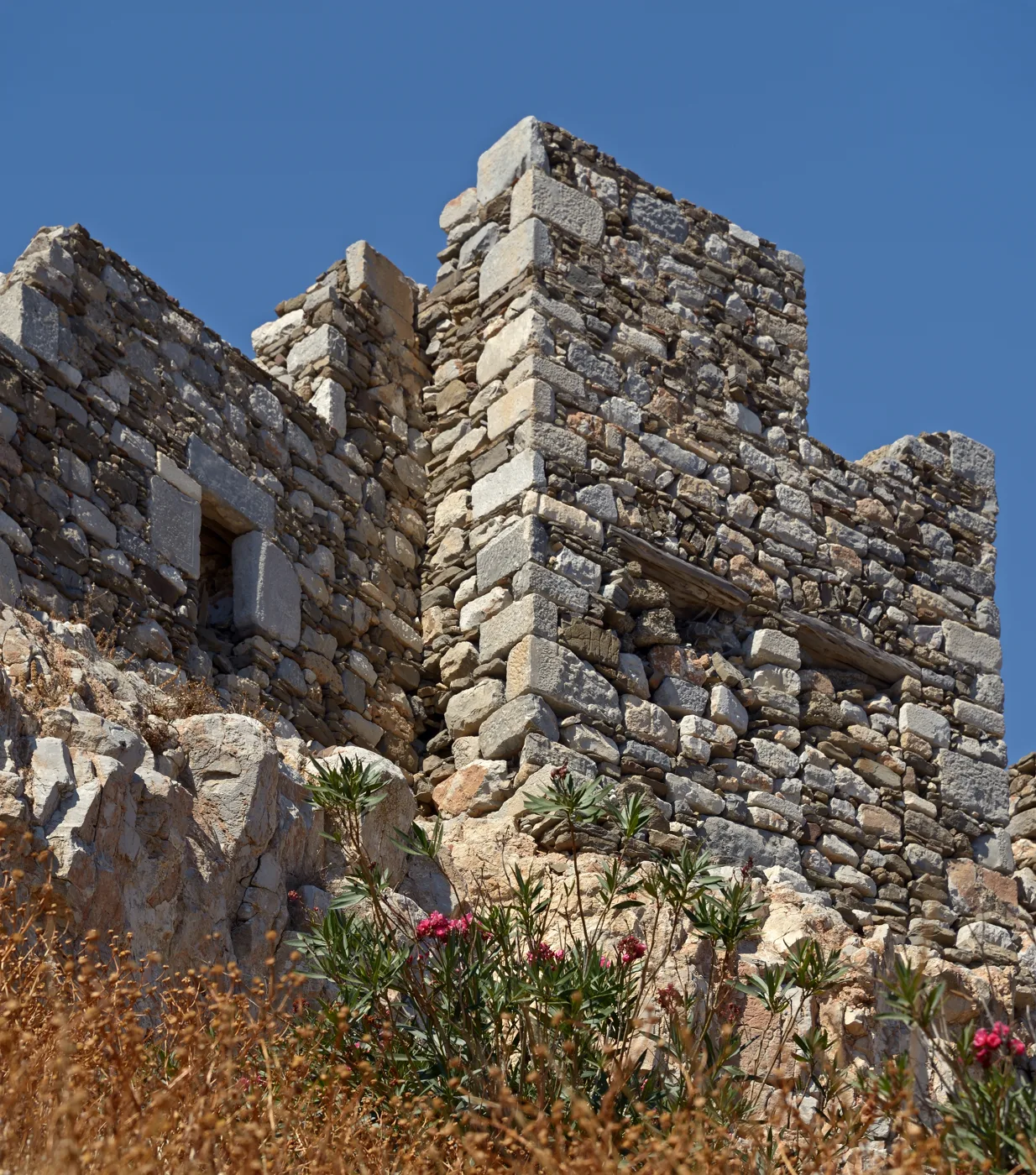
Stone on top of the rock.
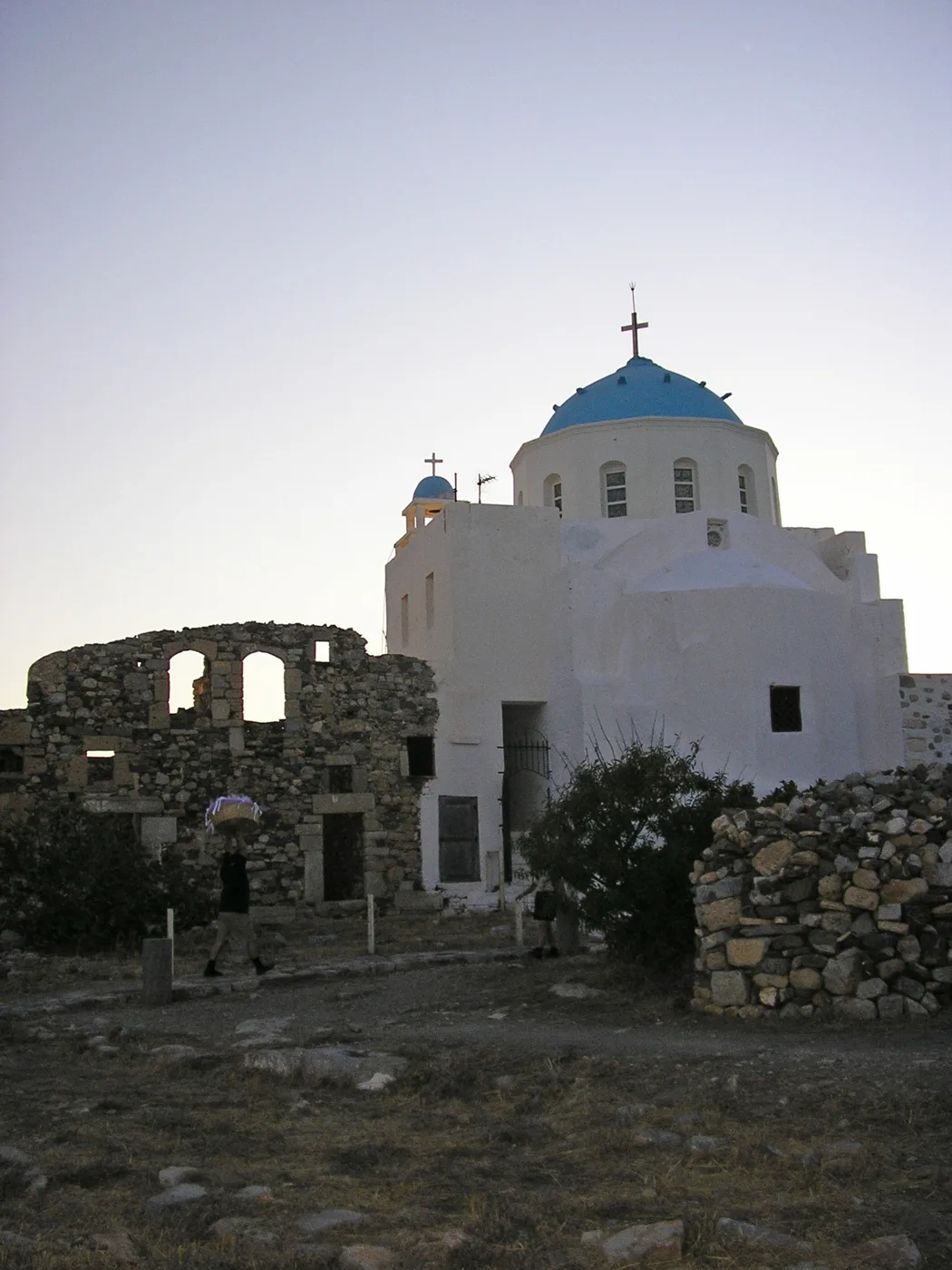
The church of the Castle.
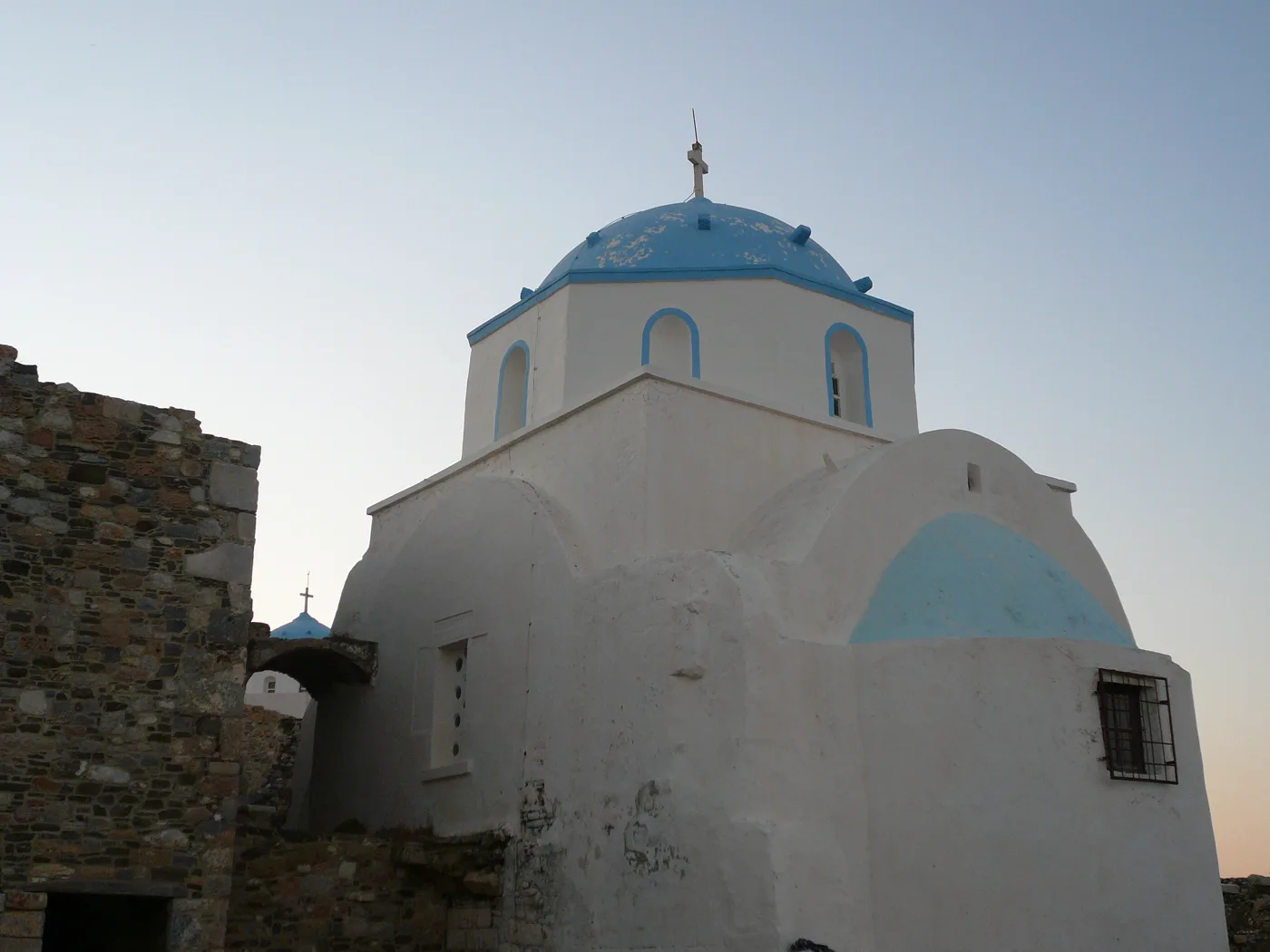
The second church.
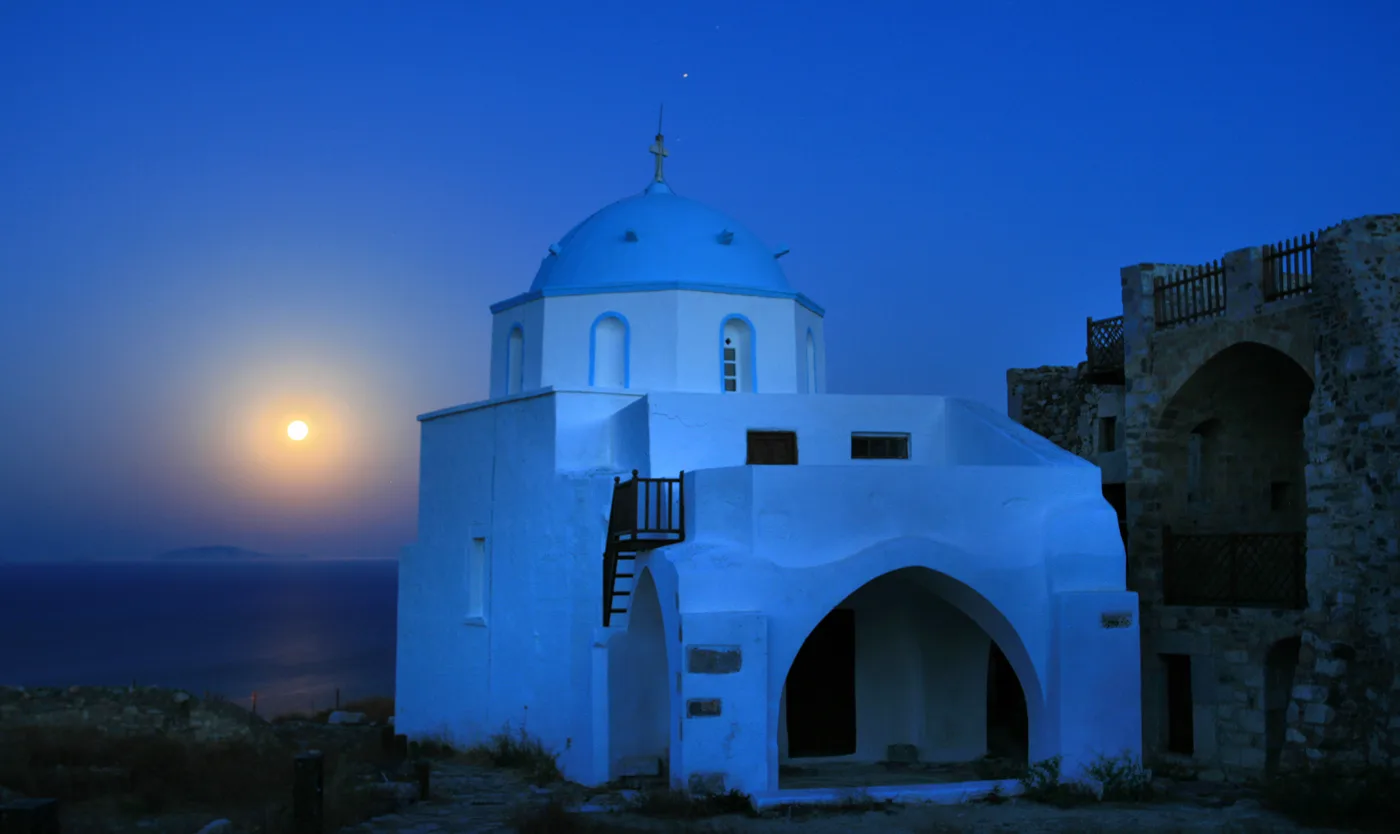
The moon over the sea.
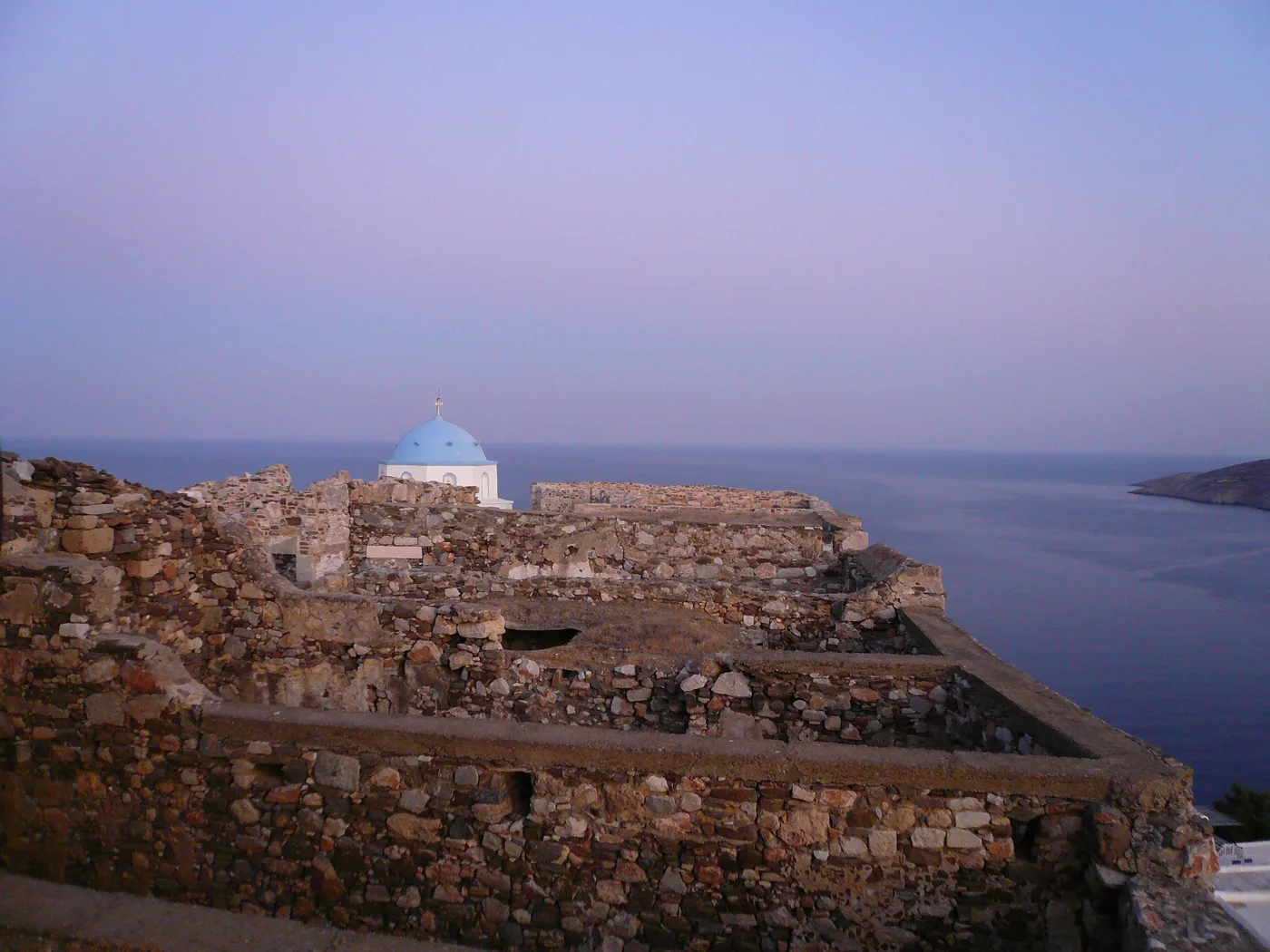
Houses inside the walls.
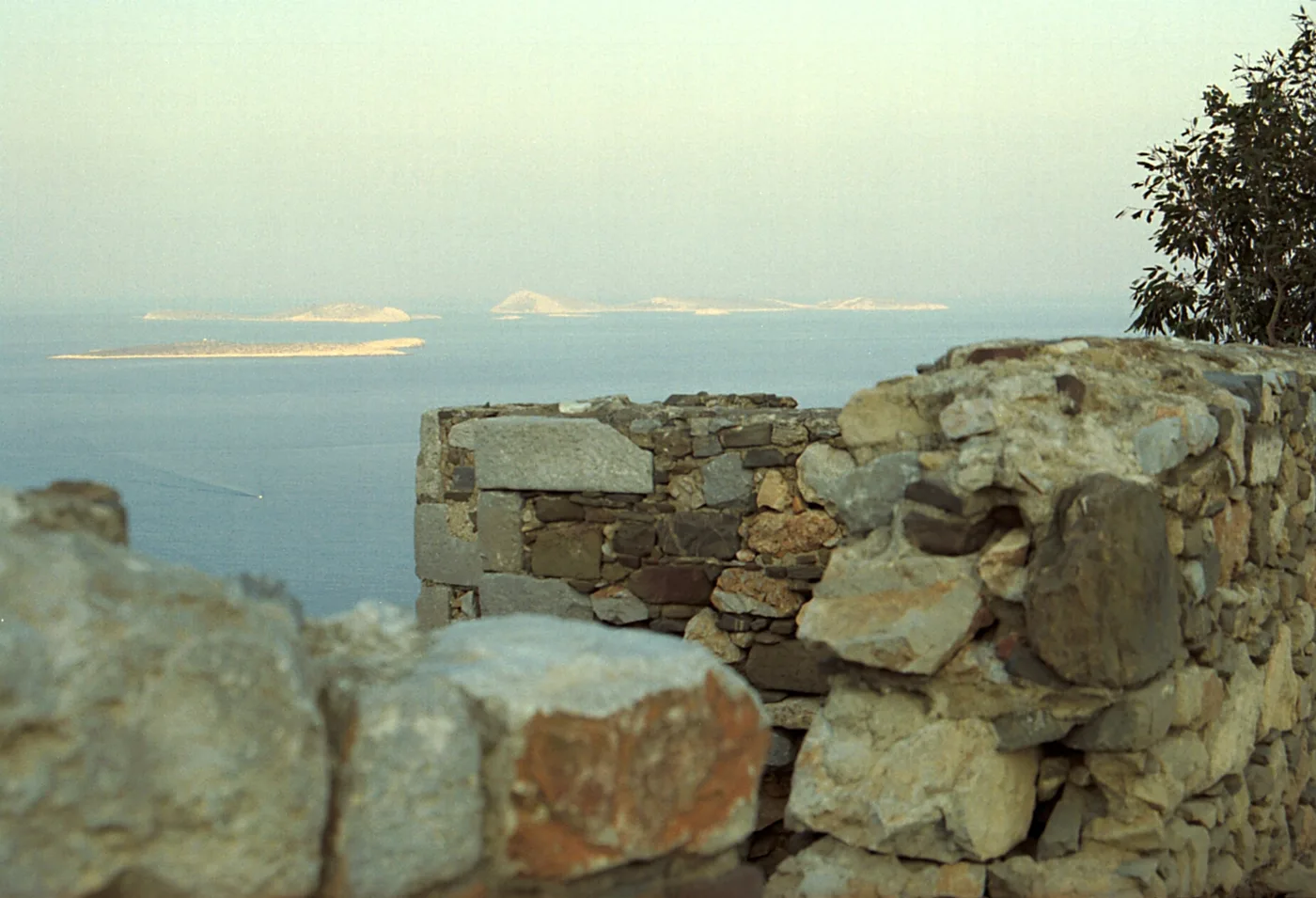
Koutsomyti and the Kounoupes.
Photos: GPierrakos (CC BY-SA 4.0), Zde (CC BY-SA 4.0), Nikos Laskaridis (CC BY-SA 4.0), V. Vlasenko (CC BY-SA 3.0), Meltedrainbow (CC BY-SA 4.0), Lunar sea n (CC BY-SA 4.0) · Wikimedia Commons
Go up to the Castle in the late afternoon, when the heat drops, and stay for the sunset. Wear shoes with good grip, because the steps are stone and slippery.
🏖️ The beaches
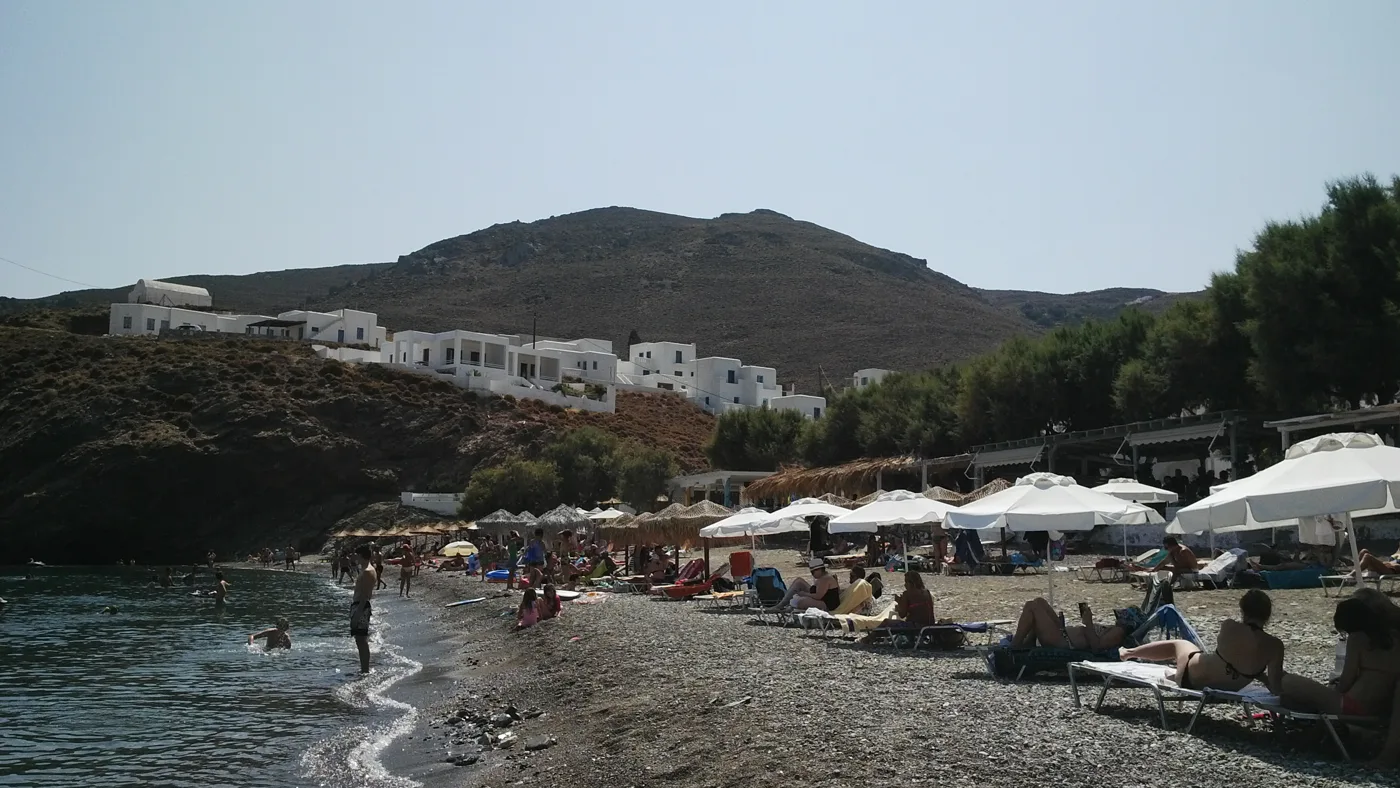
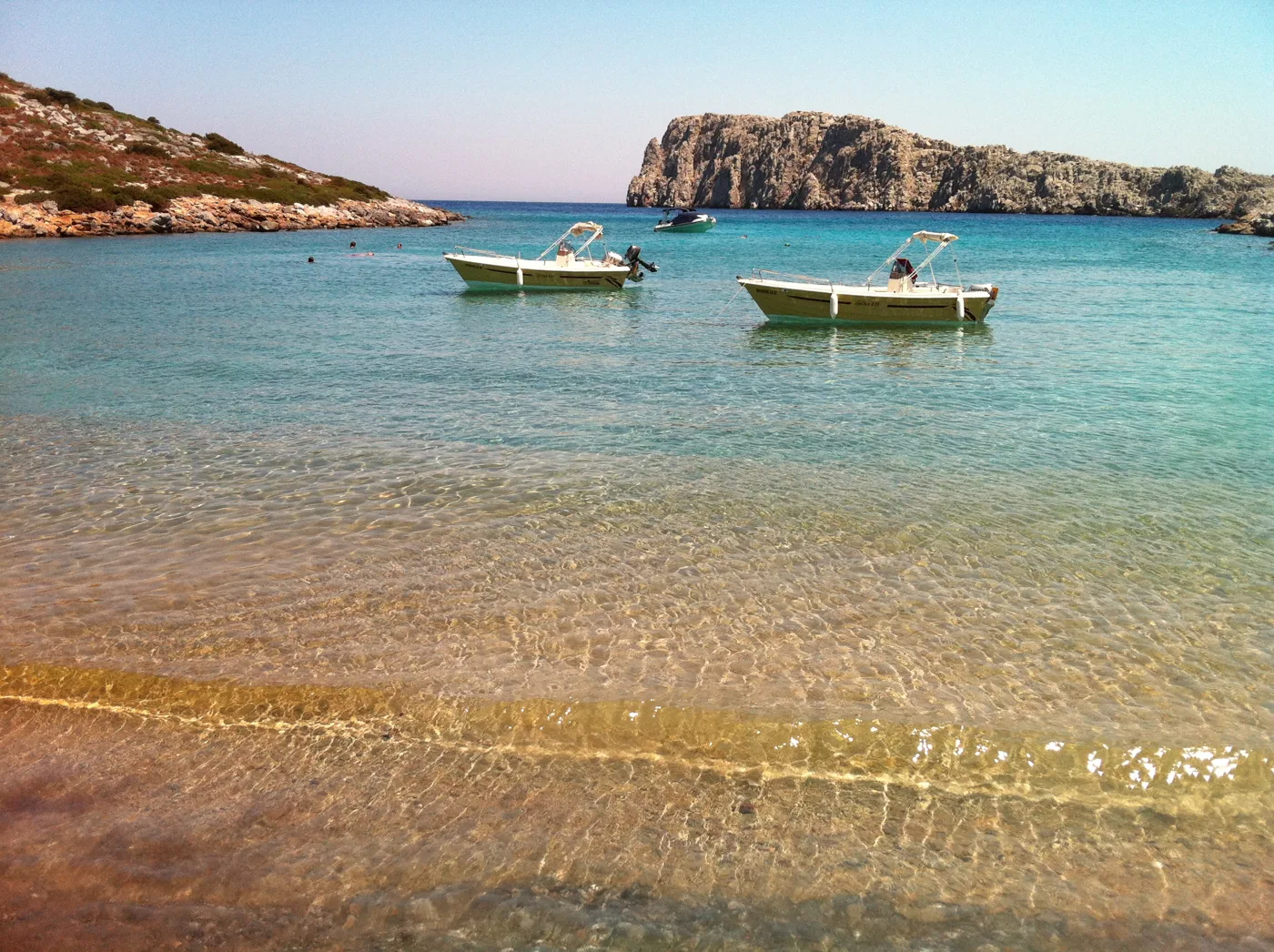
Livadi is the beach closest to Chora, in a green valley with orchards, with pebbles, trees and tavernas. Further south, Agios Konstantinos is a quiet sandy beach with trees. A dirt road takes you to Vatses, with sand and clear water, and to Kaminakia, with pebbles and a taverna. At Steno and around Maltezana there are beaches with shallow water, good for children.
- Pera Gialos: at the port, for a quick swim.
- Livadi: pebbles, trees and tavernas, close to Chora.
- Agios Konstantinos: a quiet sandy beach with trees.
- Vatses: sand and clear water, by dirt road.
- Kaminakia: pebbles, a taverna and crystal-clear water.
- Steno: shallow water, in the middle of the island.
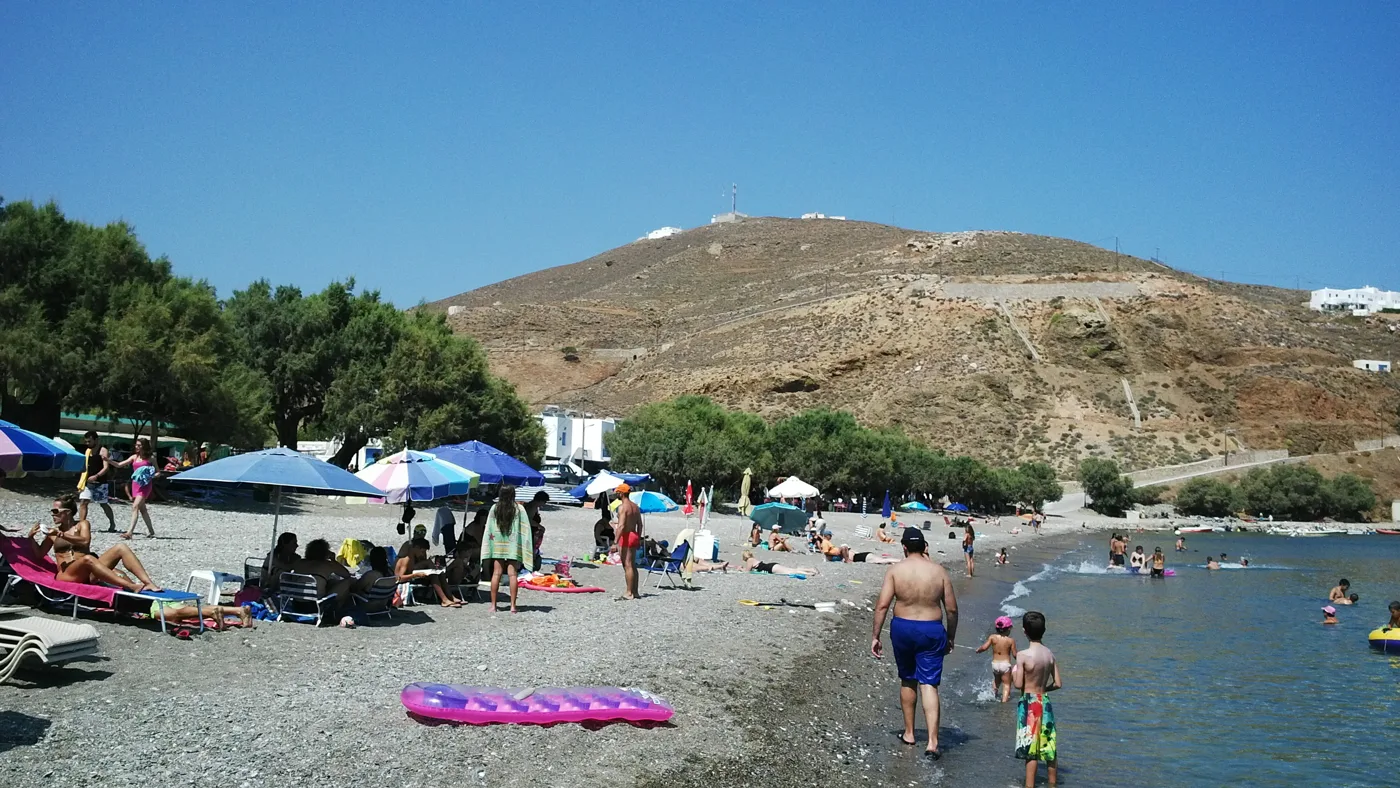
The beach closest to Chora.
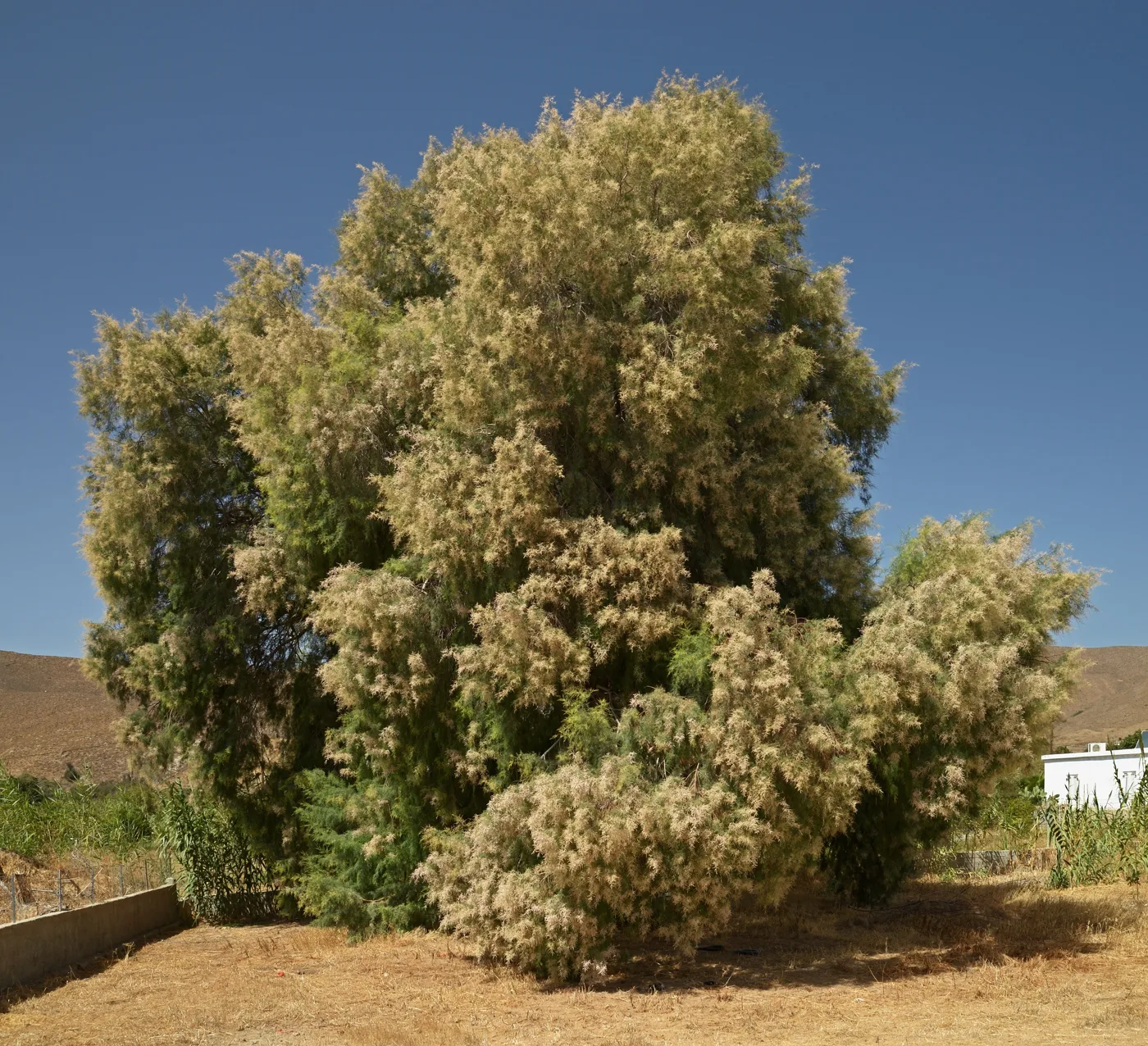
Pebbles and shade.
Shade by the waves.
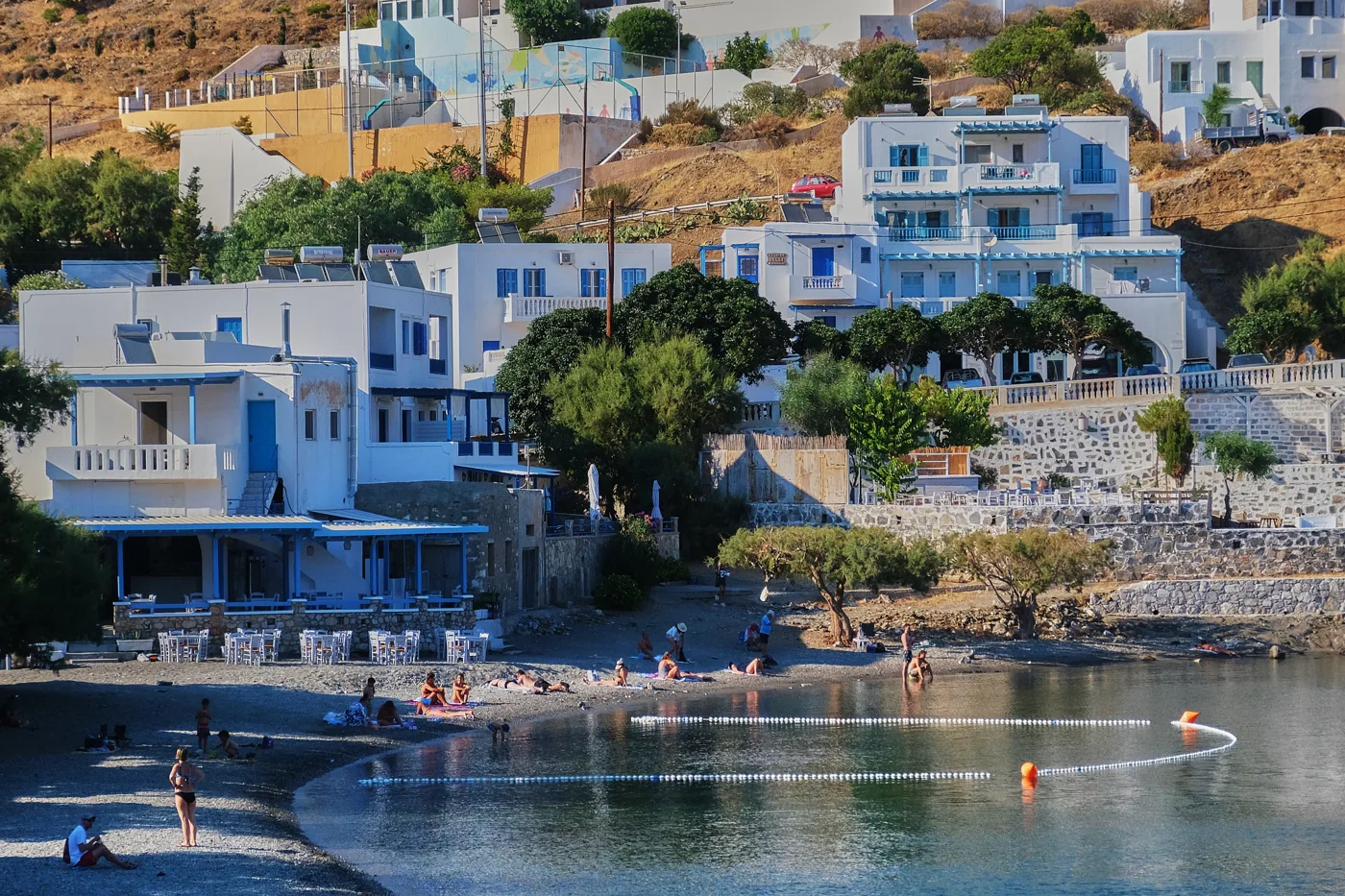
A few steps from the houses.
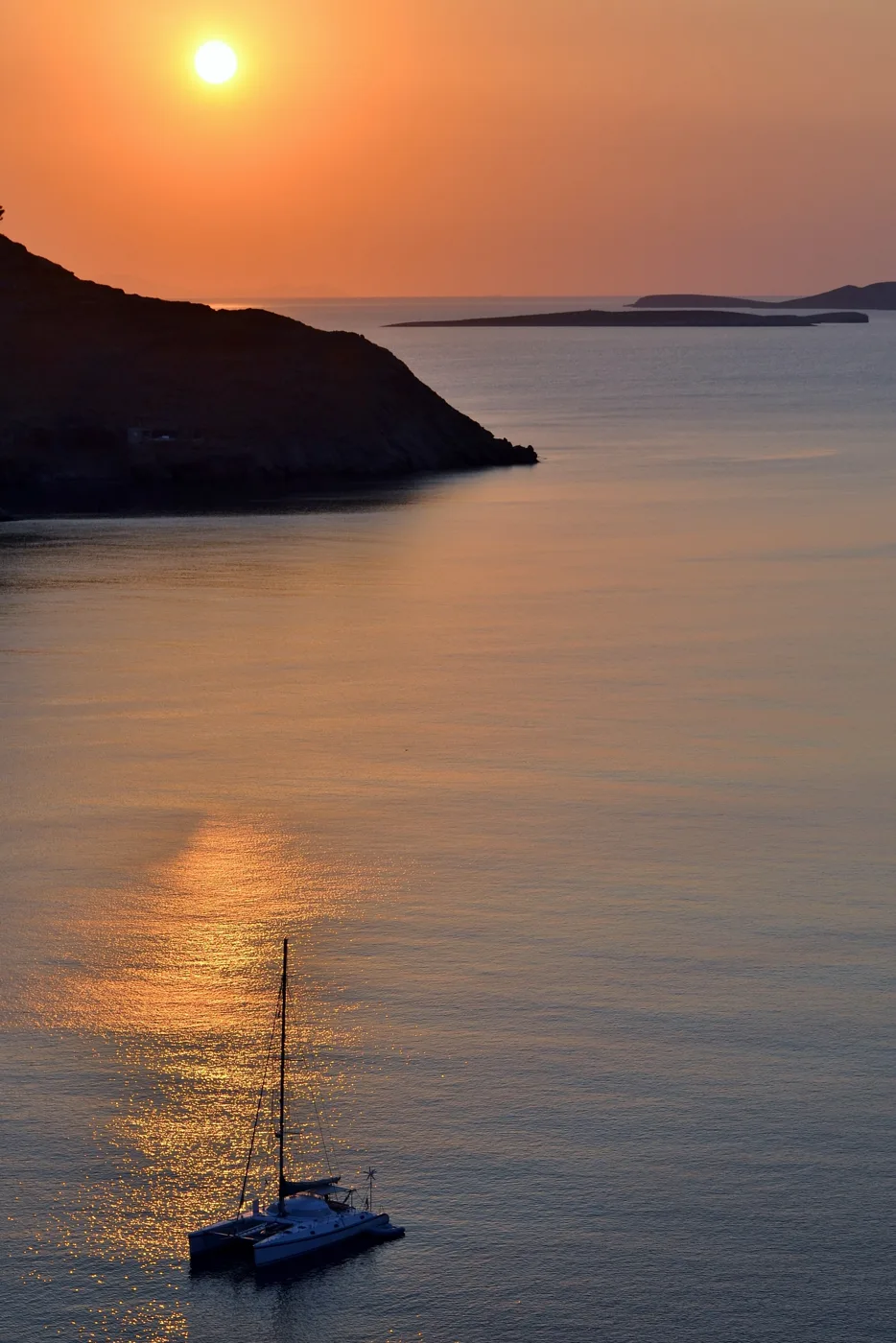
The island at the end of the day.
Photos: FocalPoint (CC BY-SA 4.0), V. Vlasenko (CC BY-SA 3.0), Magnus.chronicles (CC BY 4.0), WIKIfkh (CC BY-SA 4.0) · Wikimedia Commons
🦋 Maltezana, Steno and the islets
Maltezana, also called Analipsi, is the second village, on a quiet bay near the airport. It took its name from the Maltese pirates who found shelter here. By the sea, mosaic floors survive from early Christian times, with the zodiac and the four seasons.
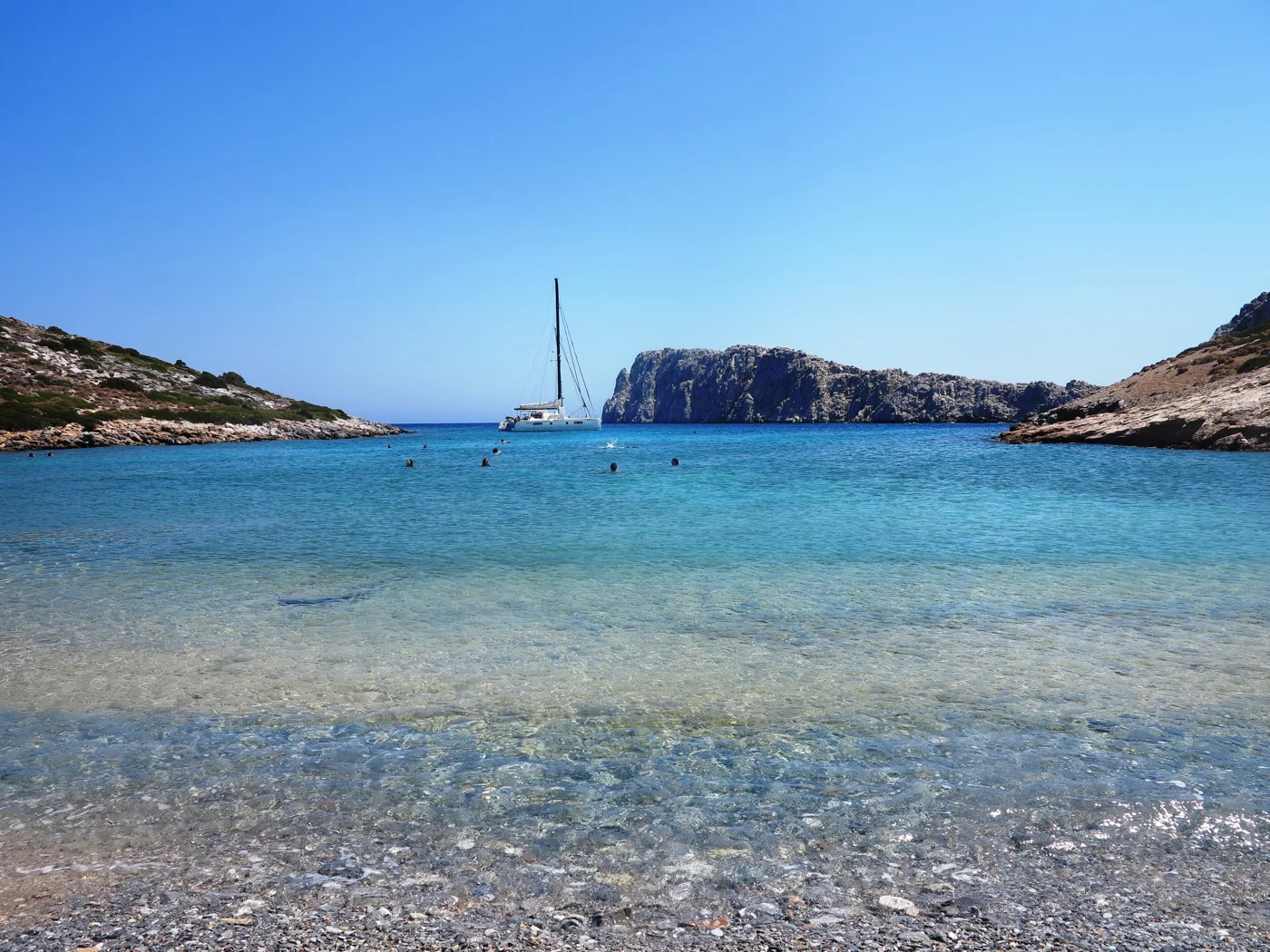
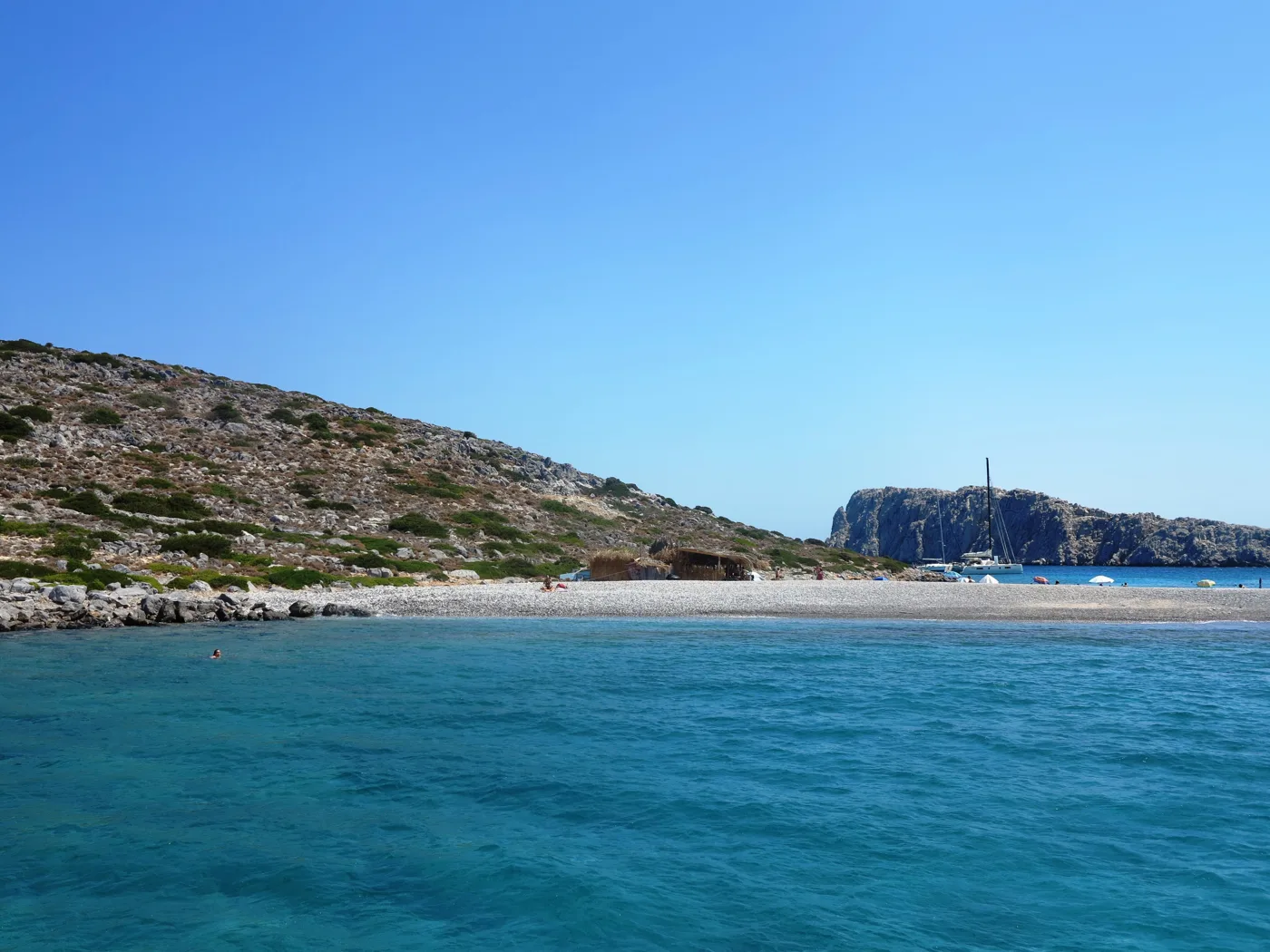
Further west, Steno is where the two halves of the island almost split apart, with sea on both sides of the road. At the northern tip, Vathy is a deep, closed bay with a few houses and fishing boats. From Pera Gialos and Maltezana, small boats go to the islets of Koutsomyti and Kounoupes, with shallow, turquoise water.
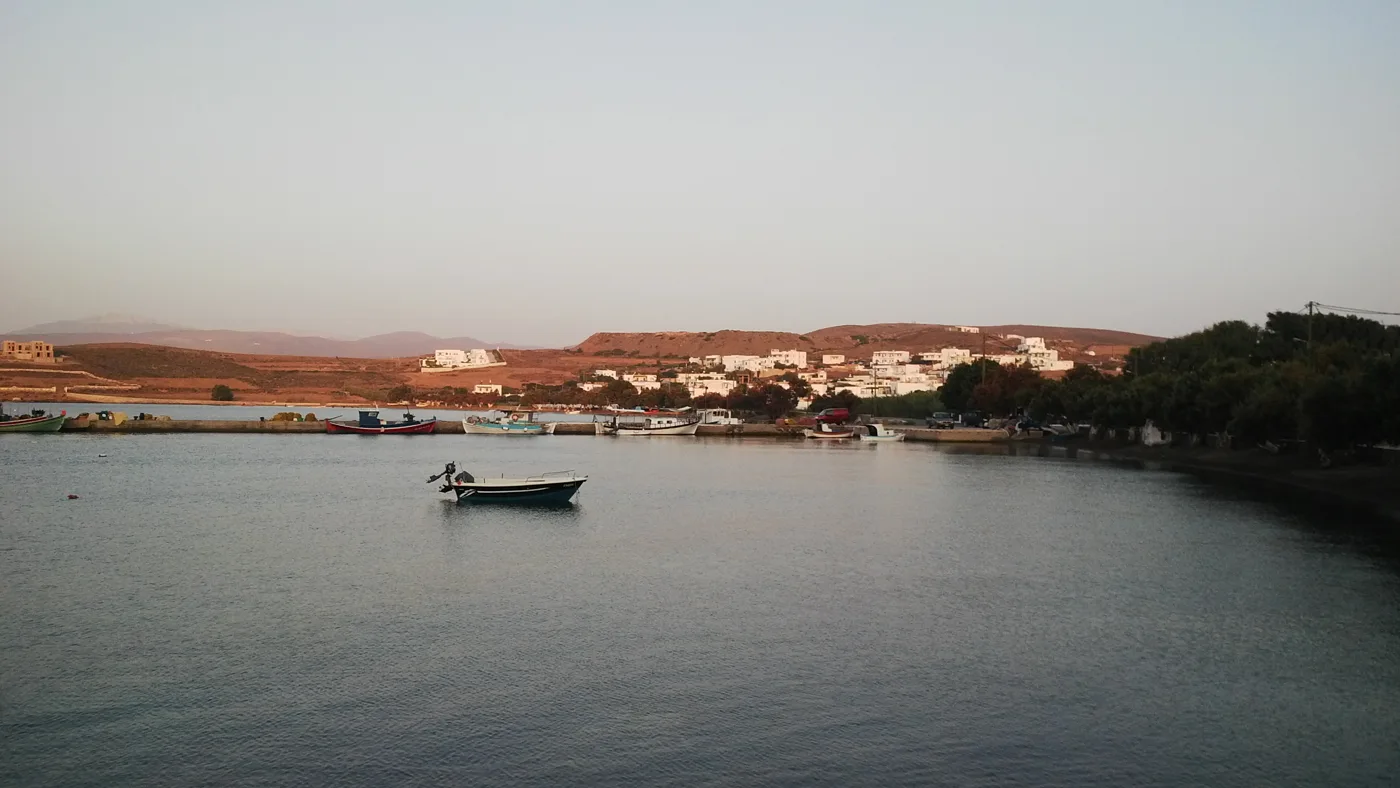
A quiet bay.
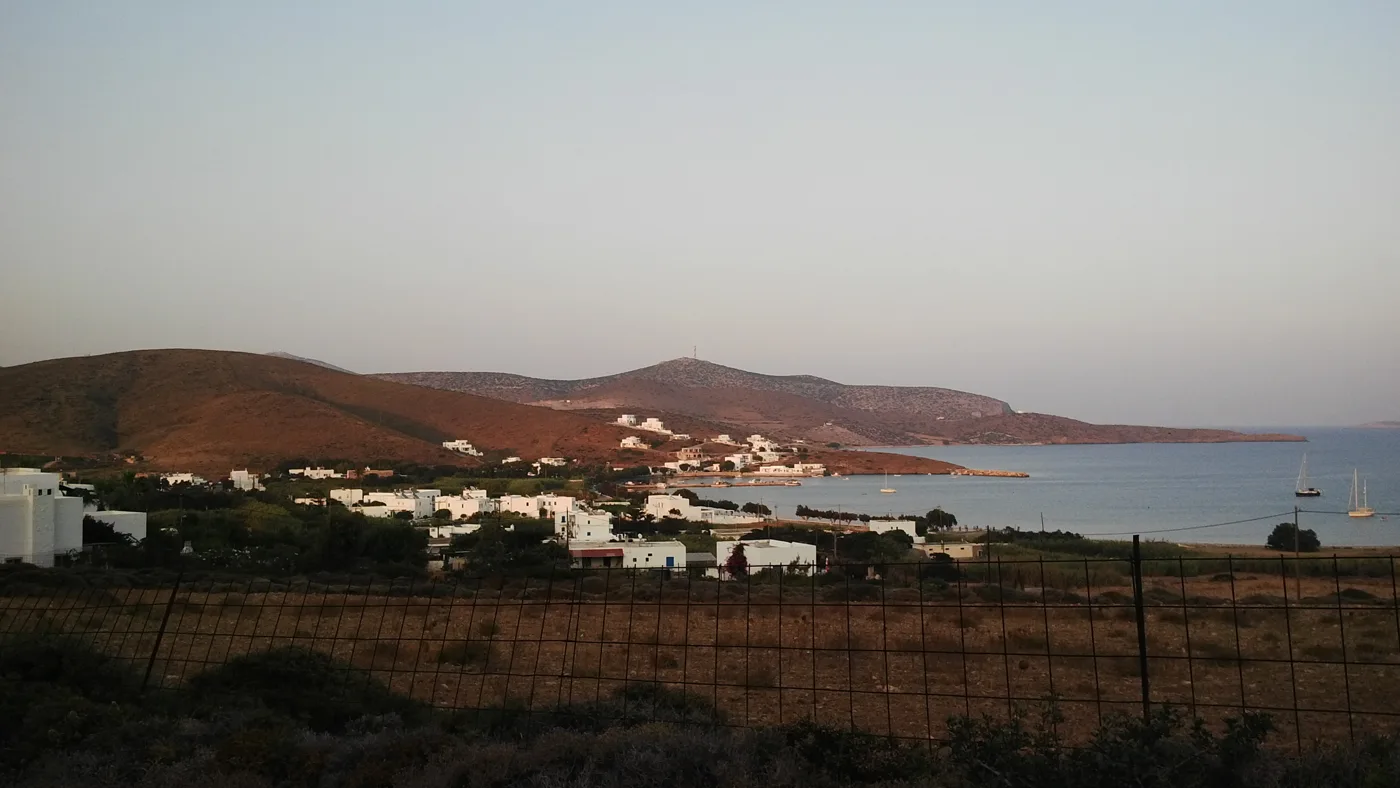
Next to the airport.
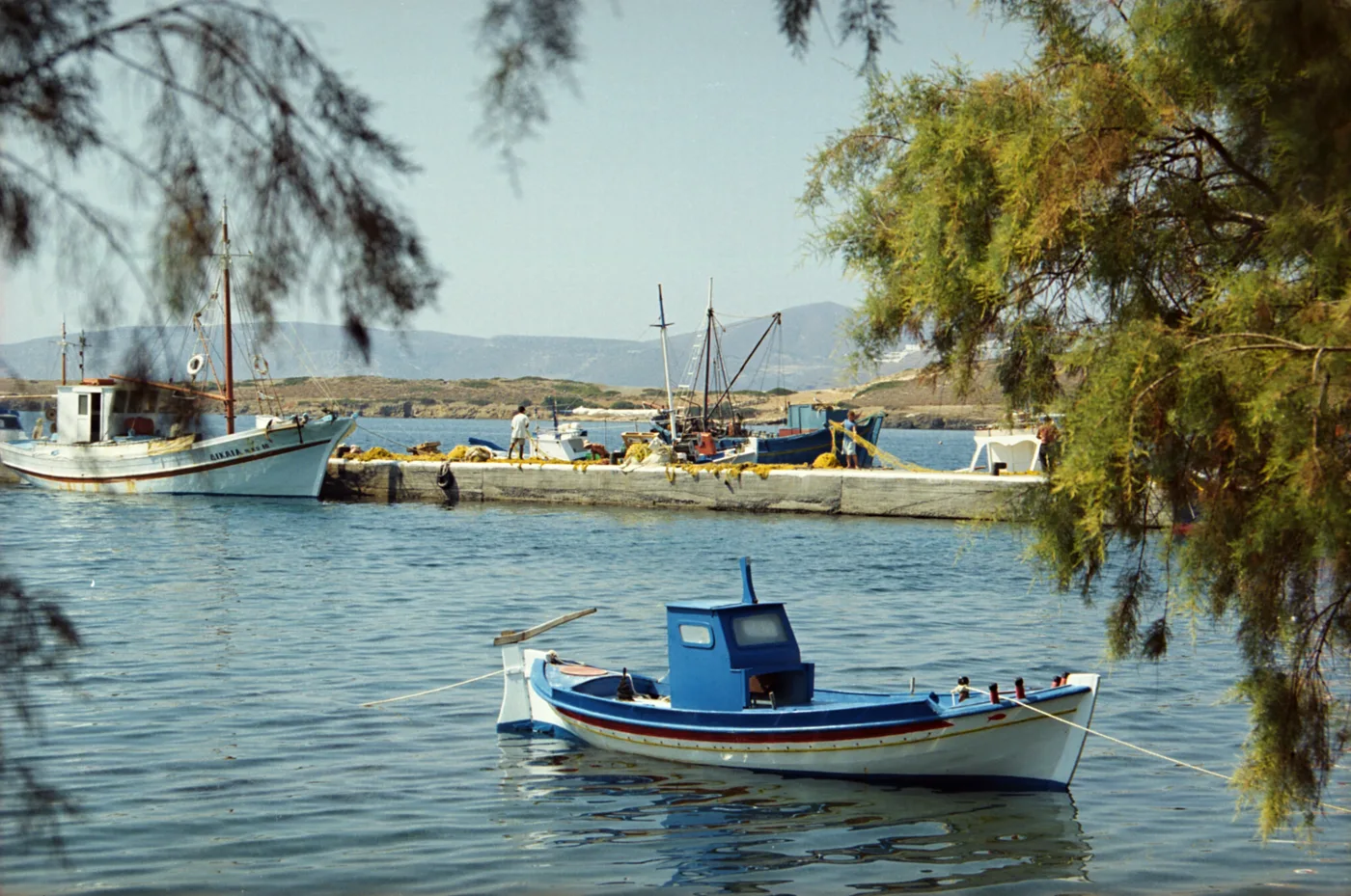
The fishermen's boats.
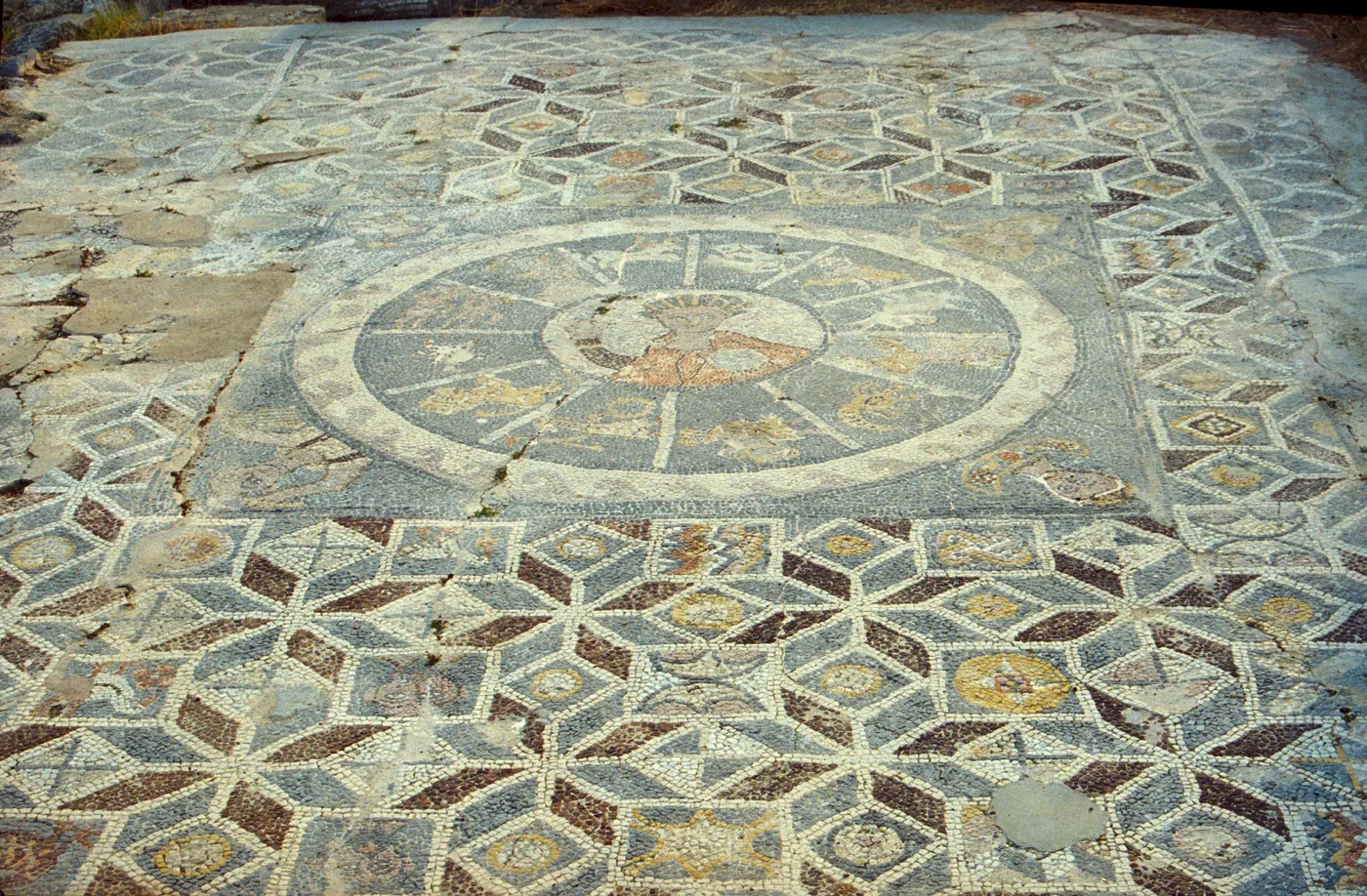
The zodiac.
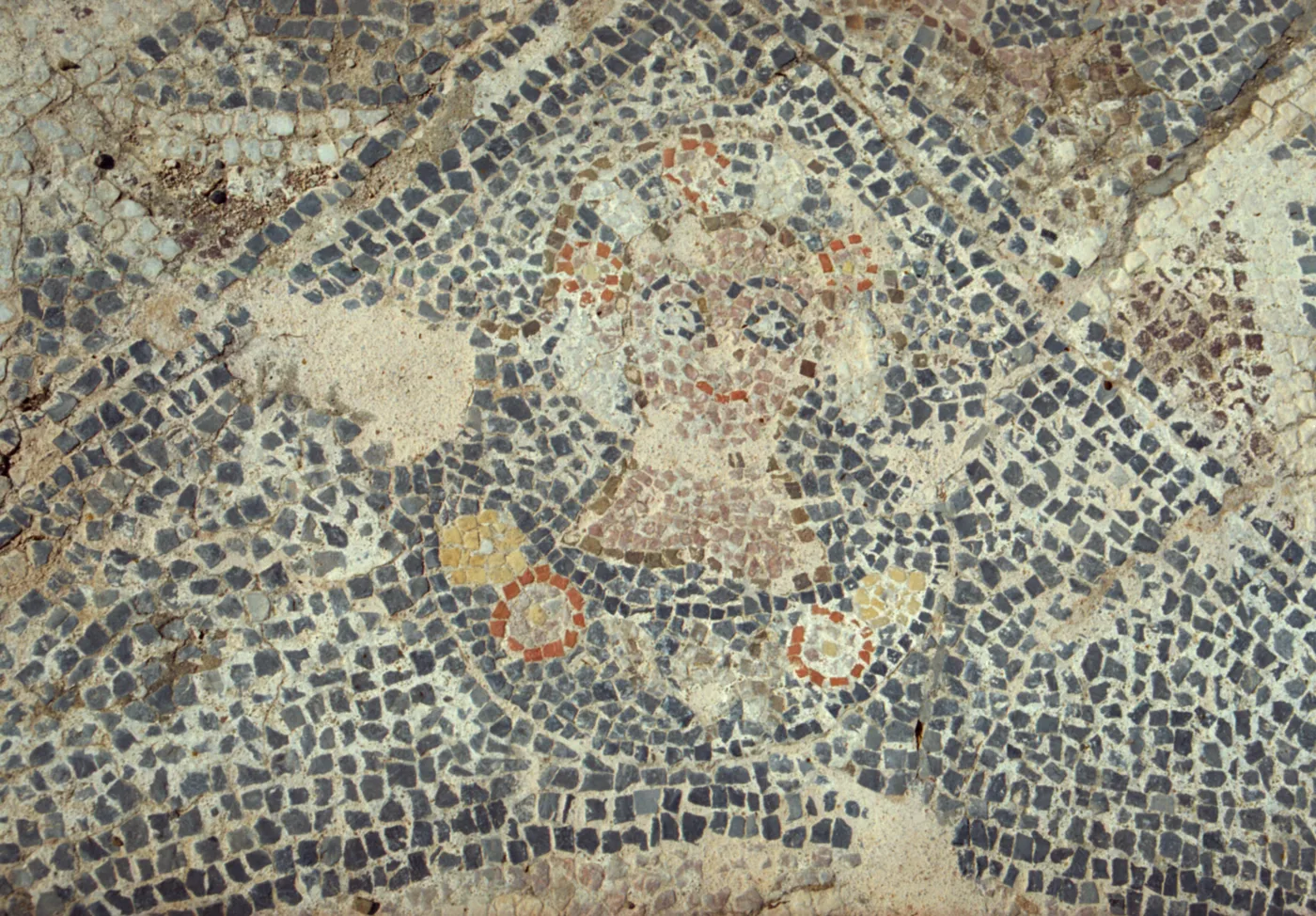
One of the four seasons.
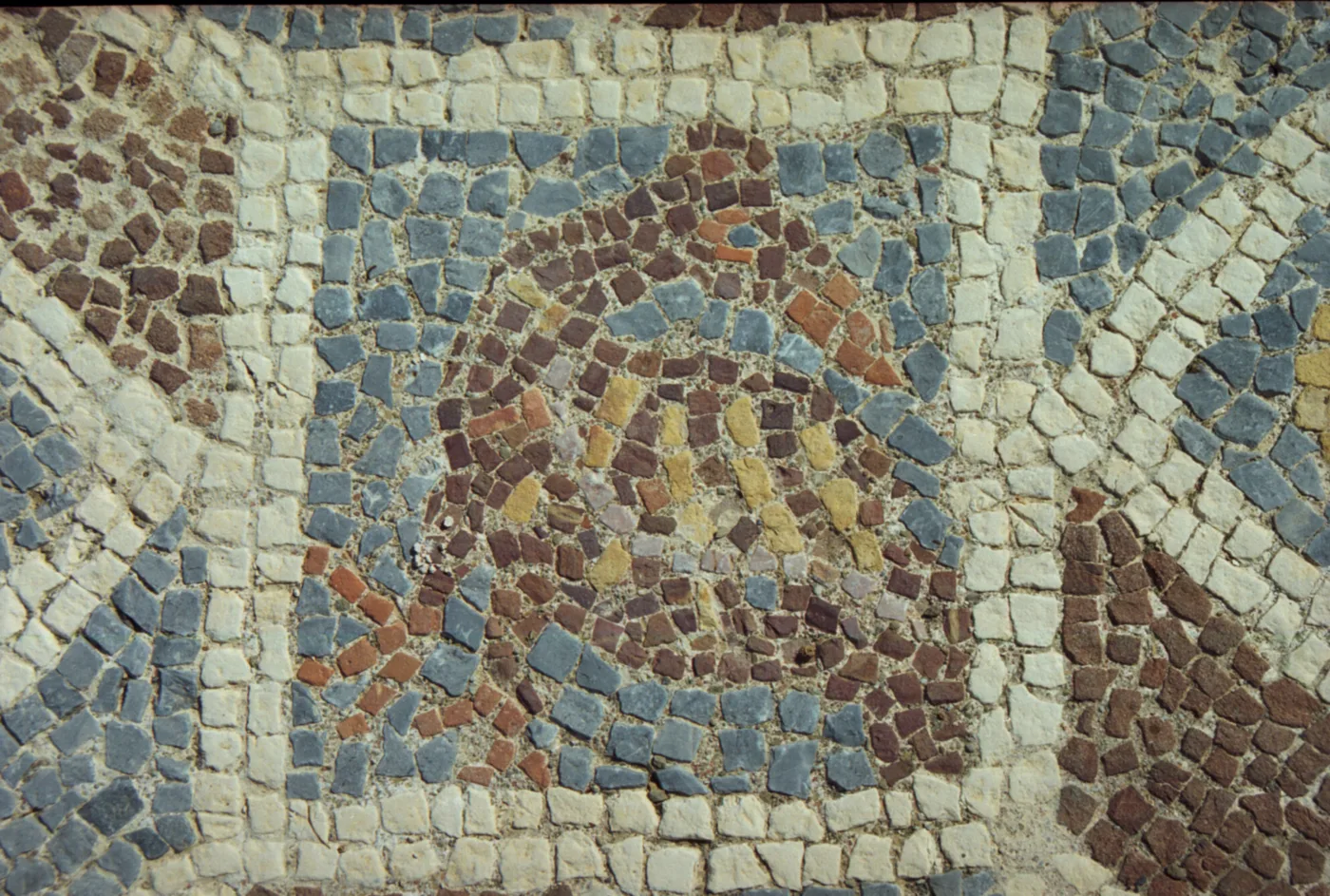
Coloured tesserae.
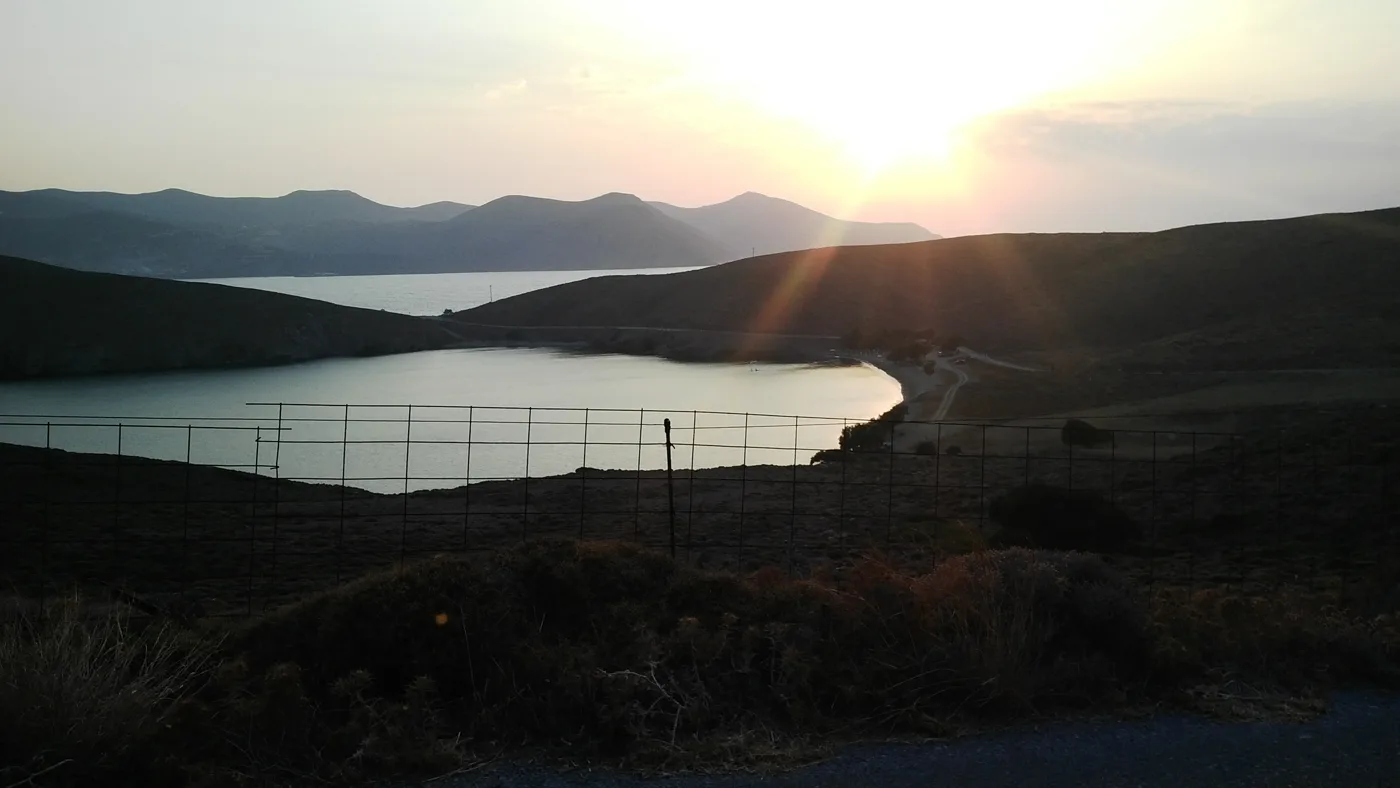
The middle of the butterfly.
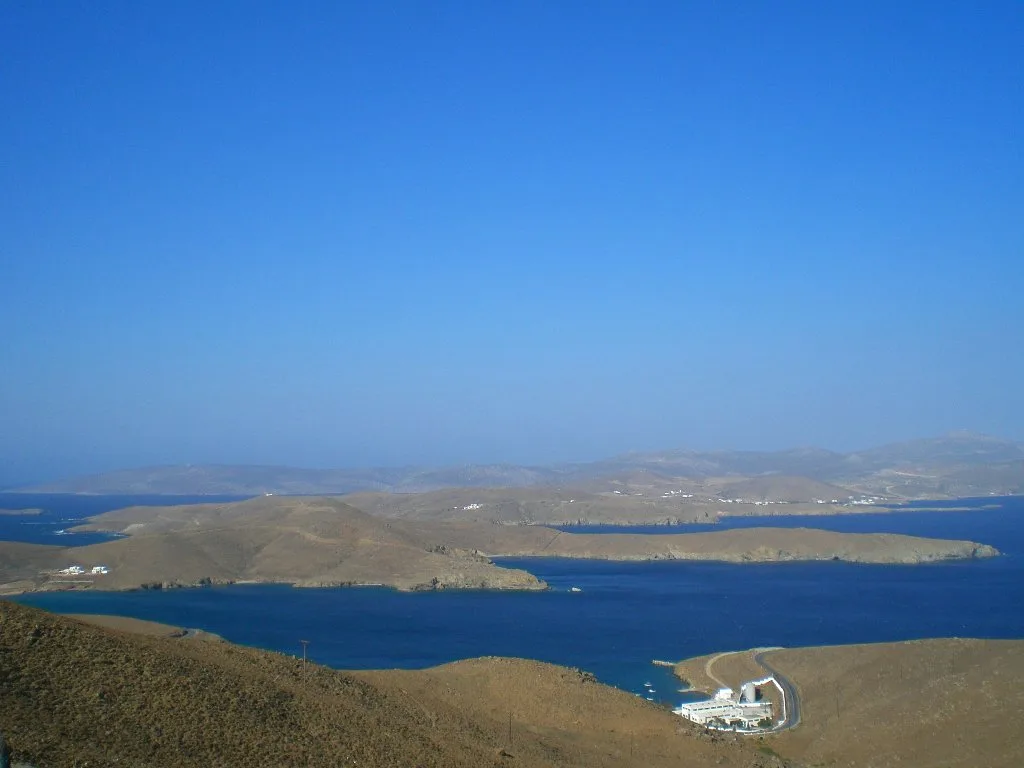
Two seas side by side.
The road to Vathy.
A sandy beach reached by boat.
Shallow and clear.
Across from Maltezana.
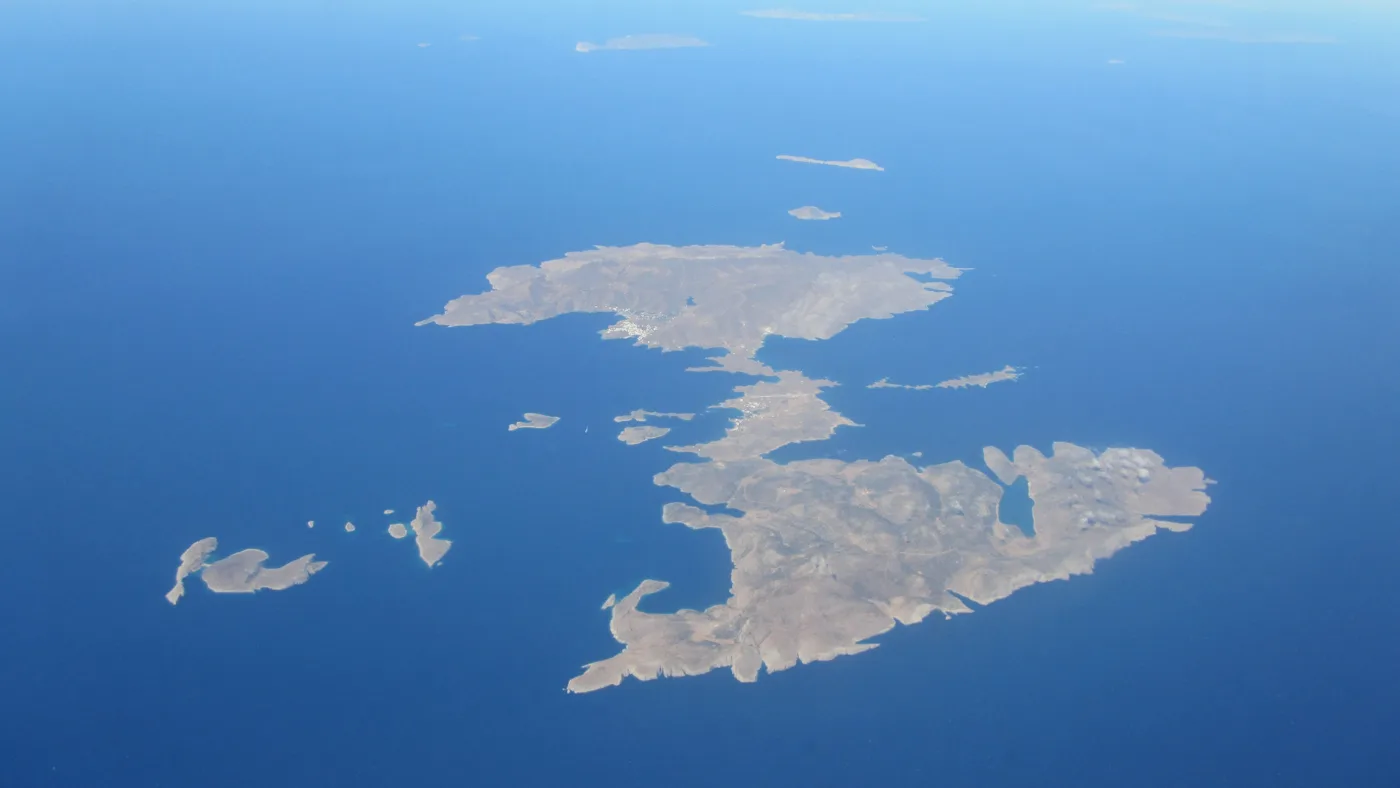
An island like a butterfly.
Photos: FocalPoint (CC BY-SA 4.0), Zde (CC BY-SA 3.0), IMFJ (CC BY-SA 3.0), rivertreestar.net (CC BY 3.0), Ioannis Fakis (CC BY-SA 4.0), Eleniflor (CC BY-SA 4.0), INDALOMANIA (CC BY-SA 3.0) · Wikimedia Commons
🍽️ What to eat
Astypalaia is known for lobster spaghetti and fresh fish. Try pougia, small sweet pies, the thyme honey and the local cheeses, such as chlori. A wild crocus called zafora grows on the island, and local women put it in their Easter breads.
📅 When to go
June and September are the best months, with warm sea and few people. In August the island fills up, but stays quieter than the well-known islands. On 15 August the big festival of Panagia Portaitissa takes place. The wind often blows hard in July and August.
✈️ How to get there from Athens
| How | Duration | From | Notes |
|---|---|---|---|
| Plane | About 1 hour | Athens airport | Small planes, few seats: book early. |
| Ferry from Piraeus | About 9 to 10 hours | Piraeus | Goes through the Cyclades, often overnight. |
From Ioulianou 50, Piraeus is about 40 minutes by metro and the airport an hour on Line 3. On the island a car or scooter helps for the beaches, but there is also a bus from Chora to Livadi and Maltezana. Astypalaia fits well with a trip to the Cyclades: see also our guide to Amorgos.
🗓️ Three days on Astypalaia
Chora and the Castle
Walk from the windmills through the lanes of Chora and up to the Castle, for the churches and the view. Swim at Pera Gialos and, in the evening, watch the sunset at the mills and have dinner in Chora.
The beaches of the south
Swim at Livadi and then at Agios Konstantinos. In the afternoon take the dirt road to Vatses and Kaminakia, with lunch at the beach taverna.
Maltezana and the islets
Take the boat to Koutsomyti and the Kounoupes. In the afternoon see the mosaics in Maltezana, swim at Steno and, if you feel like a drive, go on to Vathy.
Frequently asked questions
Do I need a car on Astypalaia?
It helps, because many beaches are far away and reached by dirt road. If you stay in Chora or Livadi, you can get around by bus, on foot and by the small boats.
Where should I stay on Astypalaia?
In Chora, for the view and the lanes. In Pera Gialos, for the port and the tavernas. In Livadi, for the beach. In Maltezana, for quiet and shallow water.
Is Astypalaia in the Cyclades or the Dodecanese?
It belongs to the Dodecanese, but it lies next to the Cyclades and its Chora looks Cycladic. That is why it is often called “the butterfly of the Aegean” or the island between two worlds.
How many days do I need?
Three to four days are enough for Chora, the Castle, a few beaches and a boat trip to the islets. A week if you want to rest.
— Kathy