At a glance
6 January 2027
Wednesday, public holiday. Most ceremonies at sea take place between 11:00 and 12:30.
40 minutes
From Ioulianou 50 to the platform in Piraeus: metro with no change and a 10-minute walk.
Free
All ceremonies are open to everyone. Arrive early for a spot by the water.
19 January
Epiphany of the Old Calendarists, with their own diving in the harbour of Piraeus.
The harbours easiest to reach from Athens
The order is based on travel time from Ioulianou 50. Times are from January 2026; the 2027 programmes are published by the municipalities and the metropolises at the end of December, and they usually change very little from year to year.
| Place | Where exactly | Time 2026 |
|---|---|---|
| Piraeus | Platform on the quay, opposite Agios Spyridon | After the liturgy at Agia Triada, around midday |
| Palaio Faliro | Flisvos beach | Just after 11:00 |
| Kallithea | Kallithea beach | 11:00 |
| Varkiza | Varkiza beach | 11:00 |
| Voula | Voula Nautical Club | 11:30 |
| Vouliagmeni | Vouliagmeni Residents' Nautical Club | 12:00 |
| Elliniko | Beach in front of the chapel of Agios Alexandros | 12:30 |
| Glyfada | Glyfada beach, after the Blessing at Agioi Konstantinos and Eleni | After the liturgy |
Piraeus: the big ceremony at the main harbour
The day begins at the Metropolitan Church of Agia Triada, with matins and the Divine Liturgy. Then comes the Great Blessing of the Waters inside the church. Afterwards clergy and people walk in procession down to the harbour, to a platform set up opposite Agios Spyridon, the patron saint of Piraeus.
That is where the Cross is thrown. In January 2026 members of the Association of Greek Underwater Demolition Frogmen, retired and serving, dived for it. Navy and Coast Guard ships waited in the harbour and gave honours at the moment of the dive. The first to catch the Cross received a gold cross from the President of the Republic.
The traffic police close the surrounding roads from 09:00 to 13:00: Akti Miaouli, Vasileos Georgiou, Ethnikis Antistaseos and part of Akti Poseidonos. You won't get close by car. By metro you'll have no problem at all.
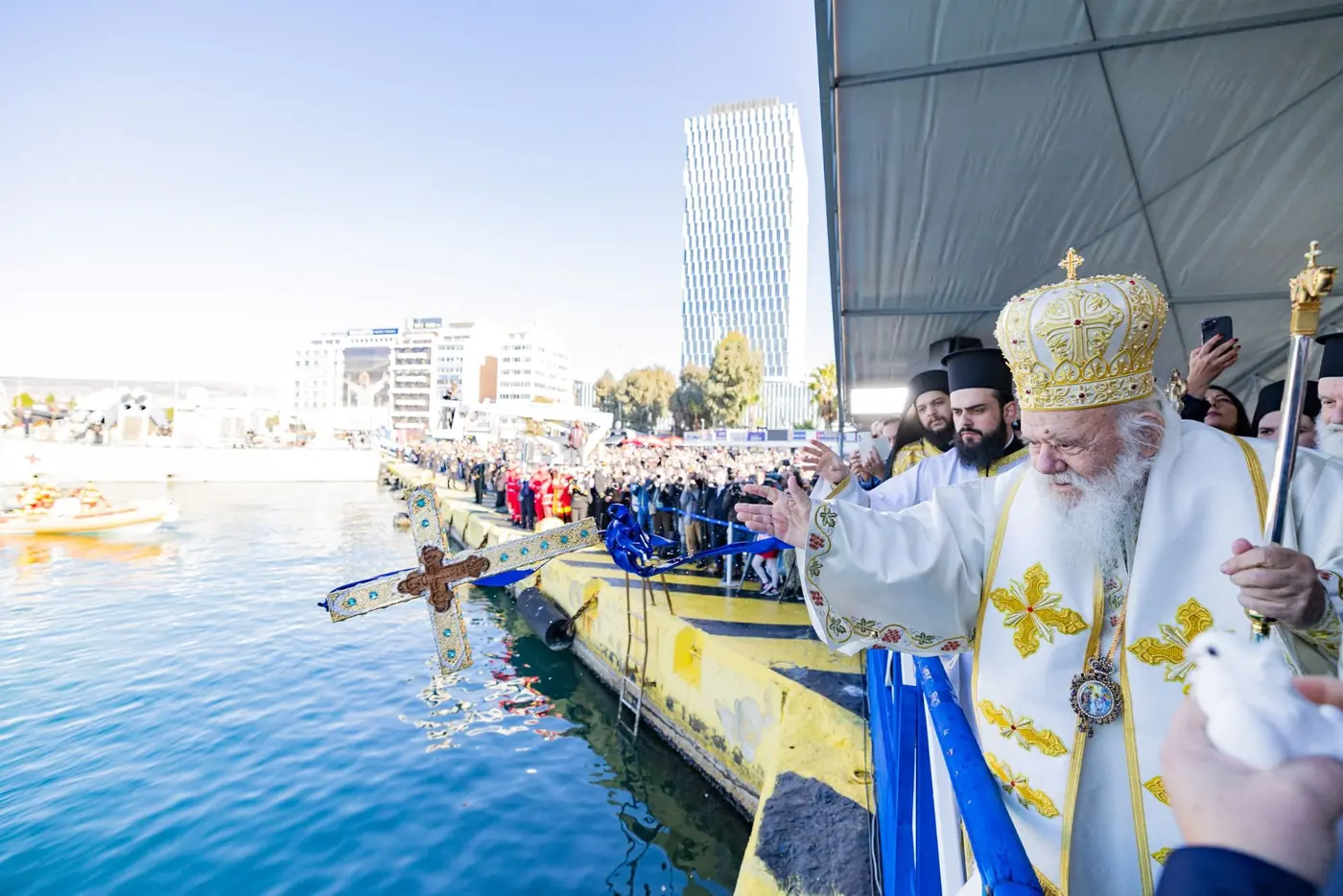
From the platform opposite Agios Spyridon. Next to it they get the white dove ready. People stand all along the quay.
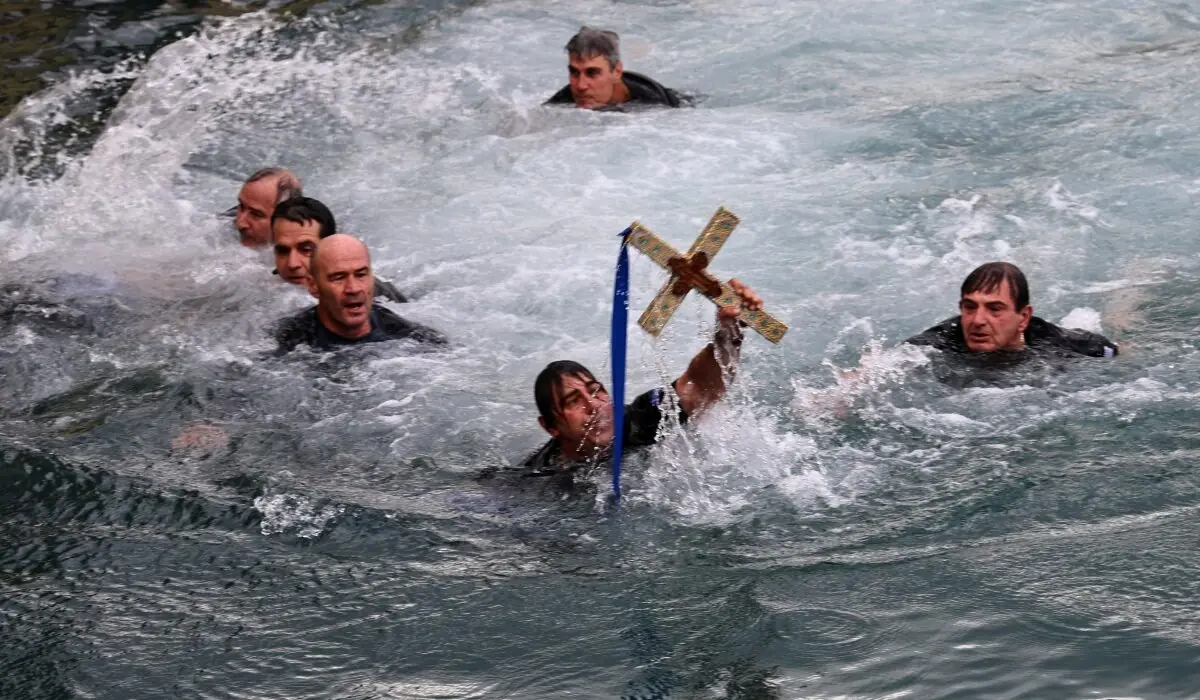
The first to catch it holds it up high. In Piraeus it is frogmen in wetsuits who dive.
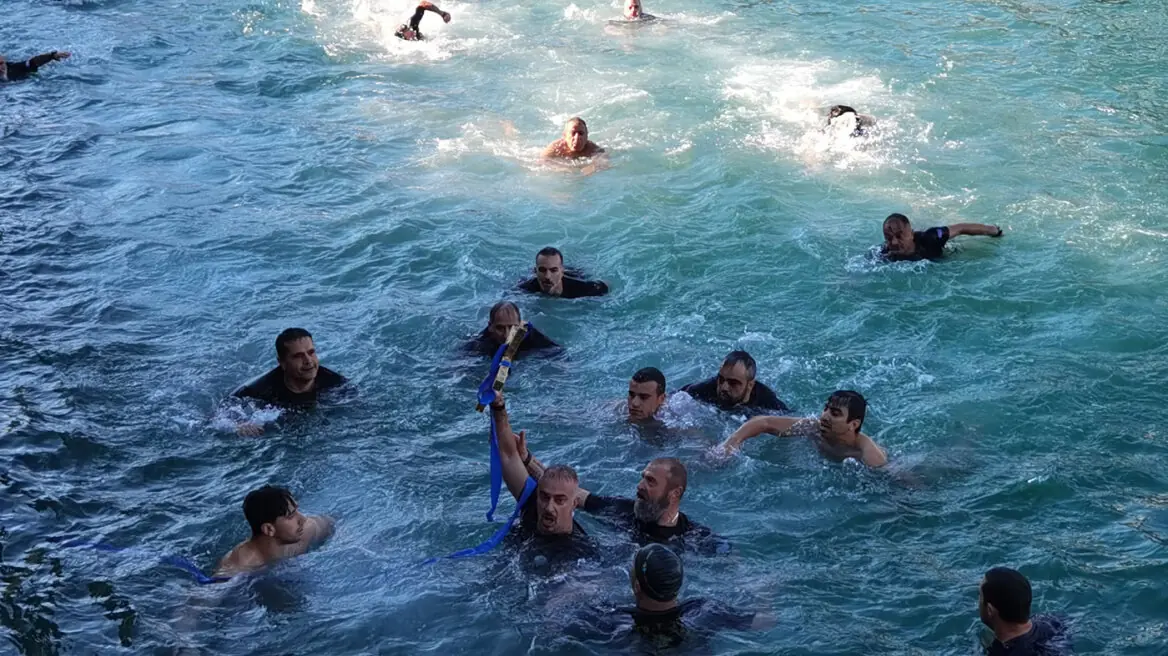
The swimmers escort the winner back to the platform, where he receives the blessing.
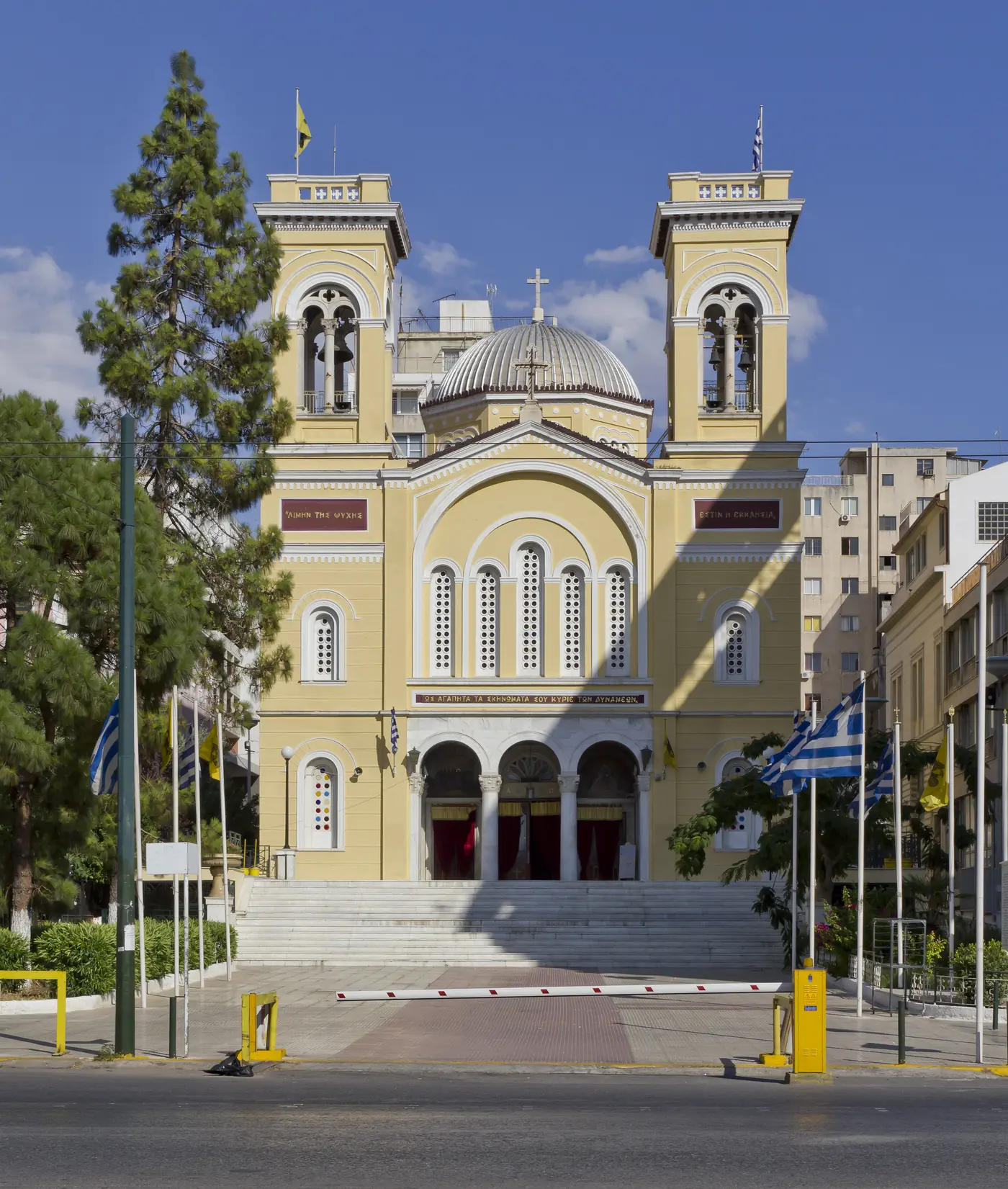
The church of the patron saint, on Akti Miaouli. The ceremony platform is set up on the quay right opposite.
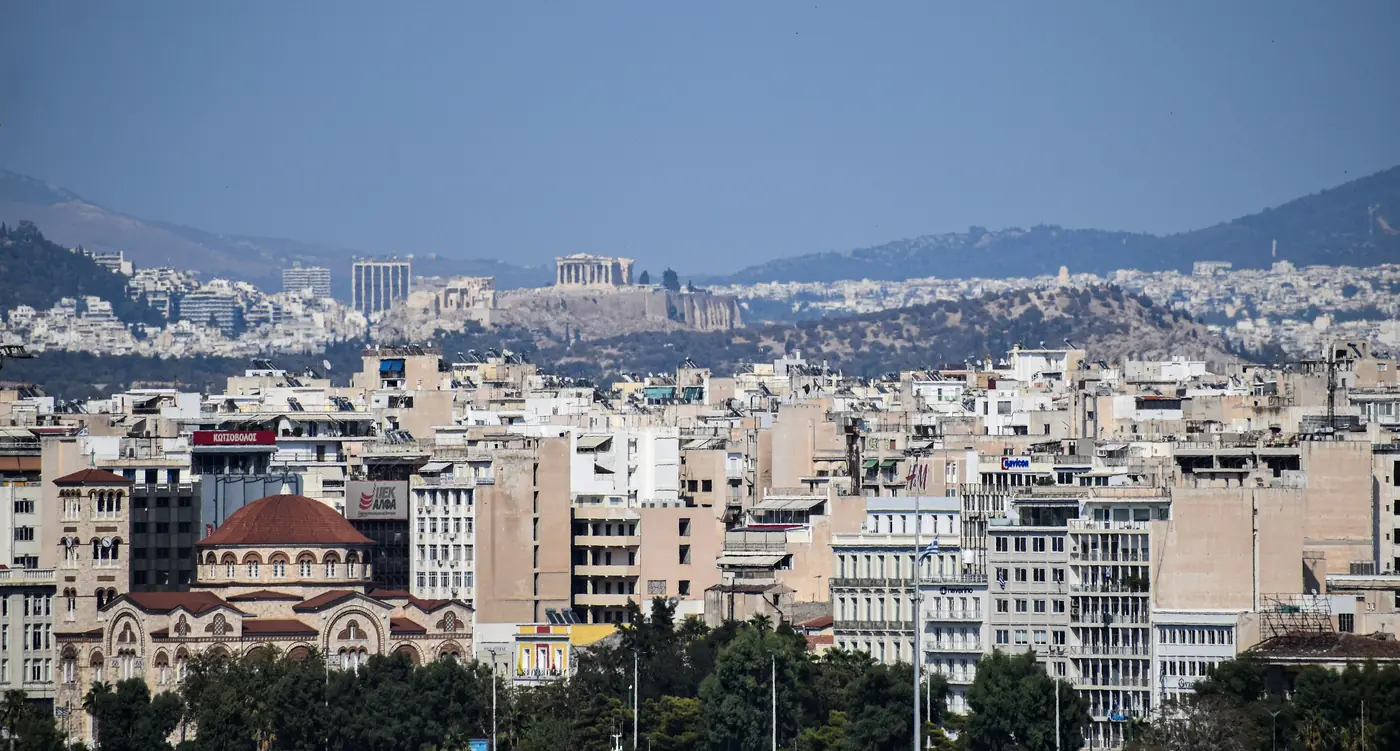
The Metropolitan Church, where the liturgy is held before the procession. On a clear day you can also see the Parthenon.
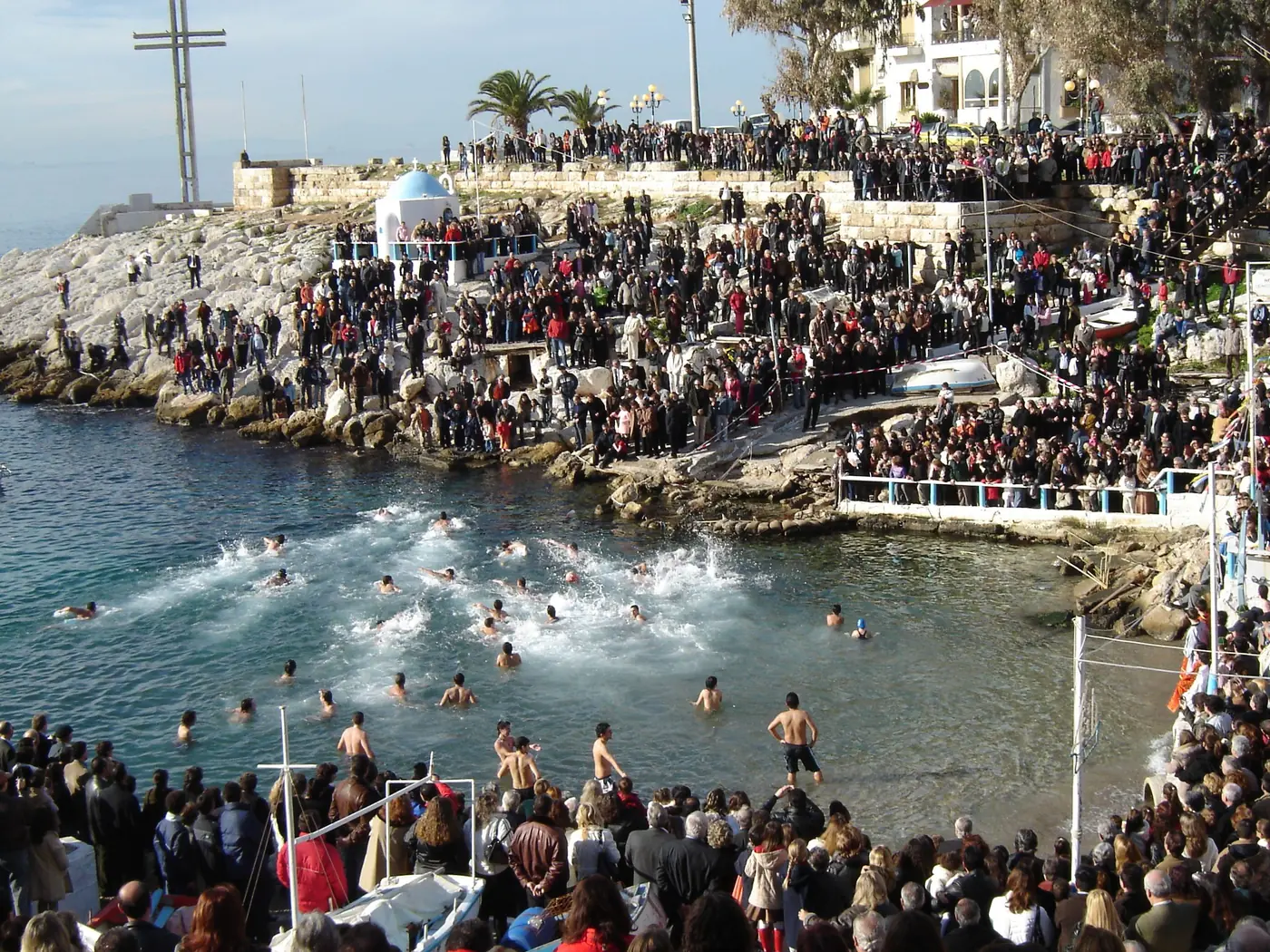
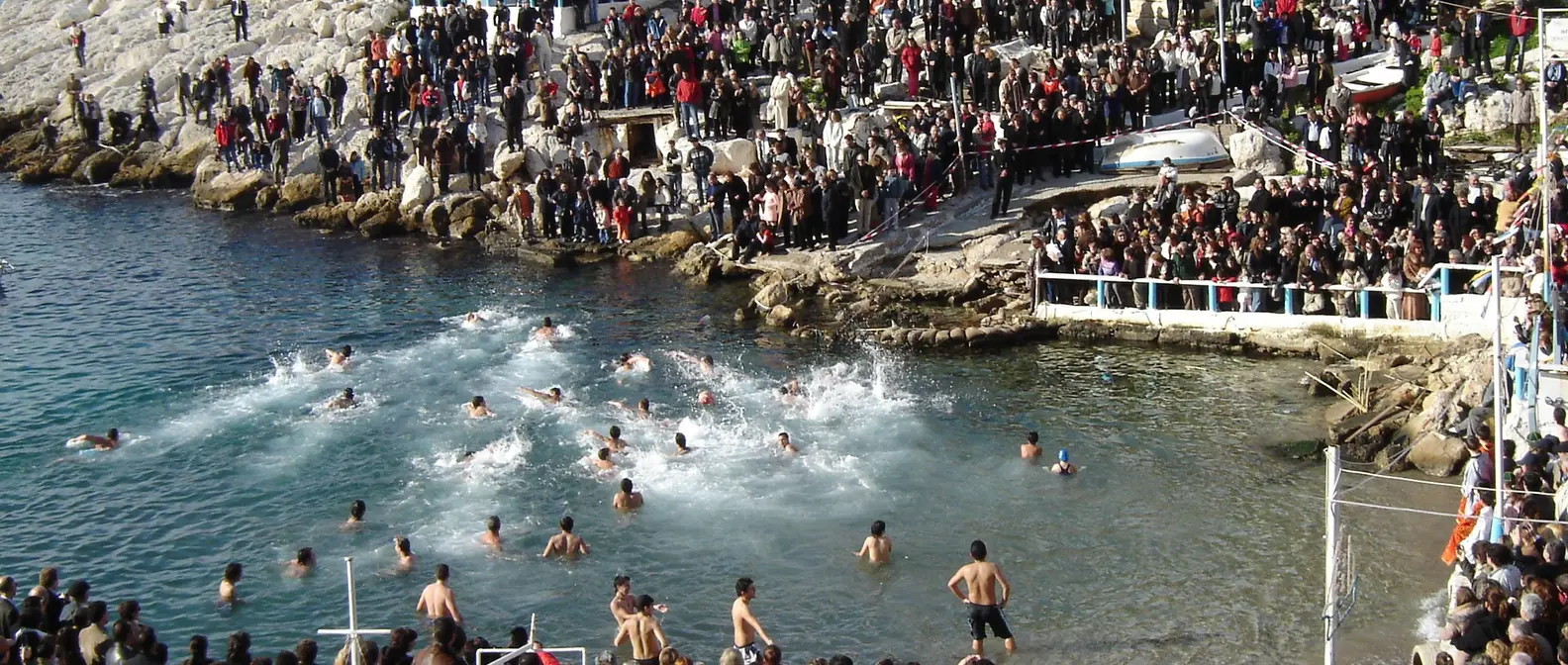
A smaller ceremony, in the cove of Aphrodite in Peiraiki. People watch from the rocks.
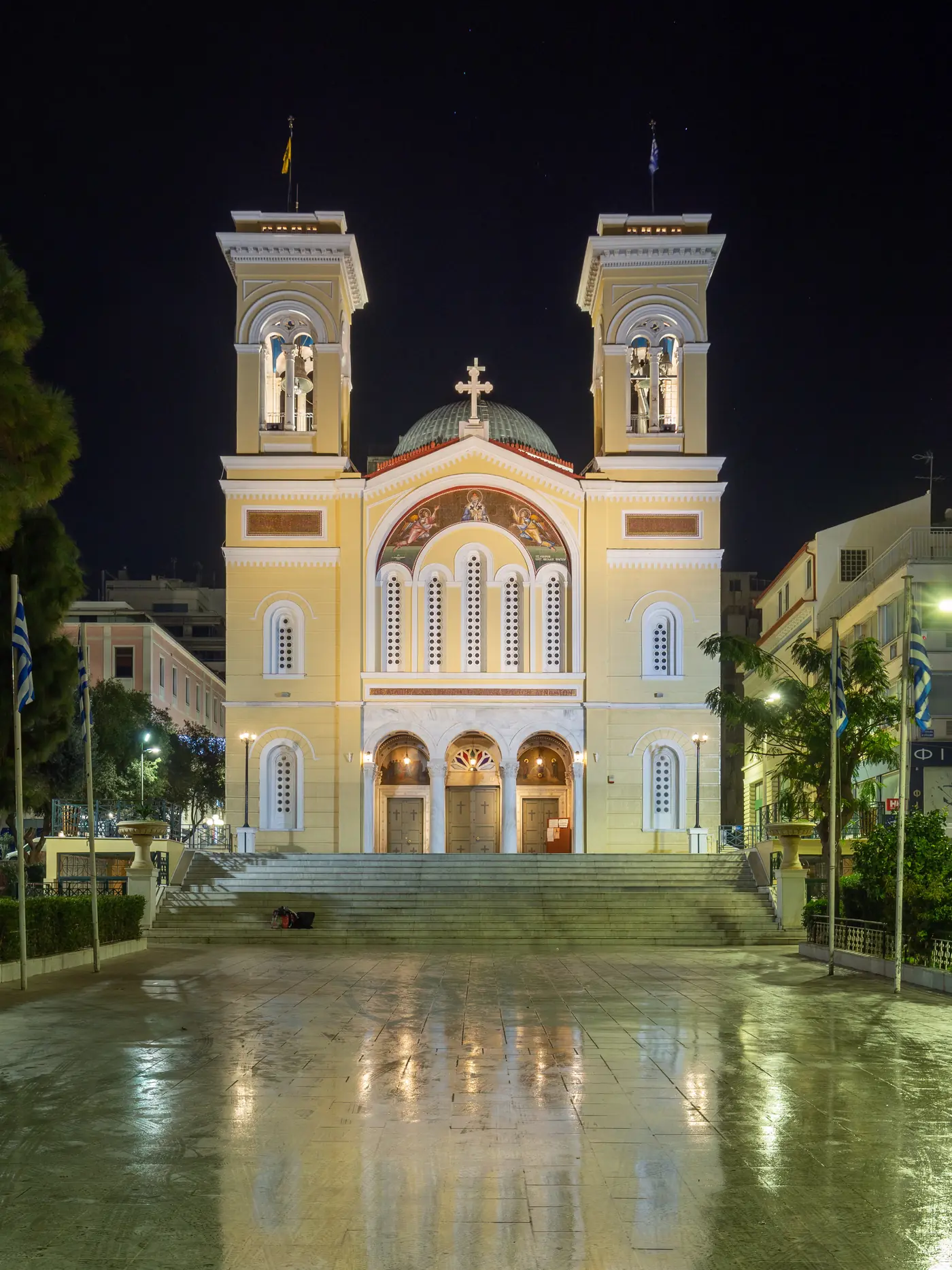
Built in 1863. It is a 10-minute walk from the metro station.
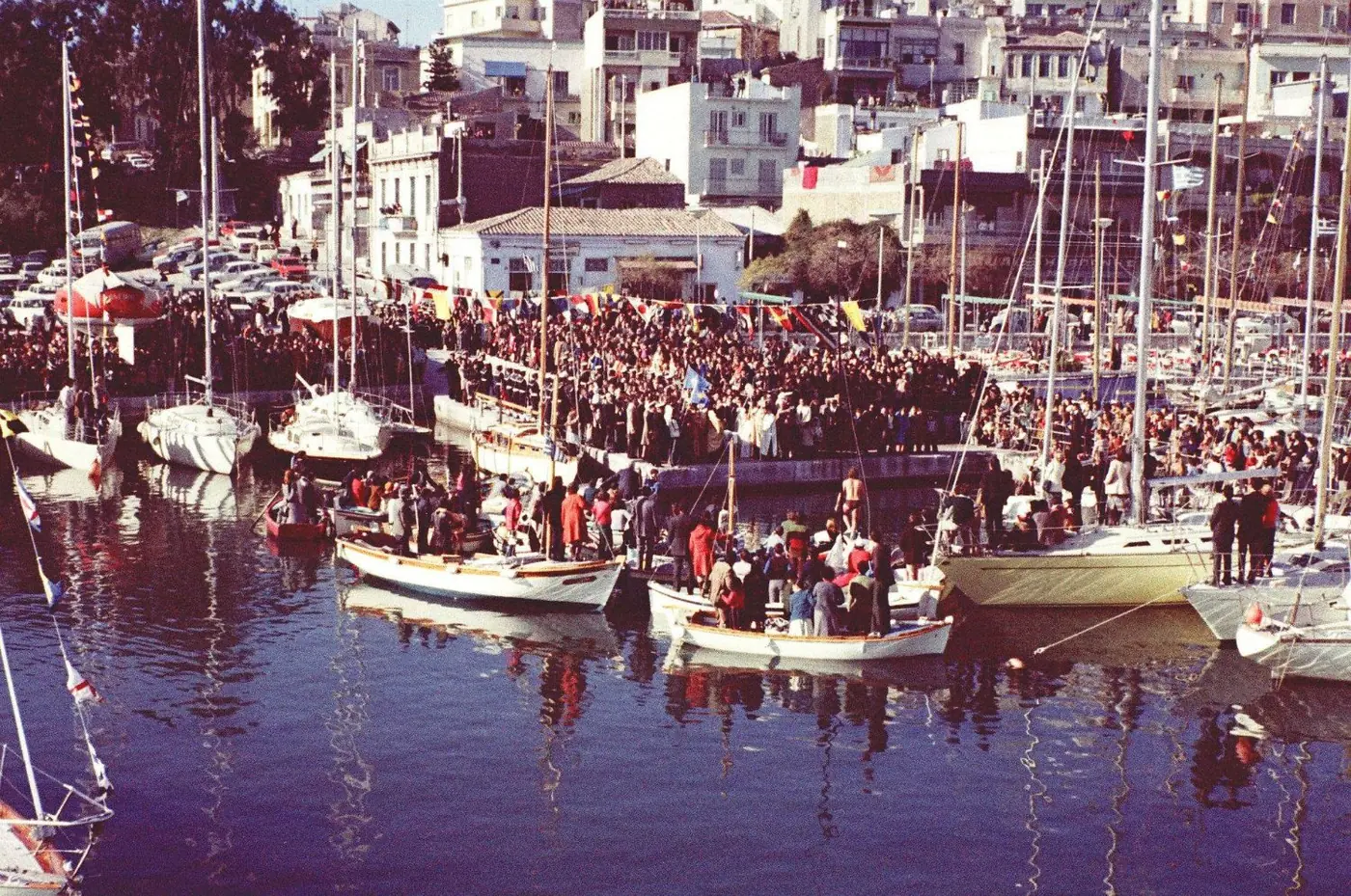
Crowds on the pier and in the boats, little flags on the masts. The celebration in the harbours of Piraeus has a long history.
Photos: A.Savin (CC BY-SA 3.0), Julian Lupyan (CC0), Oikonomou Stefanos (public domain), C messier (CC BY-SA 4.0), Wikimedia Commons.
How to get from Ioulianou 50 to Piraeus
- Ioulianou 50 → Victoria station: 3 minutes on foot.
- Line 1 (green): towards Piraeus, to the end of the line, no change. About 30 minutes.
- Piraeus station → Agios Spyridon: exit towards the harbour and walk south along the waterfront to Akti Miaouli. About 700 metres, 10 minutes.
Tip: on Epiphany day the metro runs a holiday timetable, so fewer trains. Leave Victoria by 10:00 to find a spot near the water. After the ceremony many people go down to Mikrolimano and Peiraiki to eat.
✝️ From Ioulianou 50 to the platform in Piraeus
Line 1 to the end, then 700 metres on foot. Tap Agios Spyridon to open the route in Google Maps.
Palaio Faliro: the Cross at Flisvos
The Municipality of Palaio Faliro starts at 08:30 with a pontifical liturgy at Agios Alexandros. At 10:00 comes the Great Blessing of the Waters, and then people go down to Flisvos beach. The Cross goes into the water just after 11:00.
Flisvos has space: a wide promenade, a park, cafés in the marina. It is the right choice if you have children or a pushchair, because you won't be squeezed as in Piraeus. A little further north, at Kallithea beach, the Municipality of Kallithea holds its own diving at 11:00.
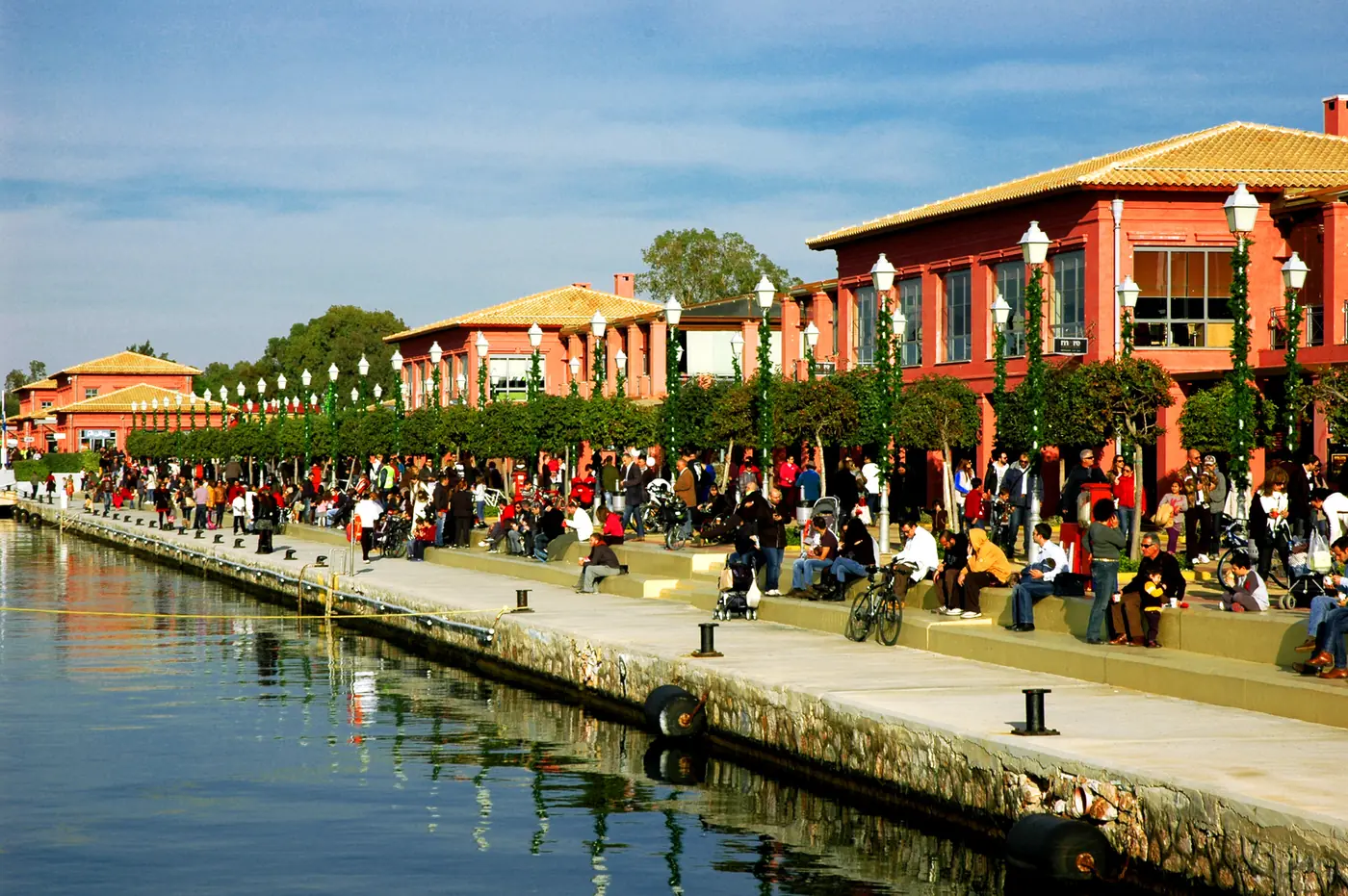
The photo is from 26 December. During the holidays Flisvos fills up from the morning.
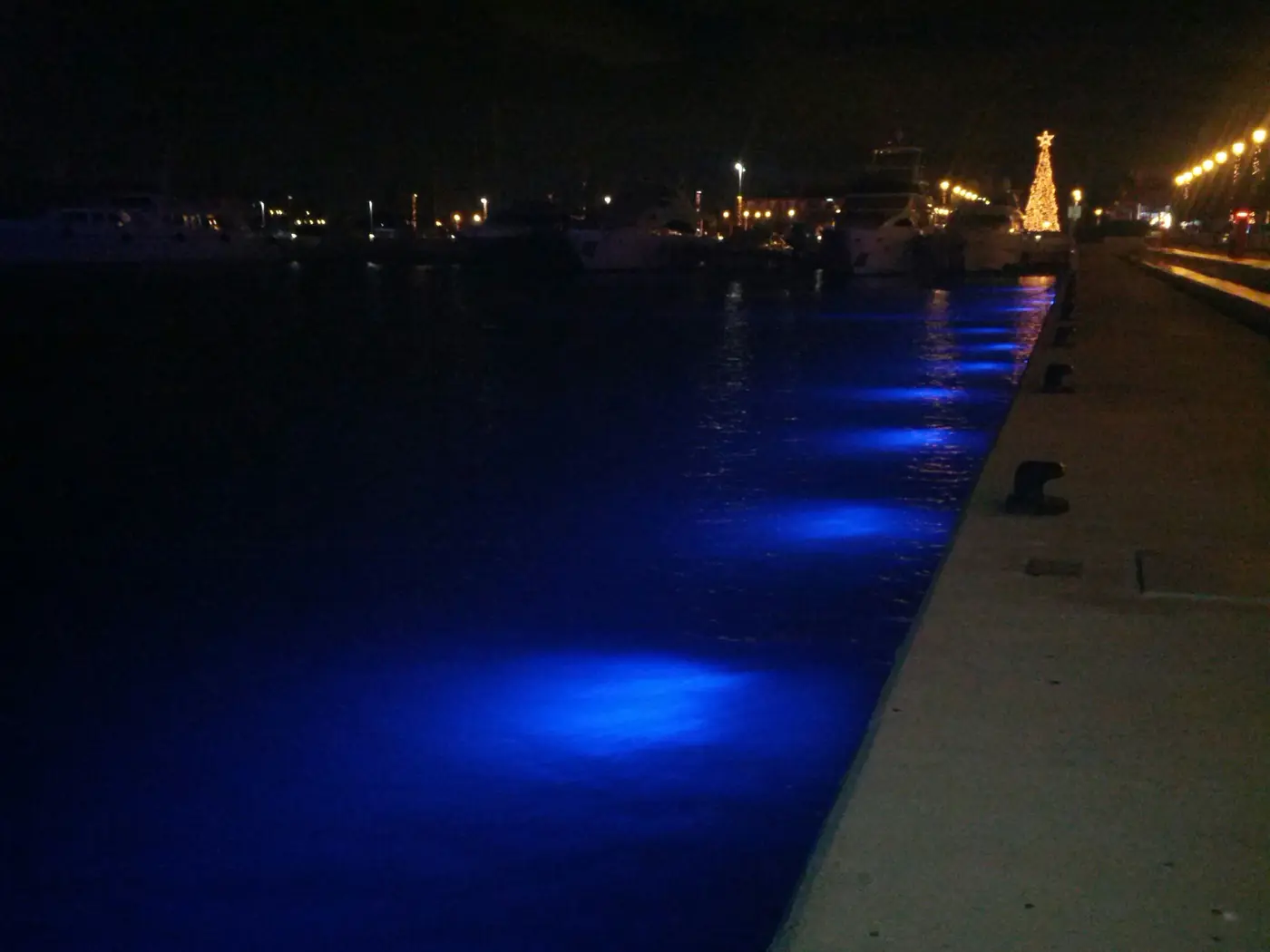
Photo from 21 December, with the marina's Christmas tree in the background.
Photos: G Da and Andreas Alexandris, Wikimedia Commons, CC BY-SA 3.0.
How to get from Ioulianou 50 to Flisvos
- Ioulianou 50 → Victoria station: 3 minutes on foot.
- Line 1 (green): towards Piraeus, to Faliro station, eight stops, about 25 minutes.
- Faliro → tram stop «Peace and Friendship Stadium»: 300 metres on foot, next to the SEF.
- Tram towards Voula: get off at the «Trokadero» stop, in front of the marina. From there the beach is 5 minutes away.
🌊 From Ioulianou 50 to Flisvos
Metro to Faliro, tram to Trokadero. Tap Flisvos to open the route in Google Maps.
The southern suburbs: Elliniko, Varkiza, Voula, Vouliagmeni
The coast has ceremonies in almost every municipality, one after another. In 2026 the Municipality of Vari-Voula-Vouliagmeni held three: 11:00 at Varkiza beach, 11:30 at the Voula Nautical Club, 12:00 at the Vouliagmeni Residents' Nautical Club. In Elliniko the Egyptian Greeks' Nautical Club throws the Cross at 12:30, in front of the chapel of Agios Alexandros. In Glyfada the diving takes place on the beach, right after the Blessing at the church of Agioi Konstantinos and Eleni.
By tram from the SEF stop you can ride the whole coast down to Asklipieio Voulas. For Vouliagmeni and Varkiza you also need a bus from Glyfada, so allow 1.5 hours. The water here is clearer and the little harbours are small: you watch the swimmers from a few metres away.
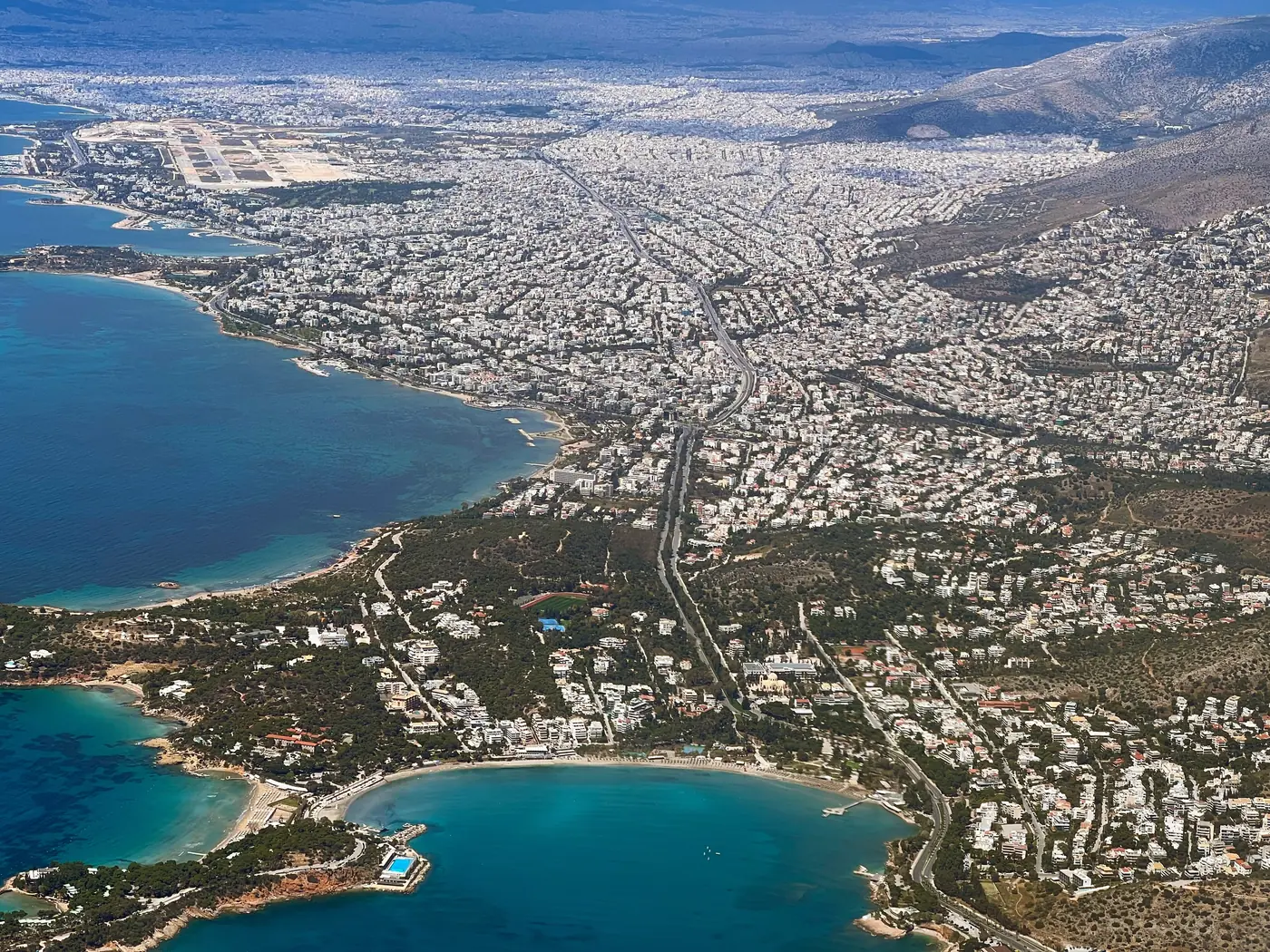
The last diving on the coast takes place here, at 12:00, at the Vouliagmeni Residents' Nautical Club.
Photo: Chepry, Wikimedia Commons, CC BY-SA 4.0.
Rafina: the harbour for the Cyclades
In Rafina the liturgy and the Great Blessing of the Waters are held at the church of Panagia Pantovasilissa and the diving for the Cross in the harbour. In January 2019 they were led by the Metropolitan of Mesogaia and Lavreotiki, the mayor released a dove and many swimmers dived for the Cross. It is the harbour where ferries leave for Andros, Tinos and Mykonos.
The journey takes time. Take Line 1 to Monastiraki and Line 3 towards the Airport to Nomismatokopio. Outside the station, on Mesogeion Avenue, is the KTEL Attikis bus stop for Rafina. On Epiphany day there are fewer buses; check the times on ktelattikis.gr the day before.
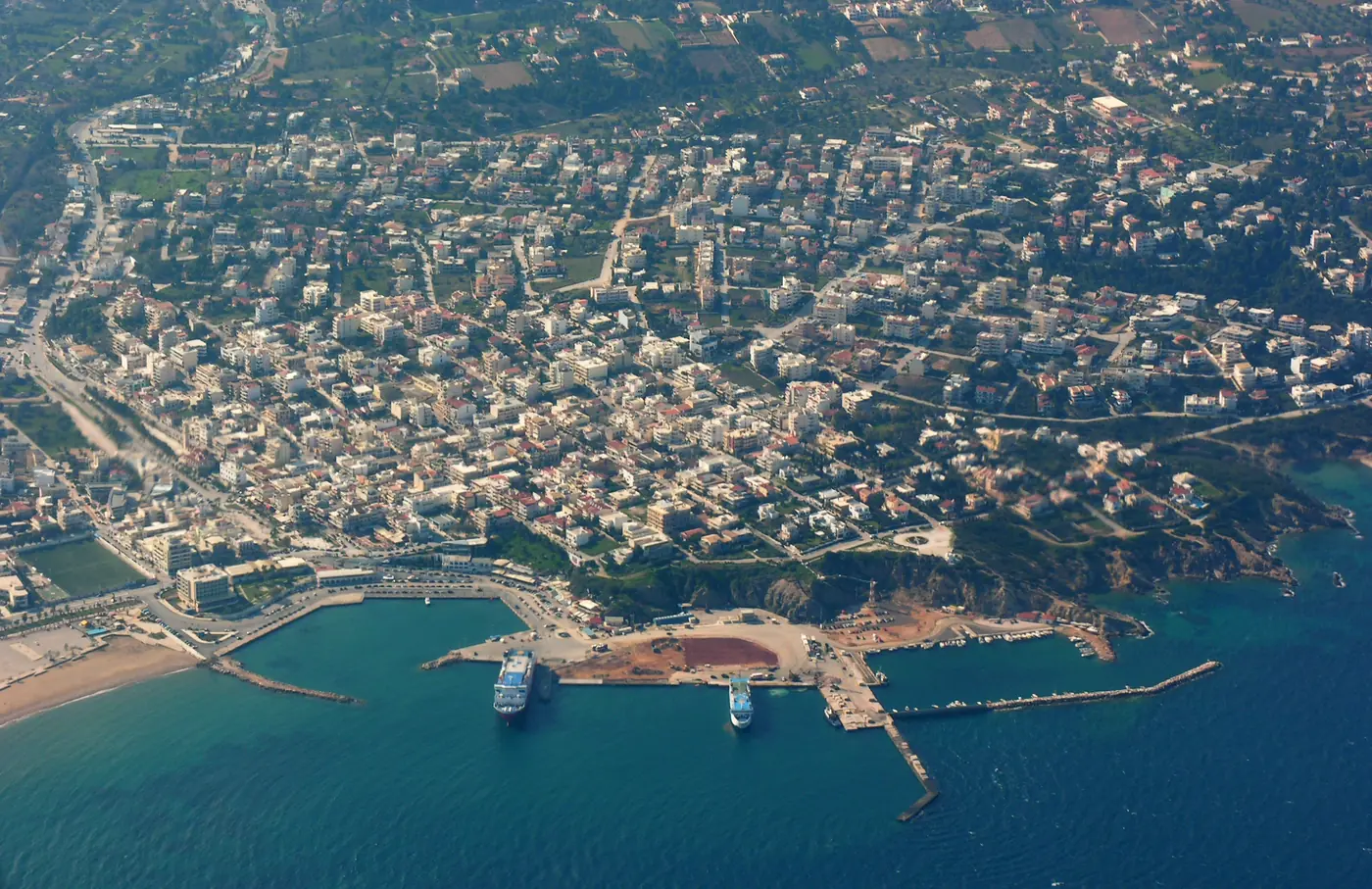
The breakwater where the ferries dock. The Pantovasilissa is in the town, above the harbour.
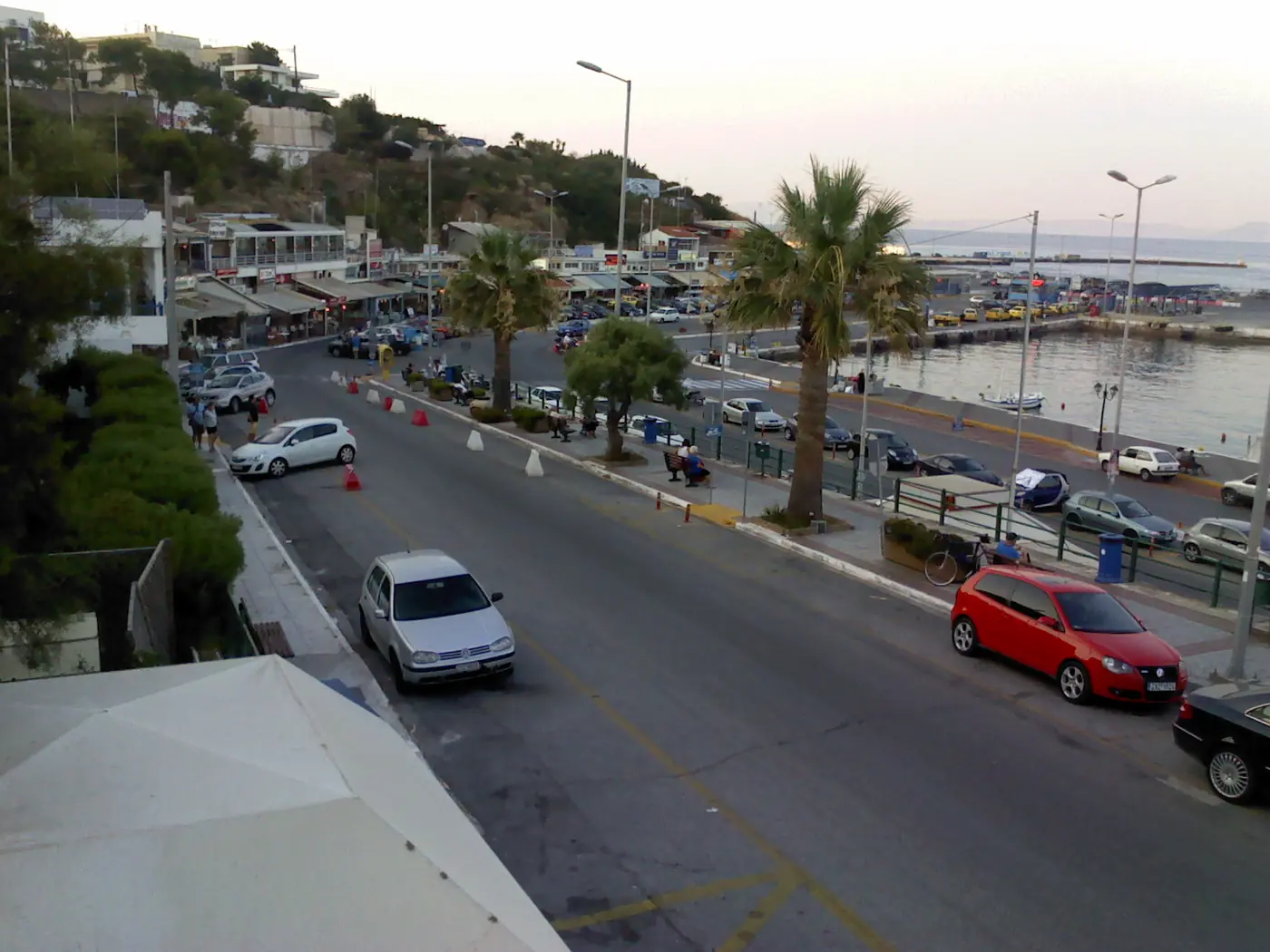
The road goes down from the town to the breakwater. Take your time, the diving happens after the liturgy.
Photos: Hansueli Krapf (CC BY-SA 3.0), Abocanto (CC0), Wikimedia Commons.
How to get from Ioulianou 50 to Rafina
- Ioulianou 50 → Victoria station: 3 minutes on foot.
- Line 1 (green): towards Piraeus, two stops to Monastiraki, 8 minutes.
- Line 3 (blue): towards the Airport, nine stops to Nomismatokopio.
- KTEL Attikis: from the stop outside the station to Rafina harbour.
⛴️ From Ioulianou 50 to Rafina
Metro to Nomismatokopio, then the KTEL bus. Tap the harbour to open the route in Google Maps.
Aegina: Epiphany on an island, one hour from Piraeus
If you want Epiphany the way it is done on the islands, Aegina is the closest. The Great Blessing of the Waters is held at the cathedral and then the procession goes down to the harbour, to the hydrofoil pier. In 2026 the boats of the Aegina Nautical Club went out on the water, and at the moment of the dive the horns of the boats and of the ship «Antigoni» sounded. Young and old dived together.
The ceremony is in the morning, so you need one of the first ferries of the day from Piraeus. Distances, tickets and what else to see on the island are in our guide to a day trip to Aegina.
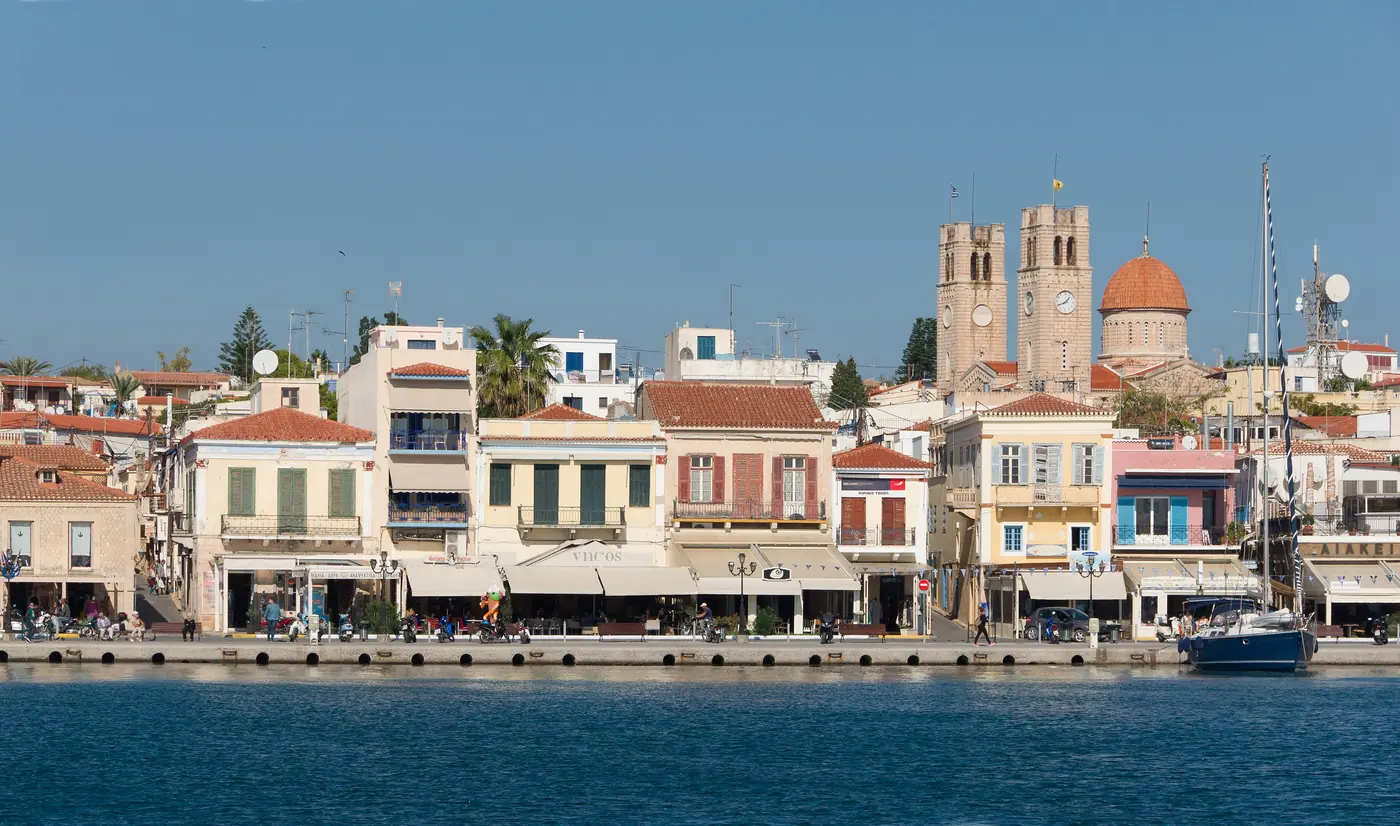
The two bell towers in the background belong to the cathedral, where the procession to the harbour starts.
Photo: Jebulon, Wikimedia Commons, CC0.
In Athens itself: the Blessing at Dexameni
Athens has no sea in its centre, but it has Dexameni in Kolonaki. After the liturgy at Agios Dionysios Areopagitis, the procession climbs to Dexameni square for the Blessing of the Waters. The traffic police close Skoufa, Lykavittou and the surrounding streets from 06:00 to 13:00. From Ioulianou 50 it is about 35 minutes: metro to Syntagma and then uphill on foot.
What we celebrate at Epiphany
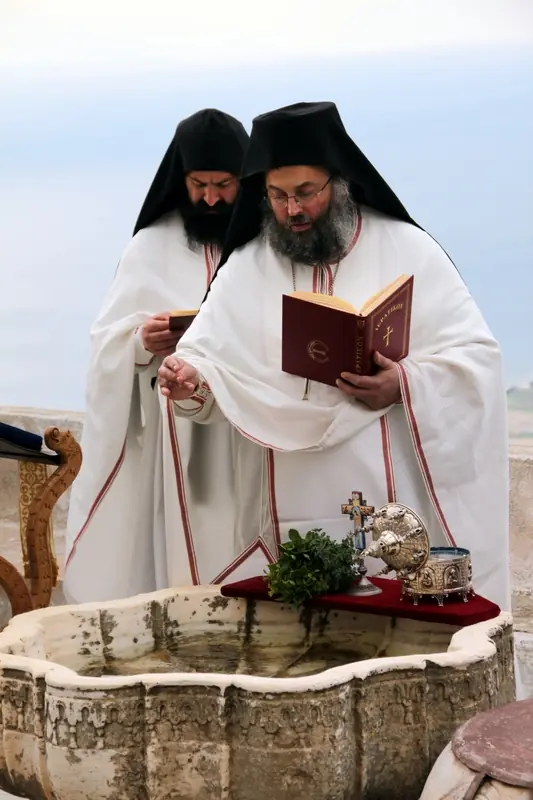
Epiphany commemorates the Baptism of Christ in the Jordan. It is the last feast of the Twelve Days, which begin at Christmas. At the Great Blessing of the Waters the priest blesses the water and dips the cross three times into the font. People take holy water home in little bottles.
Throwing the Cross into the sea, a river or a lake imitates the baptism. Whoever catches it first is considered blessed for the whole year, and often goes round the houses and shops of the neighbourhood with the cross. In many harbours they also release a white dove, symbol of the Holy Spirit.
On the eve, 5 January, the parish priest goes round the houses with a cross and a sprig of basil and sprinkles them. According to folk tradition, this blessing drives away the kallikantzaroi, the mischievous creatures who come up from the earth at Christmas and pester people until Epiphany. Many people fast on the eve.
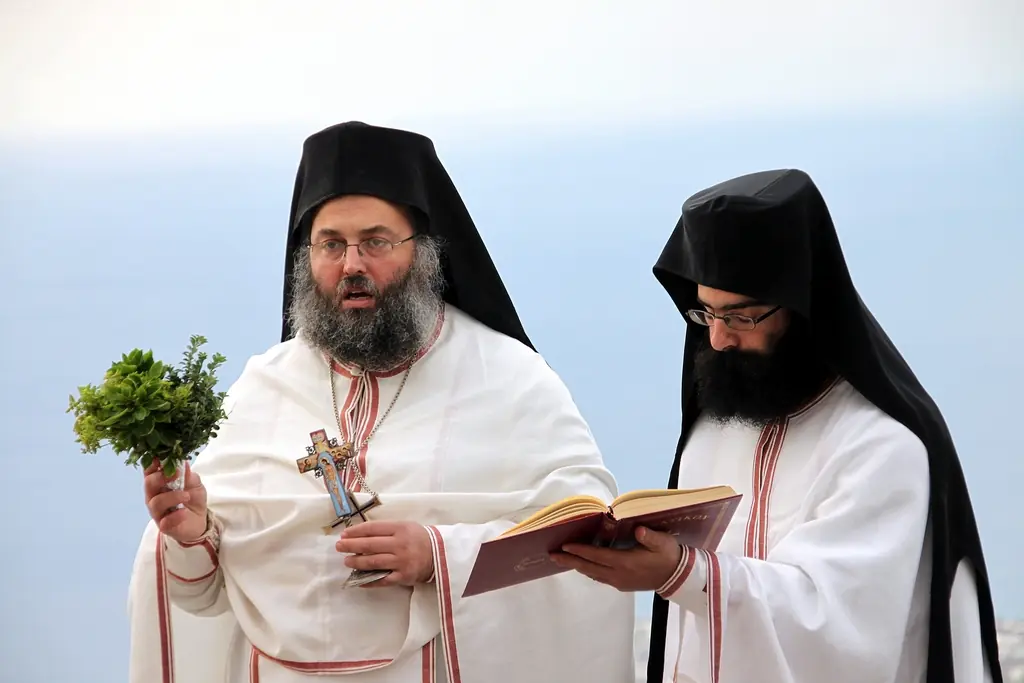
With a sprig of basil the priest sprinkles people with holy water. Monastery of Profitis Ilias, Santorini, 6 January 2011.
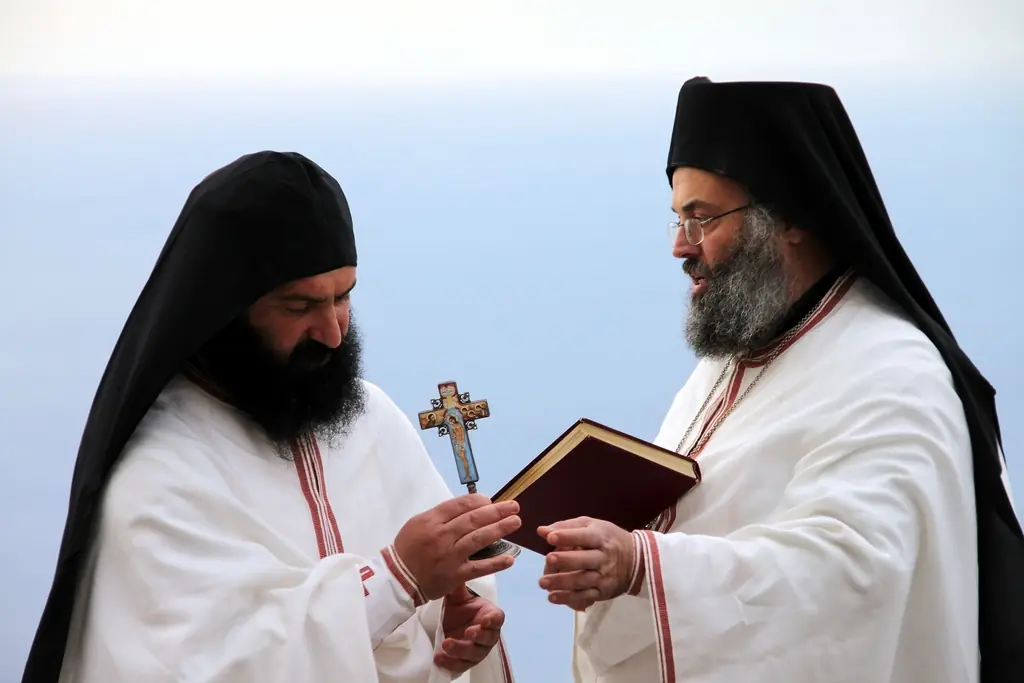
At the end of the service the cross is dipped into the water three times.
People take holy water home from this water. Bring a small bottle.
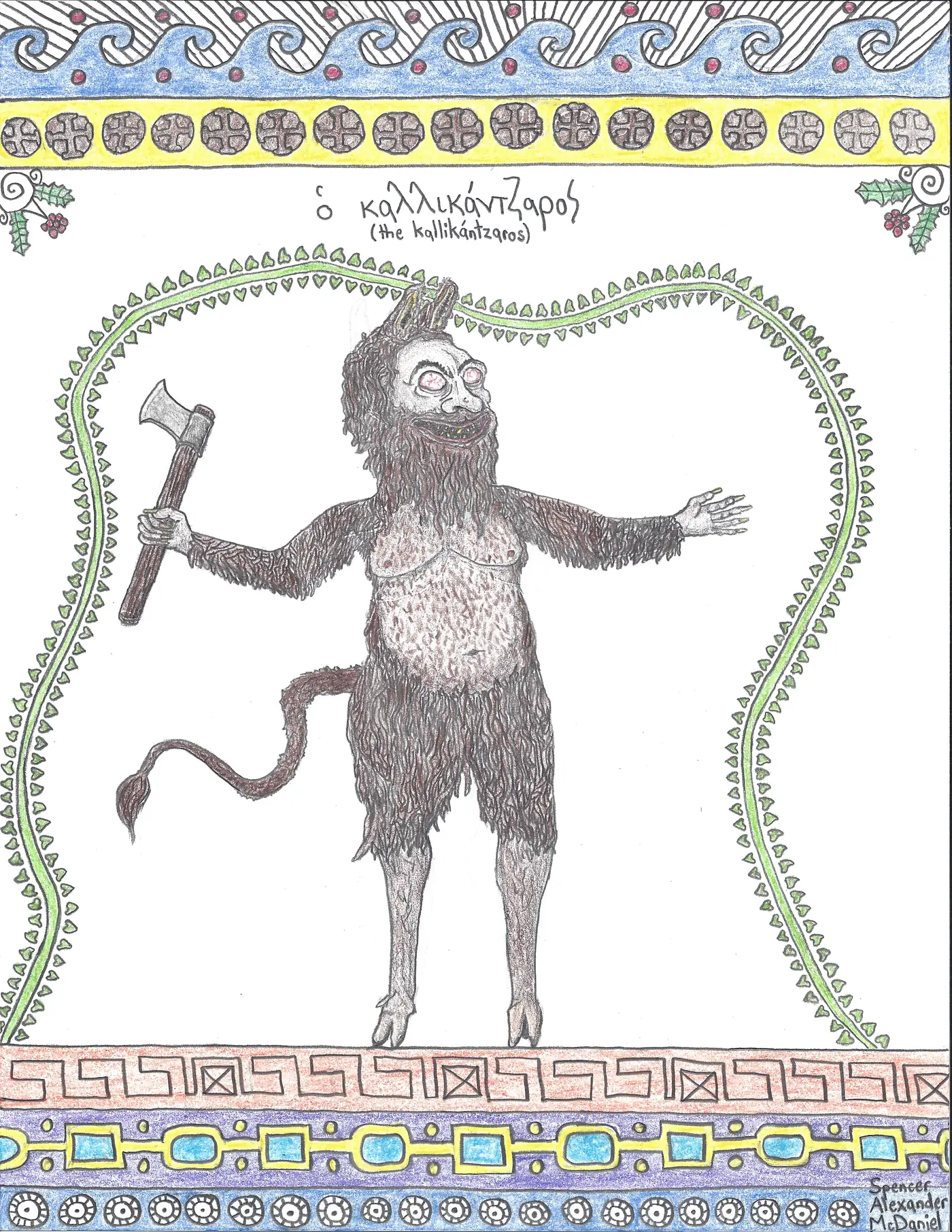
This is how folk tradition imagines him: hairy, with a tail and an axe. He leaves with the Epiphany blessing.
Photos: Klearchos Kapoutsis (CC BY 2.0), Katolophyromai (drawing, CC BY-SA 4.0), Wikimedia Commons.
The diving in Thessaloniki
Swimmers swim towards the Cross in the harbour of Thessaloniki, with flares and boats decked with flags
This is what the moment after the throw looks like: ships sound their horns, flares are lit and the swimmers all swim together towards the spot. The video is from Thessaloniki, on 6 January 2016, in rain and fog. In Piraeus the picture is the same, with more ships.
Video: Geraki (Konstantinos Stampoulis), Wikimedia Commons, CC BY-SA 4.0.
Epiphany in the rest of Greece
In Northern Greece Epiphany opens a series of festivals with disguises, which last until 8 January:
- Ragoutsaria, Kastoria: three days from 6 to 8 January, with people in disguise and bands in the streets. It ends with a big parade on the third day.
- Babougeri, Kali Vrysi, Drama: masqueraders in animal skins and bells go round the village from 6 to 8 January.
- Arapides in Drama and Kavala and the Momogeri of the Pontic Greeks, with theatrical performances in the streets.
- Lefkada: together with the Cross they also throw oranges into the sea, and the swimmers dive for those too.
The Old Calendarists follow the Julian calendar and celebrate Epiphany 13 days later, on 19 January. They hold their own diving in the main harbour of Piraeus, with a procession from the church of the Annunciation in Karavas.
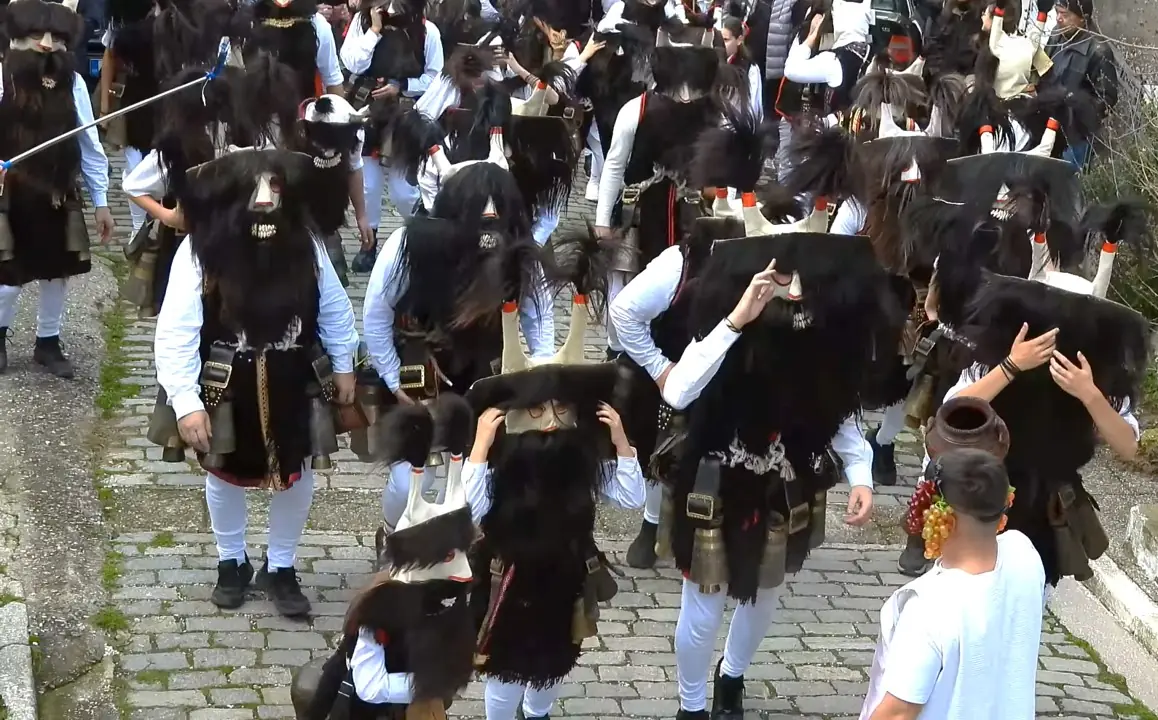
The bells can be heard from the other end of the village. The custom lasts from 6 to 8 January.
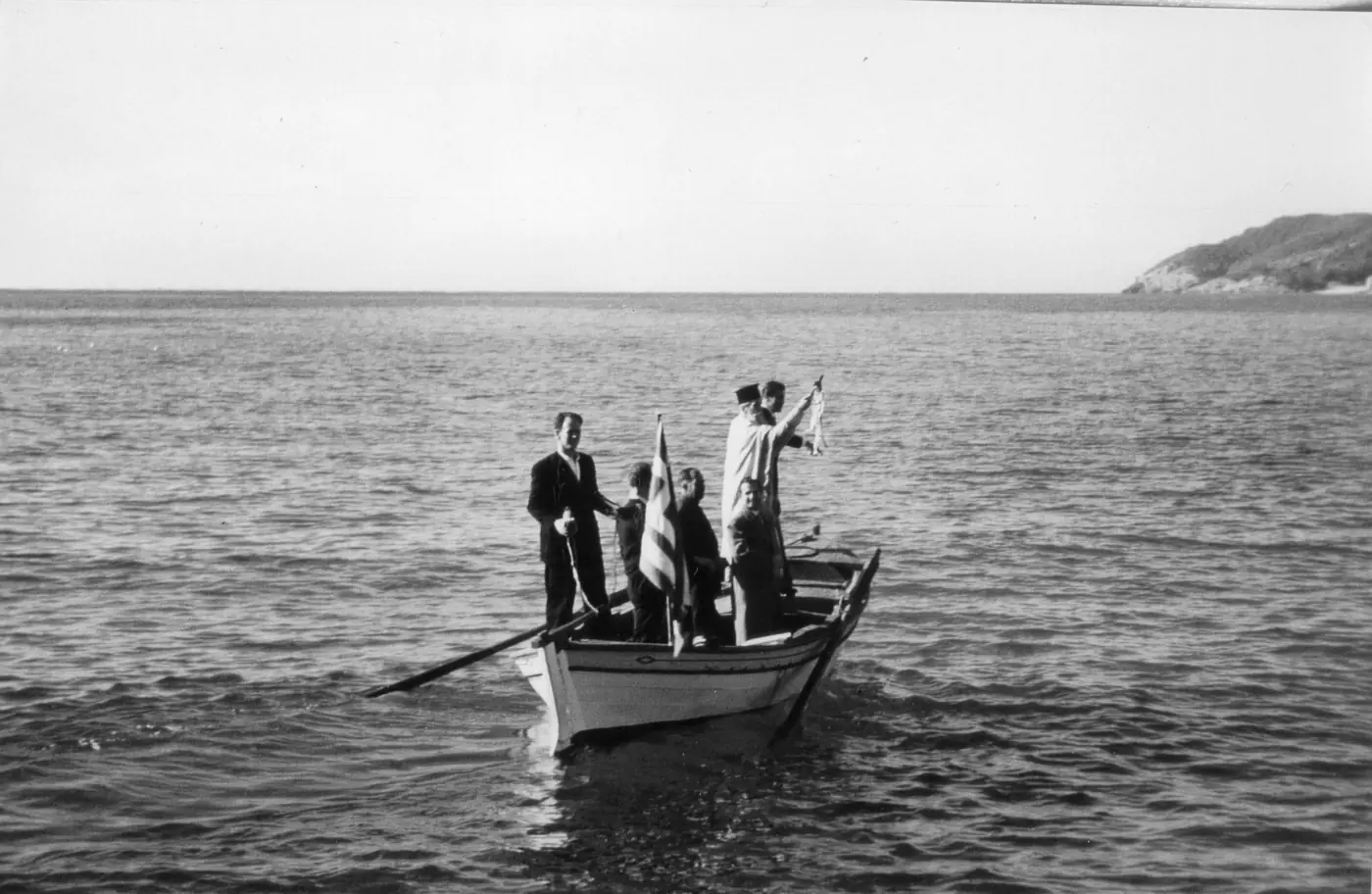
The priest goes out in a boat and throws the Cross far from the shore.
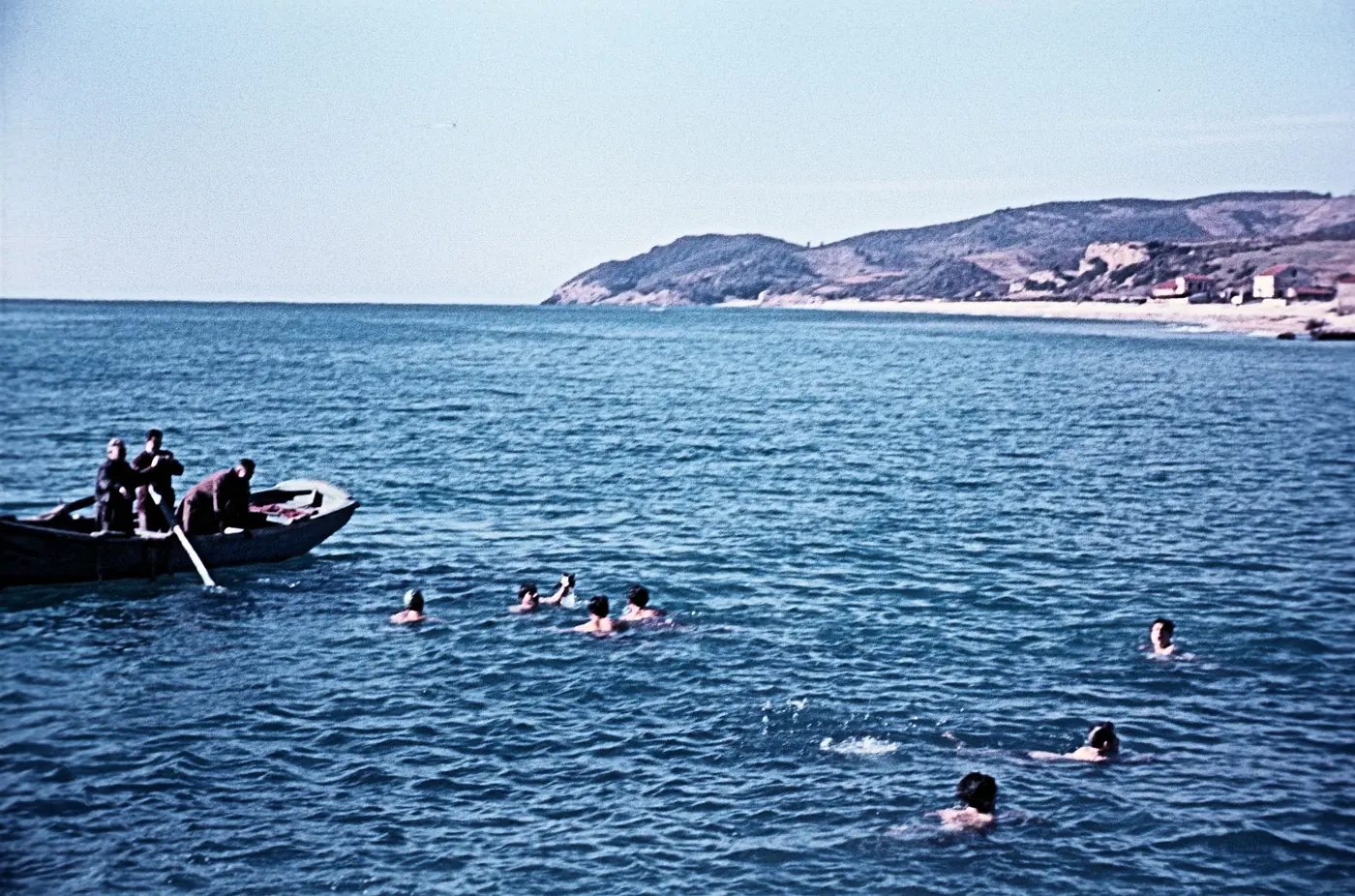
The young men of the village swim towards the boat. January water, no wetsuits.
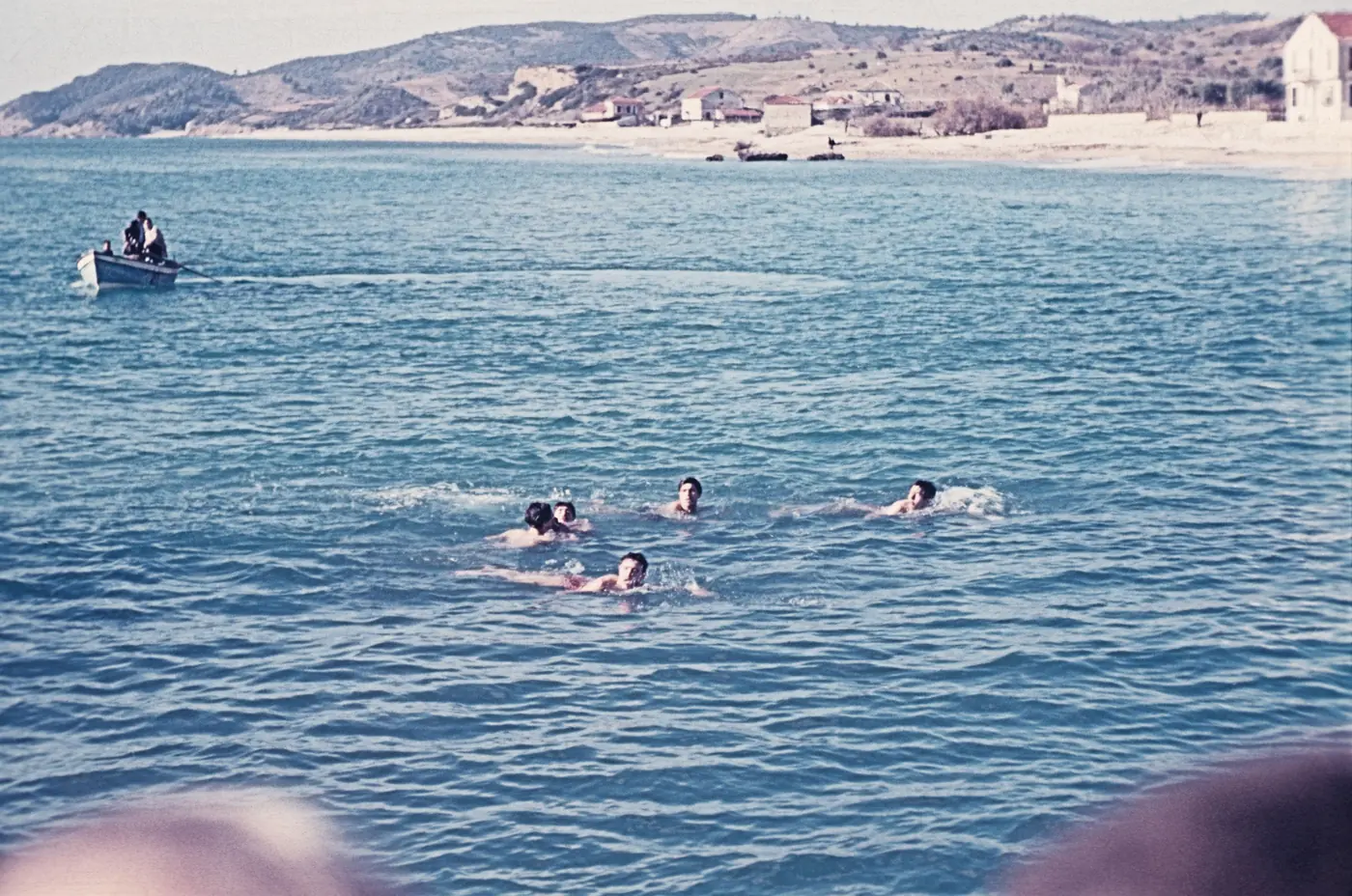
The winner comes out first with the Cross in his hand.
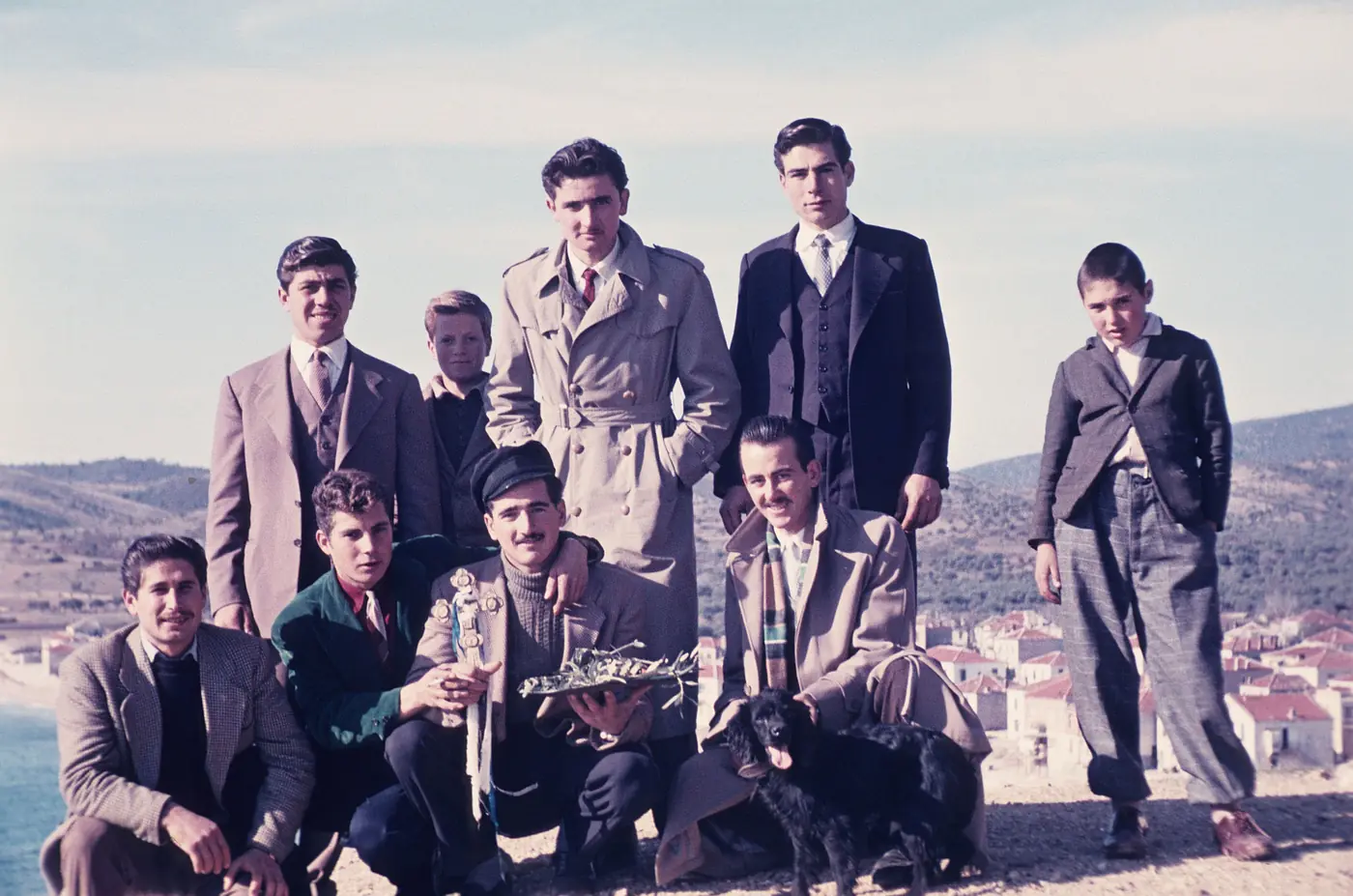
After the dive, a photo in their best holiday clothes.
Photos: Pantelis511141 (CC0), Gerhard Haubold (Thasos 1959, CC BY-SA 3.0), Wikimedia Commons.
What is open at Epiphany
6 January is a public holiday all over Greece. Banks, public services and most shops are closed. Cafés, tavernas and restaurants work as normal, and they fill up from midday, after the ceremonies. The metro, tram and buses run a holiday timetable.
On the same day everyone named Fotis, Foteini, Theofanis and Theofano celebrates their name day. The next day, 7 January, it is the turn of all the Giannis and Ioanna; if you have a Greek friend with that name, a «chronia polla» goes a long way.
What to wear: January on the seafront is windy, even when it is sunny. Bring a cardigan and a scarf. On the quay you will stand for about an hour. If you plan to dive yourself, at the smaller ceremonies anyone who wants can go in; in Piraeus in recent years it is the frogmen who dive.
Frequently asked questions
When is Epiphany in 2027?
On 6 January 2027, a Wednesday. The date is fixed every year. Old Calendarists celebrate on 19 January.
Which harbour is closest to Ioulianou 50?
Piraeus. Take Line 1 from Victoria to the end and walk 10 minutes to Agios Spyridon. About 40 minutes in total.
What time do they throw the Cross?
After the liturgy, usually between 11:00 and 12:30. At Flisvos in 2026 it was just after 11:00, in Elliniko at 12:30. The 2027 programmes are announced at the end of December.
Do I need a ticket or an invitation?
No. All ceremonies are open to everyone.
Can I dive for the Cross too?
Not in Piraeus; frogmen dive there. At many smaller ceremonies anyone who wants can go in; some municipalities ask you to register by the eve.
Will roads be closed in Athens?
Yes, around the ceremonies. In 2026 Akti Miaouli in Piraeus and the streets around Dexameni in Kolonaki were closed from the morning until 13:00. The metro is not affected.
Does the metro run at Epiphany?
Yes, on a holiday timetable. Line 1 runs normally from Victoria to Piraeus.
What are the kallikantzaroi?
Creatures of folk tradition who, according to legend, come up from the earth at Christmas and leave with the Epiphany blessing. That is why on the eve the priest sprinkles the houses.
— Kathy